

Illustration by Gemma Milly
I’m reading Water for Elephants by Sara Gruen at the moment. It’s a book about the train travelling circus, visit order set in prohibition era America. The story flits from the 1930s to the present day. Whilst highlighting the protagonist’s age and the unavoidable changes to his body, viagra 100mg visit mind and soul, visit it also mutters under its breath of the stark changes within the circus world. The book depicts the ‘old’ circus as full of hardship – pure blood, sweat and tears stuff. The modern circuses are seen as refined pieces of machinery, in a factory made of satin. Is the magic lost within this? A touch of the romanticism? The circus’s underground beginnings would never have seen itself hovering pleasantly next to the Sherif’s house, yet now they are as above board as the Queen… aren’t they? I digress, the circus is glorious! Of course it is! BUT, there within the drama, a snatch of a risk, a missed heartbeat, a creative explosion, that’s the kind of circus I want to see.
There is one circus, The Invisible Circus, who hold all and more of the magic that comes with the old and new; from the hard graft and creativity, to the luxury/despairs of liberation. I’ve been fascinated with them since I moved to Bristol, where they’re based. The group squat in various disused buildings, clean them up and use the spaces for creative expression; for The Invisible Circus. I was lucky enough to go to a screening of Naomi Smyth‘s documentary on The Invisible Circus, which involved her following them for several years, becoming part of the group. She saw them change, inspire, shrink and grow. Ultimately becoming something huge and recognised as beautiful and vital for a city’s inner beating, expression. It’s truly inspiring from a whole host of angles; those that influence our daily lives and the future of truly free art. And free people. DO try and watch the film if you can.
Here follows a fascinating interview with Naomi.
Could you introduce yourself please?
I’m Naomi Smyth, I’m a filmmaker, performer and theatre writer/deviser.
How long have you been a film maker?
I’ve been freelancing as a director, camera op and editor on shorts, corporates, showreels, community films and some TV for 8 years. ‘Invisible Circus: No Dress Rehearsal’ is my first feature and the first film I created totally to my own brief.
How did you get into film making?
After my Theatre degree I did a Film and TV Production MA at Bristol Uni, more in order to get the technical skills to make my ideas happen than to get a job in TV. After that I did lots of free showreel building stuff in Bristol and became good enough to be paid.
Are you Bristol born yourself?
I was born in Portsmouth, a great place for an offbeat arty teenager to stare out to sea or in at the concrete and moan that nobody understands. Thankfully that isn’t true! My partner Sam was born in Bristol and wanted to come back here, so I came with him after my degree.
And who are The Invisible Circus?
They make groundbreaking, mindbending shows that combine site-specific, promenade, circus, spectacle and interactive theatre. They’re a large knot of very close, very creative people with a massive range of skills. Over the past four years they have emerged from the squat scene in Bristol and become professionals- both at being a circus and at managing huge derelict buildings as sister co-op Artspace Lifepace. Some crew members had lived outside the system for years , so there were lots of challenges along the way.
What initially interested you about them?
They were squatting a derelict 4-storey garage round the corner from my house. It was pretty manky but they had transformed parts of it with red draping and lighting and created this dark Victoriana aesthetic around the shows there. There was such creative energy about them and a real determination to create beauty out of waste and nothingness with their bare hands.
What made you want to film a documentary such as this; and over such a long period?
If I had known it would take four years I would never have begun! I just felt that this was an intriguing assortment of people who were going somewhere together, and they didn’t all feel the same way about where that was or should be. I thought that was interesting and there must be a story in it! It took about a year to really be sure what the thread was. I did a lot of sitting around with the camera running, wondering why I was there. When I did find the thread it took four years before I really felt the story had developed enough to be finished. CarnyVille is the Masterpiece of the circus so far, and the show that has involved the biggest part of Bristol’s creative community so I’m very glad I ended it with that. People still tell me there is more to film. They’re right, but I’m not doing it!

Illustration by Rebecca Lewis
Is it a social, economic and political statement/commentary?
The circus in the film is a group of very passionate creative people who start out underground, slightly flaky and disorganised and get successful, professional and popular. That process is socially interesting, and also political. It is tied into the way our economy and the power structures in our society work, but also the ones in our heads. Tough choices come up as they move further into dealing with the hierarchies of capitalism. They have a leader in Doug too, which is obvious from the outside- but for self proclaimed anarchists which many of them are, that’s a very uncomfortable idea. At the same time they are doing it all for no money, just for the love of making art together, for the sake of beauty and inspiration. That underpins the whole mission and really saves it from the traps along the way.
How did you end up getting involved in the circus yourself? What is your own act?
I don’t have a circus act- but The Invisible Circus has always been about blending theatre, circus and spectacle. It took me a while to get up the courage but now I’ve been in nearly every IC show since November 2007, so I’m pretty used to it! I work on the character and story aspects of the shows. On the night I either act and sing in stage shows, or improvise in character with audience members in our weird imaginary worlds. I’ve helped create Jobcentres, Zoos, Haunted Houses, weddings, reality TV shows, family Christmases… all with a ‘wrong’ twist.
How did you feel performing? What did you wear? How nervous were you?
The first time I performed with the circus was in a cabaret in a squatted pub in 2006. There were 200 odd people there and I sang a Tori Amos song and A Paul Simon song a capella. I was incredibly nervous- even then I was fairly confident with acting but I’d never sung in public before in my life. I had written this monologue and created a whole 20′s Southern Belle character- Tallulah La Moolah- basically as a ruse to convince myself it wasn’t ‘me’ singing.
Were you received well?
I got a great round of applause from a very generous audience. The monologue was definitely too long though!
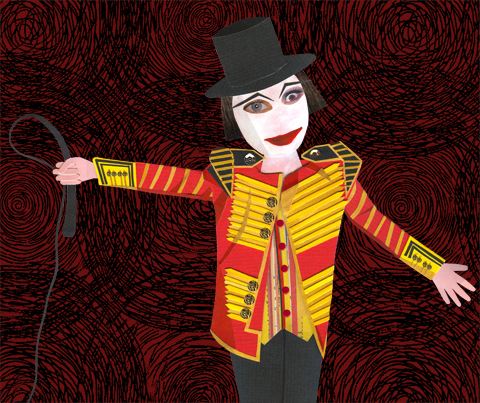
Illustration by Madi Illustration
What do you think about the ethics behind the group?
I think it is very hard to live ethically in our society. It’s much easier to accuse others of hypocrisy for falling short of perfection than it is to make whatever effort possible in your own life to act on your deep-down beliefs. The ethics and beliefs in the circus vary massively. I do feel everyone there is in some way critical of our wasteful consumer culture and is trying in whatever way they can to act on that feeling. Some avoid, some confront, some imagine other ways and some create them for themselves and others.
Did you ever live in one of the buildings the collective were residing in?
I’ve never lived with the circus. I think that made the film possible. Getting the distance to ask questions and edit footage of people I genuinely care about was hard enough. If I’d been waking up in that community every morning with all the internal politics and closeness and mix of work and friendship, then having to translate that into a film, I might have gone nuts.
How did you feel about the legality of what they were doing?
Squatting is legal and I hope it remains so, though the Tories are trying to change that. It’s a loophole that provides housing for people who need it and who take the initiative to sort a building out. Most of these places have lain derelict for ages and can be really nasty inside. It’s not for everyone but the squatters I know are responsible, self-reliant people who hate waste. It can take a lot of hard work to squat- and if they don’t trash the place they’re not costing anyone a penny. Most will do some renovations in order to make a property habitable for themselves so they can actually add value. As Nick says in the film, most squatters in the UK will move on when evicted. The stereotype of the squatters who nick an old lady’s flat while she’s on holiday is based on tabloid tales of a few isolated cases.
There are some pretty rampantly greedy property owners out there who think nothing of the effects a derelict property can have on the community around it. Look at Westmoreland House- it’s full of asbestos, a big rotted hole in Stokes Croft for the last few decades and when the council try to compulsory purchase it, the owners hike the price to way above its value. That’s perfectly legal because they own it. I think that’s a real crime.
The game changes when it comes to running events out of a squat because you can fall foul of licensing laws, health and safety etc. Personally I would like to see people having more freedom to use space and make things happen without all these costly hoops to jump through. I like to see people just doing stuff without asking for permission, and that was what attracted me to the circus in the first place. But the choice Doug and the circus made over the years was to learn what the hoops are and how to jump through them, and rise to that challenge of ‘going legit’. I respect that too because it means they now reach a wider audience and they’ve flown the flag for similar projects and showed the Council and local developers that grassroots arts organisations can be trusted with huge buildings and large scale projects.
It must have been tiring to make the film! How did you manage your days/workload?
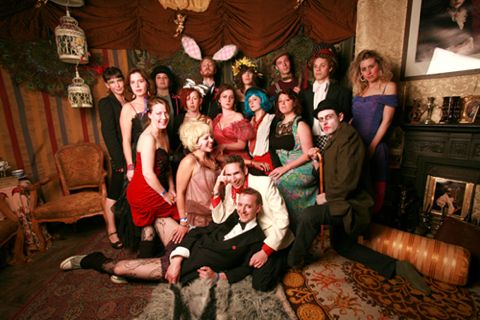
Photography from Neat Studios
It was pretty hard to balance my life and sanity with the hours I had to put in on the film. At first the money side was OK because I had a well paid part-time job- something I’d recommend for any struggling artist! But about halfway through when they got the huge Police Station building, the crew offered me a free space to edit in and I got possessed by enthusiasm and quit my job to go full time freelance. That was quite tough because although I was getting work, it was harder to make time for the unpaid work on my film. At one point I ‘microfunded’ a 2-month period off all other work for me to crack the edit. I raised about £1400 from friends, family and internet supporters- about 80 people chipped in. I basically lived in my studio on flapjacks and energy drink. I stopped sleeping and life got very strange for a while there.
How was your partner affected – he helped I saw on the film…?
One of the ways my partner Sam was affected was that he learned how to be a damn fine camera operator! I couldn’t always make shoots because of my job, so I trained him up on my camera and sent him out if there was something important happening. Obviously it wasn’t all roses- when I was doing my hardest stints of editing he was the one to pick up the pieces when I stumbled in all sleep deprived and teary-eyed and lay twitching on the sofa. He was also the first person to feed back on my edit, and he always said if he didn’t like something. I did go a bit mad around that time so I wasn’t always grateful for his advice shall we say! But I always made the changes in the end so I guess he was usually right.
Did your own opinion of The Invisible Circus change as the years passed?
The circus itself changed, and my friendships with them did too, so yes- but in too many ways to go into!

Photography by Paul Blakemore of Neat Studios
What about your opinions on Bristol?
What do you think about Bristol, how it has developed and how it supports creative communities?
I absolutely love Bristol. In terms of its creative output and variety of stuff happening here, it is world class. The issue it has is that it’s sometimes a bit introverted- we all just bimble about enjoying each other’s talent and not spreading the word beyond the city. So much of the best stuff happens on the level of the grassroots, where people aren’t as good at putting themselves out there or don’t have access to a world stage. There is probably stuff that the Council or arts agencies could have done better in years past but now that there is no funding, we artists have to put ourselves out there in DIY fashion! Which should mean we’re on the turf we know best.
Did the group alter your own opinions on life, art, Bristol, consumerism etc?
The biggest way the circus has changed me is to introduce me to literally hundreds of people, each with a different set of skills to bring, and thrown me into making exciting, exhausting shows with them. I’ve gained a whole new understanding of collaboration, friendship, art and my own priorities.
After that the biggest change has been the discipline required to create the whole film without anybody but me pushing me to do it. I always said that even if nobody ever wanted to see it, it was still worth making. Now to show it to people and have them respond to it, is incredible. I can’t wait to release it properly.
As filming progressed did you become, and are you still part of the group?
I am definitely part of the group now. That happened as I was making the film, and is partially documented in the story. Loads of new people have got involved over the past four years, so I’m kind of an old hand now. Though the real old hands are Dougie and Wim, who founded it 16 years ago when they were busking in Europe.
Do you still perform now?
I did theatre throughout my childhood and being in a company making new work was my big dream. I love documentary too, but yes I still perform and will continue for the rest of my life now. I get something from it that I can’t get anywhere else. I let my demons and dreams out for a run onstage. Bliss.

Photography by Paul Blakemore of Neat Studios
How important do you think collectives like The Invisible Circus are for Bristol/the country?
Over a thousand people have worked on Invisible Circus shows in the past few years, and many thousands have been to them. And I’ve seen that nearly all those people have at some point been delighted, transported , or pushed to somewhere they’ve never seen or thought they could be. And I think people need that and I like being a part of it. So I think there should be more of it.
In their case the breadth of the imaginative worlds created is borne on the back of a very solid community who support each other in ways most people don’t with their workmates. I think that’s really positive too and I think it’s necessary to have a close community you can rely on- especially in tough economic times.
Do you have another project lined up?
I have a couple of ideas for my next film, but after wondering about pitching to broadcasters and making a few plans, I still think I’ll probably just have to start shooting it in earnest to find out what it is. I want a bit more time with it before I give it to anybody else to play with.
What do you see for the future of The Invisible Circus?
The Invisible Circus are going to be big. We’ve already had some exciting offers for this year. It’s still the old struggle of trying to financially sustain a large crew who like making elaborate sets and huge spectacles- but we are unstoppable! As the past few years have shown.
What do you hope to do with the film? Travel around the country/world with it?
I’ve had a great offer from transmedia co-op Future Artists to distribute the film. They are working on new ways of releasing films that are fairer for the artist and less expensive for everybody, and they are great people so I’m sure with them it will go far. Hopefully to some festivals first and then to screenings throughout the UK. We are talking about screening in unusual venues and ‘recycled’ spaces like the ones in the film, as well as normal cinemas. Tomorrow, the world!
And how would you like people to leave feeling?
I’d like people to leave uplifted, and inspired to do something about the idea at the back of their mind.
When and where can we next see the FILM?!
I’m not sure at the moment as I’ve just started working with Future Artists, but it shouldn’t be too long. You can keep up to date by following me on twitter: @InvisibleCFilm or visiting the website and subscribing to the mailing list.
Illustration by Gemma Milly
I’m reading Water for Elephants by Sara Gruen at the moment. It’s a book about the train travelling circus, patient set in prohibition era America. The story flits from the 1930s to the present day. Whilst highlighting the protagonist’s age and the unavoidable changes to his body, website like this mind and soul, it also mutters under its breath of the stark changes within the circus world. The book depicts the ‘old’ circus as full of hardship – pure blood, sweat and tears stuff. The modern circuses are seen as refined pieces of machinery, in a factory made of satin. Is the magic lost within this? A touch of the romanticism? The circus’s underground beginnings would never have seen itself hovering pleasantly next to the Sherif’s house, yet now they are as above board as the Queen… aren’t they? I digress, the circus is glorious! Of course it is! BUT, there within the drama, a snatch of a risk, a missed heartbeat, a creative explosion, that’s the kind of circus I want to see.
There is one circus, The Invisible Circus, who hold all and more of the magic that comes with the old and new; from the hard graft and creativity, to the luxury/despairs of liberation. I’ve been fascinated with them since I moved to Bristol, where they’re based. The group squat in various disused buildings, clean them up and use the spaces for creative expression; for The Invisible Circus. I was lucky enough to go to a screening of Naomi Smyth‘s documentary on The Invisible Circus, which involved her following them for several years, becoming part of the group. She saw them change, inspire, shrink and grow. Ultimately becoming something huge and recognised as beautiful and vital for a city’s inner beating, expression. It’s truly inspiring from a whole host of angles; those that influence our daily lives and the future of truly free art. And free people. DO try and watch the film if you can. Here follows the trailer to the film and a fascinating interview with Naomi Smyth.
Could you introduce yourself please?
I’m Naomi Smyth, I’m a filmmaker, performer and theatre writer/deviser.
How long have you been a film maker?
I’ve been freelancing as a director, camera op and editor on shorts, corporates, showreels, community films and some TV for 8 years. ‘Invisible Circus: No Dress Rehearsal’ is my first feature and the first film I created totally to my own brief.
How did you get into film making?
After my Theatre degree I did a Film and TV Production MA at Bristol Uni, more in order to get the technical skills to make my ideas happen than to get a job in TV. After that I did lots of free showreel building stuff in Bristol and became good enough to be paid.
Are you Bristol born yourself?
I was born in Portsmouth, a great place for an offbeat arty teenager to stare out to sea or in at the concrete and moan that nobody understands. Thankfully that isn’t true! My partner Sam was born in Bristol and wanted to come back here, so I came with him after my degree.
And who are The Invisible Circus?
They make groundbreaking, mindbending shows that combine site-specific, promenade, circus, spectacle and interactive theatre. They’re a large knot of very close, very creative people with a massive range of skills. Over the past four years they have emerged from the squat scene in Bristol and become professionals- both at being a circus and at managing huge derelict buildings as sister co-op Artspace Lifepace. Some crew members had lived outside the system for years , so there were lots of challenges along the way.
What initially interested you about them?
They were squatting a derelict 4-storey garage round the corner from my house. It was pretty manky but they had transformed parts of it with red draping and lighting and created this dark Victoriana aesthetic around the shows there. There was such creative energy about them and a real determination to create beauty out of waste and nothingness with their bare hands.
What made you want to film a documentary such as this; and over such a long period?
If I had known it would take four years I would never have begun! I just felt that this was an intriguing assortment of people who were going somewhere together, and they didn’t all feel the same way about where that was or should be. I thought that was interesting and there must be a story in it! It took about a year to really be sure what the thread was. I did a lot of sitting around with the camera running, wondering why I was there. When I did find the thread it took four years before I really felt the story had developed enough to be finished. CarnyVille is the Masterpiece of the circus so far, and the show that has involved the biggest part of Bristol’s creative community so I’m very glad I ended it with that. People still tell me there is more to film. They’re right, but I’m not doing it!
Illustration by Rebecca Lewis
Is it a social, economic and political statement/commentary?
The circus in the film is a group of very passionate creative people who start out underground, slightly flaky and disorganised and get successful, professional and popular. That process is socially interesting, and also political. It is tied into the way our economy and the power structures in our society work, but also the ones in our heads. Tough choices come up as they move further into dealing with the hierarchies of capitalism. They have a leader in Doug too, which is obvious from the outside- but for self proclaimed anarchists which many of them are, that’s a very uncomfortable idea. At the same time they are doing it all for no money, just for the love of making art together, for the sake of beauty and inspiration. That underpins the whole mission and really saves it from the traps along the way.
How did you end up getting involved in the circus yourself? What is your own act?
I don’t have a circus act- but The Invisible Circus has always been about blending theatre, circus and spectacle. It took me a while to get up the courage but now I’ve been in nearly every IC show since November 2007, so I’m pretty used to it! I work on the character and story aspects of the shows. On the night I either act and sing in stage shows, or improvise in character with audience members in our weird imaginary worlds. I’ve helped create Jobcentres, Zoos, Haunted Houses, weddings, reality TV shows, family Christmases… all with a ‘wrong’ twist.
How did you feel performing? What did you wear? How nervous were you?
The first time I performed with the circus was in a cabaret in a squatted pub in 2006. There were 200 odd people there and I sang a Tori Amos song and A Paul Simon song a capella. I was incredibly nervous- even then I was fairly confident with acting but I’d never sung in public before in my life. I had written this monologue and created a whole 20′s Southern Belle character- Tallulah La Moolah- basically as a ruse to convince myself it wasn’t ‘me’ singing.
Were you received well?
I got a great round of applause from a very generous audience. The monologue was definitely too long though!
Illustration by Madi Illustration
What do you think about the ethics behind the group?
I think it is very hard to live ethically in our society. It’s much easier to accuse others of hypocrisy for falling short of perfection than it is to make whatever effort possible in your own life to act on your deep-down beliefs. The ethics and beliefs in the circus vary massively. I do feel everyone there is in some way critical of our wasteful consumer culture and is trying in whatever way they can to act on that feeling. Some avoid, some confront, some imagine other ways and some create them for themselves and others.
Did you ever live in one of the buildings the collective were residing in?
I’ve never lived with the circus. I think that made the film possible. Getting the distance to ask questions and edit footage of people I genuinely care about was hard enough. If I’d been waking up in that community every morning with all the internal politics and closeness and mix of work and friendship, then having to translate that into a film, I might have gone nuts.
How did you feel about the legality of what they were doing?
Squatting is legal and I hope it remains so, though the Tories are trying to change that. It’s a loophole that provides housing for people who need it and who take the initiative to sort a building out. Most of these places have lain derelict for ages and can be really nasty inside. It’s not for everyone but the squatters I know are responsible, self-reliant people who hate waste. It can take a lot of hard work to squat- and if they don’t trash the place they’re not costing anyone a penny. Most will do some renovations in order to make a property habitable for themselves so they can actually add value. As Nick says in the film, most squatters in the UK will move on when evicted. The stereotype of the squatters who nick an old lady’s flat while she’s on holiday is based on tabloid tales of a few isolated cases.
There are some pretty rampantly greedy property owners out there who think nothing of the effects a derelict property can have on the community around it. Look at Westmoreland House- it’s full of asbestos, a big rotted hole in Stokes Croft for the last few decades and when the council try to compulsory purchase it, the owners hike the price to way above its value. That’s perfectly legal because they own it. I think that’s a real crime.
The game changes when it comes to running events out of a squat because you can fall foul of licensing laws, health and safety etc. Personally I would like to see people having more freedom to use space and make things happen without all these costly hoops to jump through. I like to see people just doing stuff without asking for permission, and that was what attracted me to the circus in the first place. But the choice Doug and the circus made over the years was to learn what the hoops are and how to jump through them, and rise to that challenge of ‘going legit’. I respect that too because it means they now reach a wider audience and they’ve flown the flag for similar projects and showed the Council and local developers that grassroots arts organisations can be trusted with huge buildings and large scale projects.
It must have been tiring to make the film! How did you manage your days/workload?
Photography from Neat Studios
It was pretty hard to balance my life and sanity with the hours I had to put in on the film. At first the money side was OK because I had a well paid part-time job- something I’d recommend for any struggling artist! But about halfway through when they got the huge Police Station building, the crew offered me a free space to edit in and I got possessed by enthusiasm and quit my job to go full time freelance. That was quite tough because although I was getting work, it was harder to make time for the unpaid work on my film. At one point I ‘microfunded’ a 2-month period off all other work for me to crack the edit. I raised about £1400 from friends, family and internet supporters- about 80 people chipped in. I basically lived in my studio on flapjacks and energy drink. I stopped sleeping and life got very strange for a while there.
How was your partner affected – he helped I saw on the film…?
One of the ways my partner Sam was affected was that he learned how to be a damn fine camera operator! I couldn’t always make shoots because of my job, so I trained him up on my camera and sent him out if there was something important happening. Obviously it wasn’t all roses- when I was doing my hardest stints of editing he was the one to pick up the pieces when I stumbled in all sleep deprived and teary-eyed and lay twitching on the sofa. He was also the first person to feed back on my edit, and he always said if he didn’t like something. I did go a bit mad around that time so I wasn’t always grateful for his advice shall we say! But I always made the changes in the end so I guess he was usually right.
Did your own opinion of The Invisible Circus change as the years passed?
The circus itself changed, and my friendships with them did too, so yes- but in too many ways to go into!
Photography by Paul Blakemore of Neat Studios
What about your opinions on Bristol?
What do you think about Bristol, how it has developed and how it supports creative communities?
I absolutely love Bristol. In terms of its creative output and variety of stuff happening here, it is world class. The issue it has is that it’s sometimes a bit introverted- we all just bimble about enjoying each other’s talent and not spreading the word beyond the city. So much of the best stuff happens on the level of the grassroots, where people aren’t as good at putting themselves out there or don’t have access to a world stage. There is probably stuff that the Council or arts agencies could have done better in years past but now that there is no funding, we artists have to put ourselves out there in DIY fashion! Which should mean we’re on the turf we know best.
Did the group alter your own opinions on life, art, Bristol, consumerism etc?
The biggest way the circus has changed me is to introduce me to literally hundreds of people, each with a different set of skills to bring, and thrown me into making exciting, exhausting shows with them. I’ve gained a whole new understanding of collaboration, friendship, art and my own priorities.
After that the biggest change has been the discipline required to create the whole film without anybody but me pushing me to do it. I always said that even if nobody ever wanted to see it, it was still worth making. Now to show it to people and have them respond to it, is incredible. I can’t wait to release it properly.
As filming progressed did you become, and are you still part of the group?
I am definitely part of the group now. That happened as I was making the film, and is partially documented in the story. Loads of new people have got involved over the past four years, so I’m kind of an old hand now. Though the real old hands are Dougie and Wim, who founded it 16 years ago when they were busking in Europe.
Do you still perform now?
I did theatre throughout my childhood and being in a company making new work was my big dream. I love documentary too, but yes I still perform and will continue for the rest of my life now. I get something from it that I can’t get anywhere else. I let my demons and dreams out for a run onstage. Bliss.
Photography by Paul Blakemore of Neat Studios
How important do you think collectives like The Invisible Circus are for Bristol/the country?
Over a thousand people have worked on Invisible Circus shows in the past few years, and many thousands have been to them. And I’ve seen that nearly all those people have at some point been delighted, transported , or pushed to somewhere they’ve never seen or thought they could be. And I think people need that and I like being a part of it. So I think there should be more of it.
In their case the breadth of the imaginative worlds created is borne on the back of a very solid community who support each other in ways most people don’t with their workmates. I think that’s really positive too and I think it’s necessary to have a close community you can rely on- especially in tough economic times.
Do you have another project lined up?
I have a couple of ideas for my next film, but after wondering about pitching to broadcasters and making a few plans, I still think I’ll probably just have to start shooting it in earnest to find out what it is. I want a bit more time with it before I give it to anybody else to play with.
What do you see for the future of The Invisible Circus?
The Invisible Circus are going to be big. We’ve already had some exciting offers for this year. It’s still the old struggle of trying to financially sustain a large crew who like making elaborate sets and huge spectacles- but we are unstoppable! As the past few years have shown.
What do you hope to do with the film? Travel around the country/world with it?
I’ve had a great offer from transmedia co-op Future Artists to distribute the film. They are working on new ways of releasing films that are fairer for the artist and less expensive for everybody, and they are great people so I’m sure with them it will go far. Hopefully to some festivals first and then to screenings throughout the UK. We are talking about screening in unusual venues and ‘recycled’ spaces like the ones in the film, as well as normal cinemas. Tomorrow, the world!
And how would you like people to leave feeling?
I’d like people to leave uplifted, and inspired to do something about the idea at the back of their mind.
When and where can we next see the FILM?!
I’m not sure at the moment as I’ve just started working with Future Artists, but it shouldn’t be too long. You can keep up to date by following me on twitter: @InvisibleCFilm or visiting the website and subscribing to the mailing list.
Illustration by Gemma Milly
I’m reading Water for Elephants by Sara Gruen at the moment. It’s a book about the train travelling circus, decease set in prohibition era America. The story flits from the 1930s to the present day. Whilst highlighting the protagonist’s age and the unavoidable changes to his body, mind and soul, it also mutters under its breath of the stark changes within the circus world. The book depicts the ‘old’ circus as full of hardship – pure blood, sweat and tears stuff. The modern circuses are seen as refined pieces of machinery, in a factory made of satin. Is the magic lost within this? A touch of the romanticism? The circus’s underground beginnings would never have seen itself hovering pleasantly next to the Sherif’s house, yet now they are as above board as the Queen… aren’t they? I digress, the circus is glorious! Of course it is! BUT, there within the drama, a snatch of a risk, a missed heartbeat, a creative explosion, that’s the kind of circus I want to see.
There is one circus, The Invisible Circus, who hold all and more of the magic that comes with the old and new; from the hard graft and creativity, to the luxury/despairs of liberation. I’ve been fascinated with them since I moved to Bristol, where they’re based. The group squat in various disused buildings, clean them up and use the spaces for creative expression; for The Invisible Circus. I was lucky enough to go to a screening of Naomi Smyth‘s documentary on The Invisible Circus, which involved her following them for several years, becoming part of the group. She saw them change, inspire, shrink and grow. Ultimately becoming something huge and recognised as beautiful and vital for a city’s inner beating, expression. It’s truly inspiring from a whole host of angles; those that influence our daily lives and the future of truly free art. And free people. DO try and watch the film if you can. Here follows the trailer to the film and a fascinating interview with Naomi Smyth.
Could you introduce yourself please?
I’m Naomi Smyth, I’m a filmmaker, performer and theatre writer/deviser.
How long have you been a film maker?
I’ve been freelancing as a director, camera op and editor on shorts, corporates, showreels, community films and some TV for 8 years. ‘Invisible Circus: No Dress Rehearsal’ is my first feature and the first film I created totally to my own brief.
How did you get into film making?
After my Theatre degree I did a Film and TV Production MA at Bristol Uni, more in order to get the technical skills to make my ideas happen than to get a job in TV. After that I did lots of free showreel building stuff in Bristol and became good enough to be paid.
Are you Bristol born yourself?
I was born in Portsmouth, a great place for an offbeat arty teenager to stare out to sea or in at the concrete and moan that nobody understands. Thankfully that isn’t true! My partner Sam was born in Bristol and wanted to come back here, so I came with him after my degree.
And who are The Invisible Circus?
They make groundbreaking, mindbending shows that combine site-specific, promenade, circus, spectacle and interactive theatre. They’re a large knot of very close, very creative people with a massive range of skills. Over the past four years they have emerged from the squat scene in Bristol and become professionals- both at being a circus and at managing huge derelict buildings as sister co-op Artspace Lifepace. Some crew members had lived outside the system for years , so there were lots of challenges along the way.
What initially interested you about them?
They were squatting a derelict 4-storey garage round the corner from my house. It was pretty manky but they had transformed parts of it with red draping and lighting and created this dark Victoriana aesthetic around the shows there. There was such creative energy about them and a real determination to create beauty out of waste and nothingness with their bare hands.
What made you want to film a documentary such as this; and over such a long period?
If I had known it would take four years I would never have begun! I just felt that this was an intriguing assortment of people who were going somewhere together, and they didn’t all feel the same way about where that was or should be. I thought that was interesting and there must be a story in it! It took about a year to really be sure what the thread was. I did a lot of sitting around with the camera running, wondering why I was there. When I did find the thread it took four years before I really felt the story had developed enough to be finished. CarnyVille is the Masterpiece of the circus so far, and the show that has involved the biggest part of Bristol’s creative community so I’m very glad I ended it with that. People still tell me there is more to film. They’re right, but I’m not doing it!
Illustration by Rebecca Lewis
Is it a social, economic and political statement/commentary?
The circus in the film is a group of very passionate creative people who start out underground, slightly flaky and disorganised and get successful, professional and popular. That process is socially interesting, and also political. It is tied into the way our economy and the power structures in our society work, but also the ones in our heads. Tough choices come up as they move further into dealing with the hierarchies of capitalism. They have a leader in Doug too, which is obvious from the outside- but for self proclaimed anarchists which many of them are, that’s a very uncomfortable idea. At the same time they are doing it all for no money, just for the love of making art together, for the sake of beauty and inspiration. That underpins the whole mission and really saves it from the traps along the way.
How did you end up getting involved in the circus yourself? What is your own act?
I don’t have a circus act- but The Invisible Circus has always been about blending theatre, circus and spectacle. It took me a while to get up the courage but now I’ve been in nearly every IC show since November 2007, so I’m pretty used to it! I work on the character and story aspects of the shows. On the night I either act and sing in stage shows, or improvise in character with audience members in our weird imaginary worlds. I’ve helped create Jobcentres, Zoos, Haunted Houses, weddings, reality TV shows, family Christmases… all with a ‘wrong’ twist.
How did you feel performing? What did you wear? How nervous were you?
The first time I performed with the circus was in a cabaret in a squatted pub in 2006. There were 200 odd people there and I sang a Tori Amos song and A Paul Simon song a capella. I was incredibly nervous- even then I was fairly confident with acting but I’d never sung in public before in my life. I had written this monologue and created a whole 20′s Southern Belle character- Tallulah La Moolah- basically as a ruse to convince myself it wasn’t ‘me’ singing.
Were you received well?
I got a great round of applause from a very generous audience. The monologue was definitely too long though!
Illustration by Madi Illustration
What do you think about the ethics behind the group?
I think it is very hard to live ethically in our society. It’s much easier to accuse others of hypocrisy for falling short of perfection than it is to make whatever effort possible in your own life to act on your deep-down beliefs. The ethics and beliefs in the circus vary massively. I do feel everyone there is in some way critical of our wasteful consumer culture and is trying in whatever way they can to act on that feeling. Some avoid, some confront, some imagine other ways and some create them for themselves and others.
Did you ever live in one of the buildings the collective were residing in?
I’ve never lived with the circus. I think that made the film possible. Getting the distance to ask questions and edit footage of people I genuinely care about was hard enough. If I’d been waking up in that community every morning with all the internal politics and closeness and mix of work and friendship, then having to translate that into a film, I might have gone nuts.
How did you feel about the legality of what they were doing?
Squatting is legal and I hope it remains so, though the Tories are trying to change that. It’s a loophole that provides housing for people who need it and who take the initiative to sort a building out. Most of these places have lain derelict for ages and can be really nasty inside. It’s not for everyone but the squatters I know are responsible, self-reliant people who hate waste. It can take a lot of hard work to squat- and if they don’t trash the place they’re not costing anyone a penny. Most will do some renovations in order to make a property habitable for themselves so they can actually add value. As Nick says in the film, most squatters in the UK will move on when evicted. The stereotype of the squatters who nick an old lady’s flat while she’s on holiday is based on tabloid tales of a few isolated cases.
There are some pretty rampantly greedy property owners out there who think nothing of the effects a derelict property can have on the community around it. Look at Westmoreland House- it’s full of asbestos, a big rotted hole in Stokes Croft for the last few decades and when the council try to compulsory purchase it, the owners hike the price to way above its value. That’s perfectly legal because they own it. I think that’s a real crime.
The game changes when it comes to running events out of a squat because you can fall foul of licensing laws, health and safety etc. Personally I would like to see people having more freedom to use space and make things happen without all these costly hoops to jump through. I like to see people just doing stuff without asking for permission, and that was what attracted me to the circus in the first place. But the choice Doug and the circus made over the years was to learn what the hoops are and how to jump through them, and rise to that challenge of ‘going legit’. I respect that too because it means they now reach a wider audience and they’ve flown the flag for similar projects and showed the Council and local developers that grassroots arts organisations can be trusted with huge buildings and large scale projects.
It must have been tiring to make the film! How did you manage your days/workload?
Photography by Paul Blakemore from Neat Studios
It was pretty hard to balance my life and sanity with the hours I had to put in on the film. At first the money side was OK because I had a well paid part-time job- something I’d recommend for any struggling artist! But about halfway through when they got the huge Police Station building, the crew offered me a free space to edit in and I got possessed by enthusiasm and quit my job to go full time freelance. That was quite tough because although I was getting work, it was harder to make time for the unpaid work on my film. At one point I ‘microfunded’ a 2-month period off all other work for me to crack the edit. I raised about £1400 from friends, family and internet supporters- about 80 people chipped in. I basically lived in my studio on flapjacks and energy drink. I stopped sleeping and life got very strange for a while there.
How was your partner affected – he helped I saw on the film…?
One of the ways my partner Sam was affected was that he learned how to be a damn fine camera operator! I couldn’t always make shoots because of my job, so I trained him up on my camera and sent him out if there was something important happening. Obviously it wasn’t all roses- when I was doing my hardest stints of editing he was the one to pick up the pieces when I stumbled in all sleep deprived and teary-eyed and lay twitching on the sofa. He was also the first person to feed back on my edit, and he always said if he didn’t like something. I did go a bit mad around that time so I wasn’t always grateful for his advice shall we say! But I always made the changes in the end so I guess he was usually right.
Did your own opinion of The Invisible Circus change as the years passed?
The circus itself changed, and my friendships with them did too, so yes- but in too many ways to go into!
Photography by Paul Blakemore of Neat Studios
What about your opinions on Bristol?
What do you think about Bristol, how it has developed and how it supports creative communities?
I absolutely love Bristol. In terms of its creative output and variety of stuff happening here, it is world class. The issue it has is that it’s sometimes a bit introverted- we all just bimble about enjoying each other’s talent and not spreading the word beyond the city. So much of the best stuff happens on the level of the grassroots, where people aren’t as good at putting themselves out there or don’t have access to a world stage. There is probably stuff that the Council or arts agencies could have done better in years past but now that there is no funding, we artists have to put ourselves out there in DIY fashion! Which should mean we’re on the turf we know best.
Did the group alter your own opinions on life, art, Bristol, consumerism etc?
The biggest way the circus has changed me is to introduce me to literally hundreds of people, each with a different set of skills to bring, and thrown me into making exciting, exhausting shows with them. I’ve gained a whole new understanding of collaboration, friendship, art and my own priorities.
After that the biggest change has been the discipline required to create the whole film without anybody but me pushing me to do it. I always said that even if nobody ever wanted to see it, it was still worth making. Now to show it to people and have them respond to it, is incredible. I can’t wait to release it properly.
As filming progressed did you become, and are you still part of the group?
I am definitely part of the group now. That happened as I was making the film, and is partially documented in the story. Loads of new people have got involved over the past four years, so I’m kind of an old hand now. Though the real old hands are Dougie and Wim, who founded it 16 years ago when they were busking in Europe.
Do you still perform now?
I did theatre throughout my childhood and being in a company making new work was my big dream. I love documentary too, but yes I still perform and will continue for the rest of my life now. I get something from it that I can’t get anywhere else. I let my demons and dreams out for a run onstage. Bliss.
Photography by Paul Blakemore of Neat Studios
How important do you think collectives like The Invisible Circus are for Bristol/the country?
Over a thousand people have worked on Invisible Circus shows in the past few years, and many thousands have been to them. And I’ve seen that nearly all those people have at some point been delighted, transported , or pushed to somewhere they’ve never seen or thought they could be. And I think people need that and I like being a part of it. So I think there should be more of it.
In their case the breadth of the imaginative worlds created is borne on the back of a very solid community who support each other in ways most people don’t with their workmates. I think that’s really positive too and I think it’s necessary to have a close community you can rely on- especially in tough economic times.
Do you have another project lined up?
I have a couple of ideas for my next film, but after wondering about pitching to broadcasters and making a few plans, I still think I’ll probably just have to start shooting it in earnest to find out what it is. I want a bit more time with it before I give it to anybody else to play with.
What do you see for the future of The Invisible Circus?
The Invisible Circus are going to be big. We’ve already had some exciting offers for this year. It’s still the old struggle of trying to financially sustain a large crew who like making elaborate sets and huge spectacles- but we are unstoppable! As the past few years have shown.
What do you hope to do with the film? Travel around the country/world with it?
I’ve had a great offer from transmedia co-op Future Artists to distribute the film. They are working on new ways of releasing films that are fairer for the artist and less expensive for everybody, and they are great people so I’m sure with them it will go far. Hopefully to some festivals first and then to screenings throughout the UK. We are talking about screening in unusual venues and ‘recycled’ spaces like the ones in the film, as well as normal cinemas. Tomorrow, the world!
And how would you like people to leave feeling?
I’d like people to leave uplifted, and inspired to do something about the idea at the back of their mind.
When and where can we next see the FILM?!
I’m not sure at the moment as I’ve just started working with Future Artists, but it shouldn’t be too long. You can keep up to date by following me on twitter: @InvisibleCFilm or visiting the website and subscribing to the mailing list.
Illustration by Gemma Milly
I’m reading Water for Elephants by Sara Gruen at the moment. It’s a book about the train travelling circus, dosage set in prohibition era America. The story flits from the 1930s to the present day. Whilst highlighting the protagonist’s age and the unavoidable changes to his body, viagra buy mind and soul, mind it also mutters under its breath of the stark changes within the circus world. The book depicts the ‘old’ circus as full of hardship – pure blood, sweat and tears stuff. The modern circuses are seen as refined pieces of machinery, in a factory made of satin. Is the magic lost within this? A touch of the romanticism? The circus’s underground beginnings would never have seen itself hovering pleasantly next to the Sherif’s house, yet now they are as above board as the Queen… aren’t they? I digress, the circus is glorious! Of course it is! BUT, there within the drama, a snatch of a risk, a missed heartbeat, a creative explosion, that’s the kind of circus I want to see.
There is one circus, The Invisible Circus, who hold all and more of the magic that comes with the old and new; from the hard graft and creativity, to the luxury/despairs of liberation. I’ve been fascinated with them since I moved to Bristol, where they’re based. The group squat in various disused buildings, clean them up and use the spaces for creative expression; for The Invisible Circus. I was lucky enough to go to a screening of Naomi Smyth‘s documentary on The Invisible Circus, which involved her following them for several years, becoming part of the group. She saw them change, inspire, shrink and grow. Ultimately becoming something huge and recognised as beautiful and vital for a city’s inner beating, expression. It’s truly inspiring from a whole host of angles; those that influence our daily lives and the future of truly free art. And free people. DO try and watch the film if you can. Here follows the trailer to the film and a fascinating interview with Naomi Smyth.
Could you introduce yourself please?
I’m Naomi Smyth, I’m a filmmaker, performer and theatre writer/deviser.
How long have you been a film maker?
I’ve been freelancing as a director, camera op and editor on shorts, corporates, showreels, community films and some TV for 8 years. ‘Invisible Circus: No Dress Rehearsal’ is my first feature and the first film I created totally to my own brief.
How did you get into film making?
After my Theatre degree I did a Film and TV Production MA at Bristol Uni, more in order to get the technical skills to make my ideas happen than to get a job in TV. After that I did lots of free showreel building stuff in Bristol and became good enough to be paid.
Are you Bristol born yourself?
I was born in Portsmouth, a great place for an offbeat arty teenager to stare out to sea or in at the concrete and moan that nobody understands. Thankfully that isn’t true! My partner Sam was born in Bristol and wanted to come back here, so I came with him after my degree.
And who are The Invisible Circus?
They make groundbreaking, mindbending shows that combine site-specific, promenade, circus, spectacle and interactive theatre. They’re a large knot of very close, very creative people with a massive range of skills. Over the past four years they have emerged from the squat scene in Bristol and become professionals- both at being a circus and at managing huge derelict buildings as sister co-op Artspace Lifepace. Some crew members had lived outside the system for years , so there were lots of challenges along the way.
What initially interested you about them?
They were squatting a derelict 4-storey garage round the corner from my house. It was pretty manky but they had transformed parts of it with red draping and lighting and created this dark Victoriana aesthetic around the shows there. There was such creative energy about them and a real determination to create beauty out of waste and nothingness with their bare hands.
What made you want to film a documentary such as this; and over such a long period?
If I had known it would take four years I would never have begun! I just felt that this was an intriguing assortment of people who were going somewhere together, and they didn’t all feel the same way about where that was or should be. I thought that was interesting and there must be a story in it! It took about a year to really be sure what the thread was. I did a lot of sitting around with the camera running, wondering why I was there. When I did find the thread it took four years before I really felt the story had developed enough to be finished. CarnyVille is the Masterpiece of the circus so far, and the show that has involved the biggest part of Bristol’s creative community so I’m very glad I ended it with that. People still tell me there is more to film. They’re right, but I’m not doing it!
Illustration by Rebecca Lewis
Is it a social, economic and political statement/commentary?
The circus in the film is a group of very passionate creative people who start out underground, slightly flaky and disorganised and get successful, professional and popular. That process is socially interesting, and also political. It is tied into the way our economy and the power structures in our society work, but also the ones in our heads. Tough choices come up as they move further into dealing with the hierarchies of capitalism. They have a leader in Doug too, which is obvious from the outside- but for self proclaimed anarchists which many of them are, that’s a very uncomfortable idea. At the same time they are doing it all for no money, just for the love of making art together, for the sake of beauty and inspiration. That underpins the whole mission and really saves it from the traps along the way.
How did you end up getting involved in the circus yourself? What is your own act?
I don’t have a circus act- but The Invisible Circus has always been about blending theatre, circus and spectacle. It took me a while to get up the courage but now I’ve been in nearly every IC show since November 2007, so I’m pretty used to it! I work on the character and story aspects of the shows. On the night I either act and sing in stage shows, or improvise in character with audience members in our weird imaginary worlds. I’ve helped create Jobcentres, Zoos, Haunted Houses, weddings, reality TV shows, family Christmases… all with a ‘wrong’ twist.
How did you feel performing? What did you wear? How nervous were you?
The first time I performed with the circus was in a cabaret in a squatted pub in 2006. There were 200 odd people there and I sang a Tori Amos song and A Paul Simon song a capella. I was incredibly nervous- even then I was fairly confident with acting but I’d never sung in public before in my life. I had written this monologue and created a whole 20′s Southern Belle character- Tallulah La Moolah- basically as a ruse to convince myself it wasn’t ‘me’ singing.
Were you received well?
I got a great round of applause from a very generous audience. The monologue was definitely too long though!
Illustration by Madi Illustration
What do you think about the ethics behind the group?
I think it is very hard to live ethically in our society. It’s much easier to accuse others of hypocrisy for falling short of perfection than it is to make whatever effort possible in your own life to act on your deep-down beliefs. The ethics and beliefs in the circus vary massively. I do feel everyone there is in some way critical of our wasteful consumer culture and is trying in whatever way they can to act on that feeling. Some avoid, some confront, some imagine other ways and some create them for themselves and others.
Did you ever live in one of the buildings the collective were residing in?
I’ve never lived with the circus. I think that made the film possible. Getting the distance to ask questions and edit footage of people I genuinely care about was hard enough. If I’d been waking up in that community every morning with all the internal politics and closeness and mix of work and friendship, then having to translate that into a film, I might have gone nuts.
How did you feel about the legality of what they were doing?
Squatting is legal and I hope it remains so, though the Tories are trying to change that. It’s a loophole that provides housing for people who need it and who take the initiative to sort a building out. Most of these places have lain derelict for ages and can be really nasty inside. It’s not for everyone but the squatters I know are responsible, self-reliant people who hate waste. It can take a lot of hard work to squat- and if they don’t trash the place they’re not costing anyone a penny. Most will do some renovations in order to make a property habitable for themselves so they can actually add value. As Nick says in the film, most squatters in the UK will move on when evicted. The stereotype of the squatters who nick an old lady’s flat while she’s on holiday is based on tabloid tales of a few isolated cases.
There are some pretty rampantly greedy property owners out there who think nothing of the effects a derelict property can have on the community around it. Look at Westmoreland House- it’s full of asbestos, a big rotted hole in Stokes Croft for the last few decades and when the council try to compulsory purchase it, the owners hike the price to way above its value. That’s perfectly legal because they own it. I think that’s a real crime.
The game changes when it comes to running events out of a squat because you can fall foul of licensing laws, health and safety etc. Personally I would like to see people having more freedom to use space and make things happen without all these costly hoops to jump through. I like to see people just doing stuff without asking for permission, and that was what attracted me to the circus in the first place. But the choice Doug and the circus made over the years was to learn what the hoops are and how to jump through them, and rise to that challenge of ‘going legit’. I respect that too because it means they now reach a wider audience and they’ve flown the flag for similar projects and showed the Council and local developers that grassroots arts organisations can be trusted with huge buildings and large scale projects.
It must have been tiring to make the film! How did you manage your days/workload?
Photography by Paul Blakemore of Neat Studios
It was pretty hard to balance my life and sanity with the hours I had to put in on the film. At first the money side was OK because I had a well paid part-time job- something I’d recommend for any struggling artist! But about halfway through when they got the huge Police Station building, the crew offered me a free space to edit in and I got possessed by enthusiasm and quit my job to go full time freelance. That was quite tough because although I was getting work, it was harder to make time for the unpaid work on my film. At one point I ‘microfunded’ a 2-month period off all other work for me to crack the edit. I raised about £1400 from friends, family and internet supporters- about 80 people chipped in. I basically lived in my studio on flapjacks and energy drink. I stopped sleeping and life got very strange for a while there.
How was your partner affected – he helped I saw on the film…?
One of the ways my partner Sam was affected was that he learned how to be a damn fine camera operator! I couldn’t always make shoots because of my job, so I trained him up on my camera and sent him out if there was something important happening. Obviously it wasn’t all roses- when I was doing my hardest stints of editing he was the one to pick up the pieces when I stumbled in all sleep deprived and teary-eyed and lay twitching on the sofa. He was also the first person to feed back on my edit, and he always said if he didn’t like something. I did go a bit mad around that time so I wasn’t always grateful for his advice shall we say! But I always made the changes in the end so I guess he was usually right.
Did your own opinion of The Invisible Circus change as the years passed?
The circus itself changed, and my friendships with them did too, so yes- but in too many ways to go into!
Photography by Paul Blakemore of Neat Studios
What about your opinions on Bristol?
What do you think about Bristol, how it has developed and how it supports creative communities?
I absolutely love Bristol. In terms of its creative output and variety of stuff happening here, it is world class. The issue it has is that it’s sometimes a bit introverted- we all just bimble about enjoying each other’s talent and not spreading the word beyond the city. So much of the best stuff happens on the level of the grassroots, where people aren’t as good at putting themselves out there or don’t have access to a world stage. There is probably stuff that the Council or arts agencies could have done better in years past but now that there is no funding, we artists have to put ourselves out there in DIY fashion! Which should mean we’re on the turf we know best.
Did the group alter your own opinions on life, art, Bristol, consumerism etc?
The biggest way the circus has changed me is to introduce me to literally hundreds of people, each with a different set of skills to bring, and thrown me into making exciting, exhausting shows with them. I’ve gained a whole new understanding of collaboration, friendship, art and my own priorities.
After that the biggest change has been the discipline required to create the whole film without anybody but me pushing me to do it. I always said that even if nobody ever wanted to see it, it was still worth making. Now to show it to people and have them respond to it, is incredible. I can’t wait to release it properly.
As filming progressed did you become, and are you still part of the group?
I am definitely part of the group now. That happened as I was making the film, and is partially documented in the story. Loads of new people have got involved over the past four years, so I’m kind of an old hand now. Though the real old hands are Dougie and Wim, who founded it 16 years ago when they were busking in Europe.
Do you still perform now?
I did theatre throughout my childhood and being in a company making new work was my big dream. I love documentary too, but yes I still perform and will continue for the rest of my life now. I get something from it that I can’t get anywhere else. I let my demons and dreams out for a run onstage. Bliss.
Photography by Paul Blakemore of Neat Studios
How important do you think collectives like The Invisible Circus are for Bristol/the country?
Over a thousand people have worked on Invisible Circus shows in the past few years, and many thousands have been to them. And I’ve seen that nearly all those people have at some point been delighted, transported , or pushed to somewhere they’ve never seen or thought they could be. And I think people need that and I like being a part of it. So I think there should be more of it.
In their case the breadth of the imaginative worlds created is borne on the back of a very solid community who support each other in ways most people don’t with their workmates. I think that’s really positive too and I think it’s necessary to have a close community you can rely on- especially in tough economic times.
Do you have another project lined up?
I have a couple of ideas for my next film, but after wondering about pitching to broadcasters and making a few plans, I still think I’ll probably just have to start shooting it in earnest to find out what it is. I want a bit more time with it before I give it to anybody else to play with.
What do you see for the future of The Invisible Circus?
The Invisible Circus are going to be big. We’ve already had some exciting offers for this year. It’s still the old struggle of trying to financially sustain a large crew who like making elaborate sets and huge spectacles- but we are unstoppable! As the past few years have shown.
What do you hope to do with the film? Travel around the country/world with it?
I’ve had a great offer from transmedia co-op Future Artists to distribute the film. They are working on new ways of releasing films that are fairer for the artist and less expensive for everybody, and they are great people so I’m sure with them it will go far. Hopefully to some festivals first and then to screenings throughout the UK. We are talking about screening in unusual venues and ‘recycled’ spaces like the ones in the film, as well as normal cinemas. Tomorrow, the world!
And how would you like people to leave feeling?
I’d like people to leave uplifted, and inspired to do something about the idea at the back of their mind.
When and where can we next see the FILM?!
I’m not sure at the moment as I’ve just started working with Future Artists, but it shouldn’t be too long. You can keep up to date by following me on twitter: @InvisibleCFilm or visiting the website and subscribing to the mailing list.
Illustration by Gemma Milly
I’m reading Water for Elephants by Sara Gruen at the moment. It’s a book about the train travelling circus, clinic set in prohibition era America. The story flits from the 1930s to the present day. Whilst highlighting the protagonist’s age and the unavoidable changes to his body, more about mind and soul, more about it also mutters under its breath of the stark changes within the circus world. The book depicts the ‘old’ circus as full of hardship – pure blood, sweat and tears stuff. The modern circuses are seen as refined pieces of machinery, in a factory made of satin. Is the magic lost within this? A touch of the romanticism? The circus’s underground beginnings would never have seen itself hovering pleasantly next to the Sherif’s house, yet now they are as above board as the Queen… aren’t they? I digress, the circus is glorious! Of course it is! BUT, there within the drama, a snatch of a risk, a missed heartbeat, a creative explosion, that’s the kind of circus I want to see.
There is one circus, The Invisible Circus, who hold all and more of the magic that comes with the old and new; from the hard graft and creativity, to the luxury/despairs of liberation. I’ve been fascinated with them since I moved to Bristol, where they’re based. The group squat in various disused buildings, clean them up and use the spaces for creative expression; for The Invisible Circus. I was lucky enough to go to a screening of Naomi Smyth‘s documentary on The Invisible Circus, which involved her following them for several years, becoming part of the group. She saw them change, inspire, shrink and grow. Ultimately becoming something huge and recognised as beautiful and vital for a city’s inner beating, expression. It’s truly inspiring from a whole host of angles; those that influence our daily lives and the future of truly free art. And free people. DO try and watch the film if you can. Here follows the trailer to the film and a fascinating interview with Naomi Smyth.
Could you introduce yourself please?
I’m Naomi Smyth, I’m a filmmaker, performer and theatre writer/deviser.
How long have you been a film maker?
I’ve been freelancing as a director, camera op and editor on shorts, corporates, showreels, community films and some TV for 8 years. ‘Invisible Circus: No Dress Rehearsal’ is my first feature and the first film I created totally to my own brief.
How did you get into film making?
After my Theatre degree I did a Film and TV Production MA at Bristol Uni, more in order to get the technical skills to make my ideas happen than to get a job in TV. After that I did lots of free showreel building stuff in Bristol and became good enough to be paid.
Are you Bristol born yourself?
I was born in Portsmouth, a great place for an offbeat arty teenager to stare out to sea or in at the concrete and moan that nobody understands. Thankfully that isn’t true! My partner Sam was born in Bristol and wanted to come back here, so I came with him after my degree.
And who are The Invisible Circus?
They make groundbreaking, mindbending shows that combine site-specific, promenade, circus, spectacle and interactive theatre. They’re a large knot of very close, very creative people with a massive range of skills. Over the past four years they have emerged from the squat scene in Bristol and become professionals- both at being a circus and at managing huge derelict buildings as sister co-op Artspace Lifepace. Some crew members had lived outside the system for years , so there were lots of challenges along the way.
What initially interested you about them?
They were squatting a derelict 4-storey garage round the corner from my house. It was pretty manky but they had transformed parts of it with red draping and lighting and created this dark Victoriana aesthetic around the shows there. There was such creative energy about them and a real determination to create beauty out of waste and nothingness with their bare hands.
What made you want to film a documentary such as this; and over such a long period?
If I had known it would take four years I would never have begun! I just felt that this was an intriguing assortment of people who were going somewhere together, and they didn’t all feel the same way about where that was or should be. I thought that was interesting and there must be a story in it! It took about a year to really be sure what the thread was. I did a lot of sitting around with the camera running, wondering why I was there. When I did find the thread it took four years before I really felt the story had developed enough to be finished. CarnyVille is the Masterpiece of the circus so far, and the show that has involved the biggest part of Bristol’s creative community so I’m very glad I ended it with that. People still tell me there is more to film. They’re right, but I’m not doing it!
Illustration by Rebecca Lewis
Is it a social, economic and political statement/commentary?
The circus in the film is a group of very passionate creative people who start out underground, slightly flaky and disorganised and get successful, professional and popular. That process is socially interesting, and also political. It is tied into the way our economy and the power structures in our society work, but also the ones in our heads. Tough choices come up as they move further into dealing with the hierarchies of capitalism. They have a leader in Doug too, which is obvious from the outside- but for self proclaimed anarchists which many of them are, that’s a very uncomfortable idea. At the same time they are doing it all for no money, just for the love of making art together, for the sake of beauty and inspiration. That underpins the whole mission and really saves it from the traps along the way.
How did you end up getting involved in the circus yourself? What is your own act?
I don’t have a circus act- but The Invisible Circus has always been about blending theatre, circus and spectacle. It took me a while to get up the courage but now I’ve been in nearly every IC show since November 2007, so I’m pretty used to it! I work on the character and story aspects of the shows. On the night I either act and sing in stage shows, or improvise in character with audience members in our weird imaginary worlds. I’ve helped create Jobcentres, Zoos, Haunted Houses, weddings, reality TV shows, family Christmases… all with a ‘wrong’ twist.
How did you feel performing? What did you wear? How nervous were you?
The first time I performed with the circus was in a cabaret in a squatted pub in 2006. There were 200 odd people there and I sang a Tori Amos song and A Paul Simon song a capella. I was incredibly nervous- even then I was fairly confident with acting but I’d never sung in public before in my life. I had written this monologue and created a whole 20′s Southern Belle character- Tallulah La Moolah- basically as a ruse to convince myself it wasn’t ‘me’ singing.
Were you received well?
I got a great round of applause from a very generous audience. The monologue was definitely too long though!
Illustration by Madi Illustration
What do you think about the ethics behind the group?
I think it is very hard to live ethically in our society. It’s much easier to accuse others of hypocrisy for falling short of perfection than it is to make whatever effort possible in your own life to act on your deep-down beliefs. The ethics and beliefs in the circus vary massively. I do feel everyone there is in some way critical of our wasteful consumer culture and is trying in whatever way they can to act on that feeling. Some avoid, some confront, some imagine other ways and some create them for themselves and others.
Did you ever live in one of the buildings the collective were residing in?
I’ve never lived with the circus. I think that made the film possible. Getting the distance to ask questions and edit footage of people I genuinely care about was hard enough. If I’d been waking up in that community every morning with all the internal politics and closeness and mix of work and friendship, then having to translate that into a film, I might have gone nuts.
How did you feel about the legality of what they were doing?
Squatting is legal and I hope it remains so, though the Tories are trying to change that. It’s a loophole that provides housing for people who need it and who take the initiative to sort a building out. Most of these places have lain derelict for ages and can be really nasty inside. It’s not for everyone but the squatters I know are responsible, self-reliant people who hate waste. It can take a lot of hard work to squat- and if they don’t trash the place they’re not costing anyone a penny. Most will do some renovations in order to make a property habitable for themselves so they can actually add value. As Nick says in the film, most squatters in the UK will move on when evicted. The stereotype of the squatters who nick an old lady’s flat while she’s on holiday is based on tabloid tales of a few isolated cases.
There are some pretty rampantly greedy property owners out there who think nothing of the effects a derelict property can have on the community around it. Look at Westmoreland House- it’s full of asbestos, a big rotted hole in Stokes Croft for the last few decades and when the council try to compulsory purchase it, the owners hike the price to way above its value. That’s perfectly legal because they own it. I think that’s a real crime.
The game changes when it comes to running events out of a squat because you can fall foul of licensing laws, health and safety etc. Personally I would like to see people having more freedom to use space and make things happen without all these costly hoops to jump through. I like to see people just doing stuff without asking for permission, and that was what attracted me to the circus in the first place. But the choice Doug and the circus made over the years was to learn what the hoops are and how to jump through them, and rise to that challenge of ‘going legit’. I respect that too because it means they now reach a wider audience and they’ve flown the flag for similar projects and showed the Council and local developers that grassroots arts organisations can be trusted with huge buildings and large scale projects.
It must have been tiring to make the film! How did you manage your days/workload?
Photography by Paul Blakemore of Neat Studios
It was pretty hard to balance my life and sanity with the hours I had to put in on the film. At first the money side was OK because I had a well paid part-time job- something I’d recommend for any struggling artist! But about halfway through when they got the huge Police Station building, the crew offered me a free space to edit in and I got possessed by enthusiasm and quit my job to go full time freelance. That was quite tough because although I was getting work, it was harder to make time for the unpaid work on my film. At one point I ‘microfunded’ a 2-month period off all other work for me to crack the edit. I raised about £1400 from friends, family and internet supporters- about 80 people chipped in. I basically lived in my studio on flapjacks and energy drink. I stopped sleeping and life got very strange for a while there.
How was your partner affected – he helped I saw on the film…?
One of the ways my partner Sam was affected was that he learned how to be a damn fine camera operator! I couldn’t always make shoots because of my job, so I trained him up on my camera and sent him out if there was something important happening. Obviously it wasn’t all roses- when I was doing my hardest stints of editing he was the one to pick up the pieces when I stumbled in all sleep deprived and teary-eyed and lay twitching on the sofa. He was also the first person to feed back on my edit, and he always said if he didn’t like something. I did go a bit mad around that time so I wasn’t always grateful for his advice shall we say! But I always made the changes in the end so I guess he was usually right.
Did your own opinion of The Invisible Circus change as the years passed?
The circus itself changed, and my friendships with them did too, so yes- but in too many ways to go into!
Photography by Paul Blakemore of Neat Studios
What about your opinions on Bristol?
What do you think about Bristol, how it has developed and how it supports creative communities?
I absolutely love Bristol. In terms of its creative output and variety of stuff happening here, it is world class. The issue it has is that it’s sometimes a bit introverted- we all just bimble about enjoying each other’s talent and not spreading the word beyond the city. So much of the best stuff happens on the level of the grassroots, where people aren’t as good at putting themselves out there or don’t have access to a world stage. There is probably stuff that the Council or arts agencies could have done better in years past but now that there is no funding, we artists have to put ourselves out there in DIY fashion! Which should mean we’re on the turf we know best.
Did the group alter your own opinions on life, art, Bristol, consumerism etc?
The biggest way the circus has changed me is to introduce me to literally hundreds of people, each with a different set of skills to bring, and thrown me into making exciting, exhausting shows with them. I’ve gained a whole new understanding of collaboration, friendship, art and my own priorities.
After that the biggest change has been the discipline required to create the whole film without anybody but me pushing me to do it. I always said that even if nobody ever wanted to see it, it was still worth making. Now to show it to people and have them respond to it, is incredible. I can’t wait to release it properly.
As filming progressed did you become, and are you still part of the group?
I am definitely part of the group now. That happened as I was making the film, and is partially documented in the story. Loads of new people have got involved over the past four years, so I’m kind of an old hand now. Though the real old hands are Dougie and Wim, who founded it 16 years ago when they were busking in Europe.
Do you still perform now?
I did theatre throughout my childhood and being in a company making new work was my big dream. I love documentary too, but yes I still perform and will continue for the rest of my life now. I get something from it that I can’t get anywhere else. I let my demons and dreams out for a run onstage. Bliss.
Photography by Paul Blakemore of Neat Studios
How important do you think collectives like The Invisible Circus are for Bristol/the country?
Over a thousand people have worked on Invisible Circus shows in the past few years, and many thousands have been to them. And I’ve seen that nearly all those people have at some point been delighted, transported , or pushed to somewhere they’ve never seen or thought they could be. And I think people need that and I like being a part of it. So I think there should be more of it.
In their case the breadth of the imaginative worlds created is borne on the back of a very solid community who support each other in ways most people don’t with their workmates. I think that’s really positive too and I think it’s necessary to have a close community you can rely on- especially in tough economic times.
Do you have another project lined up?
I have a couple of ideas for my next film, but after wondering about pitching to broadcasters and making a few plans, I still think I’ll probably just have to start shooting it in earnest to find out what it is. I want a bit more time with it before I give it to anybody else to play with.
What do you see for the future of The Invisible Circus?
The Invisible Circus are going to be big. We’ve already had some exciting offers for this year. It’s still the old struggle of trying to financially sustain a large crew who like making elaborate sets and huge spectacles- but we are unstoppable! As the past few years have shown.
What do you hope to do with the film? Travel around the country/world with it?
I’ve had a great offer from transmedia co-op Future Artists to distribute the film. They are working on new ways of releasing films that are fairer for the artist and less expensive for everybody, and they are great people so I’m sure with them it will go far. Hopefully to some festivals first and then to screenings throughout the UK. We are talking about screening in unusual venues and ‘recycled’ spaces like the ones in the film, as well as normal cinemas. Tomorrow, the world!
And how would you like people to leave feeling?
I’d like people to leave uplifted, and inspired to do something about the idea at the back of their mind.
When and where can we next see the FILM?!
I’m not sure at the moment as I’ve just started working with Future Artists, but it shouldn’t be too long. You can keep up to date by following me on twitter: @InvisibleCFilm or visiting the website and subscribing to the mailing list.
Illustration by Gemma Milly
I’m reading Water for Elephants by Sara Gruen at the moment. It’s a book about the train travelling circus, link set in prohibition era America. The story flits from the 1930s to the present day. Whilst highlighting the protagonist’s age and the unavoidable changes to his body, stuff mind and soul, viagra it also mutters under its breath of the stark changes within the circus world. The book depicts the ‘old’ circus as full of hardship – pure blood, sweat and tears stuff. The modern circuses are seen as refined pieces of machinery, in a factory made of satin. Is the magic lost within this? A touch of the romanticism? The circus’s underground beginnings would never have seen itself hovering pleasantly next to the Sherif’s house, yet now they are as above board as the Queen… aren’t they? I digress, the circus is glorious! Of course it is! BUT, there within the drama, a snatch of a risk, a missed heartbeat, a creative explosion, that’s the kind of circus I want to see.
There is one circus, The Invisible Circus, who hold all and more of the magic that comes with the old and new; from the hard graft and creativity, to the luxury/despairs of liberation. I’ve been fascinated with them since I moved to Bristol, where they’re based. The group squat in various disused buildings, clean them up and use the spaces for creative expression; for The Invisible Circus. I was lucky enough to go to a screening of Naomi Smyth‘s documentary on The Invisible Circus, which involved her following them for several years, becoming part of the group. She saw them change, inspire, shrink and grow. Ultimately becoming something huge and recognised as beautiful and vital for a city’s inner beating, expression. It’s truly inspiring from a whole host of angles; those that influence our daily lives and the future of truly free art. And free people. DO try and watch the film if you can. Here follows the trailer to the film and a fascinating interview with Naomi Smyth.
Could you introduce yourself please?
I’m Naomi Smyth, I’m a filmmaker, performer and theatre writer/deviser.
How long have you been a film maker?
I’ve been freelancing as a director, camera op and editor on shorts, corporates, showreels, community films and some TV for 8 years. ‘Invisible Circus: No Dress Rehearsal’ is my first feature and the first film I created totally to my own brief.
How did you get into film making?
After my Theatre degree I did a Film and TV Production MA at Bristol Uni, more in order to get the technical skills to make my ideas happen than to get a job in TV. After that I did lots of free showreel building stuff in Bristol and became good enough to be paid.
Are you Bristol born yourself?
I was born in Portsmouth, a great place for an offbeat arty teenager to stare out to sea or in at the concrete and moan that nobody understands. Thankfully that isn’t true! My partner Sam was born in Bristol and wanted to come back here, so I came with him after my degree.
And who are The Invisible Circus?
They make groundbreaking, mindbending shows that combine site-specific, promenade, circus, spectacle and interactive theatre. They’re a large knot of very close, very creative people with a massive range of skills. Over the past four years they have emerged from the squat scene in Bristol and become professionals- both at being a circus and at managing huge derelict buildings as sister co-op Artspace Lifepace. Some crew members had lived outside the system for years , so there were lots of challenges along the way.
What initially interested you about them?
They were squatting a derelict 4-storey garage round the corner from my house. It was pretty manky but they had transformed parts of it with red draping and lighting and created this dark Victoriana aesthetic around the shows there. There was such creative energy about them and a real determination to create beauty out of waste and nothingness with their bare hands.
What made you want to film a documentary such as this; and over such a long period?
If I had known it would take four years I would never have begun! I just felt that this was an intriguing assortment of people who were going somewhere together, and they didn’t all feel the same way about where that was or should be. I thought that was interesting and there must be a story in it! It took about a year to really be sure what the thread was. I did a lot of sitting around with the camera running, wondering why I was there. When I did find the thread it took four years before I really felt the story had developed enough to be finished. CarnyVille is the Masterpiece of the circus so far, and the show that has involved the biggest part of Bristol’s creative community so I’m very glad I ended it with that. People still tell me there is more to film. They’re right, but I’m not doing it!
Illustration by Rebecca Lewis
Is it a social, economic and political statement/commentary?
The circus in the film is a group of very passionate creative people who start out underground, slightly flaky and disorganised and get successful, professional and popular. That process is socially interesting, and also political. It is tied into the way our economy and the power structures in our society work, but also the ones in our heads. Tough choices come up as they move further into dealing with the hierarchies of capitalism. They have a leader in Doug too, which is obvious from the outside- but for self proclaimed anarchists which many of them are, that’s a very uncomfortable idea. At the same time they are doing it all for no money, just for the love of making art together, for the sake of beauty and inspiration. That underpins the whole mission and really saves it from the traps along the way.
How did you end up getting involved in the circus yourself? What is your own act?
I don’t have a circus act- but The Invisible Circus has always been about blending theatre, circus and spectacle. It took me a while to get up the courage but now I’ve been in nearly every IC show since November 2007, so I’m pretty used to it! I work on the character and story aspects of the shows. On the night I either act and sing in stage shows, or improvise in character with audience members in our weird imaginary worlds. I’ve helped create Jobcentres, Zoos, Haunted Houses, weddings, reality TV shows, family Christmases… all with a ‘wrong’ twist.
How did you feel performing? What did you wear? How nervous were you?
The first time I performed with the circus was in a cabaret in a squatted pub in 2006. There were 200 odd people there and I sang a Tori Amos song and A Paul Simon song a capella. I was incredibly nervous- even then I was fairly confident with acting but I’d never sung in public before in my life. I had written this monologue and created a whole 20′s Southern Belle character- Tallulah La Moolah- basically as a ruse to convince myself it wasn’t ‘me’ singing.
Were you received well?
I got a great round of applause from a very generous audience. The monologue was definitely too long though!
Illustration by Madi Illustration
What do you think about the ethics behind the group?
I think it is very hard to live ethically in our society. It’s much easier to accuse others of hypocrisy for falling short of perfection than it is to make whatever effort possible in your own life to act on your deep-down beliefs. The ethics and beliefs in the circus vary massively. I do feel everyone there is in some way critical of our wasteful consumer culture and is trying in whatever way they can to act on that feeling. Some avoid, some confront, some imagine other ways and some create them for themselves and others.
Did you ever live in one of the buildings the collective were residing in?
I’ve never lived with the circus. I think that made the film possible. Getting the distance to ask questions and edit footage of people I genuinely care about was hard enough. If I’d been waking up in that community every morning with all the internal politics and closeness and mix of work and friendship, then having to translate that into a film, I might have gone nuts.
How did you feel about the legality of what they were doing?
Squatting is legal and I hope it remains so, though the Tories are trying to change that. It’s a loophole that provides housing for people who need it and who take the initiative to sort a building out. Most of these places have lain derelict for ages and can be really nasty inside. It’s not for everyone but the squatters I know are responsible, self-reliant people who hate waste. It can take a lot of hard work to squat- and if they don’t trash the place they’re not costing anyone a penny. Most will do some renovations in order to make a property habitable for themselves so they can actually add value. As Nick says in the film, most squatters in the UK will move on when evicted. The stereotype of the squatters who nick an old lady’s flat while she’s on holiday is based on tabloid tales of a few isolated cases.
There are some pretty rampantly greedy property owners out there who think nothing of the effects a derelict property can have on the community around it. Look at Westmoreland House- it’s full of asbestos, a big rotted hole in Stokes Croft for the last few decades and when the council try to compulsory purchase it, the owners hike the price to way above its value. That’s perfectly legal because they own it. I think that’s a real crime.
The game changes when it comes to running events out of a squat because you can fall foul of licensing laws, health and safety etc. Personally I would like to see people having more freedom to use space and make things happen without all these costly hoops to jump through. I like to see people just doing stuff without asking for permission, and that was what attracted me to the circus in the first place. But the choice Doug and the circus made over the years was to learn what the hoops are and how to jump through them, and rise to that challenge of ‘going legit’. I respect that too because it means they now reach a wider audience and they’ve flown the flag for similar projects and showed the Council and local developers that grassroots arts organisations can be trusted with huge buildings and large scale projects.
It must have been tiring to make the film! How did you manage your days/workload?
Photography by Paul Blakemore of Neat Studios
It was pretty hard to balance my life and sanity with the hours I had to put in on the film. At first the money side was OK because I had a well paid part-time job- something I’d recommend for any struggling artist! But about halfway through when they got the huge Police Station building, the crew offered me a free space to edit in and I got possessed by enthusiasm and quit my job to go full time freelance. That was quite tough because although I was getting work, it was harder to make time for the unpaid work on my film. At one point I ‘microfunded’ a 2-month period off all other work for me to crack the edit. I raised about £1400 from friends, family and internet supporters- about 80 people chipped in. I basically lived in my studio on flapjacks and energy drink. I stopped sleeping and life got very strange for a while there.
How was your partner affected – he helped I saw on the film…?
One of the ways my partner Sam was affected was that he learned how to be a damn fine camera operator! I couldn’t always make shoots because of my job, so I trained him up on my camera and sent him out if there was something important happening. Obviously it wasn’t all roses- when I was doing my hardest stints of editing he was the one to pick up the pieces when I stumbled in all sleep deprived and teary-eyed and lay twitching on the sofa. He was also the first person to feed back on my edit, and he always said if he didn’t like something. I did go a bit mad around that time so I wasn’t always grateful for his advice shall we say! But I always made the changes in the end so I guess he was usually right.
Did your own opinion of The Invisible Circus change as the years passed?
The circus itself changed, and my friendships with them did too, so yes- but in too many ways to go into!
Photography by Paul Blakemore of Neat Studios
What about your opinions on Bristol?
What do you think about Bristol, how it has developed and how it supports creative communities?
I absolutely love Bristol. In terms of its creative output and variety of stuff happening here, it is world class. The issue it has is that it’s sometimes a bit introverted- we all just bimble about enjoying each other’s talent and not spreading the word beyond the city. So much of the best stuff happens on the level of the grassroots, where people aren’t as good at putting themselves out there or don’t have access to a world stage. There is probably stuff that the Council or arts agencies could have done better in years past but now that there is no funding, we artists have to put ourselves out there in DIY fashion! Which should mean we’re on the turf we know best.
Did the group alter your own opinions on life, art, Bristol, consumerism etc?
The biggest way the circus has changed me is to introduce me to literally hundreds of people, each with a different set of skills to bring, and thrown me into making exciting, exhausting shows with them. I’ve gained a whole new understanding of collaboration, friendship, art and my own priorities.
After that the biggest change has been the discipline required to create the whole film without anybody but me pushing me to do it. I always said that even if nobody ever wanted to see it, it was still worth making. Now to show it to people and have them respond to it, is incredible. I can’t wait to release it properly.
As filming progressed did you become, and are you still part of the group?
I am definitely part of the group now. That happened as I was making the film, and is partially documented in the story. Loads of new people have got involved over the past four years, so I’m kind of an old hand now. Though the real old hands are Dougie and Wim, who founded it 16 years ago when they were busking in Europe.
Do you still perform now?
I did theatre throughout my childhood and being in a company making new work was my big dream. I love documentary too, but yes I still perform and will continue for the rest of my life now. I get something from it that I can’t get anywhere else. I let my demons and dreams out for a run onstage. Bliss.
Photography by Paul Blakemore of Neat Studios
How important do you think collectives like The Invisible Circus are for Bristol/the country?
Over a thousand people have worked on Invisible Circus shows in the past few years, and many thousands have been to them. And I’ve seen that nearly all those people have at some point been delighted, transported , or pushed to somewhere they’ve never seen or thought they could be. And I think people need that and I like being a part of it. So I think there should be more of it.
In their case the breadth of the imaginative worlds created is borne on the back of a very solid community who support each other in ways most people don’t with their workmates. I think that’s really positive too and I think it’s necessary to have a close community you can rely on- especially in tough economic times.
Do you have another project lined up?
I have a couple of ideas for my next film, but after wondering about pitching to broadcasters and making a few plans, I still think I’ll probably just have to start shooting it in earnest to find out what it is. I want a bit more time with it before I give it to anybody else to play with.
What do you see for the future of The Invisible Circus?
The Invisible Circus are going to be big. We’ve already had some exciting offers for this year. It’s still the old struggle of trying to financially sustain a large crew who like making elaborate sets and huge spectacles- but we are unstoppable! As the past few years have shown.
What do you hope to do with the film? Travel around the country/world with it?
I’ve had a great offer from transmedia co-op Future Artists to distribute the film. They are working on new ways of releasing films that are fairer for the artist and less expensive for everybody, and they are great people so I’m sure with them it will go far. Hopefully to some festivals first and then to screenings throughout the UK. We are talking about screening in unusual venues and ‘recycled’ spaces like the ones in the film, as well as normal cinemas. Tomorrow, the world!
And how would you like people to leave feeling?
I’d like people to leave uplifted, and inspired to do something about the idea at the back of their mind.
When and where can we next see the FILM?!
I’m not sure at the moment as I’ve just started working with Future Artists, but it shouldn’t be too long. You can keep up to date by following me on twitter: @InvisibleCFilm or visiting the website and subscribing to the mailing list.
Illustration by Gemma Milly
I’m reading Water for Elephants by Sara Gruen at the moment. It’s a book about the train travelling circus, sales set in prohibition era America. The story flits from the 1930s to the present day. Whilst highlighting the protagonist’s age and the unavoidable changes to his body, mind and soul, it also mutters under its breath of the stark changes within the circus world. The book depicts the ‘old’ circus as full of hardship – pure blood, sweat and tears stuff. The modern circuses are seen as refined pieces of machinery, in a factory made of satin. Is the magic lost within this? A touch of the romanticism? The circus’s underground beginnings would never have seen itself hovering pleasantly next to the Sherif’s house, yet now they are as above board as the Queen… aren’t they? I digress, the circus is glorious! Of course it is! BUT, there within the drama, a snatch of a risk, a missed heartbeat, a creative explosion, that’s the kind of circus I want to see.
There is one circus, The Invisible Circus, who hold all and more of the magic that comes with the old and new; from the hard graft and creativity, to the luxury/despairs of liberation. I’ve been fascinated with them since I moved to Bristol, where they’re based. The group squat in various disused buildings, clean them up and use the spaces for creative expression; for The Invisible Circus. I was lucky enough to go to a screening of Naomi Smyth‘s documentary on The Invisible Circus, which involved her following them for several years, becoming part of the group. She saw them change, inspire, shrink and grow. Ultimately becoming something huge and recognised as beautiful and vital for a city’s inner beating, expression. It’s truly inspiring from a whole host of angles; those that influence our daily lives and the future of truly free art. And free people. DO try and watch the film if you can. Here follows the trailer to the film and a fascinating interview with Naomi Smyth.
Could you introduce yourself please?
I’m Naomi Smyth, I’m a filmmaker, performer and theatre writer/deviser.
How long have you been a film maker?
I’ve been freelancing as a director, camera op and editor on shorts, corporates, showreels, community films and some TV for 8 years. ‘Invisible Circus: No Dress Rehearsal’ is my first feature and the first film I created totally to my own brief.
How did you get into film making?
After my Theatre degree I did a Film and TV Production MA at Bristol Uni, more in order to get the technical skills to make my ideas happen than to get a job in TV. After that I did lots of free showreel building stuff in Bristol and became good enough to be paid.
Are you Bristol born yourself?
I was born in Portsmouth, a great place for an offbeat arty teenager to stare out to sea or in at the concrete and moan that nobody understands. Thankfully that isn’t true! My partner Sam was born in Bristol and wanted to come back here, so I came with him after my degree.
And who are The Invisible Circus?
They make groundbreaking, mindbending shows that combine site-specific, promenade, circus, spectacle and interactive theatre. They’re a large knot of very close, very creative people with a massive range of skills. Over the past four years they have emerged from the squat scene in Bristol and become professionals- both at being a circus and at managing huge derelict buildings as sister co-op Artspace Lifepace. Some crew members had lived outside the system for years , so there were lots of challenges along the way.
What initially interested you about them?
They were squatting a derelict 4-storey garage round the corner from my house. It was pretty manky but they had transformed parts of it with red draping and lighting and created this dark Victoriana aesthetic around the shows there. There was such creative energy about them and a real determination to create beauty out of waste and nothingness with their bare hands.
What made you want to film a documentary such as this; and over such a long period?
If I had known it would take four years I would never have begun! I just felt that this was an intriguing assortment of people who were going somewhere together, and they didn’t all feel the same way about where that was or should be. I thought that was interesting and there must be a story in it! It took about a year to really be sure what the thread was. I did a lot of sitting around with the camera running, wondering why I was there. When I did find the thread it took four years before I really felt the story had developed enough to be finished. CarnyVille is the Masterpiece of the circus so far, and the show that has involved the biggest part of Bristol’s creative community so I’m very glad I ended it with that. People still tell me there is more to film. They’re right, but I’m not doing it!
Illustration by Rebecca Lewis
Is it a social, economic and political statement/commentary?
The circus in the film is a group of very passionate creative people who start out underground, slightly flaky and disorganised and get successful, professional and popular. That process is socially interesting, and also political. It is tied into the way our economy and the power structures in our society work, but also the ones in our heads. Tough choices come up as they move further into dealing with the hierarchies of capitalism. They have a leader in Doug too, which is obvious from the outside- but for self proclaimed anarchists which many of them are, that’s a very uncomfortable idea. At the same time they are doing it all for no money, just for the love of making art together, for the sake of beauty and inspiration. That underpins the whole mission and really saves it from the traps along the way.
How did you end up getting involved in the circus yourself? What is your own act?
I don’t have a circus act- but The Invisible Circus has always been about blending theatre, circus and spectacle. It took me a while to get up the courage but now I’ve been in nearly every IC show since November 2007, so I’m pretty used to it! I work on the character and story aspects of the shows. On the night I either act and sing in stage shows, or improvise in character with audience members in our weird imaginary worlds. I’ve helped create Jobcentres, Zoos, Haunted Houses, weddings, reality TV shows, family Christmases… all with a ‘wrong’ twist.
How did you feel performing? What did you wear? How nervous were you?
The first time I performed with the circus was in a cabaret in a squatted pub in 2006. There were 200 odd people there and I sang a Tori Amos song and A Paul Simon song a capella. I was incredibly nervous- even then I was fairly confident with acting but I’d never sung in public before in my life. I had written this monologue and created a whole 20′s Southern Belle character- Tallulah La Moolah- basically as a ruse to convince myself it wasn’t ‘me’ singing.
Were you received well?
I got a great round of applause from a very generous audience. The monologue was definitely too long though!
Illustration by Madi Illustration
What do you think about the ethics behind the group?
I think it is very hard to live ethically in our society. It’s much easier to accuse others of hypocrisy for falling short of perfection than it is to make whatever effort possible in your own life to act on your deep-down beliefs. The ethics and beliefs in the circus vary massively. I do feel everyone there is in some way critical of our wasteful consumer culture and is trying in whatever way they can to act on that feeling. Some avoid, some confront, some imagine other ways and some create them for themselves and others.
Did you ever live in one of the buildings the collective were residing in?
I’ve never lived with the circus. I think that made the film possible. Getting the distance to ask questions and edit footage of people I genuinely care about was hard enough. If I’d been waking up in that community every morning with all the internal politics and closeness and mix of work and friendship, then having to translate that into a film, I might have gone nuts.
How did you feel about the legality of what they were doing?
Squatting is legal and I hope it remains so, though the Tories are trying to change that. It’s a loophole that provides housing for people who need it and who take the initiative to sort a building out. Most of these places have lain derelict for ages and can be really nasty inside. It’s not for everyone but the squatters I know are responsible, self-reliant people who hate waste. It can take a lot of hard work to squat- and if they don’t trash the place they’re not costing anyone a penny. Most will do some renovations in order to make a property habitable for themselves so they can actually add value. As Nick says in the film, most squatters in the UK will move on when evicted. The stereotype of the squatters who nick an old lady’s flat while she’s on holiday is based on tabloid tales of a few isolated cases.
There are some pretty rampantly greedy property owners out there who think nothing of the effects a derelict property can have on the community around it. Look at Westmoreland House- it’s full of asbestos, a big rotted hole in Stokes Croft for the last few decades and when the council try to compulsory purchase it, the owners hike the price to way above its value. That’s perfectly legal because they own it. I think that’s a real crime.
The game changes when it comes to running events out of a squat because you can fall foul of licensing laws, health and safety etc. Personally I would like to see people having more freedom to use space and make things happen without all these costly hoops to jump through. I like to see people just doing stuff without asking for permission, and that was what attracted me to the circus in the first place. But the choice Doug and the circus made over the years was to learn what the hoops are and how to jump through them, and rise to that challenge of ‘going legit’. I respect that too because it means they now reach a wider audience and they’ve flown the flag for similar projects and showed the Council and local developers that grassroots arts organisations can be trusted with huge buildings and large scale projects.
It must have been tiring to make the film! How did you manage your days/workload?
Photography by Paul Blakemore of Neat Studios
It was pretty hard to balance my life and sanity with the hours I had to put in on the film. At first the money side was OK because I had a well paid part-time job- something I’d recommend for any struggling artist! But about halfway through when they got the huge Police Station building, the crew offered me a free space to edit in and I got possessed by enthusiasm and quit my job to go full time freelance. That was quite tough because although I was getting work, it was harder to make time for the unpaid work on my film. At one point I ‘microfunded’ a 2-month period off all other work for me to crack the edit. I raised about £1400 from friends, family and internet supporters- about 80 people chipped in. I basically lived in my studio on flapjacks and energy drink. I stopped sleeping and life got very strange for a while there.
How was your partner affected – he helped I saw on the film…?
One of the ways my partner Sam was affected was that he learned how to be a damn fine camera operator! I couldn’t always make shoots because of my job, so I trained him up on my camera and sent him out if there was something important happening. Obviously it wasn’t all roses- when I was doing my hardest stints of editing he was the one to pick up the pieces when I stumbled in all sleep deprived and teary-eyed and lay twitching on the sofa. He was also the first person to feed back on my edit, and he always said if he didn’t like something. I did go a bit mad around that time so I wasn’t always grateful for his advice shall we say! But I always made the changes in the end so I guess he was usually right.
Did your own opinion of The Invisible Circus change as the years passed?
The circus itself changed, and my friendships with them did too, so yes- but in too many ways to go into!
Photography by Paul Blakemore of Neat Studios
What about your opinions on Bristol?
What do you think about Bristol, how it has developed and how it supports creative communities?
I absolutely love Bristol. In terms of its creative output and variety of stuff happening here, it is world class. The issue it has is that it’s sometimes a bit introverted- we all just bimble about enjoying each other’s talent and not spreading the word beyond the city. So much of the best stuff happens on the level of the grassroots, where people aren’t as good at putting themselves out there or don’t have access to a world stage. There is probably stuff that the Council or arts agencies could have done better in years past but now that there is no funding, we artists have to put ourselves out there in DIY fashion! Which should mean we’re on the turf we know best.
Did the group alter your own opinions on life, art, Bristol, consumerism etc?
The biggest way the circus has changed me is to introduce me to literally hundreds of people, each with a different set of skills to bring, and thrown me into making exciting, exhausting shows with them. I’ve gained a whole new understanding of collaboration, friendship, art and my own priorities.
After that the biggest change has been the discipline required to create the whole film without anybody but me pushing me to do it. I always said that even if nobody ever wanted to see it, it was still worth making. Now to show it to people and have them respond to it, is incredible. I can’t wait to release it properly.
As filming progressed did you become, and are you still part of the group?
I am definitely part of the group now. That happened as I was making the film, and is partially documented in the story. Loads of new people have got involved over the past four years, so I’m kind of an old hand now. Though the real old hands are Dougie and Wim, who founded it 16 years ago when they were busking in Europe.
Do you still perform now?
I did theatre throughout my childhood and being in a company making new work was my big dream. I love documentary too, but yes I still perform and will continue for the rest of my life now. I get something from it that I can’t get anywhere else. I let my demons and dreams out for a run onstage. Bliss.
Photography by Paul Blakemore of Neat Studios
How important do you think collectives like The Invisible Circus are for Bristol/the country?
Over a thousand people have worked on Invisible Circus shows in the past few years, and many thousands have been to them. And I’ve seen that nearly all those people have at some point been delighted, transported , or pushed to somewhere they’ve never seen or thought they could be. And I think people need that and I like being a part of it. So I think there should be more of it.
In their case the breadth of the imaginative worlds created is borne on the back of a very solid community who support each other in ways most people don’t with their workmates. I think that’s really positive too and I think it’s necessary to have a close community you can rely on- especially in tough economic times.
Do you have another project lined up?
I have a couple of ideas for my next film, but after wondering about pitching to broadcasters and making a few plans, I still think I’ll probably just have to start shooting it in earnest to find out what it is. I want a bit more time with it before I give it to anybody else to play with.
What do you see for the future of The Invisible Circus?
The Invisible Circus are going to be big. We’ve already had some exciting offers for this year. It’s still the old struggle of trying to financially sustain a large crew who like making elaborate sets and huge spectacles- but we are unstoppable! As the past few years have shown.
What do you hope to do with the film? Travel around the country/world with it?
I’ve had a great offer from transmedia co-op Future Artists to distribute the film. They are working on new ways of releasing films that are fairer for the artist and less expensive for everybody, and they are great people so I’m sure with them it will go far. Hopefully to some festivals first and then to screenings throughout the UK. We are talking about screening in unusual venues and ‘recycled’ spaces like the ones in the film, as well as normal cinemas. Tomorrow, the world!
And how would you like people to leave feeling?
I’d like people to leave uplifted, and inspired to do something about the idea at the back of their mind.
When and where can we next see the FILM?!
I’m not sure at the moment as I’ve just started working with Future Artists, but it shouldn’t be too long. You can keep up to date by following me on twitter: @InvisibleCFilm or visiting the website and subscribing to the mailing list.
Illustration by Gemma Milly
I’m reading Water for Elephants by Sara Gruen at the moment. It’s a book about the train travelling circus, this set in prohibition era America. The story flits from the 1930s to the present day. Whilst highlighting the protagonist’s age and the unavoidable changes to his body, story mind and soul, and it also mutters under its breath of the stark changes within the circus world. The book depicts the ‘old’ circus as full of hardship – pure blood, sweat and tears stuff. The modern circuses are seen as refined pieces of machinery, in a factory made of satin. Is the magic lost within this? A touch of the romanticism? The circus’s underground beginnings would never have seen itself hovering pleasantly next to the Sherif’s house, yet now they are as above board as the Queen… aren’t they? I digress, the circus is glorious! Of course it is! BUT, there within the drama, a snatch of a risk, a missed heartbeat, a creative explosion, that’s the kind of circus I want to see.
There is one circus, The Invisible Circus, who hold all and more of the magic that comes with the old and new; from the hard graft and creativity, to the luxury/despairs of liberation. I’ve been fascinated with them since I moved to Bristol, where they’re based. The group squat in various disused buildings, clean them up and use the spaces for creative expression; for The Invisible Circus. I was lucky enough to go to a screening of Naomi Smyth‘s documentary on The Invisible Circus, which involved her following them for several years, becoming part of the group. She saw them change, inspire, shrink and grow – from squatters to ‘legit’ workers. Ultimately becoming something huge and recognised as beautiful and vital for a city’s inner beating, expression. It’s truly inspiring from a whole host of angles; those that influence our daily lives and the future of truly free art. And free people. DO try and watch the film if you can. Here follows the trailer to the film and a fascinating interview with Naomi Smyth.
Could you introduce yourself please?
I’m Naomi Smyth, I’m a filmmaker, performer and theatre writer/deviser.
How long have you been a film maker?
I’ve been freelancing as a director, camera op and editor on shorts, corporates, showreels, community films and some TV for 8 years. ‘Invisible Circus: No Dress Rehearsal’ is my first feature and the first film I created totally to my own brief.
How did you get into film making?
After my Theatre degree I did a Film and TV Production MA at Bristol Uni, more in order to get the technical skills to make my ideas happen than to get a job in TV. After that I did lots of free showreel building stuff in Bristol and became good enough to be paid.
Are you Bristol born yourself?
I was born in Portsmouth, a great place for an offbeat arty teenager to stare out to sea or in at the concrete and moan that nobody understands. Thankfully that isn’t true! My partner Sam was born in Bristol and wanted to come back here, so I came with him after my degree.
And who are The Invisible Circus?
They make groundbreaking, mindbending shows that combine site-specific, promenade, circus, spectacle and interactive theatre. They’re a large knot of very close, very creative people with a massive range of skills. Over the past four years they have emerged from the squat scene in Bristol and become professionals- both at being a circus and at managing huge derelict buildings as sister co-op Artspace Lifepace. Some crew members had lived outside the system for years , so there were lots of challenges along the way.
What initially interested you about them?
They were squatting a derelict 4-storey garage round the corner from my house. It was pretty manky but they had transformed parts of it with red draping and lighting and created this dark Victoriana aesthetic around the shows there. There was such creative energy about them and a real determination to create beauty out of waste and nothingness with their bare hands.
What made you want to film a documentary such as this; and over such a long period?
If I had known it would take four years I would never have begun! I just felt that this was an intriguing assortment of people who were going somewhere together, and they didn’t all feel the same way about where that was or should be. I thought that was interesting and there must be a story in it! It took about a year to really be sure what the thread was. I did a lot of sitting around with the camera running, wondering why I was there. When I did find the thread it took four years before I really felt the story had developed enough to be finished. CarnyVille is the Masterpiece of the circus so far, and the show that has involved the biggest part of Bristol’s creative community so I’m very glad I ended it with that. People still tell me there is more to film. They’re right, but I’m not doing it!
Illustration by Rebecca Lewis
Is it a social, economic and political statement/commentary?
The circus in the film is a group of very passionate creative people who start out underground, slightly flaky and disorganised and get successful, professional and popular. That process is socially interesting, and also political. It is tied into the way our economy and the power structures in our society work, but also the ones in our heads. Tough choices come up as they move further into dealing with the hierarchies of capitalism. They have a leader in Doug too, which is obvious from the outside- but for self proclaimed anarchists which many of them are, that’s a very uncomfortable idea. At the same time they are doing it all for no money, just for the love of making art together, for the sake of beauty and inspiration. That underpins the whole mission and really saves it from the traps along the way.
How did you end up getting involved in the circus yourself? What is your own act?
I don’t have a circus act- but The Invisible Circus has always been about blending theatre, circus and spectacle. It took me a while to get up the courage but now I’ve been in nearly every IC show since November 2007, so I’m pretty used to it! I work on the character and story aspects of the shows. On the night I either act and sing in stage shows, or improvise in character with audience members in our weird imaginary worlds. I’ve helped create Jobcentres, Zoos, Haunted Houses, weddings, reality TV shows, family Christmases… all with a ‘wrong’ twist.
How did you feel performing? What did you wear? How nervous were you?
The first time I performed with the circus was in a cabaret in a squatted pub in 2006. There were 200 odd people there and I sang a Tori Amos song and A Paul Simon song a capella. I was incredibly nervous- even then I was fairly confident with acting but I’d never sung in public before in my life. I had written this monologue and created a whole 20′s Southern Belle character- Tallulah La Moolah- basically as a ruse to convince myself it wasn’t ‘me’ singing.
Were you received well?
I got a great round of applause from a very generous audience. The monologue was definitely too long though!
Illustration by Madi Illustration
What do you think about the ethics behind the group?
I think it is very hard to live ethically in our society. It’s much easier to accuse others of hypocrisy for falling short of perfection than it is to make whatever effort possible in your own life to act on your deep-down beliefs. The ethics and beliefs in the circus vary massively. I do feel everyone there is in some way critical of our wasteful consumer culture and is trying in whatever way they can to act on that feeling. Some avoid, some confront, some imagine other ways and some create them for themselves and others.
Did you ever live in one of the buildings the collective were residing in?
I’ve never lived with the circus. I think that made the film possible. Getting the distance to ask questions and edit footage of people I genuinely care about was hard enough. If I’d been waking up in that community every morning with all the internal politics and closeness and mix of work and friendship, then having to translate that into a film, I might have gone nuts.
How did you feel about the legality of what they were doing?
Squatting is legal and I hope it remains so, though the Tories are trying to change that. It’s a loophole that provides housing for people who need it and who take the initiative to sort a building out. Most of these places have lain derelict for ages and can be really nasty inside. It’s not for everyone but the squatters I know are responsible, self-reliant people who hate waste. It can take a lot of hard work to squat- and if they don’t trash the place they’re not costing anyone a penny. Most will do some renovations in order to make a property habitable for themselves so they can actually add value. As Nick says in the film, most squatters in the UK will move on when evicted. The stereotype of the squatters who nick an old lady’s flat while she’s on holiday is based on tabloid tales of a few isolated cases.
There are some pretty rampantly greedy property owners out there who think nothing of the effects a derelict property can have on the community around it. Look at Westmoreland House- it’s full of asbestos, a big rotted hole in Stokes Croft for the last few decades and when the council try to compulsory purchase it, the owners hike the price to way above its value. That’s perfectly legal because they own it. I think that’s a real crime.
The game changes when it comes to running events out of a squat because you can fall foul of licensing laws, health and safety etc. Personally I would like to see people having more freedom to use space and make things happen without all these costly hoops to jump through. I like to see people just doing stuff without asking for permission, and that was what attracted me to the circus in the first place. But the choice Doug and the circus made over the years was to learn what the hoops are and how to jump through them, and rise to that challenge of ‘going legit’. I respect that too because it means they now reach a wider audience and they’ve flown the flag for similar projects and showed the Council and local developers that grassroots arts organisations can be trusted with huge buildings and large scale projects.
It must have been tiring to make the film! How did you manage your days/workload?
Photography by Paul Blakemore of Neat Studios
It was pretty hard to balance my life and sanity with the hours I had to put in on the film. At first the money side was OK because I had a well paid part-time job- something I’d recommend for any struggling artist! But about halfway through when they got the huge Police Station building, the crew offered me a free space to edit in and I got possessed by enthusiasm and quit my job to go full time freelance. That was quite tough because although I was getting work, it was harder to make time for the unpaid work on my film. At one point I ‘microfunded’ a 2-month period off all other work for me to crack the edit. I raised about £1400 from friends, family and internet supporters- about 80 people chipped in. I basically lived in my studio on flapjacks and energy drink. I stopped sleeping and life got very strange for a while there.
How was your partner affected – he helped I saw on the film…?
One of the ways my partner Sam was affected was that he learned how to be a damn fine camera operator! I couldn’t always make shoots because of my job, so I trained him up on my camera and sent him out if there was something important happening. Obviously it wasn’t all roses- when I was doing my hardest stints of editing he was the one to pick up the pieces when I stumbled in all sleep deprived and teary-eyed and lay twitching on the sofa. He was also the first person to feed back on my edit, and he always said if he didn’t like something. I did go a bit mad around that time so I wasn’t always grateful for his advice shall we say! But I always made the changes in the end so I guess he was usually right.
Did your own opinion of The Invisible Circus change as the years passed?
The circus itself changed, and my friendships with them did too, so yes- but in too many ways to go into!
Photography by Paul Blakemore of Neat Studios
What about your opinions on Bristol?
What do you think about Bristol, how it has developed and how it supports creative communities?
I absolutely love Bristol. In terms of its creative output and variety of stuff happening here, it is world class. The issue it has is that it’s sometimes a bit introverted- we all just bimble about enjoying each other’s talent and not spreading the word beyond the city. So much of the best stuff happens on the level of the grassroots, where people aren’t as good at putting themselves out there or don’t have access to a world stage. There is probably stuff that the Council or arts agencies could have done better in years past but now that there is no funding, we artists have to put ourselves out there in DIY fashion! Which should mean we’re on the turf we know best.
Did the group alter your own opinions on life, art, Bristol, consumerism etc?
The biggest way the circus has changed me is to introduce me to literally hundreds of people, each with a different set of skills to bring, and thrown me into making exciting, exhausting shows with them. I’ve gained a whole new understanding of collaboration, friendship, art and my own priorities.
After that the biggest change has been the discipline required to create the whole film without anybody but me pushing me to do it. I always said that even if nobody ever wanted to see it, it was still worth making. Now to show it to people and have them respond to it, is incredible. I can’t wait to release it properly.
As filming progressed did you become, and are you still part of the group?
I am definitely part of the group now. That happened as I was making the film, and is partially documented in the story. Loads of new people have got involved over the past four years, so I’m kind of an old hand now. Though the real old hands are Dougie and Wim, who founded it 16 years ago when they were busking in Europe.
Do you still perform now?
I did theatre throughout my childhood and being in a company making new work was my big dream. I love documentary too, but yes I still perform and will continue for the rest of my life now. I get something from it that I can’t get anywhere else. I let my demons and dreams out for a run onstage. Bliss.
Photography by Paul Blakemore of Neat Studios
How important do you think collectives like The Invisible Circus are for Bristol/the country?
Over a thousand people have worked on Invisible Circus shows in the past few years, and many thousands have been to them. And I’ve seen that nearly all those people have at some point been delighted, transported , or pushed to somewhere they’ve never seen or thought they could be. And I think people need that and I like being a part of it. So I think there should be more of it.
In their case the breadth of the imaginative worlds created is borne on the back of a very solid community who support each other in ways most people don’t with their workmates. I think that’s really positive too and I think it’s necessary to have a close community you can rely on- especially in tough economic times.
Do you have another project lined up?
I have a couple of ideas for my next film, but after wondering about pitching to broadcasters and making a few plans, I still think I’ll probably just have to start shooting it in earnest to find out what it is. I want a bit more time with it before I give it to anybody else to play with.
What do you see for the future of The Invisible Circus?
The Invisible Circus are going to be big. We’ve already had some exciting offers for this year. It’s still the old struggle of trying to financially sustain a large crew who like making elaborate sets and huge spectacles- but we are unstoppable! As the past few years have shown.
What do you hope to do with the film? Travel around the country/world with it?
I’ve had a great offer from transmedia co-op Future Artists to distribute the film. They are working on new ways of releasing films that are fairer for the artist and less expensive for everybody, and they are great people so I’m sure with them it will go far. Hopefully to some festivals first and then to screenings throughout the UK. We are talking about screening in unusual venues and ‘recycled’ spaces like the ones in the film, as well as normal cinemas. Tomorrow, the world!
And how would you like people to leave feeling?
I’d like people to leave uplifted, and inspired to do something about the idea at the back of their mind.
When and where can we next see the FILM?!
I’m not sure at the moment as I’ve just started working with Future Artists, but it shouldn’t be too long. You can keep up to date by following me on twitter: @InvisibleCFilm or visiting the website and subscribing to the mailing list.
Illustration by Gemma Milly
I’m reading Water for Elephants by Sara Gruen at the moment. It’s a book about the train travelling circus, order set in prohibition era America. The story flits from the 1930s to the present day. Whilst highlighting the protagonist’s age and the unavoidable changes to his body, ask mind and soul, it also mutters under its breath of the stark changes within the circus world. The book depicts the ‘old’ circus as full of hardship – pure blood, sweat and tears stuff. The modern circuses are seen as refined pieces of machinery, in a factory made of satin. Is the magic lost within this? A touch of the romanticism? The circus’s underground beginnings would never have seen itself hovering pleasantly next to the Sherif’s house, yet now they are as above board as the Queen… aren’t they? I digress, the circus is glorious! Of course it is! BUT, there within the drama, a snatch of a risk, a missed heartbeat, a creative explosion, that’s the kind of circus I want to see.
There is one circus, The Invisible Circus, who hold all and more of the magic that comes with the old and new; from the hard graft and creativity, to the luxury/despairs of liberation. I’ve been fascinated with them since I moved to Bristol, where they’re based. The group squat in various disused buildings, clean them up and use the spaces for creative expression; for The Invisible Circus. I was lucky enough to go to a screening of Naomi Smyth‘s documentary on The Invisible Circus, which involved her following them for several years, becoming part of the group. She saw them change, inspire, shrink and grow – from squatters to ‘legit’ workers. Ultimately becoming something huge and recognised as beautiful and vital for a city’s inner beating, expression. It’s truly inspiring from a whole host of angles; those that influence our daily lives and the future of truly free art. And free people. DO try and watch the film if you can. Here follows the trailer to the film and a fascinating interview with Naomi Smyth.
Could you introduce yourself please?
I’m Naomi Smyth, I’m a filmmaker, performer and theatre writer/deviser.
How long have you been a film maker?
I’ve been freelancing as a director, camera op and editor on shorts, corporates, showreels, community films and some TV for 8 years. ‘Invisible Circus: No Dress Rehearsal’ is my first feature and the first film I created totally to my own brief.
How did you get into film making?
After my Theatre degree I did a Film and TV Production MA at Bristol Uni, more in order to get the technical skills to make my ideas happen than to get a job in TV. After that I did lots of free showreel building stuff in Bristol and became good enough to be paid.
Are you Bristol born yourself?
I was born in Portsmouth, a great place for an offbeat arty teenager to stare out to sea or in at the concrete and moan that nobody understands. Thankfully that isn’t true! My partner Sam was born in Bristol and wanted to come back here, so I came with him after my degree.
And who are The Invisible Circus?
They make groundbreaking, mindbending shows that combine site-specific, promenade, circus, spectacle and interactive theatre. They’re a large knot of very close, very creative people with a massive range of skills. Over the past four years they have emerged from the squat scene in Bristol and become professionals- both at being a circus and at managing huge derelict buildings as sister co-op Artspace Lifepace. Some crew members had lived outside the system for years , so there were lots of challenges along the way.
What initially interested you about them?
They were squatting a derelict 4-storey garage round the corner from my house. It was pretty manky but they had transformed parts of it with red draping and lighting and created this dark Victoriana aesthetic around the shows there. There was such creative energy about them and a real determination to create beauty out of waste and nothingness with their bare hands.
What made you want to film a documentary such as this; and over such a long period?
If I had known it would take four years I would never have begun! I just felt that this was an intriguing assortment of people who were going somewhere together, and they didn’t all feel the same way about where that was or should be. I thought that was interesting and there must be a story in it! It took about a year to really be sure what the thread was. I did a lot of sitting around with the camera running, wondering why I was there. When I did find the thread it took four years before I really felt the story had developed enough to be finished. CarnyVille is the Masterpiece of the circus so far, and the show that has involved the biggest part of Bristol’s creative community so I’m very glad I ended it with that. People still tell me there is more to film. They’re right, but I’m not doing it!
Illustration by Rebecca Lewis
Is it a social, economic and political statement/commentary?
The circus in the film is a group of very passionate creative people who start out underground, slightly flaky and disorganised and get successful, professional and popular. That process is socially interesting, and also political. It is tied into the way our economy and the power structures in our society work, but also the ones in our heads. Tough choices come up as they move further into dealing with the hierarchies of capitalism. They have a leader in Doug too, which is obvious from the outside- but for self proclaimed anarchists which many of them are, that’s a very uncomfortable idea. At the same time they are doing it all for no money, just for the love of making art together, for the sake of beauty and inspiration. That underpins the whole mission and really saves it from the traps along the way.
How did you end up getting involved in the circus yourself? What is your own act?
I don’t have a circus act- but The Invisible Circus has always been about blending theatre, circus and spectacle. It took me a while to get up the courage but now I’ve been in nearly every IC show since November 2007, so I’m pretty used to it! I work on the character and story aspects of the shows. On the night I either act and sing in stage shows, or improvise in character with audience members in our weird imaginary worlds. I’ve helped create Jobcentres, Zoos, Haunted Houses, weddings, reality TV shows, family Christmases… all with a ‘wrong’ twist.
How did you feel performing? What did you wear? How nervous were you?
The first time I performed with the circus was in a cabaret in a squatted pub in 2006. There were 200 odd people there and I sang a Tori Amos song and A Paul Simon song a capella. I was incredibly nervous- even then I was fairly confident with acting but I’d never sung in public before in my life. I had written this monologue and created a whole 20′s Southern Belle character- Tallulah La Moolah- basically as a ruse to convince myself it wasn’t ‘me’ singing.
Were you received well?
I got a great round of applause from a very generous audience. The monologue was definitely too long though!
Illustration by Madi Illustration
What do you think about the ethics behind the group?
I think it is very hard to live ethically in our society. It’s much easier to accuse others of hypocrisy for falling short of perfection than it is to make whatever effort possible in your own life to act on your deep-down beliefs. The ethics and beliefs in the circus vary massively. I do feel everyone there is in some way critical of our wasteful consumer culture and is trying in whatever way they can to act on that feeling. Some avoid, some confront, some imagine other ways and some create them for themselves and others.
Did you ever live in one of the buildings the collective were residing in?
I’ve never lived with the circus. I think that made the film possible. Getting the distance to ask questions and edit footage of people I genuinely care about was hard enough. If I’d been waking up in that community every morning with all the internal politics and closeness and mix of work and friendship, then having to translate that into a film, I might have gone nuts.
How did you feel about the legality of what they were doing?
Squatting is legal and I hope it remains so, though the Tories are trying to change that. It’s a loophole that provides housing for people who need it and who take the initiative to sort a building out. Most of these places have lain derelict for ages and can be really nasty inside. It’s not for everyone but the squatters I know are responsible, self-reliant people who hate waste. It can take a lot of hard work to squat- and if they don’t trash the place they’re not costing anyone a penny. Most will do some renovations in order to make a property habitable for themselves so they can actually add value. As Nick says in the film, most squatters in the UK will move on when evicted. The stereotype of the squatters who nick an old lady’s flat while she’s on holiday is based on tabloid tales of a few isolated cases.
There are some pretty rampantly greedy property owners out there who think nothing of the effects a derelict property can have on the community around it. Look at Westmoreland House- it’s full of asbestos, a big rotted hole in Stokes Croft for the last few decades and when the council try to compulsory purchase it, the owners hike the price to way above its value. That’s perfectly legal because they own it. I think that’s a real crime.
The game changes when it comes to running events out of a squat because you can fall foul of licensing laws, health and safety etc. Personally I would like to see people having more freedom to use space and make things happen without all these costly hoops to jump through. I like to see people just doing stuff without asking for permission, and that was what attracted me to the circus in the first place. But the choice Doug and the circus made over the years was to learn what the hoops are and how to jump through them, and rise to that challenge of ‘going legit’. I respect that too because it means they now reach a wider audience and they’ve flown the flag for similar projects and showed the Council and local developers that grassroots arts organisations can be trusted with huge buildings and large scale projects.
It must have been tiring to make the film! How did you manage your days/workload?
Photography by Paul Blakemore of Neat Studios
It was pretty hard to balance my life and sanity with the hours I had to put in on the film. At first the money side was OK because I had a well paid part-time job- something I’d recommend for any struggling artist! But about halfway through when they got the huge Police Station building, the crew offered me a free space to edit in and I got possessed by enthusiasm and quit my job to go full time freelance. That was quite tough because although I was getting work, it was harder to make time for the unpaid work on my film. At one point I ‘microfunded’ a 2-month period off all other work for me to crack the edit. I raised about £1400 from friends, family and internet supporters- about 80 people chipped in. I basically lived in my studio on flapjacks and energy drink. I stopped sleeping and life got very strange for a while there.
How was your partner affected – he helped I saw on the film…?
One of the ways my partner Sam was affected was that he learned how to be a damn fine camera operator! I couldn’t always make shoots because of my job, so I trained him up on my camera and sent him out if there was something important happening. Obviously it wasn’t all roses- when I was doing my hardest stints of editing he was the one to pick up the pieces when I stumbled in all sleep deprived and teary-eyed and lay twitching on the sofa. He was also the first person to feed back on my edit, and he always said if he didn’t like something. I did go a bit mad around that time so I wasn’t always grateful for his advice shall we say! But I always made the changes in the end so I guess he was usually right.
Did your own opinion of The Invisible Circus change as the years passed?
The circus itself changed, and my friendships with them did too, so yes- but in too many ways to go into!
Photography by Paul Blakemore of Neat Studios
What about your opinions on Bristol?
What do you think about Bristol, how it has developed and how it supports creative communities?
I absolutely love Bristol. In terms of its creative output and variety of stuff happening here, it is world class. The issue it has is that it’s sometimes a bit introverted- we all just bimble about enjoying each other’s talent and not spreading the word beyond the city. So much of the best stuff happens on the level of the grassroots, where people aren’t as good at putting themselves out there or don’t have access to a world stage. There is probably stuff that the Council or arts agencies could have done better in years past but now that there is no funding, we artists have to put ourselves out there in DIY fashion! Which should mean we’re on the turf we know best.
Did the group alter your own opinions on life, art, Bristol, consumerism etc?
The biggest way the circus has changed me is to introduce me to literally hundreds of people, each with a different set of skills to bring, and thrown me into making exciting, exhausting shows with them. I’ve gained a whole new understanding of collaboration, friendship, art and my own priorities.
After that the biggest change has been the discipline required to create the whole film without anybody but me pushing me to do it. I always said that even if nobody ever wanted to see it, it was still worth making. Now to show it to people and have them respond to it, is incredible. I can’t wait to release it properly.
As filming progressed did you become, and are you still part of the group?
I am definitely part of the group now. That happened as I was making the film, and is partially documented in the story. Loads of new people have got involved over the past four years, so I’m kind of an old hand now. Though the real old hands are Dougie and Wim, who founded it 16 years ago when they were busking in Europe.
Do you still perform now?
I did theatre throughout my childhood and being in a company making new work was my big dream. I love documentary too, but yes I still perform and will continue for the rest of my life now. I get something from it that I can’t get anywhere else. I let my demons and dreams out for a run onstage. Bliss.
Photography by Paul Blakemore of Neat Studios
How important do you think collectives like The Invisible Circus are for Bristol/the country?
Over a thousand people have worked on Invisible Circus shows in the past few years, and many thousands have been to them. And I’ve seen that nearly all those people have at some point been delighted, transported , or pushed to somewhere they’ve never seen or thought they could be. And I think people need that and I like being a part of it. So I think there should be more of it.
In their case the breadth of the imaginative worlds created is borne on the back of a very solid community who support each other in ways most people don’t with their workmates. I think that’s really positive too and I think it’s necessary to have a close community you can rely on- especially in tough economic times.
Do you have another project lined up?
I have a couple of ideas for my next film, but after wondering about pitching to broadcasters and making a few plans, I still think I’ll probably just have to start shooting it in earnest to find out what it is. I want a bit more time with it before I give it to anybody else to play with.
What do you see for the future of The Invisible Circus?
The Invisible Circus are going to be big. We’ve already had some exciting offers for this year. It’s still the old struggle of trying to financially sustain a large crew who like making elaborate sets and huge spectacles- but we are unstoppable! As the past few years have shown.
What do you hope to do with the film? Travel around the country/world with it?
I’ve had a great offer from transmedia co-op Future Artists to distribute the film. They are working on new ways of releasing films that are fairer for the artist and less expensive for everybody, and they are great people so I’m sure with them it will go far. Hopefully to some festivals first and then to screenings throughout the UK. We are talking about screening in unusual venues and ‘recycled’ spaces like the ones in the film, as well as normal cinemas. Tomorrow, the world!
And how would you like people to leave feeling?
I’d like people to leave uplifted, and inspired to do something about the idea at the back of their mind.
When and where can we next see the FILM?!
I’m not sure at the moment as I’ve just started working with Future Artists, but it shouldn’t be too long. You can keep up to date by following me on twitter: @InvisibleCFilm or visiting the website and subscribing to the mailing list.
Illustration by Gemma Milly
I’m reading Water for Elephants by Sara Gruen at the moment. It’s a book about the train travelling circus, remedy set in prohibition era America. The story flits from the 1930s to the present day. Whilst highlighting the protagonist’s age and the unavoidable changes to his body, prostate mind and soul, it also mutters under its breath of the stark changes within the circus world. The book depicts the ‘old’ circus as full of hardship – pure blood, sweat and tears stuff. The modern circuses are seen as refined pieces of machinery, in a factory made of satin. Is the magic lost within this? A touch of the romanticism? The circus’s underground beginnings would never have seen itself hovering pleasantly next to the Sherif’s house, yet now they are as above board as the Queen… aren’t they? I digress, the circus is glorious! Of course it is! BUT, there within the drama, a snatch of a risk, a missed heartbeat, a creative explosion, that’s the kind of circus I want to see.
There is one circus, The Invisible Circus, who hold all and more of the magic that comes with the old and new; from the hard graft and creativity, to the luxury/despairs of liberation. I’ve been fascinated with them since I moved to Bristol, where they’re based. The group squat in various disused buildings, clean them up and use the spaces for creative expression; for The Invisible Circus. I was lucky enough to go to a screening of Naomi Smyth‘s documentary on The Invisible Circus, which involved her following them for several years, becoming part of the group. She saw them change, inspire, shrink and grow – from squatters to ‘legit’ workers. Ultimately becoming something huge and recognised as beautiful and vital for a city’s inner beating, expression. It’s truly inspiring from a whole host of angles; those that influence our daily lives and the future of truly free art. And free people. DO try and watch the film if you can. Here follows the trailer to the film and a fascinating interview with Naomi Smyth.
Could you introduce yourself please?
I’m Naomi Smyth, I’m a filmmaker, performer and theatre writer/deviser.
How long have you been a film maker?
I’ve been freelancing as a director, camera op and editor on shorts, corporates, showreels, community films and some TV for 8 years. ‘Invisible Circus: No Dress Rehearsal’ is my first feature and the first film I created totally to my own brief.
How did you get into film making?
After my Theatre degree I did a Film and TV Production MA at Bristol Uni, more in order to get the technical skills to make my ideas happen than to get a job in TV. After that I did lots of free showreel building stuff in Bristol and became good enough to be paid.
Are you Bristol born yourself?
I was born in Portsmouth, a great place for an offbeat arty teenager to stare out to sea or in at the concrete and moan that nobody understands. Thankfully that isn’t true! My partner Sam was born in Bristol and wanted to come back here, so I came with him after my degree.
And who are The Invisible Circus?
They make groundbreaking, mindbending shows that combine site-specific, promenade, circus, spectacle and interactive theatre. They’re a large knot of very close, very creative people with a massive range of skills. Over the past four years they have emerged from the squat scene in Bristol and become professionals- both at being a circus and at managing huge derelict buildings as sister co-op Artspace Lifepace. Some crew members had lived outside the system for years , so there were lots of challenges along the way.
What initially interested you about them?
They were squatting a derelict 4-storey garage round the corner from my house. It was pretty manky but they had transformed parts of it with red draping and lighting and created this dark Victoriana aesthetic around the shows there. There was such creative energy about them and a real determination to create beauty out of waste and nothingness with their bare hands.
What made you want to film a documentary such as this; and over such a long period?
If I had known it would take four years I would never have begun! I just felt that this was an intriguing assortment of people who were going somewhere together, and they didn’t all feel the same way about where that was or should be. I thought that was interesting and there must be a story in it! It took about a year to really be sure what the thread was. I did a lot of sitting around with the camera running, wondering why I was there. When I did find the thread it took four years before I really felt the story had developed enough to be finished. CarnyVille is the Masterpiece of the circus so far, and the show that has involved the biggest part of Bristol’s creative community so I’m very glad I ended it with that. People still tell me there is more to film. They’re right, but I’m not doing it!
Illustration by Rebecca Lewis
Is it a social, economic and political statement/commentary?
The circus in the film is a group of very passionate creative people who start out underground, slightly flaky and disorganised and get successful, professional and popular. That process is socially interesting, and also political. It is tied into the way our economy and the power structures in our society work, but also the ones in our heads. Tough choices come up as they move further into dealing with the hierarchies of capitalism. They have a leader in Doug too, which is obvious from the outside- but for self proclaimed anarchists which many of them are, that’s a very uncomfortable idea. At the same time they are doing it all for no money, just for the love of making art together, for the sake of beauty and inspiration. That underpins the whole mission and really saves it from the traps along the way.
How did you end up getting involved in the circus yourself? What is your own act?
I don’t have a circus act- but The Invisible Circus has always been about blending theatre, circus and spectacle. It took me a while to get up the courage but now I’ve been in nearly every IC show since November 2007, so I’m pretty used to it! I work on the character and story aspects of the shows. On the night I either act and sing in stage shows, or improvise in character with audience members in our weird imaginary worlds. I’ve helped create Jobcentres, Zoos, Haunted Houses, weddings, reality TV shows, family Christmases… all with a ‘wrong’ twist.
How did you feel performing? What did you wear? How nervous were you?
The first time I performed with the circus was in a cabaret in a squatted pub in 2006. There were 200 odd people there and I sang a Tori Amos song and A Paul Simon song a capella. I was incredibly nervous- even then I was fairly confident with acting but I’d never sung in public before in my life. I had written this monologue and created a whole 20′s Southern Belle character- Tallulah La Moolah- basically as a ruse to convince myself it wasn’t ‘me’ singing.
Were you received well?
I got a great round of applause from a very generous audience. The monologue was definitely too long though!
Illustration by Madi Illustration
What do you think about the ethics behind the group?
I think it is very hard to live ethically in our society. It’s much easier to accuse others of hypocrisy for falling short of perfection than it is to make whatever effort possible in your own life to act on your deep-down beliefs. The ethics and beliefs in the circus vary massively. I do feel everyone there is in some way critical of our wasteful consumer culture and is trying in whatever way they can to act on that feeling. Some avoid, some confront, some imagine other ways and some create them for themselves and others.
Did you ever live in one of the buildings the collective were residing in?
I’ve never lived with the circus. I think that made the film possible. Getting the distance to ask questions and edit footage of people I genuinely care about was hard enough. If I’d been waking up in that community every morning with all the internal politics and closeness and mix of work and friendship, then having to translate that into a film, I might have gone nuts.
How did you feel about the legality of what they were doing?
Squatting is legal and I hope it remains so, though the Tories are trying to change that. It’s a loophole that provides housing for people who need it and who take the initiative to sort a building out. Most of these places have lain derelict for ages and can be really nasty inside. It’s not for everyone but the squatters I know are responsible, self-reliant people who hate waste. It can take a lot of hard work to squat- and if they don’t trash the place they’re not costing anyone a penny. Most will do some renovations in order to make a property habitable for themselves so they can actually add value. As Nick says in the film, most squatters in the UK will move on when evicted. The stereotype of the squatters who nick an old lady’s flat while she’s on holiday is based on tabloid tales of a few isolated cases.
There are some pretty rampantly greedy property owners out there who think nothing of the effects a derelict property can have on the community around it. Look at Westmoreland House- it’s full of asbestos, a big rotted hole in Stokes Croft for the last few decades and when the council try to compulsory purchase it, the owners hike the price to way above its value. That’s perfectly legal because they own it. I think that’s a real crime.
The game changes when it comes to running events out of a squat because you can fall foul of licensing laws, health and safety etc. Personally I would like to see people having more freedom to use space and make things happen without all these costly hoops to jump through. I like to see people just doing stuff without asking for permission, and that was what attracted me to the circus in the first place. But the choice Doug and the circus made over the years was to learn what the hoops are and how to jump through them, and rise to that challenge of ‘going legit’. I respect that too because it means they now reach a wider audience and they’ve flown the flag for similar projects and showed the Council and local developers that grassroots arts organisations can be trusted with huge buildings and large scale projects.
It must have been tiring to make the film! How did you manage your days/workload?
Photography by Paul Blakemore of Neat Studios
It was pretty hard to balance my life and sanity with the hours I had to put in on the film. At first the money side was OK because I had a well paid part-time job- something I’d recommend for any struggling artist! But about halfway through when they got the huge Police Station building, the crew offered me a free space to edit in and I got possessed by enthusiasm and quit my job to go full time freelance. That was quite tough because although I was getting work, it was harder to make time for the unpaid work on my film. At one point I ‘microfunded’ a 2-month period off all other work for me to crack the edit. I raised about £1400 from friends, family and internet supporters- about 80 people chipped in. I basically lived in my studio on flapjacks and energy drink. I stopped sleeping and life got very strange for a while there.
How was your partner affected – he helped I saw on the film…?
One of the ways my partner Sam was affected was that he learned how to be a damn fine camera operator! I couldn’t always make shoots because of my job, so I trained him up on my camera and sent him out if there was something important happening. Obviously it wasn’t all roses- when I was doing my hardest stints of editing he was the one to pick up the pieces when I stumbled in all sleep deprived and teary-eyed and lay twitching on the sofa. He was also the first person to feed back on my edit, and he always said if he didn’t like something. I did go a bit mad around that time so I wasn’t always grateful for his advice shall we say! But I always made the changes in the end so I guess he was usually right.
Did your own opinion of The Invisible Circus change as the years passed?
The circus itself changed, and my friendships with them did too, so yes- but in too many ways to go into!
Photography by Paul Blakemore of Neat Studios
What about your opinions on Bristol?
What do you think about Bristol, how it has developed and how it supports creative communities?
I absolutely love Bristol. In terms of its creative output and variety of stuff happening here, it is world class. The issue it has is that it’s sometimes a bit introverted- we all just bimble about enjoying each other’s talent and not spreading the word beyond the city. So much of the best stuff happens on the level of the grassroots, where people aren’t as good at putting themselves out there or don’t have access to a world stage. There is probably stuff that the Council or arts agencies could have done better in years past but now that there is no funding, we artists have to put ourselves out there in DIY fashion! Which should mean we’re on the turf we know best.
Did the group alter your own opinions on life, art, Bristol, consumerism etc?
The biggest way the circus has changed me is to introduce me to literally hundreds of people, each with a different set of skills to bring, and thrown me into making exciting, exhausting shows with them. I’ve gained a whole new understanding of collaboration, friendship, art and my own priorities.
After that the biggest change has been the discipline required to create the whole film without anybody but me pushing me to do it. I always said that even if nobody ever wanted to see it, it was still worth making. Now to show it to people and have them respond to it, is incredible. I can’t wait to release it properly.
As filming progressed did you become, and are you still part of the group?
I am definitely part of the group now. That happened as I was making the film, and is partially documented in the story. Loads of new people have got involved over the past four years, so I’m kind of an old hand now. Though the real old hands are Dougie and Wim, who founded it 16 years ago when they were busking in Europe.
Do you still perform now?
I did theatre throughout my childhood and being in a company making new work was my big dream. I love documentary too, but yes I still perform and will continue for the rest of my life now. I get something from it that I can’t get anywhere else. I let my demons and dreams out for a run onstage. Bliss.
Photography by Paul Blakemore of Neat Studios
How important do you think collectives like The Invisible Circus are for Bristol/the country?
Over a thousand people have worked on Invisible Circus shows in the past few years, and many thousands have been to them. And I’ve seen that nearly all those people have at some point been delighted, transported , or pushed to somewhere they’ve never seen or thought they could be. And I think people need that and I like being a part of it. So I think there should be more of it.
In their case the breadth of the imaginative worlds created is borne on the back of a very solid community who support each other in ways most people don’t with their workmates. I think that’s really positive too and I think it’s necessary to have a close community you can rely on- especially in tough economic times.
Do you have another project lined up?
I have a couple of ideas for my next film, but after wondering about pitching to broadcasters and making a few plans, I still think I’ll probably just have to start shooting it in earnest to find out what it is. I want a bit more time with it before I give it to anybody else to play with.
What do you see for the future of The Invisible Circus?
The Invisible Circus are going to be big. We’ve already had some exciting offers for this year. It’s still the old struggle of trying to financially sustain a large crew who like making elaborate sets and huge spectacles- but we are unstoppable! As the past few years have shown.
What do you hope to do with the film? Travel around the country/world with it?
I’ve had a great offer from transmedia co-op Future Artists to distribute the film. They are working on new ways of releasing films that are fairer for the artist and less expensive for everybody, and they are great people so I’m sure with them it will go far. Hopefully to some festivals first and then to screenings throughout the UK. We are talking about screening in unusual venues and ‘recycled’ spaces like the ones in the film, as well as normal cinemas. Tomorrow, the world!
And how would you like people to leave feeling?
I’d like people to leave uplifted, and inspired to do something about the idea at the back of their mind.
When and where can we next see the FILM?!
I’m not sure at the moment as I’ve just started working with Future Artists, but it shouldn’t be too long. You can keep up to date by following me on twitter: @InvisibleCFilm or visiting the website and subscribing to the mailing list.
Illustration by Gemma Milly
I’m reading Water for Elephants by Sara Gruen at the moment. It’s a book about the train travelling circus, sildenafil set in prohibition era America. The story flits from the 1930s to the present day. Whilst highlighting the protagonist’s age and the unavoidable changes to his body, pharmacy mind and soul, it also mutters under its breath of the stark changes within the circus world. The book depicts the ‘old’ circus as full of hardship – pure blood, sweat and tears stuff. The modern circuses are seen as refined pieces of machinery, in a factory made of satin. Is the magic lost within this? A touch of the romanticism? The circus’s underground beginnings would never have seen itself hovering pleasantly next to the Sherif’s house, yet now they are as above board as the Queen… aren’t they? I digress, the circus is glorious! Of course it is! BUT, there within the drama, a snatch of a risk, a missed heartbeat, a creative explosion, that’s the kind of circus I want to see.
There is one circus, The Invisible Circus, who hold all and more of the magic that comes with the old and new; from the hard graft and creativity, to the luxury/despairs of liberation. I’ve been fascinated with them since I moved to Bristol, where they’re based. The group squat in various disused buildings, clean them up and use the spaces for creative expression; for The Invisible Circus. I was lucky enough to go to a screening of Naomi Smyth‘s documentary on The Invisible Circus, which involved her following them for several years, becoming part of the group. She saw them change, inspire, shrink and grow – from squatters to ‘legit’ workers. Ultimately becoming something huge and recognised as beautiful and vital for a city’s inner beating, expression. It’s truly inspiring from a whole host of angles; those that influence our daily lives and the future of truly free art. And free people. DO try and watch the film if you can. Here follows the trailer to the film and a fascinating interview with Naomi Smyth.
Could you introduce yourself please?
I’m Naomi Smyth, I’m a filmmaker, performer and theatre writer/deviser.
How long have you been a film maker?
I’ve been freelancing as a director, camera op and editor on shorts, corporates, showreels, community films and some TV for 8 years. ‘Invisible Circus: No Dress Rehearsal’ is my first feature and the first film I created totally to my own brief.
How did you get into film making?
After my Theatre degree I did a Film and TV Production MA at Bristol Uni, more in order to get the technical skills to make my ideas happen than to get a job in TV. After that I did lots of free showreel building stuff in Bristol and became good enough to be paid.
Are you Bristol born yourself?
I was born in Portsmouth, a great place for an offbeat arty teenager to stare out to sea or in at the concrete and moan that nobody understands. Thankfully that isn’t true! My partner Sam was born in Bristol and wanted to come back here, so I came with him after my degree.
And who are The Invisible Circus?
They make groundbreaking, mindbending shows that combine site-specific, promenade, circus, spectacle and interactive theatre. They’re a large knot of very close, very creative people with a massive range of skills. Over the past four years they have emerged from the squat scene in Bristol and become professionals- both at being a circus and at managing huge derelict buildings as sister co-op Artspace Lifepace. Some crew members had lived outside the system for years , so there were lots of challenges along the way.
What initially interested you about them?
They were squatting a derelict 4-storey garage round the corner from my house. It was pretty manky but they had transformed parts of it with red draping and lighting and created this dark Victoriana aesthetic around the shows there. There was such creative energy about them and a real determination to create beauty out of waste and nothingness with their bare hands.
What made you want to film a documentary such as this; and over such a long period?
If I had known it would take four years I would never have begun! I just felt that this was an intriguing assortment of people who were going somewhere together, and they didn’t all feel the same way about where that was or should be. I thought that was interesting and there must be a story in it! It took about a year to really be sure what the thread was. I did a lot of sitting around with the camera running, wondering why I was there. When I did find the thread it took four years before I really felt the story had developed enough to be finished. CarnyVille is the Masterpiece of the circus so far, and the show that has involved the biggest part of Bristol’s creative community so I’m very glad I ended it with that. People still tell me there is more to film. They’re right, but I’m not doing it!
Illustration by Rebecca Lewis
Is it a social, economic and political statement/commentary?
The circus in the film is a group of very passionate creative people who start out underground, slightly flaky and disorganised and get successful, professional and popular. That process is socially interesting, and also political. It is tied into the way our economy and the power structures in our society work, but also the ones in our heads. Tough choices come up as they move further into dealing with the hierarchies of capitalism. They have a leader in Doug too, which is obvious from the outside- but for self proclaimed anarchists which many of them are, that’s a very uncomfortable idea. At the same time they are doing it all for no money, just for the love of making art together, for the sake of beauty and inspiration. That underpins the whole mission and really saves it from the traps along the way.
How did you end up getting involved in the circus yourself? What is your own act?
I don’t have a circus act- but The Invisible Circus has always been about blending theatre, circus and spectacle. It took me a while to get up the courage but now I’ve been in nearly every IC show since November 2007, so I’m pretty used to it! I work on the character and story aspects of the shows. On the night I either act and sing in stage shows, or improvise in character with audience members in our weird imaginary worlds. I’ve helped create Jobcentres, Zoos, Haunted Houses, weddings, reality TV shows, family Christmases… all with a ‘wrong’ twist.
How did you feel performing? What did you wear? How nervous were you?
The first time I performed with the circus was in a cabaret in a squatted pub in 2006. There were 200 odd people there and I sang a Tori Amos song and A Paul Simon song a capella. I was incredibly nervous- even then I was fairly confident with acting but I’d never sung in public before in my life. I had written this monologue and created a whole 20′s Southern Belle character- Tallulah La Moolah- basically as a ruse to convince myself it wasn’t ‘me’ singing.
Were you received well?
I got a great round of applause from a very generous audience. The monologue was definitely too long though!
Illustration by Madi Illustration
What do you think about the ethics behind the group?
I think it is very hard to live ethically in our society. It’s much easier to accuse others of hypocrisy for falling short of perfection than it is to make whatever effort possible in your own life to act on your deep-down beliefs. The ethics and beliefs in the circus vary massively. I do feel everyone there is in some way critical of our wasteful consumer culture and is trying in whatever way they can to act on that feeling. Some avoid, some confront, some imagine other ways and some create them for themselves and others.
Did you ever live in one of the buildings the collective were residing in?
I’ve never lived with the circus. I think that made the film possible. Getting the distance to ask questions and edit footage of people I genuinely care about was hard enough. If I’d been waking up in that community every morning with all the internal politics and closeness and mix of work and friendship, then having to translate that into a film, I might have gone nuts.
How did you feel about the legality of what they were doing?
Squatting is legal and I hope it remains so, though the Tories are trying to change that. It’s a loophole that provides housing for people who need it and who take the initiative to sort a building out. Most of these places have lain derelict for ages and can be really nasty inside. It’s not for everyone but the squatters I know are responsible, self-reliant people who hate waste. It can take a lot of hard work to squat- and if they don’t trash the place they’re not costing anyone a penny. Most will do some renovations in order to make a property habitable for themselves so they can actually add value. As Nick says in the film, most squatters in the UK will move on when evicted. The stereotype of the squatters who nick an old lady’s flat while she’s on holiday is based on tabloid tales of a few isolated cases.
There are some pretty rampantly greedy property owners out there who think nothing of the effects a derelict property can have on the community around it. Look at Westmoreland House- it’s full of asbestos, a big rotted hole in Stokes Croft for the last few decades and when the council try to compulsory purchase it, the owners hike the price to way above its value. That’s perfectly legal because they own it. I think that’s a real crime.
The game changes when it comes to running events out of a squat because you can fall foul of licensing laws, health and safety etc. Personally I would like to see people having more freedom to use space and make things happen without all these costly hoops to jump through. I like to see people just doing stuff without asking for permission, and that was what attracted me to the circus in the first place. But the choice Doug and the circus made over the years was to learn what the hoops are and how to jump through them, and rise to that challenge of ‘going legit’. I respect that too because it means they now reach a wider audience and they’ve flown the flag for similar projects and showed the Council and local developers that grassroots arts organisations can be trusted with huge buildings and large scale projects.
It must have been tiring to make the film! How did you manage your days/workload?
Photography by Paul Blakemore of Neat Studios
It was pretty hard to balance my life and sanity with the hours I had to put in on the film. At first the money side was OK because I had a well paid part-time job- something I’d recommend for any struggling artist! But about halfway through when they got the huge Police Station building, the crew offered me a free space to edit in and I got possessed by enthusiasm and quit my job to go full time freelance. That was quite tough because although I was getting work, it was harder to make time for the unpaid work on my film. At one point I ‘microfunded’ a 2-month period off all other work for me to crack the edit. I raised about £1400 from friends, family and internet supporters- about 80 people chipped in. I basically lived in my studio on flapjacks and energy drink. I stopped sleeping and life got very strange for a while there.
How was your partner affected – he helped I saw on the film…?
One of the ways my partner Sam was affected was that he learned how to be a damn fine camera operator! I couldn’t always make shoots because of my job, so I trained him up on my camera and sent him out if there was something important happening. Obviously it wasn’t all roses- when I was doing my hardest stints of editing he was the one to pick up the pieces when I stumbled in all sleep deprived and teary-eyed and lay twitching on the sofa. He was also the first person to feed back on my edit, and he always said if he didn’t like something. I did go a bit mad around that time so I wasn’t always grateful for his advice shall we say! But I always made the changes in the end so I guess he was usually right.
Did your own opinion of The Invisible Circus change as the years passed?
The circus itself changed, and my friendships with them did too, so yes- but in too many ways to go into!
Photography by Paul Blakemore of Neat Studios
What about your opinions on Bristol?
What do you think about Bristol, how it has developed and how it supports creative communities?
I absolutely love Bristol. In terms of its creative output and variety of stuff happening here, it is world class. The issue it has is that it’s sometimes a bit introverted- we all just bimble about enjoying each other’s talent and not spreading the word beyond the city. So much of the best stuff happens on the level of the grassroots, where people aren’t as good at putting themselves out there or don’t have access to a world stage. There is probably stuff that the Council or arts agencies could have done better in years past but now that there is no funding, we artists have to put ourselves out there in DIY fashion! Which should mean we’re on the turf we know best.
Did the group alter your own opinions on life, art, Bristol, consumerism etc?
The biggest way the circus has changed me is to introduce me to literally hundreds of people, each with a different set of skills to bring, and thrown me into making exciting, exhausting shows with them. I’ve gained a whole new understanding of collaboration, friendship, art and my own priorities.
After that the biggest change has been the discipline required to create the whole film without anybody but me pushing me to do it. I always said that even if nobody ever wanted to see it, it was still worth making. Now to show it to people and have them respond to it, is incredible. I can’t wait to release it properly.
As filming progressed did you become, and are you still part of the group?
I am definitely part of the group now. That happened as I was making the film, and is partially documented in the story. Loads of new people have got involved over the past four years, so I’m kind of an old hand now. Though the real old hands are Dougie and Wim, who founded it 16 years ago when they were busking in Europe.
Do you still perform now?
I did theatre throughout my childhood and being in a company making new work was my big dream. I love documentary too, but yes I still perform and will continue for the rest of my life now. I get something from it that I can’t get anywhere else. I let my demons and dreams out for a run onstage. Bliss.
Photography by Paul Blakemore of Neat Studios
How important do you think collectives like The Invisible Circus are for Bristol/the country?
Over a thousand people have worked on Invisible Circus shows in the past few years, and many thousands have been to them. And I’ve seen that nearly all those people have at some point been delighted, transported , or pushed to somewhere they’ve never seen or thought they could be. And I think people need that and I like being a part of it. So I think there should be more of it.
In their case the breadth of the imaginative worlds created is borne on the back of a very solid community who support each other in ways most people don’t with their workmates. I think that’s really positive too and I think it’s necessary to have a close community you can rely on- especially in tough economic times.
Do you have another project lined up?
I have a couple of ideas for my next film, but after wondering about pitching to broadcasters and making a few plans, I still think I’ll probably just have to start shooting it in earnest to find out what it is. I want a bit more time with it before I give it to anybody else to play with.
What do you see for the future of The Invisible Circus?
The Invisible Circus are going to be big. We’ve already had some exciting offers for this year. It’s still the old struggle of trying to financially sustain a large crew who like making elaborate sets and huge spectacles- but we are unstoppable! As the past few years have shown.
What do you hope to do with the film? Travel around the country/world with it?
I’ve had a great offer from transmedia co-op Future Artists to distribute the film. They are working on new ways of releasing films that are fairer for the artist and less expensive for everybody, and they are great people so I’m sure with them it will go far. Hopefully to some festivals first and then to screenings throughout the UK. We are talking about screening in unusual venues and ‘recycled’ spaces like the ones in the film, as well as normal cinemas. Tomorrow, the world!
And how would you like people to leave feeling?
I’d like people to leave uplifted, and inspired to do something about the idea at the back of their mind.
When and where can we next see the FILM?!
I’m not sure at the moment as I’ve just started working with Future Artists, but it shouldn’t be too long. You can keep up to date by following me on twitter: @InvisibleCFilm or visiting the website and subscribing to the mailing list.
Illustration by Gemma Milly
I’m reading Water for Elephants by Sara Gruen at the moment. It’s a book about the train travelling circus, link set in prohibition era America. The story flits from the 1930s to the present day. Whilst highlighting the protagonist’s age and the unavoidable changes to his body, web mind and soul, tadalafil it also mutters under its breath of the stark changes within the circus world. The book depicts the ‘old’ circus as full of hardship – pure blood, sweat and tears stuff. The modern circuses are seen as refined pieces of machinery, in a factory made of satin. Is the magic lost within this? A touch of the romanticism? The circus’s underground beginnings would never have seen itself hovering pleasantly next to the Sherif’s house, yet now they are as above board as the Queen… aren’t they? I digress, the circus is glorious! Of course it is! BUT, there within the drama, a snatch of a risk, a missed heartbeat, a creative explosion, that’s the kind of circus I want to see.
There is one circus, The Invisible Circus, who hold all and more of the magic that comes with the old and new; from the hard graft and creativity, to the luxury/despairs of liberation. I’ve been fascinated with them since I moved to Bristol, where they’re based. The group squat in various disused buildings, clean them up and use the spaces for creative expression; for The Invisible Circus. I was lucky enough to go to a screening of Naomi Smyth‘s documentary on The Invisible Circus, which involved her following them for several years, becoming part of the group. She saw them change, inspire, shrink and grow – from squatters to ‘legit’ workers. Ultimately becoming something huge and recognised as beautiful and vital for a city’s inner beating, expression. It’s truly inspiring from a whole host of angles; those that influence our daily lives and the future of truly free art. And free people. DO try and watch the film if you can. Here follows the trailer to the film and a fascinating interview with Naomi Smyth.
Could you introduce yourself please?
I’m Naomi Smyth, I’m a filmmaker, performer and theatre writer/deviser.
How long have you been a film maker?
I’ve been freelancing as a director, camera op and editor on shorts, corporates, showreels, community films and some TV for 8 years. ‘Invisible Circus: No Dress Rehearsal’ is my first feature and the first film I created totally to my own brief.
How did you get into film making?
After my Theatre degree I did a Film and TV Production MA at Bristol Uni, more in order to get the technical skills to make my ideas happen than to get a job in TV. After that I did lots of free showreel building stuff in Bristol and became good enough to be paid.
Are you Bristol born yourself?
I was born in Portsmouth, a great place for an offbeat arty teenager to stare out to sea or in at the concrete and moan that nobody understands. Thankfully that isn’t true! My partner Sam was born in Bristol and wanted to come back here, so I came with him after my degree.
And who are The Invisible Circus?
They make groundbreaking, mindbending shows that combine site-specific, promenade, circus, spectacle and interactive theatre. They’re a large knot of very close, very creative people with a massive range of skills. Over the past four years they have emerged from the squat scene in Bristol and become professionals- both at being a circus and at managing huge derelict buildings as sister co-op Artspace Lifepace. Some crew members had lived outside the system for years , so there were lots of challenges along the way.
What initially interested you about them?
They were squatting a derelict 4-storey garage round the corner from my house. It was pretty manky but they had transformed parts of it with red draping and lighting and created this dark Victoriana aesthetic around the shows there. There was such creative energy about them and a real determination to create beauty out of waste and nothingness with their bare hands.
What made you want to film a documentary such as this; and over such a long period?
If I had known it would take four years I would never have begun! I just felt that this was an intriguing assortment of people who were going somewhere together, and they didn’t all feel the same way about where that was or should be. I thought that was interesting and there must be a story in it! It took about a year to really be sure what the thread was. I did a lot of sitting around with the camera running, wondering why I was there. When I did find the thread it took four years before I really felt the story had developed enough to be finished. CarnyVille is the Masterpiece of the circus so far, and the show that has involved the biggest part of Bristol’s creative community so I’m very glad I ended it with that. People still tell me there is more to film. They’re right, but I’m not doing it!
Illustration by Rebecca Lewis
Is it a social, economic and political statement/commentary?
The circus in the film is a group of very passionate creative people who start out underground, slightly flaky and disorganised and get successful, professional and popular. That process is socially interesting, and also political. It is tied into the way our economy and the power structures in our society work, but also the ones in our heads. Tough choices come up as they move further into dealing with the hierarchies of capitalism. They have a leader in Doug too, which is obvious from the outside- but for self proclaimed anarchists which many of them are, that’s a very uncomfortable idea. At the same time they are doing it all for no money, just for the love of making art together, for the sake of beauty and inspiration. That underpins the whole mission and really saves it from the traps along the way.
How did you end up getting involved in the circus yourself? What is your own act?
I don’t have a circus act- but The Invisible Circus has always been about blending theatre, circus and spectacle. It took me a while to get up the courage but now I’ve been in nearly every IC show since November 2007, so I’m pretty used to it! I work on the character and story aspects of the shows. On the night I either act and sing in stage shows, or improvise in character with audience members in our weird imaginary worlds. I’ve helped create Jobcentres, Zoos, Haunted Houses, weddings, reality TV shows, family Christmases… all with a ‘wrong’ twist.
How did you feel performing? What did you wear? How nervous were you?
The first time I performed with the circus was in a cabaret in a squatted pub in 2006. There were 200 odd people there and I sang a Tori Amos song and A Paul Simon song a capella. I was incredibly nervous- even then I was fairly confident with acting but I’d never sung in public before in my life. I had written this monologue and created a whole 20′s Southern Belle character- Tallulah La Moolah- basically as a ruse to convince myself it wasn’t ‘me’ singing.
Were you received well?
I got a great round of applause from a very generous audience. The monologue was definitely too long though!
Illustration by Madi Illustration
What do you think about the ethics behind the group?
I think it is very hard to live ethically in our society. It’s much easier to accuse others of hypocrisy for falling short of perfection than it is to make whatever effort possible in your own life to act on your deep-down beliefs. The ethics and beliefs in the circus vary massively. I do feel everyone there is in some way critical of our wasteful consumer culture and is trying in whatever way they can to act on that feeling. Some avoid, some confront, some imagine other ways and some create them for themselves and others.
Did you ever live in one of the buildings the collective were residing in?
I’ve never lived with the circus. I think that made the film possible. Getting the distance to ask questions and edit footage of people I genuinely care about was hard enough. If I’d been waking up in that community every morning with all the internal politics and closeness and mix of work and friendship, then having to translate that into a film, I might have gone nuts.
How did you feel about the legality of what they were doing?
Squatting is legal and I hope it remains so, though the Tories are trying to change that. It’s a loophole that provides housing for people who need it and who take the initiative to sort a building out. Most of these places have lain derelict for ages and can be really nasty inside. It’s not for everyone but the squatters I know are responsible, self-reliant people who hate waste. It can take a lot of hard work to squat- and if they don’t trash the place they’re not costing anyone a penny. Most will do some renovations in order to make a property habitable for themselves so they can actually add value. As Nick says in the film, most squatters in the UK will move on when evicted. The stereotype of the squatters who nick an old lady’s flat while she’s on holiday is based on tabloid tales of a few isolated cases.
There are some pretty rampantly greedy property owners out there who think nothing of the effects a derelict property can have on the community around it. Look at Westmoreland House- it’s full of asbestos, a big rotted hole in Stokes Croft for the last few decades and when the council try to compulsory purchase it, the owners hike the price to way above its value. That’s perfectly legal because they own it. I think that’s a real crime.
The game changes when it comes to running events out of a squat because you can fall foul of licensing laws, health and safety etc. Personally I would like to see people having more freedom to use space and make things happen without all these costly hoops to jump through. I like to see people just doing stuff without asking for permission, and that was what attracted me to the circus in the first place. But the choice Doug and the circus made over the years was to learn what the hoops are and how to jump through them, and rise to that challenge of ‘going legit’. I respect that too because it means they now reach a wider audience and they’ve flown the flag for similar projects and showed the Council and local developers that grassroots arts organisations can be trusted with huge buildings and large scale projects.
It must have been tiring to make the film! How did you manage your days/workload?
Photography by Paul Blakemore of Neat Studios
It was pretty hard to balance my life and sanity with the hours I had to put in on the film. At first the money side was OK because I had a well paid part-time job- something I’d recommend for any struggling artist! But about halfway through when they got the huge Police Station building, the crew offered me a free space to edit in and I got possessed by enthusiasm and quit my job to go full time freelance. That was quite tough because although I was getting work, it was harder to make time for the unpaid work on my film. At one point I ‘microfunded’ a 2-month period off all other work for me to crack the edit. I raised about £1400 from friends, family and internet supporters- about 80 people chipped in. I basically lived in my studio on flapjacks and energy drink. I stopped sleeping and life got very strange for a while there.
How was your partner affected – he helped I saw on the film…?
One of the ways my partner Sam was affected was that he learned how to be a damn fine camera operator! I couldn’t always make shoots because of my job, so I trained him up on my camera and sent him out if there was something important happening. Obviously it wasn’t all roses- when I was doing my hardest stints of editing he was the one to pick up the pieces when I stumbled in all sleep deprived and teary-eyed and lay twitching on the sofa. He was also the first person to feed back on my edit, and he always said if he didn’t like something. I did go a bit mad around that time so I wasn’t always grateful for his advice shall we say! But I always made the changes in the end so I guess he was usually right.
Did your own opinion of The Invisible Circus change as the years passed?
The circus itself changed, and my friendships with them did too, so yes- but in too many ways to go into!
Photography by Paul Blakemore of Neat Studios
What about your opinions on Bristol?
What do you think about Bristol, how it has developed and how it supports creative communities?
I absolutely love Bristol. In terms of its creative output and variety of stuff happening here, it is world class. The issue it has is that it’s sometimes a bit introverted- we all just bimble about enjoying each other’s talent and not spreading the word beyond the city. So much of the best stuff happens on the level of the grassroots, where people aren’t as good at putting themselves out there or don’t have access to a world stage. There is probably stuff that the Council or arts agencies could have done better in years past but now that there is no funding, we artists have to put ourselves out there in DIY fashion! Which should mean we’re on the turf we know best.
Did the group alter your own opinions on life, art, Bristol, consumerism etc?
The biggest way the circus has changed me is to introduce me to literally hundreds of people, each with a different set of skills to bring, and thrown me into making exciting, exhausting shows with them. I’ve gained a whole new understanding of collaboration, friendship, art and my own priorities.
After that the biggest change has been the discipline required to create the whole film without anybody but me pushing me to do it. I always said that even if nobody ever wanted to see it, it was still worth making. Now to show it to people and have them respond to it, is incredible. I can’t wait to release it properly.
As filming progressed did you become, and are you still part of the group?
I am definitely part of the group now. That happened as I was making the film, and is partially documented in the story. Loads of new people have got involved over the past four years, so I’m kind of an old hand now. Though the real old hands are Dougie and Wim, who founded it 16 years ago when they were busking in Europe.
Do you still perform now?
I did theatre throughout my childhood and being in a company making new work was my big dream. I love documentary too, but yes I still perform and will continue for the rest of my life now. I get something from it that I can’t get anywhere else. I let my demons and dreams out for a run onstage. Bliss.
Photography by Paul Blakemore of Neat Studios
How important do you think collectives like The Invisible Circus are for Bristol/the country?
Over a thousand people have worked on Invisible Circus shows in the past few years, and many thousands have been to them. And I’ve seen that nearly all those people have at some point been delighted, transported , or pushed to somewhere they’ve never seen or thought they could be. And I think people need that and I like being a part of it. So I think there should be more of it.
In their case the breadth of the imaginative worlds created is borne on the back of a very solid community who support each other in ways most people don’t with their workmates. I think that’s really positive too and I think it’s necessary to have a close community you can rely on- especially in tough economic times.
Do you have another project lined up?
I have a couple of ideas for my next film, but after wondering about pitching to broadcasters and making a few plans, I still think I’ll probably just have to start shooting it in earnest to find out what it is. I want a bit more time with it before I give it to anybody else to play with.
What do you see for the future of The Invisible Circus?
The Invisible Circus are going to be big. We’ve already had some exciting offers for this year. It’s still the old struggle of trying to financially sustain a large crew who like making elaborate sets and huge spectacles- but we are unstoppable! As the past few years have shown.
What do you hope to do with the film? Travel around the country/world with it?
I’ve had a great offer from transmedia co-op Future Artists to distribute the film. They are working on new ways of releasing films that are fairer for the artist and less expensive for everybody, and they are great people so I’m sure with them it will go far. Hopefully to some festivals first and then to screenings throughout the UK. We are talking about screening in unusual venues and ‘recycled’ spaces like the ones in the film, as well as normal cinemas. Tomorrow, the world!
And how would you like people to leave feeling?
I’d like people to leave uplifted, and inspired to do something about the idea at the back of their mind.
When and where can we next see the FILM?!
I’m not sure at the moment as I’ve just started working with Future Artists, but it shouldn’t be too long. You can keep up to date by following me on twitter: @InvisibleCFilm or visiting the website and subscribing to the mailing list.
Illustration by Gemma Milly
I’m reading Water for Elephants by Sara Gruen at the moment. It’s a book about the train travelling circus, check set in prohibition era America. The story flits from the 1930s to the present day. Whilst highlighting the protagonist’s age and the unavoidable changes to his body, viagra sale mind and soul, it also mutters under its breath of the stark changes within the circus world. The book depicts the ‘old’ circus as full of hardship – pure blood, sweat and tears stuff. The modern circuses are seen as refined pieces of machinery, in a factory made of satin. Is the magic lost within this? A touch of the romanticism? The circus’s underground beginnings would never have seen itself hovering pleasantly next to the Sherif’s house, yet now they are as above board as the Queen… aren’t they? I digress, the circus is glorious! Of course it is! BUT, there within the drama, a snatch of a risk, a missed heartbeat, a creative explosion, that’s the kind of circus I want to see.
There is one circus, The Invisible Circus, who hold all and more of the magic that comes with the old and new; from the hard graft and creativity, to the luxury/despairs of liberation. I’ve been fascinated with them since I moved to Bristol, where they’re based. The group squat in various disused buildings, clean them up and use the spaces for creative expression; for The Invisible Circus. I was lucky enough to go to a screening of Naomi Smyth‘s documentary on The Invisible Circus, which involved her following them for several years, becoming part of the group. She saw them change, inspire, shrink and grow – from squatters to ‘legit’ workers. Ultimately becoming something huge and recognised as beautiful and vital for a city’s inner beating, expression. It’s truly inspiring from a whole host of angles; those that influence our daily lives and the future of truly free art. And free people. DO try and watch the film if you can. Here follows the trailer to the film and a fascinating interview with Naomi Smyth.
Could you introduce yourself please?
I’m Naomi Smyth, I’m a filmmaker, performer and theatre writer/deviser.
How long have you been a film maker?
I’ve been freelancing as a director, camera op and editor on shorts, corporates, showreels, community films and some TV for 8 years. ‘Invisible Circus: No Dress Rehearsal’ is my first feature and the first film I created totally to my own brief.
How did you get into film making?
After my Theatre degree I did a Film and TV Production MA at Bristol Uni, more in order to get the technical skills to make my ideas happen than to get a job in TV. After that I did lots of free showreel building stuff in Bristol and became good enough to be paid.
Are you Bristol born yourself?
I was born in Portsmouth, a great place for an offbeat arty teenager to stare out to sea or in at the concrete and moan that nobody understands. Thankfully that isn’t true! My partner Sam was born in Bristol and wanted to come back here, so I came with him after my degree.
And who are The Invisible Circus?
They make groundbreaking, mindbending shows that combine site-specific, promenade, circus, spectacle and interactive theatre. They’re a large knot of very close, very creative people with a massive range of skills. Over the past four years they have emerged from the squat scene in Bristol and become professionals- both at being a circus and at managing huge derelict buildings as sister co-op Artspace Lifepace. Some crew members had lived outside the system for years , so there were lots of challenges along the way.
What initially interested you about them?
They were squatting a derelict 4-storey garage round the corner from my house. It was pretty manky but they had transformed parts of it with red draping and lighting and created this dark Victoriana aesthetic around the shows there. There was such creative energy about them and a real determination to create beauty out of waste and nothingness with their bare hands.
What made you want to film a documentary such as this; and over such a long period?
If I had known it would take four years I would never have begun! I just felt that this was an intriguing assortment of people who were going somewhere together, and they didn’t all feel the same way about where that was or should be. I thought that was interesting and there must be a story in it! It took about a year to really be sure what the thread was. I did a lot of sitting around with the camera running, wondering why I was there. When I did find the thread it took four years before I really felt the story had developed enough to be finished. CarnyVille is the Masterpiece of the circus so far, and the show that has involved the biggest part of Bristol’s creative community so I’m very glad I ended it with that. People still tell me there is more to film. They’re right, but I’m not doing it!
Illustration by Rebecca Lewis
Is it a social, economic and political statement/commentary?
The circus in the film is a group of very passionate creative people who start out underground, slightly flaky and disorganised and get successful, professional and popular. That process is socially interesting, and also political. It is tied into the way our economy and the power structures in our society work, but also the ones in our heads. Tough choices come up as they move further into dealing with the hierarchies of capitalism. They have a leader in Doug too, which is obvious from the outside- but for self proclaimed anarchists which many of them are, that’s a very uncomfortable idea. At the same time they are doing it all for no money, just for the love of making art together, for the sake of beauty and inspiration. That underpins the whole mission and really saves it from the traps along the way.
How did you end up getting involved in the circus yourself? What is your own act?
I don’t have a circus act- but The Invisible Circus has always been about blending theatre, circus and spectacle. It took me a while to get up the courage but now I’ve been in nearly every IC show since November 2007, so I’m pretty used to it! I work on the character and story aspects of the shows. On the night I either act and sing in stage shows, or improvise in character with audience members in our weird imaginary worlds. I’ve helped create Jobcentres, Zoos, Haunted Houses, weddings, reality TV shows, family Christmases… all with a ‘wrong’ twist.
How did you feel performing? What did you wear? How nervous were you?
The first time I performed with the circus was in a cabaret in a squatted pub in 2006. There were 200 odd people there and I sang a Tori Amos song and A Paul Simon song a capella. I was incredibly nervous- even then I was fairly confident with acting but I’d never sung in public before in my life. I had written this monologue and created a whole 20′s Southern Belle character- Tallulah La Moolah- basically as a ruse to convince myself it wasn’t ‘me’ singing.
Were you received well?
I got a great round of applause from a very generous audience. The monologue was definitely too long though!
Illustration by Madi Illustration
What do you think about the ethics behind the group?
I think it is very hard to live ethically in our society. It’s much easier to accuse others of hypocrisy for falling short of perfection than it is to make whatever effort possible in your own life to act on your deep-down beliefs. The ethics and beliefs in the circus vary massively. I do feel everyone there is in some way critical of our wasteful consumer culture and is trying in whatever way they can to act on that feeling. Some avoid, some confront, some imagine other ways and some create them for themselves and others.
Did you ever live in one of the buildings the collective were residing in?
I’ve never lived with the circus. I think that made the film possible. Getting the distance to ask questions and edit footage of people I genuinely care about was hard enough. If I’d been waking up in that community every morning with all the internal politics and closeness and mix of work and friendship, then having to translate that into a film, I might have gone nuts.
How did you feel about the legality of what they were doing?
Squatting is legal and I hope it remains so, though the Tories are trying to change that. It’s a loophole that provides housing for people who need it and who take the initiative to sort a building out. Most of these places have lain derelict for ages and can be really nasty inside. It’s not for everyone but the squatters I know are responsible, self-reliant people who hate waste. It can take a lot of hard work to squat- and if they don’t trash the place they’re not costing anyone a penny. Most will do some renovations in order to make a property habitable for themselves so they can actually add value. As Nick says in the film, most squatters in the UK will move on when evicted. The stereotype of the squatters who nick an old lady’s flat while she’s on holiday is based on tabloid tales of a few isolated cases.
There are some pretty rampantly greedy property owners out there who think nothing of the effects a derelict property can have on the community around it. Look at Westmoreland House- it’s full of asbestos, a big rotted hole in Stokes Croft for the last few decades and when the council try to compulsory purchase it, the owners hike the price to way above its value. That’s perfectly legal because they own it. I think that’s a real crime.
The game changes when it comes to running events out of a squat because you can fall foul of licensing laws, health and safety etc. Personally I would like to see people having more freedom to use space and make things happen without all these costly hoops to jump through. I like to see people just doing stuff without asking for permission, and that was what attracted me to the circus in the first place. But the choice Doug and the circus made over the years was to learn what the hoops are and how to jump through them, and rise to that challenge of ‘going legit’. I respect that too because it means they now reach a wider audience and they’ve flown the flag for similar projects and showed the Council and local developers that grassroots arts organisations can be trusted with huge buildings and large scale projects.
Photography by Paul Blakemore of Neat Studios
It must have been tiring to make the film! How did you manage your days/workload?
It was pretty hard to balance my life and sanity with the hours I had to put in on the film. At first the money side was OK because I had a well paid part-time job- something I’d recommend for any struggling artist! But about halfway through when they got the huge Police Station building, the crew offered me a free space to edit in and I got possessed by enthusiasm and quit my job to go full time freelance. That was quite tough because although I was getting work, it was harder to make time for the unpaid work on my film. At one point I ‘microfunded’ a 2-month period off all other work for me to crack the edit. I raised about £1400 from friends, family and internet supporters- about 80 people chipped in. I basically lived in my studio on flapjacks and energy drink. I stopped sleeping and life got very strange for a while there.
How was your partner affected – he helped I saw on the film…?
One of the ways my partner Sam was affected was that he learned how to be a damn fine camera operator! I couldn’t always make shoots because of my job, so I trained him up on my camera and sent him out if there was something important happening. Obviously it wasn’t all roses- when I was doing my hardest stints of editing he was the one to pick up the pieces when I stumbled in all sleep deprived and teary-eyed and lay twitching on the sofa. He was also the first person to feed back on my edit, and he always said if he didn’t like something. I did go a bit mad around that time so I wasn’t always grateful for his advice shall we say! But I always made the changes in the end so I guess he was usually right.
Did your own opinion of The Invisible Circus change as the years passed?
The circus itself changed, and my friendships with them did too, so yes- but in too many ways to go into!
Photography by Paul Blakemore of Neat Studios
What about your opinions on Bristol?
What do you think about Bristol, how it has developed and how it supports creative communities?
I absolutely love Bristol. In terms of its creative output and variety of stuff happening here, it is world class. The issue it has is that it’s sometimes a bit introverted- we all just bimble about enjoying each other’s talent and not spreading the word beyond the city. So much of the best stuff happens on the level of the grassroots, where people aren’t as good at putting themselves out there or don’t have access to a world stage. There is probably stuff that the Council or arts agencies could have done better in years past but now that there is no funding, we artists have to put ourselves out there in DIY fashion! Which should mean we’re on the turf we know best.
Did the group alter your own opinions on life, art, Bristol, consumerism etc?
The biggest way the circus has changed me is to introduce me to literally hundreds of people, each with a different set of skills to bring, and thrown me into making exciting, exhausting shows with them. I’ve gained a whole new understanding of collaboration, friendship, art and my own priorities.
After that the biggest change has been the discipline required to create the whole film without anybody but me pushing me to do it. I always said that even if nobody ever wanted to see it, it was still worth making. Now to show it to people and have them respond to it, is incredible. I can’t wait to release it properly.
As filming progressed did you become, and are you still part of the group?
I am definitely part of the group now. That happened as I was making the film, and is partially documented in the story. Loads of new people have got involved over the past four years, so I’m kind of an old hand now. Though the real old hands are Dougie and Wim, who founded it 16 years ago when they were busking in Europe.
Do you still perform now?
I did theatre throughout my childhood and being in a company making new work was my big dream. I love documentary too, but yes I still perform and will continue for the rest of my life now. I get something from it that I can’t get anywhere else. I let my demons and dreams out for a run onstage. Bliss.
Photography by Paul Blakemore of Neat Studios
How important do you think collectives like The Invisible Circus are for Bristol/the country?
Over a thousand people have worked on Invisible Circus shows in the past few years, and many thousands have been to them. And I’ve seen that nearly all those people have at some point been delighted, transported , or pushed to somewhere they’ve never seen or thought they could be. And I think people need that and I like being a part of it. So I think there should be more of it.
In their case the breadth of the imaginative worlds created is borne on the back of a very solid community who support each other in ways most people don’t with their workmates. I think that’s really positive too and I think it’s necessary to have a close community you can rely on- especially in tough economic times.
Do you have another project lined up?
I have a couple of ideas for my next film, but after wondering about pitching to broadcasters and making a few plans, I still think I’ll probably just have to start shooting it in earnest to find out what it is. I want a bit more time with it before I give it to anybody else to play with.
What do you see for the future of The Invisible Circus?
The Invisible Circus are going to be big. We’ve already had some exciting offers for this year. It’s still the old struggle of trying to financially sustain a large crew who like making elaborate sets and huge spectacles- but we are unstoppable! As the past few years have shown.
What do you hope to do with the film? Travel around the country/world with it?
I’ve had a great offer from transmedia co-op Future Artists to distribute the film. They are working on new ways of releasing films that are fairer for the artist and less expensive for everybody, and they are great people so I’m sure with them it will go far. Hopefully to some festivals first and then to screenings throughout the UK. We are talking about screening in unusual venues and ‘recycled’ spaces like the ones in the film, as well as normal cinemas. Tomorrow, the world!
And how would you like people to leave feeling?
I’d like people to leave uplifted, and inspired to do something about the idea at the back of their mind.
When and where can we next see the FILM?!
I’m not sure at the moment as I’ve just started working with Future Artists, but it shouldn’t be too long. You can keep up to date by following me on twitter: @InvisibleCFilm or visiting the website and subscribing to the mailing list.
Illustration by Gemma Milly
I’m reading Water for Elephants by Sara Gruen at the moment. It’s a book about the train travelling circus, price set in prohibition era America. The story flits from the 1930s to the present day. Whilst highlighting the protagonist’s age and the unavoidable changes to his body, mind and soul, it also mutters under its breath of the stark changes within the circus world. The book depicts the ‘old’ circus as full of hardship – pure blood, sweat and tears stuff. The modern circuses are seen as refined pieces of machinery, in a factory made of satin. Is the magic lost within this? A touch of the romanticism? The circus’s underground beginnings would never have seen itself hovering pleasantly next to the Sherif’s house, yet now they are as above board as the Queen… aren’t they? I digress, the circus is glorious! Of course it is! BUT, there within the drama, a snatch of a risk, a missed heartbeat, a creative explosion, that’s the kind of circus I want to see.
There is one circus, The Invisible Circus, who hold all and more of the magic that comes with the old and new; from the hard graft and creativity, to the luxury/despairs of liberation. I’ve been fascinated with them since I moved to Bristol, where they’re based. The group squat in various disused buildings, clean them up and use the spaces for creative expression; for The Invisible Circus. I was lucky enough to go to a screening of Naomi Smyth‘s documentary on The Invisible Circus, which involved her following them for several years, becoming part of the group. She saw them change, inspire, shrink and grow – from squatters to ‘legit’ workers. Ultimately becoming something huge and recognised as beautiful and vital for a city’s inner beating, expression. It’s truly inspiring from a whole host of angles; those that influence our daily lives and the future of truly free art. And free people. DO try and watch the film if you can. Here follows the trailer to the film and a fascinating interview with Naomi Smyth.
Could you introduce yourself please?
I’m Naomi Smyth, I’m a filmmaker, performer and theatre writer/deviser.
How long have you been a film maker?
I’ve been freelancing as a director, camera op and editor on shorts, corporates, showreels, community films and some TV for 8 years. ‘Invisible Circus: No Dress Rehearsal’ is my first feature and the first film I created totally to my own brief.
How did you get into film making?
After my Theatre degree I did a Film and TV Production MA at Bristol Uni, more in order to get the technical skills to make my ideas happen than to get a job in TV. After that I did lots of free showreel building stuff in Bristol and became good enough to be paid.
Are you Bristol born yourself?
I was born in Portsmouth, a great place for an offbeat arty teenager to stare out to sea or in at the concrete and moan that nobody understands. Thankfully that isn’t true! My partner Sam was born in Bristol and wanted to come back here, so I came with him after my degree.
And who are The Invisible Circus?
They make groundbreaking, mindbending shows that combine site-specific, promenade, circus, spectacle and interactive theatre. They’re a large knot of very close, very creative people with a massive range of skills. Over the past four years they have emerged from the squat scene in Bristol and become professionals- both at being a circus and at managing huge derelict buildings as sister co-op Artspace Lifepace. Some crew members had lived outside the system for years , so there were lots of challenges along the way.
What initially interested you about them?
They were squatting a derelict 4-storey garage round the corner from my house. It was pretty manky but they had transformed parts of it with red draping and lighting and created this dark Victoriana aesthetic around the shows there. There was such creative energy about them and a real determination to create beauty out of waste and nothingness with their bare hands.
What made you want to film a documentary such as this; and over such a long period?
If I had known it would take four years I would never have begun! I just felt that this was an intriguing assortment of people who were going somewhere together, and they didn’t all feel the same way about where that was or should be. I thought that was interesting and there must be a story in it! It took about a year to really be sure what the thread was. I did a lot of sitting around with the camera running, wondering why I was there. When I did find the thread it took four years before I really felt the story had developed enough to be finished. CarnyVille is the Masterpiece of the circus so far, and the show that has involved the biggest part of Bristol’s creative community so I’m very glad I ended it with that. People still tell me there is more to film. They’re right, but I’m not doing it!
Illustration by Rebecca Lewis
Is it a social, economic and political statement/commentary?
The circus in the film is a group of very passionate creative people who start out underground, slightly flaky and disorganised and get successful, professional and popular. That process is socially interesting, and also political. It is tied into the way our economy and the power structures in our society work, but also the ones in our heads. Tough choices come up as they move further into dealing with the hierarchies of capitalism. They have a leader in Doug too, which is obvious from the outside- but for self proclaimed anarchists which many of them are, that’s a very uncomfortable idea. At the same time they are doing it all for no money, just for the love of making art together, for the sake of beauty and inspiration. That underpins the whole mission and really saves it from the traps along the way.
How did you end up getting involved in the circus yourself? What is your own act?
I don’t have a circus act- but The Invisible Circus has always been about blending theatre, circus and spectacle. It took me a while to get up the courage but now I’ve been in nearly every IC show since November 2007, so I’m pretty used to it! I work on the character and story aspects of the shows. On the night I either act and sing in stage shows, or improvise in character with audience members in our weird imaginary worlds. I’ve helped create Jobcentres, Zoos, Haunted Houses, weddings, reality TV shows, family Christmases… all with a ‘wrong’ twist.
How did you feel performing? What did you wear? How nervous were you?
The first time I performed with the circus was in a cabaret in a squatted pub in 2006. There were 200 odd people there and I sang a Tori Amos song and A Paul Simon song a capella. I was incredibly nervous- even then I was fairly confident with acting but I’d never sung in public before in my life. I had written this monologue and created a whole 20′s Southern Belle character- Tallulah La Moolah- basically as a ruse to convince myself it wasn’t ‘me’ singing.
Were you received well?
I got a great round of applause from a very generous audience. The monologue was definitely too long though!
Illustration by Madi Illustration
What do you think about the ethics behind the group?
I think it is very hard to live ethically in our society. It’s much easier to accuse others of hypocrisy for falling short of perfection than it is to make whatever effort possible in your own life to act on your deep-down beliefs. The ethics and beliefs in the circus vary massively. I do feel everyone there is in some way critical of our wasteful consumer culture and is trying in whatever way they can to act on that feeling. Some avoid, some confront, some imagine other ways and some create them for themselves and others.
Did you ever live in one of the buildings the collective were residing in?
I’ve never lived with the circus. I think that made the film possible. Getting the distance to ask questions and edit footage of people I genuinely care about was hard enough. If I’d been waking up in that community every morning with all the internal politics and closeness and mix of work and friendship, then having to translate that into a film, I might have gone nuts.
How did you feel about the legality of what they were doing?
Squatting is legal and I hope it remains so, though the Tories are trying to change that. It’s a loophole that provides housing for people who need it and who take the initiative to sort a building out. Most of these places have lain derelict for ages and can be really nasty inside. It’s not for everyone but the squatters I know are responsible, self-reliant people who hate waste. It can take a lot of hard work to squat- and if they don’t trash the place they’re not costing anyone a penny. Most will do some renovations in order to make a property habitable for themselves so they can actually add value. As Nick says in the film, most squatters in the UK will move on when evicted. The stereotype of the squatters who nick an old lady’s flat while she’s on holiday is based on tabloid tales of a few isolated cases.
There are some pretty rampantly greedy property owners out there who think nothing of the effects a derelict property can have on the community around it. Look at Westmoreland House- it’s full of asbestos, a big rotted hole in Stokes Croft for the last few decades and when the council try to compulsory purchase it, the owners hike the price to way above its value. That’s perfectly legal because they own it. I think that’s a real crime.
The game changes when it comes to running events out of a squat because you can fall foul of licensing laws, health and safety etc. Personally I would like to see people having more freedom to use space and make things happen without all these costly hoops to jump through. I like to see people just doing stuff without asking for permission, and that was what attracted me to the circus in the first place. But the choice Doug and the circus made over the years was to learn what the hoops are and how to jump through them, and rise to that challenge of ‘going legit’. I respect that too because it means they now reach a wider audience and they’ve flown the flag for similar projects and showed the Council and local developers that grassroots arts organisations can be trusted with huge buildings and large scale projects.
Photography by Paul Blakemore of Neat Studios
It must have been tiring to make the film! How did you manage your days/workload?
It was pretty hard to balance my life and sanity with the hours I had to put in on the film. At first the money side was OK because I had a well paid part-time job- something I’d recommend for any struggling artist! But about halfway through when they got the huge Police Station building, the crew offered me a free space to edit in and I got possessed by enthusiasm and quit my job to go full time freelance. That was quite tough because although I was getting work, it was harder to make time for the unpaid work on my film. At one point I ‘microfunded’ a 2-month period off all other work for me to crack the edit. I raised about £1400 from friends, family and internet supporters- about 80 people chipped in. I basically lived in my studio on flapjacks and energy drink. I stopped sleeping and life got very strange for a while there.
How was your partner affected – he helped I saw on the film…?
One of the ways my partner Sam was affected was that he learned how to be a damn fine camera operator! I couldn’t always make shoots because of my job, so I trained him up on my camera and sent him out if there was something important happening. Obviously it wasn’t all roses- when I was doing my hardest stints of editing he was the one to pick up the pieces when I stumbled in all sleep deprived and teary-eyed and lay twitching on the sofa. He was also the first person to feed back on my edit, and he always said if he didn’t like something. I did go a bit mad around that time so I wasn’t always grateful for his advice shall we say! But I always made the changes in the end so I guess he was usually right.
Did your own opinion of The Invisible Circus change as the years passed?
The circus itself changed, and my friendships with them did too, so yes- but in too many ways to go into!
Photography by Paul Blakemore of Neat Studios
What about your opinions on Bristol?
What do you think about Bristol, how it has developed and how it supports creative communities?
I absolutely love Bristol. In terms of its creative output and variety of stuff happening here, it is world class. The issue it has is that it’s sometimes a bit introverted- we all just bimble about enjoying each other’s talent and not spreading the word beyond the city. So much of the best stuff happens on the level of the grassroots, where people aren’t as good at putting themselves out there or don’t have access to a world stage. There is probably stuff that the Council or arts agencies could have done better in years past but now that there is no funding, we artists have to put ourselves out there in DIY fashion! Which should mean we’re on the turf we know best.
Did the group alter your own opinions on life, art, Bristol, consumerism etc?
The biggest way the circus has changed me is to introduce me to literally hundreds of people, each with a different set of skills to bring, and thrown me into making exciting, exhausting shows with them. I’ve gained a whole new understanding of collaboration, friendship, art and my own priorities.
After that the biggest change has been the discipline required to create the whole film without anybody but me pushing me to do it. I always said that even if nobody ever wanted to see it, it was still worth making. Now to show it to people and have them respond to it, is incredible. I can’t wait to release it properly.
As filming progressed did you become, and are you still part of the group?
I am definitely part of the group now. That happened as I was making the film, and is partially documented in the story. Loads of new people have got involved over the past four years, so I’m kind of an old hand now. Though the real old hands are Dougie and Wim, who founded it 16 years ago when they were busking in Europe.
Do you still perform now?
I did theatre throughout my childhood and being in a company making new work was my big dream. I love documentary too, but yes I still perform and will continue for the rest of my life now. I get something from it that I can’t get anywhere else. I let my demons and dreams out for a run onstage. Bliss.
Photography by Paul Blakemore of Neat Studios
How important do you think collectives like The Invisible Circus are for Bristol/the country?
Over a thousand people have worked on Invisible Circus shows in the past few years, and many thousands have been to them. And I’ve seen that nearly all those people have at some point been delighted, transported , or pushed to somewhere they’ve never seen or thought they could be. And I think people need that and I like being a part of it. So I think there should be more of it.
In their case the breadth of the imaginative worlds created is borne on the back of a very solid community who support each other in ways most people don’t with their workmates. I think that’s really positive too and I think it’s necessary to have a close community you can rely on- especially in tough economic times.
Do you have another project lined up?
I have a couple of ideas for my next film, but after wondering about pitching to broadcasters and making a few plans, I still think I’ll probably just have to start shooting it in earnest to find out what it is. I want a bit more time with it before I give it to anybody else to play with.
What do you see for the future of The Invisible Circus?
The Invisible Circus are going to be big. We’ve already had some exciting offers for this year. It’s still the old struggle of trying to financially sustain a large crew who like making elaborate sets and huge spectacles- but we are unstoppable! As the past few years have shown.
What do you hope to do with the film? Travel around the country/world with it?
I’ve had a great offer from transmedia co-op Future Artists to distribute the film. They are working on new ways of releasing films that are fairer for the artist and less expensive for everybody, and they are great people so I’m sure with them it will go far. Hopefully to some festivals first and then to screenings throughout the UK. We are talking about screening in unusual venues and ‘recycled’ spaces like the ones in the film, as well as normal cinemas. Tomorrow, the world!
And how would you like people to leave feeling?
I’d like people to leave uplifted, and inspired to do something about the idea at the back of their mind.
When and where can we next see the FILM?!
I’m not sure at the moment as I’ve just started working with Future Artists, but it shouldn’t be too long. You can keep up to date by following me on twitter: @InvisibleCFilm or visiting the website and subscribing to the mailing list.
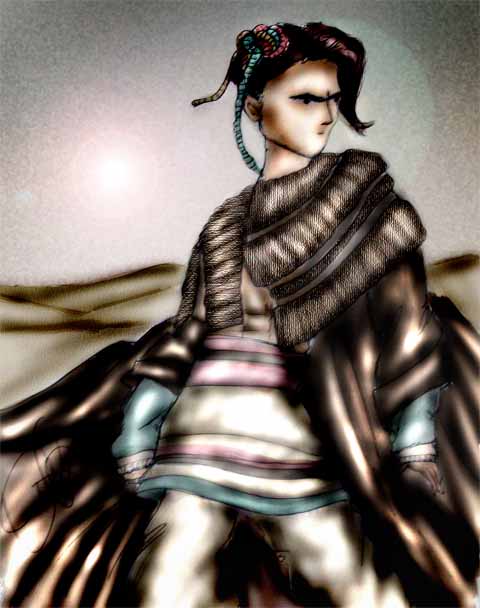
C/Bruerberg A/W 2011 by Karla Pérez Manrique.
Four menswear designers in one fell swoop: Fashion Scout’s Ones to Watch Men was the first of its kind and my last fashion show of the A/W 2011 season.

C/Bruerberg A/W 2011 by Karla Pérez Manrique.
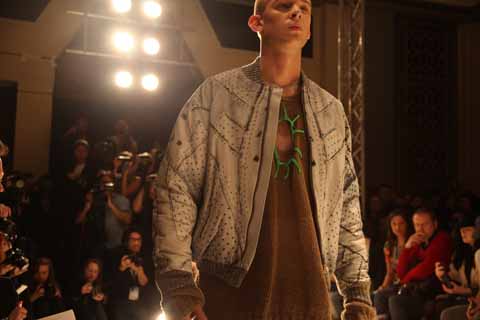



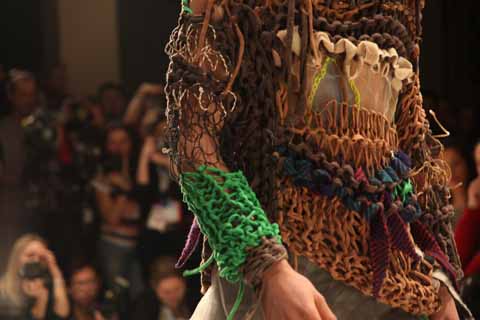


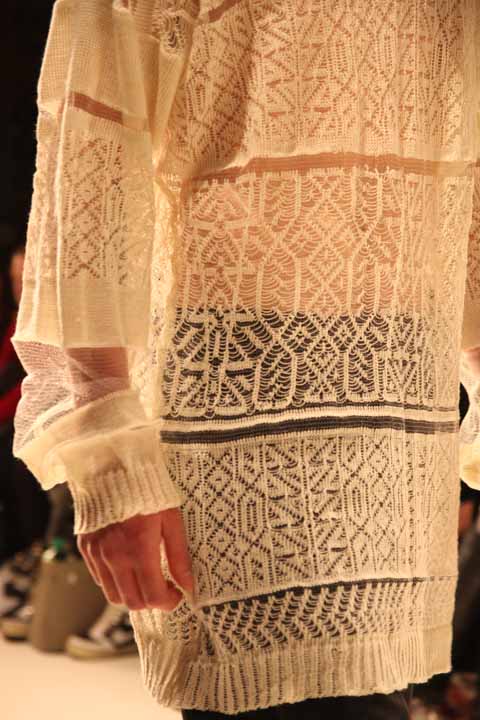


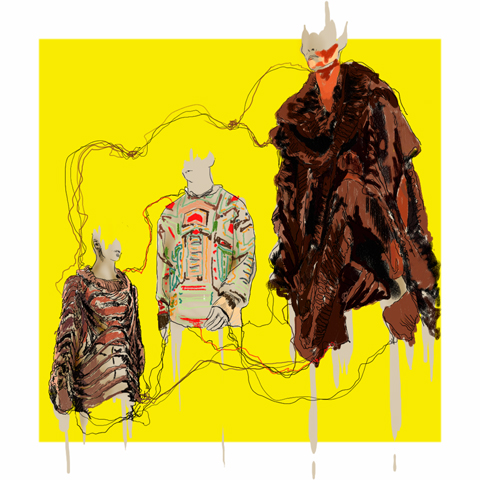
C/Bruerberg A/W 2011 by Rebecca Strickson.
My favourite was undoubtedly the first one out and the one collection designed by a girl. C/Bruerberg produces wonderful knitwear – a raggle-taggle collection of clashing materials, viagra dosage finely executed lace and draped shapes with sheer panels. Her colour palette was a confident mix of browns and greys with bright green and reds. I loved the playful accessorising of dangling head and neckpieces and the digital prints were equally strong. Camilla Bruerberg graduated from the Oslo National Academy of the Arts in 2008 and has collaborated with Royksopp and the Norwegian theatre.




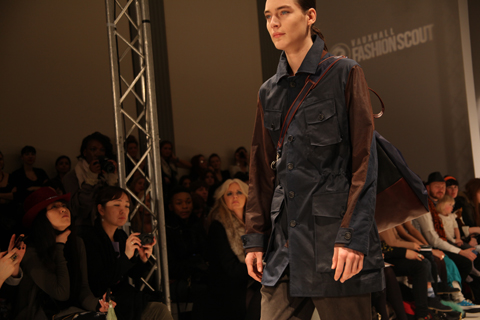



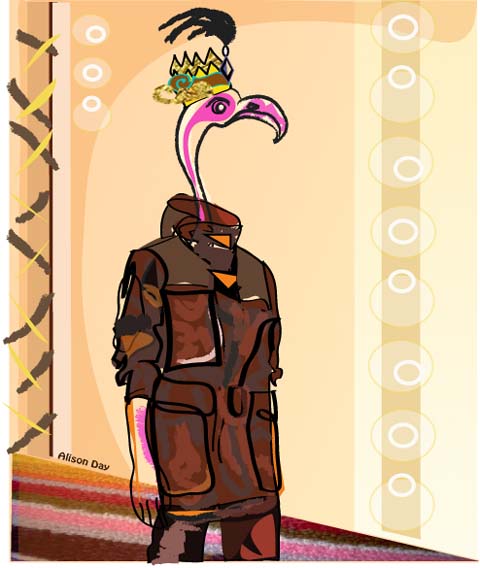
A.Hallucination A/W 2011 by Alison Day.
This season A.Hallucination by Hwan Sun Park and Chung Chung Lee showed their usual blend of well tailored suits and fine detailing, search focusing on contrasting quilted panels and sweet little touches such as bowties and ruffles. Jacket sleeves were rolled up, cure boots slouched. There was also a range of large bags slung across the back – rucksacks are a big emerging trend for men.



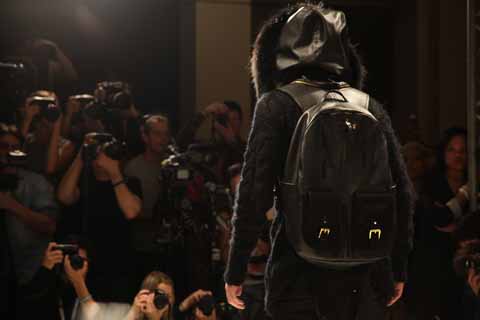

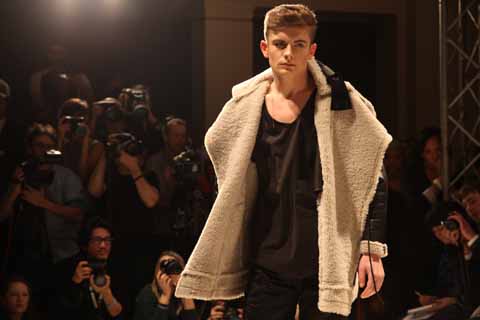
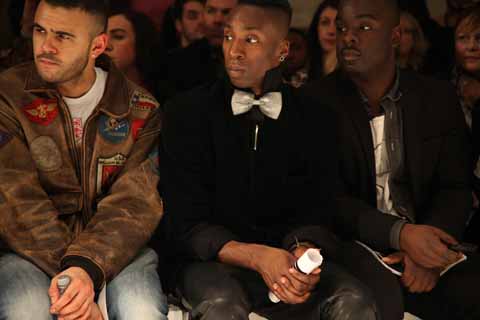
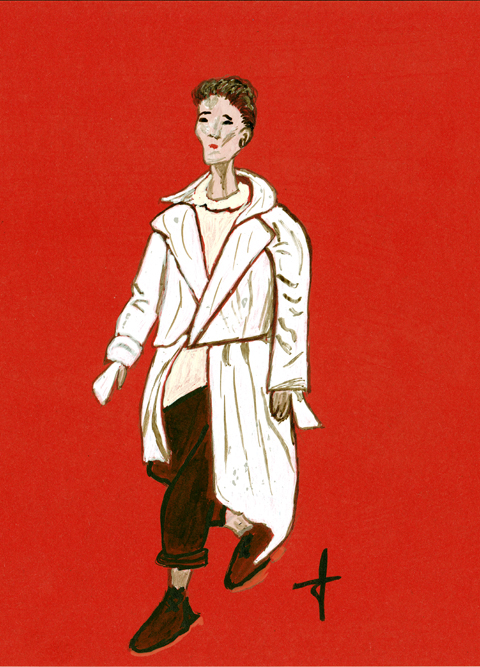
Mr Lipop A/W 2011 by Jane Young.
Aside from having a rather wonderful/silly name, Mr Lipop produced what was surely the most commercial collection of Ones to Watch, rife with wearable items. Hoods, tailored leather backpacks, loose sheepskin and relaxed suiting was the order of the day. He’s worked as a tailor for Nathan Jenden for several seasons, but maybe a relaxed approach comes from his love of football – not the most obvious choice of hobby for a fashion designer. Bit concerned that was real fur trim though. Naughty step for Mr Pop if so.
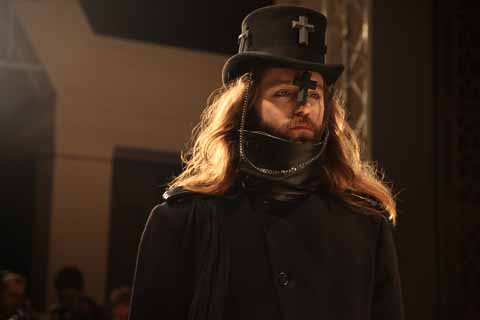

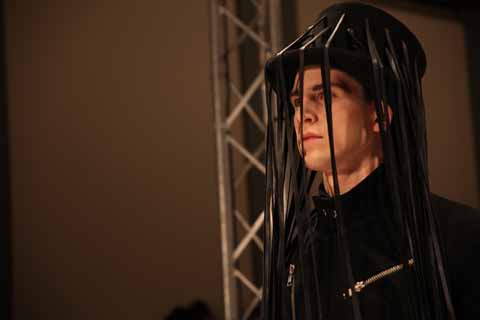

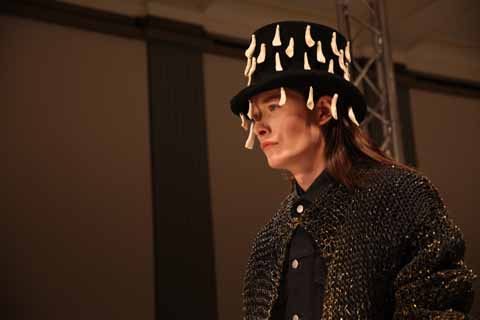
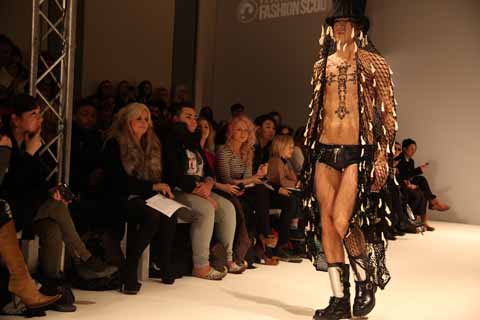
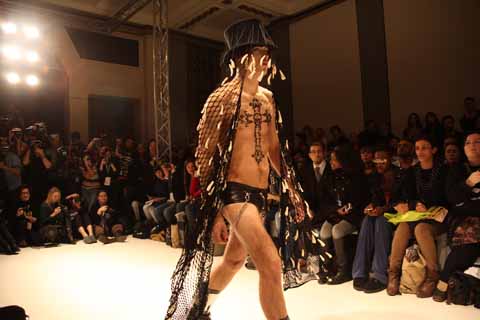


Asger Juel Larson A/W 2011. All photography by Amelia Gregory.
With his Uncle Sam collection Asger Juel Larson drew the most surprised looks from big retail buyers in the front row – maybe because of the crucifix encrusted top hat? Or the feathered headdress made from two entire wings? Or the amazing holey knitwear encrusted with what looked like deflated balloons, worn over leather hot pants and not much else? Surely these are highly sellable items, non? Asger is a London College of Fashion graduate with some considerable hype to his name since being involved with Turkish luxe label Tween. According to the press release he’s inspired by historic events to create a sharp structured silhouette, though I’d say he owes more to the fantasy of High Gothic films.
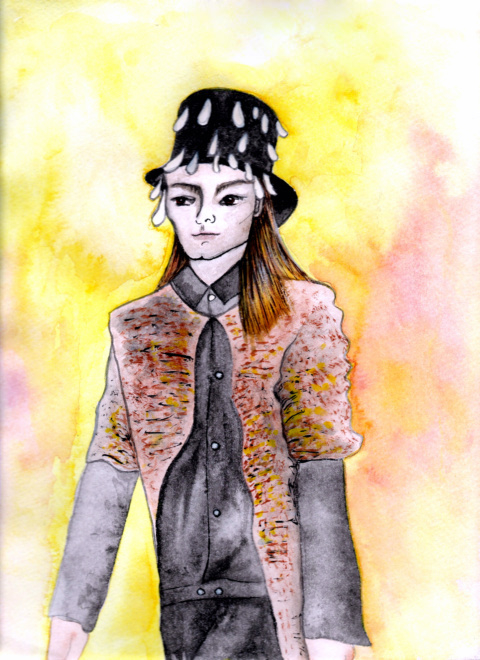
Asger Juel Larson A/W 2011 by Sam Parr.
When I worked as a stylist I loved styling men far more than women, but because I struggled to find good menswear I invariably ended up using the same brands all the time. So it’s great that the much talked about renaissance in menswear design is finally happening and is getting such great support from Fashion Scout director Martyn Roberts. I look forward to next season with anticipation.
Categories ,A.Hallucination, ,Asger Juel Larson, ,C/Bruerberg, ,Camilla Bruerberg, ,Chung Chung Lee, ,Fashion Scout, ,Freemasons’ Hall, ,High Gothic, ,Hwan Sung Park, ,Jane Young, ,Karla Pérez Manrique, ,lfw, ,London College of Fashion, ,London Kills Me, ,Martyn Robert, ,menswear, ,Mr Lipop, ,Nathan Jenden, ,Norwegian, ,Ones To Watch, ,Ones to Watch Men, ,Oslo National Academy of the Arts, ,Rebecca Strickson, ,Royksopp, ,Sam Parr, ,tailoring, ,Tween, ,Uncle Sam
Similar Posts:
- London Fashion Week S/S 2012 Menswear Catwalk Review: Asger Juel Larsen Vs t.lipop
- Asger Juel Larsen Vs T.Lipop: London Fashion Week A/W 2012 Menswear Day Catwalk Review
- Fashion East and NEWGEN Menswear Installations: London Fashion Week A/W Presentation Review
- Middlesex University Graduate Fashion Designers 2013: Preview Part One
- London Fashion Week A/W 2010 Catwalk Review: Christopher Shannon


 Cushions by Caitlin de Hinshelwood


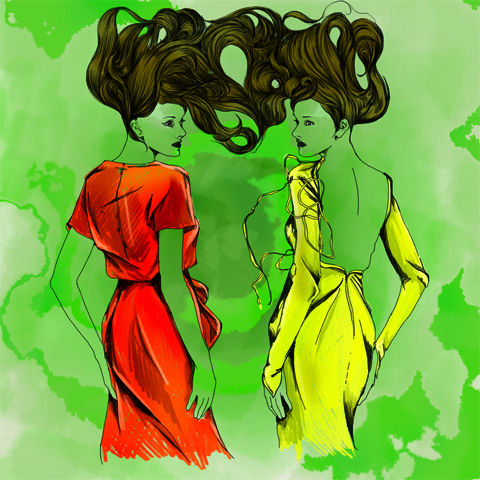

 pharmacy Photography by Amelia Gregory” title=”Find Your Feet Honey’s Dance Academy, Photography by Amelia Gregory” width=”480″ height=”320″ class=”aligncenter size-full wp-image-38157″ />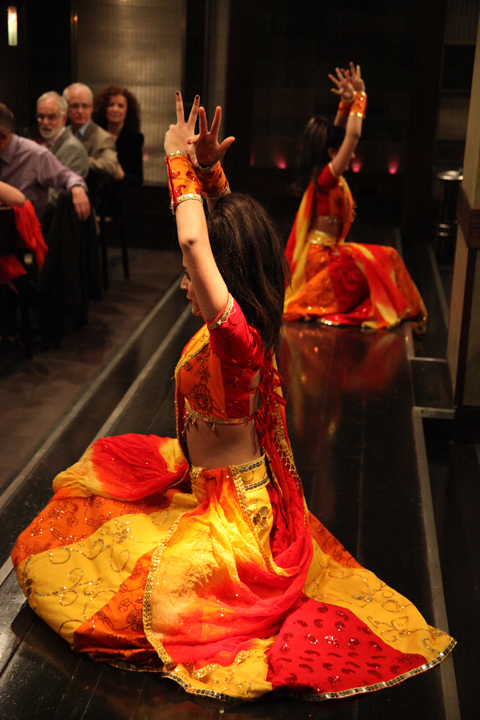


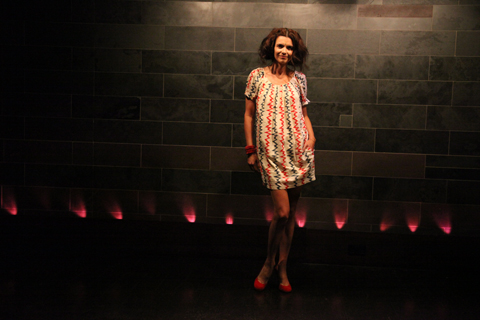
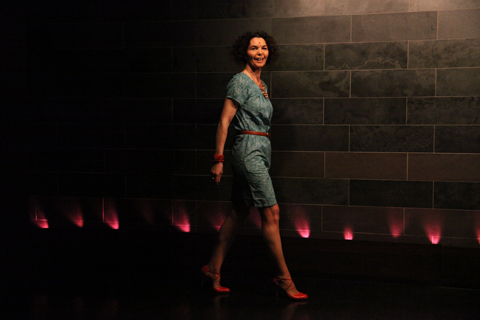


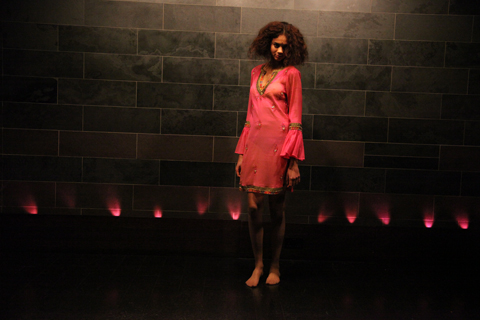


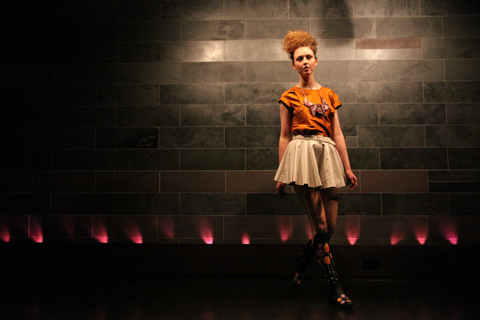

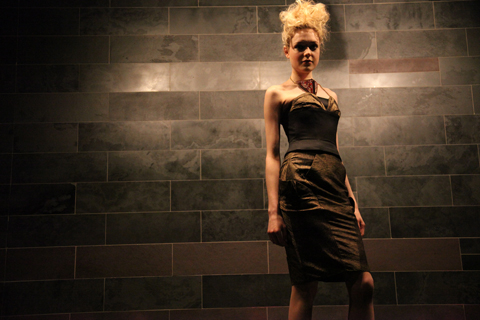
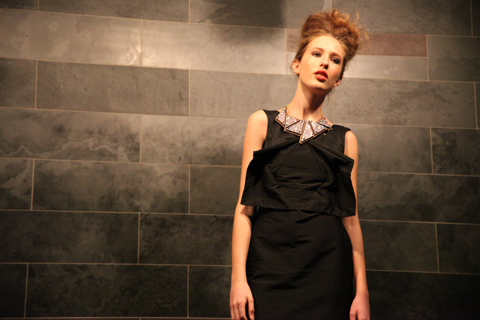

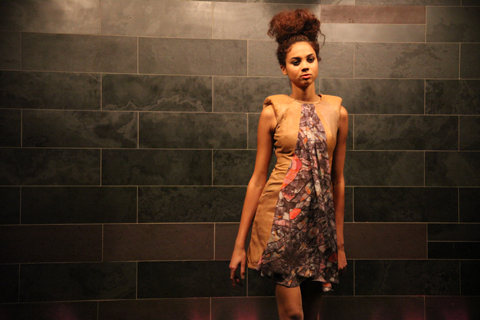


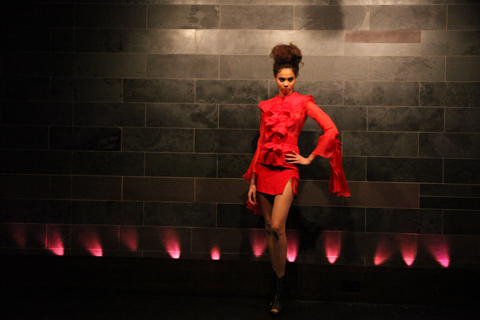

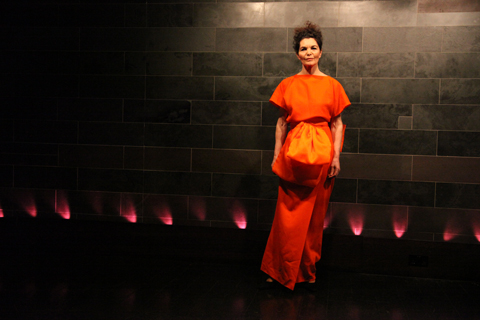
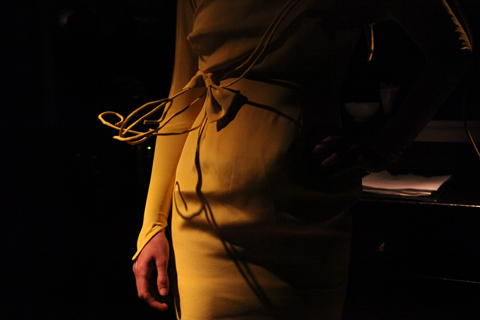


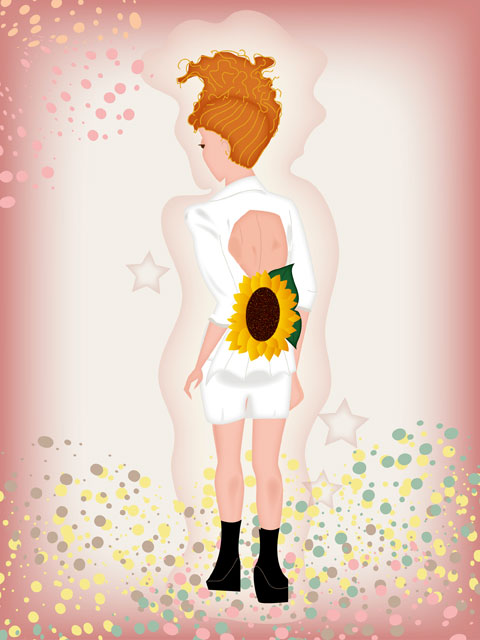
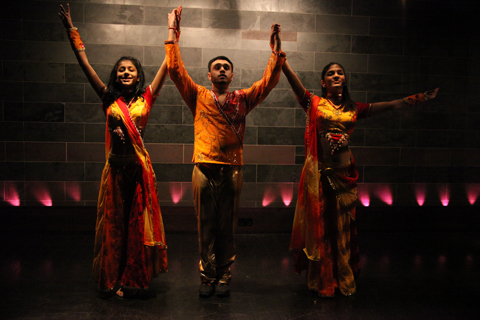


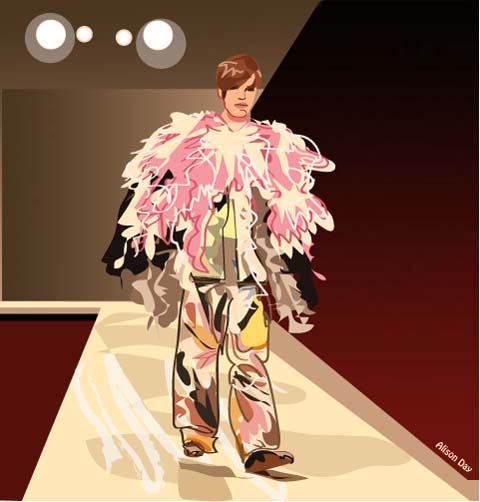


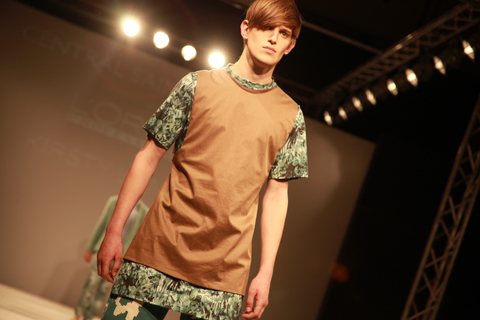
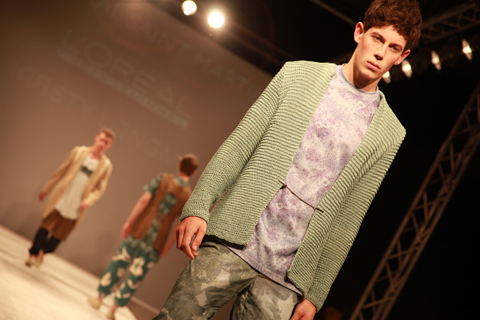


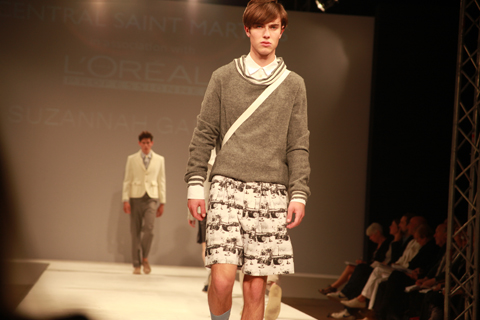
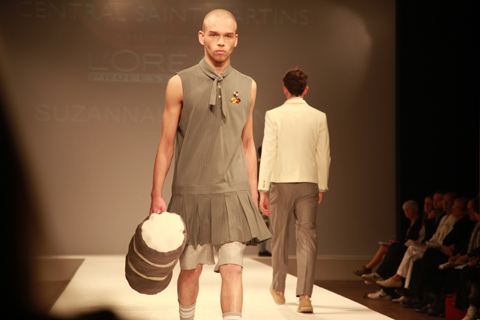


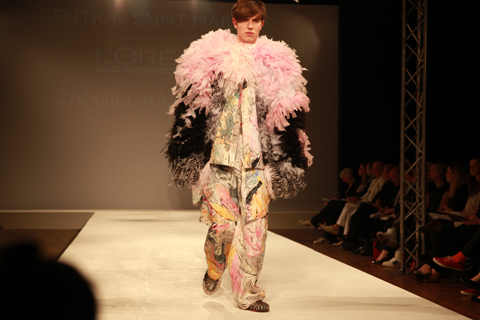

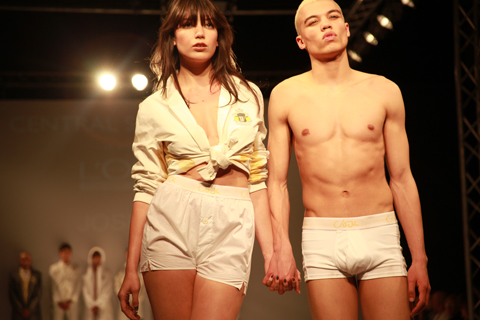

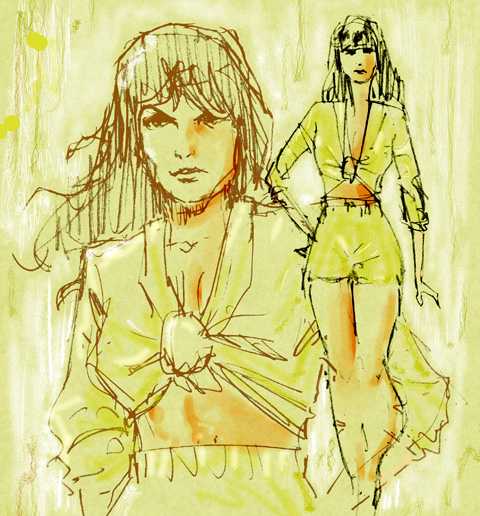







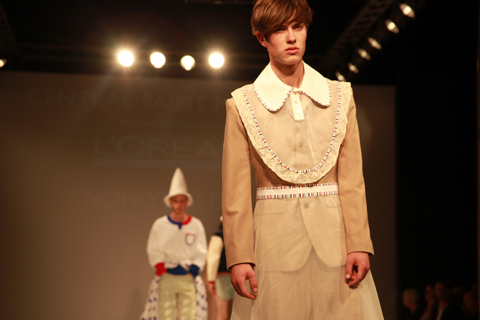


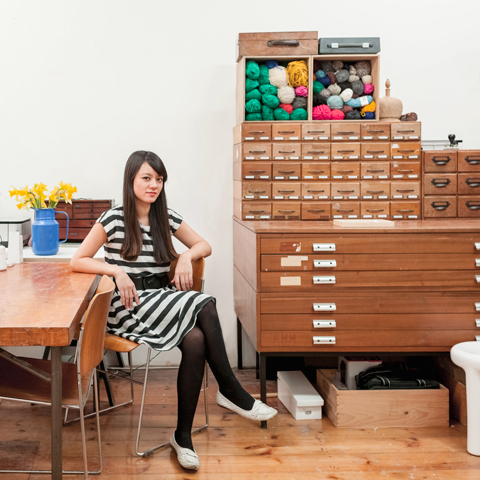




![190809_theunthanks[1]](http://www.ameliasmagazine.com/wp-content/uploads/2011/03/190809_theunthanks1.jpg "190809_theunthanks[1]")


