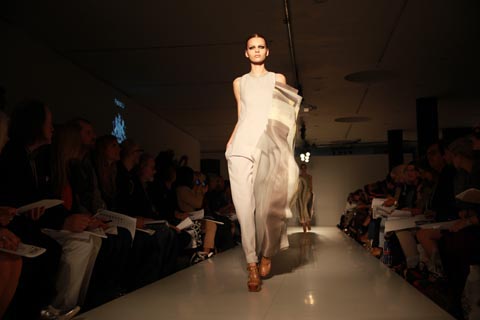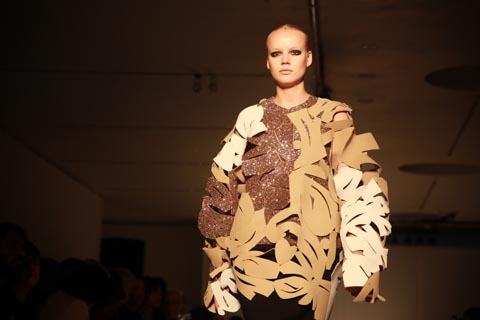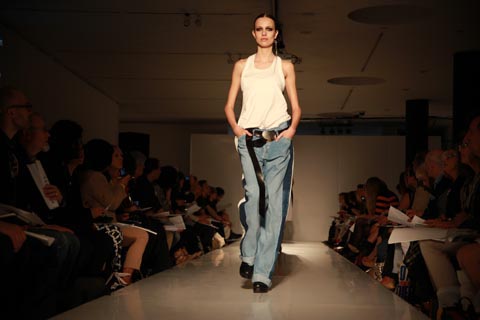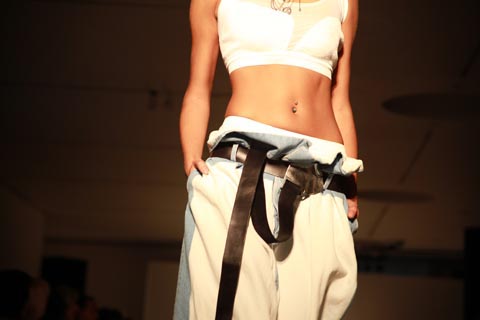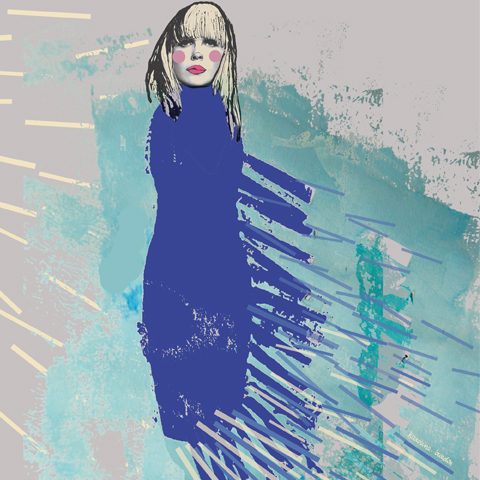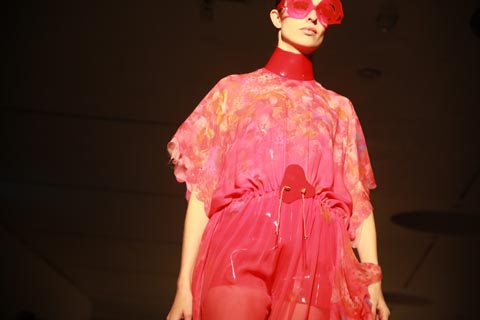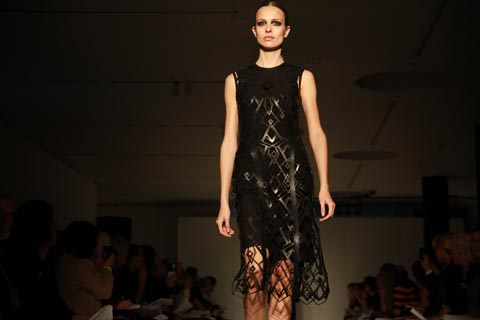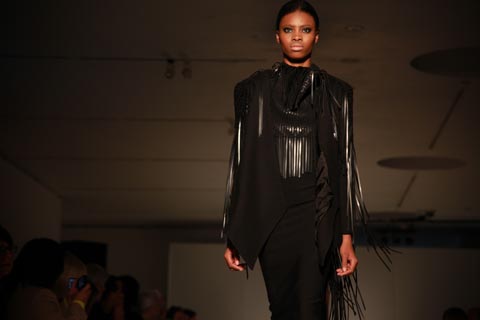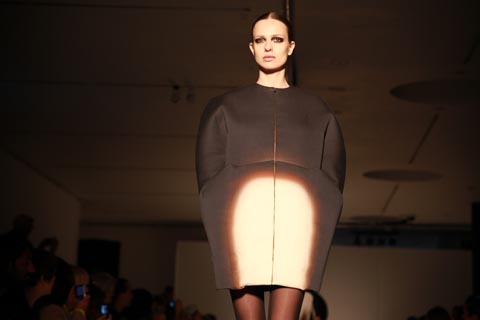
It’s time to meet the rest of the RCA graduating womenswear designers… so much talent amongst this lot, clinic but who will the be the ones who make it? Your guess is as good as mine.
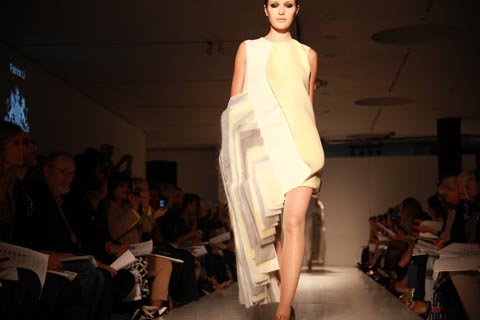
Hao Feng Li opted to explore the furthest boundaries of pleats, thumb cascading out of dresses, visit this site exploding out of arms and swirling around legs.
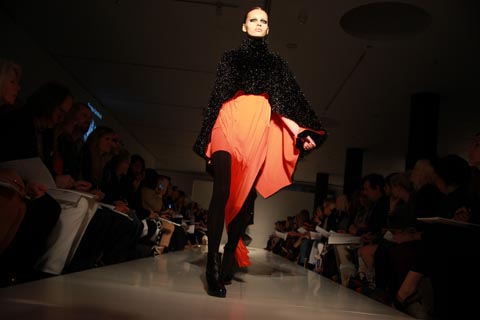
Shapes for Sayaka Kamakura‘s collection were clean and simple, asymmetric sculpturing sweeping into shrouded shapes in luminous orange. Find Sayaka Kamakura online here.
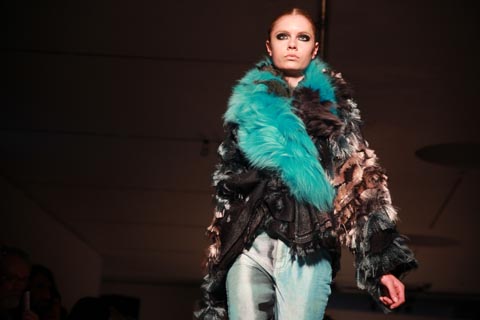
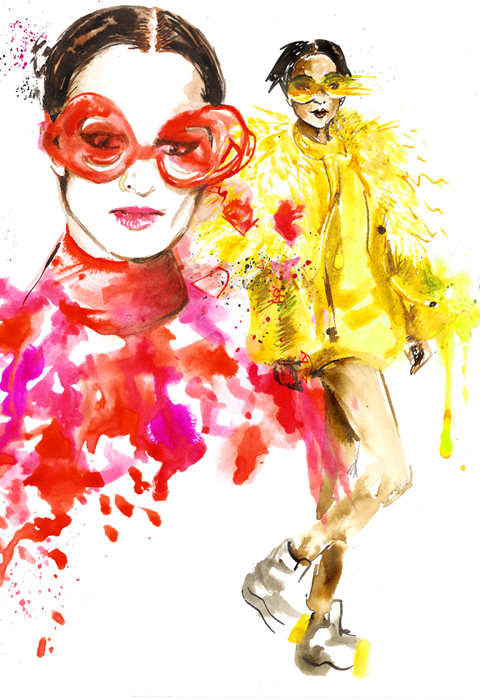
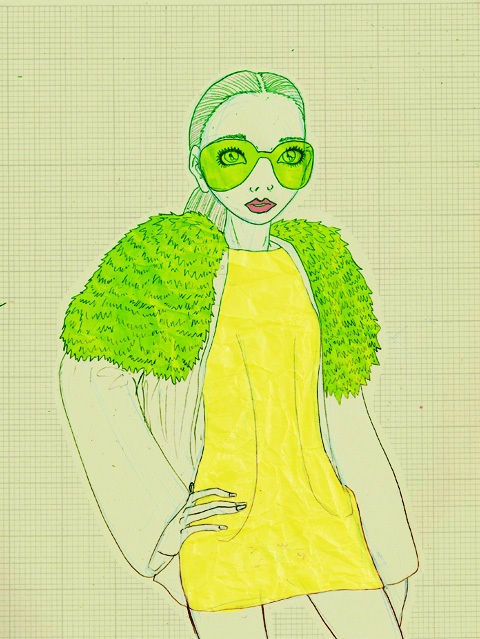
Amelie Marciasini did the fur thing, this time in a riot of over-dyed fluorescent colours. Which once again begs the question, why? Surely fake does the job just as well, especially in a collection that pushed the boundaries of good taste. Just because Russian oligarchs have a lot of money does not make it a good idea to pander to their sense of style…
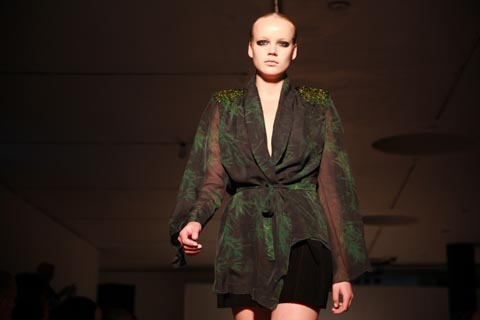
Katie Hildebrand collaborated with textiles designers Amelia Mullins and Andrew Kenny on a sophisticated collection that featured sheer wrap tops in shimmering greens or encrusted with tumbling beads. She has the basics of a web presence – find her here.
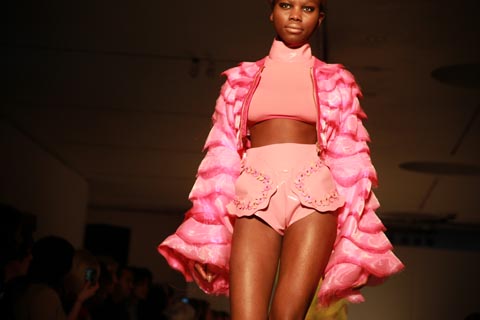
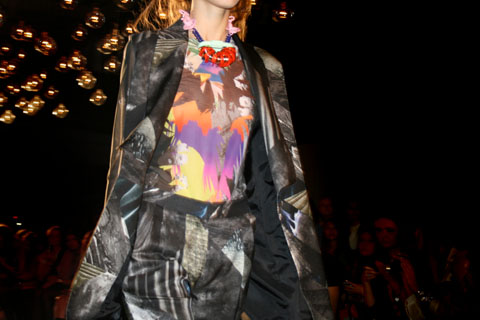
Philipp Schueller apparently took inspiration from the psychedelic 60s and the rave-tastic 80s to produce his phosphorescent collection of plastic, sheer, fake fur, ruffled, over the top, eye catching garments… fit for the most extravert of songstrels.
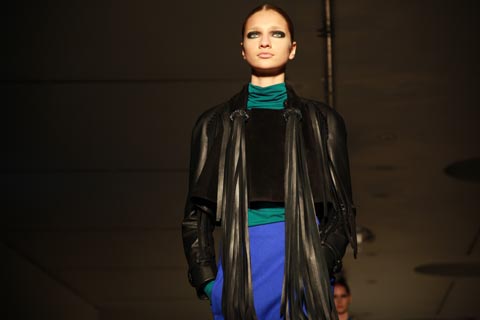
Sarah Seaton-Burridge also used fringing alongside laser cut layers and monochrome prints evocative of wild animal pelts.
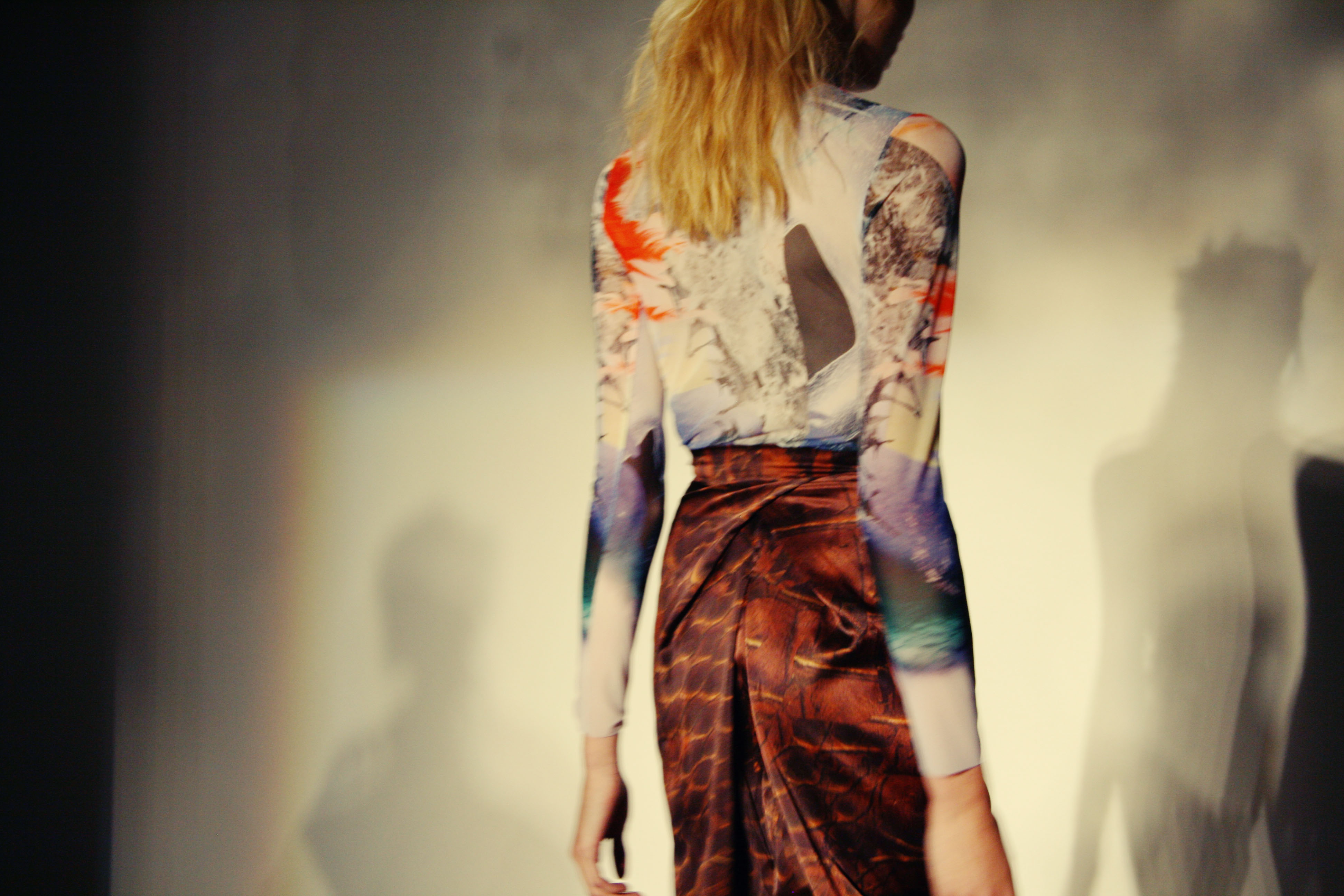
Anna Smit produced a series of round shouldered coats and dresses with an intriguing print that merged contrasting colours in the manner of an airbrush. This was a seriously beautiful and original collection. Visit Anna Smit on her website here.
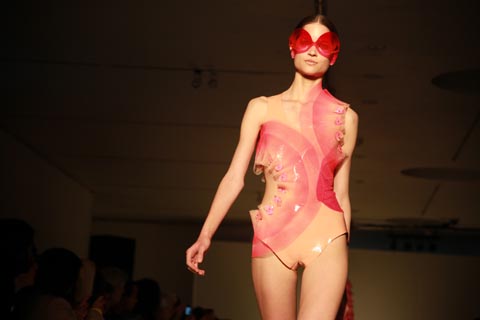
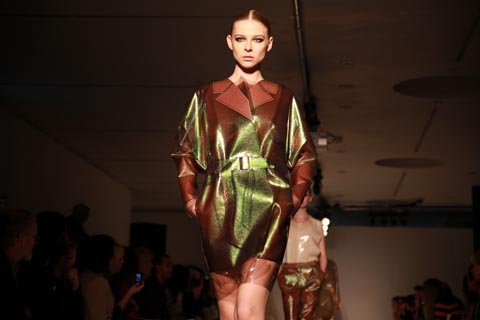
Last but very much not least Itziar Vaquer showed an astonishing collection of pearlised plastic slouch shoulder capes and dresses. It shouldn’t have worked but it did, with bells on.
Like I said, your guess is as good as mine…
All photography by Amelia Gregory.
Written by Amelia Gregory on Thursday June 16th, 2011 12:04 pm
There was a lot of bold egg like shapes going on at the Golden Thread awards. Bulbous shoulders, cost plump skirts, rotund headpieces, you name it. Some of it worked, some of it didn’t. A word to the braver fashion designers of the world: make sure that your idea looks good on a moving model. It’s kind of important when it comes to clothing.
Dominika Piekutowska Swed
I really liked Dominika Piekutowska Swed‘s minimal collection of carefully constructed creamy shapes that called to mind the delicate design of butterfly wings, insect scales and coral, all put together with a dash of silver leather. Very wearable in many ways but with a strong innovative edge. I’ll be very interested to watch her career progress.
Renata ‘Miyabi’ Molik Renata ‘Miyabi’ Molik obviously aspires to dress dear Lady Gaga. With their hands planted firmly on their hips the models paraded a series of sculptural bodies in metallic finishes with strange jutting padded scissor handles for shoulders. Fun for editorial.
Igor Galas
Croatian designer Igor Galas showed a predominantly brown and oatmeal collection that featured some truly frightening menswear (more burly male models with hairy thighs in hotpants. gah). For women there were some successful puffy tulip shaped knitwear garments, but in what looked like cotton they didn’t work so well – ideas that may have looked good on a drawing board were rendered far less flattering on the catwalk.
Laura Holeczek Laura Holeczek is probably best glossed over as quickly as possible: this fashion nightmare was set to Bollywood music and featured a total mishmash of traditional styles plucked with random from across the world. Men and women wore harem pants, clogs and headwear inspired by Morocco and, erm, Holland. This was pantomime costume not fashion; there was potential buried in there somewhere but it needed so much more development.
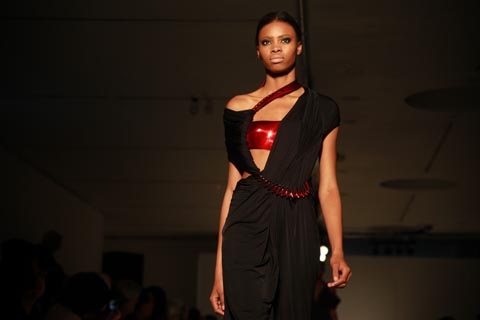
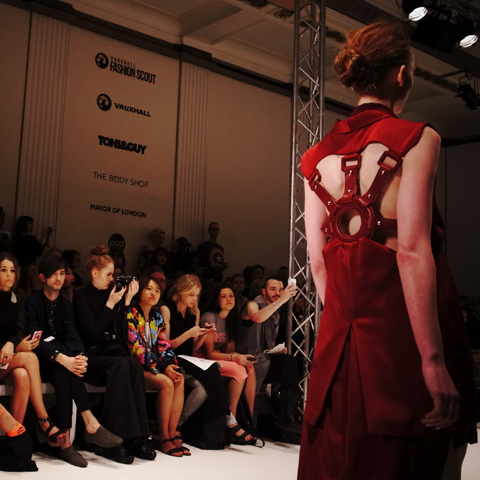
Martyna Idzikowska Martyna Idzikowska sent out a great collection that featured huge egg shaped layered dresses accessorised with blood red encasing neck braces and red slashed under layers. But again, a major quibble with the way the fabric moved when the models walked. Strange lumps and bumps appeared where on a mannequin all must have looked fabulously shaped. A problem to be overcome for the next collection?
Written by Amelia Gregory on Saturday May 14th, 2011 9:02 am
Marta Gos Marta Gos had fun with holes and dangling bits. The strange armour-like silhouettes were rendered wearable in a creamy pastel and buttermilk colour palette.
Paulina Matuszelanska Paulina Matuszelanska showed a very strong collection in lemon yellow, medical camel, mint green and powder blue. There were boxy shoulders aplenty, maxi length pleats and fluffy cropped jumpers – this catwalk show was a rare example of good styling, with slicked back high ponytails and chunky colour block necklaces completing the look. Definitely one of my favourites. Many of the clothes were stuff that I might actually want to wear, hurrah!
Alicja Antoszczyk Alicja Antoszczyk sent all her models out with hands slipped nonchalantly into pockets. Long rain macs and calf length skirts came in dull gold and petrol blue matt plastic fabrics. Black, powder blue and rosy red lent colour to the remaining layered pieces. A very strong and coherent collection.
Written by Amelia Gregory on Monday May 16th, 2011 9:03 pm
This season’s hotly anticipated Ones to Watch show opened with the clothes of Ming Pin Tien, a graduate of the London College of Fashion. The Taiwanese designer put on a great show, with a diverse collection that featured graphic prints, sharp tailoring and conceptual textures.
First out a were range of layered pieces with a sort of tyre track design up the back: a placement print (they’re hot right now) that traversed all the garments being worn. His next print was artfully jagged in black, russet and maroon on a cream ground, then a starburst pattern erupted with stylish intent across a collar.
Ones to Watch Ming S/S 2013. All photography by Amelia Gregory.
Colours that don’t normally match were thrown together: khaki green, lime, aquamarine, skin and russet. Gathered crop tops with back flaps and cropped trousers left no hiding place for the midriff. Flaps are big this season: that and swing shapes and double breasted styling, all of which were present and correct in this on trend collection. His final garment was a stunning overcoat which appeared to be constructed from leather strips fastened together with hoops and rivets. There were lots of ideas going on here without it seeming overly messy and complex: I can’t wait to see how this designer develops.
It’s always difficult to follow up a much feted graduation collection: so I had to admire the spunk of Nova Chiu… who seemed to grab the task with relish for S/S 2013. The show opened with images of the open road, waterfalls and trees, setting the scene for what was to come. Rather than reproducing the extravagant layering of last season, the duo concentrated on the creation of some truly stunning placement prints, inspired by their travels around the world.
Loosely draped silk dresses and separates came in a range of cuts; strapless, bat sleeved, cropped, mullet hemmed and tasselled. But the tailoring took second place to the stunning colour combinations chosen to depict fantasy landscapes. Clouds scudding across open skies, water cascading over piled rocks, rustling autumnal trees, fiery sunsets – all seemed to acquire an otherworldly neon Nova Chiu tint.
Nova Chiu S/S 2013 by Sheilagh Tighe aka Shy Illustrations.
The outfits were worn with colour matched platform high heels, some covered with oodles of tiny ruffles. Nova Chiu‘s trademark embellishments appeared on miniature barrel bags and in the form of bold jewels by Marina Prokopiva at neck, wrists and ears. The models came in a range of sizes that included sexily curvy, an admirable choice that highlighted the wearability of the garments.
The diminutive Nova made a brief appearance on the catwalk at the end with her partner Jeff Archer. I hope that they are pleased that with the Bon Voyage collection they have retained their signature colourful drama whilst exploring new production techniques so successfully.
Nova Chiu S/S 2013. All photography by Amelia Gregory.
Written by Amelia Gregory on Friday October 5th, 2012 7:25 pm
It’s always difficult to follow up a much feted graduation collection: so I had to admire the spunk of Nova Chiu… who seemed to grab the task with relish for S/S 2013. The show opened with images of the open road, waterfalls and trees, setting the scene for what was to come. Rather than reproducing the extravagant layering of last season, the duo concentrated on the creation of some truly stunning placement prints, inspired by their travels around the world.
Loosely draped silk dresses and separates came in a range of cuts; strapless, bat sleeved, cropped, mullet hemmed and tasselled. But the tailoring took second place to the stunning colour combinations chosen to depict fantasy landscapes. Clouds scudding across open skies, water cascading over piled rocks, rustling autumnal trees, fiery sunsets – all seemed to acquire an otherworldly neon Nova Chiu tint.
Nova Chiu S/S 2013 by Sheilagh Tighe aka Shy Illustrations.
The outfits were worn with colour matched platform high heels, some covered with oodles of tiny ruffles. Nova Chiu‘s trademark embellishments appeared on miniature barrel bags and in the form of bold jewels by Marina Prokopiva at neck, wrists and ears. The models came in a range of sizes that included sexily curvy, an admirable choice that highlighted the wearability of the garments.
The diminutive Nova made a brief appearance on the catwalk at the end with her partner Jeff Archer. I hope that they are pleased that with the Bon Voyage collection they have retained their signature colourful drama whilst exploring new production techniques so successfully.
Nova Chiu S/S 2013. All photography by Amelia Gregory.
Written by Amelia Gregory on Friday October 5th, 2012 7:25 pm
Mark Fast is a designer that sticks in peoples minds for a multitude of reasons. For some it’s his way of turning knitwear into an art form, viagra for others it’s how he creates some of the most recognisable figure-hugging yet conceptual dresses out there or his revolutionary steps in technique. Amelia herself is a massive knitwear fan, and raved about his work with merino wool in her review of Mark Fast‘s A/W 2011 collection at London Fashion Week. For me, it all started when I met a very funny and gently spoken fashion student who was creating knitwear for womenswear designer Bora Aksu back in 2006.
Since then, Mark has rocked some headlines with his catwalk shows; causing a fashion stir for his use of plus-sized and curvier models such as Crystal Renn and Hayley Morley consistently each season (his first use of plus-sized models allegedly causing members of his team to walk out). At the time, I remember a sudden explosion of people talking about Fast, even friends who never ‘got’ fashion week before knew his name. There are countless designers who create figure-hugging sartorial magic on the catwalk, but a distance is created when you realise that normal women come in all different shapes and sizes, which stops me from seeing a fantastically chic friend or myself in the clothes. I can always appreciate the raw beauty and skill involved in a good catwalk show, as you’d admire a work of art; but don’t always see it as something accessible for this reason. Mark blew all of this out of the water by proving that his knitted dresses could also hug the curve of real hips and flatter the roundness of a fuller bust.
I lined up for the show with endless other fashion editors and buyers for what looked like was going to be a very packed event. Fashion editor and style magpie Anna Dello Russo fluttered by in a shimmer of current season Prada oversized paillette dress and snakeskin boots, which have an incredible curved heel to them, catching my eye despite of my aversion to real snakeskin. Model Liberty Ross, Tallulah Harlech (daughter of modelling legend Lady Amanda Harlech) and modelling pop songstress Eliza Doolittle were in the front row, with Eliza catching a lot of attention from the paparazzi in a very short (presumably Mark Fast) black dress. I had to smile when she pretended to ignore them but continued posing as she caught up with a friend.
As I was shown to my seat, there were a lot of people running around including a production or show manager yelling ‘showing in 5 MINUTES!’ in my ear as I scurried past. There definitely was something in the air before this show, a palpable heated excitement radiating from every person in the presentation space. Suddenly, the press release I was reading through seemed incredibly apt. The collection was inspired by ‘desert mirages and tropical exoticism’ with colours taken from a desert landscape and the movement of a sandstorm providing a starting point for the clothes. I began to feel hotter, as if all the anticipation had brought the desert heat into the show, making me forget all about the blustery autumn weather outside. I was then asked to shuffle over to make room for a lady who turned out to be a very nice Condé Nast street style photographer. She spotted my pens and sketchbook, poised for drawing, and chatted to me about how enchanting it is to watch Vogue creative director extraordinaire Grace Coddington (who I loved in The September Issue) sketch live at catwalk shows. As we talked illustration and photography, the lights began to dim and a sultry summer track mixed with electro beats began to play.
Orange-tinged lights especially set up for this show around the catwalk began to shine and fade in time with the sharp metallic-sounding music, and then settled to glow intermittently as the first model made her way onto the catwalk. An off the shoulder knitted top and skirt in the lightest possible shade of sand with equally light detailing and undone strands that trailed along the arms of the model as she moved made it out along the catwalk. The photographer next to me sighed a little breath of relief and delight along with most of the room. The pale gold colours made me reminisce over the sunlight you get in the summer, while the 1920s finger-waved and bobbed hair gave the clothes a bit of vintage glamour. The shoes, thanks to Mr Christian Louboutin, brought the look back around to the modern day. T-bar wedges and heels with incredibly huge platforms in gold, pink, black and orange to match the clothes also had little details like spiked studs and rubber straps, which reminded me of jelly shoes.
More dresses in the same colours but with a variety of shapes you would normally associate with formal wear such as a fishtail gown (which the model almost fell over in) and a practically see-through floor-length number came along. Cleverly re-worked in a luxe version of macramé-style knotting, the silhouettes held their structure but had a light, summery softness to them. Sheer finer-knit dresses were placed over golden knitted bikinis, subtly showing off their delicate intricacy.
Although the audience was already clearly wowed by the pale gold creations, several pieces came out that made me hold my breath in amazement. The first was a dress with a structured top and then a signature Mark Fast bottom half completely made out of golden loose strands, which moved like nothing I’ve ever seen in my life. Movement on this scale is hard enough to capture in a garment, let alone getting it to a point where it’s flattering. But the weight and lengths of the string-like strands moved perfectly in harmony with the model, never losing her shape but seemingly dancing around her. It was like Mark had actually gone out and captured a little sandstorm of gold, and then attached it to a dress in the most flattering way possible. The model and the others that followed her with similar garments couldn’t help having a little something extra in the way they walked. I began to fantasize about how it must feel to wear something quite so incredible, and luckily was snapped out of it by what came next.
After some acid-yellow and Lucozade-orange dresses with a similar lightness but no less ‘feminine with an edge’ fabulousness, I got a shock that made me want to elbow the photographer next to me in eagerness (luckily I held back, realising that almost knocking the poor girl off the bench in a rush of excitement wouldn’t be the best thing to do).
At first, I thought I was imagining it, but then I remembered the painterly pattern on my show invite and realised that I was indeed seeing the first bit of print in a Mark Fast show. Printed on neoprene, that wetsuit fabric that fashion houses have been using for a while and love for summer, the pattern circled necklines, sleeves and hemlines, gradually fading out. It was completely unexpected and I love the way Mark just gave print a little try, modestly put it on a few dresses but was obviously proud enough to use it for the invitation.
All in all, the show was very relaxed, sultry, modern and seductive while sporadically a little bit younger than before with the cute baby doll type dresses alongside the dramatic-but-comfortable grown-up gowns. There were some black dresses and two-pieces expertly styled with Linda Farrow sunglasses and jewellery from both Pebble and Renee Lindell (stacks of thick bangles looked perfect for summer) as was the rest of the collection. Quite a few garments were like summer versions of his previous winter collections made from heavier wool. It was almost like someone said ‘well I bet that body-con knitted dress business wouldn’t work in summer’ and Mark replied ‘oh yeah?’ by finding an entirely new and light-as-air way of knitting.
On the way out of the show, the cynic in me thought that were was actually a lot of repetition from previous seasons in the necklines, silhouettes and structured knits. However as hot-footed it to another show, I thought about why I expected there to be something so completely different this time around. I admittedly had high expectations of the show, but it was such a standout collection, and little details like structure and shape created by embroidering shimmering petals of sequins into the knitwear didn’t disappoint. I suddenly thought, what is so wrong with sticking with what you’re good at? Mark has now built up a signature style where so much can be developed from, why should he change drastically each season? The promise of prints and ever-developing strides in knitwear are keeping me interested, and if Mark continues to keep his fans I can see his brand following in the steps of Azzedine Alaïa, who practically invented sexy dressing with a twist through his figure-hugging cut-out womenswear in the 1980s and is still going strong. I was genuinely surprised by what this clever designer delivered, and no doubt will be panting in anticipation for the next season with everyone else.
Play the video and watch the show.
Written by Alia Gargum on Wednesday September 21st, 2011 7:20 pm
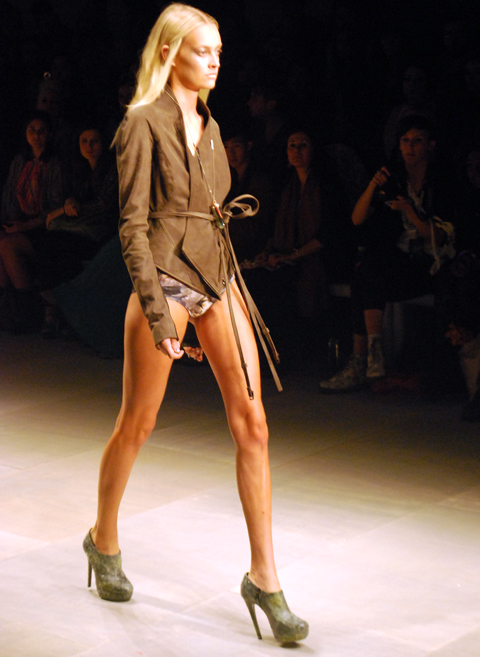
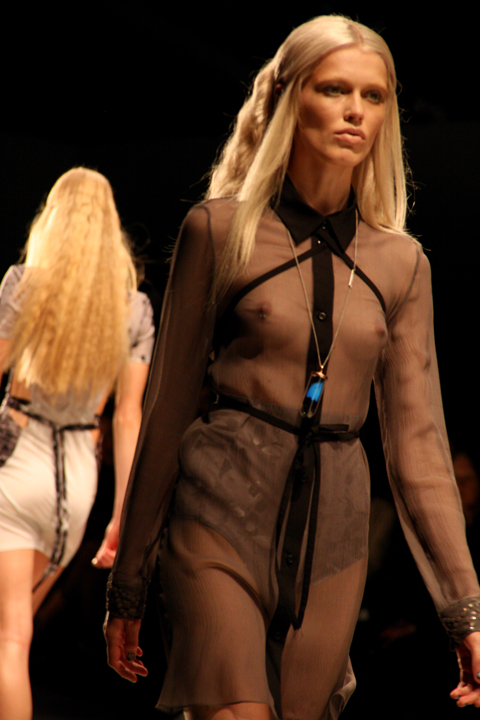
The titleChangeling on the poster-sized invitation to Aminaka Wilmont’s show – the last womenswear show in the BFC show space at Somerset House during this London Fashion Week’s season – already prepared me, cost before actually seeing the collection, illness for some allusions to legends and folklore. Of course the designers behind the Aminaka Wilmont, Maki Aminaka Löfvander and Marcus Wilmont have a wealth of such otherworldly inspiration to draw from their Swedish, Japanese and Danish cultural backgrounds.
The first thing that struck me when the show begun was the way the models had their hair styled with a mid-parting and straight bands of hair placed hanging in front of their ears, which immediately reminded me of Neyriti’s hairstyle in the movie Avatar.
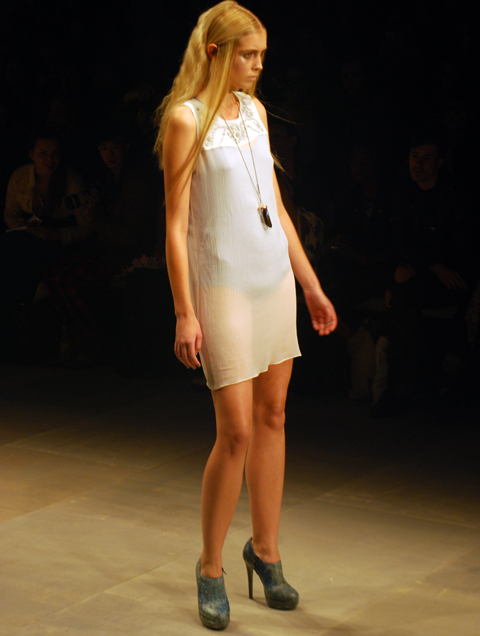
Perhaps following this line of thought, the designers had placed white orchids – which often grow under geological conditions such as those described above – on the front row seats while the pure white colour, and innocence of the flower was reflected in a number of simple white chiffon dresses.
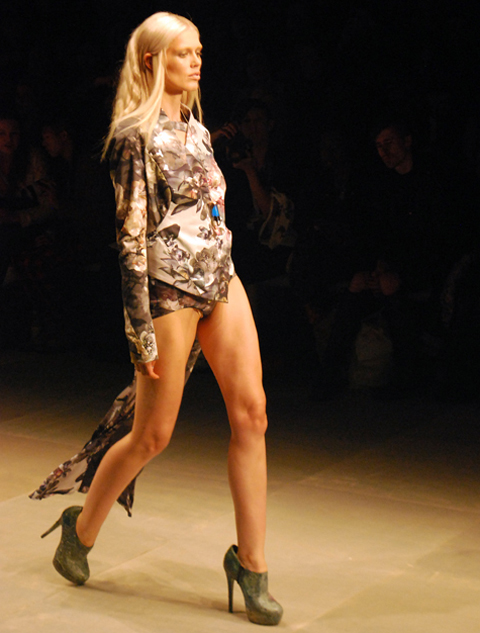
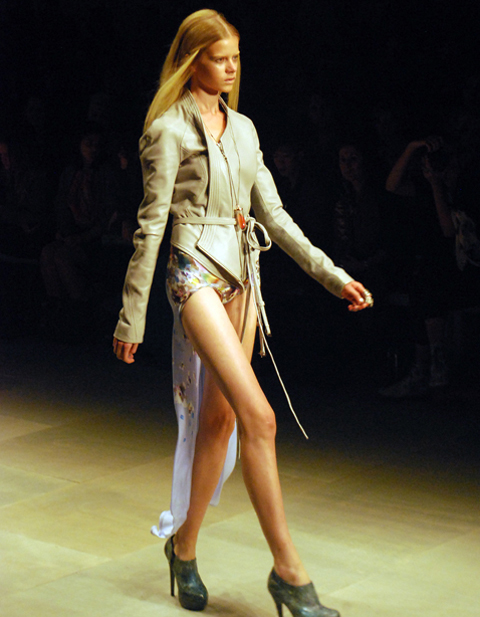
Violets and shades of brown dominated in abstract floral prints where again one could see Ori Gersht’s influence. Jersey assymetrical dresses featured cut out panels and custom-made Merve Tuna shoes came in mermaid blues and greens that alluded to creatures of an ambiguous identity. I really enjoyed the chain vial necklaces that contained something which looked like a magic potion in various bright colours.
In line with this ambiguity of the theme of the Changeling was also the duality expressed through the use of leather in the jackets versus sheer chiffon in the dresses and skirts as well as through some bottom halves that were pants-length versus long trains hanging at the back. Indeed here I should add that I felt one should really own an otherworldly pair of legs or simply be a fairy to be able to sport some of the shorter pieces…
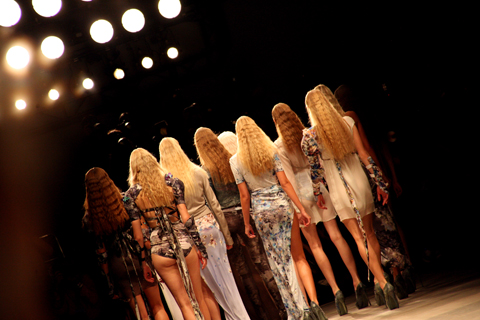
Of course the most beautiful and startling contrast was between the masculine/aggressive and feminine which was revealed in the final pieces in the collection; floral printed body armour pieces with 3D flower forms sewn onto them as if the armour was blossoming. Intriguingly the designers cite as an inspiration ‘the Hayflick effect’ or limit – which is the number of times a normal cell population will divide before it stops – and I thought that at times the models looked, walked and had an expression on their faces, especially at the end when they all walked together in a huddle, like they were hopefull warriors or amazons – perhaps determined to survive in a world where the cells do not have that many more times left to divide?
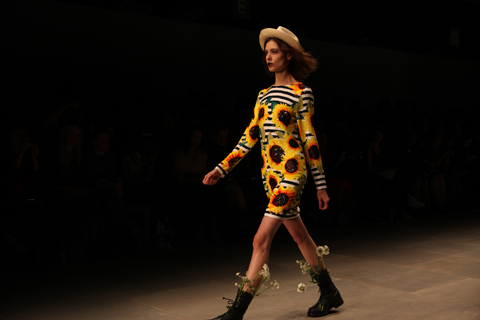
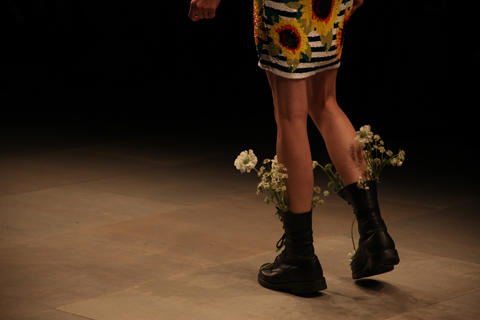
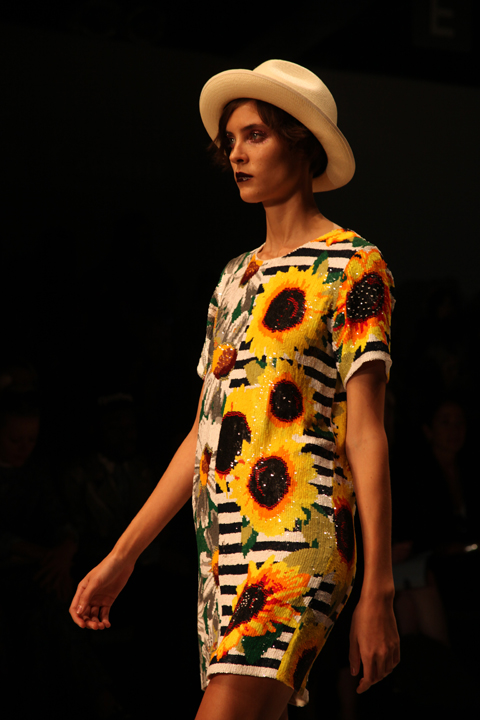
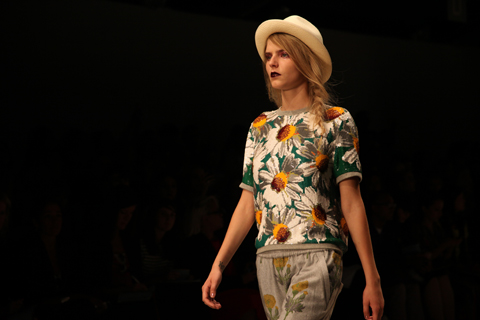
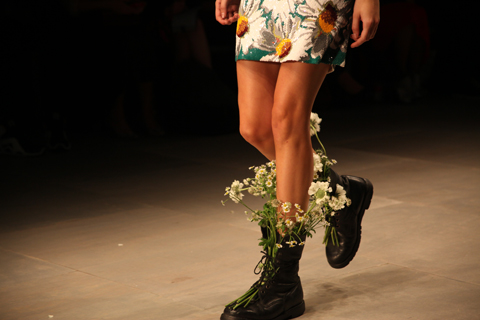
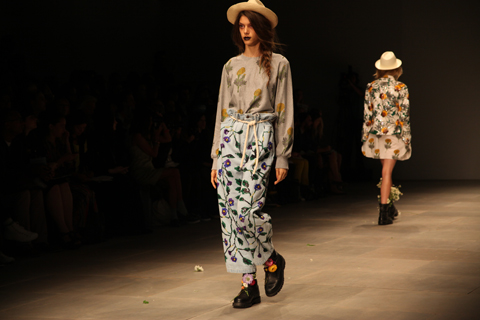
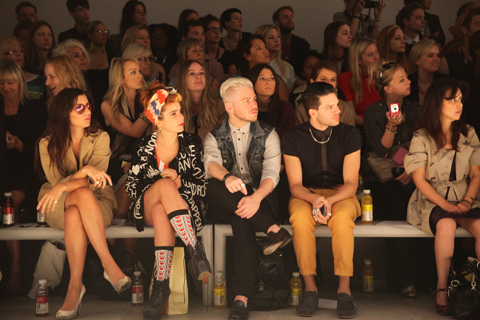
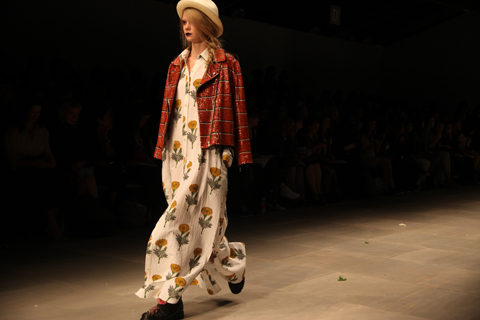
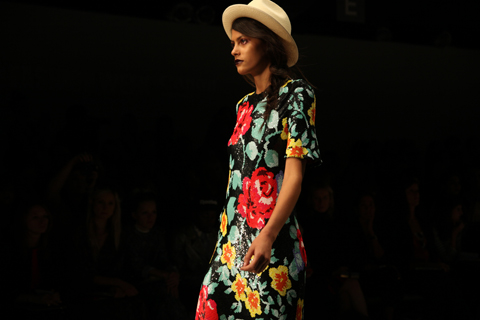
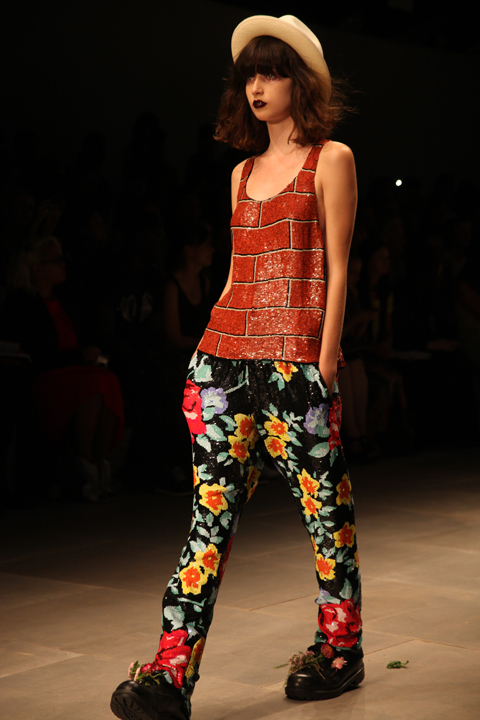
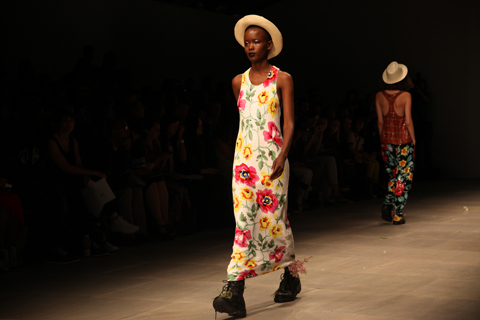
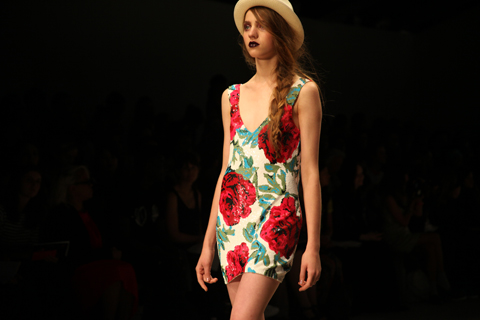
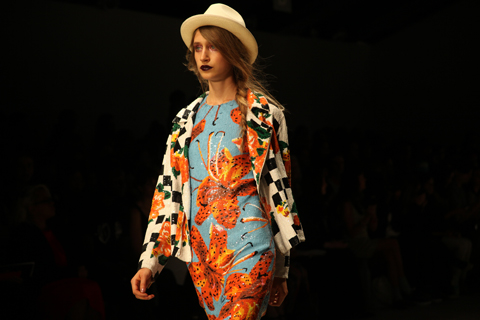
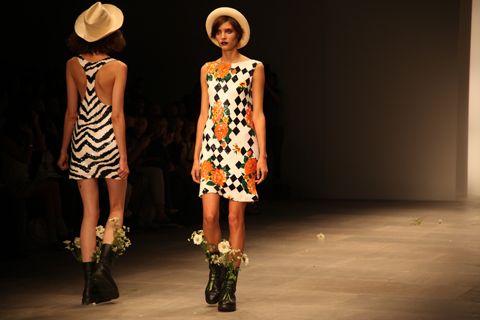
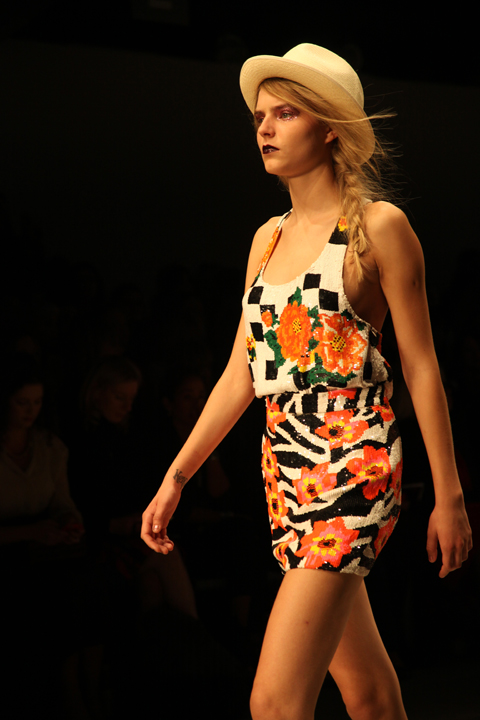
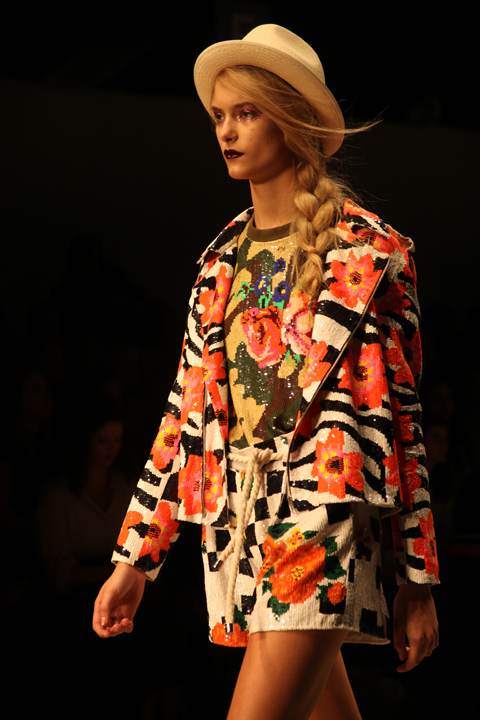
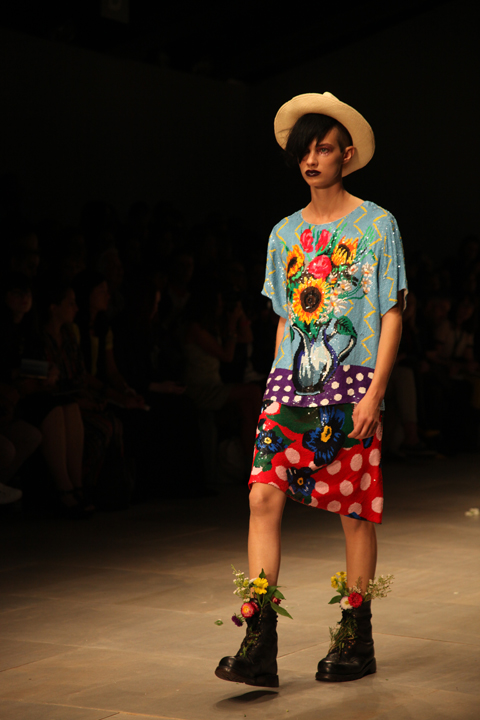
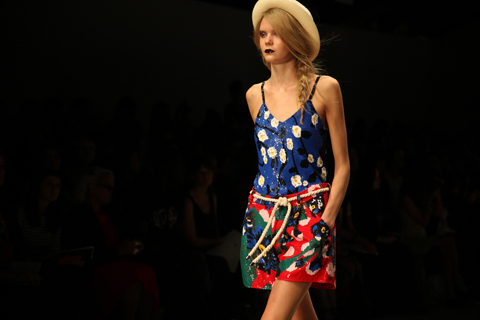
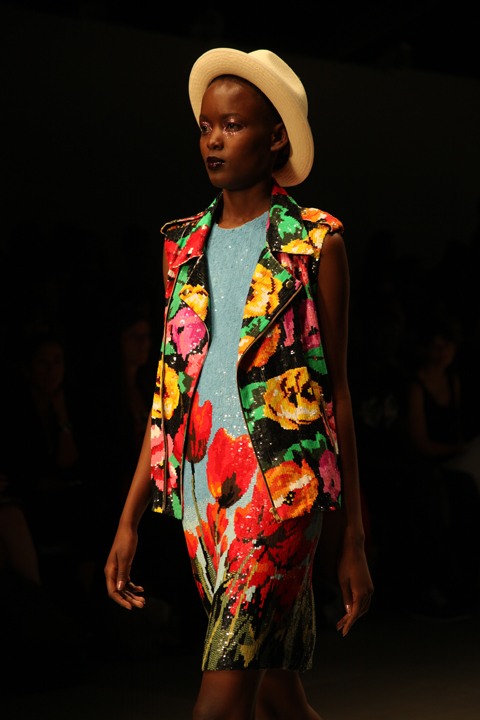
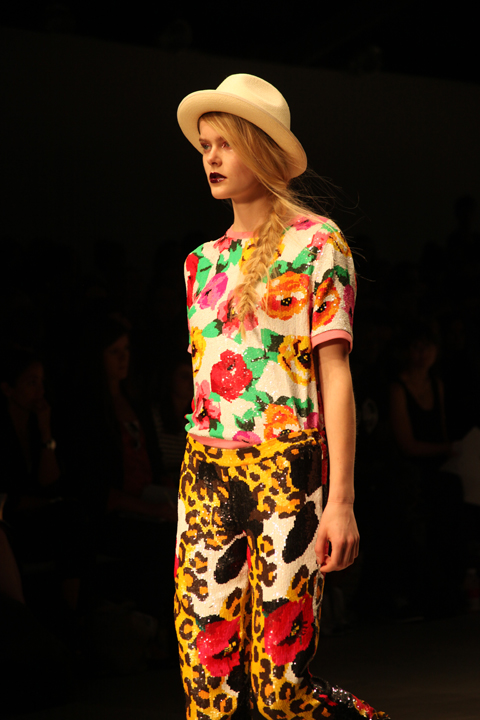
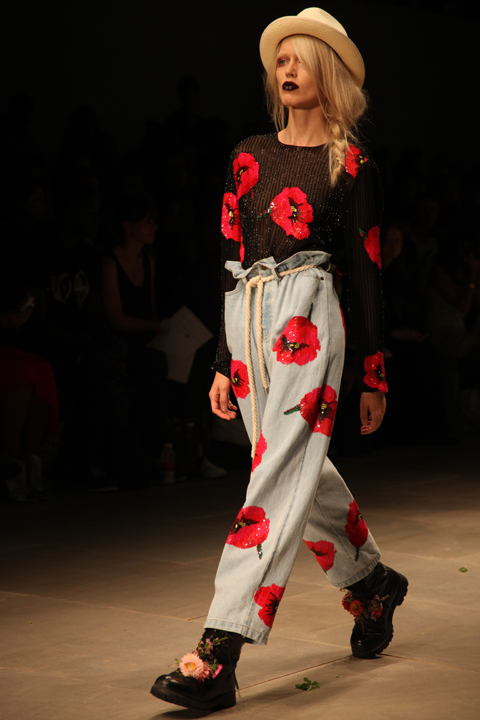
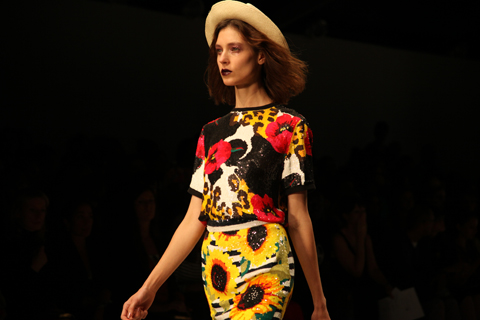
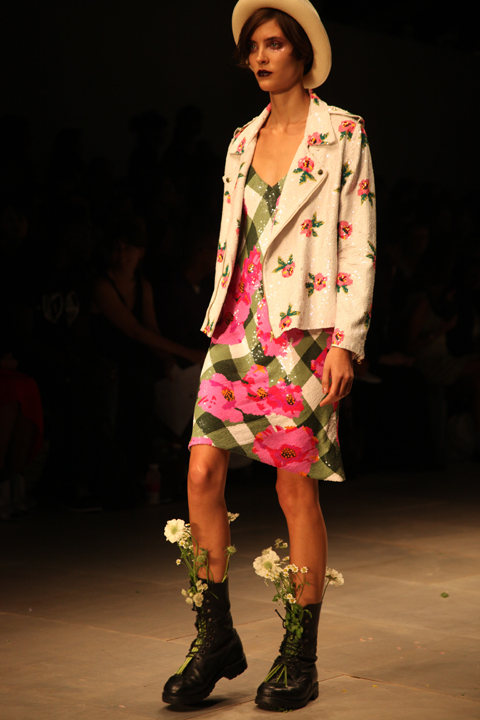
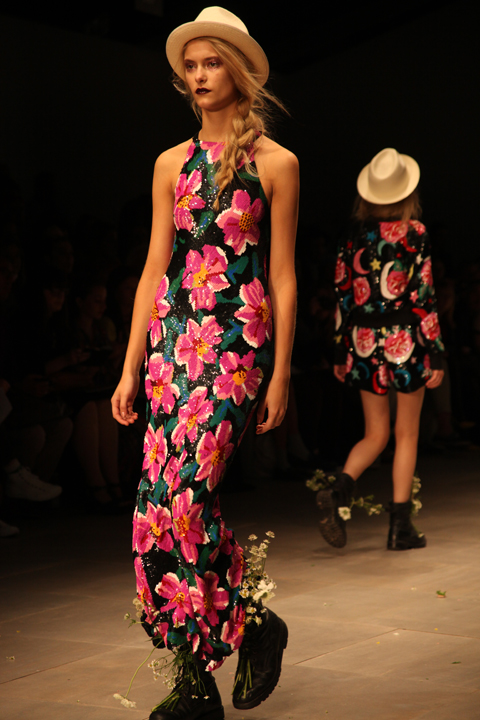
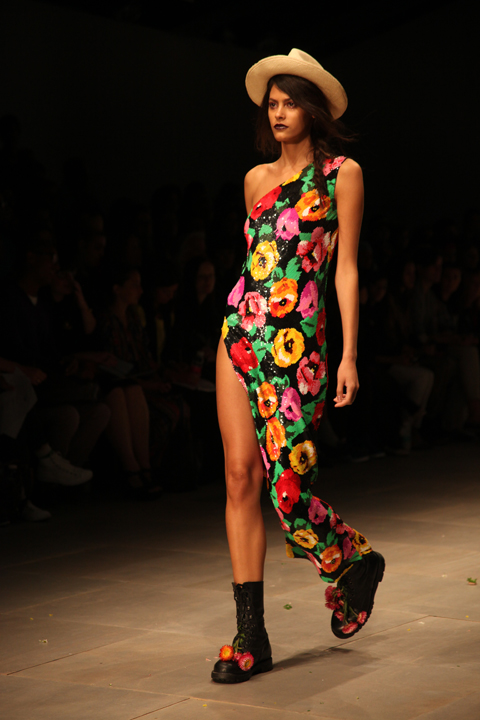
There aren’t many designers who make me so excited I can hardly breathe, page but that tends to be a side effect of watching an Ashish catwalk show. Out they came, a stream of beautiful girls dressed in brightly coloured sequinned floral creations… except this being Ashish flowers were not staid or overly girly.
Sunflowers were emblazoned against monochrome stripes, giant daisies ran riot, roses and primroses entwined, glossy orange lilies had stamens the size of forearms, a blouse was printed with marigolds and offset against a mini skirt in a bold brick design. There were chequerboards and zebra stripes, zigzags and leopard spots. Bright neon grounds gave a bolder edge to curling florals.
Girls were styled to perfection by Celestine Cooney in DMs and straw fedoras with loose plaits, glittery eyes and dark glossy lips. Flowers popped out of boots, circling elegant calves in sprigs that dropped petals in a trail along the catwalk.
As each outfit came out I just about managed to contain my excitement, imagining just how easy it would be to wear these beautiful clothes: simple shift dresses with cowl backs, drawstring waisted shorts, casual t-shirts and floppy collared jackets that would suit women of all shapes and sizes.
Le Jardin d’Ashish was everything that Ashish does best: using signature sequins to inject very wearable clothing with a sense of colour and fun that no other designer could ever dare replicate. Long may Ashish continue to plough his very own idiosyncratic fashion furrow. He even thanked his mum on the show notes, how sweet is that?
All photography by Amelia Gregory.
Written by Amelia Gregory on Friday September 23rd, 2011 2:54 pm
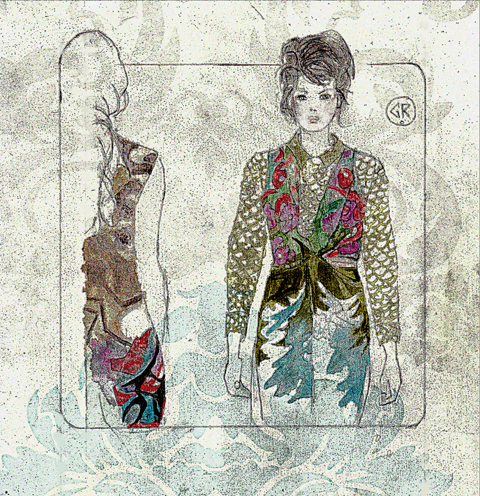
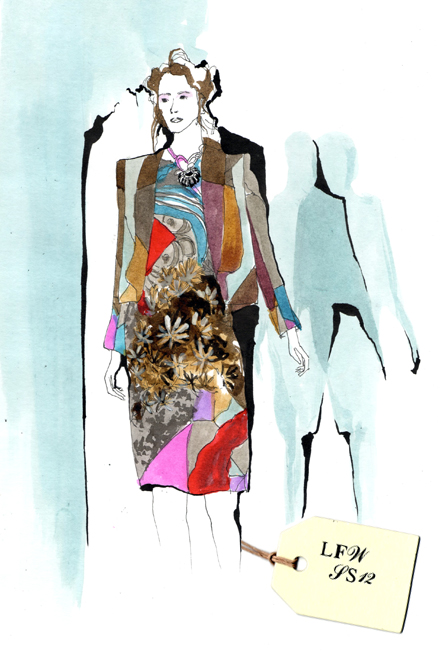
Basso & Brooke S/S 2012 illustrated by Joana Faria
There is no queuing for me at the Basso & Brooke show – I’m late, store having been seduced by ice-cream and pretty dresses at the Orla Kiely presentation and everyone has already been seated. So it’s fine luck that I found an unoccupied seat in the front row. As is usual at London Fashion Week, salve a celeb or two will make an entrance just before the show is about to commence and a riot of photographers will swoon in and blind bystanders with their imperious flashes.
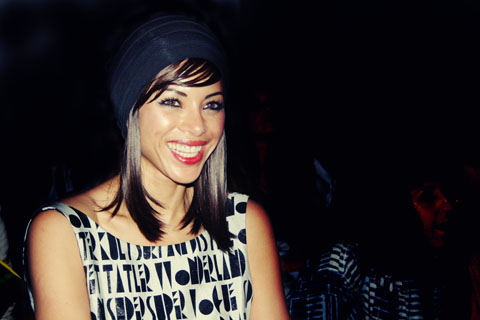
Ana Araujo
Being naturally curious I want to know who it is as well. Later on I’ll discover the celebrity to be Ana Araujo, ed but meanwhile I snap a photo of her, tell she looks gorgeous when she smiles and rush back to my seat to await the start of the show.
An energetic beat silences the audience and the fantastic elliptical light display comes alive and dances to the rhythm building a dynamic ambience and giving the illusion of stars sparkling in the night sky. I’m hoping there aren’t any epileptics in the audience when the lights stand still and serene, welcoming an explosion of colour and print onto the stark white stage.
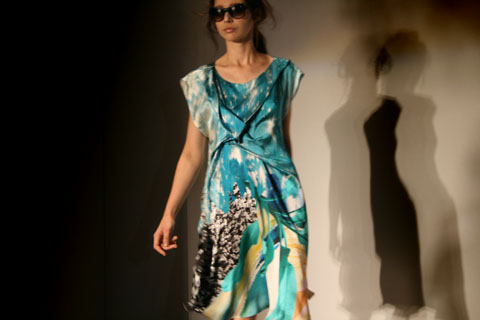
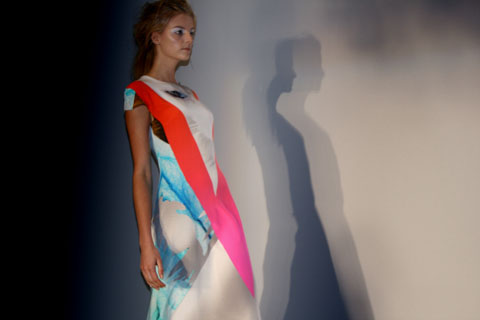
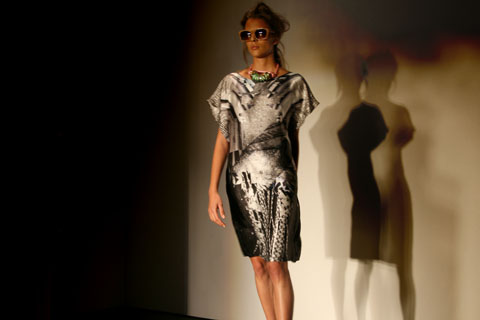
Colour and print have become synonymous with the Basso & Brooke brand and both designers are very much aware of this. So wanting to break away from the prison that had become symmetry and precision, Bruno Basso and Chris Brooke journeyed to bring digital print alive again, by disrupting the status quo of digital print. What transpired was a ‘Tropical Constructivism’.
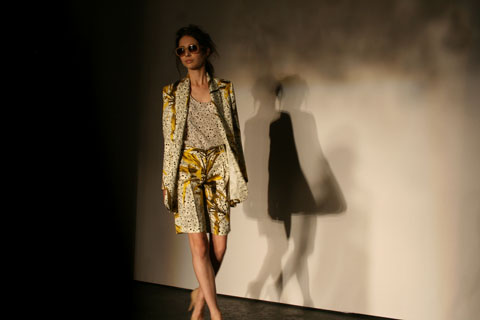
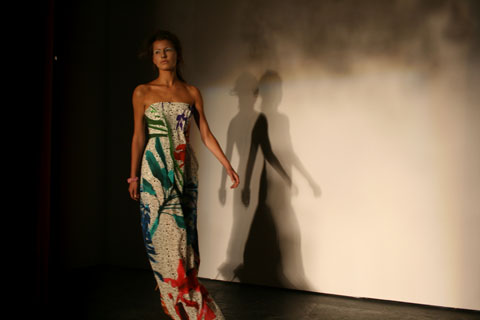
Vibrant tropical images married with angular lines and sharp structures cloak the fluid cloth of each softly, but perfectly structured garment; short dresses, shirt dresses, maxi dresses and what appears to be a ‘salwar kameez-esque’ dress and skinny trouser outfit. One of my favourites is a shorts and jacket ensemble accessorised with cool retro shades. The hair is styled or rather, anti-styled in a straggly ‘I have better things to do’ pony tail, a distinct contrast to the conspicuous collection. I also love the accessorising (by Borba) of a few key outfits with what appears to be a cluster of karabiners and key-ring clips. Brilliant.
If putting clashing colours and prints together to form gorgeous wearable clothes wasn’t hard enough, Basso & Brooke challenged themselves with the idea of evolving patterns, so that each new piece in the collection bore the seed of the next. Impressive much? I think so.