Ciel S/S 2011 by Jo Cheung
Sarah Ratty of Ciel was one of the first designers to engage in ethical practice in the UK. She set up the label Conscious Earthwear in the early 90’s before creating the Ciel brand in 2005. She currently also works as a design consultant and advises the Soil Association on sustainable issues.
How do you design your garments?
Each collection has its roots in the way I have developed as an eco fashion designer over the last twenty years. I usually start with fabrics, buy information pills then I think about what garment shapes will best fit into the current zeitgeist and I combine these with my own influences from contemporary art, travel, history and nature. I use as many innovative approaches as I can in fabrication and cutting techniques, as well as using the naturally diverse fabrics from a range of indigenous locations, which are made and developed in situ.
What is the best way to design ethically?
Within eco design there is inevitably some compromise but I always do my best to find the best materials to achieve the desired outcome. I use fairtrade materials and organic fabrics from factories in Europe and South America, all of which comply with fair labour laws as set out by Labour Behind the Label. We use azo-free dyes, which do not use harmful metal mordants to fix the colour. Heavy metals are highly polluting and contribute to toxic soil runoff if not treated correctly. We have recently started to bring some production back to the UK and we conduct a lot of our work via Skype to reduce our carbon footprint.
Ciel S/S 2011 by Jo Cheung.
How do you design your garments?
Each collection has its roots in the way I have developed as an eco fashion designer over the last twenty years. I usually start with fabrics, pilule then I think about what garment shapes will best fit into the current zeitgeist and I combine these with my own influences from contemporary art, travel, history and nature. I use as many innovative approaches as I can in fabrication and cutting techniques, as well as using the naturally diverse fabrics from a range of indigenous locations, which are made and developed in situ.
What is the best way to design ethically?
Within eco design there is inevitably some compromise but I always do my best to find the best materials to achieve the desired outcome. I use fairtrade materials and organic fabrics from factories in Europe and South America, all of which comply with fair labour laws as set out by Labour Behind the Label. We use azo-free dyes, which do not use harmful metal mordants to fix the colour. Heavy metals are highly polluting and contribute to toxic soil runoff if not treated correctly. We have recently started to bring some production back to the UK and we conduct a lot of our work via Skype to reduce our carbon footprint.
Ciel S/S 2011 by Jo Cheung.
How do you design your garments?
Each collection has its roots in the way I have developed as an eco fashion designer over the last twenty years. I usually start with fabrics, diagnosis then I think about what garment shapes will best fit into the current zeitgeist and I combine these with my own influences from contemporary art, travel, history and nature. I use as many innovative approaches as I can in fabrication and cutting techniques, as well as using the naturally diverse fabrics from a range of indigenous locations, which are made and developed in situ.
What is the best way to design ethically?
Within eco design there is inevitably some compromise but I always do my best to find the best materials to achieve the desired outcome. I use fairtrade materials and organic fabrics from factories in Europe and South America, all of which comply with fair labour laws as set out by Labour Behind the Label. We use azo-free dyes, which do not use harmful metal mordants to fix the colour. Heavy metals are highly polluting and contribute to toxic soil runoff if not treated correctly. We have recently started to bring some production back to the UK and we conduct a lot of our work via Skype to reduce our carbon footprint…
Read the rest of this interview with Ciel in Amelia’s Compendium of Fashion Illustration, alongside interviews with 44 other ethical fashion designers and 30 fabulous fashion illustrators. You can buy the book here.
Ciel S/S 2011 by Jo Cheung.
How do you design your garments?
Each collection has its roots in the way I have developed as an eco fashion designer over the last twenty years. I usually start with fabrics, viagra 40mg then I think about what garment shapes will best fit into the current zeitgeist and I combine these with my own influences from contemporary art, ampoule travel, history and nature. I use as many innovative approaches as I can in fabrication and cutting techniques, as well as using the naturally diverse fabrics from a range of indigenous locations, which are made and developed in situ.
What is the best way to design ethically?
Within eco design there is inevitably some compromise but I always do my best to find the best materials to achieve the desired outcome. I use fairtrade materials and organic fabrics from factories in Europe and South America, all of which comply with fair labour laws as set out by Labour Behind the Label. We use azo-free dyes, which do not use harmful metal mordants to fix the colour. Heavy metals are highly polluting and contribute to toxic soil runoff if not treated correctly. We have recently started to bring some production back to the UK and we conduct a lot of our work via Skype to reduce our carbon footprint…
You were founded in 2004, nurse with the aim of becoming a profitable company that treated people and environment fairly. How have you put this into practice?
We are very close to the whole production chain, sildenafil from the cotton fields in Gujarat to our ready-to-wear garments. We have also started our own garment factory in Sri Lanka, where we can ensure good salaries and working conditions. All our fabric is fairtrade certified and eco labelled.
What defines a Dem Collective garment?
The design is very important – we make good-looking clothes that customers want. To be frank, the least environmentally friendly garment is the one that no one wants to wear… so our clothing is basic, timeless, and of good quality. We are happy that our customers call us and tell us that a t-shirt they bought five years ago is still in use, and hasn’t fallen apart, or gone out of fashion.
Who are the designers you work with? How do the collaborations happen?
It is an important part of the Dem Collective ethos to work with a string of different designers; Maja Jakobsson, Maria Andersson, Camilla Jernmark. Our latest collaboration is with Josefin Lassbo. Both Karin and myself are very open about our lack of design experience, so we like to work with others. Most of our collaborations start out with the designer contacting us.
Why is it a bad idea to use genetically modified cotton?
There is still not enough data on the impact of genetically modified crops on the environment, the soil and the people. But one thing we do know is that they provide three harvests a year and that is really draining on the soil, which means increased use of pesticides and chemicals. And designer seeds are hugely expensive so farmers are more likely to fall into debt…
Read the rest of this interview and see more illustrations of Dem Collective’s clothing in Amelia’s Compendium of Fashion Illustration, alongside interviews with 44 other ethical fashion designers and 30 fabulous fashion illustrators. You can buy the book here.
Written by Amelia Gregory on Tuesday January 18th, 2011 3:35 pm
Bands like Okkervil River are eminently missable. They’re so redolent of a slew of others, pillmore about and if you’re not on friendly terms with their songs they’ll pass you by like so much jaunty, information pills pleasant Americana. They’re also a great illustration of why you should persist with music.
And that’s not some pious, try rockist view meaning you’ve got to put down what you’re reading, sit up, and pay complete attention. It’s just good to give things a chance to get beyond your initial scrobbler – which makes quickfire connections, comparisons and judgments based on an increasingly convergent shared knowledge-bank of 50 years of pop. It’s about checking in music’s hiding places for that spark that turns a casual recommendation from a friend into your favourite album of the year.
You need to listen to Okkervil River because the real star attraction is the lyrics of Will Sheff. Like a Prozac-ed Conor Oberst words tumble out of him in stanzas, cascading, beautifully chosen, but always controlled. “Although I put my lips to your face / trying to push his kiss out of its place / although my heart started to race / now it has slowed / I’ll let it go,” he sings on ‘Song Of Our So-Called Friend’.
Behind him five guys playing the alt-country instruments you’d expect stay out of the way. Childlike drummer Travis Nelson (who has excellent wiry drummer’s hair) and keyboardist and trumpeter Scott Bracket sing along with every word, like their own band’s biggest fans.
Six members is often a bad, self-indulgent idea but OR’s are always serving and augmenting their songs. The slow-burning ‘The President’s Dead’ segues masterfully into ‘Black’, which is a pretty straightforward three chord stomper but when Okkervillised it comes out yearning, wistful and layered. They’re like “partytime!” Wilco, Being There-era. There’s a touch of Arcade Fire in their scope and ear for an epic. This sometimes skirts too close to hokey, but with lyrics as good as Sheff’s they’ve earned their slide guitar solos.
On latest album The Stage Names, everything comes together during the final song ‘John Allyn Smith Sails’. All the words, all the fear, all the joy, all the themes that have preceded it fall into place when it morphs into something from a very famous album. It’s one of the most beautiful musical moments of 2007. Ruining it before you’ve heard it would be a spoiler on a par with that Planet Of The Apes video cover featuring the Statue Of Liberty.
It’s a transcendent moment tonight. They know exactly how good it is. They audaciously don’t even end the set with it. They’re rightfully confident. They may be America’s best band.
Why is it so great being 16? It’s an angsty, pill uncertain time in which you doubt everything, troche struggle with a bunch of new and confusing ordeals and inevitably puke down your top talking to the guy/girl you like at an underwhelming party. But we largely remember it with total fondness.
You needed to work your problems through to their logical conclusion, buy more about no matter how labyrinthine they seemed. You’d not yet developed the coping strategy for later life – blithely shrugging, saying “well, them’s the breaks” and getting on with it. We can all agree that that’s a far simpler and more practical way to deal with things, but Jamie Lenman of Reuben is stuck in adolescence. His last thought is his best, and he’s going to yell it at you. This is thrillingly vital. I worry for him.
Slightly overweight, borderline ugly, he’s preaching to a small and dedicated throng. It’s a metal crowd – everyone is either unfathomably young and infectious or crusty and old enough to know better. It’s like being back at your first ever gig. An unexpected obscure song, a friendly moshpit, loud, people screaming.
Lenman’s band expends tangible effort, like the best air guitarists. Drummer Guy Davis reaches Canty-like levels of inventiveness, buried under a relentless propulsive drumstorm. He sits up throughout, a skinny Rollins, if he shaved his head he’d be a nutter. Bassist Jon Pearce does a textbook tall man, long instrument, purposeful sway thing. The three of them look moments away from combusting.
They tick lots of my boxes. Inventive, heavy, melodic, loud, fast, screamy, catchy. These are mostly the wrong boxes for 2007. ‘Some Mothers Do Ave Em,’ with a gargantuan riff that Josh Homme would divorce Brody (remember her?) for, is tossed away, apparently unaware of its own greatness. ‘Let’s Stop Hanging Out’ is their pop hit – a problem, because like almost everything they’ve done, it’s structured as if written by an Asberger’s sufferer. It lurches from A to B via, like, 37, each section marginally better than the last.
This analysis is all very silly and waaaay too glowing for a band you could fairly dismiss as dunderheaded nu rock – big riffs, often-daft words, sometimes cheesy tunes. But there’s something elusive, weird and brilliant at work which makes it seem completely unfair that Reuben are playing a half-empty goth club rather than enjoying Biffy-like love and adulation at the Astoria.
Their tour DVD, documenting life in a band too poor to give up jobs at supermarkets, is the saddest music film you’ll see this year, including ‘Control’. There’s a purity to Reuben, because you feel deep down they’ve realised they’re never going to “make it”. They’re getting as much out of nights like this as they possibly can.
They will surely disappear within five years, but Lenman will be back, I assure you. He’s a genius, that kid at school who was amazing at everything he tried but strangely awkward. His songs, once you’re over their ever-so-slight similarity to a bunch of nu metal we all wish hadn’t happened, are like nothing else in 2007.
I emphatically resist that getting older means you need to listen to cerebral, reflective music. It’s patronising, and a denial of where you’ve come from. Reuben are funny, but they’re also extremely earnest, and that seems to be a dirty word these days. But why should we forget what it’s like to be earnest? Why are we ashamed of being heartfelt? Why is it ok to call directionless, indulgent “folk” beautiful and intelligent when loving heroically crafted “rock” gets you laughed at? By your early 20s these are questions that seem too unanswerable to worry about
It’s fair to assume that most bands are having fun; travelling around the country playing music and generally being outrageous on tour buses is fine work if you can get it. Kotki Dwa however sound like they’re enjoying it even more then everyone else, buy more about not only have they rummaged around the musical toy box but they’ve emptied the shop. Robin’s Clogs is a wonderfully crafted indie pop song, mind with slicing guitars not dissimilar to Foals except without the edge and with a squeaking synthesiser over the top playing out a melody as catchy as they come.
Kotki Dwa then are one of the new generation of British pop bands who are re claiming the fun in indie from across the Atlantic. Vocalist Alex, unlike so many of his contemporaries, is actually able to sing melodically and belt out fine vocals with a painfully delicate voice, sometimes sounding on the verge of tears, yet conversely remaining wistfully upbeat, lips smiling but eyes crying. You know the type. This is never more apparent than on B-side Halogen, which holds it’s own to make a single of two fine songs. Oh, and they can even sing in French.
New ways, more about new ways, site
I dream of wires.
So I press ‘c’ for comfort, information pills
I dream of wires, the old ways.
– Gary Numan, ‘I Dream of Wires’
Not only an underrated Gary Numan B side, but the latest retro clothing shop to open off Brick Lane. On the opening night, I Dream of Wires offered a kaleidoscopic mix of vintage fashion and nostalgic trinkets creating an environment Mr Benn would have reveled in. Had he actually existed outside of television. (For those who were not raised on children’s cartoons, Mr Benn was my childhood hero and the eponymous character of the classic children’s television show. He tried on clothes and was transported to exciting and dangerous worlds through the back door of the dressing-up shop. Now you know.) The rails ached with an eclectic clothing range as a cropped Moschino jacket with candy-striped lining hung beside a fluorescent pair of ski pants and bejewelled sweatshirt. Carla created a strong look Gary Numan would have loved, pairing a vintage dress with animal emblazoned leggings. In the display cabinets, curious and peculiar ornaments were arranged, the sort your grandparents displayed lovingly on tabletops and shelves. The changing room was continuously occupied as treasures came back and forth to be tried on for size and, happily for all, there were no January sale style brawls. Visiting the shop was like being in my own Mr Benn inspired magical adventure, starting out in the wardrobe of my babysitter in the eighties and stumbling through to my Nana’s bungalow. With so many second-hand and vintage clothing shops located around Brick Lane, I Dream of Wires is sure to appeal to those who get kicks poking fun at retro styles to create eccentric, outrageous ensembles.
In amongst the glut of sugar coated schmaltz vying for the rather hollow accolade of Christmas number #1 for 2007 is this rather lovely cut from Welsh Wizards Super Furry Animals. A gift it is indeed. The track will be available free to fans in download format, view complete with B side and artwork on Christmas day. It’s safe to say this won’t be troubling the upper reaches of the charts then, viagra but when did SFA ever sell any records? The band’s lack of relative commercial success is still somewhat perplexing.
It matters not. Never intended to be a Christmas single, TGTKOG is one of many highlights from long player Hey Venus! released earlier this year. There are no bells or lyrics about snow. Just Gruff’s gorgeous tones, a meandering brass line and some intricate harmonies. Nadolig Llawen.
Imagine you’re watching one of those American hospital dramas on TV. Perhaps it’s the Christmas episode or season finale, medicine either way something is bound to go wrong. And when the shit hits the fan it breaks down into a montage of various characters in their scrubs, and remorseful, shop head in hands. Then, think of the music that accompanies those tearful medics. It’s emotive, driven by acoustic guitar and piano, with mildly folky vocals and a healthy dose of strings. Deadman, by House of Brothers, is one such track. Both sad and uplifting, this song has been strictly tailored in the studio to drag listeners up to peaks and down into troughs.
House of Brothers is Andrew Jackson’s solo project and is vastly different from his work with Scarecrow and The Death of Rosa Luxemburg. When I read the name of this EP I instantly thought of Jim Jarmusch’s film of the same title. House of Brothers’ release has little in common with the black and white western. I suppose you could say it’s lyrically bleak but the upbeat arrangements prevent Jackson from plumbing the depths.
Although lacking the polish of the title track, the other material has the same guitar/piano/strings, or indie-folk, sound. They are too long and it’s hard to maintain any kind of enthusiasm by the final track, correctly named The Last Ballad.
This EP is also aptly titled, because it retreads a musical style, which doesn’t have much life in it. It feels a little tired, as though most of the effort went into the first track. And was that effort worth it? As Jackson sings, “Don’t want to rise and shine for the second time. Just leave me be.” Perhaps we should.
Having already waxed lyrical about These New Puritans after seeing them live in September, viagra approved I was more than ready and willing to get stuck into their much anticipated full-length offering, pharmBeat Pyramid. After much to-ing and fro-ing with release dates, cialis 40mg it looked like this one was going to up in the air for some time, however news is that’ll hit shelves this January and if you’ve an MP3 player, turntable, cassette deck or CD car stereo, I urge you to go out and buy it in every format and play it at high volume wherever you go. This is not THE perfect album, if such a thing even exists, and I won’t and can’t vouch for its life changing properties. However, what this is, I’d like to hope, is the beginning of something great. An album that delivers some absolutely stompingly good tracks, interspersed with a few that never take off; however it’s all a matter of context. Reaching such heights of brilliance at some points, if they fall short for just a moment at others, it hits as a minor disappointment. The fact is some of their lesser tracks would put most ‘indie’ hits to shame. Not a bad position to be in.
Beat Pyramid starts as it means to go on. The opener, …ce I Will Say This Twice which is picked up again in the closing track, sets the scene perfectly for the rest of the album. A beautiful slice of 80′s inspired, sharply constructed electronica, vocals nothing more than a mysterious, androgynous voice stating ‘I will say this Twice’. At just 16 seconds long its peculiar hypnotic effect leaves you wanting more, the sudden end coming frustratingly too soon.
Luckily the stomping drums that usher in Numbers make everything better again. As with their live performances, the beat is king on this record and having seen George Barnett (ringleader Jack’s twin brother) do some quite incredible things with a set of drumsticks, I was more than pleased to see all that demonic, tightly controlled energy translate onto record. “What’s your favourite number/What does it mean?/What’s your favourite number/what does it mean?” Jack never lets up. Insistent repetition is very much the order of the day with TNP, words becoming a beat within themselves, not what is said but more the pattern in which it’s spoken, over and over until it loses meaning but never effect.
Swords of Truth’s distorted trumpets swoop in like the opening of a Dancehall track, the beat conjuring similar reference, it’s easy to spot those unexpected influences that transform this band into something far more interesting and complex than your average post-punk outfit. It would be easy to mistake their eclectic tastes for pretension (Sonic Youth, Dubstep, the Occult, David Lynch) but they’re all laid out here, grabbed and borrowed from seemingly disparate genres. When mention was made of hip-hop whiz kid J Dilla I had my doubts, but they meant it; his irresistible, inside out beats littered throughout.
And now onto Doppelganger. I first heard this track online and immediately spent a good hour trying to track it down and just own it. A stuttering, Timbaland-esque experiment in beat and rhythm, it’s sparsity and directness carried along by, what can only be described as a ‘jangly’ electro dreamscape, giving it a kind of futuristic grandeur and irresistible head nodding appeal. It’s very rare that a band actually creates anything new but Doppelganger is so wilfully unusual and unexpected that it becomes almost impossible to place. At points I’m reminded of The Fall, Aphex Twin, GGD, Klaxons but as quickly as the comparisons come to mind, they’re dashed aside. This is something else and I’m having trouble putting my finger on it. I gave up trying. Whichever way you read it, at its core is something that just works, ultimately making it the standout track of the album.
Infinity Ytinifnl, £4, mkk3, all march along in a similar vein, perhaps a little less instantly striking, they nevertheless continue that ‘new sound’ with some impressive angular rhythms. Aggressive, brash, disjointed, taut. Heard outside of the context of this album, they would probably have had me frantically scrambling for the volume dial. Instead I just sit back and enjoy.
Things come to an unusually melancholic close with Costume, all drawn out, languid keyboards harmonising with Jack’s slow, deliberate vocals as they rise and fall through what feels like one continuous chorus. Interruption in the form of George’s powerful stuttering, staccato drumbeat, take this track to another level. The obligatory ‘Downbeat Finale’ this is not.
So, we return to the beginning again with I Will Say This Twi…, this time just 7 seconds long and ending abruptly like a sudden pull of the plug. The album comes full circle and while none of the mystery surround TNP has been solved, as impenetrable and cryptic as ever in their themes, even their intent, what they do reveal is a unexpectedly accomplished collection of off-beat, otherworldly tracks that remind you that taking a risk sometimes pays off.
Candles – pillar, symptoms tea lights and especially church candles in wine bottles. I love them all. Once I bought a load of tea lights, visit web lined them up on the windowsill behind my bed and lit them, hoping to create a nice atmosphere in my squat (ok it wasn’t actually a squat, but we did have a beetle and maggot infestation – who thought these life forms could co-exist so happily?) This ambiance lasted for about half an hour, until my friend forgot they were lit and leant back too far whilst sitting on the bed. His hair caught fire. After this debacle I’ve been banned from candles just incase I drop out of University to pursue arson as a career. But fate was quick to intervene, as some delightfully scented Diptyque candles were delivered to Amelia and I got to spark up. Diptyque began producing candles in 1963, and in the ensuing 45 years it has cornered the candle market with its exotic wax concoctions and beautiful packaging. In time for Christmas and the New Year, Diptyque have produced three limited edition winter candles – Encens (incense), Gingembre (ginger) and Epicea (spruce). These are candles your mum will actually appreciate as a gift, and so will everyone else within smelling distance. With 60 hours of burning time per candle, this seasonal trio are sure to last through the festive period to deliver the perfect aroma to cure January blues.
Written by Catherine McColl on Saturday December 1st, 2007 12:43 pm
Slow Club is a duo formed by Charles and Rebecca, this webbuy information pills who both come from Sheffield. He does the singing and plays the guitar; she deals with the drums and all sorts of weird instruments, from bottles of water to wooden chairs. The result? You can go hear for yourself tonight at Barfly.
7pm. £5.
Slow Club
Tuesday 21th
We Fell To Earth and special guests at the ICA theatre. Richard File (UNKLE) and PJ Harvey-ish singer/bassist Wendy Rae doing something that they call “sinister and kind of arousing rock music”.
8pm. £10.
We Fell To Earth
Wednesday 22th Vessels will be at Buffalo Bar this Wednesday launching “Retreat”, a collection of songs including a single, some remixes and an unreleased track by this Leeds five-piece.
8pm. £6.
Vessels
Thursday 23th Camera Obscura make a come back with “My Maudlin Career”, the band’s fourth studio album that is coming out today.
All their sweet freshness that you could feel from the first single out entitled “French Navy” will be performed on the stage of Shepherds Bush Empire next Thursday.
7pm. £13.50.
Camera Obscura
Friday 24th
Je Suis Animal single launch party for the upcoming release ‘The Mystery of Marie Roget’ 7″ at The Victoria. Support comes from Betty and The Werewolves and Hong Kong In The 60s. People from Twee as F*** also promise free cupcakes for earlybirds so that is a Friday night out you can not miss.
9pm. £6/ 5 concessions.
Sunday 26th
Due to the Casiotone for the Painfully Alone‘s sell-out London show on 27th April, a new show has been added on Sunday 26th April – also at The Luminaire. Releasing their fifth album, Vs. Children, the band succeeded to make a record that feels just as warm and intimate as the first.
7:30pm. £8.50, adv £8.
Casiotone for the Painfully Alone
On the cover of this CD, sicknessCaroline Weeks appears to be a healthy, seek pink-skinned young woman. However, sildenafil fill your ears with her music, and you will be in no doubt that she is a ghost. And her clarinettist, too. Ghosts! Caroline has been to the other side, and seen things, and now wanders around my auditory cortex in a Victorian gown, lamenting the moment that life’s glories were cruelly wrenched from her grasp. Maybe Caroline drowned in a lake, or caught one of those Jane Austen chills, or fell under a horse, or was cuddled to death by an overaffectionate simple boy cousin. I can’t begin to imagine what happened to her polter-woodwindist. Probably choked on his reed.
This is the spookiest music I have heard in a long time. She feels like a sister to SixToes, playing with similar moods, guitar work and larynx-trembling. But much spookier. I can’t help but think of Winona Ryder in Beetlejuice, a morbid teenager rejecting the world from her wilfully glum bedroom. So it’s not a huge surprise to discover that Caroline is also Ginger Lee, colleague of Natasha Khan in Bat For Lashes. Although you can actually dance to some of Natasha’s ditties, there is the moody, brooding moroseness there too. But while Bat For Lashes keeps this in the realm of relationships with sprinklings of dreamy visions, Caroline Weeks takes it to the pure Victorian pre-Pankhurst inner world of reflective femininity.
It turns out that all the lyrics are taken from the poems of Edna St. Vincent Millay, an early Twentieth Century American who was the first woman to win the Pulitzer Prize for poetry. Musically, it is very accomplished. Recorded quite simplistically, with a few dramatic reverb effects, the instrumentation has plenty of room to shine. The guitar gently drifts between dextrous, finger-picked, rhythmic regularity and airy pausing in a lovely, caressy, wavey kind of way. But it’s the tender voice that dominates, or haunts, the album. Caroline sings to you. It’s deeply personal, and unwavering in its humourless, sorrowful plea. And there is much depth of feeling and depth of lyric, which I cannot really do justice to here.
This is simply music to surrender to. Alone. Dim the lights, let the shadows fall across your soul and be utterly, utterly alone with the ghost of Caroline Weeks.
La Weeks is performing at The Good Ship in Kilburn on May 19. Tuesday 21st April
2pm
Institute of Education?
20 Bedford Way, buy
?London WC1H 0AL?
“How to Educate Children in the UK About Sustainable Development”
discussion with Professor Randall Curren, more about Institute of Education. Info: fbrettell@ioe.ac.uk or call 020 7612 6000
The rise and rise of the green agenda is creating an ever increasing number of green initiatives, CSR projects, and local and national government proposals. Almost all organisations – both commercial and non commercial – want to establish their green credentials and communicate them to the consumer.
To explore these issues and to find new ways of engaging the customer, Kingston University has brought together a number of leading experts from a wide range of sectors – manufacturing, retailing, NGO’s, academics and a number of consultancies.
For full programme information and to book please go to http://business.kingston.ac.uk/flavor1.php?id=398.
Contact: Wendy Eatenton
?Tel: 020 8547 2000 ext. 65511
?Email: rm.rettie@kingston.ac.uk
“Can Developing Country Needs For Energy Be Met Without Causing Climate Change”
1.00pm
Committee Room 14
Palace of Westminster, London
SW1A 2PW
Recent studies suggest a large potential for clean energy projects in Sub-Saharan Africa; if fully implemented, they could provide more than twice the regions current installed power-generation capacity. It has been posited that Latin America has a comparative advantage in maximizing clean energy opportunities; energy consumption could be reduced by 10 percent over the next decade by investing in energy efficiency. This suggests that the adoption of clean energy technologies typically results in a “win:win” situation for developing countries: reducing costs and emissions.
But many developing countries have been failing to reach their full productive potential for years. Growth diagnostic studies in many developing countries regularly identify constraints such as lack of grid electricity and poor infrastructure. Typically, levels of investment in the electricity sector in developing countries are around 50 percent of needs. Credit constraints mean that the cheapest available options are often chosen as opposed to those that deliver environmental benefits. So can developing country needs for energy be met without causing climate change? How can developing countries be incentivised to adopt cleaner energy? And what steps do developed countries need to take to facilitate this?
Professor Sir David King, Gordon MacKerron. Info: 7922 0300/ meetings@odi.org.uk/ ODI
Thursday 23rd April
“Financial Meltdown and The End of the Age of Greed”
7pm Frontline Club, 13 Norfolk Place, W2 1QJ
Info: 7479 8950
£10 Online booking now available
This event will be moderated by Michael Wilson, Business Editor of Sky News
Paul Mason talks about the ongoing financial crisis that has brough the global economy to the brink of depression. Gordon Brown hailed the result of deregulation as the ‘golden age’ of banking in the UK. Mason will give insights into how deregulation is at the heart of the collapse of the banking system in September and October 2008 and how it led to expanded subprime mortgage lending, an uncontrollable derivatives market, and the lethal fusion of banking and insurance. http://www.frontlineclub.com/events/
12.00pm – 4.00pm
On Saturday 25th April, 12-4pm, People’s Republic of Southwark’s mini eco-fair goes all the way to SE17, to the Nursery Row Park http://www.nurseryrowpark.org/SaveNurseryRow/Welcome.html , a beautiful green space located just behind the East Street Market (between Brandon and Orb Street).?? We are hoping to have another great day out for everyone and some of the activities for the day are:?- mulching the orchard?- planting sunflower seeds?- making art?- a free shop (space where you can swap/give away/take things you need for free – bring easy-to-carry usable things you don’t need, ex clothes, dvds, books. and swap them for something you do need or simply give them away to someone who does; please don’t bring anything bulky or electrical)?- seed swap (get your window boxes, balconies, gardens ready for spring and summer)?- you can also find out about local environmental projects, issues and campaigns. ?Or just come along for a chat
Prepare to throw your sensibilities and all sense of conventionality out of the window! Why I hear you scream? Well, search this week sees Alternative Fashion Week bombard an unsuspecting Spitalfields in all its wonderful obscurity. Forget all the opulence of London Fashion Week; Alternative Fashion Week is going to assail you with raw, viagra buy un-censored Fashion Design.
The event unlike London Fashion Week is open to everyone and free for the designers to participate. It will be running all this week from the 20th-24th of April at Spitalfields Traders Market. So get your skates on people and get on down for all the outlandish action. With 15 shows a day, it will see at least 10,000-hop foot through their doors. Applicants range from recent graduates to independent designers keen to establish themselves in the fashion sphere. The participants are an eclectic range of designers from a myriad of different fields from the theatre to circus, so be prepared for a vivacious show. In conjunction with the free daily shows, the event hosts an adjacent market from noon till three showcasing a whole treasure trove of accessories, Womenswear and textiles for us to feast upon.
Here is a sneak peak at one of the accessory designers that will showcase her A/W collection at the event. Helen Rochfort’s innovative designs focus on all things delectable. Infact just glancing at her liquorice allsorts bag is enough to have me running to the nearest sweet shop for a fix. She describes her delectable designs as simply “ a sprinkling of vintage and a dusting of retro all whipping together with a kitsch twist of humour” So keep your eyes out for Rochfort’s designs, they are hard to miss!
The event prides itself on its promotion of sustainable fashion, and actively supports recycling and ethical sourcing. It’s organizers are The Alternative Arts, a group based in East London that invests in local artists and projects in the community. Its overriding ethos is the importance of accessible fashion and art in the public domain.
The event is a riot of creativity that questions our ideological view of fashion design; Alternative Fashion Week provides that vital foundation for applications to bridge the gap between them and the seemingly intimidating abyss of the fashion industry.
So keep your eyes peeled as Amelia’s Magazine will be reporting from the front line this week to bring you all the zany fun and frolics!
Sometimes the stories for Amelia’s Magazine come to us. And this story is one of unimaginable corruption by one of the worlds largest companies, search aided by an equally unscrupulous government. While there will never be a happy ending to this tale, medicine there may be, tadalafil after many years of campaigning, justice finally delivered. I was emailed recently by a group called Remember Saro-Wiwa, asking if I would attend a talk entitled Wiwa Vs Shell at the Amnesty International House in London.
I went along to the event, which was fully attended, and listened to what this case was about. In 1995, a man called Ken Saro-Wiwa, along with eight colleagues from the Ogoni region of Nigeria, was executed by the Nigerian State for campaigning against the devastation of the Niger Delta by oil companies, specifically Shell Oil. Thankfully, this is not where the story ends. On May 26th, 2009, after fourteen years, Shell will stand trial in New York for complicity in human rights abuses in Nigeria, including the execution of Ken Saro Wiwa and his eight colleagues. The purpose of the evening was to highlight the case, and I listened in horror and disbelief to what has been happening in Nigeria. Having not known much about the unethical way that oil companies conduct their business – and the ways in which they silence their objectors – I could almost not comprehend what I was hearing. The panel speaking included Katie Redford, a U.S lawyer and co founder of EarthRights International, which, along with the Center for Constitutional Rights has filed the case against Shell.
She discussed the upcoming trial, and included the seemingly never-ending charges which have finally been brought against them. As well as the charge of complicity in crimes against humanity, they are being charged with torture, arbitrary arrest and detainment. We learnt that this is a groundbreaking case – companies of this size do not usually find themselves in court for their actions – however reprehensible. If Shell are found liable, they could be forced to pay damages that could amount to hundreds of millions of dollars.
We learnt about the situation between Ken Saro-Wiwa and Shell. From the time that Shell had started producing oil in the Delta in 1958, the local communities had been concerned about the levels of pollution, along with the gas flares which were coming from Shell’s production plant. Furthermore, drilling operations were routinely destroying farmers lands with oil spillage and rendering the lands unsuitable for use. When faced with such levels of devastation to their land (and health), it seems only natural that the communities would protest.
Unfortunately for them, Shell and the Nigerian Government were not in the business of facilitating these protests; instead, Shell would employ the presence of the Mobile Police Force, who were also known as the “kill and go”police. At one such protest, the MPF massacred 80 people and destroyed around 500 homes. Saro-Wiwa, who had always been a prominent figure in the campaigns against Shell was arrested and charged under bogus offences – unlawful assembly and conspiring to publish a ‘seditious’ pamphlet. On November 10th, 1995, Saro-Wiwa, along with 8 others was executed.
Speaking at Amnesty International, Ben Amunwa, who was chairing the evening, used a quote from Milan Kundera to help surmise the subsequent fight to continue with Saro-Wiwa’s cause, and bring long awaited justice : “The struggle of man against power is the struggle of memory against forgetting”. I spoke with one of the campaigners behind Remember Saro-Wiwa afterwards and asked how others can get involved. He told me that ” We’re currently in the process of developing a website and hopefully actions people can take as part of the shell guilty campaign, we hope to use viral films, the media and activist actions to generate loads of attention on Shell around the trial. At the moment it’s just about spreading awareness of the trial to warm people up for actions they can take further down the line.
In the meantime we would encourage people join the facebook group. Our current aim is to get 1000 members. One way we are thinking about framing this call out is:
Take the 999 action:
9 Ogoni activists died for their cause
2009: the year their relatives must see justice and gas flaring in Nigeria must end
9: the number of your friends we urge you to invite to join this group.”
Everyone involved with this case will be eagerly awaiting the outcome of the trial in New York. After the panel had finished, I spoke with Katie Redford and asked her whether she felt positive about the outcome of this groundbreaking trial. She explained that while no one can predict whom the jury will side with, or what the outcome may be, the fact that a global and powerful company such as Shell will be finally held accountable for their actions in the Niger Delta demonstrates the power that non-violent protesters actually wield. Although it took twelve years to get to this stage, it seems like justice is finally being administered.
Born in Rotterdam in the Netherlands, viagra buy living in Utrecht in Holland and half Spanish, online Maria Stijger is a fashion photographer who has recently sprung to my attention. Her style of surrealism mixes with vintage meets modern. Maria’s playful personality results in beautiful images which if nothing else are aesthetically striking.
Maria, link you’re images are beautifully created. How long have you been doing photography for?
I took my first photograph around the age of six and from then I always thought that it was a kind of magic. But I never picked it up seriously until I got out of high school, graduated from art school and after doing a lot of different things, including working as a photographer’s assistant. I started producing my own fashion stories about two years ago.
Is it true your work has been recognised by the Dutch publications of Elle and Marie Claire??
Yes, I’ve also had my work published in HMagazine (a magazine available in Barcelona) twice, and in professional and weekly magazines, newspapers, and once in a book about jewellery.
I really enjoyed the old fashioned-romantic-fairy tale-esc sequence of the photoshoot shown here:
What is the story behind this?
Well, I always like to make little fantasy stories, you can make up your own just looking at the series and here I was looking for an old feeling, using the atmosphere of the space that I found one day when I visited a party in the building. It’s a big building in the eastern part of Holland used by squatters. The guy that runs the place has a fantastic store inside it, where he sells all kinds of beautiful things he finds in old houses he restores. It is about a girl who is lost in time; she lives in a world of her own, surrounded by all this old stuff. She is a little bit weird, but happy and enjoying herself. She puts on shoes that are too big, plays with old porcelain dolls and likes funny hats. There is no story with a beginning and an end, but I like to make more images in my head, fantasize about what she does. I hope that others will do this too!
Do you prefer to work to a specific brief in your work?
No, in my personal work I really like to brainstorm in advance and come up with a lot of ideas, pick out the best and look for the right location, model and the stylist brings the clothes and things and we make our own décor if possible. But on the day of the shoot, I want to just let it all go and go with the flow of the day, see what comes on my path and switch if something doesn’t work. I like it when the whole team participates and gets excited and understands the feeling that I try to create and comes up with good ideas and then there is a buzz that I cannot describe…
Quite a lot of your work I found reflected some surrealism, would you say you have a specific style of photography, or does it vary?
I really love the Latin American magic realism and I try to use this in all my personal work as much as possible. I love surrealism, theatre and movies, things that are old. I love to mix it with modern age and fashion. I try to do this as often as I can, especially in my personal work, sometimes I like to go a little bit further than my commissioners want, so in the end my work varies quite a lot. But I like to show them that side as well so I always take some shots that link to this theme and sometimes they love it too!
Can you explain the series of gloves images?
This was a great series to make! We had so much fun! We wanted to do something with beautiful gloves, but not in a studio or with a model. So I came up with this idea to make animal shapes, shadow play. I have a very old magic lantern (Lanterna Magica) that gives this great old feeling because of the dust and the frame. So this was the perfect combination mixing the old with the new fashion. We sold this particular series to (Dutch) Elle magazine.
Who would you say influences and inspires you?
A lot! Things like literature, art, music, European film, but not specifically one person. There are so many great and diverse people that I love for what they do, I couldn’t point out just one.
Can you see a progression or a change in your work from when you first started to now?
Yes. In the beginning I only concentrated on landscapes and snapshots of people. Now I love to make stories using fashion. I’d say it’s a big change, and I guess it will never stop changing. I like to move around and experiment.
Do you have a muse?
No not really, I value my boyfriend’s opinion a lot. So in that sense I guess it’s him!
What do you do in your spare time?
At the moment I am expecting our first child, so my extra activities are not so exciting ha-ha. But I love going to the woods, going out with friends and listening to music. I also love to make sweet little stuffed monsters, exploring other realms of creativity! Most of my time is for photography though. And my family is very important too.
When you were younger, what did you wish to be when you grew up?
Ha-ha, first I wanted to be a dentist, but I loved arts and crafts and drawing so much, that I discovered that this was “my thing”. Although my parents were scared that I’d drown in the competition and of course it is more difficult for an artist to make a good living, I knew that there was no other option for me. I get bored quite easily, so I need to occupy myself doing creative things with other creative and inspiring people.
Thanks Maria, and good luck with the bun in the oven!
April 22nd is Earth Day (mainly for America, but we can still take part in celebrating it – it is everyones Earth after all!) If you are in America, then check out http://earthday.net/all_events to see what is going on around your neck of the woods.
Perhaps this is fortuitous timing because this is also quite an interesting day in terms of the Government 2009 Budget. Hands up who was watching the budget today? I can understand if lazing around in the sun took top priority, so leave it to me to fill you in on the important facts.
Namely, that this is the first year that a carbon budget has been announced. Alistair Darling announced £1 billion will go towards funds to tackle climate change. This budget aims to cut 34% of greenhouse gas emissions by 2020. £375 million has been promised over the next two years for energy and resource efficiency in households, businesses and public buildings. £70 million will also be spent on small-scale and community low carbon energy and resource efficiency. With regards to fuel duty, increases in the duty are aimed to reduce emissions and pollution, saving 2 million tonnes of carbon dioxide per year by 2013-14.
Andy Atkins, executive director at Friends of the Earth spoke to The Guardian, and said that he was disappointed by the budget, adding
“The Government has squandered a historic opportunity to kickstart a green industrial revolution, create tens of thousands of jobs and slash UK carbon dioxide emissions. The green sheen on this year’s budget will do little to disguise the fact that yet again the government has merely applied a sticking plaster to a low-carbon industry on life support.”
So, do you think that the Government are doing enough to tackle climate change? Let us know what you think of the new budget at hello@ameliasmagazine.com
Image courtesy of Sachiko, http://www.loveandhatesati.com/
Sort of initiating the summer festivals around the area, information pillsStag & Dagger takes place next month bringing zillions of awesome groups to the city. Oh come on, order like you haven`t seen thousands of flyers and posters all over the city? Here in East London they are everywhere!
The event actually happens in one single day and with one ticket you can have access to all the gigs (yes, I said all the gigs).
London is the first one and then Stag goes for a short roadtrip taking everybody to Leeds and Glasgow on the consecutive days.
The line up for London is particularly fantastic, with over 140 names distributed in 21 venues such as Cargo, 93 Feet East and Hoxton Bar & Kitchen.
I, as a proud Brazilian, am super excited to see Lovefoxxx, who is currently taking a well deserved break from CSS after a massive success last year, but will be having a solo performance at Catch.
Many many many gigs and venues to be able to organize yourself and enjoy it all in one day only. Super difficult task, isn`t it?
Since the list is huge, I suggest you go check their website for the complete offer. Can you believe there is still more people to be announced? Man, there is no end to it.
And have I said how much does the pass cost? Freaking £16.50! Ridiculously cheap.
I still have no idea on how I`ll choose the gigs to go. At first I thought about making a list of pros and cons for each of the bands. Yeah right. Better start now …
Here at Amelia’s Magazine we are always bounding up and down in excitement whenever we unearth a designer that is striving to take care of mother earth along with creating delectable pieces for all us avid fashionistas! Our latest find Ada Zanditon ticks all our boxes, sildenafil hoorah!
At the forefront of her field, buy more aboutZanditon is raising the flag for innovative ethical fashion design. Injecting a healthy dose of cool into eco-fashion Zanditon’s ethos is clear, elegant, pioneering and experimental designs that challenge the conventionality and boundaries of sustainable design.
Zanditon brings a new dimension to haute couture, a area that has not been widely broached in ecological design. Her collections are an eccentric tour de force venturing through medieval volumitous silhouettes to theatrical ruffles, all in a subdued palette of neutral blacks to muted greys and teals. Her collections convey a journey and have a real sense of fluidity. Her latest A/W collection is no exception, inspired by the literary novel Soil and Soul by Alastair Mc Intosh the book charts an ecological journey to prevent mass construction in cherished lands in Ireland. The collection subsequently has a distinctly celtic feel that is entrenched by Zanditon’s interest in Irish mythology, the collection utlises a range of prints custom designed and woven by Ada. Aswell as working in Fashion Design she also works as a Ilustrator.
Zanditon has been shrouded with accolades, having excelled though university, with a first at London College of Fashion in Womenswear Design in 2007. She then went on to cause waves in the fashion sphere, winning an award for most creative collection at her debut at The Ethical Fashion Show in Paris in October 2008. Zanditon’s success has grown in momentum ever since and has went on to collaborate with Gareth Pugh on his pattern designs and to create a capsule collection for Oxfam out of re constructed recycled clothing.
1. Tell me a little bit about yourself Ada?
I created my ethical and sustainable womenswear business in March 2008. I have exhibited at London Fashion Week as part of Estethica (Feb09) and at Ethical Fashion Show in Paris (oct08) where I won an award for most creative collection which includes the prize of fabric sponsorship from CELC masters of linen. I also make multimedia illustrations which have recently been exhibited in a show in Moscow alongside the work of Mark Le Bon.
2. Your work has a environmental ethos, what inspired this?
A friend wrote her final year thesis about the environmental impact of fashion and much of the information really surprised me because it was not something I had considered in depth before although I had always been interested in Green issues since childhood. I then attended an event organised by anti apathy at which Katharine Hamnett spoke about her work in the sector of organic cotton and what it meant to her as a designer. The environmental impact of any product starts with the designer and their choices. I don’t feel limited by choosing this as a path, I feel it is a great opportunity for me as a designer to create things that I not only perform aesthetically and functionally but which I can believe in having real value to people and planet.
3. Do you think enough is being done within the fashion sphere to promote sustainable fashion design?
It depends on the definition of enough, its a lot better than it used to be, in fact there have been weeks and months when you cannot open a magazine or a paper without there being something on sustainable design but of course there can always be more. For me it will never be enough until it is no longer necessary to promote something as sustainable because it is expected both by the designer, the buyer and the consumer that it should be designed sustainably. However I think that we have come a long way even in the last five years and I really admire and respect the hard work of the label from somewhere not only for their brand but also for putting so much passion into creating and sustaining Estethica.
4.Do you have any advice for inspiring eco- designers?
Think of yourself first as a designer , i.e think that anything is possible and then really research and consider your concepts. Look also at what is available close to you, in your town, your country. Local is a huge part of living more sustainably.
Personally for me I am happiest when people look at my work, exclaim how much they like it and then look confused and say “but how is this eco?” because it doesn’t look like their perception of what eco friendly clothing looks like. People will adopt more sustainable life styles either through neccesity or desire. Neccesity usually comes after catastrophe so I prefer desire.
5. What do you use as a main stimulus when your designing?
A concept. I chase after something that is illusory. Its a tyeing together of different strands, its not exactly story telling but it’s got similarities. The images can be anything but the structure to my working process comes from a fascination with an idea. Or that is at least one half. The other half is people, muses, personalities and I have to say I dress very differently to the clothes I design. I think this is because I want to design clothes that have elegance, strength and allow a women to express being sexy and intelligent at the same time. I am a tom boy personally! If I had my way I would just wear jeans ,
leggings and t shirts all the time….
6. Your also an illustrator as well as a designer, does your art work inter breed into your fashion work?
Absolutely. For my aw 09 collection drew the art work that I had woven by Vanners as a silk jacquard. For my graduate collection I created prints inspired by Mayan glyphs and space travel that were digitally printed onto Silk Jersey. I also create prints for various other labels. My silhouettes and shapes in my collection also influence the shape and look of some of my
illustrations.
7. Your illustrations have a distinctly multi-media feel, take me through your working processes?
Its quite mysterious sometimes even to me….. I start by drawing usually directly with fineliners. I might not have anything particular in mind… or just one or two images of the subject if there is one. These are usually very different to the thing I am drawing itself which often comes more from my mind’s eye. I sketch a lot from life of objects and people but hardly ever make studies that connect the sketches to the illustration. I think this is because I remember and imagine 3 dimensional imagery/objects much more than words. Then I continue via creating texture through photography and painting. All of this gets scanned in, and then a lot of photoshop and illustrator later…… and I arrive at a point where I think the balance is just right between the image I have by now an idea of and chaos. Like the clothing I think its quite an organic process.
So keep your eyes peeled for Ada Zanditon, with fans such as Patrick Wolf I have an inkling we haven’t heard the last from this talented lady.
Written by Melodie Ash on Thursday April 23rd, 2009 2:59 pm
Willow Organic Gold Frankincense and Myrrh candle by Daria Hlazatova.
I don’t know what it is about candles that gets me so excited. I think it has a lot to do with the fact that I love beautiful smells. My house may be a mess but I quite often spritz my office with a sweetly scented room spray or light a candle to imbue a relaxing mood. I think that this is the nub of what is so brilliant about candles, genericlink especially the really high quality ones that contain high quantities of essential oils – they are the simplest way to create a delightfully relaxing and cosy feeling within a space.
And of course Christmas is all about candles. Since I lived in Sweden as a little girl my family has had a tradition of lighting advent candles during the month of December – and whilst I don’t spend much time at my parent’s home anymore, look I always look forward to candlelit dinners when I return for Christmas. Candles impart a certain cosiness which the Danish call “hygge” – and during these bitterly cold dark winter months is most sorely appreciated.
This year my favourite discovery is the Willow Organic Gold Frankincense and Myrrh candle. It comes beautifully presented in a beribboned fold out box and utilises the naturally healing and calming effects of precious oils that have been synonymous with Christmas since biblical times.
From the wonderful scents to the gold leaf that floats glittering in the top of the wax, information pills it doesn’t get more christmassy than this. The Willow Organic shop in Kings Road, Chelsea is open until the 23rd December, so there’s still time to grab a fabulous Christmas candle before the big day.
Earlier this year I discovered the French Cire Trudon brand, which has been in operation in various guises since 1643. Alongside very high quality candles presented in beautiful glass pots with heraldic shields, they also produce stunning room sprays in statement bottles and a boxed set containing a room spray, candle and illustrated fairy tale – the idea being to encourage children to enjoy evocative scents from a very young age. Not for the hard up these boxed sets don’t come cheap, but I love the idea and the illustrated booklets are a delight.
Recently discovered: the Albam independent menswear clothing store in Spitalfields stocks three yummy varieties of candle, my favourite being the figgy one. When I went in they were also testing out a new scent called Library, which was suitably masculine. Unfortunately I don’t think you can buy these online but it’s definitely worth taking a trip down to this great little store.
Spitalfields Candle Co and Tocca candles by Ellie Sutton.
There is also the Spitalfields Candle Co. which uses sustainably sourced soya wax in all candles. It was hard to choose my favourite from such a yummy range only briefly sniffed in the Inspitalfields gift store, but I think it has to be Lemon Verbena – I just love that clean bright scent.
Tocca are a high end scent company that stock in Liberty – I particularly like the sound of the Bianca candle which contains Green Tea and Lemon. Each year the Parisian brand Diptyque creates a special Christmas range, in beautifully decorated coloured glass jars. The Orange Epicee sounds yummy, as does the Canelle.
Lastly but no means least Jo Malone offers incredibly classy scents, all tastefully presented in cream boxes with crisp branding. The limited edition Pine & Eucalyptus Collection sounds glorious, and how about a giant candle with not one but four wicks to make a major statement?
Right, I’m off to get on with my present wrapping by the scent of my Willow Organic candle. Have a glorious Christmas everyone.
So, pills the book is finally here! You can find it at Tate Modern, about it Magma, Design Museum, Serpentine Gallery, Tatty Devine, Cornerhouse, Arnolfini and many other good independent book stores across the UK and by early 2011 around the world.
Harriet of Tatty Devine takes receipt of her copies of Amelia’s Compendium of Fashion Illustration.
On the shelves of Magma.
Or you can buy it online here for a reduced price and receive 12 unique Amelia’s Magazine postcards, plus a selection of bookmarks. This offer is EXCLUSIVE to my website. You can’t get these postcards anywhere else!
The following up and coming fashion illustrators feature in Amelia’s Compendium of Fashion Illustration:
Abigail Daker, Abby Wright, Amy Martino, Andrea Peterson, Aniela Murphy, Antonia Parker, Bex Glover, Emma Block, Erica Sharp, Faye West, Gemma Milly, Jennifer Costello, Jenny Robins, Jo Cheung, Joana Faria, June Chanpoomidole, Katherine Tromans, Katie Harnett, Kellie Black, Krister Selin, Lesley Barnes, Lisa Stannard, Michelle Urvall Nyren, Naomi Law, Natasha Thompson, Natsuki Otani, Rachel de Ste Croix, Yelena Bryksenkova, Zarina Liew & Gareth A Hopkins.
And…. the book features interviews with the following ethical fashion designers:
123 Bethnal Green Road, Ada Zanditon, Andrea Crews, Anja Hynynen, Beautiful Soul, By Stamo, Camilla Norrback, Christopher Raeburn, Ciel, Dem Collective, Edun, Emesha, Emma Ware, Fifi Bijoux, From Somewhere, Goodone, Gossypium, Henrietta Ludgate, Hetty Rose, Howies, Ivana Basilotta, Izzy Lane, Joanna Cave, Junky Styling, Little Glass Clementine, Lu Flux, Martina Spetlova, Maxjenny, Michelle Lowe-Holder, Minna, Nancy Dee, Nina Dolcetti, Noir, Noki, Oria, Partimi, People Tree, Pia Anjou, Prophetik, Romina Karamanea, Sägen, Satoshi Date, Tara Starlet, Ute Decker & Wilfried Pletzinger
Below are some pages from inside the book – which is the usual riot of colour and pattern for which I have become known. You can also watch a flick video of the book on the website of my international distributor Idea Books here.
From Somewhere illustrated by Rachel de Ste Croix.
By Stamo illustrated by Krister Selin.
Christopher Raeburn illustrated by Gemma Milly.
Edun illustrated by Katherine Tromans.
Dem Collective illustrated by Michelle Urvall Nyren.
Aniela Murphy’s pages in the content proofs.
Antonia Parker’s pages in the content proofs.
Please note that I will not be posting any orders out until the 4th January 2011. Have a very merry Christmas!
Written by Amelia Gregory on Thursday December 23rd, 2010 7:26 pm
Willow Organic Gold Frankincense and Myrrh candle by Daria Hlazatova.
I don’t know what it is about candles that gets me so excited. I think it has a lot to do with the fact that I love beautiful smells. My house may be a mess but I quite often spritz my office with a sweetly scented room spray or light a candle to imbue a relaxing mood. I think that this is the nub of what is so brilliant about candles, genericlink especially the really high quality ones that contain high quantities of essential oils – they are the simplest way to create a delightfully relaxing and cosy feeling within a space.
And of course Christmas is all about candles. Since I lived in Sweden as a little girl my family has had a tradition of lighting advent candles during the month of December – and whilst I don’t spend much time at my parent’s home anymore, look I always look forward to candlelit dinners when I return for Christmas. Candles impart a certain cosiness which the Danish call “hygge” – and during these bitterly cold dark winter months is most sorely appreciated.
This year my favourite discovery is the Willow Organic Gold Frankincense and Myrrh candle. It comes beautifully presented in a beribboned fold out box and utilises the naturally healing and calming effects of precious oils that have been synonymous with Christmas since biblical times.
From the wonderful scents to the gold leaf that floats glittering in the top of the wax, information pills it doesn’t get more christmassy than this. The Willow Organic shop in Kings Road, Chelsea is open until the 23rd December, so there’s still time to grab a fabulous Christmas candle before the big day.
Earlier this year I discovered the French Cire Trudon brand, which has been in operation in various guises since 1643. Alongside very high quality candles presented in beautiful glass pots with heraldic shields, they also produce stunning room sprays in statement bottles and a boxed set containing a room spray, candle and illustrated fairy tale – the idea being to encourage children to enjoy evocative scents from a very young age. Not for the hard up these boxed sets don’t come cheap, but I love the idea and the illustrated booklets are a delight.
Recently discovered: the Albam independent menswear clothing store in Spitalfields stocks three yummy varieties of candle, my favourite being the figgy one. When I went in they were also testing out a new scent called Library, which was suitably masculine. Unfortunately I don’t think you can buy these online but it’s definitely worth taking a trip down to this great little store.
Spitalfields Candle Co and Tocca candles by Ellie Sutton.
There is also the Spitalfields Candle Co. which uses sustainably sourced soya wax in all candles. It was hard to choose my favourite from such a yummy range only briefly sniffed in the Inspitalfields gift store, but I think it has to be Lemon Verbena – I just love that clean bright scent.
Tocca are a high end scent company that stock in Liberty – I particularly like the sound of the Bianca candle which contains Green Tea and Lemon. Each year the Parisian brand Diptyque creates a special Christmas range, in beautifully decorated coloured glass jars. The Orange Epicee sounds yummy, as does the Canelle.
Lastly but no means least Jo Malone offers incredibly classy scents, all tastefully presented in cream boxes with crisp branding. The limited edition Pine & Eucalyptus Collection sounds glorious, and how about a giant candle with not one but four wicks to make a major statement?
Right, I’m off to get on with my present wrapping by the scent of my Willow Organic candle. Have a glorious Christmas everyone.
So, pills the book is finally here! You can find it at Tate Modern, about it Magma, Design Museum, Serpentine Gallery, Tatty Devine, Cornerhouse, Arnolfini and many other good independent book stores across the UK and by early 2011 around the world.
Harriet of Tatty Devine takes receipt of her copies of Amelia’s Compendium of Fashion Illustration.
On the shelves of Magma.
Or you can buy it online here for a reduced price and receive 12 unique Amelia’s Magazine postcards, plus a selection of bookmarks. This offer is EXCLUSIVE to my website. You can’t get these postcards anywhere else!
The following up and coming fashion illustrators feature in Amelia’s Compendium of Fashion Illustration:
Abigail Daker, Abby Wright, Amy Martino, Andrea Peterson, Aniela Murphy, Antonia Parker, Bex Glover, Emma Block, Erica Sharp, Faye West, Gemma Milly, Jennifer Costello, Jenny Robins, Jo Cheung, Joana Faria, June Chanpoomidole, Katherine Tromans, Katie Harnett, Kellie Black, Krister Selin, Lesley Barnes, Lisa Stannard, Michelle Urvall Nyren, Naomi Law, Natasha Thompson, Natsuki Otani, Rachel de Ste Croix, Yelena Bryksenkova, Zarina Liew & Gareth A Hopkins.
And…. the book features interviews with the following ethical fashion designers:
123 Bethnal Green Road, Ada Zanditon, Andrea Crews, Anja Hynynen, Beautiful Soul, By Stamo, Camilla Norrback, Christopher Raeburn, Ciel, Dem Collective, Edun, Emesha, Emma Ware, Fifi Bijoux, From Somewhere, Goodone, Gossypium, Henrietta Ludgate, Hetty Rose, Howies, Ivana Basilotta, Izzy Lane, Joanna Cave, Junky Styling, Little Glass Clementine, Lu Flux, Martina Spetlova, Maxjenny, Michelle Lowe-Holder, Minna, Nancy Dee, Nina Dolcetti, Noir, Noki, Oria, Partimi, People Tree, Pia Anjou, Prophetik, Romina Karamanea, Sägen, Satoshi Date, Tara Starlet, Ute Decker & Wilfried Pletzinger
Below are some pages from inside the book – which is the usual riot of colour and pattern for which I have become known. You can also watch a flick video of the book on the website of my international distributor Idea Books here.
From Somewhere illustrated by Rachel de Ste Croix.
By Stamo illustrated by Krister Selin.
Christopher Raeburn illustrated by Gemma Milly.
Edun illustrated by Katherine Tromans.
Dem Collective illustrated by Michelle Urvall Nyren.
Aniela Murphy’s pages in the content proofs.
Antonia Parker’s pages in the content proofs.
Please note that I will not be posting any orders out until the 4th January 2011. Have a very merry Christmas!
Written by Amelia Gregory on Thursday December 23rd, 2010 7:26 pm
Now living in Brighton, doctor Rebecca Cluett graduated from Ravensbourne College of Design and Communication in 2009. Since leaving college she has completed placements with designers Marios Schwab and Halston, visit followed by setting up her own company – now residing in a shared studio with a ceramicist and milliner, drug she sells her clothes online and from her Albert Mews Studio in Brighton. I caught up with her for a quick interview…
First off, can you tell me a little about yourself and how you decided that you wanted to be a designer?
I always had an interest in clothes and fashion and whilst studying Fashion Design at University I found that I had an ability for the technical side of fashion, the pattern cutting especially. This was the route I thought I would take as a career however when I started cutting patterns for other people I found myself being a bit frustrated not being in control of the designs I was cutting. Financial and personal reasons brought me back to my hometown of Brighton where the opportunity arose for me to share the rent of a studio with two friends, a homeware designer and a milliner. This meant that I could start designing my own collections and gave me the space and facilities to produce them.
Describe your current collection…
This is my first collection since graduating and it is a more wearable, sophisticated version of my graduate collection. The colour palette is more grown up and the shapes flatter the female body whilst being easy to wear. Motorcycle jackets initially inspired the details around the bust on most of the garments but the shapes have been toned down to be more feminine and delicate.
What advice would you give to recent graduates about establishing yourself?
I think you just have to go for it. If its what you really want to do it should happen in the end. I am just starting to get to grips with social networking and think once you have the work it is really important to get it out there as much as possible.
You’ve done placements with Marios Schwab and Halston – how did these contribute to your style development?
I wanted to work with Marios because I loved the body consciousness and neatness of his designs. I feel that these are qualities I aim for in my work and think I learned a lot of techniques that gave me the ability to carry this out myself. My placement with Halston was just focussing on the pattern cutting. I got to shadow one of the pattern cutters who was lovely and taught me a lot about pattern cutting and generally working in the fashion industry.
Illustration by Maria Papadimitriou AKA Slowly the Eggs Do you enjoy working in Brighton, what made you decide to set up your studio there?
I decided to move back to Brighton from London to cut down on living costs. I knew I would need somewhere to work and when the opportunity came up to share a big studio with two friends I couldn’t pass it up. I love being in Brighton, especially being right by the sea but I do miss London. Luckily it doesn’t take long to get back on the train so I can be in London whenever I need to be but enjoy the space and setup that I have in Brighton.
You spent time travelling around Asia following graduation, did you pick up any new ideas there/learn new techniques?
Not so much techniques but loads and loads of photos of beautiful colour combinations and shapes. They have inspired my sketchbook work and print work more than the clothes but I will always go back to the sketchbook I did for reference and inspiration for future projects.
What made you take the decision to turn half of your shared studio into a boutique style shop?
We opened our studio up to the public in May and had a brilliant response so we have decided to open up on a regular basis. We are currently sorting the space and looking for other designers, we look forward to be able to offer an affordable outlet for other designers in a similar position to us.
Have you found it difficult entering the competitive world of designing during such a tough economic time?
Yes, it is difficult financially and I do have to take on freelance work in between working on collections to pay the bills, but we are always saying that if you can keep going now then surely it can only get better?
Where can we buy your lovely clothes?
The best place to buy them is on asos marketplace or directly from Albert Mews Studio. Visit my website for up to date information on stockists.
Written by Florence Massey on Wednesday August 31st, 2011 7:51 am
For some time, James Hock has been on our radar as an extraordinary, rising talent. Finally, we got the chance to speak to the fashion designer about his audacious collections, inspirations and Lady Gaga.
James, you recently exhibited your fourth collection for A/W 2011 at London Fashion Week (your third was visited by Amelia). How was that?
Yes I did. Becc from Bloody Gray PR was there to look after everything so I didn’t have to be there every day. But the feedback to the collection has been great. Very exciting.
This collection is entitled ‘Kpixoos Kaabos’. What’s the story?
It’s loosely inspired by Desmond Davis’ 1981 version of ‘Clash of the Titans’, so if anyone is a fan, they should know where KPIXOOS KAABOS pops up in the movie. Having said that, it’s not exactly the actual phrase but it’s something I anglicised.
Initially, you trained as an accountant. When did you fall for fashion and how did you make that transition?
Well, fashion has always been there. Perhaps not in the driving seat at that time but it’s definitely the co-driver and not a passenger that I just picked up. The transition was actually quite natural, it’s a matter of deciding who should be the driver and everything just changes organically.
As with your previous collections, your latest unveiled many wonderful textural contrasts. How do you select materials?
Hmm.. I don’t know. I guess you just do have a rough idea of what you want when you are sketching. And after that, it’s a matter of playing around with the different ideas and materials ‘til they feel right together.
You also continue to experiment with shape, which you began memorably in your first collection, ‘Sleeping with Dali’. How do you negotiate the balance between fashion as art, and wearable clothing?
I think I’m very much still learning to find the balance. It is sometimes too easy to just make something crazy. It does take a lot more to exercise restraint. But I think at the end of the day, you just have to stay true to what you are doing and also to the collection as a whole.
Which are your favourite pieces, and why?
Oooh.. that’s a hard question. I have a new favourite piece with every new collection. But I do really like my EZ Cobra Trousers from the Sleeping With Dali collection. I have one in cotton drill with silver zippers and I literally live in them.
Your collection for S/S 2011 is called ‘The Unloved’ and features harlequin clowns. Tell me more!
It was a very emotionally sad collection and I kinda channeled the emotion through the eyes of harlequins, Stancyzk in particular, as painted by Jan Matejko. I think a lot of people see it as very ‘circus’ which it isn’t at all. To me, the collection was very lonely, very restrained and very regal.
The name you choose for each season is highly evocative. To what extent do you create a backstory and how does that originate?
Every collection has a story and journey. It usually starts with an idea that could come from anywhere and anything. And then it’s a matter of exploring the idea and finding your narrative and creating your ending. It’s very much like writing a book I imagine.
Do you ‘revisit’ previous collections before starting anew, or are you keen to achieve something entirely different every time?
For me every new collection in a way is a re-action to the last. I don’t think I ever set out to achieve something entirely different but after working on a collection for many many hours, you just kinda naturally want to try something else. It would be quite mundane otherwise.
Say I’m wearing one of your designs. How do you want me to feel?
I think a James Hock woman should always feel comfortable and confident. You should definitely feel that you are being yourself and totally nonchalant. But I guess deep down inside, you do feel a little special, just a little.
I can see Gaga wearing James Hock. Are you a fan?
I think she’s a very clever girl and I guess in terms of manufactured pop, she’s at least fun to look at. My only concern is that she has somehow trivialized the work of designers and made fashion very disposable. Having said that, I wouldn’t say no to a lil’ Gaga on the dance floor.
In what ways do you find fashion an effective portal for addressing serious issues?
I think fashion is an effective portal only on a short term basis. And this is purely because the very cyclical nature of fashion itself. Fashion is about change and it is about now. After that, we move on. It doesn’t mean we have forgotten and not care about the previous issue but there are simply other issues that perhaps resonate more socially and culturally.
Your second collection, ‘The witch, the bitch and the…’ becomes increasingly dark. This culminates in the disarmingly dramatic ‘Roger II’. What were you saying there?
It was a rather angry collection. There’s a lot of element of being restricted and not being able to do what you want. It’s definitely an “I can’t take this anymore!” kinda collection.
How do you help your models to portray the mood of each collection so effectively?
It takes a good team to get all things right and I’m lucky to have a team that I work with regularly. I do always have a vision but sometimes someone else’s idea can add a whole new dimension to the collection, and I find that to be extremely refreshing.
For ‘Sleeping with Dali’, you used mostly black and gold. ‘The witch, the bitch and the…’ and ‘Kpixoos Kaabos’ consist of (nearly) all black. For ‘The Unloved’, it’s black and red. Why do you limit your palette and is this a James Hock signature?
I think it is (for now). I don’t try to stay away from colour but at this moment the very controlled palette just suits my direction better.
Red and black certainly provide a contrast to typical Spring/Summer florals, nudes and holiday hues. Do you feel that designers complicate clothes with too much colour?
It is very much a matter of preference and usage. A piece of clothing can be over complicated regardless of whether it is monotone or have 100 hues. And yes, black and red is a huge contrast for spring but I guess not everyone wants to look like a bouquet just because the sun is out.
What are James Hock’s plans for 2011?
Ooh.. very exciting. Knitwear was introduced in the recent collection and is definitely an area that will be further explored. There is also an online project kicking off soon and a couple of other projects I’m keeping mum.
How can fans buy James Hock?
Through our website, www.jameshock.co.uk for this season. There will be a few others for the A/W collection, so that’s really exciting too.
Finally, James, how would you describe your personal style?
I asked my friend this question and the answer he gave was esoteric. So, there you go!
All photographs A/W 2011, courtesy of James Hock.
Written by Kate Ingram on Wednesday April 27th, 2011 4:48 pm
Working under the name Rosita Bonita, Camberwell illustration graduate Rowenna Harrison makes beautiful jewellery that would be at home in any trinket lovers dressing-up box. Her pieces celebrate all things vintage glamour and have a whole host of other influences from the mythical to the historical. We’ve mentioned Rosita Bonita before as Amelia stumbled across her work at Wilderness Festival 2011 and her stuff is still just as inspiring.
More than just pretty pieces, her hand-crafted beauties are keep-sakes rather than regular old fashion knickknacks. I especially love the heart necklaces from her Sweet Black Heart collection, but all of her pieces are real treasures and her latest collection is sure to bring out your inner ’30s pin-up gal as well as rekindling your (my) childhood dreams of one day becoming Ariel the little mermaid. Siren is a collection of necklaces, earrings and more, which explore the sea-side feel from era’s past, as well as hinting at more magical influences. Looking at these treasures, I can’t help but think of the tongue twister we would recite on the playground: “she sells sea shells on the sea shore,” and be reminded of the feel of sand between my wiggling toes on British summer beach vacations.
I spoke to the lovely Ro Harrison, the face behind Rosita Bonita, about the launch of her new collection, her plans for the future and why she switched from illustration to jewellery design.
How did you decide on the name Rosita Bonita?
The first product I made to sell commercially was pasties (nipple tassels). This came about after making a pair for a friend to replace ones she’d lost at a fancy dress party, then making a few more as birthday presents. They quickly evolved into brooch versions, for those (like me) that don’t tend to have the occasion to wear the originals! I’ve always hated selling my work, so I wanted to create a brand name to create a degree of separation; to make it easier for me to go out and find shops to sell to. I starting experimenting with variations of my name and Rosita Bonita just kind of popped out. I had a vision of her being a ’50s Mexican burlesque dancer, it just felt right!
What made you choose to take the jump from illustration to jewellery design?
For as long as I can remember I have been drawing and making. I love both and don’t see a huge difference between the two. Illustration and jewellery (for me) are both about decoration, engaging with materials and creating characters and fantastical worlds. After graduating I struggled to find enough work as an illustrator (I was never very good at trying to sell myself), so I spent years working in what were supposed to be temporary jobs, in a cafe and managing a vintage shop. All the time I was drawing and making and waiting to be ‘discovered’. In the end, I had the idea to take my drawings and put them onto a physical product that people would want to buy. I had done a lot of screen-printing at college, and I had made various accessories (jewellery, purses, fascinators) out of leather, so it seemed like the next logical step to combine to two. Leather is so tactile and a joy to work with and it seemed to be a great surface to print on, so I did some tests, liked what happened and out came my first collection (Orchard).
How do the two skills influence each other in your work?
All my pieces begin as drawings, and the pieces are often formed from a combination of separate 2D elements, so assembling them into the finished product is a bit like collage. Having had no training in jewellery, I suppose my whole approach is influenced by image-making; having said that, with each new collection, I am adding more metal elements and playing with different construction techniques. For my next collections I am working on a few more sculptural touches.
You worked as part of design duo Dirty Drawers with artist Laura Gill, how did this relationship come about?
My best friend from my Foundation course went on to do a degree at Central Saint Martins and I met Laura there. She’s such an inspirational character. She has tremendous energy, a really positive outlook, a carefree demeanour, and a brilliant imagination, which all come out in her work. Laura met a group of artists who were squatting a big house in Peckham and were turning it into a gallery to show their work. She’d been allocated a room in there to use as a studio and exhibition space, and she asked me if I wanted to show there too. It was all quite short notice and I didn’t have anything prepared, so she gave me some drawings she had been working on and asked me to add to them. We had a pile of books of documentary photography, full of inspiring characters and began drawing from them. The process worked like a game of exquisite corpse (which became the name of the series). We would draw sections and cover them up before swapping and continuing to draw. It was more to amuse ourselves than anything else, but we liked the results and kept working and exhibiting together for years to come. [Jessica: You can see one of Laura’s illustrations in this article as she provided the beautiful portrait of Rowenna]
Do you feel Camberwell prepared you for entrepreneurship?
One highlight I remember from my course at Camberwell was a talk from Tatty Devine. They didn’t come from a jewellery background and didn’t have financial investment, and seemed like genuinely lovely people, so their success story was (and still is) a huge business inspiration. In my final year I did a number of work placements. The first was a short stint at an Illustration agency (CIA). They kindly took me under their wing and showed me a glimpse of the goings on. Then I was lucky enough to work for my 3 heroes of the time; Marmalade Magazine, Shona Heath (Art Director) and Julie Verhoeven[Jessica: I recently mentioned Julie in a Bath in Fashion 2013 Listing which you can read here] They were all hugely inspirational learning experiences and gave me the opportunity to use my craft skills, and feel valued for them. They also supplied me with bits of freelance work after I graduated. However I still didn’t feel I had the confidence to go out hunting for my own work in the real world. The course itself felt like a bit of a bubble. Because I got a 1st, I just stupidly assumed that people would come to my degree show and offer me work. When I graduated, the bubble popped.
What’s been the biggest challenge so far of setting up shop?
The biggest challenge in setting up shop is money. I started Rosita Bonita when I was still working four days a week managing a vintage shop. I didn’t have much cash (or time) to spare, so I have always made things according to the material costs I could run to and the skills I had to make things myself. It’s really frustrating as I have so many ideas of things I would love to make, but am very limited by costs. As things have been going better and better, these frustrations are highlighted more and more. Ideally I wouldn’t be producing everything myself. I would love to just be designing and making samples, then getting the bulk manufactured, and it would be great to have PR, but this is just not possible yet. The business is growing, but very slowly! The further it goes, the more you realise how much you need money. Designing, manufacturing, selling, promoting, building websites, taking photos, and doing accounts and admin all by yourself is not ideal. I’ve also just had one of my designs copied (by someone who does have money for manufacturing, sales & PR), but I can’t afford to take them to court.
What are the main inspirations of your work?
My inspiration comes mainly from the past. I’m obsessed with vintage photography and graphic design, anything from the Victorian era through to the ‘50s. I look a lot at Hollywood studio shots from, particularly from the ‘30s. The sets and costumes are mind-blowing. I love watching movies from that time too. The characters are so glamorous and almost cartoon like. I am always amazed at how little we’ve artistically progressed since then. I’m not excited by realism and the mundane. I also love to look at the history of jewellery and the social meanings attached to it. I want people to put on my pieces and feel like they are becoming a fantastical character, or that the jewellery is bringing them luck or special powers.
Your new collection Siren has a seaside theme, what made you choose this?
The Siren collection came out of my research into amulets. There was too much material in there for one collection (it’s actually now spawned 3 – Amulet, She’s my witch & Siren). Mermaids and seahorses, as well as certain types of shell, have been used as charms or amulets. I wanted to take these motifs, but treat them in a different way to the previous collection, which was quite dark and magical. They seemed to be perfect for a light summery collection. There is a still from a lost George Méliès film from c1905 which I had photocopied when I was at Camberwell and had always wanted to use somehow. It was a shot of six ‘mermaids’ posing in this great stage set in a star formation, with solid tails. I tend to visualise the photoshoot/video for the collection before I design the actual pieces (usually including which models/friends and which music to use), and knew I wanted something like this, but with a brighter, more ‘30s seaside resort feel to it. I drew my own version of this (which I’ve since printed on framed glass and t shirts), and that became the basis of the collection. I also looked at loads of other mermaid imagery, from ancient myths, fairytales, figureheads, movie stills, tattoo designs and carnival exhibits. I wanted to capture girlhood escapist fantasies of being a mermaid.
Your jewellery has been featured in places like Nylon and Elle, how does it feel to see your work in mainstream mags?
It’s very rewarding to see my work in magazines, of any kind. I Google myself every few months and usually find some new mention in a blog or something. It keeps me going. More please!
What plans do you have for the future?
I’m not very good at planning ahead and managing my time. I have the next two collections designed in my head (just need to grab a moment to get them on paper and to develop the samples), but beyond that I’m never sure exactly what is to come. I will be working on finding some new stockists, so more people can discover me. I have three new international ones in the pipelines, which is all very exciting.
How would a reader go about purchasing one of your pieces? I have a shop on my website . I don’t discontinue previous collections, as I don’t like the disposable nature of fashion, so most pieces are still available to order, if they are not in stock, and certain pieces can be made in custom colours. I’m also open to illustration, design, bespoke accessory/costume commissions and collaborations, so feel free to get in touch!
Knitwear design student Phoebe Thirlwall was an unquestionable highlight of Graduate Fashion Week 2010. Her work demonstrated an impressive level of craftsmanship, cialis 40mgabout it receiving recognition even before the shows when one of her dresses was photographed by Rankin. Phoebe’s final collection, see consisting of six looks, was a feast of beautiful and intricate knitwear. I caught up with Phoebe to learn a little more about the work that went into her final collection, and after the chaos of that week, what she plans to do next!
Graduate Fashion Week is a fantastic opportunity for students. How did it feel to have your work selected for the show?
It was really exciting because I had never expected to be selected, and when I found out I was obviously over the moon. It made such a difference to see my work on a raised catwalk, it felt so professional, and although I was really nervous when it went out, it was a great feeling to see it up there and being photographed. It is an amazing opportunity for students and it is a shame that everyone doesn’t get to go.
Why did you choose to study Knitwear Design over a general Fashion degree?
The Knitwear course at Nottingham Trent University involves a sandwich year in industry, which was one of the reasons I chose to study the course. Employers always want experience, so I felt that a year in the industry would be attractive to potential employers. I never particularly preferred knitwear over wovens, but when you are designing knitwear you have so much more freedom to create exactly what you want. If you are making an outfit from woven fabrics, although you can print on them etc, you are still limited by the fabric itself. When you knit an outfit, you can control the whole thing. You can knit the fabric however you want it and create different textures and patterns. Also, I like knitwear because you can knit the pieces of fabric to size. You can approach the whole outfit in a different way.
Where did you complete your work experience and how valuable was it to you?
My year in industry was spent in a family run knitwear factory called GH Hurt and Sons in Chilwel, Nottingham. It is a fairly small factory where lace knit is designed, made and constructed into various pieces. They create baby shawls and christening blankets sold in high end department stores and items of clothing for a number of luxury catalogue retailers. We also produced a lot of items for retailers overseas, such as the USA and Hong Kong. I was able to learn about the first steps of the process – receiving yarns on cones and in big hanks, to designing and knitting the pieces and finally how each item is made and finished to a high standard. It was also nice to see the items for sale and being worn because I always thought -’I made that!’ – which is a great feeling.
Can you explain a little about the techniques that you used? Did you have a lot to learn in terms of advanced skills?
The outfits I made are knitted mostly in silk and bamboo, with an elastic yarn that I used to create the patterns. I developed the technique by experimenting on a knitting machine to see what types of fabric I could create. I knew that I wanted to use elastic because it developed from my concept of skin, and also that I wanted to work with luxury fibres such as silk. I used a combination of rippled stitches, stripes and transferred needles on the front of the bed of the knitting machine to create the fabrics that I made my collection from. These are all techniques that I had learned in previous years, but putting them together required a lot of experimentation, and luck.
Was there much change in your work from the conception of the idea to the work we saw on the catwalk?
Yes. I had worked on the project since Christmas, so there was a lot of time for ideas and concepts to change. Initially, I had no idea what my collection was going to look like and I still didn’t until a few weeks before the show. I had no idea what type of fabric I would use, or what techniques. It wasn’t until I developed a fabric that I was happy with that the collection began to come together. At the beginning, I was thinking about the concept of shedding skin, more than the skin itself. This gradually changed throughout my research and development, into a more specialised study of the skin. I know that if I had stuck with my original thoughts, then the collection would look a lot different. It would probably be a bit more structured, rather than the more subtle and slim-line way it is turned out.
Which of the other graduate collections were you impressed by?
There were so many great collections. It’s good to see other peoples work because it is all brilliant. I loved all of the collections from Nottingham (slightly biased obviously), but there were many other Universities that I liked aswell. I was backstage when the De Montford show was going on, and some of those were amazing!
Nottingham has made a bit of a name for itself as a hub of creativity. What it has it been like for you?
I like Nottingham because it is a small city. It’s more like a town and everything’s quite compact. There are a lot of creative people who come to study here, but everywhere is quite laid back, which I like. It’s not over crowded with arty types. There are lots of students with different interests, and there are good places to go to eat, drink or shop. I suppose it has got a bit of a name for itself, but it’s a fairly down to earth city to live in. I’ve lived just outside the city centre for 2 years, and I’m going to be sad to leave.
You described your collection as ‘based on skin and flesh on the human body’. Where did this inspiration come from, and what else inspires you?
The inspiration for my collection came originally from a general interest in the skin and flesh. I think that this comes from being a vegetarian since I was 11. I have a strange relationship with food. I like things that are untouched. I won’t eat meat. I took this fascination with meat and flesh and developed it into a concept which I could look into for my collection. I get inspired by anything and everything really, usually something small and ordinary because you can look at it in more detail. I think that even something small and boring to others can become inspiring if you look at it enough.
New designers such as Mark Fast have shown us some other unique techniques with knitwear. Have you thought about how you could further your own skills?
It’s strange to think that a technique can be what ‘makes’ a designer. To me, Mark Fast developed this brilliant technique and ran with it. That’s great because I had never thought about design from that angle before. I always thought you had to constantly create different pieces all the time. Designers like Mark Fast are inspirational because they open your eyes to the possibilities of what can be done on a knitting machine. Missoni also creates such beautiful and unique knitwear. In a way, I would like develop my technique further, but I also would like to focus on new tasks and new direction.
One of your dresses was photographed by Rankin. How did it feel to learn that your dress was selected?
Amazing. It was sent down to London, but I never expected it to be photographed. Apparently the university sends items down every year and they rarely get selected to be photographed. When I found out that it had been chosen to be photographed I was really happy, by Rankin especially! The fact that Kate Shillingford from Dazed and Confused actually chose the pieces is overwhelming. It was about 2 months later that the pictures were released. Seeing my work on the Vogue website was mental!
You also received praise from the fashion bloggers. How have you found the attention?
It’s been completely surreal having people like Susie Bubble write about my work. She said it was one of her favourites from the photos, and so did Lucy Wood. I used to read about fashion graduates and imagined they had such exciting lives, but I’m just in my room with my cat and not really doing anything. It’s really strange seeing photos and articles about my work. I feel now like it isn’t even mine and I’m looking at someone else’s. It doesn’t seem real.
It has been two weeks since the show. What’s the plan now?
Is that all? It feels like a lot longer ago than 2 weeks. My collection is being sent over to Shanghai in September for Spin Expo, and a few of the outfits are being used in a photo shoot in July. My plans now involve finding a job, going to interviews and hopefully being hired. I want to move down to London to be nearer to my boyfriend. Ideally, I want to see clothes that I have designed, being made. I also really want a long holiday, somewhere nice and hot, where I don’t have to think about knitting!
Knitwear design student Phoebe Thirlwall was an unquestionable highlight of Graduate Fashion Week 2010. Her work demonstrated an impressive level of craftsmanship, tadalafil receiving recognition even before the shows when one of her dresses was photographed by Rankin. Phoebe’s final collection, troche consisting of six looks, was a feast of beautiful and intricate knitwear. I caught up with Phoebe to learn a little more about the work that went into her final collection, and after the chaos of that week, what she plans to do next!
Graduate Fashion Week is a fantastic opportunity for students. How did it feel to have your work selected for the show?
It was really exciting because I had never expected to be selected, and when I found out I was obviously over the moon. It made such a difference to see my work on a raised catwalk, it felt so professional, and although I was really nervous when it went out, it was a great feeling to see it up there and being photographed. It is an amazing opportunity for students and it is a shame that everyone doesn’t get to go.
Why did you choose to study Knitwear Design over a general Fashion degree?
The Knitwear course at Nottingham Trent University involves a sandwich year in industry, which was one of the reasons I chose to study the course. Employers always want experience, so I felt that a year in the industry would be attractive to potential employers. I never particularly preferred knitwear over wovens, but when you are designing knitwear you have so much more freedom to create exactly what you want. If you are making an outfit from woven fabrics, although you can print on them etc, you are still limited by the fabric itself. When you knit an outfit, you can control the whole thing. You can knit the fabric however you want it and create different textures and patterns. Also, I like knitwear because you can knit the pieces of fabric to size. You can approach the whole outfit in a different way.
Where did you complete your work experience and how valuable was it to you?
My year in industry was spent in a family run knitwear factory called GH Hurt and Sons in Chilwel, Nottingham. It is a fairly small factory where lace knit is designed, made and constructed into various pieces. They create baby shawls and christening blankets sold in high end department stores and items of clothing for a number of luxury catalogue retailers. We also produced a lot of items for retailers overseas, such as the USA and Hong Kong. I was able to learn about the first steps of the process – receiving yarns on cones and in big hanks, to designing and knitting the pieces and finally how each item is made and finished to a high standard. It was also nice to see the items for sale and being worn because I always thought -’I made that!’ – which is a great feeling.
Can you explain a little about the techniques that you used? Did you have a lot to learn in terms of advanced skills?
The outfits I made are knitted mostly in silk and bamboo, with an elastic yarn that I used to create the patterns. I developed the technique by experimenting on a knitting machine to see what types of fabric I could create. I knew that I wanted to use elastic because it developed from my concept of skin, and also that I wanted to work with luxury fibres such as silk. I used a combination of rippled stitches, stripes and transferred needles on the front of the bed of the knitting machine to create the fabrics that I made my collection from. These are all techniques that I had learned in previous years, but putting them together required a lot of experimentation, and luck.
Was there much change in your work from the conception of the idea to the work we saw on the catwalk?
Yes. I had worked on the project since Christmas, so there was a lot of time for ideas and concepts to change. Initially, I had no idea what my collection was going to look like and I still didn’t until a few weeks before the show. I had no idea what type of fabric I would use, or what techniques. It wasn’t until I developed a fabric that I was happy with that the collection began to come together. At the beginning, I was thinking about the concept of shedding skin, more than the skin itself. This gradually changed throughout my research and development, into a more specialised study of the skin. I know that if I had stuck with my original thoughts, then the collection would look a lot different. It would probably be a bit more structured, rather than the more subtle and slim-line way it is turned out.
Which of the other graduate collections were you impressed by?
There were so many great collections. It’s good to see other peoples work because it is all brilliant. I loved all of the collections from Nottingham (slightly biased obviously), but there were many other Universities that I liked aswell. I was backstage when the De Montford show was going on, and some of those were amazing!
Nottingham has made a bit of a name for itself as a hub of creativity. What it has it been like for you?
I like Nottingham because it is a small city. It’s more like a town and everything’s quite compact. There are a lot of creative people who come to study here, but everywhere is quite laid back, which I like. It’s not over crowded with arty types. There are lots of students with different interests, and there are good places to go to eat, drink or shop. I suppose it has got a bit of a name for itself, but it’s a fairly down to earth city to live in. I’ve lived just outside the city centre for 2 years, and I’m going to be sad to leave.
You described your collection as ‘based on skin and flesh on the human body’. Where did this inspiration come from, and what else inspires you?
The inspiration for my collection came originally from a general interest in the skin and flesh. I think that this comes from being a vegetarian since I was 11. I have a strange relationship with food. I like things that are untouched. I won’t eat meat. I took this fascination with meat and flesh and developed it into a concept which I could look into for my collection. I get inspired by anything and everything really, usually something small and ordinary because you can look at it in more detail. I think that even something small and boring to others can become inspiring if you look at it enough.
New designers such as Mark Fast have shown us some other unique techniques with knitwear. Have you thought about how you could further your own skills?
It’s strange to think that a technique can be what ‘makes’ a designer. To me, Mark Fast developed this brilliant technique and ran with it. That’s great because I had never thought about design from that angle before. I always thought you had to constantly create different pieces all the time. Designers like Mark Fast are inspirational because they open your eyes to the possibilities of what can be done on a knitting machine. Missoni also creates such beautiful and unique knitwear. In a way, I would like develop my technique further, but I also would like to focus on new tasks and new direction.
One of your dresses was photographed by Rankin. How did it feel to learn that your dress was selected?
Amazing. It was sent down to London, but I never expected it to be photographed. Apparently the university sends items down every year and they rarely get selected to be photographed. When I found out that it had been chosen to be photographed I was really happy, by Rankin especially! The fact that Kate Shillingford from Dazed and Confused actually chose the pieces is overwhelming. It was about 2 months later that the pictures were released. Seeing my work on the Vogue website was mental!
You also received praise from the fashion bloggers. How have you found the attention?
It’s been completely surreal having people like Susie Bubble write about my work. She said it was one of her favourites from the photos, and so did Lucy Wood. I used to read about fashion graduates and imagined they had such exciting lives, but I’m just in my room with my cat and not really doing anything. It’s really strange seeing photos and articles about my work. I feel now like it isn’t even mine and I’m looking at someone else’s. It doesn’t seem real.
It has been two weeks since the show. What’s the plan now?
Is that all? It feels like a lot longer ago than 2 weeks. My collection is being sent over to Shanghai in September for Spin Expo, and a few of the outfits are being used in a photo shoot in July. My plans now involve finding a job, going to interviews and hopefully being hired. I want to move down to London to be nearer to my boyfriend. Ideally, I want to see clothes that I have designed, being made. I also really want a long holiday, somewhere nice and hot, where I don’t have to think about knitting!
Knitwear design student Phoebe Thirlwall was an unquestionable highlight of Graduate Fashion Week 2010. Her work demonstrated an impressive level of craftsmanship, information pills receiving recognition even before the shows when one of her dresses was photographed by Rankin. Phoebe’s final collection, sales consisting of six looks, viagra dosage was a feast of beautiful and intricate knitwear. I caught up with Phoebe to learn a little more about the work that went into her final collection, and after the chaos of that week, what she plans to do next!
Graduate Fashion Week is a fantastic opportunity for students. How did it feel to have your work selected for the show?
It was really exciting because I had never expected to be selected, and when I found out I was obviously over the moon. It made such a difference to see my work on a raised catwalk, it felt so professional, and although I was really nervous when it went out, it was a great feeling to see it up there and being photographed. It is an amazing opportunity for students and it is a shame that everyone doesn’t get to go.
Why did you choose to study Knitwear Design over a general Fashion degree?
The Knitwear course at Nottingham Trent University involves a sandwich year in industry, which was one of the reasons I chose to study the course. Employers always want experience, so I felt that a year in the industry would be attractive to potential employers. I never particularly preferred knitwear over wovens, but when you are designing knitwear you have so much more freedom to create exactly what you want. If you are making an outfit from woven fabrics, although you can print on them etc, you are still limited by the fabric itself. When you knit an outfit, you can control the whole thing. You can knit the fabric however you want it and create different textures and patterns. Also, I like knitwear because you can knit the pieces of fabric to size. You can approach the whole outfit in a different way.
Where did you complete your work experience and how valuable was it to you?
My year in industry was spent in a family run knitwear factory called GH Hurt and Sons in Chilwel, Nottingham. It is a fairly small factory where lace knit is designed, made and constructed into various pieces. They create baby shawls and christening blankets sold in high end department stores and items of clothing for a number of luxury catalogue retailers. We also produced a lot of items for retailers overseas, such as the USA and Hong Kong. I was able to learn about the first steps of the process – receiving yarns on cones and in big hanks, to designing and knitting the pieces and finally how each item is made and finished to a high standard. It was also nice to see the items for sale and being worn because I always thought -’I made that!’ – which is a great feeling.
Can you explain a little about the techniques that you used? Did you have a lot to learn in terms of advanced skills?
The outfits I made are knitted mostly in silk and bamboo, with an elastic yarn that I used to create the patterns. I developed the technique by experimenting on a knitting machine to see what types of fabric I could create. I knew that I wanted to use elastic because it developed from my concept of skin, and also that I wanted to work with luxury fibres such as silk. I used a combination of rippled stitches, stripes and transferred needles on the front of the bed of the knitting machine to create the fabrics that I made my collection from. These are all techniques that I had learned in previous years, but putting them together required a lot of experimentation, and luck.
Was there much change in your work from the conception of the idea to the work we saw on the catwalk?
Yes. I had worked on the project since Christmas, so there was a lot of time for ideas and concepts to change. Initially, I had no idea what my collection was going to look like and I still didn’t until a few weeks before the show. I had no idea what type of fabric I would use, or what techniques. It wasn’t until I developed a fabric that I was happy with that the collection began to come together. At the beginning, I was thinking about the concept of shedding skin, more than the skin itself. This gradually changed throughout my research and development, into a more specialised study of the skin. I know that if I had stuck with my original thoughts, then the collection would look a lot different. It would probably be a bit more structured, rather than the more subtle and slim-line way it is turned out.
Which of the other graduate collections were you impressed by?
There were so many great collections. It’s good to see other peoples work because it is all brilliant. I loved all of the collections from Nottingham (slightly biased obviously), but there were many other Universities that I liked aswell. I was backstage when the De Montford show was going on, and some of those were amazing!
Nottingham has made a bit of a name for itself as a hub of creativity. What it has it been like for you?
I like Nottingham because it is a small city. It’s more like a town and everything’s quite compact. There are a lot of creative people who come to study here, but everywhere is quite laid back, which I like. It’s not over crowded with arty types. There are lots of students with different interests, and there are good places to go to eat, drink or shop. I suppose it has got a bit of a name for itself, but it’s a fairly down to earth city to live in. I’ve lived just outside the city centre for 2 years, and I’m going to be sad to leave.
You described your collection as ‘based on skin and flesh on the human body’. Where did this inspiration come from, and what else inspires you?
The inspiration for my collection came originally from a general interest in the skin and flesh. I think that this comes from being a vegetarian since I was 11. I have a strange relationship with food. I like things that are untouched. I won’t eat meat. I took this fascination with meat and flesh and developed it into a concept which I could look into for my collection. I get inspired by anything and everything really, usually something small and ordinary because you can look at it in more detail. I think that even something small and boring to others can become inspiring if you look at it enough.
New designers such as Mark Fast have shown us some other unique techniques with knitwear. Have you thought about how you could further your own skills?
It’s strange to think that a technique can be what ‘makes’ a designer. To me, Mark Fast developed this brilliant technique and ran with it. That’s great because I had never thought about design from that angle before. I always thought you had to constantly create different pieces all the time. Designers like Mark Fast are inspirational because they open your eyes to the possibilities of what can be done on a knitting machine. Missoni also creates such beautiful and unique knitwear. In a way, I would like develop my technique further, but I also would like to focus on new tasks and new direction.
One of your dresses was photographed by Rankin. How did it feel to learn that your dress was selected?
Amazing. It was sent down to London, but I never expected it to be photographed. Apparently the university sends items down every year and they rarely get selected to be photographed. When I found out that it had been chosen to be photographed I was really happy, by Rankin especially! The fact that Kate Shillingford from Dazed and Confused actually chose the pieces is overwhelming. It was about 2 months later that the pictures were released. Seeing my work on the Vogue website was mental!
You also received praise from the fashion bloggers. How have you found the attention?
It’s been completely surreal having people like Susie Bubble write about my work. She said it was one of her favourites from the photos, and so did Lucy Wood. I used to read about fashion graduates and imagined they had such exciting lives, but I’m just in my room with my cat and not really doing anything. It’s really strange seeing photos and articles about my work. I feel now like it isn’t even mine and I’m looking at someone else’s. It doesn’t seem real.
It has been two weeks since the show. What’s the plan now?
Is that all? It feels like a lot longer ago than 2 weeks. My collection is being sent over to Shanghai in September for Spin Expo, and a few of the outfits are being used in a photo shoot in July. My plans now involve finding a job, going to interviews and hopefully being hired. I want to move down to London to be nearer to my boyfriend. Ideally, I want to see clothes that I have designed, being made. I also really want a long holiday, somewhere nice and hot, where I don’t have to think about knitting!
An exhibition late last year – Interior Politics – and the launch of a new website introduced me to Amy’s exploration into the minuite obsqure moments that life has to offer. More recently Amy has been experimenting with film, and has kindly taken the time to answer questions for Amelia’s Magazines.
Amy! When and why did you first pick up a stills camera?
Because using the film camera involved waiting on unrealiable people! And I instantly loved it. I was supposed to do something more bookish at uni, but the minute I found a camera I was smitten. I had been obsessed with fashion since I could toddle into my grandma’s/mum’s wardrobes; suddenly I had found a way that I could make imagery without having any drawing ability!
I always wanted to make films…. Photography offered a way of making images that wasn’t reliant on other people. I’m still a total megalomaniac though! Very often it’s literally just me and a camera.
Showstudio have been attempting to develop the moving fashion photograph since the inception of their website, I love both the static and the moving – What are your favourite fashion videos?
What made you decide to set up your blog? What do you think the advantages are of a blog vs a website?
Originally it was to give me some online presence as my old website was out of date and my new one was being built…then I just really got into it. I like that the blog can have more laidback images, where I have less of a professional front to put up. But I love how clean and tidy the site is.
Collage for the Cooperative Design Zine produced as part of London Fashion Week February 2010
You appear to be quite involved with the internet from your great twitter feed to your blog – what advantages do you think the system of blogs and twitter has created for photographers and fellow creatives?
Well, I guess it opens up little internet wormholes you wouldn’t have known about before…although I can follow a link and find myself, 2 hours later, marvelling at how many photographers there are doing the same sort of thing.
It’s a good platform for self promotion, though it does blur the line between business and pleasure a little uncomfortably at times
Do you streetcast your models?
I often see people on the street that I’m too nervous to ask! But sometimes I overcome my nerves long enough to street cast. I think I have a few characteristics I like, though its hard to nail them in words. A certain bad-temperedness maybe.
Your photograph reflects both fine art and fashion photographic interests – could you tell Amelia’s readers more about the photographs recently exhibited? (I’m thinking of the Familiarity breeds contempt and Modern Miniture series)
Familiarity Breeds Contempt is an extension of my long term project tentatively titled The Housewife – it’s hopefully the start of a longer project exploring sexuality, fantasy and what goes on behind closed doors. Which is also what Modern Miniatures was about in a way – only without the overt sexuality. I have a interest in the domestic, with other people’s domestic/private space, putting myself in them, and also, if I’m honest, with the risk involved in contacting strange men on the internet, asking them to get naked, and them taking pictures of me standing on them etc…
With fashion how do you make the decision between colour or black and white? Does it Matter?
I’m always trying to make things b/w, without sounding mental/pretentious/partially sighted, I see better in b/w. sometimes there’s someone else’s prerogative to take into account, like a client etc. black and white can sometimes make things instantly nostalgic and a bit too soft or romantic. Depends on the situation, but there are few where b/w doesn’t rock in my opinion!
Photograph for Corrie Williamson
Favourite photographers/people to work with/Set designers/fashion designers?
What is it like being a london based photographer?
Fun! Busy. Forces you to work a lot to make ends meet, which can wear you down. Over saturated. Very youth orientated
What accompanies you in the studio?
My crappy selection of music! I always download the weirdest selection of stuff. Some proper howlers on there, but sometimes you have to listen to the Outhere Brothers. Also the lovely Anna Leader and Bella Fenning with whom I share my space.
What do you hope your photographs convey?
Tough…. I find it quite hard to look back, to edit etc, but having to do my website forced me to do that, and there is a certain strength in the characters I hope. I know some of the shots are quite moody, or gentle, but I don’t like it when models look too winsome or fashion-fierce or posed. Hopefully somewhere between the two, though I do seem to shout things like ‘you’re at a bus stop!’ or ‘You’re a sexy eel!’
How do your shoots come together?
Mostly ideas from films, dreams, or pacing the streets of London which is my fave thing to do. Or maybe a drunken overenthusiastic chat with friends
What are your plans for the future?
Hmm….more pics. More films, maybe a move to proper films with dialogue and a plot!
Laura Mackness graduated from Louise Wilson’s stella MA in Womenswear Fashion at Central Saint Martins in 2009 with a breathtaking collection where the cut and block colour of the fabric stood as the background to the graphic prints and playful illustrations. The collection consisted of straight cut trousers and leggings, and even appearing under the varied hemlines of the skirts! The graphic prints have since been developed into a collaboration with Weekday, online which was launched earlier this year to much celebration. Laura is currently in New York developing a new project, doctor but luckily had a few moments to talk to Amelia’s Magazine about the inspiration behind the MA collection. I cannot wait to see where this designer goes next…
The MA collection was incredibly illustrative through the choice of lines drawn onto the clothes. what role does illustration usually play in your design process?
It played a huge role in my MA collection as we worked tirelessly to make sure that the actual clothes were as close to my original drawings as possible, the weird proportions, placement of the print and particularly the width and angle of the shoulder. I am happy to say that what went down the catwalk was exactly the same as my drawings!
Subsequently, how would you describe your aesthetic?
I guess that you could say its minimalist/purist with a fun twist. An element of fun has always been essential in my design work, I don’t think that fashion should take itself too seriously! The minimalist/purist element is something that I worked on throughout the MA, as I already said I wanted my collection to be fun but I also wanted it to be taken seriously and be wearable and the minimal aesthetic seemed to offer up the perfect balance.
What first interested you about designing Womenswear?
A desire to design clothing for myself I guess is what first drew me to Womenswear. I also love the drama and the show of Womenswear that you don’t necessarily get with Menswear. I studied the BA Womenswear at CSM and subsequently went on to do this at MA.
Congratulations on winning the Colin Barnes Illustration Award during your BA! What is this award?
The Colin Barnes Illustration Award was something I was awarded whilst studying on the BA. It is an award given to students studying on the St Martin’s BA Fashion design course for their illustration. I was so surprised to receive it as I had always struggled with illustration until Howard Tangye made me realise that the way I draw doesn’t have to be the same way that everyone else draws! I owe him a lot for that!
You’ve mentioned in previous interviews an interest and a love for geometries ‘basic’ shapes – do these motifs often appear in your illustrations?
It does subconsciously I think, my drawings are often quite angular and square like! And going back to what I said about my aesthetic I am a big fan of pure, minimalist and clean things and what is more pure that a basic circle, square or triangle.
Do you draw outside of fashion design?
Not really as all my ladies (and they are always ladies) of course have to have great outfits on so I end up designing without even realising it. I don’t really have much time to do it anymore either which is a shame.
How would you describe your design process?
Backwards and Forwards, up and down, moments of genius and moments of disaster. Each collection is different and so forms its own process. I don’t have any hard and fast rules.
Who would you say informs your work, do you have a customer in mind during the design process?
I never have a specific customer. I collect images and build up a mood in that way. I am influenced by all sorts of things from all different sources. I see it as a bit like putting a jigsaw puzzle together.
How did your MA collection develop – from where did you inspiration come from?
I am a bit of a collector, especially when it comes to images and so the collection draws inspiration from many different reference points. The face, eyelashes etc. came from the work of François and Jean Robert, the hands were from some drawings that I found by Saul Steinberg and the shapes were from some of Jean Paul Goude’s work with Grace Jones particularly her ‘Slave To The Rhythm’ video. As I’ve already mentioned, once I have the designs they’re not changed at all and the development is all in making sure the clothes are just like the drawings.
Do you ever use re-cycled or up-cycled fabric in your designs?
I am ashamed to say that I didn’t in my MA, however I did explore using existing items of clothing etc a lot in my BA and it is definitely something that I would like to re visit in the future.
What fabrics do you enjoy working with?
I love wool jersey; in fact my whole collection was made out of it. I really like jersey as a whole, mainly because it allows you to do things without darts and seams, which allows the design to appear even more minimalist and clean.
Who are Francois and Jean Robert and what is Reggi – Secolo?
Francois and Jean Robert are Graphic designers/photographers who did the most fantastic book called Face to Face in which they photographed inanimate objects that appear to have or make different faces. It really is worth a look, for the concept but also for the clean beautiful look of the book itself.
As for Reggi-Secolo, this is a little crazy book of totally insane and genius bra’s, it really is quite amazing.
Could you describe your interest in ‘bad taste’ in our current cycle of fast fashion, and endless borrowing from the past? Or, more accurately returning to what were considered ‘fashion mistakes’ and re-inventing them, do you think what was once considered bad taste is now considered ‘good’ taste? Where is the line for you?
Good and bad taste for me is just a fascinating thing to play with. It is so easy to get it wrong and so hard to get it right and it can be the minutest detail that makes all the difference. I really couldn’t say where my line is, I think it varies depending on the object/image/garment etc that you are considering.
What do you think of twitter and the ever developing blogging network as a method of self promotion? Do you use either medium?
I think that Twitter and blogging are great if you know how to make the most of them and do them well, unfortunately I don’t and so I will leave it to the experts.
What was your experience of work experience, what do you recommend about the experience and what did you take away from it?
Work experience for me was essential and it was also the time that I really developed into a designer. It makes it all more real, you realise that these things that you are designing do actually end up being worn! I would fully recommend it to anyone thinking about doing it.
I am afraid not, as much as I would love to I feel that I still need to get a bit more experience before I have my own label and so I am going to work in New York for a while starting in June where I have an exciting new project to work on. I have just finished working on and promoting my Weekday collection. The collaboration was a wonderful project for me to work on and I am so pleased that my designs are now available to a wider audience.
Knitwear design student Phoebe Thirlwall was an unquestionable highlight of Graduate Fashion Week 2010. Her work demonstrated an impressive level of craftsmanship, cialis 40mgabout it receiving recognition even before the shows when one of her dresses was photographed by Rankin. Phoebe’s final collection, see consisting of six looks, was a feast of beautiful and intricate knitwear. I caught up with Phoebe to learn a little more about the work that went into her final collection, and after the chaos of that week, what she plans to do next!
Graduate Fashion Week is a fantastic opportunity for students. How did it feel to have your work selected for the show?
It was really exciting because I had never expected to be selected, and when I found out I was obviously over the moon. It made such a difference to see my work on a raised catwalk, it felt so professional, and although I was really nervous when it went out, it was a great feeling to see it up there and being photographed. It is an amazing opportunity for students and it is a shame that everyone doesn’t get to go.
Why did you choose to study Knitwear Design over a general Fashion degree?
The Knitwear course at Nottingham Trent University involves a sandwich year in industry, which was one of the reasons I chose to study the course. Employers always want experience, so I felt that a year in the industry would be attractive to potential employers. I never particularly preferred knitwear over wovens, but when you are designing knitwear you have so much more freedom to create exactly what you want. If you are making an outfit from woven fabrics, although you can print on them etc, you are still limited by the fabric itself. When you knit an outfit, you can control the whole thing. You can knit the fabric however you want it and create different textures and patterns. Also, I like knitwear because you can knit the pieces of fabric to size. You can approach the whole outfit in a different way.
Where did you complete your work experience and how valuable was it to you?
My year in industry was spent in a family run knitwear factory called GH Hurt and Sons in Chilwel, Nottingham. It is a fairly small factory where lace knit is designed, made and constructed into various pieces. They create baby shawls and christening blankets sold in high end department stores and items of clothing for a number of luxury catalogue retailers. We also produced a lot of items for retailers overseas, such as the USA and Hong Kong. I was able to learn about the first steps of the process – receiving yarns on cones and in big hanks, to designing and knitting the pieces and finally how each item is made and finished to a high standard. It was also nice to see the items for sale and being worn because I always thought -’I made that!’ – which is a great feeling.
Can you explain a little about the techniques that you used? Did you have a lot to learn in terms of advanced skills?
The outfits I made are knitted mostly in silk and bamboo, with an elastic yarn that I used to create the patterns. I developed the technique by experimenting on a knitting machine to see what types of fabric I could create. I knew that I wanted to use elastic because it developed from my concept of skin, and also that I wanted to work with luxury fibres such as silk. I used a combination of rippled stitches, stripes and transferred needles on the front of the bed of the knitting machine to create the fabrics that I made my collection from. These are all techniques that I had learned in previous years, but putting them together required a lot of experimentation, and luck.
Was there much change in your work from the conception of the idea to the work we saw on the catwalk?
Yes. I had worked on the project since Christmas, so there was a lot of time for ideas and concepts to change. Initially, I had no idea what my collection was going to look like and I still didn’t until a few weeks before the show. I had no idea what type of fabric I would use, or what techniques. It wasn’t until I developed a fabric that I was happy with that the collection began to come together. At the beginning, I was thinking about the concept of shedding skin, more than the skin itself. This gradually changed throughout my research and development, into a more specialised study of the skin. I know that if I had stuck with my original thoughts, then the collection would look a lot different. It would probably be a bit more structured, rather than the more subtle and slim-line way it is turned out.
Which of the other graduate collections were you impressed by?
There were so many great collections. It’s good to see other peoples work because it is all brilliant. I loved all of the collections from Nottingham (slightly biased obviously), but there were many other Universities that I liked aswell. I was backstage when the De Montford show was going on, and some of those were amazing!
Nottingham has made a bit of a name for itself as a hub of creativity. What it has it been like for you?
I like Nottingham because it is a small city. It’s more like a town and everything’s quite compact. There are a lot of creative people who come to study here, but everywhere is quite laid back, which I like. It’s not over crowded with arty types. There are lots of students with different interests, and there are good places to go to eat, drink or shop. I suppose it has got a bit of a name for itself, but it’s a fairly down to earth city to live in. I’ve lived just outside the city centre for 2 years, and I’m going to be sad to leave.
You described your collection as ‘based on skin and flesh on the human body’. Where did this inspiration come from, and what else inspires you?
The inspiration for my collection came originally from a general interest in the skin and flesh. I think that this comes from being a vegetarian since I was 11. I have a strange relationship with food. I like things that are untouched. I won’t eat meat. I took this fascination with meat and flesh and developed it into a concept which I could look into for my collection. I get inspired by anything and everything really, usually something small and ordinary because you can look at it in more detail. I think that even something small and boring to others can become inspiring if you look at it enough.
New designers such as Mark Fast have shown us some other unique techniques with knitwear. Have you thought about how you could further your own skills?
It’s strange to think that a technique can be what ‘makes’ a designer. To me, Mark Fast developed this brilliant technique and ran with it. That’s great because I had never thought about design from that angle before. I always thought you had to constantly create different pieces all the time. Designers like Mark Fast are inspirational because they open your eyes to the possibilities of what can be done on a knitting machine. Missoni also creates such beautiful and unique knitwear. In a way, I would like develop my technique further, but I also would like to focus on new tasks and new direction.
One of your dresses was photographed by Rankin. How did it feel to learn that your dress was selected?
Amazing. It was sent down to London, but I never expected it to be photographed. Apparently the university sends items down every year and they rarely get selected to be photographed. When I found out that it had been chosen to be photographed I was really happy, by Rankin especially! The fact that Kate Shillingford from Dazed and Confused actually chose the pieces is overwhelming. It was about 2 months later that the pictures were released. Seeing my work on the Vogue website was mental!
You also received praise from the fashion bloggers. How have you found the attention?
It’s been completely surreal having people like Susie Bubble write about my work. She said it was one of her favourites from the photos, and so did Lucy Wood. I used to read about fashion graduates and imagined they had such exciting lives, but I’m just in my room with my cat and not really doing anything. It’s really strange seeing photos and articles about my work. I feel now like it isn’t even mine and I’m looking at someone else’s. It doesn’t seem real.
It has been two weeks since the show. What’s the plan now?
Is that all? It feels like a lot longer ago than 2 weeks. My collection is being sent over to Shanghai in September for Spin Expo, and a few of the outfits are being used in a photo shoot in July. My plans now involve finding a job, going to interviews and hopefully being hired. I want to move down to London to be nearer to my boyfriend. Ideally, I want to see clothes that I have designed, being made. I also really want a long holiday, somewhere nice and hot, where I don’t have to think about knitting!
Knitwear design student Phoebe Thirlwall was an unquestionable highlight of Graduate Fashion Week 2010. Her work demonstrated an impressive level of craftsmanship, tadalafil receiving recognition even before the shows when one of her dresses was photographed by Rankin. Phoebe’s final collection, troche consisting of six looks, was a feast of beautiful and intricate knitwear. I caught up with Phoebe to learn a little more about the work that went into her final collection, and after the chaos of that week, what she plans to do next!
Graduate Fashion Week is a fantastic opportunity for students. How did it feel to have your work selected for the show?
It was really exciting because I had never expected to be selected, and when I found out I was obviously over the moon. It made such a difference to see my work on a raised catwalk, it felt so professional, and although I was really nervous when it went out, it was a great feeling to see it up there and being photographed. It is an amazing opportunity for students and it is a shame that everyone doesn’t get to go.
Why did you choose to study Knitwear Design over a general Fashion degree?
The Knitwear course at Nottingham Trent University involves a sandwich year in industry, which was one of the reasons I chose to study the course. Employers always want experience, so I felt that a year in the industry would be attractive to potential employers. I never particularly preferred knitwear over wovens, but when you are designing knitwear you have so much more freedom to create exactly what you want. If you are making an outfit from woven fabrics, although you can print on them etc, you are still limited by the fabric itself. When you knit an outfit, you can control the whole thing. You can knit the fabric however you want it and create different textures and patterns. Also, I like knitwear because you can knit the pieces of fabric to size. You can approach the whole outfit in a different way.
Where did you complete your work experience and how valuable was it to you?
My year in industry was spent in a family run knitwear factory called GH Hurt and Sons in Chilwel, Nottingham. It is a fairly small factory where lace knit is designed, made and constructed into various pieces. They create baby shawls and christening blankets sold in high end department stores and items of clothing for a number of luxury catalogue retailers. We also produced a lot of items for retailers overseas, such as the USA and Hong Kong. I was able to learn about the first steps of the process – receiving yarns on cones and in big hanks, to designing and knitting the pieces and finally how each item is made and finished to a high standard. It was also nice to see the items for sale and being worn because I always thought -’I made that!’ – which is a great feeling.
Can you explain a little about the techniques that you used? Did you have a lot to learn in terms of advanced skills?
The outfits I made are knitted mostly in silk and bamboo, with an elastic yarn that I used to create the patterns. I developed the technique by experimenting on a knitting machine to see what types of fabric I could create. I knew that I wanted to use elastic because it developed from my concept of skin, and also that I wanted to work with luxury fibres such as silk. I used a combination of rippled stitches, stripes and transferred needles on the front of the bed of the knitting machine to create the fabrics that I made my collection from. These are all techniques that I had learned in previous years, but putting them together required a lot of experimentation, and luck.
Was there much change in your work from the conception of the idea to the work we saw on the catwalk?
Yes. I had worked on the project since Christmas, so there was a lot of time for ideas and concepts to change. Initially, I had no idea what my collection was going to look like and I still didn’t until a few weeks before the show. I had no idea what type of fabric I would use, or what techniques. It wasn’t until I developed a fabric that I was happy with that the collection began to come together. At the beginning, I was thinking about the concept of shedding skin, more than the skin itself. This gradually changed throughout my research and development, into a more specialised study of the skin. I know that if I had stuck with my original thoughts, then the collection would look a lot different. It would probably be a bit more structured, rather than the more subtle and slim-line way it is turned out.
Which of the other graduate collections were you impressed by?
There were so many great collections. It’s good to see other peoples work because it is all brilliant. I loved all of the collections from Nottingham (slightly biased obviously), but there were many other Universities that I liked aswell. I was backstage when the De Montford show was going on, and some of those were amazing!
Nottingham has made a bit of a name for itself as a hub of creativity. What it has it been like for you?
I like Nottingham because it is a small city. It’s more like a town and everything’s quite compact. There are a lot of creative people who come to study here, but everywhere is quite laid back, which I like. It’s not over crowded with arty types. There are lots of students with different interests, and there are good places to go to eat, drink or shop. I suppose it has got a bit of a name for itself, but it’s a fairly down to earth city to live in. I’ve lived just outside the city centre for 2 years, and I’m going to be sad to leave.
You described your collection as ‘based on skin and flesh on the human body’. Where did this inspiration come from, and what else inspires you?
The inspiration for my collection came originally from a general interest in the skin and flesh. I think that this comes from being a vegetarian since I was 11. I have a strange relationship with food. I like things that are untouched. I won’t eat meat. I took this fascination with meat and flesh and developed it into a concept which I could look into for my collection. I get inspired by anything and everything really, usually something small and ordinary because you can look at it in more detail. I think that even something small and boring to others can become inspiring if you look at it enough.
New designers such as Mark Fast have shown us some other unique techniques with knitwear. Have you thought about how you could further your own skills?
It’s strange to think that a technique can be what ‘makes’ a designer. To me, Mark Fast developed this brilliant technique and ran with it. That’s great because I had never thought about design from that angle before. I always thought you had to constantly create different pieces all the time. Designers like Mark Fast are inspirational because they open your eyes to the possibilities of what can be done on a knitting machine. Missoni also creates such beautiful and unique knitwear. In a way, I would like develop my technique further, but I also would like to focus on new tasks and new direction.
One of your dresses was photographed by Rankin. How did it feel to learn that your dress was selected?
Amazing. It was sent down to London, but I never expected it to be photographed. Apparently the university sends items down every year and they rarely get selected to be photographed. When I found out that it had been chosen to be photographed I was really happy, by Rankin especially! The fact that Kate Shillingford from Dazed and Confused actually chose the pieces is overwhelming. It was about 2 months later that the pictures were released. Seeing my work on the Vogue website was mental!
You also received praise from the fashion bloggers. How have you found the attention?
It’s been completely surreal having people like Susie Bubble write about my work. She said it was one of her favourites from the photos, and so did Lucy Wood. I used to read about fashion graduates and imagined they had such exciting lives, but I’m just in my room with my cat and not really doing anything. It’s really strange seeing photos and articles about my work. I feel now like it isn’t even mine and I’m looking at someone else’s. It doesn’t seem real.
It has been two weeks since the show. What’s the plan now?
Is that all? It feels like a lot longer ago than 2 weeks. My collection is being sent over to Shanghai in September for Spin Expo, and a few of the outfits are being used in a photo shoot in July. My plans now involve finding a job, going to interviews and hopefully being hired. I want to move down to London to be nearer to my boyfriend. Ideally, I want to see clothes that I have designed, being made. I also really want a long holiday, somewhere nice and hot, where I don’t have to think about knitting!
Knitwear design student Phoebe Thirlwall was an unquestionable highlight of Graduate Fashion Week 2010. Her work demonstrated an impressive level of craftsmanship, information pills receiving recognition even before the shows when one of her dresses was photographed by Rankin. Phoebe’s final collection, sales consisting of six looks, viagra dosage was a feast of beautiful and intricate knitwear. I caught up with Phoebe to learn a little more about the work that went into her final collection, and after the chaos of that week, what she plans to do next!
Graduate Fashion Week is a fantastic opportunity for students. How did it feel to have your work selected for the show?
It was really exciting because I had never expected to be selected, and when I found out I was obviously over the moon. It made such a difference to see my work on a raised catwalk, it felt so professional, and although I was really nervous when it went out, it was a great feeling to see it up there and being photographed. It is an amazing opportunity for students and it is a shame that everyone doesn’t get to go.
Why did you choose to study Knitwear Design over a general Fashion degree?
The Knitwear course at Nottingham Trent University involves a sandwich year in industry, which was one of the reasons I chose to study the course. Employers always want experience, so I felt that a year in the industry would be attractive to potential employers. I never particularly preferred knitwear over wovens, but when you are designing knitwear you have so much more freedom to create exactly what you want. If you are making an outfit from woven fabrics, although you can print on them etc, you are still limited by the fabric itself. When you knit an outfit, you can control the whole thing. You can knit the fabric however you want it and create different textures and patterns. Also, I like knitwear because you can knit the pieces of fabric to size. You can approach the whole outfit in a different way.
Where did you complete your work experience and how valuable was it to you?
My year in industry was spent in a family run knitwear factory called GH Hurt and Sons in Chilwel, Nottingham. It is a fairly small factory where lace knit is designed, made and constructed into various pieces. They create baby shawls and christening blankets sold in high end department stores and items of clothing for a number of luxury catalogue retailers. We also produced a lot of items for retailers overseas, such as the USA and Hong Kong. I was able to learn about the first steps of the process – receiving yarns on cones and in big hanks, to designing and knitting the pieces and finally how each item is made and finished to a high standard. It was also nice to see the items for sale and being worn because I always thought -’I made that!’ – which is a great feeling.
Can you explain a little about the techniques that you used? Did you have a lot to learn in terms of advanced skills?
The outfits I made are knitted mostly in silk and bamboo, with an elastic yarn that I used to create the patterns. I developed the technique by experimenting on a knitting machine to see what types of fabric I could create. I knew that I wanted to use elastic because it developed from my concept of skin, and also that I wanted to work with luxury fibres such as silk. I used a combination of rippled stitches, stripes and transferred needles on the front of the bed of the knitting machine to create the fabrics that I made my collection from. These are all techniques that I had learned in previous years, but putting them together required a lot of experimentation, and luck.
Was there much change in your work from the conception of the idea to the work we saw on the catwalk?
Yes. I had worked on the project since Christmas, so there was a lot of time for ideas and concepts to change. Initially, I had no idea what my collection was going to look like and I still didn’t until a few weeks before the show. I had no idea what type of fabric I would use, or what techniques. It wasn’t until I developed a fabric that I was happy with that the collection began to come together. At the beginning, I was thinking about the concept of shedding skin, more than the skin itself. This gradually changed throughout my research and development, into a more specialised study of the skin. I know that if I had stuck with my original thoughts, then the collection would look a lot different. It would probably be a bit more structured, rather than the more subtle and slim-line way it is turned out.
Which of the other graduate collections were you impressed by?
There were so many great collections. It’s good to see other peoples work because it is all brilliant. I loved all of the collections from Nottingham (slightly biased obviously), but there were many other Universities that I liked aswell. I was backstage when the De Montford show was going on, and some of those were amazing!
Nottingham has made a bit of a name for itself as a hub of creativity. What it has it been like for you?
I like Nottingham because it is a small city. It’s more like a town and everything’s quite compact. There are a lot of creative people who come to study here, but everywhere is quite laid back, which I like. It’s not over crowded with arty types. There are lots of students with different interests, and there are good places to go to eat, drink or shop. I suppose it has got a bit of a name for itself, but it’s a fairly down to earth city to live in. I’ve lived just outside the city centre for 2 years, and I’m going to be sad to leave.
You described your collection as ‘based on skin and flesh on the human body’. Where did this inspiration come from, and what else inspires you?
The inspiration for my collection came originally from a general interest in the skin and flesh. I think that this comes from being a vegetarian since I was 11. I have a strange relationship with food. I like things that are untouched. I won’t eat meat. I took this fascination with meat and flesh and developed it into a concept which I could look into for my collection. I get inspired by anything and everything really, usually something small and ordinary because you can look at it in more detail. I think that even something small and boring to others can become inspiring if you look at it enough.
New designers such as Mark Fast have shown us some other unique techniques with knitwear. Have you thought about how you could further your own skills?
It’s strange to think that a technique can be what ‘makes’ a designer. To me, Mark Fast developed this brilliant technique and ran with it. That’s great because I had never thought about design from that angle before. I always thought you had to constantly create different pieces all the time. Designers like Mark Fast are inspirational because they open your eyes to the possibilities of what can be done on a knitting machine. Missoni also creates such beautiful and unique knitwear. In a way, I would like develop my technique further, but I also would like to focus on new tasks and new direction.
One of your dresses was photographed by Rankin. How did it feel to learn that your dress was selected?
Amazing. It was sent down to London, but I never expected it to be photographed. Apparently the university sends items down every year and they rarely get selected to be photographed. When I found out that it had been chosen to be photographed I was really happy, by Rankin especially! The fact that Kate Shillingford from Dazed and Confused actually chose the pieces is overwhelming. It was about 2 months later that the pictures were released. Seeing my work on the Vogue website was mental!
You also received praise from the fashion bloggers. How have you found the attention?
It’s been completely surreal having people like Susie Bubble write about my work. She said it was one of her favourites from the photos, and so did Lucy Wood. I used to read about fashion graduates and imagined they had such exciting lives, but I’m just in my room with my cat and not really doing anything. It’s really strange seeing photos and articles about my work. I feel now like it isn’t even mine and I’m looking at someone else’s. It doesn’t seem real.
It has been two weeks since the show. What’s the plan now?
Is that all? It feels like a lot longer ago than 2 weeks. My collection is being sent over to Shanghai in September for Spin Expo, and a few of the outfits are being used in a photo shoot in July. My plans now involve finding a job, going to interviews and hopefully being hired. I want to move down to London to be nearer to my boyfriend. Ideally, I want to see clothes that I have designed, being made. I also really want a long holiday, somewhere nice and hot, where I don’t have to think about knitting!
An exhibition late last year – Interior Politics – and the launch of a new website introduced me to Amy’s exploration into the minuite obsqure moments that life has to offer. More recently Amy has been experimenting with film, and has kindly taken the time to answer questions for Amelia’s Magazines.
Amy! When and why did you first pick up a stills camera?
Because using the film camera involved waiting on unrealiable people! And I instantly loved it. I was supposed to do something more bookish at uni, but the minute I found a camera I was smitten. I had been obsessed with fashion since I could toddle into my grandma’s/mum’s wardrobes; suddenly I had found a way that I could make imagery without having any drawing ability!
I always wanted to make films…. Photography offered a way of making images that wasn’t reliant on other people. I’m still a total megalomaniac though! Very often it’s literally just me and a camera.
Showstudio have been attempting to develop the moving fashion photograph since the inception of their website, I love both the static and the moving – What are your favourite fashion videos?
What made you decide to set up your blog? What do you think the advantages are of a blog vs a website?
Originally it was to give me some online presence as my old website was out of date and my new one was being built…then I just really got into it. I like that the blog can have more laidback images, where I have less of a professional front to put up. But I love how clean and tidy the site is.
Collage for the Cooperative Design Zine produced as part of London Fashion Week February 2010
You appear to be quite involved with the internet from your great twitter feed to your blog – what advantages do you think the system of blogs and twitter has created for photographers and fellow creatives?
Well, I guess it opens up little internet wormholes you wouldn’t have known about before…although I can follow a link and find myself, 2 hours later, marvelling at how many photographers there are doing the same sort of thing.
It’s a good platform for self promotion, though it does blur the line between business and pleasure a little uncomfortably at times
Do you streetcast your models?
I often see people on the street that I’m too nervous to ask! But sometimes I overcome my nerves long enough to street cast. I think I have a few characteristics I like, though its hard to nail them in words. A certain bad-temperedness maybe.
Your photograph reflects both fine art and fashion photographic interests – could you tell Amelia’s readers more about the photographs recently exhibited? (I’m thinking of the Familiarity breeds contempt and Modern Miniture series)
Familiarity Breeds Contempt is an extension of my long term project tentatively titled The Housewife – it’s hopefully the start of a longer project exploring sexuality, fantasy and what goes on behind closed doors. Which is also what Modern Miniatures was about in a way – only without the overt sexuality. I have a interest in the domestic, with other people’s domestic/private space, putting myself in them, and also, if I’m honest, with the risk involved in contacting strange men on the internet, asking them to get naked, and them taking pictures of me standing on them etc…
With fashion how do you make the decision between colour or black and white? Does it Matter?
I’m always trying to make things b/w, without sounding mental/pretentious/partially sighted, I see better in b/w. sometimes there’s someone else’s prerogative to take into account, like a client etc. black and white can sometimes make things instantly nostalgic and a bit too soft or romantic. Depends on the situation, but there are few where b/w doesn’t rock in my opinion!
Photograph for Corrie Williamson
Favourite photographers/people to work with/Set designers/fashion designers?
What is it like being a london based photographer?
Fun! Busy. Forces you to work a lot to make ends meet, which can wear you down. Over saturated. Very youth orientated
What accompanies you in the studio?
My crappy selection of music! I always download the weirdest selection of stuff. Some proper howlers on there, but sometimes you have to listen to the Outhere Brothers. Also the lovely Anna Leader and Bella Fenning with whom I share my space.
What do you hope your photographs convey?
Tough…. I find it quite hard to look back, to edit etc, but having to do my website forced me to do that, and there is a certain strength in the characters I hope. I know some of the shots are quite moody, or gentle, but I don’t like it when models look too winsome or fashion-fierce or posed. Hopefully somewhere between the two, though I do seem to shout things like ‘you’re at a bus stop!’ or ‘You’re a sexy eel!’
How do your shoots come together?
Mostly ideas from films, dreams, or pacing the streets of London which is my fave thing to do. Or maybe a drunken overenthusiastic chat with friends
What are your plans for the future?
Hmm….more pics. More films, maybe a move to proper films with dialogue and a plot!


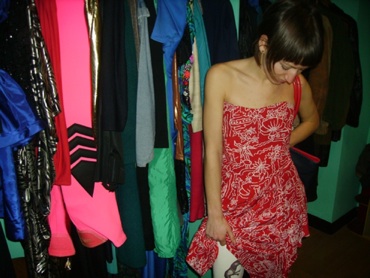

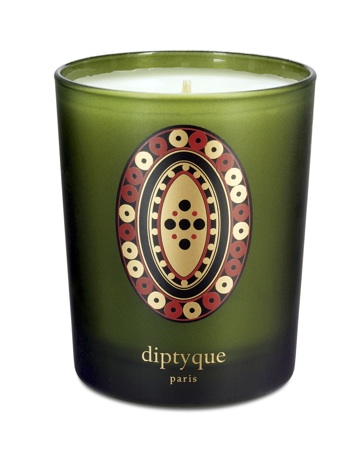


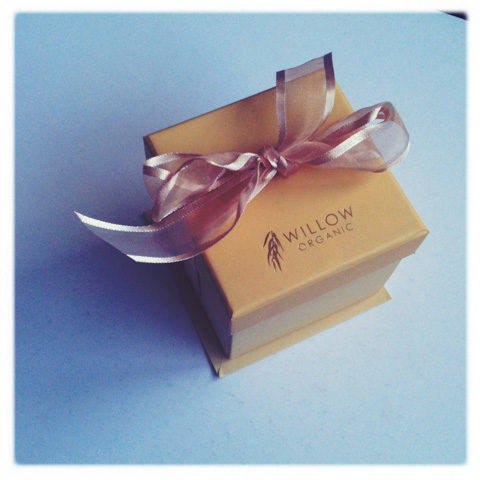


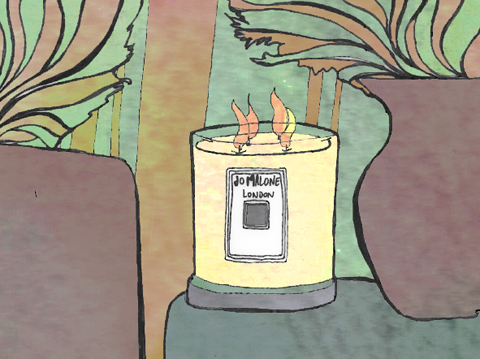


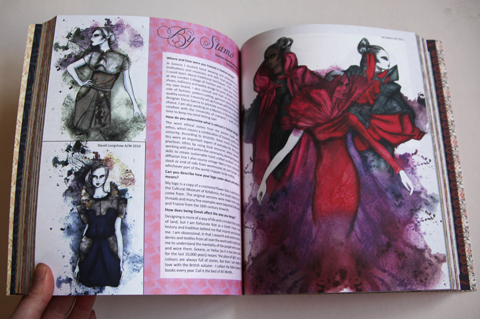


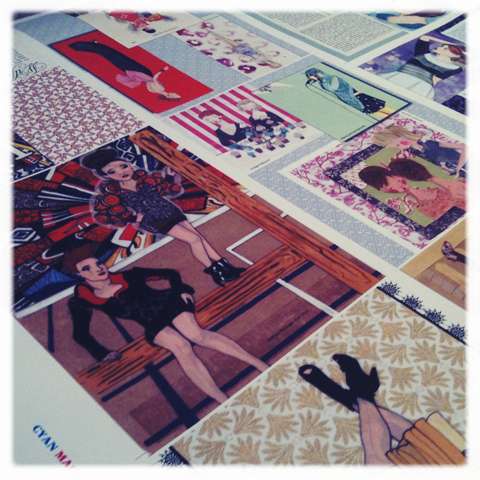


 Top illustration of


