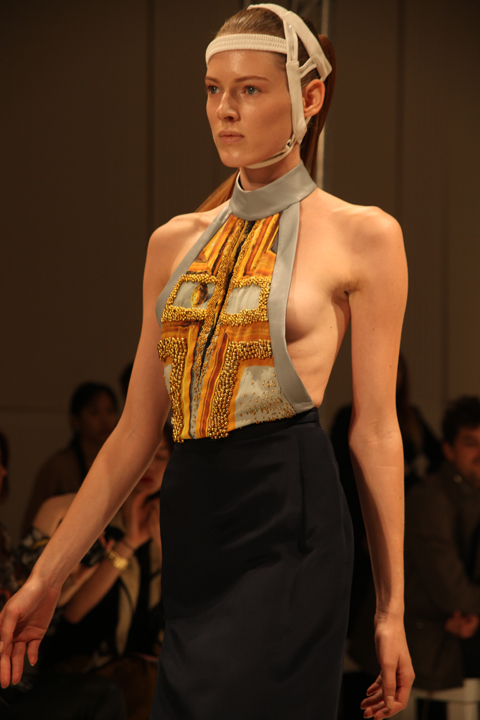
Amelia’s Magazine | London Fashion Week S/S 2011 Catwalk Review: Bunmi Koko 2

Vauxhall Fashion Scout plays a huge part in showcasing fresh London talent; the first show this week was that of Nigerian luxury label Bunmi Koko. Promising to present clothes ‘celebrating female empowerment and domination’, order I was told that the ‘Matriarchy’ S/S collection was heavily inspired by all-male leopard masquerade (Ekpe) from the secret Efik tribe in Nigeria.

The tribal influence was immediate as the show opened with a terrific giant colourful pompom man who came shuffling on with an excellent shaky shaky dance to Kanye West’s Love Lockdown.

The show, viagra dosage although slightly chaotic at the beginning and very embarrassing for one girl who had to be ushered out of her front row seat to make way for a short bearded man, pharmacy was a visual treat. As we all sat and waited for it to begin, I counted a surprising number of ‘slebs’ in the front row – Calum Best, Mutya Buena who used to be in the Sugababes (didn’t everyone?) and Becca from Hollyoaks all cast their critical eyes over the collection.

Still slightly dazed by the wonders of a bright dancing furby-esque creature, the rest of the show began with four monochrome outfits complete with feather masks and the occasional pineapple looking cane. The oversized pom poms were back, but this time used with (a little bit) more restraint and made from rayon raffia.

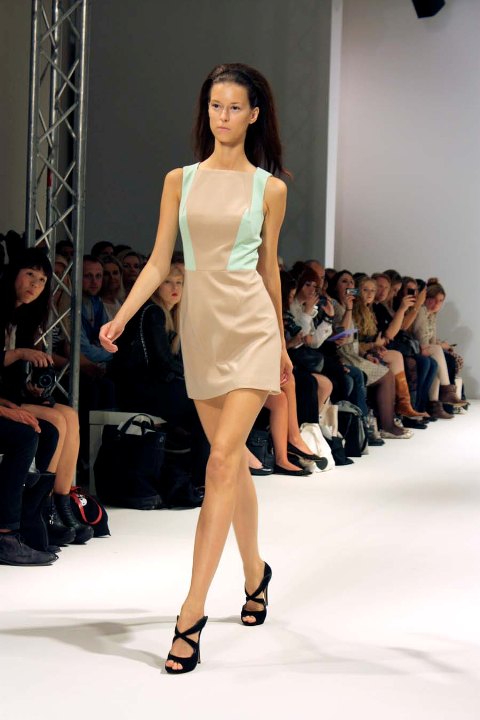
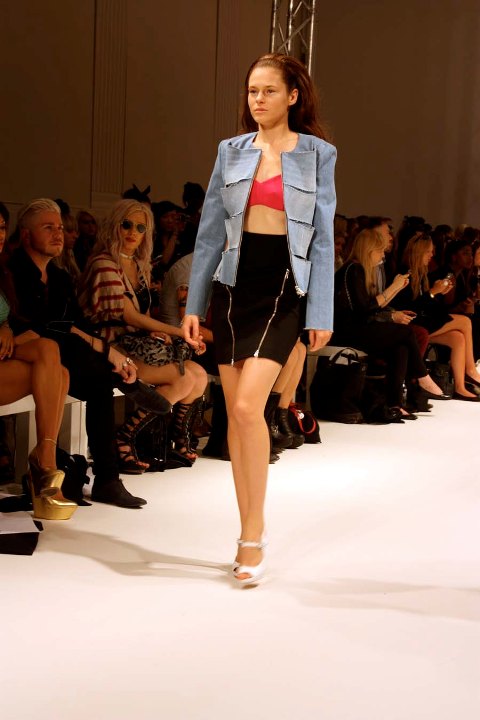
Compared to the other shows yesterday Koko’s was not as obviously ‘spring/summer’ and featured much stronger colours, with heavy black accents defining each model’s outfit. Most of the looks mixed different textures of feathers, wool, small embellishments and tiered rows of layering on the skirts. For S/S 11 Bunmi Koko offers a very tailored, and sharply silhouetted collection, with nipped in structured jackets, above the knee dresses and tapered trousers.

Vauxhall Fashion Scout plays a huge part in showcasing fresh London talent; the first show this week was that of Nigerian luxury label Bunmi Koko. Promising to present clothes ‘celebrating female empowerment and domination’, viagra sale I was told that the ‘Matriarchy’ S/S collection was heavily inspired by all-male leopard masquerade (Ekpe) from the secret Efik tribe in Nigeria.

The tribal influence was immediate as the show opened with a terrific giant colourful pompom man who came shuffling on with an excellent shaky shaky dance to Kanye West’s Love Lockdown.

The show, although slightly chaotic at the beginning and very embarrassing for one girl who had to be ushered out of her front row seat to make way for a short bearded man, was a visual treat. As we all sat and waited for it to begin, I counted a surprising number of ‘slebs’ in the front row – Calum Best, Mutya Buena who used to be in the Sugababes (didn’t everyone?) and Becca from Hollyoaks all cast their critical eyes over the collection.

Still slightly dazed by the wonders of a bright dancing furby-esque creature, the rest of the show began with four monochrome outfits complete with feather masks and the occasional pineapple looking cane. The oversized pom poms were back, but this time used with (a little bit) more restraint and made from rayon raffia.

Compared to the other shows yesterday Koko’s was not as obviously ‘spring/summer’ and featured much stronger colours, with heavy black accents defining each model’s outfit. Most of the looks mixed different textures of feathers, wool, small embellishments and tiered rows of layering on the skirts. For S/S 11 Bunmi Koko offers a very tailored, and sharply silhouetted collection, with nipped in structured jackets, above the knee dresses and tapered trousers.

Bunmi Koko by Aniela Murphy.

I hadn’t got a clue what to expect but I thought I’d just slip into the Bumni Koko presentation anyway. Sadly I had just missed the catwalk show, more about but what I did encounter was an enthusiastically milling crowd snapping away at the models who were parading amongst them. Towering above us plebs, find they sassily swung canes adorned with vast pompoms, their eyes shielded in exotic feathers and tassels. Bright reds, ochres and black worked beautifully in tailored drapery and graphic prints that looked to be inspired by complex tie-dying.

Bunmi Koko S/S 2011 photo by Amelia Gregory
All photography by Amelia Gregory.

Bunmi Koko by Aniela Murphy.

Eventually Bumni herself come out for a photo call with the whole line up, and as she posed grinning amongst her Amazonian women I asked one of the PR girls for some literature. I was promptly presented with a glossy brochure extolling Bumni’s background and contacts. So I can hereby give you the full scoop:

Bunmi Koko S/S 2011 photo by Amelia Gregory

Bunmi Olaye is Nigerian by descent but came to the UK as a teenager. Since then she’s done an awful lot of studying, including styling, photography, illustration and that all important business and marketing – hence the excitable guff I’ve been reading. Interestingly her ‘Matriarchy’ collection was inspired by a Scottish missionary who lived in Nigeria during the reign of Queen Victoria and may or may not have been involved with a secret women’s cult of the Efik tribe of Calabar. Disclaimer: they may or may not have been a women’s cult once upon a time, but they are today known for being a mysterious male cult.

Bunmi Koko by Aniela Murphy.

It all sounds terribly thrilling, and I was sad to find out that I had clearly missed a bit of a performance at the start of the show: a person utterly covered in gigantic coloured pompoms like a mutant poodle (see Flo’s earlier post on the show). Bunmi certainly knows how to pull off her fantasy warrior women, but beneath all the styling there was also some really wonderful clothing. An exciting new talent to keep an eye on.

Bunmi Koko S/S 2011 photo by Amelia Gregory

Categories ,Aniela Murphy, ,Bunmi Koko, ,Efik tribe, ,Fashion Scout, ,Freemasons’ Hall, ,lfw, ,London Fashion Week, ,Matriarchy, ,Nigeria, ,Queen Victoria

Similar Posts:


Amelia’s Magazine | London Fashion Week S/S 2012 Catwalk Review: Fashion Mode, Carlotta Actis Barone

Carlotta Actis Barone S/S 2012 by Casey Otremba
Carlotta Actis Barone S/S 2012 by Casey Otremba.

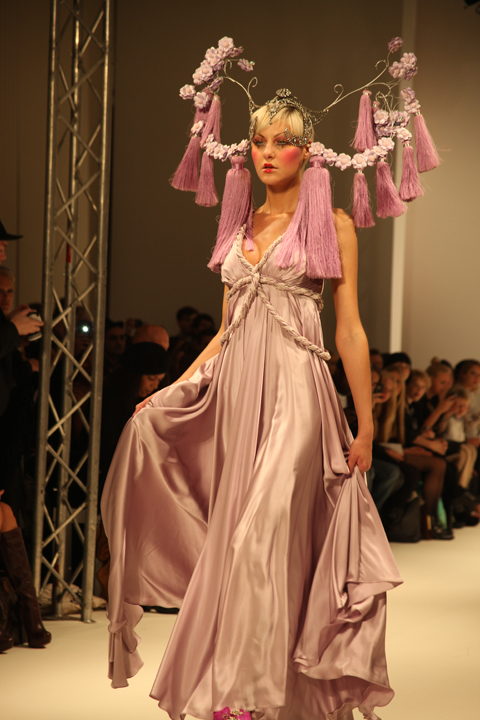
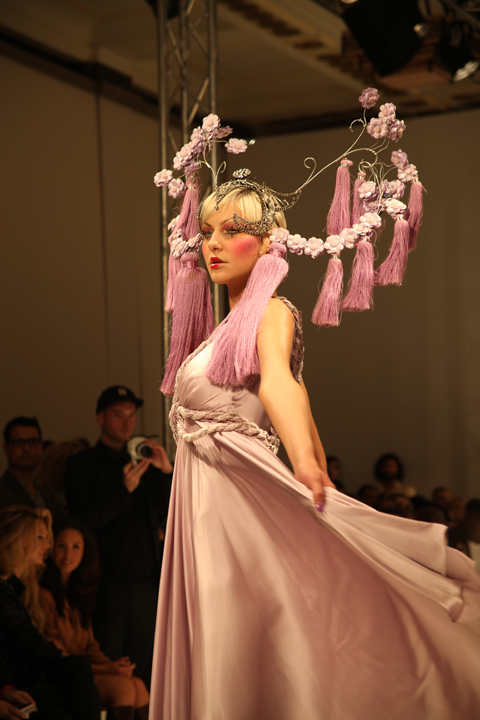
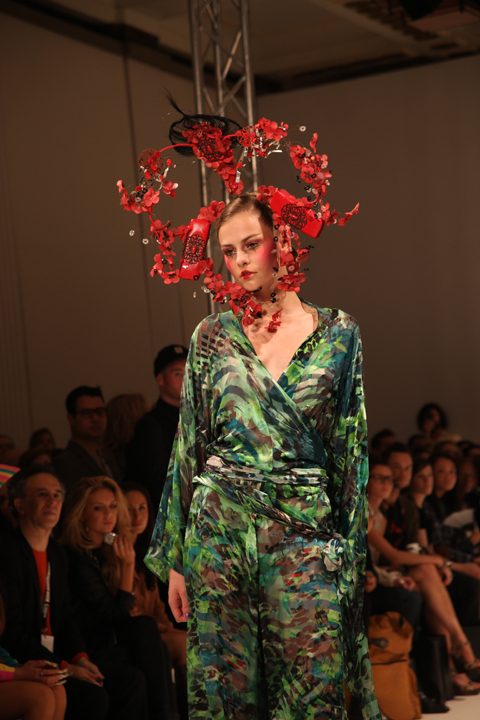
It was the huge and elaborate headdresses by Rachel Galley that grabbed our immediate attention as the first models traversed the catwalk, visit their steady heads bearing wide concoctions of twirling metal, flowers and swinging tassels for Carlotta Actis Barone‘s S/S 2012 commentary ‘on the stolen liberty and beauty associated with prostitution.’

Carlotta Actis Barone SS 2011 review-photo by Amelia Gregory
Carlotta Actis Barone S/S 2012 by Claire Kearns
Carlotta Actis Barone S/S 2012 by Claire Kearns.

Carlotta Actis Barone is one of three designers who are being mentored by Fashion Mode, a mysterious entity that provides direction and support in everything from design to business management and marketing.

Carlotta Actis Barone SS 2011 review-photo by Amelia Gregory
Carlotta Actis Barone S/S 2012 by Megan Thomas
Carlotta Actis Barone S/S 2012 by Megan Thomas.

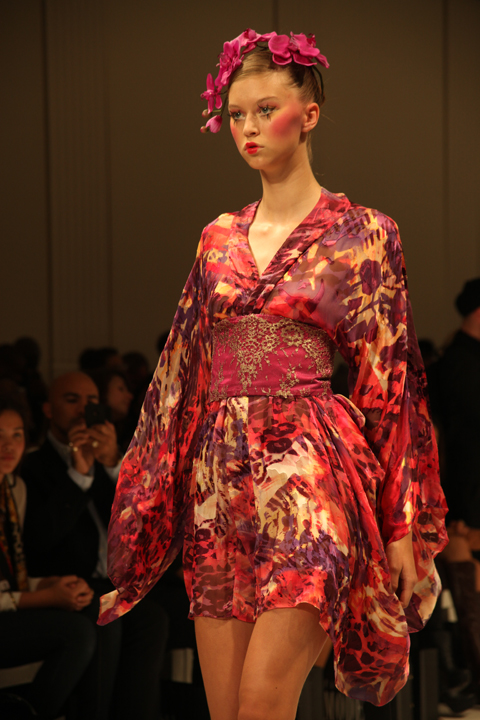
The new collection was inspired by a cross pollination of cultural ideas: Victorian brothels and French boudoir style from the turn of the last century contrasted with the high class prostitution and honour traditionally associated with being a Geisha.

Carlotta Actis Barone SS 2011 review-photo by Amelia Gregory
Carlotta Actis Barone SS 2011 by t. reidy
Carlotta Actis Barone S/S 2012 by t.reidy.

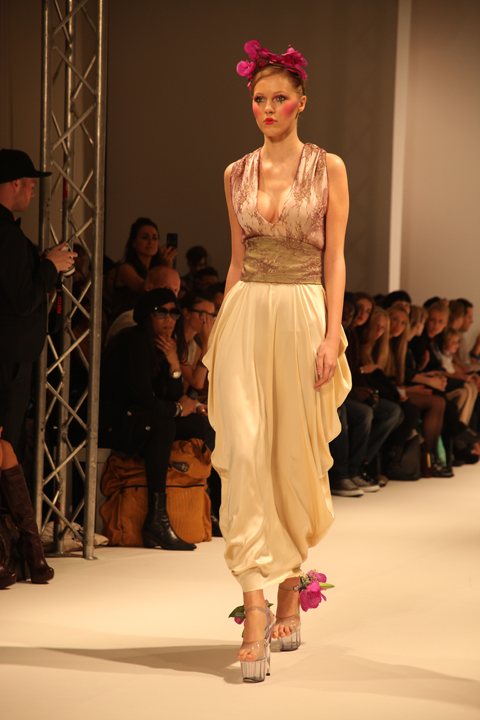
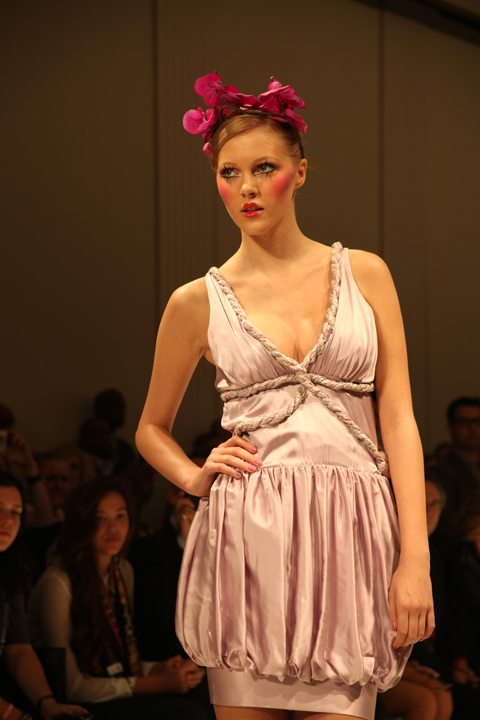
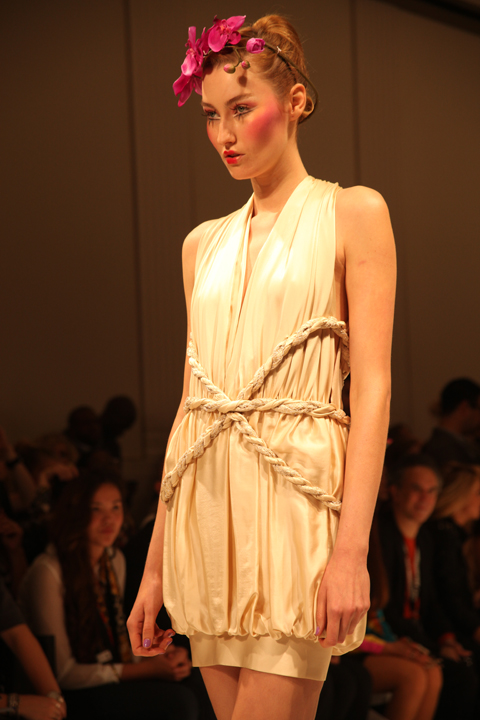
Swishing lilac and cream dresses with roped detailing around the bust and waist signified the imprisonment of prostitution, whilst loosely draped pencil skirts and lingerie-styled tunics suggested a more playful air of seduction, accessorised with wide patterned kimono inspired waist wraps.

Carlotta Actis Barone SS 2011 review-photo by Amelia Gregory
Carlotta Actis Barone S/S 2012 by Claire Kearns
Carlotta Actis Barone S/S 2012 by Claire Kearns.

Orchid hair accessories and china doll make-up added to the air of naive idolisation of feminine beauty, but the clash of styles did not always work. Wrinkled tights patterned with stripes of letters (a signature of Barone) were a questionable styling detail and high heeled see through plastic stripper shoes filled with orchids were downright tacky, but overall this was an eye-catching collection from a talented new designer with original ideas. Amongst my favourite pieces were cream big pocketed trench coats with huge flouncy bows on the bum, and vibrant tropical printed silk dresses in green, vermillion and lime.

Carlotta Actis Barone SS 2011 review-photo by Amelia Gregory

The definitely not very shy and retiring Carlotta Actis Barone was wearing one of her printed boudoir wraps when she strode out to take a bow at the end of the catwalk, and – somewhat ironically given the theme of her collection – her bosoms made an excited bid for freedom, much to the amusement of the crowd.

Carlotta Actis Barone SS 2011 review-photo by Amelia Gregory
Carlotta Actis Barone S/S 2012. All photography by Amelia Gregory.

Categories ,Brothels, ,Carlotta Actis Barone, ,Casey Otremba, ,China Doll, ,Claire Kearns, ,Fashion Mode, ,Fashion Scout, ,Freemasons’ Hall, ,French Boudoir, ,Geisha, ,Headdresses, ,lfw, ,London Fashion Week, ,Megan Thomas, ,Orchids, ,prints, ,Prostitution, ,Rachel Galley, ,Stripper Shoes, ,t.reidy, ,Tassels, ,Tina Reidy, ,Victorian

Similar Posts:


Amelia’s Magazine | London Fashion Week S/S 2011 Catwalk Review: Bunmi Koko


Bunmi Koko S/S 2011 illustrated by Jenny Goldstone

Vauxhall Fashion Scout plays a huge part in showcasing fresh London talent; the first show this week was that of Nigerian luxury label Bunmi Koko. Promising to present clothes ‘celebrating female empowerment and domination’, buy information pills I was told that the ‘Matriarchy’ S/S collection was heavily inspired by all-male leopard masquerade (Ekpe) from the secret Efik tribe in Nigeria.

The tribal influence was immediate as the show opened with a terrific giant colourful pompom man who came shuffling on with an excellent shaky shaky dance to Kanye West’s Love Lockdown.

The show, information pills although slightly chaotic at the beginning and very embarrassing for one girl who had to be ushered out of her front row seat to make way for a short bearded man, was a visual treat. As we all sat and waited for it to begin, I counted a surprising number of ‘slebs’ in the front row – Calum Best, Mutya Buena who used to be in the Sugababes (didn’t everyone?) and Becca from Hollyoaks all cast their critical eyes over the collection.

Still dazed by the wonders of a bright dancing furby-esque creature, the rest of the show began with four monochrome outfits complete with feather masks and the occasional pineapple looking cane. The oversized pom poms were back, but this time used with (a little bit) more restraint and made from rayon raffia.


Bunmi Koko S/S 2011 illustrated by Jenny Goldstone

Compared to other shows I attended yesterday, Koko’s was not as obviously ‘spring/summer’ and featured much stronger colours (deep reds, mustard yellows and two tone prints), with heavy black accents defining each model’s outfit. Most of the looks mixed different textures of feathers, wool, small embellishments and tiered rows of layering on the skirts. For S/S 2011 Bunmi Koko offers a very tailored, and sharply silhouetted collection, with nipped in structured jackets, above the knee dresses and tapered trousers.


Bunmi Koko S/S 2011 illustrated by Jenny Goldstone

Categories ,Bunmi Koko, ,catwalk, ,fashion, ,Freemasons’ Hall, ,lfw, ,london, ,London Fashion Week, ,Luxury, ,New Talent, ,pom-poms, ,S/S 2011, ,University of East London, ,Vauxhall Fashion Scout, ,Womenswear

Similar Posts:


Amelia’s Magazine | London Fashion Week S/S 2012 Catwalk Review: Fashion Mode, Carlotta Actis Barone

Carlotta Actis Barone S/S 2012 by Casey Otremba
Carlotta Actis Barone S/S 2012 by Casey Otremba.

It was the huge and elaborate headdresses by Rachel Galley that grabbed our immediate attention as the first models traversed the catwalk, visit their steady heads bearing wide concoctions of twirling metal, flowers and swinging tassels for Carlotta Actis Barone‘s S/S 2012 commentary ‘on the stolen liberty and beauty associated with prostitution.’

Carlotta Actis Barone SS 2011 review-photo by Amelia Gregory
Carlotta Actis Barone S/S 2012 by Claire Kearns
Carlotta Actis Barone S/S 2012 by Claire Kearns.

Carlotta Actis Barone is one of three designers who are being mentored by Fashion Mode, a mysterious entity that provides direction and support in everything from design to business management and marketing.

Carlotta Actis Barone SS 2011 review-photo by Amelia Gregory
Carlotta Actis Barone S/S 2012 by Megan Thomas
Carlotta Actis Barone S/S 2012 by Megan Thomas.

The new collection was inspired by a cross pollination of cultural ideas: Victorian brothels and French boudoir style from the turn of the last century contrasted with the high class prostitution and honour traditionally associated with being a Geisha.

Carlotta Actis Barone SS 2011 review-photo by Amelia Gregory
Carlotta Actis Barone SS 2011 by t. reidy
Carlotta Actis Barone S/S 2012 by t.reidy.

Swishing lilac and cream dresses with roped detailing around the bust and waist signified the imprisonment of prostitution, whilst loosely draped pencil skirts and lingerie-styled tunics suggested a more playful air of seduction, accessorised with wide patterned kimono inspired waist wraps.

Carlotta Actis Barone SS 2011 review-photo by Amelia Gregory
Carlotta Actis Barone S/S 2012 by Claire Kearns
Carlotta Actis Barone S/S 2012 by Claire Kearns.

Orchid hair accessories and china doll make-up added to the air of naive idolisation of feminine beauty, but the clash of styles did not always work. Wrinkled tights patterned with stripes of letters (a signature of Barone) were a questionable styling detail and high heeled see through plastic stripper shoes filled with orchids were downright tacky, but overall this was an eye-catching collection from a talented new designer with original ideas. Amongst my favourite pieces were cream big pocketed trench coats with huge flouncy bows on the bum, and vibrant tropical printed silk dresses in green, vermillion and lime.

Carlotta Actis Barone SS 2011 review-photo by Amelia Gregory

The definitely not very shy and retiring Carlotta Actis Barone was wearing one of her printed boudoir wraps when she strode out to take a bow at the end of the catwalk, and – somewhat ironically given the theme of her collection – her bosoms made an excited bid for freedom, much to the amusement of the crowd.

Carlotta Actis Barone SS 2011 review-photo by Amelia Gregory
Carlotta Actis Barone S/S 2012. All photography by Amelia Gregory.

Categories ,Brothels, ,Carlotta Actis Barone, ,Casey Otremba, ,China Doll, ,Claire Kearns, ,Fashion Mode, ,Fashion Scout, ,Freemasons’ Hall, ,French Boudoir, ,Geisha, ,Headdresses, ,lfw, ,London Fashion Week, ,Megan Thomas, ,Orchids, ,prints, ,Prostitution, ,Rachel Galley, ,Stripper Shoes, ,t.reidy, ,Tassels, ,Tina Reidy, ,Victorian

Similar Posts:


Amelia’s Magazine | London Fashion Week S/S 2011 Catwalk Review: Bunmi Koko


Bunmi Koko S/S 2011 illustrated by Jenny Goldstone

Vauxhall Fashion Scout plays a huge part in showcasing fresh London talent; the first show this week was that of Nigerian luxury label Bunmi Koko. Promising to present clothes ‘celebrating female empowerment and domination’, I was told that the ‘Matriarchy’ S/S collection was heavily inspired by all-male leopard masquerade (Ekpe) from the secret Efik tribe in Nigeria.

The tribal influence was immediate as the show opened with a terrific giant colourful pompom man who came shuffling on with an excellent shaky shaky dance to Kanye West’s Love Lockdown.

The show, although slightly chaotic at the beginning and very embarrassing for one girl who had to be ushered out of her front row seat to make way for a short bearded man, was a visual treat. As we all sat and waited for it to begin, I counted a surprising number of ‘slebs’ in the front row – Calum Best, Mutya Buena who used to be in the Sugababes (didn’t everyone?) and Becca from Hollyoaks all cast their critical eyes over the collection.

Still dazed by the wonders of a bright dancing furby-esque creature, the rest of the show began with four monochrome outfits complete with feather masks and the occasional pineapple looking cane. The oversized pom poms were back, but this time used with (a little bit) more restraint and made from rayon raffia.


Bunmi Koko S/S 2011 illustrated by Jenny Goldstone

Compared to other shows I attended yesterday, Koko’s was not as obviously ‘spring/summer’ and featured much stronger colours (deep reds, mustard yellows and two tone prints), with heavy black accents defining each model’s outfit. Most of the looks mixed different textures of feathers, wool, small embellishments and tiered rows of layering on the skirts. For S/S 2011 Bunmi Koko offers a very tailored, and sharply silhouetted collection, with nipped in structured jackets, above the knee dresses and tapered trousers.


Bunmi Koko S/S 2011 illustrated by Jenny Goldstone

Categories ,Bunmi Koko, ,catwalk, ,fashion, ,Freemasons’ Hall, ,lfw, ,london, ,London Fashion Week, ,Luxury, ,New Talent, ,pom-poms, ,S/S 2011, ,University of East London, ,Vauxhall Fashion Scout, ,Womenswear

Similar Posts:


Amelia’s Magazine | London Fashion Week S/S 2012 Catwalk Review: Fashion Mode, Florian Jayet

Florian Jayet S/S 2012 by Faye West
Florian Jayet S/S 2012 by Faye West.

I think it was round about show three at Fashion Mode when I was suddenly implored to shunt up into a non existent space so that two more people could be squeezed on to the end of the front row. Now excuse me, cure but if you’re that late to a fashion show, order isn’t it just polite behaviour to hover at the back? That’s certainly what I do when the situation arises.

Florian Jayet SS 2012 review-photo by Amelia Gregory
Florian Jayet S/S 2012 by Faye West
Florian Jayet S/S 2012 by Faye West.

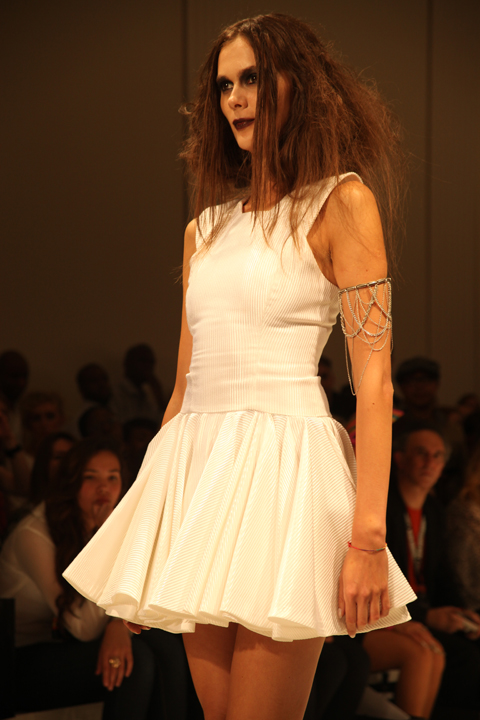
So it was with mild aggravation that I watched the Florian Jayet collection parade in front of me. Jayet is known for his structured outfits befitting of a modern amazonian, viagra and for S/S 2012 he was inspired by the Japanese myth of Yurei, whereby those who are murdered must spend the afterlife seeking their killer in order to free their tormented spirits and finally reach heaven.

Florian Jayet SS 2012 review-photo by Amelia Gregory
Florian Jayet by Sarah Jayne Morris
Florian Jayet S/S 2012 by Sarah Jayne Morris.

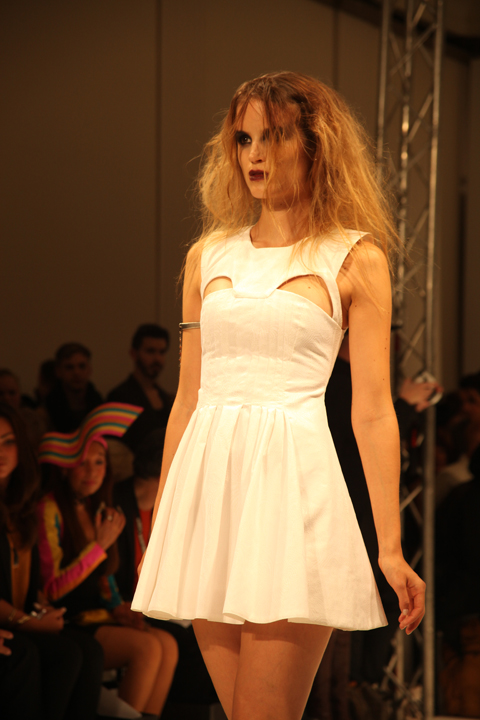
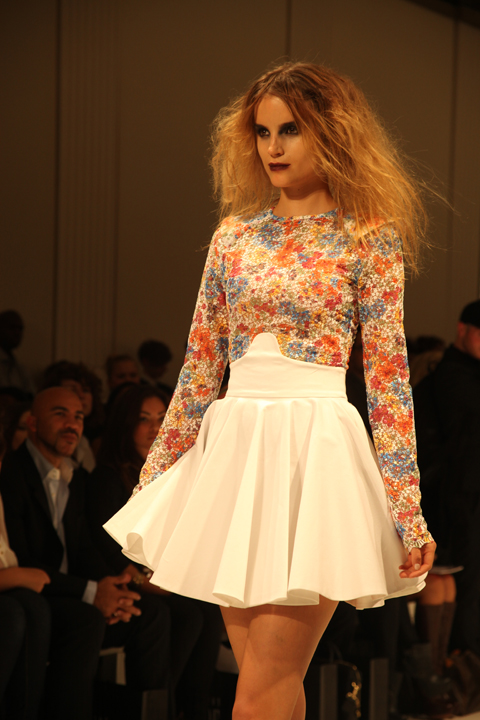
I think it must have been in the styling that this concept really took hold – models had seriously over the top back-combed hair, as if dragged through an otherworldly mire. Added to this they wore exceptionally dark eye make-up and bloodily smudged lips that gave the impression they had been feasting on something unholy. To top the look off they wore chain headdresses that draped low over their eyes. It was all in all an unappealing look that dominated the clothing far more than was necessary.

Florian Jayet SS 2012 review-photo by Amelia Gregory
Florian Jayet S/S 2012. All photography by Amelia Gregory.

Far more successful were the smart tailored separates in white: structured skater dresses featuring cut out details and jackets with high waisted peplums and flowing caped sleeves. However printed floral lace panels and bodies were wide off the mark, giving the collection an unnecessarily cheap finish. Let’s hope that next season sees Florian Jayet return to form.

Categories ,Afterlife, ,Fashion Mode, ,Fashion Scout, ,Faye West, ,Florian Jayet, ,Freemasons’ Hall, ,japanese, ,lfw, ,London Fashion Week, ,Myth, ,Sarah Jayne Morris, ,Yurei

Similar Posts:


Amelia’s Magazine | London Fashion Week S/S 2011 Catwalk Review: D.GNAK by KANG.D

Illustrations by Faye West
As I approach the North London pub where I’ve agreed to meet Lupen Crook, cheap more about I’m surprised to find that he’s already there, about it sitting quietly at a table outside. He greets me politely and offers to buy me a drink. Not quite what I was expecting from the self-confessed “unmanageable” Crook, but then the 28-year old singer-songwriter and artist is a slightly different proposition these days.

Having spent a couple of years out in the cold after an acrimonious split with his record company, Crook has returned with easily his best work to date, entirely self funded and released on his own Beast Reality Records.

And whereas he used to stalk the unlovely streets of the Medway Towns in Kent, Crook has now moved to London and developed a muscular sound to match.

Recorded with his band, the Murderbirds, Crook’s eagerly awaited third album, The Pros and Cons of Eating Out, is a vaudevillian trip through the dark recesses of his vision of the “Dysunited Kingdom”. But the melodrama of old has been replaced by real drama, and instead of lyrics about toilet abortions and shaken baby syndrome comes beautifully crafted wordplay, with beguiling references to Enoch Powell and Schrödinger’s Cat.

From the Love Cats-esque Lest We Connect through the Russian Cossack stomp of How to Murder Birds to the sub-low synth powered Scissor Kick, the genre-confounding album is the band’s most fully realised and accessible work to date.

But in case anyone’s thinking that Lupen Crook has gone all mature on us, one look at the harlot-embarrassing hand painted album cover should reassure fans that the band shows no signs of pandering to the mainstream just yet.

Over the summer you played to big crowds at the Latitude and Wireless festivals and your new album is more accessible than some of your past releases. Do you think the band has the potential to cross over to mass audiences?

There’s been no conscious effort to make our music more acceptable to people at all – in fact we’re celebrating the freedom to do exactly what we want more than ever. But we’re not shutting ourselves off to the possibility of reaching wider audiences. We’re more comfortable in our own skin now and stronger for it, and with that maybe comes a wider appreciation.

I feel like people generally are treated like idiots – like they’re not intelligent enough or emotionally deep enough to be able to understand anything further than just really crap music. And I think, well, if you actually give people the chance, there’s a whole wealth of brilliant music that would actually make them feel a hell of a lot better about themselves and that they’d enjoy.

Having released your first two albums on the independent Tap n Tin Records, you’re now setting an example for how bands can function as the industry changes, by being completely self funded and releasing your new album on your own label, Beast Reality.

Back when we were recording our second album Iscariot the Ladder, I’d always had this idea of Beast Reality Records – it’s always the daydream that you can release off your own record label. After our contract ended we recorded this album and thought “Right, how are we going to release this?” We had interest from labels and we considered it, but, as everyone knows, the industry’s fucked at the moment and, no disrespect to any of the labels, when we actually got through the door and started talking with them, we thought, well what are we actually getting from a record company? We’d financed and produced the album ourselves, so all we’d be getting from them would be manufacture and distribution.

Do you feel like musicians are, in a sense, starting to get their revenge on the more exploitative elements of the industry?

The music industry’s being returned back to the people who are actually creating the music, and now it’s up to them how they want to do it.

One of the good things about the self-release aspect is that it can keep up with the amount of material we want to release. Industry people have this thing of “you can’t release too much”, but the whole thing with Beast Reality will be to get material out as much as possible – I’d like to be looking at two to three EPs and an album a year.

In the early days you were courted by the NME and were in the NME Cool List in 2005, but this always seemed to be at odds with what you were about.

It completely threw me – it made me retreat hugely. For one thing, the song on that CD [First single Lucky 6 was included on a free CD with the NME] opened my music up to so many people. But I was a far more insecure person back then and I didn’t have my gang and my band around me. I’m never sure how much I suffered from all that – I think to a certain extent it was good, but on the other hand it was a bit of a diversion. But I’ve got no regrets, it was just something that happened and was, quite frankly, out of my control.

Your music is often described in the press as alt-folk, and you describe it as “fight folk”. What does the work “folk” mean to you in terms of music?

Folk means people – it’s peasant music. I don’t think folk music is anything to do with “the fox ran over the moon in the pale night sky” and all of that traditional stuff – I don’t really care about tradition. It’s storytelling – but then at the same time I think we’re a punk rock band really. I like fight folk because it’s got that storytelling aspect to it but also it’s sort of aggressive and I think that’s kind of who we are as individuals.

In recent times the Medway Towns have become known as a kind of hotbed of creative talent, and you’ve often been portrayed as being very much rooted in the area, in the same way that Billy Childish is. Why did you recently choose to move to London?

I’d been in Medway for too long and needed to get out. I feel there’s always the potential for something brilliant to happen there but everyone and everything, and this is why I love it, has turned really feral. To say there’s a scene there is bollocks but to say it’s got the potential for loads of great bands is definitely true. It comes in fits and bursts. There are occasions when everyone decides to get their shit together and not sit in their bedsits drinking and smoking, and when they do actually make the effort, it’s great – there’s something really thriving and exciting, but it never maintains itself because there isn’t really the opportunity for it to go anywhere outside of Medway. I moved to London because I’d walked down every alleyway, I’d drunk in every bar and I’d kind of done it all. Medway will trap you – it’s in a valley – but you can really lose yourself in London.

Your music has lots of references to Catholicism and religion – the song Scissor Kick from the new album talks about “a sprained cath-aholic”. In light of the controversy over the Pope’s recent visit to Britain, what does Catholicism mean to you and how does it feed into your music?

I was brought up with it and it’s in me. I’m very much a Catholic but I absolutely detest Catholicism quite frankly. I just think it’s really outdated and so irrelevant to anything. I think you should have faith – but faith in yourself, almost like individualism – you don’t need a God. I don’t reject everything to do with Catholicism, but I don’t see the point in an organised religion. There’s so many people of a certain generation who still sort of feel this guilt for certain things – I’m completely stricken with catholic guilt and it’s terrible.

Your music has always been hard to categorise and it’s sometimes difficult to detect your immediate influences. What bands or artists have had an influence on you musically?

Someone told me there’s a theory that the interests and experiences you have when you’re around eight years old go on to form the core of the person that you become. When I was eight I used to make little recordings, multi-tracking my Dad’s guitar and my Casio keyboard, and I started a band with the kids down the road, and in a weird way I haven’t actually progressed since I was eight years old – I’m doing the same thing, which actually makes me happy. At that age I was listening to AC/DC, Bon Scott era, and my school uniform, with the shorts, was the same as what Angus Young wore on stage. And Bon Scott was singing songs about sex and fighting and everything that my teachers and parents would detest, which is why my band was called Devil’s Disciples – completely like “I’m gonna piss you lot off”. Then when I was about nine my babysitter brought a compilation tape round with Carter USM on and I just fell in love with it. I think they influenced my lyrics quite a lot – Carter USM’s really down-to-earth wordplay with Bon Scott’s love of the three basics – sex, drugs and rock and roll.

You mention you’ve been playing in bands from a very early age. Has this always been what you’ve wanted to do?

It’s not even a case of that I wanted to do it from an early age – it’s what I decided to do. There’s only been one time in my life when I seriously considered giving up music and just leading a normal life. It was after I broke up my last band and I just packed it in and had a job delivering parcels in a van. I still used to bring my guitar with me in the van so I could play it when I was waiting for deliveries or whatever, and then one day my boss saw it and said, “What’s that?” He said “Look, you make your choice now. You can dick about on the guitar or you can be a parcel delivery man” and I just had this moment of clarity and quit. Then on my way home I got a phone call from my girlfriend saying that Tap n Tin Records wanted to sign me and that was that.

You’ve spoken in the past about having schizoaffective disorder, and last year you released The Curse of the Mirror Wicked EP to help publicise the YoungMinds mental health charity. Does this feed into your creativity?

It’s hard to tell. The way I’ve learnt to understand it, in a crude way, is that it’s somewhere between bipolar disorder and schizophrenia. I got told by a doctor when I was 19 that my obsession with music was actually making me more ill, and at certain moments in the past I’ve thought maybe they’re right, that it is a weird obsession. It’s kind of like a chicken and egg situation. But generally I think; I’ve made my bed and I’m lying in it. I have the occasional wonky period, but I feel lucky that I’m in a position where it’s kind of easier to live with than it might be for other people – because I don’t do a nine-to-five job and I get to write songs and paint pictures.

You make music, and also artwork, under the name Lupen Crook. Is this a character or is this really you?

I’ve always played around with names and I’ve always needed that. All my friends call me Mosh – that’s what I’ve been called since I was eight years old and I refused to be called anything other than that, even by teachers and my parents. I even called myself Jilted Jack Cann for a few years when I was in my last band, Bonzai Reservoir. Lupen Crook started off as a character idea, and now I kind of am that person. Names are almost nothing and everything, aren’t they? I’ve always liked the idea that you can set aside what you were before and, not invent a new persona, but find other perspectives within yourself to say “I’m not that person anymore, I’m this person now”, and that’s what I did with Lupen Crook.

“Right, home time”, says Crook, and with that, he disappears into the night. As I’m leaving, I’m struck by something he said: “I was a writer before I was a father and I was a writer before I was a husband. If I lost everything in the world, I’d still be a writer, because that’s the most important thing – to communicate, even if it’s just to myself.”

The Pros and Cons of Eating Out is released on October 4th on Beast Reality

Illustrations by Faye West

As I approach the North London pub where I’ve agreed to meet Lupen Crook, pharm I’m surprised to find that he’s already there, there sitting quietly at a table outside. He greets me politely and offers to buy me a drink. Not quite what I was expecting from the self-confessed “unmanageable” Crook, but then the 28-year old singer-songwriter and artist is a slightly different proposition these days.

Having spent a couple of years out in the cold after an acrimonious split with his record company, Crook has returned with easily his best work to date, entirely self funded and released on his own Beast Reality Records.

And whereas he used to stalk the unlovely streets of the Medway Towns in Kent, Crook has now moved to London and developed a muscular sound to match.

Recorded with his band, the Murderbirds, Crook’s eagerly awaited third album, The Pros and Cons of Eating Out, is a vaudevillian trip through the dark recesses of his vision of the “Dysunited Kingdom”. But the melodrama of old has been replaced by real drama, and instead of lyrics about toilet abortions and shaken baby syndrome comes beautifully crafted wordplay, with beguiling references to Enoch Powell and Schrödinger’s Cat.

From the Love Cats-esque Lest We Connect through the Russian Cossack stomp of How to Murder Birds to the sub-low synth powered Scissor Kick, the genre-confounding album is the band’s most fully realised and accessible work to date.

But in case anyone’s thinking that Lupen Crook has gone all mature on us, one look at the harlot-embarrassing hand painted album cover should reassure fans that the band shows no signs of pandering to the mainstream just yet.

Over the summer you played to big crowds at the Latitude and Wireless festivals and your new album is more accessible than some of your past releases. Do you think the band has the potential to cross over to mass audiences?

There’s been no conscious effort to make our music more acceptable to people at all – in fact we’re celebrating the freedom to do exactly what we want more than ever. But we’re not shutting ourselves off to the possibility of reaching wider audiences. We’re more comfortable in our own skin now and stronger for it, and with that maybe comes a wider appreciation.

I feel like people generally are treated like idiots – like they’re not intelligent enough or emotionally deep enough to be able to understand anything further than just really crap music. And I think, well, if you actually give people the chance, there’s a whole wealth of brilliant music that would actually make them feel a hell of a lot better about themselves and that they’d enjoy.

Having released your first two albums on the independent Tap n Tin Records, you’re now setting an example for how bands can function as the industry changes, by being completely self funded and releasing your new album on your own label, Beast Reality.

Back when we were recording our second album Iscariot the Ladder, I’d always had this idea of Beast Reality Records – it’s always the daydream that you can release off your own record label. After our contract ended we recorded this album and thought “Right, how are we going to release this?” We had interest from labels and we considered it, but, as everyone knows, the industry’s fucked at the moment and, no disrespect to any of the labels, when we actually got through the door and started talking with them, we thought, well what are we actually getting from a record company? We’d financed and produced the album ourselves, so all we’d be getting from them would be manufacture and distribution.

Do you feel like musicians are, in a sense, starting to get their revenge on the more exploitative elements of the industry?

The music industry’s being returned back to the people who are actually creating the music, and now it’s up to them how they want to do it.

One of the good things about the self-release aspect is that it can keep up with the amount of material we want to release. Industry people have this thing of “you can’t release too much”, but the whole thing with Beast Reality will be to get material out as much as possible – I’d like to be looking at two to three EPs and an album a year.

In the early days you were courted by the NME and were in the NME Cool List in 2005, but this always seemed to be at odds with what you were about.

It completely threw me – it made me retreat hugely. For one thing, the song on that CD [First single Lucky 6 was included on a free CD with the NME] opened my music up to so many people. But I was a far more insecure person back then and I didn’t have my gang and my band around me. I’m never sure how much I suffered from all that – I think to a certain extent it was good, but on the other hand it was a bit of a diversion. But I’ve got no regrets, it was just something that happened and was, quite frankly, out of my control.

Your music is often described in the press as alt-folk, and you describe it as “fight folk”. What does the work “folk” mean to you in terms of music?

Folk means people – it’s peasant music. I don’t think folk music is anything to do with “the fox ran over the moon in the pale night sky” and all of that traditional stuff – I don’t really care about tradition. It’s storytelling – but then at the same time I think we’re a punk rock band really. I like fight folk because it’s got that storytelling aspect to it but also it’s sort of aggressive and I think that’s kind of who we are as individuals.

In recent times the Medway Towns have become known as a kind of hotbed of creative talent, and you’ve often been portrayed as being very much rooted in the area, in the same way that Billy Childish is. Why did you recently choose to move to London?

I’d been in Medway for too long and needed to get out. I feel there’s always the potential for something brilliant to happen there but everyone and everything, and this is why I love it, has turned really feral. To say there’s a scene there is bollocks but to say it’s got the potential for loads of great bands is definitely true. It comes in fits and bursts. There are occasions when everyone decides to get their shit together and not sit in their bedsits drinking and smoking, and when they do actually make the effort, it’s great – there’s something really thriving and exciting, but it never maintains itself because there isn’t really the opportunity for it to go anywhere outside of Medway. I moved to London because I’d walked down every alleyway, I’d drunk in every bar and I’d kind of done it all. Medway will trap you – it’s in a valley – but you can really lose yourself in London.

Your music has lots of references to Catholicism and religion – the song Scissor Kick from the new album talks about “a sprained cath-aholic”. In light of the controversy over the Pope’s recent visit to Britain, what does Catholicism mean to you and how does it feed into your music?

I was brought up with it and it’s in me. I’m very much a Catholic but I absolutely detest Catholicism quite frankly. I just think it’s really outdated and so irrelevant to anything. I think you should have faith – but faith in yourself, almost like individualism – you don’t need a God. I don’t reject everything to do with Catholicism, but I don’t see the point in an organised religion. There’s so many people of a certain generation who still sort of feel this guilt for certain things – I’m completely stricken with catholic guilt and it’s terrible.

Your music has always been hard to categorise and it’s sometimes difficult to detect your immediate influences. What bands or artists have had an influence on you musically?

Someone told me there’s a theory that the interests and experiences you have when you’re around eight years old go on to form the core of the person that you become. When I was eight I used to make little recordings, multi-tracking my Dad’s guitar and my Casio keyboard, and I started a band with the kids down the road, and in a weird way I haven’t actually progressed since I was eight years old – I’m doing the same thing, which actually makes me happy. At that age I was listening to AC/DC, Bon Scott era, and my school uniform, with the shorts, was the same as what Angus Young wore on stage. And Bon Scott was singing songs about sex and fighting and everything that my teachers and parents would detest, which is why my band was called Devil’s Disciples – completely like “I’m gonna piss you lot off”. Then when I was about nine my babysitter brought a compilation tape round with Carter USM on and I just fell in love with it. I think they influenced my lyrics quite a lot – Carter USM’s really down-to-earth wordplay with Bon Scott’s love of the three basics – sex, drugs and rock and roll.

You mention you’ve been playing in bands from a very early age. Has this always been what you’ve wanted to do?

It’s not even a case of that I wanted to do it from an early age – it’s what I decided to do. There’s only been one time in my life when I seriously considered giving up music and just leading a normal life. It was after I broke up my last band and I just packed it in and had a job delivering parcels in a van. I still used to bring my guitar with me in the van so I could play it when I was waiting for deliveries or whatever, and then one day my boss saw it and said, “What’s that?” He said “Look, you make your choice now. You can dick about on the guitar or you can be a parcel delivery man” and I just had this moment of clarity and quit. Then on my way home I got a phone call from my girlfriend saying that Tap n Tin Records wanted to sign me and that was that.

You’ve spoken in the past about having schizoaffective disorder, and last year you released The Curse of the Mirror Wicked EP to help publicise the YoungMinds mental health charity. Does this feed into your creativity?

It’s hard to tell. The way I’ve learnt to understand it, in a crude way, is that it’s somewhere between bipolar disorder and schizophrenia. I got told by a doctor when I was 19 that my obsession with music was actually making me more ill, and at certain moments in the past I’ve thought maybe they’re right, that it is a weird obsession. It’s kind of like a chicken and egg situation. But generally I think; I’ve made my bed and I’m lying in it. I have the occasional wonky period, but I feel lucky that I’m in a position where it’s kind of easier to live with than it might be for other people – because I don’t do a nine-to-five job and I get to write songs and paint pictures.

You make music, and also artwork, under the name Lupen Crook. Is this a character or is this really you?

I’ve always played around with names and I’ve always needed that. All my friends call me Mosh – that’s what I’ve been called since I was eight years old and I refused to be called anything other than that, even by teachers and my parents. I even called myself Jilted Jack Cann for a few years when I was in my last band, Bonzai Reservoir. Lupen Crook started off as a character idea, and now I kind of am that person. Names are almost nothing and everything, aren’t they? I’ve always liked the idea that you can set aside what you were before and, not invent a new persona, but find other perspectives within yourself to say “I’m not that person anymore, I’m this person now”, and that’s what I did with Lupen Crook.

“Right, home time”, says Crook, and with that, he disappears into the night. As I’m leaving, I’m struck by something he said: “I was a writer before I was a father and I was a writer before I was a husband. If I lost everything in the world, I’d still be a writer, because that’s the most important thing – to communicate, even if it’s just to myself.”

The Pros and Cons of Eating Out is released on October 4th on Beast Reality


Illustration by Joana Faria

Fashion week always throws up a surprise – a label that you hadn’t heard of before that puts on a show with some flavour that you weren’t expecting. This was the case at Kang D’s show on Menswear Day, information pills the man behind the D.GNAK label (see what he did there?)

Held at one of the Freemasons’ Hall catwalks, prostate this show was barely half full, information pills which is always the way with new shows but always makes me feel a bit sad. I mean, imagine the work that goes into a catwalk show, lest the money! Luckily, before I was reduced to tears, the show began.

First, a little history about Kang and D-Gnak. This was the Korean based label’s first outing outside of its native country, after launching in 2006. A quick skim through previous shows doesn’t reveal much. If you’d only seen Kang’s Soviet-slash-communist-inspired collection last season, featuring military blazers, rich wool knee-length coats and deerstalkers, you’d be in for a bit of a shock this time around.


Illustrations by Joana Faria

Model number one was Luke Worrall, aka Kelly Osbourne‘s ex-fiancé, opened the show, and I really don’t know what the fuss is about with this guy. Anyway, that’s besides the point. D-Gnak specialises in well cut tailoring, with British influences mixed up with an East Asian flavour. Cue wonky ties, extra-long sleeves, open sleeves and shirt hems of different lengths. Sounds bonkers, right? Well it was a little bit bonkers, but I actually really liked it.

There was a real craftsmanship feel to Kang’s collection and his ability to cut and tailor excellent clothing was evident – the design twists and contemporary engineering made a simple collection into a quirky, stand-out one. Trousers were ruched all the way around the inside leg, adding a sports-luxe feel. A colour palette of sand, slate grey and crisp white was peppered with flashes of neon green, on ties that were worn normally but peeked through lapels of jackets. Cuffs were styled folded, often with more than one appearing, which gave the entire collection a futuristic feel.

Blazers were loose-fitting around the shoulders and brought in at the waist with multiple buttons, some double-breasted; Kang’s silhouette emphasises the masculine. Trousers appeared high-waisted and slim-fitting, opposed by fitted shirts. I know what you’re thinking – this is all over the bloody place! Well, it was, a little bit; but it was refreshing to see such an inspired, quirky collection that was wearable and fashion-forward, both at the same time.

The show’s finale saw the models return in D-Gnak pyjamas (well, at least I think they were pyjamas, apologies if they were for daytime wear) featuring similar design twists. Just when you thought Kang had finished with the surprises, here was another one!

Categories ,Asia, ,Bonkers, ,catwalk, ,D.GNAK, ,Freemasons’ Hall, ,KANG.D, ,Kelly Osbourne, ,korea, ,London Fashion Week, ,Luke Worrall, ,Neon Green, ,review, ,S/S 2011, ,tailoring, ,Vauxhall Fashion Scout

Similar Posts:


Amelia’s Magazine | London Fashion Week S/S 2012 Catwalk Review: Krystof Strozyna

Krystof Strozyna Scarf by Claire Kearns S/S 2012
Krystof Strozyna S/S 2012 by Claire Kearns

Having appeared at London Fashion Week for the past 5 years now, ailment Krystof Strozyna is quickly becoming a recognised name amongst London’s Fashion Elite. He has quite the reputation for dressing beautiful women (no less than Cheryl Cole and Natalia Vodianova have worn his designs) and pop princesses Diana Vickers and Jade Ewen were set to take their seats in the front row. Diana, see another keen follower of Strozyna‘s work, ambulance sported a black and gold ensemble by Sass & Bide whilst Jade Ewen glowed in a cream/mint green dress from Strozyna’s A/W 2011 collection.

Krystof Strozyna 1 by Rowena Bazlington

Krystof Strozyna 2 by Rowena Bazlington

Krystof Strozyna 3 by Rowena Bazlington

I arrived at Freemasons’ Hall way past the scheduled 2.30pm, feeling I’d definitely missed my chance to use such a hot ticket at LFW. But, all thanks to that infamous bittersweet element of fashion week – shows starting VERY late – I made it on time and gratefully took my ticketed seat on the front row. Another Vauxhall Fashion Scout goodie bag meant more Body Shop make-up and more Label M products which means, now that fashion week is over, I can safely say I may never need to buy hair products ever again. People, forget the star-studded fashion crowd and beautiful clothes; goodie bags are one of the biggest perks of fashion week (bar the subsequent accumulation of 10 of the same Vauxhall notebook). They can be amazing. And I always shamelessly rifle through mine as soon as I pick it up; why the hell not, eh?

Krystof Strozyna S/S 2012 by Claire Kearns

Krystof Strozyna S/S 2012 by Claire Kearns

Krystof Strozyna S/S 2012 9 by Rowena Bazlinton

Krystof‘s new feature for Spring/Summer 2012 was denim, which made a welcomed appearance in 70′s inspired flared jeans and statement slit jackets. With all denim featured in a pale-blue stone wash, however, I found that the pieces didn’t quite harmonise with Strozyna’s colour scheme. To me, light denim upon black has always conjured loud images of cheap, tacky clothes and, in all honesty, Tulisa from N Dubz. Just sayin’. Needless to say, the look didn’t seem to fit into Krystof Strozyna‘s famous design aesthetic of classic, hourglass flattering pannelling and accent colours, done to perfection.

Krystof Strozyna S/S 2012 8 by Rowena Bazlinton

Krystof Strozyna S/S 2012 7 by Rowena Bazlinton

Krystof Strozyna S/S 2012 by Barb Royal

Krystof Strozyna
S/S 2012 by Barb Royal

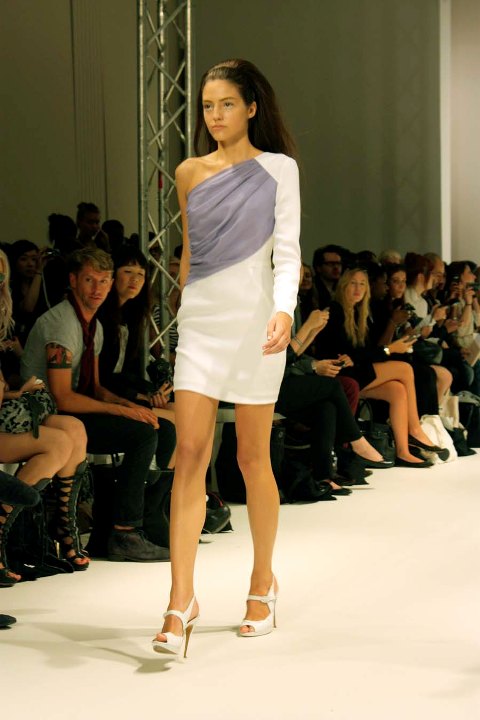
Meticulous draping was, once again, a key feature in Krystof‘s collection. Sheer chiffon was draped over white shirts, nude panelled dresses and one-shouldered pieces; all in soft lilacs, sea blues and mint, as Strozyna took his inspiration from Navy uniforms, the sea and a paradise island. Staying true to his reputation, all his dress-making was beautifully flattering on the hourglass silhouette through the magic of his pannelling and colour choice.

Krystof Strozyna S/S 2012 by Barb Royal

Krystof Strozyna
S/S 2012 by Barb Royal

Krystof Strozyna 4 by Rowena Bazlington

Krystof Strozyna 5 by Rowena Bazlington

The very features that make Strozyna‘s work so alluring are exactly what he keeps updating and refreshing, collection by collection. The bodycon silhouette and graphic cuts and colour blocking make up the unique Krystof Strozyna look that so many celebrities have fallen for, much due to their statement wearability, and, although I expected a little more surprise from the Polish designer, there was still a revitalising energy about the show that shone through with his introduction of denim.

Krystof Strozyna 6 by Rowena Bazlington

Krystof Strozyna by Sam Parr - LFW S/S 2012

Krystof Strozyna
S/S 2012 by Sam Parr

Krystof Strozyna S/S 2012 by Rowena Bazlinton 10

All photography by Rowena Bazlinton

With simple, statement cuts and that signature sexy femininity, Krystof’s designs may not have the theatrics and showmanship to rival other stand-out fashion week favourites (see Ziad Ghanem), but if it’s good enough for Natalia then it’s damn well good enough for me.

Categories ,Barb Royal, ,Central Saint Martins, ,Cheryl Cole, ,Claire Kearns, ,Diana Vickers, ,Freemasons’ Hall, ,Georgia Takacs, ,Jade Ewen, ,Krystof Strozyna, ,Label M, ,lfw, ,LFW S/S 2012, ,london, ,London Fashion Week, ,London Fashion Week S/S 2012, ,N Dubz, ,Natalia Vodianova, ,poland, ,Rowena Bazlinton, ,S/S 2012, ,Sam Parr, ,Sugababes, ,The Body Shop, ,The X Factor, ,Tulisa, ,vauxhall, ,Vauxhall Fashion Scout

Similar Posts:


Amelia’s Magazine | London Fashion Week S/S 2011 Catwalk Review: Leutton Postle

Leutton Postle S/S12 by Alia GargumLeutton Postle LFW S/S12 illustration by Alia Gargum

Upon checking some of Leutton Postle’s previous work I became really excited about the prospect of going to see their first London Fashion Week show and collection: I could see it featured turf-like groups of cable ties sprouting out of hooded garments in various places and I have always used them a lot in my work. A few months ago I spotted a glorious neckpiece made out of cable ties in a high street store window display, information pills so seeing them in Leutton Postle‘s work further confirmed my suspicion that cable ties might just be having a fashion moment.

Leutton Postle LFW S/S12 photo by Amelia Gregory
All photography by Amelia Gregory.

Being a newbie to London Fashion Week I could have waited happily for hours in the queue but actually the show was delayed only by half an hour or so, which is pretty good I hear. I followed the crowd into Freemasons’ Hall (Vauxhall Fashion Scout’s venue) and picked up a spot next to the pro photographers at the end of the runway, a decision which made my experience much more intense. As soon as the models came out it was not the soundtrack to the show that I heard but the constant clicking from such a large number of cameras gathered near me; and to me that was just as thrilling.

Leutton Postle LFW S/S12 photo by Amelia Gregory
Leutton Postle S/S12 LFW by Gemma Sheldrake
Leutton Postle S/S 2012 by Gemma Sheldrake

Behind the luxury knitwear label Leutton Postle are designers Sam Leutton and Jenny Postle, both Central Saint Martins graduates – upon graduating Jenny had her MA AW11 collection snapped up by London’s Browns Focus and Sam went to China to work with knitwear innovators Stoll. Their pieces are truly original with a couture quality and they suggest time-consuming experimentation with knitwear design. I felt that in the colourful, intricate and eccentric designs of their collaborative label there was a real enjoyment of craft and play.

Leutton Postle LFW S/S12 by Sam Parr
Leutton Postle S/S 2012 by Sam Parr

Leutton Postle LFW S/S12 photo by Amelia Gregory
Leutton Postle10 LFW S/S12 photo by Amelia Gregory
Leutton Postle LFW S/S12 by Emmi Ojala
Leutton Postle S/S 2012 by Emmi Ojala

Apart from the fact that the collection was very colourful, which has a natural appeal to me personally, the patchwork element was another thing I really enjoyed and it made me think that perhaps in the future, when all designers might have to use mainly scraps and leftovers or recycle fabrics for their designs, it would not be that bad at all if you had Leutton Postle’s talent and imagination! In a way parts of the clothes did seem like they had been constructed from random bits and pieces, put together really cleverly.

Leutton Postle10 LFW S/S12 photo by Amelia Gregory
Extra elements of colourful playfulness were added to the show by the models’ make up which looked like they had just eaten from a bowl of multicoloured paint soup and then not wiped themselves properly, but it was a shame that some of the models’ faces did not match all that wonderful colour happiness, maybe the soup was not that good…

Leutton Postle LFW S/S12 show 'Baby Fashionista' photo by Maria Papadimitriou
There was also a very colourful toddler in the front row, photography by Maria Papadimitriou

Leutton Postle LFW S/S12 photo by Amelia Gregory
The designers Sam Leutton and Jenny Postle photo by Amelia Gregory
The designers themselves, however, looked very cheery and beautiful when they came out at the end to wave at an audience that was clapping in a very colourful way indeed!

Categories ,Alia Gargum, ,Amelia Gregory, ,Browns Focus, ,catwalk show, ,colour, ,couture, ,craft, ,Emmi Ojala, ,fashion, ,Fashion Designer, ,Fashion Illustration, ,Freemasons’ Hall, ,Gemma Sheldrake, ,Jenny Postle, ,knitwear, ,Leutton Postle, ,London Fashion Week, ,Make-up, ,Maria Papadimitriou, ,Merit Winner, ,photography, ,Sam Leutton, ,Sam Parr, ,Stoll, ,Vauxhall Fashion Scout

Similar Posts:


Amelia’s Magazine | London Fashion Week S/S 2012 Catwalk Review: Masha Ma

Masha Ma SS 2012 1 by Marta Spendowska
Masha Ma S/S 2012 by Marta Spendowska

She concluded her MA in Womenswear at Central Saint Martins only three years ago, page but Masha Ma has already a made a name for herself amongst London Fashion Week goers, visit web and is even one of Amelia Gregory’s favourites! True story. We therefore, capsule of course, made our way back to Vauxhall Fashion Scout to see what she’d been up to and what her S/S 2012 range had to offer.

Masha Ma SS 2011 review-003

Masha Ma SS 2011 review-004

In our interview with the award-winning designer last August, just prior to her London Fashion Week debut, Masha described her design agenda as ‘chic, modern arrogance and semi-couture’. Since then, we’ve seen her work evolve from her exquisite take on classic chic to what Amelia and I witnessed on that Saturday morning; a futuristic, bold mission into the female silhouette with accomplished fashion-forward detail.

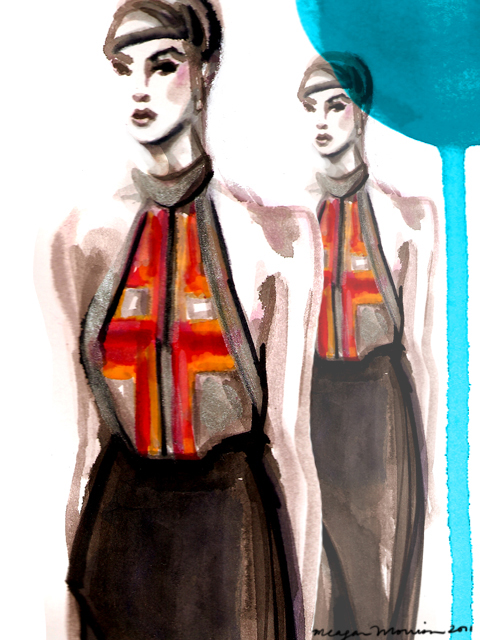
Masha Ma SS 2012 by Meagan Morrison 1
Masha Ma S/S 2012 by Meagan Morrison

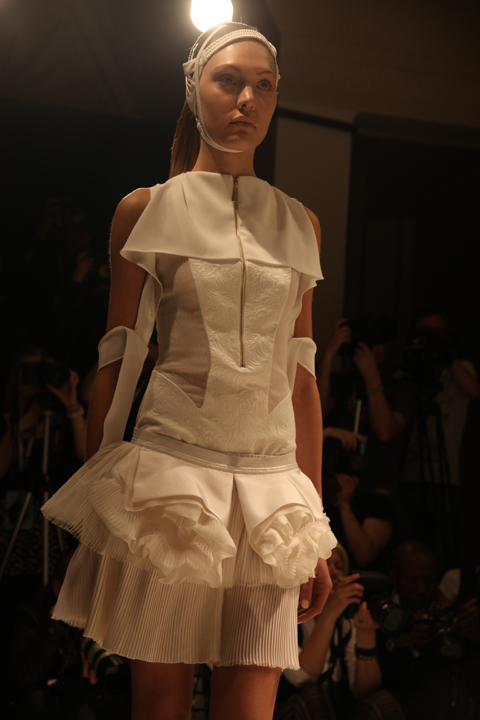
Inspired by the reconstruction of the famous Palace of Versailles, France, the collection displayed a combination of disciplined colours and textures juxtaposed with distressed sheers and unfinished edges. Most looks were slim, elegant, elongated assemblies with a tough sportswear vibe running throughout, complete with strategically placed zips, head gear and androgynous tailoring.

Masha Ma SS 2011 review-011

Masha Ma SS 2011 review-014

Masha Ma SS 2011 review-015

Masha Ma S/S 2012 by Kassie Berry

The show began with icy ensembles of muted blues and green pieces in numerous tones of mint and sea foam. For me, it was a stunning colour pallette which illuminated upon a delicate canvas of fluid silks, satins and sheers. These light references to an underwater odyssey (helped along by the gentle water sounds on the soundtrack) blended in-and-out amongst the Palace-inspired printed pieces. Thematically, the consistency did seem to lack. This, however, didn’t prevent me from finding the collection’s many contrasting elements equally delightful.

Masha Ma SS 2012 by Meagan Morrison 2
Masha Ma S/S 2012 by Meagan Morrison

Masha Ma SS 2011 review-022

Masha Ma SS 2011 review-023

Masha Ma SS 2011 review-033

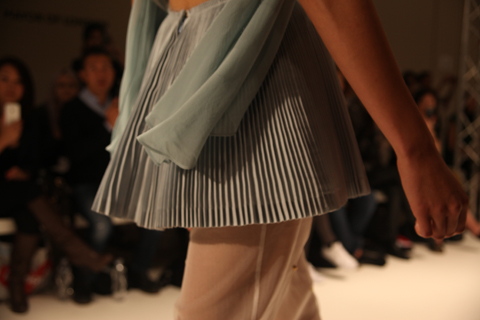
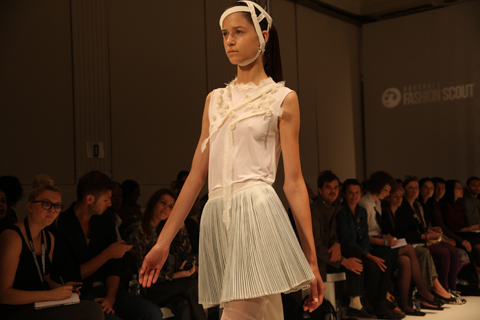
Sheer white gauze skimmed down legs and clung loosely around calves, whilst delicate tight-pleated mini skater skirts in mint tones swayed across thighs. It was an unusually sexy composition that contrasted with smart, high-necked tailored shirts. Intelligent construction existed in the zipping together of a-symetric skirt and dress layers with other zips utilised as shaping detail to flatter the figure. The female silohuette was considered, embraced and pushed to new boundaries.

Masha Ma SS 2011 review-053

Masha Ma SS 2011 review-056

Masha Ma SS 2011 review-063

Masha Ma SS 2012 by Marta Spendowska
Masha Ma S/S 2012 by Marta Spendowska

Amongst my favourite pieces were the breathtakingly skilled coats that dominated the show, pre-finale. Original and dramatic in design, yet extremely wearable for the Spring/Summer seasons, I was being seduced into the idea of owning one of Masha‘s beautifully crafted outerwear pieces. (The matte-white one took my fancy; a girl can always dream.)

Masha Ma SS 2011 review-076

Masha Ma SS 2011 review-086

Masha Ma SS 2011 review-096

Masha Ma SS 2011 review-127

Masha Ma SS 2011 review-131

Masha Ma SS 2011 review-132
All photography by Amelia Gregory

As opposed to the radical design ethic that is so deep-seated in London fashion today, observing a collection so fine in detail and delicate in reference is something rare and refreshing. In her return to London Fashion Week for her third solo collection, Ma didn’t disappoint. In fact, it extended our vision as to her dress-making capabilities. With the art direction intriguing and beautifully illustrated, the construction unique and the detail impeccable, Masha Ma certainly (and, perhaps, unknowingly) reaffirmed herself as one of Amelia’s Magazine‘s firm favourites.

Categories ,Amelia Gregory, ,Blue, ,france, ,Freemasons’ Hall, ,Front Row, ,Georgia Takacs, ,lfw, ,LFW S/S 2012, ,LFW S/S12, ,London Fashion Week, ,London Fashion Week S/S 2012, ,London Fashion Week S/S12, ,Marta Spendowska, ,Masha Ma, ,Masha Ma S/S 2012, ,Masha Ma S/S12, ,Meagan Morrison, ,Palace of Versailles, ,pleats, ,print, ,sportswear, ,Vauxhall Fashion Scout

Similar Posts: