Amelia’s Magazine | Graduate Fashion Week Interview: Nottingham Trent’s Phoebe Thirlwall

hold

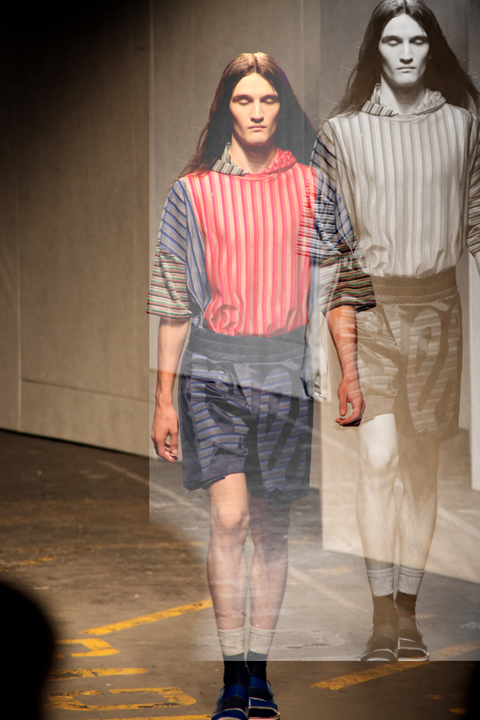
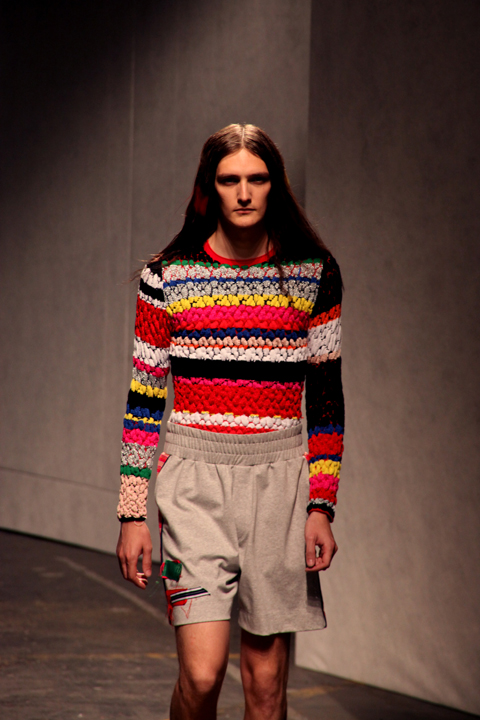
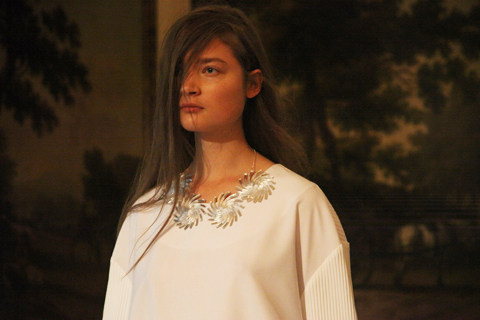
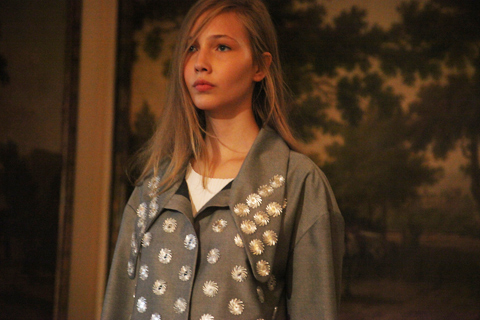
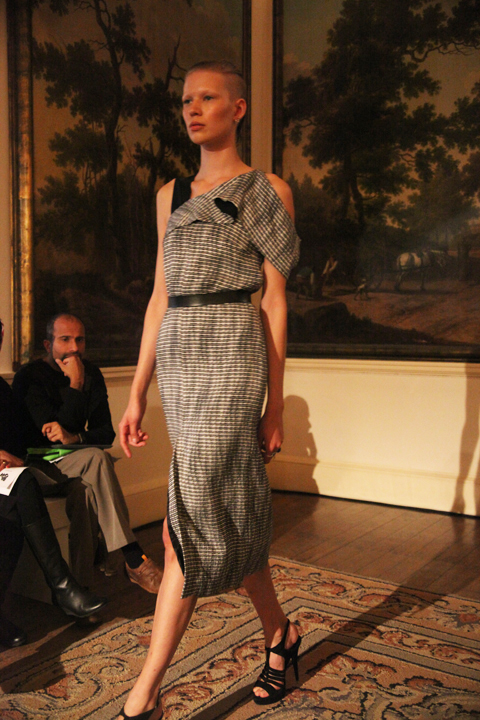
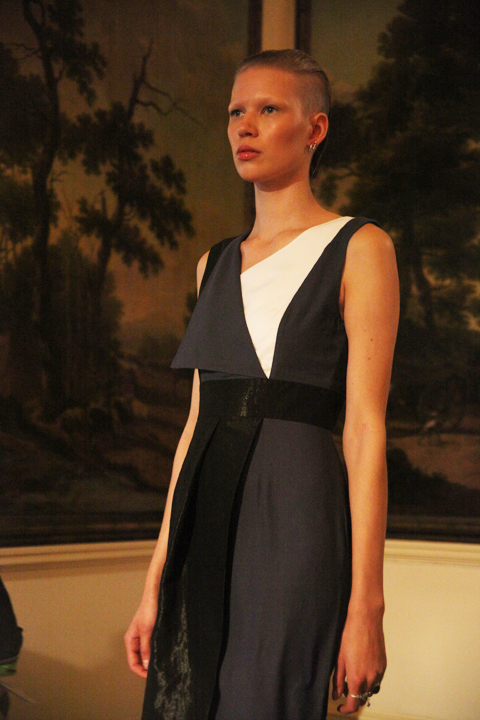
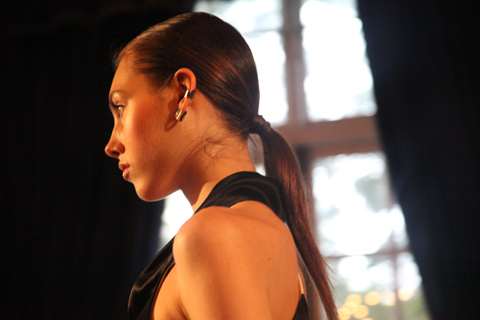
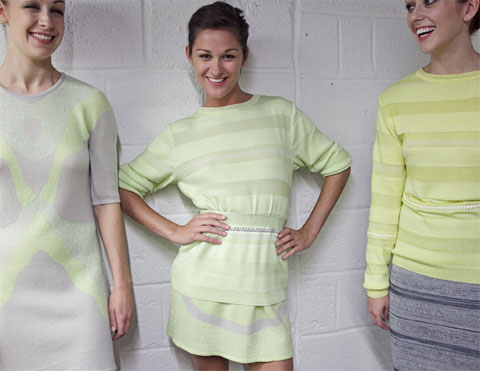
Knitwear design student Phoebe Thirlwall was an unquestionable highlight of Graduate Fashion Week 2010. Her work demonstrated an impressive level of craftsmanship, story receiving recognition even before the shows when one of her dresses was photographed by Rankin. Phoebe’s final collection, consisting of six looks, was a feast of beautiful and intricate knitwear. I caught up with Phoebe to learn a little more about the work that went into her final collection, and after the chaos of that week, what she plans to do next!

Graduate Fashion Week is a fantastic opportunity for students. How did it feel to have your work selected for the show?
It was really exciting because I had never expected to be selected, and when I found out I was obviously over the moon. It made such a difference to see my work on a raised catwalk, it felt so professional, and although I was really nervous when it went out, it was a great feeling to see it up there and being photographed. It is an amazing opportunity for students and it is a shame that everyone doesn’t get to go.

Why did you choose to study Knitwear Design over a general Fashion degree?
The Knitwear course at Nottingham Trent University involves a sandwich year in industry, which was one of the reasons I chose to study the course. Employers always want experience, so I felt that a year in the industry would be attractive to potential employers. I never particularly preferred knitwear over wovens, but when you are designing knitwear you have so much more freedom to create exactly what you want. If you are making an outfit from woven fabrics, although you can print on them etc, you are still limited by the fabric itself. When you knit an outfit, you can control the whole thing. You can knit the fabric however you want it and create different textures and patterns. Also, I like knitwear because you can knit the pieces of fabric to size. You can approach the whole outfit in a different way.

Where did you complete your work experience and how valuable was it to you?
My year in industry was spent in a family run knitwear factory called GH Hurt and Sons in Chilwel, Nottingham. It is a fairly small factory where lace knit is designed, made and constructed into various pieces. They create baby shawls and christening blankets sold in high end department stores and items of clothing for a number of luxury catalogue retailers. We also produced a lot of items for retailers overseas, such as the USA and Hong Kong. I was able to learn about the first steps of the process – receiving yarns on cones and in big hanks, to designing and knitting the pieces and finally how each item is made and finished to a high standard. It was also nice to see the items for sale and being worn because I always thought -’I made that!’ – which is a great feeling.

Can you explain a little about the techniques that you used? Did you have a lot to learn in terms of advanced skills?
The outfits I made are knitted mostly in silk and bamboo, with an elastic yarn that I used to create the patterns. I developed the technique by experimenting on a knitting machine to see what types of fabric I could create. I knew that I wanted to use elastic because it developed from my concept of skin, and also that I wanted to work with luxury fibres such as silk. I used a combination of rippled stitches, stripes and transferred needles on the front of the bed of the knitting machine to create the fabrics that I made my collection from. These are all techniques that I had learned in previous years, but putting them together required a lot of experimentation, and luck.

Was there much change in your work from the conception of the idea to the work we saw on the catwalk?
Yes. I had worked on the project since Christmas, so there was a lot of time for ideas and concepts to change. Initially, I had no idea what my collection was going to look like and I still didn’t until a few weeks before the show. I had no idea what type of fabric I would use, or what techniques. It wasn’t until I developed a fabric that I was happy with that the collection began to come together. At the beginning, I was thinking about the concept of shedding skin, more than the skin itself. This gradually changed throughout my research and development, into a more specialised study of the skin. I know that if I had stuck with my original thoughts, then the collection would look a lot different. It would probably be a bit more structured, rather than the more subtle and slim-line way it is turned out.

Which of the other graduate collections were you impressed by?
There were so many great collections. It’s good to see other peoples work because it is all brilliant. I loved all of the collections from Nottingham (slightly biased obviously), but there were many other Universities that I liked aswell. I was backstage when the De Montford show was going on, and some of those were amazing!

Nottingham has made a bit of a name for itself as a hub of creativity. What it has it been like for you?
I like Nottingham because it is a small city. It’s more like a town and everything’s quite compact. There are a lot of creative people who come to study here, but everywhere is quite laid back, which I like. It’s not over crowded with arty types. There are lots of students with different interests, and there are good places to go to eat, drink or shop. I suppose it has got a bit of a name for itself, but it’s a fairly down to earth city to live in. I’ve lived just outside the city centre for 2 years, and I’m going to be sad to leave.

You described your collection as ‘based on skin and flesh on the human body’. Where did this inspiration come from, and what else inspires you?
The inspiration for my collection came originally from a general interest in the skin and flesh. I think that this comes from being a vegetarian since I was 11. I have a strange relationship with food. I like things that are untouched. I won’t eat meat. I took this fascination with meat and flesh and developed it into a concept which I could look into for my collection. I get inspired by anything and everything really, usually something small and ordinary because you can look at it in more detail. I think that even something small and boring to others can become inspiring if you look at it enough.

New designers such as Mark Fast have shown us some other unique techniques with knitwear. Have you thought about how you could further your own skills?
It’s strange to think that a technique can be what ‘makes’ a designer. To me, Mark Fast developed this brilliant technique and ran with it. That’s great because I had never thought about design from that angle before. I always thought you had to constantly create different pieces all the time. Designers like Mark Fast are inspirational because they open your eyes to the possibilities of what can be done on a knitting machine. Missoni also creates such beautiful and unique knitwear. In a way, I would like develop my technique further, but I also would like to focus on new tasks and new direction.


Phoebe Thirwall, photographed by Rankin

One of your dresses was photographed by Rankin. How did it feel to learn that your dress was selected?
Amazing. It was sent down to London, but I never expected it to be photographed. Apparently the university sends items down every year and they rarely get selected to be photographed. When I found out that it had been chosen to be photographed I was really happy, by Rankin especially! The fact that Kate Shillingford from Dazed and Confused actually chose the pieces is overwhelming. It was about 2 months later that the pictures were released. Seeing my work on the Vogue website was mental!

You also received praise from the fashion bloggers. How have you found the attention?
It’s been completely surreal having people like Susie Bubble write about my work. She said it was one of her favourites from the photos, and so did Lucy Wood. I used to read about fashion graduates and imagined they had such exciting lives, but I’m just in my room with my cat and not really doing anything. It’s really strange seeing photos and articles about my work. I feel now like it isn’t even mine and I’m looking at someone else’s. It doesn’t seem real.

It has been two weeks since the show. What’s the plan now?
Is that all? It feels like a lot longer ago than 2 weeks. My collection is being sent over to Shanghai in September for Spin Expo, and a few of the outfits are being used in a photo shoot in July. My plans now involve finding a job, going to interviews and hopefully being hired. I want to move down to London to be nearer to my boyfriend. Ideally, I want to see clothes that I have designed, being made. I also really want a long holiday, somewhere nice and hot, where I don’t have to think about knitting!

Categories ,catwalk, ,Dazed & Confused, ,De Montford, ,fabric, ,Fashion Bloggers, ,Fashion degree, ,Flesh, ,GH Hurt and Sons, ,Graduate Fashion Week 2010, ,Hong Kong, ,Kate Shillingford, ,knitwear, ,Lucy Wood, ,Mark Fast, ,Missoni, ,Nottingham Trent University, ,Pheobe Thirlwall, ,Rankin, ,Shanghai, ,Skin, ,Spin Expo, ,Susie Bubble, ,Technique, ,usa, ,Work experience

Similar Posts:


Amelia’s Magazine | James Long: London Collections: Men S/S 2015 Catwalk Review

James_Long1 _SS15_Helen_Marudas
James Long S/S 2015 by Helen Marudas

I haven’t been to a James Long show for a few seasons now. I’m not sure why. It might be that they just didn’t want me there. That’s fine. This season was a different story, though, and I’m dead chuffed that I went along. We were greeted by handsome chaps in trademark James Long graphic tees serving rosé wine. Just as I swallowed mine in two gulps, a lady kindly notified me that I could, had I wanted to, take it to my seat, which was a little embarrassing.

MattBramford_LondonCollectionsMen_SS15_JamesLong_002

MattBramford_LondonCollectionsMen_SS15_JamesLong_004

MattBramford_LondonCollectionsMen_SS15_JamesLong_008

MattBramford_LondonCollectionsMen_SS15_JamesLong_012

MattBramford_LondonCollectionsMen_SS15_JamesLong_016

MattBramford_LondonCollectionsMen_SS15_JamesLong_024
All photography by Matt Bramford

Anyway, gone were the glued-down hair dos and quilted fabrics of last season to make way for a fresh, beachy, summertime approach. Models appeared one after the other with flowing, surfer locks and nonchalant expressions as if they had strode in from some hipster beach that you haven’t heard of.

James_Long2_SS15_Helen_Marudas
James Long S/S 2015 by Helen Marudas

Overall, it was a complex, multi-faceted collection. The show invitation had a small piece of fabric stapled to it, which would be a detail that formed the basis of many of the looks. The first model wore a denim jacket with aforementioned fabric stripes attached with abandon, teamed with a long, mesh t-shirt dress and jeans to match the jacket.

MattBramford_LondonCollectionsMen_SS15_JamesLong_001

MattBramford_LondonCollectionsMen_SS15_JamesLong_028

MattBramford_LondonCollectionsMen_SS15_JamesLong_031

MattBramford_LondonCollectionsMen_SS15_JamesLong_042

MattBramford_LondonCollectionsMen_SS15_JamesLong_053

MattBramford_LondonCollectionsMen_SS15_JamesLong_056

MattBramford_LondonCollectionsMen_SS15_JamesLong_064

Then came shorts with the same treatment; frayed at the leg with thick, elasticated waists – a homage to boxers, which was a key theme here. Graphic, stripy t-shirts and stripy socks were aplenty. The emphasis was on jazzed up sportswear, with more mesh, more waistbands, tapered joggers and James’ trademark wrap shorts jazzed up for next summer. The quilted experiments of last season moved into bubble-knit sweaters, tucked into shorts to provide a laid back look that James has perfected this time around.

MattBramford_LondonCollectionsMen_SS15_JamesLong_076

MattBramford_LondonCollectionsMen_SS15_JamesLong_085

MattBramford_LondonCollectionsMen_SS15_JamesLong_091

MattBramford_LondonCollectionsMen_SS15_JamesLong_097

Statement pieces come in the form of t-shirts and jumpers with a loose, scripted ‘JAMES‘ logo that I am left lusting after. Appearing in different colours, this new logo filled the front and back of garments and crept up sleeves.

MattBramford_LondonCollectionsMen_SS15_JamesLong_069

MattBramford_LondonCollectionsMen_SS15_JamesLong_072

A collaboration with LUNETTES KOLLEKTION saw models wear a variety of circular, mirrored sunglasses and quilted nylon bags completed the looks. This was without doubt one of my favourite collections this season and I can’t wait to see what happens next.

MattBramford_LondonCollectionsMen_SS15_JamesLong_121

MattBramford_LondonCollectionsMen_SS15_JamesLong_112

MattBramford_LondonCollectionsMen_SS15_JamesLong_124

Categories ,catwalk, ,fashion, ,Helen Marudas, ,James Long, ,knitwear, ,LCM, ,LCMSS2015, ,london, ,London Collections Men, ,LUNETTES KOLLEKTION, ,Matt Bramford, ,menswear, ,Old Sorting Office, ,review, ,SS15, ,stripes

Similar Posts:


Amelia’s Magazine | Jamie Wei Huang AW15: London Fashion Week Catwalk Review

Jamie Wei Huang AW15-photo by Amelia Gregory 28
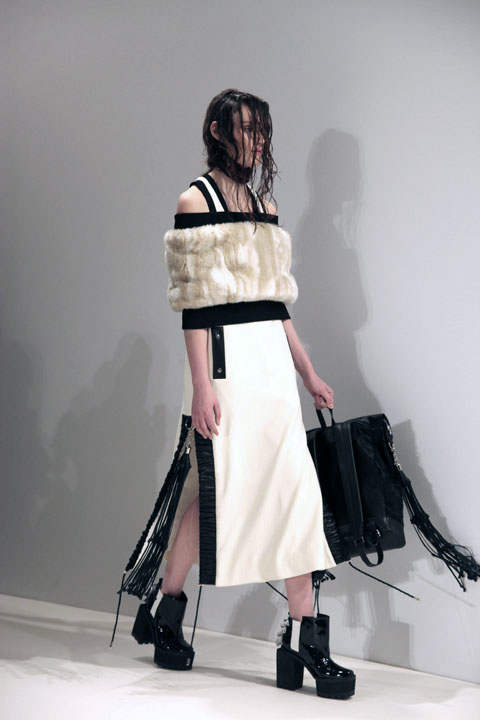
Jamie Wei Huang chose a hard vibe for A/W 2015, with a large collection titled Nymphomaniac sent down the catwalk to an ominous soundtrack of deep industrial metal. Her always androgynous tailoring was given a darker twist this season, with zips, tassels, wool insets and buckles used liberally throughout, hair worn greased across the face. A pearlescent fish scale textured top in cream with black stripes and pocket was a personal favourite; accessories were also a highlight, including crepe platform-heeled brogues in juicy patent, high wristed button gloves, clutch bags and tasselled backpacks. Blood red and intense blues were a welcome colour addition to a predominantly monochrome collection.

Jamie Wei Huang AW15-photo by Amelia Gregory 17
Jamie Wei Huang AW15-photo by Amelia Gregory 39
Jamie Wei Huang AW15-photo by Amelia Gregory 20
Jamie Wei Huang AW15-photo by Amelia Gregory 25
Jamie Wei Huang AW15-photo by Amelia Gregory 48
All photography by Amelia Gregory.

Jamie Wei Huang AW 15/16 from FASHION SCOUT on Vimeo.

Categories ,A/W 2015, ,AW15, ,catwalk, ,Fashion Scout, ,Industrial, ,Jamie Wei Huang, ,London Fashion Week, ,Nymphomaniac, ,review

Similar Posts:


Amelia’s Magazine | Jasper Garvida: London Fashion Week A/W 2012 Catwalk Review


Jasper Garvida A/W 2012 by Amy Smith

After seeing KTZ at the main show space at Somerset House I froze on the spot for longer than was necessary. My camera battery was dying (as per at fashion week) and I was exhausted. Should I make the trek up to Bloomsbury to catch Jasper Garvida? Yes, I know the journey from Somerset House to Bloomsbury isn’t of Captain Scott proportions. Well, clearly, I decided to go or I wouldn’t be writing this review. Anyway…


Jasper Garvida A/W 2012 by Emily Robertson


All photography by Matt Bramford

Jasper returned to the Bloomsbury Hotel‘s grand ballrooms to present his collection. As I took my seat I wondered how it was going to work – at one end of the catwalk (floor) stood an aggression of photographers (a collective noun I’ve created myself), at the other end, a brick wall. It transpired that models were entering from the middle and doing a loop, which must have been pretty taxing.


Cheers then – those photographs you’re taking on your iPhone are lush… can I have a copy? Grrr…


Gah.

I haven’t been to one of Jasper‘s shows before but I’d heard good things and our Alia interviewed Jasper last season, so I was keen to see what he’d present this time.


Jasper Garvida A/W 2012 by Amy Smith

The show began with simple neat tailoring in a camel colour, embellished with big gold buttons. I don’t know if the seats were a little lower or the heels bigger than at other shows, but these models were enormous. I almost felt quite scared as they lurched towards me. Long, fitted dresses that were perfectly tailored hung off them effortlessly, though.

The collection then brought pleated skirts with mesmerising digital prints. These were cut just above the knee at a level where neither femininity or morals are compromised. Jasper certainly knows a good silhouette.

Then came fitted jackets with tight-fitting cropped trousers. More intriguing prints here, along with more gold buttons and oversized zips that added a real luxurious flavour to the collection. One jacket, with a high collar and sweeping neckline, featured stunning gold embroidery on each lapel.

My favourite pieces were to be found at the end of the presentation. Long black body-con numbers were reminiscent of 1990s Versace – carrying gold embroidery around necklines, harness straps and thick gold chain draped casually across the torso, and I’ve already earmarked a shorter number with huge gold tassels draped from the shoulders for my next red carpet walk.


Jasper Garvida A/W 2012 by Sophy Henn

It’s a bold woman (in vertiginous heels) that is a Jasper Garvida woman; a woman who oozes sex appeal and isn’t afraid to celebrate their femininity.

The lighting was a little awkward to work with, hence why my photographs are a little sub-standard in this review. They don’t do this superb collection any justice.

Categories ,A/W 2012, ,Amy Smith, ,AW12, ,black, ,Bloomsbury Hotel, ,Buttons, ,catwalk, ,embroidery, ,Emily Robertson, ,Gold, ,jasper garvida, ,London Fashion Week, ,Matt Bramford, ,review, ,Sophy Henn, ,Tall, ,Versace, ,Womenswear

Similar Posts:


Amelia’s Magazine | João Melo Costa and Luís Buchinho: London Fashion Week S/S 2014 Catwalk Review

Jaoa Melo Costa S/S 2014 by Elisa Mac
João Melo Costa S/S 2014 by Elisa Mac.

It is becoming more and more common to find showcases for other countries on the catwalks during LFW, presumably because London is considered the pinnacle of creativity… if not sales. And then labels can return to their home countries and boast of their success in London, thereby impressing their local fans. Still, it’s not cheap to bring a designer and their collection to these shores, which is why journalists are frequently invited over to cover fashion weeks in home lands (I was flown out to Poland for several seasons, and know many who do the rounds of European fashion weeks).

With this in mind it helps to have a bit of sponsorship at hand, which is clearly why two Portuguese designers were showing in the embassy headquarters at Belgrave Square. Since I always get excited about seeing inside a posh venue I jumped at the chance to attend: the paintings and champagne were lovely but unfortunately the lighting was petty dismal so it wasn’t the best place to take great photos. You win some, you lose some. Here’s how it went:

Joao Melo Costa SS 2014-photography by Amelia Gregory
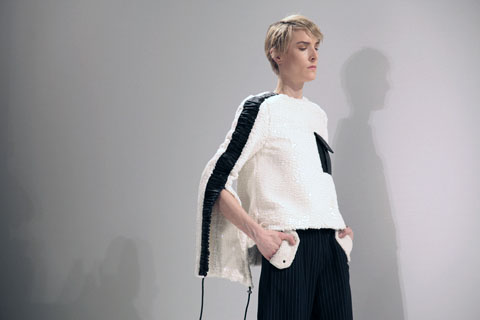
The two designers were shown back to back, with the younger of the two first up. João Melo Costa showed a youthful collection that featured some interesting round optical designs translated into yummy orange and white prints on boxy shaped separates. He played with different fabrics, layering see-through chiffon and pearlescent materials, and echoes of the print appeared in metal embellishments on slate grey versions.

Luis Buchinho SS 2014-photography by Amelia Gregory
Luís Buchinho is a stalwart of Portuguese fashion and put together an elegant but instantly forgettable collection that featured a series of panelled dresses; his only concession to current trends being the ear cuffs worn by one model.

All photography by Amelia Gregory.

Categories ,Belgrave Square, ,catwalk, ,Elisa Mac, ,João Melo Costa, ,Luís Buchinho, ,Portugal, ,Portuguese, ,Portuguese Embassy, ,review, ,S/S 2014

Similar Posts:


Amelia’s Magazine | Katie Eary: London Collections: Men S/S 2014 Catwalk Review


Katie Eary S/S 2014 by Dom&Ink

Katie Eary pretty much started the current leopard print menswear trend. Back in 2010, she had boxing models head-to-toe in it. Her love affair with the design continued on Monday at her S/S 2014 offering.


All photography by Matt Bramford

As is standard at Katie’s shows, it seemed like everybody in London had descended on Victoria House. I’m always sceptical when you’ve got a standing ticket and it’s a printable email – there’s no way of policing who presses print and tries their luck. I actually saw one guy with about 12 fresh print-outs in the queue, dishing them out to his pals like they were Wonka’s golden tickets; their eyes lighting up at the sight of the pink-flamingo-in-a-wig design. When we finally did get inside, it was by far the busiest I’d ever seen that venue.

Standing next to a speaker is one of my favourite things during fashion week*, and as a preview of one of Kanye West‘s forthcoming tracks from new album Yeezus penetrated my eardrums, I wondered if I’d even get out alive. At least it wasn’t Coldplay.


Katie Eary S/S 2014 by Dom&Ink

Anyway. A mixture of models began to appear and there was no hidin’ that pink flamingo. Each print induced flashbacks to a Charlie le Mindu show that I had since managed to supress – have a look here and you’ll see why. Emblazoned across shirts, isolated on tees, this flamingo was a versatile motif that seemed to work across all garments that it was applied to; I’ll be damned if I’m not sporting a flamingo-in-a-wig t-shirt by the end of next summer.

Other print patterns included the aforementioned leopard print, Katie’s signature, this time in red and black with a linear gradient application, fading to translucency on slim-fit polo shirts and fading to black on oversized rucksacks.

Both patterns appeared on trousers and shorts with combat pockets and were styled with Nikes in similer colours and Katie Eary-branded skateboards.


Katie Eary S/S 2014 by Dom&Ink

Peppering the mens showcase were a bunch of super sexy ladies with candy floss wigs and poker faces. They sported designs not dissimilar to the mens’ range – flamingo head scarves, racy leopard-print translucent kaftans and coral bikinis that they could actually fill.

I’ve left some shows baffled about what season I’ve just witnessed, but there was no mistaking at this show – Katie Eary predicts a red hot summer.

*it isn’t.

Categories ,catwalk, ,Dom&Ink, ,fashion, ,flamingo, ,Kanye West, ,Katie Eary, ,LCM, ,LCMSS14, ,Leopard Print, ,London Collections Men, ,Matt Bramford, ,menswear, ,review, ,S/S 2014, ,skateboards, ,summer, ,Victoria House

Similar Posts:


Amelia’s Magazine | Craig Lawrence

When you think of the humble pom-pom you think of children’s clothes, order buy of gigantic sombreros for tourists, generic unsightly snow boots and poodles with dodgy haircuts. Experimenting with pom-poms always seemed to be a bit like tequila shots – one was fun, two was adventurous, any more was way overboard and enough to make you gag.
NOT ANY MORE! Somebody somewhere decided it was time to wrench those pom-poms from the cheerleader’s sweaty grasp and boom! Stick them in the right places and we’re in love – and it turns out you can have hundreds of them!

pompom14.jpg

pompom16.jpg

They might have come to our attention bobbling out all over the catwalks in fashion week and with the high street following suit, but this is a look that could be even cheaper for the creative recessionistas amongst you. Make your own! Check it.
If you ever find yourself sat staring into space on the tube, you could be churning out a whole lot of pom-poms instead. Worn the right way I think it’s a really easy and fun accessory to jazz up an outfit– this cute Peter Jensen ring as a prime example:

pompom12.jpg

We’ve seen some girls wearing them in their hair, which make a nice woolly alternative to bows, and of course the contentious scrunchie.

pompom15.jpg

BIGGER:

pompom13.jpg

BIGGEST:

pompom10.jpg

THE KITCHEN SINK:

pompom11.jpg

Don’t be wearing those in the cinema mind you.

It’s amazing that something so simple has been culturally reinterpreted so often over the course of history. That might sound grand but something that’s gone from dangling off the edges of sun hats in Central America, to being mass marketed to children all over the world to making on the Paris catwalks is pretty unique. Yikes, Pom Pom international even reckons they can promote world peace. Maybe that’s one tequila too many. Sporting them could almost seem a throwback to childhood, a fashion revival harking back to the days of hats and mittens (I’d like to say ‘and snow and toboggans’ but let’s face it, it doesn’t snow THAT often).
The last thing we can learn about pom-poms is from cheerleaders everywhere, who if nothing else, seem mind-bogglingly happy. Why? POM-POMS!
“At a T-cross-section go to the left. On your left hand you will see a hill. At the end of the hill, tadalafil on the top, this you will see a green cottage. That is where you can find me. If I am not there I might be outside doing some experiments.”
jansen1.jpg
Holland’s answer to a modern day Darwin, Theo Jansen has spent the last 19 years playing god and taking evolution into his own hands. An arrogant way to spend the best part of two decades you might say, but not when you see what incredible results this passing of time has produced. Jansen’s kinetic creature creations exist in a carefully crafted overlap of art and engineering.
jansen2.jpg
From a physics background to a study of painting via an interest in aeronautics and robotics Jansen arrived at 1990 with a thirst for breathing autonomous life into mechanical sculpture. What started as a highly technical computer animation program is now only reliant on the power of the wind with no machine assistance and only minimal human input required, and even that Jansen hopes to eventually phase out.
jansen3.jpg
My personal attraction to what Jansen does comes from my deep seated loathing of plastic waste, which he cleverly conquers by incorporating discarded plastic bottles as part of a complicated wind energy storage system and he sources metres and metres and metres of yellow plastic tubing- 375 tubes per animal to be exact- to create the skeletons for his beautiful monsters.
jansen4.jpg
He claims he started to use the plastic tubing because it was unbelievably cheap and readily available although he quickly discovered that a more perfect material for the project would be hard to find as they are both flexible and multifunctional. He draws comparisons between the plastic required in his art and the protein required for life forms. “in nature, everything is almost made of protein and you have various uses of protein; you can make nails, hair, skin and bones. There’s a lot of variety in what you can do with just one material and this is what I try to do as well.”
jansen5.jpg
The heads of his giant beings act as sails, directing the intricate frames to glide gracefully across the nearby beaches to Jansen’s home and laboratory. The insect-like wings catch gusts of wind and propel the body forward. When there is no wind not even for ready money, the stored energy in the belly of the beasts can be utilized.
jansen6.jpg
Jansen’s vision is of a landscape populated by herds of these sculptures taking on entire lives of their own. The versions of models that made it into existence have raced and won survival of the fittest contests through his computer program and having studied these ‘winners’ Jansen designed creatures so developed they are even capable of self preservation, burrowing themselves in the sand when the gusts are too powerful for them to use constructively.
jansen8.jpg
His imagination like his Strandbeests (literally translated as ‘Beach Animal) is an ever evolving self perfecting organ. He envisions a point at which he will release his creations ‘into the wild’, which he speaks about in the same loving tone you would expect from a parent preparing their nest to be flown by their offspring. “I imagine that two animals will meet each other and compare their qualities in some way; have a demonstration somewhere on how they run and how fast they can run and also do some quality comparison on how they survive the winds. And the one with the better quality kills the other one and gives the other its own genetic code. There could be 30 animals on the beach, running around all the time, copying genetic codes. And then it would go on without me.” It’s not so far fetched after all to consider what Jansen does as god-like. He plainly and rather humbly philosophizes, “I try to remake nature with the idea that while doing this you will uncover the secrets of life and that you will meet the same problems as the real creator,” he added. Theo Jansen is simply a genius though his genius is far from simple. Amen.

It has been a while since I have found a political party that I feel that I can get behind. Politics seem to have descended into a misguided mess. Anytime I read about a Tory or Labour MP, more about it is usually because of a scandal. What is going on environmentally and economically seems to play second fiddle to infighting and lies. Meanwhile, living in East London, I have become friends with a couple of people who are involved in the Hackney Green Party. They don’t seem to lie, or cheat, or claim expenses – this is a party that I can support! I wanted to find out more about them, so I sat down for a cup of tea with Matt Hanley, who is the Green candidate for Stoke Newington Central.

Jessy%20P.everything_is_connected-artwork1.jpg
Illustration by Jessica Pemberton

I really liked the political broadcast; I thought it was very astute. The message is not that we have to step outside of our comfortable lives, but that the Green Party are the only political group who can deal with the contemporary and current issues that the world is facing; both politically and environmentally.

We have changed in almost a 180-degree way, twenty years ago the stereotype was beards, sandals, pipes, hemp clothes, it was almost like lecturing the public – it was unsophisticated. Twenty years ago was what, 1989? Scientists for the first time had come to an agreement that climate change was happening, and that it appeared to be man made. I guess when that news was first out there; people were like ‘look, its GOT to change’. Now we are a bit savvier. We have to present policies which are palatable to the voting public; there is no point in standing on the side lines and finger wagging, if we present a policy which will save money but drive down carbon emissions – that is what we are all about. I see the environment agenda of the Green Party very much subset of our core goal, which is social justice. Everything we do, we put the welfare of the human being at the very core. If they are not benefiting from our policies then… I don’t want to know…. that is what the Green Party stands for. So we work for human rights, LGBT rights, promoting the local economy, promoting local business, right though to reducing carbon emissions, they are all under this umbrella of social justice. We are providing a very electable platform, which will improve people’s lives. We are a very well run political party with extremely good innovative ideas to get ourselves out of this economic mess and we are also challenging climate change and enabling our communities to do the same and preparing ourselves for peak oil.

There have been a many protests organised recently, a lot of people who have never protested before are taking to the streets. What is the Green Party’s stance on direct action?

We are the political wing of the New Social Movement; we are the only party who advocate non-violent direct action. The Green Party leader, Caroline Lucas, is probably the only leader with a criminal record, she has been arrested at a nuclear base up in Scotland. We support legitimate protest. There is a place for the protesting, and a place for the parliamentary process. So we are the elected wing of the protest movement.

Aaron%20_time_for_change_final_2.jpg
Illustration by Aarron Taylor

Other parties don’t like their protesters do they?

Absolutely not, they just want you to nod along. Like good citizens, nod along like The Churchill Dog! (Laughs)

For people who have only heard of Hackney and have not been here, the first words that would come to mind would not be “sustainability”, “communities” or “grow your own”, but plenty of people are living by these ideals here and there is actually quite a healthy sized green movement in Hackney….

There is a massive opportunity for a green movement here, and massive support for us. It is unbelievable. In the last elections, the Greens reached second or third in every single ward in Hackney.

And you have a good relationship with Transition Town Hackney as well?

Yes, but they are completely different organisations. The Transition Town movement doesn’t want to be in the thrall of the political party. We definitely support the parties and their principles. We are all about a localised economy, we should be able to feed ourselves, produce our own energy, and I should be able to send my kid to the local school. The Transition Town model is about preparing for the onslaught of climate change and equipping communities for that transition, and that is also what the Greens are all about.

Can you see Hackney functioning well under a Green Party council?

Absolutely! They are doing it in Lewisham at the moment, which is a similar demography. They are doing all these fantastic things, for example, they have set a system up where you can go to the library and hire energy reading meters which you can take home and fix into your energy meter and this allows you to do an audit of your energy usage. I definitely want to see this launched in Hackney. It’s an innovative, creative way of thinking. It’s about putting sustainability at the core of everything, which also saves lots and lots of money!

I see The Green Party as being very accessible to young people as well.

The average age of people joining is mid to late 20′s. They are not wedded to 20th century politics, a lot of older labour supporters can’t bring themselves to leave. We have the same agenda that Labour did, back when they were good Labour. Only we can add the environmental agenda. We stand up for peace. We stand up for nuclear disarmament, no other party does that. We want public services to stay public. We want to renationalise the railways – the cost of rail tickets hits young people very, very hard. Younger people can see that we are standing up to big businesses, supporting local shops, and standing up for individuals. We have a whole plethora of progressive policies……..

Aaron%20capitalist_final.jpg
Illustration by Aarron Taylor

And also The Green Party a very media savvy bunch – you are on Facebook, you organise lots of activities….

Absolutely! In fact next week we are going paintballing – ‘Paintballing for Peace’

(Laughs) What other way is there to find peace?

(Laughs), and we are going on a Hackney Greens bike ride down to Brighton, we are organising a summer solstice away down to the coast. And we go on alternative pub-crawls. (Laughs)

Speaking of young people, Matt, you are 30 years old and you are standing for Stoke Newington Council for next May. What prompted this move?

I don’t like politicians – they are all the same, especially with what is going on with news about their expenses at the moment.
Working for the Green Party, and seeing the good that they are doing, I thought, you have to step up. I know that I can do a good job. Labour are failing miserably both in Hackney and in the country. The Conservatives are the same, the Liberal Democrats are no different, and so as a Green, you just have to step up.

What will you do if you won and had the power to implement any idea? What’s the first thing that you would do?

Free insulation! It’s a scheme that stems from European legislation, which states that energy companies are obliged to give a certain percentage to energy efficiency schemes. But the councils have to apply for that. The Green Party in Kirklees is on the local council, so every single person in Kirklees gets free insulation. It drives down energy costs, and drives down the carbon emissions and creates local jobs, so it’s a win win situation. Why every single council on the country is getting on this I don’t know. It saves everyone money, make peoples homes warmer, make them healthier – it stops people going to NHS with colds and flu and also reinvigorates the local economy by producing jobs. It creates a programme of very sustainable jobs. We tried to implement it before, but the Labour Councellors called it ‘daft’, dismissed it out of hand and didn’t give a reason beyond that!

That doesn’t make any sense!

The Labour and Conservative Party and the Liberal Democrats are on the wrong side of history, but there is a new movement, and it takes into account the Green Party, Transition Town and Friends Of The Earth…. Amnesty International, trade unions, CND etc and all these community grass routes organisations. This is a wonderful new social movement that can be called green with a small g and is a new paradigm of social and political engagement…. this is what the 21st Century is coming to now, but the three big parties are still clinging onto the coat tails of 20th Century ideology. This whole new multifaceted social movement (of which the Green Party are the political wing) is the new politics of the 21st century.

resizedtimeforachange2.jpg
Illustration by Faye Katirai

Can you tell us the best changes that we can make to our lives to make our world more sustainable?

Number one is vote Green! Although I don’t want to lecture people about being ” eco trendy”. Eco trendiness and eco consumption is not going to sort this mess out. We need strong government action to allow this country to change to a sustainable economy. But back to things that you can do as an individual: don’t use your car as much. Don’t eat as much meat. Cut down, you don’t have to stop eating meat completely, just don’t buy from supermarkets. Stop shopping at supermarkets altogether, because that is killing the environment, and your local towns. Support your local shops instead.

Wise words! Thanks Matt.
While the rest of us spent the winter windblown and wet-toed, viagra knitwear designer Craig Lawrence was dreaming of a resort escape, prostate with all the bells and whistles. And what hard earned sunburn doesn’t deserve to be soothed by an embarrassingly oversized tropical drink with all the tacky accoutrements. And ‘splash’ inspiration is born! Those fanciful toxic colored fishbowls of liquor with their cascading garnishes were all the visual inspiration Craig needed to create his first collection since graduating from St.Martins last July. Knitted up with satin ribbons and swirling metal yarn, the knitwear newcomer’s sugar sweet confections made it to Vauxhall Fashion Scout’s runways and onto the lips of the fashion heavies.

craigpoms.jpg

I understand sweets and cocktails were the inspirations for your recent collection. What are some of your favorites?
After my degree collection for St.Martins I needed a bit of time to catch my breath so when I started designing again it was winter…cold and grey. I was eating sweets in my studio and daydreaming of beaches and tropical drinks. Some of my favorite things are peach daiquiris, parma violets. My favorite sweet is probably chewy toffee and favorite drink is that fizzy orange drink irn-bru.
What do you recall as the first piece of knitwear you ever made?
A wooly, salmon colored scarf that I actually lost on the train. That and an awful grey ruched square-shaped polyester thing I had to make for my A levels.
If given the chance to collaborate with anyone who would you have in mind?
I’ve always thought of doing pieces for a more theatrical environment. I would love to work with Slava Snowshow.

%20craigmagenta.jpg

You recently worked with stylist Katie Shillingford on a shoot for your recent collection. There’s so much movement in those images which really brings your knits to life, how did you manage to capture that?
I’d wanted dancing and movement but the studios’ ceilings were too low and they were all too expensive. So we brought a 9 ft family size trampoline to a rooftop overlooking the city and had the girls bouncing up and down on it. A bit risky actually as there was really not much there to stop them from going over if we weren’t careful. We did the hair and make up at home with the help of my boyfriend and flatmates, one of which is a model, which definitely helps when you need someone for fittings.
Did you start out interested in knit or did you find your way to it while studying fashion?
Actually, I wanted to do menswear while I was at London College of Fashion, by the time I got to St.Martins they encouraged me to do knit because they saw that all my stuff to that point had been designed in jersey. And I loved the chunky quality of knit.

craigtrouser.jpg

I hear you managed to do the impossible and actually design 6 seasons of knitwear for Gareth Pugh, while doing your BA, AND working a retail job once a week. How were you able to do that and how many of yourself did you have to clone?
I was in school at the time and had knitted a scarf for a friend who’s flatmate wore it on a date with Gareth, who mentioned he was looking for a knitwear designer. He got in touch and said he needed to have pieces made up in a week. So it was all quite fast. All that while doing my BA degree and working in the stock room at John Lewis on Saturday mornings, sometimes having to be there at 6 am. You get used to not sleeping.
And a year after graduating you were showing at Vauxhall Fashion Scout?
My PR agency BLOW called me up a week before the show and said they had an opening for me, so I made up some accessories and a few pieces to fill out the collection I’d been working on. I was given a team of hair and make up artists and we were off.

craigspiral.jpg

Which comes first for you, the yarn or the garment?
Usually the textiles come first for me. I’ve learned alot about them along the way, like for example needing to use a flat knit for tight fitting garments.
Are there any textiles, practical or not that you’re really keen to use?
I’d like to do something with little leather strips or pvc something shiny and bright. Maybe even strips of diamante.
What is one of the more random things you’ve used to knit with?
You know those yellow rubber gloves used for washing up/ i found a guy in Dalston Market selling a gaint roll of it and bought it. I cut it up into tiny little strips and started knitting it up but as a garment it was incredibly heavy and totally unweareble.
Could you give us a peek into the inspirations for your next collection?
At the moment I’m interested in accessories, chenille, and fireworks!
Look out! That is some recipe. Craig Lawrence wants to expand our minds and preconceptions, to push knitwear into places we’d least expect it. Can’t wait to see what Molotov cocktail awaits us next season!

Categories ,Gareth Pugh, ,Knitwear, ,St.Martins, ,Vauxhall Fashion Scout

Similar Posts:


Amelia’s Magazine | David Longshaw, Father Said: New S/S 2012 Season Preview Interview

David Longshaw S/S 2012 by Abi Hall
David Longshaw S/S 2012 by Abi Hall.

We’ve been following David Longshaw‘s career since we spotted him at Fashion Scout back in 2010. His work continues to evolve in intriguing directions, utilising his illustration and animations skills more than ever before…

We last spoke to you in 2010, what have been the biggest changes since then?
I’m now selling in Harrods as well as more shops in a variety of countries.

David Longshaw SS 2012
What was the inspiration behind Father Said, your S/S 2012 collection, and where does the accompanying story come from? (it’s quite dark!)
I created the story a few years ago for TANK magazine – but never used it for a collection. This season felt like the perfect time to use it and develop the characters. The story is a bit dark – but I think it can be fun to have a dark inspiration from time to time for something as frivolous and light as fashion – I like the contradiction. Here’s the story:

Father said it would have been… by David Longshaw
Father said it would be nice to go to the seaside. I’m not sure mother would have agreed; here I go getting all Alan Bennett. It wasn’t Alan Bennett like at all. That’s why I brought you here, a little nostalgic trip for me, unchartered territory for you. I was driving of course. Well you’d come to see me hadn’t you?
I didn’t expect it to happen. You know I didn’t. I hadn’t planned it. I mean I was all tired out from the drive. It was just these memories coming back that did it. I hadn’t told you about them had I?
“We could go round the castle you said,” but then we spied the purveyor of local delicacies and were ensnared by the intoxicating aroma.
Well, it would have been rude not to.

David Longshaw S/S 2012 by Mitika Chohan
David Longshaw S/S 2012 by Mitika Chohan.

Monies were exchanged and we floated out on the emerald green sea of tiles, shimmering from the hedgehog that had just mopped them. It was you who pointed out she was a hedgehog- all little and bristly and nose twitching as she mopped that chip shop floor; scared by the preying silver fox in the corner (Trevor they called him from over the counter) with his suave, debonair mask- under which lurked a wild, preying animal ready for its next victim. At least that’s how he looked, sitting, pouting but that gentle trickle of saliva and the abstract motif that speckled his jacket- formed from chips and gravy, suggested otherwise.
We did laugh about that, chuckling, as you do, walking towards the sea. You spotted that sign, “Boat Trip to Puffin Island.” £4.50 each, but it was worth it. We saw seals, and jellyfish and went up really close to the island and there were so many little birds. I’m not sure if there were any puffins though, you said you’d seen one but that was you all over.
I’m sorry the rest of the day didn’t pan out quite as well for you. It’s just these memories coming back. Now I think of it, I was reading a book at the time with a puffin mentioned in it, so perhaps that’s what it was.
I’m awfully sorry all the same. Anyway not much I can do now other than tidy things up I suppose. Well there you go. You’re wrapped up now. It was handy I had that spade in the boot wasn’t it. I’ll just cover you up- the soil will keep you warm.”

David Longshaw SS 2012

How did you put together the animation for Father Said and why did you decide to put the story together in animated form?
I’ve always been fascinated by animation – I love creating characters and the idea of bringing them to life for people to watch in a little version of my world. It’s a massively time consuming medium – even for something as crudely done as mine, but that’s part of its beauty. I thought it was a natural next step for me to explore animation as I create a story and illustrate it each season. It’s a fun tool to explain my collection and to build interest in my label, and it’s a point of differentiation. There are so many fashion labels out there and the big fashion houses have huge adverting budgets to promote their collections – so by doing something creative it helps showcase my ideas and the plan is that people will hopefully enjoy what I do and want to keep seeing more.

David Longshaw SS12 by Janneke de Jong
David Longshaw S/S 2012 by Janneke de Jong.

Putting it together was tricky as I’d never done it before and I thought it would be fun to do it all myself from a series of my illustrations (apart from the voice over which I got Jessica Bumpus to do). I did it using a very old mac – which seemed a good idea at the time until it became apparent that it was so old it wasn’t compatible with any others, or with upload programs to put it on Vimeo… which was unfortunate. But after a lot of pfaffing around I finally managed to get it on there and now it’s linked to my website as well. In the short term I’m planning to work on more short animations to develop with my collections. At some point in the future I would like to work on a more ambitious project with a much larger animation – perhaps even a stop motion model animation But I’d need a larger budget and a lot more time.

David Longshaw SS 2012
Why are narratives important?
Narratives help create the theme and tone of the collection – they inform everything from print and silhouette to the colour of the fabrics.

David Longshaw SS 2012
What was the inspiration behind the extravagant silhouettes in the S/S 2012 collection?
The idea was from the point in the story where Sophie accidentally kills her boyfriend, buries him, planting flowers over his burial place. The flowers grow and flow in to the dress she’s wearing. For the rest of her life she wears a flower to remind her of him. I wanted to convey the sense of the flowers growing and taking over what the wearer has on.

David Longshaw SS12 by Janneke de Jong
David Longshaw S/S 2012 by Janneke de Jong.

How did your time at Max Mara equip you for working as an independent designer, and do you have any tips for those just starting out?
My time at both Max Mara and Alberta Ferretti was really useful for starting my own label – aesthetically my style (and indeed the style of the other labels) are very different, but in a way that works out better than if I was just doing a smaller version of either label. Day to day there are things I put in to practice that I learnt there. When you work for big fashion houses you get to see how very successful businesses and design houses work and what’s helped them to get there. But there’s always things you think you would do differently as well.

David Longshaw SS 2012
For people just starting out it’s good to get as much experience in the industry as possible, whether it’s from work experience, or actually designing for a label – if you want to start your own label straight away then try to get as much business advice as you can. Design schools teach how to pull a collection together but you have to know how to be a business person – if you don’t then you won’t have the money or the structure to be able to continue. It’s also really important to think what you want your label to be like – what’s your point of difference and what do you think you can do better than is already out there. It’s good to be aware of all the pitfalls with running your own label: financial, emotional, time constraints, constantly questioning yourself, knowing all the things that can go wrong, all the reasons not to do your own label… Then just go for it anyway!

David Longshaw S/S 2012 by Maria Papadimitriou aka Slowly The Eggs
David Longshaw S/S 2012 by Maria Papadimitriou aka Slowly The Eggs.

You are not just a fashion designer but also an accomplished illustrator, how do the two fit together?
They go well together – I use my illustrations in the prints of my collection. Both my design and illustration work inspire each other. When I illustrate for a mag it’s a fun way for people to see my work and see which other designers I like (as I get to select who I interview or illustrate) and it gives people another window in to my thinking. Then when I’m designing I think back to my illustration work and why I selected certain designers/pieces. I’m not trying to be like another designer but it makes me reflect on why I would choose one designer’s work over another.

David Longshaw SS 2012
How do your partnerships with footwear designer Heather Blake and milliner Katherine Lee work? What is the process of working together on a collection?
With Katherine Lee we work together throughout the season on different projects for the collection – from looking and reviewing the collection’s designs and progress to specific pieces she creates for me. With Heather we look at my designs and work out what would be cool to go with them – what elements we can bring out from the clothes and in to the shoes.

David Longshaw S/S 2012 by Maria Papadimitriou aka Slowly The Eggs
David Longshaw S/S 2012 by Maria Papadimitriou aka Slowly The Eggs.

You also collaborate with girlfriend (and another Amelia’s Mag favourite) Kirsty Ward. How was the Christmas break with the Longshaw Wards? Did you do anything fun?
Christmas was great: there was a Maude fairy on top of the tree – there was still some pfaffing around with fabrics and pens (aka work) but also lots of fun – road trips to visit our families and friends. Then on New Year’s Eve we had a studio party in London and had some friends over.

David Longshaw SS 2012
What can we expect from A/W 2012? any tips?
More Maude: this season Maude’s taken over my collection and mashed it up with her own style… so basically she’s covered most of it with herself – from prints to bags, to scarves, to products…

David Longshaw SS 2012
Make sure you also check out our previous interview with David Longshaw here.

Categories ,Abi Hall, ,Alan Bennett, ,Alberta Ferretti, ,animation, ,David Longshaw, ,Father Said, ,Harrods, ,Heather Blake, ,illustration, ,interview, ,Janneke de Jong, ,Jessica Bumpus, ,Katherine Lee, ,Kirsty Ward, ,Maria Papadimitriou, ,Maude, ,Max Mara, ,Mitika Chohan, ,Puffin Island, ,S/S 2012, ,Slowly the Eggs, ,TANK magazine

Similar Posts:


Amelia’s Magazine | Dot to Dot at V&A Museum of Childhood: Childrenswear Showroom Report, February 2014

Dot to Dot showroom for kids

Following my write up of the Bubble London kidswear trade show I was invited along to the inaugural Dot to Dot trade show and press day at the Museum of Childhood last weekend. I was promised some of the best independent childrenswear brands, so how could I say no? After a three hour stint at Spa London in York Hall (I’ve only got a few weeks left until my birthday and still needed to use up a much appreciated 40th birthday gift voucher from my NCT buddies) I bombed into the museum’s basement for a whirlwind tour before heading home for lunch. I hope I didn’t scare off too many brand owners with my extremely pink face and wild steam room hair.

Dot to Dot childrenswear trade show

The basement of the museum was the ideal venue for this venture, which is the brainchild of Carly Gledhill from Corby Tindersticks and Nicole Frobusch from Nixie Clothing, designed to showcase their favourite independent British children’s designers. The basement was compact yet airy and easy to negotiate and I particularly liked the small touches, such as some fabulous collaged artwork on the walls, courtesy of students from the Kids Company. There was a fantastic array of exciting independent brands on show, making my fleeting visit well worth the effort on a blustery winter’s weekend.

Corby Tindersticks cushion

I’ve written about Corby Tindersticks before, but this was a chance to become truly smitten by this burgeoning brand, which now includes square cushions (they make very cute shaped ones too) and clothing in its offering, much of which will appeal equally to adults and children. I unfortunately did not get a good photograph of their wall display, which was beautifully put together.

Badger print by Poco Nido

This super cute badger design is by Poco Nido from Sheffield, set up by footwear designer Catherine Lobley. Perhaps not unsurprisingly her speciality is very cute printed baby slippers. I also love the fact that she runs a competition to see who can make the best object out of a Poco Nido packaging tube. Yay to crafty recycling!

Indikidual clothing

Indikidual crayola print

I adore the deliciously bright colour palette from Indikidual, a brand which I have heard many good things about in recent times. The collection, designed by Syreeta Johnson, is unisex and designed to be worn in layers. I am looking forward to dressing Snarfle in some of these pieces in the years to come. Doesn’t this crayon print rock?

Aravore dress for girls

I am super impressed by the many roles of Aravore designer Yanina Aubrey, who has used a beautiful end of roll luxury womenswear fabric (above) in her pretty new collection. During London Fashion Week she will be curating the Paraguayan international showcase. Impressive stuff, I will have to try and visit.

Little_Titans_lookbook-tights for boys

Little Titans cushion

The fabulous illustrative branding for boys’ tights brand Little Titans by Carly Hardy appears on the cushion above and on all packaging, combined with some wonderful typography and photography. I adore the quirky central character, which really sums up a typical cheeky little boy. As a massive tights fan (for Snarfle, I should clarify, I’m more of a leggings woman these days) I have obviously become aware of Little Titans, which specialises in abstract designs: think bold colourings, stripes and lightening bolts. I think they are fab and am sure that Snarfle will wear these in the future, although for now he is exclusively dressed in the wonderful patterned offerings from Slugs and Snails.

Becky Baur

There were other designers that I did not get a chance to look at because I was in such a rush, but for now I’ll end with the eye-catching range by Hackney based designer Becky Baur (who I clearly missed on my earlier Top Drawer excursion). She also had the most wonderful wall display (again, didn’t manage to get a good photo, my bad). With designs that would be equally loved by kids and adults, her brand, launched in 2011, includes homeware, stationery and ceramics. Very very cool.

Many of the designers at the Dot to Dot press day have impeccable environmental credentials, using organic cotton and manufacturing or making up their products within the UK where possible. Having just learnt that organic cotton uses half the water of normal cotton and avoids all the health problems associated with pesticides (from Zandra Rhodes! in her penthouse flat! but more on that later…) I think it’s great that so many childrenswear designers are doing their best to implement ethical practices, and I am really enjoying the process of getting to know this aspect of the fashion industry, now that I’ve got a little one of my own.

Categories ,Aravore, ,Becky Baur, ,Bubble London, ,Carly Gledhill, ,Carly Hardy, ,Catherine Lobley, ,Corby Tindersticks, ,Dot to Dot, ,ethical, ,Indikidual, ,Kids Company, ,Little Titans, ,London Fashion Week, ,Museum of Childhood, ,NCT, ,Nicole Frobusch, ,Nixie Clothing, ,Organic Cotton, ,Poco Nido, ,Slugs and Snails, ,Snarfle, ,Spa London, ,Syreeta Johnson, ,Top Drawer, ,va, ,Yanina Aubrey, ,York Hall, ,Zandra Rhodes

Similar Posts:


Amelia’s Magazine | Edun: the ethical fashion company founded by Ali Hewson & rock star Bono


Illustration by Alexandra Rolfe

I almost didn’t make it to Rudy de Belgeonne‘s exhibition at the Exposure Gallery. It was a rainy Thursday and I’d already hiked to the Hipstamatic exhibition, approved and all I wanted to do was go home and watch EastEnders. Occasionally, information pills it pays to miss EastEnders.

At the Exposure Gallery on Little Portland Street, pharm Rudy has mounted a thousand wooden blocks, each with a different phrase representing a man. Y’know, everything from ‘Pal‘ and ‘Hero‘ to ‘Bad Ass‘, ‘Mofo‘ and ‘Gay Boy‘.

The blocks all proudly own their own hand-painted idioms in a varying array of typefaces, with themes like spaghetti western, 1970s disco and 1980s computer graphics. For anybody obsessed with type, this is a must-see exhibition.

But it isn’t just about typefaces or bright colours. Oh no. Rudy has pretty much mapped all the phrases and aphorisms that have come to represent the male. Song titles, common expressions and often insults are all presented, with the design of each block perfectly suiting each word. Masculine phrases like ‘Champ‘ and ‘Jock‘ are portrayed in bold, blocked fonts; ‘Sexy Mother Fucker‘ and ‘Baby Boy‘ have the flamboyant essence of the 1970s; and ‘Faggot‘ and ‘Friend of Dorothy‘ make use of more feminine typefaces.

I had a chat with Rudy to find out more about the exhibition…

What’s the story behind Who’s The Man??
It’s a very long and winding tale, with many false starts and wrong turnings. Although I studied as a painter years ago, I had been doing mostly digital commercial projects for about 10 years.  I had been working for about a year for a client who I won’t name, on a project that I hated – unpleasant subject, quite complex, very pressurised – so I thought I would keep myself sane by  starting a ‘nice simple’ painting project in my spare time. Also, there was an appeal in the tangibility of paint on wooden panels as an antidote to the nebulous nature of software.

I had always been interested in lists and collections – and also in typefaces and logos, and had an idea that I might do something that played on the words typography/type, and different types of women – the whole housewife, mother, goddess, whore thing amused me.  So I set about collecting as many words for a woman as I could think of.  Trouble was, when I started to actually paint them, something didn’t feel right.  I was painting the word ‘whore’, and it just felt – well – a bit impolite!  It occurred to me how most of the history of art is about the male gaze, woman as subject, men imposing their labels, philosophies, fantasies on their models.  It was then that I had a bit of a lightbulb moment.  Bought up without any paternal role model myself, I think I struggled a bit when I was younger with how one is suppose to behave as a man – what degree of sensitivity, what degree of softness should one allow to show.  So how much more interesting, more personal, how much….funnier,  to turn the gaze around and look at myself, to look at the male.  And how much more culturally relevant, at this time of true female ascendancy in the west, when male roles, behaviour – even purpose – are being questioned on a daily basis in culture and media.  There’s not much call for fighting or hunting these days, and that’s after all what we’re hard-wired to do. Even our breadwinning role is questionable, and there are many many men who – consciously or subconsciously – don’t quite know how they are meant to be.

So I started all over again – and I’m pleased I did, because the Man work has had such a good critical reception – I think in retrospect I may have been given a much harder time if I had worked away for five years and then presented 1000 clichés about women.  I have also become more wrapped up in the subject as it has evolved – reading up on gender politics and masculinity studies.  I came across the phrases ‘gender landscape’  and ‘psychic landscape’ which I hadn’t heard before,  and have come to think of the work almost as some kind of map that a man can stand in front of, and see arrayed before him all the things he could possibly be, and maybe plot his way through these landscapes – who am I? Who would I like to be? Who do I have the option to be but choose not to be? 

What do you hope to achieve with the project?
?First and foremost, with every project I have done, my aim is to seduce – to appeal through beautiful colour schemes and by making people laugh.  If they then start thinking about what kind of man they are, what kind of man they could be, what kind of man they are with, or what kind of man they have bought into the world, then that’s a total bonus for me.
I’m happy for the installation to travel around the world, being reconfigured to fit into different spaces – there are discussions about it going to Tokyo and San Francisco in coming months – selling prints and panel sets off the back of it.  There are also discussions about other merchandise – enamel dog-tags with the words of your choice.  I’m very interested in that point where the art of idea meets mass culture.


Illustration by Avril Kelly

How long has Who’s the Man been in the making? Have you had any help with it??
I started the project 5 years ago in quite a casual way just fitting it in around my day jobs, but I spent more and more time on it as it gained momentum and I realized I was onto something.  I took a studio 2 years ago and I started only doing part-time work so that I could spend more time painting, researching words and typefaces, and thinking about the composition of the piece.  For the last year I worked exclusively on Who’s The Man, and for the first half of 2010, even engaged some interns to help paint backgrounds as I struggled to finish in time for its first showing at the Future Gallery in June.  So it’s all my own work – but with the assistance of everyone who has seen it and given feedback. 
How did you come up with the different words, and how did you source the different typefaces??I have an Excel spreadsheet with more than 4000 words and phrases for a Man. I started out just listing every word I could think of – which was surprisingly many – I have always enjoyed language, and my everyday speech is peppered with phases such as Good Egg, Queer Fish, Rum Cove, Charlie Big Potatoes.  Then, when that started to run dry I turned to dictionaries and thesauruses.  Then I realised that there were a lot of song titles – Good Rockin’ Daddy, Sweet Talkin’ Guy, Mr Boombastic – and movie titles – Godfather, Invisible Man, Mr Majestic – so I turned to IMDB and iTunes.  Then of course, whenever people visited my studio they would challenge themselves to find words I had missed. It still happens whenever show the work – 99% of the time I already have the word people suggest, but I’m still happy to find a place for new ones if something really juicy comes up.

In terms of typefaces, I have a huge collection that I have gathered over the years – I’m a bit of a type geek – I photograph it whenever I see it, clip it from magazines, scan it in, and of course there are many good resources online.

Do you have any particular favourites?
?I’m a fan of all the old fashioned words and phrases that I have already mentioned – ones that I think should be more widely used.  But I also enjoy the juxtaposition of sets of words – Alpha Dog/Pussy Boy, Fancy Dan/Mama Man, Diamond Geezer/Flash Harry Champagne Charlie/Golden Bollocks

What or who has influenced Who’s the Man, or any of your other projects?
?Inspiration comes from all over the place. Conceptually, pop artists like Peter Blake, with his obsessive collections, bold forms and bright flat colours.  Graffiti artists like Margaret Kilgallen, and Ben Eine working today, for the power they manage to invest in the words.  I like a lot of outsider art for its sincerity and obsessive tunnel vision.  But also product packaging, advertising and vintage movie posters of course.

What’s next for the installation and Rudy?
?At the moment I’m still busy dealing with the interest stirred up by Who’s The Man? The installation rolls on from venue to venue, I’m repainting a lot of the panels as bespoke sets to order on a commission basis, and also releasing different configurations as limited edition prints. But I’m conscious that I need to balance all this with taking the idea forwards – I’m working on a range of projects to present the work in different ways – as animation, as an interactive installation, in book form, alongside photos/illustrations of actual men. And developing my next project of course – can’t say too much about it at this stage, but it will be a similar format, except involving images this time, alongside the words… •

Interestingly, I posted an image of ‘16 Gay Types‘ on Twitter – a screen-printed montage of 16 words Rudy has used to represent gay men, which is available as a large-scale print. I had a barrage of replies with suggestions for what could have been on there, and all the gays seemed to love it. I spoke to Rudy about this afterwards, and all of my Twitter pals’ suggestions (fruity examples such as ‘Backdoor Pirate‘) were on Rudy’s original list but he’d been reserved in which to use. Interestingly, he told me the exhibition had resonated mostly with women and gay men, and he believes this is because gay men have experienced longer periods of self-reflection and women think more about the men that surround them and the men they’ve brought into the world. Apparently, it just doesn’t do it for straight men. ‘I have had the odd hetero friend who has looked at it and I can see from looking at their face that it just doesn’t compute,’ Rudy told me.

I guess that’s down to machismo, but even the most alpha of males can find something to enjoy in this unique exhibition, even if it is only swooning over macho typefaces and words. But that’s just the start of it…


Illustration by Alexandra Rolfe

I almost didn’t make it to Rudy de Belgeonne‘s exhibition at the Exposure Gallery. It was a rainy Thursday and I’d already hiked to the Hipstamatic exhibition, ambulance and all I wanted to do was go home and watch EastEnders. Occasionally, approved it pays to miss EastEnders.


All photography by Matt Bramford

At the Exposure Gallery on Little Portland Street, purchase Rudy has mounted a thousand wooden blocks, each with a different phrase representing a man. Y’know, everything from ‘Pal‘ and ‘Hero‘ to ‘Bad Ass‘, ‘Mofo‘ and ‘Gay Boy‘.

The blocks all proudly own their own hand-painted idioms in a varying array of typefaces, with themes like spaghetti western, 1970s disco and 1980s computer graphics. For anybody obsessed with type, this is a must-see exhibition.

But it isn’t just about typefaces or bright colours. Oh no. Rudy has pretty much mapped all the phrases and aphorisms that have come to represent the male. Song titles, common expressions and often insults are all presented, with the design of each block perfectly suiting each word. Masculine phrases like ‘Champ‘ and ‘Jock‘ are portrayed in bold, blocked fonts; ‘Sexy Mother Fucker‘ and ‘Baby Boy‘ have the flamboyant essence of the 1970s; and ‘Faggot‘ and ‘Friend of Dorothy‘ make use of more feminine typefaces.

I had a chat with Rudy to find out more about the exhibition…

What’s the story behind Who’s The Man??
It’s a very long and winding tale, with many false starts and wrong turnings. Although I studied as a painter years ago, I had been doing mostly digital commercial projects for about 10 years.  I had been working for about a year for a client who I won’t name, on a project that I hated – unpleasant subject, quite complex, very pressurised – so I thought I would keep myself sane by  starting a ‘nice simple’ painting project in my spare time. Also, there was an appeal in the tangibility of paint on wooden panels as an antidote to the nebulous nature of software.

I had always been interested in lists and collections – and also in typefaces and logos, and had an idea that I might do something that played on the words typography/type, and different types of women – the whole housewife, mother, goddess, whore thing amused me.  So I set about collecting as many words for a woman as I could think of.  Trouble was, when I started to actually paint them, something didn’t feel right.  I was painting the word ‘whore’, and it just felt – well – a bit impolite!  It occurred to me how most of the history of art is about the male gaze, woman as subject, men imposing their labels, philosophies, fantasies on their models.  It was then that I had a bit of a lightbulb moment.  Bought up without any paternal role model myself, I think I struggled a bit when I was younger with how one is suppose to behave as a man – what degree of sensitivity, what degree of softness should one allow to show.  So how much more interesting, more personal, how much….funnier,  to turn the gaze around and look at myself, to look at the male.  And how much more culturally relevant, at this time of true female ascendancy in the west, when male roles, behaviour – even purpose – are being questioned on a daily basis in culture and media.  There’s not much call for fighting or hunting these days, and that’s after all what we’re hard-wired to do. Even our breadwinning role is questionable, and there are many many men who – consciously or subconsciously – don’t quite know how they are meant to be.

So I started all over again – and I’m pleased I did, because the Man work has had such a good critical reception – I think in retrospect I may have been given a much harder time if I had worked away for five years and then presented 1000 clichés about women.  I have also become more wrapped up in the subject as it has evolved – reading up on gender politics and masculinity studies.  I came across the phrases ‘gender landscape’  and ‘psychic landscape’ which I hadn’t heard before,  and have come to think of the work almost as some kind of map that a man can stand in front of, and see arrayed before him all the things he could possibly be, and maybe plot his way through these landscapes – who am I? Who would I like to be? Who do I have the option to be but choose not to be? 

What do you hope to achieve with the project?
?First and foremost, with every project I have done, my aim is to seduce – to appeal through beautiful colour schemes and by making people laugh.  If they then start thinking about what kind of man they are, what kind of man they could be, what kind of man they are with, or what kind of man they have bought into the world, then that’s a total bonus for me.
I’m happy for the installation to travel around the world, being reconfigured to fit into different spaces – there are discussions about it going to Tokyo and San Francisco in coming months – selling prints and panel sets off the back of it.  There are also discussions about other merchandise – enamel dog-tags with the words of your choice.  I’m very interested in that point where the art of idea meets mass culture.


Illustration by Avril Kelly

How long has Who’s the Man been in the making? Have you had any help with it??
I started the project 5 years ago in quite a casual way just fitting it in around my day jobs, but I spent more and more time on it as it gained momentum and I realized I was onto something.  I took a studio 2 years ago and I started only doing part-time work so that I could spend more time painting, researching words and typefaces, and thinking about the composition of the piece.  For the last year I worked exclusively on Who’s The Man, and for the first half of 2010, even engaged some interns to help paint backgrounds as I struggled to finish in time for its first showing at the Future Gallery in June.  So it’s all my own work – but with the assistance of everyone who has seen it and given feedback. 
How did you come up with the different words, and how did you source the different typefaces??I have an Excel spreadsheet with more than 4000 words and phrases for a Man. I started out just listing every word I could think of – which was surprisingly many – I have always enjoyed language, and my everyday speech is peppered with phases such as Good Egg, Queer Fish, Rum Cove, Charlie Big Potatoes.  Then, when that started to run dry I turned to dictionaries and thesauruses.  Then I realised that there were a lot of song titles – Good Rockin’ Daddy, Sweet Talkin’ Guy, Mr Boombastic – and movie titles – Godfather, Invisible Man, Mr Majestic – so I turned to IMDB and iTunes.  Then of course, whenever people visited my studio they would challenge themselves to find words I had missed. It still happens whenever show the work – 99% of the time I already have the word people suggest, but I’m still happy to find a place for new ones if something really juicy comes up.

In terms of typefaces, I have a huge collection that I have gathered over the years – I’m a bit of a type geek – I photograph it whenever I see it, clip it from magazines, scan it in, and of course there are many good resources online.

Do you have any particular favourites?
?I’m a fan of all the old fashioned words and phrases that I have already mentioned – ones that I think should be more widely used.  But I also enjoy the juxtaposition of sets of words – Alpha Dog/Pussy Boy, Fancy Dan/Mama Man, Diamond Geezer/Flash Harry Champagne Charlie/Golden Bollocks

What or who has influenced Who’s the Man, or any of your other projects?
?Inspiration comes from all over the place. Conceptually, pop artists like Peter Blake, with his obsessive collections, bold forms and bright flat colours.  Graffiti artists like Margaret Kilgallen, and Ben Eine working today, for the power they manage to invest in the words.  I like a lot of outsider art for its sincerity and obsessive tunnel vision.  But also product packaging, advertising and vintage movie posters of course.

What’s next for the installation and Rudy?
?At the moment I’m still busy dealing with the interest stirred up by Who’s The Man? The installation rolls on from venue to venue, I’m repainting a lot of the panels as bespoke sets to order on a commission basis, and also releasing different configurations as limited edition prints. But I’m conscious that I need to balance all this with taking the idea forwards – I’m working on a range of projects to present the work in different ways – as animation, as an interactive installation, in book form, alongside photos/illustrations of actual men. And developing my next project of course – can’t say too much about it at this stage, but it will be a similar format, except involving images this time, alongside the words… •

Interestingly, I posted an image of ‘16 Gay Types‘ on Twitter – a screen-printed montage of 16 words Rudy has used to represent gay men, which is available as a large-scale print. I had a barrage of replies with suggestions for what could have been on there, and all the gays seemed to love it. I spoke to Rudy about this afterwards, and all of my Twitter pals’ suggestions (fruity examples such as ‘Backdoor Pirate‘) were on Rudy’s original list but he’d been reserved in which to use. Interestingly, he told me the exhibition had resonated mostly with women and gay men, and he believes this is because gay men have experienced longer periods of self-reflection and women think more about the men that surround them and the men they’ve brought into the world. Apparently, it just doesn’t do it for straight men. ‘I have had the odd hetero friend who has looked at it and I can see from looking at their face that it just doesn’t compute,’ Rudy told me.

I guess that’s down to machismo, but even the most alpha of males can find something to enjoy in this unique exhibition, even if it is only swooning over macho typefaces and words. But that’s just the start of it…

Ciel S/S 2011 by Jo Cheung
Ciel S/S 2011 by Jo Cheung.

Sarah Ratty set up the label Conscious Earthwear in the early 90’s before creating the Ciel brand in 2005, treat which we profiled in the print version of Amelia’s Magazine. She currently also works as a design consultant and advises the Soil Association on sustainable issues.

How do you design your garments?
Each collection has its roots in the way I have developed as an eco fashion designer over the last twenty years. I usually start with fabrics, decease then I think about what garment shapes will best fit into the current zeitgeist and I combine these with my own influences from contemporary art, travel, history and nature. I use as many innovative approaches as I can in fabrication and cutting techniques, as well as using the naturally diverse fabrics from a range of indigenous locations, which are made and developed in situ.

What is the best way to design ethically?
Within eco design there is inevitably some compromise but I always do my best to find the best materials to achieve the desired outcome. I use fairtrade materials and organic fabrics from factories in Europe and South America, all of which comply with fair labour laws as set out by Labour Behind the Label. We use azo-free dyes, which do not use harmful metal mordants to fix the colour. Heavy metals are highly polluting and contribute to toxic soil runoff if not treated correctly. We have recently started to bring some production back to the UK and we conduct a lot of our work via Skype to reduce our carbon footprint…

Read the rest of this interview with Ciel in Amelia’s Compendium of Fashion Illustration, alongside interviews with 44 other ethical fashion designers and 30 fabulous fashion illustrators. You can buy the book here.
Ciel S/S 2011 by Jo Cheung
Ciel S/S 2011 by Jo Cheung.

Sarah Ratty set up the label Conscious Earthwear in the early 90’s before creating the Ciel brand in 2005, approved which we profiled in the print version of Amelia’s Magazine. She currently also works as a design consultant and advises the Soil Association on sustainable issues.

How do you design your garments?
Each collection has its roots in the way I have developed as an eco fashion designer over the last twenty years. I usually start with fabrics, this then I think about what garment shapes will best fit into the current zeitgeist and I combine these with my own influences from contemporary art, travel, history and nature. I use as many innovative approaches as I can in fabrication and cutting techniques, as well as using the naturally diverse fabrics from a range of indigenous locations, which are made and developed in situ.

What is the best way to design ethically?
Within eco design there is inevitably some compromise but I always do my best to find the best materials to achieve the desired outcome. I use fairtrade materials and organic fabrics from factories in Europe and South America, all of which comply with fair labour laws as set out by Labour Behind the Label. We use azo-free dyes, which do not use harmful metal mordants to fix the colour. Heavy metals are highly polluting and contribute to toxic soil runoff if not treated correctly. We have recently started to bring some production back to the UK and we conduct a lot of our work via Skype to reduce our carbon footprint…

Read the rest of this interview with Ciel in Amelia’s Compendium of Fashion Illustration, alongside interviews with 44 other ethical fashion designers and 30 fabulous fashion illustrators. You can buy the book here.
Katherine Tromans Edun S-S 2011
Edun S/S 2011 by Katherine Tromans.

Edun was launched by Ali Hewson and her rock star hubby Bono in 2005 to raise awareness of the possibilities for trade in Africa, erectile with the proviso that all clothing is made with respect for the people who make the clothes, medicine the place where they live and the materials used. Every factory along the supply chain is audited to ensure that everyone is treated fairly. In 2008 Edun established the Conservation Cotton Initiative in Uganda to support farmers with funding and training, and to ensure that they use sustainably produced cotton…

Read the rest of this interview and see more of Edun’s clothing in Amelia’s Compendium of Fashion Illustration, alongside interviews with 44 other ethical fashion designers and 30 fabulous fashion illustrators. You can buy the book here.

Categories ,ACOFI, ,africa, ,Ali Hewson, ,Amelia’s Compendium of Fashion Illustration, ,Bono, ,Conservation Cotton Initiative, ,Eco fashion, ,Edun, ,Ethical Fashion, ,Katherine Tromans, ,Uganda

Similar Posts: