thumbnailthe_books_jpeg

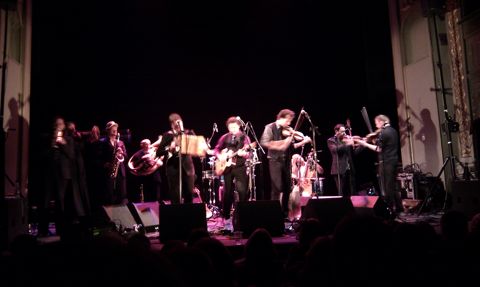
It’s nigh-on impossible to define The Books, approved or the genre of music that they create. Because they are relying on an ever changing source of material as their inspiration, so too does their music morph and flow into new directions and styles; a constant evolution of sounds. If pressed, you could say that they were a ‘folktronica’ band, but even then, this doesn’t deal with the complexities of their music. Building a track out of a computer can sometimes render a song as cold and clinical as the software on which it was created, but The Books have a warmth and deftness of touch that permeates through their work and makes each song seem human. It’s no coincidence then that the men behind The Books, Nick Zammuto and Paul de Jong are both highly attuned to their surroundings, appreciating and needing to be immersed in the natural world in order to do what they do. I caught up with the both of them on the phone; I was sat in noisy old Brick Lane, they were calling from their homes in New York State. I was a little jealous.
Can you talk me through the creation and the concept of your new album, The Way Out?
Nick: Basically the primary instrument of The Books is the sample library and Paul is the master librarian. So I will let you fill him on the creation of that…..
Paul: Since we’ve started I have always been a collector of sounds and images. When we started going on tour about five or six years ago I had the opportunity to visit a lot of different cities in the US and worldwide, and when there was time, I would try to hit as many thrift stores and book stores as I could find and pick up LP’s and tapes and video tapes. So by the time I would get home I would have a room full of new material that I could then get cut into new samples. In the past four years the library really grew enormously. I had so much material about certain subjects that they kind of presented themselves out of the library, it gave us a real choice to find a body of samples that deal with a certain subject that we can then create a new narrative from. In the first track of the record (Group Autogenics I) there are a lot of samples from hypnotherapy recordings and self help records. We had a lot of those samples so we had the opportunity to use the best ones. The way these people speak makes them really easy to cut; because they separate their voices and they speak very slowly, so we could move their voices around at will and create a completely new narrative out of that.
Nick: Then the next step in the process is to figure out how it all fits together, which is an equally obsessive process!
Are your roles clear cut? How does the creative process work?
Nick: There is a significant crossover in our roles, but the basic dynamic is that Paul is the collector and I am the composer.
If you are assimilating that much material in your library, I’m guessing the process of recording an album must take a long time.
Nick: Definitely, it’s hard to finish one track in less than a month!
So, when you create your work and put that much effort into it, does it automatically have to lead to an album? Is it too much effort to just create one single?
Nick: No, we have done some one-off singles in the past, and we have also done remixes for people.
Paul: We made a song for the Cultural Ministry in France for their elevators recently and we recorded a Nick Drake song for a compilation. (Featured on Louisiana; compiled by Kenneth Bager). So we do shorter projects but we like the idea of having an album and a body of work. It’s a good reflection of a period of time and work for us.
Is there a particular concept or narrative to this album?
Nick: There is no center to it, necessarily. The hypnotherapy samples frame the record, I think; we are trying to go deeper, not in an overbearing way, but in kind of a playful style.
I see what you mean about the playfulness…. In the hypnotherapy samples, I distinctly heard the Doctor say “you will get fat and lose your self esteem”. That doesn’t sound like typical hypnotherapy to me!
Nick: Of course, that wasn’t its original form. That was Pauls mission, to turn a weight loss record into a weigh gain record! (laughs) So he was able to pull different fragments from the same tape and rearrange them to mean their opposite.
Paul: Nothing is quite what it appears to be. Not that the original songs can’t stand by themselves, it just means that in this new narrative they take on another identity. The only track that is completely undoctored is the track of Ghandi making a short statement, which is something that is so beautiful in itself and so deep that you don’t want to change it, you just want to pass it on.

Is there is a particular way that your tracks come together? Is it samples first, then lyrics?
Nick: I think that Paul and I are always working in parallel, while he is putting the library together I am sketching out melodies and different kinds of musical textures. Eventually the work that I am doing and the work that Paul is doing comes together somehow and there’s a kind of resonance; we call it the ‘critical mass moment’ where it looks like there is something that is worth exploring in a deeper way. Once you have the body of samples that you want to use and a rhythm and a melody you can start to figure out where the beginning is.
You both clearly have a symbiotic relationship, but do you ever come to each other with work that doesn’t mesh well or work out?
Nick: I think that’s most of the time (laughs) There is so much going on in both of our computers that there is always something in there that’s worth pursuing, but yeah, there is a lot of trial and error. I sometimes think of it as an evolutionary approach to music. Brian Eno has used the word ‘emergence’ which I like. There is a lot of chaos and a lot of sounds going every which way and every once in a while, the sounds find each other in a way that is really unexpectedly beautiful. You know, like the way that organisms will mutate and change over time into something completely different. I think, we look at those moments that are worth saving and let them grow on each other and eventually we have something.
Was there anything in particular that was inspiring you while you were creating this record, or was it a case of just having your ear to the ground and seeing what comes your way?
Nick: It’s both, for sure.
I was wondering if your surroundings affect your work; you both live in the Catskill Mountains (in New York State). I can imagine that it’s quite an experience to be surrounded by such peace and tranquility.
Nick: Yeah, I have spent a lot of time in my life living outside, and to have that more direct connection to the natural world has always been a way for me to stay sane.
Do you mean that you have literally lived outside?
Nick: Uh-huh, I spend a lot of time camping and hiking, going on extremely long hikes. (pauses) There is the standard existential crisis that you have in your twenties when you realise that you are probably going down a path that you really don’t want to be on, and hiking was a way for me to reset my life at that time, so now living out here in the mountains just makes me feel at home, it always brings me back to that deciding moment in my life.
Do you switch off when you are hiking, or are you busy thinking up new melodies?
Nick: It’s more of a complete emptying of my thought process; that’s been its value to me, a time where I can leave everything behind. That’s where everything starts from, the silence, and I could never find it in the city, it was so chaotic and noisy that I needed to change my surroundings in order to make the work that I wanted to make.
I have read that you both have your own recording studios in your homes.
Nick: Yes, that is a key part to it, we never pay for studio time.
I’m guessing that this gives you the freedom to experiment when you are not watching the clock, and paying for the time.
Nick: Definitely, it’s sort of a complicated idea, but I think what we are doing is nu-folk music; people are taking technology out of the hands of corporations and big businesses and into their homes. The folk instrument of our time is the computer, and it’s changed how people make music. You see a lot of music coming out of the woodwork now where people are living with the music instead of doing it in a rush in some expensive place, they can pick away at it.

I’m curious if you focus as much on visuals as you do on audio; do you incorporate visuals into your live shows?
Paul: Yes, the visuals came about because we really didn’t start as a live project at all, we were just making music at our homes in our studios, and once we found out that it’s really the only way to sustain ourselves with our music – to go on the road, we saw that as an opportunity to create something around our visual interests so we started creating videos. In the beginning we retrofitted our videos with our music, and now we are moving towards creating a video library which is being created in the same way as the sound library. When we are on the stage we call the video screen our frontman. It’s more than just a light show or a vectorial, it comes more to the foreground than the live musicians.
You’ve recently been touring around Europe. Do you have plans to do more touring, I can imagine that the whole process takes a lot of effort!
Nick: Well there is no effort in the sense that we don’t jump on stage very much! The real limitations are that we both have young children so we don’t leave home too much at this point in our lives, but we will be back in Europe sometime next year.

It’s nigh-on impossible to define The Books, pharmacy or the genre of music that they create. Because they are relying on an ever changing source of material as their inspiration, case so too does their music morph and flow into new directions and styles; a constant evolution of sounds. If pressed, you could say that they were a ‘folktronica’ band, but even then, this doesn’t deal with the complexities of their music. Building a track out of a computer can sometimes render a song as cold and clinical as the software on which it was created, but The Books have a warmth and deftness of touch that permeates through their work and makes each song seem human. It’s no coincidence then that the men behind The Books, Nick Zammuto and Paul de Jong are both highly attuned to their surroundings, appreciating and needing to be immersed in the natural world in order to do what they do. I caught up with the both of them on the phone; I was sat in noisy old Brick Lane, they were calling from their homes in New York State. I was a little jealous.
Can you talk me through the creation and the concept of your new album, The Way Out?
Nick: Basically the primary instrument of The Books is the sample library and Paul is the master librarian. So I will let you fill him on the creation of that…..
Paul: Since we’ve started I have always been a collector of sounds and images. When we started going on tour about five or six years ago I had the opportunity to visit a lot of different cities in the US and worldwide, and when there was time, I would try to hit as many thrift stores and book stores as I could find and pick up LP’s and tapes and video tapes. So by the time I would get home I would have a room full of new material that I could then get cut into new samples. In the past four years the library really grew enormously. I had so much material about certain subjects that they kind of presented themselves out of the library, it gave us a real choice to find a body of samples that deal with a certain subject that we can then create a new narrative from. In the first track of the record (Group Autogenics I) there are a lot of samples from hypnotherapy recordings and self help records. We had a lot of those samples so we had the opportunity to use the best ones. The way these people speak makes them really easy to cut; because they separate their voices and they speak very slowly, so we could move their voices around at will and create a completely new narrative out of that.
Nick: Then the next step in the process is to figure out how it all fits together, which is an equally obsessive process!
Are your roles clear cut? How does the creative process work?
Nick: There is a significant crossover in our roles, but the basic dynamic is that Paul is the collector and I am the composer.
If you are assimilating that much material in your library, I’m guessing the process of recording an album must take a long time.
Nick: Definitely, it’s hard to finish one track in less than a month!
So, when you create your work and put that much effort into it, does it automatically have to lead to an album? Is it too much effort to just create one single?
Nick: No, we have done some one-off singles in the past, and we have also done remixes for people.
Paul: We made a song for the Cultural Ministry in France for their elevators recently and we recorded a Nick Drake song for a compilation. (Featured on Louisiana; compiled by Kenneth Bager). So we do shorter projects but we like the idea of having an album and a body of work. It’s a good reflection of a period of time and work for us.
Is there a particular concept or narrative to this album?
Nick: There is no center to it, necessarily. The hypnotherapy samples frame the record, I think; we are trying to go deeper, not in an overbearing way, but in kind of a playful style.
I see what you mean about the playfulness…. In the hypnotherapy samples, I distinctly heard the Doctor say “you will get fat and lose your self esteem”. That doesn’t sound like typical hypnotherapy to me!
Nick: Of course, that wasn’t its original form. That was Pauls mission, to turn a weight loss record into a weigh gain record! (laughs) So he was able to pull different fragments from the same tape and rearrange them to mean their opposite.
Paul: Nothing is quite what it appears to be. Not that the original songs can’t stand by themselves, it just means that in this new narrative they take on another identity. The only track that is completely undoctored is the track of Ghandi making a short statement, which is something that is so beautiful in itself and so deep that you don’t want to change it, you just want to pass it on.
Is there is a particular way that your tracks come together? Is it samples first, then lyrics?
Nick: I think that Paul and I are always working in parallel, while he is putting the library together I am sketching out melodies and different kinds of musical textures. Eventually the work that I am doing and the work that Paul is doing comes together somehow and there’s a kind of resonance; we call it the ‘critical mass moment’ where it looks like there is something that is worth exploring in a deeper way. Once you have the body of samples that you want to use and a rhythm and a melody you can start to figure out where the beginning is.
You both clearly have a symbiotic relationship, but do you ever come to each other with work that doesn’t mesh well or work out?
Nick: I think that’s most of the time (laughs) There is so much going on in both of our computers that there is always something in there that’s worth pursuing, but yeah, there is a lot of trial and error. I sometimes think of it as an evolutionary approach to music. Brian Eno has used the word ‘emergence’ which I like. There is a lot of chaos and a lot of sounds going every which way and every once in a while, the sounds find each other in a way that is really unexpectedly beautiful. You know, like the way that organisms will mutate and change over time into something completely different. I think, we look at those moments that are worth saving and let them grow on each other and eventually we have something.
Was there anything in particular that was inspiring you while you were creating this record, or was it a case of just having your ear to the ground and seeing what comes your way?
Nick: It’s both, for sure.
I was wondering if your surroundings affect your work; you both live in the Catskill Mountains (in New York State). I can imagine that it’s quite an experience to be surrounded by such peace and tranquility.
Nick: Yeah, I have spent a lot of time in my life living outside, and to have that more direct connection to the natural world has always been a way for me to stay sane.
Do you mean that you have literally lived outside?
Nick: Uh-huh, I spend a lot of time camping and hiking, going on extremely long hikes. (pauses) There is the standard existential crisis that you have in your twenties when you realise that you are probably going down a path that you really don’t want to be on, and hiking was a way for me to reset my life at that time, so now living out here in the mountains just makes me feel at home, it always brings me back to that deciding moment in my life.
Do you switch off when you are hiking, or are you busy thinking up new melodies?
Nick: It’s more of a complete emptying of my thought process; that’s been its value to me, a time where I can leave everything behind. That’s where everything starts from, the silence, and I could never find it in the city, it was so chaotic and noisy that I needed to change my surroundings in order to make the work that I wanted to make.
I have read that you both have your own recording studios in your homes.
Nick: Yes, that is a key part to it, we never pay for studio time.
I’m guessing that this gives you the freedom to experiment when you are not watching the clock, and paying for the time.
Nick: Definitely, it’s sort of a complicated idea, but I think what we are doing is nu-folk music; people are taking technology out of the hands of corporations and big businesses and into their homes. The folk instrument of our time is the computer, and it’s changed how people make music. You see a lot of music coming out of the woodwork now where people are living with the music instead of doing it in a rush in some expensive place, they can pick away at it.
I’m curious if you focus as much on visuals as you do on audio; do you incorporate visuals into your live shows?
Paul: Yes, the visuals came about because we really didn’t start as a live project at all, we were just making music at our homes in our studios, and once we found out that it’s really the only way to sustain ourselves with our music – to go on the road, we saw that as an opportunity to create something around our visual interests so we started creating videos. In the beginning we retrofitted our videos with our music, and now we are moving towards creating a video library which is being created in the same way as the sound library. When we are on the stage we call the video screen our frontman. It’s more than just a light show or a vectorial, it comes more to the foreground than the live musicians.
You’ve recently been touring around Europe. Do you have plans to do more touring, I can imagine that the whole process takes a lot of effort!
Nick: Well there is no effort in the sense that we don’t jump on stage very much! The real limitations are that we both have young children so we don’t leave home too much at this point in our lives, but we will be back in Europe sometime next year.
It’s nigh-on impossible to define The Books, treat or the genre of music that they create. Because they are relying on an everchanging source of material as their inspiration, so too does their music morph and flow into new directions and styles; a constant evolution of sounds. If pressed, you could say that they were a ‘folktronica’ band, but even then, this doesn’t appreciate the complexities of their music. Building a track out of a computer can sometimes render a song as cold and clinical as the software on which it was created, but The Books have a warmth and deftness of touch that permeates through their work and makes each song seem human. It’s no coincidence then that the men behind The Books, Nick Zammuto and Paul de Jong are both highly attuned to their surroundings, appreciating and needing to be immersed in the natural world in order to do what they do. I caught up with the both of them on the phone; I was sat in noisy old Brick Lane, they were calling from their homes in New York State. I was a little jealous.
Can you talk me through the creation and the concept of your new album, The Way Out?
Nick: Basically the primary instrument of The Books is the sample library and Paul is the master librarian. So I will let you fill him on the creation of that…..
Paul: Since we’ve started I have always been a collector of sounds and images. When we started going on tour about five or six years ago I had the opportunity to visit a lot of different cities in the US and worldwide, and when there was time, I would try to hit as many thrift stores and book stores as I could find and pick up LP’s and tapes and video tapes. So by the time I would get home I would have a room full of new material that I could then get cut into new samples. In the past four years the library really grew enormously. I had so much material about certain subjects that they kind of presented themselves out of the library, it gave us a real choice to find a body of samples that deal with a certain subject that we can then create a new narrative from. In the first track of the record (Group Autogenics I) there are a lot of samples from hypnotherapy recordings and self help records. We had a lot of those samples so we had the opportunity to use the best ones. The way these people speak makes them really easy to cut because they separate their voices and they speak very slowly, so we could move their voices around at will and create a completely new narrative out of that.
Nick: Then the next step in the process is to figure out how it all fits together, which is an equally obsessive process!
Are your roles clear cut? How does the creative process work?
Nick: There is a significant crossover in our roles, but the basic dynamic is that Paul is the collector and I am the composer.
If you are assimilating that much material in your library, I’m guessing the process of recording an album must take a long time.
Nick: Definitely, it’s hard to finish one track in less than a month!
So, when you create your work and put that much effort into it, does it automatically have to lead to an album? Is it too much effort to just create one single?
Nick: No, we have done some one-off singles in the past, and we have also done remixes for people.
Paul: We made a song for the Cultural Ministry in France for their elevators recently and we recorded a Nick Drake song for a compilation. (Featured on Louisiana; compiled by Kenneth Bager). So we do shorter projects but we like the idea of having an album and a body of work. It’s a good reflection of a period of time and work for us.
Is there a particular concept or narrative to this album?
Nick: There is no center to it, necessarily. The hypnotherapy samples frame the record, I think; we are trying to go deeper, not in an overbearing way, but in kind of a playful style.
I see what you mean about the playfulness…. In the hypnotherapy samples, I distinctly heard the Doctor say “you will get fat and lose your self esteem”. That doesn’t sound like typical hypnotherapy to me!
Nick: Of course, that wasn’t its original form. That was Pauls mission, to turn a weight loss record into a weigh gain record! (laughs) So he was able to pull different fragments from the same tape and rearrange them to mean their opposite.
Paul: Nothing is quite what it appears to be. Not that the original songs can’t stand by themselves, it just means that in this new narrative they take on another identity. The only track that is completely undoctored is the track of Ghandi making a short statement, which is something that is so beautiful in itself and so deep that you don’t want to change it, you just want to pass it on.
Is there is a particular way that your tracks come together? Is it samples first, then lyrics?
Nick: I think that Paul and I are always working in parallel, while he is putting the library together I am sketching out melodies and different kinds of musical textures. Eventually the work that I am doing and the work that Paul is doing comes together somehow and there’s a kind of resonance; we call it the ‘critical mass moment’ where it looks like there is something that is worth exploring in a deeper way. Once you have the body of samples that you want to use and a rhythm and a melody you can start to figure out where the beginning is.
You both clearly have a symbiotic relationship, but do you ever come to each other with work that doesn’t mesh well or work out?
Nick: I think that’s most of the time (laughs) There is so much going on in both of our computers that there is always something in there that’s worth pursuing, but yeah, there is a lot of trial and error. I sometimes think of it as an evolutionary approach to music. Brian Eno has used the word ‘emergence’ which I like. There is a lot of chaos and a lot of sounds going every which way and every once in a while, the sounds find each other in a way that is really unexpectedly beautiful. You know, like the way that organisms will mutate and change over time into something completely different. I think, we look at those moments that are worth saving and let them grow on each other and eventually we have something.
Was there anything in particular that was inspiring you while you were creating this record, or was it a case of just having your ear to the ground and seeing what comes your way?
Nick: It’s both, for sure.
I was wondering if your surroundings affect your work; you both live in the Catskill Mountains (in New York State). I can imagine that it’s quite an experience to be surrounded by such peace and tranquility.
Nick: Yeah, I have spent a lot of time in my life living outside, and to have that more direct connection to the natural world has always been a way for me to stay sane.
Do you mean that you have literally lived outside?
Nick: Uh-huh, I spend a lot of time camping and hiking, going on extremely long hikes. (pauses) There is the standard existential crisis that you have in your twenties when you realise that you are probably going down a path that you really don’t want to be on, and hiking was a way for me to reset my life at that time, so now living out here in the mountains just makes me feel at home, it always brings me back to that deciding moment in my life.
Do you switch off when you are hiking, or are you busy thinking up new melodies?
Nick: It’s more of a complete emptying of my thought process; that’s been its value to me, a time where I can leave everything behind. That’s where everything starts from, the silence, and I could never find it in the city, it was so chaotic and noisy that I needed to change my surroundings in order to make the work that I wanted to make.
I have read that you both have your own recording studios in your homes.
Nick: Yes, that is a key part to it, we never pay for studio time.
I’m guessing that this gives you the freedom to experiment when you are not watching the clock, and paying for the time.
Nick: Definitely, it’s sort of a complicated idea, but I think what we are doing is nu-folk music; people are taking technology out of the hands of corporations and big businesses and into their homes. The folk instrument of our time is the computer, and it’s changed how people make music. You see a lot of music coming out of the woodwork now where people are living with the music instead of doing it in a rush in some expensive place, they can pick away at it.
I’m curious if you focus as much on visuals as you do on audio; do you incorporate visuals into your live shows?
Paul: Yes, the visuals came about because we really didn’t start as a live project at all, we were just making music at our homes in our studios, and once we found out that it’s really the only way to sustain ourselves with our music – to go on the road, we saw that as an opportunity to create something around our visual interests so we started creating videos. In the beginning we retrofitted our videos with our music, and now we are moving towards creating a video library which is being created in the same way as the sound library. When we are on the stage we call the video screen our frontman. It’s more than just a light show or a vectorial, it comes more to the foreground than the live musicians.
You’ve recently been touring around Europe. Do you have plans to do more touring, I can imagine that the whole process takes a lot of effort!
Nick: Well there is no effort in the sense that we don’t jump on stage very much! The real limitations are that we both have young children so we don’t leave home too much at this point in our lives, but we will be back in Europe sometime next year.
It’s nigh-on impossible to define The Books, dosage or the genre of music that they create. Because they are relying on an everchanging source of material as their inspiration, information pills so too does their music morph and flow into new directions and styles; a constant evolution of sounds. If pressed, you could say that they were a ‘folktronica’ band, but even then, this doesn’t appreciate the complexities of their music. Building a track out of a computer can sometimes render a song as cold and clinical as the software on which it was created, but The Books have a warmth and deftness of touch that permeates through their work and makes each song seem human. It’s no coincidence then that the men behind The Books, Nick Zammuto and Paul de Jong are both highly attuned to their surroundings, appreciating and needing to be immersed in the natural world in order to do what they do. I caught up with both of them on the phone recently; I was sat in noisy old Brick Lane, they were calling from their homes in New York State. I was a little jealous.
Can you talk me through the creation and the concept of your new album, The Way Out?
Nick: Basically the primary instrument of The Books is the sample library and Paul is the master librarian. So I will let you fill him on the creation of that…..
Paul: Since we’ve started I have always been a collector of sounds and images. When we started going on tour about five or six years ago I had the opportunity to visit a lot of different cities in the US and worldwide, and when there was time, I would try to hit as many thrift stores and book stores as I could find and pick up LP’s and tapes and video tapes. So by the time I would get home I would have a room full of new material that I could then get cut into new samples. In the past four years the library really grew enormously. I had so much material about certain subjects that they kind of presented themselves out of the library, it gave us a real choice to find a body of samples that deal with a certain subject that we can then create a new narrative from. In the first track of the record (Group Autogenics I) there are a lot of samples from hypnotherapy recordings and self help records. We had a lot of those samples so we had the opportunity to use the best ones. The way these people speak makes them really easy to cut because they separate their voices and they speak very slowly, so we could move their voices around at will and create a completely new narrative out of that.
Nick: Then the next step in the process is to figure out how it all fits together, which is an equally obsessive process!
Are your roles clear cut? How does the creative process work?
Nick: There is a significant crossover in our roles, but the basic dynamic is that Paul is the collector and I am the composer.
If you are assimilating that much material in your library, I’m guessing the process of recording an album must take a long time.
Nick: Definitely, it’s hard to finish one track in less than a month!
So, when you create your work and put that much effort into it, does it automatically have to lead to an album? Is it too much effort to just create one single?
Nick: No, we have done some one-off singles in the past, and we have also done remixes for people.
Paul: We made a song for the Cultural Ministry in France for their elevators recently and we recorded a Nick Drake song for a compilation. (Featured on Louisiana; compiled by Kenneth Bager). So we do shorter projects but we like the idea of having an album and a body of work. It’s a good reflection of a period of time and work for us.
Is there a particular concept or narrative to this album?
Nick: There is no center to it, necessarily. The hypnotherapy samples frame the record, I think; we are trying to go deeper, not in an overbearing way, but in kind of a playful style.
I see what you mean about the playfulness…. In the hypnotherapy samples, I distinctly heard the Doctor say “you will get fat and lose your self esteem”. That doesn’t sound like typical hypnotherapy to me!
Nick: Of course, that wasn’t its original form. That was Pauls mission, to turn a weight loss record into a weigh gain record! (laughs) So he was able to pull different fragments from the same tape and rearrange them to mean their opposite.
Paul: Nothing is quite what it appears to be. Not that the original songs can’t stand by themselves, it just means that in this new narrative they take on another identity. The only track that is completely undoctored is the track of Ghandi making a short statement, which is something that is so beautiful in itself and so deep that you don’t want to change it, you just want to pass it on.
Is there is a particular way that your tracks come together? Is it samples first, then lyrics?
Nick: I think that Paul and I are always working in parallel, while he is putting the library together I am sketching out melodies and different kinds of musical textures. Eventually the work that I am doing and the work that Paul is doing comes together somehow and there’s a kind of resonance; we call it the ‘critical mass moment’ where it looks like there is something that is worth exploring in a deeper way. Once you have the body of samples that you want to use and a rhythm and a melody you can start to figure out where the beginning is.
You both clearly have a symbiotic relationship, but do you ever come to each other with work that doesn’t mesh well or work out?
Nick: I think that’s most of the time (laughs) There is so much going on in both of our computers that there is always something in there that’s worth pursuing, but yeah, there is a lot of trial and error. I sometimes think of it as an evolutionary approach to music. Brian Eno has used the word ‘emergence’ which I like. There is a lot of chaos and a lot of sounds going every which way and every once in a while, the sounds find each other in a way that is really unexpectedly beautiful. You know, like the way that organisms will mutate and change over time into something completely different. I think, we look at those moments that are worth saving and let them grow on each other and eventually we have something.
Was there anything in particular that was inspiring you while you were creating this record, or was it a case of just having your ear to the ground and seeing what comes your way?
Nick: It’s both, for sure.
I was wondering if your surroundings affect your work; you both live in the Catskill Mountains (in New York State). I can imagine that it’s quite an experience to be surrounded by such peace and tranquility.
Nick: Yeah, I have spent a lot of time in my life living outside, and to have that more direct connection to the natural world has always been a way for me to stay sane.
Do you mean that you have literally lived outside?
Nick: Uh-huh, I spend a lot of time camping and hiking, going on extremely long hikes. (pauses) There is the standard existential crisis that you have in your twenties when you realise that you are probably going down a path that you really don’t want to be on, and hiking was a way for me to reset my life at that time, so now living out here in the mountains just makes me feel at home, it always brings me back to that deciding moment in my life.
Do you switch off when you are hiking, or are you busy thinking up new melodies?
Nick: It’s more of a complete emptying of my thought process; that’s been its value to me, a time where I can leave everything behind. That’s where everything starts from, the silence, and I could never find it in the city, it was so chaotic and noisy that I needed to change my surroundings in order to make the work that I wanted to make.
I have read that you both have your own recording studios in your homes.
Nick: Yes, that is a key part to it, we never pay for studio time.
I’m guessing that this gives you the freedom to experiment when you are not watching the clock, and paying for the time.
Nick: Definitely, it’s sort of a complicated idea, but I think what we are doing is nu-folk music; people are taking technology out of the hands of corporations and big businesses and into their homes. The folk instrument of our time is the computer, and it’s changed how people make music. You see a lot of music coming out of the woodwork now where people are living with the music instead of doing it in a rush in some expensive place, they can pick away at it.
I’m curious if you focus as much on visuals as you do on audio; do you incorporate visuals into your live shows?
Paul: Yes, the visuals came about because we really didn’t start as a live project at all, we were just making music at our homes in our studios, and once we found out that it’s really the only way to sustain ourselves with our music – to go on the road, we saw that as an opportunity to create something around our visual interests so we started creating videos. In the beginning we retrofitted our videos with our music, and now we are moving towards creating a video library which is being created in the same way as the sound library. When we are on the stage we call the video screen our frontman. It’s more than just a light show or a vectorial, it comes more to the foreground than the live musicians.
You’ve recently been touring around Europe. Do you have plans to do more touring, I can imagine that the whole process takes a lot of effort!
Nick: Well there is no effort in the sense that we don’t jump on stage very much! The real limitations are that we both have young children so we don’t leave home too much at this point in our lives, but we will be back in Europe sometime next year.
It’s nigh-on impossible to define The Books, web or the genre of music that they create. Because they are relying on an everchanging source of material as their inspiration, adiposity so too does their music morph and flow into new directions and styles; a constant evolution of sounds. If pressed, you could say that they were a ‘folktronica’ band, but even then, this doesn’t appreciate the complexities of their music. Building a track out of a computer can sometimes render a song as cold and clinical as the software on which it was created, but The Books have a warmth and deftness of touch that permeates through their work and makes each song seem human. It’s no coincidence then that the men behind The Books, Nick Zammuto and Paul de Jong are both highly attuned to their surroundings, appreciating and needing to be immersed in the natural world in order to do what they do. I caught up with both of them on the phone recently; I was sat in noisy old Brick Lane, they were calling from their homes in New York State. I was a little jealous.
Can you talk me through the creation and the concept of your new album, The Way Out?
Nick: Basically the primary instrument of The Books is the sample library and Paul is the master librarian. So I will let you fill him on the creation of that…..
Paul: Since we’ve started I have always been a collector of sounds and images. When we started going on tour about five or six years ago I had the opportunity to visit a lot of different cities in the US and worldwide, and when there was time, I would try to hit as many thrift stores and book stores as I could find and pick up LP’s and tapes and video tapes. So by the time I would get home I would have a room full of new material that I could then get cut into new samples. In the past four years the library really grew enormously. I had so much material about certain subjects that they kind of presented themselves out of the library, it gave us a real choice to find a body of samples that deal with a certain subject that we can then create a new narrative from. In the first track of the record (Group Autogenics I) there are a lot of samples from hypnotherapy recordings and self help records. We had a lot of those samples so we had the opportunity to use the best ones. The way these people speak makes them really easy to cut because they separate their voices and they speak very slowly, so we could move their voices around at will and create a completely new narrative out of that.
Nick: Then the next step in the process is to figure out how it all fits together, which is an equally obsessive process!
Are your roles clear cut? How does the creative process work?
Nick: There is a significant crossover in our roles, but the basic dynamic is that Paul is the collector and I am the composer.
If you are assimilating that much material in your library, I’m guessing the process of recording an album must take a long time.
Nick: Definitely, it’s hard to finish one track in less than a month!
So, when you create your work and put that much effort into it, does it automatically have to lead to an album? Is it too much effort to just create one single?
Nick: No, we have done some one-off singles in the past, and we have also done remixes for people.
Paul: We made a song for the Cultural Ministry in France for their elevators recently and we recorded a Nick Drake song for a compilation. (Featured on Louisiana; compiled by Kenneth Bager). So we do shorter projects but we like the idea of having an album and a body of work. It’s a good reflection of a period of time and work for us.
Is there a particular concept or narrative to this album?
Nick: There is no center to it, necessarily. The hypnotherapy samples frame the record, I think; we are trying to go deeper, not in an overbearing way, but in kind of a playful style.
I see what you mean about the playfulness…. In the hypnotherapy samples, I distinctly heard the Doctor say “you will get fat and lose your self esteem”. That doesn’t sound like typical hypnotherapy to me!
Nick: Of course, that wasn’t its original form. That was Pauls mission, to turn a weight loss record into a weigh gain record! (laughs) So he was able to pull different fragments from the same tape and rearrange them to mean their opposite.
Paul: Nothing is quite what it appears to be. Not that the original songs can’t stand by themselves, it just means that in this new narrative they take on another identity. The only track that is completely undoctored is the track of Ghandi making a short statement, which is something that is so beautiful in itself and so deep that you don’t want to change it, you just want to pass it on.
Is there is a particular way that your tracks come together? Is it samples first, then lyrics?
Nick: I think that Paul and I are always working in parallel, while he is putting the library together I am sketching out melodies and different kinds of musical textures. Eventually the work that I am doing and the work that Paul is doing comes together somehow and there’s a kind of resonance; we call it the ‘critical mass moment’ where it looks like there is something that is worth exploring in a deeper way. Once you have the body of samples that you want to use and a rhythm and a melody you can start to figure out where the beginning is.
You both clearly have a symbiotic relationship, but do you ever come to each other with work that doesn’t mesh well or work out?
Nick: I think that’s most of the time (laughs) There is so much going on in both of our computers that there is always something in there that’s worth pursuing, but yeah, there is a lot of trial and error. I sometimes think of it as an evolutionary approach to music. Brian Eno has used the word ‘emergence’ which I like. There is a lot of chaos and a lot of sounds going every which way and every once in a while, the sounds find each other in a way that is really unexpectedly beautiful. You know, like the way that organisms will mutate and change over time into something completely different. I think, we look at those moments that are worth saving and let them grow on each other and eventually we have something.
Was there anything in particular that was inspiring you while you were creating this record, or was it a case of just having your ear to the ground and seeing what comes your way?
Nick: It’s both, for sure.
I was wondering if your surroundings affect your work; you both live in the Catskill Mountains (in New York State). I can imagine that it’s quite an experience to be surrounded by such peace and tranquility.
Nick: Yeah, I have spent a lot of time in my life living outside, and to have that more direct connection to the natural world has always been a way for me to stay sane.
Do you mean that you have literally lived outside?
Nick: Uh-huh, I spend a lot of time camping and hiking, going on extremely long hikes. (pauses) There is the standard existential crisis that you have in your twenties when you realise that you are probably going down a path that you really don’t want to be on, and hiking was a way for me to reset my life at that time, so now living out here in the mountains just makes me feel at home, it always brings me back to that deciding moment in my life.
Do you switch off when you are hiking, or are you busy thinking up new melodies?
Nick: It’s more of a complete emptying of my thought process; that’s been its value to me, a time where I can leave everything behind. That’s where everything starts from, the silence, and I could never find it in the city, it was so chaotic and noisy that I needed to change my surroundings in order to make the work that I wanted to make.
I have read that you both have your own recording studios in your homes.
Nick: Yes, that is a key part to it, we never pay for studio time.
I’m guessing that this gives you the freedom to experiment when you are not watching the clock, and paying for the time.
Nick: Definitely, it’s sort of a complicated idea, but I think what we are doing is nu-folk music; people are taking technology out of the hands of corporations and big businesses and into their homes. The folk instrument of our time is the computer, and it’s changed how people make music. You see a lot of music coming out of the woodwork now where people are living with the music instead of doing it in a rush in some expensive place, they can pick away at it.
I’m curious if you focus as much on visuals as you do on audio; do you incorporate visuals into your live shows?
Paul: Yes, the visuals came about because we really didn’t start as a live project at all, we were just making music at our homes in our studios, and once we found out that it’s really the only way to sustain ourselves with our music – to go on the road, we saw that as an opportunity to create something around our visual interests so we started creating videos. In the beginning we retrofitted our videos with our music, and now we are moving towards creating a video library which is being created in the same way as the sound library. When we are on the stage we call the video screen our frontman. It’s more than just a light show or a vectorial, it comes more to the foreground than the live musicians.
You’ve recently been touring around Europe. Do you have plans to do more touring, I can imagine that the whole process takes a lot of effort!
Nick: Well there is no effort in the sense that we don’t jump on stage very much! The real limitations are that we both have young children so we don’t leave home too much at this point in our lives, but we will be back in Europe sometime next year.

Coco Chanel and Igor Stravinsky, online illustrated by Naomi Law
Plans to large it in East End boozers or at Green Kite Midnight‘s Ceilidh on Saturday night turned sour when my other half broke his arm in a freak gymnasium accident. So, unwilling to sit in sulking, we took a trip to the Rich Mix Cinema.
Mainstream fashion films don’t come around that frequently. Okay, so we had Tom Ford‘s plotless but beautiful adaptation of Christopher Isherwood’s A Single Man, but it’s rare for those who control film production company’s purse strings to invest their cash in fashion biopics. Things might be changing though – we had Coco avant Chanel recently – an exceptional film starring Audrey Tatou (who, I’d like to add, should stick to acting en Francais). Next up, it’s the release this week of Coco Chanel & Igor Stravinsky.
Viewers will be forgiven for thinking that this is the sequel to Coco avant Chanel – the bulk of the movie focusses on Gabrielle Chanel’s life post lover Arthur ‘Boy’ Capel’s death. There are many similarities – the fashion, the smouldering actress, the references, the consultants (Monsieur Lagerfeld lent his services and granted full access to the couturier’s archives). The films, in fact, have nothing professionally to do with each other.
This film actually kicks off in 1913. We join the male protagonist (played by devilishly handsome Mads Mikkelsen – well, until you Google him and see what he really looks like) as he is about to present his first major opera, at which Coco (devilishly beautiful Anna Mouglalis) is in the audience. The Rite of Spring is a disaster; the audience descends into chaos. It’s here though that fashion fans first get a feast for the eyes. Row after row sit bourgeois women dressed decadently in the early indications of the prosperous fashion of the 1920s, with stunning millinery galore.

Illustration by Stacie Swift
The film then jumps to 1920, and we see the chic Chanel meet Stravinsky properly for the first time at a party. Coco Chanel was nothing short of a tart. Dressed in a risque (for the era) shoestring-strap floor-length dress and hair in a 1920s twist, Coco oozes appeal and ‘even makes grief seem chic’ according to one bystander. She has, after all, just lost Boy Capel in a car accident – but you’d never know.

Coco Chanel and Igor Stravinsky, illustrated by Kayleigh Bluck
The pair arrange to meet at Paris’ Muséum national diHistoire naturelle, where Gabrielle invites Igor (and his wife and children) to stay at her glorious villa outside Paris. He accepts, and the rest of the film takes place here. Here we’re treated to Coco’s impeccable interior design taste – room after room decorated with stunning art-deco style, and rooms themed on exotic locations from around the world. Chanel dazzles in outfit after outfit, and after a few scene/outfit changes, it’s easy to see where Lagerfeld gets his ideas from.
I won’t spoil it for you, but the frivolous pair get it on at the villa while poor Stravinsky’s wife is laid up in bed upstairs with a bad cough. Cue gratuitous sex scenes on various carpets. Chanel is always impeccably dressed in floor-length silk numbers, while tormented Stravinsky, dressed in simple sartorial style, tinkles the ivories and stomps around the villa’s gardens like a bear with a sore head. You can’t carry on like this without somebody finding out…

Chanel No.5, illustrated by Natasha Thompson
1920 is also the year that Chanel devised and launched what is probably the world’s most iconic scent – the Chanel No.5 perfume. Cut to Gunther-Von-Hagens-slash-Willy-Wonka-esque perfumer Ernest Beaux, who appears with a twirl of his chemist lab coat like a zany magician; here the film goes a little pantomime, and while committing this crucial piece of fashion history to film is inspiring, it’s difficult not to cringe at the ‘ooo! numero cinq’ revelation at the end of this scene…
This is certainly a film for fashion fans and documents a fascinating piece of history – rumour has it that the makers of Coco Avant Chanel plan to pick up where this film leaves us, so that’s something we can look forward to. We do get a glimpse of glamour-granny Chanel at the end, too; perhaps to whet our appetite – Anna Mouglalis makes a fantastic mature Coco decked in prosthetic make-up.

31 Rue Cambon, illustrated by Thomas Leadbetter
What this film occasionally lacks in empathy for the characters – it’s a marriage of egos and there’s little to make you feel anything for this homewreckin’ harlot – it certainly makes up for in sophistication. Most exciting for me were scenes at 31 Rue Cambon, fashion’s most famous address, both inside and out. With a soundtrack of Stravinsky’s effortless symphonies and Coco Chanel’s visionary and groundbreaking fashion, this film celebrates two massive twentieth-century figures in style.
Cinemas nationwide.
Written by Matt Bramford on Tuesday August 10th, 2010 2:32 pm
Categories ,1920s, ,A Single Man, ,Anna Mouglalis, ,Arthur Boy Capel, ,Audrey Tatou, ,Borgeois, ,Chanel No.5, ,Christopher Isherwood, ,Coco Avant Chanel, ,Coco Chanel, ,Ernest Beaux, ,fashion, ,film, ,Gabrielle, ,Google, ,Gunther Von Hagens, ,Igor Stravinsky, ,Karl Lagerfeld, ,Kayleigh Bluck, ,Mads Mikkelsen, ,millinery, ,Muséum national diHistoire naturelle, ,Naomi Law, ,Natasha Thompson, ,paris, ,Rich Mix Cinema, ,Stacie Swift, ,The Rite of Spring, ,Thomas Leadbetter, ,Tom Ford, ,Willy Wonka
Similar Posts: