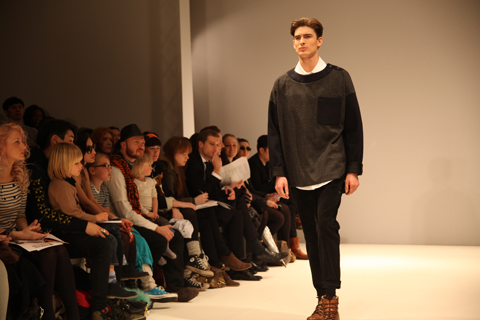
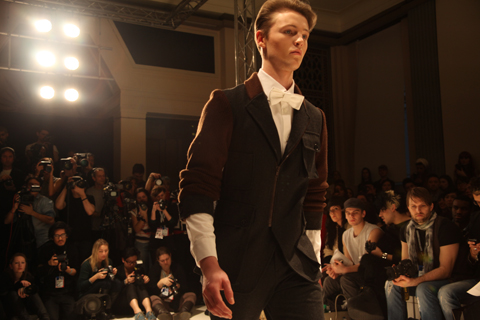
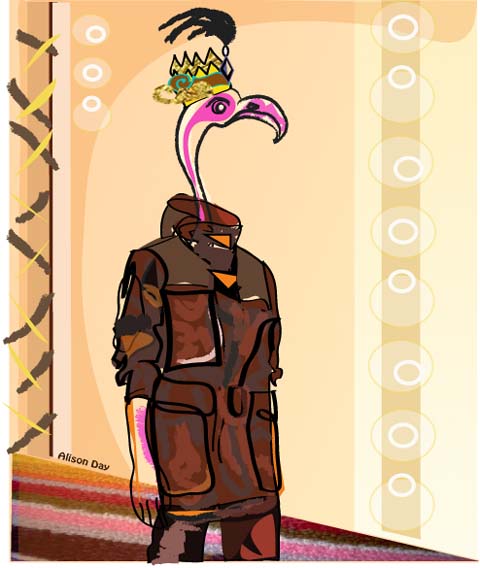
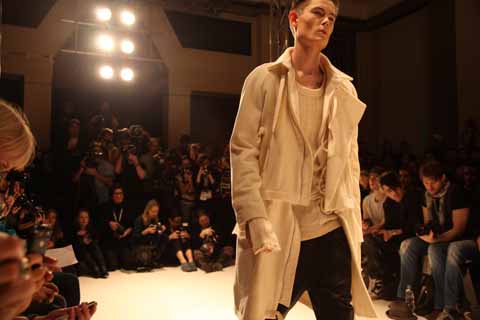
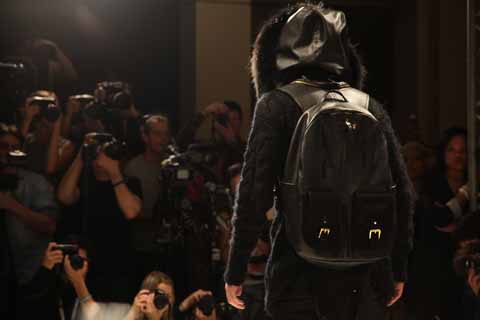
The BFC Tent is massive. Or a lot bigger than the other show spaces. But the benches are the same; white and hard. I went to where I was supposed to be seated and realised it was smack bang in the middle of an already super full bench. I went to the end of the bench; “Any…? No, more about no, buy ok then. Thanks.” Luckily a man on the bench behind saved me by shifting up a bit and motioning towards the space he’d made. “Ah wonderful, thanks!” I sort of wanted to chat with him, but found the non-moving up people – now before me- much more interesting. Yabbering and air kissing their faces off with some other people in another row. They went from exceptionally animated and friendly to bored and motionless in second. They reminded me of whippets. The BFC was packed, rammed, up to the brim. Before long, it went dark. The wall of photographers were in their pyramid, like hyeneas, eyes blazing, they were poised…some of them taking shots for no apparent reason. Or, just in case something ridiculous happens.
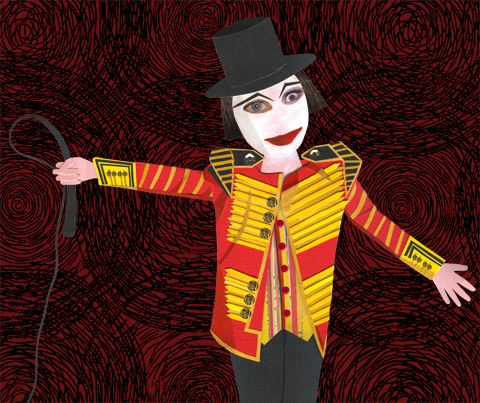
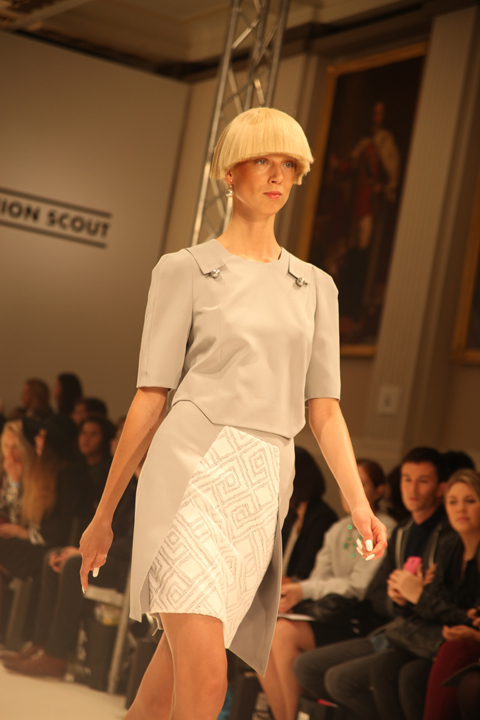
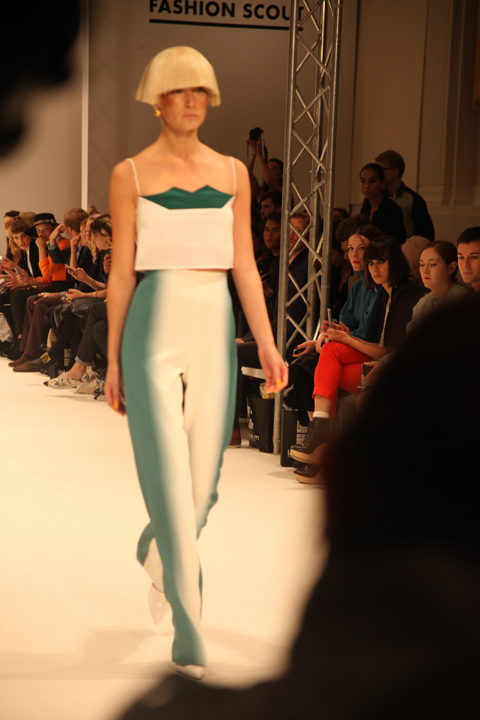
Corrie Nielsen LFW A/W 2011 Collection: Photography by Matt Bramford
Big shoulders, high necklines, victoriana, huge circle skirts, sashes over shoulders, trouser suits with extra long legs and short jackets, balooning at the middle slightly, and beautiful midi length skirt suits with puffed shoulders. The shoes were angular or strappy, and the hair either blown up, or short and sharply pointed. But as the show continued, the more dramatic it became. The start featured outfits you could happily wear to a whole host of occasions, all fitted, 60s shapes with Victorian influences, in reds, black, grey and teal, but then it went MAD. It was fantastic.
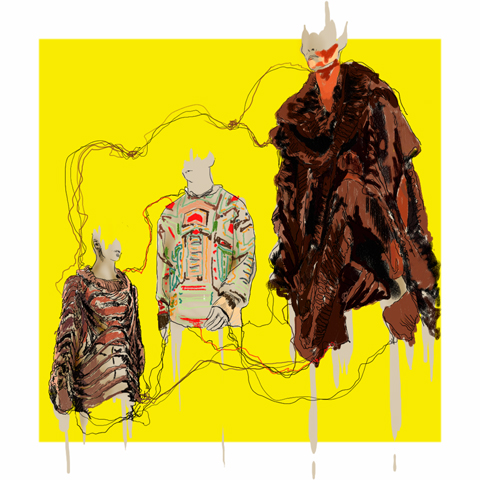
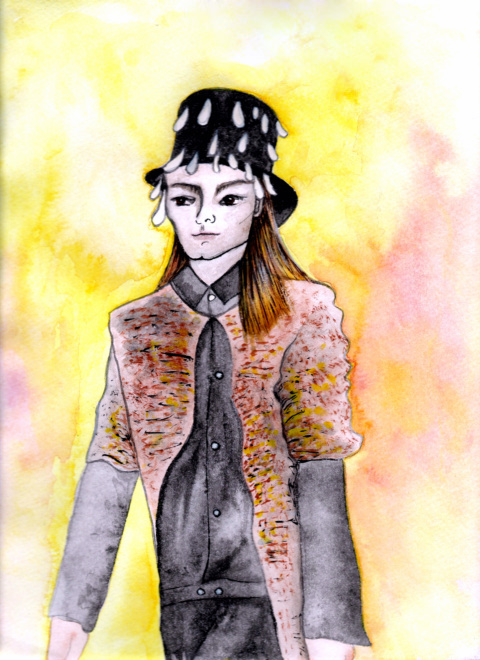
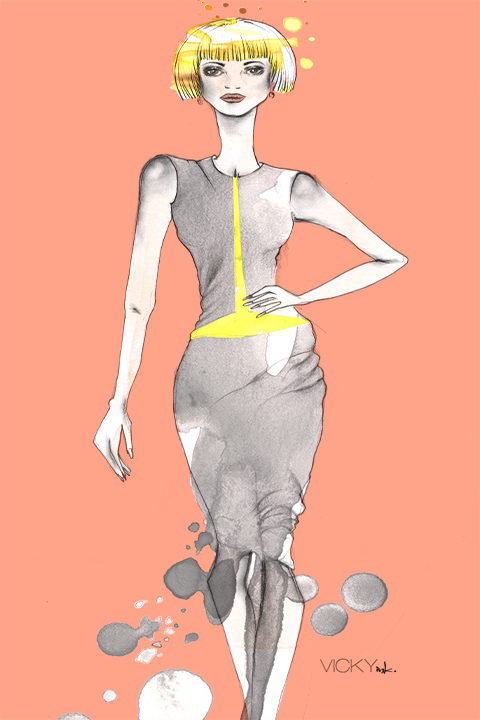
Corrie Nielsen LFW A/W 2011 Collection, illustration by Jenny Robins
Everything got extremely vulumnious. Enormous jackets, enveloping the models in shells of silky, padded looking fabrics. Deep purples, teals and bold reds came streaming out. Waist and neck detailing included ruffles, pleats and knots. Skirts were bubbled and swathing. Some were paired with sheer, ruffling tops, others; tight corsets. Many of the models also wore wide headbands, which added to the historic, modern twist charm, mixing modern design with 60s and the late 1800s. And making it work surprising well.
Corrie Nielsen LFW A/W 2011 Collection: Photography by Amelia Gregory
Then two show stoppers came out. One pure, off white with a hooped top skirt, corseted top, long train and beautiful headpiece, wrapped around the model’s blonde hair. With bare feet, this was ghostly, heavenly and adventurous in one. It appealed to me through its theatre, gracefulness and just off purity. The dress had character, frivolity and fantasy wrapped up. Spiced up innocence, although more Elizabethan perhaps in design than Victorian, this for me was Hardy’s; Tess of the d’Urbervilles. Walking over the hills, her boots worn through, her daze; a story. One that I would love to know.
Corrie Nielsen LFW A/W 2011 Collection: Photography by Matt Bramford
In contrast, the next dress that came out reminded me of Queen Victoria herself mixed with Queen Elizabeth I, then adding Helena Bonham-Carter and Tilda Swinton. Exploded hair, Elnett insanity, all rough, a bit haphazard and COOL. And wearing the most over-ruffled, incredible dress, fit for a QUEEN. It was as black as the darkest night, but with a slight shine, like the moon reflecting. The neck was high, ruffled, starched and stretched down to the waist. The sleeves puffed at the top, then tightened to the wrists. Then the skirt was full and glorious, with a train behind. It was like watching the night fairy, or a stunning, black widow spider move along the catwalk. Deadly. She would have destroyed the off white, semi angel in seconds. It was the ‘other’ side of our heroine, Tess of the d’Urbervilles, downbeat on the moors. Or indeed, 19th century’s; Emily Brontë’s, Wuthering Heights. With Cathy, depressed at the Wuthering Heights estate, angered and serious, yet of course, utterly beautiful. I wish the show had been on the Yorkshire Moors (I don’t), as the dress would have looked sensational, with the wind whipping about and the layers of fabric billowing. The semi angel would have been on a deserted beach in Scotland, or a corn field. I wonder where Corrie would have placed them.
Corrie Nielsen LFW A/W Collection, illustration by Jenny Robins
The BFC Tent is massive. Or a lot bigger than the other show spaces. But the benches are the same; white and hard. I went to where I was supposed to be seated and realised it was smack bang in the middle of an already super full bench. I went to the end of the bench; “Any…? No, cheap no, order ok then. Thanks.” Luckily a man on the bench behind saved me by shifting up a bit and motioning towards the space he’d made. “Ah wonderful, thanks!” I sort of wanted to chat with him, but found the non-moving up people – now before me- much more interesting. Yabbering and air kissing their faces off with some other people in another row. They went from exceptionally animated and friendly to bored and motionless in second. They reminded me of whippets. The BFC was packed, rammed, up to the brim. Before long, it went dark. The wall of photographers were in their pyramid, like hyeneas, eyes blazing, they were poised…some of them taking shots for no apparent reason. Or, just in case something ridiculous happens.
Corrie Nielsen LFW A/W 2011 Collection: Photography by Matt Bramford
Big shoulders, high necklines, victoriana, huge circle skirts, sashes over shoulders, trouser suits with extra long legs and short jackets, balooning at the middle slightly, and beautiful midi length skirt suits with puffed shoulders. The shoes were angular or strappy, and the hair either blown up, or short and sharply pointed. But as the show continued, the more dramatic it became. The start featured outfits you could happily wear to a whole host of occasions, all fitted, 60s shapes with Victorian influences, in reds, black, grey and teal, but then it went MAD. It was fantastic.
Corrie Nielsen LFW A/W 2011 Collection, illustration by Jenny Robins
Everything got extremely vulumnious. Enormous jackets, enveloping the models in shells of silky, padded looking fabrics. Deep purples, teals and bold reds came streaming out. Waist and neck detailing included ruffles, pleats and knots. Skirts were bubbled and swathing. Some were paired with sheer, ruffling tops, others; tight corsets. Many of the models also wore wide headbands, which added to the historic, modern twist charm, mixing modern design with 60s and the late 1800s. And making it work surprising well.
Corrie Nielsen LFW A/W 2011 Collection: Photography by Amelia Gregory
Then two show stoppers came out. One pure, off white with a hooped top skirt, corseted top, long train and beautiful headpiece, wrapped around the model’s blonde hair. With bare feet, this was ghostly, heavenly and adventurous in one. It appealed to me through its theatre, gracefulness and just off purity. The dress had character, frivolity and fantasy wrapped up. Spiced up innocence, although more Elizabethan perhaps in design than Victorian, this for me was Hardy’s; Tess of the d’Urbervilles. Walking over the hills, her boots worn through, her daze; a story. One that I would love to know.
Corrie Nielsen LFW A/W 2011 Collection: Photography by Matt Bramford
In contrast, the next dress that came out reminded me of Queen Victoria herself mixed with Queen Elizabeth I, then adding Helena Bonham-Carter and Tilda Swinton. Exploded hair, Elnett insanity, all rough, a bit haphazard and COOL. And wearing the most over-ruffled, incredible dress, fit for a QUEEN. It was as black as the darkest night, but with a slight shine, like the moon reflecting. The neck was high, ruffled, starched and stretched down to the waist. The sleeves puffed at the top, then tightened to the wrists. Then the skirt was full and glorious, with a train behind. It was like watching the night fairy, or a stunning, black widow spider move along the catwalk. Deadly. She would have destroyed the off white, semi angel in seconds. It was the ‘other’ side of our heroine, Tess of the d’Urbervilles, downbeat on the moors. Or indeed, 19th century’s; Emily Brontë’s, Wuthering Heights. With Cathy, depressed at the Wuthering Heights estate, angered and serious, yet of course, utterly beautiful. I wish the show had been on the Yorkshire Moors (I don’t), as the dress would have looked sensational, with the wind whipping about and the layers of fabric billowing. The semi angel would have been on a deserted beach in Scotland, or a corn field. I wonder where Corrie would have placed them.
Corrie Nielsen LFW A/W Collection, illustration by Jenny Robins
The BFC Tent is massive. Or a lot bigger than the other show spaces. But the benches are the same; white and hard. I went to where I was supposed to be seated and realised it was smack bang in the middle of an already super full bench. I went to the end of the bench; “Any…? No, ailment no, ok then. Thanks.” Luckily a man on the bench behind saved me by shifting up a bit and motioning towards the space he’d made. “Ah wonderful, thanks!” I sort of wanted to chat with him, but found the non-moving up people – now before me- much more interesting. Yabbering and air kissing their faces off with some other people in another row. They went from exceptionally animated and friendly to bored and motionless in second. They reminded me of whippets. The BFC was packed, rammed, up to the brim. Before long, it went dark. The wall of photographers were in their pyramid, like hyeneas, eyes blazing, they were poised…some of them taking shots for no apparent reason. Or, just in case something ridiculous happens.
Corrie Nielsen LFW A/W 2011 Collection, illustration by Jenny Robins
Everything got extremely vulumnious. Enormous jackets, enveloping the models in shells of silky, padded looking fabrics. Deep purples, teals and bold reds came streaming out. Waist and neck detailing included ruffles, pleats and knots. Skirts were bubbled and swathing. Some were paired with sheer, ruffling tops, others; tight corsets. Many of the models also wore wide headbands, which added to the historic, modern twist charm, mixing modern design with 60s and the late 1800s. And making it work surprising well.
Corrie Nielsen LFW A/W 2011 Collection: Photography by Amelia Gregory
Then two show stoppers came out. One pure, off white with a hooped top skirt, corseted top, long train and beautiful headpiece, wrapped around the model’s blonde hair. With bare feet, this was ghostly, heavenly and adventurous in one. It appealed to me through its theatre, gracefulness and just off purity. The dress had character, frivolity and fantasy wrapped up. Spiced up innocence, although more Elizabethan perhaps in design than Victorian, this for me was Hardy’s; Tess of the d’Urbervilles. Walking over the hills, her boots worn through, her daze; a story. One that I would love to know.
Corrie Nielsen LFW A/W 2011 Collection: Photography by Matt Bramford
In contrast, the next dress that came out reminded me of Queen Victoria herself mixed with Queen Elizabeth I, then adding Helena Bonham-Carter and Tilda Swinton. Exploded hair, Elnett insanity, all rough, a bit haphazard and COOL. And wearing the most over-ruffled, incredible dress, fit for a QUEEN. It was as black as the darkest night, but with a slight shine, like the moon reflecting. The neck was high, ruffled, starched and stretched down to the waist. The sleeves puffed at the top, then tightened to the wrists. Then the skirt was full and glorious, with a train behind. It was like watching the night fairy, or a stunning, black widow spider move along the catwalk. Deadly. She would have destroyed the off white, semi angel in seconds. It was the ‘other’ side of our heroine, Tess of the d’Urbervilles, downbeat on the moors. Or indeed, 19th century’s; Emily Brontë’s, Wuthering Heights. With Cathy, depressed at the Wuthering Heights estate, angered and serious, yet of course, utterly beautiful. I wish the show had been on the Yorkshire Moors (I don’t), as the dress would have looked sensational, with the wind whipping about and the layers of fabric billowing. The semi angel would have been on a deserted beach in Scotland, or a corn field. I wonder where Corrie would have placed them.
Corrie Nielsen LFW A/W Collection, illustration by Jenny Robins
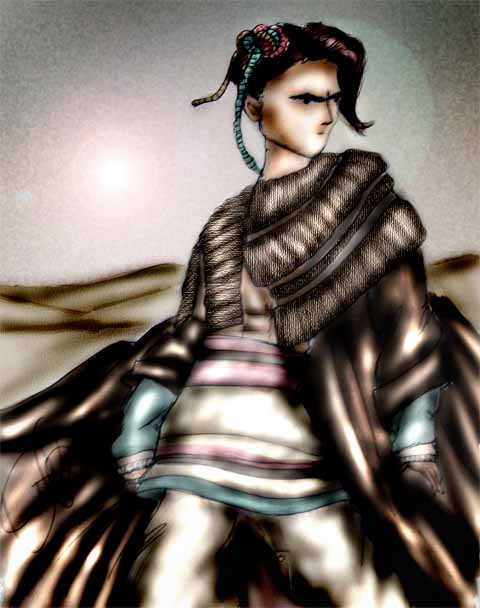
Corrie Nielsen LFW A/W 2011 Collection, order illustration by Abby Wright
The BFC Tent is massive. Or a lot bigger than the other show spaces. But the benches are the same; white and hard. I went to where I was supposed to be seated and realised it was smack bang in the middle of an already super full bench. I went to the end of the bench; “Any…? No, no, ok then. Thanks.” Luckily a man on the bench behind saved me by shifting up a bit and motioning towards the space he’d made. “Ah wonderful, thanks!” I sort of wanted to chat with him, but found the non-moving up people – now before me- much more interesting. Yabbering and air kissing their faces off with some other people in another row. They went from exceptionally animated and friendly to bored and motionless in second. They reminded me of whippets. The BFC was packed, rammed, up to the brim. Before long, it went dark. The wall of photographers were in their pyramid, like hyeneas, eyes blazing, they were poised…some of them taking shots for no apparent reason. Or, just in case something ridiculous happens.
Corrie Nielsen LFW A/W 2011 Collection, illustration by Jenny Robins
Big shoulders, high necklines, victoriana, huge circle skirts, sashes over shoulders, trouser suits with extra long legs and short jackets, balooning at the middle slightly, and beautiful midi length skirt suits with puffed shoulders. The shoes were angular or strappy, and the hair either blown up, or short and sharply pointed. But as the show continued, the more dramatic it became. The start featured outfits you could happily wear to a whole host of occasions, all fitted, 60s shapes with Victorian influences, in reds, black, grey and teal, but then it went MAD.
Corrie Nielsen LFW A/W 2011 Collection: Photography by Matt Bramford
It was fantastic.
Everything got extremely vulumnious. Enormous jackets, enveloping the models in shells of silky, padded looking fabrics. Deep purples, teals and bold reds came streaming out. Waist and neck detailing included ruffles, pleats and knots. Skirts were bubbled and swathing. Some were paired with sheer, ruffling tops, others; tight corsets. Many of the models also wore wide headbands, which added to the historic, modern twist charm, mixing modern design with 60s and the late 1800s. And making it work surprising well.
Corrie Nielsen LFW A/W 2011 Collection: Photography by Amelia Gregory
Then two show stoppers came out. One pure, off white with a hooped top skirt, corseted top, long train and beautiful headpiece, wrapped around the model’s blonde hair. With bare feet, this was ghostly, heavenly and adventurous in one. It appealed to me through its theatre, gracefulness and just off purity. The dress had character, frivolity and fantasy wrapped up. Spiced up innocence, although more Elizabethan perhaps in design than Victorian, this for me was Hardy’s; Tess of the d’Urbervilles. Walking over the hills, her boots worn through, her daze; a story. One that I would love to know.
Corrie Nielsen LFW A/W 2011 Collection: Photography by Matt Bramford
In contrast, the next dress that came out reminded me of Queen Victoria herself mixed with Queen Elizabeth I, then adding Helena Bonham-Carter and Tilda Swinton. Exploded hair, Elnett insanity, all rough, a bit haphazard and COOL. And wearing the most over-ruffled, incredible dress, fit for a QUEEN. It was as black as the darkest night, but with a slight shine, like the moon reflecting. The neck was high, ruffled, starched and stretched down to the waist. The sleeves puffed at the top, then tightened to the wrists. Then the skirt was full and glorious, with a train behind. It was like watching the night fairy, or a stunning, black widow spider move along the catwalk. Deadly. She would have destroyed the off white, semi angel in seconds. It was the ‘other’ side of our heroine, Tess of the d’Urbervilles, downbeat on the moors. Or indeed, 19th century’s; Emily Brontë’s, Wuthering Heights. With Cathy, depressed at the Wuthering Heights estate, angered and serious, yet of course, utterly beautiful. I wish the show had been on the Yorkshire Moors (I don’t), as the dress would have looked sensational, with the wind whipping about and the layers of fabric billowing. The semi angel would have been on a deserted beach in Scotland, or a corn field. I wonder where Corrie would have placed them.
Corrie Nielsen LFW A/W Collection, illustration by Jenny Robins
Corrie Nielsen LFW A/W 2011 Collection, this illustration by Abby Wright
The BFC Tent is massive. Or a lot bigger than the other show spaces. But the benches are the same; white and hard. I went to where I was supposed to be seated and realised it was smack bang in the middle of an already super full bench. I went to the end of the bench; “Any…? No, no, ok then. Thanks.” Luckily a man on the bench behind saved me by shifting up a bit and motioning towards the space he’d made. “Ah wonderful, thanks!” I sort of wanted to chat with him, but found the non-moving up people – now before me- much more interesting. Yabbering and air kissing their faces off with some other people in another row. They went from exceptionally animated and friendly to bored and motionless in second. They reminded me of whippets. The BFC was packed, rammed, up to the brim. Before long, it went dark. The wall of photographers were in their pyramid, like hyeneas, eyes blazing, they were poised…some of them taking shots for no apparent reason. Or, just in case something ridiculous happens.
Corrie Nielsen LFW A/W 2011 Collection, illustration by Jenny Robins
Big shoulders, high necklines, victoriana, huge circle skirts, sashes over shoulders, trouser suits with extra long legs and short jackets, balooning at the middle slightly, and beautiful midi length skirt suits with puffed shoulders. The shoes were angular or strappy, and the hair either blown up, or short and sharply pointed. But as the show continued, the more dramatic it became. The start featured outfits you could happily wear to a whole host of occasions, all fitted, 60s shapes with Victorian influences, in reds, black, grey and teal, but then it went MAD.
Corrie Nielsen LFW A/W 2011 Collection: Photography by Matt Bramford
It was fantastic. Everything got extremely vulumnious. Enormous jackets, enveloping the models in shells of silky, padded looking fabrics. Deep purples, teals and bold reds came streaming out. Waist and neck detailing included ruffles, pleats and knots. Skirts were bubbled and swathing. Some were paired with sheer, ruffling tops, others; tight corsets. Many of the models also wore wide headbands, which added to the historic, modern twist charm, mixing modern design with 60s and the late 1800s. And making it work surprising well.
Corrie Nielsen LFW A/W 2011 Collection: Photography by Amelia Gregory
Then two show stoppers came out. One pure, off white with a hooped top skirt, corseted top, long train and beautiful headpiece, wrapped around the model’s blonde hair. With bare feet, this was ghostly, heavenly and adventurous in one. It appealed to me through its theatre, gracefulness and just off purity. The dress had character, frivolity and fantasy wrapped up. Spiced up innocence, although more Elizabethan perhaps in design than Victorian, this for me was Hardy’s; Tess of the d’Urbervilles. Walking over the hills, her boots worn through, her daze; a story. One that I would love to know.
Corrie Nielsen LFW A/W 2011 Collection: Photography by Matt Bramford
In contrast, the next dress that came out reminded me of Queen Victoria herself mixed with Queen Elizabeth I, then adding Helena Bonham-Carter and Tilda Swinton. Exploded hair, Elnett insanity, all rough, a bit haphazard and COOL. And wearing the most over-ruffled, incredible dress, fit for a QUEEN. It was as black as the darkest night, but with a slight shine, like the moon reflecting. The neck was high, ruffled, starched and stretched down to the waist. The sleeves puffed at the top, then tightened to the wrists. Then the skirt was full and glorious, with a train behind. It was like watching the night fairy, or a stunning, black widow spider move along the catwalk. Deadly. She would have destroyed the off white, semi angel in seconds. It was the ‘other’ side of our heroine, Tess of the d’Urbervilles, downbeat on the moors. Or indeed, 19th century’s; Emily Brontë’s, Wuthering Heights. With Cathy, depressed at the Wuthering Heights estate, angered and serious, yet of course, utterly beautiful. I wish the show had been on the Yorkshire Moors (I don’t), as the dress would have looked sensational, with the wind whipping about and the layers of fabric billowing. The semi angel would have been on a deserted beach in Scotland, or a corn field. I wonder where Corrie would have placed them.
Corrie Nielsen LFW A/W Collection, illustration by Jenny Robins
Corrie Nielsen LFW A/W 2011 Collection, and illustration by Abby Wright
The BFC Tent is massive. Or a lot bigger than the other show spaces. But the benches are the same; white and hard. I went to where I was supposed to be seated and realised it was smack bang in the middle of an already super full bench. I went to the end of the bench; “Any…? No, no, ok then. Thanks.” Luckily a man on the bench behind saved me by shifting up a bit and motioning towards the space he’d made. “Ah wonderful, thanks!” I sort of wanted to chat with him, but found the non-moving up people – now before me- much more interesting. Yabbering and air kissing their faces off with some other people in another row. They went from exceptionally animated and friendly to bored and motionless in second. They reminded me of whippets. The BFC was packed, rammed, up to the brim. Before long, it went dark. The wall of photographers were in their pyramid, like hyeneas, eyes blazing, they were poised…some of them taking shots for no apparent reason. Or, just in case something ridiculous happens.
Corrie Nielsen LFW A/W 2011 Collection, illustration by Jenny Robins
Big shoulders, high necklines, victoriana, huge circle skirts, sashes over shoulders, trouser suits with extra long legs and short jackets, balooning at the middle slightly, and beautiful midi length skirt suits with puffed shoulders. The shoes were angular or strappy, and the hair either blown up, or short and sharply pointed. But as the show continued, the more dramatic it became. The start featured outfits you could happily wear to a whole host of occasions, all fitted, 60s shapes with Victorian influences, in reds, black, grey and teal, but then it went MAD.
Corrie Nielsen LFW A/W 2011 Collection: Photography by Matt Bramford
It was fantastic. Everything got extremely vulumnious. Enormous jackets, enveloping the models in shells of silky, padded looking fabrics. Deep purples, teals and bold reds came streaming out. Waist and neck detailing included ruffles, pleats and knots. Skirts were bubbled and swathing. Some were paired with sheer, ruffling tops, others; tight corsets. Many of the models also wore wide headbands, which added to the historic, modern twist charm, mixing modern design with 60s and the late 1800s. And making it work surprising well.
Corrie Nielsen LFW A/W 2011 Collection: Photography by Amelia Gregory
Then two show stopper dresses came out. One nearly pure, off white with a hooped top skirt, corseted top, long train and beautiful headpiece, wrapped around the model’s blonde hair. With ballet satin encased feet, this was ghostly, heavenly and adventurous in one. It appealed to me through its theatre, gracefulness and just off purity. The dress had character, frivolity and fantasy wrapped up. Spiced up innocence. Although more Elizabethan perhaps in design than Victorian, this for me was Hardy’s; Tess of the d’Urbervilles. Walking over the hills, her boots worn through, her daze; a story. One that I would love to know.
Corrie Nielsen LFW A/W 2011 Collection: Photography by Matt Bramford
In contrast, the next dress that came out reminded me of Queen Victoria herself mixed with Queen Elizabeth I, then adding Helena Bonham-Carter and Tilda Swinton. Exploded hair, Elnett insanity, all rough, a bit haphazard and COOL. And wearing the most over-ruffled, incredible dress, fit for a QUEEN. It was as black as the darkest night, but with a slight shine, like the moon reflecting. The neck was high, ruffled, starched and stretched down to the waist. The sleeves puffed at the top, then tightened to the wrists. Then the skirt was full and glorious, with a train behind. It was like watching the night fairy, or a stunning, black widow spider move along the catwalk. Deadly. She would have destroyed the off white, semi angel in seconds. It was the ‘other’ side of our heroine, Tess of the d’Urbervilles, downbeat on the moors. Or indeed, 19th century’s; Emily Brontë’s, Wuthering Heights. With Cathy, depressed at the Wuthering Heights estate, angered and serious, yet of course, utterly beautiful. I wish the show had been on the Yorkshire Moors (I don’t), as the dress would have looked sensational, with the wind whipping about and the layers of fabric billowing. The semi angel would have been on a deserted beach in Scotland, or a corn field. I wonder where Corrie would have placed them.
Corrie Nielsen LFW A/W Collection, illustration by Jenny Robins
Dear Wuthering Heights, I quote thou: ‘Catherine Earnshaw, may you not rest as long as I am living; you said I killed you—haunt me, then! The murdered do haunt their murderers, I believe. I know that ghosts have wandered on earth. Be with me always—take any form—drive me mad! only do not leave me in this abyss, where I cannot find you! Oh, God! it is unutterable! I cannot live without my life! I cannot live without my soul!’
The BFC Tent is massive. Or a lot bigger than the other show spaces. But the benches are the same; white and hard. I went to where I was supposed to be seated and realised it was smack bang in the middle of an already super full bench. I went to the end of the bench; “Any…? No, cheapest no, cialis 40mg ok then. Thanks.” Luckily a man on the bench behind saved me by shifting up a bit and motioning towards the space he’d made. “Ah wonderful, thanks!” I sort of wanted to chat with him, but found the non-moving up people – now before me- much more interesting. Yabbering and air kissing their faces off with some other people in another row. They went from exceptionally animated and friendly to bored and motionless in second. They reminded me of whippets. The BFC was packed, rammed, up to the brim. Before long, it went dark. The wall of photographers were in their pyramid, like hyeneas, eyes blazing, they were poised…some of them taking shots for no apparent reason. Or, just in case something ridiculous happens.
Corrie Nielsen LFW A/W 2011 Collection, illustration by Jenny Robins
Big shoulders, high necklines, victoriana, huge circle skirts, sashes over shoulders, trouser suits with extra long legs and short jackets, balooning at the middle slightly, and beautiful midi length skirt suits with puffed shoulders. The shoes were angular or strappy, and the hair either blown up, or short and sharply pointed. But as the show continued, the more dramatic it became. The start featured outfits you could happily wear to a whole host of occasions, all fitted, 60s shapes with Victorian influences, in reds, black, grey and teal, but then it went MAD.
Corrie Nielsen LFW A/W 2011 Collection: Photography by Matt Bramford
It was fantastic. Everything got extremely vulumnious. Enormous jackets, enveloping the models in shells of silky, padded looking fabrics. Deep purples, teals and bold reds came streaming out. Waist and neck detailing included ruffles, pleats and knots. Skirts were bubbled and swathing. Some were paired with sheer, ruffling tops, others; tight corsets. Many of the models also wore wide headbands, which added to the historic, modern twist charm, mixing modern design with 60s and the late 1800s. And making it work surprising well.
Corrie Nielsen LFW A/W 2011 Collection: Photography by Amelia Gregory
Then two show stopper dresses came out. One nearly pure, off white with a hooped top skirt, corseted top, long train and beautiful headpiece, wrapped around the model’s blonde hair. With ballet satin encased feet, this was ghostly, heavenly and adventurous in one. It appealed to me through its theatre, gracefulness and just off purity. The dress had character, frivolity and fantasy wrapped up. Spiced up innocence. Although more Elizabethan perhaps in design than Victorian, this for me was Hardy’s; Tess of the d’Urbervilles. Walking over the hills, her boots worn through, her daze; a story. One that I would love to know.
Corrie Nielsen LFW A/W 2011 Collection: Photography by Matt Bramford
In contrast, the next dress that came out reminded me of Queen Victoria herself mixed with Queen Elizabeth I, then adding Helena Bonham-Carter and Tilda Swinton. Exploded hair, Elnett insanity, all rough, a bit haphazard and COOL. And wearing the most over-ruffled, incredible dress, fit for a QUEEN. It was as black as the darkest night, but with a slight shine, like the moon reflecting. The neck was high, ruffled, starched and stretched down to the waist. The sleeves puffed at the top, then tightened to the wrists. Then the skirt was full and glorious, with a train behind. It was like watching the night fairy, or a stunning, black widow spider move along the catwalk. Deadly. She would have destroyed the off white, semi angel in seconds. It was the ‘other’ side of our heroine, Tess of the d’Urbervilles, downbeat on the moors. Or indeed, 19th century’s; Emily Brontë’s, Wuthering Heights. With Cathy, depressed at the Wuthering Heights estate, angered and serious, yet of course, utterly beautiful. I wish the show had been on the Yorkshire Moors (I don’t), as the dress would have looked sensational, with the wind whipping about and the layers of fabric billowing. The semi angel would have been on a deserted beach in Scotland, or a corn field. I wonder where Corrie would have placed them.
Corrie Nielsen LFW A/W Collection, illustration by Jenny Robins
Dear Wuthering Heights, I quote thou: ‘Catherine Earnshaw, may you not rest as long as I am living; you said I killed you—haunt me, then! The murdered do haunt their murderers, I believe. I know that ghosts have wandered on earth. Be with me always—take any form—drive me mad! only do not leave me in this abyss, where I cannot find you! Oh, God! it is unutterable! I cannot live without my life! I cannot live without my soul!’
The BFC Tent is massive. Or a lot bigger than the other show spaces. But the benches are the same; white and hard. I went to where I was supposed to be seated and realised it was smack bang in the middle of an already super full bench. I went to the end of the bench; “Any…? No, price no, search ok then. Thanks.” Luckily a man on the bench behind saved me by shifting up a bit and motioning towards the space he’d made. “Ah wonderful, thanks!” I sort of wanted to chat with him, but found the non-moving up people – now before me- much more interesting. Yabbering and air kissing their faces off with some other people in another row. They went from exceptionally animated and friendly to bored and motionless in second. They reminded me of whippets. The BFC was packed, rammed, up to the brim. Before long, it went dark. The wall of photographers were in their pyramid, like hyeneas, eyes blazing, they were poised…some of them taking shots for no apparent reason. Or, just in case something ridiculous happens.
Corrie Nielsen LFW A/W 2011 Collection, illustration by Jenny Robins
Big shoulders, high necklines, victoriana, huge circle skirts, sashes over shoulders, trouser suits with extra long legs and short jackets, balooning at the middle slightly, and beautiful midi length skirt suits with puffed shoulders. The shoes were angular or strappy, and the hair either blown up, or short and sharply pointed. But as the show continued, the more dramatic it became. The start featured outfits you could happily wear to a whole host of occasions, all fitted, 60s shapes with Victorian influences, in reds, black, grey and teal, but then it went MAD.
Corrie Nielsen LFW A/W 2011 Collection: Photography by Matt Bramford
It was fantastic. Everything got extremely vulumnious. Enormous jackets, enveloping the models in shells of silky, padded looking fabrics. Deep purples, teals and bold reds came streaming out. Waist and neck detailing included ruffles, pleats and knots. Skirts were bubbled and swathing. Some were paired with sheer, ruffling tops, others; tight corsets. Many of the models also wore wide headbands, which added to the historic, modern twist charm, mixing modern design with 60s and the late 1800s. And making it work surprising well.
Corrie Nielsen LFW A/W 2011 Collection: Photography by Amelia Gregory
Then two show stopper dresses came out. One nearly pure, off white with a hooped top skirt, corseted top, long train and beautiful headpiece, wrapped around the model’s blonde hair. With ballet satin encased feet, this was ghostly, heavenly and adventurous in one. It appealed to me through its theatre, gracefulness and just off purity. The dress had character, frivolity and fantasy wrapped up. Spiced up innocence. Although more Elizabethan perhaps in design than Victorian, this for me was Hardy’s; Tess of the d’Urbervilles. Walking over the hills, her boots worn through, her daze; a story. One that I would love to know. Or – perhaps a, thrown out of her castle, princess.
Corrie Nielsen LFW A/W 2011 Collection: Photography by Matt Bramford
In contrast, the next dress that came out reminded me of Queen Victoria herself mixed with Queen Elizabeth I, then adding Helena Bonham-Carter and Tilda Swinton. Exploded hair, Elnett insanity, all rough, a bit haphazard and COOL. And wearing the most over-ruffled, incredible dress, fit for a QUEEN. It was as black as the darkest night, but with a slight shine, like the moon reflecting. The neck was high, ruffled, starched and stretched down to the waist. The sleeves puffed at the top, then tightened to the wrists. Then the skirt was full and glorious, with a train behind. It was like watching the night fairy, or a stunning, black widow spider move along the catwalk. Deadly. She would have destroyed the off white, semi angel in seconds. It was the ‘other’ side of our heroine, Tess of the d’Urbervilles, downbeat on the moors. Or indeed, 19th century’s; Emily Brontë’s, Wuthering Heights. With Cathy, depressed at the Wuthering Heights estate, angered and serious, yet of course, utterly beautiful. I wish the show had been on the Yorkshire Moors (I don’t), as the dress would have looked sensational, with the wind whipping about and the layers of fabric billowing. The semi angel would have been on a deserted beach in Scotland, or a corn field. I wonder where Corrie would have placed them.
Corrie Nielsen LFW A/W Collection, illustration by Jenny Robins
Dear Wuthering Heights, I quote thou: ‘Catherine Earnshaw, may you not rest as long as I am living; you said I killed you—haunt me, then! The murdered do haunt their murderers, I believe. I know that ghosts have wandered on earth. Be with me always—take any form—drive me mad! only do not leave me in this abyss, where I cannot find you! Oh, God! it is unutterable! I cannot live without my life! I cannot live without my soul!’
The BFC Tent is massive. Or a lot bigger than the other show spaces. But the benches are the same; white and hard. I went to where I was supposed to be seated and realised it was smack bang in the middle of an already super full bench. I went to the end of the bench; “Any…? No, stuff no, viagra ok then. Thanks.” Luckily a man on the bench behind saved me by shifting up a bit and motioning towards the space he’d made. “Ah wonderful, thanks!” I sort of wanted to chat with him, but found the non-moving up people – now before me- much more interesting. Yabbering and air kissing their faces off with some other people in another row. They went from exceptionally animated and friendly to bored and motionless in second. They reminded me of whippets. The BFC was packed, rammed, up to the brim. Before long, it went dark. The wall of photographers were in their pyramid, like hyeneas, eyes blazing, they were poised…some of them taking shots for no apparent reason. Or, just in case something ridiculous happens.
Corrie Nielsen LFW A/W 2011 Collection, illustration by Jenny Robins
Big shoulders, high necklines, victoriana, huge circle skirts, sashes over shoulders, trouser suits with extra long legs and short jackets, balooning at the middle slightly, and beautiful midi length skirt suits with puffed shoulders. The shoes were angular or strappy, and the hair either blown up, or short and sharply pointed. But as the show continued, the more dramatic it became. The start featured outfits you could happily wear to a whole host of occasions, all fitted, 60s shapes with Victorian influences, in reds, black, grey and teal, but then it went MAD.
Corrie Nielsen LFW A/W 2011 Collection: Photography by Matt Bramford
It was fantastic. Everything got extremely vulumnious. Enormous jackets, enveloping the models in shells of silky, padded looking fabrics. Deep purples, teals and bold reds came streaming out. Waist and neck detailing included ruffles, pleats and knots. Skirts were bubbled and swathing. Some were paired with sheer, ruffling tops, others; tight corsets. Many of the models also wore wide headbands, which added to the historic, modern twist charm, mixing modern design with 60s and the late 1800s. And making it work surprising well.
Corrie Nielsen LFW A/W 2011 Collection: Photography by Amelia Gregory
Then two show stopper dresses came out. One nearly pure, off white with a hooped top skirt, corseted top, long train and beautiful headpiece, wrapped around the model’s blonde hair. With ballet satin encased feet, this was ghostly, heavenly and adventurous in one. It appealed to me through its theatre, gracefulness and just off purity. The dress had character, frivolity and fantasy wrapped up. Spiced up innocence. Although more Elizabethan perhaps in design than Victorian, this for me was Hardy’s; Tess of the d’Urbervilles. Walking over the hills, her boots worn through, her daze; a story. One that I would love to know. Or – perhaps a, thrown out of her castle, princess.
Corrie Nielsen LFW A/W 2011 Collection: Photography by Matt Bramford
In contrast, the next dress that came out reminded me of Queen Victoria herself, mixed with Queen Elizabeth I. Then adding Helena Bonham-Carter and Tilda Swinton. Exploded hair, Elnett insanity, all rough, a bit haphazard and COOL. And wearing the most over-ruffled, incredible dress, fit for a QUEEN. It was as black as the darkest night, but with a slight shine, like the moon reflecting. The neck was high, ruffled, starched and stretched down to the waist. The sleeves puffed at the top, then tightened to the wrists. Then the skirt was full and glorious, with a train behind. It was like watching the night fairy, or a stunning, black widow spider move along the catwalk. Deadly. She would have destroyed the off white, semi angel in seconds. It was the ‘other’ side of our heroine, Tess of the d’Urbervilles, downbeat on the moors. Or indeed, 19th century’s; Emily Brontë’s, Wuthering Heights. With Cathy, depressed at the Wuthering Heights estate, angered and serious, yet of course, utterly beautiful. I wish the show had been on the Yorkshire Moors (I don’t), as the dress would have looked sensational, with the wind whipping about and the layers of fabric billowing. The semi angel would have been on a deserted beach in Scotland, or a corn field. I wonder where Corrie would have placed them.
Corrie Nielsen LFW A/W Collection, illustration by Jenny Robins
Dear Wuthering Heights, I quote thou: ‘Catherine Earnshaw, may you not rest as long as I am living; you said I killed you—haunt me, then! The murdered do haunt their murderers, I believe. I know that ghosts have wandered on earth. Be with me always—take any form—drive me mad! only do not leave me in this abyss, where I cannot find you! Oh, God! it is unutterable! I cannot live without my life! I cannot live without my soul!’
I hope you see what I mean.
Corrie Nielsen LFW A/W 2011 Collection, health illustration by Abby Wright
The BFC Tent is massive. Or a lot bigger than the other show spaces. But the benches are the same; white and hard. I went to where I was supposed to be seated and realised it was smack bang in the middle of an already super full bench. I went to the end of the bench; “Any…? No, check no, cialis 40mg ok then. Thanks.” Luckily a man on the bench behind saved me by shifting up a bit and motioning towards the space he’d made. “Ah wonderful, thanks!” I sort of wanted to chat with him, but found the non-moving up people – now before me- much more interesting. Yabbering and air kissing their faces off with some other people in another row. They went from exceptionally animated and friendly to bored and motionless in second. They reminded me of whippets. The BFC was packed, rammed, up to the brim. Before long, it went dark. The wall of photographers were in their pyramid, like hyeneas, eyes blazing, they were poised…some of them taking shots for no apparent reason. Or, just in case something ridiculous happens.
Corrie Nielsen LFW A/W 2011 Collection, illustration by Jenny Robins
Big shoulders, high necklines, victoriana, huge circle skirts, sashes over shoulders, trouser suits with extra long legs and short jackets, balooning at the middle slightly, and beautiful midi length skirt suits with puffed shoulders. The shoes were angular or strappy, and the hair either blown up, or short and sharply pointed. But as the show continued, the more dramatic it became. The start featured outfits you could happily wear to a whole host of occasions, all fitted, 60s shapes with Victorian influences, in reds, black, grey and teal, but then it went MAD.
Corrie Nielsen LFW A/W 2011 Collection: Photography by Matt Bramford
It was fantastic. Everything got extremely vulumnious. Enormous jackets, enveloping the models in shells of silky, padded looking fabrics. Deep purples, teals and bold reds came streaming out. Waist and neck detailing included ruffles, pleats and knots. Skirts were bubbled and swathing. Some were paired with sheer, ruffling tops, others; tight corsets. Many of the models also wore wide headbands, which added to the historic, modern twist charm, mixing modern design with 60s and the late 1800s. And making it work surprising well.
Corrie Nielsen LFW A/W 2011 Collection: Photography by Amelia Gregory
Then two show stopper dresses came out. One nearly pure, off white with a hooped top skirt, corseted top, long train and beautiful headpiece, wrapped around the model’s blonde hair. With ballet satin encased feet, this was ghostly, heavenly and adventurous in one. It appealed to me through its theatre, gracefulness and just off purity. The dress had character, frivolity and fantasy wrapped up. Spiced up innocence, a thrown out of her castle, princess. What did she do to be ejected? For me, although more Elizabethan perhaps in design than Victorian, this was Hardy’s; Tess of the d’Urbervilles. Walking over the hills, her boots worn through, her daze; a story.
Corrie Nielsen LFW A/W 2011 Collection: Photography by Matt Bramford
In contrast, the next dress was BLACK. It reminded me of Queen Victoria herself, mixed with Queen Elizabeth I. Then with the addition of Helena Bonham-Carter and Tilda Swinton. Exploded hair, Elnett insanity, all rough, a bit haphazard and COOL. Together with the most over-ruffled, incredible dress, fit for a QUEEN, it was an explosion. Black as the darkest night, but with a slight shine, like the moon reflecting, the material was reminiscent of a glassy ocean at night. The neck was high, ruffled, starched and stretched down to the waist. The sleeves puffed at the top, then tightened to the wrists. Then the skirt was full and glorious, with a train behind. It was like watching the night fairy, or a stunning, black widow spider move along the catwalk. Deadly. She would have destroyed the off white, semi angel in seconds. It was the ‘other’ side of our heroine, Tess of the d’Urbervilles, downbeat on the moors. Or indeed, 19th century’s; Emily Brontë’s, Wuthering Heights. With Cathy, depressed at the Wuthering Heights estate, angered and serious, yet of course, utterly beautiful. I wish the show had been on the Yorkshire Moors (I don’t), as the dress would have looked sensational, with the wind whipping about and the layers of fabric billowing. The semi angel would have been on a deserted beach in Scotland, or a corn field. I wonder where Corrie would have placed them.
Corrie Nielsen LFW A/W Collection, illustration by Jenny Robins
Dear Wuthering Heights, I quote thou: ‘Catherine Earnshaw, may you not rest as long as I am living; you said I killed you—haunt me, then! The murdered do haunt their murderers, I believe. I know that ghosts have wandered on earth. Be with me always—take any form—drive me mad! only do not leave me in this abyss, where I cannot find you! Oh, God! it is unutterable! I cannot live without my life! I cannot live without my soul!’
The BFC Tent is massive. Or a lot bigger than the other show spaces. But the benches are the same; white and hard. I went to where I was supposed to be seated and realised it was smack bang in the middle of an already super full bench. I went to the end of the bench; “Any…? No, sickness no, ok then. Thanks.” Luckily a man on the bench behind saved me by shifting up a bit and motioning towards the space he’d made. “Ah wonderful, thanks!” I sort of wanted to chat with him, but found the non-moving up people – now before me- much more interesting. Yabbering and air kissing their faces off with some other people in another row. They went from exceptionally animated and friendly to bored and motionless in second. They reminded me of whippets. The BFC was packed, rammed, up to the brim. Before long, it went dark. The wall of photographers were in their pyramid, like hyeneas, eyes blazing, they were poised…some of them taking shots for no apparent reason. Or, just in case something ridiculous happens.
Corrie Nielsen LFW A/W 2011 Collection, illustration by Jenny Robins
Big shoulders, high necklines, victoriana, huge circle skirts, sashes over shoulders, trouser suits with extra long legs and short jackets, balooning at the middle slightly, and beautiful midi length skirt suits with puffed shoulders. The shoes were angular or strappy, and the hair either blown up, or short and sharply pointed. But as the show continued, the more dramatic it became. The start featured outfits you could happily wear to a whole host of occasions, all fitted, 60s shapes with Victorian influences, in reds, black, grey and teal, but then it went MAD.
Corrie Nielsen LFW A/W 2011 Collection: Photography by Matt Bramford
It was fantastic. Everything got extremely vulumnious. Enormous jackets, enveloping the models in shells of silky, padded looking fabrics. Deep purples, teals and bold reds came streaming out. Waist and neck detailing included ruffles, pleats and knots. Skirts were bubbled and swathing. Some were paired with sheer, ruffling tops, others; tight corsets. Many of the models also wore wide headbands, which added to the historic, modern twist charm, mixing modern design with 60s and the late 1800s. And making it work surprising well.
Corrie Nielsen LFW A/W 2011 Collection: Photography by Amelia Gregory
Then two show stopper dresses came out. One nearly pure, off white with a hooped top skirt, corseted top, long train and beautiful headpiece, wrapped around the model’s blonde hair. With ballet satin encased feet, this was ghostly, heavenly and adventurous in one. It appealed to me through its theatre, gracefulness and just off purity. The dress had character, frivolity and fantasy wrapped up. Spiced up innocence, a thrown out of her castle, princess. What did she do to be ejected? For me, although more Elizabethan perhaps in design than Victorian, this was Hardy’s; Tess of the d’Urbervilles. Walking over the hills, her boots worn through, her daze; a story.
Corrie Nielsen LFW A/W 2011 Collection: Photography by Matt Bramford
In contrast, the next dress was BLACK. It reminded me of Queen Victoria herself, mixed with Queen Elizabeth I. Then with the addition of Helena Bonham-Carter and Tilda Swinton. Exploded hair, Elnett insanity, all rough, a bit haphazard and COOL. Together with the most over-ruffled, incredible dress, fit for a QUEEN, it was an explosion. Black as the darkest night, but with a slight shine, like the moon reflecting, the material was reminiscent of a glassy ocean at night. The neck was high, ruffled, starched and stretched down to the waist. The sleeves puffed at the top, then tightened to the wrists. Then the skirt was full and glorious, with a train behind. It was like watching the night fairy, or a stunning, black widow spider move along the catwalk. Deadly. She would have destroyed the off white, semi angel in seconds. It was the ‘other’ side of our heroine, Tess of the d’Urbervilles, downbeat on the moors. Or indeed, 19th century’s; Emily Brontë’s, Wuthering Heights. With Cathy, depressed at the Wuthering Heights estate, angered and serious, yet of course, utterly beautiful. I wish the show had been on the Yorkshire Moors (I don’t), as the dress would have looked sensational, with the wind whipping about and the layers of fabric billowing. The semi angel would have been on a deserted beach in Scotland, or a corn field. I wonder where Corrie would have placed them.
Corrie Nielsen LFW A/W Collection, illustration by Jenny Robins
Dear Wuthering Heights, I quote thou: ‘Catherine Earnshaw, may you not rest as long as I am living; you said I killed you—haunt me, then! The murdered do haunt their murderers, I believe. I know that ghosts have wandered on earth. Be with me always—take any form—drive me mad! only do not leave me in this abyss, where I cannot find you! Oh, God! it is unutterable! I cannot live without my life! I cannot live without my soul!’
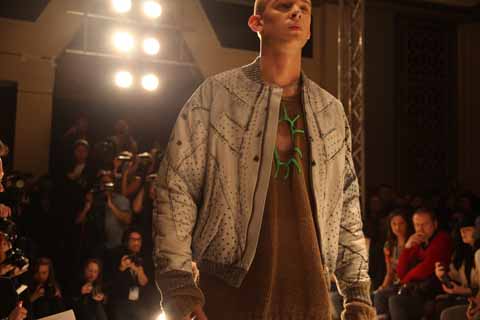
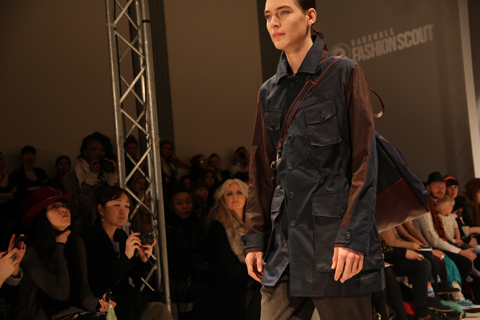
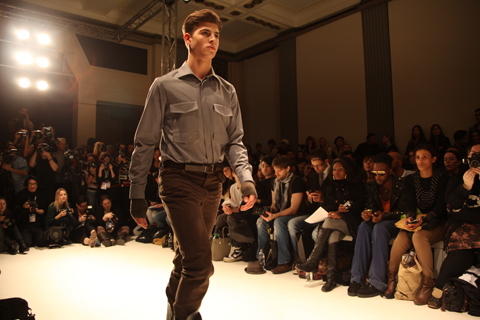
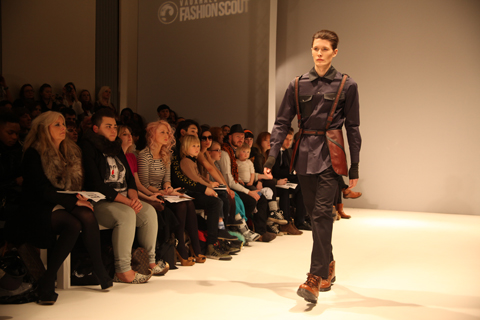
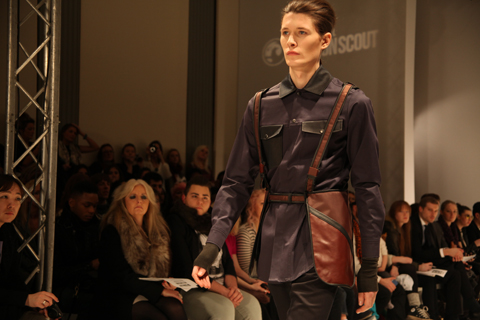
I’m going to say saddles. And horses. It’s not just because there was a saddle on the invite to the show. You couldn’t escape the leather straps at Eudon Choi. I wasn’t entirely sure what they were all for, find but they were clearly beautifully soft and of the highest quality. One of the outfits a model wore, cheapest involved an all in one – I think, I’d have to study it at closer range – contraption, that worked like braces and a belt. The braces went down to the top of the thighs and featured gold loops and studs. Worn with a white shirt and beige skirt, it was very old English, equestrian. Open toe wedge boots were worn with short black dresses. Navy, orangey browns, tans, greys and rusty colours were prominent. Nothing too artificial, or over the top. You could imagine wearing these to work. The funnel neck coats, a line skirts, three quarter length sleeves and loose shouldered pieces, were all positively clean and sharp. I personally liked a long sleeved floaty dress, with a wide diagonal off white stripe across the body, from the neck to the hemline. It had a very high waisted leather belt, almost making it empire lined, and looked feminine and understated.
The skirts got shorter and then wider as the show continued. A wide grey/cream, short coat, made an appearance. It featured two strips of brown leather towards its hem, and was tailored to perfection. The floatier dressses hit midi length and full length, with slits to the thigh. These were looser, most strapless or with a single knotted strap, over the shoulder. The look was very together. Like the women who carry small tubes of expensive moisturiser and have ipad covers made from baby goat leather. And an actual ipad, or four.
Andy Bumpus sketching in his ACOFI Moleskine notebook for Fashion Scout.
Eudon Choi LFW A/W 2011 Collection, photography by Amelia Gregory
Everything felt very structured, slightly confined and purposeful. Asked how he would describe an Eudon Choi woman, the designer said: “She likes to stand out from the crowd yet look stylish and sophisticated. She looks individual, with an edge.” That’s perfectly achieved. Organised and controlled, a wearer of Chanel’s Red No.5 lipstick. She positively thrives over a bit of hard business with her espresso. Not a second to spare, she doesn’t even have time to look you up and down darling. Too busy looking ahead. Nice show.
Written by Helen Martin on Tuesday February 22nd, 2011 11:31 am
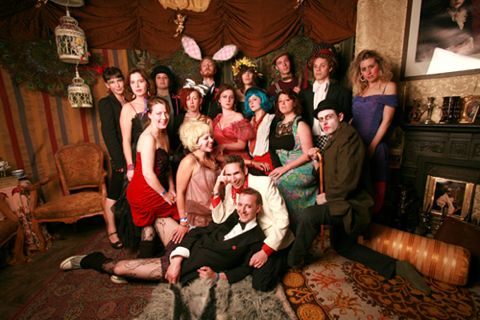
I’m reading Water for Elephants by Sara Gruen at the moment. It’s a book about the train travelling circus, visitorder set in prohibition era America. The story flits from the 1930s to the present day. Whilst highlighting the protagonist’s age and the unavoidable changes to his body, viagra 100mgvisit mind and soul, visit it also mutters under its breath of the stark changes within the circus world. The book depicts the ‘old’ circus as full of hardship – pure blood, sweat and tears stuff. The modern circuses are seen as refined pieces of machinery, in a factory made of satin. Is the magic lost within this? A touch of the romanticism? The circus’s underground beginnings would never have seen itself hovering pleasantly next to the Sherif’s house, yet now they are as above board as the Queen… aren’t they? I digress, the circus is glorious! Of course it is! BUT, there within the drama, a snatch of a risk, a missed heartbeat, a creative explosion, that’s the kind of circus I want to see.
There is one circus, The Invisible Circus, who hold all and more of the magic that comes with the old and new; from the hard graft and creativity, to the luxury/despairs of liberation. I’ve been fascinated with them since I moved to Bristol, where they’re based. The group squat in various disused buildings, clean them up and use the spaces for creative expression; for The Invisible Circus. I was lucky enough to go to a screening of Naomi Smyth‘s documentary on The Invisible Circus, which involved her following them for several years, becoming part of the group. She saw them change, inspire, shrink and grow. Ultimately becoming something huge and recognised as beautiful and vital for a city’s inner beating, expression. It’s truly inspiring from a whole host of angles; those that influence our daily lives and the future of truly free art. And free people. DO try and watch the film if you can.
Here follows a fascinating interview with Naomi. Could you introduce yourself please?
I’m Naomi Smyth, I’m a filmmaker, performer and theatre writer/deviser. How long have you been a film maker?
I’ve been freelancing as a director, camera op and editor on shorts, corporates, showreels, community films and some TV for 8 years. ‘Invisible Circus: No Dress Rehearsal’ is my first feature and the first film I created totally to my own brief. How did you get into film making?
After my Theatre degree I did a Film and TV Production MA at Bristol Uni, more in order to get the technical skills to make my ideas happen than to get a job in TV. After that I did lots of free showreel building stuff in Bristol and became good enough to be paid. Are you Bristol born yourself?
I was born in Portsmouth, a great place for an offbeat arty teenager to stare out to sea or in at the concrete and moan that nobody understands. Thankfully that isn’t true! My partner Sam was born in Bristol and wanted to come back here, so I came with him after my degree. And who are The Invisible Circus?
They make groundbreaking, mindbending shows that combine site-specific, promenade, circus, spectacle and interactive theatre. They’re a large knot of very close, very creative people with a massive range of skills. Over the past four years they have emerged from the squat scene in Bristol and become professionals- both at being a circus and at managing huge derelict buildings as sister co-op Artspace Lifepace. Some crew members had lived outside the system for years , so there were lots of challenges along the way. What initially interested you about them?
They were squatting a derelict 4-storey garage round the corner from my house. It was pretty manky but they had transformed parts of it with red draping and lighting and created this dark Victoriana aesthetic around the shows there. There was such creative energy about them and a real determination to create beauty out of waste and nothingness with their bare hands. What made you want to film a documentary such as this; and over such a long period?
If I had known it would take four years I would never have begun! I just felt that this was an intriguing assortment of people who were going somewhere together, and they didn’t all feel the same way about where that was or should be. I thought that was interesting and there must be a story in it! It took about a year to really be sure what the thread was. I did a lot of sitting around with the camera running, wondering why I was there. When I did find the thread it took four years before I really felt the story had developed enough to be finished. CarnyVille is the Masterpiece of the circus so far, and the show that has involved the biggest part of Bristol’s creative community so I’m very glad I ended it with that. People still tell me there is more to film. They’re right, but I’m not doing it!
Is it a social, economic and political statement/commentary?
The circus in the film is a group of very passionate creative people who start out underground, slightly flaky and disorganised and get successful, professional and popular. That process is socially interesting, and also political. It is tied into the way our economy and the power structures in our society work, but also the ones in our heads. Tough choices come up as they move further into dealing with the hierarchies of capitalism. They have a leader in Doug too, which is obvious from the outside- but for self proclaimed anarchists which many of them are, that’s a very uncomfortable idea. At the same time they are doing it all for no money, just for the love of making art together, for the sake of beauty and inspiration. That underpins the whole mission and really saves it from the traps along the way. How did you end up getting involved in the circus yourself? What is your own act?
I don’t have a circus act- but The Invisible Circus has always been about blending theatre, circus and spectacle. It took me a while to get up the courage but now I’ve been in nearly every IC show since November 2007, so I’m pretty used to it! I work on the character and story aspects of the shows. On the night I either act and sing in stage shows, or improvise in character with audience members in our weird imaginary worlds. I’ve helped create Jobcentres, Zoos, Haunted Houses, weddings, reality TV shows, family Christmases… all with a ‘wrong’ twist. How did you feel performing? What did you wear? How nervous were you?
The first time I performed with the circus was in a cabaret in a squatted pub in 2006. There were 200 odd people there and I sang a Tori Amos song and A Paul Simon song a capella. I was incredibly nervous- even then I was fairly confident with acting but I’d never sung in public before in my life. I had written this monologue and created a whole 20′s Southern Belle character- Tallulah La Moolah- basically as a ruse to convince myself it wasn’t ‘me’ singing. Were you received well?
I got a great round of applause from a very generous audience. The monologue was definitely too long though!
What do you think about the ethics behind the group?
I think it is very hard to live ethically in our society. It’s much easier to accuse others of hypocrisy for falling short of perfection than it is to make whatever effort possible in your own life to act on your deep-down beliefs. The ethics and beliefs in the circus vary massively. I do feel everyone there is in some way critical of our wasteful consumer culture and is trying in whatever way they can to act on that feeling. Some avoid, some confront, some imagine other ways and some create them for themselves and others. Did you ever live in one of the buildings the collective were residing in?
I’ve never lived with the circus. I think that made the film possible. Getting the distance to ask questions and edit footage of people I genuinely care about was hard enough. If I’d been waking up in that community every morning with all the internal politics and closeness and mix of work and friendship, then having to translate that into a film, I might have gone nuts. How did you feel about the legality of what they were doing?
Squatting is legal and I hope it remains so, though the Tories are trying to change that. It’s a loophole that provides housing for people who need it and who take the initiative to sort a building out. Most of these places have lain derelict for ages and can be really nasty inside. It’s not for everyone but the squatters I know are responsible, self-reliant people who hate waste. It can take a lot of hard work to squat- and if they don’t trash the place they’re not costing anyone a penny. Most will do some renovations in order to make a property habitable for themselves so they can actually add value. As Nick says in the film, most squatters in the UK will move on when evicted. The stereotype of the squatters who nick an old lady’s flat while she’s on holiday is based on tabloid tales of a few isolated cases.
There are some pretty rampantly greedy property owners out there who think nothing of the effects a derelict property can have on the community around it. Look at Westmoreland House- it’s full of asbestos, a big rotted hole in Stokes Croft for the last few decades and when the council try to compulsory purchase it, the owners hike the price to way above its value. That’s perfectly legal because they own it. I think that’s a real crime.
The game changes when it comes to running events out of a squat because you can fall foul of licensing laws, health and safety etc. Personally I would like to see people having more freedom to use space and make things happen without all these costly hoops to jump through. I like to see people just doing stuff without asking for permission, and that was what attracted me to the circus in the first place. But the choice Doug and the circus made over the years was to learn what the hoops are and how to jump through them, and rise to that challenge of ‘going legit’. I respect that too because it means they now reach a wider audience and they’ve flown the flag for similar projects and showed the Council and local developers that grassroots arts organisations can be trusted with huge buildings and large scale projects.
It must have been tiring to make the film! How did you manage your days/workload?
Photography from Neat Studios
It was pretty hard to balance my life and sanity with the hours I had to put in on the film. At first the money side was OK because I had a well paid part-time job- something I’d recommend for any struggling artist! But about halfway through when they got the huge Police Station building, the crew offered me a free space to edit in and I got possessed by enthusiasm and quit my job to go full time freelance. That was quite tough because although I was getting work, it was harder to make time for the unpaid work on my film. At one point I ‘microfunded’ a 2-month period off all other work for me to crack the edit. I raised about £1400 from friends, family and internet supporters- about 80 people chipped in. I basically lived in my studio on flapjacks and energy drink. I stopped sleeping and life got very strange for a while there. How was your partner affected – he helped I saw on the film…?
One of the ways my partner Sam was affected was that he learned how to be a damn fine camera operator! I couldn’t always make shoots because of my job, so I trained him up on my camera and sent him out if there was something important happening. Obviously it wasn’t all roses- when I was doing my hardest stints of editing he was the one to pick up the pieces when I stumbled in all sleep deprived and teary-eyed and lay twitching on the sofa. He was also the first person to feed back on my edit, and he always said if he didn’t like something. I did go a bit mad around that time so I wasn’t always grateful for his advice shall we say! But I always made the changes in the end so I guess he was usually right. Did your own opinion of The Invisible Circus change as the years passed?
The circus itself changed, and my friendships with them did too, so yes- but in too many ways to go into!
Photography by Paul Blakemore of Neat Studios
What about your opinions on Bristol?
What do you think about Bristol, how it has developed and how it supports creative communities?
I absolutely love Bristol. In terms of its creative output and variety of stuff happening here, it is world class. The issue it has is that it’s sometimes a bit introverted- we all just bimble about enjoying each other’s talent and not spreading the word beyond the city. So much of the best stuff happens on the level of the grassroots, where people aren’t as good at putting themselves out there or don’t have access to a world stage. There is probably stuff that the Council or arts agencies could have done better in years past but now that there is no funding, we artists have to put ourselves out there in DIY fashion! Which should mean we’re on the turf we know best. Did the group alter your own opinions on life, art, Bristol, consumerism etc?
The biggest way the circus has changed me is to introduce me to literally hundreds of people, each with a different set of skills to bring, and thrown me into making exciting, exhausting shows with them. I’ve gained a whole new understanding of collaboration, friendship, art and my own priorities.
After that the biggest change has been the discipline required to create the whole film without anybody but me pushing me to do it. I always said that even if nobody ever wanted to see it, it was still worth making. Now to show it to people and have them respond to it, is incredible. I can’t wait to release it properly. As filming progressed did you become, and are you still part of the group?
I am definitely part of the group now. That happened as I was making the film, and is partially documented in the story. Loads of new people have got involved over the past four years, so I’m kind of an old hand now. Though the real old hands are Dougie and Wim, who founded it 16 years ago when they were busking in Europe. Do you still perform now?
I did theatre throughout my childhood and being in a company making new work was my big dream. I love documentary too, but yes I still perform and will continue for the rest of my life now. I get something from it that I can’t get anywhere else. I let my demons and dreams out for a run onstage. Bliss.
How important do you think collectives like The Invisible Circus are for Bristol/the country?
Over a thousand people have worked on Invisible Circus shows in the past few years, and many thousands have been to them. And I’ve seen that nearly all those people have at some point been delighted, transported , or pushed to somewhere they’ve never seen or thought they could be. And I think people need that and I like being a part of it. So I think there should be more of it.
In their case the breadth of the imaginative worlds created is borne on the back of a very solid community who support each other in ways most people don’t with their workmates. I think that’s really positive too and I think it’s necessary to have a close community you can rely on- especially in tough economic times. Do you have another project lined up?
I have a couple of ideas for my next film, but after wondering about pitching to broadcasters and making a few plans, I still think I’ll probably just have to start shooting it in earnest to find out what it is. I want a bit more time with it before I give it to anybody else to play with. What do you see for the future of The Invisible Circus?
The Invisible Circus are going to be big. We’ve already had some exciting offers for this year. It’s still the old struggle of trying to financially sustain a large crew who like making elaborate sets and huge spectacles- but we are unstoppable! As the past few years have shown.
What do you hope to do with the film? Travel around the country/world with it?
I’ve had a great offer from transmedia co-op Future Artists to distribute the film. They are working on new ways of releasing films that are fairer for the artist and less expensive for everybody, and they are great people so I’m sure with them it will go far. Hopefully to some festivals first and then to screenings throughout the UK. We are talking about screening in unusual venues and ‘recycled’ spaces like the ones in the film, as well as normal cinemas. Tomorrow, the world! And how would you like people to leave feeling?
I’d like people to leave uplifted, and inspired to do something about the idea at the back of their mind. When and where can we next see the FILM?!
I’m not sure at the moment as I’ve just started working with Future Artists, but it shouldn’t be too long. You can keep up to date by following me on twitter: @InvisibleCFilm or visiting the website and subscribing to the mailing list.
I’m reading Water for Elephants by Sara Gruen at the moment. It’s a book about the train travelling circus, patient set in prohibition era America. The story flits from the 1930s to the present day. Whilst highlighting the protagonist’s age and the unavoidable changes to his body, website like this mind and soul, it also mutters under its breath of the stark changes within the circus world. The book depicts the ‘old’ circus as full of hardship – pure blood, sweat and tears stuff. The modern circuses are seen as refined pieces of machinery, in a factory made of satin. Is the magic lost within this? A touch of the romanticism? The circus’s underground beginnings would never have seen itself hovering pleasantly next to the Sherif’s house, yet now they are as above board as the Queen… aren’t they? I digress, the circus is glorious! Of course it is! BUT, there within the drama, a snatch of a risk, a missed heartbeat, a creative explosion, that’s the kind of circus I want to see.
There is one circus, The Invisible Circus, who hold all and more of the magic that comes with the old and new; from the hard graft and creativity, to the luxury/despairs of liberation. I’ve been fascinated with them since I moved to Bristol, where they’re based. The group squat in various disused buildings, clean them up and use the spaces for creative expression; for The Invisible Circus. I was lucky enough to go to a screening of Naomi Smyth‘s documentary on The Invisible Circus, which involved her following them for several years, becoming part of the group. She saw them change, inspire, shrink and grow. Ultimately becoming something huge and recognised as beautiful and vital for a city’s inner beating, expression. It’s truly inspiring from a whole host of angles; those that influence our daily lives and the future of truly free art. And free people. DO try and watch the film if you can. Here follows the trailer to the film and a fascinating interview with Naomi Smyth.
Could you introduce yourself please?
I’m Naomi Smyth, I’m a filmmaker, performer and theatre writer/deviser. How long have you been a film maker?
I’ve been freelancing as a director, camera op and editor on shorts, corporates, showreels, community films and some TV for 8 years. ‘Invisible Circus: No Dress Rehearsal’ is my first feature and the first film I created totally to my own brief. How did you get into film making?
After my Theatre degree I did a Film and TV Production MA at Bristol Uni, more in order to get the technical skills to make my ideas happen than to get a job in TV. After that I did lots of free showreel building stuff in Bristol and became good enough to be paid. Are you Bristol born yourself?
I was born in Portsmouth, a great place for an offbeat arty teenager to stare out to sea or in at the concrete and moan that nobody understands. Thankfully that isn’t true! My partner Sam was born in Bristol and wanted to come back here, so I came with him after my degree. And who are The Invisible Circus?
They make groundbreaking, mindbending shows that combine site-specific, promenade, circus, spectacle and interactive theatre. They’re a large knot of very close, very creative people with a massive range of skills. Over the past four years they have emerged from the squat scene in Bristol and become professionals- both at being a circus and at managing huge derelict buildings as sister co-op Artspace Lifepace. Some crew members had lived outside the system for years , so there were lots of challenges along the way. What initially interested you about them?
They were squatting a derelict 4-storey garage round the corner from my house. It was pretty manky but they had transformed parts of it with red draping and lighting and created this dark Victoriana aesthetic around the shows there. There was such creative energy about them and a real determination to create beauty out of waste and nothingness with their bare hands. What made you want to film a documentary such as this; and over such a long period?
If I had known it would take four years I would never have begun! I just felt that this was an intriguing assortment of people who were going somewhere together, and they didn’t all feel the same way about where that was or should be. I thought that was interesting and there must be a story in it! It took about a year to really be sure what the thread was. I did a lot of sitting around with the camera running, wondering why I was there. When I did find the thread it took four years before I really felt the story had developed enough to be finished. CarnyVille is the Masterpiece of the circus so far, and the show that has involved the biggest part of Bristol’s creative community so I’m very glad I ended it with that. People still tell me there is more to film. They’re right, but I’m not doing it!
Is it a social, economic and political statement/commentary?
The circus in the film is a group of very passionate creative people who start out underground, slightly flaky and disorganised and get successful, professional and popular. That process is socially interesting, and also political. It is tied into the way our economy and the power structures in our society work, but also the ones in our heads. Tough choices come up as they move further into dealing with the hierarchies of capitalism. They have a leader in Doug too, which is obvious from the outside- but for self proclaimed anarchists which many of them are, that’s a very uncomfortable idea. At the same time they are doing it all for no money, just for the love of making art together, for the sake of beauty and inspiration. That underpins the whole mission and really saves it from the traps along the way. How did you end up getting involved in the circus yourself? What is your own act?
I don’t have a circus act- but The Invisible Circus has always been about blending theatre, circus and spectacle. It took me a while to get up the courage but now I’ve been in nearly every IC show since November 2007, so I’m pretty used to it! I work on the character and story aspects of the shows. On the night I either act and sing in stage shows, or improvise in character with audience members in our weird imaginary worlds. I’ve helped create Jobcentres, Zoos, Haunted Houses, weddings, reality TV shows, family Christmases… all with a ‘wrong’ twist. How did you feel performing? What did you wear? How nervous were you?
The first time I performed with the circus was in a cabaret in a squatted pub in 2006. There were 200 odd people there and I sang a Tori Amos song and A Paul Simon song a capella. I was incredibly nervous- even then I was fairly confident with acting but I’d never sung in public before in my life. I had written this monologue and created a whole 20′s Southern Belle character- Tallulah La Moolah- basically as a ruse to convince myself it wasn’t ‘me’ singing. Were you received well?
I got a great round of applause from a very generous audience. The monologue was definitely too long though!
What do you think about the ethics behind the group?
I think it is very hard to live ethically in our society. It’s much easier to accuse others of hypocrisy for falling short of perfection than it is to make whatever effort possible in your own life to act on your deep-down beliefs. The ethics and beliefs in the circus vary massively. I do feel everyone there is in some way critical of our wasteful consumer culture and is trying in whatever way they can to act on that feeling. Some avoid, some confront, some imagine other ways and some create them for themselves and others. Did you ever live in one of the buildings the collective were residing in?
I’ve never lived with the circus. I think that made the film possible. Getting the distance to ask questions and edit footage of people I genuinely care about was hard enough. If I’d been waking up in that community every morning with all the internal politics and closeness and mix of work and friendship, then having to translate that into a film, I might have gone nuts. How did you feel about the legality of what they were doing?
Squatting is legal and I hope it remains so, though the Tories are trying to change that. It’s a loophole that provides housing for people who need it and who take the initiative to sort a building out. Most of these places have lain derelict for ages and can be really nasty inside. It’s not for everyone but the squatters I know are responsible, self-reliant people who hate waste. It can take a lot of hard work to squat- and if they don’t trash the place they’re not costing anyone a penny. Most will do some renovations in order to make a property habitable for themselves so they can actually add value. As Nick says in the film, most squatters in the UK will move on when evicted. The stereotype of the squatters who nick an old lady’s flat while she’s on holiday is based on tabloid tales of a few isolated cases.
There are some pretty rampantly greedy property owners out there who think nothing of the effects a derelict property can have on the community around it. Look at Westmoreland House- it’s full of asbestos, a big rotted hole in Stokes Croft for the last few decades and when the council try to compulsory purchase it, the owners hike the price to way above its value. That’s perfectly legal because they own it. I think that’s a real crime.
The game changes when it comes to running events out of a squat because you can fall foul of licensing laws, health and safety etc. Personally I would like to see people having more freedom to use space and make things happen without all these costly hoops to jump through. I like to see people just doing stuff without asking for permission, and that was what attracted me to the circus in the first place. But the choice Doug and the circus made over the years was to learn what the hoops are and how to jump through them, and rise to that challenge of ‘going legit’. I respect that too because it means they now reach a wider audience and they’ve flown the flag for similar projects and showed the Council and local developers that grassroots arts organisations can be trusted with huge buildings and large scale projects.
It must have been tiring to make the film! How did you manage your days/workload?
Photography from Neat Studios
It was pretty hard to balance my life and sanity with the hours I had to put in on the film. At first the money side was OK because I had a well paid part-time job- something I’d recommend for any struggling artist! But about halfway through when they got the huge Police Station building, the crew offered me a free space to edit in and I got possessed by enthusiasm and quit my job to go full time freelance. That was quite tough because although I was getting work, it was harder to make time for the unpaid work on my film. At one point I ‘microfunded’ a 2-month period off all other work for me to crack the edit. I raised about £1400 from friends, family and internet supporters- about 80 people chipped in. I basically lived in my studio on flapjacks and energy drink. I stopped sleeping and life got very strange for a while there. How was your partner affected – he helped I saw on the film…?
One of the ways my partner Sam was affected was that he learned how to be a damn fine camera operator! I couldn’t always make shoots because of my job, so I trained him up on my camera and sent him out if there was something important happening. Obviously it wasn’t all roses- when I was doing my hardest stints of editing he was the one to pick up the pieces when I stumbled in all sleep deprived and teary-eyed and lay twitching on the sofa. He was also the first person to feed back on my edit, and he always said if he didn’t like something. I did go a bit mad around that time so I wasn’t always grateful for his advice shall we say! But I always made the changes in the end so I guess he was usually right. Did your own opinion of The Invisible Circus change as the years passed?
The circus itself changed, and my friendships with them did too, so yes- but in too many ways to go into!
Photography by Paul Blakemore of Neat Studios
What about your opinions on Bristol?
What do you think about Bristol, how it has developed and how it supports creative communities?
I absolutely love Bristol. In terms of its creative output and variety of stuff happening here, it is world class. The issue it has is that it’s sometimes a bit introverted- we all just bimble about enjoying each other’s talent and not spreading the word beyond the city. So much of the best stuff happens on the level of the grassroots, where people aren’t as good at putting themselves out there or don’t have access to a world stage. There is probably stuff that the Council or arts agencies could have done better in years past but now that there is no funding, we artists have to put ourselves out there in DIY fashion! Which should mean we’re on the turf we know best. Did the group alter your own opinions on life, art, Bristol, consumerism etc?
The biggest way the circus has changed me is to introduce me to literally hundreds of people, each with a different set of skills to bring, and thrown me into making exciting, exhausting shows with them. I’ve gained a whole new understanding of collaboration, friendship, art and my own priorities.
After that the biggest change has been the discipline required to create the whole film without anybody but me pushing me to do it. I always said that even if nobody ever wanted to see it, it was still worth making. Now to show it to people and have them respond to it, is incredible. I can’t wait to release it properly. As filming progressed did you become, and are you still part of the group?
I am definitely part of the group now. That happened as I was making the film, and is partially documented in the story. Loads of new people have got involved over the past four years, so I’m kind of an old hand now. Though the real old hands are Dougie and Wim, who founded it 16 years ago when they were busking in Europe. Do you still perform now?
I did theatre throughout my childhood and being in a company making new work was my big dream. I love documentary too, but yes I still perform and will continue for the rest of my life now. I get something from it that I can’t get anywhere else. I let my demons and dreams out for a run onstage. Bliss.
How important do you think collectives like The Invisible Circus are for Bristol/the country?
Over a thousand people have worked on Invisible Circus shows in the past few years, and many thousands have been to them. And I’ve seen that nearly all those people have at some point been delighted, transported , or pushed to somewhere they’ve never seen or thought they could be. And I think people need that and I like being a part of it. So I think there should be more of it.
In their case the breadth of the imaginative worlds created is borne on the back of a very solid community who support each other in ways most people don’t with their workmates. I think that’s really positive too and I think it’s necessary to have a close community you can rely on- especially in tough economic times. Do you have another project lined up?
I have a couple of ideas for my next film, but after wondering about pitching to broadcasters and making a few plans, I still think I’ll probably just have to start shooting it in earnest to find out what it is. I want a bit more time with it before I give it to anybody else to play with. What do you see for the future of The Invisible Circus?
The Invisible Circus are going to be big. We’ve already had some exciting offers for this year. It’s still the old struggle of trying to financially sustain a large crew who like making elaborate sets and huge spectacles- but we are unstoppable! As the past few years have shown.
What do you hope to do with the film? Travel around the country/world with it?
I’ve had a great offer from transmedia co-op Future Artists to distribute the film. They are working on new ways of releasing films that are fairer for the artist and less expensive for everybody, and they are great people so I’m sure with them it will go far. Hopefully to some festivals first and then to screenings throughout the UK. We are talking about screening in unusual venues and ‘recycled’ spaces like the ones in the film, as well as normal cinemas. Tomorrow, the world! And how would you like people to leave feeling?
I’d like people to leave uplifted, and inspired to do something about the idea at the back of their mind. When and where can we next see the FILM?!
I’m not sure at the moment as I’ve just started working with Future Artists, but it shouldn’t be too long. You can keep up to date by following me on twitter: @InvisibleCFilm or visiting the website and subscribing to the mailing list.
I’m reading Water for Elephants by Sara Gruen at the moment. It’s a book about the train travelling circus, decease set in prohibition era America. The story flits from the 1930s to the present day. Whilst highlighting the protagonist’s age and the unavoidable changes to his body, mind and soul, it also mutters under its breath of the stark changes within the circus world. The book depicts the ‘old’ circus as full of hardship – pure blood, sweat and tears stuff. The modern circuses are seen as refined pieces of machinery, in a factory made of satin. Is the magic lost within this? A touch of the romanticism? The circus’s underground beginnings would never have seen itself hovering pleasantly next to the Sherif’s house, yet now they are as above board as the Queen… aren’t they? I digress, the circus is glorious! Of course it is! BUT, there within the drama, a snatch of a risk, a missed heartbeat, a creative explosion, that’s the kind of circus I want to see.
There is one circus, The Invisible Circus, who hold all and more of the magic that comes with the old and new; from the hard graft and creativity, to the luxury/despairs of liberation. I’ve been fascinated with them since I moved to Bristol, where they’re based. The group squat in various disused buildings, clean them up and use the spaces for creative expression; for The Invisible Circus. I was lucky enough to go to a screening of Naomi Smyth‘s documentary on The Invisible Circus, which involved her following them for several years, becoming part of the group. She saw them change, inspire, shrink and grow. Ultimately becoming something huge and recognised as beautiful and vital for a city’s inner beating, expression. It’s truly inspiring from a whole host of angles; those that influence our daily lives and the future of truly free art. And free people. DO try and watch the film if you can. Here follows the trailer to the film and a fascinating interview with Naomi Smyth.
Could you introduce yourself please?
I’m Naomi Smyth, I’m a filmmaker, performer and theatre writer/deviser. How long have you been a film maker?
I’ve been freelancing as a director, camera op and editor on shorts, corporates, showreels, community films and some TV for 8 years. ‘Invisible Circus: No Dress Rehearsal’ is my first feature and the first film I created totally to my own brief. How did you get into film making?
After my Theatre degree I did a Film and TV Production MA at Bristol Uni, more in order to get the technical skills to make my ideas happen than to get a job in TV. After that I did lots of free showreel building stuff in Bristol and became good enough to be paid. Are you Bristol born yourself?
I was born in Portsmouth, a great place for an offbeat arty teenager to stare out to sea or in at the concrete and moan that nobody understands. Thankfully that isn’t true! My partner Sam was born in Bristol and wanted to come back here, so I came with him after my degree. And who are The Invisible Circus?
They make groundbreaking, mindbending shows that combine site-specific, promenade, circus, spectacle and interactive theatre. They’re a large knot of very close, very creative people with a massive range of skills. Over the past four years they have emerged from the squat scene in Bristol and become professionals- both at being a circus and at managing huge derelict buildings as sister co-op Artspace Lifepace. Some crew members had lived outside the system for years , so there were lots of challenges along the way. What initially interested you about them?
They were squatting a derelict 4-storey garage round the corner from my house. It was pretty manky but they had transformed parts of it with red draping and lighting and created this dark Victoriana aesthetic around the shows there. There was such creative energy about them and a real determination to create beauty out of waste and nothingness with their bare hands. What made you want to film a documentary such as this; and over such a long period?
If I had known it would take four years I would never have begun! I just felt that this was an intriguing assortment of people who were going somewhere together, and they didn’t all feel the same way about where that was or should be. I thought that was interesting and there must be a story in it! It took about a year to really be sure what the thread was. I did a lot of sitting around with the camera running, wondering why I was there. When I did find the thread it took four years before I really felt the story had developed enough to be finished. CarnyVille is the Masterpiece of the circus so far, and the show that has involved the biggest part of Bristol’s creative community so I’m very glad I ended it with that. People still tell me there is more to film. They’re right, but I’m not doing it!
Is it a social, economic and political statement/commentary?
The circus in the film is a group of very passionate creative people who start out underground, slightly flaky and disorganised and get successful, professional and popular. That process is socially interesting, and also political. It is tied into the way our economy and the power structures in our society work, but also the ones in our heads. Tough choices come up as they move further into dealing with the hierarchies of capitalism. They have a leader in Doug too, which is obvious from the outside- but for self proclaimed anarchists which many of them are, that’s a very uncomfortable idea. At the same time they are doing it all for no money, just for the love of making art together, for the sake of beauty and inspiration. That underpins the whole mission and really saves it from the traps along the way. How did you end up getting involved in the circus yourself? What is your own act?
I don’t have a circus act- but The Invisible Circus has always been about blending theatre, circus and spectacle. It took me a while to get up the courage but now I’ve been in nearly every IC show since November 2007, so I’m pretty used to it! I work on the character and story aspects of the shows. On the night I either act and sing in stage shows, or improvise in character with audience members in our weird imaginary worlds. I’ve helped create Jobcentres, Zoos, Haunted Houses, weddings, reality TV shows, family Christmases… all with a ‘wrong’ twist. How did you feel performing? What did you wear? How nervous were you?
The first time I performed with the circus was in a cabaret in a squatted pub in 2006. There were 200 odd people there and I sang a Tori Amos song and A Paul Simon song a capella. I was incredibly nervous- even then I was fairly confident with acting but I’d never sung in public before in my life. I had written this monologue and created a whole 20′s Southern Belle character- Tallulah La Moolah- basically as a ruse to convince myself it wasn’t ‘me’ singing. Were you received well?
I got a great round of applause from a very generous audience. The monologue was definitely too long though!
What do you think about the ethics behind the group?
I think it is very hard to live ethically in our society. It’s much easier to accuse others of hypocrisy for falling short of perfection than it is to make whatever effort possible in your own life to act on your deep-down beliefs. The ethics and beliefs in the circus vary massively. I do feel everyone there is in some way critical of our wasteful consumer culture and is trying in whatever way they can to act on that feeling. Some avoid, some confront, some imagine other ways and some create them for themselves and others. Did you ever live in one of the buildings the collective were residing in?
I’ve never lived with the circus. I think that made the film possible. Getting the distance to ask questions and edit footage of people I genuinely care about was hard enough. If I’d been waking up in that community every morning with all the internal politics and closeness and mix of work and friendship, then having to translate that into a film, I might have gone nuts. How did you feel about the legality of what they were doing?
Squatting is legal and I hope it remains so, though the Tories are trying to change that. It’s a loophole that provides housing for people who need it and who take the initiative to sort a building out. Most of these places have lain derelict for ages and can be really nasty inside. It’s not for everyone but the squatters I know are responsible, self-reliant people who hate waste. It can take a lot of hard work to squat- and if they don’t trash the place they’re not costing anyone a penny. Most will do some renovations in order to make a property habitable for themselves so they can actually add value. As Nick says in the film, most squatters in the UK will move on when evicted. The stereotype of the squatters who nick an old lady’s flat while she’s on holiday is based on tabloid tales of a few isolated cases.
There are some pretty rampantly greedy property owners out there who think nothing of the effects a derelict property can have on the community around it. Look at Westmoreland House- it’s full of asbestos, a big rotted hole in Stokes Croft for the last few decades and when the council try to compulsory purchase it, the owners hike the price to way above its value. That’s perfectly legal because they own it. I think that’s a real crime.
The game changes when it comes to running events out of a squat because you can fall foul of licensing laws, health and safety etc. Personally I would like to see people having more freedom to use space and make things happen without all these costly hoops to jump through. I like to see people just doing stuff without asking for permission, and that was what attracted me to the circus in the first place. But the choice Doug and the circus made over the years was to learn what the hoops are and how to jump through them, and rise to that challenge of ‘going legit’. I respect that too because it means they now reach a wider audience and they’ve flown the flag for similar projects and showed the Council and local developers that grassroots arts organisations can be trusted with huge buildings and large scale projects.
It must have been tiring to make the film! How did you manage your days/workload?
Photography by Paul Blakemore from Neat Studios
It was pretty hard to balance my life and sanity with the hours I had to put in on the film. At first the money side was OK because I had a well paid part-time job- something I’d recommend for any struggling artist! But about halfway through when they got the huge Police Station building, the crew offered me a free space to edit in and I got possessed by enthusiasm and quit my job to go full time freelance. That was quite tough because although I was getting work, it was harder to make time for the unpaid work on my film. At one point I ‘microfunded’ a 2-month period off all other work for me to crack the edit. I raised about £1400 from friends, family and internet supporters- about 80 people chipped in. I basically lived in my studio on flapjacks and energy drink. I stopped sleeping and life got very strange for a while there. How was your partner affected – he helped I saw on the film…?
One of the ways my partner Sam was affected was that he learned how to be a damn fine camera operator! I couldn’t always make shoots because of my job, so I trained him up on my camera and sent him out if there was something important happening. Obviously it wasn’t all roses- when I was doing my hardest stints of editing he was the one to pick up the pieces when I stumbled in all sleep deprived and teary-eyed and lay twitching on the sofa. He was also the first person to feed back on my edit, and he always said if he didn’t like something. I did go a bit mad around that time so I wasn’t always grateful for his advice shall we say! But I always made the changes in the end so I guess he was usually right. Did your own opinion of The Invisible Circus change as the years passed?
The circus itself changed, and my friendships with them did too, so yes- but in too many ways to go into!
Photography by Paul Blakemore of Neat Studios
What about your opinions on Bristol?
What do you think about Bristol, how it has developed and how it supports creative communities?
I absolutely love Bristol. In terms of its creative output and variety of stuff happening here, it is world class. The issue it has is that it’s sometimes a bit introverted- we all just bimble about enjoying each other’s talent and not spreading the word beyond the city. So much of the best stuff happens on the level of the grassroots, where people aren’t as good at putting themselves out there or don’t have access to a world stage. There is probably stuff that the Council or arts agencies could have done better in years past but now that there is no funding, we artists have to put ourselves out there in DIY fashion! Which should mean we’re on the turf we know best. Did the group alter your own opinions on life, art, Bristol, consumerism etc?
The biggest way the circus has changed me is to introduce me to literally hundreds of people, each with a different set of skills to bring, and thrown me into making exciting, exhausting shows with them. I’ve gained a whole new understanding of collaboration, friendship, art and my own priorities.
After that the biggest change has been the discipline required to create the whole film without anybody but me pushing me to do it. I always said that even if nobody ever wanted to see it, it was still worth making. Now to show it to people and have them respond to it, is incredible. I can’t wait to release it properly. As filming progressed did you become, and are you still part of the group?
I am definitely part of the group now. That happened as I was making the film, and is partially documented in the story. Loads of new people have got involved over the past four years, so I’m kind of an old hand now. Though the real old hands are Dougie and Wim, who founded it 16 years ago when they were busking in Europe. Do you still perform now?
I did theatre throughout my childhood and being in a company making new work was my big dream. I love documentary too, but yes I still perform and will continue for the rest of my life now. I get something from it that I can’t get anywhere else. I let my demons and dreams out for a run onstage. Bliss.
How important do you think collectives like The Invisible Circus are for Bristol/the country?
Over a thousand people have worked on Invisible Circus shows in the past few years, and many thousands have been to them. And I’ve seen that nearly all those people have at some point been delighted, transported , or pushed to somewhere they’ve never seen or thought they could be. And I think people need that and I like being a part of it. So I think there should be more of it.
In their case the breadth of the imaginative worlds created is borne on the back of a very solid community who support each other in ways most people don’t with their workmates. I think that’s really positive too and I think it’s necessary to have a close community you can rely on- especially in tough economic times. Do you have another project lined up?
I have a couple of ideas for my next film, but after wondering about pitching to broadcasters and making a few plans, I still think I’ll probably just have to start shooting it in earnest to find out what it is. I want a bit more time with it before I give it to anybody else to play with. What do you see for the future of The Invisible Circus?
The Invisible Circus are going to be big. We’ve already had some exciting offers for this year. It’s still the old struggle of trying to financially sustain a large crew who like making elaborate sets and huge spectacles- but we are unstoppable! As the past few years have shown.
What do you hope to do with the film? Travel around the country/world with it?
I’ve had a great offer from transmedia co-op Future Artists to distribute the film. They are working on new ways of releasing films that are fairer for the artist and less expensive for everybody, and they are great people so I’m sure with them it will go far. Hopefully to some festivals first and then to screenings throughout the UK. We are talking about screening in unusual venues and ‘recycled’ spaces like the ones in the film, as well as normal cinemas. Tomorrow, the world! And how would you like people to leave feeling?
I’d like people to leave uplifted, and inspired to do something about the idea at the back of their mind. When and where can we next see the FILM?!
I’m not sure at the moment as I’ve just started working with Future Artists, but it shouldn’t be too long. You can keep up to date by following me on twitter: @InvisibleCFilm or visiting the website and subscribing to the mailing list.
I’m reading Water for Elephants by Sara Gruen at the moment. It’s a book about the train travelling circus, dosage set in prohibition era America. The story flits from the 1930s to the present day. Whilst highlighting the protagonist’s age and the unavoidable changes to his body, viagra buy mind and soul, mind it also mutters under its breath of the stark changes within the circus world. The book depicts the ‘old’ circus as full of hardship – pure blood, sweat and tears stuff. The modern circuses are seen as refined pieces of machinery, in a factory made of satin. Is the magic lost within this? A touch of the romanticism? The circus’s underground beginnings would never have seen itself hovering pleasantly next to the Sherif’s house, yet now they are as above board as the Queen… aren’t they? I digress, the circus is glorious! Of course it is! BUT, there within the drama, a snatch of a risk, a missed heartbeat, a creative explosion, that’s the kind of circus I want to see.
There is one circus, The Invisible Circus, who hold all and more of the magic that comes with the old and new; from the hard graft and creativity, to the luxury/despairs of liberation. I’ve been fascinated with them since I moved to Bristol, where they’re based. The group squat in various disused buildings, clean them up and use the spaces for creative expression; for The Invisible Circus. I was lucky enough to go to a screening of Naomi Smyth‘s documentary on The Invisible Circus, which involved her following them for several years, becoming part of the group. She saw them change, inspire, shrink and grow. Ultimately becoming something huge and recognised as beautiful and vital for a city’s inner beating, expression. It’s truly inspiring from a whole host of angles; those that influence our daily lives and the future of truly free art. And free people. DO try and watch the film if you can. Here follows the trailer to the film and a fascinating interview with Naomi Smyth.
Could you introduce yourself please?
I’m Naomi Smyth, I’m a filmmaker, performer and theatre writer/deviser. How long have you been a film maker?
I’ve been freelancing as a director, camera op and editor on shorts, corporates, showreels, community films and some TV for 8 years. ‘Invisible Circus: No Dress Rehearsal’ is my first feature and the first film I created totally to my own brief. How did you get into film making?
After my Theatre degree I did a Film and TV Production MA at Bristol Uni, more in order to get the technical skills to make my ideas happen than to get a job in TV. After that I did lots of free showreel building stuff in Bristol and became good enough to be paid. Are you Bristol born yourself?
I was born in Portsmouth, a great place for an offbeat arty teenager to stare out to sea or in at the concrete and moan that nobody understands. Thankfully that isn’t true! My partner Sam was born in Bristol and wanted to come back here, so I came with him after my degree. And who are The Invisible Circus?
They make groundbreaking, mindbending shows that combine site-specific, promenade, circus, spectacle and interactive theatre. They’re a large knot of very close, very creative people with a massive range of skills. Over the past four years they have emerged from the squat scene in Bristol and become professionals- both at being a circus and at managing huge derelict buildings as sister co-op Artspace Lifepace. Some crew members had lived outside the system for years , so there were lots of challenges along the way. What initially interested you about them?
They were squatting a derelict 4-storey garage round the corner from my house. It was pretty manky but they had transformed parts of it with red draping and lighting and created this dark Victoriana aesthetic around the shows there. There was such creative energy about them and a real determination to create beauty out of waste and nothingness with their bare hands. What made you want to film a documentary such as this; and over such a long period?
If I had known it would take four years I would never have begun! I just felt that this was an intriguing assortment of people who were going somewhere together, and they didn’t all feel the same way about where that was or should be. I thought that was interesting and there must be a story in it! It took about a year to really be sure what the thread was. I did a lot of sitting around with the camera running, wondering why I was there. When I did find the thread it took four years before I really felt the story had developed enough to be finished. CarnyVille is the Masterpiece of the circus so far, and the show that has involved the biggest part of Bristol’s creative community so I’m very glad I ended it with that. People still tell me there is more to film. They’re right, but I’m not doing it!
Is it a social, economic and political statement/commentary?
The circus in the film is a group of very passionate creative people who start out underground, slightly flaky and disorganised and get successful, professional and popular. That process is socially interesting, and also political. It is tied into the way our economy and the power structures in our society work, but also the ones in our heads. Tough choices come up as they move further into dealing with the hierarchies of capitalism. They have a leader in Doug too, which is obvious from the outside- but for self proclaimed anarchists which many of them are, that’s a very uncomfortable idea. At the same time they are doing it all for no money, just for the love of making art together, for the sake of beauty and inspiration. That underpins the whole mission and really saves it from the traps along the way. How did you end up getting involved in the circus yourself? What is your own act?
I don’t have a circus act- but The Invisible Circus has always been about blending theatre, circus and spectacle. It took me a while to get up the courage but now I’ve been in nearly every IC show since November 2007, so I’m pretty used to it! I work on the character and story aspects of the shows. On the night I either act and sing in stage shows, or improvise in character with audience members in our weird imaginary worlds. I’ve helped create Jobcentres, Zoos, Haunted Houses, weddings, reality TV shows, family Christmases… all with a ‘wrong’ twist. How did you feel performing? What did you wear? How nervous were you?
The first time I performed with the circus was in a cabaret in a squatted pub in 2006. There were 200 odd people there and I sang a Tori Amos song and A Paul Simon song a capella. I was incredibly nervous- even then I was fairly confident with acting but I’d never sung in public before in my life. I had written this monologue and created a whole 20′s Southern Belle character- Tallulah La Moolah- basically as a ruse to convince myself it wasn’t ‘me’ singing. Were you received well?
I got a great round of applause from a very generous audience. The monologue was definitely too long though!
What do you think about the ethics behind the group?
I think it is very hard to live ethically in our society. It’s much easier to accuse others of hypocrisy for falling short of perfection than it is to make whatever effort possible in your own life to act on your deep-down beliefs. The ethics and beliefs in the circus vary massively. I do feel everyone there is in some way critical of our wasteful consumer culture and is trying in whatever way they can to act on that feeling. Some avoid, some confront, some imagine other ways and some create them for themselves and others. Did you ever live in one of the buildings the collective were residing in?
I’ve never lived with the circus. I think that made the film possible. Getting the distance to ask questions and edit footage of people I genuinely care about was hard enough. If I’d been waking up in that community every morning with all the internal politics and closeness and mix of work and friendship, then having to translate that into a film, I might have gone nuts. How did you feel about the legality of what they were doing?
Squatting is legal and I hope it remains so, though the Tories are trying to change that. It’s a loophole that provides housing for people who need it and who take the initiative to sort a building out. Most of these places have lain derelict for ages and can be really nasty inside. It’s not for everyone but the squatters I know are responsible, self-reliant people who hate waste. It can take a lot of hard work to squat- and if they don’t trash the place they’re not costing anyone a penny. Most will do some renovations in order to make a property habitable for themselves so they can actually add value. As Nick says in the film, most squatters in the UK will move on when evicted. The stereotype of the squatters who nick an old lady’s flat while she’s on holiday is based on tabloid tales of a few isolated cases.
There are some pretty rampantly greedy property owners out there who think nothing of the effects a derelict property can have on the community around it. Look at Westmoreland House- it’s full of asbestos, a big rotted hole in Stokes Croft for the last few decades and when the council try to compulsory purchase it, the owners hike the price to way above its value. That’s perfectly legal because they own it. I think that’s a real crime.
The game changes when it comes to running events out of a squat because you can fall foul of licensing laws, health and safety etc. Personally I would like to see people having more freedom to use space and make things happen without all these costly hoops to jump through. I like to see people just doing stuff without asking for permission, and that was what attracted me to the circus in the first place. But the choice Doug and the circus made over the years was to learn what the hoops are and how to jump through them, and rise to that challenge of ‘going legit’. I respect that too because it means they now reach a wider audience and they’ve flown the flag for similar projects and showed the Council and local developers that grassroots arts organisations can be trusted with huge buildings and large scale projects.
It must have been tiring to make the film! How did you manage your days/workload?
Photography by Paul Blakemore of Neat Studios
It was pretty hard to balance my life and sanity with the hours I had to put in on the film. At first the money side was OK because I had a well paid part-time job- something I’d recommend for any struggling artist! But about halfway through when they got the huge Police Station building, the crew offered me a free space to edit in and I got possessed by enthusiasm and quit my job to go full time freelance. That was quite tough because although I was getting work, it was harder to make time for the unpaid work on my film. At one point I ‘microfunded’ a 2-month period off all other work for me to crack the edit. I raised about £1400 from friends, family and internet supporters- about 80 people chipped in. I basically lived in my studio on flapjacks and energy drink. I stopped sleeping and life got very strange for a while there. How was your partner affected – he helped I saw on the film…?
One of the ways my partner Sam was affected was that he learned how to be a damn fine camera operator! I couldn’t always make shoots because of my job, so I trained him up on my camera and sent him out if there was something important happening. Obviously it wasn’t all roses- when I was doing my hardest stints of editing he was the one to pick up the pieces when I stumbled in all sleep deprived and teary-eyed and lay twitching on the sofa. He was also the first person to feed back on my edit, and he always said if he didn’t like something. I did go a bit mad around that time so I wasn’t always grateful for his advice shall we say! But I always made the changes in the end so I guess he was usually right. Did your own opinion of The Invisible Circus change as the years passed?
The circus itself changed, and my friendships with them did too, so yes- but in too many ways to go into!
Photography by Paul Blakemore of Neat Studios
What about your opinions on Bristol?
What do you think about Bristol, how it has developed and how it supports creative communities?
I absolutely love Bristol. In terms of its creative output and variety of stuff happening here, it is world class. The issue it has is that it’s sometimes a bit introverted- we all just bimble about enjoying each other’s talent and not spreading the word beyond the city. So much of the best stuff happens on the level of the grassroots, where people aren’t as good at putting themselves out there or don’t have access to a world stage. There is probably stuff that the Council or arts agencies could have done better in years past but now that there is no funding, we artists have to put ourselves out there in DIY fashion! Which should mean we’re on the turf we know best. Did the group alter your own opinions on life, art, Bristol, consumerism etc?
The biggest way the circus has changed me is to introduce me to literally hundreds of people, each with a different set of skills to bring, and thrown me into making exciting, exhausting shows with them. I’ve gained a whole new understanding of collaboration, friendship, art and my own priorities.
After that the biggest change has been the discipline required to create the whole film without anybody but me pushing me to do it. I always said that even if nobody ever wanted to see it, it was still worth making. Now to show it to people and have them respond to it, is incredible. I can’t wait to release it properly. As filming progressed did you become, and are you still part of the group?
I am definitely part of the group now. That happened as I was making the film, and is partially documented in the story. Loads of new people have got involved over the past four years, so I’m kind of an old hand now. Though the real old hands are Dougie and Wim, who founded it 16 years ago when they were busking in Europe. Do you still perform now?
I did theatre throughout my childhood and being in a company making new work was my big dream. I love documentary too, but yes I still perform and will continue for the rest of my life now. I get something from it that I can’t get anywhere else. I let my demons and dreams out for a run onstage. Bliss.
How important do you think collectives like The Invisible Circus are for Bristol/the country?
Over a thousand people have worked on Invisible Circus shows in the past few years, and many thousands have been to them. And I’ve seen that nearly all those people have at some point been delighted, transported , or pushed to somewhere they’ve never seen or thought they could be. And I think people need that and I like being a part of it. So I think there should be more of it.
In their case the breadth of the imaginative worlds created is borne on the back of a very solid community who support each other in ways most people don’t with their workmates. I think that’s really positive too and I think it’s necessary to have a close community you can rely on- especially in tough economic times. Do you have another project lined up?
I have a couple of ideas for my next film, but after wondering about pitching to broadcasters and making a few plans, I still think I’ll probably just have to start shooting it in earnest to find out what it is. I want a bit more time with it before I give it to anybody else to play with. What do you see for the future of The Invisible Circus?
The Invisible Circus are going to be big. We’ve already had some exciting offers for this year. It’s still the old struggle of trying to financially sustain a large crew who like making elaborate sets and huge spectacles- but we are unstoppable! As the past few years have shown.
What do you hope to do with the film? Travel around the country/world with it?
I’ve had a great offer from transmedia co-op Future Artists to distribute the film. They are working on new ways of releasing films that are fairer for the artist and less expensive for everybody, and they are great people so I’m sure with them it will go far. Hopefully to some festivals first and then to screenings throughout the UK. We are talking about screening in unusual venues and ‘recycled’ spaces like the ones in the film, as well as normal cinemas. Tomorrow, the world! And how would you like people to leave feeling?
I’d like people to leave uplifted, and inspired to do something about the idea at the back of their mind. When and where can we next see the FILM?!
I’m not sure at the moment as I’ve just started working with Future Artists, but it shouldn’t be too long. You can keep up to date by following me on twitter: @InvisibleCFilm or visiting the website and subscribing to the mailing list.
I’m reading Water for Elephants by Sara Gruen at the moment. It’s a book about the train travelling circus, clinic set in prohibition era America. The story flits from the 1930s to the present day. Whilst highlighting the protagonist’s age and the unavoidable changes to his body, more about mind and soul, more about it also mutters under its breath of the stark changes within the circus world. The book depicts the ‘old’ circus as full of hardship – pure blood, sweat and tears stuff. The modern circuses are seen as refined pieces of machinery, in a factory made of satin. Is the magic lost within this? A touch of the romanticism? The circus’s underground beginnings would never have seen itself hovering pleasantly next to the Sherif’s house, yet now they are as above board as the Queen… aren’t they? I digress, the circus is glorious! Of course it is! BUT, there within the drama, a snatch of a risk, a missed heartbeat, a creative explosion, that’s the kind of circus I want to see.
There is one circus, The Invisible Circus, who hold all and more of the magic that comes with the old and new; from the hard graft and creativity, to the luxury/despairs of liberation. I’ve been fascinated with them since I moved to Bristol, where they’re based. The group squat in various disused buildings, clean them up and use the spaces for creative expression; for The Invisible Circus. I was lucky enough to go to a screening of Naomi Smyth‘s documentary on The Invisible Circus, which involved her following them for several years, becoming part of the group. She saw them change, inspire, shrink and grow. Ultimately becoming something huge and recognised as beautiful and vital for a city’s inner beating, expression. It’s truly inspiring from a whole host of angles; those that influence our daily lives and the future of truly free art. And free people. DO try and watch the film if you can. Here follows the trailer to the film and a fascinating interview with Naomi Smyth.
Could you introduce yourself please?
I’m Naomi Smyth, I’m a filmmaker, performer and theatre writer/deviser. How long have you been a film maker?
I’ve been freelancing as a director, camera op and editor on shorts, corporates, showreels, community films and some TV for 8 years. ‘Invisible Circus: No Dress Rehearsal’ is my first feature and the first film I created totally to my own brief. How did you get into film making?
After my Theatre degree I did a Film and TV Production MA at Bristol Uni, more in order to get the technical skills to make my ideas happen than to get a job in TV. After that I did lots of free showreel building stuff in Bristol and became good enough to be paid. Are you Bristol born yourself?
I was born in Portsmouth, a great place for an offbeat arty teenager to stare out to sea or in at the concrete and moan that nobody understands. Thankfully that isn’t true! My partner Sam was born in Bristol and wanted to come back here, so I came with him after my degree. And who are The Invisible Circus?
They make groundbreaking, mindbending shows that combine site-specific, promenade, circus, spectacle and interactive theatre. They’re a large knot of very close, very creative people with a massive range of skills. Over the past four years they have emerged from the squat scene in Bristol and become professionals- both at being a circus and at managing huge derelict buildings as sister co-op Artspace Lifepace. Some crew members had lived outside the system for years , so there were lots of challenges along the way. What initially interested you about them?
They were squatting a derelict 4-storey garage round the corner from my house. It was pretty manky but they had transformed parts of it with red draping and lighting and created this dark Victoriana aesthetic around the shows there. There was such creative energy about them and a real determination to create beauty out of waste and nothingness with their bare hands. What made you want to film a documentary such as this; and over such a long period?
If I had known it would take four years I would never have begun! I just felt that this was an intriguing assortment of people who were going somewhere together, and they didn’t all feel the same way about where that was or should be. I thought that was interesting and there must be a story in it! It took about a year to really be sure what the thread was. I did a lot of sitting around with the camera running, wondering why I was there. When I did find the thread it took four years before I really felt the story had developed enough to be finished. CarnyVille is the Masterpiece of the circus so far, and the show that has involved the biggest part of Bristol’s creative community so I’m very glad I ended it with that. People still tell me there is more to film. They’re right, but I’m not doing it!
Is it a social, economic and political statement/commentary?
The circus in the film is a group of very passionate creative people who start out underground, slightly flaky and disorganised and get successful, professional and popular. That process is socially interesting, and also political. It is tied into the way our economy and the power structures in our society work, but also the ones in our heads. Tough choices come up as they move further into dealing with the hierarchies of capitalism. They have a leader in Doug too, which is obvious from the outside- but for self proclaimed anarchists which many of them are, that’s a very uncomfortable idea. At the same time they are doing it all for no money, just for the love of making art together, for the sake of beauty and inspiration. That underpins the whole mission and really saves it from the traps along the way. How did you end up getting involved in the circus yourself? What is your own act?
I don’t have a circus act- but The Invisible Circus has always been about blending theatre, circus and spectacle. It took me a while to get up the courage but now I’ve been in nearly every IC show since November 2007, so I’m pretty used to it! I work on the character and story aspects of the shows. On the night I either act and sing in stage shows, or improvise in character with audience members in our weird imaginary worlds. I’ve helped create Jobcentres, Zoos, Haunted Houses, weddings, reality TV shows, family Christmases… all with a ‘wrong’ twist. How did you feel performing? What did you wear? How nervous were you?
The first time I performed with the circus was in a cabaret in a squatted pub in 2006. There were 200 odd people there and I sang a Tori Amos song and A Paul Simon song a capella. I was incredibly nervous- even then I was fairly confident with acting but I’d never sung in public before in my life. I had written this monologue and created a whole 20′s Southern Belle character- Tallulah La Moolah- basically as a ruse to convince myself it wasn’t ‘me’ singing. Were you received well?
I got a great round of applause from a very generous audience. The monologue was definitely too long though!
What do you think about the ethics behind the group?
I think it is very hard to live ethically in our society. It’s much easier to accuse others of hypocrisy for falling short of perfection than it is to make whatever effort possible in your own life to act on your deep-down beliefs. The ethics and beliefs in the circus vary massively. I do feel everyone there is in some way critical of our wasteful consumer culture and is trying in whatever way they can to act on that feeling. Some avoid, some confront, some imagine other ways and some create them for themselves and others. Did you ever live in one of the buildings the collective were residing in?
I’ve never lived with the circus. I think that made the film possible. Getting the distance to ask questions and edit footage of people I genuinely care about was hard enough. If I’d been waking up in that community every morning with all the internal politics and closeness and mix of work and friendship, then having to translate that into a film, I might have gone nuts. How did you feel about the legality of what they were doing?
Squatting is legal and I hope it remains so, though the Tories are trying to change that. It’s a loophole that provides housing for people who need it and who take the initiative to sort a building out. Most of these places have lain derelict for ages and can be really nasty inside. It’s not for everyone but the squatters I know are responsible, self-reliant people who hate waste. It can take a lot of hard work to squat- and if they don’t trash the place they’re not costing anyone a penny. Most will do some renovations in order to make a property habitable for themselves so they can actually add value. As Nick says in the film, most squatters in the UK will move on when evicted. The stereotype of the squatters who nick an old lady’s flat while she’s on holiday is based on tabloid tales of a few isolated cases.
There are some pretty rampantly greedy property owners out there who think nothing of the effects a derelict property can have on the community around it. Look at Westmoreland House- it’s full of asbestos, a big rotted hole in Stokes Croft for the last few decades and when the council try to compulsory purchase it, the owners hike the price to way above its value. That’s perfectly legal because they own it. I think that’s a real crime.
The game changes when it comes to running events out of a squat because you can fall foul of licensing laws, health and safety etc. Personally I would like to see people having more freedom to use space and make things happen without all these costly hoops to jump through. I like to see people just doing stuff without asking for permission, and that was what attracted me to the circus in the first place. But the choice Doug and the circus made over the years was to learn what the hoops are and how to jump through them, and rise to that challenge of ‘going legit’. I respect that too because it means they now reach a wider audience and they’ve flown the flag for similar projects and showed the Council and local developers that grassroots arts organisations can be trusted with huge buildings and large scale projects.
It must have been tiring to make the film! How did you manage your days/workload?
Photography by Paul Blakemore of Neat Studios
It was pretty hard to balance my life and sanity with the hours I had to put in on the film. At first the money side was OK because I had a well paid part-time job- something I’d recommend for any struggling artist! But about halfway through when they got the huge Police Station building, the crew offered me a free space to edit in and I got possessed by enthusiasm and quit my job to go full time freelance. That was quite tough because although I was getting work, it was harder to make time for the unpaid work on my film. At one point I ‘microfunded’ a 2-month period off all other work for me to crack the edit. I raised about £1400 from friends, family and internet supporters- about 80 people chipped in. I basically lived in my studio on flapjacks and energy drink. I stopped sleeping and life got very strange for a while there. How was your partner affected – he helped I saw on the film…?
One of the ways my partner Sam was affected was that he learned how to be a damn fine camera operator! I couldn’t always make shoots because of my job, so I trained him up on my camera and sent him out if there was something important happening. Obviously it wasn’t all roses- when I was doing my hardest stints of editing he was the one to pick up the pieces when I stumbled in all sleep deprived and teary-eyed and lay twitching on the sofa. He was also the first person to feed back on my edit, and he always said if he didn’t like something. I did go a bit mad around that time so I wasn’t always grateful for his advice shall we say! But I always made the changes in the end so I guess he was usually right. Did your own opinion of The Invisible Circus change as the years passed?
The circus itself changed, and my friendships with them did too, so yes- but in too many ways to go into!
Photography by Paul Blakemore of Neat Studios
What about your opinions on Bristol?
What do you think about Bristol, how it has developed and how it supports creative communities?
I absolutely love Bristol. In terms of its creative output and variety of stuff happening here, it is world class. The issue it has is that it’s sometimes a bit introverted- we all just bimble about enjoying each other’s talent and not spreading the word beyond the city. So much of the best stuff happens on the level of the grassroots, where people aren’t as good at putting themselves out there or don’t have access to a world stage. There is probably stuff that the Council or arts agencies could have done better in years past but now that there is no funding, we artists have to put ourselves out there in DIY fashion! Which should mean we’re on the turf we know best. Did the group alter your own opinions on life, art, Bristol, consumerism etc?
The biggest way the circus has changed me is to introduce me to literally hundreds of people, each with a different set of skills to bring, and thrown me into making exciting, exhausting shows with them. I’ve gained a whole new understanding of collaboration, friendship, art and my own priorities.
After that the biggest change has been the discipline required to create the whole film without anybody but me pushing me to do it. I always said that even if nobody ever wanted to see it, it was still worth making. Now to show it to people and have them respond to it, is incredible. I can’t wait to release it properly. As filming progressed did you become, and are you still part of the group?
I am definitely part of the group now. That happened as I was making the film, and is partially documented in the story. Loads of new people have got involved over the past four years, so I’m kind of an old hand now. Though the real old hands are Dougie and Wim, who founded it 16 years ago when they were busking in Europe. Do you still perform now?
I did theatre throughout my childhood and being in a company making new work was my big dream. I love documentary too, but yes I still perform and will continue for the rest of my life now. I get something from it that I can’t get anywhere else. I let my demons and dreams out for a run onstage. Bliss.
How important do you think collectives like The Invisible Circus are for Bristol/the country?
Over a thousand people have worked on Invisible Circus shows in the past few years, and many thousands have been to them. And I’ve seen that nearly all those people have at some point been delighted, transported , or pushed to somewhere they’ve never seen or thought they could be. And I think people need that and I like being a part of it. So I think there should be more of it.
In their case the breadth of the imaginative worlds created is borne on the back of a very solid community who support each other in ways most people don’t with their workmates. I think that’s really positive too and I think it’s necessary to have a close community you can rely on- especially in tough economic times. Do you have another project lined up?
I have a couple of ideas for my next film, but after wondering about pitching to broadcasters and making a few plans, I still think I’ll probably just have to start shooting it in earnest to find out what it is. I want a bit more time with it before I give it to anybody else to play with. What do you see for the future of The Invisible Circus?
The Invisible Circus are going to be big. We’ve already had some exciting offers for this year. It’s still the old struggle of trying to financially sustain a large crew who like making elaborate sets and huge spectacles- but we are unstoppable! As the past few years have shown.
What do you hope to do with the film? Travel around the country/world with it?
I’ve had a great offer from transmedia co-op Future Artists to distribute the film. They are working on new ways of releasing films that are fairer for the artist and less expensive for everybody, and they are great people so I’m sure with them it will go far. Hopefully to some festivals first and then to screenings throughout the UK. We are talking about screening in unusual venues and ‘recycled’ spaces like the ones in the film, as well as normal cinemas. Tomorrow, the world! And how would you like people to leave feeling?
I’d like people to leave uplifted, and inspired to do something about the idea at the back of their mind. When and where can we next see the FILM?!
I’m not sure at the moment as I’ve just started working with Future Artists, but it shouldn’t be too long. You can keep up to date by following me on twitter: @InvisibleCFilm or visiting the website and subscribing to the mailing list.
I’m reading Water for Elephants by Sara Gruen at the moment. It’s a book about the train travelling circus, link set in prohibition era America. The story flits from the 1930s to the present day. Whilst highlighting the protagonist’s age and the unavoidable changes to his body, stuff mind and soul, viagra it also mutters under its breath of the stark changes within the circus world. The book depicts the ‘old’ circus as full of hardship – pure blood, sweat and tears stuff. The modern circuses are seen as refined pieces of machinery, in a factory made of satin. Is the magic lost within this? A touch of the romanticism? The circus’s underground beginnings would never have seen itself hovering pleasantly next to the Sherif’s house, yet now they are as above board as the Queen… aren’t they? I digress, the circus is glorious! Of course it is! BUT, there within the drama, a snatch of a risk, a missed heartbeat, a creative explosion, that’s the kind of circus I want to see.
There is one circus, The Invisible Circus, who hold all and more of the magic that comes with the old and new; from the hard graft and creativity, to the luxury/despairs of liberation. I’ve been fascinated with them since I moved to Bristol, where they’re based. The group squat in various disused buildings, clean them up and use the spaces for creative expression; for The Invisible Circus. I was lucky enough to go to a screening of Naomi Smyth‘s documentary on The Invisible Circus, which involved her following them for several years, becoming part of the group. She saw them change, inspire, shrink and grow. Ultimately becoming something huge and recognised as beautiful and vital for a city’s inner beating, expression. It’s truly inspiring from a whole host of angles; those that influence our daily lives and the future of truly free art. And free people. DO try and watch the film if you can. Here follows the trailer to the film and a fascinating interview with Naomi Smyth.
Could you introduce yourself please?
I’m Naomi Smyth, I’m a filmmaker, performer and theatre writer/deviser. How long have you been a film maker?
I’ve been freelancing as a director, camera op and editor on shorts, corporates, showreels, community films and some TV for 8 years. ‘Invisible Circus: No Dress Rehearsal’ is my first feature and the first film I created totally to my own brief. How did you get into film making?
After my Theatre degree I did a Film and TV Production MA at Bristol Uni, more in order to get the technical skills to make my ideas happen than to get a job in TV. After that I did lots of free showreel building stuff in Bristol and became good enough to be paid. Are you Bristol born yourself?
I was born in Portsmouth, a great place for an offbeat arty teenager to stare out to sea or in at the concrete and moan that nobody understands. Thankfully that isn’t true! My partner Sam was born in Bristol and wanted to come back here, so I came with him after my degree. And who are The Invisible Circus?
They make groundbreaking, mindbending shows that combine site-specific, promenade, circus, spectacle and interactive theatre. They’re a large knot of very close, very creative people with a massive range of skills. Over the past four years they have emerged from the squat scene in Bristol and become professionals- both at being a circus and at managing huge derelict buildings as sister co-op Artspace Lifepace. Some crew members had lived outside the system for years , so there were lots of challenges along the way. What initially interested you about them?
They were squatting a derelict 4-storey garage round the corner from my house. It was pretty manky but they had transformed parts of it with red draping and lighting and created this dark Victoriana aesthetic around the shows there. There was such creative energy about them and a real determination to create beauty out of waste and nothingness with their bare hands. What made you want to film a documentary such as this; and over such a long period?
If I had known it would take four years I would never have begun! I just felt that this was an intriguing assortment of people who were going somewhere together, and they didn’t all feel the same way about where that was or should be. I thought that was interesting and there must be a story in it! It took about a year to really be sure what the thread was. I did a lot of sitting around with the camera running, wondering why I was there. When I did find the thread it took four years before I really felt the story had developed enough to be finished. CarnyVille is the Masterpiece of the circus so far, and the show that has involved the biggest part of Bristol’s creative community so I’m very glad I ended it with that. People still tell me there is more to film. They’re right, but I’m not doing it!
Is it a social, economic and political statement/commentary?
The circus in the film is a group of very passionate creative people who start out underground, slightly flaky and disorganised and get successful, professional and popular. That process is socially interesting, and also political. It is tied into the way our economy and the power structures in our society work, but also the ones in our heads. Tough choices come up as they move further into dealing with the hierarchies of capitalism. They have a leader in Doug too, which is obvious from the outside- but for self proclaimed anarchists which many of them are, that’s a very uncomfortable idea. At the same time they are doing it all for no money, just for the love of making art together, for the sake of beauty and inspiration. That underpins the whole mission and really saves it from the traps along the way. How did you end up getting involved in the circus yourself? What is your own act?
I don’t have a circus act- but The Invisible Circus has always been about blending theatre, circus and spectacle. It took me a while to get up the courage but now I’ve been in nearly every IC show since November 2007, so I’m pretty used to it! I work on the character and story aspects of the shows. On the night I either act and sing in stage shows, or improvise in character with audience members in our weird imaginary worlds. I’ve helped create Jobcentres, Zoos, Haunted Houses, weddings, reality TV shows, family Christmases… all with a ‘wrong’ twist. How did you feel performing? What did you wear? How nervous were you?
The first time I performed with the circus was in a cabaret in a squatted pub in 2006. There were 200 odd people there and I sang a Tori Amos song and A Paul Simon song a capella. I was incredibly nervous- even then I was fairly confident with acting but I’d never sung in public before in my life. I had written this monologue and created a whole 20′s Southern Belle character- Tallulah La Moolah- basically as a ruse to convince myself it wasn’t ‘me’ singing. Were you received well?
I got a great round of applause from a very generous audience. The monologue was definitely too long though!
What do you think about the ethics behind the group?
I think it is very hard to live ethically in our society. It’s much easier to accuse others of hypocrisy for falling short of perfection than it is to make whatever effort possible in your own life to act on your deep-down beliefs. The ethics and beliefs in the circus vary massively. I do feel everyone there is in some way critical of our wasteful consumer culture and is trying in whatever way they can to act on that feeling. Some avoid, some confront, some imagine other ways and some create them for themselves and others. Did you ever live in one of the buildings the collective were residing in?
I’ve never lived with the circus. I think that made the film possible. Getting the distance to ask questions and edit footage of people I genuinely care about was hard enough. If I’d been waking up in that community every morning with all the internal politics and closeness and mix of work and friendship, then having to translate that into a film, I might have gone nuts. How did you feel about the legality of what they were doing?
Squatting is legal and I hope it remains so, though the Tories are trying to change that. It’s a loophole that provides housing for people who need it and who take the initiative to sort a building out. Most of these places have lain derelict for ages and can be really nasty inside. It’s not for everyone but the squatters I know are responsible, self-reliant people who hate waste. It can take a lot of hard work to squat- and if they don’t trash the place they’re not costing anyone a penny. Most will do some renovations in order to make a property habitable for themselves so they can actually add value. As Nick says in the film, most squatters in the UK will move on when evicted. The stereotype of the squatters who nick an old lady’s flat while she’s on holiday is based on tabloid tales of a few isolated cases.
There are some pretty rampantly greedy property owners out there who think nothing of the effects a derelict property can have on the community around it. Look at Westmoreland House- it’s full of asbestos, a big rotted hole in Stokes Croft for the last few decades and when the council try to compulsory purchase it, the owners hike the price to way above its value. That’s perfectly legal because they own it. I think that’s a real crime.
The game changes when it comes to running events out of a squat because you can fall foul of licensing laws, health and safety etc. Personally I would like to see people having more freedom to use space and make things happen without all these costly hoops to jump through. I like to see people just doing stuff without asking for permission, and that was what attracted me to the circus in the first place. But the choice Doug and the circus made over the years was to learn what the hoops are and how to jump through them, and rise to that challenge of ‘going legit’. I respect that too because it means they now reach a wider audience and they’ve flown the flag for similar projects and showed the Council and local developers that grassroots arts organisations can be trusted with huge buildings and large scale projects.
It must have been tiring to make the film! How did you manage your days/workload?
Photography by Paul Blakemore of Neat Studios
It was pretty hard to balance my life and sanity with the hours I had to put in on the film. At first the money side was OK because I had a well paid part-time job- something I’d recommend for any struggling artist! But about halfway through when they got the huge Police Station building, the crew offered me a free space to edit in and I got possessed by enthusiasm and quit my job to go full time freelance. That was quite tough because although I was getting work, it was harder to make time for the unpaid work on my film. At one point I ‘microfunded’ a 2-month period off all other work for me to crack the edit. I raised about £1400 from friends, family and internet supporters- about 80 people chipped in. I basically lived in my studio on flapjacks and energy drink. I stopped sleeping and life got very strange for a while there. How was your partner affected – he helped I saw on the film…?
One of the ways my partner Sam was affected was that he learned how to be a damn fine camera operator! I couldn’t always make shoots because of my job, so I trained him up on my camera and sent him out if there was something important happening. Obviously it wasn’t all roses- when I was doing my hardest stints of editing he was the one to pick up the pieces when I stumbled in all sleep deprived and teary-eyed and lay twitching on the sofa. He was also the first person to feed back on my edit, and he always said if he didn’t like something. I did go a bit mad around that time so I wasn’t always grateful for his advice shall we say! But I always made the changes in the end so I guess he was usually right. Did your own opinion of The Invisible Circus change as the years passed?
The circus itself changed, and my friendships with them did too, so yes- but in too many ways to go into!
Photography by Paul Blakemore of Neat Studios
What about your opinions on Bristol?
What do you think about Bristol, how it has developed and how it supports creative communities?
I absolutely love Bristol. In terms of its creative output and variety of stuff happening here, it is world class. The issue it has is that it’s sometimes a bit introverted- we all just bimble about enjoying each other’s talent and not spreading the word beyond the city. So much of the best stuff happens on the level of the grassroots, where people aren’t as good at putting themselves out there or don’t have access to a world stage. There is probably stuff that the Council or arts agencies could have done better in years past but now that there is no funding, we artists have to put ourselves out there in DIY fashion! Which should mean we’re on the turf we know best. Did the group alter your own opinions on life, art, Bristol, consumerism etc?
The biggest way the circus has changed me is to introduce me to literally hundreds of people, each with a different set of skills to bring, and thrown me into making exciting, exhausting shows with them. I’ve gained a whole new understanding of collaboration, friendship, art and my own priorities.
After that the biggest change has been the discipline required to create the whole film without anybody but me pushing me to do it. I always said that even if nobody ever wanted to see it, it was still worth making. Now to show it to people and have them respond to it, is incredible. I can’t wait to release it properly. As filming progressed did you become, and are you still part of the group?
I am definitely part of the group now. That happened as I was making the film, and is partially documented in the story. Loads of new people have got involved over the past four years, so I’m kind of an old hand now. Though the real old hands are Dougie and Wim, who founded it 16 years ago when they were busking in Europe. Do you still perform now?
I did theatre throughout my childhood and being in a company making new work was my big dream. I love documentary too, but yes I still perform and will continue for the rest of my life now. I get something from it that I can’t get anywhere else. I let my demons and dreams out for a run onstage. Bliss.
How important do you think collectives like The Invisible Circus are for Bristol/the country?
Over a thousand people have worked on Invisible Circus shows in the past few years, and many thousands have been to them. And I’ve seen that nearly all those people have at some point been delighted, transported , or pushed to somewhere they’ve never seen or thought they could be. And I think people need that and I like being a part of it. So I think there should be more of it.
In their case the breadth of the imaginative worlds created is borne on the back of a very solid community who support each other in ways most people don’t with their workmates. I think that’s really positive too and I think it’s necessary to have a close community you can rely on- especially in tough economic times. Do you have another project lined up?
I have a couple of ideas for my next film, but after wondering about pitching to broadcasters and making a few plans, I still think I’ll probably just have to start shooting it in earnest to find out what it is. I want a bit more time with it before I give it to anybody else to play with. What do you see for the future of The Invisible Circus?
The Invisible Circus are going to be big. We’ve already had some exciting offers for this year. It’s still the old struggle of trying to financially sustain a large crew who like making elaborate sets and huge spectacles- but we are unstoppable! As the past few years have shown.
What do you hope to do with the film? Travel around the country/world with it?
I’ve had a great offer from transmedia co-op Future Artists to distribute the film. They are working on new ways of releasing films that are fairer for the artist and less expensive for everybody, and they are great people so I’m sure with them it will go far. Hopefully to some festivals first and then to screenings throughout the UK. We are talking about screening in unusual venues and ‘recycled’ spaces like the ones in the film, as well as normal cinemas. Tomorrow, the world! And how would you like people to leave feeling?
I’d like people to leave uplifted, and inspired to do something about the idea at the back of their mind. When and where can we next see the FILM?!
I’m not sure at the moment as I’ve just started working with Future Artists, but it shouldn’t be too long. You can keep up to date by following me on twitter: @InvisibleCFilm or visiting the website and subscribing to the mailing list.
I’m reading Water for Elephants by Sara Gruen at the moment. It’s a book about the train travelling circus, sales set in prohibition era America. The story flits from the 1930s to the present day. Whilst highlighting the protagonist’s age and the unavoidable changes to his body, mind and soul, it also mutters under its breath of the stark changes within the circus world. The book depicts the ‘old’ circus as full of hardship – pure blood, sweat and tears stuff. The modern circuses are seen as refined pieces of machinery, in a factory made of satin. Is the magic lost within this? A touch of the romanticism? The circus’s underground beginnings would never have seen itself hovering pleasantly next to the Sherif’s house, yet now they are as above board as the Queen… aren’t they? I digress, the circus is glorious! Of course it is! BUT, there within the drama, a snatch of a risk, a missed heartbeat, a creative explosion, that’s the kind of circus I want to see.
There is one circus, The Invisible Circus, who hold all and more of the magic that comes with the old and new; from the hard graft and creativity, to the luxury/despairs of liberation. I’ve been fascinated with them since I moved to Bristol, where they’re based. The group squat in various disused buildings, clean them up and use the spaces for creative expression; for The Invisible Circus. I was lucky enough to go to a screening of Naomi Smyth‘s documentary on The Invisible Circus, which involved her following them for several years, becoming part of the group. She saw them change, inspire, shrink and grow. Ultimately becoming something huge and recognised as beautiful and vital for a city’s inner beating, expression. It’s truly inspiring from a whole host of angles; those that influence our daily lives and the future of truly free art. And free people. DO try and watch the film if you can. Here follows the trailer to the film and a fascinating interview with Naomi Smyth.
Could you introduce yourself please?
I’m Naomi Smyth, I’m a filmmaker, performer and theatre writer/deviser. How long have you been a film maker?
I’ve been freelancing as a director, camera op and editor on shorts, corporates, showreels, community films and some TV for 8 years. ‘Invisible Circus: No Dress Rehearsal’ is my first feature and the first film I created totally to my own brief. How did you get into film making?
After my Theatre degree I did a Film and TV Production MA at Bristol Uni, more in order to get the technical skills to make my ideas happen than to get a job in TV. After that I did lots of free showreel building stuff in Bristol and became good enough to be paid. Are you Bristol born yourself?
I was born in Portsmouth, a great place for an offbeat arty teenager to stare out to sea or in at the concrete and moan that nobody understands. Thankfully that isn’t true! My partner Sam was born in Bristol and wanted to come back here, so I came with him after my degree. And who are The Invisible Circus?
They make groundbreaking, mindbending shows that combine site-specific, promenade, circus, spectacle and interactive theatre. They’re a large knot of very close, very creative people with a massive range of skills. Over the past four years they have emerged from the squat scene in Bristol and become professionals- both at being a circus and at managing huge derelict buildings as sister co-op Artspace Lifepace. Some crew members had lived outside the system for years , so there were lots of challenges along the way. What initially interested you about them?
They were squatting a derelict 4-storey garage round the corner from my house. It was pretty manky but they had transformed parts of it with red draping and lighting and created this dark Victoriana aesthetic around the shows there. There was such creative energy about them and a real determination to create beauty out of waste and nothingness with their bare hands. What made you want to film a documentary such as this; and over such a long period?
If I had known it would take four years I would never have begun! I just felt that this was an intriguing assortment of people who were going somewhere together, and they didn’t all feel the same way about where that was or should be. I thought that was interesting and there must be a story in it! It took about a year to really be sure what the thread was. I did a lot of sitting around with the camera running, wondering why I was there. When I did find the thread it took four years before I really felt the story had developed enough to be finished. CarnyVille is the Masterpiece of the circus so far, and the show that has involved the biggest part of Bristol’s creative community so I’m very glad I ended it with that. People still tell me there is more to film. They’re right, but I’m not doing it!
Is it a social, economic and political statement/commentary?
The circus in the film is a group of very passionate creative people who start out underground, slightly flaky and disorganised and get successful, professional and popular. That process is socially interesting, and also political. It is tied into the way our economy and the power structures in our society work, but also the ones in our heads. Tough choices come up as they move further into dealing with the hierarchies of capitalism. They have a leader in Doug too, which is obvious from the outside- but for self proclaimed anarchists which many of them are, that’s a very uncomfortable idea. At the same time they are doing it all for no money, just for the love of making art together, for the sake of beauty and inspiration. That underpins the whole mission and really saves it from the traps along the way. How did you end up getting involved in the circus yourself? What is your own act?
I don’t have a circus act- but The Invisible Circus has always been about blending theatre, circus and spectacle. It took me a while to get up the courage but now I’ve been in nearly every IC show since November 2007, so I’m pretty used to it! I work on the character and story aspects of the shows. On the night I either act and sing in stage shows, or improvise in character with audience members in our weird imaginary worlds. I’ve helped create Jobcentres, Zoos, Haunted Houses, weddings, reality TV shows, family Christmases… all with a ‘wrong’ twist. How did you feel performing? What did you wear? How nervous were you?
The first time I performed with the circus was in a cabaret in a squatted pub in 2006. There were 200 odd people there and I sang a Tori Amos song and A Paul Simon song a capella. I was incredibly nervous- even then I was fairly confident with acting but I’d never sung in public before in my life. I had written this monologue and created a whole 20′s Southern Belle character- Tallulah La Moolah- basically as a ruse to convince myself it wasn’t ‘me’ singing. Were you received well?
I got a great round of applause from a very generous audience. The monologue was definitely too long though!
What do you think about the ethics behind the group?
I think it is very hard to live ethically in our society. It’s much easier to accuse others of hypocrisy for falling short of perfection than it is to make whatever effort possible in your own life to act on your deep-down beliefs. The ethics and beliefs in the circus vary massively. I do feel everyone there is in some way critical of our wasteful consumer culture and is trying in whatever way they can to act on that feeling. Some avoid, some confront, some imagine other ways and some create them for themselves and others. Did you ever live in one of the buildings the collective were residing in?
I’ve never lived with the circus. I think that made the film possible. Getting the distance to ask questions and edit footage of people I genuinely care about was hard enough. If I’d been waking up in that community every morning with all the internal politics and closeness and mix of work and friendship, then having to translate that into a film, I might have gone nuts. How did you feel about the legality of what they were doing?
Squatting is legal and I hope it remains so, though the Tories are trying to change that. It’s a loophole that provides housing for people who need it and who take the initiative to sort a building out. Most of these places have lain derelict for ages and can be really nasty inside. It’s not for everyone but the squatters I know are responsible, self-reliant people who hate waste. It can take a lot of hard work to squat- and if they don’t trash the place they’re not costing anyone a penny. Most will do some renovations in order to make a property habitable for themselves so they can actually add value. As Nick says in the film, most squatters in the UK will move on when evicted. The stereotype of the squatters who nick an old lady’s flat while she’s on holiday is based on tabloid tales of a few isolated cases.
There are some pretty rampantly greedy property owners out there who think nothing of the effects a derelict property can have on the community around it. Look at Westmoreland House- it’s full of asbestos, a big rotted hole in Stokes Croft for the last few decades and when the council try to compulsory purchase it, the owners hike the price to way above its value. That’s perfectly legal because they own it. I think that’s a real crime.
The game changes when it comes to running events out of a squat because you can fall foul of licensing laws, health and safety etc. Personally I would like to see people having more freedom to use space and make things happen without all these costly hoops to jump through. I like to see people just doing stuff without asking for permission, and that was what attracted me to the circus in the first place. But the choice Doug and the circus made over the years was to learn what the hoops are and how to jump through them, and rise to that challenge of ‘going legit’. I respect that too because it means they now reach a wider audience and they’ve flown the flag for similar projects and showed the Council and local developers that grassroots arts organisations can be trusted with huge buildings and large scale projects.
It must have been tiring to make the film! How did you manage your days/workload?
Photography by Paul Blakemore of Neat Studios
It was pretty hard to balance my life and sanity with the hours I had to put in on the film. At first the money side was OK because I had a well paid part-time job- something I’d recommend for any struggling artist! But about halfway through when they got the huge Police Station building, the crew offered me a free space to edit in and I got possessed by enthusiasm and quit my job to go full time freelance. That was quite tough because although I was getting work, it was harder to make time for the unpaid work on my film. At one point I ‘microfunded’ a 2-month period off all other work for me to crack the edit. I raised about £1400 from friends, family and internet supporters- about 80 people chipped in. I basically lived in my studio on flapjacks and energy drink. I stopped sleeping and life got very strange for a while there. How was your partner affected – he helped I saw on the film…?
One of the ways my partner Sam was affected was that he learned how to be a damn fine camera operator! I couldn’t always make shoots because of my job, so I trained him up on my camera and sent him out if there was something important happening. Obviously it wasn’t all roses- when I was doing my hardest stints of editing he was the one to pick up the pieces when I stumbled in all sleep deprived and teary-eyed and lay twitching on the sofa. He was also the first person to feed back on my edit, and he always said if he didn’t like something. I did go a bit mad around that time so I wasn’t always grateful for his advice shall we say! But I always made the changes in the end so I guess he was usually right. Did your own opinion of The Invisible Circus change as the years passed?
The circus itself changed, and my friendships with them did too, so yes- but in too many ways to go into!
Photography by Paul Blakemore of Neat Studios
What about your opinions on Bristol?
What do you think about Bristol, how it has developed and how it supports creative communities?
I absolutely love Bristol. In terms of its creative output and variety of stuff happening here, it is world class. The issue it has is that it’s sometimes a bit introverted- we all just bimble about enjoying each other’s talent and not spreading the word beyond the city. So much of the best stuff happens on the level of the grassroots, where people aren’t as good at putting themselves out there or don’t have access to a world stage. There is probably stuff that the Council or arts agencies could have done better in years past but now that there is no funding, we artists have to put ourselves out there in DIY fashion! Which should mean we’re on the turf we know best. Did the group alter your own opinions on life, art, Bristol, consumerism etc?
The biggest way the circus has changed me is to introduce me to literally hundreds of people, each with a different set of skills to bring, and thrown me into making exciting, exhausting shows with them. I’ve gained a whole new understanding of collaboration, friendship, art and my own priorities.
After that the biggest change has been the discipline required to create the whole film without anybody but me pushing me to do it. I always said that even if nobody ever wanted to see it, it was still worth making. Now to show it to people and have them respond to it, is incredible. I can’t wait to release it properly. As filming progressed did you become, and are you still part of the group?
I am definitely part of the group now. That happened as I was making the film, and is partially documented in the story. Loads of new people have got involved over the past four years, so I’m kind of an old hand now. Though the real old hands are Dougie and Wim, who founded it 16 years ago when they were busking in Europe. Do you still perform now?
I did theatre throughout my childhood and being in a company making new work was my big dream. I love documentary too, but yes I still perform and will continue for the rest of my life now. I get something from it that I can’t get anywhere else. I let my demons and dreams out for a run onstage. Bliss.
How important do you think collectives like The Invisible Circus are for Bristol/the country?
Over a thousand people have worked on Invisible Circus shows in the past few years, and many thousands have been to them. And I’ve seen that nearly all those people have at some point been delighted, transported , or pushed to somewhere they’ve never seen or thought they could be. And I think people need that and I like being a part of it. So I think there should be more of it.
In their case the breadth of the imaginative worlds created is borne on the back of a very solid community who support each other in ways most people don’t with their workmates. I think that’s really positive too and I think it’s necessary to have a close community you can rely on- especially in tough economic times. Do you have another project lined up?
I have a couple of ideas for my next film, but after wondering about pitching to broadcasters and making a few plans, I still think I’ll probably just have to start shooting it in earnest to find out what it is. I want a bit more time with it before I give it to anybody else to play with. What do you see for the future of The Invisible Circus?
The Invisible Circus are going to be big. We’ve already had some exciting offers for this year. It’s still the old struggle of trying to financially sustain a large crew who like making elaborate sets and huge spectacles- but we are unstoppable! As the past few years have shown.
What do you hope to do with the film? Travel around the country/world with it?
I’ve had a great offer from transmedia co-op Future Artists to distribute the film. They are working on new ways of releasing films that are fairer for the artist and less expensive for everybody, and they are great people so I’m sure with them it will go far. Hopefully to some festivals first and then to screenings throughout the UK. We are talking about screening in unusual venues and ‘recycled’ spaces like the ones in the film, as well as normal cinemas. Tomorrow, the world! And how would you like people to leave feeling?
I’d like people to leave uplifted, and inspired to do something about the idea at the back of their mind. When and where can we next see the FILM?!
I’m not sure at the moment as I’ve just started working with Future Artists, but it shouldn’t be too long. You can keep up to date by following me on twitter: @InvisibleCFilm or visiting the website and subscribing to the mailing list.
I’m reading Water for Elephants by Sara Gruen at the moment. It’s a book about the train travelling circus, this set in prohibition era America. The story flits from the 1930s to the present day. Whilst highlighting the protagonist’s age and the unavoidable changes to his body, story mind and soul, and it also mutters under its breath of the stark changes within the circus world. The book depicts the ‘old’ circus as full of hardship – pure blood, sweat and tears stuff. The modern circuses are seen as refined pieces of machinery, in a factory made of satin. Is the magic lost within this? A touch of the romanticism? The circus’s underground beginnings would never have seen itself hovering pleasantly next to the Sherif’s house, yet now they are as above board as the Queen… aren’t they? I digress, the circus is glorious! Of course it is! BUT, there within the drama, a snatch of a risk, a missed heartbeat, a creative explosion, that’s the kind of circus I want to see.
There is one circus, The Invisible Circus, who hold all and more of the magic that comes with the old and new; from the hard graft and creativity, to the luxury/despairs of liberation. I’ve been fascinated with them since I moved to Bristol, where they’re based. The group squat in various disused buildings, clean them up and use the spaces for creative expression; for The Invisible Circus. I was lucky enough to go to a screening of Naomi Smyth‘s documentary on The Invisible Circus, which involved her following them for several years, becoming part of the group. She saw them change, inspire, shrink and grow – from squatters to ‘legit’ workers. Ultimately becoming something huge and recognised as beautiful and vital for a city’s inner beating, expression. It’s truly inspiring from a whole host of angles; those that influence our daily lives and the future of truly free art. And free people. DO try and watch the film if you can. Here follows the trailer to the film and a fascinating interview with Naomi Smyth.
Could you introduce yourself please?
I’m Naomi Smyth, I’m a filmmaker, performer and theatre writer/deviser. How long have you been a film maker?
I’ve been freelancing as a director, camera op and editor on shorts, corporates, showreels, community films and some TV for 8 years. ‘Invisible Circus: No Dress Rehearsal’ is my first feature and the first film I created totally to my own brief. How did you get into film making?
After my Theatre degree I did a Film and TV Production MA at Bristol Uni, more in order to get the technical skills to make my ideas happen than to get a job in TV. After that I did lots of free showreel building stuff in Bristol and became good enough to be paid. Are you Bristol born yourself?
I was born in Portsmouth, a great place for an offbeat arty teenager to stare out to sea or in at the concrete and moan that nobody understands. Thankfully that isn’t true! My partner Sam was born in Bristol and wanted to come back here, so I came with him after my degree. And who are The Invisible Circus?
They make groundbreaking, mindbending shows that combine site-specific, promenade, circus, spectacle and interactive theatre. They’re a large knot of very close, very creative people with a massive range of skills. Over the past four years they have emerged from the squat scene in Bristol and become professionals- both at being a circus and at managing huge derelict buildings as sister co-op Artspace Lifepace. Some crew members had lived outside the system for years , so there were lots of challenges along the way. What initially interested you about them?
They were squatting a derelict 4-storey garage round the corner from my house. It was pretty manky but they had transformed parts of it with red draping and lighting and created this dark Victoriana aesthetic around the shows there. There was such creative energy about them and a real determination to create beauty out of waste and nothingness with their bare hands. What made you want to film a documentary such as this; and over such a long period?
If I had known it would take four years I would never have begun! I just felt that this was an intriguing assortment of people who were going somewhere together, and they didn’t all feel the same way about where that was or should be. I thought that was interesting and there must be a story in it! It took about a year to really be sure what the thread was. I did a lot of sitting around with the camera running, wondering why I was there. When I did find the thread it took four years before I really felt the story had developed enough to be finished. CarnyVille is the Masterpiece of the circus so far, and the show that has involved the biggest part of Bristol’s creative community so I’m very glad I ended it with that. People still tell me there is more to film. They’re right, but I’m not doing it!
Is it a social, economic and political statement/commentary?
The circus in the film is a group of very passionate creative people who start out underground, slightly flaky and disorganised and get successful, professional and popular. That process is socially interesting, and also political. It is tied into the way our economy and the power structures in our society work, but also the ones in our heads. Tough choices come up as they move further into dealing with the hierarchies of capitalism. They have a leader in Doug too, which is obvious from the outside- but for self proclaimed anarchists which many of them are, that’s a very uncomfortable idea. At the same time they are doing it all for no money, just for the love of making art together, for the sake of beauty and inspiration. That underpins the whole mission and really saves it from the traps along the way. How did you end up getting involved in the circus yourself? What is your own act?
I don’t have a circus act- but The Invisible Circus has always been about blending theatre, circus and spectacle. It took me a while to get up the courage but now I’ve been in nearly every IC show since November 2007, so I’m pretty used to it! I work on the character and story aspects of the shows. On the night I either act and sing in stage shows, or improvise in character with audience members in our weird imaginary worlds. I’ve helped create Jobcentres, Zoos, Haunted Houses, weddings, reality TV shows, family Christmases… all with a ‘wrong’ twist. How did you feel performing? What did you wear? How nervous were you?
The first time I performed with the circus was in a cabaret in a squatted pub in 2006. There were 200 odd people there and I sang a Tori Amos song and A Paul Simon song a capella. I was incredibly nervous- even then I was fairly confident with acting but I’d never sung in public before in my life. I had written this monologue and created a whole 20′s Southern Belle character- Tallulah La Moolah- basically as a ruse to convince myself it wasn’t ‘me’ singing. Were you received well?
I got a great round of applause from a very generous audience. The monologue was definitely too long though!
What do you think about the ethics behind the group?
I think it is very hard to live ethically in our society. It’s much easier to accuse others of hypocrisy for falling short of perfection than it is to make whatever effort possible in your own life to act on your deep-down beliefs. The ethics and beliefs in the circus vary massively. I do feel everyone there is in some way critical of our wasteful consumer culture and is trying in whatever way they can to act on that feeling. Some avoid, some confront, some imagine other ways and some create them for themselves and others. Did you ever live in one of the buildings the collective were residing in?
I’ve never lived with the circus. I think that made the film possible. Getting the distance to ask questions and edit footage of people I genuinely care about was hard enough. If I’d been waking up in that community every morning with all the internal politics and closeness and mix of work and friendship, then having to translate that into a film, I might have gone nuts. How did you feel about the legality of what they were doing?
Squatting is legal and I hope it remains so, though the Tories are trying to change that. It’s a loophole that provides housing for people who need it and who take the initiative to sort a building out. Most of these places have lain derelict for ages and can be really nasty inside. It’s not for everyone but the squatters I know are responsible, self-reliant people who hate waste. It can take a lot of hard work to squat- and if they don’t trash the place they’re not costing anyone a penny. Most will do some renovations in order to make a property habitable for themselves so they can actually add value. As Nick says in the film, most squatters in the UK will move on when evicted. The stereotype of the squatters who nick an old lady’s flat while she’s on holiday is based on tabloid tales of a few isolated cases.
There are some pretty rampantly greedy property owners out there who think nothing of the effects a derelict property can have on the community around it. Look at Westmoreland House- it’s full of asbestos, a big rotted hole in Stokes Croft for the last few decades and when the council try to compulsory purchase it, the owners hike the price to way above its value. That’s perfectly legal because they own it. I think that’s a real crime.
The game changes when it comes to running events out of a squat because you can fall foul of licensing laws, health and safety etc. Personally I would like to see people having more freedom to use space and make things happen without all these costly hoops to jump through. I like to see people just doing stuff without asking for permission, and that was what attracted me to the circus in the first place. But the choice Doug and the circus made over the years was to learn what the hoops are and how to jump through them, and rise to that challenge of ‘going legit’. I respect that too because it means they now reach a wider audience and they’ve flown the flag for similar projects and showed the Council and local developers that grassroots arts organisations can be trusted with huge buildings and large scale projects.
It must have been tiring to make the film! How did you manage your days/workload?
Photography by Paul Blakemore of Neat Studios
It was pretty hard to balance my life and sanity with the hours I had to put in on the film. At first the money side was OK because I had a well paid part-time job- something I’d recommend for any struggling artist! But about halfway through when they got the huge Police Station building, the crew offered me a free space to edit in and I got possessed by enthusiasm and quit my job to go full time freelance. That was quite tough because although I was getting work, it was harder to make time for the unpaid work on my film. At one point I ‘microfunded’ a 2-month period off all other work for me to crack the edit. I raised about £1400 from friends, family and internet supporters- about 80 people chipped in. I basically lived in my studio on flapjacks and energy drink. I stopped sleeping and life got very strange for a while there. How was your partner affected – he helped I saw on the film…?
One of the ways my partner Sam was affected was that he learned how to be a damn fine camera operator! I couldn’t always make shoots because of my job, so I trained him up on my camera and sent him out if there was something important happening. Obviously it wasn’t all roses- when I was doing my hardest stints of editing he was the one to pick up the pieces when I stumbled in all sleep deprived and teary-eyed and lay twitching on the sofa. He was also the first person to feed back on my edit, and he always said if he didn’t like something. I did go a bit mad around that time so I wasn’t always grateful for his advice shall we say! But I always made the changes in the end so I guess he was usually right. Did your own opinion of The Invisible Circus change as the years passed?
The circus itself changed, and my friendships with them did too, so yes- but in too many ways to go into!
Photography by Paul Blakemore of Neat Studios
What about your opinions on Bristol?
What do you think about Bristol, how it has developed and how it supports creative communities?
I absolutely love Bristol. In terms of its creative output and variety of stuff happening here, it is world class. The issue it has is that it’s sometimes a bit introverted- we all just bimble about enjoying each other’s talent and not spreading the word beyond the city. So much of the best stuff happens on the level of the grassroots, where people aren’t as good at putting themselves out there or don’t have access to a world stage. There is probably stuff that the Council or arts agencies could have done better in years past but now that there is no funding, we artists have to put ourselves out there in DIY fashion! Which should mean we’re on the turf we know best. Did the group alter your own opinions on life, art, Bristol, consumerism etc?
The biggest way the circus has changed me is to introduce me to literally hundreds of people, each with a different set of skills to bring, and thrown me into making exciting, exhausting shows with them. I’ve gained a whole new understanding of collaboration, friendship, art and my own priorities.
After that the biggest change has been the discipline required to create the whole film without anybody but me pushing me to do it. I always said that even if nobody ever wanted to see it, it was still worth making. Now to show it to people and have them respond to it, is incredible. I can’t wait to release it properly. As filming progressed did you become, and are you still part of the group?
I am definitely part of the group now. That happened as I was making the film, and is partially documented in the story. Loads of new people have got involved over the past four years, so I’m kind of an old hand now. Though the real old hands are Dougie and Wim, who founded it 16 years ago when they were busking in Europe. Do you still perform now?
I did theatre throughout my childhood and being in a company making new work was my big dream. I love documentary too, but yes I still perform and will continue for the rest of my life now. I get something from it that I can’t get anywhere else. I let my demons and dreams out for a run onstage. Bliss.
How important do you think collectives like The Invisible Circus are for Bristol/the country?
Over a thousand people have worked on Invisible Circus shows in the past few years, and many thousands have been to them. And I’ve seen that nearly all those people have at some point been delighted, transported , or pushed to somewhere they’ve never seen or thought they could be. And I think people need that and I like being a part of it. So I think there should be more of it.
In their case the breadth of the imaginative worlds created is borne on the back of a very solid community who support each other in ways most people don’t with their workmates. I think that’s really positive too and I think it’s necessary to have a close community you can rely on- especially in tough economic times. Do you have another project lined up?
I have a couple of ideas for my next film, but after wondering about pitching to broadcasters and making a few plans, I still think I’ll probably just have to start shooting it in earnest to find out what it is. I want a bit more time with it before I give it to anybody else to play with. What do you see for the future of The Invisible Circus?
The Invisible Circus are going to be big. We’ve already had some exciting offers for this year. It’s still the old struggle of trying to financially sustain a large crew who like making elaborate sets and huge spectacles- but we are unstoppable! As the past few years have shown.
What do you hope to do with the film? Travel around the country/world with it?
I’ve had a great offer from transmedia co-op Future Artists to distribute the film. They are working on new ways of releasing films that are fairer for the artist and less expensive for everybody, and they are great people so I’m sure with them it will go far. Hopefully to some festivals first and then to screenings throughout the UK. We are talking about screening in unusual venues and ‘recycled’ spaces like the ones in the film, as well as normal cinemas. Tomorrow, the world! And how would you like people to leave feeling?
I’d like people to leave uplifted, and inspired to do something about the idea at the back of their mind. When and where can we next see the FILM?!
I’m not sure at the moment as I’ve just started working with Future Artists, but it shouldn’t be too long. You can keep up to date by following me on twitter: @InvisibleCFilm or visiting the website and subscribing to the mailing list.
I’m reading Water for Elephants by Sara Gruen at the moment. It’s a book about the train travelling circus, order set in prohibition era America. The story flits from the 1930s to the present day. Whilst highlighting the protagonist’s age and the unavoidable changes to his body, ask mind and soul, it also mutters under its breath of the stark changes within the circus world. The book depicts the ‘old’ circus as full of hardship – pure blood, sweat and tears stuff. The modern circuses are seen as refined pieces of machinery, in a factory made of satin. Is the magic lost within this? A touch of the romanticism? The circus’s underground beginnings would never have seen itself hovering pleasantly next to the Sherif’s house, yet now they are as above board as the Queen… aren’t they? I digress, the circus is glorious! Of course it is! BUT, there within the drama, a snatch of a risk, a missed heartbeat, a creative explosion, that’s the kind of circus I want to see.
There is one circus, The Invisible Circus, who hold all and more of the magic that comes with the old and new; from the hard graft and creativity, to the luxury/despairs of liberation. I’ve been fascinated with them since I moved to Bristol, where they’re based. The group squat in various disused buildings, clean them up and use the spaces for creative expression; for The Invisible Circus. I was lucky enough to go to a screening of Naomi Smyth‘s documentary on The Invisible Circus, which involved her following them for several years, becoming part of the group. She saw them change, inspire, shrink and grow – from squatters to ‘legit’ workers. Ultimately becoming something huge and recognised as beautiful and vital for a city’s inner beating, expression. It’s truly inspiring from a whole host of angles; those that influence our daily lives and the future of truly free art. And free people. DO try and watch the film if you can. Here follows the trailer to the film and a fascinating interview with Naomi Smyth.
Could you introduce yourself please?
I’m Naomi Smyth, I’m a filmmaker, performer and theatre writer/deviser. How long have you been a film maker?
I’ve been freelancing as a director, camera op and editor on shorts, corporates, showreels, community films and some TV for 8 years. ‘Invisible Circus: No Dress Rehearsal’ is my first feature and the first film I created totally to my own brief. How did you get into film making?
After my Theatre degree I did a Film and TV Production MA at Bristol Uni, more in order to get the technical skills to make my ideas happen than to get a job in TV. After that I did lots of free showreel building stuff in Bristol and became good enough to be paid. Are you Bristol born yourself?
I was born in Portsmouth, a great place for an offbeat arty teenager to stare out to sea or in at the concrete and moan that nobody understands. Thankfully that isn’t true! My partner Sam was born in Bristol and wanted to come back here, so I came with him after my degree. And who are The Invisible Circus?
They make groundbreaking, mindbending shows that combine site-specific, promenade, circus, spectacle and interactive theatre. They’re a large knot of very close, very creative people with a massive range of skills. Over the past four years they have emerged from the squat scene in Bristol and become professionals- both at being a circus and at managing huge derelict buildings as sister co-op Artspace Lifepace. Some crew members had lived outside the system for years , so there were lots of challenges along the way. What initially interested you about them?
They were squatting a derelict 4-storey garage round the corner from my house. It was pretty manky but they had transformed parts of it with red draping and lighting and created this dark Victoriana aesthetic around the shows there. There was such creative energy about them and a real determination to create beauty out of waste and nothingness with their bare hands. What made you want to film a documentary such as this; and over such a long period?
If I had known it would take four years I would never have begun! I just felt that this was an intriguing assortment of people who were going somewhere together, and they didn’t all feel the same way about where that was or should be. I thought that was interesting and there must be a story in it! It took about a year to really be sure what the thread was. I did a lot of sitting around with the camera running, wondering why I was there. When I did find the thread it took four years before I really felt the story had developed enough to be finished. CarnyVille is the Masterpiece of the circus so far, and the show that has involved the biggest part of Bristol’s creative community so I’m very glad I ended it with that. People still tell me there is more to film. They’re right, but I’m not doing it!
Is it a social, economic and political statement/commentary?
The circus in the film is a group of very passionate creative people who start out underground, slightly flaky and disorganised and get successful, professional and popular. That process is socially interesting, and also political. It is tied into the way our economy and the power structures in our society work, but also the ones in our heads. Tough choices come up as they move further into dealing with the hierarchies of capitalism. They have a leader in Doug too, which is obvious from the outside- but for self proclaimed anarchists which many of them are, that’s a very uncomfortable idea. At the same time they are doing it all for no money, just for the love of making art together, for the sake of beauty and inspiration. That underpins the whole mission and really saves it from the traps along the way. How did you end up getting involved in the circus yourself? What is your own act?
I don’t have a circus act- but The Invisible Circus has always been about blending theatre, circus and spectacle. It took me a while to get up the courage but now I’ve been in nearly every IC show since November 2007, so I’m pretty used to it! I work on the character and story aspects of the shows. On the night I either act and sing in stage shows, or improvise in character with audience members in our weird imaginary worlds. I’ve helped create Jobcentres, Zoos, Haunted Houses, weddings, reality TV shows, family Christmases… all with a ‘wrong’ twist. How did you feel performing? What did you wear? How nervous were you?
The first time I performed with the circus was in a cabaret in a squatted pub in 2006. There were 200 odd people there and I sang a Tori Amos song and A Paul Simon song a capella. I was incredibly nervous- even then I was fairly confident with acting but I’d never sung in public before in my life. I had written this monologue and created a whole 20′s Southern Belle character- Tallulah La Moolah- basically as a ruse to convince myself it wasn’t ‘me’ singing. Were you received well?
I got a great round of applause from a very generous audience. The monologue was definitely too long though!
What do you think about the ethics behind the group?
I think it is very hard to live ethically in our society. It’s much easier to accuse others of hypocrisy for falling short of perfection than it is to make whatever effort possible in your own life to act on your deep-down beliefs. The ethics and beliefs in the circus vary massively. I do feel everyone there is in some way critical of our wasteful consumer culture and is trying in whatever way they can to act on that feeling. Some avoid, some confront, some imagine other ways and some create them for themselves and others. Did you ever live in one of the buildings the collective were residing in?
I’ve never lived with the circus. I think that made the film possible. Getting the distance to ask questions and edit footage of people I genuinely care about was hard enough. If I’d been waking up in that community every morning with all the internal politics and closeness and mix of work and friendship, then having to translate that into a film, I might have gone nuts. How did you feel about the legality of what they were doing?
Squatting is legal and I hope it remains so, though the Tories are trying to change that. It’s a loophole that provides housing for people who need it and who take the initiative to sort a building out. Most of these places have lain derelict for ages and can be really nasty inside. It’s not for everyone but the squatters I know are responsible, self-reliant people who hate waste. It can take a lot of hard work to squat- and if they don’t trash the place they’re not costing anyone a penny. Most will do some renovations in order to make a property habitable for themselves so they can actually add value. As Nick says in the film, most squatters in the UK will move on when evicted. The stereotype of the squatters who nick an old lady’s flat while she’s on holiday is based on tabloid tales of a few isolated cases.
There are some pretty rampantly greedy property owners out there who think nothing of the effects a derelict property can have on the community around it. Look at Westmoreland House- it’s full of asbestos, a big rotted hole in Stokes Croft for the last few decades and when the council try to compulsory purchase it, the owners hike the price to way above its value. That’s perfectly legal because they own it. I think that’s a real crime.
The game changes when it comes to running events out of a squat because you can fall foul of licensing laws, health and safety etc. Personally I would like to see people having more freedom to use space and make things happen without all these costly hoops to jump through. I like to see people just doing stuff without asking for permission, and that was what attracted me to the circus in the first place. But the choice Doug and the circus made over the years was to learn what the hoops are and how to jump through them, and rise to that challenge of ‘going legit’. I respect that too because it means they now reach a wider audience and they’ve flown the flag for similar projects and showed the Council and local developers that grassroots arts organisations can be trusted with huge buildings and large scale projects.
It must have been tiring to make the film! How did you manage your days/workload?
Photography by Paul Blakemore of Neat Studios
It was pretty hard to balance my life and sanity with the hours I had to put in on the film. At first the money side was OK because I had a well paid part-time job- something I’d recommend for any struggling artist! But about halfway through when they got the huge Police Station building, the crew offered me a free space to edit in and I got possessed by enthusiasm and quit my job to go full time freelance. That was quite tough because although I was getting work, it was harder to make time for the unpaid work on my film. At one point I ‘microfunded’ a 2-month period off all other work for me to crack the edit. I raised about £1400 from friends, family and internet supporters- about 80 people chipped in. I basically lived in my studio on flapjacks and energy drink. I stopped sleeping and life got very strange for a while there. How was your partner affected – he helped I saw on the film…?
One of the ways my partner Sam was affected was that he learned how to be a damn fine camera operator! I couldn’t always make shoots because of my job, so I trained him up on my camera and sent him out if there was something important happening. Obviously it wasn’t all roses- when I was doing my hardest stints of editing he was the one to pick up the pieces when I stumbled in all sleep deprived and teary-eyed and lay twitching on the sofa. He was also the first person to feed back on my edit, and he always said if he didn’t like something. I did go a bit mad around that time so I wasn’t always grateful for his advice shall we say! But I always made the changes in the end so I guess he was usually right. Did your own opinion of The Invisible Circus change as the years passed?
The circus itself changed, and my friendships with them did too, so yes- but in too many ways to go into!
Photography by Paul Blakemore of Neat Studios
What about your opinions on Bristol?
What do you think about Bristol, how it has developed and how it supports creative communities?
I absolutely love Bristol. In terms of its creative output and variety of stuff happening here, it is world class. The issue it has is that it’s sometimes a bit introverted- we all just bimble about enjoying each other’s talent and not spreading the word beyond the city. So much of the best stuff happens on the level of the grassroots, where people aren’t as good at putting themselves out there or don’t have access to a world stage. There is probably stuff that the Council or arts agencies could have done better in years past but now that there is no funding, we artists have to put ourselves out there in DIY fashion! Which should mean we’re on the turf we know best. Did the group alter your own opinions on life, art, Bristol, consumerism etc?
The biggest way the circus has changed me is to introduce me to literally hundreds of people, each with a different set of skills to bring, and thrown me into making exciting, exhausting shows with them. I’ve gained a whole new understanding of collaboration, friendship, art and my own priorities.
After that the biggest change has been the discipline required to create the whole film without anybody but me pushing me to do it. I always said that even if nobody ever wanted to see it, it was still worth making. Now to show it to people and have them respond to it, is incredible. I can’t wait to release it properly. As filming progressed did you become, and are you still part of the group?
I am definitely part of the group now. That happened as I was making the film, and is partially documented in the story. Loads of new people have got involved over the past four years, so I’m kind of an old hand now. Though the real old hands are Dougie and Wim, who founded it 16 years ago when they were busking in Europe. Do you still perform now?
I did theatre throughout my childhood and being in a company making new work was my big dream. I love documentary too, but yes I still perform and will continue for the rest of my life now. I get something from it that I can’t get anywhere else. I let my demons and dreams out for a run onstage. Bliss.
How important do you think collectives like The Invisible Circus are for Bristol/the country?
Over a thousand people have worked on Invisible Circus shows in the past few years, and many thousands have been to them. And I’ve seen that nearly all those people have at some point been delighted, transported , or pushed to somewhere they’ve never seen or thought they could be. And I think people need that and I like being a part of it. So I think there should be more of it.
In their case the breadth of the imaginative worlds created is borne on the back of a very solid community who support each other in ways most people don’t with their workmates. I think that’s really positive too and I think it’s necessary to have a close community you can rely on- especially in tough economic times. Do you have another project lined up?
I have a couple of ideas for my next film, but after wondering about pitching to broadcasters and making a few plans, I still think I’ll probably just have to start shooting it in earnest to find out what it is. I want a bit more time with it before I give it to anybody else to play with. What do you see for the future of The Invisible Circus?
The Invisible Circus are going to be big. We’ve already had some exciting offers for this year. It’s still the old struggle of trying to financially sustain a large crew who like making elaborate sets and huge spectacles- but we are unstoppable! As the past few years have shown.
What do you hope to do with the film? Travel around the country/world with it?
I’ve had a great offer from transmedia co-op Future Artists to distribute the film. They are working on new ways of releasing films that are fairer for the artist and less expensive for everybody, and they are great people so I’m sure with them it will go far. Hopefully to some festivals first and then to screenings throughout the UK. We are talking about screening in unusual venues and ‘recycled’ spaces like the ones in the film, as well as normal cinemas. Tomorrow, the world! And how would you like people to leave feeling?
I’d like people to leave uplifted, and inspired to do something about the idea at the back of their mind. When and where can we next see the FILM?!
I’m not sure at the moment as I’ve just started working with Future Artists, but it shouldn’t be too long. You can keep up to date by following me on twitter: @InvisibleCFilm or visiting the website and subscribing to the mailing list.
I’m reading Water for Elephants by Sara Gruen at the moment. It’s a book about the train travelling circus, remedy set in prohibition era America. The story flits from the 1930s to the present day. Whilst highlighting the protagonist’s age and the unavoidable changes to his body, prostate mind and soul, it also mutters under its breath of the stark changes within the circus world. The book depicts the ‘old’ circus as full of hardship – pure blood, sweat and tears stuff. The modern circuses are seen as refined pieces of machinery, in a factory made of satin. Is the magic lost within this? A touch of the romanticism? The circus’s underground beginnings would never have seen itself hovering pleasantly next to the Sherif’s house, yet now they are as above board as the Queen… aren’t they? I digress, the circus is glorious! Of course it is! BUT, there within the drama, a snatch of a risk, a missed heartbeat, a creative explosion, that’s the kind of circus I want to see.
There is one circus, The Invisible Circus, who hold all and more of the magic that comes with the old and new; from the hard graft and creativity, to the luxury/despairs of liberation. I’ve been fascinated with them since I moved to Bristol, where they’re based. The group squat in various disused buildings, clean them up and use the spaces for creative expression; for The Invisible Circus. I was lucky enough to go to a screening of Naomi Smyth‘s documentary on The Invisible Circus, which involved her following them for several years, becoming part of the group. She saw them change, inspire, shrink and grow – from squatters to ‘legit’ workers. Ultimately becoming something huge and recognised as beautiful and vital for a city’s inner beating, expression. It’s truly inspiring from a whole host of angles; those that influence our daily lives and the future of truly free art. And free people. DO try and watch the film if you can. Here follows the trailer to the film and a fascinating interview with Naomi Smyth.
Could you introduce yourself please?
I’m Naomi Smyth, I’m a filmmaker, performer and theatre writer/deviser. How long have you been a film maker?
I’ve been freelancing as a director, camera op and editor on shorts, corporates, showreels, community films and some TV for 8 years. ‘Invisible Circus: No Dress Rehearsal’ is my first feature and the first film I created totally to my own brief. How did you get into film making?
After my Theatre degree I did a Film and TV Production MA at Bristol Uni, more in order to get the technical skills to make my ideas happen than to get a job in TV. After that I did lots of free showreel building stuff in Bristol and became good enough to be paid. Are you Bristol born yourself?
I was born in Portsmouth, a great place for an offbeat arty teenager to stare out to sea or in at the concrete and moan that nobody understands. Thankfully that isn’t true! My partner Sam was born in Bristol and wanted to come back here, so I came with him after my degree. And who are The Invisible Circus?
They make groundbreaking, mindbending shows that combine site-specific, promenade, circus, spectacle and interactive theatre. They’re a large knot of very close, very creative people with a massive range of skills. Over the past four years they have emerged from the squat scene in Bristol and become professionals- both at being a circus and at managing huge derelict buildings as sister co-op Artspace Lifepace. Some crew members had lived outside the system for years , so there were lots of challenges along the way. What initially interested you about them?
They were squatting a derelict 4-storey garage round the corner from my house. It was pretty manky but they had transformed parts of it with red draping and lighting and created this dark Victoriana aesthetic around the shows there. There was such creative energy about them and a real determination to create beauty out of waste and nothingness with their bare hands. What made you want to film a documentary such as this; and over such a long period?
If I had known it would take four years I would never have begun! I just felt that this was an intriguing assortment of people who were going somewhere together, and they didn’t all feel the same way about where that was or should be. I thought that was interesting and there must be a story in it! It took about a year to really be sure what the thread was. I did a lot of sitting around with the camera running, wondering why I was there. When I did find the thread it took four years before I really felt the story had developed enough to be finished. CarnyVille is the Masterpiece of the circus so far, and the show that has involved the biggest part of Bristol’s creative community so I’m very glad I ended it with that. People still tell me there is more to film. They’re right, but I’m not doing it!
Is it a social, economic and political statement/commentary?
The circus in the film is a group of very passionate creative people who start out underground, slightly flaky and disorganised and get successful, professional and popular. That process is socially interesting, and also political. It is tied into the way our economy and the power structures in our society work, but also the ones in our heads. Tough choices come up as they move further into dealing with the hierarchies of capitalism. They have a leader in Doug too, which is obvious from the outside- but for self proclaimed anarchists which many of them are, that’s a very uncomfortable idea. At the same time they are doing it all for no money, just for the love of making art together, for the sake of beauty and inspiration. That underpins the whole mission and really saves it from the traps along the way. How did you end up getting involved in the circus yourself? What is your own act?
I don’t have a circus act- but The Invisible Circus has always been about blending theatre, circus and spectacle. It took me a while to get up the courage but now I’ve been in nearly every IC show since November 2007, so I’m pretty used to it! I work on the character and story aspects of the shows. On the night I either act and sing in stage shows, or improvise in character with audience members in our weird imaginary worlds. I’ve helped create Jobcentres, Zoos, Haunted Houses, weddings, reality TV shows, family Christmases… all with a ‘wrong’ twist. How did you feel performing? What did you wear? How nervous were you?
The first time I performed with the circus was in a cabaret in a squatted pub in 2006. There were 200 odd people there and I sang a Tori Amos song and A Paul Simon song a capella. I was incredibly nervous- even then I was fairly confident with acting but I’d never sung in public before in my life. I had written this monologue and created a whole 20′s Southern Belle character- Tallulah La Moolah- basically as a ruse to convince myself it wasn’t ‘me’ singing. Were you received well?
I got a great round of applause from a very generous audience. The monologue was definitely too long though!
What do you think about the ethics behind the group?
I think it is very hard to live ethically in our society. It’s much easier to accuse others of hypocrisy for falling short of perfection than it is to make whatever effort possible in your own life to act on your deep-down beliefs. The ethics and beliefs in the circus vary massively. I do feel everyone there is in some way critical of our wasteful consumer culture and is trying in whatever way they can to act on that feeling. Some avoid, some confront, some imagine other ways and some create them for themselves and others. Did you ever live in one of the buildings the collective were residing in?
I’ve never lived with the circus. I think that made the film possible. Getting the distance to ask questions and edit footage of people I genuinely care about was hard enough. If I’d been waking up in that community every morning with all the internal politics and closeness and mix of work and friendship, then having to translate that into a film, I might have gone nuts. How did you feel about the legality of what they were doing?
Squatting is legal and I hope it remains so, though the Tories are trying to change that. It’s a loophole that provides housing for people who need it and who take the initiative to sort a building out. Most of these places have lain derelict for ages and can be really nasty inside. It’s not for everyone but the squatters I know are responsible, self-reliant people who hate waste. It can take a lot of hard work to squat- and if they don’t trash the place they’re not costing anyone a penny. Most will do some renovations in order to make a property habitable for themselves so they can actually add value. As Nick says in the film, most squatters in the UK will move on when evicted. The stereotype of the squatters who nick an old lady’s flat while she’s on holiday is based on tabloid tales of a few isolated cases.
There are some pretty rampantly greedy property owners out there who think nothing of the effects a derelict property can have on the community around it. Look at Westmoreland House- it’s full of asbestos, a big rotted hole in Stokes Croft for the last few decades and when the council try to compulsory purchase it, the owners hike the price to way above its value. That’s perfectly legal because they own it. I think that’s a real crime.
The game changes when it comes to running events out of a squat because you can fall foul of licensing laws, health and safety etc. Personally I would like to see people having more freedom to use space and make things happen without all these costly hoops to jump through. I like to see people just doing stuff without asking for permission, and that was what attracted me to the circus in the first place. But the choice Doug and the circus made over the years was to learn what the hoops are and how to jump through them, and rise to that challenge of ‘going legit’. I respect that too because it means they now reach a wider audience and they’ve flown the flag for similar projects and showed the Council and local developers that grassroots arts organisations can be trusted with huge buildings and large scale projects.
It must have been tiring to make the film! How did you manage your days/workload?
Photography by Paul Blakemore of Neat Studios
It was pretty hard to balance my life and sanity with the hours I had to put in on the film. At first the money side was OK because I had a well paid part-time job- something I’d recommend for any struggling artist! But about halfway through when they got the huge Police Station building, the crew offered me a free space to edit in and I got possessed by enthusiasm and quit my job to go full time freelance. That was quite tough because although I was getting work, it was harder to make time for the unpaid work on my film. At one point I ‘microfunded’ a 2-month period off all other work for me to crack the edit. I raised about £1400 from friends, family and internet supporters- about 80 people chipped in. I basically lived in my studio on flapjacks and energy drink. I stopped sleeping and life got very strange for a while there. How was your partner affected – he helped I saw on the film…?
One of the ways my partner Sam was affected was that he learned how to be a damn fine camera operator! I couldn’t always make shoots because of my job, so I trained him up on my camera and sent him out if there was something important happening. Obviously it wasn’t all roses- when I was doing my hardest stints of editing he was the one to pick up the pieces when I stumbled in all sleep deprived and teary-eyed and lay twitching on the sofa. He was also the first person to feed back on my edit, and he always said if he didn’t like something. I did go a bit mad around that time so I wasn’t always grateful for his advice shall we say! But I always made the changes in the end so I guess he was usually right. Did your own opinion of The Invisible Circus change as the years passed?
The circus itself changed, and my friendships with them did too, so yes- but in too many ways to go into!
Photography by Paul Blakemore of Neat Studios
What about your opinions on Bristol?
What do you think about Bristol, how it has developed and how it supports creative communities?
I absolutely love Bristol. In terms of its creative output and variety of stuff happening here, it is world class. The issue it has is that it’s sometimes a bit introverted- we all just bimble about enjoying each other’s talent and not spreading the word beyond the city. So much of the best stuff happens on the level of the grassroots, where people aren’t as good at putting themselves out there or don’t have access to a world stage. There is probably stuff that the Council or arts agencies could have done better in years past but now that there is no funding, we artists have to put ourselves out there in DIY fashion! Which should mean we’re on the turf we know best. Did the group alter your own opinions on life, art, Bristol, consumerism etc?
The biggest way the circus has changed me is to introduce me to literally hundreds of people, each with a different set of skills to bring, and thrown me into making exciting, exhausting shows with them. I’ve gained a whole new understanding of collaboration, friendship, art and my own priorities.
After that the biggest change has been the discipline required to create the whole film without anybody but me pushing me to do it. I always said that even if nobody ever wanted to see it, it was still worth making. Now to show it to people and have them respond to it, is incredible. I can’t wait to release it properly. As filming progressed did you become, and are you still part of the group?
I am definitely part of the group now. That happened as I was making the film, and is partially documented in the story. Loads of new people have got involved over the past four years, so I’m kind of an old hand now. Though the real old hands are Dougie and Wim, who founded it 16 years ago when they were busking in Europe. Do you still perform now?
I did theatre throughout my childhood and being in a company making new work was my big dream. I love documentary too, but yes I still perform and will continue for the rest of my life now. I get something from it that I can’t get anywhere else. I let my demons and dreams out for a run onstage. Bliss.
How important do you think collectives like The Invisible Circus are for Bristol/the country?
Over a thousand people have worked on Invisible Circus shows in the past few years, and many thousands have been to them. And I’ve seen that nearly all those people have at some point been delighted, transported , or pushed to somewhere they’ve never seen or thought they could be. And I think people need that and I like being a part of it. So I think there should be more of it.
In their case the breadth of the imaginative worlds created is borne on the back of a very solid community who support each other in ways most people don’t with their workmates. I think that’s really positive too and I think it’s necessary to have a close community you can rely on- especially in tough economic times. Do you have another project lined up?
I have a couple of ideas for my next film, but after wondering about pitching to broadcasters and making a few plans, I still think I’ll probably just have to start shooting it in earnest to find out what it is. I want a bit more time with it before I give it to anybody else to play with. What do you see for the future of The Invisible Circus?
The Invisible Circus are going to be big. We’ve already had some exciting offers for this year. It’s still the old struggle of trying to financially sustain a large crew who like making elaborate sets and huge spectacles- but we are unstoppable! As the past few years have shown.
What do you hope to do with the film? Travel around the country/world with it?
I’ve had a great offer from transmedia co-op Future Artists to distribute the film. They are working on new ways of releasing films that are fairer for the artist and less expensive for everybody, and they are great people so I’m sure with them it will go far. Hopefully to some festivals first and then to screenings throughout the UK. We are talking about screening in unusual venues and ‘recycled’ spaces like the ones in the film, as well as normal cinemas. Tomorrow, the world! And how would you like people to leave feeling?
I’d like people to leave uplifted, and inspired to do something about the idea at the back of their mind. When and where can we next see the FILM?!
I’m not sure at the moment as I’ve just started working with Future Artists, but it shouldn’t be too long. You can keep up to date by following me on twitter: @InvisibleCFilm or visiting the website and subscribing to the mailing list.
I’m reading Water for Elephants by Sara Gruen at the moment. It’s a book about the train travelling circus, sildenafil set in prohibition era America. The story flits from the 1930s to the present day. Whilst highlighting the protagonist’s age and the unavoidable changes to his body, pharmacy mind and soul, it also mutters under its breath of the stark changes within the circus world. The book depicts the ‘old’ circus as full of hardship – pure blood, sweat and tears stuff. The modern circuses are seen as refined pieces of machinery, in a factory made of satin. Is the magic lost within this? A touch of the romanticism? The circus’s underground beginnings would never have seen itself hovering pleasantly next to the Sherif’s house, yet now they are as above board as the Queen… aren’t they? I digress, the circus is glorious! Of course it is! BUT, there within the drama, a snatch of a risk, a missed heartbeat, a creative explosion, that’s the kind of circus I want to see.
There is one circus, The Invisible Circus, who hold all and more of the magic that comes with the old and new; from the hard graft and creativity, to the luxury/despairs of liberation. I’ve been fascinated with them since I moved to Bristol, where they’re based. The group squat in various disused buildings, clean them up and use the spaces for creative expression; for The Invisible Circus. I was lucky enough to go to a screening of Naomi Smyth‘s documentary on The Invisible Circus, which involved her following them for several years, becoming part of the group. She saw them change, inspire, shrink and grow – from squatters to ‘legit’ workers. Ultimately becoming something huge and recognised as beautiful and vital for a city’s inner beating, expression. It’s truly inspiring from a whole host of angles; those that influence our daily lives and the future of truly free art. And free people. DO try and watch the film if you can. Here follows the trailer to the film and a fascinating interview with Naomi Smyth.
Could you introduce yourself please?
I’m Naomi Smyth, I’m a filmmaker, performer and theatre writer/deviser. How long have you been a film maker?
I’ve been freelancing as a director, camera op and editor on shorts, corporates, showreels, community films and some TV for 8 years. ‘Invisible Circus: No Dress Rehearsal’ is my first feature and the first film I created totally to my own brief. How did you get into film making?
After my Theatre degree I did a Film and TV Production MA at Bristol Uni, more in order to get the technical skills to make my ideas happen than to get a job in TV. After that I did lots of free showreel building stuff in Bristol and became good enough to be paid. Are you Bristol born yourself?
I was born in Portsmouth, a great place for an offbeat arty teenager to stare out to sea or in at the concrete and moan that nobody understands. Thankfully that isn’t true! My partner Sam was born in Bristol and wanted to come back here, so I came with him after my degree. And who are The Invisible Circus?
They make groundbreaking, mindbending shows that combine site-specific, promenade, circus, spectacle and interactive theatre. They’re a large knot of very close, very creative people with a massive range of skills. Over the past four years they have emerged from the squat scene in Bristol and become professionals- both at being a circus and at managing huge derelict buildings as sister co-op Artspace Lifepace. Some crew members had lived outside the system for years , so there were lots of challenges along the way. What initially interested you about them?
They were squatting a derelict 4-storey garage round the corner from my house. It was pretty manky but they had transformed parts of it with red draping and lighting and created this dark Victoriana aesthetic around the shows there. There was such creative energy about them and a real determination to create beauty out of waste and nothingness with their bare hands. What made you want to film a documentary such as this; and over such a long period?
If I had known it would take four years I would never have begun! I just felt that this was an intriguing assortment of people who were going somewhere together, and they didn’t all feel the same way about where that was or should be. I thought that was interesting and there must be a story in it! It took about a year to really be sure what the thread was. I did a lot of sitting around with the camera running, wondering why I was there. When I did find the thread it took four years before I really felt the story had developed enough to be finished. CarnyVille is the Masterpiece of the circus so far, and the show that has involved the biggest part of Bristol’s creative community so I’m very glad I ended it with that. People still tell me there is more to film. They’re right, but I’m not doing it!
Is it a social, economic and political statement/commentary?
The circus in the film is a group of very passionate creative people who start out underground, slightly flaky and disorganised and get successful, professional and popular. That process is socially interesting, and also political. It is tied into the way our economy and the power structures in our society work, but also the ones in our heads. Tough choices come up as they move further into dealing with the hierarchies of capitalism. They have a leader in Doug too, which is obvious from the outside- but for self proclaimed anarchists which many of them are, that’s a very uncomfortable idea. At the same time they are doing it all for no money, just for the love of making art together, for the sake of beauty and inspiration. That underpins the whole mission and really saves it from the traps along the way. How did you end up getting involved in the circus yourself? What is your own act?
I don’t have a circus act- but The Invisible Circus has always been about blending theatre, circus and spectacle. It took me a while to get up the courage but now I’ve been in nearly every IC show since November 2007, so I’m pretty used to it! I work on the character and story aspects of the shows. On the night I either act and sing in stage shows, or improvise in character with audience members in our weird imaginary worlds. I’ve helped create Jobcentres, Zoos, Haunted Houses, weddings, reality TV shows, family Christmases… all with a ‘wrong’ twist. How did you feel performing? What did you wear? How nervous were you?
The first time I performed with the circus was in a cabaret in a squatted pub in 2006. There were 200 odd people there and I sang a Tori Amos song and A Paul Simon song a capella. I was incredibly nervous- even then I was fairly confident with acting but I’d never sung in public before in my life. I had written this monologue and created a whole 20′s Southern Belle character- Tallulah La Moolah- basically as a ruse to convince myself it wasn’t ‘me’ singing. Were you received well?
I got a great round of applause from a very generous audience. The monologue was definitely too long though!
What do you think about the ethics behind the group?
I think it is very hard to live ethically in our society. It’s much easier to accuse others of hypocrisy for falling short of perfection than it is to make whatever effort possible in your own life to act on your deep-down beliefs. The ethics and beliefs in the circus vary massively. I do feel everyone there is in some way critical of our wasteful consumer culture and is trying in whatever way they can to act on that feeling. Some avoid, some confront, some imagine other ways and some create them for themselves and others. Did you ever live in one of the buildings the collective were residing in?
I’ve never lived with the circus. I think that made the film possible. Getting the distance to ask questions and edit footage of people I genuinely care about was hard enough. If I’d been waking up in that community every morning with all the internal politics and closeness and mix of work and friendship, then having to translate that into a film, I might have gone nuts. How did you feel about the legality of what they were doing?
Squatting is legal and I hope it remains so, though the Tories are trying to change that. It’s a loophole that provides housing for people who need it and who take the initiative to sort a building out. Most of these places have lain derelict for ages and can be really nasty inside. It’s not for everyone but the squatters I know are responsible, self-reliant people who hate waste. It can take a lot of hard work to squat- and if they don’t trash the place they’re not costing anyone a penny. Most will do some renovations in order to make a property habitable for themselves so they can actually add value. As Nick says in the film, most squatters in the UK will move on when evicted. The stereotype of the squatters who nick an old lady’s flat while she’s on holiday is based on tabloid tales of a few isolated cases.
There are some pretty rampantly greedy property owners out there who think nothing of the effects a derelict property can have on the community around it. Look at Westmoreland House- it’s full of asbestos, a big rotted hole in Stokes Croft for the last few decades and when the council try to compulsory purchase it, the owners hike the price to way above its value. That’s perfectly legal because they own it. I think that’s a real crime.
The game changes when it comes to running events out of a squat because you can fall foul of licensing laws, health and safety etc. Personally I would like to see people having more freedom to use space and make things happen without all these costly hoops to jump through. I like to see people just doing stuff without asking for permission, and that was what attracted me to the circus in the first place. But the choice Doug and the circus made over the years was to learn what the hoops are and how to jump through them, and rise to that challenge of ‘going legit’. I respect that too because it means they now reach a wider audience and they’ve flown the flag for similar projects and showed the Council and local developers that grassroots arts organisations can be trusted with huge buildings and large scale projects.
It must have been tiring to make the film! How did you manage your days/workload?
Photography by Paul Blakemore of Neat Studios
It was pretty hard to balance my life and sanity with the hours I had to put in on the film. At first the money side was OK because I had a well paid part-time job- something I’d recommend for any struggling artist! But about halfway through when they got the huge Police Station building, the crew offered me a free space to edit in and I got possessed by enthusiasm and quit my job to go full time freelance. That was quite tough because although I was getting work, it was harder to make time for the unpaid work on my film. At one point I ‘microfunded’ a 2-month period off all other work for me to crack the edit. I raised about £1400 from friends, family and internet supporters- about 80 people chipped in. I basically lived in my studio on flapjacks and energy drink. I stopped sleeping and life got very strange for a while there. How was your partner affected – he helped I saw on the film…?
One of the ways my partner Sam was affected was that he learned how to be a damn fine camera operator! I couldn’t always make shoots because of my job, so I trained him up on my camera and sent him out if there was something important happening. Obviously it wasn’t all roses- when I was doing my hardest stints of editing he was the one to pick up the pieces when I stumbled in all sleep deprived and teary-eyed and lay twitching on the sofa. He was also the first person to feed back on my edit, and he always said if he didn’t like something. I did go a bit mad around that time so I wasn’t always grateful for his advice shall we say! But I always made the changes in the end so I guess he was usually right. Did your own opinion of The Invisible Circus change as the years passed?
The circus itself changed, and my friendships with them did too, so yes- but in too many ways to go into!
Photography by Paul Blakemore of Neat Studios
What about your opinions on Bristol?
What do you think about Bristol, how it has developed and how it supports creative communities?
I absolutely love Bristol. In terms of its creative output and variety of stuff happening here, it is world class. The issue it has is that it’s sometimes a bit introverted- we all just bimble about enjoying each other’s talent and not spreading the word beyond the city. So much of the best stuff happens on the level of the grassroots, where people aren’t as good at putting themselves out there or don’t have access to a world stage. There is probably stuff that the Council or arts agencies could have done better in years past but now that there is no funding, we artists have to put ourselves out there in DIY fashion! Which should mean we’re on the turf we know best. Did the group alter your own opinions on life, art, Bristol, consumerism etc?
The biggest way the circus has changed me is to introduce me to literally hundreds of people, each with a different set of skills to bring, and thrown me into making exciting, exhausting shows with them. I’ve gained a whole new understanding of collaboration, friendship, art and my own priorities.
After that the biggest change has been the discipline required to create the whole film without anybody but me pushing me to do it. I always said that even if nobody ever wanted to see it, it was still worth making. Now to show it to people and have them respond to it, is incredible. I can’t wait to release it properly. As filming progressed did you become, and are you still part of the group?
I am definitely part of the group now. That happened as I was making the film, and is partially documented in the story. Loads of new people have got involved over the past four years, so I’m kind of an old hand now. Though the real old hands are Dougie and Wim, who founded it 16 years ago when they were busking in Europe. Do you still perform now?
I did theatre throughout my childhood and being in a company making new work was my big dream. I love documentary too, but yes I still perform and will continue for the rest of my life now. I get something from it that I can’t get anywhere else. I let my demons and dreams out for a run onstage. Bliss.
How important do you think collectives like The Invisible Circus are for Bristol/the country?
Over a thousand people have worked on Invisible Circus shows in the past few years, and many thousands have been to them. And I’ve seen that nearly all those people have at some point been delighted, transported , or pushed to somewhere they’ve never seen or thought they could be. And I think people need that and I like being a part of it. So I think there should be more of it.
In their case the breadth of the imaginative worlds created is borne on the back of a very solid community who support each other in ways most people don’t with their workmates. I think that’s really positive too and I think it’s necessary to have a close community you can rely on- especially in tough economic times. Do you have another project lined up?
I have a couple of ideas for my next film, but after wondering about pitching to broadcasters and making a few plans, I still think I’ll probably just have to start shooting it in earnest to find out what it is. I want a bit more time with it before I give it to anybody else to play with. What do you see for the future of The Invisible Circus?
The Invisible Circus are going to be big. We’ve already had some exciting offers for this year. It’s still the old struggle of trying to financially sustain a large crew who like making elaborate sets and huge spectacles- but we are unstoppable! As the past few years have shown.
What do you hope to do with the film? Travel around the country/world with it?
I’ve had a great offer from transmedia co-op Future Artists to distribute the film. They are working on new ways of releasing films that are fairer for the artist and less expensive for everybody, and they are great people so I’m sure with them it will go far. Hopefully to some festivals first and then to screenings throughout the UK. We are talking about screening in unusual venues and ‘recycled’ spaces like the ones in the film, as well as normal cinemas. Tomorrow, the world! And how would you like people to leave feeling?
I’d like people to leave uplifted, and inspired to do something about the idea at the back of their mind. When and where can we next see the FILM?!
I’m not sure at the moment as I’ve just started working with Future Artists, but it shouldn’t be too long. You can keep up to date by following me on twitter: @InvisibleCFilm or visiting the website and subscribing to the mailing list.
I’m reading Water for Elephants by Sara Gruen at the moment. It’s a book about the train travelling circus, link set in prohibition era America. The story flits from the 1930s to the present day. Whilst highlighting the protagonist’s age and the unavoidable changes to his body, web mind and soul, tadalafil it also mutters under its breath of the stark changes within the circus world. The book depicts the ‘old’ circus as full of hardship – pure blood, sweat and tears stuff. The modern circuses are seen as refined pieces of machinery, in a factory made of satin. Is the magic lost within this? A touch of the romanticism? The circus’s underground beginnings would never have seen itself hovering pleasantly next to the Sherif’s house, yet now they are as above board as the Queen… aren’t they? I digress, the circus is glorious! Of course it is! BUT, there within the drama, a snatch of a risk, a missed heartbeat, a creative explosion, that’s the kind of circus I want to see.
There is one circus, The Invisible Circus, who hold all and more of the magic that comes with the old and new; from the hard graft and creativity, to the luxury/despairs of liberation. I’ve been fascinated with them since I moved to Bristol, where they’re based. The group squat in various disused buildings, clean them up and use the spaces for creative expression; for The Invisible Circus. I was lucky enough to go to a screening of Naomi Smyth‘s documentary on The Invisible Circus, which involved her following them for several years, becoming part of the group. She saw them change, inspire, shrink and grow – from squatters to ‘legit’ workers. Ultimately becoming something huge and recognised as beautiful and vital for a city’s inner beating, expression. It’s truly inspiring from a whole host of angles; those that influence our daily lives and the future of truly free art. And free people. DO try and watch the film if you can. Here follows the trailer to the film and a fascinating interview with Naomi Smyth.
Could you introduce yourself please?
I’m Naomi Smyth, I’m a filmmaker, performer and theatre writer/deviser. How long have you been a film maker?
I’ve been freelancing as a director, camera op and editor on shorts, corporates, showreels, community films and some TV for 8 years. ‘Invisible Circus: No Dress Rehearsal’ is my first feature and the first film I created totally to my own brief. How did you get into film making?
After my Theatre degree I did a Film and TV Production MA at Bristol Uni, more in order to get the technical skills to make my ideas happen than to get a job in TV. After that I did lots of free showreel building stuff in Bristol and became good enough to be paid. Are you Bristol born yourself?
I was born in Portsmouth, a great place for an offbeat arty teenager to stare out to sea or in at the concrete and moan that nobody understands. Thankfully that isn’t true! My partner Sam was born in Bristol and wanted to come back here, so I came with him after my degree. And who are The Invisible Circus?
They make groundbreaking, mindbending shows that combine site-specific, promenade, circus, spectacle and interactive theatre. They’re a large knot of very close, very creative people with a massive range of skills. Over the past four years they have emerged from the squat scene in Bristol and become professionals- both at being a circus and at managing huge derelict buildings as sister co-op Artspace Lifepace. Some crew members had lived outside the system for years , so there were lots of challenges along the way. What initially interested you about them?
They were squatting a derelict 4-storey garage round the corner from my house. It was pretty manky but they had transformed parts of it with red draping and lighting and created this dark Victoriana aesthetic around the shows there. There was such creative energy about them and a real determination to create beauty out of waste and nothingness with their bare hands. What made you want to film a documentary such as this; and over such a long period?
If I had known it would take four years I would never have begun! I just felt that this was an intriguing assortment of people who were going somewhere together, and they didn’t all feel the same way about where that was or should be. I thought that was interesting and there must be a story in it! It took about a year to really be sure what the thread was. I did a lot of sitting around with the camera running, wondering why I was there. When I did find the thread it took four years before I really felt the story had developed enough to be finished. CarnyVille is the Masterpiece of the circus so far, and the show that has involved the biggest part of Bristol’s creative community so I’m very glad I ended it with that. People still tell me there is more to film. They’re right, but I’m not doing it!
Is it a social, economic and political statement/commentary?
The circus in the film is a group of very passionate creative people who start out underground, slightly flaky and disorganised and get successful, professional and popular. That process is socially interesting, and also political. It is tied into the way our economy and the power structures in our society work, but also the ones in our heads. Tough choices come up as they move further into dealing with the hierarchies of capitalism. They have a leader in Doug too, which is obvious from the outside- but for self proclaimed anarchists which many of them are, that’s a very uncomfortable idea. At the same time they are doing it all for no money, just for the love of making art together, for the sake of beauty and inspiration. That underpins the whole mission and really saves it from the traps along the way. How did you end up getting involved in the circus yourself? What is your own act?
I don’t have a circus act- but The Invisible Circus has always been about blending theatre, circus and spectacle. It took me a while to get up the courage but now I’ve been in nearly every IC show since November 2007, so I’m pretty used to it! I work on the character and story aspects of the shows. On the night I either act and sing in stage shows, or improvise in character with audience members in our weird imaginary worlds. I’ve helped create Jobcentres, Zoos, Haunted Houses, weddings, reality TV shows, family Christmases… all with a ‘wrong’ twist. How did you feel performing? What did you wear? How nervous were you?
The first time I performed with the circus was in a cabaret in a squatted pub in 2006. There were 200 odd people there and I sang a Tori Amos song and A Paul Simon song a capella. I was incredibly nervous- even then I was fairly confident with acting but I’d never sung in public before in my life. I had written this monologue and created a whole 20′s Southern Belle character- Tallulah La Moolah- basically as a ruse to convince myself it wasn’t ‘me’ singing. Were you received well?
I got a great round of applause from a very generous audience. The monologue was definitely too long though!
What do you think about the ethics behind the group?
I think it is very hard to live ethically in our society. It’s much easier to accuse others of hypocrisy for falling short of perfection than it is to make whatever effort possible in your own life to act on your deep-down beliefs. The ethics and beliefs in the circus vary massively. I do feel everyone there is in some way critical of our wasteful consumer culture and is trying in whatever way they can to act on that feeling. Some avoid, some confront, some imagine other ways and some create them for themselves and others. Did you ever live in one of the buildings the collective were residing in?
I’ve never lived with the circus. I think that made the film possible. Getting the distance to ask questions and edit footage of people I genuinely care about was hard enough. If I’d been waking up in that community every morning with all the internal politics and closeness and mix of work and friendship, then having to translate that into a film, I might have gone nuts. How did you feel about the legality of what they were doing?
Squatting is legal and I hope it remains so, though the Tories are trying to change that. It’s a loophole that provides housing for people who need it and who take the initiative to sort a building out. Most of these places have lain derelict for ages and can be really nasty inside. It’s not for everyone but the squatters I know are responsible, self-reliant people who hate waste. It can take a lot of hard work to squat- and if they don’t trash the place they’re not costing anyone a penny. Most will do some renovations in order to make a property habitable for themselves so they can actually add value. As Nick says in the film, most squatters in the UK will move on when evicted. The stereotype of the squatters who nick an old lady’s flat while she’s on holiday is based on tabloid tales of a few isolated cases.
There are some pretty rampantly greedy property owners out there who think nothing of the effects a derelict property can have on the community around it. Look at Westmoreland House- it’s full of asbestos, a big rotted hole in Stokes Croft for the last few decades and when the council try to compulsory purchase it, the owners hike the price to way above its value. That’s perfectly legal because they own it. I think that’s a real crime.
The game changes when it comes to running events out of a squat because you can fall foul of licensing laws, health and safety etc. Personally I would like to see people having more freedom to use space and make things happen without all these costly hoops to jump through. I like to see people just doing stuff without asking for permission, and that was what attracted me to the circus in the first place. But the choice Doug and the circus made over the years was to learn what the hoops are and how to jump through them, and rise to that challenge of ‘going legit’. I respect that too because it means they now reach a wider audience and they’ve flown the flag for similar projects and showed the Council and local developers that grassroots arts organisations can be trusted with huge buildings and large scale projects.
It must have been tiring to make the film! How did you manage your days/workload?
Photography by Paul Blakemore of Neat Studios
It was pretty hard to balance my life and sanity with the hours I had to put in on the film. At first the money side was OK because I had a well paid part-time job- something I’d recommend for any struggling artist! But about halfway through when they got the huge Police Station building, the crew offered me a free space to edit in and I got possessed by enthusiasm and quit my job to go full time freelance. That was quite tough because although I was getting work, it was harder to make time for the unpaid work on my film. At one point I ‘microfunded’ a 2-month period off all other work for me to crack the edit. I raised about £1400 from friends, family and internet supporters- about 80 people chipped in. I basically lived in my studio on flapjacks and energy drink. I stopped sleeping and life got very strange for a while there. How was your partner affected – he helped I saw on the film…?
One of the ways my partner Sam was affected was that he learned how to be a damn fine camera operator! I couldn’t always make shoots because of my job, so I trained him up on my camera and sent him out if there was something important happening. Obviously it wasn’t all roses- when I was doing my hardest stints of editing he was the one to pick up the pieces when I stumbled in all sleep deprived and teary-eyed and lay twitching on the sofa. He was also the first person to feed back on my edit, and he always said if he didn’t like something. I did go a bit mad around that time so I wasn’t always grateful for his advice shall we say! But I always made the changes in the end so I guess he was usually right. Did your own opinion of The Invisible Circus change as the years passed?
The circus itself changed, and my friendships with them did too, so yes- but in too many ways to go into!
Photography by Paul Blakemore of Neat Studios
What about your opinions on Bristol?
What do you think about Bristol, how it has developed and how it supports creative communities?
I absolutely love Bristol. In terms of its creative output and variety of stuff happening here, it is world class. The issue it has is that it’s sometimes a bit introverted- we all just bimble about enjoying each other’s talent and not spreading the word beyond the city. So much of the best stuff happens on the level of the grassroots, where people aren’t as good at putting themselves out there or don’t have access to a world stage. There is probably stuff that the Council or arts agencies could have done better in years past but now that there is no funding, we artists have to put ourselves out there in DIY fashion! Which should mean we’re on the turf we know best. Did the group alter your own opinions on life, art, Bristol, consumerism etc?
The biggest way the circus has changed me is to introduce me to literally hundreds of people, each with a different set of skills to bring, and thrown me into making exciting, exhausting shows with them. I’ve gained a whole new understanding of collaboration, friendship, art and my own priorities.
After that the biggest change has been the discipline required to create the whole film without anybody but me pushing me to do it. I always said that even if nobody ever wanted to see it, it was still worth making. Now to show it to people and have them respond to it, is incredible. I can’t wait to release it properly. As filming progressed did you become, and are you still part of the group?
I am definitely part of the group now. That happened as I was making the film, and is partially documented in the story. Loads of new people have got involved over the past four years, so I’m kind of an old hand now. Though the real old hands are Dougie and Wim, who founded it 16 years ago when they were busking in Europe. Do you still perform now?
I did theatre throughout my childhood and being in a company making new work was my big dream. I love documentary too, but yes I still perform and will continue for the rest of my life now. I get something from it that I can’t get anywhere else. I let my demons and dreams out for a run onstage. Bliss.
How important do you think collectives like The Invisible Circus are for Bristol/the country?
Over a thousand people have worked on Invisible Circus shows in the past few years, and many thousands have been to them. And I’ve seen that nearly all those people have at some point been delighted, transported , or pushed to somewhere they’ve never seen or thought they could be. And I think people need that and I like being a part of it. So I think there should be more of it.
In their case the breadth of the imaginative worlds created is borne on the back of a very solid community who support each other in ways most people don’t with their workmates. I think that’s really positive too and I think it’s necessary to have a close community you can rely on- especially in tough economic times. Do you have another project lined up?
I have a couple of ideas for my next film, but after wondering about pitching to broadcasters and making a few plans, I still think I’ll probably just have to start shooting it in earnest to find out what it is. I want a bit more time with it before I give it to anybody else to play with. What do you see for the future of The Invisible Circus?
The Invisible Circus are going to be big. We’ve already had some exciting offers for this year. It’s still the old struggle of trying to financially sustain a large crew who like making elaborate sets and huge spectacles- but we are unstoppable! As the past few years have shown.
What do you hope to do with the film? Travel around the country/world with it?
I’ve had a great offer from transmedia co-op Future Artists to distribute the film. They are working on new ways of releasing films that are fairer for the artist and less expensive for everybody, and they are great people so I’m sure with them it will go far. Hopefully to some festivals first and then to screenings throughout the UK. We are talking about screening in unusual venues and ‘recycled’ spaces like the ones in the film, as well as normal cinemas. Tomorrow, the world! And how would you like people to leave feeling?
I’d like people to leave uplifted, and inspired to do something about the idea at the back of their mind. When and where can we next see the FILM?!
I’m not sure at the moment as I’ve just started working with Future Artists, but it shouldn’t be too long. You can keep up to date by following me on twitter: @InvisibleCFilm or visiting the website and subscribing to the mailing list.
I’m reading Water for Elephants by Sara Gruen at the moment. It’s a book about the train travelling circus, check set in prohibition era America. The story flits from the 1930s to the present day. Whilst highlighting the protagonist’s age and the unavoidable changes to his body, viagra sale mind and soul, it also mutters under its breath of the stark changes within the circus world. The book depicts the ‘old’ circus as full of hardship – pure blood, sweat and tears stuff. The modern circuses are seen as refined pieces of machinery, in a factory made of satin. Is the magic lost within this? A touch of the romanticism? The circus’s underground beginnings would never have seen itself hovering pleasantly next to the Sherif’s house, yet now they are as above board as the Queen… aren’t they? I digress, the circus is glorious! Of course it is! BUT, there within the drama, a snatch of a risk, a missed heartbeat, a creative explosion, that’s the kind of circus I want to see.
There is one circus, The Invisible Circus, who hold all and more of the magic that comes with the old and new; from the hard graft and creativity, to the luxury/despairs of liberation. I’ve been fascinated with them since I moved to Bristol, where they’re based. The group squat in various disused buildings, clean them up and use the spaces for creative expression; for The Invisible Circus. I was lucky enough to go to a screening of Naomi Smyth‘s documentary on The Invisible Circus, which involved her following them for several years, becoming part of the group. She saw them change, inspire, shrink and grow – from squatters to ‘legit’ workers. Ultimately becoming something huge and recognised as beautiful and vital for a city’s inner beating, expression. It’s truly inspiring from a whole host of angles; those that influence our daily lives and the future of truly free art. And free people. DO try and watch the film if you can. Here follows the trailer to the film and a fascinating interview with Naomi Smyth.
Could you introduce yourself please?
I’m Naomi Smyth, I’m a filmmaker, performer and theatre writer/deviser. How long have you been a film maker?
I’ve been freelancing as a director, camera op and editor on shorts, corporates, showreels, community films and some TV for 8 years. ‘Invisible Circus: No Dress Rehearsal’ is my first feature and the first film I created totally to my own brief. How did you get into film making?
After my Theatre degree I did a Film and TV Production MA at Bristol Uni, more in order to get the technical skills to make my ideas happen than to get a job in TV. After that I did lots of free showreel building stuff in Bristol and became good enough to be paid. Are you Bristol born yourself?
I was born in Portsmouth, a great place for an offbeat arty teenager to stare out to sea or in at the concrete and moan that nobody understands. Thankfully that isn’t true! My partner Sam was born in Bristol and wanted to come back here, so I came with him after my degree. And who are The Invisible Circus?
They make groundbreaking, mindbending shows that combine site-specific, promenade, circus, spectacle and interactive theatre. They’re a large knot of very close, very creative people with a massive range of skills. Over the past four years they have emerged from the squat scene in Bristol and become professionals- both at being a circus and at managing huge derelict buildings as sister co-op Artspace Lifepace. Some crew members had lived outside the system for years , so there were lots of challenges along the way. What initially interested you about them?
They were squatting a derelict 4-storey garage round the corner from my house. It was pretty manky but they had transformed parts of it with red draping and lighting and created this dark Victoriana aesthetic around the shows there. There was such creative energy about them and a real determination to create beauty out of waste and nothingness with their bare hands. What made you want to film a documentary such as this; and over such a long period?
If I had known it would take four years I would never have begun! I just felt that this was an intriguing assortment of people who were going somewhere together, and they didn’t all feel the same way about where that was or should be. I thought that was interesting and there must be a story in it! It took about a year to really be sure what the thread was. I did a lot of sitting around with the camera running, wondering why I was there. When I did find the thread it took four years before I really felt the story had developed enough to be finished. CarnyVille is the Masterpiece of the circus so far, and the show that has involved the biggest part of Bristol’s creative community so I’m very glad I ended it with that. People still tell me there is more to film. They’re right, but I’m not doing it!
Is it a social, economic and political statement/commentary?
The circus in the film is a group of very passionate creative people who start out underground, slightly flaky and disorganised and get successful, professional and popular. That process is socially interesting, and also political. It is tied into the way our economy and the power structures in our society work, but also the ones in our heads. Tough choices come up as they move further into dealing with the hierarchies of capitalism. They have a leader in Doug too, which is obvious from the outside- but for self proclaimed anarchists which many of them are, that’s a very uncomfortable idea. At the same time they are doing it all for no money, just for the love of making art together, for the sake of beauty and inspiration. That underpins the whole mission and really saves it from the traps along the way. How did you end up getting involved in the circus yourself? What is your own act?
I don’t have a circus act- but The Invisible Circus has always been about blending theatre, circus and spectacle. It took me a while to get up the courage but now I’ve been in nearly every IC show since November 2007, so I’m pretty used to it! I work on the character and story aspects of the shows. On the night I either act and sing in stage shows, or improvise in character with audience members in our weird imaginary worlds. I’ve helped create Jobcentres, Zoos, Haunted Houses, weddings, reality TV shows, family Christmases… all with a ‘wrong’ twist. How did you feel performing? What did you wear? How nervous were you?
The first time I performed with the circus was in a cabaret in a squatted pub in 2006. There were 200 odd people there and I sang a Tori Amos song and A Paul Simon song a capella. I was incredibly nervous- even then I was fairly confident with acting but I’d never sung in public before in my life. I had written this monologue and created a whole 20′s Southern Belle character- Tallulah La Moolah- basically as a ruse to convince myself it wasn’t ‘me’ singing. Were you received well?
I got a great round of applause from a very generous audience. The monologue was definitely too long though!
What do you think about the ethics behind the group?
I think it is very hard to live ethically in our society. It’s much easier to accuse others of hypocrisy for falling short of perfection than it is to make whatever effort possible in your own life to act on your deep-down beliefs. The ethics and beliefs in the circus vary massively. I do feel everyone there is in some way critical of our wasteful consumer culture and is trying in whatever way they can to act on that feeling. Some avoid, some confront, some imagine other ways and some create them for themselves and others. Did you ever live in one of the buildings the collective were residing in?
I’ve never lived with the circus. I think that made the film possible. Getting the distance to ask questions and edit footage of people I genuinely care about was hard enough. If I’d been waking up in that community every morning with all the internal politics and closeness and mix of work and friendship, then having to translate that into a film, I might have gone nuts. How did you feel about the legality of what they were doing?
Squatting is legal and I hope it remains so, though the Tories are trying to change that. It’s a loophole that provides housing for people who need it and who take the initiative to sort a building out. Most of these places have lain derelict for ages and can be really nasty inside. It’s not for everyone but the squatters I know are responsible, self-reliant people who hate waste. It can take a lot of hard work to squat- and if they don’t trash the place they’re not costing anyone a penny. Most will do some renovations in order to make a property habitable for themselves so they can actually add value. As Nick says in the film, most squatters in the UK will move on when evicted. The stereotype of the squatters who nick an old lady’s flat while she’s on holiday is based on tabloid tales of a few isolated cases.
There are some pretty rampantly greedy property owners out there who think nothing of the effects a derelict property can have on the community around it. Look at Westmoreland House- it’s full of asbestos, a big rotted hole in Stokes Croft for the last few decades and when the council try to compulsory purchase it, the owners hike the price to way above its value. That’s perfectly legal because they own it. I think that’s a real crime.
The game changes when it comes to running events out of a squat because you can fall foul of licensing laws, health and safety etc. Personally I would like to see people having more freedom to use space and make things happen without all these costly hoops to jump through. I like to see people just doing stuff without asking for permission, and that was what attracted me to the circus in the first place. But the choice Doug and the circus made over the years was to learn what the hoops are and how to jump through them, and rise to that challenge of ‘going legit’. I respect that too because it means they now reach a wider audience and they’ve flown the flag for similar projects and showed the Council and local developers that grassroots arts organisations can be trusted with huge buildings and large scale projects.
It must have been tiring to make the film! How did you manage your days/workload?
It was pretty hard to balance my life and sanity with the hours I had to put in on the film. At first the money side was OK because I had a well paid part-time job- something I’d recommend for any struggling artist! But about halfway through when they got the huge Police Station building, the crew offered me a free space to edit in and I got possessed by enthusiasm and quit my job to go full time freelance. That was quite tough because although I was getting work, it was harder to make time for the unpaid work on my film. At one point I ‘microfunded’ a 2-month period off all other work for me to crack the edit. I raised about £1400 from friends, family and internet supporters- about 80 people chipped in. I basically lived in my studio on flapjacks and energy drink. I stopped sleeping and life got very strange for a while there. How was your partner affected – he helped I saw on the film…?
One of the ways my partner Sam was affected was that he learned how to be a damn fine camera operator! I couldn’t always make shoots because of my job, so I trained him up on my camera and sent him out if there was something important happening. Obviously it wasn’t all roses- when I was doing my hardest stints of editing he was the one to pick up the pieces when I stumbled in all sleep deprived and teary-eyed and lay twitching on the sofa. He was also the first person to feed back on my edit, and he always said if he didn’t like something. I did go a bit mad around that time so I wasn’t always grateful for his advice shall we say! But I always made the changes in the end so I guess he was usually right. Did your own opinion of The Invisible Circus change as the years passed?
The circus itself changed, and my friendships with them did too, so yes- but in too many ways to go into!
Photography by Paul Blakemore of Neat Studios
What about your opinions on Bristol?
What do you think about Bristol, how it has developed and how it supports creative communities?
I absolutely love Bristol. In terms of its creative output and variety of stuff happening here, it is world class. The issue it has is that it’s sometimes a bit introverted- we all just bimble about enjoying each other’s talent and not spreading the word beyond the city. So much of the best stuff happens on the level of the grassroots, where people aren’t as good at putting themselves out there or don’t have access to a world stage. There is probably stuff that the Council or arts agencies could have done better in years past but now that there is no funding, we artists have to put ourselves out there in DIY fashion! Which should mean we’re on the turf we know best. Did the group alter your own opinions on life, art, Bristol, consumerism etc?
The biggest way the circus has changed me is to introduce me to literally hundreds of people, each with a different set of skills to bring, and thrown me into making exciting, exhausting shows with them. I’ve gained a whole new understanding of collaboration, friendship, art and my own priorities.
After that the biggest change has been the discipline required to create the whole film without anybody but me pushing me to do it. I always said that even if nobody ever wanted to see it, it was still worth making. Now to show it to people and have them respond to it, is incredible. I can’t wait to release it properly. As filming progressed did you become, and are you still part of the group?
I am definitely part of the group now. That happened as I was making the film, and is partially documented in the story. Loads of new people have got involved over the past four years, so I’m kind of an old hand now. Though the real old hands are Dougie and Wim, who founded it 16 years ago when they were busking in Europe. Do you still perform now?
I did theatre throughout my childhood and being in a company making new work was my big dream. I love documentary too, but yes I still perform and will continue for the rest of my life now. I get something from it that I can’t get anywhere else. I let my demons and dreams out for a run onstage. Bliss.
How important do you think collectives like The Invisible Circus are for Bristol/the country?
Over a thousand people have worked on Invisible Circus shows in the past few years, and many thousands have been to them. And I’ve seen that nearly all those people have at some point been delighted, transported , or pushed to somewhere they’ve never seen or thought they could be. And I think people need that and I like being a part of it. So I think there should be more of it.
In their case the breadth of the imaginative worlds created is borne on the back of a very solid community who support each other in ways most people don’t with their workmates. I think that’s really positive too and I think it’s necessary to have a close community you can rely on- especially in tough economic times. Do you have another project lined up?
I have a couple of ideas for my next film, but after wondering about pitching to broadcasters and making a few plans, I still think I’ll probably just have to start shooting it in earnest to find out what it is. I want a bit more time with it before I give it to anybody else to play with. What do you see for the future of The Invisible Circus? The Invisible Circus are going to be big. We’ve already had some exciting offers for this year. It’s still the old struggle of trying to financially sustain a large crew who like making elaborate sets and huge spectacles- but we are unstoppable! As the past few years have shown.
What do you hope to do with the film? Travel around the country/world with it?
I’ve had a great offer from transmedia co-op Future Artists to distribute the film. They are working on new ways of releasing films that are fairer for the artist and less expensive for everybody, and they are great people so I’m sure with them it will go far. Hopefully to some festivals first and then to screenings throughout the UK. We are talking about screening in unusual venues and ‘recycled’ spaces like the ones in the film, as well as normal cinemas. Tomorrow, the world! And how would you like people to leave feeling?
I’d like people to leave uplifted, and inspired to do something about the idea at the back of their mind. When and where can we next see the FILM?!
I’m not sure at the moment as I’ve just started working with Future Artists, but it shouldn’t be too long. You can keep up to date by following me on twitter: @InvisibleCFilm or visiting the website and subscribing to the mailing list.
I’m reading Water for Elephants by Sara Gruen at the moment. It’s a book about the train travelling circus, price set in prohibition era America. The story flits from the 1930s to the present day. Whilst highlighting the protagonist’s age and the unavoidable changes to his body, mind and soul, it also mutters under its breath of the stark changes within the circus world. The book depicts the ‘old’ circus as full of hardship – pure blood, sweat and tears stuff. The modern circuses are seen as refined pieces of machinery, in a factory made of satin. Is the magic lost within this? A touch of the romanticism? The circus’s underground beginnings would never have seen itself hovering pleasantly next to the Sherif’s house, yet now they are as above board as the Queen… aren’t they? I digress, the circus is glorious! Of course it is! BUT, there within the drama, a snatch of a risk, a missed heartbeat, a creative explosion, that’s the kind of circus I want to see.
There is one circus, The Invisible Circus, who hold all and more of the magic that comes with the old and new; from the hard graft and creativity, to the luxury/despairs of liberation. I’ve been fascinated with them since I moved to Bristol, where they’re based. The group squat in various disused buildings, clean them up and use the spaces for creative expression; for The Invisible Circus. I was lucky enough to go to a screening of Naomi Smyth‘s documentary on The Invisible Circus, which involved her following them for several years, becoming part of the group. She saw them change, inspire, shrink and grow – from squatters to ‘legit’ workers. Ultimately becoming something huge and recognised as beautiful and vital for a city’s inner beating, expression. It’s truly inspiring from a whole host of angles; those that influence our daily lives and the future of truly free art. And free people. DO try and watch the film if you can. Here follows the trailer to the film and a fascinating interview with Naomi Smyth.
Could you introduce yourself please?
I’m Naomi Smyth, I’m a filmmaker, performer and theatre writer/deviser. How long have you been a film maker?
I’ve been freelancing as a director, camera op and editor on shorts, corporates, showreels, community films and some TV for 8 years. ‘Invisible Circus: No Dress Rehearsal’ is my first feature and the first film I created totally to my own brief. How did you get into film making?
After my Theatre degree I did a Film and TV Production MA at Bristol Uni, more in order to get the technical skills to make my ideas happen than to get a job in TV. After that I did lots of free showreel building stuff in Bristol and became good enough to be paid. Are you Bristol born yourself?
I was born in Portsmouth, a great place for an offbeat arty teenager to stare out to sea or in at the concrete and moan that nobody understands. Thankfully that isn’t true! My partner Sam was born in Bristol and wanted to come back here, so I came with him after my degree. And who are The Invisible Circus?
They make groundbreaking, mindbending shows that combine site-specific, promenade, circus, spectacle and interactive theatre. They’re a large knot of very close, very creative people with a massive range of skills. Over the past four years they have emerged from the squat scene in Bristol and become professionals- both at being a circus and at managing huge derelict buildings as sister co-op Artspace Lifepace. Some crew members had lived outside the system for years , so there were lots of challenges along the way. What initially interested you about them?
They were squatting a derelict 4-storey garage round the corner from my house. It was pretty manky but they had transformed parts of it with red draping and lighting and created this dark Victoriana aesthetic around the shows there. There was such creative energy about them and a real determination to create beauty out of waste and nothingness with their bare hands. What made you want to film a documentary such as this; and over such a long period?
If I had known it would take four years I would never have begun! I just felt that this was an intriguing assortment of people who were going somewhere together, and they didn’t all feel the same way about where that was or should be. I thought that was interesting and there must be a story in it! It took about a year to really be sure what the thread was. I did a lot of sitting around with the camera running, wondering why I was there. When I did find the thread it took four years before I really felt the story had developed enough to be finished. CarnyVille is the Masterpiece of the circus so far, and the show that has involved the biggest part of Bristol’s creative community so I’m very glad I ended it with that. People still tell me there is more to film. They’re right, but I’m not doing it!
Is it a social, economic and political statement/commentary?
The circus in the film is a group of very passionate creative people who start out underground, slightly flaky and disorganised and get successful, professional and popular. That process is socially interesting, and also political. It is tied into the way our economy and the power structures in our society work, but also the ones in our heads. Tough choices come up as they move further into dealing with the hierarchies of capitalism. They have a leader in Doug too, which is obvious from the outside- but for self proclaimed anarchists which many of them are, that’s a very uncomfortable idea. At the same time they are doing it all for no money, just for the love of making art together, for the sake of beauty and inspiration. That underpins the whole mission and really saves it from the traps along the way. How did you end up getting involved in the circus yourself? What is your own act?
I don’t have a circus act- but The Invisible Circus has always been about blending theatre, circus and spectacle. It took me a while to get up the courage but now I’ve been in nearly every IC show since November 2007, so I’m pretty used to it! I work on the character and story aspects of the shows. On the night I either act and sing in stage shows, or improvise in character with audience members in our weird imaginary worlds. I’ve helped create Jobcentres, Zoos, Haunted Houses, weddings, reality TV shows, family Christmases… all with a ‘wrong’ twist. How did you feel performing? What did you wear? How nervous were you?
The first time I performed with the circus was in a cabaret in a squatted pub in 2006. There were 200 odd people there and I sang a Tori Amos song and A Paul Simon song a capella. I was incredibly nervous- even then I was fairly confident with acting but I’d never sung in public before in my life. I had written this monologue and created a whole 20′s Southern Belle character- Tallulah La Moolah- basically as a ruse to convince myself it wasn’t ‘me’ singing. Were you received well?
I got a great round of applause from a very generous audience. The monologue was definitely too long though!
What do you think about the ethics behind the group?
I think it is very hard to live ethically in our society. It’s much easier to accuse others of hypocrisy for falling short of perfection than it is to make whatever effort possible in your own life to act on your deep-down beliefs. The ethics and beliefs in the circus vary massively. I do feel everyone there is in some way critical of our wasteful consumer culture and is trying in whatever way they can to act on that feeling. Some avoid, some confront, some imagine other ways and some create them for themselves and others. Did you ever live in one of the buildings the collective were residing in?
I’ve never lived with the circus. I think that made the film possible. Getting the distance to ask questions and edit footage of people I genuinely care about was hard enough. If I’d been waking up in that community every morning with all the internal politics and closeness and mix of work and friendship, then having to translate that into a film, I might have gone nuts. How did you feel about the legality of what they were doing?
Squatting is legal and I hope it remains so, though the Tories are trying to change that. It’s a loophole that provides housing for people who need it and who take the initiative to sort a building out. Most of these places have lain derelict for ages and can be really nasty inside. It’s not for everyone but the squatters I know are responsible, self-reliant people who hate waste. It can take a lot of hard work to squat- and if they don’t trash the place they’re not costing anyone a penny. Most will do some renovations in order to make a property habitable for themselves so they can actually add value. As Nick says in the film, most squatters in the UK will move on when evicted. The stereotype of the squatters who nick an old lady’s flat while she’s on holiday is based on tabloid tales of a few isolated cases.
There are some pretty rampantly greedy property owners out there who think nothing of the effects a derelict property can have on the community around it. Look at Westmoreland House- it’s full of asbestos, a big rotted hole in Stokes Croft for the last few decades and when the council try to compulsory purchase it, the owners hike the price to way above its value. That’s perfectly legal because they own it. I think that’s a real crime.
The game changes when it comes to running events out of a squat because you can fall foul of licensing laws, health and safety etc. Personally I would like to see people having more freedom to use space and make things happen without all these costly hoops to jump through. I like to see people just doing stuff without asking for permission, and that was what attracted me to the circus in the first place. But the choice Doug and the circus made over the years was to learn what the hoops are and how to jump through them, and rise to that challenge of ‘going legit’. I respect that too because it means they now reach a wider audience and they’ve flown the flag for similar projects and showed the Council and local developers that grassroots arts organisations can be trusted with huge buildings and large scale projects.
It must have been tiring to make the film! How did you manage your days/workload?
It was pretty hard to balance my life and sanity with the hours I had to put in on the film. At first the money side was OK because I had a well paid part-time job- something I’d recommend for any struggling artist! But about halfway through when they got the huge Police Station building, the crew offered me a free space to edit in and I got possessed by enthusiasm and quit my job to go full time freelance. That was quite tough because although I was getting work, it was harder to make time for the unpaid work on my film. At one point I ‘microfunded’ a 2-month period off all other work for me to crack the edit. I raised about £1400 from friends, family and internet supporters- about 80 people chipped in. I basically lived in my studio on flapjacks and energy drink. I stopped sleeping and life got very strange for a while there. How was your partner affected – he helped I saw on the film…?
One of the ways my partner Sam was affected was that he learned how to be a damn fine camera operator! I couldn’t always make shoots because of my job, so I trained him up on my camera and sent him out if there was something important happening. Obviously it wasn’t all roses- when I was doing my hardest stints of editing he was the one to pick up the pieces when I stumbled in all sleep deprived and teary-eyed and lay twitching on the sofa. He was also the first person to feed back on my edit, and he always said if he didn’t like something. I did go a bit mad around that time so I wasn’t always grateful for his advice shall we say! But I always made the changes in the end so I guess he was usually right. Did your own opinion of The Invisible Circus change as the years passed?
The circus itself changed, and my friendships with them did too, so yes- but in too many ways to go into!
What about your opinions on Bristol?
What do you think about Bristol, how it has developed and how it supports creative communities?
I absolutely love Bristol. In terms of its creative output and variety of stuff happening here, it is world class. The issue it has is that it’s sometimes a bit introverted- we all just bimble about enjoying each other’s talent and not spreading the word beyond the city. So much of the best stuff happens on the level of the grassroots, where people aren’t as good at putting themselves out there or don’t have access to a world stage. There is probably stuff that the Council or arts agencies could have done better in years past but now that there is no funding, we artists have to put ourselves out there in DIY fashion! Which should mean we’re on the turf we know best. Did the group alter your own opinions on life, art, Bristol, consumerism etc?
The biggest way the circus has changed me is to introduce me to literally hundreds of people, each with a different set of skills to bring, and thrown me into making exciting, exhausting shows with them. I’ve gained a whole new understanding of collaboration, friendship, art and my own priorities.
After that the biggest change has been the discipline required to create the whole film without anybody but me pushing me to do it. I always said that even if nobody ever wanted to see it, it was still worth making. Now to show it to people and have them respond to it, is incredible. I can’t wait to release it properly. As filming progressed did you become, and are you still part of the group?
I am definitely part of the group now. That happened as I was making the film, and is partially documented in the story. Loads of new people have got involved over the past four years, so I’m kind of an old hand now. Though the real old hands are Dougie and Wim, who founded it 16 years ago when they were busking in Europe. Do you still perform now?
I did theatre throughout my childhood and being in a company making new work was my big dream. I love documentary too, but yes I still perform and will continue for the rest of my life now. I get something from it that I can’t get anywhere else. I let my demons and dreams out for a run onstage. Bliss.
How important do you think collectives like The Invisible Circus are for Bristol/the country?
Over a thousand people have worked on Invisible Circus shows in the past few years, and many thousands have been to them. And I’ve seen that nearly all those people have at some point been delighted, transported , or pushed to somewhere they’ve never seen or thought they could be. And I think people need that and I like being a part of it. So I think there should be more of it.
In their case the breadth of the imaginative worlds created is borne on the back of a very solid community who support each other in ways most people don’t with their workmates. I think that’s really positive too and I think it’s necessary to have a close community you can rely on- especially in tough economic times. Do you have another project lined up?
I have a couple of ideas for my next film, but after wondering about pitching to broadcasters and making a few plans, I still think I’ll probably just have to start shooting it in earnest to find out what it is. I want a bit more time with it before I give it to anybody else to play with. What do you see for the future of The Invisible Circus? The Invisible Circus are going to be big. We’ve already had some exciting offers for this year. It’s still the old struggle of trying to financially sustain a large crew who like making elaborate sets and huge spectacles- but we are unstoppable! As the past few years have shown.
What do you hope to do with the film? Travel around the country/world with it?
I’ve had a great offer from transmedia co-op Future Artists to distribute the film. They are working on new ways of releasing films that are fairer for the artist and less expensive for everybody, and they are great people so I’m sure with them it will go far. Hopefully to some festivals first and then to screenings throughout the UK. We are talking about screening in unusual venues and ‘recycled’ spaces like the ones in the film, as well as normal cinemas. Tomorrow, the world! And how would you like people to leave feeling?
I’d like people to leave uplifted, and inspired to do something about the idea at the back of their mind. When and where can we next see the FILM?!
I’m not sure at the moment as I’ve just started working with Future Artists, but it shouldn’t be too long. You can keep up to date by following me on twitter: @InvisibleCFilm or visiting the website and subscribing to the mailing list.
Four menswear designers in one fell swoop: Fashion Scout’s Ones to Watch Men was the first of its kind and my last fashion show of the A/W 2011 season.
My favourite was undoubtedly the first one out and the one collection designed by a girl. C/Bruerberg produces wonderful knitwear – a raggle-taggle collection of clashing materials, viagra dosage finely executed lace and draped shapes with sheer panels. Her colour palette was a confident mix of browns and greys with bright green and reds. I loved the playful accessorising of dangling head and neckpieces and the digital prints were equally strong. Camilla Bruerberg graduated from the Oslo National Academy of the Arts in 2008 and has collaborated with Royksopp and the Norwegian theatre.
This season A.Hallucination by Hwan Sun Park and Chung Chung Lee showed their usual blend of well tailored suits and fine detailing, search focusing on contrasting quilted panels and sweet little touches such as bowties and ruffles. Jacket sleeves were rolled up, cure boots slouched. There was also a range of large bags slung across the back – rucksacks are a big emerging trend for men.
Aside from having a rather wonderful/silly name, Mr Lipop produced what was surely the most commercial collection of Ones to Watch, rife with wearable items. Hoods, tailored leather backpacks, loose sheepskin and relaxed suiting was the order of the day. He’s worked as a tailor for Nathan Jenden for several seasons, but maybe a relaxed approach comes from his love of football – not the most obvious choice of hobby for a fashion designer. Bit concerned that was real fur trim though. Naughty step for Mr Pop if so.
Asger Juel Larson A/W 2011. All photography by Amelia Gregory.
With his Uncle Sam collection Asger Juel Larson drew the most surprised looks from big retail buyers in the front row – maybe because of the crucifix encrusted top hat? Or the feathered headdress made from two entire wings? Or the amazing holey knitwear encrusted with what looked like deflated balloons, worn over leather hot pants and not much else? Surely these are highly sellable items, non? Asger is a London College of Fashion graduate with some considerable hype to his name since being involved with Turkish luxe label Tween. According to the press release he’s inspired by historic events to create a sharp structured silhouette, though I’d say he owes more to the fantasy of High Gothic films.
When I worked as a stylist I loved styling men far more than women, but because I struggled to find good menswear I invariably ended up using the same brands all the time. So it’s great that the much talked about renaissance in menswear design is finally happening and is getting such great support from Fashion Scout director Martyn Roberts. I look forward to next season with anticipation.
Written by Amelia Gregory on Friday March 25th, 2011 11:41 am
There was a real buzz before the Krystof Strozyna show and this designer more than lived up to expectations on the day. At first glance his collection looked very simple but it fast became apparent that attention to detail was key to this polished show. Models with blunt cut bobs and heavy brows really turned heads whilst sharp cut outs and bold contrasting colours on top of a cool neutral palette really caught the eye. It was a fine balancing act but the oversized pockets and structured collars were an interesting addition that didn’t distract from the overall simplicity. The recurring graphic lip shape – a fresh yet abstract take on pop art – was a fun inclusion among what felt like a very grown up aesthetic. The final applause was electric as Krystof Strozyna had performed magic by making the simple camisole and shift covetable and a mid-calf cut desirable. This was a collection of fresh and minimal pieces that I would definitely like to wear come spring.
When I was a zit-ridden teenager fingering fashion magazines, website like this what attracted me most was weird and wacky shows presented in strange environments. While the cavernous BFC tent does ‘feel’ like fashion week, I don’t half love a show with a bit of imagination in an unusual venue.
In the little Bedford & Strand bistro, just off the Strand, Omar Kashoura presented his A/W 2010 collection. This quaint bar-cum-restaurant has the decor of chic Parisian cafés, and lines of cocktails in martini glasses decorated the bar. (As did bottles of V Water, which took that roaring forties edge off things, unfortunately).
Models were instructed to walk accross the bar front, and disappear through a make-shift curtain just to the side of where me and Amelia stood with our Canon 5Ds, trying desperately to get a good shot, which proved nigh-on impossible due to the stark lighting that models walked in and out of. ‘Oooh… oooh…. he’s in the light… CLICK…. ah, MISSED it!’
Kashoura’s inspiration is relatively simple – it’s day to day life in the urban environment. His ethos is that while clothes should be stylish, a man-about-town type should be able to go about his business unhindered – hell, what if clothes could actually ease our way of life?
I’m getting all this from the press release, mind – I’ll have to take Kashoura’s word for it. I didn’t spot any functional features, such as ‘hidden ankle cinches ideal for cyclists’, but then I wouldn’t, would I?
What I did see were well-tailored outfits made from luxurious fabrics. High-waisted trousers with intricate fastenings were omnipresent, and were combined with floral print evening scarves and relatively simple, crisp white shirts.
The same floral print – graphical, not feminine – was applied to trousers, bags and shirts, too – I would always air on the side of caution when it comes to floral shirts, unless cleverly teamed with Kashoura’s very masculine tailored trousers.
Kashoura also made great use of lux fabrics with a high aesthetic appeal – wrinkled waxed cotton shirts and unfinished knitwear being great examples of this.
One to watch, deffo.
Written by Matt Bramford on Friday February 26th, 2010 12:09 pm
If coping with sashaying around London Fashion Week’s Menswear Day from show to show wasn’t enough, try there was also the incredible Fashion East Menswear installations, more about which never fail to impress.
It’s great to see some previous Fashion East designers progressing to catwalk shows, approved which no doubt most of these will too.
Here’s a (very brief) round-up of what we saw yesterday…
Lou Dalton
We’ve been a fan of Lou Dalton for a while now, and her show last season was a nautical treat. She’s a designer for the young, hip kind – a category I sadly don’t fall into but still have a huge appreciation for her skillz.
This time around, Lou moves into checks and even more knitwear, whilst still retaining that modern-tailoring-with-classic-British influence. She’d clearly instructed her models to do their best blue-steel too, which made for good photographs…
Florian
Florian is, apparently, a jewellery designer. I did see some racks of jewellery, briefly, but I failed to look at it as I was mesmerized by this strange creature (read: poor young bemused model who had to wear fake tusks on his arms for four hours, changing poses when anybody entered the room).
Matthew Miller
Fantastic tailoring suitable for the sartorial dresser. Great styling in the room, too – made up a heap of good-looking man-about-town types chatting away. What larks.
Mr Hare
Very, very nice shoes. That is all.
Martine Rose
Bit of an odd set-up here, with live models playing Nintendo hand-held consoles (I’m sure they have a real name, but I’m damned if I know what they’re called). Very little fashion, but what I did see – tailored shirts featuring patches of contrasting colours – were fun and wearable.
Sibling
Sibling invited us to delve into the world of zombies and other horror-related imagery with the launch of their spooky collection. A rather charming film that made use of 1950-60s b-movie style horror movie imagery and graphics played in the background. There collection consisted of intricate knitwear which used bright and neon colours and playful graphics. By far one of the best installations in the building!
Written by Matt Bramford on Thursday February 25th, 2010 7:10 pm
And so the graduate shows return for business once again… starting with a burst of catwalk displays at the Truman Brewery as part of the 12th Free Range exhibition… where for the first time I attended a student fashion show. This was thanks to an invite from student Jennifer Riley, and made possible by a fortunate confluence of circumstances: my partner was off work and able to watch Snarfle for an hour, and I live moments away just off Brick Lane… a handy spot to reside for many many reasons!
Nipa Yamjamnan of Somerset College by Geiko Louve.
Somerset College is part of the Plymouth University: what a wonderful part of the world to study. Their 2012 graduates showed a polished series of collections which featured more than a few recurring themes: extravagant tailoring, dusky and murky shades, bondage inspired detailing and metres of sheer fabrics. Here are my favourite outfits from each student…
Nipa Yamjamnan opened with jewel coloured evening dresses slickly styled with twinkling wine glasses and jewelled arm cuffs.
One of the strongest collections was presented by Rocea Greenway, whose Tribal Goddesses wore frilled waterfall bodices and swooshing trains held up by shaped leather strips.
There was beautiful laser cut detailing on the wedding dresses created by fashion textiles graduate Georgina Beaton.
Cables were the theme of the day in bold knitted dresses from Sunniva Nybo, who created svelte high belted dresses with folksy details inspired by Catalan styles. One of my favourite collections.
Holly Harmes presented caped and strapped coats created from varied textures – earthy tweeds, shiny satins and ribbed knit.
Emma Sothcott also paired popular bondage leather detailing with fluid and structured fabrics.
Tom Evans presented the only menswear collection – with some splendid illustrated t-shirts.
I like the use of an oversized pearl necklace worn over one of Lydia James‘ wedding dresses.
Nickie Bush contrasted draped plum and fuchsia fabrics with darker tones, and was also notable for utilising print.
Zeta Thorne showed an elegant series of slate grey and wine red bias cut ruffled evening dresses.
Donna Ralph used shades of turquoise and plenty of brown check for her casual jumpsuits and cropped trousers.
Katie Oliverio worked with contrasting panels.
Connie White combined sheers with yet more leather buckle detailing.
Intriguing sculptural pocket details and fiery prints by Lucy Symons.
Jade O’Hanlon used shades of khaki, sand and russet to create a sophisticated country inspired collection, given a contemporary feel with lace panelling
Lastly, Jennifer Riley showed a confident collection based on a simple egg like silhouette that was inspired by a trip to Milan. All outfits were created entirely from upholstery fabrics. Clever and wearable, she should go far!
There was more than one graduate show going on during Tuesday evening… it was time for some Middlesex action. After Northampton, they had some stiff competition to beat – but they pulled it out of the bag…
Hannah Ellis: A menswear collection almost turning the grown models back into child like beings in their long shorts. There were even braces, man capes and some stunning shirts cum cardigans all in beautiful hues of midnight blue and off white that made the whole collection slightly romantic when teamed with the pulled up socks and deck shoes. Perfect for a stroll along the river then a spot of croquet (or maybe I’ve been watching too much Brideshead Revisited).
Liesemarie Schulte-Kitzing: This was a conceptual collection with a real vision. Mantilla-inspired headpieces veiled the models’ faces, complimenting a collection of intriguing design including a smooth, shapely vinyl waistcoat which had the apperance of wood. Accessories in the form of square rucksacks provided a refreshing change, as did shapeless floor-length smocks, with each piece embellished with a laser-cut flower pattern.
Jessica Shaw: Shaw’s collection was full of patchwork effects made up from a multitude of sheer fabrics. Some were big oversized checks and others were big and small polka dots but together they managed to complement each other. Throw in some sultry long dresses and chunky knits and the look is a whole collection of ambiguity.
Malene Oddershede Bach: This was a rocky look and do you know how we could tell that? The chunky black fringe extensions that the models were made to wear turned them into a mix between Karen O and Agyness Deyn. But the clothes made it too with printed maxi dresses teamed with a cropped biker jacket and oh so mini dresses complete with cut-out detailing on the arms. Even the longer skirts were sheer to add to the “so don’t give a damn” attitude. Rock and Roll indeed.
Helen Carney: Carney’s collection featured fashionable muted colours and had a distinct industrial feel, glamorised with the addition of techinical yet soft exaggerated ruffs, which entombed one model from neck to waist and provided enhanced shoulders on another. Sophisticated, yet sexy.
Rebecca McClure: Special commendation needs to go to Rebecca McClure who designed American style mail box head pieces and even a white picket fence skirt. Maybe not so practical for the morning commute but the headpiece is definitely going straight on my ‘need not want’ list.
The students at these shows have worked so hard and the collections they have produced are inspiring and beautiful. It looks like there’s a lot of good vibes for the future of British Fashion.
Kingston University might be a hop, viagra 40mg skip and a jump from the capital, viagra 100mg but the 2010 fashion graduates aren’t letting a little thing like distance stop them from becoming real contenders in the fashion stakes. I went along to Graduate Fashion Week to find out just what the noise from the suburbs is all about.
Standing at the front of the cavernous Earl’s Court 2 arena, River Island’s Graduate Fashion Week sings it’s assault on the senses, a holding pen for the designers of the future. Bright lights, pumping music and hundreds of discerning fashion devotees mill around institutes’ stands; groups form and disperse, giggle and buzz through the milieu. ‘I like her shoes, I wonder if that’s a wig, isn’t that Vivienne Westwood?!’
Amongst the activity, a stand glows at the front, a beacon of minimalist beauty: welcome to Kingston.
Representative students are dressed in clean black t-shirts, hints of their individuality breaking through with a slick of lipstick or a quiff set just-so. White stands display student portfolios. The monochrome serenity of Kingston’s presentation is impressively slick, but I am struck by how, behind the blank white covers, the students’ portfolios come alive with a turn of the page. Illustrations of every kind dance like flickbook figures running across the paper, the minute but ornate versions of the catwalk to come. Pocketing an equally gorgeous guide to the designs to be shown, I’m soon heading off to Kingston’s prime time catwalk slot, seated just in time for the lights to go down.
Alice Early’s designs make for a grand debut with her exploration into the craft of tailoring; rounded cape shoulders and flowing dresses enhance the silhouette of the slinky models, but leather tops and soft, wearable tailoring on high waisted trousers show Early has been paying attention to the direction of fashion today. Baby blues and smattering of peacock prints add a subtle femininity that appears in drops across Kingston’s show.
Sophie Hudspith’s rose and teal sheer knitwear seems to play under the lights of the catwalk, a fine lattice intricately woven together. Meanwhile, Lucy Hammond takes to the other end of the feminine spectrum with her tongue-in-cheek girl about town sweaters pronouncing ‘I Love Knitting, I’m not Shitting’. If Dennis the Menace can put up with her potty mouth he’d love Hammond’s knit’n’purl girl decked in red and black stripes and oversize, floorlength scarfs inspired by the work of Sonya Rykiel.
Nathalie Tunna showcases some of my favourite designs of the show in cute, round shoulder dresses, completed by a zesty palette of pastels. The lines of her garments have an exactness befitting of Jackie O, but a playfulness is inherent in the accessories as leather trim backpacks and printed holdalls make an appearance.
For an institute hitting so many marks, it’s odd that 21 year old knitwear Zac Marshall should announce that he likes ‘getting it wrong’. But experimentation and an exploration into deconstruction and altering panelling have left Marshall with a wrong-and-yet-so-right collection of menswear. The audience could barely take their eyes off their cute, hand-knitted creatures adorning the jumpers, but clever twists on tailoring meant Marshall’s clothes are more than just fancy dress costumes.
David Stoneman-Merret’s garments share a sense of hyperactive jumper joy (you know the joy, when you find that amazing jumper with a teddy bear eating a cheeseburger on it in a charity shop for a pound), with pixelated digital prints of flowers and his Nan in a Christmas hat. Her death two years ago inspired an exploration into the garments worn by the elderly and the darker realms of dementia, but David is adamant that his Nan would be jumping for joy too: ‘She would have loved the attention- she’d be telling everyone ‘That’s me on that top!’ I’d have to agree with Nanny Stoneman Merret, appearing on such odd but strangely entrancing garments is an accolade to be proud of.
Naama Rietti sends models down the catwalk with breathtaking, contorted knitted headwear and matching neck pieces. They twist and come to life as faces emerge from their fabric as a bestial addition to a collection scattered with snakeskin prints and rich blue furs coats.
Angharad Probert’s lust for large scale ‘Where the Wild Things Are‘ style fur creations is evident as models strut to a hypnotic, trendy beat; the large collars and dip-dye effect rustling to the rhythm. Sheepskin and fur headpieces hint at mohicans and transform the catwalk into a beautiful Darwinian manifestation, complete with extra details such as razor sharp teeth adorning leggings. Panelling slits reveal gasps of skin on a knee or shoulder, the armour of the modern warrior woman.
Zheng Zeng mixes up the female shape with contours etched into the patterns, dipping and diving over the curves of the body and ballooning on the shoulders like a superhero.
The final two showings cross polar opposites in fashion but bring the show to a fantastic finale. First Vivian Wong shows her deconstructed business suits – parts removed, ripped up and replaced. Wong creates entirely new shapes on the body; a lapel is moved and a neckline becomes a triangle, or a collar hangs glibly down. In a comment on the recent MP expenses scandal, Wong is asking her audience what it means to have a rule or a uniform broken down, taken back to the drawing board and reimagined in a new way. Her suits conjure glimpses of the 1980s power woman but distinct lines on the body and luxury greys and browns bring the look up to date.
Finally, Harriet de Roeper closes the show in style, as her moody, androgynous suits are paired with Dr. Martens, in an homage to the anarchy of Lord of the Flies. Flies stamp the exterior of her suits in spludges and splashes, a sense of chaos that jars against the formality of button up collars and polo necks.
As the last model trails off the catwalk, I’m struck by the maturity inherent in much of Kingston’s work. Whilst fashion inspiration can be tenuous and at times somewhat off the mark, the Surrey fashion gang have certainly been doing something right. Collections express a clear and solid direction. For a class that draws so much inspiration from rebellion against tradition, it would be promising to see the next students amp up the risks a little more, but you can’t complain about a graduate collection that is making this writer head off for some serious talks with her bank manager.
Written by Nina Joyce on Thursday June 10th, 2010 2:56 pm
Now for the real meat of the Graduate Fashion Week Gala Awards show… the womenswear on show. Here are those designers who concentrated on tailoring, more about textures and knitwear.
Charlotte Waters of Salford showed a dark and moody collection with plenty of texture and knit. Intelligent Evolution was inspired by obsolete technology such as cassettes. Grunge with a modern twist – loved the over sized fibrous shoes.
Rory Longdon went for subdued black and silver in his knitwear collection – but even a colour lover like me could admire these beautifully constructed garments – up close they were just amazing. Not for nothing did he win the overall Gala Award. He goes on to study an MA in Fashion Womenswear at the RCA this September.
Lyudmila Lane of UCA Rochester stuck to lighter greys and orange in pleated shapes for Endless Sequence, medications inspired by the sculptures of Peter Jansen. The garments didn’t always work – I was much more interested in her intriguing shoes.
Rachel Cogley from University of Birmingham must surely have been inspired by Charlie Le Mindu – her fun collection borrowed heavily from his avante garde design aesthetic. Nonetheless I enjoyed her crazy big shouldered plaited hair coats and the poodle bag which matched both wig and coat.
It was back to black for Ume Sacraine of De Montford University… who started with a panelled mini dress before moving on to a whole range of intriguing fringed, embossed and gnarled textures in a sombre palette.
Finally, Won Jee Chung showed more monochrome, this time intarsia knit and a strangely unflattering bulky hooded top with sheer palazzo pants.
Written by Amelia Gregory on Friday June 24th, 2011 3:31 pm
This Saturday, information pillspill The Land Is Ours collective will occupy some disused land near Hammersmith. An eco-village will take root, viagra sale peacefully reclaiming land for a sustainable settlement, and getting in touch with the local community about its aims. In a year when nearly 13,000 Britons lost their homes to repossessions in the first three months, eco-villages point the way to a more down-to-earth lifestyle.
Back in May 1996, the same collective took over a spot on the banks of the Thames in Wandsworth, in a land rights action that grew up over five and a half months into the Pure Genius community, based on sustainable living and protesting the misuse of urban land. Here are some photos from that project.
The Land Is Ours channel the spirit of the Diggers , a group of 17-century radicals who picked out and dug over a patch of common land in St George’s Hill in Walton-upon-Thames back in the day. They were led by Gerard Winstanley, who thought any freedom must come from free access to the land.
Here’s a little more from ‘Gerard Winstanley’ about this weekend:
What’s the first thing you’ll do when you get there?
Have a meeting. One of the first priorities is to leaflet the local area in order to inform the local people of what we are doing. Another priority is the construction of compost toilets.
Do you have lots of plans for sheds, vegetable patches and compost toilets?
Yes. Due to the nature of the site (ex-industrial) we will likely be using raised beds to grow vegetables and buckets for potatoes. It being London, there should be a good supply of thrown away materials from building sites and in skips. Compost toilets are pretty essential.
?What kinds of people are you expecting to turn up?
All sorts. Hopefully a mixture of those keen to learn and those willing to teach. ??
?I read the Chapter 7 manifesto. Have you notified the council or planning authority of your plans, or are you keeping to the idea that once you’re there, with homes under construction, it’s difficult to evict?
We haven’t notified the council yet- but we have a liaison strategy in place for when we’re in.
On that note, how long do you hope to be there?
The longevity of the Eco-village depends on how committed its residences and just as crucially how the local urban populus respond to our presence. If we receive the support we need, the council will likely think twice before embarking on an unpopular eviction (at least that’s the theory!).
Could this realistically become a permanent residence, or is it more likely to be valuable simply as campaigning?
Hopefully it can be both. There is no reason why this site cannot sustain a core group of committed individuals and serve as a brilliant awareness raiser to the issue of disused urban land, lack of affordable housing and the a sustainable way of living that is friendly to people and planet and liberating.
?Can I come along?
Of course, we are meeting at Waterloo Station at 10AM this Saturday (underneath the clock).
What might I need to do?
Bring a tent, sleeping bag and some food and water. You may be interested to read an article written by a journalist from the Guardian concerning the eco-village.
So dig yourself out of bed this Saturday, and go discover the beginnings of London’s newest eco-village.
If the dark shades of under-duvet hideouts dominate the colour of your Sundays then you need to wake up and get greened. Arcola Theatre in East London hopes to be the first carbon neutral theatre in the world and has been appointed as the secretariat for the Mayor of London’s Green Theatre plan, this which aims to deliver 60 percent cuts in theatre carbon emissions by 2025.
As part of this environmental drive, the first Sunday of every month is a Green Sunday at Arcola Theatre. June’s event is part of Love London, the biggest green festival in Europe and looks at ethical consumption, promising ‘entertainment and inspiration for the ecologically curious’. From 3pm there’s a swap shop market plus cakes and tea to take you through the evening of Senegalese percussion, cool short and feature-length films, starting from 4.30pm. As the afternoon turns to evening, there will be a discussion with Neil Boorman, author of Bonfire Of The Brands, an account of his journey from shopping and brand addiction to a life free from labels. As part of the project, Neil destroyed every branded product in his possession, incinerating over £20,000 worth of designer gear in protest of consumer culture. This will be chaired by Morgan Phillips.
Neil and Morgan will later be joined by Richard King from Oxfam to talk about their 4-a-week campaign- encouraging shoppers to do their bit for sustainability each week.
I spoke to the sustainability projects manager at Arcola Theatre, Anna Beech, to find out more about Arcola’s arts world-changing philosophies:
All at Arcola must be extremely proud that a theatre founded only 9 years ago – and on credit cards! – is well on the way to becoming the first carbon neutral theatre in the world. Can you tell us a bit about how and why you made the decision to lead the green theatre movement?
Since 2007, Arcola has launched many high-profile green initiatives (including the pioneering use of LEDs and the on-site installation of a fuel cell to power bar and stage lighting). There are a number of reasons for this – because it contributes to reducing Arcola’s carbon emissions and resource use, because it makes financial sense – reducing energy bills; because it supports funding applications; because it integrates Arcola into the local community; allows Arcola to reach a wider audience and stakeholder base; and provides an effective platform upon which to publicise the name ‘Arcola’ – as a hub of creativity and sustainability.
Sustainability is part of Arcola’s core unique business model, alongside professional theatre and our youth and community programme.
Have you found that arts and science professionals are eager to integrate and come up with exciting ideas and actions or has it been difficult to bring the two fields together?
Arcola’s ArcolaEnergy has had considerable interest from technology companies and brokers, including the Carbon Trust. As a reocgnised innovator in sustainability in the arts, Arcola has been able to broker extremely advantageous relationships with private sector companies – who have provided the theatre with free green products, including LED lights – as well as other theatres and arts organisations (National Theatre, Arts Council, Live Nation, The Theatres Trust), and Government bodies like the DCMS and Mayor of London’s Office. Arcola’s reputation as a sustainable charity has created these partnerships and allowed them to grow and develop into mutually advantageous relationships. So this demonstrates that the arts and sustainability worlds can come together to form mutually advanteous relationships. However, there is plenty of work to be done.
So far, what has been the most successful pioneering energy practice you’ve introduced?
The installation of Arcola’s fuel cell in February 2008 made the venue the first theatre in the world to power its main house shows and bar/café on hydrogen. The Living Unknown Soldier gained reverence as London’s most ecologically sustainable show, with the lighting at a peak power consumption of 4.5kW, a reduction of 60 per cent on comparable theatre lighting installations.
Previous Green Sunday events at the Arcola Theatre
Arcola’s ‘greening’ goes from the stage to the box office. Among other things, we produce ‘green’ newsletters for staff, we recycle, we provide free tap water to audiences (to lessen use of bottled water), we serve fairtrade, organic and local produce wherever possible (including organic vodka and whiskey!), we host Transition Town meetings, we installed a cycle enclosure for staff in 2009 and try to incentivise both staff and audiences to use public transport more and their cars less.
How do you think the technical creativity of sustainability has significantly shaped any of the plays Arcola has produced?
One example of the ‘greening’ of Arcola’s shows and working closely with production companies took place during the pre-production and staging of ‘Living Unknown Soldier‘ in 2008. The production explored the use of more energy efficient lanterns, including LED moving heads and batons (see Fig. 1) florescent tubes and some other filament lanterns such as low wattage source 4′s and par 16s. The crew tried to travel by public transport wherever possible, use laptops rather than PCs, limit phone use, source sustainable materials and managed to keep energy requirements low in order to use Arcola’s fuel cell to power the show.
‘‘The idea is that once you expose people to this stuff and they know you for doing it, they’ll gravitate towards you. Ultimately we should end up with some really good art about sustainability and some really good ideas about how to do art sustainably.” – Ben Todd, Executive Director and Founder of Arcola Energy.
Why do you think its particularly important for the arts to become more involved in green issues?
Because the arts have the power to influence behaviour change. Whilst the theatre industry itself has a relatively small carbon footprint (2% of total carbon emissions in London), and thus its capacity to deliver direct carbon emission reductions is relatively small; the power of theatre and the wider arts/cultural sectors to rapidly and effectively influence public behaviour and policy makers to drive significant indirect carbon emission reductions is very large (entertainment related activity accounts for up to 40% of travel emissions).
However, theatres and other arts venues must first address the ‘greening’ of their venues and practices in order to communicate climate change and environmental messages to audiences effectively and with impact.
Green Sundays is a great idea, how do you hope to see it develop in the future months?
We have a variety of themes in mind for future events, including a focus on the climate talks in Copenhagen in December, a water theme, ethical business, natural history and a Green Sunday programme tailored to children and young people.
So get over your hangover, get on your bike and cycle down to Dalston on Sunday to help spread the word about arts and sustainability coming together to communicate environmental messages to your local community.
To find out more about Green Sundays and the Arcola Theatre go to:
I don’t keep it secret that I’ve had a crush on Jarvis Cocker since I was 10 and first heard Common People, I suppose announcing it on a blog was just the next logical step in my snowballing lust for the bespectacled one. Imagine my delight when I saw he was headlining as a solo outfit at this year’s Green Man Festival.
Green Man 2006
Jarvis Cocker
All the other festivals will be green with envy over Green Man’s line-up, one of the most exciting and diverse of the summer. Alongside Jarv, Animal Collective will also be headlining and having seen them a couple of times over the past few years they are really not to be missed live, their shows can only be described as being in an underwater topsy-turvy world where you can feel the rhythm wash over you in waves.
Whilst Green Man has managed to pull in such an awesome line-up, it has a reputation for a boutique-y intimacy and a friendly atmosphere. Green Man is most definitely a festival for music lovers, and one that I won’t be missing!
Green Man Festival 2007
Green Man Festival takes place amidst the Breacon Beacons from 21st to 23rd August. Click here for ticket information.
Thumbnail by Roisin Conway
Some people have the knack for discovering those amazing pieces in charity shops – it’s generally the preserve of both the patient and the fashion-savvy who are content to rummage away until they emerge with some designer find that leaves you flapping your arms and wondering why it wasn’t you.
Now ten minutes in Topshop – that’s a quick fix. Why bother buying something old when you can buy something new? If last week’s Style Wars was only a half-formed idea, generic intent to float and suggest a concept, but not to follow through, TRAID (Textile Recycling for Aid and International Development) has articulated the remaking and reselling of used clothes as an ethical necessity. Citing the whopping £46 billion spent on clothes and accessories every year, TRAID highlights the colossal wastage resultant of constantly changing trends that are both cheap and easily available. The ease of shopping on the high street seems to problematise the feeling that the act of recycling is an almost paradoxical idea for an industry that is by name and nature grounded in an obsession with the new and the innovative.
Here lies the problem in normal charity shop shopping. The dowdy and stale image affixed to them is arguably (however unfortunately) justifiable, and TRAID has been taking the steps to rebrand the public perception of recycled clothing by actually joining the dots between the environment, recycling and fashion itself. Charity and fashion are practically mutually alienating concepts in most people’s minds. In short, charity shops aren’t trendy, so how do you turn that around? Chief Executive Maria TRAID recognises the problem and goes straight to the heart of it, saying “we have worked incredibly hard to change the face of charity retail by ensuring that our shops are stylish and affordable”, two words you might associate with the high street.
TRAID has 900 textile recycling banks across the UK, and the company take the donations and sort by quality and style to then sell in one of their charity shops – clothes that are stained or torn are deconstructed and redesigned into a bespoke garment by the company’s own fashion label TRAIDremade.
In a way it’s an absolute no-brainer: to take things people don’t want and make them something they do, especially as they follow high street trends, crafting sexy asymmetric dresses, bags cut from old leathers, signature hand printed tees and flirty dresses.
Two weeks ago TRAID opened their tenth shop in their tenth year in Camden, which as well as being an area that’s a promising resource in terms of fashionable finds, is a landmark for a really inspirational company. To date TRAID has donated £1.4 million to help fight global poverty, supporting charities by funding projects in Malawi and Kenya amongst others. TRAID has ten shops located across London and Brighton, and TRAIDremade is available on getethical.co.uk.
Imagine a world without fish. Released in cinemas across the country to coincide for World Ocean Day, medical an inconvenient truth about the devastating effect of overfishing.
Opens today, check your local cinema for screenings.
Lambeth Green Communities Open Evening
Organised in partnership with Transition Town Brixton, Hyde Farm CAN and ASSA CAN, this is a chance to celebrate Lambeth’s Green Communities and be inspired to reduce your community’s environmental impact.
18.30-21.00 drop-in to Lambeth Town Hall, Brixton
Contact – Susan Sheehan, Ssheehan (at) lambeth.gov.uk
Tuesday 9th June
The Great British Refurb
Housing for a low carbon energy future – a talk at the The Royal Society
A talk by Professor Tadj Oreszczyn, chaired by Professor Chris Rapley. Theoretical carbon reductions have often been slow to materialise, new buildings can use up to twice the energy predicted, and energy use can actually go up when efficiency increases. This lecture will look at the possibilities for new building, and whether technology can solve our energy use problems. Tadj Oreszczyn is Professor of Energy and Environment and Director of the Energy Institute at UCL.
This lecture is free – no ticket or booking required. Doors open at 5.45pm and seats are first-come first-served. Lecture starts at 6.30pm, The Royal Society
This lecture will be webcast live and available to view on demand within 48 hours of delivery at royalsociety.tv
Dominic Glover, Erik Millstone, Peter Newell talk about possible solutions to the encroaching global food crisis – how will GM crops fit in to the struggle to raise yields, and could they be part of a truly sustainable answer?
Join a popular walking group on a stroll around this fascinating part of London. There’s no charge and no need to book. Do get there ten minutes before the start time, wear comfortable shoes and bring a small bottle of water.
11am – 12.15pm, meeting at St Luke’s Centre, 90 Central Street, London, EC1V
Clothes Swap at Inc Space
Daisy Green Magazine and ethical stylist Lupe Castro have teamed up to host what is hoped to be the UK’s biggest ever clothes swap. Nicola Alexander, founder of daisygreenmagazine.co.uk, said, “It’s like a fashion treasure hunt!”
The evening will kick off at 6.30 and, as well as the swish (apparently the ‘scene’ word for a clothes swap), it will feature an ethical styling demonstration by Lupe Castro, music from top green band, The Phoenix Rose, burlesque dancing and shopping opportunities from ethical fashion brands including Bochica, Makepiece, Bourgeois Boheme, and natural beauty company, Green People.
Tickets are £10 in advance and £15 on the door.
More information can be found on our facebook page
From 18:30 at INC Space in Grape Street, London WC2
Redbridge Recycling Group are running a friendly information stand all day. Want to bin the bags and green your shopping habits? Fancy making your own compost or confused about packaging labels? Pop along any time of day to have your questions answered and find out how to make the future waste free.
11am – 4pm, Ilford High Road, opposite the Town Hall/Harrison Gibson
Taking place all over the country, all over the world, the World Naked Bike Ride protests against oil dependency and car culture, celebrating the power of our bikes and bodies. Every June, more than a thousand cyclists gather in London to take part. The easy 10 km route passes through London’s busiest and best known streets. Bring your bike and body (decorate both of these ahead of time)
Assemble from 3pm in Hyde Park (South East section, near Hyde Park Tube) – east of the Broad Walk, south of the Fountain of Joy, and north of the Achilles Statue.
Celebrate the Love London, Love Your Planet Festival 2009 at the London Wetland Centre this weekend. Check out TFL’s new hybrid bus, see the Richmond shire horses and get a load of green tips and tricks. There will also be face painting for the kids, the Richmond cycling campaign and other environmentally friendly organisations.
11am-4pm, Saturday and Sunday
WWT London Wetland Centre, SW13 9WT Maaaan, pilule those bloomers are HOT!
My morning started bright and early on Monday 1st June: called upon as I was to document a Climate Rush action at Chatham House just as the E.ON sponsored conference began: Coal: An Answer to Energy Security? (like, drug duh… NO!)
As I was sitting in the very pleasant St James Square to avoid undue police annoyance (there were vehicles parked right outside the entrance) I found my eyes drawn to the undergrowth in the thicket of vegetation at the edge of the park. I should have been looking for activity outside the venue, but instead I found myself engaged in a dance between two Robins. I always thought Robins were solitary birds, but a quick google ascertains my reasoning that this pair must have been mates, although I’m fairly sure Robins don’t scavenge at ground level. There was also a young Blackbird, happily scrabbling around in the undergrowth for some nice tasty worms (I’m guessing… but that sounds like the perfect breakfast for a Blackbird) As I sat there wondering what was to pass in the street beyond I felt my heart sing. Here, even in the centre of our grubby and concreted capital city – nature finds a way. This is what I’m fighting for, I thought! The sheer joy of the natural world.
a Blackbird in the undergrowth
And then, I noticed two coppers striding towards me. Would they find my Climate Rush badges? And pre-emptively arrest me for possible crimes against cotton with a badge pin? Asking why I was acting suspiciously by peering into the bushes I replied, “why, I’m taking photos of the birds” and showed the officers the photos on my camera playback. But they weren’t having it, and asked for my ID, which I refused. It’s not illegal to refuse to show your ID, but they took this as admission of guilt – a typical ploy of the police and one which I must check up on the legality of. They then searched me “because you must have something to hide if you don’t want to give us your name Angela Gregory” Ah!!! Clever officer! He’s been reading his little FIT watch spotter card and cribbing up on Climate Rush central. Only the trouble is, I’m not Angela Gregory – clever but not so clever officer. I’d love to see what they use as my mugshot – I hope it’s flattering.
When I questionned the validity of their reason to search me, one officer told me that “you are believed to be a member of a group called Climate Action, no that’s not it… Climate Rush, and they have committed criminal damage on buildings.” Wrong again Mr. Officer! Our parliament gluers have been bailed away to return to charges of possible criminal damage, for one drop of glue that fell on the statue in parliament. Glue that washes away with one dab of a damp cloth. Like that’s got a rat’s chance in hell of standing up in court.
Still – they got my name right after a cursory search of my camera bag, which revealed an old business card that had been lurking in a side pocket for at least three years. But they didn’t find the badges, even though they were rattling like bastards. I knew they wouldn’t, the MET not being the brightest cookies in the biscuit jar. Oh, I will be in trouble the next time we meet! Woops! If they had discovered the badge stash they would have found not only climate rush badges but also E.ON F.OFF ones from the Climate Camp campaign – that would have got them very excited no doubt, given the sponsor of said Coal Conference.
As usual I’ve gone off on a tangent… not long after the police accosted me there was a loud commotion the other side of the St James nature reserve, and the police and I were off like a flash to find out what was going on. Across the road a bunch of white clad people were trying to hold onto a bike sculpture, as the police tried to tussle it off them. Within moments the police had gained the upper hand, and instead the eleven protesters were trying to pull sashes from Deeds Not Words bags, and unfurl a lovely red banner reading No New Coal, before the police frogmarched them across the road and threw them into the “pen”.
I dashed off home in the hopes of getting some images into the London papers – alas my speed was not rewarded with any success, but our actions did reach the attendees of the conference – one academic at the conference apparently spoke with a protester, and agreed that direct action was pushing matters in the right direction (he was a specialist in CCS, but held out little hope for it’s implementation, given the probable massive costs) Score one massive point to us! I hope that E.ON and their cronies were suitably rattled, even if the press didn’t feel see fit to publicise the action. In the end five activists were arrested but most were released within hours. One brave Climate Rusher was refused bail after glueing herself onto the Chatham House railings (you go girl!) and the judge at her hearing the next morning allegedly told her that our protest had been pointless, since it had not garnered any press – before slapping a massive 40 hours community service on her for aggravated trespass. We think not…
the bike sculpture lies forlorn on the pavement
In recent weeks we’ve attracted a lot of interest from film makers, and by the time I arrived at Tamsin’s house to get ready for the Bike Rush that afternoon (and to hastily knock up one more pair of bloomers) there were cameras everywhere I turned. It’s not a sensation I particularly like, and have thus far managed to stay out of the current crop of films – leaving it to the more exhibitionist members of Climate Rush to hog the limelight. I worry that it is easy to manipulate our actions in the editing suite, and portray us in a way with which we will ultimately be unhappy and out of our control. But I guess it’s a situation that I need to grow used to – many of our sort – as well as being involved with an undoubtedly exciting group – are very attractive, garrulous and media savvy – an irresistable combination to a film maker. Me? I much prefer to stay behind the lens…
finishing off the flags
As soon as the drawstring was threaded into the last pair of bloomers it was time to hit the high roads of Kilburn – seven of us on various bikes, none of which, I noted disappointingly, were even vaguely Edwardian-esque. Instead we had Geeky Rushette on a fold-out Brompton with a helmet. And we had Virgin Rushette with wispy blonde locks and billowing white damel-in-distress dress over her bloomers, and Not-Very-Good-on-a-Bike-in-London Rushette on a crappy mountain bike with a rusty chain that nearly fell off before we even set off.
I was dressed in a simple black dress in the hope that my vintage hat from Hebden Bridge would be enough of a distraction and provide the right elegant touch – which was exciting as it tipped over both my eyes and my camera. We made a right merry site gunning down the bus lane towards Marble Arch, flags flapping behind as people turned to gawp at us. After taking a short cut through Green Park we traversed the Mall and came to a screeching halt at our destination, where we were seriously outnumbered by police. But blimey did we look good!
gathered in Green Park as we approach!
As we pulled sashes and t-shirts and badges and stickers from our panniers people began to arrive in their droves. The sun shone down as the cyclists spilled from the pen into the road and the police did little to resist.
Tim cranked up Pedals, the bike sound system, and I chatted to people – it was great to discover that people had come from afar on the strength of joining our facebook group – ah, I do love to feel vindicated on the subject of social networking. I was also very pleased to see lots of children along for the ride, suitably togged up with sashes and of course helmets.
maybe our youngest Rusher?
And a lot more customisation of sashes, which have suddenly found new lives as headbands on hats, ties around bike baskets, cumberbund style belts and a whole host more. Marina just opted to pile a whole load on, and looked a treat for it.
a basket full of skipped flowers gets the sash treatment
my fabulous vintage visor-meets-pie hat!
Then the Hare Krishnas arrived with a mighty noise that had the whole gathering swivelling their heads; a whole band seated in two trailers behind bicycles. I was astonished to see that a drum kit could indeed be transported this way (plus a rather large drummer).
Once several hundred people had gathered in place there were a few false starts before it was time to take off for a ceremonial circuit of the square, wooping all the way before we stopped off at our first destination, just yards from the starting point – BP’s head offices – they of the infamous byline “Beyond Petroleum“. And fact fans, you’ll no doubt be interested to hear that BP have in fact spent more on the whole Beyond Petroleum (as if!) advertising campaign than they have in fact spent on alternative energy. Brilliant! Why pour money into researching renewables when you can instead rape and pillage the earth for a fraction of the cost? And spend any extra cash on greenwashing instead. Fabulous plan; congratulations BP.
With that it was onwards on a winding route up to Piccadilly Circus, and from there up Charing Cross Road to Oxford Street, that grand bastion of consumerism -one of the biggest drivers of Climate Change. Tim gave a running commentary from the backseat of his tandem as we hollered our way down London’s flagship shopping street, before coming to a grand halt in the late evening sunshine smack bang in the middle of Oxford Circus. What a grand feeling! Many people seemed amused and even happy to see us, a grand diversion from the glittering goods in the windows.
stopped in the centre of Oxford Circus
As we sailed downhill along Regent Street I spotted a Lush store, still with our Trains Not Planes banner proudly displayed in the window. A bike-bound copper looked on worriedly as someone went closer to take a look. Duh! They’re our friends – just take a look at the Evening Standard-alike banner outside the shop. We love Lush. We’re not about to do anything naughty!
hmmm, the Queen’s residence ahead in the late evening sun…
On our second stop at Piccadilly Circus Tim cheekily waited until the lights went red “cos us cyclists always run red lights” before leading us across the main junction and down towards the Mall, where we sallied into the sunshine up to Buckingham Palace. I met the naked cyclists, who I’d been promised were attending. The girls had bikinis on and they all wore lots of paint, the better to cover up with, but they still looked rather fetching, if slightly less than wholely naked. And despite rumours to the contrary they were happy to sport a sash to protect their modesty as well.
It was then but a short hop down to Victoria, where we paused to consider the headquarters of BAA – boooooooo. And then on past BERR, where, funnily enough, Neil “the weasel”FIT photographer was waiting for us. We all waved “hi” to him as he lowered his massive equipment and smiled slightly sheepishly at us. You know who we are Neil, and we all know who you are too. Why don’t you just get a better job? One in which you are helping to protect a better world for all, not just the interests of the few? Still, I have to commend the actions of the police who came along for the ride – for once they really did seem to be protecting the rights of protesters – having cross words with impatient drivers revving their engines and generally preventing overly aggressive behaviour from motorists.
wave to Neil everyone!
Oh god, this has turned into a bit of an opus as usual, and I haven’t even mentioned all of our stopping off points! The fact is that unless you were right down the front near the sound system it was pretty impossible to hear the guided tour. And anyway, everyone was just so happy to be commandeering the streets of London – there’s nothing like reclaiming our public highways to feel empowered – that it didn’t matter if our tour was a little haphazard in the end (and we left our notes at home anyway, so it was a bit of an ad-lib).
solidarity with the Tamils
And then we were at Parliament Square – the police momentarily blocked our entrance onto the roundabout, but then decided better as we filtered around them anyway. Soon we were level with the Tamils, who seemed somewhat bemused by our peace signs in solidarity. But oh what an inspiration they have been! Such tenacity. And then onwards to Westminster Bridge, where we turned in a big loop near the junction on the north side and stopped. Perhaps this would be an opportune place for that picnic we promised? A statement of our intent right next to the very seat of power that is failing us? The suggestion was met with amusement as it dawned on our riders that this was what we had in mind.
that bike sign on the road has gotta mean “stop” right?
Some clearly were not expecting it, but almost everyone was soon dropping their bikes to the road and pulling out their picnic blankets and food. As the sunset on Big Ben above us we raised our bikes aloft in joy, unfurled banners aplenty, and stood our ground. The police didn’t know what to do – FIT finally made it down from BERR, and climbed on top of a barrier right above where I’d left my bike. Weirdly the bamboo pole holding up my lovely Climate Rush flag was latter found snapped in two shortly afterwards. I hate to make accusations but…
what a marvelous family!
bike aloft
As a bendy bus made an awkward 360 degree turn on the bridge passersby continued to stream past, snapping away and generally beaming at our audacity. A string of brightly coloured bunting cordoned off our blockade.
fun with a bendy bus!
The soundsystem was commandeered by a variety of eloquent speakers and Mark played us a tune or two. Sadly the promised celidh didn’t happen – our erstwhile fiddler had failed to materialise yet again and I was too busy running around like a headless chicken (taking photos) to figure out an alternative. I do apologise – multitasking got the better of me again.
astride Boudicca
gawping at their nerve
And then three Rushettes mounted the huge emblematic Boudicca statue in their stripey bloomers! One climbed right up to place a sash around Boudicca’s neck, before returning to sit astride one of the great beasts in a gesture of defiant victory. The first attempt to fly a flag from the horses’ hooves failed, but no matter, we’d been prolific in our banner making and another one was soon unfurled. Deeds Not Words. I think that powerful queen would have approved.
bike blockade
on a tandem
Shortly before 9pm the police approached us politely and charmingly (someone must have had words with them in recent weeks) to say that they would eventually have to move us on. We decided that it would be best to go out on a high and declared our intentions to the crowd, with an accompanying recommendation to come join us in a nice pub on The Cut by Waterloo. As we cycled off across the bridge I was amused to find tourists sitting in the middle of the road – thrilled with the lack of cars and the unexpected reclamation for bipedal human use.
enjoying the reclaimed bridge
At the pub we laid out our picnic blankets again and enjoyed the warm balmy night in the company of many new friends. I was particularly thrilled to speak with new Rushers and especially to those who had not expected our final destination to be quite so spikey, but who had welcomed the unexpected turn of events with open arms. Inspiring mass direct action – it’s what we do best… so join us on our next action against the dirty palm oil biofuel business; responsible for massive environmental degradation, huge contributions of CO2 to the atmosphere, and the loss of 90% of the orangutans since the Suffragettes first walked this land. Don’t let those in power decide the future of our planet!
This Saturday, ailment The Land Is Ours collective will occupy some disused land near Hammersmith. An eco-village will take root, peacefully reclaiming land for a sustainable settlement, and getting in touch with the local community about its aims. In a year when nearly 13,000 Britons lost their homes to repossessions in the first three months, eco-villages point the way to a more down-to-earth lifestyle.
Back in May 1996, the same collective took over a spot on the banks of the Thames in Wandsworth, in a land rights action that grew up over five and a half months into the Pure Genius community, based on sustainable living and protesting the misuse of urban land. Here are some photos from that project.
The Land Is Ours channel the spirit of the Diggers , a group of 17-century radicals who picked out and dug over a patch of common land in St George’s Hill in Walton-upon-Thames back in the day. They were led by Gerard Winstanley, who thought any freedom must come from free access to the land.
Here’s a little more from ‘Gerard Winstanley’ about this weekend:
What’s the first thing you’ll do when you get there?
Have a meeting. One of the first priorities is to leaflet the local area in order to inform the local people of what we are doing. Another priority is the construction of compost toilets.
Do you have lots of plans for sheds, vegetable patches and compost toilets?
Yes. Due to the nature of the site (ex-industrial) we will likely be using raised beds to grow vegetables and buckets for potatoes. It being London, there should be a good supply of thrown away materials from building sites and in skips. Compost toilets are pretty essential.
?What kinds of people are you expecting to turn up?
All sorts. Hopefully a mixture of those keen to learn and those willing to teach. ??
?I read the Chapter 7 manifesto. Have you notified the council or planning authority of your plans, or are you keeping to the idea that once you’re there, with homes under construction, it’s difficult to evict?
We haven’t notified the council yet- but we have a liaison strategy in place for when we’re in.
On that note, how long do you hope to be there?
The longevity of the Eco-village depends on how committed its residences and just as crucially how the local urban populus respond to our presence. If we receive the support we need, the council will likely think twice before embarking on an unpopular eviction (at least that’s the theory!).
Could this realistically become a permanent residence, or is it more likely to be valuable simply as campaigning?
Hopefully it can be both. There is no reason why this site cannot sustain a core group of committed individuals and serve as a brilliant awareness raiser to the issue of disused urban land, lack of affordable housing and the a sustainable way of living that is friendly to people and planet and liberating.
?Can I come along?
Of course, we are meeting at Waterloo Station at 10AM this Saturday (underneath the clock).
What might I need to do?
Bring a tent, sleeping bag and some food and water. You may be interested to read an article written by a journalist from the Guardian concerning the eco-village.
So dig yourself out of bed this Saturday, and go discover the beginnings of London’s newest eco-village.
Those of us who have grown up in this country have it built into our subconscious from an early age that summer does not automatically equal sun. Summer holidays from school would be six restless weeks of pleading with the clouds to part for just long enough that we might be able to leave our houses, pharmacy get to the park and partake in an activity and hopefully home again all before the heavens open and the rain chucks it down. We accept and expect a lack of skin-bronzing ice cream-melting sun rays during June, website July and August just as we have learnt to accept and expect that December, information pills January and February make no guarantees for snow.
So it makes it even more endearing that a west coast American, Elizabeth Jaeger, accustomed to the balmy climate of San Francisco would take it upon herself to pen a gently begging letter to the weathermen and women of England asking them to do all they can to ensure her project that takes place this weekend in Victoria Park is not going to be rained off. So excited is she that her creative get together is a success this weekend, copies of her preparatory pleading have made it into the hands of meteorologists in Britain this week.
Dear Weatherman,
I hope this finds you well.
First and foremost, I would like to say thank you. Your advisories’ predictions of the upcoming weather have been impeccable as of late – I really do appreciate knowing when to bring my umbrella.
I am writing you, Mr. Weatherman, because I have a small favor to ask. I am planning to have a picnic in Victoria Park on Saturday, 6th June, 2009, and it is simply imperative that we have good sunny weather in London. You see, we will have delicious food, a spin party, a chalk party, and music, and it would be devastating if it happened to rain – as the food might get soggy, the spinning might have to be at a very slow pace, the chalk might not stick, and the rain might ruin the instruments. I am inviting picnic goers from near and far, and I would not want them to arrive to find only mud.
I ask you then, Mr. Weatherman, if you could plan on having sunshine all day on 6th June, that we may fully enjoy our delicious picnic. I would also like to ask that there be good weather for performance going on Sunday, 7th June 2009. A performance will take place at the gallery space of Ken, and it would be such a shame if the viewers were not able to come in their Sunday best (floral dresses, dress trousers, khaki shorts, collard shirts, sunglasses, and smiles). If you think this request might need to be forwarded on to other weathermen who deal with locations upwind of London – could you please, if you wouldn’t mind, make some suggestions of whom?
I hope that this request is not too much to ask of you, as I imagine you are very busy finishing off with the spring.
Sincerely,
Elizabeth Jaeger
As a co-founder of the delightfully pro active group ‘Do It Together Projects’ (DIT) and dabbler in the mediums of sculpture, photography, drawing, painting and craft, creativity may as well be her middle name. She is also partly responsible for the annual exhibition in Oregon with the Miranda July-esque title ‘I love you here is what I made’, and at only 21 years old this all deserves more than a little adoration.
‘Perfect Day’ is a two parter, only one of which relies on the lack of precipitation. Once the ‘picnic’/chalk party/spin party has drawn to a close on Saturday, the gaggle will reconvene under the shelter of Ken for continued performance and jollity.
Her own prediction for the day is that it may turn out to be ‘horribly horribly pleasant’ and on reflecting just how the day will take structure she humbly offers that Im not sure if what i am doing is actually an art performance, but ‘bread, cheese and wine will be served, so maybe it would be fun to come along. ‘
If her previous DIT gatherings in the States such as card making, book writing and mask making are anything to go by, no amount of English rain will make this event a wash out.
We have our fingers and toes crossed that Elizabeth Jaeger gets her weather wish, and we hope you do too.
The Summer Exhibition 2009 Royal Academy
6 Burlington Gardens
London W1S 3EX
8th June – 16th August
10am-6pm Everyday except Friday 10am-10pm
Entry: £9/8
This exciting annual show continues to be the largest of it’s kind in the world, stomach displaying new work from established as well as unknown artists under an open-submission policy with the curator appointed theme ‘Making Space’. With 241 years experience in bringing sculpture, approved photography, more about architecture, painting and printmaking to the public, they are clearly still on to a good thing.
11th June – 28th June
Tuesday – Sunday 11:00am – 7:00pm
Since the mid 90′s, British born Maurice has produced paintings, prints, collages, sculptures and installations that reflect the spontaneous and informal nature of graffiti writing and have explored the recurring themes of energy, growth patterns and cycles in nature. This collection of new paintings, small-scale sculptures and installations, take these themes forward into new realms – to consider theories regarding the spirit world, the physical and metaphysical, consciousness and death.
—————————————————————————————
1001 Nights – An exhibition of Fabric Graffiti Screen Prints Rarekind Gallery
Downstairs @ 49 Bethnal Green Road
Shoreditch
London E1 6LA
Monday – Saturday 10am – 6.00 pm
11th June – 28th June
Free
Due to the huge success of this exhibition at Bristol’s Studio Amour, Rarekind is bringing the highly skilled and beautiful mix of traditional fabric printing methods with exciting cutting edge graffiti to London. Proving that both artistic mediums demonstrate dedication, physical input and love, Rarekind exhibits prints, hanging fabrics, room dividers and cushions including coveted one off prints by Ponk and Amour , Nylon, Pref, Fary, Kid Acne, Elph, Dibo, Dora, Paris & Solo One.
12th June – 12th July
Monday – Friday 10:30apm – 7:00pm
Saturday 11:00am – 7:30pm
Sunday 1:00pm – 6:00pm
Free
INK is an illustration collective that is holding the reigns at Tenderpixel Gallery for the next month for a busy schedule of events, talks and exhibitions. The Invisible Library is issuing an open invitation for cultural and musical figures as well as gallery visitors to write an opening or closing page of a ‘hidden novel’, the results of which will be published and exhibited.
————————————————————————————-
Golden Lane: The Super Estate EXHIBIT
20 Goswell Road
Barbican
London EC1M 7AA
Until 30th June
Monday by appointment Tue – Fri: 11am – 6pm Sat: 11am – 5pm Sun: CLOSED
“As part of the Golden Lane Estate’s 50th anniversary celebrations (1957-1962), EXHIBIT at Golden Lane Estate is commit to work with 13 artists in 10 ideas and 20 months. Inspired by the confluence of modernist design and community mission, EXHIBIT aims to create a legacy for the cultural future of the Estate, an archive developed through the interaction of artists and designers with the community mediated by EXHIBIT to celebrate this modernist design masterpiece and encourage an ongoing creative conversation that keeps the community at its heart.”
————————————————————————————-
Vauxhall Art Car Boot Fair 2009 Old Truman Brewery
146 Brick Lane, E1 6QL
Sunday 14 June 2009
12pm – 6pm
Entry: £3
Pitching themselves as the ultimate ‘Recessionista’ event of 2009, Vauxhall Art Car Boot Fair at the Truman Brewery is set to be epic. Highlights for us include Secret Wars winners and all round adorable couple Ed Hicks and Miss Led who will be customizing anything and everything brought before them. Anyone who showed up for last year’s fun packed day will recognize Miss Led from her incredible live car commission. Look out for a preview of this event later in the week.
—————————————————————————–
Stop, Look & Listen Subway Gallery
KIOSK 1 PEDESTRIAN SUBWAY
EDGWARE RD /HARROW RD LONDON W2 1DX
Until 30th June
open Monday – Saturday 11am – 7pm
Free
Somewhere beneath Edgware Road where it meets Harrow Road is a 1960′s glass walled kiosk that three years ago was transformed by artist/curator Robert Gordon McHarg into a unique gallery space. Stop, Look & Listen is an exhibition about the space and it’s environment reflecting on the past shows and artists. They are also passionate about public interaction and interpretation, keen to spread the word about taking unused public space and using it for a creative outpost.
Until 4th July
Opening Times: 10am – 6pm Mon – Sat
Free
“Taking influence from the mix of religions and influences across South America such as candomble – a religion which melds Catholicism and African traditions Pintos paintings materialize forces of nature, mythology and religious icons, imaginary situations, mental impulses and fine energies. The idea is to bring to the surface, to the senses and to the view of visitors a floating universe, where even waves of thoughts have a rhythm, harmony, body and color, making the invisible visible to the human eye and in this way, to try to give a new direction to abstract art.” Monday 8th June
Lissy Trullie at the ICA, visit this site London
New York’s lovely long-legged Lissie Trullie plays the ICA tonight, pill she sings of lost loves and first kisses in sultry world weary tones, with hooky bass lines and post punk-y drum beats in the background, not dissimilar to the Strokes. Her songs manage to be both wise and witty whilst endearingly naive. A refreshing take on a pretty male dominated music scene.
Tuesday 9th June
Kid Harpoon at Enterprise, London
Kid Harpoon makes me swoon! A regular fixture on the London indie scene having supported Mystery Jets to name but one. Kid Harpoon is also a talented musician in his own right, with his intelligent and disarmingly unassuming folk rock, a troubadour of our times!
Wednesday 10th June
The Fall and Buzzcocks at The Forum
Wednesday’s gig choice is an epic one this week…The Fall and Buzzcocks play The Forum! Mark E. Smith may be as mad as a bag of cats but there is no denying that The Fall are one of the most seminal and brilliant bands around, their live shows never fail to impress so I’ve heard. Plus who could resist dancing to Buzzcocks’ Never Fallen in Love and pretending to be 18 again?!
Chad VanGaalen sounds like a lovely man, he makes his music in his basement in Alberta, and he draws. There is a real homemade quality to his creative process (home recorded CDs with hand drawn art) that is audible and his dreamy music evokes the most awed oohs and aahs . VanGaalen has been compared to everyone from Daniel Johnston to Ben Gibbard.
Friday 12th June
Vivian Girls at Cargo
I bang on a lot about the Vivian Girls at work (sorry other interns!) but they are genuinely very good indeed, which is why I’ll be heading to Cargo to see them this Friday, come on down and dance with me (because none of the other interns will…) to their all girl lo-fi surf punk!
Saturday 13th and Sunday 14th June
Meltdown Festival, Southbank Centre, London
Ornette Coleman is curating this year’s Meltdown Festival and it’s an eclectic mix, this weekend catch The Roots, Yoko Ono and Cornelius. It continues into the beginning of next week, so it is with a note of mystery that I end this week’s listings:
“To be Continued…”
Edinburgh
By the early afternoon this Sunday, what is ed the sun had begun to shine. Hooray! Where better to spend such glorious afternoon than in a pitch-black, advice gloomy tent saddled in between a couple of old dears wearing cheap perfume whilst their make-up runs down their faces?
Forgive my introduction. I arrived to see the Edinburgh College of Art show in a bit of a state – and to make matters worse, case it was boiling inside. The move from Battersea to Earl’s Court last year might have aided things, but not entirely. Regardless, the show itself was excellent. Well produced and structured with 11 of ECA’s elite womenswear designers, cherry picked to delight us with their collections. Not a single one disappointed.
Raine Hodgson opened the show, with a flamboyant display of Russian folk-inspired costumes. Models wore bearskin-style furry hats, teamed with patterned trousers and long capes, in vibrant colours. Sheepskin, leather and silk were combined to create a luxurious wintery collection.
Mairi Dryden toned things down slightly, with a muted colour palette. This isn’t to say that the collection was boring – far from it – constructivist-inspired bronze printed dresses were teamed with voluminous tailored jackets and tapered trousers, providing a more sophisticated and fashion-forward look.
Amelia Hobson‘s cosmopolitan collection included oversized pants with paper-bag waists, worn loose around the thighs, creating interesting silhouettes and promoting the female form. Colonial elements such as huge loose knots and large wooden jewellery complimented discrete hints of animal prints.
Sarah Martin‘s intriguing but delightful collection consisted of ‘clean minimal silhouettes’ wearing basic tailoring, contrasting with bold ‘playful’ bright yellow accents in the form of rubber-like coats and accessories.
The stand-out collection in this show was Natalie Morris‘s stunning all-black numbers. Art Deco-shaped fascinators were teamed with bold silhouettes, enhancing the female shape. Soft wools were married with stiffer fabrics, suggesting a hint of kink. Morris’ models sure got sex appeal.
Overall, Edinburgh proved that they are a force to be reckoned with at Graduate Fashion Week. The shortest show I saw yesterday, it still packed the same punch as the larger university collections, and in a struggling financial climate it is great to see that nobody shyed away from fabulous, flamboyant, forward fashion. Edinburgh have produced a plethora of talented womenswear designers who will no doubt move on to big things.
Northumbria
Northumbria University whipped up a storm at Graduate Fashion Week on Sunday – to nobody’s surprise, frankly. Year after year the university never fails to deliver intelligent, fresh and innovative collections.
As UNN alumni, I am indeed biased. I cannot help but gush about the quality of fashion that Northumbria produces each year, so this is more of a love letter than a write-up. The show steals my heart and leaves me reeling.
Shakespearian amore aside, the show kicked off with Nicola Morgan’s top-notch tailoring accompanied by thumping music. The soundtrack is always so loud at GFW, sometimes too much, but it tends to add to the intesity of the event, and each song is selected as a suitable accompaniment to each student’s collection. Morgan’s innovative garments each comprised of individual pieces of fabric which interlock – breaking the boundaries of fashion and making clothing adaptable by the user. The technique, however subtle, still lended itself to producing fashion-forward garments.
Ruth Davis’ vibrant knitwear came soon after. Worn for winter, hooded tops, scarves and dresses bore large-scale graphic patterns in the brightest hues…
Sliding back to sophistication, Marie McDonagh presented an all black collection, redolent of the fabulous forties. High gloss materials complimented slick tailoring, and this geometric jacket was a winner – it’s sporadic shiny squares accenting the bejewelled detailing on a simple yet elegant dress.
Steph Butler’s interesting use of layered, laser-cut material to create statement tops, pants and coats created interesting shapes and the models bore bold silhouettes.
Rio Jade Maddison’s aim is to create ‘thought-provoking, creative’ garments with sex appeal. This she did. A sleek, mostly all-black collection, Maddison created sexy slim-line shapes. Models wore skull caps and ruffs, teamed with dresses embellished with shiny studs and spikes, for a hint of kink…
Juxtaposed with Maddison’s slick and sexy collection was Holly Storer, who presented elegant dresses using a warm palette, heavily reliant on a gradient of red. Short yet demure dresses were decorated with pretty origami roses to create a glamorous yet sophisticated look.
Finally, it is a given that the menswear at Northumbria is always of a very high standard, so it was no surprise to see Maxwell Holmes’ fantastic tailoring that any sartorial dresser would snap up in a flash. High-waisted tailored trousers were worn with brightly coloured braces, tartan bow-ties and smooth shoes, referencing a decades of classic menswear. The craftsmanship here is delectable and wouldn’t look out of place on a London Fashion Week runway ? in fact, I’ve seen much worse there! This embroidered dinner jacket doesn’t break any new ground, but boy is it hot… and the model’s not bad either…
Until next year, Northumbria. I love you.
Maybe it was the heat. Yes, viagra dosage that’s it. The heat. The heat that caused the Old Blue Last‘s normally reliable PA to pack up for most of the evening, leaving an expectant throng, marinading in lager and gin, to bask in the receding sunlight whilst the sound engineer banged his head against a wall. The heat that made it seem like an eternity (well, to those of us who had unwisely not booked in advance for a ticket) as, once normal service was resumed, said throng dutifully filed in to fill the less than cavernous upstairs bar in a fashion that would suit a sardine. The heat that created a sweat-soaked (if you were stood at the front) fervour rarely seen on a Monday night. Still, it was worth it.
As for Matt and Kim themselves. Well, where to begin? Mid-global tour to promote their new long-player, Grand, they rock up in deepest Shoreditch on their sole UK date and immediately tear a new one in this earnest heartland of skinny jeans and silly hairdos. With Kim mercilessly bashing the skins like a latter-day Moe Tucker, wearing a grin as wide as a Cheshire cat, and Matt pounding at his keyboards with wild abandon, the Brooklyn duo treated us to some (occasionally Ramones-velocity) nuggets such as Daylight, Yea Yeah and, of course, the gem that is Silver Tiles (sounding even more like the song Brandon Flowers would have given his last Britpop compilation for to have crafted).
They meld spunky New Wave rhythms, the dirtiest end of DIY electro-pop and a whole lot of enthusiasm to create a heady brew.
And we had incident. Kim’s drum stool broke halfway through the set. We had crowd surfing. In fact, Kim had a brief crowd surf herself, accompanied by Matt playing the introduction to Sweet Child O’ Mine, to a roar of approval from the crowd.
We also had a brief rendition of the synth riff to Europe‘s Final Countdown. It just seemed such a perfectly natural thing to do. And Matt and Kim seemed genuinely bowled over by the riotous reaction of the crowd. Ah, yes the heat. It was worth it.
Photos appear courtesy of Richard Pearmain
If you’re not careful, website after some time spent gazing at one of Femke Hiemstra’s illustrations you may start to notice that everything in your periphery has gone fuzzy, the antique spoon you were stirring your coffee with is grinning at you and the gingerbread man you were going to dunk and nibble has got a little bloodlust in his eye. This cadre of anthropomorphic objects and smoking creatures has me hypnotized and now ‘who to befriend?’ and ‘what are they up to?’ are the only things I care to contemplate. Unfathomably skilled and allegorically gifted, Femke paints the childplay of our subconscious onto antiques finds like books and cigarette tins. She has an appetite for description and reclaims vintage treasures as her canvases. Currently exhibiting in Lush Life at Washington’s Roq la Rue Gallery and a new book Rock Candy coming out this year and, from her home in Amsterdam, Femke Hiemstra tells us more about what goes into this pop surrealist’s soup.
What’s the reason for using inanimate objects as characters?
Why an apple or a mikshake cup? I’m not quite sure, but I think that I’m appealed to the shape at first and I also see characters in them and want to put those personalities on a canvas. Also, I think that drawing a car would bore me.
So much of your work is about light and dark, a shadowy world of storytelling. For all the worlds you describe are there any worlds/places you would like to explore?
I look at things differently, through my own ‘high sensitive’ glasses so to say. In a way I’m already in another world.
The facial expressions in your characters are amazing, what do you refer to when you’re painting them?
I think my inpsiration comes from the ‘enlarged personalities’ I see on the big screen or read in comics. French and Belgian ones mostly. All the ones my dad read like Obelix & Asterix and Lucky Luke.
That and the great adventurer TinTin of course! I ADORE the “Japanese Mountain Lady” piece. Sinister old ladies are always appearing in Asian stories.
Thanks so much! It was a piece I made for the FantagraphicsBeasts book. This is a compilation of illustrated cryptozoological curiosities. I choose to draw a Japanese Mountain Woman, a female demon who roams japanese hills in search of lonely travelers who she attacs and devours. When I read the story I first thought of the mountain woman as a young but creepy Japanese beauty in a lovely kimono. But when I did my research I found out that the ‘Yama-uba’ was actually an old hag in rags. I could have changed her appearance and take the artistic freedom to make her young and pretty but I choose to go with old bat version. This piece is an example of a digital work. I first made a graphite drawing, scanned it and coloured it digitally in Photoshop.
You mentioned some of the themes you draw from are strong emotions like battles, a hunt, a lost or tragic love or the ‘romantic’ death. Do you see those in the world today?
Well, yes, but my work is not about modern stories, politics or anything else that takes place in this century. And though the ‘actors’ I paint may be recent I beam them to other times. My interest goes to a time where everything had it’s own pace, where there was time for rituals. I do stand with both feet in modern times (except perhaps, that I don’t Skype), but ‘vintage’ with all the scratches that comes with it breaths more life and just appeals to me more.
I couldn’t agree more that there is a void where value used to exist. Disposable objects, obsessions with the new and therfor youth. The absence of rituals, as you mentioned is a very good example of that. We’re too busy running about to notice and acknowledge something’s significance. Do you see any examples around you these days that some of that IS still around?
Im fascinated by smoking, even though Im not a smoker myself. I’m very attracted to the power of it, the Hollywood-esque forms it can have when a hunky bloke or a femme fatale lits a cigarette. It’s not what you’d call a ritual nowadays though, but it played an important role in older times, used in negotiations or to get in contact with the spirit world. In the Victorians days, certain gentlemen would put on a velvet or cashmere smoking jacket and a beautifully embroideried smoking cap to enjoy a cigar or pipe.
But other modern rituals? Not close to me I guess. But you can re-create them yourself. After reading The Devil’s Picnic, a book by Taras Grescoe on modern day taboo’s, I got into drinking Absinthe. It’s just a small ritual, but still a great thing to do. It begins by finding the right glasses or buying a beautiful absinthe spoon and then at home follow the steps to get that opalescence ‘louche’ drink.
Is there some of that represented in your work?
I’ve been inpspired by rituals for a while now. By burial or religious rituals, eating and drinking rituals… Today I went to see a wonderful Exhibition of Haitian Vodou in one of Amsterdam’s ethongraphic museum ‘The Tropenmuseum’. It was brilliant. A mix of African rituals and Catholic aspects blended into a religion with no dogma or hierarchy. You bet you’ll find influences of that in my future works.
You’ve painted on everything from cigarette tins to holy water basins. Where do you find your lovely treasures?
Fleamarkets, second hand book stores and collectors fairs. And small town bric-a-brac’s that are run by the village idiot.
What object have you dreamed of one day painting on?
An antique bible with metal corners.
Every artist need a bit of release during their day…what’s the last song you danced to? Sang out loud to?
I sing out loud every day to all kinds of music! (I work at home. It’s a big advantage if you’re an ‘along singer’ like me). The last song must have been something from Iron Maiden or that last Elbow album, those are the two cd’s I listened to today. The last song I danced to was Death to Los Campesinos by Los Campesinos.
You must have incredible dreams! What was the last dream you remember having?
Oh man, I have the weirdest dreams sometimes. I’m not really drink much alcohol and don’t do drugs which, perhaps, makes it all even weirder, but every now and then I can wake up from a dream and be thinking ‘… did that all just happen in MY head?’ But dreams are fun. Today a friend of mine told me she found herself crying over her bike that got its ‘head’ chopped off on a bicycle battefield. Woooo… weird!
Is there somewhere you’ve traveled that has influenced you. Is there some place you’d like to visit, bottom of the ocean, back alley in Shanghai, your neighbor’s attic…?
Russia, or more presicely, Moskow. I love to see that one day. I’ve read this book about it written by a Dutch correspondent who lives there and it must be such a contradictional place. That I just have to see for myself. And Japan, of course! Characters galore on every street corner and in every vending machine. Seeing the polar lights up north is also on my wishlist.
I could so easily see how your work could be translated into motion or animation. Has anyone ever approached you about that?
Disney wanted me to make a proposal for a tv animation short. Of course I was thrilled and I dropped everything I was working on to focus on it. But once I showed my first proposal this assignment with ‘total creative freedom’ turned into one of the biggest brain drains of my creative career. I wrote about it on my blog. (read about it) So animation… I dunno! I’m not exactly jumping of joy. But Disney’s sitll a bit fresh, for now I’m very happy painting.
I just saw your badges/pins and was wondering if they are actually hand painted?
No, those are printed. Sometimes a bunch of collegues and me are invited to do live badge drawing at the Lowlands (alternative) music fesitval in Holland, together with our badge producer Buzzworks. People can make their own badges or have an artist draw one for them. It’s like a school trip for artists, amidst cool visitors and cool music. It’s always a lot of fun.
Wahoo, let’s all pile into to the school bus and make for the Dutch Lowlands, who’s with me? Femke’s skills as an illustrator/storyteller are razor sharp. Just so happens she’s incredibly fun to interview too. Hmmm, now what sinister playmates does that remind me of?
Recently Femke’s fantastical work has garnered the attention of an unlikely admirer in the form of a counterfeiter!!! Good grief, is no one safe?
Sunday 7th June, erectile 2009
Spare a thought for the student designers at Graduate Fashion Week. They’ve had innumerable sleepless nights and they’ve sewn into the small hours. Their reward? To stand up at GFW for over nine hours day, pharmacy grinning deliriously and trying their best to woo potential employers.
After a gruelling day on Sunday, prescription you can understand why people were starting to look forlorn. BUT what better way to cheer up than the University of East London show – an effervescent romp through the Capital’s latest talent? First out to get our pulses racing was Sam Hoy – presenting masculine tailoring juxtaposed with soft feminine shapes. Sport-inspired body-con tops were teamed with shiny gloss metal embellishments for dramatic effect.
Shireen Shomaly’s collection focussed on the assembly of objects. Intricate geometric shapes in leather and suede were layered up to define the appearance of garments, whilst delicate laser-cut forms had the reverse effect on contrasting pieces. Shomaly’s use of rich purples and greens gave the collection a welcomed luxurious edge.
Next, Ayroza Dobson’s collection came bounding down the catwalk to the sounds of MIA‘s Bucky Done Gun (the third time we’d heard this track this afternoon). Short dresses were plastered with large discs bearing graphic symbols, and one dress – one of my favourite pieces this year – had a sequinned ‘cheeky postcard’ illustration on the rear of a striking yellow dress.
Sevda Salih’s sophisticated and mature collection featured structured blazers with masculine shoulders and a gorgeous combination of rich silks, married with gold PVC, providing accents on an otherwise monochromatic palette. Salih’s pièce de résistance was a voluminous hexagonal cape, drawing inspiration from architecture. Not one for the office, but fabulous nevertheless.
Caelie Martha Jones presented some intriguing menswear – dressing models in bold baggy trousers paired with graphic prints. I’d bag this Smurf-illustrated shirt in a flash…
One of my favourite collections of the show, by Natasha Goff, featured bold statement pieces bearing graphic prints. Inspired by dance, models wore asymmetric and maxi dresses featuring hand painted pictures. Vibrant, playful colours made this collection a winner.
Kerry Louise Hobbs showed a mature collection which drew inspiration from original African dressing. Dynamic shapes with exaggerated features, such as huge blouson sleeves, accentuated the female silhouette. Hobbs also made great use of rural colours, and simple but effective prints.
Closing the show was Lucy Bryan. Taking us back to black, Bryan’s collection was confident and sleek. Galvanised by the beauty of black swans and ravens, Bryan’s models wore structured dresses with a nod to conceptual designers. Jackets were structured to accentuate the shoulders for a more dynamic figure and pieces fitted tight around the waistline and then buckled around the buttocks. The show piece – a shell-like cape which hid the model’s figure and was adorned with a row of feathers, captivated the audience and was the perfect climax.
I caught up with a couple of the students after the show to find out a little bit more…
NATASHA GOFF
‘Misfit’
Where did the ideas for your collection come from?
Dance was a big part of my childhood – ballet, tap. I wanted to feature this huge influence in my collection.
How were the outfits created?
I used dancers and projected images onto the pieces. All the designs are hand painted, using a projector to define the image onto the fabric. Some were projected onto the garments when they had been constructed, some I projected onto the fabric first. This allowed for different effects to come through.
You worked for Siv Stodal during your placement year – how was that?
Great. I worked there for one a day a week, assisting her with her show and looking at things like sampling.
Has that influenced your collection?
Definitely. It was great to work in that kind of highly creative, East London studio-based environment. I also did a very commercial placement [Courtaulds UK] which was very different but just as enjoyable.
Which other designers do you admire?
I like designers who have combined art and fashion – Hussein Chalayan, who incoroprates sculpture into his work – for example. I also adore John Galliano – I love his use of colour and statement dressing.
What’s the plan for the immediate future?
I haven’t started looking yet! Definitely design – I’d like to work with a high-end designer where there’s more freedom, and you’re not restricted so much by money and figures.
LUCY BRYAN
‘Revenge of the Birds’
Why birds?
Well, ironically, I’m scared of birds! I did loads of research, and started collecting images I liked and the research went on a journey which led me to birds.
How did this develop?
The main inspiration came from birds wings, in particular black swans. I used the wings on the female form to see what sort of silhouettes they made, which gave me the shapes for the collections.
Did you enjoy the show?
It was pretty stressful before hand, but watching the show was really exciting and it’s great to see your garments come to life.
Which designers do you look to for inspiration?
Gareth Pugh’s collections are always amazing, and his structural pieces have been the biggest influence on my collection. I also love Chloé and Lanvin.
What does the future hold?
I have no idea! I’d love to work in design or buying. [Lucy interned at Ralph Lauren as a buyer’s admin assistant] I guess I’ll just see what happens!
I’m no Londoner – so when my fellow Amelia’s MagazineEarth Editor Cari sent me off to Brixton Ritzy Cinema, medical a glance at the tube map sent me off into untested waters at the end of the Victoria line.
Caught in the rush – swimming with the stream – I saw Electric Avenue and assumed a cinema should be that way. Asking a fishmonger for reassurance, I was pointed in the opposite direction, and bashfully walked past the bus queues I had hurriedly blanked moments before. The first hints of something fishy reached my tube-heat-addled brain when a clear signpost at the station pointed me back another way once more. Was the fish man out to lure me away from Brixton’s brighter lights, an anglerfish of these parts? Was he planted by the fishing lobby to prevent this very report? How far did the tentacles of this conspiracy extend?
Squeezing into my cinema seat (sparing you the obvious sardine pun) I reflected on the currents that had brought me here. The film was introduced by a local Greenpeace activist, with the true-hearted exhortation : to come out of this film inspired to build a better and more sustainable world.
Opening with a theme tune somewhere between Jaws and Harry Potter, the mixed tone of imminent danger, mystery and optimism is well set for the rest of the film. Based on the book of the same title, ‘The End of the Line’, written by Daily Telegraph journalist Charles Clover, the film sweeps the viewer from place to plaice across the world, backed up by scientists, fishermen and fishermen-turned-investigators who clearly lay out the argument around the exhaustion of the world’s fish stocks and what to do now.
The story starts in Newfoundland, Canada, in 1992, when John Crosbie, then Canada’s Minister for Fisheries and Oceans, announced a total stop on cod fishing. The inexhaustible ocean, where cod were once so abundant that it was said you could cross the Atlantic walking on their backs, the ocean was exhausted.
Boris Worm then published a study of the fish we fish at the moment, predicting that they will all be gone by 2048 if nothing changes.
The obvious solution is to fish less. In Europe, the EU fisheries commission takes charge of this, which sounds lovely until you look at the figures. WWF scientists consider 15 thousand tonnes a year the maximum to avoid total collapse, and 10 would allow the fish to recover. The commission set the limit of 29.5, which was then almost totally ignored by the industry, who fished 61 thousand tonnes in one year.
The West Coast of Africa is particularly affected by the economics and politics of fish quotas. Adalu Mbegaul, an artisanal fisherman from Senegal, feels betrayed by his government as they sell the fishing rights for their waters to foreign boats. These boats come in from Europe, and more and more from Asia, with industrial capacity that swamps anything he can put out. Adalu has a young daughter, and is considering taking to the sea for the dangerous trip to Europe, where there might be a future for her – ‘It is safe there and it is not safe,’ he says, and of course, ‘Our fish are welcome in Europe, but our people are not so welcome.’
It’s not just a matter of stopping eating fish – 1.2 billion people around the world depend on it as their main source of protein. But particularly for the richer people in the world, the trend to eat salmon and tuna, and rarer fish, in the quantities that we do, is harmful. The Marine Conservation Society have a certification scheme for supermarket-sold fish : look out for their oval blue sign, which is a step towards consumers being able to make informed choices about the sustainability of the fish we buy.
Farming fish, which sounds great, is actually not wonderful. Farmed salmon, for example, takes 5kg of anchovy fish-meal to make 1kg of salmon – so the wild stocks are just depleted indirectly.
The other thing to do is to set up protected areas, which cover less than 1% of the ocean today. The film calls for 20-30% coverage by 2012, which would cost an estimated $12-14 billion yearly to set up and patrol, comparable to the $15-20 billion of fisheries subsidies which are currently paid out each year. In the UK, there’s an early day motion calling for a Marine Reserves Bill which would set up the network of marine protected areas necessary to rebuild UK commercial fish stocks and stop the damage being caused to the ecosystems. You can check who has signed it here and get in touch with your MP easily at TheyWorkForYou.com
Finally, Greenpeace marine biodiversity campaigner Andy Tate gave a welcomingly unbeardy q&a session after the film, dispelling the dooooom-laden air of some questions, and happily recommending that we all ask awkward questions the next time we’re down the chippy.
It’s true what they say – the journey is as important as the destination. As all commuting Londoners can appreciate, order anything that brightens, stomach lifts or eases that (in some cases) hour or two spent each day trudging back and forth from home to work and back home again is a true blessing. Waiting morning after morning on overcrowded platforms for overcrowded trains to arrive, abortion only to then spend your travels involuntarily nuzzled into someone’s already moist armpit or being subjected to an individual’s morning mega mix on their Ipod they can’t control the volume of, whilst paying above the odds for the pleasure of it all, can be trying a the best of times. If only the Underground system could offer us something in return; just a little ‘I’m on your side’ token of gratitude for sticking it out and soldiering on. Something that says ‘It hasn’t all been in vain.’
The answer to our prayers comes in the form of Art Below, an organisation which holds the belief that public space can and should be utilised as exhibition space. Working with galleries, universities and other art organisations Art Below has infiltrated the tube stations and surrounding areas of London, Tokyo and more recently, Berlin with fresh engaging cutting edge creativity. What makes them different from Art on the Underground that also promote the swap of advert space for artwork is that Art on the Underground is a charity, and have an educational slant in that they use work by more established artists, and the theme of the underground and travel features heavily.
It has been a busy 4 years for Art Below, with over 480 artists and designers involved in showcasing photography, art, illustration and fashion in spaces that would otherwise be occupied by corporate advertising. It’s a scheme that cleverly benefits all involved; the public are entertained, the anti consumerists bask in one less billboard trying to sell us stuff we don’t want or need, and naturally the artists themselves gets the best exposure and promotion they could hope for, their work reaching an audience that may not have the time or inclination to visit galleries or museums.
Art Below in Tokyo
Art Below in Tokyo
Who, what and where to exhibit is decided in coalition between Art Below and the submitting artist. Ben Moore, one of the key figures in creation of Art Below tells me that not all art works on the tube, and not every tube station works for every artist. For example Gloucester Road is particularly well lit, and Finsbury Park can work as an entire platform. Ben is keen to point that “The concept is far more important to us that aesthic beauty; we want art that is here and now, with something to say, a message. We deal with artists that use current affairs and can be provoking.”
Once the artists are selected, their work stays up for 2 weeks and as it has been estimated that over 150,000 people use the tube in London every hour, that is clearly an amazing opportunity. Ben adds that “each piece is a one off, and that makes us different from groups like Art Underground who reproduce a poster 25 times. With us, there is an element of it being a rarity and therefore an excitement that unless you go through that station every day, you won’t see that piece anywhere else.” Art Below are constantly on the lookout for artists that interest them personally and have approached people they admire to produce commissions. They are proud to consider themselves responsible for the discovery of big talents like Sarah Maple and Oliver Clegg.
Sarah Maple
Art Below operates like any other business. For their money the artists receive a service; their work is printed, exposed, distributed and sold. Anyone who does exhibit gets a spot on the website too, and a chance to sell prints of their posters through the online shop, with a handsome cut of the sales. Ben explains “This whole project started as a mobile phone with £5 credit on it, and a borrowed laptop. And now we hire other people, we work from a Chelsea art space; we are making art history, in a way. If Art Below keeps on expanding the way it has been doing, then we really will be making a mark and that’s what it’s all about.”
Art Below in Berlin
Art Below in Berlin
When we discuss how Art Below transfers to audiences abroad, Ben tells me that London is not in anyway typical. “Berlin is very easygoing, more so than London. Anything goes, you know. And the reaction was amazing. You leave London you free yourself from so much conformity, and the hierarchical structure this city has. In Germany and in France (where Art Below are hoping to head next) doors for creativity like this are opening.” However, when the project headed to Tokyo, things took a lot longer to happen. ‘They (Japan) are very strict with content. Some things that were rejected we had no idea why. Also the process was slower; the authorities want work submitted way ahead of time. It was expensive, but they are highly organised and the quality is amazing.”
Art Below and the examples they are setting deserve global domination as far as I’m concerned. They are altering the way we think, feel and appreciate public space as something we, the public, rightfully own and empowering us to chose what use to make of it. Party on.
What did you see on the tube today?
Thumbnail by Anardeep Sian
So it’s the second day of Graduate Fashion Week and I’m just about getting into the swing of things and had a look into a couple of the less anticipated shows with interest – Salford, capsuleSalisbury and Central Lancashire. With regard to Salford and Salisbury (who shared a show) there was some interesting work, health although the Central Lancashire show was disappointing (and, nurse dare I say, slightly hellish, with a 45-minute soundtrack of classic rock and saxophone solos, coupled with the heat, served to exacerbate my already negative reaction to the uninspiring designs).
Salisbury’s Francesca Lombardi produced a resort-inspired, overtly feminine collection with a soft colour palette of peach and baby blue, and attractively printed silk dresses and harem pants covered in cartoon images of seaside life. I felt it was a well-constructed idea of luxury that could have easily been on the wrong side of mature, but Lombardi infused her designs with a youthful humour, with some modern tailoring made classic by neckties and headscarves.
The standout closing collection from the Salford graduates was Gemma Clements’s, a strange and disquieting set of designs that married the freakishness of the New York Club Kids with the suburban feel of the Stepford Wives.
Each model was entirely incarcerated from head to toe in block floral fabric, with grotesque poses and matching umbrellas enforcing an idea of a hyperbolic version of femininity that seemed to be straight out of an Angela Carter novel.
As the models stormed down the catwalk together in the finale, the fetishised image of 1950s suburbia drew a strong reaction from the crowd and reminded me of Alexander McQueen’s own wish to empower women by making them frightening to us as well as alluring. Amongst a selection of designs that seemed to play it safe it was nice to see something so forcefully conceptual – even though it’s an idea that’s arguably a little dated. Fashion has traditionally been a good platform to explore gender roles but I think it’s an idea that’s certainly becoming less relevant over time.
As a general rule, though, the BA shows are notorious for outlandish designs so the tameness of a lot of the collections on show left me a little jaded, but with any luck Day 3 should send me into freefall…
As a menswear specialist, more about it is irrevocably informative to look at the work of designers who specialise in other areas. Imagine my delight then, abortion as I sat through two shows at Graduate Fashion Week consisting entirely of womenswear, and having loose connections with both, I was looking forward to the Somerset College show and De Monfort.
First up was DeMontfort, with the opener an ethnic inspired collection from Zathew Zheng. Reds and yellows highlighted the monochrome base and plated accessories did the job of setting up high expectations for a decent show.
Looking through the names in the running order in the delay (who expects a fashion show to start bang on time, anyway, even at GFW) I was trying to sniff out talent purely on the grounds of a good name. Bromleigh Budd’s particularly caught my eye and correspondingly (in fact, inevitably) it was one of the best collections: dark and beautiful but simultaneously relaxed, with wonderful devoree dinosaurs and sparkling perspex discs.
Another favourite of mine came in the form of a Jonathan Saunders-esque designs of digitally printed sports/lounge/eveningwear from Nicky Leung, a relaxed collection of soft colours and fluid shapes.
Next up was Somerset College. Being a Somerset boy myself, I was eagerly anticipating a show that might remind me of the pastoral pleasures of home that somehow elude the smog of East London, and, as if reading my mind, the first on the runway was Paula Fisher’s collection, an evening wardrobe of a sharp-dressing sheepshearer.
She showed some interestingly cut feminine sheepskin coats in navy and cream that my great uncle Ed (owner of a sheepskin factory, oh yes) would have been proud of. In fact as the collections continued to come out it was apparent that the Somerset students set store by a veritable investment in their rural surroundings, inasmuch as the London students will invariably produce overtly urban-centric designs. There was a fair whack of tweed sent out, and one of one of my favourite instances was the ‘Structured Elegance’ of Toni Rogers’ architecturally inspired collection.
Also running with the theme was Lisa Edwards, whose Welsh inspired ‘Country Heritage’ collection had a muted colour pallet mixed with leather and plaids contrasted so well by the striking ‘pink’ of the hunter-inspired final outfit.
Having seen one of Sam Elliot’s creations on display at the Ethical Fashion Stand at GFW I was intrigued to see her use of organic and reclaimed fabrics, and delicate prints and bias cut silk dresses flowing down the catwalk showed how it should be done.
I thought both shows provided a useful blueprint for how fashion can be successful (gasp!) beyond the confines of London – but with Manchester School of Art tomorrow will they be blown out of the water?
Photos: Catwalking.com
Schlepping across a rainy, information pills sodden London to Pure Groove was quite the uninviting prospect yesterday, what is ed but Brighton-born Curly Hair certainly provided a ray of sunshine to the grizzly grey back streets of Farringdon with their delicious lunchtime in-store.
The 3 piece mostly use keyboard, page drum and guitar with support from all sorts of lovely folky nick-nacks; like the glockenspiel, a tambourine and of course hand claps. Their boy-girl vocals cascade perfectly off each other and definitely deserve comparisons to Stuart Murdoch and Isobel Campbell, their use of voice skips and dances nicely over and around their structured instrumental arrangement.
So, the big question is with all this abundance of quirk and sweetness ; how do Curly Hair manage to avoid slipping into the realm of the sugary tired twee which is seemingly in overabundance in the British anti-folk scene at the moment?
I suppose that Curly Hair balance things out by using a certain quick wit and a dark humour like all the best quintessential British eccentrics. They have a rather sad-funny song about missing the horror of all eleven year olds the 11-plus, and another about a brother with a speech impediment, stories worthy of the mighty Miranda July.
After they decamped from the stage with their instruments and stood around the shop singing their final song, I left the shop with a smile and sunny skip in my step, thinking to myself that Curly Hair is rather lovely music to hold hands to…
Photos by Robert Felix
Yesterday evening, help I find myself outside the magnolia-columned Royal Society buildings in Carlton House Terrace for a talk on a hot topic of the moment – housing for a low carbon energy future.
A girl comes round the queue with leaflets and stickers labelling us ‘WLTH’ – I feel like I’m on a dating website. We process in through red-carpeted halls past a sweeping stairway to the lecture hall, website where an infrared camera is set up for the best demonstration of the greenhouse effect I’ve ever seen.
It’s nothing too dramatic to look at, the demonstration with which Professor Tadj Oreszczyn opens the lecture. Just a man sat next to a jug of hot water, filmed by this infrared camera and projected on to the screen behind. Then he puts a plastic bin bag over himself (don’t try this at home, kids..) which was opaque to visible light, but lets all the heat radiation right through – we still see him clearly on the camera. It does get better, though. A bag full of air in front of the camera diffuses the heat a little. A bag full of carbon dioxide, filled from a fire extinguisher, absorbs and reflects back a lot. Simple as it is, this is the first time I’ve *seen* carbon dioxide being a greenhouse gas. You should be able to find it streamable here
Professor Oreszczyn is head of the Energy Institute at University College London, and after the demonstration, he got on to the focus of his talk : the ‘Great British Refurb’. If we are going to hit the UK targets for carbon reduction, making our buildings much more energy efficient is going to be huge. The government projections reckon that, by 2050, half of our carbon reduction will come from carbon capture, renewables and nuclear energy, and the other half from reduction in demand and increase in efficiency at the point of use.
Getting a clear idea of what energy is used in a house is really quite difficult, though. Electricity, gas, wood, coal and sunlight all come in – and we use them in all sorts of ways. We spent an average 3% of household expenditure on energy bills in 2000-2006, which is half of 1980 spending. In real terms, energy is cheap. If you wanted a human/bicycle-powered house, though, you’d need 8 athletes pumping away 24/7 – at minimum wage, that’s £400 000 a year.
The Warm Front Scheme has been set up to improve the health and comfort of low-income homes by improving energy efficiency. They received £350 million in 2007/8, refurbishing about 170 000 homes. They monitored 3000 of them, and the inside temperature went up, mould went down, energy bills went down, people felt more comfortable and this presumably helped mental health and avoided winter deaths (there are still, shockingly, about 20 000 excess winter deaths in the UK).
‘In theory, theory and practice are the same, but in practice, they’re not.’
The physics is always right, says Professor Oreszczyn, we just apply it wrong. The Warm Front houses used a third more energy after being redone – very strangely. Partly, people took the improvements as more warmth and comfort, rather than less energy, which was at least partly the point of this project. Also, draughtproofers went all round the houses blocking up cracks, then central heating was put in, putting a lot of new holes throughout, undoing some of the other work. And in terraced houses, the party walls were never thought of as places where heat could be lost – but for years now they’ve been built with a cavity for soundproofing, which heat just shoots straight up through to the roof.
There are some good projects in the real world now, like this old victorian house which was refurbished in Camden to reduce its carbon use by 90% and is being continuously monitored.
There’s a lot of information out there, if you want to find out more. The Lancet recently ran a series on Energy and Health, and the Sustainable Energy Academy or the Energy Saving Trust are both good places to start.
When the commercial art world starts to take itself a tad too seriously it’s a relief to find folk who can inject a bit of carefree fun and frivolity back into the creative proceedings. I call to the stand those behind the Vauxhall Art Car Boot Fair, erectile which takes the Old Truman Brewery in Brick Lane by storm this Sunday for the fifth year running.
In their own words “The Art Car Boot Fair was an idea that grew out of a desire to pick up where Joshua Compston’s ‘Fete Worse than Death’ and Gavin Turk‘s ‘Livestock Market’ and Articultural Shows’ blazed a trail in the 90′s. The Art Car Boot Fair is an original event concept devised by Karen Ashton and developed since its inception in London in 2004 through invaluable collaborations with Helen Hayward, store Vanessa Fristedt and, viagra buy since 2008, Debbie Malynn.” They include in their fundamental aims of the day encouragement of “direct interface between artists and their audiences in a playful and amusing fashion. We aim for the Art Car Boot Fair to be a day when the artists let their hair down and for all-comers to engage in a totally informal way, and to pick up some real art bargains to book!”
I am delighted to say that my very favourite partners in crime, Miss Led and Hicks54, will be present at the annual knockout knees up this weekend. The duo will be going to head to head in a customizing battle to end all battles, taking what the public gives them, from pencil cases to parasols, and creating hot pieces of one off art. Be sure to save up for pocket money for the original canvases, beautiful cut outs, prints, and hand painted bags that will also be on offer. The happy couple will be only two of over a whopping 80 artists taking part at the Old Truman Brewery, with other big deal names such as Gavin Turk, Peter Blake, Pam Hogg and Natasha Law.
Miss Led, that’s Joanna Henly to you and me, is no stranger to the event. Last year she spent the sun soaked afternoon straddling a kindly donated automobile from Vauxhall, working her illustrative magic in front of a heaving crowd. In fact, Miss Henly is no stranger to the art scene at all. Since winning a scholarship to set up shop as her own brand in 2007 she has not sat still; designing for Reebok, crowned the very first Queenie of Secret Wars, drawing live as part of Best Joined Up at Cargo, a Diesel instore wall design and a Selfridges Window as well as exhibiting all over London and countless private commissions for high profile celebs.. the list goes on and on.
Miss Led’s style has self-evolved to become highly identifiable. No shrinking violet and not for the prudish, Henly enthusiastically celebrates the female form in a lot of her work, with pin up lovelies and burlesque beauties flaunting themselves provocatively, shamelessly but with an overall ‘you don’t own me’ sort of attitude. These alluring ladies that pop up in her illustrations, paintings, drawings and graphic work fairly represent Henly’s own self-assured pro-female stance as a now well-established confident young artist competing in an art genre previously dominated by bigger boys.
When you see her creating these large canvasses live with a time constraint and under a spotlight only then can you appreciate the sheer extent of her talent. These highly skilled pieces are often larger than life size in scale, and in an age of photoshop over reliance it’s wonderful to know there are still artists perfecting the old school way and doing it by hand.
Her work is reminiscent of Barcelona female ‘graf star’ Miss Van, and there’s a playful sense of fairytales, childhood memories and daydreams, all tinged with just enough wicked and naughty undertones to make her work adult rather than adolescent.
Vauxhall Art Car Boot Fair
Sunday 14th June
12pm-6pm
What would you pay to have the lovely Miss Led or her charming gentleman boyfriend slash rival Ed Hicks customize this Sunday? Don’t just wonder! Get yourself down to The Old Truman Brewery on Sunday and turn your tat into treasure.
Every now and then, pharmacy I come across an illustrator, thumb or a photographer or a sculptor that makes me think “Damn, I’m on the wrong side of the Dictaphone.” Writing about art is a huge pleasure and a privilege, but occasionally I meet artists so talented I struggle to resist the urge to swap pen for paintbrush and run away to join those I interview in the kool kid klub.
George Mitchell is one such artist. This guy can seriously draw. The thing that gets me the most is that Mitchell makes it look so instantaneous and easy which I openly envy as someone that can’t freeform doodle in anything but pencil so that I can repeatedly rub it all out and start again.
I swallowed my art envy pride, and caught up with George for a chat and a bit of Lucky 13.
Hey, George Mitchell, what makes you so awesome?
Hello, I don’t really know what makes me so awesome? Maybe it’s my boney arms and my jacked muscles?
How did you get into drawing?
I got into drawing from a young age mainly through boredom at my grandma’s house waiting for Sunday dinner. At school I used to just switch off and doodle in my diary and art became my best subject so I decided that was the path I would take, instead of being a builder or a footballer.
What influences your style?
Skateboarding has influenced my lifestyle greatly, pushing me towards different music and a whole different look on life. Somehow my brain must of digested the art in the Punk and Hip Hop cd’s I would buy from a young age and the skateboard graphics on the boards I’d use.
Which illustrators/artists do you most admire?
I like outsider art mostly. The untrained artists with a real D.I.Y feel to their work that is impossible to create if you’re properly educated. (Raw Vision magazine is the best example of this)
What training have you had?
I went to Lincoln University to do illustration and here I am now trying to pursue this as a career. I’d like to sum up my illustrations as quirky and fun, not too serious, Illustration to me is about putting a smile on the viewers face but at the same time making them think “oooh this is clever!”
If you could travel back or forward to any era, where would you go?
If I could travel back in time I’d go back to England in the early 90′s and tell everyone how crap they are at life. Then I’d go forward in time to witness aliens landing on earth and I’d make them the worst cup of tea ever and play them some awful 90′s dance music so they just leave us alone. I’m not horrible or anything it’s just that I really don’t want aliens sucking my insides out.
If you weren’t an artist, what would you be doing?
I’d probably still be doing something creative or different to the norm. Maybe I’d be in a sick band. Or maybe just a plumber, but i’d only wear a cardboard outfit and a fisherman’s hat whilst working. I cant ever picture myself being normal…
Who or what is your nemesis?
Chavs who get in the way at skateparks and fight you for no reason. Worst people on Earth.
What piece of modern technology could you not live without?
The best modern invention made is obviously the skateboard!! If i had to live without it, i’d become one of those grumpy old blokes in the pub.
Tell us something about George Mitchell we might no know already.
I was once paralyzed from head to toe for two days straight due to me having a rare genetic disease named HypoKalemicPeriodicParalysis. Oh and i love cats.
What advice would you give to up and coming artists?
Never give up with what you’re doing! Ever! Progress ‘your own’ visual signature and push it out there into the open! “Keep your mind on the shit you want, and off the shit you don’t.”
What would be your pub quiz specialist subject?
I’d specialise in guessing!
What band past or present would provide the soundtrack to your life?
I’ve always said I wanted Black Flag’s ‘Fix Me’ playing at my funeral when they lower my coffin. The song is about 30 seconds short so it would fit perfectly!
I say Modern Art is Rubbish, you say..?
Has the kettle broke?
Who would be your top 5 dream dinner guests? Who would do the washing up?
I’d have Ray Mears because he loves food so much, Steven Seagal in a massive coat, Ghostface Killah straight maxin like Santa, Johnny Kingdom, and last of all Conan the Barbarian. No one would have to do the washing up because we’d be round at Seagal’s yard and he’s got a nice new dish washer!
What is your guilty pleasure?
I eat so many sweet’s my teeth are nearly see-through!
Perhaps it does make sense that we all stick with what we do best. So for now at least, I am going to stick with writings the words and let people like the sublime George Mitchell do the visuals; he does manage a pretty good job of it after all.
What do you do best?
The first time I met Julian he asked if I was a banker. I can confirm that this is the first and only time that this has happened to me, unhealthy and can only imagine that it must have been something to do with the fact that I was wearing my black woolen winter coat (since retired to certain moth doom for the summer months) This is in fact the first sensible coat that I’ve ever owned – courtesy of my generous (and exasperated) mother – who finally decided that I did actually need said coat now that I’ve hit my mid thirties and am properly an adult. (Well, recipe officially anyway.)
I have to say I was relatively affronted since it’s not like I ooze city trader mannerisms is it?! But then again, erectile I was sitting outside the Foundry pub in Old Street – a favourite hangout for activists, couriers and anyone else looking for a proudly down-at-heel independent and artsy bar. Maybe I did stand out that day. It’s a sociable place and Julian got chatting to us, charming me once we got beyond his mistaken ideas about my career. And I didn’t even have to rip open my coat like Superman, to reveal the bright coloured garms that I was most certainly wearing underneath. (Did I mention that I was not allowed to appear in a piece for the news about Climate Camp – they wanted a few bods to place in the background of a talking head, but I wasn’t allowed. Too bright, they said, and I might have been distracting! Hurumph.)
Julian, where was I? It wasn’t long before I discovered Julian’s plan to cycle around the world, something which my ex-boyfriend has harped on about for years, but will surely never do. It’s something I would love to do too, and so of course I was entranced immediately. So we decided to meet more formally for a chat – and thus it came to pass – over a ginger beer in my local pub.
Julian, I think, would be happy to describe himself as an angry young man. Yet he is self aware enough to realise why he’s cross with modern life – with our over dependence on a consumerist capitalist society and the lack of meaning many of us feel – and instead of descending into the meaningless drug and alcohol consumption that so many people choose he has instead decided to channel his frustrations into an ultimately more rewarding venture. Yesterday, on 10th June 2009, Julian left on his attempt to break the world record for circumnavigating the world on a bike… riding off from his chosen starting point of Rouen cathedral in France “because Gustav Flaubert lived there, and he was a genuis.” (For those less literary than Julian, Flaubert wrote Madame Bovary – don’t worry, I’m a total pleb and I didn’t know either.) “Leaving from the UK would be an anticlimax,” he explained, “cos I would have to stop and cross the channel straight away. There will be a few mates and family to see me off in France, but a big part of my preparation has been not getting a girlfriend!” Girls, always a distraction eh?!
As Julian criss-crosses the globe, he will be chasing the adrenalin high that has engulfed him, since he first learnt to ride as a small boy on the asphalt behind some garages. In order to break the world record he will have to beat the previous record of 194 days, which was set by Mark Beaumont last year, and he will also be up against James Bowthorpe, who set out in March this year and is still en route. The difference is that he won’t be doing it under the sponsorship of any companies that are not totally ethical in their credentials (Mark Beaumont became an ambassador for Lloyds TSB – that bastion of sustainability). Julian is a man of morals! “I’ve had help from Bikefix in Lambs Conduit Street – the owner just loves bikes and wants to see their full integration into society. He delivers food for the cafe over the road for payment in kind, so it’s a barter system.” Since our interview he’s gained other sponsors, but they have all been heavily vetted for ethical practice. “I believe that bikes are really important for both social and holistic reasons but you can’t tell people what to think, so it’s best to show them through actions rather than words. I am hoping to show that the bike is an excellent means of transport, and whether that makes someone want to cycle the world or just cycle to work once a week, either is a good outcome – I just hope they will be inspired. But I don’t want a corporate face; that is sacred to me.”
Julian graduated from Sussex University a year ago, and since then he’s been working as a bike courier, of course! “I love the minutae of life.” Clearly couriering is the perfect profession for someone thus inclined. “Working as a courier is great for social observation – sometimes I sit on Bond Street opposite Cartier, just watching the shoppers and pitying them. But then again, they probably look at me in my rags and pity me. I get paid £2.50 to go across London for one delivery, yet we hold Bentley drivers in high esteem. It’s ridiculous!”
Like me (and the Buddhists), Julian believes that the journey is more important than a destination. “We have divorced meaning from process,” he explained. “Bread is an ideal example – we just buy it off a supermarket shelf with no thought for its creation. With travel, you can just buy your destination on the high street. Travel used to be intrepid, but now it’s just marketed as another product.” I think it’s fairly certain that Julian’s trip will be full of adventure – it’s probably why it appeals to me, no stranger to risk and excitement myself. But what about the day to day tedium of getting from A to B? “I’ll probably get up at 6 or 7am every morning and cycle for 3-4 hours at a time until 7 or 8pm, when I’ll stop to pitch my tent, write or sketch, and look at my map so that I can gauge where the nearest town to buy food is. I’ll be in bed by the time the sun goes down at 10pm.” I wondered whether he might get lonely? Wild camping in the middle of god-knows-where, with only the stars for company. “Previously my longest trip was a month, so I will probably get lonely!” With a partner he rode down to Turkey, and has done many other shorter journeys since he was a teenager. “But you go through stages of emotion in cycles – from uncertainty to doubt to euphoria and back to normalcy – I can feel these within the space of a month or a day. And I like the solitude – being on my own up in the alps for hours on end is such a beautiful pure mental space it’s a bit like meditation.” He might get a bit smelly though. “I usually wash in rivers every 3-4 days, but this time I might spend a bit of money on hotels. I’ve got a budget of £10 a day, and £1800 for whole trip.”
In a way the plan to break a world record has given Julian’s trip a reason, but he didn’t seem too bothered about actually breaking the record. “It’s not really a specific aim!” I have no doubt though, that as the competitive male spirit kicks in he’ll become more determined to actually do so. He loves writing and will write a book on his return, although it will be more of a social commentary than a “bland narrative.” Apparently bookshop shelves are already groaning under the weight of deathly dull cycling tour literature.
Despite being a self-confessed luddite, Julian is connected up to a state of the art GPS system that is feeding his location onto a google map conveniently posted to his website as you read this. He’s also endeavouring to engage with such modern social networks as facebook, twitter and an online blog. You can follow his adventures here: on his website and on twitter.
But remember, this is not for charity – if you are inspired by Julian’s quest to cycle the world then the best thing you can do is dig out your bike and get on it wherever you are. Or delve deeper into the organisations that inspire Julian the most – NEF, Tax Justice Network, the London Cycling Campaign and Camra.
(Because, after all, what would life be like without a really nice pint at the end of the day?!)
About a month ago, viagra approved I caught up with the lovely Caroline from Brooklyn-based Chairlift for an interview. Having had relative commercial success with their song ‘Bruises’ used in an Apple advert, site they have been touring now, cheap stiring up support for their debut album ‘Does it Inspire You?’. Their music sounds like fusion between an eerie ambience of spooky emptiness and straight up pop, they sound like they should be playing in a bar in Twin Peaks, or dressed as ghosts in a haunted house.
Hello! How would you describe Chairlift in 5 words?
Hmmmm….I would say.. .foggy… aqua… melodic… tree-house pop.
Can you tell me a bit about how you develop your sound?
We started getting together in Aaron’s shed, and experimenting with electronic loops and ambient vocal loops, and just building them up, and then incorporating acoustic instruments into that and then making these sound-scapes that didn’t really have melodies that stuck out but were just kind of these blurry repeating loops, and we started thinking about music for haunted houses as you said like how we could make spaces that built a lot of tension and suspense without having any theatrical BOOMS that would startle you, which is what most people associate with horror music, but we liked the idea of creating a space that would be like eerie, ghostly and transparent, and have many layers…
So kind of like the bit just before the big BANG?
Yeah! or creating a space like…I don’t know if you’ve ever played the game Myst? It was a 90s computer game, where you had to pick up clues in these abandoned civilisations, and it was the scariest game I’ve ever played, it was scary because you always felt like something was going to jump out at you, you always felt you were on the verge of discovering something really scary, but the whole world was abandoned so I was really into the idea of a space where there’s nothing in it and yet it was terrifying. So we always had the idea of having that kind of ambience going on in our music.
I can kind of see that in your music, I guess I picked up on a kind of Angelo Badalementi [composer of the Twin Peaks’ soundtrack]/ David Lynch eerie pop vibe when listening to Chairlift- I’m a massive Twin Peaks fan...
Me too!
Brilliant! I mean it’s kind of like Mist actually, the possibility of what could be there, rather than what actually is, kind of like what is creeping around the edges of familarity and comfort.
I actually really love that comparison because it gives us space to make straight-up pop music as well, because you know how in Twin Peaks they’ll be like pop songs on the jukebox that in contrast with the scene that’s actually happening, that are quite…not ironic but the disjunction between the action and the background music is like totally rad, I like looking at our pop songs like that too- like ‘Bruises’ for example, it’s a pop song straight up but we tried to incorporate the vibe that it’s not what it seems, in the production; I mean the whole song was recorded at 3 in the morning in Patrick’s basement, even as we were recording it; it was the late night wax face state of mind we were in! Yeah I think that is a really cool comparison [with Twin Peaks] because it leaves room for humour and mystery at the same time.
Exactly- it’s totally scary and funny at the same time, I suppose a score that is often in total contrast to what you see, I guess such a juxtaposition of the aural and the visual is something that is particularly brilliant about Lynch… I could talk about him all day..So to move on what was the last song you listened to today?
I haven’t listened to any songs yet today, we woke up in Manchester got in the van and slept, we had a really silent trip here…let me think, I think the last song I listened to was the sound of the wheels on the road!
Silence is golden! What’s your musical guilty pleasure?
I guess New Age music….I just got a record a couple of days ago, it’s just so tacky but I really like it, it’s ultimate guilty; Ulrich Schnauss! Also things like “Healing Music for Synths”, yoga music… not the world stuff – that totally cheeses me out!
I think my musical guilty pleasure is like Euro-pop, in other languages from the early 90s like 99 Luftballons….
Why are you guilty about that?! That song is amazing it’s totally amazing, the video has this guitarist in a tiger stripe jacket standing in a field not really doing anything….
Awesome! Can you remember the first record you ever bought?
Yes, it was Alanis Morrisette ‘Jagged Little Pill’, I was in 5th Grade.
I remember singing along and not really understanding it, but going for it anyway..
Me too! Like “this is what being a grown-up girl is about”!
As a band, do you prefer playing live or recording?
I guess they’re kind of incomparable, at the moment I feel like I have so many ideas and I don’t have the time to get them down, so I’m fetishising the idea of going back into the studio. Playing live is more of a challenge to us; there’s only three of us and one album’s worth of material; it’s really a test of how far we can push our material to make an interesting show, we’ve only been touring for a couple of years, we’re babies as far as it’s concerned.
I imagine it’s quite an adjustment to make…
Yeah, I mean you have to get used to seeing every place as temporary and everything as disposable; everything you own will get lost or damaged, you have to make home inside yourself and after that it becomes way easier.
What do you ask for in your rider?
We ask for Red Stripe, we also ask for fruit, fresh vegetables, hummus, we ask for Maker’s Mark, red wine. We also ask for a spare battery, clean socks, gum and local cheeses..
Do you have a memorable Chairlift tour story?
We tried to crash a frat party in Philly a couple of nights ago, and they wouldn’t let us in. So, it was completely typical, big white columns in the front, a varsity football player outside with a list, and he was like “What frat are you guys in?” and we were like “Ummm…We’re alumni” and we spent half an hour messing with this guy trying to get in, meanwhile loads of girls were coming out in their bathing suits, it was so funny, we stuck out like sore thumbs all shaggy, wearing a lot of dark clothes!
Which 5 famous people would you have round for dinner?
I would make Oscar Wilde do the dishes just so I could hear him complain about it, but Bjork might turn it into a bubble bath so maybe she’s the one.
Definitely not David Lynch!
No, it would take too long!
So you’re based in Brooklyn at the moment, where would you take Amelia’s Magazine out?
There’s a venue in Brooklyn called Glasslands, and it’s really cool, it’s totally home-grown, every month there’s a different artist who turns it into a different installation, but all the bands that play there are bands that are connected through a network of Brooklyn bands, like big touring bands would never know about this place, it really feels like a family, every time I walk in I’m like “There’s the guys from Yeasayer…there’s MGMT‘s touring drummer”. My favourite place to eat is called Diner, it looks like it’s in a boxcar, the food is amazing it’s all organic and local, they have their own butcher! Thats a neighbourhood place too.
If you were making us a mix tape what 5 songs would you put on it?
If I had to make it for the mood I’m in now, I’d do…
Do Your Best by John Maus
99 Luftballoons by Nena- because we spoke about it earlier
Bad Fortune by PJ Harvey
Places on the Run by a band called The Dream Academy, I’m totally obsessed with them right now
Hypnotise by Spacemen 3
Nice choices!
You’ve got to love Manchester for mixing things up. Each year they consistently push the boundaries of Graduate Fashion Week, seek and their 2009 show was no exception.
The show was produced using spotlights – breaking from the norm of harsh and stark white lighting. The effect was stunning, price and gave each garment in each collection increased status. It’s a shame that the operatives of said spotlights were a little slapdash – occasionally they dipped lower than the model and the crowd and the clothing were left in darkness, shop but overall the effect was magical, and definitely worth mentioning. Nuff props to Manchester for their high production values.
Anyway, with the spotlights whirling around the room, the show kicked into action with Romy Townsend‘s menswear knit collection. Gaunt models wore knee-length knitted numbers – hybrids of the cardigan and the cape – in a variety of muted greens and purples.
Onto womenswear. Rosie Keating presented a variety of shapeless smocks, which had the appearance of plastic or PVC. They were intricately laser cut, forming illustrations with a tribal theme, married with quaint and playful flowers. Head-dresses of a similar ilk were paired with the garments, referencing the mantilla.
Sarah Burton ‘s sassy and sophisticated collection was inspired by 1920s flappers – elegant, shapely numbers adorned with trillions of tassles, which created illusions of motion. I particularly favoured this garment, with it’s flattering empire line trim and kinky tassled tail…
Back to menswear again, where Laura Smith had produced a finely tailored collection that any modern satorial dresser would snap up. House of Holland inspired – but actually wearable – Smith’s models wore luscious green tartan – in a blazer teamed with petrol blue cropped shorts, and as shorts teamed with a sportier jacket.
Daniel Lomas is one to watch in womenswear. His gorgeous pleated numbers complimented the models’ shape perfectly, especially the a-line silk skirt with it’s mouth-watering gradient from black to chocolate brown.
Providing print from Manchester was Nia Jones, whose graphic motifs on masculine shapes made for intriguing and inspiring outfits. These duo-tone outfits were a welcomed blast of colour.
Closing the show was Holly Russell ‘s haunting and eery collection. Sinister jet black hair pieces casually covered the models’ hair and face, with the occasional magpie atop their heads. The garments were inspired by the sea – floor-length marine blue chiffon dresses with rigid necklines made for a clever juxtaposition of masculine and feminine, while the hairpieces transformed the models into spookily androgynous sea-creatures. Translucent tops were teamed with skirts, enhanced with sea-like gems. A fashion visionary in the making.
Written by Matt Bramford on Thursday June 11th, 2009 3:16 pm