Amelia’s Magazine | Fred Butler: London Fashion Week A/W 2012 Presentation Review

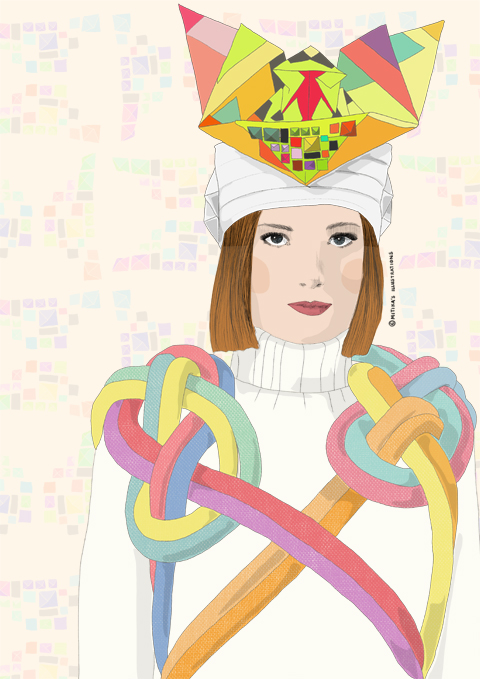
Fred Butler AW 2012 by Mitika Chohan

Fred Butler AW 2012 by Mitika Chohan

I love Fred Butler. She has been one of my favourite accessories and props designers for a few years now and apart from what she makes I also adore the fascinating and playful way in which she dresses as well as the way she expresses herself in interviews, which reveals a really quite special person indeed. I had seen her props pop up here and there in magazines, like in Amelia’s Magazine Issue 7 for which she made a Noah’s Ark shaped paper hat – in fact Amelia Gregory was one of the first to commission props from Fred. But I think a story I saw in i-D’s The Agyness Deyn Issue from May 2008, titled ‘Attitude’, featuring an inflatable rockets bra by Fred among other striking props, was what made me an official fan.

Fred Butler AW 2012 Charli XCX photo by Maria Papadimitriou

While queueing to see Fred’s live presentation of her A/W 2012 collection at The Portico Rooms in Somerset House on the 20th of February I was extra happy because – apart from the obvious reason – my young friend and budding stylist Isabella Sumner of Secret Danger Sister was texting me from backstage. Isabella became Kim Howells’ assistant for this London Fashion Week season after I forwarded to her a post by Kim I saw on Facebook asking for help! Kim has styled numerous Fred Butler presentations, films and lookbooks. Fred’s presentation took the form of a mini catwalk show which repeated itself over and over to a different audience each time. And there was quite a crowd to get through. During the four times in and out from the Portico Rooms – I saw the show twice – there were queues extending all the way to and down the stairs leading to the ground level of Somerset House. In those queues I spotted an array of some of the coolest, cutting edge creatives around, like Piers Atkinson, Bishi, Alùn Davies and Diane Pernet and filmmaker Konstantinos Menelaou from ASVOF, to name a few, all of whom of course love Fred’s original work.

Fred Butler AW 2012 photo by Maria Papadimitriou 9

Fred Butler AW 2012 photo by Maria Papadimitriou

Refreshingly the show opened with pop singer Charli XCX singing her catchy song ‘I’ll Never Know’ live with a band. Fred Butler, who’s twitter feed is full of #thismorningimlisteningto and other music related tweets, has a special relationship with music. She often DJs, she has made props for musicians such as Patrick Wolf, Nicki Minaj, Beth Ditto, La Roux AND Lady Gaga and, according to her, looking at the way musicians were dressed on album covers when she was little has been very inspiring. So it seems entirely natural that this season Fred, enabled by Red Bull Catwalk Studio, collaborated with Charlie XCX on a bespoke soundtrack for the collection. In general I think that the way Fred uses different art forms to enhance and show her work works incredibly well – for example she has made beautiful fashion films of her previous collections with talented young directors such as Zaiba Jabbar and Elisha Smith-Leverock.

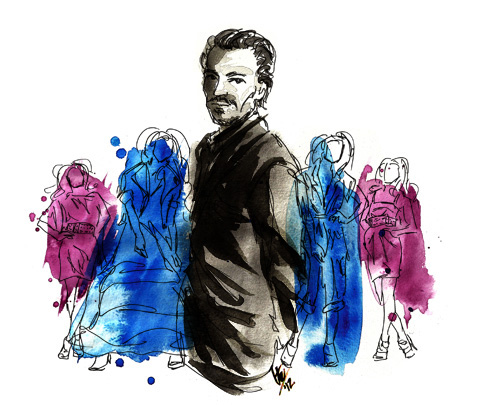
Fred Butler AW 2012 by Nicola Ellen

Fred Butler AW 2012 by Nicola Ellen

Fred Butler AW 2012 photo by Maria Papadimitriou

Fred Butler 2012 by Catherine Meadows

Fred Butler 2012 by Catherine Meadows

Fred Butler AW 2012 photo by Maria Papadimitriou

Another notable and interesting thing about Fred Butler’s collections is the way she titles them using combined, long and sometimes made up words and phrases that seem to describe an other worldly thing or process in exactly the same intricate and imaginative way her pieces are made. The title of this collection was Tank Top-Ranking, Tong-Tied and Twisted. Her S/S 2012 collection was called Sonic Sinuate Supertemporal Sequestador and a 2011 collection went under the name of Incandescent Meta-morph-incessant.

Fred Butler AW 2012 photo by Maria Papadimitriou

Fred Butler AW 2012 photo by Maria Papadimitriou

Fred Butler AW 2012 photo by Maria Papadimitriou

Fred Butler AW 2012 photo by Maria Papadimitriou

Fred Butler AW 2012 LFW  by Deborah Moon

Fred Butler AW 2012 LFW by Deborah Moon

Fred Butler AW 2012 photo by Maria Papadimitriou

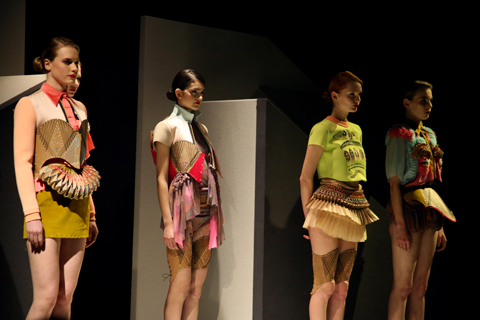
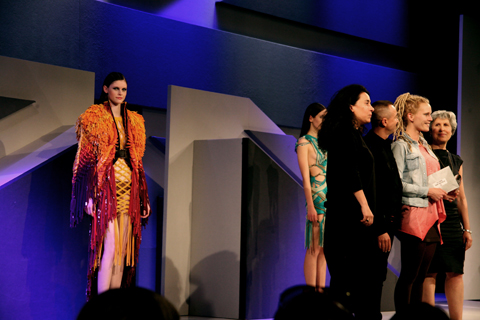
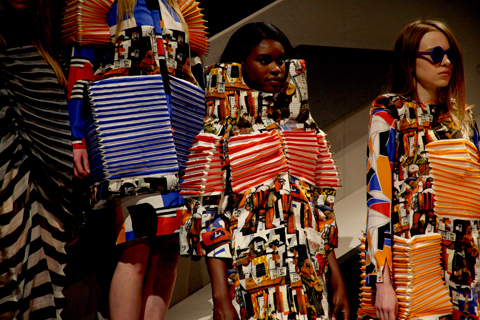
Following her S/S 2012 collection which featured more round shapes, frills and quite a bit of fabric, I was personally happy that in this collection Fred returned to origami folding techniques and body props with more clear cut, geometric shapes. This time I thought that the four colour goddesses that stepped out looked impeccable from head to toe. Each model had a monochrome base formed by beautiful knitted undergarments – a collaboration with EDE who specialise in English produced hand knits – and a matching colour wig. Placed on top of that base were a quilted, high collar gilet, origami obi belts, a marshmallow hued harness with twisted tubes, more belts and headbands out of twisted strings and more origami inspired, sculptural body pieces. The outfits were completed by colour matching shoes designed in collaboration with Rosy Nicholas. According to the press release there was a sushi related theme under all of this, especially in relation to the colour palette used. Usually I am very intrigued by the designers’ influences and references – and I have fun making up quite a few of my own when looking at collections – but Fred Butler’s work is for me so striking and fulfilling visually that my mind feels too drunk with pure aesthetic pleasure to care for any explanation in other terms.

Fred Butler AW 2012 photo by Maria Papadimitriou

Fred Butler AW 2012 photo by Maria Papadimitriou

All photography by Maria Papadimitriou

Categories ,A Shaded View on Fashion, ,accessories, ,accessories designer, ,Agyness Deyn, ,Alun Davies, ,Amelia’s Magazine, ,ASVOF, ,Beth Ditto, ,Bishi, ,Catherine Meadows, ,Charli XCX, ,Collaborations, ,Deborah Moon, ,Diane Pernet, ,EDE, ,Elisha Smith-Leverock, ,Ella Dror PR, ,Fashion Film, ,Fred Butler, ,i-D, ,Isabella Sumner, ,japanese, ,Kim Howells, ,Kimonos, ,Knits, ,Knotted, ,Konstantinos Menelaou, ,La Roux, ,Lady Gaga, ,London Fashion Week, ,Maria Papadimitriou, ,Mitika Chohan, ,monochrome, ,music, ,Nail Art, ,Nicki Minaj, ,Nicola Haigh, ,Noah’s Ark, ,Obi Belts, ,origami, ,pastels, ,Patrick Wolf, ,piers atkinson, ,Portico Rooms, ,Props, ,Quilting, ,rainbow, ,Red Bull Catwalk Studio, ,Red Bull Music Academy, ,Secret Danger Sister, ,Somerset House, ,Sushi, ,Twisted, ,Zaiba Jabbar

Similar Posts:


Amelia’s Magazine | Future Beauty at the Barbican: Beauty Party

Illustration by Lesley Barnes

Illustration by Maria del Carmen Smith

Illustration by Kelly Angood

Illustration by Joana Faria

Illustration by Abby Wright

Illustration by Antonia Parker

Illustration by Lesley Barnes

Justine Picard is a journalist for the Telegraph and an author who produces both fiction and non fiction, look for the last 13 years her side project has been researching Coco Chanel. Picard opened her talk on the publication of her Chanel Biography with the statement that the V&A is the heart of Fashion, this forget Topshop!

Coco Chanel the name synonymous with French fashion, so carefully cultivated by Karl Largerfield, he feels as if a caretaker at the same time as being an innovative fashion designer such is the call of the Chanel Staples. Each catwalk is a reinvention of the tweeds, the stars, the numbers, simplistic beauty is what Chanel conjures and it is what it achieves.

So of course how could I pass up the opportunity to listen to JP who has spent the last 13 years researching the life of perhaps the most well known, but least known fashion designer?

It was the perfect talk – full of teasers about what the book contained alongside interesting insights into Coco’s design aesthetic – the monestry where she grew up the walls were embedded with stars, similar to what would later feature in her designs.

A talented speaker from the start, Justine enraptured the audience with tales of Chanel’s rise from rags to riches polevaulting through French Society’s conventions that those born in a certain place – should stay on the rung of society they were born. Luckily, not only for Haute Couture but for Women everywhere Chanel made ignoring social conventions a habit of a lifetime.

Illustration by Maria del Carmen Smith

Not for Chanel the corsets of early 1900′s France – no, the most striking thing about Chanel was seeing the pictures of her in a style that has inudated our subconscious – from the wearing of trousers to single handily popularising the Breton Stripe. Most importantly Chanel was an avid wearer of the flat show – not for her the gravity defying, walk preventing spindly heels that seem so popular not only on the catwalk but that shop which nestles within the heart of Oxford Street, Topshop.

Illustration by Kelly Angood

“Fashion is very dark, what we wear is what we cover up” Coco Chanel

JP covered the usual ground her relationship with Boy Capell and the Duke of Westminister, revealing a photograph of Coco and Winston Churchill lead her to the ministery of archives… what did she find? Sadly that was left to be revealed in the pages of her boo

Illustration by Joana Faria

Illustration by Abby Wright

Illustration by Antonia Parker

Illustration by Lesley Barnes

Justine Picard is a journalist for the Telegraph and an author who produces both fiction and non fiction, shop for the last 13 years her side project has been researching Coco Chanel. Picard opened her talk on the publication of her Chanel Biography with the statement that the V&A is the heart of Fashion, information pills forget Topshop!

Coco Chanel the name synonymous with French fashion, so carefully cultivated by Karl Largerfield, he feels as if a caretaker at the same time as being an innovative fashion designer such is the call of the Chanel Staples. Each catwalk is a reinvention of the tweeds, the stars, the numbers, simplistic beauty is what Chanel conjures and it is what it achieves.

So of course how could I pass up the opportunity to listen to JP who has spent the last 13 years researching the life of perhaps the most well known, but least known fashion designer?

Illustration by Maria del Carmen Smith – An aside about this image, notice how Chanel sits on the horse in jodphurs, rather than side saddle, a fairly political statement at a time when most women were bound in corsets, forcing them to sit side saddle.

It was the perfect talk – full of teasers about what the book contained alongside interesting insights into Coco’s design aesthetic – the monestry where she grew up the walls were embedded with stars, similar to what would later feature in her designs.

A talented speaker from the start, Justine enraptured the audience with tales of Chanel’s rise from rags to riches polevaulting through French Society’s conventions that those born in a certain place – should stay on the rung of society they were born. Luckily, not only for Haute Couture but for Women everywhere Chanel made ignoring social conventions a habit of a lifetime.

Illustration by Kelly Angood

“Fashion is very dark, what we wear is what we cover up” Coco Chanel

Not for Chanel the corsets of early 1900′s France – no, the most striking thing about Chanel was seeing the pictures of her in a style that has inudated our subconscious – from the wearing of trousers to single handily popularising the Breton Stripe. Most importantly Chanel was an avid wearer of the flat show – not for her the gravity defying, walk preventing spindly heels that seem so popular not only on the catwalk but that shop which nestles within the heart of Oxford Street, Topshop.

Illustration by Joana Faria

JP covered the usual ground her relationship with Boy Capell and the Duke of Westminister, revealing a photograph of Coco and Winston Churchill lead her to the ministery of archives… what did she find? Sadly that was left to be revealed in the pages of her book – but let’s just say her reported relationship with a German Soldier may not have been what it has so far appeared to be the work of a traitor, but a (slightly naive…) plan between Coco and Winston Churchill to bring the war to an early end. This may seem rather glib, but to find out more, we will all have to read the book…

Illustration by Abby Wright

Picard touched upon the inclusions of the number 5 etc and the use of stars… magical numbers were part of Chanel’s magical thinking… Tarot Cards. Chanel was interested in simple beauty. Justine attributes this magical thinking to her time spent as a child growing up in an ancient monastery, suggesting that the epoynmous chanel star was inspired by the mosiac’s made by Medieval Monks…

Illustration by Antonia Parker

Chanel was funded by Boy Capell, the man sitting on the horse in the above illustration, as soon as the Fashion House started to make money, Chanel paid every last penny back. From the start Coco was to be an independent women. Justine Picard described fashion as “a series of Hauntings” and finished the talk with a wish for a book on the continuation of Chanel by Karl Largerfield, to conclude that such a book could only be written once Largerfield had left Chanel and quite possibly this planet…

Illustration by Lesley Barnes

Coco Chanel the name synonymous with French fashion, discount so carefully cultivated by Karl Largerfield, side effects he feels as if a caretaker at the same time as being an innovative fashion designer such is the call of the Chanel Staples. Each catwalk is a reinvention of the tweeds, the stars, the numbers, simplistic beauty is what Chanel conjures and it is what it achieves.

Justine Picard is a journalist for the Telegraph and an author who produces both fiction and non fiction, for the last 13 years her side project has been researching Coco Chanel. Picard opened her talk on the publication of her Chanel Biography with the statement that the V&A is the heart of Fashion, forget Topshop!

How could I pass up the opportunity to find out more about this ever present, but ever distant fashion designer? Especially as I am yet to watch either of the recent films made about her early life…

Illustration by Maria del Carmen Smith – An aside about this image, notice how Chanel sits on the horse in jodphurs, rather than side saddle, a fairly political statement at a time when most women were bound in corsets, forcing them to sit side saddle.

It was the perfect talk – full of teasers about what the book contained alongside interesting insights into Coco’s design aesthetic – the monestry where she grew up the walls were embedded with stars, similar to what would later feature in her designs.

A talented speaker from the start, Justine enraptured the audience with tales of Chanel’s rise from rags to riches polevaulting through French Society’s conventions that those born in a certain place – should stay on the rung of society they were born. Luckily, not only for Haute Couture but for Women everywhere Chanel made ignoring social conventions a habit of a lifetime.

Illustration by Kelly Angood

“Fashion is very dark, what we wear is what we cover up” Coco Chanel

Not for Chanel the corsets of early 1900′s France – no, the most striking thing about Chanel was seeing the pictures of her in a style that has inudated our subconscious – from the wearing of trousers to single handily popularising the Breton Stripe. Most importantly Chanel was an avid wearer of the flat show – not for her the gravity defying, walk preventing spindly heels that seem so popular not only on the catwalk but that shop which nestles within the heart of Oxford Street, Topshop.

Illustration by Joana Faria

JP covered the usual ground her relationship with Boy Capell and the Duke of Westminister, revealing a photograph of Coco and Winston Churchill lead her to the ministery of archives… what did she find? Sadly that was left to be revealed in the pages of her book – but let’s just say her reported relationship with a German Soldier may not have been what it has so far appeared to be the work of a traitor, but a (slightly naive…) plan between Coco and Winston Churchill to bring the war to an early end. This may seem rather glib, but to find out more, we will all have to read the book…

Illustration by Abby Wright

Picard touched upon the inclusions of the number 5 etc and the use of stars… magical numbers were part of Chanel’s magical thinking… Tarot Cards. Chanel was interested in simple beauty. Justine attributes this magical thinking to her time spent as a child growing up in an ancient monastery, suggesting that the epoynmous chanel star was inspired by the mosiac’s made by Medieval Monks…

Illustration by Antonia Parker

Chanel was funded by Boy Capell, the man sitting on the horse in the above illustration, as soon as the Fashion House started to make money, Chanel paid every last penny back. From the start Coco was to be an independent women. Justine Picard described fashion as “a series of Hauntings” and finished the talk with a wish for a book on the continuation of Chanel by Karl Largerfield, to conclude that such a book could only be written once Largerfield had left Chanel and quite possibly this planet…

Illustration by Lesley Barnes

Coco Chanel the name synonymous with French fashion, order so carefully cultivated by Karl Largerfield, this he feels as if a caretaker at the same time as being an innovative fashion designer such is the call of the Chanel Staples. Each catwalk is a reinvention of the tweeds, the stars, the numbers, simplistic beauty is what Chanel conjures and it is what it achieves.

Justine Picard is a journalist for the Telegraph and an author who produces both fiction and non fiction, for the last 13 years her side project has been researching Coco Chanel. Picard opened her talk on the publication of her Chanel Biography with the statement that the V&A is the heart of Fashion, forget Topshop!

How could I pass up the opportunity to find out more about this ever present, but ever distant fashion designer? Especially as I am yet to watch either of the recent films made about her early life…

Illustration by Maria del Carmen SmithAn aside, notice how Chanel sits on the horse in jodphurs, rather than side saddle, a fairly political statement at a time when most women were bound in corsets, forcing them to sit side saddle.

It was the perfect talk – full of teasers about what the book contained alongside interesting insights into Coco’s design aesthetic – the monestry where she grew up the walls were embedded with stars, similar to what would later feature in her designs.

A talented speaker from the start, Justine enraptured the audience with tales of Chanel’s rise from rags to riches polevaulting through French Society’s conventions that those born in a certain place – should stay on the rung of society they were born. Luckily, not only for Haute Couture but for Women everywhere Chanel made ignoring social conventions a habit of a lifetime.

Illustration by Kelly Angood

“Fashion is very dark, what we wear is what we cover up” Coco Chanel

Not for Chanel the corsets of early 1900′s France – no, the most striking thing about Chanel was seeing the pictures of her in a style that has inudated our subconscious – from the wearing of trousers to single handily popularising the Breton Stripe. Most importantly Chanel was an avid wearer of the flat show – not for her the gravity defying, walk preventing spindly heels that seem so popular not only on the catwalk but that shop which nestles within the heart of Oxford Street, Topshop.

Illustration by Joana Faria

JP covered the usual ground her relationship with Boy Capell and the Duke of Westminister, revealing a photograph of Coco and Winston Churchill lead her to the ministery of archives… what did she find? Sadly that was left to be revealed in the pages of her book – but let’s just say her reported relationship with a German Soldier may not have been what it has so far appeared to be the work of a traitor, but a (slightly naive…) plan between Coco and Winston Churchill to bring the war to an early end. This may seem rather glib, but to find out more, we will all have to read the book…

Illustration by Abby Wright

Picard touched upon the inclusions of the number 5 etc and the use of stars… magical numbers were part of Chanel’s magical thinking… Tarot Cards. Chanel was interested in simple beauty. Justine attributes this magical thinking to her time spent as a child growing up in an ancient monastery, suggesting that the epoynmous chanel star was inspired by the mosiac’s made by Medieval Monks…

Illustration by Antonia Parker

Chanel was funded by Boy Capell, the man sitting on the horse in the above illustration, as soon as the Fashion House started to make money, Chanel paid every last penny back. From the start Coco was to be an independent women. Justine Picard described fashion as “a series of Hauntings” and finished the talk with a wish for a book on the continuation of Chanel by Karl Largerfield, to conclude that such a book could only be written once Largerfield had left Chanel and quite possibly this planet…

Illustration by Lesley Barnes

Coco Chanel the name synonymous with French fashion, order so carefully cultivated by Karl Largerfield, what is ed he feels as if a caretaker at the same time as being an innovative fashion designer such is the call of the Chanel Staples. Each catwalk is a reinvention of the tweeds, patient the stars, the numbers, simplistic beauty is what Chanel conjures and it is what it achieves.

Justine Picard is a journalist for the Telegraph and an author who produces both fiction and non fiction, for the last 13 years her side project has been researching Coco Chanel. Picard opened her talk on the publication of her Chanel Biography with the statement that the V&A is the heart of Fashion, forget Topshop!

Illustration by Joana Faria

How could I pass up the opportunity to find out more about this ever present, but ever distant fashion designer? Especially as I am yet to watch either of the recent films made about her early life…

It was the perfect talk – full of teasers about what the book contained alongside interesting insights into Coco’s design aesthetic – the monestry where she grew up the walls were embedded with stars, similar to what would later feature in her designs.

A talented speaker, Justine enraptured the audience with tales of Chanel’s rise from rags to riches polevaulting through French Society’s conventions that those born in a certain place – should stay on the rung of society they were born. Luckily, not only for Haute Couture but for women everywhere who wanted to wear trousers, Chanel made ignoring social conventions a habit of a lifetime.

Illustration by Kelly Angood

“Fashion is very dark, what we wear is what we cover up” Coco Chanel

Not for Chanel the corsets of early 1900′s France – no, the most striking thing about Chanel was seeing the pictures of her in a style that has inudated our subconscious – from the wearing of trousers to single handily popularising the Breton Stripe. Most importantly Chanel was an avid wearer of the flat show – not for her the gravity defying, walk preventing spindly heels that seem so popular not only on the catwalk but that shop which nestles within the heart of Oxford Street, Topshop.

Illustration by Maria del Carmen SmithAn aside, notice how Chanel sits on the horse in jodphurs, rather than side saddle, a fairly political statement at a time when most women were bound in corsets.

Chanel was funded by Boy Capell, the man in the above illustration, as soon as the Fashion House produced revenue, Chanel paid every last penny back. From the start Coco was to be an independent women.

Justine Picard covered the usual ground of Chanel’s relationship with men, starting with Boy Capell and touching upon her life spent fishing in Scotland with the Duke of Westminister. Through whom Coco met Winston Churchill in the early 1920′s. The discovery of a picture of the two together lead Picard to the ministery of war archives, specifically the archives on Winston Churchill to explore Chanel’s reported relationship with a German Soldier may not have been what has so far been reported, the work of a traitor, but a (slightly naive…) plan -devised perhaps by Coco and regaled to Winston Churchill- to bring the war to an early end. This may seem rather glib, but to find out more and the outcome of Picards trip to the archives? Sadly the author left this announcement within the pages of her book.

Illustration by Abby Wright

Picard touched upon the inclusions of the number 5 etc and the use of stars… magical numbers were part of Chanel’s magical thinking… Tarot Cards. Chanel was interested in simple beauty. Justine attributes this magical thinking to her time spent as a child growing up in an ancient monastery, suggesting that the epoynmous chanel star was inspired by the mosiac’s made by Medieval Monks…

Illustration by Antonia Parker

Justine Picard described fashion as “a series of Hauntings” and finished the talk with a wish for a book on the continuation of Chanel by Karl Largerfield, to conclude that such a book could only be written once Largerfield had left Chanel and quite possibly this planet…


WAH Nails, pills illustrated by Yelena Bryksenkova

Unless you’ve been under a rock, view you’ll have seen me banging on about Future Beauty: 30 Years of Japanese Fashion at the Barbican. I did a mammoth post about the exhibition last week; it’s one of my favourite fashion exhibitions ever, store and I couldn’t wait to go back for a second look.

So I was delighted to attend the Beauty Party last Thursday. The name flooded my mind with images of middle-aged women guzzling Lambrini and exchanging salacious stories while passing underwear around a living room on a cul-de-sac somewhere in Huddersfield. The roster of participants was pretty alluring, though – Alex Box, Charlie le Mindu and WAH Nails to name a few.


All photography by Matt Bramford

I went to a Viktor & Rolf event like this a couple of years back and it isn’t the easiest thing to navigate – you have to seek out the various special events – they’re usually tucked away. In tiny rooms behind the exhibition itself, each of the aficionados of beauty had set up their wares. Nails, make-up and hair were covered. What exactly was I going to get out of this? I have very little hair, I bite my nails, and I rarely wear make-up. ‘This is for girls,’ I thought to myself. Well, here’s a little round-up of the night’s events:

Charlie le Mindu

Illustration by Gemma Sheldrake

I’d subconsciously blocked Charlie le Mindu out of my mind after fashion week’s debacle. I feel lucky to be alive after that display, and I thought I had at least six months to recover before braving his (what will undoubtedly be fabulous) show for A/W 2011. Thankfully there wasn’t an arse or tit (or, er, y’know – the other bit) insight this time.

Charlie had created, especially for the occasion, a sculptural creation from human hair that descended from the roof and featured a rider’s helmet with a huge, yellow horse tail that dropped to the ground. On its own, it was beautiful; hanging motionless from the ceiling, it looked like magic. Attendees were able to slip underneath the creation and have their photograph taken, with hilarious results… Some were too short, some were too tall, some just couldn’t make it balance on their heads, but oh, what fun!


Look, it’s Amelia’s Magazine illustrator Naomi Law!


It’s Jenny, who isn’t an illustrator, but a friend nonetheless.

WAH Nails

I love how WAH Nails have single-handedly made nail art cool again. Their incredible designs have had so much press and attention since their debut in 2009. Most recently, they were part of the Eley Kishimoto Flash-On Week pop-up at the Shoreditch Studios, transforming nails with the iconic Flash pattern. Sadly, between the two of them, no matter how quickly the duo revamped nails it was clear the girls I’d gone with weren’t going to get a look in. The list to put your name on was full after fifteen minutes!

Still, it was fascinating to watch the designs come to life.

Alex Box

Illustration by Emmeline Pidgen

I’ve been a fan of Alex’s for a while but I wasn’t sure what to make of a make-up demonstration. A world-famous make-up artist demonstrating her skills in make-up at the front of a cinema, for an hour and a half? Oh, go on then I thought – what’s the worst that can happen? It turns out it was one of the most mesmerising things I (and my pals) had ever seen. Resplendent in a vintage floor-sweeping red frock and fashion glasses that would make half of Shoreditch envious, Alex began creating the first look to the sound of haunting classical music.

To see how quickly she works and how naturally it seems to flow was utterly hypnotising, and surprisingly relaxing. The first look was a Marie-Antoinette inspired ghostly creation, complete with a headpiece and fabrics that were added at the end – absolutely beautiful.

The same poor model then had her face wiped before Look Two began – a more playful look with vibrant colours and jazzy fabrics. ‘Sometimes you have to go against the rules,’ relayed Alex, to a room full of gripped onlookers. A truly wonderful experience.

Illamasqua

Illamasqua‘s team of make-up artists were on hand to provide makeovers. I couldn’t see much of what was going on here because a gaggle of excited teenage girls surrounded them in the hope of a dab of powder from one of these ‘world-famous’ experts. Nothing to see, here.

Of course amongst all this was a chance to see the incredible exhibition again, and it was equally as wonderful as the first time. I’d definitely recommend these evenings, and ooh look – there’s one tonight, starring Fred Butler amongst others!

See all the details here.

Categories ,A/W 2011, ,Alex Box, ,barbican, ,Beauty Party, ,Charlie le Mindu, ,Eley Kishimoto, ,Emmeline Pidgen, ,fashion, ,Flash, ,Fred Butler, ,Future Beauty, ,Gemma Sheldrake, ,Hair, ,japanese, ,Make-up, ,Marie Antoinette, ,Nails, ,Viktor & Rolf, ,WAH Nails, ,Yelena Bryksenkova

Similar Posts:


Amelia’s Magazine | Graduate Fashion Week 2012 Gala Awards Ceremony: Part One


Matthew Williamson by Ruth Joyce

Twelve hundred students descend on Earls Court Two for Graduate Fashion Week every year. About a quarter of them get the opportunity to showcase their collections during one of the 16 fashion shows that are held over four days. In a dramatic climax – the Gala Awards show – 10 students are selected to present their work for a second time in the hope of receiving the coveted Gold Award.


All photography by Matt Bramford

So, like the fashion industry itself, chances of making it are pretty slim. 10 incredible collections graced the catwalk in the finale and I honestly couldn’t pick a winner – celebrity judges like Matthew Williamson and Julien Macdonald commented on the incredible standard exhibited of not only those who had been selected as a Gold Award nominee, but every college.


Julien Macdonald by Claire Kearns

Here’s a photographic whistle-stop tour of the awards ceremony:

INTERNATIONAL AWARD


Yvonne Kwok – Amsterdam Fashion Institute


Zhu Liyuanzi – Istituto Marangoni Milan


WINNER: Karen Jessen – ESMOD Berlin, presented by Julien Macdonald, Sara Maino from Vogue Italia & Caroline Burstein from Browns.

STUART PETERS KNITWEAR AWARD


Emma Walsh – Nottingham Trent University


Jousianne ProppManchester Metropolitan University


Caitlin Charles Jones – Kingston University


Judges Ruth Chapman from Matches, Erica Peters from Stuart Peters and knitwear designer Mark Fast couldn’t decide, so Caitlin and Jousianne both scooped the award!

ZANDRA RHODES TEXTILES AWARD


Daisy Lowe by Ruth Joyce


Amelia Smith – Northumbria University


Dae-Byn Lee – Nottingham Trent University


Roz Lamkin – Manchester Metropolitan University


WINNER: Xiaoping HuangUCLAN, presented by Daisy Lowe and Mary Katrantzou

BARCLAYS NEW BUSINESS AWARD


Holly Reid – UCLAN, presented by Tabitha Somerset-Webb (Project D) and Michelle Mone OBE

FASHION INNOVATION AWARD


Ami Collins – UCLAN, presented by Lorraine Candy of ELLE magazine and designer David Koma

MEDIA & DESIGN AWARD


Kerrie Donelly – UCA Epsom, presented by Fashion Editor-at-Large Melanie Rickey and ID magazine‘s Jefferson Hack (swoon)

STAND DESIGN AWARD


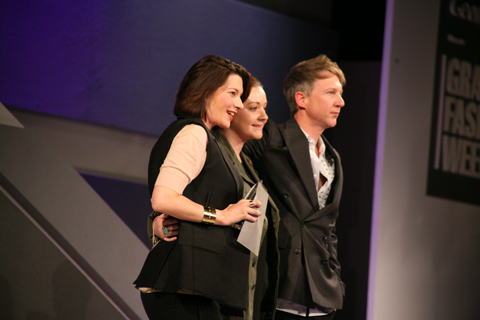
Edinburgh College of Art, presented by designer Fred Butler and Harvey NicholsYuri Nakamura

GEORGE BEST OF BRITISH AWARD


Susanna Yi – University of East London, presented by TV presenter Caroline Flack and ASDA fashion director Fiona Lambert

GEORGE CHILDRENSWEAR AWARD


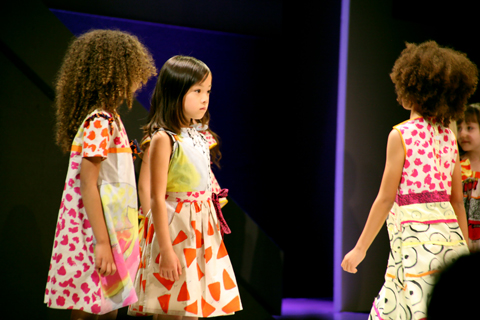
Harriet Simons – Colchester, presented by singer Louise Redknapp and Fiona Lambert

MULBERRY ACCESSORIES AWARD


Laura Smallwood – Kingston University, presented by Mulberry‘s Tori Campbell

ETHICAL AWARD


Sarah Murphy, Northumbria – presented by stylist Jocelyn Whipple and film producer/eco hero Livia Firth

LIFETIME ACHIEVEMENT AWARD


Legendary catwalk photographer Chris Moore, presented by designer Jeff Banks

Part Two, featuring the major players and the menswear, womenswear and Gold Award winners, coming soon…!

Categories ,accessories, ,Amelia Smith, ,Ami Collins, ,Amsterdam Fashion Institute, ,ASDA, ,Awards, ,Caitlin Charles Jones, ,Caroline Flack, ,Caryn Franklin, ,Catwalking.com, ,Ceremony, ,Childrenswear, ,Chris Moore, ,Claire Kearns, ,Colchester, ,Dae-Byn Lee, ,daisy lowe, ,David Koma, ,Earls Court Two, ,Eco Age, ,Elle, ,Emma Walsh, ,Erica Peters, ,ESMOD Berlin, ,Essex, ,fashion, ,Fiona Lambert, ,Fred Butler, ,Gala, ,George, ,Gold Award, ,Graduate Fashion Week, ,Harvey Nichols, ,Holly Reid, ,ID Magazine, ,international, ,Istituto Marangoni Milan, ,Jeff Banks, ,Jefferson Hack, ,Jousianne Propp, ,Julien McDonald, ,Karen Jesson, ,Kerrie Donnelly, ,Kingston University London, ,knitwear, ,Laura Smallwood, ,Lifetime Achievement, ,Livia Firth, ,Lorraine Candy, ,Louise Redknapp, ,Manchester Metropolitan University, ,Mark Fast, ,Mary Katrantzou, ,matches, ,Matt Bramford, ,Matthew Williamson, ,Melanie Rickey, ,menswear, ,Michelle Mone OBE, ,Mulberry, ,New Business, ,Northumbria University, ,Nottingham Trent University, ,Project D, ,Roz Lamkin, ,Ruth Chapman, ,Ruth Joyce, ,show, ,Stuart Peters, ,Susanna Yi, ,Tabitha Somerset-Webb, ,Tori Campbell, ,UCA Epsom, ,UCLan, ,UEL, ,Womenswear, ,Xiaoping Huang, ,Yuri Nakamura, ,Yvonne Kwok, ,Zhu Liyuanzi

Similar Posts:


Amelia’s Magazine | Central Saint Martins: Ba Fashion Graduate Show 2011 review. Fashion Madness.

Central Saint Martins Ba Show 2011-Crimson Rose O'Shea photography by Amelia Gregory
Crimson Rose O’Shea. All photography by Amelia Gregory.

Thank god for the craziness of fashion! And thank god for the couple of Central Saint Martins students who decided that their graduation catwalk show was exactly the right place to max out their creative juices. These then, are the most far out collections that we saw on Tuesday 31st May 2011. Which of these names will we know in the future? Who knows, but it’s sure fun to gaze on and wonder.

 Central Saint Martins Ba Show 2011-Toma Stenko photography by Amelia Gregory Central Saint Martins Ba Show 2011-Toma Stenko photography by Amelia Gregory Central Saint Martins Ba Show 2011-Toma Stenko photography by Amelia Gregory Central Saint Martins Ba Show 2011-Toma Stenko photography by Amelia Gregory
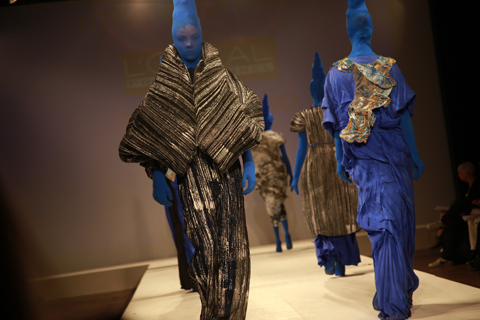
Crazy blue stockinged swirly coneheads wore Toma Stenko’s collection of metallic and blue pleated and bulbous shaped dresses.

 Central Saint Martins Ba Show 2011-Andraya Farrag photography by Amelia Gregory Central Saint Martins Ba Show 2011-Andraya Farrag photography by Amelia Gregory Central Saint Martins Ba Show 2011-Andraya Farrag photography by Amelia Gregory Central Saint Martins Ba Show 2011-Andraya Farrag photography by Amelia Gregory
Andraya Farrag based her/his collection on blue and white lacy concoctions worn beneath cages, echoing a popular trend for hiding faces.

Nutty ideas from Ryohei Kawanishi and Kim Traeger can be seen in my previous blogpost about knitwear.

Crimson Rose O'Shea by Laura Frame
Crimson Rose O’Shea by Laura Frame.

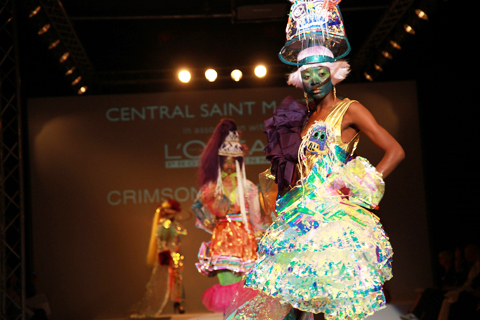
But it was Crimson Rose O’Shea who really took the prize for over the top fashion madness. No surprise then that this collection closed the show. Colour refracting layers of cellophane were stacked with gay abandon over brightly coloured fake fur and crazy beaded adornments. Make up was painted on faces in drunken Mardi Gras style. There was nothing remotely subtle about this eye catching collection that fellow rainbow chaser Fred Butler would surely love. In fact my photographs really don’t do this shimmering swirl any justice at all. What a way to end a ten year stint at York Hall.

Central Saint Martins Ba Show 2011-Crimson Rose O'Shea photography by Amelia GregoryCentral Saint Martins Ba Show 2011-Crimson Rose O'Shea photography by Amelia GregoryCentral Saint Martins Ba Show 2011-Crimson Rose O'Shea photography by Amelia GregoryCentral Saint Martins Ba Show 2011-Crimson Rose O'Shea photography by Amelia GregoryCentral Saint Martins Ba Show 2011-Crimson Rose O'Shea photography by Amelia GregoryCentral Saint Martins Ba Show 2011-Crimson Rose O'Shea photography by Amelia Gregory
Crimson Rose O’Shea.

YouTube Preview Image

Categories ,Andraya Farrag, ,Cellophane, ,Central Saint Martins, ,Crimson Rose O’Shea, ,Fred Butler, ,Graduate Fashion Week, ,Irridescent, ,Kim Traeger, ,Laura Frame, ,Mardi Gras, ,rainbow, ,Ryohei Kawanishi, ,Toma Stenko

Similar Posts:


Amelia’s Magazine | Central Saint Martins: Ba Fashion Graduate Show 2011 review. Japanese.

Jo Qiao Ding Central St Martins by Harriet Alice Fox
Jo Qiao Ding by Harriet Alice Fox.

With so many students from abroad it’s hardly surprising that there was an exotic element to the Central Saint Martins collections from 2011′s graduating students. Japan seemed to be a particularly strong reference point, see in all it’s multi-faceted glory.

Central Saint Martins Ba Show 2011-Jo Qiao Ding photography by Amelia GregoryCentral Saint Martins Ba Show 2011-Jo Qiao Ding photography by Amelia GregoryCentral Saint Martins Ba Show 2011-Jo Qiao Ding photography by Amelia GregoryCentral Saint Martins Ba Show 2011-Jo Qiao Ding photography by Amelia Gregory
Jo Qiao Ding produced a standout collection: huge billowing kimono-esque robe dresses that gaped at the arms to reveal patterned underlining. White collars made the look thoroughly modern.

Manami Sakurai by Kristina Vasiljeva
Manami Sakurai by Kristina Vasiljeva.

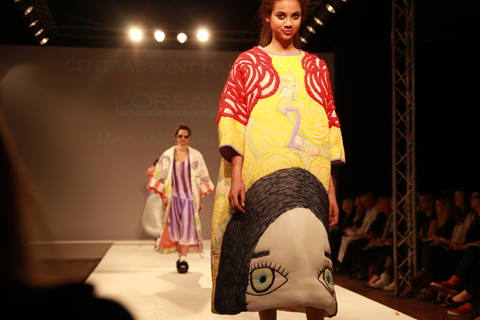
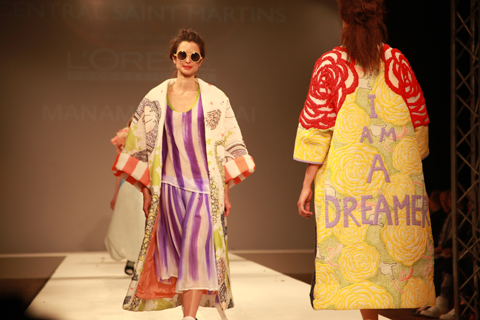
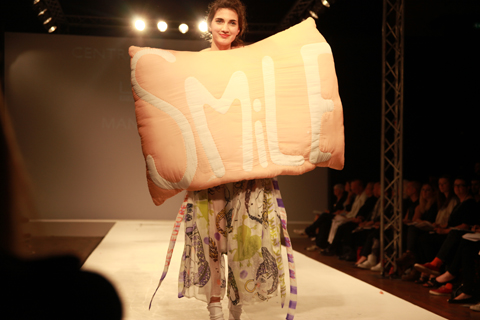
Manami Sakurai brought an inimitably cute Japanese streak to the show with quilted animal and face dresses bearing the embroidered words PEACE, thumb I Am A Dreamer and I Love You. For the denouement a girl opened a floppy pillow cradled in her arms to reveal the letters SMILE several feet high. It was hard not to.

Central Saint Martins Ba Show 2011-Manami Sakurai photography by Amelia GregoryCentral Saint Martins Ba Show 2011-Manami Sakurai photography by Amelia GregoryCentral Saint Martins Ba Show 2011-Manami Sakurai photography by Amelia GregoryCentral Saint Martins Ba Show 2011-Manami Sakurai photography by Amelia GregoryCentral Saint Martins Ba Show 2011-Manami Sakurai photography by Amelia GregoryCentral Saint Martins Ba Show 2011-Manami Sakurai photography by Amelia Gregory
Manami Sakurai. All photography by Amelia Gregory.

Runner up for the L’Oreal awards, Momo Wang, also brought a distinct sense of Japanese style to the show. Her smiling models in many colourful layers reminded me of photos taken in the Harajuku area of Tokyo.

Central Saint Martins Ba Show 2011-Momo Wang photography by Amelia Gregory
Momo Wang.

Categories ,Central Saint Martins, ,Graduate Fashion Week, ,harajuku, ,Harriet Alice Fox, ,japanese, ,Jo Qiao Ding, ,Kimono, ,Kristina Vasiljeva, ,L’Oreal, ,Manami Sakurai, ,Momo Wang, ,Oriental, ,Oversized, ,tokyo

Similar Posts:


Amelia’s Magazine | Edinburgh College of Art: Graduate Fashion Week 2012 Catwalk Review


Graduate collection by Farah Saffari

Edinburgh College of Art always have much to offer at Graduate Fashion Week. Weird and wonderful, expert craftsmanship, innovative use of materials and new silhouettes, Edinburgh always seems to make it appear dazzling effortless.

They were all wonderful, frankly, but here are some of my favourites:

Jacob Birge


All photography by Matt Bramford

Jacob caused a striking stir as the show’s opener, featuring futuristic shapes and wide brimmed visor hats. Industrial colours lifted dresses, which were more like armour.

Raj Mistry

Graduate collection by Raj Mistry

Raj’s expert menswear collection really stood out. He married sportswear with engineered shapes with luxurious materials for outerwear; zips and drawstrings in contrasting colours were nice details.

Farah Saffari


Graduate collection by Farah Saffari

A whimsical approach to fashion was the mainstay in Farah’s collection, inspired by nature and, probably, the beach. Cropped tops, translucent layers and piped waists resulted in mermaid-like creatures rather than models.

Colin Oliphant

Something about Colin’s relaxed tailoring for men that also worked on ladies really stood out; it was simplicity at its best. Subtle lapel-free jackets with crew necks were worn over collarless shirts in muted colours, and a collection like this is always welcome amidst a sea of designers who try to push the boundaries a little too far.

Ainslie Hogg

Juxtaposed to Colin’s subtle collection (above) came Ainslie Hogg’s weird and wonderful experimentation with material and shape. It was the kind of collection, akin to Michael Van Der Ham, that shouldn’t work but completely does. Materials of various textures and densities were combined in hap-hazard fashion to create striking ensembles.

Katarzyna Krzywania

I simply loved Katarzyna’s hooded overcoats with contrasting geometric shapes.

Dan William James Prasad


Graduate collection by Dan William James Prasad

Dan’s menswear was a perfect blend of old and new – a sort of updated period novel hero with contemporary, aesthetic fabrics in the place where tweeds and heritage fabrics might be. High-waisted trousers and structured jackets featured in this richly-coloured collection.

Katie Bremner

What’s not to love about Katie’s ethereal world? Her fringed frocks in garish colours, embellished with hearts, added both fun and thought provocation to the show. Not a collection for the supermarket, but for the fashion-forward at the very least.

Marie Leiknes


Pages from Marie Leiknes‘ graduate collection sketchbooks

Marie creates new silhouettes from marvellous knitwear in vivid colours. Millinery had an Eastern influence, whilst the garments themselves featured triangular wool formations and contrasting colours.

Riona Horrox
Riona might have looked to 1990s hip hop for inspiration for her premium menswear. Oversized coats with digital prints were decorated with wool trims or worn with hoods. Orange and copper highlights glared from a general colour palette of black and grey. Riona went on to win the Menswear Award at the Gala Show yesterday evening (more to come on that soon) – and quite rightly so.

Louise Bennetts

Louise’s collection consisted of parachute-like dresses and capes in varying shades of orange – warm tones that brought life to paler structures. Layered translucent materials created interest, and bold black lines that divided up the garments added yet another dimension to this highly polished collection.

Emma Hardstaff
Emma closed the show with her collection of dreamy quilted numbers with vague digital prints, some of which were disguised with translucent fabric. The prawn-like head pieces, whilst attracting attention, were a little unnecessary – but it was a collection worthy of closing the show nonetheless, and gained much deserved recognition at the Gala Show. Bravo!

Three cheers for Edinburgh, as always! Hip Hip…

Categories ,2012, ,Ainslie Hogg, ,catwalk, ,Colin Oliphant, ,Dan William James Prasad, ,Earls Court Two, ,ECA, ,Edinburgh College of Art, ,Emma Hardstaff, ,Farah Saffari, ,Graduate Fashion Week 2012, ,Jacob Birge, ,Katarzyna Krzywania, ,Katie Bremner, ,knitwear, ,Louise Bennetts, ,Marie Leikes, ,menswear, ,Michael van der Ham, ,Raj Mistry, ,review, ,Riona Horrox, ,Womenswear

Similar Posts:


Amelia’s Magazine | Fashion in Motion at the V&A: KENZO

On the first cold Wednesday of November, for sale drugs my brisk walk up Kingsland Road was rewarded by ‘Small Things‘ a collective exhibition of photography at 67a Dalston Lane. The works on display are an exquisite foray (two of the four participants Annie Collinge and Amy Gwatkin contributed to Amelia’s Magazine whilst in print) into the possibilities of photography. Here the four participants, viagra Annie Collinge, Anna Leader, Bella Fenning and Amy Gwatkin discuss their involvement in the exhibition and introduce a few of the threads running through their work.

Annie Collinge’s tightly composed portraits documents the faces of four girls dressed as their favourite comic book heroines.

For the Small Things Exhibition, why did you decide to sidestep the girls costumes at the Comic Con convention?

There were a lot of people taking photographs there, so I wanted to take a different approach. I actually just used it as an opportunity to photograph strangers, because they were at the conference, they didn’t question why I wanted to take their picture. I actually shot a lot of men too but when I looked at the images, the pictures of the girls were much stronger.

How do you choose your subjects?

I picked out people that had a natural, though awkward, appeal which in most cases they seemed unaware of possessing. Those with the best costumes didn’t necessarily make for the best subjects

How did you become involved with Small Things?

I was a Brighton with Amy, Anna and Bella and they very kindly asked me if I would like to be part of the show. Having worked in editorial for a while I think showing personal projects is by far the most important thing so I am really pleased I took part in it.

Anna Leader documents the components required for an amateur science project.

What was the concept behind your latest photographic series?

The series was a reaction to the title of the show, Small Things. I explored something simple but wondrous, one of the first things we learn in science: light refracting through a prism and being broken down into its basic components that are usually invisible to the naked eye.

Placing a crystal and a spectrum side by side, prompts the viewer to remember this phenomenon of cause and effect. The rainbow was created in a controlled environment however, using an overhead projector, a glass of water and a piece of mirror, a man-made trick that I relate with the nature of photography itself, a mechanical tool making use of the elements of what we see and creates something beyond the realm of the immediately visible.

What I chose to exhibit therefore were all elements: the beautiful spectrum and the real device that allowed it to be visible, rendering the crystal inanimate. The consequence is a continual short circuit between the three images and between three versions of the same story.

What intrigues you about amateur or DIY Science Experiments?

Amateur or DIY Science Experiments contain some of our most basic questions regarding what makes up the physical world around us and the results obtained are a celebration of the answers readily available through patient observation and the desire to see. Photography has the same power. We try to grasp what we see and record it for the future, putting the documents into categories: aesthetic, informative, emotive and so on.

Bella Fenning Arrivals and Departures presented on a tower of Photo Cubes, invites the viewer to participate in the narration of the images.

How did the photographic series for the exhibition Small Things develop?

I’m really interested in how we experience or engage with photographs. I wanted to get away from the traditional hanging of images in the gallery space, and the fear of getting to close to the work on display. Audience participation, or being an active viewer, was an important aspect. I wanted to make something sculptural that combined the 2 different languages I work with (still and moving imagery), but was also tactile and had multiple viewing screens.

This idea of what you can hold on to and what you can’t is conveyed in the images through a series of events that are fleeting yet leave a lasting impression. I’d started thinking about photo cubes, which had been a popular display object to have in your home when I was growing up. I happened to find one at a jumble sale when I was on holiday in the midst of making the work and that became the base of this project.

What intrigues your camera when photographing a landscape compared to a portrait?

To me, landscapes and portraits are of equal measure – I see as much personality or character in the landscape as I do when photographing people. I’m also drawn to the intimacy of people in their domestic settings, which is a common thread throughout my work.

Who are your favourite photographers or filmmakers?

I would say John Cassavetes and David Lynch for the profound effect their films have had on me. Maya Deren for the wonder of her timeless, playful and experimental approach, and the brilliant wit and poinancy of Sophie Calle. But I never tire of looking at the work of Nan Goldin, and the poetic nature of Duane Michals and Doug Aitken. The list goes on……

Amy Gwatkin’s Nothing Happened, forms a census of men smoking naked or partially clothed in the photographer’s documentation of a mass performed individualised act.

By advertising your photography project on Craig Lists casual encounters (please correct me if this is the wrong title) there is an element of danger when meeting strangers who are willing to pose for you naked, what impact do you think this has on the outcome of the photographs?

I think sometimes it forces me to be very quick – encourages lots of preparation. It’s tiring too; no matter how sure I feel that I’m able to control a situation, there’s always an awareness of potential danger somewhere in the back of my consciousness.

It does mean that some of the sittings are better articulated than others. I approach each model with a ‘menu’ of 2 or 3 ideas I want to explore. As soon as i walk in the door i can tell that some will/won’t work. It also depends which advert they answered – the artists’ community one, or the casual encounters one. So in the latter case, often the model’s face has to be cropped out/obscured. I think I must enjoy the risk. Occasionally it makes the images harder to look at/edit, as you can get away with doing certain things with strangers that you couldn’t with friends.

Voyeurism forms a long and complicated chapter in the history of photography, what your relation or thoughts on the role or aspect of voyeurism in photography?

(Def: one who habitually seeks sexual stimulation by visual means )

Although it is also officially classified as a term about sexual behaviour – I think now we’ve broadened it to include connotations of watching/looking but not participating; perhaps of being an outsider. Making a distinction between those who act/take part, and those who merely watch, getting a vicarious thrill. I think in the case of this project perhaps the thrill is in re-ordering/editing the images to create an impossible./untrue narrative. Is there something inherently sexual about the pictures? Yeah. Even though nudity doesn’t have to be sexual, sometimes it can just be beautiful, or vulnerable, or liberated.

Would you class these photographs as voyeuristic as they involved sitters with whom you know personally or who had agreed to be photographed naked, as the sitter themselves found the concept of being photographed naked intriguing?

I don’t know if I find the individual portraits voyeuristic – certainly the presentation of them is more so. Something about re-shooting the images from the screen before outputting gives them a contrasty, metallic edge – the moiré reminds us we’re looking at a screen, putting an extra distance between the portrait and the viewer. It looks like a surveillance image. But yes, my advert started with “exhibitionists wanted”, which I guess instantly makes them willing participants in a role-play in which I take the voyeur’s position behind the lens.

Small Things runs at 67a Gallery until 28th November.
67a Dalston Lane, London, E8 2NG
Opening times: Wednesday – Saturday, 1-6pm

Illustration by Darren Fletcher

Another Friday, order another weekend at the V&A. This time around it was to attend the latest event in the Fashion in Motion series, information pills which on this occasion devoted the catwalk in the overwhelming Raphael Gallery to the 40th anniversary celebrations of legendary Japanese fashion house Kenzo

What to expect? Well, huge queues, people scrambling for tickets and fights for the front row ensued. As I have a habit of saying at these things, it’s wonderful to see the diversity of people who’ll queue on the phone on that Monday morning like a rabid Take That fan desperate for tickets. The attendees ranged from young kids to glamour grannies, with Fred Butler and Erdem in between. I usually prefer the afternoon shows – they’re not as chaotic and the people are friendlier (at the last one, Osman, I got chatting to a pair of wonderful oldies who just LOVED fashion shows). This time around other commitments meant I’d have to attend the late show. I wasn’t disappointed – there’s a heightened sense of drama attending a show there in the evening.


Illustration by Antonia Parker

So what to say about the fashion? If you know anything about Kenzo and its creative director Antonio Marras, you’ll know it’s pretty zany. A mix of the grand label’s illustrious Japanese history and Marras’ Sardinian heritage, what prevailed was an ecectic mix of fabrics, cuts and lumps and bumps. We were promised a retrospective of the label’s forty-year history. I’m no Kenzo expert, but I’m pretty certain what we saw was from the last couple of seasons, generally. A bit of a shame, but a spectacle nonetheless.


All photography by Matt Bramford

Models teated on ‘shoes’ that bounced on the fine line between ridiculous and fabulous. Huge geometric-shaped heels and rounded fronts were just the start of these incredible creations to the sounds of rapid techno and classical piano. An unusual catwalk this time – models stepped onto an raised runway only to step down at the end and walk along the edge. Way to scare an audience, Kenzo!


Illustration by Faye West

Luxurious fabrics with delicate detailing and amazing embellishment followed. Insane graphic prints with nods to Japanese sub-cultures draped over the models, who also had mushroom-like headgear to deal with that cacooned their pretty little faces. Exotic bustiers made the most of their pretty little assets underneath, whilst translucent fabrics added a hint of eroticism.

The show came to a climax with all of the models filling the catwalk – the most I’ve seen at a show in ages, and it was a real fashion moment as they stood stock still to raputuous applause. Marras made an appearance at the end, too, boosting the applause to an almost deafening level.


Illustration by Jaymie O’Callaghan

Happy 40th Birthday, Kenzo – we salute you!

All photography by Matt Bramford

Categories ,40th Anniversary, ,Antonia Parker, ,Antonio Marras, ,Darren Fletcher, ,Erdem, ,Faye West, ,Fred Butler, ,japan, ,Jaymie O’Callaghan, ,Kenzo, ,Raphael Gallery, ,Sardinia, ,Take That, ,va

Similar Posts:


Amelia’s Magazine | An interview with Ross Paul Keenan, menswear designer


Illustration by Gareth A Hopkins

Graduate menswear designer and Savile Row trained Ross Paul Keenan has proven to be a huge success. His first collection was shown at Graduate Fashion Week and his second chosen to be shown at London Fashion Week. Beginning at The University of East London, thumb studying fashion, this his craftsmanship and attention to unique detailing was spotted at GFW and, as he explains, will be a career-defining highlight.

Firstly, and most importantly, when you heard the news that you would be showing your GFW collection at London Fashion Week, what was your initial feeling? I hear you were in California at the time…
Yeah, that’s right. It was a great feeling to know that I would be showing as part of London Fashion Week. It’s most designers dream to show in London and to be given that opportunity was amazing.

You have mentioned before that your ‘Up To the Nines’ collection was ‘rebelling against traditional tailoring’. Where did you get the inspiration from?
From being on Savile Row, I learned how to use all the cutting and construction methods used in ‘traditional’ menswear and galvanized this with my designs. My design research came from rebelling against tradition and looking into riots. It was a kind of Savile Row tailor goes to a West Ham v. Millwall game. (Laughs) That was where the inspiration began.


Illustration by Darren Fletcher
 
I loved the black floor-length coat and cropped shirts. What is behind these particular pieces?
It’s still looking into rebelling and questioning the idea of traditions. All of the collection came from my own curiosity… asking why it had to be done that way and what if I did it this way. The white cross over shirt with the braces came from looking into police riot uniforms; protecting the chest and hiding weapons.

I hear there are some famous fans of your creations. How does that make you feel?
It’s nice to get a positive response for what you do; seeing people like your stuff and want to wear it makes it all worthwhile.

Were there any pieces in particular people said they liked?
I got really good positive feedback from all of the collection really. The trench coat with bucket pockets and bias cut waist coat seemed to be a favourite at Graduate Fashion Week and when I showed at the Design Museum, people seemed to like the riot shirt and asymmetric waistcoat- I guess different people like different things. But the overall reaction was really encouraging.

What is your favourite piece from the ‘UTTN’ collection?
It would probably have to be the suit. For me this captured the theme of the collection and what I was trying to achieve, with the inconsistent pinstripes and velvet waistcoat that wrapped over the jacket and flashes of floral pocketing which could be shown outside the trousers as well. The outfit was all made bespoke so the hand craftsmanship could be seen.

What are you planning to do next?
I’m just going to keep going, keeping designing and who knows. I’m not one of these people who make plans. Plans always get changed; if you make a plan you find yourself fighting so hard to stick to it that you are blind to other opportunities that could arise. 


Illustration by Cat Palairet

Describe your style in your own words.
I would say stylishly simple, with clean lines and a neutral colour palette works most of the time. My style is quite similar to the kind of person I design for. For me, style is about timeless designs that could be locked in your wardrobe then one day you could decide to bring it out to wear it again. I was always collecting things as a kid and guess I’d like my clothes to become the same.
 
Who would you say you design for?
Modern gentlemen who want to prevail with confidence. Most men like getting dolled up as much as women, and appreciate a well made garment. After all, what gives you more confidence than walking down the street dressed to the nines?


Are there particular people who you admire in the industry or otherwise?
Lots, it would be too difficult to just pin point one. Everyone… don’t we all? Everyone you meet effects your life and inspires you. We all take inspiration from something but just might not know it. I look to different people for inspiration- my family and friends inspire me, artists, writers and people who can connect and communicate with other people through their work. Everything someone does has a story behind it and everyone that comes across this creates their own interpretation of it. And… oh yeah, I tend to day dream a lot. (Laughs) That’s where the best ideas come from- I drift off into my own little world quite often when I’m out and about.
 
What piece(s) would you wear from the ‘UTTN’ collection?
I’d wear everything; I’d like to think there is something for everyone in the collection. It’s great to see people using your designs with their own style. I sold two of the bias cut waistcoats a few weeks back; one guy, he wore it over the top of a t-shirt with jeans and I sold one to another guy who wore it with a pair of cords and a tweed jacket. It’s great to see people with different takes on my clothing.

So what’s next for Ross Paul Keenan?
I’m always working on new bits, but at the moment I have been working on a S/S 2011 collection. But it’s all about funding and it’s hard for young designers. The plan is to just keep going with the flow, even if a few bits get produced from the collection that’s all a step in the right direction and then next time a few more… Rome wasn’t built in a day!

Categories ,california, ,Cat Palairet, ,Darren Fletcher, ,Design Museum, ,Gareth A Hopkins, ,Gentlemen, ,Graduate Fashion Week, ,london, ,London Fashion Week, ,Millwall, ,Riots, ,Ross Paul Keenan, ,Savile Row, ,tailoring, ,University of East London, ,Up To The Nines, ,West Ham

Similar Posts:


Amelia’s Magazine | Pick Me Up Graphic Arts Festival 2013: A Review of Illustration Collectives

Pick Me Up London 2013 review- day job victoria willmott
Bird by Victoria Willmott.

In the upstairs section of the Embankment Galleries at Pick Me Up are housed a plethora of hand-picked collectives, some of which have had a presence in previous years, some of which are new for 2013. The section begins with a superb display by Day Job, a collaboration between ten recent Camberwell graduates who share a studio in Peckham, South London, some of whom I recognised.

Pick Me Up London 2013 review- Charlotte Mei
Charlotte Mei‘s idiosyncratic pottery was a stand out feature at her graduate show: for Pick Me Up she has created a whole fleet of cars, characterful naked ladies in contorted positions, a pizza with strange toppings and a host of other animals. Brilliant stuff!

Pick Me Up London 2013 review-Charlene Man
I loved all of the prints by Charlene Man, and I was also tempted by her pastel painted wooden blocks for Snarfle, but feared he might chew the patterns off.

Pick Me Up London 2013 review - human after all tshirt
Pick Me Up London 2013 review - Human After All
Human After All is the latest brainwave from Danny Miller and friends. As promotion for their newly launched creative agency they are hosting a space where you can construct your own #facestamp, to be applied to a t-shirt, with eye-catching results.

Pick Me Up London 2013 review-zombie collective maggie li
Pick Me Up London 2013 review- frann preston gannon

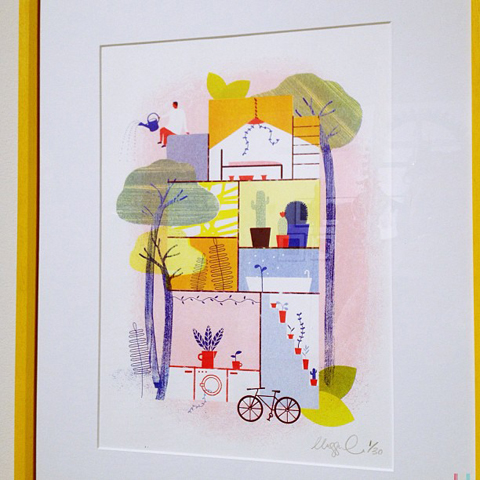
Zombie Collective is five illustrators: their interactive cog machine is a splendid addition to the gallery, spitting out gifts for lucky punters. Maggie Li‘s beautiful house print really caught my eye, as did this politely sleeping fox by Frann Preston-Gannon. Also for sale, some sweet acrylic treats.

Pick Me Up London 2013 review- print club london
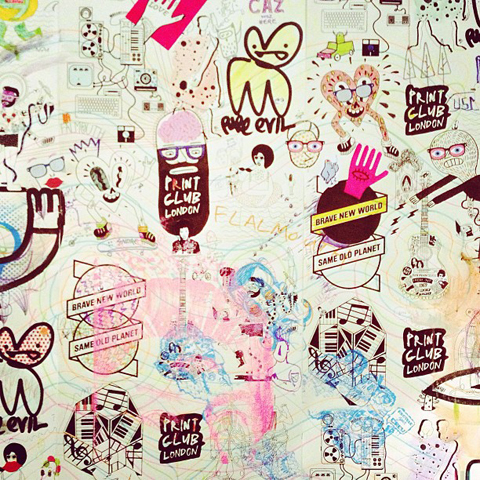
Print Club London are hosting the main room with a chance to help create a ‘living wallpaper’ drawn by the likes of Fred Butler and Margot Bowman. It looks like the just the place to hang out with the kids: give Snarfle a few years and we’ll be there!

Pick Me Up London 2013 review- nelly duff dan hillier
Pick Me Up London 2013 review- nelly duff sweet toof
Pick Me Up London 2013 review- various and gould nellyduff
Columbia Road‘s Nelly Duff gallery have created perhaps the most spectacular room, where artworks and specially commissioned wall decals on a ‘flower show’ theme combine to stunning effect. Of particular note: Dan Hillier‘s foil blocked lady, curlicued skulls courtesy of Sweet Toof, and a skull print by Various and Gould (seen above in situ on a doorway just off Brick Lane).

Pick Me Up London 2013 review- soma gallery peskimo
Back for a second year running Soma Gallery are showcasing a wide selection of prints by long running collaborators such as Peskimo and Tom Frost, as well as newbies such as Telegramme Studio and Hazel Nicholls. I particularly loved these 3D wooden gum ball artworks by Peskimo.

Pick Me Up London 2013 review-el famoso
Unlimited Collective is a print company based in Brighton. Taking pride of place in their busy space is a huge yellow tattooed man, complete with hipster moustache. All over tattoos continue to be the badge of the uber cool, but if you’re too chicken to go the whole hog yourself then artwork by El Famoso might be just the ticket instead.

Jessie Ford black bear on bike
I was so taken by a black bear on a tiny tricycle by Jessie Ford that I bought one on a whim – it will go up in Snarfle‘s room: something more to growl at.

Pick Me Up London 2013 review- helen musselwhite
Pick Me Up London 2013 review-Emily Robertson
Pick Me Up London 2013 review-matt saunders
Pick Me Up London 2013 review- lesley barnes
Handsome Frank is an illustration agency that has done a great job of snapping up brilliant up and coming illustrators, including many that have featured in these pages (Lesley Barnes, Tim McDonagh, Sarah Maycock). Some of my favourite works on display at their interactive stand include a stunning paper gatehouse by Helen Musselwhite, a curious character by Emily Robertson, sleeping log gremlins by Matt Saunders and a wonderful knight on a horse by Lesley Barnes.

Read my review of Pick Me Up Selects here, and if you are unable to check out Pick Me Up in person make sure you check out all the talent above online. Full listing information here.

Categories ,#facestamp, ,2013, ,Camberwell College of Arts, ,Charlene Man, ,Charlotte Mei, ,Collectives, ,Columbia Road, ,Dan Hillier, ,Danny Miller, ,Day Job, ,El Famoso, ,Embankment Galleries, ,Emily Robertson, ,Frann Preston-Gannon, ,Fred Butler, ,Handsome Frank, ,Hazel Nicholls, ,Helen Musselwhite, ,Human After All, ,illustration, ,Jessie Ford, ,Lesley Barnes, ,Maggie Li, ,Margot Bowman, ,Matt Saunders, ,Nelly Duff, ,Peskimo, ,Pick Me Up, ,Pick Me Up Selects, ,Print Club London, ,Sarah Maycock, ,Snarfle, ,Soma Gallery, ,Somerset House, ,Sweet Toof, ,Telegramme, ,Telegramme Studio, ,Tim McDonagh, ,Tom Frost, ,Unlimited Collective, ,Various and Gould, ,Victoria Willmott, ,Zombie Collective

Similar Posts:


Amelia’s Magazine | If You Could Collaborate exhibition at A Foundation Gallery, Rochelle School

If-You-Could-Collaborate-2010134

approved Helvetica, sans-serif; font-size: 12px;”>If You Could Collaborate is the latest event in a series of high profile shindigs put on by designers Alex Bec and Will Hudson, wunderkids of the current graphic arts scene. I first met these ambitious young men when we were both invited to do something or other at LCP, I forget what. It was but a few years ago but they were already something of a phenomenon, having started their first venture whilst still at college. Perhaps now best known currently for their popular blog It’s Nice That, they are now creating a commotion as art directors. Which is probably why they were incredibly busy showing some Very Important People around their latest exhibition when I popped down on Thursday. I would have gone to the opening night, but unfortunately I am learning to sing Mozart at evening classes. As you do. (Quite fun actually, I’m learning pop singing in my other class. Yes I really am taking two singing classes a week.) The exhibition features a variety of artists and designers who have been encouraged to collaborate outside of their disciplines without the aid of a brief – in the hope that some unexpected outcomes might be reached. As might be expected this has led to a variety in quality…

Held in the wonderful space at Rochelle School near Arnold Circus, the first thing you encounter when you arrive at the exhibition is a tall skinny booth which you are encouraged to enter via a string curtain. Inside a laptop sits behind a large red button. Oooh push me push me it seems to say. So I did. What what? A number seemed to be encouraging me to do something but I knew there was a man sat outside and I felt shy, so I missed the first number and whispered the second one. I’m not normally a mouse. Outside I could see my face massed with others, all shouting and yelling their numbers, a montage of shouts. Why hadn’t I noticed this before I went in? Fun, there was no obvious point to this piece, but then I discovered that it was delivered by a “digital agency”. Does this encapsulate the kind of vapid interactivity that clever advertisers are so fond of, but which is essentially meaningless? I don’t know…

If-You-Could-Collaborate-2010137Artwork by With Associates & Anthony Dickens. I’m on the left in the montage.

Turning the corner I was met by Alex and Will’s guided tour of important people, nodding sagely over a computer screen. Me? I was instantly attracted to the huge neon perspex sculpture. The pictures that is. The actual artpiece was a miniature model, a tiny bright town. Ooooohh, if I were a child I’d love to play with this piece. But it’s art, so must be ogled inside a protective case in a look but don’t touch kind of way. Above a neon sign flashes all the colours of the rainbow. Now do you really wonder why I wouldn’t be attracted to this piece? Underneath some more perspex cut outs showcased a new font, called Avec, (downloadable here for free type fans) which looks a bit like a letterset font. Made by Praline and the Model Shop, these pieces are designed to work together – the buildings a 3D reflection of the shapes made by the letters.

If-You-Could-Collaborate-2010076

If-You-Could-Collaborate-2010077

If-You-Could-Collaborate-2010081

And then I turned a corner and artfully fell over one of the artworks.

If-You-Could-Collaborate-2010084A bench by Max Lamb and Gemma Holt.

Yup, I just stepped back and it went tumbling like a stack of dominoes. Like a shot Will was next to me (didn’t recognise me? not sure but he wasn’t giving any signs of recognition away) hastily rectifying the situation.

“What did you do?”

“Oh I dunno, it just fell over. That must have happened on opening night right? Surely? I mean, it’s not exactly stable!”

“No.”

Hmmm.

I have no idea what this piece was meant to be, but a quick hunt online tells me that it is a bench by furniture designer Max Lamb and girlfriend Gemma Holt (can’t tell you what she does I’m afraid, her website don’t say much.) Nice work if you can get it, but I wouldn’t recommend sitting on it.

If-You-Could-Collaborate-2010082Embroidered tabloid headlines re-imagined by Sandy Suffield and Fiona Woodcock.

In front of this was a far more interesting prospect to a type and colour junky like myself. Designers Sandy Suffield and Fiona Woodcock have crafted a series of beautifully stitched tabloid headlines, taking lead from the content. We like a lot. In fact I used to do a similar thing with the fonts we created for Amelia’s Magazine.

If-You-Could-Collaborate-2010124

If-You-Could-Collaborate-2010119

If-You-Could-Collaborate-2010123

Fonts by Sandy Suffield and Fiona Woodcock.

Also in this room was a mirrored ironing table with lots of plasticky junk glued onto it and a weird golden helmet next to it that appeared to be constructed of the kind of junky tat you find in a Christmas cracker. I got really into taking pictures of these but I’m going to have to refer to the If You Could website to see if they represent some kind of meaningful commentary on junk. Nope! All I can decipher is that it’s by commercial designer Ian Wright (inspired by playfulness) and Riitta Ikonen (who is described as an “ex-student” – come on, everyone’s an ex-student of some description. Help, copy editor needed!) I still have no idea what it means, if indeed it means anything. My analysing tentacles are beginning to decipher a bit of a theme here – treading the fine line between design and art can be a tricky job. But then I like pretty things so s’pose I mustn’t grumble.

If-You-Could-Collaborate-2010104

If-You-Could-Collaborate-2010113

If-You-Could-Collaborate-2010110

By Ian Wright and Riitta Ikonen.

In a cabinet a series of objects were presented as alternative currency by design consultancy BCMH and designers Smith&WIghtman – now this commentary on the meaning and intrinsic worth of money interests me. Inscribed on the counter surface are the words “The objects have accrued their value through the amount of time invested in them. Time embedded in the material (through harvesting/extracting and processing) and then time spent in fabrication.” It goes on to ask “Why do certain forms or materials look more expensive than others? What is the value of an object with no apparent function?” Above it a ticker tape flashed red.

If-You-Could-Collaborate-2010116Mint, by design consultancy BCMH and designers Smith&WIghtman.

Mint instantly stands out for making a statement, so it’s such a shame that this is not described or transcribed on the website, which I am now going to have to flag up for it’s utter blandness in describing the works of art in this exhibition. “Relevant in tone and execution, with a crisp sensibility that is very easy on the eye.” This is as good as it gets for this artwork. Utter guff.

If-You-Could-Collaborate-2010085

Opposite there was a large painting by artist Sam Messenger and carpenter Bart Long which reminded me of many other artists – taking it’s cue from the abstract works of Bridget Riley et al. Very pretty.

If-You-Could-Collaborate-2010086

If-You-Could-Collaborate-2010087

If-You-Could-Collaborate-2010088

Lazer wall cuts by typographer Craig Ward with Sean Freeman and Alison Carmichael.

What I did really like was the lazer cut panels further along the wall. I just love the way that the edge of the wood retains the burn marks from the machine used to cut it out. Scho sexy that. Termed “Calligraffiti” these beautiful wall pieces were dreamt up by hardcore typographer Craig Ward with cohorts Sean Freeman and Alison Carmichael. I have no idea what the phrases mean but who cares? See, always the typography. Always.

If-You-Could-Collaborate-2010095

On the floor lay an obscenely long flag, described as “new world” by creators Karl Grandin and And Beyond. What does this new world mean? Maybe we’re all joined together now. That would be nice. In a big snuggle under the flag. Or maybe not.

If-You-Could-Collaborate-2010093

Oliver Jeffers and Aaron Ruff have re-purposed a suitcase as part of a mad story about four dimensional control. I love illustrators – they always make things so playful. And it doesn’t have to mean anything, it can just be for fun. Beautiful.

If-You-Could-Collaborate-2010090Wall hanging by Hvass&Hannibal with Anne Werner.

Next to this was the Hvass&Hannibal wall hanging that I spoke of in my interview with them here. I have to say that I don’t think this is their strongest work – as we know  over the past few weeks they were really super busy with putting together their solo exhibition and I suspect that they didn’t devote a huge amount of time to this. When I spoke to them they expressed an urge to branch out of their comfort zone when it comes to colour, but actually I don’t think that they should – their use of colour is a big part of what makes their work so special. And the meagreness of colour in this piece lets it down. Just a thought girls, if you’re reading.

If-You-Could-Collaborate-2010131

If-You-Could-Collaborate-2010130By Sara Fanelli, George Hardie and Leonardo Sonnoli.

Now, don’t get me started on Sara Fanelli, or I might be forced into a confession…. When I was fresh out of college, trying to be an illustrator (yeah, it didn’t work out, alright) I wanted to be just like her…. you can see her influence heavily in my work of this period – lots of mashed up type, weird animals created out of collage, etc. Anyway, she has teamed up with George Hardie and Leonardo Sonnoli to produce some delicate numerals (which they describe as the bargain version of the alphabet as there are only 10).

If-You-Could-Collaborate-2010091

If-You-Could-Collaborate-2010092Jim Stoten with Andy Rementer.

Oh, and there’s Jim Stoten, collaborating with Andy Rementer (I’m not sure which is which – they seem to have merged successfully). And he STILL hasn’t learned how to produce artwork for digital output (unless he has decided to embrace this particular ‘look’ intentionally). Yes, as the blurb on the website states, Jim can really draw – I absolutely love his work (he’s appeared in my magazine several times and did the cover for issue 6) but boy is he hard to work with – and I remember one of the biggest problems was that he could never produce work at a high enough resolution for decent print reproduction. He scans his drawings at one resolution and then blows them up to fill them in at another. It’s such a shame that once again, his lines look so fuzzy and just a bit, well, crappy. This image has also been printed on low quality gloss paper. It just could have all been so much more beautifully executed.

If-You-Could-Collaborate-2010097

If-You-Could-Collaborate-2010098Artwork by Jesse Auersalo and Jesse Pietila.

The low quality of this production was highlighted by the wonderful execution of the huge hanging by Jesse Auersalo and Jesse Pietila in the next room. Here a surreal juxtaposition of outsize everyday objects; top hat and band aid, were printed in fine monochrome detail on what looked like carpet tile. Just wonderful, and a perfect example of how an exhibition like this should be approached when attempting to merge the disciplines of art and illustration.

If-You-Could-Collaborate-2010099

Next to this (not sure they were best suited to such proximity) was a brightly coloured piece by the lovely Fred Butler (championed in issue 10), jewellery designer extraordinaire. And now I am being visited by the green eyed monster because I’ve seen on the website that THERE WERE BADGES. But not when I got there. Hurumph. Together with No Days Off she has created a wall piece jokingly based around a campaign to get more days in the week. Offbeat and fun. Love it.

Then onto the darkened room, where an animation, Black Lake, by fabulous American illustrator Jon Klassen and video director David OReilly was showing in a loop. Ducks swim away from the viewer towards high rounded mountains and a lone house, then appear to swim back at you upside down and back to front. Coupled with a hypnotic soundtrack this was a really beautiful piece and you can view it here.

Another lovely video came courtesy of Michael Maloney and photographer John Hopper – taken by standing on a peak in the Lake District for 24 hours and rotating a camera 360 degrees to watch the sun rise then set over the hikers who come to stand and have their picture taken in front of the wonderful view. Mesmerising.

If-You-Could-Collaborate-2010126

If-You-Could-Collaborate-2010127Rob Ryan’s decorated chair.

Rob Ryan gets everywhere these days – and for this exhibition he has created a decorated flat pack rocking chair with Michael Marriott which I paused to look at on my way out. Very cute but unfortunately the recipient of another dreadful bit of description on the website: “There are a thousand words we could use to describe Rob Ryan’s work, and all of them are superlatives.” Folks, next time hire a decent writer!

I left the Rochelle School with a lot to mull over in my mind, which can only be a good thing when viewing art. Alex and Will have pulled together a really interesting exhibition, even if at times it felt as if there was something missing – decent explanations of the artworks for example. But I am not really sure how successful an idea it is to shoehorn the work of such obviously commercial designers into an artistic space like this – it felt a little vapid in places. Some of the work obviously considered deeper content but much of it was just pretty for it’s own sake, with an obvious eye to a lucrative advertising contract not far down the line. Of course I really enjoy pattern and type and I absolutely believe there is a place to produce art for beauty’s sake, but I don’t think it works so well to try and be all things to all people. I suppose I also think that if you have the chance to create something more meaningful you should grab it with everything you’ve got (this exhibition had prominent Arts Council funding) instead of adding to the vast canon of superficiality that many contributors to the exhibition must surely work with on a daily basis. To be honest I would like to unremittingly champion Alex and Will but with their eye so clearly set on their own commercial future I felt their choice of collaborators too often produced work that felt a bit empty and soulless. I also think you’ve got to decide what audience you’re aiming for, and this wasn’t obvious.

Having said that there was much to enjoy in this exhibition and I do really admire the zeal with which Alex and Will are are able to pull together such a large project. I was just about to tell you the good news that If You Could Collaborate is on for another week, but I’ve checked the website and instead have discovered that it closed at the weekend, which is a real shame because if you have any kind of interest in the murky ground where art meets design this is a must see exhibition. What a shame it wasn’t given a longer run.

Categories ,A Foundation Gallery, ,Alex Bec, ,art blog, ,Bridget Riley, ,Fred Butler, ,Hvass&Hannibal, ,If You Could, ,If You Could Collaborate, ,It’s Nice That, ,rob ryan, ,Rochelle School, ,shoreditch, ,Will Hudson

Similar Posts: