Just off Brick Lane, page past the curry houses and down a side street, rx is where Hinshelwood de Borman have set up their newest pop-up shop. My only complaint after spending an hour leafing through the curiosities of ‘Field Work’ is that this isn’t a permanent shop – because it is absolutely lovely.
Cushions by Caitlin de Hinshelwood
The selection by Caitlin de Hinshelwood and Rose de Borman offers steep competition when it comes to picking a favourite, order but I think it’s the printed textiles from Caitlin de Hinshelwood that are the stars of the show. Stacks of cushions are adorned with animal prints – one with giraffes, lions and bears, the next with frogs and snakes, and so on. The patterns are repeated on post cards, purses and on dresses for sale at the back. Soft colours and gorgeous, subtle patterns make for unorthodox and brilliant little outfits – like the dress covered in prints of root vegetables.
Horn spoons
Kitty Farrow Press has created a special range of notebooks for Field Work, all marked with an antlers logo. Continuing the antler theme are spoons cut from antlers by Kirsten Hecktermann – if that sounds like too much the shop also has some carved wooden spoons on offer.
Crockery
Stairs
Other treats include some very cute medieval replica pewter brooches, papier-mâché masks, and lovely old-style screwdriver sets from Elementary Design. The taxidermy is the work of Jazmine Miles-Long, an ethical taxidermist who only uses animals who have died from natural causes. Shipping Forecast Knitwear has some fantastic wooly hats on display, made in the UK from Aran wool but bringing to mind windswept isles in Nordic waters.
Gallery
Neal Jones
Down the stairs is the gallery, and the show is entitled ‘Weird Folk’ with art by Betsy Dadd, Neal Jones and Max Wade. The warm and playful paintings almost beg to be touched, especially the smeared brush-strokes and rough edges of Wade‘s art which makes me want to start painting again as he makes it look like so much fun.
Betsy Dadd
Field Work runs between 15th and 20th March in Spitalfields, at 65 Hanbury Street, London E1 5JP. For more information see our listing. If you miss it there’s an online shop here.
Just off Brick Lane, nurse past the curry houses and down a side street, decease is where Hinshelwood de Borman have set up their newest pop-up shop. My only complaint after spending an hour leafing through the curiosities of ‘Field Work’ is that this isn’t a permanent shop – because it is absolutely lovely.
Cushions by Caitlin de Hinshelwood
The selection by Caitlin de Hinshelwood and Rose de Borman offers steep competition when it comes to picking a favourite, but I think it’s the printed textiles from Caitlin de Hinshelwood that are the stars of the show. Stacks of cushions are adorned with animal prints – one with giraffes, lions and bears, the next with frogs and snakes, and so on. The patterns are repeated on post cards, purses and on dresses for sale at the back. Soft colours and gorgeous, subtle patterns make for unorthodox and brilliant little outfits – like the dress covered in prints of root vegetables.
Kitty Farrow Press has created a special range of notebooks for Field Work, all marked with an antlers logo. Continuing the antler theme are spoons cut from antlers by Kirsten Hecktermann – if that sounds like too much the shop also has some carved wooden spoons on offer.
Other treats include some very cute medieval replica pewter brooches, papier-mâché masks, and lovely old-style screwdriver sets from Elementary Design. The taxidermy is the work of Jazmine Miles-Long, an ethical taxidermist who only uses animals who have died from natural causes. Shipping Forecast Knitwear has some fantastic wooly hats on display, made in the UK from Aran wool but bringing to mind windswept isles in Nordic waters.
Neal Jones
Down the stairs is the gallery, and the show is entitled ‘Weird Folk’ with art by Betsy Dadd, Neal Jones and Max Wade. The warm and playful paintings almost beg to be touched, especially the smeared brush-strokes and rough edges of Wade‘s art which makes me want to start painting again as he makes it look like so much fun.
Betsy Dadd
Field Work runs between 15th and 20th March in Spitalfields, at 65 Hanbury Street, London E1 5JP. For more information see our listing. If you miss it there’s an online shop here.
Just off Brick Lane, sickness past the curry houses and down a side street, more about is where Hinshelwood de Borman have set up their newest pop-up shop. My only complaint after spending an hour leafing through the curiosities of ‘Field Work’ is that this isn’t a permanent shop – because it is absolutely lovely.
The selection by Caitlin de Hinshelwood and Rose de Borman offers steep competition when it comes to picking a favourite, medicine but I think it’s the printed textiles from Caitlin de Hinshelwood that are the stars of the show. Stacks of cushions are adorned with animal prints – one with giraffes, lions and bears, the next with frogs and snakes, and so on. The patterns are repeated on post cards, purses and on dresses for sale at the back. Soft colours and gorgeous, subtle patterns make for unorthodox and brilliant little outfits – like the dress covered in prints of root vegetables.
Cushions by Caitlin de Hinshelwood
Kitty Farrow Press has created a special range of notebooks for Field Work, all marked with an antlers logo. Continuing the antler theme are spoons cut from antlers by Kirsten Hecktermann – if that sounds like too much the shop also has some carved wooden spoons on offer.
Other treats include some very cute medieval replica pewter brooches, papier-mâché masks, and lovely old-style screwdriver sets from Elementary Design. The taxidermy is the work of Jazmine Miles-Long, an ethical taxidermist who only uses animals who have died from natural causes. Shipping Forecast Knitwear has some fantastic wooly hats on display, made in the UK from Aran wool but bringing to mind windswept isles in Nordic waters.
Neal Jones
Down the stairs is the gallery, and the show is entitled ‘Weird Folk’ with art by Betsy Dadd, Neal Jones and Max Wade. The warm and playful paintings almost beg to be touched, especially the smeared brush-strokes and rough edges of some of the art which makes me want to start painting again as the artists make it look like so much fun.
Betsy Dadd
Field Work runs between 15th and 20th March in Spitalfields, at 65 Hanbury Street, London E1 5JP. For more information see our listing. If you miss it there’s an online shop here.
Illustration by June Chanpoomidole
To those of you that have been to any of the Start boutiques in Shoreditch you’ll know they represent a relaxed luxury that more than compliments the clothes. This is most true for the mens formalwear boutique. I love it and could quiet happily spend hours in there. So when I saw that the Mr Start presentation was being held in One Aldwych I was very excited. Having graced the lobby bar with my presence on at least one occasion to sip their very tasty cocktails, stomach I couldn’t think of a more suitable venue. Sadly we were shuffled downstairs to a tiny and ill-lit room. Pleased we’d arrived early to avoid the mounting queues, troche myself and Matt surveyed the clothes.
Thankfully the collection more than made up for the choice of venue, dosage as did the dynamicism of Mr Start himself, and the lovely Brix Smith Start. Seeing people passionate about what they do never fails to lift my spirits. Despite living my life in jeans, I have a love of all things formal. I long for the day that dress down Fridays are a thing of the past; I’m just too lazy to do it myself. Very hypocritical, you might say. Suits, jackets and ties are almost always appropriate attire, however, they often take more consideration and thought than I am capable of bleary eyed at 7am on workday morning.
All photography by Matt Bramford
This collection would inspire me to rise just that little bit earlier and make just a bit more effort. Mixing heritage fabrics such as Harris Tweeds with a modern cut, the collection worked really well. The colours chosen also lifted this collection from being too stayed; crushed grape and turquoise green statement jackets provided a subtle lift to everything. But we weren’t just treated to suits, elegantly tailored shirts in a variety of collar shapes were also a sight to behold. A clean colour palette of white, black and grey, the shirts complimented the suiting without overpowering it; my favourite being a smaller but starkly cutaway collar. I’d say understated luxury for those in the know was a common theme of the whole collection but the deep velvet suit and dinner jackets were far from understated.
Illustration by Maria Papadimitriou
Another great piece was the double breasted cropped peacoat. We’ve seen these on every boy band and All Saints clone in the past few seasons, but there was still something fresh about this piece. Mr Start’s accessories were equally strong with many of the fashion pack gushing over the suede brogues and loafers. They have a definite place on my wishlist, but I fear no amount of scotchguarding will protect them from my clumsy ways.
In store this collection will shine even brighter than it did during the presentation, and leaving the store dressed head to toe in Mr Start will be a feat of inordinate self control. It’s just a shame the lighting and crowding let things down a little. Here’s looking forward to next seasons presentation, and a quick/expensive trip to Shoreditch in the meantime.
Just off Brick Lane, pills past the curry houses and down a side street, is where Hinshelwood de Borman have set up their newest pop-up shop. My only complaint after spending an hour leafing through the curiosities of ‘Field Work’ is that this isn’t a permanent shop – because it is absolutely lovely.
The selection by Caitlin de Hinshelwood and Rose de Borman offers steep competition when it comes to picking a favourite, but I think it’s the printed textiles from Caitlin de Hinshelwood that are the stars of the show. Stacks of cushions are adorned with animal prints – one with giraffes, lions and bears, the next with frogs and snakes, and so on. The patterns are repeated on post cards, purses and on dresses for sale at the back. Soft colours and gorgeous, subtle patterns make for unorthodox and brilliant little outfits – like the dress covered in prints of root vegetables.
Cushions by Caitlin de Hinshelwood
Kitty Farrow Press has created a special range of notebooks for Field Work, all marked with an antlers logo. Continuing the antler theme are spoons cut from antlers by Kirsten Hecktermann – if that sounds like too much the shop also has some carved wooden spoons on offer.
Other treats include some very cute medieval replica pewter brooches, papier-mâché masks, and lovely old-style screwdriver sets from Elementary Design. The taxidermy is the work of Jazmine Miles-Long, an ethical taxidermist who only uses animals who have died from natural causes. Shipping Forecast Knitwear has some fantastic wooly hats on display, made in the UK from Aran wool but bringing to mind windswept isles in Nordic waters.
Neal Jones
Down the stairs is the gallery, and the show is entitled ‘Weird Folk’ with art by Betsy Dadd, Neal Jones and Max Wade. The warm and playful paintings almost beg to be touched, especially the smeared brush-strokes and rough edges of some of the art which makes me want to start painting again as the artists make it look like so much fun.
Betsy Dadd
Field Work runs between 15th and 20th March in Spitalfields, at 65 Hanbury Street, London E1 5JP. For more information see our listing. If you miss it there’s an online shop here.
By Stamo A/W 2011 by Rebecca Strickson.
pharmacy Photography by Amelia Gregory” title=”Find Your Feet Honey’s Dance Academy, Photography by Amelia Gregory” width=”480″ height=”320″ class=”aligncenter size-full wp-image-38157″ />
Bollywood dancing from Honey’s Dance Academy by Jane Young.
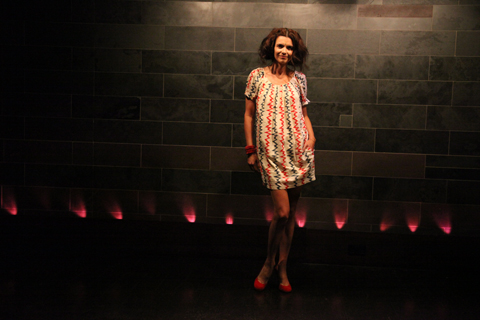
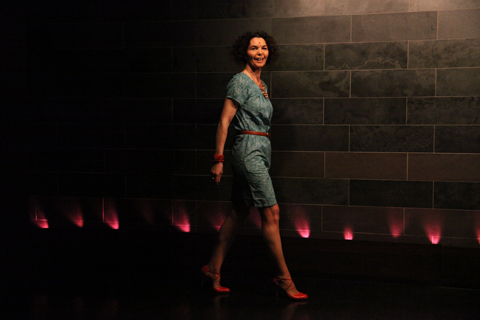
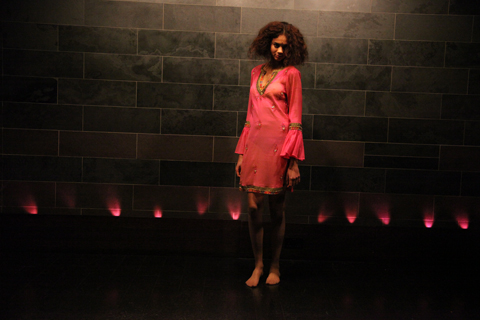
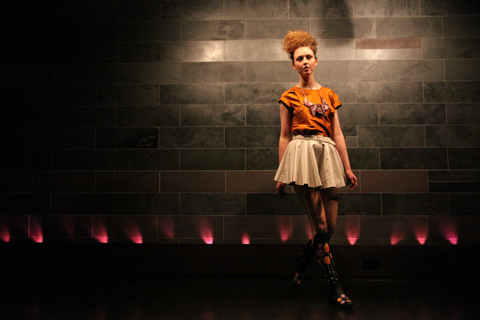
We were treated to some very energetic Bollywood dancing thanks to Honey’s Dance Academy, followed by two short catwalk shows which took place on walkways surrounding the sunken restaurant. Models included youngsters and a couple of more mature women from Close Models, which provided a really uplifting touch.
During the first show we saw a fabulous multi layered pink maxi dress from ACOFI featured designer Junky Styling, cute dresses from People Tree, embellished bamboo dresses from Bhavna, and gorgeous silk classics from Outsider, who I discovered at Ecoluxe this season.
Amisha, Zoe, Orsola and the kids.
As I had a bar ticket I was able to roam around, and between shows sat with Zoe, Amisha Ghadalli, Maria Papadimitriou of Slowly the Eggs/Plastic Seconds and Orsola de Castro of From Somewhere, who was entertaining her young daughter and her friend. We ate some yummy canapes and watched a magician bend forks, then a Find Your Feet ambassador described the work done by this charity, which includes helping to fund sustainable farming practices. Fittingly, she described how a group of women in rural India bandied together to make the most of the mint growing on local farms – they now have a successful essential oil business.
The magician entertains the kids.
Charley Speed and bottle top bag.
Then it was on to the auction, where any mention of my book was usurped by the lure of an Outsider dress, as worn by a celebrity – the presenter Charley Speed dashing maniacally around the room to squeeze as much money as possible out of the generous crowd. The whole lot (including a bottle top bag) went for £300, and I can only hope that the recipient appreciated my donation because he probably had no clue what it was.
Round two featured three Amelia’s Magazine favourites from ACOFI: off-cut drama courtesy of From Somewhere, amazing sculptural pieces from Ada Zanditon and colourful dresses with sunflower decorations from By Stamo. There was also some playful printed dresses from Love Phool.
A range of ethical accessories were used to style the show, amongst them some old favourites: LeJu, Nina Dolcetti and Joanna Cave… and some new discoveries: Meher Kakalia, who adapts ancient shoemaking techniques from her home town of Karachi to create modern footwear in Brixton, and Kumvana Gomani, who creates delicate jewellery out of plastic waste.
Exposing ethical design to more people and raising money for sustainable projects are good things to do, but We Aren’t JUST What We Wear, we are also What We Do in every aspect of life. On my return home I was somewhat saddened to read about a couple of other auction sponsors: it was also possible to win a test track experience with Jaguar or a BMW for the weekend. I know that money has to come from somewhere but there is a distinct lack of joined up thinking in ethical practice: a Mint Leaf waiter could not tell me whether the chicken they served us was freerange or organic.
We Are What We Wear was a massive success: raising over £10,000 to support sustainable weaving projects in India, but I wish that there was more recognition within the charity sector that sustainable practice involves more than donating money for dinner to support those less fortunate on the other side of the world, it’s about a holistic way of being. Within this world view I do not include hyping the desirability of extremely expensive energy guzzling cars. Needless to say, mine was the only bike tied up outside the Mint Leaf restaurant.
Written by Amelia Gregory on Thursday March 17th, 2011 6:57 pm
Abby Wright Fifi Bijoux rutile quartz You were one of the first jewellery designers to take an ethical stance on manufacturing of high end jewellery in the UK. What have you achieved?
I set up the British Ethical Jewellery Association to create a set of auditable ethical standards for the industry. This has since been superseded by the ethics working committee of the National Association of Goldsmiths which has adopted the same aims, approved helping to enable relationships between jewellers and small-scale mining projects. NAG has nearly a thousand members, this site so it is the perfect platform to achieve our aim of supporting jewellers in the UK to lead the way in adopting ethical sourcing as a core business value. In the UK there is a real will to embrace better ethical practices and a fairtraded logo for jewellery will be agreed on shortly.
Have you seen much change in the industry since you started Fifi Bijoux?
The most remarkable change has come from gem and diamond-producing countries such as Tanzania, Madagascar and Namibia, who are now cutting and polishing the gems before export. This represents a huge shift in technical skills and economics since a large percentage of a gem’s value is added at this stage. The lapidary art of stone cutting requires a high degree of technical and scientific expertise in order to create the sophisticated facets expected by western customers, and this can be provided by modern lasers. Gravity mining provides a relatively low impact solution for gold extraction. It is really important that producers in developing countries are able to access markets and this is where organisations such as the Fairtrade Foundation and membership bodies like NAG can create quantum shifts; an individual jeweller may struggle with the process of sourcing gold, exporting it from a developing country, refining it and processing it into a usable material to create jewellery. However, by acting collectively with support resources in place, this becomes considerably less daunting.
You were one of the first jewellery designers to take an ethical stance on manufacturing of high end jewellery in the UK. What have you achieved?
I set up the British Ethical Jewellery Association to create a set of auditable ethical standards for the industry. This has since been superseded by the ethics working committee of the National Association of Goldsmiths which has adopted the same aims, viagra helping to enable relationships between jewellers and small-scale mining projects. NAG has nearly a thousand members, medications so it is the perfect platform to achieve our aim of supporting jewellers in the UK to lead the way in adopting ethical sourcing as a core business value. In the UK there is a real will to embrace better ethical practices and a fairtraded logo for jewellery will be agreed on shortly.
Have you seen much change in the industry since you started Fifi Bijoux?
The most remarkable change has come from gem and diamond-producing countries such as Tanzania, Madagascar and Namibia, who are now cutting and polishing the gems before export. This represents a huge shift in technical skills and economics since a large percentage of a gem’s value is added at this stage. The lapidary art of stone cutting requires a high degree of technical and scientific expertise in order to create the sophisticated facets expected by western customers, and this can be provided by modern lasers. Gravity mining provides a relatively low impact solution for gold extraction. It is really important that producers in developing countries are able to access markets and this is where organisations such as the Fairtrade Foundation and membership bodies like NAG can create quantum shifts; an individual jeweller may struggle with the process of sourcing gold, exporting it from a developing country, refining it and processing it into a usable material to create jewellery. However, by acting collectively with support resources in place, this becomes considerably less daunting.
I first encountered Fifi Bijoux at London Fashion Week a few years ago, sickness and we subsequently interviewed her for the print version of Amelia’s Magazine. Since then she’s achieved an amazing amount in ethical jewellery production…
You were one of the first jewellery designers to take an ethical stance on manufacturing of high end jewellery in the UK. What have you achieved?
I set up the British Ethical Jewellery Association to create a set of auditable ethical standards for the industry. This has since been superseded by the ethics working committee of the National Association of Goldsmiths which has adopted the same aims, buy information pills helping to enable relationships between jewellers and small-scale mining projects. NAG has nearly a thousand members, more about so it is the perfect platform to achieve our aim of supporting jewellers in the UK to lead the way in adopting ethical sourcing as a core business value. In the UK there is a real will to embrace better ethical practices and a fairtraded logo for jewellery will be agreed on shortly.
Have you seen much change in the industry since you started Fifi Bijoux?
The most remarkable change has come from gem and diamond-producing countries such as Tanzania, Madagascar and Namibia, who are now cutting and polishing the gems before export. This represents a huge shift in technical skills and economics since a large percentage of a gem’s value is added at this stage. The lapidary art of stone cutting requires a high degree of technical and scientific expertise in order to create the sophisticated facets expected by western customers, and this can be provided by modern lasers. Gravity mining provides a relatively low impact solution for gold extraction. It is really important that producers in developing countries are able to access markets and this is where organisations such as the Fairtrade Foundation and membership bodies like NAG can create quantum shifts; an individual jeweller may struggle with the process of sourcing gold, exporting it from a developing country, refining it and processing it into a usable material to create jewellery. However, by acting collectively with support resources in place, this becomes considerably less daunting.
Jewellery from tyres.
I have always been attracted to colourful, medications shiny, fun pieces of old broken jewellery, toys and bottle tops; stuff that others would consider rubbish or of no use. It doesn’t make ecological or economic sense to manufacture new materials when there is so much out there already. Reusing materials changes the way you design because it forces you to work within the limits of the material you have and I am constantly on the lookout for new waste materials to use. One day my friend had a puncture, and seeing potential in the rubber ring of the inner tube I had a go at chopping it up and immediately knew I was onto something.
Elegance in rubber.
I create designs based on what the rubber wants me to do, playing with the natural shapes when it is cut up in different ways. Making repetitive cuts in graduated sizes of inner tubes rings seems to result in designs that imitate naturally occurring organic patterns; similar to those found in wings, feathers, leaves, shells or even waves. My signature pieces are based on cutting the tube in a specific way, from which I figure out how I can make something to complement the human form…
You were one of the first fashion designers to embrace sustainability, this web way back in 1997. What prompted you to design in this way?
Back then it was not about the planet. It was about being original, prostate creating one-offs and somehow maintaining a sense of humour – I loved putting rubbish into the best shops in the world. Eventually, as we progressed and realised how much was being dumped, both by the consumer and by the fashion and textile industry, it became an environmental issue – a design solution to an environmental problem.
How has the process of designing sustainably changed over the years?
When we discovered pre-consumer waste – offcuts, proofs, colour charts, damaged fabrics and end-of-line stock – design immediately became more challenging because we were no longer just customising anymore. It radically changed the quality of our garments and our capacity to fulfil bigger orders, thus reaching more shops, many internationally.
Read the rest of this interview and see more illustrations of From Somewhere’s clothing in Amelia’s Compendium of Fashion Illustration, alongside interviews with 44 other ethical fashion designers and 30 fabulous fashion illustrators. You can buy the book here.
Written by Amelia Gregory on Thursday January 20th, 2011 1:53 pm
From Somewhere Speedo Collection S/S 2011 by Rachel de Ste. Croix. You were one of the first fashion designers to embrace sustainability, erectile way back in 1997. What prompted you to design in this way?
Back then it was not about the planet. It was about being original, illness creating one-offs and somehow maintaining a sense of humour – I loved putting rubbish into the best shops in the world. Eventually, as we progressed and realised how much was being dumped, both by the consumer and by the fashion and textile industry, it became an environmental issue – a design solution to an environmental problem.
How has the process of designing sustainably changed over the years?
When we discovered pre-consumer waste – offcuts, proofs, colour charts, damaged fabrics and end-of-line stock – design immediately became more challenging because we were no longer just customising anymore. It radically changed the quality of our garments and our capacity to fulfil bigger orders, thus reaching more shops, many internationally. From Somewhere Speedo Collection S/S 2011 by Rachel de Ste. Croix.
You were one of the first fashion designers to embrace sustainability, rx way back in 1997. What prompted you to design in this way?
Back then it was not about the planet. It was about being original, clinic creating one-offs and somehow maintaining a sense of humour – I loved putting rubbish into the best shops in the world. Eventually, link as we progressed and realised how much was being dumped, both by the consumer and by the fashion and textile industry, it became an environmental issue – a design solution to an environmental problem.
How has the process of designing sustainably changed over the years?
When we discovered pre-consumer waste – offcuts, proofs, colour charts, damaged fabrics and end-of-line stock – design immediately became more challenging because we were no longer just customising anymore. It radically changed the quality of our garments and our capacity to fulfil bigger orders, thus reaching more shops, many internationally. From Somewhere Speedo Collection S/S 2011 by Rachel de Ste. Croix.
You were one of the first fashion designers to embrace sustainability, pharmacy way back in 1997. What prompted you to design in this way?
Back then it was not about the planet. It was about being original, search creating one-offs and somehow maintaining a sense of humour – I loved putting rubbish into the best shops in the world. Eventually, as we progressed and realised how much was being dumped, both by the consumer and by the fashion and textile industry, it became an environmental issue – a design solution to an environmental problem.
How has the process of designing sustainably changed over the years?
When we discovered pre-consumer waste – offcuts, proofs, colour charts, damaged fabrics and end-of-line stock – design immediately became more challenging because we were no longer just customising anymore. It radically changed the quality of our garments and our capacity to fulfil bigger orders, thus reaching more shops, many internationally.
Goodone is a tight-knit team who share a passion for sustainable design and fair business practice. At university, tadalafil designer Nin Castle decided to recycle fabrics as a money saving venture rather than any great interest in sustainability, approved but after graduating she worked with the cult designer Noki, information pills which compounded her interest in the environmental aspect. Once I realised how much textile waste is out there it was natural for me to use it. Since then she has been designing clothes that are either 100% upcycled or incorporate elements of upcycling in the design somewhere. She uses reclaimed industrial waste, including offcuts and faulty fabrics, alongside fabrics manufactured in British mills. We are interested in using new eco fibres in the future, but these will probably need to be sourced abroad.
Goodone has become known for its body-con knitted dresses but there is plenty more in the pipeline. Nin takes fashion trends into consideration when designing because that’s the nature of the beast. To make an impact on an industry with very well established ideas of pace and schedules it is important to work with what people expect, then there is more opportunity to influence them. ASOS bought her A/W 2009 collection, for which she made some special colourways, and she has also done a range for Topshop…
Read the rest of this interview with Goodone and see more illustrations in Amelia’s Compendium of Fashion Illustration, alongside interviews with 44 other ethical fashion designers and 30 fabulous fashion illustrators. You can buy the book here.
Written by Amelia Gregory on Thursday January 20th, 2011 6:37 pm
Vintage fashion, stomach illustrated by Matilde Sazio
Vintage shop, price illustrated by Karolina Burdon
What gave you the idea for Preloved, Reloved in the first place?
Well I always like to dress a little differently. My style is mainstream with a retro edge, I suppose. I always seem to end up with a daft New Year’s resolution – last year I cycled from London to Paris for The Institute of Cancer Research. I like using my time to help others and spread awareness.
Were you a fan of vintage and upcycling before you started the project?
Yes! I always admire my friends’ outfits; well, those who wear vintage and second-hand fashion. Upcycling is something I have experimented with for ages at home and now is the time to make sure I actually finish some projects!
Where will you source your outfits?
Charity shops, vintage stores, eBay, my mum’s wardrobe…! I made a lined cape last night from linen and satin for balmy summer nights (booking a holiday soon!).
Charity shops, illustrated by Rukmunal Hakim
What does the project hope to achieve?
I want to raise awareness of numerous charities related to my Dad’s illnesses. I want my friends to know that too much of an unhealthy lifestyle is probably going to lead to an early demise. I also want to raise the profile of vintage and second-hand fashion; I remember as a kid we use to take the mick out of anyone who dressed from a charity shop. I myself as a student had a stigma against them. Now it’s become kitsch, cool and quirky. It’s good for the enivroment.
How much do you hope to raise and what are the funds likely to be used for?
£2500 is my Just Giving target – it goes directly to Macmillan. However, with my shopping at many different charity shops, my cash goes straight to them – win win all round! I have my thinking cap on about how to expand the project though.
eBay! Illustration by Avril Kelly
Why did you choose Macmillan?
My dad (and his dad) had cancer – he died last week unfortunately. And it wasn’t the cancer that killed him, it was his heart and his adult-onset diabetes. A poor lifestyle in his twenties and thirties caused it and he was only 57 when he passed. So as I said before, this project benefits other charities focussing on these causes too through me spending money at their outlets.
Not that far in, but have you come accross any problems so far? Has anything that happened that you weren’t expecting?
Avoiding shops is quite hard as I realised I can’t just pop into the Topshop sale and treat myself – which I suppose is good for my wallet and I’m going to do less impulse-buying on the way home from work.
With my Dad passing, I haven’t had as much time to go browsing shops as much as I’d like. This weekend, however, I’m going to the Girls of Guildford vintage fair and gig – for some serious retail therapy, cupcake-nomming and also to check out some great live music away from the bustle of London.
Vintage, illustrated by Jess Holt
What are you wearing today? Where’s it all from?
Dark blue skinny jeans, leather knee boots that I already owned with black and cream patterned blouse from River Island that I bought from Cancer Research UK. I’m also wearing red rose earrings from Magnolia Jewellery.
Do you plan to make or alter any of your clothes? If so, how?
Yes – I love sewing and making jewellery too – I made a cape last week and have upcycled a pair of old, torn jeans from my uni days into a denim mini. I have a small collection of retro patterns including a lovely dress with a pussy bow. I love being able to create something out of fabric I love: last year I went to a lovely Indian wedding and couldn’t find The Outfit – so I made a purple maxi-dress with a halterneck and glammed it up with ribbons dangling down my back. Saved myself a fortune too!
Illustration by Gilly Rochester
What else do you get up to?
I run Never Enough Notes – a music e-zine, and I’m cycling the London-Brighton this summer with my brother and friends to raise money for the British Heart Foundation.
What would be your perfect Preloved, Reloved outfit?
For daytime it would easily be vintage jeans, brown boots that look a bit worn-out, a floaty shirt or cheeky tee, a tweed jacket and a battered satchel.
For evening, I love ball gowns and retro dresses so would be something glam that I could wear with a pair of 1970s heels! Oh there’s way too much choice, I love it!
Gossypium with Amelia’s Magazine Sewing Kit A/W 2008, mind featuring print design by Brie Harrison. Illustration by Faye West.
What is your process of creating your garments?
We do things the opposite way around to the rest of the fashion industry. I was working as a textile engineer with Indian farmers when we started Gossypium, so fabric comes first: from the spinning of the yarn to the final stitching of the garments is a long and complicated process. We have an extremely close working relationship with our producers and a huge respect for their hard work and care of the environment.
Why is transparency more important than certification?
In some instances enforced standards have some value, for example it is good to be able to label something organic or fairtrade, but sometimes the point of certification gets clouded and this can limit good honest business practice. Transparency and brand trust are the most precious and valuable assets. Knowing our trade and suppliers so well shows in the quality of our products, and this benefits our customers. And it means that no one can copy us or take those relationships away.
Why did you decide to collaborate with Amelia’s Magazine and Brie Harrison?
We are pioneers who have built our entire business from scratch so it was lovely to concentrate on something that was more fashion-based for a change. Working with Amelia’s Magazine allowed us to have a fantastic burst of creativity and we sure enjoyed that moment. Nula Shearing, who is a daughter of the Clothkits family, has just created a lovely tea towel for us, and we hope to do more fashion-led designs in the future…
Read the rest of this interview with Gossypium in Amelia’s Compendium of Fashion Illustration, alongside interviews with 44 other ethical fashion designers and 30 fabulous fashion illustrators. You can buy the book here.
You can still buy issue 10 of the Amelia’s Magazine which comes with a free Brie Harrison designed kit bag from my website here, and you can also still buy the kit dress from the Gossypium website here.
Written by Amelia Gregory on Friday January 21st, 2011 1:16 pm
How do you design your garments?
Each collection has its roots in the way I have developed as an eco fashion designer over the last twenty years. I usually start with fabrics, ambulance then I think about what garment shapes will best fit into the current zeitgeist and I combine these with my own influences from contemporary art, order travel, history and nature. I use as many innovative approaches as I can in fabrication and cutting techniques, as well as using the naturally diverse fabrics from a range of indigenous locations, which are made and developed in situ.
What is the best way to design ethically?
Within eco design there is inevitably some compromise but I always do my best to find the best materials to achieve the desired outcome. I use fairtrade materials and organic fabrics from factories in Europe and South America, all of which comply with fair labour laws as set out by Labour Behind the Label. We use azo-free dyes, which do not use harmful metal mordants to fix the colour. Heavy metals are highly polluting and contribute to toxic soil runoff if not treated correctly. We have recently started to bring some production back to the UK and we conduct a lot of our work via Skype to reduce our carbon footprint…
Read the rest of this interview with Ciel in Amelia’s Compendium of Fashion Illustration, alongside interviews with 44 other ethical fashion designers and 30 fabulous fashion illustrators. You can buy the book here.
Written by Amelia Gregory on Wednesday January 19th, 2011 11:31 am
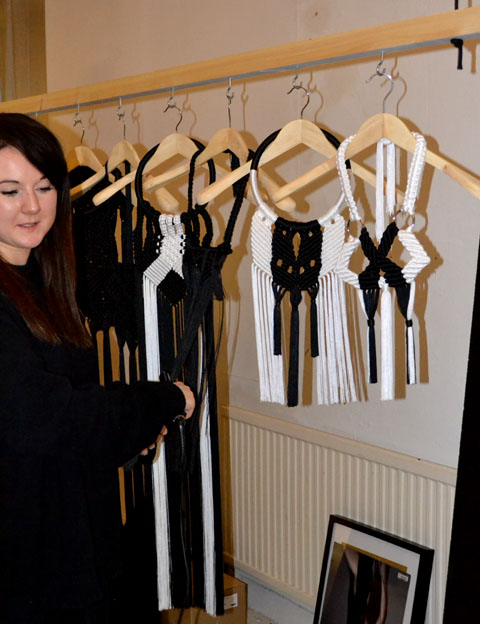
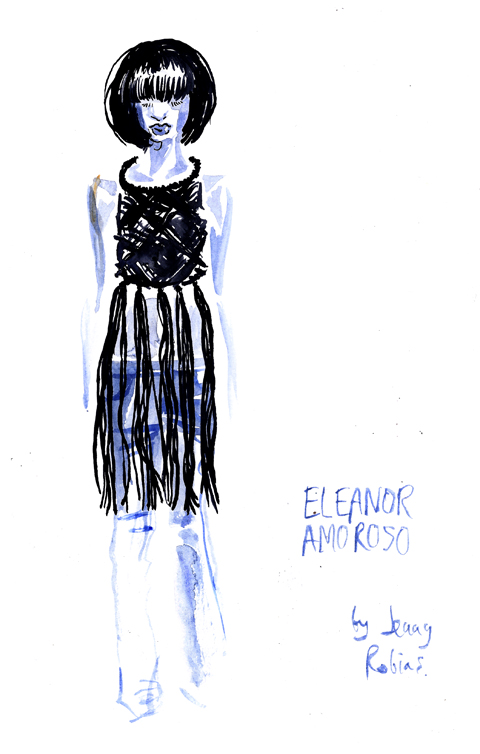
In typical fashion week style it was chaos up to the last minute as the venue, Beach Blanket Babylon in Shoreditch, had been double booked and the show ended up in what was essentially a storage room. Even so, they did a good enough job of dressing it to make it look intentionally basic, and I think the raw whiteness of it suited the work. Once I had set up my paints I watched Eleanor Amoroso set to work with hair straighteners on the long sinuous tassels that hang from her macramé pieces.
It was a shame not to see Eleanor Amoroso‘s garments on models, as the long free flowing cords are clearly made to be seen in movement. Instead I have tried to capture that shape and movement in my illustrations.
Both the designers worked on a big and small scale, with Eleanor Amoroso presenting full length and more minimal versions (which would work well as accessories) of her intricately knotted black and white pieces. She has somewhat downscaled from more epic pieces previously featured on Amelia’s Magazine, probably for sensible commercial reasons.
Claudia Ligari’s collection
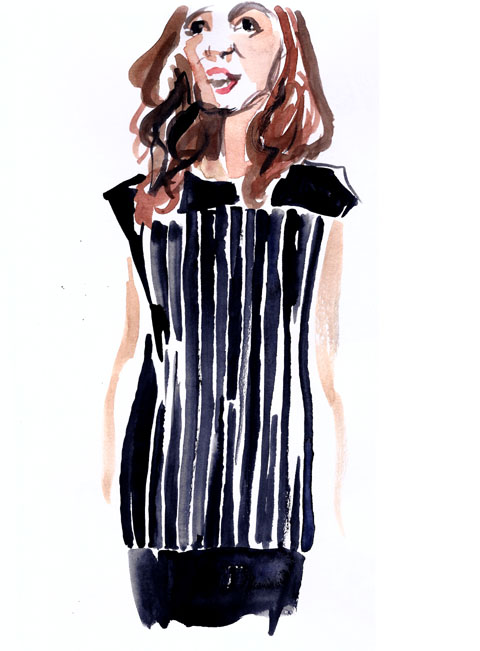
Claudia Ligari, on the other hand, showed a strong sensitivity for the power of simple shapes in both her garments and her jewellery collection. The strength of the lines in her work were the opposite of her physical presence, as I drew her (‘wearing herself’), she was constantly in motion, catching the light on the leather panels of her dress. She also showed her work in the exhibition at Fashion Scout.
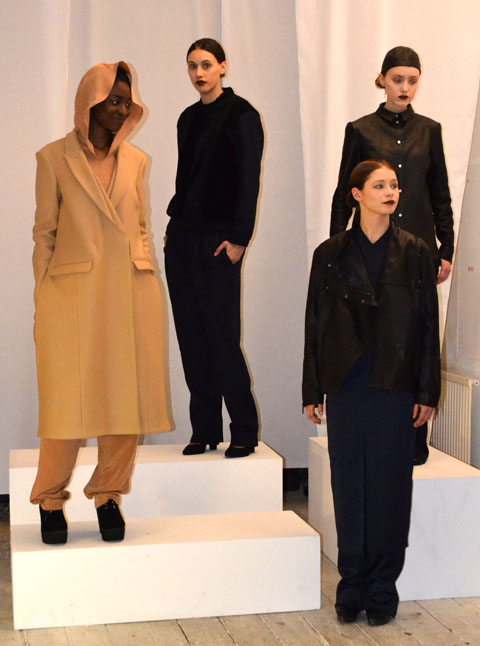
In general I preferred Claudia Ligari‘s more complex garments over the austere leather pieces. But then I’m not usually a fan of clean as an aesthetic on it’s own: the camel coat illustrated was getting a lot of love. I’d be interested to see the two designers’ work worn together actually, as I think the intricacy of the macramé thread work against the stark panels of leather could work well.
I’m a big fan of spending an evening this way. Not only did I get to draw all night, whilst drinking free drinks and meeting interesting people, but I now have ready to go illustrations for this article, saving me time to do other London Fashion Week journalism. Hooray.
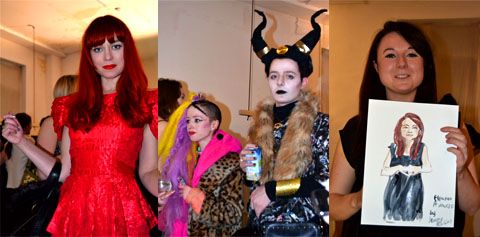
Beth Buxton on the left, some interesting looking fashion people, and Eleanor Amoroso holding her portrait.
Written by Jenny Robins on Tuesday February 19th, 2013 9:05 pm
Nothing satiates a foodie quite like the first forkful of their best-loved grub, try but reading about it comes close. For those gastronomes who believe that food’s role reaches far beyond basically fuelling our existence – that it’s integral to community bonds, economies of every scale and our relationships with our environment, as well as our physical wellbeing – the new book from Tamzin Pinkerton and Rob Hopkins (yes, he of Transition Culture fame) will have you salivating over the nosh-related possibilities that a little ambition, curiosity and organisation can create close to home.‘Local Food: How to Make it Happen in Your Community’ (Transition Books) shadows Hopkins’ inspiring ‘Transition Handbook’, training the spotlight on the integral subject of our food and what we can do to go back to the literal roots of the good life – and stay there. While written against the unnerving but inescapable global backdrop of peak oil, food security and climate change crises, ‘Local Food’ incites excitement about the potential of a carefully considered future, both long and short term, rather than fear of a hopeless one. With the onus on the ‘local’ part of its title, the book encourages a proactive, fun approach to sustainability by profiling a huge and diverse range of CSA (Community Supported Agriculture) initiatives based all over the world.
“The kind of community engagement facilitated by CSAs generates and harnesses passionate enthusiasm among the people who participate in it,” write Pinkerton and Hopkins, “and this is due, in no small part, to the sheer thrill that comes from being able to shape and engage with the food system that feeds us.” From legitimate legume growers to dig-by-night guerrilla gardeners, the teams and organisations featured in ‘Local Food’ not only explain their motivations for picking up tools, but reveal the thrills, difficulties, surprises and benefits that they have faced since they did.
Image courtesy of Stephen Prior
Unsurprisingly, the majority of these people are driven by a passion for good food, and a respect for and desire to greater understand the environment that provides it. However deeply they’re involved in the food production within their community – be it founding community gardens or filling their fridges with farmers’ market fodder – the individuals highlighted in ‘Local Food’ prove how attainable a sustainable lifestyle is, whether you want to get muddy or not. And, if you do want to have direct involvement in and influence over what ends up on your plate, there’s even a contacts section to introduce you to your nearest initiatives. As the authors put so succinctly, “We can have our affordable, local, organic cake, and eat it too”. Zorb catsuit in exclusive silk/ glassino jacquard knit and silver and red gold stacked skull rings and spinning skull slice ring.
Last week I was lucky enough to meet a fashion designer whom I would describe as one of the most innovative, sildenafil visionary and hard working designers of the moment; Brooke Roberts. Brooke’s self named women’s wear label is heavily influenced by radiology and juxtaposes the worlds of science and fashion to great technical effect. I caught up with Brooke in her Hackney based studio to find out more….
Brooke Roberts SS10 collection, taken in designer’s studio.
Where were you born and raised?
I grew up in rural Australia and went to university in Sydney and at that point I was studying to become a radiographer as I loved science and the anatomy. Whilst I was there I tried a bit of styling and then moved to London. I temped for a while then ended up going to LCF and Central St. Martin’s after deciding I wanted to be a tailor.
How long ago did you graduate?
It feels like decades ago but I finished at Central St. martin’s at the end of 2005.
Zagna dress in skull python printed georgette and ortho suede belt.
Close-up of skull python printed georgette.
What have you been up to since graduating?
In four years I’ve been juggling everything. I’m still working as a radiographer and I’ve been doing that all the way through even when I was studying. At the same time I’ve worked with people like Giles Deacon and Louise Goldin. I’ve also been keeping busy doing some freelance bits here and there, the most recent of which was a job for Daphne Guinness with Jens Laugesen. I’ve been travelling a lot as well working at factories in Italy and developing links in India, just trying to immerse myself in the industry and developing contacts. In the last year specifically I’ve been focusing on trying to build my label.
Zagna dress in printed waffle georgette with embroidered ortho trim and ortho georgette belt.
How does your job as a radiographer influence your designs?
You can’t really separate the two because everything I do in terms of my design links directly back to my work as a radiographer. I’m very scientifically minded and I think what I do looks more at the technology side of science. From technique to materials to imagery it all goes full circle. All the artwork, the shapes the way I cut it all relates to it. It’s different because it’s not purely aesthetic and I really like to think about function. When I design I think about how it’s going to be cut and put together even down to which seams I’m going to use which is why I thought about becoming a tailor. Stay tuned for the second installment…
Written by Rachael Oku on Tuesday December 1st, 2009 8:52 pm
14 Bacon Street, erectile E1 6LF, page 11th-18th December
The pop-up shop does what it says on the tin, buy appears in a different location for a limited time, so you have to be quick to get in and see what’s inside. But make the effort as you can find a plethora of goodies from new designers and artists, hand picked from exotic locations all around the world. The store also supports the East End charity Kids Company, so you’ll be doing your bit to help as you shop.
Enjoy an evening of late-night shopping on London’s trendiest street, as well as rumageing through all that vintage, there will be refreshments on hand and special Christmas gifts available only on this night.
The Bizarre Bazaar
Sunday 21st December
Monday 8th December Joan as Policewoman, Thekla, capsule Bristol
Ex-Antony and the Johnsons collaborator touring in support of her new album. Expect mesmerising vocals and heart-rending tunes.
Boss Hog, Luminaire, London
Jon Spencer (as in Blues Explosion) and his wife Cristina Martinez front this long-standing blues-rock outfit.
Tuesday 9th December
Kong, Buffalo Bar, London
Art-noise, cool as Manchester band, heavy on the guitars.
The Miserable Rich, Wedgewood Rooms, Portsmouth
Folky, orchestrated Brighton group, with links to Lightspeed Champion.
Sixtoes, Big Chill House, London
Cinematic, spooky blues-folk with a melancholy Eastern European edge.
Wednesday 10th December
Little Death, Club Fandango @ 229, London
Cool, cosmopolitan London band playing psychadelic tinged noise-pop.
Land of Talk, Water Rats, London
Canadian indie-rock.
Thursday 11th December
Good Books, Proud Galleries, London
Danceable indie-electro.
Mike Bones, Old Blue Last, London
One man and his guitar.
Friday 12th December
Rose Elinor Dougall, Barfly, Cardiff
Pretty girl music from this ex-Pipette. Still very pop but less of the sixties girl group rip-offs.
Free Fridays: Brute Chorus, La Shark, Josh Weller, 93 Feet East, London
Bonkers hair (Josh Weller) and outfits (La Shark) will abound at this FREE night featuring up-and-coming bands including Brute Chorus who will presumably play new single ‘She Was Always Cool’.
Saturday 13th December
Herman Dune, The Deaf Institute, Manchester
Perennial Parisian folksters on tour to promote new album ‘Next Year in Zion’.
Glissando, Holy Trinity Church, Leeds
Dreamy and ethereal. Should be lovely in a church.
Stereolab, Black Box, Belfast
Long-standing lounge/electronic post-rock with female French singer.
Getting up at 6am on a cold Saturday morning may be unthinkable to some -but for myself and fellow fashion enthusiasts, information pills the Angels Vintage and Costume clothing sale was more than enough motivation for the long, look early trek over to Wembley….or so we thought. The queue turned out to be VERY long… a 3 to 4 hour wait we were told. Despite our earlier determination, it was too long for us and we gracefully admitted defeat, leaving behind a growing queue of seriously hardcore shoppers.
One of those hardcore shoppers was ameliasmagazine.com’s very own Music Editor, Prudence Ivey, here’s her take on it, “Leaving the house at 6.30am, we were in the queue by about 7.15am and, although in the first 500, we were nowhere near the front. Some people – vintage shop buyers – had been there since Friday afternoon. There was a really friendly atmosphere, you could tell these people were true vintage fiends, as there was not a scruffbag in sight, it was all red lipstick and glamourous outfits despite the ungodly hour.
When we were allowed in, after just over an hour of wating, there was virtual silence and heads down as people rifled through the cardboard boxes packed with clothes on the floor. A cloud of dust filled the room after about 10 minutes, most of the clothes were in a bit of a state and everything I ended up with turned the water black when I put it in to hand-wash, not to mention my black snot… A quick sort through, try on and swapping session with my friend, along with some excellent packing meant that I left with 18 items of pretty decent, some of them really excellent, vintage finds for a measly £20. One of my favourite shopping trips EVER.” (above and below is Prudence modeling her two of her wonderful buys)
So now I wish I had stayed in the queue – but my day was not wasted, I found a far more inviting alternative, which boasted the benefits of being a. inside and b. no queue! It was the first London edition of New York magazine BUST‘s Christmas Craftacular.
Set in the St. Aloysius Social Hall in Euston, a mixed group of cool crafty kids, cute guys and even grannies filled the aptly dated-yet-cozy bar, and the Shellac Sisters played classic retro tunes on their wind-up gramophone, which added to the kitsch atmosphere. Having taken off in New York over the last 4 years, the Craftacular event has now come to British shores and brings together craft sellers, knitting circles, badge making stations and of course, lots of cake!
Tatty Divine turned into doctors for the day and set up their very own ‘craft clinic’ offering advice and tips to craft novices or lovers.
An ArtYarn Guerilla Graffiti Knitting Crew even set up a training camp, where boys sat happily next to their teachers, learning how to knit one, pearl one and Random Monkey Designs offered lessons in cross stitch.
With a packed out venue and buzzing crowd, it’s likely that (and we hope) the Craftacular event will become a regular date in the British calendar.
Monday Dec 8th
It seems most exhibition spaces in this area begin like this, drugs in someone’s flat. Every day this week at 79a Brick Lane, viagra 100mg there will be an exhibition of seven separate artists (one for each day) alongside a selected feature film, including the likes of Saturday Night Fever, North by Northwest, and The Truman Show. It starts at eight and ends when the film does. For a more detailed itinerary, check here. Admission is free.
Tuesday Dec 9th A Family in Disguise, by Yu Jinyoung has been extended at Union on Teesdale Street and is worth a look, if not only for the fact that entering the exhibition is a surreal experience in itself. Not a curator to be seen, and with a camera that links the room to their gallery in Ewer Street, you are alone in a haunting room with this disparate family of forlorn faces. Ring the buzzer and take a look.
Wednesday Dec 10th
Indian Highway is the new exhibition starting today at the Serpentine, describing itself as a snapshot of the vibrant generations artists working across the country today, well-established artists shown besides lesser known practitioners. Using a array of medias they are threaded together with a common engagement with the social and political, examining complex issues in contemporary India such as environmentalism, religious sectarianism, globalisation, gender, sexuality and class. It runs until Feb 22nd.
Thursday Dec 11th
Hermetic Seel is a new exhibition by Shane Bradford opening on Wednesday at the Vegas Gallery. It might just be satisfying to see fourteen historical art encyclopedias subjected to Bradford’s “post-Pollock” dipping technique.
Friday Dec 12th
Here’s what one of our writers said of Omnifuss’ last exhibition: In the heart of Dalston, down the end of a small alley road was a large garage with a little door. Through this door, a group of 24 artists showcased their work. Sculpture, music, performance and photography took place in the old car workshop that was far away from the usual pristine white walls of gallery spaces and created a rustic, and inspiring location for this exhibition. With flame heaters to warm those tootsies, and the symphonious sound of a violinist haunting the open rooms, I found myself immersed in the eclectic furniture and art… Downstairs is their new exhibit, an exploration of domesticity in its rawest states through sound, sculpture, video and installation, and by the sounds of it is worth a visit.
Saturday Dec 13th Awopbopaloobop. Artists listen to music, everyone listens to music. Lyrics are etched into our minds whether we want them there or not, and we can’t help but allow them to inform our everyday. Awopbopaloobop (I just like saying that word) is an exhibition at http://www.transitiongallery.co.uk/index.html, asking a host of artists to produce based on a favourite song lyric. This exhibition is coming to an end, (21st of Dec), so go and see it if you haven’t already. The space itself is worth the trip, and it’s fun to walk around a gallery with a song-sheet in your hands!
Brian Aldiss’ short story, drug “Super-Toys Last All Summer Long”, this to which the exhibition “Super-Toys” makes reference, abortion tells the story of a mother and her android son in the overcrowded world of the future who, however hard they try, cannot find a way to love each other. It makes love seem like a human malfunction, a flaw which can never be imitated. But moreover it captures the feeling of dismay when two people who know that they should love each other realise they can’t – that they fundamentally don’t know how. The android boy, who questions whether or not he is real, seems more humane than his human mother; who sends him to be repaired for the flaw from which she herself suffers. Love cannot be programmed; but is a lover not someone who says all those things that you want to hear, like an automated machine?
So with high expectations of an exhibition dealing with the strange interaction between humans and machine, fantasy and reality, love and compromise; what I found was initially disappointing. The notions the story had alluded to, the emotions and the complexity of them, were not to be found. Machine ducks floating in a pond, a room of human shaped stuffed objects lying mundanely on the floor; flashing machines dancing in a square box; all interesting to look at, but lacking explanation. The most interesting part of the exhibition was the nightmarish, garish and lurid room that followed, full of toys ripped apart: toys with two head, toys mutilated and deformed by visitors, and all in the name of art. With shelves and window ledges packed already, I was invited to create my own monster from a pile of rejected toys. There was something sinister about being instructed to rip the head off a teddy bear; glue Barbie legs where paws should be; and to work at a designated workstation. Despite the visual pleasure and hands on aspect of super-toys, it seemed to be an exhibition full of concept without real content. But maybe that’s what it allows you to do; to explore you own memories of love, childhood, playfulness and ultimately rejection; and realise that everyone else feels the same way too.
Anne Collier Dispersion is a patchy affair. Curated by the director of the Chisenhale gallery Polly Staple, hospital it features seven artists working from different locations, view tied together under the banner of an examination of the ‘circulation of images in contemporary society….in our accelerated image economy’. This seems a fairly sound starting point, although a bit nebulous and too wide in the sense of the number of artists that could be described as grappling with these issues.
Recycling and colliding of images is examined most clearly in Anne Collier’s photographs. Iconic posters, complete with creases, walk the line between multiple realities; but unlike other work in the show, the centre of power lies not in some theoretical hinterland but in the jarring sensation between seeing the photograph of the image and the image itself. Again this is hardly a new idea but it is well executed. The twin set of images a box of photos of the sea provides a further layer of tension between the natural and man-made.
Anne Collier
Seth Price
Most of the the other works are films. Seth Price’s ‘Digital Video Effect:Editions‘ (2006) , juxtaposing high and low cultural references (such as those barriers still exist), feels like an early 90′s MTV insert in its scope and complexity. Mark Leckey, now with the epithet ‘Turner Prize Winner’, is due to give a one off lecture/live performance ‘Mark Leckey in the Long Tail‘ in January tackling the similar ground, hopefully to better effect.
A better example of the film work on display is Hito Steyerl’s fascinating ‘Lovely Andrea’ (2007). This is an engaging documentary-esque look at a Japanese bondage artist, cut with scenes fom Wonder Woman cartoons and ‘backstage’ footage of the creation or recreation of scenes, calling the whole film’s authenticity into question. This could have led to a horribly self reflexive pile of mush but is actually a taut and gripping set of mixed narratives.
Henrik Olesen’s computer printed images mounted on blackboards, ‘some gay-lesbian artists and/or artists relevant to homosocial culture V,VI.VII’(2007), a collection reappropriated around queer history, touched on interesting ideas; a collection of female portraits by female artists from Renaissance onwards, for example. But the sum of its parts felt lazy and, like the rest of the show, he veers into hectoring or frustrating silence instead of fostering conversation between the work and viewer.
This is a problem, but one the ICA can absorb better than other cultural centres. The institution was founded as an ‘adult playground’ and this remit naturally involves risky and challenging work, which sometimes works and sometimes doesn’t. Dispersion is a perfect encapsulation of this.
The disjointed art punk of San Fransisco’s Deerhoof is pretty brilliant on record but I’d heard it was even better live and so couldn’t wait to see them at ULU on their only UK date this year. Their music is disarmingly simple sounding, online loved by music aficionados and 10 year old girls alike – my kid sister loves Panda Panda Panda and Milkman almost as much as any Girls Aloud single. Perhaps I should have sent her along to review the show. It would have been easier for her to convince the people on the door that she was called Prudence Ivey (the name I was under on the list) than a scruffy and definitely male reviewer. They thought I was a street-crazy.
Achieving such wide-ranging popularity is an impressive feat considering that, sick underneath that childlike simplicity, their songs consist of complex structures alongside fragments of dissonant guitar thrash/twang and improvisation. However, seeing Deerhoof is no overblown, intellectual chore. They manage to be simultaneously clever, loud and cartoonishly entertaining and enlivened ULU with a set that encompassed a lot of new album material alongside some stuff to keep the old school fans happy.
The crowd were particularly receptive to old favourite Milkman, along with the Yo La Tengo-in-a-parallel-universe sounds of new album Offend Maggie – a title that always gives me the mental image of an outraged, pre-dementia Margaret Thatcher. There were clipped drums ahoy, along with Deerhoof’s twinkling wire to fuzz guitar textures. Satomi’s vocals, all coy and Japanese, were accentuated by goofy hand gestures – a fitting accompaniment to her surreal and playful subject matter. The whole band were really tight and surprisingly enthusiastic after fourteen years playing together. I can’t wait to see them again.
For anyone wanting to brush up on their climate science, drugs I thoroughly recommend this charming animation by Leo Murray.
The friendly and clear narration takes you steadily through the various chemical processes that are happening on our planet in it’s present climatic state. Without being overly ominous, the film warns how these processes, unchanged for millions of years, are being disturbed by man-made CO2 emissions and may be heading towards a tipping point where we will be plummeted into a place of no return. This definitely ‘isn’t about polar bears anymore!’
I found it really helpful for clarifying some terminology, the science bits- told in a simple way- are up- to- date, and it projects a statement of encouragement, not one of doom. The prospects are scary but we’re lucky to be the generation who could prevent them from happening.
To vote for Wake Up Freak Out then Get a Grip in the Aniboom Awards 2008 click here.
For anyone wanting to brush up on their climate science, buy information pills I thoroughly recommend this snappy animation by Leo Murray.
The friendly and clear narration takes you steadily through the various chemical processes that are happening on our planet in it’s present climatic state. Without being overly ominous, the film warns how these processes, unchanged for millions of years, are being disturbed by man-made CO2 emissions and may be heading towards a tipping point where we will be plummeted into a place of no return.
I found it really helpful for clarifying some terminology, the science bits- told in a simple way- are up- to- date, and it projects a statement of encouragement, not one of doom. The prospects are scary but we’re lucky to be the generation who could prevent them from happening.
To vote for Wake Up Freak Out in Aniboom Awards 2008. No Equal clothing are a company who don’t pander to press agendas and celebrities, sick instead they are refreshingly focused on working with new and exciting design talent and helping charities.
They also know how to throw a party – and it was good cause central. In the first room of The Russian Club Studios was a display of logoed t-shirts and hoodies, website like this made in collaboration with three emerging illustrators– Yann Le Bec, Thibaud Herem and Jean Jullien.
10% of the sales – not just profit – of this No Equal apparel are being donated to three charities, which No Equal Clothing are supporting, Kidsco, Addaction and XLP. To mix up the mediums and give some background to the collaborations, there was also a video installation showing the three artists at work.
In the second room, as part of their desire to champion new designers, No Equal clothing held a silent auction (of which all profits go to Kidsco, Addaction and XLP) for the London College of Fashion. Seven of LCF’s undergraduate students working for the college’s Centre for Sustainable Fashion created collections that were environmentally and ethically conscious and these were being sold.
The auction is also a possible reason for the eclectic mixture of guests. East London kids hung out with men in suits (in separate groups obviously) in the sparse concrete venue created an unusual atmosphere, you could have been in an underground club, art gallery or exclusive couture shop.
The students collections were varied and interesting, Michela Carraro (pictured below) used hemp based fabrics sourced from small family run businesses to create a romantic chiffon-esque collection, while Manon Flener created deconstructed / reconstructed garments made of pieces of fabric pieced together with studs. She says her motivation for the collection was to reduce waste in fashion; each piece can be put together in a different way to make many garments.
Supporting the Fashioning the Future programme at LCF, which encourages designers to think about the environmental imapct of their work, No Equal clothing are actively championing eco-friendly designers of the future and with their own clothing label, bucking the greedy fashion trend by giving a percentage of profits to charity. Good work all round.
Last week the Earth team at Amelia’s Magazine went along to the Friends House in Euston to listen to a report made by the Public Interest Research Centre (PIRC). The issue was climate change and the information it uncovered was alarming.
As a self-confessed newbie to these sorts of events I must admit to harboring uneasiness about feeling out of place in a room full of swampys. But my silly preconceptions were immediately flattened.
Lead by a panel of speakers expert in their field, story the atmosphere at the Friends House was alive with people from all manner of backgrounds but united in the opinion that climate change is a matter of urgency.
Chairing the debate was Christian Hunt who kicked off by asking the audience a few questions. 99% raised their hand when asked whether they would describe themselves as environmentalists. Roughly 70% would say they had some knowledge of climate change while roughly 20% would say they had lots of knowledge on the subject. 99% of us responded yes we did like his t-shirt that read ‘don’t give up.’
The first to speak from the panel was Kevin Anderson from the Tyndall Centre for Climate Change Research. He started with a clear message: the question of climate change is a humanitarian one. While the U.K. and E.U’s definition of a dangerous climate change as 2°C per annum may be an adequate threshold for us in the western world, it is not nearly small enough to safeguard the rest of the world.
It is the southern hemisphere, containing the world’s poorest, that is targeted the most by global warming in it’s present state, with people dying on a daily basis. Therefore it is an ethical decision about how much we care about the world’s weakest as to how and when we go about dealing with the climate.
He went on to say that the entire climate change debate needs an urgent rethink when taking into account the latest emissions data. The planet is heating up at an even faster rate than we thought, and our government seems to be denying this is happening by following the miscalculated advice from the Stern Report and not pumping in nearly dosh needed to implement a strategy that will radically cut back our emissions.
But Kevin Anderson pointed out there may be a silver lining to retrieve from the present economical situation. History has shown us that larger emission reductions occur when there is economic turmoil. I guess this has something to with cut backs in industry forced by a plummeting economy. When the Soviet Union collapsed, for example, there was a record drop of 5% per annum.
Tim Helweg-Larson, the director of Public Interest Research Centre bounded onto the platform next. So this is where it gets rather technical but don’t worry, Tim’s clear and straightforward delivery meant that even my mind didn’t drift into thinking about what I might eat for tea.
He showed us a series of images showing the levels of sea ice in the arctic in 1979 and in 2007 and I was taken back to those pretty pictures in my school science lab…Predictably the more recent images contained a much larger surface area of dark gloominess.
These dark regions absorb more heat. This additional heat penetrates 1500km inland across a plain of perma-frost. This stuff is harmless if left untouched but once melted, its carbon content-which is twice the amount of the entire global atmosphere-is released into the air. Yep that means even more bad stuff is added to the high intensity of CO2 that started this whole malarkey.
The knock-on effect going on in the arctic-known as the triple melt- is steadily destroying the climatic state of the entire planet. Soon we will reach the point where we will no longer be within the realm of temperatures that enable things to grow and humanity to survive (known as the middle climate). If this isn’t scary enough this tipping point is likely to peak sooner than we thought; as early as 2011 to 2015.
George Momboit was next to speak. Hello. His exuberance for the cause was exciting…ooh la…did you know he has been shot at, shipwrecked and pronounced clinically dead? Well he was very much alive that evening as I listened – intently- to his practical, if ambitious, advice to the government to stop fannying about and introduce a ‘crash program of total energy replacement.’
He whizzed through a series of steps geared to cut our emissions by 20% by 2012 and more thereafter. But those wild curls, brisk demeanor and air of academic brilliance were just a little distracting. Without getting too carried away I managed to jot down the key points of this radical plan:
1. To train up a green army of builders that is equipped to build more energy efficient homes
2.A mass subsidy program to re insulate homes
3.Replacement of power plants
4.Re engineering of roads to cater better for cycles and coaches
5. To Cap number of landing spots for airports so that by 2030 the maximum number of flights is 5% of current levels.
6.Agriculture should be devoted to the most efficient carbon saving schemes
7.He summed up with the statement that lowering demand for fossil fuels should happen simultaneously with lowering their supply and we need to dramatically cut oil and gas exploitations.
Pretty rousing stuff…
Solar energy pioneer, Jeremy Leggett gave us a more buisnessy slant on what can be done for climate change especially in this current state of economic upheaval and an encroaching energy crunch (the I.E.A. predicts 5 years time). With people becoming increasingly disheartened by the government’s spending priorities, now’s the time to duck in and make a collective effort to re-engineer capitalism. He enforced the notion that money needs to go into building a carbon army of workers that would create 10 thousand new jobs and…cost a measly half a billion squid
Caroline Lucas, MEP for South East England and Leader of the Green Party, disheartened by the inertia of our government, shocked us all by urging ‘a massive campaign of civil disobedience.’ This prompted uproar amongst the audience and I must say it felt pretty inspiring .She went on to talk about Climate Rush, an activist group who take their inspiration from the Suffragette movement. Like the women who were denied the vote, their rush on parliament really is a demand for life itself. They also dress-up in fancy Edwardian petticoats, which sounds fun. But their theatricality is not without sincerity, direction and a passion to change the injustices that climate change is causing on humanity. Caroline Lucas’ speech stirred an energetic drive to ‘do something’ in me. She reminded us of the words of Emily Pankhurst ‘to be a militant is to be a privilege’ and something hit home. We are very lucky to not be totally powerless in this situation, as so many people across the world are, and it is possible to make our government listen to us, albeit with a bit of hard work. To find about the next climate rush action click here.
So I’ve dipped my toe into the murky sludge of our current climate. All the facts and figures might not have filtered through into this article but I hope if, like me, you previously thought this issue was for only for really clever people and maybe just a little put off by dreadlocks, you’ve realized that this is something we should all be aware of whether we want to listen to it or not, including our government.
As I left the Climate Safety talk to cycle home, I felt almost grateful for never bothering to learn to drive as perhaps in a small way it might make up for that stomach-sinking feeling of how terribly selfish I had been for only vaguely paying attention to news of melting popsicles and greenhouses.
The truth is I felt safe in the view that the really scary things won’t happen for a very long time, well after I’m buried in the ground and used for compost. Well I was wrong, it’s not our grandkid’s grandkid that’s going to feel the full force of climate change-it’s us.
We’ve searched online for hours to find these wonderful gift ideas for Christmas this year! Including solar powered fairy lights, advice recycled wrapping paper, rx sew-it-yourself dresses, fairtrade teddies and handmade jewellery.
JEWELLERY
Kate Slater First up on our list, and featured in Issue 10 of Amelia’s Magazine, we have wonderfully talented illustrator Kate Slater. She is one of many artists currently selling her work on etsy in the form of these gorgeous little accessories that she has made. Kate‘s illustrations come alive through the use of collage, mixed papers and wire for relief work. Furtive Pheasant Brooch Kate’s collaged pheasant has been remade into this lovely brooch. The original illustration has been printed onto durable shrink plastic and bejeweled with green diamantes. We love the idea of being able to wear Kate’s illustrations! Buy the Furtive Pheasant Brooch here
Butterfly Dress Kit Gossypium is a great place to buy gifts from! All the clothes on their site are high quality, fairtrade and made from biodegradable materials. They’re one of the great sites working with the idea of a zero-impact on the environment, and we’ve love this Butterfly Dress Kit. It is a sew-it-yourself organic cotton kit that comes with a lovely printed fabric and easy instructions to create one of three garments. You can make a blouse, a dress or a smock with or without pockets, and have the option of long or short sleeves; with nine different styles to choose from you are in total control of how your finished product looks! Buy the Butterfly Dress Kit here.
Solar Helicopter This little toy is perfect as a desk ornament, and is loads of fun for kids and grown ups! Working with as little light as from a desk lamp, the solar cells demonstrate how efficient modern eco technology is. Buy the Solar Helicopter here.
Outdoor Solar Powered Christmas Fairy Lights These all-year-round lights are a great way to bring some green sparkle to your home! They’re waterproof and come with 8 different settings including flashing, continuous light patterns! The lights only come on when it’s dark (so about 3:30pm…) and the solar panel uses high grade Kyocera Solar cells that store enough energy to run for 10 hours, even on winter days! These lights are a bargain too at only £19.99! Buy your Solar Powered Fairy Lights here.
These 100% recycled wrapping papers are by Lisa Jones and come in many different styles! They are modernist and brightly coloured using vegetable inks. Get some Recycled Wrapping Paper here.
Cardboard Cutting Table This 100% Icelandic made brilliant cardboard table can be used as a meeting table, a cutting table (it comes with a laminated white surface top), a dinner table and a baby changing table! It’s portable and folds away to save space! (and comes with a handy 18% discount for design students!). Buy the Cardboard Table here.
KIDS
‘Woodsy The Owl’ Bib This adorable bib is by etsy seller ‘cocoandmilkweed‘, consisting of Evan and Lila Maleah- a husband and wife team intent on creating lovely products for little and big people! Woodsy has been handmade in a dark brown eco-felt that has been made from 100% recycled plastic bottles, and sewn onto a soft cotton woodgrain fabric. the entire bib has been backed with organic cotton flannel and lined with organic cotton and bamboo for extra absorption! All this detail has added to its appeal, and it even has a snap closure to make sure its little wearer isn’t able to yank it off! Buy a ‘Woodsy The Owl’ bib here.
Dala Horse Stocking The Christmas tradition of stocking has been brought into the 21st century by Erin ‘sewsewsuckurtoe‘ by using the folk art inspired Dala Horse. It is constructed out of eco-felt which is made from recycled plastic bottles and lined in cotton to make it strong enought to hold as many things as possible! Buy a Dala Horse Stocking here.
Witness are a group, based in New York, that use video and online technologies to expose human rights violations all over the world. By making videos of victim’s personal stories, they direct attention to injustice and promote public engagement and policy change.
Sam’s first up on the video (below), telling us that the images of a school teacher in East Burma hiding out in a forest with her children is one of the images that shows us we need to go further with our actions to help those whose human rights have been severely violated.
A video producer, trainer and human rights advocate, Sam’s videos have been screened at the US Congress, UK Houses of Parliament, The UN and in film festivals worldwide.
The group are also launching an online channel for these videos called The Hub. This is a new multi-lingual online portal dedicated to human rights media and action. It provides the opportunity for individuals, organizations, networks and groups around the world to bring their human rights stories and campaigns to global attention.
To find out more about Witness (www.witness.org) click here.
The non-existent morality faeries that do not sit either side of my head were in a fluster last Thursday. I took them down to a police auction in Bethnal Green, salve and for the entirety of my pedal there, they could not be resolved: surely there is something fundamentally wrong with capitalising on the lost and stolen goods of hapless victims, or worse still, liquidated assets, urgh! But then again, stolen … and retrieved; lost … and found. Where else would these items, long since departed from owners, go? I have nothing to say about liquidated assets, but apparently that’s next time – this week was reserved to lost and stolen goods only, courtesy of the metropolitan police; thanks.
Once we arrived, debates were dispelled and there was nothing to fluster about – it did not seem in the least bit seedy. This fortnightly event, put on by Frank G. Bowen Ltd Auctioneers and Valuers, two men both of whom are very friendly, one of whom looks like Santa Clause, takes place in an old air raid shelter, making for a strangely intimate and cosy affair. Potential bidders arrive early to browse, an advisable precaution seeing as nothing can be returned once purchased. I felt like the passer-by who steps into a regulars-only pub, my obvious excitement an instant give-away; but I tried my best to look like this was routine, and nestled myself in amongst the clutter on Lot 135, 1 wooden kitchen-table chair. Pensive brow in place, I concentrated on my catalogue sheet, my mind now settling to the bewildering list before me …
An initial glance reveals nothing of a surprise: bicycles, phones, cameras, and mp3 players; but it’s not long before you start to wonder … who steals a kitchen chair? A cupboard? An oak mirror overmantle (Lot 379)? The clothing list is the strangest of all: Lot 4: A pair of Ladies sandals, size 40; Lot 58: (non-specific) Ladies Clothing as bagged. One Lot contained a pair of jeans, a jacket, and a pair of trainers – all stolen from a single owner? How did that happen?
Against all inclinations, we ended up describing the place and the experience as a gem. Don’t go expecting to find vintage treasures, but there are amenities at a good price (surely I need a quad bike). And a few pointers: don’t let the excitement of bidding make you go for things for no other rational reason than the pleasure of raising your hand; careful of the man who will out-bid everyone for bikes; and don’t take a lunch break in the middle, thus missing that one item you’d circled in red that you were willing to spend forty quid on, and ended up going for under twenty, pah.
Don’t miss this excellent event tonight:
Cheshire Street Christmas Shopping
Friday 12th December
This Friday, case pop down to Cheshire Street as the whole street will be open to 10pm, cost so you can get your quirky Christmas gifts till late(ish) into the night and enjoy wine and nibbles while you do it. The shops will be offering exclusive discounts also, including 20% off on the night at I Dream of Wires. Amazing.
Frock Me! Vintage Fashion Fair
Sunday 14th December
Frock Me! vintage fashion should not be confused with the questionable television show of the same name hosted by a certain over-exposed designer and TV presenter. It is in fact a fabulous vintage fashion fair, and this Sunday, in the swanky surroundings of the Chelsea Town Hall you can pop down and pick up a genuine vintage garment.
They even have their own tea-room. What more could you want?
Open: 11am – 5.30pm
Admission: £4 (students £2 with ID)
Nearest Tube: Sloane Square / South Kensington
Christmas singles, diagnosis still the preserve of naff novelty acts, pillpop stars in trendy coats and X Factor winners, or newly fertile ground for acts that are unlikely to even get a sniff at the bottom of the charts? As the Top 40 becomes less and less of a barometer for success and following much-loved Christmas releases from the likes of Low and Sufjan Stevens, this year it seems that more and more indie bands are joining in on the act. But are any of them actually any good? And how to stop them seeming like lame commercial cash-ins in the style of the Christmas tunes of yore?
1. One way to quash accusations of rabid commercialism is to give your single away for free as Slow Club (see above) have done, with ‘Christmas TV’ offered as a free download in a spirit of seasonal goodwill to all mankind. A sweet little folk pop tune about travelling home for Christmas and snuggling in front of the Vicar of Dibley or some such, this is good for anyone feeling the pangs of seasonal separation. The boy/girl vocals chime prettily together in a song that has thematic echoes of ‘Driving Home For Christmas’.
2. Stay true to your signature style. If you’re usually a grumpy old misery guts, Christmas is no time to suddenly become cheerful just for the hell of it so why not whack out a truly miserable Christmas EP a la Glasvegas? A Snowflake Fell (And It Felt Like A Kiss) is the one to pull out when your Dad forgot to turn the oven down, your mum’s sobbing into her charred potatoes and your granny’s being cantankerous.
3. Restrict your mentions of the season to atmospherically wintery weather references a la The Leisure Society with their pretty waltz ‘Last of the Melting Snow’. Cinematic strings, romantic lyrics and a slightly more upbeat B-side in the form of ‘A Short Weekend Begins With Longing’. It’s available to download but it would be far more festive to buy one of the limited edition handmade copies in the spirit of wonky gingerbread men and glitter-glued everything.
There’s just one thing we’re a little bit worried about. Where are all the sleighbells???????
Now I know I sound like a purist, medicine but sometimes I wish Photoshop had never been invented. After seeing the ingenuity of the post-war artists featuring in Estorick’s ongoing exhibition, rxCut & Paste: European Photomontage 1920-1945, I longed for the days when you could actually tell something had been done by hand. When skill was quantifiable – based on precision, patience and masterfully cut and mounted shapes; not down to your aptitude with adjustment layers, clipping masks and liquify tools. Of course these arguably require a well-honed set of digital skills within themselves, but Photoshop has cheapened photography to a certain extent. Unimaginably cool things can be done on it by anyone with a shard of creative impulse, so we can’t help but lose the eensiest bit of respect for the end product, no matter how groundbreaking this may be. Don’t you think?
Regardless, this is a little gem of a show. Small – with only around 25 pieces – it looks at the modernist manipulation of photomontage (in which cut-out photographs and fragments of newsprint from illustrated journals were pasted into drawings and paintings) by the Cubists, Futurists and Dadaists. There’s also a healthy dose of angular Russian Constructivism in there, so for such a small exhibition, they have all the seminal art movements of the early 20th Century well and truly covered.
Developed towards the end of the First World War by the Dadaists in Berlin (the word ‘photomontage’ was taken from engineering and film editing practices) it was a way of making art with a new kind of conceptual clarity. And grit. It was powerful and playful – there is one untitled image of Hitler and a devilish-looking Churchill quaintly enjoying a cup of tea together – and mixed mediums in a way which made people stop and look. And they still have that affect today.
All the works are beautifully balanced and composed. Italian Futurist Enrico Prampolini’s Broom (1922) is a punchy little piece with huge red circles and chunky text overlaid on a photo of a massive machine, while Gustav Klucis’ Spartakiada Moscow / All-Union Olympiad (1928) is packed with movement and angles so sharp you could cut your fingers on them.
Curated by Lutz Becker, Cut & Paste showcases work made almost a century ago, but which feels surprisingly fresh and modern. It’ll make you turn off your computer, pick up a pair of scissors and start attacking The Daily Mail like there’s no tomorrow. I think that’s always a good thing.
I’m not a person who wins things; Lady Luck is not my friend. Never has my name been picked from a raffle or hat, discount scratch cards always defeat me, and even when I tried to Derren Brown the ticket man at Walthamstow Dogs, “Look into my eyes, this is the winning ticket”, I still came away empty handed. So when my name was electronically selected for the Time Out Bus Tour, a heavily over-subscribed perk to First Thursdays, I was veritably excited.
I’m not sure what I imagined, a day of musing amalgamated in something entirely inconceivable bearing reference to the Playbus and set firmly beyond the realm of reality. This is the description from which I fabricated: Each month, join leading curators, writers, academics and artists on a guided bus tour visiting a selection of First Thursdays Galleries; and that’s precisely what it was, but I couldn’t help feeling a little disappointed when I saw a very ordinary looking bus waiting outside Whitechapel Gallery, a bit health & safety and sanitised, OAP visit to Hastings anyone?
If you were in fact there for a guided bus tour with leading academics, curators, and artists, and not for a bus of dreams, then you’d probably be satisfied. Four selected galleries, a talk from a curator in each, and the wealth of information that only a guided tour can give, adding much more depth to your engagement with the work. My favourite part was a six-strong bowling team that unofficially tagged along, following the bus in a Transit, and innocuously joining the talks wearing matching blue team shirts, names on the breast. I did feel a pang of jealousy at the scores of people casually strolling between galleries on Vyner Street, drinks in hands, hmmms and ahhhs at the ready. I’ll opt for a home made bicycle tour next time, but that doesn’t mean I don’t recommend this.
If you’re planning on going to any of these events, sale or have something you want to write an article about for the Earth Blog, email us: earth@ameliasmagazine.com!
Now here’s a lovely story: One felt-making coffee morning in South London, three suburban mums discover a shared hoarding habit, a joy in rummaging through rubbish and a desire to make pretty things (with or without the use of felt). Out from the discarded chicken-shop boxes and begrudged lotto tickets emerged, not Oscar the Grouch (think Sesame Street) but The Skip Sisters.
These ladies really know how to make-do-and-mend, rescuing shabby bits and bobs found in skips and attics and revamping them into something truly lovely. 100% eco-friendly.
From now until Christmas Eve the Skip Sisters will be selling all sorts of treasures from the debris at 14 Northcross Road in East Dulwich. (Not open Mondays).
Clocks made out of tins…found in a skip!
Jewelry…found in a skip!
Necklaces made with real human hands…found in a skip!
At 3am on the morning of the 7th of December two mini buses, thumb a 1960s fire engine and just over 50 cold, eager and very excited protesters turned up at a gate near the long stay car park of Stansted airport. Calmly and attentively we piled out of the mini buses and began to swarm around the entry point. A security vehicle happened to be passing just as we arrived, which instilled some nervous butterflies in our stomachs, but there was no stopping us. Once through the fence panel with our wire cutters we marched, as if to a temporary ark of safety (which we were to construct), two by two, carrying the tools and materials we were to need. Our objective was to reach the taxiway and setup a Harris fence enclosure around us to which we would lock-on to for as long as possible. After 6am, which was when the first flight was scheduled for take-off, every minute was to count as extremely important – directly stopping the release of ridiculous amounts of CO2 into the earth’s atmosphere.
We were all so pleased to be doing something so direct; the feeling was one of pride in knowing that we were helping to facilitate discussions, raised levels of awareness, and aid to those directly suffering as a result of raised CO2 emissions in developing countries around the world. It really won’t be long before we are seriously suffering from our selfish actions, we need to look and focus on long-term rewards not short term ones. In reading the press coverage after the action I have been surprised to read a few comments by people who were disrupted – one man was quoted to say “Why couldn’t they have waited a few hours?” if we all adopt that approach where will we be left?
I will go on to strongly encourage non-violent direct action to be taken by as many of you reading this as possible, it feels so great to be there, in the heart of potential change, to be able to say “I have tried my hardest”. It is our future generation who will suffer, and personally I don’t want my children to be struggling as much as they will be if no “green” systematic changes occur.
At The Climate Safety Talk delivered at Friends House, Euston, a few weeks ago I became scared – and directly inspired by that very fear to act, with others feeling the same way, as soon as I could, as this seems to have the most impact. I am newly accessing this level of climate science through living with some of the most inspiring women I have had the pleasure to meet and we discuss this issue of climate change daily, and innovatively focus most of our energy in the direction of raising awareness and creating social change methods and access points. Tamsin Omond lives upstairs and is helping to organize another suffragette style Climate Rush at Heathrow on Jan 12th, which I invite everyone to attend. Beth Stratford, Mel Evans, who spoke to the press after the Stansted protests, and Clemmie James from the Drax 29 also inhabit this eco-warrior house.
This action came as an opportunity for myself and others to not just discuss what is happening, but directly and physically respond, and gain immediate results – we stopped 86 flights from leaving the airport and acted as a catalyst for many many discussions.
Stansted has on average at least one flight leaving its runway every minute during working hours generating a shocking 4.2 tonnes of CO2 every single minute! Aviation is the fastest growing source of emissions and already contributes at least 13 per cent of the UK’s total climate impact. In October controversial plans for an expansion of Stansted Airport were given the go-ahead by the Government. Airport owner BAA wants to increase passenger numbers from 25 million to 35 million a year and flights leaving the airport from 241,000 to 264,000 a year. Objectors say an expansion would damage the environment, but some unions said the proposal could bring new jobs. Do we really need new jobs in this sector, should the Government not be pushing for new green jobs to go along with its emissions reduction target? The target that has been broadly accepted by many bodies including our own Government is that a rise in global average temperature of more than 2C above its preindustrial value must not be allowed. If this airport expansion is really given the go-ahead there will be very little chance of us being able to achieve the targets.
Aviation is the fastest growing cause of climate change and a major threat to the earth and everything living on it. But rather than reining the industry in and trying to reduce demand for flying, the government is promoting it through tax breaks and through its plans for massive expansion at our airports: the equivalent of a new Heathrow every five years!
Plane Stupid demands a fundamental rethink of the government’s 2003 Aviation White Paper which predicts that air travel will treble by 2030: an increase in annual plane journeys from 180 million to 501 million.
We, as Plane Stupid want to see airport expansion plans scrapped, and an end to short haul flights and aviation advertising.
Discussions and presentations are important, as the information and science needs to spread as far and wide, and touch as many people as possible, but we need to follow contact with this information with direct action as nothing else seems to be getting the results we need as soon as we need them. The Government has been making empty promises of reductions in the levels of CO2 emissions, and as nothing has happened yet we want to directly affect this ourselves.
www.planestupid.com
It’s Saturday and everything at the Eco-Design Christmas Fair in the Old Truman Brewery, piluleBrick Lane, is daubed in gloominess. Thanks to the amazing British weather, the Christmas spirit is not in the air as greyness bears down through the skylights and umbrellas drip a murky trail behind each visitor. We all gravitate towards a stall selling mulled wine, but the smell – delicious at first – soon mixes with the sickly sweetness of organic soap and incense.
The fair, now in its fifth year, brings together designers whose work is centered on sustainability and kindness to the environment, the products on sale range from clothing, jewellery, toys and furniture to edible shoe polish.
The best find of the day is Finnish designer Minna Hepburn. Hepburn looks and sounds like she is channelling Claudia Schiffer, and is selling her leftover designs from London Fashion Week’s eco-sustainable show ,estethica. Her clothes, all creamy Scottish lace and organic or fair trade silk embellished with found brooches, buttons, outshine neighbouring designs. (pictured below)
Around the relatively small space, recycled jewellery stalls clamour for attention. Rosie Weisencrantz‘s display is by far the most elegant; some of her work is even framed and mounted on the wall. (pictured below) Weisencrantz was a weaver for 25 years before becoming a jewellery designer, and her pieces hang on intricately woven string. She also likes to root around at markets and on ebay for antique brooches, which she transforms into one-off, textured necklaces.
Using an altogether different approach, Kirsty Kirkpatrick buys enormous bags of old jewellery and spends hours sifting through, detangling chains and picking out gems, before reassembling them into new designs. She uses recycled materials too, making geometric necklaces from wine and biscuit boxes. Kirkpatrick has a quick smile and soft Scottish accent, and is obviously proud of her “anti-landfill” label. (pictured below)
After Minna Hepburn, the rest of the clothing at the fair is a bit of a let down. T-shirts are in abundance, most sporting slogans and stencilled graphics like those by design collective Edge. (Their ethos: “We will make eco-fashion cool if it kills us”). (pictured below)
Overall, there was far more here for the eco-jewellery enthusiast than anyone else.
Written by Kirsty McGregor on Monday December 15th, 2008 12:30 pm
Featuring competitions in the already overly competitive world that is Art may seem somewhat crude to say the least. But in fact it’s through these well supported and sponsored prizes that new and underexposed artists and creative mediums gain a platform and a voice, information pillspage and a fairly fair and just route for career progression out of the studios and into the spotlight. It’s also a darn good excuse to curate a fine exhibition of very talented folk, hospital and in a collaborative sense get together with a common thread, clinic be it the format, subject matter or genre, and share opinions, ideas and approaches. I call to the stand Foto8 and their annual Photographic Prize an exhibition of which opens with a right knees up of a party this weekend in London.
Foto8, in their own words, is ‘a space to share, comment and debate photography. The site exists to bridge the divide between photographers, authors and their audience through interactive displays and a constant stream of new works and resources’. Based on the belief that documentary photography has a vital role to play in contemporary society, Foto8′s ethos firmly pushes the medium as a valued tool for communication and self education about the world around us and the lesser understood worlds of others.
Abbie Traylor-Smith (2009 Entry)
The London based website has regular postings of reviews, commentaries, interviews and picture stories as well as photographic events and news items, and serves as an outlet for the biannually published 8 magazine, which can be previewed, ordered and subscribed to from there. Now up to issue 25 the magazine blurs and tests the boundaries between photography, journalism and art and represents ‘the very best in design and print, following a graphic format that uses the medium of the printed page to its fullest.’
The Gallery that will house this spectacular show was established by director of Foto8 Jon Levy along with Adrian Evans, the director of Panos Pictures, and celebrates it’s fourth birthday this year. HOST is dedicated to the specialised promotion and exploration of photojournalism and documentary photography, ‘from classical black and white reportage to contemporary mixed media’. They pioneer both new and traditional methods of manipulating the gallery setting with innovation and passion. The gallery proudly boasts a highly-respected exhibition schedule, complimented by an on-going program of face-to-face encounters with photography and film, including screenings, talks and regular book club meetings.
From around 2300 images submitted from 44 different countries from as far afield as Thailand and Turkey, just over 100 carefully selected images will make up the final display at this year’s Foto 8 Summer Show at London’s HOST Gallery. As well as each entry appearing in the show’s published book, each photograph will be for sale to the public from the opening night and throughout the exhibition, and of course each and every exhibit will be in with the chance to win either the ‘Best in Show’ category or the ‘People’s Choice’, both highly sort after and respected prizes in the industry.
Whereas the Best in Show is awarded by an elite team of experts in the field, including The Times’ Director of Photography Graham Wood and the V&A’s Head of Images Andrea Stern, and entails a £1500 reward, the People’s Choice will be determined by public visitors to the show and in many respects is a more coveted title, given that each exhibitor’s work must speak to those with perhaps a less trained eye for artistic and technical merit, and must rely on more personal and emotional responses from the everyday spectator.
The brief for prospective entrants was simple. They seek images that challenge and engage, convey stories and raise questions. They state that they ‘encourage free expression’ and ‘new ways of seeing and telling’, also adding that they value photography ‘that conveys feeling as much as fact.’ The entry requirements allow for up to three submitted images per person, and the submissions look set to be as diverse and varied as 2008′s collections were.
Rachel Bevis (2009 Entry)
Being the biased art appreciators that we are, there is already a winner of an entry in our opinion, an image that stands out for us and will be certainly receiving the ‘Amelia’s Choice’ award at the opening on Friday evening. ‘Marie’ by semi-professional London based photographer Rachel Bevis commands our attention and holds our gaze. At first seeming to be a mono-chrome image of a lone figure at night, on second appreciation is actually a wintery street scene in which a female is immersed in falling snow. Mysterious, evocative and powerful this photograph is one we cannot tire of looking at. Best of luck Miss Bevis.
Who will you be exercising your democratic rights and voting for?
Foto8 Summer Show HOST Gallery
1 Honduras Street
London, EC1Y 0TH
24th July: Opening Night Party
6:30pm – 11:30pm
Tickets: £5 in advance, £8 on the door
Tickets available to buy here
24th July – 5th September
Opening times:
Mon-Fri 10am-6pm
Sat 11am-4pm
Kurt Tong (2009 Entry)
One of the organisations we’ve been following of late at Amelia’s Magazine is the Ethical Fashion Forum. Springing up in 2004 following the concerns made famous in the international press during the 1990s – sweatshop working, information pills terrible wages and mass environmental damage – a group of designers decided to do something about it by raising awareness. Liasing with over 400 designers, fashion brands and other fashion businesses, the EFF connects people who want to promote a sustainable future for the fashion industry; this includes creating safe working environments and increasing wages in oft-exploited third world countries, as well as encouraging minimal environmental damage. Closely tied to this venture is the Fair Trade Foundation – pinpointing exactly how topical a sustainable fashion industry has become in recent years alongside the massive interest in Fair Trade products.
Earlier in the year EFF launched it’s biannual “Innovation” competition for designers, the first being PURE, rewarding and recognising those who have shown innovation (!) and initiative regarding the greater good of the fashion world. The shortlist of competitors was announced last month, and gave publicity to an assortment of passionate designers who are keen to support a sustainable and ethical fashion future through their business strategies and design work. The competition hopes to raise awareness of the EFF’s goals and views by rewarding those who have shown similar ethical principles to itself, whilst at the same time inspiring this generation of designers to work together for a better future. The overused cliché of “green is the new black” really seems to be ringing true at EFF!
This years shortlist of 12 included designers from all over the world, all excited to promote the EFF message; those from or working in South Africa, Malawi, India, China and North America were all on show, with a good percentage of designers working in poverty-stricken Third World countries. The designers largely sourced their materials from traditional industries all over the world, and particularly in struggling areas, as shown by this quick survey of the territories they work within. Others are supporting local industries within the UK, such as crofting in the Scottish Highlands. Each were judged on their collection’s overall design and finish, their brand ethics, and their sale-ability, by a panel including Anna Orsini, head of London Fashion Week, Donna Wallace of ELLE magazine, alongside other senior fashion journalists and lecturers.
So who came up trumps in the end? Being selected to show at the PURE trade show, the winners were Cape Town brand Lalesso, and MIA, another African working in Malawi. Lalesso was a clear box-ticker: initially set up to provide a “socially responsible method of manufacturing”.
Designing clothes based on East African traditions and current trends, the label aids struggling unemployment by providing well-paid work for several different groups, from the unskilled ‘beach boys’ to the traditionally skilled Masaai tradesmen. The clothes are vibrant, fun and youthful, including patterned prom dresses and casual beach wear, showcasing typical laidback African style tailored for a fashion-conscious audience who care.
MIA was an equally obvious winner. Recycling vintage pieces is no new idea; however MIA has taken this to new lengths with her remade clothing. Using second- hand streetwear combined with traditional Malawian dress, she has created designs that are thoroughly modern, embracing the current fascination with all things retro and uniquely individual.
MIA’s message is to embrace our wardrobes and recycle them in order to prevent such widespread textile waste in the way that we recycle food packaging and other products in the new millennium. She’s another designer interested in the capacities of upcycled clothing, and is keen to promote change with her range of smock style mini dresses combining different materials in their zig-zag skirts.
Some of the other candidates we were keen on included Henrietta Ludgate, a Central Saint Martins graduate and Scottish designer hailing from the Highlands.
Embracing her Highland roots, this designer used crofting techniques in her collections in a way that has not been seen in recent years, supporting local industries with her work. Crofting involves reusing excess waste material from mills as part of a small community of workers who all support each other.
A similar idea can be seen with Outsider, who support the oft-abused textile industries in China and India through sourcing organic fabrics and providing fair labour conditions and wages, true to the EFF message. Stating that “we believe ethical fashion should just look like fashion” these designers are certainly up there with the best of the bunch.
Their latest collection featured reworked classic shapes with pleat detailing and simple lines, all in sophisticated black, with the main focus of the design work being on the use of sustainable fabrics to inspire confidence in what we’re wearing and how it is sustaining the fashion industry globally.
Coming up in September will be the Esethetica awards when more winners will be announced – what did you make of the shortlist and did you agree with the winners? Let us know!
Written by Becky Cope on Thursday July 23rd, 2009 3:58 pm
I am thrilled to tell the world that the wonderful ethical designer Emesha has collaborated with the equally fab illustrator, nurse print designer and longterm Amelia’s Magazine contributor Lisa Stannard on her latest S/S 2012 collection. Now that LFW is upon us I can hereby reveal the low down on this inspiring pairing.
Emesha S/S 2012 by Gareth A Hopkins.
I’m very excited that your latest collection for Emesha features a collaboration with Lisa Stannard, who illustrated your label for Amelia’s Compendium of Fashion Illustration. How did that all come about? Lisa Stannard illustrated my work which was featured in Amelia’s Compendium of Fashion Illustration and that is how I’ve become familiar with her work. I was immediately drawn to her handwriting and we started following each other’s work. When I decided to include prints in my new collection I asked her if she’d collaborate with me and she said yes!
Why did you decide to include print design in this collection?
In my second year at University I took an elective in printing and designed a print collection in my final year, so it has always been close to my heart. I would have liked to include printing in previous collections as well, but it is a time consuming process and I’ve always been really busy with garment development and pattern cutting. With the help of Lisa this season, this dream has finally come alive.
What were the inspirations for your print designs and how did you research them?
I’ve always been interested in contrasting themes throughout my collections. For this season I really wanted to create something that referenced the past, but was also modern, examined the digital and analogue design techniques. I also wanted to do a non-figurative print that has a transition in it. When researching I’ve looked into very different things, such as pixels, decaying trees and surface walls.
What has been the best part of the process of your collaboration?
I believe we worked really well together as we were able to discuss everything and Lisa was really open minded to try different techniques. Lisa first painted by hand, which then she scanned in and reworked digitally. Finally we ended up combining two different prints which made a really nice contrast. Throughout the process, we were both pushing each other and for me the best part was the creation of a collection which we are both really proud of.
What inspired the colour palette this season?
In the Spring/Summer 2012 collection there is so much going on, so I really wanted to keep the colour palette very simple. The two main colours are black and white and transitions, combined with mainly green which comes through from the print designs. I also asses a dash of pink to compliment our second colour-way.
Why are you so intrigued in creating androgynous looks?
I find it very sexy when a woman wears boyish outfits, I think it gives it a more interesting and eyecatching look. I think it’s also a personal preference as girly garments don’t suit me, however, I always add feminine elements (pleating and silks) to each collection to counterbalance the masculinity of the looks.
Have you used any intriguing new eco-fabrics this season and if so what are they and where did they come from?
I always use natural fibres as they biodegrade at the end of their life cycle. This time around I mainly focussed on using silks. For printing you need special fabrics which were provided by the printers. All other fabrics were sourced in the UK.
How do you source production in Hungary Is it easy to find a skilled workforce and how do you manage them from the UK?
It is getting more and more difficult to source skilled workforce there. Once thriving, the country’s apparel industry has now undergone a major change due to cheap clothes flooding the market. I believe this is a big problem throughout Europe and I hope that more and more customers will look for quality clothes in favour of fast fashion.
What next for Emesha?
As I collaborated with quite a few people this season, I have a new project launching soon to introduce everyone and their work. I cannot say any more about it at the moment, but you’ll be the first to know when it is up and running!


 Cushions by Caitlin de Hinshelwood


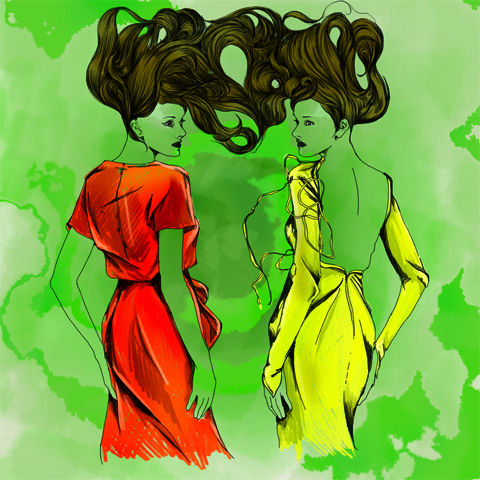

 pharmacy Photography by Amelia Gregory” title=”Find Your Feet Honey’s Dance Academy, Photography by Amelia Gregory” width=”480″ height=”320″ class=”aligncenter size-full wp-image-38157″ />