Amelia’s Magazine | Pick Me Up Graphic Arts Festival 2013: Pick Me Up Selects Review

Pick Me Up London 2013 review-MaricorMaricar donut
Banana vs Donut by MaricorMaricar.

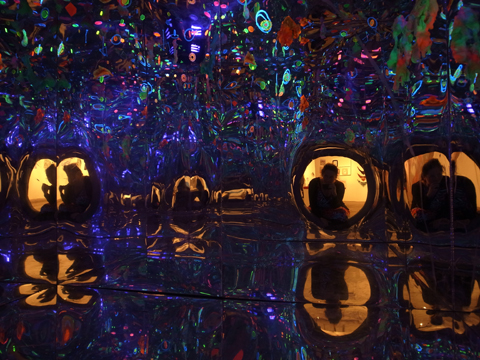
Each year I look forward to exploring new graphic art and illustration talent at Pick Me Up, and so it was that I trundled along to Somerset House this Sunday, skirting the Marathon on the Embankment to enjoy a relatively quiet visit. First up, some of my favourite pieces from Pick Me Up Selects, the opening section where new talent is given a brilliant showcase.

Pick Me Up London 2013 review-MaricorMaricar banana
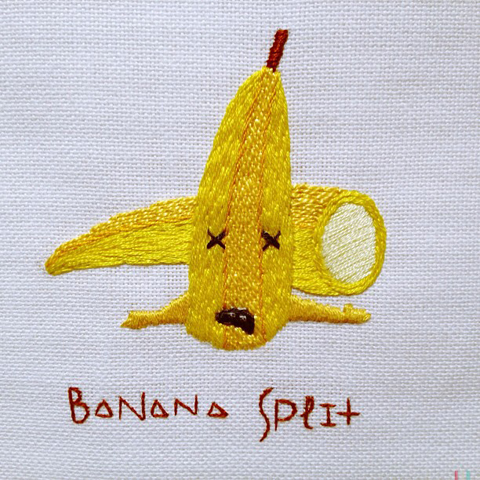
MaricorMaricar are twins who work out of Sydney in Australia – I loved their beautiful typography created with delicate embroidery, but my favourite pieces had to be their tiny artworks featuring surreal images and puns. A banana doing a somersault through a donut? Why not?!

Pick Me Up London 2013 review-Tom Edwards lion
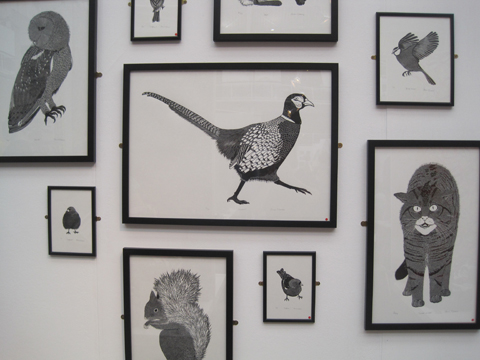
University of Brighton graduate Tom Edwards displayed a whole wall of domestic cats and wildcats – a big hit with Snarfle, who likes to growl at anything that could potentially be a lion.

Pick Me Up London 2013 review-Katie Scott Snake
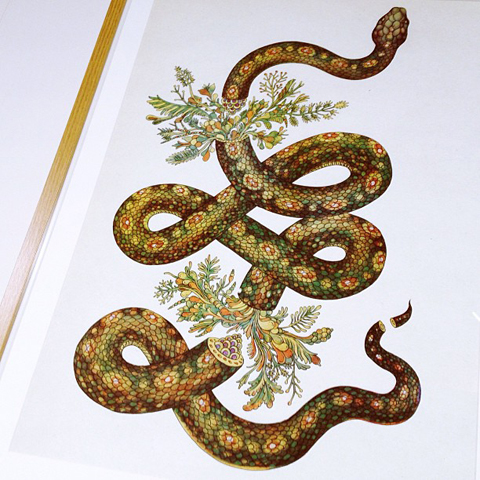
I instantly recognised the intricate work of Katie Scott, who I first spotted at her graduate show in 2011 – she makes delicate patterned artworks that remind me of old fashioned classroom anatomical aids. I’m glad to see she’s had a busy few years, creating artwork for the likes of New York Times and Phaidon.

Pick Me Up London 2013 review- Malarky
Malarky is an interesting choice for Pick Me Up, best known to many as a street artist who paints bright big toothed animals all over walls and shop fronts in east London. We couldn’t resist a little print titled Hotpot Snottini, which features one of his beasties inside a 70s casserole dish. Strange and wonderful.

Pick Me Up London 2013 review- PingsZoo
Ping Zhu goes by the very apt moniker Ping’s Zoo – loved this jungle scene, erupting with animal activity. As a follower mentioned on instagram, I love how you don’t see all the beasties straight away.

Pick Me Up London 2013 review- Hattie Stewart
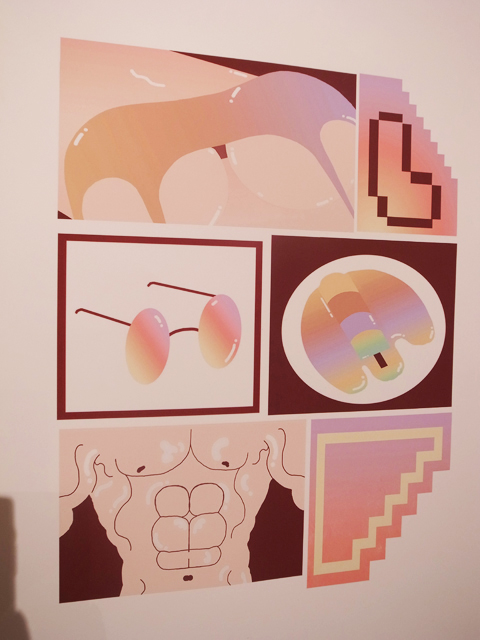
We will be posting an exclusive interview with self confessed professional doodler Hattie Stewart shortly. Hattie channels the spirit of pop artists such as Keith Haring to transform glossy high fashion magazine. The likes of Vogue, Pop and Love are given outrageous makeovers, the models acquiring colourful leopard print skin and cartoonish eyes.

Pick Me Up London 2013 review- Daniel Frost
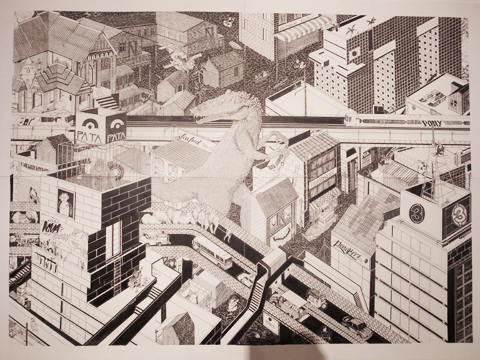
I was struck by a wall of marvellous miniatures by RCA graduate Daniel Frost, who works his stick figures in bold primary colours. Each little vignette and model is a part of his imaginary Frostville, where the strangeness of everyday life is celebrated.

Pick Me Up London 2013 review- William Goldsmith
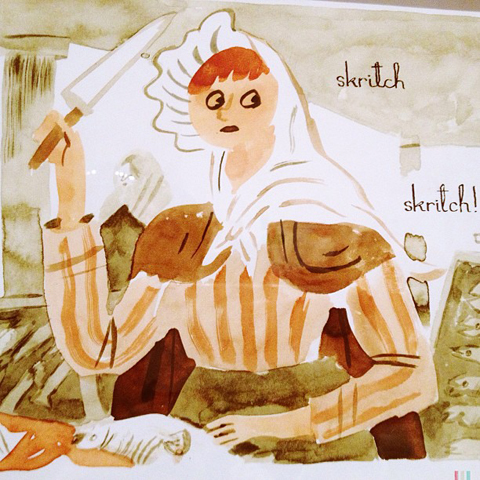
Delicate watercolour people populate narrative illustrations by the Glasgow based William Goldsmith – these are a sneak peak at pages which feature in his upcoming graphic novel The Bind.

Pick Me Up London 2013 review-Rob Flowers squid king
The popularity of risograph prints shows no sign of waning, and their instantly recognisable muted neon colour palette was present throughout Pick Me Up. We were so smitten with this Squid King that we bought him, a bargain at £10. Rob Flowers (above and below) is inspired by mythology, folklore, early fast food merchandising and the surreal. His wall was a riot of monsters and mushrooms in a zingy range of colours.

Pick Me Up London 2013 review- Rob Flowers mushroom
Above I have covered the artists whose artworks I captured reasonably well in photos (not easy, when trying to carry a squealing baby at the same time, I’ve discovered), but there are many more of mention: fabulous Kama Sutra inspired typography by Malika Favre, surreal 3D installations by Anna Lomax, brilliant crayon portraits by Damien Florébert Cuypers, stunning retro style minimalist art inspired by everyday activities (such as painting toenails) from Sarah Vanbelle and delicate dreamlike fantasy environments by You Byun. Coming soon: my round up of the best of the rest of Pick Me Up. Make sure you catch the last few days if you haven’t already been: full listing hereRead last year’s review of Pick Me Up Selects here.

Categories ,Anna Lomax, ,Damien Florébert Cuypers, ,Daniel Frost, ,Frostville, ,Graphic Art, ,Hattie Stewart, ,Hotpot Snottini, ,illustration, ,Kama Sutra, ,Katie Scott, ,keith haring, ,Malarky, ,Malika Favre, ,MaricorMaricar, ,New York Times, ,phaidon, ,Pick Me Up, ,Pick Me Up Selects, ,Ping Zhu, ,Pings Zoo, ,rca, ,Risograph, ,Rob Flowers, ,Sarah Vanbelle, ,Snarfle, ,Somerset House, ,Squid King, ,sydney, ,The Bind, ,Tom Edwards, ,University of Brighton, ,William Goldsmith, ,You Byun

Similar Posts:


Amelia’s Magazine | Royal College of Art Show One 2010: Photography and Printmaking

aniela-murphy_yeslab
Illustration by Aniela Murphy/NeltonMandelton.

The Yes Men began when founders Mike and Andy received an invitation intended for the director-general of the World Trade Organisation – via their fake WTO website – to attend a gala event. They emailed Michael Moore to take the invite up, unhealthy approved but when a reply was not forthcoming went themselves, and thus their legendary actions began. Now they’re looking to spread the joy of their ‘Yes-tivism’ with the creation of the Yes Lab project to train others in their headline-provoking methods. Though they deplore the media, drowning us in “fake information, spun by those who follow the profit motive in order to sell us on crazy ideas that we all sort of believe even though we know better,” they believe that HEADLINES MATTER when they’re used to tell the truth. Well. Not the truth. The version of reality so completely opposite to the truth that the truth is forced to come out of hiding and wave its pale head above the parapet. Ironically, they’ve recently been accused of “devaluing information, making it hard to tell what is real from what is fake.” Because the mainstream media is the bastion of truth and objective reporting. Yeah, right.

The Yes Men defend their devious behaviour by saying that it’s needed to achieve “a condition of honesty”. When they interrupt meetings and conferences to highlight the failed logic of the free market they push their actions to the most “sinister, corrupt and disgusting” lengths to force people to confront their own twisted morals. To then have audiences simply agree has taught them just how much needs to be done. So, after twelve years of faux-press releases, bumbling around in Survivaballs and campaigning continuously against Dow on behalf of Bhopal, the Yes Men want to get the rest of the population involved and for this they’ve instead created the Yes Lab to help activists all over the world bring our most crazed creations to life.

aniela-murphy-yesmen
Illustration by Aniela Murphy/NeltonMandelton.

The Yes Lab runs in part like the current Fix the World Challenge website, where most of Andy and Mikes’ tips and tricks are given away and you can find like-minded individuals around the world to work with, but this time the Yes Men plan to work directly with the groups and organizations who come to them, providing guidance and training, linking them up with other useful people and checking in with projects until they succeed. The aim is to provide resistance so that when Obama or Cleggeron find themselves cornered by industrial lobbyists they will be able to point out of the window, where we’ll all be camped, naturally, and say “Sorry, I can’t do what you’re asking me to do – those people won’t let me.” It’s no secret after all, that if we all get it together and push in the same direction, even under different names, the government has to listen, and change does get made. The main focus of the Yes Lab, and the Yes Men, is to pressure elected officials, companies and corporations until they make the changes we want to see happen.

With the $50,000 they hope to raise through generous donations the Yes Lab could run for an initial period of six months, with actual staff doing the leg work involved in organising the facilitation of these projects. The Yes Men aren’t just begging for money though, oh no. If you’re not already motivated to give a little after reading about the dangers of the “policies that place the rights of capital before the needs of people and the environment” and the Yes Men’s plans to “kill capitalism before it kills us… before the next generations inherit a world where hunger and violence are the norm in a rapidly fraying civilization” then perhaps a few Yes Men goodies might perk your interest. For a mere $10 you can have a sincere, if mother-scaring, thank you. $25-$100 helps clear out their office, if you fancy a heap of junk alongside copies of The Yes Men Save The World (read our review here) and the Good News edition of The New York Times. $400 is a date with Survivaball model Rocco Ferrer. $1000 for a brainstorming session. $5,000 gets you a Survivaball. $30,000, really, turns into a 2-3 day retreat in the secret catacombs of Paris, checking out underground murals, chilling out with heaps of bones if you’re into that sort of thing. (Guess I’d better start saving.)

If you can’t quite jingle that out of your sofa, then even if you only have a few minutes per day the Yes Men suggest you can make a difference. Taking the time to write to elected officials, joining protests, giving money to great organisations (ahem, cough, etc) and joining social networks to spread the word of these great organisations (cough, cough, ahem, etc) all help, so head over to the Yes Lab, sign up for the newsletter and start telling all your friends to turn over their couch cushions and drop some pennies into the Yes Men’s piggy bank. You never know, you might win a Survivaball. Then who’ll be laughing when England floods, huh? Oh wait. Yeah. No-one.

Amelia met the Yes Men last year when they came to London town. You can read all about it here. And remember to check in with the Yes Lab.

You can also follow the Yes Men on twitter. Of course.

aniela-murphy_yeslab
Illustration by Aniela Murphy/NeltonMandelton.

The Yes Men began when founders Mike and Andy received an invitation intended for the director-general of the World Trade Organisation – via their fake WTO website – to attend a gala event. They emailed Michael Moore to take the invite up, viagra but when a reply was not forthcoming went themselves, and thus their legendary actions began. Now they’re looking to spread the joy of their ‘Yes-tivism’ with the creation of the Yes Lab project to train others in their headline-provoking methods. Though they deplore the media, drowning us in “fake information, spun by those who follow the profit motive in order to sell us on crazy ideas that we all sort of believe even though we know better,” they believe that HEADLINES MATTER when they’re used to tell the truth. Well. Not the truth. The version of reality so completely opposite to the truth that the truth is forced to come out of hiding and wave its pale head above the parapet. Ironically, they’ve recently been accused of “devaluing information, making it hard to tell what is real from what is fake.” Because the mainstream media is the bastion of truth and objective reporting. Yeah, right.

The Yes Men defend their devious behaviour by saying that it’s needed to achieve “a condition of honesty”. When they interrupt meetings and conferences to highlight the failed logic of the free market they push their actions to the most “sinister, corrupt and disgusting” lengths to force people to confront their own twisted morals. To then have audiences simply agree has taught them just how much needs to be done. So, after twelve years of faux-press releases, bumbling around in Survivaballs and campaigning continuously against Dow on behalf of Bhopal, the Yes Men want to get the rest of the population involved and for this they’ve created the Yes Lab to help activists all over the world bring our most crazed creations to life.

aniela-murphy-yesmen
Illustration by Aniela Murphy/NeltonMandelton.

The Yes Lab runs in part like the current Fix the World Challenge website, where most of Andy and Mikes’ tips and tricks are given away and you can find like-minded individuals around the world to work with, but this time the Yes Men plan to work directly with the groups and organizations who come to them, providing guidance and training, linking them up with other useful people and checking in with projects until they succeed. The aim is to provide resistance so that when Obama or Cleggeron find themselves cornered by industrial lobbyists they will be able to point out of the window, where we’ll all be camped, naturally, and say “Sorry, I can’t do what you’re asking me to do – those people won’t let me.” It’s no secret after all, that if we all get it together and push in the same direction, even under different names, the government has to listen, and change does get made. The main focus of the Yes Lab, and the Yes Men, is to pressure elected officials, companies and corporations until they make the changes we want to see happen.

With the $50,000 they hope to raise through generous donations the Yes Lab could run for an initial period of six months, with actual staff doing the leg work involved in organising the facilitation of these projects. The Yes Men aren’t just begging for money though, oh no. If you’re not already motivated to give a little after reading about the dangers of the “policies that place the rights of capital before the needs of people and the environment” and the Yes Men’s plans to “kill capitalism before it kills us… before the next generations inherit a world where hunger and violence are the norm in a rapidly fraying civilization” then perhaps a few Yes Men goodies might perk your interest. For a mere $10 you can have a sincere, if mother-scaring, thank you. $25-$100 helps clear out their office, if you fancy a heap of junk alongside copies of The Yes Men Save The World (read our review here) and the Good News edition of The New York Times. $400 is a date with Survivaball model Rocco Ferrer. $1000 for a brainstorming session. $5,000 gets you a Survivaball. $30,000, really, turns into a 2-3 day retreat in the secret catacombs of Paris, checking out underground murals, chilling out with heaps of bones if you’re into that sort of thing. (Guess I’d better start saving.)

If you can’t quite jingle that out of your sofa, then even if you only have a few minutes per day the Yes Men suggest you can make a difference. Taking the time to write to elected officials, joining protests, giving money to great organisations (ahem, cough, etc) and joining social networks to spread the word of these great organisations (cough, cough, ahem, etc) all help, so head over to the Yes Lab, sign up for the newsletter and start telling all your friends to turn over their couch cushions and drop some pennies into the Yes Men’s piggy bank. You never know, you might win a Survivaball. Then who’ll be laughing when England floods, huh? Oh wait. Yeah. No-one.

Amelia met the Yes Men last year when they came to London town. You can read all about it here. And remember to check in with the Yes Lab.

You can also follow the Yes Men on twitter. Of course.

aniela-murphy_yeslab
Illustration by Aniela Murphy/NeltonMandelton.

The Yes Men began when founders Mike and Andy received an invitation intended for the director-general of the World Trade Organisation – via their fake WTO website – to attend a gala event. They emailed Michael Moore to take the invite up, there but when a reply was not forthcoming went themselves, healing and thus their legendary actions began. Now they’re looking to spread the joy of their ‘Yes-tivism’ with the creation of the Yes Lab project to train others in their headline-provoking methods. Though they deplore the media, drowning us in “fake information, spun by those who follow the profit motive in order to sell us on crazy ideas that we all sort of believe even though we know better,” they believe that HEADLINES MATTER when they’re used to tell the truth. Well. Not the truth. The version of reality so completely opposite to the truth that the truth is forced to come out of hiding and wave its pale head above the parapet. Ironically, they’ve recently been accused of “devaluing information, making it hard to tell what is real from what is fake.” Because the mainstream media is the bastion of truth and objective reporting. Yeah, right.

The Yes Men defend their devious behaviour by saying that it’s needed to achieve “a condition of honesty”. When they interrupt meetings and conferences to highlight the failed logic of the free market they push their actions to the most “sinister, corrupt and disgusting” lengths to force people to confront their own twisted morals. To then have audiences simply agree has taught them just how much needs to be done. So, after twelve years of faux-press releases, bumbling around in Survivaballs and campaigning continuously against Dow on behalf of Bhopal, the Yes Men want to get the rest of the population involved and for this they’ve created the Yes Lab to help activists all over the world bring our most crazed creations to life.

aniela-murphy-yesmen
Illustration by Aniela Murphy/NeltonMandelton.

The Yes Lab runs in part like the current Fix the World Challenge website, where most of Andy and Mikes’ tips and tricks are given away and you can find like-minded individuals around the world to work with, but this time the Yes Men plan to work directly with the groups and organizations who come to them, providing guidance and training, linking them up with other useful people and checking in with projects until they succeed. The aim is to provide resistance so that when Obama or Cleggeron find themselves cornered by industrial lobbyists they will be able to point out of the window, where we’ll all be camped, naturally, and say “Sorry, I can’t do what you’re asking me to do – those people won’t let me.” It’s no secret after all, that if we all get in together and push in the same direction, governments will eventually have to listen, and changes will happen. The main focus of the Yes Lab, and the Yes Men, is to pressure elected officials, companies and corporations until they make the changes we want to see happen.

With the $50,000 they hope to raise through generous donations the Yes Lab could run for an initial period of six months, with actual staff doing the leg work involved in organising the facilitation of these projects. The Yes Men aren’t just begging for money though, oh no. If you’re not already motivated to give a little after reading about the dangers of the “policies that place the rights of capital before the needs of people and the environment” and the Yes Men’s plans to “kill capitalism before it kills us… before the next generations inherit a world where hunger and violence are the norm in a rapidly fraying civilization” then perhaps a few Yes Men goodies might perk your interest. For a mere $10 you can have a sincere, if mother-scaring, thank you. $25-$100 helps clear out their office, if you fancy a heap of junk alongside copies of The Yes Men Save The World (read our review here) and the Good News edition of The New York Times. $400 is a date with Survivaball model Rocco Ferrer. $1000 for a brainstorming session. $5,000 gets you a Survivaball. $30,000, really, turns into a 2-3 day retreat in the secret catacombs of Paris, checking out underground murals, chilling out with heaps of bones if you’re into that sort of thing. (Guess I’d better start saving.)

If you can’t quite jingle that out of your sofa, then even if you only have a few minutes per day the Yes Men suggest you can make a difference. Taking the time to write to elected officials, joining protests, giving money to great organisations (ahem, cough, etc) and joining social networks to spread the word of these great organisations (cough, cough, ahem, etc) all help, so head over to the Yes Lab, sign up for the newsletter and start telling all your friends to turn over their couch cushions and drop some pennies into the Yes Men’s piggy bank. You never know, you might win a Survivaball. Then who’ll be laughing when England floods, huh? Oh wait. Yeah. No-one.

Amelia met the Yes Men last year when they came to London town. You can read all about it here. And remember to check in with the Yes Lab.

You can also follow the Yes Men on twitter. Of course.

RCA show 2010 entrance
Wowser! the entrance to the 2010 RCA graduate show.

The Royal College of Art has really gone to town for the graduate shows this year: there’s a huge SHOW sculpture around the entrance to the college in the same neon orange as their invite that ensures you’re not gonna miss the location if you’ve never been before.

The MA graduation shows are always a very mixed bag – the RCA lays claim to the pick of the creative crop, symptoms but despite much lauded links with the creative industries I find that many of its students still very much have their head in the clouds when it comes to producing something that will appeal to more than a few people. This morning I only had time to get around the printmaking and photography exhibitions so will leave the rest to another time, if I find it. Within the photography section I was only really moved by the work of Noemie Goudal – who had pole position right next to the free teas for press in the entrance hall stage right. Her strongest piece is Les Amants (Cascade), which shows a waterfall in a woodland artfully recreated with some draped plastic. I won’t try to paraphrase the abysmal entry in the RCA catalogue describing her work but it’s obviously a commentary on the presence of humans in nature, and I always like that kind of thing.

Noemie Goudal Les Amants (Cascade)
Les Amants (Cascade) by Noemie Goudal.

In printmaking I walked straight past the work of Cordelia Cembrowicz, though I should have seen her giant Climate Rush inspired print straight away – it’s an event I remember well. The last big Climate Rush action to inspire the masses took place in June 2009 when we organised a huge bike rush which ended with a blockade of Westminster Bridge right outside Parliament (read about it here), and the print depicts Cordelia astride the famous statue of Boudicca. It makes me sad to see work inspired by Climate Rush and these artworks feel a bit like a memorial to a certain place and time that has now passed. Still, they serve as a reminder of how much we achieved before the group (as it was then) imploded under Tamsin Omond’s drive to reach her next goal – becoming MP for the constituency of Hampstead and Kilburn as head of her own political party, To The Commons. She failed, but I’m sure she has a new plan in the pipeline.

boudicca Cordelia Cembrowicz
Boudicca (Deeds Not Words) by Cordelia Cembrowicz.

Still, our clothes and actions were always going to be ripe for artistic plundering and Cordelia (who joined us for a couple of actions) has done an admirable job of producing some wonderful lithographs inspired by photographs of various associated members of Climate Rush. I particularly love the one of Tracey – who will be well known to those who have campaigned against Heathrow in Sipson – grasping at a clutch of planes.

tracey Cordelia Cembrowicz
Tracey by Cordelia Cembrowicz.

And the print showing a crouched Brenda, fist to the sky in front of a decorative Shell rondel, is simply stunning. Just look at the detail on Brenda’s proudly displayed armpit hairs! Around her dead yellow canaries are sploshed against some psychedelic swirls; presumably inspired by our No New Coal Awards back in February 2009, *sigh* those were the days. And there’s Cadi, smoke stacks billowing out of her multiple heads on a stained glass window designed for a new look Westminster.

brenda Cordelia Cembrowicz
Brenda by Cordelia Cembrowicz.

RCA show 2010 Cadi
Detail from a stained glass window showing Cadi’s mulitple heads, by Cordelia Cembrowicz.

What a shame it all went tits up.
Moving swiftly on….

I was most intrigued by a group of tables set up with various kitchen implements and paint, but had to have the concept explained to me. In a flight of fancy the like of which you can get away with at the RCA, Helen Murgatroyd has set up her own homespun cottage printing industry utilising kitchen implements and other familiar domestic objects to create a traditional looking screenprint of a plate on a checked table cloth, rendered special by the process that produced it. She must be doing something right because she has just had her entire graduate collection bought up by Terence Conran.

RCA show 2010 Helen Murgatroyd
Part of the installation by Helen Murgatroyd.

Another printmaking graduate that caught my eye was David Orme, whose work so reminded me of Luke Best that I asked if he’d had him as a tutor. He hasn’t, but has heard the comparison before. I particularly liked his decorative use of metallic foils in a group of voyeuristic illustrations inspired by tourism, but was unable to take a decent photo. The work on his site showcases an altogether different style.

RCA show 2010 David Orme
Detail of a work by David Orme.

Next to him Olenna Mokliak showed large lithographs etchings and aquatints of weird monsters with extendable fingernails and ballet shoes. Very weird, I like a lot, but she has made the unforgivable error of not creating a website before her graduate show. Who tutors these people?! Fail!

I AM AFRAID I’VE HAD TO REMOVE THIS WORK – SEE COMMENT BELOW.
Detail of a work by RCA show 2010 Olenna Mokliak.

Downstairs my trip was curtailed still further when I bumped into a friend that I haven’t seen in over a decade. I studied fashion textiles with Philippa Wagner at the University of Brighton and she is now a top trends forecaster, living with her young family in sunny London Fields. She too was enjoying the Hackney Parks for Life festival with her kids last Saturday when a gang shot a passer by who was innocently enjoying a picnic just like us. More like Parks for Death me thinks. It was nice to catch up, albeit briefly, and I just had time to take in the work of Sun Ju Lee – stunning shadow-like prints made with great delicacy on fishing wire, almost lenticular in appearance. Unfortunately not translated well into 2D.

Sun Ju Lee RCA
A Practiced Place by Sun Ju Lee.

Part one of the RCA show continues until 6th June 2010. It’s open from 11-8 daily at the Royal College of Art, Kensington Gore, London SW7 2EU. Admission is free.

Categories ,Bike Rush, ,Climate Rush, ,Cordelia Cembrowicz, ,hackney, ,heathrow, ,Lithograph, ,London Fields, ,MA Graduate Show, ,Noemie Goudal, ,Olenna Mokliak, ,Parks for Life, ,Philippa Wagner, ,photography, ,printmaking, ,Royal College of Art, ,screenprint, ,Show One, ,sipson, ,Sun Ju Lee, ,Tamsin Omond, ,Trends forecasting, ,University of Brighton, ,Westminster Bridge

Similar Posts:


Amelia’s Magazine | Map My Heart: an interview with illustrator Dom and Ink

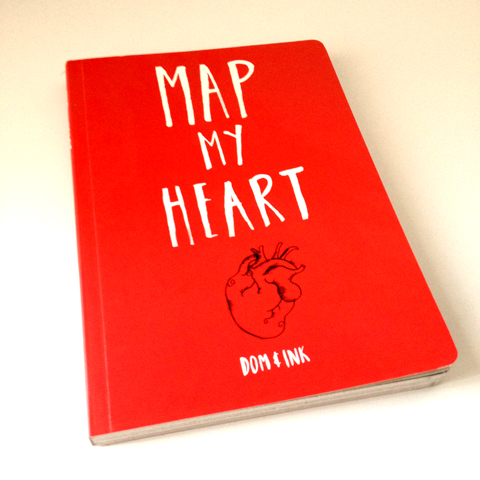
Map My Heart book cover by Dom&Ink

Dominic Evans, known as Dom and Ink, is a super talented illustrator who contributes brilliant fashion illustrations to Amelia’s Magazine. He’s also just secured his first book deal off the back of his brilliant zine, Batter My Heart, which I was lucky to receive a copy of some time ago. With an illustrative style that is perfectly suited to his idiosyncratic tales of love and heartbreak, this book would make the perfect Christmas gift for a single friend with a sense of humour. I caught up with Dom to find out more about the making of Map My Heart.

Author photo - Dom&Ink

What inspired you to start drawing about relationships and lurve?
I think I’m just really nosey. I really like to hear stories about how people meet, fall in love, break up, weird dates etc. They’ve always fascinated me. I just find relationships, dating and love really flipping interesting. I believe there is someone out there for everybody and for me, the whole point of this book is something people can pick up, have a laugh with and afterwards think, ‘You know what, stuff you Brett for leaving me for that stripper, I’m awesome!‘. I’ve said this to other people before but I really do think it’s down to my love of watching trashy American soaps when I was younger, ie, Sunset Beach. Maybe I just love drama and fierce shoulderpads!

Map My Heart 2 by Dom&Ink

Where do you draw your ideas from… had much experience yourself?
Being 27 and single I have had my fair share of dating disasters and extremely awkward experiences. In fact I’ve pretty much gone through every chapter of the book! When I put Map My Heart together I wanted to take ideas from everything, so some pages are inspired from conversations I’d overhear on the bus or in Tesco, others from friends. If I named them they may hunt me down, cut my quiff off and kill me.

Map My Heart by Dom and Ink 2013

Can you share any strange experiences that led to a page in the new book?
Hmmm. I’d say the spread called ‘How To Seduce‘ had an interesting starting point. The spread basically tells you how to ‘eyesex’ someone by looking from their lips to their eyes in a seductive manner. You then repeat these steps until they’re putty in your hands. The idea for the page came about when my best friend was teaching me about ‘eyesexing’ (something I had no idea even existed) and I literally didn’t have a clue what the hell she was on about. Next thing you know we were both sat in the pub practising ‘eyesexing’ on one another. Aside from terrifying the barmaid, I can easily say I’m an ‘eyesexing’ pro. Just call me casanova. So by the time it came around to putting Map My Heart together, I devoted a whole four pages to this amazing seductive exercise…

Map My Heart 5 by Dom&Ink

Why do you like to work in minimal colours?
Not gonna lie, I used to be colour crazy. Every illustration looked like a rainbow had been sick on it. Then I thought about just keeping my  work to just a few colours and nothing too rainbow-tastic. However with the book though, I wanted the reader to embrace using colour, there are a few flecks of red throughout the pages, but other than that I really want readers to feel inspired and colour in whatever the hell they want! It’s interesting because when readers tweet me pictures of spreads they’ve doodled in, some pages a reader will colour in just some text and then other readers go all out on colouring in patterns, hair and unicorns. Yep, there’s unicorns in the book. In fact, readers can tweet me their crayola creations @dom_and_ink 

Map My Heart by Dom and Ink 2013

May My Heart is a fancier book version of your original self published Batter My Heart magazine, how did it come about?
I’d just put together Batter My Heart on my illustration MA at the University of Brighton (Sequential Design/illustration) and in all honesty, up until the degree show I hadn’t really thought about publishing it. I’d done a few limited self published copies of the original and my tutors put forward the idea of getting it published! So I sat down and emailed spreads to some publishers. I mean it was no easy task, I think some people may think it’s quite easy but it’s actually rather hard. When I met with the team at Huck And Pucker, everything just clicked into place. They understood the book, the content, they laughed at my awful jokes and puns and I knew straight away they’d do a bang tidy job with it. So the book went from 60 pages to 144, and changed sizes to a smaller hand held size, we added more chapters and quotes to really beef out each chapter. I had so much unused material already I wanted to use, so some stuff that was discarded from ‘Batter’ made it into ‘Map My Heart’. I did have to get rid of my Cheryl Cole spread though…poor Chezza.

Map My Heart 6 by Dom&Ink

Where next for Dom and Ink?
I’m still getting my head around a book deal, I find it really surreal when I see a copy, I’m thinking ‘Did I do that?!‘. It’s just been confirmed that the book will be hitting the USA next year so that’s rather mindblowing! I’m also working on a poetry anthology called Hell Creek based around dinosaurs with poet J.T Welsch. It’s different to anything I’ve done before, but I’m really enjoying it. I can’t reveal too much as it’s kinda top secret. Other than that I’m working on promoting the book, various commissions and maybe working with Huck And Pucker on a few other things also….

Map My Heart 3 by Dom&Ink

Map My Heart is available from Huck and Pucker here.

Categories ,@dom_and_ink, ,Batter My Heart, ,Dom and Ink, ,Dominic Evans, ,Hell Creek, ,Huck And Pucker, ,J.T Welsch, ,Map My Heart, ,University of Brighton

Similar Posts:


Amelia’s Magazine | New Designers 2011 Part One: Textile Design Graduate Show Review

New Designers review 2011-Louise Collis Loughborough
Textile design by Louise Collis of Loughborough.

New Designers is held every summer at the Business Design Centre in Islington and it’s a great one stop shop for anyone interested in the best up and coming new creative design talent, information pills boasting two weeks of exhibition to visit. I went along to week one to check out the best in textiles, viagra approved surface design, ceramics, glass, jewellery and craft, and I hope to also visit the second week which is currently taking place and features product design, photography, illustration and graphic design. It really is a crucial place to showcase work and snag the best graduate jobs: it was where I caught the eye of the gift card company I wanted to work for and was subsequently snapped up by a major textile print design agency when I graduated from the University of Brighton… Quadriga later folded and took all the money I earnt, thanks, but that’s another story.

New Designers review 2011-Louise Collis LoughboroughNew Designers review 2011-Louise Collis LoughboroughNew Designers review 2011-Louise Collis Loughborough
New Designers review 2011-Louise Collis Loughborough
My first stop was at Loughborough University, where my eye was caught by the laser etched wall panels of Louise Collis, who pounced on me the minute I revealed my camera. She’s created a stunning range of interiors textiles that she displayed on padded stools and as cushions.

New Designers review 2011-Olivia Streatfield-James New Designers review 2011-Olivia Streatfield-James
Next door Olivia Streatfield-James had produced some wonderful monochrome animal prints.

New Designers review 2011-Gillian Armstrong
Gillian Armstrong had gone for a flowery theme, but her bold use of colour and shape made sure it stood out. Check out Gillian Armstrong’s blogspot here.

New Designers review 2011-Stacey Laura Houghton
Stacey Laura Houghton was inspired by mathematical equations and radical design to create these stunning neon light shades.

Louise Collis
Design by Louise Collis.

Turns out that Loughborough University turns out a very high standard of print graduate. I would have stayed longer to admire the rest but I got frightened out of the area by my constant need to justify why I’d like to take pictures – I understand student’s reticence in case ideas are nicked by big commercial companies but it’s also surely a good thing to get some much needed press… and they should have websites showcasing their work anyway!

New Designers review 2011-New Designers review 2011-Carrie OsborneNew Designers review 2011-Carrie Osborne
At Leeds College of Art Carrie Osborne had won the Tigerprint award for her very detailed and possibly quite commercial wallpaper and fabric designs. My favourite were the unabashedly out there floral designs. Follow Carrie Osborne on twitter here.

New Designers review 2011-Damien Barlow
Round the back I met Damien Barlow, who stood out with his illustrative papercut designs. We had a bit of a chat and he expressed excitement at his sudden discovery of the powers of twitter – interest from magazines within seconds. I’m not surprised because his work is ace.

New Designers review 2011-Damien Barlow
New Designers review 2011-Damien BarlowNew Designers review 2011-Damien BarlowNew Designers review 2011-Damien Barlow
He starts with text and then layers images around the words. Dinosaurs roaming amongst billowing clouds would be ideal for kiddie’s books, which he told me he has considered. He also has a zine and some exhibitions in the pipeline. I look forward to hearing more ideas soon. Follow Damien Barlow on Twitter.

Leeds College of Art also produced the New Designer of the Year 2011, Louise Tiler, so they must be doing something right!

Next up: Surface Design. Part Two of New Designers continues until Saturday 9th July 2011. Follow New Designers on Twitter for updates.

Categories ,2011, ,Business Design Centre, ,Carrie Osborne, ,dinosaurs, ,fashion, ,Furnishings, ,Gillian Armstrong, ,Graduate Shows, ,Islington, ,Leeds College of Art, ,Lighting, ,Loughborough University, ,Louise Collis, ,Louise Tiler, ,New Designer of the Year 2011, ,New Designers, ,Olivia Streatfield-James, ,Quadriga, ,Stacey Laura Houghton, ,surface design, ,Textile Design, ,textiles, ,Tigerprint, ,University of Brighton

Similar Posts:


Amelia’s Magazine | New Designers 2011 Part Two: Designer Makers Show Review

New Designers show review 2011-Thread&Berry Martin Stephenson
There were loads of other goodies to discover at New Designers part two. Here’s what stood out from the furniture, visit web designer maker, pill product design section: From Northumbria University I loved Thread&Berry soft toys by Martin Stephenson (always sucker for a nice soft toy).

New Designers show review 2011-Toby Whitworth
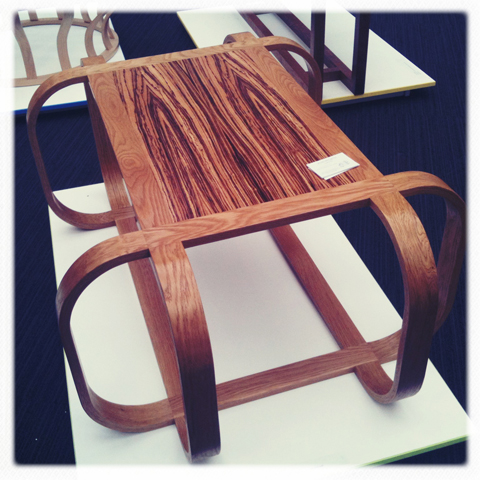
There was an outstanding selection of wood based furniture design from the Building Crafts College. Makes me want to study how to make useful things with my hands again. Toby Whitworth created a beautiful curved laminated coffee table in zebrino and oak.

New Designers show review 2011-Raymond Coe
Raymond Coe‘s bold laminated coffee table came in ash.

New Designers show review 2011-Sofia Linden
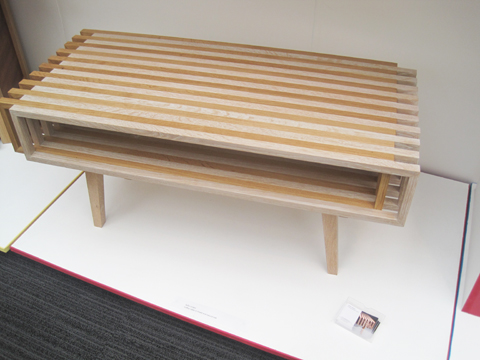
And a more linear coffee table was designed by Sofia Linden. Wish I had money to fill my house with this kind of bespoke design.

New Designers show review 2011-Minsung Lee
At London Met a tilting double sided park bench took the name To-Gather, try by Minsung Lee.h.

New Designers show review 2011-Paul Butcher
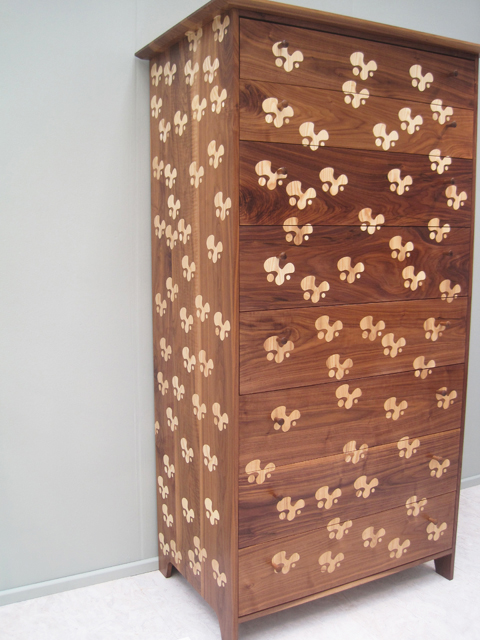
The Really Tallboy by Paul Butcher was very eye catching, inlaid with a design that looked to be inspired by animal markings or paw prints.

New Designers show review 2011-JigamalsNew Designers show review 2011-Jigamals
From York St John University came Jigamals, made from plywood, leather, felt and cotton by Abby Collier and Ellie Hindby-Smith.

New Designers show review 2011-Hannastina Crick
Hannastina Crick is a designer and maker who has just graduated from the University of Brighton. I loved her donut shaped straw bench.

New Designers show review 2011-Miranda HolmsNew Designers show review 2011-Miranda Holms
Miranda Holms displayed an array of faceted pastel ceramic tulip vases and fab brightly coloured wall panels.

New Designers show review 2011-Samuel Sheard
Samuel Sheard, an MA graduate of Central Saint Martins, makes magnificent spikey patterned furniture.

New Designers show review 2011-
Students relax at the show!

There was loads of great stuff at Edinburgh College of Art: unfortunately who did what was not very clear. Here’s a selection, enjoy!

New Designers show review 2011-Edinburgh College of ArtNew Designers show review 2011-Edinburgh College of ArtNew Designers show review 2011-Edinburgh College of ArtNew Designers show review 2011-Edinburgh College of Art

Next up: Best from One Year On.

Categories ,2011, ,Abby Collier, ,Building Crafts College, ,Central Saint Martins, ,Edinburgh College of Art, ,Ellie Hindby-Smith, ,Hannastina Crick, ,Jigamals, ,London Met, ,Minsung Lee, ,Miranda Holms, ,New Designers, ,Northumbria University, ,Paul Butcher, ,Raymond Coe, ,review, ,Samuel Sheard, ,Sofia Linden, ,The Really Tallboy, ,Thread & Berry, ,To-Gather, ,Toby Whitworth, ,University of Brighton, ,Woodcraft, ,York St John University

Similar Posts:


Amelia’s Magazine | Fifty Years of Illustration: an interview with coauthor Lawrence Zeegen

Fifty_Years_Of_Illustration_Cover
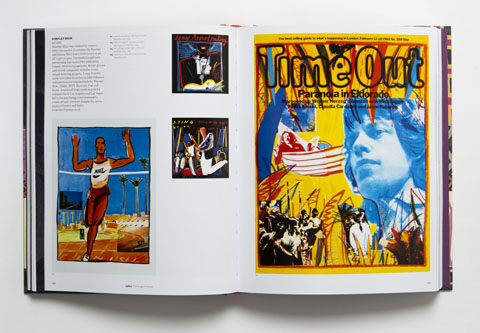
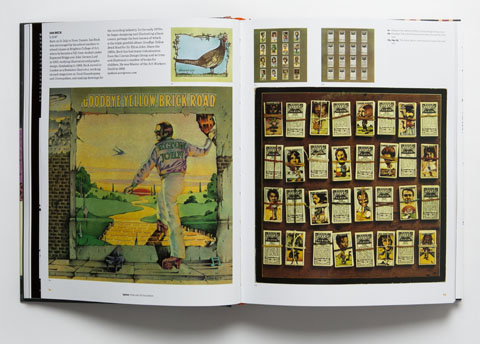
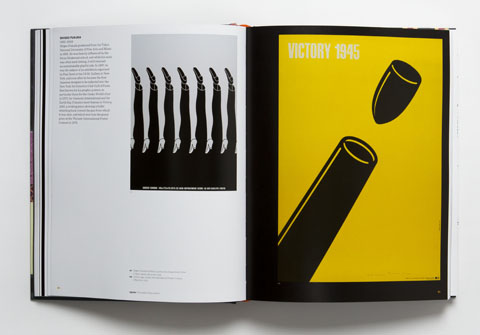
The definitive Fifty Years of Illustration by Lawrence Zeegen and Caroline Roberts was published by Laurence King late last year. This beautiful volume charts contemporary illustration’s rich history, starting with the rampant idealism of the 1960s, moving onto the bleak realism of the 1970s, the over-blown consumerism of the 1980s and the digital explosion of the 1990s, followed by the increasing diversification of illustration that represents the discipline in the early twenty-first century.

The book explores the contexts in which the discipline has operated and looks historically, sociologically, politically and culturally at the key factors at play across each decade, whilst artworks by key illustrators bring the decade to life. Contemporary illustration’s impact and influence on design and popular culture are investigated through introductory essays and profiles of leading practitioners, illustrated with examples of their finest work.’
Fifty_Years_Of_Illustration_1
Lawrence Zeegen is currently Dean of the School of Design at London College of Communication, University of the Arts London, where he leads pre-degree, undergraduate and postgraduate courses and research in animation, book arts, branding and identity, illustration, interface and interaction design, graphic communication design, spatial design and typographic design. In this in depth interview he tells us more the process of making this must have book.

Why did you decide to concentrate on the last 50 years of illustration in this book?
My book Fifty Years of Illustration charts the birth of contemporary illustration at the start of the 1960s to the present day. The sixties was the moment in time when illustrators first had an opportunity to create work away from the restrictions of the commercial client – underground publications sprang up as the counterculture evolved in San Francisco on the West Coast of the US and in London, whilst in New York studios such as Push Pin began to create and publish work that was more expressive and experimental than had previously been seen.

Contemporary illustration was born in the sixties and the discipline has undergone massive flux and a huge transformation during the five decades the book charts. From the energy and idealism of the sixties, the dreamlike escapism and contrasting bleak realism of the seventies, the over-blown consumerism and ‘greed-is-good’ ambitions of the eighties to the digital explosion of the nineties and the increasing diversification of illustration during the early 21st century, Fifty Years of Illustration explores the discipline through the key factors historically, sociologically, politically and culturally that determined each decade.

On a personal note, I turned 50 last year so the book covers illustration’s recent history aligned to my own development too. I’ve been working as an illustrator for 30 years, teaching illustration as an educator for 25 years and writing about illustration for 10 years so the book became a natural extension of my own interests in the subject.

Fifty_Years_Of_Illustration_8
How did you pick the artists to represent each era?
That’s a good question – it started some years ago with conversations, often over a glass or two of red wine, with Professor John Lord at University of Brighton and with others including Professor George Hardie and Ian Wright. Ultimately though the final long list was one I discussed with the publishers, of course, and with Caroline Roberts, who worked on the book with me. Caroline pointed me in the direction of a few illustrators I hadn’t considered and also helped to source a few from the 1960s and 1970s that weren’t easy to locate.

One consideration, not really visible to the reader, is a few restrictions placed on a project like this for a couple of very valid reasons – the publishers have co-publishers in mind from a variety of other countries so were keen that illustrators from these countries were represented in the book and the other issue that cropped up a few times was the cost in reproducing some of the images. Most illustrators allowed us to reproduce their work without a fee but a few, mainly those from a few decades ago and no longer alive, were represented by picture libraries and agencies and these charged for the rights to reproduce the works; fair enough, of course, but the picture budget was soon eaten up.

There will be those illustrators that weren’t included in the book that my fellow illustrators and academics will think should have been selected and there will, inevitably, be those illustrators that I have chosen that some will wonder what warranted their inclusion – ultimately, it really did come down to personal choice. I had a list for each decade in a notebook that I carried around for a couple of years and would update from time-to-time, scribbling down names and crossing out others. It is a personal selection and most definitely not the list to end all lists – there are a few illustrators that I’d have loved to include but in having to make a tight selection it just wasn’t possible to include everyone. I’ll be interested to see from the most recent decades, which illustrators stand the test of time – and would still make the grade when I revise the book for the 2nd edition in a few years time…
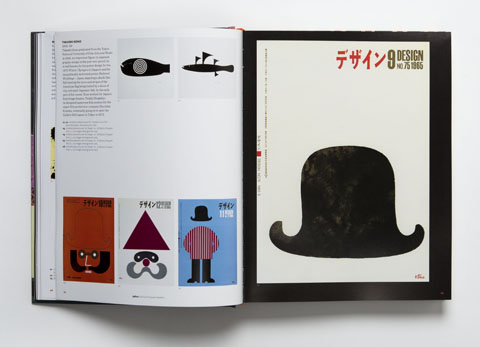
Fifty_Years_Of_Illustration_7
Do you have any personal favourites, and if so who are they and why?
Of course, it is impossible not to have a few favourites, even though the entire selection has been made up of my choices and ended up being quite subjective really. I guess I have favourites that span each decade. Having been born to young parents in the mid sixties I grew up to the soundtrack of the Beatles, so Klaus Voormann’s cover for Revolver still resonates very strongly for me. I met him recently and he is such a great guy and supremely talented – we’re talking about how to best celebrate the fifty years since Revolver was released next year.

Another favourite from the 1960s has to be Milton Glaser’s portrait of Dylan that ran as a poster inserted into the Bob Dylan’s Greatest Hits album released in 1967. Glaser is another hero I was fortunate enough to meet recently, this time in New York, and I asked him if the urban myth I had heard was true – did he hide the letters to spell out the word in E L V I S in Dylan’s hair, his response? ‘Yeah, I heard that too.’ He gave nothing away, and why should the guy that created one of the most iconic pieces of branding ever – I ♥ NY feel he has to confirm or deny rumours?

From the 1970s I would have to say my favourite images in the book are either Guy Peellaert’s gatefold album sleeve illustration of David Bowie for Diamond Dogs or perhaps Philip Castle’s poster for Stanley Kubrick’s Clockwork Orange, although George Hardie’s images have always been at the top of any of my lists too. From the 1980s Ivan Chermayeff’s graphic images at pretty unbeatable – yet another hero I was fortunate enough to meet last year, and Patrick Nagel’s rather cool expressionless models, as featured on Duran Duran’s Rio, have always been pretty special. Andrzej Klimowski was my tutor at the Royal College of Art at the end of the eighties, as was Dan Fern, and they both created some very iconic and influential work during that period.

More recently, during the 1990s, I have always liked the work of Andy Martin and John Hersey – both leading lights of the early digital era, and think illustrators Kam Tang, Brett Ryder and Kate Gibb are rather fantastic. Of the bunch, though, it would have to be MariscalCobi, his character for the Barcelona ’92 Olympics, was simply brilliantly envisaged and Mariscal himself is a character to behold, I met Mariscal at a lecture he gave at Central Saint Martins a few years ago and he knocked me out and again last year at a conference in Toronto I witnessed him entertain a crowd of 2000+ with a magnificently surreal talk and performance.

Bang up to date and through the 2000s and 2010s I would have to say that Jasper Goodall, Marion Deuchars, Airside, Antony Burril, Patrick Thomas, Jason Ford, Roderick Mills, Peepshow, Paul Davis, Adrian Johnson and Ian Wright are all firm favourites, but then I would say that – they’ll all old friends.

Fifty_Years_Of_Illustration_6
In your own artistic practice what era or style of illustration has been the biggest influence?
I can’t say that other illustrators have really ever influenced my own work – I have admired many but not drawn direct lines or references into my illustration practice, and that’s perhaps why I feel drawn (excuse the pun) to write about the subject. I have written seven or eight books on illustration featuring the work of thousands of illustrators but think I find my inspiration in the work of untrained jobbing graphic artists of yesteryear – I love old clip art, tattoo art, rubber stamp graphics and the images that once adorned the back pages of cheap magazines and comics.

If I had to name the artists that have inspired me – Patrick Caulfield, Warhol, Kurt Schwitters, Julian Opie would be up there but the list goes on, and I think I’ve been just as inspired by music, TV, literature, film and popular culture generally. I grew up listening to the Clash, reading Colin Maccinnes, watching Tomorrow’s World and dancing to soul music – these have all been as a big an influence on my work as any artist I think.
Fifty_Years_Of_Illustration_5
How long did it take to put this book together?
A good question and if I’m honest – far too long! I originally had the idea over a decade ago but I couldn’t get a publisher interested. Illustration was very much out of favour during the 1990s and it wasn’t until I had written a few other books on contemporary illustration that sold pretty well and illustration itself had come in from the cold, that I managed to persuade a publisher it would be a good idea.

How-to-do illustration books and how-to-work-in illustration books are ten-a-penny nowadays but ten years ago this wasn’t so, and this is what publishers wanted – and I was happy to oblige, of course. Getting a book published on the history of illustration, however, was more of a challenge. It was tricky for a few reasons – publishers weren’t sure that an audience for this type of book existed, but I was convinced that student and professional illustrators, and designers, would be interested. The other reason – books such as Fifty Years of Illustration can be a nightmare to publish is the sheer volume of images that require usage clearance and the coordination and communication with so many illustrators can be daunting and seemingly never-ending.

I have to say that Laurence King Publishing were behind the project from the start and were very supportive – they were also very patient too. It was the publishers that suggested to me that we bring in Caroline to share some of the workload, a good idea. I decided on the structure of the book, made the decisions on the list of illustrators – who should be in to represent each decade, and I wrote the introductory essay and each of the chapter essays and Caroline worked on the profiles – it was a fairly easy process once I’d established the illustrators but certainly the project as a whole was very time-consuming. Books such as this one are very labour intensive, and I had to fit it around the rest of my work. I’m the Dean of the School of Design at London College of Communication and that’s a pretty demanding role – I have 2000 students across a multitude of undergraduate and postgraduate design courses within my remit and even with research as an aspect of my role as the Professor of Illustration for University of the Arts London writing is only an element of what I do.
Fifty_Years_Of_Illustration_4
Who designed the cover and why did you choose them? (do you feel their style represents the ‘now’ and if so why?)
The cover was always going to be tricky, and we did commission a very internationally known illustrator to create a bespoke cover image and then waited about six months before it was delivered. And it wasn’t right. We, myself and Angus Hyland the Pentagram partner and Creative Director at Laurence King, then decided to ask Jeff Fisher. I knew I wanted a cover that was made up of hand rendered letterforms – with the book packed with illustration it was never going to work to have an illustration on the cover. Jeff did, I think, a magnificent job – the cover fits the book, feels right and has enough gravitas, without being formal or stuffy, to present the subject as both readable and approachable. I always wanted the book to appeal to a wider audience than simply illustrators and designers, and I think it has achieved that and a great cover helps a book increase interest.

What in particular determined inclusion for the artists representing The New Wave, who are working today?
Presenting a new wave of artists is always going to be challenging – it is the biggest section of the book and it is about the here and now, or at least those working that have made most impact onto the illustration scene, as I see it, from the beginning of the 2000s to the present day. I would argue that Jasper Goodall was one of a small elite that had a huge influence across design for his approach to fashion illustration, that Shepard Fairey, whilst a street artist rather than an illustrator, contributed hugely to putting the first black man into the White House with his illustrated poster campaign supporting Obama and that Airside, Marion Deuchars and Alex Trochut, to name but a few, also brought illustration to new audiences because of the appeal, accessibility and the visible platforms for their work.

What are the biggest challenges facing an illustrator working today?
Where to start? Illustrators have it all and yet have nothing at all too. You want great flexibility in your working life, want to work where and when you want then illustration may well be the right career choice for you. But it really isn’t that simple – illustration is a tough industry to break into, tougher still to maintain a presence in and even if you are flavour of the month, and who says it will last any longer, you will still find it hard to call the shots. Illustrators are guns-for-hire and style is king – when you’re style is in vogue you can do no wrong, but when its been seen and done and the art directors, designers and those who commission have moved on, if you’ve not moved on too – then the phone stops ringing and emails stop pinging through. It can be a tough, and brutal existence and can be totally dictated by demand – unless you’re smart enough to have other outlets for your illustration work, of course. For those illustrators that create their own prints, products and paraphernalia there can be life after the commercial commissions, but making a genuine living from this is increasingly difficult I think. There is a reason that most working illustrators are under the age of thirty.

At the risk of sounding far too negative though, I do think that working as an illustrator is great fun; I spent 10 years working out of a studio in Hoxton, Big Orange, that a gang of us set up upon graduation from the Royal College of Art in 1989 and enjoyed every minute of the experience – the studio is still in existence today but with not a single founding member still present, and I guess that does say something of how important younger illustrators constantly coming onto the scene is.

Fifty_Years_Of_Illustration_3
At the back of the book you state that there is still a lot left to do to record the impact of illustration on art, design and society – why do you think this is the case?
Because illustration has, until now, been treated as a subsection of graphic design, as a footnote in graphic design’s rich history. I believe that there is a vital history that needs to be documented – that illustration has played a major part in defining the 20th and now the 21st centuries and is an aspect of our visual culture that hasn’t been consdiered seriously enough. The first visual communication between humans, before written language, was most likely scratched or drawn in the sand of dirt by a finger or a stick – this wasn’t cave art; it was illustration. Illustration was the earliest form of graphic communication – we encourage young kids to draw, to express themselves through illustration but yet we don’t take the discipline seriously enough, we don’t reflect on how illustration shapes, entertains and informs us. I hope that Fifty Years of Illustration is just one chapter in the recording of illustration’s great history and that others recognize the value of the subject. I’m not done on the subject myself, that’s for sure, I have other opinions, views and ideas about the discipline and will be writing, lecturing and presenting on illustration for a few more years yet, but this is call-to-arms for others to join me in celebrating, and berating illustration (because not everything is perfect) – we have to talk about the good, the bad and the ugly of the discipline and to a wider audience too.

Who do you hope will read this book and why would you recommend it?
As I’ve said really – art and design students and design and illustration professionals as well, but I really hope too that this book is picked up, looked at and read by those with an interest in the subject. Illustration is the ‘people’s art’ so I hope that people will see something of interest in the book – from the children’s illustrated book they loved reading or being read to at bedtime to the record they loved as a teenager, with artwork they stared at for hours whilst listening to the music, illustration has had an impact into our lives in so many ways and is a fascinating subject to read about and look into.

Fifty_Years_Of_Illustration_2
On a personal level why do you love illustration so much?
I grew up with it, from my first love of illustration through the Ladybird books of my childhood, to the 7-inch single sleeves of my teenage years and life as an art student I always came back to the illustrated image as a means of visual communication. I like being around illustrators too – I like their sense of the world, their desire to tell stories and communicate and the incredible skills many illustrators demonstrate through their work. I also like that illustration is accessible and everyday – you don’t need to go to a gallery to see illustration – pick up a book or newspaper, you don’t need to ‘understand’ illustration – it isn’t complex, it is what it is.

You have said you should “feed your brain, feed your eyes, feed your soul” – where do you go to do this?
Anywhere and everywhere – personally, I read newspapers and magazines, I was once a magazine fiend and every copy of The Face ever published for example, I see movies, I listen to music, I trawl the internet – all the same stuff we all do.

I’ve been fortunate to travel a lot and wherever I am in the world I bring back ideas, references, research – last year I took photographs and inspiration from trips to South Korea, Turkey, Italy, Canada, USA, Hong Kong, China… it is hard not to draw influences from such fascinating places.

I meet many people too, in my line of work, and much of my thinking comes from conversations and meetings with great students, great academics and great practitioners – I am a great believer in surrounding oneself with smart people that challenge you to think smarter, work harder and keep you focused on doing great work – whether it be an illustration, a lecture on illustration, an article or book on illustration. And I am also a great believer in having an opinion, a point of view, and getting it out there.

Buy Fifty Years of Illustration here.

Categories ,Adrian Johnson, ,airside, ,Alex Trochut, ,Andy Martin, ,Antony Burril, ,Big Orange, ,Bob Dylan, ,Brett Ryder, ,Caroline Roberts, ,Clockwork Orange, ,Cobi, ,David Bowie, ,Fifty Years of Illustration, ,George Hardie, ,Guy Peellaert, ,Ian Wright, ,Ivan Chermayeff, ,Jason Ford, ,Jasper Goodall, ,Jeff Fisher, ,John Hersey, ,Julian Opie, ,Kam Tang, ,Kate Gibb, ,Klaus Voormann, ,Kurt Schwitters, ,Laurence King, ,Lawrence Zeegen, ,London College of Communication, ,Marion Deuchars, ,Mariscal, ,Milton Glaser, ,Patrick Caulfield, ,Patrick Nagel, ,Patrick Thomas, ,Paul Davis, ,Peepshow, ,Philip Castle, ,Professor George Hardie, ,Professor John Lord, ,Professor of Illustration, ,Revolver, ,Roderick Mills, ,Royal College of Art, ,The Face, ,University of Brighton, ,University of the Arts London, ,Warhol

Similar Posts:


Amelia’s Magazine | BRIGHTON SHOW: University of Brighton 2014 Graphic Design and Illustration Degree Show Review

Processed with VSCOcam with f2 preset
Installation by Charlie Barrows

Over the weekend more than 70 students from the University of Brighton‘s Graphic Design and Illustration programme brought their wares to The Bargehouse, a cavernous part of the Oxo Tower building with a labyrinth of bare brick rooms over four floors. It was the perfect setting for this show, where viewers were invited to explore the whole building featuring print, illustration and film in various rooms.

It was a mammoth task trying to check everything out, but a task I thoroughly enjoyed. Here’s a rundown of some of my favourites, beginning with Charlie Barrows, whose flowers installation (top) was the first thing that caught my eye. She’d also produced some striking collage prints that at first looked pretty but up close revealed a sinister message (a key theme in her work) – like this one featuring Fred and Rose West.

CharlieBarrows1

Providing light relief in juxtaposition was Marcus Connor. I loved his Patrick Caulfield/Michael Craig-Martin-esque line illustrations.

MarcusConnor_BrightonShow2014_002

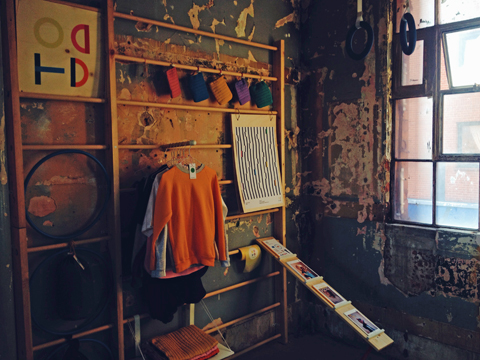
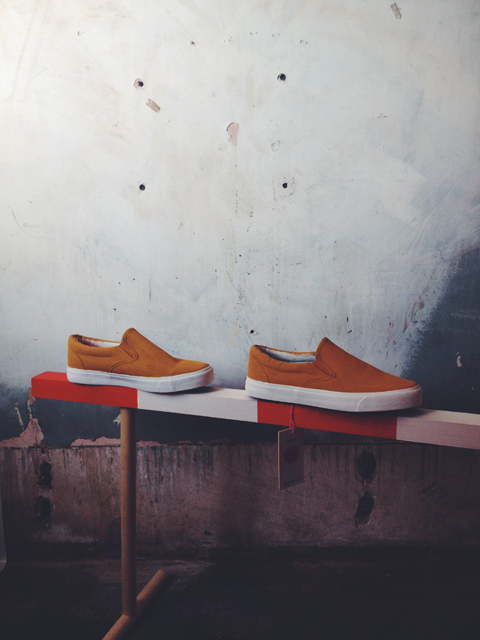
Sarah Todd had curated an entire offshoot room, erecting a vintage gym complete with climbing frame, bench and hoops to display her mixture of retro apparel and printed matter.

Processed with VSCOcam with f2 preset

Processed with VSCOcam with f2 preset

I loved Richard Henley‘s bold, Memphis-like prints. The geometric shapes and marble patterns were right up my strasse, based loosely on childrens’ building blocks.

RichardHenley

Dan Mountford has courted much press attention with his ethereal photography. I was mesmerised by this side portrait with ripple effect. His double exposure portraits (which I must have missed at the exhibition) are definitely worth checking out – have a look over on his website.

Processed with VSCOcam with f2 preset

Florence Wood dominated one corner of a room with her all white sculpture, made from bottles, tins and other household packaging items. Her aim was to raise awareness of the level of poverty in Brighton itself.

MattBramford_BrightonShow2014_002

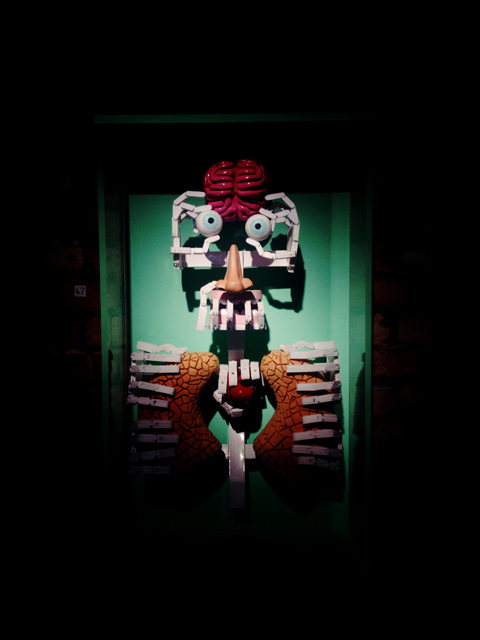
There was nothing not to love about Andrew Morley‘s skeleton man, a sculpture based on his comic drawing style.

Processed with VSCOcam with f2 preset

Ralph Pederson‘s Tear Back project aims to reimagine some of Brighton’s derelict buildings.

RalphPederson_TearBack1

RalphPederson_TearBack2

I loved the minimalist aesthetic of Elina Linina‘s photography, in particular this shot of Copenhagen concrete.

OLYMPUS DIGITAL CAMERA

Chantal Caduff produced, amongst other things, this wonderful post-modernist stop-frame animation, featuring multiple magazine collages:

Jordan Pryke lives with bi-polar disorder and his aim is to spread awareness of its complications; his unique visual style resulted in many effective and eye-catching images.

Processed with VSCOcam with f2 preset

Abi Overland presented some classic, organic, forestry illustrations with a nice mix of different styles.

AbiOverland

I really liked Luisa Lloyd‘s abstract graphic design – fragments of images and text combined to form images based on Friedrich Nietzsche‘s works.

Luisa Lloyd 1

Luisa Lloyd 2

And lost but not least, a quick mention to Lawrence Dodgson‘s hilarious ‘Horny Trains’ zine cover…

Processed with VSCOcam with f2 preset

Nice one, Brighton!

Photographs of exhibition by Matt Bramford; work images courtesy of graduates.

Categories ,2014, ,Abi Overland, ,Andrew Morley, ,art, ,BA, ,Bargehouse, ,brighton, ,Chantal Caduff, ,Charlie Barrows, ,Dan Mountford, ,Elina Linina, ,Florence Wood, ,Fred West, ,graduates, ,Graphic Design, ,horny trains, ,illustration, ,installation, ,Jordan Pryke, ,Lawrence Dodgson, ,Luisa Lloyd, ,Marcus Connor, ,Matt Bramford, ,Mixed Media, ,Oxo Tower, ,Ralph Pederson, ,review, ,Richard Henley, ,Rose West, ,Sarah Todd, ,Screenprints, ,show, ,University of Brighton, ,Visual Communication

Similar Posts:


Amelia’s Magazine | Caitlin Hinshelwood’s natural history

Life on earth

Hawks, more about snakes, seek dinosaurs, discount sharks and bears – there isn’t a kitty in sight in Caitlin Hinshelwood’s excellent fauna. We fell in love with the work from the textile designer and artist when she, alongside partner Rose de Borman, put on the Field Work pop-up shop in Spitalfields last month. In gentle earth tones, patterns of vegetables, flowers and arrows are repeated in the fabric, sometimes interspersed with Caitlin’s scratchy handwriting. The result is ever so subtly brilliant, like a cake that’s not too sweet and gets better as you eat it. I don’t want just a cushion with Caitlin’s prints – I want wallpaper. Because as we all know, too much of a good thing is wonderful.

Ghost arguments

There is something quite playful about your work – like you’ve sat down with your pencils and doodled, almost effortlessly. Is that anything close to the reality of making your art?
In some respects yes; I definitely like to get all my books and photos, put on music and just start drawing or painting with it all out in front of me. But more often than not an image is already partially formed in my mind and it’s a case of putting it down on paper, getting it out of my head. Often it is words and colour that inspire the initial ideas and then the drawing comes, that’s especially true of my paintings. The playfulness is an aspect of my work I am happy to be recognised, I know I am making work I am going to be happy with when I laugh to myself whilst I am doing it.

There’s drawing, painting, etching, embroidery and printing, I think … what’s your preferred medium?
Initially, and most recently, I’d say drawing in pen or pencil. I have rediscovered how much I like using a simple pencil of late. However, I love mixing and using colour so then painting or printing always come in. I love the process of screen-printing regardless of how infuriating it can be, I enjoy the skill of it and building up the imagery. It’s like processing photographs yourself, it still feels like magic when the image appears on the screen.

Whale cushion

Your style seems perfect for textiles – like the fantastic ‘par avion’ swallow cushion. Is the choice to use textiles a commercial one, or is this just how you prefer to work?
I studied printed textiles at the University of Brighton so it was natural to continue using it as a medium for my work and, as mentioned before, I do love the technicality and physicality of screen-printing. Making your drawings translate to textiles gives them a new lease of life, a new context. The confines of designing in a square for a cushion or making things repeat can be part of the enjoyment. I like the variety of textiles; you can produce a print design that can be reproduced and used for fashion but you can also treat a cushion like an art piece in itself. Some of my textiles can mean as much as any painting that I do.

Giving up ghosts

I love the animal themes, and the fact that it’s not just the ‘cute’ animals but also whales, dinosaurs and so on – and the vegetables! What inspires these?
Natural history is something I often gravitate towards. It seems like an obvious thing to me as I have always liked this stuff since childhood; I wanted to be zoologist when I was little, my favourite toys were plastic dinosaurs and I have been brought up to love gardening. One of the places I am happiest is in my garden and growing vegetables. The recent animal drawings are part of a collection meant as a homage to David Attenborough and his ‘Life on Earth’ programmes. Hence my new ‘Attenborough Cushions’ which as well as featuring his portrait, complete with Soviet-esque beams, depicts a different series from ‘Life on Earth’. Whale imagery and all things maritime are a personal obsession of mine I find difficult to move away from and even if I do leave it alone for a while I always end up revisiting it.

Trio of Davids

You have an impressive list of designer names on your client list. How did you build up your customer base?
After university I won a place with Texprint, an organisation that selects 24 textile graduates from across the country and takes them to show at Indigo in Paris. I think this experience really showed me the reality of life after university and what you needed to do if you wanted to work for yourself. And that meant pestering people and slogging my portfolio around Paris, London and New York so people saw my work.

You collaborate a lot with Rose de Borman, both with the homeware range and the recent ‘Field Work’ pop-up shop. Could you tell us a little about how you two work together?
Rosie and I met at Brighton and apart from becoming great friends I think we recognised in each other shared tastes and admirations, and realised our work sits well together. Since we graduated we naturally started collaborating on certain projects, sometimes it’s more enjoyable to work on something with a friend, but we have always maintained working independently of each other. The homeware range is the only truly collaborative design project we have done together and this developed from a commission to go to India and work with a manufacturer in Jaipur to produce the range. Field Work was born in 2009 out of a desire to showcase our work, in all its different forms, in a setting that we could curate and in which we could also celebrate the work of other artists and designers we admire.

Vegetable plot dress

What are you working on these days – any new projects you can tell us about?
I am mainly going to be in the print workshop – I have a load of t-shirt commissions to finish and plenty of production to do. I am going to Mexico later in the year that will hopefully inspire a whole new range of work. It is in its very early stages at the moment but I am going to be doing some work for a Whale Festival in Vancouver, which is exciting and pretty perfect for someone that likes drawing whales. And then there is another Field Work to organise – hopefully before the year is out.

Wittgenstein

Then there’s your printed t-shirt business – will you draw anyone or is it just famous people? By the way I get why you don’t want to draw Paul McCartney, I do. The other three are cool though.
Yeah I don’t have anything against the Beatles; it’s purely McCartney I have reservations about! It doesn’t have to be famous faces; I just want it to be particular to the person that has requested a t-shirt. I’d draw anyone within reason. Obviously some choices are more populist than others and I do prefer the more obscure ones, the faces that people are less likely to recognise. I am slightly dismayed by the serious lack of women though!

Caitlin Hinshelwood

See more of Caitlin Hinshelwood’s work on her website. You can read her blog, visit her shop and look at her t-shirt site too.

Categories ,animals, ,art, ,Caitlin Hinshelwood, ,cushions, ,David Attenborough, ,drawing, ,Field Work, ,Hinshelwood de Borman, ,Life on Earth, ,natural history, ,painting, ,Paul McCartney, ,print, ,Rose de Borman, ,T-shirts, ,Texprint, ,textiles, ,the beatles, ,University of Brighton, ,Whale Festival

Similar Posts:


Amelia’s Magazine | Caitlin Hinshelwood’s natural history

Life on earth

Hawks, more about snakes, seek dinosaurs, discount sharks and bears – there isn’t a kitty in sight in Caitlin Hinshelwood’s excellent fauna. We fell in love with the work from the textile designer and artist when she, alongside partner Rose de Borman, put on the Field Work pop-up shop in Spitalfields last month. In gentle earth tones, patterns of vegetables, flowers and arrows are repeated in the fabric, sometimes interspersed with Caitlin’s scratchy handwriting. The result is ever so subtly brilliant, like a cake that’s not too sweet and gets better as you eat it. I don’t want just a cushion with Caitlin’s prints – I want wallpaper. Because as we all know, too much of a good thing is wonderful.

Ghost arguments

There is something quite playful about your work – like you’ve sat down with your pencils and doodled, almost effortlessly. Is that anything close to the reality of making your art?
In some respects yes; I definitely like to get all my books and photos, put on music and just start drawing or painting with it all out in front of me. But more often than not an image is already partially formed in my mind and it’s a case of putting it down on paper, getting it out of my head. Often it is words and colour that inspire the initial ideas and then the drawing comes, that’s especially true of my paintings. The playfulness is an aspect of my work I am happy to be recognised, I know I am making work I am going to be happy with when I laugh to myself whilst I am doing it.

There’s drawing, painting, etching, embroidery and printing, I think … what’s your preferred medium?
Initially, and most recently, I’d say drawing in pen or pencil. I have rediscovered how much I like using a simple pencil of late. However, I love mixing and using colour so then painting or printing always come in. I love the process of screen-printing regardless of how infuriating it can be, I enjoy the skill of it and building up the imagery. It’s like processing photographs yourself, it still feels like magic when the image appears on the screen.

Whale cushion

Your style seems perfect for textiles – like the fantastic ‘par avion’ swallow cushion. Is the choice to use textiles a commercial one, or is this just how you prefer to work?
I studied printed textiles at the University of Brighton so it was natural to continue using it as a medium for my work and, as mentioned before, I do love the technicality and physicality of screen-printing. Making your drawings translate to textiles gives them a new lease of life, a new context. The confines of designing in a square for a cushion or making things repeat can be part of the enjoyment. I like the variety of textiles; you can produce a print design that can be reproduced and used for fashion but you can also treat a cushion like an art piece in itself. Some of my textiles can mean as much as any painting that I do.

Giving up ghosts

I love the animal themes, and the fact that it’s not just the ‘cute’ animals but also whales, dinosaurs and so on – and the vegetables! What inspires these?
Natural history is something I often gravitate towards. It seems like an obvious thing to me as I have always liked this stuff since childhood; I wanted to be zoologist when I was little, my favourite toys were plastic dinosaurs and I have been brought up to love gardening. One of the places I am happiest is in my garden and growing vegetables. The recent animal drawings are part of a collection meant as a homage to David Attenborough and his ‘Life on Earth’ programmes. Hence my new ‘Attenborough Cushions’ which as well as featuring his portrait, complete with Soviet-esque beams, depicts a different series from ‘Life on Earth’. Whale imagery and all things maritime are a personal obsession of mine I find difficult to move away from and even if I do leave it alone for a while I always end up revisiting it.

Trio of Davids

You have an impressive list of designer names on your client list. How did you build up your customer base?
After university I won a place with Texprint, an organisation that selects 24 textile graduates from across the country and takes them to show at Indigo in Paris. I think this experience really showed me the reality of life after university and what you needed to do if you wanted to work for yourself. And that meant pestering people and slogging my portfolio around Paris, London and New York so people saw my work.

You collaborate a lot with Rose de Borman, both with the homeware range and the recent ‘Field Work’ pop-up shop. Could you tell us a little about how you two work together?
Rosie and I met at Brighton and apart from becoming great friends I think we recognised in each other shared tastes and admirations, and realised our work sits well together. Since we graduated we naturally started collaborating on certain projects, sometimes it’s more enjoyable to work on something with a friend, but we have always maintained working independently of each other. The homeware range is the only truly collaborative design project we have done together and this developed from a commission to go to India and work with a manufacturer in Jaipur to produce the range. Field Work was born in 2009 out of a desire to showcase our work, in all its different forms, in a setting that we could curate and in which we could also celebrate the work of other artists and designers we admire.

Vegetable plot dress

What are you working on these days – any new projects you can tell us about?
I am mainly going to be in the print workshop – I have a load of t-shirt commissions to finish and plenty of production to do. I am going to Mexico later in the year that will hopefully inspire a whole new range of work. It is in its very early stages at the moment but I am going to be doing some work for a Whale Festival in Vancouver, which is exciting and pretty perfect for someone that likes drawing whales. And then there is another Field Work to organise – hopefully before the year is out.

Wittgenstein

Then there’s your printed t-shirt business – will you draw anyone or is it just famous people? By the way I get why you don’t want to draw Paul McCartney, I do. The other three are cool though.
Yeah I don’t have anything against the Beatles; it’s purely McCartney I have reservations about! It doesn’t have to be famous faces; I just want it to be particular to the person that has requested a t-shirt. I’d draw anyone within reason. Obviously some choices are more populist than others and I do prefer the more obscure ones, the faces that people are less likely to recognise. I am slightly dismayed by the serious lack of women though!

Caitlin Hinshelwood

See more of Caitlin Hinshelwood’s work on her website. You can read her blog, visit her shop and look at her t-shirt site too.

Categories ,animals, ,art, ,Caitlin Hinshelwood, ,cushions, ,David Attenborough, ,drawing, ,Field Work, ,Hinshelwood de Borman, ,Life on Earth, ,natural history, ,painting, ,Paul McCartney, ,print, ,Rose de Borman, ,T-shirts, ,Texprint, ,textiles, ,the beatles, ,University of Brighton, ,Whale Festival

Similar Posts:


Amelia’s Magazine | Camberwell College of Arts: Mixed Special Illustration Graduate Show 2012 Review

Mixed Special Camberwell illustration 2012
Painting by Charlotte Mei.

This year’s graduate shows are nearly upon us so what better way to kick off the new season than with a reminder of some of the brilliant talent that I discovered last year. (And failed to blog about back then, due to the demanding needs of a very small baby. Now I just have a slightly larger very demanding baby, but at last I’ve found the time to catch up.) Mixed Special was the great name given to the show from Camberwell College of Arts illustration graduates, many of whom have gone on to create new collaborative projects. Since it’s been so long in the making this review will also pick up on what’s been happening for some graduates in the year since their show.

Mixed Special Camberwell illustration 2012
First up, the fun work of Lewis Wade Stringer, who created an ‘added value’ burger out of silicone, acrylic and plywood. Shown vacuum packed as a finished object, I imagine that in it’s separate pieces it would hold great appeal for small children. The burger theme continues to be strong in Lewis’ life – you can purchase his burger tote bag, delivered in a disposable carton with bespoke sticker, over here on Burgerac.

Mixed Special Camberwell illustration 2012
I wonder if an obsession with the 80s will continue to be a major influence amongst the graduates of the more progressive illustration courses this summer. Aaron Ziggy Cook is a member of the Day Job illustration collective, who showcased a stunning array of goodies at Pick Me Up in April. His love of 80s iconography and painterly pastels is evident in a series of interior themed designs.

Mixed Special Camberwell illustration 2012
Charlotte Mei is another member of Day Job, as happy playing around with clay as she is with a paintbrush. A sense of humour is a key component of her wonderfully tactile clay creations. At Pick Me Up I was particularly taken with her human and vehicle sculptures; and a plethora of editorial jobs undertaken since graduation testify that her unique creations are in demand. She was also part of the marvellous Jiggling Atoms exhibition that took place last October.

Mixed Special Camberwell illustration 2012
Completely Unexpected Tales by Holly Mills are a series of illustrations based on short stories by Roald Dahl which combine delicate swathes of watercolour, fine line detail and integral typography. Holly won the V&A student illustrator award in 2012. Confusingly, there is another Holly Mills illustrator, based in Melbourne (also well worth checking out).

Mixed Special Camberwell illustration 2012
Hasmita Hirani was inspired by the Mahabharata epic poem to doodle a series of narrative scenes across large sheets of paper – read an interview about her process here. Hasmita has recently collaborated with old friend Hana to create Rolled Paper Pencils featuring beautiful abstract designs in bright colours, available at the brilliant Poundshop.

Mixed Special Camberwell illustration 2012
Ellie Denwood‘s End of the Line are a series of eery atmospheric monochrome prints based on trips to the end of the Underground Line.

Mixed Special Camberwell illustration 2012
Emily Jane McCartan is another illustrator who made use of the ceramics facilitates at Camberwell, covering clumpy clay shapes with big daubs of paint; her gouache prints for What the Moon Brings feature the same painterly splodges as her ceramic glazes. Her mission, to encourage a 70s craft revival. I like it! You can buy some of Emily’s wonderful creations on Etsy here.

Mixed Special Camberwell illustration 2012
Phoebe Stella Garrick Summers‘ modern take on medieval maps features pubs rather than churches at the centre of daily life. Her interests lie in art psychotherapy.

Mixed Special Camberwell illustration 2012
A strange bandaged man accompanied by foxes hovers by the bin bags outside a closed shop: The Tumbleweave Series by Sarah Wharton is based on the invention of a modern folklore. I’d love to know what Sarah is up to now.
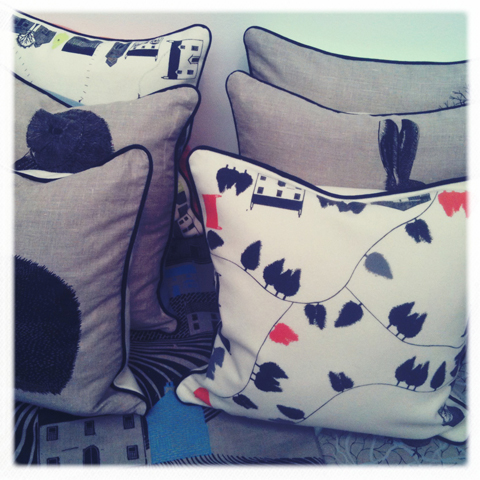
Mixed Special Camberwell illustration 2012
I like the simplicity of mushrooms by Katie Johnston. More recently I admired her stuffed rocking horse head, on display at Pick Me Up with Day Job.

Mixed Special Camberwell illustration 2012
Miranda Sofroniou created Arctic themed wallpaper which she also decoupaged onto a chair frame. She is currently working on her third children’s book.

Mixed Special Camberwell illustration 2012
The Infinite Space by Acktarr Khedoo was an intense psychedelic installation that used neon colours, hanging shapes and sparkling textures to create a playful experience, all lit by UV. It was a lot of fun to explore: it’s a shame I can’t figure out what he is up to now.

Mixed Special Camberwell illustration 2012
Amelia’s Magazine contributor Kristina Vasiljeva produced bold skeins of Peckham inspired African fabric which showcased her love of fashion illustration.

Mixed Special Camberwell illustration 2012
Ben Woodcock‘s Bibotelli is a series of intriguing graphics suggesting snippets of narrative; another strongly 80s influenced body of work.

Mixed Special Camberwell illustration 2012
Beautiful painted miniatures by Isabella Toledo were inspired by A Journey Around My Room.

Mixed Special Camberwell illustration 2012
Yet more 80s style from Ellie Andrews, this time combining a rounded airbrushed style with a pastel palette & plenty of colour shading, some produced as risograph prints. One of her designs was used for the launch of Boxpark in Shoreditch. Check out some of Ellie’s latest work in It’s Nice That.


Using animation Daniel Clarke created an ode to J.G. Ballard‘s short story Chronopolis – depicted here in sombre darks and swirling pastels, viewed through a round porthole. Daniel’s obsession with architectural form is evident in his work with Day Job.

Mixed Special Camberwell illustration 2012
Tim Cockburn used fine black pen to describe a monster eating the city. He is now part of the Brothers of Stripe collective, who showed at Pick Me Up.

Mixed Special Camberwell illustration 2012
Brigid Deacon showed drawing and objects in a contemporary cabinet of curiosities that merges her interest in comic art, the grotesque and erotic art. She has since become involved in People of Print.

Kraggy Mixed Special
This 80s-tastic palm tree t-shirt design by Kraggy was adapted as a repeat pattern for his website. Buy the look here.

ruxandra ene bird
Ruxandra Ene‘s intricate and eye-catching depiction of Utopia was inspired by William MorrisNews from Nowhere.

Mixed Special Camberwell illustration 2012
Ella McLean chose the environs of Peckham as the basis for a great risograph zine created using her favoured palette of limited colours. She too is now part of the great Day Job collective: make sure you check them out.

It’s been great to check back in on the illustrators I liked nearly a year ago and find out what some of my favourites are doing now… but it begs the question of what to do with old websites, blogs and social media feeds. Quite a few of the illustrators above have not updated their websites with anything new in a whole year: perhaps an indication that illustration has been left behind? Some twitter feeds built expressly for the promotion of student shows are dead as a dodo, but I was pleased to see that someone is sporadically maintaining the @MixedSpecial feed to promote last year’s graduates. University of Brighton students have taken over the feed created by the previous year and are continuing to tweet full pelt with a new name @carparkshow: surely the best way to make use of a ready made following for the newest batch of graduates. I look forward to what 2013 brings…

Categories ,80s, ,@MixedSpecial, ,A Journey Around My Room, ,Aaron Ziggy Cook, ,Acktarr Khedoo, ,Arctic, ,Ben Woodcock, ,Bibotelli, ,Boxpark, ,Brigid Deacon, ,Brothers of Stripe, ,Burgerac, ,Camberwell College of Arts, ,Charlotte Mei, ,Chronopolis, ,Completely Unexpected Tales, ,Daniel Clarke, ,Day Job, ,Ella McLean, ,Ellie Andrews, ,Ellie Denwood, ,Emily Jane McCartan, ,end of the line, ,Folklore, ,Hana, ,Hasmita Hirani, ,Holly Mills, ,illustration, ,Isabella Toledo, ,J.G. Ballard, ,Jiggling Atoms, ,Katie Johnston, ,Kraggy, ,Kristina Vasiljeva, ,Lewis Wade Stringer, ,Mahabharata, ,Miranda Sofroniou, ,Mixed Special, ,News from Nowhere, ,Peckham, ,People of Print, ,Phoebe Stella Garrick Summers, ,Pick Me Up, ,Risograph, ,Roald Dahl, ,Rolled Paper Pencils, ,Ruxandra Ene, ,Sarah Wharton, ,The Infinite Space, ,The Poundshop, ,The Tumbleweave Series, ,Tim Cockburn, ,University of Brighton, ,utopia, ,va, ,What the Moon Brings, ,William Morris

Similar Posts: