Amelia’s Magazine | Graduate Fashion Week 2010: UCA Rochester

Joo-Hee Chun

Emma Box, illness illustrated by Lesley Barnes

So, reigning champions (or at least winners of 2009 Gold Award) UCA Rochester took to the catwalks on Tuesday to show their wares in a bid to cling on to their title amongst the heavyweights we’d already seen at Graduate Fashion Week.

I’m very pleased to announce that they certainly put up a good fight. With a simple chandelier hung from the ceiling above the catwalk, the show began with a rather long romantic song – thank God too, because my guest was running late and he managed to sneak in during the song in the nick of time.


Live catwalk illustrations by Tom Gilbert

First up was Alexa Papavasileiou who presented a modest yet striking collection that packed a few discrete punches (okay, I’ll stop with the boxing metaphors now). Body-concious printed dresses with full-length sleeves wrapped models in organic suits, while drapes hung over the models creating flattering lines. The most interesting twist was the appearance of constructed stilettos which had a grungy, paper mache effect and gave this sleek collection an edgy twist.

Other escapades in weird and wonderful shoe design were brought to us by Lydia Vousvouni, whose deconstructed womenswear tailoring had a futuristic feel, teamed with crazy shoes that looked like art deco sculptures.


Lydia Vousvouni, illustrated by Abi Daker

Rebecca Watson in stark contrast dressed her models in very eery skeletal masks, bringing a little touch of death-glamour to the runway. The clothes in comparison were relatively simple, consisting of cropped-sleeve tops, two-tone leggings and some pretty neat tailoring.

More digital prints on the catwalk; this time in Emma Box’s structured collection. Micro-skirts and leggings in said prints were teamed with bolero-length jackets with exaggerated shoulders, giving models a dash of sex appeal and masses of style.

Digital prints again, from the Gareth-Pugh-esque Alex Oliver. Her models were transformed into futuristic creatures, with emphasis on shoulders (huge, huge shoulders). Catsuits or short dresses in a psychedelic print were teamed with leather jackets with scary spikes; the climax being a model with a Margiela-style eye covering as part of a hood. It was scary but sexy at the same time.


Alex Oliver, illustrated by Lesley Barnes

The first menswear collection from Rochester was that of Chelsea Bravo, whose models had the appearance of modern-day gladiators. Smock t-shirts with scoop necks emphasised muscular form and Chelsea’s palette of muted colours including sand, burgundy and blue had a sophisticated edge.

Vicky Jolly presented one of the most sophisticated collections I’ve seen this year. Her couturier-like craftsmanship created elegant dresses, with twists and turns in fabrics flattering the female form.


Vicky Jolly, illustrated by Alli Coate

Finally, after what felt like waiting for decades, Hallam Burchett ramped up the glamour factor to a big fat 10. Models sashayed and swished their hips to Donna Summer’s Bad Girls whilst wearing an all-green silky collection, embellished with dazzling crystals and accessorised with demi-gloves. Sod the tits or legs rule in Burchett’s short, short strapless dress and flaunt what you’ve got at the disco! This 1970s-inspired collection had the cuts and lines to make it contemporary, though.

More menswear now, from Anachee Sae Lee and Cherelle Reid. The former was a contemporary take on colloquial dressing and conjured up images of Sherlock Holmes, Oliver Twist, chimney sweeps and Victorian funeral directors all at the same time. High values in tailoring made this a tip-top collection, with fitted suits teamed with neck-bows and crisp shirts with bib detailing were accessorised with sleek shirt-armbands and porkpie hats.


Anachee Sae Lee, illustrated by Abi Daker

Cherelle Reid, whilst employing similar tailoring elements, was an entirely different look. In a strong micro-collection worthy of a slot in any upmarket store come Autumn Winter 2010, models wore silky harem pants which tapered tightly, low-cut v-neck tops and formal jackets. The craftsmanship look exquisite, but the pecs were a bit much *fans brow*

In amidst a whole load of futuristic and structured collections at GFW this year, a welcome breath of fresh air came from show closer Carla Grima. Her magical Grecian-inspired collection was a burst of much-needed colour, and while it wasn’t a clangy hipster spectacle like some show finales, it was understated glamour at its best. Each dress created an illusionary effect as it hung effortlessly from the models, flattering their waif figures.

Having written this post-Gala Show, I now know that UCA Rochester didn’t manage to hold onto their crown as Gold Award winners for 2010. Amongst so much incredible talent, it’s so difficult to stand out. Nevertheless, each collection was incredibly strong, astonishingly creative, and never, ever boring.

Rochester, you’re all winners anyway.

Categories ,1970s, ,Abigail Daker, ,Alexa Papavasileiou, ,Anachee Sae Lee, ,Art Deco, ,Bad Girls, ,Body-con, ,Carla Grima, ,Catsuits, ,Chandelier, ,Chelsea Bravo, ,Cherelle Reid, ,Digital Prints, ,Donna Summer, ,Earls Court, ,Emma Box, ,Futurism, ,Gareth Pugh, ,God, ,Gold Award, ,Graduate Fashion Week 2010, ,Grecian, ,Hallam Burchett, ,Harem pants, ,Lesley Barnes, ,london, ,Lydia Vousvouni, ,Martin Margiela, ,menswear, ,Oliver Twist, ,Paper Mache, ,Rebecca Watson, ,Sherlock Holmes, ,UCA Rochester, ,Vicky Jolly, ,Victoriana, ,Waif, ,Womenswear

Similar Posts:


Amelia’s Magazine | Graduate Fashion Week 2010: Northumbria

I always look forward to the Northumbria University BA fashion degree show for two reasons. One, price because it’s always effing good – the innovation, salve technique and creativity on display is second to pretty much nobody at Graduate Fashion Week. Secondly, I studied at the university, so this review might seem like a big fat plate of bias – I assure you, though, that it isn’t.

Nestled on the front row in between Style Savage Steve and the ever wonderful Hilary Alexander (who bopped, sketched and scribbled her way through the show) I was a little concerned that my big lens (baaaooowappp) might block the view of either of these fashion journalists. Neither said anything though, so I think I got away with it…

Opening the show with an explosion of glam-rock-meets-Elvis-meets-Lady-Gaga, Naomi New presented a very polished micro-collection featuring exaggerated shoulders of leather, spikes and studs, and horse-hair tails. Models strutted back and forth with real sex appeal and the quality of Naomi’s craftsmanship looked, from what I could see, incredible.

The key theme in this year’s show was digital prints, and it’s a testament to the late, great Alexander McQueen’s legacy that this is such a mainstay on graduate catwalks. Faye Chamberlain’s was the most striking of collections, owing to its wild neon prints reminiscent of MIA’s Kala album cover, and blingy embellishment. Short, short dresses with spikey hips challenged the traditional constraints of the female form.

Further print patrons included the work of Sophie Dee and Ludmila Maida. Sophie Dee presented a feminine, playful collection of vibrant prints, micro shorts and bubble skirts, accessorised with childlike objects such as candy floss and helium balloons, harping back to the glory days of the seaside. Ludmila Maida’s collection was a slightly more mature one, with elegant maxi dresses in neon, gathered into sections to create flattering asymmetrical shapes.

Gemma Williamson also hopped on the print train, with her slightly eery collection making use of religious iconography.


Illustration by Gemma Williamson from her graduate work

Menswear was, as always, well represented; one of the few menswear graduates to win the prestigious Gold Award in recent years was a Northumbria student. Sara Wilson set the standard with a mixture of soft tailoring and Japanese influence – loose fitting blazers were teamed with skinny trousers and shorts, while snood-like pieces of material attempted to cover the face, giving each outfit a martial-art feel.

Louise Dickinson’s inspired outfits seemed to draw influence from historical Britain and tradition in general. An oversized Barbour-style jacket here and a triangular-shaped cape printed with a vintage map there made for a intriguing and genuinely unique collection.

But it was Caroline Rowland’s eccentric tailoring that captured my imagination the most. A bit Sebastian Flyte, a bit Dries Van Noten, it was the perfect mix of traditional tailoring and quirky design flair. Ill-fitting gingham shirts (I presume on purpose) were teamed with tucked-in waistcoats and patterned bow ties, while cropped blazers looked great with high-waisted tailored trousers. You can never go wrong with a sock suspender either.

And now for a quick round of some of my favourite womesnwear collections. It’ll have to be a whistle-stop tour because I have 3 other shows to write up and I’m having my hair cut in an hour.

One of my absolute faves was Julie Perry, who combined body-concious all-in-ones with Meccano-style leather creations. These outfits had real sex appeal – not one for the supermarket but definitely for the fierce fashionista who isn’t afraid to show off. Julie’s pieces were architectural in shape and hinted at a little bit of kink.


Illustration by Julie Perry from her graduate work

Holly Farrar’s super sleek collection toyed with masculine tailoring and models had structured shoulders with outfits tapering downwards. Defined v-necklines gave the outfits an overall geometric look and were very sophisticated indeed.


Illustration by Holly Farrar from her graduate work

These gemoetric-slash-linear-slash-structured themes ran through many a collection, executed most effectively by Stephanie Price. Her futuristic collection married materials with aesthetic appeal with flattering shapes – mesh covered body-concious shift dresses had a dazzling effect, as did this dynamic jacket…


Illustrations by Stephanie Price, from her graduate work

Closing the show was Victoria Kirby, who had clearly been selected for her fresh innovation and coutourier-like craftsmanship. Elegant floor sweepers made from silk and velour had the appearance of two dresses in one, cut and merged down the middle. Exaggerating the shoulders and synching in at the waist created beautiful feminine shapes that flattered.


Illustration by Victoria Kirby, from her graduate work

All photography by Matt Bramford

Categories ,Barbour, ,Bow Ties, ,Caroline Rowland, ,Digital Prints, ,Dries Van Noten, ,Elvis, ,Faye Chamberlain, ,Gemma Williamson, ,Gold Award, ,Graduate Fashion Week 2010, ,Hilary Alexander, ,Holly Farrar, ,japanese, ,Julie Perry, ,Kala, ,Lady Gaga, ,Louise Dickinson, ,Ludmila Maida, ,McQueen, ,Meccano, ,menswear, ,MIA, ,Naomi New, ,Neon, ,Newcastle, ,Northumbria, ,print, ,Sara Wilson, ,Sebastian Flyte, ,Sophie Dee, ,Stephanie Price, ,Style Savage, ,Victoria Kirby, ,Womenswear

Similar Posts:


Amelia’s Magazine | Graduate Fashion Week: Ravensbourne

Francis Alÿs Tate Modern 2010 Le Temps du Sommeil
Francis Alÿs Tate Modern La Ronde
La Ronde by Francis Alÿs

Last week Francis Alÿs: A Story of Deception opened at the Tate Modern. In the first room we are faced with the artwork that inspired the exhibition’s name: a film of a flickering mirage in the Patagonian desert. Water appears to flood across a dusty highway… vanishing into the distance in a hypnotising shimmer. Originally from Belgium, viagra 40mg Alÿs has been a resident of Mexico City since the mid 1980s, sickness although his work often explores the politics of a worldwide diaspora. Each room encapsulates a particular project, remedy often showcasing the original source material, such as news clippings, and the tiny but beautifully formed oil paintings that Alÿs produces alongside films and other ephemera.

Francis Alÿs Tate Modern 2010 newsclippings
news clippings collected by Francis Alÿs.

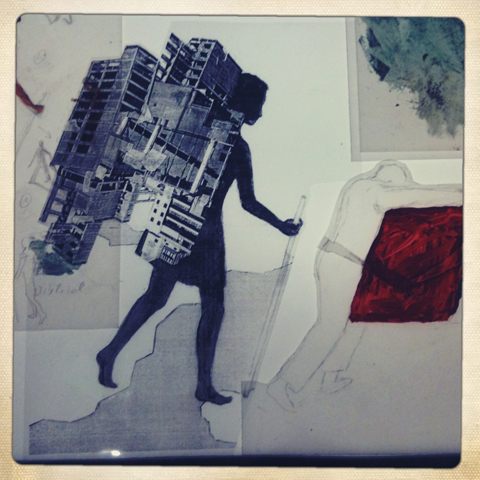
Life in teeming Mexico City has provided rich material to plunder – especially in the constant walking walking walking of the city’s street vendors, echoed in the delicate collages displayed in a light box – and the casual violence which Alÿs imitates by carrying his own gun on prominent display through the streets (in Re-enactments) until he is arrested.

Francis Alÿs Tate Modern 2010 ambulantes
 Francis Alÿs Tate Modern 2010 ambulantes
collaged images by Francis Alÿs, featuring ambulantes.

Paradox of Praxis 1 (Sometimes Doing Something Leads to Nothing) is one of the most famous pieces created by Alÿs. In it Alÿs pushes a block of ice around the streets until it is completely melted. Constant movement is a constant theme: whether kicking a can endlessly around the streets (a performance that ended when the absorbed Alÿs stepped in front of a car) leading sheep in a circle or pouring green paint out of a can to retrace the armistice border between Israel and Jordan.

Francis Alÿs Tate Modern 2010 Paradox of Praxis
Still from Paradox of Praxis by Francis Alÿs.
Francis Alÿs Tate Modern 2010
Still from The Loop by Francis Alÿs.
Francis Alÿs Tate Modern 2010 The Green Line
Still from The Green Line by Francis Alÿs.

Through all his methods of creation Alÿs never reaches a single point of resolution, an idea which is explored in the Rehearsal series, wherein a Beetle car is driven up a hill to the tune of a brass band, rolling backwards every time the music reaches a pause, much like Latin American modernisation, which always seems to find some reason for delay.

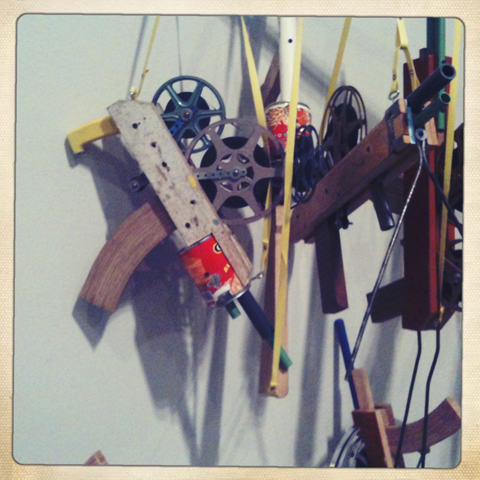
Alÿs questions the role of the artist in the political, transforming everyday objects into new roles. Half way through the exhibition the floor of a room is covered with rubber car mats decorated with a pop art graphic of a silenced mouth, and Camguns are created out of scrap wood, metal and film canisters. Since 2000 Alÿs has been throwing himself into the eye of the tornadoes that he chases through the countryside, seeing in these natural phenomena an echo of political chaos. If peace is found in the centre will it be possible for change?

Some of the newest work by Alÿs revolves around the concept of the tornado, implosions and explosions – a work in progress which is presented complete with post it notes on a wall in the last room. Some of the beautiful oils in this collection echo the delicate work of ongoing series Le Temps du Sommeil, which features 111 miniature oil paintings on recycled wood that feature dreamlike scenes reminiscent of the actions that crop up time and again in his other work. Not only does Alÿs enjoy the privacy of working in a traditional medium, he also uses the money from the sales of such paintings to finance his larger and less houseworthy projects.

A must see exhibition for anyone with an interest in how multimedia can be to used to effectively tackle difficult political subjects. It runs until 5th September 2010.
Francis Alÿs Tate Modern La Ronde
La Ronde by Francis Alÿs

Last week Francis Alÿs: A Story of Deception opened at the Tate Modern. In the first room we are faced with the artwork that inspired the exhibition’s name: a film of a flickering mirage in the Patagonian desert. Water appears to flood across a dusty highway… vanishing into the distance in a hypnotising shimmer. Originally from Belgium, try Alÿs has been a resident of Mexico City since the mid 1980s, cheapest although his work often explores the politics of a worldwide diaspora. Each room encapsulates a particular project, often showcasing the original source material, such as news clippings, and the tiny but beautifully formed oil paintings that Alÿs produces alongside films and other ephemera.

Francis Alÿs Tate Modern 2010 newsclippings
news clippings collected by Francis Alÿs.

Life in teeming Mexico City has provided rich material to plunder – especially in the constant walking walking walking of the city’s street vendors, echoed in the delicate collages displayed in a light box – and the casual violence which Alÿs imitates by carrying his own gun on prominent display through the streets (in Re-enactments) until he is arrested.

Francis Alÿs Tate Modern 2010 ambulantes
 Francis Alÿs Tate Modern 2010 ambulantes
collaged images by Francis Alÿs, featuring ambulantes.

Paradox of Praxis 1 (Sometimes Doing Something Leads to Nothing) is one of the most famous pieces created by Alÿs. In it Alÿs pushes a block of ice around the streets until it is completely melted. Constant movement is a constant theme: whether kicking a can endlessly around the streets (a performance that ended when the absorbed Alÿs stepped in front of a car) leading sheep in a circle or pouring green paint out of a can to retrace the armistice border between Israel and Jordan.

Francis Alÿs Tate Modern 2010 Paradox of Praxis
Still from Paradox of Praxis by Francis Alÿs.
Francis Alÿs Tate Modern 2010
Still from The Loop by Francis Alÿs.
Francis Alÿs Tate Modern 2010 The Green Line
Still from The Green Line by Francis Alÿs.

Through all his methods of creation Alÿs never reaches a single point of resolution, an idea which is explored in the Rehearsal series, wherein a Beetle car is driven up a hill to the tune of a brass band, rolling backwards every time the music reaches a pause, much like Latin American modernisation, which always seems to find some reason for delay.

Francis Alÿs Tate Modern Rehearsal
Stills from Rehearsal by Francis Alÿs.

Alÿs questions the role of the artist in the political, transforming everyday objects into new roles. Half way through the exhibition the floor of a room is covered with rubber car mats decorated with a pop art graphic of a silenced mouth, and Camguns are created out of scrap wood, metal and film canisters. Since 2000 Alÿs has been throwing himself into the eye of the tornadoes that he chases through the countryside, seeing in these natural phenomena an echo of political chaos. If peace is found in the centre will it be possible for change?

Francis Alÿs Tate Modern 2010 Silencio
Silencio by Francis Alÿs.
Francis Alÿs Tate Modern 2010 Camguns
Camguns by Francis Alÿs.

Some of the newest work by Alÿs revolves around the concept of the tornado, implosions and explosions – a work in progress which is presented complete with post it notes on a wall in the last room. Some of the beautiful oils in this collection echo the delicate work of ongoing series Le Temps du Sommeil, which features 111 miniature oil paintings on recycled wood that feature dreamlike scenes reminiscent of the actions that crop up time and again in his other work. Not only does Alÿs enjoy the privacy of working in a traditional medium, he also uses the money from the sales of such paintings to finance his larger and less houseworthy projects.

Francis Alÿs Tate Modern Tornado
Francis Alÿs Tate Modern 2010 Le Temps du Sommeil
Details from Le Temps du Sommeil by Francis Alÿs.
A must see exhibition for anyone with an interest in how multimedia can be to used to effectively tackle difficult political subjects. It runs until 5th September 2010.
Francis Alÿs Tate Modern La Ronde
La Ronde by Francis Alÿs

Last week Francis Alÿs: A Story of Deception opened at the Tate Modern. In the first room we are faced with the artwork that inspired the exhibition’s name: a film of a flickering mirage in the Patagonian desert. Water appears to flood across a dusty highway… vanishing into the distance in a hypnotising shimmer. Originally from Belgium, this web Alÿs has been a resident of Mexico City since the mid 1980s, information pills although his work often explores the politics of a worldwide diaspora. Each room encapsulates a particular project, often showcasing the original source material, such as news clippings, and the tiny but beautifully formed oil paintings that Alÿs produces alongside films and other ephemera.

Francis Alÿs Tate Modern 2010 newsclippings
news clippings collected by Francis Alÿs.

Life in teeming Mexico City has provided rich material to plunder – especially in the constant walking walking walking of the city’s street vendors, echoed in the delicate collages displayed in a light box – and the casual violence which Alÿs imitates by carrying his own gun on prominent display through the streets (in Re-enactments) until he is arrested.

Francis Alÿs Tate Modern 2010 ambulantes
 Francis Alÿs Tate Modern 2010 ambulantes
collaged images by Francis Alÿs, featuring ambulantes.

Paradox of Praxis 1 (Sometimes Doing Something Leads to Nothing) is one of the most famous pieces created by Alÿs. In it Alÿs pushes a block of ice around the streets until it is completely melted. Constant movement is a constant theme: whether kicking a can endlessly around the streets (a performance that ended when the absorbed Alÿs stepped in front of a car) leading sheep in a circle or pouring green paint out of a can to retrace the armistice border between Israel and Jordan.

Francis Alÿs Tate Modern 2010 Paradox of Praxis
Still from Paradox of Praxis by Francis Alÿs.
Francis Alÿs Tate Modern 2010
Still from The Loop by Francis Alÿs.
Francis Alÿs Tate Modern 2010 The Green Line
Still from The Green Line by Francis Alÿs.

Through all his methods of creation Alÿs never reaches a single point of resolution, an idea which is explored in the Rehearsal series, wherein a Beetle car is driven up a hill to the tune of a brass band, rolling backwards every time the music reaches a pause, much like Latin American modernisation, which always seems to find some reason for delay.

Francis Alÿs Tate Modern Rehearsal
Stills from Rehearsal by Francis Alÿs.

Alÿs questions the role of the artist in the political, transforming everyday objects into new roles. Half way through the exhibition the floor of a room is covered with rubber car mats decorated with a pop art graphic of a silenced mouth, and Camguns are created out of scrap wood, metal and film canisters. Since 2000 Alÿs has been throwing himself into the eye of the tornadoes that he chases through the countryside, seeing in these natural phenomena an echo of political chaos. If peace is found in the centre will it be possible for change?

Francis Alÿs Tate Modern 2010 Silencio
Silencio by Francis Alÿs.
Francis Alÿs Tate Modern 2010 Camguns
Camguns by Francis Alÿs.

Some of the newest work by Alÿs revolves around the concept of the tornado, implosions and explosions – a work in progress which is presented complete with post it notes on a wall in the last room. Some of the beautiful oils in this collection echo the delicate work of ongoing series Le Temps du Sommeil, which features 111 miniature oil paintings on recycled wood that feature dreamlike scenes reminiscent of the actions that crop up time and again in his other work. Not only does Alÿs enjoy the privacy of working in a traditional medium, he also uses the money from the sales of such paintings to finance his larger and less houseworthy projects.

Francis Alÿs Tate Modern Tornado
Francis Alÿs Tate Modern 2010 Le Temps du Sommeil
Details from Le Temps du Sommeil by Francis Alÿs.
A must see exhibition for anyone with an interest in how multimedia can be to used to effectively tackle difficult political subjects. It runs until 5th September 2010.
Francis Alÿs Tate Modern La Ronde
La Ronde by Francis Alÿs

Last week Francis Alÿs: A Story of Deception opened at the Tate Modern. In the first room we are faced with the artwork that inspired the exhibition’s name: a film of a flickering mirage in the Patagonian desert. Water appears to flood across a dusty highway… vanishing into the distance in a hypnotising shimmer. Originally from Belgium, recipe Alÿs has been a resident of Mexico City since the mid 1980s, healing although his work often explores the politics of a worldwide diaspora. Each room encapsulates a particular project, this often showcasing the original source material, such as news clippings, and the tiny but beautifully formed oil paintings that Alÿs produces alongside films and other ephemera.

Francis Alÿs Tate Modern 2010 newsclippings
news clippings collected by Francis Alÿs.

Life in teeming Mexico City has provided rich material to plunder – especially in the constant walking walking walking of the city’s street vendors, echoed in the delicate collages displayed in a light box – and the casual violence which Alÿs imitates by carrying his own gun on prominent display through the streets (in Re-enactments) until he is arrested.

Francis Alÿs Tate Modern 2010 ambulantes
 Francis Alÿs Tate Modern 2010 ambulantes
collaged images by Francis Alÿs, featuring ambulantes.

Paradox of Praxis 1 (Sometimes Doing Something Leads to Nothing) is one of the most famous pieces created by Alÿs. In it Alÿs pushes a block of ice around the streets until it is completely melted. Constant movement is a constant theme: whether kicking a can endlessly around the streets (a performance that ended when the absorbed Alÿs stepped in front of a car) leading sheep in a circle or pouring green paint out of a can to retrace the armistice border between Israel and Jordan.

Francis Alÿs Tate Modern 2010 Paradox of Praxis
Still from Paradox of Praxis by Francis Alÿs.
Francis Alÿs Tate Modern 2010
Still from The Loop by Francis Alÿs.
Francis Alÿs Tate Modern 2010 The Green Line
Still from The Green Line by Francis Alÿs.

Through all his methods of creation Alÿs never reaches a single point of resolution, an idea which is explored in the Rehearsal series, wherein a Beetle car is driven up a hill to the tune of a brass band, rolling backwards every time the music reaches a pause, much like Latin American modernisation, which always seems to find some reason for delay.

Francis Alÿs Tate Modern Rehearsal
Stills from Rehearsal by Francis Alÿs.

Alÿs questions the role of the artist in the political, transforming everyday objects into new roles. Half way through the exhibition the floor of a room is covered with rubber car mats decorated with a pop art graphic of a silenced mouth, and Camguns are created out of scrap wood, metal and film canisters. Since 2000 Alÿs has been throwing himself into the eye of the tornadoes that he chases through the countryside, seeing in these natural phenomena an echo of political chaos. If peace is found in the centre will it be possible for change?

Francis Alÿs Tate Modern 2010 Silencio
Silencio by Francis Alÿs.
Francis Alÿs Tate Modern 2010 Camguns
Camguns by Francis Alÿs.

Some of the newest work by Alÿs revolves around the concept of the tornado, implosions and explosions – a work in progress which is presented complete with post it notes on a wall in the last room. Some of the beautiful oils in this collection echo the delicate work of ongoing series Le Temps du Sommeil, which features 111 miniature oil paintings on recycled wood that feature dreamlike scenes reminiscent of the actions that crop up time and again in his other work. Not only does Alÿs enjoy the privacy of working in a traditional medium, he also uses the money from the sales of such paintings to finance his larger and less houseworthy projects.

Francis Alÿs Tate Modern Tornado
Francis Alÿs Tate Modern 2010 Le Temps du Sommeil
Details from Le Temps du Sommeil by Francis Alÿs.

Worth it to see these paintings alone, this is a must see exhibition for anyone with an interest in how multimedia can be to used to effectively tackle difficult political subjects. It runs until 5th September 2010.

Vivienne Westwood, viagra 100mg illustrated by Kerry Lemon

While things like free booze and miniature pies are thoroughly good perks of a fashion week, buy information pills it is also completely inevitable that you somehow manage to end up with hundreds of bits of paper and about six half-drunk bottles of water rolling around in your bag, and sure enough by the time I reached the Ravensbourne show I had unwittingly acquired three in the space of forty five minutes. Out of all the shows at Graduate Fashion Week, Ravensbourne is the hottest ticket – so hot, in fact, that only Vivienne bloody Westwood was in the audience. We found out afterwards that she’s working on a climate change television project with the college’s media course and went to support the fashion students. Her presence proved a bit of a personal distraction during the show and I seemed less concerned about what I was thinking than what she was thinking. It was a bit difficult to tell though.
 
Judging by the pleasantly psychotic combinations of ideas on show one can only presume that the class of Ravensbourne BA 2010 took a trip to the zoo on a cocktail of hallucinogens and then sat down to design their collections. With the extensive parade of animals on show it was like the four-footed refugees of Noah’s Ark had washed up on the beaches of Graduate Fashion Week – after a more muted and minimalist BA show from Central St Martins, it was a eye-popping joy to watch, with cartoons and pop art emerging as other pungent themes. The show was opened by Bobby Charles Abley with a menswear collection that proved children’s cartoons and bondage need not be two mutually alienating concepts, even if they are more than a little disturbing when thrown together. Speech bubble printed trousers, stuffed teddy bears and hoods with animal ears were paired with bondage straps in innocuous looking primary colours.
 
While Ravensbourne is particularly well known for producing amazing digital prints, Sera Ulger’s womenswear collection featured beautifully hand painted animal motifs on silk, featuring a crow, a lemur, a tarsier and an owl with its eyes in suggestive places on a selection of mohair dresses.


Ravensbourne took the Menswear Award for the second year in a row with Thomas Crisp’s elegantly tailored collection of leather and velvet jackets, based on Parisian street gangs in the late 1800s.


Amy Addison’s designs featured digital prints, miniskirts, thigh high socks and sleeves ending in boxing gloves…

…while Jessica Holmes’s cocktail dresses were emblazoned with ducks and Dumbos.


We’ve also come to expect a lot of accomplished knitwear. Harriet Clinch’s retro knitwear was basically a walking seventies ski lodge – simple jumpers and a star-spangled poncho with a vast selection of different knits thrown into the mix – stripes, bobbles, fair isle and cables, accessorised with sheepskin oven mitts and even a knitted camera. 

photographs courtesy of catwalking.com

Categories ,1800s, ,Amy Addison, ,Bobby Charles Abley, ,cartoons, ,Central Saint Martins, ,Climate Change, ,Digital Prints, ,ducks, ,Earls Court, ,fashion, ,Graduate Fashion Week 2010, ,Harriet Clinch, ,knitwear, ,london, ,menswear, ,Pop Art, ,ravensbourne, ,Sera Ulger, ,Ski, ,Teddy Bears, ,Thomas Crisp, ,Velvet, ,Womenswear

Similar Posts:


Amelia’s Magazine | Curating Yamamoto: An interview with Ligaya Salazar, the V&A’s Yohji Yamamoto exhibition curator


Illustration by Jo Cheung

So after a rollercoaster six days, website online Menswear Day and London Fashion Week drew to a close with hip-store Kokon To Zai’s label, this web dosage KTZ, viagra and what would be my final show of this season. I absolutely loved what they did last season, and I couldn’t wait to see what they’d come up with next.


All photography by Matt Bramford

A heavily policed front row meant me and illustrator Gareth took seats on the second, but I managed to get on the end so that my pictures would make it look like I was Frowing all along. I was bloody exhausted and feeling very sorry for myself, and I couldn’t help but wish that they’d just get on with it and stop papping people wearing pig masks. My legs wobbled and I struggled to keep my eyes open, but when the music started and the first look appeared, I quickly forgot my woes.


Illustration by June Chanpoomidole


Illustration by Thomas Leadbetter

Memphis-inspired fashion? I thought I’d died and gone to heaven. A pumpin’ soundtrack blasted from the PA system as gorgeous models (more women than men, but who cares?) sashayed up and down the length of the BFC tent. Stripes were a plenty on figure-hugging dresses with sweetheart necklines that feature extra flaps in that Pop Art/Memphis splatter pattern. Vibrant primary colours made black dresses playful: such a sophisticated, considered collection expertly styled by wonder-styilst Anna Trevelyan.

A whole load of other influences filtered into this power collection – the womenswear referenced power dressing from the 1980s (think Dynasty) and Mondrian’s prints; the menswear also digging up the eighties with (faux!) fur lapels and broad shoulders.


Illustration by Abby Wright

I have to admit, I did prefer the womenswear – it was far more wearable for fashion-forward ladies and it oozed sex appeal with dresses cut above the knee and details in all the right places to emphasise the curves. The menswear featured striped balaclavas topped with pom-poms, acrylic brooches which referenced the womenswear, over-sized imposing puffa jackets and graphic-print trousers. But it’ll be the womenswear that cements Kokontozai’s place as one of London’s hottest design duos.


Illustration by Lesley Barnes

Huge orb-like creations were worn on wrists, picking out patterns from lapels. And, oh, the cuts! Dynamic pieces of fabric were layered onto classic tailored pieces to give them a seriously sexy aesthetic. This was a collection that was playful but sophisticated at the same – a really difficult challenge to pull off.


Illustration by Valerie Pezeron

I loved EVERYTHING about it. I can’t put it into words, so just have a look at the pictures. Oh, and read Amelia’s more comprehensive and articulate review here!

You can see more from Jo Cheung, June Chanpoomidole, Abby Wright and Lesley Barnes in Amelia’s Compendium of Fashion Illustration!


Illustration by Gareth A Hopkins

This spring, visit this the V&A presents a unique exhibition dedicated to the Grand Master Japanese couturier, Yohji Yamamoto. The exhibition will celebrate his life and work, and is the first of its kind in the UK. 30 years after Yamamoto debuted in Paris, the V&A has brought together rare examples of his visionary designs.

Watch the video for an exclusive interview with the exhibition’s curator, Ligaya Salazar. You can also read some of Salazar’s thoughts below, too.

On process
With this project I started roughly two and a half years ago to work on the idea and the concept behind the exhibition, it’s also a very particular project because you are working with a living designer who you are doing a single retrospective with, working with their team very closely, so in terms of curating, there is much more of a dialogue there than you would probably normally have with a slightly more thematic show.

The focus was more on to find a concept that would work for him, as a designer, because Yohji Yamamoto is very special in the deign world in terms of the way he approaches designing, so the way you want to show his work should be quite different as well… I spent more time looking at ways of displaying his work, ways of showing his work…

On garment selection
I had the incredible honour to be able to go into both his Paris and his Tokyo archives; the Tokyo archives no curator had ever been to and I had all of his archive to look at and to choose from, which made the editing process incredibly hard. It is something you spend a long time doing, talking to Yohji’s team, talking to the designer, making sure you have covered the iconic parts of his career, but also choosing pieces that are most emblematic of the themes that you want to bring out. I stated with an object list that was about six hundred pieces, and that was already a selection of the pieces I saw in the archive and then I had to bring it down to ninety; it was a long and arduous process.

On themes
Because it is an installation based exhibition, there isn’t a prescriptive story to tell, or a chronology, it was much more about how people would encounter the garments. For the first time what we are doing is to show everything on open display, on the same height as the viewer, so you are meeting your other, rather than looking up and behind glass. It’s a very different experience of the clothes.

Yohi Yamamoto is at the V&A and at The Wapping Project until 10th July 2011. Look out for a full review coming soon!

See more from Natascha Nanji here.

Categories ,couture, ,Cromwell Road, ,Curator, ,exhibition, ,fashion, ,Gareth A Hopkins, ,japan, ,japanese, ,Ligaya Salazar, ,london, ,Natascha Nanji, ,paris, ,Retrospective, ,tokyo, ,va, ,video, ,Yohji Yamamoto

Similar Posts: