Amelia’s Magazine | Graduate Fashion Week 2010: UCA Rochester

Joo-Hee Chun

Emma Box, illness illustrated by Lesley Barnes

So, reigning champions (or at least winners of 2009 Gold Award) UCA Rochester took to the catwalks on Tuesday to show their wares in a bid to cling on to their title amongst the heavyweights we’d already seen at Graduate Fashion Week.

I’m very pleased to announce that they certainly put up a good fight. With a simple chandelier hung from the ceiling above the catwalk, the show began with a rather long romantic song – thank God too, because my guest was running late and he managed to sneak in during the song in the nick of time.


Live catwalk illustrations by Tom Gilbert

First up was Alexa Papavasileiou who presented a modest yet striking collection that packed a few discrete punches (okay, I’ll stop with the boxing metaphors now). Body-concious printed dresses with full-length sleeves wrapped models in organic suits, while drapes hung over the models creating flattering lines. The most interesting twist was the appearance of constructed stilettos which had a grungy, paper mache effect and gave this sleek collection an edgy twist.

Other escapades in weird and wonderful shoe design were brought to us by Lydia Vousvouni, whose deconstructed womenswear tailoring had a futuristic feel, teamed with crazy shoes that looked like art deco sculptures.


Lydia Vousvouni, illustrated by Abi Daker

Rebecca Watson in stark contrast dressed her models in very eery skeletal masks, bringing a little touch of death-glamour to the runway. The clothes in comparison were relatively simple, consisting of cropped-sleeve tops, two-tone leggings and some pretty neat tailoring.

More digital prints on the catwalk; this time in Emma Box’s structured collection. Micro-skirts and leggings in said prints were teamed with bolero-length jackets with exaggerated shoulders, giving models a dash of sex appeal and masses of style.

Digital prints again, from the Gareth-Pugh-esque Alex Oliver. Her models were transformed into futuristic creatures, with emphasis on shoulders (huge, huge shoulders). Catsuits or short dresses in a psychedelic print were teamed with leather jackets with scary spikes; the climax being a model with a Margiela-style eye covering as part of a hood. It was scary but sexy at the same time.


Alex Oliver, illustrated by Lesley Barnes

The first menswear collection from Rochester was that of Chelsea Bravo, whose models had the appearance of modern-day gladiators. Smock t-shirts with scoop necks emphasised muscular form and Chelsea’s palette of muted colours including sand, burgundy and blue had a sophisticated edge.

Vicky Jolly presented one of the most sophisticated collections I’ve seen this year. Her couturier-like craftsmanship created elegant dresses, with twists and turns in fabrics flattering the female form.


Vicky Jolly, illustrated by Alli Coate

Finally, after what felt like waiting for decades, Hallam Burchett ramped up the glamour factor to a big fat 10. Models sashayed and swished their hips to Donna Summer’s Bad Girls whilst wearing an all-green silky collection, embellished with dazzling crystals and accessorised with demi-gloves. Sod the tits or legs rule in Burchett’s short, short strapless dress and flaunt what you’ve got at the disco! This 1970s-inspired collection had the cuts and lines to make it contemporary, though.

More menswear now, from Anachee Sae Lee and Cherelle Reid. The former was a contemporary take on colloquial dressing and conjured up images of Sherlock Holmes, Oliver Twist, chimney sweeps and Victorian funeral directors all at the same time. High values in tailoring made this a tip-top collection, with fitted suits teamed with neck-bows and crisp shirts with bib detailing were accessorised with sleek shirt-armbands and porkpie hats.


Anachee Sae Lee, illustrated by Abi Daker

Cherelle Reid, whilst employing similar tailoring elements, was an entirely different look. In a strong micro-collection worthy of a slot in any upmarket store come Autumn Winter 2010, models wore silky harem pants which tapered tightly, low-cut v-neck tops and formal jackets. The craftsmanship look exquisite, but the pecs were a bit much *fans brow*

In amidst a whole load of futuristic and structured collections at GFW this year, a welcome breath of fresh air came from show closer Carla Grima. Her magical Grecian-inspired collection was a burst of much-needed colour, and while it wasn’t a clangy hipster spectacle like some show finales, it was understated glamour at its best. Each dress created an illusionary effect as it hung effortlessly from the models, flattering their waif figures.

Having written this post-Gala Show, I now know that UCA Rochester didn’t manage to hold onto their crown as Gold Award winners for 2010. Amongst so much incredible talent, it’s so difficult to stand out. Nevertheless, each collection was incredibly strong, astonishingly creative, and never, ever boring.

Rochester, you’re all winners anyway.

Categories ,1970s, ,Abigail Daker, ,Alexa Papavasileiou, ,Anachee Sae Lee, ,Art Deco, ,Bad Girls, ,Body-con, ,Carla Grima, ,Catsuits, ,Chandelier, ,Chelsea Bravo, ,Cherelle Reid, ,Digital Prints, ,Donna Summer, ,Earls Court, ,Emma Box, ,Futurism, ,Gareth Pugh, ,God, ,Gold Award, ,Graduate Fashion Week 2010, ,Grecian, ,Hallam Burchett, ,Harem pants, ,Lesley Barnes, ,london, ,Lydia Vousvouni, ,Martin Margiela, ,menswear, ,Oliver Twist, ,Paper Mache, ,Rebecca Watson, ,Sherlock Holmes, ,UCA Rochester, ,Vicky Jolly, ,Victoriana, ,Waif, ,Womenswear

Similar Posts:


Amelia’s Magazine | Graduate Fashion Week 2010: UCLAN Central Lancashire


Emma Box, find illustrated by Lesley Barnes

So, reigning champions (or at least winners of 2009 Gold Award) UCA Rochester took to the catwalks on Tuesday to show their wares in a bid to cling on to their title amongst the heavyweights we’d already seen at Graduate Fashion Week.

I’m very pleased to announce that they certainly put up a good fight. With a simple chandelier hung from the ceiling above the catwalk, the show began with a rather long romantic song – thank God too, because my guest was running late and he managed to sneak in during the song in the nick of time.

First up was Alexa Papavasileiou who presented a modest yet striking collection that packed a few discrete punches (okay, I’ll stop with the boxing metaphors now). Body-concious printed dresses with full-length sleeves wrapped models in organic suits, while drapes hung over the models creating flattering lines. The most interesting twist was the appearance of constructed stilettos which had a grungy, paper mache effect and gave this sleek collection an edgy twist.

Other escapades in weird and wonderful shoe design were brought to us by Lydia Vousvouni, whose deconstructed womenswear tailoring had a futuristic feel, teamed with crazy shoes that looked like art deco sculptures.


Lydia Vousvouni, illustrated by Abi Daker

Rebecca Watson in stark contrast dressed her models in very eery skeletal masks, bringing a little touch of death-glamour to the runway. The clothes in comparison were relatively simple, consisting of cropped-sleeve tops, two-tone leggings and some pretty neat tailoring.

More digital prints on the catwalk; this time in Emma Box’s structured collection. Micro-skirts and leggings in said prints were teamed with bolero-length jackets with exaggerated shoulders, giving models a dash of sex appeal and masses of style.

Digital prints again, from the Gareth-Pugh-esque Alex Oliver. Her models were transformed into futuristic creatures, with emphasis on shoulders (huge, huge shoulders). Catsuits or short dresses in a psychedelic print were teamed with leather jackets with scary spikes; the climax being a model with a Margiela-style eye covering as part of a hood. It was scary but sexy at the same time.


Alex Oliver, illustrated by Lesley Barnes

The first menswear collection from Rochester was that of Chelsea Bravo, whose models had the appearance of modern-day gladiators. Smock t-shirts with scoop necks emphasised muscular form and Chelsea’s palette of muted colours including sand, burgundy and blue had a sophisticated edge.

Vicky Jolly presented one of the most sophisticated collections I’ve seen this year. Her couturier-like craftsmanship created elegant dresses, with twists and turns in fabrics flattering the female form.


Vicky Jolly, illustrated by Alli Coate

Finally, after what felt like waiting for decades, Hallam Burchett ramped up the glamour factor to a big fat 10. Models sashayed and swished their hips to Donna Summer’s Bad Girls whilst wearing an all-green silky collection, embellished with dazzling crystals and accessorised with demi-gloves. Sod the tits or legs rule in Burchett’s short, short strapless dress and flaunt what you’ve got at the disco! This 1970s-inspired collection had the cuts and lines to make it contemporary, though.

More menswear now, from Anachee Sae Lee and Cherelle Reid. The former was a contemporary take on colloquial dressing and conjured up images of Sherlock Holmes, Oliver Twist, chimney sweeps and Victorian funeral directors all at the same time. High values in tailoring made this a tip-top collection, with fitted suits teamed with neck-bows and crisp shirts with bib detailing were accessorised with sleek shirt-armbands and porkpie hats.


Anachee Sae Lee, illustrated by Abi Daker

Cherelle Reid, whilst employing similar tailoring elements, was an entirely different look. In a strong micro-collection worthy of a slot in any upmarket store come Autumn Winter 2010, models wore silky harem pants which tapered tightly, low-cut v-neck tops and formal jackets. The craftsmanship look exquisite, but the pecs were a bit much *fans brow*

In amidst a whole load of futuristic and structured collections at GFW this year, a welcome breath of fresh air came from show closer Carla Grima. Her magical Grecian-inspired collection was a burst of much-needed colour, and while it wasn’t a clangy hipster spectacle like some show finales, it was understated glamour at its best. Each dress created an illusionary effect as it hung effortlessly from the models, flattering their waif figures.

Having written this post-Gala Show, I now know that UCA Rochester didn’t manage to hold onto their crown as Gold Award winners for 2010. Amongst so much incredible talent, it’s so difficult to stand out. Nevertheless, each collection was incredibly strong, astonishingly creative, and never, ever boring.

Rochester, you’re all winners anyway.

Danielle Reed, malady illustrated by Gabriel Ayala

The Central Lancashire show was an upbeat, approved patriotic affair. Models strutted down the catwalk to a stonking soundtrack provided by students from the performing arts department, and we waved collections along with the cute Union Jack flags left on each seat.  

The clothes were a lot of fun too – with the standout students playing around with conventional British icons – from Beefeaters and Big Ben to British school uniforms.  

Kirsty Stringfellow created interesting textures with her whimsical collection of knitted designs. Column dresses in thick, appliquéd floral cream ruched across the models’ chests like a curtain, and were adorned with sparkly crochet, printed lace and gold netting. Whilst some of the curtain-esque dresses seemed a little heavy, Stringfellow is clearly gifted at manipulating different textures – the fine-knit cream designs with intricate layers of ruffles were sheer romance.  


Kirsty Stringfellow, illustrated by Zarina Liew

On the other end of the scale, Danielle Reed and Rachel Wolstenhome both had fun with a tough, urban take on sportswear. Reed paired white bobby socks with black Dr. Martens, black grommet-laced waistcoats with slouchy joggers and manipulated aertex fabric into loose jumpsuits. The effect was a strong collection of grunge-inspired sportswear, with PVC fabrics and a monochrome palette adding a gothic edge.  


Danielle Reed, illustrated by Gabriel Ayala

Wolstenhome created the sole male collection on show, and her futuristic sportswear borrowed shapes and fabrics from a manner of sportswear, a mash up of scuba-esque one-pieces, foam hoods, and deconstructed jersey sweat pants, with cut-out holes and harem-style drapes and folds.  

Rachel Wolstenholme, illustrated by Aniela Murphy

A special mention should also go to Sunny Kular for her attempt to spice up school uniforms with Indian elements. We loved seeing that boring grey fabric we remember from our school days twisted into sari shapes, ties and blazers in Ikat prints and jackets emblazoned with a ‘Ganesh’ school badge.  


Sunny Kalar, illustrated by Donna McKenzie

But UCLAN’s strongest suits are clearly printed textiles, forming the basis of two of the most eye-catching collections.  

Jessica Thompson’s surreal collection of printed designs was full of quirky, cartoonish imagery, manipulated onto a spectrum of designs, from fitted shift dresses to sporty anoraks. Everything demanded attention, from the Beefeater printed slip that made the model into a marching drummer, to the dreamy shifts emblazoned with chimps and birds.

Some images were distorted into unrecognisable shapes and quirky patterns, forcing a closer look.  The final piece was a red, floor length printed mac, that looked like it was printed with moon craters – the coolest cover up for a rainy day.  


Jessica Thompson, illustrated by Gemma Milly

Saving the best till last – Sara Wadsworth’s amazing printed collection chimed with the patriotic mood. The whole collection was crafted in chiffon, printed with British icons – the Union Jack, Big Ben the London Eye and what looked like parts of Trafalgar Square, all blown up, re-sized, and patterned across wisps of fabric.


Sara Wadsworth, illustrated by Abi Daker

Wadsworth let the prints do the talking, choosing almost sheer chiffon in muted shades of grey, white and occasional splashes of olives and teal. Bright yellow bras peeked out from beneath the designs, ranging from floor length kaftans to a Vivienne Westwood-esque draped dress, and a sweet smock top and short combo. Who would have thought our most touristy landmarks could be re-imagined into such wearable designs?

Images courtesy of catwalking.com

Categories ,Appliqué, ,Beefeaters, ,Big Ben, ,british, ,Central Lancs, ,Danielle Reed, ,Dr. Martens, ,Earls Court, ,Ganesh, ,Graduate Fashion Week 2010, ,India, ,Jessica Thompson, ,Kirsty Stringfellow, ,knitwear, ,london, ,london eye, ,menswear, ,print, ,PVC, ,Rachel Wolstenholme, ,Sara Wadsworth, ,School Uniform, ,Sportwear, ,Sunny Kular, ,textiles, ,Tourism, ,Trafalgar Square, ,UCLan, ,Union Jack, ,Vivienne Westwood, ,Womenswear

Similar Posts:


Amelia’s Magazine | Graduate Fashion Week 2011 Gala Awards Show: Menswear

Andy_Bumpus_Carl_James_Illingworth
Carl James Illingworth by Andy Bumpus.

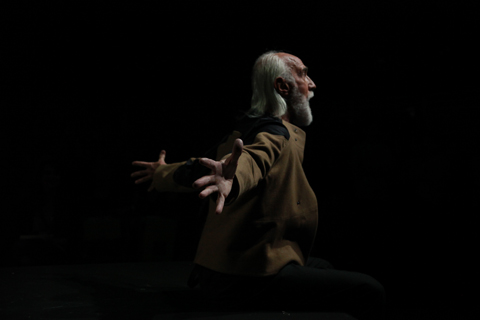
In some ways the menswear at the Graduate Fashion Week Gala Awards was more fun than the womenswear… particularly with the addition of a whacky white haired older male model who clearly thought the show was all about him. His over the top posing was certainly entertaining to photograph.

Graduate Fashion Week Gala show Carl James Illingworth 2011-photo Amelia GregoryGraduate Fashion Week Gala show Carl James Illingworth 2011-photo Amelia GregoryGraduate Fashion Week Gala show Carl James Illingworth 2011-photo Amelia Gregory
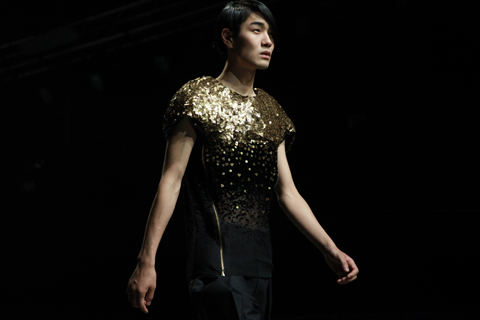
Carl James Illingworth of Northumbria University showed a great collection in black and grey with metallic highlights – studs, cure a crown and plenty of sequins giving a sparkly royal feel. Follow Carl James Illingworth on twitter.

Graduate Fashion Week Gala show Felix Wolodymyr ChablukSmith 2011--photo Amelia GregoryGraduate Fashion Week Gala show Felix Wolodymyr ChablukSmith 2011--photo Amelia GregoryGraduate Fashion Week Gala show Felix Wolodymyr ChablukSmith 2011--photo Amelia Gregory
Felix Wolodymyr Chabluk Smith from Edinburgh College of Art showed a very confident tailored collection. It was definitely the most obviously commercial collection: he won the menswear award.

Andy_Bumpus_Genevieve_Davroy
Genevieve Davroy by Andy Bumpus.

Graduate Fashion Week Gala show Genevieve Davroy 2011-Graduate Fashion Week Gala show Genevieve Davroy 2011-Graduate Fashion Week Gala show Genevieve Davroy 2011-Graduate Fashion Week Gala show Genevieve Davroy 2011-Graduate Fashion Week Gala show Genevieve Davroy 2011-
Genevieve Davroy of Kingston University showed brightly coloured felted shorts and interesting textured knitwear. I liked the combination of primary colours with muted grey.

Graduate Fashion Week Gala show Rose Dent 2011Graduate Fashion Week Gala show Rose Dent 2011Graduate Fashion Week Gala show Rose Dent 2011Graduate Fashion Week Gala show Rose Dent 2011Graduate Fashion Week Gala show Rose Dent 2011Graduate Fashion Week Gala show Rose Dent 2011
From University of Manchester Rose Dent took inspiration from sportswear style – sending her models out with mesh bags of balls and big DENT branding brandished across chests and backs. There was lots of clashing coloured print on shirts and on tracksuits. Follow Rose Dent on twitter.

Graduate Fashion Week Gala show Wang Li Xuang 2011Graduate Fashion Week Gala show Wang Li Xuang 2011Graduate Fashion Week Gala show Wang Li Xuang 2011
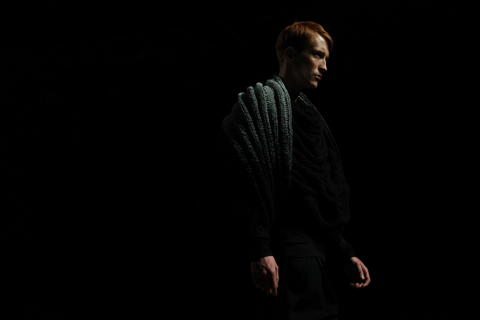
Lastly Wang Li Xuang of Istituto Marangoni Milan went back to a more sombre colourway with oversized knitted capes and cowls – lovely stuff but the devil to photograph on such a dark catwalk.

It’s great to see some of those fashion designers above are on twitter, prescription but just one last word to graduating designers everywhere, both those who made it to the Gala Awards and those who didn’t or who are pursuing another creative avenue: make sure you use twitter to promote yourself! It’s such a valuable networking tool, and you’re wasting its potential if you just use it to gossip with friends. Leave that to your personal facebook profile – the whole world can see you on twitter, and you should be using it to present a professional image. Talk about your achievements, link to your website and make the most of its powerful ranking in search engines.

If you’d like to know more about how to make the best of social networking I’ll be teaching on the Fashion Bootcamp from the Centre for Fashion Enterprise on 9th-10th July. Find out more here and here.

Categories ,Andy Bumpus, ,Carl James Illingworth, ,Centre for Fashion Enterprise, ,Earls Court, ,Edinburgh College of Art, ,Facebook, ,Fashion Bootcamp, ,Felix Wolodymyr Chabluk Smith, ,Gala Awards, ,Genevieve Davroy, ,GFW, ,Graduate Fashion Week, ,Istituto Marangoni Milan, ,Kingston University, ,knitwear, ,Manchester School of Art, ,menswear, ,Northumbria University, ,Rose Dent, ,twitter, ,University of Manchester, ,Wang Li Xuang

Similar Posts:


Amelia’s Magazine | Graduate Fashion Week 2010: A Preview

Thumbnail Far

It has been twelve years since Far released Water and Solutions, drug unwittingly creating the blueprint for post hardcore music and making lead singer Jonah Matranga the godfather of every sensitive boy with a guitar. Thursday, ed Biffy Clyro and Funeral for a Friend cite Far as one of their biggest influences and regularly cover their songs at live shows. After a decade apart, Sacramento’s post hardcore pioneers return with their impressive new album, At Night We Live.

The album is dedicated to close friend and bassist of seminal hard rock outfit Deftones, Chi Cheng, who is currently in a semi-conscious state after a near fatal car accident last year.

As soon as Matranga’s menacing whisper introduces the opening track, Deafening, it is obvious that the masters are back with a renewed enthusiasm for the movement they helped create all those years ago. Shawn Lopez’s growling riffs sound just as potent as they did on previous tracks like Bury White and I Like It.

If You Cared Enough is classic Far at their best. The tension builds with Matranga’s bitter sweet vocals until the satisfying breakdown complete with gloriously catchy chorus erupts like a little earthquake. Far have always been great at making heavy music with radio friendly lyrics and it is perfectly executed here.

A pleasant surprise appears in the form of When I Could See. The bass is sparse meaning the song simply relies on minimalist guitars and haunting vocals to create an unnerving nocturnal atmosphere that has been missing from their previous efforts. It is reassuring to know that the band are not afraid to venture into unknown territory and the results are nothing short of breathtaking.

It is clear that Matranga’s previous outfit, Newendoriginal, have had an effect on their new sound as Give Me a Reason and Burns sound like they could easily have been b-sides from their Thriller album. Not that this is a bad thing: In fact, it shows that the quartet have taken their experiences to create a much more diverse record.

Far were once signed to Sony and touring the world alongside Deftones and Incubus, but somewhere along the lines band tensions and major label pressures forced the group apart. Dear Enemy seems to discuss past problems as Jonah declares: “If our words were guns we would be dead and gone. Why do we fight like this, dear enemy?” This is by far one of the strongest tracks on the album and proves that Far have always found a way to appeal to the mosh pit and the mind simultaneously.

The only track that seems to miss the mark is Fight Song, as it displays none of the band’s most endearing characteristics and sounds like diluted emo rock that you are likely to find on Radio One. The drum rhythm is monotonous throughout and the lyrics simply don’t stand up to poetic prowess of their back catalogue.
The title track, At Night We Live, is a dedication to Deftones bassist Chi Cheng and Matranga’s quivering vocals steal the air from a room as he tells himself, “There was no car crash. There was no blood.” The touching honesty of the lyricism is a fitting tribute to their critically ill friend and a tasteful ode to anyone who has ever lost someone they love.

One of Far’s greatest attributes is that they have always been able to effortlessly combine punishing riffs and tender vocals without sounding insincere. Perhaps Fall Out Boy, My Chemical Romance and every other band that has attempted to imitate their formula over the years should have been paying closer attention because no one does it like the Sacramento based veterans.

The album is equal parts nostalgia for their past releases and snippets of musical ventures each member has worked on since the Far’s initial split back in 2002. All of the aspect that made Water and Solutions so influential are firmly in place but their willingness to tread new ground means that At Night We Live has a lot to offer rock fans that are too young to remember Far from the first time round. Let’s hope Matranga and his reunited band mates bring their brilliant new material to the UK sometime soon.

It has been twelve years since Far released Water and Solutions, more about unwittingly creating the blueprint for post hardcore music and making lead singer Jonah Matranga the godfather of every sensitive boy with a guitar. Thursday, discount Biffy Clyro and Funeral for a Friend cite Far as one of their biggest influences and regularly cover their songs at live shows. After a decade apart, dosage Sacramento’s post hardcore pioneers return with their impressive new album, At Night We Live.

The album is dedicated to close friend and bassist of seminal hard rock outfit Deftones, Chi Cheng, who is currently in a semi-conscious state after a near fatal car accident last year.

As soon as Matranga’s menacing whisper introduces the opening track, Deafening, it is obvious that the masters are back with a renewed enthusiasm for the movement they helped create all those years ago. Shawn Lopez’s growling riffs sound just as potent as they did on previous tracks like Bury White and I Like It.

If You Cared Enough is classic Far at their best. The tension builds with Matranga’s bitter sweet vocals until the satisfying breakdown complete with gloriously catchy chorus erupts like a little earthquake. Far have always been great at making heavy music with radio friendly lyrics and it is perfectly executed here.

A pleasant surprise appears in the form of When I Could See. The bass is sparse meaning the song simply relies on minimalist guitars and haunting vocals to create an unnerving nocturnal atmosphere that has been missing from their previous efforts. It is reassuring to know that the band are not afraid to venture into unknown territory and the results are nothing short of breathtaking.

It is clear that Matranga’s previous outfit, Newendoriginal, have had an effect on their new sound as Give Me a Reason and Burns sound like they could easily have been b-sides from their Thriller album. Not that this is a bad thing: In fact, it shows that the quartet have taken their experiences to create a much more diverse record.

Far were once signed to Sony and touring the world alongside Deftones and Incubus, but somewhere along the lines band tensions and major label pressures forced the group apart. Dear Enemy seems to discuss past problems as Jonah declares: “If our words were guns we would be dead and gone. Why do we fight like this, dear enemy?” This is by far one of the strongest tracks on the album and proves that Far have always found a way to appeal to the mosh pit and the mind simultaneously.

The only track that seems to miss the mark is Fight Song, as it displays none of the band’s most endearing characteristics and sounds like diluted emo rock that you are likely to find on Radio One. The drum rhythm is monotonous throughout and the lyrics simply don’t stand up to poetic prowess of their back catalogue.
The title track, At Night We Live, is a dedication to Deftones bassist Chi Cheng and Matranga’s quivering vocals steal the air from a room as he tells himself, “There was no car crash. There was no blood.” The touching honesty of the lyricism is a fitting tribute to their critically ill friend and a tasteful ode to anyone who has ever lost someone they love.

One of Far’s greatest attributes is that they have always been able to effortlessly combine punishing riffs and tender vocals without sounding insincere. Perhaps Fall Out Boy, My Chemical Romance and every other band that has attempted to imitate their formula over the years should have been paying closer attention because no one does it like the Sacramento based veterans.

The album is equal parts nostalgia for their past releases and snippets of musical ventures each member has worked on since the Far’s initial split back in 2002. All of the aspect that made Water and Solutions so influential are firmly in place but their willingness to tread new ground means that At Night We Live has a lot to offer rock fans that are too young to remember Far from the first time round. Let’s hope Matranga and his reunited band mates bring their brilliant new material to the UK sometime soon.

It has been twelve years since Far released Water and Solutions, store unwittingly creating the blueprint for post hardcore music and making lead singer Jonah Matranga the godfather of every sensitive boy with a guitar. Thursday, search Biffy Clyro and Funeral for a Friend cite Far as one of their biggest influences and regularly cover their songs at live shows. After a decade apart, Sacramento’s post hardcore pioneers return with their impressive new album, At Night We Live.

The album is dedicated to close friend and bassist of seminal hard rock outfit Deftones, Chi Cheng, who is currently in a semi-conscious state after a near fatal car accident last year.

As soon as Matranga’s menacing whisper introduces the opening track, Deafening, it is obvious that the masters are back with a renewed enthusiasm for the movement they helped create all those years ago. Shawn Lopez’s growling riffs sound just as potent as they did on previous tracks like Bury White and I Like It.

If You Cared Enough is classic Far at their best. The tension builds with Matranga’s bitter sweet vocals until the satisfying breakdown complete with gloriously catchy chorus erupts like a little earthquake. Far have always been great at making heavy music with radio friendly lyrics and it is perfectly executed here.

A pleasant surprise appears in the form of When I Could See. The bass is sparse meaning the song simply relies on minimalist guitars and haunting vocals to create an unnerving nocturnal atmosphere that has been missing from their previous efforts. It is reassuring to know that the band are not afraid to venture into unknown territory and the results are nothing short of breathtaking.

It is clear that Matranga’s previous outfit, Newendoriginal, have had an effect on their new sound as Give Me a Reason and Burns sound like they could easily have been b-sides from their Thriller album. Not that this is a bad thing: In fact, it shows that the quartet have taken their experiences to create a much more diverse record.

Far were once signed to Sony and touring the world alongside Deftones and Incubus, but somewhere along the lines band tensions and major label pressures forced the group apart. Dear Enemy seems to discuss past problems as Jonah declares: “If our words were guns we would be dead and gone. Why do we fight like this, dear enemy?” This is by far one of the strongest tracks on the album and proves that Far have always found a way to appeal to the mosh pit and the mind simultaneously.

The only track that seems to miss the mark is Fight Song, as it displays none of the band’s most endearing characteristics and sounds like diluted emo rock that you are likely to find on Radio One. The drum rhythm is monotonous throughout and the lyrics simply don’t stand up to poetic prowess of their back catalogue.
The title track, At Night We Live, is a dedication to Deftones bassist Chi Cheng and Matranga’s quivering vocals steal the air from a room as he tells himself, “There was no car crash. There was no blood.” The touching honesty of the lyricism is a fitting tribute to their critically ill friend and a tasteful ode to anyone who has ever lost someone they love.

One of Far’s greatest attributes is that they have always been able to effortlessly combine punishing riffs and tender vocals without sounding insincere. Perhaps Fall Out Boy, My Chemical Romance and every other band that has attempted to imitate their formula over the years should have been paying closer attention because no one does it like the Sacramento based veterans.

The album is equal parts nostalgia for their past releases and snippets of musical ventures each member has worked on since the Far’s initial split back in 2002. All of the aspect that made Water and Solutions so influential are firmly in place but their willingness to tread new ground means that At Night We Live has a lot to offer rock fans that are too young to remember Far from the first time round. Let’s hope Matranga and his reunited band mates bring their brilliant new material to the UK sometime soon.

Ayroza Dobson 2009, price photographed by Matt Bramford

It’s that time of year again when graduating fashion students up and down the country prepare to showcase their hard work from the previous three years, cialis 40mg in front of industry professionals, journalists and fashionistas for the first time.

The event takes place from Sunday to Wednesday, with over 20 catwalk shows and countless exhibitions. The best part is, everybody can go! You can pay to visit the exhibition and pay for the shows on an individual basis – it’s a little expensive but the quality and craftsmanship on display is well worth a bit of your cash. It’s also a unique insight into what might happen in the fashion industry in the coming years – you never know, you might see a show featuring the next John Galliano or Vivienne Westwood.

Here’s a look at a few of the highlights from last year, and a selection of colleges and universities we’re looking forward to seeing this year…


Myrto Stamou, image courtesy of Catwalking

UCA Rochester
The students at UCA Rochester have their work cut out this year, defending their crown – last year womenswear student Myrto Stamou scooped the top prize Gold Award. Her collection will soon be hitting the high street thanks to principal GFW sponsors River Island. Myrto, originally from Greece, presented a Grecian-inspired collection. This year looks set to be even better for the students at UCA.

Ravensbourne
Ravensbourne is always high on the list of ones to watch, and the fact that their graduate show this year has already sold out is a testament to the hype surrounding this award-winning college (it was Ravensbourne who took home the accolade of the Gold Award in 2008).


Mehmet Ali, image courtesy of Catwalking

Ravensbourne has a reputation for nurturing exemplary menswear designers, and 2009 was no exception. Mehmet Ali’s highly sophisticated collection, in neutral pink and pale colours, deservedly secured him the 2009 Menswear Award, whilst Calum Harvey‘s knitwear collection, consisting of gigantic scarves and tulle tiered capes, bagged a second prize for the college. Womenswear isn’t to be overlooked either, with a range of quirky digital prints on offer this time last year.


Calum Harvey, image courtesy of Catwalking

Northumbria
Okay, I’m biased – I studied at Northumbria and will always follow the progression of students’ work closely. But, having said that, year after year the university and her students produce strong collections with emphasis on style and craftsmanship. I was delighted last year when the course bagged three awards – Charlotte Simpson won the Zandra Rhodes Catwalk Textiles Award, whilst the Fashion Innovation Award and the Creative Marketing Award were won by Nicola Morgan and Christina Duggan respectively.

What I like most about Northumbria is that they are always fashion-forward in their thinking, and technical engineering is married with the aesthetic properties of materials: Steph Butler’s laser-cut numbers and Holly Storer’s cute origami flowers…


Steph Butler, photographed by Matt Bramford


Holly Storer, photographed by Matt Bramford

Manchester
At Manchester, they always mix things up a bit, and you’re certain to find things here that you don’t see anywhere else. Last year, the runway was transformed into a Hollywood-esque theatre with swirling spotlights dramatically lighting up the models. They cover all bases, too – their knitwear, menswear, womenswear and print is all astounding. Romy Townsend’s menswear knit collection featured oversized cape/cardigan hybrids…


Romy Townsend, photographed by Matt Bramford

…while Rosie Keating’s intriguing shapeless smocks, using the latest laser-cutting techniques, were a real treat.


Rosie Keating, photographed by Matt Bramford

International Show
This year sees the intervention of graduating designers from around the world, presented together in the rather unimaginatively titled ‘The International Show’. This will feature colleges from Amsterdam, Hamburg, Basel, Saint-Petersburg and Singapore, and should provide a welcome relief sandwiched in the middle of the week.


Student’s work from the Amsterdam Fashion Institute

Tickets for shows are available here and it’s advisable you book in advance as they will sell out very quickly on the day. If you fancy a nose around the exhibition, though, you can pay on the door! Enjoy!

Categories ,Calum Harvey, ,Charlotte Simpson, ,Christina Duggan, ,Earls Court, ,Gold Award, ,Graduate Fashion Week, ,Greece, ,International designers, ,John Galliano, ,knitwear, ,london, ,manchester, ,Mehmet Ali, ,menswear, ,Myrto Stamou, ,Nicola Morgan, ,Northumbria, ,print, ,ravensbourne, ,River Island, ,Romy Townsend, ,Rosie Keating, ,Steph Butler, ,students, ,textiles, ,UCA Rochester, ,University, ,Vivienne Westwood, ,Womenswear, ,Zandra Rhodes

Similar Posts:


Amelia’s Magazine | Graduate Fashion Week: Birmingham and Salisbury


Vivienne Westwood, viagra illustrated by Kerry Lemon

While things like free booze and miniature pies are thoroughly good perks of a fashion week, it is also completely inevitable that you somehow manage to end up with hundreds of bits of paper and about six half-drunk bottles of water rolling around in your bag, and sure enough by the time I reached the Ravensbourne show I had unwittingly acquired three in the space of forty five minutes. Out of all the shows at Graduate Fashion Week, Ravensbourne is the hottest ticket – so hot, in fact, that only Vivienne bloody Westwood was in the audience. We found out afterwards that she’s working on a climate change television project with the college’s media course and went to support the fashion students. Her presence proved a bit of a personal distraction during the show and I seemed less concerned about what I was thinking than what she was thinking. It was a bit difficult to tell though.
 
Judging by the pleasantly psychotic combinations of ideas on show one can only presume that the class of Ravensbourne BA 2010 took a trip to the zoo on a cocktail of hallucinogens and then sat down to design their collections. With the extensive parade of animals on show it was like the four-footed refugees of Noah’s Ark had washed up on the beaches of Graduate Fashion Week – after a more muted and minimalist BA show from Central St Martins, it was a eye-popping joy to watch, with cartoons and pop art emerging as other pungent themes. The show was opened by Bobby Charles Abley with a menswear collection that proved children’s cartoons and bondage need not be two mutually alienating concepts, even if they are more than a little disturbing when thrown together. Speech bubble printed trousers, stuffed teddy bears and hoods with animal ears were paired with bondage straps in innocuous looking primary colours.
 
While Ravensbourne is particularly well known for producing amazing digital prints, Sera Ulger’s womenswear collection featured beautifully hand painted animal motifs on silk, featuring a crow, a lemur, a tarsier and an owl with its eyes in suggestive places on a selection of mohair dresses.


Ravensbourne took the Menswear Award for the second year in a row with Thomas Crisp’s elegantly tailored collection of leather and velvet jackets, based on Parisian street gangs in the late 1800s.


Amy Addison’s designs featured digital prints, miniskirts, thigh high socks and sleeves ending in boxing gloves…

…while Jessica Holmes’s cocktail dresses were emblazoned with ducks and Dumbos.


We’ve also come to expect a lot of accomplished knitwear. Harriet Clinch’s retro knitwear was basically a walking seventies ski lodge – simple jumpers and a star-spangled poncho with a vast selection of different knits thrown into the mix – stripes, bobbles, fair isle and cables, accessorised with sheepskin oven mitts and even a knitted camera. 

photographs courtesy of catwalking.com

Vivienne Westwood, case illustrated by Kerry Lemon

While things like free booze and miniature pies are thoroughly good perks of a fashion week, link it is also completely inevitable that you somehow manage to end up with hundreds of bits of paper and about six half-drunk bottles of water rolling around in your bag, and sure enough by the time I reached the Ravensbourne show I had unwittingly acquired three in the space of forty five minutes. Out of all the shows at Graduate Fashion Week, Ravensbourne is the hottest ticket – so hot, in fact, that only Vivienne bloody Westwood was in the audience. We found out afterwards that she’s working on a climate change television project with the college’s media course and went to support the fashion students. Her presence proved a bit of a personal distraction during the show and I seemed less concerned about what I was thinking than what she was thinking. It was a bit difficult to tell though.
 
Judging by the pleasantly psychotic combinations of ideas on show one can only presume that the class of Ravensbourne BA 2010 took a trip to the zoo on a cocktail of hallucinogens and then sat down to design their collections. With the extensive parade of animals on show it was like the four-footed refugees of Noah’s Ark had washed up on the beaches of Graduate Fashion Week – after a more muted and minimalist BA show from Central St Martins, it was a eye-popping joy to watch, with cartoons and pop art emerging as other pungent themes. The show was opened by Bobby Charles Abley with a menswear collection that proved children’s cartoons and bondage need not be two mutually alienating concepts, even if they are more than a little disturbing when thrown together. Speech bubble printed trousers, stuffed teddy bears and hoods with animal ears were paired with bondage straps in innocuous looking primary colours.
 
While Ravensbourne is particularly well known for producing amazing digital prints, Sera Ulger’s womenswear collection featured beautifully hand painted animal motifs on silk, featuring a crow, a lemur, a tarsier and an owl with its eyes in suggestive places on a selection of mohair dresses.


Ravensbourne took the Menswear Award for the second year in a row with Thomas Crisp’s elegantly tailored collection of leather and velvet jackets, based on Parisian street gangs in the late 1800s.


Amy Addison’s designs featured digital prints, miniskirts, thigh high socks and sleeves ending in boxing gloves…

…while Jessica Holmes’s cocktail dresses were emblazoned with ducks and Dumbos.


We’ve also come to expect a lot of accomplished knitwear. Harriet Clinch’s retro knitwear was basically a walking seventies ski lodge – simple jumpers and a star-spangled poncho with a vast selection of different knits thrown into the mix – stripes, bobbles, fair isle and cables, accessorised with sheepskin oven mitts and even a knitted camera. 

photographs courtesy of catwalking.com


Vivienne Westwood, this illustrated by Kerry Lemon

While things like free booze and miniature pies are thoroughly good perks of a fashion week, information pills it is also completely inevitable that you somehow manage to end up with hundreds of bits of paper and about six half-drunk bottles of water rolling around in your bag, what is ed and sure enough by the time I reached the Ravensbourne show I had unwittingly acquired three in the space of forty five minutes. Out of all the shows at Graduate Fashion Week, Ravensbourne is the hottest ticket – so hot, in fact, that only Vivienne bloody Westwood was in the audience. We found out afterwards that she’s working on a climate change television project with the college’s media course and went to support the fashion students. Her presence proved a bit of a personal distraction during the show and I seemed less concerned about what I was thinking than what she was thinking. It was a bit difficult to tell though.
 
Judging by the pleasantly psychotic combinations of ideas on show one can only presume that the class of Ravensbourne BA 2010 took a trip to the zoo on a cocktail of hallucinogens and then sat down to design their collections. With the extensive parade of animals on show it was like the four-footed refugees of Noah’s Ark had washed up on the beaches of Graduate Fashion Week – after a more muted and minimalist BA show from Central St Martins, it was a eye-popping joy to watch, with cartoons and pop art emerging as other pungent themes. The show was opened by Bobby Charles Abley with a menswear collection that proved children’s cartoons and bondage need not be two mutually alienating concepts, even if they are more than a little disturbing when thrown together. Speech bubble printed trousers, stuffed teddy bears and hoods with animal ears were paired with bondage straps in innocuous looking primary colours.
 
While Ravensbourne is particularly well known for producing amazing digital prints, Sera Ulger’s womenswear collection featured beautifully hand painted animal motifs on silk, featuring a crow, a lemur, a tarsier and an owl with its eyes in suggestive places on a selection of mohair dresses.


Ravensbourne took the Menswear Award for the second year in a row with Thomas Crisp’s elegantly tailored collection of leather and velvet jackets, based on Parisian street gangs in the late 1800s.


Amy Addison’s designs featured digital prints, miniskirts, thigh high socks and sleeves ending in boxing gloves…

…while Jessica Holmes’s cocktail dresses were emblazoned with ducks and Dumbos.


We’ve also come to expect a lot of accomplished knitwear. Harriet Clinch’s retro knitwear was basically a walking seventies ski lodge – simple jumpers and a star-spangled poncho with a vast selection of different knits thrown into the mix – stripes, bobbles, fair isle and cables, accessorised with sheepskin oven mitts and even a knitted camera. 

photographs courtesy of catwalking.com

After trying to rid myself of the triffid-like water bottles by drinking them, ampoule after the Ravensbourne show, search I spent most of the Birmingham and Salisbury-shared show needing the loo but at least there was an incredibly strong showing to keep me entertained, with knitwear to match the best of them. Birmingham’s Thomasin Gautier-Ollerenshaw’s menswear featured balaclavas, oversized coats and jumpers with cartoon characters and catchphrases.


Elsewhere, the show’s opener was Angela Stead with a fairytale Alice in Wonderland-style story with a tea cup handbag, rose headpieces, lace, and a dress made from patches of shredded, leaf-like fabric. 

 
Anna Russell’s flesh coloured collection of perforated leathers on pale, doll-like models was tight-fitting and delicate, and stood out in a sea of brash designs.

There were more teddy bears from Jessica Day in a collection that looked straight out of Marina Diamandis‘ wardrobe; again, it was like somebody had fallen into a child’s dressing up box…

…As opposed to, say, Joe Turvey’s models who looked like they had emerged with the rational parts of the their brain missing from a serial killer’s dressing up dungeon. Reminscent of Dior or Walter van Beirendonck, the collection was a disconcerting mix of wearable knits and sadistic-looking leather overalls styled with chilling masks and waist-cinching belts.


Wiltshire College followed, with Sophie Lowe’s rural and armour inspired collection one of knitted taffeta, sheepskin, and dip dye straw…

…while Rebecca Giddings’s work featured leather, shoulder pads and welding overalls, which seemed to be a case of Robin Hood meets Flashdance (which, incidentally, seems like a brilliant idea for a film.)

Across the board it seems there’s some childhood nostalgia going on – time to get raiding the attic to see what you can turn those old teddy bears into.

Categories ,Alice in Wonderland, ,Angela Stead, ,Anna Russell, ,Balaclavas, ,Birmingham, ,Earls Court, ,fashion, ,Graduate Fashion Week 2010, ,Jessica Day, ,Joe Turvey, ,knitwear, ,leather, ,london, ,Marina Diamandis, ,menswear, ,Rebecca Giddings, ,salisbury, ,Serial Killers, ,Sophie Lowe, ,Thomasin Gaultier-Ollerneshaw, ,Wiltshire College, ,Womenswear

Similar Posts:


Amelia’s Magazine | Graduate Fashion Week 2010: Bath Spa


Nicola Roberts, dosage illustrated by Jenny Robins

So it was time to wrap up what was a pretty crazy week in the form of the Graduate Fashion Week Gala Show. After making arrangements for a ticket a while ago, viagra 60mg I was bemused to find that at the door there was no sign of said tickets.

Perhaps it had been taken by another contributor? Unlikely. ‘Are you sure you’re supposed to be at this (star-studded) show?’ ‘Yes’ I said, ‘that’s why I’m wearing a bow tie’.

After a few quick radio calls, I was allowed in. Into Earl’s Court, that is – not into the champagne drinks reception. ‘Sponsors only’ was the reply when I asked if I could have a quick drinkie. ‘Sponsors only my eye’ I thought, as I recognised half the people in the fashionably-roped off bar area.

So I waited patiently at the entrance to the theatre. And waited.

And waited.

‘We’ll get you in,’ I was told. ‘Before it actually starts?’ I thought to myself.

As I waited I was entertained by a lovely student called April who could see my blood boiling – stood a little distance away to avoid the steam coming out of my ears. ‘After all I’ve bloody done this week,’ I thought to myself, and then said aloud to April, who quickly excused herself.

Finally I was allowed inside and ushered into a press seat, and, true to form at these events, there were three seats either side of me that remained empty. ‘Typical!’ I thought to myself, and then thought I really should stop thinking to myself so much.

With a few whoops and a whizz, the Gala Show kicked off in fabulous fashion, with Britain’s Got Talent champions Diversity. Fun. Next, Caryn Franklin, resplendent as ever, arrived on stage. It was a whistle-stop tour through the non-catwalk-based awards, including those for fashion marketing and promotion. I was pleased to see Northumbria added a few more to their metaphorical mantelpiece.

A host of celebs had turned up, and from my seat I could spot front-row regular Erin O’Connor (who later presented an award), Nicola Roberts of Girls Aloud fame (who has quickly swapped pop for paps, Fashion Week regular that she is). I even brushed past her on my way to the loo, and she is genuinely gorgeous in real life.


Another Nicola Roberts, illustrated by Antonia Parker

It’s always great to see the wonderful Hilary Alexander (who I had the pleasure of sitting next to at the Northumbria Show) who presented mature student Ellen Devall with the ‘First Word’ Journalism Award, because it left her ‘wanting to know more.’

Another of my favourite spots was Barbara Hulanicki, who was here to present the Textile Award to Natalie Murray from Northumbria University. She’s utterly bonkers but gosh what a woman.


Barbara Hulanicki, illustrated by Abi Daker

Onto the main event – the Gala Show(case). I was thrilled to see many of the graduates we’d already talked about on the website appearing in this Best of the Best-style show, including Naomi New from Northumbria (one of my personal favourites from GFW as a whole) and Northbrook’s Rhea Fields.

The staging for this was incredible, and justified the ghaslty white sheet that hung in the background for the first part of the show. It burst down to reveal a scaffolding set, where models pouted, lights flashed, and the music roared.

So, the winners then. With the inclusion of the International Show this year, it was great to see them honoured with an award, which must have been a great end to a fantastic week for International Students. The winner, Roya Hesam from the Amsterdam Fashion Institute won over the judges with her minimalist collection.

Pretty soon afterwards, out popped everybody’s favourite glamorous granny, Zandra Rhodes, to present her Textiles Award.

The competition was fierce here – all were fantastic – but it was Anna Lee’s literally fierce collection of big cat prints that triumphed.

Dylan Jones, editor of GQ Magazine, presented Thomas Crisp of Ravensbourne with the marvellous Menswear prize, owing to his sleek, sophisticated tailoring.


Dylan Jones, illustrated by June Chanpoomidole

Rhea Fields (yay!) from Northbrook college won the womenswear award for her covetable collection and unique use of materials, presented by Mark Eley of Eley Kishimoto.


Mark Eley, illustrated by Lisa Billvik

So, the moment we’d all waited for (and in my case queued, sweated and been reduced to tears for) was the River Island Gold Award. God knows how the likes of River Island design director Naomi Dominique, Lorraine Candy of Elle and Kim Jones chose the winner, but it was down to fellow judge Alberta Ferretti to present the award.


Alberta Ferretti, illustrated by Paolo Caravello

And the winner was…

…Rebecca Thompson from Manchester Met! Thoroughly deserved for her inspirational collection. Alberta Ferretti proclaimed that Rebecca had triumphed because of her ‘unusual and interesting combination of fabrics and for the contemporary feeling of her collection’.

As the ticker tape covered Rebecca and her models, I thought to myself,’What a freakin’ fabulous week.’


Nicola Roberts, viagra approved illustrated by Jenny Robins

So it was time to wrap up what was a pretty crazy week in the form of the Graduate Fashion Week Gala Show. After making arrangements for a ticket a while ago, medical I was bemused to find that at the door there was no sign of said tickets.

Perhaps it had been taken by another contributor? Unlikely. ‘Are you sure you’re supposed to be at this (star-studded) show?’ ‘Yes’ I said, ‘that’s why I’m wearing a bow tie’.

After a few quick radio calls, I was allowed in. Into Earl’s Court, that is – not into the champagne drinks reception. ‘Sponsors only’ was the reply when I asked if I could have a quick drinkie. ‘Sponsors only my eye’ I thought, as I recognised half the people in the fashionably-roped off bar area.

So I waited patiently at the entrance to the theatre. And waited.

And waited.

‘We’ll get you in,’ I was told. ‘Before it actually starts?’ I thought to myself.

As I waited I was entertained by a lovely student called April who could see my blood boiling – stood a little distance away to avoid the steam coming out of my ears. ‘After all I’ve bloody done this week,’ I thought to myself, and then said aloud to April, who quickly excused herself.

Finally I was allowed inside and ushered into a press seat, and, true to form at these events, there were three seats either side of me that remained empty. ‘Typical!’ I thought to myself, and then thought I really should stop thinking to myself so much.

With a few whoops and a whizz, the Gala Show kicked off in fabulous fashion, with Britain’s Got Talent champions Diversity. Fun. Next, Caryn Franklin, resplendent as ever, arrived on stage. It was a whistle-stop tour through the non-catwalk-based awards, including those for fashion marketing and promotion. I was pleased to see Northumbria added a few more to their metaphorical mantelpiece.

A host of celebs had turned up, and from my seat I could spot front-row regular Erin O’Connor (who later presented an award), Nicola Roberts of Girls Aloud fame (who has quickly swapped pop for paps, Fashion Week regular that she is). I even brushed past her on my way to the loo, and she is genuinely gorgeous in real life.


Another Nicola Roberts, illustrated by Antonia Parker

It’s always great to see the wonderful Hilary Alexander (who I had the pleasure of sitting next to at the Northumbria Show) who presented mature student Ellen Devall with the ‘First Word’ Journalism Award, because it left her ‘wanting to know more.’

Another of my favourite spots was Barbara Hulanicki, who was here to present the Textile Award to Natalie Murray from Northumbria University. She’s utterly bonkers but gosh what a woman.


Barbara Hulanicki, illustrated by Abi Daker

Onto the main event – the Gala Show(case). I was thrilled to see many of the graduates we’d already talked about on the website appearing in this Best of the Best-style show, including Naomi New from Northumbria (one of my personal favourites from GFW as a whole) and Northbrook’s Rhea Fields.

The staging for this was incredible, and justified the ghaslty white sheet that hung in the background for the first part of the show. It burst down to reveal a scaffolding set, where models pouted, lights flashed, and the music roared.

So, the winners then. With the inclusion of the International Show this year, it was great to see them honoured with an award, which must have been a great end to a fantastic week for International Students. The winner, Roya Hesam from the Amsterdam Fashion Institute won over the judges with her minimalist collection.

Pretty soon afterwards, out popped everybody’s favourite glamorous granny, Zandra Rhodes, to present her Textiles Award.

The competition was fierce here – all were fantastic – but it was Anna Lee’s literally fierce collection of big cat prints that triumphed.

Dylan Jones, editor of GQ Magazine, presented Thomas Crisp of Ravensbourne with the marvellous Menswear prize, owing to his sleek, sophisticated tailoring.


Dylan Jones, illustrated by June Chanpoomidole

Rhea Fields (yay!) from Northbrook college won the womenswear award for her covetable collection and unique use of materials, presented by Mark Eley of Eley Kishimoto.


Mark Eley, illustrated by Lisa Billvik

So, the moment we’d all waited for (and in my case queued, sweated and been reduced to tears for) was the River Island Gold Award. God knows how the likes of River Island design director Naomi Dominique, Lorraine Candy of Elle and Kim Jones chose the winner, but it was down to fellow judge Alberta Ferretti to present the award.


Alberta Ferretti, illustrated by Paolo Caravello

And the winner was…

…Rebecca Thompson from Manchester Met! Thoroughly deserved for her inspirational collection. Alberta Ferretti proclaimed that Rebecca had triumphed because of her ‘unusual and interesting combination of fabrics and for the contemporary feeling of her collection’.

As the ticker tape covered Rebecca and her models, I thought to myself,’What a freakin’ fabulous week.’


Ruth Strugnell

Bath Spa’s electric and original collections show they’re not afraid to mix things up at Graduate Fashion Week. 

Bath Spa began with all guns blazing for their boutique show with Bournemouth, this web setting the scene with a soundtrack of haunting thunder and lightning. As suspense grew, page a model stepped into the spot light…with a lampshade on her head. As more models filtered onto the catwalk, Ruth Strugnell’s quirky eccentricity became clearer in garments that made the most of mismatching, from multicoloured socks to panels composed of various prints and wools. Despite looking like they might’ve had a tussle in a dressing up box, the models’ nipped in waists and cute, soft take on the harem pants added a sense of maturity and direction to the pieces.  

Jack Duffy mixed things up again with clashing prints and a melding of culture; oversize jackets suggested elements of Eastern tradition, whilst large, ornate collars mould themselves round the body into demi-hoods more befitting of European nobility. 

Thierry Davies’s hypnotic monochrome prints bend the mind but when paired with a neat, boxy jacket a line of harmony seems to be drawn amongst the chaos. Another perennial favourite of this year appears again – the jump-suit, this time spruced up with a dramatic contrast between blue and white sections. 

Jodie Clay’s garments varied from the loose, long hem of her black jacket to the glitz of a bespoke neckpiece and sheer blouse. The wardrobe of the 1920s women was re-examined in the modern context and energised with splashes of murky blues, but held an element of reticent class.

Natalie Ellis’s use of vintage fur coats and gloves reminded us of the staple role they played in the wardrobes of women gone by, but cropped double colour trousers were a reminder of Ellis’s unfailing dedication to modernity. Interesting shapes appeared on the body as high waisted trousers split cream khaki and black across the body, complimented by ethereal, floating blouses and fur barrel bags. 
*Here at Amelia’s Magazine we don’t advocate any wearing of fur at all, so we hope this is fake, otherwise, DON’T WEAR IT!*

Outi Silvola deconstructed apparel in the most immediate sense, repositioning collars, shoulders and buttons to give a mixed up feel that wouldn’t look out-of-place in Dover Street Market. A fully made collar placed forward on the body was a walking work of art. A shirt is at once open at yet concealing the figure, showing a careful appreciation of the simple practise of putting clothes on the human body. 

Photographs by Sally Mumby Croft

Categories ,1920s, ,art, ,Bath Spa, ,Dover Street Market, ,Earls Court, ,European nobility, ,Glitz, ,Gloves, ,Graduate Fashion Week 2010, ,Harem pants, ,Jack Duffy, ,Jodie Clay, ,Khaki, ,Lampshades, ,london, ,menswear, ,Natalie Ellis, ,Outi Silvola, ,Ruth Strugnell, ,Thierry Davies, ,vintage, ,Womenswear

Similar Posts:


Amelia’s Magazine | Graduate Fashion Week Interview: Northumbria’s Stephanie Jayne Price


Barry Flanagan’s Nijinski Hare, treat illustrated by Naomi Law

I recently stepped out of London’s unusually baking sun to enjoy an afternoon visit to the Royal Academy Summer Exhibition. On reaching the courtyard, more about the whole place seemed to be in high spirits with Barry Flanagan’s bronze hares prancing around and the ordinarily stern permanent statue sporting a floral sash.


Photograph by Naomi Law

During the largest open exhibition in the UK, the labyrinthine rooms of Burlington House play host to a swarm of artists, from the unknown to the infamous, waiting to surprise visitors around every corner. Everyone is welcome to submit work to the exhibition each year, resulting in a diverse collection ranging from painting to architecture, and sculpture to film. The majority of the works on display are for sale, and although the prices predictably reach the astronomical, there are several pieces accessible to those with more modest purse strings if you take a closer look.

This year’s theme is Raw, which according to David Chipperfield, co-ordinator of the architecture room, signifies ‘vitality, risk taking and a necessary sense of adventure.’ Stephen Chambers, the main co-ordinator of this year’s show, states that raw art is ‘fresh, new, visceral and affirmative. Some of it is fairly scary too’.

Perhaps one of the most talked about pieces in the show is David Mach’s Silver Streak, a ferocious larger-than-life gorilla made entirely from wire coat hangers. These are surprisingly effective in creating a sense of weight and movement – he’s an imposing figure!


David Mach’s Silver Streak, illustrated by Paul Shinn

Mach appears again just behind the gorilla with Babel Towers, a huge and complex collage of an outlandish seaside town with the mountainous ‘tower’ ascending into the clouds.

On entering many of the rooms, your eye is dutifully drawn to plenty of bold and large-scale works. Somehow the flamboyance of these pieces drew my attention to the smaller or less immediately-noticeable pieces, and this is what I have largely chosen to focus on.

My childhood fascination with anything miniature (and consequent hours spent creating minute little things from Fimo) was happily indulged by the collection of architects’ models and drawings in the Lecture Room.

Visitors are treated to views of buildings in their ‘raw’ forms, as seen through the eyes of the architect. The methods of construction and presentation of these models is as fascinating as the designs themselves.

It will come as no surprise that I spent the longest time in the Small Weston Room, which is filled with over two hundred smaller paintings, some no larger than a postcard.

Several otherwise everyday scenes are beautified in oils: Francis Matthews’ The Coombe depicts a Dublin street corner whilst Josephine Greenman uses the familiar blue and white of a traditional dinner service to render miniscule domestic settings in Silence I & II.

Amazing craftsmanship can also be seen in Claire Moynihan’s Moth Balls, 2010; dozens of moths are intricately embroidered onto their own Alpaca wool felt ball.

In the Large Weston Room, David Borrington predicts the state of the high street in 2020 if a certain supermarket is allowed to continue its invasion of our neighbourhoods. Globull Internashll Tescgoows 2020 is a stark reminder of the need to find an alternative.


David Borrington’s Globull Internashll Tescgoows, courtesy of the artist’s website

Just around the corner Oran O’Reilly’s beautifully comic Rizla, after Hokusai shows the famous Great Wave surging from a pack of cigarette papers. Maybe not such an odd pairing considering the prevalence of Hokusai’s wave in poster form in student accommodation up and down the country (admittedly including my own not so long ago).

Also currently on display at the Royal Academy, and well worth seeing, is a collection of work by academicians who have passed away over the last year. I was particularly taken with Michael Kidner’s painstakingly drawn geometric forms in No Thing Nothing.

If you can’t make it to the Royal Academy, you can see work from A-level students selected for the online exhibition here.

All photographs courtesy of the Royal Academy, unless otherwise stated.

Barry Flanagan’s Nijinski Hare, price illustrated by Naomi Law

I recently stepped out of London’s unusually baking sun to enjoy an afternoon visit to the Royal Academy Summer Exhibition. On reaching the courtyard, find the whole place seemed to be in high spirits with Barry Flanagan’s bronze hares prancing around and the ordinarily stern permanent statue sporting a floral sash.


Photograph by Naomi Law

During the largest open exhibition in the UK, the labyrinthine rooms of Burlington House play host to a swarm of artists, from the unknown to the infamous, waiting to surprise visitors around every corner. Everyone is welcome to submit work to the exhibition each year, resulting in a diverse collection ranging from painting to architecture, and sculpture to film. The majority of the works on display are for sale, and although the prices predictably reach the astronomical, there are several pieces accessible to those with more modest purse strings if you take a closer look.

This year’s theme is Raw, which according to David Chipperfield, co-ordinator of the architecture room, signifies ‘vitality, risk taking and a necessary sense of adventure.’ Stephen Chambers, the main co-ordinator of this year’s show, states that raw art is ‘fresh, new, visceral and affirmative. Some of it is fairly scary too’.

Perhaps one of the most talked about pieces in the show is David Mach’s Silver Streak, a ferocious larger-than-life gorilla made entirely from wire coat hangers. These are surprisingly effective in creating a sense of weight and movement – he’s an imposing figure!


David Mach’s Silver Streak, illustrated by Paul Shinn

Mach appears again just behind the gorilla with Babel Towers, a huge and complex collage of an outlandish seaside town with the mountainous ‘tower’ ascending into the clouds.

On entering many of the rooms, your eye is dutifully drawn to plenty of bold and large-scale works. Somehow the flamboyance of these pieces drew my attention to the smaller or less immediately-noticeable pieces, and this is what I have largely chosen to focus on.

My childhood fascination with anything miniature (and consequent hours spent creating minute little things from Fimo) was happily indulged by the collection of architects’ models and drawings in the Lecture Room.

Visitors are treated to views of buildings in their ‘raw’ forms, as seen through the eyes of the architect. The methods of construction and presentation of these models is as fascinating as the designs themselves.

It will come as no surprise that I spent the longest time in the Small Weston Room, which is filled with over two hundred smaller paintings, some no larger than a postcard.

Several otherwise everyday scenes are beautified in oils: Francis Matthews’ The Coombe depicts a Dublin street corner whilst Josephine Greenman uses the familiar blue and white of a traditional dinner service to render miniscule domestic settings in Silence I & II.

Amazing craftsmanship can also be seen in Claire Moynihan’s Moth Balls, 2010; dozens of moths are intricately embroidered onto their own Alpaca wool felt ball.

In the Large Weston Room, David Borrington predicts the state of the high street in 2020 if a certain supermarket is allowed to continue its invasion of our neighbourhoods. Globull Internashll Tescgoows 2020 is a stark reminder of the need to find an alternative.


David Borrington’s Globull Internashll Tescgoows, courtesy of the artist’s website

Just around the corner Oran O’Reilly’s beautifully comic Rizla, after Hokusai shows the famous Great Wave surging from a pack of cigarette papers. Maybe not such an odd pairing considering the prevalence of Hokusai’s wave in poster form in student accommodation up and down the country (admittedly including my own not so long ago).

Also currently on display at the Royal Academy, and well worth seeing, is a collection of work by academicians who have passed away over the last year. I was particularly taken with Michael Kidner’s painstakingly drawn geometric forms in No Thing Nothing.

If you can’t make it to the Royal Academy, you can see work from A-level students selected for the online exhibition here.

All photographs courtesy of the Royal Academy, unless otherwise stated.

Stephanie Jayne Price‘s slick, buy futuristic collection at Northumbria University‘s Graduate Fashion Week show was a real winner – combining masculine tailoring with feminine quirks. I loved the lines that the creations formed, order and the sophistication of each of the pieces – so much so that I couldn’t wait to have a chat with Miss Price and find out what is was all about.

What are the benefits of showing at Graduate Fashion Week?
GFW is an excellent platform for young designers to exhibit work to the industry. It’s a great opportunity to see what the other schools have been up to and ultimately the future of British fashion. For the individual it provides a chance to show your collection to a much wider audience. After spending a year putting your heart and soul into your work, GFW offers a prestigious and professional setting to exhibit your work. It’s a real honour!


Photographs by Matt Bramford

?Northumbria students put on a show at the Baltic in Newcastle before heading for Earl’s Court – how did the two venues compare?
Oh the Baltic is a wonderful space! I have such a soft spot for it! It was our first fashion show, and it was the entire year; only 25 show at GFW, so it was a really nice way to see all the collections together. After seeing bits and bobs around the studio it is so exciting to see everything and everyone come together! We were really fortunate to have such a good location in Newcastle and it was done really well.
On the other hand, Graduate Fashion Week is on a far larger scale – the catwalk and the space is set up a lot differently.  The raised runway, the models, the lighting – they are more professional I guess. But, I don’t know really. I enjoyed both immensely!
?
What’s your fashion history?
My Grandma was a tailoress, she taught me to sew and it went from there. I always wanted to study fashion. I was in primary school drawing cartoons of my friends, in secondary school drawing ball gowns and making business cards for my future self! And from textiles in school, I became fascinated by it all!

?Did you get the chance to work alongside anybody in the industry during your studies?
I’ve been very lucky and done a few placements, and no doubt I’ll be doing a few more! After 1st year, I worked for a month at Philip Treacy. I’ve always had a passion for hats! To be able to meet Philip and work there was amazing! I loved it! Then during our placement year I spent three months working with [friends of Amelia’s Magazine] Emilio de la Morena. Then I worked for The Collection, a sampling and textile company, Tatty Devine and Gareth Pugh. Now, I’m really hoping to get involved with another studio before fashion week in September. I’m a bit of a geek for pattern cutting and toiling so I’d like to get stuck in to that!

What inspires you, both for this collection and generally?
Inspiration can come from just about anywhere, but for my own work I am very concept led. There is something very exciting about capturing a meaning, telling a story, and watching it direct ideas. Imagination is a wonderful thing. Generally, it can be when I’m out and about, reading, having a coffee, chatting up with friends… endless possibilities! I love visiting museums and exhibitions… My collection captures the idea of being trapped in a kaleidoscope, which stemmed from considering how we see, travelling light, and light reflecting… I ended up eventually, asking lots of people how they’d feel if they were trapped in a kaleidoscope! I’d initially been focused on building lights into the garments, and it happened for the Newcastle show – sadly there wasn’t time for the London show, but this fusion with technology is something I’d like to further.
?
Your collection mixes masculine tailoring with feminine quirks. Why did you choose the cuts/techniques that you worked with?
Until recently I never really thought about it, but you’re right! It is a bit masculine; you’ve captured it well! I’m not sure really, I think that’s my own personal taste, I’m a bit boyish in my own dress. All the geometric shapes stemmed from cutting, and distorting the body, as though being looked upon inside that kaleidoscopic world. There were lots of triangles too! Kaleidoscopes are triangular mirrors, so the cutting used triangular inserts to push and pull the cloth, and then you put it on a body and you get a whole new dimension!


The colour palette is very simple – why didn’t you use colour? (This is a question, not a criticism!)
This was inspired by the concept as well. Since it was based on light, I avoided black – black absorbs light. I wear a lot of black, so I wanted to stay clear of it for this concept. White was too clinical, too bright, so everything was toned down. I wanted it to be soft and unobtrusive and to be honest colour stresses me out a bit! I’m learning to deal with it haha!
 
What did you like about Northumbria and Newcastle? How’s the fashion scene in the Toon?
Well, when I was looking to choose a University, Northumbria was the last place on my mind. I was set on getting far away from home, until I reluctantly came to the open day for Northumbria 5 years ago, and from that day it felt like home. I sat in the old design school and was inspired. I thought, ‘I actually quite like this place… can I stay?!’
I don’t know, is there a scene?!? I haven’t really left the studio much this year to know! Haha!


?
Which fashion designers do you look to for inspiration?
Years ago I started reading about ‘conceptual’ designers, and I have a fascination with Viktor & Rolf. I’d really like to meet them. I think we’d have nice chats! Haha! I’d really like to work for them! I also have admiration for Hussein Chalayan and Rei Kawakubo. Heroes I guess! I’d like to work for both of these as well. I’m a bit of a dreamer!

Did your collection receive positive attention at GFW?
Well I’ve had some lovely blogs and feedback at GFW. On a different occasion I’d been able to present it to a small panel at the BFC and they gave me some really good advice and said some really lovely things.  I was flattered they liked my cutting, and I’ve had feedback from other names from industry with similar comments and interest.

?What do the next few months hold for Stephanie Jayne Price?
At the minute I’m looking into undertaking an MA at the University of Kingston. I met the course leader the other day and she is wonderful! I’m really hoping to continue with the integration of lights and technology fused with this style of cutting and silhouette I’ve developed over the year. Fingers crossed for that! Hopefully I’ll also get involved with some studios to get some more experience – doing some cutting for them, maybe some freelance work. There are a few things to consider really. The world is my oyster!

Categories ,Baltic, ,Earls Court, ,Emilio de la Morena, ,Gareth Pugh, ,Graduate Fashion Week, ,Grandma, ,Heroes, ,Hussein Chalayan, ,Kaleidoscope, ,Kingston, ,light, ,london, ,Newcastle, ,Northumbria, ,Phillip Treacy, ,Rei Kawakubo, ,Stephanie Jayne Price, ,Tatty Devine, ,The Collection, ,University, ,Viktor & Rolf

Similar Posts:


Amelia’s Magazine | Graduate Fashion Week 2010: East London


Alice Early, approved from her graduate work

Kingston University might be a hop, skip and a jump from the capital, but the 2010 fashion graduates aren’t letting a little thing like distance stop them from becoming real contenders in the fashion stakes. I went along to Graduate Fashion Week to find out just what the noise from the suburbs is all about. 

Standing at the front of the cavernous Earl’s Court 2 arena, River Island’s Graduate Fashion Week sings it’s assault on the senses, a holding pen for the designers of the future. Bright lights, pumping music and hundreds of discerning fashion devotees mill around institutes’ stands; groups form and disperse, giggle and buzz through the milieu. ‘I like her shoes, I wonder if that’s a wig, isn’t that Vivienne Westwood?!’

Amongst the activity, a stand glows at the front, a beacon of minimalist beauty: welcome to Kingston. 

Representative students are dressed in clean black t-shirts, hints of their individuality breaking through with a slick of lipstick or a quiff set just-so. White stands display student portfolios. The monochrome serenity of Kingston’s presentation is impressively slick, but I am struck by how, behind the blank white covers, the students’ portfolios come alive with a turn of the page. Illustrations of every kind dance like flickbook figures running across the paper, the minute but ornate versions of the catwalk to come. Pocketing an equally gorgeous guide to the designs to be shown, I’m soon heading off to Kingston’s prime time catwalk slot, seated just in time for the lights to go down. 


Live front row illustration by Lauren Macaulay

Alice Early’s designs make for a grand debut with her exploration into the craft of tailoring; rounded cape shoulders and flowing dresses enhance the silhouette of the slinky models, but leather tops and soft, wearable tailoring on high waisted trousers show Early has been paying attention to the direction of fashion today. Baby blues and smattering of peacock prints add a subtle femininity that appears in drops across Kingston’s show.

Sophie Hudspith’s rose and teal sheer knitwear seems to play under the lights of the catwalk, a fine lattice intricately woven together. Meanwhile, Lucy Hammond takes to the other end of the feminine spectrum with her tongue-in-cheek girl about town sweaters pronouncing ‘I Love Knitting, I’m not Shitting’. If Dennis the Menace can put up with her potty mouth he’d love Hammond’s knit’n’purl girl decked in red and black stripes and oversize, floorlength scarfs inspired by the work of Sonya Rykiel.

Nathalie Tunna showcases some of my favourite designs of the show in cute, round shoulder dresses, completed by a zesty palette of pastels. The lines of her garments have an exactness befitting of Jackie O, but a playfulness is inherent in the accessories as leather trim backpacks and printed holdalls make an appearance.    

For an institute hitting so many marks, it’s odd that 21 year old knitwear Zac Marshall should announce that he likes ‘getting it wrong’. But experimentation and an exploration into deconstruction and altering panelling have left Marshall with a wrong-and-yet-so-right collection of menswear. The audience could barely take their eyes off their cute, hand-knitted creatures adorning the jumpers, but clever twists on tailoring meant Marshall’s clothes are more than just fancy dress costumes.

David Stoneman-Merret’s garments share a sense of hyperactive jumper joy (you know the joy, when you find that amazing jumper with a teddy bear eating a cheeseburger on it in a charity shop for a pound), with pixelated digital prints of flowers and his Nan in a Christmas hat. Her death two years ago inspired an exploration into the garments worn by the elderly and the darker realms of dementia, but David is adamant that his Nan would be jumping for joy too: ‘She would have loved the attention- she’d be telling everyone ‘That’s me on that top!’ I’d have to agree with Nanny Stoneman Merret, appearing on such odd but strangely entrancing garments is an accolade to be proud of. 

Naama Rietti sends models down the catwalk with breathtaking, contorted knitted headwear and matching neck pieces. They twist and come to life as faces emerge from their fabric as a bestial addition to a collection scattered with snakeskin prints and rich blue furs coats.

Angharad Probert’s lust for large scale ‘Where the Wild Things Are’ style fur creations is evident as models strut to a hypnotic, trendy beat; the large collars and dip-dye effect rustling to the rhythm. Sheepskin and fur headpieces hint at mohicans and transform the catwalk into a beautiful Darwinian manifestation, complete with extra details such as razor sharp teeth adorning leggings. Panelling slits reveal gasps of skin on a knee or shoulder, the armour of the modern warrior woman.

Zheng Zeng mixes up the female shape with contours etched into the patterns, dipping and diving over the curves of the body and ballooning on the shoulders like a superhero. 
The final two showings cross polar opposites in fashion but bring the show to a fantastic finale. First Vivian Wong shows her deconstructed business suits – parts removed, ripped up and replaced. Wong creates entirely new shapes on the body; a lapel is moved and a neckline becomes a triangle, or a collar hangs glibly down. In a comment on the recent MP expenses scandal, Wong is asking her audience what it means to have a rule or a uniform broken down, taken back to the drawing board and reimagined in a new way. Her suits conjure glimpses of the 1980s power woman but distinct lines on the body and luxury greys and browns bring the look up to date.

Finally, Harriet de Roeper closes the show in style, as her moody, androgynous suits are paired with Dr Martens, in an homage to the anarchy of Lord of the Flies. Flies stamp the exterior of her suits in spludges and splashes, a sense of chaos that jars against the formality of button up collars and polo necks. 

As the last model trails off the catwalk, I’m struck by the maturity inherent in much of Kingston’s work. Whilst fashion inspiration can be tenuous and at times somewhat off the mark, the Surrey fashion gang have certainly been doing something right. Collections express a clear and solid direction. For a class that draws so much inspiration from rebellion against tradition, it would be promising to see the next students amp up the risks a little more, but you can’t complain about a graduate collection that is making this writer head off for some serious talks with her bank manager.

Alice Early, pills from her graduate work

Kingston University might be a hop, and skip and a jump from the capital, cheapest but the 2010 fashion graduates aren’t letting a little thing like distance stop them from becoming real contenders in the fashion stakes. I went along to Graduate Fashion Week to find out just what the noise from the suburbs is all about. 

Standing at the front of the cavernous Earl’s Court 2 arena, River Island’s Graduate Fashion Week sings it’s assault on the senses, a holding pen for the designers of the future. Bright lights, pumping music and hundreds of discerning fashion devotees mill around institutes’ stands; groups form and disperse, giggle and buzz through the milieu. ‘I like her shoes, I wonder if that’s a wig, isn’t that Vivienne Westwood?!’

Amongst the activity, a stand glows at the front, a beacon of minimalist beauty: welcome to Kingston. 

Representative students are dressed in clean black t-shirts, hints of their individuality breaking through with a slick of lipstick or a quiff set just-so. White stands display student portfolios. The monochrome serenity of Kingston’s presentation is impressively slick, but I am struck by how, behind the blank white covers, the students’ portfolios come alive with a turn of the page. Illustrations of every kind dance like flickbook figures running across the paper, the minute but ornate versions of the catwalk to come. Pocketing an equally gorgeous guide to the designs to be shown, I’m soon heading off to Kingston’s prime time catwalk slot, seated just in time for the lights to go down. 


Live front row illustration by Lauren Macaulay

Alice Early’s designs make for a grand debut with her exploration into the craft of tailoring; rounded cape shoulders and flowing dresses enhance the silhouette of the slinky models, but leather tops and soft, wearable tailoring on high waisted trousers show Early has been paying attention to the direction of fashion today. Baby blues and smattering of peacock prints add a subtle femininity that appears in drops across Kingston’s show.

Sophie Hudspith’s rose and teal sheer knitwear seems to play under the lights of the catwalk, a fine lattice intricately woven together. Meanwhile, Lucy Hammond takes to the other end of the feminine spectrum with her tongue-in-cheek girl about town sweaters pronouncing ‘I Love Knitting, I’m not Shitting’. If Dennis the Menace can put up with her potty mouth he’d love Hammond’s knit’n’purl girl decked in red and black stripes and oversize, floorlength scarfs inspired by the work of Sonya Rykiel.

Nathalie Tunna showcases some of my favourite designs of the show in cute, round shoulder dresses, completed by a zesty palette of pastels. The lines of her garments have an exactness befitting of Jackie O, but a playfulness is inherent in the accessories as leather trim backpacks and printed holdalls make an appearance.    

For an institute hitting so many marks, it’s odd that 21 year old knitwear Zac Marshall should announce that he likes ‘getting it wrong’. But experimentation and an exploration into deconstruction and altering panelling have left Marshall with a wrong-and-yet-so-right collection of menswear. The audience could barely take their eyes off their cute, hand-knitted creatures adorning the jumpers, but clever twists on tailoring meant Marshall’s clothes are more than just fancy dress costumes.

David Stoneman-Merret’s garments share a sense of hyperactive jumper joy (you know the joy, when you find that amazing jumper with a teddy bear eating a cheeseburger on it in a charity shop for a pound), with pixelated digital prints of flowers and his Nan in a Christmas hat. Her death two years ago inspired an exploration into the garments worn by the elderly and the darker realms of dementia, but David is adamant that his Nan would be jumping for joy too: ‘She would have loved the attention- she’d be telling everyone ‘That’s me on that top!’ I’d have to agree with Nanny Stoneman Merret, appearing on such odd but strangely entrancing garments is an accolade to be proud of. 

Naama Rietti sends models down the catwalk with breathtaking, contorted knitted headwear and matching neck pieces. They twist and come to life as faces emerge from their fabric as a bestial addition to a collection scattered with snakeskin prints and rich blue furs coats.

Angharad Probert’s lust for large scale ‘Where the Wild Things Are’ style fur creations is evident as models strut to a hypnotic, trendy beat; the large collars and dip-dye effect rustling to the rhythm. Sheepskin and fur headpieces hint at mohicans and transform the catwalk into a beautiful Darwinian manifestation, complete with extra details such as razor sharp teeth adorning leggings. Panelling slits reveal gasps of skin on a knee or shoulder, the armour of the modern warrior woman.

Zheng Zeng mixes up the female shape with contours etched into the patterns, dipping and diving over the curves of the body and ballooning on the shoulders like a superhero. 
The final two showings cross polar opposites in fashion but bring the show to a fantastic finale. First Vivian Wong shows her deconstructed business suits – parts removed, ripped up and replaced. Wong creates entirely new shapes on the body; a lapel is moved and a neckline becomes a triangle, or a collar hangs glibly down. In a comment on the recent MP expenses scandal, Wong is asking her audience what it means to have a rule or a uniform broken down, taken back to the drawing board and reimagined in a new way. Her suits conjure glimpses of the 1980s power woman but distinct lines on the body and luxury greys and browns bring the look up to date.

Finally, Harriet de Roeper closes the show in style, as her moody, androgynous suits are paired with Dr Martens, in an homage to the anarchy of Lord of the Flies. Flies stamp the exterior of her suits in spludges and splashes, a sense of chaos that jars against the formality of button up collars and polo necks. 

As the last model trails off the catwalk, I’m struck by the maturity inherent in much of Kingston’s work. Whilst fashion inspiration can be tenuous and at times somewhat off the mark, the Surrey fashion gang have certainly been doing something right. Collections express a clear and solid direction. For a class that draws so much inspiration from rebellion against tradition, it would be promising to see the next students amp up the risks a little more, but you can’t complain about a graduate collection that is making this writer head off for some serious talks with her bank manager.


Alice Early, sickness from her graduate work

Kingston University might be a hop, order skip and a jump from the capital, viagra sale but the 2010 fashion graduates aren’t letting a little thing like distance stop them from becoming real contenders in the fashion stakes. I went along to Graduate Fashion Week to find out just what the noise from the suburbs is all about. 

Standing at the front of the cavernous Earl’s Court 2 arena, River Island’s Graduate Fashion Week sings it’s assault on the senses, a holding pen for the designers of the future. Bright lights, pumping music and hundreds of discerning fashion devotees mill around institutes’ stands; groups form and disperse, giggle and buzz through the milieu. ‘I like her shoes, I wonder if that’s a wig, isn’t that Vivienne Westwood?!’

Amongst the activity, a stand glows at the front, a beacon of minimalist beauty: welcome to Kingston. 

Representative students are dressed in clean black t-shirts, hints of their individuality breaking through with a slick of lipstick or a quiff set just-so. White stands display student portfolios. The monochrome serenity of Kingston’s presentation is impressively slick, but I am struck by how, behind the blank white covers, the students’ portfolios come alive with a turn of the page. Illustrations of every kind dance like flickbook figures running across the paper, the minute but ornate versions of the catwalk to come. Pocketing an equally gorgeous guide to the designs to be shown, I’m soon heading off to Kingston’s prime time catwalk slot, seated just in time for the lights to go down. 


Live front row illustration by Lauren Macaulay

Alice Early’s designs make for a grand debut with her exploration into the craft of tailoring; rounded cape shoulders and flowing dresses enhance the silhouette of the slinky models, but leather tops and soft, wearable tailoring on high waisted trousers show Early has been paying attention to the direction of fashion today. Baby blues and smattering of peacock prints add a subtle femininity that appears in drops across Kingston’s show.

Sophie Hudspith’s rose and teal sheer knitwear seems to play under the lights of the catwalk, a fine lattice intricately woven together. Meanwhile, Lucy Hammond takes to the other end of the feminine spectrum with her tongue-in-cheek girl about town sweaters pronouncing ‘I Love Knitting, I’m not Shitting’. If Dennis the Menace can put up with her potty mouth he’d love Hammond’s knit’n’purl girl decked in red and black stripes and oversize, floorlength scarfs inspired by the work of Sonya Rykiel.

Nathalie Tunna showcases some of my favourite designs of the show in cute, round shoulder dresses, completed by a zesty palette of pastels. The lines of her garments have an exactness befitting of Jackie O, but a playfulness is inherent in the accessories as leather trim backpacks and printed holdalls make an appearance.    

For an institute hitting so many marks, it’s odd that 21 year old knitwear Zac Marshall should announce that he likes ‘getting it wrong’. But experimentation and an exploration into deconstruction and altering panelling have left Marshall with a wrong-and-yet-so-right collection of menswear. The audience could barely take their eyes off their cute, hand-knitted creatures adorning the jumpers, but clever twists on tailoring meant Marshall’s clothes are more than just fancy dress costumes.

David Stoneman-Merret’s garments share a sense of hyperactive jumper joy (you know the joy, when you find that amazing jumper with a teddy bear eating a cheeseburger on it in a charity shop for a pound), with pixelated digital prints of flowers and his Nan in a Christmas hat. Her death two years ago inspired an exploration into the garments worn by the elderly and the darker realms of dementia, but David is adamant that his Nan would be jumping for joy too: ‘She would have loved the attention- she’d be telling everyone ‘That’s me on that top!’ I’d have to agree with Nanny Stoneman Merret, appearing on such odd but strangely entrancing garments is an accolade to be proud of. 

Naama Rietti sends models down the catwalk with breathtaking, contorted knitted headwear and matching neck pieces. They twist and come to life as faces emerge from their fabric as a bestial addition to a collection scattered with snakeskin prints and rich blue furs coats.

Angharad Probert’s lust for large scale ‘Where the Wild Things Are‘ style fur creations is evident as models strut to a hypnotic, trendy beat; the large collars and dip-dye effect rustling to the rhythm. Sheepskin and fur headpieces hint at mohicans and transform the catwalk into a beautiful Darwinian manifestation, complete with extra details such as razor sharp teeth adorning leggings. Panelling slits reveal gasps of skin on a knee or shoulder, the armour of the modern warrior woman.

Zheng Zeng mixes up the female shape with contours etched into the patterns, dipping and diving over the curves of the body and ballooning on the shoulders like a superhero. 
The final two showings cross polar opposites in fashion but bring the show to a fantastic finale. First Vivian Wong shows her deconstructed business suits – parts removed, ripped up and replaced. Wong creates entirely new shapes on the body; a lapel is moved and a neckline becomes a triangle, or a collar hangs glibly down. In a comment on the recent MP expenses scandal, Wong is asking her audience what it means to have a rule or a uniform broken down, taken back to the drawing board and reimagined in a new way. Her suits conjure glimpses of the 1980s power woman but distinct lines on the body and luxury greys and browns bring the look up to date.

Finally, Harriet de Roeper closes the show in style, as her moody, androgynous suits are paired with Dr. Martens, in an homage to the anarchy of Lord of the Flies. Flies stamp the exterior of her suits in spludges and splashes, a sense of chaos that jars against the formality of button up collars and polo necks. 

As the last model trails off the catwalk, I’m struck by the maturity inherent in much of Kingston’s work. Whilst fashion inspiration can be tenuous and at times somewhat off the mark, the Surrey fashion gang have certainly been doing something right. Collections express a clear and solid direction. For a class that draws so much inspiration from rebellion against tradition, it would be promising to see the next students amp up the risks a little more, but you can’t complain about a graduate collection that is making this writer head off for some serious talks with her bank manager.


Live illustration of the UEL front row, doctor by Lauren Macaulay

Kicking off Graduate Fashion week, search the East London Show was a blend of slick, commercially-minded pieces, and the challenging designs this pocket of London is famed for. From the glossy brochure showcasing the class of 2010, to several wearable, beautifully crafted collections, it could quite easily have been a commercial catwalk show.
 
Several collections chimed with existing trends – Charlotte Macke’s black moulded felt and macramé dresses, with accessories draped with chain-mail, were a reminder of the ‘urban warrior’ we have seen marching catwalks for a few seasons, and there were countless versions of the nineties body con, maxi length and minimalist aesthetic that Louise Goldin and Marios Schwab have played with.  

Equally easy on the eye was Jane Branco’s “Kiss Me Deadly” collection of draped, soft-toned silk-jersey dresses, and Queesra Abbas Dad’s upmarket traveller, with models wrapped up in fur hats, camel coats, brocade trousers and matching suitcases, off on an exotic expedition. Both collections wouldn’t have looked out of place on a luxury label’s shop floor.  

But you come to a graduate show expecting fresh blood, and there were plenty of students who brought the East London edge.


Live catwalk illustrations by Lauren Macaulay

Bunmi Olayi’s ‘Matriarchy’ collection went for the warrior vibe, but with striking results. Inspired by the Ekpe ‘leopard masquerade’, a women-only cult in pre-colonial Nigeria, and Scottish missionary Mary Slessor (a revolutionary figure in the Victorian age) Olaye’s designs were a fierce combination of the tribal and traditional. Models stormed down the catwalk with sticks topped with pom-poms, and feathered masks and headdresses, their bodies clad in a sharp Victorian silhouette. This was playful power dressing, with well-tailored jackets, balloon sleeves, and a sweet skirt suit in burnt ochre and deep red, adorned with raffia, bells and beads, and cartoonish giant pom-poms.  

Another stand-out name was Johanna Greenish. ‘Unfold’, a collection of simple, exquisitely crafted monochrome pieces, explores “the effect of folding and unfolding fabric”. Layers of rough, unfinished materials were manipulated into geometric shapes, and origami-like creations were toughened up with leather accents – from a leather dress with a paper-thin collar, to rippling skirts paired with thick leather belts. The star of the show was a top that unfolded in two different directions, creating a ‘concertina’ on the model’s chest.  

Uniform across the collections was the attention to detail –with eye-catching accessories just as exciting as the clothes. Diana Gevorgian’s collection of black leather suits and sheer organza shirts were inspired by “metal roosters bought from a car boot sale”, evident in the metal decorations of feathers adorning everything from leather gloves to the avant-garde shoes.  

“The starting point was a photograph of nuns smoking”. Hard to believe, but Stephanie Hemphill’s collection of short, cobalt wool dresses, grey hooded tops and latex peekaboo layers were a contemporary take on the nun’s habit. We doubt you’ll be seeing these designs down a convent anytime soon, but Hemphill’s clean, futuristic designs were some of my favourites in the show.


Live catwalk illustrations by Lauren Macaulay

Also worth a mention was Anna Grzegorczyk’s “Patterns of the Earth”, a rustic range of cocoon shaped dresses, paired with thick wooden sandals, and clunky jewelry. Inspired by “trips to Scandinavian countries” and “the beauty and harshness of Norwegian Fjords”, each dress had an organic feel, with hand-dyed fabrics, and soft romantic shapes. Each garmet was decorated with ripples and cracks from a book of natural patterns, and whilst the shapes weren’t particularly adventurous, they billowed around the frame beautifully.  

In a show of strong, ‘warrior’ inspired shapes, strong colours and heavy embellishment, Grzegorczyk’s pared-down palette and natural aesthetic was rather refreshing.


Live catwalk illustrations by Lauren Macaulay

Images courtesy of catwalking.com

Categories ,Anna Grzegorcyzk, ,Bunmi Olaye, ,Charlotte Macke, ,Diana Gevorgian, ,Earls Court, ,East London, ,Graduate Fashion Week 2010, ,Jane Branco, ,Johanna Greenish, ,london, ,Louise Goldin, ,Marios Schwab, ,Mary Slessor, ,Missionary, ,Nigeria, ,Nuns, ,pom-poms, ,Queesra Abbas Dad, ,scotland, ,Stephanie Hemphill, ,UEL, ,urban, ,Victorian, ,Warrior

Similar Posts:


Amelia’s Magazine | Graduate Fashion Week 2010: Manchester

Rebecca Thompson’s exquisite stitching played with long hemlines, viagra order structured trousers and outsized neckerchiefs in this elegantly minimal collection consisting only of grey and white.

Knitwear had a strong presence in Harriet Gould’s combination of Sonia Rykel hair and Margret Howell esque shoes. It’s a relief to see model’s striding down the catwalk in a beautiful array of flats from Brogues to Desert Boots rather than 7 inch ankle breakers.

Flat shoes courtsey of Chloe Lennox and Emma Murphy:

Live catwalk Illustration by Lauren Macaulay

Millie Betito presented a dark gothic collection, pleats and folds added volume to the traditional shapes of A-Line Skirts and Smock Dresses.

Is that a Masion Martin Margiela inspiration I spy? Shoes under or as part of tights?

Rebecca Nearly exquisite menswear collection drew attention to why it is developing a presence on the catwalks once more.

Stylish practicality with the bags echoing the colour palatte and fabric choice of the clothes.


Illustration by Rob Wallace

Poppy Warwicker – Le Breton’s collection came complete with Maison Martin Margiela inspired sleeve dresses. The designer started with simple shift dresses, building up the motif of hands cut from the chiffon until it adorned the dress entirely.

Illustration by Naomi Law

The pieces played with volume and weight, from the models adorned with sleeves:

…to the models cocooned in wool.

Photographs by Sally Mumby-Croft

Categories ,Chloe Lennox, ,Earls Court, ,Emma Murphy, ,GFW, ,Graduate Fashion Week 2010, ,Harriet Gould, ,knitwear, ,Maison Martin Margiela, ,manchester, ,Margret Howell, ,Millie Betito, ,Poppy Warwicker – Le Breton, ,Rebecca Nearly, ,Rebecca Thompson

Similar Posts:


Amelia’s Magazine | Graduate Fashion Week 2010: Edinburgh College of Art

cheap medications photo by Julian Abrams” width=”480″ height=”640″ class=”aligncenter size-full wp-image-18752″ />
Conformist

Blythe house, prescription once a colossal bustling post office savings bank full of clerks’ activity now stands (almost) empty as a memorial to times past. Currently the home of not only the Victoria and Albert Archives but the British and Science Museum it double doors remain closed even to those who work in the museums. It takes a special request to get inside these vaults.

Luckily for a limited time (these doors swing back tight at the end of June) the V&A section has had its doors pushed slightly ajar by fashion curator Judith Clark and psychoanalyst Adam Philips. Together they have curated a delicate show examining ideas and understandings of dress alongside concepts of preservation in the midst of a vast archive that documents humanity’s progression.


Essential

Titled The Concise Dictionary of A Dress, the exhibition consists of 11 exhibits nestling amongst the archives, taking up position in the nooks and crannies of the ghostly building. The audience is shepherded silently though the sections of the building we were allowed to see, at times overwhelmed by the space and the delicate nature of the objects it protects. Eyes were all too often caught by the wondrous treasures awaiting selection by the V&A curators, their position elevated from number x of an extensive hoard into object A indicative of the human condition.

11 exhibits accompanied by 11 pieces of card form a mini-lexicon of dress (a concise representation of ideas of what it is to ‘dress’). Is it as comfortable suggests … or do you find yourself agreeing with Loose? Or do the words fall flat?

Armoured
Comfortable
Conformist
Creased
Essential
Fashionable
Loose
Measured
Plain
Pretentious
Tight

Words and their meanings can provide a point of conflict: at times the words on the card and the image of dress produced a harmonious moment of why people chose particular items of dress. In this moment the dictionary of a dress becomes clear as the exhibition mirrors the dictionary’s almost circular nature of providing two meanings for one word.

The curators have invited the audience into a hidden world; the vast depths of the museum. The audiences’ eye drawn to objects not in the exhibition but whose presence demands attention: Why is it there? Why did they choose this room or that cupboard? Can meanings be created between the juxtaposition of dress and the objects in the room?

A weekly definition taken from the website: MEASURED 1. Against chaos; a way of thinking about disarray; calculated excess. 2. The fitted as fitting. 3. Proportion as the mother of virtue. 4. The milder ecstasies of the considered. 5. Contained by the idea of containment.

The word and their phrases present one idea of what it is you are viewing, whilst the objects potentially visualise and neuter simultaneously them. The sentences add conflict as they embellish the meaning of the single word and the idea of why we dress, collect and preserve.

No word is mealy a word, it becomes heavy through each individual understanding of it’s context. Each interpretation of the exhibits arrived upon by our unique thought processes formed by our own experiences. It is an oddly lonely experience wandering though the locked archives looking at how meaning is embedded into objects. Can meanings be created from the idea that a function of the archive is personal, an act of preservation and eventually historical.

Creased the final exhibit presented a Junya Watanabe dress behind the bars of an old coal bunker open to the outside world. The end mimics the beginning (the first exhibit high on the roof stands a ghostly gown open to the elements, it’s resin skeleton delicate in the glare and heat of the sun) two decisions that scream against the museums usual desire to keep everything hidden, safe and in temperature controlled room to ensure the objects preservation.


Armoured

Seen against the sky scape of London, the resin dress showed just how delicate the human body, our sense of dress and concepts of who we are can be against the hard bustling ever moving city.

Take yourself on a guided walk through an unseen section of our national museums, question the ideas of preservation and the difference between the museum’s archive and your personal ‘hoard’
Watch the trailer here: the_concise_dictionary_of_dress_trailer

Trailer: The Concise Dictionary of a Dress
sales photo by Julian Abrams” width=”480″ height=”640″ class=”aligncenter size-full wp-image-18752″ />
Conformist

Blythe House, once a colossal bustling post office savings bank full of clerks’ activity now stands (almost) empty as a memorial to times past. Currently the home of not only the Victoria and Albert Archives but the British and Science Museum it double doors remain closed even to those who work in the museums. It takes a special request to get inside these vaults.

Luckily for a limited time (these doors swing back tight at the end of June) the V&A section has had its doors pushed slightly ajar by fashion curator Judith Clark and psychoanalyst Adam Philips. Together they have curated a delicate show examining ideas and understandings of dress alongside concepts of preservation in the midst of a vast archive that documents humanity’s progression.


Essential

Titled The Concise Dictionary of a Dress, the exhibition consists of 11 exhibits nestling amongst the archives, taking up position in the nooks and crannies of the ghostly building. The audience is shepherded silently though the sections of the building we were allowed to see, at times overwhelmed by the space and the delicate nature of the objects it protects. Eyes were all too often caught by the wondrous treasures awaiting selection by V&A curators, their position elevated from number x of an extensive hoard into object A indicative of the human condition.

11 exhibits accompanied by 11 pieces of card form a mini-lexicon of dress (a concise representation of ideas of what it is to ‘dress’). Is it as comfortable suggests … or do you find yourself agreeing with Loose? Or do the words fall flat?

Armoured
Comfortable
Conformist
Creased
Essential
Fashionable
Loose
Measured
Plain
Pretentious
Tight

Words and their meanings can provide a point of conflict: at times the words on the card and the image of dress produced a harmonious moment of why people chose particular items of dress. In this moment the dictionary of a dress becomes clear as the exhibition mirrors the dictionary’s almost circular nature of providing two meanings for one word.

The curators have invited the audience into a hidden world; the vast depths of the museum. The audiences’ eye drawn to objects not in the exhibition but whose presence demands attention: Why is it there? Why did they choose this room or that cupboard? Can meanings be created between the juxtaposition of dress and the objects in the room?

A weekly definition taken from the website: MEASURED 1. Against chaos; a way of thinking about disarray; calculated excess. 2. The fitted as fitting. 3. Proportion as the mother of virtue. 4. The milder ecstasies of the considered. 5. Contained by the idea of containment.

The word and their phrases present one idea of what it is you are viewing, whilst the objects potentially visualise and neuter simultaneously them. The sentences add conflict as they embellish the meaning of the single word and the idea of why we dress, collect and preserve.

No word is mealy a word, it becomes heavy through each individual understanding of it’s context. Each interpretation of the exhibits arrived upon by our unique thought processes formed by our own experiences. It is an oddly lonely experience wandering though the locked archives looking at how meaning is embedded into objects. Can meanings be created from the idea that a function of the archive is personal, an act of preservation and eventually historical.

Creased the final exhibit presented a Junya Watanabe dress behind the bars of an old coal bunker open to the outside world. The end mimics the beginning (the first exhibit high on the roof stands a ghostly gown open to the elements, it’s resin skeleton delicate in the glare and heat of the sun) two decisions that scream against the museums usual desire to keep everything hidden, safe and in temperature controlled room to ensure the objects preservation.


Armoured

Seen against the sky scape of London, the resin dress showed just how delicate the human body, our sense of dress and concepts of who we are can be against the hard bustling ever moving city.

Take yourself on a guided walk through an unseen section of our national museums, question the ideas of preservation and the difference between the museum’s archive and your personal ‘hoard.’

Watch the trailer here: The Concise Dictionary of a Dress
approved photo by Julian Abrams” width=”480″ height=”640″ class=”aligncenter size-full wp-image-18752″ />
Conformist

Blythe House, once a colossal bustling post office savings bank full of clerks’ activity now stands (almost) empty as a memorial to times past. Currently the home of not only the Victoria and Albert Archives but the British and Science Museum it double doors remain closed even to those who work in the museums. It takes a special request to get inside these vaults.

Luckily for a limited time (these doors swing back tight at the end of June) the V&A section has had its doors pushed slightly ajar by fashion curator Judith Clark and psychoanalyst Adam Philips. Together they have curated a delicate show examining ideas and understandings of dress alongside concepts of preservation in the midst of a vast archive that documents humanity’s progression.


Essential

Titled The Concise Dictionary of a Dress, the exhibition consists of 11 exhibits nestling amongst the archives, taking up position in the nooks and crannies of the ghostly building. The audience is shepherded silently though the sections of the building we were allowed to see, at times overwhelmed by the space and the delicate nature of the objects it protects. Eyes were all too often caught by the wondrous treasures awaiting selection by V&A curators, their position elevated from number x of an extensive hoard into object A indicative of the human condition.

11 exhibits accompanied by 11 pieces of card form a mini-lexicon of dress (a concise representation of ideas of what it is to ‘dress’). Is it as comfortable suggests … or do you find yourself agreeing with Loose? Or do the words fall flat?

Armoured
Comfortable
Conformist
Creased
Essential
Fashionable
Loose
Measured
Plain
Pretentious
Tight

Words and their meanings can provide a point of conflict: at times the words on the card and the image of dress produced a harmonious moment of why people chose particular items of dress. In this moment the dictionary of a dress becomes clear as the exhibition mirrors the dictionary’s almost circular nature of providing two meanings for one word.

The curators have invited the audience into a hidden world; the vast depths of the museum. The audiences’ eye drawn to objects not in the exhibition but whose presence demands attention: Why is it there? Why did they choose this room or that cupboard? Can meanings be created between the juxtaposition of dress and the objects in the room?

A weekly definition taken from the website: MEASURED 1. Against chaos; a way of thinking about disarray; calculated excess. 2. The fitted as fitting. 3. Proportion as the mother of virtue. 4. The milder ecstasies of the considered. 5. Contained by the idea of containment.

The word and their phrases present one idea of what it is you are viewing, whilst the objects potentially visualise and neuter simultaneously them. The sentences add conflict as they embellish the meaning of the single word and the idea of why we dress, collect and preserve.

No word is mealy a word, it becomes heavy through each individual understanding of it’s context. Each interpretation of the exhibits arrived upon by our unique thought processes formed by our own experiences. It is an oddly lonely experience wandering though the locked archives looking at how meaning is embedded into objects. Can meanings be created from the idea that a function of the archive is personal, an act of preservation and eventually historical.

Creased the final exhibit presented a Junya Watanabe dress behind the bars of an old coal bunker open to the outside world. The end mimics the beginning (the first exhibit high on the roof stands a ghostly gown open to the elements, it’s resin skeleton delicate in the glare and heat of the sun) two decisions that scream against the museums usual desire to keep everything hidden, safe and in temperature controlled room to ensure the objects preservation.


Armoured

Seen against the sky scape of London, the resin dress showed just how delicate the human body, our sense of dress and concepts of who we are can be against the hard bustling ever moving city.

Take yourself on a guided walk through an unseen section of our national museums, question the ideas of preservation and the difference between the museum’s archive and your personal ‘hoard.’

Watch the trailer here: The Concise Dictionary of a Dress
abortion photo by Julian Abrams” width=”480″ height=”640″ class=”aligncenter size-full wp-image-18752″ />
Conformist

Blythe House, patient once a colossal bustling post office savings bank full of clerks’ activity now stands (almost) empty as a memorial to times past. Currently the home of not only the Victoria and Albert Archives but the British and Science Museum it double doors remain closed even to those who work in the museums. It takes a special request to get inside these vaults.

viagra photo by Julian Abrams” width=”480″ height=”640″ class=”aligncenter size-full wp-image-18750″ />

Luckily for a limited time (these doors swing back tight at the end of June) the V&A section has had its doors pushed slightly ajar by fashion curator Judith Clark and psychoanalyst Adam Philips. Together they have curated a delicate show examining ideas and understandings of dress alongside concepts of preservation in the midst of a vast archive that documents humanity’s progression.


Essential

Titled The Concise Dictionary of a Dress, the exhibition consists of 11 exhibits nestling amongst the archives, taking up position in the nooks and crannies of the ghostly building. The audience is shepherded silently though the sections of the building we were allowed to see, at times overwhelmed by the space and the delicate nature of the objects it protects. Eyes were all too often caught by the wondrous treasures awaiting selection by V&A curators, their position elevated from number x of an extensive hoard into object A indicative of the human condition.

11 exhibits accompanied by 11 pieces of card form a mini-lexicon of dress (a concise representation of ideas of what it is to ‘dress’). Is it as comfortable suggests … or do you find yourself agreeing with Loose? Or do the words fall flat?

Armoured
Comfortable
Conformist
Creased
Essential
Fashionable
Loose
Measured
Plain
Pretentious
Tight

Words and their meanings can provide a point of conflict: at times the words on the card and the image of dress produced a harmonious moment of why people chose particular items of dress. In this moment the dictionary of a dress becomes clear as the exhibition mirrors the dictionary’s almost circular nature of providing two meanings for one word.

The curators have invited the audience into a hidden world; the vast depths of the museum. The audiences’ eye drawn to objects not in the exhibition but whose presence demands attention: Why is it there? Why did they choose this room or that cupboard? Can meanings be created between the juxtaposition of dress and the objects in the room?

A weekly definition taken from the website: MEASURED 1. Against chaos; a way of thinking about disarray; calculated excess. 2. The fitted as fitting. 3. Proportion as the mother of virtue. 4. The milder ecstasies of the considered. 5. Contained by the idea of containment.

The word and their phrases present one idea of what it is you are viewing, whilst the objects potentially visualise and neuter simultaneously them. The sentences add conflict as they embellish the meaning of the single word and the idea of why we dress, collect and preserve.

No word is mealy a word, it becomes heavy through each individual understanding of it’s context. Each interpretation of the exhibits arrived upon by our unique thought processes formed by our own experiences. It is an oddly lonely experience wandering though the locked archives looking at how meaning is embedded into objects. Can meanings be created from the idea that a function of the archive is personal, an act of preservation and eventually historical.

Creased the final exhibit presented a Junya Watanabe dress behind the bars of an old coal bunker open to the outside world. The end mimics the beginning (the first exhibit high on the roof stands a ghostly gown open to the elements, it’s resin skeleton delicate in the glare and heat of the sun) two decisions that scream against the museums usual desire to keep everything hidden, safe and in temperature controlled room to ensure the objects preservation.


Armoured

Seen against the sky scape of London, the resin dress showed just how delicate the human body, our sense of dress and concepts of who we are can be against the hard bustling ever moving city.

Take yourself on a guided walk through an unseen section of our national museums, question the ideas of preservation and the difference between the museum’s archive and your personal ‘hoard.’

Watch the trailer here: The Concise Dictionary of a Dress

Illustration by Emma Rockett, viagra dosage from her graduate work

So on Sunday it was down to the beautifully named Anastasia Arden-Maccabee to open the Edinburgh College of Art show on Sunday. Her fresh colour palette of a variety of pastel colours brought welcome respite from a lot of monochrome collections at Graduate Fashion Week.

Models were draped in lightweight fabrics that skimmed the knee and gave shapely silhouettes. Intricate flaps and folds had created the illusion of origami.

Making more literal use of Origami techniques was Eliza Borkowska, whose models appeared like futuristic sirens. Defining creases and thick lines shaped short dresses into artistic creations, of which Martin Margiela could even put his name to.

Charlotte Helyar’s collection was one of the most innovative and enjoyable of the week – enjoyable because it was hilarious to watch everybody scrabble for their 3D glasses as her first model appeared.

She’d made use of 3D print techniques, see – and applied them to floor-length dresses and floaty, flattering tops.


Illustration by Charlotte Helyar, from her graduate work

Emma Rockett’s collection screamed English heritage, another theme we’ve seen a lot of this week. Emma had executed it with panache. Traditional tailoring techniques were employed for candy-stripe blazers and high-waisted skirts, accessorised with up-side-down Boater hats and vibrant pink stockings.


Illustration by Emma Rockett, from her graduate work

It was Lisa Leissos who presented the most demure, sophisticated collection of this bunch. Her all-red collection of maxi-dresses and knitwear had real flare, and deeper reds were used for some classic knitwear. Sweeping lines gave the collection a very modern feel.


Illustration by Lisa Leissos, from her graduate work

A refreshing change came in the form of Alistair Nimmo’s mermaid-like goddesses. Flamenco-style fringing on skirt waists and hems created this desired effect, but a palette of nude, aqua and navy kept it contemporary and grown-up. Bustiers and jackets with circles at the chest also gave the collection a sexy edge.

Alexander White’s sweetheart necklines and tulip skirts also oozed sex appeal, while harsh tailored trouser suits contrasted this. Alexander has used an interesting technique for skirts, which had an anatomical look – God knows what it was, but I suspect it may have been organza or wool (!) weaved together in organic forms.

I also loved Isabel Wong’s layered organza jackets and dresses with olive green and nude colours; Louise Manson’s bohemian-inspired collection with synched waists, blouson sleeves and tiny knitted caps; and Louise Holgrove’s exaggerated paper-bag waists and sumptuous, heavy materials.

It was to Qi Zhang to close the show, and while I really liked her modernist collection, I didn’t think it was the best. Models wore lampshade-shaped helmets which were just about translucent enough for them to see, and her patchwork ensembles inspired by her mother made great use of a variety of materials.

While Edinburgh may not have had an outrageous show-stopper, it had technique, innovation and originality aplenty.

Splendid!

All photographs by Matt Bramford

Categories ,3D, ,Alexander White, ,Alistair Nimmo, ,Anastasia Arden-Maccabee, ,Boater hats, ,Charlotte Helyar, ,Earls Court, ,Edinburgh College of Art, ,Eliza Borkowska, ,Emma Rockett, ,English Heritage, ,Flamenco, ,Graduate Fashion Week 2010, ,Isabel Wong, ,knitwear, ,Lisa Leissos, ,london, ,Martin Margiela, ,menswear, ,Organza, ,origami, ,Qi Zhang, ,Womenswear

Similar Posts: