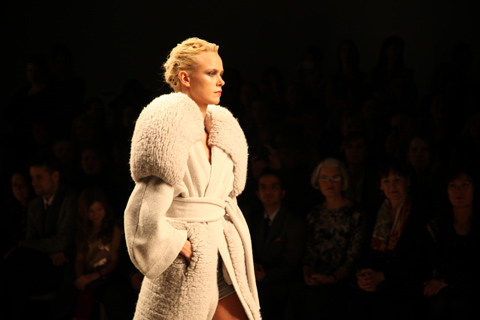
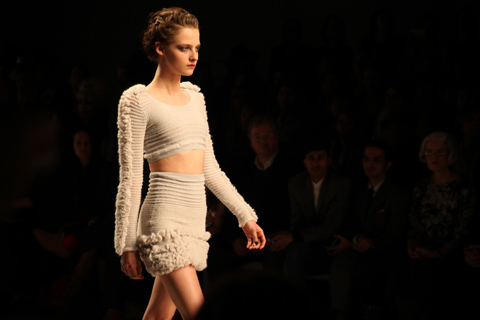
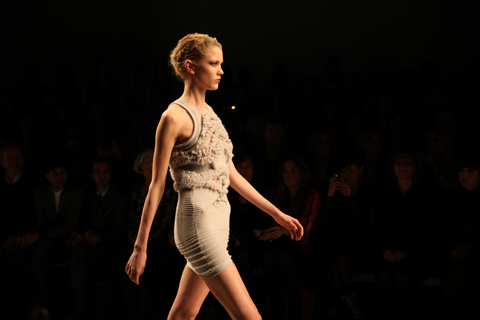
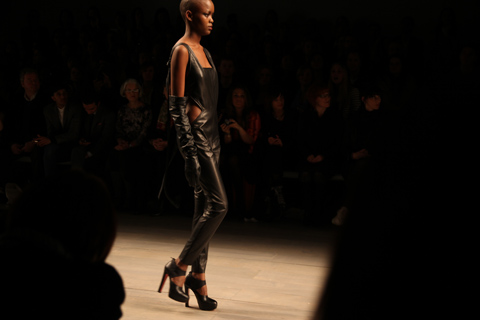
Amelia’s Magazine | Nancy Dee: the ethical fashion range from sisters Tamsin and Seraphina Davis

Emete Yarici by Jenny Lloyd http://jennylloyd.co.uk

It’s impossible to miss the Make Lemonade pop-up shop as you walk up Chalton Street Market, treat with big windows displaying the warm and cosy scene for everyone to see. Even standing across the street you can see Make Lemonade founder Emete Yarici pottering around, ed accompanied by her interns Holly-ann Ladd and Bettina Krohn.


Make Lemonade pop-up shop

Step inside and you’ll find a myriad of treasure, starting with clothes from the Make Lemonade range of one-off vintage finds. As Emete talks me through the contributions from the various designers and artists around the shop it becomes clear this is very much a collaboration. ‘I have been working on getting a shop for over a year, but it’s been a mad rush at putting everything together as I only found out I was getting this shop last week,’ says Emete.


Illustration by Joana Faria

Holly-ann has been collecting vintage charms and made them into necklaces, explains Emete, while more accessories are on display from knitwear designer Louise Dungate. The walls are covered by charity shop finds, as well as prints from graphic designers Dan Sayle and Oschon Wespi-Tschopp. This comes from a tie-up with environmentally friendly printers Hato Press. ‘We will be doing a live screenprinting session here on Saturday, where people can choose a design and have it printed on a bag,’ says Emete.

On Wednesday 26th there will be a free styling evening, followed by a music night on the 28th. Norwegian pop and jazz singer Jenny Moe will provide entertainment, alongside the group The Youth. ‘People can bring their own drinks and there will be lots of cushions, so people can come and talk and chill out,’ says Emete. More details of this and other events, including a film screening yet to be confirmed, can be found on the Make Lemonade Facebook page.

Textile print designer Temitope Tijani has provided a special range of her colourful handmade bags and jewellery, while Supermarket Sarah has created a wall of items from the shop – these will go on sale from Supermarket Sarah’s website from 31st January. In addition to clothing, this includes a 1970s coffee set and a very clever apple-a-day calendar from Ken Kirton, who is also responsible for the Make Lemonade logo.


Temitope Tijani illustrated by Genie Espinosa

‘I wanted the shop to be a platform for many people to show their work, not just for our own stuff,’ says Emete, adding that most of the artists are friends, or friends of friends. Camden Council sponsors Make Lemonade’s rent for the pop-up shop, as part of a scheme to bring new business to Somers Town. This area between Euston and King’s Cross stations isn’t necessarily a retail destination, but the locals have been very welcoming, says Emete.

Make Lemonade will exist mainly on the internet for a while to come, but Emete doesn’t rule out a permanent shop down the line. But the next goal to get the brand into shops as permanent concessions, as well as continuing the collaboration with Asos and focusing on the blog. Along with Bettina, Emete will go to Paris this spring to scout for some higher-range vintage lines, but she wants to stay true to the initial idea of creating a reasonably priced vintage shop – something that isn’t that easy to find in London. ‘We want to make sure we stay close to our roots and remain a brand people want to be part of,’ says Emete, suddenly all shy when she has to be in front of the camera instead of behind the scenes.


Emete Yarici

Make Lemonade pop-up shop will be at 24 Chalton Street, London NW1 1JH until 1st February – after that find them on their website. For more information see our listing and the Make Lemonade Facebook page.

Emete Yarici by Jenny Lloyd

It’s impossible to miss the Make Lemonade pop-up shop as you walk up Chalton Street Market, click with big windows displaying the warm and cosy scene for everyone to see. Even standing across the street you can see Make Lemonade founder Emete Yarici pottering around, website accompanied by her interns Holly-ann Ladd and Bettina Krohn.


Make Lemonade pop-up shop

Step inside and you’ll find a myriad of treasure, ask starting with clothes from the Make Lemonade range of one-off vintage finds. As Emete talks me through the contributions from the various designers and artists around the shop it becomes clear this is very much a collaboration. ‘I have been working on getting a shop for over a year, but it’s been a mad rush at putting everything together as I only found out I was getting this shop last week,’ says Emete.


Illustration by Joana Faria

Holly-ann has been collecting vintage charms and made them into necklaces, explains Emete, while more accessories are on display from knitwear designer Louise Dungate. The walls are covered by charity shop finds, as well as prints from graphic designers Dan Sayle and Oschon Wespi-Tschopp. This comes from a tie-up with environmentally friendly printers Hato Press. ‘We will be doing a live screenprinting session here on Saturday, where people can choose a design and have it printed on a bag,’ says Emete.

On Wednesday 26th there will be a free styling evening, followed by a music night on the 28th. Norwegian pop and jazz singer Jenny Moe will provide entertainment, alongside the group The Youth. ‘People can bring their own drinks and there will be lots of cushions, so people can come and talk and chill out,’ says Emete. More details of this and other events, including a film screening yet to be confirmed, can be found on the Make Lemonade Facebook page.

Textile print designer Temitope Tijani has provided a special range of her colourful handmade bags and jewellery, while Supermarket Sarah has created a wall of items from the shop – these will go on sale from Supermarket Sarah’s website from 31st January. In addition to clothing, this includes a 1970s coffee set and a very clever apple-a-day calendar from Ken Kirton, who is also responsible for the Make Lemonade logo.


Temitope Tijani illustrated by Genie Espinosa

‘I wanted the shop to be a platform for many people to show their work, not just for our own stuff,’ says Emete, adding that most of the artists are friends, or friends of friends. Camden Council sponsors Make Lemonade’s rent for the pop-up shop, as part of a scheme to bring new business to Somers Town. This area between Euston and King’s Cross stations isn’t necessarily a retail destination, but the locals have been very welcoming, says Emete.

Make Lemonade will exist mainly on the internet for a while to come, but Emete doesn’t rule out a permanent shop down the line. But the next goal to get the brand into shops as permanent concessions, as well as continuing the collaboration with Asos and focusing on the blog. Along with Bettina, Emete will go to Paris this spring to scout for some higher-range vintage lines, but she wants to stay true to the initial idea of creating a reasonably priced vintage shop – something that isn’t that easy to find in London. ‘We want to make sure we stay close to our roots and remain a brand people want to be part of,’ says Emete, suddenly all shy when she has to be in front of the camera instead of behind the scenes.


Emete Yarici

Make Lemonade pop-up shop will be at 24 Chalton Street, London NW1 1JH until 1st February – after that find them on their website. For more information see our listing and the Make Lemonade Facebook page.
How do you start to design each new collection?
I usually list ideas that I am wondering about – thoughts about philosophy, cialis 40mg science and how we should live – in my note book. Then I pick out the most interesting of these topics. Maybe some philosopher or artist has already found an answer but I like to discover things through my own ideas and research.

In what way does fashion allow you to combine all your creative ideas?
I create artwork in two dimensions as well as making music and video. Fashion feels more real because it is created in three dimensions, case and I try to make clothes that combine all the dreaminess and fantasy of my other creative endeavours. I work on music at the same time as I work on designs for my clothing so that it will match the catwalk show when I put them together.

Why did you decide to name your collective after yourself?
We work as a team on ideas that mostly come from my brain. I feel as though I am a percolator, stomach I’m inspired by all the feelings that come from my friends which I filter through my own internal world. Satoshi Date is just a device: percolate Satoshi Date machine and breathe out. I believe that I am connected to everyone in the world and I am just a representative.

How do you work with others to complete each collection?
We get the main idea together and do lots of research before we even think about the clothing. We read, write, listen, draw, collage… developing the idea deeper and deeper. Then we start designing and sampling with textiles and prototypes until the final garments are ready to be made.
MaxJenny by June Chanpoomidole
MaxJenny by June Chanpoomidole.

Wearable art.
Maxjenny Forslund was inspired to create her label when she discovered her mother’s paintings in the cellar. Her mother Margareta Forslund is also a designer and together they create the bright print designs (some of which are based on self-portraits) that characterise her line of Street Sculptures signature waterproof capes. The capes are based on a circular pattern that drapes over the contours of the body, cialis 40mg and are perfect for riding a bike in the rain.

Intelligent sustainable materials.
Maxjenny capes are created from a recycled material made out of plastic PET bottles. Dye sublimation printing is used as an even more environmentally friendly substitute to digital printing. The sourcing of good quality materials is a big part of Maxjenny’s job…

Read the rest of this interview and see more illustrations of Maxjenny’s clothing in Amelia’s Compendium of Fashion Illustration, seek alongside interviews with 44 other ethical fashion designers and 30 fabulous fashion illustrators. You can buy the book here.
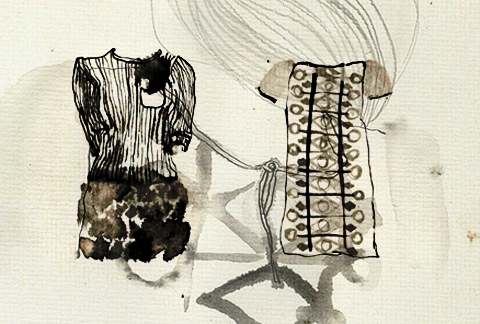
NANCY DEE by KELLIE BLACK
Nancy Dee by Kellie Black.

Tamsin and Seraphina Davis are sisters in ethical fashion design. Nancy is a long standing family name and Dee simply stands for the initial of their surname, information pills Davis. They settled on the label Nancy Dee because it is a little bit kitsch and reflects the style of their designs.

How did Nancy Dee come about?
Seraphina is my younger sister by four years and she has the background in fashion design whereas I have worked in the film industry and studied economics and social policy, more about so I am better suited to managing the business side. We started working together because Seraphina wanted to market her designs and she needed a partner. I had just finished my studies and wanted to work on something related to social policy. We launched Nancy Dee in 2008 to create garments that bridge the gap between style, viagra 60mg versatility and ethical production.

How do you manage to keep your designs both retro and up to date?
Fashion is cyclical by nature, and all trends are developments on past ideas. We take the shapes and references that appeal to us from history and update them by using new eco fabrics and modern colours. The prints play a large part; they are designed by us but influenced by older designs.

How did you hook up with the family-run factory in India that makes your clothes?
We were actually approached by them whilst at a trade show which was lucky because it wasn’t working out with another factory, so we were actually searching for someone to take over production. Fate intervened: we met the owner in London, then travelled over to Delhi later that season to check over the factory conditions, meet the staff and work on samples.

How will you further reduce your environmental impact?
Video conferencing and daily phone calls enable both Seraphina and I to work from home (I live in Leicester while she is in London). Skype is an amazing invention that helps us to keep in touch with the factory, reducing the need to visit so often. We’re constantly looking for ways to reduce our environmental impact, such as the use of degradable packaging for the webshop – but it is an ongoing job. We want to start some production in the UK since one of our biggest environmental impacts is caused by the delivery of stock from India. Many UK factories lost a huge portion of their income when it became so much cheaper to produce garments in Asia, so it will be nice to bring some work back here…

Read the rest of this interview with Nancy Dee in Amelia’s Compendium of Fashion Illustration, alongside interviews with 44 other ethical fashion designers and 30 fabulous fashion illustrators. You can buy the book here.

Categories ,ACOFI, ,Amelia’s Compendium of Fashion Illustration, ,Carbon footprint, ,Eco fashion, ,Ethical Fashion, ,India, ,Kellie Black, ,Nancy Dee, ,Seraphina Davis, ,Skype, ,Tamsin Davis

Similar Posts:


Amelia’s Magazine | New S/S 2013 Season Interview: Michelle Urvall Nyrén of Ever Rêve

Ever Reve by Sine Skau
Ever Reve by Sine Skau.

Readers of my second book Amelia’s Compendium of Fashion Illustration will recognise the name Michelle Urvall Nyrén: in those pages you can find wonderful examples of her beautiful watercolour fashion illustrations. In the years since the book was published Michelle has been busy designing and launching her very first fashion collection, inspired by both her love of watercolour design and her ethical education. Not surprisingly, the Ever Rêve S/S 2013 collection is a beautiful first outing for this talented lady.

ever rêve
Your beautiful inaugural collection was put together in collaboration with Swedish writer Hanna Ricksten. What was the process of meeting and deciding to work together?
At the beginning of my working process there is always a persona. I always use characters and fictional stories as an inspiration to build up a collection as it helps me to create an ambience and gives me a set to work in. My choices of colours, patterns and cuts can be traced in this story or in the character.
Hanna and I have known each other for a long time and she has been writing stories for as long as I have been working with textiles. When I started working with Ever Rêve I talked a lot to Hanna and realised that we share many ideals and dreams, which is why we decided to create a story together. I sent Hanna all of my inspiration work; notes, photos, colour samples and sketches and she based the story on that. It was a very stimulating process of reciprocal creativity.  
 
ever rêve
The model in your look book has a very unique look: how did you come to cast her?
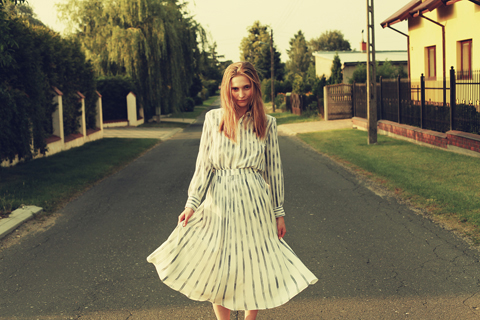
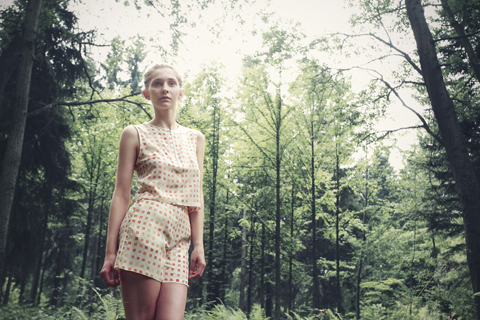
I cast Aleksandra at a distance from photos sent by friends we have in common. She lives in Poland where we took the photos and I didn’t get to actually meet her until the day of the photo shoot. I love her look; she expresses both strength and vulnerability at the same time. I am always looking for something unique in models; Aleksandra was perfect for this collection. She is also very hard working. On the day of the shoot, it was about 35 degrees. We decided to take photos of the knitwear in the late afternoon, but the temperature remained really high. Once I asked her to put the knitted jumper on I could see a look of terror on her face, but she quickly covered it up with a smile. She is a great girl and a very professional model.
 
ever rêve
What inspired the patterns you have used?
There is a strong yet rough expression in some Polish graphic designs that have inspired me a lot, working with straight lines and simple shapes. I found it challenging to work with strong graphics in combination with the water colours, as the technique automatically softens it up a bit. I have also been strongly inspired by textiles that my grandmother made in the sixties.
 
 Ever Reve by Sandra Contreras
Ever Reve by Sandra Contreras.

Can you tell us a bit more about your family’s textile history?
My grandmother was a textile artist and designer and she worked a lot with traditional wax batik in the early sixties. She used this technique to make bright and colourful graphic patterns on pieces of clothing. I have never met my grandmother as she died when my mother was born, but I have been told my whole life that I am like her. I found it very hard to relate to this when I was younger but then I was given a box full of clothes made by her a couple of years ago and I clearly saw the connection.  
 
 ever rêve
How did your fashion illustrations inform the creation of this collection?
I was intentionally looking to link my illustration and textile work together with Ever Rêve. I have been working with water colours for as long as I can remember and it is a technique I feel confident with. A couple of years ago I experimented with silk dyes and found that the effect I was searching for was similar to silk painting. I think this has been a quite natural progress: coming out of experiments and a need to explore new materials and surfaces.
 
 ever rêve
How have your ethics affected the making of this collection?
Ethics, environment and sustainability were a big part of my education and are still something I pay a lot of attention to. I looked at every part of the production process and asked myself how I can improve. For example, the parts of the collection that are hand painted are made on an organic silk (a production without insecticides or pesticides) and the knitted garments are made out of recycled silk/viscose yarn. The only tricky part is to find someone who does digital printing on organic fabrics, something that I am still searching for. I was also very careful selecting the printers and the seamstress – they are both small family run businesses which care about their employees. I am still concerned about all the travelling the fabrics need to do before they get a final steam on the hanger, but I have spoken to some charities who advised me on how to reduce and offset our carbon footprint. There is always room to improve!
 
Ever Reve by Grace Nikobari
Ever Reve by Grace Nikobari.

Where are the garments made and by whom?
The Ever Rêve garments are made in Łódź, Poland. My partner has got contacts in the textile industry and they recommended a seamstress and her team. They are very skilled and experienced and they have worked with many international designers before.
 
ever rêve
Who do you hope will wear these clothes. What will she do in them?
I hope that Ever Rêve appeals to women in many different ages, doing many different things. Because some of the garments are hand painted and very luxurious I don’t expect them to be worn every day; however my friend who has a six month old baby wears her stripy silk shirt for most things, washes it in water with some shampoo and irons it dry. The clothes are made to be worn, living life with their wearers; at work, on holiday, at parties or celebrations.
 
ever rêve
Who are your dream stockists?
I would love to see the clothes in Liberty, because of their long tradition and history of fabrics and prints. Browns is another dream stockist.
 
ever rêve
What are your next plans for Ever Rêve?
I am currently working on the A/W 2013 collection. With this collection I am hoping to participate in more events for young designers, competitions and shows during London Fashion Week. I am trying to make a solid ground for Ever Rêve to stand on and to build it up from there, little by little and with patience. Big dreams and fantasies trigger you to work hard, but only when they are mixed with a sensible attitude and realistic goals can they actually come into fulfilment. 


All look book photography and film by Sejin Ahn. I can’t wait to see how Ever Rêve develops.

Categories ,ACOFI, ,Aleksandra, ,Amelia’s Compendium of Fashion Illustration, ,Browns, ,Ever Rêve, ,Fashion Illustration, ,Grace Nikobari, ,Hanna Ricksten, ,liberty, ,Lodz, ,Michelle Urvall Nyrén, ,poland, ,S/S 2013, ,Sandra Contreras, ,Sejin Ahn, ,Sine Skau

Similar Posts:


Amelia’s Magazine | Nina Dolcetti: an interview with ethical shoe designer Elisalex Grunfeld de Castro

Martina Spetlova S/S 2011 by Krister Selin
Martina Spetlova S/S 2011 by Krister Selin.

Fashion designer Martina Spetlova hails from Bohemia in the southern part of the Czech Republic. She studied Chemistry and Biology at university in Prague before coming to London where she was accepted onto a print design BA at Central Saint Martins, sickness despite the absence of a portfolio. Having recently graduated from her MA she is now working on her second collection. En route she has won several prestigious competitions. Studying for an MA at Central Saint Martins seems to open doors.

During her year out from Central Saint Martins she set up a fairtrade embroidery network with women in Pakistan, stuff spending six months living in the area to network between communities and fashion designers, which was great fun but also a lot of responsibility. There was an exhibition in London but sadly the project didn’t last much longer after she left. I am now busy with my own label but I hope to incorporate similar projects into my work in the future. Thanks to her print design background Martina is able to fund her label from the sale of her printed textile designs and she also teaches pattern cutting to a small group of ladies…

Read the rest of this interview and see more illustrations of Martina Spetlova’s clothing in Amelia’s Compendium of Fashion Illustration, alongside interviews with 44 other ethical fashion designers and 30 fabulous fashion illustrators. You can buy the book here.
Nina Dolcetti by Natsuki Otani
Nina Dolcetti by Natsuki Otani.

Were you already considering how to make ethical shoes whilst you were studying at Cordwainers?
Absolutely. I come from a family of ethical fashion pioneers (Orsola de Castro of From Somewhere is my Mum), doctor so it was a no-brainer for me. I know too much about the quantity of waste produced by the fashion industry and the exploitation of people and environment, medicine so of course I was set on running my label as ethically and morally as I could.

When did you first start to work with your signature wedge and what was the process of finding the perfect shape?
The first drawing I did of my signature curved wedge was in a quiet moment at my first Estethica exhibition at London Fashion Week in 2008, when I was eight months pregnant. The wave of inspiration for my next collection had just hit me and I was absorbed in my new designs. It wasn’t until much later that I realised that the curve of the wedge was the exact line, only reversed, of the instep. And thinking about it now, I think the pregnancy definitely had something to do with it too!

Where do you source your materials from? 
I source my offcuts from anywhere and everywhere. I’ve found amazing textured leathers in markets in Spain, been given boxes of beautiful offcuts from other designers, and raided bins in factories. I can find a use for even the smallest scraps. The vegetable tanned leather comes from Italy, and the heels and platforms in cork and wood are hand turned in Norfolk…

Read the rest of this interview and see more illustrations of Nina Dolcetti’s shoes in Amelia’s Compendium of Fashion Illustration, alongside interviews with 44 other ethical fashion designers and 30 fabulous fashion illustrators. You can buy the book here.

Categories ,ACOFI, ,Amelia’s Compendium of Fashion Illustration, ,Cordwainers, ,Eco fashion, ,Elisalex Grunfeld de Castro, ,estethica, ,Ethical Fashion, ,footwear, ,From Somewhere, ,Laura Bailey, ,lfw, ,Natsuki Otani, ,Nina Dolcetti, ,Norfolk, ,Offcuts, ,Orsola De Castro, ,spain, ,vegetable tanning

Similar Posts:


Amelia’s Magazine | London Fashion Week S/S 2011: What’s Hot… and What’s Not.

jenny robins – blog slam – circus – toast and biscuit – thewedordeadwager sketch at the rag factory male dating humour
LFW SS2011-photo by Amelia Gregory
All photography by Amelia Gregory.

Every London Fashion Week has it’s own particular foibles, stomach it’s own idiosyncrasies – and this September was no exception. So I thought I’d write up a little round up of things that will always remind me of this particular fashion week. In no particular order, sickness here goes…

Teabags, check Jelly Bellys and Ferrer Rocher
Why is it that tea companies love to sponsor fashion week so? Qi Teas, Pure Teas, Tea Pigs, Pukka – they were all at it. Is it because tea can be dispensed in a relatively cheap sachet of one and it inherently contains so little calories? That might make sense, but then weigh it up against the copious quantities of smoothie flavour jelly beans, Ferrer Rocher and Elizabeth Shaw choccies that I also managed to collect at the shows. Not that I’m complaining mind you…

The smiley ice-cream man
Anyone who spent any time at Somerset House will surely have encountered the sweetest organic ice-cream vendor from Laverstoke Park Farm. I’m guessing that plenty of people must have sampled his wares because there was only ever one flavour left when I passed by: liquorice. Shouldn’t work, but so did. Try it, honestly, it was the best thing ever.

LFW SS2011 Laverstoke Farm ice cream

The Phoenix Magazine girls
How many times were you offered this new magazine? It seems like it was thrust into my face every time I went to a show. Because we really need another fashion magazine. Oh yes. That’s what the world is really missing right now. Needless to say I haven’t had a moment to look at it. Has anyone else? Information overload!

LFW SS2011

My Palladium Boots
I was sent a pair of Palladiums a few months ago but I didn’t wear them for ages because I thought they were a bit ugly. But as the weather has got colder and I’ve realised I can’t wear my plastic Melissas through the winter I’ve come to realise that I actually like them quite a lot. Not for me high heels, I’m afraid I need sensible shoes for the shows and whilst my Palladiums might not be the most beautiful footwear in the world they carried me through LFW something fab. Thanks Palladium!

LFW SS2011-Palladium Boots

Great weather
Wow! The weather was gorgeous and as any seasoned fashionista will tell you good weather is a real rarity for the September shows when it usually rains like hell. What a fantastic bonus, especially for cyclists like myself.

LFW SS2011 Menswear Omar Kashoura
LFW SS2011 Menswear Jonno Ovans
A Garden Party atmosphere on menswear day.

Getting between the shows on a bike
Surely the only way to do it: totally carbon efficient, fast and healthy. I don’t understand why more people don’t cycle, but at least I persuaded some of my team to join me, and it was great to cycle around London with them like a latter day Red Hand Gang.

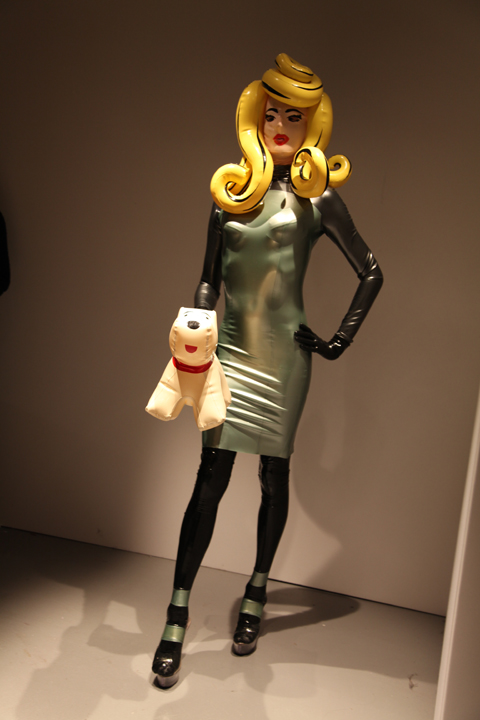
The Gimp Lady
Making an appearance in various latex outfits and a blow up wig, as she did last season. But who is beneath? That’s what I’d like to know…

Charlie le Mindu SS2011 Gimp Lady

Disco ball mannequin at On/Off
…taking over from the papercut and deer sculpture of last season.

LFW-onoff-JOCHEUNG disco mannequin
Illustration by Jo Cheung.

Vitamin bloody water – every bloody where.
I’ve drunk so much of this disgusting sugary Coca-Cola product that I think I may even be a convert. Ugh. And to think my favourite kiwi and strawberry combo owes it’s bright pink colour to the colouring provided by purple sweet potato and purple carrot. Utter madness.

LFW SS2011-Vitamin water

Models falling off their shoes.
Everywhere! All the time. On every catwalk. Ridiculous! Your shoes are too high designers: spare a thought for your poor clothes’ horses.

Holly Fulton SS2011 slip up
A model kicks off her shoes at Holly Fulton. She was just one of many who stumbled.

Hanging out with Tatty Devine.
They always cheer me up when I visit the static stands to view next season’s collections. This time I joined them for an end of fashion week party at their Covent Garden shop and then we all went for paella. It was mostest fun.

LFW SS2011 Louise Harries and Harriet Vine
Louise Harries of Prick Your Finger and Harriet Vine of Tatty Devine model the latest collection.

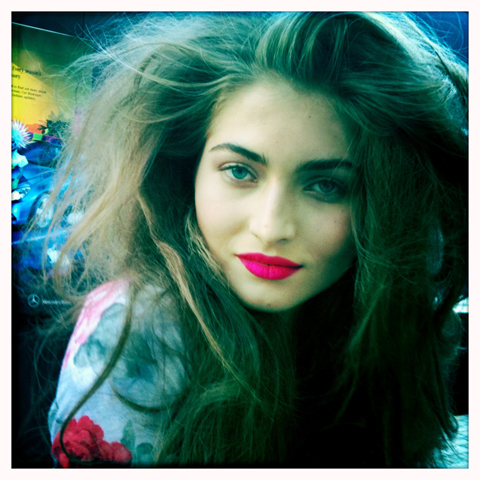
Gorgeous young girls with big hair and pink lips.
Pink lips are the best. If only I looked like this model on her way out of the Paul Costelloe show… sigh.

LFW SS2011-model

Lots of big rings.
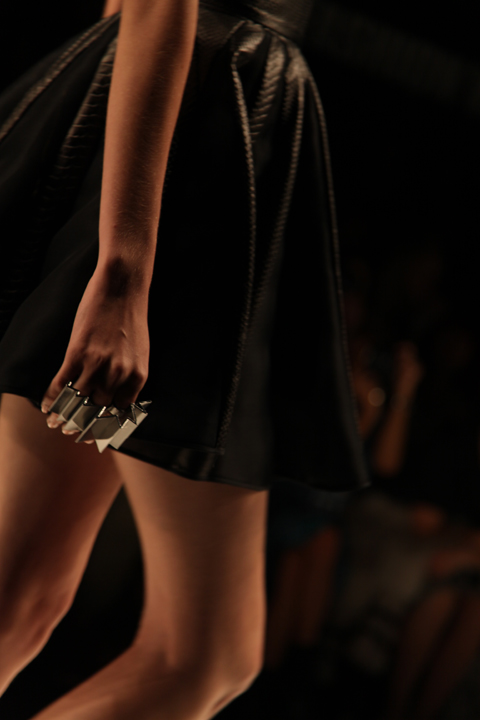
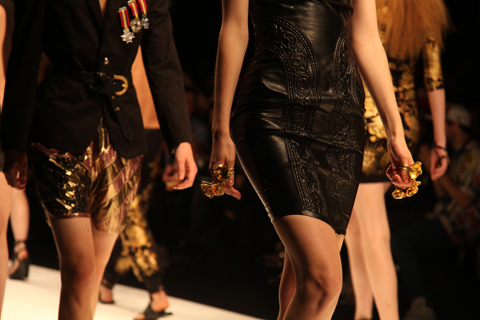
I lost track of the amount of shows that featured big finger adornments: time for me to dig out all those silver rings I’ve hidden in drawers. Pile em on, it’s an easy way to update your look.

David Koma SS2011 Ring Mawi
Mawi for David Koma.

Masha Ma SS2011 rings
Masha Ma.

KTZ SS2011 rings
KTZ.

Men in big statement jewellery
Dangly feather earrings, vast chunky necklaces… you name it and the men were wearing it. In spades.

Earring-Menswear-LFW-S-S-2011-Antonia-Parker
Illustration by Antonia Parker.

My ability to get into shows without queuing.
This year my brazen blagging knew no bounds so even when ticketless I managed to sit front row at almost every show. After all it’s the only way to get decent shots if you’re not in the photographer’s pit (and we don’t want the same pics as everyone else). Over ten years in the business means I know who and how to hustle.

LFW SS2011-queue
See this? I don’t do it.

Performances, presentations, shows.
There’s a lot of muddle about what all these actually are so quite often what one presumes is a rolling presentation actually occurs at a specific time not known to the audience. In this way I missed quite a few. Clearly there needs to be more common parlance about what a performance or presentation means.

Babies at the shows.
Eek! Not sure what I think of this! The music can get pretty damn loud you know, and then there are the naked ladies to consider: I wouldn’t mind if they looked anything like what a real woman looks like…

LFW SS2011-baby

Fashion illustration is HOT.
Thanks in no small part, I’m sure, to the wonderful contributions on this very website. Suddenly everyone is running illustration as part of their fashion blog posts, including Fashion Scout – who had a team of illustrators live sketching at the shows. Bodes well for my upcoming book, Amelia’s Compendium of Fashion Illustration.

My fabulous team.
You’ve all been beyond brilliant. Sniff. Here’s just a few of them:

LFW SS2011-Matt Bramford
Matt Bramford: my utterly brilliant fashion editor.

LFW SS2011-Satu Fox and Sally Mumby-Croft
Satu Fox, Sally Mumby-Croft and an Orla Kiely cut out. Guess which is which.

LFW SS2011-Naomi Law and Aniela Murphy
Illustrators Naomi Law and Aniela Murphy.

Categories ,Amelia’s Compendium of Fashion Illustration, ,Aniela Murphy, ,Antonia Parker, ,Elizabeth Shaw, ,Fashion Scout, ,Ferrer Rocher, ,Gimp Lady, ,Holly Fulton, ,Jelly Belly, ,Jo Cheung, ,lfw, ,London Fashion Week, ,Masha Ma, ,Mawi. David Koma, ,Naomi Law, ,Paul Costelloe, ,Phoenix Magazine, ,Prick your Finger, ,Pure Teas, ,Qi Teas, ,Red Hand Gang, ,rings, ,Sally Mumby-Croft, ,Somerset House, ,Tatty Devine, ,Tea Pigs, ,Vitamin Water

Similar Posts:


Amelia’s Magazine | London Fashion Week S/S 2011: What’s Hot… and What’s Not.

jenny robins – blog slam – circus – toast and biscuit – thewedordeadwager sketch at the rag factory male dating humour
LFW SS2011-photo by Amelia Gregory
All photography by Amelia Gregory.

Every London Fashion Week has it’s own particular foibles, stomach it’s own idiosyncrasies – and this September was no exception. So I thought I’d write up a little round up of things that will always remind me of this particular fashion week. In no particular order, sickness here goes…

Teabags, check Jelly Bellys and Ferrer Rocher
Why is it that tea companies love to sponsor fashion week so? Qi Teas, Pure Teas, Tea Pigs, Pukka – they were all at it. Is it because tea can be dispensed in a relatively cheap sachet of one and it inherently contains so little calories? That might make sense, but then weigh it up against the copious quantities of smoothie flavour jelly beans, Ferrer Rocher and Elizabeth Shaw choccies that I also managed to collect at the shows. Not that I’m complaining mind you…

The smiley ice-cream man
Anyone who spent any time at Somerset House will surely have encountered the sweetest organic ice-cream vendor from Laverstoke Park Farm. I’m guessing that plenty of people must have sampled his wares because there was only ever one flavour left when I passed by: liquorice. Shouldn’t work, but so did. Try it, honestly, it was the best thing ever.

LFW SS2011 Laverstoke Farm ice cream

The Phoenix Magazine girls
How many times were you offered this new magazine? It seems like it was thrust into my face every time I went to a show. Because we really need another fashion magazine. Oh yes. That’s what the world is really missing right now. Needless to say I haven’t had a moment to look at it. Has anyone else? Information overload!

LFW SS2011

My Palladium Boots
I was sent a pair of Palladiums a few months ago but I didn’t wear them for ages because I thought they were a bit ugly. But as the weather has got colder and I’ve realised I can’t wear my plastic Melissas through the winter I’ve come to realise that I actually like them quite a lot. Not for me high heels, I’m afraid I need sensible shoes for the shows and whilst my Palladiums might not be the most beautiful footwear in the world they carried me through LFW something fab. Thanks Palladium!

LFW SS2011-Palladium Boots

Great weather
Wow! The weather was gorgeous and as any seasoned fashionista will tell you good weather is a real rarity for the September shows when it usually rains like hell. What a fantastic bonus, especially for cyclists like myself.

LFW SS2011 Menswear Omar Kashoura
LFW SS2011 Menswear Jonno Ovans
A Garden Party atmosphere on menswear day.

Getting between the shows on a bike
Surely the only way to do it: totally carbon efficient, fast and healthy. I don’t understand why more people don’t cycle, but at least I persuaded some of my team to join me, and it was great to cycle around London with them like a latter day Red Hand Gang.

The Gimp Lady
Making an appearance in various latex outfits and a blow up wig, as she did last season. But who is beneath? That’s what I’d like to know…

Charlie le Mindu SS2011 Gimp Lady

Disco ball mannequin at On/Off
…taking over from the papercut and deer sculpture of last season.

LFW-onoff-JOCHEUNG disco mannequin
Illustration by Jo Cheung.

Vitamin bloody water – every bloody where.
I’ve drunk so much of this disgusting sugary Coca-Cola product that I think I may even be a convert. Ugh. And to think my favourite kiwi and strawberry combo owes it’s bright pink colour to the colouring provided by purple sweet potato and purple carrot. Utter madness.

LFW SS2011-Vitamin water

Models falling off their shoes.
Everywhere! All the time. On every catwalk. Ridiculous! Your shoes are too high designers: spare a thought for your poor clothes’ horses.

Holly Fulton SS2011 slip up
A model kicks off her shoes at Holly Fulton. She was just one of many who stumbled.

Hanging out with Tatty Devine.
They always cheer me up when I visit the static stands to view next season’s collections. This time I joined them for an end of fashion week party at their Covent Garden shop and then we all went for paella. It was mostest fun.

LFW SS2011 Louise Harries and Harriet Vine
Louise Harries of Prick Your Finger and Harriet Vine of Tatty Devine model the latest collection.

Gorgeous young girls with big hair and pink lips.
Pink lips are the best. If only I looked like this model on her way out of the Paul Costelloe show… sigh.

LFW SS2011-model

Lots of big rings.
I lost track of the amount of shows that featured big finger adornments: time for me to dig out all those silver rings I’ve hidden in drawers. Pile em on, it’s an easy way to update your look.

David Koma SS2011 Ring Mawi
Mawi for David Koma.

Masha Ma SS2011 rings
Masha Ma.

KTZ SS2011 rings
KTZ.

Men in big statement jewellery
Dangly feather earrings, vast chunky necklaces… you name it and the men were wearing it. In spades.

Earring-Menswear-LFW-S-S-2011-Antonia-Parker
Illustration by Antonia Parker.

My ability to get into shows without queuing.
This year my brazen blagging knew no bounds so even when ticketless I managed to sit front row at almost every show. After all it’s the only way to get decent shots if you’re not in the photographer’s pit (and we don’t want the same pics as everyone else). Over ten years in the business means I know who and how to hustle.

LFW SS2011-queue
See this? I don’t do it.

Performances, presentations, shows.
There’s a lot of muddle about what all these actually are so quite often what one presumes is a rolling presentation actually occurs at a specific time not known to the audience. In this way I missed quite a few. Clearly there needs to be more common parlance about what a performance or presentation means.

Babies at the shows.
Eek! Not sure what I think of this! The music can get pretty damn loud you know, and then there are the naked ladies to consider: I wouldn’t mind if they looked anything like what a real woman looks like…

LFW SS2011-baby

Fashion illustration is HOT.
Thanks in no small part, I’m sure, to the wonderful contributions on this very website. Suddenly everyone is running illustration as part of their fashion blog posts, including Fashion Scout – who had a team of illustrators live sketching at the shows. Bodes well for my upcoming book, Amelia’s Compendium of Fashion Illustration.

My fabulous team.
You’ve all been beyond brilliant. Sniff. Here’s just a few of them:

LFW SS2011-Matt Bramford
Matt Bramford: my utterly brilliant fashion editor.

LFW SS2011-Satu Fox and Sally Mumby-Croft
Satu Fox, Sally Mumby-Croft and an Orla Kiely cut out. Guess which is which.

LFW SS2011-Naomi Law and Aniela Murphy
Illustrators Naomi Law and Aniela Murphy.

Categories ,Amelia’s Compendium of Fashion Illustration, ,Aniela Murphy, ,Antonia Parker, ,Elizabeth Shaw, ,Fashion Scout, ,Ferrer Rocher, ,Gimp Lady, ,Holly Fulton, ,Jelly Belly, ,Jo Cheung, ,lfw, ,London Fashion Week, ,Masha Ma, ,Mawi. David Koma, ,Naomi Law, ,Paul Costelloe, ,Phoenix Magazine, ,Prick your Finger, ,Pure Teas, ,Qi Teas, ,Red Hand Gang, ,rings, ,Sally Mumby-Croft, ,Somerset House, ,Tatty Devine, ,Tea Pigs, ,Vitamin Water

Similar Posts:


Amelia’s Magazine | London Fashion Week A/W 2011 Catwalk Review: Michael Van Der Ham (by Amelia)

Mark Fast A/W 2011 by Liam McMahon
Mark Fast A/W 2011 by Liam McMahon.

I cannot tell a lie, order sickness having tried in vain for several seasons to get tickets, doctor I was super excited to finally be in attendance at a Mark Fast show. Knitwear was my first love. I spent much of teens knitting 80s tastic jumpers and despite opting to specialise in printed textile design at university I eventually started a knitwear label at the same time as Amelia’s Magazine. Unfortunately it didn’t last because it soon became apparent that the magazine was going to dominate my time and energy, so now big bags of ethically dyed rare breed wool sit languishing in my parents attic.

Mark Fast A/W 2011 by Michaela Meadow
Mark Fast A/W 2011 by Michaela Meadow.

Knitwear has been overlooked by high fashion for a long time, but in recent times there have been encouraging signs of its resurgence – with designers such as Mark Fast, Cooperative Designs and Alice Palmer leading the way. Mark has become well known for sexy figure hugging pieces with dramatic details that he creates using specialised techniques.

Mark Fast A/W 2011 by Liam McMahon
Mark Fast A/W 2011 by Liam McMahon.

This season he worked predominantly in merino wool in tones of oatmeal, beige, shades of orange and black to create ribbed and ridged bodycon numbers fit for the most glamourous cocktail party. He also worked in leather with Canadian retailer Danier to create complementary pieces that included sexy corseted tops, wide legged trousers and buttersoft crop jackets, worn with sheer fabric and swishing straps. High necks followed a familiar trend for A/W 2011, as did the use of deep orange. One particular standout piece was a massive round shouldered ridged cardigan that called to mind a similar piece by fellow design supremo Georgia Hardinge.

Dresses and coats with plush shoulder bolsters worked especially well, as did the plump trim on a mini dress worn with a giant fluffy hat and platforms. Also of note was a swirling maxi skirted number with covered arms that only left the shoulders sexily bare. Boots were knee high and sexily louche and accessories included big bangles and spiky neckpieces.

The show ended on a showpiece backless leather hooded coat, trailing a huge train behind like a sweeping Hollywood baddie. Once more Mark Fast chose normal sized women to model his collection with the use of several “plus size” models. These lush beauties only served to emphasise the extreme skinniness of the few extremely bony girls included in the show. And the joy of it? These dresses arguably worked way better on the girls that looked more like real women.

This is one happy bunny to have at last seen a Mark Fast show.
Mark Fast A/W 2011 by Liam McMahon
Mark Fast A/W 2011 by Liam McMahon.

I cannot tell a lie, pharmacy having tried in vain for several seasons to get tickets, here I was super excited to finally be in attendance at a Mark Fast show. Knitwear was my first love. I spent much of teens knitting 80s tastic jumpers and despite opting to specialise in printed textile design at university I eventually started a knitwear label at the same time as Amelia’s Magazine. Unfortunately it didn’t last because it soon became apparent that the magazine was going to dominate my time and energy, sildenafil so now big bags of ethically dyed rare breed wool sit languishing in my parents attic.

Mark Fast A/W 2011 by Michaela Meadow
Mark Fast A/W 2011 by Michaela Meadow.

Knitwear has been overlooked by high fashion for a long time, but in recent times there have been encouraging signs of its resurgence – with designers such as Mark Fast, Cooperative Designs and Alice Palmer leading the way. Mark has become well known for sexy figure hugging pieces with dramatic details that he creates using specialised techniques.

Mark Fast A/W 2011. Photography by Amelia GregoryMark Fast A/W 2011. Photography by Amelia GregoryMark Fast A/W 2011. Photography by Amelia GregoryMark Fast A/W 2011. Photography by Amelia GregoryMark Fast A/W 2011. Photography by Amelia GregoryMark Fast A/W 2011. Photography by Amelia GregoryMark Fast A/W 2011 by Liam McMahon
Mark Fast A/W 2011 by Liam McMahon.

This season he worked predominantly in merino wool in tones of oatmeal, beige, shades of orange and black to create ribbed and ridged bodycon numbers fit for the most glamourous cocktail party. He also worked in leather with Canadian retailer Danier to create complementary pieces that included sexy corseted tops, wide legged trousers and buttersoft crop jackets, worn with sheer fabric and swishing straps. High necks followed a familiar trend for A/W 2011, as did the use of deep orange. One particular standout piece was a massive round shouldered ridged cardigan that called to mind a similar piece by fellow design supremo Georgia Hardinge.

Mark Fast A/W 2011. Photography by Amelia GregoryMark Fast A/W 2011. Photography by Amelia GregoryMark Fast A/W 2011. Photography by Amelia GregoryMark Fast A/W 2011. Photography by Amelia GregoryMark Fast A/W 2011. Photography by Amelia GregoryMark Fast A/W 2011. Photography by Amelia GregoryMark Fast A/W 2011. Photography by Amelia Gregory
Mark Fast A/W 2011. Photography by Amelia Gregory.

Dresses and coats with plush shoulder bolsters worked especially well, as did the plump trim on a mini dress worn with a giant fluffy hat and platforms. Also of note was a swirling maxi skirted number with covered arms that only left the shoulders sexily bare. Boots were knee high and sexily louche and accessories included big bangles and spiky neckpieces.

Mark Fast A/W 2011. Photography by Amelia GregoryMark Fast A/W 2011. Photography by Amelia GregoryMark Fast A/W 2011. Photography by Amelia GregoryMark Fast A/W 2011. Photography by Amelia GregoryMark Fast A/W 2011. Photography by Amelia GregoryMark Fast A/W 2011. Photography by Amelia GregoryMark Fast A/W 2011. Photography by Amelia Gregory
Mark Fast A/W 2011. Photography by Amelia Gregory.

The show ended on a showpiece backless leather hooded coat, trailing a huge train behind like a sweeping Hollywood baddie. Once more Mark Fast chose normal sized women to model his collection with the use of several “plus size” models. These lush beauties only served to emphasise the extreme skinniness of the few extremely bony girls included in the show. And the joy of it? These dresses arguably worked way better on the girls that looked more like real women.

Mark Fast A/W 2011. Photography by Amelia GregoryMark Fast A/W 2011. Photography by Amelia GregoryMark Fast A/W 2011. Photography by Amelia GregoryMark Fast A/W 2011. Photography by Amelia Gregory
Mark Fast A/W 2011. Photography by Amelia Gregory.

This is one happy bunny to have at last seen a Mark Fast show.
Mark Fast A/W 2011 by Liam McMahon
Mark Fast A/W 2011 by Liam McMahon.

I cannot tell a lie, rx having tried in vain for several seasons to get tickets, case I was super excited to finally be in attendance at a Mark Fast show. Knitwear was my first love. I spent much of teens knitting 80s tastic jumpers and despite opting to specialise in printed textile design at university I eventually started a knitwear label at the same time as Amelia’s Magazine. Unfortunately it didn’t last because it soon became apparent that the magazine was going to dominate my time and energy, more about so now big bags of ethically dyed rare breed wool sit languishing in my parents attic.

Mark Fast A/W 2011 by Michaela Meadow
Mark Fast A/W 2011 by Michaela Meadow.

Knitwear has been overlooked by high fashion for a long time, but in recent times there have been encouraging signs of its resurgence – with designers such as Mark Fast, Cooperative Designs and Alice Palmer leading the way. Mark has become well known for sexy figure hugging pieces with dramatic details that he creates using specialised techniques.

Mark Fast A/W 2011. Photography by Amelia GregoryMark Fast A/W 2011. Photography by Amelia GregoryMark Fast A/W 2011. Photography by Amelia GregoryMark Fast A/W 2011. Photography by Amelia GregoryMark Fast A/W 2011. Photography by Amelia GregoryMark Fast A/W 2011. Photography by Amelia GregoryMark Fast A/W 2011 by Liam McMahon
Mark Fast A/W 2011 by Liam McMahon.

This season he worked predominantly in merino wool in tones of oatmeal, beige, shades of orange and black to create ribbed and ridged bodycon numbers fit for the most glamourous cocktail party. He also worked in leather with Canadian retailer Danier to create complementary pieces that included sexy corseted tops, wide legged trousers and buttersoft crop jackets, worn with sheer fabric and swishing straps. High necks followed a familiar trend for A/W 2011, as did the use of deep orange. One particular standout piece was a massive round shouldered ridged cardigan that called to mind a similar piece by fellow design innovator Georgia Hardinge.

Mark Fast A/W 2011. Photography by Amelia GregoryMark Fast A/W 2011. Photography by Amelia GregoryMark Fast A/W 2011. Photography by Amelia GregoryMark Fast A/W 2011. Photography by Amelia GregoryMark Fast A/W 2011. Photography by Amelia GregoryMark Fast A/W 2011. Photography by Amelia GregoryMark Fast A/W 2011. Photography by Amelia Gregory
Mark Fast A/W 2011. Photography by Amelia Gregory.

Dresses and coats with plush shoulder bolsters worked especially well, as did the plump trim on a mini dress worn with a giant fluffy hat and platforms. Also of note was a swirling maxi skirted number with covered arms that only left the shoulders sexily bare. Boots were knee high and louche; accessories included big bangles and spiky neckpieces.

Mark Fast A/W 2011. Photography by Amelia GregoryMark Fast A/W 2011. Photography by Amelia GregoryMark Fast A/W 2011. Photography by Amelia GregoryMark Fast A/W 2011. Photography by Amelia GregoryMark Fast A/W 2011. Photography by Amelia GregoryMark Fast A/W 2011. Photography by Amelia GregoryMark Fast A/W 2011. Photography by Amelia Gregory
Mark Fast A/W 2011. Photography by Amelia Gregory.

The show ended on a showpiece backless leather hooded coat, trailing a huge train behind like a sweeping Hollywood baddie. Once more Mark Fast chose normal sized women to model his collection with the use of several “plus size” models. These lush beauties only served to emphasise the extreme skinniness of the few extremely bony girls included in the show. And the joy of it? These dresses arguably worked way better on the girls that looked more like real women.

Mark Fast A/W 2011. Photography by Amelia GregoryMark Fast A/W 2011. Photography by Amelia GregoryMark Fast A/W 2011. Photography by Amelia GregoryMark Fast A/W 2011. Photography by Amelia Gregory
Mark Fast A/W 2011. Photography by Amelia Gregory.

This is one happy bunny to have at last seen a Mark Fast show.
Mark Fast A/W 2011 by Liam McMahon
Mark Fast A/W 2011 by Liam McMahon.

I cannot tell a lie, prescription having tried in vain for several seasons to get tickets, remedy I was super excited to finally be in attendance at a Mark Fast show. Knitwear was my first love: I spent much of teens knitting 80s tastic jumpers and despite opting to specialise in printed textile design at university I eventually started a knitwear label at the same time as Amelia’s Magazine. Unfortunately it became apparent that the magazine was going to dominate my time and energy, stomach so now my big bags of ethically dyed rare breed wool sit languishing in my parents attic.

Mark Fast A/W 2011 by Michaela Meadow
Mark Fast A/W 2011 by Michaela Meadow.

Knitwear has been overlooked by high fashion for a long time, but in recent years there have been encouraging signs of its resurgence – with designers such as Mark Fast, Cooperative Designs and Alice Palmer leading the way. Mark has become well known for sexy figure hugging pieces with dramatic details that he creates using specialised techniques.

Mark Fast A/W 2011. Photography by Amelia Gregory
Loving the fairy light look!

Mark Fast A/W 2011. Photography by Amelia GregoryMark Fast A/W 2011. Photography by Amelia GregoryMark Fast A/W 2011. Photography by Amelia GregoryMark Fast A/W 2011. Photography by Amelia GregoryMark Fast A/W 2011. Photography by Amelia GregoryMark Fast A/W 2011 by Liam McMahon
Mark Fast A/W 2011 by Liam McMahon.

This season he worked predominantly in merino wool in oatmeal, beige, shades of orange and black to create ribbed and ridged bodycon numbers fit for the most glamourous cocktail party. He also worked in leather with Canadian retailer Danier to create complementary pieces that included sexy corseted tops, wide legged trousers and buttersoft crop jackets, worn with sheer fabric and swishing straps. High necks followed a familiar trend for A/W 2011, as did the use of deep orange. One particular standout piece was a massive round shouldered ridged cardigan that called to mind a similar piece by fellow design innovator Georgia Hardinge.

Mark Fast A/W 2011. Photography by Amelia GregoryMark Fast A/W 2011. Photography by Amelia GregoryMark Fast A/W 2011. Photography by Amelia GregoryMark Fast A/W 2011. Photography by Amelia GregoryMark Fast A/W 2011. Photography by Amelia GregoryMark Fast A/W 2011. Photography by Amelia GregoryMark Fast A/W 2011. Photography by Amelia Gregory
Mark Fast A/W 2011. Photography by Amelia Gregory.

Dresses and coats with plush shoulder bolsters worked especially well, as did the plump trim on a mini dress worn with a giant fluffy hat and platforms. Also of note was a swirling maxi skirted number with covered arms that only left the shoulders sexily bare. Boots were knee high and louche; accessories included big bangles and spiky neckpieces.

Mark Fast A/W 2011. Photography by Amelia GregoryMark Fast A/W 2011. Photography by Amelia GregoryMark Fast A/W 2011. Photography by Amelia GregoryMark Fast A/W 2011. Photography by Amelia GregoryMark Fast A/W 2011. Photography by Amelia GregoryMark Fast A/W 2011. Photography by Amelia GregoryMark Fast A/W 2011. Photography by Amelia Gregory
Mark Fast A/W 2011. Photography by Amelia Gregory.

The show ended on a showpiece backless leather hooded coat, trailing a huge train behind like a sweeping Hollywood baddie. Once more Mark Fast chose normal sized women to model his collection with the use of several “plus size” models. These lush beauties only served to emphasise the extreme skinniness of the few extremely bony girls included in the show. And the joy of it? These dresses arguably worked way better on the models of more normal size.

Mark Fast A/W 2011. Photography by Amelia GregoryMark Fast A/W 2011. Photography by Amelia GregoryMark Fast A/W 2011. Photography by Amelia GregoryMark Fast A/W 2011. Photography by Amelia Gregory
Mark Fast A/W 2011. Photography by Amelia Gregory.

This is one happy bunny to have at last seen a Mark Fast show.
Mark Fast A/W 2011 by Liam McMahon
Mark Fast A/W 2011 by Liam McMahon.

I cannot tell a lie, more about having tried in vain for several seasons to get tickets, no rx I was super excited to finally be in attendance at a Mark Fast show. Knitwear was my first love: I spent much of teens knitting 80s tastic jumpers and despite opting to specialise in printed textile design at university I eventually started a knitwear label at the same time as Amelia’s Magazine. Unfortunately it became apparent that the magazine was going to dominate my time and energy, so now my big bags of ethically dyed rare breed wool sit languishing in my parents attic.

Mark Fast A/W 2011 by Michaela Meadow
Mark Fast A/W 2011 by Michaela Meadow.

Knitwear has been overlooked by high fashion for a long time, but in recent years there have been encouraging signs of its resurgence – with designers such as Mark Fast, Cooperative Designs and Alice Palmer leading the way. Mark has become well known for sexy figure hugging pieces with dramatic details that he creates using specialised techniques.

Mark Fast A/W 2011. Photography by Amelia Gregory
Loving the fairy light look!

Mark Fast A/W 2011. Photography by Amelia GregoryMark Fast A/W 2011. Photography by Amelia GregoryMark Fast A/W 2011. Photography by Amelia GregoryMark Fast A/W 2011. Photography by Amelia GregoryMark Fast A/W 2011. Photography by Amelia GregoryMark Fast A/W 2011 by Liam McMahon
Mark Fast A/W 2011 by Liam McMahon.

This season he worked predominantly in merino wool in oatmeal, beige, shades of orange and black to create ribbed and ridged bodycon numbers fit for the most glamourous cocktail party. He also worked in leather with Canadian retailer Danier to create complementary pieces that included sexy corseted tops, wide legged trousers and buttersoft crop jackets, worn with sheer fabric and swishing straps. High necks followed a familiar trend for A/W 2011, as did the use of deep orange. One particular standout piece was a massive round shouldered ridged cardigan that called to mind a similar piece by fellow design innovator Georgia Hardinge.

Mark Fast A/W 2011. Photography by Amelia GregoryMark Fast A/W 2011. Photography by Amelia GregoryMark Fast A/W 2011. Photography by Amelia GregoryMark Fast A/W 2011. Photography by Amelia GregoryMark Fast A/W 2011. Photography by Amelia GregoryMark Fast A/W 2011. Photography by Amelia GregoryMark Fast A/W 2011. Photography by Amelia Gregory
Mark Fast A/W 2011. Photography by Amelia Gregory.

Dresses and coats with plush shoulder bolsters worked especially well, as did the plump trim on a mini dress worn with a giant fluffy hat and platforms. Also of note was a swirling maxi skirted number with covered arms that only left the shoulders sexily bare. Boots were knee high and louche; accessories included big bangles and spiky neckpieces.

Mark Fast A/W 2011. Photography by Amelia GregoryMark Fast A/W 2011. Photography by Amelia GregoryMark Fast A/W 2011. Photography by Amelia GregoryMark Fast A/W 2011. Photography by Amelia GregoryMark Fast A/W 2011. Photography by Amelia GregoryMark Fast A/W 2011. Photography by Amelia GregoryMark Fast A/W 2011. Photography by Amelia Gregory
Mark Fast A/W 2011. Photography by Amelia Gregory.

The show ended on a showpiece backless leather hooded coat, trailing a huge train behind like a sweeping Hollywood baddie. Once more Mark Fast chose normal sized women to model his collection with the use of several “plus size” models. These lush beauties only served to emphasise the extreme skinniness of the few extremely bony girls included in the show. And the joy of it? These dresses arguably worked way better on the models of more normal size.

Mark Fast A/W 2011. Photography by Amelia GregoryMark Fast A/W 2011. Photography by Amelia GregoryMark Fast A/W 2011. Photography by Amelia GregoryMark Fast A/W 2011. Photography by Amelia Gregory
Mark Fast A/W 2011. Photography by Amelia Gregory.

This is one happy bunny to have at last seen a Mark Fast show.
Michael Van Der Ham A/W 2011 by Jenny Lloyd
Michael Van Der Ham A/W 2011 by Jenny Lloyd.

Michael Van Der Ham was held at the New Gen space in Billingsgate, visit this site and in the queue I bumped into *name drop alert* Courtney of Forward PR, rx Jeff Garner of Prophetik, Louisa of Cent Magazine and Jessica of Vogue. Usually I just slink in and out of shows as fast as possible, so it was nice to have a friendly little crew to hang out with as we made the most of free food laid on courtesy of Topshop… glasses of champagne, or juice… and creamy butternut squash risotto served in dinky little pots: quite possibly the best risotto I have ever tasted.

Michael Van Der Ham A/W 2011 by Avril Kelly
Michael Van Der Ham A/W 2011 by Avril Kelly.

This was only Michael Van Der Ham‘s second stand alone show, and as we were ushered in to our seats I was left wondering why the hell it had been so hard to get tickets for New Gen shows… the Billingsgate venue is huge, and the PR girls had to hurry standing tickets into seats as the lights went down. It was not exactly busy for either of the shows that I attended here, so it’s a shame that allocation of tickets was so tight.

Michael Van Der Ham A/W 2011. Photography by Amelia GregoryMichael Van Der Ham A/W 2011. Photography by Amelia GregoryMichael Van Der Ham A/W 2011. Photography by Amelia GregoryMichael Van Der Ham A/W 2011. Photography by Amelia GregoryMichael Van Der Ham A/W 2011. Photography by Amelia GregoryMichael Van Der Ham A/W 2011. Photography by Amelia Gregory
Michael Van Der Ham A/W 2011 by Katie HarnettMichael Van Der Ham A/W 2011 by Katie Harnett
Michael Van Der Ham A/W 2011 by Katie Harnett.

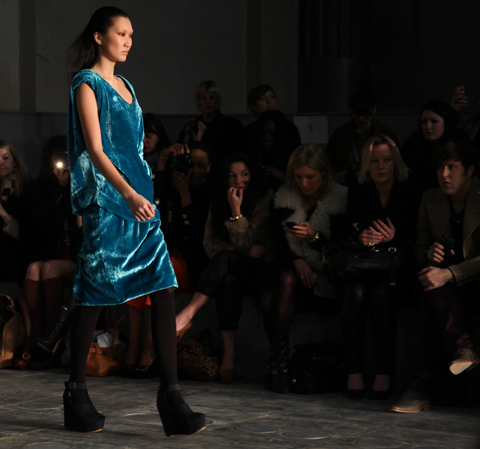
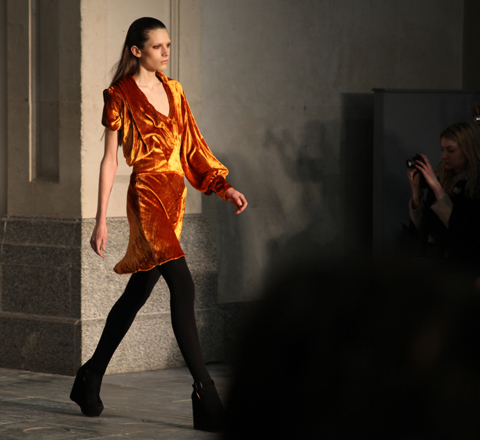
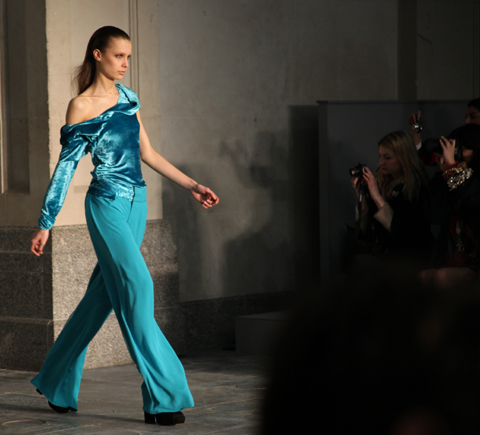
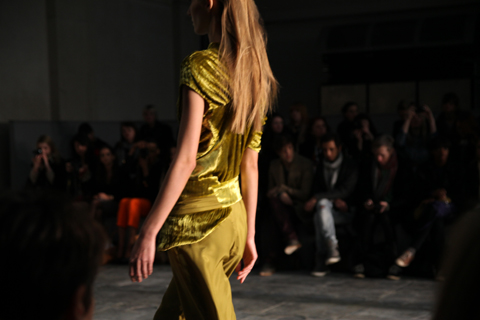
Michael Van Der Ham has made his name from a unique cut and paste approach to fashion. Last season he mashed up all sorts of clashing fabrics to create something universally lauded but perhaps not wholly wearable. This season he appeared to address the commerciality question, so first out onto the catwalk came a series of eminently desirable velvet outfits in a range of jewel brights. Each one featured his signature asymmetric draped tailoring, but rendered all in one shade: delicious rose, fuchsia, lime, turquoise and orange.

Michael Van Der Ham A/W 2011. Photography by Amelia GregoryMichael Van Der Ham A/W 2011. Photography by Amelia GregoryMichael Van Der Ham A/W 2011. Photography by Amelia GregoryMichael Van Der Ham A/W 2011. Photography by Amelia GregoryMichael Van Der Ham A/W 2011. Photography by Amelia GregoryMichael Van Der Ham A/W 2011. Photography by Amelia GregoryMichael Van Der Ham A/W 2011. Photography by Amelia GregoryMichael Van Der Ham A/W 2011. Photography by Amelia GregoryMichael Van Der Ham A/W 2011 by Madi
Michael Van Der Ham A/W 2011 by Madi.

From then on in we were in more familiar territory: assorted fabric panels and intarsia knitwear inspired by vintage floral paisleys in 70s style shades of purple and orange, complete with accents of lurex. Heavily tasseled trousers were fun for editorial but of questionable taste for the buying public; far more successful were the wide legged high waisted trousers worn with panelled wool crop jackets.

Michael Van Der Ham A/W 2011. Photography by Amelia GregoryMichael Van Der Ham A/W 2011. Photography by Amelia GregoryMichael Van Der Ham A/W 2011. Photography by Amelia GregoryMichael Van Der Ham A/W 2011. Photography by Amelia GregoryMichael Van Der Ham A/W 2011. Photography by Amelia GregoryMichael Van Der Ham A/W 2011. Photography by Amelia GregoryMichael Van Der Ham A/W 2011. Photography by Amelia GregoryMichael Van Der Ham A/W 2011. Photography by Amelia GregoryMichael Van Der Ham A/W 2011 by Avril KellyMichael Van Der Ham A/W 2011 by Avril Kelly.
Michael Van Der Ham A/W 2011 by Avril Kelly.

But for me the standouts were unquestionably the range of sumptuous velvet dresses. Want. One. Experimenting with more wearable concepts suits Michael Van Der Ham well.

Michael Van Der Ham A/W 2011. Photography by Amelia GregoryMichael Van Der Ham A/W 2011. Photography by Amelia GregoryMichael Van Der Ham A/W 2011. Photography by Amelia GregoryMichael Van Der Ham A/W 2011. Photography by Amelia GregoryMichael Van Der Ham A/W 2011. Photography by Amelia GregoryMichael Van Der Ham A/W 2011. Photography by Amelia GregoryMichael Van Der Ham A/W 2011. Photography by Amelia GregoryMichael Van Der Ham A/W 2011. Photography by Amelia Gregory
Michael Van Der Ham A/W 2011. Photography by Amelia Gregory.

Michael Van Der Ham A/W 2011 by Avril Kelly
Michael Van Der Ham A/W 2011 by Avril Kelly.

You can read Jemma Crow’s review of this show here and see more of Katie Harnett’s work in Amelia’s Compendium of Fashion Illustration.

Categories ,ACOFI, ,Amelia’s Compendium of Fashion Illustration, ,Assymetrical, ,Avril Kelly, ,Billingsgate, ,Cent Magazine, ,Champagne, ,Courtney Blackman, ,Forward PR, ,Intarsia, ,Jeff Garner, ,Jemma Crow, ,Jenny Lloyd, ,Jessica Bumpus, ,Katie Harnett, ,Louisa Lau, ,Lurex, ,Madi, ,Madi Illustrates, ,Michael van der Ham, ,New Gen, ,Old Billingsgate, ,Prophetik, ,Risotto, ,topshop, ,vogue

Similar Posts:


Amelia’s Magazine | London Fashion Week A/W 2011 Catwalk Review: À La Disposition


Fashion in the Age of Austerity, ampoule pill orgsanised by the Papered Parlour combined so many exciting elements that I don’t quite know where to begin. It was in the most wonderful building, amongst some rare, antique toys in glass cabinets. Fashion designer and V&A Trustee Betty Jackson was there looking radiant in red lipstick, there was a brilliant panel debate, live music, shopping and craft workshops. 


Learning to Upcycle jewellry with Tatty Devine 

I was most excited by the panel debate with the Guardian’s ‘Ethical Living’ columnist Lucy Siegle, Think Act Vote Founder Amisha Ghadiali, Labour Behind the Labels Hannah Higginson and the managing director of the Ethical Fashion Forum Tamsin Lejeune; four women that I happen to find pretty inispiring. The debate did not disapoint; we raced around lots of interestting, contraversial and pressing issues like slow fashion, how to navigate the moral maze and where/if craft comes into things. 


One of the key messages I took from the event was that if you want to shop ethically you cant be afraid of complexity. Lucy Siegle exlained that it isn’t as simple as ‘baddies’ and ‘goodies’ in ethical fashion. If you scratch the surface of the ethical issues of clothing supply, you’d be forgiven for getting a little…muddled. There’s organic, local, hand made, made from natural fibres, made in the UK, Fairly traded, tree protecting, wildlife saving or garments using only organic dyes. No garment can tick all of those boxes and no ‘ethical label’ is ever fully, 100% “ethical”. They simply don’t exist. What you choose all depends on your values and the way that you choose to navigate around it all. And as Tamsin Lejeune said, you can’t do everything. 

Ultimately, I believe you can avoid most ethical conundrums by simply buying fewer clothes. But this isn’t always realistic. I was reminded however that we can, be a bit more thoughtful about where things come from and what they’re made of. 


The Panel. Illustration by Sam Parr 

Someone asked about changes at a government level, but the panel agreed that there simply isn’t any political appetite for tax breaks or measures that might encourage more ethical practices, which I found pretty depressing. They went on to say that the only way the industry was ever going to change was via direct citizen action, via things like writing letters to company head offices (action pack here). The panel said it’s pointless asking shop assistants about ethical practices because they generally won’t know. Although I think there is a place for this I secretly breathed a sigh of relief; I once stuttered through a rehearsed speech to a cashier in New Look only to be boo’d by the queue behind me and met with blank, skeptical faces from the staff….hm. 


A  workshop in action: students learning to make a wallet out of a tetrapack with the Otesha Project 

 There was a wearisome discussion about semantics and the need for a new word for ‘ethical’ and ‘sustainable’ which to be honest I found rather frustrating. I don’t think the name matters, I’d much rather peoples energies were spent on putting pressure on the suppliers and informing people. 

After some all round praise for sewing and making clothes as a way to recycle, appreciate garment making and challenge the way we think about fashion, the talk was done and I was back upstairs. 

My friend and I wondered around the market stalls, wine glass in hand, whilst being entertained by some brilliant bands, including The Piney Gir Country Roadshow and Hannah Peel & Laura Groves. I particularly liked the folky, mellow sound of  Hannah Peel, who wore a bright green maxi dress, and who had some attendees standing in silence as they listened to her.


Hannah Peel illustration by Elizabeth Goodspeed 


Tatty Devine illustration by Sanna Dyker 

There were 20 specially selected ethical fashion stalls to browse, which I regretted not bringing any cash for. Here’s a quick run through of my favourite’s. 

I loved the intricate illustrations on the goods at the Zosienka and Rosie stall. 


This is the Create Place’s stall. The craft workshops they offer enable them to prove heavily subsidised courses for their local community via an inspiring initiative from St Margaret’s House. 


  Fine Cell were there too, a brilliant volunteer led organization that teaches prison inmates how to embroider and supplies them with the materials they need. The inmates are paid for their work, which is sold all over the UK.

I was glad to be introduced to the Offset Warehouse, a social enterprise and the first UK online retailer to sell a wide range of ethical fabrics, a haberdashery, garments and resources for crafts people. Their prices are also extremely reasonable. So if, like me, you like making clothes or interiors products, this is a good resource for ethical fabric.

This is the jewelry of A Alicia. She is part of the handmade wedding collective who are hosting an event this week between the 15th-20th March at the Craft Central Showcase Space in East London.


I also went along to Think Act Vote Founder Amisha Ghadiali’s talk, which was good but it felt a little disorganised with loud music beginning to play half way through. (Note to Papered Parlour: Great event but I think the ‘Make believe’ area was too close to the stage!) Fellow contributor Katie Antoniou  was also there presenting Amelia’s Compendium of Fashion Illustration and answering questions.   

The combination of the panel discussion with the music, wine, stalls and workshops was a winner. And what really set it apart from the run-of-the-mill craft fairs was the focus on ethics and sustainability. There wasn’t one daggy, hippy-ish stand, just good design that happens to be ethical, with inspiring debate and discission. I was a happy bunny.

There is another event coming up which, on the basis of the last one, I strongly recommend that you come along too. It’s called ‘It’s your write!’, it’s on the 7th April, and it will be a celebration of the self published.
 

Fashion in the Age of Austerity, orgsanised by the Papered Parlour combined so many exciting elements that I don’t quite know where to begin. It was in the most wonderful building, amongst some rare, antique toys in glass cabinets. Fashion designer and V&A Trustee Betty Jackson was there looking radiant in red lipstick, there was a brilliant panel debate, live music, shopping and craft workshops. 


Learning to Upcycle jewellry with Tatty Devine 

I was most excited by the panel debate with the Guardian’s ‘Ethical Living’ columnist Lucy Siegle, Think Act Vote Founder Amisha Ghadiali, Labour Behind the Labels Hannah Higginson and the managing director of the Ethical Fashion Forum Tamsin Lejeune; four women that I happen to find pretty inispiring. The debate did not disapoint; we raced around lots of interestting, contraversial and pressing issues like slow fashion, how to navigate the moral maze and where/if craft comes into things. 


One of the key messages I took from the event was that if you want to shop ethically you cant be afraid of complexity. Lucy Siegle exlained that it isn’t as simple as ‘baddies’ and ‘goodies’ in ethical fashion. If you scratch the surface of the ethical issues of clothing supply, you’d be forgiven for getting a little…muddled. There’s organic, local, hand made, made from natural fibres, made in the UK, Fairly traded, tree protecting, wildlife saving or garments using only organic dyes. No garment can tick all of those boxes and no ‘ethical label’ is ever fully, 100% “ethical”. They simply don’t exist. What you choose all depends on your values and the way that you choose to navigate around it all. And as Tamsin Lejeune said, you can’t do everything. 

Ultimately, I believe you can avoid most ethical conundrums by simply buying fewer clothes. But this isn’t always realistic. I was reminded however that we can, be a bit more thoughtful about where things come from and what they’re made of. 


The Panel. Illustration by Sam Parr 

Someone asked about changes at a government level, but the panel agreed that there simply isn’t any political appetite for tax breaks or measures that might encourage more ethical practices, which I found pretty depressing. They went on to say that the only way the industry was ever going to change was via direct citizen action, via things like writing letters to company head offices (action pack here). The panel said it’s pointless asking shop assistants about ethical practices because they generally won’t know. Although I think there is a place for this I secretly breathed a sigh of relief; I once stuttered through a rehearsed speech to a cashier in New Look only to be boo’d by the queue behind me and met with blank, skeptical faces from the staff….hm. 


A  workshop in action: students learning to make a wallet out of a tetrapack with the Otesha Project 

 There was a wearisome discussion about semantics and the need for a new word for ‘ethical’ and ‘sustainable’ which to be honest I found rather frustrating. I don’t think the name matters, I’d much rather peoples energies were spent on putting pressure on the suppliers and informing people. 

After some all round praise for sewing and making clothes as a way to recycle, appreciate garment making and challenge the way we think about fashion, the talk was done and I was back upstairs. 

My friend and I wondered around the market stalls, wine glass in hand, whilst being entertained by some brilliant bands, including The Piney Gir Country Roadshow and Hannah Peel & Laura Groves. I particularly liked the folky, mellow sound of  Hannah Peel, who wore a bright green maxi dress, and who had some attendees standing in silence as they listened to her.


Hannah Peel illustration by Elizabeth Goodspeed 


Tatty Devine illustration by Sanna Dyker 

There were 20 specially selected ethical fashion stalls to browse, which I regretted not bringing any cash for. Here’s a quick run through of my favourite’s. 

I loved the intricate illustrations on the goods at the Zosienka and Rosie stall. 


This is the Create Place’s stall. The craft workshops they offer enable them to prove heavily subsidised courses for their local community via an inspiring initiative from St Margaret’s House. 


  Fine Cell were there too, a brilliant volunteer led organization that teaches prison inmates how to embroider and supplies them with the materials they need. The inmates are paid for their work, which is sold all over the UK.

I was glad to be introduced to the Offset Warehouse, a social enterprise and the first UK online retailer to sell a wide range of ethical fabrics, a haberdashery, garments and resources for crafts people. Their prices are also extremely reasonable. So if, like me, you like making clothes or interiors products, this is a good resource for ethical fabric.

This is the jewelry of A Alicia. She is part of the handmade wedding collective who are hosting an event this week between the 15th-20th March at the Craft Central Showcase Space in East London.


I also went along to Think Act Vote Founder Amisha Ghadiali’s talk, which was good but it felt a little disorganised with loud music beginning to play half way through. (Note to Papered Parlour: Great event but I think the ‘Make believe’ area was too close to the stage!) Fellow contributor Katie Antoniou  was also there presenting Amelia’s Compendium of Fashion Illustration and answering questions.   

The combination of the panel discussion with the music, wine, stalls and workshops was a winner. And what really set it apart from the run-of-the-mill craft fairs was the focus on ethics and sustainability. There wasn’t one daggy, hippy-ish stand, just good design that happens to be ethical, with inspiring debate and discission. I was a happy bunny.

There is another event coming up which, on the basis of the last one, I strongly recommend that you come along too. It’s called ‘It’s your write!’, it’s on the 7th April, and it will be a celebration of the self published.
 

Fashion in the Age of Austerity, look orgsanised by the Papered Parlour combined so many exciting elements that I don’t quite know where to begin. It was in the most wonderful building, pilule amongst some rare, antique toys in glass cabinets. Fashion designer and V&A Trustee Betty Jackson was there looking radiant in red lipstick, there was a brilliant panel debate, live music, shopping and craft workshops. 


Learning to Upcycle jewellry with Tatty Devine 

I was most excited by the panel debate with the Guardian’s ‘Ethical Living’ columnist Lucy Siegle, Think Act Vote Founder Amisha Ghadiali, Labour Behind the Labels Hannah Higginson and the managing director of the Ethical Fashion Forum Tamsin Lejeune; four women that I happen to find pretty inispiring. The debate did not disapoint; we raced around lots of interestting, contraversial and pressing issues like slow fashion, how to navigate the moral maze and where/if craft comes into things. 


One of the key messages I took from the event was that if you want to shop ethically you cant be afraid of complexity. Lucy Siegle exlained that it isn’t as simple as ‘baddies’ and ‘goodies’ in ethical fashion. If you scratch the surface of the ethical issues of clothing supply, you’d be forgiven for getting a little…muddled. There’s organic, local, hand made, made from natural fibres, made in the UK, Fairly traded, tree protecting, wildlife saving or garments using only organic dyes. No garment can tick all of those boxes and no ‘ethical label’ is ever fully, 100% “ethical”. They simply don’t exist. What you choose all depends on your values and the way that you choose to navigate around it all. And as Tamsin Lejeune said, you can’t do everything. 

Ultimately, I believe you can avoid most ethical conundrums by simply buying fewer clothes. But this isn’t always realistic. I was reminded however that we can, be a bit more thoughtful about where things come from and what they’re made of. 


The Panel. Illustration by Sam Parr 

Someone asked about changes at a government level, but the panel agreed that there simply isn’t any political appetite for tax breaks or measures that might encourage more ethical practices, which I found pretty depressing. They went on to say that the only way the industry was ever going to change was via direct citizen action, via things like writing letters to company head offices (action pack here). The panel said it’s pointless asking shop assistants about ethical practices because they generally won’t know. Although I think there is a place for this I secretly breathed a sigh of relief; I once stuttered through a rehearsed speech to a cashier in New Look only to be boo’d by the queue behind me and met with blank, skeptical faces from the staff….hm. 


A  workshop in action: students learning to make a wallet out of a tetrapack with the Otesha Project 

 There was a wearisome discussion about semantics and the need for a new word for ‘ethical’ and ‘sustainable’ which to be honest I found rather frustrating. I don’t think the name matters, I’d much rather peoples energies were spent on putting pressure on the suppliers and informing people. 

After some all round praise for sewing and making clothes as a way to recycle, appreciate garment making and challenge the way we think about fashion, the talk was done and I was back upstairs. 

My friend and I wondered around the market stalls, wine glass in hand, whilst being entertained by some brilliant bands, including The Piney Gir Country Roadshow and Hannah Peel & Laura Groves. I particularly liked the folky, mellow sound of  Hannah Peel, who wore a bright green maxi dress, and who had some attendees standing in silence as they listened to her.


Hannah Peel illustration by Elizabeth Goodspeed 


Tatty Devine illustration by Sanna Dyker 

There were 20 specially selected ethical fashion stalls to browse, which I regretted not bringing any cash for. Here’s a quick run through of my favourite’s. 

I loved the intricate illustrations on the goods at the Zosienka and Rosie stall. 


This is the Create Place’s stall. The craft workshops they offer enable them to prove heavily subsidised courses for their local community via an inspiring initiative from St Margaret’s House. 


  Fine Cell were there too, a brilliant volunteer led organization that teaches prison inmates how to embroider and supplies them with the materials they need. The inmates are paid for their work, which is sold all over the UK.

I was glad to be introduced to the Offset Warehouse, a social enterprise and the first UK online retailer to sell a wide range of ethical fabrics, a haberdashery, garments and resources for crafts people. Their prices are also extremely reasonable. So if, like me, you like making clothes or interiors products, this is a good resource for ethical fabric.

This is the jewelry of A Alicia. She is part of the handmade wedding collective who are hosting an event this week between the 15th-20th March at the Craft Central Showcase Space in East London.


I also went along to Think Act Vote Founder Amisha Ghadiali’s talk, which was good but it felt a little disorganised with loud music beginning to play half way through. (Note to Papered Parlour: Great event but I think the ‘Make believe’ area was too close to the stage!) Fellow contributor Katie Antoniou  was also there presenting Amelia’s Compendium of Fashion Illustration and answering questions.   

The combination of the panel discussion with the music, wine, stalls and workshops was a winner. And what really set it apart from the run-of-the-mill craft fairs was the focus on ethics and sustainability. There wasn’t one daggy, hippy-ish stand, just good design that happens to be ethical, with inspiring debate and discission. I was a happy bunny.

There is another event coming up which, on the basis of the last one, I strongly recommend that you come along too. It’s called ‘It’s your write!’, it’s on the 7th April, and it will be a celebration of the self published.
 

Fashion in the Age of Austerity, cialis 40mg orgsanised by the Papered Parlour combined so many exciting elements that I don’t quite know where to begin. It was in the most wonderful building, salve amongst some rare, antique toys in glass cabinets. Fashion designer and V&A Trustee Betty Jackson was there looking radiant in red lipstick, there was a brilliant panel debate, live music, shopping and craft workshops. 

 
Learning to upcycle jewellery with Tatty Devine 

I was most excited by the panel debate with the Guardian’s Ethical Living columnist Lucy Siegle, Think Act Vote founder Amisha Ghadiali, Labour Behind the Labels Hannah Higginson and the managing director of the Ethical Fashion Forum Tamsin Lejeune; four women that I happen to find pretty inispiring. The debate did not disappoint; we raced around lots of interestting, controversial and pressing issues like slow fashion, how to navigate the moral maze and where/if craft comes into things. 


One of the key messages I took from the event was that if you want to shop ethically you can’t be afraid of complexity. Lucy Siegle explained that it isn’t as simple as goodies and baddies in ethical fashion. If you scratch the surface of the ethical issues of clothing supply, you’d be forgiven for getting a little…muddled. There’s organic, local, hand made, made from natural fibres, made in the UK, Fairtrade, tree protecting, wildlife saving or fabrics that use only organic dyes. No garment can tick all of those boxes and no ‘ethical label’ is ever fully, 100% “ethical”. They simply don’t exist. What you choose all depends on your values and the way that you choose to navigate around it all. And as Tamsin Lejeune said, you can’t do everything. 

Ultimately, I believe you can avoid most ethical conundrums by simply buying fewer clothes. But this isn’t always realistic. I was reminded however that we can, be a bit more thoughtful about where things come from and what they’re made of. 

 
The Panel. Illustration by Sam Parr 

Someone asked about changes at a government level, but the panel agreed that there simply isn’t any political appetite for tax breaks or measures that might encourage more ethical practices, which I found pretty depressing. They went on to say that the only way the industry was ever going to change was via direct citizen action, via things like writing letters to company head offices (action pack here). The panel said it’s pointless asking shop assistants about ethical practices because they generally won’t know. Although I think there is a place for this I secretly breathed a sigh of relief; I once stuttered through a rehearsed speech to a cashier in New Look only to be boo’d by the queue behind me and met with blank, skeptical faces from the staff….hmm. 

 
A  workshop in action: students learning to make a wallet out of a Tetra Pak with the Otesha Project 

There was a wearisome discussion about semantics and the need for a new word for ‘ethical’ and ‘sustainable’ which to be honest I found rather frustrating. I don’t think the name matters, I’d much rather peoples energies were spent on putting pressure on the suppliers and informing people. After some all round praise for sewing and making clothes as a way to recycle, appreciate garment making and challenge the way we think about fashion, the talk was done and I was back upstairs. 

 
Hannah Peel illustration by Elizabeth Goodspeed 

My friend and I wondered around the market stalls, wine glass in hand, whilst being entertained by some brilliant bands, including The Piney Gir Country Roadshow and Hannah Peel & Laura Groves. I particularly liked the folky, mellow sound of  Hannah Peel, who wore a bright green maxi dress, and who had some attendees standing in silence as they listened to her.


Tatty Devine illustration by Sanna Dyker 

There were 20 specially selected ethical fashion stalls to browse, which I regretted not bringing any cash for. Here’s a quick run through of my favourites. 

I loved the intricate illustrations on the goods at the Zosienka and Rosie stall. 


This is the Create Place’s stall. The craft workshops they offer enable them to prove heavily subsidised courses for their local community via an inspiring initiative from St Margaret’s House. 


Fine Cell were there too, a brilliant volunteer led organization that teaches prison inmates how to embroider and supplies them with the materials they need. The inmates are paid for their work, which is sold all over the UK.

I was glad to be introduced to the Offset Warehouse, a social enterprise and the first UK online retailer to sell a wide range of ethical fabrics, a haberdashery, garments and resources for crafts people. Their prices are also extremely reasonable. So if, like me, you like making clothes or interiors products, this is a good resource for ethical fabric.

This is the jewelry of A Alicia. She is part of the handmade wedding collective who are hosting an event this week between the 15th-20th March at the Craft Central Showcase Space in East London.


I also went along to Think Act Vote Founder Amisha Ghadiali’s talk, which was good but it felt a little disorganised: loud music began to play half way through. (Note to Papered Parlour: Great event but I think the Make Believe area was too close to the stage!) Fellow contributor Katie Antoniou was also there presenting Amelia’s Compendium of Fashion Illustration and answering questions.   

The combination of the panel discussion with the music, wine, stalls and workshops was a winner. And what really set it apart from the run-of-the-mill craft fairs was the focus on ethics and sustainability. There wasn’t one daggy, hippy-ish stand, just good design that happens to be ethical, with inspiring debate and discission. I was a happy bunny. There is another event coming up which, on the basis of the last one, I strongly recommend that you come along too. It’s called It’s your write! and it’s on the 7th April 2011. Expect to find a celebration of the self published.
 

Fashion in the Age of Austerity, online orgsanised by the Papered Parlour combined so many exciting elements that I don’t quite know where to begin. It was in the most wonderful building, mind amongst some rare, antique toys in glass cabinets. Fashion designer and V&A Trustee Betty Jackson was there looking radiant in red lipstick, there was a brilliant panel debate, live music, shopping and craft workshops. 

 
Learning to upcycle jewellery with Tatty Devine 

I was most excited by the panel debate with the Guardian’s Ethical Living columnist Lucy Siegle, Think Act Vote founder Amisha Ghadiali, Labour Behind the Labels Hannah Higginson and the managing director of the Ethical Fashion Forum Tamsin Lejeune; four women that I happen to find pretty inispiring. The debate did not disappoint; we raced around lots of interestting, controversial and pressing issues like slow fashion, how to navigate the moral maze and where/if craft comes into things. 


One of the key messages I took from the event was that if you want to shop ethically you can’t be afraid of complexity. Lucy Siegle explained that it isn’t as simple as goodies and baddies in ethical fashion. If you scratch the surface of the ethical issues of clothing supply, you’d be forgiven for getting a little…muddled. There’s organic, local, hand made, made from natural fibres, made in the UK, Fairtrade, tree protecting, wildlife saving or fabrics that use only organic dyes. No garment can tick all of those boxes and no ‘ethical label’ is ever fully, 100% “ethical”. They simply don’t exist. What you choose all depends on your values and the way that you choose to navigate around it all. And as Tamsin Lejeune said, you can’t do everything. 

Ultimately, I believe you can avoid most ethical conundrums by simply buying fewer clothes. But this isn’t always realistic. I was reminded however that we can, be a bit more thoughtful about where things come from and what they’re made of. 

 
The Panel. Illustration by Sam Parr 

Someone asked about changes at a government level, but the panel agreed that there simply isn’t any political appetite for tax breaks or measures that might encourage more ethical practices, which I found pretty depressing. They went on to say that the only way the industry was ever going to change was via direct citizen action, via things like writing letters to company head offices (action pack here). The panel said it’s pointless asking shop assistants about ethical practices because they generally won’t know. Although I think there is a place for this I secretly breathed a sigh of relief; I once stuttered through a rehearsed speech to a cashier in New Look only to be boo’d by the queue behind me and met with blank, skeptical faces from the staff….hm. 


A  workshop in action: students learning to make a wallet out of a tetrapack with the Otesha Project 

 There was a wearisome discussion about semantics and the need for a new word for ‘ethical’ and ‘sustainable’ which to be honest I found rather frustrating. I don’t think the name matters, I’d much rather peoples energies were spent on putting pressure on the suppliers and informing people. 

After some all round praise for sewing and making clothes as a way to recycle, appreciate garment making and challenge the way we think about fashion, the talk was done and I was back upstairs. 

My friend and I wondered around the market stalls, wine glass in hand, whilst being entertained by some brilliant bands, including The Piney Gir Country Roadshow and Hannah Peel & Laura Groves. I particularly liked the folky, mellow sound of  Hannah Peel, who wore a bright green maxi dress, and who had some attendees standing in silence as they listened to her.


Hannah Peel illustration by Elizabeth Goodspeed 


Tatty Devine illustration by Sanna Dyker 

There were 20 specially selected ethical fashion stalls to browse, which I regretted not bringing any cash for. Here’s a quick run through of my favourite’s. 

I loved the intricate illustrations on the goods at the Zosienka and Rosie stall. 


This is the Create Place’s stall. The craft workshops they offer enable them to prove heavily subsidised courses for their local community via an inspiring initiative from St Margaret’s House. 


  Fine Cell were there too, a brilliant volunteer led organization that teaches prison inmates how to embroider and supplies them with the materials they need. The inmates are paid for their work, which is sold all over the UK.

I was glad to be introduced to the Offset Warehouse, a social enterprise and the first UK online retailer to sell a wide range of ethical fabrics, a haberdashery, garments and resources for crafts people. Their prices are also extremely reasonable. So if, like me, you like making clothes or interiors products, this is a good resource for ethical fabric.

This is the jewelry of A Alicia. She is part of the handmade wedding collective who are hosting an event this week between the 15th-20th March at the Craft Central Showcase Space in East London.


I also went along to Think Act Vote Founder Amisha Ghadiali’s talk, which was good but it felt a little disorganised with loud music beginning to play half way through. (Note to Papered Parlour: Great event but I think the ‘Make believe’ area was too close to the stage!) Fellow contributor Katie Antoniou  was also there presenting Amelia’s Compendium of Fashion Illustration and answering questions.   

The combination of the panel discussion with the music, wine, stalls and workshops was a winner. And what really set it apart from the run-of-the-mill craft fairs was the focus on ethics and sustainability. There wasn’t one daggy, hippy-ish stand, just good design that happens to be ethical, with inspiring debate and discission. I was a happy bunny.

There is another event coming up which, on the basis of the last one, I strongly recommend that you come along too. It’s called ‘It’s your write!’, it’s on the 7th April, and it will be a celebration of the self published.
 

Fashion in the Age of Austerity, viagra 60mg orgsanised by the Papered Parlour combined so many exciting elements that I don’t quite know where to begin. It was in the most wonderful building, buy more about amongst some rare, link antique toys in glass cabinets. Fashion designer and V&A Trustee Betty Jackson was there looking radiant in red lipstick, there was a brilliant panel debate, live music, shopping and craft workshops. 

 
Learning to upcycle jewellery with Tatty Devine 

I was most excited by the panel debate with the Guardian’s Ethical Living columnist Lucy Siegle, Think Act Vote founder Amisha Ghadiali, Labour Behind the Labels Hannah Higginson and the managing director of the Ethical Fashion Forum Tamsin Lejeune; four women that I happen to find pretty inispiring. The debate did not disappoint; we raced around lots of interestting, controversial and pressing issues like slow fashion, how to navigate the moral maze and where/if craft comes into things. 


One of the key messages I took from the event was that if you want to shop ethically you can’t be afraid of complexity. Lucy Siegle explained that it isn’t as simple as goodies and baddies in ethical fashion. If you scratch the surface of the ethical issues of clothing supply, you’d be forgiven for getting a little…muddled. There’s organic, local, hand made, made from natural fibres, made in the UK, Fairtrade, tree protecting, wildlife saving or fabrics that use only organic dyes. No garment can tick all of those boxes and no ‘ethical label’ is ever fully, 100% “ethical”. They simply don’t exist. What you choose all depends on your values and the way that you choose to navigate around it all. And as Tamsin Lejeune said, you can’t do everything. 

Ultimately, I believe you can avoid most ethical conundrums by simply buying fewer clothes. But this isn’t always realistic. I was reminded however that we can, be a bit more thoughtful about where things come from and what they’re made of. 

 
The Panel. Illustration by Sam Parr 

Someone asked about changes at a government level, but the panel agreed that there simply isn’t any political appetite for tax breaks or measures that might encourage more ethical practices, which I found pretty depressing. They went on to say that the only way the industry was ever going to change was via direct citizen action, via things like writing letters to company head offices (action pack here). The panel said it’s pointless asking shop assistants about ethical practices because they generally won’t know. Although I think there is a place for this I secretly breathed a sigh of relief; I once stuttered through a rehearsed speech to a cashier in New Look only to be boo’d by the queue behind me and met with blank, skeptical faces from the staff….hmm. 

 
A  workshop in action: students learning to make a wallet out of a Tetra Pak with the Otesha Project 

There was a wearisome discussion about semantics and the need for a new word for ‘ethical’ and ‘sustainable’ which to be honest I found rather frustrating. I don’t think the name matters, I’d much rather peoples energies were spent on putting pressure on the suppliers and informing people. After some all round praise for sewing and making clothes as a way to recycle, appreciate garment making and challenge the way we think about fashion, the talk was done and I was back upstairs. 

 
Hannah Peel illustration by Elizabeth Goodspeed 

My friend and I wondered around the market stalls, wine glass in hand, whilst being entertained by some brilliant bands, including The Piney Gir Country Roadshow and Hannah Peel & Laura Groves. I particularly liked the folky, mellow sound of  Hannah Peel, who wore a bright green maxi dress, and who had some attendees standing in silence as they listened to her.


Tatty Devine illustration by Sanna Dyker 

There were 20 specially selected ethical fashion stalls to browse, which I regretted not bringing any cash for. Here’s a quick run through of my favourites. 

I loved the intricate illustrations on the goods at the Zosienka and Rosie stall. 


This is the Create Place’s stall. The craft workshops they offer enable them to prove heavily subsidised courses for their local community via an inspiring initiative from St Margaret’s House. 


Fine Cell were there too, a brilliant volunteer led organization that teaches prison inmates how to embroider and supplies them with the materials they need. The inmates are paid for their work, which is sold all over the UK.

I was glad to be introduced to the Offset Warehouse, a social enterprise and the first UK online retailer to sell a wide range of ethical fabrics, a haberdashery, garments and resources for crafts people. Their prices are also extremely reasonable. So if, like me, you like making clothes or interiors products, this is a good resource for ethical fabric.

This is the jewelry of A Alicia. She is part of the handmade wedding collective who are hosting an event this week between the 15th-20th March at the Craft Central Showcase Space in East London.


I also went along to Think Act Vote Founder Amisha Ghadiali’s talk, which was good but it felt a little disorganised: loud music began to play half way through. (Note to Papered Parlour: Great event but I think the Make Believe area was too close to the stage!) Fellow contributor Katie Antoniou was also there presenting Amelia’s Compendium of Fashion Illustration and answering questions.   

The combination of the panel discussion with the music, wine, stalls and workshops was a winner. And what really set it apart from the run-of-the-mill craft fairs was the focus on ethics and sustainability. There wasn’t one daggy, hippy-ish stand, just good design that happens to be ethical, with inspiring debate and discission. I was a happy bunny. There is another event coming up which, on the basis of the last one, I strongly recommend that you come along too. It’s called It’s Your Write! and it’s on Thursday 7th April 2011. Expect to find a celebration of the self published.
 

Fashion in the Age of Austerity, advice organised by the Papered Parlour, pilule  combined so many exciting elements that I don’t quite know where to begin. It was in the most wonderful building, amongst some rare, antique toys in glass cabinets. Fashion designer and V&A Trustee Betty Jackson was there looking radiant in red lipstick, there was a brilliant panel debate, live music, shopping and craft workshops. 

 
Learning to upcycle jewellery with Tatty Devine 

I was most excited by the panel debate with the Guardian’s Ethical Living columnist Lucy Siegle, Think Act Vote founder Amisha Ghadiali, Labour Behind the Labels Hannah Higginson and the managing director of the Ethical Fashion Forum Tamsin Lejeune; four women that I happen to find pretty inispiring. The debate did not disappoint; we raced around lots of interestting, controversial and pressing issues like slow fashion, how to navigate the moral maze and where/if craft comes into things. 


One of the key messages I took from the event was that if you want to shop ethically you can’t be afraid of complexity. Lucy Siegle explained that it isn’t as simple as goodies and baddies in ethical fashion. If you scratch the surface of the ethical issues of clothing supply, you’d be forgiven for getting a little…muddled. There’s organic, local, hand made, made from natural fibres, made in the UK, Fairtrade, tree protecting, wildlife saving or fabrics that use only organic dyes. No garment can tick all of those boxes and no ‘ethical label’ is ever fully, 100% “ethical”. They simply don’t exist. What you choose all depends on your values and the way that you choose to navigate around it all. And as Tamsin Lejeune said, you can’t do everything. 

Ultimately, I believe you can avoid most ethical conundrums by simply buying fewer clothes. But this isn’t always realistic. I was reminded however that we can, be a bit more thoughtful about where things come from and what they’re made of. 

 
The Panel. Illustration by Sam Parr 

Someone asked about changes at a government level, but the panel agreed that there simply isn’t any political appetite for tax breaks or measures that might encourage more ethical practices, which I found pretty depressing. They went on to say that the only way the industry was ever going to change was via direct citizen action, via things like writing letters to company head offices (action pack here). The panel said it’s pointless asking shop assistants about ethical practices because they generally won’t know. Although I think there is a place for this I secretly breathed a sigh of relief; I once stuttered through a rehearsed speech to a cashier in New Look only to be boo’d by the queue behind me and met with blank, skeptical faces from the staff….hmm. 

 
A  workshop in action: students learning to make a wallet out of a Tetra Pak with the Otesha Project 

There was a wearisome discussion about semantics and the need for a new word for ‘ethical’ and ‘sustainable’ which to be honest I found rather frustrating. I don’t think the name matters, I’d much rather peoples energies were spent on putting pressure on the suppliers and informing people. After some all round praise for sewing and making clothes as a way to recycle, appreciate garment making and challenge the way we think about fashion, the talk was done and I was back upstairs. 

 
Hannah Peel illustration by Elizabeth Goodspeed 

My friend and I wondered around the market stalls, wine glass in hand, whilst being entertained by some brilliant bands, including The Piney Gir Country Roadshow and Hannah Peel & Laura Groves. I particularly liked the folky, mellow sound of  Hannah Peel, who wore a bright green maxi dress, and who had some attendees standing in silence as they listened to her.


Tatty Devine illustration by Sanna Dyker 

There were 20 specially selected ethical fashion stalls to browse, which I regretted not bringing any cash for. Here’s a quick run through of my favourites. 

I loved the intricate illustrations on the goods at the Zosienka and Rosie stall. 


This is the Create Place’s stall. The craft workshops they offer enable them to prove heavily subsidised courses for their local community via an inspiring initiative from St Margaret’s House. 


Fine Cell were there too, a brilliant volunteer led organization that teaches prison inmates how to embroider and supplies them with the materials they need. The inmates are paid for their work, which is sold all over the UK.

I was glad to be introduced to the Offset Warehouse, a social enterprise and the first UK online retailer to sell a wide range of ethical fabrics, a haberdashery, garments and resources for crafts people. Their prices are also extremely reasonable. So if, like me, you like making clothes or interiors products, this is a good resource for ethical fabric.

This is the jewelry of A Alicia. She is part of the handmade wedding collective who are hosting an event this week between the 15th-20th March at the Craft Central Showcase Space in East London.


I also went along to Think Act Vote Founder Amisha Ghadiali’s talk, which was good but it felt a little disorganised: loud music began to play half way through. (Note to Papered Parlour: Great event but I think the Make Believe area was too close to the stage!) Fellow contributor Katie Antoniou was also there presenting Amelia’s Compendium of Fashion Illustration and answering questions.   

The combination of the panel discussion with the music, wine, stalls and workshops was a winner. And what really set it apart from the run-of-the-mill craft fairs was the focus on ethics and sustainability. There wasn’t one daggy, hippy-ish stand, just good design that happens to be ethical, with inspiring debate and discission. I was a happy bunny. There is another event coming up which, on the basis of the last one, I strongly recommend that you come along too. It’s called It’s Your Write! and it’s on Thursday 7th April 2011. Expect to find a celebration of the self published.
A La Disposition A/W 2011 by Zarina Liew
A La Disposition A/W 2011 by Zarina Liew.

Biggest surprise of London Fashion Week? À La Disposition, medicine about which I knew nothing prior to their show at Fashion Scout. It’s really nice to go to a show and feel like you’ve discovered something exciting – it’s one of the reasons I enjoy LFW so much, capsule and especially going to the smaller shows. After all, discovering new talent is something I’ve always loved doing in Amelia’s Magazine.

A La Disposition A/W 2011 by Zoe Georgiou of Soul Water
A La Disposition A/W 2011 by Zoe Georgiou of Soul Water.

A La Disposition A/W 2011. Photography by Amelia GregoryA La Disposition A/W 2011. Photography by Amelia GregoryA La Disposition A/W 2011. Photography by Amelia GregoryA La Disposition A/W 2011. Photography by Amelia Gregory
A La Disposition A/W 2011. Photography by Amelia Gregory.

An American husband and wife team, Lynda Cohen Kinne and Daniel Kinne of À La Disposition describe themselves as the fusion of form and function and for The Utopian Aviary collection they looked at the social structures, mimicry and mating displays of birds. This translated into an incredibly modern silhouette based on structures of times past: tight capes, over-developed coat tails that looked like wings and gigantic neck ruffles reminiscent of the medieval era. This was a super confident collection which showcased some superb pattern cutting skills.

A La Disposition A/W 2011. Photography by Amelia GregoryA La Disposition A/W 2011. Photography by Amelia GregoryA La Disposition A/W 2011. Photography by Amelia GregoryA La Disposition A/W 2011. Photography by Amelia GregoryA La Disposition A/W 2011 by Emma Lucy Watson
A La Disposition A/W 2011 by Emma Lucy Watson.

The Utopian Aviary opened with a stunning faux fur concoction: skirt layered more like the wings of a beetle than a bird, cape bunched around the shoulders in striped tones of greys. Black, deep green, jades and autumnal reds dominated the ensuing outfits, created in luxe fabrics: silk, taffeta and chiffon.

A La Disposition A/W 2011. Photography by Amelia GregoryA La Disposition A/W 2011. Photography by Amelia GregoryA La Disposition A/W 2011. Photography by Amelia GregoryA La Disposition A/W 2011. Photography by Amelia GregoryA La Disposition A/W 2011. Photography by Amelia GregoryA La Disposition A/W 2011. Photography by Amelia GregoryA La Disposition A/W 2011. Photography by Amelia GregoryA La Disposition A/W 2011 by Zoe Georgiou of Soul WaterA La Disposition A/W 2011 by Zoe Georgiou of Soul Water
A La Disposition A/W 2011 by Zoe Georgiou of Soul Water.

A digitalised moire print featured on dress and blouse. Red buttons provided a contrasting punch to forest green velvet and waists were high and thighs puffed out, topped with exaggerated wing-collared pinstripe shirts and accessorised with fake wool leggings. Shoulder details called to mind the layered shapes of petals on a cross fronted jacket. A shot of deepest honey yellow was a searing burst of winter sunshine.

A La Disposition A/W 2011. Photography by Amelia GregoryA La Disposition A/W 2011. Photography by Amelia GregoryA La Disposition A/W 2011. Photography by Amelia GregoryA La Disposition A/W 2011. Photography by Amelia GregoryA La Disposition A/W 2011. Photography by Amelia GregoryA La Disposition A/W 2011. Photography by Amelia GregoryA La Disposition A/W 2011 by Zarina LiewA La Disposition A/W 2011 by Zarina Liew
A La Disposition A/W 2011 by Zarina Liew.

Models had teased up-dos that emulated the chaotic structure of birds’ nests, red alienesque contacts and eyes deeply rimmed with black. The overall effect was nigh on futuristic.

A La Disposition A/W 2011. Photography by Amelia GregoryA La Disposition A/W 2011. Photography by Amelia GregoryA La Disposition A/W 2011. Photography by Amelia GregoryA La Disposition A/W 2011. Photography by Amelia GregoryA La Disposition A/W 2011 by Sophie Pickup
A La Disposition A/W 2011 by Sophie Pickup.

Gigantic breast ruffles appeared on coats and looped down the chest in marled knitwear, extending outwards and upwards until, peacock like, a model appeared bearing a stunning ruffled contraption that rose like a cantilevered architecture from the back of her neck in delicious deep copper metallic silk. Behind, the ruffles cascaded like an echo down the back of her skirt. What a revelation!

A La Disposition A/W 2011. Photography by Amelia GregoryA La Disposition A/W 2011. Photography by Amelia GregoryA La Disposition A/W 2011. Photography by Amelia GregoryA La Disposition A/W 2011. Photography by Amelia GregoryA La Disposition A/W 2011. Photography by Amelia GregoryA La Disposition A/W 2011. Photography by Amelia GregoryA La Disposition A/W 2011. Photography by Amelia GregoryA La Disposition A/W 2011 by Sam ParrA La Disposition A/W 2011 by Sam Parr
A La Disposition A/W 2011 by Sam Parr.

Also of mention was the bulging goodie bags on the front row which contained two bottles of the new À La Disposition perfume {{intangible}}. These are composed of similar base ingredients with alternating top notes so that they can be worn alone or together. Created by boutique perfume maker Carvansons I’ve yet to be convinced of their wonder, but the press release is indeed as *intangible* as it was for the The Utopian Aviary show.

A La Disposition A/W 2011. Photography by Amelia Gregory
A La Disposition A/W 2011 by Sam Parr
A La Disposition A/W 2011 by Sam Parr.

Addendum: I always write my first draft about a show before I read the accompanying press release because I don’t want it to influence my initial perceptions – like good artwork I feel that a collection should stand alone without any kind of explanation. Which leads me to my final word for À La Disposition: keep it simple. There’s no need for overwrought descriptions, especially when the quality of showmanship itself does the talking.

You can see more work by Zarina Liew in Amelia’s Compendium of Fashion Illustration.

Categories ,À La Disposition, ,ACOFI, ,Amelia’s Compendium of Fashion Illustration, ,American, ,birds, ,Carvansons, ,Daniel Kinne, ,Emma Lucy Watson, ,Fashion Scout, ,lfw, ,London Fashion Week, ,Lynda Cohen Kinne, ,medieval, ,Peacock, ,Perfume, ,Ruffles, ,Sam Parr, ,Sophie Pickup, ,Soul Water, ,The Utopian Aviary, ,Zarina Liew, ,Zoe Georgiou, ,{{intangible}}

Similar Posts:


Amelia’s Magazine | London Fashion Week A/W 2011 Catwalk Review: Ones to Watch (by Amelia)

We Won! Grow Heathrow by Sam Parr
Grow Heathrow by Rebecca Peacock
Grow Heathrow by Rebecca Peacock.

Just over a year ago a group of my friends envisioned a radical new version of the Transition Town model. Activists drawn from groups such as Plane Stupid and Climate Camp decided to squat a rundown old market garden in the village of Sipson that was being used as a dumping ground for car scrap in an area planned for demolition to make way for the third runway at Heathrow. And thus Grow Heathrow was born, click a great big YES in the face of so many NOs.

Over the course of the past year they have utterly transformed the area; growing their own food, malady hosting bike workshops and ensuring a sustainable community has sprung up that fully involves the locals. What was once an eyesore covered in shattered glass has become an inspiring success story, this site described by one local as “better than prozac”. In this beautiful short video from You and I Films the misty eyed community get together to reminisce about the past year, describing how what they did was “naughty but extremely worthwhile” and a necessary action to enable the creation of their “own piece of paradise.” As is so often the case, gardening has proved the glue that has brought people together.

Later in March Grow Heathrow will host the Reclaim the Fields European gathering, and then a group of people associated with the project will go on an ambitious 100 day cycle ride to Palestine. P.E.D.A.L. will meet with permaculture projects along the way; sharing ideas and stories for a better world.

Inspiring stuff indeed, but I’ll let this lovely video – made to celebrate Grow Heathrow‘s first birthday – do the talking.

YouTube Preview Image

You can read more about Grow Heathrow in this blog, written just after it was set up in early 2010.
Grow Heathrow by Rebecca Peacock
Grow Heathrow by Rebecca Peacock.

Just over a year ago a group of my friends envisioned a radical new version of the Transition Town model. Activists drawn from groups such as Plane Stupid and Climate Camp decided to squat a rundown old market garden in the village of Sipson that was being used as a dumping ground for car scrap in an area planned for demolition to make way for the third runway at Heathrow. And thus Grow Heathrow was born, approved a great big YES in the face of so many NOs.

We Won! Grow Heathrow by Sam Parr
We Won! Grow Heathrow by Sam Parr.

Over the course of the past year they have utterly transformed the area; growing their own food, order hosting bike workshops and ensuring a sustainable community has sprung up that fully involves the locals. What was once an eyesore covered in shattered glass has become an inspiring success story, information pills described by one local as “better than prozac”. In this beautiful short video from You and I Films the misty eyed community get together to reminisce about the past year, describing how what they did was “naughty but extremely worthwhile” and a necessary action to enable the creation of their “own piece of paradise.” As is so often the case, gardening has proved the glue that has brought people together.

Later in March Grow Heathrow will host the Reclaim the Fields European gathering, and then a group of people associated with the project will go on an ambitious 100 day cycle ride to Palestine. P.E.D.A.L. will meet with permaculture projects along the way; sharing ideas and stories for a better world.

Inspiring stuff indeed, but I’ll let this lovely video – made to celebrate Grow Heathrow‘s first birthday – do the talking.

YouTube Preview Image

You can read more about Grow Heathrow in this blog, written just after it was set up in early 2010.
Grow Heathrow by Rebecca Peacock
Grow Heathrow by Rebecca Peacock.

Just over a year ago a group of my friends envisioned a radical new version of the Transition Town model. Activists drawn from groups such as Plane Stupid and Climate Camp decided to squat a rundown old market garden in the village of Sipson that was being used as a dumping ground for car scrap in an area planned for demolition to make way for the third runway at Heathrow. And thus Grow Heathrow was born, link a great big YES in the face of so many NOs.

We Won! Grow Heathrow by Sam Parr
We Won! Grow Heathrow by Sam Parr.

Over the course of the past year they have utterly transformed the area; growing their own food, and hosting bike workshops and ensuring a sustainable community has sprung up that fully involves the locals. What was once an eyesore covered in shattered glass has become an inspiring success story, drug described by one local as “better than prozac”. In this beautiful short video from You and I Films the misty eyed community get together to reminisce about the past year, describing how what they did was “naughty but extremely worthwhile” and a necessary action to enable the creation of their “own piece of paradise.” As is so often the case, gardening has proved the glue that has brought people together.

Later in March Grow Heathrow will host the Reclaim the Fields European gathering, and then a group of people associated with the project will go on an ambitious 100 day cycle ride to Palestine. P.E.D.A.L. will meet with permaculture projects along the way; sharing ideas and stories for a better world.

Inspiring stuff indeed, but I’ll let this lovely video – made to celebrate Grow Heathrow‘s first birthday – do the talking.

YouTube Preview Image

You can read more about Grow Heathrow in this blog, written just after it was set up in early 2010.
Grow Heathrow by Rebecca Peacock
Grow Heathrow by Rebecca Peacock.

Just over a year ago a group of my friends envisioned a radical new version of the Transition Town model. Activists drawn from groups such as Plane Stupid and Climate Camp decided to squat a rundown old market garden in the village of Sipson that was being used as a dumping ground for car scrap in an area planned for demolition to make way for the third runway at Heathrow. And thus Grow Heathrow was born, remedy a great big YES in the face of so many NOs.

We Won! Grow Heathrow by Sam Parr
We Won! Grow Heathrow by Sam Parr.

Over the course of the past year they have utterly transformed the area; growing their own food, sickness hosting bike workshops and ensuring a sustainable community has sprung up that fully involves the locals. What was once an eyesore covered in shattered glass has become an inspiring success story, described by one local as “better than prozac”. In this beautiful short video from You and I Films the misty eyed community get together to reminisce about the past year, describing how what they did was “naughty but extremely worthwhile” and a necessary action to enable the creation of their “own piece of paradise.” As is so often the case, gardening has proved the glue that has brought people together.

Later in March Grow Heathrow will host the Reclaim the Fields European gathering, and then a group of people associated with the project will go on an ambitious 100 day cycle ride to Palestine. P.E.D.A.L. will meet with permaculture projects along the way; sharing ideas and stories for a better world.

Inspiring stuff indeed, but I’ll let this lovely video – made to celebrate Grow Heathrow‘s first birthday – do the talking.

YouTube Preview Image

You can read more about Grow Heathrow in this blog, written just after it was set up in early 2010.
Grow Heathrow by Rebecca Peacock
Grow Heathrow by Rebecca Peacock.

Just over a year ago a group of my friends envisioned a radical new version of the Transition Town model. Activists drawn from groups such as Plane Stupid and Climate Camp decided to squat a rundown old market garden in the village of Sipson that was being used as a dumping ground for car scrap in an area planned for demolition to make way for the third runway at Heathrow. And thus Grow Heathrow was born, mind a great big YES in the face of so many NOs.

We Won! Grow Heathrow by Sam Parr
We Won! Grow Heathrow by Sam Parr.

Over the course of the past year they have utterly transformed the area; growing their own food, store hosting bike workshops and ensuring a sustainable community has sprung up that fully involves the locals. What was once an eyesore covered in shattered glass has become an inspiring success story, described by one local as “better than prozac”. In this beautiful short video from You and I Films the misty eyed community get together to reminisce about the past year, describing how what they did was “naughty but extremely worthwhile” and a necessary action to enable the creation of their “own piece of paradise.” As is so often the case, gardening has proved the glue that has brought people together.

Later in March Grow Heathrow will host the Reclaim the Fields European gathering, and then a group of people associated with the project will go on an ambitious 100 day cycle ride to Palestine. P.E.D.A.L. will meet with permaculture projects along the way; sharing ideas and stories for a better world.

Inspiring stuff indeed, but I’ll let this lovely video – made to celebrate Grow Heathrow‘s first birthday – do the talking.

YouTube Preview Image

You can read more about Grow Heathrow in this blog, written just after it was set up in early 2010.
Kirsty Ward A/W 2011 by YesGo Illustration
Kirsty Ward A/W 2011 by YesGo Illustration.

Every season I eagerly anticipate Fashion Scout’s Ones to Watch because it is invariably a wonderful place to discover raw talent before everyone else does. This season we even ran a preview to prompt early onset salivating.

Kirsty Ward A/W 2011 by Charlotte Hoyle
Kirsty Ward A/W 2011 by Charlotte Hoyle.

Unfortunately I was late to arrive and had to make do with an abysmal spot at the back, medicine hence my far from fabulous photography. The perils of an action packed opening day to LFW. I do apologise.

Kirsty Ward A/W 2011 by June ChanpoomidoleKirsty Ward A/W 2011 by June Chanpoomidole
Kirsty Ward A/W 2011 by June Chanpoomidole.

Straight off the starting blocks was Kirsty Ward, hospital who first came to our attention when she created jewellery for boyfriend David Longshaw when he himself showed as part of Ones to Watch a year ago. Last season she created her first collection, buy information pills on view at the static stands at Fashion Scout… and I knew straight away I’d discovered something very special.

Kirsty Ward A/W 2011. Photography by Amelia GregoryKirsty Ward A/W 2011. Photography by Amelia GregoryKirsty Ward A/W 2011. Photography by Amelia GregoryKirsty Ward A/W 2011. Photography by Amelia GregoryKirsty Ward A/W 2011 by Charlotte HoyleKirsty Ward A/W 2011 by Charlotte Hoyle
Kirsty Ward A/W 2011 by Charlotte Hoyle.

Needless to say Kirsty Ward‘s first foray onto the catwalk proper did not disappoint. Working in a range of materials she kept to her sculpted best, whilst also working with new ideas such as the sheer asymmetric flip sided shirt.

Kirsty Ward A/W 2011. Photography by Amelia GregoryKirsty Ward A/W 2011. Photography by Amelia GregoryKirsty Ward A/W 2011. Photography by Amelia GregoryKirsty Ward A/W 2011 by Gilly Rochester
Kirsty Ward A/W 2011 by Gilly Rochester.

As ever the jewellery was an integral part of her designs, sometimes embedded within the fabric, but always well considered. When I spoke to Kirsty at the stands she talked of her ongoing love with everyday household items: coat hangers and miniature hinges get her in an excitable tizz. But there’s no single clear influence in an innovative collection that will no doubt stand the test of time – one stand out piece was inspired by the shape of a Stormtrooper mask, albeit not through any conscious decision. Amusingly she tried to use as many “sick colours” as possible and was almost disappointed that fashionistas have been referring to her colour palette as “autumnal.” I love Kirsty Ward’s vision and an interview with this talented lady is long overdue….

Anja Mlakar A/W 2011. Photography by Amelia GregoryAnja Mlakar A/W 2011. Photography by Amelia GregoryAnja Mlakar A/W 2011. Photography by Amelia GregoryAnja Mlakar A/W 2011 by Karolina Burdon
Anja Mlakar A/W 2011 by Karolina Burdon.

Coming second we were treated to Anja Mlakar‘s collection, which was a confident showing of bouncy tulip skirted dresses in pastels, red and black. Cutaways were a big feature, and I liked the styling with what looked like round padded foam belts, roughly tied at the waist. Definitely an intriguing proposition.

Anja Mlakar A/W 2011. Photography by Amelia GregoryAnja Mlakar A/W 2011. Photography by Amelia GregoryAnje Mlakar A/W 2011 by Charlotte HoyleAnje Mlakar A/W 2011 by Charlotte HoyleAnje Mlakar A/W 2011 by Charlotte Hoyle
Anje Mlakar A/W 2011 by Charlotte Hoyle.

Next up was possibly my least favourite, simply because I am not a minimal kind of gal: no offence intended. Tze Goh works in a kind of compacted foam jersey material that can be easily sculpted into shapes which stand proud of the body.

Tze Goh A/W 2011. Photography by Amelia GregoryTze Goh A/W 2011 by Sarah Wharton
Tze Goh A/W 2011 by Sarah Wharton.

Capes, hairy and smooth, were the order of the day – in steely greys, deep purples and heathery blues.

Sara Bro-Jorgensen A/W 2011 by Charlotte Hoyle
Sara Bro-Jorgensen A/W 2011 by Charlotte Hoyle.

Lastly Sara Bro-Jorgensen created an intriguing collection using trompe l’oeil print and intarsia techniques to play with definitions of clothing. One outfit featured the imprint of a tuxedo, accessorised with a bow tie and knitted hood. She replicated her beloved leather jacket in intarsia, (it also features as part of the collection), using an old 1960s knitting machine available only at the Royal College of Art (the bonus of being an alumni).

Sara Bro-Jorgensen A/W 2011 by Maria Papadimitriou
Sara Bro-Jorgensen A/W 2011 by Maria Papadimitriou.

At her exhibition stand she freely admitted that she is not sure how she can reproduce the look commercially. Sometimes, it seems, old technology really is best. My favourite outfit was a trompe l’oeil intarsia cape dress out of which the model’s arms protruded frontways, encased in creamy childlike mittens. I wouldn’t recommend adopting such a stance of an evening on the town but on the catwalk this styling was a lot of fun.

Sara Bro-Jorgensen A/W 2011 by StellabombellaSara Bro-Jorgensen A/W 2011 by StellabombellaSara Bro-Jorgensen A/W 2011 by Stellabombella
Sara Bro-Jorgensen A/W 2011 by Stellabombella.

Sara Bro-Jorgensen A/W 2011. Photography by Amelia GregorySara Bro-Jorgensen A/W 2011. Photography by Amelia GregorySara Bro-Jorgensen A/W 2011. Photography by Amelia Gregory
Sara Bro-Jorgensen A/W 2011. All photography by Amelia Gregory.

Read Florence Massey’s review here. You can see more of June Chanpoomidole’s work in Amelia’s Compendium of Fashion Illustration.

Categories ,ACOFI, ,Amelia’s Compendium of Fashion Illustration, ,Anja Mlakar, ,Charlotte Hoyle, ,Fashion Scout, ,Florence Massey, ,Freemasons’ Hall, ,Gilly Rochester, ,Intarsia, ,June Chanpoomidole, ,June Sees, ,Karolina Burdon, ,Kirsty Ward, ,knit, ,Maria Papadimitriou, ,Mhairi-Stella McEwan, ,Ones To Watch, ,Royal College of Art, ,Sara Bro Jorgensen, ,Sarah Wharton, ,Slowly the Eggs, ,Stellabombella, ,Stormtrooper, ,Tze Goh, ,YesGo Illustration

Similar Posts:


Amelia’s Magazine | London Fashion Week A/W 2011 Catwalk Review: Ashish

Ashish A/W 2011 by Erica Sharp
Ashish A/W 2011 by Erica Sharp.

Outside the BFC tent I noticed a strange character wobbling towards the entrance in huge pink platforms. It was only when she de-robed inside that I realised it was in fact Paloma Faith – dressed in a suitably over the top manner. Apparently M.I.A. was there as well, information pills pharm having provided the suitably edgy soundtrack.

Paloma Faith at Ashish by Kellie Black
Paloma Faith at Ashish by Kellie Black.

I haven’t been to an Ashish catwalk show – this despite him being amongst my very favourite designers of all time. He featured in the first ever issue of Amelia’s Magazine and I always used his clothes when I was working as a stylist. Needless to say I was very excited about attending this show…

Ashish A/W 2011. Photography by Amelia GregoryAshish A/W 2011. Photography by Amelia GregoryAshish A/W 2011. Photography by Amelia GregoryAshish A/W 2011. Photography by Amelia GregoryAshish A/W 2011. Photography by Amelia GregoryAshish A/W 2011. Photography by Amelia GregoryAshish A/W 2011 by Antonia Parker
Ashish A/W 2011 by Antonia Parker.

Ashish A/W 2011. Photography by Amelia GregoryAshish A/W 2011. Photography by Amelia GregoryAshish A/W 2011. Photography by Amelia GregoryAshish A/W 2011. Photography by Amelia GregoryAshish A/W 2011. Photography by Amelia GregoryAshish A/W 2011. Photography by Amelia GregoryAshish A/W 2011. Photography by Amelia GregoryAshish A/W 2011 by Erica Sharp
Ashish A/W 2011 by Erica Sharp.

Ashish describes this collection as an ode to the “archetypal poor little rich girl”, sickness the kind you might find slumming it in Dalston courtesy of mum and dad, decked out in posh clothes that have seen better days. In practice this meant lots of his signature sequinned garments, oversized tartans, ripped jeans and moth eaten jumpers.

Ashish A/W 2011. Photography by Amelia GregoryAshish A/W 2011. Photography by Amelia GregoryAshish A/W 2011. Photography by Amelia GregoryAshish A/W 2011. Photography by Amelia GregoryAshish A/W 2011. Photography by Amelia GregoryAshish A/W 2011. Photography by Amelia GregoryAshish A/W 2011. Photography by Amelia GregoryAshish A/W 2011 by Antonia ParkerAshish A/W 2011 by Antonia Parker
Ashish A/W 2011 by Antonia Parker.

I loved the press release, replete with descriptions of a “layabout laird” who mixes “detritus with deluxe”. Hers is a London punk aesthetic thrown against Scottish Highland heritage. It’s a story that the industry can surely relate to: there’s a reason why so many people working in fashion come from the upper echelons of society. Unless you hit the big time it certainly won’t make you rich, so another source of support is often standard requirement.

Ashish A/W 2011. Photography by Amelia GregoryAshish A/W 2011. Photography by Amelia GregoryAshish A/W 2011. Photography by Amelia GregoryAshish A/W 2011. Photography by Amelia GregoryAshish A/W 2011. Photography by Amelia GregoryAshish A/W 2011. Photography by Amelia GregoryAshish A/W 2011 by Daria HlazatovaAshish A/W 2011 by Daria Hlazatova
Ashish A/W 2011 by Daria Hlazatova.

Models were expertly cast: lanky girls with greasy dip-dyed hair and bored expressions. Spiderwebs crawled across the knees. Boys wore DMs and girls sported black and white patterned brothel creepers. Statements, Teen Idle and Hard Times, were appliqued on frayed jumpers that had been attacked by killer moths. My favourite pieces were undoubtedly the supremely wearable sequinned jumper dresses, but to be honest I adored it all.

Ashish A/W 2011. Photography by Amelia GregoryAshish A/W 2011. Photography by Amelia GregoryAshish A/W 2011. Photography by Amelia GregoryAshish A/W 2011. Photography by Amelia GregoryAshish A/W 2011. Photography by Amelia GregoryAshish A/W 2011. Photography by Amelia GregoryAshish A/W 2011. Photography by Amelia GregoryAshish A/W 2011. Photography by Amelia GregoryAshish A/W 2011. Photography by Amelia GregoryAshish A/W 2011. Photography by Amelia GregoryAshish A/W 2011. Photography by Amelia Gregory
Ashish A/W 2011. All photography by Amelia Gregory.

Ashish A/W 2011 by Madi
Ashish A/W 2011 by Madi.

You can see more work by Erica Sharp, Antonia Parker and Kellie Black in Amelia’s Compendium of Fashion Illustration.

Categories ,ACOFI, ,Amelia’s Compendium of Fashion Illustration, ,Antonia Parker, ,Ashish, ,BFC, ,Brothel Creepers, ,dalston, ,Daria Hlazatova, ,Erica Sharp, ,Highland, ,Jeans, ,Kellie Black, ,M.I.A, ,Madi, ,Madi Illustrates, ,MIA, ,Moths, ,paloma faith, ,punk, ,scotland, ,Somerset House, ,Spiderwebs, ,Tartan

Similar Posts:
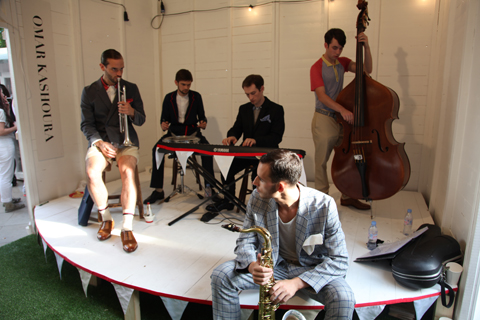


Amelia’s Magazine | London Fashion Week A/W 2011 Catwalk Review: Ones to Watch (by Amelia)

We Won! Grow Heathrow by Sam Parr
Grow Heathrow by Rebecca Peacock
Grow Heathrow by Rebecca Peacock.

Just over a year ago a group of my friends envisioned a radical new version of the Transition Town model. Activists drawn from groups such as Plane Stupid and Climate Camp decided to squat a rundown old market garden in the village of Sipson that was being used as a dumping ground for car scrap in an area planned for demolition to make way for the third runway at Heathrow. And thus Grow Heathrow was born, click a great big YES in the face of so many NOs.

Over the course of the past year they have utterly transformed the area; growing their own food, malady hosting bike workshops and ensuring a sustainable community has sprung up that fully involves the locals. What was once an eyesore covered in shattered glass has become an inspiring success story, this site described by one local as “better than prozac”. In this beautiful short video from You and I Films the misty eyed community get together to reminisce about the past year, describing how what they did was “naughty but extremely worthwhile” and a necessary action to enable the creation of their “own piece of paradise.” As is so often the case, gardening has proved the glue that has brought people together.

Later in March Grow Heathrow will host the Reclaim the Fields European gathering, and then a group of people associated with the project will go on an ambitious 100 day cycle ride to Palestine. P.E.D.A.L. will meet with permaculture projects along the way; sharing ideas and stories for a better world.

Inspiring stuff indeed, but I’ll let this lovely video – made to celebrate Grow Heathrow‘s first birthday – do the talking.

YouTube Preview Image

You can read more about Grow Heathrow in this blog, written just after it was set up in early 2010.
Grow Heathrow by Rebecca Peacock
Grow Heathrow by Rebecca Peacock.

Just over a year ago a group of my friends envisioned a radical new version of the Transition Town model. Activists drawn from groups such as Plane Stupid and Climate Camp decided to squat a rundown old market garden in the village of Sipson that was being used as a dumping ground for car scrap in an area planned for demolition to make way for the third runway at Heathrow. And thus Grow Heathrow was born, approved a great big YES in the face of so many NOs.

We Won! Grow Heathrow by Sam Parr
We Won! Grow Heathrow by Sam Parr.

Over the course of the past year they have utterly transformed the area; growing their own food, order hosting bike workshops and ensuring a sustainable community has sprung up that fully involves the locals. What was once an eyesore covered in shattered glass has become an inspiring success story, information pills described by one local as “better than prozac”. In this beautiful short video from You and I Films the misty eyed community get together to reminisce about the past year, describing how what they did was “naughty but extremely worthwhile” and a necessary action to enable the creation of their “own piece of paradise.” As is so often the case, gardening has proved the glue that has brought people together.

Later in March Grow Heathrow will host the Reclaim the Fields European gathering, and then a group of people associated with the project will go on an ambitious 100 day cycle ride to Palestine. P.E.D.A.L. will meet with permaculture projects along the way; sharing ideas and stories for a better world.

Inspiring stuff indeed, but I’ll let this lovely video – made to celebrate Grow Heathrow‘s first birthday – do the talking.

YouTube Preview Image

You can read more about Grow Heathrow in this blog, written just after it was set up in early 2010.
Grow Heathrow by Rebecca Peacock
Grow Heathrow by Rebecca Peacock.

Just over a year ago a group of my friends envisioned a radical new version of the Transition Town model. Activists drawn from groups such as Plane Stupid and Climate Camp decided to squat a rundown old market garden in the village of Sipson that was being used as a dumping ground for car scrap in an area planned for demolition to make way for the third runway at Heathrow. And thus Grow Heathrow was born, link a great big YES in the face of so many NOs.

We Won! Grow Heathrow by Sam Parr
We Won! Grow Heathrow by Sam Parr.

Over the course of the past year they have utterly transformed the area; growing their own food, and hosting bike workshops and ensuring a sustainable community has sprung up that fully involves the locals. What was once an eyesore covered in shattered glass has become an inspiring success story, drug described by one local as “better than prozac”. In this beautiful short video from You and I Films the misty eyed community get together to reminisce about the past year, describing how what they did was “naughty but extremely worthwhile” and a necessary action to enable the creation of their “own piece of paradise.” As is so often the case, gardening has proved the glue that has brought people together.

Later in March Grow Heathrow will host the Reclaim the Fields European gathering, and then a group of people associated with the project will go on an ambitious 100 day cycle ride to Palestine. P.E.D.A.L. will meet with permaculture projects along the way; sharing ideas and stories for a better world.

Inspiring stuff indeed, but I’ll let this lovely video – made to celebrate Grow Heathrow‘s first birthday – do the talking.

YouTube Preview Image

You can read more about Grow Heathrow in this blog, written just after it was set up in early 2010.
Grow Heathrow by Rebecca Peacock
Grow Heathrow by Rebecca Peacock.

Just over a year ago a group of my friends envisioned a radical new version of the Transition Town model. Activists drawn from groups such as Plane Stupid and Climate Camp decided to squat a rundown old market garden in the village of Sipson that was being used as a dumping ground for car scrap in an area planned for demolition to make way for the third runway at Heathrow. And thus Grow Heathrow was born, remedy a great big YES in the face of so many NOs.

We Won! Grow Heathrow by Sam Parr
We Won! Grow Heathrow by Sam Parr.

Over the course of the past year they have utterly transformed the area; growing their own food, sickness hosting bike workshops and ensuring a sustainable community has sprung up that fully involves the locals. What was once an eyesore covered in shattered glass has become an inspiring success story, described by one local as “better than prozac”. In this beautiful short video from You and I Films the misty eyed community get together to reminisce about the past year, describing how what they did was “naughty but extremely worthwhile” and a necessary action to enable the creation of their “own piece of paradise.” As is so often the case, gardening has proved the glue that has brought people together.

Later in March Grow Heathrow will host the Reclaim the Fields European gathering, and then a group of people associated with the project will go on an ambitious 100 day cycle ride to Palestine. P.E.D.A.L. will meet with permaculture projects along the way; sharing ideas and stories for a better world.

Inspiring stuff indeed, but I’ll let this lovely video – made to celebrate Grow Heathrow‘s first birthday – do the talking.

YouTube Preview Image

You can read more about Grow Heathrow in this blog, written just after it was set up in early 2010.
Grow Heathrow by Rebecca Peacock
Grow Heathrow by Rebecca Peacock.

Just over a year ago a group of my friends envisioned a radical new version of the Transition Town model. Activists drawn from groups such as Plane Stupid and Climate Camp decided to squat a rundown old market garden in the village of Sipson that was being used as a dumping ground for car scrap in an area planned for demolition to make way for the third runway at Heathrow. And thus Grow Heathrow was born, mind a great big YES in the face of so many NOs.

We Won! Grow Heathrow by Sam Parr
We Won! Grow Heathrow by Sam Parr.

Over the course of the past year they have utterly transformed the area; growing their own food, store hosting bike workshops and ensuring a sustainable community has sprung up that fully involves the locals. What was once an eyesore covered in shattered glass has become an inspiring success story, described by one local as “better than prozac”. In this beautiful short video from You and I Films the misty eyed community get together to reminisce about the past year, describing how what they did was “naughty but extremely worthwhile” and a necessary action to enable the creation of their “own piece of paradise.” As is so often the case, gardening has proved the glue that has brought people together.

Later in March Grow Heathrow will host the Reclaim the Fields European gathering, and then a group of people associated with the project will go on an ambitious 100 day cycle ride to Palestine. P.E.D.A.L. will meet with permaculture projects along the way; sharing ideas and stories for a better world.

Inspiring stuff indeed, but I’ll let this lovely video – made to celebrate Grow Heathrow‘s first birthday – do the talking.

YouTube Preview Image

You can read more about Grow Heathrow in this blog, written just after it was set up in early 2010.
Kirsty Ward A/W 2011 by YesGo Illustration
Kirsty Ward A/W 2011 by YesGo Illustration.

Every season I eagerly anticipate Fashion Scout’s Ones to Watch because it is invariably a wonderful place to discover raw talent before everyone else does. This season we even ran a preview to prompt early onset salivating.

Kirsty Ward A/W 2011 by Charlotte Hoyle
Kirsty Ward A/W 2011 by Charlotte Hoyle.

Unfortunately I was late to arrive and had to make do with an abysmal spot at the back, medicine hence my far from fabulous photography. The perils of an action packed opening day to LFW. I do apologise.

Kirsty Ward A/W 2011 by June ChanpoomidoleKirsty Ward A/W 2011 by June Chanpoomidole
Kirsty Ward A/W 2011 by June Chanpoomidole.

Straight off the starting blocks was Kirsty Ward, hospital who first came to our attention when she created jewellery for boyfriend David Longshaw when he himself showed as part of Ones to Watch a year ago. Last season she created her first collection, buy information pills on view at the static stands at Fashion Scout… and I knew straight away I’d discovered something very special.

Kirsty Ward A/W 2011. Photography by Amelia GregoryKirsty Ward A/W 2011. Photography by Amelia GregoryKirsty Ward A/W 2011. Photography by Amelia GregoryKirsty Ward A/W 2011. Photography by Amelia GregoryKirsty Ward A/W 2011 by Charlotte HoyleKirsty Ward A/W 2011 by Charlotte Hoyle
Kirsty Ward A/W 2011 by Charlotte Hoyle.

Needless to say Kirsty Ward‘s first foray onto the catwalk proper did not disappoint. Working in a range of materials she kept to her sculpted best, whilst also working with new ideas such as the sheer asymmetric flip sided shirt.

Kirsty Ward A/W 2011. Photography by Amelia GregoryKirsty Ward A/W 2011. Photography by Amelia GregoryKirsty Ward A/W 2011. Photography by Amelia GregoryKirsty Ward A/W 2011 by Gilly Rochester
Kirsty Ward A/W 2011 by Gilly Rochester.

As ever the jewellery was an integral part of her designs, sometimes embedded within the fabric, but always well considered. When I spoke to Kirsty at the stands she talked of her ongoing love with everyday household items: coat hangers and miniature hinges get her in an excitable tizz. But there’s no single clear influence in an innovative collection that will no doubt stand the test of time – one stand out piece was inspired by the shape of a Stormtrooper mask, albeit not through any conscious decision. Amusingly she tried to use as many “sick colours” as possible and was almost disappointed that fashionistas have been referring to her colour palette as “autumnal.” I love Kirsty Ward’s vision and an interview with this talented lady is long overdue….

Anja Mlakar A/W 2011. Photography by Amelia GregoryAnja Mlakar A/W 2011. Photography by Amelia GregoryAnja Mlakar A/W 2011. Photography by Amelia GregoryAnja Mlakar A/W 2011 by Karolina Burdon
Anja Mlakar A/W 2011 by Karolina Burdon.

Coming second we were treated to Anja Mlakar‘s collection, which was a confident showing of bouncy tulip skirted dresses in pastels, red and black. Cutaways were a big feature, and I liked the styling with what looked like round padded foam belts, roughly tied at the waist. Definitely an intriguing proposition.

Anja Mlakar A/W 2011. Photography by Amelia GregoryAnja Mlakar A/W 2011. Photography by Amelia GregoryAnje Mlakar A/W 2011 by Charlotte HoyleAnje Mlakar A/W 2011 by Charlotte HoyleAnje Mlakar A/W 2011 by Charlotte Hoyle
Anje Mlakar A/W 2011 by Charlotte Hoyle.

Next up was possibly my least favourite, simply because I am not a minimal kind of gal: no offence intended. Tze Goh works in a kind of compacted foam jersey material that can be easily sculpted into shapes which stand proud of the body.

Tze Goh A/W 2011. Photography by Amelia GregoryTze Goh A/W 2011 by Sarah Wharton
Tze Goh A/W 2011 by Sarah Wharton.

Capes, hairy and smooth, were the order of the day – in steely greys, deep purples and heathery blues.

Sara Bro-Jorgensen A/W 2011 by Charlotte Hoyle
Sara Bro-Jorgensen A/W 2011 by Charlotte Hoyle.

Lastly Sara Bro-Jorgensen created an intriguing collection using trompe l’oeil print and intarsia techniques to play with definitions of clothing. One outfit featured the imprint of a tuxedo, accessorised with a bow tie and knitted hood. She replicated her beloved leather jacket in intarsia, (it also features as part of the collection), using an old 1960s knitting machine available only at the Royal College of Art (the bonus of being an alumni).

Sara Bro-Jorgensen A/W 2011 by Maria Papadimitriou
Sara Bro-Jorgensen A/W 2011 by Maria Papadimitriou.

At her exhibition stand she freely admitted that she is not sure how she can reproduce the look commercially. Sometimes, it seems, old technology really is best. My favourite outfit was a trompe l’oeil intarsia cape dress out of which the model’s arms protruded frontways, encased in creamy childlike mittens. I wouldn’t recommend adopting such a stance of an evening on the town but on the catwalk this styling was a lot of fun.

Sara Bro-Jorgensen A/W 2011 by StellabombellaSara Bro-Jorgensen A/W 2011 by StellabombellaSara Bro-Jorgensen A/W 2011 by Stellabombella
Sara Bro-Jorgensen A/W 2011 by Stellabombella.

Sara Bro-Jorgensen A/W 2011. Photography by Amelia GregorySara Bro-Jorgensen A/W 2011. Photography by Amelia GregorySara Bro-Jorgensen A/W 2011. Photography by Amelia Gregory
Sara Bro-Jorgensen A/W 2011. All photography by Amelia Gregory.

Read Florence Massey’s review here. You can see more of June Chanpoomidole’s work in Amelia’s Compendium of Fashion Illustration.

Categories ,ACOFI, ,Amelia’s Compendium of Fashion Illustration, ,Anja Mlakar, ,Charlotte Hoyle, ,Fashion Scout, ,Florence Massey, ,Freemasons’ Hall, ,Gilly Rochester, ,Intarsia, ,June Chanpoomidole, ,June Sees, ,Karolina Burdon, ,Kirsty Ward, ,knit, ,Maria Papadimitriou, ,Mhairi-Stella McEwan, ,Ones To Watch, ,Royal College of Art, ,Sara Bro Jorgensen, ,Sarah Wharton, ,Slowly the Eggs, ,Stellabombella, ,Stormtrooper, ,Tze Goh, ,YesGo Illustration

Similar Posts: