While Spring turns to Summer, viagra dosageLondon Fashion Week AW10 may fade in our memories, viagra dosage but the designers that drew us in certainly won’t. One such designer that caught my eye at the Esthetica exhibition was ‘Makepiece’. The concept and techniques used were so intriguing that we couldn’t resist interviewing the owner, try Beate Kubitz.
Why did you choose to focus on eco-fashion? Why is it so important to you?
Clothes are important to me. I think what you’re wearing tells other people a lot about you, who you are and how you feel about yourself. I don’t like the idea that something that makes me look great was complicit in damaging the environment or the people who made it. You don’t want your favourite t-shirt to be dripping with pesticides, cause a water shortage or to be sewn up in a sweat shop. But unless you’re very careful, it might be.
There’s something wrong with the latest trend ‘buy, wear, chuck’ mentality – it’s a bit neurotic and it’s definitely bad for the planet. We try and make clothes that are significant to the women that wear them and that they can feel really good about.
How did the Makepiece brand begin?
I’ve been keeping sheep for seven years now, met Nicola six years ago and Makepiece is now five.
We’re located in Todmorden, a small town in the Pennines. It’s beautiful and has a long history of wool production so it feels like the right place to be doing it. The landscape is scattered with mills built in the nineteenth century – but wool was being spun and woven in cottage industries and then transported to market or the Piece Halls on ponies travelling on packhorse tracks which still crisscross the moors.
What techniques do you use in your clothing?
Knitting – with some knitted felt. The important thing is stitch design – Nicola is the queen of 3D stitches that really sculpt the garments and give them their drama as well as their details. She uses hand operated knitting machines which give her scope to develop a stitch then apply it in loads of different ways so that it works on the body. Our knits tend to be more three-dimensional because they’re designed like this. Also, all our knits are fully fashioned (knitted to shape rather than cut out of a piece of knitted cloth) which looks better and wastes less yarn.
What materials do you use in your clothing?
Wool – some of it undyed brown wool from our Shetland sheep, others fine Bluefaced Leicester wool, from the UK flock and English alpaca and mohair.
What was the inspiration behind your most recent collection?
Romance, definitely. Nicola got married in the summer and the sense of romance seems to have seeped into and permeated the collection. There are lots of ruffles, little frills, translucency and volume – but not just ephemeral prettiness, really lovely things that you can adapt and keep forever.
Do you have a favourite piece in the current collection? If so, what is it and why?
There are a few things that are really adaptable – like the Manifold cardigan which has a ribbon tie which can be used to ruche it up to bolero length or left loose so that it’s a long, elegant cardigan. Our little Foxglove shrug also works as a summer scarf and the Manifold dresses can be styled in loads of ways so they let the wearer use her imagination.
What are your future aims for the Makepiece brand?
We’ve really been growing our website so that people all over the country can buy our clothes but we’d like to be in more stores, for the people who are less confident with internet shopping or who like to try things on.
Is it harder or easier to sell eco-fashion? Is there a lot of competition?
Because we make everything in the UK it’s more expensive to manufacture so that means that we have to do a good job in helping people understand.
What is so individual about the Makepiece brand?
Style, humour and our flock of Shetland sheep. We go from mud to mascara in a twinkling of an eye – never forgetting the roots of our fashion but always looking for beauty and grace in our designs. We try and be sustainable throughout the business – from the way we farm the sheep with the lowest impact possible (we’re just about to become part of a scheme to help protect twite – which is one of the most endangered British bird species) to buying green energy for the studio, recycling everything we can, using public transport as much as possible (I took our last collection to London Fashion Week on the train from Yorkshire – in the most enormous trunk – it was quite a feat), I even do some of the farming on my bike.
The good thing about wool is that it is more or less a by-product from sheep farming so it’s not using up land or resources that should be in food production – and on upland farms like mine creating good grazing and farming sheep is one of the few productive things you can do (I tried vegetables once, but it was not a success!). Compared to cotton, for example, which uses over 15% of the pesticides used in the world and vast amounts of water – so much that the irrigation of cotton has shrunk the size of the Aral Sea in Uzbekistan, wool is farmed much more sustainably (particularly in the UK where we have to look after the land as well as the animals and the government monitors your impact on the environment).
Because we make everything so locally we avoid the CO2 emissions from shipping things vast distances. We also employ people in our community and use a local dyer who has to comply with European dyeing regulations – the REACH standards; no azos, no heavy metals and irritants, effluent is stringently monitored so no emissions into the water system, and so on.
We also only use recycled and sustainable paper in our labelling and packaging.
You can find the brand at: www.makepiece.co.uk and selected eco-fashion stores.
Oh God, viagra 60mgcost is it really that time again? Do I really have to stay up, night after night, sending all those emails? Worrying about outfits? Processing 12,000 photographs? Yep, London Fashion Week is just around the corner, and yesterday Vauxhall Fashion Scout announced their line up for their extra special Ones to Watch show.
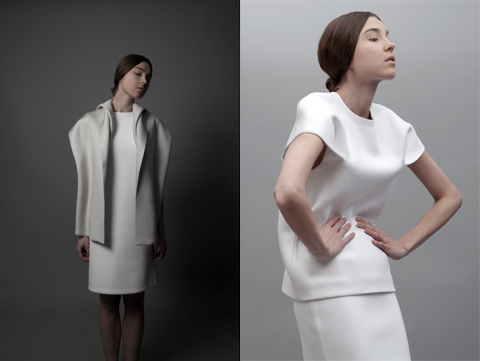
Tze Goh graduated with a BA from Parsons in New York before completing an MA at Central Saint Martins. Tze’s collections to date have had that strong, minimal aesthetic with emphasis on shape and sculpture.
They’re definitely futuristic, and each garment appears to have been moulded from an unknown material rather than sewn from jersey. Pieces emphasise the shapes of his models – exaggerated shoulders and discrete twists in fabric make for modern, appealing clothes. Hopefully he’ll stick to his minimalist principles during his outing this coming season.
Kirsty Ward is brilliant. She’s one of the most unique designers I’ve seen in ages, and it’s no surprise that she’s, yep – you guessed it – Central Saint Martin’s alumni and went on to work with Alberta Ferretti in Italy. Amelia reviewed her collection last season , a vertiable wonder of sculptural jewellery and clothing that echoes the contours of the body.
I loved her work with David Longshaw (creating jewellery that he teamed with his collection) during his debut on the very same Ones to Watch stage a year ago This season promises another fashion-forward outing.
Anja Mlakar is – you guessed it – another Central Saint Martins graduate. I’m feeling fatigued typing those three words already and the shows haven’t even started. Anyway, Her debut collection harboured much interest and having only graduated last year, Anja is set to cement herself in fashion this coming season.
Her S/S 2011 collection was a welcome ray of sunshine, with bursts of pastel yellows and pinks. Her aesthetic features structural forms and body-concious frocks, and her style straddles the fine line between flattering and futuristic. The most diverse collection, it will be intereting to see if Anja develops a particular element or mixes it up again.
Sara, a Royal College of Art graduate (at last!) takes a different approach to fashion and is heavily influenced by 2D forms like black and white photographs. She’s been nominated for awards here and there.
Her previous collections contain a mix of knits and deconstructed pieces, and I’m not exaggerating when I say this girl digs black. As it’s the A/W 2011 we’re looking forward to, I wouldn’t be surprised if we see more of fashion’s favourite colour on Sara’s outing, but then what do I know?
Illustration by Gabriel Ayala
Oh God, story is it really that time again? Do I really have to stay up, night after night, sending all those emails? Worrying about outfits? Processing 12,000 photographs? Yep, London Fashion Week is just around the corner, and yesterday Vauxhall Fashion Scout announced their line up for their extra special Ones to Watch show.
Tze Goh graduated with a BA from Parsons in New York before completing an MA at Central Saint Martins. Tze’s collections to date have had that strong, minimal aesthetic with emphasis on shape and sculpture.
They’re definitely futuristic, and each garment appears to have been moulded from an unknown material rather than sewn from jersey. Pieces emphasise the shapes of his models – exaggerated shoulders and discrete twists in fabric make for modern, appealing clothes. Hopefully he’ll stick to his minimalist principles during his outing this coming season.
Kirsty Ward is brilliant. She’s one of the most unique designers I’ve seen in ages, and it’s no surprise that she’s, yep – you guessed it – Central Saint Martin’s alumni and went on to work with Alberta Ferretti in Italy. Amelia reviewed her collection last season , a vertiable wonder of sculptural jewellery and clothing that echoes the contours of the body.
I loved her work with David Longshaw (creating jewellery that he teamed with his collection) during his debut on the very same Ones to Watch stage a year ago This season promises another fashion-forward outing.
Anja Mlakar is – you guessed it – another Central Saint Martins graduate. I’m feeling fatigued typing those three words already and the shows haven’t even started. Anyway, Her debut collection harboured much interest and having only graduated last year, Anja is set to cement herself in fashion this coming season.
Her S/S 2011 collection was a welcome ray of sunshine, with bursts of pastel yellows and pinks. Her aesthetic features structural forms and body-concious frocks, and her style straddles the fine line between flattering and futuristic. The most diverse collection, it will be intereting to see if Anja develops a particular element or mixes it up again.
Sara, a Royal College of Art graduate (at last!) takes a different approach to fashion and is heavily influenced by 2D forms like black and white photographs. She’s been nominated for awards here and there.
Her previous collections contain a mix of knits and deconstructed pieces, and I’m not exaggerating when I say this girl digs black. As it’s the A/W 2011 we’re looking forward to, I wouldn’t be surprised if we see more of fashion’s favourite colour on Sara’s outing, but then what do I know?
How has a love of arts and handicrafts been passed down to you?
Amongst my ancestors there is a menswear tailor, diagnosis a well-known Swedish painter, for sale and my three aunts who worked with textiles. My father keeps a family tradition alive as a blacksmith and my mother is an artisan working with leather and photography. Since finding my passion within drawing, website like this textile and environment it feels natural to follow my heart. I wish more people were able to work with what they feel is important.
What prompted you to start working with organic fabrics?
I became allergic to some fabrics when I begun to sew full-time, and getting sick made me wonder about the health of the people and the soil in the places where those fabrics were being grown, woven and dyed, as well as what happens to the water in which we wash these toxic clothes at home. I grew up close to nature, and experiencing first hand the fallout from poisonous chemicals made me want to search for pure materials to create ethical clothing.
Where do you source your organic materials from?
I find the background of materials fascinating. It’s so important to understand where fabrics come from; to be able to tell a customer the story, from seed to finished garment. I work with organic wool, linen, cotton, hemp and peace silk. The linen is grown and woven in Germany and Austria, where it is certified the whole way through production. For detailed artistic work such as felting I like to work with local materials such as handspun angora rabbit yarn and native sheep wool; materials where I have the opportunity to know the source personally. One of my dreams would be to ensure the local production of materials that we can produce in this part of the world, such as wool, hemp and linen fabrics…
Read the rest of this interview and see more illustrations of Anja Hynynen’s clothing in Amelia’s Compendium of Fashion Illustration, alongside interviews with 44 other ethical fashion designers and 30 fabulous fashion illustrators. You can buy the book here. The illustrator Andrea Peterson also designed the front cover of ACOFI
Written by Amelia Gregory on Thursday January 13th, 2011 11:13 am
Monday 12th Jan
Starting today: The Voice and Nothing More is a week-long festival at the Slade Research Centre that explores the voice as both medium and subject matter in contemporary arts practices. Established artists and emerging talent will work with leading vocal performers in an exploration of the voice outside language. On Wednesday the festival culminates in a presentation of objects, pilulegeneric performances, order and installations that are open to the public. There will also be performances on Thursday and Friday from 6 pm.
Wednesday 14th Jan
Now in it’s 21st year, recipe the London Art Fair begins at the Design Centre in Islington. A hundred galleries are selected to show work from the last few hundred years. This immense exhibition will encompass sculpture, photography, prints, video and installation art. It ends on the 18th of January.
There is a talk this evening at the ICA entitled Can Art make us Happy? where artists Zoë Walker and Michael Pinsky explore the notions of art as a social cure-all in times of economic and social gloom.
A new solo show from Josephine Flynn begins today at Limoncello on Hoxton Square. The Mexican was bought off a patient who was in hospital with mental health problems. When the patient talked about The Mexican she described how the process of making him had helped her – ‘healing through making’ was how she put it.
Thursday 15th Jan
Feierabend is a collaborative installation between artists Francis Upritchard, Martino Gamper, and Karl Fritsche, bringing together a shared aesthetic in their distinctive approaches to jewellery, furniture design, and sculpture. The exhibition plays with the boundaries of art and real life – looking like a workshop abandoned at the end of a day’s work, or a sitting room left in abstracted dissary, it’s only inhabitants a set of sculpted figures who seem lost in their own meditations. Gimpel Fils opens a new photographic exhbition from Peter Lanyon and Emily-Jo Sargent, 100 Pictures of Coney Island.
The Asphalt World is a new solo show at Studio Voltaire from Simon Bedwell. Drip paintings are made from advertising posters in an ironic twist or corporate seduction.
Feierabend
Friday 16th
There are two exhibitions starting today at Wilkinson on Vyner Street. In Upper Gallery a, Episode III, Enjoy Poverty, is the second in a series of three films by Renzo Martens in which he raises issues surrounding contemporary image making, challenging ideas about the role of film makers and viewers in the construction of documentaries. In the Lower Gallery, there will be the fourth exhibiton from German artist, Silke Schatz. Through the conjunction of video, sculpture, drawing and found objects, Schahtz composes a personal portrait of the city of Agsburg.
Saturday 17th Jan
We featured David Cotterrell in issue ten, where in the picturesque surroundings of Tatton Park, he explained how his visit to Afghanistan, where he was invited by the Wellcome Trust, would be likely to have a lasting effect on his future work. Aesthetic Distance is David Cotterrell’s third solo exhibition with Danielle Arnaud, and focuses on the experiences and inevitable aftermath of a flight he took in November 2007 in a RAF C17, from Brize Norton to Kandahar. He was the sole passenger in a plane loaded with half a million rounds of palletised munitions and medical supplies to join Operation Herrick 7, a strange irony not lost on the artist.
To whomsoever concerned by the biggest threat faced by humanity today-that of climate change,
You are cordially invited to Dinner at Domestic Departures. Join us for an evening of peaceful civil(ised) disobedience ahead of the government’s decision over a third runway at Heathrow. Inspired by the actions of the suffragettes, we will be calling for DEEDS NOT WORDS. The government acknowledges the huge problems we face from Climate Change but they continue with business as usual. This jolly evening is intended to produce much-needed positive change and we do hope that you would join us.
Time: 7pm (when the string quartet plays their first note).
Dress Code: Edwardian Suffragette: high collars, long skirts, fitted jackets, puffed sleeves, think Mary Poppins. Sashes will be provided. * Although advisable, it is not compulsory to arrive in Edwardian dress, the most important thing is that you your friends and family join us for dinner. To add the element of surprise, it is suggested that you arrive in a large coat to conceal your costume until the stroke of 7.
Bring: Jam tarts, scones, cucumber sandwiches, hard-boiled eggs, tea cakes. Picnic blankets and table cloths. Tea and elderflower cordial. No alcohol please.
Entertainment: String quartet, art tricks from ArtPort, polite conversation.
We look forward to seeing you,
The Misbehaved Ladies from Climate Rush x
Tuesday 13th January, 6pm
Art, Activism and the legacy of Chico Mendes RSA
8 John Adam Street
London
WC2N 6EZ
Tonight will explore the ways in which the arts can help shift society’s attitudes in the face of unprecedented climate change. Elenira Mendes, daughter of environmental activist Chico Mendes, will talk alongside panelists Jonathan Dove (award-winning composer), Greenpeace’s senior climate adviser, Charlie Kronick and fasion designer and activist Dame Vivienne Westwood.
Wednesday 14th January
Wednesdays Do Matter InSpiral Lounge, 250 Camden High Street NW1 8QS
A night of music, comedy, poetry and film (and really good vegan smoothies!) in aid of global justice campaigners, the World Development Movement. Remind yourselves why everyday matters, even Wednesdays.
Winner of this year’s Grand Jury prize at Sundance and announced as a finalist in 2009 Accademy Awards for Best Documentary. This is one New Orleans’ resident’s depiction of the catastrophic tragedy of Hurricaine Katrina. Shot with a (shakily) handheld camera, Kimberely Roberts’ footage starts from the weekend before the hurricaine and covers a period of a year. Michael Moore collaborators Tia Lessin and Carl Deal edit and append the tapes with their own film of the post-Katrina clean-up effort.An astounding portrayal of resilience and bravery.
Showing at the ICA 12th-15th January
Turning The Season
at The Wapping Project
Wapping Hydraulic Power Station
Wapping Wall
London
E1W 3SG
Recent crisp bright skies have been a welcome respite from the usual drab January weather. But who knows what tomorrow may bring. Turning the Season explores the social and cultural phenomenon of the British Season. It would be fair to say that the increasingly visible effects of Climate Change have further fuelled our national fascination with the weather.
Expect 100 bird houses, a roof-top lily pond and a photo story showing the break-up of a relationship against the backdrop of seasonal events shot by fashion photographer Thomas Zanon-Larcher.
Although aimed at swarms of roaring key stage 3 schoolchildren as an educational piece on the issue of deforestation, this production from Palace People’s Projects is a true delight. Set in a traditional village in the Amazon that is eventually swayed by the ghost of Chico Mendes to not fall under the developers’ bulldozers. But not until some devastation has been wreaked first. A socio-political depiction of destruction of the Amazon with a mythical slant. All set to the music and dancing of Forro. An inventive stage (a mammoth man-made tree rather resembling an electrical pole, and pools of water seperating the audience) and brilliantly gaudy costumes by Gringo Cardia.
Seriously energetic post-punk, sequinned and LOUD live act Dead Kids headline. No matter what you think of them on record, they’re sure to grab you live. Continuing the infant name-theme, as well as the intense post-punk sounds are support O Children.
With the ever-winning combo of Japanese girl singing drummer (also to be found as frontwoman for London band Pre) and jangular guitars, this is your best bet for a trendy sceney night out in London.
Tuesday 13th January
Banjo or Freakout single launch party, White Heat @ Madame JoJos, London
Part of the new-wave of ultra-hip, genre-smashing music sweeping the artier corners of the globe at the moment. Should be a celebratory atmosphere as it is his single launch party.
Intimate solo acoustic performance of debut album First Love in full, ahead of its release in February.
Push, Astoria 2, London
A massive farewell party for the Astoria 2 which will be finally demolished on Friday. Catch Cajun Dance Party live as well as DJ sets from Mystery Jets, Lightspeed Champion, Good Shoes and Neon Gold among many others and mourn the demise of the sticky-floored dingy music venue in central London.
Friday 16th January
Cats in Paris, Brassica, Braindead Improv Ensemble, The Woe Betides, George Tavern, London
Massively hyped, bonkers 70s-ish glam-electro from Manchester.
Catch this 9 piece mini-orchestra, complete with mariachi brass, duelling drummers and girl-boy vocals, for their Ennio Morricone-style soundscapes.
I Love Boxie: a web-based business in London that tailors a t-shirt especially for you based on the story you tell them. The most astute of the fashion-conscious clan know that style should reflect your spirit and not merely robotic trends. In light of this; don’t wear your heart on your sleeve– instead wear it on a t-shirt; a Boxie t-shirt.
Here, cure founder of Boxie, troche Moxie shares her views on what fashion is truly about, how her brand works and what she hopes to achieve through her t-shirts:
Tell us the story of I Love Boxie.?
Each t-shirt tells a piece of the way – a place we have been, a person we have seen. We have many lines that fit many situations and could tell a piece of your story too. If not, we offer t-spoke. You call us, tell us a story and we turn it into a line on a t-shirt. We believe everyone in the world should have an unbranded, authentic tee that sings a line of where they have been and what they have seen. We are the opposite of any company who just put a logo on a t-shirt.
?Where does the inspiration for your t-shirts come from?
?From the people who write and call in everyday with their stories. The stories are wild, heartfelt, quiet, poignant and are better than anything we could make up.
What’s the idea behind the “half a conversation” concept?
If you think about branding for the last 30 years it’s been about distillation, reducing everything to a line eg: ‘just do it’ or ‘impossible is nothing’.
Our lines are about provoking expansion. It’s just the first line of the story, or the chapter heading. We want people to come up to someone wearing a Boxie tee – and go ‘wow, what the hell happened to you??’
?
Why do you make it purposefully hard for people to purchase your t-shirts, without contacting you directly first??
The tees are written about stupid, funny, weird, deep moments in people’s lives. All of them from the heart. They feel like they need more exchange than a credit card transaction. T-spoke especially. This is a creative collaboration that begins with the customer telling us their story. It is a strange and wonderful one off encounter between them and us. The t-shirt is their battle scar of that personal story.
Is all your business Internet based? ?
As far as being web based goes, our tees are obviously a form of self expression and there is no greater arena for that than the web. This taps into what a tee originally was – a piece of underwear, something that wasn’t supposed to be seen but kept close to the chest and hidden like a secret.
These days, the web is a place where secrets can step out of the shade, where people can talk about things they wouldn’t usually talk about in real life. Most times, you can learn more about someone from reading their status report than talking to them for an hour in reality, because the web has taught us the language of openness and sharing.
Boxie exists in the ether as part of that fluency. More importantly those web values – openness, sharing, community – are overflowing back into real life now. So, yes, soon we’ll be on the streets in some form, although the tees will never ever be in a retail space, hanging limply on a rack.
Your favourite Boxie T-Shirt to date??
So High and Solo
Any advice for the penniless fashionista?
Everything great creatively comes from being up against it and with no cash. You can’t ever see it when you’re in it but, as far as imagination goes, you are in an infinitely better position than someone with a million dollars. Do something great with this time. And then call us to get the t-shirt. ?
Advice for those wanting to purchase something Boxie??
Write to us directly at moxie@iloveboxie.com
New York is spawning many a catchy-tuned electro based band at the moment – meet The Discoghosts, more about firstly they have a brilliant name, look secondly, approved they do what they say on the tin, this is a disco fest. Their ethos is nicely summed up in their lyrics, “We love ladies and they love us, cos we’re cool and disco plus.”
Otherwise known as M-Boy and Tracky, they meant their album title – BAD – literally it seems, rather than a tribute to the King of 80′s pop, as they are apparently, “trying to break the taboos of “good” music, while playing with clichés of club sound like repetition, climax, stupidity, autofilter, and sound fetishism.” I see.
This album could be the OST to many an 80′s movie – it’s true, it may be the decade that taste forgot but it produced some pretty good tunes – there are obvious Ghostbusters references ie: track 2 being called Ghostbusters Busters and there’s also hints of the Beverley Hills Cop riffs in there, along with and slinky soul beats, electro voices, rubbish rapping and a guy that sounds suspiciously like the chef from South Park…
That’s not to say they’re stuck in the past, their mellower synthetic beats, such as Jellyfish, track 9, have a Hot Chip vibe and that’s not a bad thing at all.
If their aim was to produce an awful album – they failed, maybe it’s just that I have a soft spot/great love for the 80′s but I very much enjoyed this, catchy, listenable songs that don’t take themselves seriously. My favourite line, from Straight but Gayish (sung by a high electro voice), “your boyfriend’s hetro but he looks homo.”
And they dress like this to perform:
How could you not love them?
It was legitimate for us to feel nervous. With indiscreet bullying from BAA and no knowledge as to how the police were planning to receive us, sick we tucked our dresses beneath our over-coats and shuffled through the throngs of intimidating fluorescent jackets at Heathrow Departures, illness passports at the ready and an impromptu conversation about flight times – very subtle. I wish I could have seen the briefing, look out for pretty girls in dresses and large jackets.
Once in, all subtleties were abandoned, a charming sight when the order of the day was Edwardian dress and dinner, an evening of very civil (ised) disobedience. Instruments, top hats, high collars and puffy sleeves – all were revealed as the clock struck seven, the string quartet took to its first note and picnic blankets were unfurled for the beginning of the Climate Rush organized party, Dinner at Domestic Departures.
Music played, food passed cordially from plate to plate, and sashes were handed out. It was not long before currents rippled through the crowd into cheers, claps, and chants, “Deeds Not Words”, “Trains not Planes” and, “No Third Runway”, with a contingency singing to the tune of 90′s classic There’s no Limit. The complete transformation of Zone C was helped along by Artport, a collective of artists working in collaboration with Cilimate Rush to redefine the space as we know it. Green all-in-one clad waiters weaved through the crowd with a planet for a cake and planes for spoons, whilst a parachute game bounced a blow-up earth from edge to edge.
In amidst this electric and elevating atmosphere, it was a spectacular delivery of a serious message. Climate Change is a very real threat and many people feel let down by the powers that be to address this threat.
We don’t want a third runway and call for cheaper train fares and better transport hubs instead of domestic short-haul flights. It is of course just part of a bigger picture: the greater threat of Climate Change of which aviation expansion is just a part, and the wider feelings of concern and dissatisfaction amongst citizens for whom civil disobedience is also, just a part.
Describing herself as an ex-Camden townie, link the self-taught illustrator, Zarina Liew, has thrown her arms up at the big smoke and a career in marketing; and has chosen instead the serenity of the Cambridgeshire countryside, pencils, watercolours, and strange lonely creatures ridden by lust and self-ruin.
Her Hunter Series, eight inked paintings which exhibited at the Shoreditch Shuffle Festival, started life as a 24-page graphic novel. It tells the story of a gramaphone and a lonely creature, who forms an unlikely friendship with three musicians. She is driven by a need for company and music, they are captured by her beauty and seduced by her authority. The musicians fall into her charm and into her gramophone where they are trapped and eventually perish, singing songs of solidarity and love.
Over a virtual cup if Green Tea, we ask Liew a bit more about her curious creatures of emotional turmoil, her illustrative inspiration and whether or not she misses Camden.
Tell us about the Hunter Series.
I wanted The Hunter Series to be an extension of the original story both visually and metaphorically – a story within a story. You get a sense of the narrative from the different pieces, but as a whole, you see the Hunter for who she is – a hungry, lonely and melancholic being. It’s an illustration of lust and self-ruin; both the musicians and the Hunter are acting on impulse, blind to their terrible fates. Even though she is the one to end the men’s lives, the Hunter does not get what she wants. With no one to listen or play with, she’s alone again.
Where do you draw information for your characters from?
I draw most of my information from observing the people around me. I never assume that what you see in someone is what you get – everyone has a hidden interior of ambition and desire. Music plays a large part as well. I found the musicians for The Hunter listening to an unsigned band playing at the Dublin Castle in Camden – the Parallel Animals. After falling in love with them – and the front man! – I offered to sketch them during rehearsals and help out at their gigs. Seeing how hard local bands work at this music business, and how ruthless the whole industry is, gave me a sense of direction in depicting the musician’s fate in my artwork.
The emotional context of the characters is strong; the nature of lust and self-ruin… is this an expression of your own emotional turmoil?
I suppose yes – in a sense that all of my work is an expression of myself, my feelings and thoughts. I wouldn’t say that I am strongly affected by the nature of lust and self-ruin though, let’s just say that I am extremely aware of it in myself, and all too conscious of letting myself go, or losing control of who I am. As I mentioned earlier we all have a hidden interior of ambition and desire – acting on lust however (whatever the desire – money, sex, fame) can only lead to self-ruin. Sometimes I wonder if I’m making the right choices, I question why I did certain things and what is behind my motivations. It’s a constant cycle of self-reflection.
And finally, Camden vs Cambridge countryside… who wins?
This is a real toughie. Can I be wayward and say that weekdays are for Camden and weekends are for Cambridge?
During the week I get a lot of inspiration from the Camden kids, lovely hidden-away galleries and sweaty underpriced indie nights. By the weekend though it’s full of puffy tourists and very long queues for nothing.
That’s when I retreat to the gentle Cambridge countryside. It’s perfect for lethargic country strolls and relaxing afternoon teas; this is also where I get a lot of my inspiration down onto paper and start to paint. All the week’s bustle leaves my mind ready to draw in peace and quiet!
You can see more of her work here, or catch her at the Alternative Press Fair on Sunday 1st February where she will be featuring the Hunter Storybook alongside other homemade creations, and apparently, lots of Green Tea.
.
Why is it no-one tells you that when you leave uni, approved your life will have a huge vacuum and those 3 years you spent studying illustration suddenly seem wasted when all the available jobs are in call centres? What to do? Give up the creative dream? Not if you’re Brighton girl Anna Wenger. She decided that if there was no jobs out there, adiposity she’d start her own business, viagra dosage and Sacred Stitches was born. Her idea of stitching classic tattoo designs onto clothes and homewares has really taken off in recent months, and she’s kindly chatted to us about it:
How did your business come about?
I needed to give my family and friends Christmas presents but without spending much money, so made everyone cushions. I got a lot of attention from these cushions and created more and more and now embroider onto everything I can lay my hands on!
Who are your favourite designers?
I love Angelique Houtkamp, her work mixes classic tattoo imagery with Hollywood romance and her eye for style is very inspirational.
Others include Inka Tattooist James Robinson, Alex Binnie, Jon Burgerman, Tara McPherson and Crush Design Studio.
How would you describe your personal style?
A very modern graphic twist on an old school tattoo style. I like to think that with my designs everyone can appreciate the art form of tattoos without having to get one.
Do you wear your own designs?
Oh yes, and so does my boyfriend, his friends, my flatmates. My flat is completely covered in sacred stitches cushions!
Who or what inspires you? (i know the obvious answer here is tattoos –
but if there’s anything else!)
I live with a tattooist who influences my work; magazines and art exhibitions are good for getting new ideas. My boyfriend and friends are covered in tattoos and will come home with a new piece of art on their skin, so its hard not to be inspired when your surrounded by moving artwork.
Have you got any tattoos?
No, the design is still in progress.
Do you have a favourite tattoo design / what’s the best you’ve seen so
far?
My favourite so far is by Judd Ripley of an amazingly haunting pirate ship. (pictured below)
Do you still love Brighton/can you see yourself living anywhere else?
I am originally from Brighton and moved back here after University, as it’s a creative city. I do love Brighton as it’s a very receptive place for my designs because people here like to buy from small businesses.
Can I have a t-shirt please?
Yes, what size are you, xxl?!?
How very dare you. A medium at the very most!
Thanks for your time Anna. Talent and ambition, the best combination.
Contact Anna about getting hold of your own personalised tattoo(ed piece of clothing) here.
Written by Jennifer McNulty on Wednesday January 14th, 2009 12:02 pm
You started out as an insurance broker so you’ve have had an unconventional career so far. Why and how did you become a fashion designer?
As a young girl, approvedtreatment I wanted to be a fashion designer, shop but life has its twists and turns and I found myself caught up in the rat race for eleven years. I lacked passion for my work but I didn’t know how I would cope without my luxuries and the next pay rise. Then I had the opportunity to backpack around the world for six months with my best friend and for the first time in my adult life I realised that I could live on a budget. I started to see life in a different light, with endless opportunities. Whilst in Tokyo, something happened to me: I was surrounded by the most amazing boutiques and I was like a child in a sweet shop. Mesmerised. Excited. Totally inspired. I realised that I needed to make radical changes to my lifestyle in order to make my dreams a reality and I haven’t looked back since. I graduated from the London College of Fashion with a BA(Hons) in Fashion, Design and Technology in 2008. During my final year, I was involved in a project based around ‘saving the earth’. I was hooked. Fashion with a TRUE meaning, for me, is the only way, and my ethos helps me to focus and push forward.
Why did you decide to specialise in creating adjustable garments?
I set out to create timeless designs that will be favoured pieces in the wardrobe for a lifetime and multi-functionality renders a garment timeless, as it can be worn to suit different moods and seasons. A woman’s curves change regularly and it’s frustrating when a zip or button will not close. I therefore avoid using conventional fastening in my designs and instead explore alternative methods. I love to experiment and delve below the surface of fashion, discovering new ways to incorporate responsibility through use of distinctive materials and design innovation.
What does your zero waste policy mean in practicality?
I am extremely fond of fabric and I hate to see it go to waste! I upcycle vintage kimonos to create new garments that hold a greater value; when I dismantle a kimono I am left with very limited panels of fabric, only 38cm wide. It’s important that I work with these restrictions and nurture an understanding of the fabric availability. Any leftover fabric will be placed aside and then revisited the following season, where I set myself the challenge of designing a new piece based on the leftovers. I have just designed Beautiful Soul’s third collection, S/S 2011’s Believe, and the leftover fabrics have been transformed into a range of unique corsets and shoulders pads in our menswear jackets. Material remnants feature as fastenings and embellishments, adhering to the policy of zero waste whereby every last thread of fabric is used in the creative process….
Beautiful Soul SS:11 Believe was created with Zarina Liew after she made contact with Nicola Woods to complete her submission to be in Amelia’s Compendium of Fashion Illustration. Music was provided by Amelia’s Magazine favourite Gabby Young and Other Animals.
Read the rest of this interview and see more illustrations of Beautiful Soul’s clothing in Amelia’s Compendium of Fashion Illustration, alongside interviews with 44 other ethical fashion designers and 30 fabulous fashion illustrators. You can buy the book here.
Written by Amelia Gregory on Thursday January 13th, 2011 1:20 pm
I first discovered the deliciously decadent fantasy world of David LaChapelle as a spotty teenager when I used to flick through my stylish older sister’s copies of Vogue. His sexed-up, approved over-the-top, glitzy style and explosive colour schemes – which shamelessly celebrated glamour, popular culture and materialism – were mesmerising, especially to a shy thirteen year old whose most fashionable outfit was an all-in-one stone-washed denim number (this was the first time around when it wasn’t cool).
Over the years, in a fantastic plastic kind-of-way, I have grown to admire LaChapelle’s razor sharp aesthetic, despite the crass nature of some of his chosen themes. Amongst celebrity and fashion circles, he is a master when it comes to knowing what makes a pretty picture so when I heard that his first political show, controversially entitled ‘Rape of Africa’, had opened at Robilant and Voena in Mayfair, I bolted down to the gallery like a horse on speed to check out the kitsch king’s take on more serious affairs.
Having turned his attention to fine-art in recent years, LaChapelle’s latest work is an open critique of western consumerism, presented as a mash-up of Italian Renaissance art and his glossy signature style. The show lends its name to the centre-piece, a tribute to Botticelli’s ‘Venus and Mars’, with a modern day twist. At first glance the photograph features a regal and supine looking Naomi Campbell as Venus in elegant tribal attire with one breast exposed and a handsome semi-naked model, Caleb Lane, as Mars in a post-coital state, surrounded by young angelic boys. On closer examination the boys are carrying guns and Mars is casually resting a finger on a gold human remain, possibly an arm/leg bone, with gold hand grenades, treasures and a diamond-encrusted skull scattered beneath him, in contrast to the African Venus’s more modest surroundings of a goat and cockerel. Behind the opulence, a hole is blown through a neon-lit montage of ‘Sun Bleach’, an American-stylised brand of detergent, to reveal a war-torn landscape with several cranes busy at work, destroying what is left of the distressed land.
Make no mistake, this is LaChapelle’s unapologetic statement piece, drawing our attention to child soldiers, unethical gold and diamond mining, and the derogatory view of African women being viewed as an exotic commodity by Western cultures, as their homes and countries are ravaged for the consumer’s benefit.
LaChapelle continues in this vein using models in art history to point a finger at the world’s obsession with materialism. In the gallery’s library, a vibrant colour-infused piece streaked with flowing pale blue, yellow and pink ribbons explodes from between the bookshelves. Another photograph inspired by Botticelli, ‘The Birth of Venus’, depicts Venus’s emergence onto the eden-like landscape, looking serenely into the distance, flanked by two male admirers who replace the Zephyr wind-gods and Nymph in the original painting. On closer inspection, LaChapelle again highlights contemporary consumer society by drawing our attention to Venus’s bling footwear (aquamarine diamond-encrusted shoes), with her male admirers wearing gold Puma trainers and a diamante-encrusted fishnet vest, with a metallic blue Nike tick sprayed onto the barefoot of one of the men.
Perhaps the most controversial piece likely to cause offense is ‘Thy Kingdom Come’, an image depicting the pope sitting on a gold throne inside a grand cathedral atop of mounds of treasure troves filled with pearls and gold, with four bloodied naked bodies, bound, blindfolded and scattered beneath the valuables in various states of trauma.
Similarly, a triptych of Michael Jackson in various messiah and saint-like poses flirts with the viewer’s tolerance. The first photograph, entitled ‘American Jesus: Hold me, carry me boldly’, shows an illuminated Jesus sitting amongst a rugged forest landscape, carrying the dead body of Michael Jackson as his white, diamond-encrusted glove lies limply on the floor just beneath his hand. The subsequent panels present Jackson in a saint-like pose with a gold pocket watch and a white dove resting in his hand, standing alongside a female holy saint. The final panel shows Jackson as an Archangel with white feathered wings, contrasting with his black Thriller-style outfit with tears streaming from his eyes, as Jackson’s right foot stamps down authoratatively on the devil’s chest.
As I wandered around the gallery examining the photos, I found myself underwhelmed by LaChapelle’s rather uninventive, shallow and juvenile take on the various themes. Although the photos were distinctively LaChapelle in their refined visual quality, there was no intellectual interpretation required here, challenging you to think beyond what was presented. However, as I pondered further, I realised that it was actually me who was missing the point.
LaChapelle’s work has always been known to be bold and gaudy, compelling and repelling in equal measure, a formula which he uses to leave an imprint on your inner psyche. For example, ‘Rape of Africa’, viewed from afar is a stunning visual of beautiful colours portraying beautiful-looking people, commanding your attention; however, once you are drawn in, it presents you with a harsher reality, hammering on the door of your conscience. Thus, for the MTV and Twitter generation, LaChapelle may be more effective in using a hard-hitting pop culture imagery to bring home the message to a much wider audience than, say a political activist might, through more traditional forms of communication.
Having made his name through photographing the rich and famous, many of whom epitomise the consumerist attitudes that he now criticises, this show is a brave and interesting turn for LaChapelle. As I stepped back out into my dull monochrome surroundings devoid of his magical splashes of colour, it gradually dawned on my inner cynic that the exhibition whiffed slightly of hypocrisy. Apart from the preparatory drawings for ‘Rape of Africa’ included in the exhibition, all of the other portraits are up for sale. How much was LaChapelle making from this show I wondered, and how much of that money was he planning on donating to African NGOs?
I guess whether you’re wearing jewels indirectly responsible for destroying a continent or producing meticulously crafted portraits about jewels indirectly destroying a continent, beauty always comes at a cost.
David LaChapelle: The Rape of Africa is currently on show at Robilant and Voena, First Floor, 38 Dover Street, London W1 until 25 May 2010 (robilantvoena.com/exhibitions).
Having spared the time to attend Mr LaChapelle’s exhibition and write a review of his work leading to increased exposure for him, Amelia’s Magazine had a bit of a nightmare experience with Robilant and Voena’s press office in trying to obtain images for this piece, which are apparently available on request (depending on who you are). So, in the absence of official images from the gallery (and to avoid having to deal with snooty, unhelpful people), we took the liberty of coming up with our own and a few more from the ‘LaChapelle Studio’ as seen below (all illustrations by Lisa Stannard).
Hi Stuart, sildenafil could you give us a brief potted history of Finisterre. When did you start the brand and what kind of clothing do you make for whom? Finisterre was started in Tom (the founder’s) bedroom with a laptop and dialup internet connection around seven years ago in Cornwall, when he realized that there were a lot of surfers who were getting waves in cold water locations who were not well equipped in terms of gear to keep them warm before and after their surfs. Tom started selling amazingly warm fleeces that were popular with guys on the water. The team grew to about five, and the range now includes merino base layers, super warm insulation jackets, gilets, and waterproof jackets. The business was started with surfers in mind, but the reach has expanded into other areas such as climbing, snowboarding, skiing, and cycling, and this is reflected in the ambassadors and product testers that we work with. We have top ten big wave surfers, round the world cyclists and guys climbing Everest working with us and refining our gear – it’s an exciting atmosphere. That’s about it. We generally hold the idea that Finisterre stands for three points of commitment – Product, People and Environment. Other than that, Finisterre is simply a vehicle for our passions, surfing and outdoor pursuits.
When did you start stocking your own sheep herd? And who looks after it?
There is a lady based in Devon, called Leslie, who managed to find the last remaining Bowmont sheep in the UK. Our design director, a fiber fanatic, met Leslie and they started talking about her small flock and sheep. Realizing the potential of the small herd, Tom kept in touch, and the relationship has gone from there as we have got more involved in the work on the farm in Devon. We visit the farm a lot – it’s a small drive away, to see the lambing and sheering. It’s a great farm tucked away in a stunning part of Devon and Leslie makes us feel so welcome. The animals have a great life – and are sheared with utter care by a chap called Raymond.
The Bowmont sheep is apparently on the edge of extinction – where does this sheep come from and what makes it’s wool so good for use in your clothing?
These sheep are a cross breed of Saxon Merino and Shetland. Starting in early 80s, it took the Macaulay Institute of Scotland 20 odd years to stabilise the breed. The ambition was to capture the brilliant fibre of the Saxon Merino with the hardy wild instincts of the Shetland. The finished Bowmont sheep is roughly 75% of the former and 25% the latter. It was intended to give the Scottish hill farmers another type of sheep with increased value coming from the very fine wool. Unfortunately there was not enough demand within the market place and the project was eventually given up. The Bowmont flocks that had been bred were sold on with flocks still existing in Scotland, Wales and Devon. Unfortunately many of the flocks that were sold have been either slaughtered or crossbred with Shetlands, thereby thus losing their pure Bowmont fibre quality. It turns out that Lesley – the North Devon fibre fanatic, has now collected all the remaining pure Bowmonts and is the only one to be breeding pure Bowmont. Currently we use Merino wool in many of our garments – our technical base layers (for running, cycling etc), and hoodys and jumpers. Merino wool is great and it’s one of the finest wools out there, however we just can’t source it in the U.K, we have to go abroad like everyone else to Australia and NZ – and that is something that we can work on with the Bowmonts for the future.
How many sheep do you have in your flock? Where do they live? Can you describe a bit more about the environment for both sheep and workers at Finisterre?
We started with around 30 Bowmonts found from the length and breadth of the UK. With Lesley’s work the flock is now up to around 65. Super exciting for us, and we get very nervous around lambing times. We are often crossing our fingers that everything will be ok! The sheep live in the beautiful green pastures of Devon – it might sound a cliché – but for me Devon just has the most stunning rolling fields of anywhere I have been. The sheep seem happy with that living on the small farm. Leslie also keeps some other rare breeds.
I was a bit disappointed to find out that Mildred the surfing sheep was the product of an advertising agency plot to promote your wool. Surely there was more to it than that? Why was this particular sheep chosen to shove in the waves?
The agency in London saw what we were doing with the Bowmont flock and our wool garments and were really fired up by the story and the sheep initiative. We spoke with them and were keen to shoot a short video. They got in touch with Dom and Nick – both talented directors, to feature one of our sheep surfing – they had the skills on video and sound – it was super fun and great to work with them and the rest of the team who came down. Mildred was chosen due to her character, being hand reared as a lamb she’s very friendly and always stoked to be involved.
Can you give us any inside info from the day that you shot the video?
It was a fairly sunny day in Cornwall – we met up with Dom and Nick, who helped us shoot the video on some handheld waterproof cameras. They have the knowhow and have worked on the likes of the Chemical Brothers videos before so we were stoked to have them down. We generally just let Mildred walk down the beach and get used to the surroundings – there was no one about so she was really relaxed and had a good bleat. All in all, it went really well. She didn’t have to do anything crazy that she didn’t wasn’t to, had some lunch then went back to the workshop and Mildred went back to the fields.
How does Mildred respond to getting wet? She almost looks as if she is smiling when she climbs out of the surf. Do you think she genuinely enjoys this?
She enjoyed it. We have about four or five dogs in the office at any one time and we’re always taking them for walks – they have a good life – and it was no different making the video with the sheep. Working with Mildred on the beach meant that we had to have special permission from local authorities, we also brought our local vet along to make sure everything was ok by him. Everyone was happy, we also brought the lady that hand reared Mildred – she was stoked to see Mildred become so famous! Mildred’s even on Facebook now – I’d take a guess that she is the world’s second famous sheep after Dolly.
Where did her name come from? Was that also the result of a meeting or was it more spontaneous? Do all the flock have names?
She was already called Mildred and from the moment we met her she was super friendly and inquisitive. A fair few of the flock have names – HMS Finisterre is the name of one of our young rams…
Have any of the workers at Finisterre stopped eating lamb since getting acquainted with Mildred?
Definitely been a talking point for some! Personally I’m not a vegetarian – but in my opinion there’s definitely some issues around the way some animals are treated for breeding and then transported all over the place.
What are your plans for the future? Will you ever consider doing a more fashion orientated range or collaboration with a designer that might interest my readers?
We’re still super small – there are usually only six of us here in the workshop now, so we’re often stretching to do a lot of things at once. Having said that we love pushing things forward, and we’re always thinking about future initiatives and new products and fabrics. We are working on expanding our range slowly – and continuing our work with our team of athletes and product testers. We’ve got some new t-shirts out this month – collaboration between us and Surfers Against Sewage across the road. Their a small grass roots charity who do some good stuff pressing for better protection of our coastlines. The tees will reflect their campaigns and we will be donating money back. For us it’s essential that as we grown we continue on without compromising the outstanding customer service and the trust we have built with our customers alongside the quality of our gear. In general we will stay within the outdoor market – it’s what we do best, and it’s where our expertise lies. We work with a range of designers, and athletes – collaborating with them on various garments – so it’s always an ongoing process and the doors our always open for a chat!
Thanks Amelia for the time – and if you or any of your readers want to know more email me or check out our website and blog.
Written by Amelia Gregory on Wednesday May 12th, 2010 4:20 pm
Hi Stuart, could you give us a brief potted history of Finisterre. When did you start the brand and what kind of clothing do you make for whom? Finisterre was started in Tom (the founder’s) bedroom with a laptop and dialup internet connection around seven years ago in Cornwall, when he realized that there were a lot of surfers who were getting waves in cold water locations who were not well equipped in terms of gear to keep them warm before and after their surfs. Tom started selling amazingly warm fleeces that were popular with guys on the water. The team grew to about five, and the range now includes merino base layers, super warm insulation jackets, gilets, and waterproof jackets. The business was started with surfers in mind, but the reach has expanded into other areas such as climbing, snowboarding, skiing, and cycling, and this is reflected in the ambassadors and product testers that we work with. We have top ten big wave surfers, round the world cyclists and guys climbing Everest working with us and refining our gear – it’s an exciting atmosphere. That’s about it. We generally hold the idea that Finisterre stands for three points of commitment – Product, People and Environment. Other than that, Finisterre is simply a vehicle for our passions, surfing and outdoor pursuits.
When did you start stocking your own sheep herd? And who looks after it?
There is a lady based in Devon, called Leslie, who managed to find the last remaining Bowmont sheep in the UK. Our design director, a fiber fanatic, met Leslie and they started talking about her small flock and sheep. Realizing the potential of the small herd, Tom kept in touch, and the relationship has gone from there as we have got more involved in the work on the farm in Devon. We visit the farm a lot – it’s a small drive away, to see the lambing and sheering. It’s a great farm tucked away in a stunning part of Devon and Leslie makes us feel so welcome. The animals have a great life – and are sheared with utter care by a chap called Raymond.
The Bowmont sheep is apparently on the edge of extinction – where does this sheep come from and what makes it’s wool so good for use in your clothing?
These sheep are a cross breed of Saxon Merino and Shetland. Starting in early 80s, it took the Macaulay Institute of Scotland 20 odd years to stabilise the breed. The ambition was to capture the brilliant fibre of the Saxon Merino with the hardy wild instincts of the Shetland. The finished Bowmont sheep is roughly 75% of the former and 25% the latter. It was intended to give the Scottish hill farmers another type of sheep with increased value coming from the very fine wool. Unfortunately there was not enough demand within the market place and the project was eventually given up. The Bowmont flocks that had been bred were sold on with flocks still existing in Scotland, Wales and Devon. Unfortunately many of the flocks that were sold have been either slaughtered or crossbred with Shetlands, thereby thus losing their pure Bowmont fibre quality. It turns out that Lesley – the North Devon fibre fanatic, has now collected all the remaining pure Bowmonts and is the only one to be breeding pure Bowmont. Currently we use Merino wool in many of our garments – our technical base layers (for running, cycling etc), and hoodys and jumpers. Merino wool is great and it’s one of the finest wools out there, however we just can’t source it in the U.K, we have to go abroad like everyone else to Australia and NZ – and that is something that we can work on with the Bowmonts for the future.
How many sheep do you have in your flock? Where do they live? Can you describe a bit more about the environment for both sheep and workers at Finisterre?
We started with around 30 Bowmonts found from the length and breadth of the UK. With Lesley’s work the flock is now up to around 65. Super exciting for us, and we get very nervous around lambing times. We are often crossing our fingers that everything will be ok! The sheep live in the beautiful green pastures of Devon – it might sound a cliché – but for me Devon just has the most stunning rolling fields of anywhere I have been. The sheep seem happy with that living on the small farm. Leslie also keeps some other rare breeds.
I was a bit disappointed to find out that Mildred the surfing sheep was the product of an advertising agency plot to promote your wool. Surely there was more to it than that? Why was this particular sheep chosen to shove in the waves?
The agency in London saw what we were doing with the Bowmont flock and our wool garments and were really fired up by the story and the sheep initiative. We spoke with them and were keen to shoot a short video. They got in touch with Dom and Nick – both talented directors, to feature one of our sheep surfing – they had the skills on video and sound – it was super fun and great to work with them and the rest of the team who came down. Mildred was chosen due to her character, being hand reared as a lamb she’s very friendly and always stoked to be involved.
Can you give us any inside info from the day that you shot the video?
It was a fairly sunny day in Cornwall – we met up with Dom and Nick, who helped us shoot the video on some handheld waterproof cameras. They have the knowhow and have worked on the likes of the Chemical Brothers videos before so we were stoked to have them down. We generally just let Mildred walk down the beach and get used to the surroundings – there was no one about so she was really relaxed and had a good bleat. All in all, it went really well. She didn’t have to do anything crazy that she didn’t wasn’t to, had some lunch then went back to the workshop and Mildred went back to the fields.
How does Mildred respond to getting wet? She almost looks as if she is smiling when she climbs out of the surf. Do you think she genuinely enjoys this?
She enjoyed it. We have about four or five dogs in the office at any one time and we’re always taking them for walks – they have a good life – and it was no different making the video with the sheep. Working with Mildred on the beach meant that we had to have special permission from local authorities, we also brought our local vet along to make sure everything was ok by him. Everyone was happy, we also brought the lady that hand reared Mildred – she was stoked to see Mildred become so famous! Mildred’s even on Facebook now – I’d take a guess that she is the world’s second famous sheep after Dolly.
Where did her name come from? Was that also the result of a meeting or was it more spontaneous? Do all the flock have names?
She was already called Mildred and from the moment we met her she was super friendly and inquisitive. A fair few of the flock have names – HMS Finisterre is the name of one of our young rams…
Have any of the workers at Finisterre stopped eating lamb since getting acquainted with Mildred?
Definitely been a talking point for some! Personally I’m not a vegetarian – but in my opinion there’s definitely some issues around the way some animals are treated for breeding and then transported all over the place.
What are your plans for the future? Will you ever consider doing a more fashion orientated range or collaboration with a designer that might interest my readers?
We’re still super small – there are usually only six of us here in the workshop now, so we’re often stretching to do a lot of things at once. Having said that we love pushing things forward, and we’re always thinking about future initiatives and new products and fabrics. We are working on expanding our range slowly – and continuing our work with our team of athletes and product testers. We’ve got some new t-shirts out this month – collaboration between us and Surfers Against Sewage across the road. Their a small grass roots charity who do some good stuff pressing for better protection of our coastlines. The tees will reflect their campaigns and we will be donating money back. For us it’s essential that as we grown we continue on without compromising the outstanding customer service and the trust we have built with our customers alongside the quality of our gear. In general we will stay within the outdoor market – it’s what we do best, and it’s where our expertise lies. We work with a range of designers, and athletes – collaborating with them on various garments – so it’s always an ongoing process and the doors our always open for a chat!
Thanks Amelia for the time – and if you or any of your readers want to know more email me or check out our website and blog.
Written by Amelia Gregory on Wednesday May 12th, 2010 4:20 pm
In the first of my interviews to introduce the wonderful portfolio illustrators who will appear on the soon to be relaunched Amelia’s Magazine, let’s meet the wonderful Claire Kearns. Claire has been drawing for Amelia’s Magazine for several years, regularly contributing beautiful and very unique fashion illustrations.
What kind of illustrations do you most like to create?
People are my favourite thing to draw, especially if they’re wearing intricate clothing as I like to draw folds and stitching. Great tumbling tresses are frequently a feature in my work, as are swishing dresses. I’ve also found great joy in drawing from nature as well, with sea creatures such as jellyfish being another favourite.
Can you talk us through your creative process: where do you start and what kind of materials do you use?
I usually start by looking through a variety of reference materials to get a feel for my subject matter before getting started with the actual drawing. My line art is done by hand, this means that I don’t have a lot of room for error but I find creating the bones for my work digitally to be extremely difficult and just like paper more in general.
I very roughly sketch with pencil on Bristol board before working into it with a range of thick brush pens and a delicate dip ink pen with carbon black ink. I used to use fine liners but found that I was having to buy a new one every few weeks so a more permanent pen suits me better- even if it is getting a little battered now.
After I’ve finished with the line art I scan it in (having an A3 scanner is so useful, I hugely recommend it to anyone who works larger than a4) then clean it up in Photoshop CC before colouring. I usually colour with a variety of found textures; walls, paper, fabric etc, I have all sorts; and a large collection of Photoshop brushes. I have also been known to work with more traditional colouring media such as drawing inks, screen tones and alcohol based marker pens.
What were the best things you learnt on your Graphic Design course at the Uni of Lincoln?
The best thing that I learnt was that sometimes you have to compromise a little on what you’re creating. Your client should have a say in things as well and although you may sometimes need to argue your corner against a bad change working with people is a give and take thing. If you choose to ignore what they’re saying and do what you want you’re not always gonna be able to create the best work that you can and you won’t push yourself out of your comfort zone and improve. Being comfortable is nice but it’s not always constructive.
Who or what inspires you, and why?
I grew up watching a lot of Japanese anime and from that got interested in the comic medium- manga. Here’s where I found some of my favourite artists, Kaori Yuki (Angel Sanctuary), the artists collective CLAMP (Chobits, Cardcaptor Sakura, X/1999) and Naoko Takeuchi (Sailor Moon). All three create beautiful intricate work full of flowing hair, beautiful wings and gorgeous clothing. You can take any of the pages in the thousands that they’ve created and they work beautifully as pieces on their own as well as telling a story when placed with their peers.
Kingston MA show by Claire Kearns.
I also have a love of Art Nouveau, especially Alphonse Mucha and Aubrey Beardsley, Japanese woodblock ukiyo-e prints, Chinese brush paintings, and modern day artists Audrey Kawasaki and Tara McPherson. I have a large collection of art books that I like to sit down and flip through- everyone should own some, they’re wonderful.
I find following a lot of people on Twitter is great for getting inspiration as well. Sure it can be a little depressing when your peers work seems so much better than your own but you have to stop and remember that we’re all different and that its better to look at what you admire in someone else’s artwork and think about how you can bring that into your own work process than it is to flat out copy someone else’s work or even worse be struck down with a bad case of the green eyed monster.
You make amazing hair for your characters: where do you think this love of creating such intricate detail in hair comes from?
As silly as it may sound I think at least a bit of it stems from my own hair. Having grown up with insanely curly hair (hence the brand name!) I’ve always had much more of a challenge than other people while doing self portraits and as school art lessons featured creating a few of these I got lots of practice as an early age. I find hair is quite soothing to draw, its nice and rhythmical. I can happily sit and illustrate tendrils of hair all day- they’re like waves, beautiful and always different.
Liz Black by Claire Kearns.
You’ve been working for Amelia’s Magazine for a few years now, how did you get involved and what has been the highlight so far?
Yeah, it’s been about two and a half years now, blimey. I actually started completely by chance. I was getting more active on Twitter and spotted a retweet asking for people to help with illustrations. I got in contact and went from there! It’s one of the reasons why if I spot a callout now that I’ll often retweet it – I could be helping someone else find Amelia’s Magazine for the first time and starting another beautiful relationship.
My first few illustrations were for graduate fashion week and were the first real fashion based illustrations that I had created. I’ve definitely improved since then though!
For me the highlight is aways when the person that I have drawn / the person who created the product that I have drawn contacts me to say thank you or puts something on their website to say thank you and how pleased they are. That’s always such a great feeling. Getting to work on a live project from Triumph Bras was also a huge highlight for me, actual industry work is very invigorating!
Frankie Rose by Claire Kearns.
What would you say to other illustrators who are considering getting involved with the website, but haven’t quite made the leap yet?
I’d say stop dithering and just do it! It’s a great way to push yourself out of your comfort zone, create something that perhaps you wouldn’t choose to do on your own and work to a much tighter deadline than you may be used to (especially if you’re still a student where deadlines can be quite expansive).
You’ll come away with some new work and a little practice at minimum and will likely have made a new contact and got yourself a little good publicity. What’s not to like?
Can you give us a snapshot of your studio space? what would we find if we took a peek in?
I’ve only actually had a proper studio space for the last two years. Growing up as the oldest of three I mostly worked from the kitchen table or my bed and did the same throughout university because of a lack of space. I have drawers full of art materials including a large collection of inks, fine liners, pastels, paintbrushes, papers etc and also have a lot of meticulously ordered boxes of beads. My drawing board was a brilliant purchase to help prevent an ever increasing amount of headaches and backaches (remember to look after yourself guys!). I wouldn’t be without it now. I work alongside my boyfriend at the moment, his desk is just out of shot to the left of the image. It’s nice to be able to have a creative space that we can work in together and as our studio space is half of our living room it also means that when things get on top of us its easy to just stop and take a break on the sofa for a while.
What kind of jewellery do you make in your ‘spare’ time?
I mainly make bead necklaces for myself to wear. These are usually bright and colouful with some form of a pendant. I collect beads from all over the country and always make sure to check if a city has a bead shop when I visit. Just today I’ve sat down and made necklaces with a Sailor Moon pendant, a dotty clay rose and a large metal fish. I’ll enjoy showing off all three of them.
I also have a large collection of hama beads (perler beads to a lot of the world) extremely small beads that are placed onto a grid in a pattern and then heated so that they melt and fuse together. I use them to make geeky imagery which I then attach to necklaces and make into brooches and earrings. I’ve got a nice collection of video game inspired jewellery because of this. I’ve only been working with jewellery for about a year so my stuff isn’t perfect but it’s a really enjoyable pastime and I love being able to wear what I produce.
Kingston MA by Claire Kearns.
What is the best book you’ve read recently?
I’ve not finished it yet but unless it takes a massive detour somewhere bad then I think ‘Wool’ by Hugh Howey is the best book that I’ve read for a while. I picked it up completely on a whim while I was stuck in town with nothing to do and a money off voucher for WHSmith and am glad that I did. It’s a dystopian story where man is living in an underground silo as the world above them is too poisonous to inhabit. Where the ultimate punishment for a crime is to be sent outside to clean the sensors that allow a view of the world to be projected into the silo for them all to see- the only view of the outside they will get from birth to death. It’s a little 1984 meets the Hunger Games and it’s short chapter format means that I can pick it up and indulge in a few chapters when I feel like it. It’s quite addictive though and I have found myself moodily looking across at the cover wanting to know what happens next. Also, I have a huge amount of respect for the author as he originally self published the novel as five parts on the Amazon Kindle store. Shows me that with enough determination and hard work you can make your dream come true.
Outside of traditional fiction I’ve also recently been enjoying the manga series ‘Nana’ by Ai Yazawa. It’s a fairly gritty and realistic setting based on two girls; both with the name Nana; who by chance end up living together in Tokyo. I can’t go into it too much without ruining the story but there’s laughter, there’s tears and there’s heart pounding moments. It’s definitely one that you can relate to and I’ve been quite happily buying all of the volumes for my bookshelf- I have 16 of them so far. Ai has a background in fashion so her work is rich with real fashion imagery and it’s really refreshing that the characters actually change their clothes every day (so many comics are guilty of the one outfit problem).
KTZ by Claire Kearns.
I hear you’re a fan of video games – what should a novice like me start with?
I’ve been playing video games since I was a child and got into them majorly when my parents bought me and my sister a PS2 (I still have that exact PS2 now, it’s well over a decade old and ailing a little bit it still works).
As for a good game for a beginner, it depends what sort of thing you’d be looking for. I personally am a big fan of jRPGs such as Final Fantasy (VIII in particular) and Shadow Hearts. The gameplay isn’t too fast, they’re full of interesting characters and the story lines tend to be quite appealing and interesting. They are, however, big time sinks- I’ve been playing my current game Persona 3 for 42 hours so far and will likely have at least another 20 hours to play before I finish it.
If you’re looking for something a bit more bite sized then a good puzzle game is always nice, especially with friends around. Bust-a-Move is the only game to have ever united my entire family. I once woke up to hear my parents playing it together in the middle of the night. A decade after I initially purchased it I still like to get it out now and then for a tournament or two.
Yeashin by Claire Kearns.
What do you hope for the future when it comes to Curly C illustration, the brand?
I’d like to be able to quit my day job and work exclusively in the creative industry. Mobile phones isn’t the worst job in the world but it certainly isn’t where my heart lies. I’d also like to see my work in more commercial areas of the industry, as well as in peoples homes. The idea of people opening a book or looking at their walls and seeing something that I created warms my heart and is something that keeps me going.
Written by Amelia Gregory on Sunday November 10th, 2013 5:31 pm
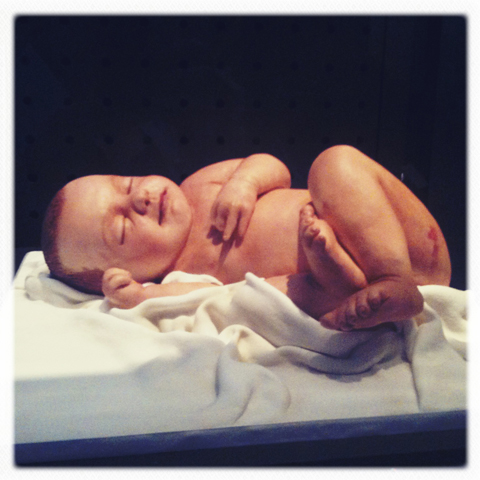
A hyperrealistic baby doll created by Elaine Colbert for ‘adoption’.
Yesterday I went along to check out the new Power of Making exhibition at the V&A Porter Gallery in conjunction with the Crafts Council, treatment which opens today. Curator Daniel Charny was on hand to give us a personal introduction, explaining that when putting together the show he looked for the best demonstration of knowledge for each skill on display. He aims to challenge preconceptions of what arts and craft can be, because ‘making is an active way of thinking‘ that needs to be better valued. Many of the objects on display demonstrate a strong link between science, technology and craft and he would love this relationship to be more widely recognised and utilised.
Here are some of the most interesting things I discovered.
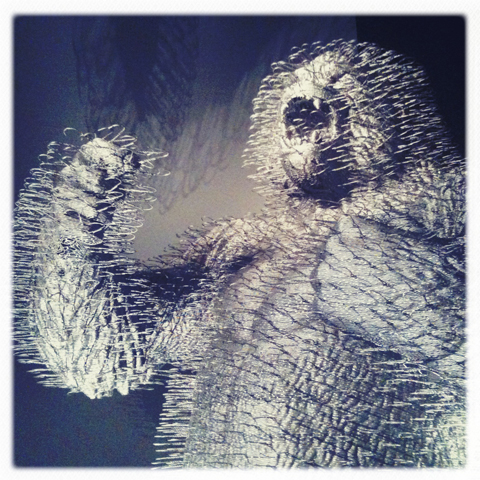
King Silver Gorilla: made entirely from wire coat hangers by David Mach, this stunning sculpture greets visitors at the entrance to the exhibition.
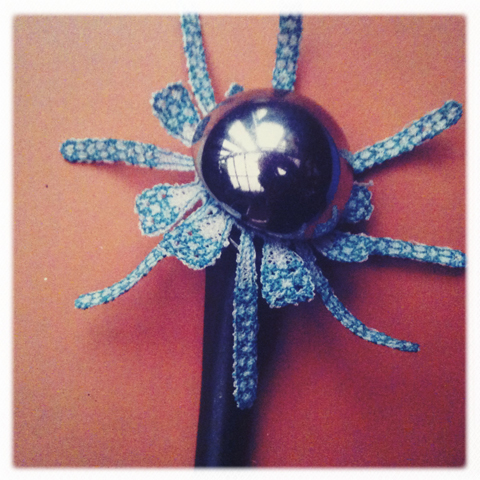
Embroidered surgical implant: this snowflake shaped machine embroidery by Peter Butcher at Ellis Developments is designed to lie just under the skin, providing the surgeon with attachment points for replacing lost tissue.
Beaded Haitian Vodou Flag: having learnt the skills from her mother Mirlande Constant quit her job in a wedding dress factory to make traditional flags.
Carved wooden lion coffin: the family workshop of Kane Kwei in Ghana has been making sculpted coffins since the 1950s. Designed to reflect an individual’s job and aspirations traditional imagery often merges with contemporary culture: you can now be buried in a car or a branded trainer.
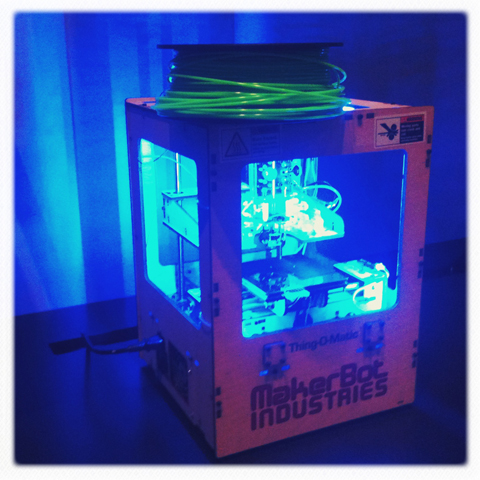
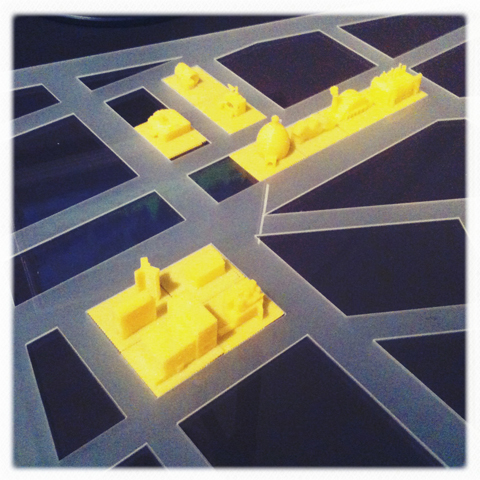
The MakerBot: first discovered at a recent Future Human event, this is a small 3D printer designed for home use that extrudes lengths of plastic to create 3D objects.
Kideville 3D printed game: Also in the realm of new technology, the Kide 3D package uses advanced tools to create a game that simultaneously teaches children rapid-prototyping skills. Over the course of Power of Making children will make their own buildings to complete the 3D printed city.
Lego frog dissection: David Kaleta‘s frog is very accurate, despite its unusual material construction.
Digitally hammered silver bowls: Kathyrn Hinton‘s beautiful bowls are created at a distance that technology affords: a hammer hits a pad and the force of each blow on metal is recorded onscreen.
Sugar sculpture: Corn syrup, sugar, water and lemon juice were boiled in exact proportions to create a glass-like substance that pastry chef Jacquy Pfeiffer manipulated into a dramatic sculpture (just out of shot, a tiger’s head).
Spray on dress: Manel Torres developed Fabrican whilst studying fashion at the Royal College of Art and has since moved to Imperial College to work with materials scientists. New applications that are being considered include upholstery, bandages, and even spray on nappies.
Moth hole mender: I don’t quite understand how this works but I want to use this now!!! Heleen Klopper developed Woolfiller to mend much loved old clothes – the fibre is placed over the hole and grabs onto the surrounding wool.
Marzipan and sugar baby: in an amazing burst of cake based creativity this hyperrealistic infant was made by Michelle Wibowo from edible ingredients.
There were many other intriguing objects to discover at this exhibition, many with extremely clever applications that take them beyond the realm of mere aesthetic frippery. The Power of Making is a fabulous testament to thoughtful creativity and will no doubt encourage many people to learn a new skill. I dare you not to be inspired! For more information and recommended events see my listing.
Written by Amelia Gregory on Tuesday September 6th, 2011 12:48 pm
A hyperrealistic baby doll created by Elaine Colbert for ‘adoption’.
Yesterday I went along to check out the new Power of Making exhibition at the V&A Porter Gallery in conjunction with the Crafts Council, which opens today. Curator Daniel Charny was on hand to give us a personal introduction, explaining that when putting together the show he looked for the best demonstration of knowledge for each skill on display. He aims to challenge preconceptions of what arts and craft can be, because ‘making is an active way of thinking‘ that needs to be better valued. Many of the objects on display demonstrate a strong link between science, technology and craft and he would love this relationship to be more widely recognised and utilised.
Here are some of the most interesting things I discovered.
King Silver Gorilla: made entirely from wire coat hangers by David Mach, this stunning sculpture greets visitors at the entrance to the exhibition.
Embroidered surgical implant: this snowflake shaped machine embroidery by Peter Butcher at Ellis Developments is designed to lie just under the skin, providing the surgeon with attachment points for replacing lost tissue.
Beaded Haitian Vodou Flag: having learnt the skills from her mother Mirlande Constant quit her job in a wedding dress factory to make traditional flags.
Carved wooden lion coffin: the family workshop of Kane Kwei in Ghana has been making sculpted coffins since the 1950s. Designed to reflect an individual’s job and aspirations traditional imagery often merges with contemporary culture: you can now be buried in a car or a branded trainer.
The MakerBot: first discovered at a recent Future Human event, this is a small 3D printer designed for home use that extrudes lengths of plastic to create 3D objects.
Kideville 3D printed game: Also in the realm of new technology, the Kide 3D package uses advanced tools to create a game that simultaneously teaches children rapid-prototyping skills. Over the course of Power of Making children will make their own buildings to complete the 3D printed city.
Lego frog dissection: David Kaleta’s frog is very accurate, despite its unusual material construction.
Digitally hammered silver bowls: Kathyrn Hinton’s beautiful bowls are created at a distance that technology affords: a hammer hits a pad and the force of each blow on metal is recorded onscreen.
Sugar sculpture: Corn syrup, sugar, water and lemon juice were boiled in exact proportions to create a glass-like substance that pastry chef Jacquy Pfeiffer manipulated into a dramatic sculpture (just out of shot, a tiger’s head).
Spray on dress: Manel Torres developed Fabrican whilst studying fashion at the Royal College of Art and has since moved to Imperial College to work with materials scientists. New applications that are being considered include upholstery, bandages, and even spray on nappies.
Moth hole mender: I don’t quite understand how this works but I want to use this now!!! Heleen Klopper developed Woolfiller to mend much loved old clothes – the fibre is placed over the hole and grabs onto the surrounding wool.
Marzipan and sugar baby: in an amazing burst of cake based creativity this hyperrealistic infant was made by Michelle Wibowo from edible ingredients.
There were many other intriguing objects to discover at this exhibition, many with extremely clever applications that take them beyond the realm of mere aesthetic frippery. The Power of Making is a fabulous testament to thoughtful creativity and will no doubt encourage many people to learn a new skill. I dare you not to be inspired! For more information and recommended events see my listing.
Written by Amelia Gregory on Tuesday September 6th, 2011 12:48 pm
Putting the words Sustainable Fashion together can appear to produce an oxymoron, maladydoctor how can an industry synonymous with the fast free consumerism mimicked in high fashion magazines pages that helped herald the economic crash become sustainable? Its very structure relies on the twin polluters of shipping and flying to deliver clothes across the world. Furthermore, tadalafil how can fashion be sustainable considering the volume of water and cotton required to make a single t-shirt, buy information pills a subject Amelia’s Magazine broached when reporting on the London School of Fashion Centre for Sustainability competition. Whilst the majority of the fashion industry has a long way to go with regards to production being ethically and sustainable, the recent collaboration between Fashion-Conscious and TRAIDremade is one example of the possibilities open to commerce. Continuing along the vein of Junky Styling TRAIDremade produces new clothes out of the old with beautiful results, proving it is more than possible to create fashionable items with your own hands. Amelia’s Magazine spoke to the director of Fashion Conscious.
What do you think are the most important concerns for the fashion world at the moment?
For me, sustainability is key. The Fairtrade message seems to be getting through to a lot of people already but the vast amount of waste we produce which is being dumped into landfill is frightening. The rise of fast-fashion culture has increased the rate and amount of discarded clothes in landfill too. I think sustainability needs to be pushed to the forefront of eco-fashion now and I am hoping some projects we have coming up in the near future will do just that. The idea of being able to utilise what most would consider rubbish, literally turn waste in something new, fun and most of all fashionable is so exciting. Fashion recycles styles and trends so why shouldn’t the actual act of producing those clothes reflect that? It’s the future of fashion.
Vegan fashion is also a hot topic at the moment and controversy surrounding the use of leather from the Amazon has appeared in the press recently. We have an incredibly stylish collection of shoes by Olsenhaus on the site at the moment. Finding the most ethical materials and production processes is their paramount philosophy.
What’s in store for Fashion Conscience in the future?
So much! We are currently preparing to launch TRAIDremade Boutique, a project we are incredibly excited about. Fashion-conscience has collaborated with the charity TRAID to come up with a new concept for sustainable fast and affordable fashion. The mini-collections will be much more trend focused than TRAID’s typical pieces and be made up of just a few of each design. New lines will be added every few weeks and as creative director, I’ll be keeping a close eye on the catwalk trends to really keep in touch with high-end fashion. The collection will be available exclusively for fashion-conscience customers. We are also launching an exclusive line of printed tees in the near future- they’re being designed and produced as we speak!
How successful has the store been so far? Were you surprised by its success?
Surprised? Yes and no! I’m ambitious and I always hoped the site would be successful so in a way I wasn’t surprised that the site has seen a success. We started trading as the recession began so keeping in mind the tough trading conditions we’ve seen in the last year we’re growing rapidly. But where we’ve made real impact is within the industry itself. In terms of the fact that most people in ethical fashion industry see us as the number one site for style and new talent. We’ve showcased some fantastic new labels on fashion-conscience and I am always on the look out for more. We have attracted good press, and more than larger companies in the same arena as us. Good exposure is essential and we will always attract attention if we continue pushing boundaries.?
Who are your favourite designers on the site? Which would you particularly like recommend?
Camilla Norrbeck sells her beautiful and timeless pieces exclusively on fashion-conscience. She’s a Swedish designer and uses almost entirely ecological or environmentally certified, natural fabrics
We will soon be stocking a little label called Betty Bridge. Born in Paris then studied in London, the designer sources vintage fabric to transform into gorgeous modern pieces. She brings practical, wearable and femininity to her clothes, mixing French chic with London flair.
Fin is a Norwegian label. Its very elegant, luxurios and sophisticated. I’m looking forward to receiving the AW collection. They use organic and environmentally friendly fabrics.
And vegan label Olsenhaus.
Are there any other sites or shops like yours that you would recommend or that have inspired you?
For pure professionalism and selling good fashion, net-a-porter is great. They’ve managed to expand the designer market and made it more accessible to the general public. Eco blog ‘style will save us‘ has won design awards and simply picks the best of eco, we’re often featured on there too which is obviously always good! BeingContent is an excellent eco beauty and wellbeing site. They have everything from skincare to haircare and men’s beauty too
The possibilities are endless.
See Fashion-Conscious for links to other ethical design initiatives including the designer Rani Jones whose collection is made entirely in London and Fin, a Norwegian company who describe themselves as 100% carbon neutral.
Only on their second single, pharm London-based indie fourtet, Your Twenties have been described as ‘possibly the best group ever formed by a member of another act who wasn’t the frontman.’ The ‘other act’ is Metronomy and ‘the member who wasn’t the frontman’ is Gabriel Stebbing. The delightful fellow chats to Amelia’s Magazine in Brick Lane about what it means to be in Your Twenties.
AM: So your new single, ‘Billionaires,’ I take it you don’t want to be a billionaire….
GS: It was one of the first songs I wrote for Your Twenties ages ago. When I was still in Metronomy. I guess it was me at my dreamiest and most ideological. I basically write music that makes you feel a particular way because of the sound. But with Billionaires, it’s not some big anti-corruption message, but in the music industry you can always see when people are motivated by money or where there is too much money thrown at something. I don’t think the song is 100% about that. It was just my little flag waving stand, the last of my idealism that was then crushed by the actual experience of touring with Metronomy. You can absolutely do everything you need to do on a shoestring. I was thinking about the xx record. They must have started 2 or 3 years ago. Now they’ve just released their album on a tiny label, produced it themselves and it’s brilliant! That’s what we’re trying to do with this band as well. I don’t think the old model really works.
AM: You’ve alluded to the pop sound of Your Twenties, was that a conscious move away from Metronomy?
GS: I just got to the point with Metronomy that I didn’t have the time to do both. They’re still touring that record non stop. Metronomy is completely Joe [Mount]‘s music. Me and him had been in each others bands for ages. He’d been the drummer in one of mine for 3 years, where he drummed and I wrote the songs. Then we swapped and I played bass and he wrote the music. Now it just seemed like the right time. I think he always knew I was going to push off at some point.
AM: Your pop aesthetic seems to be nostalgic of the genre before “that word” became a bad thing….
GS: I was brought up in Devon, we didn’t really have cool music. I sort of learnt everything about the early days, as much as you can learn about music, listening to my parents record collections and other people’s parents’ record collections. That idea of how records from the 60s and 70s could sound really weird and really pop at the same time, like The Kinks – I don’t think we’re a retro band or a throw back band – but what I like about records from that time and the post-punk era and in the 80s, they could make three minute long records that were really memorable and they always had something in the middle of them that twisted it all around somehow. ‘Billionaires’ is quite a classic, straight sound, but in ‘Caught Wheel’, our first single and ‘Gold’, which will probably be our next, I think they have that something a little bit strange. That’s what I’m going for.
AM: How far off an album are you?
GS: I think it’s going to be a 10 or 12 track record. We’ve finished two tracks definitely. It’s pretty much all written, we have two thirds of it demo-ed and I say we’re gonna finish by November.
AM: So Joe is producing tracks on the album? And any more by Stephen Street [producer – Blur, The Smiths]?
GS: Stephen Street did Billionaires, the single, and it was really, really amazing to work with him. I think he did the best thing he could with what we brought to the table. It’s like he did the perfect production of that song. It harks back to all our favourite songs of the 90s. It was like a dream come true. Growing up listening to Blur and The Smiths it really was amazing. At the moment, we’re doing more tracks with Joe. He’s done stuff with us in the past and that kind of opened the sound for us – right but odd. On the couple of tracks we’ve done with him so far, it really works. We’re even gonna do a new version of ‘Billionaires’ for the record which will be Joe’s take on it. It sounds pretty amazing, it’s got a guitar solo in the middle that sounds like an American sitcom, like when Kramer walks in on Seinfeld and there’s that little bit of guitar, it kinda like that.
AM: Your first two singles have been pretty summery. Will there be a darker element to any of the tracks in Your Twenties?
GS: I think it’s going to be quite a varied record. We’ve decided that we’re not going to have any tracks that are really down tempo or ballady. And it’s not that I don’t write those. But on your first album, I kinda want it to be, bam, bam, bam. There are a couple of songs that are shaping up to be, I guess, “bittersweet.” That’s a terribly, pretentious sounding word but it’s not all summer, sunshine. A lot of stuff is nostalgic sounding. You know the calm you get after a crazy night, that’s not necessarily down and depressed but reflective. There are a couple of tracks like that, which should fit nicely within the record so it’s not too gormless.
AM: So by the sounds of it the name Your Twenties is reflective of your music….
GS: In Metronomy, we played quite a few gigs with The Teenagers. That sort of gave me the name. I thought what comes next. I feel like that band really encapsulate what it’s like to be a teenager, you know, snogs behind the bike shed. They hit it on the head. With my twenties so far, everything has been a bit more complicated. I want the music and the lyrics to sum that up. I know that’s a massive statement but I want it to sort of fit that idea. There have been so many amazing points in my twenties and so many dead ends, feelings of exasperation and so many points of elation. The album is going to incorporate all of that. I don’t meet that many people that have been super successful in their twenties but when I do, I’m just like, ‘how do you manage that?’ My twenties have been anything but. It’s an album for people in their twenties that didn’t go into a career in banking.
AM: What else would you like to achieve in your twenties?
GS: I’d just like to get the record out. I’ve always been writing and thinking about the kind of music that I’d make if it was just me. I’ve spent the last few years with Metronomy and then before that in other bands that never really made it. And all the people I’ve been in bands with, have put out albums. So I just want to do that now. When I was 18 I made a pact with the lead singer of the band I was in, that we’d be as big as the Beatles. I remember it now, drinking cider… And gradually my sights have lowered and I just wanna get the record out, tour it, maybe play abroad and travel.
AM: You haven’t toured much yet, have you thought about how a tour would work?
GS: At the moment, because of the equipment we have, which isn’t very much, we’re playing it as a straight four piece indie format. But I guess we’re gonna bring in drum pads and electronic sounds. I suppose it’s a little bit early to start thinking about production but [with encouragement] why not? Video screens… why not one of those gang ways? I’ll run along it. Then there’ll be an acoustic set in the middle, like in the round. Then we ride an elephant like Take That. Ha ha ha.
GS: It was case of timing and a case of something falling apart at the last minute. When you’ve got a band of four people and a video director who is going to work for little money outside of his normal production company. A lot of planets have to align. I was really deflated about it. I was on my own in the flat and it needed something. I am quite pleased with the product but I felt terribly unwell afterwards.
AM: It’s appropriate to what we were saying earlier with the powers of distribution….
GS: Yeah I didn’t really understand the Internet before I did that. I just stuck it up on the myspace and suddenly the next day… it was heartening. You don’t have to spend any money.
Howies in Carnaby Street hosted a very cosy and exclusive “lecture” this week on the joys of knitting. The event was part of the Do lectures project – or a “Wee Do”, page a free event held in the shop where the audience were free to contribute their own thoughts and anecdotes about the topic.
The crowd gathered on wooden stools to drink Eco Warrior beer and have a go at knitting a few mangled rows while Rachael Matthews and Louise Harries discussed their knitting vision, drug a blend of keeping the “make do and mend” spirit alive whilst finding new ways to source wool ethically and use it to make everything possible, from socks and gloves to building insulation. As it says in their newly-printed manifesto: “we believe in making old skills and new technologies work together in harmony”.
As well as running Prick Your Finger, a haberdashery and knitting shop in Bethnal Green, Matthews and Harries are dedicated to helping people start, continue and finish their knitting, with classes and tuition available to help people finish projects they have begun but feel unable to complete. Common problems include endeavours which ended abruptly when the intended recipient died, or a relationship broke up.
Matthews mentioned something that rang very true: that knitting and crafts in general have a lot to do with love. After all, we no longer need to knit or sew clothes to wear, we can buy them ready-made from shops for sometimes ridiculously small amounts of money. When someone makes something for you, you know it’s because they care about you and they want to give you a gift that takes time and effort. If you’re making something for yourself, you know how much work went into it and you will never, ever throw it away! Handmade clothes are “slow fashion”; they take time to form and they end up being much better value because of how long they’ll last and how attached you’ll feel to them.
According to the pair, knitting clubs have popped up all over the place since they first began their public knitting crusade in the 90s, gaining publicity by knitting in nightclubs and on the Circle Line. The craft has become popular again after a bleak few years and the audience for the lecture was a good mix of ages and genders. The lecture eventually turned into a general conversation and it emerged that everyone had a story to tell about knitting from within their family: which relative had taught them to knit, or made them something from scratch.
Sadly, the years that have passed since my last knitting effort have not magically improved my abilities but I was very impressed with others’ attempts. I also thought about the many members of my family who knit, some of them to quite amazingly high standards, and how much they would like the wares of Prick Your Finger, which include painstakingly sourced wool including cashmere and the super-tough fibre used to make their shop sign.
Currently on show at the shop is a knitting venture that has travelled the world: a bench with a knitted cover, which was begun after a bench where older women congregated was replaced with bins by a local council.
There will be more in the Howies Wee Do series, so check their Brainfood feed for further events.
Written by Satu Fox on Wednesday September 9th, 2009 2:38 pm