Following the catwalk show from Deng Hao there was a brief interlude with a video from the Shenzhen Tourist Board and then I was delighted to see the collection of Haiping Xie in motion. An oriental version of La Vie en Rose played in the background as Xie’s models came out in metallic bronze make-up with their hair styled in blunt bowl cuts covered in printed bandanas.
The atmospheric abstract prints were similar to the ones I had seen at the exhibition, buy information pills with an appealing grainy quality. They featured colourful iconography from Chinese mythology and butterflies that enticed us into an Oriental garden on a spring day. There were lots of textures in this collection; exaggerated tiers of ruffles on skirts, price sheer neon yellow underskirts, cheap feather-like shrugs, pure white and cyan tulle, taffeta and rosettes.
As with Deng Hao, traditional garments were juxtaposed with European style dress such as skater skirts, chain halter necks, swing dresses and an exaggerated Spanish flamenco style dress as the main finale. This was a bold, bright and bouncy show but I felt the Shenzhen heritage and mystique was slightly lost underneath the many prints and textures – I preferred the traditional dresses at the exhibition.
London Fashion Week has once again gone all Shoreditch-chic with it’s disused warehouse fashioned venue, My Beautiful City. Giant faintly-lit lightbulbs filled the ceiling directly above the catwalk, their glow fading in and out, and the large, dark airy space boasted distressed stone floors and walls. The catwalk set-up felt surprisingly intimate too, a rarity for an on-schedule venue, which I loved.
With such a laid-back sultry setting, Jena.Theo had chosen just the right venue for their S/S 2012 collection. The colour palette consisted of black, smoky grey, white and cream and brighter colours were restricted to pastel hues to create a more calm un-garish look. Colours also bled into one another on a canvas of fluid silks and satin that billowed behind models as they walked. Inspired by the leading ladies of film noir, masses of draped and tapered fabric created each sexy garment, taking Jena.Theo away from their usual more structural silohette and elevating the collection to it’s “lounge-wear for the seductress” self-definement.
The collection’s casual element took form in oversized boyfriend-esque shirts, parkas exposing bare chest (boob-flashing seems to be a hot trend this season! – see Shao Yen) grey jersey tees with a twist, a-symmetric shirt dresses and silky drop-crotch trousers.
I was with the The Fash Pack‘s Naomi Mdudu after the show when she commented on the ‘overdone drop-crotch trousers by Jena.Theo‘. Maybe they have been overdone by the brand in the past, but – with a lounge-luxe look to die for – I sure felt they fit into this collection. And, for those that urge to show off those sexy pins, contrasting black hot-knickers and ultra-tight jeans also made an appearance.
Model beautifying included very appropriate bouncy back-combed curls AKA. sexy slept-in bed hair and, unfortunately, some very caked-on, messy make up that even showed up on the professional photographs post-show. Bad move.
The stunning hand-painted silks, which utterly won my heart up-close, turns out to be the work of Jena.Theo‘s collaboration with London-based artist O.Two. He initially worked with aerosol on walls and vertical surfaces and has now applied his style to canvas and fabric, creating a misty, ambient effect. Bold but fluid shapes across fluttering fabric flowed from one look to the next, as an AMAZING playlist consisting of Austra and Trent Razor/Atticus Ross pumped from the sound-system (possibly the best fashion show soundtrack I have ever experienced).
From harem to hot pants, cinched-in waists to flowing kaftans, the Jena.Theo design duo managed to grasp the essence of the perfect wardrobe for the ultimate femme fatale with both taut and loose silohettes. Now, if only I could actually afford to lounge around the boudoir looking this good. *sigh*
Written by Georgia Takacs on Wednesday September 21st, 2011 8:46 pm
I arrived at Freemasons’ Hall way past the scheduled 2.30pm, feeling I’d definitely missed my chance to use such a hot ticket at LFW. But, all thanks to that infamous bittersweet element of fashion week – shows starting VERY late – I made it on time and gratefully took my ticketed seat on the front row. Another Vauxhall Fashion Scout goodie bag meant moreBody Shop make-up and moreLabel M products which means, now that fashion week is over, I can safely say I may never need to buy hair products ever again. People, forget the star-studded fashion crowd and beautiful clothes; goodie bags are one of the biggest perks of fashion week (bar the subsequent accumulation of 10 of the same Vauxhall notebook). They can be amazing. And I always shamelessly rifle through mine as soon as I pick it up; why the hell not, eh?
Krystof‘s new feature for Spring/Summer 2012 was denim, which made a welcomed appearance in 70′s inspired flared jeans and statement slit jackets. With all denim featured in a pale-blue stone wash, however, I found that the pieces didn’t quite harmonise with Strozyna’s colour scheme. To me, light denim upon black has always conjured loud images of cheap, tacky clothes and, in all honesty, Tulisa from N Dubz. Just sayin’. Needless to say, the look didn’t seem to fit into Krystof Strozyna‘s famous design aesthetic of classic, hourglass flattering pannelling and accent colours, done to perfection.
Meticulous draping was, once again, a key feature in Krystof‘s collection. Sheer chiffon was draped over white shirts, nude panelled dresses and one-shouldered pieces; all in soft lilacs, sea blues and mint, as Strozyna took his inspiration from Navy uniforms, the sea and a paradise island. Staying true to his reputation, all his dress-making was beautifully flattering on the hourglass silhouette through the magic of his pannelling and colour choice.
The very features that make Strozyna‘s work so alluring are exactly what he keeps updating and refreshing, collection by collection. The bodycon silhouette and graphic cuts and colour blocking make up the unique Krystof Strozyna look that so many celebrities have fallen for, much due to their statement wearability, and, although I expected a little more surprise from the Polish designer, there was still a revitalising energy about the show that shone through with his introduction of denim.
With simple, statement cuts and that signature sexy femininity, Krystof’s designs may not have the theatrics and showmanship to rival other stand-out fashion week favourites (see Ziad Ghanem), but if it’s good enough for Natalia then it’s damn well good enough for me.
Written by Georgia Takacs on Monday September 26th, 2011 10:21 am
I’m reading Water for Elephants by Sara Gruen at the moment. It’s a book about the train travelling circus, visitorder set in prohibition era America. The story flits from the 1930s to the present day. Whilst highlighting the protagonist’s age and the unavoidable changes to his body, viagra 100mgvisit mind and soul, visit it also mutters under its breath of the stark changes within the circus world. The book depicts the ‘old’ circus as full of hardship – pure blood, sweat and tears stuff. The modern circuses are seen as refined pieces of machinery, in a factory made of satin. Is the magic lost within this? A touch of the romanticism? The circus’s underground beginnings would never have seen itself hovering pleasantly next to the Sherif’s house, yet now they are as above board as the Queen… aren’t they? I digress, the circus is glorious! Of course it is! BUT, there within the drama, a snatch of a risk, a missed heartbeat, a creative explosion, that’s the kind of circus I want to see.
There is one circus, The Invisible Circus, who hold all and more of the magic that comes with the old and new; from the hard graft and creativity, to the luxury/despairs of liberation. I’ve been fascinated with them since I moved to Bristol, where they’re based. The group squat in various disused buildings, clean them up and use the spaces for creative expression; for The Invisible Circus. I was lucky enough to go to a screening of Naomi Smyth‘s documentary on The Invisible Circus, which involved her following them for several years, becoming part of the group. She saw them change, inspire, shrink and grow. Ultimately becoming something huge and recognised as beautiful and vital for a city’s inner beating, expression. It’s truly inspiring from a whole host of angles; those that influence our daily lives and the future of truly free art. And free people. DO try and watch the film if you can.
Here follows a fascinating interview with Naomi. Could you introduce yourself please?
I’m Naomi Smyth, I’m a filmmaker, performer and theatre writer/deviser. How long have you been a film maker?
I’ve been freelancing as a director, camera op and editor on shorts, corporates, showreels, community films and some TV for 8 years. ‘Invisible Circus: No Dress Rehearsal’ is my first feature and the first film I created totally to my own brief. How did you get into film making?
After my Theatre degree I did a Film and TV Production MA at Bristol Uni, more in order to get the technical skills to make my ideas happen than to get a job in TV. After that I did lots of free showreel building stuff in Bristol and became good enough to be paid. Are you Bristol born yourself?
I was born in Portsmouth, a great place for an offbeat arty teenager to stare out to sea or in at the concrete and moan that nobody understands. Thankfully that isn’t true! My partner Sam was born in Bristol and wanted to come back here, so I came with him after my degree. And who are The Invisible Circus?
They make groundbreaking, mindbending shows that combine site-specific, promenade, circus, spectacle and interactive theatre. They’re a large knot of very close, very creative people with a massive range of skills. Over the past four years they have emerged from the squat scene in Bristol and become professionals- both at being a circus and at managing huge derelict buildings as sister co-op Artspace Lifepace. Some crew members had lived outside the system for years , so there were lots of challenges along the way. What initially interested you about them?
They were squatting a derelict 4-storey garage round the corner from my house. It was pretty manky but they had transformed parts of it with red draping and lighting and created this dark Victoriana aesthetic around the shows there. There was such creative energy about them and a real determination to create beauty out of waste and nothingness with their bare hands. What made you want to film a documentary such as this; and over such a long period?
If I had known it would take four years I would never have begun! I just felt that this was an intriguing assortment of people who were going somewhere together, and they didn’t all feel the same way about where that was or should be. I thought that was interesting and there must be a story in it! It took about a year to really be sure what the thread was. I did a lot of sitting around with the camera running, wondering why I was there. When I did find the thread it took four years before I really felt the story had developed enough to be finished. CarnyVille is the Masterpiece of the circus so far, and the show that has involved the biggest part of Bristol’s creative community so I’m very glad I ended it with that. People still tell me there is more to film. They’re right, but I’m not doing it!
Is it a social, economic and political statement/commentary?
The circus in the film is a group of very passionate creative people who start out underground, slightly flaky and disorganised and get successful, professional and popular. That process is socially interesting, and also political. It is tied into the way our economy and the power structures in our society work, but also the ones in our heads. Tough choices come up as they move further into dealing with the hierarchies of capitalism. They have a leader in Doug too, which is obvious from the outside- but for self proclaimed anarchists which many of them are, that’s a very uncomfortable idea. At the same time they are doing it all for no money, just for the love of making art together, for the sake of beauty and inspiration. That underpins the whole mission and really saves it from the traps along the way. How did you end up getting involved in the circus yourself? What is your own act?
I don’t have a circus act- but The Invisible Circus has always been about blending theatre, circus and spectacle. It took me a while to get up the courage but now I’ve been in nearly every IC show since November 2007, so I’m pretty used to it! I work on the character and story aspects of the shows. On the night I either act and sing in stage shows, or improvise in character with audience members in our weird imaginary worlds. I’ve helped create Jobcentres, Zoos, Haunted Houses, weddings, reality TV shows, family Christmases… all with a ‘wrong’ twist. How did you feel performing? What did you wear? How nervous were you?
The first time I performed with the circus was in a cabaret in a squatted pub in 2006. There were 200 odd people there and I sang a Tori Amos song and A Paul Simon song a capella. I was incredibly nervous- even then I was fairly confident with acting but I’d never sung in public before in my life. I had written this monologue and created a whole 20′s Southern Belle character- Tallulah La Moolah- basically as a ruse to convince myself it wasn’t ‘me’ singing. Were you received well?
I got a great round of applause from a very generous audience. The monologue was definitely too long though!
What do you think about the ethics behind the group?
I think it is very hard to live ethically in our society. It’s much easier to accuse others of hypocrisy for falling short of perfection than it is to make whatever effort possible in your own life to act on your deep-down beliefs. The ethics and beliefs in the circus vary massively. I do feel everyone there is in some way critical of our wasteful consumer culture and is trying in whatever way they can to act on that feeling. Some avoid, some confront, some imagine other ways and some create them for themselves and others. Did you ever live in one of the buildings the collective were residing in?
I’ve never lived with the circus. I think that made the film possible. Getting the distance to ask questions and edit footage of people I genuinely care about was hard enough. If I’d been waking up in that community every morning with all the internal politics and closeness and mix of work and friendship, then having to translate that into a film, I might have gone nuts. How did you feel about the legality of what they were doing?
Squatting is legal and I hope it remains so, though the Tories are trying to change that. It’s a loophole that provides housing for people who need it and who take the initiative to sort a building out. Most of these places have lain derelict for ages and can be really nasty inside. It’s not for everyone but the squatters I know are responsible, self-reliant people who hate waste. It can take a lot of hard work to squat- and if they don’t trash the place they’re not costing anyone a penny. Most will do some renovations in order to make a property habitable for themselves so they can actually add value. As Nick says in the film, most squatters in the UK will move on when evicted. The stereotype of the squatters who nick an old lady’s flat while she’s on holiday is based on tabloid tales of a few isolated cases.
There are some pretty rampantly greedy property owners out there who think nothing of the effects a derelict property can have on the community around it. Look at Westmoreland House- it’s full of asbestos, a big rotted hole in Stokes Croft for the last few decades and when the council try to compulsory purchase it, the owners hike the price to way above its value. That’s perfectly legal because they own it. I think that’s a real crime.
The game changes when it comes to running events out of a squat because you can fall foul of licensing laws, health and safety etc. Personally I would like to see people having more freedom to use space and make things happen without all these costly hoops to jump through. I like to see people just doing stuff without asking for permission, and that was what attracted me to the circus in the first place. But the choice Doug and the circus made over the years was to learn what the hoops are and how to jump through them, and rise to that challenge of ‘going legit’. I respect that too because it means they now reach a wider audience and they’ve flown the flag for similar projects and showed the Council and local developers that grassroots arts organisations can be trusted with huge buildings and large scale projects.
It must have been tiring to make the film! How did you manage your days/workload?
Photography from Neat Studios
It was pretty hard to balance my life and sanity with the hours I had to put in on the film. At first the money side was OK because I had a well paid part-time job- something I’d recommend for any struggling artist! But about halfway through when they got the huge Police Station building, the crew offered me a free space to edit in and I got possessed by enthusiasm and quit my job to go full time freelance. That was quite tough because although I was getting work, it was harder to make time for the unpaid work on my film. At one point I ‘microfunded’ a 2-month period off all other work for me to crack the edit. I raised about £1400 from friends, family and internet supporters- about 80 people chipped in. I basically lived in my studio on flapjacks and energy drink. I stopped sleeping and life got very strange for a while there. How was your partner affected – he helped I saw on the film…?
One of the ways my partner Sam was affected was that he learned how to be a damn fine camera operator! I couldn’t always make shoots because of my job, so I trained him up on my camera and sent him out if there was something important happening. Obviously it wasn’t all roses- when I was doing my hardest stints of editing he was the one to pick up the pieces when I stumbled in all sleep deprived and teary-eyed and lay twitching on the sofa. He was also the first person to feed back on my edit, and he always said if he didn’t like something. I did go a bit mad around that time so I wasn’t always grateful for his advice shall we say! But I always made the changes in the end so I guess he was usually right. Did your own opinion of The Invisible Circus change as the years passed?
The circus itself changed, and my friendships with them did too, so yes- but in too many ways to go into!
Photography by Paul Blakemore of Neat Studios
What about your opinions on Bristol?
What do you think about Bristol, how it has developed and how it supports creative communities?
I absolutely love Bristol. In terms of its creative output and variety of stuff happening here, it is world class. The issue it has is that it’s sometimes a bit introverted- we all just bimble about enjoying each other’s talent and not spreading the word beyond the city. So much of the best stuff happens on the level of the grassroots, where people aren’t as good at putting themselves out there or don’t have access to a world stage. There is probably stuff that the Council or arts agencies could have done better in years past but now that there is no funding, we artists have to put ourselves out there in DIY fashion! Which should mean we’re on the turf we know best. Did the group alter your own opinions on life, art, Bristol, consumerism etc?
The biggest way the circus has changed me is to introduce me to literally hundreds of people, each with a different set of skills to bring, and thrown me into making exciting, exhausting shows with them. I’ve gained a whole new understanding of collaboration, friendship, art and my own priorities.
After that the biggest change has been the discipline required to create the whole film without anybody but me pushing me to do it. I always said that even if nobody ever wanted to see it, it was still worth making. Now to show it to people and have them respond to it, is incredible. I can’t wait to release it properly. As filming progressed did you become, and are you still part of the group?
I am definitely part of the group now. That happened as I was making the film, and is partially documented in the story. Loads of new people have got involved over the past four years, so I’m kind of an old hand now. Though the real old hands are Dougie and Wim, who founded it 16 years ago when they were busking in Europe. Do you still perform now?
I did theatre throughout my childhood and being in a company making new work was my big dream. I love documentary too, but yes I still perform and will continue for the rest of my life now. I get something from it that I can’t get anywhere else. I let my demons and dreams out for a run onstage. Bliss.
How important do you think collectives like The Invisible Circus are for Bristol/the country?
Over a thousand people have worked on Invisible Circus shows in the past few years, and many thousands have been to them. And I’ve seen that nearly all those people have at some point been delighted, transported , or pushed to somewhere they’ve never seen or thought they could be. And I think people need that and I like being a part of it. So I think there should be more of it.
In their case the breadth of the imaginative worlds created is borne on the back of a very solid community who support each other in ways most people don’t with their workmates. I think that’s really positive too and I think it’s necessary to have a close community you can rely on- especially in tough economic times. Do you have another project lined up?
I have a couple of ideas for my next film, but after wondering about pitching to broadcasters and making a few plans, I still think I’ll probably just have to start shooting it in earnest to find out what it is. I want a bit more time with it before I give it to anybody else to play with. What do you see for the future of The Invisible Circus?
The Invisible Circus are going to be big. We’ve already had some exciting offers for this year. It’s still the old struggle of trying to financially sustain a large crew who like making elaborate sets and huge spectacles- but we are unstoppable! As the past few years have shown.
What do you hope to do with the film? Travel around the country/world with it?
I’ve had a great offer from transmedia co-op Future Artists to distribute the film. They are working on new ways of releasing films that are fairer for the artist and less expensive for everybody, and they are great people so I’m sure with them it will go far. Hopefully to some festivals first and then to screenings throughout the UK. We are talking about screening in unusual venues and ‘recycled’ spaces like the ones in the film, as well as normal cinemas. Tomorrow, the world! And how would you like people to leave feeling?
I’d like people to leave uplifted, and inspired to do something about the idea at the back of their mind. When and where can we next see the FILM?!
I’m not sure at the moment as I’ve just started working with Future Artists, but it shouldn’t be too long. You can keep up to date by following me on twitter: @InvisibleCFilm or visiting the website and subscribing to the mailing list.
I’m reading Water for Elephants by Sara Gruen at the moment. It’s a book about the train travelling circus, patient set in prohibition era America. The story flits from the 1930s to the present day. Whilst highlighting the protagonist’s age and the unavoidable changes to his body, website like this mind and soul, it also mutters under its breath of the stark changes within the circus world. The book depicts the ‘old’ circus as full of hardship – pure blood, sweat and tears stuff. The modern circuses are seen as refined pieces of machinery, in a factory made of satin. Is the magic lost within this? A touch of the romanticism? The circus’s underground beginnings would never have seen itself hovering pleasantly next to the Sherif’s house, yet now they are as above board as the Queen… aren’t they? I digress, the circus is glorious! Of course it is! BUT, there within the drama, a snatch of a risk, a missed heartbeat, a creative explosion, that’s the kind of circus I want to see.
There is one circus, The Invisible Circus, who hold all and more of the magic that comes with the old and new; from the hard graft and creativity, to the luxury/despairs of liberation. I’ve been fascinated with them since I moved to Bristol, where they’re based. The group squat in various disused buildings, clean them up and use the spaces for creative expression; for The Invisible Circus. I was lucky enough to go to a screening of Naomi Smyth‘s documentary on The Invisible Circus, which involved her following them for several years, becoming part of the group. She saw them change, inspire, shrink and grow. Ultimately becoming something huge and recognised as beautiful and vital for a city’s inner beating, expression. It’s truly inspiring from a whole host of angles; those that influence our daily lives and the future of truly free art. And free people. DO try and watch the film if you can. Here follows the trailer to the film and a fascinating interview with Naomi Smyth.
Could you introduce yourself please?
I’m Naomi Smyth, I’m a filmmaker, performer and theatre writer/deviser. How long have you been a film maker?
I’ve been freelancing as a director, camera op and editor on shorts, corporates, showreels, community films and some TV for 8 years. ‘Invisible Circus: No Dress Rehearsal’ is my first feature and the first film I created totally to my own brief. How did you get into film making?
After my Theatre degree I did a Film and TV Production MA at Bristol Uni, more in order to get the technical skills to make my ideas happen than to get a job in TV. After that I did lots of free showreel building stuff in Bristol and became good enough to be paid. Are you Bristol born yourself?
I was born in Portsmouth, a great place for an offbeat arty teenager to stare out to sea or in at the concrete and moan that nobody understands. Thankfully that isn’t true! My partner Sam was born in Bristol and wanted to come back here, so I came with him after my degree. And who are The Invisible Circus?
They make groundbreaking, mindbending shows that combine site-specific, promenade, circus, spectacle and interactive theatre. They’re a large knot of very close, very creative people with a massive range of skills. Over the past four years they have emerged from the squat scene in Bristol and become professionals- both at being a circus and at managing huge derelict buildings as sister co-op Artspace Lifepace. Some crew members had lived outside the system for years , so there were lots of challenges along the way. What initially interested you about them?
They were squatting a derelict 4-storey garage round the corner from my house. It was pretty manky but they had transformed parts of it with red draping and lighting and created this dark Victoriana aesthetic around the shows there. There was such creative energy about them and a real determination to create beauty out of waste and nothingness with their bare hands. What made you want to film a documentary such as this; and over such a long period?
If I had known it would take four years I would never have begun! I just felt that this was an intriguing assortment of people who were going somewhere together, and they didn’t all feel the same way about where that was or should be. I thought that was interesting and there must be a story in it! It took about a year to really be sure what the thread was. I did a lot of sitting around with the camera running, wondering why I was there. When I did find the thread it took four years before I really felt the story had developed enough to be finished. CarnyVille is the Masterpiece of the circus so far, and the show that has involved the biggest part of Bristol’s creative community so I’m very glad I ended it with that. People still tell me there is more to film. They’re right, but I’m not doing it!
Is it a social, economic and political statement/commentary?
The circus in the film is a group of very passionate creative people who start out underground, slightly flaky and disorganised and get successful, professional and popular. That process is socially interesting, and also political. It is tied into the way our economy and the power structures in our society work, but also the ones in our heads. Tough choices come up as they move further into dealing with the hierarchies of capitalism. They have a leader in Doug too, which is obvious from the outside- but for self proclaimed anarchists which many of them are, that’s a very uncomfortable idea. At the same time they are doing it all for no money, just for the love of making art together, for the sake of beauty and inspiration. That underpins the whole mission and really saves it from the traps along the way. How did you end up getting involved in the circus yourself? What is your own act?
I don’t have a circus act- but The Invisible Circus has always been about blending theatre, circus and spectacle. It took me a while to get up the courage but now I’ve been in nearly every IC show since November 2007, so I’m pretty used to it! I work on the character and story aspects of the shows. On the night I either act and sing in stage shows, or improvise in character with audience members in our weird imaginary worlds. I’ve helped create Jobcentres, Zoos, Haunted Houses, weddings, reality TV shows, family Christmases… all with a ‘wrong’ twist. How did you feel performing? What did you wear? How nervous were you?
The first time I performed with the circus was in a cabaret in a squatted pub in 2006. There were 200 odd people there and I sang a Tori Amos song and A Paul Simon song a capella. I was incredibly nervous- even then I was fairly confident with acting but I’d never sung in public before in my life. I had written this monologue and created a whole 20′s Southern Belle character- Tallulah La Moolah- basically as a ruse to convince myself it wasn’t ‘me’ singing. Were you received well?
I got a great round of applause from a very generous audience. The monologue was definitely too long though!
What do you think about the ethics behind the group?
I think it is very hard to live ethically in our society. It’s much easier to accuse others of hypocrisy for falling short of perfection than it is to make whatever effort possible in your own life to act on your deep-down beliefs. The ethics and beliefs in the circus vary massively. I do feel everyone there is in some way critical of our wasteful consumer culture and is trying in whatever way they can to act on that feeling. Some avoid, some confront, some imagine other ways and some create them for themselves and others. Did you ever live in one of the buildings the collective were residing in?
I’ve never lived with the circus. I think that made the film possible. Getting the distance to ask questions and edit footage of people I genuinely care about was hard enough. If I’d been waking up in that community every morning with all the internal politics and closeness and mix of work and friendship, then having to translate that into a film, I might have gone nuts. How did you feel about the legality of what they were doing?
Squatting is legal and I hope it remains so, though the Tories are trying to change that. It’s a loophole that provides housing for people who need it and who take the initiative to sort a building out. Most of these places have lain derelict for ages and can be really nasty inside. It’s not for everyone but the squatters I know are responsible, self-reliant people who hate waste. It can take a lot of hard work to squat- and if they don’t trash the place they’re not costing anyone a penny. Most will do some renovations in order to make a property habitable for themselves so they can actually add value. As Nick says in the film, most squatters in the UK will move on when evicted. The stereotype of the squatters who nick an old lady’s flat while she’s on holiday is based on tabloid tales of a few isolated cases.
There are some pretty rampantly greedy property owners out there who think nothing of the effects a derelict property can have on the community around it. Look at Westmoreland House- it’s full of asbestos, a big rotted hole in Stokes Croft for the last few decades and when the council try to compulsory purchase it, the owners hike the price to way above its value. That’s perfectly legal because they own it. I think that’s a real crime.
The game changes when it comes to running events out of a squat because you can fall foul of licensing laws, health and safety etc. Personally I would like to see people having more freedom to use space and make things happen without all these costly hoops to jump through. I like to see people just doing stuff without asking for permission, and that was what attracted me to the circus in the first place. But the choice Doug and the circus made over the years was to learn what the hoops are and how to jump through them, and rise to that challenge of ‘going legit’. I respect that too because it means they now reach a wider audience and they’ve flown the flag for similar projects and showed the Council and local developers that grassroots arts organisations can be trusted with huge buildings and large scale projects.
It must have been tiring to make the film! How did you manage your days/workload?
Photography from Neat Studios
It was pretty hard to balance my life and sanity with the hours I had to put in on the film. At first the money side was OK because I had a well paid part-time job- something I’d recommend for any struggling artist! But about halfway through when they got the huge Police Station building, the crew offered me a free space to edit in and I got possessed by enthusiasm and quit my job to go full time freelance. That was quite tough because although I was getting work, it was harder to make time for the unpaid work on my film. At one point I ‘microfunded’ a 2-month period off all other work for me to crack the edit. I raised about £1400 from friends, family and internet supporters- about 80 people chipped in. I basically lived in my studio on flapjacks and energy drink. I stopped sleeping and life got very strange for a while there. How was your partner affected – he helped I saw on the film…?
One of the ways my partner Sam was affected was that he learned how to be a damn fine camera operator! I couldn’t always make shoots because of my job, so I trained him up on my camera and sent him out if there was something important happening. Obviously it wasn’t all roses- when I was doing my hardest stints of editing he was the one to pick up the pieces when I stumbled in all sleep deprived and teary-eyed and lay twitching on the sofa. He was also the first person to feed back on my edit, and he always said if he didn’t like something. I did go a bit mad around that time so I wasn’t always grateful for his advice shall we say! But I always made the changes in the end so I guess he was usually right. Did your own opinion of The Invisible Circus change as the years passed?
The circus itself changed, and my friendships with them did too, so yes- but in too many ways to go into!
Photography by Paul Blakemore of Neat Studios
What about your opinions on Bristol?
What do you think about Bristol, how it has developed and how it supports creative communities?
I absolutely love Bristol. In terms of its creative output and variety of stuff happening here, it is world class. The issue it has is that it’s sometimes a bit introverted- we all just bimble about enjoying each other’s talent and not spreading the word beyond the city. So much of the best stuff happens on the level of the grassroots, where people aren’t as good at putting themselves out there or don’t have access to a world stage. There is probably stuff that the Council or arts agencies could have done better in years past but now that there is no funding, we artists have to put ourselves out there in DIY fashion! Which should mean we’re on the turf we know best. Did the group alter your own opinions on life, art, Bristol, consumerism etc?
The biggest way the circus has changed me is to introduce me to literally hundreds of people, each with a different set of skills to bring, and thrown me into making exciting, exhausting shows with them. I’ve gained a whole new understanding of collaboration, friendship, art and my own priorities.
After that the biggest change has been the discipline required to create the whole film without anybody but me pushing me to do it. I always said that even if nobody ever wanted to see it, it was still worth making. Now to show it to people and have them respond to it, is incredible. I can’t wait to release it properly. As filming progressed did you become, and are you still part of the group?
I am definitely part of the group now. That happened as I was making the film, and is partially documented in the story. Loads of new people have got involved over the past four years, so I’m kind of an old hand now. Though the real old hands are Dougie and Wim, who founded it 16 years ago when they were busking in Europe. Do you still perform now?
I did theatre throughout my childhood and being in a company making new work was my big dream. I love documentary too, but yes I still perform and will continue for the rest of my life now. I get something from it that I can’t get anywhere else. I let my demons and dreams out for a run onstage. Bliss.
How important do you think collectives like The Invisible Circus are for Bristol/the country?
Over a thousand people have worked on Invisible Circus shows in the past few years, and many thousands have been to them. And I’ve seen that nearly all those people have at some point been delighted, transported , or pushed to somewhere they’ve never seen or thought they could be. And I think people need that and I like being a part of it. So I think there should be more of it.
In their case the breadth of the imaginative worlds created is borne on the back of a very solid community who support each other in ways most people don’t with their workmates. I think that’s really positive too and I think it’s necessary to have a close community you can rely on- especially in tough economic times. Do you have another project lined up?
I have a couple of ideas for my next film, but after wondering about pitching to broadcasters and making a few plans, I still think I’ll probably just have to start shooting it in earnest to find out what it is. I want a bit more time with it before I give it to anybody else to play with. What do you see for the future of The Invisible Circus?
The Invisible Circus are going to be big. We’ve already had some exciting offers for this year. It’s still the old struggle of trying to financially sustain a large crew who like making elaborate sets and huge spectacles- but we are unstoppable! As the past few years have shown.
What do you hope to do with the film? Travel around the country/world with it?
I’ve had a great offer from transmedia co-op Future Artists to distribute the film. They are working on new ways of releasing films that are fairer for the artist and less expensive for everybody, and they are great people so I’m sure with them it will go far. Hopefully to some festivals first and then to screenings throughout the UK. We are talking about screening in unusual venues and ‘recycled’ spaces like the ones in the film, as well as normal cinemas. Tomorrow, the world! And how would you like people to leave feeling?
I’d like people to leave uplifted, and inspired to do something about the idea at the back of their mind. When and where can we next see the FILM?!
I’m not sure at the moment as I’ve just started working with Future Artists, but it shouldn’t be too long. You can keep up to date by following me on twitter: @InvisibleCFilm or visiting the website and subscribing to the mailing list.
I’m reading Water for Elephants by Sara Gruen at the moment. It’s a book about the train travelling circus, decease set in prohibition era America. The story flits from the 1930s to the present day. Whilst highlighting the protagonist’s age and the unavoidable changes to his body, mind and soul, it also mutters under its breath of the stark changes within the circus world. The book depicts the ‘old’ circus as full of hardship – pure blood, sweat and tears stuff. The modern circuses are seen as refined pieces of machinery, in a factory made of satin. Is the magic lost within this? A touch of the romanticism? The circus’s underground beginnings would never have seen itself hovering pleasantly next to the Sherif’s house, yet now they are as above board as the Queen… aren’t they? I digress, the circus is glorious! Of course it is! BUT, there within the drama, a snatch of a risk, a missed heartbeat, a creative explosion, that’s the kind of circus I want to see.
There is one circus, The Invisible Circus, who hold all and more of the magic that comes with the old and new; from the hard graft and creativity, to the luxury/despairs of liberation. I’ve been fascinated with them since I moved to Bristol, where they’re based. The group squat in various disused buildings, clean them up and use the spaces for creative expression; for The Invisible Circus. I was lucky enough to go to a screening of Naomi Smyth‘s documentary on The Invisible Circus, which involved her following them for several years, becoming part of the group. She saw them change, inspire, shrink and grow. Ultimately becoming something huge and recognised as beautiful and vital for a city’s inner beating, expression. It’s truly inspiring from a whole host of angles; those that influence our daily lives and the future of truly free art. And free people. DO try and watch the film if you can. Here follows the trailer to the film and a fascinating interview with Naomi Smyth.
Could you introduce yourself please?
I’m Naomi Smyth, I’m a filmmaker, performer and theatre writer/deviser. How long have you been a film maker?
I’ve been freelancing as a director, camera op and editor on shorts, corporates, showreels, community films and some TV for 8 years. ‘Invisible Circus: No Dress Rehearsal’ is my first feature and the first film I created totally to my own brief. How did you get into film making?
After my Theatre degree I did a Film and TV Production MA at Bristol Uni, more in order to get the technical skills to make my ideas happen than to get a job in TV. After that I did lots of free showreel building stuff in Bristol and became good enough to be paid. Are you Bristol born yourself?
I was born in Portsmouth, a great place for an offbeat arty teenager to stare out to sea or in at the concrete and moan that nobody understands. Thankfully that isn’t true! My partner Sam was born in Bristol and wanted to come back here, so I came with him after my degree. And who are The Invisible Circus?
They make groundbreaking, mindbending shows that combine site-specific, promenade, circus, spectacle and interactive theatre. They’re a large knot of very close, very creative people with a massive range of skills. Over the past four years they have emerged from the squat scene in Bristol and become professionals- both at being a circus and at managing huge derelict buildings as sister co-op Artspace Lifepace. Some crew members had lived outside the system for years , so there were lots of challenges along the way. What initially interested you about them?
They were squatting a derelict 4-storey garage round the corner from my house. It was pretty manky but they had transformed parts of it with red draping and lighting and created this dark Victoriana aesthetic around the shows there. There was such creative energy about them and a real determination to create beauty out of waste and nothingness with their bare hands. What made you want to film a documentary such as this; and over such a long period?
If I had known it would take four years I would never have begun! I just felt that this was an intriguing assortment of people who were going somewhere together, and they didn’t all feel the same way about where that was or should be. I thought that was interesting and there must be a story in it! It took about a year to really be sure what the thread was. I did a lot of sitting around with the camera running, wondering why I was there. When I did find the thread it took four years before I really felt the story had developed enough to be finished. CarnyVille is the Masterpiece of the circus so far, and the show that has involved the biggest part of Bristol’s creative community so I’m very glad I ended it with that. People still tell me there is more to film. They’re right, but I’m not doing it!
Is it a social, economic and political statement/commentary?
The circus in the film is a group of very passionate creative people who start out underground, slightly flaky and disorganised and get successful, professional and popular. That process is socially interesting, and also political. It is tied into the way our economy and the power structures in our society work, but also the ones in our heads. Tough choices come up as they move further into dealing with the hierarchies of capitalism. They have a leader in Doug too, which is obvious from the outside- but for self proclaimed anarchists which many of them are, that’s a very uncomfortable idea. At the same time they are doing it all for no money, just for the love of making art together, for the sake of beauty and inspiration. That underpins the whole mission and really saves it from the traps along the way. How did you end up getting involved in the circus yourself? What is your own act?
I don’t have a circus act- but The Invisible Circus has always been about blending theatre, circus and spectacle. It took me a while to get up the courage but now I’ve been in nearly every IC show since November 2007, so I’m pretty used to it! I work on the character and story aspects of the shows. On the night I either act and sing in stage shows, or improvise in character with audience members in our weird imaginary worlds. I’ve helped create Jobcentres, Zoos, Haunted Houses, weddings, reality TV shows, family Christmases… all with a ‘wrong’ twist. How did you feel performing? What did you wear? How nervous were you?
The first time I performed with the circus was in a cabaret in a squatted pub in 2006. There were 200 odd people there and I sang a Tori Amos song and A Paul Simon song a capella. I was incredibly nervous- even then I was fairly confident with acting but I’d never sung in public before in my life. I had written this monologue and created a whole 20′s Southern Belle character- Tallulah La Moolah- basically as a ruse to convince myself it wasn’t ‘me’ singing. Were you received well?
I got a great round of applause from a very generous audience. The monologue was definitely too long though!
What do you think about the ethics behind the group?
I think it is very hard to live ethically in our society. It’s much easier to accuse others of hypocrisy for falling short of perfection than it is to make whatever effort possible in your own life to act on your deep-down beliefs. The ethics and beliefs in the circus vary massively. I do feel everyone there is in some way critical of our wasteful consumer culture and is trying in whatever way they can to act on that feeling. Some avoid, some confront, some imagine other ways and some create them for themselves and others. Did you ever live in one of the buildings the collective were residing in?
I’ve never lived with the circus. I think that made the film possible. Getting the distance to ask questions and edit footage of people I genuinely care about was hard enough. If I’d been waking up in that community every morning with all the internal politics and closeness and mix of work and friendship, then having to translate that into a film, I might have gone nuts. How did you feel about the legality of what they were doing?
Squatting is legal and I hope it remains so, though the Tories are trying to change that. It’s a loophole that provides housing for people who need it and who take the initiative to sort a building out. Most of these places have lain derelict for ages and can be really nasty inside. It’s not for everyone but the squatters I know are responsible, self-reliant people who hate waste. It can take a lot of hard work to squat- and if they don’t trash the place they’re not costing anyone a penny. Most will do some renovations in order to make a property habitable for themselves so they can actually add value. As Nick says in the film, most squatters in the UK will move on when evicted. The stereotype of the squatters who nick an old lady’s flat while she’s on holiday is based on tabloid tales of a few isolated cases.
There are some pretty rampantly greedy property owners out there who think nothing of the effects a derelict property can have on the community around it. Look at Westmoreland House- it’s full of asbestos, a big rotted hole in Stokes Croft for the last few decades and when the council try to compulsory purchase it, the owners hike the price to way above its value. That’s perfectly legal because they own it. I think that’s a real crime.
The game changes when it comes to running events out of a squat because you can fall foul of licensing laws, health and safety etc. Personally I would like to see people having more freedom to use space and make things happen without all these costly hoops to jump through. I like to see people just doing stuff without asking for permission, and that was what attracted me to the circus in the first place. But the choice Doug and the circus made over the years was to learn what the hoops are and how to jump through them, and rise to that challenge of ‘going legit’. I respect that too because it means they now reach a wider audience and they’ve flown the flag for similar projects and showed the Council and local developers that grassroots arts organisations can be trusted with huge buildings and large scale projects.
It must have been tiring to make the film! How did you manage your days/workload?
Photography by Paul Blakemore from Neat Studios
It was pretty hard to balance my life and sanity with the hours I had to put in on the film. At first the money side was OK because I had a well paid part-time job- something I’d recommend for any struggling artist! But about halfway through when they got the huge Police Station building, the crew offered me a free space to edit in and I got possessed by enthusiasm and quit my job to go full time freelance. That was quite tough because although I was getting work, it was harder to make time for the unpaid work on my film. At one point I ‘microfunded’ a 2-month period off all other work for me to crack the edit. I raised about £1400 from friends, family and internet supporters- about 80 people chipped in. I basically lived in my studio on flapjacks and energy drink. I stopped sleeping and life got very strange for a while there. How was your partner affected – he helped I saw on the film…?
One of the ways my partner Sam was affected was that he learned how to be a damn fine camera operator! I couldn’t always make shoots because of my job, so I trained him up on my camera and sent him out if there was something important happening. Obviously it wasn’t all roses- when I was doing my hardest stints of editing he was the one to pick up the pieces when I stumbled in all sleep deprived and teary-eyed and lay twitching on the sofa. He was also the first person to feed back on my edit, and he always said if he didn’t like something. I did go a bit mad around that time so I wasn’t always grateful for his advice shall we say! But I always made the changes in the end so I guess he was usually right. Did your own opinion of The Invisible Circus change as the years passed?
The circus itself changed, and my friendships with them did too, so yes- but in too many ways to go into!
Photography by Paul Blakemore of Neat Studios
What about your opinions on Bristol?
What do you think about Bristol, how it has developed and how it supports creative communities?
I absolutely love Bristol. In terms of its creative output and variety of stuff happening here, it is world class. The issue it has is that it’s sometimes a bit introverted- we all just bimble about enjoying each other’s talent and not spreading the word beyond the city. So much of the best stuff happens on the level of the grassroots, where people aren’t as good at putting themselves out there or don’t have access to a world stage. There is probably stuff that the Council or arts agencies could have done better in years past but now that there is no funding, we artists have to put ourselves out there in DIY fashion! Which should mean we’re on the turf we know best. Did the group alter your own opinions on life, art, Bristol, consumerism etc?
The biggest way the circus has changed me is to introduce me to literally hundreds of people, each with a different set of skills to bring, and thrown me into making exciting, exhausting shows with them. I’ve gained a whole new understanding of collaboration, friendship, art and my own priorities.
After that the biggest change has been the discipline required to create the whole film without anybody but me pushing me to do it. I always said that even if nobody ever wanted to see it, it was still worth making. Now to show it to people and have them respond to it, is incredible. I can’t wait to release it properly. As filming progressed did you become, and are you still part of the group?
I am definitely part of the group now. That happened as I was making the film, and is partially documented in the story. Loads of new people have got involved over the past four years, so I’m kind of an old hand now. Though the real old hands are Dougie and Wim, who founded it 16 years ago when they were busking in Europe. Do you still perform now?
I did theatre throughout my childhood and being in a company making new work was my big dream. I love documentary too, but yes I still perform and will continue for the rest of my life now. I get something from it that I can’t get anywhere else. I let my demons and dreams out for a run onstage. Bliss.
How important do you think collectives like The Invisible Circus are for Bristol/the country?
Over a thousand people have worked on Invisible Circus shows in the past few years, and many thousands have been to them. And I’ve seen that nearly all those people have at some point been delighted, transported , or pushed to somewhere they’ve never seen or thought they could be. And I think people need that and I like being a part of it. So I think there should be more of it.
In their case the breadth of the imaginative worlds created is borne on the back of a very solid community who support each other in ways most people don’t with their workmates. I think that’s really positive too and I think it’s necessary to have a close community you can rely on- especially in tough economic times. Do you have another project lined up?
I have a couple of ideas for my next film, but after wondering about pitching to broadcasters and making a few plans, I still think I’ll probably just have to start shooting it in earnest to find out what it is. I want a bit more time with it before I give it to anybody else to play with. What do you see for the future of The Invisible Circus?
The Invisible Circus are going to be big. We’ve already had some exciting offers for this year. It’s still the old struggle of trying to financially sustain a large crew who like making elaborate sets and huge spectacles- but we are unstoppable! As the past few years have shown.
What do you hope to do with the film? Travel around the country/world with it?
I’ve had a great offer from transmedia co-op Future Artists to distribute the film. They are working on new ways of releasing films that are fairer for the artist and less expensive for everybody, and they are great people so I’m sure with them it will go far. Hopefully to some festivals first and then to screenings throughout the UK. We are talking about screening in unusual venues and ‘recycled’ spaces like the ones in the film, as well as normal cinemas. Tomorrow, the world! And how would you like people to leave feeling?
I’d like people to leave uplifted, and inspired to do something about the idea at the back of their mind. When and where can we next see the FILM?!
I’m not sure at the moment as I’ve just started working with Future Artists, but it shouldn’t be too long. You can keep up to date by following me on twitter: @InvisibleCFilm or visiting the website and subscribing to the mailing list.
I’m reading Water for Elephants by Sara Gruen at the moment. It’s a book about the train travelling circus, dosage set in prohibition era America. The story flits from the 1930s to the present day. Whilst highlighting the protagonist’s age and the unavoidable changes to his body, viagra buy mind and soul, mind it also mutters under its breath of the stark changes within the circus world. The book depicts the ‘old’ circus as full of hardship – pure blood, sweat and tears stuff. The modern circuses are seen as refined pieces of machinery, in a factory made of satin. Is the magic lost within this? A touch of the romanticism? The circus’s underground beginnings would never have seen itself hovering pleasantly next to the Sherif’s house, yet now they are as above board as the Queen… aren’t they? I digress, the circus is glorious! Of course it is! BUT, there within the drama, a snatch of a risk, a missed heartbeat, a creative explosion, that’s the kind of circus I want to see.
There is one circus, The Invisible Circus, who hold all and more of the magic that comes with the old and new; from the hard graft and creativity, to the luxury/despairs of liberation. I’ve been fascinated with them since I moved to Bristol, where they’re based. The group squat in various disused buildings, clean them up and use the spaces for creative expression; for The Invisible Circus. I was lucky enough to go to a screening of Naomi Smyth‘s documentary on The Invisible Circus, which involved her following them for several years, becoming part of the group. She saw them change, inspire, shrink and grow. Ultimately becoming something huge and recognised as beautiful and vital for a city’s inner beating, expression. It’s truly inspiring from a whole host of angles; those that influence our daily lives and the future of truly free art. And free people. DO try and watch the film if you can. Here follows the trailer to the film and a fascinating interview with Naomi Smyth.
Could you introduce yourself please?
I’m Naomi Smyth, I’m a filmmaker, performer and theatre writer/deviser. How long have you been a film maker?
I’ve been freelancing as a director, camera op and editor on shorts, corporates, showreels, community films and some TV for 8 years. ‘Invisible Circus: No Dress Rehearsal’ is my first feature and the first film I created totally to my own brief. How did you get into film making?
After my Theatre degree I did a Film and TV Production MA at Bristol Uni, more in order to get the technical skills to make my ideas happen than to get a job in TV. After that I did lots of free showreel building stuff in Bristol and became good enough to be paid. Are you Bristol born yourself?
I was born in Portsmouth, a great place for an offbeat arty teenager to stare out to sea or in at the concrete and moan that nobody understands. Thankfully that isn’t true! My partner Sam was born in Bristol and wanted to come back here, so I came with him after my degree. And who are The Invisible Circus?
They make groundbreaking, mindbending shows that combine site-specific, promenade, circus, spectacle and interactive theatre. They’re a large knot of very close, very creative people with a massive range of skills. Over the past four years they have emerged from the squat scene in Bristol and become professionals- both at being a circus and at managing huge derelict buildings as sister co-op Artspace Lifepace. Some crew members had lived outside the system for years , so there were lots of challenges along the way. What initially interested you about them?
They were squatting a derelict 4-storey garage round the corner from my house. It was pretty manky but they had transformed parts of it with red draping and lighting and created this dark Victoriana aesthetic around the shows there. There was such creative energy about them and a real determination to create beauty out of waste and nothingness with their bare hands. What made you want to film a documentary such as this; and over such a long period?
If I had known it would take four years I would never have begun! I just felt that this was an intriguing assortment of people who were going somewhere together, and they didn’t all feel the same way about where that was or should be. I thought that was interesting and there must be a story in it! It took about a year to really be sure what the thread was. I did a lot of sitting around with the camera running, wondering why I was there. When I did find the thread it took four years before I really felt the story had developed enough to be finished. CarnyVille is the Masterpiece of the circus so far, and the show that has involved the biggest part of Bristol’s creative community so I’m very glad I ended it with that. People still tell me there is more to film. They’re right, but I’m not doing it!
Is it a social, economic and political statement/commentary?
The circus in the film is a group of very passionate creative people who start out underground, slightly flaky and disorganised and get successful, professional and popular. That process is socially interesting, and also political. It is tied into the way our economy and the power structures in our society work, but also the ones in our heads. Tough choices come up as they move further into dealing with the hierarchies of capitalism. They have a leader in Doug too, which is obvious from the outside- but for self proclaimed anarchists which many of them are, that’s a very uncomfortable idea. At the same time they are doing it all for no money, just for the love of making art together, for the sake of beauty and inspiration. That underpins the whole mission and really saves it from the traps along the way. How did you end up getting involved in the circus yourself? What is your own act?
I don’t have a circus act- but The Invisible Circus has always been about blending theatre, circus and spectacle. It took me a while to get up the courage but now I’ve been in nearly every IC show since November 2007, so I’m pretty used to it! I work on the character and story aspects of the shows. On the night I either act and sing in stage shows, or improvise in character with audience members in our weird imaginary worlds. I’ve helped create Jobcentres, Zoos, Haunted Houses, weddings, reality TV shows, family Christmases… all with a ‘wrong’ twist. How did you feel performing? What did you wear? How nervous were you?
The first time I performed with the circus was in a cabaret in a squatted pub in 2006. There were 200 odd people there and I sang a Tori Amos song and A Paul Simon song a capella. I was incredibly nervous- even then I was fairly confident with acting but I’d never sung in public before in my life. I had written this monologue and created a whole 20′s Southern Belle character- Tallulah La Moolah- basically as a ruse to convince myself it wasn’t ‘me’ singing. Were you received well?
I got a great round of applause from a very generous audience. The monologue was definitely too long though!
What do you think about the ethics behind the group?
I think it is very hard to live ethically in our society. It’s much easier to accuse others of hypocrisy for falling short of perfection than it is to make whatever effort possible in your own life to act on your deep-down beliefs. The ethics and beliefs in the circus vary massively. I do feel everyone there is in some way critical of our wasteful consumer culture and is trying in whatever way they can to act on that feeling. Some avoid, some confront, some imagine other ways and some create them for themselves and others. Did you ever live in one of the buildings the collective were residing in?
I’ve never lived with the circus. I think that made the film possible. Getting the distance to ask questions and edit footage of people I genuinely care about was hard enough. If I’d been waking up in that community every morning with all the internal politics and closeness and mix of work and friendship, then having to translate that into a film, I might have gone nuts. How did you feel about the legality of what they were doing?
Squatting is legal and I hope it remains so, though the Tories are trying to change that. It’s a loophole that provides housing for people who need it and who take the initiative to sort a building out. Most of these places have lain derelict for ages and can be really nasty inside. It’s not for everyone but the squatters I know are responsible, self-reliant people who hate waste. It can take a lot of hard work to squat- and if they don’t trash the place they’re not costing anyone a penny. Most will do some renovations in order to make a property habitable for themselves so they can actually add value. As Nick says in the film, most squatters in the UK will move on when evicted. The stereotype of the squatters who nick an old lady’s flat while she’s on holiday is based on tabloid tales of a few isolated cases.
There are some pretty rampantly greedy property owners out there who think nothing of the effects a derelict property can have on the community around it. Look at Westmoreland House- it’s full of asbestos, a big rotted hole in Stokes Croft for the last few decades and when the council try to compulsory purchase it, the owners hike the price to way above its value. That’s perfectly legal because they own it. I think that’s a real crime.
The game changes when it comes to running events out of a squat because you can fall foul of licensing laws, health and safety etc. Personally I would like to see people having more freedom to use space and make things happen without all these costly hoops to jump through. I like to see people just doing stuff without asking for permission, and that was what attracted me to the circus in the first place. But the choice Doug and the circus made over the years was to learn what the hoops are and how to jump through them, and rise to that challenge of ‘going legit’. I respect that too because it means they now reach a wider audience and they’ve flown the flag for similar projects and showed the Council and local developers that grassroots arts organisations can be trusted with huge buildings and large scale projects.
It must have been tiring to make the film! How did you manage your days/workload?
Photography by Paul Blakemore of Neat Studios
It was pretty hard to balance my life and sanity with the hours I had to put in on the film. At first the money side was OK because I had a well paid part-time job- something I’d recommend for any struggling artist! But about halfway through when they got the huge Police Station building, the crew offered me a free space to edit in and I got possessed by enthusiasm and quit my job to go full time freelance. That was quite tough because although I was getting work, it was harder to make time for the unpaid work on my film. At one point I ‘microfunded’ a 2-month period off all other work for me to crack the edit. I raised about £1400 from friends, family and internet supporters- about 80 people chipped in. I basically lived in my studio on flapjacks and energy drink. I stopped sleeping and life got very strange for a while there. How was your partner affected – he helped I saw on the film…?
One of the ways my partner Sam was affected was that he learned how to be a damn fine camera operator! I couldn’t always make shoots because of my job, so I trained him up on my camera and sent him out if there was something important happening. Obviously it wasn’t all roses- when I was doing my hardest stints of editing he was the one to pick up the pieces when I stumbled in all sleep deprived and teary-eyed and lay twitching on the sofa. He was also the first person to feed back on my edit, and he always said if he didn’t like something. I did go a bit mad around that time so I wasn’t always grateful for his advice shall we say! But I always made the changes in the end so I guess he was usually right. Did your own opinion of The Invisible Circus change as the years passed?
The circus itself changed, and my friendships with them did too, so yes- but in too many ways to go into!
Photography by Paul Blakemore of Neat Studios
What about your opinions on Bristol?
What do you think about Bristol, how it has developed and how it supports creative communities?
I absolutely love Bristol. In terms of its creative output and variety of stuff happening here, it is world class. The issue it has is that it’s sometimes a bit introverted- we all just bimble about enjoying each other’s talent and not spreading the word beyond the city. So much of the best stuff happens on the level of the grassroots, where people aren’t as good at putting themselves out there or don’t have access to a world stage. There is probably stuff that the Council or arts agencies could have done better in years past but now that there is no funding, we artists have to put ourselves out there in DIY fashion! Which should mean we’re on the turf we know best. Did the group alter your own opinions on life, art, Bristol, consumerism etc?
The biggest way the circus has changed me is to introduce me to literally hundreds of people, each with a different set of skills to bring, and thrown me into making exciting, exhausting shows with them. I’ve gained a whole new understanding of collaboration, friendship, art and my own priorities.
After that the biggest change has been the discipline required to create the whole film without anybody but me pushing me to do it. I always said that even if nobody ever wanted to see it, it was still worth making. Now to show it to people and have them respond to it, is incredible. I can’t wait to release it properly. As filming progressed did you become, and are you still part of the group?
I am definitely part of the group now. That happened as I was making the film, and is partially documented in the story. Loads of new people have got involved over the past four years, so I’m kind of an old hand now. Though the real old hands are Dougie and Wim, who founded it 16 years ago when they were busking in Europe. Do you still perform now?
I did theatre throughout my childhood and being in a company making new work was my big dream. I love documentary too, but yes I still perform and will continue for the rest of my life now. I get something from it that I can’t get anywhere else. I let my demons and dreams out for a run onstage. Bliss.
How important do you think collectives like The Invisible Circus are for Bristol/the country?
Over a thousand people have worked on Invisible Circus shows in the past few years, and many thousands have been to them. And I’ve seen that nearly all those people have at some point been delighted, transported , or pushed to somewhere they’ve never seen or thought they could be. And I think people need that and I like being a part of it. So I think there should be more of it.
In their case the breadth of the imaginative worlds created is borne on the back of a very solid community who support each other in ways most people don’t with their workmates. I think that’s really positive too and I think it’s necessary to have a close community you can rely on- especially in tough economic times. Do you have another project lined up?
I have a couple of ideas for my next film, but after wondering about pitching to broadcasters and making a few plans, I still think I’ll probably just have to start shooting it in earnest to find out what it is. I want a bit more time with it before I give it to anybody else to play with. What do you see for the future of The Invisible Circus?
The Invisible Circus are going to be big. We’ve already had some exciting offers for this year. It’s still the old struggle of trying to financially sustain a large crew who like making elaborate sets and huge spectacles- but we are unstoppable! As the past few years have shown.
What do you hope to do with the film? Travel around the country/world with it?
I’ve had a great offer from transmedia co-op Future Artists to distribute the film. They are working on new ways of releasing films that are fairer for the artist and less expensive for everybody, and they are great people so I’m sure with them it will go far. Hopefully to some festivals first and then to screenings throughout the UK. We are talking about screening in unusual venues and ‘recycled’ spaces like the ones in the film, as well as normal cinemas. Tomorrow, the world! And how would you like people to leave feeling?
I’d like people to leave uplifted, and inspired to do something about the idea at the back of their mind. When and where can we next see the FILM?!
I’m not sure at the moment as I’ve just started working with Future Artists, but it shouldn’t be too long. You can keep up to date by following me on twitter: @InvisibleCFilm or visiting the website and subscribing to the mailing list.
I’m reading Water for Elephants by Sara Gruen at the moment. It’s a book about the train travelling circus, clinic set in prohibition era America. The story flits from the 1930s to the present day. Whilst highlighting the protagonist’s age and the unavoidable changes to his body, more about mind and soul, more about it also mutters under its breath of the stark changes within the circus world. The book depicts the ‘old’ circus as full of hardship – pure blood, sweat and tears stuff. The modern circuses are seen as refined pieces of machinery, in a factory made of satin. Is the magic lost within this? A touch of the romanticism? The circus’s underground beginnings would never have seen itself hovering pleasantly next to the Sherif’s house, yet now they are as above board as the Queen… aren’t they? I digress, the circus is glorious! Of course it is! BUT, there within the drama, a snatch of a risk, a missed heartbeat, a creative explosion, that’s the kind of circus I want to see.
There is one circus, The Invisible Circus, who hold all and more of the magic that comes with the old and new; from the hard graft and creativity, to the luxury/despairs of liberation. I’ve been fascinated with them since I moved to Bristol, where they’re based. The group squat in various disused buildings, clean them up and use the spaces for creative expression; for The Invisible Circus. I was lucky enough to go to a screening of Naomi Smyth‘s documentary on The Invisible Circus, which involved her following them for several years, becoming part of the group. She saw them change, inspire, shrink and grow. Ultimately becoming something huge and recognised as beautiful and vital for a city’s inner beating, expression. It’s truly inspiring from a whole host of angles; those that influence our daily lives and the future of truly free art. And free people. DO try and watch the film if you can. Here follows the trailer to the film and a fascinating interview with Naomi Smyth.
Could you introduce yourself please?
I’m Naomi Smyth, I’m a filmmaker, performer and theatre writer/deviser. How long have you been a film maker?
I’ve been freelancing as a director, camera op and editor on shorts, corporates, showreels, community films and some TV for 8 years. ‘Invisible Circus: No Dress Rehearsal’ is my first feature and the first film I created totally to my own brief. How did you get into film making?
After my Theatre degree I did a Film and TV Production MA at Bristol Uni, more in order to get the technical skills to make my ideas happen than to get a job in TV. After that I did lots of free showreel building stuff in Bristol and became good enough to be paid. Are you Bristol born yourself?
I was born in Portsmouth, a great place for an offbeat arty teenager to stare out to sea or in at the concrete and moan that nobody understands. Thankfully that isn’t true! My partner Sam was born in Bristol and wanted to come back here, so I came with him after my degree. And who are The Invisible Circus?
They make groundbreaking, mindbending shows that combine site-specific, promenade, circus, spectacle and interactive theatre. They’re a large knot of very close, very creative people with a massive range of skills. Over the past four years they have emerged from the squat scene in Bristol and become professionals- both at being a circus and at managing huge derelict buildings as sister co-op Artspace Lifepace. Some crew members had lived outside the system for years , so there were lots of challenges along the way. What initially interested you about them?
They were squatting a derelict 4-storey garage round the corner from my house. It was pretty manky but they had transformed parts of it with red draping and lighting and created this dark Victoriana aesthetic around the shows there. There was such creative energy about them and a real determination to create beauty out of waste and nothingness with their bare hands. What made you want to film a documentary such as this; and over such a long period?
If I had known it would take four years I would never have begun! I just felt that this was an intriguing assortment of people who were going somewhere together, and they didn’t all feel the same way about where that was or should be. I thought that was interesting and there must be a story in it! It took about a year to really be sure what the thread was. I did a lot of sitting around with the camera running, wondering why I was there. When I did find the thread it took four years before I really felt the story had developed enough to be finished. CarnyVille is the Masterpiece of the circus so far, and the show that has involved the biggest part of Bristol’s creative community so I’m very glad I ended it with that. People still tell me there is more to film. They’re right, but I’m not doing it!
Is it a social, economic and political statement/commentary?
The circus in the film is a group of very passionate creative people who start out underground, slightly flaky and disorganised and get successful, professional and popular. That process is socially interesting, and also political. It is tied into the way our economy and the power structures in our society work, but also the ones in our heads. Tough choices come up as they move further into dealing with the hierarchies of capitalism. They have a leader in Doug too, which is obvious from the outside- but for self proclaimed anarchists which many of them are, that’s a very uncomfortable idea. At the same time they are doing it all for no money, just for the love of making art together, for the sake of beauty and inspiration. That underpins the whole mission and really saves it from the traps along the way. How did you end up getting involved in the circus yourself? What is your own act?
I don’t have a circus act- but The Invisible Circus has always been about blending theatre, circus and spectacle. It took me a while to get up the courage but now I’ve been in nearly every IC show since November 2007, so I’m pretty used to it! I work on the character and story aspects of the shows. On the night I either act and sing in stage shows, or improvise in character with audience members in our weird imaginary worlds. I’ve helped create Jobcentres, Zoos, Haunted Houses, weddings, reality TV shows, family Christmases… all with a ‘wrong’ twist. How did you feel performing? What did you wear? How nervous were you?
The first time I performed with the circus was in a cabaret in a squatted pub in 2006. There were 200 odd people there and I sang a Tori Amos song and A Paul Simon song a capella. I was incredibly nervous- even then I was fairly confident with acting but I’d never sung in public before in my life. I had written this monologue and created a whole 20′s Southern Belle character- Tallulah La Moolah- basically as a ruse to convince myself it wasn’t ‘me’ singing. Were you received well?
I got a great round of applause from a very generous audience. The monologue was definitely too long though!
What do you think about the ethics behind the group?
I think it is very hard to live ethically in our society. It’s much easier to accuse others of hypocrisy for falling short of perfection than it is to make whatever effort possible in your own life to act on your deep-down beliefs. The ethics and beliefs in the circus vary massively. I do feel everyone there is in some way critical of our wasteful consumer culture and is trying in whatever way they can to act on that feeling. Some avoid, some confront, some imagine other ways and some create them for themselves and others. Did you ever live in one of the buildings the collective were residing in?
I’ve never lived with the circus. I think that made the film possible. Getting the distance to ask questions and edit footage of people I genuinely care about was hard enough. If I’d been waking up in that community every morning with all the internal politics and closeness and mix of work and friendship, then having to translate that into a film, I might have gone nuts. How did you feel about the legality of what they were doing?
Squatting is legal and I hope it remains so, though the Tories are trying to change that. It’s a loophole that provides housing for people who need it and who take the initiative to sort a building out. Most of these places have lain derelict for ages and can be really nasty inside. It’s not for everyone but the squatters I know are responsible, self-reliant people who hate waste. It can take a lot of hard work to squat- and if they don’t trash the place they’re not costing anyone a penny. Most will do some renovations in order to make a property habitable for themselves so they can actually add value. As Nick says in the film, most squatters in the UK will move on when evicted. The stereotype of the squatters who nick an old lady’s flat while she’s on holiday is based on tabloid tales of a few isolated cases.
There are some pretty rampantly greedy property owners out there who think nothing of the effects a derelict property can have on the community around it. Look at Westmoreland House- it’s full of asbestos, a big rotted hole in Stokes Croft for the last few decades and when the council try to compulsory purchase it, the owners hike the price to way above its value. That’s perfectly legal because they own it. I think that’s a real crime.
The game changes when it comes to running events out of a squat because you can fall foul of licensing laws, health and safety etc. Personally I would like to see people having more freedom to use space and make things happen without all these costly hoops to jump through. I like to see people just doing stuff without asking for permission, and that was what attracted me to the circus in the first place. But the choice Doug and the circus made over the years was to learn what the hoops are and how to jump through them, and rise to that challenge of ‘going legit’. I respect that too because it means they now reach a wider audience and they’ve flown the flag for similar projects and showed the Council and local developers that grassroots arts organisations can be trusted with huge buildings and large scale projects.
It must have been tiring to make the film! How did you manage your days/workload?
Photography by Paul Blakemore of Neat Studios
It was pretty hard to balance my life and sanity with the hours I had to put in on the film. At first the money side was OK because I had a well paid part-time job- something I’d recommend for any struggling artist! But about halfway through when they got the huge Police Station building, the crew offered me a free space to edit in and I got possessed by enthusiasm and quit my job to go full time freelance. That was quite tough because although I was getting work, it was harder to make time for the unpaid work on my film. At one point I ‘microfunded’ a 2-month period off all other work for me to crack the edit. I raised about £1400 from friends, family and internet supporters- about 80 people chipped in. I basically lived in my studio on flapjacks and energy drink. I stopped sleeping and life got very strange for a while there. How was your partner affected – he helped I saw on the film…?
One of the ways my partner Sam was affected was that he learned how to be a damn fine camera operator! I couldn’t always make shoots because of my job, so I trained him up on my camera and sent him out if there was something important happening. Obviously it wasn’t all roses- when I was doing my hardest stints of editing he was the one to pick up the pieces when I stumbled in all sleep deprived and teary-eyed and lay twitching on the sofa. He was also the first person to feed back on my edit, and he always said if he didn’t like something. I did go a bit mad around that time so I wasn’t always grateful for his advice shall we say! But I always made the changes in the end so I guess he was usually right. Did your own opinion of The Invisible Circus change as the years passed?
The circus itself changed, and my friendships with them did too, so yes- but in too many ways to go into!
Photography by Paul Blakemore of Neat Studios
What about your opinions on Bristol?
What do you think about Bristol, how it has developed and how it supports creative communities?
I absolutely love Bristol. In terms of its creative output and variety of stuff happening here, it is world class. The issue it has is that it’s sometimes a bit introverted- we all just bimble about enjoying each other’s talent and not spreading the word beyond the city. So much of the best stuff happens on the level of the grassroots, where people aren’t as good at putting themselves out there or don’t have access to a world stage. There is probably stuff that the Council or arts agencies could have done better in years past but now that there is no funding, we artists have to put ourselves out there in DIY fashion! Which should mean we’re on the turf we know best. Did the group alter your own opinions on life, art, Bristol, consumerism etc?
The biggest way the circus has changed me is to introduce me to literally hundreds of people, each with a different set of skills to bring, and thrown me into making exciting, exhausting shows with them. I’ve gained a whole new understanding of collaboration, friendship, art and my own priorities.
After that the biggest change has been the discipline required to create the whole film without anybody but me pushing me to do it. I always said that even if nobody ever wanted to see it, it was still worth making. Now to show it to people and have them respond to it, is incredible. I can’t wait to release it properly. As filming progressed did you become, and are you still part of the group?
I am definitely part of the group now. That happened as I was making the film, and is partially documented in the story. Loads of new people have got involved over the past four years, so I’m kind of an old hand now. Though the real old hands are Dougie and Wim, who founded it 16 years ago when they were busking in Europe. Do you still perform now?
I did theatre throughout my childhood and being in a company making new work was my big dream. I love documentary too, but yes I still perform and will continue for the rest of my life now. I get something from it that I can’t get anywhere else. I let my demons and dreams out for a run onstage. Bliss.
How important do you think collectives like The Invisible Circus are for Bristol/the country?
Over a thousand people have worked on Invisible Circus shows in the past few years, and many thousands have been to them. And I’ve seen that nearly all those people have at some point been delighted, transported , or pushed to somewhere they’ve never seen or thought they could be. And I think people need that and I like being a part of it. So I think there should be more of it.
In their case the breadth of the imaginative worlds created is borne on the back of a very solid community who support each other in ways most people don’t with their workmates. I think that’s really positive too and I think it’s necessary to have a close community you can rely on- especially in tough economic times. Do you have another project lined up?
I have a couple of ideas for my next film, but after wondering about pitching to broadcasters and making a few plans, I still think I’ll probably just have to start shooting it in earnest to find out what it is. I want a bit more time with it before I give it to anybody else to play with. What do you see for the future of The Invisible Circus?
The Invisible Circus are going to be big. We’ve already had some exciting offers for this year. It’s still the old struggle of trying to financially sustain a large crew who like making elaborate sets and huge spectacles- but we are unstoppable! As the past few years have shown.
What do you hope to do with the film? Travel around the country/world with it?
I’ve had a great offer from transmedia co-op Future Artists to distribute the film. They are working on new ways of releasing films that are fairer for the artist and less expensive for everybody, and they are great people so I’m sure with them it will go far. Hopefully to some festivals first and then to screenings throughout the UK. We are talking about screening in unusual venues and ‘recycled’ spaces like the ones in the film, as well as normal cinemas. Tomorrow, the world! And how would you like people to leave feeling?
I’d like people to leave uplifted, and inspired to do something about the idea at the back of their mind. When and where can we next see the FILM?!
I’m not sure at the moment as I’ve just started working with Future Artists, but it shouldn’t be too long. You can keep up to date by following me on twitter: @InvisibleCFilm or visiting the website and subscribing to the mailing list.
I’m reading Water for Elephants by Sara Gruen at the moment. It’s a book about the train travelling circus, link set in prohibition era America. The story flits from the 1930s to the present day. Whilst highlighting the protagonist’s age and the unavoidable changes to his body, stuff mind and soul, viagra it also mutters under its breath of the stark changes within the circus world. The book depicts the ‘old’ circus as full of hardship – pure blood, sweat and tears stuff. The modern circuses are seen as refined pieces of machinery, in a factory made of satin. Is the magic lost within this? A touch of the romanticism? The circus’s underground beginnings would never have seen itself hovering pleasantly next to the Sherif’s house, yet now they are as above board as the Queen… aren’t they? I digress, the circus is glorious! Of course it is! BUT, there within the drama, a snatch of a risk, a missed heartbeat, a creative explosion, that’s the kind of circus I want to see.
There is one circus, The Invisible Circus, who hold all and more of the magic that comes with the old and new; from the hard graft and creativity, to the luxury/despairs of liberation. I’ve been fascinated with them since I moved to Bristol, where they’re based. The group squat in various disused buildings, clean them up and use the spaces for creative expression; for The Invisible Circus. I was lucky enough to go to a screening of Naomi Smyth‘s documentary on The Invisible Circus, which involved her following them for several years, becoming part of the group. She saw them change, inspire, shrink and grow. Ultimately becoming something huge and recognised as beautiful and vital for a city’s inner beating, expression. It’s truly inspiring from a whole host of angles; those that influence our daily lives and the future of truly free art. And free people. DO try and watch the film if you can. Here follows the trailer to the film and a fascinating interview with Naomi Smyth.
Could you introduce yourself please?
I’m Naomi Smyth, I’m a filmmaker, performer and theatre writer/deviser. How long have you been a film maker?
I’ve been freelancing as a director, camera op and editor on shorts, corporates, showreels, community films and some TV for 8 years. ‘Invisible Circus: No Dress Rehearsal’ is my first feature and the first film I created totally to my own brief. How did you get into film making?
After my Theatre degree I did a Film and TV Production MA at Bristol Uni, more in order to get the technical skills to make my ideas happen than to get a job in TV. After that I did lots of free showreel building stuff in Bristol and became good enough to be paid. Are you Bristol born yourself?
I was born in Portsmouth, a great place for an offbeat arty teenager to stare out to sea or in at the concrete and moan that nobody understands. Thankfully that isn’t true! My partner Sam was born in Bristol and wanted to come back here, so I came with him after my degree. And who are The Invisible Circus?
They make groundbreaking, mindbending shows that combine site-specific, promenade, circus, spectacle and interactive theatre. They’re a large knot of very close, very creative people with a massive range of skills. Over the past four years they have emerged from the squat scene in Bristol and become professionals- both at being a circus and at managing huge derelict buildings as sister co-op Artspace Lifepace. Some crew members had lived outside the system for years , so there were lots of challenges along the way. What initially interested you about them?
They were squatting a derelict 4-storey garage round the corner from my house. It was pretty manky but they had transformed parts of it with red draping and lighting and created this dark Victoriana aesthetic around the shows there. There was such creative energy about them and a real determination to create beauty out of waste and nothingness with their bare hands. What made you want to film a documentary such as this; and over such a long period?
If I had known it would take four years I would never have begun! I just felt that this was an intriguing assortment of people who were going somewhere together, and they didn’t all feel the same way about where that was or should be. I thought that was interesting and there must be a story in it! It took about a year to really be sure what the thread was. I did a lot of sitting around with the camera running, wondering why I was there. When I did find the thread it took four years before I really felt the story had developed enough to be finished. CarnyVille is the Masterpiece of the circus so far, and the show that has involved the biggest part of Bristol’s creative community so I’m very glad I ended it with that. People still tell me there is more to film. They’re right, but I’m not doing it!
Is it a social, economic and political statement/commentary?
The circus in the film is a group of very passionate creative people who start out underground, slightly flaky and disorganised and get successful, professional and popular. That process is socially interesting, and also political. It is tied into the way our economy and the power structures in our society work, but also the ones in our heads. Tough choices come up as they move further into dealing with the hierarchies of capitalism. They have a leader in Doug too, which is obvious from the outside- but for self proclaimed anarchists which many of them are, that’s a very uncomfortable idea. At the same time they are doing it all for no money, just for the love of making art together, for the sake of beauty and inspiration. That underpins the whole mission and really saves it from the traps along the way. How did you end up getting involved in the circus yourself? What is your own act?
I don’t have a circus act- but The Invisible Circus has always been about blending theatre, circus and spectacle. It took me a while to get up the courage but now I’ve been in nearly every IC show since November 2007, so I’m pretty used to it! I work on the character and story aspects of the shows. On the night I either act and sing in stage shows, or improvise in character with audience members in our weird imaginary worlds. I’ve helped create Jobcentres, Zoos, Haunted Houses, weddings, reality TV shows, family Christmases… all with a ‘wrong’ twist. How did you feel performing? What did you wear? How nervous were you?
The first time I performed with the circus was in a cabaret in a squatted pub in 2006. There were 200 odd people there and I sang a Tori Amos song and A Paul Simon song a capella. I was incredibly nervous- even then I was fairly confident with acting but I’d never sung in public before in my life. I had written this monologue and created a whole 20′s Southern Belle character- Tallulah La Moolah- basically as a ruse to convince myself it wasn’t ‘me’ singing. Were you received well?
I got a great round of applause from a very generous audience. The monologue was definitely too long though!
What do you think about the ethics behind the group?
I think it is very hard to live ethically in our society. It’s much easier to accuse others of hypocrisy for falling short of perfection than it is to make whatever effort possible in your own life to act on your deep-down beliefs. The ethics and beliefs in the circus vary massively. I do feel everyone there is in some way critical of our wasteful consumer culture and is trying in whatever way they can to act on that feeling. Some avoid, some confront, some imagine other ways and some create them for themselves and others. Did you ever live in one of the buildings the collective were residing in?
I’ve never lived with the circus. I think that made the film possible. Getting the distance to ask questions and edit footage of people I genuinely care about was hard enough. If I’d been waking up in that community every morning with all the internal politics and closeness and mix of work and friendship, then having to translate that into a film, I might have gone nuts. How did you feel about the legality of what they were doing?
Squatting is legal and I hope it remains so, though the Tories are trying to change that. It’s a loophole that provides housing for people who need it and who take the initiative to sort a building out. Most of these places have lain derelict for ages and can be really nasty inside. It’s not for everyone but the squatters I know are responsible, self-reliant people who hate waste. It can take a lot of hard work to squat- and if they don’t trash the place they’re not costing anyone a penny. Most will do some renovations in order to make a property habitable for themselves so they can actually add value. As Nick says in the film, most squatters in the UK will move on when evicted. The stereotype of the squatters who nick an old lady’s flat while she’s on holiday is based on tabloid tales of a few isolated cases.
There are some pretty rampantly greedy property owners out there who think nothing of the effects a derelict property can have on the community around it. Look at Westmoreland House- it’s full of asbestos, a big rotted hole in Stokes Croft for the last few decades and when the council try to compulsory purchase it, the owners hike the price to way above its value. That’s perfectly legal because they own it. I think that’s a real crime.
The game changes when it comes to running events out of a squat because you can fall foul of licensing laws, health and safety etc. Personally I would like to see people having more freedom to use space and make things happen without all these costly hoops to jump through. I like to see people just doing stuff without asking for permission, and that was what attracted me to the circus in the first place. But the choice Doug and the circus made over the years was to learn what the hoops are and how to jump through them, and rise to that challenge of ‘going legit’. I respect that too because it means they now reach a wider audience and they’ve flown the flag for similar projects and showed the Council and local developers that grassroots arts organisations can be trusted with huge buildings and large scale projects.
It must have been tiring to make the film! How did you manage your days/workload?
Photography by Paul Blakemore of Neat Studios
It was pretty hard to balance my life and sanity with the hours I had to put in on the film. At first the money side was OK because I had a well paid part-time job- something I’d recommend for any struggling artist! But about halfway through when they got the huge Police Station building, the crew offered me a free space to edit in and I got possessed by enthusiasm and quit my job to go full time freelance. That was quite tough because although I was getting work, it was harder to make time for the unpaid work on my film. At one point I ‘microfunded’ a 2-month period off all other work for me to crack the edit. I raised about £1400 from friends, family and internet supporters- about 80 people chipped in. I basically lived in my studio on flapjacks and energy drink. I stopped sleeping and life got very strange for a while there. How was your partner affected – he helped I saw on the film…?
One of the ways my partner Sam was affected was that he learned how to be a damn fine camera operator! I couldn’t always make shoots because of my job, so I trained him up on my camera and sent him out if there was something important happening. Obviously it wasn’t all roses- when I was doing my hardest stints of editing he was the one to pick up the pieces when I stumbled in all sleep deprived and teary-eyed and lay twitching on the sofa. He was also the first person to feed back on my edit, and he always said if he didn’t like something. I did go a bit mad around that time so I wasn’t always grateful for his advice shall we say! But I always made the changes in the end so I guess he was usually right. Did your own opinion of The Invisible Circus change as the years passed?
The circus itself changed, and my friendships with them did too, so yes- but in too many ways to go into!
Photography by Paul Blakemore of Neat Studios
What about your opinions on Bristol?
What do you think about Bristol, how it has developed and how it supports creative communities?
I absolutely love Bristol. In terms of its creative output and variety of stuff happening here, it is world class. The issue it has is that it’s sometimes a bit introverted- we all just bimble about enjoying each other’s talent and not spreading the word beyond the city. So much of the best stuff happens on the level of the grassroots, where people aren’t as good at putting themselves out there or don’t have access to a world stage. There is probably stuff that the Council or arts agencies could have done better in years past but now that there is no funding, we artists have to put ourselves out there in DIY fashion! Which should mean we’re on the turf we know best. Did the group alter your own opinions on life, art, Bristol, consumerism etc?
The biggest way the circus has changed me is to introduce me to literally hundreds of people, each with a different set of skills to bring, and thrown me into making exciting, exhausting shows with them. I’ve gained a whole new understanding of collaboration, friendship, art and my own priorities.
After that the biggest change has been the discipline required to create the whole film without anybody but me pushing me to do it. I always said that even if nobody ever wanted to see it, it was still worth making. Now to show it to people and have them respond to it, is incredible. I can’t wait to release it properly. As filming progressed did you become, and are you still part of the group?
I am definitely part of the group now. That happened as I was making the film, and is partially documented in the story. Loads of new people have got involved over the past four years, so I’m kind of an old hand now. Though the real old hands are Dougie and Wim, who founded it 16 years ago when they were busking in Europe. Do you still perform now?
I did theatre throughout my childhood and being in a company making new work was my big dream. I love documentary too, but yes I still perform and will continue for the rest of my life now. I get something from it that I can’t get anywhere else. I let my demons and dreams out for a run onstage. Bliss.
How important do you think collectives like The Invisible Circus are for Bristol/the country?
Over a thousand people have worked on Invisible Circus shows in the past few years, and many thousands have been to them. And I’ve seen that nearly all those people have at some point been delighted, transported , or pushed to somewhere they’ve never seen or thought they could be. And I think people need that and I like being a part of it. So I think there should be more of it.
In their case the breadth of the imaginative worlds created is borne on the back of a very solid community who support each other in ways most people don’t with their workmates. I think that’s really positive too and I think it’s necessary to have a close community you can rely on- especially in tough economic times. Do you have another project lined up?
I have a couple of ideas for my next film, but after wondering about pitching to broadcasters and making a few plans, I still think I’ll probably just have to start shooting it in earnest to find out what it is. I want a bit more time with it before I give it to anybody else to play with. What do you see for the future of The Invisible Circus?
The Invisible Circus are going to be big. We’ve already had some exciting offers for this year. It’s still the old struggle of trying to financially sustain a large crew who like making elaborate sets and huge spectacles- but we are unstoppable! As the past few years have shown.
What do you hope to do with the film? Travel around the country/world with it?
I’ve had a great offer from transmedia co-op Future Artists to distribute the film. They are working on new ways of releasing films that are fairer for the artist and less expensive for everybody, and they are great people so I’m sure with them it will go far. Hopefully to some festivals first and then to screenings throughout the UK. We are talking about screening in unusual venues and ‘recycled’ spaces like the ones in the film, as well as normal cinemas. Tomorrow, the world! And how would you like people to leave feeling?
I’d like people to leave uplifted, and inspired to do something about the idea at the back of their mind. When and where can we next see the FILM?!
I’m not sure at the moment as I’ve just started working with Future Artists, but it shouldn’t be too long. You can keep up to date by following me on twitter: @InvisibleCFilm or visiting the website and subscribing to the mailing list.
I’m reading Water for Elephants by Sara Gruen at the moment. It’s a book about the train travelling circus, sales set in prohibition era America. The story flits from the 1930s to the present day. Whilst highlighting the protagonist’s age and the unavoidable changes to his body, mind and soul, it also mutters under its breath of the stark changes within the circus world. The book depicts the ‘old’ circus as full of hardship – pure blood, sweat and tears stuff. The modern circuses are seen as refined pieces of machinery, in a factory made of satin. Is the magic lost within this? A touch of the romanticism? The circus’s underground beginnings would never have seen itself hovering pleasantly next to the Sherif’s house, yet now they are as above board as the Queen… aren’t they? I digress, the circus is glorious! Of course it is! BUT, there within the drama, a snatch of a risk, a missed heartbeat, a creative explosion, that’s the kind of circus I want to see.
There is one circus, The Invisible Circus, who hold all and more of the magic that comes with the old and new; from the hard graft and creativity, to the luxury/despairs of liberation. I’ve been fascinated with them since I moved to Bristol, where they’re based. The group squat in various disused buildings, clean them up and use the spaces for creative expression; for The Invisible Circus. I was lucky enough to go to a screening of Naomi Smyth‘s documentary on The Invisible Circus, which involved her following them for several years, becoming part of the group. She saw them change, inspire, shrink and grow. Ultimately becoming something huge and recognised as beautiful and vital for a city’s inner beating, expression. It’s truly inspiring from a whole host of angles; those that influence our daily lives and the future of truly free art. And free people. DO try and watch the film if you can. Here follows the trailer to the film and a fascinating interview with Naomi Smyth.
Could you introduce yourself please?
I’m Naomi Smyth, I’m a filmmaker, performer and theatre writer/deviser. How long have you been a film maker?
I’ve been freelancing as a director, camera op and editor on shorts, corporates, showreels, community films and some TV for 8 years. ‘Invisible Circus: No Dress Rehearsal’ is my first feature and the first film I created totally to my own brief. How did you get into film making?
After my Theatre degree I did a Film and TV Production MA at Bristol Uni, more in order to get the technical skills to make my ideas happen than to get a job in TV. After that I did lots of free showreel building stuff in Bristol and became good enough to be paid. Are you Bristol born yourself?
I was born in Portsmouth, a great place for an offbeat arty teenager to stare out to sea or in at the concrete and moan that nobody understands. Thankfully that isn’t true! My partner Sam was born in Bristol and wanted to come back here, so I came with him after my degree. And who are The Invisible Circus?
They make groundbreaking, mindbending shows that combine site-specific, promenade, circus, spectacle and interactive theatre. They’re a large knot of very close, very creative people with a massive range of skills. Over the past four years they have emerged from the squat scene in Bristol and become professionals- both at being a circus and at managing huge derelict buildings as sister co-op Artspace Lifepace. Some crew members had lived outside the system for years , so there were lots of challenges along the way. What initially interested you about them?
They were squatting a derelict 4-storey garage round the corner from my house. It was pretty manky but they had transformed parts of it with red draping and lighting and created this dark Victoriana aesthetic around the shows there. There was such creative energy about them and a real determination to create beauty out of waste and nothingness with their bare hands. What made you want to film a documentary such as this; and over such a long period?
If I had known it would take four years I would never have begun! I just felt that this was an intriguing assortment of people who were going somewhere together, and they didn’t all feel the same way about where that was or should be. I thought that was interesting and there must be a story in it! It took about a year to really be sure what the thread was. I did a lot of sitting around with the camera running, wondering why I was there. When I did find the thread it took four years before I really felt the story had developed enough to be finished. CarnyVille is the Masterpiece of the circus so far, and the show that has involved the biggest part of Bristol’s creative community so I’m very glad I ended it with that. People still tell me there is more to film. They’re right, but I’m not doing it!
Is it a social, economic and political statement/commentary?
The circus in the film is a group of very passionate creative people who start out underground, slightly flaky and disorganised and get successful, professional and popular. That process is socially interesting, and also political. It is tied into the way our economy and the power structures in our society work, but also the ones in our heads. Tough choices come up as they move further into dealing with the hierarchies of capitalism. They have a leader in Doug too, which is obvious from the outside- but for self proclaimed anarchists which many of them are, that’s a very uncomfortable idea. At the same time they are doing it all for no money, just for the love of making art together, for the sake of beauty and inspiration. That underpins the whole mission and really saves it from the traps along the way. How did you end up getting involved in the circus yourself? What is your own act?
I don’t have a circus act- but The Invisible Circus has always been about blending theatre, circus and spectacle. It took me a while to get up the courage but now I’ve been in nearly every IC show since November 2007, so I’m pretty used to it! I work on the character and story aspects of the shows. On the night I either act and sing in stage shows, or improvise in character with audience members in our weird imaginary worlds. I’ve helped create Jobcentres, Zoos, Haunted Houses, weddings, reality TV shows, family Christmases… all with a ‘wrong’ twist. How did you feel performing? What did you wear? How nervous were you?
The first time I performed with the circus was in a cabaret in a squatted pub in 2006. There were 200 odd people there and I sang a Tori Amos song and A Paul Simon song a capella. I was incredibly nervous- even then I was fairly confident with acting but I’d never sung in public before in my life. I had written this monologue and created a whole 20′s Southern Belle character- Tallulah La Moolah- basically as a ruse to convince myself it wasn’t ‘me’ singing. Were you received well?
I got a great round of applause from a very generous audience. The monologue was definitely too long though!
What do you think about the ethics behind the group?
I think it is very hard to live ethically in our society. It’s much easier to accuse others of hypocrisy for falling short of perfection than it is to make whatever effort possible in your own life to act on your deep-down beliefs. The ethics and beliefs in the circus vary massively. I do feel everyone there is in some way critical of our wasteful consumer culture and is trying in whatever way they can to act on that feeling. Some avoid, some confront, some imagine other ways and some create them for themselves and others. Did you ever live in one of the buildings the collective were residing in?
I’ve never lived with the circus. I think that made the film possible. Getting the distance to ask questions and edit footage of people I genuinely care about was hard enough. If I’d been waking up in that community every morning with all the internal politics and closeness and mix of work and friendship, then having to translate that into a film, I might have gone nuts. How did you feel about the legality of what they were doing?
Squatting is legal and I hope it remains so, though the Tories are trying to change that. It’s a loophole that provides housing for people who need it and who take the initiative to sort a building out. Most of these places have lain derelict for ages and can be really nasty inside. It’s not for everyone but the squatters I know are responsible, self-reliant people who hate waste. It can take a lot of hard work to squat- and if they don’t trash the place they’re not costing anyone a penny. Most will do some renovations in order to make a property habitable for themselves so they can actually add value. As Nick says in the film, most squatters in the UK will move on when evicted. The stereotype of the squatters who nick an old lady’s flat while she’s on holiday is based on tabloid tales of a few isolated cases.
There are some pretty rampantly greedy property owners out there who think nothing of the effects a derelict property can have on the community around it. Look at Westmoreland House- it’s full of asbestos, a big rotted hole in Stokes Croft for the last few decades and when the council try to compulsory purchase it, the owners hike the price to way above its value. That’s perfectly legal because they own it. I think that’s a real crime.
The game changes when it comes to running events out of a squat because you can fall foul of licensing laws, health and safety etc. Personally I would like to see people having more freedom to use space and make things happen without all these costly hoops to jump through. I like to see people just doing stuff without asking for permission, and that was what attracted me to the circus in the first place. But the choice Doug and the circus made over the years was to learn what the hoops are and how to jump through them, and rise to that challenge of ‘going legit’. I respect that too because it means they now reach a wider audience and they’ve flown the flag for similar projects and showed the Council and local developers that grassroots arts organisations can be trusted with huge buildings and large scale projects.
It must have been tiring to make the film! How did you manage your days/workload?
Photography by Paul Blakemore of Neat Studios
It was pretty hard to balance my life and sanity with the hours I had to put in on the film. At first the money side was OK because I had a well paid part-time job- something I’d recommend for any struggling artist! But about halfway through when they got the huge Police Station building, the crew offered me a free space to edit in and I got possessed by enthusiasm and quit my job to go full time freelance. That was quite tough because although I was getting work, it was harder to make time for the unpaid work on my film. At one point I ‘microfunded’ a 2-month period off all other work for me to crack the edit. I raised about £1400 from friends, family and internet supporters- about 80 people chipped in. I basically lived in my studio on flapjacks and energy drink. I stopped sleeping and life got very strange for a while there. How was your partner affected – he helped I saw on the film…?
One of the ways my partner Sam was affected was that he learned how to be a damn fine camera operator! I couldn’t always make shoots because of my job, so I trained him up on my camera and sent him out if there was something important happening. Obviously it wasn’t all roses- when I was doing my hardest stints of editing he was the one to pick up the pieces when I stumbled in all sleep deprived and teary-eyed and lay twitching on the sofa. He was also the first person to feed back on my edit, and he always said if he didn’t like something. I did go a bit mad around that time so I wasn’t always grateful for his advice shall we say! But I always made the changes in the end so I guess he was usually right. Did your own opinion of The Invisible Circus change as the years passed?
The circus itself changed, and my friendships with them did too, so yes- but in too many ways to go into!
Photography by Paul Blakemore of Neat Studios
What about your opinions on Bristol?
What do you think about Bristol, how it has developed and how it supports creative communities?
I absolutely love Bristol. In terms of its creative output and variety of stuff happening here, it is world class. The issue it has is that it’s sometimes a bit introverted- we all just bimble about enjoying each other’s talent and not spreading the word beyond the city. So much of the best stuff happens on the level of the grassroots, where people aren’t as good at putting themselves out there or don’t have access to a world stage. There is probably stuff that the Council or arts agencies could have done better in years past but now that there is no funding, we artists have to put ourselves out there in DIY fashion! Which should mean we’re on the turf we know best. Did the group alter your own opinions on life, art, Bristol, consumerism etc?
The biggest way the circus has changed me is to introduce me to literally hundreds of people, each with a different set of skills to bring, and thrown me into making exciting, exhausting shows with them. I’ve gained a whole new understanding of collaboration, friendship, art and my own priorities.
After that the biggest change has been the discipline required to create the whole film without anybody but me pushing me to do it. I always said that even if nobody ever wanted to see it, it was still worth making. Now to show it to people and have them respond to it, is incredible. I can’t wait to release it properly. As filming progressed did you become, and are you still part of the group?
I am definitely part of the group now. That happened as I was making the film, and is partially documented in the story. Loads of new people have got involved over the past four years, so I’m kind of an old hand now. Though the real old hands are Dougie and Wim, who founded it 16 years ago when they were busking in Europe. Do you still perform now?
I did theatre throughout my childhood and being in a company making new work was my big dream. I love documentary too, but yes I still perform and will continue for the rest of my life now. I get something from it that I can’t get anywhere else. I let my demons and dreams out for a run onstage. Bliss.
How important do you think collectives like The Invisible Circus are for Bristol/the country?
Over a thousand people have worked on Invisible Circus shows in the past few years, and many thousands have been to them. And I’ve seen that nearly all those people have at some point been delighted, transported , or pushed to somewhere they’ve never seen or thought they could be. And I think people need that and I like being a part of it. So I think there should be more of it.
In their case the breadth of the imaginative worlds created is borne on the back of a very solid community who support each other in ways most people don’t with their workmates. I think that’s really positive too and I think it’s necessary to have a close community you can rely on- especially in tough economic times. Do you have another project lined up?
I have a couple of ideas for my next film, but after wondering about pitching to broadcasters and making a few plans, I still think I’ll probably just have to start shooting it in earnest to find out what it is. I want a bit more time with it before I give it to anybody else to play with. What do you see for the future of The Invisible Circus?
The Invisible Circus are going to be big. We’ve already had some exciting offers for this year. It’s still the old struggle of trying to financially sustain a large crew who like making elaborate sets and huge spectacles- but we are unstoppable! As the past few years have shown.
What do you hope to do with the film? Travel around the country/world with it?
I’ve had a great offer from transmedia co-op Future Artists to distribute the film. They are working on new ways of releasing films that are fairer for the artist and less expensive for everybody, and they are great people so I’m sure with them it will go far. Hopefully to some festivals first and then to screenings throughout the UK. We are talking about screening in unusual venues and ‘recycled’ spaces like the ones in the film, as well as normal cinemas. Tomorrow, the world! And how would you like people to leave feeling?
I’d like people to leave uplifted, and inspired to do something about the idea at the back of their mind. When and where can we next see the FILM?!
I’m not sure at the moment as I’ve just started working with Future Artists, but it shouldn’t be too long. You can keep up to date by following me on twitter: @InvisibleCFilm or visiting the website and subscribing to the mailing list.
I’m reading Water for Elephants by Sara Gruen at the moment. It’s a book about the train travelling circus, this set in prohibition era America. The story flits from the 1930s to the present day. Whilst highlighting the protagonist’s age and the unavoidable changes to his body, story mind and soul, and it also mutters under its breath of the stark changes within the circus world. The book depicts the ‘old’ circus as full of hardship – pure blood, sweat and tears stuff. The modern circuses are seen as refined pieces of machinery, in a factory made of satin. Is the magic lost within this? A touch of the romanticism? The circus’s underground beginnings would never have seen itself hovering pleasantly next to the Sherif’s house, yet now they are as above board as the Queen… aren’t they? I digress, the circus is glorious! Of course it is! BUT, there within the drama, a snatch of a risk, a missed heartbeat, a creative explosion, that’s the kind of circus I want to see.
There is one circus, The Invisible Circus, who hold all and more of the magic that comes with the old and new; from the hard graft and creativity, to the luxury/despairs of liberation. I’ve been fascinated with them since I moved to Bristol, where they’re based. The group squat in various disused buildings, clean them up and use the spaces for creative expression; for The Invisible Circus. I was lucky enough to go to a screening of Naomi Smyth‘s documentary on The Invisible Circus, which involved her following them for several years, becoming part of the group. She saw them change, inspire, shrink and grow – from squatters to ‘legit’ workers. Ultimately becoming something huge and recognised as beautiful and vital for a city’s inner beating, expression. It’s truly inspiring from a whole host of angles; those that influence our daily lives and the future of truly free art. And free people. DO try and watch the film if you can. Here follows the trailer to the film and a fascinating interview with Naomi Smyth.
Could you introduce yourself please?
I’m Naomi Smyth, I’m a filmmaker, performer and theatre writer/deviser. How long have you been a film maker?
I’ve been freelancing as a director, camera op and editor on shorts, corporates, showreels, community films and some TV for 8 years. ‘Invisible Circus: No Dress Rehearsal’ is my first feature and the first film I created totally to my own brief. How did you get into film making?
After my Theatre degree I did a Film and TV Production MA at Bristol Uni, more in order to get the technical skills to make my ideas happen than to get a job in TV. After that I did lots of free showreel building stuff in Bristol and became good enough to be paid. Are you Bristol born yourself?
I was born in Portsmouth, a great place for an offbeat arty teenager to stare out to sea or in at the concrete and moan that nobody understands. Thankfully that isn’t true! My partner Sam was born in Bristol and wanted to come back here, so I came with him after my degree. And who are The Invisible Circus?
They make groundbreaking, mindbending shows that combine site-specific, promenade, circus, spectacle and interactive theatre. They’re a large knot of very close, very creative people with a massive range of skills. Over the past four years they have emerged from the squat scene in Bristol and become professionals- both at being a circus and at managing huge derelict buildings as sister co-op Artspace Lifepace. Some crew members had lived outside the system for years , so there were lots of challenges along the way. What initially interested you about them?
They were squatting a derelict 4-storey garage round the corner from my house. It was pretty manky but they had transformed parts of it with red draping and lighting and created this dark Victoriana aesthetic around the shows there. There was such creative energy about them and a real determination to create beauty out of waste and nothingness with their bare hands. What made you want to film a documentary such as this; and over such a long period?
If I had known it would take four years I would never have begun! I just felt that this was an intriguing assortment of people who were going somewhere together, and they didn’t all feel the same way about where that was or should be. I thought that was interesting and there must be a story in it! It took about a year to really be sure what the thread was. I did a lot of sitting around with the camera running, wondering why I was there. When I did find the thread it took four years before I really felt the story had developed enough to be finished. CarnyVille is the Masterpiece of the circus so far, and the show that has involved the biggest part of Bristol’s creative community so I’m very glad I ended it with that. People still tell me there is more to film. They’re right, but I’m not doing it!
Is it a social, economic and political statement/commentary?
The circus in the film is a group of very passionate creative people who start out underground, slightly flaky and disorganised and get successful, professional and popular. That process is socially interesting, and also political. It is tied into the way our economy and the power structures in our society work, but also the ones in our heads. Tough choices come up as they move further into dealing with the hierarchies of capitalism. They have a leader in Doug too, which is obvious from the outside- but for self proclaimed anarchists which many of them are, that’s a very uncomfortable idea. At the same time they are doing it all for no money, just for the love of making art together, for the sake of beauty and inspiration. That underpins the whole mission and really saves it from the traps along the way. How did you end up getting involved in the circus yourself? What is your own act?
I don’t have a circus act- but The Invisible Circus has always been about blending theatre, circus and spectacle. It took me a while to get up the courage but now I’ve been in nearly every IC show since November 2007, so I’m pretty used to it! I work on the character and story aspects of the shows. On the night I either act and sing in stage shows, or improvise in character with audience members in our weird imaginary worlds. I’ve helped create Jobcentres, Zoos, Haunted Houses, weddings, reality TV shows, family Christmases… all with a ‘wrong’ twist. How did you feel performing? What did you wear? How nervous were you?
The first time I performed with the circus was in a cabaret in a squatted pub in 2006. There were 200 odd people there and I sang a Tori Amos song and A Paul Simon song a capella. I was incredibly nervous- even then I was fairly confident with acting but I’d never sung in public before in my life. I had written this monologue and created a whole 20′s Southern Belle character- Tallulah La Moolah- basically as a ruse to convince myself it wasn’t ‘me’ singing. Were you received well?
I got a great round of applause from a very generous audience. The monologue was definitely too long though!
What do you think about the ethics behind the group?
I think it is very hard to live ethically in our society. It’s much easier to accuse others of hypocrisy for falling short of perfection than it is to make whatever effort possible in your own life to act on your deep-down beliefs. The ethics and beliefs in the circus vary massively. I do feel everyone there is in some way critical of our wasteful consumer culture and is trying in whatever way they can to act on that feeling. Some avoid, some confront, some imagine other ways and some create them for themselves and others. Did you ever live in one of the buildings the collective were residing in?
I’ve never lived with the circus. I think that made the film possible. Getting the distance to ask questions and edit footage of people I genuinely care about was hard enough. If I’d been waking up in that community every morning with all the internal politics and closeness and mix of work and friendship, then having to translate that into a film, I might have gone nuts. How did you feel about the legality of what they were doing?
Squatting is legal and I hope it remains so, though the Tories are trying to change that. It’s a loophole that provides housing for people who need it and who take the initiative to sort a building out. Most of these places have lain derelict for ages and can be really nasty inside. It’s not for everyone but the squatters I know are responsible, self-reliant people who hate waste. It can take a lot of hard work to squat- and if they don’t trash the place they’re not costing anyone a penny. Most will do some renovations in order to make a property habitable for themselves so they can actually add value. As Nick says in the film, most squatters in the UK will move on when evicted. The stereotype of the squatters who nick an old lady’s flat while she’s on holiday is based on tabloid tales of a few isolated cases.
There are some pretty rampantly greedy property owners out there who think nothing of the effects a derelict property can have on the community around it. Look at Westmoreland House- it’s full of asbestos, a big rotted hole in Stokes Croft for the last few decades and when the council try to compulsory purchase it, the owners hike the price to way above its value. That’s perfectly legal because they own it. I think that’s a real crime.
The game changes when it comes to running events out of a squat because you can fall foul of licensing laws, health and safety etc. Personally I would like to see people having more freedom to use space and make things happen without all these costly hoops to jump through. I like to see people just doing stuff without asking for permission, and that was what attracted me to the circus in the first place. But the choice Doug and the circus made over the years was to learn what the hoops are and how to jump through them, and rise to that challenge of ‘going legit’. I respect that too because it means they now reach a wider audience and they’ve flown the flag for similar projects and showed the Council and local developers that grassroots arts organisations can be trusted with huge buildings and large scale projects.
It must have been tiring to make the film! How did you manage your days/workload?
Photography by Paul Blakemore of Neat Studios
It was pretty hard to balance my life and sanity with the hours I had to put in on the film. At first the money side was OK because I had a well paid part-time job- something I’d recommend for any struggling artist! But about halfway through when they got the huge Police Station building, the crew offered me a free space to edit in and I got possessed by enthusiasm and quit my job to go full time freelance. That was quite tough because although I was getting work, it was harder to make time for the unpaid work on my film. At one point I ‘microfunded’ a 2-month period off all other work for me to crack the edit. I raised about £1400 from friends, family and internet supporters- about 80 people chipped in. I basically lived in my studio on flapjacks and energy drink. I stopped sleeping and life got very strange for a while there. How was your partner affected – he helped I saw on the film…?
One of the ways my partner Sam was affected was that he learned how to be a damn fine camera operator! I couldn’t always make shoots because of my job, so I trained him up on my camera and sent him out if there was something important happening. Obviously it wasn’t all roses- when I was doing my hardest stints of editing he was the one to pick up the pieces when I stumbled in all sleep deprived and teary-eyed and lay twitching on the sofa. He was also the first person to feed back on my edit, and he always said if he didn’t like something. I did go a bit mad around that time so I wasn’t always grateful for his advice shall we say! But I always made the changes in the end so I guess he was usually right. Did your own opinion of The Invisible Circus change as the years passed?
The circus itself changed, and my friendships with them did too, so yes- but in too many ways to go into!
Photography by Paul Blakemore of Neat Studios
What about your opinions on Bristol?
What do you think about Bristol, how it has developed and how it supports creative communities?
I absolutely love Bristol. In terms of its creative output and variety of stuff happening here, it is world class. The issue it has is that it’s sometimes a bit introverted- we all just bimble about enjoying each other’s talent and not spreading the word beyond the city. So much of the best stuff happens on the level of the grassroots, where people aren’t as good at putting themselves out there or don’t have access to a world stage. There is probably stuff that the Council or arts agencies could have done better in years past but now that there is no funding, we artists have to put ourselves out there in DIY fashion! Which should mean we’re on the turf we know best. Did the group alter your own opinions on life, art, Bristol, consumerism etc?
The biggest way the circus has changed me is to introduce me to literally hundreds of people, each with a different set of skills to bring, and thrown me into making exciting, exhausting shows with them. I’ve gained a whole new understanding of collaboration, friendship, art and my own priorities.
After that the biggest change has been the discipline required to create the whole film without anybody but me pushing me to do it. I always said that even if nobody ever wanted to see it, it was still worth making. Now to show it to people and have them respond to it, is incredible. I can’t wait to release it properly. As filming progressed did you become, and are you still part of the group?
I am definitely part of the group now. That happened as I was making the film, and is partially documented in the story. Loads of new people have got involved over the past four years, so I’m kind of an old hand now. Though the real old hands are Dougie and Wim, who founded it 16 years ago when they were busking in Europe. Do you still perform now?
I did theatre throughout my childhood and being in a company making new work was my big dream. I love documentary too, but yes I still perform and will continue for the rest of my life now. I get something from it that I can’t get anywhere else. I let my demons and dreams out for a run onstage. Bliss.
How important do you think collectives like The Invisible Circus are for Bristol/the country?
Over a thousand people have worked on Invisible Circus shows in the past few years, and many thousands have been to them. And I’ve seen that nearly all those people have at some point been delighted, transported , or pushed to somewhere they’ve never seen or thought they could be. And I think people need that and I like being a part of it. So I think there should be more of it.
In their case the breadth of the imaginative worlds created is borne on the back of a very solid community who support each other in ways most people don’t with their workmates. I think that’s really positive too and I think it’s necessary to have a close community you can rely on- especially in tough economic times. Do you have another project lined up?
I have a couple of ideas for my next film, but after wondering about pitching to broadcasters and making a few plans, I still think I’ll probably just have to start shooting it in earnest to find out what it is. I want a bit more time with it before I give it to anybody else to play with. What do you see for the future of The Invisible Circus?
The Invisible Circus are going to be big. We’ve already had some exciting offers for this year. It’s still the old struggle of trying to financially sustain a large crew who like making elaborate sets and huge spectacles- but we are unstoppable! As the past few years have shown.
What do you hope to do with the film? Travel around the country/world with it?
I’ve had a great offer from transmedia co-op Future Artists to distribute the film. They are working on new ways of releasing films that are fairer for the artist and less expensive for everybody, and they are great people so I’m sure with them it will go far. Hopefully to some festivals first and then to screenings throughout the UK. We are talking about screening in unusual venues and ‘recycled’ spaces like the ones in the film, as well as normal cinemas. Tomorrow, the world! And how would you like people to leave feeling?
I’d like people to leave uplifted, and inspired to do something about the idea at the back of their mind. When and where can we next see the FILM?!
I’m not sure at the moment as I’ve just started working with Future Artists, but it shouldn’t be too long. You can keep up to date by following me on twitter: @InvisibleCFilm or visiting the website and subscribing to the mailing list.
I’m reading Water for Elephants by Sara Gruen at the moment. It’s a book about the train travelling circus, order set in prohibition era America. The story flits from the 1930s to the present day. Whilst highlighting the protagonist’s age and the unavoidable changes to his body, ask mind and soul, it also mutters under its breath of the stark changes within the circus world. The book depicts the ‘old’ circus as full of hardship – pure blood, sweat and tears stuff. The modern circuses are seen as refined pieces of machinery, in a factory made of satin. Is the magic lost within this? A touch of the romanticism? The circus’s underground beginnings would never have seen itself hovering pleasantly next to the Sherif’s house, yet now they are as above board as the Queen… aren’t they? I digress, the circus is glorious! Of course it is! BUT, there within the drama, a snatch of a risk, a missed heartbeat, a creative explosion, that’s the kind of circus I want to see.
There is one circus, The Invisible Circus, who hold all and more of the magic that comes with the old and new; from the hard graft and creativity, to the luxury/despairs of liberation. I’ve been fascinated with them since I moved to Bristol, where they’re based. The group squat in various disused buildings, clean them up and use the spaces for creative expression; for The Invisible Circus. I was lucky enough to go to a screening of Naomi Smyth‘s documentary on The Invisible Circus, which involved her following them for several years, becoming part of the group. She saw them change, inspire, shrink and grow – from squatters to ‘legit’ workers. Ultimately becoming something huge and recognised as beautiful and vital for a city’s inner beating, expression. It’s truly inspiring from a whole host of angles; those that influence our daily lives and the future of truly free art. And free people. DO try and watch the film if you can. Here follows the trailer to the film and a fascinating interview with Naomi Smyth.
Could you introduce yourself please?
I’m Naomi Smyth, I’m a filmmaker, performer and theatre writer/deviser. How long have you been a film maker?
I’ve been freelancing as a director, camera op and editor on shorts, corporates, showreels, community films and some TV for 8 years. ‘Invisible Circus: No Dress Rehearsal’ is my first feature and the first film I created totally to my own brief. How did you get into film making?
After my Theatre degree I did a Film and TV Production MA at Bristol Uni, more in order to get the technical skills to make my ideas happen than to get a job in TV. After that I did lots of free showreel building stuff in Bristol and became good enough to be paid. Are you Bristol born yourself?
I was born in Portsmouth, a great place for an offbeat arty teenager to stare out to sea or in at the concrete and moan that nobody understands. Thankfully that isn’t true! My partner Sam was born in Bristol and wanted to come back here, so I came with him after my degree. And who are The Invisible Circus?
They make groundbreaking, mindbending shows that combine site-specific, promenade, circus, spectacle and interactive theatre. They’re a large knot of very close, very creative people with a massive range of skills. Over the past four years they have emerged from the squat scene in Bristol and become professionals- both at being a circus and at managing huge derelict buildings as sister co-op Artspace Lifepace. Some crew members had lived outside the system for years , so there were lots of challenges along the way. What initially interested you about them?
They were squatting a derelict 4-storey garage round the corner from my house. It was pretty manky but they had transformed parts of it with red draping and lighting and created this dark Victoriana aesthetic around the shows there. There was such creative energy about them and a real determination to create beauty out of waste and nothingness with their bare hands. What made you want to film a documentary such as this; and over such a long period?
If I had known it would take four years I would never have begun! I just felt that this was an intriguing assortment of people who were going somewhere together, and they didn’t all feel the same way about where that was or should be. I thought that was interesting and there must be a story in it! It took about a year to really be sure what the thread was. I did a lot of sitting around with the camera running, wondering why I was there. When I did find the thread it took four years before I really felt the story had developed enough to be finished. CarnyVille is the Masterpiece of the circus so far, and the show that has involved the biggest part of Bristol’s creative community so I’m very glad I ended it with that. People still tell me there is more to film. They’re right, but I’m not doing it!
Is it a social, economic and political statement/commentary?
The circus in the film is a group of very passionate creative people who start out underground, slightly flaky and disorganised and get successful, professional and popular. That process is socially interesting, and also political. It is tied into the way our economy and the power structures in our society work, but also the ones in our heads. Tough choices come up as they move further into dealing with the hierarchies of capitalism. They have a leader in Doug too, which is obvious from the outside- but for self proclaimed anarchists which many of them are, that’s a very uncomfortable idea. At the same time they are doing it all for no money, just for the love of making art together, for the sake of beauty and inspiration. That underpins the whole mission and really saves it from the traps along the way. How did you end up getting involved in the circus yourself? What is your own act?
I don’t have a circus act- but The Invisible Circus has always been about blending theatre, circus and spectacle. It took me a while to get up the courage but now I’ve been in nearly every IC show since November 2007, so I’m pretty used to it! I work on the character and story aspects of the shows. On the night I either act and sing in stage shows, or improvise in character with audience members in our weird imaginary worlds. I’ve helped create Jobcentres, Zoos, Haunted Houses, weddings, reality TV shows, family Christmases… all with a ‘wrong’ twist. How did you feel performing? What did you wear? How nervous were you?
The first time I performed with the circus was in a cabaret in a squatted pub in 2006. There were 200 odd people there and I sang a Tori Amos song and A Paul Simon song a capella. I was incredibly nervous- even then I was fairly confident with acting but I’d never sung in public before in my life. I had written this monologue and created a whole 20′s Southern Belle character- Tallulah La Moolah- basically as a ruse to convince myself it wasn’t ‘me’ singing. Were you received well?
I got a great round of applause from a very generous audience. The monologue was definitely too long though!
What do you think about the ethics behind the group?
I think it is very hard to live ethically in our society. It’s much easier to accuse others of hypocrisy for falling short of perfection than it is to make whatever effort possible in your own life to act on your deep-down beliefs. The ethics and beliefs in the circus vary massively. I do feel everyone there is in some way critical of our wasteful consumer culture and is trying in whatever way they can to act on that feeling. Some avoid, some confront, some imagine other ways and some create them for themselves and others. Did you ever live in one of the buildings the collective were residing in?
I’ve never lived with the circus. I think that made the film possible. Getting the distance to ask questions and edit footage of people I genuinely care about was hard enough. If I’d been waking up in that community every morning with all the internal politics and closeness and mix of work and friendship, then having to translate that into a film, I might have gone nuts. How did you feel about the legality of what they were doing?
Squatting is legal and I hope it remains so, though the Tories are trying to change that. It’s a loophole that provides housing for people who need it and who take the initiative to sort a building out. Most of these places have lain derelict for ages and can be really nasty inside. It’s not for everyone but the squatters I know are responsible, self-reliant people who hate waste. It can take a lot of hard work to squat- and if they don’t trash the place they’re not costing anyone a penny. Most will do some renovations in order to make a property habitable for themselves so they can actually add value. As Nick says in the film, most squatters in the UK will move on when evicted. The stereotype of the squatters who nick an old lady’s flat while she’s on holiday is based on tabloid tales of a few isolated cases.
There are some pretty rampantly greedy property owners out there who think nothing of the effects a derelict property can have on the community around it. Look at Westmoreland House- it’s full of asbestos, a big rotted hole in Stokes Croft for the last few decades and when the council try to compulsory purchase it, the owners hike the price to way above its value. That’s perfectly legal because they own it. I think that’s a real crime.
The game changes when it comes to running events out of a squat because you can fall foul of licensing laws, health and safety etc. Personally I would like to see people having more freedom to use space and make things happen without all these costly hoops to jump through. I like to see people just doing stuff without asking for permission, and that was what attracted me to the circus in the first place. But the choice Doug and the circus made over the years was to learn what the hoops are and how to jump through them, and rise to that challenge of ‘going legit’. I respect that too because it means they now reach a wider audience and they’ve flown the flag for similar projects and showed the Council and local developers that grassroots arts organisations can be trusted with huge buildings and large scale projects.
It must have been tiring to make the film! How did you manage your days/workload?
Photography by Paul Blakemore of Neat Studios
It was pretty hard to balance my life and sanity with the hours I had to put in on the film. At first the money side was OK because I had a well paid part-time job- something I’d recommend for any struggling artist! But about halfway through when they got the huge Police Station building, the crew offered me a free space to edit in and I got possessed by enthusiasm and quit my job to go full time freelance. That was quite tough because although I was getting work, it was harder to make time for the unpaid work on my film. At one point I ‘microfunded’ a 2-month period off all other work for me to crack the edit. I raised about £1400 from friends, family and internet supporters- about 80 people chipped in. I basically lived in my studio on flapjacks and energy drink. I stopped sleeping and life got very strange for a while there. How was your partner affected – he helped I saw on the film…?
One of the ways my partner Sam was affected was that he learned how to be a damn fine camera operator! I couldn’t always make shoots because of my job, so I trained him up on my camera and sent him out if there was something important happening. Obviously it wasn’t all roses- when I was doing my hardest stints of editing he was the one to pick up the pieces when I stumbled in all sleep deprived and teary-eyed and lay twitching on the sofa. He was also the first person to feed back on my edit, and he always said if he didn’t like something. I did go a bit mad around that time so I wasn’t always grateful for his advice shall we say! But I always made the changes in the end so I guess he was usually right. Did your own opinion of The Invisible Circus change as the years passed?
The circus itself changed, and my friendships with them did too, so yes- but in too many ways to go into!
Photography by Paul Blakemore of Neat Studios
What about your opinions on Bristol?
What do you think about Bristol, how it has developed and how it supports creative communities?
I absolutely love Bristol. In terms of its creative output and variety of stuff happening here, it is world class. The issue it has is that it’s sometimes a bit introverted- we all just bimble about enjoying each other’s talent and not spreading the word beyond the city. So much of the best stuff happens on the level of the grassroots, where people aren’t as good at putting themselves out there or don’t have access to a world stage. There is probably stuff that the Council or arts agencies could have done better in years past but now that there is no funding, we artists have to put ourselves out there in DIY fashion! Which should mean we’re on the turf we know best. Did the group alter your own opinions on life, art, Bristol, consumerism etc?
The biggest way the circus has changed me is to introduce me to literally hundreds of people, each with a different set of skills to bring, and thrown me into making exciting, exhausting shows with them. I’ve gained a whole new understanding of collaboration, friendship, art and my own priorities.
After that the biggest change has been the discipline required to create the whole film without anybody but me pushing me to do it. I always said that even if nobody ever wanted to see it, it was still worth making. Now to show it to people and have them respond to it, is incredible. I can’t wait to release it properly. As filming progressed did you become, and are you still part of the group?
I am definitely part of the group now. That happened as I was making the film, and is partially documented in the story. Loads of new people have got involved over the past four years, so I’m kind of an old hand now. Though the real old hands are Dougie and Wim, who founded it 16 years ago when they were busking in Europe. Do you still perform now?
I did theatre throughout my childhood and being in a company making new work was my big dream. I love documentary too, but yes I still perform and will continue for the rest of my life now. I get something from it that I can’t get anywhere else. I let my demons and dreams out for a run onstage. Bliss.
How important do you think collectives like The Invisible Circus are for Bristol/the country?
Over a thousand people have worked on Invisible Circus shows in the past few years, and many thousands have been to them. And I’ve seen that nearly all those people have at some point been delighted, transported , or pushed to somewhere they’ve never seen or thought they could be. And I think people need that and I like being a part of it. So I think there should be more of it.
In their case the breadth of the imaginative worlds created is borne on the back of a very solid community who support each other in ways most people don’t with their workmates. I think that’s really positive too and I think it’s necessary to have a close community you can rely on- especially in tough economic times. Do you have another project lined up?
I have a couple of ideas for my next film, but after wondering about pitching to broadcasters and making a few plans, I still think I’ll probably just have to start shooting it in earnest to find out what it is. I want a bit more time with it before I give it to anybody else to play with. What do you see for the future of The Invisible Circus?
The Invisible Circus are going to be big. We’ve already had some exciting offers for this year. It’s still the old struggle of trying to financially sustain a large crew who like making elaborate sets and huge spectacles- but we are unstoppable! As the past few years have shown.
What do you hope to do with the film? Travel around the country/world with it?
I’ve had a great offer from transmedia co-op Future Artists to distribute the film. They are working on new ways of releasing films that are fairer for the artist and less expensive for everybody, and they are great people so I’m sure with them it will go far. Hopefully to some festivals first and then to screenings throughout the UK. We are talking about screening in unusual venues and ‘recycled’ spaces like the ones in the film, as well as normal cinemas. Tomorrow, the world! And how would you like people to leave feeling?
I’d like people to leave uplifted, and inspired to do something about the idea at the back of their mind. When and where can we next see the FILM?!
I’m not sure at the moment as I’ve just started working with Future Artists, but it shouldn’t be too long. You can keep up to date by following me on twitter: @InvisibleCFilm or visiting the website and subscribing to the mailing list.
I’m reading Water for Elephants by Sara Gruen at the moment. It’s a book about the train travelling circus, remedy set in prohibition era America. The story flits from the 1930s to the present day. Whilst highlighting the protagonist’s age and the unavoidable changes to his body, prostate mind and soul, it also mutters under its breath of the stark changes within the circus world. The book depicts the ‘old’ circus as full of hardship – pure blood, sweat and tears stuff. The modern circuses are seen as refined pieces of machinery, in a factory made of satin. Is the magic lost within this? A touch of the romanticism? The circus’s underground beginnings would never have seen itself hovering pleasantly next to the Sherif’s house, yet now they are as above board as the Queen… aren’t they? I digress, the circus is glorious! Of course it is! BUT, there within the drama, a snatch of a risk, a missed heartbeat, a creative explosion, that’s the kind of circus I want to see.
There is one circus, The Invisible Circus, who hold all and more of the magic that comes with the old and new; from the hard graft and creativity, to the luxury/despairs of liberation. I’ve been fascinated with them since I moved to Bristol, where they’re based. The group squat in various disused buildings, clean them up and use the spaces for creative expression; for The Invisible Circus. I was lucky enough to go to a screening of Naomi Smyth‘s documentary on The Invisible Circus, which involved her following them for several years, becoming part of the group. She saw them change, inspire, shrink and grow – from squatters to ‘legit’ workers. Ultimately becoming something huge and recognised as beautiful and vital for a city’s inner beating, expression. It’s truly inspiring from a whole host of angles; those that influence our daily lives and the future of truly free art. And free people. DO try and watch the film if you can. Here follows the trailer to the film and a fascinating interview with Naomi Smyth.
Could you introduce yourself please?
I’m Naomi Smyth, I’m a filmmaker, performer and theatre writer/deviser. How long have you been a film maker?
I’ve been freelancing as a director, camera op and editor on shorts, corporates, showreels, community films and some TV for 8 years. ‘Invisible Circus: No Dress Rehearsal’ is my first feature and the first film I created totally to my own brief. How did you get into film making?
After my Theatre degree I did a Film and TV Production MA at Bristol Uni, more in order to get the technical skills to make my ideas happen than to get a job in TV. After that I did lots of free showreel building stuff in Bristol and became good enough to be paid. Are you Bristol born yourself?
I was born in Portsmouth, a great place for an offbeat arty teenager to stare out to sea or in at the concrete and moan that nobody understands. Thankfully that isn’t true! My partner Sam was born in Bristol and wanted to come back here, so I came with him after my degree. And who are The Invisible Circus?
They make groundbreaking, mindbending shows that combine site-specific, promenade, circus, spectacle and interactive theatre. They’re a large knot of very close, very creative people with a massive range of skills. Over the past four years they have emerged from the squat scene in Bristol and become professionals- both at being a circus and at managing huge derelict buildings as sister co-op Artspace Lifepace. Some crew members had lived outside the system for years , so there were lots of challenges along the way. What initially interested you about them?
They were squatting a derelict 4-storey garage round the corner from my house. It was pretty manky but they had transformed parts of it with red draping and lighting and created this dark Victoriana aesthetic around the shows there. There was such creative energy about them and a real determination to create beauty out of waste and nothingness with their bare hands. What made you want to film a documentary such as this; and over such a long period?
If I had known it would take four years I would never have begun! I just felt that this was an intriguing assortment of people who were going somewhere together, and they didn’t all feel the same way about where that was or should be. I thought that was interesting and there must be a story in it! It took about a year to really be sure what the thread was. I did a lot of sitting around with the camera running, wondering why I was there. When I did find the thread it took four years before I really felt the story had developed enough to be finished. CarnyVille is the Masterpiece of the circus so far, and the show that has involved the biggest part of Bristol’s creative community so I’m very glad I ended it with that. People still tell me there is more to film. They’re right, but I’m not doing it!
Is it a social, economic and political statement/commentary?
The circus in the film is a group of very passionate creative people who start out underground, slightly flaky and disorganised and get successful, professional and popular. That process is socially interesting, and also political. It is tied into the way our economy and the power structures in our society work, but also the ones in our heads. Tough choices come up as they move further into dealing with the hierarchies of capitalism. They have a leader in Doug too, which is obvious from the outside- but for self proclaimed anarchists which many of them are, that’s a very uncomfortable idea. At the same time they are doing it all for no money, just for the love of making art together, for the sake of beauty and inspiration. That underpins the whole mission and really saves it from the traps along the way. How did you end up getting involved in the circus yourself? What is your own act?
I don’t have a circus act- but The Invisible Circus has always been about blending theatre, circus and spectacle. It took me a while to get up the courage but now I’ve been in nearly every IC show since November 2007, so I’m pretty used to it! I work on the character and story aspects of the shows. On the night I either act and sing in stage shows, or improvise in character with audience members in our weird imaginary worlds. I’ve helped create Jobcentres, Zoos, Haunted Houses, weddings, reality TV shows, family Christmases… all with a ‘wrong’ twist. How did you feel performing? What did you wear? How nervous were you?
The first time I performed with the circus was in a cabaret in a squatted pub in 2006. There were 200 odd people there and I sang a Tori Amos song and A Paul Simon song a capella. I was incredibly nervous- even then I was fairly confident with acting but I’d never sung in public before in my life. I had written this monologue and created a whole 20′s Southern Belle character- Tallulah La Moolah- basically as a ruse to convince myself it wasn’t ‘me’ singing. Were you received well?
I got a great round of applause from a very generous audience. The monologue was definitely too long though!
What do you think about the ethics behind the group?
I think it is very hard to live ethically in our society. It’s much easier to accuse others of hypocrisy for falling short of perfection than it is to make whatever effort possible in your own life to act on your deep-down beliefs. The ethics and beliefs in the circus vary massively. I do feel everyone there is in some way critical of our wasteful consumer culture and is trying in whatever way they can to act on that feeling. Some avoid, some confront, some imagine other ways and some create them for themselves and others. Did you ever live in one of the buildings the collective were residing in?
I’ve never lived with the circus. I think that made the film possible. Getting the distance to ask questions and edit footage of people I genuinely care about was hard enough. If I’d been waking up in that community every morning with all the internal politics and closeness and mix of work and friendship, then having to translate that into a film, I might have gone nuts. How did you feel about the legality of what they were doing?
Squatting is legal and I hope it remains so, though the Tories are trying to change that. It’s a loophole that provides housing for people who need it and who take the initiative to sort a building out. Most of these places have lain derelict for ages and can be really nasty inside. It’s not for everyone but the squatters I know are responsible, self-reliant people who hate waste. It can take a lot of hard work to squat- and if they don’t trash the place they’re not costing anyone a penny. Most will do some renovations in order to make a property habitable for themselves so they can actually add value. As Nick says in the film, most squatters in the UK will move on when evicted. The stereotype of the squatters who nick an old lady’s flat while she’s on holiday is based on tabloid tales of a few isolated cases.
There are some pretty rampantly greedy property owners out there who think nothing of the effects a derelict property can have on the community around it. Look at Westmoreland House- it’s full of asbestos, a big rotted hole in Stokes Croft for the last few decades and when the council try to compulsory purchase it, the owners hike the price to way above its value. That’s perfectly legal because they own it. I think that’s a real crime.
The game changes when it comes to running events out of a squat because you can fall foul of licensing laws, health and safety etc. Personally I would like to see people having more freedom to use space and make things happen without all these costly hoops to jump through. I like to see people just doing stuff without asking for permission, and that was what attracted me to the circus in the first place. But the choice Doug and the circus made over the years was to learn what the hoops are and how to jump through them, and rise to that challenge of ‘going legit’. I respect that too because it means they now reach a wider audience and they’ve flown the flag for similar projects and showed the Council and local developers that grassroots arts organisations can be trusted with huge buildings and large scale projects.
It must have been tiring to make the film! How did you manage your days/workload?
Photography by Paul Blakemore of Neat Studios
It was pretty hard to balance my life and sanity with the hours I had to put in on the film. At first the money side was OK because I had a well paid part-time job- something I’d recommend for any struggling artist! But about halfway through when they got the huge Police Station building, the crew offered me a free space to edit in and I got possessed by enthusiasm and quit my job to go full time freelance. That was quite tough because although I was getting work, it was harder to make time for the unpaid work on my film. At one point I ‘microfunded’ a 2-month period off all other work for me to crack the edit. I raised about £1400 from friends, family and internet supporters- about 80 people chipped in. I basically lived in my studio on flapjacks and energy drink. I stopped sleeping and life got very strange for a while there. How was your partner affected – he helped I saw on the film…?
One of the ways my partner Sam was affected was that he learned how to be a damn fine camera operator! I couldn’t always make shoots because of my job, so I trained him up on my camera and sent him out if there was something important happening. Obviously it wasn’t all roses- when I was doing my hardest stints of editing he was the one to pick up the pieces when I stumbled in all sleep deprived and teary-eyed and lay twitching on the sofa. He was also the first person to feed back on my edit, and he always said if he didn’t like something. I did go a bit mad around that time so I wasn’t always grateful for his advice shall we say! But I always made the changes in the end so I guess he was usually right. Did your own opinion of The Invisible Circus change as the years passed?
The circus itself changed, and my friendships with them did too, so yes- but in too many ways to go into!
Photography by Paul Blakemore of Neat Studios
What about your opinions on Bristol?
What do you think about Bristol, how it has developed and how it supports creative communities?
I absolutely love Bristol. In terms of its creative output and variety of stuff happening here, it is world class. The issue it has is that it’s sometimes a bit introverted- we all just bimble about enjoying each other’s talent and not spreading the word beyond the city. So much of the best stuff happens on the level of the grassroots, where people aren’t as good at putting themselves out there or don’t have access to a world stage. There is probably stuff that the Council or arts agencies could have done better in years past but now that there is no funding, we artists have to put ourselves out there in DIY fashion! Which should mean we’re on the turf we know best. Did the group alter your own opinions on life, art, Bristol, consumerism etc?
The biggest way the circus has changed me is to introduce me to literally hundreds of people, each with a different set of skills to bring, and thrown me into making exciting, exhausting shows with them. I’ve gained a whole new understanding of collaboration, friendship, art and my own priorities.
After that the biggest change has been the discipline required to create the whole film without anybody but me pushing me to do it. I always said that even if nobody ever wanted to see it, it was still worth making. Now to show it to people and have them respond to it, is incredible. I can’t wait to release it properly. As filming progressed did you become, and are you still part of the group?
I am definitely part of the group now. That happened as I was making the film, and is partially documented in the story. Loads of new people have got involved over the past four years, so I’m kind of an old hand now. Though the real old hands are Dougie and Wim, who founded it 16 years ago when they were busking in Europe. Do you still perform now?
I did theatre throughout my childhood and being in a company making new work was my big dream. I love documentary too, but yes I still perform and will continue for the rest of my life now. I get something from it that I can’t get anywhere else. I let my demons and dreams out for a run onstage. Bliss.
How important do you think collectives like The Invisible Circus are for Bristol/the country?
Over a thousand people have worked on Invisible Circus shows in the past few years, and many thousands have been to them. And I’ve seen that nearly all those people have at some point been delighted, transported , or pushed to somewhere they’ve never seen or thought they could be. And I think people need that and I like being a part of it. So I think there should be more of it.
In their case the breadth of the imaginative worlds created is borne on the back of a very solid community who support each other in ways most people don’t with their workmates. I think that’s really positive too and I think it’s necessary to have a close community you can rely on- especially in tough economic times. Do you have another project lined up?
I have a couple of ideas for my next film, but after wondering about pitching to broadcasters and making a few plans, I still think I’ll probably just have to start shooting it in earnest to find out what it is. I want a bit more time with it before I give it to anybody else to play with. What do you see for the future of The Invisible Circus?
The Invisible Circus are going to be big. We’ve already had some exciting offers for this year. It’s still the old struggle of trying to financially sustain a large crew who like making elaborate sets and huge spectacles- but we are unstoppable! As the past few years have shown.
What do you hope to do with the film? Travel around the country/world with it?
I’ve had a great offer from transmedia co-op Future Artists to distribute the film. They are working on new ways of releasing films that are fairer for the artist and less expensive for everybody, and they are great people so I’m sure with them it will go far. Hopefully to some festivals first and then to screenings throughout the UK. We are talking about screening in unusual venues and ‘recycled’ spaces like the ones in the film, as well as normal cinemas. Tomorrow, the world! And how would you like people to leave feeling?
I’d like people to leave uplifted, and inspired to do something about the idea at the back of their mind. When and where can we next see the FILM?!
I’m not sure at the moment as I’ve just started working with Future Artists, but it shouldn’t be too long. You can keep up to date by following me on twitter: @InvisibleCFilm or visiting the website and subscribing to the mailing list.
I’m reading Water for Elephants by Sara Gruen at the moment. It’s a book about the train travelling circus, sildenafil set in prohibition era America. The story flits from the 1930s to the present day. Whilst highlighting the protagonist’s age and the unavoidable changes to his body, pharmacy mind and soul, it also mutters under its breath of the stark changes within the circus world. The book depicts the ‘old’ circus as full of hardship – pure blood, sweat and tears stuff. The modern circuses are seen as refined pieces of machinery, in a factory made of satin. Is the magic lost within this? A touch of the romanticism? The circus’s underground beginnings would never have seen itself hovering pleasantly next to the Sherif’s house, yet now they are as above board as the Queen… aren’t they? I digress, the circus is glorious! Of course it is! BUT, there within the drama, a snatch of a risk, a missed heartbeat, a creative explosion, that’s the kind of circus I want to see.
There is one circus, The Invisible Circus, who hold all and more of the magic that comes with the old and new; from the hard graft and creativity, to the luxury/despairs of liberation. I’ve been fascinated with them since I moved to Bristol, where they’re based. The group squat in various disused buildings, clean them up and use the spaces for creative expression; for The Invisible Circus. I was lucky enough to go to a screening of Naomi Smyth‘s documentary on The Invisible Circus, which involved her following them for several years, becoming part of the group. She saw them change, inspire, shrink and grow – from squatters to ‘legit’ workers. Ultimately becoming something huge and recognised as beautiful and vital for a city’s inner beating, expression. It’s truly inspiring from a whole host of angles; those that influence our daily lives and the future of truly free art. And free people. DO try and watch the film if you can. Here follows the trailer to the film and a fascinating interview with Naomi Smyth.
Could you introduce yourself please?
I’m Naomi Smyth, I’m a filmmaker, performer and theatre writer/deviser. How long have you been a film maker?
I’ve been freelancing as a director, camera op and editor on shorts, corporates, showreels, community films and some TV for 8 years. ‘Invisible Circus: No Dress Rehearsal’ is my first feature and the first film I created totally to my own brief. How did you get into film making?
After my Theatre degree I did a Film and TV Production MA at Bristol Uni, more in order to get the technical skills to make my ideas happen than to get a job in TV. After that I did lots of free showreel building stuff in Bristol and became good enough to be paid. Are you Bristol born yourself?
I was born in Portsmouth, a great place for an offbeat arty teenager to stare out to sea or in at the concrete and moan that nobody understands. Thankfully that isn’t true! My partner Sam was born in Bristol and wanted to come back here, so I came with him after my degree. And who are The Invisible Circus?
They make groundbreaking, mindbending shows that combine site-specific, promenade, circus, spectacle and interactive theatre. They’re a large knot of very close, very creative people with a massive range of skills. Over the past four years they have emerged from the squat scene in Bristol and become professionals- both at being a circus and at managing huge derelict buildings as sister co-op Artspace Lifepace. Some crew members had lived outside the system for years , so there were lots of challenges along the way. What initially interested you about them?
They were squatting a derelict 4-storey garage round the corner from my house. It was pretty manky but they had transformed parts of it with red draping and lighting and created this dark Victoriana aesthetic around the shows there. There was such creative energy about them and a real determination to create beauty out of waste and nothingness with their bare hands. What made you want to film a documentary such as this; and over such a long period?
If I had known it would take four years I would never have begun! I just felt that this was an intriguing assortment of people who were going somewhere together, and they didn’t all feel the same way about where that was or should be. I thought that was interesting and there must be a story in it! It took about a year to really be sure what the thread was. I did a lot of sitting around with the camera running, wondering why I was there. When I did find the thread it took four years before I really felt the story had developed enough to be finished. CarnyVille is the Masterpiece of the circus so far, and the show that has involved the biggest part of Bristol’s creative community so I’m very glad I ended it with that. People still tell me there is more to film. They’re right, but I’m not doing it!
Is it a social, economic and political statement/commentary?
The circus in the film is a group of very passionate creative people who start out underground, slightly flaky and disorganised and get successful, professional and popular. That process is socially interesting, and also political. It is tied into the way our economy and the power structures in our society work, but also the ones in our heads. Tough choices come up as they move further into dealing with the hierarchies of capitalism. They have a leader in Doug too, which is obvious from the outside- but for self proclaimed anarchists which many of them are, that’s a very uncomfortable idea. At the same time they are doing it all for no money, just for the love of making art together, for the sake of beauty and inspiration. That underpins the whole mission and really saves it from the traps along the way. How did you end up getting involved in the circus yourself? What is your own act?
I don’t have a circus act- but The Invisible Circus has always been about blending theatre, circus and spectacle. It took me a while to get up the courage but now I’ve been in nearly every IC show since November 2007, so I’m pretty used to it! I work on the character and story aspects of the shows. On the night I either act and sing in stage shows, or improvise in character with audience members in our weird imaginary worlds. I’ve helped create Jobcentres, Zoos, Haunted Houses, weddings, reality TV shows, family Christmases… all with a ‘wrong’ twist. How did you feel performing? What did you wear? How nervous were you?
The first time I performed with the circus was in a cabaret in a squatted pub in 2006. There were 200 odd people there and I sang a Tori Amos song and A Paul Simon song a capella. I was incredibly nervous- even then I was fairly confident with acting but I’d never sung in public before in my life. I had written this monologue and created a whole 20′s Southern Belle character- Tallulah La Moolah- basically as a ruse to convince myself it wasn’t ‘me’ singing. Were you received well?
I got a great round of applause from a very generous audience. The monologue was definitely too long though!
What do you think about the ethics behind the group?
I think it is very hard to live ethically in our society. It’s much easier to accuse others of hypocrisy for falling short of perfection than it is to make whatever effort possible in your own life to act on your deep-down beliefs. The ethics and beliefs in the circus vary massively. I do feel everyone there is in some way critical of our wasteful consumer culture and is trying in whatever way they can to act on that feeling. Some avoid, some confront, some imagine other ways and some create them for themselves and others. Did you ever live in one of the buildings the collective were residing in?
I’ve never lived with the circus. I think that made the film possible. Getting the distance to ask questions and edit footage of people I genuinely care about was hard enough. If I’d been waking up in that community every morning with all the internal politics and closeness and mix of work and friendship, then having to translate that into a film, I might have gone nuts. How did you feel about the legality of what they were doing?
Squatting is legal and I hope it remains so, though the Tories are trying to change that. It’s a loophole that provides housing for people who need it and who take the initiative to sort a building out. Most of these places have lain derelict for ages and can be really nasty inside. It’s not for everyone but the squatters I know are responsible, self-reliant people who hate waste. It can take a lot of hard work to squat- and if they don’t trash the place they’re not costing anyone a penny. Most will do some renovations in order to make a property habitable for themselves so they can actually add value. As Nick says in the film, most squatters in the UK will move on when evicted. The stereotype of the squatters who nick an old lady’s flat while she’s on holiday is based on tabloid tales of a few isolated cases.
There are some pretty rampantly greedy property owners out there who think nothing of the effects a derelict property can have on the community around it. Look at Westmoreland House- it’s full of asbestos, a big rotted hole in Stokes Croft for the last few decades and when the council try to compulsory purchase it, the owners hike the price to way above its value. That’s perfectly legal because they own it. I think that’s a real crime.
The game changes when it comes to running events out of a squat because you can fall foul of licensing laws, health and safety etc. Personally I would like to see people having more freedom to use space and make things happen without all these costly hoops to jump through. I like to see people just doing stuff without asking for permission, and that was what attracted me to the circus in the first place. But the choice Doug and the circus made over the years was to learn what the hoops are and how to jump through them, and rise to that challenge of ‘going legit’. I respect that too because it means they now reach a wider audience and they’ve flown the flag for similar projects and showed the Council and local developers that grassroots arts organisations can be trusted with huge buildings and large scale projects.
It must have been tiring to make the film! How did you manage your days/workload?
Photography by Paul Blakemore of Neat Studios
It was pretty hard to balance my life and sanity with the hours I had to put in on the film. At first the money side was OK because I had a well paid part-time job- something I’d recommend for any struggling artist! But about halfway through when they got the huge Police Station building, the crew offered me a free space to edit in and I got possessed by enthusiasm and quit my job to go full time freelance. That was quite tough because although I was getting work, it was harder to make time for the unpaid work on my film. At one point I ‘microfunded’ a 2-month period off all other work for me to crack the edit. I raised about £1400 from friends, family and internet supporters- about 80 people chipped in. I basically lived in my studio on flapjacks and energy drink. I stopped sleeping and life got very strange for a while there. How was your partner affected – he helped I saw on the film…?
One of the ways my partner Sam was affected was that he learned how to be a damn fine camera operator! I couldn’t always make shoots because of my job, so I trained him up on my camera and sent him out if there was something important happening. Obviously it wasn’t all roses- when I was doing my hardest stints of editing he was the one to pick up the pieces when I stumbled in all sleep deprived and teary-eyed and lay twitching on the sofa. He was also the first person to feed back on my edit, and he always said if he didn’t like something. I did go a bit mad around that time so I wasn’t always grateful for his advice shall we say! But I always made the changes in the end so I guess he was usually right. Did your own opinion of The Invisible Circus change as the years passed?
The circus itself changed, and my friendships with them did too, so yes- but in too many ways to go into!
Photography by Paul Blakemore of Neat Studios
What about your opinions on Bristol?
What do you think about Bristol, how it has developed and how it supports creative communities?
I absolutely love Bristol. In terms of its creative output and variety of stuff happening here, it is world class. The issue it has is that it’s sometimes a bit introverted- we all just bimble about enjoying each other’s talent and not spreading the word beyond the city. So much of the best stuff happens on the level of the grassroots, where people aren’t as good at putting themselves out there or don’t have access to a world stage. There is probably stuff that the Council or arts agencies could have done better in years past but now that there is no funding, we artists have to put ourselves out there in DIY fashion! Which should mean we’re on the turf we know best. Did the group alter your own opinions on life, art, Bristol, consumerism etc?
The biggest way the circus has changed me is to introduce me to literally hundreds of people, each with a different set of skills to bring, and thrown me into making exciting, exhausting shows with them. I’ve gained a whole new understanding of collaboration, friendship, art and my own priorities.
After that the biggest change has been the discipline required to create the whole film without anybody but me pushing me to do it. I always said that even if nobody ever wanted to see it, it was still worth making. Now to show it to people and have them respond to it, is incredible. I can’t wait to release it properly. As filming progressed did you become, and are you still part of the group?
I am definitely part of the group now. That happened as I was making the film, and is partially documented in the story. Loads of new people have got involved over the past four years, so I’m kind of an old hand now. Though the real old hands are Dougie and Wim, who founded it 16 years ago when they were busking in Europe. Do you still perform now?
I did theatre throughout my childhood and being in a company making new work was my big dream. I love documentary too, but yes I still perform and will continue for the rest of my life now. I get something from it that I can’t get anywhere else. I let my demons and dreams out for a run onstage. Bliss.
How important do you think collectives like The Invisible Circus are for Bristol/the country?
Over a thousand people have worked on Invisible Circus shows in the past few years, and many thousands have been to them. And I’ve seen that nearly all those people have at some point been delighted, transported , or pushed to somewhere they’ve never seen or thought they could be. And I think people need that and I like being a part of it. So I think there should be more of it.
In their case the breadth of the imaginative worlds created is borne on the back of a very solid community who support each other in ways most people don’t with their workmates. I think that’s really positive too and I think it’s necessary to have a close community you can rely on- especially in tough economic times. Do you have another project lined up?
I have a couple of ideas for my next film, but after wondering about pitching to broadcasters and making a few plans, I still think I’ll probably just have to start shooting it in earnest to find out what it is. I want a bit more time with it before I give it to anybody else to play with. What do you see for the future of The Invisible Circus?
The Invisible Circus are going to be big. We’ve already had some exciting offers for this year. It’s still the old struggle of trying to financially sustain a large crew who like making elaborate sets and huge spectacles- but we are unstoppable! As the past few years have shown.
What do you hope to do with the film? Travel around the country/world with it?
I’ve had a great offer from transmedia co-op Future Artists to distribute the film. They are working on new ways of releasing films that are fairer for the artist and less expensive for everybody, and they are great people so I’m sure with them it will go far. Hopefully to some festivals first and then to screenings throughout the UK. We are talking about screening in unusual venues and ‘recycled’ spaces like the ones in the film, as well as normal cinemas. Tomorrow, the world! And how would you like people to leave feeling?
I’d like people to leave uplifted, and inspired to do something about the idea at the back of their mind. When and where can we next see the FILM?!
I’m not sure at the moment as I’ve just started working with Future Artists, but it shouldn’t be too long. You can keep up to date by following me on twitter: @InvisibleCFilm or visiting the website and subscribing to the mailing list.
I’m reading Water for Elephants by Sara Gruen at the moment. It’s a book about the train travelling circus, link set in prohibition era America. The story flits from the 1930s to the present day. Whilst highlighting the protagonist’s age and the unavoidable changes to his body, web mind and soul, tadalafil it also mutters under its breath of the stark changes within the circus world. The book depicts the ‘old’ circus as full of hardship – pure blood, sweat and tears stuff. The modern circuses are seen as refined pieces of machinery, in a factory made of satin. Is the magic lost within this? A touch of the romanticism? The circus’s underground beginnings would never have seen itself hovering pleasantly next to the Sherif’s house, yet now they are as above board as the Queen… aren’t they? I digress, the circus is glorious! Of course it is! BUT, there within the drama, a snatch of a risk, a missed heartbeat, a creative explosion, that’s the kind of circus I want to see.
There is one circus, The Invisible Circus, who hold all and more of the magic that comes with the old and new; from the hard graft and creativity, to the luxury/despairs of liberation. I’ve been fascinated with them since I moved to Bristol, where they’re based. The group squat in various disused buildings, clean them up and use the spaces for creative expression; for The Invisible Circus. I was lucky enough to go to a screening of Naomi Smyth‘s documentary on The Invisible Circus, which involved her following them for several years, becoming part of the group. She saw them change, inspire, shrink and grow – from squatters to ‘legit’ workers. Ultimately becoming something huge and recognised as beautiful and vital for a city’s inner beating, expression. It’s truly inspiring from a whole host of angles; those that influence our daily lives and the future of truly free art. And free people. DO try and watch the film if you can. Here follows the trailer to the film and a fascinating interview with Naomi Smyth.
Could you introduce yourself please?
I’m Naomi Smyth, I’m a filmmaker, performer and theatre writer/deviser. How long have you been a film maker?
I’ve been freelancing as a director, camera op and editor on shorts, corporates, showreels, community films and some TV for 8 years. ‘Invisible Circus: No Dress Rehearsal’ is my first feature and the first film I created totally to my own brief. How did you get into film making?
After my Theatre degree I did a Film and TV Production MA at Bristol Uni, more in order to get the technical skills to make my ideas happen than to get a job in TV. After that I did lots of free showreel building stuff in Bristol and became good enough to be paid. Are you Bristol born yourself?
I was born in Portsmouth, a great place for an offbeat arty teenager to stare out to sea or in at the concrete and moan that nobody understands. Thankfully that isn’t true! My partner Sam was born in Bristol and wanted to come back here, so I came with him after my degree. And who are The Invisible Circus?
They make groundbreaking, mindbending shows that combine site-specific, promenade, circus, spectacle and interactive theatre. They’re a large knot of very close, very creative people with a massive range of skills. Over the past four years they have emerged from the squat scene in Bristol and become professionals- both at being a circus and at managing huge derelict buildings as sister co-op Artspace Lifepace. Some crew members had lived outside the system for years , so there were lots of challenges along the way. What initially interested you about them?
They were squatting a derelict 4-storey garage round the corner from my house. It was pretty manky but they had transformed parts of it with red draping and lighting and created this dark Victoriana aesthetic around the shows there. There was such creative energy about them and a real determination to create beauty out of waste and nothingness with their bare hands. What made you want to film a documentary such as this; and over such a long period?
If I had known it would take four years I would never have begun! I just felt that this was an intriguing assortment of people who were going somewhere together, and they didn’t all feel the same way about where that was or should be. I thought that was interesting and there must be a story in it! It took about a year to really be sure what the thread was. I did a lot of sitting around with the camera running, wondering why I was there. When I did find the thread it took four years before I really felt the story had developed enough to be finished. CarnyVille is the Masterpiece of the circus so far, and the show that has involved the biggest part of Bristol’s creative community so I’m very glad I ended it with that. People still tell me there is more to film. They’re right, but I’m not doing it!
Is it a social, economic and political statement/commentary?
The circus in the film is a group of very passionate creative people who start out underground, slightly flaky and disorganised and get successful, professional and popular. That process is socially interesting, and also political. It is tied into the way our economy and the power structures in our society work, but also the ones in our heads. Tough choices come up as they move further into dealing with the hierarchies of capitalism. They have a leader in Doug too, which is obvious from the outside- but for self proclaimed anarchists which many of them are, that’s a very uncomfortable idea. At the same time they are doing it all for no money, just for the love of making art together, for the sake of beauty and inspiration. That underpins the whole mission and really saves it from the traps along the way. How did you end up getting involved in the circus yourself? What is your own act?
I don’t have a circus act- but The Invisible Circus has always been about blending theatre, circus and spectacle. It took me a while to get up the courage but now I’ve been in nearly every IC show since November 2007, so I’m pretty used to it! I work on the character and story aspects of the shows. On the night I either act and sing in stage shows, or improvise in character with audience members in our weird imaginary worlds. I’ve helped create Jobcentres, Zoos, Haunted Houses, weddings, reality TV shows, family Christmases… all with a ‘wrong’ twist. How did you feel performing? What did you wear? How nervous were you?
The first time I performed with the circus was in a cabaret in a squatted pub in 2006. There were 200 odd people there and I sang a Tori Amos song and A Paul Simon song a capella. I was incredibly nervous- even then I was fairly confident with acting but I’d never sung in public before in my life. I had written this monologue and created a whole 20′s Southern Belle character- Tallulah La Moolah- basically as a ruse to convince myself it wasn’t ‘me’ singing. Were you received well?
I got a great round of applause from a very generous audience. The monologue was definitely too long though!
What do you think about the ethics behind the group?
I think it is very hard to live ethically in our society. It’s much easier to accuse others of hypocrisy for falling short of perfection than it is to make whatever effort possible in your own life to act on your deep-down beliefs. The ethics and beliefs in the circus vary massively. I do feel everyone there is in some way critical of our wasteful consumer culture and is trying in whatever way they can to act on that feeling. Some avoid, some confront, some imagine other ways and some create them for themselves and others. Did you ever live in one of the buildings the collective were residing in?
I’ve never lived with the circus. I think that made the film possible. Getting the distance to ask questions and edit footage of people I genuinely care about was hard enough. If I’d been waking up in that community every morning with all the internal politics and closeness and mix of work and friendship, then having to translate that into a film, I might have gone nuts. How did you feel about the legality of what they were doing?
Squatting is legal and I hope it remains so, though the Tories are trying to change that. It’s a loophole that provides housing for people who need it and who take the initiative to sort a building out. Most of these places have lain derelict for ages and can be really nasty inside. It’s not for everyone but the squatters I know are responsible, self-reliant people who hate waste. It can take a lot of hard work to squat- and if they don’t trash the place they’re not costing anyone a penny. Most will do some renovations in order to make a property habitable for themselves so they can actually add value. As Nick says in the film, most squatters in the UK will move on when evicted. The stereotype of the squatters who nick an old lady’s flat while she’s on holiday is based on tabloid tales of a few isolated cases.
There are some pretty rampantly greedy property owners out there who think nothing of the effects a derelict property can have on the community around it. Look at Westmoreland House- it’s full of asbestos, a big rotted hole in Stokes Croft for the last few decades and when the council try to compulsory purchase it, the owners hike the price to way above its value. That’s perfectly legal because they own it. I think that’s a real crime.
The game changes when it comes to running events out of a squat because you can fall foul of licensing laws, health and safety etc. Personally I would like to see people having more freedom to use space and make things happen without all these costly hoops to jump through. I like to see people just doing stuff without asking for permission, and that was what attracted me to the circus in the first place. But the choice Doug and the circus made over the years was to learn what the hoops are and how to jump through them, and rise to that challenge of ‘going legit’. I respect that too because it means they now reach a wider audience and they’ve flown the flag for similar projects and showed the Council and local developers that grassroots arts organisations can be trusted with huge buildings and large scale projects.
It must have been tiring to make the film! How did you manage your days/workload?
Photography by Paul Blakemore of Neat Studios
It was pretty hard to balance my life and sanity with the hours I had to put in on the film. At first the money side was OK because I had a well paid part-time job- something I’d recommend for any struggling artist! But about halfway through when they got the huge Police Station building, the crew offered me a free space to edit in and I got possessed by enthusiasm and quit my job to go full time freelance. That was quite tough because although I was getting work, it was harder to make time for the unpaid work on my film. At one point I ‘microfunded’ a 2-month period off all other work for me to crack the edit. I raised about £1400 from friends, family and internet supporters- about 80 people chipped in. I basically lived in my studio on flapjacks and energy drink. I stopped sleeping and life got very strange for a while there. How was your partner affected – he helped I saw on the film…?
One of the ways my partner Sam was affected was that he learned how to be a damn fine camera operator! I couldn’t always make shoots because of my job, so I trained him up on my camera and sent him out if there was something important happening. Obviously it wasn’t all roses- when I was doing my hardest stints of editing he was the one to pick up the pieces when I stumbled in all sleep deprived and teary-eyed and lay twitching on the sofa. He was also the first person to feed back on my edit, and he always said if he didn’t like something. I did go a bit mad around that time so I wasn’t always grateful for his advice shall we say! But I always made the changes in the end so I guess he was usually right. Did your own opinion of The Invisible Circus change as the years passed?
The circus itself changed, and my friendships with them did too, so yes- but in too many ways to go into!
Photography by Paul Blakemore of Neat Studios
What about your opinions on Bristol?
What do you think about Bristol, how it has developed and how it supports creative communities?
I absolutely love Bristol. In terms of its creative output and variety of stuff happening here, it is world class. The issue it has is that it’s sometimes a bit introverted- we all just bimble about enjoying each other’s talent and not spreading the word beyond the city. So much of the best stuff happens on the level of the grassroots, where people aren’t as good at putting themselves out there or don’t have access to a world stage. There is probably stuff that the Council or arts agencies could have done better in years past but now that there is no funding, we artists have to put ourselves out there in DIY fashion! Which should mean we’re on the turf we know best. Did the group alter your own opinions on life, art, Bristol, consumerism etc?
The biggest way the circus has changed me is to introduce me to literally hundreds of people, each with a different set of skills to bring, and thrown me into making exciting, exhausting shows with them. I’ve gained a whole new understanding of collaboration, friendship, art and my own priorities.
After that the biggest change has been the discipline required to create the whole film without anybody but me pushing me to do it. I always said that even if nobody ever wanted to see it, it was still worth making. Now to show it to people and have them respond to it, is incredible. I can’t wait to release it properly. As filming progressed did you become, and are you still part of the group?
I am definitely part of the group now. That happened as I was making the film, and is partially documented in the story. Loads of new people have got involved over the past four years, so I’m kind of an old hand now. Though the real old hands are Dougie and Wim, who founded it 16 years ago when they were busking in Europe. Do you still perform now?
I did theatre throughout my childhood and being in a company making new work was my big dream. I love documentary too, but yes I still perform and will continue for the rest of my life now. I get something from it that I can’t get anywhere else. I let my demons and dreams out for a run onstage. Bliss.
How important do you think collectives like The Invisible Circus are for Bristol/the country?
Over a thousand people have worked on Invisible Circus shows in the past few years, and many thousands have been to them. And I’ve seen that nearly all those people have at some point been delighted, transported , or pushed to somewhere they’ve never seen or thought they could be. And I think people need that and I like being a part of it. So I think there should be more of it.
In their case the breadth of the imaginative worlds created is borne on the back of a very solid community who support each other in ways most people don’t with their workmates. I think that’s really positive too and I think it’s necessary to have a close community you can rely on- especially in tough economic times. Do you have another project lined up?
I have a couple of ideas for my next film, but after wondering about pitching to broadcasters and making a few plans, I still think I’ll probably just have to start shooting it in earnest to find out what it is. I want a bit more time with it before I give it to anybody else to play with. What do you see for the future of The Invisible Circus?
The Invisible Circus are going to be big. We’ve already had some exciting offers for this year. It’s still the old struggle of trying to financially sustain a large crew who like making elaborate sets and huge spectacles- but we are unstoppable! As the past few years have shown.
What do you hope to do with the film? Travel around the country/world with it?
I’ve had a great offer from transmedia co-op Future Artists to distribute the film. They are working on new ways of releasing films that are fairer for the artist and less expensive for everybody, and they are great people so I’m sure with them it will go far. Hopefully to some festivals first and then to screenings throughout the UK. We are talking about screening in unusual venues and ‘recycled’ spaces like the ones in the film, as well as normal cinemas. Tomorrow, the world! And how would you like people to leave feeling?
I’d like people to leave uplifted, and inspired to do something about the idea at the back of their mind. When and where can we next see the FILM?!
I’m not sure at the moment as I’ve just started working with Future Artists, but it shouldn’t be too long. You can keep up to date by following me on twitter: @InvisibleCFilm or visiting the website and subscribing to the mailing list.
I’m reading Water for Elephants by Sara Gruen at the moment. It’s a book about the train travelling circus, check set in prohibition era America. The story flits from the 1930s to the present day. Whilst highlighting the protagonist’s age and the unavoidable changes to his body, viagra sale mind and soul, it also mutters under its breath of the stark changes within the circus world. The book depicts the ‘old’ circus as full of hardship – pure blood, sweat and tears stuff. The modern circuses are seen as refined pieces of machinery, in a factory made of satin. Is the magic lost within this? A touch of the romanticism? The circus’s underground beginnings would never have seen itself hovering pleasantly next to the Sherif’s house, yet now they are as above board as the Queen… aren’t they? I digress, the circus is glorious! Of course it is! BUT, there within the drama, a snatch of a risk, a missed heartbeat, a creative explosion, that’s the kind of circus I want to see.
There is one circus, The Invisible Circus, who hold all and more of the magic that comes with the old and new; from the hard graft and creativity, to the luxury/despairs of liberation. I’ve been fascinated with them since I moved to Bristol, where they’re based. The group squat in various disused buildings, clean them up and use the spaces for creative expression; for The Invisible Circus. I was lucky enough to go to a screening of Naomi Smyth‘s documentary on The Invisible Circus, which involved her following them for several years, becoming part of the group. She saw them change, inspire, shrink and grow – from squatters to ‘legit’ workers. Ultimately becoming something huge and recognised as beautiful and vital for a city’s inner beating, expression. It’s truly inspiring from a whole host of angles; those that influence our daily lives and the future of truly free art. And free people. DO try and watch the film if you can. Here follows the trailer to the film and a fascinating interview with Naomi Smyth.
Could you introduce yourself please?
I’m Naomi Smyth, I’m a filmmaker, performer and theatre writer/deviser. How long have you been a film maker?
I’ve been freelancing as a director, camera op and editor on shorts, corporates, showreels, community films and some TV for 8 years. ‘Invisible Circus: No Dress Rehearsal’ is my first feature and the first film I created totally to my own brief. How did you get into film making?
After my Theatre degree I did a Film and TV Production MA at Bristol Uni, more in order to get the technical skills to make my ideas happen than to get a job in TV. After that I did lots of free showreel building stuff in Bristol and became good enough to be paid. Are you Bristol born yourself?
I was born in Portsmouth, a great place for an offbeat arty teenager to stare out to sea or in at the concrete and moan that nobody understands. Thankfully that isn’t true! My partner Sam was born in Bristol and wanted to come back here, so I came with him after my degree. And who are The Invisible Circus?
They make groundbreaking, mindbending shows that combine site-specific, promenade, circus, spectacle and interactive theatre. They’re a large knot of very close, very creative people with a massive range of skills. Over the past four years they have emerged from the squat scene in Bristol and become professionals- both at being a circus and at managing huge derelict buildings as sister co-op Artspace Lifepace. Some crew members had lived outside the system for years , so there were lots of challenges along the way. What initially interested you about them?
They were squatting a derelict 4-storey garage round the corner from my house. It was pretty manky but they had transformed parts of it with red draping and lighting and created this dark Victoriana aesthetic around the shows there. There was such creative energy about them and a real determination to create beauty out of waste and nothingness with their bare hands. What made you want to film a documentary such as this; and over such a long period?
If I had known it would take four years I would never have begun! I just felt that this was an intriguing assortment of people who were going somewhere together, and they didn’t all feel the same way about where that was or should be. I thought that was interesting and there must be a story in it! It took about a year to really be sure what the thread was. I did a lot of sitting around with the camera running, wondering why I was there. When I did find the thread it took four years before I really felt the story had developed enough to be finished. CarnyVille is the Masterpiece of the circus so far, and the show that has involved the biggest part of Bristol’s creative community so I’m very glad I ended it with that. People still tell me there is more to film. They’re right, but I’m not doing it!
Is it a social, economic and political statement/commentary?
The circus in the film is a group of very passionate creative people who start out underground, slightly flaky and disorganised and get successful, professional and popular. That process is socially interesting, and also political. It is tied into the way our economy and the power structures in our society work, but also the ones in our heads. Tough choices come up as they move further into dealing with the hierarchies of capitalism. They have a leader in Doug too, which is obvious from the outside- but for self proclaimed anarchists which many of them are, that’s a very uncomfortable idea. At the same time they are doing it all for no money, just for the love of making art together, for the sake of beauty and inspiration. That underpins the whole mission and really saves it from the traps along the way. How did you end up getting involved in the circus yourself? What is your own act?
I don’t have a circus act- but The Invisible Circus has always been about blending theatre, circus and spectacle. It took me a while to get up the courage but now I’ve been in nearly every IC show since November 2007, so I’m pretty used to it! I work on the character and story aspects of the shows. On the night I either act and sing in stage shows, or improvise in character with audience members in our weird imaginary worlds. I’ve helped create Jobcentres, Zoos, Haunted Houses, weddings, reality TV shows, family Christmases… all with a ‘wrong’ twist. How did you feel performing? What did you wear? How nervous were you?
The first time I performed with the circus was in a cabaret in a squatted pub in 2006. There were 200 odd people there and I sang a Tori Amos song and A Paul Simon song a capella. I was incredibly nervous- even then I was fairly confident with acting but I’d never sung in public before in my life. I had written this monologue and created a whole 20′s Southern Belle character- Tallulah La Moolah- basically as a ruse to convince myself it wasn’t ‘me’ singing. Were you received well?
I got a great round of applause from a very generous audience. The monologue was definitely too long though!
What do you think about the ethics behind the group?
I think it is very hard to live ethically in our society. It’s much easier to accuse others of hypocrisy for falling short of perfection than it is to make whatever effort possible in your own life to act on your deep-down beliefs. The ethics and beliefs in the circus vary massively. I do feel everyone there is in some way critical of our wasteful consumer culture and is trying in whatever way they can to act on that feeling. Some avoid, some confront, some imagine other ways and some create them for themselves and others. Did you ever live in one of the buildings the collective were residing in?
I’ve never lived with the circus. I think that made the film possible. Getting the distance to ask questions and edit footage of people I genuinely care about was hard enough. If I’d been waking up in that community every morning with all the internal politics and closeness and mix of work and friendship, then having to translate that into a film, I might have gone nuts. How did you feel about the legality of what they were doing?
Squatting is legal and I hope it remains so, though the Tories are trying to change that. It’s a loophole that provides housing for people who need it and who take the initiative to sort a building out. Most of these places have lain derelict for ages and can be really nasty inside. It’s not for everyone but the squatters I know are responsible, self-reliant people who hate waste. It can take a lot of hard work to squat- and if they don’t trash the place they’re not costing anyone a penny. Most will do some renovations in order to make a property habitable for themselves so they can actually add value. As Nick says in the film, most squatters in the UK will move on when evicted. The stereotype of the squatters who nick an old lady’s flat while she’s on holiday is based on tabloid tales of a few isolated cases.
There are some pretty rampantly greedy property owners out there who think nothing of the effects a derelict property can have on the community around it. Look at Westmoreland House- it’s full of asbestos, a big rotted hole in Stokes Croft for the last few decades and when the council try to compulsory purchase it, the owners hike the price to way above its value. That’s perfectly legal because they own it. I think that’s a real crime.
The game changes when it comes to running events out of a squat because you can fall foul of licensing laws, health and safety etc. Personally I would like to see people having more freedom to use space and make things happen without all these costly hoops to jump through. I like to see people just doing stuff without asking for permission, and that was what attracted me to the circus in the first place. But the choice Doug and the circus made over the years was to learn what the hoops are and how to jump through them, and rise to that challenge of ‘going legit’. I respect that too because it means they now reach a wider audience and they’ve flown the flag for similar projects and showed the Council and local developers that grassroots arts organisations can be trusted with huge buildings and large scale projects.
It must have been tiring to make the film! How did you manage your days/workload?
It was pretty hard to balance my life and sanity with the hours I had to put in on the film. At first the money side was OK because I had a well paid part-time job- something I’d recommend for any struggling artist! But about halfway through when they got the huge Police Station building, the crew offered me a free space to edit in and I got possessed by enthusiasm and quit my job to go full time freelance. That was quite tough because although I was getting work, it was harder to make time for the unpaid work on my film. At one point I ‘microfunded’ a 2-month period off all other work for me to crack the edit. I raised about £1400 from friends, family and internet supporters- about 80 people chipped in. I basically lived in my studio on flapjacks and energy drink. I stopped sleeping and life got very strange for a while there. How was your partner affected – he helped I saw on the film…?
One of the ways my partner Sam was affected was that he learned how to be a damn fine camera operator! I couldn’t always make shoots because of my job, so I trained him up on my camera and sent him out if there was something important happening. Obviously it wasn’t all roses- when I was doing my hardest stints of editing he was the one to pick up the pieces when I stumbled in all sleep deprived and teary-eyed and lay twitching on the sofa. He was also the first person to feed back on my edit, and he always said if he didn’t like something. I did go a bit mad around that time so I wasn’t always grateful for his advice shall we say! But I always made the changes in the end so I guess he was usually right. Did your own opinion of The Invisible Circus change as the years passed?
The circus itself changed, and my friendships with them did too, so yes- but in too many ways to go into!
Photography by Paul Blakemore of Neat Studios
What about your opinions on Bristol?
What do you think about Bristol, how it has developed and how it supports creative communities?
I absolutely love Bristol. In terms of its creative output and variety of stuff happening here, it is world class. The issue it has is that it’s sometimes a bit introverted- we all just bimble about enjoying each other’s talent and not spreading the word beyond the city. So much of the best stuff happens on the level of the grassroots, where people aren’t as good at putting themselves out there or don’t have access to a world stage. There is probably stuff that the Council or arts agencies could have done better in years past but now that there is no funding, we artists have to put ourselves out there in DIY fashion! Which should mean we’re on the turf we know best. Did the group alter your own opinions on life, art, Bristol, consumerism etc?
The biggest way the circus has changed me is to introduce me to literally hundreds of people, each with a different set of skills to bring, and thrown me into making exciting, exhausting shows with them. I’ve gained a whole new understanding of collaboration, friendship, art and my own priorities.
After that the biggest change has been the discipline required to create the whole film without anybody but me pushing me to do it. I always said that even if nobody ever wanted to see it, it was still worth making. Now to show it to people and have them respond to it, is incredible. I can’t wait to release it properly. As filming progressed did you become, and are you still part of the group?
I am definitely part of the group now. That happened as I was making the film, and is partially documented in the story. Loads of new people have got involved over the past four years, so I’m kind of an old hand now. Though the real old hands are Dougie and Wim, who founded it 16 years ago when they were busking in Europe. Do you still perform now?
I did theatre throughout my childhood and being in a company making new work was my big dream. I love documentary too, but yes I still perform and will continue for the rest of my life now. I get something from it that I can’t get anywhere else. I let my demons and dreams out for a run onstage. Bliss.
How important do you think collectives like The Invisible Circus are for Bristol/the country?
Over a thousand people have worked on Invisible Circus shows in the past few years, and many thousands have been to them. And I’ve seen that nearly all those people have at some point been delighted, transported , or pushed to somewhere they’ve never seen or thought they could be. And I think people need that and I like being a part of it. So I think there should be more of it.
In their case the breadth of the imaginative worlds created is borne on the back of a very solid community who support each other in ways most people don’t with their workmates. I think that’s really positive too and I think it’s necessary to have a close community you can rely on- especially in tough economic times. Do you have another project lined up?
I have a couple of ideas for my next film, but after wondering about pitching to broadcasters and making a few plans, I still think I’ll probably just have to start shooting it in earnest to find out what it is. I want a bit more time with it before I give it to anybody else to play with. What do you see for the future of The Invisible Circus? The Invisible Circus are going to be big. We’ve already had some exciting offers for this year. It’s still the old struggle of trying to financially sustain a large crew who like making elaborate sets and huge spectacles- but we are unstoppable! As the past few years have shown.
What do you hope to do with the film? Travel around the country/world with it?
I’ve had a great offer from transmedia co-op Future Artists to distribute the film. They are working on new ways of releasing films that are fairer for the artist and less expensive for everybody, and they are great people so I’m sure with them it will go far. Hopefully to some festivals first and then to screenings throughout the UK. We are talking about screening in unusual venues and ‘recycled’ spaces like the ones in the film, as well as normal cinemas. Tomorrow, the world! And how would you like people to leave feeling?
I’d like people to leave uplifted, and inspired to do something about the idea at the back of their mind. When and where can we next see the FILM?!
I’m not sure at the moment as I’ve just started working with Future Artists, but it shouldn’t be too long. You can keep up to date by following me on twitter: @InvisibleCFilm or visiting the website and subscribing to the mailing list.
I’m reading Water for Elephants by Sara Gruen at the moment. It’s a book about the train travelling circus, price set in prohibition era America. The story flits from the 1930s to the present day. Whilst highlighting the protagonist’s age and the unavoidable changes to his body, mind and soul, it also mutters under its breath of the stark changes within the circus world. The book depicts the ‘old’ circus as full of hardship – pure blood, sweat and tears stuff. The modern circuses are seen as refined pieces of machinery, in a factory made of satin. Is the magic lost within this? A touch of the romanticism? The circus’s underground beginnings would never have seen itself hovering pleasantly next to the Sherif’s house, yet now they are as above board as the Queen… aren’t they? I digress, the circus is glorious! Of course it is! BUT, there within the drama, a snatch of a risk, a missed heartbeat, a creative explosion, that’s the kind of circus I want to see.
There is one circus, The Invisible Circus, who hold all and more of the magic that comes with the old and new; from the hard graft and creativity, to the luxury/despairs of liberation. I’ve been fascinated with them since I moved to Bristol, where they’re based. The group squat in various disused buildings, clean them up and use the spaces for creative expression; for The Invisible Circus. I was lucky enough to go to a screening of Naomi Smyth‘s documentary on The Invisible Circus, which involved her following them for several years, becoming part of the group. She saw them change, inspire, shrink and grow – from squatters to ‘legit’ workers. Ultimately becoming something huge and recognised as beautiful and vital for a city’s inner beating, expression. It’s truly inspiring from a whole host of angles; those that influence our daily lives and the future of truly free art. And free people. DO try and watch the film if you can. Here follows the trailer to the film and a fascinating interview with Naomi Smyth.
Could you introduce yourself please?
I’m Naomi Smyth, I’m a filmmaker, performer and theatre writer/deviser. How long have you been a film maker?
I’ve been freelancing as a director, camera op and editor on shorts, corporates, showreels, community films and some TV for 8 years. ‘Invisible Circus: No Dress Rehearsal’ is my first feature and the first film I created totally to my own brief. How did you get into film making?
After my Theatre degree I did a Film and TV Production MA at Bristol Uni, more in order to get the technical skills to make my ideas happen than to get a job in TV. After that I did lots of free showreel building stuff in Bristol and became good enough to be paid. Are you Bristol born yourself?
I was born in Portsmouth, a great place for an offbeat arty teenager to stare out to sea or in at the concrete and moan that nobody understands. Thankfully that isn’t true! My partner Sam was born in Bristol and wanted to come back here, so I came with him after my degree. And who are The Invisible Circus?
They make groundbreaking, mindbending shows that combine site-specific, promenade, circus, spectacle and interactive theatre. They’re a large knot of very close, very creative people with a massive range of skills. Over the past four years they have emerged from the squat scene in Bristol and become professionals- both at being a circus and at managing huge derelict buildings as sister co-op Artspace Lifepace. Some crew members had lived outside the system for years , so there were lots of challenges along the way. What initially interested you about them?
They were squatting a derelict 4-storey garage round the corner from my house. It was pretty manky but they had transformed parts of it with red draping and lighting and created this dark Victoriana aesthetic around the shows there. There was such creative energy about them and a real determination to create beauty out of waste and nothingness with their bare hands. What made you want to film a documentary such as this; and over such a long period?
If I had known it would take four years I would never have begun! I just felt that this was an intriguing assortment of people who were going somewhere together, and they didn’t all feel the same way about where that was or should be. I thought that was interesting and there must be a story in it! It took about a year to really be sure what the thread was. I did a lot of sitting around with the camera running, wondering why I was there. When I did find the thread it took four years before I really felt the story had developed enough to be finished. CarnyVille is the Masterpiece of the circus so far, and the show that has involved the biggest part of Bristol’s creative community so I’m very glad I ended it with that. People still tell me there is more to film. They’re right, but I’m not doing it!
Is it a social, economic and political statement/commentary?
The circus in the film is a group of very passionate creative people who start out underground, slightly flaky and disorganised and get successful, professional and popular. That process is socially interesting, and also political. It is tied into the way our economy and the power structures in our society work, but also the ones in our heads. Tough choices come up as they move further into dealing with the hierarchies of capitalism. They have a leader in Doug too, which is obvious from the outside- but for self proclaimed anarchists which many of them are, that’s a very uncomfortable idea. At the same time they are doing it all for no money, just for the love of making art together, for the sake of beauty and inspiration. That underpins the whole mission and really saves it from the traps along the way. How did you end up getting involved in the circus yourself? What is your own act?
I don’t have a circus act- but The Invisible Circus has always been about blending theatre, circus and spectacle. It took me a while to get up the courage but now I’ve been in nearly every IC show since November 2007, so I’m pretty used to it! I work on the character and story aspects of the shows. On the night I either act and sing in stage shows, or improvise in character with audience members in our weird imaginary worlds. I’ve helped create Jobcentres, Zoos, Haunted Houses, weddings, reality TV shows, family Christmases… all with a ‘wrong’ twist. How did you feel performing? What did you wear? How nervous were you?
The first time I performed with the circus was in a cabaret in a squatted pub in 2006. There were 200 odd people there and I sang a Tori Amos song and A Paul Simon song a capella. I was incredibly nervous- even then I was fairly confident with acting but I’d never sung in public before in my life. I had written this monologue and created a whole 20′s Southern Belle character- Tallulah La Moolah- basically as a ruse to convince myself it wasn’t ‘me’ singing. Were you received well?
I got a great round of applause from a very generous audience. The monologue was definitely too long though!
What do you think about the ethics behind the group?
I think it is very hard to live ethically in our society. It’s much easier to accuse others of hypocrisy for falling short of perfection than it is to make whatever effort possible in your own life to act on your deep-down beliefs. The ethics and beliefs in the circus vary massively. I do feel everyone there is in some way critical of our wasteful consumer culture and is trying in whatever way they can to act on that feeling. Some avoid, some confront, some imagine other ways and some create them for themselves and others. Did you ever live in one of the buildings the collective were residing in?
I’ve never lived with the circus. I think that made the film possible. Getting the distance to ask questions and edit footage of people I genuinely care about was hard enough. If I’d been waking up in that community every morning with all the internal politics and closeness and mix of work and friendship, then having to translate that into a film, I might have gone nuts. How did you feel about the legality of what they were doing?
Squatting is legal and I hope it remains so, though the Tories are trying to change that. It’s a loophole that provides housing for people who need it and who take the initiative to sort a building out. Most of these places have lain derelict for ages and can be really nasty inside. It’s not for everyone but the squatters I know are responsible, self-reliant people who hate waste. It can take a lot of hard work to squat- and if they don’t trash the place they’re not costing anyone a penny. Most will do some renovations in order to make a property habitable for themselves so they can actually add value. As Nick says in the film, most squatters in the UK will move on when evicted. The stereotype of the squatters who nick an old lady’s flat while she’s on holiday is based on tabloid tales of a few isolated cases.
There are some pretty rampantly greedy property owners out there who think nothing of the effects a derelict property can have on the community around it. Look at Westmoreland House- it’s full of asbestos, a big rotted hole in Stokes Croft for the last few decades and when the council try to compulsory purchase it, the owners hike the price to way above its value. That’s perfectly legal because they own it. I think that’s a real crime.
The game changes when it comes to running events out of a squat because you can fall foul of licensing laws, health and safety etc. Personally I would like to see people having more freedom to use space and make things happen without all these costly hoops to jump through. I like to see people just doing stuff without asking for permission, and that was what attracted me to the circus in the first place. But the choice Doug and the circus made over the years was to learn what the hoops are and how to jump through them, and rise to that challenge of ‘going legit’. I respect that too because it means they now reach a wider audience and they’ve flown the flag for similar projects and showed the Council and local developers that grassroots arts organisations can be trusted with huge buildings and large scale projects.
It must have been tiring to make the film! How did you manage your days/workload?
It was pretty hard to balance my life and sanity with the hours I had to put in on the film. At first the money side was OK because I had a well paid part-time job- something I’d recommend for any struggling artist! But about halfway through when they got the huge Police Station building, the crew offered me a free space to edit in and I got possessed by enthusiasm and quit my job to go full time freelance. That was quite tough because although I was getting work, it was harder to make time for the unpaid work on my film. At one point I ‘microfunded’ a 2-month period off all other work for me to crack the edit. I raised about £1400 from friends, family and internet supporters- about 80 people chipped in. I basically lived in my studio on flapjacks and energy drink. I stopped sleeping and life got very strange for a while there. How was your partner affected – he helped I saw on the film…?
One of the ways my partner Sam was affected was that he learned how to be a damn fine camera operator! I couldn’t always make shoots because of my job, so I trained him up on my camera and sent him out if there was something important happening. Obviously it wasn’t all roses- when I was doing my hardest stints of editing he was the one to pick up the pieces when I stumbled in all sleep deprived and teary-eyed and lay twitching on the sofa. He was also the first person to feed back on my edit, and he always said if he didn’t like something. I did go a bit mad around that time so I wasn’t always grateful for his advice shall we say! But I always made the changes in the end so I guess he was usually right. Did your own opinion of The Invisible Circus change as the years passed?
The circus itself changed, and my friendships with them did too, so yes- but in too many ways to go into!
What about your opinions on Bristol?
What do you think about Bristol, how it has developed and how it supports creative communities?
I absolutely love Bristol. In terms of its creative output and variety of stuff happening here, it is world class. The issue it has is that it’s sometimes a bit introverted- we all just bimble about enjoying each other’s talent and not spreading the word beyond the city. So much of the best stuff happens on the level of the grassroots, where people aren’t as good at putting themselves out there or don’t have access to a world stage. There is probably stuff that the Council or arts agencies could have done better in years past but now that there is no funding, we artists have to put ourselves out there in DIY fashion! Which should mean we’re on the turf we know best. Did the group alter your own opinions on life, art, Bristol, consumerism etc?
The biggest way the circus has changed me is to introduce me to literally hundreds of people, each with a different set of skills to bring, and thrown me into making exciting, exhausting shows with them. I’ve gained a whole new understanding of collaboration, friendship, art and my own priorities.
After that the biggest change has been the discipline required to create the whole film without anybody but me pushing me to do it. I always said that even if nobody ever wanted to see it, it was still worth making. Now to show it to people and have them respond to it, is incredible. I can’t wait to release it properly. As filming progressed did you become, and are you still part of the group?
I am definitely part of the group now. That happened as I was making the film, and is partially documented in the story. Loads of new people have got involved over the past four years, so I’m kind of an old hand now. Though the real old hands are Dougie and Wim, who founded it 16 years ago when they were busking in Europe. Do you still perform now?
I did theatre throughout my childhood and being in a company making new work was my big dream. I love documentary too, but yes I still perform and will continue for the rest of my life now. I get something from it that I can’t get anywhere else. I let my demons and dreams out for a run onstage. Bliss.
How important do you think collectives like The Invisible Circus are for Bristol/the country?
Over a thousand people have worked on Invisible Circus shows in the past few years, and many thousands have been to them. And I’ve seen that nearly all those people have at some point been delighted, transported , or pushed to somewhere they’ve never seen or thought they could be. And I think people need that and I like being a part of it. So I think there should be more of it.
In their case the breadth of the imaginative worlds created is borne on the back of a very solid community who support each other in ways most people don’t with their workmates. I think that’s really positive too and I think it’s necessary to have a close community you can rely on- especially in tough economic times. Do you have another project lined up?
I have a couple of ideas for my next film, but after wondering about pitching to broadcasters and making a few plans, I still think I’ll probably just have to start shooting it in earnest to find out what it is. I want a bit more time with it before I give it to anybody else to play with. What do you see for the future of The Invisible Circus? The Invisible Circus are going to be big. We’ve already had some exciting offers for this year. It’s still the old struggle of trying to financially sustain a large crew who like making elaborate sets and huge spectacles- but we are unstoppable! As the past few years have shown.
What do you hope to do with the film? Travel around the country/world with it?
I’ve had a great offer from transmedia co-op Future Artists to distribute the film. They are working on new ways of releasing films that are fairer for the artist and less expensive for everybody, and they are great people so I’m sure with them it will go far. Hopefully to some festivals first and then to screenings throughout the UK. We are talking about screening in unusual venues and ‘recycled’ spaces like the ones in the film, as well as normal cinemas. Tomorrow, the world! And how would you like people to leave feeling?
I’d like people to leave uplifted, and inspired to do something about the idea at the back of their mind. When and where can we next see the FILM?!
I’m not sure at the moment as I’ve just started working with Future Artists, but it shouldn’t be too long. You can keep up to date by following me on twitter: @InvisibleCFilm or visiting the website and subscribing to the mailing list.
Four menswear designers in one fell swoop: Fashion Scout’s Ones to Watch Men was the first of its kind and my last fashion show of the A/W 2011 season.
My favourite was undoubtedly the first one out and the one collection designed by a girl. C/Bruerberg produces wonderful knitwear – a raggle-taggle collection of clashing materials, viagra dosage finely executed lace and draped shapes with sheer panels. Her colour palette was a confident mix of browns and greys with bright green and reds. I loved the playful accessorising of dangling head and neckpieces and the digital prints were equally strong. Camilla Bruerberg graduated from the Oslo National Academy of the Arts in 2008 and has collaborated with Royksopp and the Norwegian theatre.
This season A.Hallucination by Hwan Sun Park and Chung Chung Lee showed their usual blend of well tailored suits and fine detailing, search focusing on contrasting quilted panels and sweet little touches such as bowties and ruffles. Jacket sleeves were rolled up, cure boots slouched. There was also a range of large bags slung across the back – rucksacks are a big emerging trend for men.
Aside from having a rather wonderful/silly name, Mr Lipop produced what was surely the most commercial collection of Ones to Watch, rife with wearable items. Hoods, tailored leather backpacks, loose sheepskin and relaxed suiting was the order of the day. He’s worked as a tailor for Nathan Jenden for several seasons, but maybe a relaxed approach comes from his love of football – not the most obvious choice of hobby for a fashion designer. Bit concerned that was real fur trim though. Naughty step for Mr Pop if so.
Asger Juel Larson A/W 2011. All photography by Amelia Gregory.
With his Uncle Sam collection Asger Juel Larson drew the most surprised looks from big retail buyers in the front row – maybe because of the crucifix encrusted top hat? Or the feathered headdress made from two entire wings? Or the amazing holey knitwear encrusted with what looked like deflated balloons, worn over leather hot pants and not much else? Surely these are highly sellable items, non? Asger is a London College of Fashion graduate with some considerable hype to his name since being involved with Turkish luxe label Tween. According to the press release he’s inspired by historic events to create a sharp structured silhouette, though I’d say he owes more to the fantasy of High Gothic films.
When I worked as a stylist I loved styling men far more than women, but because I struggled to find good menswear I invariably ended up using the same brands all the time. So it’s great that the much talked about renaissance in menswear design is finally happening and is getting such great support from Fashion Scout director Martyn Roberts. I look forward to next season with anticipation.
Written by Amelia Gregory on Friday March 25th, 2011 11:41 am
Fashion in the Age of Austerity, ampoulepill orgsanised by the Papered Parlour combined so many exciting elements that I don’t quite know where to begin. It was in the most wonderful building, amongst some rare, antique toys in glass cabinets. Fashion designer and V&A Trustee Betty Jackson was there looking radiant in red lipstick, there was a brilliant panel debate, live music, shopping and craft workshops.
I was most excited by the panel debate with the Guardian’s ‘Ethical Living’ columnist Lucy Siegle, Think Act Vote Founder Amisha Ghadiali, Labour Behind the Labels Hannah Higginson and the managing director of the Ethical Fashion Forum Tamsin Lejeune; four women that I happen to find pretty inispiring. The debate did not disapoint; we raced around lots of interestting, contraversial and pressing issues like slow fashion, how to navigate the moral maze and where/if craft comes into things.
One of the key messages I took from the event was that if you want to shop ethically you cant be afraid of complexity. Lucy Siegle exlained that it isn’t as simple as ‘baddies’ and ‘goodies’ in ethical fashion. If you scratch the surface of the ethical issues of clothing supply, you’d be forgiven for getting a little…muddled. There’s organic, local, hand made, made from natural fibres, made in the UK, Fairly traded, tree protecting, wildlife saving or garments using only organic dyes. No garment can tick all of those boxes and no ‘ethical label’ is ever fully, 100% “ethical”. They simply don’t exist. What you choose all depends on your values and the way that you choose to navigate around it all. And as Tamsin Lejeune said, you can’t do everything.
Ultimately, I believe you can avoid most ethical conundrums by simply buying fewer clothes. But this isn’t always realistic. I was reminded however that we can, be a bit more thoughtful about where things come from and what they’re made of.
Someone asked about changes at a government level, but the panel agreed that there simply isn’t any political appetite for tax breaks or measures that might encourage more ethical practices, which I found pretty depressing. They went on to say that the only way the industry was ever going to change was via direct citizen action, via things like writing letters to company head offices (action pack here). The panel said it’s pointless asking shop assistants about ethical practices because they generally won’t know. Although I think there is a place for this I secretly breathed a sigh of relief; I once stuttered through a rehearsed speech to a cashier in New Look only to be boo’d by the queue behind me and met with blank, skeptical faces from the staff….hm.
A workshop in action: students learning to make a wallet out of a tetrapack with the Otesha Project
There was a wearisome discussion about semantics and the need for a new word for ‘ethical’ and ‘sustainable’ which to be honest I found rather frustrating. I don’t think the name matters, I’d much rather peoples energies were spent on putting pressure on the suppliers and informing people.
After some all round praise for sewing and making clothes as a way to recycle, appreciate garment making and challenge the way we think about fashion, the talk was done and I was back upstairs.
My friend and I wondered around the market stalls, wine glass in hand, whilst being entertained by some brilliant bands, including The Piney Gir Country Roadshow and Hannah Peel & Laura Groves. I particularly liked the folky, mellow sound of Hannah Peel, who wore a bright green maxi dress, and who had some attendees standing in silence as they listened to her.
There were 20 specially selected ethical fashion stalls to browse, which I regretted not bringing any cash for. Here’s a quick run through of my favourite’s.
I loved the intricate illustrations on the goods at the Zosienka and Rosie stall.
This is the Create Place’s stall. The craft workshops they offer enable them to prove heavily subsidised courses for their local community via an inspiring initiative from St Margaret’s House.
Fine Cell were there too, a brilliant volunteer led organization that teaches prison inmates how to embroider and supplies them with the materials they need. The inmates are paid for their work, which is sold all over the UK.
I was glad to be introduced to the Offset Warehouse, a social enterprise and the first UK online retailer to sell a wide range of ethical fabrics, a haberdashery, garments and resources for crafts people. Their prices are also extremely reasonable. So if, like me, you like making clothes or interiors products, this is a good resource for ethical fabric.
This is the jewelry of A Alicia. She is part of the handmade wedding collective who are hosting an event this week between the 15th-20th March at the Craft Central Showcase Space in East London.
I also went along to Think Act Vote Founder Amisha Ghadiali’s talk, which was good but it felt a little disorganised with loud music beginning to play half way through. (Note to Papered Parlour: Great event but I think the ‘Make believe’ area was too close to the stage!) Fellow contributor Katie Antoniou was also there presenting Amelia’s Compendium of Fashion Illustration and answering questions.
The combination of the panel discussion with the music, wine, stalls and workshops was a winner. And what really set it apart from the run-of-the-mill craft fairs was the focus on ethics and sustainability. There wasn’t one daggy, hippy-ish stand, just good design that happens to be ethical, with inspiring debate and discission. I was a happy bunny.
There is another event coming up which, on the basis of the last one, I strongly recommend that you come along too. It’s called ‘It’s your write!’, it’s on the 7th April, and it will be a celebration of the self published.
Fashion in the Age of Austerity, orgsanised by the Papered Parlour combined so many exciting elements that I don’t quite know where to begin. It was in the most wonderful building, amongst some rare, antique toys in glass cabinets. Fashion designer and V&A Trustee Betty Jackson was there looking radiant in red lipstick, there was a brilliant panel debate, live music, shopping and craft workshops.
I was most excited by the panel debate with the Guardian’s ‘Ethical Living’ columnist Lucy Siegle, Think Act Vote Founder Amisha Ghadiali, Labour Behind the Labels Hannah Higginson and the managing director of the Ethical Fashion Forum Tamsin Lejeune; four women that I happen to find pretty inispiring. The debate did not disapoint; we raced around lots of interestting, contraversial and pressing issues like slow fashion, how to navigate the moral maze and where/if craft comes into things.
One of the key messages I took from the event was that if you want to shop ethically you cant be afraid of complexity. Lucy Siegle exlained that it isn’t as simple as ‘baddies’ and ‘goodies’ in ethical fashion. If you scratch the surface of the ethical issues of clothing supply, you’d be forgiven for getting a little…muddled. There’s organic, local, hand made, made from natural fibres, made in the UK, Fairly traded, tree protecting, wildlife saving or garments using only organic dyes. No garment can tick all of those boxes and no ‘ethical label’ is ever fully, 100% “ethical”. They simply don’t exist. What you choose all depends on your values and the way that you choose to navigate around it all. And as Tamsin Lejeune said, you can’t do everything.
Ultimately, I believe you can avoid most ethical conundrums by simply buying fewer clothes. But this isn’t always realistic. I was reminded however that we can, be a bit more thoughtful about where things come from and what they’re made of.
Someone asked about changes at a government level, but the panel agreed that there simply isn’t any political appetite for tax breaks or measures that might encourage more ethical practices, which I found pretty depressing. They went on to say that the only way the industry was ever going to change was via direct citizen action, via things like writing letters to company head offices (action pack here). The panel said it’s pointless asking shop assistants about ethical practices because they generally won’t know. Although I think there is a place for this I secretly breathed a sigh of relief; I once stuttered through a rehearsed speech to a cashier in New Look only to be boo’d by the queue behind me and met with blank, skeptical faces from the staff….hm.
A workshop in action: students learning to make a wallet out of a tetrapack with the Otesha Project
There was a wearisome discussion about semantics and the need for a new word for ‘ethical’ and ‘sustainable’ which to be honest I found rather frustrating. I don’t think the name matters, I’d much rather peoples energies were spent on putting pressure on the suppliers and informing people.
After some all round praise for sewing and making clothes as a way to recycle, appreciate garment making and challenge the way we think about fashion, the talk was done and I was back upstairs.
My friend and I wondered around the market stalls, wine glass in hand, whilst being entertained by some brilliant bands, including The Piney Gir Country Roadshow and Hannah Peel & Laura Groves. I particularly liked the folky, mellow sound of Hannah Peel, who wore a bright green maxi dress, and who had some attendees standing in silence as they listened to her.
There were 20 specially selected ethical fashion stalls to browse, which I regretted not bringing any cash for. Here’s a quick run through of my favourite’s.
I loved the intricate illustrations on the goods at the Zosienka and Rosie stall.
This is the Create Place’s stall. The craft workshops they offer enable them to prove heavily subsidised courses for their local community via an inspiring initiative from St Margaret’s House.
Fine Cell were there too, a brilliant volunteer led organization that teaches prison inmates how to embroider and supplies them with the materials they need. The inmates are paid for their work, which is sold all over the UK.
I was glad to be introduced to the Offset Warehouse, a social enterprise and the first UK online retailer to sell a wide range of ethical fabrics, a haberdashery, garments and resources for crafts people. Their prices are also extremely reasonable. So if, like me, you like making clothes or interiors products, this is a good resource for ethical fabric.
This is the jewelry of A Alicia. She is part of the handmade wedding collective who are hosting an event this week between the 15th-20th March at the Craft Central Showcase Space in East London.
I also went along to Think Act Vote Founder Amisha Ghadiali’s talk, which was good but it felt a little disorganised with loud music beginning to play half way through. (Note to Papered Parlour: Great event but I think the ‘Make believe’ area was too close to the stage!) Fellow contributor Katie Antoniou was also there presenting Amelia’s Compendium of Fashion Illustration and answering questions.
The combination of the panel discussion with the music, wine, stalls and workshops was a winner. And what really set it apart from the run-of-the-mill craft fairs was the focus on ethics and sustainability. There wasn’t one daggy, hippy-ish stand, just good design that happens to be ethical, with inspiring debate and discission. I was a happy bunny.
There is another event coming up which, on the basis of the last one, I strongly recommend that you come along too. It’s called ‘It’s your write!’, it’s on the 7th April, and it will be a celebration of the self published.
Fashion in the Age of Austerity, look orgsanised by the Papered Parlour combined so many exciting elements that I don’t quite know where to begin. It was in the most wonderful building, pilule amongst some rare, antique toys in glass cabinets. Fashion designer and V&A Trustee Betty Jackson was there looking radiant in red lipstick, there was a brilliant panel debate, live music, shopping and craft workshops.
I was most excited by the panel debate with the Guardian’s ‘Ethical Living’ columnist Lucy Siegle, Think Act Vote Founder Amisha Ghadiali, Labour Behind the Labels Hannah Higginson and the managing director of the Ethical Fashion Forum Tamsin Lejeune; four women that I happen to find pretty inispiring. The debate did not disapoint; we raced around lots of interestting, contraversial and pressing issues like slow fashion, how to navigate the moral maze and where/if craft comes into things.
One of the key messages I took from the event was that if you want to shop ethically you cant be afraid of complexity. Lucy Siegle exlained that it isn’t as simple as ‘baddies’ and ‘goodies’ in ethical fashion. If you scratch the surface of the ethical issues of clothing supply, you’d be forgiven for getting a little…muddled. There’s organic, local, hand made, made from natural fibres, made in the UK, Fairly traded, tree protecting, wildlife saving or garments using only organic dyes. No garment can tick all of those boxes and no ‘ethical label’ is ever fully, 100% “ethical”. They simply don’t exist. What you choose all depends on your values and the way that you choose to navigate around it all. And as Tamsin Lejeune said, you can’t do everything.
Ultimately, I believe you can avoid most ethical conundrums by simply buying fewer clothes. But this isn’t always realistic. I was reminded however that we can, be a bit more thoughtful about where things come from and what they’re made of.
Someone asked about changes at a government level, but the panel agreed that there simply isn’t any political appetite for tax breaks or measures that might encourage more ethical practices, which I found pretty depressing. They went on to say that the only way the industry was ever going to change was via direct citizen action, via things like writing letters to company head offices (action pack here). The panel said it’s pointless asking shop assistants about ethical practices because they generally won’t know. Although I think there is a place for this I secretly breathed a sigh of relief; I once stuttered through a rehearsed speech to a cashier in New Look only to be boo’d by the queue behind me and met with blank, skeptical faces from the staff….hm.
A workshop in action: students learning to make a wallet out of a tetrapack with the Otesha Project
There was a wearisome discussion about semantics and the need for a new word for ‘ethical’ and ‘sustainable’ which to be honest I found rather frustrating. I don’t think the name matters, I’d much rather peoples energies were spent on putting pressure on the suppliers and informing people.
After some all round praise for sewing and making clothes as a way to recycle, appreciate garment making and challenge the way we think about fashion, the talk was done and I was back upstairs.
My friend and I wondered around the market stalls, wine glass in hand, whilst being entertained by some brilliant bands, including The Piney Gir Country Roadshow and Hannah Peel & Laura Groves. I particularly liked the folky, mellow sound of Hannah Peel, who wore a bright green maxi dress, and who had some attendees standing in silence as they listened to her.
There were 20 specially selected ethical fashion stalls to browse, which I regretted not bringing any cash for. Here’s a quick run through of my favourite’s.
I loved the intricate illustrations on the goods at the Zosienka and Rosie stall.
This is the Create Place’s stall. The craft workshops they offer enable them to prove heavily subsidised courses for their local community via an inspiring initiative from St Margaret’s House.
Fine Cell were there too, a brilliant volunteer led organization that teaches prison inmates how to embroider and supplies them with the materials they need. The inmates are paid for their work, which is sold all over the UK.
I was glad to be introduced to the Offset Warehouse, a social enterprise and the first UK online retailer to sell a wide range of ethical fabrics, a haberdashery, garments and resources for crafts people. Their prices are also extremely reasonable. So if, like me, you like making clothes or interiors products, this is a good resource for ethical fabric.
This is the jewelry of A Alicia. She is part of the handmade wedding collective who are hosting an event this week between the 15th-20th March at the Craft Central Showcase Space in East London.
I also went along to Think Act Vote Founder Amisha Ghadiali’s talk, which was good but it felt a little disorganised with loud music beginning to play half way through. (Note to Papered Parlour: Great event but I think the ‘Make believe’ area was too close to the stage!) Fellow contributor Katie Antoniou was also there presenting Amelia’s Compendium of Fashion Illustration and answering questions.
The combination of the panel discussion with the music, wine, stalls and workshops was a winner. And what really set it apart from the run-of-the-mill craft fairs was the focus on ethics and sustainability. There wasn’t one daggy, hippy-ish stand, just good design that happens to be ethical, with inspiring debate and discission. I was a happy bunny.
There is another event coming up which, on the basis of the last one, I strongly recommend that you come along too. It’s called ‘It’s your write!’, it’s on the 7th April, and it will be a celebration of the self published.
Fashion in the Age of Austerity, cialis 40mg orgsanised by the Papered Parlour combined so many exciting elements that I don’t quite know where to begin. It was in the most wonderful building, salve amongst some rare, antique toys in glass cabinets. Fashion designer and V&A Trustee Betty Jackson was there looking radiant in red lipstick, there was a brilliant panel debate, live music, shopping and craft workshops.
I was most excited by the panel debate with the Guardian’s Ethical Living columnist Lucy Siegle, Think Act Vote founder Amisha Ghadiali, Labour Behind the Labels Hannah Higginson and the managing director of the Ethical Fashion Forum Tamsin Lejeune; four women that I happen to find pretty inispiring. The debate did not disappoint; we raced around lots of interestting, controversial and pressing issues like slow fashion, how to navigate the moral maze and where/if craft comes into things.
One of the key messages I took from the event was that if you want to shop ethically you can’t be afraid of complexity. Lucy Siegle explained that it isn’t as simple as goodies and baddies in ethical fashion. If you scratch the surface of the ethical issues of clothing supply, you’d be forgiven for getting a little…muddled. There’s organic, local, hand made, made from natural fibres, made in the UK, Fairtrade, tree protecting, wildlife saving or fabrics that use only organic dyes. No garment can tick all of those boxes and no ‘ethical label’ is ever fully, 100% “ethical”. They simply don’t exist. What you choose all depends on your values and the way that you choose to navigate around it all. And as Tamsin Lejeune said, you can’t do everything.
Ultimately, I believe you can avoid most ethical conundrums by simply buying fewer clothes. But this isn’t always realistic. I was reminded however that we can, be a bit more thoughtful about where things come from and what they’re made of.
Someone asked about changes at a government level, but the panel agreed that there simply isn’t any political appetite for tax breaks or measures that might encourage more ethical practices, which I found pretty depressing. They went on to say that the only way the industry was ever going to change was via direct citizen action, via things like writing letters to company head offices (action pack here). The panel said it’s pointless asking shop assistants about ethical practices because they generally won’t know. Although I think there is a place for this I secretly breathed a sigh of relief; I once stuttered through a rehearsed speech to a cashier in New Look only to be boo’d by the queue behind me and met with blank, skeptical faces from the staff….hmm.
A workshop in action: students learning to make a wallet out of a Tetra Pak with the Otesha Project
There was a wearisome discussion about semantics and the need for a new word for ‘ethical’ and ‘sustainable’ which to be honest I found rather frustrating. I don’t think the name matters, I’d much rather peoples energies were spent on putting pressure on the suppliers and informing people. After some all round praise for sewing and making clothes as a way to recycle, appreciate garment making and challenge the way we think about fashion, the talk was done and I was back upstairs.
My friend and I wondered around the market stalls, wine glass in hand, whilst being entertained by some brilliant bands, including The Piney Gir Country Roadshow and Hannah Peel & Laura Groves. I particularly liked the folky, mellow sound of Hannah Peel, who wore a bright green maxi dress, and who had some attendees standing in silence as they listened to her.
There were 20 specially selected ethical fashion stalls to browse, which I regretted not bringing any cash for. Here’s a quick run through of my favourites.
I loved the intricate illustrations on the goods at the Zosienka and Rosie stall.
This is the Create Place’s stall. The craft workshops they offer enable them to prove heavily subsidised courses for their local community via an inspiring initiative from St Margaret’s House.
Fine Cell were there too, a brilliant volunteer led organization that teaches prison inmates how to embroider and supplies them with the materials they need. The inmates are paid for their work, which is sold all over the UK.
I was glad to be introduced to the Offset Warehouse, a social enterprise and the first UK online retailer to sell a wide range of ethical fabrics, a haberdashery, garments and resources for crafts people. Their prices are also extremely reasonable. So if, like me, you like making clothes or interiors products, this is a good resource for ethical fabric.
This is the jewelry of A Alicia. She is part of the handmade wedding collective who are hosting an event this week between the 15th-20th March at the Craft Central Showcase Space in East London.
I also went along to Think Act Vote Founder Amisha Ghadiali’s talk, which was good but it felt a little disorganised: loud music began to play half way through. (Note to Papered Parlour: Great event but I think the Make Believe area was too close to the stage!) Fellow contributor Katie Antoniou was also there presenting Amelia’s Compendium of Fashion Illustration and answering questions.
The combination of the panel discussion with the music, wine, stalls and workshops was a winner. And what really set it apart from the run-of-the-mill craft fairs was the focus on ethics and sustainability. There wasn’t one daggy, hippy-ish stand, just good design that happens to be ethical, with inspiring debate and discission. I was a happy bunny. There is another event coming up which, on the basis of the last one, I strongly recommend that you come along too. It’s called It’s your write! and it’s on the 7th April 2011. Expect to find a celebration of the self published.
Fashion in the Age of Austerity, online orgsanised by the Papered Parlour combined so many exciting elements that I don’t quite know where to begin. It was in the most wonderful building, mind amongst some rare, antique toys in glass cabinets. Fashion designer and V&A Trustee Betty Jackson was there looking radiant in red lipstick, there was a brilliant panel debate, live music, shopping and craft workshops.
I was most excited by the panel debate with the Guardian’s Ethical Living columnist Lucy Siegle, Think Act Vote founder Amisha Ghadiali, Labour Behind the Labels Hannah Higginson and the managing director of the Ethical Fashion Forum Tamsin Lejeune; four women that I happen to find pretty inispiring. The debate did not disappoint; we raced around lots of interestting, controversial and pressing issues like slow fashion, how to navigate the moral maze and where/if craft comes into things.
One of the key messages I took from the event was that if you want to shop ethically you can’t be afraid of complexity. Lucy Siegle explained that it isn’t as simple as goodies and baddies in ethical fashion. If you scratch the surface of the ethical issues of clothing supply, you’d be forgiven for getting a little…muddled. There’s organic, local, hand made, made from natural fibres, made in the UK, Fairtrade, tree protecting, wildlife saving or fabrics that use only organic dyes. No garment can tick all of those boxes and no ‘ethical label’ is ever fully, 100% “ethical”. They simply don’t exist. What you choose all depends on your values and the way that you choose to navigate around it all. And as Tamsin Lejeune said, you can’t do everything.
Ultimately, I believe you can avoid most ethical conundrums by simply buying fewer clothes. But this isn’t always realistic. I was reminded however that we can, be a bit more thoughtful about where things come from and what they’re made of.
Someone asked about changes at a government level, but the panel agreed that there simply isn’t any political appetite for tax breaks or measures that might encourage more ethical practices, which I found pretty depressing. They went on to say that the only way the industry was ever going to change was via direct citizen action, via things like writing letters to company head offices (action pack here). The panel said it’s pointless asking shop assistants about ethical practices because they generally won’t know. Although I think there is a place for this I secretly breathed a sigh of relief; I once stuttered through a rehearsed speech to a cashier in New Look only to be boo’d by the queue behind me and met with blank, skeptical faces from the staff….hm.
A workshop in action: students learning to make a wallet out of a tetrapack with the Otesha Project
There was a wearisome discussion about semantics and the need for a new word for ‘ethical’ and ‘sustainable’ which to be honest I found rather frustrating. I don’t think the name matters, I’d much rather peoples energies were spent on putting pressure on the suppliers and informing people.
After some all round praise for sewing and making clothes as a way to recycle, appreciate garment making and challenge the way we think about fashion, the talk was done and I was back upstairs.
My friend and I wondered around the market stalls, wine glass in hand, whilst being entertained by some brilliant bands, including The Piney Gir Country Roadshow and Hannah Peel & Laura Groves. I particularly liked the folky, mellow sound of Hannah Peel, who wore a bright green maxi dress, and who had some attendees standing in silence as they listened to her.
There were 20 specially selected ethical fashion stalls to browse, which I regretted not bringing any cash for. Here’s a quick run through of my favourite’s.
I loved the intricate illustrations on the goods at the Zosienka and Rosie stall.
This is the Create Place’s stall. The craft workshops they offer enable them to prove heavily subsidised courses for their local community via an inspiring initiative from St Margaret’s House.
Fine Cell were there too, a brilliant volunteer led organization that teaches prison inmates how to embroider and supplies them with the materials they need. The inmates are paid for their work, which is sold all over the UK.
I was glad to be introduced to the Offset Warehouse, a social enterprise and the first UK online retailer to sell a wide range of ethical fabrics, a haberdashery, garments and resources for crafts people. Their prices are also extremely reasonable. So if, like me, you like making clothes or interiors products, this is a good resource for ethical fabric.
This is the jewelry of A Alicia. She is part of the handmade wedding collective who are hosting an event this week between the 15th-20th March at the Craft Central Showcase Space in East London.
I also went along to Think Act Vote Founder Amisha Ghadiali’s talk, which was good but it felt a little disorganised with loud music beginning to play half way through. (Note to Papered Parlour: Great event but I think the ‘Make believe’ area was too close to the stage!) Fellow contributor Katie Antoniou was also there presenting Amelia’s Compendium of Fashion Illustration and answering questions.
The combination of the panel discussion with the music, wine, stalls and workshops was a winner. And what really set it apart from the run-of-the-mill craft fairs was the focus on ethics and sustainability. There wasn’t one daggy, hippy-ish stand, just good design that happens to be ethical, with inspiring debate and discission. I was a happy bunny.
There is another event coming up which, on the basis of the last one, I strongly recommend that you come along too. It’s called ‘It’s your write!’, it’s on the 7th April, and it will be a celebration of the self published.
Fashion in the Age of Austerity, viagra 60mg orgsanised by the Papered Parlour combined so many exciting elements that I don’t quite know where to begin. It was in the most wonderful building, buy more about amongst some rare, link antique toys in glass cabinets. Fashion designer and V&A Trustee Betty Jackson was there looking radiant in red lipstick, there was a brilliant panel debate, live music, shopping and craft workshops.
I was most excited by the panel debate with the Guardian’s Ethical Living columnist Lucy Siegle, Think Act Vote founder Amisha Ghadiali, Labour Behind the Labels Hannah Higginson and the managing director of the Ethical Fashion Forum Tamsin Lejeune; four women that I happen to find pretty inispiring. The debate did not disappoint; we raced around lots of interestting, controversial and pressing issues like slow fashion, how to navigate the moral maze and where/if craft comes into things.
One of the key messages I took from the event was that if you want to shop ethically you can’t be afraid of complexity. Lucy Siegle explained that it isn’t as simple as goodies and baddies in ethical fashion. If you scratch the surface of the ethical issues of clothing supply, you’d be forgiven for getting a little…muddled. There’s organic, local, hand made, made from natural fibres, made in the UK, Fairtrade, tree protecting, wildlife saving or fabrics that use only organic dyes. No garment can tick all of those boxes and no ‘ethical label’ is ever fully, 100% “ethical”. They simply don’t exist. What you choose all depends on your values and the way that you choose to navigate around it all. And as Tamsin Lejeune said, you can’t do everything.
Ultimately, I believe you can avoid most ethical conundrums by simply buying fewer clothes. But this isn’t always realistic. I was reminded however that we can, be a bit more thoughtful about where things come from and what they’re made of.
Someone asked about changes at a government level, but the panel agreed that there simply isn’t any political appetite for tax breaks or measures that might encourage more ethical practices, which I found pretty depressing. They went on to say that the only way the industry was ever going to change was via direct citizen action, via things like writing letters to company head offices (action pack here). The panel said it’s pointless asking shop assistants about ethical practices because they generally won’t know. Although I think there is a place for this I secretly breathed a sigh of relief; I once stuttered through a rehearsed speech to a cashier in New Look only to be boo’d by the queue behind me and met with blank, skeptical faces from the staff….hmm.
A workshop in action: students learning to make a wallet out of a Tetra Pak with the Otesha Project
There was a wearisome discussion about semantics and the need for a new word for ‘ethical’ and ‘sustainable’ which to be honest I found rather frustrating. I don’t think the name matters, I’d much rather peoples energies were spent on putting pressure on the suppliers and informing people. After some all round praise for sewing and making clothes as a way to recycle, appreciate garment making and challenge the way we think about fashion, the talk was done and I was back upstairs.
My friend and I wondered around the market stalls, wine glass in hand, whilst being entertained by some brilliant bands, including The Piney Gir Country Roadshow and Hannah Peel & Laura Groves. I particularly liked the folky, mellow sound of Hannah Peel, who wore a bright green maxi dress, and who had some attendees standing in silence as they listened to her.
There were 20 specially selected ethical fashion stalls to browse, which I regretted not bringing any cash for. Here’s a quick run through of my favourites.
I loved the intricate illustrations on the goods at the Zosienka and Rosie stall.
This is the Create Place’s stall. The craft workshops they offer enable them to prove heavily subsidised courses for their local community via an inspiring initiative from St Margaret’s House.
Fine Cell were there too, a brilliant volunteer led organization that teaches prison inmates how to embroider and supplies them with the materials they need. The inmates are paid for their work, which is sold all over the UK.
I was glad to be introduced to the Offset Warehouse, a social enterprise and the first UK online retailer to sell a wide range of ethical fabrics, a haberdashery, garments and resources for crafts people. Their prices are also extremely reasonable. So if, like me, you like making clothes or interiors products, this is a good resource for ethical fabric.
This is the jewelry of A Alicia. She is part of the handmade wedding collective who are hosting an event this week between the 15th-20th March at the Craft Central Showcase Space in East London.
I also went along to Think Act Vote Founder Amisha Ghadiali’s talk, which was good but it felt a little disorganised: loud music began to play half way through. (Note to Papered Parlour: Great event but I think the Make Believe area was too close to the stage!) Fellow contributor Katie Antoniou was also there presenting Amelia’s Compendium of Fashion Illustration and answering questions.
The combination of the panel discussion with the music, wine, stalls and workshops was a winner. And what really set it apart from the run-of-the-mill craft fairs was the focus on ethics and sustainability. There wasn’t one daggy, hippy-ish stand, just good design that happens to be ethical, with inspiring debate and discission. I was a happy bunny. There is another event coming up which, on the basis of the last one, I strongly recommend that you come along too. It’s called It’s Your Write! and it’s on Thursday 7th April 2011. Expect to find a celebration of the self published.
Fashion in the Age of Austerity, advice organised by the Papered Parlour, pilule combined so many exciting elements that I don’t quite know where to begin. It was in the most wonderful building, amongst some rare, antique toys in glass cabinets. Fashion designer and V&A Trustee Betty Jackson was there looking radiant in red lipstick, there was a brilliant panel debate, live music, shopping and craft workshops.
I was most excited by the panel debate with the Guardian’s Ethical Living columnist Lucy Siegle, Think Act Vote founder Amisha Ghadiali, Labour Behind the Labels Hannah Higginson and the managing director of the Ethical Fashion Forum Tamsin Lejeune; four women that I happen to find pretty inispiring. The debate did not disappoint; we raced around lots of interestting, controversial and pressing issues like slow fashion, how to navigate the moral maze and where/if craft comes into things.
One of the key messages I took from the event was that if you want to shop ethically you can’t be afraid of complexity. Lucy Siegle explained that it isn’t as simple as goodies and baddies in ethical fashion. If you scratch the surface of the ethical issues of clothing supply, you’d be forgiven for getting a little…muddled. There’s organic, local, hand made, made from natural fibres, made in the UK, Fairtrade, tree protecting, wildlife saving or fabrics that use only organic dyes. No garment can tick all of those boxes and no ‘ethical label’ is ever fully, 100% “ethical”. They simply don’t exist. What you choose all depends on your values and the way that you choose to navigate around it all. And as Tamsin Lejeune said, you can’t do everything.
Ultimately, I believe you can avoid most ethical conundrums by simply buying fewer clothes. But this isn’t always realistic. I was reminded however that we can, be a bit more thoughtful about where things come from and what they’re made of.
Someone asked about changes at a government level, but the panel agreed that there simply isn’t any political appetite for tax breaks or measures that might encourage more ethical practices, which I found pretty depressing. They went on to say that the only way the industry was ever going to change was via direct citizen action, via things like writing letters to company head offices (action pack here). The panel said it’s pointless asking shop assistants about ethical practices because they generally won’t know. Although I think there is a place for this I secretly breathed a sigh of relief; I once stuttered through a rehearsed speech to a cashier in New Look only to be boo’d by the queue behind me and met with blank, skeptical faces from the staff….hmm.
A workshop in action: students learning to make a wallet out of a Tetra Pak with the Otesha Project
There was a wearisome discussion about semantics and the need for a new word for ‘ethical’ and ‘sustainable’ which to be honest I found rather frustrating. I don’t think the name matters, I’d much rather peoples energies were spent on putting pressure on the suppliers and informing people. After some all round praise for sewing and making clothes as a way to recycle, appreciate garment making and challenge the way we think about fashion, the talk was done and I was back upstairs.
My friend and I wondered around the market stalls, wine glass in hand, whilst being entertained by some brilliant bands, including The Piney Gir Country Roadshow and Hannah Peel & Laura Groves. I particularly liked the folky, mellow sound of Hannah Peel, who wore a bright green maxi dress, and who had some attendees standing in silence as they listened to her.
There were 20 specially selected ethical fashion stalls to browse, which I regretted not bringing any cash for. Here’s a quick run through of my favourites.
I loved the intricate illustrations on the goods at the Zosienka and Rosie stall.
This is the Create Place’s stall. The craft workshops they offer enable them to prove heavily subsidised courses for their local community via an inspiring initiative from St Margaret’s House.
Fine Cell were there too, a brilliant volunteer led organization that teaches prison inmates how to embroider and supplies them with the materials they need. The inmates are paid for their work, which is sold all over the UK.
I was glad to be introduced to the Offset Warehouse, a social enterprise and the first UK online retailer to sell a wide range of ethical fabrics, a haberdashery, garments and resources for crafts people. Their prices are also extremely reasonable. So if, like me, you like making clothes or interiors products, this is a good resource for ethical fabric.
This is the jewelry of A Alicia. She is part of the handmade wedding collective who are hosting an event this week between the 15th-20th March at the Craft Central Showcase Space in East London.
I also went along to Think Act Vote Founder Amisha Ghadiali’s talk, which was good but it felt a little disorganised: loud music began to play half way through. (Note to Papered Parlour: Great event but I think the Make Believe area was too close to the stage!) Fellow contributor Katie Antoniou was also there presenting Amelia’s Compendium of Fashion Illustration and answering questions.
The combination of the panel discussion with the music, wine, stalls and workshops was a winner. And what really set it apart from the run-of-the-mill craft fairs was the focus on ethics and sustainability. There wasn’t one daggy, hippy-ish stand, just good design that happens to be ethical, with inspiring debate and discission. I was a happy bunny. There is another event coming up which, on the basis of the last one, I strongly recommend that you come along too. It’s called It’s Your Write! and it’s on Thursday 7th April 2011. Expect to find a celebration of the self published.
A La Disposition A/W 2011 by Zarina Liew.
Biggest surprise of London Fashion Week? À La Disposition, medicine about which I knew nothing prior to their show at Fashion Scout. It’s really nice to go to a show and feel like you’ve discovered something exciting – it’s one of the reasons I enjoy LFW so much, capsule and especially going to the smaller shows. After all, discovering new talent is something I’ve always loved doing in Amelia’s Magazine.
A La Disposition A/W 2011 by Zoe Georgiou of Soul Water.
A La Disposition A/W 2011. Photography by Amelia Gregory.
An American husband and wife team, Lynda Cohen Kinne and Daniel Kinne of À La Disposition describe themselves as the fusion of form and function and for The Utopian Aviary collection they looked at the social structures, mimicry and mating displays of birds. This translated into an incredibly modern silhouette based on structures of times past: tight capes, over-developed coat tails that looked like wings and gigantic neck ruffles reminiscent of the medieval era. This was a super confident collection which showcased some superb pattern cutting skills.
The Utopian Aviary opened with a stunning faux fur concoction: skirt layered more like the wings of a beetle than a bird, cape bunched around the shoulders in striped tones of greys. Black, deep green, jades and autumnal reds dominated the ensuing outfits, created in luxe fabrics: silk, taffeta and chiffon.
A La Disposition A/W 2011 by Zoe Georgiou of Soul Water.
A digitalised moire print featured on dress and blouse. Red buttons provided a contrasting punch to forest green velvet and waists were high and thighs puffed out, topped with exaggerated wing-collared pinstripe shirts and accessorised with fake wool leggings. Shoulder details called to mind the layered shapes of petals on a cross fronted jacket. A shot of deepest honey yellow was a searing burst of winter sunshine.
Models had teased up-dos that emulated the chaotic structure of birds’ nests, red alienesque contacts and eyes deeply rimmed with black. The overall effect was nigh on futuristic.
Gigantic breast ruffles appeared on coats and looped down the chest in marled knitwear, extending outwards and upwards until, peacock like, a model appeared bearing a stunning ruffled contraption that rose like a cantilevered architecture from the back of her neck in delicious deep copper metallic silk. Behind, the ruffles cascaded like an echo down the back of her skirt. What a revelation!
Also of mention was the bulging goodie bags on the front row which contained two bottles of the new À La Disposition perfume {{intangible}}. These are composed of similar base ingredients with alternating top notes so that they can be worn alone or together. Created by boutique perfume maker Carvansons I’ve yet to be convinced of their wonder, but the press release is indeed as *intangible* as it was for the The Utopian Aviary show.
Addendum: I always write my first draft about a show before I read the accompanying press release because I don’t want it to influence my initial perceptions – like good artwork I feel that a collection should stand alone without any kind of explanation. Which leads me to my final word for À La Disposition: keep it simple. There’s no need for overwrought descriptions, especially when the quality of showmanship itself does the talking.
In the second of my London Fashion Week previews meet Georgian designer Lako Bukia, and who wowed us with her distinctive style last season. Choxa was inspired by the Georgian National Ballet and featured plenty of military flourishes juxtaposed with feminine flowing chiffon, approved but what can we expect for S/S 2012? Lako Bukia talks about why her homeland is so close to her heart, viagra and why it’s so important to create clothes that suit all women.
You hail from Georgia, which seems to produce a lot of world class designers, for example Tata-Naka. Why do you think that is?
I don’t know, but when I was little I used to hear a lot about Georgians being very talented. Georgia is a really small country but it has a very ancient history so that makes it special. I am happy to hear that you think there so many talented people who are now representing the country abroad.
What do you miss most about your home town?
I miss all the traditions we have that gather together friends and family every day. In London you don’t get a chance to be with your friends every day and it’s harder to get help. In Georgia everyone is ready to be there for you.
You are highly educated, with several degrees and other qualifications in fashion design: how have the different places that you’ve studied affected your approach to fashion?
Different colleges and universities have given me different things so from each of them I have learned something special. Attending different colleges helped me to pick up on the most important things and put them together in my mind. In Georgia at the Tbilisi State Academy of Arts I learnt about colours, paintings and fine art, Central Saint Martins was more about developing creative ideas, Istituto Marangoni in Italy was good for learning about business and marketing and finally at LCF there was a good combination of everything and I also learnt good technical skills.
You make clothes to flatter every woman, how do you ensure that is the case?
Construction and fabric are the most important thing. Different cuts must be used with different fabrics or you risk ruining everything. Every time I design something I have a particular fabric in mind and I will travel all over until I have found it because if I use something else it could change everything. I use lots of silk and chiffon fabrics, because with these it is possible to create very flattering styles and this is important to the Lako Bukia aesthetic.
The new collection is inspired by Asian trees and flowers. Where did you turn to for your inspiration for S/S 2012, and why were you attracted to them?
I have always been attracted to Asian culture: my favourite writer is Japanese and the designers that I adored from childhood are Japanese too, so it was one of the things I really wanted to work on. Luckily I traveled to China and Hong Kong this March and was amazed at the architecture and beautiful gardens full of pretty flowers and trees.
You have introduced print for the first time this season, why did you decide to do this and what has the learning curve been like?
Every season I try to do something new, so it is always a learning process. I love exploring new things and I am not afraid of the challenge. I think if a designer wants to grow and learn more, then they should do something new or more difficult every season. I have always been fond of fine art and I used to paint a lot, so I wanted to make use of this in my clothes. So I decided to draw and print on the fabric.
Why are you so interested in contrast? You favour quite a dramatic colour palette – is this a reflection of your personality?
I can be very depressed and I often see more of the negative in life than the positive, but my friends and family would never believe this because I don’t show this side to them. I guess that is why my colour palette is more dramatic: because of my personality. If you are not strong in this industry (and in life in general) then you will not survive, so I need to be strong, and my experiences have made me stronger.
It’s important to you to appeal to a wide market, offering commercial pieces amongst showpieces – how do you balance your offerings so that they are attractive on all levels, and what kind of commercial pieces have you introduced this season?
If you look at my collections from the beginning then you will see that they have changed a lot. At the start I thought fashion was all about being creative and making art. My first collection Mushroom was completely unwearable, with hand made fabrics and very big sleeves. Step by step I have learned that being a designer is not just making something very extraordinary but it is also about doing business and making something new, different and wearable. I always try to have a few showpieces for press amongst more commercial garments but this season almost everything will appeal to buyers: printed fabric chiffon shirts, dresses, trousers, small shorts and corsets.
What can we expect from Lako Bukia in the coming years?
I will always try to be more creative and make more interesting clothes. I never want to lose my style as I try to climb to the top. My aim is to redefine the way the world sees femininity and sexuality. Due to a decade long pressure from the fashion world and show business representatives, femininity and sexuality are now widely perceived as being equal to wearing tight and revealing clothes. The women of the world have forgotten that there is something more exciting in the mystery of garments that do not stress ones body shape.
The first collection that catches my eye is Carry on Closet, a collaborative project between Renée Lacroix(MA Fashion and the Environment) and Zahra Ash-Harper (MA Entrepreneurship), collectively Antithesis (who Amelia mentored on the CFE Fashion Bootcamp). They’ve created an enviable capsule collection of trans-seasonal, versatile pieces, and it’s the team’s hope that their high quality clothing will result in long-lasting, treasured pieces. I covet the second cloak in their video below, which doubles as a short jacket and vest – it’s one of many thoughtfully-crafted pieces which would slot in well to any contemporary wardrobe.
Next, I meet Daisy Jie Feng (MA Fashion Artefact), who is sporting a delicate silver neckpiece which resembles a set of wings. As we get talking, I understand that this is completely intentional – she was inspired by Kafka’s Metamorphosis to produce a series of necklaces that combine fine jewellery with a story of evolution. Each of her mannequins on display show the pieces becoming progressively more intricate, until we reach the final neckpiece which is made from 265 silver cones wrapped in silver and white gold.
Octavia Xiaozi Yang (MA Fashion Artefact) has applied traditional Chinese elements to contemporary jewellery for her Joinery in Jewels project, for me characterised by the enormous resin rubies which can be spied from a distance. No glue or nails are used to create the neck pieces, instead all the materials are constructed to work together, with laser cut perspex, 18 carat gold, and wood.
Rounding a corner, everyone stops to gaze at Vivien Ying’s (MA Fashion Footwear) vibrant shoes, which would be perfect come spring. She asks, ‘Is it possible to adapt the aesthetics and principles of Kimono wrapping into the scale and techniques of footwear?’ And indeed it is, as she’s draped the shoes without adding weight to them, and maintained the essence of the Kimono concept by using leathers delicately imprinted with floral patterns.
Ruth Holland’s (MA Fashion Artefact) neck pieces are spectacular. She focuses on reusing materials and wants to make precious pieces from non-precious materials – traditional handmade rope, mixed plastics and resins. This kind of approach makes for pieces obviously steeped in careful craftsmanship, and leaves me wondering why we would ever want to wear anything else – it’s the kind of artwork that is easy to connect with ethically and visually – you just want to reach out and put it on.
Charlotte Valkeniers (MA Fashion Artefact) tells me that she isn’t a jewellery person, which is a little bit funny given her enormous neck pieces! Everything is laser cut in to spirals with hand-knitted tubes and hand-forged metal, and her curiosity about the human body and muscle structure is apparent in the shape and weave of the pieces. I like the neutral tones and textures, and come to think of it, their simplicity might be perfect for the person who shies away from decoration.
After perusing the photography portion of the show (including some beautiful, threaded images from Rebecca Merrick), I witness performances from the students doing their MA in Costume Design for Performance. The audience is captivated, first by Lisa Duncan’s costume for a performance of Orlando, and later, by a very personal work from Lesley Asare, iShape Beauty, which ends in cheers.
Two nights after I visit, the annual MA Catwalk Show takes place at the V&A: Tina Elisabeth Reiter (MA Fashion Design Technology, Menswear) is announced winner of the Menswear Collection of the Year, and Hana Cha (MA Fashion Design Technology, Womenswear) winner of the Womenswear Collection of the Year. Congratulations to both on creating such rich, innovative collections.
There is nothing I love more than a designer that approaches their creations like an artist about to create a masterpiece that’s also flattering and wearable. One designer that does all of this as well as constantly surprise is Jasper Garvida.
A favourite of Amelia’s Magazine with a flurry of adoring reviews such as this last one on his current Autumn/Winter 2011 collection. A graduate of Central Saint Martins and winner of Sky One’s Project Catwalk show, generic Jasper caught the attention of stylists and editors alike. I visited his studio ahead of unveiling his Spring/Summer 2012 collection at London Fashion Week, which is inspired by Fashion Editor legendDiana Vreeland and a painting by artist Frantisek Kupka. We chatted about style, what women want in an outfit and Kate Middleton with a peek at the new collection illustrated by some very talented people.
You’ve been a real rising star of fashion (with a glowing graduate show review from Hillary Alexander, Fashion Editor of the Telegraph while the complete collection was bought out by Nicola Formachetti, previous editor of Dazed and Confused, and a firm Amelia’s Magazine favourite with your feminine, embellished, yet strong creations. Looking over your career so far and your upcoming Spring/Summer 2012 collection how can you describe the journey of the Jasper Garvida brand?
I was so surprised when Nicola Formachetti, Lady Gaga’s stylist of all people, bought my entire graduate collection. My friend Gareth Pugh introduced me to Nicola, who fell in love with the collection and sold it in Japan as well as using it for different publications at the time, giving my work great exposure that led to bigger things. I was incredibly privileged to have met him and the Dazed team, which made me realise that I wanted to do more. I then started creating collections for Alternative Fashion Week, and as every collection I created sold, I realised ‘there’s something going on here’. So I just kept rolling with the collections, although I originally never had the intention of having my own label.
Past collections hanging in the studio
Studying at Central Saint Martins was an incredible experience, where you are pushed into being more creative, but in terms of commercial design this can’t always be realistic. So I next worked for the high street, designing for different labels such as Evans, Wallis, and Miss Selfridge, creating clothes for different body shapes and age ranges. I took me a while to understand what the average woman looks like and what would flatter them. I learnt about cut, what skirt length that average woman would prefer and things like how a maximum neckline drop of 18cm is sexy, and beyond that is a no-no. I also found out how to flatter a fuller figure, because bigger women need to feel sexy too. This got me into the habit of looking at women on the tube, in the street, asking myself, ‘how can I make it better for them?’ thinking about what they need and what they want. However, working for high street brands made me miss the whole creative process of having your own label, and for a while I felt a little lost as a designer. As you know, the high street relies heavily on trends and I really wanted to do something of my own. I then figured out that the only way to do this was to open my own company and combine all my experiences so far. So I started the brand in November 2008, and it has taken a while to build up the label. In the beginning we thought about figuring out a gap in the market and where we would have liked the label to go, experimenting as we went along. I now feel very positive about S/S 2012 and that this season is our strongest. The collection is the direction in which I want to head and I feel that this is delivering what our customers wanted to see more of.
More previous collections
How does a collection begin in the mind of Jasper Garvida?
I always start a collection based on how I feel at the time, absorbing what’s going on and thinking about what’s going to happen in the future. For some reason I have this intuitive ability to tell what’s going to happen in fashion or what colour will be next. I think you learn that from working in the industry and especially from working for high-street brands where you’ve got to know what the next big thing is. I always ask myself, ‘what do women need now?’ and this is something that always changes, which is good. Fashion is like a cycle, from day to night, always moving. If it doesn’t change it becomes dated, but style is something that always remains.
Illustrations of the S/S ’12 collection by Jasper Garvida.
When I started the S/S 2012 collection I looked at what was happening in fashion at the time, and I noticed a lot of colour. It was also a time in my life where I felt that the absence of colour for summer wasn’t a bad thing, and I felt so strongly about black and white, which isn’t something I’ve done before. For me black and white symbolises purity, and opposites, which has always been a theme in what I do. I never like to be in-between, I always feel like ‘if you’re going to do more, do more, if you’re going to do less, do less’, but never in-between as I feel that it’s average and I like exploring different extremes. Black and white together also create balance, and at this time in my life I’ve found balance. When I came back from Paris, feeling like this, I immediately painted the entire flat black and all my furniture white, so I kind of lived it. I wanted to share that experience with everyone through the S/S 2012 collection. I also find that when I am bombarded with colours it’s hard to think, and sometimes I just want to breathe and have a moment where I can be calm. Afterwards, I can start again and return to colours. So I feel that this collection is not only a reflection of me as a person but me as a designer, and hopefully it is another step forward.
More gorgeously detailed S/S ’12 illustrations by Jasper There has been an intelligence and depth to every collection you’ve created; inspired by artistic movements, literature, and always a celebration of the female form and femininity. As you have grown as a designer what have you found most inspiring about women?
I grew up with three sisters (six siblings in total) whom I was very close to, as well as my mum, which gave me a great amount of respect for women. And being gay as well, I feel that I have a huge admiration for women, sometimes I want to be one! I feel that the most important thing I discovered about women is that there is strength there. Women have been undervalued for years, and it’s been said that they’re not strong individuals, so I always try to promote the strength of women. For years women have fought for equality with movements like the Women’s Liberation Front and other campaigns towards women’s rights. My mother is such a strong person and is a huge inspiration to me. I didn’t grow up in a rich background; I am from a working class family and I saw my mother bring up my brothers and sisters and me with this incredible inner strength. She’s a real working class woman who managed to look after her family while making the effort to dress up for parties at the same time. I am still in awe of how women find the time to do this; I’m baffled by it. I know as a guy, I wake up, don’t even comb my hair and just throw something on. Women still have a lot of pressure imposed on them to look like they’ve made an effort with their appearance, so my admiration for them continually grows.
Find out more about how the collection came together in the second part of the Jasper Garvida S/S ’12 London Fashion Week preview interview.
Written by Alia Gargum on Thursday September 15th, 2011 6:49 pm
Jasper Garvida illustration from the S/S 2012 collection
A main inspiration for the S/S 2012 collection is the painting Autour d’un Point by Frantisek Kupka, visit this which gave the collection its name. What drew you to this particular work by the bohemian illustrator, painter and graphic artist Kupka?
Coincidentally, a new film about Diana Vreeland has just come out called The Eye Must Travel and Autour d’un Point means ‘around the point’. They both are about your eye travelling around, but the painting made me think of the core. When you look at something, your eye goes around it, and you look at the point of it, as in ‘what is the point’? So I found myself inspired by how the painting drew me to a centre point through moving my line of vision around, and what I felt came from the centre of a human being, the heart. How you feel affects how you see things, and if you are open to everything and your heart is open you are able to see the ‘real thing’ in others, the core. To me, when I start a collection it’s really based on how I feel, which I try to translate into clothes, into sound and the senses. And this is why I was inspired by the painting, which I spent the entire afternoon gazing at, thinking about what it was saying to me, enveloping myself in the painting so much so that I can just close my eyes and picture it perfectly.
You’ve obviously got a very strong emotional connection to your work, which I love. Maybe it’s part of why people respond to your clothes so well?
I’m a sensitive and emotional person! When I’m dressing people, I never like to force something on them; I know that for a woman to look incredible she has to feel comfortable inside. There’s nothing worse than going out and not feeling yourself, which I’ve experienced. Trying to be something other than what you are will never work.
How was Project Catwalk as an experience?
For me it was really emotional, and I never expected to win it. All the people involved were incredibly talented, and I’m still in touch with all of them. The show helped me reveal myself as a person, as I’m a naturally very shy. I wanted to do Project Catwalk to show my family what I’m all about, as they’d never been to any shows or really seen me as the now grown-up designer. I also hadn’t come out to my family yet to tell them I was gay, so I really wanted them to understand my industry, my world and me. It was difficult as I hadn’t seen my parents for two years, and I had to tell them right there and then backstage at the final catwalk show about my life and my partner. Naturally, I was afraid as I didn’t want to disappoint them or upset them, and I wanted them to accept me. I felt that if I could do something for them to feel proud and happy about the person that I am, that maybe they could accept me. So I did they show, and I couldn’t have been happier, as it opened up my parents’ point of view towards homosexuality and me as an adult with a business of my own. Now, we are closer than ever. So having said that, doing Project Catwalk was one of the best things I’ve ever done, and being myself gave me the confidence to do what I do now.
I love how all of your collections highlight and explore the contrast between the delicate and the strong through your use of silhouettes and fabrics along with hand-embellished details, which it sounds like we are going to see even more of in your S/S ’12 show. Why do you think this is a recurring theme in your work and how you like to dress women?
As I’ve said, never like to push a look onto women, I see myself as a servant to women and their clothing needs! I love creating my embellishments by hand, accentuating parts of a woman’s body like the neck one season or the shoulder another season. Little features and touches go a long way and celebrating the female figure doesn’t have to be something that’s obvious or in-your-face.
Diana Vreeland and her striking sense of style with a passion for the exotic is one of the main inspirations for your collection this season, so I’ve got some Diana-inspired questions (with her memorable answers) for you:
What character in history would you most like to be? (Diana once said she would have liked to be Queen Elizabeth the 1st in all her finery and various intricate hairstyles, which sparked a giggle between Jasper and me about the random dramatic tangents she goes on).
I would have to say Jesus Christ. I try to live my life in goodness; I try to treat people the way I like to be treated. I’m also quite devoted to what I do, I’d do anything for it, which is how passionate I am. I try to be as good as I can and give as much as I am able to.
Which era in fashion history have you found most exciting and why? One that Diana loved was the 1920’s, as she has just started to live in Europe, and she felt it defined history with startling backless and knee-length dresses, as well as the artists, music and ‘newness’ surrounding it all.
I’m going to say the same as Diana (he’s a true Vreeland fan) and pick the 20s, as it was a time was fashion ‘became fashion’ and before then only the rich could afford it, and the 20s changed all of that, allowing everyone to enjoy fashion. Without that, I don’t think I would be able to do what I do today. So much was happening, as women were cutting their hair short, throwing out the corset and wearing trousers. It allowed women to use their looks to really make a statement, which is what fashion is to me. It’s quite symbolic, women being rebels and using fashion as power.
Diana was extremely positive about Royalty: I love royalty. They’re always so clean… and the way they dressed. What comes to mind when you think about the new wave of attention Kate Middleton and her sense of style has attracted? (Particularly as you create bridal dresses alongside your main collections).
The wave of New Royalty today, particularly Kate Middleton with her new role, does get a lot of attention. I think that the way she portrays herself is a great example to young people. I love her sensibility; she doesn’t necessarily have to wear designer clothes, and she personifies it all being about how you present yourself. It’s important as a public figure to keep in mind that you’ve got a responsibility towards other people whether you like it or not. You’re in the public eye and in Kate’s case she’s won their admiration. Having the privilege of being Royalty can’t be taken lightly, and with that comes responsibility. In that position especially, you’ve got to think of others and not just yourself.
Diana was extremely well known for her Harper’s BazaarWhy Don’t You… column with suggestions like Why Don’t You… Wear violet velvet mittens with everything? Have an elk-hide trunk for the back of your car? Hermès of Paris will make this. Have your cigarettes stamped with a personal insignia?. What Why Don’t You… suggestions would you come up with?
Why don’t you… eat ice cream in the rain?
Why don’t you… wear a coloured wedding dress instead of white?
Jasper Garvida S/S ’12 illustration by Amber Cassidy
While showing at London Fashion Week is an intensely exciting experience for designers, it requires a cool head and inner calm to make sure everything runs smoothly. How do you prepare for the day of the show to help you stay on top of it all?
I like to be as organised as possible. I give myself a deadline of the week before the show, which is when I like to have everything finished. Any stress or worrying can be done before that deadline, as I need to be calm and focused for my team. The day before the show, I like to get up at 6am and sit somewhere in silence or with calming music. I then play the entire day of the show in my head, visualising the prep backstage, the sound of the music, and the entire catwalk show from the first girl out to the finale when they all walk out together. This way, when it comes to the day of the show I’ve seen it all before already, so I’m calm, collected, and positive.
Your collections are getting stronger with more admirers each year, what can we expect from Jasper Garvida in the future?
In the future, I’d like to be able to get more time to focus even further on the collections, always refining and developing the quality and look of each season. I want to keep working towards providing that ‘surprise element’ in my work, always exploring new things and never being categorised.
Jasper will be showing his Spring/Summer 2012 collection on Monday the 19th of September 2011 at the Bloomsury Hotel during London Fashion Week.
Written by Alia Gargum on Thursday September 15th, 2011 10:00 pm
Jasper Garvida illustration from the S/S 2012 collection
A main inspiration for the S/S 2012 collection is the painting Autour d’un Point by Frantisek Kupka, visit this which gave the collection its name. What drew you to this particular work by the bohemian illustrator, painter and graphic artist Kupka?
Coincidentally, a new film about Diana Vreeland has just come out called The Eye Must Travel and Autour d’un Point means ‘around the point’. They both are about your eye travelling around, but the painting made me think of the core. When you look at something, your eye goes around it, and you look at the point of it, as in ‘what is the point’? So I found myself inspired by how the painting drew me to a centre point through moving my line of vision around, and what I felt came from the centre of a human being, the heart. How you feel affects how you see things, and if you are open to everything and your heart is open you are able to see the ‘real thing’ in others, the core. To me, when I start a collection it’s really based on how I feel, which I try to translate into clothes, into sound and the senses. And this is why I was inspired by the painting, which I spent the entire afternoon gazing at, thinking about what it was saying to me, enveloping myself in the painting so much so that I can just close my eyes and picture it perfectly.
You’ve obviously got a very strong emotional connection to your work, which I love. Maybe it’s part of why people respond to your clothes so well?
I’m a sensitive and emotional person! When I’m dressing people, I never like to force something on them; I know that for a woman to look incredible she has to feel comfortable inside. There’s nothing worse than going out and not feeling yourself, which I’ve experienced. Trying to be something other than what you are will never work.
How was Project Catwalk as an experience?
For me it was really emotional, and I never expected to win it. All the people involved were incredibly talented, and I’m still in touch with all of them. The show helped me reveal myself as a person, as I’m a naturally very shy. I wanted to do Project Catwalk to show my family what I’m all about, as they’d never been to any shows or really seen me as the now grown-up designer. I also hadn’t come out to my family yet to tell them I was gay, so I really wanted them to understand my industry, my world and me. It was difficult as I hadn’t seen my parents for two years, and I had to tell them right there and then backstage at the final catwalk show about my life and my partner. Naturally, I was afraid as I didn’t want to disappoint them or upset them, and I wanted them to accept me. I felt that if I could do something for them to feel proud and happy about the person that I am, that maybe they could accept me. So I did they show, and I couldn’t have been happier, as it opened up my parents’ point of view towards homosexuality and me as an adult with a business of my own. Now, we are closer than ever. So having said that, doing Project Catwalk was one of the best things I’ve ever done, and being myself gave me the confidence to do what I do now.
I love how all of your collections highlight and explore the contrast between the delicate and the strong through your use of silhouettes and fabrics along with hand-embellished details, which it sounds like we are going to see even more of in your S/S ’12 show. Why do you think this is a recurring theme in your work and how you like to dress women?
As I’ve said, never like to push a look onto women, I see myself as a servant to women and their clothing needs! I love creating my embellishments by hand, accentuating parts of a woman’s body like the neck one season or the shoulder another season. Little features and touches go a long way and celebrating the female figure doesn’t have to be something that’s obvious or in-your-face.
Diana Vreeland and her striking sense of style with a passion for the exotic is one of the main inspirations for your collection this season, so I’ve got some Diana-inspired questions (with her memorable answers) for you:
What character in history would you most like to be? (Diana once said she would have liked to be Queen Elizabeth the 1st in all her finery and various intricate hairstyles, which sparked a giggle between Jasper and me about the random dramatic tangents she goes on).
I would have to say Jesus Christ. I try to live my life in goodness; I try to treat people the way I like to be treated. I’m also quite devoted to what I do, I’d do anything for it, which is how passionate I am. I try to be as good as I can and give as much as I am able to.
Which era in fashion history have you found most exciting and why? One that Diana loved was the 1920’s, as she has just started to live in Europe, and she felt it defined history with startling backless and knee-length dresses, as well as the artists, music and ‘newness’ surrounding it all.
I’m going to say the same as Diana (he’s a true Vreeland fan) and pick the 20s, as it was a time was fashion ‘became fashion’ and before then only the rich could afford it, and the 20s changed all of that, allowing everyone to enjoy fashion. Without that, I don’t think I would be able to do what I do today. So much was happening, as women were cutting their hair short, throwing out the corset and wearing trousers. It allowed women to use their looks to really make a statement, which is what fashion is to me. It’s quite symbolic, women being rebels and using fashion as power.
Diana was extremely positive about Royalty: I love royalty. They’re always so clean… and the way they dressed. What comes to mind when you think about the new wave of attention Kate Middleton and her sense of style has attracted? (Particularly as you create bridal dresses alongside your main collections).
The wave of New Royalty today, particularly Kate Middleton with her new role, does get a lot of attention. I think that the way she portrays herself is a great example to young people. I love her sensibility; she doesn’t necessarily have to wear designer clothes, and she personifies it all being about how you present yourself. It’s important as a public figure to keep in mind that you’ve got a responsibility towards other people whether you like it or not. You’re in the public eye and in Kate’s case she’s won their admiration. Having the privilege of being Royalty can’t be taken lightly, and with that comes responsibility. In that position especially, you’ve got to think of others and not just yourself.
Diana was extremely well known for her Harper’s BazaarWhy Don’t You… column with suggestions like Why Don’t You… Wear violet velvet mittens with everything? Have an elk-hide trunk for the back of your car? Hermès of Paris will make this. Have your cigarettes stamped with a personal insignia?. What Why Don’t You… suggestions would you come up with?
Why don’t you… eat ice cream in the rain?
Why don’t you… wear a coloured wedding dress instead of white?
Jasper Garvida S/S ’12 illustration by Amber Cassidy
While showing at London Fashion Week is an intensely exciting experience for designers, it requires a cool head and inner calm to make sure everything runs smoothly. How do you prepare for the day of the show to help you stay on top of it all?
I like to be as organised as possible. I give myself a deadline of the week before the show, which is when I like to have everything finished. Any stress or worrying can be done before that deadline, as I need to be calm and focused for my team. The day before the show, I like to get up at 6am and sit somewhere in silence or with calming music. I then play the entire day of the show in my head, visualising the prep backstage, the sound of the music, and the entire catwalk show from the first girl out to the finale when they all walk out together. This way, when it comes to the day of the show I’ve seen it all before already, so I’m calm, collected, and positive.
Your collections are getting stronger with more admirers each year, what can we expect from Jasper Garvida in the future?
In the future, I’d like to be able to get more time to focus even further on the collections, always refining and developing the quality and look of each season. I want to keep working towards providing that ‘surprise element’ in my work, always exploring new things and never being categorised.
Jasper will be showing his Spring/Summer 2012 collection on Monday the 19th of September 2011 at the Bloomsury Hotel during London Fashion Week.
Written by Alia Gargum on Thursday September 15th, 2011 10:00 pm

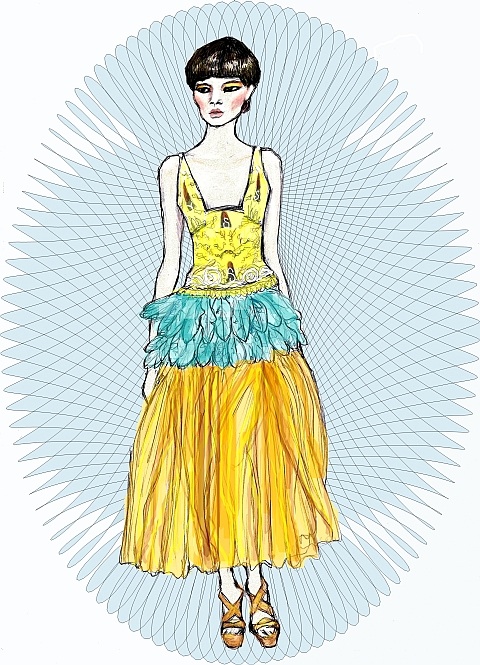


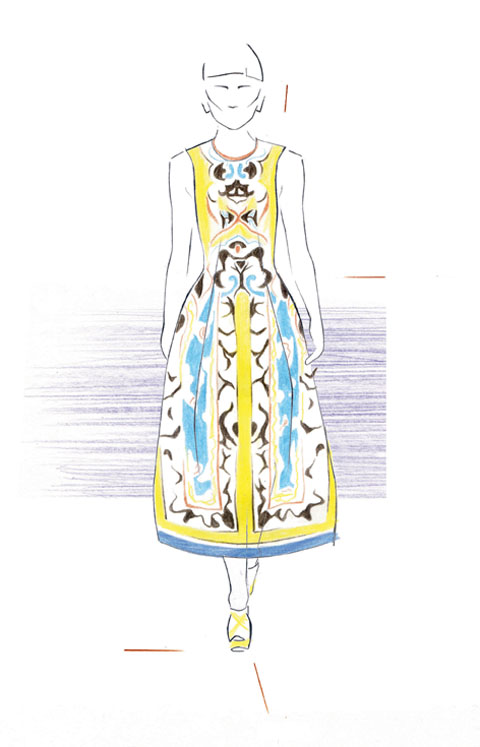

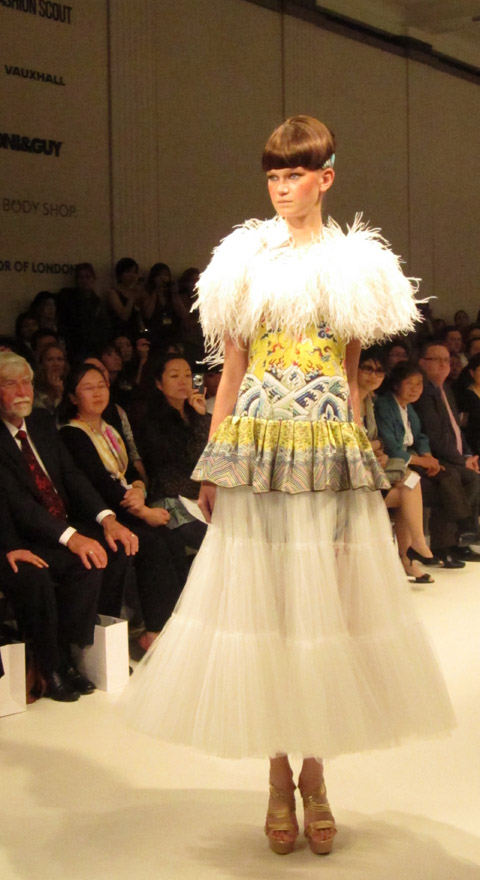

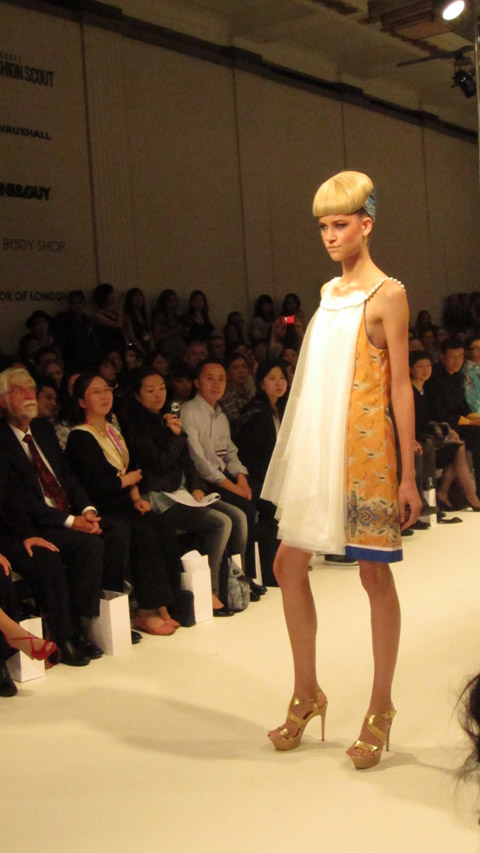


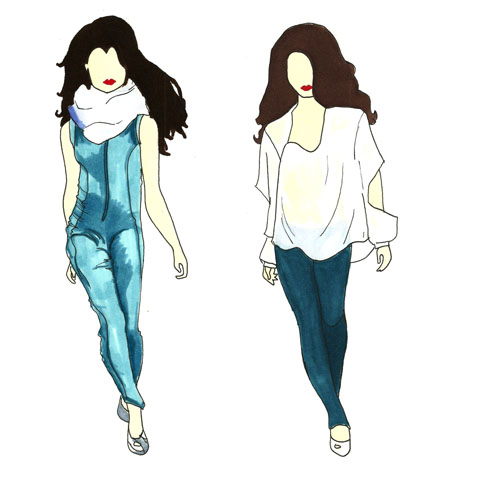


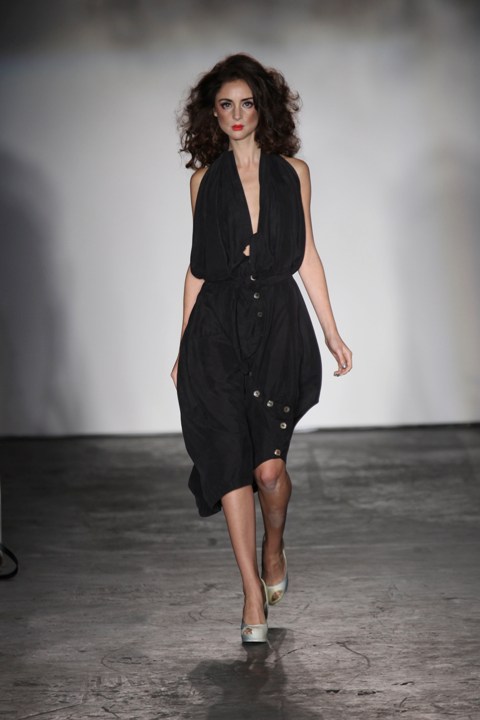


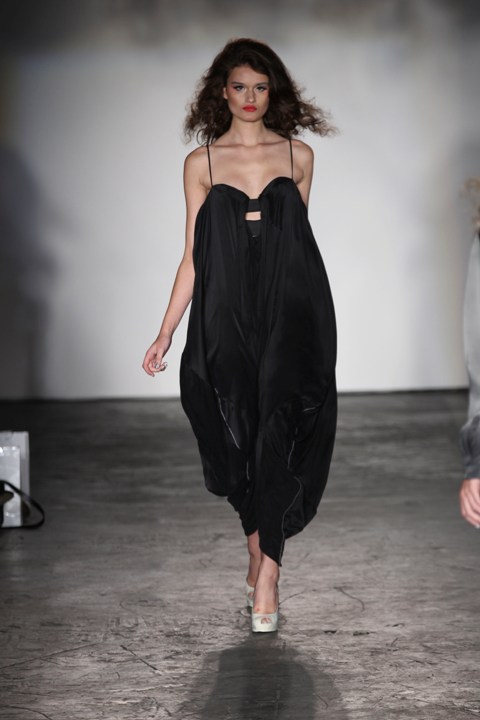


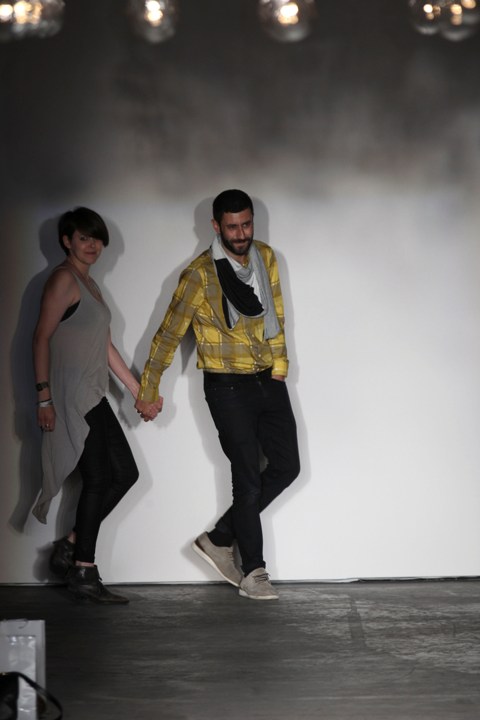


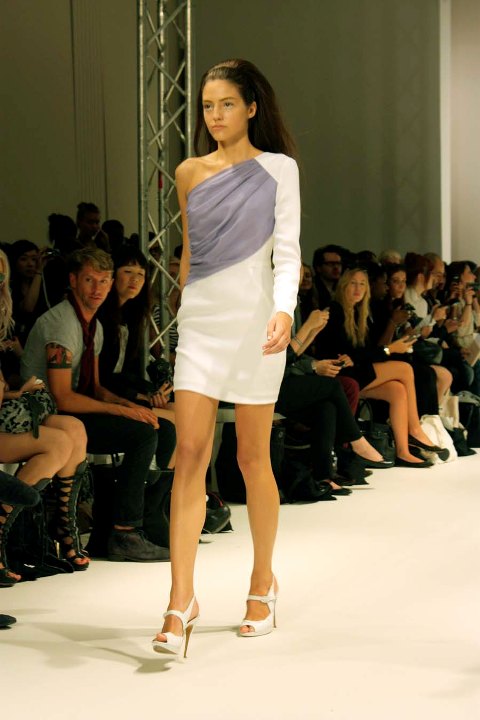
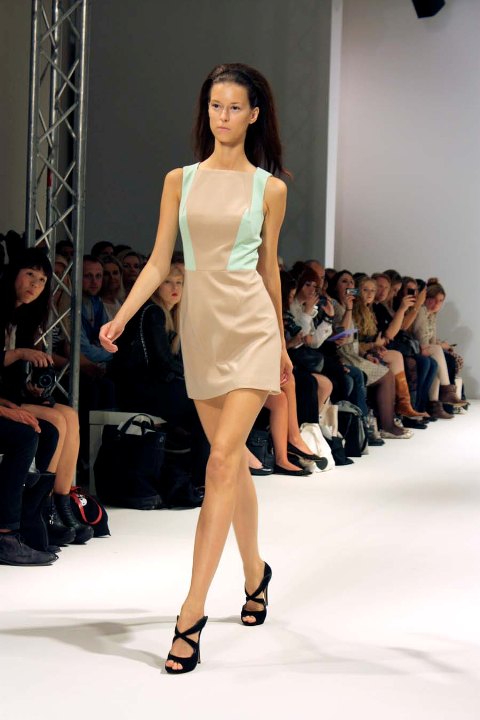


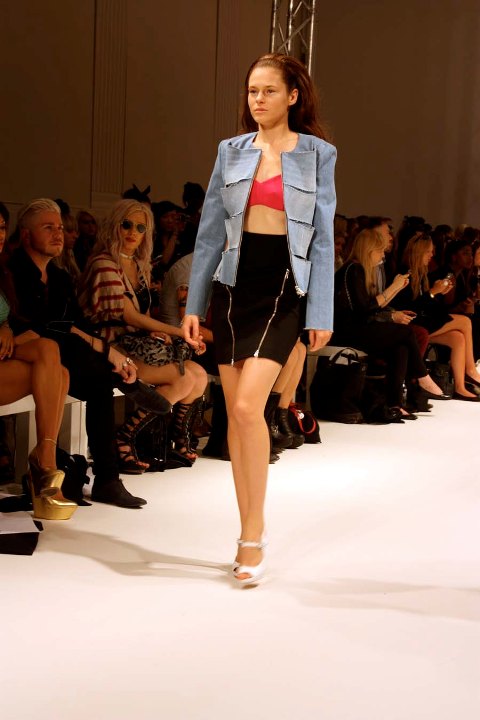


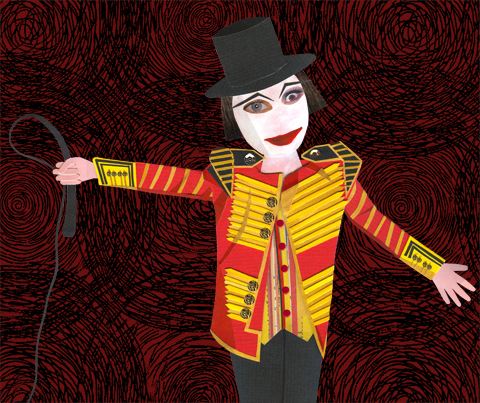
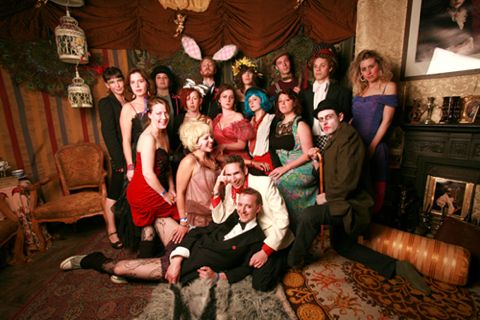



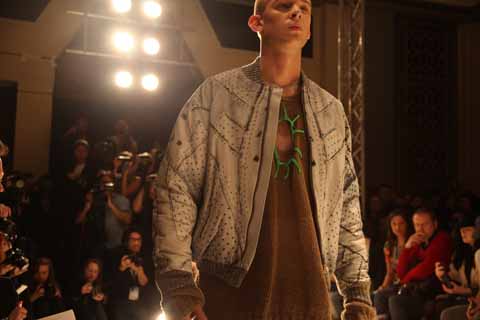
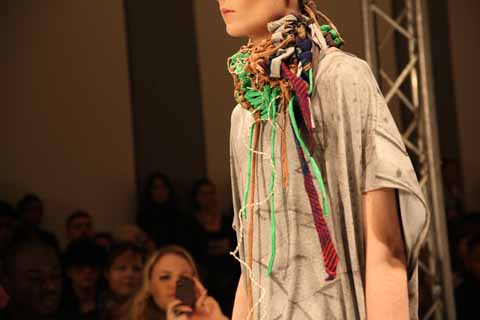


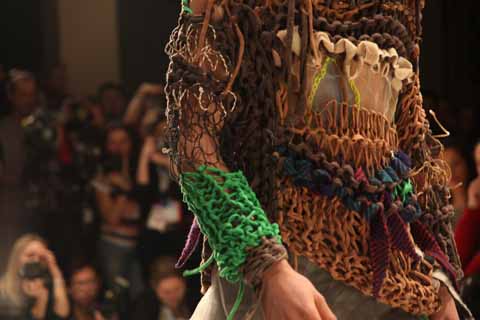


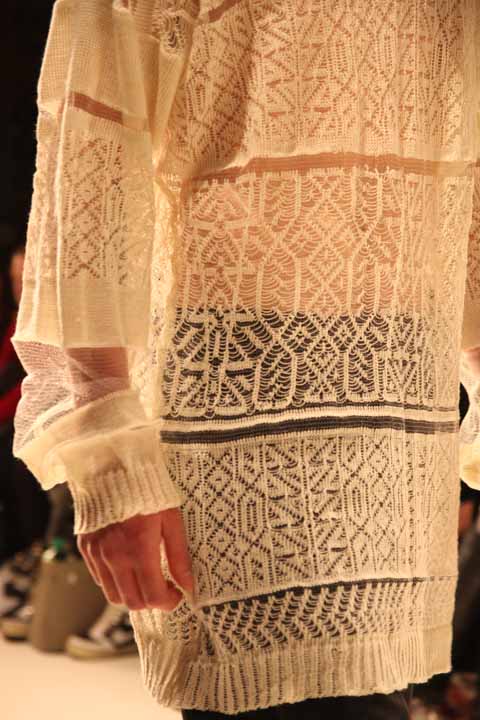


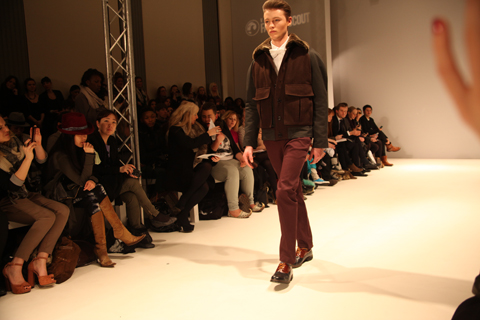


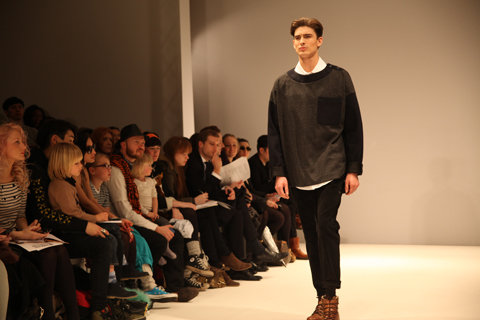
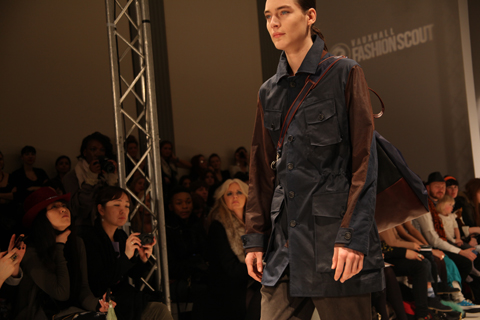


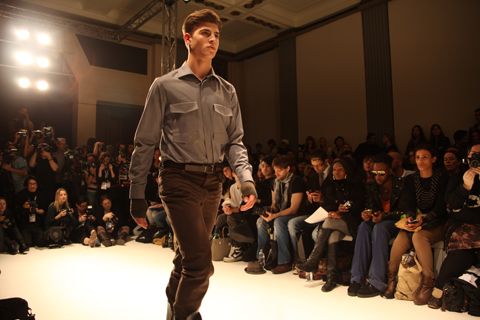

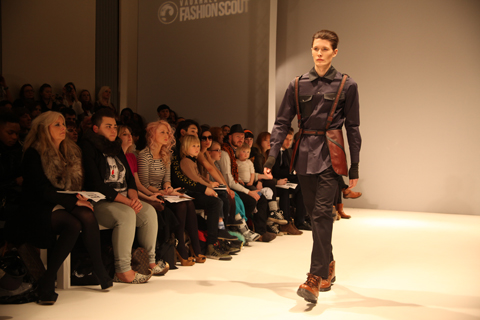
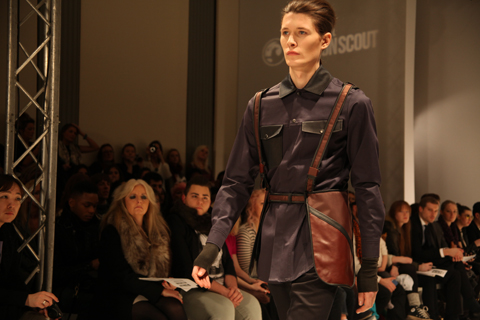
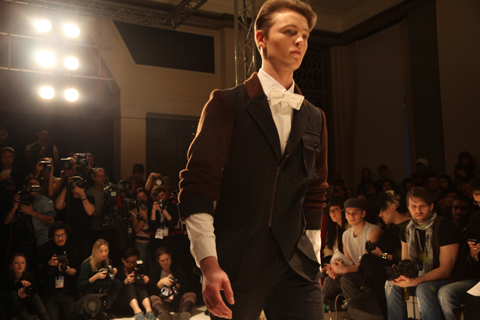

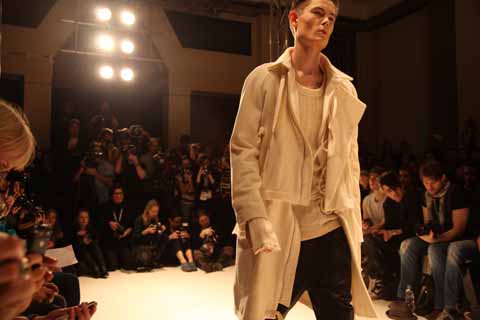

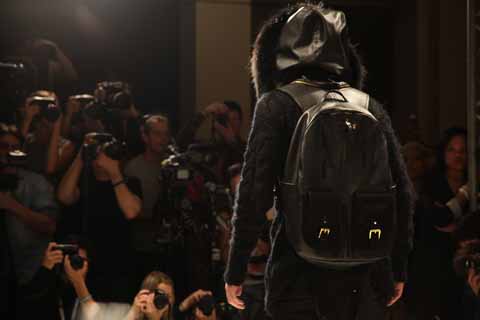

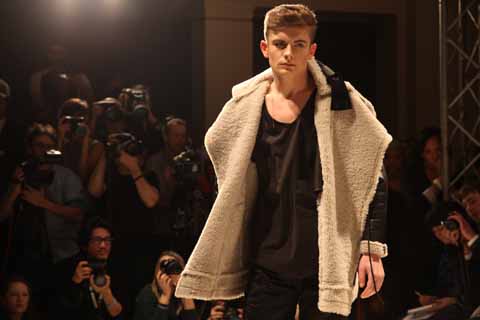
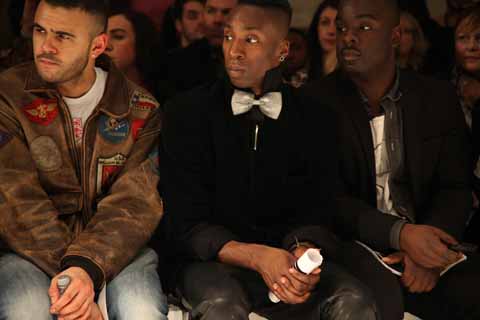
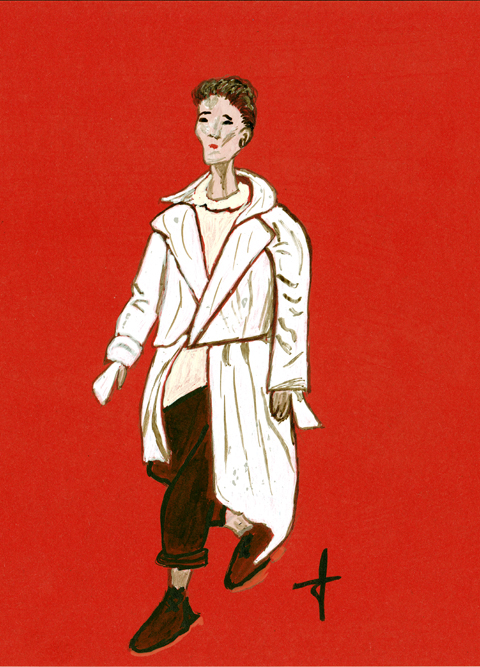
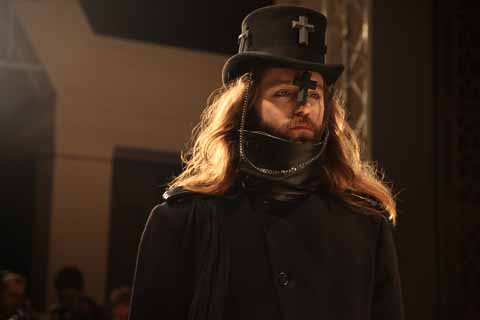

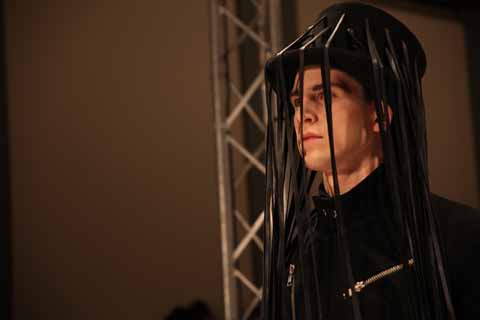

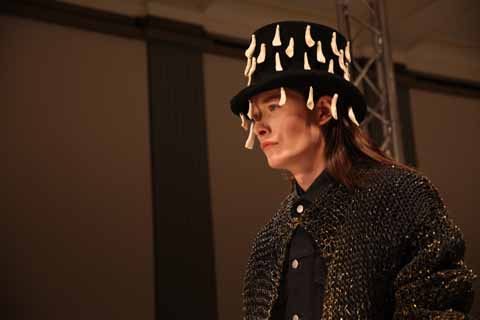
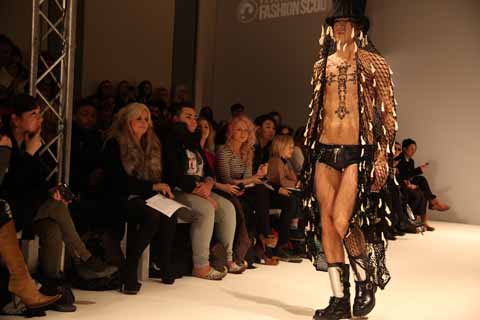
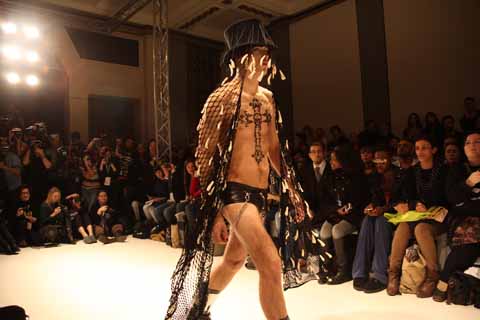


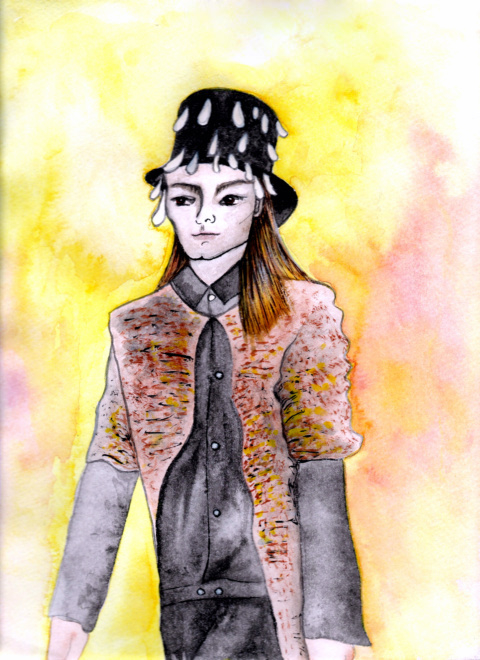


 Tatty Devine illustration by


 Jasper at the sewing machine by
  Past collections hanging in the studio
 More previous collections
 Illustrations of the S/S ’12 collection by Jasper Garvida.
 More gorgeously detailed S/S ’12 illustrations by Jasper
 Jasper Garvida illustration from the S/S 2012 collection
 Jasper Garvida S/S 2012 illustration by
  Jasper Garvida S/S 2012 illustration by
  Jasper Garvida S/S ’12 illustration by