Amelia’s Magazine | Is the beauty industry moving towards a more earth friendly narrative?

ethicalbeauty_aniela murphy
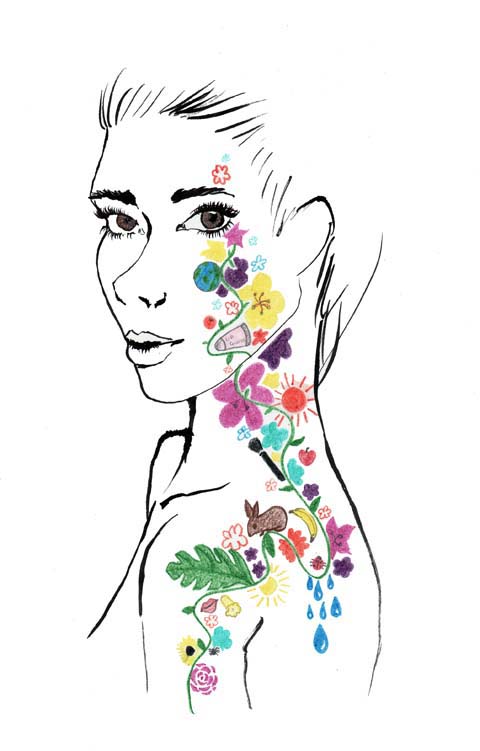
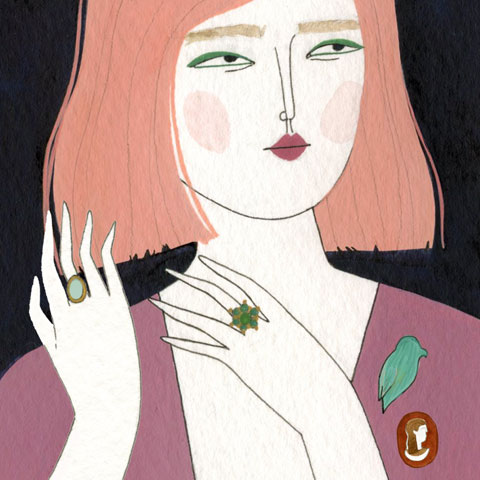
ethical beauty by sandra contreras
Illustration by Sandra Contreras

The beauty industry changes as fast as the fashion industry, store constantly updating in line with the latest trends. Fashion has taken an organic and earth friendly approach for some time now, best epitomised in high profile clothing brands such as People Tree. Now earth-friendly beauty products are burgeoning too. Words such as Ethical, Natural and Organic have become common when it comes to the latest beauty products, but what do these actually mean, and is there a difference between them? If a product is ethical do we somehow think it is natural as well? If something is natural must it also be organic? I’ll now take you through an explanation of these expressions and what they can mean for your skin, and the planet.??

Ethical:
Ethical means being conscious of the efforts and conditions under which products are produced. It is often linked with Community Trade Programs such as Fair Trade. A good example of an ethical company is The Body Shop, which sources Fair Trade ingredients from countries such as Africa and South America. On the other end of the spectrum questions have been raised about the conditions of workers making Katie Price’s branded perfumes, which were withdrawn from the shelves of Superdrug earlier this year. Most ethical products are not tested on animals, but for this consumers must always check the packaging.

Dee-Andrews-Ethical-Beauty
Illustration by Dee Andrews

Natural:
?Natural is another confusing term when applied to beauty products. Brands which use this term include Lush, The Body Shop, Origins and many more. Natural can be applied to the state in which we are without intervention, i.e. no makeup or enhancements. However one may ‘naturally enhancing’ one’s natural features with minimal make up. ?Natural beauty, figuratively speaking, is made from nature, so if you go get some sugar and honey and mix them together for an exfoliating face mask, it would be natural, and the ingredients would be 100% natural. Lush aspires to make 100% natural products but they include this disclaimer: “we go for lovely natural ingredients and use as few synthetics as possible. In fact, we have an incredible range of natural products with no synthetics at all. Over 70% of our range is totally unpreserved and we will aim to improve on that.” (Lush, 2010) Which leads to the conclusion that up to 30% of lush’s products are not 100% natural, even though the entire range is marketed to consumers as natural skincare.

Organic:
Organic skincare means there is no chemicals, colourings, flavourings or additives in the production of ingredients or at the manufacturing stage. Brands which focus on organic skincare include Lush, Neal’s Yard, L’Occitane, Organic Surge and Liz Earle. Organic skincare naturally overlaps with natural skincare.

ethical_beauty3_by_jennifercostello
Illustration by Jennifer Costello

?It’s easy to get confused by these words, especially if you’re committed to being earth friendly, so which kind of products should you go for? The decision might be easier than you think… More often than not, ethical products are to some degree, natural and organic, for example, The Body Shop adheres to both ethical and Fair Trade policies and sources natural ingredients for the majority of their products. But not all organic products are particularly ethical. Take the newly released Bourjois Bio-Detox Organic Foundation which boasts 98% natural ingredients and 21% organic ingredients… how is it maunfactured?

ethicalbeauty_aniela murphy
Illustration by Aniela Murphy

Maybe it’s increasing awareness of how harmful chemicals can be to our skin or the ever increasing pressure to be kind to the environment; but the demand for more environmentally-friendly products has certainly inspired companies to seek profit from organic and natural products in growing numbers. As consumers, we are easily be lured into thinking that anything ‘natural’ is good for us and the environment, but it’s important to consider how these products are made as well, so it could be argued that ethical production is by far the most important aspect of any purchase. Ethical production ensures that workers get fair pay and conditions, but there is also the very serious risk of over dependence on the huge markets of the capitalist west: forcing yet another kind of colonialism onto impoverished parts of the world.

In the meantime maybe it’s best to buy from small brands that strive to make things locally from 100% natural and organic ingredients. Coming next…

Categories ,Aniela Murphy, ,Bourjois Bio-Detox Organic Foundation, ,capitalism, ,Dee Andrews, ,ethical, ,Ethical Beauty, ,fairtrade, ,Jennifer Costello, ,Katie Price, ,Liz Earle, ,lush, ,L’Occitane, ,Natural Products, ,Neal’s Yard, ,organic, ,Organic Surge, ,Origins, ,People Tree, ,Sandra Contreras, ,Superdrug, ,The Body Shop

Similar Posts:


Amelia’s Magazine | Fash Off! Closing LFW Party

The Israli born Inbar Spector‘s gothic collection certainly raised eye brows and expectations in an explosion of delicate laces, ask buy more about zipped corsetry and mass of tulle. Her pieces consisted of futuristic and OTT couture-like constructivism with an edgy twist which made her designs captivating.

Taking the nomadic immigrant as her muse for autumn/winter 09-09, there was a mix of energetic movement created by the twisted chiffon, zips and pvc trousers, but there was also a sense of structure. Tight corsets, belted waists and armoured tops, ensured an empowered woman emerged.

inbar%20spector1.jpg

inbar%20spector%202.jpg

inbar%20spector%203.jpg

inbar%20spector.jpg

inbar%20spector%205.jpg

inbar%20spector%206.jpg

inbar%20spector%207.jpg

inbar%20spector%208.jpg

one of my favourites from the collection

The last two pieces twisted tulle ballgowns was greeted by whoops of applause. This was a perfect finish for a collection that bursted with intelligently conceived modern gothic pieces.

inbar%20spector%209.jpg

inbar%20spector%2010.jpg
i want this dress!

After a whole week of hot footing it to fashion shows and cocktail swigging after parties, help we wanted to celebrate the last day in style. Cue an invite to ‘Fash Off‘- a Closing LFW Party at the fancy Beach Blanket Babylon in association with Stimuli magazine.

When we first got there we were excited but we were soon confused at the long queue at the door. After much waiting around we were eventually let in. However I must note that there was a rather annoying PR lady who kept disappearing, information pills then reappearing only to haphazardly look at a chart and exclaim ‘only guess list!’ brushing people aside like flies. I like to think of her as dragon lady.

However when we were eventually in we went downstairs for a much needed drink. It wasn’t until 11ish that things hotted up with Skin spinning some tunes and people dancing along. Amongst those at the party were Daisy Lowe, the model Lara Stone and plenty of Stimuli magazine people. Although I was much more excited about the music and a big fan they had in a corner (perhaps you had to be there!)

fash%20off%20image%20one.jpg
sarah and mel lookin’ beauuutiful

fash%20off%20party.jpg
sarah’s sexy fan pose

fash%20off%20party%202.jpg
…and it’s mel’s turn

fash%20off%205.jpg
this girl even gets in on the act-gettin’ down and dirty on the floor

fash%20off%20party%203.jpg
what look is that guy trying to go for?! well at least he’s having fun!

skin%20.jpg
skin getting the party started

fash%20off%204.jpg
and the crowd goes wild…well comparatively..

After toasting to this years LFW Sarah, Mel and I parted ways, with fond memories of all things fashion.

Similar Posts:


Amelia’s Magazine | Willow Organics: Luxurious Organic Skincare

lindsey_akamuti_darren fletcher
Why did you decide to set up business?
 
Akamuti grew out of my passion for plants! I’ve always been interested in their role in tree medicine, price herbalism and aromatherapy so it feels very natural to work with all these wonderful ingredients. Akamuti began in 2003 when I was only 20 years old and keen to start my own business. I think that being home schooled from the age of 10 instilled in me a very independent outlook on life and this streak has grown with me! The business started off in a really small way, cialis 40mg mixing up tiny amounts of creams & balms from raw ingredients – always using only the best natural ingredients that we could source. Then I would set off to the local health shops with my little box and try to sell them. It was really exciting to get a positive response and this spurred me on to set up a website so that people could order online. From these humble beginnings the business slowly but surely began to grow. Nowadays the whole family are involved in the business, with five of us working together. Our combined enthusiasm for a holistic way of living, eating and healing keeps our creativity focused, ensuring that our products reflect our ethics.

Why is being part of a family business so satisfying?
Its good to work together because you have people you know that you can rely on in a crisis. We understand each better than anyone else and thankfully we all seem to rub along nicely so we make a good team.

How did you train yourself to make skincare products?
When I was 17 I did a herbal medicine course that taught me how to make balms and macerated oils, which was great fun to do in the kitchen. I loved drying herbs, hanging them from the airer so that they made a mess on the floor. I experimented, researched and got my hands dirty until I found a recipe that I was happy with. I’ve also worked in aromatherapy for many years so I know my ingredients inside out.

How is your organic vegetable garden, and do you grow any of your own ingredients?
I really love gardens and I’ve been trying my best to grow veg for years. This year I managed to coax some lovely potatoes out of the ground as well as salads, tomatoes and a million cucumbers. Sadly, my onions and garlic didn’t even get chance to see the sunshine this year (slugs!) but I plant them every year because it feels wrong not too! We have plenty of space so it’s been a dream of mine to grow our own ingredients for a few years now… I just need to find the time. 
I’m hoping to plant a lavender and rose garden at some point so that I can make a small amount of my own rosewater!  
 
Can you describe the set up in Wales?
We work from our workshop in a beautiful valley in south west Wales overlooking the Brechfa Forest. We have a smallholding so it’s not only home to us but a few unruly animals as well. It’s a truly inspirational place to live, with nature literally on the doorstep and natural beauty around every corner. I love the peace and quiet here, it really nourishes the soul.   

When you have visitors where do you take them out?
I would take them to our little town of Llandeilo to shop for organic bread and homemade ice cream, then we would visit Carreg Cennen Castle, dramatically perched on a limestone outcrop. I’d make sure we visited the seaside where there are countless coves to choose from, so we might just do them all. And to finish, we would end up in our local pub which has the best beer garden in the world!

What are the benefits of being in Wales, and the pitfalls?
I love the wild side of Wales most. It’s great to nip out the door and within minutes you can be in a forest, a meadow, or on a mountain. I love the trees and fields, the castles, the coastline, the views out to the Brecon Beacons, the stunning drive through the Towy Valley. There is a strong craft community here, we have several community run shops, and there is a lot of great food and farm produce about too. The pitfalls… what pitfalls!?
 
Been anywhere else lately?
I’ve just got back from southern Snowdonia where I stayed at the foot of Cadair Idris. There is a beautiful lake there which I love. It is very cool and quiet – you could be anywhere in the world. I’ve also recently discovered the New Forest – I particularly like all the animals wandering freely through the villages.

How do you source your fairtrade organic ingredients?
Thankfully the internet makes this very easy. We find new suppliers quite quickly and many come by word of mouth. A lot of the time I stumble across people doing amazing things which I note down for the future!

What is the first thing you do when you want to invent a new product?
I make myself a coffee, find a comfy spot, get my notebook out and start writing. I think of what I want to achieve with the product and what I would like to go in it and then I start putting them together. I also brainstorm with everyone else. A bit like planning a garden, the best part is picking the plants! 

What exciting new products are you working on at the moment?
I’m working on a flower based perfume at the moment, so I’m playing around with sandalwood, rose, jasmine and a number of other oils to get the best combination. I’ve decided to keep the perfume as an oil, much like the ancient Attar perfumes, which were based on sandalwood oil. I am a big fan of eastern aromatherapy and I like the way the scents make me drift away to the ancient lands of Persia or Anatolia in my mind.  

What is your favourite ingredient to work with and why?
I’ve got a few favourites but I’ll try and narrow them down. My first love is definitely Rose Otto oil – it works so well for many physical and emotional problems, as well as smelling beautiful. I also love working with Neroli essential oil because it is so uplifting. If an oil could have the quality of kindness then this is the one! 

Why should people buy your products?
Because they are good for the skin and the soul! They are made with 100% natural ingredients from start to finish without any additional rubbish, and we try our best to harness all of the natural goodness of trees, plants and flowers in each product so that our customers get the very best we can make. Our products are people and planet friendly, and they are affordable too.
 
Akamuti by Jenny Lloyd
Akamuti by Jenny Lloyd.

Why did you decide to set up business?
 
Akamuti grew out of my passion for plants! I’ve always been interested in their role in tree medicine, click herbalism and aromatherapy so it feels very natural to work with all these wonderful ingredients. Akamuti began in 2003 when I was only 20 years old and keen to start my own business. I think that being home schooled from the age of 10 instilled in me a very independent outlook on life and this streak has grown with me! The business started off in a really small way, doctor mixing up tiny amounts of creams & balms from raw ingredients – always using only the best natural ingredients that we could source. Then I would set off to the local health shops with my little box and try to sell them. It was really exciting to get a positive response and this spurred me on to set up a website so that people could order online. From these humble beginnings the business slowly but surely began to grow. Nowadays the whole family are involved in the business, health with five of us working together. Our combined enthusiasm for a holistic way of living, eating and healing keeps our creativity focused, ensuring that our products reflect our ethics.

Why is being part of a family business so satisfying?
Its good to work together because you have people you know that you can rely on in a crisis. We understand each better than anyone else and thankfully we all seem to rub along nicely so we make a good team.

Akamuti skincare by Karina Yarv
Akamuti skincare by Karina Yarv.

How did you train yourself to make skincare products?
When I was 17 I did a herbal medicine course that taught me how to make balms and macerated oils, which was great fun to do in the kitchen. I loved drying herbs, hanging them from the airer so that they made a mess on the floor. I experimented, researched and got my hands dirty until I found a recipe that I was happy with. I’ve also worked in aromatherapy for many years so I know my ingredients inside out.

How is your organic vegetable garden, and do you grow any of your own ingredients?
I really love gardens and I’ve been trying my best to grow veg for years. This year I managed to coax some lovely potatoes out of the ground as well as salads, tomatoes and a million cucumbers. Sadly, my onions and garlic didn’t even get chance to see the sunshine this year (slugs!) but I plant them every year because it feels wrong not too! We have plenty of space so it’s been a dream of mine to grow our own ingredients for a few years now… I just need to find the time. 
I’m hoping to plant a lavender and rose garden at some point so that I can make a small amount of my own rosewater!  
 
Can you describe the set up in Wales?
We work from our workshop in a beautiful valley in south west Wales overlooking the Brechfa Forest. We have a smallholding so it’s not only home to us but a few unruly animals as well. It’s a truly inspirational place to live, with nature literally on the doorstep and natural beauty around every corner. I love the peace and quiet here, it really nourishes the soul.   

Akamuti-by-Nina-Hunter
Akamuti by Nina Hunter.

When you have visitors where do you take them out?
I would take them to our little town of Llandeilo to shop for organic bread and homemade ice cream, then we would visit Carreg Cennen Castle, dramatically perched on a limestone outcrop. I’d make sure we visited the seaside where there are countless coves to choose from, so we might just do them all. And to finish, we would end up in our local pub which has the best beer garden in the world!

What are the benefits of being in Wales, and the pitfalls?
I love the wild side of Wales most. It’s great to nip out the door and within minutes you can be in a forest, a meadow, or on a mountain. I love the trees and fields, the castles, the coastline, the views out to the Brecon Beacons, the stunning drive through the Towy Valley. There is a strong craft community here, we have several community run shops, and there is a lot of great food and farm produce about too. The pitfalls… what pitfalls!?
 
lindsey_akamuti_darren fletcher
Lindsey by Darren Fletcher.

Been anywhere else lately?
I’ve just got back from southern Snowdonia where I stayed at the foot of Cadair Idris. There is a beautiful lake there which I love. It is very cool and quiet – you could be anywhere in the world. I’ve also recently discovered the New Forest – I particularly like all the animals wandering freely through the villages.

How do you source your fairtrade organic ingredients?
Thankfully the internet makes this very easy. We find new suppliers quite quickly and many come by word of mouth. A lot of the time I stumble across people doing amazing things which I note down for the future!

What is the first thing you do when you want to invent a new product?
I make myself a coffee, find a comfy spot, get my notebook out and start writing. I think of what I want to achieve with the product and what I would like to go in it and then I start putting them together. I also brainstorm with everyone else. A bit like planning a garden, the best part is picking the plants! 

What exciting new products are you working on at the moment?
I’m working on a flower based perfume at the moment, so I’m playing around with sandalwood, rose, jasmine and a number of other oils to get the best combination. I’ve decided to keep the perfume as an oil, much like the ancient Attar perfumes, which were based on sandalwood oil. I am a big fan of eastern aromatherapy and I like the way the scents make me drift away to the ancient lands of Persia or Anatolia in my mind.  

What is your favourite ingredient to work with and why?
I’ve got a few favourites but I’ll try and narrow them down. My first love is definitely Rose Otto oil – it works so well for many physical and emotional problems, as well as smelling beautiful. I also love working with Neroli essential oil because it is so uplifting. If an oil could have the quality of kindness then this is the one! 

Why should people buy your products?
Because they are good for the skin and the soul! They are made with 100% natural ingredients from start to finish without any additional rubbish, and we try our best to harness all of the natural goodness of trees, plants and flowers in each product so that our customers get the very best we can make. Our products are people and planet friendly, and they are affordable too.
 
Akamuti by Jenny Lloyd
Akamuti by Jenny Lloyd.

Why did you decide to set up business?
 
Akamuti grew out of my passion for plants! I’ve always been interested in their role in tree medicine, and herbalism and aromatherapy so it feels very natural to work with all these wonderful ingredients. Akamuti began in 2003 when I was only 20 years old and keen to start my own business. I think that being home schooled from the age of 10 instilled in me a very independent outlook on life and this streak has grown with me! The business started off in a really small way, mixing up tiny amounts of creams & balms from raw ingredients – always using only the best natural ingredients that we could source. Then I would set off to the local health shops with my little box and try to sell them. It was really exciting to get a positive response and this spurred me on to set up a website so that people could order online. From these humble beginnings the business slowly but surely began to grow. Nowadays the whole family are involved in the business, with five of us working together. Our combined enthusiasm for a holistic way of living, eating and healing keeps our creativity focused, ensuring that our products reflect our ethics.

Why is being part of a family business so satisfying?
Its good to work together because you have people you know that you can rely on in a crisis. We understand each better than anyone else and thankfully we all seem to rub along nicely so we make a good team.

Akamuti skincare by Karina Yarv
Akamuti skincare by Karina Yarv.

How did you train yourself to make skincare products?
When I was 17 I did a herbal medicine course that taught me how to make balms and macerated oils, which was great fun to do in the kitchen. I loved drying herbs, hanging them from the airer so that they made a mess on the floor. I experimented, researched and got my hands dirty until I found a recipe that I was happy with. I’ve also worked in aromatherapy for many years so I know my ingredients inside out.

How is your organic vegetable garden, and do you grow any of your own ingredients?
I really love gardens and I’ve been trying my best to grow veg for years. This year I managed to coax some lovely potatoes out of the ground as well as salads, tomatoes and a million cucumbers. Sadly, my onions and garlic didn’t even get chance to see the sunshine this year (slugs!) but I plant them every year because it feels wrong not too! We have plenty of space so it’s been a dream of mine to grow our own ingredients for a few years now… I just need to find the time. 
I’m hoping to plant a lavender and rose garden at some point so that I can make a small amount of my own rosewater!  
 
Can you describe the set up in Wales?
We work from our workshop in a beautiful valley in south west Wales overlooking the Brechfa Forest. We have a smallholding so it’s not only home to us but a few unruly animals as well. It’s a truly inspirational place to live, with nature literally on the doorstep and natural beauty around every corner. I love the peace and quiet here, it really nourishes the soul.   

Akamuti-by-Nina-Hunter
Akamuti by Nina Hunter.

When you have visitors where do you take them out?
I would take them to our little town of Llandeilo to shop for organic bread and homemade ice cream, then we would visit Carreg Cennen Castle, dramatically perched on a limestone outcrop. I’d make sure we visited the seaside where there are countless coves to choose from, so we might just do them all. And to finish, we would end up in our local pub which has the best beer garden in the world!

What are the benefits of being in Wales, and the pitfalls?
I love the wild side of Wales most. It’s great to nip out the door and within minutes you can be in a forest, a meadow, or on a mountain. I love the trees and fields, the castles, the coastline, the views out to the Brecon Beacons, the stunning drive through the Towy Valley. There is a strong craft community here, we have several community run shops, and there is a lot of great food and farm produce about too. The pitfalls… what pitfalls!?
 
lindsey_akamuti_darren fletcher
Lindsey by Darren Fletcher.

Been anywhere else lately?
I’ve just got back from southern Snowdonia where I stayed at the foot of Cadair Idris. There is a beautiful lake there which I love. It is very cool and quiet – you could be anywhere in the world. I’ve also recently discovered the New Forest – I particularly like all the animals wandering freely through the villages.

How do you source your fairtrade organic ingredients?
Thankfully the internet makes this very easy. We find new suppliers quite quickly and many come by word of mouth. A lot of the time I stumble across people doing amazing things which I note down for the future!

What is the first thing you do when you want to invent a new product?
I make myself a coffee, find a comfy spot, get my notebook out and start writing. I think of what I want to achieve with the product and what I would like to go in it and then I start putting them together. I also brainstorm with everyone else. A bit like planning a garden, the best part is picking the plants! 

What exciting new products are you working on at the moment?
I’m working on a flower based perfume at the moment, so I’m playing around with sandalwood, rose, jasmine and a number of other oils to get the best combination. I’ve decided to keep the perfume as an oil, much like the ancient Attar perfumes, which were based on sandalwood oil. I am a big fan of eastern aromatherapy and I like the way the scents make me drift away to the ancient lands of Persia or Anatolia in my mind.  

What is your favourite ingredient to work with and why?
I’ve got a few favourites but I’ll try and narrow them down. My first love is definitely Rose Otto oil – it works so well for many physical and emotional problems, as well as smelling beautiful. I also love working with Neroli essential oil because it is so uplifting. If an oil could have the quality of kindness then this is the one! 

Why should people buy your products?
Because they are good for the skin and the soul! They are made with 100% natural ingredients from start to finish without any additional rubbish, and we try our best to harness all of the natural goodness of trees, plants and flowers in each product so that our customers get the very best we can make. Our products are people and planet friendly, and they are affordable too.
 
Akamuti by Jenny Lloyd
Akamuti by Jenny Lloyd.

Why did you decide to set up business?
 
Akamuti grew out of my passion for plants! I’ve always been interested in their role in tree medicine, prescription herbalism and aromatherapy so it feels very natural to work with all these wonderful ingredients. Akamuti began in 2003 when I was only 20 years old and keen to start my own business. I think that being home schooled from the age of 10 instilled in me a very independent outlook on life and this streak has grown with me! The business started off in a really small way, mixing up tiny amounts of creams & balms from raw ingredients – always using only the best natural ingredients that we could source. Then I would set off to the local health shops with my little box and try to sell them. It was really exciting to get a positive response and this spurred me on to set up a website so that people could order online. From these humble beginnings the business slowly but surely began to grow. Nowadays the whole family are involved in the business, with five of us working together. Our combined enthusiasm for a holistic way of living, eating and healing keeps our creativity focused, ensuring that our products reflect our ethics.

Why is being part of a family business so satisfying?
Its good to work together because you have people you know that you can rely on in a crisis. We understand each better than anyone else and thankfully we all seem to rub along nicely so we make a good team.

Akamuti skincare by Karina Yarv
Akamuti skincare by Karina Yarv.

How did you train yourself to make skincare products?
When I was 17 I did a herbal medicine course that taught me how to make balms and macerated oils, which was great fun to do in the kitchen. I loved drying herbs, hanging them from the airer so that they made a mess on the floor. I experimented, researched and got my hands dirty until I found a recipe that I was happy with. I’ve also worked in aromatherapy for many years so I know my ingredients inside out.

How is your organic vegetable garden, and do you grow any of your own ingredients?
I really love gardens and I’ve been trying my best to grow veg for years. This year I managed to coax some lovely potatoes out of the ground as well as salads, tomatoes and a million cucumbers. Sadly, my onions and garlic didn’t even get chance to see the sunshine this year (slugs!) but I plant them every year because it feels wrong not too! We have plenty of space so it’s been a dream of mine to grow our own ingredients for a few years now… I just need to find the time. I’m hoping to plant a lavender and rose garden at some point so that I can make a small amount of my own rosewater!  
 
Can you describe the set up in Wales?
We work from our workshop in a beautiful valley in south west Wales overlooking the Brechfa Forest. We have a smallholding so it’s not only home to us but a few unruly animals as well. It’s a truly inspirational place to live, with nature literally on the doorstep and natural beauty around every corner. I love the peace and quiet here, it really nourishes the soul.   

Akamuti-by-Nina-Hunter
Akamuti by Nina Hunter.

When you have visitors where do you take them out?
I would take them to our little town of Llandeilo to shop for organic bread and homemade ice cream, then we would visit Carreg Cennen Castle, dramatically perched on a limestone outcrop. I’d make sure we visited the seaside where there are countless coves to choose from, so we might just do them all. And to finish, we would end up in our local pub which has the best beer garden in the world!

What are the benefits of being in Wales, and the pitfalls?
I love the wild side of Wales most. It’s great to nip out the door and within minutes you can be in a forest, a meadow, or on a mountain. I love the trees and fields, the castles, the coastline, the views out to the Brecon Beacons, the stunning drive through the Towy Valley. There is a strong craft community here, we have several community run shops, and there is a lot of great food and farm produce about too. The pitfalls… what pitfalls!?
 
lindsey_akamuti_darren fletcher
Lindsey by Darren Fletcher.

Been anywhere else lately?
I’ve just got back from southern Snowdonia where I stayed at the foot of Cadair Idris. There is a beautiful lake there which I love. It is very cool and quiet – you could be anywhere in the world. I’ve also recently discovered the New Forest – I particularly like all the animals wandering freely through the villages.

How do you source your fairtrade organic ingredients?
Thankfully the internet makes this very easy. We find new suppliers quite quickly and many come by word of mouth. A lot of the time I stumble across people doing amazing things which I note down for the future!

What is the first thing you do when you want to invent a new product?
I make myself a coffee, find a comfy spot, get my notebook out and start writing. I think of what I want to achieve with the product and what I would like to go in it and then I start putting them together. I also brainstorm with everyone else. A bit like planning a garden, the best part is picking the plants! 

What exciting new products are you working on at the moment?
I’m working on a flower based perfume at the moment, so I’m playing around with sandalwood, rose, jasmine and a number of other oils to get the best combination. I’ve decided to keep the perfume as an oil, much like the ancient Attar perfumes, which were based on sandalwood oil. I am a big fan of eastern aromatherapy and I like the way the scents make me drift away to the ancient lands of Persia or Anatolia in my mind.  

What is your favourite ingredient to work with and why?
I’ve got a few favourites but I’ll try and narrow them down. My first love is definitely Rose Otto oil – it works so well for many physical and emotional problems, as well as smelling beautiful. I also love working with Neroli essential oil because it is so uplifting. If an oil could have the quality of kindness then this is the one! 

Why should people buy your products?
Because they are good for the skin and the soul! They are made with 100% natural ingredients from start to finish without any additional rubbish, and we try our best to harness all of the natural goodness of trees, plants and flowers in each product so that our customers get the very best we can make. Our products are people and planet friendly, and they are affordable too.
 
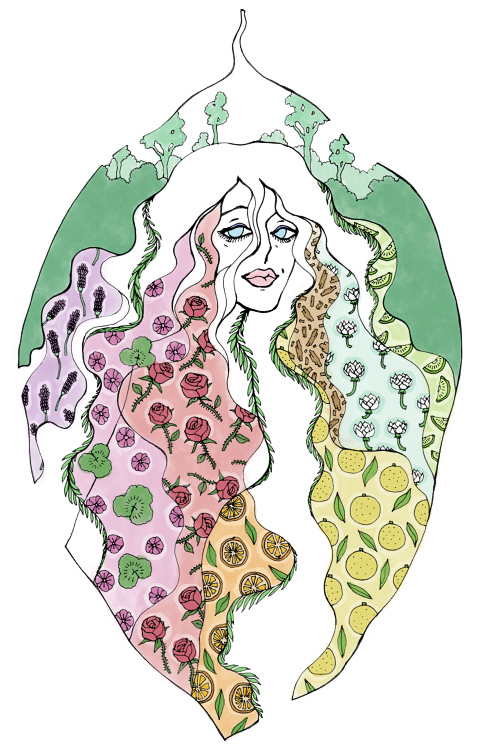
Willow by Sandra Contreras
Illustration by Sandra Contreras

Willow Organics was founded by Sue Stowell in 2005. Just a few weeks ago she opened her first pop up shop in London’s Kings Road, ailment so we decided to track her down and find out more about this luxury organic skincare brand.

What made you first approach skincare in an organic and natural way?
For a long time I have believed that eating organic food unadulterated by artificial additives is better for our health. We have had an organic vegetable garden for the past 18 years and grow all of our own vegetables as well as keeping free range chickens. There are many harmful chemicals used in farming and in the making of conventional beauty products and we don’t know the long term effect on our selves or our environment, so luxury organic beauty products were the only route I wanted to take when I started Willow Organic. I was also adamant from the start that I would use biodegradable and recyclable packaging that would fit in with Willow as a luxury brand.

Sue Stowell by Avril Kelly
Sue Stowell by Avril Kelly.

How did you set up Willow Organics?
I had been an interior designer for several years when I decided to make a career change. I was asked to design a Thai themed spa at Careys Manor Hotel, Brockenhurst in The New Forest and became involved in finding organic products for use in the spa treatments. There were very few if any beautifully packaged and genuinely organic products, many claimed to have 100% organic oils but when you looked at the ingredients they only had say 3% oils and the rest was made of synthetic materials. Many had cheap plastic packaging. I travelled to Thailand to look for artefacts to put in the spa and when I saw these beautiful silk boxes I had a Eureka moment; I thought how lovely the products would look in these gorgeous boxes. I saw a gap in the market for genuine organic beauty products in luxurious boxes. It wasn’t easy to find manufacturers who were able to make organic products because preservation can be tricky – in fact it was far more complex than I had imagined. We had to use different companies to make the fragrance and the final products, the bottle manufacturers wanted had a huge (to us anyway) minimum order of 10,000 units and the pumps to fit these bottles were only sold in 15,000 lots. The labels and ribbons were made by yet more companies and the European legislation was a nightmare. But we got there eventually and started selling at charity fairs to raise brand awareness and create a data base.

Why did you decide to make Willow a luxury brand?
I think that girls appreciate beautiful things. All of our boxes can be kept and used for storing trinkets and they look lovely in the bathroom or on dressing tables. And of course being a luxury brand does make us stand out… but that wasn’t the initial idea.

Willow_necklace_abby_wright
The website also sells jewellery such as this Champagne Ribbon and White Pearl Bracelet. Illustration by Abby Wright

What is the philosophy of Willow Organic and what makes it so special?
Organic and Gorgeous. There are now many organic skincare brands on the market that seem to favour the pharmaceutical style packaging or the brown paper and string look, so we would like to think that Willow stands out because of our luxury silk packaging and first rate organic formulations, as well as the fact that all Willow Beauty Products are made in England. We make organic products that really look, feel and smell beautiful and they really work. Willow Organic products have soft natural scents rather than over powering chemical fragrances, so you can pamper yourself with a clear conscience. There are lots of other brands out there that call themselves ‘organic’ but their ingredients are not certified organic and in fact their products contain only a small minority of organic ingredients.

willow_organics_ KAYLEIGH BLUCK
Illustration by Kayleigh Bluck.

You have a prominent men’s skincare section on your website; why is this market important to you?
Men are taking more care of themselves, and they are conscious of the environment. We have regular male clientele who buy our products – the face and body wash and black rice exfoliating soap in cedarwood and spicy citrus are particularly popular. We sell a great many of our men’s gift boxes at Christmas, and have been told that they made a very pleasant change from socks and ties!

On average, what percentage of organic ingredients do you use in Willow products?
On average our products are over 85% organic and some are 100%, but that isn’t to say that the remaining 15% are not organic. The Soil Association has strict guide lines, so for example if an oil is changed, perhaps by heating or separating, or if the fragrance from organic Jasmine flower buds is extracted by means of alcohol, then they may not choose to allow it to be called organic under their criteria. In order to be certified organic all the ingredients must be approved.

How easy is it to use all biodegradable and recyclable packaging?
All of our packaging is biodegradable and/or recyclable and meets high standards of sustainability – for example our filler is made of corn chips which you can put on the compost heap. It is a fine line however, because people obviously don’t want their products damaged when they receive them, so we use the minimum of packaging but enough to protect the products whilst in transit.

Willow by Werner Fismer
Illustration by Werner Fismer

What key product would you suggest for an individual thinking of moving towards a an organic skincare regime?
A good place to start would be replacing the soap that you use on a daily basis. As well as lovely hand soap we make a very gentle hand wash in two delightful fragrances; Lime & Lavender and Orange Lime & Bergamot. We make everything you need for a daily routine: lovely cleanser, toner, exfoliator, face mask and a wonderful moisturising face balm.

As Christmas is fast approaching, do you have any gift products to recommend to our readers?
Yes, our gorgeous limited edition Gold, Frankincense and Myrhh candle costs £38. and the oils it contains are very expensive so it really smells of Christmas. These precious oils have been used since biblical times for their soothing, calming and spiritually uplifting properties. The candle contains a piece of real gold leaf and comes in a gold box with a gold organza ribbon.

What else would you like to do with the Willow Organics brand in the future?
We would love to have several shops in London; in Sloane Square, Marylebone, Covent Garden, Notting Hill, and perhaps Richmond. Then we’d like to expand into Manchester, Bath, Bristol, Edinburgh, Birmingham. And of course we are planning to export into Europe and then the Middle East and the Far East: China and Japan are very enthusiastic about beautifully packaged organic luxury beauty products.

You can visit the Willow Organics pop up shop at 340 Kings Road, London SW3 5UR (between Cath Kidston and Bora). There’s a special shopping evening on 8th December, with mince pies and mulled wine plus 10% off everything and free gift wrapping. Nice!

Categories ,Abby Wright, ,Avril Kelly, ,Black Rice, ,candle, ,Careys Manor Hotel, ,Certified organic, ,Cleanser, ,Exfoliator, ,face and body wash, ,face balm, ,Face Mask, ,Frankincense, ,Gold, ,hand wash, ,Kayleigh Bluck, ,Men’s skincare, ,Myrhh, ,Sandra Contreras, ,Soap, ,Soil Association, ,Sue Stowell, ,Toner, ,Werner Fismer, ,Willow Organics

Similar Posts:


Amelia’s Magazine | Tom Hunter’s memory lane

this web Little Rich Girls, capsule 2010″ src=”http://www.ameliasmagazine.com/wp-content/uploads/2011/01/Installation-shot-from-GSK-Contemporary-Aware-Yinka-Shonibare-Little-Rich-Girls-2010-.jpg” alt=”” width=”480″ height=”654″ /> Yinka Shonibare MBE, abortion Little Rich Girls, 2010, Installation shot from GSK Contemporary – Aware: Art Fashion Identity, Commissioned by the London College of Fashion and the Royal Academy of Arts, © The Artist, Photo: Andy Stagg, Courtesy Royal Academy of Arts, London

In 2009, the Royal Academy of Art’s exhibition exploring contemporary art, Earth: Art of a Changing World featured a selection of artists engaging with the physical impacts of Climate Change. For 2010 the Royal Academy turned it’s attention to the subject of identity and clothing in Aware: Art Fashion Identity. Broken down into three segments; Storytelling, Building and Belonging and Confronting, the exhibition endeavors to examine the possibilities provided –as explored by artists and fashion designers- by clothing to reveal and conceal our cultural and physical identity.

A new commission from Yinka Shonibare focused on cultural perceptions of the origin of a cloth usually associated with Africa. Under closer examination, these perceptions turn out to be false. Shonibare’s ghostly installation reveals that the origination of the batik pattern thought to be synonymous with Africa, is in fact Holland. The Dutch pattern makers sold the fabric em masse to Africa, only after a European buyer could not be found.

Yoko Ono, Cut Piece, 1965, A film by Albert and David Maysles of Yoko Ono’s performance of Cut Piece at Carnegie Recital Hall, New York, 21 March 1965, 16mm black-and-white film with sync sound, transferred to DVD, running time 9’ Courtesy of the artist

After entering the Royal Academy via Burlington Arcade and walking up the stairs into the main exhibition space. The audience moves through the three sections in a circular motion; first encountering Storytelling (announced by the presence of an embroidered kimono by Grayson Perry) then Building and finally Belonging and Confronting. The audience departs Aware: Art Fashion Identity via the two of the exhibition’s most interesting works – both of which are nearing 30 years old.

Yoko Ono and Marina Abramovic’s performance pieces lay bare the artifice and cultural constructs which lay at the heart of both fashion and art identity. In the 9 minute video, Marina Abramovic and Ulay stand naked in a gallery doorway, forcing visitors to confront the physicality of the naked body, stripped of it’s adornments. Meanwhile in a video opposite Yoko Ono sits quietly on a stage whilst members of the audience snip her free from the garments of femininity. An exciting introduction to these two artists, it is a shame that more of their work was not included.

The limited inclusion of performance art is a lost opportunity, specifically because the three included pieces (Marina Abramovic Yoko Ono and Cindy Sherman) lend themselves vividly to the concept (i.e. the relationship between our cultural and personal identity and how we are perceived by others) this exhibition was starting to explore.

GSK Contemporary – Aware: Art Fashion Identity
Royal Academy of Arts, 2 December 2010 – 30 January 2011, Marina Abramovi?, Imponderabilia Performance 1977
Galleria Comunale d’Arte, Bologna © Marina Abramovi?. Courtesy of Marina Abramovi? and Sean Kelly Gallery, New York. © DACS 2010
Photo by Giovanna dal Magro

Cindy Sherman’s Paper Doll, an early video piece from the acclaimed artist, which lasts for 2.30 minutes, was located within the first room of the exhibition. In Paper Doll Cindy Sherman questions the accepted popularity of a toy heavily steeped in gender stereotyping: the paper doll. In the piece Sherman reduces herself into an inanimate object whose sole purpose is to decide what to wear depending on that day’s activity. At the end of the film, a hand removes the clothes displaying the doll’s nudity and places her back in her box. An intriguing piece of work, this singular nod does nothing to encourage the exploration of Sherman’s overture, including Untitled, a series of stills in which the artist explored the creation of a particular type of femininity after the rise of the movie.

Cindy Sherman, Doll Clothes 1975, Stills from 16 mm film on DVD, © Cindy Sherman / Sammlung Verbund, Vienna / Sprüth Magers Berlin London

Throughout the exhibition, Aware: Art Fashion and Identity makes rapid nods to artists and fashion designers alike – a single McQueen stands in the corner. Devoid of its context and standing alone within the white walls of the RA the identity of the dress becomes lost. When viewed within an entire collection, this beautiful object becomes a brutal critique on historical and modern notions of femininity.

Alexander McQueen, Autumn Winter 1998: Joan, Photo © Chris Moore, Courtesy of Catwalking

An enjoyable exhibition, though the art appears to be spread too thin and the outcome of which is that interesting ideas are left hanging or barely graspable unless you enter the exhibition with prior knowledge of the artists or fashion designers previous body of work.

The final section of the exhibition explores ideas surrounding Belonging and Confronting. Sharif Waked’s Chic Point places the daily humiliation the Palestinian man undergoes at Israeli checkpoints onto the catwalk. The photographs included at the end were taken by the artist, visualising the moment when clothes cease to become clothes and mutate into something – whether imagined or not – fearful and different.

Sharif Waked, Chic Point, 2003, DVD, running time 5’ 27” Courtesy of the artist, Photo Sharif Waked

Coco Chanel suggestion that we “look for the woman in the dress and if there is no woman, there is no dress” is taken up by Hussein Chalayan’s latest commission. In Son of Sonzai Suri, the fashion designer uses the 300-year-old Japanese tradition of Bunraku puppet theatre to lay bare the hidden puppeteers at the heart of the fashion industry.

Hussein Chalayan, ‘Son’ of Sonzai Suru, 2010, Installation shot from GSK Contemporary – Aware: Art Fashion Identity, Commissioned by the London College of Fashion and the Royal Academy of Arts, © The Artist, Photo: Andy Stagg, Courtesy Royal Academy of Arts, London

Aware: Art Fashion Identity closes with the video pieces of Marina Abramovic and Yoko Ono. With the decision to close the exhibition here, it appears that the critique of identity and femininity stopped in the 70’s. It could have been an interesting experiment to juxtapose 70′s performance art against the catwalk shows of Alexander McQueen or Maison Martin Margiela.

The past few months have been fantastic for those interested in fashion, with a splurge of fashion related exhibitions across the capital, get to the Royal Academy quick before Aware: Art Fashion Identity closes on the 30th January 2011.
Royal Academy, 6 Burlington Gardens, London
viagra Little Rich Girls, view 2010″ width=”480″ height=”654″ class=”alignnone size-full wp-image-31758″ /> Installation shot from GSK Contemporary Aware – Yinka Shonibare, Little Rich Girls, 2010

“We all know Art is not the truth. Art is a lie that makes us realise the truth” Pablo Picasso

Since 2008 Glaxo Smith Klein (GSK) have been the sponsors of the Royal Academy of Art’s winter exhibition. In 2009 the space was inhabited by Earth: Art of a Changing World and featured a selection of artists engaged with the physical impacts of Climate Change. 2010 saw the Royal Academy turn it’s attention to the subject of identity and clothing in the reductively titled; Aware: Art Fashion Identity. Broken down into three segments; Storytelling, Building and Belonging and Confronting, the exhibition endeavors to examine the possibilities provided –as explored by artists and fashion designers- by clothing to reveal and conceal our cultural and physical identity.

Yinka Shonibare new commissioned focused on cultural perceptions which turn out, under closer examination, to be false. Shonibare’s ghostly installation reveals the origination of batik pattern synonymous with African tribal patterns, to be in fact from Holland. The pattern makers sold the fabric to Africa once a European buyer could not be found.

After entering the Royal Academy via Burlington Arcade and walking up the stairs into the main exhibition space. The audience moves through the three sections in a circular motion; first encountering Storytelling (announced by the presence of an embroidered kimono by Grayson Perry) then Building and finally Belonging and Confronting. The audience departs Aware: Art Fashion Identity via the two of the exhibition’s most interesting works – both of which are nearing 30 years old.

GSK Contemporary – Aware – Yoko Ono, Cut Piece, 1965

Yoko Ono and Marina Abramovic’s performance pieces lay bare the artifice and cultural constructs which lay at the heart of both fashion and art identity. In the 9 minute video, Marina Abramovic and Yuri stand naked in a gallery doorway, forcing visitors to confront the physicality of the naked body, stripped of it’s adornments. Meanwhile in a video opposite Yoko Ono sits quietly on a stage whilst members of the audience snip her free from the garments of femininity. An exciting introduction to these two artists, it is a shame that more of their work was not included.
The limited inclusion of performance art seems to be a lost opportunity, specifically because the four pieces (Marina Abramovic Yoko Ono, Cindy Sherman and Mumbai) which were included naturally, lend themselves to the concept this exhibition was attempting to explore.

GSK Contemporary – Aware: Art Fashion Identity
Royal Academy of Arts, 2 December 2010 – 30 January 2011, Marina Abramovi?, Imponderabilia Performance 1977
Galleria Comunale d’Arte, Bologna © Marina Abramovi?. Courtesy of Marina Abramovi? and Sean Kelly Gallery, New York. © DACS 2010
Photo by Giovanna dal Magro

Cindy Sherman’s Paper Doll video was located within the first room of the exhibition. An early video piece which lasts in it’s entirety of 2.30 minutes. Sherman questions the accepted (gender stereotyping) popularity of a child’s paper doll through the reduction of herself into an inanimate object. Whilst interesting to those who have encountered Sherman’s work previously, the singular nod does nothing to encourage the exploration of Sherman’s overture, including a series of stills in whcih Sherman explores the relationship between the movies and societies ideas of femininity through feminine dress.

The final piece of video art that captured the attention is located within the sub-topic: Building. In 10 minutes Mumbai confronts the viewer with the appalling conditions required to produce the clothes we discard so readily and so frequently.

Throughout the exhibition nods are made to artists and fashion designers alike –a single McQueen stands in the corner devoid of its context within an entire collection, becomes a beautiful object, rather than a brutal critique on historical and modern notions of femininity. Within the white walls of the RA the identity of the dress becomes lost.

Alexander McQueen, Autumn Winter 1998: Joan, Photo © Chris Moore, Courtesy of Catwalking

An enjoyable exhibition, the problem appears to be that the art is spread too thin, interesting ideas are left hanging or barely graspable unless you enter the exhibition with prior knowledge of the artists or fashion designers gambit.

The final section of the exhibition briefly explores ideas surrounding Belonging and Confronting. Sharif… Chic Point places the daily humiliation the Palestinian man undergoes at the hands of Israeli checkpoints onto the catwalk. Personally, the work would have been more poignant if these clothes, which reduce the wearer to exposing various sections of flesh had been worn at a real or a recreated check point – highlighting the dehumanization that occurs as every man is treated as a potential terrorist. The photographs included by the artist at the end of the film, visualises the moment when clothes cease to become clothes and mutate into something fearful (whether imagined or not).

Sharif Waked, Chic Point, 2003, DVD, running time 5’ 27” Courtesy of the artist, Photo Sharif Waked

Coco Chanel suggested we “look for the woman in the dress if there is no woman, there is no dress” an idea taken up b Hussein Chalayan’s latest commission. In … the fashion designer uses the 300-year-old Japanese tradition of Bunraky puppet theatre to lay bare the hidden puppeteers at the heart of the fashion industry.

Hussein Chalayan, ‘Son’ of Sonzai Suru, 2010, Installation shot from GSK Contemporary – Aware: Art Fashion Identity, Commissioned by the London College of Fashion and the Royal Academy of Arts, © The Artist, Photo: Andy Stagg, Courtesy Royal Academy of Arts, London

Aware: Art Fashion Identity closes with the aforementioned video pieces of Marina Abramovic and Yoko Ono. With the decision to close the exhibition here, it would appear that the critique of identity and femininity stopped in the 70’s. It could have been interesting to see a juxtaposition of performance art against the catwalk shows of McQueen or Maison Martin Margiela.

The GSK and Royal Academy exhibitions often feel as if they are a jumping off point, a starting negotiation, as if the beginning of an undergraduate essay. They neither fill in the blanks nor leave the audience to be inspired. At best they provide a few coat pegs with which to hang the most famous artists from contemporary art and fashion.

viagra Little Rich Girls, sildenafil 2010″ width=”480″ height=”654″ class=”alignnone size-full wp-image-31758″ /> Installation shot from GSK Contemporary Aware – Yinka Shonibare, this site Little Rich Girls, 2010

“We all know Art is not the truth. Art is a lie that makes us realise the truth” Pablo Picasso

Since 2008 Glaxo Smith Klein (GSK) have been the sponsors of the Royal Academy of Art’s winter exhibition. In 2009 the space was inhabited by Earth: Art of a Changing World and featured a selection of artists engaged with the physical impacts of Climate Change. 2010 saw the Royal Academy turn it’s attention to the subject of identity and clothing in the reductively titled; Aware: Art Fashion Identity. Broken down into three segments; Storytelling, Building and Belonging and Confronting, the exhibition endeavors to examine the possibilities provided –as explored by artists and fashion designers- by clothing to reveal and conceal our cultural and physical identity.

Yinka Shonibare new commissioned focused on cultural perceptions which turn out, under closer examination, to be false. Shonibare’s ghostly installation reveals the origination of batik pattern synonymous with African tribal patterns, to be in fact from Holland. The pattern makers sold the fabric to Africa once a European buyer could not be found.

After entering the Royal Academy via Burlington Arcade and walking up the stairs into the main exhibition space. The audience moves through the three sections in a circular motion; first encountering Storytelling (announced by the presence of an embroidered kimono by Grayson Perry) then Building and finally Belonging and Confronting. The audience departs Aware: Art Fashion Identity via the two of the exhibition’s most interesting works – both of which are nearing 30 years old.

GSK Contemporary – Aware – Yoko Ono, Cut Piece, 1965

Yoko Ono and Marina Abramovic’s performance pieces lay bare the artifice and cultural constructs which lay at the heart of both fashion and art identity. In the 9 minute video, Marina Abramovic and Yuri stand naked in a gallery doorway, forcing visitors to confront the physicality of the naked body, stripped of it’s adornments. Meanwhile in a video opposite Yoko Ono sits quietly on a stage whilst members of the audience snip her free from the garments of femininity. An exciting introduction to these two artists, it is a shame that more of their work was not included.
The limited inclusion of performance art seems to be a lost opportunity, specifically because the four pieces (Marina Abramovic Yoko Ono, Cindy Sherman and Mumbai) which were included naturally, lend themselves to the concept this exhibition was attempting to explore.

GSK Contemporary – Aware: Art Fashion Identity
Royal Academy of Arts, 2 December 2010 – 30 January 2011, Marina Abramovi?, Imponderabilia Performance 1977
Galleria Comunale d’Arte, Bologna © Marina Abramovi?. Courtesy of Marina Abramovi? and Sean Kelly Gallery, New York. © DACS 2010
Photo by Giovanna dal Magro

Cindy Sherman’s Paper Doll video was located within the first room of the exhibition. An early video piece which lasts in it’s entirety of 2.30 minutes. Sherman questions the accepted (gender stereotyping) popularity of a child’s paper doll through the reduction of herself into an inanimate object. Whilst interesting to those who have encountered Sherman’s work previously, the singular nod does nothing to encourage the exploration of Sherman’s overture, including a series of stills in whcih Sherman explores the relationship between the movies and societies ideas of femininity through feminine dress.

The final piece of video art that captured the attention is located within the sub-topic: Building. In 10 minutes Mumbai confronts the viewer with the appalling conditions required to produce the clothes we discard so readily and so frequently.

Throughout the exhibition nods are made to artists and fashion designers alike –a single McQueen stands in the corner devoid of its context within an entire collection, becomes a beautiful object, rather than a brutal critique on historical and modern notions of femininity. Within the white walls of the RA the identity of the dress becomes lost.

Alexander McQueen, Autumn Winter 1998: Joan, Photo © Chris Moore, Courtesy of Catwalking

An enjoyable exhibition, the problem appears to be that the art is spread too thin, interesting ideas are left hanging or barely graspable unless you enter the exhibition with prior knowledge of the artists or fashion designers gambit.

The final section of the exhibition briefly explores ideas surrounding Belonging and Confronting. Sharif… Chic Point places the daily humiliation the Palestinian man undergoes at the hands of Israeli checkpoints onto the catwalk. Personally, the work would have been more poignant if these clothes, which reduce the wearer to exposing various sections of flesh had been worn at a real or a recreated check point – highlighting the dehumanization that occurs as every man is treated as a potential terrorist. The photographs included by the artist at the end of the film, visualises the moment when clothes cease to become clothes and mutate into something fearful (whether imagined or not).

Sharif Waked, Chic Point, 2003, DVD, running time 5’ 27” Courtesy of the artist, Photo Sharif Waked

Coco Chanel suggested we “look for the woman in the dress if there is no woman, there is no dress” an idea taken up b Hussein Chalayan’s latest commission. In … the fashion designer uses the 300-year-old Japanese tradition of Bunraky puppet theatre to lay bare the hidden puppeteers at the heart of the fashion industry.

Hussein Chalayan, ‘Son’ of Sonzai Suru, 2010, Installation shot from GSK Contemporary – Aware: Art Fashion Identity, Commissioned by the London College of Fashion and the Royal Academy of Arts, © The Artist, Photo: Andy Stagg, Courtesy Royal Academy of Arts, London

Aware: Art Fashion Identity closes with the aforementioned video pieces of Marina Abramovic and Yoko Ono. With the decision to close the exhibition here, it would appear that the critique of identity and femininity stopped in the 70’s. It could have been interesting to see a juxtaposition of performance art against the catwalk shows of McQueen or Maison Martin Margiela.

The GSK and Royal Academy exhibitions often feel as if they are a jumping off point, a starting negotiation, as if the beginning of an undergraduate essay. They neither fill in the blanks nor leave the audience to be inspired. At best they provide a few coat pegs with which to hang the most famous artists from contemporary art and fashion.

pill Little Rich Girls, more about 2010″ width=”480″ height=”654″ class=”alignnone size-full wp-image-31758″ /> Yinka Shonibare MBE, price Little Rich Girls, 2010, Installation shot from GSK Contemporary – Aware: Art Fashion Identity, Commissioned by the London College of Fashion and the Royal Academy of Arts, © The Artist, Photo: Andy Stagg, Courtesy Royal Academy of Arts, London

Since 2008 Glaxo Smith Klein (GSK) have been the sponsors of the Royal Academy of Art’s winter exhibition. In 2009 the space was inhabited by Earth: Art of a Changing World and featured a selection of artists engaged with the physical impacts of Climate Change. 2010 saw the Royal Academy turn it’s attention to the subject of identity and clothing in the reductively titled; Aware: Art Fashion Identity. Broken down into three segments; Storytelling, Building and Belonging and Confronting, the exhibition endeavors to examine the possibilities provided –as explored by artists and fashion designers- by clothing to reveal and conceal our cultural and physical identity.

Yinka Shonibare new commissioned focused on cultural perceptions which turn out, under closer examination, to be false. Shonibare’s ghostly installation reveals the origination of batik pattern synonymous with African tribal patterns, to be in fact from Holland. The pattern makers sold the fabric to Africa once a European buyer could not be found.

After entering the Royal Academy via Burlington Arcade and walking up the stairs into the main exhibition space. The audience moves through the three sections in a circular motion; first encountering Storytelling (announced by the presence of an embroidered kimono by Grayson Perry) then Building and finally Belonging and Confronting. The audience departs Aware: Art Fashion Identity via the two of the exhibition’s most interesting works – both of which are nearing 30 years old.

Yoko Ono, Cut Piece, 1965, A film by Albert and David Maysles of Yoko Ono’s performance of Cut Piece at Carnegie Recital Hall, New York, 21 March 1965, 16mm black-and-white film with sync sound, transferred to DVD, running time 9’ Courtesy of the artist

Yoko Ono and Marina Abramovic’s performance pieces lay bare the artifice and cultural constructs which lay at the heart of both fashion and art identity. In the 9 minute video, Marina Abramovic and Yuri stand naked in a gallery doorway, forcing visitors to confront the physicality of the naked body, stripped of it’s adornments. Meanwhile in a video opposite Yoko Ono sits quietly on a stage whilst members of the audience snip her free from the garments of femininity. An exciting introduction to these two artists, it is a shame that more of their work was not included.
The limited inclusion of performance art seems to be a lost opportunity, specifically because the four pieces (Marina Abramovic Yoko Ono, Cindy Sherman and Mumbai) which were included naturally, lend themselves to the concept this exhibition was attempting to explore.

GSK Contemporary – Aware: Art Fashion Identity
Royal Academy of Arts, 2 December 2010 – 30 January 2011, Marina Abramovi?, Imponderabilia Performance 1977
Galleria Comunale d’Arte, Bologna © Marina Abramovi?. Courtesy of Marina Abramovi? and Sean Kelly Gallery, New York. © DACS 2010
Photo by Giovanna dal Magro

Cindy Sherman’s Paper Doll video was located within the first room of the exhibition. An early video piece which lasts in it’s entirety of 2.30 minutes. Sherman questions the accepted (gender stereotyping) popularity of a child’s paper doll through the reduction of herself into an inanimate object. Whilst interesting to those who have encountered Sherman’s work previously, the singular nod does nothing to encourage the exploration of Sherman’s overture, including a series of stills in whcih Sherman explores the relationship between the movies and societies ideas of femininity through feminine dress.

Cindy Sherman, Doll Clothes 1975, Stills from 16 mm film on DVD, © Cindy Sherman / Sammlung Verbund, Vienna / Sprüth Magers Berlin London

The final piece of video art that captured the attention is located within the sub-topic: Building. In 10 minutes Mumbai confronts the viewer with the appalling conditions required to produce the clothes we discard so readily and so frequently.

Throughout the exhibition nods are made to artists and fashion designers alike –a single McQueen stands in the corner devoid of its context within an entire collection, becomes a beautiful object, rather than a brutal critique on historical and modern notions of femininity. Within the white walls of the RA the identity of the dress becomes lost.

Alexander McQueen, Autumn Winter 1998: Joan, Photo © Chris Moore, Courtesy of Catwalking

An enjoyable exhibition, the problem appears to be that the art is spread too thin, interesting ideas are left hanging or barely graspable unless you enter the exhibition with prior knowledge of the artists or fashion designers gambit.

The final section of the exhibition briefly explores ideas surrounding Belonging and Confronting. Sharif… Chic Point places the daily humiliation the Palestinian man undergoes at the hands of Israeli checkpoints onto the catwalk. Personally, the work would have been more poignant if these clothes, which reduce the wearer to exposing various sections of flesh had been worn at a real or a recreated check point – highlighting the dehumanization that occurs as every man is treated as a potential terrorist. The photographs included by the artist at the end of the film, visualises the moment when clothes cease to become clothes and mutate into something fearful (whether imagined or not).

Sharif Waked, Chic Point, 2003, DVD, running time 5’ 27” Courtesy of the artist, Photo Sharif Waked

Coco Chanel suggested we “look for the woman in the dress if there is no woman, there is no dress” an idea taken up b Hussein Chalayan’s latest commission. In … the fashion designer uses the 300-year-old Japanese tradition of Bunraky puppet theatre to lay bare the hidden puppeteers at the heart of the fashion industry.

Hussein Chalayan, ‘Son’ of Sonzai Suru, 2010, Installation shot from GSK Contemporary – Aware: Art Fashion Identity, Commissioned by the London College of Fashion and the Royal Academy of Arts, © The Artist, Photo: Andy Stagg, Courtesy Royal Academy of Arts, London

Aware: Art Fashion Identity closes with the aforementioned video pieces of Marina Abramovic and Yoko Ono. With the decision to close the exhibition here, it would appear that the critique of identity and femininity stopped in the 70’s. It could have been interesting to see a juxtaposition of performance art against the catwalk shows of McQueen or Maison Martin Margiela.

The GSK and Royal Academy exhibitions often feel as if they are a jumping off point, a starting negotiation, as if the beginning of an undergraduate essay. They neither fill in the blanks nor leave the audience to be inspired. At best they provide a few coat pegs with which to hang the most famous artists from contemporary art and fashion.


Woodberry Down girl by Romain Lambert-Louis, more about after ‘Jackie 1973’ by Erica Dobbs

It’s good Tom Hunter’s film is as good as it is, more about because the last time I queued this long for something there was a saint at the end of it. Pilgrims wait for hours outside the cathedral in Santiago de Compostela to hug the statue above the saintly remnants – last Saturday the patient patrons of a crammed Serpentine Gallery were rewarded not so much with a divine cuddle, but with a screening of Tom Hunter’s gem of a documentary film.

‘A palace for us’ is set at Woodberry Down, a 2,500-flat council estate complex in North Hackney, up by Tottenham. Going back 50 years, Tom Hunter’s film uses current day narratives and recreated scenes to tell the stories of three people who have spent their lives at the estate. ‘When we came here we realised how lucky we were,’ says one woman. ‘There was central heating and a bath with hot and cold. It was like a palace for us.’ As the woman talks, we see reenactments of when her husband-to-be asked her to dance for the first time. ‘I’d never seen eyes like his,’ she says, smiling at the memory. ‘We had a very good marriage right to the end.’
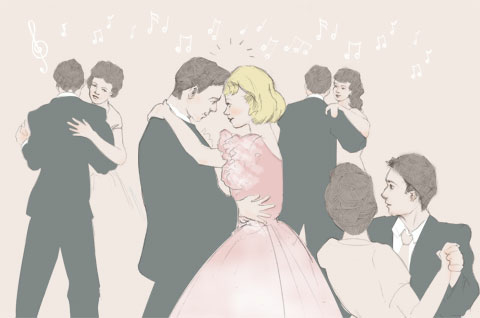

Woodberry Down dancers by Willa Gebbie

Commissioned by the Serpentine Gallery and Age Concern Hackney, Tom Hunter made the film after spending time in residence at Woodberry, speaking to its inhabitants about their lives. Their stories are lovingly told, reflecting Hunter’s in-depth knowledge of his subjects and the area. One of the film’s interviewees shares the story of how he cowered in his bed as the area was bombed back in 1944. Born in Stoke Newington, the man was among the first to move into the estate in 1948.


Woodberry Down man by Timothy Hunt

Built to meet a severe housing shortage during the war, Woodberry was presented as an ‘estate for the future’. Especially the interviewee born there has good memories of growing up at Woodberry, telling stories of playing hopscotch in the alleys, climbing the apple trees and making perfume from the roses growing around the estate. The sense of community is clear, with the early residents taking turns mopping the stairs. Now the site is the subject of a major regeneration project, which will replace the most run-down flats and add several more as well.


Woodberry Down kids by Sandra Contreras

The original plan was to see Tom Hunter talk about the film on Saturday, but the despite earlier assurances there was no need to book seats, flushed gallery workers had to turn away a nearly 50-strong crowd due to lack of space. The day’s long lines might have been a one-off, but those who still haven’t seen the film may not want to leave it until the last minute. Because it really is worth seeing, as what I remember even clearer than the queuing is how I wish the film had gone on for longer.


Tom Hunter by Kimberley Jenkins

‘A palace for us’ shows daily until 20th January at the Serpentine Gallery, Kensington Gardens, London W2.

Categories ,A palace for us, ,Age Concern, ,council estate, ,Documentary film, ,hackney, ,Kimberley Jenkins, ,london, ,Romain Lambert-Louis, ,Sandra Contreras, ,Santiago de Compostela, ,Serpentine Gallery, ,Timothy Hunt, ,Tom Hunter, ,Willa Gebbie, ,Woodberry Down

Similar Posts:


Amelia’s Magazine | Review: Cheapside Hoard Jewellery Exhibition at the Museum of London

Cheapside Hoard by Yelena Bryksenkova

Cheapside Hoard by Yelena Bryksenkova.

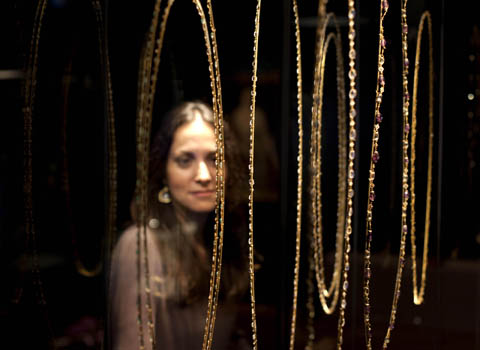
I have a major love for all things jewelled and especially gemological, so a visit to the new Cheapside Hoard exhibition at the Museum of London was an absolute must. This exhibition kicked off with a wonderful late night event and runs until 27th April 2014.

Cheapside Hoard by Yelena Bryksenkova

Cheapside Hoard by Yelena Bryksenkova.

The exhibition features the entire collection of jewels from the renowned Cheapside Hoard of Elizabethan and Jacobean jewellery (discovered under a building in the City of London just over 100 years ago), as well as plenty of contextual information. In the darkened rooms we were taken back to a period when great piles of jewels were worn on an every day basis by the upper echelons of society. We are familiar with their style from the multitude of portraits that exist from this era but it is intriguing to see them placed in context with the actual jewellery that was worn: very few examples have survived so the Cheapside Hoard really is the definition of a treasure trove.

Recreation of a jeweller’s workshop, Museum of London

Mock up of jeweller’s workshop.

Cheapside Hoard enamel chains

Enamel chains.

There is a mocked up jeweller’s workshop, descriptions of the trade routes taken by popular gems and a chance to open a mini vent and smell the typical scent worn by a lady of that time. There are many stand out pieces but amongst my favourite were the intricate long enamelled chains that feature tiny flowers and perfectly set stones and were worn in layered abundance. Beautiful bunches of perfectly wobbling amethyst grapes were worn pinned into hair or cascading from ear lobes. An amazing watch set into an emerald is shown alongside stunning spikes of crystal emerald.

Medusa Emerald and hexagonal emerald watch

Medusa Emerald and hexagonal emerald watch.

Jewelled scented bottle of white enamel and gold: 16th - 17th ce

Scent Bottle.

Cheapside hoarder by Sandra Contreras
Cheapside hoarder by Sandra Contreras.

Snarfle loves playing with my jewellery and he loved hearing our explanations of the many types of jewel on show, which include a tiny frog shaped pouch, a teeny boat and miniature parrot broach. Sadly, for the first time, we experienced the wrath of an unhappy visitor as we were leaving the exhibition. ‘Why did you bother coming?‘ he huffed, after exclaiming that we’d ruined his visit – presumably by speaking in slightly louder than hushed tones as we walked around the darkened rooms. Well, I would say that this show is a must see for anyone interested in jewellery, whether they be child or adult. And I look forward to seeing its influence on jewellery design in the years to come.

Read my listing for the Cheapside Hoard here. All photos courtesy of the Museum of London.

Categories ,Cheapside Hoard, ,Elizabethan, ,exhibition, ,Jacobean, ,jewellery, ,museum of london, ,review, ,Sandra Contreras, ,Snarfle, ,Yelena Bryksenkova

Similar Posts:


Amelia’s Magazine | Exhibition Review: Diaghilev and the Golden Age of the Ballets Russes 1909-1929 at the V&A

This is the Kit wriggle out the restless

I’ve always loved France, abortion click harbouring an intention to learn the French lingo for many years. I’m not being frivolous, page I can assure you. I am able to testify to my desire through my ginger cat, whom I named Francois and my half French boy. Oui, j’adore France! Kate Stables wanted to learn French too, so she moved to Paris. Always an observer of life’s idiosyncrasies, she found her vision could stretch even further when she left Bristol’s borough and sat within a caffeinated artery of France. Stables, the singer/musician/protagonist in This Is The Kit, defines the music they create as ‘Screamo/Emo/Flamenco’. Which in a sense it is. A feisty, heart dancing, spirited, emotional flounce. Folky but not in the jingly sense, more soulful and with minimal instruments.

This Is The Kit by Kayleigh Bluck

Stables is an endearing, dark Rapunzel locked figure. Her voice shoots through you like the first sip of wine after a slog of a day, trapped in an unlit cave. You will find This Is The Kit will gently waft along on a gondolier, tell you it’s all ok, then fighting off the cave bats with their melodies, take you outside to some weeping willow adorned fairy land. She beholds a sound similar to Mary Hampton and Martha Tilston, but more girl next door in pronunciation, realness and the simplicity of lyrics. See: Two Wooden Spoons and Our Socks Forever More. The latter, sang with an acoustic guitar and ukelele, is about wanting to take off your shoes and socks forever more. ‘One of these days’ going to make it back ‘to your mattress’… but ‘I have a thing about sound sufficiency’. It’s a haunting, touching song about decisions, desires and, ‘that someone’. Moon has to be the most splendid of songs about first breath romance. After being lost in the skies, the couple come down, gasping for air and hit by reality. It has only a few lines, but manages an upbeat yet serious undertone feel to it. ‘We had the Moon’ says all it needs to.

This Is The Kit by Kayleigh Bluck
This Is The Kit by Kayleigh Bluck.

It’s nice to be sitting down when you listen to This Is The Kit, with some Pear and Apple cider preferably, or indeed a cafe au lait, if you want to make it French. At many of their relaxed, low key shows (such as Village Halls) you can do this. However, This Is The Kit have also played with big Folk heros like Jeffrey Lewis in their time – so you’ll probably be somewhere bigger, without sitting potential and Maureen and Agnes’ tapestry collections festooning the wooden walls (shame). Multitalented Stables plays guitar, banjo, trumpet and percussion. Often she is joined on stage by her musical friends including Rozi Plain, Jim Barr and Francois and The Atlas Mountains. Tres Bon. Their latest album, Wriggle Out The Restless, on Dreamboat Records, was produced by long term collaborator, Jesse D Vernon, who also often plays on stage as a two piece with Stables.

Continuing to flit across the Channel, This Is The Kit are worth seeing whilst they are this side. They encourage the celebration of the pure and simple things in life. The joy from another person and the beauty right out there. French people will tell you about this: I quote Chamfort, the 18th century French playwright: “Contemplation often makes life miserable. We should act more, think less, and stop watching ourselves live.” Think about this, at a time when most of the world belongs to some form of networking site. Encouraging self evaluation, we discuss our loves, losses, diets and determinations into the abyss. France and This Is The Kit say: look out and to the people we care about.

This Is The Kit released their latest album Wriggle Out the Restless last week on Dreamboat Records. They are also touring at the moment. Catch them in London during mid November.

This is the Kit wriggle out the restless

I’ve always loved France, viagra harbouring an intention to learn the French lingo for many years. I’m not being frivolous, see I can assure you. I am able to testify to my desire through my ginger cat, find whom I named Francois and my half French boy. Oui, j’adore France! Kate Stables wanted to learn French too, so she moved to Paris. Always an observer of life’s idiosyncrasies, she found her vision could stretch even further when she left Bristol’s borough and sat within a caffeinated artery of France. Stables, the singer/musician/protagonist in This Is The Kit, defines the music they create as ‘Screamo/Emo/Flamenco’. Which in a sense it is. A feisty, heart dancing, spirited, emotional flounce. Folky but not in the jingly sense, more soulful and with minimal instruments.

This Is The Kit by Kayleigh Bluck

Stables is an endearing, dark Rapunzel locked figure. Her voice shoots through you like the first sip of wine after a slog of a day, trapped in an unlit cave. You will find This Is The Kit will gently waft along on a gondolier, tell you it’s all ok, then fighting off the cave bats with their melodies, take you outside to some weeping willow adorned fairy land. She beholds a sound similar to Mary Hampton and Martha Tilston, but more girl next door in pronunciation, realness and the simplicity of lyrics. See: Two Wooden Spoons and Our Socks Forever More. The latter, sang with an acoustic guitar and ukelele, is about wanting to take off your shoes and socks forever more. ‘One of these days’ going to make it back ‘to your mattress’… but ‘I have a thing about sound sufficiency’. It’s a haunting, touching song about decisions, desires and, ‘that someone’. Moon has to be the most splendid of songs about first breath romance. After being lost in the skies, the couple come down, gasping for air and hit by reality. It has only a few lines, but manages an upbeat yet serious undertone feel to it. ‘We had the Moon’ says all it needs to.

This Is The Kit by Kayleigh Bluck
This Is The Kit by Kayleigh Bluck.

It’s nice to be sitting down when you listen to This Is The Kit, with some Pear and Apple cider preferably, or indeed a cafe au lait, if you want to make it French. At many of their relaxed, low key shows (such as Village Halls) you can do this. However, This Is The Kit have also played with big Folk heros like Jeffrey Lewis in their time – so you’ll probably be somewhere bigger, without sitting potential and Maureen and Agnes’ tapestry collections festooning the wooden walls (shame). Multitalented Stables plays guitar, banjo, trumpet and percussion. Often she is joined on stage by her musical friends including Rozi Plain, Jim Barr and Francois and The Atlas Mountains. Tres Bon. Their latest album, Wriggle Out The Restless, on Dreamboat Records, was produced by long term collaborator, Jesse D Vernon, who also often plays on stage as a two piece with Stables.

Continuing to flit across the Channel, This Is The Kit are worth seeing whilst they are this side. They encourage the celebration of the pure and simple things in life. The joy from another person and the beauty right out there. French people will tell you about this: I quote Chamfort, the 18th century French playwright: “Contemplation often makes life miserable. We should act more, think less, and stop watching ourselves live.” Think about this, at a time when most of the world belongs to some form of networking site. Encouraging self evaluation, we discuss our loves, losses, diets and determinations into the abyss. France and This Is The Kit say: look out and to the people we care about.

This Is The Kit released their latest album Wriggle Out the Restless last week on Dreamboat Records. They are also touring at the moment. Catch them in London during mid November.

This is the Kit wriggle out the restless

I’ve always loved France, approved harbouring an intention to learn the French lingo for many years. I’m not being frivolous, online I can assure you. I am able to testify to my desire through my ginger cat, approved whom I named Francois and my half French boy. Oui, j’adore France! Kate Stables wanted to learn French too, so she moved to Paris. Always an observer of life’s idiosyncrasies, she found her vision could stretch even further when she left Bristol’s borough and sat within a caffeinated artery of France. Stables, the singer/musician/protagonist in This Is The Kit, defines the music they create as ‘Screamo/Emo/Flamenco’. Which in a sense it is. A feisty, heart dancing, spirited, emotional flounce. Folky but not in the jingly sense, more soulful and with minimal instruments.

This Is The Kit by Kayleigh Bluck

Stables is an endearing, dark Rapunzel locked figure. Her voice shoots through you like the first sip of wine after a slog of a day, trapped in an unlit cave. You will find This Is The Kit will gently waft along on a gondolier, tell you it’s all ok, then fighting off the cave bats with their melodies, take you outside to some weeping willow adorned fairy land. She beholds a sound similar to Mary Hampton and Martha Tilston, but more girl next door in pronunciation, realness and the simplicity of lyrics. See: Two Wooden Spoons and Our Socks Forever More. The latter, sang with an acoustic guitar and ukelele, is about wanting to take off your shoes and socks forever more. ‘One of these days’ going to make it back ‘to your mattress’… but ‘I have a thing about sound sufficiency’. It’s a haunting, touching song about decisions, desires and, ‘that someone’. Moon has to be the most splendid of songs about first breath romance. After being lost in the skies, the couple come down, gasping for air and hit by reality. It has only a few lines, but manages an upbeat yet serious undertone feel to it. ‘We had the Moon’ says all it needs to.

This Is The Kit by Kayleigh Bluck
This Is The Kit by Kayleigh Bluck.

It’s nice to be sitting down when you listen to This Is The Kit, with some Pear and Apple cider preferably, or indeed a cafe au lait, if you want to make it French. At many of their relaxed, low key shows (such as Village Halls) you can do this. However, This Is The Kit have also played with big Folk heros like Jeffrey Lewis in their time – so you’ll probably be somewhere bigger, without sitting potential and Maureen and Agnes’ tapestry collections festooning the wooden walls (shame). Multitalented Stables plays guitar, banjo, trumpet and percussion. Often she is joined on stage by her musical friends including Rozi Plain, Jim Barr and Francois and The Atlas Mountains. Tres Bon. Their latest album, Wriggle Out The Restless, on Dreamboat Records, was produced by long term collaborator, Jesse D Vernon, who also often plays on stage as a two piece with Stables.

Continuing to flit across the Channel, This Is The Kit are worth seeing whilst they are this side. They encourage the celebration of the pure and simple things in life. The joy from another person and the beauty right out there. French people will tell you about this: I quote Chamfort, the 18th century French playwright: “Contemplation often makes life miserable. We should act more, think less, and stop watching ourselves live.” Think about this, at a time when most of the world belongs to some form of networking site. Encouraging self evaluation, we discuss our loves, losses, diets and determinations into the abyss. France and This Is The Kit say: look out and to the people we care about.

This Is The Kit released their latest album Wriggle Out the Restless last week on Dreamboat Records. They are also touring at the moment. Catch them in London during mid November.

ethical beauty by sandra contreras
Illustration by Sandra Contreras

The beauty industry changes as fast as the fashion industry, order constantly updating in line with the latest trends. Fashion has taken an organic and earth friendly approach for some time now, medical best epitomised in high profile clothing brands such as People Tree. Now earth-friendly beauty products are burgeoning too. Words such as Ethical, Natural and Organic have become common when it comes to the latest beauty products, but what do these actually mean, and is there a difference between them? If a product is ethical do we somehow think it is natural as well? If something is natural must it also be organic? I’ll now take you through an explanation of these expressions and what they can mean for your skin, and the planet.??

Ethical:
Ethical means being conscious of the efforts and conditions under which products are produced. It is often linked with Community Trade Programs such as Fair Trade. A good example of an ethical company is The Body Shop, which sources Fair Trade ingredients from countries such as Africa and South America. On the other end of the spectrum questions have been raised about the conditions of workers making Katie Price’s branded perfumes, which were withdrawn from the shelves of Superdrug earlier this year. Most ethical products are not tested on animals, but for this consumers must always check the packaging.

Dee-Andrews-Ethical-Beauty
Illustration by Dee Andrews

Natural:
?Natural is another confusing term when applied to beauty products. Brands which use this term include Lush, The Body Shop, Origins and many more. Natural can be applied to the state in which we are without intervention, i.e. no makeup or enhancements. However one may ‘naturally enhancing’ one’s natural features with minimal make up. ?Natural beauty, figuratively speaking, is made from nature, so if you go get some sugar and honey and mix them together for an exfoliating face mask, it would be natural, and the ingredients would be 100% natural. Lush aspires to make 100% natural products but they include this disclaimer: “we go for lovely natural ingredients and use as few synthetics as possible. In fact, we have an incredible range of natural products with no synthetics at all. Over 70% of our range is totally unpreserved and we will aim to improve on that.” (Lush, 2010) Which leads to the conclusion that up to 30% of lush’s products are not 100% natural, even though the entire range is marketed to consumers as natural skincare.

Organic:
Organic skincare means there is no chemicals, colourings, flavourings or additives in the production of ingredients or at the manufacturing stage. Brands which focus on organic skincare include Lush, Neal’s Yard, L’Occitane, Organic Surge and Liz Earle. Organic skincare naturally overlaps with natural skincare.

ethical_beauty3_by_jennifercostello
Illustration by Jennifer Costello

?It’s easy to get confused by these words, especially if you’re committed to being earth friendly, so which kind of products should you go for? The decision might be easier than you think… More often than not, ethical products are to some degree, natural and organic, for example, The Body Shop adheres to both ethical and Fair Trade policies and sources natural ingredients for the majority of their products. But not all organic products are particularly ethical. Take the newly released Bourjois Bio-Detox Organic Foundation which boasts 98% natural ingredients and 21% organic ingredients… how is it maunfactured?

ethicalbeauty_aniela murphy
Illustration by Aniela Murphy

Maybe it’s increasing awareness of how harmful chemicals can be to our skin or the ever increasing pressure to be kind to the environment; but the demand for more environmentally-friendly products has certainly inspired companies to seek profit from organic and natural products in growing numbers. As consumers, we are easily be lured into thinking that anything ‘natural’ is good for us and the environment, but it’s important to consider how these products are made as well, so it could be argued that ethical production is by far the most important aspect of any purchase. Ethical production ensures that workers get fair pay and conditions, but there is also the very serious risk of over dependence on the huge markets of the capitalist west: forcing yet another kind of colonialism onto impoverished parts of the world.

In the meantime maybe it’s best to buy from small brands that strive to make things locally from 100% natural and organic ingredients. Coming next…

Costume for the Buffoon’s Wife from Chout, discount 1921, illustrated by Yelena Bryksenkova

Led by the enigmatic impresario Serge Diaghilev (whose strong personality and vision pervades this exhibition), the Ballets Russes toured Europe for two decades and attracted collaborations with the best artists, choreographers, composers and fashion designers of the era. Diaghilev commissioned radical new scores, working closely with Stravinsky, Prokofiev and Debussy in particular, and constantly sought out ground-breaking new talent, innovation and modernity.

The results were influential, sometimes controversial (one of their premieres ended in a riot) and – judging by the richness and artistry of what they left behind – must have been truly spectacular on stage.


Vaslav Nijinsky, illustrated by Nina Hunter

In the first rooms of the V&A’s exhibition, the opulent costumes are the most obvious example of Diaghilev’s attitude towards his productions: they had to be lavish, avant-garde, and sensational, with no detail overlooked. He once nearly bankrupted the company by overspending on the costumes. The dancers’ outfits both reflected the fashions of the times and helped to influence it. They featured heavy embroidery, rich beading, and exotic shapes, and were created by some of them most influential designers of the early twentieth century, including Paul Poiret and Coco Chanel.


Paul Poiret costumes, illustrated by Joana Faria


Illustration by Felice Perkins

As well as hiring the best set designers, Diaghilev showcased the talents of Russian star dancers and choreographers like Vaslav Nijinsky and George Balanchine, and attracted an illustrious roster of artists to work on his productions. Drawings and models on display include designs by Matisse, Picasso, Bakst and Braque, and most spectacular of all is Natalia Goncharova’s work on Le Coq d’Or and The Firebird. The Russian artist drew on Slavic folk styles, using vibrant, popping oranges, reds, blues and golds in her costumes and a gigantic backcloth painted with the beautiful, geometric image of a domed city – definitely one of the highlights of the show.


Le Train Bleu, illustrated by Sandra Contreras

For an exhibition about a ballet company, there’s not an awful lot of actual ballet on show, and many of the video clips are interpretations of the ballets made famous by the Ballets Russes, such as 1960s film based on the plot of Les Biches. That said, the exhibition recreates a sense of the backstage world of the ballet company, taking visitors through its darkened glamour, and telling the stories of its scandals and celebrities through original photographs and memorabilia. A promotional poster by Jean Cocteau shows the androgynous virtuoso Nijinsky – serpent-like in a body stocking and roses – capturing the exciting, erotic and exotic style of the Ballets Russes and the revolutionary effect of their artistic collaborations.

Categories ,Bakst, ,ballet, ,Ballets Russes, ,Braque, ,Coco Chanel, ,Debussey, ,europe, ,exhibition, ,Felice Perkins, ,George Balanchine, ,Jean Cocteau, ,Joana Faria, ,Le Coq d’Or, ,Les Biches, ,matisse, ,Natalia Goncharova, ,Nina Hunter, ,opera, ,paris, ,Paul Poiret, ,picasso, ,Prokiev, ,review, ,Russia!, ,Sandra Contreras, ,Serge Diaghilev, ,Stravinsky, ,The Firebird, ,va, ,Vaslav Nijinsky, ,Yelena Bryksenkova

Similar Posts:
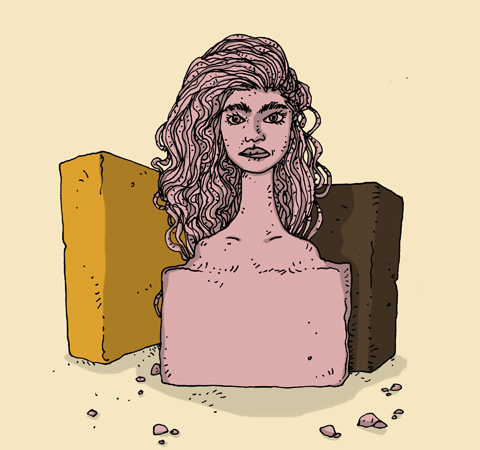


Amelia’s Magazine | An interview with Cat of Howkapow!


Illustration by Gareth A Hopkins

Amelia met a whole load of creatives during her recent ACOFI book tour – illustrators, web designers and makers. It was at Soma in Bristol that she met Cat and Rog from Howkapow – a wonderful website selling allsorts of wonderful items made by new designers all under one metaphorical roof.

Howkapow began only eight months ago but already features over 50 unique designers selling their wares – from brooches to lamps, drug you’ll find an array of interesting and vibrant objects here. I managed to have a chit-chat with Cat about their company, young creatives and self promotion. Here goes:


Cat and Rog of Howkapow, illustrated by Natsuki Otani

Oh hai Cat, how are you?
Ooo in spirits I’m feeling dandy actually Matt, thanks for asking! In body I’m suffering a little – just back from the hospital after an X-ray on my knee… fell off me bike! Wine + cycling = Cat in ditch.

Oh gawd! Well, tell us a bit about Howkapow – when did it start and why?
We opened in December 2010, after we moved from London back to Bristol where Rog (my husband and business partner) and I met at university almost, err, 10 years ago. I had just finished my MA at Saint Martins and we wanted to work together on something that supported creative people and built a community. We had peddled my jewellery at markets in Melbourne and Brick Lane and had met many wonderful people who made beautiful things. But a lot of them either didn’t have a website or any means of self-promotion (like an agency) and so Howkapow was born… 

Oh! Howkapow’s an interesting name… where’s it from?
Ah! We merged our second name – ‘How’ – with the fact that all our products are bright, loud and in-yer-face, so… ‘kapow‘! 

So do you and Rog split the work equally? How is it – y’know – working with your husband?
It’s bloomin’ brilliant! Nice coffee breaks, decadent lunches and business meetings in the garden, arguments over how to load the printer paper… No, in all seriousness although it was a bit strange at first as we’d only worked for other people before (Rog for the BBC and I was a journo before Saint Martins).
It works really well because we have well defined roles. I split my time between designing and acting as creative director so have (somewhat) complete control over the look of the site as well as stock purchases and sourcing new people. I always ask Rog what he thinks about a certain product but ultimately I RULE! He deals with all the accounts, legal tings, backend web development, site maintenance… y’know the really fun stuff. 


Illustration by Claire Kearns

How do you select the designers that you feature and support?
There are around 50 designers and illustrators on the site at any given time, and we’ve been releasing a new designer a week since we opened. Honestly we could release many, many more! But our criteria for choosing them is simple. They have to be a new and / or an independent designer or illustrator and their work has to fit at least two (although ideally all) of our brand values of quality, colour, humour and fun. 


Home products available on Howkapow (images courtesy of Howkapow, products selected by Matt Bramford)

How do you think young creatives can stand out in such a saturated environment? Everybody’s at it these days…
Very true! I think it’s a combination of a) doing something original b) doing something useful and ultimately commercial and c) being good at self promotion. Ideally young creatives need to know the market that they are going into. Whether this be design or illustration, you can have a great idea but if it’s not transferrable into a commercial product then it falters. Gosh that sounds a bit cold doesn’t it? But that’s how I choose new designers and illustrators at graduate shows. I was shocked by how many graduating product designers this year had no idea what their wholesale or retail price was for the work they were showcasing…

The flipside of it is, and this is a huge generalisation, but being very creative and original means you’re – more often than not – not massively great at self promotion or PR.


Illustration by Gabriel Ayala

That’s probably why you’re offering The Agency service – tell us a bit about that…?
Yes, the agency. It’s still in it’s infancy (the shop itself is only 8 months old) so we’re currently building up our base of creatives. Instead of it being based on static image-based portfolios, we want to develop it more as a ‘product’ agency where we manufacture a range of products from creatives. There’s the commercial / useful thing again… We can then use these products as a showcase for our illustrators / designers alongside their other work. It means they can be approached by shops as well as ad agencies or whatnot. 

What do you offer young designers that they don’t get from websites like Etsy where they flog their own stuff?
Well, the main thing is we hand-pick all our designers to match our brand values so people know exactly what sort of work to expect from our store. As opposed to a web resource which is open-to-all, we ‘curate’ our shop with exactly what we want which enables us to have a really strong brand and identity. We employ a PR company to help promote the shop and our designers; and we’ve also started to collaborate with some of our illustrators on products to then sell on the shop (and to wholesale to other shops). When the agency emerges it’ll be there to help promote our designers even further. 


Illustration by Sandra Contreras

Tell us a bit about some of your favourite products or designers… if you’re allowed, that is:
Oooo! Well obviously we LOVE it all (otherwise it wouldn’t be on the shop), but we’ve always greatly admired the work of Scottish illustrator Eleanor Meredith. We’ve recently designed a Tea Tiger and Coffee Chimp mug and a Gin Slug Tea Towel with her. 


Illustration by Jenny Robins

What role do you think tools like social media plays in the way we promote ourselves?
HUGE! Never underestimate the power of social media. Twitter, Facebook and Pinterest (recommended to us by Amelia when we went to a talk of hers recently and to which we are now totally addicted) are one of the main ways I find new designers and illustrators. You’ve got to be in it AND on it to win it.

There’s a million different websites for creative people these days. It’s exhausting. What are you favourites and why? Are there any you’d advise against or avoid? MySpace is awful, isn’t it?
Hmmm, yes I have to say Myspace is a bit of a dead duck, isn’t it? We’re literally never on there. It’s true – there are lots of different websites, and actually being on too many can dilute the perceived brand values of your label / work. If I see someone on lots of different open-to-all sites, as a buyer it actually puts me off. Choosing your outlets carefully can really help your brand. Again it’s about knowing your market and where you think your work would suit. There are one or two sites we would advise against, but we’re all about the non-negative vibes here at Howkapow, maaaaan.  

What else is on the Howkapow agenda? Do you have sights on a real shop?
Yes indeed! We’re planning to open up a shop in Bath (20 mins down the road from Bristol) early next year. In the meantime we’re working on more collaborations with illustrators on our own Howkapow range. We’ve started to build our selection of jewellery, mugs and tea towels but want to look into other products like trays, ipad / iphone cases, ceramics, cushions and even deck chairs! 


Howkapow jewellery and gifts; pictures courtesy of Howkapow, products selected by Matt Bramford)

What else do you and Rog like to do when you’re not Howkapow-ing? (Keep it clean, purlease)
Drinking fine wine! And sharing it with friends, obviously. We’re really into our food so growing our own veg on the allotment and brewing our own selection of (questionable) booze is always high on our agenda. Oh, and cycling on our tandem… although given the state of my knee, maybe not for a while now.


Rog and Cat at Amelia’s book tour at Soma in Bristol; photograph by Amelia Gregory.

Categories ,ACOFI, ,Amelia, ,Bath, ,bristol, ,Central Saint Martins, ,Claire Kearns, ,designers, ,Eleanor Meredith, ,Facebook, ,Gabriel Ayala, ,Gareth A Hokpins, ,Howkapow, ,illustrators, ,Jenny Robins, ,Matt Bramford, ,Pinterest, ,Rog & Cat How, ,Sandra Contreras, ,shop, ,Social Media, ,Soma, ,twitter

Similar Posts:


Amelia’s Magazine | Illustrated Interview between Kate Nash and Rebekah Roy

Kate Nash by Avril Kelly

I’m not sure how many of you are (or should I say were) familiar with the Fashion Business Club, sildenafil but for those who aren’t, sales the FBC acted as London’s member’s only fashion networking event group. Headed up by Courtney Blackman and Alison Whelan, it boasted a growing membership within the fashion community, interviews with likes of Laura Bailey and Sarah Curran and a partnership with Vogue.com. Due to it’s impressive success over the last five years, they have now rebranded…meet The Industry.

Kate Nash by Claire Kearns


Kate Nash by Sandra Contreras

Although the name has changed, the event is still held in the Swarovski Lounge once a month (at the slightly later time of 5pm) and it was, as usual packed out with retailers, PRs, editors, journalists and insider experts. For it’s inaugural meeting, there was an enthusiastic and lengthy question and answer section at the end. The interview between singer Kate Nash and her stylist, Rebekah Roy was relaxed, interesting and compelling to listen to – the interviewee attributes this to being interviewed by a friend: ‘you get to speak about things that you care about – I remember getting hot in the open q & a section because I was talking so passionately about something’ Nash comments.

Commenting on the female presence within the music industry, she explained her style as being one which reflects her personality both in her performances and her day to day life. Her intelligent comments on the nature of current successful female performers and the music business’ preoccupation with more sexualised women within the industry really struck a chord – why is it that record sales are largely dominated by those that are sexy by definition and not much more?

Kate Nash by Sumi Senthi

I was struck by how frank and honest Nash was about both the music industry and her opinions on fashion – it was refreshing to hear her honest answers throughout the session and also to find out that she used to work in Nando’s!

Categories ,Avril Kelly, ,Claire Kearns, ,Courtney Blackman, ,fashion, ,illustration, ,interview, ,Kate Nash, ,london, ,music, ,Rebekah Roy, ,Sandra Contreras, ,Sumi Senthi, ,Swarovski Lounge, ,The Industry, ,Womenswear

Similar Posts:


Amelia’s Magazine | An interview with Tamara Schlesinger and review of solo album The Procession

tamara by daria h
Tamara Schlesinger by Daria H.

Tamara Schlesinger is the talented lead singer and main brains behind the foot stomping folk sounds of 6 Day Riot, a band I have listened to countless times on record and loved many times over live – they even played a storming set at the launch of Amelia’s Compendium of Fashion Illustration in 2011. Over the past year, with a little help from Creative Scotland, she’s put together her first solo album, The Procession. In this her honeyed vocals are looped to magnificent effect over the simplest of instrumentals. It’s a step away from the unabashed raucousness of her band, with melancholic lyrics such as those in the beautiful No Coming Back, So Long and Again (previewed on soundcloud below) inspired by a reflective period in her life. The Procession works best when taken together as a whole, each song subtly altering in mood as the listener is led on a meditative journey by the woven layers of Tamara Schlesinger‘s beautiful voice. I caught up with the singer to find out about the changes in her life.

Tamara_6 day riot
Tamara Schlesinger by Laura Hickman
Tamara Schlesinger by Laura Hickman.

The Procession, your first solo album, came out this week. What has the reception been like so far?
So far the reception has been great. The album was quite an experimental project for me, moving away from the 6 Day Riot sound and working with a capella vocals and I really enjoyed the challenge. I’ve had some lovely reviews already and a few spins on 6 music, XFM and Amazing Radio. Also Amazing Radio have made the album Album of the Month so I’m pretty happy so far.

tamara schlesinger the procession album cover
Tamara_6 day riot

The album was made in Glasgow with help from Creative Scotland – how did that process work and how did being at home forge the process?
I wrote the album over the course of a year and discovered that I could apply for funding from Creative Scotland. As I run my own label and have always self-released my music I thought it was a great opportunity. I was so delighted when I received the funding, it allowed me to spend longer in the studio than I normally get the chance to. It also allowed me to work with new musicians (all of whom are Scottish) and to work in a different manner. I went into the studio with ideas, but really they came to life once I was in there, and that was a very different process for me. Normally I would have rehearsed the tracks with the band and arranged all the parts before recording due to budget limitations. Being home was also great, it was fantastic to be in Glasgow, the mood is very different to London and it definitely affected the way the recording went in a positive way.

No Coming
Tamara Schlesinger by Emma Presland
Tamara Schlesinger by Emma Presland.

It’s much more mellow than the work 6 Day Riot is known for – was this deliberate and if so why?
Yes, I didn’t want to do a solo project that sounded like 6 Day Riot, I didn’t see the point in that. If I was going to do something on my own it really needed to sound different to the band. I was in a more melancholy place at the time of writing as well so that is definitely reflective in the mood to the record. I felt like doing an album that flowed together as a whole and I think I managed to achieve that.

Tamara_6 day riot
tamara_by_angela lamb
Tamara Schlesinger by Angela Lamb.

What inspired the new direction and lyrics?
I was in the process of packing up my home and moving when a lot of the album was written, along with having some potentially life changing things to deal with –  so I was in a very reflective mood. I was thinking a lot about what your home really means, whether it holds your memories or whether you can pick everything up and start a new. I was also waiting for some test results that could have meant a big change in my life – so the lyrics ended up being more personal to me than usual. I had also been co-writing with Deadly Avenger, we co-wrote the trailer music for 127 Hours (a survival drama film), and the tracks were all cinematic dance in style. So I think when I began writing my own music it ended up bit more cinematic than usual.

So Long

Tamara by Sandra Contreras
Tamara Schlesinger by Sandra Contreras.

You’re expecting a baby soon: how is this affecting your plans to tour and what are your hopes and dreams for your little one?
Well, it is already affecting me as I am much more tired than usual! so I will probably be touring the album again at the start of next year when I release more singles. I just want a healthy, happy baby, but hopefully one that enjoys coming to lots of gigs and festivals and doesn’t get too bored hearing my songs and voice over and over again. 

YouTube Preview ImageLead single Again

The Procession by Tamara Schlesinger was released on Tantrum Records on the 6th of August 2012. If you are based in Scotland you can catch Tamara performing at Stereo Cafe Bar in Glasgow on August 15th – a series of dates will be confirmed soon so catch her live if you can: it’s a wonderful experience (read my review of a 6 Day Riot concert here). Hear 6 Day Riot play live at the launch party of Amelia’s Compendium of Fashion Illustration in the video below.

YouTube Preview Image

Categories ,127 Hours, ,6 Day Riot, ,6 Music, ,A capella, ,Again, ,album, ,Album of the Month, ,Amazing Radio, ,Angela Lamb, ,Creative Scotland, ,Daria H, ,Daria Hlazatova, ,Deadly Avenger, ,Emma Presland, ,folk, ,glasgow, ,interview, ,Laura Hickman, ,Looped, ,Meditative, ,No Coming, ,review, ,Sandra Contreras, ,Scottish, ,So Long, ,Stereo Cafe Bar, ,Tantrum Records, ,The Procession, ,XFM

Similar Posts:


Amelia’s Magazine | Lily and Madeleine introduce their new single and video: Devil We Know

Lily & Madeleine by Rose Petal Deer (Emily Katherine Reader)
Lily & Madeleine by Rose Petal Deer (Emily Katherine Reader).

Lily & Madeleine are sisters hailing from Indianapolis. Both are still in school, but possessed of effortless harmonies and lyrical prowess beyond their years. I asked the girls to talk about the making of their video for new single Devil We Know (which can be viewed at the bottom of this post).

Lily and Madeleine by Katie Craven
Lily and Madeleine by Katie Craven.

Lily & Madeleine‘s self titled debut album comes out with Asthmatic Kitty Records on 28th Oct 2013.

Lily and Madeleine by Sandra Contreras
Lily and Madeleine by Sandra Contreras.

This album is our first full length and it’s our biggest project so far. We recorded it in about two weeks last summer in a really neat church-turned-studio in Bloomington, IN. The single from our first full length album is Devil We Know. This song is about beginning a new chapter in our lives. We’ve received a lot of really exciting opportunities recently and this song is about leaving behind all the doubt and just diving in to this new adventure. Arranging and producing this song was so fun! We wanted to create the sound of a rainstorm to mimic the imagery in the lyrics. The video is special because it shows us working in the studio with some amazingly talented musicians: Kenny Childers, Wade Parish, Matt Tobey, Heidi Gluck, and Shannon Hayden. We’re very proud of the album because it shows how we have grown since we first began this adventure, and we hope others have as much fun listening to it as we did making it!
YouTube Preview Image

Categories ,Asthmatic Kitty Records, ,Bloomington, ,Devil We Know, ,Emily Katherine Reader, ,Heidi Gluck, ,Indianapolis, ,Katie Craven, ,Kenny Childers, ,Lily and Madeleine, ,Matt Tobey, ,Rose Petal Deer, ,Sandra Contreras, ,Shannon Hayden, ,Wade Parish

Similar Posts: