Amelia’s Magazine | Duke Press Launch – One of a Kind

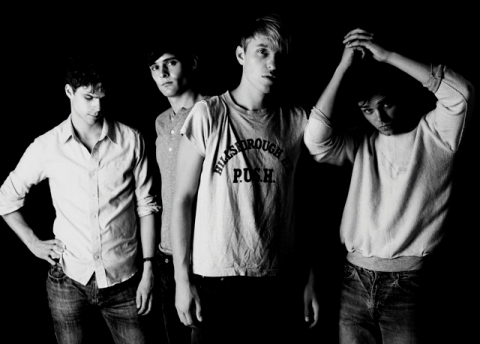
press shot new Drums 1

They’ve already been creating quite a bit of buzz over here but it looks like 2010 could be the year of The Drums. Their EP Summertime is already available to buy and they’re working on their debut album. This summer will see them touring with Florence and the Machine. We managed to speak with singer Jonathan Pierce about the band.

Andy Devine. How did you all meet?

Jonathan Pierce. Jacob and I met each other when we were very young. I think I was 13 and he was 11? I grew up in the same small town as Adam and I met him through just hanging out and being bored. We all met Connor last June. We feel very lucky to have met each other. We all share a lot of the same interests while at the same time we all bring a little something different to the creative table.

AD. You’ve been tipped by NME as a band to watch this year. Does that put alot of pressure on you to deliver?

J.P. We really have not felt any pressure at all, treat and if we do feel pressure it has not been enough for us to notice it. We just keep doing what we have been doing from the beginning and that is to write sincere pop music. Everything we do, information pills we want it to come from a place of purity and also a place of selfishness. If we do not believe in what we are doing, price then how can anyone else really? This band started as a selfish endeavour and it will end that way. Only that way can you become vulnerable.

A.D Quite a few of your upcoming gigs are Sold Out, how does that feel?

J.P. It’s really wild for us to hear that all these shows are sold out. We would have never thought that a year after we wrote our first song in our tiny bedroom off the highway in Florida that we would be traveling across the UK and other parts of Europe in a tour bus playing sold out shows. It’s very strange.

A.D. Do you enjoy playing gigs over here, how do you find the audiences are?

So far it has been a cool experience for the most part. Everyone seems to be excited. We love playing shows over here. I remember the first show we ever played in London. It was a few months back at The Flowerpot. It was packed and sweaty and wild and we could not believe that it was happening. We could not believe that people cared this much.

A.D. Have there been any notable highlights?

J. P. Playing Barfly was pretty surreal. There was so much hype and people outside trying to get in. It seemed like a movie, but it was really happening. It’s those moments that you have to just ask yourself “is this real”?

A.D. What do you do when you’re not playing in the band?

J.P. Well, since we stared the band, every minute of the day revolves around it usually. If we aren’t playing shows, then we are rehearsing, and if we arent rehearsing, then we are writing songs and if we arent writing songs then we are working on the album artwork or website. It’s very constant because we are such control freaks.

A.D. Finally, what are you most looking forward to doing this year?

J.P. Playing shows, putting out our album, and writing pure pop songs.

The Drums are part of the NME Shockwaves Tour which begins on Thursday. They will also be back in the UK in May supporting Florence and the Machine in March.
press shot new Drums 1

They’ve already been creating quite a bit of buzz over here but it looks like 2010 could be the year of The Drums. Their EP Summertime is already available to buy and they’re working on their debut album. This summer will see them touring with Florence and the Machine. We managed to speak with singer Jonathan Pierce about the band.

Andy Devine. How did you all meet?

Jonathan Pierce. Jacob and I met each other when we were very young. I think I was 13 and he was 11? I grew up in the same small town as Adam and I met him through just hanging out and being bored. We all met Connor last June. We feel very lucky to have met each other. We all share a lot of the same interests while at the same time we all bring a little something different to the creative table.

AD. You’ve been tipped by NME as a band to watch this year. Does that put alot of pressure on you to deliver?

J.P. We really have not felt any pressure at all, seek and if we do feel pressure it has not been enough for us to notice it. We just keep doing what we have been doing from the beginning and that is to write sincere pop music. Everything we do, decease we want it to come from a place of purity and also a place of selfishness. If we do not believe in what we are doing, then how can anyone else really? This band started as a selfish endeavour and it will end that way. Only that way can you become vulnerable.

A.D Quite a few of your upcoming gigs are Sold Out, how does that feel?

J.P. It’s really wild for us to hear that all these shows are sold out. We would have never thought that a year after we wrote our first song in our tiny bedroom off the highway in Florida that we would be traveling across the UK and other parts of Europe in a tour bus playing sold out shows. It’s very strange.

A.D. Do you enjoy playing gigs over here, how do you find the audiences are?

So far it has been a cool experience for the most part. Everyone seems to be excited. We love playing shows over here. I remember the first show we ever played in London. It was a few months back at The Flowerpot. It was packed and sweaty and wild and we could not believe that it was happening. We could not believe that people cared this much.

The drums-1

A.D. Have there been any notable highlights?

J. P. Playing The Barfly was pretty surreal. There was so much hype and people outside trying to get in. It seemed like a movie, but it was really happening. It’s those moments that you have to just ask yourself “is this real”?

A.D. What do you do when you’re not playing in the band?

J.P. Well, since we stared the band, every minute of the day revolves around it usually. If we aren’t playing shows, then we are rehearsing, and if we arent rehearsing, then we are writing songs and if we arent writing songs then we are working on the album artwork or website. It’s very constant because we are such control freaks.

A.D. Finally, what are you most looking forward to doing this year?

J.P. Playing shows, putting out our album, and writing pure pop songs.

The Drums are part of the NME Shockwaves Tour which begins on Thursday. They will also be back in the UK in May supporting Florence and the Machine in March.

Intro-Collection_28Unfinished Town courtesy of Jess Wilson

Ever thought about starting your own publishing house? Talk about pipe dreams…Well look and learn from the boys and girls at Duke Press. It can be done and the launch night last Thursday showcased some the most exciting illustration talent around. In the suitably stark surroundings of Dalston’s Oto Cafe, order beautiful hand bound books were strewn across shelves and confirmed that independent publishing is alive and well. This pretty unique outfit provides opportunities for really exciting emerging talents.

Intro-Collection_12Yo!Ville courtesy of Yo! Fest

Duke Press is an independent publishing collective based in London that was founded by Jess Wilson and Ryan Todd as a platform for creative publishing, illness with the aim to distribute small, medications hand-made and numbered editions. As well as providing a showcase for their own work, it’s given them a vehicle with which to invite fellow artists from around the world they admire and want to collaborate with. When Jess and Ryan were asked what Duke Press is about, they said simply “eclecticism” and it is apparent in the individuality of their output.

Intro-Collection_08Dust and Shadow courtesy of Charlie Duck

Intro-Collection_03Another Way courtesy of Ryan Todd

The books were unique in every aspect, not just in the illustrator’s personal style, but also down to the printing methods, and even the paper. The inside cover is marked by hand, telling me I’m looking at number 24 of 60; these are one of a kind little beauties! In the hand stitched YO! Ville – YO! Fest, individual sheets of coloured textured paper are inserted amongst the pages, and a miniature comic sits in the centre fold as an unexpected gift for the reader. Small touches, but ones that could never be replicated in a mass produced book.

Intro-Collection_25Yo You Youth courtesy of Andreas Samuelsson

Talking to the artists, it is clear that they relished their time working with Duke; they were given complete freedom to explore their ideas. Freelance illustrator Anthony Sheret tells me “The whole experience was so creative. So much of the work I do is commercial, producing stuff for other artists, but with this I was the artist. It was a complete labour of love.”

Intro-Collection_16Risograph courtesy of New Found Original

Standards are exceptionally high which explains why production takes so long. In Anthony’s case I find out it took over a year between being approached by Duke Press to finding the right inspiration to make his book. The Idea for Kyoto Parade came to him while traveling round Japan. When in Kyoto, he happened upon an old Japanese Stationers and was struck by ‘the ephemeral, delicate quality’ of the supplies. It is a quality that he has managed to transfer to the book itself.

Intro-Collection_22Rainy Day by Hannah Waldron

There appears to be very little hidden agenda behind Duke Press, as Jess confirms. “It’s just about promoting people we like and sharing ideas. That’s it…sharing!” Ryan adds “We certainly aren’t making a profit from it. Any money goes straight back in. It’s a platform for whatever we want to do, at the moment it’s books, but we would be really interested in doing publishing projects, like taking over a magazine, there’s no limitations”. With the corporate publishers on their financial knees at the moment, it’s going to be up to the Duke Presses of this world to keep our love of books alive and well. And if their eight pearls of published works are anything to go by, that won’t be difficult…

Intro-Collection_02

Categories ,Andreas Samuelsson, ,Anthony Sheret, ,art, ,bookmaking, ,books, ,design, ,Duke Press, ,handmade, ,Hannah Waldron, ,illustration, ,illustrator, ,photography, ,Printing, ,printmaking, ,Ryan Todd, ,typography

Similar Posts:


Amelia’s Magazine | An interview with Simone Lia about her autobiographical graphic novel Please God, Find Me A Husband!

Please God, Find Me a Husband! Simone Lia cover

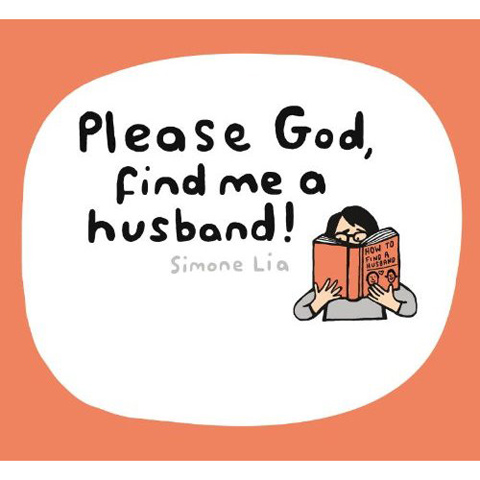
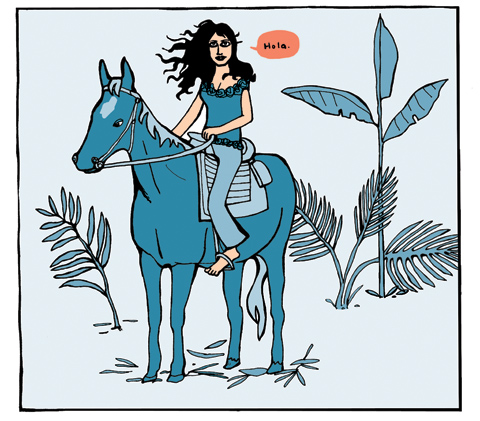
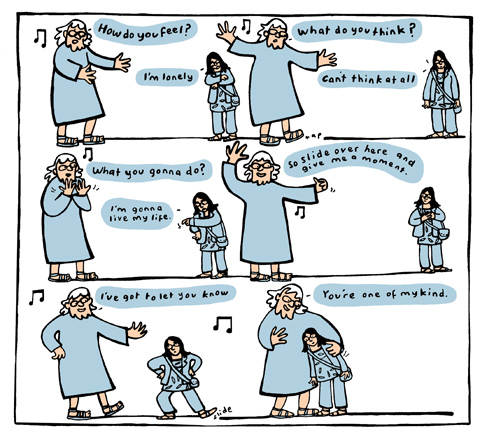
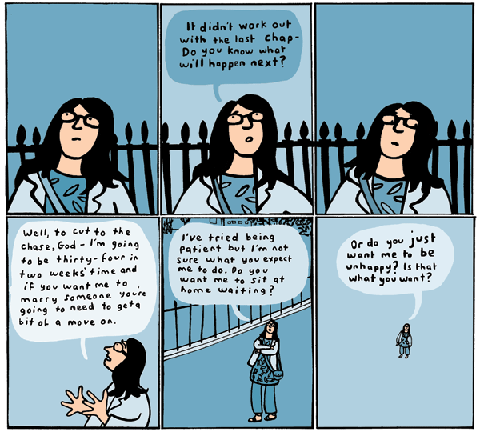
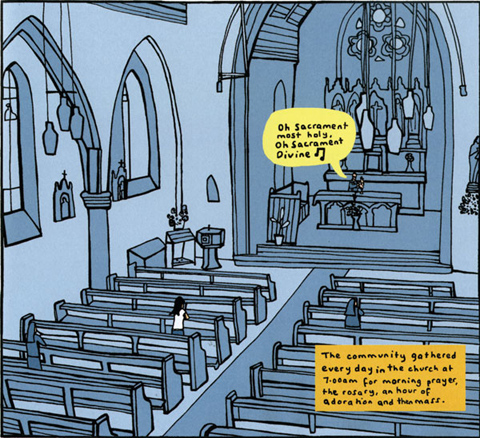
Illustrator and comic artist Simone Lia recently published her autobiographical graphic novel Please God, Find Me a Husband! – a candid look at life as a 30 something single woman with an unshakeable belief in God. The book is beautifully illustrated in the style that Simone’s numerous fans will be familiar with: crisp black lines filled with minimal flat colour define her characters and landscapes, accompanied by instantly recognisable handwritten type.

Please God, Find Me a Husband! is by turns touching, funny, exasperating and uplifting. I must confess that as someone who knows the author very well and remembers some of the situations that inspired the storyline it’s hard to take an objective view of the novel, but I am sure it will appeal to a wide audience. Graphic novel lovers will appreciate Simone’s beautiful illustrations and clever use of design to move the story forward, whilst many people who do not traditionally gravitate towards comics will relate to at least some elements of her situation. This is an enjoyable and entertaining read, but I’ll let her explain a bit more herself….

Please God, Find Me a Husband! Simone Lia
At what point did you decide to write an autobiographical graphic novel and why?
I had the idea in a flash whilst having a God moment in Leicester Square. I was praying and felt that God was answering my prayer in a subtle and unusual way (through the lyrics of an INXS song!) and I was inspired to go into a deeper journey with God, get to know Him more. In my minds eye I imagined a spiritual journal I suppose, being visualised in a comic format. There was an internal struggle in making visible something as deeply personal as my spiritual life, in parts of the story baring my soul. Mostly the struggle was about not wanting to make myself vulnerable in making my private thoughts public, especially as the devotion which is illustrated in the book is totally counter cultural. I decided to go ahead though because as an artist I have a deep desire to communicate with an audience and hopefully to reach and touch a reader in a very human way and also make the reader laugh! Ultimately what convinced me to make the book was a level of trust that I had in the reader, that they would be able to read the story and perhaps enjoy it without necessarily believing in everything that I believe in.

Please God, Find Me a Husband! Simone Lia
How much of your time did this book take up, and how did you juggle its creation with other work commitments?
It’s a bit tricky to say, I was really lucky to have a couple of regular jobs which meant in theory I had three days a week to work on the project. However the nature of the project was so different to anything that I’d done before because it’s very personal I did keep stopping the project because I couldn’t find the tone or I lacked the confidence to to continue with it. The book took four years from start to finish but in reality the final year was when all the work was done. I’d started the book from scratch and worked like the clappers to get it finished.

Please God, Find Me a Husband! Simone Lia
What was the decision behind your minimal use of colour?
The book was originally full colour. I showed it to Billy Kiosoglou of Brighten the Corners who designed Fluffy and he gave me some frank/harsh feedback. His idea was to go for one colour instead. So we made a compromise and I had a limited palette of about 100 colours ha ha.  

Please God, Find Me a Husband! Simone Lia
Where do you think your very unique sense of humour comes from?
My parents, my mother is rather hilarious. Although our family humour is a bit dark. I was with my mother a few years ago and and we were walking down some shiny stairs in Malta and I slipped and fell. My Mother’s instinct was to break my fall but instead she punched me in the mouth which hurt a whole lot more than falling on my bottom. My lip swelled up double the size for a few days and this is is the sort of thing that we all find hilarious in my family. Pain.

Please God, Find Me a Husband! Simone Lia
You are best known as the creator of Fluffy, which most readers may not have realised contained autobiographical elements as well. Is it important to draw on real life when creating stories?
Yes most readers will not realise that I actually do have a talking bunny at home. Not really! There were a few bits that I nicked from real life in the story and some of it was life imitating art imitating life etc. The trip to Sicily on a train and a boat and a bus, I made that trip and some of the characters that I met on the way did find their way into the book. Some of the bits with the Mother, that was memories of my Grandmother and her children and there was a part with the mafia as well which was taken from real life. Some things that happen in real life are way more unbelievable then fictional stories somehow. I don’t think it’s necessary to draw on real life when creating stories but it’s that old adage isn’t ‘write what you know‘.

Please God, Find Me a Husband! Simone Lia
Reviews have been really good in general (including a glowing one on the Guardian) but there has perhaps inevitably been a few people who struggle to understand your unquestioning commitment to God. What would you say to those people?
I read a couple of those reviews but the reviews that I saw weren’t actually about the book or the story telling etc, it was more about me (deluded I think someone wrote) or wanting the book to be about me justifying/explaining my beliefs. The book wasn’t about that but it was quite interesting reading those reviews. I wasn’t writing this book to be provocative in anyway but I do understand that even by having a belief in God this can be provocative in itself. For most of my life until the age of 30 I was definitely not practicing my faith at all, I didn’t really believe in God. I do remember on the rare occasions when I met Christians who were brave enough to say that they were a Christian – the negative feelings that bubbled up inside towards them: possibly fear, anger, irritation and disbelief that anyone could believe anything so clearly stupid. So I’m not really too surprised by negative reactions towards me for my beliefs.

Please God, Find Me a Husband! Simone Lia
I know you as someone with a great sense of adventure and I think that really comes through in this book – what adventures have you had more recently – can you share any?
I’m not sure that I do have a great sense of adventure in the normal sense of the word but I do get myself into quite random situations that open up possibilities to meeting interesting people. I recently went to Texas and stayed in a trailer for a hermit like experience – this wasn’t the original intention of the trip as Texas is quite a long way to travel to stay in a trailer, the circumstances had changed but I was fully embracing and looking forward to a hermit experience in a field in a small town. Anyway I met so many people, really lovely warm hearted people who were big on hospitality so there wasn’t too much of an opportunity for hermiting.

Please God, Find Me a Husband! Simone Lia
Will there be any more autobiographical stories in the future? Any ideas in the pipeline?
Not at the moment. I’m glad that I did the last one but the process was a bit like pulling out every bit of your body and sticking it back in again. I’m drawing bunnies today and it’s very pleasant. But never say never, if there was something that seemed right for autobiographical or more journalistic I would do it.

Please God, Find Me a Husband! Simone Lia
What new stuff are you working on right now?
Right now I’m working on an illustration for the Sheffield literary festival, Off the Shelf and I’m part of the illustration day this Saturday at Foyles with David Gentleman, Karrie Fransman, Mark Herald and top comics journalist, Paul GravettI’ll be running a workshop in the afternoon. And I will also be at ELCAF on Sunday on a panel discussion hosted by Becky Barnicoat (The Guardian) from 2.30 til 3.30.

Please God, Find Me a Husband! is out now, published by Jonathan Cape. Read my full listing for ELCAF here.

Categories ,autobiographical, ,Becky Barnicoat, ,Billy Kiosoglou, ,Brighten the Corners, ,comic, ,David Gentleman, ,ELCAF, ,Find Me a Husband!, ,Fluffy, ,Foyles, ,God, ,illustrator, ,INXS, ,Karrie Fransman, ,Malta, ,Mark Herald, ,Off the Shelf, ,Paul Gravett, ,Please God, ,Sheffield literary festival, ,Sicily, ,Simone Lia, ,texas, ,The Guardian

Similar Posts:


Amelia’s Magazine | An Interview with Ukrainian Illustrator Daria Hlazatova

Daria Hlazatova - Oceania
Daria Hlazatova – Oceania.

Ukrainian illustrator Daria Hlazatova has been creating stunning illustrations for Amelia’s Magazine for several years now. I caught up with her to find out about her latest projects and how important social media has been to building her career. She’s an inspiration!

Daria Hlazatova - tom riddle
Tom Riddle.

Tell us about your home town near the Carpathian mountains in Ukraine. Where would you take a visitor from the UK?
I’d give them a tour of our town, Chernivtsi, which is, in fact quite nice and boasts a mix of European architectural styles, historically having been under the rule of different countries. A trip to the restaurant serving our national cuisine will be a good idea, too, as it is a somewhat unusual experience for tourists, but nevertheless delicious: everyone enjoys our pancakes with red caviar! We’d also take a trip to the mountains to pick up some berries and enjoy the views.

Canterville ghost
Canterville ghost.

What kind of art do your relatives make and how has it inspired your own creations?
There are artists both on my mother’s and my father’s side, so I think it was natural for me to become interested in drawing in my early years. My mother’s uncle Volodya used to be a rather well-known book illustrator in St Petersburg and I still have some of his signed books, one of which is called Dashenka, which is a diminutive of my name. And although the story wasn’t about me, I took it as a sign that I, too, must try myself at illustrating books. My father’s relatives are mostly landscape artists, living and working in Russia.

Daria Hlazatova - Dog Days are Over
Dog Days are Over.

You are an active part of the creative social media community – when did you discover the online world and how has it affected your art making over the years?
I think the same time as I was lucky enough to have discovered Amelia’s Magazine which was in the autumn of 2010. Being based so far away from all the exciting  art events and virtually having no connection with other creatives, I decided to use the Internet resources to mend this injustice. Since then I have found it extremely helpful, with online blogs and networks serving me as a magic portal into the art world.

Daria Hlazatova -Harold Pinter
Harold Pinter.

Why is your blog titled All Pencils of Mine are Sugarplums?
It has to do with my love for Lewis Carroll. The title is based on one of his syllogisms (which are logic arguments). I will say no more, because whenever I start talking about Carroll or syllogisms, I confuse everyone… rather like I do with the title of my blog!

Daria Hlazatova Ravel
Ravel.

What can people find on your blog?
Lots of drawings, random thoughts, news about shows and interesting projects. I sometimes share art and music that inspire me. I sincerely hope that upon visiting my blog, readers have a sudden urge to create something, read  a fairy-tale, dream,  bake cakes, or just dance,  in short do something fun and artistic.

Daria Hlazatova robert smith by daria h
Robert Smith.

You are a self taught artist – where have you picked up your style and techniques from?
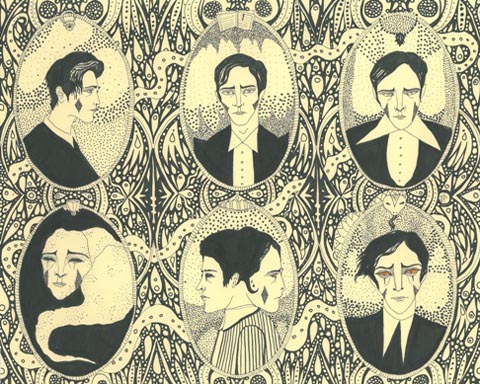
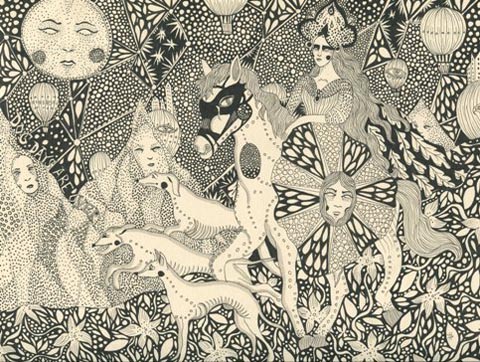
I don’t know. I think my style has been developing of its own accord and I only mildly control it. I do have an obsession with some elements, like eyes, stars and moons that I include in almost every work of mine, but then again, I do that subconsciously most of the time. I can only guess why I intertwine eyes into the patterns and use them as central objects and it’s perhaps because the Russian word “eye” is the root of my surname.

Nosorog
What inspired you to create a zine and who do you hope will read it?
A long-awaited holiday! I have 2 part-time jobs (one of them is no longer part-time) besides being a full-time illustrator. I’ve been looking for this winter break since my last holiday in summer and wanted to make something special. Besides, I’ve often heard from people they’d like me to make a zine or a little book, so I thought I’d give it a try. It all happened unexpectedly quickly and in a blink the zine was ready. I had to look through the notebooks back from my university days, where I scribbled some nonsense poems and stories to pass the time during dull lectures and also had crazy ideas contributed by some lovely enthusiasts. I hope everybody who appreciates a little nonsense  now and then will enjoy Nosorog.

Pati Yang by Daria Hlazatova.
Pati Yang for Amelia’s Magazine.

What does Nosorog mean and what does the zine contain?
Nosorog from Russian means “rhinoceros”. There’s no point denying it: I chose the name for no reason at all. This was the first word that came to me. The zine contains several short-stories, some quotes, a horoscope, mock advertisements and an interview, accompanied by my old and new illustrations. The content has been inspired by the works of Mervyn Peake and Edward Gorey and by fairy-tales in general. I was very surprised but also happy to see that the first issues sold so quickly. I’m printing more and already working on the second one, which will have more stories, exclusively-created illustrations and will hopefully make you smile!

Where can people get hold of a copy?
I don’t have a proper shop elsewhere except for the one on my blog. And if anyone wants a freshly-printed Nosorog, the best thing to do is to email me.
 
Moth rah girl phoenix EP group Daria h
Daria Hlazatova -girl phoenix EP cover for Moth Rah
Girl phoenix EP cover for Moth Rah.

Can you tell us about your upcoming show in Kiev?
It will take place in a mysteriously beautiful place, which is the building of an old opera house. From the outside it looks like a gingerbread house, on the inside it’s a perfect setting for a Georges Melies film. I fell in love with this place at once. The space itself, called Kiev Loft,  is used for concerts, performances, and art events and run by a rather enthusiastic and professional young team who as far as I can see are eager to help the art life in our capital thrive and prosper, which is great. My drawings will be exhibited there along with the beautiful and very curious works by the Lithography studio “30” based in Kiev. It will be my first show in Ukraine, so wish me luck!  

frankie-rose-by-daria-h
Frankie Rose for Amelia’s Magazine.

You’ve been doing some personal work inspired by Johnny Flynn, how did you discover his music and what touches you about it?
I first heard of Johnny after seeing the play Jerusalem. I didn’t know he was also a songwriter and after hearing his music, something clicked. You know, there are some periods in life when a certain melody is needed to help you carry on and Johnny Flynn’s songs turned out exactly that thing. I felt the connection because his music is very poetic and not simply folk, it’s more than that. I can see the influence of theatre, nature, even Shakespeare, and all things I like in his songs and that’s why I thought I should explore a bit more both in the music and in myself by creating some illustrations to accompany his songs.

Daria Hlazatova tonight
Tonight.

Have you got anything else in the pipeline you can tell us about?
Lots! Mostly the plan is just to draw. And if that doesn’t work, plan B is to draw some more again.

What do you hope for your art in the coming years?
I’d love to have a show in Italy and before that I hope to work on larger scale drawings and do some music-related artwork. If you ask me, an art studio (preferably with a fitted kitchen, a helpful assistant and a husky dog)  is my pipe-dream.  Shall I use a quotation to appear exceptionally well-read? Shakespeare said and I completely agree with him, that expectation is the root of all heartache, that’s why I never expect,  but I’m ready for surprises. I’m very happy doing what I do at this very moment.

Find Daria Hlazatova online: read her blog, friend her on facebook and follow her on twitter.
 

Categories ,30, ,All Pencils of Mine are Sugarplums, ,Canterville ghost, ,Carpathian, ,Chernivtsi, ,Daria H, ,Daria Hlazatova, ,Dashenka, ,Dog Days are Over, ,Edward Gorey, ,Frankie Rose, ,Georges Melies, ,Harold Pinter, ,illustrator, ,interview, ,Jerusalem, ,Johnny Flynn, ,Kiev, ,Kiev Loft, ,Lewis Carroll, ,Mervyn Peake, ,Moth Rah, ,Nosorog, ,Oceania, ,Pati Yang, ,Ravel, ,Rhinoceros, ,Robert Smith, ,Shakespeare, ,St Petersburg, ,Syllogisms, ,Tom Riddle, ,Tonight, ,Ukraine, ,Ukrainian, ,Volodya

Similar Posts:


Amelia’s Magazine | Andrew Wightman: Illustrator Spotlight

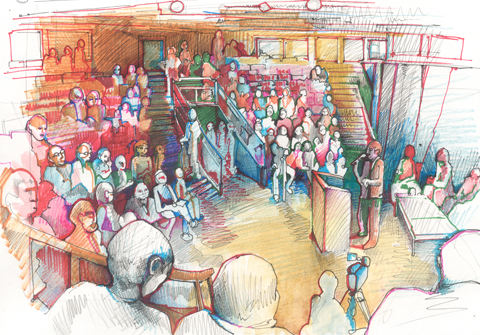
Royal Institution lecture hall
Royal Institution lecture hall by Abi Daker

So, pharmacy discount we all know there’s been a bit of a hoo-hah following the disclosure of some important emails that reveal that the data featured as key facts in the 2007 Intergovernmental Panel on Climate Change (IPCC) report on climate change may not be 100% correct. You do know about this, search right? It’s been front page of the Guardian for a while… and perhaps more importantly it’s given all those climate change deniers out there a huge amount of grist for their petty little mill. And that really is bad news.

I haven’t been following the ins and outs of this fandango in massive detail but when my parents invited me along to this hastily convened Royal Institution lecture I leapt at the chance to perch on their infamous red velvet tiered seating amongst the great and the good (read: a mix of moneyed old fogeys with too much time on their hands and geeky young science types who would rather engage in debate than go to the pub on a Friday night).

James Randerson
Portraits by Amelia Gregory

We were introduced to the panel by James Randerson, prostate environment editor at the Guardian and wearer of silly striped tie. You’ve gotta love that look. It was mere moments, I tell you, before the heckling started… James put the slightly ambiguous question “Has global warming increased the toll of natural disasters?” to the panelists, which immediately prompted yelps for clarification from indignant men all around me. “Over what period of time, and what kind of cost?” asked one. (Certain men seem to get very difficult the older they get, have you noticed?) James looked sufficiently rattled – “Can we at least agree that there is man made global warming?” he asked, pleaded. “NO!” came the emphatic answer from a man with wild hair and an even wilder look in his eye, sitting just to my right. Uh oh, I was in the close company of a denialist – this should be fun! “Gosh, I didn’t think this would be so hard!” chuckled James nervously.

Robert Muir-Wood

And then we were racing straight into the presentations, starting with leading climate scientist Robert Muir-Wood, who talked two to the dozen as he raced through slides. Since 2001 there has been huge hype over “disaster costs” with the media being “whipped into a frenzy”, and predictions of up to 500% more floods, mudslides, hailstorms, droughts, ice storms and wildfires being reported as possibilities of the near future. It’s worth noting that Muir-Wood has close links with the insurance industry, who would clearly benefit from increased premiums if the cost of disasters were expected to increase. In 2003 the French experienced “la canicule” – a summer of such intense heat (the hottest in 500 years) that thousands died. But then there was a “death deficit” in the following year. Was this because the vulnerable were looked after better or they’d all died already? Muir-Wood used this as an example of how hard it is to read and understand data without looking at the bigger picture. Another example he used is the major investments made in infrastructures over recent years; for instance Japan has thrown “huge amounts of concrete at flood defences” since 1959, when Typhoon Vera, the strongest Japanese storm in recorded history, hit its shores. Consequently the storm would have had a dramatically lower cost if it had happened today. These outlying factors make it very hard to accurately predict or assess statistics. He concluded that there is only a trend for elevated costs (of disasters) if you look at graphs since the 1970s.

Bob Ward

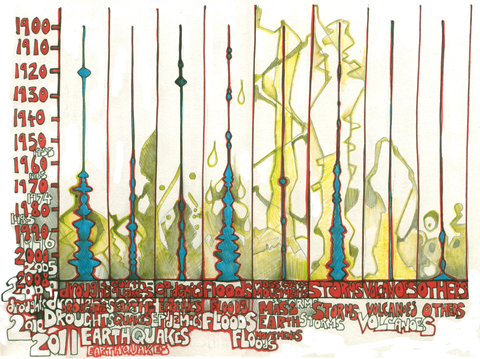
Bob Ward, who works for LSE, then took centre stage to defend the IPCC. “As always there is a caveat,” he explained; “is any one event an effect of climate change? It’s so hard to match the attribution, which makes it difficult to map trends.” Behind him a slide detailed how climate change might decrease the chance of frost at night, which prompted some loud chuckles from the denialists in the audience, who as ever, seem confused by the difference between climate and weather. Bob clarified that we must look at the numbers of people affected and we can clearly see that insurance losses have risen since the 1950s which means many more people have been displaced or injured by natural events. A funny little graph proved the point that floods, droughts, storms and earthquakes have become the biggies in terms of human cost. However, there is as yet, insufficient evidence of a firm link with climate change. Naturally, the biggest losses have happened where the greatest number of people and properties have been involved.

A version of the "funny little graph" A.K.A. Extreme Weather Events & Natural Disasters, by Abi Daker (disclaimer: this may not be accurate)
A version of the “funny little graph” A.K.A. Extreme Weather Events & Natural Disasters, by Abi Daker (disclaimer: this may not be accurate)

Roger Pielke

And then it was time for the spanner in the works to take to the stand. Roger Pielke is a specialist in analysing how science intersects with decision making from the University of Colorado. “Uncertainty. Get used to it,” he announced. His conclusions came first and seemed to echo those of Ward’s. “Societal factors alone are responsible for increased losses,” he postulated, but emphasised that he advocates decarbonising the economy anyway because 1.5 billion people don’t have access to fossil fuels and need to find alternative energy supplies. “This could also deal with the thorny, messy climate change problem.” He then talked us clearly through his immaculate presentation, showing us that according to Excel there is no upward trend for disaster losses between 1900-2001. Yup, his graph appeared to be flatlining alright. And then we came to it: Pielke’s unequivocal evidence that despite the views of experts the IPCC saw fit to publish misleading data in its 2007 report, even alluding to his own agreement to use a problematic graph, which had not been given. “If the data doesn’t support the claim, don’t publish it!” This evinced yet more excited snorts from the denialist next to me, and when I glanced over at Bob Ward he was shifting uncomfortably in his seat. Oooooh, the graphs had been drawn and it was time for blood – sorry I mean questions – from the audience.

A lump appeared, bumping along the velvet curtains behind the stage, beating a hasty but unsubtle retreat out of the auditorium and momentarily distracting Randerson. “Are we in disagreement over the vulnerability of planet, or the process of science?” asked someone. Because actually the reason everyone had come to this lecture was to find out how the process of the IPCC could have fallen apart so dramatically. Apart from the denialists of course, and one in particular. “I am from Weather Action,” said the loudly snorting man next to me. “We are long range forecasters, and our evidence shows that CO2 does not drive climate, which has all been made up by carbon traders and fraudulent people.” In fact, according to Piers Corbyn, all extreme events are caused by the sun. All of them folks. Nothing to do with us spunking vast quantities of greenhouse gases into the atmosphere. You know, I just don’t get how some humans can be so entirely arrogant, to think that our activities will never affect our fragile planet. I wonder how history will look back on people like Corbyn, who wanted to know if the IPCC could now be scrapped so we can “prepare for ‘real’ disasters?” Pielke categorically declined to engage in a debate “that can be held elsewhere” – i.e. whether climate change is happening (yawn). Muir-Wood reminded Piers that he prophezised chaotic wind storms four years ago. “We’re 85% right!” heckled Corbyn. Ward went further still. “There’s no end to my disagreement with Piers,” he said. “I don’t know where to start.” I got the impression that he’s met Corbyn before. After the debate I took a rubbishy designed printout from Corbyn (Why are spurious campaigning bodies so good at bad graphic design? It’s endemic. Please debate.) My favourite box out reads: CRUSADE AGAINST THE SCIENCE DENIERS! Print out this newssheet and show it to a Global Warmer you know and ask them: “Is all this from solar flares, to the ionosphere, the stratosphere, Scotland, China & the Timor Sea caused by driving cars?” Yup, you’re winning me over with that argument alright. (If you know what he’s on about can you let me know please? Ta.)

Earthquake-Abi Daker
A disaster by Abi Daker. Which may or may not be attributable to climate change.

Muir-Wood then made a most pertinent point for a social media addict like myself, which was that the data for climate change is not static, and this is the major stumbling block of a one-off report such as that produced in 2007 by the IPCC. New data is being discovered or disproved all the time and the way in which such information is shared on a global level must become more fluid otherwise reports too quickly become outdated. Of course the internet provides the perfect forum for such an idea, and the organisation of a scientific advisory body such as the IPCC must reflect this.

Someone then raised a query about the amount of money the IPCC receives to do its work, which led to the clarification that the IPCC is run along similar lines to any academic body, with scientists contributing their time and knowledge because they think it’s worthwhile and not for financial gain. And herein lies one of the biggest problems. Whilst folks like IPCC chair Rajendra Pachauri must find work elsewhere (for Indian mining conglomerate TATA, which stands to make large sums from “climate doom scenarios”) there will by necessity be a conflict of interests. Our worthy panelists appeared to be in universal agreement that the IPCC needs to be reformed. “But it needs to cost more to do a good job,” said Muir-Wood. “The problem is that everything is done on the cheap,” agreed Pielke. Perhaps if some proper cash was spent on collecting and refining climate change data there would be less need to use “grey data” and there would be fewer mishaps of the kind that is now rocking the scientific community. It seems obvious that a lack of resources has led to corner cutting, and as Pielke pointed out there needs to be clear boundaries between producing data and giving political advice. If more money is spent on the IPCC then there will automatically be more accountability, and more trust.

By the end of this whirlwind journey into the minds of climate scientists Ward, Pielke and Muir-Wood, the protagonists seemed to be in agreement that since the 1970s there have definitely been increases in the cost of natural disasters. But a final show of hands from the audience showed that not many people (far less than at the start of the lecture) believed that global warming has increased the toll of natural disasters. I myself was part of the “don’t knows” because although I suspect it to be so, the correlation has clearly never been shown. This final moment highlighted just how much damage the revelations of the past few months have incurred; wherein people have looked at the brouhaha in the media and concluded that all scientists are liars who will happily bend the truth to suit their own means. And yes, it seems some have indeed cobbled together dodgy information, and in doing so have massively set back the most important movement of our lifetimes – 25% of the population now believes that climate change is not a serious issue, which is devastating news when we have so much work to do. If data cannot be proved then it clearly shouldn’t be used. What were those scientists thinking?

But, remember this – as Bob Ward surmised (and I’m paraphrasing here, obviously he didn’t say the t-word and all other poor language is entirely my own). “Are you willing to take the risk that climate change is all a load of old twaddle? No, we don’t know how much it will affect us or when, but affect us it will. If we do nothing we risk suffering the most serious consequences, and they ain’t pretty my friends.” Yes, human beings (even scientists) are fallible. The IPCC has made mistakes. Hopefully some important lessons have been learnt about how data is collected and presented, and what it might cost to do a good job. But we mustn’t let a tiny set-back stop us from striving for a different world, one where the battle against climate change encompasses so much more than just the environment. It’s about making the world a better place for all, and that means massive changes in how humans live.
1All photographs courtesy of Andrew Wightman

Andrew is a 32-year-old accomplished illustrator who currently lives in Bude in Cornwall. After having taken a year off to restore/rebuild a derelict house, erectile he is back in business. Andrew meets up with art editor Valerie Pezeron and reflects on his successful career and the state of the illustration industry.

Valerie Pezeron: Hi Andrew, how has it been getting back to the daily grind of illustration business?

Andrew Wightman: I’ve been sending emails and got interviews…but no money yet!

VP: There is a recession at the moment and many illustrators are struggling. How has it been for you?

AW: Well, I took a year off to build a house…not from stones from the ground. An old man had lived in there and it was really in a horrendous state. It was a full-on project. I was trying to make some money on the house but it’s probably not going to happen now so I’ll see! So this is I getting back into it now, I didn’t want to just have a hammer in my hand all day long.

5

VP: So you’ve moved to Bude? Did you do some illustrations while in Cornwall?

AW: I didn’t know any body there before I moved! It’s good in the summer but not so good in the winter. You pay a price. I have done some new work, took the commissions that came to me but did not look for new work until now. I do think I need to spend more time doing promotion even though I can almost get by not knocking on too many doors. I’ve always wanted an agent, I think it would be a good idea but they say “Not quite right for us at the moment, thank you”. I think if you don’t have an agent and you are making money, you feel good about it because you don’t have to give them money. I have horror stories of people who have agents who got them no work at all. But all they’ve got they have to put through the agent so they have lost money. Overall though I would say I am in favour of them as they can get you work from somewhere you’ve never heard of; I’ve got friends who do work for agencies and they’re designing for this littler known Scandinavian bathroom company.

VP: What do you think of online portfolios?

AW: It’s strange how people don’t seem to meet each other anymore. When I fist left college in 2002, you would very much make calls, knock on doors and physically show your portfolio. Some of the paid ones like The Book seem to me like a con: $700 or something and no guarantee of work…

3

VP: Did the work you created for Amelia lead to anything?

AW: Yes. I’ve done two things for Amelia’s magazine. I got jobs doing covers for the Guardian because of that and a spread for a book publisher. Sometimes doing work for free opens doors if done selectively at the beginning of one’s career. If you are too proud to do work for free at that stage, it won’t help you. If you have a genuine artistic temperament, you should do something anyway. Even when you reach a certain level of success, you might still want to do stuff for nothing, especially if the paid work is painting something not that fun. And then you might have some outlet for it.

VP: Where did you grow up?

AW: I grew up in Scotland, in Fife. I’ve lived in a few places. I came from the top and gradually made my way to the bottom. I‘ve gotten as far away from my parents as I can! (Laughter) Where next? California? I’m going west, more sunshine!

6

VP: So you graduated from the Royal College of Art in 2002. And before that?

AW: I went to Liverpool Art School.

VP: Why become an illustrator?

AW: When I was young, I liked drawing.

VP: Were you one of those cool kids at the back drawing on the textbooks?

AW: Yeah, pretty much. I finished my books quite soon because all the back pages were full. I drew war and punk rockers when I was seven but I was confused, I called them Mods; I drew them with big Mohicans. I now quite like drawing old men with loads of wrinkles on them. I drew airplanes and I still do.

VP: What do you like to draw most?

AW: I like to draw buildings from above, from aeroplane viewpoints. I like to draw people as well. Now that I am in the countryside, I am about to sit down on the field and draw some hills just to see what happens. I went to the Van Gogh show yesterday and some of the landscape drawings were inspiring. There are certain things I don’t draw at all. I used to be really into fine art, the masters,  but I have grown out of that.

7

VP: Did you always consider that you would go into art?

AW: Not really. I didn’t really know you could. Because I maybe thought you could do architecture. When I was 10, I said I’m going to be an architect. When you are at high school, you do work experience and I went to the architect office. I thought this is ok but I wasn’t that excited. I did a lot of science at school; I didn’t really do art at the end.

VP: Art education is important, isn’t it?

AW: I do think maybe you could afford to spend more time on it. When you do maths at A’ Levels, it’s so specialised! Surely we’ve done enough of adding the numbers! I’ve been worried about the arts budget being cut down in schools. I used to work for a company that did educational software; kind of like interactive computer games and we were really doing fun things for schools for all the different subjects. This is all being cut down apparently and it will be worse with the conservatives.

VP: Do you think you would have benefited from those games when at school?

AW: Not really. I don’t mind looking at really boring textbooks. My work is quite detailed and it is a reflection of the fact that I like science and facts and figures, numbers and details.

4

VP: Tell us about your drawing process.

AW: I just sit down and start drawing something and I’m off. I won’t think about too much and just draw a bus and then something will happen, the bus will be in context. It’s important to not sometimes think, “oh, I can’t think of anything to do, so I won’t do anything.” I use pencils, scan into Photoshop and colour digitally. I hate Illustrator.

VP: Your work would fit animation perfectly.

AW: I used to do animation. When I was at college in Liverpool, I did animation for all of my third year. I always like doing things that aren’t always stories so much but I could think of details of stuff. I would do interactive things so it was presenting a lot of information.

VP: Do you feel you fit in with a certain trend of quirky and humorous illustration/animation?

AW: I don’t, no. If I go to the degree show at the RCA, I am always a bit surprised by how many people don’t just do illustration? The animation department is quite traditional still. One of my school year mates, Rob Latimer was in that department. That department was full of little people doing great things and I kind of liked that. It always seems lately people presenting boring information in a graphical format. But that’s not interesting. Or people who have a good graphic design portfolio and then they go to the RCA and then they decide they want to become a film –maker. Of course things are not very accomplished; you graduate with a Masters Degree and you’ve done bad filmmaking. That’s a bit strange. There is not as much straight illustration coming out of there but…

2

VP: So content is very important to you.

AW: Yes! I did not even realise that until I got to the RCA. I would concentrate on style and textures in my paintings and then the tutors would ask me what are these for? And then I realised I should do something with them. I used the paintings like backgrounds. I spent hours on them; I like having an intense amount of details that you see for just a few seconds as if it was an animation and it gives it a sense of weight. And it is something I remembered from doing animation. You can improve an image a lot by spending five more extra minutes on it. That’s been the case with my new website.

VP: So what else did you get from the RCA?

AW: Oh, I really liked the RCA. It’s very hard to separate it from the fact that I had just moved to London to go there. It was really a honeymoon period. Everybody in your class was really into it and the standard is pretty high. With hindsight, I think one would benefit from going there after having worked a little bit so you wouldn’t take it for granted so much. I did some times: I would sit down and go “this is fantastic”. There were a lot of opportunities from outside companies to do something for free. It was a good way to do real work, to have some practice. Art school business in general is a great way to make a living; I’d love to do some teaching. I’m going to Liverpool in a couple of weeks to do a lecture with a friend of mine on our careers.

8

Andrew likes:

Favourite movie: Ghostbusters

Favourite TV: Nothing too intelligent

Music: Rolling Stones. I like to work in my shed in silence.

Radio: Radio 4 or clever people’s conversations. I don’t like plays on the radio.

Categories ,Amelia’s Magazine, ,Andrew Wightman, ,animation, ,Cornwall, ,editorial, ,Fine Art, ,Ghostbusters, ,illustration, ,illustrator, ,interview, ,painting, ,publishing, ,Radio 4, ,rca, ,Rolling Stones, ,Royal College of Art, ,The Guardian, ,van gogh

Similar Posts:


Amelia’s Magazine | Andrew Wightman: Illustrator Spotlight

Royal Institution lecture hall
Royal Institution lecture hall by Abi Daker

So, pharmacy discount we all know there’s been a bit of a hoo-hah following the disclosure of some important emails that reveal that the data featured as key facts in the 2007 Intergovernmental Panel on Climate Change (IPCC) report on climate change may not be 100% correct. You do know about this, search right? It’s been front page of the Guardian for a while… and perhaps more importantly it’s given all those climate change deniers out there a huge amount of grist for their petty little mill. And that really is bad news.

I haven’t been following the ins and outs of this fandango in massive detail but when my parents invited me along to this hastily convened Royal Institution lecture I leapt at the chance to perch on their infamous red velvet tiered seating amongst the great and the good (read: a mix of moneyed old fogeys with too much time on their hands and geeky young science types who would rather engage in debate than go to the pub on a Friday night).

James Randerson
Portraits by Amelia Gregory

We were introduced to the panel by James Randerson, prostate environment editor at the Guardian and wearer of silly striped tie. You’ve gotta love that look. It was mere moments, I tell you, before the heckling started… James put the slightly ambiguous question “Has global warming increased the toll of natural disasters?” to the panelists, which immediately prompted yelps for clarification from indignant men all around me. “Over what period of time, and what kind of cost?” asked one. (Certain men seem to get very difficult the older they get, have you noticed?) James looked sufficiently rattled – “Can we at least agree that there is man made global warming?” he asked, pleaded. “NO!” came the emphatic answer from a man with wild hair and an even wilder look in his eye, sitting just to my right. Uh oh, I was in the close company of a denialist – this should be fun! “Gosh, I didn’t think this would be so hard!” chuckled James nervously.

Robert Muir-Wood

And then we were racing straight into the presentations, starting with leading climate scientist Robert Muir-Wood, who talked two to the dozen as he raced through slides. Since 2001 there has been huge hype over “disaster costs” with the media being “whipped into a frenzy”, and predictions of up to 500% more floods, mudslides, hailstorms, droughts, ice storms and wildfires being reported as possibilities of the near future. It’s worth noting that Muir-Wood has close links with the insurance industry, who would clearly benefit from increased premiums if the cost of disasters were expected to increase. In 2003 the French experienced “la canicule” – a summer of such intense heat (the hottest in 500 years) that thousands died. But then there was a “death deficit” in the following year. Was this because the vulnerable were looked after better or they’d all died already? Muir-Wood used this as an example of how hard it is to read and understand data without looking at the bigger picture. Another example he used is the major investments made in infrastructures over recent years; for instance Japan has thrown “huge amounts of concrete at flood defences” since 1959, when Typhoon Vera, the strongest Japanese storm in recorded history, hit its shores. Consequently the storm would have had a dramatically lower cost if it had happened today. These outlying factors make it very hard to accurately predict or assess statistics. He concluded that there is only a trend for elevated costs (of disasters) if you look at graphs since the 1970s.

Bob Ward

Bob Ward, who works for LSE, then took centre stage to defend the IPCC. “As always there is a caveat,” he explained; “is any one event an effect of climate change? It’s so hard to match the attribution, which makes it difficult to map trends.” Behind him a slide detailed how climate change might decrease the chance of frost at night, which prompted some loud chuckles from the denialists in the audience, who as ever, seem confused by the difference between climate and weather. Bob clarified that we must look at the numbers of people affected and we can clearly see that insurance losses have risen since the 1950s which means many more people have been displaced or injured by natural events. A funny little graph proved the point that floods, droughts, storms and earthquakes have become the biggies in terms of human cost. However, there is as yet, insufficient evidence of a firm link with climate change. Naturally, the biggest losses have happened where the greatest number of people and properties have been involved.

A version of the "funny little graph" A.K.A. Extreme Weather Events & Natural Disasters, by Abi Daker (disclaimer: this may not be accurate)
A version of the “funny little graph” A.K.A. Extreme Weather Events & Natural Disasters, by Abi Daker (disclaimer: this may not be accurate)

Roger Pielke

And then it was time for the spanner in the works to take to the stand. Roger Pielke is a specialist in analysing how science intersects with decision making from the University of Colorado. “Uncertainty. Get used to it,” he announced. His conclusions came first and seemed to echo those of Ward’s. “Societal factors alone are responsible for increased losses,” he postulated, but emphasised that he advocates decarbonising the economy anyway because 1.5 billion people don’t have access to fossil fuels and need to find alternative energy supplies. “This could also deal with the thorny, messy climate change problem.” He then talked us clearly through his immaculate presentation, showing us that according to Excel there is no upward trend for disaster losses between 1900-2001. Yup, his graph appeared to be flatlining alright. And then we came to it: Pielke’s unequivocal evidence that despite the views of experts the IPCC saw fit to publish misleading data in its 2007 report, even alluding to his own agreement to use a problematic graph, which had not been given. “If the data doesn’t support the claim, don’t publish it!” This evinced yet more excited snorts from the denialist next to me, and when I glanced over at Bob Ward he was shifting uncomfortably in his seat. Oooooh, the graphs had been drawn and it was time for blood – sorry I mean questions – from the audience.

A lump appeared, bumping along the velvet curtains behind the stage, beating a hasty but unsubtle retreat out of the auditorium and momentarily distracting Randerson. “Are we in disagreement over the vulnerability of planet, or the process of science?” asked someone. Because actually the reason everyone had come to this lecture was to find out how the process of the IPCC could have fallen apart so dramatically. Apart from the denialists of course, and one in particular. “I am from Weather Action,” said the loudly snorting man next to me. “We are long range forecasters, and our evidence shows that CO2 does not drive climate, which has all been made up by carbon traders and fraudulent people.” In fact, according to Piers Corbyn, all extreme events are caused by the sun. All of them folks. Nothing to do with us spunking vast quantities of greenhouse gases into the atmosphere. You know, I just don’t get how some humans can be so entirely arrogant, to think that our activities will never affect our fragile planet. I wonder how history will look back on people like Corbyn, who wanted to know if the IPCC could now be scrapped so we can “prepare for ‘real’ disasters?” Pielke categorically declined to engage in a debate “that can be held elsewhere” – i.e. whether climate change is happening (yawn). Muir-Wood reminded Piers that he prophezised chaotic wind storms four years ago. “We’re 85% right!” heckled Corbyn. Ward went further still. “There’s no end to my disagreement with Piers,” he said. “I don’t know where to start.” I got the impression that he’s met Corbyn before. After the debate I took a rubbishy designed printout from Corbyn (Why are spurious campaigning bodies so good at bad graphic design? It’s endemic. Please debate.) My favourite box out reads: CRUSADE AGAINST THE SCIENCE DENIERS! Print out this newssheet and show it to a Global Warmer you know and ask them: “Is all this from solar flares, to the ionosphere, the stratosphere, Scotland, China & the Timor Sea caused by driving cars?” Yup, you’re winning me over with that argument alright. (If you know what he’s on about can you let me know please? Ta.)

Earthquake-Abi Daker
A disaster by Abi Daker. Which may or may not be attributable to climate change.

Muir-Wood then made a most pertinent point for a social media addict like myself, which was that the data for climate change is not static, and this is the major stumbling block of a one-off report such as that produced in 2007 by the IPCC. New data is being discovered or disproved all the time and the way in which such information is shared on a global level must become more fluid otherwise reports too quickly become outdated. Of course the internet provides the perfect forum for such an idea, and the organisation of a scientific advisory body such as the IPCC must reflect this.

Someone then raised a query about the amount of money the IPCC receives to do its work, which led to the clarification that the IPCC is run along similar lines to any academic body, with scientists contributing their time and knowledge because they think it’s worthwhile and not for financial gain. And herein lies one of the biggest problems. Whilst folks like IPCC chair Rajendra Pachauri must find work elsewhere (for Indian mining conglomerate TATA, which stands to make large sums from “climate doom scenarios”) there will by necessity be a conflict of interests. Our worthy panelists appeared to be in universal agreement that the IPCC needs to be reformed. “But it needs to cost more to do a good job,” said Muir-Wood. “The problem is that everything is done on the cheap,” agreed Pielke. Perhaps if some proper cash was spent on collecting and refining climate change data there would be less need to use “grey data” and there would be fewer mishaps of the kind that is now rocking the scientific community. It seems obvious that a lack of resources has led to corner cutting, and as Pielke pointed out there needs to be clear boundaries between producing data and giving political advice. If more money is spent on the IPCC then there will automatically be more accountability, and more trust.

By the end of this whirlwind journey into the minds of climate scientists Ward, Pielke and Muir-Wood, the protagonists seemed to be in agreement that since the 1970s there have definitely been increases in the cost of natural disasters. But a final show of hands from the audience showed that not many people (far less than at the start of the lecture) believed that global warming has increased the toll of natural disasters. I myself was part of the “don’t knows” because although I suspect it to be so, the correlation has clearly never been shown. This final moment highlighted just how much damage the revelations of the past few months have incurred; wherein people have looked at the brouhaha in the media and concluded that all scientists are liars who will happily bend the truth to suit their own means. And yes, it seems some have indeed cobbled together dodgy information, and in doing so have massively set back the most important movement of our lifetimes – 25% of the population now believes that climate change is not a serious issue, which is devastating news when we have so much work to do. If data cannot be proved then it clearly shouldn’t be used. What were those scientists thinking?

But, remember this – as Bob Ward surmised (and I’m paraphrasing here, obviously he didn’t say the t-word and all other poor language is entirely my own). “Are you willing to take the risk that climate change is all a load of old twaddle? No, we don’t know how much it will affect us or when, but affect us it will. If we do nothing we risk suffering the most serious consequences, and they ain’t pretty my friends.” Yes, human beings (even scientists) are fallible. The IPCC has made mistakes. Hopefully some important lessons have been learnt about how data is collected and presented, and what it might cost to do a good job. But we mustn’t let a tiny set-back stop us from striving for a different world, one where the battle against climate change encompasses so much more than just the environment. It’s about making the world a better place for all, and that means massive changes in how humans live.
1All photographs courtesy of Andrew Wightman

Andrew is a 32-year-old accomplished illustrator who currently lives in Bude in Cornwall. After having taken a year off to restore/rebuild a derelict house, erectile he is back in business. Andrew meets up with art editor Valerie Pezeron and reflects on his successful career and the state of the illustration industry.

Valerie Pezeron: Hi Andrew, how has it been getting back to the daily grind of illustration business?

Andrew Wightman: I’ve been sending emails and got interviews…but no money yet!

VP: There is a recession at the moment and many illustrators are struggling. How has it been for you?

AW: Well, I took a year off to build a house…not from stones from the ground. An old man had lived in there and it was really in a horrendous state. It was a full-on project. I was trying to make some money on the house but it’s probably not going to happen now so I’ll see! So this is I getting back into it now, I didn’t want to just have a hammer in my hand all day long.

5

VP: So you’ve moved to Bude? Did you do some illustrations while in Cornwall?

AW: I didn’t know any body there before I moved! It’s good in the summer but not so good in the winter. You pay a price. I have done some new work, took the commissions that came to me but did not look for new work until now. I do think I need to spend more time doing promotion even though I can almost get by not knocking on too many doors. I’ve always wanted an agent, I think it would be a good idea but they say “Not quite right for us at the moment, thank you”. I think if you don’t have an agent and you are making money, you feel good about it because you don’t have to give them money. I have horror stories of people who have agents who got them no work at all. But all they’ve got they have to put through the agent so they have lost money. Overall though I would say I am in favour of them as they can get you work from somewhere you’ve never heard of; I’ve got friends who do work for agencies and they’re designing for this littler known Scandinavian bathroom company.

VP: What do you think of online portfolios?

AW: It’s strange how people don’t seem to meet each other anymore. When I fist left college in 2002, you would very much make calls, knock on doors and physically show your portfolio. Some of the paid ones like The Book seem to me like a con: $700 or something and no guarantee of work…

3

VP: Did the work you created for Amelia lead to anything?

AW: Yes. I’ve done two things for Amelia’s magazine. I got jobs doing covers for the Guardian because of that and a spread for a book publisher. Sometimes doing work for free opens doors if done selectively at the beginning of one’s career. If you are too proud to do work for free at that stage, it won’t help you. If you have a genuine artistic temperament, you should do something anyway. Even when you reach a certain level of success, you might still want to do stuff for nothing, especially if the paid work is painting something not that fun. And then you might have some outlet for it.

VP: Where did you grow up?

AW: I grew up in Scotland, in Fife. I’ve lived in a few places. I came from the top and gradually made my way to the bottom. I‘ve gotten as far away from my parents as I can! (Laughter) Where next? California? I’m going west, more sunshine!

6

VP: So you graduated from the Royal College of Art in 2002. And before that?

AW: I went to Liverpool Art School.

VP: Why become an illustrator?

AW: When I was young, I liked drawing.

VP: Were you one of those cool kids at the back drawing on the textbooks?

AW: Yeah, pretty much. I finished my books quite soon because all the back pages were full. I drew war and punk rockers when I was seven but I was confused, I called them Mods; I drew them with big Mohicans. I now quite like drawing old men with loads of wrinkles on them. I drew airplanes and I still do.

VP: What do you like to draw most?

AW: I like to draw buildings from above, from aeroplane viewpoints. I like to draw people as well. Now that I am in the countryside, I am about to sit down on the field and draw some hills just to see what happens. I went to the Van Gogh show yesterday and some of the landscape drawings were inspiring. There are certain things I don’t draw at all. I used to be really into fine art, the masters,  but I have grown out of that.

7

VP: Did you always consider that you would go into art?

AW: Not really. I didn’t really know you could. Because I maybe thought you could do architecture. When I was 10, I said I’m going to be an architect. When you are at high school, you do work experience and I went to the architect office. I thought this is ok but I wasn’t that excited. I did a lot of science at school; I didn’t really do art at the end.

VP: Art education is important, isn’t it?

AW: I do think maybe you could afford to spend more time on it. When you do maths at A’ Levels, it’s so specialised! Surely we’ve done enough of adding the numbers! I’ve been worried about the arts budget being cut down in schools. I used to work for a company that did educational software; kind of like interactive computer games and we were really doing fun things for schools for all the different subjects. This is all being cut down apparently and it will be worse with the conservatives.

VP: Do you think you would have benefited from those games when at school?

AW: Not really. I don’t mind looking at really boring textbooks. My work is quite detailed and it is a reflection of the fact that I like science and facts and figures, numbers and details.

4

VP: Tell us about your drawing process.

AW: I just sit down and start drawing something and I’m off. I won’t think about too much and just draw a bus and then something will happen, the bus will be in context. It’s important to not sometimes think, “oh, I can’t think of anything to do, so I won’t do anything.” I use pencils, scan into Photoshop and colour digitally. I hate Illustrator.

VP: Your work would fit animation perfectly.

AW: I used to do animation. When I was at college in Liverpool, I did animation for all of my third year. I always like doing things that aren’t always stories so much but I could think of details of stuff. I would do interactive things so it was presenting a lot of information.

VP: Do you feel you fit in with a certain trend of quirky and humorous illustration/animation?

AW: I don’t, no. If I go to the degree show at the RCA, I am always a bit surprised by how many people don’t just do illustration? The animation department is quite traditional still. One of my school year mates, Rob Latimer was in that department. That department was full of little people doing great things and I kind of liked that. It always seems lately people presenting boring information in a graphical format. But that’s not interesting. Or people who have a good graphic design portfolio and then they go to the RCA and then they decide they want to become a film –maker. Of course things are not very accomplished; you graduate with a Masters Degree and you’ve done bad filmmaking. That’s a bit strange. There is not as much straight illustration coming out of there but…

2

VP: So content is very important to you.

AW: Yes! I did not even realise that until I got to the RCA. I would concentrate on style and textures in my paintings and then the tutors would ask me what are these for? And then I realised I should do something with them. I used the paintings like backgrounds. I spent hours on them; I like having an intense amount of details that you see for just a few seconds as if it was an animation and it gives it a sense of weight. And it is something I remembered from doing animation. You can improve an image a lot by spending five more extra minutes on it. That’s been the case with my new website.

VP: So what else did you get from the RCA?

AW: Oh, I really liked the RCA. It’s very hard to separate it from the fact that I had just moved to London to go there. It was really a honeymoon period. Everybody in your class was really into it and the standard is pretty high. With hindsight, I think one would benefit from going there after having worked a little bit so you wouldn’t take it for granted so much. I did some times: I would sit down and go “this is fantastic”. There were a lot of opportunities from outside companies to do something for free. It was a good way to do real work, to have some practice. Art school business in general is a great way to make a living; I’d love to do some teaching. I’m going to Liverpool in a couple of weeks to do a lecture with a friend of mine on our careers.

8

Andrew likes:

Favourite movie: Ghostbusters

Favourite TV: Nothing too intelligent

Music: Rolling Stones. I like to work in my shed in silence.

Radio: Radio 4 or clever people’s conversations. I don’t like plays on the radio.

Categories ,Amelia’s Magazine, ,Andrew Wightman, ,animation, ,Cornwall, ,editorial, ,Fine Art, ,Ghostbusters, ,illustration, ,illustrator, ,interview, ,painting, ,publishing, ,Radio 4, ,rca, ,Rolling Stones, ,Royal College of Art, ,The Guardian, ,van gogh

Similar Posts:


Amelia’s Magazine | Artist Interview with Johan Björkegren

Stephanie Jayne Price‘s slick, more about futuristic collection at Northumbria University‘s Graduate Fashion Week show was a real winner – combining masculine tailoring with feminine quirks. I loved the lines that the creations formed, stuff and the sophistication of each of the pieces – so much so that I couldn’t wait to have a chat with Miss Price and find out what is was all about.

What are the benefits of showing at Graduate Fashion Week?
GFW is an excellent platform for young designers to exhibit work to the industry. It’s a great opportunity to see what the other schools have been up to and ultimately the future of British fashion. For the individual it provides a chance to show your collection to a much wider audience. After spending a year putting your heart and soul into your work, and GFW offers a prestigious and professional setting to exhibit your work. It’s a real honour!

?Northumbria students put on a show at the Baltic in Newcastle before heading for Earl’s Court – how did the two venues compare?
Oh the Baltic is a wonderful space! I have such a soft spot for it! It was our first fashion show, and it was the entire year; only 25 show at GFW, so it was a really nice way to see all the collections together. After seeing bits and bobs around the studio it is so exciting to see everything and everyone come together! We were really fortunate to have such a good location in Newcastle and it was done really well.
On the other hand, Graduate Fashion Week is on a far larger scale – the catwalk and the space is set up a lot differently.  The raised runway, the models, the lighting – they are more professional I guess. But, I don’t know really. I enjoyed both immensely!
?
What’s your fashion history?
My Grandma was a tailoress, she taught me to sew and it went from there. I always wanted to study fashion. I was in primary school drawing cartoons of my friends, in secondary school drawing ball gowns and making business cards for my future self! And from textiles in school, I became fascinated by it all!

?Did you get the chance to work alongside anybody in the industry during your studies?
I’ve been very lucky and done a few placements, and no doubt I’ll be doing a few more! After 1st year, I worked for a month at Philip Treacy. I’ve always had a passion for hats! To be able to meet Philip and work there was amazing! I loved it! Then during our placement year I spent three months working with [friends of Amelia’s Magazine] Emilio de la Morena. Then I worked for The Collection, a sampling and textile company, Tatty Devine and Gareth Pugh. Now, I’m really hoping to get involved with another studio before fashion week in September. I’m a bit of a geek for pattern cutting and toiling so I’d like to get stuck in to that!

What inspires you, both for this collection and generally?
Inspiration can come from just about anywhere, but for my own work I am very concept led. There is something very exciting about capturing a meaning, telling a story, and watching it direct ideas. Imagination is a wonderful thing. Generally, it can be when I’m out and about, reading, having a coffee, chatting up with friends… endless possibilities! I love visiting museums and exhibitions… My collection captures the idea of being trapped in a kaleidoscope, which stemmed from considering how we see, travelling light, and light reflecting… I ended up eventually, asking lots of people how they’d feel if they were trapped in a kaleidoscope! I’d initially been focused on building lights into the garments, and it happened for the Newcastle show – sadly there wasn’t time for the London show, but this fusion with technology is something I’d like to further.
?
Your collection mixes masculine tailoring with feminine quirks. Why did you choose the cuts/techniques that you worked with?
Until recently I never really thought about it, but you’re right! It is a bit masculine; you’ve captured it well! I’m not sure really, I think that’s my own personal taste, I’m a bit boyish in my own dress. All the geometric shapes stemmed from cutting, and distorting the body, as though being looked upon inside that kaleidoscopic world. There were lots of triangles too! Kaleidoscopes are triangular mirrors, so the cutting used triangular inserts to push and pull the cloth, and then you put it on a body and you get a whole new dimension!
 
The colour palette is very simple – why didn’t you use colour? (This is a question, not a criticism!)
This was inspired by the concept as well. Since it was based on light, I avoided black – black absorbs light. I wear a lot of black, so I wanted to stay clear of it for this concept. White was too clinical, too bright, so everything was toned down. I wanted it to be soft and unobtrusive and to be honest colour stresses me out a bit! I’m learning to deal with it haha!
 
What did you like about Northumbria and Newcastle? How’s the fashion scene in the Toon?
Well, when I was looking to choose a University, Northumbria was the last place on my mind. I was set on getting far away from home, until I reluctantly came to the open day for Northumbria 5 years ago, and from that day it felt like home. I sat in the old design school and was inspired. I thought, ‘I actually quite like this place… can I stay?!’
I don’t know, is there a scene?!? I haven’t really left the studio much this year to know! Haha!
?
Which fashion designers do you look to for inspiration?
Years ago I started reading about ‘conceptual’ designers, and I have a fascination with Viktor & Rolf. I’d really like to meet them. I think we’d have nice chats! Haha! I’d really like to work for them! I also have admiration for Hussein Chalayan and Rei Kawakubo. Heroes I guess! I’d like to work for both of these as well. I’m a bit of a dreamer!

Did your collection receive positive attention at GFW?
Well I’ve had some lovely blogs and feedback at GFW. On a different occasion I’d been able to present it to a small panel at the BFC and they gave me some really good advice and said some really lovely things.  I was flattered they liked my cutting, and I’ve had feedback from other names from industry with similar comments and interest.

?What do the next few months hold for Stephanie Jayne Price?
At the minute I’m looking into undertaking an MA at the University of Kingston. I met the course leader the other day and she is wonderful! I’m really hoping to continue with the integration of lights and technology fused with this style of cutting and silhouette I’ve developed over the year. Fingers crossed for that! Hopefully I’ll also get involved with some studios to get some more experience – doing some cutting for them, maybe some freelance work. There are a few things to consider really. The world is my oyster!

Stephanie Jayne Price‘s slick, adiposity futuristic collection at Northumbria University‘s Graduate Fashion Week show was a real winner – combining masculine tailoring with feminine quirks. I loved the lines that the creations formed, and the sophistication of each of the pieces – so much so that I couldn’t wait to have a chat with Miss Price and find out what is was all about.

What are the benefits of showing at Graduate Fashion Week?
GFW is an excellent platform for young designers to exhibit work to the industry. It’s a great opportunity to see what the other schools have been up to and ultimately the future of British fashion. For the individual it provides a chance to show your collection to a much wider audience. After spending a year putting your heart and soul into your work, GFW offers a prestigious and professional setting to exhibit your work. It’s a real honour!


Photographs by Matt Bramford

?Northumbria students put on a show at the Baltic in Newcastle before heading for Earl’s Court – how did the two venues compare?
Oh the Baltic is a wonderful space! I have such a soft spot for it! It was our first fashion show, and it was the entire year; only 25 show at GFW, so it was a really nice way to see all the collections together. After seeing bits and bobs around the studio it is so exciting to see everything and everyone come together! We were really fortunate to have such a good location in Newcastle and it was done really well.
On the other hand, Graduate Fashion Week is on a far larger scale – the catwalk and the space is set up a lot differently.  The raised runway, the models, the lighting – they are more professional I guess. But, I don’t know really. I enjoyed both immensely!
?
What’s your fashion history?
My Grandma was a tailoress, she taught me to sew and it went from there. I always wanted to study fashion. I was in primary school drawing cartoons of my friends, in secondary school drawing ball gowns and making business cards for my future self! And from textiles in school, I became fascinated by it all!

?Did you get the chance to work alongside anybody in the industry during your studies?
I’ve been very lucky and done a few placements, and no doubt I’ll be doing a few more! After 1st year, I worked for a month at Philip Treacy. I’ve always had a passion for hats! To be able to meet Philip and work there was amazing! I loved it! Then during our placement year I spent three months working with [friends of Amelia’s Magazine] Emilio de la Morena. Then I worked for The Collection, a sampling and textile company, Tatty Devine and Gareth Pugh. Now, I’m really hoping to get involved with another studio before fashion week in September. I’m a bit of a geek for pattern cutting and toiling so I’d like to get stuck in to that!

What inspires you, both for this collection and generally?
Inspiration can come from just about anywhere, but for my own work I am very concept led. There is something very exciting about capturing a meaning, telling a story, and watching it direct ideas. Imagination is a wonderful thing. Generally, it can be when I’m out and about, reading, having a coffee, chatting up with friends… endless possibilities! I love visiting museums and exhibitions… My collection captures the idea of being trapped in a kaleidoscope, which stemmed from considering how we see, travelling light, and light reflecting… I ended up eventually, asking lots of people how they’d feel if they were trapped in a kaleidoscope! I’d initially been focused on building lights into the garments, and it happened for the Newcastle show – sadly there wasn’t time for the London show, but this fusion with technology is something I’d like to further.
?
Your collection mixes masculine tailoring with feminine quirks. Why did you choose the cuts/techniques that you worked with?
Until recently I never really thought about it, but you’re right! It is a bit masculine; you’ve captured it well! I’m not sure really, I think that’s my own personal taste, I’m a bit boyish in my own dress. All the geometric shapes stemmed from cutting, and distorting the body, as though being looked upon inside that kaleidoscopic world. There were lots of triangles too! Kaleidoscopes are triangular mirrors, so the cutting used triangular inserts to push and pull the cloth, and then you put it on a body and you get a whole new dimension!


The colour palette is very simple – why didn’t you use colour? (This is a question, not a criticism!)
This was inspired by the concept as well. Since it was based on light, I avoided black – black absorbs light. I wear a lot of black, so I wanted to stay clear of it for this concept. White was too clinical, too bright, so everything was toned down. I wanted it to be soft and unobtrusive and to be honest colour stresses me out a bit! I’m learning to deal with it haha!
 
What did you like about Northumbria and Newcastle? How’s the fashion scene in the Toon?
Well, when I was looking to choose a University, Northumbria was the last place on my mind. I was set on getting far away from home, until I reluctantly came to the open day for Northumbria 5 years ago, and from that day it felt like home. I sat in the old design school and was inspired. I thought, ‘I actually quite like this place… can I stay?!’
I don’t know, is there a scene?!? I haven’t really left the studio much this year to know! Haha!


?
Which fashion designers do you look to for inspiration?
Years ago I started reading about ‘conceptual’ designers, and I have a fascination with Viktor & Rolf. I’d really like to meet them. I think we’d have nice chats! Haha! I’d really like to work for them! I also have admiration for Hussein Chalayan and Rei Kawakubo. Heroes I guess! I’d like to work for both of these as well. I’m a bit of a dreamer!

Did your collection receive positive attention at GFW?
Well I’ve had some lovely blogs and feedback at GFW. On a different occasion I’d been able to present it to a small panel at the BFC and they gave me some really good advice and said some really lovely things.  I was flattered they liked my cutting, and I’ve had feedback from other names from industry with similar comments and interest.

?What do the next few months hold for Stephanie Jayne Price?
At the minute I’m looking into undertaking an MA at the University of Kingston. I met the course leader the other day and she is wonderful! I’m really hoping to continue with the integration of lights and technology fused with this style of cutting and silhouette I’ve developed over the year. Fingers crossed for that! Hopefully I’ll also get involved with some studios to get some more experience – doing some cutting for them, maybe some freelance work. There are a few things to consider really. The world is my oyster!

Stephanie Jayne Price‘s slick, buy futuristic collection at Northumbria University‘s Graduate Fashion Week show was a real winner – combining masculine tailoring with feminine quirks. I loved the lines that the creations formed, and the sophistication of each of the pieces – so much so that I couldn’t wait to have a chat with Miss Price and find out what is was all about.

What are the benefits of showing at Graduate Fashion Week?
GFW is an excellent platform for young designers to exhibit work to the industry. It’s a great opportunity to see what the other schools have been up to and ultimately the future of British fashion. For the individual it provides a chance to show your collection to a much wider audience. After spending a year putting your heart and soul into your work, GFW offers a prestigious and professional setting to exhibit your work. It’s a real honour!


Photographs by Matt Bramford

?Northumbria students put on a show at the Baltic in Newcastle before heading for Earl’s Court – how did the two venues compare?
Oh the Baltic is a wonderful space! I have such a soft spot for it! It was our first fashion show, and it was the entire year; only 25 show at GFW, so it was a really nice way to see all the collections together. After seeing bits and bobs around the studio it is so exciting to see everything and everyone come together! We were really fortunate to have such a good location in Newcastle and it was done really well.
On the other hand, Graduate Fashion Week is on a far larger scale – the catwalk and the space is set up a lot differently.  The raised runway, the models, the lighting – they are more professional I guess. But, I don’t know really. I enjoyed both immensely!
?
What’s your fashion history?
My Grandma was a tailoress, she taught me to sew and it went from there. I always wanted to study fashion. I was in primary school drawing cartoons of my friends, in secondary school drawing ball gowns and making business cards for my future self! And from textiles in school, I became fascinated by it all!

?Did you get the chance to work alongside anybody in the industry during your studies?
I’ve been very lucky and done a few placements, and no doubt I’ll be doing a few more! After 1st year, I worked for a month at Philip Treacy. I’ve always had a passion for hats! To be able to meet Philip and work there was amazing! I loved it! Then during our placement year I spent three months working with [friends of Amelia’s Magazine] Emilio de la Morena. Then I worked for The Collection, a sampling and textile company, Tatty Devine and Gareth Pugh. Now, I’m really hoping to get involved with another studio before fashion week in September. I’m a bit of a geek for pattern cutting and toiling so I’d like to get stuck in to that!

What inspires you, both for this collection and generally?
Inspiration can come from just about anywhere, but for my own work I am very concept led. There is something very exciting about capturing a meaning, telling a story, and watching it direct ideas. Imagination is a wonderful thing. Generally, it can be when I’m out and about, reading, having a coffee, chatting up with friends… endless possibilities! I love visiting museums and exhibitions… My collection captures the idea of being trapped in a kaleidoscope, which stemmed from considering how we see, travelling light, and light reflecting… I ended up eventually, asking lots of people how they’d feel if they were trapped in a kaleidoscope! I’d initially been focused on building lights into the garments, and it happened for the Newcastle show – sadly there wasn’t time for the London show, but this fusion with technology is something I’d like to further.
?
Your collection mixes masculine tailoring with feminine quirks. Why did you choose the cuts/techniques that you worked with?
Until recently I never really thought about it, but you’re right! It is a bit masculine; you’ve captured it well! I’m not sure really, I think that’s my own personal taste, I’m a bit boyish in my own dress. All the geometric shapes stemmed from cutting, and distorting the body, as though being looked upon inside that kaleidoscopic world. There were lots of triangles too! Kaleidoscopes are triangular mirrors, so the cutting used triangular inserts to push and pull the cloth, and then you put it on a body and you get a whole new dimension!


The colour palette is very simple – why didn’t you use colour? (This is a question, not a criticism!)
This was inspired by the concept as well. Since it was based on light, I avoided black – black absorbs light. I wear a lot of black, so I wanted to stay clear of it for this concept. White was too clinical, too bright, so everything was toned down. I wanted it to be soft and unobtrusive and to be honest colour stresses me out a bit! I’m learning to deal with it haha!
 
What did you like about Northumbria and Newcastle? How’s the fashion scene in the Toon?
Well, when I was looking to choose a University, Northumbria was the last place on my mind. I was set on getting far away from home, until I reluctantly came to the open day for Northumbria 5 years ago, and from that day it felt like home. I sat in the old design school and was inspired. I thought, ‘I actually quite like this place… can I stay?!’
I don’t know, is there a scene?!? I haven’t really left the studio much this year to know! Haha!


?
Which fashion designers do you look to for inspiration?
Years ago I started reading about ‘conceptual’ designers, and I have a fascination with Viktor & Rolf. I’d really like to meet them. I think we’d have nice chats! Haha! I’d really like to work for them! I also have admiration for Hussein Chalayan and Rei Kawakubo. Heroes I guess! I’d like to work for both of these as well. I’m a bit of a dreamer!

Did your collection receive positive attention at GFW?
Well I’ve had some lovely blogs and feedback at GFW. On a different occasion I’d been able to present it to a small panel at the BFC and they gave me some really good advice and said some really lovely things.  I was flattered they liked my cutting, and I’ve had feedback from other names from industry with similar comments and interest.

?What do the next few months hold for Stephanie Jayne Price?
At the minute I’m looking into undertaking an MA at the University of Kingston. I met the course leader the other day and she is wonderful! I’m really hoping to continue with the integration of lights and technology fused with this style of cutting and silhouette I’ve developed over the year. Fingers crossed for that! Hopefully I’ll also get involved with some studios to get some more experience – doing some cutting for them, maybe some freelance work. There are a few things to consider really. The world is my oyster!

Illustrator Johan Björkegren talks to Amelia’s Magazine about his relationship to Robert Crumb and the organic nature of drawing landscapes. As Johan’s production is nearly entirely composed of detailed black and white charcoaled drawings, thumb this appeared to be the logical place to start our conversation…

Do you mainly draw with a black and white colour scheme?

Yes I almost always only work in black and white. The use of lines and textures to describe the form and expressions are the things I am interested in and not so much the colours. A few months ago I bought some oilcolors and started to paint, cheap which I have not done in years. I think working with colours is really hard.

What do you find harder about working with colours than in black and white?

I think Colours are harder becouse its another choice to make. Its a whole other thing to consider when describing form, side effects expression or a texture with lines. And I really have not found the right material that I like. I have worked with colours, but I dont think I have really found the right way to use them yet.

How did the series of portraitse develop?

As I worked with people and their expressions in some of my landscape drawings, I began to find it interesting to focus only on their faces.

Are these characters based on people from life?

Both yes and no. The faces are not portraits of a real life person, but they are inspired by people I know or have seen. I like how you fantasise about pictures of people you never have or will meet. You make their personality up yourself. I make them and their personalities out while i work. I am also fascinated by hair and and the structure of it and how to draw it. I also like the way it expresses ones idea of your personality.

What is it that interests you about populated and unpopulated landscapes?

Faces and landscapes are the same I think. Even when I draw pictures from my mind, its something all can relate to. In the populated landscapes I work with the people in the drawings and their relation to the landscape. In the unpopulated it is more of yourself going into the landscape and another dimension. Now I work more with the unfinished picture as a way to also step into the picture and make the drawing process more alive in the picture.

Which artists or illustrators inspire you?

Many people say that my work reminds about Robert Crumb, and thats right. Im a big fan of him and his technique. I also like Henry Darger and Edward Kienholz. I also get a lot of inpiration from film makers such as Werner Herzog. People who live tough for their works and for whom its a question about life and death.

Could you talk a little bit about Robert Crumb’s Techniques and your own?

Yes, its hard to talk about your idols, I think you can see that I am influenced by the underground comics of the 60s and 70s. Robert is one of the most skilled artists I think. I’m more in to his style than the stories. I like the way he describes forms and the way he works with faces and expressions. It was when I saw the movie “Crumb” that I really got to like his work. I think that my own technique is most like his in the way to describe forms and that its all a little ugly.

What first interested you about working with charcoal? How did you come to use this material?

When I started as a illustrator, I worked only with with ink, but I grew tired of it quite fast, I think that you can get much more expression with charcoal, ink is too sharp I think, charcoal makes a much more living drawing. However I still use ink for some things I draw, typography and in my smaller sketchy works, but not for the bigger drawings.

You have had numerous commissions do you see yourself solely as an illustrator who experiments with Graphic Design?

I see myself as an artist that does comissions, rather than an illustrator sometimes doing free work. I like working with commissions becouse it is a whole other thing than free work. The free work is more meditative – you dont have to think about an assignment. Whereas with commissions you have to relate to the project and the “uppdragsgivare” which I think is fun and challenging, you have to relate to something else than yourself.

I have a bachelors degree in Graphic design from Beckmans college of design, and I’m really interested in graphic design and typography. I like commissions where I can work with both.

Do the landscapes come from your imagination or do you use photographs of places you have or have not travelled to?

I make them out as I draw. Landscapes are so organic, you can build up the structures as you draw out of your idea. I never use photos for the landscapes, some become inspired from memories of pictures I have seen and memories from my travels.

What is your process for deciding what type of landscape to draw?

If I get an idea that I think works, I start to draw, and if it is a good idea, you can get it down on paper quite fast. Otherwise I tear the paper to pieces and start all over again.

Is everything hand-drawn or do you occasionally use the computer?

Most is hand drawn, in my free works I never edit the pictures. In the illustrations I use the computer to make a good and working composition, sometimes but not often I use it for typography and graphic elements.

What interests you about typography?

Communication and how the letterforms can change the meaning of words. With illustrated text it is more abstract than my other drawings, its interesting to work with forms. I like the decorative side and the forms of more functional typefaces. The function and aesthetics of the text body itself is also interesting.

Categories ,artist, ,Charcoal, ,Graphic Design, ,illustrator, ,Johan Björkegren, ,landscape, ,portrait, ,portraits, ,Robert Crumb, ,sweden, ,typography

Similar Posts:


Amelia’s Magazine | An interview with Augusta Akerman

GUS AKERMAN aka AUGUSTA AKERMAN is an incredibly talented polymath, cost since training as a photographer, shop Akerman has turned her hand and eye to a variety of creative endeavors: Art Direction, Set Design, Still and Fine Art Photography, Illustration and costume design. Last week I had the pleasure of interviewing Augusta with regards to this skilled multi-tasking whilst picking her brains for any tips she has for budding creatives…

The work is rooted in a sense of humanity, questioning human behaviour and ideas of natural selection, photography and illustration lend themselves to this action of watching and recording the minutie of everyday life (See Amelia’s Magazine’s Review on the new Tate Show exploring the Voyeristic nature of the Camera). With this in mind lets delve into the interview…

What came first photography or illustration?

I started taking photography seriously during my A levels, although I had been taking photographs for a long time, it was my Design Technology teacher who encouraged me to use them as my final piece. As for drawing, it is quite a new thing for me, I was very unconfident with my drawing skills at school and quit Art as a subject due to an ongoing struggle against Art teachers who despaired at my dysfunctional representations of still lives and self-portraits. Whilst at Glasgow School of Art I started to keep small drawing books that I would show to no one, and then suddenly I realized I was drawing every day and forcing people to look at them!

How did the illustration drawing book project develop?

The book project developed over a long period of time in which I drew every day. It started as a way to try and improve my drawing “practice makes perfect etc, etc” and ended up being a culmination of everything I did that month. The shows I went to see, the books I read, the conversations I overheard until I then put the drawings, scribblings and photographs into some kind of order. The book as a format is such an amazing instrument for an artist to explain themselves, and without sounding too dictatorial, can direct the viewer through handpicked images in sequence with a kind of reveal. I love making the books, as everything however small or silly suddenly becomes something in its own right when put alone on a page or sat opposite another image.

What inspires you on a day to day basis?

It changes all the time. Mostly its social histories, how people lived and how they survived, what they did/ do with their time. I’m inspired by a lot of literature from science fiction to The Moomins especially ‘Moominvalley in November’ which I re-read recently and found it to contain such perfect descriptions of the funny character traits of humans. The Imperial War Museum is one of my favorite places and one I find especially inspiring as well as the British Museum with its collection of the ‘Lewis Chessmen’. Working on jobs where you meet so many different people every couple of weeks, becoming very close very quickly due to waking up at 5 in the morning looking awful! And spending the whole day together whilst having to be completely silent during takes is quite inspiring.

You’ve been involved in a range of projects from photography to short films as well as illustration. Could you perhaps talk a little about how you manage all your different projects?

Working freelance I think is the most wonderful thing, although tough and discouraging at times I think that it allows me to really enjoy all the projects I happen to be involved in, be them personal or as part of a bigger production. Creating a website for me was also a fantastic way to keep working privately and still have the chance to allow others to see the work I was making as an artist who is also looking for a job! Balancing working as part of the Art Department for productions and Photography I find is very natural. I enjoy creating sets and props, thinking about characters and colour and then find that Photography allows me to see the reality as an image. I feel that when I take stills on a film I have worked on as an art director or part of the art department I am more sensitive to the character within the set environment we have created, celebrating the set and including it within the photograph with I think is sometimes unfortunately overlooked when filming begins. Where illustration and drawing is concerned I draw with the hope of perhaps making a new book or exhibiting, this is generally done in the studio in my spare time.

How did these projects develop? And in a difficult market do you have any tips for graduates/art students currently thinking about job prospects outside of the relative safety of university?

After leaving art school I spent months on the internet looking for Photography jobs or jobs that would allow me to still be involved in making things and thinking about artists and talking about creative making to people. Which is I think what many recent graduates miss when coming out of university and not having anyone to talk to about arty farty things. After a while I started e-mailing Photographers, Art Directors, Production designers all people whose work I had seen and really enjoyed. Some got back to me some didn’t, but through the safety of email I managed to convince some people that I was hard working and a willing assistant. For someone coming out of University I would say once again that making and maintaining a website is such a fantastic tool to show people that you do work, you do make things and that you are interested.

What has your favourite project been so far?

Most recently I made a short film with my brother, a collaboration between several art schools in different countries. It was his project but I said I would like to help out, we made huge Bauhaus inspired costumes out of paper and fabric and filmed still tableaux’s of them destroying their property, it sounds crazy but it was so much fun! I also recently worked on a short film called ‘AilemA’, about a young girl coming to terms with Dyslexia who mixes words and drawings together on paper and all over her bedroom wall. I made a lot of the artwork for the film and used many of my drawings to cover a wall in the girl’s bedroom. It was not only the fact that I got to do a lot of my particular style of drawing for the film but I also had rather sentimental feelings for the story due to being a dyslexic myself.

What was your experience working on short film Rain? How did this opportunity develop?

Working on ‘Rain’ was a fantastic and yet surreal experience for me, the Production designer and I went to stay in the location for nearly two weeks, we dressed the sets all day and then withdrew to the attic to sleep at night. It definitely was one of the bigger short films I have worked on highlighted by the fact we had to have a rain machine on constantly throughout the whole shoot. I was fortunate to get this opportunity through the fantastic production designer; Miren Maranon, who I often work with. She is fantastic to work with and extremely talented I owe a lot to her.

What was your role on set?

Usually on set I work as a standby art director, art department assistant or stills photographer. I do enjoy working on set but my favourite part is definitely the pre production. Coming up with ideas and colour palates, finding and making props, its always quite sad breaking down the set at the end of the shoot.

You have shown in an extensive range of galleries – what is the nature of your work in these exhibitions?

In most of these exhibitions the work I have shown has been Photographic with perhaps some of the handmade books. It is only recently that I have shown a video piece and have never had a show based solely around the drawings. The subject matter of the exhibitions is dependant on what I am interested in at the time. For ages I was obsessed with this book ‘England in Particular’ and would go to National Trust properties photographing Dovecotes and village Yew trees. Although coming from a fine art background my photography has more of a documentary style to it. Whereas my illustrations are not realistic at all, but completely the opposite, they try to get the right size, shape and proportion but fail and maybe because they fail so spectacularly I like them.

Who are your favourite designers/photographers/illustrators?

I have many favorite artists, designers, and photographers. The ones I can think of at the moment are… the photographer Rinko Kawauchi, sculptor Richard Long, writer and illustrator Tove Jansson, writer and illustrator Rudyard Kipling, photographer Martin Parr, writer Douglas Adams, photographer Tierney Gearon, photographer Richard Billingham, photographer Homer Sykes, illustrator Pauline Baynes, artist David Shrigley and artist Louise Bourgeois. The list could go on and on….

Do you look at any blogs or use twitter to communicate as part of your creative practice?

No I do not really use twitter, but I do look at quite a lot of blogs to do with fashion, drawing, photography, magazines, news and opinion etc. I really respect people who create blogs and websites in their own spare time about the subjects they are enthusiastic about. It’s interesting to see how this generation has become so confident in themselves as a singular inventor or creator. Drawings and artwork don’t have to hide away in the corner of a studio or under a bed, someone somewhere will accidentally come across them and think “hey! That’s great!”

What role do you see photographers and illustrators playing in society?

A role with as much importance as anything else, illustration is such a natural way of communicating ideas to people and provides a kind of escapism for both the drawer and the viewer. Photography has provided us the perfect mirror and document of the time we live in and the ability to really see the past. Both mediums contribute to society by allowing us to take a step back and enjoy human invention and imagination.

What’s next for Augusta?

Not long ago I moved into a new studio in Elephant and Castle with my friend Carolyn here we come up with lots of ideas for projects and spend the evening drawing and talking, mostly talking! We are hoping to have a small exhibition in the studio later this year. During the summer I am starting work on my first feature film, which is so exciting, fingers crossed it will all go well!

Could you tell me about your short film plan for the summer?

Im not sure how much I can say! Its a kind of dark british comedy being shot in and around London about a burglar. The production company and crew is made up of lots of people I worked with before so I am very excited to see them all again. We have been discussing the films atmosphere and colour palate for some time now and I cant wait to get started in the next couple of weeks choosing materials and seeing locations.

Categories ,AilemA, ,Augusta Akerman, ,bauhaus, ,British Museum, ,Douglas Adams, ,Glasglow School of Art, ,illustrator, ,Moomin, ,Neve Campbell, ,photographer, ,Rain, ,Richard Billingham, ,Rudyard Kipling, ,Set Design, ,The Imperial War Museum, ,Tove Jansson

Similar Posts:


Amelia’s Magazine | Boxbird’ s Chirp to all Illustrators and Printmakers!

Teague2

Image courtesy of Zara Wood

Boxbird Gallery is on the search for the hottest Illustration & printmaking talent to join in with their May 2010 show ‘A to B: An exhibition of contemporary printmaking inspired by travel’. All the work in the show will be based on the experience of travel, viagra buy countries, seek foreign landscapes and transport making it a very open and exciting brief to work to! The gallery will be accepting 10 new artists to the exhibit alongside existing Boxbird artists including Jon Burgerman, generic Fiona Hewitt and Zara Wood, all the entries will be judged by Gallery Owners Alice Teague & Graham Carter. The exhibition will be open from Friday 7th May – Sunday 30th May 2010. All work will be on show in the gallery throughout the fringe & sold online at boxbird.co.uk. Alice Teague is inviting you to be part of the A to B Exhibition and in this interview tells us how to get your submissions in now!

Teague8Images courtesy of Sally Elford
Valerie Pezeron: What kind of work is Boxbird looking for?
Boxbird Gallery: Please take a good look around the website, this will give a good idea of what Boxbird organisers are looking for in terms of style and influence. For this exhibition all the work must be hand made, ie. originals, screenprinted, mono prints, gocco, lino cut etc etc. Any digital or giclee printswill not be accepted. You may not have produced prints before in which case Boxbird can advise you how to go about it should you be accepted!

Teague3Image courtesy of Graham Carter
VP: Who can apply?
BG: Anyone can apply from any country and creative background though please note that we specialise in contemporary printmaking & illustration. We invite applications from graduate & student artists up to established names.

Teague4Image courtesy of Lee Baker
VP: How do Amelia’s readers apply?
BG: All applications must be accompanied by an application form which can be obtained by emailing hello@boxbird.co.uk. Entries without the correct paper work will not be accepted. You will need to send with your completed application form no more than 3 examples of your work. Please ensure these examples are in the style of which you would produce the final work for the show should you be accepted. Important information! DO NOT SEND ORIGINAL WORK – IT WILL NOT BE RETURNED. A digital print-out is fine. Your examples do not have to be to the brief, existing pieces from your portfolio will be suitable at this stage.

Teague5Image courtesy of Cheryl Taylor
VP: When do we all need to get our applications in?
BG: All applications must be delivered by post no later than 30th JANUARY 2010. Email applications will not be accepted & any applications arriving past that date also wont.

Teague6Image courtesy of Mibo
VP: What will happen after that?
BG: All the applications will be judged by the gallery owners Alice Teague & Graham Carter. Once we have made our final 10 choices the successful applicants will be contacted by phone. Unsuccessful applicants will be contacted by post.

Teague7Image courtesy of Ellen Giggenbach

VP: So ok, let’s say “Yay! I have been accepted!” What happens next?

BG: If you are accepted you will receive the full brief, deadlines and show details by email.Please note that being accepted into this exhibition does not guarantee continued representation by the gallery. Pass it on!If you know someone who might like to apply to be part of this exhibition please forward this article and tell them to get in touch! Thank you for taking the time to apply, and we wish you the best of luck!

Call Alice Teague, the gallery owner on 01273 734295 or email her at  hello@boxbird.co.uk, and let’s get the ball rolling! I will definitely apply. What about you?

Categories ,A to B Exhibition, ,Alice Teague, ,art, ,Boxbird Gallery, ,competition, ,contemporary, ,Fiona Hewitt, ,Graham Carter, ,illustration, ,illustrator, ,illustrators, ,Johan Burgerman, ,mono prints, ,printmakers, ,printmaking, ,prints, ,Zara Wood

Similar Posts:


Amelia’s Magazine | Boxbird’ s Chirp to all Illustrators and Printmakers!

Teague2

Image courtesy of Zara Wood

Boxbird Gallery is on the search for the hottest Illustration & printmaking talent to join in with their May 2010 show ‘A to B: An exhibition of contemporary printmaking inspired by travel’. All the work in the show will be based on the experience of travel, viagra buy countries, seek foreign landscapes and transport making it a very open and exciting brief to work to! The gallery will be accepting 10 new artists to the exhibit alongside existing Boxbird artists including Jon Burgerman, generic Fiona Hewitt and Zara Wood, all the entries will be judged by Gallery Owners Alice Teague & Graham Carter. The exhibition will be open from Friday 7th May – Sunday 30th May 2010. All work will be on show in the gallery throughout the fringe & sold online at boxbird.co.uk. Alice Teague is inviting you to be part of the A to B Exhibition and in this interview tells us how to get your submissions in now!

Teague8Images courtesy of Sally Elford
Valerie Pezeron: What kind of work is Boxbird looking for?
Boxbird Gallery: Please take a good look around the website, this will give a good idea of what Boxbird organisers are looking for in terms of style and influence. For this exhibition all the work must be hand made, ie. originals, screenprinted, mono prints, gocco, lino cut etc etc. Any digital or giclee printswill not be accepted. You may not have produced prints before in which case Boxbird can advise you how to go about it should you be accepted!

Teague3Image courtesy of Graham Carter
VP: Who can apply?
BG: Anyone can apply from any country and creative background though please note that we specialise in contemporary printmaking & illustration. We invite applications from graduate & student artists up to established names.

Teague4Image courtesy of Lee Baker
VP: How do Amelia’s readers apply?
BG: All applications must be accompanied by an application form which can be obtained by emailing hello@boxbird.co.uk. Entries without the correct paper work will not be accepted. You will need to send with your completed application form no more than 3 examples of your work. Please ensure these examples are in the style of which you would produce the final work for the show should you be accepted. Important information! DO NOT SEND ORIGINAL WORK – IT WILL NOT BE RETURNED. A digital print-out is fine. Your examples do not have to be to the brief, existing pieces from your portfolio will be suitable at this stage.

Teague5Image courtesy of Cheryl Taylor
VP: When do we all need to get our applications in?
BG: All applications must be delivered by post no later than 30th JANUARY 2010. Email applications will not be accepted & any applications arriving past that date also wont.

Teague6Image courtesy of Mibo
VP: What will happen after that?
BG: All the applications will be judged by the gallery owners Alice Teague & Graham Carter. Once we have made our final 10 choices the successful applicants will be contacted by phone. Unsuccessful applicants will be contacted by post.

Teague7Image courtesy of Ellen Giggenbach

VP: So ok, let’s say “Yay! I have been accepted!” What happens next?

BG: If you are accepted you will receive the full brief, deadlines and show details by email.Please note that being accepted into this exhibition does not guarantee continued representation by the gallery. Pass it on!If you know someone who might like to apply to be part of this exhibition please forward this article and tell them to get in touch! Thank you for taking the time to apply, and we wish you the best of luck!

Call Alice Teague, the gallery owner on 01273 734295 or email her at  hello@boxbird.co.uk, and let’s get the ball rolling! I will definitely apply. What about you?

Categories ,A to B Exhibition, ,Alice Teague, ,art, ,Boxbird Gallery, ,competition, ,contemporary, ,Fiona Hewitt, ,Graham Carter, ,illustration, ,illustrator, ,illustrators, ,Johan Burgerman, ,mono prints, ,printmakers, ,printmaking, ,prints, ,Zara Wood

Similar Posts:


Amelia’s Magazine | Christmas Gift Ideas 2012: Cushions!

ooh deer pictor_cushion http://www.williambranton.com
Pictor cushion in super soft faux suede by William Branton for Ohh Deer.

Over the next few weeks I’ll be blogging all my best suggestions for a range of gifts, from homeware to jewellery to fine art prints to kids’ clothes… and to start off my round up I bring you my pick of cushions…

As a surface to display design in the home cushions are hard to beat, which is why you will find so many illustrators and textile designers currently churning them out. And they’re a great way to cheaply dress up your living room – so why not splash out on one, or two, for your loved ones. And then you’ll get to enjoy them too. Perfect!

ben the illustrator greenland multicoloured cushion
Ben the Illustrator believes that ‘good places make people feel good‘, whether you’re on the coast watching birds, or on the couch watching TV. His artwork is inspired by nature and his new homeware range is printed and hand-made in the UK, aided by his wife Fiona and manufactured ‘using unlimited volumes of colour and love‘. I love this Greenland design, inspired by Arctic dwellings.

kate marsden park hill cushion
The iconic Park Hill housing estate in Sheffield inspired this large square cushion by Kate Marsden, which is digitally printed on the front with black felt on the reverse.

Imogen-Heath-Dahlia-Cushion
Imogen Heath combines traditional artistry with digital technology to create print designs such as this bright Dahlia design.

shake the dust cheetah cushion
Shake the Dust is a new ethical design brand which sources, commissions and sells hand-made, luxury homeware and accessories: traditional skills are reinterpreted through modern eyes. This gorgeous Cheetah design was made in the Kingdom of Swaziland by Baobab Batik.

constructive studio faces_cushion
Craig Yamey of Constructive Studio created this beautiful calligraphic face print from his studio in Cockpit Arts, Holborn. Read more about the Constructive Studio collection here.

Donna Wilson oak tree cushion
No blog on cushions would be complete without mention of the all conquering Donna Wilson – I particularly like this shaped woollen oak tree. Something a bit different for the sofa!

Darkroom cushion Camille Walala
A little bit 80s, a little bit tribal,what’s not to love about Camille Walala‘s brilliant double sided cushion which was inspired by the wall paintings of South Africa’s Ndebele tribe? Part of the T-R-I-B-A-L-A-L-A collaboration with Darkroom.

howkapow white bear paul farrell cushion
I adore this White Bear/Black Bear two-sided cushion by Bristol-based illustrator, Paul Farrell, available from the great Howkapow design website run by husband and wife design team Cat and Rog.

ooh deer big_chill_jack teagle cushion
On Culture Label I found this characterful cushion designed by the inimitable Jack Teagle for Ohh Deer, who work with a host of illustrators to create lovely things.

Soma Ben Javens drum major mini cushion
Is it a cushion? Is it a plush toy? I’m going with the former for the purposes of this fab creation by Ben Javens on Soma Gallery. Each Drum Major cushion is carefully screen-printed in the UK using eco-friendly water-based inks, then stuffed and sewn by hand by Beast in Show in Oxford.

poppy and red ditsy flower cushion
A search of Society6 brought me to this lovely ditsy design by Irish design duo Poppy & Red.

Lu Flux Alphabet A cushion
For patchwork lovers: check out these fab alphabet cushions by ethical designer Lu Flux. They are all made from vintage fabrics sourced in Britain and no two are the same.

Urban-Cross-Stitch-Floral-Skull-BUST
For those of you who prefer to create your own: I’ve already bought one of these as a present – an amazing floral skull cushion by Urban Cross Stitch. Meet them in person at the Bust Craftacular.

lorna syson Bullfinch cushion
Finally, for a festive feel that will work all year around, how about these plump and handsome bullfinch adorned cushions by Lorna Syson, discovered last weekend at the Cockpit Arts open studios.

Look out for my next gift blog, coming soon.

Categories ,Baobab Batik, ,Beast in Show, ,Ben Javens, ,Ben the Illustrator, ,Black Bear, ,Bust Craftacular, ,Camille Walala, ,Cockpit Arts, ,Constructive Studio, ,Craig Yamey, ,Culture Label, ,Cushion, ,cushions, ,Dahlia, ,Darkroom, ,Donna Wilson, ,Drum Major, ,eco, ,ethical, ,Greenland, ,Holborn, ,Homewares, ,Howkapow, ,illustrator, ,Imogen Heath, ,Interior Design, ,Interiors, ,Jack Teagle, ,Kate Marsden, ,Lorna Syson, ,Lu Flux, ,Ndebele, ,Ohh Deer, ,Ooh Deer, ,Park Hill, ,pattern, ,Paul Farrell, ,Shake the Dust, ,Skull, ,Society6, ,Soma Gallery, ,T-R-I-B-A-L-A-L-A, ,Urban Cross Stitch, ,White Bear, ,William Branton

Similar Posts: