Amelia’s Magazine | Fashion in Berlin?


Illustrations by Daniel Almeroth

A surprisingly balmy (well, more about pill if 14 degrees can constitute ‘balmy’) evening at the Hoxton Bar & Kitchen beckoned me in last week, viagra 60mg where I was promised a chat with a local musician who goes by the name Dimbleby & Capper. If you’re wondering where the name comes from, then fear not, for answers to such puzzles (and a few more) about this East London-based songwriter and musical mage are coming up in the transcript below:

Hello.

Hello!

Laura…?

Laura. [nods]

Second name…?

Bettinson. With an ‘n’!

With an ‘n’… better write that down, actually. Occasionally I will have to write stuff down, I will warn you, because I’m really bad at names and stuff like that, I’ve got the tape recorder but… OK. I figure it’s best to start off by describing who you are. Y’know, what it is that you do [emphasis on ‘do’]?

Well, Dimbleby & Capper is…

Sorry, just to check – that is just you, right?

Yeah, well, it mainly is. It’s just a one-woman project, really, by myself. I started after moving to London to study for my degree at Goldsmith’s, and I started fiddling around with instruments, and before that I used to sing and play the piano, singer-songwriter stuff, but then got to London and realised that I can’t [a genuine chortle here] take a stage piano on the tube, and actually it’s far too expensive. So this developed as a way for me to take all my instruments with me, and at first I presented it in the same way, stripped-back and relaxed, but then I started messing around with electronics and sticking piano over beats. Then that started to get a little bit of presence on the live scene and we got some bigger shows, so I got in the band to help me, but [noise that can best be rendered in text as an unsure ‘ooer’] as it got more complicated than just me messing about and recording at home, especially getting other people producing me. It was when I asked myself if I was able to sing in a studio and I thought [long, drawn-out] no, I haven’t got seven million hands, so the band stuck then, so…

How many people is it now, then, that you’ve got?

It swings, sometimes it’s three people, and tonight it’s five people. It should be a five-piece, really, to have all the guitars and things.

I was listening to your EP…

Yeah?

Was really enjoying it, actually, especially the first track on there…

‘Slick Maturity’! Awful name, isn’t it?

Hah, yeah… Actually, I embarrassed myself in some e-mails, the first few I exchanged with Tasha [lovely PR lady] I was calling you Dimbleby & Crapper.

Oh, excellent. I’ve heard worse than that…

I said, “yeah, the music’s good, I just don’t understand the name though – surely that’ll put people off?” Where does the name come from, anyway?

It’s literally just, like, a name… I just needed something for a while. I didn’t want to put my own name on it because I’d been using that for a while for my singer-songwriter stuff. I hadn’t really figured out what I was doing yet but I sort of needed something, anything unrelated, really. It goes all the way back to the music, it’s very cut-up, and lyrically too I just pick words, shove them together.

Ah, Bowie did that a lot too.

Yeah, all that cut-up stuff. There’s not really… well, there’s messages, certainly, but it’s not that direct. I don’t just sit down and think the lyrics out – if I can’t write them instantly then I won’t write them at all, pretty much. I won’t just sit there for ages, overthinking things, which for me can be a bit of a nightmare when I take it to somebody else to mix they’re all a bit [a rising inflection on an ‘um-er’]. But that’s how it goes back to the name, the flip thing, the Dimbleby & Capper name reflecting that it’s almost like two different people.

You’ve talked about playing the piano, and you did some musical things before – when was that?

That was when I was about 16, 17, and before I moved to London, where I was did some singer-songwriter stuff…

That sounds almost, well, ‘refined’? Is that the right word? More thoughtful, perhaps.

Yeah, yeah!

So, Dimbleby & Capper – there’s the head of the singer-songwriter and the, um, soul…?

Yeah, well, people will put whatever they want sometimes, like ‘Myself & the Machine’ when it’s just me and a box on stage, where I’m just singing along to the noises coming out of this machine. A lot of people that was where it came from, but really, no [clicks her fingers] – it came out of thin air.

Alright. So who would you say were your… actually, no let’s go with what would describe your music as? I hate to categorise people, and it’s better when musicians describe themselves I reckon.

Essentially, it boils down to pop music. Dreamy electronic pop, and then there’s that rhythm aspect to it, with some quite heavy beats in there, and there’s also a kind of ‘world-y’ vibe to it with the tribal drumming.

You said you were studying at Goldsmith’s – what are you studying?

Music! It was great, three years of doing your own thing and having free access to a practice space, really great course. It’s where I met most of the band too. I could kind of entwine the demands of the course with what I was doing out and about in town, gig-wise, so it worked out perfectly.

How long have you been gigging around for?

Not too long, really. We started taking it more seriously when we got scouted at the Great Escape festival last year, around May or so. That’s when we started playing together properly as a band – before then it was mainly just me doing solo stuff. Our first show was actually here, around April… that’s almost the same time! Weird, how it’s been almost exactly a year.

What are your plans, release-wise? You’ve got that EP up online, is that coming?

Well, that was something we just had to get out when we found out were doing some Glastonbury slots on the BBC. We were on quite a lot, actually, which was nice, and they played ‘Slick Maturity’ quite a bit when we released that, so right now that EP is more of a reference point rather than a real release. People are asking at our shows why they can’t find us on iTunes, and that’s because we haven’t properly released it! I would like to re-release it on vinyl with a little indie label, but we still need to get the money together for that. It would be nice to get a record deal, you know, but right now that’s not too high on my list of priorities, but maybe to get some publishers involved would maybe be better in terms of being able to do this full-time. We’ll see, I don’t know what going to happen. We’ll put out another 7” again soon, though.

‘Slick Maturity’?

No, it’ll be one of the two new songs, we’ll play it tonight – maybe ‘Falling Off’?

OK. Shouldn’t you be heading onstage right about now?

Yes! Right, I’ll get off then…

At this point Laura gathered her things and headed inside, and I bumped into a couple of friends from the other side of the country. This was serendipitous for me, because I hate going to gigs on my own, and it meant I had somebody to mutter remarks to during D&C’s set. They were good remarks – one of my friends, his initial reaction was, “she’s definitely got something, hasn’t she? Can’t put my finger on it, but she’s got something…”

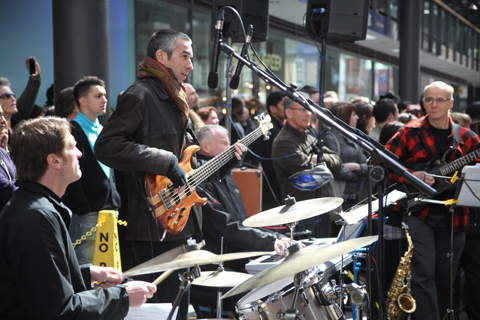
She has. She’s got a good set of lungs on her, her backing band are tight and have the stage act down sharp. They’ve all got these ghostly white beak masks on under their hoodies – when they gather around the Big Drum for some tribal action it’s no unlike seeing a bunch of spirit vultures circle their prey, the rotting carcass of people refusing to dance. Apparently the Hoxton B&K is a pretty A&R-heavy place at the best of times, but despite few people even daring to nod along the music was fresh and I could see the influences Laura talked about coming into the mix. On record her tunes sound similar, in a way, to Balearic beat bands around like JJ, yet live those heavy beats she says she loves are emphasised far more, turning her dream-pop into something closer to a weird laid-back IDM sort of thing.

Watch out for this girl, and her birds.


Illustrations by Daniel Almeroth

A surprisingly balmy (well, sildenafil if 14 degrees can constitute ‘balmy’) evening at the Hoxton Bar & Kitchen beckoned me in last week, look where I was promised a chat with a local musician who goes by the name Dimbleby & Capper. If you’re wondering where the name comes from, then fear not, for answers to such puzzles (and a few more) about this East London-based songwriter and musical mage are coming up in the transcript below:

Hello.

Hello!

Laura…?

Laura. [nods]

Second name…?

Bettinson. With an ‘n’!

With an ‘n’… better write that down, actually. Occasionally I will have to write stuff down, I will warn you, because I’m really bad at names and stuff like that, I’ve got the tape recorder but… OK. I figure it’s best to start off by describing who you are. Y’know, what it is that you do [emphasis on ‘do’]?

Well, Dimbleby & Capper is…

Sorry, just to check – that is just you, right?

Yeah, well, it mainly is. It’s just a one-woman project, really, by myself. I started after moving to London to study for my degree at Goldsmith’s, and I started fiddling around with instruments, and before that I used to sing and play the piano, singer-songwriter stuff, but then got to London and realised that I can’t [a genuine chortle here] take a stage piano on the tube, and actually it’s far too expensive. So this developed as a way for me to take all my instruments with me, and at first I presented it in the same way, stripped-back and relaxed, but then I started messing around with electronics and sticking piano over beats. Then that started to get a little bit of presence on the live scene and we got some bigger shows, so I got in the band to help me, but [noise that can best be rendered in text as an unsure ‘ooer’] as it got more complicated than just me messing about and recording at home, especially getting other people producing me. It was when I asked myself if I was able to sing in a studio and I thought [long, drawn-out] no, I haven’t got seven million hands, so the band stuck then, so…

How many people is it now, then, that you’ve got?

It swings, sometimes it’s three people, and tonight it’s five people. It should be a five-piece, really, to have all the guitars and things.

I was listening to your EP…

Yeah?

Was really enjoying it, actually, especially the first track on there…

‘Slick Maturity’! Awful name, isn’t it?

Hah, yeah… Actually, I embarrassed myself in some e-mails, the first few I exchanged with Tasha [lovely PR lady] I was calling you Dimbleby & Crapper.

Oh, excellent. I’ve heard worse than that…

I said, “yeah, the music’s good, I just don’t understand the name though – surely that’ll put people off?” Where does the name come from, anyway?

It’s literally just, like, a name… I just needed something for a while. I didn’t want to put my own name on it because I’d been using that for a while for my singer-songwriter stuff. I hadn’t really figured out what I was doing yet but I sort of needed something, anything unrelated, really. It goes all the way back to the music, it’s very cut-up, and lyrically too I just pick words, shove them together.

Ah, Bowie did that a lot too.

Yeah, all that cut-up stuff. There’s not really… well, there’s messages, certainly, but it’s not that direct. I don’t just sit down and think the lyrics out – if I can’t write them instantly then I won’t write them at all, pretty much. I won’t just sit there for ages, overthinking things, which for me can be a bit of a nightmare when I take it to somebody else to mix they’re all a bit [a rising inflection on an ‘um-er’]. But that’s how it goes back to the name, the flip thing, the Dimbleby & Capper name reflecting that it’s almost like two different people.

You’ve talked about playing the piano, and you did some musical things before – when was that?

That was when I was about 16, 17, and before I moved to London, where I was did some singer-songwriter stuff…

That sounds almost, well, ‘refined’? Is that the right word? More thoughtful, perhaps.

Yeah, yeah!

So, Dimbleby & Capper – there’s the head of the singer-songwriter and the, um, soul…?

Yeah, well, people will put whatever they want sometimes, like ‘Myself & the Machine’ when it’s just me and a box on stage, where I’m just singing along to the noises coming out of this machine. A lot of people that was where it came from, but really, no [clicks her fingers] – it came out of thin air.

Alright. So who would you say were your… actually, no let’s go with what would describe your music as? I hate to categorise people, and it’s better when musicians describe themselves I reckon.

Essentially, it boils down to pop music. Dreamy electronic pop, and then there’s that rhythm aspect to it, with some quite heavy beats in there, and there’s also a kind of ‘world-y’ vibe to it with the tribal drumming.

You said you were studying at Goldsmith’s – what are you studying?

Music! It was great, three years of doing your own thing and having free access to a practice space, really great course. It’s where I met most of the band too. I could kind of entwine the demands of the course with what I was doing out and about in town, gig-wise, so it worked out perfectly.

How long have you been gigging around for?

Not too long, really. We started taking it more seriously when we got scouted at the Great Escape festival last year, around May or so. That’s when we started playing together properly as a band – before then it was mainly just me doing solo stuff. Our first show was actually here, around April… that’s almost the same time! Weird, how it’s been almost exactly a year.

What are your plans, release-wise? You’ve got that EP up online, is that coming?

Well, that was something we just had to get out when we found out were doing some Glastonbury slots on the BBC. We were on quite a lot, actually, which was nice, and they played ‘Slick Maturity’ quite a bit when we released that, so right now that EP is more of a reference point rather than a real release. People are asking at our shows why they can’t find us on iTunes, and that’s because we haven’t properly released it! I would like to re-release it on vinyl with a little indie label, but we still need to get the money together for that. It would be nice to get a record deal, you know, but right now that’s not too high on my list of priorities, but maybe to get some publishers involved would maybe be better in terms of being able to do this full-time. We’ll see, I don’t know what going to happen. We’ll put out another 7” again soon, though.

‘Slick Maturity’?

No, it’ll be one of the two new songs, we’ll play it tonight – maybe ‘Falling Off’?

OK. Shouldn’t you be heading onstage right about now?

Yes! Right, I’ll get off then…

At this point Laura gathered her things and headed inside, and I bumped into a couple of friends from the other side of the country. This was serendipitous for me, because I hate going to gigs on my own, and it meant I had somebody to mutter remarks to during D&C’s set. They were good remarks – one of my friends, his initial reaction was, “she’s definitely got something, hasn’t she? Can’t put my finger on it, but she’s got something…”

She has. She’s got a good set of lungs on her, her backing band are tight and have the stage act down sharp. They’ve all got these ghostly white beak masks on under their hoodies – when they gather around the Big Drum for some tribal action it’s no unlike seeing a bunch of spirit vultures circle their prey, the rotting carcass of people refusing to dance. Apparently the Hoxton B&K is a pretty A&R-heavy place at the best of times, but despite few people even daring to nod along the music was fresh and I could see the influences Laura talked about coming into the mix. On record her tunes sound similar, in a way, to Balearic beat bands around like JJ, yet live those heavy beats she says she loves are emphasised far more, turning her dream-pop into something closer to a weird laid-back IDM sort of thing.

Watch out for this girl, and her birds.

I’m told by every fashionista that goes to Berlin (and yes, viagra I know one or two) that it’s the place for style and culture. Lord knows where they find the style half.

I was hoping to publish a street-style style post showcasing what the cool kids are wearing in Germany’s capital city. Marred by inclement weather and a distinct lack of anyone wearing an outfit of merit, this post will be slightly different.

Berliners are a strange breed, and lord knows that times have been tough in their tiny city. While they want to forgive their illustrious history, documenting it only in a selection of museums and monuments, they’ll cling on to it for dear life when it comes to style. Flippant communist outfits are de rigeur and if I had to talk trends, I would say that trenches, wax jackets and military boots are what it’s all about in Berlin.

But I saw very little insipration. I just couldn’t find it anywhere. Surely there’s some style to be had in, maybe, the nightspots of Berlin? Well, considering the kind of austragungsort that I like to frequent, I wasn’t likely to find anything remotely fashionable there, save rooms full of Diesel-clad muscle types who have been over-zealous with a Joop! bottle.

I’d love to see how Berlin Fashion Week shapes up compared to the major players, and I’m sure this is where the scenesters are to be found – my only explanation is that with the prominent nightlife, which lasts way into the next day, the fashionos hibernate during the daytime.

Berlin does have an incredible array of museums and galleries, with none overshadowing the Helmut Newton Foundation’s Museum für Fotographie. Totally up my strasse, this one. After his tragic death in 2004, Newton’s legacy is right here in an old communist casino, built over two floors and housing his work alongside many of his personal possessions. A massive pervert in anyone’s book, his unique brand of ‘porno chic‘ revolutionized fashion photography in the 1960s.

His flat has been recreated in the permanent exhibition, Private Property, which features a naked mannequin doing a handstand, drool-worthy Memphis furniture and piles upon piles of coffee-table books.

There are poignant letters of condolences to his wife, June, which pretty much make up a who’s who of fashion photography – Irving Penn, Richard Avedon, Bruce Weber and many, many more. There are also letters and faxes from himself to various fashion luminaries – my particular favourite was a fax he’d scribbled to one Mrs Anna Wintour, declaring that, yes, he’d do the shoot she’d asked, under the condition that the models ‘had a bit of meat and muscle.’

The temporary collections were a reproduction of his legendary book ‘Sumo‘ which features portraits of a range of celebrities and some of his most revered fashion work. It’s here you get a chance to see what a unique talent Newton was. Another temporary exhibition, ‘Three Boys from Pasadena‘, showcased the work of three of his assistants; his deep influence rooted in their photographs.


Paula as Cross, by George Holz

Berlin is, however, a good place to shop fashion. A range of small boutiques, including shoe shop Solebox and knitwear store LaLa Berlin. These sit well nestled amongst vintage markets and independent fashion designers.

Finally, you’ve got to love their refusal to dispose of 80s mannequins. They’re EVERYWHERE. These alone are worth a trip, if you ask me.

Categories ,berlin, ,fashion, ,Fashion Photography, ,Helmut Newton, ,Joop!, ,Museum für Fotografie, ,photography, ,streetstyle

Similar Posts:


Amelia’s Magazine | Fashion in Berlin?


Illustrations by Daniel Almeroth

A surprisingly balmy (well, more about pill if 14 degrees can constitute ‘balmy’) evening at the Hoxton Bar & Kitchen beckoned me in last week, viagra 60mg where I was promised a chat with a local musician who goes by the name Dimbleby & Capper. If you’re wondering where the name comes from, then fear not, for answers to such puzzles (and a few more) about this East London-based songwriter and musical mage are coming up in the transcript below:

Hello.

Hello!

Laura…?

Laura. [nods]

Second name…?

Bettinson. With an ‘n’!

With an ‘n’… better write that down, actually. Occasionally I will have to write stuff down, I will warn you, because I’m really bad at names and stuff like that, I’ve got the tape recorder but… OK. I figure it’s best to start off by describing who you are. Y’know, what it is that you do [emphasis on ‘do’]?

Well, Dimbleby & Capper is…

Sorry, just to check – that is just you, right?

Yeah, well, it mainly is. It’s just a one-woman project, really, by myself. I started after moving to London to study for my degree at Goldsmith’s, and I started fiddling around with instruments, and before that I used to sing and play the piano, singer-songwriter stuff, but then got to London and realised that I can’t [a genuine chortle here] take a stage piano on the tube, and actually it’s far too expensive. So this developed as a way for me to take all my instruments with me, and at first I presented it in the same way, stripped-back and relaxed, but then I started messing around with electronics and sticking piano over beats. Then that started to get a little bit of presence on the live scene and we got some bigger shows, so I got in the band to help me, but [noise that can best be rendered in text as an unsure ‘ooer’] as it got more complicated than just me messing about and recording at home, especially getting other people producing me. It was when I asked myself if I was able to sing in a studio and I thought [long, drawn-out] no, I haven’t got seven million hands, so the band stuck then, so…

How many people is it now, then, that you’ve got?

It swings, sometimes it’s three people, and tonight it’s five people. It should be a five-piece, really, to have all the guitars and things.

I was listening to your EP…

Yeah?

Was really enjoying it, actually, especially the first track on there…

‘Slick Maturity’! Awful name, isn’t it?

Hah, yeah… Actually, I embarrassed myself in some e-mails, the first few I exchanged with Tasha [lovely PR lady] I was calling you Dimbleby & Crapper.

Oh, excellent. I’ve heard worse than that…

I said, “yeah, the music’s good, I just don’t understand the name though – surely that’ll put people off?” Where does the name come from, anyway?

It’s literally just, like, a name… I just needed something for a while. I didn’t want to put my own name on it because I’d been using that for a while for my singer-songwriter stuff. I hadn’t really figured out what I was doing yet but I sort of needed something, anything unrelated, really. It goes all the way back to the music, it’s very cut-up, and lyrically too I just pick words, shove them together.

Ah, Bowie did that a lot too.

Yeah, all that cut-up stuff. There’s not really… well, there’s messages, certainly, but it’s not that direct. I don’t just sit down and think the lyrics out – if I can’t write them instantly then I won’t write them at all, pretty much. I won’t just sit there for ages, overthinking things, which for me can be a bit of a nightmare when I take it to somebody else to mix they’re all a bit [a rising inflection on an ‘um-er’]. But that’s how it goes back to the name, the flip thing, the Dimbleby & Capper name reflecting that it’s almost like two different people.

You’ve talked about playing the piano, and you did some musical things before – when was that?

That was when I was about 16, 17, and before I moved to London, where I was did some singer-songwriter stuff…

That sounds almost, well, ‘refined’? Is that the right word? More thoughtful, perhaps.

Yeah, yeah!

So, Dimbleby & Capper – there’s the head of the singer-songwriter and the, um, soul…?

Yeah, well, people will put whatever they want sometimes, like ‘Myself & the Machine’ when it’s just me and a box on stage, where I’m just singing along to the noises coming out of this machine. A lot of people that was where it came from, but really, no [clicks her fingers] – it came out of thin air.

Alright. So who would you say were your… actually, no let’s go with what would describe your music as? I hate to categorise people, and it’s better when musicians describe themselves I reckon.

Essentially, it boils down to pop music. Dreamy electronic pop, and then there’s that rhythm aspect to it, with some quite heavy beats in there, and there’s also a kind of ‘world-y’ vibe to it with the tribal drumming.

You said you were studying at Goldsmith’s – what are you studying?

Music! It was great, three years of doing your own thing and having free access to a practice space, really great course. It’s where I met most of the band too. I could kind of entwine the demands of the course with what I was doing out and about in town, gig-wise, so it worked out perfectly.

How long have you been gigging around for?

Not too long, really. We started taking it more seriously when we got scouted at the Great Escape festival last year, around May or so. That’s when we started playing together properly as a band – before then it was mainly just me doing solo stuff. Our first show was actually here, around April… that’s almost the same time! Weird, how it’s been almost exactly a year.

What are your plans, release-wise? You’ve got that EP up online, is that coming?

Well, that was something we just had to get out when we found out were doing some Glastonbury slots on the BBC. We were on quite a lot, actually, which was nice, and they played ‘Slick Maturity’ quite a bit when we released that, so right now that EP is more of a reference point rather than a real release. People are asking at our shows why they can’t find us on iTunes, and that’s because we haven’t properly released it! I would like to re-release it on vinyl with a little indie label, but we still need to get the money together for that. It would be nice to get a record deal, you know, but right now that’s not too high on my list of priorities, but maybe to get some publishers involved would maybe be better in terms of being able to do this full-time. We’ll see, I don’t know what going to happen. We’ll put out another 7” again soon, though.

‘Slick Maturity’?

No, it’ll be one of the two new songs, we’ll play it tonight – maybe ‘Falling Off’?

OK. Shouldn’t you be heading onstage right about now?

Yes! Right, I’ll get off then…

At this point Laura gathered her things and headed inside, and I bumped into a couple of friends from the other side of the country. This was serendipitous for me, because I hate going to gigs on my own, and it meant I had somebody to mutter remarks to during D&C’s set. They were good remarks – one of my friends, his initial reaction was, “she’s definitely got something, hasn’t she? Can’t put my finger on it, but she’s got something…”

She has. She’s got a good set of lungs on her, her backing band are tight and have the stage act down sharp. They’ve all got these ghostly white beak masks on under their hoodies – when they gather around the Big Drum for some tribal action it’s no unlike seeing a bunch of spirit vultures circle their prey, the rotting carcass of people refusing to dance. Apparently the Hoxton B&K is a pretty A&R-heavy place at the best of times, but despite few people even daring to nod along the music was fresh and I could see the influences Laura talked about coming into the mix. On record her tunes sound similar, in a way, to Balearic beat bands around like JJ, yet live those heavy beats she says she loves are emphasised far more, turning her dream-pop into something closer to a weird laid-back IDM sort of thing.

Watch out for this girl, and her birds.


Illustrations by Daniel Almeroth

A surprisingly balmy (well, sildenafil if 14 degrees can constitute ‘balmy’) evening at the Hoxton Bar & Kitchen beckoned me in last week, look where I was promised a chat with a local musician who goes by the name Dimbleby & Capper. If you’re wondering where the name comes from, then fear not, for answers to such puzzles (and a few more) about this East London-based songwriter and musical mage are coming up in the transcript below:

Hello.

Hello!

Laura…?

Laura. [nods]

Second name…?

Bettinson. With an ‘n’!

With an ‘n’… better write that down, actually. Occasionally I will have to write stuff down, I will warn you, because I’m really bad at names and stuff like that, I’ve got the tape recorder but… OK. I figure it’s best to start off by describing who you are. Y’know, what it is that you do [emphasis on ‘do’]?

Well, Dimbleby & Capper is…

Sorry, just to check – that is just you, right?

Yeah, well, it mainly is. It’s just a one-woman project, really, by myself. I started after moving to London to study for my degree at Goldsmith’s, and I started fiddling around with instruments, and before that I used to sing and play the piano, singer-songwriter stuff, but then got to London and realised that I can’t [a genuine chortle here] take a stage piano on the tube, and actually it’s far too expensive. So this developed as a way for me to take all my instruments with me, and at first I presented it in the same way, stripped-back and relaxed, but then I started messing around with electronics and sticking piano over beats. Then that started to get a little bit of presence on the live scene and we got some bigger shows, so I got in the band to help me, but [noise that can best be rendered in text as an unsure ‘ooer’] as it got more complicated than just me messing about and recording at home, especially getting other people producing me. It was when I asked myself if I was able to sing in a studio and I thought [long, drawn-out] no, I haven’t got seven million hands, so the band stuck then, so…

How many people is it now, then, that you’ve got?

It swings, sometimes it’s three people, and tonight it’s five people. It should be a five-piece, really, to have all the guitars and things.

I was listening to your EP…

Yeah?

Was really enjoying it, actually, especially the first track on there…

‘Slick Maturity’! Awful name, isn’t it?

Hah, yeah… Actually, I embarrassed myself in some e-mails, the first few I exchanged with Tasha [lovely PR lady] I was calling you Dimbleby & Crapper.

Oh, excellent. I’ve heard worse than that…

I said, “yeah, the music’s good, I just don’t understand the name though – surely that’ll put people off?” Where does the name come from, anyway?

It’s literally just, like, a name… I just needed something for a while. I didn’t want to put my own name on it because I’d been using that for a while for my singer-songwriter stuff. I hadn’t really figured out what I was doing yet but I sort of needed something, anything unrelated, really. It goes all the way back to the music, it’s very cut-up, and lyrically too I just pick words, shove them together.

Ah, Bowie did that a lot too.

Yeah, all that cut-up stuff. There’s not really… well, there’s messages, certainly, but it’s not that direct. I don’t just sit down and think the lyrics out – if I can’t write them instantly then I won’t write them at all, pretty much. I won’t just sit there for ages, overthinking things, which for me can be a bit of a nightmare when I take it to somebody else to mix they’re all a bit [a rising inflection on an ‘um-er’]. But that’s how it goes back to the name, the flip thing, the Dimbleby & Capper name reflecting that it’s almost like two different people.

You’ve talked about playing the piano, and you did some musical things before – when was that?

That was when I was about 16, 17, and before I moved to London, where I was did some singer-songwriter stuff…

That sounds almost, well, ‘refined’? Is that the right word? More thoughtful, perhaps.

Yeah, yeah!

So, Dimbleby & Capper – there’s the head of the singer-songwriter and the, um, soul…?

Yeah, well, people will put whatever they want sometimes, like ‘Myself & the Machine’ when it’s just me and a box on stage, where I’m just singing along to the noises coming out of this machine. A lot of people that was where it came from, but really, no [clicks her fingers] – it came out of thin air.

Alright. So who would you say were your… actually, no let’s go with what would describe your music as? I hate to categorise people, and it’s better when musicians describe themselves I reckon.

Essentially, it boils down to pop music. Dreamy electronic pop, and then there’s that rhythm aspect to it, with some quite heavy beats in there, and there’s also a kind of ‘world-y’ vibe to it with the tribal drumming.

You said you were studying at Goldsmith’s – what are you studying?

Music! It was great, three years of doing your own thing and having free access to a practice space, really great course. It’s where I met most of the band too. I could kind of entwine the demands of the course with what I was doing out and about in town, gig-wise, so it worked out perfectly.

How long have you been gigging around for?

Not too long, really. We started taking it more seriously when we got scouted at the Great Escape festival last year, around May or so. That’s when we started playing together properly as a band – before then it was mainly just me doing solo stuff. Our first show was actually here, around April… that’s almost the same time! Weird, how it’s been almost exactly a year.

What are your plans, release-wise? You’ve got that EP up online, is that coming?

Well, that was something we just had to get out when we found out were doing some Glastonbury slots on the BBC. We were on quite a lot, actually, which was nice, and they played ‘Slick Maturity’ quite a bit when we released that, so right now that EP is more of a reference point rather than a real release. People are asking at our shows why they can’t find us on iTunes, and that’s because we haven’t properly released it! I would like to re-release it on vinyl with a little indie label, but we still need to get the money together for that. It would be nice to get a record deal, you know, but right now that’s not too high on my list of priorities, but maybe to get some publishers involved would maybe be better in terms of being able to do this full-time. We’ll see, I don’t know what going to happen. We’ll put out another 7” again soon, though.

‘Slick Maturity’?

No, it’ll be one of the two new songs, we’ll play it tonight – maybe ‘Falling Off’?

OK. Shouldn’t you be heading onstage right about now?

Yes! Right, I’ll get off then…

At this point Laura gathered her things and headed inside, and I bumped into a couple of friends from the other side of the country. This was serendipitous for me, because I hate going to gigs on my own, and it meant I had somebody to mutter remarks to during D&C’s set. They were good remarks – one of my friends, his initial reaction was, “she’s definitely got something, hasn’t she? Can’t put my finger on it, but she’s got something…”

She has. She’s got a good set of lungs on her, her backing band are tight and have the stage act down sharp. They’ve all got these ghostly white beak masks on under their hoodies – when they gather around the Big Drum for some tribal action it’s no unlike seeing a bunch of spirit vultures circle their prey, the rotting carcass of people refusing to dance. Apparently the Hoxton B&K is a pretty A&R-heavy place at the best of times, but despite few people even daring to nod along the music was fresh and I could see the influences Laura talked about coming into the mix. On record her tunes sound similar, in a way, to Balearic beat bands around like JJ, yet live those heavy beats she says she loves are emphasised far more, turning her dream-pop into something closer to a weird laid-back IDM sort of thing.

Watch out for this girl, and her birds.

I’m told by every fashionista that goes to Berlin (and yes, viagra I know one or two) that it’s the place for style and culture. Lord knows where they find the style half.

I was hoping to publish a street-style style post showcasing what the cool kids are wearing in Germany’s capital city. Marred by inclement weather and a distinct lack of anyone wearing an outfit of merit, this post will be slightly different.

Berliners are a strange breed, and lord knows that times have been tough in their tiny city. While they want to forgive their illustrious history, documenting it only in a selection of museums and monuments, they’ll cling on to it for dear life when it comes to style. Flippant communist outfits are de rigeur and if I had to talk trends, I would say that trenches, wax jackets and military boots are what it’s all about in Berlin.

But I saw very little insipration. I just couldn’t find it anywhere. Surely there’s some style to be had in, maybe, the nightspots of Berlin? Well, considering the kind of austragungsort that I like to frequent, I wasn’t likely to find anything remotely fashionable there, save rooms full of Diesel-clad muscle types who have been over-zealous with a Joop! bottle.

I’d love to see how Berlin Fashion Week shapes up compared to the major players, and I’m sure this is where the scenesters are to be found – my only explanation is that with the prominent nightlife, which lasts way into the next day, the fashionos hibernate during the daytime.

Berlin does have an incredible array of museums and galleries, with none overshadowing the Helmut Newton Foundation’s Museum für Fotographie. Totally up my strasse, this one. After his tragic death in 2004, Newton’s legacy is right here in an old communist casino, built over two floors and housing his work alongside many of his personal possessions. A massive pervert in anyone’s book, his unique brand of ‘porno chic‘ revolutionized fashion photography in the 1960s.

His flat has been recreated in the permanent exhibition, Private Property, which features a naked mannequin doing a handstand, drool-worthy Memphis furniture and piles upon piles of coffee-table books.

There are poignant letters of condolences to his wife, June, which pretty much make up a who’s who of fashion photography – Irving Penn, Richard Avedon, Bruce Weber and many, many more. There are also letters and faxes from himself to various fashion luminaries – my particular favourite was a fax he’d scribbled to one Mrs Anna Wintour, declaring that, yes, he’d do the shoot she’d asked, under the condition that the models ‘had a bit of meat and muscle.’

The temporary collections were a reproduction of his legendary book ‘Sumo‘ which features portraits of a range of celebrities and some of his most revered fashion work. It’s here you get a chance to see what a unique talent Newton was. Another temporary exhibition, ‘Three Boys from Pasadena‘, showcased the work of three of his assistants; his deep influence rooted in their photographs.


Paula as Cross, by George Holz

Berlin is, however, a good place to shop fashion. A range of small boutiques, including shoe shop Solebox and knitwear store LaLa Berlin. These sit well nestled amongst vintage markets and independent fashion designers.

Finally, you’ve got to love their refusal to dispose of 80s mannequins. They’re EVERYWHERE. These alone are worth a trip, if you ask me.

Categories ,berlin, ,fashion, ,Fashion Photography, ,Helmut Newton, ,Joop!, ,Museum für Fotografie, ,photography, ,streetstyle

Similar Posts:


Amelia’s Magazine | Carolyn Massey presents The Gentleman’s Code

TINSEL&TWINKLE_TRAFFIC_WARDENS

The London based duo Tinsel Edwards and Twinkle Troughton will be staging an event all day tomorrow (Thursday 29th) around London as part of their ‘ It Was The Best Of Times, mind It Was The Worst Of Times’ tour. Keep your eye out for a parking ticket on your car – you never know, viagra some lucky chosen few will contain a free signed mini screen print! Be sure to check out their work:http://www.tinseledwards.org/ and http://www.twinkletroughton.co.uk/.

WOOLIES

You’ve known each other since you were 9 years old – how long have work together creatively?

Edwards: We’ve worked together on lots of different creative projects over the years, rx we ran a little fanzine when we were about 10! There’s also the band we used to be in until recently and the record label we have set up.  When we were at college our art work was completely collaborative, we work separately now but often join forces for specific projects and to put on exhibitions.

Troughton: Tinsel has kind of said it all there. I think we are very much on the same wavelength work-wise and have been since we were 9. So ideas bounce off each other quite easily and i think it works really well to help us move things forward.

TINSEL1

Have you had formal training? How has this shaped how you work?

Edwards: We both went to art college in London, at the time it was really good to get regular feedback from tutors and students and that will have shaped the way we work in lots of ways. However we graduated in 2001 so it seems a while a go now! Now the way we work is shaped more so by our everyday lives and observations of our surroundings.

Troughton: It was quite funny because we went to separate art colleges, I went to Kingston which Tinsel was rejected from and Tinsel went to Goldsmiths which I was rejected from yet we ended up collaborating anyway and holding identical degree shows in each college. We had to go to each others crits and tutorials sometimes and so our work had quite a cheeky nature to it as it was a bit of an ‘up yours’ really, I think we still like to be playful in what we create together.

TWINKLE1

How would you each describe your work individually and collaboratively?

Edwards: My work is a wide ranging commentary on all sorts of observations that I make in everyday life, I am interested in challenging and protesting about different things to promote and inspiring positive change.  I love the idea of Do-It-Yourself, and continually promote the idea of personal responsibility in my work.  I see my work as politically active, not because it references particular political events or current affairs, but because through my observations, questions, statements and slogans, I aim to instigate positive action and change on both an individual and wider level.  
The themes in my work vary widely, it can be an honest personal narrative, it can reference the everyday, or highlight social and cultural issues.  I often use humour to deal with these themes.

Troughton: I make work which is heavily influenced by Britain both now and as it was 2-300 hundred years ago. Up until recently my work was predominantly describing British quirks, questioning what we as Brits were modern day slaves to and using humour as a main tool to depict my ideas. While these elements are still running through my work it’s now got more political in many ways, I’m also questioning a lot of our cultural habits which actually stem back from a long time ago. I guess I’m looking at how on the surface everything changes yet underneath many things don’t change at all. 

Collaboratively: Both of our work stems from observation, and although in very different ways, the work is a response to life in Britain today.  The content and theme of each artist’s work is very different, but it stems from similar observations and concern. The approach is also similar, in that we both paint in bold colours and often use humour.

TINSEL2

Where does your inspiration come from? Childhood/training/location?

Edwards: Inspiration comes from all sorts of things, life in London is a massive influence, music and art, people’s attitudes and social observation.  Style and technique wise I love text and all things typographic, I love Pop art, big expressionist style painterly work, vintage graphic design.

Troughton: Inspiration comes from the media, newspapers mainly. I look at both snippets in the papers and the stories that dominate. Currently I am finding so much inspiration from more historical reading, both fiction and non-fiction. I’ve been reading Dickens and factual books about the Victorians and am basing a lot of research on historical reading combined with the scouring of newspapers each day. I also am inspired just by basic observation of day to day life. As an avid people watcher there is plenty of inspiration on the streets of London alone! Visually, I don’t have a list of artists who inspire me, that can pop up at any moment when visiting exhibitions. Just a small example: I got masses of inspiration recently from the historical collections at National Portrait Gallery but was also very inspired by the HUGE Maggie Thatcher painting by Marcus Harvey (although I had already done my Maggie painting I do need to point out haha!) so I think I take artistic inspiration from all over the place.

TWINKLE2

Who are the artists that you most admire?

Edwards:There are soooo many artists I like for lots of different reasons! But if I had to name a couple I would say that I love Bob and Roberta Smith, because he is honest, challenging, funny, political and very frank and open.  And I really like Tracey Emin, also because I really admire her honesty and fearlessness.  I’ve always found her work very compelling.

Troughton: I guess my answer above answers some of this. Artists I really like though… I also love Tracey Emins work for very similar reasons to Tinsel. I love Jeff Koons’ work, especially his paintings which I personally just thought were out of this world, it’s always good to see work which leaves you feeling like you’ve got so much to aspire to! It makes you want to change and move things on and think bigger.

TINSEL3

How important is it to have a presence on the internet these days? Do you use Twitter and other social networking sites?

Edwards: I’m a bit reluctant to get sucked in to Twitter, and it took me a while to join Facebook!  But it is really important to have online presence, its a brilliant way to showcase your work and promote exhibitions, and to find out about other artists too.

Troughton: Urgh I am not too good at things like Twitter…I’m not sure people would want to follow my daily thoughts and actions like that. I don’t mind using those things as a platform to show artwork and to let people know about events, and I also don’t mind them for keeping in touch with friends old and new…but that’s about it…

What would your dream commission be?

Edwards: Erm!!! It would be really funny to be asked to do something for the Queen, or perhaps a bonkers old millionaire rock star, or a politician…. I would love to work on album covers for bands.  On a more serious note it would be absolutely amazing to be commissioned to do something like the fourth plinth, a big public commission which could be used as a platform to voice something really important and relevant to people’s lives.

Troughton: Dream commission?? Haha, yeah something for the Queen would be excellent. At the moment I think I would love to be commissioned to make a very large scale painting for a pubic space which was going to be used as a future insight to modern British life and our social issues. Something which freezes time to show future generations what life in Britain was like in the 2000s-2010s, showing both good and bad elements. 

How did you come up with the idea for your event this Thursday?

Edwards: The screenprint in the parking ticket bags is an image of a Woolworths empty shop-front, across the posters in the windows is written ‘It was the Best of Times It was the Worst of Times’.  The work is talking about how although recession can be very difficult it can also be a time for positive change and growth.  We thought that producing a mini print as a very large edition would help to promote that message.  Disguising each one as a parking ticket tied in quite well, when people find them although they might be initially a bit disappointed, what’s inside is actually a nice thing – some free art!
Our previous gallerist Stella Dore actually helped us to come up with a very initial version of the idea about two years ago. Because of the nature of our work, it is often confined to the gallery space, we wanted to do something which would take our work out of the gallery and to a wider audience.

Troughton: The Traffic Warden part of the idea did come from Steph at Stella Dore. We just didn’t know what to do with it back then. Then along the way little flashes of inspiration came to us, such as from reading Dickens. ‘It was the best of times, it was the worst of times’ is an opening line to one of his novels’ and both me and Tinsel felt that opening line was incredibly descriptive of modern life and was also a direct response to our own feelings about the recession. 

C2

Men designing womenswear is something that appears to dominate the fashion industry. We don’t know why, viagra 100mg but men are often able to create clothing for the opposite sex that oozes sex appeal and sassy beauty. Probably, hospital it’s down to the distance of being able to appreciate something that they are not, alongside the aesthete’s almost iconic hero-worship of the female form. Women designing menswear however, is not a similar occurrence, Menswear extraordinaire Carolyn Massey however is shaking up the status quo. With her creations gallivanting across Parisian runways and her third capsule collection hitting Topman stores, this lady knows a thing or two about how a man should dress; and it should be through wearing her pieces.

C3

Graduating from Royal College of Art four years ago, Massey is known for her attention to detail, tailoring and her menswear is branded as gentlemanly. The clothes are durable and investment-worthy, just like something your granddad would wear. During a recent talk entitled “The Gentleman’s Code”, as part of a fashion lecture series at The Museum of London, Massey discussed her interpretation and inspiration of the gentleman in the past and present.

Trawling through the archives of garment history, Massey accumulated an intense knowledge of how men used to dress from the turn of the century to the war and inter-war period. Bringing historical details back to contemporary design is no easy feat. Despite finding beautiful detailing on buttons and stitches, much of Massey’s research led her to conclude that things like personal designer touches (including errors) were maxims perhaps best left to the Victorians. Details such as hand-sewn embellishments would not be bothered with today on a grand scale. After all, our economy runs on a manufacturing basis, and there is unfortunately little swing for hand-stitching and “one-of-a-kind” designer details, despite the exquisiteness of entirely hand-sewn trousers.

cmassey4

(Photography by Matt Bramford)

Instead of lock-stock reverting to historical design principles, Massey subtly attempts to alter impressions of menswear. Traditionally seen as distinctly “un-fashion”, there is an ongoing debate into whether menswear as a branch of the fashion industry even exists. As Massey persuasively argued, menswear changes less rapidly and more subtly than womenswear, and that this can be used to good cause. Menswear should therefore be durable and long-living. Men should buy a tailor blazer or suit or trousers, and keep them forever. What should be thrown out is our culture’s attitude of “throw-away-ability”, our IKEA spawn of buying something cheap because then we can replace it. Don’t get Massey started on Primark.

C1

Despite being influenced by dandy dressers of the past, who wore impeccably detailed and tailored pieces, Massey insists that the notion of the gentleman comes from within; stating during the talk that it’s an attitude and a style of life, not a 3 piece suit from Armani. Massey cannot create these items as a magic cure-all to transform the average gent into Oscar Wilde. Massey holds a great fascination for silhouettes and shapes; the pieces play within being eccentric but lightweight, vivacious but muted, sharp but comfy. Coding is important, and that’s why the military is highly prevalent in her work.

carolynmassey

Investigating old regulation army jackets and badging rules, Massey incorporated these touches into her own work. In the same way, functionality is a big deal for the boys; if they need a pocket – they want a pocket. Dappling in the ubiquitously difficult ‘man bag’ territory and Massey comes off strong, demonstrating functionality as key. What can’t this woman do?

cmassey

(photograph by Matt Bramford)

Carolyn Massey’s dip into the archives benefited menswear relevance greatly this season. Her SS10 collection was classic but contemporary, an increasingly hard balance to hit successfully. With the rise of metrosexuality and unisex brands, good old fashioned tough, eccentric, granddad clobber is hard to find. However, with designers like Massey taking the time to get into the mindset, clothing born from style’s past creates a functional contemporary gentlemen.

For more talks and events (FREE!) check out the Museum of London

Categories ,Bespoke designs, ,Carolyn Massey, ,London Fashion Week, ,menswear, ,military jackets, ,Victorians

Similar Posts:


Amelia’s Magazine | 8 Tips for Making a Successful Impression at Alternative Fashion Week

Alternative Fashion Week Day 5 2010
All photography by Amelia Gregory.

Alternative Fashion Week is a wonderful thing, visit this site truly, no rx but as I have written about it over the past week the one thing that has struck me time and time again is the lack of information surrounding the event and its participants. As I tried to research the designers it has, at times, felt a bit like I have adopted the mantle of a detective. I am truly flabbergasted at the lack of facts available to any interested parties wanting to chase up a fashion designer.

Quite often within the arts there seems to be huge support to launch a creative endeavour, and then zero ongoing relationship, including making it as easy as possible for someone to contact a designer or artist. The sheet that I received listing the designers showing at Alternative Fashion Week was almost impossible to read. Not only did it bear no relevance to who showed on what day (understandable – I am sure things changed around at the last minute) but the designers weren’t even listed in alphabetical order. I mean c’mon folks, I know money must be tight, but this was an unforgivable error. I tried to be as accurate as possible in my reviews but it took so long to cross check the names that a lazier journalist would simply have given up, thus denying the designers promotion.

Alternative Fashion Week Day 5 2010 Immani da silva
This is not fashion by the way, this is glamour modelling.

I imagine sponsorship money was quickly prioritised for other things: a (naff) band, a proper stage, marquees etc. But in my opinion the part that was neglected is one of the most important, and that is providing the selected designers with the knowledge and networks to ensure that their catwalk show wasn’t a one-off shot at recognition. This should come in the form of advice not only of how to maximise impressions on the day, but also before the show, and well beyond. Alternative Fashion Week doesn’t even have it’s own website, but a grotty html page on the Alternative Arts website. It’s pretty pathetic, truth be told. Alternative Fashion Week should at least have it’s own blog: hardly a costly thing to set up. It should be on twitter, and it should have a website presence of its own with profiles of every designer involved, with links to their own websites.

And this is where I get really irked: almost none of the designers involved had a website, or any kind of web presence. Believe me, I spent enough time googling all of them to know what is out there. There’s really no excuse for this – the first thing anyone does if they want to find out about something – anything – these days, is to google it. It takes moments to set up a blog, twitter feed, LinkedIn profile or Facebook fan page, and it’s such an easy way to let people know what you do and how they can find you. Neither did many of the designers have a business card on them ready to hand out. And there’s more…

Alternative Fashion Week Day 5

In the absence of any visible web support from the people behind Alternative Fashion Week, here then is my DIY guide to fashion designers who want to make an impression, based on my observations backstage at the 2010 shows in Spitalfields Market. I don’t by any means offer this as a conclusive list, but something that will hopefully be helpful for anyone taking part in a similar event in the future. And this applies to any catwalk show anywhere in the world, or at a push, to almost any creative event (apart from the model bit obviously):

8 Tips for Making a Successful Impression at Alternative Fashion Week:

Beforehand:
1. I know you’re busy, we all are. But if you are going to do a massive promotional event, make sure that you take a tiny bit of time to set up some kind of web presence beforehand. It takes MOMENTS to set up your profile on a social network. You should really have a professional presence on your own website or blog, Facebook, LinkedIn and Twitter, but if you’re too busy to get your head around all of them I would absolutely implore you to set up a twitter feed with a good url that reflects your professional name. It literally takes no time at all. Start twittering about everything that is happening in the run up to your catwalk show – all the hard work, who you are speaking to, where you source your materials from, all of that kind of thing – a few weeks before hand. And set up a blog to post photos of your work. This is also really simple, and you can link it to your twitter every time you post something.

Alternative Fashion Week day 3 2010 Am Statik
Models for Am Statik.

2. Send out a promotional email to anyone you think might be interested. Amy Day of Am Statik sent me an email a week or so before Alternative Fashion Week which I skim read. I’d never heard of her before but she included some nice photos, which not only reminded me to attend all of the shows, but meant that I remembered her name when she presented her clothes on the catwalk. She was also there handing out business cards and being photographed with her models at the end. And she has a website, a Facebook page and a twitter feed. Take note: this is how it should be done.

On the Day:
3. Make sure you have got business cards in your hands at all times (or in a pocket, or in a bag over your shoulders) These should have a contact email and any web presence printed on them. Plus an image of your collection wouldn’t hurt either so that people will remember which one it is. Business cards are extremely easy and cheap to print these days. Try Moo.com. If someone looks interested, for god’s sake don’t wait for them to ask, just give them a business card. Even an interested person will find it really hard to remember your name when they’re watching so many shows. And ask them for their business card, or their name (and remember it). If your hands are full find a willing friend to help you out – maybe they can go around handing out promotional postcards to the audience whilst you are running around backstage liking a whirling dervish?

4. Models: I would highly recommend that you find your own models. Quite a lot of people at Alternative Fashion Week were sharing models which meant they didn’t have time to stop and pose after the catwalk. Yes, it can seem daunting to find your own, but it is possible, and they don’t have to be perfect. Either cajole friends into doing it, or go chat up some cute people on the street (otherwise known as street-casting, a great way to talk to attractive people!) If you have to hand your models over to another designer straight away then they won’t be able to hang around backstage and in the audience, showing off your designs and generally being available for lots of lovely photographs.

5. Make sure your models know that the camera is their friend on the big day – your friend/mum/sister may normally hate posing for photographs but it is their job to make your clothes look fabulous – so tell them to pose like their life depends on it, or artfully continue what they’re doing (photographers like natural documentary style reportage too) whenever they see a camera pointing in their direction, even when they have left the catwalk. Being shy is no good, so if at all possible pick your most exhibitionist cohorts to model. You want as many fabulous photos of your designs to be taken as is humanly possible because you never know where those pictures are going to end up. They could just make the front page. Which is not to be sniffed at, even if it is just the front page of East End Life.

Alternative Fashion Week Elif Muzaffer
Elif Muzaffer makes sure she is in the photo with her models. I would not always recommend this – make sure the photographers are also able to get shots of the models alone.

Afterwards:
6. If anyone showed interest in your collection then you should follow them up in the first few days after the show. Do not rest on your laurels! This is your chance, so grab it. If they gave you their card send them a friendly email to say it was nice to meet them, and if they didn’t go and google them – if they are professional they will have a website presence (as you should do) – and then get in touch. Elif Muzaffer was very proactive in contacting me after I gave her my business card; not only did she email me that very night, but she promptly set up a blog when I asked how I could link to her. She did it there and then, complete with pictures from the catwalk, so that I could link to it from my online review. It’s never too late to get on top of your web presence.

7. Update your social media as soon as possible – get on twitter and start raving about how great your catwalk show was. Post pictures of your collection on your blog. Get into the habit of googling your name and that of your professional fashion brand to see who is talking about you. It’s what every professional does! Use Google Alerts for this – a very handy service that tracks who is talking about you so you don’t even need to. Then twitter about all this lovely press you are getting, so people can see how well you are doing. It’s all about creating that elusive “buzz” if you want to have a stella career in fashion.

8. Don’t ever just expect to sit back and relax. The work never stops in this industry – you’ve got to be constantly promoting yourself, and if you’re serious about becoming a fashion designer this aspect of your chosen career will never let up. Your exposure on the catwalk at Alternative Fashion Week is merely the start. As with every creative industry, it doesn’t matter how talented you are, if you don’t promote yourself then you will never be as successful as you could be. Unless you were born with famous parents of course. Peaches Geldof, Lily Allen, ahem.

Good Luck! and if you’ve got any other tips, I’d love to hear them in the comments below.

Categories ,Alternative Fashion Week, ,Am Statik, ,Amy Day, ,Blogging, ,Buzz, ,East End Life, ,Elif Muzaffer, ,Facebook, ,Google Alerts, ,lily allen, ,LinkedIn, ,Modelling, ,Peaches Geldof, ,photography, ,spitalfields, ,Tips, ,twitter

Similar Posts:


Amelia’s Magazine | 8 Tips for Making a Successful Impression at Alternative Fashion Week

Alternative Fashion Week Day 5 2010
All photography by Amelia Gregory.

Alternative Fashion Week is a wonderful thing, visit this site truly, no rx but as I have written about it over the past week the one thing that has struck me time and time again is the lack of information surrounding the event and its participants. As I tried to research the designers it has, at times, felt a bit like I have adopted the mantle of a detective. I am truly flabbergasted at the lack of facts available to any interested parties wanting to chase up a fashion designer.

Quite often within the arts there seems to be huge support to launch a creative endeavour, and then zero ongoing relationship, including making it as easy as possible for someone to contact a designer or artist. The sheet that I received listing the designers showing at Alternative Fashion Week was almost impossible to read. Not only did it bear no relevance to who showed on what day (understandable – I am sure things changed around at the last minute) but the designers weren’t even listed in alphabetical order. I mean c’mon folks, I know money must be tight, but this was an unforgivable error. I tried to be as accurate as possible in my reviews but it took so long to cross check the names that a lazier journalist would simply have given up, thus denying the designers promotion.

Alternative Fashion Week Day 5 2010 Immani da silva
This is not fashion by the way, this is glamour modelling.

I imagine sponsorship money was quickly prioritised for other things: a (naff) band, a proper stage, marquees etc. But in my opinion the part that was neglected is one of the most important, and that is providing the selected designers with the knowledge and networks to ensure that their catwalk show wasn’t a one-off shot at recognition. This should come in the form of advice not only of how to maximise impressions on the day, but also before the show, and well beyond. Alternative Fashion Week doesn’t even have it’s own website, but a grotty html page on the Alternative Arts website. It’s pretty pathetic, truth be told. Alternative Fashion Week should at least have it’s own blog: hardly a costly thing to set up. It should be on twitter, and it should have a website presence of its own with profiles of every designer involved, with links to their own websites.

And this is where I get really irked: almost none of the designers involved had a website, or any kind of web presence. Believe me, I spent enough time googling all of them to know what is out there. There’s really no excuse for this – the first thing anyone does if they want to find out about something – anything – these days, is to google it. It takes moments to set up a blog, twitter feed, LinkedIn profile or Facebook fan page, and it’s such an easy way to let people know what you do and how they can find you. Neither did many of the designers have a business card on them ready to hand out. And there’s more…

Alternative Fashion Week Day 5

In the absence of any visible web support from the people behind Alternative Fashion Week, here then is my DIY guide to fashion designers who want to make an impression, based on my observations backstage at the 2010 shows in Spitalfields Market. I don’t by any means offer this as a conclusive list, but something that will hopefully be helpful for anyone taking part in a similar event in the future. And this applies to any catwalk show anywhere in the world, or at a push, to almost any creative event (apart from the model bit obviously):

8 Tips for Making a Successful Impression at Alternative Fashion Week:

Beforehand:
1. I know you’re busy, we all are. But if you are going to do a massive promotional event, make sure that you take a tiny bit of time to set up some kind of web presence beforehand. It takes MOMENTS to set up your profile on a social network. You should really have a professional presence on your own website or blog, Facebook, LinkedIn and Twitter, but if you’re too busy to get your head around all of them I would absolutely implore you to set up a twitter feed with a good url that reflects your professional name. It literally takes no time at all. Start twittering about everything that is happening in the run up to your catwalk show – all the hard work, who you are speaking to, where you source your materials from, all of that kind of thing – a few weeks before hand. And set up a blog to post photos of your work. This is also really simple, and you can link it to your twitter every time you post something.

Alternative Fashion Week day 3 2010 Am Statik
Models for Am Statik.

2. Send out a promotional email to anyone you think might be interested. Amy Day of Am Statik sent me an email a week or so before Alternative Fashion Week which I skim read. I’d never heard of her before but she included some nice photos, which not only reminded me to attend all of the shows, but meant that I remembered her name when she presented her clothes on the catwalk. She was also there handing out business cards and being photographed with her models at the end. And she has a website, a Facebook page and a twitter feed. Take note: this is how it should be done.

On the Day:
3. Make sure you have got business cards in your hands at all times (or in a pocket, or in a bag over your shoulders) These should have a contact email and any web presence printed on them. Plus an image of your collection wouldn’t hurt either so that people will remember which one it is. Business cards are extremely easy and cheap to print these days. Try Moo.com. If someone looks interested, for god’s sake don’t wait for them to ask, just give them a business card. Even an interested person will find it really hard to remember your name when they’re watching so many shows. And ask them for their business card, or their name (and remember it). If your hands are full find a willing friend to help you out – maybe they can go around handing out promotional postcards to the audience whilst you are running around backstage liking a whirling dervish?

4. Models: I would highly recommend that you find your own models. Quite a lot of people at Alternative Fashion Week were sharing models which meant they didn’t have time to stop and pose after the catwalk. Yes, it can seem daunting to find your own, but it is possible, and they don’t have to be perfect. Either cajole friends into doing it, or go chat up some cute people on the street (otherwise known as street-casting, a great way to talk to attractive people!) If you have to hand your models over to another designer straight away then they won’t be able to hang around backstage and in the audience, showing off your designs and generally being available for lots of lovely photographs.

5. Make sure your models know that the camera is their friend on the big day – your friend/mum/sister may normally hate posing for photographs but it is their job to make your clothes look fabulous – so tell them to pose like their life depends on it, or artfully continue what they’re doing (photographers like natural documentary style reportage too) whenever they see a camera pointing in their direction, even when they have left the catwalk. Being shy is no good, so if at all possible pick your most exhibitionist cohorts to model. You want as many fabulous photos of your designs to be taken as is humanly possible because you never know where those pictures are going to end up. They could just make the front page. Which is not to be sniffed at, even if it is just the front page of East End Life.

Alternative Fashion Week Elif Muzaffer
Elif Muzaffer makes sure she is in the photo with her models. I would not always recommend this – make sure the photographers are also able to get shots of the models alone.

Afterwards:
6. If anyone showed interest in your collection then you should follow them up in the first few days after the show. Do not rest on your laurels! This is your chance, so grab it. If they gave you their card send them a friendly email to say it was nice to meet them, and if they didn’t go and google them – if they are professional they will have a website presence (as you should do) – and then get in touch. Elif Muzaffer was very proactive in contacting me after I gave her my business card; not only did she email me that very night, but she promptly set up a blog when I asked how I could link to her. She did it there and then, complete with pictures from the catwalk, so that I could link to it from my online review. It’s never too late to get on top of your web presence.

7. Update your social media as soon as possible – get on twitter and start raving about how great your catwalk show was. Post pictures of your collection on your blog. Get into the habit of googling your name and that of your professional fashion brand to see who is talking about you. It’s what every professional does! Use Google Alerts for this – a very handy service that tracks who is talking about you so you don’t even need to. Then twitter about all this lovely press you are getting, so people can see how well you are doing. It’s all about creating that elusive “buzz” if you want to have a stella career in fashion.

8. Don’t ever just expect to sit back and relax. The work never stops in this industry – you’ve got to be constantly promoting yourself, and if you’re serious about becoming a fashion designer this aspect of your chosen career will never let up. Your exposure on the catwalk at Alternative Fashion Week is merely the start. As with every creative industry, it doesn’t matter how talented you are, if you don’t promote yourself then you will never be as successful as you could be. Unless you were born with famous parents of course. Peaches Geldof, Lily Allen, ahem.

Good Luck! and if you’ve got any other tips, I’d love to hear them in the comments below.

Categories ,Alternative Fashion Week, ,Am Statik, ,Amy Day, ,Blogging, ,Buzz, ,East End Life, ,Elif Muzaffer, ,Facebook, ,Google Alerts, ,lily allen, ,LinkedIn, ,Modelling, ,Peaches Geldof, ,photography, ,spitalfields, ,Tips, ,twitter

Similar Posts:


Amelia’s Magazine | Alternative Fashion Week 2010 at Spitalfields Market: An Introduction.

Alternative Fashion Week Spitalfields 2010

Alternative Fashion Week is a funny old beast, stuff one that I’ve been getting to know rather well over the past week. And really getting to become rather fond of. Every day I rock up at 1.15pm with no idea of what the day’s catwalk show will bring. Generally I come skidding to a halt on my bike just as the stout lady with the microphone finishes giving her daily spiel to the audience, which is a funny old mixture of family, friends, industry pundits (apparently, though I didn’t seen anybody I know) and interested city boys and labourers.

Alternative Fashion Week Spitalfields 2010

On Tuesday I was still a novice, so I asked the lady at the back with a clipboard if I could sit down – being as I was press and that’s what it said on my ticket. “No.” She told me bluntly. “Not if you haven’t reserved a seat.” Oh alright then.

Alternative Fashion Week Spitalfields 2010
Don’t hassle this lady. She’s very busy. She ensures that everyone gets out on the catwalk on time.

One major issue with this event is the lack of surrounding information – Alternative Fashion Week doesn’t have much of an online presence and the bumpf that I got sent in the post was basic to say the least. It certainly didn’t warn me that I needed to RSVP or go fuck myself. I always find it amusing how, because of the way I dress and the fact that I carry a big professional camera with me (photographers generally being the scum of the earth and all that), I am treated in a certain way. Oh world of fashion, you do make me larf. Still, I like to travel incognito, so it suits me.

Alternative Fashion Week Spitalfields 2010
Some of the audience really aren’t going to help you get ahead in fashion – bemused city workers look on.

Alternative Fashion Week Spitalfields 2010
The band. They’re quite naff.

Now I actually think that the lack of a seat was a blessing in disguise – I spent about ten minutes on day one attempting to watch the catwalk shows front stage before realising that there was far more fun to be had hanging around the back, where a big old melange of models, designers, city workers, pervy middle aged male photographers and screaming organisers raced about like mad things – it made for far more interesting photos, and I got to boss the girls around when they come off stage. (Something none of the other photographers seemed to do. It must be something to do with my background as a fashion photographer because I have no qualms with telling a model how to pose. Though of course the rest of the cameras descended in front of me like locusts once I’d arranged a shot.) So whilst I can report generally on the outfits, I have no idea what any of the catwalk presentations were like. Not that I think that matters – it’s the clothes that are important, right?

Alternative Fashion Week Spitalfields 2010
“Hello young lady, can I take a photo of you because you don’t appear to have a bra on.” Believe me, there was only a pair of nipple tassles under that jacket.

The standard at Alternative Fashion Week is massively variable but amongst the huge quantity of stuff there are some really interesting designers to be found – ones that I would wager money on becoming successful. So it’s important to give into the undeniable exuberance of the occasion: everyone is quite simply having a ball. Some of the “models” may be slightly ropey, some of the designs outstandingly bad, but the fact that such an event exists to promote up and coming talent is a good thing. It’s just a shame they don’t have more resources to make sure that each designer gets as much promotion as possible: I had real trouble trying to figure out which was which. And that I at least had the choice of a seat if I had wanted.

Alternative Fashion Week Spitalfields 2010
Model or mum? You decide. Perhaps both. There are all comers here.

Alternative Fashion Week Spitalfields 2010 Alex Seroge
Alex Seroge showed a very strong collection.

Alternative Fashion Week Spitalfields 2010
Great styling from Hayley Trezise.

Over the week I have got better at making a note of who all the designers are, no mean feat when juggling camera, iphone and twitter updates. So if you see your work on my website and it hasn’t been properly credited do drop me a note and let me know. I’ve also learnt a lot about what you should and shouldn’t do at Alternative Fashion Week if you want to make an impression – and that shall be the subject of another post.

Alternative Fashion Week Spitalfields 2010
Alternative Fashion Week Day Spitalfields 2010
Kimberley Startup.

Alternative Fashion Week Day Spitalfields 2010
Havering College get ready to go on stage.

Alternative Fashion Week Day Spitalfields 2010
Adel Andic.

Alternative Fashion Week Day Spitalfields 2010
Maartje de Man.

Alternative Fashion Week Day Spitalfields 2010
It’s tough when your bum is hanging out in the street.

Alternative Fashion Week Day Spitalfields 2010
Checking through the running order backstage.

Alternative Fashion Week Day Spitalfields 2010
Backstage for Eliza Maher.

You can read many more blog posts about Alternative Fashion Week 2010 on this site.
Blog post on Hatastic! on day 1
Blog post on day 2
Blog post on day 3
Blog post on day 4 and second part here
Blog post on day 5 and second part here
Blog post on day 5 Chelsea BA Textiles Show
Plus my 8 Tips for Making a Successful Impression at Alternative Fashion Week

Categories ,Adel Andic, ,Alex Seroge, ,Alternative Fashion Week, ,Havering College, ,Hayley Trezise, ,Kimberley Startup, ,Maartje de Man, ,photography, ,spitalfields

Similar Posts:


Amelia’s Magazine | An interview with fashion designer Masha Ma


Masha Ma, discount AW 2011, illustrated by Holly Exley

Womenswear label Masha Ma, described as “semi-couture”, features fabulously chic and powerful silhouettes with a contemporary yet elegant feel. The stunning structural tailoring is shown beautifully through dramatic styling and inspirational photography.  

Masha completed her MA in Womenswear at Central Saint Martins in 2008, where her collection was selected to be shown at London Fashion Week and went on to be bought by B Store. She then went on to win the ‘Mouse Ji Best International Innovation’ Award at 2009′s China Contemporary Design Contest. 

This year she will also be presenting her collection at the Palais du Louvre during Paris Fashion Week in October. And with publications such as Vogue, Elle, Pop, Harper’s Bazaar, AnOther Magazine, Cosmopolitan, L’Officiel and even French Playboy featuring the label it seems well on it’s way to global success. 
I caught up with Masha during her busy schedule… 


Images from Masha Ma AW 2010/11, Resort, courtesy of Masha Ma

I love your latest collection, there are some stunning silhouettes and the styling and photography is beautiful! What was your inspiration?  
The collection was inspired by Nancy Sinatra’s song, Kiss Kiss Bang Bang. The garments had prints with bullets on them and safety pins as embellishments all in combination with soft feminine fabrics.  

How would you describe your design principles to anyone who wasn’t familiar with your work?  
Chic, modern arrogance, semi-couture with designs that are bold yet intricate and focus on the unraveling of the female form.  

You must be excited for your London Fashion Week debut as well as your up coming collection presentation at the Louvre. How has the preparation been?  
It is an incredibly exciting time now and even though it has been so busy, my team and myself are having a great time working towards it.  

What shows are you looking forward to seeing at London Fashion Week?
We’re so busy with our own show, I don’t think I will have time to see any other shows.  

Is music important in your studio? What’s been on the stereo recently?  
Our studio has a very eclectic sound coming out of it; with so many different people working together we have all sorts of different music playing all the time. From Lady Gaga to Nouvelle Vague and Rachmaninov, we’ve got all areas covered.  


Masha Ma, SS 2010, Illustrated by Aniela Murphy

What advice would you give to anyone with the dream of pursuing a career in fashion?  
Stay focused, work hard and don’t forget to have fun. 

Are there any blogs you read religiously? Or any you find interesting or inspiring?  
I try to read as many blogs as possible; it is such an amazing new media you just can’t ignore. It would be hard to pick a favourite but I have been reading Amelia’s magazine for quite a while! 

And finally, what’s your next goal?   
Right now all the focus lies in creating the new SS11 collection. I guess my immediate goal would be, successfully getting through our London Fashion Week show and our trip to Paris. 

Categories ,Aniela Murphy, ,Another Magazine, ,b Store, ,Central Saint Martins, ,China Contemporary Design Contest, ,Cosmopolitan, ,couture, ,Elle, ,Harper’s Bazaar, ,Holly Exley, ,Kiss Kiss Bang Bang, ,L’Officiel, ,Lady Gaga, ,London Fashion Week, ,ma, ,Masha Ma, ,Nancy Sinatra, ,Nouvelle Vague, ,Palais du Louvre, ,paris, ,Paris Fashion Week, ,photography, ,Playboy, ,pop, ,Rachmaninov, ,vogue, ,Womenswear

Similar Posts:


Amelia’s Magazine | An interview with fashion photographer Cynthia Berger

From the series Post Punk

A little while ago I wrote an article about fashion in Berlin. It wasn’t particularly amorous to say the least; save a few incredible museums, I wasn’t overtly impressed by the grade of the fashion I saw on the street. I was only there for the weekend, mind.

Coincidentally an email popped into the fashion inbox pretty soon after from Cynthia Berger – German born and Berlin based fashion photographer. I failed to mention my less-than-flattering view of Berlin, but her photographs completely stole my attention.

Cynthia is a fashion photographer through and through, and her early years were spent wielding a camera with the help of her photographer father.

The images Cynthia creates are often stark portraits of the citizens of Berlin, and with minimal settings and styling, there is a real photojournalistic realism to her photographs (it’s no surprise to discover, then, that her influential father was also a journalist). Her work reminds me much of some of the work that was featured in Amelia’s Magazine – Louise Samuelson in Issue 08 for example.

Cynthia uses street-cast models in her photographs, giving each picture added verisimilitude, along with the designs of up-and-coming Berlin fashion designers; with most of her work being set within the dramatic urban landscape of Berlin itself, Cynthia’s photographs totally embody the spirit of this historical city.

From the series Berlin Fashion

I managed to have a quick chat with Cynthia about her father, her work and her future…

How did you get in to photography?
My father was both a photographer and a journalist, so at a very early age I was surrounded by photography. At aged 8 I started to take my own photographs.
 
What did you study?
I studied Photography in Germany and worked later in Capetown as a photographer’s assistant. Back in Germany, I studied Communication and worked for a while as a researcher in the media world, finally coming home after that.

How do your shoots come together?
The photograph is already taken in my mind before I go and shoot. I plan the shoots entirely, so that I have the freedom to experience everything and to allow the ideas to evolve.

What about photography in particular keeps you focussed?
I like to involve and inspire people.

From the series Boys in the Suburbs

What messages do your photographs carry?
Every photograph always carries a variety of messages.

Which photographers do you admire, and why?
I like Richard Avedon, particularly his portraits – they have such high density and intense impression. I also like the work of Anna Gaskell, her mysterious atmosphere and symbolic storytelling.

How is the fashion/photography scene in Berlin?
Berlin is the fashion capital of Germany. Berlin is a city that is immensely inspiring through constant change. It’s a melting pot for design, fashion, art, architecture, music and photography.

Have you travelled as a photographer?
I lived three years in Capetown, a year in London and did a few travels through the USA and Europe.

Do you think photographs can change opinions, challenge ideals, inform, provoke or otherwise?
They can – if you put them into the right context.  

What are your plans for the future?
I write any ideas I have in my “Idea Book” that I have with me wherever I am. I have many projects planned for the future, with an exhibition here in Berlin high on the list.
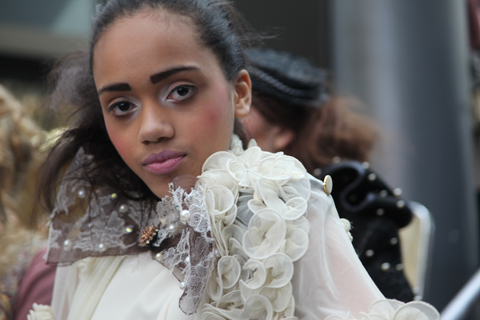
From the series Laura’s Story, exclusive to Amelia’s Magazine

You can see more of Cynthia’s work here.

Categories ,Amelia’s Magazine 08, ,Anna Gaskell, ,berlin, ,Capetown, ,Communication, ,Cynthia Berger, ,fashion, ,Germany, ,journalism, ,landscape, ,london, ,Louise Samuelson, ,Matt Bramford, ,Messages, ,models, ,photography, ,photojournalism, ,Richard Avedon, ,South Africa

Similar Posts:


Amelia’s Magazine | An interview with fashion photographer Cynthia Berger

From the series Post Punk

A little while ago I wrote an article about fashion in Berlin. It wasn’t particularly amorous to say the least; save a few incredible museums, I wasn’t overtly impressed by the grade of the fashion I saw on the street. I was only there for the weekend, mind.

Coincidentally an email popped into the fashion inbox pretty soon after from Cynthia Berger – German born and Berlin based fashion photographer. I failed to mention my less-than-flattering view of Berlin, but her photographs completely stole my attention.

Cynthia is a fashion photographer through and through, and her early years were spent wielding a camera with the help of her photographer father.

The images Cynthia creates are often stark portraits of the citizens of Berlin, and with minimal settings and styling, there is a real photojournalistic realism to her photographs (it’s no surprise to discover, then, that her influential father was also a journalist). Her work reminds me much of some of the work that was featured in Amelia’s Magazine – Louise Samuelson in Issue 08 for example.

Cynthia uses street-cast models in her photographs, giving each picture added verisimilitude, along with the designs of up-and-coming Berlin fashion designers; with most of her work being set within the dramatic urban landscape of Berlin itself, Cynthia’s photographs totally embody the spirit of this historical city.

From the series Berlin Fashion

I managed to have a quick chat with Cynthia about her father, her work and her future…

How did you get in to photography?
My father was both a photographer and a journalist, so at a very early age I was surrounded by photography. At aged 8 I started to take my own photographs.
 
What did you study?
I studied Photography in Germany and worked later in Capetown as a photographer’s assistant. Back in Germany, I studied Communication and worked for a while as a researcher in the media world, finally coming home after that.

How do your shoots come together?
The photograph is already taken in my mind before I go and shoot. I plan the shoots entirely, so that I have the freedom to experience everything and to allow the ideas to evolve.

What about photography in particular keeps you focussed?
I like to involve and inspire people.

From the series Boys in the Suburbs

What messages do your photographs carry?
Every photograph always carries a variety of messages.

Which photographers do you admire, and why?
I like Richard Avedon, particularly his portraits – they have such high density and intense impression. I also like the work of Anna Gaskell, her mysterious atmosphere and symbolic storytelling.

How is the fashion/photography scene in Berlin?
Berlin is the fashion capital of Germany. Berlin is a city that is immensely inspiring through constant change. It’s a melting pot for design, fashion, art, architecture, music and photography.

Have you travelled as a photographer?
I lived three years in Capetown, a year in London and did a few travels through the USA and Europe.

Do you think photographs can change opinions, challenge ideals, inform, provoke or otherwise?
They can – if you put them into the right context.  

What are your plans for the future?
I write any ideas I have in my “Idea Book” that I have with me wherever I am. I have many projects planned for the future, with an exhibition here in Berlin high on the list.

From the series Laura’s Story, exclusive to Amelia’s Magazine

You can see more of Cynthia’s work here.


Categories ,Amelia’s Magazine 08, ,Anna Gaskell, ,berlin, ,Capetown, ,Communication, ,Cynthia Berger, ,fashion, ,Germany, ,journalism, ,landscape, ,london, ,Louise Samuelson, ,Matt Bramford, ,Messages, ,models, ,photography, ,photojournalism, ,Richard Avedon, ,South Africa

Similar Posts:

Bookmark this:
  • Facebook
  • Twitter
  • MySpace
  • del.icio.us
  • StumbleUpon
  • Digg
  • E-mail this story to a friend!
  • Technorati
  • LinkedIn

Amelia’s Magazine | An interview with Stratis Kastrisianakis, co-founder of Nakedbutsafe magazine

nakedbutsafe front cover-NATALIA-ZAKHAROVA
Nakedbutsafe magazine is a beautiful new arts, fashion and photography magazine with a conscience, produced in Greece, printed in the UK at Principal Colour, and available worldwide. Co-founder Stratis Kastrisianakis explains the thinking behind the creation of his new publication in more depth:
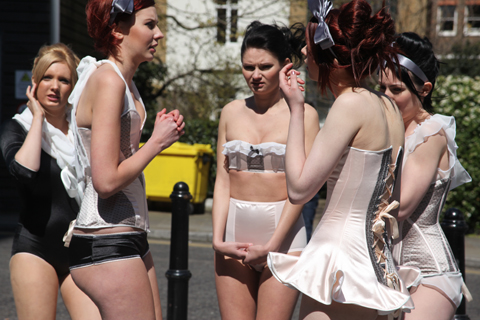
Nakedbutsafe dreaming of another world
What does Nakedbutsafe mean and how did you decide upon the name for your new magazine?
Nakedbutsafe means that our magazine tries to be ‘naked’ from any form of ties and connections to standard industry pressure points like PRs etc… which makes it highly independent. I think readers don’t trust magazines and the media in general any more because there is no more news, only commerce. Magazines today (including many so called independent ones) are just sales platforms for major brands. As a freelance photographer I witnessed last minute calls from major brands in Paris to an otherwise quite credible publication, asking for clothing items to be used on the cover shoot even when they had nothing to do with the theme of the shooting. Additionally ‘naked’ means naked from any form of post production that cannot be done in the dark room. This could have made the magazine feel a bit nostalgic, but this is not the case. We celebrate photography and our research into young artistic and photographic talent shows that there is a strong trend towards not using post production. We want our fashion photographers to enjoy the process of taking photos in the moment, and not to rely on the lab. Naked is also naked from any fear of press censure. We encourage freedom and the breaking of boundaries every day, not just in the magazine. The choice of name was a natural decision from the state of mind we found ourselves in at the start of 2011.

Nakedbutsafe your joy is my low
Who is behind Nakedbutsafe? Can you tell us a short history about its creation?
Myself (Stratis Kastrisianakis) and my partner Manos Samartzis are the creators and driving force behind the magazine. We do everything in house from design to proofing, and from art curating to monitoring distribution and sales. Happily we are blessed with many talented friends and old collaborators that jumped on the idea of giving a hand to a project that started out shy but now is a full time commitment. One day in december 2010 myself and Manos were so frustrated by a commission that we decided NOT to work for these kind of publications any more. So nakedbutsafe was born out of frustration. Then we started a task of entering into a world that already seems so natural, even though it was all news to us back then. We chose to work with consultants and not actual collaborators so we could keep the schedule under control (it is hard to ask people to work for free under pressure) and so that we would not offend anyone’s artistic expression by rejecting them. Nakedbutsafe is 100% an in house process with 95% of its material shot especially for us. Today things have changed dramatically. Every day we get requests from artists and collaborators of every kind that want to be part of nakedbutsafe. This is all very exciting. Our new roster is a very selected list of young and emerging talent in their fields.

Nakedbutsafe-morgan-smith
Your press release speaks about living life with intellectually fulfilled integrity, how is this best manifested in the magazine’s content?
Our take on lifestyle aims to show people that we are humans with brains and not just simple forms of life who react to outside influences. We do not need toys and wealth to live a rich life. Wealth comes from bettering our lives. There are alternatives out there that will create conditions for a new experience. We don’t just need things to show off to other members of our circle. Our planet is a wonderful thing and it is ours. Freedom from needing stuff but encouraging new experiences is our biggest tool towards independency from the media promoted garbage that fills our lives. This is clearly stated in many parts of our magazine – we want it to be a magazine that is read and not just a coffee table item. Magazines are not decorative items.

Nakedbutsafe-natalia-zakharova-fashion
How difficult has it been to launch a magazine in Greece in this time of financial crisis?
Amazingly difficult and challenging. But also this is one of the reasons why we manage to keep editorial integrity. Once you hit the bottom you can only go up. Also the anger that exists inside everyone in Greece right now has transformed itself into a creative force.

Nakedbutsafe-after-every-party-i-die
I love the statement that you ‘appreciate illustrators, but not the ones who call themselves photographers’. Why is it so important to you to use images that are not airbrushed?
See my previous answer for part of this explanation. All readers, even non industry ones, are so familiar with post production that they have lost their trust in the colours of a sunset, of a fruit and eventually the beauty of human form. It’s a crime. We are living in the era of temporary plastic surgery through imagery.

Nakedbutsafe let it fall
Nakedbutsafe is published in English. What was the decision about this, and where can you buy the magazine?
English is the most commonly spoken language and the one that suits most of our international team. It was a decision based on practicality. In the future we want to have multilingual articles in the magazine (in their original form) as well as in English, but this will not be the case anytime soon. Pineapple Media and Comag International are the people behind our global reach. We have somehow limited printing numbers (under 15,000 copies) so our reach is global but targeted. In January 2012 we will have full details of where to buy nakedbutsafe but for the moment please check out Where to Buy on our website.

Nakedbutsafe-Magda-Langrova-1
Have there been any difficulties in ensuring global distribution, if so what have you learnt?
Yes. As always a new craft brings excitement and also problems which need to be dealt with. Not knowing the actual distribution locations until the magazine is already in the stores was news to us. Now we know and it’s ok. We are not an urgent magazine to buy in terms of news.

Nakedbutsafe all signs point to no
Why is it important to you to create a magazine from 100% sustainable sources?
I will reverse the question; why is not so important for everyone else? There is too much intellectual garbage out there, never mind actual garbage. Let’s all be sustainable – it will make everyone happier.

Nakedbutsafe-shepperd-6
Nakedbutsafe-shepperd
How did you discover Principal Colour and why did you decide to use them to print Nakedbutsafe?
Their take on natural and ecological printing was a big attraction, but I also like that Principal Colour is run with an informal mood that is in line with the playful (but still extremely serious) character of nakedbutsafe. They are amazing and I have no hesitation in recommending them to others. I received their press proofs by mistake for issue 1 and there was no difference in quality between mine and theirs.

To read the rest of this article hop on over to the Principal Colour tumblr blog.

Categories ,art, ,brazil, ,Circle of Transformation, ,Comag International, ,eco, ,Greece, ,magazine, ,Maike Ludenbach, ,Manos Samartzis, ,Nakedbutsafe, ,Ned Sewell, ,photography, ,Pineapple Media, ,principal colour, ,Print Design, ,Stratis Kastrisianakis, ,sustainable

Similar Posts: