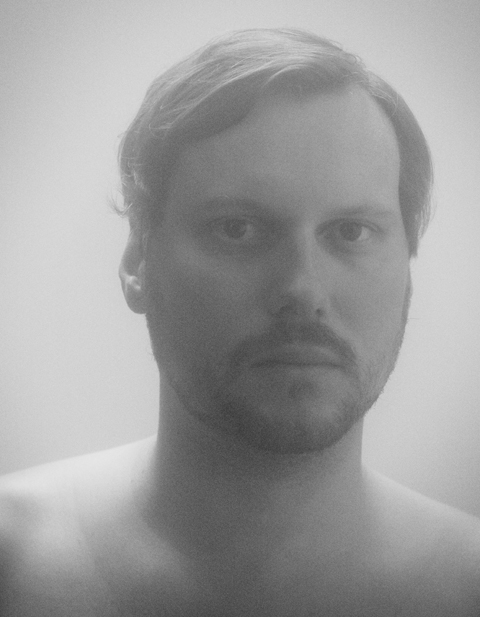
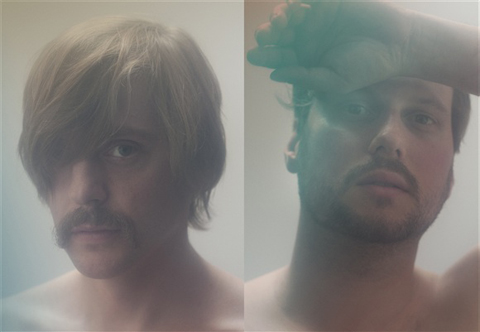
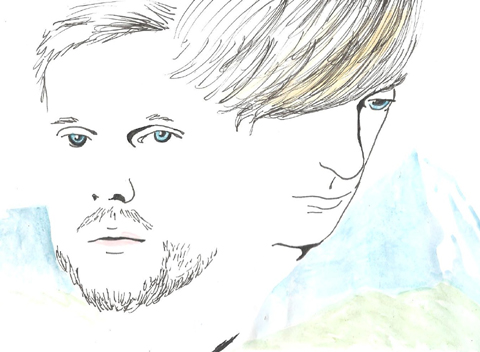
Augusta Akerman is yes, you got it, yet another Camberwell College of Arts graduate. She contributes a painterly image to my colouring book inspired by a love of 50s modernism. Find her in Amelia’s Colourful Colouring Companion, available now on Kickstarter.
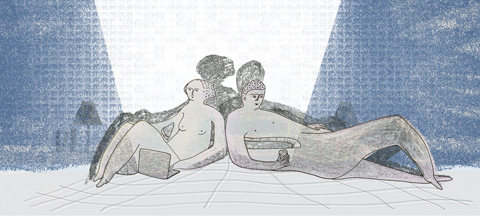
I love the way you draw figures, which artists have inspired you? I think they look very Henry Moore-esue
Yes you are very right! I have always been very inspired by that particular period around 1950‘s modernism, Festival of Britain era, having been brought up on artists like Moore, Hepworth, Ravilious and Bawden. These were the artists my parents loved, so we were always going to galleries to see this kind of work. Every summer we go to Cornwall and St.Ives was and still is an annual pilgrimage to see Hepworth‘s studio and garden, I could probably draw it from memory. After finishing my MA I had been introduced to what I would call ‘Now Illustration‘ and I found myself constantly looking at contemporaries’ work and worrying about my style. Earlier this year I decided that I was just going to let myself be influenced by the painters, sculptors and designers I grew up loving and have found myself much happier with my work.

Why did you decide to move away from your first degree in fine art photography towards illustration?
Towards the end of my BA at Glasgow College of Art I was already starting to move away from photography. I was making small artist books with a combination of illustrations and photographs and enjoying putting them together, designing covers and hand binding them. I returned to London and worked as a photographers assistant all the while drawing at home in the evenings and weekends. I think this was a real time of discovery for me. I was so embarrassed about my drawing skills that I didn’t really show or tell anyone but kept hundreds of small A5 sketchbooks with random illustrations in. In the end I became more and more confident and illustration naturally took over. I also wasn’t particularly interested in digital photography as I enjoyed using film so I think cost and lack of regular access to a darkroom also contributed to me moving away from it. However I still take photographs, film and digital, who knows what will happen next.
What did you do in the period between your BA and MA studies?
I worked as a Set Decorator in film and advertising. I fell into this career, starting as an art department assistant and gradually working my way up. It was a very enjoyable job most of the time but could be also be extremely intense and stressful. In the end the feeling that I wasn’t doing exactly what I wanted to do took over and I made the decision to do the MA. I was so frightened to leave that job, because in that world you spend years making contacts and working for little money in the hope of getting somewhere. I am very lucky to have made some good friends whilst working in film and still do the odd job here and there.

Why did you choose Camberwell for your MA?
I chose Camberwell because it was the nearest illustration course to my parent’s house! In order to do the MA I had to move back home and save as much as I could, and I could walk there in under half an hour. The MA represented a way to take a year off from film and see if Illustration could possibly be an option for me. I didn’t apply anywhere else so it was Camberwell or nothing. When meeting the head tutor Jan Woolley and visiting lecturer Chloe Cheese, I had an overwhelming feeling that this was it, I was very close to making a big change in my life, I would have cried my eyes out if they had said no!

You have described your work as a combination of classic illustration and abstraction, what does this mean in practice?
This is because I think it sits between these two worlds, sometimes I can be quite real in my representation of animals and people, and at other times I just want to work with shapes and textures. I also tend to prefer work that takes a theme or idea and presents it not as a realistic depiction, but one that leaves room for the viewer to project their subconscious onto it.
I definitely think there is an influence of the classic in what I do as inspired by great artists like Tove Jansson and Pauline Baynes. But I aim to give a sense of modern movement and sculptural weight to some pieces by working with dark texture and light washes. I spent a long time being quite soft and delicate with my line and colour choices, so I’m enjoying this moment right now where I’m being braver using black crayons and ink to be more blocky and meshing them with the silky lace lines of water colour and gouache.
What is your preferred way to approach a new piece of work when first starting to create it?
Depending on whether it is a personal project or a commission I tend to do things differently. However they both start the same way, with research. I love researching the subject and finding out different meanings or views or small snippets of information that can be included in the work to give a little extra detail that maybe only 2 percent will ever ‘get’ but will still interest others. I work either at my desk or sometimes in my dad’s studio. When at my desk I usually put on Radio 4 or a documentary on my computer that I listen to like a radio play, otherwise I get distracted by the images if I can see the screen! When in my dad’s studio I’m usually doing something a bit more messy like mono printing or lino, he tends to listen to the radio too or is working on the computer.
How do you combine pen with litho and other methods of production?
I always work by hand, first sketching in my sketchbook, then taking the images to another level of finish either by painting over them or developing them with mono printing or another print process until I like the way they look. I like the play between hand and digital imagery, computers are extremely useful when cleaning and adding colour to images but I sometimes feel I get overwhelmed by the possibilities. I think in this extremely accessible digital age it’s easy to put off the actual thinking of the development of a piece until it is staring you in the face with 100 layers in Photoshop. I find it hard to think clearly with the back lit white screen and feel more in control with a bit of paper in front of me.

What inspired your piece for my colouring book?
Whilst on holiday in Cornwall I had been drawing in my sketchbook, letting my hand and brain sort of automatic draw. I was not thinking about anything in particular but allowing what I had seen or heard that day come out onto the paper. I thought it looked like a diary in a pattern format. When I came back from holiday and thought about the colouring book I returned to the pattern idea and thought it might be nice for people to colour it in. I started automatic drawing again but this time I thought about all the themes I would like to explore in new projects and shapes and images I was interested in. I decided to create a seated figure drawing what would eventually become the wallpaper as I felt this developed the idea of a dreamy state of doodling, of letting your mind wander around your worries and dreams. The male figure was added later and I liked the idea of it also speaking about a relationship with another person who understands your dreams and helps you conquer your worries. They are both just quietly enjoying a moment supporting each other to make this big mural that charts all the ups and downs of creative making. It’s the most colourful piece I’ve made in a while so the brief did pull me out of my comfort zone a bit.
You recently took part in New Designers One Year On – how did you get involved and what project were you showcasing?
I applied to New Designers One Year On on a whim, because I wanted to be proactive to see if I could promote myself and my work in a professional situation. When I was selected I was very happy but also a little terrified as I knew there would be a lot of preparation and self promotion needed to really get the most out of it. I was showcasing the wallpapers and textiles I had made on my MA as well as newer designs and illustrations. I was very lucky to be surrounded by some amazing designers and illustrators and got a lot out of the experience. I had done Pulse earlier in the year with UAL and do think that in the future I might only do one design fair a year, not only due to cost but also due to the amount of energy you need to sustain that level of self promotion to justify it.
Why have you chosen subjects such as climate change for the basis of your designs?
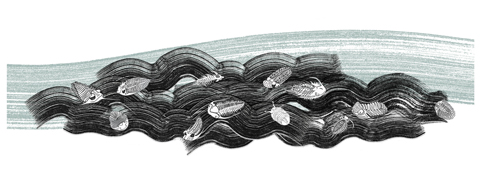
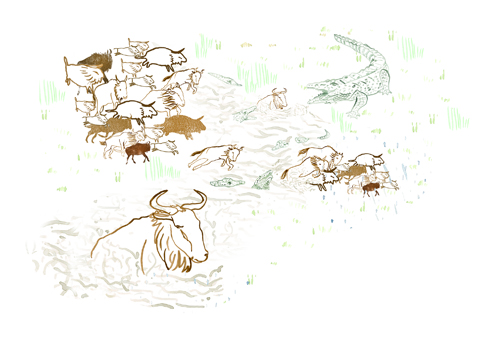
I am very influenced by nature and the natural order of things and have developed a huge respect for the world around us. I am also a constant watcher of all of David Attenborough‘s programs which means I’m a little obsessed with life cycles and repeating patterns. During my MA I knew I wanted to work with pattern and create an illustrated collection of wallpapers and textiles. The life cycles seemed to be a perfect subject as they repeat over and over again. Climate change sneaked into the work, because of researching the migration of animals and reading about the effect climate change is having on their lives, habitats and evolution. For me this is an ongoing theme and subject, I wanted to introduce and present the many circular structures that exist around us in a beautiful and accessible way, as well as providing a piece of information that some may not already be aware of.
How do you create DIY wallpaper?
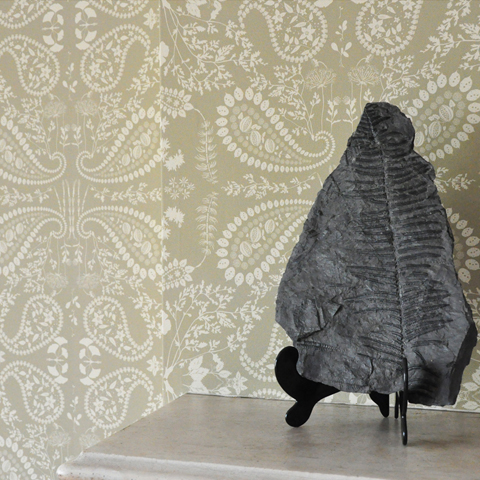
There are many ways! I have recently taught a DIY wallpaper class at the South London Botanical Institute where we used craft foam stamps, lino, foam rollers, stencils and direct printing (covering leaves and flowers in paint and pressing onto paper) to create repeat imagery. If you have the time and the space you can buy a roll of lining paper from B&Q and create your own.
What does your residency at the London Print Studio encompass?
I have been working with Lithography, a process I’ve been wanting to explore in more detail for a long time. I love the quality and possibilities of this particular printing process, you can use a number of materials to make your image as well as scratching away layers in the drawing that gives an almost etching like quality. Lithography is a lengthy process which I think puts a lot of people off. I spent 3 and a half hours grinding my large stone to get it right. I have the blisters to prove it! But even this I really enjoyed, it feels quite ancient grinding and preparing the stone then working into it with litho crayons and tusche. You can get an extremely varied quality of line that is then perfectly replicated when printing, but each print is unique with minute changes due to ink placement and roller pressure. I just love it! Although I did find the printing the hardest part this time. I was working one Saturday printing the largest stone and realised I had no more strength left to turn the wheel on the press, thank god I had nearly run out of paper!
How do you hope to grow your fabric design and wallpaper business?
After the Homes and Gardens Fabric Awards, I felt encouraged to continue with my new collection of wallpapers. I have to admit I was starting to feel a little helpless, I had applied for funding to help build the business which I didn’t get and had thought I might need to put it on hold for a while. I am now working on the new collection and hope to have it done by March 2016. It’s very hard trying to start a side business when you’re looking for freelance work and working a part time job, but I enjoy constantly working and thinking up ideas for projects. This is what I wanted! This is why I gave up other careers; in order to be in charge of my own creativity.
Augusta Akerman contributes her work to Amelia’s Colourful Colouring Companion, available now on Kickstarter. Make sure you grab a copy before the campaign closes later this month! Read a previous interview with Augusta here.
Written by Amelia Gregory on Tuesday November 10th, 2015 11:10 am
Categories ,#ameliasccc, ,Adult Coloring Book, ,Adult Colouring, ,Amelia’s Colourful Colouring Companion, ,Augusta Akerman, ,Bawden, ,Camberwell College of Arts, ,Chloe Cheese, ,Climate Change, ,Colouring Book, ,Cornwall, ,David Attenborough, ,Festival of Britain, ,Glasgow College of Art, ,Hepworth, ,Homes and Gardens Fabric Awards, ,illustration, ,interview, ,Jan Woolley, ,Kickstarter, ,Lithography, ,ma, ,Moore, ,New Designers, ,One Year On, ,Pauline Baynes, ,photography, ,Pulse, ,Radio 4, ,Ravilious, ,Set Decorator, ,South London Botanical Institute, ,St.Ives, ,Tove Jansson, ,Wallpaper
Similar Posts: