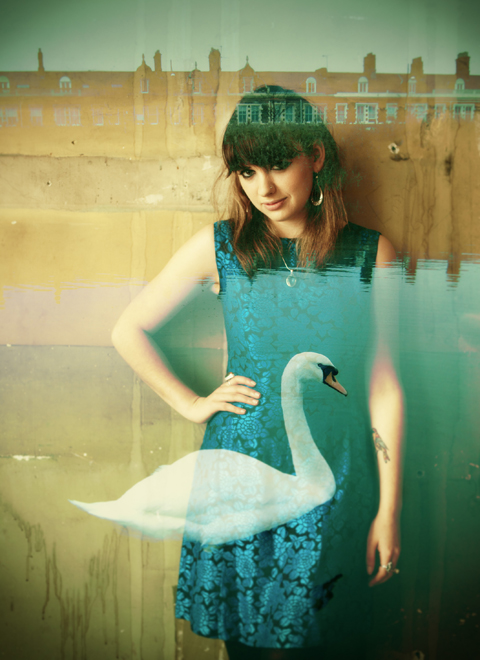
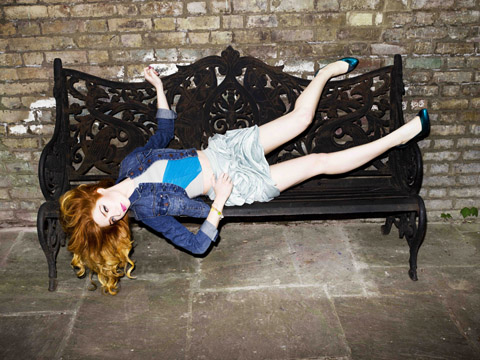
At a time of year when live music is usually thin on the ground, Fortuna Pop’s trio of Winter Sprinters at the Lexington gave the grateful gig-goer a chance to shelter from a damp and dismal early January evening. Nestled on a first night’s set list, between the rockabilly of the Werewandas and the acerbic laments of the Singing Adams, was the gifted Laura J Martin.
Things got underway with the sprightly Doki Doki, as a swirling, stomping Martin built up looped layers of flute. She is an engaging performer, with a fragile voice rather reminiscent of a young Kate Bush, and she deftly switches between flute, mandolin and keyboards whilst backed by assorted samples and her trusty loop station. Martin may be from a folk background, but her music is infused with contemporary influences (as her collaborations with Canadian MC Buck 65 and former Gorky’s Zygotic Mynci frontman Euros Childs show). A new piano-based number gave way to Fire Horse, inspired by Martin’s time living in Japan and learning of the story of Yaoya Oshichi. A Lalo Schifrin-esque flute intro announced the arrival of the slinky Spy, whilst Martin entranced the crowd with the lilting Tom. She closed her set with Salamander, switching between mandolin and flute and building to a hypnotic finish.
As she heads off on a mini-tour and with her album, The Hangman Tree, hitting the stores in a couple of weeks, it looks like 2012 will be the year that Laura J Martin will astound an even greater audience!
Written by Richard Pearmain on Tuesday January 10th, 2012 10:18 am
Beyond the Brink is young filmmaker Ross Harrison’s personal investigation into the debate on Climate Change. After feeling inundated by the media discussions in the lead up and fall out of Copenhagen, Ross set himself the task of answering the ever present question of “What is Climate Change” followed by the more provocative “and does it really matter?” To help himself along his journey and to find out more about the current consensus on climate change Ross interviewed a selection of commentators and scientists from David Attenbrough, Deepak Rughani, Mark Lynas, Dieter Helm to Dr Heike Schroeder.
Amelia’s Magazine interviewed Ross about why he decided to make this film, the impact the film has had in schools and what he now thinks needs to be achieved on a personal and governmental level to tackle the impact of Climate Change.
First things first, what inspired you to make a film that investigates the vast and divisive topic that is Climate Change?
Back in 2009, it seemed like an unavoidable issue – what with the media coverage building up to Copenhagen for nearly the whole year and films like The Age of Stupid being released. I also found the subject cropping up more and more in my school work.
Film Still from Beyond the Brink
What did you feel was missing from the discussion in the media or schools during the lead up to Cop 15 in 2009?
It seemed like a very polarized debate with no middle ground. I was frustrated by hearing the same arguments again and again bouncing between the same groups of people. I didn’t understand why people weren’t cooperating more to work towards a common goal. That hasn’t changed a great deal. Probably and most importantly I wanted to provide a young person’s perspective.
How has the film been received since its release? Has it been taken around schools in the UK?
Since I launched the website at the end of last year there has been a lot of positive feedback, which is encouraging. For the week of screenings I posted about 300 DVDs to schools, universities, community groups and individual volunteers. I’ve been along to some screenings myself, but because they’re all over the country it’s mainly teachers and students using the film themselves, which I’ve tried to make as easy as possible by releasing the film for free.
What -for you- were the most difficult aspects to making this film?
Weighing up the masses of information about climate change – articles, books, blogs, programs, interviews – and trying to filter that down into a documentary that was balanced, accessible and understandable was the first difficulty. The second was trying to think of ways of doing things differently, using different language, presenting the problem in a new way that might make it more inspiring.
Beyond the Brink contains a mixture of talking heads and personal narration, what lead you to construct the film in this way?
The talking heads are in there because I felt that was the best way to convey the experts’ viewpoints. The audience hears what I heard and can draw their own conclusions. I chose to feature myself because it was a very personal project and I wanted to include my slant as a teenager.
Was it particularly important to you that the film was released for free and under a creative commons license?
Definitely. My hope is for the film to get the widest audience possible and I think making it freely available should mean more people watch it that otherwise might.
On reflection, since Cop 16 and the overshadowing of Climate Change in the media by the recession and the arrival of the coalition government, what do you think is next for the climate movement?
Cancun was not surprising – after such a flop at Copenhagen the officials involved were bound to be desperate to publicize some sort of success. Even so COP16 was a small step rather than the deal people had set their hopes on in 2009. I don’t want to rule out the UN process completely, but I think its limited real impact in the 19 years its been running, is a sign progress needs to be made elsewhere. Those involved in the climate movement need to be pressuring the governments of their own countries to lead by example. The discussion needs to move away from talking about climate catastrophe to selling the benefits of a clean energy infrastructure and low-carbon lifestyles. People are far more likely to be driven by an appealing goal than a danger that could affect them at some point in the future.
What did you learn during the making of the film that surprised you with regards to the debate on Climate Change?
A greater proportion of the scientific community than I realized think that humans are largely causing current climate change. A scientific debate about whether we are contributing to climate change doesn’t really exist anymore, it is widely assumed we are.
Have you plans to follow up the film with further interviews?
No, although it’s something I may come back to at a later date, after I’ve finished working on distributing this film I’ll be looking to take on a new project.
How difficult did you find approaching the range of experts -from Sir David Attenborough to Deepak Rughani and Dr Heike Schroeader- that appear in Beyond the Brink?
It was certainly a challenge. Obviously the people I met know a massive amount about the subject, much more than I do, but you still have to research lots to be able to ask good questions. Thankfully all the interviewees were very approachable and generous with their time. Like many things, you get better at interviews with practice and in the end I was really pleased with the responses I had. That’s not to say there weren’t disappointments. Sometimes technical problems meant some of the best answers couldn’t be used.
How did the animations within the film develop and do you feel they were integral to explain a few of the ideas behind the causes of Climate Change?
Concepts like the greenhouse effect are difficult to explain at all, let alone with a strict time limit and so animations seemed like the best option. The problem is they take a long time to create. I’ve still got 100 paper Earths on my shelf that I traced from my computer screen.
Film Stills from Beyond the Brink
What fact or possible event as a cause of Climate Change shocked you the most during the making of this film?
I found that the number of species threatened by potential warming was really startling. One in four land animal and plant species could be threatened with extinction this century.
Which five environmental documentaries would you recommend everybody watches?
What conclusions have you come to since Beyond the Brink was completed?
Being optimistic is important. Working towards a vision of a better world with a reliable renewable energy supply, full employment, smaller bills, and healthier lifestyles, has got a far greater chance of uniting the population than struggling to avoid a catastrophe. You don’t have to be an environmentalist to want those things. And working together is essential. In whatever situation people are taking action, by joining forces with their neighbours, friends, schoolmates or colleagues, they can make their voice much louder.
Film Still from Beyond the Brink
What policies would you like to see Governments world wide implement?
I’d like to see serious investment in green technologies, stricter regulation of energy industries, and policies that make it easier for individuals to reduce their carbon footprint. Channelling money into developing renewable energy and other green products can create jobs. On the one hand if our current energy system is replaced by a carbon neutral one then individuals will not have to make many changes, on the other, behavioral change is essential because we need to start appreciating almost all the resources we use are finite. One policy I think is especially urgent and needs to be implemented by some South American and Indonesian governments is strong protection of rainforests. The rate of deforestation is mind-blowing and can’t go on.
“Are we really causing Climate Change and who cares?” (Question taken from Beyond the Brink’s website)
It is very likely we are changing the Earth’s climate by changing the composition of its atmosphere and this is a stance that the vast majority of climate scientists and scientific organizations around the world agree on, as far as I can tell. The implications are serious and everybody could be affected, but importantly the poorest people in the world who are less able to defend themselves against potential hazards are likely to be affected first.
Like many problems, climate change is easy to ignore and only a minority are taking action, even if a much larger number might say they are concerned. The next step must be to encourage changes that people want to see and which reduce our impact at the same time, like demanding cheaper, better public transport, or designing more energy efficient products. What really makes me hopeful, though, is education. I’m hopeful people my age will grow up with different attitudes to those of generations before.
After watching the film, what’s the next step for a viewer who would like to be engaged in the Climate Change debate?
Well, for a start the debate has largely moved from are we really causing climate change, to what’s the best way to minimize the impact we are very likely having. If someone wants more information, there are endless books and websites. The Rough Guide to Climate Change is particularly good. But be wary of blogs – it’s very easy for people to write anything they like and pretend to know more than they do.
In terms of getting involved, the best thing to do is join an existing network, of which there are many. There are so many organizations with basically the same aims I sometimes think if they all joined forces then they could really change things. If you’d call yourself young then check out the UK Youth Climate Coalition, some of whose members feature in the film. Other initiatives like 350 and 10:10 are building the movement, making it exciting and making an impact.
Beyond the Brink is young filmmaker Ross Harrison’s personal investigation into the debate on Climate Change. After feeling inundated by the media discussions in the lead up and fall out of Copenhagen, Ross set himself the task of answering the ever present question of “What is Climate Change” followed by the more provocative “and does it really matter?” To help himself along his journey and to find out more about the current consensus on climate change Ross interviewed a selection of commentators and scientists from David Attenbrough, Deepak Rughani, Mark Lynas, Dieter Helm to Dr Heike Schroeder.
Amelia’s Magazine interviewed Ross about why he decided to make this film, the impact the film has had in schools and what he now thinks needs to be achieved on a personal and governmental level to tackle the impact of Climate Change.
First things first, what inspired you to make a film that investigates the vast and divisive topic that is Climate Change?
Back in 2009, it seemed like an unavoidable issue – what with the media coverage building up to Copenhagen for nearly the whole year and films like The Age of Stupid being released. I also found the subject cropping up more and more in my school work.
Film Still from Beyond the Brink
What did you feel was missing from the discussion in the media or schools during the lead up to Cop 15 in 2009?
It seemed like a very polarized debate with no middle ground. I was frustrated by hearing the same arguments again and again bouncing between the same groups of people. I didn’t understand why people weren’t cooperating more to work towards a common goal. That hasn’t changed a great deal. Probably and most importantly I wanted to provide a young person’s perspective.
How has the film been received since its release? Has it been taken around schools in the UK?
Since I launched the website at the end of last year there has been a lot of positive feedback, which is encouraging. For the week of screenings I posted about 300 DVDs to schools, universities, community groups and individual volunteers. I’ve been along to some screenings myself, but because they’re all over the country it’s mainly teachers and students using the film themselves, which I’ve tried to make as easy as possible by releasing the film for free.
What -for you- were the most difficult aspects to making this film?
Weighing up the masses of information about climate change – articles, books, blogs, programs, interviews – and trying to filter that down into a documentary that was balanced, accessible and understandable was the first difficulty. The second was trying to think of ways of doing things differently, using different language, presenting the problem in a new way that might make it more inspiring.
Beyond the Brink contains a mixture of talking heads and personal narration, what lead you to construct the film in this way?
The talking heads are in there because I felt that was the best way to convey the experts’ viewpoints. The audience hears what I heard and can draw their own conclusions. I chose to feature myself because it was a very personal project and I wanted to include my slant as a teenager.
Was it particularly important to you that the film was released for free and under a creative commons license?
Definitely. My hope is for the film to get the widest audience possible and I think making it freely available should mean more people watch it that otherwise might.
On reflection, since Cop 16 and the overshadowing of Climate Change in the media by the recession and the arrival of the coalition government, what do you think is next for the climate movement?
Cancun was not surprising – after such a flop at Copenhagen the officials involved were bound to be desperate to publicize some sort of success. Even so COP16 was a small step rather than the deal people had set their hopes on in 2009. I don’t want to rule out the UN process completely, but I think its limited real impact in the 19 years its been running, is a sign progress needs to be made elsewhere. Those involved in the climate movement need to be pressuring the governments of their own countries to lead by example. The discussion needs to move away from talking about climate catastrophe to selling the benefits of a clean energy infrastructure and low-carbon lifestyles. People are far more likely to be driven by an appealing goal than a danger that could affect them at some point in the future.
What did you learn during the making of the film that surprised you with regards to the debate on Climate Change?
A greater proportion of the scientific community than I realized think that humans are largely causing current climate change. A scientific debate about whether we are contributing to climate change doesn’t really exist anymore, it is widely assumed we are.
Have you plans to follow up the film with further interviews?
No, although it’s something I may come back to at a later date, after I’ve finished working on distributing this film I’ll be looking to take on a new project.
How difficult did you find approaching the range of experts -from Sir David Attenborough to Deepak Rughani and Dr Heike Schroeader- that appear in Beyond the Brink?
It was certainly a challenge. Obviously the people I met know a massive amount about the subject, much more than I do, but you still have to research lots to be able to ask good questions. Thankfully all the interviewees were very approachable and generous with their time. Like many things, you get better at interviews with practice and in the end I was really pleased with the responses I had. That’s not to say there weren’t disappointments. Sometimes technical problems meant some of the best answers couldn’t be used.
How did the animations within the film develop and do you feel they were integral to explain a few of the ideas behind the causes of Climate Change?
Concepts like the greenhouse effect are difficult to explain at all, let alone with a strict time limit and so animations seemed like the best option. The problem is they take a long time to create. I’ve still got 100 paper Earths on my shelf that I traced from my computer screen.
Film Stills from Beyond the Brink
What fact or possible event as a cause of Climate Change shocked you the most during the making of this film?
I found that the number of species threatened by potential warming was really startling. One in four land animal and plant species could be threatened with extinction this century.
Which five environmental documentaries would you recommend everybody watches?
What conclusions have you come to since Beyond the Brink was completed?
Being optimistic is important. Working towards a vision of a better world with a reliable renewable energy supply, full employment, smaller bills, and healthier lifestyles, has got a far greater chance of uniting the population than struggling to avoid a catastrophe. You don’t have to be an environmentalist to want those things. And working together is essential. In whatever situation people are taking action, by joining forces with their neighbours, friends, schoolmates or colleagues, they can make their voice much louder.
Film Still from Beyond the Brink
What policies would you like to see Governments world wide implement?
I’d like to see serious investment in green technologies, stricter regulation of energy industries, and policies that make it easier for individuals to reduce their carbon footprint. Channelling money into developing renewable energy and other green products can create jobs. On the one hand if our current energy system is replaced by a carbon neutral one then individuals will not have to make many changes, on the other, behavioral change is essential because we need to start appreciating almost all the resources we use are finite. One policy I think is especially urgent and needs to be implemented by some South American and Indonesian governments is strong protection of rainforests. The rate of deforestation is mind-blowing and can’t go on.
“Are we really causing Climate Change and who cares?” (Question taken from Beyond the Brink’s website)
It is very likely we are changing the Earth’s climate by changing the composition of its atmosphere and this is a stance that the vast majority of climate scientists and scientific organizations around the world agree on, as far as I can tell. The implications are serious and everybody could be affected, but importantly the poorest people in the world who are less able to defend themselves against potential hazards are likely to be affected first.
Like many problems, climate change is easy to ignore and only a minority are taking action, even if a much larger number might say they are concerned. The next step must be to encourage changes that people want to see and which reduce our impact at the same time, like demanding cheaper, better public transport, or designing more energy efficient products. What really makes me hopeful, though, is education. I’m hopeful people my age will grow up with different attitudes to those of generations before.
After watching the film, what’s the next step for a viewer who would like to be engaged in the Climate Change debate?
Well, for a start the debate has largely moved from are we really causing climate change, to what’s the best way to minimize the impact we are very likely having. If someone wants more information, there are endless books and websites. The Rough Guide to Climate Change is particularly good. But be wary of blogs – it’s very easy for people to write anything they like and pretend to know more than they do.
In terms of getting involved, the best thing to do is join an existing network, of which there are many. There are so many organizations with basically the same aims I sometimes think if they all joined forces then they could really change things. If you’d call yourself young then check out the UK Youth Climate Coalition, some of whose members feature in the film. Other initiatives like 350 and 10:10 are building the movement, making it exciting and making an impact.
Ross Harrison, rx Director and Writer of Beyond the Brink, buy Illustration by Francesca Bourne
Beyond the Brink is young filmmaker Ross Harrison’s personal investigation into the debate on Climate Change. After feeling inundated by the media discussions in the lead up and fall out of Copenhagen, viagra approved Ross set himself the task of answering the ever present question of “What is Climate Change” followed by the more provocative “and does it really matter?” To help himself along his journey and to find out more about the current consensus on climate change Ross interviewed a selection of commentators and scientists from David Attenbrough, Deepak Rughani, Mark Lynas, Dieter Helm to Dr Heike Schroeder.
Amelia’s Magazine interviewed Ross about why he decided to make this film, the impact the film has had in schools and what he now thinks needs to be achieved on a personal and governmental level to tackle the impact of Climate Change.
First things first, what inspired you to make a film that investigates the vast and divisive topic that is Climate Change?
Back in 2009, it seemed like an unavoidable issue – what with the media coverage building up to Copenhagen for nearly the whole year and films like The Age of Stupid being released. I also found the subject cropping up more and more in my school work.
What did you feel was missing from the discussion in the media or schools during the lead up to Cop 15 in 2009?
It seemed like a very polarized debate with no middle ground. I was frustrated by hearing the same arguments again and again bouncing between the same groups of people. I didn’t understand why people weren’t cooperating more to work towards a common goal. That hasn’t changed a great deal. Probably and most importantly I wanted to provide a young person’s perspective.
How has the film been received since its release? Has it been taken around schools in the UK?
Since I launched the website at the end of last year there has been a lot of positive feedback, which is encouraging. For the week of screenings I posted about 300 DVDs to schools, universities, community groups and individual volunteers. I’ve been along to some screenings myself, but because they’re all over the country it’s mainly teachers and students using the film themselves, which I’ve tried to make as easy as possible by releasing the film for free.
What -for you- were the most difficult aspects to making this film?
Weighing up the masses of information about climate change – articles, books, blogs, programs, interviews – and trying to filter that down into a documentary that was balanced, accessible and understandable was the first difficulty. The second was trying to think of ways of doing things differently, using different language, presenting the problem in a new way that might make it more inspiring.
Beyond the Brink contains a mixture of talking heads and personal narration, what lead you to construct the film in this way?
The talking heads are in there because I felt that was the best way to convey the experts’ viewpoints. The audience hears what I heard and can draw their own conclusions. I chose to feature myself because it was a very personal project and I wanted to include my slant as a teenager.
Was it particularly important to you that the film was released for free and under a creative commons license?
Definitely. My hope is for the film to get the widest audience possible and I think making it freely available should mean more people watch it that otherwise might.
On reflection, since Cop 16 and the overshadowing of Climate Change in the media by the recession and the arrival of the coalition government, what do you think is next for the climate movement?
Cancun was not surprising – after such a flop at Copenhagen the officials involved were bound to be desperate to publicize some sort of success. Even so COP16 was a small step rather than the deal people had set their hopes on in 2009. I don’t want to rule out the UN process completely, but I think its limited real impact in the 19 years its been running, is a sign progress needs to be made elsewhere. Those involved in the climate movement need to be pressuring the governments of their own countries to lead by example. The discussion needs to move away from talking about climate catastrophe to selling the benefits of a clean energy infrastructure and low-carbon lifestyles. People are far more likely to be driven by an appealing goal than a danger that could affect them at some point in the future.
What did you learn during the making of the film that surprised you with regards to the debate on Climate Change?
A greater proportion of the scientific community than I realized think that humans are largely causing current climate change. A scientific debate about whether we are contributing to climate change doesn’t really exist anymore, it is widely assumed we are.
Have you plans to follow up the film with further interviews?
No, although it’s something I may come back to at a later date, after I’ve finished working on distributing this film I’ll be looking to take on a new project.
How difficult did you find approaching the range of experts -from Sir David Attenborough to Deepak Rughani and Dr Heike Schroeader- that appear in Beyond the Brink?
It was certainly a challenge. Obviously the people I met know a massive amount about the subject, much more than I do, but you still have to research lots to be able to ask good questions. Thankfully all the interviewees were very approachable and generous with their time. Like many things, you get better at interviews with practice and in the end I was really pleased with the responses I had. That’s not to say there weren’t disappointments. Sometimes technical problems meant some of the best answers couldn’t be used.
How did the animations within the film develop and do you feel they were integral to explain a few of the ideas behind the causes of Climate Change?
Concepts like the greenhouse effect are difficult to explain at all, let alone with a strict time limit and so animations seemed like the best option. The problem is they take a long time to create. I’ve still got 100 paper Earths on my shelf that I traced from my computer screen.
Film Stills from Beyond the Brink
What fact or possible event as a cause of Climate Change shocked you the most during the making of this film?
I found that the number of species threatened by potential warming was really startling. One in four land animal and plant species could be threatened with extinction this century.
Which five environmental documentaries would you recommend everybody watches?
What conclusions have you come to since Beyond the Brink was completed?
Being optimistic is important. Working towards a vision of a better world with a reliable renewable energy supply, full employment, smaller bills, and healthier lifestyles, has got a far greater chance of uniting the population than struggling to avoid a catastrophe. You don’t have to be an environmentalist to want those things. And working together is essential. In whatever situation people are taking action, by joining forces with their neighbours, friends, schoolmates or colleagues, they can make their voice much louder.
Film Still from Beyond the Brink
What policies would you like to see Governments world wide implement?
I’d like to see serious investment in green technologies, stricter regulation of energy industries, and policies that make it easier for individuals to reduce their carbon footprint. Channelling money into developing renewable energy and other green products can create jobs. On the one hand if our current energy system is replaced by a carbon neutral one then individuals will not have to make many changes, on the other, behavioral change is essential because we need to start appreciating almost all the resources we use are finite. One policy I think is especially urgent and needs to be implemented by some South American and Indonesian governments is strong protection of rainforests. The rate of deforestation is mind-blowing and can’t go on.
“Are we really causing Climate Change and who cares?” (Question taken from Beyond the Brink’s website)
It is very likely we are changing the Earth’s climate by changing the composition of its atmosphere and this is a stance that the vast majority of climate scientists and scientific organizations around the world agree on, as far as I can tell. The implications are serious and everybody could be affected, but importantly the poorest people in the world who are less able to defend themselves against potential hazards are likely to be affected first.
Like many problems, climate change is easy to ignore and only a minority are taking action, even if a much larger number might say they are concerned. The next step must be to encourage changes that people want to see and which reduce our impact at the same time, like demanding cheaper, better public transport, or designing more energy efficient products. What really makes me hopeful, though, is education. I’m hopeful people my age will grow up with different attitudes to those of generations before.
After watching the film, what’s the next step for a viewer who would like to be engaged in the Climate Change debate?
Well, for a start the debate has largely moved from are we really causing climate change, to what’s the best way to minimize the impact we are very likely having. If someone wants more information, there are endless books and websites. The Rough Guide to Climate Change is particularly good. But be wary of blogs – it’s very easy for people to write anything they like and pretend to know more than they do.
In terms of getting involved, the best thing to do is join an existing network, of which there are many. There are so many organizations with basically the same aims I sometimes think if they all joined forces then they could really change things. If you’d call yourself young then check out the UK Youth Climate Coalition, some of whose members feature in the film. Other initiatives like 350 and 10:10 are building the movement, making it exciting and making an impact.
Beyond the Brink is young filmmaker Ross Harrison’s personal investigation into the debate on Climate Change. After feeling inundated by the media discussions in the lead up and fall out of Copenhagen in 2009, Ross set himself the task of answering the ever present question of “What is Climate Change” followed by the provocative “and does it really matter?” To help himself along his journey and to find out more about the current consensus on climate change Ross interviewed a selection of commentators and scientists from David Attenbrough, Deepak Rughani, Mark Lynas, Dieter Helm to Dr Heike Schroeder.
Amelia’s Magazine interviewed Ross about why he decided to make this film, the impact the film has had in schools and what he now thinks needs to be achieved on a personal and governmental level to tackle the impact of Climate Change.
First things first, what inspired you to make a film that investigates the vast and divisive topic that is Climate Change?
Back in 2009, it seemed like an unavoidable issue – what with the media coverage building up to Copenhagen for nearly the whole year and films like The Age of Stupid being released. I also found the subject cropping up more and more in my school work.
What did you feel was missing from the discussion in the media or schools during the lead up to Cop 15 in 2009?
It seemed like a very polarized debate with no middle ground. I was frustrated by hearing the same arguments again and again bouncing between the same groups of people. I didn’t understand why people weren’t cooperating more to work towards a common goal. That hasn’t changed a great deal. Probably and most importantly I wanted to provide a young person’s perspective.
How has the film been received since its release? Has it been taken around schools in the UK?
Since I launched the website at the end of last year there has been a lot of positive feedback, which is encouraging. For the week of screenings I posted about 300 DVDs to schools, universities, community groups and individual volunteers. I’ve been along to some screenings myself, but because they’re all over the country it’s mainly teachers and students using the film themselves, which I’ve tried to make as easy as possible by releasing the film for free.
What -for you- were the most difficult aspects to making this film?
Weighing up the masses of information about climate change – articles, books, blogs, programs, interviews – and trying to filter that down into a documentary that was balanced, accessible and understandable was the first difficulty. The second was trying to think of ways of doing things differently, using different language, presenting the problem in a new way that might make it more inspiring.
Beyond the Brink contains a mixture of talking heads and personal narration, what lead you to construct the film in this way?
The talking heads are in there because I felt that was the best way to convey the experts’ viewpoints. The audience hears what I heard and can draw their own conclusions. I chose to feature myself because it was a very personal project and I wanted to include my slant as a teenager.
Was it particularly important to you that the film was released for free and under a creative commons license?
Definitely. My hope is for the film to get the widest audience possible and I think making it freely available should mean more people watch it that otherwise might.
On reflection, since Cop 16 and the overshadowing of Climate Change in the media by the recession and the arrival of the coalition government, what do you think is next for the climate movement?
Cancun was not surprising – after such a flop at Copenhagen the officials involved were bound to be desperate to publicize some sort of success. Even so COP16 was a small step rather than the deal people had set their hopes on in 2009. I don’t want to rule out the UN process completely, but I think its limited real impact in the 19 years its been running, is a sign progress needs to be made elsewhere. Those involved in the climate movement need to be pressuring the governments of their own countries to lead by example. The discussion needs to move away from talking about climate catastrophe to selling the benefits of a clean energy infrastructure and low-carbon lifestyles. People are far more likely to be driven by an appealing goal than a danger that could affect them at some point in the future.
What did you learn during the making of the film that surprised you with regards to the debate on Climate Change?
A greater proportion of the scientific community than I realized think that humans are largely causing current climate change. A scientific debate about whether we are contributing to climate change doesn’t really exist anymore, it is widely assumed we are.
Have you plans to follow up the film with further interviews?
No, although it’s something I may come back to at a later date, after I’ve finished working on distributing this film I’ll be looking to take on a new project.
How difficult did you find approaching the range of experts -from Sir David Attenborough to Deepak Rughani and Dr Heike Schroeader- that appear in Beyond the Brink?
It was certainly a challenge. Obviously the people I met know a massive amount about the subject, much more than I do, but you still have to research lots to be able to ask good questions. Thankfully all the interviewees were very approachable and generous with their time. Like many things, you get better at interviews with practice and in the end I was really pleased with the responses I had. That’s not to say there weren’t disappointments. Sometimes technical problems meant some of the best answers couldn’t be used.
How did the animations within the film develop and do you feel they were integral to explain a few of the ideas behind the causes of Climate Change?
Concepts like the greenhouse effect are difficult to explain at all, let alone with a strict time limit and so animations seemed like the best option. The problem is they take a long time to create. I’ve still got 100 paper Earths on my shelf that I traced from my computer screen.
Film Stills from Beyond the Brink
What fact or possible event as a cause of Climate Change shocked you the most during the making of this film?
I found that the number of species threatened by potential warming was really startling. One in four land animal and plant species could be threatened with extinction this century.
Which five environmental documentaries would you recommend everybody watches?
What conclusions have you come to since Beyond the Brink was completed?
Being optimistic is important. Working towards a vision of a better world with a reliable renewable energy supply, full employment, smaller bills, and healthier lifestyles, has got a far greater chance of uniting the population than struggling to avoid a catastrophe. You don’t have to be an environmentalist to want those things. And working together is essential. In whatever situation people are taking action, by joining forces with their neighbours, friends, schoolmates or colleagues, they can make their voice much louder.
Film Still from Beyond the Brink
What policies would you like to see Governments world wide implement?
I’d like to see serious investment in green technologies, stricter regulation of energy industries, and policies that make it easier for individuals to reduce their carbon footprint. Channelling money into developing renewable energy and other green products can create jobs. On the one hand if our current energy system is replaced by a carbon neutral one then individuals will not have to make many changes, on the other, behavioral change is essential because we need to start appreciating almost all the resources we use are finite. One policy I think is especially urgent and needs to be implemented by some South American and Indonesian governments is strong protection of rainforests. The rate of deforestation is mind-blowing and can’t go on.
“Are we really causing Climate Change and who cares?” (Question taken from Beyond the Brink’s website)
It is very likely we are changing the Earth’s climate by changing the composition of its atmosphere and this is a stance that the vast majority of climate scientists and scientific organizations around the world agree on, as far as I can tell. The implications are serious and everybody could be affected, but importantly the poorest people in the world who are less able to defend themselves against potential hazards are likely to be affected first.
Like many problems, climate change is easy to ignore and only a minority are taking action, even if a much larger number might say they are concerned. The next step must be to encourage changes that people want to see and which reduce our impact at the same time, like demanding cheaper, better public transport, or designing more energy efficient products. What really makes me hopeful, though, is education. I’m hopeful people my age will grow up with different attitudes to those of generations before.
After watching the film, what’s the next step for a viewer who would like to be engaged in the Climate Change debate?
Well, for a start the debate has largely moved from are we really causing climate change, to what’s the best way to minimize the impact we are very likely having. If someone wants more information, there are endless books and websites. The Rough Guide to Climate Change is particularly good. But be wary of blogs – it’s very easy for people to write anything they like and pretend to know more than they do.
In terms of getting involved, the best thing to do is join an existing network, of which there are many. There are so many organizations with basically the same aims I sometimes think if they all joined forces then they could really change things. If you’d call yourself young then check out the UK Youth Climate Coalition, some of whose members feature in the film. Other initiatives like 350 and 10:10 are building the movement, making it exciting and making an impact.
To visit Beyond the Brink’s website, click here. Ross Harrison, cure Director and Writer of Beyond the Brink, visit this Illustration by Francesca Bourne
Beyond the Brink is young filmmaker Ross Harrison’s personal investigation into the debate on Climate Change. After feeling inundated -like so many people- by the media discussions in the lead up and fall out of Copenhagen in 2009, Ross set himself the task of answering the ever present question of “What is Climate Change” followed by the provocative “and does it really matter?” To help himself along his journey and to find out more about the current consensus on climate change Ross interviewed a selection of commentators and scientists from David Attenbrough, Deepak Rughani, Mark Lynas, Dieter Helm to Dr Heike Schroeder.
Amelia’s Magazine interviewed Ross about why he decided to make this film, the impact the film has had in schools and what he now thinks needs to be achieved on a personal and governmental level to tackle the impact of Climate Change.
First things first, what inspired you to make a film that investigates the vast and divisive topic that is Climate Change?
Back in 2009, it seemed like an unavoidable issue – what with the media coverage building up to Copenhagen for nearly the whole year and films like The Age of Stupid being released. I also found the subject cropping up more and more in my school work.
What did you feel was missing from the discussion in the media or schools during the lead up to Cop 15 in 2009?
It seemed like a very polarized debate with no middle ground. I was frustrated by hearing the same arguments again and again bouncing between the same groups of people. I didn’t understand why people weren’t cooperating more to work towards a common goal. That hasn’t changed a great deal. Probably and most importantly I wanted to provide a young person’s perspective.
How has the film been received since its release? Has it been taken around schools in the UK?
Since I launched the website at the end of last year there has been a lot of positive feedback, which is encouraging. For the week of screenings I posted about 300 DVDs to schools, universities, community groups and individual volunteers. I’ve been along to some screenings myself, but because they’re all over the country it’s mainly teachers and students using the film themselves, which I’ve tried to make as easy as possible by releasing the film for free.
What -for you- were the most difficult aspects to making this film?
Weighing up the masses of information about climate change – articles, books, blogs, programs, interviews – and trying to filter that down into a documentary that was balanced, accessible and understandable was the first difficulty. The second was trying to think of ways of doing things differently, using different language, presenting the problem in a new way that might make it more inspiring.
Beyond the Brink contains a mixture of talking heads and personal narration, what lead you to construct the film in this way?
The talking heads are in there because I felt that was the best way to convey the experts’ viewpoints. The audience hears what I heard and can draw their own conclusions. I chose to feature myself because it was a very personal project and I wanted to include my slant as a teenager.
Was it particularly important to you that the film was released for free and under a creative commons license?
Definitely. My hope is for the film to get the widest audience possible and I think making it freely available should mean more people watch it that otherwise might.
On reflection, since Cop 16 and the overshadowing of Climate Change in the media by the recession and the arrival of the coalition government, what do you think is next for the climate movement?
Cancun was not surprising – after such a flop at Copenhagen the officials involved were bound to be desperate to publicize some sort of success. Even so COP16 was a small step rather than the deal people had set their hopes on in 2009. I don’t want to rule out the UN process completely, but I think its limited real impact in the 19 years its been running, is a sign progress needs to be made elsewhere. Those involved in the climate movement need to be pressuring the governments of their own countries to lead by example. The discussion needs to move away from talking about climate catastrophe to selling the benefits of a clean energy infrastructure and low-carbon lifestyles. People are far more likely to be driven by an appealing goal than a danger that could affect them at some point in the future.
What did you learn during the making of the film that surprised you with regards to the debate on Climate Change?
A greater proportion of the scientific community than I realized think that humans are largely causing current climate change. A scientific debate about whether we are contributing to climate change doesn’t really exist anymore, it is widely assumed we are.
Have you plans to follow up the film with further interviews?
No, although it’s something I may come back to at a later date, after I’ve finished working on distributing this film I’ll be looking to take on a new project.
How difficult did you find approaching the range of experts -from Sir David Attenborough to Deepak Rughani and Dr Heike Schroeader- that appear in Beyond the Brink?
It was certainly a challenge. Obviously the people I met know a massive amount about the subject, much more than I do, but you still have to research lots to be able to ask good questions. Thankfully all the interviewees were very approachable and generous with their time. Like many things, you get better at interviews with practice and in the end I was really pleased with the responses I had. That’s not to say there weren’t disappointments. Sometimes technical problems meant some of the best answers couldn’t be used.
How did the animations within the film develop and do you feel they were integral to explain a few of the ideas behind the causes of Climate Change?
Concepts like the greenhouse effect are difficult to explain at all, let alone with a strict time limit and so animations seemed like the best option. The problem is they take a long time to create. I’ve still got 100 paper Earths on my shelf that I traced from my computer screen.
Film Stills from Beyond the Brink
What fact or possible event as a cause of Climate Change shocked you the most during the making of this film?
I found that the number of species threatened by potential warming was really startling. One in four land animal and plant species could be threatened with extinction this century.
Which five environmental documentaries would you recommend everybody watches?
What conclusions have you come to since Beyond the Brink was completed?
Being optimistic is important. Working towards a vision of a better world with a reliable renewable energy supply, full employment, smaller bills, and healthier lifestyles, has got a far greater chance of uniting the population than struggling to avoid a catastrophe. You don’t have to be an environmentalist to want those things. And working together is essential. In whatever situation people are taking action, by joining forces with their neighbours, friends, schoolmates or colleagues, they can make their voice much louder.
Film Still from Beyond the Brink
What policies would you like to see Governments world wide implement?
I’d like to see serious investment in green technologies, stricter regulation of energy industries, and policies that make it easier for individuals to reduce their carbon footprint. Channelling money into developing renewable energy and other green products can create jobs. On the one hand if our current energy system is replaced by a carbon neutral one then individuals will not have to make many changes, on the other, behavioral change is essential because we need to start appreciating almost all the resources we use are finite. One policy I think is especially urgent and needs to be implemented by some South American and Indonesian governments is strong protection of rainforests. The rate of deforestation is mind-blowing and can’t go on.
“Are we really causing Climate Change and who cares?” (Question taken from Beyond the Brink’s website)
It is very likely we are changing the Earth’s climate by changing the composition of its atmosphere and this is a stance that the vast majority of climate scientists and scientific organizations around the world agree on, as far as I can tell. The implications are serious and everybody could be affected, but importantly the poorest people in the world who are less able to defend themselves against potential hazards are likely to be affected first.
Like many problems, climate change is easy to ignore and only a minority are taking action, even if a much larger number might say they are concerned. The next step must be to encourage changes that people want to see and which reduce our impact at the same time, like demanding cheaper, better public transport, or designing more energy efficient products. What really makes me hopeful, though, is education. I’m hopeful people my age will grow up with different attitudes to those of generations before.
After watching the film, what’s the next step for a viewer who would like to be engaged in the Climate Change debate?
Well, for a start the debate has largely moved from are we really causing climate change, to what’s the best way to minimize the impact we are very likely having. If someone wants more information, there are endless books and websites. The Rough Guide to Climate Change is particularly good. But be wary of blogs – it’s very easy for people to write anything they like and pretend to know more than they do.
In terms of getting involved, the best thing to do is join an existing network, of which there are many. There are so many organizations with basically the same aims I sometimes think if they all joined forces then they could really change things. If you’d call yourself young then check out the UK Youth Climate Coalition, some of whose members feature in the film. Other initiatives like 350 and 10:10 are building the movement, making it exciting and making an impact.
To visit Beyond the Brink’s website, click here.
Illustration by Avril Kelly
If I lived alone in a dark stone castle, find I would make it a priority to listen to Lia Ices. Her notes would float around the turrets and echo through the gaps in the brickwork. You would be able to hear her singing, bringing ‘him’ closer from the meadows and the seas. The strings gently touching the heart, and increasing the speed of the hoofs galloping at an increasingly quickening pace. So beautifully feverish is this music.
As it is, I live in a basement flat in Bristol. Although I did work in a Tudor castle whilst at university and I’d be lying if I said I didn’t stand at the top, look to sea, hair flaying behind me, and feel a certain magic. I’m sure I looked ridiculous/a mess, but there is an at oneness that comes with looking out to the infinity of the sea from up high, it’s filled with an ambition and truth. Also a stark contrast to the steps and blades of tall grass (weeds), I look at from my desk. I’m not implying you need to own a grand sort of graded building to listen to Lia Ices, but her voice is so much more than something to whack on the karaoke on a saturday night, or for a little house shindig. I often get accused of putting on depressing music when people come round to the basement flat, but alas, they are mistaken! But so too am I. This music is not depressing, it is special, not for groups to revel in, red wine tipping on my (cream) carpets. Oh no, this is for wafting.
The light notes mix with the heavy use of strings to delicious effect. Classically trained, a graduate of New York’s Tisch School of the Arts, Ices uses her voice together with the instruments with utter ease. A combination of Tori Amos, Enya, Regina Spektor and Sia. The instruments, her voice inclusive, flit between jumpy, feisty to explosions of streaming notes. She has elements of Joni Mitchell to her, filled to the brim with emotion and captivating. New Myth has an almost military sound to it, with trumpets blowing. Ice Wine stops and starts with strings, before unleashing with a ratter of a drum. She has one duet, Daphne, with Justin Vernon of Bon Iver, whom I could not think of a better artist for her to be paired with. Their voices together are intensely hypnotic.
The whole album sounds as if it was born in an enchanted forest. A location removed from the evils of the world. The sacred place, where the queen fairy lives in fantasy books. With 70s hinting, billowing sleeves, Kate Bush and Fleetwood Mac, joined, it’s an album of true quality. Lia Ices album, Grown Unknown, is out now on Jagjauwar.
Written by Helen Martin on Friday April 1st, 2011 2:24 pm
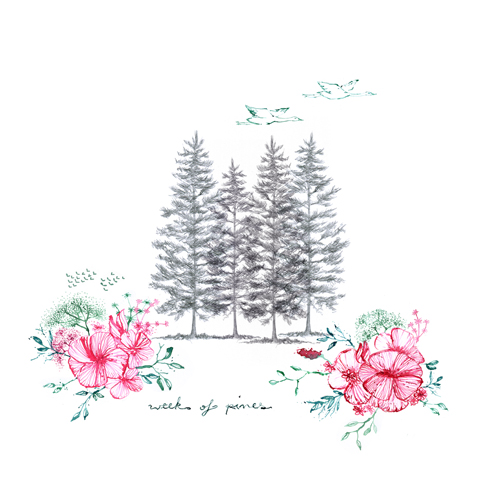
Week of Pines is the beautiful long playing debut album by Welsh singer-songwriter and harpist Georgia Ruth, it’s creation prompted by a return to Wales. Love that has been lost is tempered with joy at being home, and in the solitude of a Snowdonia studio she has melded together a plethora of influences to create an album that has an all pervading sense of calmness. Opening track and album namesake Week of Pines is a highlight, the gorgeous melody swinging along to a hastening drum beat. Welsh tune Codi Angor harnesses more obvious folk influences, and Dovecote includes the atmospheric clanging of bells, Georgia’s voice drifting in and out of the instrumental with hypnotic grace. Seeing You Around and In Luna trace the troubles of lost love, her vocals soaring in delicate arcs around the harp. A lonesome harmonica takes pride of place in Old Blue, a reinvigorated Appalachian song made popular by Joan Baez, and the album finishes with the slow beat of Winter, redemptive lyrics bringing the album to a fitting close.
Week of Pines features songs in both Welsh and English – but I believe you did not even grow up speaking Welsh. How did you get to the position where you were confident to write and sing in it?
I grew up bilingually from the age of 4, when my family moved from South Wales to Aberystwyth and I started going to a Welsh language primary school. From then on, the two languages were an integral part of my everyday identity. And it’s very much true of my music, too. There are some things I feel only able to express in Welsh, and vice versa. But I knew the album would have songs in both languages.
Week Of Pines by Georgia Ruth.
You have said that most of your songs come from personal experiences – what experiences have made this record?
On the next album I’ve told myself that I’m not allowed to write one song that relates to my actual life, just to see how I get on! Narcissistic bugger. But in many ways Week of Pines is a record about coming home. I moved back to Wales a couple of years ago, after living in London and Brighton, and the friends and relationships that I found waiting for me here have been so important and strengthening.. It’s a happy record, sun through the leaves stuff, despite some moments in the shade!
Why did you decide to learn the harp, and what is the best thing about it?
I started learning when I was 7. But it wasn’t quite my choice. In our primary school, the instrument you got was very much dependent on your place in the register. I wanted clarinet (the instrument of the enviable 10 year olds) but being a Williams did not stand in my favour. All the Evanses and Griffithses got the clarinet. So they offered me the harp, and I said yes! The best thing about the harp is that it’s a great conversation starter. You’re standing at the bus stop with one of these beauties stood next to you, someone’s going to want to ask you about it! That being said, it’s a nightmare to get it on planes. That is absolutely the worst thing about it.
You happily meld influences such as sea shanties, appalachian tunes and traditional folk. What were you listening to as you grew up?
Lots of different stuff! My parents would play a lot of Hank Williams, American and British folk music, Paul Simon, Melanie. And then I was learning these Welsh folk songs in school. When I hit my teens, it was the solo women who took up most of my earspace: Joni Mitchell, Kate Bush, Aimee Mann, Sandy Denny.
What was it like to record in the middle of Snowdonia?
Very quiet! Bryn Derwen is such a wonderful, peaceful studio. We were there for a week in the middle of August, and the air was thick and heavy with the smell of the eucalyptus trees. At times, you weren’t sure which country you were in! It was a very happy time.
This record has been described as a homecoming – what prompted the move back to Wales and will you be staying for the near future?
I just woke up one morning in Brighton, and realised that I missed Wales terribly. And I came back! I’m definitely very happy here, so yes: I’m not going anywhere. Unless someone forces me to live in sun-filled San Francisco, I would have to concede to their wishes…
What can musicians find in Wales that is not so easy to find elsewhere?
Mountains! Certainly for me, it’s been the sense of fraternity and support amongst the musicians here in Wales that has been the most amazing. In London, I often felt quite isolated as a musician. I didn’t feel as much a part of a community as I do now. And that’s been so key to the making of this record. I was all but ready to give up, and then I came home, met these remarkable people, and thought: nope!
Where can fans hear you over the course of 2013?
I’ll be touring the album in May and June with the band (current list of dates is on georgiaruthmusic.co.uk with a possible few more to be added) and I’m particularly excited about playing in Spillers Records in Cardiff on the day of release. It’s such a brilliant record shop, that’ll be a real privilege.
If Amelia’s Magazine had a wish list of character traits that would perfectly encapsulate its personality then you would struggle to surpass those of Jamie McDermott, one of the magazines favourite performers. The founding member, and centre piece of The Irrepressibles, could have tailored his CV to fit the remit of Amelia’s Magazine. The Irrepressibles’ creator, composer, arranger and avant garde curator wears his heart firmly on his sleeve and is intensely protective and proud of his conception, and rightly so. Their mix of love and lust, longing and tragedy is often borne out as cathartic confessionals. Jamie’s vision and passion, which he so effectively channels through his ‘performance orchestra’, were captured brilliantly, earlier this year on his bands debut album Mirror Mirror.
The Irrepressibles, Jamie’s very personal labour of love, have been a regular source of fascination for the Amelia’s Magazine, having been previously featured both in print and on-line. Their very original and ground breaking approach continues to push the boundaries of live popular music, as their choice of venue can also testify to. Having performed in places as diverse as Latitude Festival and the V&A, and from the Hackney Empire to a recent guest appearance at London Fashion Week you are unlikely to experience the norm.
It was shortly after their recent LFW performance that I managed to hook up with Jamie. With a little trepidation, a youthful excitement and a great deal of pleasure I tracked him down and interrupted his very busy schedule. I was not only hoping to get a little insight into the world of The Irrepressibles but also an idea of who Jamie really is. I wasn’t to be disappointed. Jamie talked vividly and most candidly about how it all began, where his influences have come from and above all what an incredible journey it has all been. (Just don’t mention the Pope, you’ll only be greeted with silence!) Here is Jamie McDermott from The Irrepressibles.
Way back before the formation of The Irrepressibles was there a pivotal moment in your life where you decided that you would be a performer, a musician, a composer? What lead to your epiphany?
I had fallen in love with my best friend – another boy – and we were inseparable. He had a band and I wanted to be around him so I began to sing in it. But one night I explained how I felt. We fell apart as friends. I felt alone, I knew that I was gay and that people didn’t feel it was right… I wanted to throw myself of the cliffs of the seaside town where I lived. But when stood there in the air I heard music. My own. Instead of jumping I decided to explain to the world through music the beauty of being in love with another man in a way that everyone would understand.
How did you go about creating The Irrepressibles, did you have a defined vision of how you were going to express yourself? Has it changed at all? Do you see it as an evolutionary process and if so what are the triggers to change? How did you all meet?
I had been writing music focused on what I wanted to say and the emotions I needed to express. I wanted to surround this emotion with a world, a soundscape that could explain the depth of feeling, so I began to work with orchestral instrumentation as they could offer the abrasive and the sublime the surreal and the polyphonic. Initially it was me and four others on a course in popular music studies. I had discovered the library and as a working class boy from North Yorkshire I was starving for the words and pictures. I read about Vivienne Westwood and Malcolm McClaren, Andy Warhol and the KLF’s work with pop music subculture, about the political force of music in the words of Atalli and Eisler and fell in love with the iconic imagery of film makers Fasbinder and Kenneth Anger. I also read about the work with spectacle by Dali, Meredith Monk with The House and Laurie Anderson amongst others. I had been seeing visions since I was a child that accompanied the music in my head, I wanted to create something and these people gave me the confidence to make my visions real. I was irritated by the manufactured pop music and it’s lack of real emotion but also the boring visual aesthetics of indie music at the time and I wanted to create something fresh and reactionary.
What do you see as your main influences and inspirations, both musically and personally?
The sounds of the world around me. I am most influenced by non musical elements. The world itself is musical everything from the sounds of laughter to the hum of the bus I’m sitting on now are singing. The movement of people and machines all have a complexity of nature a kind of polyphony in their interaction. My music has this interaction. As do my spectacles where movement meets light installation meets interactive set meets music meets movement to create one being of emotion – one machine of emotion.
Of your contemporaries, are there any that you are listening to, any that you are finding particularly creative or challenging?
Yes Simon Bookish is incredible, I adore Peaches, Broadcast are consistently inspirational, The Knife are wonderful…
Many people have tried to capture the essence of your performance and creation without necessarily being able to convey the whole experience adequately on paper. How would you describe your music and performance?
It is an organic machine of emotion.
The drama and theatre within your music and shows is clearly crucial and only serves to heighten the experience for the audience. At what point in the creative process does this become a consideration? Do you have a structured way of writing a song? How does it all work for you as the writer/composer?
I write automatically i.e. from my subconscious. I let my decisions be as spontanious and uncontrived as possible in order to explain fully the depths of my subconsious. I then see visions of how I can present the music in a space working with the parameters of lighting and set installation, movement and feeling.
There have been comparisons drawn with your style of music to Antony Hegarty and David Bowie among others. For me there is are also the theatrics of early Marc Almond solo work such as Vermin In Ermine as well as a sympathy and empathy with a lot of New Romantic sensibilities. Where do you see your musical style?
I am very much influenced by what I would call the leneage of gay artists. I also believe that gay artists create a slightly different aesthetic of sound and visual generally – a very varied one when you consider Grizzly Bear, Owen Pallet, Patrick Wolf and Me at this time – but there is an aesthetic. I am also massively influenced by female artists like Meredith Monk and Kate Bush of course. I believe like Kate I see music and performance as innately another world a fantasy world were emotions can be better expressed – a dream.
Many of your songs, such as In This Shirt, are very personal and clearly connect with your audience. Do you find that laying yourself bare, so to speak, gives a song more truth, depth and sincerity and as such it is more credible and infinitely more appreciated? Is that what you strive for?
I only ever write honestly and cathartically – I am completely open but I was bullied throughout all of my schooling you get to the point were you feel pretty much naked to everyone anyway. Sometimes you wont believe it as the songs sound melodramatic but when you consider that My Friend Jo was in fact about looking in the face suicide at a time of hysterical emotions it does make sense. Why does everything have to be simple in music? Life of course is complex and polyphonic and so I believe music should be too. Sometimes my music is more simplistic because the emotion is, other times it’s like a mad person you can’t understand. We are all mentally ill in some way.
Both the 2009 release, From The Circus To The Sea, and this years album, Mirror Mirror, have been very well received garnering much critical acclaim. Do you now feel the swell of expectation and public consciousness rising as your audience grows ever bigger?
It’s been nothing short of incredible. I spend most of my time talking to fans all over the world. I always feel awful when people complement my work and I don’t get back to them. I have become a whore to Facebook and Myspace… ha ha!
You have played some decidedly different venues this year from The Roundhouse and The V&A to three shows at Latitude. How were they for you and what can everyone expect from the forthcoming shows that are due to start at the end of this month?
At the Roundhouse the orchestra performed 10 meters in the air on moving seats, at Latitude we opened the festival with ‘Gathering Songs’ which consisted of several pieces for different parts of the orchestra that were performed desperately all over the forest over 2 and a half hours which accumulated in a spectacle on the water, the year after I created the Light and Shadow spectacle with lighting installation. The V&A commissioned me in 2009 to create a spectacle for their Baroque Exhibition then came the chance to create my Human Music Box installation which was then taken to Latitude the same year. This year I created the Mirror Mirror Spectacle which began with a commission for the Queen Elizabeth Hall. We are touring this internationally now and present it again in London at the Scala tomorrow.
The Irrepressibles are touring into 2011, are there plans after that to record any new material or are you working on other projects, if so what are they?
I am working on my new AIR spectacle which will be premiered in Modena Italy next week. I am then going to begin work on music for a Manga Opera with Hotel Pro Forma who famously created the opera with The Knife. The next album is now half written and we should begin recording this soon.
Thank you so much for this, I really appreciate you taking the time. Best of luck for your forthcoming shows.
Written by Andrew Lockwood on Friday October 8th, 2010 2:34 pm
I’ll put up my hands and admit that as a girl, healthmedications not yet a quarter of a century old, remedy talking about music is utterly intimidating. Yet I try. At some point in my life I’ll make a concerted effort to dance about architecture too. There is an endless wealth of information on bands that have already been, that I am never, ever going to be able to catch up on. Yet I try. As a music fan (enough to write about it), I’m embarrassed to admit that I only really discovered my, now, all time favourite band, Talking Heads within the last five years. I know, shoot me down. My convoluted point is that, as much as I try and piece it together, I can only imagine what The Slits releasing ‘Cut’ meant to the females and general youth and music fans of 1979. Yes there was a sex bomb fronted Blondie, intriguingly androgynous Patti Smith and unconventional Kate Bush, but an all female, punk rock band that posed naked on their album sleeve and generally didn’t give a f***. No one saw that coming and their influence has reverberated ever since.
Fast forward then 30 years and their new album, Trapped Animal, has been unleashed to a society that is certainly far from sorted. But can the music still have the same punch? The garage approach of Cut has inevitably given way to a slicker product all round. That same mixture of reggae rhythms, scratchy guitars, anger and mischief abounds. Rather than sounding like a band thirty years past their prime, as could be said of many a reunion album, there is a freshness that means you could be mistaken for thinking you’re hearing the latest South London council estate collective. This could be explained by the new multi-generational line-up that features Sex Pistol Paul Cook’s daughter, Hollie. You also get the impression that frontwoman Ari Up has as much energy as her fourteen year old self that met original member, Palmolive, at a Patti Smith gig.
Lyrically, the album doesn’t stretch the boundaries of the concept of rhyming but you wouldn’t hear Girls Aloud bemoaning of “Men who want us to be their mother/Men who hate us because of their mother.” Where the Pop Idol-ers are concerned with their “cappuccinos to go-o”, Up and her girls are hollering about ‘Peer Pressure’, “issues with child abuse” and eschewing the shackles of a nine to five: “We don’t pay rent with a passion, and we don’t wanna follow fashion.”
The fact that foul-mouthed Lily Allen launched her career on the wave of reggae-tinged pop is no accident. The Slits invented the model for anti-establishment, men-bashing, unselfconscious pop and even though this new offering will never live up to Cut standards, it’s a welcome return of punk’s finest.
Written by Katie Weatherall on Wednesday September 16th, 2009 5:29 pm
At a time of year when live music is usually thin on the ground, Fortuna Pop’s trio of Winter Sprinters at the Lexington gave the grateful gig-goer a chance to shelter from a damp and dismal early January evening. Nestled on a first night’s set list, between the rockabilly of the Werewandas and the acerbic laments of the Singing Adams, was the gifted Laura J Martin.
Things got underway with the sprightly Doki Doki, as a swirling, stomping Martin built up looped layers of flute. She is an engaging performer, with a fragile voice rather reminiscent of a young Kate Bush, and she deftly switches between flute, mandolin and keyboards whilst backed by assorted samples and her trusty loop station. Martin may be from a folk background, but her music is infused with contemporary influences (as her collaborations with Canadian MC Buck 65 and former Gorky’s Zygotic Mynci frontman Euros Childs show). A new piano-based number gave way to Fire Horse, inspired by Martin’s time living in Japan and learning of the story of Yaoya Oshichi. A Lalo Schifrin-esque flute intro announced the arrival of the slinky Spy, whilst Martin entranced the crowd with the lilting Tom. She closed her set with Salamander, switching between mandolin and flute and building to a hypnotic finish.
As she heads off on a mini-tour and with her album, The Hangman Tree, hitting the stores in a couple of weeks, it looks like 2012 will be the year that Laura J Martin will astound an even greater audience!
Written by Richard Pearmain on Tuesday January 10th, 2012 10:18 am
saintsaviour genie espinosa
Saint Saviour by Genie Espinosa.
Fresh from touring with Groove Armada, treat with whom she collaborated on the album Black Light, viagra orderSaint Saviour played her debut solo show at Bush Hall, in deepest Shepherds Bush. It must have been a bit bewildering, a week since playing at Brixton Academy after a run of shows that earned her rave reviews and numerous admirers (including the Pet Shop Boys’ Neil Tennant) to be appearing in a renovated dance hall on the Uxbridge Road, but the intimate setting was perfect to showcase her new material.
Photo courtesy of Saint Saviour.
Saint Saviour is no stranger to the pages of Amelia’s Magazine, having been reviewed a couple of times (including once by yours truly) with her old band, the ever-spangly RGBs (who were once described by the NME, no less, as delivering “almighty fem-pop… with an eccentric blitzkrieg wallop”). I’d seen them a few times around town, and I’d also caught her debut with Groove Armada at the climax of last year’s Lovebox festival. It’s actually one of those rare times, if you endlessly follow bands around gigs, where someone you’ve seen play often is plucked from little venues in Kilburn, Brixton or Shoreditch to tour the world.
Taking to the stage with what looked like a giant jellyfish umbrella (“make of that what you will” quipped Saint Saviour, aka Becky Jones), the set started off hypnotically – anyone expecting a set of pumping dance anthems was in for a bit of a shock. In fact, Saint Saviour’s set proved what a versatile performer she is, mixing up her styles and tempos – whether accompanying herself on keyboards on songs like the delicate Fallen Trees and Hurricanes, or upping a gear (backed with a full band and, for a couple of numbers, a string section) with tracks like Birdsong and the kick-ass current single, Woman Scorned: watch the video here:
The stage presence that I’d seen in places like the Windmill or the Old Blue Last, and witnessed by anyone who saw her on tour with Groove Armada, was there in spades tonight, whether entrancing a hushed crowd on the slower numbers with her voice (which has been compared to people like Kate Bush, and I think has a touch of Elizabeth Fraser of the Cocteau Twins about it) or totally throwing herself into the up-tempo songs.
To thunderous cheers from the crowd, Saint Saviour was tempted back out for an encore of the touching When You Smile, backed solely by harpist Jharda, before leaving once more to the rapturous applause of an appreciative audience. As a debut show, stepping out of the shadow of Groove Armada, it was great success for Saint Saviour and justifies the praise that she’d already received. It was also a bit of a strange moment for me, having seen her back in the day with her old band, and here she is (deservedly so) on the verge of playing bigger stages as a star in her own right.
Catch my post-gig interview with Saint Saviour here.
Written by Richard Pearmain on Tuesday November 9th, 2010 12:38 pm
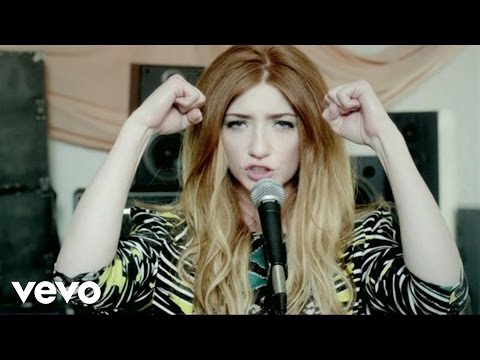
Then there have been the two singles which steadfastly refuse to tread the usual girl band solo rubbish. Beat of My Drum features Nicola jumping around to a cracked up bass line courtesy of Diplo and Dimitri Tikovoi. With lyrics clearly inspired by her first ugly duckling days as the youngest member of Girls Aloud, it is resolutely individual.
Then came the genius pop tune that is Lucky Day, produced by Canadian electropop group Dragonette and shot by indie director Stephen Agnes in New York with Nicola wearing just one outfit, a ridiculously short floral tent dress.
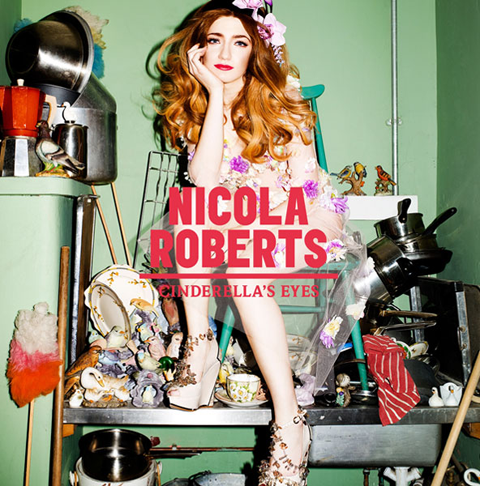
Now for the album: Yo Yo gleans its big retro sound from many an 80s pop anthem. Cinderella’s Eyes is a more obviously pop record, though it benefits from some particularly high episodes where Nicola sounds the spit of Kate Bush (no really). Porcelain Heart is another big and potentially commercial dance number.
Then comes her collaboration with the magnificent Metronomy; I benefits from a typically off kilter arrangement which begins with ethnic sounding plinky plonks that slowly creep to life. The track never shies away from Nicola’s occasionally shrill falsetto, instead toying languidly with it before fading out.
Everybody’s Got To Learn Sometime, originally by The Korgis, is the only cover on an album that is otherwise entirely penned by Nicola herself. She manages to give the 80s track a suitably modern electro twist and it is on this that her voice sounds at its best. Say it Out Loud is another floor filler with a driving beat that builds to a nice crescendo before dying away in a Euro stylee. Gladiator sticks with the same sort of dance vibe, but with the addition of some quite bonkers lyrics.
The Metronomy glitches are back with Fish Out Of Water, another song that harks back to Nicola’s less confident days. Take a Bite is a truly great tune, a real fighting anthem: check these lyrics. ‘Get your teeth round this open wide, Eyes bigger than your belly tonight, If you think you’re hard take a bite‘ and ‘Just because you’re twice the size of me, Doesn’t mean I’m scared of World War III, Sit back and grab a cup of tea, I’m gonna kick your arse now in 3D‘ As she states, ‘Everybody’s got a limit alright‘ and it looks like this deceptively frail looking woman reached hers some time ago.
The album ends on a the most downbeat song. Sticks & Stones covers Nicola’s hardest times as the most derided member of the band. ‘How funny that I was too young for so many things, Yet you thought I’d cope with being told I’m ugly.’
I’ve always loved clever pop music and Cinderella’s Eyes most definitely fits the bill – it’s a great slice of off kilter ballsiness from the most singular and talented member of Girls Aloud.
It has been quite something to watch Nicola Roberts‘ transformation since Girls Aloud won Popstars: The Rivals nearly ten years ago. Looking back at the young girl who hid behind a thick smothering of fake tan, who could have predicted this outcome? Certainly not I… life really is full of surprises.
Cinderella’s Eyes is out now on Polydor. You can hear the whole album streamed here. But before you go, check out this brilliant b-side for Beat of My Drum.
Disco, Blisters & A Comedown.
Written by Amelia Gregory on Saturday October 15th, 2011 12:20 am
It’s not often that I get over-excited about a music artist on the basis of one video, but that is exactly what happened after hearing the soon to be released single Who Am I? from singer Tiny Dancer, a pop star in the making if ever I saw one. This exotic whirlwind hails from a small village just outside Sheffield, where a passion for music secured her a place at the local theatre school. With a look that channels the leotards, swaying moves and swinging locks of Kate Bush, and a dance floor friendly sound that is all her own, I caught up to find out what makes Tiny tick.
You describe yourself as an ‘artist having a love affair with music’ – which came first and how do the two entwine in your life?
I made a commitment to my music, music is the love of my life. It’s a relationship without the problems and it will never stop making me happy. There wasn’t really a question as to whether or not I’d be doing this, I’ve been doing it all my life so why would that change? I was making music since i was around 8 when I first sat by my dad at the guitar, I wrote my first song when I was 13 with a few basic chords on the piano.
You’ve already been compared with some greats: Kate Bush, Gwen Stefani, Marina & the Diamonds. Who were you listening to when you were a little girl?
I grew up listening to a lot of songs my dad would play – by The Beatles, Phil Collins, The Monkees and Genesis. Then I discovered Lene Lovich, by that time I’d lost my mind… she’s still living somewhere inside of me I’m sure. I knew at the early stages of my life I was different. I sometimes felt and still feel like I’m channelling another person or someone else lives inside me… I’m definitely being guided and watched.
It’s been said that you are not another ‘winsome girl perched on a stool with an acoustic guitar‘ – how do you write?
I experience things, I write about them, and then I move on. Writing about experiences enables me to move on from them. It’s a cathartic process, and has, in many ways, changed my outlook on life as a result. My lyrics are often dark, but I’m not exactly the Tim Burton of lyrics. Darkness is supposed to be the absence of light but for me it’s a place where creativity thrives, this is the kind of darkness that inspires me to write in the way that I do. I write stories really, that’s what my songs are, short stories but I hope they enable people to create their own personal story.
I love your outfit in Who Am I? – how did you decide what to wear and how important is the way you dress?
You know how a child wears exactly what they want? Well that’s me. Maybe it’s difficult to understand, but I’m not fashionable. My image will forever be evolving, change is what keeps everything on it’s feet… each outfit I wear has it’s own personality, in fact you could say that my clothes control me. My favourite piece to wear is self expression, I have always wanted to wear a black fin. Face paint is also a vital part of me, paint is art and art is a form of exorcism… it adds another dimension to my performance.
You’ve been working with Wayne Wilkins – how does the relationship work?
Wayne is one of the most talented and genuine people you will ever meet. I’m deadly serious when I say this… When we work together, we are always in a very focused space. It’s also very much a wonderland when musical magic is born.
Who Am I? by Tiny Dancer is released by Croydon Boy on 6th May.
Written by Amelia Gregory on Wednesday May 1st, 2013 11:00 am
The Christmas festive season is now upon us and many artists are selling festive products. However few are initiated to help the poor, what is ed the downtrodden and the destitute. All I Want For Christmas Cards 2009 is one such group of creatives whose latest project is in support of the Bristol based charity ‘Young Bristol’. 20 local artists’ and illustrators’ specific works for the project are being used to create a limited edition run of Christmas cards that will be sold as packs containing each of the 20 cards.A competition, price with the brief to create a piece of work based on the phrase ‘All I want for Christmas’ took place and after receiving an overwhelming response, shop the final 20 artworks were chosen, each on their individual merits and included in the final 20 cards. Initially created with the idea of promoting the charity Young Bristol, All I Want For Christmas Cards has also brought together artists and illustrators local to Bristol for this exciting illustrative project. Here is an opportunity to support those who need! We are today interviewing a few of those illustrators who very kindly lent their creativity to a good cause.
Valerie Pezeron: Hello all. I would like to know who came up with the idea for such a wonderful project and could they tell our readers a little bit about themselves?
Creator/Organiser Ben Steers: The idea for a project like this had been rolling around in my head for a while but I just didn’t know how to best implement the concept. After moving to Bristol to kick start my illustration career and spending some time building contacts with local artists and illustrators I realised the huge concentration of talent that Bristol had to offer and after doing some voluntary work for Young Bristol I saw the opportunity to launch the idea and bring established and aspiring artists together and at the same time help benefit a really worthwhile cause. We have been really blown away by the response from everyone involved and have thoroughly enjoyed the whole process and having the pleasure of meeting so many positive and friendly people.
VP: There are many charities out there? Why pick “Young Bristol” charity for this project? What is the aim of the charity?
Ben Steers: I have recently helped Young Bristol put together a quarterly magazine on volunteer work and events in the area. There are so many great charities out there doing outstanding work every day but I think in the case of Young Bristol I felt that I could offer my creative services in some way and they also focus on helping disadvantaged individuals of my sort of age through media and arts courses. They aim to give those who didn’t have the opportunities that a lot of us take for granted, the chance to further themselves in creative fields and I think that is really something.
VP: The competition was very popular. Was there a jury and how did you select the final 20?
B S: It was a really difficult selective process as we didn’t want to turn any of the designs away simply because people had made a real effort and in the end we had over 40 design submissions to choose from. We both sat down and went through all the designs trying to select 20 on their individual merits and on how well they would sit against the other 19 as a collection. We were very aware of how all 20 cards would look if we sat them all next to each other. In the end we were very lucky in the response we got and selected 20 great designs which are varied in both style and content.
————————————————–
VP: What motivated you to apply for the competition?
Ben Steers: Ben’s enthusiasm made it very difficult to say no and it’s always fun to take part in Bristol projects especially when it’s for a good cause.
VP: Have any of you ever been involved with charities before?
Illustrator Ben Newman: I’ve been involved in a few charity projects raising money for hospitals and endangered animals but my involvement always depends on whether my other projects allow me enough time. I’m really pleased that sometimes I can use a skill to help raise money.
VP: It is so easy to fall into cliches when coming up with a concept for Christmas cards? Those cards are truly original and infused with humor. How did you find inspiration for those cards?
BN: My card was inspired by some of the designs on Record company advertising banners from the 1950’s.
VP: I know what I want for Christmas and it is to welcome lovely kittens into my home. What about you, lovely people?
BN: Booze, food, friends and lot’s of sleeping.
—————————————————-
Illustration by Bjorn Lie
Name of Illustrator: Bjorn Lie
VP: What motivated you to apply for the competition?
BL: The fact that it was for a local charity. I normally do work for clients in other countries, which is nice, but makes me feel a bit detached from where I actually am, Bristol. This was a chance to be a part of something positive, by just doing my own thing.
VP: Have any of you ever been involved with charities before?
BL: Not actively, no. I would like to do more of it in the future though.
VP: It is so easy to fall into cliches when coming up with a concept for Christmas cards? Those cards are truly original and infused with humor. How did you find inspiration for those cards?
BL: I’ve been doing a lot of wintry scenes recently for a picture book, so I was already in that frame of mind! My card features a guy on a “spark støtting’, which is an old school means of transportation back in Norway where I’m from.
——————————————————
Name of Illustrator: Rich T
VP: What motivated you to apply for the competition?
Rich T: I thought it was a great idea for a project, a good brief and most importantly fun. If you want people to do stuff for free you have to make it fun, you can’t rely on good will. Kids today….
VP: Have any of you ever been involved with charities before?
Rich T: I have donated artwork for charity auctions in the past.
VP: It is so easy to fall into cliches when coming up with a concept for Christmas cards? Those cards are truly original and infused with humor. How did you find inspiration for those cards?
Rich T: I didn’t want to draw anything to do with Christmas so for me the opposite of Christmas is probably Pepsi, always forgotten in the festive period along with Jesus, job done.
VP: I know what I want for Christmas and it is to welcome lovely kittens into my home. What about you, lovely people?
Rich T: All I want for Christmas is loads of expensive gifts, preferably ones I can sell on E bay, and a dog but I don’t want it forever, just Christmas.
———————————————————
Name of Illustrator: Chris Dickason
CD: More than anything else the brief sounded like a fun way to spend some time away from commercial work and a chance to get a little Christmas over nostalgic whilst I looked for inspiration. There’s a fantastic wealth of talent in Bristol and consistently the artists and designs here produce work that’s as innovative as it is clever, funny and engaging. I’m really interested in being involved with projects that help promote the city as a creative hub. And obviously it’s great to be involved with a local charity as well.
VP: Have any of you ever been involved with charities before?
CD: I’ve worked commercially for charities and raised a bit of money from sponsorship for just about plodding myself around some marathons but I’d been looking for a project that consolidated my own discourse and a worthy cause. The ‘All I Want for Christmas’ project ticked a lot of boxes in my head when I received the email. It’s very much a win-win situation for the artists. Projects like this offer creative freedom are chance to see work viewed along side your contemporaries as well as providing a healthy dose of the ‘feel good factor’ as you get to support a charity to boot.
VP: It is so easy to fall into cliches when coming up with a concept for Christmas cards? Those cards are truly original and infused with humor. How did you find inspiration for those cards?
CD: Christmas is a great time of year because it provides some very personal memories but these experiences are similar to that shared by most other people. I was motivated to create an image that was based on occurrences that are typical of my Christmas experiences (over indulgence, goodnatured gluttony, sharing & caring) and hoped that these ideas would resonate with the audience.
VP: I know what I want for Christmas and it is to welcome lovely kittens into my home. What about you, lovely people?
CD: The main thing I want for Christmas is in fact free and that is a nice chunk of uninterrupted sleep. If I had my may I’d turn into a big grizzly bear and snooze all winter long and wake back up when the temperature is back in double figures. Alas I’m yet to master this skill.
So now you know what these chaps all want for Christmas. How about you? You might just want to escape the usual uninspiring, tacky and overdone festive art on display this season and treat yourself to fun, cheeky and sustainable charity cards. The Christmas card packs are a limited edition of 500, each containing 20 cards individually designed by 20 of Bristol’s finest illustrators, litho printed on 100% recycled card, 20 envelopes and an A2 poster. They cam be purchased on www.alliwantforchristmascards.com. Price per pack: £15 + £2.99 p&p
Bebe and Paolo are a rockabilly and jazz inspired duo from Weymouth. Just 5 months into starting out they played Camp Bestival, ed after winning a local Battle of the Bands contest. I ventured down to the Flowerpot, see Kentish Town, to see the dynamic duo play…what a gig! I got chatting to front woman, Bebe Black afterward…
How did you two meet and decide to start making music together?
We met about seven or eight years ago in Weymouth, and used to hang around the place drinking and smoking and generally being a nuisance like teenagers are. Eventually Bebe moved away to Bournemouth and then London and Paolo went to study at the ACM. We didn’t meet again until Christmas 2008 at an Eighties Matchbox B-line Disaster gig back home. We started chatting about our love of jazz and 50’s rockabilly, and within a week Paolo had written a piece for Bebe to sing over. We finally got it together in February 2009, and have been gigging and writing non-stop since then.
What type of music would you say you make?
We’ve named it “Jazz Punk Erotica”
Who would you love to cover one of your songs?
I would like to hear Phoebe Legere covering “Good Boys” live with an accordion.
What has been your best live experience so far?
Playing at Camp Bestival was wild, the running order went something along the lines of: “Spongebob SquarePants, Bebe and Paolo, PJ Harvey.” You can’t beat that!
We also played on Sark, in the Channel Islands. It’s a little island with no cars, no streetlamps – only horse and carts and torches! We had a great time, but we were banned from singing some of our more risqué songs!
If you could play live, at any venue in the world, where would you choose and why?
We want to play Ronnie Scott’s, and we want to wear Nike air max whilst we’re doing it! Also the Luminaire would be amazing and of course the Jools Holland Show for reasons that do not need to be explained…
Bebe, Your outfits are always very cool and you express a very distinct style. Are your outfits always well thought out? or do you just chuck anything on that looks good?
I think it’s a bit of both! I studied and worked in fashion, so the way I put things together is probably fairly programmed by now in the way that I like wearing one striking piece of clothing and keeping the rest simple. I only buy items that I think will stand the test of time, and usually those kind of clothes stand out on-stage. I’m about to start collaborating with up-and-coming designer, Sam Membury, who’s pieces are simple but beautiful. My mum says “Look rich, Live Poor” so that’s my motto when it comes to how I dress!
What is your favourite item of clothing/ accessory at the moment?
A vintage studded belt that I forgot I owned until I found it hiding out in the back of my wardrobe last week and a Butler and Wilson skeleton brooch that I paid too much money for, but love endlessly.