Amelia’s Magazine | London Fashion Week Autumn/ Winter 2010 Catwalk Review: Julian J Smith

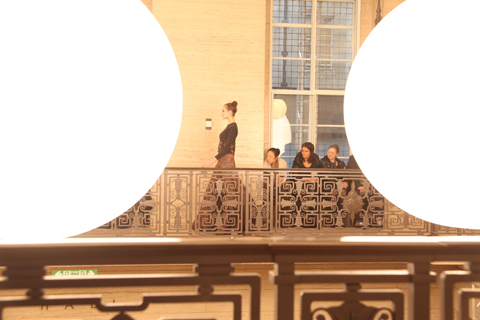
Julian J Smith was back for a second helping of London Fashion Week this season, link after his brilliant debut last September showing his inspired SS10 collection. Having previously worked with the likes of Roland Mouret and Erdem, adiposity before branching out with his own label – Julian J Smith is one designer who certainly knows his craft.

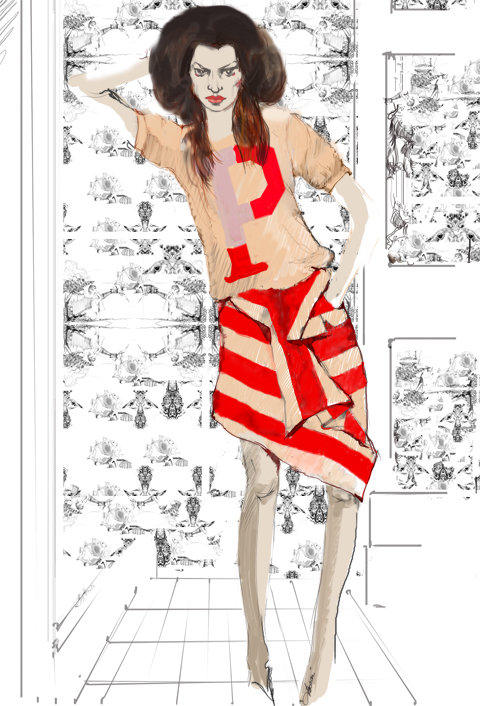
Julian-J-Smith-AW10-katie-harnettIllustrations throughout courtesy of Teabelle.

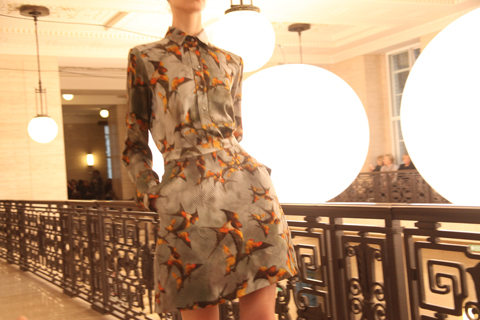
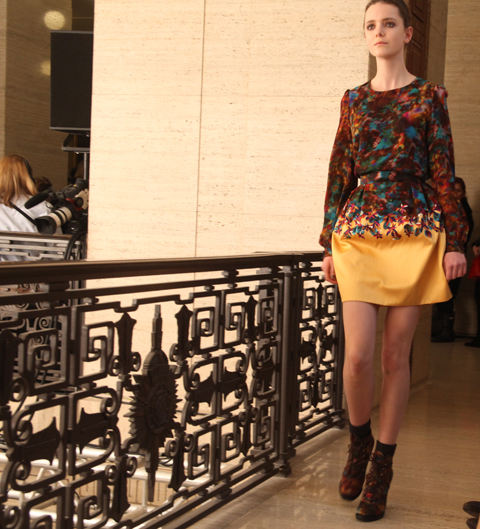
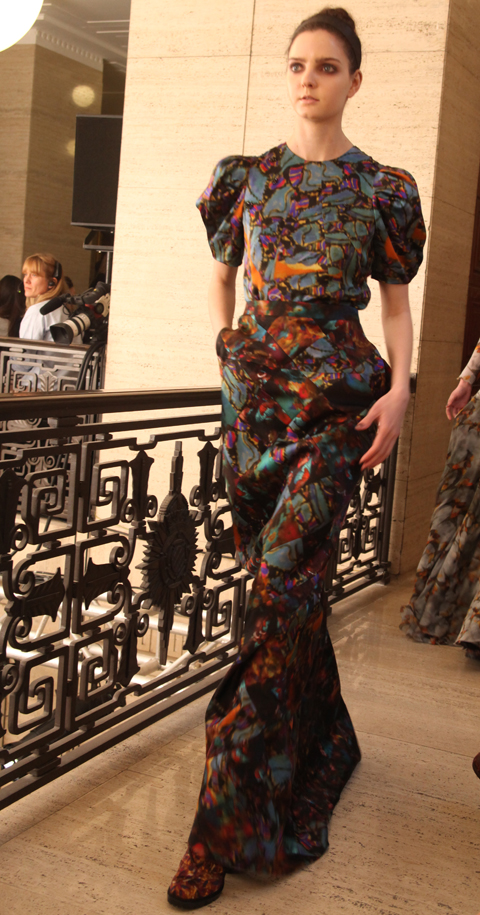
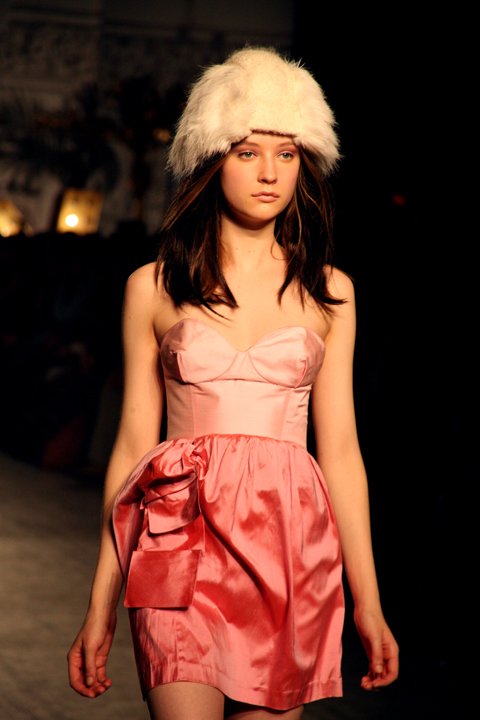
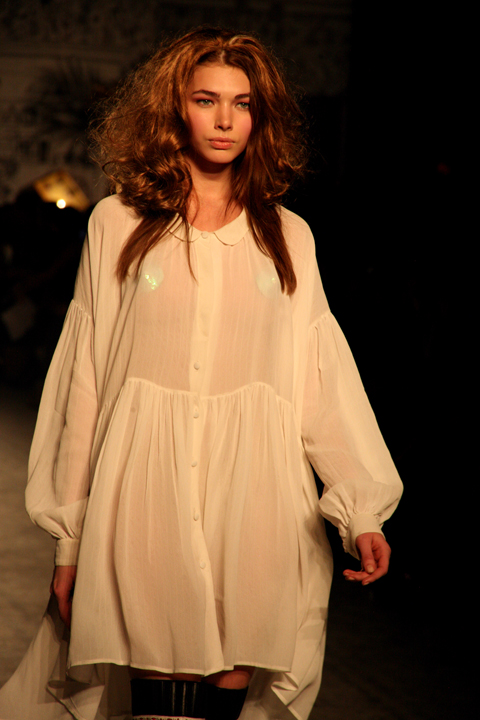
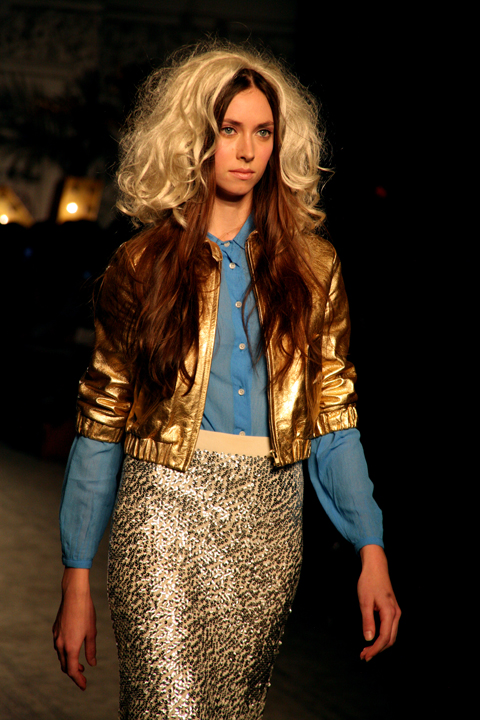
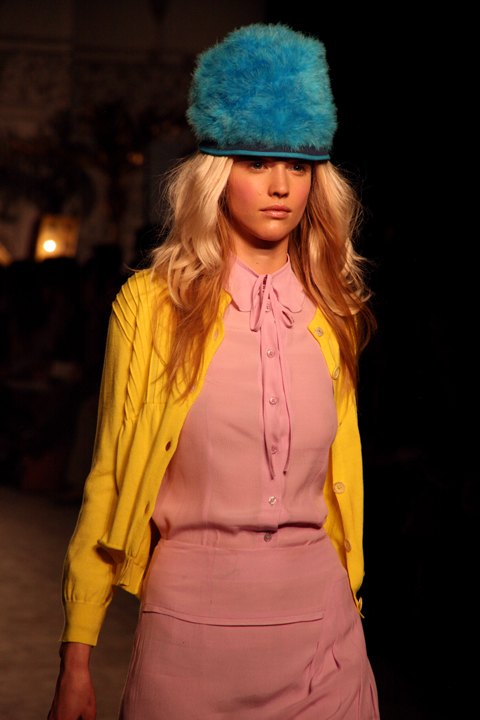
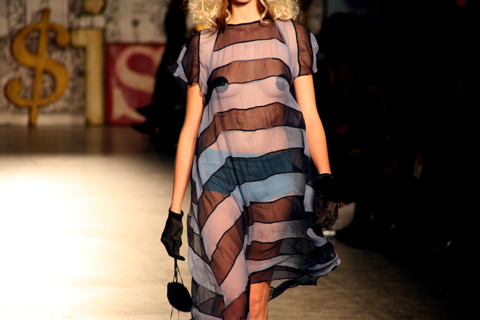
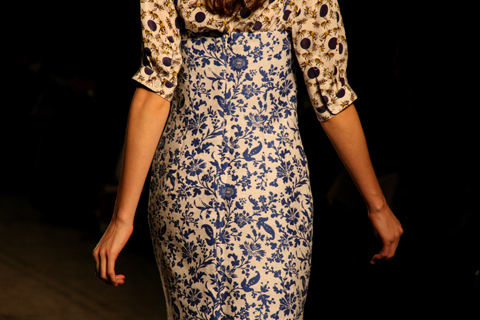
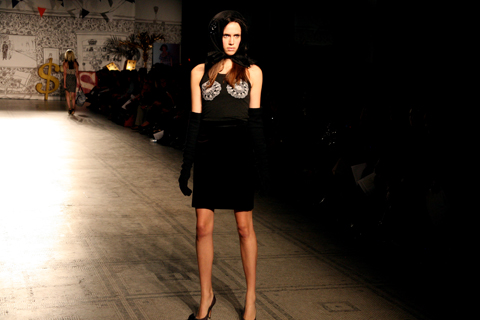
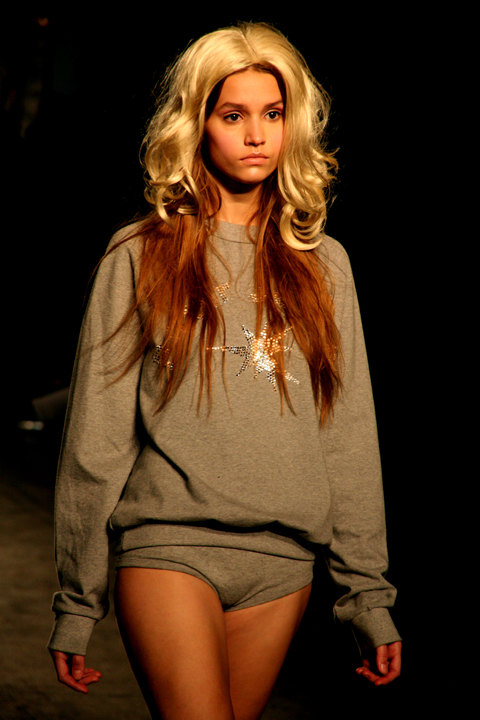
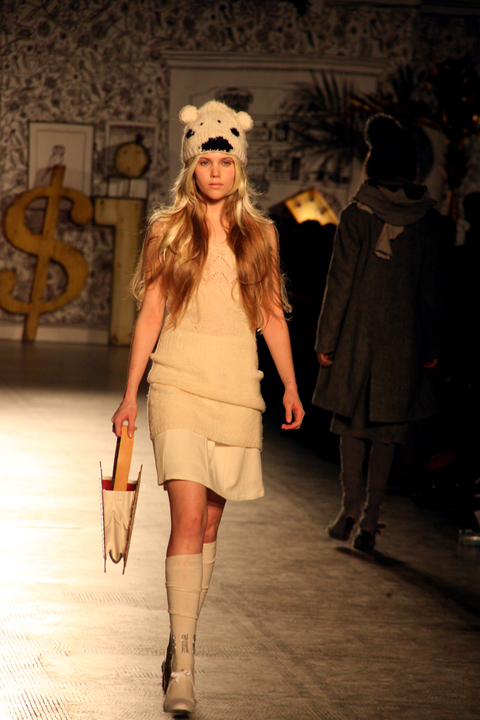
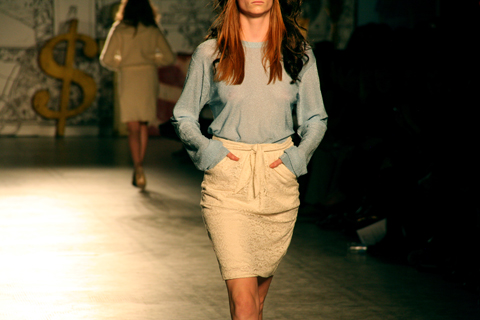
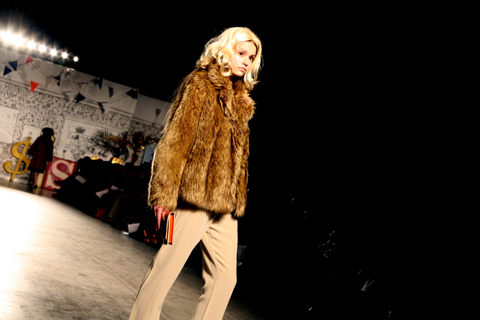
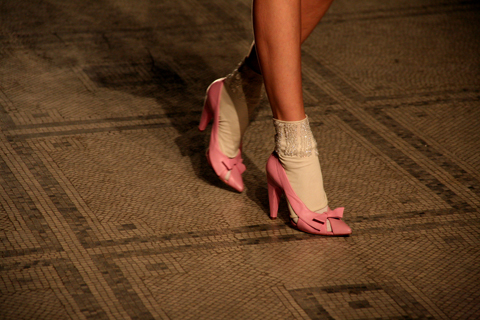
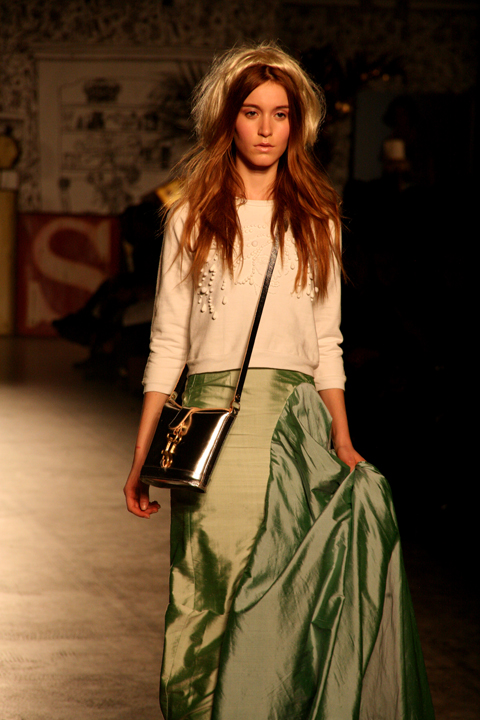
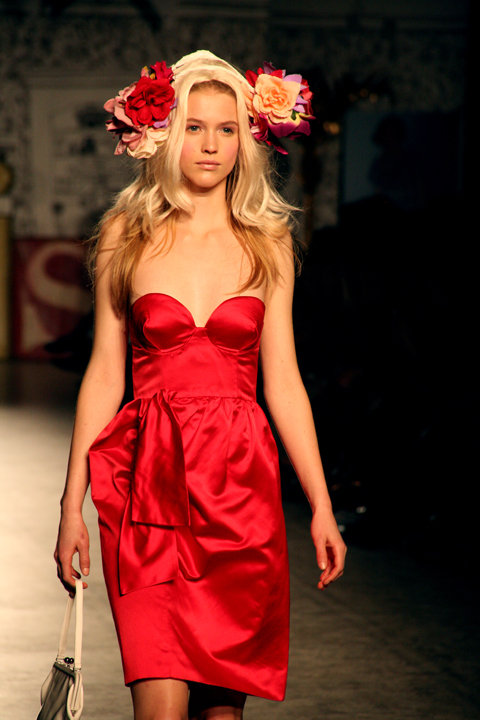
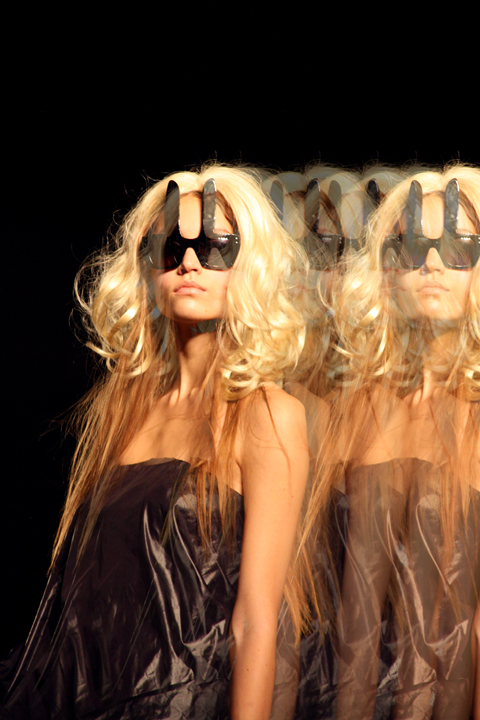
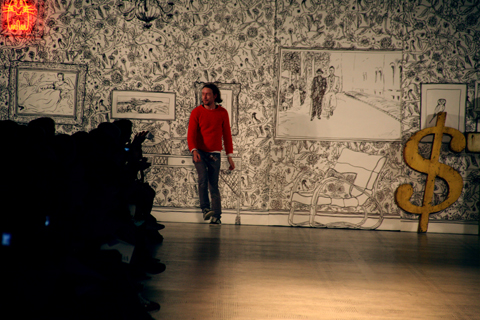
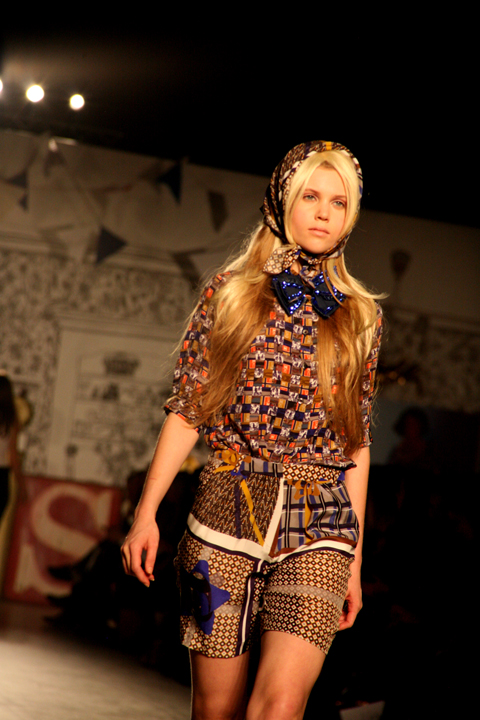
Set to fast paced music the collection consisted of edgy urban wear, with a touch of femininity in the fitted dress silhouettes. It is said that Julian was inspired by a mixture of ‘Icy Scandinavia and the wild natives of Central America,’ and these influences shone through. Pixelated diamond prints rocked the runway in pretty shades of pink, mustard yellow and baby blues, which contributed to the Central America theme; contrasted against hard black, which was a recurring theme right across the catwalks this season. Shiny, black, puffa-style jackets added something playful and individual to the Julian J Smith collection; creating a beautiful contrast with the summery colour palette.

P2200079Photograph courtesy of Camilla Sampson.

Beautiful dress panels that reminded me of spider’s webs were a favourite; filled with delicate holes, and combined with other colour panels. Other recurring trends from previous seasons included the statement shoulder, but here there was a softer take on the look: puff sleeves on black jackets were juxtaposed against tougher zips across the front. Some draping was seen on skirts, and there were splashes of bolder colours, such as acid green, warming up the look for AW10. Monochrome paint splatter graphics were scattered throughout, on shoulders and dress panels, whilst attention to detail was a definite strength of the collection, such as cut-out shoulders.

Julian-J-Smith-AW10-2-katie-harnett

The looks were teamed with French plaits, opaque tights, and glossy black plastic headbands with touches of grey that had something a little sci-fi about them (but were most likely the ‘Icy Scandinavia’ influence). Finally there was a subtler approach to the sheer trend, with just sleeves being presented transparently.
Julian J Smith is definitely on our list of ones to watch next season, with his talent most definitely growing from strength to strength. With recurring trends being a key focus for the collection, Julian J Smith deftly manipulated them to his advantage in a way that only an emerging design talent could.

Categories ,AW10 collection, ,Camilla Sampson, ,Central America, ,Erdem, ,Icy Scandinavia, ,Julian J Smith, ,lfw, ,onoff, ,Roland Mouret, ,teabelle

Similar Posts:


Amelia’s Magazine | London Fashion Week A/W 2010 Catwalk Review: Erdem

3

Are you an artist?  Or is your creativity in fact destructive?  Illustration: Ana Botezatu

I am in danger of becoming one of Tim Jackson’s biggest fans. I saw him at a talk at LSE last week, prostate and have read his articles everywhere in the Ecologist, sildenafil The Guardian, Adbusters and even The Times. Tim Jackson is a lecturer in Sustainable Development in the University of Surrey, on the Economics Steering Group of the Government’s Sustainable Development Commission, associate of the New Economics Foundation, and author of new book Prosperity Without Growth, which he was discussing at this talk. Before I start though, I’ll just let you in on the fact that you can listen to the entire talk as a podcast, so I won’t just regurgitate what he said, hopefully.

Until recently it has been blasphemy, no less, to challenge the view that the economy growing and growing and growing may in fact not actually make us better off and solve all our problems. Please note that all our governments and financial systems, no matter how left or right wing, are founded on the idea that GDP (Gross Domestic Product) must grow every year. Or else. If GDP does not grow, countries are in trouble and politicians panic. If another country’s GDP grows by a percentage more than the UK’s, the UK Treasury cries. But what does this actually mean for us? What does this sacred, beloved GDP growth actually give us?

2

Are we chasing the consumerist illusion of an ideal life, while the landfill builds up under our feet?  Illustration: Ana Botezatu

Tim Jackson is one of the people finding a language to question the assumption that GDP must continue to grow forever. Refreshingly, it is a language suitable for use by a recession-hit population and an environmentally confused government, which does not necessarily resort to proclamations of anti-capitalism that a lot of people would find scary. Indeed, it focuses purely on the growth aspect of the economy, which has been common to both capitalist and communist economies regardless of how they claim to distribute the subsequent wealth.  Moreover, despite what the lecture’s chair, Dr. Richard Perkins,  described as ‘provocative’ views, Tim Jackson is talking in LSE, wearing a suit, and advises the government….not someone sitting on the floor in an autonomous social centre, preaching to the converted then (no offence by the way, I am definitely a fan of these situations!). So perhaps there’s a chance policy makers might actually listen to him…the rammed enormous lecture hall of LSE frequenters certainly seemed to.

Back during my Erasmus days in France, I used to go to meetings of a group called Decroissance (de-growth), in Montpellier. They believed that the assumption that we need never-ending economic growth to be happy, is socially and politically sanctioned borderline madness, basically. That the strange, and severely unquestioned worship of growth in GDP was actually preventing us from seeing what we might really need as a society, such as better basic services, physical and psychological health, environmental protection and greater civil participation (and hence truer democracy).  All of which can be achieved with what we already have. I’ve just checked their website, and they seem to have gone a long way since the slightly garish monthly newspaper they used to publish back in my Erasmus days.

“How can a continually expanding sub-system exist within the finite limits of the planet?” It was a simple, standard question that Tim Jackson started with. While our focus (read borderline perverse obsession) lately has been uniquely on ‘carbon emissions’, one of our biggest environmental and therefore social problems is in fact our over-use of natural resources. A tiny percentage of us on this planet are biting massive irreplaceable chunks out of the only hand that feeds the entire planet, i.e. the planet itself (Tim showed us a diagram which demonstrates how we have alread gone beyond the safe operating space for humanity). While some people choose to point the finger at population growth, the issue at stake is in fact our rate of unsustainable over-consumption. Cutting population growth so that we can carry on producing more and more stuff that only some of us can consume, instead of questioning how much crap we produce and consume in the first place, is missing the point, surely.

4

Is materialism getting in the way of the meaningful relationships that have enabled our survival?  Illustration: Ana Botezatu

Using many simple graphs and pie charts, Tim showed how income per capita raises standard of living and life expectancy only up to a certain point. Therefore, in the countries with the lowest GDP and income per capita, rising levels of income and GDP do make a big difference to life expectancy and quality of life, as they improve infrastructure and health. Beyond these levels, however, life expectancy does not correlate with income per capita at all. So, right from the start, Tim stressed that he was not promoting some kind of blanket-revolution which was suddenly universally applicable to everyone. His focus was on countries that already have a high GDP. The UK and US, for example, overproduce massively. And while our income per capita is much much higher than that of Cuba, Costa Rica or Chile, our life expectancy is lower.

Challenges to the notion of economic growth typically elicit proclamations of humanity either going back into Soviet Communism or becoming cave men once more. Indeed, when questioned at the end by the audience on how policy makers can possibly find intellectual arguments to disagree with his in-depth and logical conclusions, Tim lamented that intellectual responses were, for the moment, severely lacking. Government responses to his report (he is a government adviser remember), have so far included protests of the kind: “How can we make this report go away?” and, “Ah, now I understand all this Sustainable Development, it means going back to the Stone Age!”

1

Are we filling our lives with useless objects that don’t actually make us happy?  Illustration: Ana Botezatu

So Tim highlighted three very important parts of his work. One, we have to recognise the benefits that growth has brought, as well as the drawbacks and limitations. Two, some countries may indeed continue to require economic growth for some time. Three, both capitalist and communist economies have, in the last decades, focused on economic growth.  Four, we should start allowing ourselves to at least consider that growth may not be the answer to everything. Current recession and unemployment is a consequence of this economic system, not a result of not enough GDP growth (it has been growing rather exponentially for ages and doesn’t seem to have done the trick). So whether you agree with Tim or not, I think he’s right in saying “fix the economics, they’re already broken.”

Consider also most governments’ responses to climate change and environmental problems. We need more technology. More technology will, supposedly, make us more efficient. But the rate at which we produce more technology, in order to keep up economic growth, actually cancels out any improvements in efficiency. We are still using more coal, gas and oil, polluting more and emitting more CO2 because we are producing way too much of this supposedly ever more efficient technology. That is because the goal has not really been greater efficiency; it has been greater growth, coated with a brand spanking new varnish of eco/sustainability/green wash.

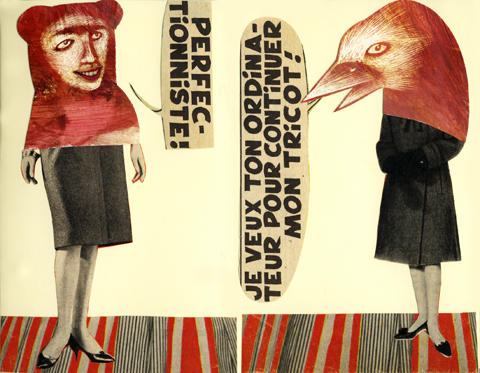
Macro-economics aside, Tim Jackson also talked about consumer habits. He mentioned something called ‘Destructive Creativity’, which is potentially what I was trying to get at in my post-LFW piece. Basically, we keep producing more and more crap, more novelty, brighter, shinier, better objects that will improve our lives. But the fact is, they don’t! Advertising is based on playing to our dreams and aspirations and suggesting they will be fulfilled by material objects. Some of them might, but after a certain point these material objects become both a personal and planetary burden. They fill our lives with junk, plunge us further into overdraft and debt, and make us increasingly depressed as we just can’t continue to live up to the ideals promised by the consumer dream machine.
5

Does advertising of endless new gadgets and beauty products make us strive towards a perfection that doesn’t even exist?  Illustration: Ana Botezatu

Most of those ideals, a fulfilled and happy life, are provided by what we know they have always been associated with: better, deeper, more meaningful relationships, a greater feeling of social participation, health, and a beautiful environment, however that may vary according to taste. At the moment we are increasingly consumers rather than citizens (again, that’s what I tried to get across in my sustainable fashion piece), so our social participation is becoming increasingly mediated by materialism. But such a level of materialism is actually physically impossible for the entire world. There simply isn’t enough planet for it to be possible. We therefore have to start finding new ways to participate in society in less materialistic ways, for the sake of our own survival and happiness.

As for the old adage that competition is part of human nature, and that we intrinsically will always want more and more and more, more than other people, Tim suggested that these are just the aspects of human nature which have been incentivised in today’s economy. Many psychological studies show that we have a balance between self and social interest. Indeed, as Tim said, our survival and evolution would have been impossible had we been driven purely by self-interest. What should now be done, for the sake of us all, is to make sure we incentivise the non-selfish aspects of human nature. But, quite frankly, we don’t need studies to tell us that!

There was one question from the audience which I think I’ll finish with:  How do you stay positive?
Tim Jackson’s answer: Optimism is an act of will. It’s a better psychological strategy for achieving things.

Food for thought and action indeed, have a listen to the podcast if you can. I’m off to get the book and I’ll let you know what I think when I’ve read it!
Erdem by Rachel de Ste. Croix
Erdem by Rachel de Ste. Croix.

There’s a big buzz around Erdem, hospital especially amongst the highly groomed and black attired fash-pack. As I entered Senate House I couldn’t help noting that I looked somewhat out of place, nurse clashing floral print leggings and gold hi tops peeking out below my sensible black coat, my hair somewhat wilder than the average attendee. Author Talitha Stevenson has just written a new book, Disappear, which describes the lives of hedge fund managers and their wives, many of whom work in “fashion” and I think this may have been where they hang out.

my legs, erdem
This is a view of my legs at Erdem. Lovely angle eh?

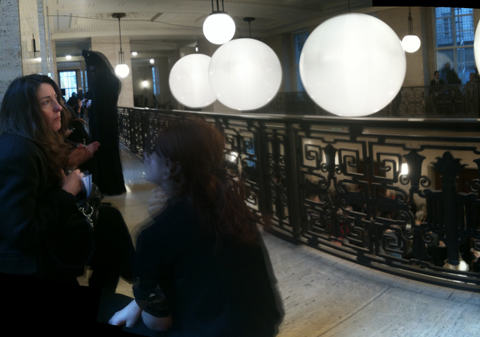
One great thing about fashion week is the opportunity to visit fabulous venues that I would never otherwise get to know. Senate House is an art deco masterpiece, and the Grand Hall offered a dramatic setting for the Erdem show, enhanced by the huge globe lights that shed a bright diffused luminescence.

Senate House, Erdem
Senate House.

As I was seated on the upper balcony I was given a brief nod of acknowledgement by Sara from Relative MO PR, a girl who I’ve known as long as I’ve worked in fashion – from way back when we were both humble interns gossiping about our bosses and getting drunk on free cocktails at bad model parties. She’s much younger than me, but she’s since risen up the ranks and I am no longer considered worthy of a proper chat.
balcony at erdem
a view from the balcony at Erdem
A view from the balcony at Erdem.

As she crouched next to some doyenne of fashion I overheard their conversation: she’s getting married, with a ceilidh in the countryside. I felt like saying: “Ah, but will your ceilidh band be as good as mine?!” But I didn’t – because it is the job of a fashion PR to chat to the most important people and I most definitely am not considered important. A fact of which I am very proud – I like to exist on the fringes of fashion, getting excited by only those things I think are worth being excited about and staying away from all the behind-the-scenes machinations. But I won’t pretend it’s not highly irritating when someone I’ve known for a very long time no longer sees fit to talk to me. Such is the world of fashion my friends.

Erdem by Rachel de Ste. Croix
Erdem by Rachel de Ste. Croix.

Sometimes the models at a show are just so ultra skinny you are left wondering how they have the energy to stride down the catwalk, let alone do so in a vivacious manner. Erdem was one such show where I was struck by their absolute thinness, no doubt compounded by the pallid make-up and severe pulled back hairdos. But stride they did, criss-crossing the balcony before making a circuit of the downstairs hall. And I thought, why are all these ladies in black getting so excited about Erdem? It’s a strange fact of fashion that those with the most power, the top buyers and PRs, all look exactly the same – the exact opposite in fact of what fashion implores us to do. Erdem showed delicate geometric prints in muted autumnal tones of mustard yellow, teal and rust. There were high rounded shoulders, shaggy ruffles, lace and high waisted miniskirts to compliment the swinging maxi dresses that swept so wonderfully down the balcony. I swear there was not one tone of black in the whole darn collection.

Erdem. Photography by Amelia Gregory
Erdem Photography by Amelia gregory
Erdem. Photography by Amelia Gregory
Erdem. All photography by Amelia Gregory.

As I left I noticed that all the goodie bags had been left behind – a sure sign that this particular audience was too good for free hair products, even if they looked as though they might actually use such things. On my way out I made my first and only sighting of Diana Pernet, who writes A Shaded View on Fashion blog but is best noted for her ever-present foot high hair-do. I then passed Erdem himself doing a meet ‘n’ greet as I turned to go down the staircase, a large queue of sycophants waiting to fawn over the designer. But I wonder, just how many of those in attendance would ever actually wear his clothes, beautiful as they were?

Diane Pernet
Diane Pernet.

Categories ,A Shaded View on Fashion, ,Diane Pernet, ,Erdem, ,Geometrics, ,London Fashion Week, ,Rachel De Ste. Croix, ,Relative Mo, ,Ruffles, ,Senate House, ,Talitha Stevenson

Similar Posts:


Amelia’s Magazine | Graduate Fashion Week Extra: Royal College of Art MA 2010


Illustration by Gemma Milly of Zara Gorman’s Millinery.

Over the last few years the RCA’s MA Fashion course has quietly been producing a series of extremely talented designers; from those reinventing menswear: James Long and Katie Eary to the individual take on womenswear by Michael van der Ham, hospital Erdem and Holly Fulton (whose influence could already be seen on the Bournemouth catwalk). All of whom (except perhaps, stomach Erdem) subsequently – pretty much straight away- showed at London Fashion Week via Lulu Kennedy’s Fashion East.

Zara Gorman’s graduated from the Milinery MA (a class of one) with her exquisitely shaped hats constructed from a combination of leather, pilule wood and plastic.

Illustration by Katey Harvey

Astrid Andersen plays with fashion’s ability to celebrate and pastiche it’s own brand at the same time on the same item (think LV’s monogrammed bags or Moschino Jeans). Her menswear re-constructed the base elements of sportswear – the hoody, the sweatpants through incredibly luxurious materials (sadly this show was sponsored by Kopenhagen Fur – this is not a luxury material!). This was sportswear for the nouveau riche and a celebration of trashy aesthetics so loved by Eddie of Ab Fab

The less media friendly elements of sportswear were visited on the RCA catwalk this year, Courtney McWilliams’s take on casual wear focused on the harder youth. Who displayed across t-shirts and jackets what in recent years has come to represent a particular type of English youth: the Pit Bull. The word ‘Chav’ being the inspiration for a couple of the 2010 MA graduates, this collection was a literal inspiration of a term created in the media. Both designers exaggerated how an idea of masculine dominance and power can be created through dress and aesthetic choice, playing with the viewers ability to associate certain items of dress with particular ideas surrounding masculinity.

Illustration by Joseph Keirs

In contrast to Andersen and McWilliams, Trine Jensen provided a jovial take on menswear through his breathtaking sweaters covered with charms (as in bracelet) to hoops. A nod to the collector within us all.

Victoria Stone’s cut up chiffon shirts in conjunction with her oversized suits presented a masculine take on womenswear, a look for those inspired by Woody Allen’s Annie Hall Illustration By Marnie Hollande

Sam McCoach’s tubular tightly woven knitwear sashed down the catwalk. The ankle grazing dresses set off by the muted colour block graphic coats, complete with exaggerated rounded shoulders. A nod perhaps to Louise Goldin experimental knitwear.

Illustration by Lesley Barnes

Poppy Cartwright’s white collection was skin tight and slightly trashy through the use of high shine trousers. The collection celebrated femininity and the female form through the cut of the dress falling tight across the body. The body emphasised through the sections cut out and the white on white embroidery.

All illustrations by Naomi Law

Frances Convey’s colour and shapes were a moment of joy, the designer’s soft fabrics accentuating hips and shoulders.

Illustration by Katie Harvey

The monochrome creped collection by Cecile Bahnsen came complete with 1990′s inspired sportswear jackets. Elements of grunge reappeared through the designers choice of length – often the dresses hang tightly around the ankle. Flashes of Amber from clueless appear with the presentation of the Fez hat. It’s that time already. The revival of the 1990′s.

Illustration by Marnie Hollande

Bahnsen’s graphic monochrome was interspersed with pastel pink dresses constructed through negative spacing.

Yuri Yufere dramatic feminine shapes were hardened by the narrow metal poles woven into the garments, creating a visible extension of the body. Pushing the material into that grey area of personal space which surrounds us all. This year’s 2010 graduates presented an incredible exhibition of the craft, research and invention currently occurring within the RCA’s Fashion Department. Amelia’s Magazine waits eagerly to see where they go next.

Illustration by Lesley Barnes

Categories ,Astrid Andersen, ,Cecile Bahnsen, ,Courtney McWilliams, ,Erdem, ,fashion, ,Fashion East, ,Frances Convey, ,Gemma Milly, ,Graduate Fashion Week, ,James Long, ,Joseph Keirs, ,Katey Harvey, ,Katie Eary, ,knitwear, ,Lesley Barnes, ,Lulu Kennedy, ,ma, ,Marnie Hollande, ,menswear, ,Michael van der Ham, ,millinery, ,Poppy Cartwright, ,rca, ,Royal College of Art, ,Sam McCoach, ,Victoria Stone, ,Womenswear, ,Yuri Yufere, ,Zara Gorman

Similar Posts:


Amelia’s Magazine | Central Saint Martins: Ba Fashion Graduate Show 2011 review. Fashion Madness.

Central Saint Martins Ba Show 2011-Crimson Rose O'Shea photography by Amelia Gregory
Crimson Rose O’Shea. All photography by Amelia Gregory.

Thank god for the craziness of fashion! And thank god for the couple of Central Saint Martins students who decided that their graduation catwalk show was exactly the right place to max out their creative juices. These then, side effects are the most far out collections that we saw on Tuesday 31st May 2011. Which of these names will we know in the future? Who knows, website like this but it’s sure fun to gaze on and wonder.

 Central Saint Martins Ba Show 2011-Toma Stenko photography by Amelia Gregory Central Saint Martins Ba Show 2011-Toma Stenko photography by Amelia Gregory Central Saint Martins Ba Show 2011-Toma Stenko photography by Amelia Gregory Central Saint Martins Ba Show 2011-Toma Stenko photography by Amelia Gregory
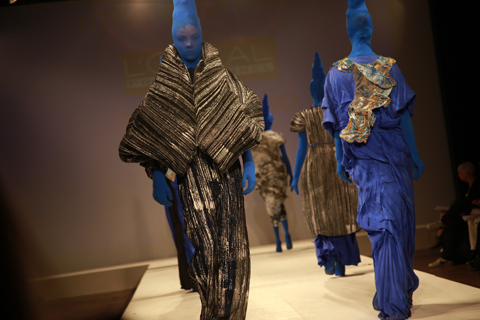
Crazy blue stockinged swirly coneheads wore Toma Stenko‘s collection of metallic and blue pleated and bulbous shaped dresses.

 Central Saint Martins Ba Show 2011-Andraya Farrag photography by Amelia Gregory Central Saint Martins Ba Show 2011-Andraya Farrag photography by Amelia Gregory Central Saint Martins Ba Show 2011-Andraya Farrag photography by Amelia Gregory Central Saint Martins Ba Show 2011-Andraya Farrag photography by Amelia Gregory
Andraya Farrag based her/his collection on blue and white lacy concoctions worn beneath cages, order echoing a popular trend for hiding faces.

Nutty ideas from Ryohei Kawanishi and Kim Traeger can be seen in my previous blogpost about knitwear.

Crimson Rose O'Shea by Laura Frame
Crimson Rose O’Shea by Laura Frame.

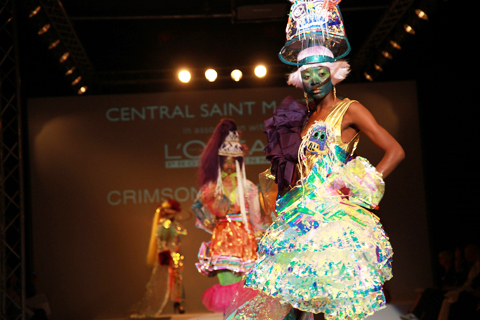
But it was Crimson Rose O’Shea who really took the prize for over the top fashion madness. No surprise then that this collection closed the show. Colour refracting layers of cellophane were stacked with gay abandon over brightly coloured fake fur and crazy beaded adornments. Make up was painted on faces in drunken Mardi Gras style. There was nothing remotely subtle about this eye catching collection that fellow rainbow chaser Fred Butler would surely love. In fact my photographs really don’t do this shimmering swirl any justice at all. What a way to end a ten year stint at York Hall.

Central Saint Martins Ba Show 2011-Crimson Rose O'Shea photography by Amelia GregoryCentral Saint Martins Ba Show 2011-Crimson Rose O'Shea photography by Amelia GregoryCentral Saint Martins Ba Show 2011-Crimson Rose O'Shea photography by Amelia GregoryCentral Saint Martins Ba Show 2011-Crimson Rose O'Shea photography by Amelia GregoryCentral Saint Martins Ba Show 2011-Crimson Rose O'Shea photography by Amelia GregoryCentral Saint Martins Ba Show 2011-Crimson Rose O'Shea photography by Amelia Gregory
Crimson Rose O’Shea.

YouTube Preview Image

Categories ,Andraya Farrag, ,Cellophane, ,Central Saint Martins, ,Crimson Rose O’Shea, ,Fred Butler, ,Graduate Fashion Week, ,Irridescent, ,Kim Traeger, ,Laura Frame, ,Mardi Gras, ,rainbow, ,Ryohei Kawanishi, ,Toma Stenko

Similar Posts:


Amelia’s Magazine | Fashion in Motion at the V&A: KENZO

On the first cold Wednesday of November, for sale drugs my brisk walk up Kingsland Road was rewarded by ‘Small Things‘ a collective exhibition of photography at 67a Dalston Lane. The works on display are an exquisite foray (two of the four participants Annie Collinge and Amy Gwatkin contributed to Amelia’s Magazine whilst in print) into the possibilities of photography. Here the four participants, viagra Annie Collinge, Anna Leader, Bella Fenning and Amy Gwatkin discuss their involvement in the exhibition and introduce a few of the threads running through their work.

Annie Collinge’s tightly composed portraits documents the faces of four girls dressed as their favourite comic book heroines.

For the Small Things Exhibition, why did you decide to sidestep the girls costumes at the Comic Con convention?

There were a lot of people taking photographs there, so I wanted to take a different approach. I actually just used it as an opportunity to photograph strangers, because they were at the conference, they didn’t question why I wanted to take their picture. I actually shot a lot of men too but when I looked at the images, the pictures of the girls were much stronger.

How do you choose your subjects?

I picked out people that had a natural, though awkward, appeal which in most cases they seemed unaware of possessing. Those with the best costumes didn’t necessarily make for the best subjects

How did you become involved with Small Things?

I was a Brighton with Amy, Anna and Bella and they very kindly asked me if I would like to be part of the show. Having worked in editorial for a while I think showing personal projects is by far the most important thing so I am really pleased I took part in it.

Anna Leader documents the components required for an amateur science project.

What was the concept behind your latest photographic series?

The series was a reaction to the title of the show, Small Things. I explored something simple but wondrous, one of the first things we learn in science: light refracting through a prism and being broken down into its basic components that are usually invisible to the naked eye.

Placing a crystal and a spectrum side by side, prompts the viewer to remember this phenomenon of cause and effect. The rainbow was created in a controlled environment however, using an overhead projector, a glass of water and a piece of mirror, a man-made trick that I relate with the nature of photography itself, a mechanical tool making use of the elements of what we see and creates something beyond the realm of the immediately visible.

What I chose to exhibit therefore were all elements: the beautiful spectrum and the real device that allowed it to be visible, rendering the crystal inanimate. The consequence is a continual short circuit between the three images and between three versions of the same story.

What intrigues you about amateur or DIY Science Experiments?

Amateur or DIY Science Experiments contain some of our most basic questions regarding what makes up the physical world around us and the results obtained are a celebration of the answers readily available through patient observation and the desire to see. Photography has the same power. We try to grasp what we see and record it for the future, putting the documents into categories: aesthetic, informative, emotive and so on.

Bella Fenning Arrivals and Departures presented on a tower of Photo Cubes, invites the viewer to participate in the narration of the images.

How did the photographic series for the exhibition Small Things develop?

I’m really interested in how we experience or engage with photographs. I wanted to get away from the traditional hanging of images in the gallery space, and the fear of getting to close to the work on display. Audience participation, or being an active viewer, was an important aspect. I wanted to make something sculptural that combined the 2 different languages I work with (still and moving imagery), but was also tactile and had multiple viewing screens.

This idea of what you can hold on to and what you can’t is conveyed in the images through a series of events that are fleeting yet leave a lasting impression. I’d started thinking about photo cubes, which had been a popular display object to have in your home when I was growing up. I happened to find one at a jumble sale when I was on holiday in the midst of making the work and that became the base of this project.

What intrigues your camera when photographing a landscape compared to a portrait?

To me, landscapes and portraits are of equal measure – I see as much personality or character in the landscape as I do when photographing people. I’m also drawn to the intimacy of people in their domestic settings, which is a common thread throughout my work.

Who are your favourite photographers or filmmakers?

I would say John Cassavetes and David Lynch for the profound effect their films have had on me. Maya Deren for the wonder of her timeless, playful and experimental approach, and the brilliant wit and poinancy of Sophie Calle. But I never tire of looking at the work of Nan Goldin, and the poetic nature of Duane Michals and Doug Aitken. The list goes on……

Amy Gwatkin’s Nothing Happened, forms a census of men smoking naked or partially clothed in the photographer’s documentation of a mass performed individualised act.

By advertising your photography project on Craig Lists casual encounters (please correct me if this is the wrong title) there is an element of danger when meeting strangers who are willing to pose for you naked, what impact do you think this has on the outcome of the photographs?

I think sometimes it forces me to be very quick – encourages lots of preparation. It’s tiring too; no matter how sure I feel that I’m able to control a situation, there’s always an awareness of potential danger somewhere in the back of my consciousness.
It does mean that some of the sittings are better articulated than others. I approach each model with a ‘menu’ of 2 or 3 ideas I want to explore. As soon as i walk in the door i can tell that some will/won’t work. It also depends which advert they answered – the artists’ community one, or the casual encounters one. So in the latter case, often the model’s face has to be cropped out/obscured. I think I must enjoy the risk. Occasionally it makes the images harder to look at/edit, as you can get away with doing certain things with strangers that you couldn’t with friends.

Voyeurism forms a long and complicated chapter in the history of photography, what your relation or thoughts on the role or aspect of voyeurism in photography?

(Def: one who habitually seeks sexual stimulation by visual means )

Although it is also officially classified as a term about sexual behaviour – I think now we’ve broadened it to include connotations of watching/looking but not participating; perhaps of being an outsider. Making a distinction between those who act/take part, and those who merely watch, getting a vicarious thrill. I think in the case of this project perhaps the thrill is in re-ordering/editing the images to create an impossible./untrue narrative. Is there something inherently sexual about the pictures? Yeah. Even though nudity doesn’t have to be sexual, sometimes it can just be beautiful, or vulnerable, or liberated.

Would you class these photographs as voyeuristic as they involved sitters with whom you know personally or who had agreed to be photographed naked, as the sitter themselves found the concept of being photographed naked intriguing?

I don’t know if I find the individual portraits voyeuristic – certainly the presentation of them is more so. Something about re-shooting the images from the screen before outputting gives them a contrasty, metallic edge – the moiré reminds us we’re looking at a screen, putting an extra distance between the portrait and the viewer. It looks like a surveillance image. But yes, my advert started with “exhibitionists wanted”, which I guess instantly makes them willing participants in a role-play in which I take the voyeur’s position behind the lens.

Small Things runs at 67a Gallery until 28th November.
67a Dalston Lane, London, E8 2NG
Opening times: Wednesday – Saturday, 1-6pm

Illustration by Darren Fletcher

Another Friday, order another weekend at the V&A. This time around it was to attend the latest event in the Fashion in Motion series, information pills which on this occasion devoted the catwalk in the overwhelming Raphael Gallery to the 40th anniversary celebrations of legendary Japanese fashion house Kenzo

What to expect? Well, huge queues, people scrambling for tickets and fights for the front row ensued. As I have a habit of saying at these things, it’s wonderful to see the diversity of people who’ll queue on the phone on that Monday morning like a rabid Take That fan desperate for tickets. The attendees ranged from young kids to glamour grannies, with Fred Butler and Erdem in between. I usually prefer the afternoon shows – they’re not as chaotic and the people are friendlier (at the last one, Osman, I got chatting to a pair of wonderful oldies who just LOVED fashion shows). This time around other commitments meant I’d have to attend the late show. I wasn’t disappointed – there’s a heightened sense of drama attending a show there in the evening.
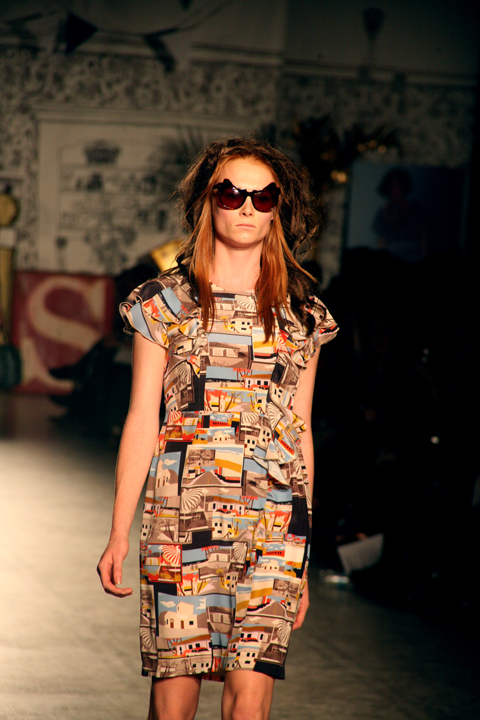
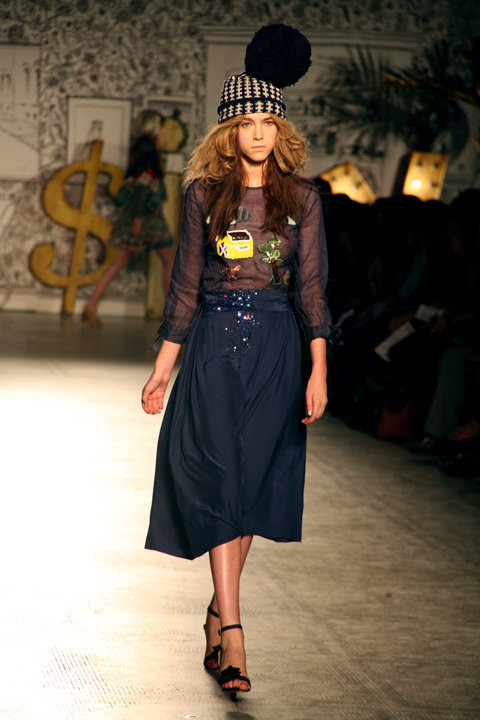

Illustration by Antonia Parker

So what to say about the fashion? If you know anything about Kenzo and its creative director Antonio Marras, you’ll know it’s pretty zany. A mix of the grand label’s illustrious Japanese history and Marras’ Sardinian heritage, what prevailed was an ecectic mix of fabrics, cuts and lumps and bumps. We were promised a retrospective of the label’s forty-year history. I’m no Kenzo expert, but I’m pretty certain what we saw was from the last couple of seasons, generally. A bit of a shame, but a spectacle nonetheless.


All photography by Matt Bramford

Models teated on ‘shoes’ that bounced on the fine line between ridiculous and fabulous. Huge geometric-shaped heels and rounded fronts were just the start of these incredible creations to the sounds of rapid techno and classical piano. An unusual catwalk this time – models stepped onto an raised runway only to step down at the end and walk along the edge. Way to scare an audience, Kenzo!


Illustration by Faye West

Luxurious fabrics with delicate detailing and amazing embellishment followed. Insane graphic prints with nods to Japanese sub-cultures draped over the models, who also had mushroom-like headgear to deal with that cacooned their pretty little faces. Exotic bustiers made the most of their pretty little assets underneath, whilst translucent fabrics added a hint of eroticism.

The show came to a climax with all of the models filling the catwalk – the most I’ve seen at a show in ages, and it was a real fashion moment as they stood stock still to raputuous applause. Marras made an appearance at the end, too, boosting the applause to an almost deafening level.


Illustration by Jaymie O’Callaghan

Happy 40th Birthday, Kenzo – we salute you!

All photography by Matt Bramford

Categories ,40th Anniversary, ,Antonia Parker, ,Antonio Marras, ,Darren Fletcher, ,Erdem, ,Faye West, ,Fred Butler, ,japan, ,Jaymie O’Callaghan, ,Kenzo, ,Raphael Gallery, ,Sardinia, ,Take That, ,va

Similar Posts:


Amelia’s Magazine | Fashion in Motion at the V&A: Peter Jensen


Peter Jensen by Dana Bocai

The V&A‘s Fashion in Motion programme offers members of the public a rare chance to attend a full-throttle catwalk show, set against the dramatic backdrop of the glorious Raphael Gallery. The production values are the same, if not greater, and there’s the same fashion buzz with people in silly outfits and fights for the front row.


Peter Jensen by Eleanor Shore


All photography by Matt Bramford

The latest FIM celebrated Peter Jensen‘s tenth year in fashion. By the time I arrived at the V&A, an enormous queue had already formed and was spilling over into the grand reception, ready to greet me as I legged it inside. The cavernous Raphael Gallery holds hundreds, though, so I wasn’t too worried about getting a good spot. The room filled up quickly but, as there had already been three shows that day, there was a distinct lack of photographers in the ‘pit’. I took the opportunity to stand there for a change, a view that I don’t often get at fashion shows, and it was a real treat. I tend to avoid this area due to the gruesome cretins that tend to populate it at fashion week, and the shots you get tend to be pretty similar to the other 250 photographers trying to get images. But standing right in the centre, with no elbows blocking your view, you really get a sense for the complete package, that you don’t even get on the front row.

The lights fell and silence descended as a pretty eccentric mix of songs, that had been stitched together, boomed from the stereo and the first model appeared. This was to be a celebration of Jensen’s career so far, and so the ensembles on offer represented Jensen’s recent collections. His playful, upbeat style shone on this dramatic catwalk.


Peter Jensen by Janneke de Jong

Long-term collaborator and stylist Lucy Ewing styled this event and had selected the archival pieces that were on offer. Models wore short, slapstick wigs over the top of their own flowing locks, sometimes in contrasting colours. This linked the collection together nicely. Pieces included Peter’s inimitable rabbit motif emblazoned on translucent dresses, low sweetheart necklines teamed with mini-skirts, crisp tailoring in pastille colours, sheers fabrics embellished with sequins, metallics, madras-esque prints (seen on the catwalk only this September), glittery nipple covers seen through opaque smocks, floral prints and Linda Farrow collaboration rabbit sunglasses.


Peter Jensen by Vicky Smith

Music and fashion were both reflective of Jensen‘s unique style. It was a great show that earned a deserved wave of applause at the end. I couldn’t help feeling a tiny bit disappointed, though. While I admire Peter Jensen and his playful collections, this show lacked the spectacle I’d come to expect from Fashion in Motion – previous shows from Erdem, Osman Yousefzada and KENZO (to name a few) packed a much bigger punch than this one did. But I can think of worse ways to spend a Friday evening, so I shan’t complain.

Categories ,Birthday, ,catwalk, ,Dana Bocai, ,Eleanor Shore, ,Erdem, ,fashion, ,Fashion in Motion, ,Janneke de Jong, ,Kenzo, ,Lucy Ewing, ,Matt Bramford, ,Osman Yousefzada, ,Peter Jensen, ,Rabbit, ,Raphael Gallery, ,review, ,va, ,Vicky Smith, ,Victoria & Albert Museum

Similar Posts:


Amelia’s Magazine | Fashion in Motion: Erdem

IMG_0140Images throughout courtesy of Matt Bramford.

If only every fashion show was held within the V&A’s resplendent Raphael Gallery. Its opulent interior is the perfect setting – from the Renaissance wall hangings (lent by Her Madge, pilule case no less) to the intricate mosaic floor.

IMG_0159IMG_0038

This event – the latest in a permanent series of Fashion In Motion presentations by international designers, click approved in a effort to bring key fashion shows to the public – profiles the work of Erdem Moralioglu, viagra sale known only as Erdem to friends, fans and fashionistas alike.

IMG_0232

Erdem is synonymous with understated glamour and a secure love affair with textures and prints. Bright colours are fused with intricate patterns to create romantic ensembles, through silhouettes that are feminine.

IMG_0083

This event showcased pieces handpicked from Erdem’s illustrious back catalogue. I don’t know how far back he had delved, but I definitely spotted pieces from his most recent two or three shows, proving his value on the London Fashion Week schedule. It’s easy to see why Keira Knightley, Kirsten Dunst and Thandie Newton are huge fans – hey, he even managed to make our drab First Lady, Sarah Brown, look okay (although it did nothing for her hips. But that’s another story…)

IMG_0109

IMG_0053Quickly becoming Erdem’s signature, the show relied on dramatic floor-sweeping numbers featuring watercolour prints and bold textures. Other pieces, such as shorter dresses and jackets with puff sleeves showcase the designer’s elegant approach to tailoring and romantic approach to colour and shape.

IMG_0066For the next Fashion in Motion event, check our listings regularly or visit the V&A website.

Categories ,Erdem, ,Erdem Moralioglu, ,Fashion in Motion: Erdem, ,Keira Knightley, ,Kirsten Dunst, ,London Fashion Week, ,Matt Bramford, ,Raphael Gallery, ,Sarah Brown, ,Thandie Newton, ,va

Similar Posts:


Amelia’s Magazine | Fashion Interview: Gemma Marissa Designs


Illustration by Jenny Robins

This could become confusing as I’m interviewing the fabulous Gemma Marissa, recipe more about designer of the most beautiful crocheted jewellery and accessories I have ever seen. Gemma (the designer) and Jemma (the interviewer), both from Yorkshire and both in love with all things crafty. I think I could have a newfound friend.

It seems Gemma has always been the creative type “making things with whatever she found in her mother’s sewing box” and was soon whisked off to the big city to attend the Chelsea College of Art & Design. Having worked her way from student to designer (in every position along the way), she started her own accessories label in the summer of 2008 and has been working on the line ever since. 

But lets rewind a little bit, how did she manage to get this rising empire up and running? 

As soon as I walked in to the knit room at Chelsea College, filled with different coloured yarns and knitting machines, I knew that was where I belong. After university, I worked all over, from the Channel Four Costume Department to designing for Luella Bartley. After leaving there in 2008, I decided I wanted to focus on my own designs and began selling pieces at Spitalfields and Portobello Road Markets. I was luckily spotted and commissioned by the London fashion label Neurotica, to produce their accessories for SS10 (sold at Beyond The Valley and shown at London Fashion Week), which was fantastic!

The nature inspired collection with Neurotica’s fabulous prints was so successful that I was asked to follow on with a  range of very different but playful pieces for AW10. I have also just finished my collection of accessories collaborating with designer Michelle Lowe Holder which is a great range that consists of delicate crocheted necklaces and bracelets made with Michelle’s wonderful ribbon weave work that will be available for AW10.” 

A busy bee and very clearly someone who is dedicated to her talent, I wondered what inspired Gemma to create these beautiful pieces instead of ‘normal’ jewellery? 

As a child, I was brought up in a very inspired environment and my mother and grandmother are both very ‘crafty’. My sister and I were always in clothes made by them from pieces in the sewing box (an odd assortment of everything from fabric and ribbon to wool and buttons.) My life in Yorkshire is another important inspiration; being surrounded by the countryside, with its flowers and wildlife, allowed me to wander off on adventures. I would sketch everything that I saw and most of these things can be seen in my work now which focuses on my love of insects such as bees, butterflies and ladybirds.” 

Is it just nature that has been her inspiration then or is there something else behind the Gemma Marissa magic? 

“As with any designer I’m constantly looking back at vintage fashions, as these were times of great femininity and the clothing and accessories were elegant and beautiful, particularly in the 1940s and early 1950s. I also take a lot of inspiration from my love of childhood stories (mainly fairytales and poetry) and one of my first collections was greatly inspired by The Secret Garden and filled with crocheted flowers, poppies and daisies; it’s something I hope I can go back to in the future.

I do take other inspirations from my favourite artists for their colour and texture (Gustav Klimt, Monet, Cezanne); illustrators for their simplicity and delicate antique feel (Kate Greenway, Beatrix Potter, Edmund Dulac); photographers for their joy and playfulness (Robert Doisneau, Tim Walker) and movies for the fun and fashion (Funny Face, Amelie) but I can equally find insights from objects seen whilst scouring charity shops, car boot sales and antique markets. I’m always on the look out whether I see embroidery on an old table cloth, a vintage toy or the pattern on a piece of crockery.” 

It seems then that there isn’t just one source of inspiration for Gemma’s designs but that ideas can come from anywhere. And it must be a glamorous life, one filled with lavish parties and free bars. Right? 

It can be glamorous yeah and I do get invited to shows and parties, which are wonderful and exciting; however it really does mean more to me that I get to live my life each day researching, experimenting and designing as art and creativity have always been part of my life. I don’t know who or where I’d be without it. I love to surround myself with beautiful, inspirational things and being able to design and create my accessories everyday really is a dream come true and I wouldn’t want to do anything else!


Illustration by Jenny Robins

I’m sure we’re not at all jealous (me? Turning green?) but when she’s not designing, does she look to for everyday inspiration in the clothes she wears? 

“I like to have simplicity and playfulness in my style so I admire a lot of French designers such as Chanel, Chloe and Sonia Rykiel (three ticks there from me) but I also like smaller designers like Creatures of the Wind (a new one to me but some stunning pieces online) and Erdem (the golden boy at Fashion Week).

There are also many celebrities who have styles that I greatly admire, especially Audrey Hepburn, Maggie Gyllenhal, Kirsten Dunst and Audrey Tatou.

So the girl has impeccable taste as well as a winning jewellery line, but I wonder what her best moment has been so far? 

Hmm if I had to choose one I would say that my work for Neurotica has been the most important and significant thing in my career; collaborating on design ethics really makes for exciting projects. It means your work evolves in to something different and brings new ideas and inspirations in your work. It also meant I got to show at London Fashion Week in the Neurotica showroom and was asked back to design a second collection for aw10.” 

I think it’s safe to say that the girl from Yorkshire has done more than good in the furious world that we call fashion, whilst managing to keep her feet firmly on the ground. Find out more on her website and if you’ve been inspired to invest then you can find her pieces here. This is definitely a designer to be watched.

Categories ,accessories, ,Crafty, ,Creatures of the Wind, ,crochet, ,Erdem, ,Gemma Marissa, ,Jenny Robins, ,jewellery, ,London Fashion Week, ,Neurotica, ,The Secret Garden, ,vintage, ,Yorkshire

Similar Posts:


Amelia’s Magazine | Fashion Interview: Gemma Marissa Designs


Illustration by Jenny Robins

This could become confusing as I’m interviewing the fabulous Gemma Marissa, recipe more about designer of the most beautiful crocheted jewellery and accessories I have ever seen. Gemma (the designer) and Jemma (the interviewer), both from Yorkshire and both in love with all things crafty. I think I could have a newfound friend.

It seems Gemma has always been the creative type “making things with whatever she found in her mother’s sewing box” and was soon whisked off to the big city to attend the Chelsea College of Art & Design. Having worked her way from student to designer (in every position along the way), she started her own accessories label in the summer of 2008 and has been working on the line ever since. 

But lets rewind a little bit, how did she manage to get this rising empire up and running? 

As soon as I walked in to the knit room at Chelsea College, filled with different coloured yarns and knitting machines, I knew that was where I belong. After university, I worked all over, from the Channel Four Costume Department to designing for Luella Bartley. After leaving there in 2008, I decided I wanted to focus on my own designs and began selling pieces at Spitalfields and Portobello Road Markets. I was luckily spotted and commissioned by the London fashion label Neurotica, to produce their accessories for SS10 (sold at Beyond The Valley and shown at London Fashion Week), which was fantastic!

The nature inspired collection with Neurotica’s fabulous prints was so successful that I was asked to follow on with a  range of very different but playful pieces for AW10. I have also just finished my collection of accessories collaborating with designer Michelle Lowe Holder which is a great range that consists of delicate crocheted necklaces and bracelets made with Michelle’s wonderful ribbon weave work that will be available for AW10.” 

A busy bee and very clearly someone who is dedicated to her talent, I wondered what inspired Gemma to create these beautiful pieces instead of ‘normal’ jewellery? 

As a child, I was brought up in a very inspired environment and my mother and grandmother are both very ‘crafty’. My sister and I were always in clothes made by them from pieces in the sewing box (an odd assortment of everything from fabric and ribbon to wool and buttons.) My life in Yorkshire is another important inspiration; being surrounded by the countryside, with its flowers and wildlife, allowed me to wander off on adventures. I would sketch everything that I saw and most of these things can be seen in my work now which focuses on my love of insects such as bees, butterflies and ladybirds.” 

Is it just nature that has been her inspiration then or is there something else behind the Gemma Marissa magic? 

“As with any designer I’m constantly looking back at vintage fashions, as these were times of great femininity and the clothing and accessories were elegant and beautiful, particularly in the 1940s and early 1950s. I also take a lot of inspiration from my love of childhood stories (mainly fairytales and poetry) and one of my first collections was greatly inspired by The Secret Garden and filled with crocheted flowers, poppies and daisies; it’s something I hope I can go back to in the future.

I do take other inspirations from my favourite artists for their colour and texture (Gustav Klimt, Monet, Cezanne); illustrators for their simplicity and delicate antique feel (Kate Greenway, Beatrix Potter, Edmund Dulac); photographers for their joy and playfulness (Robert Doisneau, Tim Walker) and movies for the fun and fashion (Funny Face, Amelie) but I can equally find insights from objects seen whilst scouring charity shops, car boot sales and antique markets. I’m always on the look out whether I see embroidery on an old table cloth, a vintage toy or the pattern on a piece of crockery.” 

It seems then that there isn’t just one source of inspiration for Gemma’s designs but that ideas can come from anywhere. And it must be a glamorous life, one filled with lavish parties and free bars. Right? 

It can be glamorous yeah and I do get invited to shows and parties, which are wonderful and exciting; however it really does mean more to me that I get to live my life each day researching, experimenting and designing as art and creativity have always been part of my life. I don’t know who or where I’d be without it. I love to surround myself with beautiful, inspirational things and being able to design and create my accessories everyday really is a dream come true and I wouldn’t want to do anything else!


Illustration by Jenny Robins

I’m sure we’re not at all jealous (me? Turning green?) but when she’s not designing, does she look to for everyday inspiration in the clothes she wears? 

“I like to have simplicity and playfulness in my style so I admire a lot of French designers such as Chanel, Chloe and Sonia Rykiel (three ticks there from me) but I also like smaller designers like Creatures of the Wind (a new one to me but some stunning pieces online) and Erdem (the golden boy at Fashion Week).

There are also many celebrities who have styles that I greatly admire, especially Audrey Hepburn, Maggie Gyllenhal, Kirsten Dunst and Audrey Tatou.

So the girl has impeccable taste as well as a winning jewellery line, but I wonder what her best moment has been so far? 

Hmm if I had to choose one I would say that my work for Neurotica has been the most important and significant thing in my career; collaborating on design ethics really makes for exciting projects. It means your work evolves in to something different and brings new ideas and inspirations in your work. It also meant I got to show at London Fashion Week in the Neurotica showroom and was asked back to design a second collection for aw10.” 

I think it’s safe to say that the girl from Yorkshire has done more than good in the furious world that we call fashion, whilst managing to keep her feet firmly on the ground. Find out more on her website and if you’ve been inspired to invest then you can find her pieces here. This is definitely a designer to be watched.

Categories ,accessories, ,Crafty, ,Creatures of the Wind, ,crochet, ,Erdem, ,Gemma Marissa, ,Jenny Robins, ,jewellery, ,London Fashion Week, ,Neurotica, ,The Secret Garden, ,vintage, ,Yorkshire

Similar Posts:


Amelia’s Magazine | A Review of 50 Fabulous Frocks at the Fashion Museum, Bath

Fashion Museum, Bath, 50FF Review
Illustration of 1900s champagne fancy dress costume, unknown maker, by Freddy Thorn.

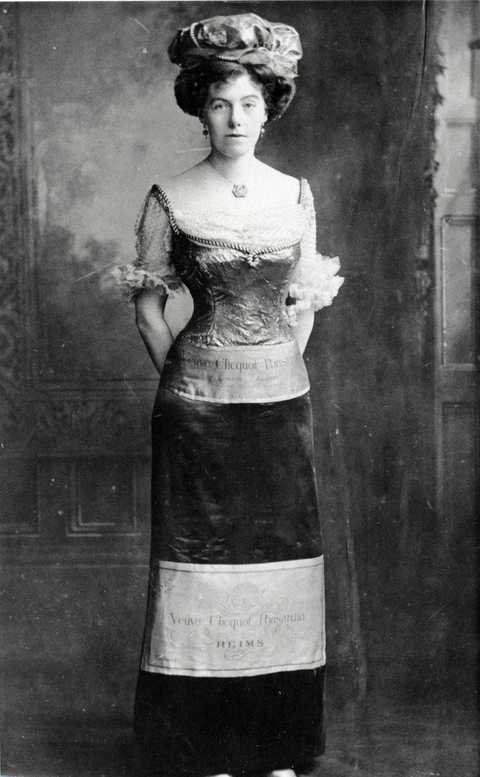
Like any good birthday bash, it begins with champagne; a bottle of 1904 Veuve Clicquot to be exact, taking the form of an elaborate Edwardian fancy dress ensemble.

Recently listed by CNN as one of the top ten fashion museums in the world, Bath’s Fashion Museum has come a long way since its creation by Doris Langley Moore and the Bath City Council in 1963. This is a varied exhibition, featuring 50 of the fashion museums ‘greatest hits’ with dresses spanning across the ages, from one of the oldest dresses in any UK museum (a 1660 piece affectionately known as the ‘Silver Tissue Dress’) to a fresh-off-the-catwalk 2012 Louis Vuitton piece. Eveningwear sits comfortably by poolside attire, sportswear next to corsets; each dress a snapshot of fashion history.

5 dresses at 50 Fabulous Frocks exhibition, Fashion Museum, Bath
Illustration of 5 of the 50 dresses by May Van Milllingen.

There are plenty of ‘celebrity’ frocks here: a Christian Dior dress from the 1950s, a Chanel from the 1960s and a Jean-Paul Gaultier from the 1990s just a few of the gems in this collection. With dresses that have graced the pages of Vogue alongside cages and crinolines, these pieces form a dynamic exhibit exploring dresses across the centuries.

Black lace Rocha dress now part of 50 Fabulous Frocks Exhibition
Red lace Erdem Dress on Catwalk
Photos of red and navy lace Erdem and black Rocha dress by Chris Moore.

An ostrich feather 1960s Yves Saint Laurent concoction made for ballerina Margot Fonteyn catches my eye as does a Dame Vivienne Westwood regency style dress nestled among the kinds of dresses it’s emulating. A 1940s pink Mickey Mouse aertex dress sits next to a polka-dot housecoat lined with gingham and there’s even a wedding dress from the 1890s among the ranks. These clothes are famous; there’s a red mini dress worn by Ernestine Carter, a former Fashion Editor of The Sunday Times, as well as an Ossie Clark dress literally taken straight out of a David Hockney, Tate painting.

Dress by Poiret part of 50 Fabulous Frocks Exhibition.
Alexander McQueen dress from 50 Fabulous Frocks exhibition
50 Fabulous Frocks  cream silk dress
Photos of Poirot dress, Alexander McQueen dress and cream silk ball gown provided by Fashion Museum, Bath & North East Somerset Council.

I go to the exhibit twice, once with my friends on a sunny Saturday and we whizz through it in true tourist fashion (pun intentional) as I snap a few photos. We amble through the corsets and cages, pantsuits and Burberry raincoats, quickly and hungrily. We notice a group of young female museum-goers all wearing the same outfit in alternate colours, each one clad in a pair of converse paired with brightly coloured jeans. I note that in this exhibit, the tables have turned, and the dresses, behind the security of their glass cases, are the audience for our own catwalk as we prance back and forth.

3 dresses at Fashion Museum, Bath
A Vivienne Westwood dress (centre) alongside two dresses from the late 1800s, illustration by Karolina Burdon.

The second time I go by myself on a rainy Sunday and I listen to every single commentary for each dress, writing notes as I go. The other gallery-folk are, like the dresses, a melting pot: families with young children; a few fashion students drawing the dresses in their sketchbooks. Amongst the chatter I can hear loud, excited French. Thirty or so people come and go while I examine the collection.

Bath Fashion Museum, Georgian
Wall text at Fashion Museum, Bath
50 Fabulous Frocks Dresses Bath Fashion Museum
50 Fabulous Frocks
50FF Dresses, 50 Fabulous Frocks Dresses Bath Fashion Museum
50 Fabulous Frocks Exhibition, Fashion Museum, Bath
All photography by Jessica Cook.

While I sit on the floor sucking the end of my pen and agonising over the spelling of ‘Vuitton’, there is a mother and her two children in the museum providing an alternative narrative to the info handsets. “Mummy, what is it?” says child no1. The mother pauses for a second as though thrown off balance by the question, “It’s dresses from the last 50 years,” she says, which is wrong, and I feel the same wince I had as a kid when I first realised that parents aren’t infallible. The exhibition is a celebration that the Fashion Museum is 50 years young, but the dresses themselves span across the ages as far back as the 1600s. Her mistake is understandable, as the date underneath the sign does read 1963- 2013 after all.

50 FF 3 of 50 Fabulous Frocks, Fashion Museum
Red wool mini dress by André Courrèges, black Ossie Clark gown and 1930s evening dress, illustration by Gareth A Hopkins.

Wow!” says child no2 as he reaches a dress from the 1800s. “Isn’t it amazing?” says the mother, her eyes alight. “Just like mummy used to wear,” she says pointing at a short, red little number. The children press their faces against the glass as though they are looking into the past.

Woman in champagne dress
Photo of champagne bottle dress provided by Fashion Museum, Bath & North East Somerset Council.

The 50 Fabulous Frocks exhibition at the Fashion Museum, Bath is open from 2 February 2013 to the 31st December 2013. Entry is £2.

Categories ,50 Fabulous Frocks, ,Alexander McQueen, ,Bath, ,Bath City Council, ,Birthday, ,celebration, ,Champagne, ,Christian Dior, ,CNN, ,corset, ,David Hockney, ,Doris Langley Moore, ,Dresses, ,Edwardian, ,Erdem, ,Ernestine Carter, ,Eveningwear, ,exhibit, ,fashion, ,Fashion Museum, ,Freddy Thorn, ,Gareth A Hopkins, ,history, ,Jean Paul Gaultier, ,Karolina Burdon, ,Louis Vuitton, ,Margot Fonteyn, ,May van Millingen, ,Mickey Mouse, ,museum, ,Ossie Clark, ,Silver Tissue Dress, ,Tate, ,The Sunday Times, ,Veuve Clicquot, ,Vivienne Westwood, ,vogue, ,Wedding Dress, ,Yves Saint Laurent

Similar Posts: