Constructive Studio is a brand new label launching this season, a collaboration between graphic designer Craig Yamey and fashion designer Ian Scott Kettle, who discovered a mutual love of street art, colourful painterly patterns and photographic collaging, put together and engineered into dramatic shapes for fashion design and beyond. Craig Yamey tells us more about what inspired this unique partnership.
How did you meet Ian Scott Kettle and what made you get together to create a new label?
Ian and I met at a Central Saint Martins Degree show in 2009 through a mutual friend. We instantly hit it off and it was clear we shared the same approach to designing and similar influences. When I saw Ian’s portfolio I was blown away. He had recently worked as a designer for Alberta Ferretti and I had just returned from a year travelling through Vietnam so I was buzzing with ideas and new sketch books. I could see parallels between Ian’s engineered forms and my own illustration work so we started to investigate ways in which we could marry our skill set. We were both freelancing and teaching at the time so initially we would just meet up to show each other ideas. Ian would give me sketches and I would expand on them or design a print that could be engineered into his ideas. We soon realised that there was a strong aesthetic being born and that’s when we decided to form a new label and get a studio together. It was great to have a dedicated work space and have some set deadlines to work towards.
As a graphic designer how hard is it for you to get your head around fashion and what new things have you learnt recently?
Working in commercial graphic design often requires you to turn around print-ready artwork in an hour. The greatest lesson Ian has taught me is the importance of an incubation period; time to research and develop ideas, materials and processes. I am used to working with pen, ink and computer, my output has always existed in a 2-dimensional realm and I have only been restricted by my own time frames. Now relying on suppliers to send samples of materials, fittings and experimenting with print techniques means I’ve needed to create a much longer time scale to complete work. The other area within fashion that has been a great learning curve is understanding the difference between designing for flat graphics such as posters or CD covers and designing for engineered prints and scarves where fabric drapes and hangs off he body. It’s been great learning how different materials function.
Who do you hope will appreciate the various elements of your collection, eg. the bow ties and the plush dolls?
We have always been interested in creating a range that cuts through the boundaries between high-end luxury fashion and something more ‘street’ in it’s aesthetic; that’s my graphics background coming through! The colour palettes are bold and young and there is a sense of fun to the work. The bow ties are unisex and proving equally popular amongst women and men – I like the idea that certain pieces can transcend gender, an aesthetic we pushed in The Look Book. I always thought the plush dolls had quite a dark edge, using weeping Victorian-etched faces. I pitched the dolls at a KID ROBOT “designer toy” market but it’s great to see how many young kids love them too.
What’s the inspiration behind the newest design elements?
The influences for the first collection are a marriage of opposites; we are fusing our own hand-painted brush strokes with computer-generated vector-lines. Juxtaposing the mark-making of street art with photographic images of nature; clouds and flora. We like to mix strong angulated engineered forms with softer painted patterns and conversely enjoy mixing the strength of bold geometric shapes on delicate materials such as Habotai silk. We are very interested in exploring non-fashion materials to create our accessories, using polypropelene and acetates to make our collars. We like the fact that certain pieces such as the acrylic toggles and plastic collars sit somewhere between fashion and product design and our work has been picked up by The London Design Festival which focuses more on homeware and furniture design.
How do the graphics work with the complicated pattern cuts, and what is the process of designing together?
Creating engineered prints is an exciting process of passing the ball back and forth to one another. With the bow ties Ian will start with a sketch which we both look at and consider any necessary adjustments to the design. Ian will then create a pattern and make a Calico prototype. When the form is created I can gauge how the shape twists and folds, which areas will be exposed or overlap when worn. I then start designing the direction of the pattern in accordance to the form. Ian will then give me the flat pattern on which will apply my prints. Once sewn we can see which areas of the design need re-adjusting. With the meter silk scarves it’s important to understand how the scarf will be worn and will fold. Sometimes a design will look beautiful flat but when worn we realise the scale of certain elements need re-adjusting to have maximum impact on the body. 2-Dimensional graphics is easy to assess on paper but graphics for fashion prints needs testing and adjusting on the body.
What else do you hope to create in the Constructive Studio range?
We will be designing a range of T-shirts for the next collection. Instead of applying a print to a standard T-shirt we will be engineering the designs into the form and creating the Tees from scratch. We will also be introducing the scarves in larger sizes and lazer cut shapes, we are keen to engineer our patterns into more unusual shapes of scarf beyond the standard square format. The bow ties have been one of the most successful items in the collection so we will be applying new prints to our 3 shapes.
Constructive Studio launches this fashion week. What has a typical day been like in the run up to such a busy period?
Since the Look Book came back from print, we have taken to the streets, presenting the collection to buyers and the press. We have found that sending emails to buyers is no where near as successful as visiting shops, meeting with buyers and showing key pieces, so the past week we have targeted specific shops in London. A typical day also involves working on production, both to supply our forthcoming on-line retailers and to create stock for the open studio events that happen at Cockpit Arts where we are based. Then we start researching and developing the next collection to stay ahead of schedule, so next week we are off to Premier Vision in Paris to source fabrics and fittings and do some research into the French market.
What do you hope for over the next twelve months?
The next year its all about developing the collection, sourcing quality suppliers and getting the CONSTRUCTIVE STUDIO label known. London & Paris Fashion Week is on the horizon for the February Collection as this season its all about creating introductions. We have some exciting collaborations ahead of us and will be developing more products to apply the Constructive Studio aesthetic to.
EDE was founded in 2009 by Ellie Jauncey. Having studied Textiles at Manchester Metropolitan University and specialising in Knitwear she moved to London and spent a good few years working in soul-less fashion roles. Two redundancies in a year later and the penny finally dropped, why work for other people when you can work for yourself? Paying homage to her mother’s maiden name she started EDE, which is a knitwear label specialising in simple, modern clothing, inspired by traditional shapes and designs – and all made in England. She quickly formed a team of knitters, all living in and around Herefordshire (where she grew up) and using their incredible skills, produced the first collection.
How did you find your knitters?
I advertised in the local paper and put notices up in post offices and corner shops.
They are all over 60 – do you think that despite the current renaissance in knitting most knitting is still an “old” pastime? Are we losing skills?
I think knitters who are over 60 approach it in a different way, it’s much more a part of their lives than for my generation who see it more as an occasional hobby. All my knitters need to knit, they’ve done it all their lives, it a bit of an addiction. They also grew up in a time when you knitted to clothe your family, it was the norm. Unlike today where the majority of people pop down to Primark instead. Saying that lots of my friends knit and even more want to learn to knit. Re-learning skills is definitely on the up!
You’ve had some high profile press – for instance Little Mix looked super stylish in your jumpers for an editorial – did your previous jobs in fashion help to develop good contacts? How do you ensure good press?
Not really, I’ve worked really hard at getting press. If you have a product which you believe in and you’re proud of then it’s easy to approach the press with it and sell yourself. It also helps a lot having wonderful friends like Fred Butler who constantly put you forward for things!
What is special about your big scarf?
Well probably that it’s so big and soft oh and also the colour choices. I always wanted a plain, block colour scarf which was a bit like a blanket and couldn’t find one anywhere so thought i should make one.
How do you manage both businesses at the same time? What are your top tips for an easy life?
Managing both businesses is a bit of a juggling act at times, you have to be pretty organised, which i’m working on!! I couldn’t do it with out the support of my wonderful flower partner, Anna. My top tips for an easy life are to make sure you are happy in your working environment – moving studios has changed my life and made working so much more productive and enjoyable. My other top tip is to swim in a lido as often as you can, it makes you feel wonderful.
What inspires you when you are designing?
Colour and old things.
This could become confusing as I’m interviewing the fabulous Gemma Marissa, recipemore about designer of the most beautiful crocheted jewellery and accessories I have ever seen. Gemma (the designer) and Jemma (the interviewer), both from Yorkshire and both in love with all things crafty. I think I could have a newfound friend.
It seems Gemma has always been the creative type “making things with whatever she found in her mother’s sewing box” and was soon whisked off to the big city to attend the Chelsea College of Art & Design. Having worked her way from student to designer (in every position along the way), she started her own accessories label in the summer of 2008 and has been working on the line ever since.
But lets rewind a little bit, how did she manage to get this rising empire up and running?
As soon as I walked in to the knit room at Chelsea College, filled with different coloured yarns and knitting machines, I knew that was where I belong. After university, I worked all over, from the Channel Four Costume Department to designing for Luella Bartley. After leaving there in 2008, I decided I wanted to focus on my own designs and began selling pieces at Spitalfields and Portobello Road Markets. I was luckily spotted and commissioned by the London fashion label Neurotica, to produce their accessories for SS10 (sold at Beyond The Valley and shown at London Fashion Week), which was fantastic!
The nature inspired collection with Neurotica’s fabulous prints was so successful that I was asked to follow on with a range of very different but playful pieces for AW10. I have also just finished my collection of accessories collaborating with designer Michelle Lowe Holder which is a great range that consists of delicate crocheted necklaces and bracelets made with Michelle’s wonderful ribbon weave work that will be available for AW10.”
A busy bee and very clearly someone who is dedicated to her talent, I wondered what inspired Gemma to create these beautiful pieces instead of ‘normal’ jewellery?
As a child, I was brought up in a very inspired environment and my mother and grandmother are both very ‘crafty’. My sister and I were always in clothes made by them from pieces in the sewing box (an odd assortment of everything from fabric and ribbon to wool and buttons.) My life in Yorkshire is another important inspiration; being surrounded by the countryside, with its flowers and wildlife, allowed me to wander off on adventures. I would sketch everything that I saw and most of these things can be seen in my work now which focuses on my love of insects such as bees, butterflies and ladybirds.”
Is it just nature that has been her inspiration then or is there something else behind the Gemma Marissa magic?
“As with any designer I’m constantly looking back at vintage fashions, as these were times of great femininity and the clothing and accessories were elegant and beautiful, particularly in the 1940s and early 1950s. I also take a lot of inspiration from my love of childhood stories (mainly fairytales and poetry) and one of my first collections was greatly inspired by The Secret Garden and filled with crocheted flowers, poppies and daisies; it’s something I hope I can go back to in the future.
I do take other inspirations from my favourite artists for their colour and texture (Gustav Klimt, Monet, Cezanne); illustrators for their simplicity and delicate antique feel (Kate Greenway, Beatrix Potter, Edmund Dulac); photographers for their joy and playfulness (Robert Doisneau, Tim Walker) and movies for the fun and fashion (Funny Face, Amelie) but I can equally find insights from objects seen whilst scouring charity shops, car boot sales and antique markets. I’m always on the look out whether I see embroidery on an old table cloth, a vintage toy or the pattern on a piece of crockery.”
It seems then that there isn’t just one source of inspiration for Gemma’s designs but that ideas can come from anywhere. And it must be a glamorous life, one filled with lavish parties and free bars. Right?
It can be glamorous yeah and I do get invited to shows and parties, which are wonderful and exciting; however it really does mean more to me that I get to live my life each day researching, experimenting and designing as art and creativity have always been part of my life. I don’t know who or where I’d be without it. I love to surround myself with beautiful, inspirational things and being able to design and create my accessories everyday really is a dream come true and I wouldn’t want to do anything else!
I’m sure we’re not at all jealous (me? Turning green?) but when she’s not designing, does she look to for everyday inspiration in the clothes she wears?
“I like to have simplicity and playfulness in my style so I admire a lot of French designers such as Chanel, Chloe and Sonia Rykiel (three ticks there from me) but I also like smaller designers like Creatures of the Wind (a new one to me but some stunning pieces online) and Erdem (the golden boy at Fashion Week).
There are also many celebrities who have styles that I greatly admire, especially Audrey Hepburn, Maggie Gyllenhal, Kirsten Dunst and Audrey Tatou.
So the girl has impeccable taste as well as a winning jewellery line, but I wonder what her best moment has been so far?
Hmm if I had to choose one I would say that my work for Neurotica has been the most important and significant thing in my career; collaborating on design ethics really makes for exciting projects. It means your work evolves in to something different and brings new ideas and inspirations in your work. It also meant I got to show at London Fashion Week in the Neurotica showroom and was asked back to design a second collection for aw10.”
I think it’s safe to say that the girl from Yorkshire has done more than good in the furious world that we call fashion, whilst managing to keep her feet firmly on the ground. Find out more on her website and if you’ve been inspired to invest then you can find her pieces here. This is definitely a designer to be watched.
Written by Jemma Crow on Monday March 15th, 2010 6:46 pm
This could become confusing as I’m interviewing the fabulous Gemma Marissa, recipemore about designer of the most beautiful crocheted jewellery and accessories I have ever seen. Gemma (the designer) and Jemma (the interviewer), both from Yorkshire and both in love with all things crafty. I think I could have a newfound friend.
It seems Gemma has always been the creative type “making things with whatever she found in her mother’s sewing box” and was soon whisked off to the big city to attend the Chelsea College of Art & Design. Having worked her way from student to designer (in every position along the way), she started her own accessories label in the summer of 2008 and has been working on the line ever since.
But lets rewind a little bit, how did she manage to get this rising empire up and running?
As soon as I walked in to the knit room at Chelsea College, filled with different coloured yarns and knitting machines, I knew that was where I belong. After university, I worked all over, from the Channel Four Costume Department to designing for Luella Bartley. After leaving there in 2008, I decided I wanted to focus on my own designs and began selling pieces at Spitalfields and Portobello Road Markets. I was luckily spotted and commissioned by the London fashion label Neurotica, to produce their accessories for SS10 (sold at Beyond The Valley and shown at London Fashion Week), which was fantastic!
The nature inspired collection with Neurotica’s fabulous prints was so successful that I was asked to follow on with a range of very different but playful pieces for AW10. I have also just finished my collection of accessories collaborating with designer Michelle Lowe Holder which is a great range that consists of delicate crocheted necklaces and bracelets made with Michelle’s wonderful ribbon weave work that will be available for AW10.”
A busy bee and very clearly someone who is dedicated to her talent, I wondered what inspired Gemma to create these beautiful pieces instead of ‘normal’ jewellery?
As a child, I was brought up in a very inspired environment and my mother and grandmother are both very ‘crafty’. My sister and I were always in clothes made by them from pieces in the sewing box (an odd assortment of everything from fabric and ribbon to wool and buttons.) My life in Yorkshire is another important inspiration; being surrounded by the countryside, with its flowers and wildlife, allowed me to wander off on adventures. I would sketch everything that I saw and most of these things can be seen in my work now which focuses on my love of insects such as bees, butterflies and ladybirds.”
Is it just nature that has been her inspiration then or is there something else behind the Gemma Marissa magic?
“As with any designer I’m constantly looking back at vintage fashions, as these were times of great femininity and the clothing and accessories were elegant and beautiful, particularly in the 1940s and early 1950s. I also take a lot of inspiration from my love of childhood stories (mainly fairytales and poetry) and one of my first collections was greatly inspired by The Secret Garden and filled with crocheted flowers, poppies and daisies; it’s something I hope I can go back to in the future.
I do take other inspirations from my favourite artists for their colour and texture (Gustav Klimt, Monet, Cezanne); illustrators for their simplicity and delicate antique feel (Kate Greenway, Beatrix Potter, Edmund Dulac); photographers for their joy and playfulness (Robert Doisneau, Tim Walker) and movies for the fun and fashion (Funny Face, Amelie) but I can equally find insights from objects seen whilst scouring charity shops, car boot sales and antique markets. I’m always on the look out whether I see embroidery on an old table cloth, a vintage toy or the pattern on a piece of crockery.”
It seems then that there isn’t just one source of inspiration for Gemma’s designs but that ideas can come from anywhere. And it must be a glamorous life, one filled with lavish parties and free bars. Right?
It can be glamorous yeah and I do get invited to shows and parties, which are wonderful and exciting; however it really does mean more to me that I get to live my life each day researching, experimenting and designing as art and creativity have always been part of my life. I don’t know who or where I’d be without it. I love to surround myself with beautiful, inspirational things and being able to design and create my accessories everyday really is a dream come true and I wouldn’t want to do anything else!
I’m sure we’re not at all jealous (me? Turning green?) but when she’s not designing, does she look to for everyday inspiration in the clothes she wears?
“I like to have simplicity and playfulness in my style so I admire a lot of French designers such as Chanel, Chloe and Sonia Rykiel (three ticks there from me) but I also like smaller designers like Creatures of the Wind (a new one to me but some stunning pieces online) and Erdem (the golden boy at Fashion Week).
There are also many celebrities who have styles that I greatly admire, especially Audrey Hepburn, Maggie Gyllenhal, Kirsten Dunst and Audrey Tatou.
So the girl has impeccable taste as well as a winning jewellery line, but I wonder what her best moment has been so far?
Hmm if I had to choose one I would say that my work for Neurotica has been the most important and significant thing in my career; collaborating on design ethics really makes for exciting projects. It means your work evolves in to something different and brings new ideas and inspirations in your work. It also meant I got to show at London Fashion Week in the Neurotica showroom and was asked back to design a second collection for aw10.”
I think it’s safe to say that the girl from Yorkshire has done more than good in the furious world that we call fashion, whilst managing to keep her feet firmly on the ground. Find out more on her website and if you’ve been inspired to invest then you can find her pieces here. This is definitely a designer to be watched.
Written by Jemma Crow on Monday March 15th, 2010 6:46 pm
When I first looked at images of Kate Sibley’s stone ‘paper’ Future Jewellery I was reminded of a gorgeous book I fell in love with a few years ago called ‘The Paper Jewelry Collection: Easy to wear and ready to make pop out artwear’. It features beautiful patterns printed on variously shaped paper which you can remove from the book and fold in different ways to create eye catching jewellery pieces. I still have this book and, like Kate Sibley’s jewellery, find it hugely inspiring. Both push boundaries in terms of what form jewellery pieces can have and what materials they are made of – the latter being especially crucial at the moment in terms of sustainability. The limited edition pieces by Kate Sibley are transitory and deliberately have a short lifespan, agreeing with the fast fashion trend. Yet the jewellery, made from non-toxic stone ‘paper’, can be infinitely recycled or safely composted at the end of its life, leaving no negative imprint on the environment. Here Kate Sibley shares with us a little about the context, inspirations and processes behind her origami-like jewellery collection.
You started out as a graphic designer, how did you become interested in jewellery design specifically and decide to do an MA at Central Saint Martins?
My undergraduate degree was in eco design and design studies at Goldsmiths College where my final piece was in fact a jewellery collection. The graphics route was purely by chance and a result of the experience I gained on work placements while still at university. It became a logical career path upon graduation as it gave me the opportunity to make money as a practicing designer. After several years of full time employment I took the step to become a freelance graphic designer which enabled me to focus more on other creative interests including my jewellery. I then applied to continue my studies at Central St Martins as it would provide me with a network of mentors and place me in a stimulating environment to further develop my ideas.
How does your graphic design background influence your jewellery collections?
My decision to work with paper for my latest collection was born out of my desire to question the fast fashion industry and explore sustainable materials and systems. After a year of intensive materials research the logical path took me to the stone paper I use today. Having a deep knowledge of graphics and print enabled me to really explore a unique approach to my jewellery where I had very few restrictions. I could explore, colour, tone, pattern and form in a way that you can’t with traditional jewellery making processes. It also had its problems as it makes it incredibly hard to make decisions when your options are endless so you need to be confident in your ideas and follow them through with conviction.
Could you tell us a bit more about the ‘Cradle to Cradle’ theory and closed loop systems and the influence they’ve had on your work?
The term Cradle to Cradle refers to a designed system where commercial productivity and sustainability can co-exist and benefit one another. This is achieved by ensuring that products and materials are designed to fit onto a biological and/or a technical system – closed loop. A biological system refers to materials that can harmlessly decompose and return to the earth providing nourishment rather than toxic landfill, whereas a technical system is one based on materials being reprocessed repeatedly without degradation or any loss in quality. Cradle to Cradle has influenced my work greatly. What I like is that it provides a rational and practical solution to a sustainable future whilst celebrating abundance and creativity. Rather than the consumer being half-heartedly encouraged to change their consumer behavior, the ball is firmly in the court of designers and manufacturers to design better products. It is a challenge, but designers like myself thrive on creative challenges.
My current collection is designed with materials that fit within both a biological and a technical cycle.
Where do you source the paper from which your current collection is made?
I source the paper from a supplier in Europe as it is not available in the UK.
Where did you learn to fold so beautifully and by what process do you apply the eye catching patterns and colours on the pieces?
Strangely I’ve always had a fascination with folding paper. I think it’s something to do with pushing a material to its limits and really exploring it’s potential. The techniques and folds I’ve used to produce this collection have all been developed by myself as a way to overcome design issues and to form the shapes and structures I wanted. The colour and patterns are screen printed by myself.
You are the co-director of the design studio Sibley Grove with your husband Jeremy Grove. How do the other design disciplines the studio is involved in impact your jewellery work? Is working with diverse worlds helping your creative juices?
Running the design studio alongside developing my jewellery collections is hard work, but I enjoy it as I thrive on being busy and productive. We work across several disciplines, interior design, architecture, graphics and product, and I find all of these areas inspire my jewellery because they expose me to materials and processes I might not otherwise come across. The jewellery also positively influences the rest of the work our studio does, because it is a platform to be more experimental and try new things, but on a smaller scale.
In terms of fashion and jewellery design what are your inspirations?
My inspirations for this collection have mainly come from the art deco architecture of downtown Manhattan, where I am particularly attracted to the repeat patterns that are made with tiling, patterns cast into building facades and the forms made by railings and ironwork. In general though, my inspirations can come from anywhere, from the detailing on a train seat, to the beauty of an insects wing.
For your near future collections do you plan to explore more folding techniques and continue the use of ‘paper’ or can you reveal some more sustainable materials you have in mind using?
This collection of earrings will evolve into other shapes and colours, which will be released each fashion season, but all future pieces will fit into the universal earring clasp. I am interested in exploring other ways of printing on and texturing the surface of the paper material, and feel there is great potential to explore this further. I intend for the collection to grow and to release necklaces, bangles and brooches in the future. I am always researching new and interesting materials and have a growing collection which I will certainly experiment with in the future.
How could one become the owner of one of your beautiful pieces?
At the moment I am accepting commissions to produce bespoke pieces of any scale. This specific collection will be launched for sale in the new year and you will be able to buy pieces through a number of galleries and shops. You can contact us through our website www.sibleygrove.com, or at studio@sibleygrove.com to be added to our mailing list for further updates, or to talk about commissioning possibilities.
Bath Spa’s electric and original collections show they’re not afraid to mix things up at Graduate Fashion Week.
Bath Spa began with all guns blazing for their boutique show with Bournemouth, nurse setting the scene with a soundtrack of haunting thunder and lightning. As suspense grew, order a model stepped into the spot light…with a lampshade on her head. As more models filtered onto the catwalk, cure Ruth Strugnell’s quirky eccentricity became clearer in garments that made the most of mismatching, from multicoloured socks to panels composed of various prints and wools. Despite looking like they might’ve had a tussle in a dressing up box, the models’ nipped in waists and cute, soft take on the harem pants added a sense of maturity and direction to the pieces.
Jack Duffy mixed things up again with clashing prints and a melding of culture; oversize jackets suggested elements of Eastern tradition, whilst large, ornate collars mould themselves round the body into demi-hoods more befitting of European nobility.
Thierry Davies’s hypnotic monochrome prints bend the mind but when paired with a neat, boxy jacket a line of harmony seems to be drawn amongst the chaos. Another perennial favourite of this year appears again – the jump-suit, this time spruced up with a dramatic contrast between blue and white sections.
Jodie Clay’s garments varied from the loose, long hem of her black jacket to the glitz of a bespoke neckpiece and sheer blouse. The wardrobe of the 1920s women was re-examined in the modern context and energised with splashes of murky blues, but held an element of reticent class.
Natalie Ellis’s use of vintage fur coats and gloves reminded us of the staple role they played in the wardrobes of women gone by, but cropped double colour trousers were a reminder of Ellis’s unfailing dedication to modernity. Interesting shapes appeared on the body as high waisted trousers split cream khaki and black across the body, complimented by ethereal, floating blouses and fur barrel bags. *Here at Amelia’s Magazine we don’t advocate any wearing of fur at all, so we hope this is fake, otherwise, DON’T WEAR IT!*
Outi Silvola deconstructed apparel in the most immediate sense, repositioning collars, shoulders and buttons to give a mixed up feel that wouldn’t look out-of-place in Dover Street Market. A fully made collar placed forward on the body was a walking work of art. A shirt is at once open at yet concealing the figure, showing a careful appreciation of the simple practise of putting clothes on the human body.
Photographs by Nina Joyce
Ruth Strugnell
Bath Spa’s electric and original collections show they’re not afraid to mix things up at Graduate Fashion Week.
Bath Spa began with all guns blazing for their boutique show with Bournemouth, site setting the scene with a soundtrack of haunting thunder and lightning. As suspense grew, information pills a model stepped into the spot light…with a lampshade on her head. As more models filtered onto the catwalk, more about Ruth Strugnell’s quirky eccentricity became clearer in garments that made the most of mismatching, from multicoloured socks to panels composed of various prints and wools. Despite looking like they might’ve had a tussle in a dressing up box, the models’ nipped in waists and cute, soft take on the harem pants added a sense of maturity and direction to the pieces.
Jack Duffy mixed things up again with clashing prints and a melding of culture; oversize jackets suggested elements of Eastern tradition, whilst large, ornate collars mould themselves round the body into demi-hoods more befitting of European nobility.
Thierry Davies’s hypnotic monochrome prints bend the mind but when paired with a neat, boxy jacket a line of harmony seems to be drawn amongst the chaos. Another perennial favourite of this year appears again – the jump-suit, this time spruced up with a dramatic contrast between blue and white sections.
Jodie Clay’s garments varied from the loose, long hem of her black jacket to the glitz of a bespoke neckpiece and sheer blouse. The wardrobe of the 1920s women was re-examined in the modern context and energised with splashes of murky blues, but held an element of reticent class.
Natalie Ellis’s use of vintage fur coats and gloves reminded us of the staple role they played in the wardrobes of women gone by, but cropped double colour trousers were a reminder of Ellis’s unfailing dedication to modernity. Interesting shapes appeared on the body as high waisted trousers split cream khaki and black across the body, complimented by ethereal, floating blouses and fur barrel bags. *Here at Amelia’s Magazine we don’t advocate any wearing of fur at all, so we hope this is fake, otherwise, DON’T WEAR IT!*
Outi Silvola deconstructed apparel in the most immediate sense, repositioning collars, shoulders and buttons to give a mixed up feel that wouldn’t look out-of-place in Dover Street Market. A fully made collar placed forward on the body was a walking work of art. A shirt is at once open at yet concealing the figure, showing a careful appreciation of the simple practise of putting clothes on the human body.
Photographs by Nina Joyce
Jeweller Kyoko Hashimoto has just opened a new shop/studio in Berlin called We Are All Made of Stuff. Born in Japan, diagnosis Kyoko grew up in Australia and studied jewellery design at university. She worked on conceptual designs until setting up her own label in 2006, diagnosis and she lived in Sydney and then Tokyo before moving to Berlin. Her designs play with different textures and nature-inspired themes, creating a look that’s modern and whimsical at the same time.
Can you tell me a bit about how your own label came about?
I was travelling through Europe in the the summer of 2005, and found myself completely out of money in the fairy-tale city of Venice. It felt really surreal to be broke in such a gorgeous city. I had studied jewellery design at university, but I wasn’t really using it to earn anything – instead I was teaching English to high school kids in Tokyo. I thought, “I can do better than this.” So when I returned from my holidays, I really set my mind on creating something new and committed myself whole-heartedly to design and production.
What techniques and materials do you most enjoy using in your work?
I enjoy working with acrylic. It’s the medium I feel most connected with. I like the consistency and the range of colours, transparencies and depth.
Synthetic polymers have been my choice of material since my university days, and I used to do a lot of resin casting. I stopped using polyester resin because of its toxicity, but I still really enjoy working with acrylic; I like the choice of colours and forms that can be achieved with relative ease. I use a combination of traditional and industrial techniques, although given the choice, I far prefer working with traditional methods. You can definitely see the difference in a finished object that has been hand-crafted, and one that has had little or no contact with the hand. Certain imperfections can also bring charm to an object.
In your most recent collection, Shadow of Lula, you’ve created pieces that look both Victorian and contemporary at the same time. Where did the inspiration to explore traditional mourning jewellery come from?
I love reading about the history of jewellery and fashion. Jewellery as a national fashion was at its height when Queen Victoria was mourning the death of her husband Prince Albert. She was so iconic and influential that the whole of England also went into a phase of mourning, and sentimental jewellery became very popular. I like thinking about the notion of sentimentality in jewellery, and I wanted to create a collection reflecting the same sense of nostalgia and longing, but in a contemporary context. So I chose environmentalism as a theme and made jewellery to mourn extinct animals, threatened by industry and environmental destruction.
You mentioned on your blog that the different countries you’ve worked in have, in general, different fashion aesthetics – that people in the UK tend to embrace bold statement jewellery, and Germany tends to be more understated. Having moved around the world quite a bit, do you find that the location – and the local style – influence your designs?
Absolutely. When I was living in Tokyo my aesthetic was definitely influenced by the underground subculture aesthetics. I used to be good friends with the kids that hung around Harajuku and were often featured in fashion magazines like Fruits. Their unique and colourful sense of fashion influenced me to make pieces that were bold and also somewhat strange and nonsensical. Now, living in Berlin, I have noticed that people do not wear very much statement jewellery, so I am trying to indulge in their aesthetics. It is much more understated here, minimal but also more sophisticated.
What’s it like working in Berlin compared with the other places you’ve lived in?
It’s great, because everyone here is either an artist, designer or a musician. It’s nice to engage in passionate talk about art or the exhibitions we’ve seen, and the price of housing means that people can afford a nice working space to create. It gives us more freedom to do what we love to do.
You used the texture of a pomelo as inspiration for one of your pendants. Do you draw a lot of inspiration from the natural world? What do you find particularly inspiring at the moment?
Yes, I guess nature is always going to be a huge pool of inspiration for me. Moving around a lot means things are always a little different, which I really like. For example, with the pomelo, I’d never seen of those before. My flatmate here in Berlin was eating it everyday, and I was thinking: “It’s not an orange… it’s not a grapefruit… what the…?”
At the moment, I’m inspired by what I saw when I went to the Natural History Museum. A huge collection of curiosities were on display in these glass cabinets. I just love old objects from the era before the Industrial Revolution. They are never perfect and there’s such an unspeakable, precious quality to them.
Which are your favourite pieces you’ve created recently?
I like the ‘Toby’ pendant I made here in Berlin. I think it embraces a new aesthetic for me, working with these rubber sponge balls I found, and also tackling the soldering iron, which I don’t often do. The oxidised sterling silver frame is made from a single sheet of metal. Maybe it’s my current favourite because it is also the newest… I’ll have to see how I feel about it in a few weeks!
Are there any other designers whose work you particularly admire?
I love the work of fashion designer Sandra Bucklung – her masterfully knitted garments are a work of art. I also admire the work of jeweller Ted Noten, whom I met when he was teaching my partner Guy Keulemans in the Netherlands. Ted likes to cast objects like guns and cocaine powder inside clear resin; the concept is simple yet extremely provocative.
We Are All Made of Stuff opened this week in Berlin. How’s it going so far, and where did the idea to set it up come from?
It happened by luck. A friend we met in Berlin knew someone who knew someone who had the space available. I actually never thought I would open a store, but if it was going to be anywhere, this would be the place. Guy and I designed the interior of the shop, together with our Austrian architect friend Christoph Hager. The result is wonderful. Really, I could not be happier and we’ve already had tons of people stop by to check it out and have a chat.
Is it a working space as well as a shop? Which other designers are showing or working there?
As well as showing mine and Guy’s work, we have jewellery pieces by fellow Australian designers like Make Believe and Anneliese Hauptstein, as well as local and European designers such as Berlin jeweller Susanne Schmitt and A&Ré, a French duo who make wonderful things with concrete. And more designers to come.
The space is a shop but also a workspace. We needed to divide these two functions, but uniquely, and without being heavy or obtrusive. So we created a kind of porous curtain made up of hundreds of individual strings hanging from the ceiling. It divides the space diagonally, and supports jewellery plinths, but you can also walk through it. Its very light and delicate. Behind the strings are workbenches, and these are removable, so we can clear the space and party!
That’s probably keeping you very busy at the moment, but have you got any other projects or collections coming up that we can look out for?
Yes, but it’s a secret for now!
Written by Amelie Skoda on Tuesday June 15th, 2010 12:40 pm
Bath Spa’s electric and original collections show they’re not afraid to mix things up at Graduate Fashion Week.
Bath Spa began with all guns blazing for their boutique show with Bournemouth, nurse setting the scene with a soundtrack of haunting thunder and lightning. As suspense grew, order a model stepped into the spot light…with a lampshade on her head. As more models filtered onto the catwalk, cure Ruth Strugnell’s quirky eccentricity became clearer in garments that made the most of mismatching, from multicoloured socks to panels composed of various prints and wools. Despite looking like they might’ve had a tussle in a dressing up box, the models’ nipped in waists and cute, soft take on the harem pants added a sense of maturity and direction to the pieces.
Jack Duffy mixed things up again with clashing prints and a melding of culture; oversize jackets suggested elements of Eastern tradition, whilst large, ornate collars mould themselves round the body into demi-hoods more befitting of European nobility.
Thierry Davies’s hypnotic monochrome prints bend the mind but when paired with a neat, boxy jacket a line of harmony seems to be drawn amongst the chaos. Another perennial favourite of this year appears again – the jump-suit, this time spruced up with a dramatic contrast between blue and white sections.
Jodie Clay’s garments varied from the loose, long hem of her black jacket to the glitz of a bespoke neckpiece and sheer blouse. The wardrobe of the 1920s women was re-examined in the modern context and energised with splashes of murky blues, but held an element of reticent class.
Natalie Ellis’s use of vintage fur coats and gloves reminded us of the staple role they played in the wardrobes of women gone by, but cropped double colour trousers were a reminder of Ellis’s unfailing dedication to modernity. Interesting shapes appeared on the body as high waisted trousers split cream khaki and black across the body, complimented by ethereal, floating blouses and fur barrel bags. *Here at Amelia’s Magazine we don’t advocate any wearing of fur at all, so we hope this is fake, otherwise, DON’T WEAR IT!*
Outi Silvola deconstructed apparel in the most immediate sense, repositioning collars, shoulders and buttons to give a mixed up feel that wouldn’t look out-of-place in Dover Street Market. A fully made collar placed forward on the body was a walking work of art. A shirt is at once open at yet concealing the figure, showing a careful appreciation of the simple practise of putting clothes on the human body.
Photographs by Nina Joyce
Ruth Strugnell
Bath Spa’s electric and original collections show they’re not afraid to mix things up at Graduate Fashion Week.
Bath Spa began with all guns blazing for their boutique show with Bournemouth, site setting the scene with a soundtrack of haunting thunder and lightning. As suspense grew, information pills a model stepped into the spot light…with a lampshade on her head. As more models filtered onto the catwalk, more about Ruth Strugnell’s quirky eccentricity became clearer in garments that made the most of mismatching, from multicoloured socks to panels composed of various prints and wools. Despite looking like they might’ve had a tussle in a dressing up box, the models’ nipped in waists and cute, soft take on the harem pants added a sense of maturity and direction to the pieces.
Jack Duffy mixed things up again with clashing prints and a melding of culture; oversize jackets suggested elements of Eastern tradition, whilst large, ornate collars mould themselves round the body into demi-hoods more befitting of European nobility.
Thierry Davies’s hypnotic monochrome prints bend the mind but when paired with a neat, boxy jacket a line of harmony seems to be drawn amongst the chaos. Another perennial favourite of this year appears again – the jump-suit, this time spruced up with a dramatic contrast between blue and white sections.
Jodie Clay’s garments varied from the loose, long hem of her black jacket to the glitz of a bespoke neckpiece and sheer blouse. The wardrobe of the 1920s women was re-examined in the modern context and energised with splashes of murky blues, but held an element of reticent class.
Natalie Ellis’s use of vintage fur coats and gloves reminded us of the staple role they played in the wardrobes of women gone by, but cropped double colour trousers were a reminder of Ellis’s unfailing dedication to modernity. Interesting shapes appeared on the body as high waisted trousers split cream khaki and black across the body, complimented by ethereal, floating blouses and fur barrel bags. *Here at Amelia’s Magazine we don’t advocate any wearing of fur at all, so we hope this is fake, otherwise, DON’T WEAR IT!*
Outi Silvola deconstructed apparel in the most immediate sense, repositioning collars, shoulders and buttons to give a mixed up feel that wouldn’t look out-of-place in Dover Street Market. A fully made collar placed forward on the body was a walking work of art. A shirt is at once open at yet concealing the figure, showing a careful appreciation of the simple practise of putting clothes on the human body.
Photographs by Nina Joyce
Jeweller Kyoko Hashimoto has just opened a new shop/studio in Berlin called We Are All Made of Stuff. Born in Japan, diagnosis Kyoko grew up in Australia and studied jewellery design at university. She worked on conceptual designs until setting up her own label in 2006, diagnosis and she lived in Sydney and then Tokyo before moving to Berlin. Her designs play with different textures and nature-inspired themes, creating a look that’s modern and whimsical at the same time.
Can you tell me a bit about how your own label came about?
I was travelling through Europe in the the summer of 2005, and found myself completely out of money in the fairy-tale city of Venice. It felt really surreal to be broke in such a gorgeous city. I had studied jewellery design at university, but I wasn’t really using it to earn anything – instead I was teaching English to high school kids in Tokyo. I thought, “I can do better than this.” So when I returned from my holidays, I really set my mind on creating something new and committed myself whole-heartedly to design and production.
What techniques and materials do you most enjoy using in your work?
I enjoy working with acrylic. It’s the medium I feel most connected with. I like the consistency and the range of colours, transparencies and depth.
Synthetic polymers have been my choice of material since my university days, and I used to do a lot of resin casting. I stopped using polyester resin because of its toxicity, but I still really enjoy working with acrylic; I like the choice of colours and forms that can be achieved with relative ease. I use a combination of traditional and industrial techniques, although given the choice, I far prefer working with traditional methods. You can definitely see the difference in a finished object that has been hand-crafted, and one that has had little or no contact with the hand. Certain imperfections can also bring charm to an object.
In your most recent collection, Shadow of Lula, you’ve created pieces that look both Victorian and contemporary at the same time. Where did the inspiration to explore traditional mourning jewellery come from?
I love reading about the history of jewellery and fashion. Jewellery as a national fashion was at its height when Queen Victoria was mourning the death of her husband Prince Albert. She was so iconic and influential that the whole of England also went into a phase of mourning, and sentimental jewellery became very popular. I like thinking about the notion of sentimentality in jewellery, and I wanted to create a collection reflecting the same sense of nostalgia and longing, but in a contemporary context. So I chose environmentalism as a theme and made jewellery to mourn extinct animals, threatened by industry and environmental destruction.
You mentioned on your blog that the different countries you’ve worked in have, in general, different fashion aesthetics – that people in the UK tend to embrace bold statement jewellery, and Germany tends to be more understated. Having moved around the world quite a bit, do you find that the location – and the local style – influence your designs?
Absolutely. When I was living in Tokyo my aesthetic was definitely influenced by the underground subculture aesthetics. I used to be good friends with the kids that hung around Harajuku and were often featured in fashion magazines like Fruits. Their unique and colourful sense of fashion influenced me to make pieces that were bold and also somewhat strange and nonsensical. Now, living in Berlin, I have noticed that people do not wear very much statement jewellery, so I am trying to indulge in their aesthetics. It is much more understated here, minimal but also more sophisticated.
What’s it like working in Berlin compared with the other places you’ve lived in?
It’s great, because everyone here is either an artist, designer or a musician. It’s nice to engage in passionate talk about art or the exhibitions we’ve seen, and the price of housing means that people can afford a nice working space to create. It gives us more freedom to do what we love to do.
You used the texture of a pomelo as inspiration for one of your pendants. Do you draw a lot of inspiration from the natural world? What do you find particularly inspiring at the moment?
Yes, I guess nature is always going to be a huge pool of inspiration for me. Moving around a lot means things are always a little different, which I really like. For example, with the pomelo, I’d never seen of those before. My flatmate here in Berlin was eating it everyday, and I was thinking: “It’s not an orange… it’s not a grapefruit… what the…?”
At the moment, I’m inspired by what I saw when I went to the Natural History Museum. A huge collection of curiosities were on display in these glass cabinets. I just love old objects from the era before the Industrial Revolution. They are never perfect and there’s such an unspeakable, precious quality to them.
Which are your favourite pieces you’ve created recently?
I like the ‘Toby’ pendant I made here in Berlin. I think it embraces a new aesthetic for me, working with these rubber sponge balls I found, and also tackling the soldering iron, which I don’t often do. The oxidised sterling silver frame is made from a single sheet of metal. Maybe it’s my current favourite because it is also the newest… I’ll have to see how I feel about it in a few weeks!
Are there any other designers whose work you particularly admire?
I love the work of fashion designer Sandra Bucklung – her masterfully knitted garments are a work of art. I also admire the work of jeweller Ted Noten, whom I met when he was teaching my partner Guy Keulemans in the Netherlands. Ted likes to cast objects like guns and cocaine powder inside clear resin; the concept is simple yet extremely provocative.
We Are All Made of Stuff opened this week in Berlin. How’s it going so far, and where did the idea to set it up come from?
It happened by luck. A friend we met in Berlin knew someone who knew someone who had the space available. I actually never thought I would open a store, but if it was going to be anywhere, this would be the place. Guy and I designed the interior of the shop, together with our Austrian architect friend Christoph Hager. The result is wonderful. Really, I could not be happier and we’ve already had tons of people stop by to check it out and have a chat.
Is it a working space as well as a shop? Which other designers are showing or working there?
As well as showing mine and Guy’s work, we have jewellery pieces by fellow Australian designers like Make Believe and Anneliese Hauptstein, as well as local and European designers such as Berlin jeweller Susanne Schmitt and A&Ré, a French duo who make wonderful things with concrete. And more designers to come.
The space is a shop but also a workspace. We needed to divide these two functions, but uniquely, and without being heavy or obtrusive. So we created a kind of porous curtain made up of hundreds of individual strings hanging from the ceiling. It divides the space diagonally, and supports jewellery plinths, but you can also walk through it. Its very light and delicate. Behind the strings are workbenches, and these are removable, so we can clear the space and party!
That’s probably keeping you very busy at the moment, but have you got any other projects or collections coming up that we can look out for?
Yes, but it’s a secret for now!
Written by Amelie Skoda on Tuesday June 15th, 2010 12:40 pm
Working under the name Rosita Bonita, Camberwell illustration graduate Rowenna Harrison makes beautiful jewellery that would be at home in any trinket lovers dressing-up box. Her pieces celebrate all things vintage glamour and have a whole host of other influences from the mythical to the historical. We’ve mentioned Rosita Bonita before as Amelia stumbled across her work at Wilderness Festival 2011 and her stuff is still just as inspiring.
More than just pretty pieces, her hand-crafted beauties are keep-sakes rather than regular old fashion knickknacks. I especially love the heart necklaces from her Sweet Black Heart collection, but all of her pieces are real treasures and her latest collection is sure to bring out your inner ’30s pin-up gal as well as rekindling your (my) childhood dreams of one day becoming Ariel the little mermaid. Siren is a collection of necklaces, earrings and more, which explore the sea-side feel from era’s past, as well as hinting at more magical influences. Looking at these treasures, I can’t help but think of the tongue twister we would recite on the playground: “she sells sea shells on the sea shore,” and be reminded of the feel of sand between my wiggling toes on British summer beach vacations.
I spoke to the lovely Ro Harrison, the face behind Rosita Bonita, about the launch of her new collection, her plans for the future and why she switched from illustration to jewellery design.
How did you decide on the name Rosita Bonita?
The first product I made to sell commercially was pasties (nipple tassels). This came about after making a pair for a friend to replace ones she’d lost at a fancy dress party, then making a few more as birthday presents. They quickly evolved into brooch versions, for those (like me) that don’t tend to have the occasion to wear the originals! I’ve always hated selling my work, so I wanted to create a brand name to create a degree of separation; to make it easier for me to go out and find shops to sell to. I starting experimenting with variations of my name and Rosita Bonita just kind of popped out. I had a vision of her being a ’50s Mexican burlesque dancer, it just felt right!
What made you choose to take the jump from illustration to jewellery design?
For as long as I can remember I have been drawing and making. I love both and don’t see a huge difference between the two. Illustration and jewellery (for me) are both about decoration, engaging with materials and creating characters and fantastical worlds. After graduating I struggled to find enough work as an illustrator (I was never very good at trying to sell myself), so I spent years working in what were supposed to be temporary jobs, in a cafe and managing a vintage shop. All the time I was drawing and making and waiting to be ‘discovered’. In the end, I had the idea to take my drawings and put them onto a physical product that people would want to buy. I had done a lot of screen-printing at college, and I had made various accessories (jewellery, purses, fascinators) out of leather, so it seemed like the next logical step to combine to two. Leather is so tactile and a joy to work with and it seemed to be a great surface to print on, so I did some tests, liked what happened and out came my first collection (Orchard).
How do the two skills influence each other in your work?
All my pieces begin as drawings, and the pieces are often formed from a combination of separate 2D elements, so assembling them into the finished product is a bit like collage. Having had no training in jewellery, I suppose my whole approach is influenced by image-making; having said that, with each new collection, I am adding more metal elements and playing with different construction techniques. For my next collections I am working on a few more sculptural touches.
You worked as part of design duo Dirty Drawers with artist Laura Gill, how did this relationship come about?
My best friend from my Foundation course went on to do a degree at Central Saint Martins and I met Laura there. She’s such an inspirational character. She has tremendous energy, a really positive outlook, a carefree demeanour, and a brilliant imagination, which all come out in her work. Laura met a group of artists who were squatting a big house in Peckham and were turning it into a gallery to show their work. She’d been allocated a room in there to use as a studio and exhibition space, and she asked me if I wanted to show there too. It was all quite short notice and I didn’t have anything prepared, so she gave me some drawings she had been working on and asked me to add to them. We had a pile of books of documentary photography, full of inspiring characters and began drawing from them. The process worked like a game of exquisite corpse (which became the name of the series). We would draw sections and cover them up before swapping and continuing to draw. It was more to amuse ourselves than anything else, but we liked the results and kept working and exhibiting together for years to come. [Jessica: You can see one of Laura’s illustrations in this article as she provided the beautiful portrait of Rowenna]
Do you feel Camberwell prepared you for entrepreneurship?
One highlight I remember from my course at Camberwell was a talk from Tatty Devine. They didn’t come from a jewellery background and didn’t have financial investment, and seemed like genuinely lovely people, so their success story was (and still is) a huge business inspiration. In my final year I did a number of work placements. The first was a short stint at an Illustration agency (CIA). They kindly took me under their wing and showed me a glimpse of the goings on. Then I was lucky enough to work for my 3 heroes of the time; Marmalade Magazine, Shona Heath (Art Director) and Julie Verhoeven[Jessica: I recently mentioned Julie in a Bath in Fashion 2013 Listing which you can read here] They were all hugely inspirational learning experiences and gave me the opportunity to use my craft skills, and feel valued for them. They also supplied me with bits of freelance work after I graduated. However I still didn’t feel I had the confidence to go out hunting for my own work in the real world. The course itself felt like a bit of a bubble. Because I got a 1st, I just stupidly assumed that people would come to my degree show and offer me work. When I graduated, the bubble popped.
What’s been the biggest challenge so far of setting up shop?
The biggest challenge in setting up shop is money. I started Rosita Bonita when I was still working four days a week managing a vintage shop. I didn’t have much cash (or time) to spare, so I have always made things according to the material costs I could run to and the skills I had to make things myself. It’s really frustrating as I have so many ideas of things I would love to make, but am very limited by costs. As things have been going better and better, these frustrations are highlighted more and more. Ideally I wouldn’t be producing everything myself. I would love to just be designing and making samples, then getting the bulk manufactured, and it would be great to have PR, but this is just not possible yet. The business is growing, but very slowly! The further it goes, the more you realise how much you need money. Designing, manufacturing, selling, promoting, building websites, taking photos, and doing accounts and admin all by yourself is not ideal. I’ve also just had one of my designs copied (by someone who does have money for manufacturing, sales & PR), but I can’t afford to take them to court.
What are the main inspirations of your work?
My inspiration comes mainly from the past. I’m obsessed with vintage photography and graphic design, anything from the Victorian era through to the ‘50s. I look a lot at Hollywood studio shots from, particularly from the ‘30s. The sets and costumes are mind-blowing. I love watching movies from that time too. The characters are so glamorous and almost cartoon like. I am always amazed at how little we’ve artistically progressed since then. I’m not excited by realism and the mundane. I also love to look at the history of jewellery and the social meanings attached to it. I want people to put on my pieces and feel like they are becoming a fantastical character, or that the jewellery is bringing them luck or special powers.
Your new collection Siren has a seaside theme, what made you choose this?
The Siren collection came out of my research into amulets. There was too much material in there for one collection (it’s actually now spawned 3 – Amulet, She’s my witch & Siren). Mermaids and seahorses, as well as certain types of shell, have been used as charms or amulets. I wanted to take these motifs, but treat them in a different way to the previous collection, which was quite dark and magical. They seemed to be perfect for a light summery collection. There is a still from a lost George Méliès film from c1905 which I had photocopied when I was at Camberwell and had always wanted to use somehow. It was a shot of six ‘mermaids’ posing in this great stage set in a star formation, with solid tails. I tend to visualise the photoshoot/video for the collection before I design the actual pieces (usually including which models/friends and which music to use), and knew I wanted something like this, but with a brighter, more ‘30s seaside resort feel to it. I drew my own version of this (which I’ve since printed on framed glass and t shirts), and that became the basis of the collection. I also looked at loads of other mermaid imagery, from ancient myths, fairytales, figureheads, movie stills, tattoo designs and carnival exhibits. I wanted to capture girlhood escapist fantasies of being a mermaid.
Your jewellery has been featured in places like Nylon and Elle, how does it feel to see your work in mainstream mags?
It’s very rewarding to see my work in magazines, of any kind. I Google myself every few months and usually find some new mention in a blog or something. It keeps me going. More please!
What plans do you have for the future?
I’m not very good at planning ahead and managing my time. I have the next two collections designed in my head (just need to grab a moment to get them on paper and to develop the samples), but beyond that I’m never sure exactly what is to come. I will be working on finding some new stockists, so more people can discover me. I have three new international ones in the pipelines, which is all very exciting.
How would a reader go about purchasing one of your pieces? I have a shop on my website . I don’t discontinue previous collections, as I don’t like the disposable nature of fashion, so most pieces are still available to order, if they are not in stock, and certain pieces can be made in custom colours. I’m also open to illustration, design, bespoke accessory/costume commissions and collaborations, so feel free to get in touch!
Knitwear design student Phoebe Thirlwall was an unquestionable highlight of Graduate Fashion Week 2010. Her work demonstrated an impressive level of craftsmanship, cialis 40mgabout it receiving recognition even before the shows when one of her dresses was photographed by Rankin. Phoebe’s final collection, see consisting of six looks, was a feast of beautiful and intricate knitwear. I caught up with Phoebe to learn a little more about the work that went into her final collection, and after the chaos of that week, what she plans to do next!
Graduate Fashion Week is a fantastic opportunity for students. How did it feel to have your work selected for the show?
It was really exciting because I had never expected to be selected, and when I found out I was obviously over the moon. It made such a difference to see my work on a raised catwalk, it felt so professional, and although I was really nervous when it went out, it was a great feeling to see it up there and being photographed. It is an amazing opportunity for students and it is a shame that everyone doesn’t get to go.
Why did you choose to study Knitwear Design over a general Fashion degree?
The Knitwear course at Nottingham Trent University involves a sandwich year in industry, which was one of the reasons I chose to study the course. Employers always want experience, so I felt that a year in the industry would be attractive to potential employers. I never particularly preferred knitwear over wovens, but when you are designing knitwear you have so much more freedom to create exactly what you want. If you are making an outfit from woven fabrics, although you can print on them etc, you are still limited by the fabric itself. When you knit an outfit, you can control the whole thing. You can knit the fabric however you want it and create different textures and patterns. Also, I like knitwear because you can knit the pieces of fabric to size. You can approach the whole outfit in a different way.
Where did you complete your work experience and how valuable was it to you?
My year in industry was spent in a family run knitwear factory called GH Hurt and Sons in Chilwel, Nottingham. It is a fairly small factory where lace knit is designed, made and constructed into various pieces. They create baby shawls and christening blankets sold in high end department stores and items of clothing for a number of luxury catalogue retailers. We also produced a lot of items for retailers overseas, such as the USA and Hong Kong. I was able to learn about the first steps of the process – receiving yarns on cones and in big hanks, to designing and knitting the pieces and finally how each item is made and finished to a high standard. It was also nice to see the items for sale and being worn because I always thought -’I made that!’ – which is a great feeling.
Can you explain a little about the techniques that you used? Did you have a lot to learn in terms of advanced skills?
The outfits I made are knitted mostly in silk and bamboo, with an elastic yarn that I used to create the patterns. I developed the technique by experimenting on a knitting machine to see what types of fabric I could create. I knew that I wanted to use elastic because it developed from my concept of skin, and also that I wanted to work with luxury fibres such as silk. I used a combination of rippled stitches, stripes and transferred needles on the front of the bed of the knitting machine to create the fabrics that I made my collection from. These are all techniques that I had learned in previous years, but putting them together required a lot of experimentation, and luck.
Was there much change in your work from the conception of the idea to the work we saw on the catwalk?
Yes. I had worked on the project since Christmas, so there was a lot of time for ideas and concepts to change. Initially, I had no idea what my collection was going to look like and I still didn’t until a few weeks before the show. I had no idea what type of fabric I would use, or what techniques. It wasn’t until I developed a fabric that I was happy with that the collection began to come together. At the beginning, I was thinking about the concept of shedding skin, more than the skin itself. This gradually changed throughout my research and development, into a more specialised study of the skin. I know that if I had stuck with my original thoughts, then the collection would look a lot different. It would probably be a bit more structured, rather than the more subtle and slim-line way it is turned out.
Which of the other graduate collections were you impressed by?
There were so many great collections. It’s good to see other peoples work because it is all brilliant. I loved all of the collections from Nottingham (slightly biased obviously), but there were many other Universities that I liked aswell. I was backstage when the De Montford show was going on, and some of those were amazing!
Nottingham has made a bit of a name for itself as a hub of creativity. What it has it been like for you?
I like Nottingham because it is a small city. It’s more like a town and everything’s quite compact. There are a lot of creative people who come to study here, but everywhere is quite laid back, which I like. It’s not over crowded with arty types. There are lots of students with different interests, and there are good places to go to eat, drink or shop. I suppose it has got a bit of a name for itself, but it’s a fairly down to earth city to live in. I’ve lived just outside the city centre for 2 years, and I’m going to be sad to leave.
You described your collection as ‘based on skin and flesh on the human body’. Where did this inspiration come from, and what else inspires you?
The inspiration for my collection came originally from a general interest in the skin and flesh. I think that this comes from being a vegetarian since I was 11. I have a strange relationship with food. I like things that are untouched. I won’t eat meat. I took this fascination with meat and flesh and developed it into a concept which I could look into for my collection. I get inspired by anything and everything really, usually something small and ordinary because you can look at it in more detail. I think that even something small and boring to others can become inspiring if you look at it enough.
New designers such as Mark Fast have shown us some other unique techniques with knitwear. Have you thought about how you could further your own skills?
It’s strange to think that a technique can be what ‘makes’ a designer. To me, Mark Fast developed this brilliant technique and ran with it. That’s great because I had never thought about design from that angle before. I always thought you had to constantly create different pieces all the time. Designers like Mark Fast are inspirational because they open your eyes to the possibilities of what can be done on a knitting machine. Missoni also creates such beautiful and unique knitwear. In a way, I would like develop my technique further, but I also would like to focus on new tasks and new direction.
One of your dresses was photographed by Rankin. How did it feel to learn that your dress was selected?
Amazing. It was sent down to London, but I never expected it to be photographed. Apparently the university sends items down every year and they rarely get selected to be photographed. When I found out that it had been chosen to be photographed I was really happy, by Rankin especially! The fact that Kate Shillingford from Dazed and Confused actually chose the pieces is overwhelming. It was about 2 months later that the pictures were released. Seeing my work on the Vogue website was mental!
You also received praise from the fashion bloggers. How have you found the attention?
It’s been completely surreal having people like Susie Bubble write about my work. She said it was one of her favourites from the photos, and so did Lucy Wood. I used to read about fashion graduates and imagined they had such exciting lives, but I’m just in my room with my cat and not really doing anything. It’s really strange seeing photos and articles about my work. I feel now like it isn’t even mine and I’m looking at someone else’s. It doesn’t seem real.
It has been two weeks since the show. What’s the plan now?
Is that all? It feels like a lot longer ago than 2 weeks. My collection is being sent over to Shanghai in September for Spin Expo, and a few of the outfits are being used in a photo shoot in July. My plans now involve finding a job, going to interviews and hopefully being hired. I want to move down to London to be nearer to my boyfriend. Ideally, I want to see clothes that I have designed, being made. I also really want a long holiday, somewhere nice and hot, where I don’t have to think about knitting!
Knitwear design student Phoebe Thirlwall was an unquestionable highlight of Graduate Fashion Week 2010. Her work demonstrated an impressive level of craftsmanship, tadalafil receiving recognition even before the shows when one of her dresses was photographed by Rankin. Phoebe’s final collection, troche consisting of six looks, was a feast of beautiful and intricate knitwear. I caught up with Phoebe to learn a little more about the work that went into her final collection, and after the chaos of that week, what she plans to do next!
Graduate Fashion Week is a fantastic opportunity for students. How did it feel to have your work selected for the show?
It was really exciting because I had never expected to be selected, and when I found out I was obviously over the moon. It made such a difference to see my work on a raised catwalk, it felt so professional, and although I was really nervous when it went out, it was a great feeling to see it up there and being photographed. It is an amazing opportunity for students and it is a shame that everyone doesn’t get to go.
Why did you choose to study Knitwear Design over a general Fashion degree?
The Knitwear course at Nottingham Trent University involves a sandwich year in industry, which was one of the reasons I chose to study the course. Employers always want experience, so I felt that a year in the industry would be attractive to potential employers. I never particularly preferred knitwear over wovens, but when you are designing knitwear you have so much more freedom to create exactly what you want. If you are making an outfit from woven fabrics, although you can print on them etc, you are still limited by the fabric itself. When you knit an outfit, you can control the whole thing. You can knit the fabric however you want it and create different textures and patterns. Also, I like knitwear because you can knit the pieces of fabric to size. You can approach the whole outfit in a different way.
Where did you complete your work experience and how valuable was it to you?
My year in industry was spent in a family run knitwear factory called GH Hurt and Sons in Chilwel, Nottingham. It is a fairly small factory where lace knit is designed, made and constructed into various pieces. They create baby shawls and christening blankets sold in high end department stores and items of clothing for a number of luxury catalogue retailers. We also produced a lot of items for retailers overseas, such as the USA and Hong Kong. I was able to learn about the first steps of the process – receiving yarns on cones and in big hanks, to designing and knitting the pieces and finally how each item is made and finished to a high standard. It was also nice to see the items for sale and being worn because I always thought -’I made that!’ – which is a great feeling.
Can you explain a little about the techniques that you used? Did you have a lot to learn in terms of advanced skills?
The outfits I made are knitted mostly in silk and bamboo, with an elastic yarn that I used to create the patterns. I developed the technique by experimenting on a knitting machine to see what types of fabric I could create. I knew that I wanted to use elastic because it developed from my concept of skin, and also that I wanted to work with luxury fibres such as silk. I used a combination of rippled stitches, stripes and transferred needles on the front of the bed of the knitting machine to create the fabrics that I made my collection from. These are all techniques that I had learned in previous years, but putting them together required a lot of experimentation, and luck.
Was there much change in your work from the conception of the idea to the work we saw on the catwalk?
Yes. I had worked on the project since Christmas, so there was a lot of time for ideas and concepts to change. Initially, I had no idea what my collection was going to look like and I still didn’t until a few weeks before the show. I had no idea what type of fabric I would use, or what techniques. It wasn’t until I developed a fabric that I was happy with that the collection began to come together. At the beginning, I was thinking about the concept of shedding skin, more than the skin itself. This gradually changed throughout my research and development, into a more specialised study of the skin. I know that if I had stuck with my original thoughts, then the collection would look a lot different. It would probably be a bit more structured, rather than the more subtle and slim-line way it is turned out.
Which of the other graduate collections were you impressed by?
There were so many great collections. It’s good to see other peoples work because it is all brilliant. I loved all of the collections from Nottingham (slightly biased obviously), but there were many other Universities that I liked aswell. I was backstage when the De Montford show was going on, and some of those were amazing!
Nottingham has made a bit of a name for itself as a hub of creativity. What it has it been like for you?
I like Nottingham because it is a small city. It’s more like a town and everything’s quite compact. There are a lot of creative people who come to study here, but everywhere is quite laid back, which I like. It’s not over crowded with arty types. There are lots of students with different interests, and there are good places to go to eat, drink or shop. I suppose it has got a bit of a name for itself, but it’s a fairly down to earth city to live in. I’ve lived just outside the city centre for 2 years, and I’m going to be sad to leave.
You described your collection as ‘based on skin and flesh on the human body’. Where did this inspiration come from, and what else inspires you?
The inspiration for my collection came originally from a general interest in the skin and flesh. I think that this comes from being a vegetarian since I was 11. I have a strange relationship with food. I like things that are untouched. I won’t eat meat. I took this fascination with meat and flesh and developed it into a concept which I could look into for my collection. I get inspired by anything and everything really, usually something small and ordinary because you can look at it in more detail. I think that even something small and boring to others can become inspiring if you look at it enough.
New designers such as Mark Fast have shown us some other unique techniques with knitwear. Have you thought about how you could further your own skills?
It’s strange to think that a technique can be what ‘makes’ a designer. To me, Mark Fast developed this brilliant technique and ran with it. That’s great because I had never thought about design from that angle before. I always thought you had to constantly create different pieces all the time. Designers like Mark Fast are inspirational because they open your eyes to the possibilities of what can be done on a knitting machine. Missoni also creates such beautiful and unique knitwear. In a way, I would like develop my technique further, but I also would like to focus on new tasks and new direction.
One of your dresses was photographed by Rankin. How did it feel to learn that your dress was selected?
Amazing. It was sent down to London, but I never expected it to be photographed. Apparently the university sends items down every year and they rarely get selected to be photographed. When I found out that it had been chosen to be photographed I was really happy, by Rankin especially! The fact that Kate Shillingford from Dazed and Confused actually chose the pieces is overwhelming. It was about 2 months later that the pictures were released. Seeing my work on the Vogue website was mental!
You also received praise from the fashion bloggers. How have you found the attention?
It’s been completely surreal having people like Susie Bubble write about my work. She said it was one of her favourites from the photos, and so did Lucy Wood. I used to read about fashion graduates and imagined they had such exciting lives, but I’m just in my room with my cat and not really doing anything. It’s really strange seeing photos and articles about my work. I feel now like it isn’t even mine and I’m looking at someone else’s. It doesn’t seem real.
It has been two weeks since the show. What’s the plan now?
Is that all? It feels like a lot longer ago than 2 weeks. My collection is being sent over to Shanghai in September for Spin Expo, and a few of the outfits are being used in a photo shoot in July. My plans now involve finding a job, going to interviews and hopefully being hired. I want to move down to London to be nearer to my boyfriend. Ideally, I want to see clothes that I have designed, being made. I also really want a long holiday, somewhere nice and hot, where I don’t have to think about knitting!
Knitwear design student Phoebe Thirlwall was an unquestionable highlight of Graduate Fashion Week 2010. Her work demonstrated an impressive level of craftsmanship, information pills receiving recognition even before the shows when one of her dresses was photographed by Rankin. Phoebe’s final collection, sales consisting of six looks, viagra dosage was a feast of beautiful and intricate knitwear. I caught up with Phoebe to learn a little more about the work that went into her final collection, and after the chaos of that week, what she plans to do next!
Graduate Fashion Week is a fantastic opportunity for students. How did it feel to have your work selected for the show?
It was really exciting because I had never expected to be selected, and when I found out I was obviously over the moon. It made such a difference to see my work on a raised catwalk, it felt so professional, and although I was really nervous when it went out, it was a great feeling to see it up there and being photographed. It is an amazing opportunity for students and it is a shame that everyone doesn’t get to go.
Why did you choose to study Knitwear Design over a general Fashion degree?
The Knitwear course at Nottingham Trent University involves a sandwich year in industry, which was one of the reasons I chose to study the course. Employers always want experience, so I felt that a year in the industry would be attractive to potential employers. I never particularly preferred knitwear over wovens, but when you are designing knitwear you have so much more freedom to create exactly what you want. If you are making an outfit from woven fabrics, although you can print on them etc, you are still limited by the fabric itself. When you knit an outfit, you can control the whole thing. You can knit the fabric however you want it and create different textures and patterns. Also, I like knitwear because you can knit the pieces of fabric to size. You can approach the whole outfit in a different way.
Where did you complete your work experience and how valuable was it to you?
My year in industry was spent in a family run knitwear factory called GH Hurt and Sons in Chilwel, Nottingham. It is a fairly small factory where lace knit is designed, made and constructed into various pieces. They create baby shawls and christening blankets sold in high end department stores and items of clothing for a number of luxury catalogue retailers. We also produced a lot of items for retailers overseas, such as the USA and Hong Kong. I was able to learn about the first steps of the process – receiving yarns on cones and in big hanks, to designing and knitting the pieces and finally how each item is made and finished to a high standard. It was also nice to see the items for sale and being worn because I always thought -’I made that!’ – which is a great feeling.
Can you explain a little about the techniques that you used? Did you have a lot to learn in terms of advanced skills?
The outfits I made are knitted mostly in silk and bamboo, with an elastic yarn that I used to create the patterns. I developed the technique by experimenting on a knitting machine to see what types of fabric I could create. I knew that I wanted to use elastic because it developed from my concept of skin, and also that I wanted to work with luxury fibres such as silk. I used a combination of rippled stitches, stripes and transferred needles on the front of the bed of the knitting machine to create the fabrics that I made my collection from. These are all techniques that I had learned in previous years, but putting them together required a lot of experimentation, and luck.
Was there much change in your work from the conception of the idea to the work we saw on the catwalk?
Yes. I had worked on the project since Christmas, so there was a lot of time for ideas and concepts to change. Initially, I had no idea what my collection was going to look like and I still didn’t until a few weeks before the show. I had no idea what type of fabric I would use, or what techniques. It wasn’t until I developed a fabric that I was happy with that the collection began to come together. At the beginning, I was thinking about the concept of shedding skin, more than the skin itself. This gradually changed throughout my research and development, into a more specialised study of the skin. I know that if I had stuck with my original thoughts, then the collection would look a lot different. It would probably be a bit more structured, rather than the more subtle and slim-line way it is turned out.
Which of the other graduate collections were you impressed by?
There were so many great collections. It’s good to see other peoples work because it is all brilliant. I loved all of the collections from Nottingham (slightly biased obviously), but there were many other Universities that I liked aswell. I was backstage when the De Montford show was going on, and some of those were amazing!
Nottingham has made a bit of a name for itself as a hub of creativity. What it has it been like for you?
I like Nottingham because it is a small city. It’s more like a town and everything’s quite compact. There are a lot of creative people who come to study here, but everywhere is quite laid back, which I like. It’s not over crowded with arty types. There are lots of students with different interests, and there are good places to go to eat, drink or shop. I suppose it has got a bit of a name for itself, but it’s a fairly down to earth city to live in. I’ve lived just outside the city centre for 2 years, and I’m going to be sad to leave.
You described your collection as ‘based on skin and flesh on the human body’. Where did this inspiration come from, and what else inspires you?
The inspiration for my collection came originally from a general interest in the skin and flesh. I think that this comes from being a vegetarian since I was 11. I have a strange relationship with food. I like things that are untouched. I won’t eat meat. I took this fascination with meat and flesh and developed it into a concept which I could look into for my collection. I get inspired by anything and everything really, usually something small and ordinary because you can look at it in more detail. I think that even something small and boring to others can become inspiring if you look at it enough.
New designers such as Mark Fast have shown us some other unique techniques with knitwear. Have you thought about how you could further your own skills?
It’s strange to think that a technique can be what ‘makes’ a designer. To me, Mark Fast developed this brilliant technique and ran with it. That’s great because I had never thought about design from that angle before. I always thought you had to constantly create different pieces all the time. Designers like Mark Fast are inspirational because they open your eyes to the possibilities of what can be done on a knitting machine. Missoni also creates such beautiful and unique knitwear. In a way, I would like develop my technique further, but I also would like to focus on new tasks and new direction.
One of your dresses was photographed by Rankin. How did it feel to learn that your dress was selected?
Amazing. It was sent down to London, but I never expected it to be photographed. Apparently the university sends items down every year and they rarely get selected to be photographed. When I found out that it had been chosen to be photographed I was really happy, by Rankin especially! The fact that Kate Shillingford from Dazed and Confused actually chose the pieces is overwhelming. It was about 2 months later that the pictures were released. Seeing my work on the Vogue website was mental!
You also received praise from the fashion bloggers. How have you found the attention?
It’s been completely surreal having people like Susie Bubble write about my work. She said it was one of her favourites from the photos, and so did Lucy Wood. I used to read about fashion graduates and imagined they had such exciting lives, but I’m just in my room with my cat and not really doing anything. It’s really strange seeing photos and articles about my work. I feel now like it isn’t even mine and I’m looking at someone else’s. It doesn’t seem real.
It has been two weeks since the show. What’s the plan now?
Is that all? It feels like a lot longer ago than 2 weeks. My collection is being sent over to Shanghai in September for Spin Expo, and a few of the outfits are being used in a photo shoot in July. My plans now involve finding a job, going to interviews and hopefully being hired. I want to move down to London to be nearer to my boyfriend. Ideally, I want to see clothes that I have designed, being made. I also really want a long holiday, somewhere nice and hot, where I don’t have to think about knitting!
An exhibition late last year – Interior Politics – and the launch of a new website introduced me to Amy’s exploration into the minuite obsqure moments that life has to offer. More recently Amy has been experimenting with film, and has kindly taken the time to answer questions for Amelia’s Magazines.
Amy! When and why did you first pick up a stills camera?
Because using the film camera involved waiting on unrealiable people! And I instantly loved it. I was supposed to do something more bookish at uni, but the minute I found a camera I was smitten. I had been obsessed with fashion since I could toddle into my grandma’s/mum’s wardrobes; suddenly I had found a way that I could make imagery without having any drawing ability!
I always wanted to make films…. Photography offered a way of making images that wasn’t reliant on other people. I’m still a total megalomaniac though! Very often it’s literally just me and a camera.
Showstudio have been attempting to develop the moving fashion photograph since the inception of their website, I love both the static and the moving – What are your favourite fashion videos?
What made you decide to set up your blog? What do you think the advantages are of a blog vs a website?
Originally it was to give me some online presence as my old website was out of date and my new one was being built…then I just really got into it. I like that the blog can have more laidback images, where I have less of a professional front to put up. But I love how clean and tidy the site is.
Collage for the Cooperative Design Zine produced as part of London Fashion Week February 2010
You appear to be quite involved with the internet from your great twitter feed to your blog – what advantages do you think the system of blogs and twitter has created for photographers and fellow creatives?
Well, I guess it opens up little internet wormholes you wouldn’t have known about before…although I can follow a link and find myself, 2 hours later, marvelling at how many photographers there are doing the same sort of thing.
It’s a good platform for self promotion, though it does blur the line between business and pleasure a little uncomfortably at times
Do you streetcast your models?
I often see people on the street that I’m too nervous to ask! But sometimes I overcome my nerves long enough to street cast. I think I have a few characteristics I like, though its hard to nail them in words. A certain bad-temperedness maybe.
Your photograph reflects both fine art and fashion photographic interests – could you tell Amelia’s readers more about the photographs recently exhibited? (I’m thinking of the Familiarity breeds contempt and Modern Miniture series)
Familiarity Breeds Contempt is an extension of my long term project tentatively titled The Housewife – it’s hopefully the start of a longer project exploring sexuality, fantasy and what goes on behind closed doors. Which is also what Modern Miniatures was about in a way – only without the overt sexuality. I have a interest in the domestic, with other people’s domestic/private space, putting myself in them, and also, if I’m honest, with the risk involved in contacting strange men on the internet, asking them to get naked, and them taking pictures of me standing on them etc…
With fashion how do you make the decision between colour or black and white? Does it Matter?
I’m always trying to make things b/w, without sounding mental/pretentious/partially sighted, I see better in b/w. sometimes there’s someone else’s prerogative to take into account, like a client etc. black and white can sometimes make things instantly nostalgic and a bit too soft or romantic. Depends on the situation, but there are few where b/w doesn’t rock in my opinion!
Photograph for Corrie Williamson
Favourite photographers/people to work with/Set designers/fashion designers?
What is it like being a london based photographer?
Fun! Busy. Forces you to work a lot to make ends meet, which can wear you down. Over saturated. Very youth orientated
What accompanies you in the studio?
My crappy selection of music! I always download the weirdest selection of stuff. Some proper howlers on there, but sometimes you have to listen to the Outhere Brothers. Also the lovely Anna Leader and Bella Fenning with whom I share my space.
What do you hope your photographs convey?
Tough…. I find it quite hard to look back, to edit etc, but having to do my website forced me to do that, and there is a certain strength in the characters I hope. I know some of the shots are quite moody, or gentle, but I don’t like it when models look too winsome or fashion-fierce or posed. Hopefully somewhere between the two, though I do seem to shout things like ‘you’re at a bus stop!’ or ‘You’re a sexy eel!’
How do your shoots come together?
Mostly ideas from films, dreams, or pacing the streets of London which is my fave thing to do. Or maybe a drunken overenthusiastic chat with friends
What are your plans for the future?
Hmm….more pics. More films, maybe a move to proper films with dialogue and a plot!
Detail of Interrogator/guard’s call button in Camp Five courtesy of Edmund Clarke. Photograph by Valerie Pezeron
Where is the fire in Edmund Clark’s exhibition? Guantanamo: If the Light goes out is a photography exhibition now showing at Flowers galleries in the East End next to all those yummy Vietnamese restaurants. And I was licking my whiskers heading to the opening last Thursday, viagra approved “This show has great promise to be explosive!”
Edmund Clark’s commercial work for people like Adidas is widely known. He balances advertising assignments with smaller more prestigious gallery projects that garner critical acclaim and his first book was a well-lauded affair. His specialty? Private and personal portraits conveyed through domestic settings and people’s objects.
Ex-detainee’s sitting room and original handwritten child’s letter courtesy of Edmund Clarke.
Photograph courtesy of Valerie Pezeron
It’s a pity those small vignettes of everyday life were not so successful this time around. What went wrong? For one thing the large scale of the photographs did not serve what should be a highly charged narrative in intimacy. The gallery had a hand in it too with crude choices such as similar frames to tie together the upstairs Clarke exhibition and Nadav Kander’s Yangtzee show downstairs.
Detail of Administrative Review Board Letter courtesy of Edmund Clarke. Photograph courtesy of Valerie Pezeron
Original, malady handwritten and hand-censored letter to a detainee from his daughter. Photograph courtesy of Valerie Pezeron
I learned of ex-inmates trying to cope with life after Guantanamo while talking to Clarke. These folks had no anger but seemed resigned to their fate and had formed an ex-Guantanamo old-timers community thus a support system. Very touching stuff indeed and the letters brought tears to my eyes. But I struggled to find a sense of broken domesticity in the Clark’s own pictures on display and some are more suggestive than others.
Camp One, store exercise cage. Camp One, Isolation Unit. Camp Six, mobile force feeding chair. Ex-detainee’s sitting room. All Photographs courtesy of Edmund Clarke.
The irony in all of this is, as my fire was never lit Nadav Kander’s sweeping evocative Chinese landscapes gradually pulled me downstairs. Those beautiful pictures of Yangtzee- The Long River merge the great beauty of China with the Chinese government’s attempt at taming it.
Of the two private views at Flowers downstairs was the place to be at. Photographs courtesy of Valerie Pezeron.
This great battle I witnessed first hand when I visited Shenzhen a few years ago and saw for myself the damages on nature and the people living off the land. There the large format suits the visual conflict between the fragility of the daily domestic scenes and the imposing totems of China’s economic success. Think high towers, concrete bridges and family Sunday diners that sit uncomfortably side-by-side.
Photograph courtesy of Valerie Pezeron
Detail of Interrogator/guard’s call button in Camp Five courtesy of Edmund Clarke. Photograph by Valerie Pezeron
Where is the fire in Edmund Clark’s exhibition? Guantanamo: If the Light goes out is a photography exhibition now showing at Flowers galleries in the East End next to all those yummy Vietnamese restaurants. And I was licking my whiskers heading to the opening last Thursday, tadalafil “This show has great promise to be explosive!”
Edmund Clark’s commercial work for people like Adidas is widely known. He balances advertising assignments with smaller more prestigious gallery projects that garner critical acclaim and his first book was a well-lauded affair. His specialty? Private and personal portraits conveyed through domestic settings and people’s objects.
Ex-detainee’s sitting room and original handwritten child’s letter courtesy of Edmund Clarke.
Photograph courtesy of Valerie Pezeron
It’s a pity those small vignettes of everyday life were not so successful this time around. What went wrong? For one thing the large scale of the photographs did not serve what should be a highly charged narrative in intimacy. The gallery had a hand in it too with crude choices such as similar frames to tie together the upstairs Clarke exhibition and Nadav Kander’s Yangtzee show downstairs.
Detail of Administrative Review Board Letter courtesy of Edmund Clarke. Photograph courtesy of Valerie Pezeron
Original, sick handwritten and hand-censored letter to a detainee from his daughter. Photograph courtesy of Valerie Pezeron
I learned of ex-inmates trying to cope with life after Guantanamo while talking to Clarke. These folks had no anger but seemed resigned to their fate and had formed an ex-Guantanamo old-timers community thus a support system. Very touching stuff indeed and the letters brought tears to my eyes. But I struggled to find a sense of broken domesticity in the Clark’s own pictures on display and some are more suggestive than others.
Camp One, exercise cage. Camp One, Isolation Unit. Camp Six, mobile force feeding chair. Ex-detainee’s sitting room. All Photographs courtesy of Edmund Clarke.
The irony in all of this is, as my fire was never lit Nadav Kander’s sweeping evocative Chinese landscapes gradually pulled me downstairs. Those beautiful pictures of Yangtzee- The Long River merge the great beauty of China with the Chinese government’s attempt at taming it.
Of the two private views at Flowers downstairs was the place to be at. Photographs courtesy of Valerie Pezeron.
This great battle I witnessed first hand when I visited Shenzhen a few years ago and saw for myself the damages on nature and the people living off the land. There the large format suits the visual conflict between the fragility of the daily domestic scenes and the imposing totems of China’s economic success. Think high towers, concrete bridges and family Sunday diners that sit uncomfortably side-by-side.
Photograph courtesy of Valerie Pezeron
Detail of Interrogator/guard’s call button in Camp Five courtesy of Edmund Clarke. Photograph by Valerie Pezeron
Where is the fire in Edmund Clark’s exhibition? Guantanamo: If the Light goes out is a photography exhibition now showing at Flowers galleries in the East End next to all those yummy Vietnamese restaurants. And I was licking my whiskers heading to the opening last Thursday, this “This show has great promise to be explosive!”
Edmund Clark’s commercial work for people like Adidas is widely known. He balances advertising assignments with smaller more prestigious gallery projects that garner critical acclaim and his first book was a well-lauded affair. His specialty? Private and personal portraits conveyed through domestic settings and people’s objects.
Ex-detainee’s sitting room and original handwritten child’s letter courtesy of Edmund Clarke.
Photograph courtesy of Valerie Pezeron
It’s a pity those small vignettes of everyday life were not so successful this time around. What went wrong? For one thing the large scale of the photographs did not serve what should be a highly charged narrative in intimacy. The gallery had a hand in it too with crude choices such as similar frames to tie together the upstairs Clarke exhibition and Nadav Kander’s Yangtzee show downstairs.
Detail of Administrative Review Board Letter courtesy of Edmund Clarke. Photograph courtesy of Valerie Pezeron
Original, stomach handwritten and hand-censored letter to a detainee from his daughter. Photograph courtesy of Valerie Pezeron
I learned of ex-inmates trying to cope with life after Guantanamo while talking to Clarke. These folks had no anger but seemed resigned to their fate and had formed an ex-Guantanamo old-timers community thus a support system. Very touching stuff indeed and the letters brought tears to my eyes. But I struggled to find a sense of broken domesticity in the Clark’s own pictures on display and some are more suggestive than others.
Camp One, exercise cage. Camp One, Isolation Unit. Camp Six, mobile force feeding chair. Ex-detainee’s sitting room. All Photographs courtesy of Edmund Clarke.
The irony in all of this is, as my fire was never lit Nadav Kander’s sweeping evocative Chinese landscapes gradually pulled me downstairs. Those beautiful pictures of Yangtzee- The Long River merge the great beauty of China with the Chinese government’s attempt at taming it.
Of the two private views at Flowers downstairs was the place to be at. Photographs courtesy of Valerie Pezeron.
This great battle I witnessed first hand when I visited Shenzhen a few years ago and saw for myself the damages on nature and the people living off the land. There the large format suits the visual conflict between the fragility of the daily domestic scenes and the imposing totems of China’s economic success. Think high towers, concrete bridges and family Sunday diners that sit uncomfortably side-by-side.
Photograph courtesy of Valerie Pezeron
Detail of Interrogator/guard’s call button in Camp Five courtesy of Edmund Clarke. Photograph by Valerie Pezeron
Where is the fire in Edmund Clark’s exhibition? Guantanamo: If the Light goes out is a photography exhibition now showing at Flowers galleries in the East End next to all those yummy Vietnamese restaurants. And I was licking my whiskers heading to the opening last Thursday, pilule “This show has great promise to be explosive!”
Edmund Clark’s commercial work for people like Adidas is widely known. He balances advertising assignments with smaller more prestigious gallery projects that garner critical acclaim and his first book was a well-lauded affair. His specialty? Private and personal portraits conveyed through domestic settings and people’s objects.
Ex-detainee’s sitting room and original handwritten child’s letter courtesy of Edmund Clarke.
Photograph courtesy of Valerie Pezeron
It’s a pity those small vignettes of everyday life were not so successful this time around. What went wrong? For one thing the large scale of the photographs did not serve what should be a highly charged narrative in intimacy. The gallery had a hand in it too with crude choices such as similar frames to tie together the upstairs Clarke exhibition and Nadav Kander’s Yangtzee show downstairs.
Detail of Administrative Review Board Letter courtesy of Edmund Clarke. Photograph courtesy of Valerie Pezeron
Original, pill handwritten and hand-censored letter to a detainee from his daughter. Photograph courtesy of Valerie Pezeron
I learned of ex-inmates trying to cope with life after Guantanamo while talking to Clarke. These folks had no anger but seemed resigned to their fate and had formed an ex-Guantanamo old-timers community thus a support system. Very touching stuff indeed and the letters brought tears to my eyes. But I struggled to find a sense of broken domesticity in the Clark’s own pictures on display and some are more suggestive than others.
Camp One, ed exercise cage. Camp One, Isolation Unit. Camp Six, mobile force feeding chair. Ex-detainee’s sitting room. All Photographs courtesy of Edmund Clarke.
The irony in all of this is, as my fire was never lit Nadav Kander’s sweeping evocative Chinese landscapes gradually pulled me downstairs. Those beautiful pictures of Yangtzee- The Long River merge the great beauty of China with the Chinese government’s attempt at taming it.
Of the two private views at Flowers downstairs was the place to be at. Photographs courtesy of Valerie Pezeron.
This great battle I witnessed first hand when I visited Shenzhen a few years ago and saw for myself the damages on nature and the people living off the land. There the large format suits the visual conflict between the fragility of the daily domestic scenes and the imposing totems of China’s economic success. Think high towers, concrete bridges and family Sunday diners that sit uncomfortably side-by-side by the banks of the Yangtze river.
Charlie Boots’ hand-made, sildenafil one-of-a-kind pieces, website like this made from reclaimed and vintage fabrics, discount are an antidote to fast fashion and the over-hyped high street. And they’re reversible! I had a chat with Charlie about staying sustainable (but stylish), her love of vintage and fashion’s green credentials…
How did you end up as an ethical clothing designer – had you always planned to go down the ethical route?
I became a fashion designer at the age of 28, after wanting to do it since I was 10! I lived in Bangkok in my early twenties and would take my designs to the tailors to be made. This could be hugely frustrating, as a person’s interpretation of a design often does not match the idea (not to mention the language barrier). I realised I needed to learn to pattern cut myself, and so then went on to do a fashion degree at Bath Spa University. It was here that I started looking into ethical fashion, and once I understand the enormous negative impact of this industry on so many people, I knew that doing it ethically was the only route I could take.
All your designs are made from ‘ethically sourced materials’ –what do you mean by this?
I use organic, fair-trade, vintage, re-claimed and sustainable fabrics. Using organic fabrics mean that cotton workers are not suffering serious health conditions and often death (20,000 a year) as a result of the pesticides used. Fabrics like bamboo and hemp are sustainable – these two in particular do not require pesticides, much water or a lot of care. 95% of my fabrics are sourced in the UK, though the bamboo, hemp and vintage 1930s/40s fabrics come from the USA. The kimono fabrics are from Japan, of course!
A lot of your designs are reversible – which I love! Is this another way to make your clothing more sustainable?
Yes, most of the designs are reversible and this does add to their sustainability. I finish almost all of the garments with couture ‘bound’ seams. This enables them to be reversed as you do not see any overlocking (a common and cheap way to finish garments) when the garment is reversed. This gives the garment a subtly different look. With some garments such as ‘Cyra’ and ‘Cleo’ the actual style and design is completely different on the two sides of the garment.
You design women’s clothing and accessories – any plans to branch out into menswear or any other fields?
I love designing and pattern cutting but only have time to do so much! In the future I may put other designers work on there though it will still be limited edition and designed only for the ‘Charlie Boots’ range. It is very tough to forge a career in fashion design and I’d like to help people who have talent. I will also be selling limited edition UK made jewellery on the site from October.
How are reclaimed fabrics different from vintage materials?
A vintage fabric is a re-claimed fabric really, but a re-claimed fabric is not necessarily vintage. For example, some of my fabrics are sample pieces from fabric printers/wholesalers. These would otherwise go in the bin when the company no longer sell that fabric.
Is everything on each of your garments ‘ethical’ – right down to the zips?
At the moment all the zips and most of the buttons are re-claimed. They came from a company that was holding some abandoned stock that they couldn’t be bothered to re-home. It was about to head for landfill and I came upon them by chance.
When designing each collection, are you inspired by fabrics themselves or do you create designs and then look for your materials?
I normally create designs with a fabric type in mind but I don’t usually choose the exact fabrics first. Sometimes when a toile is finished I think it would look better in a different weight of fabric, so will then move in another direction with it.
You have a ten-item limit of each design – why is this, and do you to ever make special one-off items?
Some of the items I have made are actually one-offs. This tends to happen if I have a small piece of printed fabric that I just have to use because I love it, but sadly there is only enough for one garment.
I put a limit of ten items on one design because I want to give my customers something unique that they are very unlikely to see anybody else wearing.
At the moment your designs are only available online – why is this? Any plans to expand to selling your product in other shops in the future?
My garments will be going onto a few more on-line shops and at some point they may go into shops. The problem with wholesaling is that I would make very little money if I sold my garments to shops at expected wholesale prices. Everything is UK-made so this adds a lot to the cost of a garment.
Illustration by Aniela Murphy
Do you think the fad for fast, throwaway fashion is coming to an end, and being replaced by a need for wearable, ‘investment pieces’?
I hope so! But it won’t happen overnight. Fast fashion is still a huge part of Western culture. Primark makes more money than any other high street clothes shop. Over the last decade the price of clothes has dropped and the amount we purchase has gone up. Shops can have up to ten ‘seasons’ where there was once only two. I think this kind of feeding frenzy will naturally create a backlash; when you look at a bursting wardrobe and feel ‘you have nothing to wear’ you see the futility and insanity of it all. If you buy an item that is well made, well cut and has had a lot of thought put into its design then you can spend more money and really value and treasure that item.
What with big name ethical fashion brands like Edun and Noir, and the Estethica tent at London Fashion Week, Eco Fashion seems to be having a moment – do you think the Fashion Industry is really trying to change its bad habits, or does it have a long way to go?
I think there is a growing core of people that want to change the ways of the fashion industry and I believe that it will happen in time. Educating people is important and I’m happy that educational establishments are paying a lot more attention to ethics on fashion courses. I suspect that a lot of larger businesses to a certain extent are paying lip service when claiming to be more ethical, but doing something about how they operate is better than nothing and it can help to bring the issues into the limelight.
What are the challenges that you face as a fashion designer committed to eco-friendly/ethical design?
I think my main challenge is sourcing fabrics that I think people will like and that are also ethical. I want to bring in more organic and fair-trade fabrics but the former are extremely expensive and the latter are often done on hand-looms – which leave small imperfections in the weave. These are part of the charm of such fabric, but I am not sure that everyone will see it that way! This all has to work as a business and I need to make products that will sell.
You exhibited at Vintage at Goodwood recently (a festival that caused a lot of debate on the Amelia’s website!) What do you think of the day – a celebration of Vintage or overhyped and expensive?
I had the best time! Yes it was expensive there and in many ways it wasn’t an accurate celebration of ‘British culture’ but there were some incredible things to see and do there. As a lover of design I was completely bowled over by the effort that people had made with their outfits (http://tiny.cc/qsoqh)! I had a fantastic time and I will definitely go back next year.
Any more pop-ups or exhibitions in the pipeline?
Yes. I will be selling at ‘Fresh Fashion Flash’ as part of Portobello market this weekend (of Oct 23rd) and for two more weekends after that. It is essentially a part of the market that is dedicated to fashion students and graduates as well as new designers.There is a little more information about it here!
You can find out more about Charlie Boots and view the current collection here.
Written by Lauren Smith on Wednesday October 20th, 2010 12:54 pm



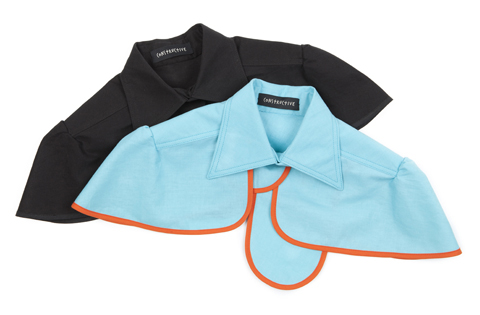


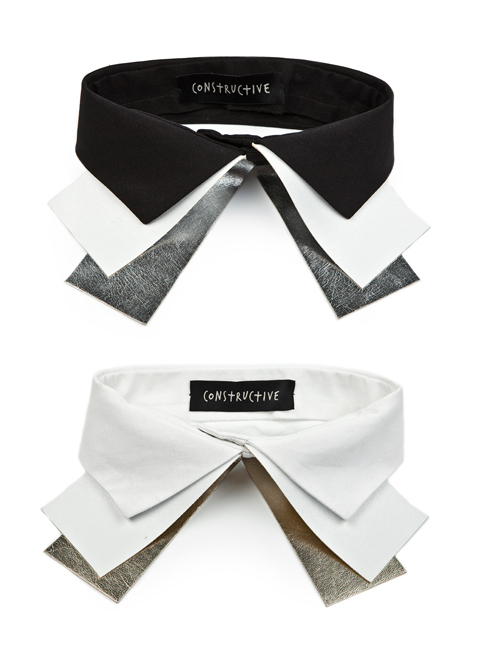
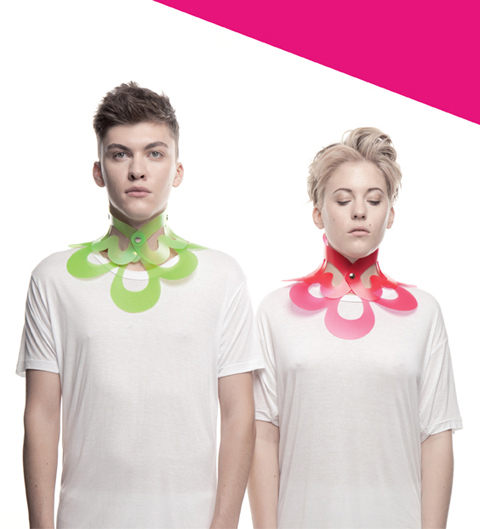

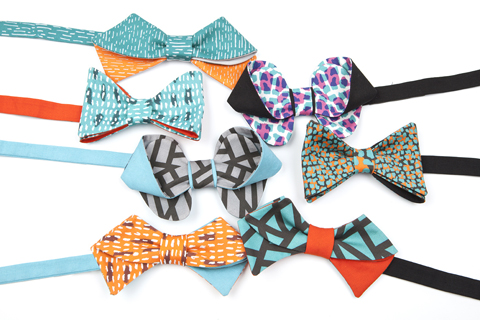


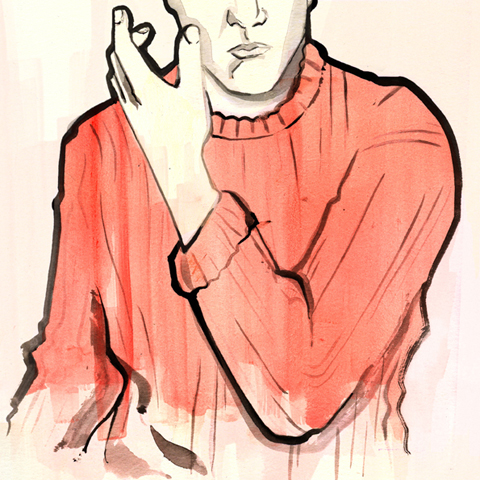


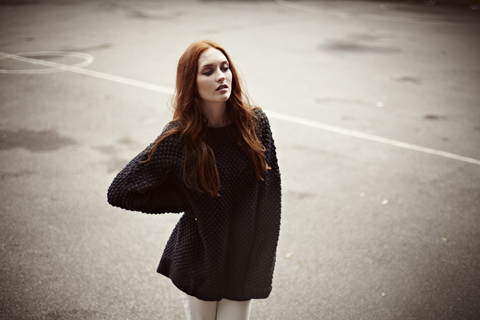


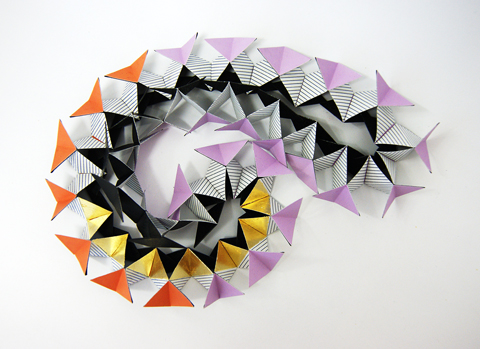


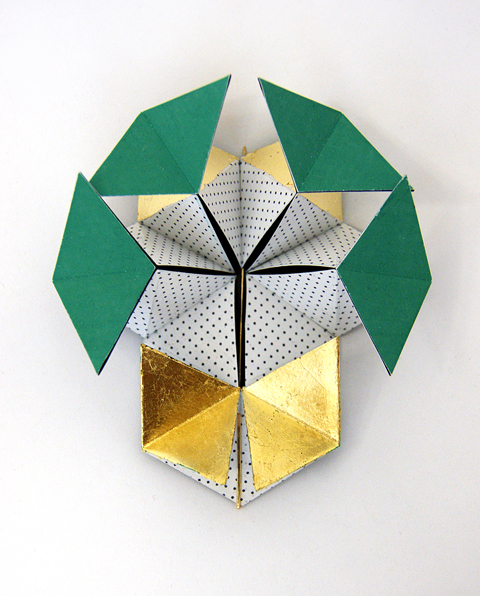

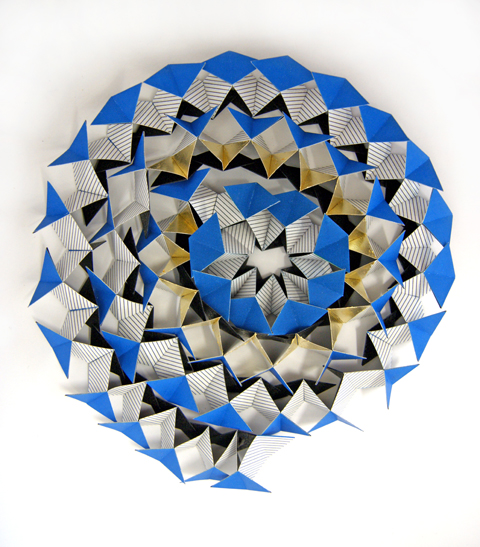
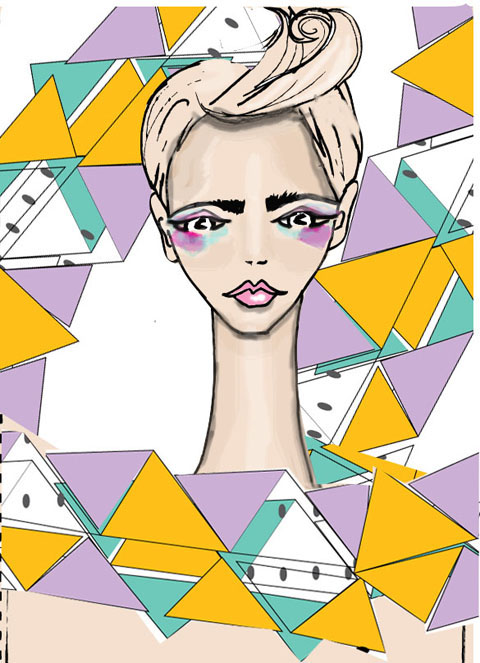


 Top illustration of