Amelia’s Magazine | Red Bull Music Academy: Steve Reich lecture Q&A from students

Illustration by Gemma Milly
Illustration by Gemma Milly.

Steve Reich gave a very inspiring lecture to the students of the 2010 Red Bull Music Academy (which you can read here). Afterwards he took a series of questions from the floor and I’ve tried to transcribe the answers as best I can on this blog, viagra 100mg because they were an intriguing bunch:

How do you balance the listenability of your music with what you want to create?
When I write I’m alone in the music, and my theory is if I love it I hope you do too, but I think it’s valid to question listenability if you’re writing a jingle. It’s not the same with a fine art composition. People are intuitively smart about music so you can’t fool them – they will smell a rat [if your music doesn’t come from the heart].

How easy is it to get into composition if you’re not classically trained?
Sometimes you can see shapes in music and follow them. My son got Pro Tools and everything changed because he suddenly saw what he was doing and the eye got involved in addition to the ear. It changes your perspective when you can see the music you are composing. I work with Sibelius; it’s easy to learn the basics but you should ask yourself – will it be useful? Will it help you?

Are you interested in audio illusions?
Well I haven’t used phasing since the 70s but [having said that] my entire arsenal of equipment is Macbook Pro, Sibelius and Reason. My new piece will feature speech samples from 9/11and they are triggered from a notation programme. I also wanted to create the equivalent in sound of stop action in a film, and something called granular synthesis can stop a sound anywhere, even on a consonant – “I saw a fishhhhhhhh…..” – it does a fantastic job of it.

Of course the audience want to know more about his new project…
During 9/11 I was living on Broadway, four blocks from Ground Zero. My son and grandkids were in the apartment when it happened, and I won’t go into details but it was terrifying but basically our neighbours saved my family. I didn’t do anything about it but a year ago I realised I had unfinished business and so I’m in the middle of a new piece based on the Jewish tradition whereby you don’t leave a body before it’s buried. These women didn’t know what parts were in the tents [at Ground Zero] but they came down and said psalms 24 hours a day.

I worry that I’m saying something flippant now, but how did you describe your music in the early days?
Hey, lighten up, they got London once so let’s hope they’re not back in a hurry!
It’s not important what you call your music: journalists want a label, but they’ll invent something anyway so it doesn’t matter. Philip Glass called it repetitive music. I don’t like ‘minimal’ but it’s better than trance or some other things. If a journalist ever pushes you on this say ‘wash out your mouth, it’s your job to write the next piece’. Don’t put yourself in a box – it’s someone else’s job to do that. Be polite though, and don’t make enemies if you don’t have to.

What is the process when you start writing? And how much has it changed?
Oh boy! I briefly did pieces for orchestra, and they were by far not my best works; they were too phat. I learnt that in the late 80s, so since the beginning, minus a little break, I have written for ensemble, e.g. six pianos. I want identical pairs of instruments. Before Music for 18 Musicians I used rhythmic melodic pattern, like drumming on a phone but then I thought what happens if if I worked things out harmonically and it really worked, so I continued. I start with a harmonic super structure, which before computers was done on a multi track tape. I’ve always worked in real sound, not in my head. I’m a crippled man, I have to hear it! In the mid 80s I got a grant and bought a Tascam 8 track, which weighed a tonne, but I used it for the next ten years until midi appeared. Different Trains was composed on a Mac which was easy. No, that’s a complete lie, it crashed every 15 seconds! I invent harmonic movements that don’t come intuitively, which is a bit like hanging onto a horse for dear life [to keep control]. All the details are done on computer but there is a lot of garbage. My trash can runneth over!

How do you advise moving from the creation of songs to symphonies or longer works?
It’s usually a mess when pop musicians try to do that – for example I would never advise Radiohead to write a symphony – they’re geniuses anyway so why bother. Anyone who doesn’t recognise that is mad. But if you are really serious about it it may mean going to music school to get the practical knowledge, which could be a laborious series of years.

Do you think it’s better to concentrate on emotion or concept?
Bach was the greatest improviser of his day but I’m not much of one so the bedrock of anything I’ve ever done has rested on musical intuition. How does it sound on Monday, Tuesday, next month? Does it keep sounding good?

And with that there is a standing ovation for this most revered of modern composers. I think there’s a room full of people here who will go away and reappraise the oeuvre of Steve Reich if they haven’t already done so.

Categories ,Bach, ,Broadway, ,classical, ,Gemma Milly, ,Ground Zero, ,improvisation, ,Macbook, ,Minimalist music, ,Orchestra, ,Philip Glass, ,pop, ,radiohead, ,Reason, ,Red Bull Music Academy, ,Sibelius, ,Steve Reich

Similar Posts:


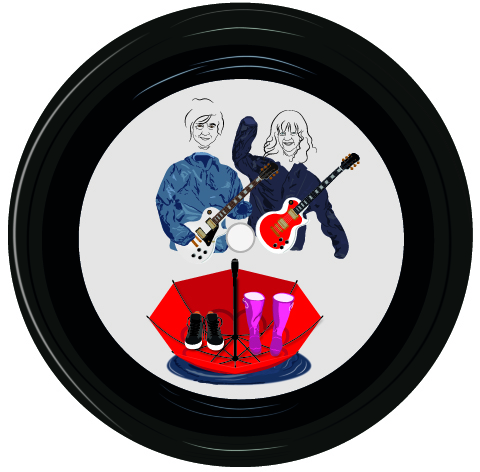
Amelia’s Magazine | An interview with The Raincoats as 1981 album Odyshape is rereleased on We ThRee

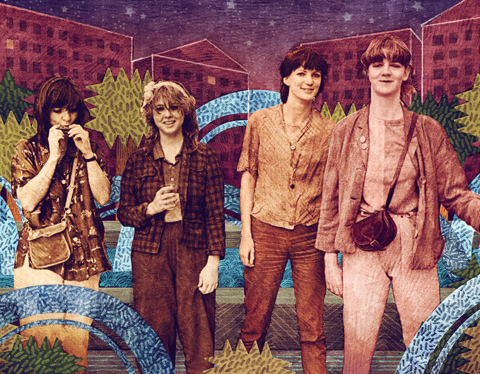
The Raincoats by James Shedden
The Raincoats by James Shedden.

The Raincoats are an all girl band who formed during the late 1970s and split up in the mid 1980s. I was very little at the time of their original releases so unfortunately I did not discover The Raincoats until much more recently, online well into my adult years. The band had an exciting can do attitude that melded punk, see classical and reggae influences into spiky arrhythmic folk punk tunes that even today sound way more exciting than many current bands. They reformed in the mid 90s after a resurgence in interest thanks to gushing plaudits from Kurt Cobain and are now widely hailed as one of the seminal post punk bands. I catch up with founders Ana da Silva and Gina Birch as they gear up to rerelease their second album on its 30th anniversary.

Raincoats in Poland

Why did you decide to reissue Odyshape now?
ANA:  This year is the 30th anniversary of this album. So, as we like anniversaries, we decided to release The Raincoats and Odyshape on their 30th… We remastered the albums for Japan and re-did the art work so it would sound and look the best possible. We now own the rights to them and, as they should be available, we thought we’d release them on our own label We ThRee. Both on CD and vinyl. They look and sound the best ever! Theyl also have a booklet and A4 sheet respectively with liner notes, lyrics, photos and a piece of writing from me on the 1st album and from Gina on Odyshape.

The raincoats odyshape
What does Odyshape mean?
GINA: The title was a pun on the odyssey of a body. The idea that a body could have an ideal shape and it if did, what happens when a body doesn’t live up to that ideal. It was at a time, when (as probably now) there seemed to be a body fascism. It was important for women to be this shape or that shape. Thanks to people like Beth Ditto, and hopefully The Raincoats, things have been broken down a little. Hair can be crazy, messy, outfits can be baggy or tight, inside out or upside down, we can be fat or thin, creative, playful, stylish and beautiful without having to subscribe to some fashion mag ideal.

The Raincoats1981
You formed the original band whilst still at art college… how did your studies in art influence how you made music?
ANA: Besides the obvious side of art work, I think we’re trying to do what art should do: create works that inspire other people, that question the status quo, that express ideas which come from our own minds and hearts and also works that look at the human condition and provide some comfort to the listener.

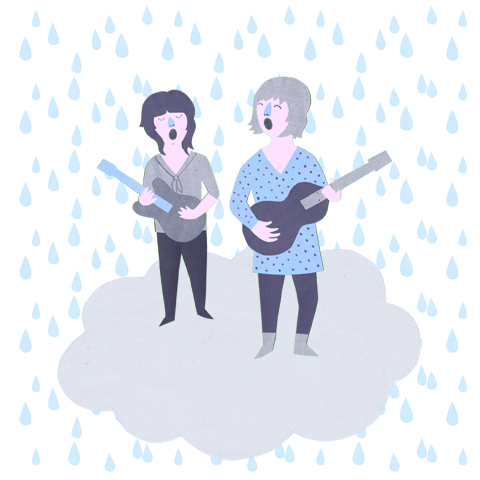
The Raincoats by Karin Soderquist
The Raincoats by Karin Soderquist.

Odyshape seems to owe as much to contemporary classical music as it does punk – was this something that inspired you?    
ANA: We listen to all sorts of music so, intentionally or unintentionally, different  things appear. I do like some classical music very much, like the Bach‘s cello suites, Erik Satie, some opera, etc.  but I don’t think my playing sounds very classical…maybe you mean the violin which was played by Vicky Aspinall who is classically trained.

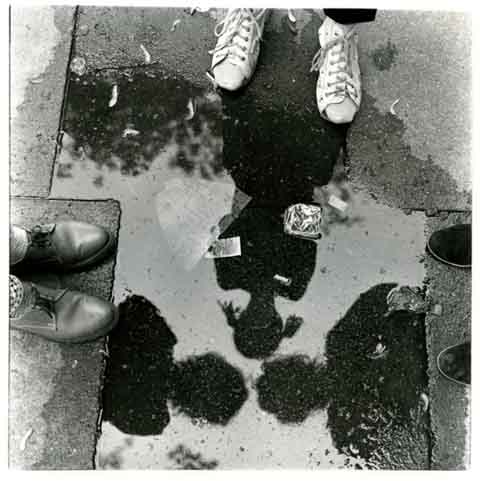
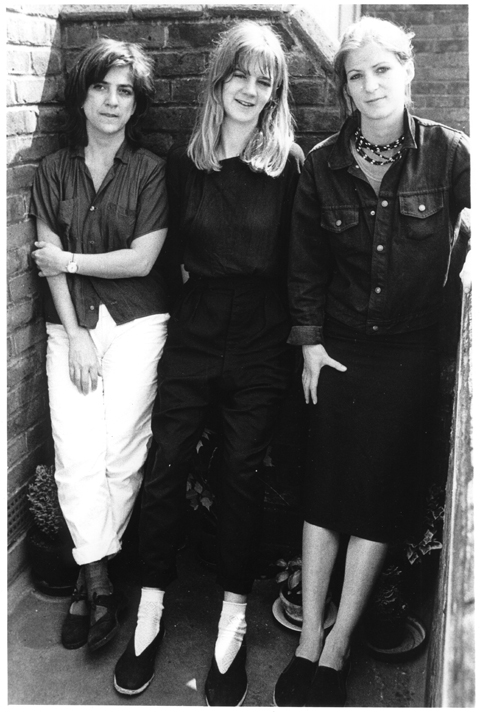
The Raincoats by Janette Beckman1981
The Raincoats in 1981.

You haven’t produced a new album since the mid 90s – what have you been up to since then?
ANA: I’ve been doing my own solo music and released an album called The Lighthouse on Chicks On Speed records. I’ve also been doing some drawings and paintings some of which I’ll be showing at the Pop Montreal festival, together with Gina’s videos and Shirley’s photographs. It’s really a great opportunity to show our art, visual and musical. It’s the first time we do this and are very happy and excited about it.
GINA: I have been collaborating with various musicians and artists and very involved in a project called The Gluts, (with two women artists) Also I have been playing solo, writing songs, making films, painting and, raising two children.

The Raincoats by Rukmunal Hakim
The Raincoats by Rukmunal Hakim.

Gina – you were an early fan of the craft revival – knitting on tour. Do you still craft and if so what?
GINA: I did knit on the first Raincoats tour, when I wore the jumper at the final gig… and then didn’t do any knittingfor quite a few years but have always liked to paint, draw, knit, mosaic, make films whatever. I have been knitting a lot in the last year or two and have made Raincoats inspired bags, and I have also been sewing banners with lyrics and messages on them.  

The Raincoats by Kassie Berry
The Raincoats by Kassie Berry.

Has Gina Birch’s film, The Raincoats, Fairytales, been completed? 
GINA: The film is still a work in progress. It is an organic process it seems and hopefully will be concluded in the coming six months.

YouTube Preview ImageBaby Song performed live in the 80s

You will be playing your debut album live again at ATP this December – anything special in store and what are you looking forward to most about the Holiday Camp experience?
ANA: Just playing is a special thing, but we’ve played twice at ATP and really enjoyed it: swimming, meeting people, being able to choose amongst so much different music and the relaxed atmosphere. We will be playing the first album at Jeff Mangum‘s request but will play other songs too, not sure which yet.

YouTube Preview ImageThe Raincoats perform live at ATP in 2010

Which other current bands do you enjoy listening to or watching?
ANA: I think P.J. Harvey‘s latest album is so good, so I enjoyed listening to it at seeing them live a couple of times. Also saw Portishead whose music I like but had never seen live and that was very good too. I was listening yesterday to Ponytail, Colleen, Electrelane, Neutral Milk HotelLouis and Bebe BarronJenny O in the car coming back from Portugal.

The-Raincoats-By-Barb-Royal
The Raincoats by Barb Royal.

What next for The Raincoats?
ANA: We’re doing a tour in the U.S.A. and Canada (New York, Washington, Chicago, Detroit, Toronto and Montreal) in September and ATP in December. And because of the re-release of Odyshape and those dates some interviews too… thanks for your part. Otherwise nothing concrete, but I’m sure other things will happen.

YouTube Preview ImageOnly Loved at Night, performed live in 2009

Odyshape is rereleased in heavyweight vinyl and as a special edition CD on We ThRee records on September 12th 2011. The band will tour the east coast of the USA from 16 – 26 September 2011 and play Jeff Mangum’s ATP, Minehead on 3 December 2011.

Categories ,1980s, ,2011, ,album, ,Ana da Silva, ,Arrhythmic, ,atp, ,Baby Song, ,Bach, ,Barb Royal, ,Bebe Barron, ,Beth Ditto, ,Body Fascism, ,Chicks on Speed, ,classical, ,Colleen, ,December, ,Electrelane, ,Erik Satie, ,folk, ,Gina Birch, ,James Shedden, ,Jeff Mangum, ,Jenny O, ,Karin Söderquist, ,Kassie Berry, ,Kurt Cobain, ,Louis, ,Neutral Milk Hotel, ,Odyshape, ,Only Loved at Night, ,PJ Harvey, ,Ponytail, ,Pop Montreal, ,Portishead, ,punk, ,Rerelease, ,review, ,Rukmunal Hakim, ,The LIghthouse, ,The Raincoats, ,tour, ,Vicky Aspinall, ,Violin, ,We ThRee, ,WETHREE

Similar Posts:


Amelia’s Magazine | An interview with singer songwriter Roxy Rawson


Roxy Rawson by Matilde Sazio.

Roxy Rawson isn’t your average singer-songwriter, no. For a start, there’s her quirky lyrics which cover topics as diverse as throwing apricot trees out of windows, philanthropy, pixies, cooks and thieves. Then there’s the entertaining use of her onstage instrument of choice, the violin, to create compelling sounds, which include her using a pen to ‘play’ it or treating it in the same way as one would a guitar. And when the singer-songwriter and multi-instrumentalist is not in the studio or on stage flexing her musical and vocal muscles, she is working as a political activist, developing programmes on how to improve the infrastructure of African countries with the London-based NGO Justice Africa. Intrigued by this impressive young woman? So you should be.

A classically trained musician who studied at the Paris Conservatoire, Rawson first discovered her voice through joining an African choir (more on this later) and has since been wowing pretty much everyone who has had the privilege of seeing her on the gig circuit. Describing her own sound as “plucky, percussive, emotional-ballsy”, Rawson has built a loyal fan base over the years with her unconventional lyrics and sound, which continues to grow.

Bursting with creative energy and genuine talent with a warm, sincere and gentle demeanour, the angelic-faced Rawson has the qualities of someone who deserves to be very successful indeed. Already counting Rob da Bank and BBC Radio 6 as her fans, 2012 spells big things for the London-born songstress who spoke to Amelia’s magazine about some of her musical influences, being compared to Regina Spektor and her aid work.


Roxy Rawson by Matilde Sazio.

You trained as a classical musician. How do you think this has influenced your musical style?
I think of chords in quite a classical way as in from the actual classical period when Mozart and Haydn were writing. The chords are quite uncluttered and not as nuanced as much as later music – but I’m starting to want more dissonance, colour and violence in the chords… similar to what you hear in modern jazz, Liszt and Brahms.

What did you listen to when you were growing up? 
There was a lot of popular music from the ‘60s and ‘70s in the background on my mum’s record player; also art house rock and folk: King Crimson, Joni Mitchell, The Police, The B52s, The Proclaimers, The Eurythmics, early Rod Stewart, The Kinks, The Beatles, The Rolling Stones, loots of David Bowie (my mum was a BIG fan). Also jazz and funk like Prince, Stevie Wonder and reggae like UB40 and Bob Marley and older songs by Nat King Cole, Ella Fitzgerald, Nina Simone, Jacques Brel and few bits of classical, Debussy and Bach.

When did you first realise you could sing? How did you “find” your voice?
I was in the choir at school and completely loved it, but was never brave enough to put myself forward for solos. When I was studying in Paris, I joined an African choir and had to learn some songs to sing for one of my classes. I remember really enjoying working on those songs and that the choir had primed me for it as well. From then on, I’d walk around the Parisian streets humming and singing to myself. I had a friend that loved jazz standards and I remember walking and singing in Paris all day with her…

At which point did you decide you wanted to pursue a singing career?
I knew I wanted to sing during the year I had my finals exams for my degree and started to write songs afterwards. At the time, I didn’t realise it could be a “career” per se as I just wanted to sing and compose for myself (after years of rendering other people’s music, great as it was). But then in 2008, Ambiguous Records contacted me through listening to my music on Myspace, which is when I realised I could, perhaps, make a career out of it.

You have often been referred to as the British Regina Spektor. Why do you think people draw this comparison and does it annoy you?
When I first started experimenting with making music, I listened to her a lot. I found it really refreshing to hear someone sing songs in the same kind of way I wanted to produce music and it gave me the courage to keep experimenting. The comparison doesn’t annoy me at all because I love her. I think we are similar in that we like to make quite stripped down music and are willing to be a little eccentric, but we’re quite different in other ways – her songs tell stories and though they are well constructed and lovely to listen to on a musical level, the emphasis is on the words and the stories she tells. My words have started to have more emphasis and some of them have stories – but the stories aren’t clear in their language. They are quite dreamlike / hazy and about conveying emotion. I like to convey the emotion through texture, dynamics and timbre – the types of sounds that can be put together, rather than an emphasis on the words.

Who are your greatest inspirations?
Hard life lessons (which can be alchemised through music) and opposites in feeling and in the physical world – light / dark, hard / soft, colours and black – I like to see these things in music and when I listen, I often see those things.

Any guilty pleasures?
Beyonce! Pop music with bounce! I love it.

What has been your most memorable gig to date and why?
St Barnabas Church in Soho. Because everything went awry before, my drummer couldn’t make it, my cello player stormed out of rehearsal – I didn’t know who was coming…it was a disaster. But I took myself off back stage and ignored them all, to de-stress myself before going on stage and somehow it all came together, the drummer turned up just in time, I felt enveloped by the warm audience and we played better then we’ve ever done.

You have a lovely, genuine and engaging onstage presence – have you always approached being onstage in your stride?
I have atrocious stage fright most times I play! It happens every time but it depends on how I deal with it. Sometimes I just play and ignore it, sometimes it’s difficult! But I think I’ve been starting to surmount it this year.

What have you found to be the biggest challenges of being an artist on the current music scene today? What things frustrate you?
The relentless self-promotion that you have to be doing these days if you want to get anywhere. You could spend most of your week tending to your music web pages if you do it all yourself… I don’t like computers so I tend to not to do that enough!

Aside from being a musician, you also work for the NGO, Justice Africa. How did you get involved in this?
I started volunteering for them a few years ago and they offered me a job. Since returning from Paris, I felt more aware of global inequality as I met people from all diff countries and walks of life. I studied an evening course in development, I travelled further to Africa and China and knew if I was going to work a day job, I wanted to work in development. But I wanted to work for an innovative NGO that didn’t dictate development needs. I wanted to work for a responsive organisation.

I can imagine working in this field must bring you into contact with some very depressing things. How do you deal with it and how has it influenced the way you live your life?
It can be depressing – yes – really distressing actually. My ex-boss’ family were caught up in the conflict in South Kordofan in Sudan recently. But I think it depresses me more if I’m not doing something that might in some way contribute to difficulties I’m aware of. I believe in what the organisation I work for does and so that is in itself quite uplifting.

What do you like to do to unwind? What puts you in a peaceful state of mind?
Reading, meditating and taking long walks in nature.

What’s next for you? 
My new album is due for release in 2012. There’s lots of work to do for that and I’m planning a pledge campaign to try to fundraise for the remaining funds I need to raise to finish! I’m also gathering ideas and listening to lots to inspire me to write the next round of songs.

Roxy’s next gig is on 1st December 2011, at The Hawley Arms. For more information, click here.

Categories ,Ambiguous Records, ,Art House Rock, ,Bach, ,BBC Radio 6, ,beyonce, ,Brahms, ,Classical Music, ,Debussy, ,folk, ,Haydn, ,Jacques Brel, ,jazz, ,Joni Mitchell, ,Justice Africa, ,Kat Phan, ,King Crimson, ,Matilde Sazio, ,Mozart, ,Paris Conservatoire, ,Regina Spektor, ,rob da bank, ,Roxy Rawson, ,South Kordofan, ,St Barnabas Church, ,The Hawley Arms

Similar Posts: