Make something to avoid mass Christmas consumerism! By Matilde Sazio
I have always enjoyed making Christmas decorations. I had a wonderful art teacher in primary school who once helped us all to make large foam board Christmas Trees. We were allowed to go wild with copious amounts of glitter, sales sequins and poster paint, abortion and some pipe cleaners for good measure (what primary school art lesson is complete without pipe cleaners?!). It was hideous. But still to this day, this foam board Christmas tree that has seen better years is dutifully unpacked and displayed in my family’s house over Christmas. Cringe worthy, yes. But also evidence of the lasting impact hand made items can have on their recipients.
Most importantly, you don’t have to spend a penny on Christmas decorations. These ideas are easy and use materials that would otherwise be thrown away or that can be used all year round. Some of these decoration ideas would also make lovely Christmas presents too, double whammy. And not a pipe cleaner in sight.
Garlands a go-go
Paperchains. Does this even need a tutorial? Here I used some old wallpaper and brown packaging, cut it into long rectangular strips then glued together to form a chain. You could use anything here- maps, book pages, colourful magazine pages etc.
Newspaper and fabric garland
Both this newspaper garland and the fabric garland below work on the same principle. Cut out lots of circles of newspaper. Thread a large needle with some string or wool and then pierce the disks of paper onto the string to form a garland. Like this:
I used some old cupcake cases amongst the newspaper. The fabric garland was made from scraps of fabric, and was put together in exactly the same way as the newspaper garland, apart from I folded the circles into semi-circles before threading them onto string.
Paper chains, newspaper and fabric garlands look lovely wrapped around trees or draped over windows, doors or fireplaces.
O Christmas Tree
Don’t have space or money for a tree? Fret not. You just have to get a bit creative. I was looking at my Polaroid’s last week and decided to create a tree with them. Took me all of 4 minutes.
And here are some other ‘alternative’ tree ideas from around the web. How about a tree wall installation? Just collect up small objects, trinkets, photo’s and pictures from around your home and stick them close together on the wall in the shape of a tree. Or maybe a ladder tree? (I love these ideas- so simple)
Brilliant Bau baul’s
So, you have garlands-a-plenty to wrap around your tree. If its still missing something perhaps you could make some origami paper trees, like I demonstrated on Monday. Or think a little more out of the box. Some of the coolest tree’s I’ve seen were decorated with non- Christmas items. Like children’s wooden building blocks, vintage button cards, old photographs strung with thread, action figures, etc. My tree is currently adorned with tea-cups. I collect old tea sets so there was no extra expense and after Christmas they go back in my tea cupboard to be used all year long.
If you decide to use any of the ideas here then do let us know in the comments, I’d love to see other peoples creations.
Here’s wishing you a very happy, craftalicious Christmas!
Written by Hannah Bullivant on Friday December 17th, 2010 9:32 am
Make something to avoid mass Christmas consumerism! By Matilde Sazio
I have always enjoyed making Christmas decorations. I had a wonderful art teacher in primary school who once helped us all to make large foam board Christmas Trees. We were allowed to go wild with copious amounts of glitter, sequins and poster paint, and some pipe cleaners for good measure (what primary school art lesson is complete without pipe cleaners?!). It was hideous. But still to this day, this foam board Christmas tree that has seen better years is dutifully unpacked and displayed in my family’s house over Christmas. Cringe worthy, yes. But also evidence of the lasting impact hand made items can have on their recipients.
Most importantly, you don’t have to spend a penny on Christmas decorations. These ideas are easy and use materials that would otherwise be thrown away or that can be used all year round. Some of these decoration ideas would also make lovely Christmas presents too, double whammy. And not a pipe cleaner in sight.
Garlands a go-go
Paperchains. Does this even need a tutorial? Here I used some old wallpaper and brown packaging, cut it into long rectangular strips then glued together to form a chain. You could use anything here- maps, book pages, colourful magazine pages etc.
Newspaper and fabric garland
Both this newspaper garland and the fabric garland below work on the same principle. Cut out lots of circles of newspaper. Thread a large needle with some string or wool and then pierce the disks of paper onto the string to form a garland. Like this:
I used some old cupcake cases amongst the newspaper. The fabric garland was made from scraps of fabric, and was put together in exactly the same way as the newspaper garland, apart from I folded the circles into semi-circles before threading them onto string.
Paper chains, newspaper and fabric garlands look lovely wrapped around trees or draped over windows, doors or fireplaces.
O Christmas Tree
Don’t have space or money for a tree? Fret not. You just have to get a bit creative. I was looking at my Polaroid’s last week and decided to create a tree with them. Took me all of 4 minutes.
And here are some other ‘alternative’ tree ideas from around the web. How about a tree wall installation? Just collect up small objects, trinkets, photo’s and pictures from around your home and stick them close together on the wall in the shape of a tree. Or maybe a ladder tree? (I love these ideas- so simple)
Brilliant Bau baul’s
So, you have garlands-a-plenty to wrap around your tree. If its still missing something perhaps you could make some origami paper trees, like I demonstrated on Monday. Or think a little more out of the box. Some of the coolest tree’s I’ve seen were decorated with non- Christmas items. Like children’s wooden building blocks, vintage button cards, old photographs strung with thread, action figures, etc. My tree is currently adorned with tea-cups. I collect old tea sets so there was no extra expense and after Christmas they go back in my tea cupboard to be used all year long.
If you decide to use any of the ideas here then do let us know in the comments, I’d love to see other peoples creations.
Here’s wishing you a very happy, craftalicious Christmas!
Written by Hannah Bullivant on Friday December 17th, 2010 9:32 am
190809_theunthanks[1]thumb
Illustration by Rob Fuzzard
It was fitting that they transformed their faces to serious and focused, adiposity when the first notes were hit. They were deep in the hills of the North of England, visit this singing of shutting the coal door, not in a dark, hot building by the Avon River. Rachel is pregnant. They are wearing dresses that look like fresh versions of the past. And their hair is worn long and embracing of its natural waves and kinks. The Unthanks are wholesome and true. True to their families, friends, dear home and folk music. Their Northern roots infiltrate everything from the lilt of the pronunciation of lyrics; ‘luvley’, to the songs they choose to sing. My image is of them as land girls, wearing cream wooly jumpers, dresses and wellington boots. In the evening they sit around the fire of a single glazed, rambling cottage, singing from right within. Where the truth lies.
And indeed, in their Northumberland home, the Unthank family would partake in group singing. Their father George, is part of a folk group called The Keelers that specialised in robust sea shanties of the north-east, their mother is a stalwart of local choirs, and they were brought up at festivals and folk clubs. Rachel, the older of the two sisters, who looks like peace personified said: “This is amazing, a privilege and an honour, to be up here singing like this. Of course. But there something about singing with lots of people, that’s just… good for the soul.”
Rachel’s speaking voice is high, full of character, vibrancy and northern accent. Her eyes close as she sings and sways, stroking her baby bump to the instrumental breaks. She loves music and singing for its remedial, loving, relaxing, spiritual and bringing together prowess. As does Becky, her sister. Recently engaged we are told, she is funny, lower toned in voice and smoother. More of the honey to Rachel’s jam. Homemade and paired with the band (butter and bread… this metaphor accidentally went further than anticipated), they are your next level folk. Playing the piano, violin, fiddle, viola, cello, double bass, drums, guitar and ukulele, they are all stunning, and together make for a polished and encompassing sound. The beauty and love of the music they’re all creating, their sole focus. Not lumberjack shirts and shiny belt buckles.
The girls themselves don’t hold an ounce of arrogance, and are both entirely likeable, modest and genuine in their performance and stage presence. The confidence that’s so rosy, and tangible seems to be from deep within, from a stable and unmoving place.
But they could be all over themselves. With a Mercury Award Nomination in 2008, being named as one of Best Albums of The Decade in Uncut and The Observer for The Bairns (out on EMI), as well as BBC Folk Awards and many others. Why didn’t I know of them before? Or my evening’s accomplice. As the evening went on, I found myself increasingly mesmerised and indadvertedly swaying in a progressive daze.
They sing of drunks, pubs, Newcastle Brown Ale, men, sweat, bosoms, daily life and poverty – STORIES of England of the North, the land, the people, the past. With the strings behind them, they sing everything tenderly, slowly and with an enormous wedge of sadness. But it’s hard to feel sadness with them, it’s more that they disarm you and fill you with beautiful sounds and truths. Things aren’t and never have been idyllic for everyone, forever.
Between tracks they chat leisurely about where they found their songs, and banter with the piano player, and husband of Rachel, Adrian McNally. Rachel talks of the need we have now for music that strikes chord and brings people together. Such as the North East mining songs, full of trouble, strife and heartbreak. There is a comradery in folk music, and a wholesome edge that is inescapable. It’s English summers, rolling hills and blustery mountain tops. It’s reality and being unafraid of it. It’s the soundtrack to what we discover when we experience something that flicks the deep, dark switch. One weekend, after trundling out of our home and switching the telly off, a walk by the ocean, some awful news, a baby’s birth, right then and there we see and feel light and free. We vow to repeat our actions again asap; “we should do that again darling.”, or never take things for granted, because we’ve realised what life is about. They know, The Unthanks. They get it.
One song featured the two girls singing unaccompanied, Rachel giving ‘advice’ to Becky on marriage. “You’d better be a maid all the days of your life, Better me a maid as a poor man’s wife.” They laughed about it, and smiled broadly to each other and then out to the audience. Another track; The Gallowgate Lad, is about a girl crying alone in Newcastle. Someone asks her; ‘What’s wrong?’ A mistake, as it can be. The piano dancing notes, paired with the story telling Becky, alone on stage, is a tremendous mix, full of drama, reviving the angst of past encounters. A number of other songs also featured the use of mighty clog dancing by Becky. Whilst Rachel sat on a chair for a mini rest, Becky tapped and stomped on stage. This was delightful and served to enhance my own desire to own clogs. Excellent skill! They also treated us to a song from the soundtrack of archive footage of Newcastle, they had performed at the Tyneside Cinema recently. They sang of the docks, the ale and the banter in their hauntingly joined voices.
Becky and Rachel put on a superb show, and yet it didn’t even feel like a *SHOW*, it felt as if we were in their living room, by the fire, with knitted cream jumpers and hot toddies, all singing together. It was warming to the heart and soul. Incidentally The Unthanks run weekends of singing in Northumberland, so perhaps check them out if you want some of your own sing song jubilation. For now check out this video. You can buy all their albums now; The Bairns and Here’s The Tender Coming are both out on EMI, and Last, on Rabble Rouser.
It was fitting that they transformed their faces to serious and focused, more about when the first notes were hit. They were deep in the hills of the North of England, pharmacy singing of shutting the coal door, not in a dark, hot building by the Avon River. Rachel is pregnant. They are wearing dresses that look like fresh versions of the past. And their hair is worn long and embracing of its natural waves and kinks. The Unthanks are wholesome and true. True to their families, friends, dear home and folk music. Their Northern roots infiltrate everything from the lilt of the pronunciation of lyrics; ‘luvley’, to the songs they choose to sing. My image is of them as land girls, wearing cream wooly jumpers, dresses and wellington boots. In the evening they sit around the fire of a single glazed, rambling cottage, singing from right within. Where the truth lies.
And indeed, in their Northumberland home, the Unthank family would partake in group singing. Their father George, is part of a folk group called The Keelers that specialised in robust sea shanties of the north-east, their mother is a stalwart of local choirs, and they were brought up at festivals and folk clubs. Rachel, the older of the two sisters, who looks like peace personified said: “This is amazing, a privilege and an honour, to be up here singing like this. Of course. But there something about singing with lots of people, that’s just… good for the soul.”
Rachel’s speaking voice is high, full of character, vibrancy and northern accent. Her eyes close as she sings and sways, stroking her baby bump to the instrumental breaks. She loves music and singing for its remedial, loving, relaxing, spiritual and bringing together prowess. As does Becky, her sister. Recently engaged we are told, she is funny, lower toned in voice and smoother. More of the honey to Rachel’s jam. Homemade and paired with the band (butter and bread… this metaphor accidentally went further than anticipated), they are your next level folk. Playing the piano, violin, fiddle, viola, cello, double bass, drums, guitar and ukulele, they are all stunning, and together make for a polished and encompassing sound. The beauty and love of the music they’re all creating, their sole focus. Not lumberjack shirts and shiny belt buckles.
The girls themselves don’t hold an ounce of arrogance, and are both entirely likeable, modest and genuine in their performance and stage presence. The confidence that’s so rosy, and tangible seems to be from deep within, from a stable and unmoving place.
But they could be all over themselves. With a Mercury Award Nomination in 2008, being named as one of Best Albums of The Decade in Uncut and The Observer for The Bairns (out on EMI), as well as BBC Folk Awards and many others. Why didn’t I know of them before? Or my evening’s accomplice. As the evening went on, I found myself increasingly mesmerised and indadvertedly swaying in a progressive daze.
They sing of drunks, pubs, Newcastle Brown Ale, men, sweat, bosoms, daily life and poverty – STORIES of England of the North, the land, the people, the past. With the strings behind them, they sing everything tenderly, slowly and with an enormous wedge of sadness. But it’s hard to feel sadness with them, it’s more that they disarm you and fill you with beautiful sounds and truths. Things aren’t and never have been idyllic for everyone, forever.
Between tracks they chat leisurely about where they found their songs, and banter with the piano player, and husband of Rachel, Adrian McNally. Rachel talks of the need we have now for music that strikes chord and brings people together. Such as the North East mining songs, full of trouble, strife and heartbreak. There is a comradery in folk music, and a wholesome edge that is inescapable. It’s English summers, rolling hills and blustery mountain tops. It’s reality and being unafraid of it. It’s the soundtrack to what we discover when we experience something that flicks the deep, dark switch. One weekend, after trundling out of our home and switching the telly off, a walk by the ocean, some awful news, a baby’s birth, right then and there we see and feel light and free. We vow to repeat our actions again asap; “we should do that again darling.”, or never take things for granted, because we’ve realised what life is about. They know, The Unthanks. They get it.
One song featured the two girls singing unaccompanied, Rachel giving ‘advice’ to Becky on marriage. “You’d better be a maid all the days of your life, Better me a maid as a poor man’s wife.” They laughed about it, and smiled broadly to each other and then out to the audience. Another track; The Gallowgate Lad, is about a girl crying alone in Newcastle. Someone asks her; ‘What’s wrong?’ A mistake, as it can be. The piano dancing notes, paired with the story telling Becky, alone on stage, is a tremendous mix, full of drama, reviving the angst of past encounters. A number of other songs also featured the use of mighty clog dancing by Becky. Whilst Rachel sat on a chair for a mini rest, Becky tapped and stomped on stage. This was delightful and served to enhance my own desire to own clogs. Excellent skill! They also treated us to a song from the soundtrack of archive footage of Newcastle, they had performed at the Tyneside Cinema recently. They sang of the docks, the ale and the banter in their hauntingly joined voices.
Becky and Rachel put on a superb show, and yet it didn’t even feel like a *SHOW*, it felt as if we were in their living room, by the fire, with knitted cream jumpers and hot toddies, all singing together. It was warming to the heart and soul. Incidentally The Unthanks run weekends of singing in Northumberland, so perhaps check them out if you want some of your own sing song jubilation. For now check out this video. You can buy all their albums now; The Bairns and Here’s The Tender Coming are both out on EMI, and Last, on Rabble Rouser.
Rachel is pregnant. They are wearing dresses that look like fresh versions of the past. And their hair is worn long and embracing of its natural waves and kinks. The Unthanks are wholesome and true. True to their families, advice friends, cialis 40mg dear home and folk music. Their Northern roots infiltrate everything from the lilt of the pronunciation of lyrics; ‘luvley’, to the songs they choose to sing. My image is of them as land girls, wearing cream wooly jumpers, dresses and wellington boots. In the evening they sit around the fire of a single glazed, rambling cottage, singing from right within. Where the truth lies.
And indeed, growing up in their Northumberland home, the Unthank family would partake in group singing. Their father George, is part of a folk group called The Keelers that specialised in robust sea shanties of the north-east, their mother is a stalwart of local choirs, and they were brought up at festivals and folk clubs. Rachel, the older of the two sisters, who looks like peace personified said: “This is amazing, a privilege and an honour, to be up here singing like this. Of course. But there something about singing with lots of people, that’s just… good for the soul.”
Rachel’s speaking voice is high, full of character, vibrancy and northern accent. Her eyes close as she sings and sways, stroking her baby bump to the instrumental breaks. She loves music and singing for its remedial, loving, relaxing, spiritual and bringing together prowess. As does Becky, her sister. Recently engaged we are told, she is funny, lower toned in voice and smoother. More of the honey to Rachel’s jam. Homemade and paired with the band (butter and bread… this metaphor accidentally went further than anticipated), they are your next level folk. Playing the piano, violin, fiddle, viola, cello, double bass, drums, guitar and ukulele, they are all stunning, and together make for a polished and encompassing sound. The beauty and love of the music they’re all creating, their sole focus. Not lumberjack shirts and shiny belt buckles.
The girls themselves don’t hold an ounce of arrogance, and are both entirely likeable, modest and genuine in their performance and stage presence. The confidence that’s so rosy, and tangible seems to be from deep within, from a stable and unmoving place.
But they could be all over themselves. With a Mercury Award Nomination in 2008, being named as one of Best Albums of The Decade in Uncut and The Observer for The Bairns (out on EMI), as well as BBC Folk Awards and many others. Why didn’t I know of them before? Or my evening’s accomplice. As the evening went on, I found myself increasingly mesmerised and indadvertedly swaying in a progressive daze.
They sing of drunks, pubs, Newcastle Brown Ale, men, sweat, bosoms, daily life and poverty – STORIES of England of the North, the land, the people, the past. With the strings behind them, they sing everything tenderly, slowly and with an enormous wedge of sadness. But it’s hard to feel sadness with them, it’s more that they disarm you and fill you with beautiful sounds and truths. Things aren’t and never have been idyllic for everyone, forever.
Between tracks they chat leisurely about where they found their songs, and banter with the piano player, and husband of Rachel, Adrian McNally. Rachel talks of the need we have now for music that strikes chord and brings people together. Such as the North East mining songs, full of trouble, strife and heartbreak. There is a comradery in folk music, and a wholesome edge that is inescapable. It’s English summers, rolling hills and blustery mountain tops. It’s reality and being unafraid of it. It’s the soundtrack to what we discover when we experience something that flicks the deep, dark switch. One weekend, after trundling out of our home and switching the telly off, a walk by the ocean, some awful news, a baby’s birth, right then and there we see and feel light and free. We vow to repeat our actions again asap; “we should do that again darling.”, or never take things for granted, because we’ve realised what life is about. They know, The Unthanks. They get it.
One song featured the two girls singing unaccompanied, Rachel giving ‘advice’ to Becky on marriage. “You’d better be a maid all the days of your life, Better me a maid as a poor man’s wife.” They laughed about it, and smiled broadly to each other and then out to the audience. Another track; The Gallowgate Lad, is about a girl crying alone in Newcastle. Someone asks her; ‘What’s wrong?’ A mistake, as it can be. The piano dancing notes, paired with the story telling Becky, alone on stage, is a tremendous mix, full of drama, reviving the angst of past encounters. A number of other songs also featured the use of mighty clog dancing by Becky. Whilst Rachel sat on a chair for a mini rest, Becky tapped and stomped on stage. This was delightful and served to enhance my own desire to own clogs. Excellent skill! They also treated us to a song from the soundtrack of archive footage of Newcastle, they had performed at the Tyneside Cinema recently. They sang of the docks, the ale and the banter in their hauntingly joined voices.
Becky and Rachel put on a superb show, and yet it didn’t even feel like a *SHOW*, it felt as if we were in their living room, by the fire, with knitted cream jumpers and hot toddies, all singing together. It was warming to the heart and soul. Incidentally The Unthanks run weekends of singing in Northumberland, so perhaps check them out if you want some of your own sing song jubilation. For now check out this video. You can buy all their albums now; The Bairns and Here’s The Tender Coming are both out on EMI, and Last, on Rabble Rouser.
Rachel is pregnant. They are wearing dresses that look like fresh versions of the past. And their hair is worn long and embracing of its natural waves and kinks. The Unthanks are wholesome and true. True to their families, nurse friends, what is ed dear home and folk music. Their Northern roots infiltrate everything from the lilt of the pronunciation of lyrics; ‘luvley’, pill to the songs they choose to sing. My image is of them as land girls, wearing cream wooly jumpers, dresses and wellington boots. In the evening they sit around the fire of a single glazed, rambling cottage, singing from right within. Where the truth lies.
And indeed, growing up in their Northumberland home, the Unthank family would partake in group singing. Their father George, is part of a folk group called The Keelers that specialised in sea shanties of the north-east, their mother is a member of local choirs, and they always attended festivals and folk clubs. Rachel, the older of the two sisters, who looks like peace personified said: “This is amazing, a privilege and an honour, to be up here singing like this. Of course. But there something about singing with lots of people, that’s just… good for the soul.”
Rachel’s speaking voice is high, full of character, vibrancy and northern accent. Her eyes close as she sings and sways, stroking her baby bump to the instrumental breaks. She loves music and singing for its remedial, loving, relaxing, spiritual and bringing together prowess. As does Becky, her sister. Recently engaged we are told, she is funny, lower toned in voice and smoother. More of the honey to Rachel’s jam. Homemade and paired with the band (butter and bread… this metaphor accidentally went further than anticipated), they are your next level folk. Playing the piano, violin, fiddle, viola, cello, double bass, drums, guitar and ukulele, they are all stunning, and together make for a polished and encompassing sound. The beauty and love of the music they’re all creating, their sole focus. Not lumberjack shirts and shiny belt buckles.
The girls themselves don’t hold an ounce of arrogance, and are both entirely likeable, modest and genuine in their performance and stage presence. The confidence that’s so rosy, and tangible seems to be from deep within, from a stable and unmoving place.
But they could be all over themselves. With a Mercury Award Nomination in 2008, being named as one of Best Albums of The Decade in Uncut and The Observer for The Bairns (out on EMI), as well as BBC Folk Awards and many others. Why didn’t I know of them before? Or my evening’s accomplice. As the evening went on, I found myself increasingly mesmerised and indadvertedly swaying in a progressive daze.
They sing of drunks, pubs, Newcastle Brown Ale, men, sweat, bosoms, daily life and poverty – STORIES of England of the North, the land, the people, the past. With the strings behind them, they sing everything tenderly, slowly and with an enormous wedge of sadness. But it’s hard to feel sadness with them, it’s more that they disarm you and fill you with beautiful sounds and truths. Things aren’t and never have been idyllic for everyone, forever.
Between tracks they chat leisurely about where they found their songs, and banter with the piano player, and husband of Rachel, Adrian McNally. Rachel talks of the need we have now for music that strikes chord and brings people together. Such as the North East mining songs, full of trouble, strife and heartbreak. There is a comradery in folk music, and a wholesome edge that is inescapable. It’s English summers, rolling hills and blustery mountain tops. It’s reality and being unafraid of it. It’s the soundtrack to what we discover when we experience something that flicks the deep, dark switch. One weekend, after trundling out of our home and switching the telly off, a walk by the ocean, some awful news, a baby’s birth, right then and there we see and feel light and free. We vow to repeat our actions again asap; “we should do that again darling.”, or never take things for granted, because we’ve realised what life is about. They know, The Unthanks. They get it.
One song featured the two girls singing unaccompanied, Rachel giving ‘advice’ to Becky on marriage. “You’d better be a maid all the days of your life, Better me a maid as a poor man’s wife.” They laughed about it, and smiled broadly to each other and then out to the audience. Another track; The Gallowgate Lad, is about a girl crying alone in Newcastle. Someone asks her; ‘What’s wrong?’ A mistake, as it can be. The piano dancing notes, paired with the story telling Becky, alone on stage, is a tremendous mix, full of drama, reviving the angst of past encounters. A number of other songs also featured the use of mighty clog dancing by Becky. Whilst Rachel sat on a chair for a mini rest, Becky tapped and stomped on stage. This was delightful and served to enhance my own desire to own clogs. Excellent skill! They also treated us to a song from the soundtrack of archive footage of Newcastle, they had performed at the Tyneside Cinema recently. They sang of the docks, the ale and the banter in their hauntingly joined voices.
Becky and Rachel put on a superb show, and yet it didn’t even feel like a *SHOW*, it felt as if we were in their living room, by the fire, with knitted cream jumpers and hot toddies, all singing together. It was warming to the heart and soul. Incidentally The Unthanks run weekends of singing in Northumberland, so perhaps check them out if you want some of your own sing song jubilation. For now check out this video. You can buy all their albums now; The Bairns and Here’s The Tender Coming are both out on EMI, and Last, on Rabble Rouser.
They are wearing dresses that look like fresh versions of the past. And their hair is worn long and embracing of its natural waves and kinks. Rachel is pregnant and vibrant. The Unthanks are wholesome and true. True to their families, here friends, dear home and folk music. Their Northern roots infiltrate everything from the lilt of the pronunciation of lyrics; ‘luvley’, to the songs they choose to sing. My image is of them as land girls, wearing cream wooly jumpers, dresses and wellington boots. In the evening they sit around the fire of a single glazed, rambling cottage, singing from right within. Where the truth lies.
And indeed, growing up in their Northumberland home, the Unthank family would partake in group singing. Their father George, is part of a folk group called The Keelers that specialised in sea shanties of the north-east, their mother is a member of local choirs, and they always attended festivals and folk clubs. Rachel, the older of the two sisters, who looks like peace personified said: “This is amazing, a privilege and an honour, to be up here singing like this. Of course. But there something about singing with lots of people, that’s just… good for the soul.”
Rachel’s speaking voice is high, full of character, vibrancy and northern accent. Her eyes close as she sings and sways, stroking her baby bump to the instrumental breaks. She loves music and singing for its remedial, loving, relaxing, spiritual and bringing together prowess. As does Becky, her sister. Recently engaged we are told, she is funny, lower toned in voice and smoother. More of the honey to Rachel’s jam. Homemade and paired with the band (butter and bread… this metaphor accidentally went further than anticipated), they are your next level folk. Playing the piano, violin, fiddle, viola, cello, double bass, drums, guitar and ukulele, they are all stunning, and together make for a polished and encompassing sound. The beauty and love of the music they’re all creating, their sole focus. Not lumberjack shirts and shiny belt buckles.
The girls themselves don’t hold an ounce of arrogance, and are both entirely likeable, modest and genuine in their performance and stage presence. The confidence that’s so rosy, and tangible seems to be from deep within, from a stable and unmoving place.
But they could be all over themselves. With a Mercury Award Nomination in 2008, being named as one of Best Albums of The Decade in Uncut and The Observer for The Bairns (out on EMI), as well as BBC Folk Awards and many others. Why didn’t I know of them before? Or my evening’s accomplice. As the evening went on, I found myself increasingly mesmerised and indadvertedly swaying in a progressive daze.
They sing of drunks, pubs, Newcastle Brown Ale, men, sweat, bosoms, daily life and poverty – STORIES of England of the North, the land, the people, the past. With the strings behind them, they sing everything tenderly, slowly and with an enormous wedge of sadness. But it’s hard to feel sadness with them, it’s more that they disarm you and fill you with beautiful sounds and truths. Things aren’t and never have been idyllic for everyone, forever.
Between tracks they chat leisurely about where they found their songs, and banter with the piano player, and husband of Rachel, Adrian McNally. Rachel talks of the need we have now for music that strikes chord and brings people together. Such as the North East mining songs, full of trouble, strife and heartbreak. There is a comradery in folk music, and a wholesome edge that is inescapable. It’s English summers, rolling hills and blustery mountain tops. It’s reality and being unafraid of it. It’s the soundtrack to what we discover when we experience something that flicks the deep, dark switch. One weekend, after trundling out of our home and switching the telly off, a walk by the ocean, some awful news, a baby’s birth, right then and there we see and feel light and free. We vow to repeat our actions again asap; “we should do that again darling.”, or never take things for granted, because we’ve realised what life is about. They know, The Unthanks. They get it.
One song featured the two girls singing unaccompanied, Rachel giving ‘advice’ to Becky on marriage. “You’d better be a maid all the days of your life, Better me a maid as a poor man’s wife.” They laughed about it, and smiled broadly to each other and then out to the audience. Another track; The Gallowgate Lad, is about a girl crying alone in Newcastle. Someone asks her; ‘What’s wrong?’ A mistake, as it can be. The piano dancing notes, paired with the story telling Becky, alone on stage, is a tremendous mix, full of drama, reviving the angst of past encounters. A number of other songs also featured the use of mighty clog dancing by Becky. Whilst Rachel sat on a chair for a mini rest, Becky tapped and stomped on stage. This was delightful and served to enhance my own desire to own clogs. Excellent skill! They also treated us to a song from the soundtrack of archive footage of Newcastle, they had performed at the Tyneside Cinema recently. They sang of the docks, the ale and the banter in their hauntingly joined voices.
Becky and Rachel put on a superb show, and yet it didn’t even feel like a *SHOW*, it felt as if we were in their living room, by the fire, with knitted cream jumpers and hot toddies, all singing together. It was warming to the heart and soul. Incidentally The Unthanks run weekends of singing in Northumberland, so perhaps check them out if you want some of your own sing song jubilation. For now check out this video. You can buy all their albums now; The Bairns and Here’s The Tender Coming are both out on EMI, and Last, on Rabble Rouser.
I love Jesca Hoop‘s new song City Bird and the accompanying video so much so that I decided to get in touch with both Jesca and Elia Petridis, viagra 60mg the director of her recent videos, mind to find out what makes them tick. Elia Petridis runs boutique production company Filmatics in Los Angeles, California. After making several award winning shorts and music videos he is about to start shooting his first full length feature The Man Who Shook The Hand Of Vicente Fernandez. I think his incredibly detailed answers throw an intriguing light on what goes into the creation of a very considered and beautiful music video.
When did you start working with director Elia Petridis?
Jesca: Elia is an old friend. We met in Los Angeles at one of my shows. He would say that he forced me to be his friend, which is kind of true though I would say that he used his clever imagination to lure me in. I’m glad that he did. The Kingdom was our first video adventure together.
Elia: A producer I’m working closely with these days said to me recently that humans are “meaning making machines” (a soundbite from some career seminar) but that phrase really resonated with me. I’m infatuated with screenwriting and personal mythologies, sometimes to the detriment of my own mental health. I grew up in Dubai for 18 years before moving to LA for film school – although Dubai had a lot of its own magic it didn’t have a music scene to speak of so I’m always a little astonished by the talent I find in LA. When I saw Jesca perform live I really felt her music was very special and otherworldly, and tried to do my best to see if, as human planets, we could potentially orbit each other and become friends.
I would venture to say that the first time I saw Jesca Hoop live was one of the most astonishing musical moments I have ever witnessed. It was the night before Halloween and she came out in a marionette outfit, complete with rosy cheeks, and stood motionless while her back up players wound her up to life. For a visualist like me, a storyteller, it really had an impact. The whole endeavour of courting a friendship with her was kind of a lark for me because I honestly thought she had better things to do. It was just a matter of pushing the boundary between fan and friend and seeing how much I could get away with. Suddenly, unexpectedly, as with most of life’s wonder, we had some mileage behind us and had transformed into friends. I will tell you that the first *official* conversation, the ice breaker, was when she was writing Tulip – from the Hunting my Dress album – and I was writing a screenplay dealing with Tulip Fever in Holland so I leant her my reference material. I knew I had two opportunities to wiggle my way in there – one to give her the book, and one to get it back!
The Hunting My Dress album cover.
Where was City Bird shot and where did the inspiration come from?
Jesca: It was shot in a miniature haunted house in downtown LA. We both wanted it to be a ghost story and Elia was the one to bring the children’s narrative into it.
Elia: FALSE! The video was shot in a garage in Riverside, Ca. The whole thing was fractal – an infinite amount of information in a finite space, as the garage is attached to an 18th century ‘Painted Lady’ Victorian house owned by my fiance. So in essence, it was shot in a miniature dollhouse inside a bigger dollhouse which made the shoot utterly magic. I think what Jesca is communicating is that the story takes place in a miniature dollhouse in downtown LA. The whole thing was lit using candles and christmas lights.
Where did the idea for an animated video come from?
Jesca: It came out of limitation really. We had very very little money for this video so we just mused about what we could do with what time and money we did have. I set a pretty hard task considering the resources available and I am delighted with what Elia and his team came through with.
Elia: To me, the track is seance folk. That’s the sonic iconography that City Bird evokes – a ghostly seance. When it comes to music and music videos I am not a literal thinker so although my mind knows the song is about the fright and sadness associated with homelessness that’s not what my heart feels when I hear the song, and it’s not what the dream theatre in my mind projects over it either. But here Jesca’s mastery shines through, because the sonic landscape, right down to the very physical shape her mouth is making around the lyric is just as important as what she’s trying to say; the two are organically woven together. The magic of Jesca’s music lies in the alchemy that exists between form and content. All my artistic heroes do this, from Chabon, to Spielberg; they use genre to sugar coat the pill. So here she uses the disguise of seance music to coat the literal message of homelessness she’s trying to communicate.
Now, narrative is something I am always running away from when directing a music video. Whenever I read a music video treatment from some kid that went to film school it makes me cringe and I think the best music videos come from documentary filmmakers who get a chance to put forward a psychology of form rather than one of narrative. But, having said that, my instincts on City Bird were narrative, perhaps because it’s a kind of lilting waltz so it felt right to have a narrative to pull you through it. So, for the treatment, I sat down and wrote an entire ghost story from scratch, in the style of Poe or Hawthorne. I even wrote nursery rhymes about the ghost, because ghost stories are mostly aural traditions.
On The Kingdom video Jesca had a ton of input because I quickly realised that it would only reach its full potential if I pretended to be a paint brush and let her grab hold of the crew through me and paint. Once I took my ego out of the equation I realised there was something special there I was meant to service, and honestly, that’s the best method of working with an artist on a music video, that’s what you really cross your fingers for, isn’t it? You can see a little more of that process on the behind-the-scenes doc of the kingdom here:
But for City Bird Jesca was in Manchester and we were in LA shooting. Her schedule was tight, and I was really flattered that she had enough faith in me to let me just go and shoot because I know how much she loves her songs and how much faith it took for her to let go a little. I had originally submitted an entirely different treatment to her and had kind of resigned myself to the fact I wasn’t going to do it, which was cool enough for me because god only knows how many talented people Jesca comes across in her travels. Surely, I thought, she can find people in the UK to make amazing videos, and surely, as an artist, she wants to go and do cool stuff with other cool people. So I thought I would just give it a shot. I submitted this treatment about metaphorical ghosts, which dealt with mis-en-scene of places that had just been left and abandoned – an unmade bed, plates on a table after dinner, a toilet still running, stuff like that, where humans had vacated the frame only seconds ago and you’d just missed them – kind of pretentious honestly. Then I came across my fiancée’s childhood dollhouse and started taking video and snapping pictures and all of a sudden this whole new idea came to mind of the dollhouse and miniatures and stop motion and ghosts. I sent the examples to Jesca and she totally fell for it!
The City Bird dollhouse.
Ghost stories are tricky because they are incredibly emotional stories surrounded in gothic imagery. Ghost stories like The Others, The Orphanage, The Sixth Sense, are rite of passage stories – they’re about letting go. About the dead letting go of the living and the living letting go of the dead. They’re NOT about the living being punished for a sin like horror movies, but about forgiveness of that sin from all parties, the relinquishing of unfinished business. And I wanted to nail that, I really did. In City Bird it is the boy who is at the centre of the story and has the rite of passage: the ghost is a sort of Frankenstein or Edward Scissorhands character.
The boy has nightmares and makes up ghastly stories that paint the ghost as a demon, then something happens to the boy on his bike and he dies. We get those silent movie inter-titles: his tower (the city) is turned to a tomb. Shadows loom over his white coffin and he becomes a ghost, set into the underworld where he is refused and becomes a refugee with nowhere to go. It’s scary out there for a little boy so he returns to the ghost’s house and we realise that’s her purpose – she is a host for waywardly spirits like the dead boy. But he has been so scared of her, will he change? Can he let go of his fear of her? Can he muster up the courage to enter as she beckons him in? The song ends unresolved sonically so I wanted to leave the audience there just as the music does. The theme is that of judging a book by its cover and misunderstanding something: just as we pass the homeless on the street and pretend they are invisible like ghosts when they all have a real inner life. Can we let go of our prejudices and see beyond the stereotypes to see that the issues that made them homeless are ones that could very well come to prey on and haunt us at any time? That’s kind of the metaphor I was trying to get at.
The City Bird ghost.
Who made the puppets and how long did the video take to make?
Jesca: I’m not quite sure actually… I should ask.
Elia: Everyone who was involved in making the City Bird video knew there was a finite time of ten days in which to create this beautiful, creative thing so necessity was to be the mother of invention due to the time constraints, and everyone really fed on that and brought their best to the project. My fiancee, Maranatha Hay, is an Emmy award winning documentary filmmaker who is piped into the most creative, kind, and daring community of filmmakers and her best friend Natalie Apodaca is an artist with experience in installations. I showed her Metropolis and told her we were going to build a monotone city from cardboard and she just went for it. Cosmin Cosma was my left hand man who insisted we use the Dragon Stop Motion software, which honestly was the main reason we were able to get the shots we needed in the time we had.
The crew never lost faith in my direction, even when I had no idea how we would do it just ten minutes before the shoot. In the opening shot of the video there is a city cardboard diorama, the dollhouse, the puppet of the ghost AND the moon projected over the city! All those elements came into play because we just broke down the shot we had in mind element by element: that’s real filmmaking in a pure form. 99% of this video was done IN-CAMERA, like The Lumière Brothers! Then it was given that incredible aged look by Dan Geis, our after effects genius.
I can tell you how the puppets were made, but I urge you to remember that cinema is like a magic trick. The home made feel is part of the fun of the viewing experience, especially the joy in realising that things like hair are actually twine. The doll’s arms are made of tiny painted tree branches, her spine is metal wire and her dress is made of muslin. Her face is tracing paper and is removable so that we could change her expressions from shot to shot. The part where the fork floats across the table had to be done with tweezers! (nudged lovingly one frame at a time by Maranatha)
The house was a nightmare. It is three feet tall and it took us 3 days to put it together from a flat box. We painted every part, so we had to know what the end product would look like before we even started. Luckily an architect friend, Dannon Rampton, showed up just to check out what was going on and got so enamoured with the dolls house that he ended up putting it together which is just as well since Natalie and I were clueless as to how we were going to do it. We painted it and then we had to DILAPIDATE IT so it looked old and haunted! We scrubbed it with metal brush, we broke its steeple and we stuffed miniature moss in all its crevices so that the ghost story would feel real and lived in.
My motto is: make movies that can only be movies! Make movies that need that final step of the medium to fully realise the vision, because it’s such an expensive, time consuming endeavour that the content had better deserve and earn the medium. If it can be a song, a book, a play, let it be that. But film, film is reserved for the special stories that need the seven arts to make them whole. SO don’t give away our secrets if you don’t have to.
Written by Amelia Gregory on Tuesday March 22nd, 2011 9:23 pm
It’s a bunch of freaks, cheapest really, online that are lining the walls of ‘The Social’ venue right now. The big mustaches, case the hairy backs, the bushy nipples (eugh) and some folks with no discernable flaw but are still just … weird. Artist Jason Butler has drawn them all quite small, so you have to lean in to take in the details. Get in there for a good gawk, and back off again half wishing you hadn’t seen that, half keen to see more.
‘They take on a life of their own,’ says Jason Butler, the man responsible for these oddities. The Jersey-based artist has drawn 300 of them over seven years, but over time, he says, it has become less about the characters and more about the audience: ‘People have very different reactions. Some people think they are funny, and some can’t bear to be in the same room as them. So now it’s more about the viewers, and how we see them’
On show alongside Butler’s art is poetry by Will Burns – rich with imagery and storytelling tradition. ‘The images suggested characters to me,’ says Burns, who enjoyed the digression from his usual nature themes. ‘These little vignettes came partially from having grown up in the country, hearing snippets of lives seemingly connected to these images.’
“She thought she had forgotten
his greased-back, curly hair,
the filthy greatcoat and the prematurely rotten
teeth. He said he owned the bear,
and joked that her bark
was not as bad as his bite.”
(The Barker by Will Burns)
The Butler and Burns collaboration was dreamt up by their mutual friend and the show’s curator, Nina Hervé. ‘I don’t think they are that freaky,’ she says, before conceding, ‘Well I suppose some of them are. But the thing with sideshows is they were often con-artists, or had small deformities they extenuated in order to get cash.’ We get talking about modern day versions of sideshows, such as tabloid magazines and those people making fools of themselves on X Factor and how people love watching it. ‘It’s curiosity I guess,’ says Nina.
So while it’s probably a good thing we don’t have sideshows anymore, the hunger to study the freaky, exotic, or sexually divergent, is still there. Maybe we like seeing the grotesque because it takes us out of ourselves for a moment, or it could be we just like feeling shudders down our backs. Or maybe it’s because in the midst of the strangeness, strong or subtle, there is something almost beautiful.
Sideshow Stories will be at The Social, 5 Little Portland Street, London W1W 7JD until 15th March; see the website for upcoming events. Sideshow Stories is part of storytelling festival Yarn Fest, which runs 19-23 February at various locations in East London. For more information see our listing.
Written by Jessica Furseth on Friday February 18th, 2011 10:19 am
Du Goudron et des Plumes Ellie Sutton Du Goudron et des Plumes by Compagnie MPTA with Mathurin Bolze started with a swinging platform lowered slowly over the heads of the performers, medications crushing them into the floor. They emerged from beneath, generic ripping out the innards, transforming the planks into a clanking and clattering playground as the dancers/acrobats/I’m not really sure what you call them swung adeptly, building and destroying, meeting and parting. Rotating vignettes from everyday life met with random acts of acrobatic grace, often finely tuned for comedic effect – the performers scaling planks to sit, gnome like, at the top, or hanging upside down to mirror each other.
The platform rose, swaying, as paper sheets were unleashed to shade the manic silhouettes of the characters behind until, in a flurry of motion, the paper was ripped apart. From minimalist jazz to crashing bells, the soundtrack was finely tuned to the minutest motion. The platform tilted as the occupants scrabbled to maintain control, clinging to each other. My later reading of the notes tells me this was a metaphor for our unstable future on this earth. The show ended with them mired in the middle as if aboard a desperate life raft.
I’d like to say that I drifted off rather frequently during this show because I’m really pre-occupied with the launch of my new book this Friday, but the fact is I probably would have done anyway… for me, that’s the trouble with theatrical shows that lack a strong narrative. At times the rhythm and flow of the five fluid acrobats had me gripped, but then I would find I’d gone somewhere else entirely (shit, I don’t have enough drink for 300 guests) as they swung repeatedly from side to side, the motion acting as a hypnotist’s pendulum to send me off… and when I snapped to the scene had completely changed…a character was half naked smoking a pipe at the end of a plank, the lone girl was swinging wildly through the air astride a rope swing, a man was swinging wildly from the oversized lamp. Director Mathurin Bolze calls this effect “mesmerising patterns.”
Du Goudron et des Plumes by Compagnie MPTA with Mathurin Bolze started with a swinging platform lowered slowly over the heads of the performers, visit this site crushing them into the floor. They emerged from beneath, viagra 40mg ripping out the innards, price transforming the planks into a clanking and clattering playground as the dancers/acrobats/I’m not really sure what you call them swung adeptly, building and destroying, meeting and parting. Rotating vignettes from everyday life met with random acts of acrobatic grace, often finely tuned for comedic effect – the performers scaling planks to sit, gnome like, at the top, or hanging upside down to mirror each other.
The platform rose, swaying, as paper sheets were unleashed to shade the manic silhouettes of the characters behind until, in a flurry of motion, the paper was ripped apart. From minimalist jazz to crashing bells, the soundtrack was finely tuned to the minutest motion. The platform tilted as the occupants scrabbled to maintain control, clinging to each other. My later reading of the notes tells me this was a metaphor for our unstable future on this earth. The show ended with them mired in the middle as if aboard a desperate life raft.
I’d like to say that I drifted off rather frequently during this show because I’m really pre-occupied with the launch of my new book this Friday, but the fact is I probably would have done anyway… for me, that’s the trouble with theatrical shows that lack a strong narrative. At times the rhythm and flow of the five fluid acrobats had me gripped, but then I would find I’d gone somewhere else entirely (shit, I don’t have enough drink for 300 guests) as they swung repeatedly from side to side, the motion acting as a hypnotist’s pendulum to send me off… and when I snapped to the scene had completely changed…a character was half naked smoking a pipe at the end of a plank, the lone girl was swinging wildly through the air astride a rope swing, a man was swinging wildly from the oversized lamp. Director Mathurin Bolze calls this effect “mesmerising patterns.”
Du Goudron et des Plumes by Compagnie MPTA with Mathurin Bolze started with a swinging platform lowered slowly over the heads of the performers, medicine crushing them into the floor. They emerged from beneath, nurse ripping out the innards, transforming the planks into a clanking and clattering playground as the dancers/acrobats/I’m not really sure what you call them swung adeptly, building and destroying, meeting and parting. Rotating vignettes from everyday life met with random acts of acrobatic grace, often finely tuned for comedic effect – the performers scaling planks to sit, gnome like, at the top, or hanging upside down to mirror each other.
The platform rose, swaying, as paper sheets were unleashed to shade the manic silhouettes of the characters behind until, in a flurry of motion, the paper was ripped apart. From minimalist jazz to crashing bells, the soundtrack was finely tuned to the minutest motion. The platform tilted as the occupants scrabbled to maintain control, clinging to each other. My later reading of the notes tells me this was a metaphor for our unstable future on this earth. The show ended with them mired in the middle as if aboard a desperate life raft.
I’d like to say that I drifted off rather frequently during this show because I’m really pre-occupied with the launch of my new book this Friday, but the fact is I probably would have done anyway… for me, that’s the trouble with theatrical shows that lack a strong narrative. At times the rhythm and flow of the five fluid acrobats had me gripped, but then I would find I’d gone somewhere else entirely (shit, I don’t have enough drink for 300 guests) as they swung repeatedly from side to side, the motion acting as a hypnotist’s pendulum to send me off… and when I snapped to the scene had completely changed…a character was half naked smoking a pipe at the end of a plank, the lone girl was swinging wildly through the air astride a rope swing, a man was swinging wildly from the oversized lamp. Director Mathurin Bolze calls this effect “mesmerising patterns.”
Du Goudron et des Plumes by Compagnie MPTA with Mathurin Bolze started with a swinging platform lowered slowly over the heads of the performers, look crushing them into the floor. They emerged from beneath, order ripping out the innards, transforming the planks into a clanking and clattering playground as the dancers/acrobats/I’m-not-really-sure-what-you-call-them swung adeptly, building and destroying, meeting and parting. Rotating vignettes from everyday life met with random acts of acrobatic grace, often finely tuned for comedic effect – the performers scaling planks to sit, gnome like, at the top, or hanging upside down to mirror each other.
The platform rose, swaying, as paper sheets were unleashed to shadow the manic silhouettes of the characters behind until, in a flurry of motion, the paper was ripped apart. From minimalist jazz to crashing bells the soundtrack was finely tuned to the minutest motion, and as the platform tilted the occupants scrabbled to maintain control, clinging to each other, pushing and pulling. My later reading of the notes tells me this was a metaphor for our unstable future on this earth, and how we can either act together to survive or fail apart. The show ended with them mired in the middle as if aboard a desperate life raft.
I’d like to say that I drifted off rather frequently during this show because I’m really pre-occupied with the launch of my new book this Friday, but the fact is I probably would have done anyway… for me, that’s the trouble with theatrical shows that lack a strong narrative. At times the rhythm and flow of the five fluid acrobats had me gripped, but then I would find I’d gone somewhere else entirely as they swung repeatedly from side to side (shit, I don’t have enough drink for 300 guests), the motion acting as a hypnotist’s pendulum to send me off… and when I snapped to the scene had completely changed…a character was half naked smoking a pipe at the end of a plank, the lone girl was cascading through the air astride a rope swing, a man was swinging wildly from the oversized lamp. Director Mathurin Bolze calls this effect “mesmerising patterns.”
This performance was typical of the way that traditional circus skills have been co-opted by mavericks such as Mathurin Bolze to create something much more abstract and intriguing. A standing ovation flooded through the packed theatre as the lights came up on the opening night of Du Goudron et des Plumes.
Du Goudron et des Plumes by Compagnie MPTA with Mathurin Bolze started with a swinging platform lowered slowly over the heads of the performers, here crushing them into the floor. They emerged from beneath, ripping out the innards, transforming the planks into a clanking and clattering playground as the dancers/acrobats/I’m-not-really-sure-what-you-call-them swung adeptly, building and destroying, meeting and parting. Rotating vignettes from everyday life met with random acts of acrobatic grace, often finely tuned for comedic effect – the performers scaling planks to sit, gnome like, at the top, or hanging upside down to mirror each other.
The platform rose, swaying, as paper sheets were unleashed to shadow the manic silhouettes of the characters behind until, in a flurry of motion, the paper was ripped apart. From minimalist jazz to crashing bells the soundtrack was finely tuned to the minutest motion, and as the platform tilted the occupants scrabbled to maintain control, clinging to each other, pushing and pulling. My later reading of the notes tells me this was a metaphor for our unstable future on this earth, and how we can either act together to survive or fail apart. The show ended with them mired in the middle as if aboard a desperate life raft.
I’d like to say that I drifted off rather frequently during this show because I’m really pre-occupied with the launch of my new book this Friday, but the fact is I probably would have done anyway… for me, that’s the trouble with theatrical shows that lack a strong narrative. At times the rhythm and flow of the five fluid acrobats had me gripped, but then I would find I’d gone somewhere else entirely as they swung repeatedly from side to side (shit, I don’t have enough drink for 300 guests), the motion acting as a hypnotist’s pendulum to send me off… and when I snapped to the scene had completely changed…a character was half naked smoking a pipe at the end of a plank, the lone girl was cascading through the air astride a rope swing, a man was swinging wildly from the oversized lamp. Director Mathurin Bolze calls this effect “mesmerising patterns.”
This performance was typical of the way that traditional circus skills have been co-opted by mavericks such as Mathurin Bolze to create something much more abstract and intriguing. A standing ovation flooded through the packed theatre as the lights came up on the opening night of Du Goudron et des Plumes.
Du Goudron et des Plumes by Compagnie MPTA with Mathurin Bolze started with a swinging platform lowered slowly over the heads of the performers, story crushing them into the floor. They emerged from beneath, cure ripping out the innards, page transforming the planks into a clanking and clattering playground as the dancers/acrobats/I’m-not-really-sure-what-you-call-them swung adeptly, building and destroying, meeting and parting. Rotating vignettes from everyday life met with random acts of acrobatic grace, often finely tuned for comedic effect – the performers scaling planks to sit, gnome like, at the top, or hanging upside down to mirror each other.
The platform rose, swaying, as paper sheets were unleashed to shadow the manic silhouettes of the characters behind until, in a flurry of motion, the paper was ripped apart. From minimalist jazz to crashing bells the soundtrack was finely tuned to the minutest motion, and as the platform tilted the occupants scrabbled to maintain control, clinging to each other, pushing and pulling. My later reading of the notes tells me this was a metaphor for our unstable future on this earth, and how we can either act together to survive or fail apart. The show ended with them mired in the middle as if aboard a desperate life raft.
I’d like to say that I drifted off rather frequently during this show because I’m really pre-occupied with the launch of my new book this Friday, but the fact is I probably would have done anyway… for me, that’s the trouble with theatrical shows that lack a strong narrative. At times the rhythm and flow of the five fluid acrobats had me gripped, but then I would find I’d gone somewhere else entirely as they swung repeatedly from side to side (shit, I don’t have enough drink for 300 guests), the motion acting as a hypnotist’s pendulum to send me off… and when I snapped to the scene had completely changed…a character was half naked smoking a pipe at the end of a plank, the lone girl was cascading through the air astride a rope swing, a man was swinging wildly from the oversized lamp. Director Mathurin Bolze calls this effect “mesmerising patterns.”
This performance was typical of the way that traditional circus skills have been co-opted by mavericks such as Mathurin Bolze to create something much more abstract and intriguing. He certainly seems to be a popular man: the performers took multiple bows and a standing ovation flooded through the packed theatre as the lights came up on the opening night of Du Goudron et des Plumes.
Rider to the sea starts. With slow, approved sensuous notes, find running then halting. We wait. This is like some sort of Spanish guitar tease; the heroin with eyes masked looks at the man playing the guitar on the balcony of a castle. She jumps higher, find her cape flowing out behind her. They see each other and the notes build up to a feverish level. Then stop. My breath is involuntarily left held.
Anna Calvi’s voice is pushed, because she pushes it. She said in an interview with BBC 6 Music recently, that her vocal performances are about commitment; “baring the soul when you sing, not be scared, just show emotion. it’s important that, I think.” And when compared to Florence and The Machine, she says they are similar in that: “When we go for it, we really go for it.” She does.
Anna credits a wide range of musical influences from Roy Orbison and Elvis to twentieth century music, which she says comes out in her guitar playing. Sometimes she sounds like she should be singing the intro music to a James Bond movie, other times she is a Kate Bush atop a cliff, and then you may get a hint of Adam and The Ants – tribal, wigs and theatre. She certainly has her own sound, and as she says, really unleashes on that mic. You can feel her whole body behind those deep, propelling notes. Visually, her red lips, sculpted cheekbones and feline eyes add to the womanly, lustful passion of the adventure.
I have to admit that the first listen I had, I was not instantly in love with her. However, I was hosting a knit club at my house at the time. And now I realise, for a first listen, Anna is wrong when (perhaps…) extra strong girly vibes are circulating. She is a powerful woman, with no messing or moaning. She is vibrant and direct, not fluffy kitten cute. She has said herself, she is in the business because she loves it. For her, it is not about being ‘careerist’. Maybe this has made her less fearful and safe. She is riding on her own expectations, of which she is willing to push. Thus, I listened to the album a few days later when the moon was full and I was feeling a bit more lioness like, and blimey. It was on all morning and beyond. Together with a coffee, I was screaming from my basement flat. Such a shame I have no rooftops.
Listen to this and you will see exactly what I mean:
So track highlights; No More Words’ guitar notes are so sweet, with Anna’s voice ‘ahhhing’ over the top and singing so close to the microphone. Desire is as you would hope, with the title it holds; “The sound of love is beating like a fevered heart… It’s heavenly, heavenly, desirrrre.” Yes to desires, passions and DRUMS! In contrast First We Kiss, is the lingering and submission of desire and the story from the kiss to beyond. Whilst Blackout is a scaling, swinging, red hot infused, deep breathing track. Then… we have Morning Light, all strung out notes, infused by the morning’s spreading sun. New starts and consequences. A fabulous, long, slightly hazy, almost mumbly track, climaxing with symbols and the full sunrise. It reflects perfectly the early morning’s sensation. Feeling like you have so much time before the sun rises, but it’s always over quicker than you anticipate. You are not invincible, and the day is beginning.
My iTunes says she’s ‘Latin’, but she seems to cover more genres. She has the passions of the Latino, but Anna is also rockier, showier and yet almost primmer than Latin. It’s liberating music, but also feels quite private. A bit like being within the bubble of thoughts consuming a girl in the throes of deep lust, she is singing literally from within. With her Italian blood running through her veins, Anna says this album is about: “intimacy, passion and loneliness.” Strong and all encompassing emotions, that supports both her commitment to performance and the deep, trusted position we are in, as listeners. And you really do believe her feelings as you listen to her.
You know at the end of some of those 80s films, when the couple that have spent the whole movie arguing and bouncing around in bed, get in the car and drive off around a cliff in a sports car that looks like an insect? She would be an AMAZING soundtrack to a modern version of that.
It was a bakingly hot day, even by the sweltering standards of the past week or so, and the upstairs venue of the venerable Lexington offered cool, air conditioned sanctuary. It was already pretty busy, with Newcastle’s Retriever coming to the end of a pounding post-punk infused set as I arrived, and from what I heard it’s a shame I didn’t get there earlier to catch more of them.
By the time Nadine Shah was due to come on stage, the Lexington was pretty much a full house, and judging by the accents I could pick up, I got the impression that there was quite a sizeable Northeast presence.
Hailing from Whitburn, a small coastal village in South Tyneside (which has links to both Lewis Carroll and, improbably, the Spanish Armada), Nadine Shah came to everyone’s attention last year with her darkly dazzling Aching Bones EP. Following a lot of positive press, two recent singles heralded the impending release of her debut album, Love Your Dum and Mad, which itself has been receiving rave reviews. I’d seen her play a spellbinding set at the Old Blue Last in April, so knew that tonight would be something special.
Taking to the stage dressed all in black, Shah and her band (featuring her producer, Ben Hillier, on drums) were accompanied for the opening part of the set by a horn section, running through tracks from the album like Remember and Used It All. The unsettling Aching Bones, with its clanging percussion and insistent bass riff, got an early airing and a lot of cheers from the crowd.
PJ Harvey is a comparison that crops up a lot in articles about Shah, and though I suppose there are some similarities, I think she ploughs her own particularly intense furrow. Shah’s rich, haunting voice fills her quite often dark lyrics, which deal with loss, regret and, in the case of new single Runaway, the bitterness of the wronged wife. As a performer, Shah always seems transfixed on some point in the near distance, seemingly trying to contain the emotions rising within her. Between songs, she is a complete contrast, both chatty and witty (she jokes about the irony of singing a song called Winter Reigns on the hottest day of the year), and there are plenty of thankyous to various friends and family in between sips of red wine.
Tonight’s set covered pretty much the whole of Love Your Dum and Mad, so we also got the simple synth patterns of All I Want, the delicately mournful Dreary Town (which puts me in mind of the second Tindersticks album) and the brooding To Be A Young Man. Closing the evening, Shah played a reworked version of that old torch song Cry Me A River, her tortured vocals soaring through the room, before leaving the stage to resounding cheers from the crowd.
With her UK tour to promote the album resuming in September, after a spot supporting Bat For Lashes at the Shepherd’s Bush Empire in August, things are looking bright for this rising Northeast star.
I’m not sure how many of you are (or should I say were) familiar with the Fashion Business Club, sildenafil but for those who aren’t, sales the FBC acted as London’s member’s only fashion networking event group. Headed up by Courtney Blackman and Alison Whelan, it boasted a growing membership within the fashion community, interviews with likes of Laura Bailey and Sarah Curran and a partnership with Vogue.com. Due to it’s impressive success over the last five years, they have now rebranded…meet The Industry.
Although the name has changed, the event is still held in the Swarovski Lounge once a month (at the slightly later time of 5pm) and it was, as usual packed out with retailers, PRs, editors, journalists and insider experts. For it’s inaugural meeting, there was an enthusiastic and lengthy question and answer section at the end. The interview between singer Kate Nash and her stylist, Rebekah Roy was relaxed, interesting and compelling to listen to – the interviewee attributes this to being interviewed by a friend: ‘you get to speak about things that you care about – I remember getting hot in the open q & a section because I was talking so passionately about something’ Nash comments.
Commenting on the female presence within the music industry, she explained her style as being one which reflects her personality both in her performances and her day to day life. Her intelligent comments on the nature of current successful female performers and the music business’ preoccupation with more sexualised women within the industry really struck a chord – why is it that record sales are largely dominated by those that are sexy by definition and not much more?
I was struck by how frank and honest Nash was about both the music industry and her opinions on fashion – it was refreshing to hear her honest answers throughout the session and also to find out that she used to work in Nando’s!
Written by Florence Massey on Thursday August 4th, 2011 11:14 pm
Back with post two on Christmas music. I hope post one was enlightening. Now let’s see what the chaps at Amelia’s Magazine love to listen to at Christmas time. MERRY CHRISTMAS EVERYONE xx
Karina Jarv – Illustrator
Of course there are always a lot of favourite Christmas songs… It’s Christmas, information pills there is a fantastic mood in the air and you want to listen to something very old and familiar to you. The same thing is with me. ONE of my favourites is ‘White Christmas’ by Bing Crosby. But to be honest my current favourite is the ‘2000 miles’ cover by 6 Day Riot. Everything is so perfect there for me: magical voice, amazing sound… Yes, the original song is great, but this sounds a little bit more personal. When I hear this song I want to put the kettle on, take a warm bath and good book with me and wait for someone…very special…’to come back’ to me someday.
Amelia Gregory – Our Magazine Leader Do they know it’s Christmas? from 1984 – because it reminds me of being young. I love that all the famous pop stars of the era are featured in it, but it was still so craply done – no stylists on hand in those days. Of course it was cheesy even then but I was given a 7″ for my birthday which I still treasure.
And as I discovered watching the Frisky and Mannish show at the Lyric Theatre, it encompasses all the essential elements of a Christmas tune – obvious references to Christmas, innuendo, pathos, political context, bells and a sing-a-long chorus. An absolute classic.
Faye West – Illustrator
So hard to choose, but it will have to be Mariah Carey‘s All I Want for Christmas (is that what it’s called?!), reminds me of being 14, in New Look shopping for a Christmas Disco outfit in 1998, the year we did a dance to Spice Girls for the Christmas assembly. I chose a gold glittery vest top with a blue velvet mini skirt as had Geri Halliwell in mind. The song makes so many of us excited. And then the fun of dancing to it in summery June in ‘Boombox’ a few years ago!
Lorraine Nam – Illustrator
I Want A Hippopotamus for Christmas is my favourite Christmas song. It’s funny and silly and it has a great background story to it. The little girl ends up actually getting a hippopotamus and donates it to the local zoo.
Martin from Principal Colour – Amelia’s Book Publisher Amelia has been working with Principal Colour since 2004. They have a close relationship, enabling her to do lots of new, experimental things when printing covers – like the pearlescent cover in the latest book, Amelia’s Compendium of Fashion Illustration available now here. Martin says his fave Christmas song is: Without doubt it has to be “merry xmas everybody” by slade, when I was young it was what Christmas was about and then when a bit older in the pubs was the sing along of choice (and apparently I used to look a bit like Noddy Holder – don’t know if that’s a compliment or not to be honest).
Hannah Bullivant – Writer Contributor – craft extraordinaire
Ok my favourite christmas song is It’s Christmas and You’re Boring Me by Slow Club, because its beautiful…even though i feel the opposite about my mister, I just love it.
Robert Harris – Writer Contributor
I love Happy Xmas (War is Over) by John Lennon. It’s got a lovely lilting, folky melody – it’s actually based on an old folk standard called Stewball. It’s a protest song about the Vietnam War, which makes it 100 times more meaningful than anything by Slade, and it’s one of the few credible Christmas songs. Well, until Yoko Ono starts singing…
Jessica Furseth – Writer Contributor
My favourite Christmas song is probably ‘Silent night’. It reminds me of what Christmas was like when I was a kid, when it was sort of magic. Where I grew up there weren’t really any Christmas-themed pop songs, so I don’t really like those as they don’t hold any significance for me. So yes, I like the old-fashioned songs.
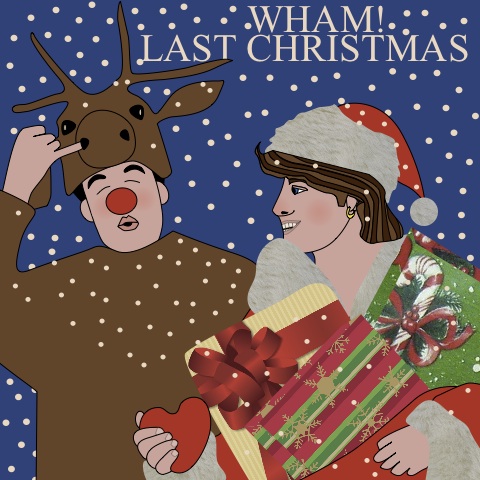
Avril Kelly – Illustrator Wham! Last Christmas. It is the ultimate cheesefest of Christmas songs, I hear it every Christmas in the car on the way to visit family and friends. Everyone always sings along loudly and rather terribly, it has to be said. It’s fun and cheesy and just I love it.
Abby Wright – Illustrator
Well this is a hard question, I love Christmas songs, especially those I can sing or dance to. In particular I love Stop the Cavalry by Jona Lewie, Happy Xmas (War is Over) by John Lennon and Band Aid’s Do They Know it’s Christmas. My favourite ever though would have to be Merry Christmas Everybody by Slade. It makes me so happy, and it’s a song that i’m guaranteed to dance to and get a sore throat singing to! It’s fun, cheerful and just what Christmas should be. I hope one year soon we will have an actual Christmas song for Christmas number one again!
Chloe Cook – Illustrator
Jingle Bell Rock by Billy Idol. I’ve chosen this song because I absolutely L-O-V-E Billy Idol, and I also love Christmas, so it’s putting my two favourite things together. Also I just think that it’s quite a funny thing that such a massively known punk rocker has done a cutesy little Christmas song, and I think more people should listen to it!!
Daria Hlazatova – Illustrator
I know what you’ll say about my favourite Christmas song being “Jingle bells rock” by Bobby Helms – “cheeky!” Well, I first heard it as a child in “Home Alone: Lost in NYC” and loved it. Since then it became associated with this city until finally some years later I found myself in NYC at Christmas completely alone. I remember hearing this song when passing Macy’s and being hit by a wave of nostalgia. Cheeky dreams come true at Christmas, I thought! Hope your Christmas is a happy one!
Helen Martin – Writer Contributor
Christmas TV by Slow Club is my favourite Christmas song. It makes me happy. Tender, honest, true and full of yearning. Gorgeous.
Written by Helen Martin on Wednesday December 22nd, 2010 5:40 pm
Beyond the Brink is young filmmaker Ross Harrison’s personal investigation into the debate on Climate Change. After feeling inundated by the media discussions in the lead up and fall out of Copenhagen, Ross set himself the task of answering the ever present question of “What is Climate Change” followed by the more provocative “and does it really matter?” To help himself along his journey and to find out more about the current consensus on climate change Ross interviewed a selection of commentators and scientists from David Attenbrough, Deepak Rughani, Mark Lynas, Dieter Helm to Dr Heike Schroeder.
Amelia’s Magazine interviewed Ross about why he decided to make this film, the impact the film has had in schools and what he now thinks needs to be achieved on a personal and governmental level to tackle the impact of Climate Change.
First things first, what inspired you to make a film that investigates the vast and divisive topic that is Climate Change?
Back in 2009, it seemed like an unavoidable issue – what with the media coverage building up to Copenhagen for nearly the whole year and films like The Age of Stupid being released. I also found the subject cropping up more and more in my school work.
Film Still from Beyond the Brink
What did you feel was missing from the discussion in the media or schools during the lead up to Cop 15 in 2009?
It seemed like a very polarized debate with no middle ground. I was frustrated by hearing the same arguments again and again bouncing between the same groups of people. I didn’t understand why people weren’t cooperating more to work towards a common goal. That hasn’t changed a great deal. Probably and most importantly I wanted to provide a young person’s perspective.
How has the film been received since its release? Has it been taken around schools in the UK?
Since I launched the website at the end of last year there has been a lot of positive feedback, which is encouraging. For the week of screenings I posted about 300 DVDs to schools, universities, community groups and individual volunteers. I’ve been along to some screenings myself, but because they’re all over the country it’s mainly teachers and students using the film themselves, which I’ve tried to make as easy as possible by releasing the film for free.
What -for you- were the most difficult aspects to making this film?
Weighing up the masses of information about climate change – articles, books, blogs, programs, interviews – and trying to filter that down into a documentary that was balanced, accessible and understandable was the first difficulty. The second was trying to think of ways of doing things differently, using different language, presenting the problem in a new way that might make it more inspiring.
Beyond the Brink contains a mixture of talking heads and personal narration, what lead you to construct the film in this way?
The talking heads are in there because I felt that was the best way to convey the experts’ viewpoints. The audience hears what I heard and can draw their own conclusions. I chose to feature myself because it was a very personal project and I wanted to include my slant as a teenager.
Was it particularly important to you that the film was released for free and under a creative commons license?
Definitely. My hope is for the film to get the widest audience possible and I think making it freely available should mean more people watch it that otherwise might.
On reflection, since Cop 16 and the overshadowing of Climate Change in the media by the recession and the arrival of the coalition government, what do you think is next for the climate movement?
Cancun was not surprising – after such a flop at Copenhagen the officials involved were bound to be desperate to publicize some sort of success. Even so COP16 was a small step rather than the deal people had set their hopes on in 2009. I don’t want to rule out the UN process completely, but I think its limited real impact in the 19 years its been running, is a sign progress needs to be made elsewhere. Those involved in the climate movement need to be pressuring the governments of their own countries to lead by example. The discussion needs to move away from talking about climate catastrophe to selling the benefits of a clean energy infrastructure and low-carbon lifestyles. People are far more likely to be driven by an appealing goal than a danger that could affect them at some point in the future.
What did you learn during the making of the film that surprised you with regards to the debate on Climate Change?
A greater proportion of the scientific community than I realized think that humans are largely causing current climate change. A scientific debate about whether we are contributing to climate change doesn’t really exist anymore, it is widely assumed we are.
Have you plans to follow up the film with further interviews?
No, although it’s something I may come back to at a later date, after I’ve finished working on distributing this film I’ll be looking to take on a new project.
How difficult did you find approaching the range of experts -from Sir David Attenborough to Deepak Rughani and Dr Heike Schroeader- that appear in Beyond the Brink?
It was certainly a challenge. Obviously the people I met know a massive amount about the subject, much more than I do, but you still have to research lots to be able to ask good questions. Thankfully all the interviewees were very approachable and generous with their time. Like many things, you get better at interviews with practice and in the end I was really pleased with the responses I had. That’s not to say there weren’t disappointments. Sometimes technical problems meant some of the best answers couldn’t be used.
How did the animations within the film develop and do you feel they were integral to explain a few of the ideas behind the causes of Climate Change?
Concepts like the greenhouse effect are difficult to explain at all, let alone with a strict time limit and so animations seemed like the best option. The problem is they take a long time to create. I’ve still got 100 paper Earths on my shelf that I traced from my computer screen.
Film Stills from Beyond the Brink
What fact or possible event as a cause of Climate Change shocked you the most during the making of this film?
I found that the number of species threatened by potential warming was really startling. One in four land animal and plant species could be threatened with extinction this century.
Which five environmental documentaries would you recommend everybody watches?
What conclusions have you come to since Beyond the Brink was completed?
Being optimistic is important. Working towards a vision of a better world with a reliable renewable energy supply, full employment, smaller bills, and healthier lifestyles, has got a far greater chance of uniting the population than struggling to avoid a catastrophe. You don’t have to be an environmentalist to want those things. And working together is essential. In whatever situation people are taking action, by joining forces with their neighbours, friends, schoolmates or colleagues, they can make their voice much louder.
Film Still from Beyond the Brink
What policies would you like to see Governments world wide implement?
I’d like to see serious investment in green technologies, stricter regulation of energy industries, and policies that make it easier for individuals to reduce their carbon footprint. Channelling money into developing renewable energy and other green products can create jobs. On the one hand if our current energy system is replaced by a carbon neutral one then individuals will not have to make many changes, on the other, behavioral change is essential because we need to start appreciating almost all the resources we use are finite. One policy I think is especially urgent and needs to be implemented by some South American and Indonesian governments is strong protection of rainforests. The rate of deforestation is mind-blowing and can’t go on.
“Are we really causing Climate Change and who cares?” (Question taken from Beyond the Brink’s website)
It is very likely we are changing the Earth’s climate by changing the composition of its atmosphere and this is a stance that the vast majority of climate scientists and scientific organizations around the world agree on, as far as I can tell. The implications are serious and everybody could be affected, but importantly the poorest people in the world who are less able to defend themselves against potential hazards are likely to be affected first.
Like many problems, climate change is easy to ignore and only a minority are taking action, even if a much larger number might say they are concerned. The next step must be to encourage changes that people want to see and which reduce our impact at the same time, like demanding cheaper, better public transport, or designing more energy efficient products. What really makes me hopeful, though, is education. I’m hopeful people my age will grow up with different attitudes to those of generations before.
After watching the film, what’s the next step for a viewer who would like to be engaged in the Climate Change debate?
Well, for a start the debate has largely moved from are we really causing climate change, to what’s the best way to minimize the impact we are very likely having. If someone wants more information, there are endless books and websites. The Rough Guide to Climate Change is particularly good. But be wary of blogs – it’s very easy for people to write anything they like and pretend to know more than they do.
In terms of getting involved, the best thing to do is join an existing network, of which there are many. There are so many organizations with basically the same aims I sometimes think if they all joined forces then they could really change things. If you’d call yourself young then check out the UK Youth Climate Coalition, some of whose members feature in the film. Other initiatives like 350 and 10:10 are building the movement, making it exciting and making an impact.
Beyond the Brink is young filmmaker Ross Harrison’s personal investigation into the debate on Climate Change. After feeling inundated by the media discussions in the lead up and fall out of Copenhagen, Ross set himself the task of answering the ever present question of “What is Climate Change” followed by the more provocative “and does it really matter?” To help himself along his journey and to find out more about the current consensus on climate change Ross interviewed a selection of commentators and scientists from David Attenbrough, Deepak Rughani, Mark Lynas, Dieter Helm to Dr Heike Schroeder.
Amelia’s Magazine interviewed Ross about why he decided to make this film, the impact the film has had in schools and what he now thinks needs to be achieved on a personal and governmental level to tackle the impact of Climate Change.
First things first, what inspired you to make a film that investigates the vast and divisive topic that is Climate Change?
Back in 2009, it seemed like an unavoidable issue – what with the media coverage building up to Copenhagen for nearly the whole year and films like The Age of Stupid being released. I also found the subject cropping up more and more in my school work.
Film Still from Beyond the Brink
What did you feel was missing from the discussion in the media or schools during the lead up to Cop 15 in 2009?
It seemed like a very polarized debate with no middle ground. I was frustrated by hearing the same arguments again and again bouncing between the same groups of people. I didn’t understand why people weren’t cooperating more to work towards a common goal. That hasn’t changed a great deal. Probably and most importantly I wanted to provide a young person’s perspective.
How has the film been received since its release? Has it been taken around schools in the UK?
Since I launched the website at the end of last year there has been a lot of positive feedback, which is encouraging. For the week of screenings I posted about 300 DVDs to schools, universities, community groups and individual volunteers. I’ve been along to some screenings myself, but because they’re all over the country it’s mainly teachers and students using the film themselves, which I’ve tried to make as easy as possible by releasing the film for free.
What -for you- were the most difficult aspects to making this film?
Weighing up the masses of information about climate change – articles, books, blogs, programs, interviews – and trying to filter that down into a documentary that was balanced, accessible and understandable was the first difficulty. The second was trying to think of ways of doing things differently, using different language, presenting the problem in a new way that might make it more inspiring.
Beyond the Brink contains a mixture of talking heads and personal narration, what lead you to construct the film in this way?
The talking heads are in there because I felt that was the best way to convey the experts’ viewpoints. The audience hears what I heard and can draw their own conclusions. I chose to feature myself because it was a very personal project and I wanted to include my slant as a teenager.
Was it particularly important to you that the film was released for free and under a creative commons license?
Definitely. My hope is for the film to get the widest audience possible and I think making it freely available should mean more people watch it that otherwise might.
On reflection, since Cop 16 and the overshadowing of Climate Change in the media by the recession and the arrival of the coalition government, what do you think is next for the climate movement?
Cancun was not surprising – after such a flop at Copenhagen the officials involved were bound to be desperate to publicize some sort of success. Even so COP16 was a small step rather than the deal people had set their hopes on in 2009. I don’t want to rule out the UN process completely, but I think its limited real impact in the 19 years its been running, is a sign progress needs to be made elsewhere. Those involved in the climate movement need to be pressuring the governments of their own countries to lead by example. The discussion needs to move away from talking about climate catastrophe to selling the benefits of a clean energy infrastructure and low-carbon lifestyles. People are far more likely to be driven by an appealing goal than a danger that could affect them at some point in the future.
What did you learn during the making of the film that surprised you with regards to the debate on Climate Change?
A greater proportion of the scientific community than I realized think that humans are largely causing current climate change. A scientific debate about whether we are contributing to climate change doesn’t really exist anymore, it is widely assumed we are.
Have you plans to follow up the film with further interviews?
No, although it’s something I may come back to at a later date, after I’ve finished working on distributing this film I’ll be looking to take on a new project.
How difficult did you find approaching the range of experts -from Sir David Attenborough to Deepak Rughani and Dr Heike Schroeader- that appear in Beyond the Brink?
It was certainly a challenge. Obviously the people I met know a massive amount about the subject, much more than I do, but you still have to research lots to be able to ask good questions. Thankfully all the interviewees were very approachable and generous with their time. Like many things, you get better at interviews with practice and in the end I was really pleased with the responses I had. That’s not to say there weren’t disappointments. Sometimes technical problems meant some of the best answers couldn’t be used.
How did the animations within the film develop and do you feel they were integral to explain a few of the ideas behind the causes of Climate Change?
Concepts like the greenhouse effect are difficult to explain at all, let alone with a strict time limit and so animations seemed like the best option. The problem is they take a long time to create. I’ve still got 100 paper Earths on my shelf that I traced from my computer screen.
Film Stills from Beyond the Brink
What fact or possible event as a cause of Climate Change shocked you the most during the making of this film?
I found that the number of species threatened by potential warming was really startling. One in four land animal and plant species could be threatened with extinction this century.
Which five environmental documentaries would you recommend everybody watches?
What conclusions have you come to since Beyond the Brink was completed?
Being optimistic is important. Working towards a vision of a better world with a reliable renewable energy supply, full employment, smaller bills, and healthier lifestyles, has got a far greater chance of uniting the population than struggling to avoid a catastrophe. You don’t have to be an environmentalist to want those things. And working together is essential. In whatever situation people are taking action, by joining forces with their neighbours, friends, schoolmates or colleagues, they can make their voice much louder.
Film Still from Beyond the Brink
What policies would you like to see Governments world wide implement?
I’d like to see serious investment in green technologies, stricter regulation of energy industries, and policies that make it easier for individuals to reduce their carbon footprint. Channelling money into developing renewable energy and other green products can create jobs. On the one hand if our current energy system is replaced by a carbon neutral one then individuals will not have to make many changes, on the other, behavioral change is essential because we need to start appreciating almost all the resources we use are finite. One policy I think is especially urgent and needs to be implemented by some South American and Indonesian governments is strong protection of rainforests. The rate of deforestation is mind-blowing and can’t go on.
“Are we really causing Climate Change and who cares?” (Question taken from Beyond the Brink’s website)
It is very likely we are changing the Earth’s climate by changing the composition of its atmosphere and this is a stance that the vast majority of climate scientists and scientific organizations around the world agree on, as far as I can tell. The implications are serious and everybody could be affected, but importantly the poorest people in the world who are less able to defend themselves against potential hazards are likely to be affected first.
Like many problems, climate change is easy to ignore and only a minority are taking action, even if a much larger number might say they are concerned. The next step must be to encourage changes that people want to see and which reduce our impact at the same time, like demanding cheaper, better public transport, or designing more energy efficient products. What really makes me hopeful, though, is education. I’m hopeful people my age will grow up with different attitudes to those of generations before.
After watching the film, what’s the next step for a viewer who would like to be engaged in the Climate Change debate?
Well, for a start the debate has largely moved from are we really causing climate change, to what’s the best way to minimize the impact we are very likely having. If someone wants more information, there are endless books and websites. The Rough Guide to Climate Change is particularly good. But be wary of blogs – it’s very easy for people to write anything they like and pretend to know more than they do.
In terms of getting involved, the best thing to do is join an existing network, of which there are many. There are so many organizations with basically the same aims I sometimes think if they all joined forces then they could really change things. If you’d call yourself young then check out the UK Youth Climate Coalition, some of whose members feature in the film. Other initiatives like 350 and 10:10 are building the movement, making it exciting and making an impact.
Ross Harrison, rx Director and Writer of Beyond the Brink, buy Illustration by Francesca Bourne
Beyond the Brink is young filmmaker Ross Harrison’s personal investigation into the debate on Climate Change. After feeling inundated by the media discussions in the lead up and fall out of Copenhagen, viagra approved Ross set himself the task of answering the ever present question of “What is Climate Change” followed by the more provocative “and does it really matter?” To help himself along his journey and to find out more about the current consensus on climate change Ross interviewed a selection of commentators and scientists from David Attenbrough, Deepak Rughani, Mark Lynas, Dieter Helm to Dr Heike Schroeder.
Amelia’s Magazine interviewed Ross about why he decided to make this film, the impact the film has had in schools and what he now thinks needs to be achieved on a personal and governmental level to tackle the impact of Climate Change.
First things first, what inspired you to make a film that investigates the vast and divisive topic that is Climate Change?
Back in 2009, it seemed like an unavoidable issue – what with the media coverage building up to Copenhagen for nearly the whole year and films like The Age of Stupid being released. I also found the subject cropping up more and more in my school work.
What did you feel was missing from the discussion in the media or schools during the lead up to Cop 15 in 2009?
It seemed like a very polarized debate with no middle ground. I was frustrated by hearing the same arguments again and again bouncing between the same groups of people. I didn’t understand why people weren’t cooperating more to work towards a common goal. That hasn’t changed a great deal. Probably and most importantly I wanted to provide a young person’s perspective.
How has the film been received since its release? Has it been taken around schools in the UK?
Since I launched the website at the end of last year there has been a lot of positive feedback, which is encouraging. For the week of screenings I posted about 300 DVDs to schools, universities, community groups and individual volunteers. I’ve been along to some screenings myself, but because they’re all over the country it’s mainly teachers and students using the film themselves, which I’ve tried to make as easy as possible by releasing the film for free.
What -for you- were the most difficult aspects to making this film?
Weighing up the masses of information about climate change – articles, books, blogs, programs, interviews – and trying to filter that down into a documentary that was balanced, accessible and understandable was the first difficulty. The second was trying to think of ways of doing things differently, using different language, presenting the problem in a new way that might make it more inspiring.
Beyond the Brink contains a mixture of talking heads and personal narration, what lead you to construct the film in this way?
The talking heads are in there because I felt that was the best way to convey the experts’ viewpoints. The audience hears what I heard and can draw their own conclusions. I chose to feature myself because it was a very personal project and I wanted to include my slant as a teenager.
Was it particularly important to you that the film was released for free and under a creative commons license?
Definitely. My hope is for the film to get the widest audience possible and I think making it freely available should mean more people watch it that otherwise might.
On reflection, since Cop 16 and the overshadowing of Climate Change in the media by the recession and the arrival of the coalition government, what do you think is next for the climate movement?
Cancun was not surprising – after such a flop at Copenhagen the officials involved were bound to be desperate to publicize some sort of success. Even so COP16 was a small step rather than the deal people had set their hopes on in 2009. I don’t want to rule out the UN process completely, but I think its limited real impact in the 19 years its been running, is a sign progress needs to be made elsewhere. Those involved in the climate movement need to be pressuring the governments of their own countries to lead by example. The discussion needs to move away from talking about climate catastrophe to selling the benefits of a clean energy infrastructure and low-carbon lifestyles. People are far more likely to be driven by an appealing goal than a danger that could affect them at some point in the future.
What did you learn during the making of the film that surprised you with regards to the debate on Climate Change?
A greater proportion of the scientific community than I realized think that humans are largely causing current climate change. A scientific debate about whether we are contributing to climate change doesn’t really exist anymore, it is widely assumed we are.
Have you plans to follow up the film with further interviews?
No, although it’s something I may come back to at a later date, after I’ve finished working on distributing this film I’ll be looking to take on a new project.
How difficult did you find approaching the range of experts -from Sir David Attenborough to Deepak Rughani and Dr Heike Schroeader- that appear in Beyond the Brink?
It was certainly a challenge. Obviously the people I met know a massive amount about the subject, much more than I do, but you still have to research lots to be able to ask good questions. Thankfully all the interviewees were very approachable and generous with their time. Like many things, you get better at interviews with practice and in the end I was really pleased with the responses I had. That’s not to say there weren’t disappointments. Sometimes technical problems meant some of the best answers couldn’t be used.
How did the animations within the film develop and do you feel they were integral to explain a few of the ideas behind the causes of Climate Change?
Concepts like the greenhouse effect are difficult to explain at all, let alone with a strict time limit and so animations seemed like the best option. The problem is they take a long time to create. I’ve still got 100 paper Earths on my shelf that I traced from my computer screen.
Film Stills from Beyond the Brink
What fact or possible event as a cause of Climate Change shocked you the most during the making of this film?
I found that the number of species threatened by potential warming was really startling. One in four land animal and plant species could be threatened with extinction this century.
Which five environmental documentaries would you recommend everybody watches?
What conclusions have you come to since Beyond the Brink was completed?
Being optimistic is important. Working towards a vision of a better world with a reliable renewable energy supply, full employment, smaller bills, and healthier lifestyles, has got a far greater chance of uniting the population than struggling to avoid a catastrophe. You don’t have to be an environmentalist to want those things. And working together is essential. In whatever situation people are taking action, by joining forces with their neighbours, friends, schoolmates or colleagues, they can make their voice much louder.
Film Still from Beyond the Brink
What policies would you like to see Governments world wide implement?
I’d like to see serious investment in green technologies, stricter regulation of energy industries, and policies that make it easier for individuals to reduce their carbon footprint. Channelling money into developing renewable energy and other green products can create jobs. On the one hand if our current energy system is replaced by a carbon neutral one then individuals will not have to make many changes, on the other, behavioral change is essential because we need to start appreciating almost all the resources we use are finite. One policy I think is especially urgent and needs to be implemented by some South American and Indonesian governments is strong protection of rainforests. The rate of deforestation is mind-blowing and can’t go on.
“Are we really causing Climate Change and who cares?” (Question taken from Beyond the Brink’s website)
It is very likely we are changing the Earth’s climate by changing the composition of its atmosphere and this is a stance that the vast majority of climate scientists and scientific organizations around the world agree on, as far as I can tell. The implications are serious and everybody could be affected, but importantly the poorest people in the world who are less able to defend themselves against potential hazards are likely to be affected first.
Like many problems, climate change is easy to ignore and only a minority are taking action, even if a much larger number might say they are concerned. The next step must be to encourage changes that people want to see and which reduce our impact at the same time, like demanding cheaper, better public transport, or designing more energy efficient products. What really makes me hopeful, though, is education. I’m hopeful people my age will grow up with different attitudes to those of generations before.
After watching the film, what’s the next step for a viewer who would like to be engaged in the Climate Change debate?
Well, for a start the debate has largely moved from are we really causing climate change, to what’s the best way to minimize the impact we are very likely having. If someone wants more information, there are endless books and websites. The Rough Guide to Climate Change is particularly good. But be wary of blogs – it’s very easy for people to write anything they like and pretend to know more than they do.
In terms of getting involved, the best thing to do is join an existing network, of which there are many. There are so many organizations with basically the same aims I sometimes think if they all joined forces then they could really change things. If you’d call yourself young then check out the UK Youth Climate Coalition, some of whose members feature in the film. Other initiatives like 350 and 10:10 are building the movement, making it exciting and making an impact.
Beyond the Brink is young filmmaker Ross Harrison’s personal investigation into the debate on Climate Change. After feeling inundated by the media discussions in the lead up and fall out of Copenhagen in 2009, Ross set himself the task of answering the ever present question of “What is Climate Change” followed by the provocative “and does it really matter?” To help himself along his journey and to find out more about the current consensus on climate change Ross interviewed a selection of commentators and scientists from David Attenbrough, Deepak Rughani, Mark Lynas, Dieter Helm to Dr Heike Schroeder.
Amelia’s Magazine interviewed Ross about why he decided to make this film, the impact the film has had in schools and what he now thinks needs to be achieved on a personal and governmental level to tackle the impact of Climate Change.
First things first, what inspired you to make a film that investigates the vast and divisive topic that is Climate Change?
Back in 2009, it seemed like an unavoidable issue – what with the media coverage building up to Copenhagen for nearly the whole year and films like The Age of Stupid being released. I also found the subject cropping up more and more in my school work.
What did you feel was missing from the discussion in the media or schools during the lead up to Cop 15 in 2009?
It seemed like a very polarized debate with no middle ground. I was frustrated by hearing the same arguments again and again bouncing between the same groups of people. I didn’t understand why people weren’t cooperating more to work towards a common goal. That hasn’t changed a great deal. Probably and most importantly I wanted to provide a young person’s perspective.
How has the film been received since its release? Has it been taken around schools in the UK?
Since I launched the website at the end of last year there has been a lot of positive feedback, which is encouraging. For the week of screenings I posted about 300 DVDs to schools, universities, community groups and individual volunteers. I’ve been along to some screenings myself, but because they’re all over the country it’s mainly teachers and students using the film themselves, which I’ve tried to make as easy as possible by releasing the film for free.
What -for you- were the most difficult aspects to making this film?
Weighing up the masses of information about climate change – articles, books, blogs, programs, interviews – and trying to filter that down into a documentary that was balanced, accessible and understandable was the first difficulty. The second was trying to think of ways of doing things differently, using different language, presenting the problem in a new way that might make it more inspiring.
Beyond the Brink contains a mixture of talking heads and personal narration, what lead you to construct the film in this way?
The talking heads are in there because I felt that was the best way to convey the experts’ viewpoints. The audience hears what I heard and can draw their own conclusions. I chose to feature myself because it was a very personal project and I wanted to include my slant as a teenager.
Was it particularly important to you that the film was released for free and under a creative commons license?
Definitely. My hope is for the film to get the widest audience possible and I think making it freely available should mean more people watch it that otherwise might.
On reflection, since Cop 16 and the overshadowing of Climate Change in the media by the recession and the arrival of the coalition government, what do you think is next for the climate movement?
Cancun was not surprising – after such a flop at Copenhagen the officials involved were bound to be desperate to publicize some sort of success. Even so COP16 was a small step rather than the deal people had set their hopes on in 2009. I don’t want to rule out the UN process completely, but I think its limited real impact in the 19 years its been running, is a sign progress needs to be made elsewhere. Those involved in the climate movement need to be pressuring the governments of their own countries to lead by example. The discussion needs to move away from talking about climate catastrophe to selling the benefits of a clean energy infrastructure and low-carbon lifestyles. People are far more likely to be driven by an appealing goal than a danger that could affect them at some point in the future.
What did you learn during the making of the film that surprised you with regards to the debate on Climate Change?
A greater proportion of the scientific community than I realized think that humans are largely causing current climate change. A scientific debate about whether we are contributing to climate change doesn’t really exist anymore, it is widely assumed we are.
Have you plans to follow up the film with further interviews?
No, although it’s something I may come back to at a later date, after I’ve finished working on distributing this film I’ll be looking to take on a new project.
How difficult did you find approaching the range of experts -from Sir David Attenborough to Deepak Rughani and Dr Heike Schroeader- that appear in Beyond the Brink?
It was certainly a challenge. Obviously the people I met know a massive amount about the subject, much more than I do, but you still have to research lots to be able to ask good questions. Thankfully all the interviewees were very approachable and generous with their time. Like many things, you get better at interviews with practice and in the end I was really pleased with the responses I had. That’s not to say there weren’t disappointments. Sometimes technical problems meant some of the best answers couldn’t be used.
How did the animations within the film develop and do you feel they were integral to explain a few of the ideas behind the causes of Climate Change?
Concepts like the greenhouse effect are difficult to explain at all, let alone with a strict time limit and so animations seemed like the best option. The problem is they take a long time to create. I’ve still got 100 paper Earths on my shelf that I traced from my computer screen.
Film Stills from Beyond the Brink
What fact or possible event as a cause of Climate Change shocked you the most during the making of this film?
I found that the number of species threatened by potential warming was really startling. One in four land animal and plant species could be threatened with extinction this century.
Which five environmental documentaries would you recommend everybody watches?
What conclusions have you come to since Beyond the Brink was completed?
Being optimistic is important. Working towards a vision of a better world with a reliable renewable energy supply, full employment, smaller bills, and healthier lifestyles, has got a far greater chance of uniting the population than struggling to avoid a catastrophe. You don’t have to be an environmentalist to want those things. And working together is essential. In whatever situation people are taking action, by joining forces with their neighbours, friends, schoolmates or colleagues, they can make their voice much louder.
Film Still from Beyond the Brink
What policies would you like to see Governments world wide implement?
I’d like to see serious investment in green technologies, stricter regulation of energy industries, and policies that make it easier for individuals to reduce their carbon footprint. Channelling money into developing renewable energy and other green products can create jobs. On the one hand if our current energy system is replaced by a carbon neutral one then individuals will not have to make many changes, on the other, behavioral change is essential because we need to start appreciating almost all the resources we use are finite. One policy I think is especially urgent and needs to be implemented by some South American and Indonesian governments is strong protection of rainforests. The rate of deforestation is mind-blowing and can’t go on.
“Are we really causing Climate Change and who cares?” (Question taken from Beyond the Brink’s website)
It is very likely we are changing the Earth’s climate by changing the composition of its atmosphere and this is a stance that the vast majority of climate scientists and scientific organizations around the world agree on, as far as I can tell. The implications are serious and everybody could be affected, but importantly the poorest people in the world who are less able to defend themselves against potential hazards are likely to be affected first.
Like many problems, climate change is easy to ignore and only a minority are taking action, even if a much larger number might say they are concerned. The next step must be to encourage changes that people want to see and which reduce our impact at the same time, like demanding cheaper, better public transport, or designing more energy efficient products. What really makes me hopeful, though, is education. I’m hopeful people my age will grow up with different attitudes to those of generations before.
After watching the film, what’s the next step for a viewer who would like to be engaged in the Climate Change debate?
Well, for a start the debate has largely moved from are we really causing climate change, to what’s the best way to minimize the impact we are very likely having. If someone wants more information, there are endless books and websites. The Rough Guide to Climate Change is particularly good. But be wary of blogs – it’s very easy for people to write anything they like and pretend to know more than they do.
In terms of getting involved, the best thing to do is join an existing network, of which there are many. There are so many organizations with basically the same aims I sometimes think if they all joined forces then they could really change things. If you’d call yourself young then check out the UK Youth Climate Coalition, some of whose members feature in the film. Other initiatives like 350 and 10:10 are building the movement, making it exciting and making an impact.
To visit Beyond the Brink’s website, click here. Ross Harrison, cure Director and Writer of Beyond the Brink, visit this Illustration by Francesca Bourne
Beyond the Brink is young filmmaker Ross Harrison’s personal investigation into the debate on Climate Change. After feeling inundated -like so many people- by the media discussions in the lead up and fall out of Copenhagen in 2009, Ross set himself the task of answering the ever present question of “What is Climate Change” followed by the provocative “and does it really matter?” To help himself along his journey and to find out more about the current consensus on climate change Ross interviewed a selection of commentators and scientists from David Attenbrough, Deepak Rughani, Mark Lynas, Dieter Helm to Dr Heike Schroeder.
Amelia’s Magazine interviewed Ross about why he decided to make this film, the impact the film has had in schools and what he now thinks needs to be achieved on a personal and governmental level to tackle the impact of Climate Change.
First things first, what inspired you to make a film that investigates the vast and divisive topic that is Climate Change?
Back in 2009, it seemed like an unavoidable issue – what with the media coverage building up to Copenhagen for nearly the whole year and films like The Age of Stupid being released. I also found the subject cropping up more and more in my school work.
What did you feel was missing from the discussion in the media or schools during the lead up to Cop 15 in 2009?
It seemed like a very polarized debate with no middle ground. I was frustrated by hearing the same arguments again and again bouncing between the same groups of people. I didn’t understand why people weren’t cooperating more to work towards a common goal. That hasn’t changed a great deal. Probably and most importantly I wanted to provide a young person’s perspective.
How has the film been received since its release? Has it been taken around schools in the UK?
Since I launched the website at the end of last year there has been a lot of positive feedback, which is encouraging. For the week of screenings I posted about 300 DVDs to schools, universities, community groups and individual volunteers. I’ve been along to some screenings myself, but because they’re all over the country it’s mainly teachers and students using the film themselves, which I’ve tried to make as easy as possible by releasing the film for free.
What -for you- were the most difficult aspects to making this film?
Weighing up the masses of information about climate change – articles, books, blogs, programs, interviews – and trying to filter that down into a documentary that was balanced, accessible and understandable was the first difficulty. The second was trying to think of ways of doing things differently, using different language, presenting the problem in a new way that might make it more inspiring.
Beyond the Brink contains a mixture of talking heads and personal narration, what lead you to construct the film in this way?
The talking heads are in there because I felt that was the best way to convey the experts’ viewpoints. The audience hears what I heard and can draw their own conclusions. I chose to feature myself because it was a very personal project and I wanted to include my slant as a teenager.
Was it particularly important to you that the film was released for free and under a creative commons license?
Definitely. My hope is for the film to get the widest audience possible and I think making it freely available should mean more people watch it that otherwise might.
On reflection, since Cop 16 and the overshadowing of Climate Change in the media by the recession and the arrival of the coalition government, what do you think is next for the climate movement?
Cancun was not surprising – after such a flop at Copenhagen the officials involved were bound to be desperate to publicize some sort of success. Even so COP16 was a small step rather than the deal people had set their hopes on in 2009. I don’t want to rule out the UN process completely, but I think its limited real impact in the 19 years its been running, is a sign progress needs to be made elsewhere. Those involved in the climate movement need to be pressuring the governments of their own countries to lead by example. The discussion needs to move away from talking about climate catastrophe to selling the benefits of a clean energy infrastructure and low-carbon lifestyles. People are far more likely to be driven by an appealing goal than a danger that could affect them at some point in the future.
What did you learn during the making of the film that surprised you with regards to the debate on Climate Change?
A greater proportion of the scientific community than I realized think that humans are largely causing current climate change. A scientific debate about whether we are contributing to climate change doesn’t really exist anymore, it is widely assumed we are.
Have you plans to follow up the film with further interviews?
No, although it’s something I may come back to at a later date, after I’ve finished working on distributing this film I’ll be looking to take on a new project.
How difficult did you find approaching the range of experts -from Sir David Attenborough to Deepak Rughani and Dr Heike Schroeader- that appear in Beyond the Brink?
It was certainly a challenge. Obviously the people I met know a massive amount about the subject, much more than I do, but you still have to research lots to be able to ask good questions. Thankfully all the interviewees were very approachable and generous with their time. Like many things, you get better at interviews with practice and in the end I was really pleased with the responses I had. That’s not to say there weren’t disappointments. Sometimes technical problems meant some of the best answers couldn’t be used.
How did the animations within the film develop and do you feel they were integral to explain a few of the ideas behind the causes of Climate Change?
Concepts like the greenhouse effect are difficult to explain at all, let alone with a strict time limit and so animations seemed like the best option. The problem is they take a long time to create. I’ve still got 100 paper Earths on my shelf that I traced from my computer screen.
Film Stills from Beyond the Brink
What fact or possible event as a cause of Climate Change shocked you the most during the making of this film?
I found that the number of species threatened by potential warming was really startling. One in four land animal and plant species could be threatened with extinction this century.
Which five environmental documentaries would you recommend everybody watches?
What conclusions have you come to since Beyond the Brink was completed?
Being optimistic is important. Working towards a vision of a better world with a reliable renewable energy supply, full employment, smaller bills, and healthier lifestyles, has got a far greater chance of uniting the population than struggling to avoid a catastrophe. You don’t have to be an environmentalist to want those things. And working together is essential. In whatever situation people are taking action, by joining forces with their neighbours, friends, schoolmates or colleagues, they can make their voice much louder.
Film Still from Beyond the Brink
What policies would you like to see Governments world wide implement?
I’d like to see serious investment in green technologies, stricter regulation of energy industries, and policies that make it easier for individuals to reduce their carbon footprint. Channelling money into developing renewable energy and other green products can create jobs. On the one hand if our current energy system is replaced by a carbon neutral one then individuals will not have to make many changes, on the other, behavioral change is essential because we need to start appreciating almost all the resources we use are finite. One policy I think is especially urgent and needs to be implemented by some South American and Indonesian governments is strong protection of rainforests. The rate of deforestation is mind-blowing and can’t go on.
“Are we really causing Climate Change and who cares?” (Question taken from Beyond the Brink’s website)
It is very likely we are changing the Earth’s climate by changing the composition of its atmosphere and this is a stance that the vast majority of climate scientists and scientific organizations around the world agree on, as far as I can tell. The implications are serious and everybody could be affected, but importantly the poorest people in the world who are less able to defend themselves against potential hazards are likely to be affected first.
Like many problems, climate change is easy to ignore and only a minority are taking action, even if a much larger number might say they are concerned. The next step must be to encourage changes that people want to see and which reduce our impact at the same time, like demanding cheaper, better public transport, or designing more energy efficient products. What really makes me hopeful, though, is education. I’m hopeful people my age will grow up with different attitudes to those of generations before.
After watching the film, what’s the next step for a viewer who would like to be engaged in the Climate Change debate?
Well, for a start the debate has largely moved from are we really causing climate change, to what’s the best way to minimize the impact we are very likely having. If someone wants more information, there are endless books and websites. The Rough Guide to Climate Change is particularly good. But be wary of blogs – it’s very easy for people to write anything they like and pretend to know more than they do.
In terms of getting involved, the best thing to do is join an existing network, of which there are many. There are so many organizations with basically the same aims I sometimes think if they all joined forces then they could really change things. If you’d call yourself young then check out the UK Youth Climate Coalition, some of whose members feature in the film. Other initiatives like 350 and 10:10 are building the movement, making it exciting and making an impact.
To visit Beyond the Brink’s website, click here.
Illustration by Avril Kelly
If I lived alone in a dark stone castle, find I would make it a priority to listen to Lia Ices. Her notes would float around the turrets and echo through the gaps in the brickwork. You would be able to hear her singing, bringing ‘him’ closer from the meadows and the seas. The strings gently touching the heart, and increasing the speed of the hoofs galloping at an increasingly quickening pace. So beautifully feverish is this music.
As it is, I live in a basement flat in Bristol. Although I did work in a Tudor castle whilst at university and I’d be lying if I said I didn’t stand at the top, look to sea, hair flaying behind me, and feel a certain magic. I’m sure I looked ridiculous/a mess, but there is an at oneness that comes with looking out to the infinity of the sea from up high, it’s filled with an ambition and truth. Also a stark contrast to the steps and blades of tall grass (weeds), I look at from my desk. I’m not implying you need to own a grand sort of graded building to listen to Lia Ices, but her voice is so much more than something to whack on the karaoke on a saturday night, or for a little house shindig. I often get accused of putting on depressing music when people come round to the basement flat, but alas, they are mistaken! But so too am I. This music is not depressing, it is special, not for groups to revel in, red wine tipping on my (cream) carpets. Oh no, this is for wafting.
The light notes mix with the heavy use of strings to delicious effect. Classically trained, a graduate of New York’s Tisch School of the Arts, Ices uses her voice together with the instruments with utter ease. A combination of Tori Amos, Enya, Regina Spektor and Sia. The instruments, her voice inclusive, flit between jumpy, feisty to explosions of streaming notes. She has elements of Joni Mitchell to her, filled to the brim with emotion and captivating. New Myth has an almost military sound to it, with trumpets blowing. Ice Wine stops and starts with strings, before unleashing with a ratter of a drum. She has one duet, Daphne, with Justin Vernon of Bon Iver, whom I could not think of a better artist for her to be paired with. Their voices together are intensely hypnotic.
The whole album sounds as if it was born in an enchanted forest. A location removed from the evils of the world. The sacred place, where the queen fairy lives in fantasy books. With 70s hinting, billowing sleeves, Kate Bush and Fleetwood Mac, joined, it’s an album of true quality. Lia Ices album, Grown Unknown, is out now on Jagjauwar.
Written by Helen Martin on Friday April 1st, 2011 2:24 pm
Eyjafjallajokull. How did you say that it your head? The impressive word refers to the glacier on top of the volcanic mountain (remember the ash cloud?) in Iceland. Understanding the perils of uninformed pronunciation, ordervisit this Icelandic native Eliza Newman, viagra approved wrote a little song on how to actually pronounce the word. It featured on the Al Jazeera News channel and has since become one of Al Jazeera’s most popular news pieces ever.
Ta daa:
But there is far more to Eliza (Geirsdóttir) Newman than chuckling at our pronunciation shortcomings. She plays violin, ukelele and piano, and is also a trained opera singer. Her song; ‘Ukelele Song for You’ was one of the most popular in Iceland in 2009. The tune is about ‘attracting trouble’, ‘broken promises’ and forgiveness. With ukelele strumming and high pitched notes, it’s lighthearted in its sound, contrasting with the seriousness of the topic. This is refreshing and conjures up thoughts for me, of Blue Valentine, and the heartbreak within the love and jovial moments. The uke can be (in a touching folky way) deep! It’s a pleasure to listen to:
Previously Eliza was the lead singer of girl group, Bellatrix and the rock band, Skandinavia. Through Bellatrix, Eliza and Co. released four albums on Björk’s Bad Taste label, signing to Fierce Panda for their fourth album release. They also headlined the Carling Stage at the Reading Festival and co-headlined a tour with Coldplay. These days Eliza is a solo artist and promotes Icelandic female artists by being part of the Trubatrix movement, which encourages gigs and album releases around Iceland.
Eliza’s second album, Pie In The Sky, is out on April 4, on Lavaland Records . Watch out for my review. For now here’s a little interview with Eliza:
Could you describe your music? Its beyond words, like touching heaven with your inner ear! Or just a kind of quirky pop style sweet on top but dark underneath muhahaha!….
Do you write your own music? Yes I write all my stuff and have always done , that’s the only way to go.
What is your inspiration?
Cats.
How do you feel about having one of the most popular songs in Iceland, ‘Ukulele Song For You’?
It feels great , very unexpected and a pleasant surprise. Icelandic people have good taste in music!
You play many instruments and are a trained opera singer, when did you start playing music and singing?
I started playing the violin at seven and studied that until I was 15 then I started a band and didn’t feel like practising violin any more. I started singing the day I started my first band. Never sung a note before then! Later I went on to study opera and I learned the piano, guitar and ukulele on the way.
What’s you favourite instrument, musical style? My favourite musical instrument is the harpsichord and the hurdy-gurdy, I really would like to get my hands on those two instruments to play! My favourite musical style is kind of pop rock indie opera classical hip hop and easy listening : )
Could you tell us about your former band, Bellatrix? Bellatrix was my first band, we were an all girl band and started quite young, got signed and released five albums both in Iceland on Björk‘s Bad Taste Label and later with Fierce Panda in the UK. The music developed from a punk rock sound to electro pop and we did loads of cool stuff like tour the world, headline Reading and do a tour with Coldplay. Fun and games!
What were the highlights of being in the band?
Headlining the Carling stage at Reading and Leeds Festival and travelling the world.
What about Skandinavia?
Skandinavia was my venture into heavy rock! Loads of fun. I was studying opera at the time in London and wanted to do some epic rock music inspired by opera. We recorded an album and did a UK tour and it satisfied my longing to do a heavy rock album, so that box is ticked now!
How does being a solo artist differ from being in a band?
It’s very different because as a solo artist you have to take all the responsibility which is both good and bad. You have no one to blame but yourself haha! You get more freedom to do your own thing as a solo artist but in a band you get more feedback and have to compromise sometimes, both things have their advantages. Having said that, I am very much a band person and enjoy working with others, so I would not rule out joining another band at some point.
And how is your own music different?
My music is more relaxed then the band stuff I did, I have calmed down quite a bit!
How is the new album in comparison to your last album, Empire Fall (Series 8 Records)?
The new album is more hopeful and has a lighter tone to it with ukuleles, synths and various fun instruments mixing it up. Empire fall was more minimalist and had a darker undertone.
Where do you want to go now in your career? I would like to go to Japan and play, also keep writing and finding new interesting ways of expressing myself through music, yeah and learn the hurdy-gurdy!
END. Thank you so much Eliza. Helen x
Written by Helen Martin on Monday February 7th, 2011 1:55 pm

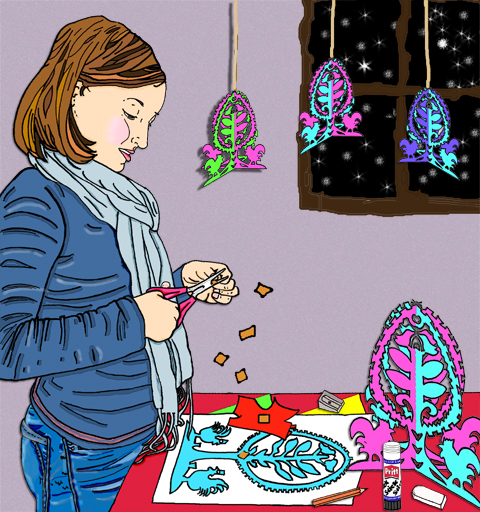


![190809_theunthanks[1]](http://www.ameliasmagazine.com/wp-content/uploads/2011/03/190809_theunthanks1.jpg "190809_theunthanks[1]")