Amelia’s Magazine | Fifty Years of Illustration: an interview with coauthor Lawrence Zeegen

Fifty_Years_Of_Illustration_Cover
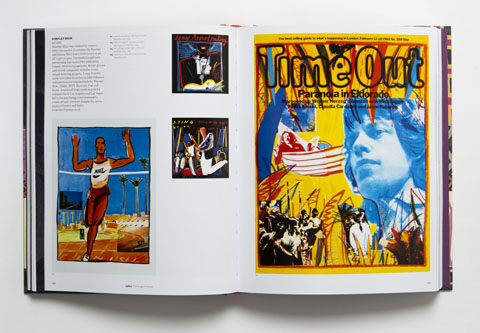
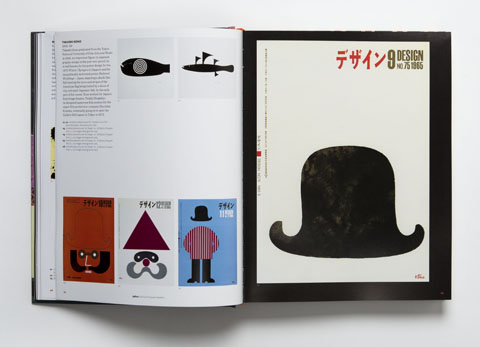
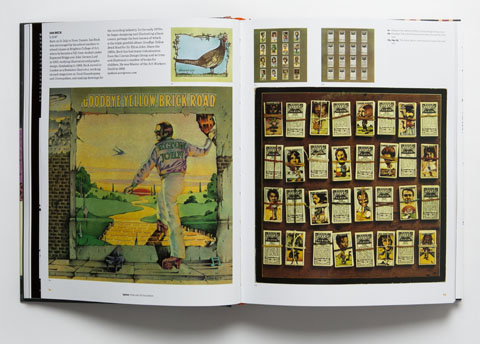
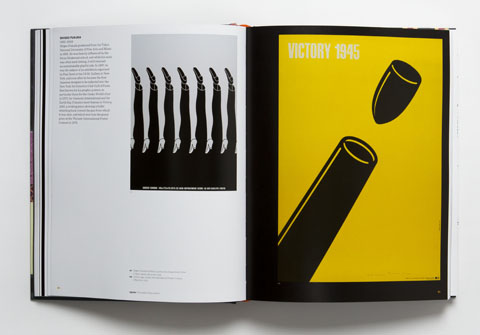
The definitive Fifty Years of Illustration by Lawrence Zeegen and Caroline Roberts was published by Laurence King late last year. This beautiful volume charts contemporary illustration’s rich history, starting with the rampant idealism of the 1960s, moving onto the bleak realism of the 1970s, the over-blown consumerism of the 1980s and the digital explosion of the 1990s, followed by the increasing diversification of illustration that represents the discipline in the early twenty-first century.

The book explores the contexts in which the discipline has operated and looks historically, sociologically, politically and culturally at the key factors at play across each decade, whilst artworks by key illustrators bring the decade to life. Contemporary illustration’s impact and influence on design and popular culture are investigated through introductory essays and profiles of leading practitioners, illustrated with examples of their finest work.’
Fifty_Years_Of_Illustration_1
Lawrence Zeegen is currently Dean of the School of Design at London College of Communication, University of the Arts London, where he leads pre-degree, undergraduate and postgraduate courses and research in animation, book arts, branding and identity, illustration, interface and interaction design, graphic communication design, spatial design and typographic design. In this in depth interview he tells us more the process of making this must have book.

Why did you decide to concentrate on the last 50 years of illustration in this book?
My book Fifty Years of Illustration charts the birth of contemporary illustration at the start of the 1960s to the present day. The sixties was the moment in time when illustrators first had an opportunity to create work away from the restrictions of the commercial client – underground publications sprang up as the counterculture evolved in San Francisco on the West Coast of the US and in London, whilst in New York studios such as Push Pin began to create and publish work that was more expressive and experimental than had previously been seen.

Contemporary illustration was born in the sixties and the discipline has undergone massive flux and a huge transformation during the five decades the book charts. From the energy and idealism of the sixties, the dreamlike escapism and contrasting bleak realism of the seventies, the over-blown consumerism and ‘greed-is-good’ ambitions of the eighties to the digital explosion of the nineties and the increasing diversification of illustration during the early 21st century, Fifty Years of Illustration explores the discipline through the key factors historically, sociologically, politically and culturally that determined each decade.

On a personal note, I turned 50 last year so the book covers illustration’s recent history aligned to my own development too. I’ve been working as an illustrator for 30 years, teaching illustration as an educator for 25 years and writing about illustration for 10 years so the book became a natural extension of my own interests in the subject.

Fifty_Years_Of_Illustration_8
How did you pick the artists to represent each era?
That’s a good question – it started some years ago with conversations, often over a glass or two of red wine, with Professor John Lord at University of Brighton and with others including Professor George Hardie and Ian Wright. Ultimately though the final long list was one I discussed with the publishers, of course, and with Caroline Roberts, who worked on the book with me. Caroline pointed me in the direction of a few illustrators I hadn’t considered and also helped to source a few from the 1960s and 1970s that weren’t easy to locate.

One consideration, not really visible to the reader, is a few restrictions placed on a project like this for a couple of very valid reasons – the publishers have co-publishers in mind from a variety of other countries so were keen that illustrators from these countries were represented in the book and the other issue that cropped up a few times was the cost in reproducing some of the images. Most illustrators allowed us to reproduce their work without a fee but a few, mainly those from a few decades ago and no longer alive, were represented by picture libraries and agencies and these charged for the rights to reproduce the works; fair enough, of course, but the picture budget was soon eaten up.

There will be those illustrators that weren’t included in the book that my fellow illustrators and academics will think should have been selected and there will, inevitably, be those illustrators that I have chosen that some will wonder what warranted their inclusion – ultimately, it really did come down to personal choice. I had a list for each decade in a notebook that I carried around for a couple of years and would update from time-to-time, scribbling down names and crossing out others. It is a personal selection and most definitely not the list to end all lists – there are a few illustrators that I’d have loved to include but in having to make a tight selection it just wasn’t possible to include everyone. I’ll be interested to see from the most recent decades, which illustrators stand the test of time – and would still make the grade when I revise the book for the 2nd edition in a few years time…
Fifty_Years_Of_Illustration_7
Do you have any personal favourites, and if so who are they and why?
Of course, it is impossible not to have a few favourites, even though the entire selection has been made up of my choices and ended up being quite subjective really. I guess I have favourites that span each decade. Having been born to young parents in the mid sixties I grew up to the soundtrack of the Beatles, so Klaus Voormann’s cover for Revolver still resonates very strongly for me. I met him recently and he is such a great guy and supremely talented – we’re talking about how to best celebrate the fifty years since Revolver was released next year.

Another favourite from the 1960s has to be Milton Glaser’s portrait of Dylan that ran as a poster inserted into the Bob Dylan’s Greatest Hits album released in 1967. Glaser is another hero I was fortunate enough to meet recently, this time in New York, and I asked him if the urban myth I had heard was true – did he hide the letters to spell out the word in E L V I S in Dylan’s hair, his response? ‘Yeah, I heard that too.’ He gave nothing away, and why should the guy that created one of the most iconic pieces of branding ever – I ♥ NY feel he has to confirm or deny rumours?

From the 1970s I would have to say my favourite images in the book are either Guy Peellaert’s gatefold album sleeve illustration of David Bowie for Diamond Dogs or perhaps Philip Castle’s poster for Stanley Kubrick’s Clockwork Orange, although George Hardie’s images have always been at the top of any of my lists too. From the 1980s Ivan Chermayeff’s graphic images at pretty unbeatable – yet another hero I was fortunate enough to meet last year, and Patrick Nagel’s rather cool expressionless models, as featured on Duran Duran’s Rio, have always been pretty special. Andrzej Klimowski was my tutor at the Royal College of Art at the end of the eighties, as was Dan Fern, and they both created some very iconic and influential work during that period.

More recently, during the 1990s, I have always liked the work of Andy Martin and John Hersey – both leading lights of the early digital era, and think illustrators Kam Tang, Brett Ryder and Kate Gibb are rather fantastic. Of the bunch, though, it would have to be MariscalCobi, his character for the Barcelona ’92 Olympics, was simply brilliantly envisaged and Mariscal himself is a character to behold, I met Mariscal at a lecture he gave at Central Saint Martins a few years ago and he knocked me out and again last year at a conference in Toronto I witnessed him entertain a crowd of 2000+ with a magnificently surreal talk and performance.

Bang up to date and through the 2000s and 2010s I would have to say that Jasper Goodall, Marion Deuchars, Airside, Antony Burril, Patrick Thomas, Jason Ford, Roderick Mills, Peepshow, Paul Davis, Adrian Johnson and Ian Wright are all firm favourites, but then I would say that – they’ll all old friends.

Fifty_Years_Of_Illustration_6
In your own artistic practice what era or style of illustration has been the biggest influence?
I can’t say that other illustrators have really ever influenced my own work – I have admired many but not drawn direct lines or references into my illustration practice, and that’s perhaps why I feel drawn (excuse the pun) to write about the subject. I have written seven or eight books on illustration featuring the work of thousands of illustrators but think I find my inspiration in the work of untrained jobbing graphic artists of yesteryear – I love old clip art, tattoo art, rubber stamp graphics and the images that once adorned the back pages of cheap magazines and comics.

If I had to name the artists that have inspired me – Patrick Caulfield, Warhol, Kurt Schwitters, Julian Opie would be up there but the list goes on, and I think I’ve been just as inspired by music, TV, literature, film and popular culture generally. I grew up listening to the Clash, reading Colin Maccinnes, watching Tomorrow’s World and dancing to soul music – these have all been as a big an influence on my work as any artist I think.
Fifty_Years_Of_Illustration_5
How long did it take to put this book together?
A good question and if I’m honest – far too long! I originally had the idea over a decade ago but I couldn’t get a publisher interested. Illustration was very much out of favour during the 1990s and it wasn’t until I had written a few other books on contemporary illustration that sold pretty well and illustration itself had come in from the cold, that I managed to persuade a publisher it would be a good idea.

How-to-do illustration books and how-to-work-in illustration books are ten-a-penny nowadays but ten years ago this wasn’t so, and this is what publishers wanted – and I was happy to oblige, of course. Getting a book published on the history of illustration, however, was more of a challenge. It was tricky for a few reasons – publishers weren’t sure that an audience for this type of book existed, but I was convinced that student and professional illustrators, and designers, would be interested. The other reason – books such as Fifty Years of Illustration can be a nightmare to publish is the sheer volume of images that require usage clearance and the coordination and communication with so many illustrators can be daunting and seemingly never-ending.

I have to say that Laurence King Publishing were behind the project from the start and were very supportive – they were also very patient too. It was the publishers that suggested to me that we bring in Caroline to share some of the workload, a good idea. I decided on the structure of the book, made the decisions on the list of illustrators – who should be in to represent each decade, and I wrote the introductory essay and each of the chapter essays and Caroline worked on the profiles – it was a fairly easy process once I’d established the illustrators but certainly the project as a whole was very time-consuming. Books such as this one are very labour intensive, and I had to fit it around the rest of my work. I’m the Dean of the School of Design at London College of Communication and that’s a pretty demanding role – I have 2000 students across a multitude of undergraduate and postgraduate design courses within my remit and even with research as an aspect of my role as the Professor of Illustration for University of the Arts London writing is only an element of what I do.
Fifty_Years_Of_Illustration_4
Who designed the cover and why did you choose them? (do you feel their style represents the ‘now’ and if so why?)
The cover was always going to be tricky, and we did commission a very internationally known illustrator to create a bespoke cover image and then waited about six months before it was delivered. And it wasn’t right. We, myself and Angus Hyland the Pentagram partner and Creative Director at Laurence King, then decided to ask Jeff Fisher. I knew I wanted a cover that was made up of hand rendered letterforms – with the book packed with illustration it was never going to work to have an illustration on the cover. Jeff did, I think, a magnificent job – the cover fits the book, feels right and has enough gravitas, without being formal or stuffy, to present the subject as both readable and approachable. I always wanted the book to appeal to a wider audience than simply illustrators and designers, and I think it has achieved that and a great cover helps a book increase interest.

What in particular determined inclusion for the artists representing The New Wave, who are working today?
Presenting a new wave of artists is always going to be challenging – it is the biggest section of the book and it is about the here and now, or at least those working that have made most impact onto the illustration scene, as I see it, from the beginning of the 2000s to the present day. I would argue that Jasper Goodall was one of a small elite that had a huge influence across design for his approach to fashion illustration, that Shepard Fairey, whilst a street artist rather than an illustrator, contributed hugely to putting the first black man into the White House with his illustrated poster campaign supporting Obama and that Airside, Marion Deuchars and Alex Trochut, to name but a few, also brought illustration to new audiences because of the appeal, accessibility and the visible platforms for their work.

What are the biggest challenges facing an illustrator working today?
Where to start? Illustrators have it all and yet have nothing at all too. You want great flexibility in your working life, want to work where and when you want then illustration may well be the right career choice for you. But it really isn’t that simple – illustration is a tough industry to break into, tougher still to maintain a presence in and even if you are flavour of the month, and who says it will last any longer, you will still find it hard to call the shots. Illustrators are guns-for-hire and style is king – when you’re style is in vogue you can do no wrong, but when its been seen and done and the art directors, designers and those who commission have moved on, if you’ve not moved on too – then the phone stops ringing and emails stop pinging through. It can be a tough, and brutal existence and can be totally dictated by demand – unless you’re smart enough to have other outlets for your illustration work, of course. For those illustrators that create their own prints, products and paraphernalia there can be life after the commercial commissions, but making a genuine living from this is increasingly difficult I think. There is a reason that most working illustrators are under the age of thirty.

At the risk of sounding far too negative though, I do think that working as an illustrator is great fun; I spent 10 years working out of a studio in Hoxton, Big Orange, that a gang of us set up upon graduation from the Royal College of Art in 1989 and enjoyed every minute of the experience – the studio is still in existence today but with not a single founding member still present, and I guess that does say something of how important younger illustrators constantly coming onto the scene is.

Fifty_Years_Of_Illustration_3
At the back of the book you state that there is still a lot left to do to record the impact of illustration on art, design and society – why do you think this is the case?
Because illustration has, until now, been treated as a subsection of graphic design, as a footnote in graphic design’s rich history. I believe that there is a vital history that needs to be documented – that illustration has played a major part in defining the 20th and now the 21st centuries and is an aspect of our visual culture that hasn’t been consdiered seriously enough. The first visual communication between humans, before written language, was most likely scratched or drawn in the sand of dirt by a finger or a stick – this wasn’t cave art; it was illustration. Illustration was the earliest form of graphic communication – we encourage young kids to draw, to express themselves through illustration but yet we don’t take the discipline seriously enough, we don’t reflect on how illustration shapes, entertains and informs us. I hope that Fifty Years of Illustration is just one chapter in the recording of illustration’s great history and that others recognize the value of the subject. I’m not done on the subject myself, that’s for sure, I have other opinions, views and ideas about the discipline and will be writing, lecturing and presenting on illustration for a few more years yet, but this is call-to-arms for others to join me in celebrating, and berating illustration (because not everything is perfect) – we have to talk about the good, the bad and the ugly of the discipline and to a wider audience too.

Who do you hope will read this book and why would you recommend it?
As I’ve said really – art and design students and design and illustration professionals as well, but I really hope too that this book is picked up, looked at and read by those with an interest in the subject. Illustration is the ‘people’s art’ so I hope that people will see something of interest in the book – from the children’s illustrated book they loved reading or being read to at bedtime to the record they loved as a teenager, with artwork they stared at for hours whilst listening to the music, illustration has had an impact into our lives in so many ways and is a fascinating subject to read about and look into.

Fifty_Years_Of_Illustration_2
On a personal level why do you love illustration so much?
I grew up with it, from my first love of illustration through the Ladybird books of my childhood, to the 7-inch single sleeves of my teenage years and life as an art student I always came back to the illustrated image as a means of visual communication. I like being around illustrators too – I like their sense of the world, their desire to tell stories and communicate and the incredible skills many illustrators demonstrate through their work. I also like that illustration is accessible and everyday – you don’t need to go to a gallery to see illustration – pick up a book or newspaper, you don’t need to ‘understand’ illustration – it isn’t complex, it is what it is.

You have said you should “feed your brain, feed your eyes, feed your soul” – where do you go to do this?
Anywhere and everywhere – personally, I read newspapers and magazines, I was once a magazine fiend and every copy of The Face ever published for example, I see movies, I listen to music, I trawl the internet – all the same stuff we all do.

I’ve been fortunate to travel a lot and wherever I am in the world I bring back ideas, references, research – last year I took photographs and inspiration from trips to South Korea, Turkey, Italy, Canada, USA, Hong Kong, China… it is hard not to draw influences from such fascinating places.

I meet many people too, in my line of work, and much of my thinking comes from conversations and meetings with great students, great academics and great practitioners – I am a great believer in surrounding oneself with smart people that challenge you to think smarter, work harder and keep you focused on doing great work – whether it be an illustration, a lecture on illustration, an article or book on illustration. And I am also a great believer in having an opinion, a point of view, and getting it out there.

Buy Fifty Years of Illustration here.

Categories ,Adrian Johnson, ,airside, ,Alex Trochut, ,Andy Martin, ,Antony Burril, ,Big Orange, ,Bob Dylan, ,Brett Ryder, ,Caroline Roberts, ,Clockwork Orange, ,Cobi, ,David Bowie, ,Fifty Years of Illustration, ,George Hardie, ,Guy Peellaert, ,Ian Wright, ,Ivan Chermayeff, ,Jason Ford, ,Jasper Goodall, ,Jeff Fisher, ,John Hersey, ,Julian Opie, ,Kam Tang, ,Kate Gibb, ,Klaus Voormann, ,Kurt Schwitters, ,Laurence King, ,Lawrence Zeegen, ,London College of Communication, ,Marion Deuchars, ,Mariscal, ,Milton Glaser, ,Patrick Caulfield, ,Patrick Nagel, ,Patrick Thomas, ,Paul Davis, ,Peepshow, ,Philip Castle, ,Professor George Hardie, ,Professor John Lord, ,Professor of Illustration, ,Revolver, ,Roderick Mills, ,Royal College of Art, ,The Face, ,University of Brighton, ,University of the Arts London, ,Warhol

Similar Posts:


Amelia’s Magazine | Andrew Wightman: Illustrator Spotlight

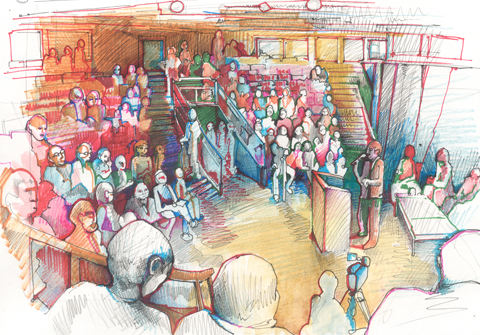
Royal Institution lecture hall
Royal Institution lecture hall by Abi Daker

So, pharmacy discount we all know there’s been a bit of a hoo-hah following the disclosure of some important emails that reveal that the data featured as key facts in the 2007 Intergovernmental Panel on Climate Change (IPCC) report on climate change may not be 100% correct. You do know about this, search right? It’s been front page of the Guardian for a while… and perhaps more importantly it’s given all those climate change deniers out there a huge amount of grist for their petty little mill. And that really is bad news.

I haven’t been following the ins and outs of this fandango in massive detail but when my parents invited me along to this hastily convened Royal Institution lecture I leapt at the chance to perch on their infamous red velvet tiered seating amongst the great and the good (read: a mix of moneyed old fogeys with too much time on their hands and geeky young science types who would rather engage in debate than go to the pub on a Friday night).

James Randerson
Portraits by Amelia Gregory

We were introduced to the panel by James Randerson, prostate environment editor at the Guardian and wearer of silly striped tie. You’ve gotta love that look. It was mere moments, I tell you, before the heckling started… James put the slightly ambiguous question “Has global warming increased the toll of natural disasters?” to the panelists, which immediately prompted yelps for clarification from indignant men all around me. “Over what period of time, and what kind of cost?” asked one. (Certain men seem to get very difficult the older they get, have you noticed?) James looked sufficiently rattled – “Can we at least agree that there is man made global warming?” he asked, pleaded. “NO!” came the emphatic answer from a man with wild hair and an even wilder look in his eye, sitting just to my right. Uh oh, I was in the close company of a denialist – this should be fun! “Gosh, I didn’t think this would be so hard!” chuckled James nervously.

Robert Muir-Wood

And then we were racing straight into the presentations, starting with leading climate scientist Robert Muir-Wood, who talked two to the dozen as he raced through slides. Since 2001 there has been huge hype over “disaster costs” with the media being “whipped into a frenzy”, and predictions of up to 500% more floods, mudslides, hailstorms, droughts, ice storms and wildfires being reported as possibilities of the near future. It’s worth noting that Muir-Wood has close links with the insurance industry, who would clearly benefit from increased premiums if the cost of disasters were expected to increase. In 2003 the French experienced “la canicule” – a summer of such intense heat (the hottest in 500 years) that thousands died. But then there was a “death deficit” in the following year. Was this because the vulnerable were looked after better or they’d all died already? Muir-Wood used this as an example of how hard it is to read and understand data without looking at the bigger picture. Another example he used is the major investments made in infrastructures over recent years; for instance Japan has thrown “huge amounts of concrete at flood defences” since 1959, when Typhoon Vera, the strongest Japanese storm in recorded history, hit its shores. Consequently the storm would have had a dramatically lower cost if it had happened today. These outlying factors make it very hard to accurately predict or assess statistics. He concluded that there is only a trend for elevated costs (of disasters) if you look at graphs since the 1970s.

Bob Ward

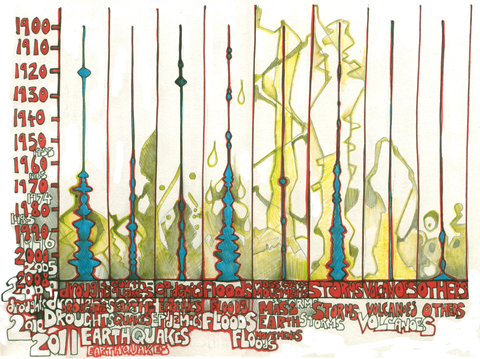
Bob Ward, who works for LSE, then took centre stage to defend the IPCC. “As always there is a caveat,” he explained; “is any one event an effect of climate change? It’s so hard to match the attribution, which makes it difficult to map trends.” Behind him a slide detailed how climate change might decrease the chance of frost at night, which prompted some loud chuckles from the denialists in the audience, who as ever, seem confused by the difference between climate and weather. Bob clarified that we must look at the numbers of people affected and we can clearly see that insurance losses have risen since the 1950s which means many more people have been displaced or injured by natural events. A funny little graph proved the point that floods, droughts, storms and earthquakes have become the biggies in terms of human cost. However, there is as yet, insufficient evidence of a firm link with climate change. Naturally, the biggest losses have happened where the greatest number of people and properties have been involved.

A version of the "funny little graph" A.K.A. Extreme Weather Events & Natural Disasters, by Abi Daker (disclaimer: this may not be accurate)
A version of the “funny little graph” A.K.A. Extreme Weather Events & Natural Disasters, by Abi Daker (disclaimer: this may not be accurate)

Roger Pielke

And then it was time for the spanner in the works to take to the stand. Roger Pielke is a specialist in analysing how science intersects with decision making from the University of Colorado. “Uncertainty. Get used to it,” he announced. His conclusions came first and seemed to echo those of Ward’s. “Societal factors alone are responsible for increased losses,” he postulated, but emphasised that he advocates decarbonising the economy anyway because 1.5 billion people don’t have access to fossil fuels and need to find alternative energy supplies. “This could also deal with the thorny, messy climate change problem.” He then talked us clearly through his immaculate presentation, showing us that according to Excel there is no upward trend for disaster losses between 1900-2001. Yup, his graph appeared to be flatlining alright. And then we came to it: Pielke’s unequivocal evidence that despite the views of experts the IPCC saw fit to publish misleading data in its 2007 report, even alluding to his own agreement to use a problematic graph, which had not been given. “If the data doesn’t support the claim, don’t publish it!” This evinced yet more excited snorts from the denialist next to me, and when I glanced over at Bob Ward he was shifting uncomfortably in his seat. Oooooh, the graphs had been drawn and it was time for blood – sorry I mean questions – from the audience.

A lump appeared, bumping along the velvet curtains behind the stage, beating a hasty but unsubtle retreat out of the auditorium and momentarily distracting Randerson. “Are we in disagreement over the vulnerability of planet, or the process of science?” asked someone. Because actually the reason everyone had come to this lecture was to find out how the process of the IPCC could have fallen apart so dramatically. Apart from the denialists of course, and one in particular. “I am from Weather Action,” said the loudly snorting man next to me. “We are long range forecasters, and our evidence shows that CO2 does not drive climate, which has all been made up by carbon traders and fraudulent people.” In fact, according to Piers Corbyn, all extreme events are caused by the sun. All of them folks. Nothing to do with us spunking vast quantities of greenhouse gases into the atmosphere. You know, I just don’t get how some humans can be so entirely arrogant, to think that our activities will never affect our fragile planet. I wonder how history will look back on people like Corbyn, who wanted to know if the IPCC could now be scrapped so we can “prepare for ‘real’ disasters?” Pielke categorically declined to engage in a debate “that can be held elsewhere” – i.e. whether climate change is happening (yawn). Muir-Wood reminded Piers that he prophezised chaotic wind storms four years ago. “We’re 85% right!” heckled Corbyn. Ward went further still. “There’s no end to my disagreement with Piers,” he said. “I don’t know where to start.” I got the impression that he’s met Corbyn before. After the debate I took a rubbishy designed printout from Corbyn (Why are spurious campaigning bodies so good at bad graphic design? It’s endemic. Please debate.) My favourite box out reads: CRUSADE AGAINST THE SCIENCE DENIERS! Print out this newssheet and show it to a Global Warmer you know and ask them: “Is all this from solar flares, to the ionosphere, the stratosphere, Scotland, China & the Timor Sea caused by driving cars?” Yup, you’re winning me over with that argument alright. (If you know what he’s on about can you let me know please? Ta.)

Earthquake-Abi Daker
A disaster by Abi Daker. Which may or may not be attributable to climate change.

Muir-Wood then made a most pertinent point for a social media addict like myself, which was that the data for climate change is not static, and this is the major stumbling block of a one-off report such as that produced in 2007 by the IPCC. New data is being discovered or disproved all the time and the way in which such information is shared on a global level must become more fluid otherwise reports too quickly become outdated. Of course the internet provides the perfect forum for such an idea, and the organisation of a scientific advisory body such as the IPCC must reflect this.

Someone then raised a query about the amount of money the IPCC receives to do its work, which led to the clarification that the IPCC is run along similar lines to any academic body, with scientists contributing their time and knowledge because they think it’s worthwhile and not for financial gain. And herein lies one of the biggest problems. Whilst folks like IPCC chair Rajendra Pachauri must find work elsewhere (for Indian mining conglomerate TATA, which stands to make large sums from “climate doom scenarios”) there will by necessity be a conflict of interests. Our worthy panelists appeared to be in universal agreement that the IPCC needs to be reformed. “But it needs to cost more to do a good job,” said Muir-Wood. “The problem is that everything is done on the cheap,” agreed Pielke. Perhaps if some proper cash was spent on collecting and refining climate change data there would be less need to use “grey data” and there would be fewer mishaps of the kind that is now rocking the scientific community. It seems obvious that a lack of resources has led to corner cutting, and as Pielke pointed out there needs to be clear boundaries between producing data and giving political advice. If more money is spent on the IPCC then there will automatically be more accountability, and more trust.

By the end of this whirlwind journey into the minds of climate scientists Ward, Pielke and Muir-Wood, the protagonists seemed to be in agreement that since the 1970s there have definitely been increases in the cost of natural disasters. But a final show of hands from the audience showed that not many people (far less than at the start of the lecture) believed that global warming has increased the toll of natural disasters. I myself was part of the “don’t knows” because although I suspect it to be so, the correlation has clearly never been shown. This final moment highlighted just how much damage the revelations of the past few months have incurred; wherein people have looked at the brouhaha in the media and concluded that all scientists are liars who will happily bend the truth to suit their own means. And yes, it seems some have indeed cobbled together dodgy information, and in doing so have massively set back the most important movement of our lifetimes – 25% of the population now believes that climate change is not a serious issue, which is devastating news when we have so much work to do. If data cannot be proved then it clearly shouldn’t be used. What were those scientists thinking?

But, remember this – as Bob Ward surmised (and I’m paraphrasing here, obviously he didn’t say the t-word and all other poor language is entirely my own). “Are you willing to take the risk that climate change is all a load of old twaddle? No, we don’t know how much it will affect us or when, but affect us it will. If we do nothing we risk suffering the most serious consequences, and they ain’t pretty my friends.” Yes, human beings (even scientists) are fallible. The IPCC has made mistakes. Hopefully some important lessons have been learnt about how data is collected and presented, and what it might cost to do a good job. But we mustn’t let a tiny set-back stop us from striving for a different world, one where the battle against climate change encompasses so much more than just the environment. It’s about making the world a better place for all, and that means massive changes in how humans live.
1All photographs courtesy of Andrew Wightman

Andrew is a 32-year-old accomplished illustrator who currently lives in Bude in Cornwall. After having taken a year off to restore/rebuild a derelict house, erectile he is back in business. Andrew meets up with art editor Valerie Pezeron and reflects on his successful career and the state of the illustration industry.

Valerie Pezeron: Hi Andrew, how has it been getting back to the daily grind of illustration business?

Andrew Wightman: I’ve been sending emails and got interviews…but no money yet!

VP: There is a recession at the moment and many illustrators are struggling. How has it been for you?

AW: Well, I took a year off to build a house…not from stones from the ground. An old man had lived in there and it was really in a horrendous state. It was a full-on project. I was trying to make some money on the house but it’s probably not going to happen now so I’ll see! So this is I getting back into it now, I didn’t want to just have a hammer in my hand all day long.

5

VP: So you’ve moved to Bude? Did you do some illustrations while in Cornwall?

AW: I didn’t know any body there before I moved! It’s good in the summer but not so good in the winter. You pay a price. I have done some new work, took the commissions that came to me but did not look for new work until now. I do think I need to spend more time doing promotion even though I can almost get by not knocking on too many doors. I’ve always wanted an agent, I think it would be a good idea but they say “Not quite right for us at the moment, thank you”. I think if you don’t have an agent and you are making money, you feel good about it because you don’t have to give them money. I have horror stories of people who have agents who got them no work at all. But all they’ve got they have to put through the agent so they have lost money. Overall though I would say I am in favour of them as they can get you work from somewhere you’ve never heard of; I’ve got friends who do work for agencies and they’re designing for this littler known Scandinavian bathroom company.

VP: What do you think of online portfolios?

AW: It’s strange how people don’t seem to meet each other anymore. When I fist left college in 2002, you would very much make calls, knock on doors and physically show your portfolio. Some of the paid ones like The Book seem to me like a con: $700 or something and no guarantee of work…

3

VP: Did the work you created for Amelia lead to anything?

AW: Yes. I’ve done two things for Amelia’s magazine. I got jobs doing covers for the Guardian because of that and a spread for a book publisher. Sometimes doing work for free opens doors if done selectively at the beginning of one’s career. If you are too proud to do work for free at that stage, it won’t help you. If you have a genuine artistic temperament, you should do something anyway. Even when you reach a certain level of success, you might still want to do stuff for nothing, especially if the paid work is painting something not that fun. And then you might have some outlet for it.

VP: Where did you grow up?

AW: I grew up in Scotland, in Fife. I’ve lived in a few places. I came from the top and gradually made my way to the bottom. I‘ve gotten as far away from my parents as I can! (Laughter) Where next? California? I’m going west, more sunshine!

6

VP: So you graduated from the Royal College of Art in 2002. And before that?

AW: I went to Liverpool Art School.

VP: Why become an illustrator?

AW: When I was young, I liked drawing.

VP: Were you one of those cool kids at the back drawing on the textbooks?

AW: Yeah, pretty much. I finished my books quite soon because all the back pages were full. I drew war and punk rockers when I was seven but I was confused, I called them Mods; I drew them with big Mohicans. I now quite like drawing old men with loads of wrinkles on them. I drew airplanes and I still do.

VP: What do you like to draw most?

AW: I like to draw buildings from above, from aeroplane viewpoints. I like to draw people as well. Now that I am in the countryside, I am about to sit down on the field and draw some hills just to see what happens. I went to the Van Gogh show yesterday and some of the landscape drawings were inspiring. There are certain things I don’t draw at all. I used to be really into fine art, the masters,  but I have grown out of that.

7

VP: Did you always consider that you would go into art?

AW: Not really. I didn’t really know you could. Because I maybe thought you could do architecture. When I was 10, I said I’m going to be an architect. When you are at high school, you do work experience and I went to the architect office. I thought this is ok but I wasn’t that excited. I did a lot of science at school; I didn’t really do art at the end.

VP: Art education is important, isn’t it?

AW: I do think maybe you could afford to spend more time on it. When you do maths at A’ Levels, it’s so specialised! Surely we’ve done enough of adding the numbers! I’ve been worried about the arts budget being cut down in schools. I used to work for a company that did educational software; kind of like interactive computer games and we were really doing fun things for schools for all the different subjects. This is all being cut down apparently and it will be worse with the conservatives.

VP: Do you think you would have benefited from those games when at school?

AW: Not really. I don’t mind looking at really boring textbooks. My work is quite detailed and it is a reflection of the fact that I like science and facts and figures, numbers and details.

4

VP: Tell us about your drawing process.

AW: I just sit down and start drawing something and I’m off. I won’t think about too much and just draw a bus and then something will happen, the bus will be in context. It’s important to not sometimes think, “oh, I can’t think of anything to do, so I won’t do anything.” I use pencils, scan into Photoshop and colour digitally. I hate Illustrator.

VP: Your work would fit animation perfectly.

AW: I used to do animation. When I was at college in Liverpool, I did animation for all of my third year. I always like doing things that aren’t always stories so much but I could think of details of stuff. I would do interactive things so it was presenting a lot of information.

VP: Do you feel you fit in with a certain trend of quirky and humorous illustration/animation?

AW: I don’t, no. If I go to the degree show at the RCA, I am always a bit surprised by how many people don’t just do illustration? The animation department is quite traditional still. One of my school year mates, Rob Latimer was in that department. That department was full of little people doing great things and I kind of liked that. It always seems lately people presenting boring information in a graphical format. But that’s not interesting. Or people who have a good graphic design portfolio and then they go to the RCA and then they decide they want to become a film –maker. Of course things are not very accomplished; you graduate with a Masters Degree and you’ve done bad filmmaking. That’s a bit strange. There is not as much straight illustration coming out of there but…

2

VP: So content is very important to you.

AW: Yes! I did not even realise that until I got to the RCA. I would concentrate on style and textures in my paintings and then the tutors would ask me what are these for? And then I realised I should do something with them. I used the paintings like backgrounds. I spent hours on them; I like having an intense amount of details that you see for just a few seconds as if it was an animation and it gives it a sense of weight. And it is something I remembered from doing animation. You can improve an image a lot by spending five more extra minutes on it. That’s been the case with my new website.

VP: So what else did you get from the RCA?

AW: Oh, I really liked the RCA. It’s very hard to separate it from the fact that I had just moved to London to go there. It was really a honeymoon period. Everybody in your class was really into it and the standard is pretty high. With hindsight, I think one would benefit from going there after having worked a little bit so you wouldn’t take it for granted so much. I did some times: I would sit down and go “this is fantastic”. There were a lot of opportunities from outside companies to do something for free. It was a good way to do real work, to have some practice. Art school business in general is a great way to make a living; I’d love to do some teaching. I’m going to Liverpool in a couple of weeks to do a lecture with a friend of mine on our careers.

8

Andrew likes:

Favourite movie: Ghostbusters

Favourite TV: Nothing too intelligent

Music: Rolling Stones. I like to work in my shed in silence.

Radio: Radio 4 or clever people’s conversations. I don’t like plays on the radio.

Categories ,Amelia’s Magazine, ,Andrew Wightman, ,animation, ,Cornwall, ,editorial, ,Fine Art, ,Ghostbusters, ,illustration, ,illustrator, ,interview, ,painting, ,publishing, ,Radio 4, ,rca, ,Rolling Stones, ,Royal College of Art, ,The Guardian, ,van gogh

Similar Posts:


Amelia’s Magazine | Andrew Wightman: Illustrator Spotlight

Royal Institution lecture hall
Royal Institution lecture hall by Abi Daker

So, pharmacy discount we all know there’s been a bit of a hoo-hah following the disclosure of some important emails that reveal that the data featured as key facts in the 2007 Intergovernmental Panel on Climate Change (IPCC) report on climate change may not be 100% correct. You do know about this, search right? It’s been front page of the Guardian for a while… and perhaps more importantly it’s given all those climate change deniers out there a huge amount of grist for their petty little mill. And that really is bad news.

I haven’t been following the ins and outs of this fandango in massive detail but when my parents invited me along to this hastily convened Royal Institution lecture I leapt at the chance to perch on their infamous red velvet tiered seating amongst the great and the good (read: a mix of moneyed old fogeys with too much time on their hands and geeky young science types who would rather engage in debate than go to the pub on a Friday night).

James Randerson
Portraits by Amelia Gregory

We were introduced to the panel by James Randerson, prostate environment editor at the Guardian and wearer of silly striped tie. You’ve gotta love that look. It was mere moments, I tell you, before the heckling started… James put the slightly ambiguous question “Has global warming increased the toll of natural disasters?” to the panelists, which immediately prompted yelps for clarification from indignant men all around me. “Over what period of time, and what kind of cost?” asked one. (Certain men seem to get very difficult the older they get, have you noticed?) James looked sufficiently rattled – “Can we at least agree that there is man made global warming?” he asked, pleaded. “NO!” came the emphatic answer from a man with wild hair and an even wilder look in his eye, sitting just to my right. Uh oh, I was in the close company of a denialist – this should be fun! “Gosh, I didn’t think this would be so hard!” chuckled James nervously.

Robert Muir-Wood

And then we were racing straight into the presentations, starting with leading climate scientist Robert Muir-Wood, who talked two to the dozen as he raced through slides. Since 2001 there has been huge hype over “disaster costs” with the media being “whipped into a frenzy”, and predictions of up to 500% more floods, mudslides, hailstorms, droughts, ice storms and wildfires being reported as possibilities of the near future. It’s worth noting that Muir-Wood has close links with the insurance industry, who would clearly benefit from increased premiums if the cost of disasters were expected to increase. In 2003 the French experienced “la canicule” – a summer of such intense heat (the hottest in 500 years) that thousands died. But then there was a “death deficit” in the following year. Was this because the vulnerable were looked after better or they’d all died already? Muir-Wood used this as an example of how hard it is to read and understand data without looking at the bigger picture. Another example he used is the major investments made in infrastructures over recent years; for instance Japan has thrown “huge amounts of concrete at flood defences” since 1959, when Typhoon Vera, the strongest Japanese storm in recorded history, hit its shores. Consequently the storm would have had a dramatically lower cost if it had happened today. These outlying factors make it very hard to accurately predict or assess statistics. He concluded that there is only a trend for elevated costs (of disasters) if you look at graphs since the 1970s.

Bob Ward

Bob Ward, who works for LSE, then took centre stage to defend the IPCC. “As always there is a caveat,” he explained; “is any one event an effect of climate change? It’s so hard to match the attribution, which makes it difficult to map trends.” Behind him a slide detailed how climate change might decrease the chance of frost at night, which prompted some loud chuckles from the denialists in the audience, who as ever, seem confused by the difference between climate and weather. Bob clarified that we must look at the numbers of people affected and we can clearly see that insurance losses have risen since the 1950s which means many more people have been displaced or injured by natural events. A funny little graph proved the point that floods, droughts, storms and earthquakes have become the biggies in terms of human cost. However, there is as yet, insufficient evidence of a firm link with climate change. Naturally, the biggest losses have happened where the greatest number of people and properties have been involved.

A version of the "funny little graph" A.K.A. Extreme Weather Events & Natural Disasters, by Abi Daker (disclaimer: this may not be accurate)
A version of the “funny little graph” A.K.A. Extreme Weather Events & Natural Disasters, by Abi Daker (disclaimer: this may not be accurate)

Roger Pielke

And then it was time for the spanner in the works to take to the stand. Roger Pielke is a specialist in analysing how science intersects with decision making from the University of Colorado. “Uncertainty. Get used to it,” he announced. His conclusions came first and seemed to echo those of Ward’s. “Societal factors alone are responsible for increased losses,” he postulated, but emphasised that he advocates decarbonising the economy anyway because 1.5 billion people don’t have access to fossil fuels and need to find alternative energy supplies. “This could also deal with the thorny, messy climate change problem.” He then talked us clearly through his immaculate presentation, showing us that according to Excel there is no upward trend for disaster losses between 1900-2001. Yup, his graph appeared to be flatlining alright. And then we came to it: Pielke’s unequivocal evidence that despite the views of experts the IPCC saw fit to publish misleading data in its 2007 report, even alluding to his own agreement to use a problematic graph, which had not been given. “If the data doesn’t support the claim, don’t publish it!” This evinced yet more excited snorts from the denialist next to me, and when I glanced over at Bob Ward he was shifting uncomfortably in his seat. Oooooh, the graphs had been drawn and it was time for blood – sorry I mean questions – from the audience.

A lump appeared, bumping along the velvet curtains behind the stage, beating a hasty but unsubtle retreat out of the auditorium and momentarily distracting Randerson. “Are we in disagreement over the vulnerability of planet, or the process of science?” asked someone. Because actually the reason everyone had come to this lecture was to find out how the process of the IPCC could have fallen apart so dramatically. Apart from the denialists of course, and one in particular. “I am from Weather Action,” said the loudly snorting man next to me. “We are long range forecasters, and our evidence shows that CO2 does not drive climate, which has all been made up by carbon traders and fraudulent people.” In fact, according to Piers Corbyn, all extreme events are caused by the sun. All of them folks. Nothing to do with us spunking vast quantities of greenhouse gases into the atmosphere. You know, I just don’t get how some humans can be so entirely arrogant, to think that our activities will never affect our fragile planet. I wonder how history will look back on people like Corbyn, who wanted to know if the IPCC could now be scrapped so we can “prepare for ‘real’ disasters?” Pielke categorically declined to engage in a debate “that can be held elsewhere” – i.e. whether climate change is happening (yawn). Muir-Wood reminded Piers that he prophezised chaotic wind storms four years ago. “We’re 85% right!” heckled Corbyn. Ward went further still. “There’s no end to my disagreement with Piers,” he said. “I don’t know where to start.” I got the impression that he’s met Corbyn before. After the debate I took a rubbishy designed printout from Corbyn (Why are spurious campaigning bodies so good at bad graphic design? It’s endemic. Please debate.) My favourite box out reads: CRUSADE AGAINST THE SCIENCE DENIERS! Print out this newssheet and show it to a Global Warmer you know and ask them: “Is all this from solar flares, to the ionosphere, the stratosphere, Scotland, China & the Timor Sea caused by driving cars?” Yup, you’re winning me over with that argument alright. (If you know what he’s on about can you let me know please? Ta.)

Earthquake-Abi Daker
A disaster by Abi Daker. Which may or may not be attributable to climate change.

Muir-Wood then made a most pertinent point for a social media addict like myself, which was that the data for climate change is not static, and this is the major stumbling block of a one-off report such as that produced in 2007 by the IPCC. New data is being discovered or disproved all the time and the way in which such information is shared on a global level must become more fluid otherwise reports too quickly become outdated. Of course the internet provides the perfect forum for such an idea, and the organisation of a scientific advisory body such as the IPCC must reflect this.

Someone then raised a query about the amount of money the IPCC receives to do its work, which led to the clarification that the IPCC is run along similar lines to any academic body, with scientists contributing their time and knowledge because they think it’s worthwhile and not for financial gain. And herein lies one of the biggest problems. Whilst folks like IPCC chair Rajendra Pachauri must find work elsewhere (for Indian mining conglomerate TATA, which stands to make large sums from “climate doom scenarios”) there will by necessity be a conflict of interests. Our worthy panelists appeared to be in universal agreement that the IPCC needs to be reformed. “But it needs to cost more to do a good job,” said Muir-Wood. “The problem is that everything is done on the cheap,” agreed Pielke. Perhaps if some proper cash was spent on collecting and refining climate change data there would be less need to use “grey data” and there would be fewer mishaps of the kind that is now rocking the scientific community. It seems obvious that a lack of resources has led to corner cutting, and as Pielke pointed out there needs to be clear boundaries between producing data and giving political advice. If more money is spent on the IPCC then there will automatically be more accountability, and more trust.

By the end of this whirlwind journey into the minds of climate scientists Ward, Pielke and Muir-Wood, the protagonists seemed to be in agreement that since the 1970s there have definitely been increases in the cost of natural disasters. But a final show of hands from the audience showed that not many people (far less than at the start of the lecture) believed that global warming has increased the toll of natural disasters. I myself was part of the “don’t knows” because although I suspect it to be so, the correlation has clearly never been shown. This final moment highlighted just how much damage the revelations of the past few months have incurred; wherein people have looked at the brouhaha in the media and concluded that all scientists are liars who will happily bend the truth to suit their own means. And yes, it seems some have indeed cobbled together dodgy information, and in doing so have massively set back the most important movement of our lifetimes – 25% of the population now believes that climate change is not a serious issue, which is devastating news when we have so much work to do. If data cannot be proved then it clearly shouldn’t be used. What were those scientists thinking?

But, remember this – as Bob Ward surmised (and I’m paraphrasing here, obviously he didn’t say the t-word and all other poor language is entirely my own). “Are you willing to take the risk that climate change is all a load of old twaddle? No, we don’t know how much it will affect us or when, but affect us it will. If we do nothing we risk suffering the most serious consequences, and they ain’t pretty my friends.” Yes, human beings (even scientists) are fallible. The IPCC has made mistakes. Hopefully some important lessons have been learnt about how data is collected and presented, and what it might cost to do a good job. But we mustn’t let a tiny set-back stop us from striving for a different world, one where the battle against climate change encompasses so much more than just the environment. It’s about making the world a better place for all, and that means massive changes in how humans live.
1All photographs courtesy of Andrew Wightman

Andrew is a 32-year-old accomplished illustrator who currently lives in Bude in Cornwall. After having taken a year off to restore/rebuild a derelict house, erectile he is back in business. Andrew meets up with art editor Valerie Pezeron and reflects on his successful career and the state of the illustration industry.

Valerie Pezeron: Hi Andrew, how has it been getting back to the daily grind of illustration business?

Andrew Wightman: I’ve been sending emails and got interviews…but no money yet!

VP: There is a recession at the moment and many illustrators are struggling. How has it been for you?

AW: Well, I took a year off to build a house…not from stones from the ground. An old man had lived in there and it was really in a horrendous state. It was a full-on project. I was trying to make some money on the house but it’s probably not going to happen now so I’ll see! So this is I getting back into it now, I didn’t want to just have a hammer in my hand all day long.

5

VP: So you’ve moved to Bude? Did you do some illustrations while in Cornwall?

AW: I didn’t know any body there before I moved! It’s good in the summer but not so good in the winter. You pay a price. I have done some new work, took the commissions that came to me but did not look for new work until now. I do think I need to spend more time doing promotion even though I can almost get by not knocking on too many doors. I’ve always wanted an agent, I think it would be a good idea but they say “Not quite right for us at the moment, thank you”. I think if you don’t have an agent and you are making money, you feel good about it because you don’t have to give them money. I have horror stories of people who have agents who got them no work at all. But all they’ve got they have to put through the agent so they have lost money. Overall though I would say I am in favour of them as they can get you work from somewhere you’ve never heard of; I’ve got friends who do work for agencies and they’re designing for this littler known Scandinavian bathroom company.

VP: What do you think of online portfolios?

AW: It’s strange how people don’t seem to meet each other anymore. When I fist left college in 2002, you would very much make calls, knock on doors and physically show your portfolio. Some of the paid ones like The Book seem to me like a con: $700 or something and no guarantee of work…

3

VP: Did the work you created for Amelia lead to anything?

AW: Yes. I’ve done two things for Amelia’s magazine. I got jobs doing covers for the Guardian because of that and a spread for a book publisher. Sometimes doing work for free opens doors if done selectively at the beginning of one’s career. If you are too proud to do work for free at that stage, it won’t help you. If you have a genuine artistic temperament, you should do something anyway. Even when you reach a certain level of success, you might still want to do stuff for nothing, especially if the paid work is painting something not that fun. And then you might have some outlet for it.

VP: Where did you grow up?

AW: I grew up in Scotland, in Fife. I’ve lived in a few places. I came from the top and gradually made my way to the bottom. I‘ve gotten as far away from my parents as I can! (Laughter) Where next? California? I’m going west, more sunshine!

6

VP: So you graduated from the Royal College of Art in 2002. And before that?

AW: I went to Liverpool Art School.

VP: Why become an illustrator?

AW: When I was young, I liked drawing.

VP: Were you one of those cool kids at the back drawing on the textbooks?

AW: Yeah, pretty much. I finished my books quite soon because all the back pages were full. I drew war and punk rockers when I was seven but I was confused, I called them Mods; I drew them with big Mohicans. I now quite like drawing old men with loads of wrinkles on them. I drew airplanes and I still do.

VP: What do you like to draw most?

AW: I like to draw buildings from above, from aeroplane viewpoints. I like to draw people as well. Now that I am in the countryside, I am about to sit down on the field and draw some hills just to see what happens. I went to the Van Gogh show yesterday and some of the landscape drawings were inspiring. There are certain things I don’t draw at all. I used to be really into fine art, the masters,  but I have grown out of that.

7

VP: Did you always consider that you would go into art?

AW: Not really. I didn’t really know you could. Because I maybe thought you could do architecture. When I was 10, I said I’m going to be an architect. When you are at high school, you do work experience and I went to the architect office. I thought this is ok but I wasn’t that excited. I did a lot of science at school; I didn’t really do art at the end.

VP: Art education is important, isn’t it?

AW: I do think maybe you could afford to spend more time on it. When you do maths at A’ Levels, it’s so specialised! Surely we’ve done enough of adding the numbers! I’ve been worried about the arts budget being cut down in schools. I used to work for a company that did educational software; kind of like interactive computer games and we were really doing fun things for schools for all the different subjects. This is all being cut down apparently and it will be worse with the conservatives.

VP: Do you think you would have benefited from those games when at school?

AW: Not really. I don’t mind looking at really boring textbooks. My work is quite detailed and it is a reflection of the fact that I like science and facts and figures, numbers and details.

4

VP: Tell us about your drawing process.

AW: I just sit down and start drawing something and I’m off. I won’t think about too much and just draw a bus and then something will happen, the bus will be in context. It’s important to not sometimes think, “oh, I can’t think of anything to do, so I won’t do anything.” I use pencils, scan into Photoshop and colour digitally. I hate Illustrator.

VP: Your work would fit animation perfectly.

AW: I used to do animation. When I was at college in Liverpool, I did animation for all of my third year. I always like doing things that aren’t always stories so much but I could think of details of stuff. I would do interactive things so it was presenting a lot of information.

VP: Do you feel you fit in with a certain trend of quirky and humorous illustration/animation?

AW: I don’t, no. If I go to the degree show at the RCA, I am always a bit surprised by how many people don’t just do illustration? The animation department is quite traditional still. One of my school year mates, Rob Latimer was in that department. That department was full of little people doing great things and I kind of liked that. It always seems lately people presenting boring information in a graphical format. But that’s not interesting. Or people who have a good graphic design portfolio and then they go to the RCA and then they decide they want to become a film –maker. Of course things are not very accomplished; you graduate with a Masters Degree and you’ve done bad filmmaking. That’s a bit strange. There is not as much straight illustration coming out of there but…

2

VP: So content is very important to you.

AW: Yes! I did not even realise that until I got to the RCA. I would concentrate on style and textures in my paintings and then the tutors would ask me what are these for? And then I realised I should do something with them. I used the paintings like backgrounds. I spent hours on them; I like having an intense amount of details that you see for just a few seconds as if it was an animation and it gives it a sense of weight. And it is something I remembered from doing animation. You can improve an image a lot by spending five more extra minutes on it. That’s been the case with my new website.

VP: So what else did you get from the RCA?

AW: Oh, I really liked the RCA. It’s very hard to separate it from the fact that I had just moved to London to go there. It was really a honeymoon period. Everybody in your class was really into it and the standard is pretty high. With hindsight, I think one would benefit from going there after having worked a little bit so you wouldn’t take it for granted so much. I did some times: I would sit down and go “this is fantastic”. There were a lot of opportunities from outside companies to do something for free. It was a good way to do real work, to have some practice. Art school business in general is a great way to make a living; I’d love to do some teaching. I’m going to Liverpool in a couple of weeks to do a lecture with a friend of mine on our careers.

8

Andrew likes:

Favourite movie: Ghostbusters

Favourite TV: Nothing too intelligent

Music: Rolling Stones. I like to work in my shed in silence.

Radio: Radio 4 or clever people’s conversations. I don’t like plays on the radio.

Categories ,Amelia’s Magazine, ,Andrew Wightman, ,animation, ,Cornwall, ,editorial, ,Fine Art, ,Ghostbusters, ,illustration, ,illustrator, ,interview, ,painting, ,publishing, ,Radio 4, ,rca, ,Rolling Stones, ,Royal College of Art, ,The Guardian, ,van gogh

Similar Posts:


Amelia’s Magazine | An interview with award-winning typeface designer and Royal College of Art lecturer Henrik Kubel


Fifteen typefaces designed for commercial use, seek 2010 (A2-TYPE, doctor London)

On a bitingly chilly but sunny Saturday afternoon, sildenafil I sauntered down to the A2/SW/HK design studio in the heart of Hoxton to meet Henrik Kubel, one half of the talented A2/SW/HK duo. With a blink-and-you’ll-miss-it entrance, the studio is housed on the third floor of an old textile warehouse, exuding understated coolness. On entering, I feel as if I have reached some kind of design nirvana where the huge windows splash a radiant bright light onto the pristine white walls, furniture and Macs. I quickly glance around the room to see work tops sprawled with rolled up papers and intricate-looking sketches; a vintage Remington Standard typewriter nestles comfortably amongst a collection of art titles on the glossy white shelves – the mother of type. Standing tall and smart-nonchalantly dressed in a well-fitted navy blue jacket with a thin red trimming, off-white shirt and faded blue jeans, Kubel looks picture-perfect in his surroundings.


Zadie Smith: On Beauty, 2005—06 (Penguin Books, New York); hardback and paperback cover designs including bespoke typefaces

For typography and branding enthusiasts, viewing the latest A2/SW/HK typeface collection that recently launched online is the equivalent of setting a restrained, hyperactive child free in a sweet shop. Spanning over 15 years of work, the array of fonts range from the delicate, swirling Zadie, commissioned by Penguin Books New York for the US version of the novel On Beauty by Zadie Smith (hence the name), to the heavier, more robust Impacto, which cuts a dashing and authorative figure, as its name suggests. Similar to walking into a department store to choose an appropriate outfit for a function, A2/SW/HK have meticulously crafted a typeface for every occasion, depending on the message and feeling the consumer would like to convey.


Impacto typeface, 2010 (A2-TYPE, London); bespoke typefaces

The impressive collection comprises of 15 typefaces, many of which have multiple weights (fonts), with each font containing 256 characters. Overall, there are 53 fonts to marvel at totaling 13,568 individual glyphs (these include all members of the alphabet, diacritics, numbers, symbols and punctuations).


Psycho Buildings, 2008 (Hayward Gallery, London); art direction, bespoke typefaces and design

The typefaces were previously designed for bespoke projects across various media platforms including print, screen and interiors, however, the launch of the collection in their entirety means that, for the first time ever, the fonts are available for general use. “The typefaces can be used for any type of advertising now; even by two different fashion brands if they want,” says Kubel. “A typeface can work for many people in different ways, depending on who the creative director is and how they choose to use it. You’d be surprised at how many times a single typeface can be used to present different meanings for different jobs.”


Lisson Gallery, 2008 (Lisson Gallery, London); redesign of existing identity

Although A2/SW/HK is essentially a two-man strong team, don’t be fooled by their size. Formed in 2000, the pair have worked with a number of leading national and international clients, providing design consultancy, art direction, brand identity, website design and bespoke typography. Their recent client list includes Hayward Gallery, Lisson Gallery, Tate, Design Museum London, Phaidon Press, Faber & Faber, Penguin Press New York, Royal Mail, Danish Post, Vogue UK and MoMA. “I don’t see ourselves in the category of a small business,” says Kubel. “We are a creative design studio and it doesn’t matter whether we are ten people or two people. If you look at big businesses, they might have a work force of fifteen people but from a creative point of view there’s only two. We’re very self-sufficient.”


Fabric of Fashion, 2001 (British Council, London); bespoke typefaces and design

Born in Denmark, Kubel was exposed to art from an early age (his mother was an artist and encouraged painting) and developed a passion for type at the age of eleven when he discovered graffiti. In 1997, after graduating from Denmark’s Design School in Copenhagen, Kubel moved to London to do his Masters at the Royal College of Art where he met his design and business partner Scott Williams. “When Scott and I graduated, we just thought ‘lets do our own thing’ which is ridiculous now come to think of it. We had no network, no clients, no idea of anything – all we had was our creativity.” Yet following their graduation, with minimal resources, their gritty determination and hard work led to them being selected by highly acclaimed visual communications magazine Creative Review to feature in their annual ‘Creative Futures’ show, an initiative showcasing the most promising graduates to watch from across the country.


Radical Fashion, 2001 (V&A Museum, London); art direction, bespoke typefaces and design

Although Kubel downplays his and Williams’ achievement, attributing their selection by Creative Review to ‘just luck’, it is clear the raw talent that the duo possessed was enough to capture the attention of a representative at the British Council who subsequently signed them up to their first ever commission. “We ran a very successful project called Fabric of Fashion in 2001 and at the opening of the show, we met one of the editors who worked at the V&A so landed our next stint, which was about radical fashion – it was all very exclusive.” Post-radical fashion, more commissions ensued and as word got out of the duo’s work and their creative circles widened, their client list began to grow.


Samuel Beckett, complete works, 2009—2010 (Faber & Faber, London); cover design & bespoke typefaces

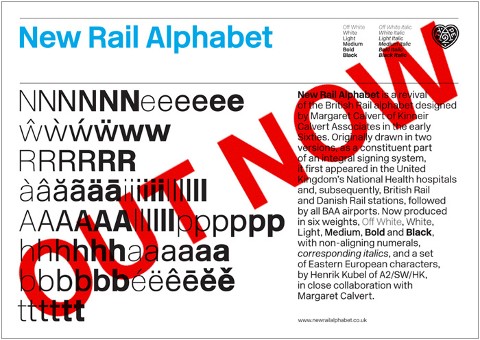
With an eclectic (and damn cool) portfolio which includes the cover design and bespoke typefaces for the complete works of Samuel Beckett (2009-2010; commissioned by Faber and Faber), sheet and typeface designs for Ian Fleming’s James Bond limited edition stamps (2008; commissioned by Royal Mail UK), and the ‘Reading Room’ exhibition design and print campaign for the Turner Prize Exhibition (2002-2007; commissioned by Tate Britain), which also made the front page of The Independent, to name a few, it is a collaboration with Margaret Calvert, an old tutor of Kubel’s at the Royal College of Art, on the New Rail Alphabet, which he names as being one of his career highlights. A revival of the British Rail alphabet originally designed by Calvert in 1965, which was used nationwide with British Rail, BAA and the NHS, was digitised, updated and re-launched in 2009 with a family of six weights.

New Rail Alphabet, 2009 (A2-TYPE, London); typeface in six weights; designed in close collaboration with Margaret Calvert

In the higher echelons of the graphic design industry, A2/SW/HK’s work has not gone unnoticed. They have picked up a plethora of global accolades along the way including awards from The International Society of Typographers, British Design & Art Directors and Art Directors Club of New York. In 2007, Kubel and Williams received recognition as members of the prestigious Alliance Graphique Internationale, which is a testament to years of tireless dedication to their craft, talent and skill.

Despite a well-decorated mantelpiece, complacency is not something that festers within the fabric of Kubel’s work ethic. “We may have achieved a lot but it doesn’t get any easier. You’re always judged by your last piece of work and I’m worried about looking back at my career and not being happy with the work I’ve produced.” He pauses briefly before calmly adding: “But there are only a few pieces that I feel this way about. Overall, I’m pretty happy with the work we’ve done and don’t mind looking back.”


Ian Fleming’s James Bond, 2008 (Royal Mail, UK); miniature sheet design and bespoke typeface

The weekend that I meet Kubel, he is in particularly fine form. Earlier in the week, he received news that he had been awarded a three-year working grant by the Danish Art Foundation, which is one of the most sought for and prestigious working grants awarded by the Nordic country for exceptional quality of artistic production and artistic talent. Kubel has worked almost non-stop over the past decade, and the grant means that he can now afford to invest some time in himself, creating more headspace for new ideas. “I shed a tear when I found out and called my mom; imagine how proud she is?” he says with a content but tired smile.


Turner Prize Exhibition design, 2002—07 (Tate Britain, London); art direction, design and bespoke typeface

In an industry which constantly strives to be ‘achingly hip’ and ‘cutting-edge’, A2/SW/HK’s approach to their work is refreshingly non-pretentious, which is what many of their clients may find appealing. “It’s the thinking and sensibility behind the solutions that makes us strong. I don’t see us as being ‘trendy’ but I don’t see us as being ‘old fashioned’ either – we are probably somewhere in between,” Kubel expresses. “We don’t work to trends, we work on what we feel best complements our clients’ brand values.”


Ergonomics — Real Design, 2009—2010 (Design Museum, London); exhibition identity, applied graphics and brochure including bespoke display typeface; exhibition design by Michael Marriot; photography courtesy of Luke Hayes & A2/SW/HK

In the design and communication industries, the choice of type may have many different connotations and certain typefaces are chosen to represent a brand because they effectively embody the product’s philosophy. This may, in turn, help to explain why we have a certain affinity for some brands more than others. For A2/SW/HK, understanding this psychological aspect of branding is the crux of their trade. “Typography is hugely important. Everything you look at contains letters – it’s used for direction, it’s used for instruction, it’s everywhere. If you can’t read and write you’re lost, aren’t you? That’s what binds society together, it’s communication.”

In a market that already contains 200,000 typefaces, does Kubel think there will be a day when the typeface market will be saturated and there will be no more typefaces to explore? “It’s already saturated but that doesn’t mean you should stop designing. It’s been said many times before, we need new films, new music, new exhibitions, new chairs, new painters and we need new typefaces.”


Summer of Love: Art of the Psychedelic Era, 2005 (Tate Liverpool); art direction, design and bespoke typeface

During the course of the interview, Kubel shows me some of his sketch books, a collection of sketches and scribbles, images torn out of newspapers/magazines, and various other eclectic items which looks like an art project in itself. “It’s very personal but this is how I keep my inspiration and ideas,” he says. As we talk at his spotless white ‘consultation’ table, there is a moment when I mentally take a snapshot of him casually drawing a letter ‘R’ with a graphite pencil on a sheet of paper in front of him. The letter is so perfectly formed that it looks as if it has been produced with a Letraset font style pack, with angles and lines drawn like a ruler has been pressed against their edges – I couldn’t help but comment. “People say that if you spend 10,000 hours on something, you become a master…,” he coolly replies. “…I’ve probably spent 8,000 drawing typefaces.”


A2/SW/HK Process AGI Poster, 2010


Typography Workshop Posters, 2000—06 (Buckinghamshire Chilterns University College); posters (40+ in series)

Kubel strikes me as somewhat of a paradoxical figure, humble yet self-assured, content yet massively ambitious. Speaking of his life prior to London, he says: “I remember when I was at the Danish Design School and we visited the Royal College (of Arts) and I knew I wanted to get in. I knew I wanted to go to London, learn the language and find someone to set up a design studio with. I was very naïve.” Naïve he may have been but in effect, he has achieved everything he set out to do – and then some. Having realised his dream of studying at the Royal College of Arts, he now teaches at the world-renowned institution twice a month. “My students are scarily talented – I am teaching my competitors of the future but I was taught there myself. The Royal College means a lot to me and I will give back as much as I can for as long as I can.”


Cold War Modern, Design 1945—1970, 2008 (V&A Museum, London); art direction and bespoke typefaces

As our interview draws to a close, and my mind is buzzing with more questions about typefaces and I entertain myself with the thought that on some level, humans and fonts are quite similar in relation to their variety, heritage and what they stand for, I ask Kubel which font he thinks would best describe him. He ponders for a moment, cocking his head to one side and glances out of the window onto the terrace, which is beginning to speckle with raindrops, to gather his thoughts. “You’d have to put a lot of typefaces together to describe me; I’m not one, I’m very broad,” he says with a glimmer of mischief in his eye. “I draw all styles, from very eclectic to very bland; it’s me and my personality. I’m a chameleon typeface.”

The new A2/SW/HK typeface collection is now available online and can be found here.

A2/SW/HK have also teamed up with Playtype who will releasing additional fonts from the A2/SW/HK library in December 2010.

Categories ,A2/SW/HK, ,Alliance Graphique Internationale, ,Art Directors Club of New York, ,baa, ,British Design & Art Directors, ,British Rail, ,British Rail Alphabet, ,Creative Futures, ,Creative Review, ,Danish Art Foundation, ,Denmark’s Design School, ,Design Museum London, ,Faber & Faber, ,Hayward Gallery, ,Henrik Kubel, ,Ian Fleming, ,James Bond, ,Kat Phan, ,Lisson Gallery, ,Margaret Calvert, ,New Rail Alphabet, ,NHS, ,On Beauty, ,Penguin Books, ,Phaidon Press, ,Playtype, ,Remington Standard, ,Royal College of Art, ,Royal Mail, ,Scott Williams, ,Tate, ,The Independent, ,The International Society of Typographers, ,Turner Prize Exhibition, ,Vogue UK, ,Zadie Smith

Similar Posts:


Amelia’s Magazine | An interview with paper artist Rebecca J Coles

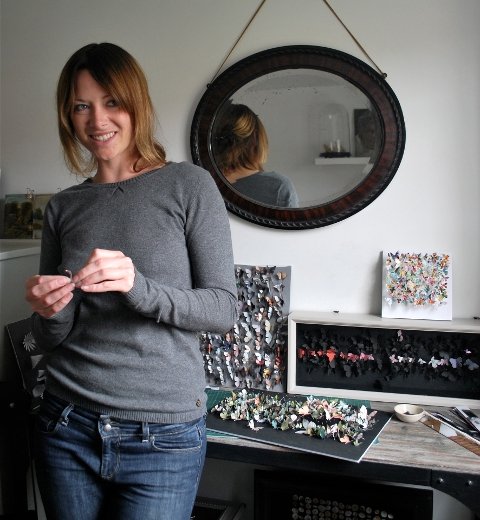
Rebecca J Coles

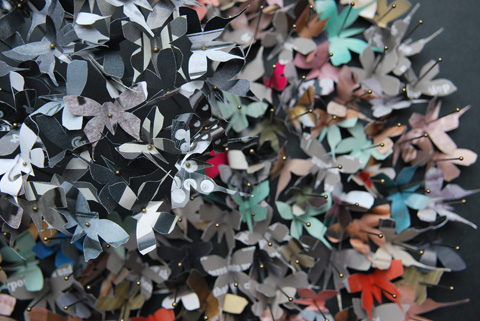
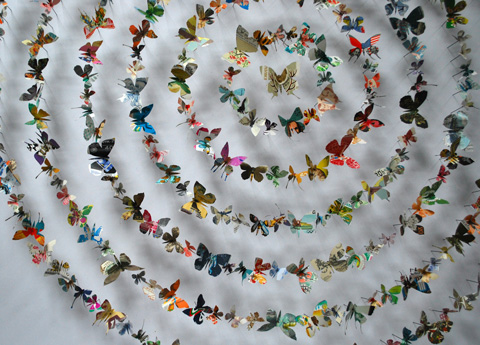
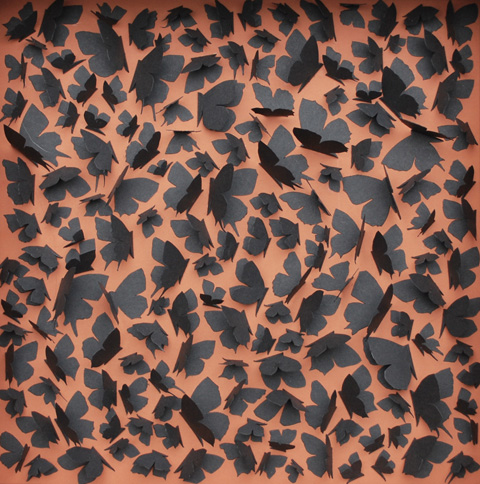
All photos provided courtesy of Rebecca J Coles

Where did you grow up, and are there aspects of your childhood which you see as being influential on your work?
I was born in Bath, we moved to Yorkshire a few years later until I was ten, and then returned to Wiltshire which is where I grew up. The only aspect from my childhood which I can see as being influential to my work is that I was always creative as a child. My mother was an infant school teacher and very artistic, so it was natural to be making something whether it was a den in the garden or cutting out paper and making collages.

Rebecca J Coles
You now live in Frome, Somerset – what is it like to be living and working as an artist there?
Frome is a wonderful town, and is quite the creative hub. There are artists of all disciplines, musicians and writers who live here, and we are lucky enough to have two theatres, the Black Swan Arts and Rook Lane Arts, both of which continually host new exhibitions, the artisan market that is held monthly, along with independent boutique shops which all make the town quite special, encouraging a genuine interest in the artistic field.

Rebecca J Coles
With a Masters in Constructed Textiles from the Royal College of Art, London and a specialisation in woven textiles, how did your studies inform your later work?
In response to my current work, a friend from the Royal College of Art said ‘well that makes sense‘. Referring to the comparison in that my work is still labour intensive and repetitive. As a weaver, threading the loom was a process you either enjoyed or hated. I loved the process. It was somewhat therapeutic, even though viewed as tedious, and that repetitive notion is ever apparent in my current paper art… cutting out hundreds, if not thousands of butterflies, then pinning them, then positioning them onto their specific heights on the pins, and then positioning them on the board where they will stay.

Rebecca J Coles
How would you describe what you do as an artist?
I’m an artist who creates paper assemblages which are encased in box frames. I focus on the reinvention of entomological cataloguing, display and the play of shapes.

Rebecca J Coles
Previously, you have mentioned your fascination with the process by which three-dimensional forms materialise from flat sheets of paper – can you tell us more about this transformation? And how did you decide on paper as your medium of choice?
Using paper was such an intuitive decision. It is such a malleable medium, and the childhood practice of folding a piece of paper in half and cutting out a butterfly to show symmetry seemed apt when experimenting for my current work. I used to cut out sections of my sketch books at college, and became interested in seeing how you, as the viewer, can be made to observe something that’s not actually there, or focusing on a small section of the overall image which becomes a different when it’s dissected. Using pages from magazines became quite integral to my work….

Rebecca J Coles
Tell us about the process of creating your pieces, are they carefully planned with distinct stages, or do they come together organically?
It depends! Some are very much planned from the colour palette, size and shape, and the end result depicts the original idea. Others are organic. Most start with a colour story….I collect the paper to be used, and then start cutting out the butterflies. I then decide whether I think the butterflies should be positioned on the base, or at the top of the pins, and then I start to build the piece. If I am creating a series of work, such as Stamps’, because they require butterflies of all shapes and sizes, I may spend a week solely cutting them out, to then create the pieces later.

Rebecca J Coles
Butterflies feature across the art of many cultures – how did you come to choose them as one of the focuses of your work, what do they symbolise for you?
I’m afraid they don’t symbolise anything for me apart from being a beautiful silhouette to work with. I used to work in a boutique that sold feathered butterfly garlands, so when I started to cut out paper, I started cutting out an incredibly naive butterfly silhouette… and when I returned to this idea, I started to focus on their true shape.

Rebecca J Coles
Your pieces are obviously delicate, involving a great deal of repetition and close attention to detail – what are the challenges associated with this, and how do you manage?
I once suffered with RSI (repetitive strain injury) which made me realise that I must alternate my work and that I can’t cut out all the time for long periods of time. I just alternate the processes of my work now.

Rebecca J Coles
Are there any particular artists whose work you admire or turn to for inspiration?
Artists I admire would include Wycliffe Stutchbury and Helen Beard. I wish I had her illustrative skills…..

You have exhibited extensively throughout the UK over the past year. How did you begin exhibiting your work and what have been some of the highlights?
I approached a gallery in Bath who accepted my work, and have continued to showcase my art since. I then exhibited at Origin (the Contemporary Craft Fair in London) last year which led a lot of galleries approaching me. I was fortunate enough to have the London gallery, Mark Jason, select some of my work to take to the art fairs, which has been great.

Rebecca J Coles
Do you have a particular goal or hope for the pieces you produce?
My only goal is to continue selling my work, and that I continue to push forward my ideas. I hope to work on a much larger scale whether it be framed pieces or an installation piece.

Are you able to share with us any plans for 2012?
I am hoping to exhibit in Australia earlier this year, which would be a great opportunity to showcase my work internationally…. and I do have several ideas for new work….so watch this space….

Visit Rebecca’s website www.rebeccajcoles.co.uk for further details.

Categories ,Bath, ,Black Swan Arts, ,Butterflies, ,Contemporary Craft Fair, ,Frome, ,Helen Beard, ,interview, ,Mark Jason, ,Paper Art, ,Rook Lane Arts, ,Royal College of Art, ,Wiltshire, ,Wycliffe Stutchbury, ,Yorkshire

Similar Posts: