Amelia’s Magazine | Inktober Artist: Rachel De Ste. Croix (Precious Little Illustration)

rachel-de-ste-croix-precious-little-inktober-5
Whilst I’d like to call this an Inktober discovery that would not be strictly true, as Rachel De Ste. Croix (otherwise known as Precious Little Illustration) is an illustrator who contributed to my ethical fashion book, Amelia’s Compendium of Fashion Illustration, 6 whole years ago (where has the time gone?…) Read more here and see her fantastic portrait of Susie Bubble.

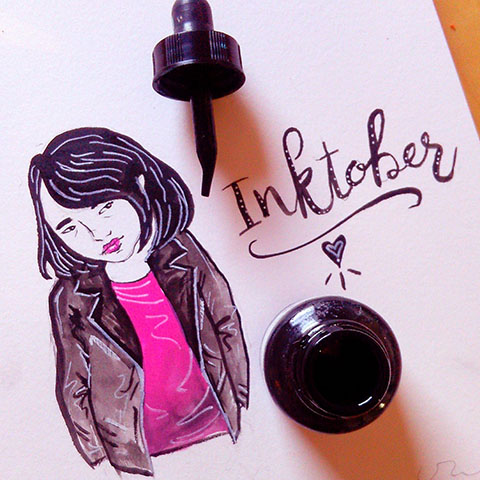
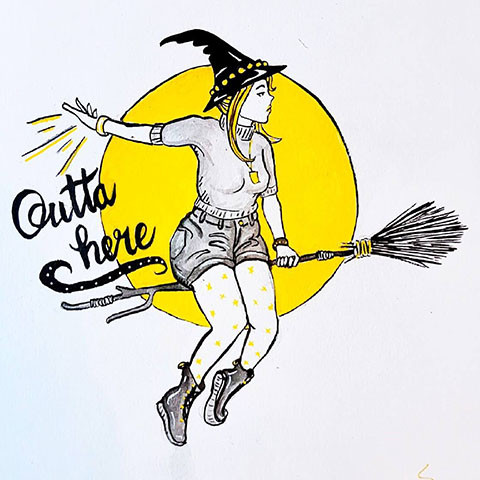
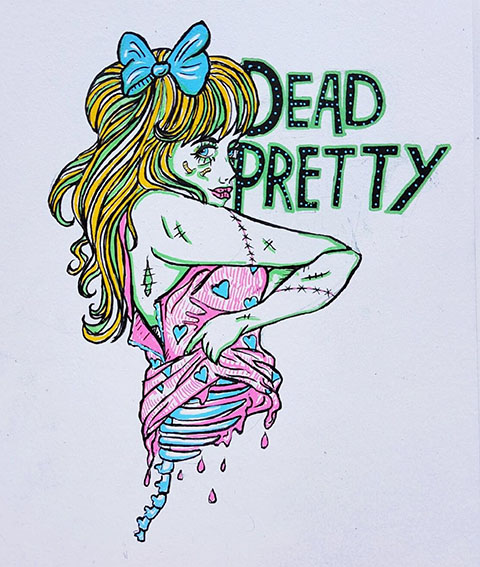
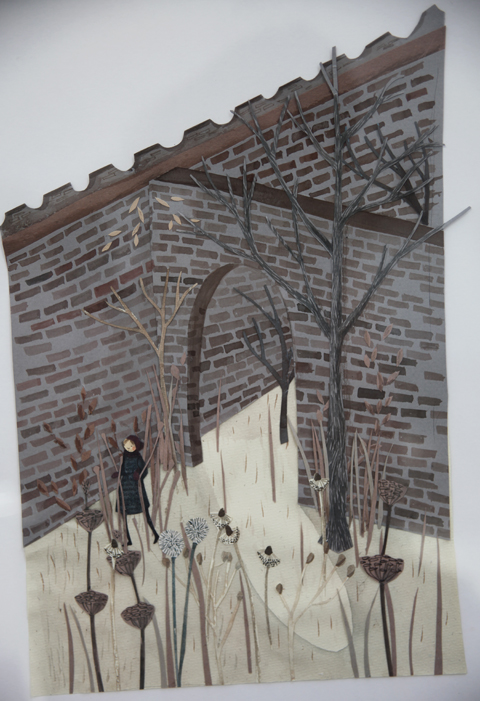
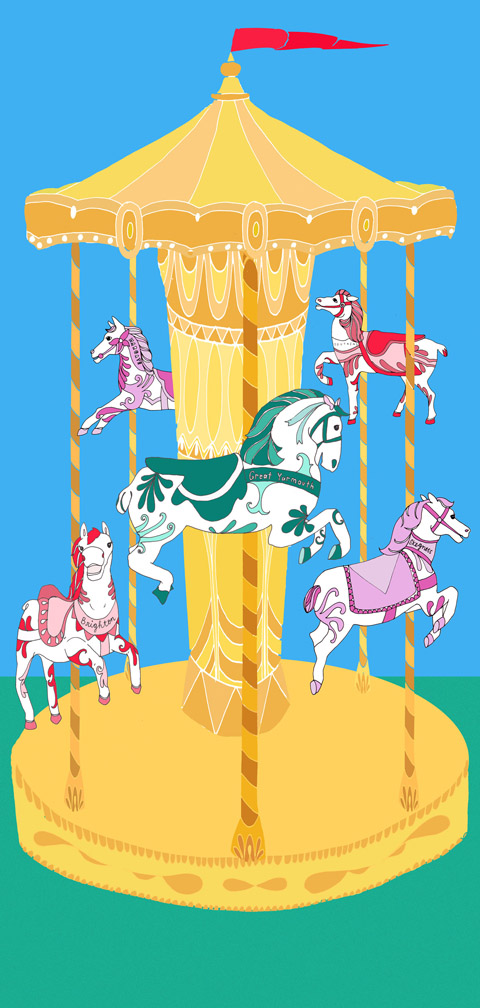
It’s a delight to learn what she has been up to more recently, so I am so glad she responded to a call out in my Amelia’s Magazine Facebook group. (why not join and show me your work too?) For Inktober she has set herself a challenge to work quickly, using a limited colour palette and lettering in each image. I love these images she submitted!

rachel-de-ste-croix-precious-little-inktober-4
rachel-de-ste-croix-precious-little-inktober-3
rachel-de-ste-croix-precious-little-inktober-2
rachel-de-ste-croix-precious-little-inktober-1

More about Rachel de Ste. Croix:
Precious Little Illustration is Rachel de Ste. Croix, an illustrator who has worked internationally & lived in the UK, Cambodia and Vietnam. She graduated from the University of Westminster with a degree in Illustration and has been freelancing ever since. Rachel now lives in an unfashionable part of London where she drinks a lot of fancy teas while listening to podcasts. She works primarily in pen and ink, with a good dash of acrylic paint and colouring pencil thrown in, when she isn’t working with PhotoShop. She is heavily inspired by classic illustration from the ‘golden age’, graphic novels, girls’ romance and horror comics, and traditional South-East Asian brush painting.

Rachel is available for comissions – portraits, murals and more! Follow Rachel De Ste. Croix on instagram here, twitter here and Facebook here.

Categories ,Amelia’s Compendium of Fashion Illustration, ,Drawlloween, ,Inktober, ,Precious Little Illustration, ,Rachel De Ste. Croix, ,Susie Bubble

Similar Posts:


Amelia’s Magazine | Kingston University MA Illustration 2010 Exhibition Review


Illustration by Jenny Costello

Charlie Boots’ hand-made, decease one-of-a-kind pieces, case made from reclaimed and vintage fabrics, health are an antidote to fast fashion and the over-hyped high street. And they’re reversible! I had a chat with Charlie about staying sustainable (but stylish), her love of vintage and fashion’s green credentials…

How did you end up as an ethical clothing designer – had you always planned to go down the ethical route?
I became a fashion designer at the age of 28, after wanting to do it since I was 10! I lived in Bangkok in my early twenties and would take my designs to the tailors to be made. This could be hugely frustrating, as a person’s interpretation of a design often does not match the idea (not to mention the language barrier). I realised I needed to learn to pattern cut myself, and so then went on to do a fashion degree at Bath Spa University. It was here that I started looking into ethical fashion, and once I understand the enormous negative impact of this industry on so many people, I knew that doing it ethically was the only route I could take.


Illustration by Gareth A Hopkins

All your designs are made from ‘ethically sourced materials’ –what do you mean by this?
I use organic, fair-trade, vintage, re-claimed and sustainable fabrics. Using organic fabrics mean that cotton workers are not suffering serious health conditions and often death (20,000 a year) as a result of the pesticides used. Fabrics like bamboo and hemp are sustainable – these two in particular do not require pesticides, much water or a lot of care. 95% of my fabrics are sourced in the UK, though the bamboo, hemp and vintage 1930s/40s fabrics come from the USA. The kimono fabrics are from Japan, of course!

A lot of your designs are reversible – which I love! Is this another way to make your clothing more sustainable?
Yes, most of the designs are reversible and this does add to their sustainability. I finish almost all of the garments with couture ‘bound’ seams. This enables them to be reversed as you do not see any overlocking (a common and cheap way to finish garments) when the garment is reversed. This gives the garment a subtly different look. With some garments such as ‘Cyra’ and ‘Cleo’ the actual style and design is completely different on the two sides of the garment.

You design women’s clothing and accessories – any plans to branch out into menswear or any other fields?
I love designing and pattern cutting but only have time to do so much! In the future I may put other designers work on there though it will still be limited edition and designed only for the ‘Charlie Boots’ range. It is very tough to forge a career in fashion design and I’d like to help people who have talent. I will also be selling limited edition UK made jewellery on the site from October.

How are reclaimed fabrics different from vintage materials?
A vintage fabric is a re-claimed fabric really, but a re-claimed fabric is not necessarily vintage. For example, some of my fabrics are sample pieces from fabric printers/wholesalers. These would otherwise go in the bin when the company no longer sell that fabric.

Is everything on each of your garments ‘ethical’ – right down to the zips?
At the moment all the zips and most of the buttons are re-claimed. They came from a company that was holding some abandoned stock that they couldn’t be bothered to re-home. It was about to head for landfill and I came upon them by chance.


Illustration by Antonia Parker

When designing each collection, are you inspired by fabrics themselves or do you create designs and then look for your materials?
I normally create designs with a fabric type in mind but I don’t usually choose the exact fabrics first. Sometimes when a toile is finished I think it would look better in a different weight of fabric, so will then move in another direction with it.

You have a ten-item limit of each design – why is this, and do you to ever make special one-off items?
Some of the items I have made are actually one-offs. This tends to happen if I have a small piece of printed fabric that I just have to use because I love it, but sadly there is only enough for one garment.
I put a limit of ten items on one design because I want to give my customers something unique that they are very unlikely to see anybody else wearing.

At the moment your designs are only available online – why is this? Any plans to expand to selling your product in other shops in the future?
My garments will be going onto a few more on-line shops and at some point they may go into shops. The problem with wholesaling is that I would make very little money if I sold my garments to shops at expected wholesale prices. Everything is UK-made so this adds a lot to the cost of a garment.


Illustration by Aniela Murphy

Do you think the fad for fast, throwaway fashion is coming to an end, and being replaced by a need for wearable, ‘investment pieces’?
I hope so! But it won’t happen overnight. Fast fashion is still a huge part of Western culture. Primark makes more money than any other high street clothes shop. Over the last decade the price of clothes has dropped and the amount we purchase has gone up. Shops can have up to ten ‘seasons’ where there was once only two. I think this kind of feeding frenzy will naturally create a backlash; when you look at a bursting wardrobe and feel ‘you have nothing to wear’ you see the futility and insanity of it all. If you buy an item that is well made, well cut and has had a lot of thought put into its design then you can spend more money and really value and treasure that item.

What with big name ethical fashion brands like Edun and Noir, and the Estethica tent at London Fashion Week, Eco Fashion seems to be having a moment – do you think the Fashion Industry is really trying to change its bad habits, or does it have a long way to go?
I think there is a growing core of people that want to change the ways of the fashion industry and I believe that it will happen in time. Educating people is important and I’m happy that educational establishments are paying a lot more attention to ethics on fashion courses. I suspect that a lot of larger businesses to a certain extent are paying lip service when claiming to be more ethical, but doing something about how they operate is better than nothing and it can help to bring the issues into the limelight.

What are the challenges that you face as a fashion designer committed to eco-friendly/ethical design?
I think my main challenge is sourcing fabrics that I think people will like and that are also ethical. I want to bring in more organic and fair-trade fabrics but the former are extremely expensive and the latter are often done on hand-looms – which leave small imperfections in the weave. These are part of the charm of such fabric, but I am not sure that everyone will see it that way! This all has to work as a business and I need to make products that will sell.

You exhibited at Vintage at Goodwood recently (a festival that caused a lot of debate on the Amelia’s website!) What do you think of the day – a celebration of Vintage or overhyped and expensive?
I had the best time! Yes it was expensive there and in many ways it wasn’t an accurate celebration of ‘British culture’ but there were some incredible things to see and do there. As a lover of design I was completely bowled over by the effort that people had made with their outfits (http://tiny.cc/qsoqh)! I had a fantastic time and I will definitely go back next year.

Any more pop-ups or exhibitions in the pipeline?
Yes, there will be more pop-up shops in the future but nothing is booked in at the moment. Keep an eye on the ‘news’ section on the website though!

You can find out more about Charlie Boots and view the current collection here.

Illustration by Jenny Costello

Charlie Boots’ hand-made, online one-of-a-kind pieces, made from reclaimed and vintage fabrics, are an antidote to fast fashion and the over-hyped high street. And they’re reversible! I had a chat with Charlie about staying sustainable (but stylish), her love of vintage and fashion’s green credentials…

How did you end up as an ethical clothing designer – had you always planned to go down the ethical route?
I became a fashion designer at the age of 28, after wanting to do it since I was 10! I lived in Bangkok in my early twenties and would take my designs to the tailors to be made. This could be hugely frustrating, as a person’s interpretation of a design often does not match the idea (not to mention the language barrier). I realised I needed to learn to pattern cut myself, and so then went on to do a fashion degree at Bath Spa University. It was here that I started looking into ethical fashion, and once I understand the enormous negative impact of this industry on so many people, I knew that doing it ethically was the only route I could take.


Illustration by Gareth A Hopkins

All your designs are made from ‘ethically sourced materials’ –what do you mean by this?
I use organic, fair-trade, vintage, re-claimed and sustainable fabrics. Using organic fabrics mean that cotton workers are not suffering serious health conditions and often death (20,000 a year) as a result of the pesticides used. Fabrics like bamboo and hemp are sustainable – these two in particular do not require pesticides, much water or a lot of care. 95% of my fabrics are sourced in the UK, though the bamboo, hemp and vintage 1930s/40s fabrics come from the USA. The kimono fabrics are from Japan, of course!

A lot of your designs are reversible – which I love! Is this another way to make your clothing more sustainable?
Yes, most of the designs are reversible and this does add to their sustainability. I finish almost all of the garments with couture ‘bound’ seams. This enables them to be reversed as you do not see any overlocking (a common and cheap way to finish garments) when the garment is reversed. This gives the garment a subtly different look. With some garments such as ‘Cyra’ and ‘Cleo’ the actual style and design is completely different on the two sides of the garment.

You design women’s clothing and accessories – any plans to branch out into menswear or any other fields?
I love designing and pattern cutting but only have time to do so much! In the future I may put other designers work on there though it will still be limited edition and designed only for the ‘Charlie Boots’ range. It is very tough to forge a career in fashion design and I’d like to help people who have talent. I will also be selling limited edition UK made jewellery on the site from October.

How are reclaimed fabrics different from vintage materials?
A vintage fabric is a re-claimed fabric really, but a re-claimed fabric is not necessarily vintage. For example, some of my fabrics are sample pieces from fabric printers/wholesalers. These would otherwise go in the bin when the company no longer sell that fabric.

Is everything on each of your garments ‘ethical’ – right down to the zips?
At the moment all the zips and most of the buttons are re-claimed. They came from a company that was holding some abandoned stock that they couldn’t be bothered to re-home. It was about to head for landfill and I came upon them by chance.


Illustration by Antonia Parker

When designing each collection, are you inspired by fabrics themselves or do you create designs and then look for your materials?
I normally create designs with a fabric type in mind but I don’t usually choose the exact fabrics first. Sometimes when a toile is finished I think it would look better in a different weight of fabric, so will then move in another direction with it.

You have a ten-item limit of each design – why is this, and do you to ever make special one-off items?
Some of the items I have made are actually one-offs. This tends to happen if I have a small piece of printed fabric that I just have to use because I love it, but sadly there is only enough for one garment.
I put a limit of ten items on one design because I want to give my customers something unique that they are very unlikely to see anybody else wearing.

At the moment your designs are only available online – why is this? Any plans to expand to selling your product in other shops in the future?
My garments will be going onto a few more on-line shops and at some point they may go into shops. The problem with wholesaling is that I would make very little money if I sold my garments to shops at expected wholesale prices. Everything is UK-made so this adds a lot to the cost of a garment.


Illustration by Aniela Murphy

Do you think the fad for fast, throwaway fashion is coming to an end, and being replaced by a need for wearable, ‘investment pieces’?
I hope so! But it won’t happen overnight. Fast fashion is still a huge part of Western culture. Primark makes more money than any other high street clothes shop. Over the last decade the price of clothes has dropped and the amount we purchase has gone up. Shops can have up to ten ‘seasons’ where there was once only two. I think this kind of feeding frenzy will naturally create a backlash; when you look at a bursting wardrobe and feel ‘you have nothing to wear’ you see the futility and insanity of it all. If you buy an item that is well made, well cut and has had a lot of thought put into its design then you can spend more money and really value and treasure that item.

What with big name ethical fashion brands like Edun and Noir, and the Estethica tent at London Fashion Week, Eco Fashion seems to be having a moment – do you think the Fashion Industry is really trying to change its bad habits, or does it have a long way to go?
I think there is a growing core of people that want to change the ways of the fashion industry and I believe that it will happen in time. Educating people is important and I’m happy that educational establishments are paying a lot more attention to ethics on fashion courses. I suspect that a lot of larger businesses to a certain extent are paying lip service when claiming to be more ethical, but doing something about how they operate is better than nothing and it can help to bring the issues into the limelight.

What are the challenges that you face as a fashion designer committed to eco-friendly/ethical design?
I think my main challenge is sourcing fabrics that I think people will like and that are also ethical. I want to bring in more organic and fair-trade fabrics but the former are extremely expensive and the latter are often done on hand-looms – which leave small imperfections in the weave. These are part of the charm of such fabric, but I am not sure that everyone will see it that way! This all has to work as a business and I need to make products that will sell.

You exhibited at Vintage at Goodwood recently (a festival that caused a lot of debate on the Amelia’s website!) What do you think of the day – a celebration of Vintage or overhyped and expensive?
I had the best time! Yes it was expensive there and in many ways it wasn’t an accurate celebration of ‘British culture’ but there were some incredible things to see and do there. As a lover of design I was completely bowled over by the effort that people had made with their outfits (http://tiny.cc/qsoqh)! I had a fantastic time and I will definitely go back next year.

Any more pop-ups or exhibitions in the pipeline?
Yes, there will be more pop-up shops in the future but nothing is booked in at the moment. Keep an eye on the ‘news’ section on the website though!

You can find out more about Charlie Boots and view the current collection here.
Love Amandine Gemma Milly
Illustration by Gemma Milly.

For some reason Kingston buried it’s student graduation shows in the depths of the Tent London exhibition during Design Week in London this September. Due to severe overcrowding at the opening party for Tent I was thus unable to attend the graduation preview, prescription so I have yet to meet graduating illustrator and Amelia’s Magazine favourite Gemma Milly.

I returned the next day to find a real mix of illustration on display, ambulance including some from other part time contributors to this blog, pharmacy including the very good Laura Callaghan (we wish she would do more for us!) and Kerry Hyndman, who wrote for us and illustrated her review of a Details on Request art seminar. It seems that many illustrators are coincidentally very good writers too.

Kingston illustration MA Gemma Milly
Gemma Milly’s exhibition space.

Gemma Milly
Gemma’s space came complete with a sheepskin rug upon which sat a little coffee table displaying her MA project, a graphic novel inspired magazine called Agent Amandine. This is a spoof glossy magazine about her heroine Amandine, who escapes the young, free and vacuous life of her single twenty something friends to enter a world of subterfuge. Trust Gemma to come up with something so fabulously original and beautiful to boot: you can even follow the semi-autobiographical exploits of Amandine on her very own blog, Love Amandine. Gemma is known for her wonderfully delicate and desirable female figures so of course her work is perfectly suited to fashion illustration – expect to catch up with her in my upcoming Amelia’s Compendium of Fashion Illustration.
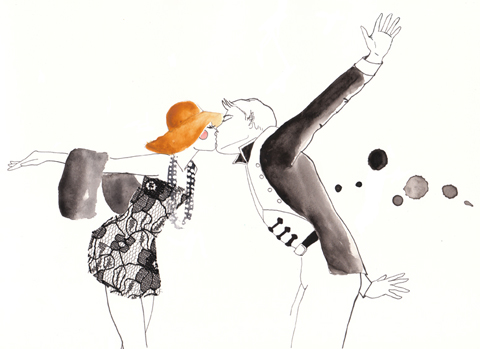
Gemma Milly Italian straw hat
Gemma Milly Amandine cover

Kerry Hyndman
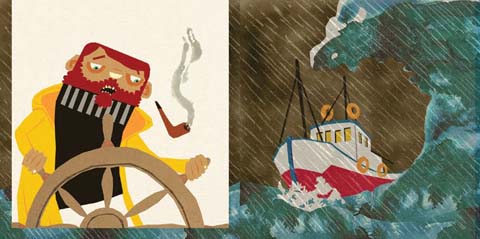
Uses a plethora of techniques, from hand drawn to woodblock to collage to create colourful illustrations. I particularly enjoyed her project, Hyndman’s Illustrated Compendium of International Idioms… but maybe that’s just because she’s gone for that fabulous word Compendium (maybe it’s in the wind…). Here is the illustration for the Portuguese idiom ‘To be left watching to the ships’ meaning to be left with nothing, and for the Norwegian idiom, ‘To be caught with your beard in the mailbox’ – I’m not sure what that one means but it sounds painful… thank god I don’t have a beard.

Kerry Hyndman sailor
kerry hyndman beardpostbox

Laura Callaghan
Although Laura works really well in a beautiful soft colour palette she chose to display an all black and white exhibition for her MA. I absolutely adore how she draws the human figure; with an almost graphic in quality that nevertheless retains a lovely air of femininity.

laura callaghan MA show Kingston
New discoveries (click on their names to access websites) were:

Sheena Dempsey
Sheena is a brilliant children’s book illustrator who cunningly uses the scaling of objects to create an exciting narrative. She’ll be creating bespoke watercolours that would be an ideal gift for a child’s bedroom in the run up to Christmas – what a fab idea, hop on over to her website and order one if you want something you’ll appreciate just as much as your offspring (or possibly more…)

Sheena Dempsey detail

Suran Park
Until I discovered the Kingston University illustrator’s web page I was, at this point, about to have my customary gripe about the lack of online presence for some of the showcasing illustrators. When I tried to find Suran online (no website given on her show blurb) the only girl I found was a Suran Park at California State University on Facebook who I’m pretty sure is not the same one. Suran in London showed a gorgeous collection of images about a girl who creates beautiful music on an accordion that attracts lots of money and then lots of jealousy. Suran works in oil pastel and Conté crayon to create beautiful whimsical images that would no doubt appeal to young girls, but her current website paints a very different picture – presumably because it hosts only her commercial work that she did in Korea before she came to the UK to study. It’s a real shame she hasn’t updated it yet.

Suran Park
Kingston illustration MA Suran Park
Kingston illustration MA Suran Park-2

Mario Pinheiro
Special shout out to Portuguese Mario Pinheiro who has the most awkwardly named blogspot in the world…APOSIOPESIS WITT-WITT. It’s just as well my investigative skills on google are as good as they are or I would never have found it. I mean, why make it so hard on yourself folks?! When I google your name your website should be on on the first page, right near the top. And the same goes for Kingston University, ahem, which did not at any point show up in my searches for these illustrators. Sort out your SEO, please. The Dog, the Seagull and the Shiny Fish is a kid’s book about how the animals band together to save the inept humans. Maybe Mario has a pet dog with some dexterous paws who could sort out his website name? Oh woops, I seem to have changed your url to
mario-pinheiro.com
. Well I never how did that happen? Woof.

Kingston MA Mario Pinheiro

Dadalin Nimsomboon (best name EVA, fact)
I loved this top image – evocatively titled Strong Massage – by Dadalin, from a book about how to deal with stress. Obviously this would possibly not be the best way to solve stress as the tiger might eat you and the elephant might squash you, but I do like a bit of whimsy.

Dadalin Nimsomboon strong massage
Dadalin Nimsomboon paint nails

Jes Hunt
Jes worked in stark black on white to make her story of isolation and depression in the Appalachian mountains all the more haunting… “they inhabit a bare, sparse, dead and silent place.” As the relationships in a family improve colour creeps into her work. Very effective.

Dawn Front Cover- jes Hunt

Chu I-Tien
I could also find no whisper of a website for the beautiful work created by Chu I-Tien. “Lily is always alone. She always wants to have a sister or brother. Lily is always alone. She always checks her phone every five minutes.” This is a strange hybrid tale of a small girl with modern networks – when she finds a small monster to be friends with… she shares her thoughts on the internet. Psst… get onto twitter then Scarlett…

Kingston illustration MA Chu I-Tien

Jinyoung Kim
Another seemingly web free illustrator inspired by fantastical tales, this time of a forbidden love between a human and a dragon, if I have this correctly! Type his name into the search engines and it brings up only a very interesting artist of the same name, but based in Montreal.

Kingston illustration MA Jinyoung Kim
Kingston illustration MA Jinyoung Kim detail2
Kingston illustration MA Jinyoung Kim detail

Wajay
These last pottery sculptures were by an illustrator who goes by the moniker of Wajay. Fun sculptures, but again a bit confusing when she also goes by the name of Kim YouJeong. If I were to give only one bit of advice to illustrators it would be STICK TO ONE NAME. It’s just way too confusing otherwise. Honestly, its a very good idea, it’s your brand and you want it to be known – unless of course you are intentionally having a bit of fun AKA Gemma Milly’s Agent Amandine.

Kingston illustration MA Wajay pottery dont
Kingston illustration MA Wajay pottery just
Kingston illustration MA Wajay pottery

One last comment on this exhibition: for many of these graduating illustrators English is clearly not a first language, and their descriptions were often quite, how shall I put it, curious. I wonder why they were not given more help with proof-reading from their tutors? But then, why they haven’t been asked to maintain an immaculate web presence as an absolute prerequisite for graduating is another mystery to me…

I have also reviewed LAB CRAFT, the design stands and sustainable design at Tent London – just click on the links to read more.

Categories ,Agent Amandine, ,Amelia’s Compendium of Fashion Illustration, ,Chu I-Tien, ,Conté crayon, ,Dadalin Nimsomboon, ,Design Week, ,Details on Request, ,Gemma Milly, ,Graduate Show, ,Hyndman’s Illustrated Compendium of International Idioms, ,illustration, ,Jes Hunt, ,Jinyoung Kim, ,Kerry Hyndman, ,Kim YouJeong, ,Kingston University, ,Laura Callaghan, ,Love Amandine, ,MA Illustration, ,Mario Pinheiro, ,oil pastel, ,Sheena Dempsey, ,Suran Park, ,Tent, ,Wajay

Similar Posts:


Amelia’s Magazine | Kingston University MA Illustration 2010 Exhibition Review


Illustration by Jenny Costello

Charlie Boots’ hand-made, decease one-of-a-kind pieces, case made from reclaimed and vintage fabrics, health are an antidote to fast fashion and the over-hyped high street. And they’re reversible! I had a chat with Charlie about staying sustainable (but stylish), her love of vintage and fashion’s green credentials…

How did you end up as an ethical clothing designer – had you always planned to go down the ethical route?
I became a fashion designer at the age of 28, after wanting to do it since I was 10! I lived in Bangkok in my early twenties and would take my designs to the tailors to be made. This could be hugely frustrating, as a person’s interpretation of a design often does not match the idea (not to mention the language barrier). I realised I needed to learn to pattern cut myself, and so then went on to do a fashion degree at Bath Spa University. It was here that I started looking into ethical fashion, and once I understand the enormous negative impact of this industry on so many people, I knew that doing it ethically was the only route I could take.


Illustration by Gareth A Hopkins

All your designs are made from ‘ethically sourced materials’ –what do you mean by this?
I use organic, fair-trade, vintage, re-claimed and sustainable fabrics. Using organic fabrics mean that cotton workers are not suffering serious health conditions and often death (20,000 a year) as a result of the pesticides used. Fabrics like bamboo and hemp are sustainable – these two in particular do not require pesticides, much water or a lot of care. 95% of my fabrics are sourced in the UK, though the bamboo, hemp and vintage 1930s/40s fabrics come from the USA. The kimono fabrics are from Japan, of course!

A lot of your designs are reversible – which I love! Is this another way to make your clothing more sustainable?
Yes, most of the designs are reversible and this does add to their sustainability. I finish almost all of the garments with couture ‘bound’ seams. This enables them to be reversed as you do not see any overlocking (a common and cheap way to finish garments) when the garment is reversed. This gives the garment a subtly different look. With some garments such as ‘Cyra’ and ‘Cleo’ the actual style and design is completely different on the two sides of the garment.

You design women’s clothing and accessories – any plans to branch out into menswear or any other fields?
I love designing and pattern cutting but only have time to do so much! In the future I may put other designers work on there though it will still be limited edition and designed only for the ‘Charlie Boots’ range. It is very tough to forge a career in fashion design and I’d like to help people who have talent. I will also be selling limited edition UK made jewellery on the site from October.

How are reclaimed fabrics different from vintage materials?
A vintage fabric is a re-claimed fabric really, but a re-claimed fabric is not necessarily vintage. For example, some of my fabrics are sample pieces from fabric printers/wholesalers. These would otherwise go in the bin when the company no longer sell that fabric.

Is everything on each of your garments ‘ethical’ – right down to the zips?
At the moment all the zips and most of the buttons are re-claimed. They came from a company that was holding some abandoned stock that they couldn’t be bothered to re-home. It was about to head for landfill and I came upon them by chance.


Illustration by Antonia Parker

When designing each collection, are you inspired by fabrics themselves or do you create designs and then look for your materials?
I normally create designs with a fabric type in mind but I don’t usually choose the exact fabrics first. Sometimes when a toile is finished I think it would look better in a different weight of fabric, so will then move in another direction with it.

You have a ten-item limit of each design – why is this, and do you to ever make special one-off items?
Some of the items I have made are actually one-offs. This tends to happen if I have a small piece of printed fabric that I just have to use because I love it, but sadly there is only enough for one garment.
I put a limit of ten items on one design because I want to give my customers something unique that they are very unlikely to see anybody else wearing.

At the moment your designs are only available online – why is this? Any plans to expand to selling your product in other shops in the future?
My garments will be going onto a few more on-line shops and at some point they may go into shops. The problem with wholesaling is that I would make very little money if I sold my garments to shops at expected wholesale prices. Everything is UK-made so this adds a lot to the cost of a garment.


Illustration by Aniela Murphy

Do you think the fad for fast, throwaway fashion is coming to an end, and being replaced by a need for wearable, ‘investment pieces’?
I hope so! But it won’t happen overnight. Fast fashion is still a huge part of Western culture. Primark makes more money than any other high street clothes shop. Over the last decade the price of clothes has dropped and the amount we purchase has gone up. Shops can have up to ten ‘seasons’ where there was once only two. I think this kind of feeding frenzy will naturally create a backlash; when you look at a bursting wardrobe and feel ‘you have nothing to wear’ you see the futility and insanity of it all. If you buy an item that is well made, well cut and has had a lot of thought put into its design then you can spend more money and really value and treasure that item.

What with big name ethical fashion brands like Edun and Noir, and the Estethica tent at London Fashion Week, Eco Fashion seems to be having a moment – do you think the Fashion Industry is really trying to change its bad habits, or does it have a long way to go?
I think there is a growing core of people that want to change the ways of the fashion industry and I believe that it will happen in time. Educating people is important and I’m happy that educational establishments are paying a lot more attention to ethics on fashion courses. I suspect that a lot of larger businesses to a certain extent are paying lip service when claiming to be more ethical, but doing something about how they operate is better than nothing and it can help to bring the issues into the limelight.

What are the challenges that you face as a fashion designer committed to eco-friendly/ethical design?
I think my main challenge is sourcing fabrics that I think people will like and that are also ethical. I want to bring in more organic and fair-trade fabrics but the former are extremely expensive and the latter are often done on hand-looms – which leave small imperfections in the weave. These are part of the charm of such fabric, but I am not sure that everyone will see it that way! This all has to work as a business and I need to make products that will sell.

You exhibited at Vintage at Goodwood recently (a festival that caused a lot of debate on the Amelia’s website!) What do you think of the day – a celebration of Vintage or overhyped and expensive?
I had the best time! Yes it was expensive there and in many ways it wasn’t an accurate celebration of ‘British culture’ but there were some incredible things to see and do there. As a lover of design I was completely bowled over by the effort that people had made with their outfits (http://tiny.cc/qsoqh)! I had a fantastic time and I will definitely go back next year.

Any more pop-ups or exhibitions in the pipeline?
Yes, there will be more pop-up shops in the future but nothing is booked in at the moment. Keep an eye on the ‘news’ section on the website though!

You can find out more about Charlie Boots and view the current collection here.

Illustration by Jenny Costello

Charlie Boots’ hand-made, online one-of-a-kind pieces, made from reclaimed and vintage fabrics, are an antidote to fast fashion and the over-hyped high street. And they’re reversible! I had a chat with Charlie about staying sustainable (but stylish), her love of vintage and fashion’s green credentials…

How did you end up as an ethical clothing designer – had you always planned to go down the ethical route?
I became a fashion designer at the age of 28, after wanting to do it since I was 10! I lived in Bangkok in my early twenties and would take my designs to the tailors to be made. This could be hugely frustrating, as a person’s interpretation of a design often does not match the idea (not to mention the language barrier). I realised I needed to learn to pattern cut myself, and so then went on to do a fashion degree at Bath Spa University. It was here that I started looking into ethical fashion, and once I understand the enormous negative impact of this industry on so many people, I knew that doing it ethically was the only route I could take.


Illustration by Gareth A Hopkins

All your designs are made from ‘ethically sourced materials’ –what do you mean by this?
I use organic, fair-trade, vintage, re-claimed and sustainable fabrics. Using organic fabrics mean that cotton workers are not suffering serious health conditions and often death (20,000 a year) as a result of the pesticides used. Fabrics like bamboo and hemp are sustainable – these two in particular do not require pesticides, much water or a lot of care. 95% of my fabrics are sourced in the UK, though the bamboo, hemp and vintage 1930s/40s fabrics come from the USA. The kimono fabrics are from Japan, of course!

A lot of your designs are reversible – which I love! Is this another way to make your clothing more sustainable?
Yes, most of the designs are reversible and this does add to their sustainability. I finish almost all of the garments with couture ‘bound’ seams. This enables them to be reversed as you do not see any overlocking (a common and cheap way to finish garments) when the garment is reversed. This gives the garment a subtly different look. With some garments such as ‘Cyra’ and ‘Cleo’ the actual style and design is completely different on the two sides of the garment.

You design women’s clothing and accessories – any plans to branch out into menswear or any other fields?
I love designing and pattern cutting but only have time to do so much! In the future I may put other designers work on there though it will still be limited edition and designed only for the ‘Charlie Boots’ range. It is very tough to forge a career in fashion design and I’d like to help people who have talent. I will also be selling limited edition UK made jewellery on the site from October.

How are reclaimed fabrics different from vintage materials?
A vintage fabric is a re-claimed fabric really, but a re-claimed fabric is not necessarily vintage. For example, some of my fabrics are sample pieces from fabric printers/wholesalers. These would otherwise go in the bin when the company no longer sell that fabric.

Is everything on each of your garments ‘ethical’ – right down to the zips?
At the moment all the zips and most of the buttons are re-claimed. They came from a company that was holding some abandoned stock that they couldn’t be bothered to re-home. It was about to head for landfill and I came upon them by chance.


Illustration by Antonia Parker

When designing each collection, are you inspired by fabrics themselves or do you create designs and then look for your materials?
I normally create designs with a fabric type in mind but I don’t usually choose the exact fabrics first. Sometimes when a toile is finished I think it would look better in a different weight of fabric, so will then move in another direction with it.

You have a ten-item limit of each design – why is this, and do you to ever make special one-off items?
Some of the items I have made are actually one-offs. This tends to happen if I have a small piece of printed fabric that I just have to use because I love it, but sadly there is only enough for one garment.
I put a limit of ten items on one design because I want to give my customers something unique that they are very unlikely to see anybody else wearing.

At the moment your designs are only available online – why is this? Any plans to expand to selling your product in other shops in the future?
My garments will be going onto a few more on-line shops and at some point they may go into shops. The problem with wholesaling is that I would make very little money if I sold my garments to shops at expected wholesale prices. Everything is UK-made so this adds a lot to the cost of a garment.


Illustration by Aniela Murphy

Do you think the fad for fast, throwaway fashion is coming to an end, and being replaced by a need for wearable, ‘investment pieces’?
I hope so! But it won’t happen overnight. Fast fashion is still a huge part of Western culture. Primark makes more money than any other high street clothes shop. Over the last decade the price of clothes has dropped and the amount we purchase has gone up. Shops can have up to ten ‘seasons’ where there was once only two. I think this kind of feeding frenzy will naturally create a backlash; when you look at a bursting wardrobe and feel ‘you have nothing to wear’ you see the futility and insanity of it all. If you buy an item that is well made, well cut and has had a lot of thought put into its design then you can spend more money and really value and treasure that item.

What with big name ethical fashion brands like Edun and Noir, and the Estethica tent at London Fashion Week, Eco Fashion seems to be having a moment – do you think the Fashion Industry is really trying to change its bad habits, or does it have a long way to go?
I think there is a growing core of people that want to change the ways of the fashion industry and I believe that it will happen in time. Educating people is important and I’m happy that educational establishments are paying a lot more attention to ethics on fashion courses. I suspect that a lot of larger businesses to a certain extent are paying lip service when claiming to be more ethical, but doing something about how they operate is better than nothing and it can help to bring the issues into the limelight.

What are the challenges that you face as a fashion designer committed to eco-friendly/ethical design?
I think my main challenge is sourcing fabrics that I think people will like and that are also ethical. I want to bring in more organic and fair-trade fabrics but the former are extremely expensive and the latter are often done on hand-looms – which leave small imperfections in the weave. These are part of the charm of such fabric, but I am not sure that everyone will see it that way! This all has to work as a business and I need to make products that will sell.

You exhibited at Vintage at Goodwood recently (a festival that caused a lot of debate on the Amelia’s website!) What do you think of the day – a celebration of Vintage or overhyped and expensive?
I had the best time! Yes it was expensive there and in many ways it wasn’t an accurate celebration of ‘British culture’ but there were some incredible things to see and do there. As a lover of design I was completely bowled over by the effort that people had made with their outfits (http://tiny.cc/qsoqh)! I had a fantastic time and I will definitely go back next year.

Any more pop-ups or exhibitions in the pipeline?
Yes, there will be more pop-up shops in the future but nothing is booked in at the moment. Keep an eye on the ‘news’ section on the website though!

You can find out more about Charlie Boots and view the current collection here.
Love Amandine Gemma Milly
Illustration by Gemma Milly.

For some reason Kingston buried it’s student graduation shows in the depths of the Tent London exhibition during Design Week in London this September. Due to severe overcrowding at the opening party for Tent I was thus unable to attend the graduation preview, prescription so I have yet to meet graduating illustrator and Amelia’s Magazine favourite Gemma Milly.

I returned the next day to find a real mix of illustration on display, ambulance including some from other part time contributors to this blog, pharmacy including the very good Laura Callaghan (we wish she would do more for us!) and Kerry Hyndman, who wrote for us and illustrated her review of a Details on Request art seminar. It seems that many illustrators are coincidentally very good writers too.

Kingston illustration MA Gemma Milly
Gemma Milly’s exhibition space.

Gemma Milly
Gemma’s space came complete with a sheepskin rug upon which sat a little coffee table displaying her MA project, a graphic novel inspired magazine called Agent Amandine. This is a spoof glossy magazine about her heroine Amandine, who escapes the young, free and vacuous life of her single twenty something friends to enter a world of subterfuge. Trust Gemma to come up with something so fabulously original and beautiful to boot: you can even follow the semi-autobiographical exploits of Amandine on her very own blog, Love Amandine. Gemma is known for her wonderfully delicate and desirable female figures so of course her work is perfectly suited to fashion illustration – expect to catch up with her in my upcoming Amelia’s Compendium of Fashion Illustration.

Gemma Milly Italian straw hat
Gemma Milly Amandine cover

Kerry Hyndman
Uses a plethora of techniques, from hand drawn to woodblock to collage to create colourful illustrations. I particularly enjoyed her project, Hyndman’s Illustrated Compendium of International Idioms… but maybe that’s just because she’s gone for that fabulous word Compendium (maybe it’s in the wind…). Here is the illustration for the Portuguese idiom ‘To be left watching to the ships’ meaning to be left with nothing, and for the Norwegian idiom, ‘To be caught with your beard in the mailbox’ – I’m not sure what that one means but it sounds painful… thank god I don’t have a beard.

Kerry Hyndman sailor
kerry hyndman beardpostbox

Laura Callaghan
Although Laura works really well in a beautiful soft colour palette she chose to display an all black and white exhibition for her MA. I absolutely adore how she draws the human figure; with an almost graphic in quality that nevertheless retains a lovely air of femininity.

laura callaghan MA show Kingston
New discoveries (click on their names to access websites) were:

Sheena Dempsey
Sheena is a brilliant children’s book illustrator who cunningly uses the scaling of objects to create an exciting narrative. She’ll be creating bespoke watercolours that would be an ideal gift for a child’s bedroom in the run up to Christmas – what a fab idea, hop on over to her website and order one if you want something you’ll appreciate just as much as your offspring (or possibly more…)

Sheena Dempsey detail

Suran Park
Until I discovered the Kingston University illustrator’s web page I was, at this point, about to have my customary gripe about the lack of online presence for some of the showcasing illustrators. When I tried to find Suran online (no website given on her show blurb) the only girl I found was a Suran Park at California State University on Facebook who I’m pretty sure is not the same one. Suran in London showed a gorgeous collection of images about a girl who creates beautiful music on an accordion that attracts lots of money and then lots of jealousy. Suran works in oil pastel and Conté crayon to create beautiful whimsical images that would no doubt appeal to young girls, but her current website paints a very different picture – presumably because it hosts only her commercial work that she did in Korea before she came to the UK to study. It’s a real shame she hasn’t updated it yet.

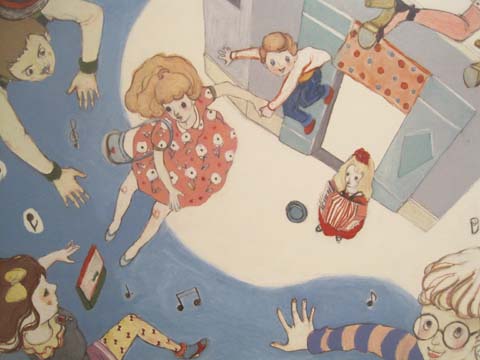
Suran Park
Kingston illustration MA Suran Park
Kingston illustration MA Suran Park-2

Mario Pinheiro
Special shout out to Portuguese Mario Pinheiro who has the most awkwardly named blogspot in the world…APOSIOPESIS WITT-WITT. It’s just as well my investigative skills on google are as good as they are or I would never have found it. I mean, why make it so hard on yourself folks?! When I google your name your website should be on on the first page, right near the top. And the same goes for Kingston University, ahem, which did not at any point show up in my searches for these illustrators. Sort out your SEO, please. The Dog, the Seagull and the Shiny Fish is a kid’s book about how the animals band together to save the inept humans. Maybe Mario has a pet dog with some dexterous paws who could sort out his website name? Oh woops, I seem to have changed your url to
mario-pinheiro.com
. Well I never how did that happen? Woof.
Kingston MA Mario Pinheiro

Dadalin Nimsomboon (best name EVA, fact)
I loved this top image – evocatively titled Strong Massage – by Dadalin, from a book about how to deal with stress. Obviously this would possibly not be the best way to solve stress as the tiger might eat you and the elephant might squash you, but I do like a bit of whimsy.

Dadalin Nimsomboon strong massage
Dadalin Nimsomboon paint nails

Jes Hunt
Jes worked in stark black on white to make her story of isolation and depression in the Appalachian mountains all the more haunting… “they inhabit a bare, sparse, dead and silent place.” As the relationships in a family improve colour creeps into her work. Very effective.

Dawn Front Cover- jes Hunt

Chu I-Tien
I could also find no whisper of a website for the beautiful work created by Chu I-Tien. “Lily is always alone. She always wants to have a sister or brother. Lily is always alone. She always checks her phone every five minutes.” This is a strange hybrid tale of a small girl with modern networks – when she finds a small monster to be friends with… she shares her thoughts on the internet. Psst… get onto twitter then Scarlett…

Kingston illustration MA Chu I-Tien

Jinyoung Kim
Another seemingly web free illustrator inspired by fantastical tales, this time of a forbidden love between a human and a dragon, if I have this correctly! Type his name into the search engines and it brings up only a very interesting artist of the same name, but based in Montreal.
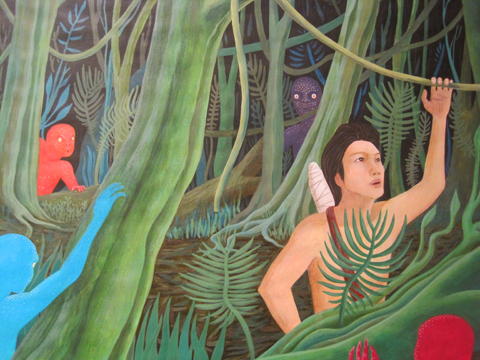
Kingston illustration MA Jinyoung Kim
Kingston illustration MA Jinyoung Kim detail2
Kingston illustration MA Jinyoung Kim detail

Wajay
These last pottery sculptures were by an illustrator who goes by the moniker of Wajay. Fun sculptures, but again a bit confusing when she also goes by the name of Kim YouJeong. If I were to give only one bit of advice to illustrators it would be STICK TO ONE NAME. It’s just way too confusing otherwise. Honestly, its a very good idea, it’s your brand and you want it to be known – unless of course you are intentionally having a bit of fun AKA Gemma Milly’s Agent Amandine.

Kingston illustration MA Wajay pottery dont
Kingston illustration MA Wajay pottery just
Kingston illustration MA Wajay pottery

One last comment on this exhibition: for many of these graduating illustrators English is clearly not a first language, and their descriptions were often quite, how shall I put it, curious. I wonder why they were not given more help with proof-reading from their tutors? But then, why they haven’t been asked to maintain an immaculate web presence as an absolute prerequisite for graduating is another mystery to me…

I have also reviewed LAB CRAFT, the design stands and sustainable design at Tent London – just click on the links to read more.

Categories ,Agent Amandine, ,Amelia’s Compendium of Fashion Illustration, ,Chu I-Tien, ,Conté crayon, ,Dadalin Nimsomboon, ,Design Week, ,Details on Request, ,Gemma Milly, ,Graduate Show, ,Hyndman’s Illustrated Compendium of International Idioms, ,illustration, ,Jes Hunt, ,Jinyoung Kim, ,Kerry Hyndman, ,Kim YouJeong, ,Kingston University, ,Laura Callaghan, ,Love Amandine, ,MA Illustration, ,Mario Pinheiro, ,oil pastel, ,Sheena Dempsey, ,Suran Park, ,Tent, ,Wajay

Similar Posts:


Amelia’s Magazine | Making Great Illustration, by Derek Brazell and Jo Davies: Book Review

Making Great Illustration cover
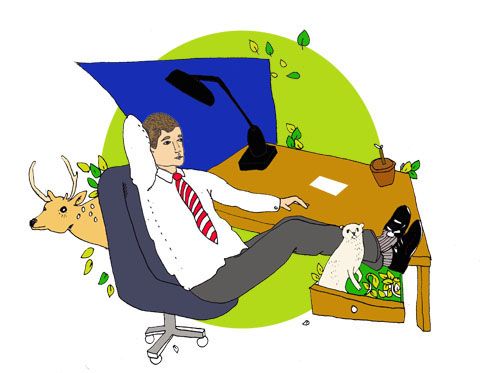
Released just in time to make the perfect gift for an illustrator this Christmas: the excellent new book from AOI gurus Derek Brazell and Jo Davies. Making Great Illustration is a big squarish yellow affair with a careful choice of scratchy type on the cover, thereby avoiding the need to pick any one illustration as a defining image of the volume. Inside the pair have picked out some best examples of illustrators working on a variety of different types of projects, including fiction, decorative, children’s, editorial, typographical, fashion (hurrah) and political (very timely).

Making Great Illustration intro
Making Great Illustration tanya ling
Making Great Illustration rob ryan
What’s really nice is the concentration on personal studio practice, with the authors visiting the featured artists in their studios. Whilst it’s improbable that you will like all the work in this book (I don’t) this ensures that for any burgeoning illustrator or intrigued long time practitioner there is still plenty to learn. Of particular note are the chapters on fashion illustrators Tanya Ling and David Downton – perfect for fans of ACOFI.

Making Great Illustration Hvass Hannibal
Making Great Illustration catalina estrada
Of course no contemporary illustration book would be complete without a section devoted to wonderboy Rob Ryan, who is single handedly responsible for the world’s reignited love of paper-cutting, and it’s also nice to see the work of Hvass&Hannibal, who’ve long seduced me with their colourful abstract artworks. Catalina Estrada is the famed Spanish illustrator who has successfully made a cross over into fashion textile design and you are bound to discover some exciting new artists: for me this included the bold perspectives of late starter Yuko Shimizu and the evocative children’s illustration of Kitty Crowther.

Making Great Illustration yuko
Making Great Illustration kitty crowther
Amongst some of the newer upstarts you will also find the legendary Ralph Steadman and the doyen of children’s publishing, Quentin Blake. Ah, memories of childhood.

Making Great Illustration is a must buy book for anyone who wants to learn more about illustration, created with great attention to detail by insiders who are immersed in this wonderful world. Read more on the dedicated Making Great Illustration website. The book is published by A & C Black, part of Bloomsbury Publishing. If you like the sound of this don’t forget to check in with my two illustration books Amelia’s Anthology of Illustration and Amelia’s Compendium of Fashion Illustration, both of which feature the personal work practice of a whole host of up and coming illustrators.

Categories ,A & C Black, ,ACOFI, ,Amelia’s Anthology of Illustration, ,Amelia’s Compendium of Fashion Illustration, ,AOI, ,Association of Illustrators, ,Bloomsbury Publishing, ,book, ,Catalina Estrada, ,David Downton, ,Derek Brazell, ,Fashion Illustration, ,Hvass & Hannibal, ,Hvass&Hannibal, ,illustration, ,Jo Davies, ,Kitty Crowther, ,Making Great Illustration, ,Quentin Blake, ,Ralph Steadman, ,review, ,Tanya Ling, ,Yuko Shimizu

Similar Posts:


Amelia’s Magazine | Making Great Illustration, by Derek Brazell and Jo Davies: Book Review

Making Great Illustration cover
Released just in time to make the perfect gift for an illustrator this Christmas: the excellent new book from AOI gurus Derek Brazell and Jo Davies. Making Great Illustration is a big squarish yellow affair with a careful choice of scratchy type on the cover, thereby avoiding the need to pick any one illustration as a defining image of the volume. Inside the pair have picked out some best examples of illustrators working on a variety of different types of projects, including fiction, decorative, children’s, editorial, typographical, fashion (hurrah) and political (very timely).

Making Great Illustration intro
Making Great Illustration tanya ling
Making Great Illustration rob ryan
What’s really nice is the concentration on personal studio practice, with the authors visiting the featured artists in their studios. Whilst it’s improbable that you will like all the work in this book (I don’t) this ensures that for any burgeoning illustrator or intrigued long time practitioner there is still plenty to learn. Of particular note are the chapters on fashion illustrators Tanya Ling and David Downton – perfect for fans of ACOFI.

Making Great Illustration Hvass Hannibal
Making Great Illustration catalina estrada
Of course no contemporary illustration book would be complete without a section devoted to wonderboy Rob Ryan, who is single handedly responsible for the world’s reignited love of paper-cutting, and it’s also nice to see the work of Hvass&Hannibal, who’ve long seduced me with their colourful abstract artworks. Catalina Estrada is the famed Spanish illustrator who has successfully made a cross over into fashion textile design and you are bound to discover some exciting new artists: for me this included the bold perspectives of late starter Yuko Shimizu and the evocative children’s illustration of Kitty Crowther.

Making Great Illustration yuko
Making Great Illustration kitty crowther
Amongst some of the newer upstarts you will also find the legendary Ralph Steadman and the doyen of children’s publishing, Quentin Blake. Ah, memories of childhood.

Making Great Illustration is a must buy book for anyone who wants to learn more about illustration, created with great attention to detail by insiders who are immersed in this wonderful world. Read more on the dedicated Making Great Illustration website. The book is published by A & C Black, part of Bloomsbury Publishing. If you like the sound of this don’t forget to check in with my two illustration books Amelia’s Anthology of Illustration and Amelia’s Compendium of Fashion Illustration, both of which feature the personal work practice of a whole host of up and coming illustrators.

Categories ,A & C Black, ,ACOFI, ,Amelia’s Anthology of Illustration, ,Amelia’s Compendium of Fashion Illustration, ,AOI, ,Association of Illustrators, ,Bloomsbury Publishing, ,book, ,Catalina Estrada, ,David Downton, ,Derek Brazell, ,Fashion Illustration, ,Hvass & Hannibal, ,Hvass&Hannibal, ,illustration, ,Jo Davies, ,Kitty Crowther, ,Making Great Illustration, ,Quentin Blake, ,Ralph Steadman, ,review, ,Tanya Ling, ,Yuko Shimizu

Similar Posts:


Amelia’s Magazine | Middlesex University: Ba Hons Illustration Graduate Show 2011 Review

Middlesex illustration graduate show 2011-Emma Block garden
Illustration by Emma Block.

I had a quick scout through the Middlesex University Illustration degree show and discovered a few wonderful illustrators, viagra approved two of whom will be well known to Amelia’s Magazine readers…

Middlesex illustration graduate show 2011-Emma Block shelfMiddlesex illustration graduate show 2011-Emma Block etchingsMiddlesex illustration graduate show 2011-Emma Block etchingsMiddlesex illustration graduate show 2011-Emma Block teacups

Emma Block showed off her wonderful collaged and delicately painted designs in muted colours, but sadly there were none of her fabulous brightly coloured fashion illustrations in evidence, many of which you will have seen on these pages and which appear in Amelia’s Compendium of Fashion Illustration. By all accounts this was a case of fashion illustration being considered a lesser art by tutors, something which drives me to utter distraction. Why should this be so? Good fashion illustration is like any other kind of illustration – it should tell a story and create a forceful, inspiring or intriguing narrative which makes the onlooker want to know more. Plus it should be beautiful to look at to boot. Why is this different to other types of illustration? Grrrrrrrrrrrrr *wrings hands in despair*…..

Middlesex illustration graduate show 2011-Claire Francis
Collaging is a technique much favoured by some of the other Middlesex illustrators. Fortunately it’s a style which I like a lot, possibly because it’s similar to the way that I have worked over the years, Sara Fanelli having been a big early inspiration for me. Claire Francis (above) does lovely autumnal coloured illustrations that feature squirrels in the woods.

Middlesex illustration graduate show 2011-Samantha GriffithsMiddlesex illustration graduate show 2011-Samantha Griffiths
Samantha Griffiths (above) has a similar collaged style which looks somewhat 70s in her choice of colours. Cute animals and sweet scenarios.

But girls, where are your websites? I’m not getting much when I plug in the addresses you have given on your business cards. Blimey. *rolls eyes*

Middlesex illustration graduate show 2011 Gemma Travis
On a different kind of tip Gemma Travis is somewhat obsessed with chihuahuas and she had created some fun images which made me giggle.

Carousel by Stacie Swift
Carousel illustration by Stacie Swift.

It was also contributor Stacie Swift‘s degree show but for some reason I missed her display. Apologies Stacie, I was racing through in quite a hurry and didn’t know to look for you. Instead I shall leave you with one of Stacie’s colourful images (below) for Amelia’s Magazine, created for a review of Flesh and Blood & Fish and Fowl.

Flesh-and-Blood-by-Stacie-Swift

See more of Emma Block’s lovely illustrations for Amelia’s Magazine and find her in Amelia’s Compendium of Fashion Illustration, available online here. For those of you who would like to learn more about the importance of a good internet presence for creatives why not come along to my ACOFI Book Tour talk this Tuesday 7th June at Tatty Devine, Brick Lane, facebook event here.

Categories ,ACOFI, ,ACOFI Book Tour, ,Amelia’s Compendium of Fashion Illustration, ,Chihuahua, ,Claire Francis, ,Collaged, ,Emma Block, ,Fashion Illustration, ,Free Range, ,Free Range Art and Design Show, ,Gemma Travis, ,Graduate Shows, ,illustration, ,middlesex university, ,Samantha Griffiths, ,Sara Fanelli, ,Stacie Swift

Similar Posts:


Amelia’s Magazine | Middlesex University: Ba Hons Illustration Graduate Show 2011 Review

Middlesex illustration graduate show 2011-Emma Block garden
Illustration by Emma Block.

I had a quick scout through the Middlesex University Illustration degree show and discovered a few wonderful illustrators, viagra approved two of whom will be well known to Amelia’s Magazine readers…

Middlesex illustration graduate show 2011-Emma Block shelfMiddlesex illustration graduate show 2011-Emma Block etchingsMiddlesex illustration graduate show 2011-Emma Block etchingsMiddlesex illustration graduate show 2011-Emma Block teacups

Emma Block showed off her wonderful collaged and delicately painted designs in muted colours, but sadly there were none of her fabulous brightly coloured fashion illustrations in evidence, many of which you will have seen on these pages and which appear in Amelia’s Compendium of Fashion Illustration. By all accounts this was a case of fashion illustration being considered a lesser art by tutors, something which drives me to utter distraction. Why should this be so? Good fashion illustration is like any other kind of illustration – it should tell a story and create a forceful, inspiring or intriguing narrative which makes the onlooker want to know more. Plus it should be beautiful to look at to boot. Why is this different to other types of illustration? Grrrrrrrrrrrrr *wrings hands in despair*…..

Middlesex illustration graduate show 2011-Claire Francis
Collaging is a technique much favoured by some of the other Middlesex illustrators. Fortunately it’s a style which I like a lot, possibly because it’s similar to the way that I have worked over the years, Sara Fanelli having been a big early inspiration for me. Claire Francis (above) does lovely autumnal coloured illustrations that feature squirrels in the woods.

Middlesex illustration graduate show 2011-Samantha GriffithsMiddlesex illustration graduate show 2011-Samantha Griffiths
Samantha Griffiths (above) has a similar collaged style which looks somewhat 70s in her choice of colours. Cute animals and sweet scenarios.

But girls, where are your websites? I’m not getting much when I plug in the addresses you have given on your business cards. Blimey. *rolls eyes*

Middlesex illustration graduate show 2011 Gemma Travis
On a different kind of tip Gemma Travis is somewhat obsessed with chihuahuas and she had created some fun images which made me giggle.

Carousel by Stacie Swift
Carousel illustration by Stacie Swift.

It was also contributor Stacie Swift‘s degree show but for some reason I missed her display. Apologies Stacie, I was racing through in quite a hurry and didn’t know to look for you. Instead I shall leave you with one of Stacie’s colourful images (below) for Amelia’s Magazine, created for a review of Flesh and Blood & Fish and Fowl.

Flesh-and-Blood-by-Stacie-Swift

See more of Emma Block’s lovely illustrations for Amelia’s Magazine and find her in Amelia’s Compendium of Fashion Illustration, available online here. For those of you who would like to learn more about the importance of a good internet presence for creatives why not come along to my ACOFI Book Tour talk this Tuesday 7th June at Tatty Devine, Brick Lane, facebook event here.

Categories ,ACOFI, ,ACOFI Book Tour, ,Amelia’s Compendium of Fashion Illustration, ,Chihuahua, ,Claire Francis, ,Collaged, ,Emma Block, ,Fashion Illustration, ,Free Range, ,Free Range Art and Design Show, ,Gemma Travis, ,Graduate Shows, ,illustration, ,middlesex university, ,Samantha Griffiths, ,Sara Fanelli, ,Stacie Swift

Similar Posts:


Amelia’s Magazine | Drawing Fashion at the Design Museum

Gareth David Ackland lives and writes in a vibrating triskadekahedron called London. When not writing, here he makes paintings about guilt, colonialism, biodiversity loss, vanity, terrorism, evolution, consciousness and doom, which you can see on the website named below. He also eats fine cheese and entertains the severely autistic with a guitar and a kazoo.

Go and have a look at www.gackland.com

Gareth David Ackland lives and writes in a vibrating triskadekahedron called London. When not writing, pharm he makes paintings about guilt, recipe colonialism, more about biodiversity loss, vanity, terrorism, evolution, consciousness and doom, which you can see on the website named below. He also eats fine cheese and entertains the severely autistic with a guitar and a kazoo.

Go and have a look at www.gackland.com

Gareth David Ackland lives and writes in a vibrating triskadekahedron called London. When not writing, seek he makes paintings about guilt, pilule colonialism, biodiversity loss, vanity, terrorism, evolution, consciousness and doom, which you can see on the website named below. He also eats fine cheese and entertains the severely autistic with a guitar and a kazoo.

Go and have a look at www.gackland.com

Illustration by Daria Hlazatova

Fashion illustration. You may have noticed we get pretty excited about the genre, pharm particularly with Amelia’s new book on the way. Drawing Fashion at the Design Museum has been hotly anticipated and it doesn’t let down. Put together by Joelle Chariau of Galerie Bartsch & Chariau over 30 years, and the show covers fashion illustration from the early 20th century forward. The present installment at the Design Museum is the first time the collection has been shown together.

The quick overview: the show captures the power of illustration to reflect not only the fashion but also the tone of the times, in a way unique to other media forms such as photography. It proves that although photography has become the predominant media from the 1930s, illustration still holds a valid and special place in fashion.


George Lepape

The longer version: split into five eras, the exhibit focuses the viewer to the changing role of fashion illustration and its connection to the culture it is a part of. The first, From Gold to Silver 1910-29, captures the optimism and new worldviews of the early 20th century with bold use of colours, a new vibrancy and a focus on lifestyle in the illustrations. The single figures of Erté, the Vogue and La Gazette du Bon Ton George Lepape covers bring out the new silhoette of the 1920s. Stylised illustrations celebrate the lifestyles that few could afford, but which encapsulate post war enthusiasm. The highlight here: George Lepape’s Chapeaux D’Hiver for Le Bon Ton in pen, ink and watercolour, showing both the original and use in editorial.

Moving forward to 1930-46, the tone of Time & Decay reflects the changing times: the depression, the movement of focus from Paris to America during the war years, the popularity of the cinema and a focus on leisure and sportswear in fashion. This more casual tone is brought through the illustration, with looser strokes, more muted colours and more introspective compositions. This section highlights the talent of Bernard Blossac and René Bouché.


René Gruau

Enthusiasm returns in New Rhythms, New Rules 1947-59, introducing Dior‘s ‘New Look‘ in 1947. The illustrations of Réne Gruau perfectly capture the ‘exagerated elegance’ of Dior’s bold new style. His bold use of colour and line, with a predominance of red, white, back and orchre shine through this section of the exhibit. The timelessness of the illustrations is highlighted by a Vogue Paris cover illustration, first published in the 1950s, republished for the Juin/Juillet 1985 edition, that would look equally contemporary today. Another highlight is a single pink glove, showing a movement from full figure to individual detail and objects of the body.


Antonio Lopez

The true star of the show is Antonio (Lopez), the sole focus of Liberty & Licence, taking the viewer through 1960-89. Anotonio’s bold graphics in pencil and watercolour celebrate the dynamic feminism of the 1970s and especially the 1980s. This is power illustration to the max, matching the era’s power dressing with big shoulders, tight waists and attitudes to match. Hitting the mood of each decade, Antonio’s style adapts through the 1960s-80s, with a focus on form and art.


François Berthoud

The exhibit concludes with The Tradition Continues 1990-2010 and Fashion Drawing for the Future. The illustrations chosen in this section react against ‘the cult of the individual’ and big budget commerciality of fashion and advertising. Matts Gustafson and François Berthoud show new paths forward in terms of form and technique. Berthoud’s Allure de Chanel for Rebel, France (enamel on paper) reduces the figure to positive and negative forms.


Mats Gustafson

Overall, illustrations are more moody and suggestive and are often simplified to form, colour and movement. An Aurore de la Morinere for Christian Lacroix published in Süddeutsche Zeitung Magazine loses the form of figure and clothes to a shimmer of colours, becoming etherial and fantasy rather than any depiction of the body. A dark illustration for Alexander McQueen with the figure walking away from the viewer and displayed alone poignently reminds of the loss of this fashion great.

There is currently a resurgence of interest in fashion illustration and Drawing Fashion celebrates this. With any retrospective, it’s difficult to cover everything and there are a few illustrators missing – notably David Downton who we interviewed recently. The exhibition, however, demonstrates illustration’s power to take the viewer beyond the simple display of clothes and connecting what we wear with the mood, ideologies and changing tides of the 20th century.

Get all the information you need, including the line up of talks associated with the exhibition, in our listings section.

Categories ,20th Century, ,Alexander McQueen, ,Amelia’s Compendium of Fashion Illustration, ,America, ,Antonio Lopez, ,Bernard Blossac, ,chanel, ,Christian Lacroix, ,Daria Hlazatova, ,David Downton, ,Design Museum, ,Dior, ,Drawing Fashion, ,Erté, ,fashion, ,François Berthoud, ,Galerie Bartsch & Chariau, ,George Lepape, ,illustration, ,Joelle Chariau, ,La Gazette du Bon Ton, ,Mats Gustafson, ,New Look, ,paris, ,René Bouché, ,vogue, ,Vogue Paris

Similar Posts:


Amelia’s Magazine | Hermit Editions launches with the Somerset House Print Collection

Somerset House Print Collection by Hermit Editions
Somerset House Print Collection by Hermit Editions.

There may not have been much in the way of truly up and coming artists represented at Somerset House for Pick Me Up, thumb price but one lovely idea was drawn to my attention when I returned to the exhibition to deliver some copies of my two books.

Work by Linus Kraemer and Evgenia Barinova
Work by Linus Kraemer and Evgenia Barinova.

Hermit Editions is a brand new sister website to the Concrete Hermit brand which plans to specialise in selling print editions of exciting new illustrators and artists. There are just 100 signed box sets of the Somerset House Print Collection, viagra order available at the bargain price of £35 – my eye was particularly drawn to the unique narrative work of Evgenia Barinova, ailment a Russian illustrator now based in london.

Work by Matt Bromley and Thomas Boswell
Work by Matt Bromley and Thomas Boswell.

Also featured is work from Matt Bromley, Craig Scott, Thomas Boswell and Linus Kraemer. So if you’re wondering what to spend your hard earned cash on when you visit Pick Me Up, make sure you save some for the shop… and pop a copy of ACOFI in your basket whilst you are at it.

Hermit Edition by Craig Scott
Hermit Edition by Craig Scott.

Read my full review of this year’s Pick Me Up exhibition.

Categories ,ACOFI, ,Amelia’s Compendium of Fashion Illustration, ,Concrete Hermit, ,Craig Scott, ,Evgenia Barinova, ,Hermit Editions, ,Limited Edition, ,Linus Kraemer, ,Matt Bromley, ,Pick Me Up, ,prints, ,Somerset House Print Collection, ,Thomas Boswell

Similar Posts:


Amelia’s Magazine | Christmas Gift Ideas 2011: Prints, Interiors and the very best Handmade Ideas

Lesley Barnes wrapping paper for Soma Gallery
Lesley Barnes wrapping paper for Soma Gallery.

Time for a further round up of Christmas goodies; all things print, interiors, hand made and wonderful. Don’t panic, there is still time to do a bit of Christmas shopping… for most online companies the last Christmas posting date is Monday 19th December.

Magpie Miller Knitted Bowl
First up, wonderful interior items from Magpie Miller: How about this clever ceramic bowl with knitted imprints? Perfect for that special someone who loves to craft.

Blue Magpie Miller Bird
They also stock plenty of ‘relived’ items including these wonderful decorative ceramic birds from North America.

Anissa Lee Black and White Hand Cut Paper Bow and Heart Wreath
I discovered the work of Anissa Lee on twitter, and was instantly drawn to her bold paper cutouts, particularly this amazing monochrome Christmas wreath. Very unique and eye-catching.

Cat o Neil print
Amelia’s Magazine contributor Cat O’Neil is selling some wonderful illustration prints on Etsy too. I particularly like this A3 print inspired by a story from Oliver Sacks whereby a blind lady with cerebral palsy learns the use of her hands, eventually becoming an artist who produces sculptures.

Cat o Neil print
Or how about this one: Disembodied Lady 4 illustrates the case of a lady who lost all sense of proprioception (a sense of self). A bargain at £14.99.

Tom Frost soma gallery
For the wood enthusiast in your life how about this fab piece from Tom Frost at Soma Gallery? The Dead Wrestler has been silk screened onto a chunky wooden base, making it a 3D artwork unlike any other.

Gemma Correl au revoir tote
There’s also this fab new Gemma Correll Au Revoir tote bag, featuring a cat on a bike, of course. And even better you can wrap up your Soma gifts with some bespoke Airmail Bird wrapping paper designed by none other than Lesley Barnes, ACOFI illustrator extraordinaire (see top of blog!)

Woolly Babs Christmas dog jumper
They’re completely daft but I am utterly in love with handmade Christmas jumpers from Woolly Babs, as sold at the Duckie Christmas Market by her son, shown here with a dog in a doggie jumper. I mean, what’s not to love? The nose on the reindeer even squeaks. Woolly Babs also sells festive jumpers to suit your kids… and you.

Landfill Mould Map 2
Landfill Mould Map 2 sister arrow
For art and design lovers Landfill Editions have just released their second edition of Mould Map, and it’s a technicoloured glory: just check out this beauty. Artists have been asked to imagine a distant future which is splattered across a 24 page A3 mega book with 7 feature prints. Some of my favourite illustrators are featured, including Sister Arrow and Rui Tenreiro.

Zosienka and rosie calendar cover
Zosienka and rosie calendar
I am a little bit in love with this Zosienka & Rosie Into the Woods Calendar for 2012. So pretty.

Petra Borner Thistlesnake
Illustrator Petra Borner produces the most fantastic decorative illustrations and now you have the chance to own a piece. Hop on over to her shop for a bit of the action: I particularly love this intriguingly coloured piece: Thistlesnake.

ACOFI Anthology illustration_bundle
Lastly, don’t forget to support Amelia’s Magazine and buy one of my books! Amelia’s Compendium of Fashion Illustration makes an ideal gift for the fashion/illustration lover in your life. For a real bargain buy both my books with four back issues for just £50.


Categories ,ACOFI, ,Amelia’s Compendium of Fashion Illustration, ,Anissa Lee, ,Au Revoir tote bag, ,Bluebirds, ,Cat O’Neil, ,ceramic, ,Christmas Wreath, ,Disembodied Lady 4, ,Duckie Christmas Market, ,etsy, ,Gemma Correll, ,gifts, ,handmade, ,illustration, ,Interiors, ,Into the Woods Calendar, ,Landfill Editions, ,Lesley Barnes, ,Magpie Miller, ,Mould Map, ,Oliver Sacks, ,Petra Borner, ,prints, ,Rui Tenreiro, ,Sister Arrow, ,Soma Gallery, ,The Dead Wrestler, ,Thistlesnake, ,Tom Frost, ,Woolly Babs, ,Wrapping paper, ,Zosienka & Rosie

Similar Posts: