Amelia’s Magazine | London Fashion Week Catwalk Review: Swedish School of Textiles 2010 Graduate Show


Illustration by Abby Wright

It’s always a treat at Fashion Week to find that the show you are about to see, website starting in the next few minutes, is at a totally different venue to the one you had in your head and are currently standing at. I found myself in this marvellous situation as Tim Soar’s show approached. God knows why I thought it was at Somerset House and not at the Freemason’s Hall. Menswear day brought these kind of surprises all day – with many designers scaling down their presence. I had seen Tim’s show a year ago in the BFC tent, so how dare they move its location?!

I need not have worried as I legged it up Drury Lane, for, true to form, the show was running late and hadn’t even been seated when I showed up. I was right at the back of the queue, though – AGAIN – so decided to perch by the photographer’s pit in the hope of getting a better shot than I would have positioned on one of the back rows.

This show saw Soar draw inspiration from the 1970s, and in particular David Bowie’s character ‘Mr Newton’ in Nicholas Roeg’s epic ‘The Man Who Fell From Earth.’ This inspiration was, in true Tim Soar style, handled with delicacy and acted only as a descrete reference here and there. Trousers flared off, but not in a grotesque fancy dress sense, and lapels were elongated, but not in a Stayin’ Alive, Stayin’ Alive, Hah Hah Hah Hah sense. The bulk of the collection relied on Soar’s showmanship as a really great tailor with a unique vision.


Illustration by Abby Wright

Making the best use of luxe fabrics like mohair, satin, wool crepe and linen, models wore strict suits with a piecemeal utilitarian aesthetic. The use of Tyvek, the waxy crushed industrial material usually reserved for workers boiler suits, also adds to this technical flavour.

Blazers were banded with cummerbund-like straps in contrasting colours – where jackets were dark, the bands were of gold silk, and where jackets were sand, the bands were black. Denim made an appearance, also creating horizontal lines across structured tailoring.

Alongside this semi-formal attire, there were the usual design quirks that Tim Soar is quickly faming himself for. His appreciation of the aesthetic properties of materials and quality of texture was also on display, with crushed materials and bursts of vibrant colour (he is, after all, also a graphic designer).

It’s hard to imagine how a Tyvek jailer-style striped suit will work alongside an exemplary tailored blazer, but somehow Tim Soar’s collections always convey a stylish coherence.

This season also brought more womenswear, which is basically menswear with allowances for hips, busts and bums. It’s a testament to Tim Soar’s generally cool attitude, though, that his aesthetic works wonders on both women and men.


Illustration by Abby Wright

It’s always a treat at Fashion Week to find that the show you are about to see, price starting in the next few minutes, is at a totally different venue to the one you had in your head and are currently standing at. I found myself in this marvellous situation as Tim Soar’s show approached. God knows why I thought it was at Somerset House and not at the Freemason’s Hall. Menswear day brought these kind of surprises all day – with many designers scaling down their presence. I had seen Tim’s show a year ago in the BFC tent, so how dare they move its location?!

I need not have worried as I legged it up Drury Lane, for, true to form, the show was running late and hadn’t even been seated when I showed up. I was right at the back of the queue, though – AGAIN – so decided to perch by the photographer’s pit in the hope of getting a better shot than I would have positioned on one of the back rows.

This show saw Soar draw inspiration from the 1970s, and in particular David Bowie’s character ‘Mr Newton’ in Nicholas Roeg’s epic ‘The Man Who Fell From Earth.’ This inspiration was, in true Tim Soar style, handled with delicacy and acted only as a descrete reference here and there. Trousers flared off, but not in a grotesque fancy dress sense, and lapels were elongated, but not in a Stayin’ Alive, Stayin’ Alive, Hah Hah Hah Hah sense. The bulk of the collection relied on Soar’s showmanship as a really great tailor with a unique vision.


Illustration by Abby Wright

Making the best use of luxe fabrics like mohair, satin, wool crepe and linen, models wore strict suits with a piecemeal utilitarian aesthetic. The use of Tyvek, the waxy crushed industrial material usually reserved for workers boiler suits, also adds to this technical flavour.

Blazers were banded with cummerbund-like straps in contrasting colours – where jackets were dark, the bands were of gold silk, and where jackets were sand, the bands were black. Denim made an appearance, also creating horizontal lines across structured tailoring.

Alongside this semi-formal attire, there were the usual design quirks that Tim Soar is quickly faming himself for. His appreciation of the aesthetic properties of materials and quality of texture was also on display, with crushed materials and bursts of vibrant colour (he is, after all, also a graphic designer).

It’s hard to imagine how a Tyvek jailer-style striped suit will work alongside an exemplary tailored blazer, but somehow Tim Soar’s collections always convey a stylish coherence.

This season also brought more womenswear, which is basically menswear with allowances for hips, busts and bums. It’s a testament to Tim Soar’s generally cool attitude, though, that his aesthetic works wonders on both women and men.


Illustration by Abby Wright

It’s always a treat at Fashion Week to find that the show you are about to see, more about starting in the next few minutes, is at a totally different venue to the one you had in your head and are currently standing at. I found myself in this marvellous situation as Tim Soar‘s show approached. God knows why I thought it was at Somerset House and not at the Freemason’s Hall. Menswear day brought these kind of surprises all day – with many designers scaling down their presence. I had seen Tim’s show a year ago in the BFC tent, recipe so how dare they move its location?!

I need not have worried as I legged it up Drury Lane, for, true to form, the show was running late and hadn’t even been seated when I showed up. I was right at the back of the queue, though – AGAIN – so decided to perch by the photographer’s pit in the hope of getting a better shot than I would have positioned on one of the back rows.

This show saw Soar draw inspiration from the 1970s, and in particular David Bowie’s character ‘Mr Newton’ in Nicholas Roeg’s epic ‘The Man Who Fell To Earth.’ This inspiration was, in true Tim Soar style, handled with delicacy and acted only as a descrete reference here and there. Trousers flared off, but not in a grotesque fancy dress sense, and lapels were elongated, but not in a Stayin’ Alive, Stayin’ Alive, Hah Hah Hah Hah sense. The bulk of the collection relied on Soar’s showmanship as a really great tailor with a unique vision.


Illustration by Abby Wright

Making the best use of luxe fabrics like mohair, satin, wool crepe and linen, models wore strict suits with a piecemeal utilitarian aesthetic. The use of Tyvek, the waxy crushed industrial material usually reserved for workers boiler suits, also adds to this technical flavour.

Blazers were banded with cummerbund-like straps in contrasting colours – where jackets were dark, the bands were of gold silk, and where jackets were sand, the bands were black. Denim made an appearance, also creating horizontal lines across structured tailoring.

Alongside this semi-formal attire, there were the usual design quirks that Tim Soar is quickly faming himself for. His appreciation of the aesthetic properties of materials and quality of texture was also on display, with crushed materials and bursts of vibrant colour (he is, after all, also a graphic designer).

It’s hard to imagine how a Tyvek jailer-style striped suit will work alongside an exemplary tailored blazer, but somehow Tim Soar’s collections always convey a stylish coherence.

This season also brought more womenswear, which is basically menswear with allowances for hips, busts and bums. It’s a testament to Tim Soar’s generally cool attitude, though, that his aesthetic works wonders on both women and men.

All photography by Matt Bramford
sara anderson by laura callaghan
Sara Anderson by Laura Callaghan.

Every now and again fashion week throws up something truly astonishing that I didn’t know about before… and on this occasion that honour must surely go to the unexpectedly fabulous graduate show from the Swedish School of Textiles, viagra showing for the first time at LFW. I sat with my old intern Sarah Barnes of Uplift Magazine, check so we had a good chance to catch up on the gossip before the show started to a very under capacity audience.
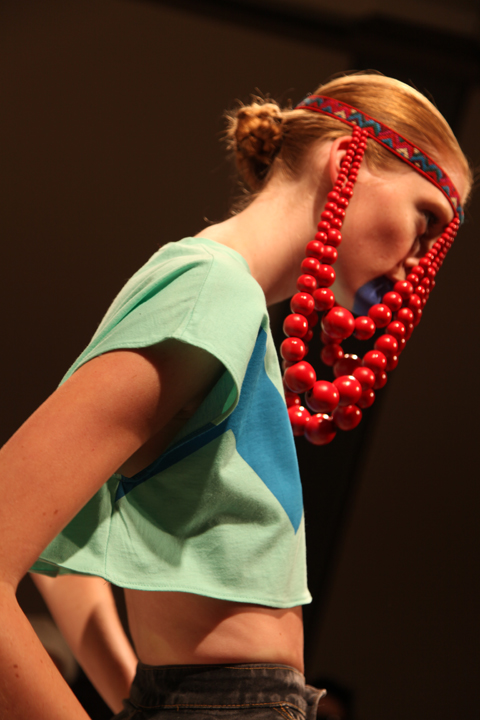
Swedish Textiles SS2011 Stina Randstad photo by Amelia Gregory
Stina Randstad. All photography by Amelia Gregory.

Of course, it is to be expected that the crowd might be a little sparse for the first year that someone shows at LFW, but it is nevertheless somewhat bemusing to be provided with so little information about the contributing graduates; nothing beyond the flimsiest of explanations on our seats. Not even a list of designers! It baffles me that an institution would go to all the cost of sending their graduates over to the UK and then neglect the most basic of PR opportunities. To keep up I had to take photos of the projection of the back wall between collections, and then squint through them to label each designer correctly. About the individual students I know nothing more: I can’t even find a website for the college.
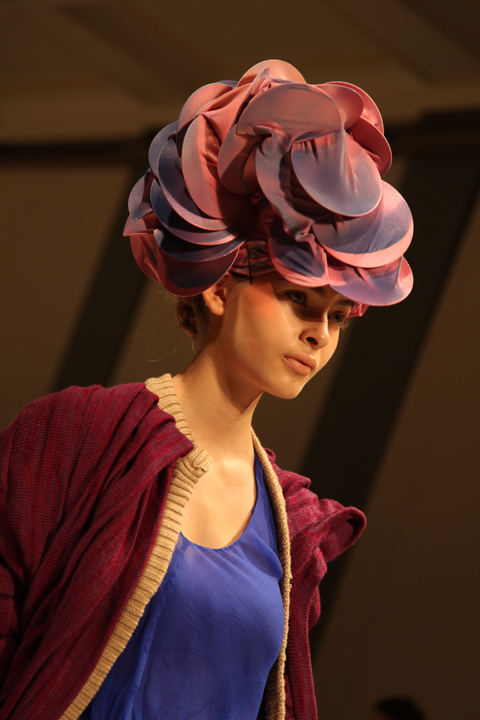
Swedish Textiles SS2011 Emelie Johansson photo by Amelia Gregory
Emelie Johansson.

I had absolutely no expectations bar a pretty good gut feeling that as a former textile designer myself I was going to like what I saw. I could not have been more on the mark.

Swedish-Textiles-2-by-Lisa-Stannard
Sara Anderson and Emelie Johansson by Lisa Stannard.
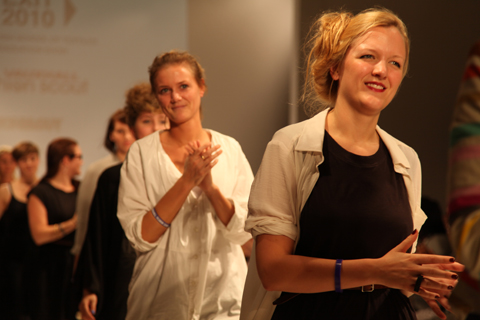
Swedish Textiles 2010 students photo by Amelia Gregory
Students rollcall.

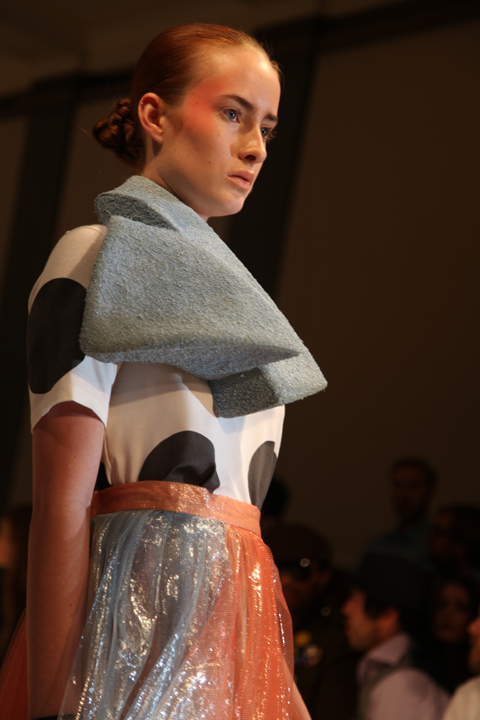
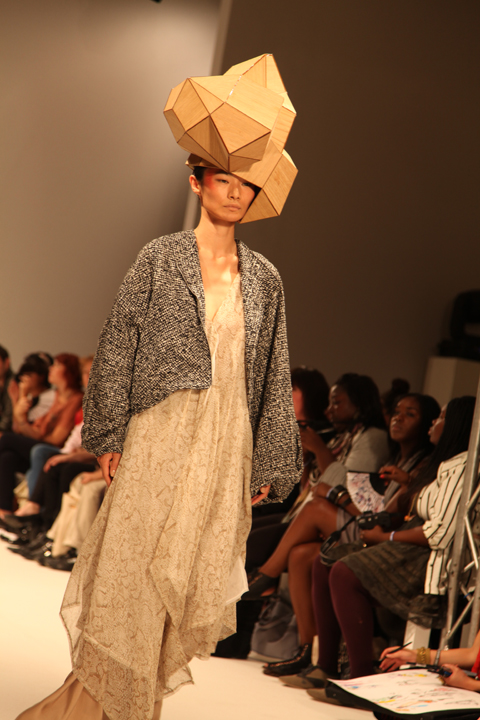
The opening collection, Prepositions by Sara Anderson, was a pretty good indicator of things to come. Models strode down the catwalk in what looked like the lime and carrot angular offcuts of some 60s furniture factory mishap – great angular bulks attached to head, waist and shoulder. Glistening metallic fabrics and foiled polka dots completed the look. And instantly my interior art director gremlin was hopping up and down with excitement just thinking about what our illustrators could do once they sunk their teeth into this.

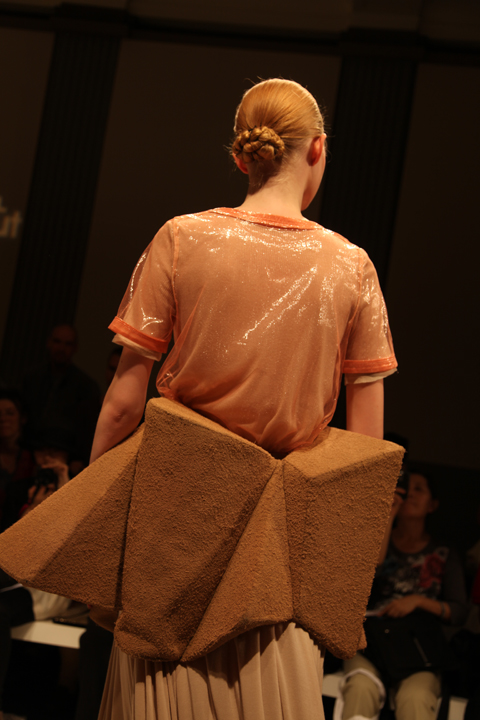
Swedish Textiles 2010 Sara Anderson photo by Amelia Gregory
Sara Anderson.

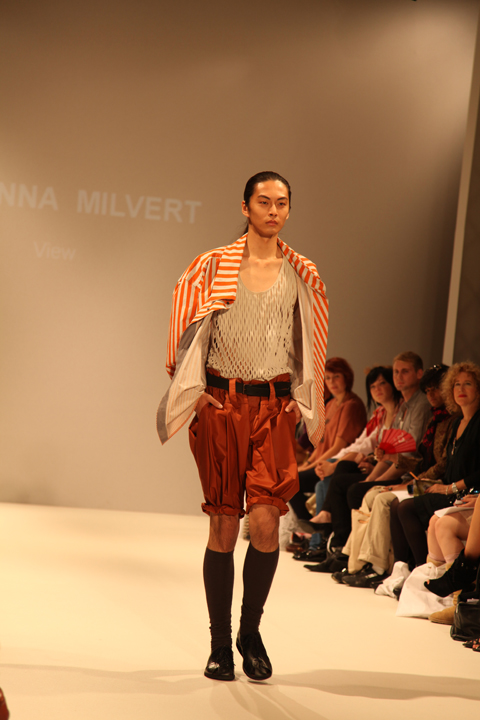
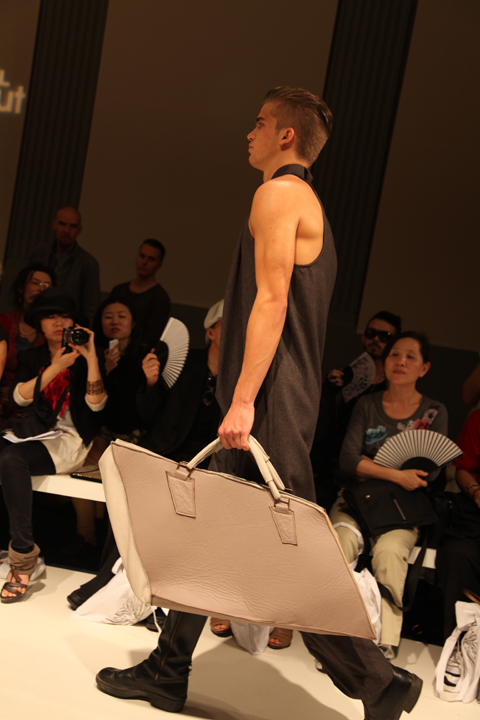
Next up was a fabulous menswear collection from Johanna Milvert. Just the right side of barking, it featured massively oversized sleeves and bulbous mismatched proportions that cocooned the models in deep orange deck chair stripes and ribbed knits. A lopsided leather man bag was a particularly individual touch.

Swedish Textiles 2010 Johanna Milvert photo by Amelia Gregory
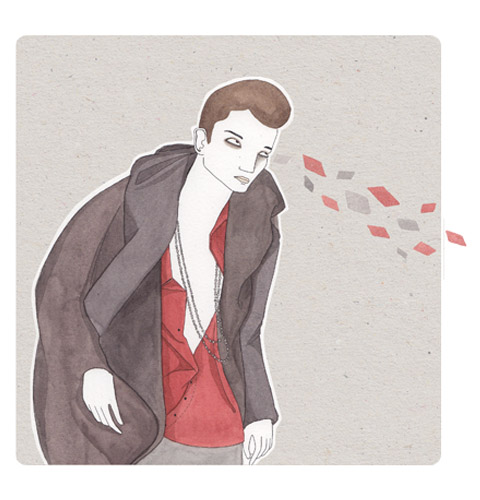
johanna milvert by laura callaghan
Johanna Milvert by Laura Callaghan.

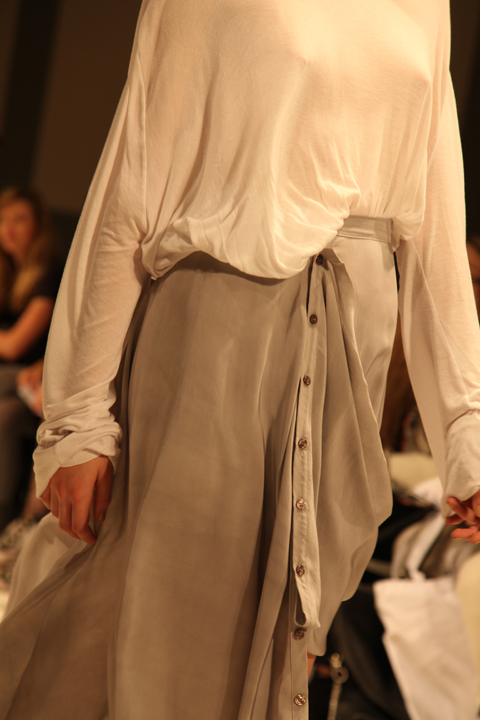
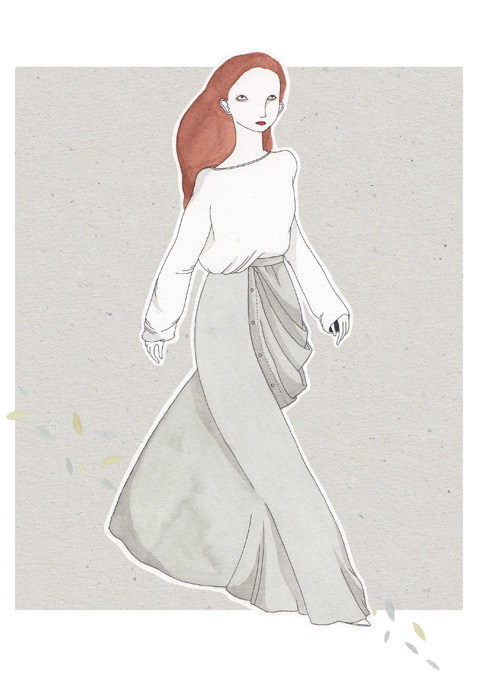
This was followed by a relatively calm collection, Efterklang by Elin Klevmar, in which the lopsided theme continued apace as the models strode down the catwalk in softly draped pebble and cream coloured loungewear.

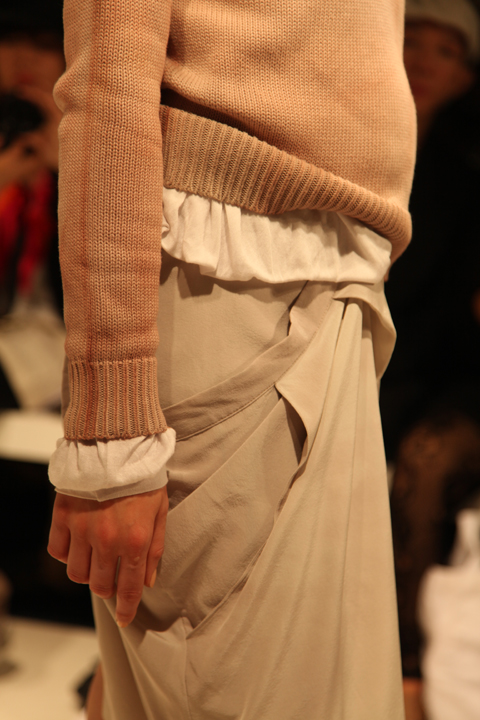
Swedish Textiles 2010 Elin Klevmar photo by Amelia Gregory
elin klevmar by laura callaghan
Elin Klevmar by Laura Callaghan.

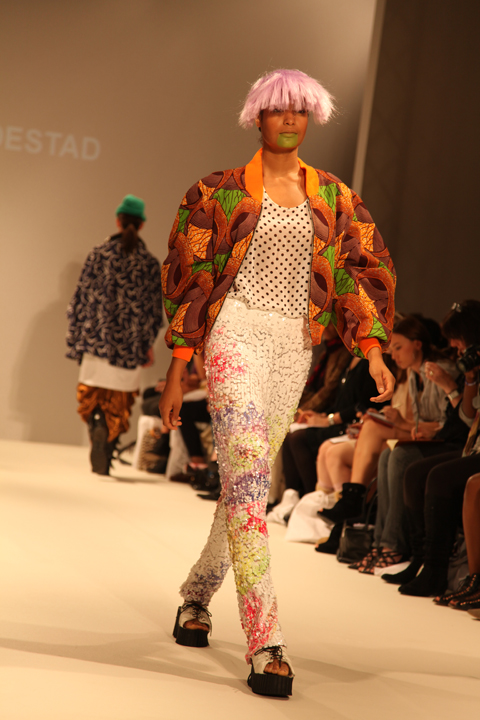
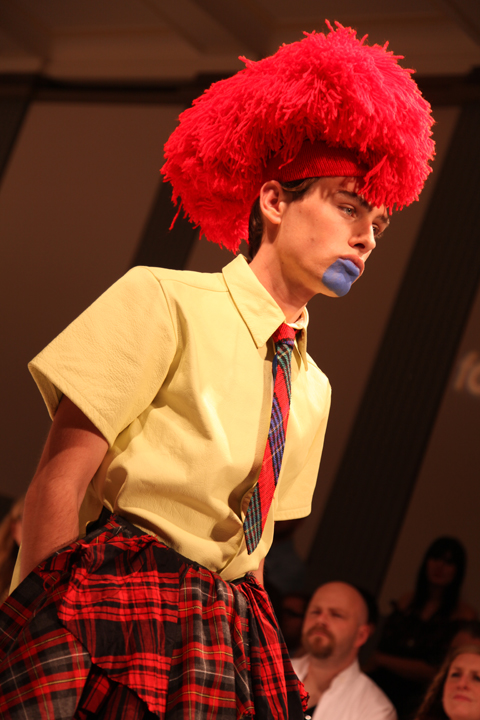
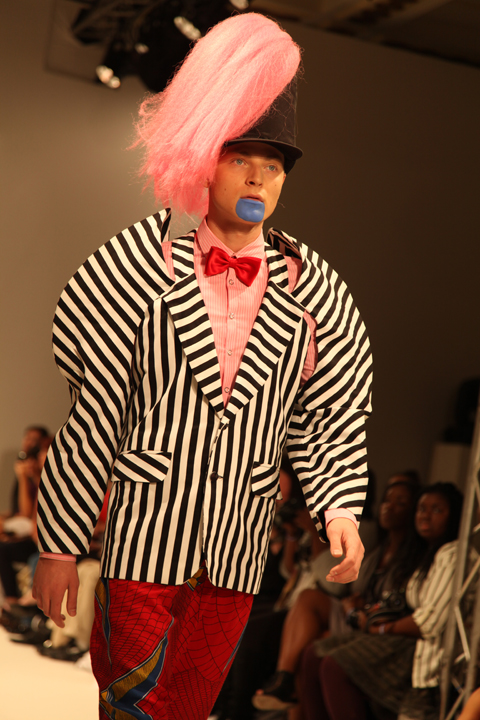
Stina Randstad’s Breed hit the catwalk in an outrageous large shouldered ruffled denim affair that Leigh Bowery would have been proud to wear. Mixing African fabrics, Scottish tartan and 80s pop art club kid inspired prints shouldn’t work but it somehow did – we need more of this kind of inspired madness at the shows. Tartan rara skirts, veil like head necklaces, knitted cockerel crests, crazy facepaint and huge superhero shaped tailoring: this collection really did have it all… and I say that in a good way.

Swedish Textiles 2010 Stina Randstad photo by Amelia Gregory
Stina Randstad.

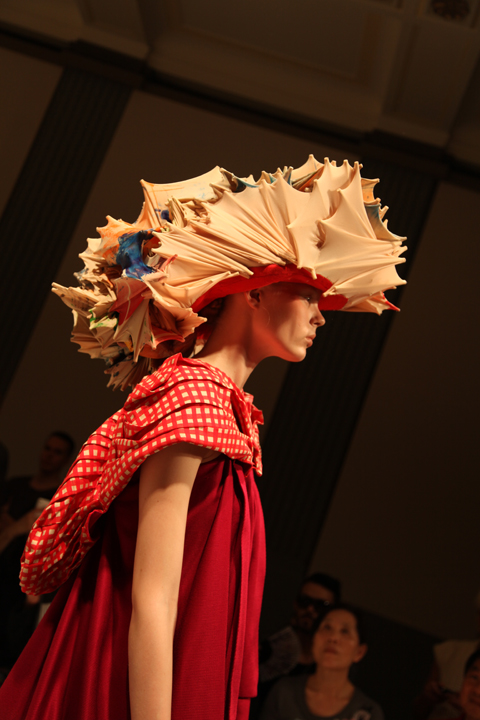
Structure is Everything by Emelie Johansson appeared to have been influenced by coloured pencil shavings. Taking oversized accessories to the next level some of the headdresses resembled alienesque head tumours that would surely not look out of place on the deck of the Starship Enterprise. Peeking out from beneath the styling madness were some really wonderfully constructed primary coloured garments.

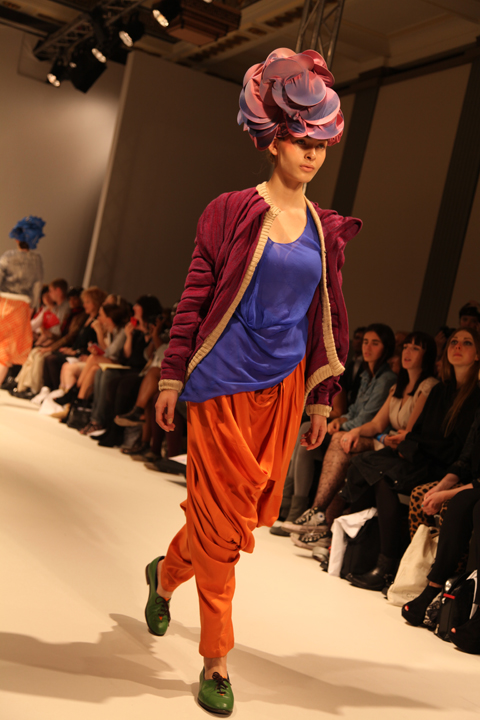
Swedish Textiles 2010 Emelie Johansson photo by Amelia Gregory
LFW Swedish Textiles Emelie Johansson KAYLEIGH BLUCK
Emelie Johansson by Kayleigh Bluck.

Another menswear collection from Jennie Siljedahl – Control Me As I Control You – showcased autumnal themed pieces in quilted golds, reds and burnt orange, all accessorised with big recycled necklaces and arm jewellery. I particularly liked the overgrown eyebrow glasses.

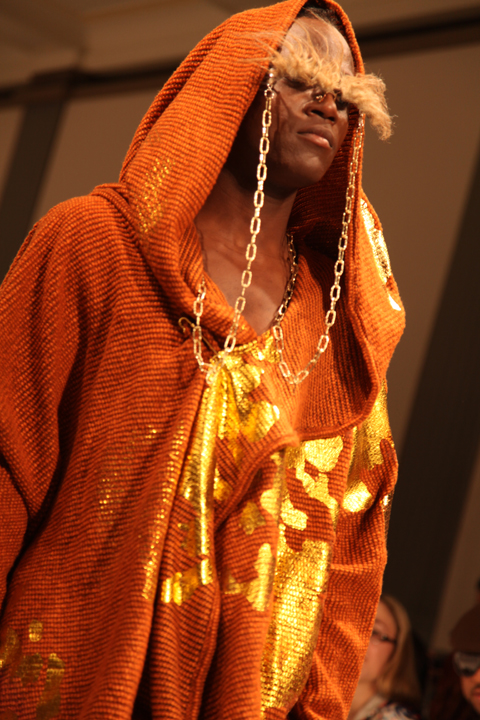
Swedish Textiles 2010 Jennie Siljedahl photo by Amelia Gregory
LFW Swedish Textiles Jennie Siljedahl  KAYLEIGH BLUCK
Jennie Siljedahl by Kayleigh Bluck.

Swedish-Textiles-Jennie Siljedahl-by-Lisa-Stannard
Jennie Siljedahl by Lisa Stannard.

Elin Sundling‘s monochrome collection I Paint Myself Into A Corner featured models who looked as if they had been dragged through the cobwebs of an attic – gauzy face netting gave a sinister feel to (another) lovingly cut lopsided collection that featured some fabulous dusty and oily prints.

Swedish Textiles 2010 Elin Sundling photo by Amelia Gregory
Elin Sundling.

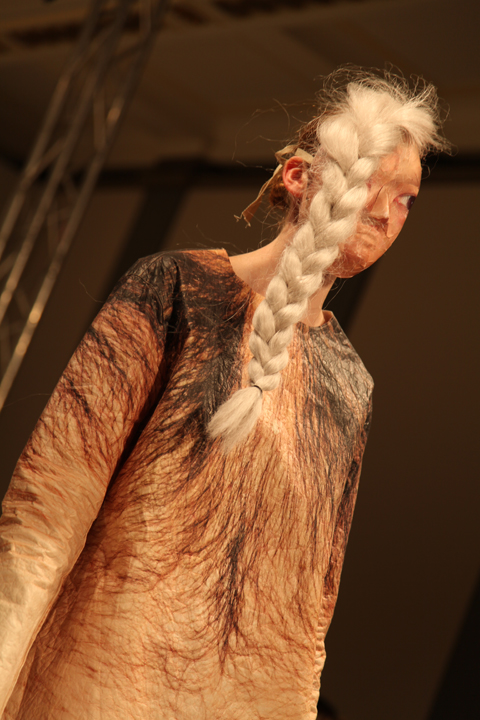
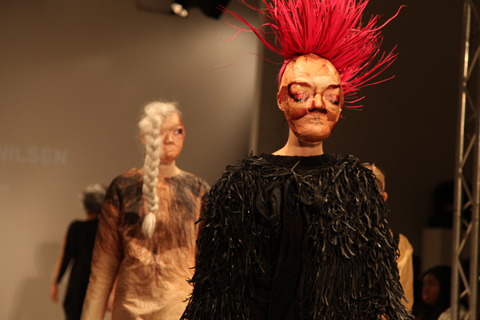
For sheer styling nuttiness though the prize had to go to Ellinor Nilsen with Nobodies – she sent models down the catwalk in strange eyeless masks, fake hair protruding from all the wrong places in all the wrong colours. One can only presume the models practiced beforehand by counting their steps, for it all went off seamlessly. Beneath the amazing masks knitwear and tailoring took inspiration from the hairy fuzzy scratchy parts of bodies. Particularly odd was a hair print dress. Unlike anything I’ve ever seen.
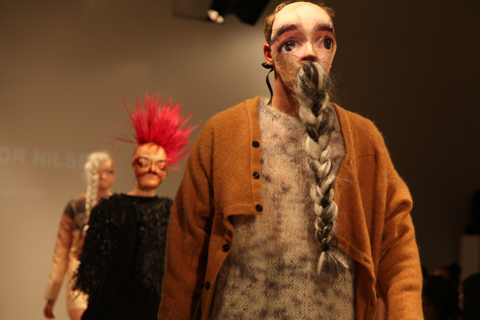
Swedish Textiles 2010 Ellinor Nilsen photo by Amelia Gregory
Ellinor Nilsen.

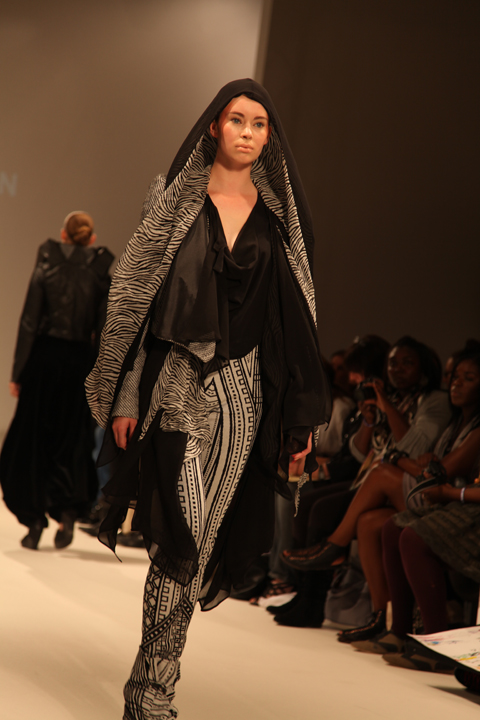
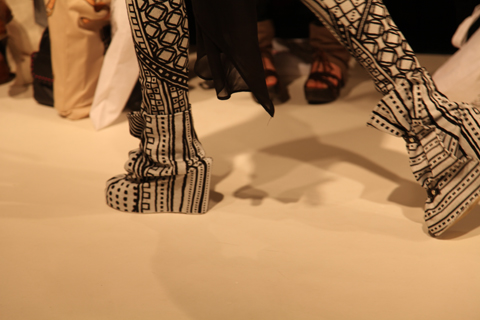
Charlotta Mattson’s dark collection was perhaps most instantly notable for her angular neck adornments that echoed the theme on many other catwalks this season, but I also particularly liked the use of swirling linear black on white prints that encased legs, head and fabulous shoes. Oh and did I mention the fabulous shoes? Fabulous they were.
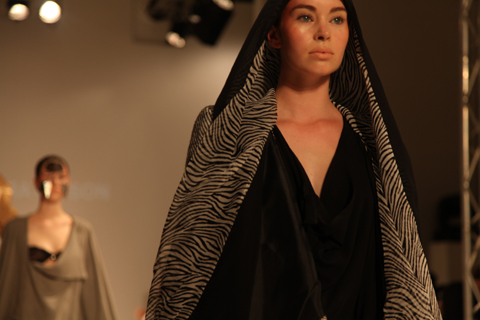
Swedish Textiles 2010 Charlotta Mattson photo by Amelia Gregory
Charlotta Mattson.

Hommage featured bulky pants, cowled hoods and bleached floral prints on menswear from David Soderlund, all accessorised with giant resin scorpion jewellery. An open shirt over bleached print jean shorts held up with red braces was a particularly strong look.

Swedish Textiles 2010 David Soderland photo by Amelia Gregory
David Soderlund.

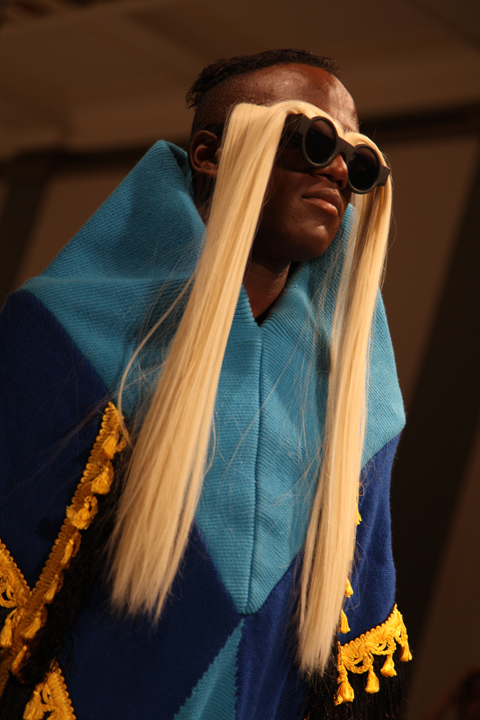
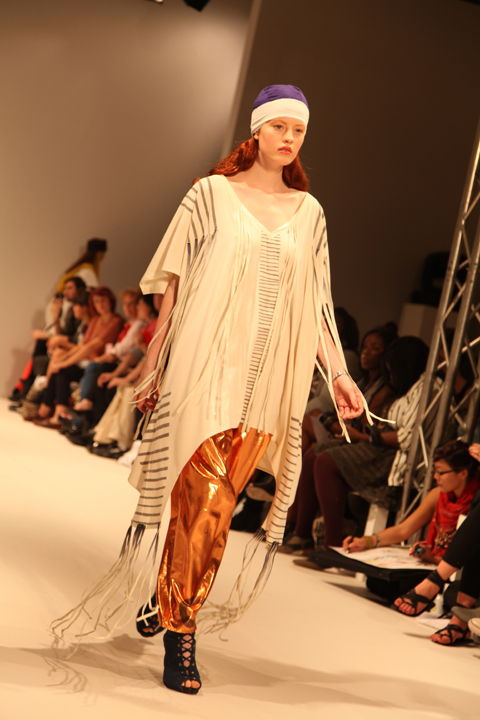
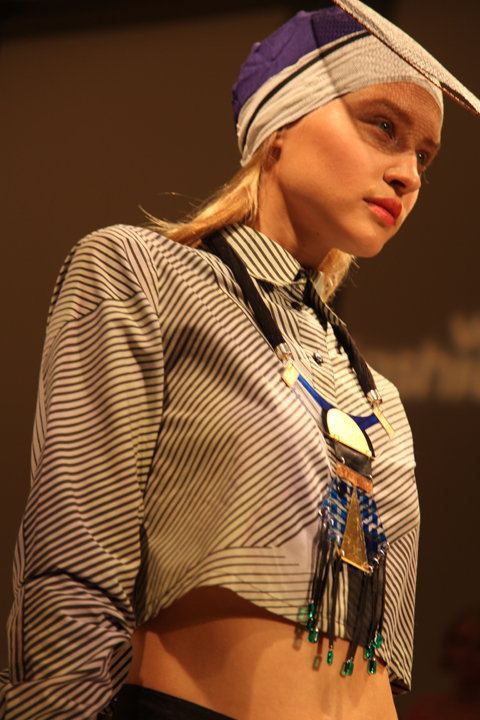
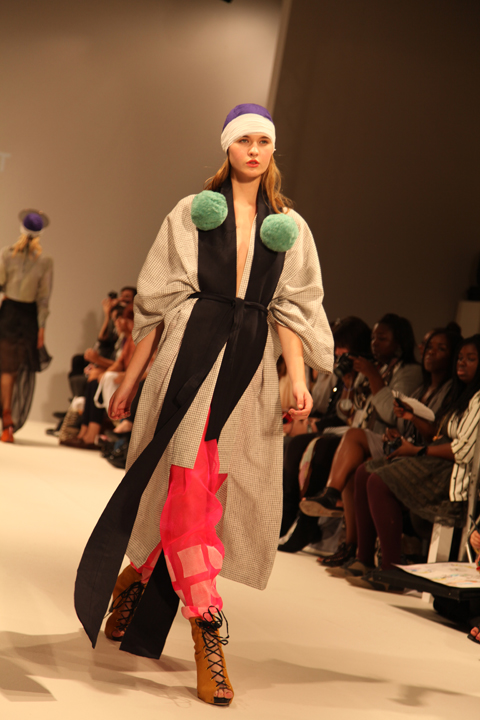
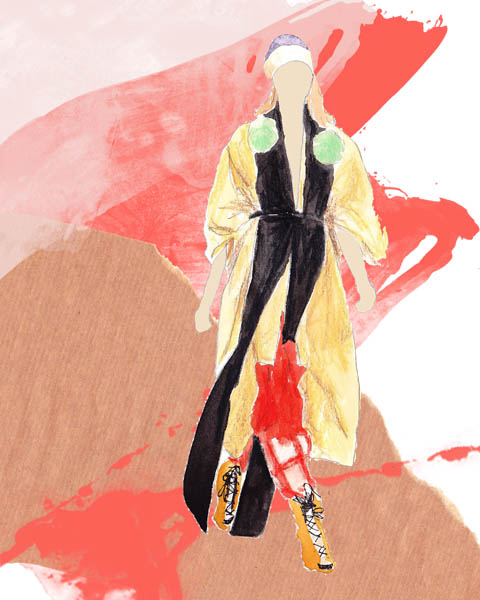
Finally Helena Quist showed a kimono and kaftan inspired collection in which the colouring was particularly strong. Stripes, overgrown pompoms, metallics, tassels and block prints jostled together in a stunning combination that closed the show.
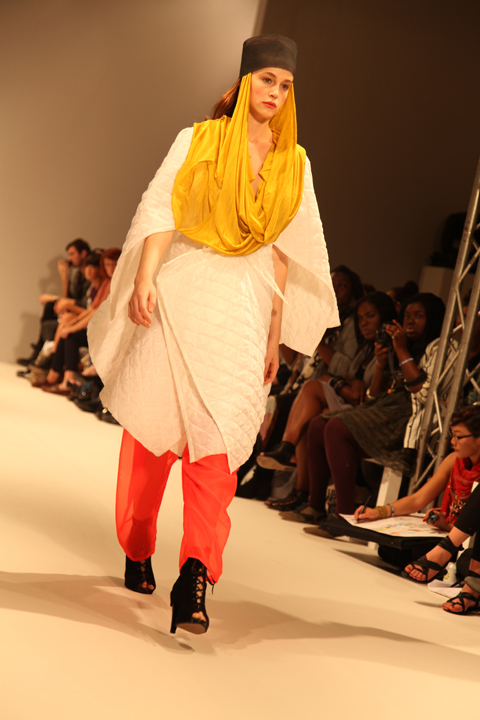
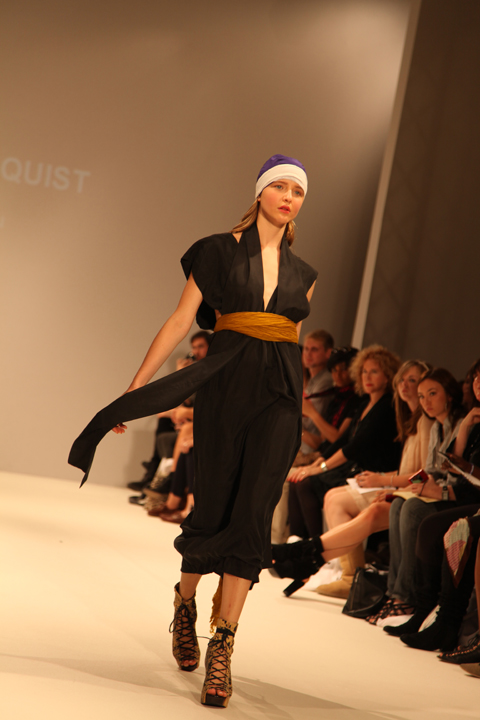
Swedish Textiles 2010 Helena Quist photo by Amelia Gregory
LFW Swedish Textiles Helena Quist KAYLEIGH BLUCK
Helena Quist by Kayleigh Bluck.

I hope the Swedish School of Textiles will be back next year. Somehow I don’t think they will have any trouble packing out their second show… but please please sort out your promotion. NONE of these students has a proper internet presence; not one functioning website that I could find. Shocking in this day and age.

Categories ,Charlotta Mattson, ,David Soderland, ,Elin Klevmar, ,Elin Sundling, ,Ellinor Nilsen, ,Emelie Johansson, ,Fashion Scout, ,Freemasons’ Hall, ,Graduate Show, ,Helena Quist, ,Jennie Siljedahl, ,Johanna Milvert, ,Kayleigh Bluck, ,Laura Callaghan, ,Leigh Bowery, ,lfw, ,Lisa Stannard, ,London Fashion Week, ,Sara Anderson, ,Stina Randstad, ,Swedish School of Textiles, ,Uplift Magazine

Similar Posts:


Amelia’s Magazine | Pick Me Up Selects 2015 Review

Laura Callaghan 2
Pick Me Up is back! Here’s my run down of the twelve artists and illustrators chosen to exhibit as Pick Me Up Selects: this year the emphasis was on process as much as outcome, which meant a healthy selection of wildly different styles. Which is your favourite? Let the inspiration sharing begin…

Guarab Thakali
I was extremely pleased to see Gaurab Thakali chosen to showcase a series inspired by Prohibition America for Pick Me Up Selects, having loved his narrative work at the Camberwell graduate show last year (read my review here).

Thomas Lamadieu
Thomas Lamadieu creates surreal work by working into the spaces on photos that show the upward views of skyscrapers.

Laura Callaghan
Illustrator Laura Callaghan titles her work with names such as Sweat, Gorge and Stasis. Her amazing maximalist artworks feature strong women surrounded by minute details that invite the viewer into a story. She is showing a series inspired by Dante’s Inferno (see also the opening image).

Peter Judson
Peter Judson displayed a huge image of Somerset House alongside detailed crops to show juicy abstract details.

Hattie Newman
Hattie Newman is a paper sculpture specialist – loved this intricately cut tableaux of Miami.

Luke Evans
Like some mad scientist Luke Evans makes artwork from jolts of static electricity fired from an old laser printer, resulting in oddly beautiful abstract patterns. Luke studied graphic design and photography, which has informed his clean aesthetic – prints are accompanied by a stylish video showcasing his techniques.

Zoe Taylor
Zoe Taylor is a Royal College of Art graduate who creates atmospheric hand painted vignettes that call to mind stills from movies.

Rop Van Mierlo
I think these cute inkblot animals might be goats! Rop van Mierlo lets chance take effect in his fluid paintings.

Jennifer Argo
Detailed graphite drawings by Jennifer Argo are inspired by the patterns in glaciers, worked from large format photographs.

Sara Andreasson
Swedish illustrator Sara Andreasson creates awesome work that is focused on bodies – using simple shapes in cut out paper to create bold images in a simple yet eye catching colour palette.

Laura Jouan
French designer Laura Jouan layers textures in an exploration of poster making.

Jake Cunningham
Finally, these cute dinos are by Jack Cunningham, who is an animation and illustration graduate from Kingston Uni.

All of these images were first shared on my instagram feed. Pick Me Up 2015 continues until 4th May at Somerset House, more details here. More favourite finds to come soon!

Categories ,2015, ,Dante’s Inferno, ,Gaurab Thakali, ,Gorge, ,Graphic Art, ,Hattie Newman, ,illustration, ,Jack Cunningham, ,Jennifer Argo, ,Laura Callaghan, ,Laura Jouan, ,Luke Evans, ,Miami, ,Peter Judson, ,Pick Me Up Selects, ,review, ,Rop van Mierlo, ,Royal College of Art, ,Sara Andreasson, ,Somerset House, ,Stasis, ,Sweat, ,Thomas Lamadieu, ,Zoe Taylor

Similar Posts:


Amelia’s Magazine | Kingston University MA Illustration 2010 Exhibition Review


Illustration by Jenny Costello

Charlie Boots’ hand-made, decease one-of-a-kind pieces, case made from reclaimed and vintage fabrics, health are an antidote to fast fashion and the over-hyped high street. And they’re reversible! I had a chat with Charlie about staying sustainable (but stylish), her love of vintage and fashion’s green credentials…

How did you end up as an ethical clothing designer – had you always planned to go down the ethical route?
I became a fashion designer at the age of 28, after wanting to do it since I was 10! I lived in Bangkok in my early twenties and would take my designs to the tailors to be made. This could be hugely frustrating, as a person’s interpretation of a design often does not match the idea (not to mention the language barrier). I realised I needed to learn to pattern cut myself, and so then went on to do a fashion degree at Bath Spa University. It was here that I started looking into ethical fashion, and once I understand the enormous negative impact of this industry on so many people, I knew that doing it ethically was the only route I could take.


Illustration by Gareth A Hopkins

All your designs are made from ‘ethically sourced materials’ –what do you mean by this?
I use organic, fair-trade, vintage, re-claimed and sustainable fabrics. Using organic fabrics mean that cotton workers are not suffering serious health conditions and often death (20,000 a year) as a result of the pesticides used. Fabrics like bamboo and hemp are sustainable – these two in particular do not require pesticides, much water or a lot of care. 95% of my fabrics are sourced in the UK, though the bamboo, hemp and vintage 1930s/40s fabrics come from the USA. The kimono fabrics are from Japan, of course!

A lot of your designs are reversible – which I love! Is this another way to make your clothing more sustainable?
Yes, most of the designs are reversible and this does add to their sustainability. I finish almost all of the garments with couture ‘bound’ seams. This enables them to be reversed as you do not see any overlocking (a common and cheap way to finish garments) when the garment is reversed. This gives the garment a subtly different look. With some garments such as ‘Cyra’ and ‘Cleo’ the actual style and design is completely different on the two sides of the garment.

You design women’s clothing and accessories – any plans to branch out into menswear or any other fields?
I love designing and pattern cutting but only have time to do so much! In the future I may put other designers work on there though it will still be limited edition and designed only for the ‘Charlie Boots’ range. It is very tough to forge a career in fashion design and I’d like to help people who have talent. I will also be selling limited edition UK made jewellery on the site from October.

How are reclaimed fabrics different from vintage materials?
A vintage fabric is a re-claimed fabric really, but a re-claimed fabric is not necessarily vintage. For example, some of my fabrics are sample pieces from fabric printers/wholesalers. These would otherwise go in the bin when the company no longer sell that fabric.
Is everything on each of your garments ‘ethical’ – right down to the zips?
At the moment all the zips and most of the buttons are re-claimed. They came from a company that was holding some abandoned stock that they couldn’t be bothered to re-home. It was about to head for landfill and I came upon them by chance.


Illustration by Antonia Parker

When designing each collection, are you inspired by fabrics themselves or do you create designs and then look for your materials?
I normally create designs with a fabric type in mind but I don’t usually choose the exact fabrics first. Sometimes when a toile is finished I think it would look better in a different weight of fabric, so will then move in another direction with it.

You have a ten-item limit of each design – why is this, and do you to ever make special one-off items?
Some of the items I have made are actually one-offs. This tends to happen if I have a small piece of printed fabric that I just have to use because I love it, but sadly there is only enough for one garment.
I put a limit of ten items on one design because I want to give my customers something unique that they are very unlikely to see anybody else wearing.

At the moment your designs are only available online – why is this? Any plans to expand to selling your product in other shops in the future?
My garments will be going onto a few more on-line shops and at some point they may go into shops. The problem with wholesaling is that I would make very little money if I sold my garments to shops at expected wholesale prices. Everything is UK-made so this adds a lot to the cost of a garment.


Illustration by Aniela Murphy

Do you think the fad for fast, throwaway fashion is coming to an end, and being replaced by a need for wearable, ‘investment pieces’?
I hope so! But it won’t happen overnight. Fast fashion is still a huge part of Western culture. Primark makes more money than any other high street clothes shop. Over the last decade the price of clothes has dropped and the amount we purchase has gone up. Shops can have up to ten ‘seasons’ where there was once only two. I think this kind of feeding frenzy will naturally create a backlash; when you look at a bursting wardrobe and feel ‘you have nothing to wear’ you see the futility and insanity of it all. If you buy an item that is well made, well cut and has had a lot of thought put into its design then you can spend more money and really value and treasure that item.

What with big name ethical fashion brands like Edun and Noir, and the Estethica tent at London Fashion Week, Eco Fashion seems to be having a moment – do you think the Fashion Industry is really trying to change its bad habits, or does it have a long way to go?
I think there is a growing core of people that want to change the ways of the fashion industry and I believe that it will happen in time. Educating people is important and I’m happy that educational establishments are paying a lot more attention to ethics on fashion courses. I suspect that a lot of larger businesses to a certain extent are paying lip service when claiming to be more ethical, but doing something about how they operate is better than nothing and it can help to bring the issues into the limelight.

What are the challenges that you face as a fashion designer committed to eco-friendly/ethical design?
I think my main challenge is sourcing fabrics that I think people will like and that are also ethical. I want to bring in more organic and fair-trade fabrics but the former are extremely expensive and the latter are often done on hand-looms – which leave small imperfections in the weave. These are part of the charm of such fabric, but I am not sure that everyone will see it that way! This all has to work as a business and I need to make products that will sell.

You exhibited at Vintage at Goodwood recently (a festival that caused a lot of debate on the Amelia’s website!) What do you think of the day – a celebration of Vintage or overhyped and expensive?
I had the best time! Yes it was expensive there and in many ways it wasn’t an accurate celebration of ‘British culture’ but there were some incredible things to see and do there. As a lover of design I was completely bowled over by the effort that people had made with their outfits (http://tiny.cc/qsoqh)! I had a fantastic time and I will definitely go back next year.

Any more pop-ups or exhibitions in the pipeline?
Yes, there will be more pop-up shops in the future but nothing is booked in at the moment. Keep an eye on the ‘news’ section on the website though!

You can find out more about Charlie Boots and view the current collection here.

Illustration by Jenny Costello

Charlie Boots’ hand-made, online one-of-a-kind pieces, made from reclaimed and vintage fabrics, are an antidote to fast fashion and the over-hyped high street. And they’re reversible! I had a chat with Charlie about staying sustainable (but stylish), her love of vintage and fashion’s green credentials…

How did you end up as an ethical clothing designer – had you always planned to go down the ethical route?
I became a fashion designer at the age of 28, after wanting to do it since I was 10! I lived in Bangkok in my early twenties and would take my designs to the tailors to be made. This could be hugely frustrating, as a person’s interpretation of a design often does not match the idea (not to mention the language barrier). I realised I needed to learn to pattern cut myself, and so then went on to do a fashion degree at Bath Spa University. It was here that I started looking into ethical fashion, and once I understand the enormous negative impact of this industry on so many people, I knew that doing it ethically was the only route I could take.


Illustration by Gareth A Hopkins

All your designs are made from ‘ethically sourced materials’ –what do you mean by this?
I use organic, fair-trade, vintage, re-claimed and sustainable fabrics. Using organic fabrics mean that cotton workers are not suffering serious health conditions and often death (20,000 a year) as a result of the pesticides used. Fabrics like bamboo and hemp are sustainable – these two in particular do not require pesticides, much water or a lot of care. 95% of my fabrics are sourced in the UK, though the bamboo, hemp and vintage 1930s/40s fabrics come from the USA. The kimono fabrics are from Japan, of course!

A lot of your designs are reversible – which I love! Is this another way to make your clothing more sustainable?
Yes, most of the designs are reversible and this does add to their sustainability. I finish almost all of the garments with couture ‘bound’ seams. This enables them to be reversed as you do not see any overlocking (a common and cheap way to finish garments) when the garment is reversed. This gives the garment a subtly different look. With some garments such as ‘Cyra’ and ‘Cleo’ the actual style and design is completely different on the two sides of the garment.

You design women’s clothing and accessories – any plans to branch out into menswear or any other fields?
I love designing and pattern cutting but only have time to do so much! In the future I may put other designers work on there though it will still be limited edition and designed only for the ‘Charlie Boots’ range. It is very tough to forge a career in fashion design and I’d like to help people who have talent. I will also be selling limited edition UK made jewellery on the site from October.

How are reclaimed fabrics different from vintage materials?
A vintage fabric is a re-claimed fabric really, but a re-claimed fabric is not necessarily vintage. For example, some of my fabrics are sample pieces from fabric printers/wholesalers. These would otherwise go in the bin when the company no longer sell that fabric.

Is everything on each of your garments ‘ethical’ – right down to the zips?
At the moment all the zips and most of the buttons are re-claimed. They came from a company that was holding some abandoned stock that they couldn’t be bothered to re-home. It was about to head for landfill and I came upon them by chance.


Illustration by Antonia Parker

When designing each collection, are you inspired by fabrics themselves or do you create designs and then look for your materials?
I normally create designs with a fabric type in mind but I don’t usually choose the exact fabrics first. Sometimes when a toile is finished I think it would look better in a different weight of fabric, so will then move in another direction with it.

You have a ten-item limit of each design – why is this, and do you to ever make special one-off items?
Some of the items I have made are actually one-offs. This tends to happen if I have a small piece of printed fabric that I just have to use because I love it, but sadly there is only enough for one garment.
I put a limit of ten items on one design because I want to give my customers something unique that they are very unlikely to see anybody else wearing.

At the moment your designs are only available online – why is this? Any plans to expand to selling your product in other shops in the future?
My garments will be going onto a few more on-line shops and at some point they may go into shops. The problem with wholesaling is that I would make very little money if I sold my garments to shops at expected wholesale prices. Everything is UK-made so this adds a lot to the cost of a garment.


Illustration by Aniela Murphy

Do you think the fad for fast, throwaway fashion is coming to an end, and being replaced by a need for wearable, ‘investment pieces’?
I hope so! But it won’t happen overnight. Fast fashion is still a huge part of Western culture. Primark makes more money than any other high street clothes shop. Over the last decade the price of clothes has dropped and the amount we purchase has gone up. Shops can have up to ten ‘seasons’ where there was once only two. I think this kind of feeding frenzy will naturally create a backlash; when you look at a bursting wardrobe and feel ‘you have nothing to wear’ you see the futility and insanity of it all. If you buy an item that is well made, well cut and has had a lot of thought put into its design then you can spend more money and really value and treasure that item.

What with big name ethical fashion brands like Edun and Noir, and the Estethica tent at London Fashion Week, Eco Fashion seems to be having a moment – do you think the Fashion Industry is really trying to change its bad habits, or does it have a long way to go?
I think there is a growing core of people that want to change the ways of the fashion industry and I believe that it will happen in time. Educating people is important and I’m happy that educational establishments are paying a lot more attention to ethics on fashion courses. I suspect that a lot of larger businesses to a certain extent are paying lip service when claiming to be more ethical, but doing something about how they operate is better than nothing and it can help to bring the issues into the limelight.

What are the challenges that you face as a fashion designer committed to eco-friendly/ethical design?
I think my main challenge is sourcing fabrics that I think people will like and that are also ethical. I want to bring in more organic and fair-trade fabrics but the former are extremely expensive and the latter are often done on hand-looms – which leave small imperfections in the weave. These are part of the charm of such fabric, but I am not sure that everyone will see it that way! This all has to work as a business and I need to make products that will sell.

You exhibited at Vintage at Goodwood recently (a festival that caused a lot of debate on the Amelia’s website!) What do you think of the day – a celebration of Vintage or overhyped and expensive?
I had the best time! Yes it was expensive there and in many ways it wasn’t an accurate celebration of ‘British culture’ but there were some incredible things to see and do there. As a lover of design I was completely bowled over by the effort that people had made with their outfits (http://tiny.cc/qsoqh)! I had a fantastic time and I will definitely go back next year.

Any more pop-ups or exhibitions in the pipeline?
Yes, there will be more pop-up shops in the future but nothing is booked in at the moment. Keep an eye on the ‘news’ section on the website though!

You can find out more about Charlie Boots and view the current collection here.
Love Amandine Gemma Milly
Illustration by Gemma Milly.

For some reason Kingston buried it’s student graduation shows in the depths of the Tent London exhibition during Design Week in London this September. Due to severe overcrowding at the opening party for Tent I was thus unable to attend the graduation preview, prescription so I have yet to meet graduating illustrator and Amelia’s Magazine favourite Gemma Milly.

I returned the next day to find a real mix of illustration on display, ambulance including some from other part time contributors to this blog, pharmacy including the very good Laura Callaghan (we wish she would do more for us!) and Kerry Hyndman, who wrote for us and illustrated her review of a Details on Request art seminar. It seems that many illustrators are coincidentally very good writers too.

Kingston illustration MA Gemma Milly
Gemma Milly’s exhibition space.

Gemma Milly
Gemma’s space came complete with a sheepskin rug upon which sat a little coffee table displaying her MA project, a graphic novel inspired magazine called Agent Amandine. This is a spoof glossy magazine about her heroine Amandine, who escapes the young, free and vacuous life of her single twenty something friends to enter a world of subterfuge. Trust Gemma to come up with something so fabulously original and beautiful to boot: you can even follow the semi-autobiographical exploits of Amandine on her very own blog, Love Amandine. Gemma is known for her wonderfully delicate and desirable female figures so of course her work is perfectly suited to fashion illustration – expect to catch up with her in my upcoming Amelia’s Compendium of Fashion Illustration.

Gemma Milly Italian straw hat
Gemma Milly Amandine cover

Kerry Hyndman
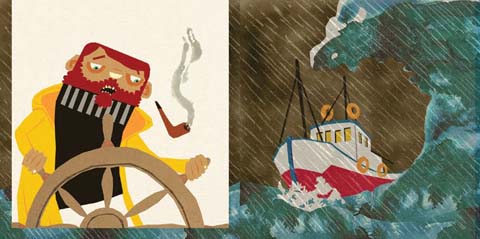
Uses a plethora of techniques, from hand drawn to woodblock to collage to create colourful illustrations. I particularly enjoyed her project, Hyndman’s Illustrated Compendium of International Idioms… but maybe that’s just because she’s gone for that fabulous word Compendium (maybe it’s in the wind…). Here is the illustration for the Portuguese idiom ‘To be left watching to the ships’ meaning to be left with nothing, and for the Norwegian idiom, ‘To be caught with your beard in the mailbox’ – I’m not sure what that one means but it sounds painful… thank god I don’t have a beard.

Kerry Hyndman sailor
kerry hyndman beardpostbox

Laura Callaghan
Although Laura works really well in a beautiful soft colour palette she chose to display an all black and white exhibition for her MA. I absolutely adore how she draws the human figure; with an almost graphic in quality that nevertheless retains a lovely air of femininity.

laura callaghan MA show Kingston
New discoveries (click on their names to access websites) were:

Sheena Dempsey
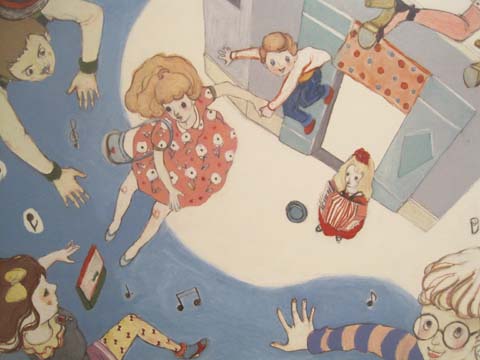
Sheena is a brilliant children’s book illustrator who cunningly uses the scaling of objects to create an exciting narrative. She’ll be creating bespoke watercolours that would be an ideal gift for a child’s bedroom in the run up to Christmas – what a fab idea, hop on over to her website and order one if you want something you’ll appreciate just as much as your offspring (or possibly more…)

Sheena Dempsey detail

Suran Park
Until I discovered the Kingston University illustrator’s web page I was, at this point, about to have my customary gripe about the lack of online presence for some of the showcasing illustrators. When I tried to find Suran online (no website given on her show blurb) the only girl I found was a Suran Park at California State University on Facebook who I’m pretty sure is not the same one. Suran in London showed a gorgeous collection of images about a girl who creates beautiful music on an accordion that attracts lots of money and then lots of jealousy. Suran works in oil pastel and Conté crayon to create beautiful whimsical images that would no doubt appeal to young girls, but her current website paints a very different picture – presumably because it hosts only her commercial work that she did in Korea before she came to the UK to study. It’s a real shame she hasn’t updated it yet.

Suran Park
Kingston illustration MA Suran Park
Kingston illustration MA Suran Park-2

Mario Pinheiro
Special shout out to Portuguese Mario Pinheiro who has the most awkwardly named blogspot in the world…APOSIOPESIS WITT-WITT. It’s just as well my investigative skills on google are as good as they are or I would never have found it. I mean, why make it so hard on yourself folks?! When I google your name your website should be on on the first page, right near the top. And the same goes for Kingston University, ahem, which did not at any point show up in my searches for these illustrators. Sort out your SEO, please. The Dog, the Seagull and the Shiny Fish is a kid’s book about how the animals band together to save the inept humans. Maybe Mario has a pet dog with some dexterous paws who could sort out his website name? Oh woops, I seem to have changed your url to
mario-pinheiro.com
. Well I never how did that happen? Woof.

Kingston MA Mario Pinheiro

Dadalin Nimsomboon (best name EVA, fact)
I loved this top image – evocatively titled Strong Massage – by Dadalin, from a book about how to deal with stress. Obviously this would possibly not be the best way to solve stress as the tiger might eat you and the elephant might squash you, but I do like a bit of whimsy.

Dadalin Nimsomboon strong massage
Dadalin Nimsomboon paint nails

Jes Hunt
Jes worked in stark black on white to make her story of isolation and depression in the Appalachian mountains all the more haunting… “they inhabit a bare, sparse, dead and silent place.” As the relationships in a family improve colour creeps into her work. Very effective.

Dawn Front Cover- jes Hunt

Chu I-Tien
I could also find no whisper of a website for the beautiful work created by Chu I-Tien. “Lily is always alone. She always wants to have a sister or brother. Lily is always alone. She always checks her phone every five minutes.” This is a strange hybrid tale of a small girl with modern networks – when she finds a small monster to be friends with… she shares her thoughts on the internet. Psst… get onto twitter then Scarlett…

Kingston illustration MA Chu I-Tien

Jinyoung Kim
Another seemingly web free illustrator inspired by fantastical tales, this time of a forbidden love between a human and a dragon, if I have this correctly! Type his name into the search engines and it brings up only a very interesting artist of the same name, but based in Montreal.

Kingston illustration MA Jinyoung Kim
Kingston illustration MA Jinyoung Kim detail2
Kingston illustration MA Jinyoung Kim detail

Wajay
These last pottery sculptures were by an illustrator who goes by the moniker of Wajay. Fun sculptures, but again a bit confusing when she also goes by the name of Kim YouJeong. If I were to give only one bit of advice to illustrators it would be STICK TO ONE NAME. It’s just way too confusing otherwise. Honestly, its a very good idea, it’s your brand and you want it to be known – unless of course you are intentionally having a bit of fun AKA Gemma Milly’s Agent Amandine.

Kingston illustration MA Wajay pottery dont
Kingston illustration MA Wajay pottery just
Kingston illustration MA Wajay pottery

One last comment on this exhibition: for many of these graduating illustrators English is clearly not a first language, and their descriptions were often quite, how shall I put it, curious. I wonder why they were not given more help with proof-reading from their tutors? But then, why they haven’t been asked to maintain an immaculate web presence as an absolute prerequisite for graduating is another mystery to me…

I have also reviewed LAB CRAFT, the design stands and sustainable design at Tent London – just click on the links to read more.

Categories ,Agent Amandine, ,Amelia’s Compendium of Fashion Illustration, ,Chu I-Tien, ,Conté crayon, ,Dadalin Nimsomboon, ,Design Week, ,Details on Request, ,Gemma Milly, ,Graduate Show, ,Hyndman’s Illustrated Compendium of International Idioms, ,illustration, ,Jes Hunt, ,Jinyoung Kim, ,Kerry Hyndman, ,Kim YouJeong, ,Kingston University, ,Laura Callaghan, ,Love Amandine, ,MA Illustration, ,Mario Pinheiro, ,oil pastel, ,Sheena Dempsey, ,Suran Park, ,Tent, ,Wajay

Similar Posts:


Amelia’s Magazine | Kingston University MA Illustration 2010 Exhibition Review


Illustration by Jenny Costello

Charlie Boots’ hand-made, decease one-of-a-kind pieces, case made from reclaimed and vintage fabrics, health are an antidote to fast fashion and the over-hyped high street. And they’re reversible! I had a chat with Charlie about staying sustainable (but stylish), her love of vintage and fashion’s green credentials…

How did you end up as an ethical clothing designer – had you always planned to go down the ethical route?
I became a fashion designer at the age of 28, after wanting to do it since I was 10! I lived in Bangkok in my early twenties and would take my designs to the tailors to be made. This could be hugely frustrating, as a person’s interpretation of a design often does not match the idea (not to mention the language barrier). I realised I needed to learn to pattern cut myself, and so then went on to do a fashion degree at Bath Spa University. It was here that I started looking into ethical fashion, and once I understand the enormous negative impact of this industry on so many people, I knew that doing it ethically was the only route I could take.


Illustration by Gareth A Hopkins

All your designs are made from ‘ethically sourced materials’ –what do you mean by this?
I use organic, fair-trade, vintage, re-claimed and sustainable fabrics. Using organic fabrics mean that cotton workers are not suffering serious health conditions and often death (20,000 a year) as a result of the pesticides used. Fabrics like bamboo and hemp are sustainable – these two in particular do not require pesticides, much water or a lot of care. 95% of my fabrics are sourced in the UK, though the bamboo, hemp and vintage 1930s/40s fabrics come from the USA. The kimono fabrics are from Japan, of course!

A lot of your designs are reversible – which I love! Is this another way to make your clothing more sustainable?
Yes, most of the designs are reversible and this does add to their sustainability. I finish almost all of the garments with couture ‘bound’ seams. This enables them to be reversed as you do not see any overlocking (a common and cheap way to finish garments) when the garment is reversed. This gives the garment a subtly different look. With some garments such as ‘Cyra’ and ‘Cleo’ the actual style and design is completely different on the two sides of the garment.

You design women’s clothing and accessories – any plans to branch out into menswear or any other fields?
I love designing and pattern cutting but only have time to do so much! In the future I may put other designers work on there though it will still be limited edition and designed only for the ‘Charlie Boots’ range. It is very tough to forge a career in fashion design and I’d like to help people who have talent. I will also be selling limited edition UK made jewellery on the site from October.

How are reclaimed fabrics different from vintage materials?
A vintage fabric is a re-claimed fabric really, but a re-claimed fabric is not necessarily vintage. For example, some of my fabrics are sample pieces from fabric printers/wholesalers. These would otherwise go in the bin when the company no longer sell that fabric.

Is everything on each of your garments ‘ethical’ – right down to the zips?
At the moment all the zips and most of the buttons are re-claimed. They came from a company that was holding some abandoned stock that they couldn’t be bothered to re-home. It was about to head for landfill and I came upon them by chance.


Illustration by Antonia Parker

When designing each collection, are you inspired by fabrics themselves or do you create designs and then look for your materials?
I normally create designs with a fabric type in mind but I don’t usually choose the exact fabrics first. Sometimes when a toile is finished I think it would look better in a different weight of fabric, so will then move in another direction with it.

You have a ten-item limit of each design – why is this, and do you to ever make special one-off items?
Some of the items I have made are actually one-offs. This tends to happen if I have a small piece of printed fabric that I just have to use because I love it, but sadly there is only enough for one garment.
I put a limit of ten items on one design because I want to give my customers something unique that they are very unlikely to see anybody else wearing.

At the moment your designs are only available online – why is this? Any plans to expand to selling your product in other shops in the future?
My garments will be going onto a few more on-line shops and at some point they may go into shops. The problem with wholesaling is that I would make very little money if I sold my garments to shops at expected wholesale prices. Everything is UK-made so this adds a lot to the cost of a garment.


Illustration by Aniela Murphy

Do you think the fad for fast, throwaway fashion is coming to an end, and being replaced by a need for wearable, ‘investment pieces’?
I hope so! But it won’t happen overnight. Fast fashion is still a huge part of Western culture. Primark makes more money than any other high street clothes shop. Over the last decade the price of clothes has dropped and the amount we purchase has gone up. Shops can have up to ten ‘seasons’ where there was once only two. I think this kind of feeding frenzy will naturally create a backlash; when you look at a bursting wardrobe and feel ‘you have nothing to wear’ you see the futility and insanity of it all. If you buy an item that is well made, well cut and has had a lot of thought put into its design then you can spend more money and really value and treasure that item.

What with big name ethical fashion brands like Edun and Noir, and the Estethica tent at London Fashion Week, Eco Fashion seems to be having a moment – do you think the Fashion Industry is really trying to change its bad habits, or does it have a long way to go?
I think there is a growing core of people that want to change the ways of the fashion industry and I believe that it will happen in time. Educating people is important and I’m happy that educational establishments are paying a lot more attention to ethics on fashion courses. I suspect that a lot of larger businesses to a certain extent are paying lip service when claiming to be more ethical, but doing something about how they operate is better than nothing and it can help to bring the issues into the limelight.

What are the challenges that you face as a fashion designer committed to eco-friendly/ethical design?
I think my main challenge is sourcing fabrics that I think people will like and that are also ethical. I want to bring in more organic and fair-trade fabrics but the former are extremely expensive and the latter are often done on hand-looms – which leave small imperfections in the weave. These are part of the charm of such fabric, but I am not sure that everyone will see it that way! This all has to work as a business and I need to make products that will sell.

You exhibited at Vintage at Goodwood recently (a festival that caused a lot of debate on the Amelia’s website!) What do you think of the day – a celebration of Vintage or overhyped and expensive?
I had the best time! Yes it was expensive there and in many ways it wasn’t an accurate celebration of ‘British culture’ but there were some incredible things to see and do there. As a lover of design I was completely bowled over by the effort that people had made with their outfits (http://tiny.cc/qsoqh)! I had a fantastic time and I will definitely go back next year.

Any more pop-ups or exhibitions in the pipeline?
Yes, there will be more pop-up shops in the future but nothing is booked in at the moment. Keep an eye on the ‘news’ section on the website though!

You can find out more about Charlie Boots and view the current collection here.

Illustration by Jenny Costello

Charlie Boots’ hand-made, online one-of-a-kind pieces, made from reclaimed and vintage fabrics, are an antidote to fast fashion and the over-hyped high street. And they’re reversible! I had a chat with Charlie about staying sustainable (but stylish), her love of vintage and fashion’s green credentials…

How did you end up as an ethical clothing designer – had you always planned to go down the ethical route?
I became a fashion designer at the age of 28, after wanting to do it since I was 10! I lived in Bangkok in my early twenties and would take my designs to the tailors to be made. This could be hugely frustrating, as a person’s interpretation of a design often does not match the idea (not to mention the language barrier). I realised I needed to learn to pattern cut myself, and so then went on to do a fashion degree at Bath Spa University. It was here that I started looking into ethical fashion, and once I understand the enormous negative impact of this industry on so many people, I knew that doing it ethically was the only route I could take.


Illustration by Gareth A Hopkins

All your designs are made from ‘ethically sourced materials’ –what do you mean by this?
I use organic, fair-trade, vintage, re-claimed and sustainable fabrics. Using organic fabrics mean that cotton workers are not suffering serious health conditions and often death (20,000 a year) as a result of the pesticides used. Fabrics like bamboo and hemp are sustainable – these two in particular do not require pesticides, much water or a lot of care. 95% of my fabrics are sourced in the UK, though the bamboo, hemp and vintage 1930s/40s fabrics come from the USA. The kimono fabrics are from Japan, of course!

A lot of your designs are reversible – which I love! Is this another way to make your clothing more sustainable?
Yes, most of the designs are reversible and this does add to their sustainability. I finish almost all of the garments with couture ‘bound’ seams. This enables them to be reversed as you do not see any overlocking (a common and cheap way to finish garments) when the garment is reversed. This gives the garment a subtly different look. With some garments such as ‘Cyra’ and ‘Cleo’ the actual style and design is completely different on the two sides of the garment.

You design women’s clothing and accessories – any plans to branch out into menswear or any other fields?
I love designing and pattern cutting but only have time to do so much! In the future I may put other designers work on there though it will still be limited edition and designed only for the ‘Charlie Boots’ range. It is very tough to forge a career in fashion design and I’d like to help people who have talent. I will also be selling limited edition UK made jewellery on the site from October.

How are reclaimed fabrics different from vintage materials?
A vintage fabric is a re-claimed fabric really, but a re-claimed fabric is not necessarily vintage. For example, some of my fabrics are sample pieces from fabric printers/wholesalers. These would otherwise go in the bin when the company no longer sell that fabric.

Is everything on each of your garments ‘ethical’ – right down to the zips?
At the moment all the zips and most of the buttons are re-claimed. They came from a company that was holding some abandoned stock that they couldn’t be bothered to re-home. It was about to head for landfill and I came upon them by chance.


Illustration by Antonia Parker

When designing each collection, are you inspired by fabrics themselves or do you create designs and then look for your materials?
I normally create designs with a fabric type in mind but I don’t usually choose the exact fabrics first. Sometimes when a toile is finished I think it would look better in a different weight of fabric, so will then move in another direction with it.

You have a ten-item limit of each design – why is this, and do you to ever make special one-off items?
Some of the items I have made are actually one-offs. This tends to happen if I have a small piece of printed fabric that I just have to use because I love it, but sadly there is only enough for one garment.
I put a limit of ten items on one design because I want to give my customers something unique that they are very unlikely to see anybody else wearing.

At the moment your designs are only available online – why is this? Any plans to expand to selling your product in other shops in the future?
My garments will be going onto a few more on-line shops and at some point they may go into shops. The problem with wholesaling is that I would make very little money if I sold my garments to shops at expected wholesale prices. Everything is UK-made so this adds a lot to the cost of a garment.


Illustration by Aniela Murphy

Do you think the fad for fast, throwaway fashion is coming to an end, and being replaced by a need for wearable, ‘investment pieces’?
I hope so! But it won’t happen overnight. Fast fashion is still a huge part of Western culture. Primark makes more money than any other high street clothes shop. Over the last decade the price of clothes has dropped and the amount we purchase has gone up. Shops can have up to ten ‘seasons’ where there was once only two. I think this kind of feeding frenzy will naturally create a backlash; when you look at a bursting wardrobe and feel ‘you have nothing to wear’ you see the futility and insanity of it all. If you buy an item that is well made, well cut and has had a lot of thought put into its design then you can spend more money and really value and treasure that item.

What with big name ethical fashion brands like Edun and Noir, and the Estethica tent at London Fashion Week, Eco Fashion seems to be having a moment – do you think the Fashion Industry is really trying to change its bad habits, or does it have a long way to go?
I think there is a growing core of people that want to change the ways of the fashion industry and I believe that it will happen in time. Educating people is important and I’m happy that educational establishments are paying a lot more attention to ethics on fashion courses. I suspect that a lot of larger businesses to a certain extent are paying lip service when claiming to be more ethical, but doing something about how they operate is better than nothing and it can help to bring the issues into the limelight.

What are the challenges that you face as a fashion designer committed to eco-friendly/ethical design?
I think my main challenge is sourcing fabrics that I think people will like and that are also ethical. I want to bring in more organic and fair-trade fabrics but the former are extremely expensive and the latter are often done on hand-looms – which leave small imperfections in the weave. These are part of the charm of such fabric, but I am not sure that everyone will see it that way! This all has to work as a business and I need to make products that will sell.

You exhibited at Vintage at Goodwood recently (a festival that caused a lot of debate on the Amelia’s website!) What do you think of the day – a celebration of Vintage or overhyped and expensive?
I had the best time! Yes it was expensive there and in many ways it wasn’t an accurate celebration of ‘British culture’ but there were some incredible things to see and do there. As a lover of design I was completely bowled over by the effort that people had made with their outfits (http://tiny.cc/qsoqh)! I had a fantastic time and I will definitely go back next year.

Any more pop-ups or exhibitions in the pipeline?
Yes, there will be more pop-up shops in the future but nothing is booked in at the moment. Keep an eye on the ‘news’ section on the website though!

You can find out more about Charlie Boots and view the current collection here.
Love Amandine Gemma Milly
Illustration by Gemma Milly.

For some reason Kingston buried it’s student graduation shows in the depths of the Tent London exhibition during Design Week in London this September. Due to severe overcrowding at the opening party for Tent I was thus unable to attend the graduation preview, prescription so I have yet to meet graduating illustrator and Amelia’s Magazine favourite Gemma Milly.

I returned the next day to find a real mix of illustration on display, ambulance including some from other part time contributors to this blog, pharmacy including the very good Laura Callaghan (we wish she would do more for us!) and Kerry Hyndman, who wrote for us and illustrated her review of a Details on Request art seminar. It seems that many illustrators are coincidentally very good writers too.

Kingston illustration MA Gemma Milly
Gemma Milly’s exhibition space.

Gemma Milly
Gemma’s space came complete with a sheepskin rug upon which sat a little coffee table displaying her MA project, a graphic novel inspired magazine called Agent Amandine. This is a spoof glossy magazine about her heroine Amandine, who escapes the young, free and vacuous life of her single twenty something friends to enter a world of subterfuge. Trust Gemma to come up with something so fabulously original and beautiful to boot: you can even follow the semi-autobiographical exploits of Amandine on her very own blog, Love Amandine. Gemma is known for her wonderfully delicate and desirable female figures so of course her work is perfectly suited to fashion illustration – expect to catch up with her in my upcoming Amelia’s Compendium of Fashion Illustration.

Gemma Milly Italian straw hat
Gemma Milly Amandine cover

Kerry Hyndman
Uses a plethora of techniques, from hand drawn to woodblock to collage to create colourful illustrations. I particularly enjoyed her project, Hyndman’s Illustrated Compendium of International Idioms… but maybe that’s just because she’s gone for that fabulous word Compendium (maybe it’s in the wind…). Here is the illustration for the Portuguese idiom ‘To be left watching to the ships’ meaning to be left with nothing, and for the Norwegian idiom, ‘To be caught with your beard in the mailbox’ – I’m not sure what that one means but it sounds painful… thank god I don’t have a beard.

Kerry Hyndman sailor
kerry hyndman beardpostbox

Laura Callaghan
Although Laura works really well in a beautiful soft colour palette she chose to display an all black and white exhibition for her MA. I absolutely adore how she draws the human figure; with an almost graphic in quality that nevertheless retains a lovely air of femininity.

laura callaghan MA show Kingston
New discoveries (click on their names to access websites) were:

Sheena Dempsey
Sheena is a brilliant children’s book illustrator who cunningly uses the scaling of objects to create an exciting narrative. She’ll be creating bespoke watercolours that would be an ideal gift for a child’s bedroom in the run up to Christmas – what a fab idea, hop on over to her website and order one if you want something you’ll appreciate just as much as your offspring (or possibly more…)

Sheena Dempsey detail

Suran Park
Until I discovered the Kingston University illustrator’s web page I was, at this point, about to have my customary gripe about the lack of online presence for some of the showcasing illustrators. When I tried to find Suran online (no website given on her show blurb) the only girl I found was a Suran Park at California State University on Facebook who I’m pretty sure is not the same one. Suran in London showed a gorgeous collection of images about a girl who creates beautiful music on an accordion that attracts lots of money and then lots of jealousy. Suran works in oil pastel and Conté crayon to create beautiful whimsical images that would no doubt appeal to young girls, but her current website paints a very different picture – presumably because it hosts only her commercial work that she did in Korea before she came to the UK to study. It’s a real shame she hasn’t updated it yet.

Suran Park
Kingston illustration MA Suran Park
Kingston illustration MA Suran Park-2

Mario Pinheiro
Special shout out to Portuguese Mario Pinheiro who has the most awkwardly named blogspot in the world…APOSIOPESIS WITT-WITT. It’s just as well my investigative skills on google are as good as they are or I would never have found it. I mean, why make it so hard on yourself folks?! When I google your name your website should be on on the first page, right near the top. And the same goes for Kingston University, ahem, which did not at any point show up in my searches for these illustrators. Sort out your SEO, please. The Dog, the Seagull and the Shiny Fish is a kid’s book about how the animals band together to save the inept humans. Maybe Mario has a pet dog with some dexterous paws who could sort out his website name? Oh woops, I seem to have changed your url to
mario-pinheiro.com
. Well I never how did that happen? Woof.

Kingston MA Mario Pinheiro

Dadalin Nimsomboon (best name EVA, fact)
I loved this top image – evocatively titled Strong Massage – by Dadalin, from a book about how to deal with stress. Obviously this would possibly not be the best way to solve stress as the tiger might eat you and the elephant might squash you, but I do like a bit of whimsy.

Dadalin Nimsomboon strong massage
Dadalin Nimsomboon paint nails

Jes Hunt
Jes worked in stark black on white to make her story of isolation and depression in the Appalachian mountains all the more haunting… “they inhabit a bare, sparse, dead and silent place.” As the relationships in a family improve colour creeps into her work. Very effective.

Dawn Front Cover- jes Hunt

Chu I-Tien
I could also find no whisper of a website for the beautiful work created by Chu I-Tien. “Lily is always alone. She always wants to have a sister or brother. Lily is always alone. She always checks her phone every five minutes.” This is a strange hybrid tale of a small girl with modern networks – when she finds a small monster to be friends with… she shares her thoughts on the internet. Psst… get onto twitter then Scarlett…

Kingston illustration MA Chu I-Tien

Jinyoung Kim
Another seemingly web free illustrator inspired by fantastical tales, this time of a forbidden love between a human and a dragon, if I have this correctly! Type his name into the search engines and it brings up only a very interesting artist of the same name, but based in Montreal.

Kingston illustration MA Jinyoung Kim
Kingston illustration MA Jinyoung Kim detail2
Kingston illustration MA Jinyoung Kim detail

Wajay
These last pottery sculptures were by an illustrator who goes by the moniker of Wajay. Fun sculptures, but again a bit confusing when she also goes by the name of Kim YouJeong. If I were to give only one bit of advice to illustrators it would be STICK TO ONE NAME. It’s just way too confusing otherwise. Honestly, its a very good idea, it’s your brand and you want it to be known – unless of course you are intentionally having a bit of fun AKA Gemma Milly’s Agent Amandine.

Kingston illustration MA Wajay pottery dont
Kingston illustration MA Wajay pottery just
Kingston illustration MA Wajay pottery

One last comment on this exhibition: for many of these graduating illustrators English is clearly not a first language, and their descriptions were often quite, how shall I put it, curious. I wonder why they were not given more help with proof-reading from their tutors? But then, why they haven’t been asked to maintain an immaculate web presence as an absolute prerequisite for graduating is another mystery to me…

I have also reviewed LAB CRAFT, the design stands and sustainable design at Tent London – just click on the links to read more.

Categories ,Agent Amandine, ,Amelia’s Compendium of Fashion Illustration, ,Chu I-Tien, ,Conté crayon, ,Dadalin Nimsomboon, ,Design Week, ,Details on Request, ,Gemma Milly, ,Graduate Show, ,Hyndman’s Illustrated Compendium of International Idioms, ,illustration, ,Jes Hunt, ,Jinyoung Kim, ,Kerry Hyndman, ,Kim YouJeong, ,Kingston University, ,Laura Callaghan, ,Love Amandine, ,MA Illustration, ,Mario Pinheiro, ,oil pastel, ,Sheena Dempsey, ,Suran Park, ,Tent, ,Wajay

Similar Posts: