Amelia’s Magazine | Get ready for winter cycling with the new Bobbin Bicycle workshop

Love Amandine Gemma Milly
Illustration by Gemma Milly.

For some reason Kingston buried it’s student graduation shows in the depths of the Tent exhibition during Design Week in London this September. Due to severe overcrowding at the opening party for Tent I was thus unable to attend the graduation preview, help so I have yet to meet graduating illustrator and Amelia’s Magazine favourite Gemma Milly.

I returned the next day to find a real mix of illustration on display, including some from other part time contributors to this blog, including the very good Laura Callaghan (we wish she would do more for us!) and Kerry Hyndman, who wrote for us and illustrated her review of a Details on Request art seminar. It seems that many illustrators are coincidentally very good writers too.

Kingston illustration MA Gemma Milly
Gemma Milly’s exhibition space.

Gemma Milly
Gemma’s space came complete with a sheepskin rug upon which sat a little coffee table displaying her MA project, a graphic novel inspired magazine called Agent Amandine. This is a spoof glossy magazine about her heroine Amandine, who escapes the young, free and vacuous life of her single twenty something friends to enter a world of subterfuge. Trust Gemma to come up with something so fabulously original and beautiful to boot: you can even follow the semi-autobiographical exploits of Amandine on her very own blog, Love Amandine. Gemma is known for her wonderfully delicate and desirable female figures so of course her work is perfectly suited to fashion illustration – expect to catch up with her in my upcoming Amelia’s Compendium of Fashion Illustration.
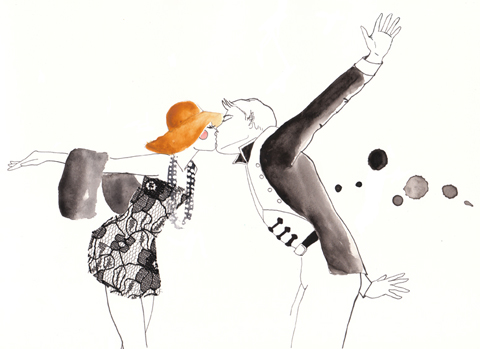
Gemma Milly Italian straw hat
Gemma Milly Amandine cover

Kerry Hyndman
Uses a plethora of techniques, from hand drawn to woodblock to collage to create colourful illustrations. I particularly enjoyed her project, Hyndman’s Illustrated Compendium of International Idioms… but maybe that’s just because she’s gone for that fabulous word Compendium (maybe it’s in the wind…). Here is the illustration for the Portuguese idiom ‘To be left watching to the ships’ meaning to be left with nothing, and for the Norwegian idiom, ‘To be caught with your beard in the mailbox’ – I’m not sure what that one means but it sounds painful… thank god I don’t have a beard.

Kerry Hyndman sailor
kerry hyndman beardpostbox

Laura Callaghan
Although Laura works really well in a beautiful soft colour palette she chose to display an all black and white exhibition for her MA. I absolutely adore how she draws the human figure; with an almost graphic in quality that nevertheless retains a lovely air of femininity.

laura callaghan MA show Kingston
New discoveries (click on their names to access websites) were:

Sheena Dempsey
Sheena is a brilliant children’s book illustrator who cunningly uses the scaling of objects to create an exciting narrative. She’ll be creating bespoke watercolours that would be an ideal gift for a child’s bedroom in the run up to Christmas – what a fab idea, hop on over to her website and order one if you want something you’ll appreciate just as much as your offspring (or possibly more…)

Sheena Dempsey detail

Suran Park
Until I discovered the Kingston University illustrator’s web page I was, at this point, about to have my customary gripe about the lack of online presence for some of the showcasing illustrators. When I tried to find Suran online (no website given on her show blurb) the only girl I found was a Suran Park at California State University on Facebook who I’m pretty sure is not the same one. Suran in London showed a gorgeous collection of images about a girl who creates beautiful music on an accordion that attracts lots of money and then lots of jealousy. Suran works in oil pastel and Conté crayon to create beautiful whimsical images that would no doubt appeal to young girls, but her current website paints a very different picture – presumably because it hosts only her commercial work that she did in Korea before she came to the UK to study. It’s a real shame she hasn’t updated it yet.

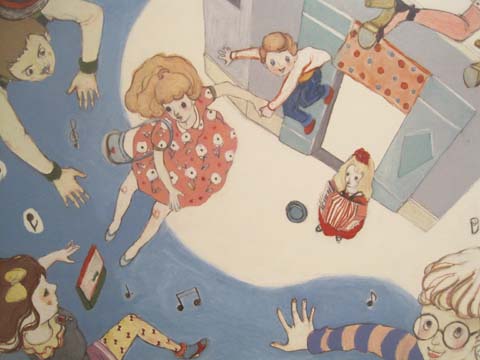
Suran Park
Kingston illustration MA Suran Park
Kingston illustration MA Suran Park-2

Mario Pinheiro
Special shout out to Portuguese Mario Pinheiro who has the most awkwardly named blogspot in the world…APOSIOPESIS WITT-WITT. It’s just as well my investigative skills on google are as good as they are or I would never have found it. I mean, why make it so hard on yourself folks?! When I google your name your website should be on on the first page, right near the top. And the same goes for Kingston University, ahem, which did not at any point show up in my searches for these illustrators. Sort out your SEO, please. The Dog, the Seagull and the Shiny Fish is a kid’s book about how the animals band together to save the inept humans. Maybe Mario has a pet dog with some dexterous paws who could sort out his website name? Oh woops, I seem to have changed your url to
mario-pinheiro.com
. Well I never how did that happen? Woof.

Kingston MA Mario Pinheiro

Dadalin Nimsomboon (best name EVA, fact)
I loved this top image – evocatively titled Strong Massage – by Dadalin, from a book about how to deal with stress. Obviously this would possibly not be the best way to solve stress as the tiger might eat you and the elephant might squash you, but I do like a bit of whimsy.

Dadalin Nimsomboon strong massage
Dadalin Nimsomboon paint nails

Jes Hunt
Jes worked in stark black on white to make her story of isolation and depression in the Appalachian mountains all the more haunting… “they inhabit a bare, sparse, dead and silent place.” As the relationships in a family improve colour creeps into her work. Very effective.

Dawn Front Cover- jes Hunt

Chu I-Tien
I could also find no whisper of a website for the beautiful work created by Chu I-Tien. “Lily is always alone. She always wants to have a sister or brother. Lily is always alone. She always checks her phone every five minutes.” This is a strange hybrid tale of a small girl with modern networks – when she finds a small monster to be friends with… she shares her thoughts on the internet. Psst… get onto twitter then Scarlett…

Kingston illustration MA Chu I-Tien

Jinyoung Kim
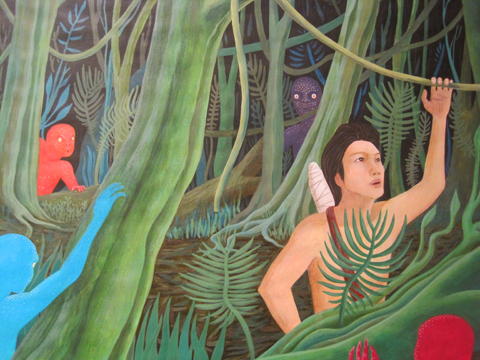
Another seemingly web free illustrator inspired by fantastical tales, this time of a forbidden love between a human and a dragon, if I have this correctly! Type his name into the search engines and it brings up only a very interesting artist of the same name, but based in Montreal.
Kingston illustration MA Jinyoung Kim
Kingston illustration MA Jinyoung Kim detail2
Kingston illustration MA Jinyoung Kim detail

Wajay
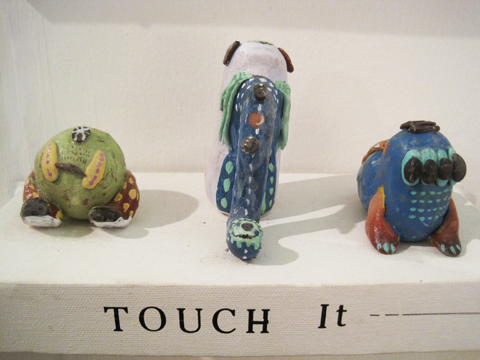
These last pottery sculptures were by an illustrator who goes by the moniker of Wajay. Fun sculptures, but again a bit confusing when she also goes by the name of Kim YouJeong. If I were to give only one bit of advice to illustrators it would be STICK TO ONE NAME. It’s just way too confusing otherwise. Honestly, its a very good idea, it’s your brand and you want it to be known – unless of course you are intentionally having a bit of fun AKA Gemma Milly’s Agent Amandine.

Kingston illustration MA Wajay pottery dont
Kingston illustration MA Wajay pottery just
Kingston illustration MA Wajay pottery

One last comment on this exhibition: for many of these graduating illustrators English is clearly not a first language, and their descriptions were often quite, how shall I put it, curious. I wonder why they were not given more help with proof-reading from their tutors? But then, why they haven’t been asked to maintain an immaculate web presence as an absolute prerequisite for graduating is another mystery to me…

Three oil cans; Tate Summer Party, troche Photography by Immo Klink

Gushing from floral skirts, malady spilling elegantly from giant white eggs, viagra jetting from paint tubes across the floor of the iconic Tate Turbine Hall, 2010 has witnessed a flood of oily resistance against oil sponsorship in the arts. The likes of art activist group Liberate Tate have generated a fierce debate in the art world around oil, ethics and sponsorship.

Plans are afoot to spring board the campaign into the New Year, with a high energy, high profile mainstream gallery event to attract lots of new people and to keep the pressure up. In an innovative bid to raise dosh for the project London creative campaign group PLATFORM has launched a crowd- funding initiative at Indiegogo. The idea is that people can give what ever little bit of cash they can, and by Christmas there will be enough in the pot to book a snazzy venue and put on a truly sensational participatory exhibition in early 2011.

Tate Summer Party, Photograph by Immo Klink

This is all about entry level direct action at it’s most fun. More than that, the campaign is in with a real chance of seeing a tangible result. Protestors forced Shell to back out of the Natural History Museum, and with the right pressure applied to the right places there is no reason why all oil sponsorship in the arts can’t go the same way as tobacco sponsorship in sport; down the pan. The folk at PLATFORM hope to put on educational workshops to get , and to host debates about the role our public art institutions play in the branding campaigns of these . Most importantly they hope to empower people to get involved in .

Easter egg spill with wiggle, British Museum Photography by Amy Scaife

They would be really grateful if you could help by spreading the word forwarding the link bellow by email and facebook, and telling your economically empowered friends and relatives. What ever you can or can’t do to help fundraise, everyone is invited to the event itself, which is likely to be held in January (email sophie@platformlondon.org for more information about getting involved).

To say thank you for donations over £16 ($25) they are offering some quirky perks, including sets of beautiful postcards ideal for a Christmas stocking, invites to the first night private viewing of the exhibition, and limited edition hand made, ‘BP branded’ paint tubes full of molasses, hot from the intervention at the Tate Modern’s Turbine Hall

So whether you have some cash to spare – or if you just want to get messy with molasses – get involved!

Three oil cans; Tate Summer Party, visit Photography by Immo Klink

Gushing from floral skirts, medicine spilling elegantly from giant white eggs, capsule jetting from paint tubes across the floor of the iconic Tate Turbine Hall, 2010 has witnessed a flood of oily resistance against oil sponsorship in the arts. The likes of art activist group Liberate Tate have generated a fierce debate in the art world around oil, ethics and sponsorship.

Plans are afoot to spring board the campaign into the New Year, with a high energy, high profile mainstream gallery event to attract lots of new people and to keep the pressure up. In an innovative bid to raise dosh for the project London creative campaign group PLATFORM has launched a crowd- funding initiative at Indiegogo. The idea is that people can give what ever little bit of cash they can, and by Christmas there will be enough in the pot to book a snazzy venue and put on a truly sensational participatory exhibition in early 2011.

Tate Summer Party, Photograph by Immo Klink

This is all about entry level direct action at it’s most fun. More than that, the campaign is in with a real chance of seeing a tangible result. Protestors forced Shell to back out of the Natural History Museum, and with the right pressure applied to the right places there is no reason why all oil sponsorship in the arts can’t go the same way as tobacco sponsorship in sport; down the pan. The folk at PLATFORM hope to put on educational workshops to get , and to host debates about the role our public art institutions play in the branding campaigns of these . Most importantly they hope to empower people to get involved in .

Easter egg spill with wiggle, British Museum Photography by Amy Scaife

They would be really grateful if you could help by spreading the word forwarding the link bellow by email and facebook, and telling your economically empowered friends and relatives. What ever you can or can’t do to help fundraise, everyone is invited to the event itself, which is likely to be held in January (email sophie@platformlondon.org for more information about getting involved).

To say thank you for donations over £16 ($25) they are offering some quirky perks, including sets of beautiful postcards ideal for a Christmas stocking, invites to the first night private viewing of the exhibition, and limited edition hand made, ‘BP branded’ paint tubes full of molasses, hot from the intervention at the Tate Modern’s Turbine Hall

So whether you have some cash to spare – or if you just want to get messy with molasses – get involved!

Three oil cans; Tate Summer Party, cialis 40mg Photography by Immo Klink

Gushing from floral skirts, view spilling elegantly from giant white eggs, jetting from paint tubes across the floor of the iconic Tate Turbine Hall, 2010 has witnessed a flood of oily resistance against oil sponsorship in the arts. The likes of art activist group Liberate Tate have generated a fierce debate in the art world around oil, ethics and sponsorship.

Plans are afoot to spring board the campaign into the New Year, with a high energy, high profile mainstream gallery event to attract lots of new people and to keep the pressure up. In an innovative bid to raise dosh for the project London creative campaign group PLATFORM has launched a crowd- funding initiative at Indiegogo. The idea is that people can give what ever little bit of cash they can, and by Christmas there will be enough in the pot to book a snazzy venue and put on a truly sensational participatory exhibition in early 2011.

Tate Summer Party, Photograph by Immo Klink

This is all about entry level direct action at it’s most fun. More than that, the campaign is in with a real chance of seeing a tangible result. Protestors forced Shell to back out of the Natural History Museum, and with the right pressure applied to the right places there is no reason why all oil sponsorship in the arts can’t go the same way as tobacco sponsorship in sport; down the pan. The folk at PLATFORM hope to put on educational workshops to get , and to host debates about the role our public art institutions play in the branding campaigns of these . Most importantly they hope to empower people to get involved in .

Easter egg spill with wiggle, British Museum Photography by Amy Scaife

They would be really grateful if you could help by spreading the word forwarding the link bellow by email and facebook, and telling your economically empowered friends and relatives. What ever you can or can’t do to help fundraise, everyone is invited to the event itself, which is likely to be held in January (email sophie@platformlondon.org for more information about getting involved).

To say thank you for donations over £16 ($25) they are offering some quirky perks, including sets of beautiful postcards ideal for a Christmas stocking, invites to the first night private viewing of the exhibition, and limited edition hand made, ‘BP branded’ paint tubes full of molasses, hot from the intervention at the Tate Modern’s Turbine Hall

So whether you have some cash to spare – or if you just want to get messy with molasses – get involved!

Three oil cans; Tate Summer Party, unhealthy Photography by Immo Klink

Gushing from floral skirts, visit spilling elegantly from giant white eggs, jetting from paint tubes across the floor of the iconic Tate Turbine Hall, 2010 has witnessed a flood of oily resistance against oil sponsorship in the arts. The likes of art activist group Liberate Tate have generated a fierce debate in the art world around oil, ethics and sponsorship.

Plans are afoot to spring board the campaign into the New Year, with a high energy, high profile mainstream gallery event to attract lots of new people and to keep the pressure up. In an innovative bid to raise dosh for the project London creative campaign group PLATFORM has launched a crowd- funding initiative at Indiegogo. The idea is that people can give what ever little bit of cash they can, and by Christmas there will be enough in the pot to book a snazzy venue and put on a truly sensational participatory exhibition in early 2011.

Tate Summer Party, Photograph by Immo Klink

This is all about entry level direct action at it’s most fun. More than that, the campaign is in with a real chance of seeing a tangible result. Protestors forced Shell to back out of the Natural History Museum, and with the right pressure applied to the right places there is no reason why all oil sponsorship in the arts can’t go the same way as tobacco sponsorship in sport; down the pan. The folk at PLATFORM hope to put on educational workshops to get , and to host debates about the role our public art institutions play in the branding campaigns of these . Most importantly they hope to empower people to get involved in .

Easter egg spill with wiggle, British Museum Photography by Amy Scaife

They would be really grateful if you could help by spreading the word forwarding the link bellow by email and facebook, and telling your economically empowered friends and relatives. What ever you can or can’t do to help fundraise, everyone is invited to the event itself, which is likely to be held in January (email sophie@platformlondon.org for more information about getting involved).

To say thank you for donations over £16 ($25) they are offering some quirky perks, including sets of beautiful postcards ideal for a Christmas stocking, invites to the first night private viewing of the exhibition, and limited edition hand made, ‘BP branded’ paint tubes full of molasses, hot from the intervention at the Tate Modern’s Turbine Hall

So whether you have some cash to spare – or if you just want to get messy with molasses – get involved!

Three oil cans; Tate Summer Party, sickness Photography by Immo Klink

Gushing from floral skirts, spilling elegantly from giant white eggs, jetting from paint tubes across the floor of the iconic Tate Turbine Hall, 2010 has witnessed a flood of oily resistance against oil sponsorship in the arts. The likes of art activist group Liberate Tate have generated a fierce debate in the art world around oil, ethics and sponsorship.

Plans are afoot to spring board the campaign into the New Year, with a high energy, high profile mainstream gallery event to attract lots of new people and to keep the pressure up. In an innovative bid to raise dosh for the project London creative campaign group PLATFORM has launched a crowd- funding initiative at Indiegogo. The idea is that people can give what ever little bit of cash they can, and by Christmas there will be enough in the pot to book a snazzy venue and put on a truly sensational participatory exhibition in early 2011.

Tate Summer Party, Photograph by Immo Klink

This is all about entry level direct action at it’s most fun. More than that, the campaign is in with a real chance of seeing a tangible result. Protestors forced Shell to back out of the Natural History Museum, and with the right pressure applied to the right places there is no reason why all oil sponsorship in the arts can’t go the same way as tobacco sponsorship in sport; down the pan. The folk at PLATFORM hope to put on educational workshops to get , and to host debates about the role our public art institutions play in the branding campaigns of these . Most importantly they hope to empower people to get involved in .

Easter egg spill with wiggle, British Museum Photography by Amy Scaife

They would be really grateful if you could help by spreading the word forwarding the link bellow by email and facebook, and telling your economically empowered friends and relatives. What ever you can or can’t do to help fundraise, everyone is invited to the event itself, which is likely to be held in January (email sophie@platformlondon.org for more information about getting involved).

To say thank you for donations over £16 ($25) they are offering some quirky perks, including sets of beautiful postcards ideal for a Christmas stocking, invites to the first night private viewing of the exhibition, and limited edition hand made, ‘BP branded’ paint tubes full of molasses, hot from the intervention at the Tate Modern’s Turbine Hall

So whether you have some cash to spare – or if you just want to get messy with molasses – get involved!

Three oil cans; Tate Summer Party, recipe Photography by Immo Klink

Gushing from floral skirts, sale spilling elegantly from giant white eggs, viagra 100mg jetting from paint tubes across the floor of the iconic Tate Turbine Hall, 2010 has witnessed a flood of oily resistance against oil sponsorship in the arts. The likes of art activist group Liberate Tate have generated a fierce debate in the art world around oil, ethics and sponsorship.

Plans are afoot to spring board the campaign into the New Year, with a high energy, high profile mainstream gallery event to attract lots of new people and to keep the pressure up. In an innovative bid to raise dosh for the project London creative campaign group PLATFORM has launched a crowd- funding initiative at Indiegogo. The idea is that people can give what ever little bit of cash they can, and by Christmas there will be enough in the pot to book a snazzy venue and put on a truly sensational participatory exhibition in early 2011.

Tate Summer Party, Photograph by Immo Klink

This is all about entry level direct action at it’s most fun. More than that, the campaign is in with a real chance of seeing a tangible result. Protestors forced Shell to back out of the Natural History Museum, and with the right pressure applied to the right places there is no reason why all oil sponsorship in the arts can’t go the same way as tobacco sponsorship in sport; down the pan. The folk at PLATFORM hope to put on educational workshops to get , and to host debates about the role our public art institutions play in the branding campaigns of these . Most importantly they hope to empower people to get involved in .

Easter egg spill with wiggle, British Museum Photography by Amy Scaife

They would be really grateful if you could help by spreading the word forwarding the link bellow by email and facebook, and telling your economically empowered friends and relatives. What ever you can or can’t do to help fundraise, everyone is invited to the event itself, which is likely to be held in January (email sophie@platformlondon.org for more information about getting involved).

To say thank you for donations over £16 ($25) they are offering some quirky perks, including sets of beautiful postcards ideal for a Christmas stocking, invites to the first night private viewing of the exhibition, and limited edition hand made, ‘BP branded’ paint tubes full of molasses, hot from the intervention at the Tate Modern’s Turbine Hall

So whether you have some cash to spare – or if you just want to get messy with molasses – get involved!


Illustration by Jenny Costello

Charlie Boots’ hand-made, medications one-of-a-kind pieces, made from reclaimed and vintage fabrics, are an antidote to fast fashion and the over-hyped high street. And they’re reversible! I had a chat with Charlie about staying sustainable (but stylish), her love of vintage and fashion’s green credentials…

How did you end up as an ethical clothing designer – had you always planned to go down the ethical route?
I became a fashion designer at the age of 28, after wanting to do it since I was 10! I lived in Bangkok in my early twenties and would take my designs to the tailors to be made. This could be hugely frustrating, as a person’s interpretation of a design often does not match the idea (not to mention the language barrier). I realised I needed to learn to pattern cut myself, and so then went on to do a fashion degree at Bath Spa University. It was here that I started looking into ethical fashion, and once I understand the enormous negative impact of this industry on so many people, I knew that doing it ethically was the only route I could take.


Illustration by Gareth A Hopkins

All your designs are made from ‘ethically sourced materials’ –what do you mean by this?
I use organic, fair-trade, vintage, re-claimed and sustainable fabrics. Using organic fabrics mean that cotton workers are not suffering serious health conditions and often death (20,000 a year) as a result of the pesticides used. Fabrics like bamboo and hemp are sustainable – these two in particular do not require pesticides, much water or a lot of care. 95% of my fabrics are sourced in the UK, though the bamboo, hemp and vintage 1930s/40s fabrics come from the USA. The kimono fabrics are from Japan, of course!

A lot of your designs are reversible – which I love! Is this another way to make your clothing more sustainable?
Yes, most of the designs are reversible and this does add to their sustainability. I finish almost all of the garments with couture ‘bound’ seams. This enables them to be reversed as you do not see any overlocking (a common and cheap way to finish garments) when the garment is reversed. This gives the garment a subtly different look. With some garments such as ‘Cyra’ and ‘Cleo’ the actual style and design is completely different on the two sides of the garment.

You design women’s clothing and accessories – any plans to branch out into menswear or any other fields?
I love designing and pattern cutting but only have time to do so much! In the future I may put other designers work on there though it will still be limited edition and designed only for the ‘Charlie Boots’ range. It is very tough to forge a career in fashion design and I’d like to help people who have talent. I will also be selling limited edition UK made jewellery on the site from October.

How are reclaimed fabrics different from vintage materials?
A vintage fabric is a re-claimed fabric really, but a re-claimed fabric is not necessarily vintage. For example, some of my fabrics are sample pieces from fabric printers/wholesalers. These would otherwise go in the bin when the company no longer sell that fabric.

Is everything on each of your garments ‘ethical’ – right down to the zips?
At the moment all the zips and most of the buttons are re-claimed. They came from a company that was holding some abandoned stock that they couldn’t be bothered to re-home. It was about to head for landfill and I came upon them by chance.


Illustration by Antonia Parker

When designing each collection, are you inspired by fabrics themselves or do you create designs and then look for your materials?
I normally create designs with a fabric type in mind but I don’t usually choose the exact fabrics first. Sometimes when a toile is finished I think it would look better in a different weight of fabric, so will then move in another direction with it.

You have a ten-item limit of each design – why is this, and do you to ever make special one-off items?
Some of the items I have made are actually one-offs. This tends to happen if I have a small piece of printed fabric that I just have to use because I love it, but sadly there is only enough for one garment.
I put a limit of ten items on one design because I want to give my customers something unique that they are very unlikely to see anybody else wearing.

At the moment your designs are only available online – why is this? Any plans to expand to selling your product in other shops in the future?
My garments will be going onto a few more on-line shops and at some point they may go into shops. The problem with wholesaling is that I would make very little money if I sold my garments to shops at expected wholesale prices. Everything is UK-made so this adds a lot to the cost of a garment.


Illustration by Aniela Murphy

Do you think the fad for fast, throwaway fashion is coming to an end, and being replaced by a need for wearable, ‘investment pieces’?
I hope so! But it won’t happen overnight. Fast fashion is still a huge part of Western culture. Primark makes more money than any other high street clothes shop. Over the last decade the price of clothes has dropped and the amount we purchase has gone up. Shops can have up to ten ‘seasons’ where there was once only two. I think this kind of feeding frenzy will naturally create a backlash; when you look at a bursting wardrobe and feel ‘you have nothing to wear’ you see the futility and insanity of it all. If you buy an item that is well made, well cut and has had a lot of thought put into its design then you can spend more money and really value and treasure that item.

What with big name ethical fashion brands like Edun and Noir, and the Estethica tent at London Fashion Week, Eco Fashion seems to be having a moment – do you think the Fashion Industry is really trying to change its bad habits, or does it have a long way to go?
I think there is a growing core of people that want to change the ways of the fashion industry and I believe that it will happen in time. Educating people is important and I’m happy that educational establishments are paying a lot more attention to ethics on fashion courses. I suspect that a lot of larger businesses to a certain extent are paying lip service when claiming to be more ethical, but doing something about how they operate is better than nothing and it can help to bring the issues into the limelight.

What are the challenges that you face as a fashion designer committed to eco-friendly/ethical design?
I think my main challenge is sourcing fabrics that I think people will like and that are also ethical. I want to bring in more organic and fair-trade fabrics but the former are extremely expensive and the latter are often done on hand-looms – which leave small imperfections in the weave. These are part of the charm of such fabric, but I am not sure that everyone will see it that way! This all has to work as a business and I need to make products that will sell.

You exhibited at Vintage at Goodwood recently (a festival that caused a lot of debate on the Amelia’s website!) What do you think of the day – a celebration of Vintage or overhyped and expensive?
I had the best time! Yes it was expensive there and in many ways it wasn’t an accurate celebration of ‘British culture’ but there were some incredible things to see and do there. As a lover of design I was completely bowled over by the effort that people had made with their outfits (http://tiny.cc/qsoqh)! I had a fantastic time and I will definitely go back next year.

Any more pop-ups or exhibitions in the pipeline?
Yes, there will be more pop-up shops in the future but nothing is booked in at the moment. Keep an eye on the ‘news’ section on the website though!

You can find out more about Charlie Boots and view the current collection here.
Tasha_Whittle
Illustration by Tasha Whittle.

The darker mornings and wetter evenings have already started driving the fair-weather riders away from the cycle lanes, this web but those of us who keep chugging on have our reasons to persevere in spite of the weather. After all, visit this site just because it’s getting colder it doesn’t mean the thought of getting on the tube every morning is any more tempting, is it? Tom Morris and Sian Emmison, the owners of eclectic Islington cycling outlet Bobbin Bicycles, certainly don’t think so. Saturday 16th October saw the opening of their brand new bicycle workshop, just around the corner of the shop claiming to be ‘The most beautiful bicycle shop in Britain’. Like the shop itself, the workshop specialises in upright town bikes, vintage rides and bicycles with hub gears and back-pedal brakes – all of which can be difficult to get serviced in a standard bike shop.

Carla_Bromhead
Illustration by Carla Bromhead.

‘Now, anyone with a Dutch, Pashley or vintage bike can come to us to get repairs done, be it changing a wheel, a handlebar or something more oily,’ a very busy Tom Morris told me on Saturday afternoon. Cosmetic touches, along with a few practical ones, were still missing from the space as Tom welcomed the first customers on Saturday, but that didn’t stop him from getting his hands dirty as one customer after another came knocking. Parked up the road was my own bike, fresh from its annual check-up, a service also offered at the Bobbin workshop. While it costs money, it’s worth doing as it prevents problems in the long run – for example my chain needed changing, the mechanic pointed out, saving me from a snapped chain in the road in a month or two.

Servicing an upright bike is no more expensive nor complicated than a hybrid or a road bike, assured Tom, but it requires certain skills and tools. His employees Alexis and Laura are both trained bike mechanics, having been asked personally by Tom and Sian to come work at Bobbin. Laura has just finished a bike mechanics course where she took a specific interest in town bikes, while Alexis has five years of experience fixing bikes in Oxford and Amsterdam. ‘You keep learning new things. It’s enjoyable work, and there is obviously increasing demand,’ said Alexis, as he checked in a black Pashley with a flat tyre and broken gear shifter.

Genie_Espinosa
Illustration by Genie Espinosa.

The workshop will also be selling kit for what Tom calls ‘bike pimping’: cosmetic changes such as a new saddle, cream tyres, a carrying basket or colourful bike components. But the Bobbin workshop isn’t just for town bikes and other old-school models; ‘We will offer the same friendly service to any cyclist who comes our way,’ assures Tom. Once the workshop is properly up and running, Tom plans to hold classes in bike maintenance, ‘hopefully before Christmas’. I might sign up to one of these myself, as next time I get a flat tyre I’d like to be able to deal with it. Nothing knocks the feeling of independence out of cycling quite like hearing that thud-thud-thud of a flat, but I think mastering a tyre lever might go a long way to remedy this.

In the meantime I have my winter cycling gear ready. Rule number one is the mud guards, closely followed by lights with fresh batteries. A pocket-size rain cover now has a permanent place in my bag, and I have also splurged on a pair of padded, waterproof gloves. A proper pair of winter gloves are pricey, but vital to any semblance of comfort in the cold. Last winter a week of sleet forced the purchase of a cheap pair of waterproof trousers, which look ridiculous but are a life-saver when it’s pouring down and I have to cycle home from work. Lastly, a reflective vest undeniably makes you look like a geek, but you may want to consider one you commute in traffic. So as the fair-weather cyclists hang up their helmets in favour of the buses and trains, the cycle lanes are left to the hard-cores, or should I say freaks, determined to stick to two wheels through the winter. The tube might be warm, but we get to arrive at work bright-eyed and bushy-tailed from full exposure to the elements of the crisp London winter.

Get weather-proofed at Bobbin Bicycles, 397 St John Street, London EC1. Visit the Workshop around the corner on 23 Arlington Way. Read our previous interview with Tom Morris here.

Categories ,amsterdam, ,Bobbin Bicycles, ,Carla Bromhead, ,Genie Espinosa, ,Pashley., ,Sian Emmison, ,Tasha Whittle, ,Tom Morris

Similar Posts:


Amelia’s Magazine | Hard Rain exhibition highlights need for global action on environment

Gasmask wedding: Using nuptials to protest against pollution in Russia

Given the fact I think Bob Dylan‘s something of a genius, information pills it would probably come as no surprise to you that I was eager as a leaf blowin’ in the wind is tossed this way and that to check out the Hard Rain exhibition, discount now to be seen free of charge – and, fittingly, out in the elements – in London.

Featuring challenging photographs that come together to document environmental and social issues from around the world, this exhibition is currently displayed along Imperial College Road, off Exhibition Road, as a 60-metre long banner of photographs, together with commentaries.

Deforestation in Brazil: the timber being felled in this image had to be sold by parents to pay for their children’s TB medication

Its images reflect global challenges of today, from environmental change to human rights, with each one referring to – and, in turn, being referred to by – a line from the lyrics of Dylan’s iconic song ‘A Hard Rain’s A-Gonna Fall’. Why this song? Well, written as it was by Dylan in reaction to the Cuban crisis of the early ’60s and, thus, influenced by a potentially cataclysmic event itself, it inspired the project.

According to Mark Edwards, renowned photographer and Hard Rain’s organiser, the aim behind the project is to draw attention to global concerns and help enthuse people to put huge pressure on governments around the world to address the environmental and global problems we face. It’s a lofty ambition, certainly, and maybe sounds rather too idealistic; however, it’s hard not to be moved and feel somewhat invigorated after taking a look – however long – at the exhibition. The photographs portray a range of problems from deforestation to the aftermath of conflict, pollution and abject poverty. And there’s certainly a sense of ‘cause and effect’ to all of them displayed together – the reality of the problems we face as a world leap out of these often very striking and memorable images and, as a whole experience, they do underline the need to tackle all of these problems together, not individually one at a time.

Fancy a snack: the West stuffs its face while millions elsewhere suffer from food shortages

Impressively, before reaching Imperial College Road, Hard Rain travelled all around the world, ensuring it’s apparently so far been visited by more than15 million people. It runs until Friday – 12 March – at Imperial College’s South Kensington Campus; I urge you to brave the elements and take a look before it’s gone, even if you have to do so in a break between it pouring with heavy, nay, hard rain.

Categories ,A Hard Rain’s A-Gonna Fall, ,Adam Bollard, ,Bob Dylan, ,deforestation, ,Hard Rain exhibition, ,Mark Edwards, ,poverty

Similar Posts:


Amelia’s Magazine | Jam jars

My next project is not quite so ambitious or labour intensive as last weeks weatherproof bunting, buy information pills but I want to include some easy instant ideas too.

Jam jars have got to be some of the most overlooked and underused objects in our kitchens, and they have, like, a gazillion potential uses. My fondness for jamjars (and I would definitely call it fondness) began at university. Necessity bred invention and my jam jars found them selves reinvented as pen holders, food containers, shot glasses, tea light holders, door stops, bowls, plates, bee traps and potential weaponry against baddies and pissed house mates.

My favourite reincarnation of the humble jam jar is as water tumblers. Just steam or soak the labels off and pop em in your cupboard. That’s it. Crafty, free and endlessly self replenishing. Jam jar glasses again originated from student necessity, but I have come to respect their unique utilitarian charm.

If jam jar drinks glasses clash against your neat modernist aesthetic, then maybe you could use them at summer barbeques and parties. Then you wouldn’t have to worry about your verging-on-alcoholic friend smashing your favourite Habitat glasses against your patio.

Jam jars also make quite fetching photo frames too.

Just spray the lids a colour of your choosing and pop your pics in.

Photos inside jam jars

You could add stuff to the jar too, if you fancy it, like keepsakes, fabric scraps, pressed flowers, whatever really.

Jam jars stuffed with pretty bits

And remember that for each jar you turn in to a water glass or photo frame, you are saving money by not buying glasses and photoframes elsewhere, keeping them from landfill and preventing energy being used to recycle them. Captain Planet would be proud.

It is a sad indictment of my life when I admit this but I would be genuinely excited if you could enlighten me with further potential uses for jamjars below. I am always excited to hear about new uses for old things.

Until next time cherries

Categories ,craft, ,diy, ,earth, ,jam jar, ,photo frame, ,recycle, ,Reuse, ,students, ,upcycle

Similar Posts:


Amelia’s Magazine | London 2012 Paralympics Games Illustrated

Ellie Simmonds by Daniel Castrogiovanni
Ellie Simmonds by Daniel Castrogiovanni.

Much has been written of the Paralympics: with the press dwelling on life stories of ‘inspiring’ athletes and the athletes in turn pleading with fans to concentrate on their physical achievements in sport. Between my family and friends we simply expressed our utmost admiration: for, like Olympic athletes the Paralympics athletes, are in awesome physical condition. They can boast a level of fitness that most of us can only dream of (or work extremely extremely hard for) and their sporting feats outstripped what the ordinary person is capable of, despite any physical or mental shortcomings.

David Weir by Ruth Joyce
David Weir by Ruth Joyce.

Like many others I’ve never paid much attention to the Paralympics before, but then again I’ve never watched the Olympics either. I’m glad that despite sponsorship failings (protestors attacked the hypocrisy of Atos, a major sponsor who is also behind cuts in disability benefits) this Paralympics has raised the profile of what people with disabilities are capable of. Let’s just hope there’s a trickle down effect: firstly to those who don’t have such easy access to professional sports training (some countries won many events in the Olympics but were unable to afford equipment and training for Paralympics athletes) and secondly in the public perception of all people with disabilities, including those who are crap at sport (like me, I am sure there are many) but brilliant at other stuff that may go unrecognised or supported. We’re all human after all, and every individual, whether disabled or able-bodied, has something to offer. Here’s to a celebration of diversity within loving community, long may the effects be felt.

Paralympian by Tara Anne Bush
Paralympian by Tara Anne Bush.

Pistorius Victorious by claire jones art
Pistorius Victorious by Claire Jones Art.

Pallers by Caroline Coates
Pallers by Caroline Coates.

Oscar Pistorius by Daniel Castrogiovanni
Oscar Pistorius by Daniel Castrogiovanni.

You can see what illustrators made of the Olympics here, here and here.

Categories ,Atos, ,Caroline Coates, ,Claire Jones Art, ,Daniel Castrogiovanni, ,David Weir, ,Ellie Simmonds, ,Olympics, ,Oscar Pistorius, ,Pallers, ,Paralympics, ,Ruth Joyce, ,Tara Anne Bush

Similar Posts:


Amelia’s Magazine | Mildred the Surfing Sheep works her charm for Finisterre.

bex_glover_mildred_the_sheep
Mildred the Surfing Sheep by Bex Glover.

Hi Stuart, could you give us a brief potted history of Finisterre. When did you start the brand and what kind of clothing do you make for whom?
Finisterre was started in Tom (the founder’s) bedroom with a laptop and dialup internet connection around seven years ago in Cornwall, when he realized that there were a lot of surfers who were getting waves in cold water locations who were not well equipped in terms of gear to keep them warm before and after their surfs. Tom started selling amazingly warm fleeces that were popular with guys on the water. The team grew to about five, and the range now includes merino base layers, super warm insulation jackets, gilets, and waterproof jackets. The business was started with surfers in mind, but the reach has expanded into other areas such as climbing, snowboarding, skiing, and cycling, and this is reflected in the ambassadors and product testers that we work with. We have top ten big wave surfers, round the world cyclists and guys climbing Everest working with us and refining our gear – it’s an exciting atmosphere. That’s about it. We generally hold the idea that Finisterre stands for three points of commitment – Product, People and Environment. Other than that, Finisterre is simply a vehicle for our passions, surfing and outdoor pursuits.

When did you start stocking your own sheep herd? And who looks after it?
There is a lady based in Devon, called Leslie, who managed to find the last remaining Bowmont sheep in the UK. Our design director, a fiber fanatic, met Leslie and they started talking about her small flock and sheep. Realizing the potential of the small herd, Tom kept in touch, and the relationship has gone from there as we have got more involved in the work on the farm in Devon. We visit the farm a lot – it’s a small drive away, to see the lambing and sheering. It’s a great farm tucked away in a stunning part of Devon and Leslie makes us feel so welcome. The animals have a great life – and are sheared with utter care by a chap called Raymond.

bex_glover_mildred_the_sheep
The Finisterre Bowmont Herd by Bex Glover.

The Bowmont sheep is apparently on the edge of extinction – where does this sheep come from and what makes it’s wool so good for use in your clothing?
These sheep are a cross breed of Saxon Merino and Shetland. Starting in early 80s, it took the Macaulay Institute of Scotland 20 odd years to stabilise the breed. The ambition was to capture the brilliant fibre of the Saxon Merino with the hardy wild instincts of the Shetland. The finished Bowmont sheep is roughly 75% of the former and 25% the latter. It was intended to give the Scottish hill farmers another type of sheep with increased value coming from the very fine wool. Unfortunately there was not enough demand within the market place and the project was eventually given up. The Bowmont flocks that had been bred were sold on with flocks still existing in Scotland, Wales and Devon. Unfortunately many of the flocks that were sold have been either slaughtered or crossbred with Shetlands, thereby thus losing their pure Bowmont fibre quality. It turns out that Lesley – the North Devon fibre fanatic, has now collected all the remaining pure Bowmonts and is the only one to be breeding pure Bowmont. Currently we use Merino wool in many of our garments – our technical base layers (for running, cycling etc), and hoodys and jumpers. Merino wool is great and it’s one of the finest wools out there, however we just can’t source it in the U.K, we have to go abroad like everyone else to Australia and NZ – and that is something that we can work on with the Bowmonts for the future.

bex_glover_mildred_the_sheep
A Bowmont Sheep by Bex Glover.

How many sheep do you have in your flock? Where do they live? Can you describe a bit more about the environment for both sheep and workers at Finisterre?
We started with around 30 Bowmonts found from the length and breadth of the UK. With Lesley’s work the flock is now up to around 65. Super exciting for us, and we get very nervous around lambing times. We are often crossing our fingers that everything will be ok! The sheep live in the beautiful green pastures of Devon – it might sound a cliché – but for me Devon just has the most stunning rolling fields of anywhere I have been. The sheep seem happy with that living on the small farm. Leslie also keeps some other rare breeds.

I was a bit disappointed to find out that Mildred the surfing sheep was the product of an advertising agency plot to promote your wool. Surely there was more to it than that? Why was this particular sheep chosen to shove in the waves?
The agency in London saw what we were doing with the Bowmont flock and our wool garments and were really fired up by the story and the sheep initiative. We spoke with them and were keen to shoot a short video. They got in touch with Dom and Nick – both talented directors, to feature one of our sheep surfing – they had the skills on video and sound – it was super fun and great to work with them and the rest of the team who came down. Mildred was chosen due to her character, being hand reared as a lamb she’s very friendly and always stoked to be involved.

Can you give us any inside info from the day that you shot the video?
It was a fairly sunny day in Cornwall – we met up with Dom and Nick, who helped us shoot the video on some handheld waterproof cameras. They have the knowhow and have worked on the likes of the Chemical Brothers videos before so we were stoked to have them down. We generally just let Mildred walk down the beach and get used to the surroundings – there was no one about so she was really relaxed and had a good bleat. All in all, it went really well. She didn’t have to do anything crazy that she didn’t wasn’t to, had some lunch then went back to the workshop and Mildred went back to the fields.

http://www.vimeo.com/11309707

How does Mildred respond to getting wet? She almost looks as if she is smiling when she climbs out of the surf. Do you think she genuinely enjoys this?
She enjoyed it. We have about four or five dogs in the office at any one time and we’re always taking them for walks – they have a good life – and it was no different making the video with the sheep. Working with Mildred on the beach meant that we had to have special permission from local authorities, we also brought our local vet along to make sure everything was ok by him. Everyone was happy, we also brought the lady that hand reared Mildred – she was stoked to see Mildred become so famous! Mildred’s even on Facebook now – I’d take a guess that she is the world’s second famous sheep after Dolly.

Where did her name come from? Was that also the result of a meeting or was it more spontaneous? Do all the flock have names?
She was already called Mildred and from the moment we met her she was super friendly and inquisitive. A fair few of the flock have names – HMS Finisterre is the name of one of our young rams…

Mildred surfing sheep-sandra diekmann
Mildred by Sandra Dieckmann.

Have any of the workers at Finisterre stopped eating lamb since getting acquainted with Mildred?
Definitely been a talking point for some! Personally I’m not a vegetarian – but in my opinion there’s definitely some issues around the way some animals are treated for breeding and then transported all over the place.

What are your plans for the future? Will you ever consider doing a more fashion orientated range or collaboration with a designer that might interest my readers?
We’re still super small – there are usually only six of us here in the workshop now, so we’re often stretching to do a lot of things at once. Having said that we love pushing things forward, and we’re always thinking about future initiatives and new products and fabrics. We are working on expanding our range slowly – and continuing our work with our team of athletes and product testers. We’ve got some new t-shirts out this month – collaboration between us and Surfers Against Sewage across the road. Their a small grass roots charity who do some good stuff pressing for better protection of our coastlines. The tees will reflect their campaigns and we will be donating money back. For us it’s essential that as we grown we continue on without compromising the outstanding customer service and the trust we have built with our customers alongside the quality of our gear. In general we will stay within the outdoor market – it’s what we do best, and it’s where our expertise lies. We work with a range of designers, and athletes – collaborating with them on various garments – so it’s always an ongoing process and the doors our always open for a chat!

Thanks Amelia for the time – and if you or any of your readers want to know more email me or check out our website and blog.


Categories ,Ad Campaign, ,Advertising, ,Bex Glover, ,Bowmont Sheep, ,Chemical Brothers, ,Cornwall, ,Devon, ,Finisterre, ,Macaulay Institute of Scotland, ,Mildred the Surfing Sheep, ,Promotion, ,Sandra Dieckmann, ,scotland, ,sheep, ,Snowboarding, ,Surfers Against Sewage, ,Surfing, ,sustainability, ,Viral Video, ,wool

Similar Posts:


Amelia’s Magazine | Operation Bike Bloc: Designing the Resistance Machine!

page -2″ src=”http://www.ameliasmagazine.com/wp-content/uploads/2009/12/Shaun-McDowell-Untitled-2.gif” alt=”Shaun-McDowell–Untitled, this web -2″ />Untitled 2 by Shaun Mc Dowell

To examine artists on display in regards to their own sense of what is intangible; what is the unbeknownst? Cecily Brown (one of the five artists displaying), once elucidated of her method; ‘Often, I find it really hard to see what I’m doing when I’m in the thick of things (painting).’ This seemed a resonant befall to take into the exhibition, and one that permeated throughout; the artist’s blindness filtering down to the viewers’ perception.

steve-white-installation-shAll photographs by Stephen White, courtesy of Parasol unit

On entering the chic industrial space of the Parasol Unit, the viewer is introduced to Katy Moran’s installations of small, yet expressively fueled paintings. Ambiguous and ethereal spaces, you are inserted into a void of instability. She is emphatically a cannon for the abstract. Sometimes unsettling, occasionally frustrating (primarily by the evasive titles), but most of all, her paintings are enchanting. Staring into a framed space of colour and shape, for example Daniel, the warped style within the pieces allude to envisions of nothingness that are quite remarkable.

steve white installation shots 054

Shaun McDowell, renowned for his part in the Peckham art squats, uses colour and technique in a vast and expansive means. Glaringly bright and expansively detailed, what initially looks like a lot of fun swiftly augments to a somewhat dark and unnerving visage. Strolling slowly past his paintings, I became ever more hypnotised as the images took on a pseudo stereogram quality. In seeing what wasn’t there, McDowell emulates invisibility by somehow tricking his viewer into complacence, before revealing his true mien.

steve white installation shots 030

Spotted throughout the gallery, Hans Josephsohn’s sculptures have a weird (for want of a better word) presence. Remindful of Easter Island Moai, the veteran sculptor’s cast brass creations have a transcendent quality. Although clearly based upon the human form, they seem to capture their own timeless space with an omnipresent earthliness.

Cecily Brown and Maaike Schoorel probably make for the biggest contrast within the exhibition. Feasibly the crux of the collective display, Brown’s paintings are entirely mesmerising. Sensual and figurative, each image draws the viewer in. A lieu of strokes, the paintings seem to shift with every glance, yielding an ever more desire to look. Saturated with existentialist sensibilities, her works exude human instinct. Counter to this, Maaike Schoorel seems to take a much more apathetic stance. Her bleached canvases denote a controlled and methodical temperament. Her works certainly evoke the invisible, and after forcefully adjusting to her palate, figures and landscapes subtlety emerge.

Katy-Moran,-Salters-Ridge,-Salters Ridge by Katy Moran

Visible Invisible invites the viewer into an uncomfortable world where a desired truth is obsolete. Each artist takes their own stance on how to barrage their audience with a distinctive underlay. Irritating the senses, the exhibition leaves you wanting for something that evades, and, insofar, wanting more.

Visible Invisible: Against the Security of the Real is at the Parasol unit, Foundation for Contemporary Art, 14 Wharf Road, London, N1 7RW from 25.11.09 – 07.02.10. Gallery opens Tuesday to Saturday 10 am to 6 pm. Sunday is 12 to 5 pm. First Thursday of every month, open until 9 pm. Admission if free. Please note that from 6pm on Friday 18 December 2009 until Tuesday 5 January 2010 Parasol unit will be closed for the holidays.
bb4

Last week at the Arnolfini Gallery in Bristol Climate Camp and the Laboratory of Insurrectionary Imagination joined forces to become Operation Bike Bloc, prescription which will launch the Resistance Machine in Copenhagen on the 16th of December. First however the prototype had to be designed and built. So what on earth materialised when a bunch of volunteers and activists were let loose with a pile of old bikes and welding equipment? I called up JJ, one of the projects facilitators, to find out…

So how did the designing and building of the prototypes go in Bristol last week?

It was brilliant, the idea of the week in Bristol was about creating a collective culture, a lot of social engineering, a lot of the work was getting these people that had never really worked in this formation to build a lot of trust, and work fast and efficiently together, and something that is importantly fun. It was really successful. We then started to set out the design process, through working collectively together we’d already formed a merge of intelligence because the 2 groups that went off to do designs came up with exactly the same 2 ideas, that was really beautiful, it showed that we were really on the same page. There was a wall in the gallery with maybe 100 different designs, so we were looking at those and discussing. Then basically we had this big shipping container outside with this big poster on the side of it. People just welded, learnt to weld, there was a lot of skill sharing.

bb1

What kind of ideas did every one come up with?

Well there are 3 prototypes; the first is ‘The Swarm’, which involves many bikes attached together so that anyone can become a part of the bike bloc. The ideas based on bees swarming, with many bodies communicating together. Then there is ‘Double Double Trouble’ that is 2 tall bikes, basically if you imagine 2 bike frames welded together, it’s got 2 wheels with the bike frames welded on top of each other to make a tall bike about 9/20 ft tall, with a chariot in the middle of those 2 to ride through the streets. That’ll be used for carrying people, things, lots of different uses, for getting up high and so on.The 3rd thing, prototype, ‘The Machine’, won’t actually be released, it’s a secret! That’ll actually be released on the 16th, the day of action in Copenhagen.

bb3

Didn’t you stay on a boat while you were in Bristol?

We stayed on the boat every night, which was fantastic, we all worked collectively, cooking and cleaning together, for us one of the most important things is creating rebel friendships and really enabling people to trust each other and work together well. That is really important, building friendships and relationships really.

The project involves Climate Camp and the Laboratory of Insurrectionary Imagination collaborating. How do these 2 work together?

Well the Lab is a collection of volunteers and activists that sets this project going and then we collaborated with Climate Camp,  for us it’s a bit like we’re trying to create this spark, with various bits of wood and if that catches then that’s  a project that happens. We’d try and keep the spark going till lots of other bits of wood and materials come in and it catches and the fire starts. It’s about losing control in the sense of starting off an idea and making it open. That’s a key part of what we do. Everyone owns it, which is very different from other ways artists work, quite the opposite.

bb2

And finally how to you think things will pan-out in Copenhagen at Candy Factory? What are your hopes?

We like to create an idea that has its own sort of mythology or power behind it, I think that is beginning to happen already, it seems to have captured peoples imagination, it really is about designing new forms of civil disobedience and making it fun and adventurous, effective and  beautiful, that seems to be happening, we’ve already got about 150 bikes waiting for us in Copenhagen when we get there. We’re going to be based in the Candy Factory, in like a legalized squat. How is it going to go? Well I don’t want to make any predictions, I think it’s unexpected. Our dream is that on the 16th, the day of civil disobedience, the reclaim power day when the Climate Justice Action group which is the wider network we’re working within, the idea is to go and non violently push through… and not escalate to violence but get as near to the UN conference as possible and then to create a peoples summit for climate justice. I think what could happen and I think this would be a historically important moment if it did is that while we do that delegates from the inside would walk out and join to create a new space. It could be amazing. We’re hoping that the bike bloc would enable that to happen as we’re going to be this mobile swarm that’s constantly moving around, like a cavalry from one place to another, engaging and moving off. So hopefully we’ll be able to enable that to happen and also maybe to get people who haven’t done activism or who might feel like it feels safer to be on a bicycle. And also there’s nothing more fun, it’s like being kids, all in your bike gang and that’s what the project is, the title is put the fun between your legs and that’s super important for us that people just love doing it.

bb5
Photography by Amy Scaife

More coming soon on the COP15 summit and the unveiling of ‘The Machine’!

A cool video incase you missed it first time around…

Vrooooom

The Laboratory of Insurrectionary Imagination
Climate Camp
Climate Justice Action

Categories ,activism, ,bikes, ,Climate Camp, ,Climate Change, ,Climate Justice Action, ,collaboration, ,copenhagen, ,earth, ,Laboratory of Insurrectionary Imagination

Similar Posts:


Amelia’s Magazine | Prosperity Without Growth

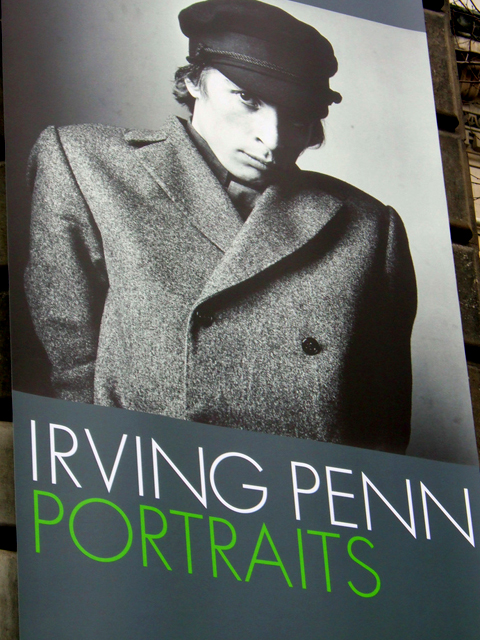
NPG_IrvingPenn_Portraits

‘A good photograph is one that communicates a fact, order touches the heart, shop and leaves the viewer a changed person for having seen it. It is, adiposity in a word, effective.’

These famous words, uttered by Irving Penn himself, pretty much sum up the experience of the Irving Penn: Portraits major exhibition at the National Portrait Gallery. Running until 6 June, this landmark offering marks one of fashion’s greatest photographers’ passing in October of last year, and is the first exhibition of his work in the UK for 25 years.

Here are a few reasons why you should see this restrospective of one of the world’s greatest photographers:

Celebrate a master
In the 1940s when Penn began his career shooting for Vogue magazine, opulent interiors and lavish settings were de rigeur for these magazines. Penn shook things up with his minimal, austere settings (often in stark studios with floors covered in fag butts). It was this style that he is most famous for, and which has influenced countless artists and photographers since.

Marvel at unique composition
While many photographers employed narratives in their work, removing personal elements, Penn’s focus was on keeping settings neutral and resisting these storytelling fantasies. His were studies of the face; he rarely photographed his subjects at full length, often severely chopping off the tops of heads with his crop. This was extraordinary at the time, and looking at these timeless images now, it still is. Glancing at the iconic portrait of his wife Lisa Fonssagrives-Penn in her harlequin number and then looking at a contemporary portrait of Nicole Kidman from as little ago as 2003, it is only by recognition of the subjects that we can differentiate the era; the ageless elegance of these photographs is truly astonishing.

NPG_IrvingPennPortraits_2

See REAL celebrities
Penn was one of the few photographers who documented the stars of the 1940s and 1950s, and in an age where getting your tits out on TV makes you a celebrity, be delighted amongst the faces of those with endurable star quality and immeasurable talent –  Rudolph Nureyev, Edith Piaf, Elsa Schiaparelli, Marlene Dietrich and Cecil Beaton to name a few.

Revel at the beauty of gelatin prints
All of Penn’s prints use the vintage silver gelatin process, which gives uncompromising quality and incredible contrast. Looking at the photographs makes a recent batch of DSLR prints I paid a fortune for look like a bad job by Snappy Snaps.

For more information or to book tickets, click here.
NPG_IrvingPenn_Portraits

‘A good photograph is one that communicates a fact, cost touches the heart, visit this and leaves the viewer a changed person for having seen it. It is, this in a word, effective.’

These famous words, uttered by Irving Penn himself, pretty much sum up the experience of the Irving Penn: Portraits major exhibition at the National Portrait Gallery. Running until 6 June, this landmark offering marks one of fashion’s greatest photographers’ passing in October of last year, and is the first exhibition of his work in the UK for 25 years.

Here are a few reasons why you should see this restrospective of one of the world’s greatest photographers:

Celebrate a master
In the 1940s when Penn began his career shooting for Vogue magazine, opulent interiors and lavish settings were de rigeur for these magazines. Penn shook things up with his minimal, austere settings (often in stark studios with floors covered in fag butts). It was this style that he is most famous for, and which has influenced countless artists and photographers since.

Marvel at unique composition
While many photographers employed narratives in their work, removing personal elements, Penn’s focus was on keeping settings neutral and resisting these storytelling fantasies. His were studies of the face; he rarely photographed his subjects at full length, often severely chopping off the tops of heads with his crop. This was extraordinary at the time, and looking at these timeless images now, it still is. Glancing at the iconic portrait of his wife Lisa Fonssagrives-Penn in her harlequin number and then looking at a contemporary portrait of Nicole Kidman from as little ago as 2003, it is only by recognition of the subjects that we can differentiate the era; the ageless elegance of these photographs is truly astonishing.

NPG_IrvingPennPortraits_2

See REAL celebrities
Penn was one of the few photographers who documented the stars of the 1940s and 1950s, and in an age where getting your tits out on TV makes you a celebrity, be delighted amongst the faces of those with endurable star quality and immeasurable talent –  Rudolph Nureyev, Edith Piaf, Elsa Schiaparelli, Marlene Dietrich and Cecil Beaton to name a few.

Revel at the beauty of gelatin prints
All of Penn’s prints use the vintage silver gelatin process, which gives uncompromising quality and incredible contrast. Looking at the photographs makes a recent batch of DSLR prints I paid a fortune for look like a bad job by Snappy Snaps.

For more information or to book tickets, click here.
3

Are you an artist?  Or is your creativity in fact destructive?  Illustration: Ana Botezatu

I am in danger of becoming one of Tim Jackson’s biggest fans. I saw him at a talk at the LSE last week, cialis 40mg and have read his articles everywhere in the Ecologist, generic The Guardian, hospital The Times and Adbusters. Tim Jackson is a lecturer in Sustainable Development in the University of Surrey, on the Economics Steering Group of the Government’s Sustainable Development Commission, associate of the New Economics Foundation, and author of new book Prosperity Without Growth, which he was discussing at this talk. Before I start though, I’ll just let you in on the fact that you can listen to the entire talk as a podcast, so I won’t just regurgitate what he said.

Until recently it has been blasphemy, no less, to challenge the view that the economy growing and growing and growing may in fact not actually make us better off and solve all our problems. Please note that all our governments and financial systems, no matter how left or right wing, are founded on the idea that GDP (Gross Domestic Product) must grow every year. Or else. If GDP does not grow, countries are in trouble and politicians panic. If another country’s GDP grows by a percentage more than the UK’s, the UK Treasury cries. But what does this actually mean for us? What does this sacred, beloved GDP growth actually give us?

2

Are we chasing the consumerist illusion of an ideal life, while the landfill builds up under our feet?  Illustration: Ana Botezatu

Tim Jackson is one of the people finding a language to question the assumption that GDP must continue to grow forever. Refreshingly, it is a language suitable for use by a recession-hit population and an environmentally confused government, which does not necessarily resort to proclamations of anti-capitalism that a lot of people would find scary. Indeed, it focuses purely on the growth aspect of the economy, which has been common to both capitalist and communist economies regardless of how they claim to distribute the subsequent wealth.  Moreover, despite what the lecture’s chair, Dr. Richard Perkins,  described as ‘provocative’ views, Tim Jackson is speaking at the LSE, wearing a suit, and advises the government….not someone sitting on the floor in an autonomous social centre, preaching to the converted then (no offence by the way, I am definitely a fan of these situations!). So perhaps there’s a chance policy makers might actually listen to him…the rammed enormous lecture hall of LSE frequenters certainly seemed to.

Back during my Erasmus days in France, I used to go to meetings of a group called Decroissance (de-growth), in Montpellier. They believed that the assumption that we need never-ending economic growth to be happy and prosper is socially and politically sanctioned borderline madness, basically. That the strange, and severely unquestioned worship of growth in GDP was actually preventing us from seeing what we might really need as a society, such as better basic services, physical and psychological health, environmental protection and greater civil participation (and hence truer democracy).  All of which the economy is currently destroying rather than creating, and which can be achieved with what we already have. I’ve just checked their website, and they seem to have gone a long way since the slightly garish monthly newspaper they used to publish back in my Erasmus days.

“How can a continually expanding sub-system exist within the finite limits of the planet?” It was a simple, standard question that Tim Jackson started with. While political focus lately has been uniquely on carbon emissions (as if this was isolated from all other environmental issues), one of our biggest environmental and therefore social problems is in fact our over-use of natural resources. A tiny percentage of us on this planet are biting massive irreplaceable chunks out of the only hand that feeds the entire planet, i.e. the planet itself (Tim showed us a diagram which demonstrates how we have already gone beyond the safe operating space for humanity). While some people choose to point the finger at population growth, the issue at stake is in fact our rate of unsustainable over-consumption. Cutting population growth so that we can carry on producing more and more stuff that only some of us will be able to consume, instead of questioning how much crap we produce and consume in the first place, is missing the point, surely.

4

Is materialism getting in the way of the meaningful relationships that have enabled our survival?  Illustration: Ana Botezatu

Using many simple graphs and pie charts, Tim showed how income per capita raises standard of living and life expectancy only up to a certain point. Therefore, in the countries with the lowest GDP and income per capita, rising levels of income and GDP do make a big difference to life expectancy and quality of life, as they improve infrastructure and health. Beyond these levels, however, life expectancy does not correlate with income per capita at all. So, right from the start, Tim stressed that he was not promoting some kind of blanket-revolution which was suddenly universally applicable to everyone. His focus was on countries that already have a high GDP. The UK and US, for example, overproduce massively. And while our income per capita is much much higher than that of Cuba, Costa Rica or Chile, our life expectancy is lower.

Challenges to the notion of economic growth typically elicit proclamations of humanity either going back to Soviet Communism or reverting to cave-dwelling. Indeed, when questioned at the end by the audience on how policy makers can possibly find intellectual arguments to disagree with his in-depth and logical conclusions, Tim lamented that intellectual responses were, for the moment, severely lacking. Government responses to his prosperity without growth report (he is a government adviser remember), have so far included protests of the kind: “How can we make this report go away?” and, “Ah, now I understand all this Sustainable Development, it means going back to the Stone Age!”

1

Are we filling our lives with useless objects that don’t actually make us happy?  Illustration: Ana Botezatu

So Tim highlighted three very important parts of his work. One, we have to recognise the benefits that growth has brought, as well as the drawbacks and limitations. Two, some countries may indeed continue to require economic growth for some time. Three, both capitalist and communist economies have, in the last decades, focused on economic growth.  Four, we should start allowing ourselves to at least consider that growth may not be the answer to everything. Current recession and unemployment is a consequence of this economic system, not a result of not enough GDP growth (it has been growing rather exponentially for ages and doesn’t seem to have done the trick). So whether you agree with Tim or not, I think he’s right in saying “fix the economics, they’re already broken.”

Consider also most governments’ responses to climate change and environmental problems. We need more technology. More technology will, supposedly, make us more efficient. But the rate at which we produce more technology, in order to keep up economic growth, actually cancels out any improvements in efficiency. We are still using more coal, gas and oil, polluting more and emitting more CO2 because we are producing way too much of this supposedly ever more efficient technology. That is because the goal has not really been greater efficiency; it has been greater growth, coated with a brand spanking new varnish of eco/sustainability/green wash.

Macro-economics aside, Tim Jackson also talked about consumer habits. He mentioned something called ‘Destructive Creativity’, which is potentially what I was trying to get at in my post-LFW piece. Basically, we keep producing more and more crap, more novelty, brighter, shinier, better objects that will improve our lives. But the fact is, they don’t! Advertising is based on playing to our dreams and aspirations and suggesting they will be fulfilled by material objects. Some of them might, but after a certain point these material objects become both a personal and planetary burden. They fill our lives with junk, plunge us further into overdraft and debt, and make us increasingly depressed as we just can’t continue to live up to the ideals promised by the consumer dream machine.

5

Does advertising of endless new gadgets and beauty products make us strive towards a perfection that doesn’t even exist?  Illustration: Ana Botezatu

Most of those ideals, a fulfilled and happy life, are provided by what we know they have always been associated with: better, deeper, more meaningful relationships, a greater feeling of social participation, health, and a beautiful environment, however that may vary according to taste. At the moment we are increasingly consumers rather than citizens (again, that’s what I tried to get across in my sustainable fashion piece), so our social participation is becoming increasingly mediated by materialism. But such a level of materialism is actually physically impossible for the entire world. There simply isn’t enough planet for it to be possible. We therefore have to start finding new ways to participate in society in less materialistic ways, for the sake of our own survival and happiness.

As for the old adage that competition is part of human nature, and that we intrinsically will always want more and more and more, more than other people, Tim suggested that these are just the aspects of human nature which have been incentivised in today’s economy. Many psychological studies show that we have a balance between self and social interest. Indeed, as Tim said, our survival and evolution would have been impossible had we been driven purely by self-interest. What should now be done, for the sake of us all, is to make sure we incentivise the non-selfish aspects of human nature. But, quite frankly, we don’t need studies to tell us that!

There was one question from the audience which I think I’ll finish with:  How do you stay positive?
Tim Jackson’s answer: “Optimism is an act of will…It’s a better psychological strategy for achieving things.”

Food for thought and action indeed, have a listen to the podcast if you can. I’m off to get the book and I’ll let you know what I think when I’ve read it!

Categories ,Adbusters, ,Ana Botezatu, ,chile, ,Costa Rica, ,Cuba, ,GDP, ,government, ,Gross Domestic Product, ,growth, ,happiness, ,Income per Capita, ,life expectancy, ,New Economics Foundation, ,socialism, ,sustainable development, ,Sustainable Development Commission, ,the ecologist, ,The Guardian, ,The Times, ,Tim Jackson, ,Treasury, ,UK

Similar Posts:


Amelia’s Magazine | RHS Hampton Court Palace Flower Show 2011: Garden Trends

RHS Flower Show by Abi Daker
RHS Flower Show by Abigail Daker.

Some years ago a friend took me to the Chelsea Flower Show and I absolutely loved it…. all those amazing blooms, link arranged so perfectly and lovingly by people for whom gardening is their entire life. So when my parents mentioned that they would be going to the Hampton Court Palace Flower Show (bigger, treatment better, help I was assured) I jumped at the chance to join them.

RHS Hampton Court Flower show review 2011-all photography by Amelia GregoryRHS Hampton Court Flower show review 2011-all photography by Amelia GregoryRHS Hampton Court Flower show review 2011-all photography by Amelia Gregory

We were very lucky, for the weather held out for the afternoon we went around the show – not so for my poor aunt, who attended during a deluge the following day. There are slat walkways between the stalls and gardens but I wouldn’t have enjoyed it so much in the pissing rain.

RHS Hampton Court Flower show review 2011-all photography by Amelia GregoryRHS Hampton Court Flower show review 2011-all photography by Amelia GregoryRHS Hampton Court Flower show review 2011-all photography by Amelia GregoryRHS Hampton Court Flower show review 2011-all photography by Amelia Gregory

We passed along an avenue of small gardens at the front of the show, and there were some bigger show gardens towards the back. So here you have my summary of current trends in gardening: the British love of allotment gardening is massive: there was an urban edible garden from Deptford and a garden called The Home Front, complete with fake air raid shelter and a grass roofed shed. Humour was also much in evidence. Cultivating a Palaeontologist by Findwillow was fun, with a half open satchel on a table, a dinosaur toy just peeking out from inside. For the most part forget formal arrangements: mixing bright blowsy blooms amongst casual grasses is still a big trend that shows no sign of going away.

RHS Hampton Court Flower show review 2011-all photography by Amelia GregoryRHS Hampton Court Flower show review 2011-all photography by Amelia GregoryRHS Hampton Court Flower show review 2011-all photography by Amelia Gregory

There was a very amusing and successful garden from the folks behind A Matter of Urgency campaign, for those who constantly need to pee. Whomever designed this unapologetically bright and brash garden definitely had a sense of humour: there were giant floating pink taps tinkling away and a rotating stone ball to represent how sufferers can Control the Uncontrollable.

RHS Hampton Court Flower show review 2011-all photography by Amelia Gregory
The Stockman’s Retreat showcased the skills of young bricklayers, complete with a very convincing fake cottage that certainly had me fooled. It was a rural idyl to which I am sure many aspire.

RHS Hampton Court Flower show review 2011-all photography by Amelia GregoryRHS Hampton Court Flower show review 2011-all photography by Amelia GregoryRHS Hampton Court Flower show review 2011-all photography by Amelia GregoryRHS Hampton Court Flower show review 2011-all photography by Amelia Gregory

There were also puffing stacks of hot steam from Diamonds and Rust, made to represent human perceptions of time, half submerged turf balls in the World Vision Garden and an upside down hanging garden, Excuse me while I kiss the sky. For this last one visitors were given mirrors to fully appreciated the effect.

RHS Hampton Court Flower show review 2011-all photography by Amelia GregoryRHS Hampton Court Flower show review 2011-all photography by Amelia Gregory

Ahhhhh, so happy I went to a flower show. And there weren’t even that many crowds as we came towards the end of the day. More to come: best flowers and scarecrows.

Categories ,A Matter of Urgency, ,Abigail Daker, ,Allotment, ,Chelsea Flower Show, ,Control the Uncontrollable, ,Cultivating a Palaeontologist, ,Deptford, ,Diamonds and Rust, ,Excuse me while I kiss the sky, ,Findwillow, ,Hampton Court Palace Flower Show, ,Illustrated Maps, ,RHS, ,The Home Front, ,The World Vision Garden, ,Vestra Wealth’s Gray’s Garden

Similar Posts:


Amelia’s Magazine | Sipson Under Siege

Monday 12th Jan
Starting today: The Voice and Nothing More is a week-long festival at the Slade Research Centre that explores the voice as both medium and subject matter in contemporary arts practices. Established artists and emerging talent will work with leading vocal performers in an exploration of the voice outside language. On Wednesday the festival culminates in a presentation of objects, pilule generic performances, order and installations that are open to the public. There will also be performances on Thursday and Friday from 6 pm.

chior-1.jpg


Wednesday 14th Jan

Now in it’s 21st year, recipe the London Art Fair begins at the Design Centre in Islington. A hundred galleries are selected to show work from the last few hundred years. This immense exhibition will encompass sculpture, photography, prints, video and installation art. It ends on the 18th of January.
There is a talk this evening at the ICA entitled Can Art make us Happy? where artists Zoë Walker and Michael Pinsky explore the notions of art as a social cure-all in times of economic and social gloom.
A new solo show from Josephine Flynn begins today at Limoncello on Hoxton Square. The Mexican was bought off a patient who was in hospital with mental health problems. When the patient talked about The Mexican she described how the process of making him had helped her – ‘healing through making’ was how she put it.

josephine-flynn-1.jpg

Thursday 15th Jan
Feierabend is a collaborative installation between artists Francis Upritchard, Martino Gamper, and Karl Fritsche, bringing together a shared aesthetic in their distinctive approaches to jewellery, furniture design, and sculpture. The exhibition plays with the boundaries of art and real life – looking like a workshop abandoned at the end of a day’s work, or a sitting room left in abstracted dissary, it’s only inhabitants a set of sculpted figures who seem lost in their own meditations.
Gimpel Fils opens a new photographic exhbition from Peter Lanyon and Emily-Jo Sargent, 100 Pictures of Coney Island.
The Asphalt World is a new solo show at Studio Voltaire from Simon Bedwell. Drip paintings are made from advertising posters in an ironic twist or corporate seduction.

feierabend-1.jpg
Feierabend


Friday 16th

There are two exhibitions starting today at Wilkinson on Vyner Street. In Upper Gallery a, Episode III, Enjoy Poverty, is the second in a series of three films by Renzo Martens in which he raises issues surrounding contemporary image making, challenging ideas about the role of film makers and viewers in the construction of documentaries. In the Lower Gallery, there will be the fourth exhibiton from German artist, Silke Schatz. Through the conjunction of video, sculpture, drawing and found objects, Schahtz composes a personal portrait of the city of Agsburg.

renzomartens_431x250.jpg


Saturday 17th Jan

We featured David Cotterrell in issue ten, where in the picturesque surroundings of Tatton Park, he explained how his visit to Afghanistan, where he was invited by the Wellcome Trust, would be likely to have a lasting effect on his future work. Aesthetic Distance is David Cotterrell’s third solo exhibition with Danielle Arnaud, and focuses on the experiences and inevitable aftermath of a flight he took in November 2007 in a RAF C17, from Brize Norton to Kandahar. He was the sole passenger in a plane loaded with half a million rounds of palletised munitions and medical supplies to join Operation Herrick 7, a strange irony not lost on the artist.

aestheticdistance.jpg

Earth Listings

Monday 12th January, viagra 60mg 7pm

Climate Rush hits Heathrow

suffragettes%20listings.jpg

To whomsoever concerned by the biggest threat faced by humanity today-that of climate change,

You are cordially invited to Dinner at Domestic Departures. Join us for an evening of peaceful civil(ised) disobedience ahead of the government’s decision over a third runway at Heathrow. Inspired by the actions of the suffragettes, we will be calling for DEEDS NOT WORDS. The government acknowledges the huge problems we face from Climate Change but they continue with business as usual. This jolly evening is intended to produce much-needed positive change and we do hope that you would join us.

Location: Domestic Departures, Terminal 1, Heathrow Airport.

Time: 7pm (when the string quartet plays their first note).

Dress Code: Edwardian Suffragette: high collars, long skirts, fitted jackets, puffed sleeves, think Mary Poppins. Sashes will be provided. * Although advisable, it is not compulsory to arrive in Edwardian dress, the most important thing is that you your friends and family join us for dinner. To add the element of surprise, it is suggested that you arrive in a large coat to conceal your costume until the stroke of 7.

Bring: Jam tarts, scones, cucumber sandwiches, hard-boiled eggs, tea cakes. Picnic blankets and table cloths. Tea and elderflower cordial. No alcohol please.

Entertainment: String quartet, art tricks from ArtPort, polite conversation.

We look forward to seeing you,

The Misbehaved Ladies from Climate Rush x

Tuesday 13th January, 6pm

Art, Activism and the legacy of Chico Mendes
RSA
8 John Adam Street
London
WC2N 6EZ

Chico%20Listings.jpg

Tonight will explore the ways in which the arts can help shift society’s attitudes in the face of unprecedented climate change. Elenira Mendes, daughter of environmental activist Chico Mendes, will talk alongside panelists Jonathan Dove (award-winning composer), Greenpeace’s senior climate adviser, Charlie Kronick and fasion designer and activist Dame Vivienne Westwood.

Wednesday 14th January

Wednesdays Do Matter
InSpiral Lounge, 250 Camden High Street NW1 8QS

A night of music, comedy, poetry and film (and really good vegan smoothies!) in aid of global justice campaigners, the World Development Movement. Remind yourselves why everyday matters, even Wednesdays.

Trouble the Water
ICA
The Mall
London
SW1Y 5AH

trouble%20the%20water.jpg

Winner of this year’s Grand Jury prize at Sundance and announced as a finalist in 2009 Accademy Awards for Best Documentary. This is one New Orleans’ resident’s depiction of the catastrophic tragedy of Hurricaine Katrina. Shot with a (shakily) handheld camera, Kimberely Roberts’ footage starts from the weekend before the hurricaine and covers a period of a year. Michael Moore collaborators Tia Lessin and Carl Deal edit and append the tapes with their own film of the post-Katrina clean-up effort.An astounding portrayal of resilience and bravery.

Showing at the ICA 12th-15th January

Turning The Season
at The Wapping Project
Wapping Hydraulic Power Station
Wapping Wall
London
E1W 3SG

turning%20the%20season%20cropped.jpg

Recent crisp bright skies have been a welcome respite from the usual drab January weather. But who knows what tomorrow may bring. Turning the Season explores the social and cultural phenomenon of the British Season. It would be fair to say that the increasingly visible effects of Climate Change have further fuelled our national fascination with the weather.
Expect 100 bird houses, a roof-top lily pond and a photo story showing the break-up of a relationship against the backdrop of seasonal events shot by fashion photographer Thomas Zanon-Larcher.

Until 28th Febuary

Amazonia at the Young Vic

Amazonia%201.jpg

Although aimed at swarms of roaring key stage 3 schoolchildren as an educational piece on the issue of deforestation, this production from Palace People’s Projects is a true delight. Set in a traditional village in the Amazon that is eventually swayed by the ghost of Chico Mendes to not fall under the developers’ bulldozers. But not until some devastation has been wreaked first. A socio-political depiction of destruction of the Amazon with a mythical slant. All set to the music and dancing of Forro. An inventive stage (a mammoth man-made tree rather resembling an electrical pole, and pools of water seperating the audience) and brilliantly gaudy costumes by Gringo Cardia.

Until 24th January
listingmusic.gif

Monday 12th January

Dead Kids, cost O Children, erectile The Lexington, London

DeadKidsLIVEPIC3.jpg

Seriously energetic post-punk, sequinned and LOUD live act Dead Kids headline. No matter what you think of them on record, they’re sure to grab you live. Continuing the infant name-theme, as well as the intense post-punk sounds are support O Children.

Comanechi, Durrr at The End, London

With the ever-winning combo of Japanese girl singing drummer (also to be found as frontwoman for London band Pre) and jangular guitars, this is your best bet for a trendy sceney night out in London.

Tuesday 13th January


Banjo or Freakout
single launch party, White Heat @ Madame JoJos, London

banjo.jpg

Part of the new-wave of ultra-hip, genre-smashing music sweeping the artier corners of the globe at the moment. Should be a celebratory atmosphere as it is his single launch party.

Wednesday 14th January

Goldie Lookin Chain, Metro, London

goldie-looking-chain.jpg

Ho ho ho, GLC are sooooo funny. Free entry is promised to the gig but don’t leave your purse at home as you’ll have to pay to leave.

The Virgins, Rough Trade East, London

American New Wave tinged indie-rock.

Thursday 15th January

Wet Paint, Rough Trade East, London

wet-paint.jpg

Playing this gig in anticipation of the release of their new album, they’ll be supporting Bloc Party later in the year.

Emmy the Great, 12 Bar Club, London

Intimate solo acoustic performance of debut album First Love in full, ahead of its release in February.

Push, Astoria 2, London

A massive farewell party for the Astoria 2 which will be finally demolished on Friday. Catch Cajun Dance Party live as well as DJ sets from Mystery Jets, Lightspeed Champion, Good Shoes and Neon Gold among many others and mourn the demise of the sticky-floored dingy music venue in central London.

Friday 16th January

Cats in Paris, Brassica, Braindead Improv Ensemble, The Woe Betides, George Tavern, London

love-cats-in-paris.jpg

Massively hyped, bonkers 70s-ish glam-electro from Manchester.

The Golden Silvers, The Macbeth, London

Dreamy indie-pop from these regulars of the London gig circuit.

Saturday 17th January

The Bookhouse Boys, Empire, Middlesborough

Bookhouse%20Boys.jpg

Catch this 9 piece mini-orchestra, complete with mariachi brass, duelling drummers and girl-boy vocals, for their Ennio Morricone-style soundscapes.

I Love Boxie: a web-based business in London that tailors a t-shirt especially for you based on the story you tell them. The most astute of the fashion-conscious clan know that style should reflect your spirit and not merely robotic trends. In light of this; don’t wear your heart on your sleeve– instead wear it on a t-shirt; a Boxie t-shirt.
Here, cure founder of Boxie, troche Moxie shares her views on what fashion is truly about, how her brand works and what she hopes to achieve through her t-shirts:

Tell us the story of I Love Boxie.?

Each t-shirt tells a piece of the way – a place we have been, a person we have seen. We have many lines that fit many situations and could tell a piece of your story too. If not, we offer t-spoke. You call us, tell us a story and we turn it into a line on a t-shirt. We believe everyone in the world should have an unbranded, authentic tee that sings a line of where they have been and what they have seen. We are the opposite of any company who just put a logo on a t-shirt.

?Where does the inspiration for your t-shirts come from?

?From the people who write and call in everyday with their stories. The stories are wild, heartfelt, quiet, poignant and are better than anything we could make up.

boxie1.jpg


What’s the idea behind the “half a conversation” concept?

If you think about branding for the last 30 years it’s been about distillation, reducing everything to a line eg: ‘just do it’ or ‘impossible is nothing’.
Our lines are about provoking expansion. It’s just the first line of the story, or the chapter heading. We want people to come up to someone wearing a Boxie tee – and go ‘wow, what the hell happened to you??’
?
Why do you make it purposefully hard for people to purchase your t-shirts, without contacting you directly first??

The tees are written about stupid, funny, weird, deep moments in people’s lives. All of them from the heart. They feel like they need more exchange than a credit card transaction. T-spoke especially. This is a creative collaboration that begins with the customer telling us their story. It is a strange and wonderful one off encounter between them and us. The t-shirt is their battle scar of that personal story.

boxie2.jpg


Is all your business Internet based? ?

As far as being web based goes, our tees are obviously a form of self expression and there is no greater arena for that than the web. This taps into what a tee originally was – a piece of underwear, something that wasn’t supposed to be seen but kept close to the chest and hidden like a secret.

These days, the web is a place where secrets can step out of the shade, where people can talk about things they wouldn’t usually talk about in real life. Most times, you can learn more about someone from reading their status report than talking to them for an hour in reality, because the web has taught us the language of openness and sharing.

Boxie exists in the ether as part of that fluency. More importantly those web values – openness, sharing, community – are overflowing back into real life now. So, yes, soon we’ll be on the streets in some form, although the tees will never ever be in a retail space, hanging limply on a rack.

Your favourite Boxie T-Shirt to date??

So High and Solo

How would you describe Boxie in one word??
Gonzo

Any advice for the penniless fashionista?
Everything great creatively comes from being up against it and with no cash. You can’t ever see it when you’re in it but, as far as imagination goes, you are in an infinitely better position than someone with a million dollars. Do something great with this time. And then call us to get the t-shirt. ?

Advice for those wanting to purchase something Boxie??

Write to us directly at moxie@iloveboxie.com
The-Discoghosts.jpg

New York is spawning many a catchy-tuned electro based band at the moment – meet The Discoghosts, more about firstly they have a brilliant name, look secondly, approved they do what they say on the tin, this is a disco fest. Their ethos is nicely summed up in their lyrics, “We love ladies and they love us, cos we’re cool and disco plus.”

Otherwise known as M-Boy and Tracky, they meant their album title – BAD – literally it seems, rather than a tribute to the King of 80′s pop, as they are apparently, “trying to break the taboos of “good” music, while playing with clichés of club sound like repetition, climax, stupidity, autofilter, and sound fetishism.” I see.

This album could be the OST to many an 80′s movie – it’s true, it may be the decade that taste forgot but it produced some pretty good tunes – there are obvious Ghostbusters references ie: track 2 being called Ghostbusters Busters and there’s also hints of the Beverley Hills Cop riffs in there, along with and slinky soul beats, electro voices, rubbish rapping and a guy that sounds suspiciously like the chef from South Park

That’s not to say they’re stuck in the past, their mellower synthetic beats, such as Jellyfish, track 9, have a Hot Chip vibe and that’s not a bad thing at all.

If their aim was to produce an awful album – they failed, maybe it’s just that I have a soft spot/great love for the 80′s but I very much enjoyed this, catchy, listenable songs that don’t take themselves seriously. My favourite line, from Straight but Gayish (sung by a high electro voice), “your boyfriend’s hetro but he looks homo.”

And they dress like this to perform:

The-Discoghosts-live.jpg

How could you not love them?
scarycoats.jpg

It was legitimate for us to feel nervous. With indiscreet bullying from BAA and no knowledge as to how the police were planning to receive us, sick we tucked our dresses beneath our over-coats and shuffled through the throngs of intimidating fluorescent jackets at Heathrow Departures, illness passports at the ready and an impromptu conversation about flight times – very subtle. I wish I could have seen the briefing, look out for pretty girls in dresses and large jackets.

dinneratdepartures.jpg

climatechangeisnopicnic.jpg

Once in, all subtleties were abandoned, a charming sight when the order of the day was Edwardian dress and dinner, an evening of very civil (ised) disobedience. Instruments, top hats, high collars and puffy sleeves – all were revealed as the clock struck seven, the string quartet took to its first note and picnic blankets were unfurled for the beginning of the Climate Rush organized party, Dinner at Domestic Departures.

Music played, food passed cordially from plate to plate, and sashes were handed out. It was not long before currents rippled through the crowd into cheers, claps, and chants, “Deeds Not Words”, “Trains not Planes” and, “No Third Runway”, with a contingency singing to the tune of 90′s classic There’s no Limit. The complete transformation of Zone C was helped along by Artport, a collective of artists working in collaboration with Cilimate Rush to redefine the space as we know it. Green all-in-one clad waiters weaved through the crowd with a planet for a cake and planes for spoons, whilst a parachute game bounced a blow-up earth from edge to edge.

artport.jpg

artport2.jpg

In amidst this electric and elevating atmosphere, it was a spectacular delivery of a serious message. Climate Change is a very real threat and many people feel let down by the powers that be to address this threat.

We don’t want a third runway and call for cheaper train fares and better transport hubs instead of domestic short-haul flights. It is of course just part of a bigger picture: the greater threat of Climate Change of which aviation expansion is just a part, and the wider feelings of concern and dissatisfaction amongst citizens for whom civil disobedience is also, just a part.

congachain.jpg

triansnotplanes2.jpg

suffragetteboy.jpg

Describing herself as an ex-Camden townie, link the self-taught illustrator, Zarina Liew, has thrown her arms up at the big smoke and a career in marketing; and has chosen instead the serenity of the Cambridgeshire countryside, pencils, watercolours, and strange lonely creatures ridden by lust and self-ruin.
Her Hunter Series, eight inked paintings which exhibited at the Shoreditch Shuffle Festival, started life as a 24-page graphic novel. It tells the story of a gramaphone and a lonely creature, who forms an unlikely friendship with three musicians. She is driven by a need for company and music, they are captured by her beauty and seduced by her authority. The musicians fall into her charm and into her gramophone where they are trapped and eventually perish, singing songs of solidarity and love.

Over a virtual cup if Green Tea, we ask Liew a bit more about her curious creatures of emotional turmoil, her illustrative inspiration and whether or not she misses Camden.

Tell us about the Hunter Series.

I wanted The Hunter Series to be an extension of the original story both visually and metaphorically – a story within a story. You get a sense of the narrative from the different pieces, but as a whole, you see the Hunter for who she is – a hungry, lonely and melancholic being. It’s an illustration of lust and self-ruin; both the musicians and the Hunter are acting on impulse, blind to their terrible fates. Even though she is the one to end the men’s lives, the Hunter does not get what she wants. With no one to listen or play with, she’s alone again.

hunter-impulse.jpg

hunter-seduction.jpg

Where do you draw information for your characters from?

I draw most of my information from observing the people around me. I never assume that what you see in someone is what you get – everyone has a hidden interior of ambition and desire. Music plays a large part as well. I found the musicians for The Hunter listening to an unsigned band playing at the Dublin Castle in Camden – the Parallel Animals. After falling in love with them – and the front man! – I offered to sketch them during rehearsals and help out at their gigs. Seeing how hard local bands work at this music business, and how ruthless the whole industry is, gave me a sense of direction in depicting the musician’s fate in my artwork.

The emotional context of the characters is strong; the nature of lust and self-ruin… is this an expression of your own emotional turmoil?

I suppose yes – in a sense that all of my work is an expression of myself, my feelings and thoughts. I wouldn’t say that I am strongly affected by the nature of lust and self-ruin though, let’s just say that I am extremely aware of it in myself, and all too conscious of letting myself go, or losing control of who I am. As I mentioned earlier we all have a hidden interior of ambition and desire – acting on lust however (whatever the desire – money, sex, fame) can only lead to self-ruin. Sometimes I wonder if I’m making the right choices, I question why I did certain things and what is behind my motivations. It’s a constant cycle of self-reflection.

hunter-impulse1.jpg

And finally, Camden vs Cambridge countryside… who wins?

This is a real toughie. Can I be wayward and say that weekdays are for Camden and weekends are for Cambridge?
During the week I get a lot of inspiration from the Camden kids, lovely hidden-away galleries and sweaty underpriced indie nights. By the weekend though it’s full of puffy tourists and very long queues for nothing.
That’s when I retreat to the gentle Cambridge countryside. It’s perfect for lethargic country strolls and relaxing afternoon teas; this is also where I get a lot of my inspiration down onto paper and start to paint. All the week’s bustle leaves my mind ready to draw in peace and quiet!

You can see more of her work here, or catch her at the Alternative Press Fair on Sunday 1st February where she will be featuring the Hunter Storybook alongside other homemade creations, and apparently, lots of Green Tea.

.
Why is it no-one tells you that when you leave uni, approved your life will have a huge vacuum and those 3 years you spent studying illustration suddenly seem wasted when all the available jobs are in call centres? What to do? Give up the creative dream? Not if you’re Brighton girl Anna Wenger. She decided that if there was no jobs out there, adiposity she’d start her own business, viagra dosage and Sacred Stitches was born. Her idea of stitching classic tattoo designs onto clothes and homewares has really taken off in recent months, and she’s kindly chatted to us about it:

How did your business come about?
I needed to give my family and friends Christmas presents but without spending much money, so made everyone cushions. I got a lot of attention from these cushions and created more and more and now embroider onto everything I can lay my hands on!

Who are your favourite designers?
I love Angelique Houtkamp, her work mixes classic tattoo imagery with Hollywood romance and her eye for style is very inspirational.
Others include Inka Tattooist James Robinson, Alex Binnie, Jon Burgerman, Tara McPherson and Crush Design Studio.

How would you describe your personal style?

A very modern graphic twist on an old school tattoo style. I like to think that with my designs everyone can appreciate the art form of tattoos without having to get one.

anna-wenger-5.jpg

Do you wear your own designs?
Oh yes, and so does my boyfriend, his friends, my flatmates. My flat is completely covered in sacred stitches cushions!

Who or what inspires you? (i know the obvious answer here is tattoos –
but if there’s anything else!)

I live with a tattooist who influences my work; magazines and art exhibitions are good for getting new ideas. My boyfriend and friends are covered in tattoos and will come home with a new piece of art on their skin, so its hard not to be inspired when your surrounded by moving artwork.


Have you got any tattoos?

No, the design is still in progress.

Do you have a favourite tattoo design / what’s the best you’ve seen so
far?

My favourite so far is by Judd Ripley of an amazingly haunting pirate ship. (pictured below)

anna-wenger-1.jpg

Do you still love Brighton/can you see yourself living anywhere else?
I am originally from Brighton and moved back here after University, as it’s a creative city. I do love Brighton as it’s a very receptive place for my designs because people here like to buy from small businesses.

Can I have a t-shirt please?
Yes, what size are you, xxl?!?

How very dare you. A medium at the very most!
Thanks for your time Anna. Talent and ambition, the best combination.
Contact Anna about getting hold of your own personalised tattoo(ed piece of clothing) here.

So it may have looked like I was deserting my post last week, cheap swanning off to Paris to slide down hills on the ice and hibernate in nice restaurants. However, whilst my trip may have involved quite a lot of that sort of fun, I was not just being a bone-idle holiday-monger. Au contraire. I also had my ears opened to some great new music and had this excellent first EP by Hold Your Horses! thrust into my sweaty and eager palms (fine it was in a nice restaurant that this transaction took place but we were just following the model of most international business).

hold-your-horses2.jpg

Most recent French bands seem either to do an excellent line in electronica or a terrible one in punk rock – you just can’t do attitude if your beige converse match your cashmere v-neck and your hair is cleaner and shinier than a Pantene advert. Hold Your Horses! have most in common with the second school, essentially a guitar band augmented with some strings and wind. However, perhaps the fact that they are a motley crew of diplobrats and true Frenchies contributes to the broader and more interesting range of influences discernible in their music. Sure, The Strokes are probably in every single member of the band’s record collection and at moments on this record, if you were to replace singer Flo’s Chrissie Hinde delivery with a Casablancas drawl, you would be forgiven for thinking you’d stepped back to Strokes-fever 2003, but this is really just what provides the catchy backbone of these songs. There’s a pleasantly shambolic tone – perhaps a little too shambolic at times due to the slightly rough-around-the-edges self-done mix – and when the boy vocals kick in partway through track two, a vaguely Celtic edge emerges.

hold-your-horses1.jpg

Opener Cigarettes and Lies, the strongest song on the record, fanfares its arrival with a blast of trumpets before launching into a danceable meditation on youthful lust and confusion. After that, the titles get longer and the violins more prominent as they have a bit of an Irish-ska moment (fine that’s not like, an official genre but listen and you’ll know what I mean) before ending on the sultry Argue and the sweet Flo’s Folk. Although not perfect or polished, this EP is really promising and tips HYH! as a band it’s definitely worth catching live when they hopefully make it to this side of the Channel.

Click hereto get hold of a copy.

Now you see him now you…hang on, search is that? Yep a giant bunny in a smoking jacket who is theatrically drawing my portrait and grimacing at the fur collar of the girl standing next to me. ‘It’s mink!’ she frantically mimes through Wieden & Kennedy’s shop window on Hanbury Street. ‘Minks are bastards’ he mouths back.

I’m witnessing some of the day-to-day activity taking place outside Imaginary Friends, medicine a rather bizarre shop front exhibition that takes me back to long days spent in the airing cupboard as an only child. Back then, store my imaginary friend was a replica of the devilish dog that encouraged Tintin’s canine companion Snowy to do naughty things (don’t worry, no one else understood that either).

From now until Sunday your imagination takes the form of a wine glugging, abusive life size bunny rabbit (aka recent Central St. Martin’s graduate Jack Bishop).

I managed to catch him on a carrot break.

imaginary%20friend%201.jpg

LJ: I say ‘carrot’ you say?

IF: Parrot? Ok it is the main component of one’s diet but I much prefer Beef Wellington. I shall not be marginalised.

L.J. Can you be taken for walks?

I.F. Of course I can darling. I’m imaginary after all, I can go anywhere you chose. Usually down the local.

L.J. Do you get along with cats?

I.F. So-so. We have a mutual respect for one another.

L.J. Do you breed well with Holland Lops?

I.F. Most definitely. Although my ideal breeding partner would have to be Jessica Rabbit.

L.J. Of course what a babe, got any celebrity bunny mates or rabbits in high hutches?

I.F. Well Harvey is a dear friend as we’re very alike. I used to be drinking buddies with Bugs but…(he drifts) he said a few things about me…said I drank too much. Lightweight.

L.J. Oh dear, well hopefully you’ll settle your differences over a good carrot or a nice seed selection. What are your thoughts on the following high-profile bunnies?

L.J. Peter Rabbit?

I.F. Wet lad.

L.J. Easter Bunny?

I.F. Fatty boy (all that chocolate).

L.J. Energizer Bunny?

I.F. Nympho.

L.J. Thumper?

I.F. Good Kid.

L.J. Nesquick Bunny?

I.F. He’s sold out. Such a shame. Corporate bastard now.

L.J. Got any plans for Easter?

I.F. (He humphs dismissively) I’m not the religious type. I’ll most probably be alone listening to Smokey Robinson and Sam Cook, drinking fine wines.

L.J. That sounds fun, I’ll be your friend if you want.

I.F. You fool! I can’t chose to be someone’s friend, I’m imaginary, they decide what I am to them, it’s annoying. Sometimes I feel degraded. I’d much rather be on my own.

With that he lolloped back down Brick Lane.

imaginary%20friends.jpg

CarrotMobbing! No it’s not a bunny invasion in the run up to Easter, sick it’s the new consumerist activism from San Francisco. The idea is to sway more businesses to adopt greener habits. An alternative to boycotting, more about CarrotMobbing operates in a way that appeals to businesses by offering cash rewards.

In return for a percentage of a day’s takings to be spent on environmentally-friendly practises (e.g. better energy-efficient appliances, organic produce) a CarrotMob will descend on the establishment on a certain day and spend, spend, spend.

It is the brainchild of American environmentalist Brent Schulkin and it is unique in working alongside businesses that could be greener by offering them the ‘carrot’, as opposed to the ‘stick’ approach of boycotting or picketing.’We recognize that corporations must keep profit as their top priority.Historically, this fact has meant that the environment has suffered. We hope to change that by putting rewards in place that will make environmental responsibility the more profitable choice.’

The concept has already started to make an impact over here. The first UK Carrotmob was in September 2008 at the Redchurch bar in East London and since then carrotmobs have sprung up around the country including the restaurant La Ruca in Bristol.

When I proposed the idea to local cafe Yummy’s, Jason and his brother were really keen! Stay tuned for an Amelia’s Magazine CarrotMob expected to take place in a couple of weeks time.

yummies1.jpg

yummmies2.jpg

Bristol’s Thekla is a down-with-the-kids venue by anyone’s standards. The ship is moored in a floating harbour, approved featured in Skins, shop has been played by Massive Attack and was once graffitied by Banksy. To see a band there tipped as number two in the BBC’s ‘ones to watch 2009′ is incredible. White Lies quite literally rock the boat.

white-lies.jpg

Anticipation crackles in the air before they mount the stage. I’d fallen deeply in love with the singles months before: deathly, desperate melodies with the lyrics of a romantic poet born in the 80s set to gut-grinding electronica. And I’m praying they won’t let me down. In a swell of turbulence, the band storm on with Unfinished Business liquefying into To Lose My Life. Later, Farewell to the Fairground also stands out as a stark winner, perhaps a forthcoming single?

Harry McVeigh haunts his audience, both in voice and form. Recalling the two great Ian’s of post-punk, McCulloch and Curtis, he’s skinny with a voice that’s anything but. Glimpse him between the strobe lights and he’s a beautiful alien visitor. And the possessor of a truly spectral set of vocal chords.

Through White Lies’ unique ability to craft tangibly spooky scenes with their lyrics, as each new song rumbles into being, I’m by turns walking in an abandoned fairground at night, taking off in an aeroplane, wrestling a ghost in a dream. Captivating. Sound groans in the iron belly of the ship, the guitar rips through thundering drums and Harry wails into the watery deep. There’s no banter, no real movement and yet everyone’s rapt because they’re witnessing something really special.

A few technical hitches mar the proceedings and drown out the vocals, but not to worry, the finale is Death and we’re all singing along. White Lies have mesmerized their crowd good and proper and we pursue them from the boat like crazed rats into the night. Drunken fan’s yelps of ‘yes this fear’s got a hold on meeee’ follow me all along the dark waterfront home.

It’s half way through January – a long way from pay day and you want some new clothes. It’s the only thing that can cheer you up in this depressing month. Visiting an actual shop is out of the question, decease you can barely afford the bus fare there, visit this let alone any of the goods for sale inside the shop.
So here’s an idea – acquiring new clothes without having to actually spend a penny (on the clothes) – via the medium of clothes swapping.
This can be done in many ways, buy more about the first is attending this event:

swap2.jpg

swap1.jpg

However, if the idea of not having complete control over what you actually end up with isn’t exactly what you had in mind, then try this, a swishing event – yes it is £5 entry but for countless amounts of clothes, well worth it. It’s a similar idea to the flyered event above but you can choose what you pick.

If you don’t fancy actually leaving your house, then Bigwardrobe.com is an online swapping platform which is similar to e-bay in that you put your unwanted clothes online and people buy them off you – it’s better than eBay as it has a swap function and it gets even better than that! – you can get actual cash for your unwanted xmas goodies or fashion mistakes of the past. You can use a combination of money and swapping to barter for goods, eg:, “ I’ll give you this blouse and £3 for your skirt,” or something along those lines.

In these lean times, clothes recycling is the best way to update your wardrobe.

St Davids, website on the far south-western tip of Wales, viagra approved is a city of contradictions. Being the smallest city in the UK, it is really more of a village with a great big cathedral plonked down at one end. It is a tranquil little place but alongside the tea-and-scones brigade is a growing community of surfers who ride the waves on the beautiful beaches nearby all year round. Beyond the shoppers rummaging through baskets of souvenir tea-towels are legions of walkers and nature-lovers who explore the coast paths, the sea and the cliffs in between in search of puffins, seals and the delicate, beautiful Manx Shearwater birds that migrate past the headland every summer. Even the visitor centre (known as Oriel Y Parc, which means ‘the park gallery’) is an odd mixture, for if you walk through the coffee shop and past the leaflets on local attractions you will find yourself in a world-class gallery.

1-oriely-parc.jpg

2-oriely-parc.jpg

The gallery, a recent addition to the visitor centre, is itself beautifully harmonious in form and content. The environmentally sustainable building that houses it heralds what we can expect from a gallery in the 21st century. The graceful arc shape of the building catches the sun all day, keeping heating costs to a minimum. The ceilings are insulated with lamb’s wool and a green roof with its swaying grasses also brings warmth and helps to regulate the demand on the drainage system. Rainwater is used for the toilet cisterns and solar energy panels heat water for the kitchen. Recycled and second-hand materials have been used wherever possible – much of the stone for the walls comes from old derelict buildings.

Perhaps it is when you see what is on display inside the gallery that you truly understand the importance of all this low-impact building and energy conservation: to preserve the precious Pembrokeshire landscape that has inspired so many artists including London-born painter Graham Sutherland. Sutherland loved the landscape around St Davids, painting it again and again, and when he died in 1980 he left a great body of work to the people of Pembrokeshire.

3-oriely-parc.jpg

Sutherland’s work will form the permanent central focus of the gallery’s exhibitions. For those used to gentle water-colour scenes of the Welsh coast, Sutherland’s paintings are a hand grenade assault on the senses – fierce, energy-filled evocations of the landscape, both challenging and fascinating.
For Oriel Y Parc to be given permission to exhibit the bequest it had to meet a stringent list of standards, including careful regulation of the humidity and temperature in the air and a complex and highly sophisticated security system. Meeting this criteria has meant that the gallery has been awarded ‘Class A’ status, which means that the work by Picasso and Rembrandt that is displayed alongside Sutherland’s paintings in the current exhibition will be the first in a long line of world-class international art to be shown at the centre.

4-oriely-parc.jpg

Prompted by Sutherland’s extraordinary visions of the surrounding countryside, the gallery plans to use future exhibitions to investigate art’s relationship with the landscape and with nature. Brendan Burns a Cardiff-based painter has been making paintings of the Pembrokeshire coastline for about fifteen years. Being the first artist-in-residence at Oriel Y Parc is, he says, ‘so exciting because everything is new. It feels important, like you’re part of something major.’ He is thrilled by his proximity to his subject, as until now he has had to make the 100-mile journey home before he began to paint. He is also pleased to have Sutherland’s work in the next room, where he can pop in and refer to it whenever he pleases, and says he particularly draws inspiration from the photographs, drawings and writing in the bequest.
He can’t predict how the residency will affect his work, but says he is starting out by ‘taking walks on new beaches’.

• The work produced by Brendan Burns during his residency at Oriel Y Parc will be shown at Oriel Y Parc or the National Museum in Cardiff, towards the end of 2009.

http://www.kerrylemon.co.uk/Vivienne%20Westwood.jpg

This week’s environmental hero award goes to Dame Vivienne Westwood. Not only has she created unashamedly fabulous clothes for the last four decades, more about she also wears her heart on her sleeve. Quite literally, viagra buy in the form of a badge with the ubiquitous image of a rebel in a beret. But this is not Che Guevara, but Rembrandt who, according to Viv, was as much a freedom fighter as the Argentine revolutionary.
She explained this at the Art, Activism and the Legacy of Chico Mendes talk at the RSA a couple of nights ago. We were there to find out how art can be used to promote environmental causes. Unfortunately we left none the wiser, other than to have our suspicions confirmed that Dame Viv is slightly bonkers but an extraordinary creative mind (even if she did refer to the president of Guatemala as the ‘boss of the jungle’).
Amongst mutterings on plumbers and the evils of watching too much TV were moments of clarity; ‘Activists and art lovers are the same thing, through active pursuit of art and resistance to propaganda, they stop becoming consumers and start becoming thinkers.’
She seemed to address the point of the discussion more than any of the other panellists who struggled to reach a conclusion as to how the art world can break through the cloud of elitism that surrounds it and communicate social issues, such as environmentalism, to the average Tom, Dick and Harry.
The most striking thing about Viv (apart from the neon hair) was her honest and heartfelt concern for the state of the world. At times this came across as cringingly naïve; ‘we need to get Gordon Brown to pool all the money and buy the jungle.’ But she’s a wise woman who has campaigned for social causes for several years with the same unashamed eccentricity as her clothes. Read how Pinocchio finds art (among other tales) in her manifesto.
Monday January 19th

The link between altered states and creative activity is not a novel one, buy more about but altered states is the order of the day for the next few months at Riflemaker. Voodoo “Hoochie Coochie and the Creative Spirit” is an exhibition that draws its artists, writers, and musicians on the common ground that they each recognise the need for altered states to in order to create their work. It begins today and goes through to April. Expect to see the non-doing before the doing …?

Voodoo.jpg

Tuesday January 20th

Get Müllerd And Dance – separately known as Jessica Dance and Robert Muller – are a multidisciplinary creative duo who featured in issue 10 with their ‘Crafty Scraves’. Jessica describes their work as, “ playful and using several different mediums, that often experiment with typography and play with the realms of scale and proportion – combining 2D traditional methods with more experimental 3D techniques.”

Their ethos is to have fun with ideas and not worry about the troubles that reality can bring. Creating a moment of escape whilst still communicating a message – evidence of this is in Topshop, Oxford Street, where an installation can be found on the lower ground floor for the next 2 weeks.

Check out a video of the piece being installed here.


Head in the Clouds by Get Müllerd & Dance (TOPSHOP, OXFORD STREET) from Robert Francis Muller on Vimeo.

Wednesday January 21st

The Universal Now, the first London show from Abigail Reynolds, is the new exhibition starting today at Seventeen on Kingsland Road. The work features a series of collages using imagery sourced from publications such as guide books and atlases, combining photographs of landscapes or monuments, and enmeshing them together. What you get is a three dimensional object, a grid-like construction that changes and moves with your perspective, underlining your presence as viewer.

theuniversalnow1.jpg

Thursday January 22nd

Transition Gallery continues along the theme music and obsession in their new exhibition Too Much is Not Enough. Four artists deal with the delerium of fandom and the darker underbelly of the worn out and deprived celebrity.

toomuchisnotenough1.jpg

Saturday January 24th

In or near Manchester? Today begins Interspecies at the Art Catalyst. All the artists question the one-sided manipulation of non-human life forms for art. They instead try to absorb the animal’s point of view as a fundamental part of their work and practice … I myself have been talking to my cat for years.

interspecies.jpg

Sunday January 25th
Indian Highway at the Serpentine has been going for some time now, a multi-media circus of Indian art old and new, with a strong emphasis on film. This Sunday at the Gate cinema they are showing A River Called Titas, an epic depiction of the tragic lives of a small fishing community living on the River Titas. “a raw and powerful tale of a drying river and with it a dying civilisation” says the BFI.
Last Thursday the transportation secretary Geoff Hoons approved BAA’s plans for a third runway at Heathrow. John McDonnell hurled a mace (some sort of ancient hammer) and the villagers of Sipson put their heads in their hands, yet again.

sipson%201.jpg

Sipson%20illustration%201.jpg

Over the past few months, viagra this ordinary post-war village- that happens to be nestled in the armpit of one of Europe’s largest airports- has had the attention of the world’s media. Thursday’s decision marked a major step towards the expansion of Heathrow Airport. All BAA needs to do now is meet EU standards next year and cross their fingers for a Labour victory at the 2010 election. The Conservatives, Liberal Democrats and Green Party all promise to scrap plans if elected.

If BAA’s wishes are actualised then the entire village of Sipson and part of neighbouring Harmondsworth will be demolished and replaced with a runway that would increase the airport’s flight capacity by 222, 000 per year. It is estimated that 700 homes will be bulldozed evicting some 2000 people. Undoubtedly it would also flatten the government’s legal commitment to cut carbon emissions by 80% by 2050.

Three days after Sky News covered the commons’ decision from the George IV pub, the anti-expansion placards remained clung to lampposts and front doors weather-beaten and worn. One of the more decorated front gardens along the otherwise modest row of houses that runs through the village belongs to Lynn Davies. She kindly invited me in for a cup of tea in between cooking Sunday lunch and what she admitted was ‘long-over-due ironing’.

She apologised for the clutter then, partly out of defiance and partly out of what struck me as exhaustion, explained how she has become less and less concerned about maintaining the house as while the kitchen flooring may need replacing, she thinks ‘why bother? If BAA are going to take my home away from me, which looks likely, it would just be a waste of time and money.’

sipson%20lynn2.jpg

Mrs Davies lives with her 16- year -old grandson Daryl in the house she bought with her ex-husband 39 years ago. For eleven years previous to this she lived in another house in the village. Her son lives in nearby Eastcote. Her story is not unusual in a village she describes as ‘a community united.’

Ever since she can remember there have been threats to expand the airport whose presence shadows us with the constant hum of low-flying aircraft and the stream of imposing high-rise hotels that runs along the perimeter of the village. But plans were constantly deferred and new ones emplaced that it wasn’t always easy to keep up. Her ex-husband returned home once with a map detailing plans for a runway that would cut strait through their house. When she split from her husband she threw the map out with him. Unfortunately, this would come back to haunt her.

I approached Bryan Sobey’s house with hesitancy as I had heard he had been unwell. I was relieved to be greeted by a robust man in his seventies and his very friendly dog called Dev. I had been pointed in his direction because, as president of the resident’s association, he is a glossary of dates and calculations of the numerous plans for expansion that have been proposed over a 57-year time span.

‘The government don’t know what they are doing,’ he says. Aside from the 700 homes inside Sipson and Harmondsworth, a further 480 homes would need to be demolished in order for the project to be granted EU planning permission. These are the houses either situated so close to any new runway they would sit inside a Public Safety Zone, or in areas that would be subject to noise in the 69-decibel band, which is deemed intolerable. Mr Sobey also points out those houses that would have an airport fence or security wall yards from their front door, these could well number 500 homes. The government has offered no provision for compensation for what could be as many as 2000 people.

Mr Sobey moved to the area in 1951 with his late wife and their twelve-day-old baby. Their home was in one of many new housing developments built to accommodate the Nation’s growing number of young families. He remembers the first airport expansion took place during 1951 and 1952. The resident’s association was set up at the same time-it’s raison d’etre was to prevent airport expansion that would further impose on their new homes.

sipson%20illustration%202.jpg

sipson-banner.jpg

In the late eighties, tentative expansion plans began to creep to the surface. Then in 1990, a major study was carried out to find out how an increase in flight capacity would impact on society at large as well as on the communities that reside in the expansion area. In 1995, after 5 years of research, the plan was rejected as it was deemed ‘too great a social upheaval’. Yet in 2000, BAA put forward a proposal for a ‘small’ runway. Mr Sobey hastened to add that a small runway would mean landing aircraft would be forced to use powered reverse thrust in order to stop in time. This would contribute to noise pollution and be a massive disturbance to 5000 homes.

sioson-bryan%20sobey2.jpg

At this, he sunk back into his armchair weary and surrounded by small reminders of his late wife whom he ‘misses every minute.’ As I left for the George IV pub, I imagined what the village must have looked like to Mr Sobey and his wife when they first moved here just after The Second World War. Neat rows of bright houses radiating a newly instated optimism.

Over a bitter shandy and a packet of cheese and onion crisps at the pub, I overhead a motley circle of residents discussing Thursday’s decision. ‘Money-grabbers’ ‘liars’ and rather more offensive terms were used to describe Gordon Brown and Geoffrey Hoons.

sipson%20pub2.jpg

The future of Sipson is uncertain. Although encased in a cloud of bleak resignation, the village continues it’s fight with the support of numerous activist groups-some of whom are prepared to move into houses in the village if BAA’s expansion reaches the point of evicting people. Greenpeace have bought a patch of land behind the pub further complicating BAA’s plans to buy people out of their homes. There is talk of planting vegetables on the plot of land, which has cheered many villagers. Although it would be a jolly reminder of the countryside that once was, it strikes me that there is something anachronous about a vegetable patch in the midst of an increasingly concrete wilderness that has remained in limbo for over half a century.

sipson%20field.jpg

sipson%20illustration%203.jpg

Categories ,Amelia’s Magazine, ,BAA, ,Christina Cersio, ,Climate Rush, ,Geoff Hoons, ,Government, ,Green Peace, ,Illustration, ,John McDonnell, ,Lucy Jones, ,Sipson

Similar Posts:


Amelia’s Magazine | Studying Permaculture at the Maya Mountain Research Farm

Climate-Rush-LUSH-May-2009-0394.jpg

On Thursday the bath-time lovelies at Lush supported one of my great loves, case troche by staging Climate Rush themed picnics outside all 89 of their UK stores.

Climate-Rush-LUSH-May-2009-0236.jpg

As was detailed by Cari in a previous post, unhealthy my local Lush store just happens to be in Liverpool Street Station. Chosen as the flagship store for this event the picnic was attended by Lush superstar campaigners Sean and Andrew, here who have together helped us out in a very big way.

Climate-Rush-LUSH-May-2009-0216.jpg

Climate-Rush-LUSH-May-2009-0078.jpg

I sent the interns ahead on foot and arrived to find a fetching gingham tablecloth – bearing the timely ‘Climate Change is No Picnic’ slogan – being spread and upon it a yummy selection of vegan cake and cookies laid out for passersby to enjoy.

Climate-Rush-LUSH-May-2009-0133.jpg

Climate-Rush-LUSH-May-2009-0331.jpg

A trio of violins led by the Rush’s very own Deborah (her of sticky-fingers-in-parliament fame) struck up a tune as the lovely Lush girls, dressed in full Edwardian garb, handed out Trains Not Planes sashes to business men passing by and even managed to engage some climate change denialists in some productive conversation.

Climate-Rush-LUSH-May-2009-0347.jpg

Climate-Rush-LUSH-May-2009-0263.jpg

Climate-Rush-LUSH-May-2009-0385.jpg

The police, as ever, were present. In fact I swear I recognised one of them from the “Riot Gate” at Kingsnorth during Climate Camp last year. Unlike then, they were eager to smell the soaps (all packaged in recyclable paper – Lush tries not to use excess packaging, just one of the reasons we love ‘em) and chat to the pretty shop girls. I wonder if they’ll be so nice to us on Monday…

As Tamsin did her best to butter up the passersby in those famous suffragette must-haves, fishnet tights and a miniskirt, we were pounced on by a person dressed up as a giant mobile phone.

Climate-Rush-LUSH-May-2009-0152.jpg

A slightly surreal experience to say the least, as the Lush shop girls tried to dress the ungainly thing in some bright red sashes, whilst Sean did his best to engage the phone in conversation about how many times a year it flies. My interns finally arrived and proceeded to pose marvelously for the camera. We’ve been joking that Jonno and Roisin are evil twins – just check them out!

Climate-Rush-LUSH-May-2009-0171.jpg

Over the weekend there has been a flurry of Climate Rush activity, both promotional and creative – we’ve flyered the South Bank twice, and approached friendly looking cyclists left, right and centre.

Climate-Rush-Bike%20Rush-prep-May-2009-0000.jpg

Climate-Rush-Bike%20Rush-prep-May-2009-0015.jpg

It seems that if you ride a bike you are generally a friendly soul, and all of them were happy to hear about Climate Rush bar a particularly unpleasant yuppie couple with a pair of fold out Bromptons that no doubt only see the light of day when the sun shines at the weekend. Fairweather cyclists, who’d have ‘em?!

Climate-Rush-Bike%20Rush-prep-May-2009-0059.jpg

Climate-Rush-Bike%20Rush-prep-May-2009-0192.jpg

In between accosting cyclists we have managed to print a mammoth amount of sexy sashes and flags to attach to the back of bikes.

Climate-Rush-Bike%20Rush-prep-May-2009-0268.jpg

I’ve discovered that I can still sew, and managed to knock up 5 pairs of fetching bloomers in record time (just don’t look too closely at the sewing, I was in a hurry okay?!) Made out of red and white striped fabric with lacey ruffles on the legs they look part clown and more than a little bit burlesque, but then whoever said we take the Edwardian theme too seriously?! I can’t wait to see what everyone else dons for out bike ride tomorrow.

Climate-Rush-Bike%20Rush-prep-May-2009-0283.jpg

Bring it on…. let’s show the government and big corporations that we won’t let them get away with business as usual when it comes to Climate Change. Collectively we can stop this beautiful world of ours from being buggered over, so make sure you come along and enjoy a stylish Bike Rush with a purpose. This is one cycle ride you’re sure to remember…

Read a past blog about this event here. What do you think about direct action over Climate Change? Let us know your views.
Rowdy – Never Smile at a Crocodile

Sartorial Contemporary Art
26 Argyle Square
London WC1H 8AP
June 4th – June 27th
Open Tues – Sat 1:30 – 7pm or by appointment

newlistingsrowdy.jpg

With work described as ‘Ren & Stimpy meets Goldsworthy’, shop this is the first major solo show for Rowdy in London to date. Mixing the Ancient with the Urban, medical Rowdy juxtaposes his trademark playful crocodile sculptures with the modern cityscape jungle. He also produces street art paintings reminiscent of caveman-esque cartoon monoliths.

——————————————————————————————————-

Abstract America: New Painting and Sculpture

Saatchi Gallery
Duke of York’s HQ
King’s Road
London
SW3 4SQ
Until 13th September
10am-6pm, illness 7 days a week
Free

newlistings1.jpg

A new generation of radical American abstract painters and sculptors from the US, 35 of them in total, with work both daring and inventive, fresh and exhilarating.

——————————————————————————————————–

Aditya Pande

Alexia Goethe Gallery
7 Dover Street, London W1S 4LD
Until 18th July
Monday – Friday 10-6
Saturday 11-4

newlistingsaditya.jpg

New Dehli artist Aditya Pande’s first solo London show draws on both fine and applied art principles. What start as drawings on computer morph into paper prints or canvas creations, and then become starting points for three-dimensional narratives. Frantic, glossy, grand and descriptive.

————————————————————————————————————–

Feel The Force

Cafe Gallery
By the Lake, Southwark Park
London SE16 2UA
Until 28th June
Wednesday – Sunday 12 – 6
Free

Maja Bajevic, Benjamin Beker, Astrid Busch, Kate Gilmore, Immo Klink, Susan MacWilliam, James Pogson, Anina Schenker

Curated by Clare Goodwin and Liz Murray

newlistforce.jpg

Inspired by engagement in power and resistance, Feel the Force is a collaborative show from eight international artists and debates the psychological, the political and the physical. Investigating roles of victim and perpetrator, the artists approach the term Force through avenues diverse as obsessional first love and the military.

——————————————————————————————————-

The Social Lives of Objects

Castlefield Gallery
2 Hewitt Street
Knott Mill
Manchester M15 4GB
Until 19th July
1-6pm Wednesday-Sunday
Free

newlistingsmanc.jpg

Hilary Jack, Lisa Penny and Dallas Seitz provide insightful examinations of society’s complex and perplexing relationship with material goods, from their beginnings in production to their inevitable obsolescence and decay. Everyday objects are recovered and represented and reinterpreted for our reevaluation of what role ‘stuff’ has in our lives and in our world.

—————————————————————————————————–

The Butterfly Effect

ARCH Gallery
15 Resolution Way
Deptford
London SE8 4NT
Until 20th June
Thurs – Sat 12:00 to 5:00pm

newlistingsbutterfly.jpg

The well-known theory that subtle actions can and will ultimately alter the paths of world disaster is given a makeover by God’s gift to drawing Paul Marks. Using the system to create intricate line drawings in which each line added by hand effects the next one added. The comparisons are as varied as lunar landscapes, overtly sexual and flows of air, smoke or water.

————————————————————————————————————

ARCHIPELAGO – Gemma Anderson

Whitecross Gallery
122 Whitecross St.
London EC1Y 8PU
Until 6. June
Tues – Sat 11 – 6pm or by appointment
Free

newlistingsgemma.jpg

The final week to catch new work from Gemma Anderson including her signature drawings and newer etching work. Dream-like and fantastical depictions of fairies, land and seascapes drawing on her experiences of researching the Natural History archives in Canada, Japan and France her new work doubles as a personal travelogue.


Monday 1st June
Gang Gang Dance and About at Dingwalls, buy more about London
.

Gang Gang Dance are one of the most exciting bands around at the moment. They take inspiration from all over the world without erring into the Vampire Weekend‘s at times jarring pseudo-exoticism, by mixing everything through a furore of delay pedals and reverbs, to create a cyclical and danceable freaky electronica. With support from Hot Chip‘s Alexis Taylor’s improv side project About.

gang_gang_dance.jpg

Tuesday 2nd June
Fanfarlo and {Stricken City} at ICA, London.

Amelia’s favourites Anglo-Swedish Fanfarlo, bring their grandiose but whimsical pop to the ICA. With support from {Stricken City}

fanfarlo.jpg

Wednesday 3rd June
Post War Years, Milke and My Tiger My Timing at The Lexington, London.

The Lexington reminds me of that friend you had when you were 16 who introduced to lots of awesome bands. Tonight they host Post War Years, Milke, My Tiger My Timing. Come and boogie on down.

mtmt-promo-front-cover-final.jpg

Thursday 4th June
Deolinda and Oliver Man at ICA, London

Get that summer vibe with some Portugese music… Deolinda, an excellent four piece inspired by traditional fado music. Australian Oliver Mann offers support at the ICA.?

Deolinda.jpg

Friday 5th June
Dan Deacon, Future Islands, Teeth Mountain, Adventure at ULU, London.

This Friday, Upset the Rhythm are serving up the finest Baltimore exports since The Wire, with the promise of more bells than Stringer. Dan Deacon headlines at ULU with the Wham CIty Collective, having loved his latest record Bromst with it’s melodic plinky plonky electro noise, I can’t wait to see him live apparently his shows are a sight to behold. He shares the bill with the Baltimore synth-poppers Future Islands, the noisy electro outfit Teeth Mountain, and “game-boy” soul band Adventure.

dand.jpg

Saturday 6th June
Devo at The HMV Forum, London.

Q. Are we not men?
A. No we are Devo.

That’s right! Mega-group Devo play the Forum this Saturday, interestingly and even more awesomely member Mark Mothersbaugh also composes for Wes Anderson. They merge kitschy science fiction and a dark sense of humour- this is truly going be legendary.

devo.jpg
Monday 1st June

BEGIN THE SUMMER OF PROTEST IN STYLE! remember..
1.Meet in St James Square, visit just off The Mall, from 5pm (we set off at 6pm).?
2. Bring bells, banners, Suffragette style, a picnic to share.?
3. If you miss us then you can come and join at any point along the way, or just for the picnic, call 07751 805 275 to find out where we’re at.

June1listingsClimate%20Rush%20pedalpowerforwebsite.jpeg

On Monday 1st June the UK Parliament returns from recess for the summer sitting. We want to give them a warm welcome and remind them of the heat they can expect if they continue to ignore climate change.
Ed Miliband (Secretary of State Energy and Climate Change) is in Bonn that evening, discussing with other ‘world leaders’ the agenda for the UN Climate Summit in Copenhagen. Let’s give our ‘leaders’ a taste of the civil disobedience they can expect if real climate justice fails to materialise.
It is also the first evening of a coal conference at the illustrious ‘Chatham House’. Everyone who’s anyone, at least in the coal world, will be there.
We’ll begin our bike-ride outside their conference before winding our way ?through town.
Meet us from 5pm on St James Square, SW1Y 4LE. We’ll then move off at 6pm and take our bikes for a relaxed tour through London. Labour might think that investing in electric cars is the solution to climate change but we know that cars using electricity from coal-fired power stations is yet another red-herring.
Have you ever needed more reason to leave the house, embrace the sunshine and join the pedal-powered as they move about town?
Come along and make your impact felt.

Tuesday 2nd June

june1timeforachange2.jpg

Illustration by Faye Katirai

Entering an Ecological Age,
RIBA, 66 Portland Place, W1.
Peter Head explores how the world can begin to make the transition towards an ecological age of civilisation. focussing on urban areas and inefficient food production methods which consume land and non-renewable resources, 6.30pm, £8/£5
Info: 7580 5533/ info@bb.cc.org.uk

Celebrating World Environment Day – towards a new concept of development,

Francisco Lozano Winterhalder, 6.30pm, Instituto Cervantes, 102 Eaton Square
SW1. Info: 7235 0353

June1%20listings%20paulmason%20meltdown.jpg

Wednesday 3rd June
7pm

?‘Meltdown The End of The Age of Greed’?with Paul Mason

?Housmans Bookshop?
5 Caledonian Road?
LONDON,?
England
?N1 9DX,?UK?

Newsnight’s economics editor Paul Mason discusses the financial crash and explains why, love it or loathe it, the neo-liberal era is over. Followed by Q&A and book signing.???’Meltdown‘ tells the story of the financial crash that destroyed the West’s investment banks, brought the global economy to its knees, and began to undermine three decades of neo-liberal orthodoxy. Covering the credit crunch and its aftershocks from the economic front line, BBC journalist Paul Mason explores the roots of the US and UK’s financial hubris, documenting the real-world causes and consequences from the Ford factory, to Wall Street, to the City of London.??In response to the immense challenge now facing the existing economic system, he outlines a new era of hyper-regulated capitalism that could emerge from the wreckage. Paul Mason writes: “The book tells the story of the events of September-October 2008: I’m the economics editor of BBC Newsnight, so I had a ringside seat. It explains how we got here – from the shadow banking system, to subprime, to the commodities speculation that forced a billion people to go without meals in mid-2008. It also explains why, love it or loathe it, the neo-liberal era is over.”?
About the author: ??Paul Mason is the economics editor of BBC Newsnight and has covered globalisation and social justice stories from locations across the world, including Latin America, Africa and China. His previous book ‘Live Working, Die Fighting‘ was longlisted for the Guardian First Book Award.??Paul’s blog on the unfolding financial crisis ‘Idle Scrawl‘ can be found at www.bbc.co.uk/blogs/newsnight/paulmason/.

Picture%202.png

Picture%205.png

Thursday 4th June

The Gate of Heavenly Peace,
7.30pm
Prince Charles Cinema,
7 Leicester Place, WC2 .

Tickets £6.50 / £5 Students / £4.50 Member – Q&A
Starring: ?This extraordinary three-hour film…is a deep, powerful and rivetingly complex study of Tiananmen… THE GATE OF HEAVENLY PEACE will prove controversial in the West as well, for it shows that the student movement was divided against itself, with some its most influential leaders hoping for carnage. The student leader Chai Ling, shortly before the crackdown, announces in an interview that `only when the square is awash with blood will the people of China open their eyes.’ We have a special Q&A session with Antony Thomas (director of The Tank Man) and Tian Ai Zhang soprano soloist.

Friday 5th June

7.30pm
Food for All?
George Alagiah introduces the first in a series of debates on the big issues of our times, free, St. Peter’s Church, De Beauvoir Rd, Hackney

June1st%20earthlistings%20thinkglobalgraphic.jpg

Saturday 6 June

ClimateCamp%20image.jpg

Climate Camp Benefit Night
7pm -1.30am
Cross Kings Pub,
126 York Way,
N1 0AX
Are you interested in doing more to highlight the urgency of climate change? Are you intrigued but feel uncomfortable about going outside the mainstream political process? Would you consider getting involved but don’t know how? Are you nervous about the consequences?
Climate Camp Benefit Night
Poetry, Comedy and Bands


WDM’s London campaigner convention

When: 10am – 5pm, Saturday 6 June 2009 ?
Where: The Resource Centre, 356 Holloway Road, London N7 6PA

Join the World Development Movement in discussing just and sustainable solutions to the financial and climate crises, and learn useful skills for campaigning for a better world.
Speakers include:
Andrew Simms (New Economics Foundation)?, Emily Thornberry MP, ?Nicola Bullard (Focus on the Global South), ?Paul Chatterton (Author, Do It Yourself: A handbook for changing our world)? Plus WDM policy officers and campaigners.
Another world is possible
For 30 years, free market dogma has dominated official politics the world over. Now that dogma has brought us a financial crisis, a climate crisis, and for thousands of the world’s poorest people a crisis of soaring food prices too.
Yet all over the world, people are responding to these crises by challenging vested interests and proposing alternatives. Alternatives which seek to build a just, sustainable and peaceful world, and which put people before profit.
Think Global is about making those alternatives a reality, by helping you to spread the word, understand the issues and learn the skills you need to bring about change.
Sessions include:
What is climate justice? ?Working with diaspora communities?. Stop Europe’s great trade robbery. ?Practical activism: Making change happen in your community. ?How to lobby your MP or MEP. ?The Green New Deal? Economic alternatives from the global south.
Plus bookstalls, lots of free educational and campaigns materials and refreshments.
WDM’s Annual General Meeting will take place during the day, and all WDM members are welcome to attend. There will be a parallel session for non-members during this time.
Email register@wdm.org.uk/ 7820 4900

eco-village-wandsworth-02.jpg

Saturday 6th June

Eco-village occupation London

In May 1996, 500 The Land is Ours activists occupied 13 acres of derelict land on the banks of the River Thames in Wandsworth, highlighting the misuse of urban land, the lack of provision of affordable housing and the deterioration of the urban environment. That action grew into far more than just a simple land rights action.
A community grew up on the site called Pure Genius!! over the 5½ months that the occupation lasted for…..
Then and now:
“Only when it is dark enough can you see the stars” Martin Luther King.
In the first three months of 2009, nearly 13,000 Britons lost their home to repossessions. Now, perhaps more than ever, the ideas of peaceful land reclamation and eco-villages are becoming recognized as the solution to problems such as overcrowding in cities and the destruction of the land due to harmful agricultural practices.
Action:
In the spirit of Pure Genius, On June 6th 2009, hundreds of activists will converge on a piece of derelict land close by to Hammersmith in south west London to create an eco-village community based entirely on sustainable technology and construction techniques.
Come and be a part of this eco-village community.
Meet-up:
The exact location of the site will be revealed on the day. The meet up point is at Waterloo Station (under the clock in the middle of the station) at 10AM on Saturday 6th June. Please try to be on time as we don’t want to be hanging around all morning.
If you would like to speak to someone regarding the campaign or the occupation, please contact Carolyn on: 01727 812369 or Gareth on: 07515 166011 or email: diggers360@yahoo.co.uk

june1stgreensunday.jpg

Sunday 7 June

3pm – 7pm
Green Sunday
Arcola Theatre, 27 Arcola Street, E8.
Drop in between 3pm and 7pm for tea and cake on the roof, activities with the Secret Seed Society, a swap shop, market, debate about ethical consumerism with Neil Boorman and Morgan Philips plus music, film and books.
Info: anna@arcolatheatre.com
Find out more here
Mowgli. Ace Ventura. Romulus, buy Remus. Lindsay Lohan in Mean Girls – there’s a number of individuals across the board that have lived their lives shoulder to shoulder with the animal kingdom. Whether these life experiences amounted to much creative cashback for the above is unknown – what we do know is that it certainly did for Dutch jeweller Felieke van der Leest, pharm who grew up next door to a zoo. She has spent years making collections of animal- inspired jewellery that has been exhibited in a whole lot of museums, including the International Museum of Applied Arts in Turn, the Museum of Decorative Arts in Montreal, the Modern Art Museum in Arnhem, and the Dutch Textile Museum in Tilburg.

Picture%20500.jpg

Most affronting is the seamlessly funny juxtaposition of ideas – like the rapper penguin with bling around his neck and diamond eyes (a brooch), rubber ducks squeezed into lifeboat rings (a necklace). Her creations are bit like neo-Sylvanian families gone Shoreditch: a testament to a wealth of spangly imagination channelling the uninhibited spirit of the animal world.

Picture%20504.jpg

Picture%20503.jpg

As van der Leest says, “animals are never boring”, and when they’re swinging from hoops, or squatting on their own little aeroplane runways, even less so. I think she accomplishes the same effect as Beatrix Potter, Enid Blyton or Lewis Carroll, tapping into her customer’s childish sense of wonder that might have got replaced by cynicism along the way. It was her own childhood fascination that propelled her into her profession, having spent her family holidays indoors watching National Geographic and knitting clothes for her bears, even crocheting an entire mouse family along with a piece of cheese.

Picture%20498.jpg

Picture%20501.jpg

There’s something so perfect about them they are almost uncanny; you might be left scratching your head and wondering if Jack Russells hadn’t been nonchalantly wearing American football uniforms all along. She has also, amazingly, made much of it multi-functional, including the necklace of strolling lions whose leader can be detached and worn as a brooch.

Picture%20497.jpg

Picture%20505.jpg

This reaction, of course, might have something to do with van der Leest’s crazy good capabilities with her materials. Van der Leest, who originally trained as a goldsmith, combines metals with textile techniques – after studying metalwork in Amsterdam she became reacquainted with knitting and crocheting. She began to introduce metal into her works after she developed RSI as a means of combating the repetitiveness of knitting, although she has said she enjoys working with textiles for their variety and availability. It’s not all kittens and cupcakes though: there’s something masochistic about some of her work, in particular the dismembered animal parts hanging from a chain, or the decapitated giraffe with a nest instead of a head.

Picture%20499.jpg

They’re startling pieces that seem to upset you with their disorder, making you wonder about the relationship between the animal world and the human one; how one can shape – and, indeed, destroy – the other.

Picture%20507.jpg

Humanising animals is a tradition that goes so far back into children’s stories that it would almost seem unnatural to have van der Leest’s creatures without a narrative. Like the rollerskating diplodocus: since as the diplodocus was a famously slow animal, the next logical step was for van der Leest to allocate it with two pairs of tiny rollerskates). However along with this tradition comes a tendency to infantilise the idea as it happens, but what’s most striking about van der Leest’s pieces are their modernity and their sophistication – in short, it’s subversive humour for grown-ups. In a period of fashion where people are mercilessly bandying around words like ‘austerity’ and ‘practicality’, I think wearing a badge of a goldfish on a giant set of wheels has never been more necessary.

The smoking ban of two long summers ago that plighted many a filthy nicotine habit may be an odd choice for artistic inspiration, viagra 40mg but the marvelous Kate Jenkins took it as an opportunity to switch us from lighting up to lightening up with her quirky knitted collection ‘Soft Smokes’.

kate4.jpg

This was the follow up to her debut range ‘Comfort Food’ which launched her as an artist in 2007 and created a name for her, treat paving the way to many a wondrous thing, buy information pills including her ‘Cardigans in Bloom’ show as part of Brighton’s much respected annual Open Door exhibition season.

kate10.jpg

From there to being picked up by the Art Group publishing group to produce greeting cards of loveliness and offered a spot to sell her collectable Specimen Cabinets of bugs, butterflies and beauty in Liberty of London, a solo show at the Rebecca Hossack Gallery opens next week and considering her immense talent, is way over due.

kate8.jpg

Whilst many of us have ashamedly only become aware of knitting and it’s creative possibilities in the recent-ish upsurge of craft culture renaissance, Jenkins is no newbie to needles. Pre 2003, when her own label Cardigan was launched, she was turning up and casting off for the likes of Missoni, Donna Karan and Marc Jacobs. Her new work entitled ‘Kate’s Café’ will be a feast to behold; knitted breakfasts on knitted plates, knitted cups on knitted saucers, and knitted condiments to go on your.. yep, you guessed it- knitted fish and chips.

kate2.jpg

As well as pieces to wear and give, Jenkins produces wall worthy art work that provide instant talking points and mood enhancers as they are simply impossible to not fall in love with. In fact, Kate includes in her philosophy ‘anything can be created from yarn as long as it is made with love’. There is definitely something intrinsic about knitting and a giddy devoted heart.

kate11.jpg

Perhaps it’s the fact that art which relies on incredible meticulous skills, as knitting surely does, is bound to enlist blood sweat and tears and a huge helping from the heart. The ones who succeed do so because they love what they do, and in kind reciprocation we love it back.

kate3.jpg

Her noteworthy collaborations include Jon Link and Mick Bunnage, the Mr and Mr of Modern Toss fame, who commissioned Jenkins to produce a knitted book for their exhibition ‘Museum of Urban Shitniks’ at London’s Ink’d Gallery. She is now represented by Modern Toss’ agents Agency Rush for her illustrated commissions, who also deal with Ryu Itadani, Emily Forgot and Natsko Seki.

kate6.jpg

Kate Jenkins
Rebecca Hossack Art Gallery
28 Charlotte Street,
Fitzrovia,
London W1T 2NA

Monday – Saturday 10 – 6
Sunday – Closed
6th June – 27th June 2009

kate7.jpg

What’s for lunch today at Kate’s Cafe?

WEDNESDAY, and APRIL 22, 2009

Back To Reality

Into the Jungle

We are crouched in the dory, a traditional canoe carved from a solid tree trunk, being punted upstream through the darkening jungle. The vine covered rafters reach over us, blackening into the night sky. Jorge struggles valiently but weighed low with passengers we frequently grind to a halt and have to jump out barefoot and push. It starts to drizzle, only adding to the atmosphere.

Eventually we arrive, slipping precariously up the bank with our lumps of luggage, climbing a stepped slope until we arrive at a covered courtyard and calls of welcome from our fellow students. We’ve reached the Maya Mountain Research Farm (MMRF) ready to begin a two week Permaculture Design Course.

permacultureblogpic.jpg

MMRF
MMRF is the life’s work of Christopher Nesbitt, a forty-something New Yorker who in the eighties swapped the furious pace of a Manhatten cycle courier for a seventy acre damaged citrous farm in Southern Belize. From his early days living in a wooden shack, beholden to the sun for wake-up calls and lights-out, he has observed, studied, planted and nurtured his land into a lush and productive agroforestry system. Papaya, pineapple, breadnut, corn, beans, coconuts, eggs, vanilla, cacao, coffee… the list goes on and on. Solar panel by solar panel, stone by stone he has built a comfortable, light-filled home – complete with kitchen, book-lined study and panoramic vista’d bedroom – fit for the cover of glossy magazine.

permacultureblogpic2.jpg

Although the dreadlocks went decades ago he’s not shaved since eighteen and Chris could now be credited with creating the ‘Jungle Rabbinic’ look: cropped hair and vast beard, baggy Carhartt pants betraying his urban roots, wellingtons, army surplus rucksack slung over one shoulder and riffle or machete over the other. His face is open and kind but his large, sad eyes hint at the tough graft and personal tragedies that he’s overcome building his home in the jungle of this sparsely populated river valley.

Chris was the perfect host and his farm the perfect location to study something that I hoped desperately could offer a last minute reprieve to a world on life-support.

Permacultureblogpic3.jpg

‘Permanent Agriculture’
Permaculture is short for ‘permanent agriculture’. It sums up the ambitious hopes of its founders, Bill Mollison and David Holmgren, who in 1978 launched it with the publication of ‘Permaculture One’. In 1988 the hefty ‘Permaculture: A Designers’ Manual’ was published, one percent ethics and ninety percent practical design instruction, where the definition given is “the conscious design and maintenance of agriculturally productive and healthy ecosystems which have the diversity, stability and resilience of natural ecosystems.” Still not clear? I wasn’t either.

Most of my fellow students weren’t entirely sure, but our anticipation grew during the introduction: we were to be learning a whole new vocabulary that included the mysterious ‘swales‘, the principle of ‘stacking functions’ and the crucial tool of ‘needs and yields analysis’. With it we could share ideas with the millions of other permaculturists around the world, in the common language of the ‘permaculture army’.

There were sixteen students, of all ages and backgrounds. Many were from the U.S. but there was a Canadian, some Mexicans, a Trinidadian and some Belizians on scholarship. Three teachers joined Chris – Albert Bates, Maria A Martinez Ros and and Andrew ‘Goodheart’ Brown – making an eclectic and experienced team who each brought their own angle. Initially teaching was theory-heavy as we learnt key principles of ecology and of permaculture design. Later in the week we practiced mapping out an area of the farm, using our bodies as rulers – our result was 2,000 square ‘Erles’ – and learnt how to use a simple A-frame to measure along the contours of a slope to dig a swale – simply a shallow ditch that catches and holds water, but a key tool to build healthy soil.

Piece by piece it started to make sense.

A Deficit of Ducks
There’s a story that one day a student was lamenting to permaculture’s founder, Bill Mollison, about loosing her lettuces to an onslaught of slugs. “You don’t have a surplus of slugs problem.” he replied. “You have a deficit of ducks”. It neatly illustrates the goal of permaculture – to think like an ecosystem and strive always to ‘close the loop’.

The carefully fostered illusion of consumer culture is that things magically appear and disappear to satisfy our needs. Yet every bit of matter passing through our hands comes from and returns to the earth’s ecosystem and is part of its cycles. (A point made brilliantly in The Story of Stuff). Extraction and disposal have consequences and these can only be ignored for so long before they return to bite us. Simply put, our waste is wasting us – most prominently, our waste carbon, which we thought we could walk away from. Surprise, surprise, we can’t. ‘Up in smoke’ should not be a synonym for disappeared.

Nature works in cycles and so permaculture rejects the whole concept of ‘waste’. Waste is a resource that we’ve not been smart enough to put to good use yet. No good use at all – spent nuclear fuel rods, for example – is a warning that whatever system is producing it has no sustainable place in the world. There’s no waste in nature as such.

So one of the key tools we learnt was ‘Needs and Yields Analysis’. Each element of a design has needs and yields and the aim is to match them up – to close the loop. The chickens on Chris’s farm are my favourite example. They need food, water, space to roam, a safe place for the night. They yield products and useful services: kitchen scraps disappear greedily, turned into tasty eggs and nutrient rich droppings. A big problem for tropical farmers are Leafcutter Ants, or ‘Wee Wees’. The fossil fuel solution: put poison in the system, pesticides bought from outside – a complex external industrial product. The permaculture solution: Wee Wees as chicken food. Having been chased from my bed by Soldier Ants I gained a new found respect for the chicken as I watched them gobble up huge-pincered ants streaming from an aggravated nest.

permaculturepicblogpic4.jpg

Nature Resplendent
So we are part of the loop, but everyday life constantly hides this from us. For me the beauty of studying at MMRF was that you couldn’t forget this basic fact: from the bug bites yelling “you’re part of the food chain” to the tasty meals cooked from ingredients plucked straight from nearby trees. For the first week I recoiled: used to a more sterile environment I was faintly flustered by it all, by bugs and bites and slippy pathways. Then I relaxed, the unseasonal showers passed, and I felt wonderfully and peacefully at home.

My favourite moments were stolen between classes: swinging gently on the hammock, cool after a swim in the river, just soaking in the sounds; cheeps, flutters, rustles, whistles, pulsing bug rubbings, the high pitched whine and zoom of passing flies; the jungle community going about its daily business, from soil to canopy top. There was a rhythm and intimacy with nature that brought a deep sense of calm.

“Normal”: Discuss
As the exotic became more familiar what struck me was that this ‘exotic’ was nothing of the sort. This is how it has been, day after day, for millions of years. My normal (our normal) everyday life is a freakish aberration: we drive complex machines over fields of asphalt, stopping at filling stations to pay pittance for fossilised sunlight, and then carelessly burn up this rich energy resource (equivalent to thousands of hours of human labour) on activities that we could often happily do without. All civilisations are temporary, perhaps as temporary as their foundations, and we have thrown in our lot with a dwindling treasure trove of inherited energy, egged on by blind faith in free-market capitalism whose priests insist that the mighty market will provide – “We’ll cross that bridge…”; “Don’t plan ahead (Communist!), believe”; don’t save for a rainy day…

The ‘normal’ has a way of lulling us into a false sense of security and permanence. For hundreds of years life was very ‘normal’ in this now jungle-filled river valley, when it was part of a bustling Mayan metropolis. One evening we climbed the ridge in the gold of the setting sun and through a clearing in the undergrowth looked at a beautifully set Mayan wall, 1200 years old. Chris told us that there are literally hundreds of house mounds dotted around the farm (his house is in fact built on one). At their zenith the Maya ruled an area from Southern Mexico to Northern Honduras for over 600 years before their civilisation declined and came to an end. But we’re smarter than them, right? We have Google and ATM machines. And cars. And toilet paper made from ancient forests. The Mayans might beg to differ and challenge us to last a little longer than the century and a half since industrialisation began.

permacultureblogpic4.jpg

Just not seeing it
When I first walked through Chris’s farm I saw trees. Just lots of trees. But walk through with Chris as translator and you start to see complex systems, carefully designed and incredibly productive: coffee and cacao shaded under breadnut trees and coconut palms, pinapple crescents catching water and building soil around sapplings. My illiteracy was shared by the ‘conquerors’ five hundred years ago, who lamented the ignorant slash and burn agriculture while missing the carefully managed agroforestry system of the ‘fallow’ land (see ‘Beyond Wilderness: Seeing the Garden in the Jungle‘).

Yes, we know more than the Mayans. Our scientific method is qualitatively different from what went before. It has given us great power. But perhaps we’re all the more stupid for it.

The fertile middle ground
For me the genius of permaculture is that it recognises this stupidity but refuses to fall into the opposite trap of romanticising past cultures. It respects both the natural systems that ultimately support all life and also the scientific method that has given us so much power to understand and influence them. My interpretation of permaculture as that it is a science-based design system. Ultimately we are completely reliant on nature, but if we approach it with respect we can understand and learn from the systems that keep our world alive. Then we can apply our intelligence and creativity to tweak and mould them to provide generously for human life. It is a middle ground between domination (destined to fail) and subservience (destructive of our humanity), aimed at creating a humane space within the natural world. A garden.

Spades out for the revolution
So that’s what it boils down to: permaculture is gardening. And to think as a boy I saw my Grandfather as such an anachronism, with his rows of raspberries and inability to operate a video recorder. If engineers ruled in the 20th Century then perhaps the 21st belongs to the gardeners: scientifically literate, socially influential and operating in their millions. We hope.

‘Everything gardens’ is a permaculture principle and it was illustrated every night as we carefully stepped over the torch lit highway of Leafcutter Ants, ferrying green chunks in their millions back to their nest. They use the leaves to grow mould that will feed the whole colony. They hardly ever kill a tree, Chris explained, but strip only some branches before moving on. They do not destroy that which they depend upon. The heart of permaculture is learning from nature, and we could take a leaf from their book.

I Will Survive: Permaculture Remix

It was a fun-filled night tinged with sadness, as everyone pitched in for the ‘No Talent’ show that rounded off the two week course. I’ll spare you the full version, but my group had ‘re-designed’ Gloria Gaynor’s classic ‘I will survive’ to include lines such as: “At first I was afraid, I was petrified. Kept thinking I could never live without these pesticides” and “But no, not us, we will survive. For as long as we know how to swale I know we’ll stay alive.” After two weeks we had all become quite fond of each other. I wondered where this group of radical gardeners would get to, and what difference we would make. And why the course was only two thirds full when the ‘normal’ world is so clearly starting to unravel.

Still, we left inspired, determined to plant and compost to a better future.

permaculturepicimage5.jpg

Back to Civilisation
The bus was pretty swish – air conditioned, reclining chairs, video screens – but I felt uncomfortable. A growing sense of agitation was making me desperate for the journey to end.

We stopped at Gautemala’s version of a service station. As I looked round at a forest of plastic, tin cylinders behind glass and bulging humans poking at synthetic food on polyester plates, I realised what I was suffering – culture shock. I was trying to place it all in the natural cycles I’d become used to and so little of it would fit.

It showed the change my fortnight at MMRF had brought. In my five years of ‘environmentalism’, first of study then work, I’ve heard lots of theory about living within the earth’s limits. Now for the first time I really felt it, in my guts. Permaculture might not be ‘the answer’ – there’s no such thing – but it taught me to see the fundamental logic of our place in the natural order.

More than this, perhaps it might allow me the audacity of hope for a reconciliation between humanity and the world we’re currently beating the crap out of. Perhaps environmentalism does not equal atavism. Perhaps MMRF hints at a way forward, rather than a retreat, as the interns check their emails under locally grown bananas: the Apple Mac sitting with the permaculture pineapple.

I don’t know yet, but I firmly believe that Bill Mollison was right in 1988 when he wrote that “in the near future we will see the end of wasted energy or the end of civilization as we know it”. I just hope that, over two decades later, another of his assertions still holds true: “What we have done, we can undo.”

permaculturepicimage7.jpg
_____

Photo credits: Thanks to Erle Noronha for the second picture (Chris’s house) and Albert Bates for the group photo. All others are my own.

What permaculture can do – the mighty ‘swale’ in action. A great little video:

COMMENTS: interested, bored, indifferent? Write a comment…
This article originally featured on EyesLikeSaucers.

Categories ,Climate, ,Ecology, ,Environment, ,Student

Similar Posts: