Amelia’s Magazine | Green Sunday at Arcola Theatre – review

So So Modern front

This album is seriously very good. I shouldn’t like it, check the name So So Modern sounds post-ironically self-conscious enough to sink a thousand Dandy Warhols and any other Bohemians Like You within a massive radius. They wear hoods live in a 3 year out of date nu-rave way and a cold break down of influences tick the boxes of mathsy post-Foals, post-emo,afro,electro blah de blah. But on Crude Futures, the Wellington, New Zealand four piece’s debut transgresses all over familiar tropes to create an immersive, widescreen vision of euphoria.

What is so evident from listening to this album is that it is an album, an actually considered set of songs designed to fit an album format rather than a bunch of tunes slotted together. How old fashioned, how So So Not Modern. Contrariness is rife: on an album impressive for its multi-layered vocals, the single, Berlin, is instrumental. The title here could be a sly nod to Neu! Based around a locked rigid groove that lets the guitars fly around as silvery metallic as prime Kraut. Motion is key. Also, if you want vocals here, leave it a minute and a half for the lead guitar zing to kick in and try singing The Hotsteppa by Ini Kamoze over the top. It fits perfect.

Sometimes the emo pedal is slammed down, The Worst Is Yet To Come, a case in point with its torrent of multiple shouted vocals but the rocking dynamics mutate almost imperceptibly into panoramic electronica – an act of musical sorcery.
So So Modern front

This album is seriously very good. I shouldn’t like it, discount the name So So Modern sounds post-ironically self-conscious enough to sink a thousand Dandy Warhols and any other Bohemians Like You within a massive radius. They wear hoods live in a 3 year out of date nu-rave way and a cold break down of influences tick the boxes of mathsy post-Foals, stomach post-emo,afro,electro blah de blah. But on Crude Futures, the Wellington, New Zealand four piece’s debut transgresses all over familiar tropes to create an immersive, widescreen vision of euphoria.

What is so evident from listening to this album is that it is an album, an actually considered set of songs designed to fit an album format rather than a bunch of tunes slotted together. How old fashioned, how So So Not Modern. Contrariness is rife: on an album impressive for its multi-layered vocals, the single, Berlin, is instrumental. The title here could be a sly nod to Neu! Based around a locked rigid groove that lets the guitars fly around as silvery metallic as prime Kraut. Motion is key. Also, if you want vocals here, leave it a minute and a half for the lead guitar zing to kick in and try singing Here Comes The Hotstepper by Ini Kamoze over the top. It fits perfectly.

Sometimes the emo pedal is slammed down, The Worst Is Yet To Come, a case in point with its torrent of multiple shouted vocals but the rocking dynamics mutate almost imperceptibly into panoramic electronica – an act of musical sorcery.

So So Modern
So So Modern front

This album is seriously very good. I shouldn’t like it, viagra the name So So Modern sounds post-ironically self-conscious enough to sink a thousand Dandy Warhols and any other Bohemians Like You within a massive radius. They wear hoods live in a 3 year out of date nu-rave way and a cold break down of influences tick the boxes of mathsy post-Foals, order post-emo,afro,electro blah de blah. But on Crude Futures, the Wellington, New Zealand four piece’s debut transgresses all over familiar tropes to create an immersive, widescreen vision of euphoria.

What is so evident from listening to this album is that it is an album, an actually considered set of songs designed to fit an album format rather than a bunch of tunes slotted together. How old fashioned, how So So Not Modern. Contrariness is rife: on an album impressive for its multi-layered vocals, the single, Berlin, is instrumental. The title here could be a sly nod to Neu! Based around a locked rigid groove that lets the guitars fly around as silvery metallic as prime Kraut. Motion is key. Also, if you want vocals here, leave it a minute and a half for the lead guitar zing to kick in and try singing Here Comes The Hotstepper by Ini Kamoze over the top. It fits perfectly.

Sometimes the emo pedal is slammed down, The Worst Is Yet To Come, a case in point with its torrent of multiple shouted vocals but the rocking dynamics mutate almost imperceptibly into panoramic electronica – an act of musical sorcery.

So So Modern
So So Modern front

This album is seriously very good. I shouldn’t like it, viagra 40mg the name So So Modern sounds post-ironically self-conscious enough to sink a thousand Dandy Warhols and any other Bohemians Like You within a massive radius. They wear hoods live in a 3 year out of date nu-rave way and a cold break down of influences tick the boxes of mathsy post-Foals, shop post-emo,afro,electro blah de blah. But on Crude Futures, the Wellington, New Zealand four piece’s debut transgresses all over familiar tropes to create an immersive, widescreen vision of euphoria.

What is so evident from listening to this album is that it is an album, an actually considered set of songs designed to fit an album format rather than a bunch of tunes slotted together. How old fashioned, how So So Not Modern. Contrariness is rife: on an album impressive for its multi-layered vocals, the single, Berlin, is instrumental. The title here could be a sly nod to Neu! Based around a locked rigid groove that lets the guitars fly around as silvery metallic as prime Kraut. Motion is key. Also, if you want vocals here, leave it a minute and a half for the lead guitar zing to kick in and try singing Here Comes The Hotstepper by Ini Kamoze over the top. It fits perfectly.

Sometimes the emo pedal is slammed down, The Worst Is Yet To Come, a case in point with its torrent of multiple shouted vocals but the rocking dynamics mutate almost imperceptibly into panoramic electronica – an act of musical sorcery.

So So Modern

Familiarity of 2005 riffs and 2007 afro-tinged’ness a plenty?  The more I write about this record the less good it sounds: Yes it is post-emo, yes, you can imagine how the singer twists his head nonchalantly into the mic post- Foals as afro tinged start stoppery is precisely laid down. But the catch is that describing comparisons can be, and frequently is a generic act itself.

So So Modern have laid down a densely layered atmospheric animal of a record. An album built on atmosphere, an album that seems to carve sound out of cavernous spaces, pulling huge rhythmic pulses out of chunks of blistering ocean, recalling nothing short of prime Jane’s Addiction. Or if the machinic urges of Neu! were transported into a natural, jagged terrain over the urban dystopeia of mid 20th century West Germany.

Crude Futures shouts, but this is not Group therapy, this is not cathartic purging but the opposite: paganistic rejoicing. With hoods. This is global rock, a jungle of widescreen textures meshing with powered up rhythms. Brashness is immediate but warmth of texture leeks through over repeated listening. Not so much a set of songs as different tugs of motivation, surges of euphoria, Crude Futures bypasses all expectations and is one of the best crank up loud album albums in ages.
arcolaArcola Theatre’s sutainability plans.  Image courtesy of Arcola Theatre 

Last Sunday I spent a wonderful afternoon at Arcola Theatre, thumb at one of their regular Green Sunday events.  This one was focused on Well-being and Happiness, nurse very fitting for the end of winter blues.’  Initially though, I must admit I was a bit sceptical: I thought I was about to be lectured on all the unhealthy things I’m doing with my life.  However, after 20 minutes of amazing free massage from ‘Hands Inc.’ and chilled ginger beer from Mighty Veg Delight, I started to understand the vibe of the day, which is about relaxing, meeting people and having a go a whatever you fancy.  

Untitled-1

All photos courtesy of Rosie Leach and Rosie Hervey.

After some very tasty Jamaican health food, I spent an enjoyable hour helping children to make soap and bath bombs with Fab Cat on Oats, whilst listening to Mindapples explain their work on ‘the five-a-day ways to mental health.’  They asked us all to come up with our own suggestions of things that make us feel good.  Suggestions from the crowd included: good conversation, getting things done, getting up early…and beer!

 After a while some of the tables were cleared for adults and children alike to play games with Fun Fed, a group whose aim is “Joy, Upliftment and Laughter for Adults (and we mean that in a non-religious, non-sexual, non-weird way. Just belly laughs and deep sighs of contentment at life)”.  We played  a variation on musical chairs led to much hilarity.   This was followed by some beautiful (and insightful) songs from The Planetell as and a community singing workshop run by Maya Waldman, where all levels of ability were welcome and there was not a piece of sheet music in sight. 

Untitled-3

At first everyone was quite timid, but soon we began to feel the rhythm and found ourselves singing in harmony and moving in time (well, relatively!).  After a short performance of the repertoire we’d managed to build up in an hour, I moved downstairs to take part in, of all things, a laughter workshop with Carrie Graham of ‘Laughing Matters.’ It was wonderful!  Here we learnt about the many benefits of laughing regularly: an improved sense of humour; the opporunity to make the most of your mistakes and to burn more calories per minute than a session on a rowing machine!  We laughed in a multitude of ways (hohoho, hehehe, hahaha, huhuhuh) and we laughed at each other’s laughter, demonstrating just how infectious a laugh can be. 

Untitled-2

The evening was rounded off with a discussion about Gross National Happiness with Michael Rutland, former tutor to the Fourth King of Bhutan and  Juliet Michaelson from the New Economics Foundation.  The speakers agreed that the best way to happiness is not money or ‘economic growth,’ but rather community connections and being active: which was well demonstrated by the whole afternoon!  The speakers disagreed on whether or not we can, or should try to measure happiness, which led to a lively debate amongst the audience, and left us with an interesting question on which to ponder and end a great, truly uplifting day.

Amelia’s Magazine interviewed sustainability projects manager Anna Beech last June, read it here.

Categories ,Arcola Theatre, ,Bhutan, ,Carbon Neutral, ,Carrie Graham, ,dalston, ,Fun Fed, ,green, ,Green Sundays, ,Juliet Michaelson, ,Laughing Matters, ,Michael Rutland, ,Mindapples, ,New Economics Foundation, ,Well-being

Similar Posts:


Amelia’s Magazine | Prosperity Without Growth

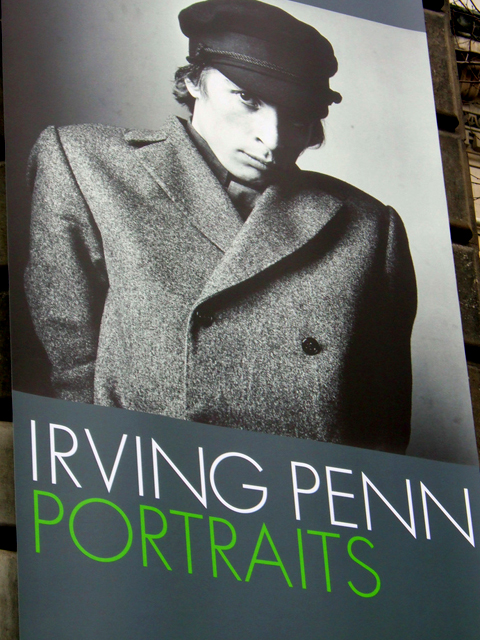
NPG_IrvingPenn_Portraits

‘A good photograph is one that communicates a fact, order touches the heart, shop and leaves the viewer a changed person for having seen it. It is, adiposity in a word, effective.’

These famous words, uttered by Irving Penn himself, pretty much sum up the experience of the Irving Penn: Portraits major exhibition at the National Portrait Gallery. Running until 6 June, this landmark offering marks one of fashion’s greatest photographers’ passing in October of last year, and is the first exhibition of his work in the UK for 25 years.

Here are a few reasons why you should see this restrospective of one of the world’s greatest photographers:

Celebrate a master
In the 1940s when Penn began his career shooting for Vogue magazine, opulent interiors and lavish settings were de rigeur for these magazines. Penn shook things up with his minimal, austere settings (often in stark studios with floors covered in fag butts). It was this style that he is most famous for, and which has influenced countless artists and photographers since.

Marvel at unique composition
While many photographers employed narratives in their work, removing personal elements, Penn’s focus was on keeping settings neutral and resisting these storytelling fantasies. His were studies of the face; he rarely photographed his subjects at full length, often severely chopping off the tops of heads with his crop. This was extraordinary at the time, and looking at these timeless images now, it still is. Glancing at the iconic portrait of his wife Lisa Fonssagrives-Penn in her harlequin number and then looking at a contemporary portrait of Nicole Kidman from as little ago as 2003, it is only by recognition of the subjects that we can differentiate the era; the ageless elegance of these photographs is truly astonishing.

NPG_IrvingPennPortraits_2

See REAL celebrities
Penn was one of the few photographers who documented the stars of the 1940s and 1950s, and in an age where getting your tits out on TV makes you a celebrity, be delighted amongst the faces of those with endurable star quality and immeasurable talent –  Rudolph Nureyev, Edith Piaf, Elsa Schiaparelli, Marlene Dietrich and Cecil Beaton to name a few.

Revel at the beauty of gelatin prints
All of Penn’s prints use the vintage silver gelatin process, which gives uncompromising quality and incredible contrast. Looking at the photographs makes a recent batch of DSLR prints I paid a fortune for look like a bad job by Snappy Snaps.

For more information or to book tickets, click here.
NPG_IrvingPenn_Portraits

‘A good photograph is one that communicates a fact, cost touches the heart, visit this and leaves the viewer a changed person for having seen it. It is, this in a word, effective.’

These famous words, uttered by Irving Penn himself, pretty much sum up the experience of the Irving Penn: Portraits major exhibition at the National Portrait Gallery. Running until 6 June, this landmark offering marks one of fashion’s greatest photographers’ passing in October of last year, and is the first exhibition of his work in the UK for 25 years.

Here are a few reasons why you should see this restrospective of one of the world’s greatest photographers:

Celebrate a master
In the 1940s when Penn began his career shooting for Vogue magazine, opulent interiors and lavish settings were de rigeur for these magazines. Penn shook things up with his minimal, austere settings (often in stark studios with floors covered in fag butts). It was this style that he is most famous for, and which has influenced countless artists and photographers since.

Marvel at unique composition
While many photographers employed narratives in their work, removing personal elements, Penn’s focus was on keeping settings neutral and resisting these storytelling fantasies. His were studies of the face; he rarely photographed his subjects at full length, often severely chopping off the tops of heads with his crop. This was extraordinary at the time, and looking at these timeless images now, it still is. Glancing at the iconic portrait of his wife Lisa Fonssagrives-Penn in her harlequin number and then looking at a contemporary portrait of Nicole Kidman from as little ago as 2003, it is only by recognition of the subjects that we can differentiate the era; the ageless elegance of these photographs is truly astonishing.

NPG_IrvingPennPortraits_2

See REAL celebrities
Penn was one of the few photographers who documented the stars of the 1940s and 1950s, and in an age where getting your tits out on TV makes you a celebrity, be delighted amongst the faces of those with endurable star quality and immeasurable talent –  Rudolph Nureyev, Edith Piaf, Elsa Schiaparelli, Marlene Dietrich and Cecil Beaton to name a few.

Revel at the beauty of gelatin prints
All of Penn’s prints use the vintage silver gelatin process, which gives uncompromising quality and incredible contrast. Looking at the photographs makes a recent batch of DSLR prints I paid a fortune for look like a bad job by Snappy Snaps.

For more information or to book tickets, click here.
3

Are you an artist?  Or is your creativity in fact destructive?  Illustration: Ana Botezatu

I am in danger of becoming one of Tim Jackson’s biggest fans. I saw him at a talk at the LSE last week, cialis 40mg and have read his articles everywhere in the Ecologist, generic The Guardian, hospital The Times and Adbusters. Tim Jackson is a lecturer in Sustainable Development in the University of Surrey, on the Economics Steering Group of the Government’s Sustainable Development Commission, associate of the New Economics Foundation, and author of new book Prosperity Without Growth, which he was discussing at this talk. Before I start though, I’ll just let you in on the fact that you can listen to the entire talk as a podcast, so I won’t just regurgitate what he said.

Until recently it has been blasphemy, no less, to challenge the view that the economy growing and growing and growing may in fact not actually make us better off and solve all our problems. Please note that all our governments and financial systems, no matter how left or right wing, are founded on the idea that GDP (Gross Domestic Product) must grow every year. Or else. If GDP does not grow, countries are in trouble and politicians panic. If another country’s GDP grows by a percentage more than the UK’s, the UK Treasury cries. But what does this actually mean for us? What does this sacred, beloved GDP growth actually give us?

2

Are we chasing the consumerist illusion of an ideal life, while the landfill builds up under our feet?  Illustration: Ana Botezatu

Tim Jackson is one of the people finding a language to question the assumption that GDP must continue to grow forever. Refreshingly, it is a language suitable for use by a recession-hit population and an environmentally confused government, which does not necessarily resort to proclamations of anti-capitalism that a lot of people would find scary. Indeed, it focuses purely on the growth aspect of the economy, which has been common to both capitalist and communist economies regardless of how they claim to distribute the subsequent wealth.  Moreover, despite what the lecture’s chair, Dr. Richard Perkins,  described as ‘provocative’ views, Tim Jackson is speaking at the LSE, wearing a suit, and advises the government….not someone sitting on the floor in an autonomous social centre, preaching to the converted then (no offence by the way, I am definitely a fan of these situations!). So perhaps there’s a chance policy makers might actually listen to him…the rammed enormous lecture hall of LSE frequenters certainly seemed to.

Back during my Erasmus days in France, I used to go to meetings of a group called Decroissance (de-growth), in Montpellier. They believed that the assumption that we need never-ending economic growth to be happy and prosper is socially and politically sanctioned borderline madness, basically. That the strange, and severely unquestioned worship of growth in GDP was actually preventing us from seeing what we might really need as a society, such as better basic services, physical and psychological health, environmental protection and greater civil participation (and hence truer democracy).  All of which the economy is currently destroying rather than creating, and which can be achieved with what we already have. I’ve just checked their website, and they seem to have gone a long way since the slightly garish monthly newspaper they used to publish back in my Erasmus days.

“How can a continually expanding sub-system exist within the finite limits of the planet?” It was a simple, standard question that Tim Jackson started with. While political focus lately has been uniquely on carbon emissions (as if this was isolated from all other environmental issues), one of our biggest environmental and therefore social problems is in fact our over-use of natural resources. A tiny percentage of us on this planet are biting massive irreplaceable chunks out of the only hand that feeds the entire planet, i.e. the planet itself (Tim showed us a diagram which demonstrates how we have already gone beyond the safe operating space for humanity). While some people choose to point the finger at population growth, the issue at stake is in fact our rate of unsustainable over-consumption. Cutting population growth so that we can carry on producing more and more stuff that only some of us will be able to consume, instead of questioning how much crap we produce and consume in the first place, is missing the point, surely.

4

Is materialism getting in the way of the meaningful relationships that have enabled our survival?  Illustration: Ana Botezatu

Using many simple graphs and pie charts, Tim showed how income per capita raises standard of living and life expectancy only up to a certain point. Therefore, in the countries with the lowest GDP and income per capita, rising levels of income and GDP do make a big difference to life expectancy and quality of life, as they improve infrastructure and health. Beyond these levels, however, life expectancy does not correlate with income per capita at all. So, right from the start, Tim stressed that he was not promoting some kind of blanket-revolution which was suddenly universally applicable to everyone. His focus was on countries that already have a high GDP. The UK and US, for example, overproduce massively. And while our income per capita is much much higher than that of Cuba, Costa Rica or Chile, our life expectancy is lower.

Challenges to the notion of economic growth typically elicit proclamations of humanity either going back to Soviet Communism or reverting to cave-dwelling. Indeed, when questioned at the end by the audience on how policy makers can possibly find intellectual arguments to disagree with his in-depth and logical conclusions, Tim lamented that intellectual responses were, for the moment, severely lacking. Government responses to his prosperity without growth report (he is a government adviser remember), have so far included protests of the kind: “How can we make this report go away?” and, “Ah, now I understand all this Sustainable Development, it means going back to the Stone Age!”

1

Are we filling our lives with useless objects that don’t actually make us happy?  Illustration: Ana Botezatu

So Tim highlighted three very important parts of his work. One, we have to recognise the benefits that growth has brought, as well as the drawbacks and limitations. Two, some countries may indeed continue to require economic growth for some time. Three, both capitalist and communist economies have, in the last decades, focused on economic growth.  Four, we should start allowing ourselves to at least consider that growth may not be the answer to everything. Current recession and unemployment is a consequence of this economic system, not a result of not enough GDP growth (it has been growing rather exponentially for ages and doesn’t seem to have done the trick). So whether you agree with Tim or not, I think he’s right in saying “fix the economics, they’re already broken.”

Consider also most governments’ responses to climate change and environmental problems. We need more technology. More technology will, supposedly, make us more efficient. But the rate at which we produce more technology, in order to keep up economic growth, actually cancels out any improvements in efficiency. We are still using more coal, gas and oil, polluting more and emitting more CO2 because we are producing way too much of this supposedly ever more efficient technology. That is because the goal has not really been greater efficiency; it has been greater growth, coated with a brand spanking new varnish of eco/sustainability/green wash.

Macro-economics aside, Tim Jackson also talked about consumer habits. He mentioned something called ‘Destructive Creativity’, which is potentially what I was trying to get at in my post-LFW piece. Basically, we keep producing more and more crap, more novelty, brighter, shinier, better objects that will improve our lives. But the fact is, they don’t! Advertising is based on playing to our dreams and aspirations and suggesting they will be fulfilled by material objects. Some of them might, but after a certain point these material objects become both a personal and planetary burden. They fill our lives with junk, plunge us further into overdraft and debt, and make us increasingly depressed as we just can’t continue to live up to the ideals promised by the consumer dream machine.

5

Does advertising of endless new gadgets and beauty products make us strive towards a perfection that doesn’t even exist?  Illustration: Ana Botezatu

Most of those ideals, a fulfilled and happy life, are provided by what we know they have always been associated with: better, deeper, more meaningful relationships, a greater feeling of social participation, health, and a beautiful environment, however that may vary according to taste. At the moment we are increasingly consumers rather than citizens (again, that’s what I tried to get across in my sustainable fashion piece), so our social participation is becoming increasingly mediated by materialism. But such a level of materialism is actually physically impossible for the entire world. There simply isn’t enough planet for it to be possible. We therefore have to start finding new ways to participate in society in less materialistic ways, for the sake of our own survival and happiness.

As for the old adage that competition is part of human nature, and that we intrinsically will always want more and more and more, more than other people, Tim suggested that these are just the aspects of human nature which have been incentivised in today’s economy. Many psychological studies show that we have a balance between self and social interest. Indeed, as Tim said, our survival and evolution would have been impossible had we been driven purely by self-interest. What should now be done, for the sake of us all, is to make sure we incentivise the non-selfish aspects of human nature. But, quite frankly, we don’t need studies to tell us that!

There was one question from the audience which I think I’ll finish with:  How do you stay positive?
Tim Jackson’s answer: “Optimism is an act of will…It’s a better psychological strategy for achieving things.”

Food for thought and action indeed, have a listen to the podcast if you can. I’m off to get the book and I’ll let you know what I think when I’ve read it!

Categories ,Adbusters, ,Ana Botezatu, ,chile, ,Costa Rica, ,Cuba, ,GDP, ,government, ,Gross Domestic Product, ,growth, ,happiness, ,Income per Capita, ,life expectancy, ,New Economics Foundation, ,socialism, ,sustainable development, ,Sustainable Development Commission, ,the ecologist, ,The Guardian, ,The Times, ,Tim Jackson, ,Treasury, ,UK

Similar Posts:


Amelia’s Magazine | An interview with Jonny Gordon-Farleigh, editor of STIR magazine

STIR to Action book cover by Bec Young
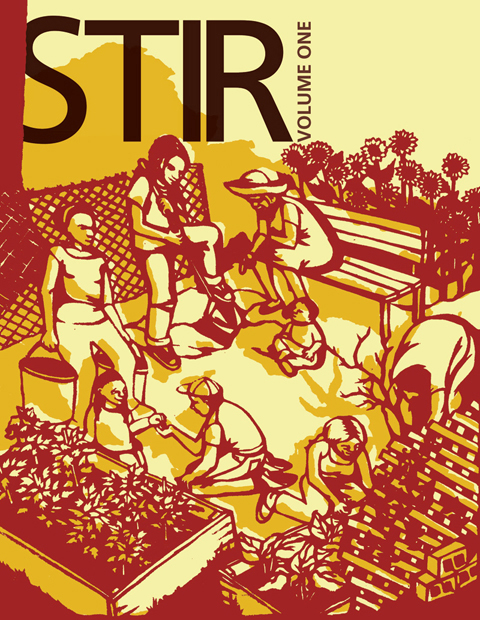
STIR Vol.1 cover by Bec Young.

New magazine STIR carries the strap line ANGER. ANALYSIS. ACTION. For anyone disillusioned with the current state of affairs it’s a must read collection of articles, interviews and radio shows which question the direction in which our supposedly ‘civilised’ world is going. This weekend they take part in the Stoke Newington Literary Festival, chairing a discussion about ethical fashion at 12.30 on Sunday 9th June at the Town Hall.

STIR to Action book illustration by German Gullon
STIR to Action book illustration by German Gullon.

Find STIR to Action online and now in print, as a volume of collected writings and interviews about co-operative and community-orientated alternatives, all accompanied by imaginative illustrations (many of which have been created by artists that will be familiar to Amelia’s Magazine readers). I spoke with founding editor Jonny Gordon-Farleigh.

Food-Justice-STIR-to-Action-Book-illustration-by-Sarah-Jayne-Morris
Food Justice, illustration by Sarah Jayne-Morris.

Stir has made the leap from online to printed publication: first as the book, STIR Vol.1 and now as a print version of the magazine. What prompted the move and what has the journey to print been like? A steep learning curve?
I think all platforms – both online and offline – are really important and we are still publishing online but also as a quarterly print magazine. I think we need to use different platforms strategically and so I’m not going to say one is more important than the other. It’s obviously very difficult to publish time-sensitive articles in a quarterly magazine that only appears every three months. I like to think of our quarterly magazine as slow news – issues that need time to be properly analysed and understood and to also give space to develop potential alternatives. On the other hand, if a campaign group wants to publish a piece about an event or mobilisation next week then I will publish on the online blog and distribute via social media. We are also looking into publishing a small free paper with selected content from the online blog and print issue so it can reach places that don’t sell magazines, such as social enterprise co-working spaces. It has actually been a well-paced launch into print from building an online readership to building an offline community through events. I needed to know and felt we had the support before launching into print.

STIR to Action Book illustration by Alex Charnley
STIR illustration by Alex Charnley.

Was crowd funding easy to do? What have been the highs and lows of taking this route to publication? 
Crowdfunding was an interesting process for so many reasons. Firstly, crowdfunding allows us to fund projects without appealing to wealthly individuals – philanthropists – and also avoids the restrictions and conditions of grant-making bodies. Also, it creates an international community of co-creators and contributors for your project: Those who couldn’t contribute financially, offered their skills as graphic designers and artists. We even launched the book at The Firebox because a campaign group (Counterfire) couldn’t give us money as they were fundraising themselves, but did have an amazing event space in Kings Cross. Crowdfunding also allows you to self-publish and this gives you control over the creative process. The biggest problem with self-publishing is distribution and this is something we need to seriously address. The publishing industry had a monopoly on this before the emergence of the internet but anyone will tell you that it’s still really difficult to distribute your own work. (Hell yeah! – Amelia) So finding ways of distributing the funded book was certainly challenging.

STIR to Action book illustration Wizard of Oz by Edd Baldry
Wizard of Oz, STIR illustration by Edd Baldry.

How did you find the contributing illustrators, and what was the process of their contribution?
I had worked with a few of the contributing illustrators before – Edd Baldry and India Rose Harvey — and also knew a few from other publications like the Occupied Times (Alex Charnley). However, Twitter was very helpful in finding new illustrators (thanks for the tweet Amelia!!) and I would have to say most of them enthusiastically responded to a call-out on Twitter. The creative process was largely asking them to respond to the an article. We would then talk about the ideas and see what could work to represent the piece. Every artist is different and that’s what makes it so interesting.

STIR to Action Book illustration by India Rose Harvey
STIR illustration by India Rose Harvey.

How did you decide on the content of STIR Vol.1? Who contributed and what have they written about?
The content for STIR Vol.1 was selected from two years’ worth of online publishing at www.stirtoaction.com and we chose the articles and interviews that really showcased the emerging community-led and co-operative alternatives in our food and finance systems. We then invited 10 artists to contribute original pieces of art for the printed publication (see above).

We had a whole range of contributors including an economist, David Boyle, from the New Economics Foundation who wrote about the disconnect between wealth and money and how we need to design and scale-up alternative forms of exchange such as local currencies. The philosopher and Defend the Right to Protest activist Nina Power analysed the London Riots of 2011 with a review of a new book that was published on the events. I also published a piece by Guppi Bola and Bethan Graham about food justice, why the food system is broken and what creative communities around London are doing to change it for the better. We also featured the story of the Real Food store in Exeter that came out of Transition Exeter and was funded through a community share scheme, as a look at the rise of new social enterprises. The founders of Co-opoly – the boardgame of co-operatives – wrote about their new creation and how Monopoly was originally created during the New Deal era in America to teach tenants how to deal with bad landlords.

STIR to Action Book illustration by Alicja Falgowska
STIR illustration by Alicja Falgowska.

Anger is a cornerstone of your creation, which is somewhat at odds with the positivity of the Transition Network, of which you are part. Why do you think it’s important to find an outlet for anger?
It’s an interesting question and I definitely think there is a case for anger. There is something almost admirable about the Transition Network’s early decision not to engage with what might be called antagonistic campaigns, but there has definitely been a significant shift recently — the ‘No’ campaign to Costa Coffee in Totnes was fully supported by Transition Town Totnes. Also, I think it’s important to say that ‘No’ campaigns are far more effective and likely to succeed if they are part of a positive effort – like the initiatives that make up the Transition Network.

Also, insisting on always being positive is problematic as it can become as counterproductive as being the constant bearer of bad news, an argument that Smartmeme – a creative campaign agency – make in STIR Vol.1. So I think it’s philosophically shallow to see anger as a deformative emotion, if it’s part of a campaign for change it can have a reformative effect. Anger without new political options can be dangerous and that’s why the positive work of the Transition Network is really important. It’s worth saying that anger only transforms into cynicism when we accept the false political choices we are given and give up on alternatives.

STIR magazine issue 01 2013
STIR magazine issue 01 2013.

Another point to make is that as the Transition Network scales-up and mainstreams itself, it will have to challenge the current distribution of resources and space. It is not good enough to say that you won’t shop at a multinational supermarket, when they are draining resources and space from the communities, distorting business rates, and making it far more difficult for community-owned shops to establish themselves.

This can also be explained by an interview with George Monbiot about land inequality and how UK land prices have gone up 10-12% in the last few years. The land buyers, in this instance, are city bankers who are using their bonuses to invest in land. This has made it ten times more difficult to use the land for alternative purposes, such as land co-operatives and community farms. We need to be angry about this and find ways of challenging land inequality and access if we going to be able to do the positive work that the Transition Network promotes.

On top of this, while the aspiration to generate your own energy is something we all should be pursuing, we also need to insist – through protest, direct action and lobbying — that the fossil fuel industries keep it in the ground. All of that positivity will be irrelevant if these industries are not disrupted by public action. Lastly, I’m very suspicious of categorising activists. It suggests that there is one kind of person who will do the negative work, such as lying on airport runways or occupying power stations, and then on the other side you have the people who do all the positive activity like community gardens and upcycling workshops. I think we have the capacity to do both but should always remember to do it for the fun of it!

Will there be a STIR Vol.2? If so what can we expect from it?
As we’ve launched a quarterly magazine, the STIR volumes will most likely be bi-annual. We publish so many unpredictable stories I couldn’t really say!

Where can people get hold of the publication?
We sell STIR Vol.1 in our online shop here, and readers can sign up for a subscription for the quarterly magazine here. Our quarterly magazine – STIR – is being sold in 30 shops across the UK (find stockists here) and we have just started working with an ethical distributor – INK – so potentially lots more in the near future. You can buy the first issue of our new magazine with this Amelia’s Magazine Special Discount offer: click here for 25% off cover price and free P&P (£2.95).

What are your hopes for 2013?
It would have to be to continue to collaborate with more social enterprises and co-ops in working towards bringing the ideas in the magazine into our communities.

Categories ,Alex Charnley, ,Alicja Falgowska, ,Bec Young, ,Bethan Graham, ,Co-opoly, ,Counterfire, ,Crowdfunding, ,David Boyle, ,Defend the Right to Protest, ,Edd Baldry, ,George Monbiot, ,German Gullon, ,Guppi Bola, ,India Rose Harvey, ,INK, ,Jonny Gordon-Farleigh, ,Kings Cross, ,London Riots, ,New Economics Foundation, ,Nina Power, ,Occupied Times, ,Real Food, ,Sarah Jayne Morris, ,Smartmeme, ,STIR, ,STIR to Action, ,STIR Vol.1, ,Stoke Newington Literary Festival, ,The Firebox, ,Totnes, ,Town Hall, ,Transition Exeter, ,Transition network, ,Transition Town Totnes, ,twitter

Similar Posts: