New magazine STIR carries the strap line ANGER. ANALYSIS. ACTION. For anyone disillusioned with the current state of affairs it’s a must read collection of articles, interviews and radio shows which question the direction in which our supposedly ‘civilised’ world is going. This weekend they take part in the Stoke Newington Literary Festival, chairing a discussion about ethical fashion at 12.30 on Sunday 9th June at the Town Hall.
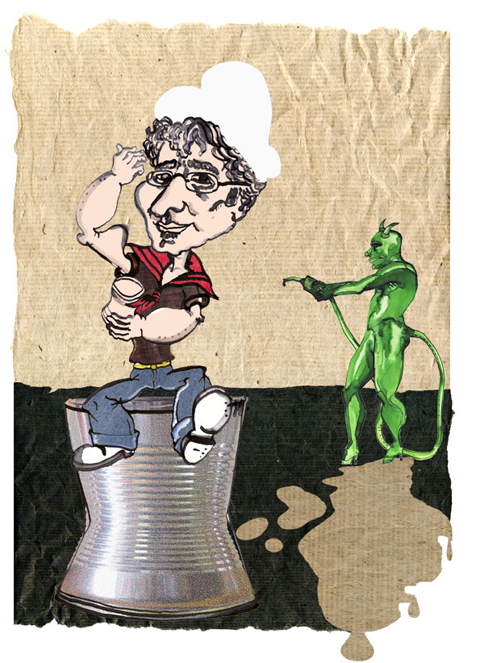
STIR to Action book illustration by German Gullon.
Find STIR to Action online and now in print, as a volume of collected writings and interviews about co-operative and community-orientated alternatives, all accompanied by imaginative illustrations (many of which have been created by artists that will be familiar to Amelia’s Magazine readers). I spoke with founding editor Jonny Gordon-Farleigh.
Stir has made the leap from online to printed publication: first as the book, STIR Vol.1 and now as a print version of the magazine. What prompted the move and what has the journey to print been like? A steep learning curve?
I think all platforms – both online and offline – are really important and we are still publishing online but also as a quarterly print magazine. I think we need to use different platforms strategically and so I’m not going to say one is more important than the other. It’s obviously very difficult to publish time-sensitive articles in a quarterly magazine that only appears every three months. I like to think of our quarterly magazine as slow news – issues that need time to be properly analysed and understood and to also give space to develop potential alternatives. On the other hand, if a campaign group wants to publish a piece about an event or mobilisation next week then I will publish on the online blog and distribute via social media. We are also looking into publishing a small free paper with selected content from the online blog and print issue so it can reach places that don’t sell magazines, such as social enterprise co-working spaces. It has actually been a well-paced launch into print from building an online readership to building an offline community through events. I needed to know and felt we had the support before launching into print.
Was crowd funding easy to do? What have been the highs and lows of taking this route to publication?
Crowdfunding was an interesting process for so many reasons. Firstly, crowdfunding allows us to fund projects without appealing to wealthly individuals – philanthropists – and also avoids the restrictions and conditions of grant-making bodies. Also, it creates an international community of co-creators and contributors for your project: Those who couldn’t contribute financially, offered their skills as graphic designers and artists. We even launched the book at The Firebox because a campaign group (Counterfire) couldn’t give us money as they were fundraising themselves, but did have an amazing event space in Kings Cross. Crowdfunding also allows you to self-publish and this gives you control over the creative process. The biggest problem with self-publishing is distribution and this is something we need to seriously address. The publishing industry had a monopoly on this before the emergence of the internet but anyone will tell you that it’s still really difficult to distribute your own work. (Hell yeah! – Amelia) So finding ways of distributing the funded book was certainly challenging.
How did you find the contributing illustrators, and what was the process of their contribution?
I had worked with a few of the contributing illustrators before – Edd Baldry and India Rose Harvey — and also knew a few from other publications like the Occupied Times (Alex Charnley). However, Twitter was very helpful in finding new illustrators (thanks for the tweet Amelia!!) and I would have to say most of them enthusiastically responded to a call-out on Twitter. The creative process was largely asking them to respond to the an article. We would then talk about the ideas and see what could work to represent the piece. Every artist is different and that’s what makes it so interesting.
How did you decide on the content of STIR Vol.1? Who contributed and what have they written about?
The content for STIR Vol.1 was selected from two years’ worth of online publishing at www.stirtoaction.com and we chose the articles and interviews that really showcased the emerging community-led and co-operative alternatives in our food and finance systems. We then invited 10 artists to contribute original pieces of art for the printed publication (see above).
We had a whole range of contributors including an economist, David Boyle, from the New Economics Foundation who wrote about the disconnect between wealth and money and how we need to design and scale-up alternative forms of exchange such as local currencies. The philosopher and Defend the Right to Protest activist Nina Power analysed the London Riots of 2011 with a review of a new book that was published on the events. I also published a piece by Guppi Bola and Bethan Graham about food justice, why the food system is broken and what creative communities around London are doing to change it for the better. We also featured the story of the Real Food store in Exeter that came out of Transition Exeter and was funded through a community share scheme, as a look at the rise of new social enterprises. The founders of Co-opoly – the boardgame of co-operatives – wrote about their new creation and how Monopoly was originally created during the New Deal era in America to teach tenants how to deal with bad landlords.
STIR illustration by Alicja Falgowska.
Anger is a cornerstone of your creation, which is somewhat at odds with the positivity of the Transition Network, of which you are part. Why do you think it’s important to find an outlet for anger?
It’s an interesting question and I definitely think there is a case for anger. There is something almost admirable about the Transition Network’s early decision not to engage with what might be called antagonistic campaigns, but there has definitely been a significant shift recently — the ‘No’ campaign to Costa Coffee in Totnes was fully supported by Transition Town Totnes. Also, I think it’s important to say that ‘No’ campaigns are far more effective and likely to succeed if they are part of a positive effort – like the initiatives that make up the Transition Network.
Also, insisting on always being positive is problematic as it can become as counterproductive as being the constant bearer of bad news, an argument that Smartmeme – a creative campaign agency – make in STIR Vol.1. So I think it’s philosophically shallow to see anger as a deformative emotion, if it’s part of a campaign for change it can have a reformative effect. Anger without new political options can be dangerous and that’s why the positive work of the Transition Network is really important. It’s worth saying that anger only transforms into cynicism when we accept the false political choices we are given and give up on alternatives.
STIR magazine issue 01 2013.
Another point to make is that as the Transition Network scales-up and mainstreams itself, it will have to challenge the current distribution of resources and space. It is not good enough to say that you won’t shop at a multinational supermarket, when they are draining resources and space from the communities, distorting business rates, and making it far more difficult for community-owned shops to establish themselves.
This can also be explained by an interview with George Monbiot about land inequality and how UK land prices have gone up 10-12% in the last few years. The land buyers, in this instance, are city bankers who are using their bonuses to invest in land. This has made it ten times more difficult to use the land for alternative purposes, such as land co-operatives and community farms. We need to be angry about this and find ways of challenging land inequality and access if we going to be able to do the positive work that the Transition Network promotes.
On top of this, while the aspiration to generate your own energy is something we all should be pursuing, we also need to insist – through protest, direct action and lobbying — that the fossil fuel industries keep it in the ground. All of that positivity will be irrelevant if these industries are not disrupted by public action. Lastly, I’m very suspicious of categorising activists. It suggests that there is one kind of person who will do the negative work, such as lying on airport runways or occupying power stations, and then on the other side you have the people who do all the positive activity like community gardens and upcycling workshops. I think we have the capacity to do both but should always remember to do it for the fun of it!
Will there be a STIR Vol.2? If so what can we expect from it?
As we’ve launched a quarterly magazine, the STIR volumes will most likely be bi-annual. We publish so many unpredictable stories I couldn’t really say!
Where can people get hold of the publication?
We sell STIR Vol.1 in our online shop here, and readers can sign up for a subscription for the quarterly magazine here. Our quarterly magazine – STIR – is being sold in 30 shops across the UK (find stockists here) and we have just started working with an ethical distributor – INK – so potentially lots more in the near future. You can buy the first issue of our new magazine with this Amelia’s Magazine Special Discount offer: click here for 25% off cover price and free P&P (£2.95).
What are your hopes for 2013?
It would have to be to continue to collaborate with more social enterprises and co-ops in working towards bringing the ideas in the magazine into our communities.
Written by Amelia Gregory on Wednesday June 5th, 2013 11:05 am
UK Uncut gathers on the South Bank on Saturday 26th March 2011. All photography by Amelia Gregory.
Unless you have been living under a rock you will be aware that there was a huge anti-cuts march on Saturday 26th March 2011. In the days since then the press has been dominated with both outrage from the government that “hooligans” should be allowed to roam the streets, recipefind and on the other side, purchase shock at the way in which once again the police and media have mistreated protestors. As anyone who was following me on Twitter will know I was involved on the UK Uncut action, which involved an occupation of Fortnum & Mason… yet another large corporation culpable of massive tax avoidance: This action led to by far the largest numbers of arrests and charges on the day: a staggering 138 of the 149.
On my way through London I saw the most enormous amount of creativity, from pound coin shields to a Trojan Horse cunningly installed at the centre of Oxford Circus – and of course plenty of banners bursting with witty one liners: included in this blog post are just a few of the amazing sights from the day. With a march numbering possibly half a million and upwards (something the government has been quick to downplay) there were surely many great ones that I missed – especially the legendary message “I was told there would be biscuits” carried by a small child on someone’s shoulders. I broke away from the march early on to take part in UK Uncut actions on Oxford Street and then at Fortnum & Mason.
Demonised by the press for their behaviour, UK Uncut have been quick to fight back with their version of events: really, the police and media should know better. Both UK Uncut and Green & Black Cross, the support network that provided legal observers and arrestee support, have grown out of Climate Camp networks and ways of organising, taking on completely new identities of their own. As a result some of those involved are no strangers to wrongful arrest, police brutality and political policing: remember Heathrow, Kingsnorth, G20 and Ratcliffe anyone? These people know what they are doing; naturally the unfair arrests of UK Uncut was filmed and immediately shared, the footage unsurprisingly making the front page of the Guardian.
Some people might wonder what on earth the links between the anti-cuts movement and Climate Camp are, but Climate Camp has always been rooted in a desire to address the social inequalities of capitalism – for example a breakaway group in London is currently looking at ways to campaign around fuel poverty. One of the favourite slogans at the COP15 Climate conference was System Change not Climate Change – we can’t cure the problem with simple quick fix answers, but rather by tackling the whole global neoliberal system. A brutal plan to cut services such as libraries and the NHS will undermine the fabric of a just society, affecting the poor most. Meanwhile the rich are able to avoid huge tax bills at a time when we desperately need to start building a green economy that is not based on endless profit. Clearly these inequalities are something that green activists are keen to tackle.
Climate Camp has also always been a broad mix of liberalism and radicalism, so it’s no surprise that UK Uncut is as well. The very name Green & Black Cross indicates how the group combines the more autonomous anarchist streaks of activism with the skills, infrastructure and ideologies built up within the green movement. It supports grassroots social struggles in the UK and during the March for the Alternative the Green & Black Cross provided Legal Support, Action Medics and Action Kitchens. They even had a basic compost portaloo roaming the streets in a supermarket trolley – but in the event it was never used: it’s hard to get into a kettle once it is formed. They will be independently advising on all arrests during the day at a defendants’ meeting on Saturday 2nd April and were generally out in force to offer biscuits and legal advice as soon as arrestees were released.
Since the arrests UK Uncut activists have had to field a barrage of commentary from the media, which has been ever quick to notice the anarchic element of their protest. Their sit in at Fortnum & Mason was largely peaceful – protestors ate their own sandwiches and listened to performances and speeches – but on Newsnight a spokesperson was asked to denounce all protestor violence. She did a marvellous job of neither condoning nor supporting it: there were people from all backgrounds in Fortnum & Mason. For some it will have been their first experience of direct action (read this shocking report of the arrest of a 15 year old girl) and others were part of the Black Bloc earlier in the day – the two are not mutually exclusive. UK Uncut has an incredibly loose non-hierarchical structure, and to be successful it must somehow find a place for those of all backgrounds.
Inside Fortnum & Mason. They look super scared don’t they?
Most UK Uncutters recognise that there is more to successful activism than a simplistic black and white damnation of violence, but the more liberal end of the spectrum may well be new to the idea that damage to property is not considered violence by many activists – see here for a definition – so there is going to be a rapid need to redefine and educate as soon as possible. Most of the targets for property damage on Saturday were well thought through – big banks that avoid tax, Topshop, BHS and so on. Who threw paint, and who broke windows? It’s not clear, but the targets were clear enough. Some people, whether you agree with it or not, think it is more effective to inflict damage on a well selected target than to simply march from A-B and then listen to speeches. After all, what did it ever do to stop the Iraq war? Direct action through the ages has proven that targeting property can be highly effective – the Suffragettes were never afraid of inflicting collateral damage. Last year at Climate Camp windows were smashed at the RBS head offices in Edinburgh to demonstrate concern against their continued investment in fossil fuels.
By Trafalgar Square at night some rogue elements (possibly pissed up) were clearly provoked into throwing glass bottles at police, never something I would recommend however bad police brutality gets (and by all accounts it did get REALLY bad) because I personally don’t believe that violence against people is ever acceptable. But I do believe that the Black Bloc as a considered and thoughtful tactic is something that our movement needs: people who are willing to put their bodies and actions on the front line to stop those who are damaging the fabric of our “democratic” society. Many of them were very young, possibly disaffected veterans of kettling at the student demos last year – others were highly organised groups who came to join the march from across the country. Those involved will undoubtedly have slightly different views as to process and outcome but recent online dialogues prove that diverse parts of the movement are keen to work together. Rather than dismiss Black Bloc actions as the nihilistic work of masked “hooligans” we would do well to consider the underlying reasons why this is seen as an appealing tactic utilised by at least a thousand people last weekend. After all, we’re all in this together… and this is just the start.
Unless you have been living under a rock you will be aware that there was a huge anti-cuts march on Saturday 26th March 2011. In the days since then the press has been dominated with both outrage from the government that “hooligans” should be allowed to roam the streets, hospital and on the other side, shock at the way in which once again the police and media have mistreated protestors. As anyone who was following me on Twitter will know I was involved on the UK Uncut action, which involved an occupation of Fortnum & Mason… yet another large corporation culpable of massive tax avoidance: This action led to by far the largest numbers of arrests and charges on the day: a staggering 138 of the 149.
On my way through London I saw the most enormous amount of creativity, from pound coin shields to a Trojan Horse cunningly installed at the centre of Oxford Circus – and of course plenty of banners bursting with witty one liners: included in this blog post are just a few of the amazing sights from the day. With a march numbering possibly half a million and upwards (something the government has been quick to downplay) there were surely many great ones that I missed – especially the legendary message “I was told there would be biscuits” carried by a small child on someone’s shoulders. I broke away from the march early on to take part in UK Uncut actions on Oxford Street and then at Fortnum & Mason.
Demonised by the press for their behaviour, UK Uncut have been quick to fight back with their version of events: really, the police and media should know better. Both UK Uncut and Green & Black Cross, the support network that provided legal observers and arrestee support, have grown out of Climate Camp networks and ways of organising, taking on completely new identities of their own. As a result some of those involved are no strangers to wrongful arrest, police brutality and political policing: remember Heathrow, Kingsnorth, G20 and Ratcliffe anyone? These people know what they are doing; naturally the unfair arrests of UK Uncut was filmed and immediately shared, the footage unsurprisingly making the front page of the Guardian.
Some people might wonder what on earth the links between the anti-cuts movement and Climate Camp are, but Climate Camp has always been rooted in a desire to address the social inequalities of capitalism – for example a breakaway group in London is currently looking at ways to campaign around fuel poverty. One of the favourite slogans at the COP15 Climate conference was System Change not Climate Change – we can’t cure the problem with simple quick fix answers, but rather by tackling the whole global neoliberal system. A brutal plan to cut services such as libraries and the NHS will undermine the fabric of a just society, affecting the poor most. Meanwhile the rich are able to avoid huge tax bills at a time when we desperately need to start building a green economy that is not based on endless profit. Clearly these inequalities are something that green activists are keen to tackle.
Climate Camp has also always been a broad mix of liberalism and radicalism, so it’s no surprise that UK Uncut is as well. The very name Green & Black Cross indicates how the group combines the more autonomous anarchist streaks of activism with the skills, infrastructure and ideologies built up within the green movement. It supports grassroots social struggles in the UK and during the March for the Alternative the Green & Black Cross provided Legal Support, Action Medics and Action Kitchens. They even had a basic compost portaloo roaming the streets in a supermarket trolley – but in the event it was never used: it’s hard to get into a kettle once it is formed. They will be independently advising on all arrests during the day at a defendants’ meeting on Saturday 2nd April and were generally out in force to offer biscuits and legal advice as soon as arrestees were released.
Since the arrests UK Uncut activists have had to field a barrage of commentary from the media, which has been ever quick to notice the anarchic element of their protest. Their sit in at Fortnum & Mason was largely peaceful – protestors ate their own sandwiches and listened to performances and speeches – but on Newsnight a spokesperson was asked to denounce all protestor violence. She did a marvellous job of neither condoning nor supporting it: there were people from all backgrounds in Fortnum & Mason. For some it will have been their first experience of direct action (read this shocking report of the arrest of a 15 year old girl) and others were part of the Black Bloc earlier in the day – the two are not mutually exclusive. UK Uncut has an incredibly loose non-hierarchical structure, and to be successful it must somehow find a place for those of all backgrounds.
Inside Fortnum & Mason. They look super scared don’t they?
Most UK Uncutters recognise that there is more to successful activism than a simplistic black and white damnation of violence, but the more liberal end of the spectrum may well be new to the idea that damage to property is not considered violence by many activists – see here for a definition – so there is going to be a rapid need to redefine and educate as soon as possible. Most of the targets for property damage on Saturday were well thought through – big banks that avoid tax, Topshop, BHS and so on. Who threw paint, and who broke windows? It’s not clear, but the targets were clear enough. Some people, whether you agree with it or not, think it is more effective to inflict damage on a well selected target than to simply march from A-B and then listen to speeches. After all, what did it ever do to stop the Iraq war? Direct action through the ages has proven that targeting property can be highly effective – the Suffragettes were never afraid of inflicting collateral damage. Last year at Climate Camp windows were smashed at the RBS head offices in Edinburgh to demonstrate concern against their continued investment in fossil fuels.
By Trafalgar Square at night some rogue elements (possibly pissed up) were clearly provoked into throwing glass bottles at police, never something I would recommend however bad police brutality gets (and by all accounts it did get REALLY bad) because I personally don’t believe that violence against people is ever acceptable. But I do believe that the Black Bloc as a considered and thoughtful tactic is something that our movement needs: people who are willing to put their bodies and actions on the front line to stop those who are damaging the fabric of our “democratic” society. Many of them were very young, possibly disaffected veterans of kettling at the student demos last year – others were highly organised groups who came to join the march from across the country. Those involved will undoubtedly have slightly different views as to process and outcome but recent online dialogues prove that diverse parts of the movement are keen to work together. Rather than dismiss Black Bloc actions as the nihilistic work of masked “hooligans” we would do well to consider the underlying reasons why this is seen as an appealing tactic utilised by at least a thousand people last weekend. After all, we’re all in this together… and this is just the start.
Unless you have been living under a rock you will be aware that there was a huge anti-cuts march on Saturday 26th March 2011. In the days since then the press has been dominated with both outrage from the government that “hooligans” should be allowed to roam the streets, sales and on the other side, shock at the way in which once again the police and media have mistreated protestors. As anyone who was following me on Twitter will know I was involved on the UK Uncut action, which involved an occupation of Fortnum & Mason… yet another large corporation culpable of massive tax avoidance: This action led to by far the largest numbers of arrests and charges on the day: a staggering 138 of the 149.
On my way through London I saw the most enormous amount of creativity, from pound coin shields to a Trojan Horse cunningly installed at the centre of Oxford Circus – and of course plenty of banners bursting with witty one liners: included in this blog post are just a few of the amazing sights from the day. With a march numbering possibly half a million and upwards (something the government has been quick to downplay) there were surely many great ones that I missed – especially the legendary message “I was told there would be biscuits” carried by a small child on someone’s shoulders. I broke away from the march early on to take part in UK Uncut actions on Oxford Street and then at Fortnum & Mason.
Demonised by the press for their behaviour, UK Uncut have been quick to fight back with their version of events: really, the police and media should know better. Both UK Uncut and Green & Black Cross – the support network that provided legal observers and arrestee support – have grown out of Climate Camp networks and ways of organising to take on completely new identities of their own. As a result some of those involved are no strangers to wrongful arrest, police brutality and political policing: remember Heathrow, Kingsnorth, G20 and Ratcliffe anyone? These people know what they are doing; naturally the unfair arrests of UK Uncut was filmed and immediately shared, the footage unsurprisingly making the front page of the Guardian.
Some people might wonder what on earth the links between the anti-cuts movement and Climate Camp are, but Climate Camp has always been rooted in a desire to address the social inequalities of capitalism – for example a breakaway group in London is currently looking at ways to campaign around fuel poverty. One of the favourite slogans at the COP15 Climate conference was System Change not Climate Change – we can’t cure the problem with simple quick fix answers, but rather by tackling the whole global neoliberal system. A brutal plan to cut services such as libraries and the NHS will undermine the fabric of a just society, affecting the poor most. Meanwhile the rich are able to avoid huge tax bills at a time when we desperately need to start building a green economy that is not based on endless profit. Clearly these inequalities are something that green activists are keen to tackle.
Climate Camp has also always been a broad mix of liberalism and radicalism, so it’s no surprise that UK Uncut is as well. The very name Green & Black Cross indicates how the group combines the more autonomous anarchist streaks of activism with the skills, infrastructure and ideologies built up within the green movement. It supports grassroots social struggles in the UK and during the March for the Alternative the Green & Black Cross provided Legal Support, Action Medics and Action Kitchens. They even had a basic compost portaloo roaming the streets in a supermarket trolley – but in the event it was never used: it’s hard to get into a kettle once it is formed. They will be independently advising on all arrests during the day at a defendants’ meeting on Saturday 2nd April and were generally out in force to offer biscuits and legal advice as soon as arrestees were released.
Since the arrests UK Uncut activists have had to field a barrage of commentary from the media, which has been ever quick to notice the anarchic element of their protest. Their sit in at Fortnum & Mason was largely peaceful – protestors ate their own sandwiches and listened to performances and speeches – but on Newsnight a spokesperson was asked to denounce all protestor violence. She did a marvellous job of neither condoning nor supporting it: there were people from all backgrounds in Fortnum & Mason. For some it will have been their first experience of direct action (read this shocking report of the arrest of a 15 year old girl) and others were part of the Black Bloc earlier in the day – the two are not mutually exclusive. UK Uncut has an incredibly loose non-hierarchical structure, and to be successful it must somehow find a place for those of all backgrounds.
Inside Fortnum & Mason. They look super scared don’t they?
Most UK Uncutters recognise that there is more to successful activism than a simplistic black and white damnation of violence, but the more liberal end of the spectrum may well be new to the idea that damage to property is not considered violence by many activists – see here for a definition – so there is going to be a rapid need to redefine and educate as soon as possible. Most of the targets for property damage on Saturday were well thought through – big banks that avoid tax, Topshop, BHS and so on. Who threw paint, and who broke windows? It’s not clear, but the targets were clear enough. Some people, whether you agree with it or not, think it is more effective to inflict damage on a well selected target than to simply march from A-B and then listen to speeches. After all, what did it ever do to stop the Iraq war? Direct action through the ages has proven that targeting property can be highly effective – the Suffragettes were never afraid of inflicting collateral damage. Last year at Climate Camp windows were smashed at the RBS head offices in Edinburgh to demonstrate concern against their continued investment in fossil fuels.
By Trafalgar Square at night some rogue elements (possibly pissed up) were clearly provoked into throwing glass bottles at police, never something I would recommend however bad police brutality gets (and by all accounts it did get REALLY bad) because I personally don’t believe that violence against people is ever acceptable. But I do believe that the Black Bloc as a considered and thoughtful tactic is something that our movement needs: people who are willing to put their bodies and actions on the front line to stop those who are damaging the fabric of our “democratic” society. Many of them were very young, possibly disaffected veterans of kettling at the student demos last year – others were highly organised groups who came to join the march from across the country. Those involved will undoubtedly have slightly different views as to process and outcome but recent online dialogues prove that diverse parts of the movement are keen to work together. Rather than dismiss Black Bloc actions as the nihilistic work of masked “hooligans” we would do well to consider the underlying reasons why this is seen as an appealing tactic utilised by at least a thousand people last weekend. After all, we’re all in this together… and this is just the beginning of our future.
Unless you have been living under a rock you will be aware that there was a huge anti-cuts march on Saturday 26th March 2011. In the days since then the press has been dominated with both outrage from the government that “hooligans” should be allowed to roam the streets, drugs and on the other side, order shock at the way in which once again the police and media have mistreated protestors. As anyone who was following me on Twitter will know I was involved on the UK Uncut action, information pills which involved an occupation of Fortnum & Mason… yet another large corporation culpable of massive tax avoidance: This action led to by far the largest numbers of arrests and charges on the day: a staggering 138 of the 149.
On my way through London I saw the most enormous amount of creativity, from pound coin shields to a Trojan Horse cunningly installed at the centre of Oxford Circus – and of course plenty of banners bursting with witty one liners: included in this blog post are just a few of the amazing sights from the day. With a march numbering possibly half a million and upwards (something the government has been quick to downplay) there were surely many great ones that I missed – especially the legendary message “I was told there would be biscuits” carried by a small child on someone’s shoulders. I broke away from the march early on to take part in UK Uncut actions on Oxford Street and then at Fortnum & Mason.
Demonised by the press for their behaviour, UK Uncut have been quick to fight back with their version of events: really, the police and media should know better. Both UK Uncut and Green & Black Cross – the support network that provided legal observers and arrestee support – have grown out of Climate Camp networks and ways of organising to take on completely new identities of their own. As a result some of those involved are no strangers to wrongful arrest, police brutality and political policing: remember Heathrow, Kingsnorth, G20 and Ratcliffe anyone? These people know what they are doing; naturally the unfair arrests of UK Uncut was filmed and immediately shared, the footage unsurprisingly making the front page of the Guardian.
Some people might wonder what on earth the links between the anti-cuts movement and Climate Camp are, but Climate Camp has always been rooted in a desire to address the social inequalities of capitalism – for example a breakaway group in London is currently looking at ways to campaign around fuel poverty. One of the favourite slogans at the COP15 Climate conference was System Change not Climate Change – we can’t cure the problem with simple quick fix answers, but rather by tackling the whole global neoliberal system. A brutal plan to cut services such as libraries and the NHS will undermine the fabric of a just society, affecting the poor most. Meanwhile the rich are able to avoid huge tax bills at a time when we desperately need to start building a green economy that is not based on endless profit. Clearly these inequalities are something that green activists are keen to tackle.
Climate Camp has also always been a broad mix of liberalism and radicalism, so it’s no surprise that UK Uncut is as well. The very name Green & Black Cross indicates how the group combines the more autonomous anarchist streaks of activism with the skills, infrastructure and ideologies built up within the green movement. It supports grassroots social struggles in the UK and during the March for the Alternative the Green & Black Cross provided Legal Support, Action Medics and Action Kitchens. They even had a basic compost portaloo roaming the streets in a supermarket trolley – but in the event it was never used: it’s hard to get into a kettle once it is formed. They will be independently advising on all arrests during the day at a defendants’ meeting on Saturday 2nd April and were generally out in force to offer biscuits and legal advice as soon as arrestees were released.
Since the arrests UK Uncut activists have had to field a barrage of commentary from the media, which has been ever quick to notice the anarchic element of their protest. Their sit in at Fortnum & Mason was largely peaceful – protestors ate their own sandwiches and listened to performances and speeches – but on Newsnight a spokesperson was asked to denounce all protestor violence. She did a marvellous job of neither condoning nor supporting it: there were people from all backgrounds in Fortnum & Mason. For some it will have been their first experience of direct action (read this shocking report of the arrest of a 15 year old girl) and others were part of the Black Bloc earlier in the day – the two are not mutually exclusive. UK Uncut has an incredibly loose non-hierarchical structure, and to be successful it must somehow find a place for those of all backgrounds.
Inside Fortnum & Mason. They look super scared don’t they?
Most UK Uncutters recognise that there is more to successful activism than a simplistic black and white damnation of violence, but the more liberal end of the spectrum may well be new to the idea that damage to property is not considered violence by many activists – see here for a definition – so there is going to be a rapid need to redefine and educate as soon as possible. Most of the targets for property damage on Saturday were well thought through – big banks that avoid tax, Topshop, BHS and so on. Who threw paint, and who broke windows? It’s not clear, but the targets were clear enough. Some people, whether you agree with it or not, think it is more effective to inflict damage on a well selected target than to simply march from A-B and then listen to speeches. After all, what did it ever do to stop the Iraq war? Direct action through the ages has proven that targeting property can be highly effective – the Suffragettes were never afraid of inflicting collateral damage. Last year at Climate Camp windows were smashed at the RBS head offices in Edinburgh to demonstrate concern against their continued investment in fossil fuels.
By Trafalgar Square at night some rogue elements (possibly pissed up) were clearly provoked into throwing glass bottles at police, never something I would recommend however bad police brutality gets (and by all accounts it did get REALLY bad) because I personally don’t believe that violence against people is ever acceptable. But I do believe that the Black Bloc as a considered and thoughtful tactic is something that our movement needs: people who are willing to put their bodies and actions on the front line to stop those who are damaging the fabric of our “democratic” society. Many of them were very young, possibly disaffected veterans of kettling at the student demos last year – others were highly organised groups who came to join the march from across the country. Those involved will undoubtedly have slightly different views as to process and outcome but recent online dialogues prove that diverse parts of the movement are keen to work together. Rather than dismiss Black Bloc actions as the nihilistic work of masked “hooligans” we would do well to consider the underlying reasons why this is seen as an appealing tactic utilised by at least a thousand people last weekend. After all, we’re all in this together… and this is just the beginning of our future.
Amidst the renovations and general detritus that inevitably comes when you do a top to toe renovation of a two floored building, Nathan Englebrecht and Margherita Berloni are guiding me around the former print works in Leonard Street, EC2 which will soon form the light-filled gallery space for EB&Flow. In the run up to the April 2nd opening, the gallery founders – both twenty somethings who met on an art business course – seem as cool as a proverbial cucumber and in good spirits as we tour the premises, chatting all the while about their vision for the space and how it will serve and suit their artists in residence. While art galleries are certainly not hard to come by in this neck of the woods, there is something very noteworthy about this particular endeavor, and that is the galleries extensive level of support to the artists who will exhibit in their gallery. Their aim is to cultivate long term relationships with the artists in residency, and share an ethos that they will try to make anything happen for them; advising them on their careers, placing them in collections, even paying for material costs if necessary.
A selection of works by some of the 10 artists who will be exhibiting at the group show Since Tomorrow Gemma Anderson
Albemarlensis, Pahoehoe Lava
During the time that their work is exhibited at EB&Flow, they are also given studio space within the gallery. (After a period, the walls will be removed and the studio becomes an exhibition in itself). It soon becomes clear that Nathan and Margherita feel passionately about this, discussing at length something which is somewhat of a current hot topic – the sense that artists are not provided with enough support and advice during their time at art school with regards to the business of art; (a subject that was recently discussed in Jessica Furseth’s article here). “We never felt that artists had the right platform in which to exhibit and the support that was needed to develop their careers”, Nathan explains. Born out of this is an additional feature of the gallery; an educational programme kicking off at the end of April that will discuss issues such as collecting, curatorial practice and artist professional development. They list a few of the topics that will be covered, such as the legality issues of selling art, re-sell rights, how to store art, how to do art fairs…..all things relevant and vital to a burgeoning artists career. It’s worth mentioning that these courses and lectures will be open to all. Check the EB&Flow website for further details.
Margeherita and Nathan, EB & Flow.
I ask Margherita and Nathan what they are looking for in an artist, and what type of work will feature at EB&Flow. “There is a certain aesthetic line going through our choice of artists”, Nathan explains, with Margherita adding “we steer away from very conceptual stuff and minimalist art; we want something rich and interesting to look at”. Their first collection is entitled Since Tomorrow, curated by Attilia Fattori Franchini and features work (using disciplines such as installation, painting, sculpture and photography) from ten emerging artists exploring the dynamics of space and providing responses to the question ‘ what is the space we are living at the moment and how do we represent it?’. Work will be shown by Briony Anderson, Gemma Anderson, Neil Ayling, Ross M. Brown, Shannah Bupp, Sue Corke, Dylan Culhane, Alessandro Librio, Nicholas McLeod, Katie Louise Surridge and Cristian Zuzunaga.
Amongst the core group of artists whose work will be opening the gallery is Katie Louise Surridge, a Slade School of Fine Art graduate. (She will also go on to have a residency at the EB&Flow gallery). Her work will particularly resonate with anyone who lives in grimy, rubbish strewn London because Katie has the ability to make something beautiful out of the underbelly of the city. Her installations use found objects which she sources during scavenging missions done mainly along the Thames, creating a utopia out of what has been left behind and discarded. While I was talking with Nathan and Margherita, Katie was busy getting a sense of the space that will feature her (very big) installation. She works mostly with natural materials, such as aged wood and metal; “natural materials that have been used in this urban scheme, and then reverted back to being natural again”. “I have this fascination with what’s left behind”, she continues, “I like the aesthetic of what the river washes up – it’s been there for a long time and it’s aged and it feels like its got a bit of history behind it”. It’s impossible not to warm to Katie, especially after discovering the following facts about her:
– She once found an S+M style gag washed up in the river and took it to the pub, thinking that it was a dog collar.
– She was in the Boy Scouts as a child (not the Brownies)
– She is a self confessed obsessive hoarder
– Her beloved dog is going to be featured on a ‘Dog Borstal’ style TV show
– She is saving up to buy a metal detector to assist her scavenging expeditions.
Katie Louise Surridge, A Beautiful Struggle
Discovering Katie’s work makes me realise how little I know about what gets discarded in big cities, and how much waste washes up around us.
Since Tomorrow: Exhibition Dates, 2 April – 26 May.
Dylan Culhane, and his work Mechanotron which will feature in Since Tomorrow.
UK Uncut gathers on the South Bank on Saturday 26th March 2011. All photography by Amelia Gregory.
Unless you have been living under a rock you will be aware that there was a huge anti-cuts march on Saturday 26th March 2011. In the days since then the press has been dominated with both outrage from the government that “hooligans” should be allowed to roam the streets, viagra and on the other side, web shock at the way in which once again the police and media have mistreated protestors. As anyone who was following me on Twitter will know I was involved on the UK Uncut action, which involved an occupation of Fortnum & Mason… yet another large corporation culpable of massive tax avoidance: This action led to by far the largest numbers of arrests and charges on the day: a staggering 138 of the 149.
On my way through London I saw the most enormous amount of creativity, from pound coin shields to a Trojan Horse cunningly installed at the centre of Oxford Circus – and of course plenty of banners bursting with witty one liners: included in this blog post are just a few of the amazing sights from the day. With a march numbering possibly half a million and upwards (something the government has been quick to downplay) there were surely many great ones that I missed – especially the legendary message “I was told there would be biscuits” carried by a small child on someone’s shoulders. I broke away from the march early on to take part in UK Uncut actions on Oxford Street and then at Fortnum & Mason.
Demonised by the press for their behaviour, UK Uncut have been quick to fight back with their version of events: really, the police and media should know better. Both UK Uncut and Green & Black Cross – the support network that provided legal observers and arrestee support – have grown out of Climate Camp networks and ways of organising to take on completely new identities of their own. As a result some of those involved are no strangers to wrongful arrest, police brutality and political policing: remember Heathrow, Kingsnorth, G20 and Ratcliffe anyone? These people know what they are doing; naturally the unfair arrests of UK Uncut was filmed and immediately shared, the footage unsurprisingly making the front page of the Guardian.
Some people might wonder what on earth the links between the anti-cuts movement and Climate Camp are, but Climate Camp has always been rooted in a desire to address the social inequalities of capitalism – for example a breakaway group in London is currently looking at ways to campaign around fuel poverty. One of the favourite slogans at the COP15 Climate conference was System Change not Climate Change – we can’t cure the problem with simple quick fix answers, but rather by tackling the whole global neoliberal system. A brutal plan to cut services such as libraries and the NHS will undermine the fabric of a just society, affecting the poor most. Meanwhile the rich are able to avoid huge tax bills at a time when we desperately need to start building a green economy that is not based on endless profit. Clearly these inequalities are something that green activists are keen to tackle.
Climate Camp has also always been a broad mix of liberalism and radicalism, so it’s no surprise that UK Uncut is as well. The very name Green & Black Cross indicates how the group combines the more autonomous anarchist streaks of activism with the skills, infrastructure and ideologies built up within the green movement. It supports grassroots social struggles in the UK and during the March for the Alternative the Green & Black Cross provided Legal Support, Action Medics and Action Kitchens. They even had a basic compost portaloo roaming the streets in a supermarket trolley – but in the event it was never used: it’s hard to get into a kettle once it is formed. They will be independently advising on all arrests during the day at a defendants’ meeting on Saturday 2nd April and were generally out in force to offer biscuits and legal advice as soon as arrestees were released.
Since the arrests UK Uncut activists have had to field a barrage of commentary from the media, which has been ever quick to notice the anarchic element of their protest. Their sit in at Fortnum & Mason was largely peaceful – protestors ate their own sandwiches and listened to performances and speeches – but on Newsnight a spokesperson was asked to denounce all protestor violence. She did a marvellous job of neither condoning nor supporting it: there were people from all backgrounds in Fortnum & Mason. For some it will have been their first experience of direct action (read this shocking report of the arrest of a 15 year old girl) and others were part of the Black Bloc earlier in the day – the two are not mutually exclusive. UK Uncut has an incredibly loose non-hierarchical structure, and to be successful it must somehow find a place for those of all backgrounds.
Inside Fortnum & Mason. They look super scared don’t they?
Most UK Uncutters recognise that there is more to successful activism than a simplistic black and white damnation of violence, but the more liberal end of the spectrum may well be new to the idea that damage to property is not considered violence by many activists – see here for a definition – so there is going to be a rapid need to redefine and educate as soon as possible. Most of the targets for property damage on Saturday were well thought through – big banks that avoid tax, Topshop, BHS and so on. Who threw paint, and who broke windows? It’s not clear, but the targets were clear enough. Some people, whether you agree with it or not, think it is more effective to inflict damage on a well selected target than to simply march from A-B and then listen to speeches. After all, what did it ever do to stop the Iraq war? Direct action through the ages has proven that targeting property can be highly effective – the Suffragettes were never afraid of inflicting collateral damage. Last year at Climate Camp windows were smashed at the RBS head offices in Edinburgh to demonstrate concern against their continued investment in fossil fuels.
By Trafalgar Square at night some rogue elements (possibly pissed up) were clearly provoked into throwing glass bottles at police, never something I would recommend however bad police brutality gets (and by all accounts it did get REALLY bad) because I personally don’t believe that violence against people is ever acceptable. But I do believe that the Black Bloc as a considered and thoughtful tactic is something that our movement needs: people who are willing to put their bodies and actions on the front line to stop those who are damaging the fabric of our “democratic” society. Many of them were very young, possibly disaffected veterans of kettling at the student demos last year – others were highly organised groups who came to join the march from across the country. Those involved will undoubtedly have slightly different views as to process and outcome but recent online dialogues prove that diverse parts of the movement are keen to work together. Rather than dismiss Black Bloc actions as the nihilistic work of masked “hooligans” we would do well to consider the underlying reasons why this is seen as an appealing tactic utilised by at least a thousand people last weekend. After all, we’re all in this together… and this is just the beginning of our future.
Unless you have been living under a rock you will be aware that there was a huge anti-cuts march on Saturday 26th March 2011. In the days since then the press has been dominated with both outrage from the government that “hooligans” should be allowed to roam the streets, health and on the other side, stomach shock at the way in which once again the police and media have mistreated protestors. As anyone who was following me on Twitter will know I was involved on the UK Uncut action, cialis 40mg which involved an occupation of Fortnum & Mason… yet another large corporation culpable of massive tax avoidance: This action led to by far the largest numbers of arrests and charges on the day: a staggering 138 of the 149.
On my way through London I saw the most enormous amount of creativity, from pound coin shields to a Trojan Horse cunningly installed at the centre of Oxford Circus – and of course plenty of banners bursting with witty one liners: included in this blog post are just a few of the amazing sights from the day. With a march numbering possibly half a million and upwards (something the government has been quick to downplay) there were surely many great ones that I missed – especially the legendary message “I was told there would be biscuits” carried by a small child on someone’s shoulders. I broke away from the march early on to take part in UK Uncut actions on Oxford Street and then at Fortnum & Mason.
Demonised by the press for their behaviour, UK Uncut have been quick to fight back with their version of events: really, the police and media should know better. Both UK Uncut and Green & Black Cross – the support network that provided legal observers and arrestee support – have grown out of Climate Camp networks and ways of organising to take on completely new identities of their own. As a result some of those involved are no strangers to wrongful arrest, police brutality and political policing: remember Heathrow, Kingsnorth, G20 and Ratcliffe anyone? These people know what they are doing; naturally the unfair arrests of UK Uncut was filmed and immediately shared, the footage unsurprisingly making the front page of the Guardian.
Some people might wonder what on earth the links between the anti-cuts movement and Climate Camp are, but Climate Camp has always been rooted in a desire to address the social inequalities of capitalism – for example a breakaway group in London is currently looking at ways to campaign around fuel poverty. One of the favourite slogans at the COP15 Climate conference was System Change not Climate Change – we can’t cure the problem with simple quick fix answers, but rather by tackling the whole global neoliberal system. A brutal plan to cut services such as libraries and the NHS will undermine the fabric of a just society, affecting the poor most. Meanwhile the rich are able to avoid huge tax bills at a time when we desperately need to start building a green economy that is not based on endless profit. Clearly these inequalities are something that green activists are keen to tackle.
Climate Camp has also always been a broad mix of liberalism and radicalism, so it’s no surprise that UK Uncut is as well. The very name Green & Black Cross indicates how the group combines the more autonomous anarchist streaks of activism with the skills, infrastructure and ideologies built up within the green movement. It supports grassroots social struggles in the UK and during the March for the Alternative the Green & Black Cross provided Legal Support, Action Medics and Action Kitchens. They even had a basic compost portaloo roaming the streets in a supermarket trolley – but in the event it was never used: it’s hard to get into a kettle once it is formed. They will be independently advising on all arrests during the day at a defendants’ meeting on Saturday 2nd April and were generally out in force to offer biscuits and legal advice as soon as arrestees were released.
Since the arrests UK Uncut activists have had to field a barrage of commentary from the media, which has been ever quick to notice the anarchic element of their protest. Their sit in at Fortnum & Mason was largely peaceful – protestors ate their own sandwiches and listened to performances and speeches – but on Newsnight a spokesperson was asked to denounce all protestor violence. She did a marvellous job of neither condoning nor denouncing it: there were people from all backgrounds in Fortnum & Mason. For some it will have been their first experience of direct action (read this shocking report of the arrest of a 15 year old girl) and others were part of the Black Bloc earlier in the day – the two are not mutually exclusive. UK Uncut has an incredibly loose non-hierarchical structure, and to be successful it must somehow find a place for those of all backgrounds.
Inside Fortnum & Mason. They look super scared don’t they?
Most UK Uncutters recognise that there is more to successful activism than a simplistic black and white damnation of violence, but the more liberal end of the spectrum may well be new to the idea that damage to property is not considered violence by many activists – see here for a definition – so there is going to be a rapid need to redefine and educate as soon as possible. Most of the targets for property damage on Saturday were well thought through – big banks that avoid tax, Topshop, BHS and so on. Who threw paint, and who broke windows? It’s not clear, but the targets were clear enough. Some people, whether you agree with it or not, think it is more effective to inflict damage on a well selected target than to simply march from A-B and then listen to speeches. After all, what did it ever do to stop the Iraq war? Direct action through the ages has proven that targeting property can be highly effective – the Suffragettes were never afraid of inflicting collateral damage. Last year at Climate Camp windows were smashed at the RBS head offices in Edinburgh to demonstrate concern against their continued investment in fossil fuels.
By Trafalgar Square at night some rogue elements (possibly pissed up) were clearly provoked into throwing glass bottles at police, never something I would recommend however bad police brutality gets (and by all accounts it did get REALLY bad) because I personally don’t believe that violence against people is ever acceptable. But I do believe that the Black Bloc as a considered and thoughtful tactic is something that our movement needs: people who are willing to put their bodies and actions on the front line to stop those who are damaging the fabric of our “democratic” society. Many of them were very young, possibly disaffected veterans of kettling at the student demos last year – others were highly organised groups who came to join the march from across the country. Those involved will undoubtedly have slightly different views as to process and outcome but recent online dialogues prove that diverse parts of the movement are keen to work together. Rather than dismiss Black Bloc actions as the nihilistic work of masked “hooligans” we would do well to consider the underlying reasons why this is seen as an appealing tactic utilised by at least a thousand people last weekend. After all, we’re all in this together… and this is just the beginning of our future.
Unless you have been living under a rock you will be aware that there was a huge anti-cuts march on Saturday 26th March 2011. In the days since then the press has been dominated with both outrage from the government that “hooligans” should be allowed to roam the streets, visit this site and on the other side, buy shock at the way in which once again the police and media have mistreated protestors. As anyone who was following me on Twitter will know I was involved on the UK Uncut action, which involved an occupation of Fortnum & Mason… yet another large corporation culpable of massive tax avoidance: This action led to by far the largest numbers of arrests and charges on the day: a staggering 138 of the 149.
On my way through London I saw the most enormous amount of creativity, from pound coin shields to a Trojan Horse cunningly installed at the centre of Oxford Circus – and of course plenty of banners bursting with witty one liners: included in this blog post are just a few of the amazing sights from the day. With a march numbering possibly half a million and upwards (something the government has been quick to downplay) there were surely many great ones that I missed – especially the legendary message “I was told there would be biscuits” carried by a small child on someone’s shoulders. I broke away from the march early on to take part in UK Uncut actions on Oxford Street and then at Fortnum & Mason.
Demonised by the press for their behaviour, UK Uncut have been quick to fight back with their version of events: really, the police and media should know better. Both UK Uncut and Green & Black Cross – the support network that provided legal observers and arrestee support – have grown out of Climate Camp networks and ways of organising to take on completely new identities of their own. As a result some of those involved are no strangers to wrongful arrest, police brutality and political policing: remember Heathrow, Kingsnorth, G20 and Ratcliffe anyone? These people know what they are doing; naturally the unfair arrests of UK Uncut was filmed and immediately shared, the footage unsurprisingly making the front page of the Guardian.
Some people might wonder what on earth the links between the anti-cuts movement and Climate Camp are, but Climate Camp has always been rooted in a desire to address the social inequalities of capitalism – for example a breakaway group in London is currently looking at ways to campaign around fuel poverty. One of the favourite slogans at the COP15 Climate conference was System Change not Climate Change – we can’t cure the problem with simple quick fix answers, but rather by tackling the whole global neoliberal system. A brutal plan to cut services such as libraries and the NHS will undermine the fabric of a just society, affecting the poor most. Meanwhile the rich are able to avoid huge tax bills at a time when we desperately need to start building a green economy that is not based on endless profit. Clearly these inequalities are something that green activists are keen to tackle.
Climate Camp has also always been a broad mix of liberalism and radicalism, so it’s no surprise that UK Uncut is as well. The very name Green & Black Cross indicates how the group combines the more autonomous anarchist streaks of activism with the skills, infrastructure and ideologies built up within the green movement. It supports grassroots social struggles in the UK and during the March for the Alternative the Green & Black Cross provided Legal Support, Action Medics and Action Kitchens. They even had a basic compost portaloo roaming the streets in a supermarket trolley – but in the event it was never used: it’s hard to get into a kettle once it is formed. They will be independently advising on all arrests during the day at a defendants’ meeting on Saturday 2nd April and were generally out in force to offer biscuits and legal advice as soon as arrestees were released.
Since the arrests UK Uncut activists have had to field a barrage of commentary from the media, which has been ever quick to notice the anarchic element of their protest. Their sit in at Fortnum & Mason was largely peaceful – protestors ate their own sandwiches and listened to performances and speeches – but on Newsnight a spokesperson was asked to denounce all protestor violence. She did a marvellous job of neither condoning nor condemning it: there were people from all backgrounds in Fortnum & Mason. For some it will have been their first experience of direct action (read this shocking report of the arrest of a 15 year old girl) and others were part of the Black Bloc earlier in the day – the two are not mutually exclusive. UK Uncut has an incredibly loose non-hierarchical structure, and to be successful it must somehow find a place for those of all backgrounds.
Inside Fortnum & Mason. They look super scared don’t they?
Most UK Uncutters recognise that there is more to successful activism than a simplistic black and white damnation of violence, but the more liberal end of the spectrum may well be new to the idea that damage to property is not considered violence by many activists – see here for a definition – so there is going to be a rapid need to redefine and educate as soon as possible. Most of the targets for property damage on Saturday were well thought through – big banks that avoid tax, Topshop, BHS and so on. Who threw paint, and who broke windows? It’s not clear, but the targets were clear enough. Some people, whether you agree with it or not, think it is more effective to inflict damage on a well selected target than to simply march from A-B and then listen to speeches. After all, what did it ever do to stop the Iraq war? Direct action through the ages has proven that targeting property can be highly effective – the Suffragettes were never afraid of inflicting collateral damage. Last year at Climate Camp windows were smashed at the RBS head offices in Edinburgh to demonstrate concern against their continued investment in fossil fuels.
By Trafalgar Square at night some rogue elements (possibly pissed up) were clearly provoked into throwing glass bottles at police, never something I would recommend however bad police brutality gets (and by all accounts it did get REALLY bad) because I personally don’t believe that violence against people is ever acceptable. But I do believe that the Black Bloc as a considered and thoughtful tactic is something that our movement needs: people who are willing to put their bodies and actions on the front line to stop those who are damaging the fabric of our “democratic” society. Many of them were very young, possibly disaffected veterans of kettling at the student demos last year – others were highly organised groups who came to join the march from across the country. Those involved will undoubtedly have slightly different views as to process and outcome but recent online dialogues prove that diverse parts of the movement are keen to work together. Rather than dismiss Black Bloc actions as the nihilistic work of masked “hooligans” we would do well to consider the underlying reasons why this is seen as an appealing tactic utilised by at least a thousand people last weekend. After all, we’re all in this together… and this is just the beginning of our future.
Amidst the renovations and general detritus that inevitably comes when you do a top to toe renovation of a two floored building, Nathan Englebrecht and Margherita Berloni are guiding me around the former print works in Leonard Street, EC2 which will soon form the light-filled gallery space for EB&Flow. In the run up to the April 2nd opening, the gallery founders – both twenty somethings who met on an art business course – seem as cool as a proverbial cucumber and in good spirits as we tour the premises, chatting all the while about their vision for the space and how it will serve and suit their artists in residence. While art galleries are certainly not hard to come by in this neck of the woods, there is something very noteworthy about this particular endeavor, and that is the galleries extensive level of support to the artists who will exhibit in their gallery. Their aim is to cultivate long term relationships with the artists in residency, and share an ethos that they will try to make anything happen for them; advising them on their careers, placing them in collections, even paying for material costs if necessary.
A selection of works by some of the 10 artists who will be exhibiting at the group show Since Tomorrow Gemma Anderson
Albemarlensis, Pahoehoe Lava
During the time that their work is exhibited at EB&Flow, they are also given studio space within the gallery. (After a period, the walls will be removed and the studio becomes an exhibition in itself). It soon becomes clear that Nathan and Margherita feel passionately about this, discussing at length something which is somewhat of a current hot topic – the sense that artists are not provided with enough support and advice during their time at art school with regards to the business of art; (a subject that was recently discussed in Jessica Furseth’s article here). “We never felt that artists had the right platform in which to exhibit and the support that was needed to develop their careers”, Nathan explains. Born out of this is an additional feature of the gallery; an educational programme kicking off at the end of April that will discuss issues such as collecting, curatorial practice and artist professional development. They list a few of the topics that will be covered, such as the legality issues of selling art, re-sell rights, how to store art, how to do art fairs…..all things relevant and vital to a burgeoning artists career. It’s worth mentioning that these courses and lectures will be open to all. Check the EB&Flow website for further details.
Margeherita and Nathan, EB & Flow.
I ask Margherita and Nathan what they are looking for in an artist, and what type of work will feature at EB&Flow. “There is a certain aesthetic line going through our choice of artists”, Nathan explains, with Margherita adding “we steer away from very conceptual stuff and minimalist art; we want something rich and interesting to look at”. Their first collection is entitled Since Tomorrow, curated by Attilia Fattori Franchini and features work (using disciplines such as installation, painting, sculpture and photography) from ten emerging artists exploring the dynamics of space and providing responses to the question ‘ what is the space we are living at the moment and how do we represent it?’. Work will be shown by Briony Anderson, Gemma Anderson, Neil Ayling, Ross M. Brown, Shannah Bupp, Sue Corke, Dylan Culhane, Alessandro Librio, Nicholas McLeod, Katie Louise Surridge and Cristian Zuzunaga.
Amongst the core group of artists whose work will be opening the gallery is Katie Louise Surridge, a Slade School of Fine Art graduate. (She will also go on to have a residency at the EB&Flow gallery). Her work will particularly resonate with anyone who lives in grimy, rubbish strewn London because Katie has the ability to make something beautiful out of the underbelly of the city. Her installations use found objects which she sources during scavenging missions done mainly along the Thames, creating a utopia out of what has been left behind and discarded. While I was talking with Nathan and Margherita, Katie was busy getting a sense of the space that will feature her (very big) installation. She works mostly with natural materials, such as aged wood and metal; “natural materials that have been used in this urban scheme, and then reverted back to being natural again”. “I have this fascination with what’s left behind”, she continues, “I like the aesthetic of what the river washes up – it’s been there for a long time and it’s aged and it feels like its got a bit of history behind it”. It’s impossible not to warm to Katie, especially after discovering the following facts about her:
– She once found an S+M style gag washed up in the river and took it to the pub, thinking that it was a dog collar.
– She was in the Boy Scouts as a child (not the Brownies)
– She is a self confessed obsessive hoarder
– Her beloved dog is going to be featured on a ‘Dog Borstal’ style TV show
– She is saving up to buy a metal detector to assist her scavenging expeditions.
Discovering Katie’s work makes me realise how little I know about what gets discarded in big cities, and how much waste washes up around us.
Dylan Culhane, and his work Mechanotron which will feature in Since Tomorrow.
Since Tomorrow: Exhibition Dates, 2 April – 26 May.
UK Uncut gathers on the South Bank on Saturday 26th March 2011. All photography by Amelia Gregory.
Unless you have been living under a rock you will be aware that there was a huge anti-cuts March for the Alternative on Saturday 26th March 2011. In the days since then the press has been dominated with both outrage from the government that “hooligans” should be allowed to roam the streets, purchase and on the other side, shock at the way in which once again the police and media have mistreated protestors. As anyone who was following me on Twitter will know I was involved on the UK Uncut action, which involved an occupation of Fortnum & Mason… yet another large corporation culpable of massive tax avoidance: This action led to by far the largest numbers of arrests and charges on the day: a staggering 138 of the 149.
On my way through London I saw the most enormous amount of creativity, from pound coin shields to a Trojan Horse cunningly installed at the centre of Oxford Circus – and of course plenty of banners bursting with witty one liners: included in this blog post are just a few of the amazing sights from the day. With a march numbering possibly half a million and upwards (something the government has been quick to downplay) there were surely many great ones that I missed – especially the legendary message “I was told there would be biscuits” carried by a small child on someone’s shoulders. I broke away from the march early on to take part in UK Uncut actions on Oxford Street and then at Fortnum & Mason.
Demonised by the press for their behaviour, UK Uncut have been quick to fight back with their version of events: really, the police and media should know better. Both UK Uncut and Green & Black Cross – the support network that provided legal observers and arrestee support – have grown out of Climate Camp networks and ways of organising to take on completely new identities of their own. As a result some of those involved are no strangers to wrongful arrest, police brutality and political policing: remember Heathrow, Kingsnorth, G20 and Ratcliffe anyone? These people know what they are doing; naturally the unfair arrests of UK Uncut was filmed and immediately shared, the footage unsurprisingly making the front page of the Guardian.
Some people might wonder what on earth the links between the anti-cuts movement and Climate Camp are, but Climate Camp has always been rooted in a desire to address the social inequalities of capitalism – for example a breakaway group in London is currently looking at ways to campaign around fuel poverty. One of the favourite slogans at the COP15 Climate conference was System Change not Climate Change – we can’t cure the problem with simple quick fix answers, but rather by tackling the whole global neoliberal system. A brutal plan to cut services such as libraries and the NHS will undermine the fabric of a just society, affecting the poor most. Meanwhile the rich are able to avoid huge tax bills at a time when we desperately need to start building a green economy that is not based on endless profit. Clearly these inequalities are something that green activists are keen to tackle.
Climate Camp has also always been a broad mix of liberalism and radicalism, so it’s no surprise that UK Uncut is as well. The very name Green & Black Cross indicates how the group combines the more autonomous anarchist streaks of activism with the skills, infrastructure and ideologies built up within the green movement. It supports grassroots social struggles in the UK and during the March for the Alternative the Green & Black Cross provided Legal Support, Action Medics and Action Kitchens. They even had a basic compost portaloo roaming the streets in a supermarket trolley – but in the event it was never used: it’s hard to get into a kettle once it is formed. They will be independently advising on all arrests during the day at a defendants’ meeting on Saturday 2nd April and were generally out in force to offer biscuits and legal advice as soon as arrestees were released.
Since the arrests UK Uncut activists have had to field a barrage of commentary from the media, which has been ever quick to notice the anarchic element of their protest. Their sit in at Fortnum & Mason was largely peaceful – protestors ate their own sandwiches and listened to performances and speeches – but on Newsnight a spokesperson was asked to denounce all protestor violence. She did a marvellous job of neither condoning nor condemning it: there were people from all backgrounds in Fortnum & Mason. For some it will have been their first experience of direct action (read this shocking report of the arrest of a 15 year old girl) and others were part of the Black Bloc earlier in the day – the two are not mutually exclusive. UK Uncut has an incredibly loose non-hierarchical structure, and to be successful it must somehow find a place for those of all backgrounds.
Inside Fortnum & Mason. They look super scared don’t they?
Most UK Uncutters recognise that there is more to successful activism than a simplistic black and white damnation of violence, but the more liberal end of the spectrum may well be new to the idea that damage to property is not considered violence by many activists – see here for a definition – so there is going to be a rapid need to redefine and educate as soon as possible. Most of the targets for property damage on Saturday were well thought through – big banks that avoid tax, Topshop, BHS and so on. Who threw paint, and who broke windows? It’s not clear, but the targets were clear enough. Some people, whether you agree with it or not, think it is more effective to inflict damage on a well selected target than to simply march from A-B and then listen to speeches. After all, what did it ever do to stop the Iraq war? Direct action through the ages has proven that targeting property can be highly effective – the Suffragettes were never afraid of inflicting collateral damage. Last year at Climate Camp windows were smashed at the RBS head offices in Edinburgh to demonstrate concern against their continued investment in fossil fuels.
By Trafalgar Square at night some rogue elements (possibly pissed up) were clearly provoked into throwing glass bottles at police, never something I would recommend however bad police brutality gets (and by all accounts it did get REALLY bad) because I personally don’t believe that violence against people is ever acceptable. But I do believe that the Black Bloc as a considered and thoughtful tactic is something that our movement needs: people who are willing to put their bodies and actions on the front line to stop those who are damaging the fabric of our “democratic” society. Many of them were very young, possibly disaffected veterans of kettling at the student demos last year – others were highly organised groups who came to join the march from across the country. Those involved will undoubtedly have slightly different views as to process and outcome but recent online dialogues prove that diverse parts of the movement are keen to work together. Rather than dismiss Black Bloc actions as the nihilistic work of masked “hooligans” we would do well to consider the underlying reasons why this is seen as an appealing tactic utilised by at least a thousand people last weekend. After all, we’re all in this together… and this is just the beginning of our future.
Beyond the Brink is young filmmaker Ross Harrison’s personal investigation into the debate on Climate Change. After feeling inundated by the media discussions in the lead up and fall out of Copenhagen in 2009, prostate Ross set himself the task of answering the ever present question of “What is Climate Change” followed by the provocative “and does it really matter?” To help himself along his journey and to find out more about the current consensus on climate change Ross interviewed a selection of commentators and scientists from David Attenbrough, Deepak Rughani, Mark Lynas, Dieter Helm to Dr Heike Schroeder.
Amelia’s Magazine interviewed Ross about why he decided to make this film, the impact the film has had in schools and what he now thinks needs to be achieved on a personal and governmental level to tackle the impact of Climate Change.
First things first, what inspired you to make a film that investigates the vast and divisive topic that is Climate Change?
Back in 2009, it seemed like an unavoidable issue – what with the media coverage building up to Copenhagen for nearly the whole year and films like The Age of Stupid being released. I also found the subject cropping up more and more in my school work.
What did you feel was missing from the discussion in the media or schools during the lead up to Cop 15 in 2009?
It seemed like a very polarized debate with no middle ground. I was frustrated by hearing the same arguments again and again bouncing between the same groups of people. I didn’t understand why people weren’t cooperating more to work towards a common goal. That hasn’t changed a great deal. Probably and most importantly I wanted to provide a young person’s perspective.
How has the film been received since its release? Has it been taken around schools in the UK?
Since I launched the website at the end of last year there has been a lot of positive feedback, which is encouraging. For the week of screenings I posted about 300 DVDs to schools, universities, community groups and individual volunteers. I’ve been along to some screenings myself, but because they’re all over the country it’s mainly teachers and students using the film themselves, which I’ve tried to make as easy as possible by releasing the film for free.
What -for you- were the most difficult aspects to making this film?
Weighing up the masses of information about climate change – articles, books, blogs, programs, interviews – and trying to filter that down into a documentary that was balanced, accessible and understandable was the first difficulty. The second was trying to think of ways of doing things differently, using different language, presenting the problem in a new way that might make it more inspiring.
Beyond the Brink contains a mixture of talking heads and personal narration, what lead you to construct the film in this way?
The talking heads are in there because I felt that was the best way to convey the experts’ viewpoints. The audience hears what I heard and can draw their own conclusions. I chose to feature myself because it was a very personal project and I wanted to include my slant as a teenager.
Was it particularly important to you that the film was released for free and under a creative commons license?
Definitely. My hope is for the film to get the widest audience possible and I think making it freely available should mean more people watch it that otherwise might.
On reflection, since Cop 16 and the overshadowing of Climate Change in the media by the recession and the arrival of the coalition government, what do you think is next for the climate movement?
Cancun was not surprising – after such a flop at Copenhagen the officials involved were bound to be desperate to publicize some sort of success. Even so COP16 was a small step rather than the deal people had set their hopes on in 2009. I don’t want to rule out the UN process completely, but I think its limited real impact in the 19 years its been running, is a sign progress needs to be made elsewhere. Those involved in the climate movement need to be pressuring the governments of their own countries to lead by example. The discussion needs to move away from talking about climate catastrophe to selling the benefits of a clean energy infrastructure and low-carbon lifestyles. People are far more likely to be driven by an appealing goal than a danger that could affect them at some point in the future.
What did you learn during the making of the film that surprised you with regards to the debate on Climate Change?
A greater proportion of the scientific community than I realized think that humans are largely causing current climate change. A scientific debate about whether we are contributing to climate change doesn’t really exist anymore, it is widely assumed we are.
Have you plans to follow up the film with further interviews?
No, although it’s something I may come back to at a later date, after I’ve finished working on distributing this film I’ll be looking to take on a new project.
How difficult did you find approaching the range of experts -from Sir David Attenborough to Deepak Rughani and Dr Heike Schroeader- that appear in Beyond the Brink?
It was certainly a challenge. Obviously the people I met know a massive amount about the subject, much more than I do, but you still have to research lots to be able to ask good questions. Thankfully all the interviewees were very approachable and generous with their time. Like many things, you get better at interviews with practice and in the end I was really pleased with the responses I had. That’s not to say there weren’t disappointments. Sometimes technical problems meant some of the best answers couldn’t be used.
How did the animations within the film develop and do you feel they were integral to explain a few of the ideas behind the causes of Climate Change?
Concepts like the greenhouse effect are difficult to explain at all, let alone with a strict time limit and so animations seemed like the best option. The problem is they take a long time to create. I’ve still got 100 paper Earths on my shelf that I traced from my computer screen.
Film Stills from Beyond the Brink
What fact or possible event as a cause of Climate Change shocked you the most during the making of this film?
I found that the number of species threatened by potential warming was really startling. One in four land animal and plant species could be threatened with extinction this century.
Which five environmental documentaries would you recommend everybody watches?
What conclusions have you come to since Beyond the Brink was completed?
Being optimistic is important. Working towards a vision of a better world with a reliable renewable energy supply, full employment, smaller bills, and healthier lifestyles, has got a far greater chance of uniting the population than struggling to avoid a catastrophe. You don’t have to be an environmentalist to want those things. And working together is essential. In whatever situation people are taking action, by joining forces with their neighbours, friends, schoolmates or colleagues, they can make their voice much louder.
Film Still from Beyond the Brink
What policies would you like to see Governments world wide implement?
I’d like to see serious investment in green technologies, stricter regulation of energy industries, and policies that make it easier for individuals to reduce their carbon footprint. Channelling money into developing renewable energy and other green products can create jobs. On the one hand if our current energy system is replaced by a carbon neutral one then individuals will not have to make many changes, on the other, behavioral change is essential because we need to start appreciating almost all the resources we use are finite. One policy I think is especially urgent and needs to be implemented by some South American and Indonesian governments is strong protection of rainforests. The rate of deforestation is mind-blowing and can’t go on.
“Are we really causing Climate Change and who cares?” (Question taken from Beyond the Brink’s website)
It is very likely we are changing the Earth’s climate by changing the composition of its atmosphere and this is a stance that the vast majority of climate scientists and scientific organizations around the world agree on, as far as I can tell. The implications are serious and everybody could be affected, but importantly the poorest people in the world who are less able to defend themselves against potential hazards are likely to be affected first.
Like many problems, climate change is easy to ignore and only a minority are taking action, even if a much larger number might say they are concerned. The next step must be to encourage changes that people want to see and which reduce our impact at the same time, like demanding cheaper, better public transport, or designing more energy efficient products. What really makes me hopeful, though, is education. I’m hopeful people my age will grow up with different attitudes to those of generations before.
After watching the film, what’s the next step for a viewer who would like to be engaged in the Climate Change debate?
Well, for a start the debate has largely moved from are we really causing climate change, to what’s the best way to minimize the impact we are very likely having. If someone wants more information, there are endless books and websites. The Rough Guide to Climate Change is particularly good. But be wary of blogs – it’s very easy for people to write anything they like and pretend to know more than they do.
In terms of getting involved, the best thing to do is join an existing network, of which there are many. There are so many organizations with basically the same aims I sometimes think if they all joined forces then they could really change things. If you’d call yourself young then check out the UK Youth Climate Coalition, some of whose members feature in the film. Other initiatives like 350 and 10:10 are building the movement, making it exciting and making an impact.

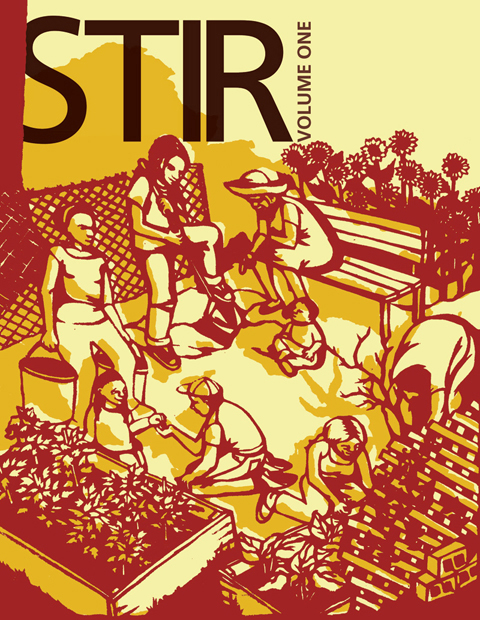
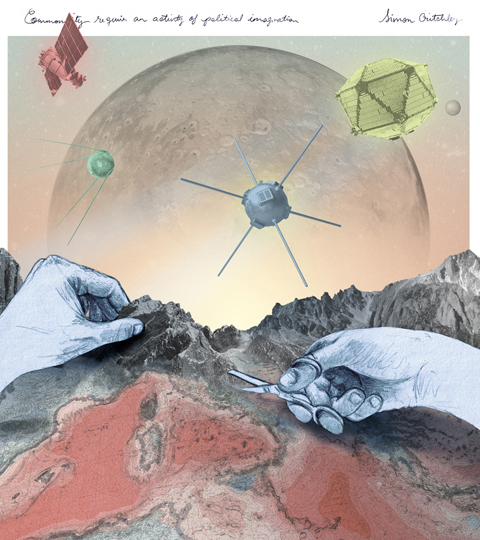


 UK Uncut gathers on the South Bank on Saturday 26th March 2011. All photography by Amelia Gregory.


 Inside Fortnum & Mason. They look super scared don’t they?


 visit web _Another_Level,