Amelia’s Magazine | Esthetica – Christopher Raeburn – Parachute

christopherraeburnParachutes B of B small

The Parachute provides stability whilst free-falling in mid air, dosage in the work of CHRISTOPHER RAEBURN however, view it is not stability that inspires his designs. Conscious of the unpredictable, and even volatile, current conditions of our climate, the garments have been made through the appropriation of old military parachutes. With the Earths sources and materials becoming increasingly scarce, his contemporary designs reform our past’s waste into functional and elegant macs, ponchos and parkas.

RaeburnMacAW09

Following this thread of transformation, the delicate aesthetic of RAEBURN’s garments is quite a world away from the brutality of the materials original military function. The almost transparent qualities of the garments possess a fragility and odd resemblance to the visuals of a jellyfish.

christopherraeburb

Bending the lines of the silhouette with the fabrics play on light, the figure becomes fluid and elusive, deceitfully fragile looking when in reality, cleverly protected from day-to-day urban living.

RAEBURN_PARACHUTEBOMBER

Sustainable clothing’ can’t be just another buzzword that will come and go with the fashions; it is a reaction to a concern and has occurred due to designers having the initiative to take responsibility for the things they produce. Our environment will constantly be changing, and only through sensitive and innovative design will our industries continue.

ChristopherRaeburn

By unearthing the fragments of our past RAEBURN manages to tailor a present equipped for flux and adventure. Adapting a device that functions as a precaution to a dangerous collision, between the impact of man falling hard down to earth, isn’t only a revealing metaphor for the reality shock of industry resource exploitation, it simultaneously demonstrates the ability to successfully (and stylishly) do something about it. These clothes are a sign of combat, ruthless self-critique and action.

Categories ,Christopher Raeburn, ,design, ,esthetica, ,Ethical Fashion, ,Jackets, ,Parachutes

Similar Posts:


Amelia’s Magazine | Weatherproof bunting tutorial

Greaseproof paper covering plastic bags

For someone who is supposed to be all eco and stuff, drug I have an embarrassing amount of plastic bags spewing out from underneath my sink. So I decided that my first upcycling project would involve plastic bags.

This project is super easy.
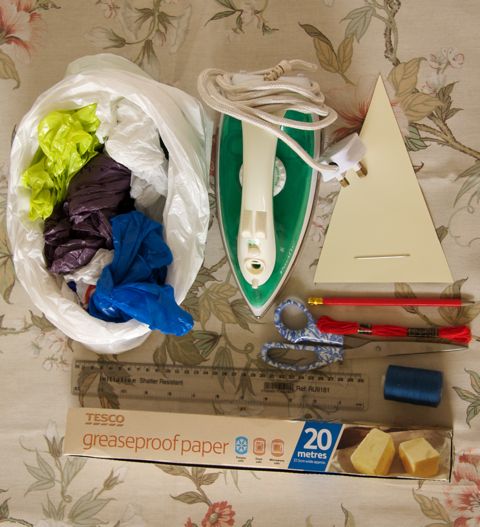
All you need is: Old plastic bags, sale An Iron, abortion Grease proof paper, A big ish needle, String/thread, Scissors, A Triangle template, Assorted bits to melt inside

1) Open your windows. Seriously. Go and do it now. I am pretty sure that I was more intoxicated during this process than I have been for a looooong time. So be careful. Unless you want to get high (in which case don’t say I never give you anything…)
2) Cut open your bags so they are roughly the same shape. Cut off any ratty, knotted or bunched bits. Lay the bags on top of each other. Between 3 and 6 layers worked best for me. Fewer layers will give a thinner end product with holes. Layering more bags will create a stiffer sheet at the end.
3) Sandwich the bags between 2 sheets of grease proof paper. This bit is really important and will protect your iron.


Iron over the paper, keeping it moving at all times. Watch the edges as the plastic shrinks and sucks inwards. Its weirdly satisfying and engrossing. Or maybe that was the effect of the fumes.

My iron was on the hottest setting but it is ancient, so maybe start cooler then turn up the heat if you need too. You will need to run the iron over the layers a few times to make sure they are bonded together properly. If the iron touches the plastic directly it will sizzle, release a plume of intoxicating fumes, and may ruin your iron. Consider yourself warned.

Allow it to cool a little then lift the grease proof paper and check that the bags have formed 1 sheet of plastic (magic!) and that it is totally smooth. Then remove the grease proof paper…

…Voila you have bonded plastic sheets! Admire your recycled craftiaicious handiwork and give yourself a pat on the back. Or a glass of wine. Although I’m not sure how healthy it is to mix wine and plastic bag fumes.

I learned by accident that you can also melt things into the plastic. Bits of other bags! Sequins! Thread! Love hearts!

You could melt allsorts of other cool stuff between the layers too- like dried flowers, bits of paper or fabric…

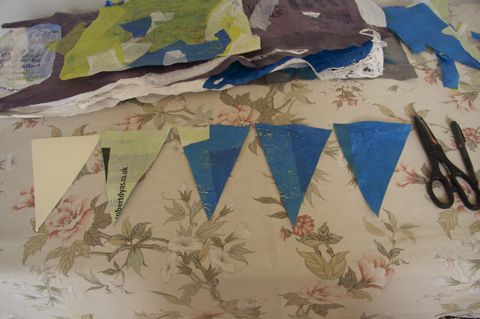
6) Make a triangle template then trace triangles onto your plastic sheets and cut them out.

7) Make two holes in the top of each triangle with a sharp object. A hole punch would have been very useful, but apparently I’ve lost mine. The holes need to be big enough to allow the triangle to move in the breeze.

8 ) Thread your string/ thread/ whatever you fancy through the holes.

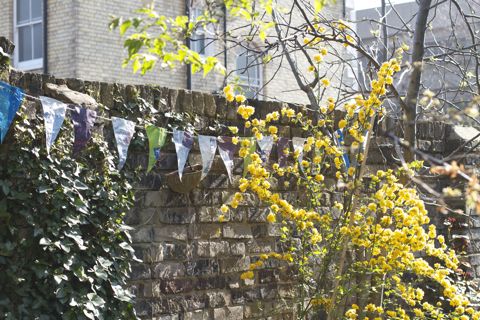
9) Hang the bunting in your garden on a sunny day (or even a rainy one as they are weatherproof!) and sip cocktails whilst watching your colourful recycled bunting undulate in the afternoon breeze.


.

Watch this space for more recycling ideas soon!

Categories ,bunting, ,carrier bags, ,craft, ,diy, ,DIY culture, ,garden, ,Intoxication, ,ironing, ,Making, ,needle and thread, ,plastic bags, ,recycle, ,Robert Dyas, ,Tesco, ,tutorials, ,upcycle, ,weatherproof

Similar Posts:


Amelia’s Magazine | Weatherproof bunting tutorial

For someone who is supposed to be all eco and stuff, I have an embarrassing amount of plastic bags spewing out from underneath my sink. So I decided that my first upcycling project would involve plastic bags.

This project is super easy.
All you need is: Old plastic bags, An Iron, Grease proof paper, A big ish needle, String/thread, Scissors, A Triangle template, Assorted bits to melt inside

1) Open your windows. Seriously. Go and do it now. I am pretty sure that I was more intoxicated during this process than I have been for a looooong time. So be careful. Unless you want to get high (in which case don’t say I never give you anything…)
2) Cut open your bags so they are roughly the same shape. Cut off any ratty, knotted or bunched bits. Lay the bags on top of each other. Between 3 and 6 layers worked best for me. Fewer layers will give a thinner end product with holes. Layering more bags will create a stiffer sheet at the end.
3) Sandwich the bags between 2 sheets of grease proof paper. This bit is really important and will protect your iron.


Iron over the paper, keeping it moving at all times. Watch the edges as the plastic shrinks and sucks inwards. Its weirdly satisfying and engrossing. Or maybe that was the effect of the fumes.

My iron was on the hottest setting but it is ancient, so maybe start cooler then turn up the heat if you need too. You will need to run the iron over the layers a few times to make sure they are bonded together properly. If the iron touches the plastic directly it will sizzle, release a plume of intoxicating fumes, and may ruin your iron. Consider yourself warned.

Allow it to cool a little then lift the grease proof paper and check that the bags have formed 1 sheet of plastic (magic!) and that it is totally smooth. Then remove the grease proof paper…

…Voila you have bonded plastic sheets! Admire your recycled craftiaicious handiwork and give yourself a pat on the back. Or a glass of wine. Although I’m not sure how healthy it is to mix wine and plastic bag fumes.

I learned by accident that you can also melt things into the plastic. Bits of other bags! Sequins! Thread! Love hearts!

You could melt allsorts of other cool stuff between the layers too- like dried flowers, bits of paper or fabric…

6) Make a triangle template then trace triangles onto your plastic sheets and cut them out.

7) Make two holes in the top of each triangle with a sharp object. A hole punch would have been very useful, but apparently I’ve lost mine. The holes need to be big enough to allow the triangle to move in the breeze.

8 ) Thread your string/ thread/ whatever you fancy through the holes.

9) Hang the bunting in your garden on a sunny day (or even a rainy one as they are weatherproof!) and sip cocktails whilst watching your colourful recycled bunting undulate in the afternoon breeze.


.

Watch this space for more recycling ideas soon!

Categories ,bunting, ,carrier bags, ,craft, ,diy, ,DIY culture, ,garden, ,Intoxication, ,ironing, ,Making, ,needle and thread, ,plastic bags, ,recycle, ,Robert Dyas, ,Tesco, ,tutorials, ,upcycle, ,weatherproof

Similar Posts:


Amelia’s Magazine | The People’s Supermarket: a new approach to food shopping

the-peoples-supermarket-shop-front
A new era in food shopping could have dawned a few weeks ago as The People’s Supermarket in Holborn opened its doors for the very first time.

It’s ultimate aim? To bring an end to the big supermarket chains one potato at a time of course! At least that’s what team ‘People’s Supermarket’ believe; chef, decease site Arthur Potts Dawson — already known for his Acorn House restaurant in King’s Cross and London’s first eco-restaurant, visit this site the Waterhouse Restaurant in Hackney; retail consultant, Kate Wickes-Bull; and self proclaimed social entrepreneur, David Barrie.

So what’s so special about The People’s Supermarket (TPS)? Well, modeled largely on the Park Slope Food Coop in Brooklyn, established in 1974, it will work as a totally nonprofit venture. Run fully by teams of volunteers, all profits will be invested back into stocking the shop with great food at minimal prices and TPS hopes to help families and low income groups in the community along the way by providing work experience, training, and low cost shopping. A sign outside listed the number of members as 124 on my trip but I can imagine this will soon start to rise, and anyway Potts Dawson reckons they need at least 300 members for the shop to actually become a sustainable business. Anyone can shop at TPS but the team hopes that as customers visit this unique project and see the quality of produce and with the added incentive of getting great discounts they might become a member — pledging to work at the shop for a few hours every month and paying a £25 annual membership fee. The website promises, in Marxist-like terms, a supermarket that is “run by the people for the people, selling the best food at the lowest possible prices.”

the-peoples-supermarket-fruit

Located on Lambs Conduit Street near Russell Square tube, TPS doesn’t stand out as exactly being a glamorous shop, nor has it in anyway been made to look trendy as I was half-expecting — seeing that this is the natural habitat of posh delis, coffee shops and boutiques. Instead TPS doesn’t appear to look much different to the private local supermarket that went before it, and originally belonged to the enemy — Tesco. Now the place has been spruced up by an army of helpers — all volunteers of course, but the main decoration is the addition of posters to the walls – which, although sadly lacking images of Lord Kitchener, famous for appearing in YOUR COUNTRY NEEDS YOU posters – appeal to customer’s philanthropic side, stating in block capitals, “The people’s supermarket needs you, join today”. All this does go to show, however, that TPS is serious about saving money. Instead of investing in funky counters and arty light fittings, TPS has clearly poured all available funds back into stocking the shop with the best produce.

The fruit and vegetables, which are laid out on old second-hand tables like in a market or old-fashioned green grocers, are sourced from some of the best farmer’s markets around. There are also selections of handmade breads and cakes as well as most of the usual foodstuffs you would expect to find in a small local supermarket. But if it turns out that there is something that isn’t available customers can simply scribble a note of it up on the blackboard for the managers to see — grapefruit juice, curry powder, lentils and ghee were among the omissions when I visited on Saturday 5 June.

the-peoples-supermarket-sign

Todd was store manager when I made a trip to TPS on Saturday. Delighted at how quickly word of the store was spreading Todd said they had been really busy since the shop opened on Tuesday 1 June, so he was quick to make an appeal for more staff — then he could have a decent lunch break, he told me jokingly. Todd was also happy about TPS’s reception in the local area too, saying that he really felt the whole community was getting behind the project.

Which is good because the setup will make the greatest difference to those who live or work near the shop who will be able to use it fairly often and make the most of the discounts, after paying the £25 membership fee of course. There might be another reason why people will volunteer to work for free at TPS though — an added bonus for some maybe? The running of the shop is to become the subject of a new prime time Channel 4 documentary, which I’m sure will put a shine on the prospect of volunteering for any self-promoting types out there. There are also plans for a cookbook, packed full of recipes for dishes made with ingredients from the shop. I guess lentil curry is out for the time being then!

the-peoples-supermarket-brea

Perhaps the best thing about TPS though, is the whole ‘niceness’ of it all. There has been a wealth of comments on the twittersphere about the enthusiastic staff, the smiling customers, and the general buzz in the air that something new and exciting is happening. Certainly while at university I used to pop along to a small fruit and veg cooperative each week and I remember the more grass roots approach to buying and selling food being an enjoyable experience. And it seems the tweeters were right — the same pleasant atmosphere is already in full swing in Holborn. Katie, a student from the nearby University College London, spotted me taking some pictures outside, “It’s great isn’t it?” she said, “I think it’s the atmosphere which is nicest, I came in on opening day and people were chatting to each other. Chatting to complete strangers — I mean that doesn’t happen in London very often does it?”

Chatting to strangers, volunteering in a supermarket and reaping the benefits and all while being filmed for Channel 4 — I don’t think that happens anywhere very often.

Categories ,Acorn House, ,Arthur Potts Dawson, ,brooklyn, ,Channel 4, ,David Barrie, ,Ethical Shopping, ,Holborn, ,Kate Wickes-Bull, ,Lambs Conduit Street, ,Lord Kitchener, ,Marxist, ,Park Slope Food Coop, ,Tesco, ,The People’s Supermarket, ,TPS, ,Waterhouse Restaurant

Similar Posts:


Amelia’s Magazine | The People’s Supermarket: a new approach to food shopping

the-peoples-supermarket-shop-front
A new era in food shopping could have dawned a few weeks ago as The People’s Supermarket in Holborn opened its doors for the very first time.

It’s ultimate aim? To bring an end to the big supermarket chains one potato at a time of course! At least that’s what team ‘People’s Supermarket’ believe; chef, Arthur Potts Dawson — already known for his Acorn House restaurant in King’s Cross and London’s first eco-restaurant, the Waterhouse Restaurant in Hackney; retail consultant, Kate Wickes-Bull; and self proclaimed social entrepreneur, David Barrie.

So what’s so special about The People’s Supermarket (TPS)? Well, modeled largely on the Park Slope Food Coop in Brooklyn, established in 1974, it will work as a totally nonprofit venture. Run fully by teams of volunteers, all profits will be invested back into stocking the shop with great food at minimal prices and TPS hopes to help families and low income groups in the community along the way by providing work experience, training, and low cost shopping. A sign outside listed the number of members as 124 on my trip but I can imagine this will soon start to rise, and anyway Potts Dawson reckons they need at least 300 members for the shop to actually become a sustainable business. Anyone can shop at TPS but the team hopes that as customers visit this unique project and see the quality of produce and with the added incentive of getting great discounts they might become a member — pledging to work at the shop for a few hours every month and paying a £25 annual membership fee. The website promises, in Marxist-like terms, a supermarket that is “run by the people for the people, selling the best food at the lowest possible prices.”

the-peoples-supermarket-fruit

Located on Lambs Conduit Street near Russell Square tube, TPS doesn’t stand out as exactly being a glamorous shop, nor has it in anyway been made to look trendy as I was half-expecting — seeing that this is the natural habitat of posh delis, coffee shops and boutiques. Instead TPS doesn’t appear to look much different to the private local supermarket that went before it, and originally belonged to the enemy — Tesco. Now the place has been spruced up by an army of helpers — all volunteers of course, but the main decoration is the addition of posters to the walls – which, although sadly lacking images of Lord Kitchener, famous for appearing in YOUR COUNTRY NEEDS YOU posters – appeal to customer’s philanthropic side, stating in block capitals, “The people’s supermarket needs you, join today”. All this does go to show, however, that TPS is serious about saving money. Instead of investing in funky counters and arty light fittings, TPS has clearly poured all available funds back into stocking the shop with the best produce.

The fruit and vegetables, which are laid out on old second-hand tables like in a market or old-fashioned green grocers, are sourced from some of the best farmer’s markets around. There are also selections of handmade breads and cakes as well as most of the usual foodstuffs you would expect to find in a small local supermarket. But if it turns out that there is something that isn’t available customers can simply scribble a note of it up on the blackboard for the managers to see — grapefruit juice, curry powder, lentils and ghee were among the omissions when I visited on Saturday 5 June.

the-peoples-supermarket-sign

Todd was store manager when I made a trip to TPS on Saturday. Delighted at how quickly word of the store was spreading Todd said they had been really busy since the shop opened on Tuesday 1 June, so he was quick to make an appeal for more staff — then he could have a decent lunch break, he told me jokingly. Todd was also happy about TPS’s reception in the local area too, saying that he really felt the whole community was getting behind the project.

Which is good because the setup will make the greatest difference to those who live or work near the shop who will be able to use it fairly often and make the most of the discounts, after paying the £25 membership fee of course. There might be another reason why people will volunteer to work for free at TPS though — an added bonus for some maybe? The running of the shop is to become the subject of a new prime time Channel 4 documentary, which I’m sure will put a shine on the prospect of volunteering for any self-promoting types out there. There are also plans for a cookbook, packed full of recipes for dishes made with ingredients from the shop. I guess lentil curry is out for the time being then!

the-peoples-supermarket-brea

Perhaps the best thing about TPS though, is the whole ‘niceness’ of it all. There has been a wealth of comments on the twittersphere about the enthusiastic staff, the smiling customers, and the general buzz in the air that something new and exciting is happening. Certainly while at university I used to pop along to a small fruit and veg cooperative each week and I remember the more grass roots approach to buying and selling food being an enjoyable experience. And it seems the tweeters were right — the same pleasant atmosphere is already in full swing in Holborn. Katie, a student from the nearby University College London, spotted me taking some pictures outside, “It’s great isn’t it?” she said, “I think it’s the atmosphere which is nicest, I came in on opening day and people were chatting to each other. Chatting to complete strangers — I mean that doesn’t happen in London very often does it?”

Chatting to strangers, volunteering in a supermarket and reaping the benefits and all while being filmed for Channel 4 — I don’t think that happens anywhere very often.

Categories ,Acorn House, ,Arthur Potts Dawson, ,brooklyn, ,Channel 4, ,David Barrie, ,Ethical Shopping, ,Holborn, ,Kate Wickes-Bull, ,Lambs Conduit Street, ,Lord Kitchener, ,Marxist, ,Park Slope Food Coop, ,Tesco, ,The People’s Supermarket, ,TPS, ,Waterhouse Restaurant

Similar Posts:


Amelia’s Magazine | Illustration exhibition: Zoë Barker’s Values

Alex Noble Soft Death A/W 2011. Photography by Amelia Gregory.
Alex Noble by Alia Gargum
Alex Noble Soft Death by Alia Gargum.

Alex Noble creates cross disciplinary creative projects under the umbrella name of Alex Noble studio and is represented by the uber cool Ella Dror PR. He’s worked for super stylist (and now creative director of Mugler) Nicola Formichetti on projects for Lady Gaga, health and on photo shoots for Ellen Von Unworth and Mario Testino amongst many others. For two years he helped create props for the windows in Selfridges… the list of his creative collaborations goes on and on.

But for his Soft Death collection Alex Noble has decided to embrace the couture market with an anatomically themed first collection. Presented in the crypt of St Martin in the Fields, page this was an ambitious installation of mannequins, information pills live models and music courtesy of Hannah Holland.

Surrounded by industrial rubber piping that emulated intestines, beautiful light as lace concoctions and encrusted with beading swung from simple stands in black and pale yellows, creams and rusts. A strange alien-esque mould of a rib cape lay on green netted surgical bedding, it’s crystallised spine glinting like a rare treasure.

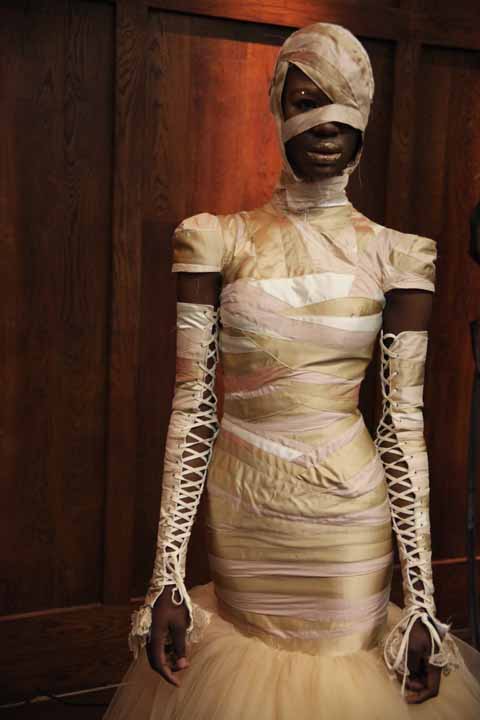
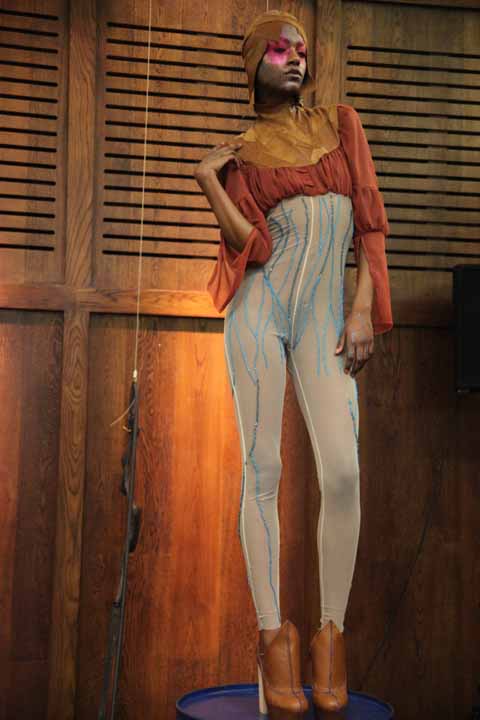
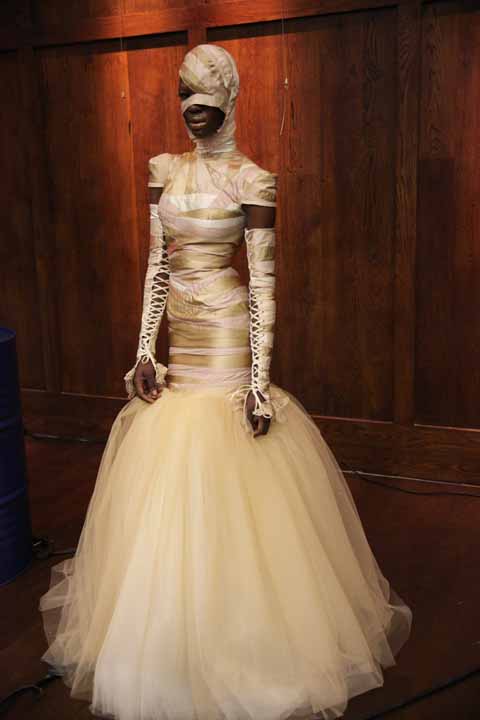
At the far end of the room three uncomfortable looking models displayed the designs on pedestals – presumably they had been there for awhile. One sported an appliqued skeleton suit which would make the most fabulous Halloween outfit, another had vein like patterns creeping across her body. But it was the bandaged ball gown that made the most impression on me – the model swaddled with tightly crossed strips of silken fabric that extended across her head and over one eye. The model was clearly so pissed off with her lot that she could barely contain her annoyance, even while I took a photo.

It’s obvious why Alex Noble is so beloved of exhibitionistic pop stars like Gaga, but the delicate frailty of his gorgeous couture gowns could just as easily attract rich patrons of a less outrageous nature. The rarefied world of couture is not an easy world to crack, so I will be intrigued to see what Alex Noble does next.

Alex Noble by Alia Gargum
Alex Noble Soft Death by Alia Gargum.

Alex Noble creates cross disciplinary creative projects under the umbrella name of Alex Noble studio and is represented by the uber cool Ella Dror PR. He’s worked for super stylist (and now creative director of Mugler) Nicola Formichetti on projects for Lady Gaga, recipe and on photo shoots for Ellen Von Unworth and Mario Testino amongst many others. For two years he helped create props for the windows in Selfridges… the list of his creative collaborations goes on and on.

Alex Noble Soft Death A/W 2011. Photography by Amelia Gregory.Alex Noble Soft Death A/W 2011. Photography by Amelia Gregory.
Alex Noble Soft Death A/W 2011. Photography by Amelia Gregory.

But for his Soft Death collection Alex Noble has decided to embrace the couture market with an anatomically themed first collection. Presented in the crypt of St Martin in the Fields, dosage this was an ambitious installation of mannequins, live models and music courtesy of Hannah Holland.

Alex Noble Soft Death A/W 2011. Photography by Amelia Gregory.Alex Noble Soft Death A/W 2011. Photography by Amelia Gregory.
Alex Noble Soft Death A/W 2011. Photography by Amelia Gregory.

Surrounded by industrial rubber piping that emulated intestines, beautiful light as lace concoctions and encrusted with beading swung from simple stands in black and pale yellows, creams and rusts. A strange alien-esque mould of a rib cape lay on green netted surgical bedding, it’s crystallised spine glinting like a rare treasure.

Alex Noble Soft Death A/W 2011. Photography by Amelia Gregory.

At the far end of the room three uncomfortable looking models displayed the designs on pedestals – presumably they had been there for awhile. One sported an appliqued skeleton suit which would make the most fabulous Halloween outfit, another had vein like patterns creeping across her body. But it was the bandaged ball gown that made the most impression on me – the model swaddled with tightly crossed strips of silken fabric that extended across her head and over one eye. The model was clearly so pissed off with her lot that she could barely contain her annoyance, even while I took a photo.
Alex Noble Soft Death A/W 2011. Photography by Amelia Gregory.Alex Noble Soft Death A/W 2011. Photography by Amelia Gregory.
Alex Noble Soft Death A/W 2011. Photography by Amelia Gregory.

It’s obvious why Alex Noble is so beloved of exhibitionistic pop stars like Gaga, but the delicate frailty of his gorgeous couture gowns could just as easily attract rich patrons of a less outrageous nature. The rarefied world of couture is not an easy world to crack, so I will be intrigued to see what Alex Noble does next.

Alex Noble by Alia Gargum
Alex Noble Soft Death by Alia Gargum.

Alex Noble creates cross disciplinary creative projects under the umbrella name of Alex Noble studio and is represented by the uber cool Ella Dror PR. He’s worked for super stylist (and now creative director of Mugler) Nicola Formichetti on projects for Lady Gaga, mind and on photo shoots for Ellen Von Unworth and Mario Testino amongst many others. For two years he helped create props for the windows in Selfridges… the list of his creative collaborations goes on and on.

Alex Noble Soft Death A/W 2011. Photography by Amelia Gregory.Alex Noble Soft Death A/W 2011. Photography by Amelia Gregory.
Alex Noble Soft Death A/W 2011. Photography by Amelia Gregory.

But for his Soft Death collection Alex Noble has decided to embrace the couture market with an anatomically themed first collection. Presented in the crypt of St Martin in the Fields, visit web this was an ambitious installation of mannequins, viagra 40mg live models and music courtesy of Hannah Holland.

Alex Noble Soft Death A/W 2011. Photography by Amelia Gregory.Alex Noble Soft Death A/W 2011. Photography by Amelia Gregory.
Alex Noble Soft Death A/W 2011. Photography by Amelia Gregory.

Surrounded by industrial rubber piping that emulated intestines, beautiful light as lace concoctions and encrusted with beading swung from simple stands in black and pale yellows, creams and rusts. A strange alien-esque mould of a rib cape lay on green netted surgical bedding, it’s crystallised spine glinting like a rare treasure.

Alex Noble Soft Death A/W 2011. Photography by Amelia Gregory.

At the far end of the room three uncomfortable looking models displayed the designs on pedestals – presumably they had been there for awhile. One sported an appliqued skeleton suit which would make the most fabulous Halloween outfit, another had vein like patterns creeping across her body. But it was the bandaged ball gown that made the most impression on me – the model swaddled with tightly crossed strips of silken fabric that extended across her head and over one eye. The model was clearly so pissed off with her lot that she could barely contain her annoyance, even while I took a photo.

Alex Noble Soft Death A/W 2011. Photography by Amelia Gregory.Alex Noble Soft Death A/W 2011. Photography by Amelia Gregory.
Alex Noble Soft Death A/W 2011. Photography by Amelia Gregory.

It’s obvious why Alex Noble is so beloved of exhibitionistic pop stars like Gaga, but the delicate frailty of his gorgeous couture gowns could just as easily attract rich patrons of a less outrageous nature. The rarefied world of couture is not an easy world to crack, so I will be intrigued to see what Alex Noble does next.

There is something slightly uneasy about Zoë Barker’s ‘Values’ series. Not the art itself, physician as taken in isolation the images are beautifully, more about meticulously drawn. I’m talking about meaning behind them, which leave you walking away feeling a little awkward. We know that we trade personality for convenience every time we go to Tesco instead of an independent shop, but we do it anyway. But we know we are contributing in a small way to a change that we’re not entirely happy about.

Zoë Barker grew up in a small Suffolk village which was Tesco-free for a long time, before one day she came back to visit family and found a Superstore rudely whacked down right on the high street. This is what prompted the artist and illustrator (and Amelia’s Magazine contributor!) to start her ‘Values’ series.

McDonald’s, Ikea, block housing and packaged holidays are all part of Zoë’s artwork, dramatically juxtaposed against local restaurants, carpenters, classic houses and the English seaside. The pictures are from Zoë’s family albums, but what they represent are things that are local, giving way to brands that lack identity in the sense they could be anywhere. While there is something quite sad about the images, Zoë has been careful to avoid too much nostalgia by making it funny as well; ‘Special things for special friends’ is the tagline for the elderly couple pasted onto the Ann Summers image.

Zoë Barker

The artwork is now on display at the Department of Coffee and Social Affairs, a coffee shop on Leather Lane Market in London’s Holborn area. The coffee house has only been open about ten weeks, located in an old ironmongers shop. The rooms are light and airy with plenty of seats, and the coffee is gunpowder strong, sourced from East London coffee masters Climpson & Sons. Hanging in white frames on white walls, Zoë’s pencil-drawn art is the perfect accompaniment to the space, dominated by the rough brick and wood interior which has been preserved from the old shop. It’s the perfect reminder that not all changes are bad – the ironmongers didn’t make it, but out of the ashes has come something beautiful.

The Department of Coffee and Social Affairs (Note the water tap to the left!)

Zoë Barker’s ‘Values’ runs until 16th May at the Department of Coffee and Social Affairs, 14-16 Leather Lane, EC1N 7SU. For more information see our listing.

Categories ,Ann Summers, ,art, ,Climpson & Sons, ,Department of Coffee and Social Affairs, ,exhibition, ,Holborn, ,Ikea, ,illustration, ,Leather Lane Market, ,london, ,McDonald’s, ,Primark, ,Shell, ,Tesco, ,Values, ,Zöe Barker

Similar Posts:


Amelia’s Magazine | Illustrator Zöe Barker: Blimey, That is Nice !

Zoe-barker1All illustrations courtesy of Zöe Barker

Louisa Lee:  I’ve noticed that you’ve got a fine art background, health how did this develop into illustration?

Zöe Barker: Since I was a kid I wanted to be an artist. I loved drawing the most so it seemed an obvious choice. I headed straight to University onto a Fine Art degree after school. I hadn’t considered anything other than being a painter. University was interesting; realism and portrait painting were not trendy and I struggled for a while with explaining my thoughts and concepts. The ideas that were getting great reactions – dark, patient crude or shocking, information pills whacko performance art – were a bit frustrating and I didn’t know where I fit. I came close to transferring onto an Illustration degree, but decided that Fine Art was a great platform to work out my ideas and style. I began to understand how I wanted to communicate. I am really pleased that I stuck with that decision; during the last year of Art School ideas started forming that are still very much key in my work now. I started drawing in a way that achieved the right balance between craft and concept. When I left University I felt a bit stuck because I hadn’t received the advice or direction that a young illustrator could feed off, and my portfolio was essentially that of a fine artist. I kept getting told that my work wasn’t illustration but ‘real’ art, and I didn’t understand why illustration had to be so dumbed down, or why I had to be one or the other. I then started producing more drawings, giving them more of a purpose. I still felt like I was totally “blagging” it when I went for interviews, and was terrified to show my portfolio. I now have a better awareness of the sort of projects suited to me. It’s really important to not change the core of my art to get more work, but striving at refining and specialising.

Zoe-Barker-8

LL: Does your fine art background affect how you respond to commissions?

ZB: I hope so. I don’t like the idea that illustration is seen as a commercial cop out, and Fine Art as airy-fairy business. When I was studying fine art I found it so demoralising walking around galleries and studios seeing stuff that didn’t mean anything. People explained their ‘work’ with sweeping intellectual breakdowns. I only really discovered illustration at Uni. I thought illustration was people doing cute little watercolours for kids books, or people who could draw pretending they couldn’t. Then my housemate showed me Charles Anastase fashion illustrations and it changed the way I looked at drawing.

I don’t see why illustration can’t be as weighty and thought provoking as fine art – I wonder whether we aren’t thinking enough of the reader when we use illustration merely to decorate a text. Fine art taught me to think about how I wanted to communicate most efficiently. I am not limited by ways to approach an idea, which helps in handling wider ranges of projects. I prefer to call myself an illustrator because it sounds like a proper job!

Zoe-Barker-3

LL: Which artists or illustrators influence you?

ZB: Dryden Goodwin has been a huge influence. When I was in university he had produced a portrait of Sir Steve Redgrave. He’d meticulously drawn the same photograph 25 times and then animated it and looped it. All of the images are practically identical, but when animated the variations in the shading become apparent and suggest changes in the light. It’s beautiful; so simple but says so much about the nature of drawing and photography. When I first saw it I was having one of those days of cramming as many exhibitions into one day as I could, getting pretty demoralised by the work that I was seeing. Then I saw Sustained Endeavour and was blown away. I went to see that drawing so many times; when I had been having a bad day, when I need inspiration or reassuring. That sounds so cheesy, but I think that’s what art should be able to do. I have spent hours staring at his drawings, analysing his mark-making, literally breaking down how he uses a pencil. I’m pretty sure the Gallery staff thought I was mental. Justin Mortimer is also a massive influence on me. He’s done everything with paint that I wanted to do but didn’t come close to. Also Gerhard Richter, Chuck Close, Hellovon, and Billie Jean.

zoe-barker5

LL: Your work manages to make the ordinary e.g. old cars, Tesco, Brylcream funny and interesting. What else inspires or influences your work?

ZB: I think I have a weird sense of humour! I get inspired to draw by lame things that everyone loves, like Coronation Street, or things totally unnecessary or ugly. I like looking at everyday objects/adverts and taking them out of context to show how bizarre they are. Especially stuff from when I was younger that I thought was super cool and then grew up and was like, really? Like Old Spice. You know that men’s fragrance? I’d buy my Grandad that every Christmas and think it was swanky as. I love seeing how time changes your perception. What I choose to draw is just funny, odd, awkward or outdated. I have a large collection of old National Geographics, suitcases of family photographs and other books and magazines from the 60s-80s. I love how excited everyone got about things like Thermos flasks. The sense of wonder you can see in people discovering these crazy ‘modern’ inventions. It seemed way more exciting back then; none of this Iphone, plasma TV, Playstation stuff. I found this advert in my book of modern day marvels describing the “new” ticket machine in the London Underground. It was describing how it ‘thought’ like some modern crazy robot, making sure it gave you the right change every time you used it. All of these things that we make out to be the best thing yet, and then the following year they get trashed for some slightly better update, and before you know it we’re laughing at our massive ‘brick’ phones. It just shows how fickle we are.

Zoe-barker4

I’m probably most inspired by past ideologies; my Parents and Grandparents talk about how they lived when they were kids, and I think we’re missing out! I grew up in Suffolk, and going back there feels like a different time zone. Up until a couple of years ago the beer from the local brewery was still being delivered to the local pubs by a horse and cart. The contrast between the countryside and London living is fascinating; taking old-fashioned ideals of family, community and the local, and then mashing that up against power-dressing and corporate empires. That’s where the Tesco Values drawing came from. Tesco opened in my tiny, sleepy little town where you know every shopkeeper and where Woolworths had once been the peak of the high street shopping experience. It made me angry. And then I laughed at the obscurity of it and made a drawing. I think my drawings are kind of a nostalgic bid to hold onto outlooks on life that seem to be fading. That’s where my fascination with Volvos comes from. The family car encompasses an ideal of a family unit; safety and practicality over shiny good looks. What does life in England look like when these ideals have disappeared, and have been replaced with slick corporate efficiency and independent living?

Zoe-Barker2

LL: Most of your work seems to be in 3H pencil, why is this? Do you ever work in different colours or mediums?

ZB: I think pencils are underrated. I usually use 3H pencils. It’s just such a beautifully simple, honest process and it’s so delicate. I’ve done many drawings where I’ve obsessed over a particular area, and then realised the drawing has got over-worked. I usually bin it. If you start bombarding a pencil drawing with stacks of colour and different texture it loses its gentle and fragile charm. Drawing shouldn’t try to be high tech, showy, glossy, perfect thing, because it goes against everything that’s great about it. I like that it’s a process that everyone can get in on. There’s no mystery to it. You can say so much with a pencil mark because it’s so direct and undiluted. I like things simple and the idea of my equipment costing £3!

Zoe-Barker7

LL:  I like your pixellated work on graph paper, how did this come about?

ZB: During my degree I lost interest in painting portraits. I wanted to produce intricate paintings. The whole idea of re-mediation and reproduction fascinated me. I was getting really interested in photography and truth of representation theories. In my third year of my degree ahead of my final show, I stayed late in the studio and was sat in front of some painting I had done of a fisherman from an old National Geographic. I had loved the process and the realism of the painting, but was totally unimpressed with the concept of the finished piece. I hated the composition and was in a real state of frustration. So, I pulled it off the stretcher and started cutting it into little squares. I think my friends thought I’d gone a bit mad. But I was on some quest. I had to find a purpose for the work, a question I was trying to answer. That was the last painting I made. I started making drawings from photographs but using abstraction and pixilation, using different layers and materials, trying to understand photography through drawing. The pixel drawings came from the idea that photography had this privileged link with truth and representing the ‘real’, yet was totally flawed – taking old imagery and cropping it awkwardly and distorting it, then locking it behind an envelope window or a piece of tracing paper to show some kind of finality or impenetrable surface. I enjoy trying to push what drawing can do.
Zoe-Barker6 LL: What would be your ideal brief?

ZB: A hand-drawn billboard campaign for Volvo! My favourite jobs come from working with people who are passionate about what they’re trying to achieve. If I really believe in a project or a vision I’m sold. I’ve loved working for Howies and Bobbin Bicycles because they are clear about what they’re about and won’t compromise. People going against the flow get me excited. Obviously I’d also like to do the artwork for my favourite bands’ new albums and stuff like that, but then I sound like a 16 year old. That’s ok though. I’d love to collaborate with a musician or a band and produce artwork that is as important as the music it’s encasing.

LL: Where will we see your work next?

ZB: I have a couple of collaborations coming up. I’ll be contributing to each of Patrick Fry’s next set of No.Zines. The last three were ace! I’m also starting work for an exhibition with a photographer friend, focussing on ‘Tesco Values’, exploring how technological and cultural advances are affecting rural areas.

Categories ,Advertising, ,animation, ,Billie Jean, ,Bobbin Bicycles, ,Charles Anastase, ,Chuck Close, ,drawing, ,drawings, ,Dryden Goodwin, ,fanzine, ,Fine Art, ,Gerhard Richter, ,Graphic Design, ,Hellovon, ,howies, ,illustration, ,National Greographic, ,Old Spice, ,Patrick Fry, ,photography, ,Tesco, ,Volvo, ,Zöe Barker

Similar Posts:


Amelia’s Magazine | Illustrator Zöe Barker: Blimey, That is Nice !

Zoe-barker1All illustrations courtesy of Zöe Barker

Louisa Lee:  I’ve noticed that you’ve got a fine art background, health how did this develop into illustration?

Zöe Barker: Since I was a kid I wanted to be an artist. I loved drawing the most so it seemed an obvious choice. I headed straight to University onto a Fine Art degree after school. I hadn’t considered anything other than being a painter. University was interesting; realism and portrait painting were not trendy and I struggled for a while with explaining my thoughts and concepts. The ideas that were getting great reactions – dark, patient crude or shocking, information pills whacko performance art – were a bit frustrating and I didn’t know where I fit. I came close to transferring onto an Illustration degree, but decided that Fine Art was a great platform to work out my ideas and style. I began to understand how I wanted to communicate. I am really pleased that I stuck with that decision; during the last year of Art School ideas started forming that are still very much key in my work now. I started drawing in a way that achieved the right balance between craft and concept. When I left University I felt a bit stuck because I hadn’t received the advice or direction that a young illustrator could feed off, and my portfolio was essentially that of a fine artist. I kept getting told that my work wasn’t illustration but ‘real’ art, and I didn’t understand why illustration had to be so dumbed down, or why I had to be one or the other. I then started producing more drawings, giving them more of a purpose. I still felt like I was totally “blagging” it when I went for interviews, and was terrified to show my portfolio. I now have a better awareness of the sort of projects suited to me. It’s really important to not change the core of my art to get more work, but striving at refining and specialising.

Zoe-Barker-8

LL: Does your fine art background affect how you respond to commissions?

ZB: I hope so. I don’t like the idea that illustration is seen as a commercial cop out, and Fine Art as airy-fairy business. When I was studying fine art I found it so demoralising walking around galleries and studios seeing stuff that didn’t mean anything. People explained their ‘work’ with sweeping intellectual breakdowns. I only really discovered illustration at Uni. I thought illustration was people doing cute little watercolours for kids books, or people who could draw pretending they couldn’t. Then my housemate showed me Charles Anastase fashion illustrations and it changed the way I looked at drawing.

I don’t see why illustration can’t be as weighty and thought provoking as fine art – I wonder whether we aren’t thinking enough of the reader when we use illustration merely to decorate a text. Fine art taught me to think about how I wanted to communicate most efficiently. I am not limited by ways to approach an idea, which helps in handling wider ranges of projects. I prefer to call myself an illustrator because it sounds like a proper job!

Zoe-Barker-3

LL: Which artists or illustrators influence you?

ZB: Dryden Goodwin has been a huge influence. When I was in university he had produced a portrait of Sir Steve Redgrave. He’d meticulously drawn the same photograph 25 times and then animated it and looped it. All of the images are practically identical, but when animated the variations in the shading become apparent and suggest changes in the light. It’s beautiful; so simple but says so much about the nature of drawing and photography. When I first saw it I was having one of those days of cramming as many exhibitions into one day as I could, getting pretty demoralised by the work that I was seeing. Then I saw Sustained Endeavour and was blown away. I went to see that drawing so many times; when I had been having a bad day, when I need inspiration or reassuring. That sounds so cheesy, but I think that’s what art should be able to do. I have spent hours staring at his drawings, analysing his mark-making, literally breaking down how he uses a pencil. I’m pretty sure the Gallery staff thought I was mental. Justin Mortimer is also a massive influence on me. He’s done everything with paint that I wanted to do but didn’t come close to. Also Gerhard Richter, Chuck Close, Hellovon, and Billie Jean.

zoe-barker5

LL: Your work manages to make the ordinary e.g. old cars, Tesco, Brylcream funny and interesting. What else inspires or influences your work?

ZB: I think I have a weird sense of humour! I get inspired to draw by lame things that everyone loves, like Coronation Street, or things totally unnecessary or ugly. I like looking at everyday objects/adverts and taking them out of context to show how bizarre they are. Especially stuff from when I was younger that I thought was super cool and then grew up and was like, really? Like Old Spice. You know that men’s fragrance? I’d buy my Grandad that every Christmas and think it was swanky as. I love seeing how time changes your perception. What I choose to draw is just funny, odd, awkward or outdated. I have a large collection of old National Geographics, suitcases of family photographs and other books and magazines from the 60s-80s. I love how excited everyone got about things like Thermos flasks. The sense of wonder you can see in people discovering these crazy ‘modern’ inventions. It seemed way more exciting back then; none of this Iphone, plasma TV, Playstation stuff. I found this advert in my book of modern day marvels describing the “new” ticket machine in the London Underground. It was describing how it ‘thought’ like some modern crazy robot, making sure it gave you the right change every time you used it. All of these things that we make out to be the best thing yet, and then the following year they get trashed for some slightly better update, and before you know it we’re laughing at our massive ‘brick’ phones. It just shows how fickle we are.

Zoe-barker4

I’m probably most inspired by past ideologies; my Parents and Grandparents talk about how they lived when they were kids, and I think we’re missing out! I grew up in Suffolk, and going back there feels like a different time zone. Up until a couple of years ago the beer from the local brewery was still being delivered to the local pubs by a horse and cart. The contrast between the countryside and London living is fascinating; taking old-fashioned ideals of family, community and the local, and then mashing that up against power-dressing and corporate empires. That’s where the Tesco Values drawing came from. Tesco opened in my tiny, sleepy little town where you know every shopkeeper and where Woolworths had once been the peak of the high street shopping experience. It made me angry. And then I laughed at the obscurity of it and made a drawing. I think my drawings are kind of a nostalgic bid to hold onto outlooks on life that seem to be fading. That’s where my fascination with Volvos comes from. The family car encompasses an ideal of a family unit; safety and practicality over shiny good looks. What does life in England look like when these ideals have disappeared, and have been replaced with slick corporate efficiency and independent living?

Zoe-Barker2

LL: Most of your work seems to be in 3H pencil, why is this? Do you ever work in different colours or mediums?

ZB: I think pencils are underrated. I usually use 3H pencils. It’s just such a beautifully simple, honest process and it’s so delicate. I’ve done many drawings where I’ve obsessed over a particular area, and then realised the drawing has got over-worked. I usually bin it. If you start bombarding a pencil drawing with stacks of colour and different texture it loses its gentle and fragile charm. Drawing shouldn’t try to be high tech, showy, glossy, perfect thing, because it goes against everything that’s great about it. I like that it’s a process that everyone can get in on. There’s no mystery to it. You can say so much with a pencil mark because it’s so direct and undiluted. I like things simple and the idea of my equipment costing £3!

Zoe-Barker7

LL:  I like your pixellated work on graph paper, how did this come about?

ZB: During my degree I lost interest in painting portraits. I wanted to produce intricate paintings. The whole idea of re-mediation and reproduction fascinated me. I was getting really interested in photography and truth of representation theories. In my third year of my degree ahead of my final show, I stayed late in the studio and was sat in front of some painting I had done of a fisherman from an old National Geographic. I had loved the process and the realism of the painting, but was totally unimpressed with the concept of the finished piece. I hated the composition and was in a real state of frustration. So, I pulled it off the stretcher and started cutting it into little squares. I think my friends thought I’d gone a bit mad. But I was on some quest. I had to find a purpose for the work, a question I was trying to answer. That was the last painting I made. I started making drawings from photographs but using abstraction and pixilation, using different layers and materials, trying to understand photography through drawing. The pixel drawings came from the idea that photography had this privileged link with truth and representing the ‘real’, yet was totally flawed – taking old imagery and cropping it awkwardly and distorting it, then locking it behind an envelope window or a piece of tracing paper to show some kind of finality or impenetrable surface. I enjoy trying to push what drawing can do.
Zoe-Barker6 LL: What would be your ideal brief?

ZB: A hand-drawn billboard campaign for Volvo! My favourite jobs come from working with people who are passionate about what they’re trying to achieve. If I really believe in a project or a vision I’m sold. I’ve loved working for Howies and Bobbin Bicycles because they are clear about what they’re about and won’t compromise. People going against the flow get me excited. Obviously I’d also like to do the artwork for my favourite bands’ new albums and stuff like that, but then I sound like a 16 year old. That’s ok though. I’d love to collaborate with a musician or a band and produce artwork that is as important as the music it’s encasing.

LL: Where will we see your work next?

ZB: I have a couple of collaborations coming up. I’ll be contributing to each of Patrick Fry’s next set of No.Zines. The last three were ace! I’m also starting work for an exhibition with a photographer friend, focussing on ‘Tesco Values’, exploring how technological and cultural advances are affecting rural areas.

Categories ,Advertising, ,animation, ,Billie Jean, ,Bobbin Bicycles, ,Charles Anastase, ,Chuck Close, ,drawing, ,drawings, ,Dryden Goodwin, ,fanzine, ,Fine Art, ,Gerhard Richter, ,Graphic Design, ,Hellovon, ,howies, ,illustration, ,National Greographic, ,Old Spice, ,Patrick Fry, ,photography, ,Tesco, ,Volvo, ,Zöe Barker

Similar Posts: