Amelia’s Magazine | UK Uncut, Green & Black Cross, Black Bloc & the March for the Alternative.

buy purchase _Another_Level, approved _4x4x3m,_mixed_media_including_reclaimed_wood,_glass_flowers,_taxidermied_bird,_flower_pots,_2009_courtesy_the_artist_and_EB&Flow” width=”480″ height=”320″ class=”aligncenter size-full wp-image-38966″ />
Katie Louise Surridge, Another Level. Mixed media including reclaimed wood, glass flowers, taxidermied bird, flower pots.

Amidst the renovations and general detritus that inevitably comes when you do a top to toe renovation of a two floored building, Nathan Englebrecht and Margherita Berloni are guiding me around the former print works in Leonard Street, EC2 which will soon form the light-filled gallery space for EB&Flow. In the run up to the April 2nd opening, the gallery founders – both twenty somethings who met on an art business course – seem as cool as a proverbial cucumber and in good spirits as we tour the premises, chatting all the while about their vision for the space and how it will serve and suit their artists in residence. While art galleries are certainly not hard to come by in this neck of the woods, there is something very noteworthy about this particular endeavor, and that is the galleries extensive level of support to the artists who will exhibit in their gallery. Their aim is to cultivate long term relationships with the artists in residency, and share an ethos that they will try to make anything happen for them; advising them on their careers, placing them in collections, even paying for material costs if necessary.


A selection of works by some of the 10 artists who will be exhibiting at the group show Since Tomorrow
Gemma Anderson
Albemarlensis, Pahoehoe Lava


Ketil by Shannah Bupp.


Silent Are The Echoes by Nicholas Mcleod

During the time that their work is exhibited at EB&Flow, they are also given studio space within the gallery. (After a period, the walls will be removed and the studio becomes an exhibition in itself). It soon becomes clear that Nathan and Margherita feel passionately about this, discussing at length something which is somewhat of a current hot topic – the sense that artists are not provided with enough support and advice during their time at art school with regards to the business of art; (a subject that was recently discussed in Jessica Furseth’s article here). “We never felt that artists had the right platform in which to exhibit and the support that was needed to develop their careers”, Nathan explains. Born out of this is an additional feature of the gallery; an educational programme kicking off at the end of April that will discuss issues such as collecting, curatorial practice and artist professional development. They list a few of the topics that will be covered, such as the legality issues of selling art, re-sell rights, how to store art, how to do art fairs…..all things relevant and vital to a burgeoning artists career. It’s worth mentioning that these courses and lectures will be open to all. Check the EB&Flow website for further details.


Margeherita and Nathan, EB & Flow.

I ask Margherita and Nathan what they are looking for in an artist, and what type of work will feature at EB&Flow. “There is a certain aesthetic line going through our choice of artists”, Nathan explains, with Margherita adding “we steer away from very conceptual stuff and minimalist art; we want something rich and interesting to look at”. Their first collection is entitled Since Tomorrow, curated by Attilia Fattori Franchini and features work (using disciplines such as installation, painting, sculpture and photography) from ten emerging artists exploring the dynamics of space and providing responses to the question ‘ what is the space we are living at the moment and how do we represent it?’. Work will be shown by Briony Anderson, Gemma Anderson, Neil Ayling, Ross M. Brown, Shannah Bupp, Sue Corke, Dylan Culhane, Alessandro Librio, Nicholas McLeod, Katie Louise Surridge and Cristian Zuzunaga.


A Beautiful Struggle by Katie Louise Surridge

Amongst the core group of artists whose work will be opening the gallery is Katie Louise Surridge, a Slade School of Fine Art graduate. (She will also go on to have a residency at the EB&Flow gallery). Her work will particularly resonate with anyone who lives in grimy, rubbish strewn London because Katie has the ability to make something beautiful out of the underbelly of the city. Her installations use found objects which she sources during scavenging missions done mainly along the Thames, creating a utopia out of what has been left behind and discarded. While I was talking with Nathan and Margherita, Katie was busy getting a sense of the space that will feature her (very big) installation. She works mostly with natural materials, such as aged wood and metal; “natural materials that have been used in this urban scheme, and then reverted back to being natural again”. “I have this fascination with what’s left behind”, she continues, “I like the aesthetic of what the river washes up – it’s been there for a long time and it’s aged and it feels like its got a bit of history behind it”. Discovering Katie’s work makes me realise how little I know about what gets discarded in big cities, and how much waste washes up around us.


So Over by Katie Louise Surridge

It’s impossible not to warm to Katie, especially after discovering the following facts about her:
– She once found an S+M style gag washed up in the river and took it to the pub, thinking that it was a dog collar.
– She was in the Boy Scouts as a child (not the Brownies)
– She is a self confessed obsessive hoarder
– Her beloved dog is going to be featured on a ‘Dog Borstal’ style TV show
– She is saving up to buy a metal detector to assist her scavenging expeditions.

Since Tomorrow: Exhibition Dates, 2 April – 26 May.


Dylan Culhane, and his work Mechanotron which will feature in Since Tomorrow.

March 26 2011-UK UncutUK Uncut gathers on the South Bank on Saturday 26th March 2011. All photography by Amelia Gregory.

Unless you have been living under a rock you will be aware that there was a huge anti-cuts March for the Alternative on Saturday 26th March 2011. In the days since then the press has been dominated with both outrage from the government that “hooligans” should be allowed to roam the streets, order and on the other side, order shock at the way in which once again the police and media have mistreated protestors. As anyone who was following me on Twitter will know I was involved on the UK Uncut action, pharmacy which involved an occupation of Fortnum & Mason… yet another large corporation culpable of massive tax avoidance: This action led to by far the largest numbers of arrests and charges on the day: a staggering 138 of the 149.

March 26 2011-UK Uncut. Photography by Amelia Gregory

March 26 2011-UK Uncut. Photography by Amelia Gregory

On my way through London I saw the most enormous amount of creativity, from pound coin shields to a Trojan Horse cunningly installed at the centre of Oxford Circus – and of course plenty of banners bursting with witty one liners: included in this blog post are just a few of the amazing sights from the day. With a march numbering possibly half a million and upwards (something the government has been quick to downplay) there were surely many great ones that I missed – especially the legendary message “I was told there would be biscuits” carried by a small child on someone’s shoulders. I broke away from the march early on to take part in UK Uncut actions on Oxford Street and then at Fortnum & Mason.

March 26 2011-UK Uncut. Photography by Amelia Gregory

Demonised by the press for their behaviour, UK Uncut have been quick to fight back with their version of events: really, the police and media should know better. Both UK Uncut and Green & Black Cross – the support network that provided legal observers and arrestee support – have grown out of Climate Camp networks and ways of organising to take on completely new identities of their own. As a result some of those involved are no strangers to wrongful arrest, police brutality and political policing: remember Heathrow, Kingsnorth, G20 and Ratcliffe anyone? These people know what they are doing; naturally the unfair arrests of UK Uncut was filmed and immediately shared, the footage unsurprisingly making the front page of the Guardian.

March 26 2011-UK Uncut. Photography by Amelia Gregory

Some people might wonder what on earth the links between the anti-cuts movement and Climate Camp are, but Climate Camp has always been rooted in a desire to address the social inequalities of capitalism – for example a breakaway group in London is currently looking at ways to campaign around fuel poverty. One of the favourite slogans at the COP15 Climate conference was System Change not Climate Change – we can’t cure the problem with simple quick fix answers, but rather by tackling the whole global neoliberal system. A brutal plan to cut services such as libraries and the NHS will undermine the fabric of a just society, affecting the poor most. Meanwhile the rich are able to avoid huge tax bills at a time when we desperately need to start building a green economy that is not based on endless profit. Clearly these inequalities are something that green activists are keen to tackle.

March 26 2011-UK Uncut. Photography by Amelia Gregory

Climate Camp has also always been a broad mix of liberalism and radicalism, so it’s no surprise that UK Uncut is as well. The very name Green & Black Cross indicates how the group combines the more autonomous anarchist streaks of activism with the skills, infrastructure and ideologies built up within the green movement. It supports grassroots social struggles in the UK and during the March for the Alternative the Green & Black Cross provided Legal Support, Action Medics and Action Kitchens. They even had a basic compost portaloo roaming the streets in a supermarket trolley – but in the event it was never used: it’s hard to get into a kettle once it is formed. They will be independently advising on all arrests during the day at a defendants’ meeting on Saturday 2nd April and were generally out in force to offer biscuits and legal advice as soon as arrestees were released.

March 26 2011-UK Uncut. Photography by Amelia Gregory

Since the arrests UK Uncut activists have had to field a barrage of commentary from the media, which has been ever quick to notice the anarchic element of their protest. Their sit in at Fortnum & Mason was largely peaceful – protestors ate their own sandwiches and listened to performances and speeches – but on Newsnight a spokesperson was asked to denounce all protestor violence. She did a marvellous job of neither condoning nor condemning it: there were people from all backgrounds in Fortnum & Mason. For some it will have been their first experience of direct action (read this shocking report of the arrest of a 15 year old girl) and others were part of the Black Bloc earlier in the day – the two are not mutually exclusive. UK Uncut has an incredibly loose non-hierarchical structure, and to be successful it must somehow find a place for those of all backgrounds.

March 26 2011-UK Uncut. Photography by Amelia Gregory
March 26 2011-UK Uncut. Photography by Amelia GregoryInside Fortnum & Mason. They look super scared don’t they?

Most UK Uncutters recognise that there is more to successful activism than a simplistic black and white damnation of violence, but the more liberal end of the spectrum may well be new to the idea that damage to property is not considered violence by many activists – see here for a definition – so there is going to be a rapid need to redefine and educate as soon as possible. Most of the targets for property damage on Saturday were well thought through – big banks that avoid tax, Topshop, BHS and so on. Who threw paint, and who broke windows? It’s not clear, but the targets were clear enough. Some people, whether you agree with it or not, think it is more effective to inflict damage on a well selected target than to simply march from A-B and then listen to speeches. After all, what did it ever do to stop the Iraq war? Direct action through the ages has proven that targeting property can be highly effective – the Suffragettes were never afraid of inflicting collateral damage. Last year at Climate Camp windows were smashed at the RBS head offices in Edinburgh to demonstrate concern against their continued investment in fossil fuels.

March 26 2011-UK Uncut. Photography by Amelia Gregory

By Trafalgar Square at night some rogue elements (possibly pissed up) were clearly provoked into throwing glass bottles at police, never something I would recommend however bad police brutality gets (and by all accounts it did get REALLY bad) because I personally don’t believe that violence against people is ever acceptable. But I do believe that the Black Bloc as a considered and thoughtful tactic is something that our movement needs: people who are willing to put their bodies and actions on the front line to stop those who are damaging the fabric of our “democratic” society. Many of them were very young, possibly disaffected veterans of kettling at the student demos last year – others were highly organised groups who came to join the march from across the country. Those involved will undoubtedly have slightly different views as to process and outcome but recent online dialogues prove that diverse parts of the movement are keen to work together. Rather than dismiss Black Bloc actions as the nihilistic work of masked “hooligans” we would do well to consider the underlying reasons why this is seen as an appealing tactic utilised by at least a thousand people last weekend. After all, we’re all in this together… and this is just the beginning of our future.

March 26 2011-UK Uncut. Photography by Amelia Gregory

Further reading:
Why Fortnum & Mason?
Video footage from the UKuncut action
An open letter from the Brighton Solidarity Federation of Anarcho-Syndicalists
People are worth less than property
A night in the cells is nothing to a lifetime imprisoned by cuts
Reasons why the cuts are a bad idea
Dominic Campbell experiences police brutality in Trafalgar Square
Political Dynamite: We should use the word violence with the greatest care.
Leah Borromeo: Protestors can’t disown the “violent minority”.
Why the UKuncut arrests threaten future protests
What is the Black Bloc? Information page.
Laurie Penny – What really happened in Trafalgar Square
My UK Uncut arrest made me a political prisoner
Climate Camp 2010 in Edinburgh – my commentary
Climate Camp 2009 in Copenhagen – my commentary part one, part two and part three.
G20 Climate Camp in the City – my commentary
Ratcliffe: Did PC Mark “Flash” Kennedy ensure my arrest as one of the Ratcliffe 114 ?- my commentary
Climate Camp at Kingsnorth in 2008.
One of the first UK Uncut protests: Sir Philip Green and his Topshop billions get the UK Uncut treatment.
The Third Estate: A message to Critical UK Uncut activists.
Latent Existance: a report by the 15 year old who was arrested.

Categories ,Anarchism, ,Anarcho-Syndicalists, ,Anti-capitalism, ,Anti-cuts, ,Banners, ,BHS, ,Black Bloc, ,capitalism, ,Climate Camp, ,COP15 Climate conference, ,Cuts, ,Democratic, ,Direct Action, ,Dominic Campbell, ,economy, ,Fortnum & Mason, ,g20, ,Green & Black Cross, ,Green New Deal, ,Green Party, ,Hooligans, ,kingsnorth, ,Liberal, ,March for the Alternative, ,Neoliberalism, ,Newsnight, ,NHS, ,Oxford Circus, ,police, ,Political Dynamite, ,Ratcilffe, ,Suffragettes, ,Tax Avoidance, ,The Third Estate, ,topshop, ,Trafalgar Square, ,Trojan Horse, ,UK Uncut, ,Veggies, ,Violence

Similar Posts:


Amelia’s Magazine | UK Uncut, Green & Black Cross, Black Bloc & the March for the Alternative.

March 26 2011-UK UncutUK Uncut gathers on the South Bank on Saturday 26th March 2011. All photography by Amelia Gregory.

Unless you have been living under a rock you will be aware that there was a huge anti-cuts March for the Alternative on Saturday 26th March 2011. In the days since then the press has been dominated with both outrage from the government that “hooligans” should be allowed to roam the streets, and on the other side, shock at the way in which once again the police and media have mistreated protestors. As anyone who was following me on Twitter will know I was involved on the UK Uncut action, which involved an occupation of Fortnum & Mason… yet another large corporation culpable of massive tax avoidance: This action led to by far the largest numbers of arrests and charges on the day: a staggering 138 of the 149.

March 26 2011-UK Uncut. Photography by Amelia Gregory

March 26 2011-UK Uncut. Photography by Amelia Gregory

On my way through London I saw the most enormous amount of creativity, from pound coin shields to a Trojan Horse cunningly installed at the centre of Oxford Circus – and of course plenty of banners bursting with witty one liners: included in this blog post are just a few of the amazing sights from the day. With a march numbering possibly half a million and upwards (something the government has been quick to downplay) there were surely many great ones that I missed – especially the legendary message “I was told there would be biscuits” carried by a small child on someone’s shoulders. I broke away from the march early on to take part in UK Uncut actions on Oxford Street and then at Fortnum & Mason.

March 26 2011-UK Uncut. Photography by Amelia Gregory

Demonised by the press for their behaviour, UK Uncut have been quick to fight back with their version of events: really, the police and media should know better. Both UK Uncut and Green & Black Cross – the support network that provided legal observers and arrestee support – have grown out of Climate Camp networks and ways of organising to take on completely new identities of their own. As a result some of those involved are no strangers to wrongful arrest, police brutality and political policing: remember Heathrow, Kingsnorth, G20 and Ratcliffe anyone? These people know what they are doing; naturally the unfair arrests of UK Uncut was filmed and immediately shared, the footage unsurprisingly making the front page of the Guardian.

March 26 2011-UK Uncut. Photography by Amelia Gregory

Some people might wonder what on earth the links between the anti-cuts movement and Climate Camp are, but Climate Camp has always been rooted in a desire to address the social inequalities of capitalism – for example a breakaway group in London is currently looking at ways to campaign around fuel poverty. One of the favourite slogans at the COP15 Climate conference was System Change not Climate Change – we can’t cure the problem with simple quick fix answers, but rather by tackling the whole global neoliberal system. A brutal plan to cut services such as libraries and the NHS will undermine the fabric of a just society, affecting the poor most. Meanwhile the rich are able to avoid huge tax bills at a time when we desperately need to start building a green economy that is not based on endless profit. Clearly these inequalities are something that green activists are keen to tackle.

March 26 2011-UK Uncut. Photography by Amelia Gregory

Climate Camp has also always been a broad mix of liberalism and radicalism, so it’s no surprise that UK Uncut is as well. The very name Green & Black Cross indicates how the group combines the more autonomous anarchist streaks of activism with the skills, infrastructure and ideologies built up within the green movement. It supports grassroots social struggles in the UK and during the March for the Alternative the Green & Black Cross provided Legal Support, Action Medics and Action Kitchens. They even had a basic compost portaloo roaming the streets in a supermarket trolley – but in the event it was never used: it’s hard to get into a kettle once it is formed. They will be independently advising on all arrests during the day at a defendants’ meeting on Saturday 2nd April and were generally out in force to offer biscuits and legal advice as soon as arrestees were released.

March 26 2011-UK Uncut. Photography by Amelia Gregory

Since the arrests UK Uncut activists have had to field a barrage of commentary from the media, which has been ever quick to notice the anarchic element of their protest. Their sit in at Fortnum & Mason was largely peaceful – protestors ate their own sandwiches and listened to performances and speeches – but on Newsnight a spokesperson was asked to denounce all protestor violence. She did a marvellous job of neither condoning nor condemning it: there were people from all backgrounds in Fortnum & Mason. For some it will have been their first experience of direct action (read this shocking report of the arrest of a 15 year old girl) and others were part of the Black Bloc earlier in the day – the two are not mutually exclusive. UK Uncut has an incredibly loose non-hierarchical structure, and to be successful it must somehow find a place for those of all backgrounds.

March 26 2011-UK Uncut. Photography by Amelia Gregory
March 26 2011-UK Uncut. Photography by Amelia GregoryInside Fortnum & Mason. They look super scared don’t they?

Most UK Uncutters recognise that there is more to successful activism than a simplistic black and white damnation of violence, but the more liberal end of the spectrum may well be new to the idea that damage to property is not considered violence by many activists – see here for a definition – so there is going to be a rapid need to redefine and educate as soon as possible. Most of the targets for property damage on Saturday were well thought through – big banks that avoid tax, Topshop, BHS and so on. Who threw paint, and who broke windows? It’s not clear, but the targets were clear enough. Some people, whether you agree with it or not, think it is more effective to inflict damage on a well selected target than to simply march from A-B and then listen to speeches. After all, what did it ever do to stop the Iraq war? Direct action through the ages has proven that targeting property can be highly effective – the Suffragettes were never afraid of inflicting collateral damage. Last year at Climate Camp windows were smashed at the RBS head offices in Edinburgh to demonstrate concern against their continued investment in fossil fuels.

March 26 2011-UK Uncut. Photography by Amelia Gregory

By Trafalgar Square at night some rogue elements (possibly pissed up) were clearly provoked into throwing glass bottles at police, never something I would recommend however bad police brutality gets (and by all accounts it did get REALLY bad) because I personally don’t believe that violence against people is ever acceptable. But I do believe that the Black Bloc as a considered and thoughtful tactic is something that our movement needs: people who are willing to put their bodies and actions on the front line to stop those who are damaging the fabric of our “democratic” society. Many of them were very young, possibly disaffected veterans of kettling at the student demos last year – others were highly organised groups who came to join the march from across the country. Those involved will undoubtedly have slightly different views as to process and outcome but recent online dialogues prove that diverse parts of the movement are keen to work together. Rather than dismiss Black Bloc actions as the nihilistic work of masked “hooligans” we would do well to consider the underlying reasons why this is seen as an appealing tactic utilised by at least a thousand people last weekend. After all, we’re all in this together… and this is just the beginning of our future.

March 26 2011-UK Uncut. Photography by Amelia Gregory

Further reading:
Why Fortnum & Mason?
Video footage from the UKuncut action
An open letter from the Brighton Solidarity Federation of Anarcho-Syndicalists
People are worth less than property
A night in the cells is nothing to a lifetime imprisoned by cuts
Reasons why the cuts are a bad idea
Dominic Campbell experiences police brutality in Trafalgar Square
Political Dynamite: We should use the word violence with the greatest care.
Leah Borromeo: Protestors can’t disown the “violent minority”.
Why the UKuncut arrests threaten future protests
What is the Black Bloc? Information page.
Laurie Penny – What really happened in Trafalgar Square
My UK Uncut arrest made me a political prisoner
Climate Camp 2010 in Edinburgh – my commentary
Climate Camp 2009 in Copenhagen – my commentary part one, part two and part three.
G20 Climate Camp in the City – my commentary
Ratcliffe: Did PC Mark “Flash” Kennedy ensure my arrest as one of the Ratcliffe 114 ?- my commentary
Climate Camp at Kingsnorth in 2008.
One of the first UK Uncut protests: Sir Philip Green and his Topshop billions get the UK Uncut treatment.
The Third Estate: A message to Critical UK Uncut activists.
Latent Existance: a report by the 15 year old who was arrested.

Categories ,Anarchism, ,Anarcho-Syndicalists, ,Anti-capitalism, ,Anti-cuts, ,Banners, ,BHS, ,Black Bloc, ,capitalism, ,Climate Camp, ,COP15 Climate conference, ,Cuts, ,Democratic, ,Direct Action, ,Dominic Campbell, ,economy, ,Fortnum & Mason, ,g20, ,Green & Black Cross, ,Green New Deal, ,Green Party, ,Hooligans, ,kingsnorth, ,Liberal, ,March for the Alternative, ,Neoliberalism, ,Newsnight, ,NHS, ,Oxford Circus, ,police, ,Political Dynamite, ,Ratcilffe, ,Suffragettes, ,Tax Avoidance, ,The Third Estate, ,topshop, ,Trafalgar Square, ,Trojan Horse, ,UK Uncut, ,Veggies, ,Violence

Similar Posts:


Amelia’s Magazine | University of Brighton Illustration Graduate Show 2011 Review: the Collagists

Brighton University illustration graduate show 2011-Rosanna Webster
Illustration by Rosanna Webster.

So much to see at the very professionally laid out Brighton Graphic Design and Illustration Graduate Show at the Rochelle School a few weeks ago. There were plenty of lovely prints and limited edition books to buy and the beautifully printed catalogue will likely be the only show catalogue I am keeping once summer is over: high praise indeed as I chuck out most of the bits I pick up straight away. In the recycling of course. (Although I did find a Free Range catalogue from 2004 the other day… which is precisely why I need to throw things out, information pills fast.)

Brighton University illustration graduate show 2011-Jerome Caine Miller
Illustration by Megan Turner-Jones.

A noticeable aspect of illustrative work produced by Brighton students was the emergence of some really distinct themes and methods. Which means that I can loosely arrange my write ups into a few blog posts: I’ll start with the Collagists, viagra approved of whom there were many. You might even call it a trend, which is handy since I am about to write about graduate illustration trends for Eye Magazine.

Brighton University illustration graduate show 2011-Jerome Caine Miller
Megan Turner-Jones collaged old prints, photos of fruit and holiday destinations together to create a wall of art: this was to prove a popular technique amongst Brighton students (collage walls).

Brighton University illustration graduate show 2011 Hyerim Lee
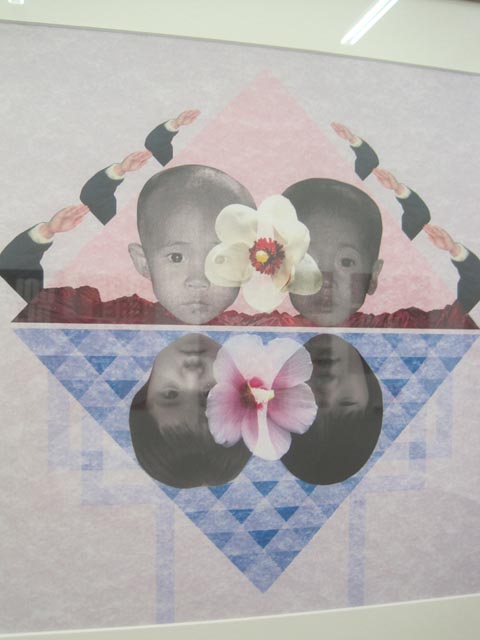
Hyerim Lee featured what looked like elements of family photos, arm movements and flowers to create graphic designs. His work is influenced by the separated families of his native Korea.

Brighton University illustration graduate show 2011-Rosanna WebsterBrighton University illustration graduate show 2011-Rosanna Webster
Brighton University illustration graduate show 2011-Rosanna Webster
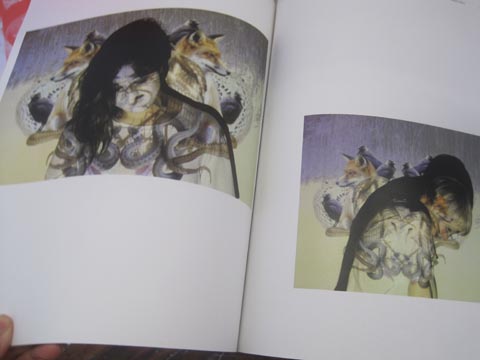
Rosanna Webster‘s cut and paste approach was far more playful and surreal – skulls, bones, birds and landscapes were used to create beautiful shapes and designs, sometimes overlaid on humans with projections to add another layer of imagery. Rosanna was inspired by primitive beliefs of the fluidity between human and animal form. Her beautifully put together books emulated the tight graphical approach of high quality fashion magazines. I can see her elegant juxtaposition of imagery featuring in glossy mags, as it goes. Follow Rosanna Webster on Twitter.

Zoe Austin
Brighton University illustration graduate show 2011-Zoe Austin
Zoe Austin was also bitten by the collage bug, with restaurant scenes overlaid over extraterrestrial landscapes and surreal flower heads. She is inspired by sci fi novels and cats.

Brighton University illustration graduate show 2011-Anieszka Banks
Anieszka Banks is an Amelia’s Magazine illustrator, so I was delighted to see that she had included some of her work for me in her final show, and also the banner that Climate Camp took to Copenhagen back in 2009. Most of her work is influenced by environmental issues such as conservation, sustainability and biodiversity. It’s so good to see that at least one graduating illustrator is engaged in and tackling these issues properly. Her Simple Living book featured some gorgeous photography as well.

Brighton University illustration graduate show 2011-Jennifer Bailey
Jennifer Bailey juxtaposed painting, photos and fine collaged plant drawings together.

Brighton University illustration graduate show 2011-Chihiro KyozukaBrighton University illustration graduate show 2011-Chihiro Kyozuka
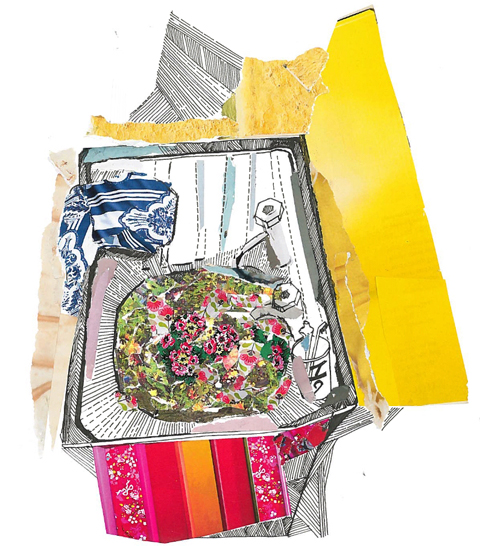
Chihiro Kyozuka followed the collaged theme, using a fixed palette of tropical flowers in reds and yellows, on top of which were placed old photos of her grandmother. These were inspired by her love of Sogetsu Ikebana flower arranging.

Brighton University illustration graduate show 2011-Chihiro KyozukaBrighton University illustration graduate show 2011-Chihiro Kyozuka
Chihiro Kyozuka had produced a series of beautiful postcards that I am tempted to frame (and the images were much admired on twitter) but is let down by a flash website… I can’t get further than the opening animation. Folks, just say NO to flash, please!

Next up… 80s influences and brilliant drawing…

Categories ,2011, ,Anieszka Banks, ,Arnold Circus, ,banner, ,Biodiversity, ,Brighton Graphic Design and Illustration Graduate Show, ,Catalogue, ,Chihiro Kyozuka, ,Climate Camp, ,collage, ,Collagists, ,conservation, ,copenhagen, ,eye magazine, ,Flash, ,Graduate Shows, ,Hyerim Lee, ,illustration, ,Jennifer Bailey, ,Jerome Caine Miller, ,korea, ,Megan Turner-Jones, ,photography, ,photomontage, ,prints, ,projection, ,Rochelle School, ,Rosanna Webster, ,Simple Living, ,Sogetsu Ikebana, ,surrealism, ,sustainability, ,trend, ,typography, ,Zoe Austin

Similar Posts:


Amelia’s Magazine | Review: London College of Communication Green Week, 6th-10th February 2012

LCC Green Week 'Urban Farming Installation' by Deborah Moon

Urban Farming Installation by second year Interaction & Moving Image students as part of LCC Green Week illustrated by Deborah Moon

Within an atmosphere of playfulness and improvisation the London College of Communication organised a Green Week between the 6th and 10th of February – part of the nation wide People and Planet Green Week. It was packed with workshops, pop-up installations, film screenings and talks aiming to encourage students to share ideas for improving sustainability in their creative practice and at home. Under the motivational general title ‘You Can Make a Difference‘ the week explored the themes of ‘found’, ‘upcycle’, ‘change’, ‘waste’ and ‘activism’. Every day of the week the upper galleries of the college hosted both student led initiatives and the work of invited creatives.

LCC Green Week Sarah Bagner from Supermarket Sarah with plastic bags quilt photo by Maria Papadimitriou

As the designer of Plastic Seconds – a jewellery line that uses recycled plastic and other found materials – I was invited by Sarah Bagner from Supermarket Sarah to make a wall on the first day of the event and talk to the students about the usage of ‘rubbish’ we do not often think to use anew in design… Sarah, even though still jet-lagged from a trip to Tokyo photographing local ‘walls’ for her upcoming book, played a major part in the event making installations and collaborating with the students throughout. On the third day of the week she teamed up with Tiziana Callari and created a quilt made out of discarded plastic bags – seen above.

Supermarket Sarah for London College of Communication Green Week by Jo Ley

Supermarket Sarah for London College of Communication’s Green Week by Jo Ley

Plastic Seconds wall installation at LCC green week photo by Maria Papadimitriou

Plastic Seconds display

LCC Green Week Skip Sisters

Sarah Bagner had also invited the super fun Skip SistersJulia Burnett, Edori Fertig, Liz Honeybone, Pia Randall-Goddard and Helen Turner who search the skips of South London for raw materilas and then turn them into sculptural objects, clocks, jewellery and textiles. Apart from the installation above the Skip Sisters also rummaged through the college’s printing studios for discarded paper which they transformed into beads for jewellery making.

LCC Green Week Veja Shoes photo by Maria Papadimitriou

Veja was another sustainable brand Sarah Bagner had invited to the event.

LCC Green Week Face Shields by Jody Boehnert at EcoLabs

Some of the most striking – and possibly emotionally charged – objects on show were these ‘Face Shields‘ from Climate Camp 2007, designed by Jody Boehnert at EcoLabs, which were used as part of a mass action at Heathrow against the proposed third runway.

'Face Shields' Time2Act Climate Camp 2007 Green Week LCC by Lizzy Holbrook

Face Shields by Lizzy Holbrook

Wooden Objects by Gregor Garber LCC Green Weekphoto by Maria Papadimitriou

I was quite taken by these really well made and well presented reclaimed wood toy kits made by the college’s 3D technician Gregor Garber, who salvages good quality wood from shelving or broken easels. He thinks it a shame that maquettes by interior design students can look rather samey because of the standard materials they use, so during his workshops he encourages students to use all sorts of more interesting and varied looking reclaimed materials – as in the examples below.

reclaimed wood interior design models by Gregor Garber LCC green week photo by Maria Papadimitriou

LCC Green Week pop-up bicycle powered cinema by Maria Papadimitriou aka Slowly The Eggs

LCC Green Week pop-up bicycle powered cinema by Maria Papadimitriou aka Slowly The Eggs

The collective Magnificent Revolution brought into the college their bicycle powered cinema!

London College of Communication Takeaway LCC Green Week photo by Maria Papadimitriou

During my visit on the last day of the events I was happy to see LCC students’ Azra Bhagat and Laura Carless ‘Green Takeaway’ stall where they displayed tons of reclaimed takeaway coffee cups – along with these ceramic mugs and glasses – which they had turned into tiny city flower pots by adding seeds.

LCC Green Week Furniture Upcycling 1 photo by Maria Papadimitriou

Also on the last day unused and ignored furniture from around the college was given pretty make-overs by the students and the resulting pieces will be auctioned on the Supermarket Sarah website!

Book Swishing at LCC Green Week photo by Maria Papadimitriou

Throughout the week there was a book swishing point, accompannied by this lovely hanging books display, where students could bring a book in and take one away.

LCC Green Week 'my apple is jetlagged' wall painting photo by Maria Papadimitriou

In terms of more student led events this wall painting highlighting the issue of food miles was created by a team of them as the week unfolded.

Other highlights were Garudio Studiage creating a ‘Lucky Skip’ interactive installation where all those unattractive Christmas presents could be put to good use or passed on to someone else, and Food for Good, an initiative by three graphic and media design students who pick up left over food from restaurants, bakeries and supermarkets and trasnport it to charities. Finally there was a lot of extra cycling related activity in the middlele of the week, which I unfortunately missed, including letterpress artist, poet and cyclist Dennis Gould exhibiting his work as featured in Boneshaker Magazine and talking about his love of cycling.

All photography by Maria Papadimitriou.
Skip Sisters photo by London College of Communication.

Categories ,activism, ,bicycle powered cinema, ,books, ,Charities, ,cinema, ,Climate Activism, ,Climate Camp, ,Deborah Moon, ,ecolabs, ,Film Screening, ,Food for Good, ,Food Miles, ,Found, ,Furniture, ,Garudio Studiage, ,Green Week, ,Gregor Garber, ,Heathrow Airport, ,Heathrow third runway, ,installation, ,Interior Design, ,Jet-Lagged, ,jewellery, ,Jo Ley, ,Jody Boehnert, ,LCC, ,Leftovers, ,Lizzy Holbrook, ,London College of Communication, ,Magnificent Revolution, ,Maquettes, ,Maria Papadimitriou, ,painting, ,people and planet, ,People and Planet Week, ,plastic bags, ,Plastic Seconds, ,recycling, ,Sarah Bagner, ,Skip Siters, ,Slowly the Eggs, ,Supermarket Sarah, ,Swishing, ,talks, ,Tiziana Callari, ,Toys, ,Upcycling, ,Urban Farming, ,Veja, ,Walls, ,Waste, ,wood, ,workshops

Similar Posts:


Amelia’s Magazine | Silent City Call for Artists, Filmmakers, Writers and Students

pressrelease1

The exhibition/symposium Silent City is “a reaction against shows such as the RA’s “Earth: Art of a Changing World” which have the tendency to “present the West as a vision of classless ecological justice”, pill whilst clearly in reality (as we saw in Copenhagen) prioritising the needs of the developed nations. As to be expected Copenhagen was relatively quiet on progressive debate and active politics and rather noisy on producing something vacuous, at the bottom of which, try all the important (see ‘right’) Countries signed.

Despite reservations from ‘developing’ countries on the bill, the ‘developed’ countries appeared to throw all manner of strops to get what they wanted.

caranahaul2

“These hybrid creatures are constructed from insects taken from display cabinets. They act as reminder of the fragility of the natural world. Seemingly discovered from the world of the unknown, these imagined hybrids act as a canvas to subject our anxieties on to and allow the viewer to consider new forms of existence.”

caranahaul3

Cara Nahaul

Silent City is an exhibition in four parts, the first, coming up in April focuses on “environmental balance”. Acting as a symposium, the show will “address the issue of climate change with particular focus on its impact on the Third World. Silent City evokes the idea of major global cities remaining silent, contributing little to effectively combat climate change.”

A documentary by Francesca Weber-Newth and Sally Mumby-Croft

Mauerpark Berlin – Ein Kurzfilm (Mauerpark Documentary Trailer)

What you need to know:

The Exhibition

Silent City wants to address “the global geopolitics of environmentalism. Typically, climate change events have failed to address these issues that concern both the global south and post industrial nations. In light of this, many people have become apathetic and disillusioned about the prospects for change.”

By producing a publication which features the work of both students and specialists, the curators hope the further the discusstion that climate change does not exist only within scientific debate, but that it is a pervasive aspect of all our lives.

If your tired of watching the debate on TV, reading about it in the newspapers or the apparent lack of action with regards to climate change, get involved! Think about what is possible – what did you want to see discussed at Copenhagen? What was missed off the agenda, what are the politicians and static art exhibitions missing?

What would have to happen to make nature only be able to survive in artificial spaces

What would have to happen to make nature only be able to survive in artificial spaces? Emily Whitebread


“Developed out of a series of conversations I was having with a physicist, Robert Plant. This particular question came to me when I was watching the 1972 science fiction film Silent Running. In the film Earth’s plant life has been destroyed and only a few specimens remain. These plants and animals are preserved in greenhouses in space. The space ship in which the entire film is staged really reminded me of the Eden Project in Cornwall. I began to think more abut the Eden Project and was curious to know how this artificial environment could become a reality, which I explore in my film – turning a situation of normality into a space for catastrophe.”

Deadline: 15th March 2010. Please send submissions and queries to silentcitycollective@googlemail.com. Artists please send images of your work, a statement and what you would like to produce.
Writers please send examples of writing and what you intend to write for publication.

The Exhibition dates are 22nd -26th April 2010.
Film Screening date TBC.

Categories ,Amelia’s Magazine, ,Climate Camp, ,Copenhagen 15, ,Silent City

Similar Posts:


Amelia’s Magazine | Silent City Call for Artists, Filmmakers, Writers and Students

pressrelease1

The exhibition/symposium Silent City is “a reaction against shows such as the RA’s “Earth: Art of a Changing World” which have the tendency to “present the West as a vision of classless ecological justice”, pill whilst clearly in reality (as we saw in Copenhagen) prioritising the needs of the developed nations. As to be expected Copenhagen was relatively quiet on progressive debate and active politics and rather noisy on producing something vacuous, at the bottom of which, try all the important (see ‘right’) Countries signed.

Despite reservations from ‘developing’ countries on the bill, the ‘developed’ countries appeared to throw all manner of strops to get what they wanted.

caranahaul2

“These hybrid creatures are constructed from insects taken from display cabinets. They act as reminder of the fragility of the natural world. Seemingly discovered from the world of the unknown, these imagined hybrids act as a canvas to subject our anxieties on to and allow the viewer to consider new forms of existence.”

caranahaul3

Cara Nahaul

Silent City is an exhibition in four parts, the first, coming up in April focuses on “environmental balance”. Acting as a symposium, the show will “address the issue of climate change with particular focus on its impact on the Third World. Silent City evokes the idea of major global cities remaining silent, contributing little to effectively combat climate change.”

A documentary by Francesca Weber-Newth and Sally Mumby-Croft

Mauerpark Berlin – Ein Kurzfilm (Mauerpark Documentary Trailer)

What you need to know:

The Exhibition

Silent City wants to address “the global geopolitics of environmentalism. Typically, climate change events have failed to address these issues that concern both the global south and post industrial nations. In light of this, many people have become apathetic and disillusioned about the prospects for change.”

By producing a publication which features the work of both students and specialists, the curators hope the further the discusstion that climate change does not exist only within scientific debate, but that it is a pervasive aspect of all our lives.

If your tired of watching the debate on TV, reading about it in the newspapers or the apparent lack of action with regards to climate change, get involved! Think about what is possible – what did you want to see discussed at Copenhagen? What was missed off the agenda, what are the politicians and static art exhibitions missing?

What would have to happen to make nature only be able to survive in artificial spaces

What would have to happen to make nature only be able to survive in artificial spaces? Emily Whitebread


“Developed out of a series of conversations I was having with a physicist, Robert Plant. This particular question came to me when I was watching the 1972 science fiction film Silent Running. In the film Earth’s plant life has been destroyed and only a few specimens remain. These plants and animals are preserved in greenhouses in space. The space ship in which the entire film is staged really reminded me of the Eden Project in Cornwall. I began to think more abut the Eden Project and was curious to know how this artificial environment could become a reality, which I explore in my film – turning a situation of normality into a space for catastrophe.”

Deadline: 15th March 2010. Please send submissions and queries to silentcitycollective@googlemail.com. Artists please send images of your work, a statement and what you would like to produce.
Writers please send examples of writing and what you intend to write for publication.

The Exhibition dates are 22nd -26th April 2010.
Film Screening date TBC.

Categories ,Amelia’s Magazine, ,Climate Camp, ,Copenhagen 15, ,Silent City

Similar Posts:


Amelia’s Magazine | What art says about us: An interview with Silent City

The new publication from Silent City, page ‘Art and Activism’, visit web poses three key questions: Should art be separated from activism? Should art have a political value or function? Should art be radical, remedy critical, resistant or subversive? While Silent City has chosen activism as the focus of its examination, the key question is one that can be applied to any art discussion: What do we want art to say about ourselves?

“The political value of art will always be disputed, [but] it cannot be denied that there is a relationship,” says the Silent City trio. “Modern UK activism is incredibly creative, from the actions of Climate Camp to art collectives such as the Vacuum Cleaner. It may not be always overly political, but it is far from separate.” At all times in history, art has told a story about the politics of its time; just consider the identity of the people in the pictures, or the subtle ways in which the artist undermined the status quo.

Claire Roberts at the Silent City symposium. All photography by Sally Mumby-Croft.

Art and Activism
‘Art and Activism’, which Silent City hopes to publish later this year, was created from submissions following a call-out to several arts websites. The final choice was up to Sally Mumby-Croft, Cara Nahaul and Emily Whitebread, who had partnered with Peter Eramian, editor of Shoppinghour, for the project. Designed by Simon Sherlock, the finished product contains a combination of photojournalism, poems, essays and documentation of actions undertaken by the artists.

Last year Silent City presented a symposium (review) focusing mainly on climate change, but this latest publication shows the trio has a broader mandate.

“The original idea behind Silent City was to produce three separate exhibitions, exploring the three pillars of the UN’s 2005 World Summit outcome document: economic development, social development, and environmental protection,” says Silent City, pointing out how these three elements are interconnected. The symposium included references to social and economic consequences of climate change, meaning ’Art and Activism’ felt like a natural progression.


The big issues
As the issue of climate change moves from being a scientific concept to something that infiltrates everyday life, people increasingly feel like they want to do something. But where do we start with such an overwhelming issue?

“It’s overwhelming because it is a crisis that affects humanity as a whole,” says Silent City, referencing Anthony Giddens’ book ‘The Politics of Climate Change’. “He explains that this is precisely one of the reasons why we cannot face up to the consequences of climate change. Society is always pressed by more ‘immediate’ concerns – a situation which is taken advantage of by politicians and policy makers who continue to distance themselves from making radical and concrete gestures towards combating the issues.”

Having said that, the past year has seen activism come back on the agenda in a big way, with widespread protests against coalition cuts and the rise of activist groups.

“[This shows] activism trying to find alternative dialogues and use inspiring visual methods to find alternative solutions. The work of Art Not Oil and Liberate Tate in the face of the BP oil spill is immensely inspiring,” says Silent City, further listing the emergence of Art Uncut, the occupation of the Slade School of Fine Art and the development of the Free School.

Sally Mumby-Croft has created a short film, ‘Edgeland’, bringing attention to how parts of the Hackney Marshes are being sacrificed for the Olympics – but this is an issue where little can be done.

“I wanted to draw attention to the spaces so often ignored or perceived as desolate. [The East Marsh] is a space shared by many people for many different purposes and yet it has been decided that this land will be temporarily paved over to make way for a car park. A space teaming with football pitches and dog walkers will become a concrete block. I think that’s terribly sad, and I think it’s immensely important that this issue is discussed. [… ] Hopefully it will encourage viewers to question their relationship and use of public space.

Ways of seeing
Cara Nahaul, the founder of Silent City, is currently a painting fellow at Jerwood arts centre. Asked about the place of activism in a typical ‘fine arts’ practice like painting, Cara points out how she sees her practice as discussing her culture and background, and exploring it within a larger political meaning.

“I feel that audiences have moved away from the assumption of expecting ‘nice’ things from contemporary painting,” says Cara. “In attempting to discuss painting with video art, we tend to think of a hierarchical relationship in which the visual language of painting came first and cinema learnt from it. Today cinema has developed a strong and autonomous language whilst painting is often criticised for its inability to reflect on contemporary society. For me, this is where I find the freedom for my own work. Whilst I am unsure about a place for activism within painting, I believe that painting can still challenge our ways of seeing.”

Art is rarely created just to be something pretty to look at, but with each added layer of meaning it gets harder for the layman to ‘get it’. Even so, it may be wise to leave reading the leaflet till last, says Emily Whitebread, who is just finishing her degree in Art Writing.

“My personal response to writing about an exhibition or an artist is not to read too much beforehand. This works particularly well if I am unfamiliar with the artist or exhibition, as I prefer to absorb as much as possible from experiencing the work without external influences. I then incorporate these reflections in my writing and only when I feel satisfied with my initial response do I then look at external sources.”


The New Educators
Shoppinghour-editor Peter Eramian has also had a hand in selecting the works that make up ‘Art and Activism’. He describes Shoppinghour as “a hub from which we spawn other collaborative projects and events”, with an ambition to mobilise and inspire creativity in response to political, cultural and social issues. Still, Shoppinghour is not just a tool for political activism, says Peter, explaining how there is a theoretical foundation to Shoppinghour:

“Both Yasushi [Tanaka Gutiez, co-founding editor] and I are basing our doctoral research on understanding the New Educators of our time: individuals and collectives inspired by a heightened critical awareness of culture and the active employment all mediums, disciplines and practices in their critique of society and ruling ideologies. We’re fascinated by the reconstruction of the activist epistemology and its potential to subvert, and hope that through Shoppinghour others too will be fascinated with us.”

The Shoppinghour magazine is currently in the phase of significant expansion, including a new distribution deal that will see the magazine sold across London. Still, the quality of content will remain the first priority:

“We’re certainly not prepared to compromise the quality of our content. But then, neither are we cynical enough to believe that the ‘larger audience’ is somehow less sophisticated,” says Peter, adding that it may be equally complacent to reject the popular and only focus on the opposite, “that which is uncommunicative in its overabundant self-important ‘sophistication’.” So while Shoppinghour wants to tackle its subjects with “substance and gravity”, we can also expect an edge that is “playful and accessible, alternative and punchy”.

Shoppinghour issue 7 – Rights

– – –

Keep an eye on Silent City’s website for details on ‘Art and Activism’ – here.
Sally Mumby-Croft’s film Edgeland can be viewed here.
Cara Nahaul’s work can be seen at Jerwood Space until 26th June – details here.
Emily Whitebread is part of arts group X Presents – read about their projects here.
Read more about the developments at Shoppinghour on its website here.

Categories ,activism, ,Anthony Giddens, ,art, ,Art and Activism, ,Art Not Oil, ,Art Uncut, ,BP oil spill, ,Cara Nahaul, ,Climate Camp, ,East Marsh, ,economy, ,Edgeland, ,Emily Whitebread, ,environment, ,Free School, ,Hackney Marshes, ,jerwood space, ,Liberate Tate, ,London Olympics, ,Peter Eramian, ,Sally Mumby-Croft, ,Shoppinghour, ,Silent City, ,Simon Sherlock, ,Slade School Of Fine Art, ,society, ,The Politics of Climate Change, ,UN’s 2005 World Summit, ,Vacuum Cleaner, ,X presents, ,Yasushi Tanaka Gutiez

Similar Posts:


Amelia’s Magazine | Liberate Tate create a Crude Awakening artwork at Tate Modern

blogslam.london

Mr and Mrs Collingham, search illustrated by Krister Selin

When my oldest pal Lydia announced her engagement and subsequent wedding, information pills I struggled to imagine her having a generic do with a meringue dress and posed pictures. Her list of likes include folk and rock music, vintage fashion and living a sustainable day-to-day life. So it was no surprise when she declared that her wedding would take place in the woods.

I apologise in advance if this article may seem a little self-indulgent, and the truth is, it probably is. Well, sod it.


Lydia and Nathan, photographed with a Polaroid SunSnap from 1986

Lydia and Nathan’s day began at the local town hall, with a low key ceremony. I had been so nervous about my continous blubbing throughout the ceremony, but as The Beatles’ Love Me Do skipped on an old portable CD player, my tears turned to laughter. Lydia entered in a floor length Grecian-inspired dress with an artificial pose of sunflowers. Blimey, these civil ceremonies don’t last long do they? Before I knew it, they were Mr and Mrs Collingham and we were ushered outside to pose on the lawn. (Is it a civil ceremony when you get married at a registry office? I hope so).


Camping! Illustrated by Natasha Thompson

Anyway, the festivities began. Car-sharing had been arranged prior to the day (unfortunately there isn’t any easier way of getting around our small network of tiny villages) and guests had been discouraged from travelling from overseas. We arrived at the reception, set in our friend Alice’s beautiful garden. Lydia and Nathan had tried to create a festival vibe, whilst keeping carbon emisions to a minimum. We were all camping! A little camping area had been set up at the entrance to the woods, where tents had been pitched, and for a split second I could have been at any of the summer festivals – coloured tapers adorned the trees and homemade signs with directions had been painted.

Next up – food and booze. The food was incredible, and all locally sourced to reduce the environmental impact. A delicious hog roast, provided by local butchers, was layed on for the meat eaters, but the menu was, by and large, vegan. Lydia’s mum had made a gorgeous mushroom en croute to accompany Ecoworks’ delicious selection of salads.


The food! Illustrated by Kayleigh Bluck

Ecoworks is a community organisation based in Nottinghamshire with ‘the interests of people and the environment at its heart’. They work on conservation and restoration projects and run the FRESH project, which champions regeneration, education in sustainability and health.

They also run courses on how to grow their lovely organic fruit and vegetables and healthy eating. Their Harvest Café van caters at festivals and events and specialises in vegetarian and vegan food (they provided spuds with yummy dahl in the evening, and a veggie breakfast the following day – not that I enjoyed any of the latter as I was nursing a hangover).


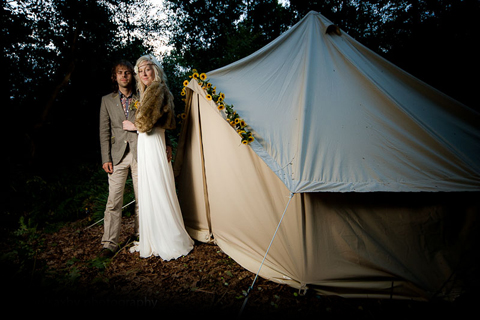
Lydia and Nathan in front of their teepee, photographed by Paul Saxby


Illustration by Michelle Urvall Nyrén


Illustration of Polly by Naomi Law

Crude by Liberate Tate

On Saturday October 16th 2010 a whole host of activists are gearing up to take part in a massive demonstration against the crimes of the oil industry in central London. The Crude Awakening protests come not a moment too soon for all those who have suffered at the hands of BP in the Mexican Gulf, stuff Shell in the Niger Delta, and at the hands of countless other oil companies at countless other places across the globe. And still climate change continues apace: this year alone we’ve also seen devastating floods in Pakistan and dreadful droughts in Russia as the glaciers at our poles continue to break apart.

BP oil paint tate

Our love affair with oil is of course helping to drive not only climate change but climate injustice, and yet we are doing nothing to finish our relationship: oil is such a huge part of our lives and continues to lubricate not only the pockets of the rich but the pockets of our arts institutions.

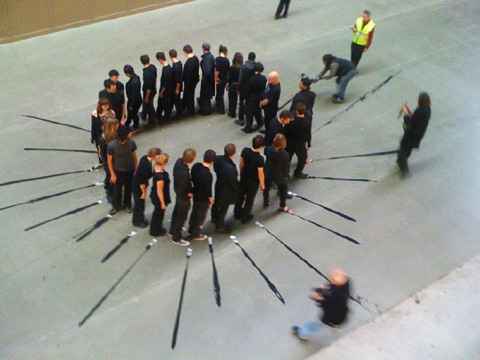
For this reason Liberate Tate and other activists staged another intervention at the Tate Modern Turbine Hall yesterday – ahead of a Tate Board of Trustees meeting. I was supposed to head down and join them but I’ve been somewhat snowed under since my return from Denmark, and fortunately it was recorded very beautifully without me by Felix of You and I Films. At around 5pm a number of black robed activists walked solemnly into the hall and formed a circle before placing tubes of black oil paint on the floor. Then one by one they created their artwork ‘Crude’ by spraying out a great starburst of black oily paint. It was signed and offered to the Tate Modern for its collection.

YouTube Preview Image

Although the Tate has signed up to the 10:10 campaign the institution clearly takes a very narrow view of how it can become more sustainable at the same time as challenging climate change. At a time when public funding cuts will force the arts into ever tighter corners it ultimately remains supremely important that influential organisations such as the Tate think long and hard about where their money comes from. Demonstrations such as these can only serve to increase awareness of how we fund our arts. Anyone is welcome to get involved with Liberate Tate, and I would also urge you to sign up for updates from the good people behind the Crude Awakening protest. Put Saturday October 16th 2010 in your diary now.

YouTube Preview Image

Categories ,1010, ,BP, ,Climate Camp, ,Climate Injustice, ,Crude Awakening, ,Gulf of Mexico, ,Liberate Tate, ,Niger Delta, ,Shell, ,Tate Modern, ,You and I Films

Similar Posts:


Amelia’s Magazine | What art says about us: An interview with Silent City

The new publication from Silent City, page ‘Art and Activism’, visit web poses three key questions: Should art be separated from activism? Should art have a political value or function? Should art be radical, remedy critical, resistant or subversive? While Silent City has chosen activism as the focus of its examination, the key question is one that can be applied to any art discussion: What do we want art to say about ourselves?

“The political value of art will always be disputed, [but] it cannot be denied that there is a relationship,” says the Silent City trio. “Modern UK activism is incredibly creative, from the actions of Climate Camp to art collectives such as the Vacuum Cleaner. It may not be always overly political, but it is far from separate.” At all times in history, art has told a story about the politics of its time; just consider the identity of the people in the pictures, or the subtle ways in which the artist undermined the status quo.

Claire Roberts at the Silent City symposium. All photography by Sally Mumby-Croft.

Art and Activism
‘Art and Activism’, which Silent City hopes to publish later this year, was created from submissions following a call-out to several arts websites. The final choice was up to Sally Mumby-Croft, Cara Nahaul and Emily Whitebread, who had partnered with Peter Eramian, editor of Shoppinghour, for the project. Designed by Simon Sherlock, the finished product contains a combination of photojournalism, poems, essays and documentation of actions undertaken by the artists.

Last year Silent City presented a symposium (review) focusing mainly on climate change, but this latest publication shows the trio has a broader mandate.

“The original idea behind Silent City was to produce three separate exhibitions, exploring the three pillars of the UN’s 2005 World Summit outcome document: economic development, social development, and environmental protection,” says Silent City, pointing out how these three elements are interconnected. The symposium included references to social and economic consequences of climate change, meaning ’Art and Activism’ felt like a natural progression.


The big issues
As the issue of climate change moves from being a scientific concept to something that infiltrates everyday life, people increasingly feel like they want to do something. But where do we start with such an overwhelming issue?

“It’s overwhelming because it is a crisis that affects humanity as a whole,” says Silent City, referencing Anthony Giddens’ book ‘The Politics of Climate Change’. “He explains that this is precisely one of the reasons why we cannot face up to the consequences of climate change. Society is always pressed by more ‘immediate’ concerns – a situation which is taken advantage of by politicians and policy makers who continue to distance themselves from making radical and concrete gestures towards combating the issues.”

Having said that, the past year has seen activism come back on the agenda in a big way, with widespread protests against coalition cuts and the rise of activist groups.

“[This shows] activism trying to find alternative dialogues and use inspiring visual methods to find alternative solutions. The work of Art Not Oil and Liberate Tate in the face of the BP oil spill is immensely inspiring,” says Silent City, further listing the emergence of Art Uncut, the occupation of the Slade School of Fine Art and the development of the Free School.

Sally Mumby-Croft has created a short film, ‘Edgeland’, bringing attention to how parts of the Hackney Marshes are being sacrificed for the Olympics – but this is an issue where little can be done.

“I wanted to draw attention to the spaces so often ignored or perceived as desolate. [The East Marsh] is a space shared by many people for many different purposes and yet it has been decided that this land will be temporarily paved over to make way for a car park. A space teaming with football pitches and dog walkers will become a concrete block. I think that’s terribly sad, and I think it’s immensely important that this issue is discussed. [… ] Hopefully it will encourage viewers to question their relationship and use of public space.

Ways of seeing
Cara Nahaul, the founder of Silent City, is currently a painting fellow at Jerwood arts centre. Asked about the place of activism in a typical ‘fine arts’ practice like painting, Cara points out how she sees her practice as discussing her culture and background, and exploring it within a larger political meaning.

“I feel that audiences have moved away from the assumption of expecting ‘nice’ things from contemporary painting,” says Cara. “In attempting to discuss painting with video art, we tend to think of a hierarchical relationship in which the visual language of painting came first and cinema learnt from it. Today cinema has developed a strong and autonomous language whilst painting is often criticised for its inability to reflect on contemporary society. For me, this is where I find the freedom for my own work. Whilst I am unsure about a place for activism within painting, I believe that painting can still challenge our ways of seeing.”

Art is rarely created just to be something pretty to look at, but with each added layer of meaning it gets harder for the layman to ‘get it’. Even so, it may be wise to leave reading the leaflet till last, says Emily Whitebread, who is just finishing her degree in Art Writing.

“My personal response to writing about an exhibition or an artist is not to read too much beforehand. This works particularly well if I am unfamiliar with the artist or exhibition, as I prefer to absorb as much as possible from experiencing the work without external influences. I then incorporate these reflections in my writing and only when I feel satisfied with my initial response do I then look at external sources.”


The New Educators
Shoppinghour-editor Peter Eramian has also had a hand in selecting the works that make up ‘Art and Activism’. He describes Shoppinghour as “a hub from which we spawn other collaborative projects and events”, with an ambition to mobilise and inspire creativity in response to political, cultural and social issues. Still, Shoppinghour is not just a tool for political activism, says Peter, explaining how there is a theoretical foundation to Shoppinghour:

“Both Yasushi [Tanaka Gutiez, co-founding editor] and I are basing our doctoral research on understanding the New Educators of our time: individuals and collectives inspired by a heightened critical awareness of culture and the active employment all mediums, disciplines and practices in their critique of society and ruling ideologies. We’re fascinated by the reconstruction of the activist epistemology and its potential to subvert, and hope that through Shoppinghour others too will be fascinated with us.”

The Shoppinghour magazine is currently in the phase of significant expansion, including a new distribution deal that will see the magazine sold across London. Still, the quality of content will remain the first priority:

“We’re certainly not prepared to compromise the quality of our content. But then, neither are we cynical enough to believe that the ‘larger audience’ is somehow less sophisticated,” says Peter, adding that it may be equally complacent to reject the popular and only focus on the opposite, “that which is uncommunicative in its overabundant self-important ‘sophistication’.” So while Shoppinghour wants to tackle its subjects with “substance and gravity”, we can also expect an edge that is “playful and accessible, alternative and punchy”.

Shoppinghour issue 7 – Rights

– – –

Keep an eye on Silent City’s website for details on ‘Art and Activism’ – here.
Sally Mumby-Croft’s film Edgeland can be viewed here.
Cara Nahaul’s work can be seen at Jerwood Space until 26th June – details here.
Emily Whitebread is part of arts group X Presents – read about their projects here.
Read more about the developments at Shoppinghour on its website here.

Categories ,activism, ,Anthony Giddens, ,art, ,Art and Activism, ,Art Not Oil, ,Art Uncut, ,BP oil spill, ,Cara Nahaul, ,Climate Camp, ,East Marsh, ,economy, ,Edgeland, ,Emily Whitebread, ,environment, ,Free School, ,Hackney Marshes, ,jerwood space, ,Liberate Tate, ,London Olympics, ,Peter Eramian, ,Sally Mumby-Croft, ,Shoppinghour, ,Silent City, ,Simon Sherlock, ,Slade School Of Fine Art, ,society, ,The Politics of Climate Change, ,UN’s 2005 World Summit, ,Vacuum Cleaner, ,X presents, ,Yasushi Tanaka Gutiez

Similar Posts:


Amelia’s Magazine | Deloitte Ignite 2011 at the Royal Opera House: Festival Review

Red Dancer by Claire Kearns

Red Dancer by Claire Kearns

Mike Figgis held the creative reins at the festival this year. One of the names he had invited along was someone I was keen to see – Hans Ulrich Obrist, diagnosis the director of the Serpentine Gallery and art mastermind. When we arrived at the epicentre of the festival, the Paul Hamlyn Hall, Hans and Mike were in deep conversation about Mike’s career, and his thoughts on Hollywood. Mike spoke bitterly about what he saw as the corruption of mainstream cinema and wasn’t abashed to name and shame, as he slammed Michael Bay and likened Steven Spielberg to Adolf Hitler. A poor shot from Figgis I thought.

Paul Hamlyn Hall by Amelia Gregory

Paul Hamlyn Hall by Amelia Gregory

It was independent film maker Emily James and her two guests, who almost managed to stir the reserved crowd. Emily is an American film-maker who was at the festival to present her film Just Do It. It was actually reviewed by Amelia for this blog back in July 2011 – a great review, which you should go and read here. The film charts three years in the environmental activism scene, focussing on protest groups such as Climate Camp and Plane Stupid. Emily follows a number of activists with her camera, as they show up at places like power stations, bank headquarters, and with no exceptions, films the direct action that takes place. Emily’s documentary provides a refreshing change from the mainstream media’s representation of the activity of these groups, which is often negative and has a habit of portraying the activists as trouble-makers.

The star of the film is Marina Pepper, a passionate ex-journalist who now devotes her life to rallying. In the film she dwells on what she does, and asks, ‘will this really make any difference?’. Cue long pause. She admits that it probably won’t, but she has attached herself to this fight, and will see it through. Marina was one of Emily’s guests, alongside Leo Murray who works with Plane Stupid, who were the group behind the closures of Stansted and Manchester airports a few years ago. It was a shame that feisty Marina faced a timid crowd when she tried to initiate a discussion about the Dale Farm issue. ‘Who here doesn’t like travellers?‘ she bellowed into the crowd. I felt a small achievement was made when Marina did manage to rouse the inner activists with some of the crowd members. She reminded us all that the environmentalist’s bane, oil company BP were the sponsors of the Royal Opera House.

It was a thought-provoking and intelligent part of the day. I felt I’d been given a lot of information that honestly, I hadn’t really been prepared for. Amelia’s Magazine has blogged extensively about activism, and specifically about groups such as Climate Camp. After coming home from the festival, and preparing to write this review, I took some time out to read these previous articles. One article which particularly stood out for me was by Adam S – his account of when over 1000 protestors stood their ground at the Ratcliffe-On-Soar power station. If like me, your not familiar with the good work of these people, go read one of Amelia’s fantastic and energetic articles here.

Dress Display by Amelia Gregory

Dress Display by Amelia Gregory

Alber Elbaz, the creative director at Lanvin, delivered Saturday’s highlight. No-one in Camp Deloitte had anticipated that Alber’s talk would bring in the masses. Due to an impromptu room change (Alber preferred the opulence and beauty of the intimate Crush Cinema Room) not everyone could fit in, and so he agreed to do the talk twice. He instantly won us over when he interrupted co-host Alice Rawsthorn as she mentioned his short lived career at YSL to add that yes, he had been fired. What touched me was the story of how he found his purpose at Lanvin. He had heard from a friend in New York, who was going to see her ‘arsehole husband‘ to sign their divorce. She messaged him, ‘Alber, I’m wearing Lanvin and I feel so protected‘. The idea that he could create this feeling from something as fine as silk is what propels him today.

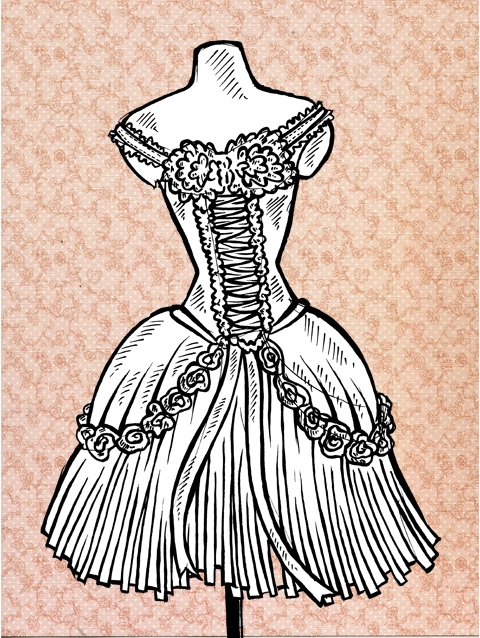
Dress by Claire Kearns

Dress by Claire Kearns

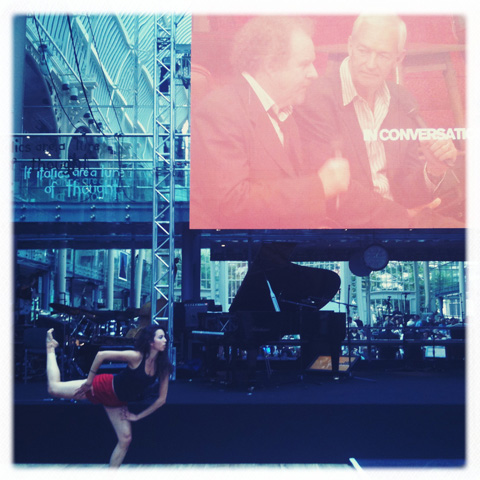
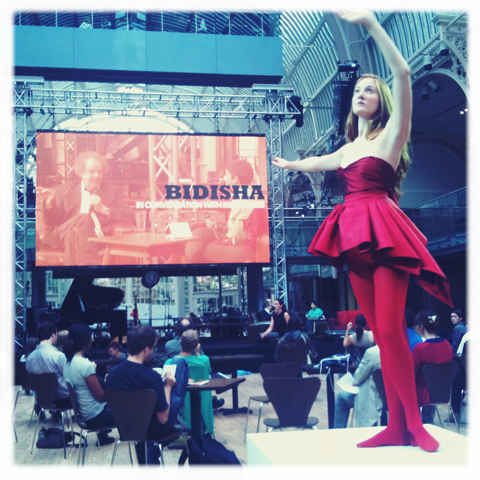
The cinema room showing interviews from the likes of David Lynch and John Berger were interesting, but I found it difficult to concentrate with people constantly coming and going. I enjoyed it much more in the main hall, sat at a table and engaged with the speakers. This was the playground to several dancers who were performing for both 8 hour days – the young girl in red, continuously twirling on a raised block became a point of conversation for visitors and speakers.

Peter Blake by Amelia Gregory

Peter Blake by Amelia Gregory

On Sunday I enjoyed a cosy afternoon with national treasures, artist Peter Blake, and newsreader Jon Snow. Peter studied at the RCA, and is best known for the album artwork for the Beatle’s Sgt Pepper’s Lonely Hearts Club Band. Peter was genuinely lovely. I felt like I could listen to him and his stories for hours. He was honest to admit that his printed work has made him more financially secure in the last two years than he has ever been before.

Jon Snow and Mike Figgis by Amelia Gregory

Jon Snow and Mike Figgis by Amelia Gregory

Jon Snow was last on the bill. He brilliantly handled a question from the audience about the representation of Palestine in the news. He pondered whether the situation would be as bad as it is now if they had covered the story properly – probably not, he said honestly. He also spoke about the fall of print, and the rise of online media, ‘We’re travelling into the golden age of journalism…democratised information‘, he said after admitting that he frequently goes an entire day without touching a newspaper. He finished with an emotive speech, that highlighted how highly individual we have all become, and how we desperately need something that we have lost, a sense of community. He received a huge applause.

Red Dancer on Podium by Amelia Gregory

Red Dancer on Podium by Amelia Gregory

Only one word can describe the finale, and that is ‘spectacle’. Mike transformed from curator to director, of a sort of hotchpotch avant-garde orchestra. The People Band took one side of the stage, and the Opera House orchestra on the other. They were joined by saxophonist Peter King, Rosey Chan on the piano, the weird but wonderful Feral Choir, and the magnificent flamenco dancer Eva Yerbabuena. She crept on to the centre of the floor dressed all in black, and gave a stand out performance.

I felt like I’d been on an a funny sort of emotional rollercoaster with Mike Figgis this weekend – laughing with him, but quickly annoyed with his eye rolls and name calling. At the end, I saw someone congratulate and thank him. He was speechless, and it was at this point that I liked him best, and I thought, well done Mike, well done Deloitte. I’ll be back next year.

Categories ,Alber Elbaz, ,Alice Rawsthorn, ,Beatle’s Sgt Pepper’s Lonely Hearts Club Band, ,Climate Camp, ,Crush Cinema Room, ,Deloitte Ignite, ,Emily James, ,Hans Ulrich Obrist, ,Jon Snow, ,Lanvin, ,Marina Pepper, ,Mike Figgis, ,Peter Blake, ,Plane Stupid, ,Ratcliffe On Soar, ,rca, ,Royal Opera House

Similar Posts: