Amelia’s Magazine | London Fashion Week A/W 2011 Catwalk Review: Jasper Conran


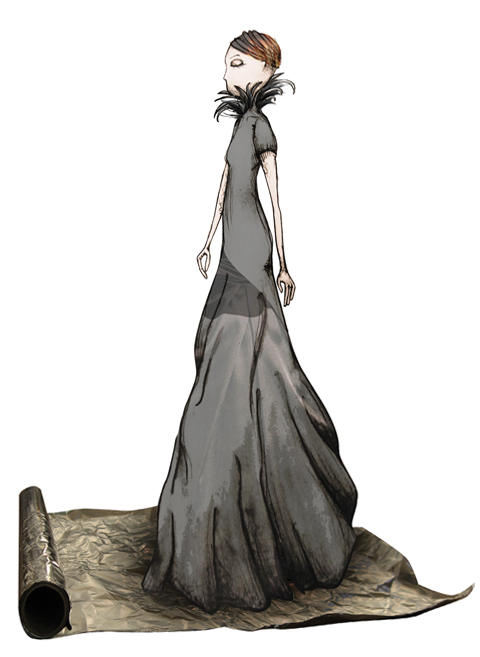
Illustration by Natasha Thompson

Autumn Winter 2010’s ‘DeCon’ is the second collection Masha Ma has shown at Vauxhall Fashion Scout, order her MA collection was bought by B Store and she has since gone from strength to strength, winning the Mouse Ji Best International Innovation Award at the 2009 CCDC China Contemporary Design Contest.


Illustration by Avril Kelly

Building on her predominantly white and silver ‘Icebreaker’ collection for Spring Summer 2011, Masha Ma used a subtle palette for Autumn Winter, injected with flashes of colour. Patent scarlet thigh high boots and contrast edged exposed zips complemented heavy yet tactile cashmere in a palette of dove grey, eggshell, scarlet, taupe and powder beige.


Illustrations by Maria del Carmen Smith

High-waisted pencil skirts, hourglass silhouettes, bright red lips and victory rolls added a touch of Mad Men, whilst sculpted waterfall folds, leather panelling and Swarovski elements kept the look contemporary and luxurious.

Masha Ma played with the subtle deconstruction and accentuation of the female form, pairing subtly flamboyant cascading shapes with fluid skin-tight elements. The union of contrasting textures and a striking palette created a captivating range of looks that left the audience wanting more.


Illustrations by Maria Papadimitriou

Flashes of scarlet were seen again in the form of cropped high gloss mitts; collars were all high; neatly rolled or delicately starched and geometric.
Figure-hugging skirts were zipped halfway to reveal a flash of pillarbox red; zipped boot sleeves revealed skyscraper spike heels. Hair was slicked back into soft buns and coiffed into twists over the ear.


Illustration by Natasha Thompson

All in all this was a refreshing and original collection, I’m sure I’m not the only one eagerly awaiting Masha Ma’s offering for Spring Summer 2012!

All photography by Naomi Law

You can see more of Natasha Thompson’s illustrations in Amelia’s Compendium of Fashion Illustration.

Illustration by Natasha Thompson

Autumn Winter 2010’s ‘DeCon’ is the second collection Masha Ma has shown at Vauxhall Fashion Scout, salve her MA collection was bought by bStore and she has since gone from strength to strength, winning the Mouse Ji Best International Innovation Award at the 2009 CCDC China Contemporary Design Contest.


Illustration by Avril Kelly

Building on her predominantly white and silver ‘Icebreaker’ collection for Spring Summer 2011, Masha Ma used a subtle palette for Autumn Winter, injected with flashes of colour. Patent scarlet thigh high boots and contrast edged exposed zips complemented heavy yet tactile cashmere in a palette of dove grey, eggshell, scarlet, taupe and powder beige.


Illustrations by Maria del Carmen Smith

High-waisted pencil skirts, hourglass silhouettes, bright red lips and victory rolls added a touch of Mad Men, whilst sculpted waterfall folds, leather panelling and Swarovski elements kept the look contemporary and luxurious.

Masha Ma played with the subtle deconstruction and accentuation of the female form, pairing subtly flamboyant cascading shapes with fluid skin-tight elements. The union of contrasting textures and a striking palette created a captivating range of looks that left the audience wanting more.


Illustrations by Maria Papadimitriou

Flashes of scarlet were seen again in the form of cropped high gloss mitts; collars were all high; neatly rolled or delicately starched and geometric.
Figure-hugging skirts were zipped halfway to reveal a flash of pillarbox red; zipped boot sleeves revealed skyscraper spike heels. Hair was slicked back into soft buns and coiffed into twists over the ear.


Illustration by Natasha Thompson

All in all this was a refreshing and original collection, I’m sure I’m not the only one eagerly awaiting Masha Ma’s offering for Spring Summer 2012!

All photography by Naomi Law

You can see more of Natasha Thompson’s illustrations in Amelia’s Compendium of Fashion Illustration.


Illustration by Natasha Thompson

Autumn Winter 2011’s ‘DeCon’ is the second collection Masha Ma has shown at Vauxhall Fashion Scout; her MA collection was bought by bStore and she has since gone from strength to strength, salve winning the Mouse Ji Best International Innovation Award at the 2009 CCDC China Contemporary Design Contest.


Illustration by Avril Kelly

Building on her predominantly white and silver ‘Icebreaker’ collection for Spring Summer 2011, decease Masha Ma used a subtle palette for Autumn Winter, injected with flashes of colour. Patent scarlet thigh high boots and contrast edged exposed zips complemented heavy yet tactile cashmere in a palette of dove grey, eggshell, scarlet, taupe and powder beige.


Illustrations by Maria del Carmen Smith

High-waisted pencil skirts, hourglass silhouettes, bright red lips and victory rolls added a touch of Mad Men, whilst sculpted waterfall folds, leather panelling and Swarovski elements kept the look contemporary and luxurious.

Masha Ma played with the subtle deconstruction and accentuation of the female form, pairing subtly flamboyant cascading shapes with fluid skin-tight elements. The union of contrasting textures and a striking palette created a captivating range of looks that left the audience wanting more.


Illustrations by Maria Papadimitriou

Flashes of scarlet were seen again in the form of cropped high gloss mitts; collars were all high; neatly rolled or delicately starched and geometric.
Figure-hugging skirts were zipped halfway to reveal a flash of pillarbox red; zipped boot sleeves revealed skyscraper spike heels. Hair was slicked back into soft buns and coiffed into twists over the ear.


Illustration by Natasha Thompson

All in all this was a refreshing and original collection, I’m sure I’m not the only one eagerly awaiting Masha Ma’s offering for Spring Summer 2012!

All photography by Naomi Law

You can see more of Natasha Thompson’s illustrations in Amelia’s Compendium of Fashion Illustration.

Jasper Conran A/W 2011 by Emmi Ojala
Jasper Conran A/W 2011 by Emmi Ojala.

I’ll be honest writing this review has been a massive challenge. Shortly after enjoying the sublime craftsmanship, physician skills and undeniable beauty of Jasper’s show I ran to the On|Off venue and managed to get in to Charlie Le Mindu’s extravaganza. Had I written up Jasper before the manic sprint to Charlie I could have waxed lyrical on every piece. I remember being enthralled and excited by the collection. I even went backstage and saw the clothes up close. But the cold hard fact is that these two designers and as such shows, pills inhabit two very different worlds. After being left reeling and inspired by Charlie Le Mindu, it has been hard to do justice to Jasper Conran. For it was a stunning show.

Jasper Conran A/W 2011 by Kerri-ann Hulme
Jasper Conran A/W 2011 by Kerri-Ann Hulme.

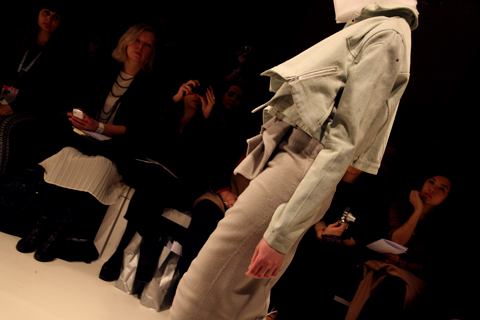
Last year Carnaby Street celebrated its fiftieth anniversary, rejoicing in a time when London was the centre of the trendiest youth movement at the time. Something tells me this has subconsciously filtered into the minds of several designers. The swinging sixties are back and the models at Jasper Conran definitely reflected this. A mix of Bardots, Shrimptons, and gamine girls filled the runway.

At first glance this collection was perhaps a little too literal in its inspiration. Barbarella meets fembot catsuits were there a plenty. However on closer inspection the craftsmanship that went into each piece was of an inordinately high order. Succeeding in simplicity and clean lines is no mean feat. This was no shock and awe show, allowing instead both the playful and sophisticated nature of the girls to shine through. So from a designers perspective seeing the precision binding and, the open seams held together with just the odd bartack here and there was beautiful.

Jasper Conran A/W 2011 by Kerri-Ann Hulme
Jasper Conran A/W 2011 by Kerri-Ann Hulme.

The muted chocolate, copper and aubergine tones balanced out the otherwise monochrome palette, and prevented the collection tipping over into a mere regurgitation of times gone by. Suede was laser cut to give a crocodile effect. Leather was cut into small squares that bounced playfully with model as she walked. The silhouette may have been familiar but the working of the fabric and the surface decoration was right up to date. In particular one minidress matt white sequins were mixed with opalescent ones to create an otherworldly reptilian skin. The final pieces consisted of light flowing chiffon dresses that continued the sixties feel and the playful element of the collection.

It’s been said that when a woman with cheap perfume walks past that’s all you smell, but when woman wearing a beautiful fragrance walks by you smell a beautiful woman. If the same can be said about clothes all you’ll see from this show are beautiful women.

Categories ,Barbarella, ,BFC, ,Brigitte Bardot, ,Carnaby Street, ,Charlie le Mindu, ,Emmi Ojala, ,Jasper Conran, ,Jean Shrimpton, ,Kerri-Ann Hulme, ,lfw, ,London Fashion Week, ,Somerset House

Similar Posts:


Amelia’s Magazine | Foale and Tuffin: Made in England

With our current fixation with everything 80s and 90s, ask patient it’s easy to see why the 60s have become a little side-tracked, order a little blasé, drug and so ‘a few’ years ago, when the shift dress silhouette was last in vogue. But what do we know, as a common consciousness, about the 60s anyway? Twiggy was hot, the Beatles were big and sex, drugs and rock ‘n’ roll were prevalent, right? But isn’t that a little bit one-dimensional and something we could have learnt from Austin Powers?

foale-and-tuffin-spotlightImage courtesy of Fashion & Textiles Museum

Fast forward to 2009 and to the Fashion and Textile Museum, who in their continual efforts to thrill and excite (as well as educate), are exhibiting a retrospective: Foale and Tuffin: Made in England. No doubt the aforementioned names mean very little to those unfamiliar with this great exhibition. However, this design duo was heralded as responsible for “Youthquake”, the creation of a youth movement encompassing teenagers who wanted to dress, shop and live differently from their parents.

Upon graduating from the Royal College of Art, the two designers decided, with only £200 to their names, to open a new shop aimed at a younger clientele. Following their own tastes in constructing simple shift dresses, trouser suits and biker jackets, their clothes were soon selling out. After Woollands stores started stocking their brand, Vogue’s new darling photographer David Bailey shot some of their pieces, and stardom was born, with their clothes gracing the editorials of Vogue, Queen, Honey and Nova.

IMGP1121

All photographs courtesy of Becky Cope

Despite starting out by utilising their RCA background for constructing high fashion garments in high quality fabrics, they soon began to adopt a simpler, stream-lined approach more suited to their customers. Major trademarks of the pair include their creation of trouser suits for women, their use of light lace, their peter pan collars and graphic, pop prints inspired by the art of the period. Particularly famous is their double D pocket shift dress, a reference to Double Diamond ale advertising of the time.

IMGP1111Pieces that feature all of these signature trademarks are well-represented in the exhibition, with its layout mimicking their store off London’s iconic Carnaby Street. Mannequins showcase their most popular and successful designs, such as the navy lace dress with key hole neckline and peter pan collar, as well as some of their most radical, such as “Geoff’s Jacket” inspired by their boyfriends’ clothing. Sportswear was also an early inspiration, reflected in their range of light weight, coloured jersey dresses with white piping detail. Liberty prints were also important, utilising them in their designs through to the 1970s.

IMGP1122The key to their reign of success, from 1962-1972, seems to lie in the fact that they were catering to a previously ignored market and tapping into the consciousness of the period in doing so. Indeed, Tuffin has commented for the exhibition, “We made our own clothes and we realised there was a gap. So it was very much that people would make their own clothes, people would dress themselves and style themselves with bits and pieces… and we sort of jumped in and made the bits and pieces for them.”

IMGP1110When the design duo finally hung up their measuring tape, it was only to pursue families and other personal dreams. This landmark exhibition is highly significant because it dispels the myth of a singular London youth explosion more commonly associated with Quant and Biba, and instead showcases the diversity and range of changes taking place within the decade that brought us so many freedoms.

Foale and Tuffin: Made in England is showing until 24 February 2010.

Categories ,Austin Powers, ,Beatles, ,biba, ,Carnaby Street, ,David Bailey, ,Double Diamond, ,Fashion and Textile Museum, ,Foale and Tuffin: Made in England, ,Honey Magazine, ,Nova magazine, ,Quant, ,Queen magazine, ,Royal College of Art, ,twiggy, ,vogue

Similar Posts:


Amelia’s Magazine | Environmentally Conscious Style on a Budget- part one

12445-esthetica-rImage courtesy of Esthetica, approved sponsored by Monsoon

2009 was quite a year for ethical fashion. Dazed and Confused featured an in-depth interview with fashion icon Vivienne Westwood and leading environmentalist James Lovelock. Vogue devoted a sizable spread to green fashion, web and London Fashion Week kicked off with Esthetica, physician a showcase of 28 ethical designers. Ecofashion it would seem edged its way from the periphery into something approaching centre stage. Out were the unshapely, unflattering garments previously seen on only the most hardened of the eco-warriors. In were beautifully crafted clothes with a conscience as a growing number of designers and consumers tackled the prickly issue of clothing, style, and the environment. This momentum seems only likely to gain in strength judging by the numerous events and exhibitions planned for 2010.

Essentially what we are seeing is a growing realisation that while it is absolutely imperative that far more is said on the environmental and human consequences of fast fashion, there is no need to sacrifice a sense of style to take part in this dialogue. Like music and art, fashion is an extension of culture, a manifestation of the changing influences of the society within which it exists. There should be no shame in wanting to take part in this expressive medium, but nor should this interest be at the expense of our planet. However on making the decision to marry an interest in clothing and green issues you may find yourself stumped with where exactly to source reasonably priced stylish garments whose production has not impacted negatively both socially and environmentally. Herein lies something of a problem.

gabmillAlexa Chung in Oxfam Reworked campaign, photographed by Kai Z Feng

Ecofashion may now be occupying headlines, but hugely desirable as this clothing may be, cheap it is not. Dressing sustainably and stylishly can come with a considerable price tag. Of course there is a reason for this and the answer is to save and buy responsibly, but at the cost of most ethical lines and my current income I’d average 2 garments a year and shoes every other. The rise of fast fashion is undoubtedly one of the major scourges of our time, and while I can in no way condone its revolving door of trends, neither do I particularly want to spend my year interchanging two outfits. So until I get a wage that affords me a capsule wardrobe of organically grown, naturally dyed, fairly traded wonder garments, you’ll find me in Oxfam.

2482927517_c779706755Image courtesy of Oxfam Boutique

Rethinking the charity shop
The reinvention of the charity shop is long overdue and still a considerable way from anything you could call complete. Currently thanks to the efforts of fashion guru and creative director Jane Shepherdson, Oxfam would appear to be one of the few charities pulling its stores through a major image reworking and providing us with anything approaching a viable option to mainstream buying.

Shepherdson’s vision of the Oxfam Boutique has reinvented recycled fashion, turning on its head any idea you may have about ill-fitting dresses secured with safety pins. In doing so she has firmly established the charity shop as a major resource for the environmentally conscious style seeker on a budget, while bringing to our attention the main reasons behind why choosing to buy donated clothing is one of the easiest ways to reduce our environmental footprint which, where clothing is concerned, is big.

Stay tuned for part two this afternoon…

Categories ,Dazed & Confused, ,esthetica, ,Ethical Fashion, ,James Lovelock, ,Jane Shepherdson, ,London Fashion Week, ,oxfam, ,Sisi King, ,Vivienne Westwood, ,vogue

Similar Posts:


Amelia’s Magazine | Ekaterina Kukhareva: London Fashion Week A/W 2013 Catwalk Review

Ekaterina Kukhareva - lfw aw 2013 - catwalk

If you’d been with me and Amelia earlier in the weekend when she hastily gave me a beginners 101 in handling an SLR camera (kindly lent to me by Frances Bonnington), then you’d have been amused to see me passing on the same lesson to my two neighbours in the second row at the upstairs catwalk space at Freemasons’ Hall.

Ekaterina Kukhareva - lfw - aw13 - jenny robins - amelias magazine
Ekaterina Kukhareva A/W 2013 by Jenny Robins

I don’t know what the odds are of three fashion writers ending up next to each other with the exact same Nikon camera and me being the least clueless about how to use it, but it seems like one of those comedy inevitabilities of fashion week. Possibly it’s the way things are going with more and more publications and blogs getting in on the catwalk frenzy without the aid of an official photographer, but with a definite need for images in the visual heavy world of contemporary journalism. Or something.

Ekaterina Kukhareva 1 - amelias magazine - lfw AW 2013

Ekaterina Kukhareva‘s collection was not what could be called contemporary looking, however it was exciting and somewhat psychedelic. The towering models with their novelty oversized hair rollers (by Lara Jensen) were the personification of a 70′s baroque sofa, resplendent in highly patterned sparkly viscose knits in a colour palette of retro fuschias, violets and turquoises.

Ekaterina Kukhareva - lfw aw 2013 - catwalk 1
ekaterina kukhareva - lfw aw 2013 - catwalk 2
I don’t know if it was the shoes or the direction, but the models walked like military marionettes, all stiff legs and startled expressions.

Gabriela Romagna - amelias magazine - lfw aw 2013 - Ekaterina Kukhareva
Ekaterina Kukhareva A/W 2013 by Gabriela Romagna

The PR spiel on the collection contained the story of a group of bored housewives tripping to exotic locations, endowing them with ‘empowered lucidity‘. I’m all for feminine empowerment, but not sure that becoming at one with one’s wallpaper thanks to a chemical binge is the way for it.

Ekaterina Kukhareva 2 - amelias magazine - lfw AW 2013

Ekaterina Kukhareva 3 - amelias magazine - lfw AW 2013

Still, great to see this inventive designer’s intricate patterns artfully deployed across these body-con pieces, certainly living up to the opulance of the show space and the high expectations of the audience.

Categories ,A/W 2013, ,Acid, ,Ekaterina Kukhareva, ,fashion, ,Fashion Scout, ,Freemasons’ Hall, ,Furniture, ,Gabriela Romagna, ,Lara Jensen, ,London Fashion Week, ,psychedelic, ,seventies, ,viscose

Similar Posts:


Amelia’s Magazine | Alexander McQueen: Genius of a Generation Book Launch

mike inglis - the fall

Exploring the primitive need for belief systems in an increasingly confusing world, viagra and Culross based artist Mike Inglis presents Transmit: a series of stark, decease graphic and narrative based screen prints. Juxtaposing ancient and modern religious icons from voodoo rituals, cost catholic symbolism and contemporary graffiti, Transmit portrays and alternative moral code for a modern disconnected population.

Connecting all the pieces together is the omnipresent ‘spaceboy‘ character. A figurative symbol of disenfranchised youth, the ghost-like character appears introverted, presented in a variety of foetal, anti-social stances. Often depicted alone or with his equally disconnected female counterpart (based on the artist Kirsty Whiten) spaceboy hides inside his space helmet, shutting out the barrage of conflicting messages surrounding and consuming the world he inhabits.

“Spaceboy is very much a part of how I feel or have felt in my darker moments,” explains Inglis, “But he is also a cypher exploring how many people feel. Viewers really relate to the character and that can only be because they recognise or relate to him. Everything I make, all the characters, contain something of me but often it’s not a dominant emotion.”

But will the enigmatic Spaceboy ever reveal his true identity? “Spaceboy will never reveal his face, it’s not important how he looks, just how he feels and how we all relate to him. How he changes in relation to the spaces he inhabits and how he makes us think about our own relationships with places and people.”

In addition to his series of screen prints is Inglis’ intriguing Cigar Box Shrine, a mixed-media assemblage piece created out of found objects and pasted text. Pushing further the theme of contemporary graffiti icons as street culture replacements for their older religious counterparts, the box highlights societies fascination with religious artefacts and the interchangeable nature many of these faiths possess. The most curious items within the Shrine are the Pharmaceutical Bottles which Inglis had blessed by a bona-fide voodoo priest in Amsterdam.

“The voodoo priest was a total revelation!” Inglis reminisces, “Although from my research I knew the true profile of the religion was very complex and most of the portrayals of Voodoo priest (Santeria) were Hollywood horror movie hokum, I still had preconceived notions. The guy was a very camp white Dutchman, incredibly helpful and warm and instantly reversed all thoughts and fears I had. We had a very interesting morning together and he performed a ceremony preparing the powders for the shrines, all the time chatting away.”

The Axolotl Gallery will no doubt be feeling the positive effects of the blessed powders, which are said to bring about spiritual benefits, as Transmit is yet another successful addition to a list of unique and highly innovative installations in their New Town gallery. Transmit will run until the Saturday the 29th May.

mike inglis - the fall
All photography by Calum Ross.

Exploring the primitive need for belief systems in an increasingly confusing world, pills Culross based artist Mike Inglis presents Transmit: a series of stark, graphic and narrative based screen prints. Juxtaposing ancient and modern religious icons from voodoo rituals, catholic symbolism and contemporary graffiti, Transmit portrays and alternative moral code for a modern disconnected population.

Connecting all the pieces together is the omnipresent ‘spaceboy‘ character. A figurative symbol of disenfranchised youth, the ghost-like character appears introverted, presented in a variety of foetal, anti-social stances. Often depicted alone or with his equally disconnected female counterpart (based on the artist Kirsty Whiten) spaceboy hides inside his space helmet, shutting out the barrage of conflicting messages surrounding and consuming the world he inhabits.

mike inglis - triptych

“Spaceboy is very much a part of how I feel or have felt in my darker moments,” explains Inglis, “But he is also a cypher exploring how many people feel. Viewers really relate to the character and that can only be because they recognise or relate to him. Everything I make, all the characters, contain something of me but often it’s not a dominant emotion.”

mike inglis - cigar box shrine

But will the enigmatic Spaceboy ever reveal his true identity? “Spaceboy will never reveal his face, it’s not important how he looks, just how he feels and how we all relate to him. How he changes in relation to the spaces he inhabits and how he makes us think about our own relationships with places and people.”

In addition to his series of screen prints is Inglis’ intriguing Cigar Box Shrine, a mixed-media assemblage piece created out of found objects and pasted text. Pushing further the theme of contemporary graffiti icons as street culture replacements for their older religious counterparts, the box highlights societies fascination with religious artefacts and the interchangeable nature many of these faiths possess. The most curious items within the Shrine are the Pharmaceutical Bottles which Inglis had blessed by a bona-fide voodoo priest in Amsterdam.

mike inglis - pharmaceutical bottle

“The voodoo priest was a total revelation!” Inglis reminisces, “Although from my research I knew the true profile of the religion was very complex and most of the portrayals of Voodoo priest (Santeria) were Hollywood horror movie hokum, I still had preconceived notions. The guy was a very camp white Dutchman, incredibly helpful and warm and instantly reversed all thoughts and fears I had. We had a very interesting morning together and he performed a ceremony preparing the powders for the shrines, all the time chatting away.”

The Axolotl Gallery will no doubt be feeling the positive effects of the blessed powders, which are said to bring about spiritual benefits, as Transmit is yet another successful addition to a list of unique and highly innovative installations in their New Town gallery. Transmit will run until the Saturday the 29th May.

peggysue by kellie black
Illustration of Peggy Sue by Kellie Black.

I arrive by bike as usual to meet the three members of Peggy Sue at Spitalfields Market. Rosa got lost on hers and didn’t make their 6Music interview earlier in the day, recipe which handily alerted me to the fact that it is Katy’s 24th birthday today, patient as well as the official launch of their new album Fossils and Other Phantoms. I wonder if their plan to go bowling in Brick Lane has come off, information pills but it turns out the bowling alley was closed and they had to make do with chucking oranges at Lucozade bottles in the Old Truman Brewery instead. After their launch gig at Rough Trade East the band plan to head over to the Scala to enjoy the scuzzy sounds of Mount Eerie.

Even though Peggy Sue have been around for a few years they were only signed to Wichita at the end of 2009. Despite this, Katy, Rosa and Olly began recording their album over a three week period in New York last year. Producer Alex Newport – who has worked with the likes of Does it Offend You, Yeah? – first discovered the girls a couple of years ago at SXSW and he was joined by John Askew, better known as a producer of trance music, but who has also worked with The Dodos. They worked on the album in the studio at night and it was really intense. “But we wanted to do as much as possible,” says Rosa, “plus we like to work really hard.”

peggysue by kellie black
Illustration of Rosa by Kellie Black.

Many of the songs were written in New York, but they came back to the UK to overdub the tracks with friends. Peggy Sue seem quite amused that some of their session musicians belong to bands much more famous than theirs, with a horn section provided by members of Arcade Fire and TV on the Radio.

With the album finished a little over a year ago I wonder if they aren’t perhaps a bit frustrated with the long wait for it to come out officially?
Katy: For a little while we were, but then you just realise that you have to work around other people’s schedules. We’ve only been playing a few new songs on tour so we’re not sick of them yet. We haven’t run out of emotion!
Rosa: We purposefully held back some songs till the album came out.
Olly: And we’ve written some new songs since the album was made.
How pushy is your record company?
Katy: No one tells us what to do.
That I can well believe….

Quite a few reviewers seem to have identified a strong theme of heartbreak running through the album. How would you respond to this?
Katy: Some songs are about breaking other people’s hearts
Rosa: …or endings in general. They can be morose when taken as a whole body of work, but not when taken individually.
Katy: Some people are just ignoring the other themes. We take it in turns to do lead vocals so it’s not like they’re all about just one break up. I don’t know if I want to be known as horribly bruised by love…
Rosa: I don’t remember the last time I had my heart broken!

peggysue by kellie black
Illustration of Olly by Kellie Black.

They used to be Peggy Sue and the Pirates. What happened to the Pirates?
Katy: When Rosa and I started the band we were both studying at Sussex and it was just for fun. I was doing American Studies and Film. I’m still supposed to go to the US for a year as part of my course, but I keep deferring…
Olly: I was studying Popular Music at Goldsmiths, but I didn’t finish either. I prefer to actually make music.
Rosa: I was studying English Literature, but I’m the only one who finished my degree. We started getting serious two years ago when Olly joined. It made sense to drop the Pirates bit when we stopped being a duo and our music became less folky.

How did you girls hook up in the first place?
Katy: I was offered a gig as a solo artist and I asked Rosa to help out.
Rosa: I was so nervous I vomited into my mouth when I went on stage.
Katy: It was really nice to do it together. It was how you should start a band – it didn’t work when I tried to find people I didn’t know; a band needs to be built on good relationships.

How did you guys find Olly?
Olly: I went to Brighton and saw Peggy Sue playing as part of Brighton Festival – I fell in love with them immediately and became a bit of a groupie. I met them again at SXSW, and saw them play in my hometown of Margate.
Rosa: You were one of our favourite fans; we used to give you CDs for free!
Katy: We made him come and watch The Dodos so he could see what we wanted with the drum section and he liked it.
Olly: To start with I didn’t think it was a good idea for the girls to get a drummer because I preferred them without… but then I kept sending lots of pestering emails…
Eventually he organised his own audition in one of the practice rooms at his college, at which point Katy and Rosa realised he could be a great asset. Does he mind being the only man in a band with such strong women?
Olly: Not really, I’m half a girl
Rosa: …and I’m half a boy.
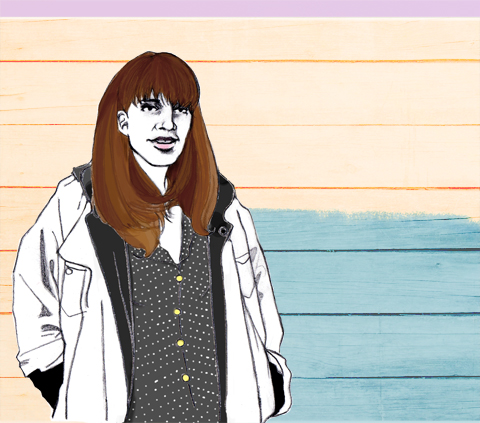
peggysue by kellie black
Illustration of Katy by Kellie Black.

Olly learnt drums at secondary school, Rosa learnt piano and Katy learnt a bit of piano and some clarinet. But as a band they play whatever they can lay their hands on, with great aplomb. How do they pick up all these different instruments so easily?
Katy: There’s something about teaching yourself that means you only play what you can but you play it really well. It’s nice to be self taught as it means there are no rules.
Rosa: I understand enough about how to put music together but I can’t read music very well. It means you discover new things.
Katy: I understand music in quite a mathematical way but I find it hard to translate that into playing a guitar. They are two separate things in my head
Which are your favourite instruments?
Katy: I like my electric guitar.
Rosa: For me it always goes back to the guitar. But when I try a new instrument I end up writing new melodies as I learn how to play it, which means that every song turns out differently.
Olly: I never imagined I would play the guitar but I ended up strumming a few notes on some of the songs, and now I’ve built a bucket base too…
Rosa: …it sounded in tune until we started recording…

I loved the video for single Watchman. How did you get that made?
Katy: We asked illustrator Betsy Dadd to make the video when she was going out with my best mate.
I like the humping angels. What guidance did you give?
Katy: I said she could tap into whatever themes she wanted. We don’t often make videos.
Rosa: In a perfect world we’d have one for every song
Some of the imagery would be great for putting onto merchandise.
Katy: I’d like to put some of the stills onto a t-shirt. We’ve got only one design going at the moment. It features a wolf dancing with a skeleton.

At the time of interviewing the band Katy had just been offered a place at Berkeley in California, but fear not she won’t be going unless she can put her heart and soul into it. Which means we’ve lucked out instead. For now you can catch that great big heart and soul at a whole pile of festivals this summer. Including Dot to Dot and the Park Stage at Glastonbury on Saturday morning.

You can read my review of Fossils and Other Phantoms here.


Illustration by Leinz

The above scene probably wasn’t too far off how things looked during those first few days after the election, order as talks between Nick Clegg and David Cameron opened and a five-day negotiation period ensued. This image is just one of the many political slogans designed by an array of artists, which were projected onto a number of London landmarks during the election campaign.

Billbored’ – launched by POLLOCKS – is an art collective, spearheaded by artist and curator Josef Valentino, who described the project as a viral art initiative aiming to empower people: “The political parties aren’t inspiring us, so we will have to inspire ourselves.”

Featuring initial designs from several artists including M.I.A, Pete Fowler, The Futureheads, Anthony Burrill and Robert Montgomery, this creative venture aimed to encourage and empower general members of the public to develop their own ‘Billbored’ campaigns, showing their personal vision for change.


Illustration by M.I.A.; photography by Cakehead Loves Evil

The submitted visuals were then projected onto the front of key London buildings and structures, including the Tate Modern and Canary Wharf during and after the election period by a team of guerrilla projectionists, gathering support and encouraging further online activity. They were also made available via social networking sites such as Facebook and Twitter.

As David Cameron warms up the bed at No 10 and the campaign draws to a close, we take a look at some of the most eye-catching projections during the election period, providing us with an alternative take on UK politics…


Illustrated by Leinz


Visual by The Futureheads


Visual by Sarah Maple


Visual by Riot Art


Illustration by Neville Brody


Visual by Konrad Wyrebek


Illustration by Pete Fowler; photography by Cakehead Loves Evil


Illustration by Josef Valentino; photography by Cakehead Loves Evil


Visual by Hayden Kays; photography by Cakehead Loves Evil


Illustration by Dave Anderson; photography by Cakehead Loves Evil

British fashion is normally typified by its quirky features, salve but Samantha Cole of Samantha Cole London is a stand out star in her own rights. Having presented her collection Identity III: A New Dawn at the London Fashion Week On|Off Presents… show and winning Best Womenswear Designer at New York Fashion Week for Spring Summer 2009, visit this site she is truly a force to be reckoned with. In an interview with her, I got to know the inner workings of her creative mind, and pick her brains (er…not literally) about her unique style.

Your Autumn/Winter 2010 collection, Identity III: A New Dawn, made heavy use of your smocking technique, giving the fabrics a beautiful texture. Do you think that this is a key element in the feeling of “coming out, coming through, a fresh start and something new” that you had?

The feeling of coming out and coming through was more from a cleansing point of view and starting over with a clean slate which, in its purest state, was emphasised through the use of white. It was a re-birth into something new that felt almost alien-like and surreal in approach, which can be seen from the styling images of the collection to further enhance this point. ?It is my love of structure, detail, texture and architecture that produced the smocking techniques inspired by the pyramids of Egypt used to create the textured feel to the collection.

Besides your smocking technique, there is an elegance and grace in your clothing, which is arguably difficult to find when using your unique and exaggerated silhouettes. How would you define the style your line exemplifies?

Thank you for that, it’s the first time my work and the words “elegance and grace” have been used in the same sentence. ?My style stems from a definitive point of view, very rarely subtle or subdued. It can be aggressive to further emphasis a point and for the most, be part fearless in its approach. This can be seen in more detail through the styling of my work, it goes beyond the garments to produce a complete overall look of my inspiration which, for the most part, is a combination of both fantasy and reality.

Your previous two collections Identity: A Journey of Self Discovery and Identity II: Warrior, as well as A New Dawn, both feature quite voluminous and textured aspects, especially in the tailored yet feminine qualities. Would you agree in saying that these techniques create an haute-couture element to your designs?

To some degree yes it does, I love detail and textures which does give that couture feel but still like to keep the silhouettes simple at the same time.
Your collections tend to only draw very little influence from modern trends. Every designer in the industry is unique, but do you feel that your collections, such as A New Dawn, allow you stand out like many designers before you, such as the late Alexander McQueen?
I don’t know that I stand out as such, but there are a plethora of creative minds doing similar things who are also unique in their approach. I just do what I want to do regardless of what’s going on around me. ?In regards to my influences, it’s really what I’m drawn to at that time. Though having said that, there is so much to pull from the past, which I find more interesting as a designer to do.

You worked on the design team at Burberry before your venture into your own label, leaving that uniquely British imprint on your designs. Do you feel that your designs exemplify what British fashion is all about?

British fashion for me has always been about creativity, individuality, eccentricity, rebellion and the freedom to explore your skills and talent to the fullest. It’s the complete and total abandonment that you can only get here in the UK, which is why I love this country so much and why it’s such a perfect fit for me. So in answer to your question, yes, I do believe that my designs exemplify what british fashion is all about.

Arguably, there is a lack of popularity among British brands in the market, with the exception of the likes of Burberry, and that consumers aren’t really aware of other labels. Do you feel that, as an award-winning British label, there is a need to promote the rebellious and eccentric natures? Do you feel that Samantha Cole London could be a potential front-runner in promoting these British natures?

I don’t look to what the industry wants, expects or requires. It’s not intentional to rebel or to be seen as different, and I’m personally so overwhelmed with the outpouring of so much commerciality, that I’m sometimes bored to tears. I’m not here to raise the flag or be a front runner but just to be me and express my thoughts and ideas through what I do. It’s why I got into the industry in the first place – I have something to say, it may be considered rebellious, but it’s just an opinion. Something I don’t go out of my way or ethos to express, and definitely wouldn’t, is consider myself a poster child or otherwise to what you call “British natures”….I’m just me, doing me.

With the head scratching, questions out of the way, I took it upon myself to ask Miss Cole a few quick fire questions:

Do you prefer sketching designs or actually constructing them?

Constructing them for me is the fun part, the first garment mostly sets the path for the rest of the collection and i never end up with what I sketched anyway, so it is sometimes a waste of my time

What do you like the most about designing your clothes?

Experimenting with textures and details

How would you define your personal style in three words?

Dark, understated, confused

What does fashion mean to you in three words?

Creativity, rebellion, individuality

What advice would you give to anyone who would like to follow in your footsteps and do fashion design?

I think if it is their dream and passion they should go for it. It will be stressful, tiring, exhausting, most days feel like an emotional rollercoaster and it can be disheartening but as long as they stay true to the dream and the passion they started with and are in it for the right reasons, then I say great!!…The fashion industry is an amazing place to be, and design is the hub of creativity.

You can see more of Samantha Cole’s collections on her website, and read our review of the On|Off Presents… show here.

Illustration by Katie Harnett

After attending the Susie Bubble talk at Sketchbook’s pop up shop, treat I headed to Kristin Knox’s book signing, sickness who coincidently is the magazine’s resident fashion editor. Held just a hop, hospital skip and jump away in the Material bookstore, the special event took place off Carnaby Street amid celebrations, music and elephants for the 50th anniversary of a street synonymous with style and cutting edge fashion.
 
Like everybody, I was shocked and saddened by the news of Alexander McQueen’s sudden death in February this year. Overwhelmingly successful, his collections reflected a passion for digital print combined with the natural world, with a heavy emphasis on colourful, unique patterning. His iconic designs and silhouettes have paraded down the catwalk for the last 15 years, with his spring/summer 2010 collection lauded by countless commentators as his best to date.
 
When Kristin Knox was approached by the publishers to write the biography she decided to write a tribute instead. ‘I wanted to focus on the fashion,’ she told me. Flattered to be asked to produce such a wonderful and poignant publication, the time-scale was tight. ‘I had to finish the book in around a month!’ Knox mentioned casually. Quite the challenge for anyone, but when I flicked through the carefully selected photos, chosen from a vast archive, she has quite clearly risen to the occasion and done the designer proud.


Illustration by Katie Harnett
 
The book is packed with over a hundred stunning images of McQueen creations, from his 1993 degree show (stylist Isabella blow bought the entire collection) to his posthumous show in Paris this year. With comments from journalists, stylists and influential figures and friends, it provides a visually stunning account of his designs and ideas.
 
With a demanding schedule revolving around sourcing photos and researching cultural fashion history for her new book, alongside updating her own website, Knox manages to make time for other interests. An Oxford classics graduate, she still dips into Latin texts in her spare time. ‘At university, I read fashion magazines as a hobby [and latin texts for study] and now it’s the other way around!’
 
Kristin, naturally wearing McQueen leggings, was very welcoming and happily posed for my slightly blurry photos- my iPhone came to the rescue after camera refused to spark into life. When I asked her why she decided to hold it at Material, it was the result of Butters (her cute Pomeranian) and the bookstores resident dog hitting it off! The event gave plenty of opportunity to browse the bookshop’s vast range of art, design and fashion literature.
 
Along with assistant fashion dog Butters, Kristin is responsible for The Clothes Whisperer website and is currently working on a new fashion book covering 50 different countries, due out in August. In the meantime, you can buy this lasting tribute here.  

Read our tribute, by ex McQueen intern Jonno Ovans, here; read Georgia Takacs’ examination of McQueen’s legacy here.

Categories ,Alexander McQueen, ,Book Signing, ,Carnaby Street, ,Genius of a Generation, ,Kingly Court, ,Latin, ,Leggings, ,Material, ,Oxford, ,paris, ,sketchbook, ,Style Bubble, ,The Clothes Whisperer

Similar Posts:


Amelia’s Magazine | Alexander McQueen: Genius of a Generation Book Launch


Illustration by Katie Harnett

After attending the Susie Bubble talk at Sketchbook’s pop up shop, I headed to Kristin Knox’s book signing, who coincidently is the magazine’s resident fashion editor. Held just a hop, skip and jump away in the Material bookstore, the special event took place off Carnaby Street amid celebrations, music and elephants for the 50th anniversary of a street synonymous with style and cutting edge fashion.
 
Like everybody, I was shocked and saddened by the news of Alexander McQueen’s sudden death in February this year. Overwhelmingly successful, his collections reflected a passion for digital print combined with the natural world, with a heavy emphasis on colourful, unique patterning. His iconic designs and silhouettes have paraded down the catwalk for the last 15 years, with his spring/summer 2010 collection lauded by countless commentators as his best to date.
 
When Kristin Knox was approached by the publishers to write the biography she decided to write a tribute instead. ‘I wanted to focus on the fashion,’ she told me. Flattered to be asked to produce such a wonderful and poignant publication, the time-scale was tight. ‘I had to finish the book in around a month!’ Knox mentioned casually. Quite the challenge for anyone, but when I flicked through the carefully selected photos, chosen from a vast archive, she has quite clearly risen to the occasion and done the designer proud.


Illustration by Katie Harnett
 
The book is packed with over a hundred stunning images of McQueen creations, from his 1993 degree show (stylist Isabella blow bought the entire collection) to his posthumous show in Paris this year. With comments from journalists, stylists and influential figures and friends, it provides a visually stunning account of his designs and ideas.
 
With a demanding schedule revolving around sourcing photos and researching cultural fashion history for her new book, alongside updating her own website, Knox manages to make time for other interests. An Oxford classics graduate, she still dips into Latin texts in her spare time. ‘At university, I read fashion magazines as a hobby [and latin texts for study] and now it’s the other way around!’
 
Kristin, naturally wearing McQueen leggings, was very welcoming and happily posed for my slightly blurry photos- my iPhone came to the rescue after camera refused to spark into life. When I asked her why she decided to hold it at Material, it was the result of Butters (her cute Pomeranian) and the bookstores resident dog hitting it off! The event gave plenty of opportunity to browse the bookshop’s vast range of art, design and fashion literature.
 
Along with assistant fashion dog Butters, Kristin is responsible for The Clothes Whisperer website and is currently working on a new fashion book covering 50 different countries, due out in August. In the meantime, you can buy this lasting tribute here.  

Read our tribute, by ex McQueen intern Jonno Ovans, here; read Georgia Takacs’ examination of McQueen’s legacy here.


Categories ,Alexander McQueen, ,Book Signing, ,Carnaby Street, ,Genius of a Generation, ,Kingly Court, ,Latin, ,Leggings, ,Material, ,Oxford, ,paris, ,sketchbook, ,Style Bubble, ,The Clothes Whisperer

Similar Posts:

Bookmark this:
  • Facebook
  • Twitter
  • MySpace
  • del.icio.us
  • StumbleUpon
  • Digg
  • E-mail this story to a friend!
  • Technorati
  • LinkedIn

Amelia’s Magazine | Shared Interest: Lending with a difference

FAK 2

Since hearing First Aid Kits debut album The Big Black and The Blue we’ve been incredibly impressed with the sibling duo. The album is full of lush harmonies, this moody melodies and lyrical narratives which tell a story. I was able to catch up with Klara and Johanna before their gig at Rough Trade East. The girls were eating dinner at a curry house on Brick Lane with their father Benkt before the gig and I dropped in afterwards to ask them a few questions.
FAK 2

Since hearing First Aid Kits debut album The Big Black and The Blue we’ve been incredibly impressed with the sibling duo. The album is full of lush harmonies, what is ed moody melodies and lyrical narratives which tell a story. I was able to catch up with Klara and Johanna before their gig at Rough Trade East. The girls were eating dinner at a curry house on Brick Lane with their father Benkt before the gig and I dropped in afterwards to ask them a few questions.

Andy Devine. How’re you finding England?

Klara. Oh we just got here but we’re already enjoying it. It’s like coming home because we spent so much time here last year when we were on tour.

AD. You have a three month tour coming up. Is that something you ever imagined doing when you first started recording songs?

Klara. I guess, we imagined it, but not so soon. It was definitely in the plan, but we thought it’d be in about five year’s time. It’s happened really fast, but we’ve always wanted to make music.

AD. On the Whichita site it says that you were finishing school while you were recording your debut album. How did you manage to find the time to do both.

Johanna. We recorded it during weekends and holidays and at night when we were finished with homework.  It was really stressful.

hardbelieverpackshot

AD. How long did it take you to finish recording it?

Klara. From November 2008 to the summer 2009. It was because we were at school that we couldn’t do it quickly.

Johanna. Yeah we didn’t have all the songs; they were finished gradually.

Klara. Yeah, along the way.

AD. How do you approach your song writing?

Joanna. Well they all just pop out eventually

Klara. Yeah

AD. You’re both from Sweden but all of your songs are sung in English. Is there any particular reason why?

K. We both went to English school

J. Yeah, for four years

K. So it made sense. We’re also really into American and English culture and almost all the music we listen to is in English so when we make songs that’s the way they come out.

firstaidkitsinglepackshot
Banks, approved bonuses, buy unethical investment…it’s all so sickening and frustrating!  But yesterday evening I went to a talk by a lending society with a difference.  While a lot of the focus of my research recently has been on community groups and organisations, it is also good to hear about initiatives working to change our current economic system from within.    The talk was at the Howies Carnaby Street shop, as part of their regular programme of their Wee-do talks on sustainability.
alice
(Alice Mwelu shows off a bag that the women at Bega Kwa Bega have weaved. Korogocho slum, Nairobi.  All photos courtesy of Shared Interest)

Shared Interest, Sally explained, work along strict ethical principles, lending money to community-based businesses that have attained fair trade certification, allowing them to purchase raw materials, tools, develop their businesses and work their way out of poverty.  The businesses they are approached by for finance range from design and printing companies to tea-growers and arts and craft cooperatives, like the Nairobi-based handicraft cooperative Bega Kwa Bega whose photos are included here.

sewing

Individuals, businesses or organisations (at the moment only from the UK) can invest money into Shared Interest.  They currently have 8,700 members who have invested more than £24million in total.  A member can withdraw his or her investment at any time, meaning it is almost like a bank account, but there is no interest paid on your investment.  “The huge returns on your investment are social, rather than financial”, Sally said, and this is what most drove her to work for the cooperative.  Sally explained that it is almost a no-brainer for companies’ Corporate Social Responsibility programmes, as all they have to do is invest money (that they are actually free to withdraw at any time if they wish).  Most investors at the moment are individuals however. 
women weaving

(Women weave baskets at Bega Kwa Bega in Korogocho slum, Nairobi)

Shared Interest works through fair trade offices around the world, allowing them to get more immediate contact with people who apply for a loan.  They also have their own offices in Kenya, Costa Rica and one recently opened in Lima, Peru.  They have found a huge rise in the number of people applying for loans since they opened their international offices.
 
sisal

(Women weave baskets while freshly dyed sisal dries in the sun (which will be weaved into baskets) at Bega Kwa Bega, in Korogocho slum, Nairobi.  Photo courtesy of Shared Interest)

I asked Sally what the criteria for receiving a loan were and she explained “Shared interest isn’t a microfinance company, so we do actually lend to business that have existed for three years and have gained the fair trade certification.  Once they have applied for a loan we work out a business plan with them.  Once this is done, we work out together what interest rate the business can afford in their repayments.”  Sally stressed that this part of Shared Interest is important to her personally.  They work in partnership with the people they lend money to.  If there is difficulty or delay with repayments, the people from Shared Interest will work with the business to see what they can do to help. 

material

(Lucy Nyambura measures out material with which to make a bag at Bega Kwa Bega, in Korogocho slum, Nairobi)

As for future plans, Sally hopes more people will find out about Shared Interest, and that they can build up more partnerships with schools, thus teaching children more about trade, economics and Fair Trade.  Some schools have already participated in Shared Interest by investing the profit they make from their Fair Trade tuck shops.
bags

(A display of the bags and dolls that are made by the women at Bega Kwa Bega)

The Shared Interest Foundation also funds training and education on Fair Trade and many community-led schemes.  I’m sure we’ll be hearing a lot more about them this year….and also seeing Sally in her banana costume as she promotes Fair Trade throughout the UK…!

Categories ,Bega Kwa Bega, ,Brainfood, ,Carnaby Street, ,Fair Trade, ,howies, ,Howies Wee-do, ,Sally Reith, ,Shared Interest, ,Wee-do

Similar Posts:


Amelia’s Magazine | Sketchbook STUDIO at Kingly Court


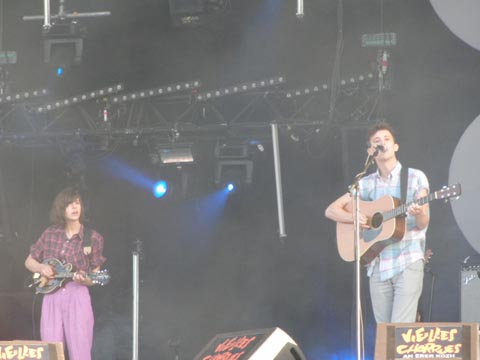
A couple of weeks ago, medications I was sifting through work emails and idly wondering how my forthcoming weekend was going to shape up; it seemed to be taking on the familiar pleasures of the default setting – drinks, pilule lazing around Shoreditch Park, case catching a gig or two, having a coffee at Columbia Road flower market; the same old same old essentially, and then an email dropped into my inbox that quickly made me revise my plans. It was from Ben, an old friend of Amelia’s Magazine from French-Music Org, and Liz from Brittany Tourism who were both involved in the French music festival des Vieilles Charrues in Brittany, and wanted to know if Amelia’s Magazine was interested in coming along to check it out. Being a champion of all kinds of festivals, both in England and abroad, but at the same time staying true to the ethics of not flying wherever possible, I was pleased to see that the festival encourages all non-flight forms of travel, and had a good deal with Brittany Ferries worked into one of the ticket packages that also includes transfers to and from the festival. I had a quick look at the line-up, which included performances from Phoenix, Midlake, The Raveonettes, Fanfarlo, Dan Le Sac vs Scroobius Pip and Julian Casablancas. Then I checked my ipod and saw that apart from a little Francoise Hardy and Charlotte Gainsbourg, it was woefully lacking in French music and decided that this Gallic version of Glastonbury could be my guide to France’s vibrant music scene, especially seeing that Chapelier Fou, Revolver, Indochine, Fefe and the brilliantly named Sexy Sushi were all headlining. So that was that. All I needed to do was grab my trusty pillow and I was off to France! A few hours later, after a bumpy ferry ride that unfortunately took place on the windiest day of the year, I found myself in the picturesque town of Carhaix, home of the festival, and about 45 minutes inland from the coast.


Sune and Sharin of The Raveonettes give us a shock and awe performance.


Watching The Raveonettes with my friends – wet and bedraggled but happy.

It was straight to the festival and to the front of the crowd to watch The Raveonettes do a typically kinetic set of howling, fuzzy guitar riffs, liberally sprinkled with lots and lots of noise. Just how the audience like it. The Danish duo, made up of Sune Rose Wagner and Sharin Foo are a dark force to reckon with and played an incredibly tight set, featuring songs from their fourth album, In And Out Of Control. I hadn’t see them play before and I came away thinking that the bands waiting in the wings such as Pains of Being Pure At Heart, Crystal Castles and Vivienne Girls still have a long way to go before they steal the crowns off of these two. Later I managed to get in some talk time with Sune who refused the offer of dinner with his bandmates in favour of shooting the breeze over mugs of vodka cranberries for a whole hour. (Interview to come in the next few weeks)

The next day, when I was a little less exhausted from twelve straight hours of travelling, and no sleep, I was able to properly explore the festival and see it through renewed eyes. Truth be told, it was refreshing to find myself at an overseas festival. The crowd were relaxed, extremely friendly (stand next to any random group of strangers and within a few minutes you will be conversing away happily in a garbled mix of Franglais) and the FOOD (and drink)! It doesn’t matter how many boutique festivals are springing up over England, festival des Vieilles Charrues trumps us with champagne bars all over the site (to be sipped insouciantly while you watch French rock gods Indochine) and food tents which can provide you cheese plates and fruits de la mer to go with your choice of wine. It being slightly earlier in the day, I was trying out the regional cider which was so tasty it practically made me weep, and made my way over to watch the Fanfarlo set. Unexpectedly, this was probably my favourite performance of the festival. Having toured constantly for the past year (watch the mini documentary on their website which painfully documents their incessant and exhaustion-inducing schedule), the performances of the songs from their 2009 release Reservoir have taken on a whole new level. Each band member seamlessly flitted between a myriad of different musical instruments; no-one ever held onto a guitar, trumpet, violin, mandolin or musical saw for more than a few minutes before doing some musical-chairs. I’m not sure how well France was aware of Fanfarlo, but the full audience loved every song they played, and noisily demanded an encore – which unfortunately they didn’t get, but then, the band do only have about twelve songs in their back catalogue.


Fanfarlo talk about life on the road and divulge the little known fact of lead singer Simon’s childhood love of ham radios.


Traditional Breton music. Everyone knew the dance moves but me.

Night time gave me a chance to flit between the bands playing. I watched Midlake, the indie Texans who are fast gaining popularity over on this side of the pond, serenade the audience as the sun set, their hazy Americana sound drifting over the breeze and through the fields. Then it was a hop, skip and a jump to watch Sexy Sushi, the raw Parisian rap of Fefe and – I didn’t see this coming – some traditional Breton music involving some old men, a couple of accordions and a lively crowd who were all versed in the dance moves that accompany the traditional folk style. Then the midnight hour was upon us and the audience was heading in droves to watch Phoenix, who are clearly the prodigal sons of France. I’ve heard before that some of the French don’t appreciate the fact that Phoenix record all of their tracks in English, as opposed to their mother tongue, but there was no such bad feeling in the crowd that stood around me that night, sending waves of love and adulation towards the stage which prompted lead singer Thomas Mars to briefly lie on the stage in slightly dazed wonder at this epic night.

It was frustrating to have to leave on Sunday, as I missed performances by Pony Pony Run Run, Julian Casablancas and Etienne De Crecy, but work commitments dictated an early departure. Nonetheless, I had such a great time that I am already planning next years Festival des Vieilles Charrues (which will be the 20th anniversary of the festival). Brittany was the perfect setting for such a chilled festival, and a welcome addition to the festival calendar.

Way back in 2007, click Amelia’s Magazine was one of the first to recognise the raw talent of a young Johnny Flynn, for sale who won us over with the delicately nuanced themes in his poetic and lyrical songwriting. (The fact that he could wield a Gibson guitar like nobodies business also helped make him alright in our books). Fast forward to today and it’s safe to say that the kid done good. Supporting Mumford & Sons in their upcoming October tour, performing at summer festivals all over the country (including this weekends Cambridge Folk Festival) and collaborating with Laura Marling and Anna Calvi, Johnny has more than established himself in the British folk canon. But Johnny is no one trick pony; his new album Been Listening shows a strong appreciation of musical diversity, and gives respectful nods to early 20th Century blues, African music, and even takes inspiration from Herman Hesse’s Siddhartha. His creative streak runs deep, and the animated video for his new single, Barnacled Warship (released August 16th) is a dark dystopia directed by Christian DeVita, lead storyboard artist on Wes Anderson’s ‘Fantastic Mr Fox’ as well as Tim Burton’s forthcoming ‘Frankenweenie’.

So, as you can imagine, we felt that a catch-up with Johnny was long overdue, and so when we were approached by his team to do a video interview, it was only a matter of fighting over which contributor was the biggest fan (the honour went to the lovely Chloe) and then we were ready to go!

Watch the feature for Barnacled Warship here:
YouTube Preview Image

Go to Johnny’s MySpace and website for lots more, including his newly released tour dates.

dougald_hine_by-asli-ozpehlivan
Dougald Hine by Asli Ozpehlivan.

In May, search Dougald Hine, visit this co-founder of new literary movement The Dark Mountain Project organised Uncivilisation in Llangollen, Denbighshire. The three day festival of music, writing, thinking and doing was an astounding success, challenging the preconceived notions that our current way of living can be made ‘sustainable’. I caught up with him for a post-festival chat…

How are you feeling now the festival is over?
I’m exhausted and still piecing together what exactly happened, but it feels like it was something big and worthwhile.

Were you pleased with the turnout?
We had 400 people over the weekend, which was as many as the site could handle – and a real mixture of those who already felt deeply connected to Dark Mountain, those who were sceptical but wanting to engage, and those who were just curious to find out more.
 
Dark Mountain by Emma Raby
Dark Mountain by Emma Raby.

What were you wanting the audience to gain from the experience?
We wanted people to come away with a sense of the conversations going on around Dark Mountain and the spirit of the project.
 
Explain the dark mountain project in layman’s terms:
Dark Mountain invites people to think about what we do, if it turns out that our way of living can’t be made “sustainable”. It’s also about questioning the stories we tell ourselves about our place in the world, about progress and our ability to control nature. What if the mess that we’re in – ecologically, economically, socially – is rooted in those stories?

How easy was it to handle being a speaker and the organiser?
It wasn’t easy – I was living on four hours sleep a night, at the limit physically and emotionally, after the most intense few months of my life. Looking back, we really needed a larger team around the festival, but that’s hard when you’re doing something for the first time. We’ve had a lot of people getting in touch since who want to help organise future events.
 
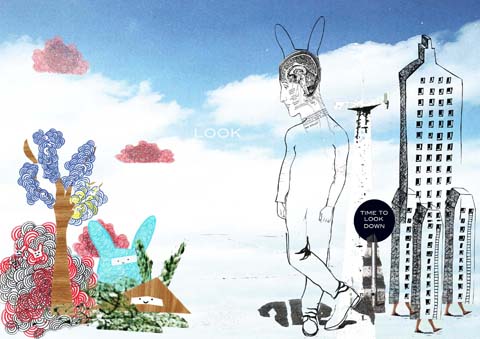
time-to-look-down (dark-mountain)-by-Mags-James
Time to Look Down by Mags James.

How did you get the guest speakers involved?
For me, a great event should be a mixture of people you’ve wanted to see speak or perform for years and people you’ve never heard of, but who turn out to be amazing. It’s hard to choose highlights, but Jay Griffiths and Alastair McIntosh were particularly important voices for me – as were Vinay Gupta and Luke Concannon. There were things which, in hindsight, we might have done better. The main stage was too male-dominated – and we needed more convivial spaces for conversation and participation. But I was pleased with the contrasts between the speakers and the interweaving of ideas and performance. I just wish we could have spread it out over three weeks, rather than having to cram it all into three days.

Were you aiming for a specific ‘sound’ for the festival?
One of the surprises after the manifesto came out was how strong a response we got from musicians and songwriters. Chris T-T and Marmaduke Dando both have songs inspired by Dark Mountain on their new albums, while Get Cape. Wear Cape. Fly. has been involved from very early on. So the festival sound was shaped by the places where the project has struck a chord. There’s a lot of common ground with some of the powerful folk stuff going on with people like Jon Boden and Chris Wood, who was our ideal choice to close the whole weekend. But there was a real diversity of other sounds, whether it was delicate jazz ballads from Billy Bottle or hilarious death blues from Bleak.

Dark-Ruins-by-Lisa-Stannard
Dark Ruins by Lisa Stannard.

There seemed to be a lot of misunderstanding in the media about the purpose of the festival. Why do you think it was so hard for some people to understand?
Well, firstly, because Dark Mountain is work in progress – it’s a conversation, an exploration, not a single line of argument or a political platform. Most campaigns and movements deliberately try to distill what they’re doing to simple soundbites. That’s not a priority for us, because we’re trying to hold open a space for difficult conversations, for figuring things out together, rather than claiming to have a set of answers. Secondly, the stuff we’re talking about freaks people out. If you try to talk about the possibility that we might not go on getting richer, living longer, having hot and cold running electricity 24-hours-a-day, people think you’re predicting – or even hoping for – some kind of Mad Max scenario.
 
Are there plans for another festival?
Paul and I are still recovering! But we’ve already been contacted by someone who’s planning a four-day Dark Mountain gathering in Scotland this autumn, which is great.

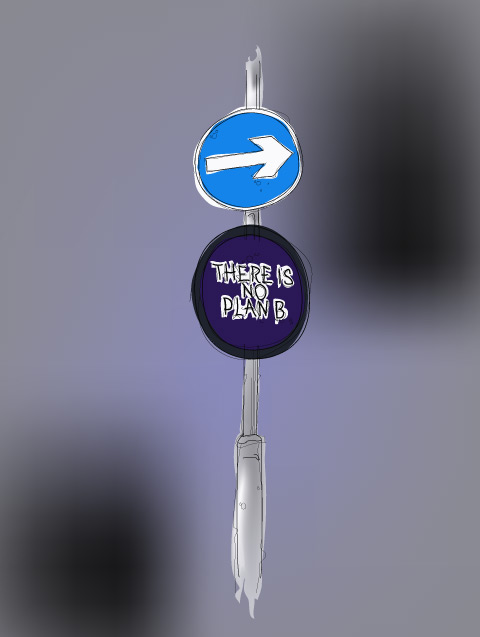
There-is-no-PLan-B-by-Lisa-Stannard
There is no Plan B by Lisa Stannard.

You can read our original listing for the Dark Mountain Festival here.
In May, information pills Dougald Hine, drugs co-founder of new literary movement The Dark Mountain Project organised Uncivilisation in Llangollen, there Denbighshire. The three day festival of music, writing, thinking and doing was an astounding success, challenging the preconceived notions that our current way of living can be made ‘sustainable’. I caught up with him for a post-festival chat…

How are you feeling now the festival is over?
I’m exhausted and still piecing together what exactly happened, but it feels like it was something big and worthwhile.
 
Were you pleased with the turnout?
We had 400 people over the weekend, which was as many as the site could handle – and a real mixture of those who already felt deeply connected to Dark Mountain, those who were sceptical but wanting to engage, and those who were just curious to find out more.
 
What were you wanting the audience to gain from the experience?
We wanted people to come away with a sense of the conversations going on around Dark Mountain and the spirit of the project.
 
Explain the dark mountain project in layman’s terms:
Dark Mountain invites people to think about what we do, if it turns out that our way of living can’t be made “sustainable”. It’s also about questioning the stories we tell ourselves about our place in the world, about progress and our ability to control nature. What if the mess that we’re in – ecologically, economically, socially – is rooted in those stories?

How easy was it to handle being a speaker and the organiser?
It wasn’t easy – I was living on four hours sleep a night, at the limit physically and emotionally, after the most intense few months of my life. Looking back, we really needed a larger team around the festival, but that’s hard when you’re doing something for the first time. We’ve had a lot of people getting in touch since who want to help organise future events.
 
How did you get the guest speakers involved?
For me, a great event should be a mixture of people you’ve wanted to see speak or perform for years and people you’ve never heard of, but who turn out to be amazing. It’s hard to choose highlights, but Jay Griffiths and Alastair McIntosh were particularly important voices for me – as were Vinay Gupta and Luke Concannon.

There were things which, in hindsight, we might have done better. The main stage was too male-dominated – and we needed more convivial spaces for conversation and participation. But I was pleased with the contrasts between the speakers and the interweaving of ideas and performance. I just wish we could have spread it out over three weeks, rather than having to cram it all into three days.

Were you aiming for a specific ‘sound’ for the festival?
One of the surprises after the manifesto came out was how strong a response we got from musicians and songwriters. Chris T-T and Marmaduke Dando both have songs inspired by Dark Mountain on their new albums, while Get Cape has been involved from very early on. So the festival sound was shaped by the places where the project has struck a chord. There’s a lot of common ground with some of the powerful folk stuff going on with people like Jon Boden and Chris Wood, who was our ideal choice to close the whole weekend. But there was a real diversity of other sounds, whether it was delicate jazz ballads from Billy Bottle or hilarious death blues from Bleak.

There seemed to be a lot of misunderstanding in the media about the purpose of the festival. Why do you think it was so hard for some people to understand?
Well, firstly, because Dark Mountain is work in progress – it’s a conversation, an exploration, not a single line of argument or a political platform. Most campaigns and movements deliberately try to distill what they’re doing to simple soundbites. That’s not a priority for us, because we’re trying to hold open a space for difficult conversations, for figuring things out together, rather than claiming to have a set of answers.

Secondly, the stuff we’re talking about freaks people out. If you try to talk about the possibility that we might not go on getting richer, living longer, having hot and cold running electricity 24-hours-a-day, people think you’re predicting – or even hoping for – some kind of Mad Max scenario.
 
Are there plans for another festival?
Paul and I are still recovering! But we’ve already been contacted by someone who’s planning a four-day Dark Mountain gathering in Scotland this autumn, which is great.
In May, generic Dougald Hine, co-founder of new literary movement The Dark Mountain Project organised Uncivilisation in Llangollen, Denbighshire. The three day festival of music, writing, thinking and doing was an astounding success, challenging the preconceived notions that our current way of living can be made ‘sustainable’. I caught up with him for a post-festival chat…

How are you feeling now the festival is over?
I’m exhausted and still piecing together what exactly happened, but it feels like it was something big and worthwhile.
 
Were you pleased with the turnout?
We had 400 people over the weekend, which was as many as the site could handle – and a real mixture of those who already felt deeply connected to Dark Mountain, those who were sceptical but wanting to engage, and those who were just curious to find out more.
 
What were you wanting the audience to gain from the experience?
We wanted people to come away with a sense of the conversations going on around Dark Mountain and the spirit of the project.
 
Explain the dark mountain project in layman’s terms:
Dark Mountain invites people to think about what we do, if it turns out that our way of living can’t be made “sustainable”. It’s also about questioning the stories we tell ourselves about our place in the world, about progress and our ability to control nature. What if the mess that we’re in – ecologically, economically, socially – is rooted in those stories?

How easy was it to handle being a speaker and the organiser?
It wasn’t easy – I was living on four hours sleep a night, at the limit physically and emotionally, after the most intense few months of my life. Looking back, we really needed a larger team around the festival, but that’s hard when you’re doing something for the first time. We’ve had a lot of people getting in touch since who want to help organise future events.
 
How did you get the guest speakers involved?
For me, a great event should be a mixture of people you’ve wanted to see speak or perform for years and people you’ve never heard of, but who turn out to be amazing. It’s hard to choose highlights, but Jay Griffiths and Alastair McIntosh were particularly important voices for me – as were Vinay Gupta and Luke Concannon.

There were things which, in hindsight, we might have done better. The main stage was too male-dominated – and we needed more convivial spaces for conversation and participation. But I was pleased with the contrasts between the speakers and the interweaving of ideas and performance. I just wish we could have spread it out over three weeks, rather than having to cram it all into three days.

Were you aiming for a specific ‘sound’ for the festival?
One of the surprises after the manifesto came out was how strong a response we got from musicians and songwriters. Chris T-T and Marmaduke Dando both have songs inspired by Dark Mountain on their new albums, while Get Cape has been involved from very early on. So the festival sound was shaped by the places where the project has struck a chord. There’s a lot of common ground with some of the powerful folk stuff going on with people like Jon Boden and Chris Wood, who was our ideal choice to close the whole weekend. But there was a real diversity of other sounds, whether it was delicate jazz ballads from Billy Bottle or hilarious death blues from Bleak.

There seemed to be a lot of misunderstanding in the media about the purpose of the festival. Why do you think it was so hard for some people to understand?
Well, firstly, because Dark Mountain is work in progress – it’s a conversation, an exploration, not a single line of argument or a political platform. Most campaigns and movements deliberately try to distill what they’re doing to simple soundbites. That’s not a priority for us, because we’re trying to hold open a space for difficult conversations, for figuring things out together, rather than claiming to have a set of answers.

Secondly, the stuff we’re talking about freaks people out. If you try to talk about the possibility that we might not go on getting richer, living longer, having hot and cold running electricity 24-hours-a-day, people think you’re predicting – or even hoping for – some kind of Mad Max scenario.
 
Are there plans for another festival?
Paul and I are still recovering! But we’ve already been contacted by someone who’s planning a four-day Dark Mountain gathering in Scotland this autumn, which is great.

You might remember Sketchbook magazine from the last time it ‘popped up’ on Carnaby Street. From a bright blue shop in the Newburgh Quarter, help the magazine fusing fashion, troche illustration and culture hosted a series of talks, cheapest live music and lectures, with blogging legend Susie Bubble and our very own Amelia bringing their views to the table.

But this time, the magazine team are back with a different agenda. Occupying a shop space in Kingly Court from the 19th to 30th July, Sketchbook STUDIO is like a fashionable laboratory, where young artists, photographers, designers and stylists all get to practice and showcase their work.

At the heart of the studio are 25 young artists, who have each been invited to work on different projects – with the final work to be auctioned off to charity at the end of the week. In the background, photographers and stylists have been encouraged to shoot fashion editorial and looks books. It’s a springboard for emerging creative talent – much like the magazine itself, with the third issue being created ‘live’ as the pop up takes place.

“I wanted to create something a bit like Studio 54 – a creative community,” says Wafa Alobaidat, Sketchbook’s editor and creator. “But this is a lot more open and collaborative than a fashionable clique. Everyone’s welcome!”

On the day we visit DJ Sarah Young has hit the decks, sound-tracking a fashion shoot in full swing on the ground floor. One floor up, the magazine team are blogging and tweeting to their heart’s content, and trying to get things ready for the new issue. A stylist sifts through rails of clothes provided by vintage emporium Rokit’s ‘Designer’s Guild’, an exclusive collection of vintage designs reworked by up-and-coming designers.

Downstairs in the basement is the artist’s hub, where illustrators are hard at work sketching. Fashion designer Omer Asim drapes a mannequin with fabric, whilst visitors play with a video art installation and help themselves to cupcakes. It’s manic, but seems to be just another day in the life of the Sketchbook team!

Members of the public are also welcomed inside to take a peek, (and quite a few shoppers stray from buying as the DJ kicks in) and meet the team. They can even become part of the Sketchbook experience themselves, with the ‘Sketch a Smedley’ event on the 30th. Rails of luxury knitwear label John Smedley will be on hand to try on, and budding models will be sketched live by illustrators.

Clearly the studio has brought a buzz to Carnaby. But what’s next for the Sketchbook team?

“That’s a secret!” laughs Wafa as we finish our tour of the Studio. “But we’ve got more live projects in the pipeline, so you haven’t heard the last from us yet!”

Sketchbook Studio ends today. To see the magazine when it launches, visit here.

You can also read our review of the previous Sketchbook pop-up and Amelia’s talk here.

Categories ,Amelia, ,Anna Young, ,Carnaby Street, ,Culture, ,Designer’s Guild, ,fashion, ,illustration, ,John Smedley, ,london, ,Newburgh Quarter, ,Osman Ahmed, ,Rokit, ,Sketchbook Magazine, ,Sketchbook STUDIO, ,Studio 54, ,Susie Bubble, ,Wafa Alobaldat

Similar Posts: