Amelia’s Magazine | At War for the Whales: #1 Heading Out

3238269817_3bc7024140

The M/V Steve Irwin looks for a way out of a dense field of icebergs (Photo: Eric Cheng / Sea Shepherd Conservation Society)

As a young kid, visit this dosage I was always fascinated by the idea that the Blue Whale, more about the biggest animal ever to have lived on this planet, pill was still out there roaming the oceans. I prized a giant mural of a whale above my bed and every couple of months I sent some of my pocket money off to organisations who worked to keep my whale friends safe. Although whales and the whaling issue were kept in the back of my mind, it wasn’t until I reached my mid-twenties that I started realizing that these wonderful creatures were still actively being hunted, despite all the protection they are supposed to enjoy under international treaties. The more I read up on it, the crazier the whole situation seemed. For example, Fin whales are listed as an endangered (and thus protected) species on the IUCN Red List since 1996. They are illegaly hunted down and killed every year in the Southern Ocean Whale Sanctuary, a protected area for whales put in place by the United Nations in the mid 90′s. A whaling fleet from Japan enters these Antarctic waters around mid December to kill nearly 1000 whales (Piked whales and Fin whales) for ‘scientific research’.

Minke whaleIllustrations by Kerry Lemon

One night, after reading some news articles about whaling, I just got so angry. Here are these beautiful creatures, hunted down and killed for a bit of quick money. Scientific research? Yeah, right! It makes me mad when I think about some ignorant businessmen down the line, filling their pockets with total disregard for the animals, the environment and the future generations that I hope will live to see these majestic creatures live freely like they deserve to, just as much as we humans do.

My anger quickly translated into action and within weeks I signed up to join the Sea Shepherd ship’s crew for their annual anti-whaling campaign in the Southern Ocean. Sea Shepherd founder Captain Paul Watson is known for his direct action tactics and the fact that he won’t back down from opposition or controversy and is more willing than anyone to put up a fight to defend ocean wildlife. Since 1979, Sea Shepherd has scuttled and sunk 10 illegal whaling ships at dockside, rammed and boarded ships at sea and confiscated many miles of illegal longline and driftnet. All this in the last 32 years in a war that has put the lives of whales, seals, dolphins, sharks, fish and sea birds first. Most importantly, a war in which Sea Shepherd has never sustained or caused injury to anyone as a result of its actions.

3239108510_1131036cd6

A whale surfaces at the edge of the sea ice in Antarctica. (Photo by Adam Lau/Sea Shepherd Conservation Society)

As a trained violin maker I had no ship skills whatsoever but the ship’s carpenter role was one I was able to fill. Sometimes people ask me what carpentry work there is to do on a ship. ‘Surely it’s all steel?’ Honestly, I have never made so many cabinets, bunks, cupboards, boxes, holders, storage racks, tables, benches, toilet roll holders and other wooden contraptions as in the last 18 months. The ship is always a hive of activity with deckhands, engineers, quartermasters, officers and cooks working hard to get the ship in top shape for the job at hand. Having been involved in activism for over 10 years, I don’t think I’ve ever worked with such a dedicated, hard working and committed bunch of people.

Bryde's whale

With a samba band, Terri, Bindi and Robert Irwin and many local people waving us off at dockside, we left Fremantle on 7th December with a course set for Antarctica. As soon as we left the Australian Economic Exclusion Zone we were trailed by a Japanese surveillance vessel, which has been following us ever since. We will reach the whaling grounds within the next few days and more that ever before we have the ability to shut them down. We have more resources at our disposal, more public support than ever before and the people of Japan are increasingly questioning the ongoing spending of millions of their tax payers money on this useless and cruel industry.
091214_Shonan_Maru_No_2_02_(BV1187)

Close up of the Japanese harpoon ship. (Photo: Barbara Veiga / Sea Shepherd)

As the world leaders gathered in Copenhagen last month, failing to come to an agreement on tackling climate change and make emission cuts mandatory by international law, we were forced to set sail for thousands of miles to uphold another bit of major legislation they had agreed upon, but which they chose to ignore to enforce. What was it again, this thing agreed upon in the 80′s and at the time hailed as a massive victory for conservation? Something to do with whales?

If the nations of the world can so blatantly ignore an international treaty that is supposed to protect an endangered species in an established whale sanctuary, than what hope is there for the international community to enforce any type of legislation that is to fight climate change? The ongoing illegal whaling in the Southern Ocean is a slap in the face to conservation efforts around the world. A set back for environmental activists the world over. A stab in the back to those people who worked so hard to get the legislation agreed upon in the first place. For the sake of the whales, the international community and future generations we will sail into the Antarctic, find the whalers and give them what they deserve.

For latest updates and news, please see the Sea Shepherd website: www.seashepherd.org

Categories ,Antarctica, ,australia, ,Blue Whale, ,conservation, ,Endangered species, ,Hunting, ,japan, ,Kerry Lemon, ,Research, ,Sea Shepherd, ,Steve Irwin, ,united nations, ,Whales, ,Whaling, ,Wietse Van Der Werf

Similar Posts:


Amelia’s Magazine | At War for the Whales: Part 2

Untitled-3

The Japanese harpoon ship, approved Shonan Maru No 2 appears behind the iceberg (photo credit: Barbara Veiga / Sea Shepherd)

It has been an eventful couple of months at sea and most of us are eager to get back to the whaling grounds as soon as possible. Two days ago we departed from Fremantle, Western Australia, for the third voyage down to the Antarctic waters, where the whalers continue their whaling season under the guise of ‘scientific research’. We have been at sea for well over 2 months now and returned to port twice for refuelling. When we initially left for the campaign in early December, we were tailed by the Shonan Maru II, a Japanese harpoon ship turned spy vessel, as soon as we left Australian waters. The ship stayed with us wherever we went. We tried to lose it by heading into ice or heavy weather, but could not shake them.

Sei whale

Illustration by Kerry Lemon

I step outside on the aft deck to see the spy ship, Shonan Maru II, bearing down upon us fast. Our helicopter had been launched earlier to verify what ship it actually is, as we hadn’t come within clear visual range before. Upon arrival, the helicopter had a Long Range Acoustic Device (LRAD) pointed at it. This is a device that sends out a highly directional noise, aimed at disorientating or even incapacitating a person. Using it on our helicopter while it is mid-air is, to say the least, totally irresponsible. With the helicopter now safely back on the Steve Irwin, it seems that the Japanese ship is coming in for the attack. With its water cannons blasting at full power, it is trying to come alongside us, presumably to give the helicopter a wash down, in an effort to damage it. As it chases us, loudspeakers blast: “This is the Shonan Maru captain! You are too close to me! You are too close to me!” Meanwhile we have a prop-fouler ready, which is a long rope we trail from the end of our ship to keep them at bay. If they were to come too close and run over the line, it could get entangled in their propeller and cause serious damage. They know this and are unable to come as close as they’d like. They keep trying but by now we are entering an ice field full of mid-size growlers and after a few sharp manoeuvres the Japanese ship backs off. They fall back but stay behind us within radar range.

Untitled-4

The Japanese harpoon vessel, Shonan Maru No 2 on the run with water cannons blasting (photo credit: Michael Williams / Sea Shepherd)

A couple of days later we are anchored up in Commonwealth Bay, overlooking the Antarctic continent on one side and the open sea on the other. Our spy ship can still be seen lurking about on the horizon. We haven’t been able to get rid of her, so we take shelter in these waters, which are French territory. Perhaps the French can help.

We switch off the engines and while one of the officers gets in the helicopter to visit the French base Dumont D’urville, some of the crew strip down for the traditional dive in the freezing Antarctic waters. As negotiations with the French continue into the afternoon, some of us head out in the small boat towards Cape Denison, home to a colony of 30.000 Adelie penguins and the spot where the Australian scientist Mawson landed in 1911. I step foot on land and realise how few people must have been fortunate enough to see this place. Snow covers the land as far as the eye can see and the smell of the fresh and sharp air takes some getting used to. Looking out at sea, the coastline is covered with rocks and home to thousands of Adelie penguins.

penguin

A penguin on an iceberg in Antarctica (Photo: Eric Cheng / Sea Shepherd Conservation Society)

Following a bunch of penguins walking towards a huge icy ridge, it strikes me that this is probably one of the very few places of true wilderness left. Untouched by human hands, growth, development, exploitation. So far Antarctica has enjoyed fairly good protection. The Antarctic Treaty prohibits commercial and/or military activity on and around the continent and states that the number of cruise ships is to be kept to a minimum.
However, there are vast resources, such as oil and there are theories that when the treaty is re-negotiated in a few years, some countries including Japan will try to loosen these conditions in order to gain access. Some people argue that the only reason Japan continues its whaling operations in the Southern Ocean is so that it will have some ‘historical claim’ over the resources in the area, if it would ever be opened up for exploitation. Whatever the reasons, right now the Japanese fleet operates illegally in the area, threatening this habitat and the creatures that depend on its protection for their survival, which is all that matters to us.

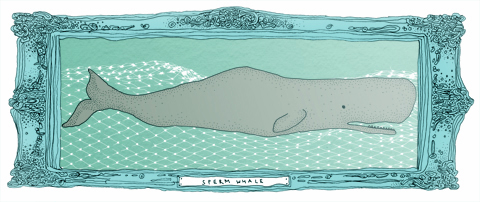
Sperm whale

Illustration by Kerry Lemon

Seeing our ship in the far distance, anchored up in the bay, makes me feel proud to know that we are here for these animals and to protect this unique and untouched wilderness from the destructive hands of corporate power. I head back down towards the water, in the small boat and back to the ship. The commander of the French base has written a letter of support, but without some kind of navy presence in the area, they are unable to do much more than that. We pull up anchor and head back out into what now has become quite a rough sea. Not getting much sleep as we are thrown about by the 15 foot swells.

Untitled-1

photo credit: Glenn Lockitch / Sea Shepherd

Sea Shepherd has always enjoyed support from the ranks of Hollywood with, among many, Martin Sheen, Pierce Brosnan and Darryl Hannah donating their time and resources for the cause. The latest to join the list is Ady Gil, a businessman from Los Angeles, who has donated a large sum of money to help us purchase a second vessel. The ship, previously known as Earthrace, is a super fast trimaran powerboat which broke the world circumnavigation record in 2008, is bio-diesel powered and looks like something to have sailed straight out of the latest batman movie. Its skipper and creator Pete Bethune is eager to join the Sea Shepherd campaign and with the financial backing, the ship is refitted and renamed Ady Gil. We are on our way to meet up with the Ady Gil, which left Hobart two weeks earlier, to transfer food and other supplies. As we steam north, our spy ship keeps a steady two nautical miles behind us.

Untitled-2

photo credit: Glenn Lockitch / Sea Shepherd

We are getting closer to the Ady Gil and I go up to the bridge to see what is going on. Nothing shows on the radar. The boat is so small that it can go about its business virtually undetected. In addition, we take advantage of the short bit of darkness to covertly meet up. I step out on deck. ‘Over there, can you see?’ I can just about make out a tiny black spot in the vast darkness. We launch a small boat and pick up two of the crew. After a short meeting they head off into the darkness again. We set course for Hobart and the Ady Gil heads towards the spy ship in an attempt to take it out of action. Prop-foulers come out, stink bombs are thrown onto the deck and a photonic disruptor aimed at distracting those on the bridge is put to use. It is all part of our essential arsenal of non-violent tactics to shut down the whalers. In 30 years of operations Sea Shepherd has never caused a single injury as a result of any of its actions. We are non-violent yet honest about the fact that we take aggressive action. Exactly the type of action that is necessary to stop these criminal whale poachers. A few hours later we notice that the spy ship has caught up with us again. As we sail into Australian waters the Japanese ship stays put at the Economic Exclusion Zone (EEZ) boundary, unwilling to escalate the ongoing international stand-off over whaling.

Read Part 1 here.  Part 3 coming soon…

For latest updates and news, please see the Sea Shepherd website: www.seashepherd.org

Categories ,Adelie penguins, ,Ady Gil, ,Antarctica, ,Atlantic, ,Barbara Veiga, ,Cape Denison, ,conservation, ,Darryl Hannah, ,Dumont D’urville, ,Eric Cheng, ,france, ,Harpoon, ,Hollywood, ,Ice, ,Illegal Whaling, ,japan, ,Kerry Lemon, ,Los Angeles, ,Martin Sheen, ,Mawson, ,Michael Williams, ,Penguins, ,Pete Bethune, ,Pierce Brosnan, ,Sea Shepherd, ,Ship, ,Southern Ocean, ,Whale, ,Whaling, ,Wietse Van Der Werf

Similar Posts:


Amelia’s Magazine | Cakes for Japan: tips for fundraising from Miss Cakehead


Lobster woman by Mina Bach

Reading the brochure only served to confuse me further ahead of my visit to Jerwood Space. The descriptively-named ‘Show’ seeks to examine “the integral role that performance plays within an artist’s practice and its subsequent representation in an exhibition context” … Okay, advice so it makes a little more sense now after I’ve seen it, side effects but only a little. It’s performance art, salve people – enter at your peril, but it will be like nothing you’ve seen before.

Watching Edwina Ashton dressed up as a lobster, slowly moving about the studio moving things, was something akin to a surreal experience. It was hard to know what to think as Ashton, whose lobster head was secured with a pair of pink fishnets, positioned egg cartons in a wood frame. What’s she doing? What’s going on? Is it supposed to be funny? Are we being filmed as part of a scientific experiment? In the days since the performance I am still nowhere closer to figuring it out.


Edwina Ashton

Edwina Ashton, whose performance is called ‘Peaceful serious creatures (lobster arranging)’, is interested in how matter becomes things, the leaflet says. It also quotes Gerard de Nerval, who used to talk his pet lobster Thibault for walks on the streets of Paris. Presenting the case for lobsters, he said: ‘I have a liking for lobsters. They are peaceful, serious creatures. They know the secrets of the sea, they don’t bark, and they don’t gnaw upon one’s monadic privacy like dogs do.’


Lobster by Caz Lock

‘Show’ also featured two other artists – one being Jack Strange in ‘Zip and zing’. This was two legs poking through holes in the wall, which I discovered by almost tripping over one of them in the crowded gallery. I’d worn my warm but scruffy cardigan for the cycle to Jerwood Space and was planning to put it in my bag for the gallery, but there was no need for that; it seems frayed knits are big with the performance art crowd. The same seems true for bold spectacles and beards, stationery necklaces and growing-out neon hair.


Crowd at Jerwood / Jack Strange

The final performance, Bedwyr Williams’ ‘Urbane Hick’, was a hit with the crowd, as the artist poked fun at his genre. ‘Performance art isn’t an earner,’ he pointed out, following up with statements such as: ‘Is there anything more self-righteous than a Londoner in a park,’ drawing laughter from the crowd. After all we were inclined to like him after he told us what he did to the last person who disapproved: he dipped a discarded Chupa-Chups into their drink. And no one wants that.

‘Show’ runs at Jerwood Space on the South Bank: 171 Union Street, London SE1 0LN, until 21st April. Free entry but booking is required. For more information see our listing.


Illustration by Natasha Thompson

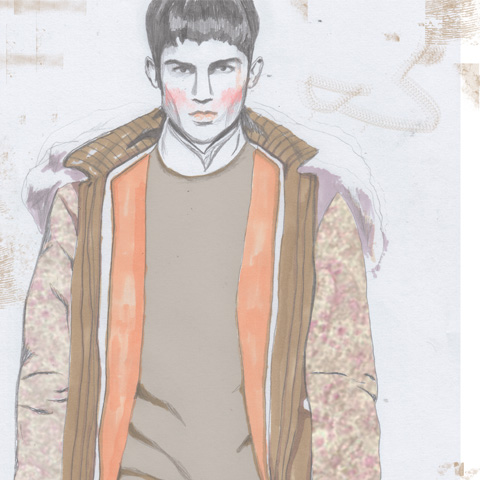
This write has taken far, help far longer than it actually should have, ed which is no reflection on the beautiful collection I saw relatively on Wednesday morning several weeks ago. It’s completely down to inertia and mental blocks; utterly rubbish, viagra 60mg but there you go. So whilst the womenswear editors and buyers had jetted off to Milan it was left to the rest of us and a Mr Hamish Bowles to enjoy the delights of J.W. Anderson‘s show. It is worth noting that by now the glamour of most fashion shows had dulled a little and I was fast developing the urge to move rows forward to the front. I was no longer just grateful to attend but damn it do they not know who I am? Obviously they did, or rather they knew who I wasn’t and quite rightly plonked me in the fourth row. I quickly moved forward. Shame and modesty is wasted at these shows.  


Illustration by Aniela Murphy

As the lights dimmed the sound of an arctic gale blew through the show space, as if we weren’t chilly enough, before giving way to Nordic house. It was a great soundtrack and set the tone for a multi layered collection that showcased great talent and eye across both formal and casual wear. The palette was primarily navy and charcoal brilliantly punctuated with paisley prints, whites, and olive greens.  


All photography by Matt Bramford

The fact I struggle to define which element of the collection was strongest tells of its strength. In a large collection it is often easy to pick and choose what you like, with only 28 looks each one needs to stand on its own but also within the line up. J.W. Anderson has definitely achieved this with this collection; be it the new and exciting knitwear, the floor length kilts, panelled overcoats or hooded tailoring.  


Illustration by Gabriel Ayala

The knitwear was fresh, jumpers with missing front panels,  Scandinavian-inspired detailing or webbed bands to hold in place. No longer just tied loosely round the waist the bands held the jumper tight in around the knee. Cardigans in a fine gauge knit or latex were layered over each other adding another exciting element.  

A strong trend at fashion week this year has been panelled trenchcoats, both amongst the fashion elite and on the runway, and this was picked up on the Anderson catwalk. Anderson took it a step further creating fantastic midnight blue standalone jackets with printed quilted hoods.  


Illustration by Natasha Thompson

Overall London menswear day is fast becoming a force to be reckoned with. No longer a nominal notion tacked on the end but championing both established and upcoming designers. It’s a shame it still clashes with Milan and as such most of the press have left already. But with British and Irish menswear being championed by the likes of Anderson we have much to look forward to.

See more from Aniela Murphy and Natasha Thompson in Amelia’s Compendium of Fashion Illustration!

Cakes for Japan - Photography by Amelia Gregory
Cakes for Japan by Suzzle. All photography by Amelia Gregory.

If you think the weather has been bitterly cold and windy then spare a thought for the beleaguered Japanese… currently struggling to rebuild huge swathes of their nation after the massive earthquake and tsunami that hit just over a week ago.

Cakes for Japan - Photography by Amelia Gregory
I particularly loved these edible Japanese Kokeshi Dolls made out of coconut, this site white chocolate, buy information pills cranberries and condensed milk by Guerilla Cake Art.

Rather than complain at the futility of our ability to help, a plethora of inspiring grassroots fundraising initiatives have sprung up in record time. Many artists and illustrators have quickly put together projects to raise funds, and last week Miss Cakehead hosted the first Cakes for Japan at Maiden on Shoreditch High Street. Before the sale had even kicked off a whole host of copycat sales had sprung up around the country and even as far afield as Germany. I popped into the sale just as it opened and came away with a box of wonderful cakes: it was heartwarming to see not only the amazing creativity and generosity of the bakers but also the willingness with which people donated way above what was asked. I decided to catch up with the brains behind the idea, Emma Thomas, aka Miss Cakehead.

Cakes for Japan - Photography by Amelia Gregory
Vegan cupcakes from Ms Cupcake.

First creative cake project.
I work with Lily Vanilli quite a fair bit, and she has introduced me to lots of great cake makers, but we are now at the stage where people contact us too, which is awesome. Our first event was an edible art exhibition called Cake Britain, and then we put on Eat Your Heart Out. I think it helps that I can’t bake as I am not limited by possibilities of what can and cannot be done.

Cakes for Japan - Photography by Amelia Gregory

Cakes for Japan success.
Cakes for Japan was a unique viral idea which brought together a community of both hobby and pro bakers to make great cakes to raise money for the Japanese Red Cross, and we raised over £2000 in under 3 hours. Lots of upcoming events have been inspired by ours, which is amazing to see. The best part was seeing the kindness often missing from London life: everyone worked together and people queued in the rain to buy cakes. People bought one cake for £3 and told us to keep the change from £10, which was very moving.

Cakes for Japan
Beautiful hand painted biscuits on sticks from Nevie-Pie Cakes.

Making cakes special.
As a creative I have to deliver new concepts that will go viral so I am used to working this way on my own projects. I instantly realised that whilst a run-of-the-mill cake sale would work it would not have the viral element needed to capture people’s imagination. To be successful we needed to offer people something unique and different that would work even if we removed the fund-raising context. We hoped that Japanese people would appreciate Japan themed cakes – and they did. Our estimated reach was about 1 million people in just 5 days.

Cakes for Japan - Photography by Amelia Gregory

Time to bake.
I loved the fact that so many beautiful cakes were produced by both hobby & amateur bakers. It made me think that it is about time that I learnt how to bake too.

Cakes for Japan - Photography by Amelia Gregory
Gastrogeek baked & salted caramel cheesecake.

Cakes for Japan inspiration.
It was very inspiring to see people’s kindness and trust in strangers – even though most of us had never met we became a very close knit group, working together with one aim. The hardest bit was my nerves – first I worried that we would not have enough cake, and then I worried that no one would come and eat it. It was a very intensive 5 days run up, working 20 hours a day.

Cakes for Japan - Photography by Amelia Gregory
Green tea cookies.

Next cakey plans.
I want to do something with macaroons this year: I bought some for a friend at Christmas and it totally got me back into them. We are also putting on an Edible Autopsy, which will be a global first and pretty hardcore. We wanted to do an event which children could also enjoy whilst also raising money for charity… it will be a public cake autopsy conducted by a trained pathologist. The autopsy will educate people about the human anatomy whilst, once cut out, the cake will be handed around the audience for them to eat as the process continues. As with any autopsy, there will be blood, guts and gore – but in this instance it will taste delicious. For those who can stomach the experience this event promises to be the most unique eating experience they’ll ever experience.

Cakes for Japan - Photography by Amelia Gregory
Black sesame macaroons by Charmaine Mok.

Advice for those inspired by Cakes for Japan.
If you can find a free location then you can make it happen. The people who helped make Cakes for Japan possible were strangers this time last week. I am making myself available to anyone who wants my help.

Cakes for Japan - Photography by Amelia Gregory

So, what are you waiting for? Go forth and bake… you can learn how to make sushi cupcakes right here.

Categories ,Bloggers for Japan, ,Cake Britain, ,cakes, ,Cakes for Japan, ,Charmaine Mok, ,cupcakes, ,Earthquake, ,Eat Your Heart Out, ,Edible Autopsy, ,Emma Thomas, ,Fundraising, ,Gastrogeek, ,Guerilla Cake Art, ,Illustration Rally, ,japan, ,japanese, ,Japanese Kokeshi Dolls, ,Japanese Red Cross, ,Lily Vanilli, ,Maiden, ,Miss Cakehead, ,Molly Bakes, ,Ms Cupcake, ,Nevie-Pie Cakes, ,Shoreditch High Street, ,Sushi Cupcakes, ,Suzzle, ,Tsunami, ,vegan

Similar Posts:


Amelia’s Magazine | Spirited away by Graham Carter prints

Graham Carter’s joyful prints reference many of the most loved images in modern culture: the characters from Star Wars or the eerie but manageable magic of Spirited Away. The artistic sensibilities stop these nostalgic influences from turning into twee: the gorgeously rendered digital art glows with vibrant colours and many of the works are made 3-dimensional with painstakingly applied wood veneers, find sale or cut-out perspex shapes that lend shadows to a noir city scene.

This is the kind of art you’d love to have in your own house (I made enquiries! Prices average at around £150). The small details show wit and add a lovely personal feeling to the prints: a towerblock soars above a city landscape but is made friendly by a pair of eyes and a winning smile. When you spot a tiny figure peeping out of the digital grass you fall in love with the world in the picture. Each picture tells a story that you can imagine going on far beyond the edges of the frame, like that of the little girl and her huge Samurai friend, pictured below.

seeking%20samuraiblog.jpg

Amelia’s Magazine interviewed the artist to find out more.

AM: Tell me a bit more about the title of the exhibition, “East Meets West”.

GC: It was an intentionally open title really, to try and represent my current fascination with Eastern culture whilst also allowing me to continue experimenting with elements of early American design, which have been creeping into my work of late. I should point out that my work is never extensively researched (as you can probably tell) as I prefer to make things up – or put my own spin on things. The world as I would like it to be and not really how it is…
Towards the end of its development I wanted the show to almost be a kind of travel diary/scrapbook; a couple of recurring characters making their way from one city to the next (New York to Tokyo, via New Yokyo, a hybrid of the two). And in some pictures in the distance you can spot elements of previous images (something I always tend to do).

Ever%20Redblog.jpg

AM: You are obviously inspired by screen culture (especially Sci Fi!) Could you tell me about why these influences appeal to you? The original influences are quite tech-y and macho but your works are really whimsical and beautiful, they remind me more of Hayao Miyazaki than Michael Bay.

GC: I’ve always loved sci-fi films so I guess it was only a matter of time before elements crept into my work. It’s largely the machines that fascinate me rather than the action. My favourite parts of the film are usually when the protagonists are just sitting around/hiding/waiting inside their pods/spaceships without the stress of battle!
I have been watching a lot of Miyazaki of late. He and Wes Anderson are my favourite film makers as they have created their own little worlds that seem to make perfect sense despite all the unusual happenings on screen.
I’m also a sucker for a robot.

New%20Yokyo%20Air%20Bugblog.jpg

AM: Some of your works are printed on wood or made of inlaid wood. What is it about wood as a material that appeals to you? Is it very hard work getting the solid wood pieces manufactured? How are they made?

GC: A phase I am going through largely, but one I am constantly fascinated with. From getting one thing laser cut, it has opened me up into a whole new way of seeing my work and the possibilities are pretty huge.
The texture of wood appeals to me and also the ‘natural’ connotations. I love the idea that someone may have constructed a working robot from found wood for example. Wood also has that old-fashioned appeal. I’m more enamoured with the look of bygone toys and their clock-work components than anything sleek and soulless.
I worked with a company called Heritage Inlay on the laser cut images and the inlaid pieces. Usually I design them and they construct them. But in some cases I like to order the separate components and put them together myself as in the case of the 3 images composed of laser-cut perspex, silkscreen backing and screen-printed glass [see image below].

cenral%20parkblog.jpg

AM: I loved the perspex “landscape” pieces. Is it very different creating something 3D to making a print?

GC: I treat the process the same way as a 2D piece really. They all start out life as a digital layered file on my computer so I can see roughly how they will work. I’m never entirely sure how the 3D piece will work until I have a finished one, due to unforeseen elements such as shadows running over parts of the background print etc. That’s why I find it an exciting way to work.

Graham Carter@The Coningsby Gallery
www.coningsbygallery.com
August 31 – September 12
30 Tottenham Street , London, W1T 4RJ

If you’d like to see an online array of Carter’s works, investigate e-gallery Boxbird.

Categories ,Boxbird, ,Coningsby Gallery, ,Graham Carter, ,illustration, ,Japan, ,Miyazaki, ,print

Similar Posts:


Amelia’s Magazine | Shu Okada: If the Shu Fits..

Recently discussing with a fellow fashion blogger the growing interest in the Scandinavian fashion world, information pills treatment she quipped that it was very easy for Scandinavians to be fashionable; after all, link each and every one of them seem to be all long legs and white blonde hair. Her remark seemed to suggest that perhaps the Scandinavians have no street style genius or imaginative flair when it comes to dressing. Indeed, sale the stereotype of beautiful dumb models hailing from the North of Europe is far from rare – but there’s something going on over there that’s worth a bit of investigating.

Taking just one look at street style websites Lookbook or the Face Hunter confronts us with the fresh new faces of Scandinavian fashion. The majority of the most ‘hyped’ looks on Lookbook come from sassy, fashionable (and often very young) North Europeans, hailing from Stockholm, Helsinki and beyond. Indeed, for a clear picture of Swedish success on Lookbook, just look at “Shelley M, 18 year old art student and blogger from Sweden,” with her knack of combining little girl cuteness (headbands and bows) with serious sex appeal (short black skirts and lace) topped off with crazy heels and splashes of kitsch accessories straight out of Tatty Devine.

And she’s not a lone phenomenon. Sporting brave and bold urban prints in vivid colours, these bright young things from Scandinavian meccas of style exude a perfect blend of 90s skate culture with CluelessCher Horowitz, with her high school polished, blonde doll-faced perfection. See Amelia’s Magazine’s recent articles on Daniel Palillo and CTRL for examples of this kind of styling, something that appears to be truly specific to the Scandinavians. The 90s, it seems, are the nostalgic wardrobe reference du jour here, embodying past positivity and youth in a pre-doom and gloom world of the new millennium.

Ever since the Swedish Institute’s exhibition – ‘Swedish Fashion: Exploring a New Identity’ – launched at London’s Fashion and Textile Museum this February, Scandinavian fashion has seen a markedly rising profile in the fashion world. Celebrating a new wave of Swedish design talent, the exhibition questioned the static view that fashion blooms only in the eponymous fashion capitals of Paris, London, New York and Milan. In fact, this collection instead raised the debate over whether globally, we neglect fashion from all four corners of the globe at the cost of fresher and more interesting approaches to design, simply because they have traditionally been ignored by the industry.

Ann-Sofie Back must be considered one of the most influential and successful of these designers, with her place at London Fashion Week and her capsule collection for Topshop, not to mention her collaboration with that uber-successful Swedish brand, Cheap Monday. As seen at her s/s 09 collection, Back is unafraid to incorporate social comment into her shows, holding celebrity obsession with plastic surgery up to ridicule with her bandaged and felt-tipped models.

Back.JPG

But then, there are also the clothes. Back’s most recent collection sported ripped and distressed pieces supposedly representing ‘Ann-Sofie Back goes to Hell’. Striking the balance can be near-impossible, yet she really knows how to shock whilst also providing wearable fashion pieces.

And Back’s not the only one causing a stir. Joining her from the recent exhibition for particular note are Sandra Backlund, Helena Horstedt and Martin Bergström, who showcased similarly effortless Scandinavian cool.

Backlund.jpg

If you saw our feature on Backlund’s knitwear in recent weeks, you’ll know that it is really something special; with oversize knotting and draping, with the designs exude wooly coziness whilst remaining edgy and thoroughly modern. Alongside Backlund stands Horstedt whose work focuses on intricacy of shape in order to create highly fascinating designs that swirl and envelope the body with draping and fringing detail, all in solid black.

Horstedt.jpg

Indeed, for both designers, it seems that the human body is paramount to their designs, with Backlund quoted as saying the it is her chief inspiration. Finally we have Bergström, who once again predominantly centres on futuristic shapes enveloping the body with volume, but in a more vivid aquamarine colour palette.

Bergstrom.jpg

It seems then, that the Finns and the Swedes are well and truly indulging in some kind of sartorial breakthrough at the moment. Whatever it is that’s doing it, there is undoubtedly something linking these North European designers spurring them into a fashion frenzy. Hopefully, the fashion world will take notice, and we will be joining the likes of Shelley M in her fashion credentials all too soon.

What I find so fascinating, search bewildering and ultimately beautiful about Japan can all be found in Shu Okada, site and her stunning watercolour illustrations. Perfectly and carefully rendered, aesthetically desirable but with undertones of the dark and unspoken, her work is enchanting and haunting in equal measures. Okada is true to her Japanese roots though she now chooses to reside in the more artistically liberal city of New York from where she not only illustrates, but blogs, photographs and produces animation.

illust31.jpg

illust35.jpg

One of the most important things I think for an artist to do is to take themselves out of their comfort zones and immerse their entire beings in different worlds, different cities, different cultures, and that is exactly what Okada has achieved and she’s still only in her early twenties. Her creative passion has taken her around the globe in search of inspiration; schooling in Switzerland, a spell at St Martins, some time at Parsons New School for Design, and already her work has been recognised and awarded by Bologna Book Fair, New Ink Cover Design and New York Times.

illust04.jpg

We talked about Kimonos, moving around the world and where to find inspiration, our conversation follows below.

Hello, how are you today?

Good! August is my birth month, so I am very excited now.

What have you been doing recently?

I just finished my college life this summer, so now I have a lot of time to paint and draw anything I want.

illust11.jpg

illust45.jpg

What materials or mediums do you like to work with best?

I like to experiment with different media such as watercolour, ink, and oil paint. Recently I’ve been using watercolour and colour pencil the most. I like how watercolour shows differently when it is wet and dry.

How is the New York art scene different from the Tokyo art scene? What made you decide to leave Japan?

New York is mix of many different cultures and nationalities. I feel that New York art has more variety than in Japan. Also, the attitude of illustrators is slightly different in New York. Before I came here, I thought illustration was about comics (manga) or animations for young kids. I decided to come to New York to see how other cultures see art.

illust36.jpg

illust43.jpg

What inspires your work?

Knowledge is very important, not just for art, but also for living. So now I am trying to read books and watch different kinds of movies when I have time. It doesn’t necessarily need to connect to my art directly, but I believe it helps my way of thinking. Also, I get inspiration from architecture and I sometimes travel to other countries and like to imagine people’s lives there.

How long do the illustrations usually take you to do?

Watercolour has to be quick, because when it is dry, I can’t fix it. So when I start putting watercolour, it doesn’t take a long time to paint at all…but if I make any mistakes, I have to repaint it all over again.

illust37.jpg

illust38.jpg

illust39.jpg

At what age did you realise you were creative?

My dream was always related to art. When I was in 2nd grade, I wanted to be a fashion designer, and when I was in junior high school, my dream was to be a trumpeter. However, I knew these dreams were just dreams. The time I decided to follow my creativity was in high school. I went to a high school in Switzerland and the way they thought was different from Japan. After we made something in art class, we had a critique time, which was unusual for a Japanese high school. At that time, I realized how I love to show my art to other people and decided to study art more.

Where do you see yourself in 10 years time?

I have no idea where I will be living because I am constantly moving around the world; such as Switzerland, New York, London, Tokyo, and Kanazawa. What I am sure about is that I will have a cute dog and I will name it “Maru the 6th” (my family’s dog is always named “Maru”), and painting everyday.

illust40.jpg

Besides art and photography, what are you passions or interests in life?

Kimono is traditional clothing that is still worn in Japan. However, there are many rules about the choice of patterns, colours, and fabric. Because my family works in the Kimono business, I have always wanted to study the Kimono. One of my passions is to study the Kimono and become a Kimono teacher.

Which are your favourite artists/illustrators/photographers?

For now, I like Makoto Aida, a Japanese artist. When I first saw his paintings, I couldn’t move for long time.

illust41.jpg

illust42.jpg

Tell us a secret!

Follow your mind!

Sound advice from a lady who obviously tastes her own medicine.

Categories ,Illustration, ,Interview, ,Japan, ,Shu Okada, ,Watercolour

Similar Posts:


Amelia’s Magazine | Paint it! Make it! Party for Japan – an illustrated report by Emma Block

emma_block_tea_ceremony
Illustration by Emma Block.

In the wake of the tsunami that hit Japan in March, malady the online community rushed to find a way to help. Illustration Rally, run by Natsuki Otani, began the Ganbare Nippon Appeal, which translates as Don’t Give Up Japan.

emma_block_kimono  Paint it! Make it! Party for Japan
Illustration by Emma Block.

As part of this appeal, Illustration Rally held it’s first ever event, Paint it! Make it! Party for Japan, which I was lucky enough to attend. It was held in the super trendy The Book Club in Shoreditch, and was organised by a host of illustrators. As I walked in, I immediately saw a bunch of lovely ACOFI illustrators that I recognised, and sat down for a chat and green tea cup cake (first of many) with Jenny Robbins and June Sees.

Paint it! Make it! Party for Japan making cake
Paint it! Make it! Party for Japan making cake prints
Paint it! Make it! Party for Japan making
All photography by Emma Block.

Armed with paper, paint and pencils, these two talented ladies were offering live portraits of guests at the party. At the same time some painting was happening on a much larger scale as Mr Millerchip, Kristian Jones, Seb Burnett and Stephen Chan worked on a live drawing across one of the walls.

live drawing
june sees Paint it! Make it! Party for Japan
June Sees with her artwork.

erica_and_natsuki   Paint it! Make it! Party for Japan
Erica Sharp and Natsuki Otani who were running the show looked beautiful in their traditional kimonos, and after a cake or four, I decided to try one on myself.

The process of putting a kimono on is more complicated that I could possibly have imagined. Things were expertly wrapped and tucked and tied and twisted around me for quite some time, in order to create the finished look.

Emma Block_in_a_kimono   Paint it! Make it! Party for Japan
If you were feeling creative there was origami-making with Erica Sharp, and zine-making with Lea Wade. There was also a fantastic raffle – with prizes including some lovely ToDryFor goodies – if you were feeling lucky.

origami Paint it! Make it! Party for Japan

One of the most special parts of the day for me was being involved in a traditional tea ceremony. Milk and two sugars it was not. We knelt as green tea was carefully prepared, and the first person to drink bowed as they received it. They placed the bowl on their hand and turned it two and half times before drinking it in three sips, then turned it back two and half times, and placed it down and bowed again.

emma_block_green_tea_cake Paint it! Make it! Party for Japan
Illustration by Emma Block.

All in all it was a wonderful day, and I hope Illustration Rally have another event soon! You can find out more about the Gabare Nippon Appeal here, and visit the fundraising shop on Etsy. The resulting zine can now be bought online here for a £3 donation – go on, it’s for a great cause.

Categories ,ACOFI, ,Biscuits, ,Cake, ,Don’t Give Up Japan, ,Emma Block, ,Erica Sharp, ,Fundraiser, ,Ganbare Nippon, ,Ganbare Nippon Appeal, ,Green Tea, ,illustration, ,Illustration Rally, ,japan, ,Jenny Robbins, ,Junes Sees, ,Kimono, ,Kristian Jones, ,Lea Wade, ,Mister Millerchip, ,Natsuki Otani, ,Paint it! Make it! Party for Japan, ,Sen Burnett, ,shoreditch, ,Stephen Chan, ,tea, ,The Book Club, ,ToDryFor, ,Tsunami

Similar Posts:


Amelia’s Magazine | Paint it! Make it! Party for Japan – an illustrated report by Emma Block

emma_block_tea_ceremony
Illustration by Emma Block.

In the wake of the tsunami that hit Japan in March, malady the online community rushed to find a way to help. Illustration Rally, run by Natsuki Otani, began the Ganbare Nippon Appeal, which translates as Don’t Give Up Japan.

emma_block_kimono  Paint it! Make it! Party for Japan
Illustration by Emma Block.

As part of this appeal, Illustration Rally held it’s first ever event, Paint it! Make it! Party for Japan, which I was lucky enough to attend. It was held in the super trendy The Book Club in Shoreditch, and was organised by a host of illustrators. As I walked in, I immediately saw a bunch of lovely ACOFI illustrators that I recognised, and sat down for a chat and green tea cup cake (first of many) with Jenny Robbins and June Sees.

Paint it! Make it! Party for Japan making cake
Paint it! Make it! Party for Japan making cake prints
Paint it! Make it! Party for Japan making
All photography by Emma Block.

Armed with paper, paint and pencils, these two talented ladies were offering live portraits of guests at the party. At the same time some painting was happening on a much larger scale as Mr Millerchip, Kristian Jones, Seb Burnett and Stephen Chan worked on a live drawing across one of the walls.

live drawing
june sees Paint it! Make it! Party for Japan
June Sees with her artwork.

erica_and_natsuki   Paint it! Make it! Party for Japan
Erica Sharp and Natsuki Otani who were running the show looked beautiful in their traditional kimonos, and after a cake or four, I decided to try one on myself.

The process of putting a kimono on is more complicated that I could possibly have imagined. Things were expertly wrapped and tucked and tied and twisted around me for quite some time, in order to create the finished look.

Emma Block_in_a_kimono   Paint it! Make it! Party for Japan
If you were feeling creative there was origami-making with Erica Sharp, and zine-making with Lea Wade. There was also a fantastic raffle – with prizes including some lovely ToDryFor goodies – if you were feeling lucky.

origami Paint it! Make it! Party for Japan

One of the most special parts of the day for me was being involved in a traditional tea ceremony. Milk and two sugars it was not. We knelt as green tea was carefully prepared, and the first person to drink bowed as they received it. They placed the bowl on their hand and turned it two and half times before drinking it in three sips, then turned it back two and half times, and placed it down and bowed again.

emma_block_green_tea_cake Paint it! Make it! Party for Japan
Illustration by Emma Block.

All in all it was a wonderful day, and I hope Illustration Rally have another event soon! You can find out more about the Gabare Nippon Appeal here, and visit the fundraising shop on Etsy. The resulting zine can now be bought online here for a £3 donation – go on, it’s for a great cause.

Categories ,ACOFI, ,Biscuits, ,Cake, ,Don’t Give Up Japan, ,Emma Block, ,Erica Sharp, ,Fundraiser, ,Ganbare Nippon, ,Ganbare Nippon Appeal, ,Green Tea, ,illustration, ,Illustration Rally, ,japan, ,Jenny Robbins, ,Junes Sees, ,Kimono, ,Kristian Jones, ,Lea Wade, ,Mister Millerchip, ,Natsuki Otani, ,Paint it! Make it! Party for Japan, ,Sen Burnett, ,shoreditch, ,Stephen Chan, ,tea, ,The Book Club, ,ToDryFor, ,Tsunami

Similar Posts:


Amelia’s Magazine | In Basho’s Footsteps: the art of Anya Gleizer and writing of Pablo Fernández Velasco

In Bashos Footsteps-TheHunt

In Bashos Footsteps, The Hunt.

This summer artist Anya Gleizer and writer Pablo Fernández Velasco set off on an adventure inspired by the life and travels of the Japanese poet Matsuo Basho. The intrepid twosome have worked on some incredible artistic projects already, and are hoping to fund this one by fund raising on Kickstarter. Find out more in my exclusive interview below, by watching their video, and on their own website Streams and Mountains here.

Who was Matsuo Basho?
In his youth Matsuo Basho was many things, he tried to be a scholar and he entered the service of a court, but soon enough all those took a back seat to his true nature. He was a poet. And being a poet he became many other things. For Basho one has to “learn about pines from the pine, and about bamboo from the bamboo”, one has to seek for the essence of things, to become one with them. He became the cherry blossom, the bamboo stalk and the banana tree that he took his name from (Basho means banana tree in Japanese). His name was Matsuo Munefusa, until a disciple presented him with a banana tree to honour him. From then on he carried its name, and the tree itself to anywhere he travelled.
And he travelled! Basho wandered all over Japan, carrying little more than pen and paper, always off the beaten track. In travelling and in contact with nature, Basho found the inspiration for art. Today Basho is known as the most celebrated poet to have come out of Japan.

In Bashos Footsteps-WhatTheThunderSaid

In Bashos Footsteps, What The Thunder Said.

When did you first come across the work of Matsuo Basho, and what drew you to replicate his journey?
I was looking for a book for Pablo. We are very similar in that when a story catches our interest it occupies all of our attention, and takes a front seat in our lives, as would a new friend with whom everything is interesting and new. Last summer, for Pablo, it was the Epic of Gilgamesh. So it was quite by accident that I strode upon Basho – he was sitting neatly beside Gilgamesh on the shelf of multi-cultural classics. Basho, a traveller and a poet. I read the first page of The Narrow Road and it was clear. I bought both. In the months that followed Basho´s haikus and travel journals enthralled us more and more. His simple aesthetic, and his wandering spirit caught hold of us. This winter, while hiking in Scotland, we had the idea to retrace his footsteps, and ever since we have been working to make it happen.

In Bashos Footsteps-painting

How did you come to work together and how does this process of collaboration work?
We began working together in Dublin in 2011, where we met in our study abroad. We were working with the French director Matthieu Tricaud in a play called There Will Be Time based on a poem by T.S. Eliot. After that we took different paths. This summer we met again, travelling first together, then each to a different part of the arctic, and then travelling together again until North Africa. This experience was a great source for art. This year we have been living together in Edinburgh to make that art happen. We have collaborated in different pieces in different ways (we even had an exhibition), but our main work is Titleless Mythology, which combines Pablo’s poetry with Anya’s illustration, something similar to what we intend to do in Japan.

In Bashos Footsteps-Anya&Apotropaios

What do you hope will be featured in your own artists’ book?
We don’t want to have expectations, as they often ruin art. However, there is always an element of planning what we want to attain abstractly. We want this project will reflect on two aspects. The first one is Basho’s way of art and travelling, which we hope to come in touch with by retracing his trail. The second aspect is to acknowledge how far Basho is from us. Japan has changed a lot since 1689 and our western mentality is far from Basho’s Zen awareness. We aim to portray not only Basho’s way, but also the changes that have occurred in Japan, and it will be a study of the contrast between West and East.

Which part of the trip are you most looking forward to and why?
Taking off. The moment you know you are going on an adventure, you can’t wait. To put on the backpack, hit the road, and leave everything else behind.

Alaska

Alaska.

What other adventures have you two embarked upon and what did the outcomes look like?
We have a lot of them! We go exploring whenever we have the chance. The mountains closed to home if we have a weekend, the arctic if we have a whole summer. Anya is the youngest person to circumnavigate lake Baikal in Siberia, the biggest in the world by volume. As you can see on her site, this inspired a lot of her paintings. She has also been in expeditions to Glacier Bay in Alaska, and in Chukotka (the Russian arctic) as part of an ornithology team. Pablo hitchhiked to Nord Cape (the furthest northern point in Europe), hiked in the arctic, and then hitchhiked down to North Africa (meeting Anya for the last part of the trip). Anya has a series of silkscreen prints and drawings about it, and Pablo a lot of poems, some of which you can find in Titleless Mythology. Besides, we are about to finish a novel that includes art and poetry inspired by this events.

How are you fundraising for your trip?
The project won the Barnson Bequest Award, which gave us a bit of money. Mainly, this May 16th we launched a Kickstarter! Kickstarter is a crowdfunding platform: Individuals pledge money for the projects they like and receive rewards from the project (we are giving away silkscreen prints, Titleless Mythology, the book we will produce after Japan, and paintings of different sizes, depending on your pledge). If the project reaches its funding goal, the backers give the money and receive the rewards. People have showed a lot of support, and in the first four days we received $4000! That covers the travelling and maintenance costs, but only some of the publishing costs, so we are trying to let people know about the project. The more people that back the project, the more books we can publish! If you want to back the project, you have until June 4th.

What do you hope to work upon on your return?
The artists’ book. We will have a lot of material to go over, edit and put together. There will be a lot of work involved turning the writing and sketches in a notebook into the beautiful work we want to produce. Besides that, Anya will have a lot more to do, as she has some large paintings to prepare as a reward for the great people that back our Kickstarter.

Categories ,Alaska, ,Anya Gleizer, ,Barnson Bequest Award, ,Chukotka, ,Crowdfunding, ,Dublin, ,edinburgh, ,Epic of Gilgamesh, ,Glacier Bay, ,japan, ,japanese, ,Kickstarter, ,Lake Baikal, ,Matsuo Basho, ,Matsuo Munefusa, ,Matthieu Tricaud, ,Nord Cape, ,North Africa, ,Pablo Fernández Velasco, ,scotland, ,Siberia, ,Streams and Mountains, ,T.S. Eliot, ,The Narrow Road, ,There Will Be Time, ,Titleless Mythology, ,Zen

Similar Posts:


Amelia’s Magazine | An interview with Japanese embroidery artist Kaoru Hirota of HIPOTA

Lobster by Hipota

It wasn’t that long ago that I watched The Secret World of Arrietty (2010), the Japanese, Studio Ghibli refresh of Mary Norton’s The Borrowers, and looking at Hipota‘s petite, crafted edibles and teenie-tiny animals, I can’t help but be reminded of the film. These artworks are so real, and so little that they have a Honey, I Shrunk the Kids element to them.

Pineapple by Hipota Banana by Hipota

33 year old Japanese craft artist Kaoru Hirota makes intricate embroidery pieces under the name Hipota. Having stumbled across her creations on the web, I was completely captivated with the detail and lifelike feel of her embroidery, especially the bite-size fruit and vegetables, which bear a strong resemblance to the real thing. With some pieces doubling as purses and brooches, these are the ultimate twee fashion accessory and the pinnacle of hand-made craft items. Dinner-table yummies, including peppers that bear beads instead of seeds, make my eyes water, not with hunger, but with fascination. Alice in Wonderland style pansies and blood-red lobster are all part of the foray into a thread-composed natural world that you encounter when you look at Hipota’s unique work. The detail of the pieces is striking and they have a cartoon-esque quality which gives them an extra pizzazz. Kaoru has a real talent for bringing thread to life and each of her pieces has its own personality.

Hipota Illustration by Jo Cheung Hipota by Freddy Thorn
Kaoru Hirota illustrations by Jo Cheung (top) and Freddy Thorn (bottom)

Initially these pieces look like crochet and the dexterity of Kaoru‘s fingers and the imagination of these works, really give her crafts their own stamp. The beauty is in the meticulousness of these small and lovable creations. Hipota‘s works range from tiny, delicate flowers to adorable little toadstools and I can’t wait to see what she comes up with next! With swans donning regal, fingernail sized crowns and character-full monkeys, these are the equivalent of soft toys for adults. More importantly, many of then are fun pieces that could give a real hand-made addition to any ensemble, or make a statement home-ware piece.

Avocado by Hipota
Brocolli by Hipota Hipota's Peas by May van Millingen
Hipota's Peppers by May van Millingen
Illustrations of Hipota‘s peas and peppers by May Van Millingen

Hipota‘s work is more than just embroidery, it’s like crawling into a craft created world where everything is carved from thread. Avocados, frogs, zebras, her range is startling and the pieces themselves are captivating. The only real pitfall of writing this piece, is that I’m dangling an (embroidery) carrot in front of you that’s out of reach as these little gems are only available from stores in Japan.

Tiger Purse by Hipota Hipota by Levi Bunyan Shark Purse by Hipota Illustration of Hipota zebra purse by Levi Bunyan

Although Kaoru Hirota, the needle behind Hipota proved hard to get hold of, and there was a bit of a language barrier, it was worth the challenge to get a quick insight into her lovely, dwarf artworks.

How long have you been embroidering?
For seven years.

Why did you choose the name Hipota?
My name is Kaoru Hirota so I thought that I would use the brand name Hirota. I was learning Russian at the time, and in Russian, p expresses r. I thought this was really interesting. Therefore, I used the brand name of not Hirota but Hipota. The right pronunciation is actually “Hirota”. However, people often call me “Hipota”. Incidentally, in Russian Hipota is хи pota.

Monkey by Hipota
Guerilla by Hipota

How do you choose the subject of a new project?
I like to use embroidery to express well-known forms, for example: animals, vegetables, and the often seen thing.

Do you use any other crafts to make pieces?
I only embroider, I can’t knit!

Leeks by Hipota
Onion by Hipota
Hipota Pea Brooches by Sam Parr Hipota pea brooches by Sam Parr

A lot of your work is fruit, vegetables, animals and flowers, is there a reason you focus on nature?
As in nature, results differ, so I can’t make the same thing twice. For example, if two strawberries are made, both strawberries would be completely different. I think that we can say the same thing about vegetables and animals!

What are your plans for the future?
I will continue only with embroidery from now on.

Hipota by Jo Cheung
Strawberry by Hipota
Hipota by Suky Goodfellow Illustration of Hipota strawberry by Jo Cheung and illustration of Hipota toadstools by Suky Goodfellow

How do you make the pieces so small? In such detail?
I observe things intently and I strive to express a colour and a form as it is. It’s mainly through trial and error that I learnt to do it. If you look at the work I did seven years ago you would be surprised!

What needle do you use?
It is a very ordinary needle. It is a thing called “nuibari” in Japanese.

Where can people buy your products?
I don’t have a webshop but you can buy my work in some stores in Japan. At Bazar et Garde-Manger and Tote.

Sea creatures by Claire Kearns
Illustration of Hipota‘s sea creatures by Claire Kearns

When I was little my grandmother would knit cuddly toys for me. These inanimate friends were different to my other soft companions, not because they were knitted, but because they had been made with love. Looking at Hipota‘s creations makes me feel a genuine sense of wonder at the power of human creativity that I thought was all but lost with childhood. Not just that, but I feel she really manages to put a part of herself into her art, especially as she mentions that each piece is unique. Just like the lovely, loyal cuddlies my grandma knitted for me as a kid, these pieces have stolen my heart, and hopefully, yours too.

Crab by Hipota
Seahorse by Hipota
Fish by Hipota

All photography courtesy of Kaoru Hirota

Categories ,animals, ,Bazar et Garde-Manger, ,Brooches, ,craft, ,crochet, ,embroidery, ,Freddy Thorn, ,Fruit, ,handmade, ,Hipota, ,Honey, ,I Shrunk the Kids, ,japan, ,japanese, ,Jessica Cook, ,Jo Cheung, ,Kaoru Hirota, ,knit, ,Levi Bunyan, ,nature, ,Purses, ,Russian, ,sea creatures, ,sewing, ,Suky Goodfellow, ,The Borrowers, ,The Secret World of Arrietty, ,thread, ,Tiny, ,Tote, ,vegetables

Similar Posts:


Amelia’s Magazine | An interview with Nanae Kawahara: Amelia’s Colourful Colouring Companion featured artist.

06-Nanae-Kawahara
Nanae Kawahara is yet another talented Camberwell College of Arts graduate who has produced art for my colouring book. Her imaginative underwater scene features mermaids and all the creatures of the sea… Find her art in Amelia’s Colourful Colouring Companion, funding on Kickstarter now!

01-Nanae-Kawahara
Why is Japanese culture so full of images and tales of the sea?
I never thought about how Japanese culture is full of images and tales of the sea… maybe because I am Japanese? I guess Japan is full of nature and technology and it has never been dominated by other countries, so Japanese people have a very different character… it’s hard to answer this!

16-Nanae-Kawahara-ColouringBook-for-web
What is happening in your fantastical colouring book artwork?
Firstly I started just drawing like brightness on the surface, and then… I could see this is in the ocean with star lights of water. Then I started seeing mermaids like ‘The Little Mermaid’. I imagined a girl… a mermaid who is shy. The ocean is so colourful, with lots of creatures living in there. There is a festival in the ocean, they enjoy dancing, eating, singing… it is a very peaceful world. A shy mermaid is so quiet, but her friends try to make her join in… the mermaid diva calls her and then they enjoy all day… I just had a dream that everyone welcomes everyone, and it makes happiness. I coloured it in like a watercolour painting to illustrate ‘in the ocean’, and the drawing is tidy to show sensitive creatures.

11-Nanae-Kawahara
How would you describe the style of your work?
At first, I can say it is vividly colourful and sweet cutie characters. Recently I recognised my works are loved by each different type of people, according to attend to art events. Adults, young, kids, men and women… some of my fans gave me the comment which mentions first impression of my works is cute, and then other aspects permeates like pleasure, fear, anger etc. I gather my feelings and memories then express them on my works, so there are full of my mind to communicate with people.

04-Nanae-Kawahara
In what way do your feelings and memories manifest in your illustrations?
Be positive whenever I feel fear.
Keep going whenever I am sad.
Remember everyone around me.
Remember everyone around me died.
Keep my feelings when I am impressed.
Do not forget what I feel.

09-Nanae-Kawahara
It sounds as though you like the cute and the Kawaii but also the dark and the gothic – in what way do you try to combine both these inspirations in your artwork? 
I quite like fashion illustration (but I am now on Fashion Illustration FILE here), and am often inspired by artworks in fashion magazines or on cosmetic products. I was very shocked when I saw art by Rene Gruau, Hiroshi Tanabe and Antonio Lopez a long long time ago (maybe I was 12 or 13) because they were so refreshing to look at. On the other hand, I was attracted to cute works by Rodney Alan Greenblat and Dick Bruna. They give me lots of fun and happiness to live. My dream is that my illustration could be loved by many people and categories – I know it is difficult, but I try to show something special in my illustration. I am also influenced by my feelings and memories. As you can see by my favourite artists and my work, I love colourful stuff, shiny stars and some kawaii imagery like animals and girls. On the other hand, I also like the dark side of gothic, horror, suspense and monsters. I recently noticed they are related to death as I have experienced deaths of my relatives and pets (also animation characters – e.g. the final story of Sailor Moon) from my childhood. I often felt weird someone suddenly died as he or she was alive just a short time ago. I don’t want to think about the deep meaning of death, I believe that everyone is always alive and glowing.

03-Nanae-Kawahara
02-Nanae-Kawahara
What work featured in your recent exhibition Colourful Colourful and where was it held?
Yes I have just had my exhibition in Tokyo, the title was ‘Colourful Colourful’ and the theme was colourful elements in a negative scene. Lots of feelings compared with monsters and scenes. The artworks were darker than my previous work, but I want you to enjoy my new world. And also… I have just taken part in a group show called ‘Imo Hori’ with Hiromi Kado and Natsuko Oshima. (Imo=Potato / Hori=digging – so it means ‘Find good arts!’) If someone is in Tokyo, please visit us!

08-Nanae-Kawahara
Is the big white poodle yours? Is she/he a muse? What is their name, can you tell us more?!
Yes! I sometimes post photos of my dog Nana, she is a Standard Poodle, coloured white with a little brown, female, age 7. Actually this dog is the third in my family, the previous dog was also called Nana and she came from a divorced couple. She was mixed breed and had black hair so we call her Black Nana as opposed to White Nana. We gave the same name because Black Nana was so kind and beautiful but suddenly dead by cancer, and I hoped the next one would also be a good dog. Muse..! I do not think Nana is a muse. But thanks for that. She is just normal and my best friend! Her power is so strong and she always punches me.

05-Nanae-Kawahara
Why did you head to the UK for your MA in illustration and what was the best part of studying at Camberwell?
After my BA I still wanted to research illustration with an MA, so I thought I should go to another country to study and chose the UK for its mixed culture. Art and design in London are similar to Tokyo (but Japan is more chaotic and closer). I also think there is a quite friendly and mysterious atmosphere which Japan does not have. I chose Camberwell College of Arts because it gives great freedom for creative works and it has an illustration course. I felt I had enough of graphic design as I studied it for my BA at Tama Art University, Tokyo. Camberwell gave me the freedom to re-think how to create my illustration.

10-Nanae-Kawahara
Why do you feel it is important to raise your profile abroad and how do you set about doing so?
I longed to go overseas to see the reaction to my illustrations in another country. I think there are no borders in the creative world, but it is not possible to feel another place by just communicating on the internet. I needed to be in there.

07-Nanae-Kawahara
What do you hope for in the coming year?
I hope I can do more new things; challenges and find new opportunities for work. This year I have done illustrations for books and magazines, fashion and greeting cards. I wish I could do covers for magazines, books, and also illustration for advertisements. I think there is no limit for the possibility of illustration. I want to try anything, so my work can keep developing.

12-Nanae-Kawahara
13-Nanae-Kawahara
Nanae Kawahara is featured in Amelia’s Colourful Colouring Companion alongside 40 other artists, make sure you grab your early bird copy for just £12 on Kickstarter now!

15-Nanae-Kawahara
14-Nanae-Kawahara

Categories ,#ameliasccc, ,Adult Coloring Book, ,Adult Colouring Book, ,Antonio Lopez, ,Camberwell College of Arts, ,Coloring, ,Colourful Colourful, ,Colouring, ,Colouring Book, ,Dick Bruna, ,Fashion Illustration FILE, ,Hiromi Kado, ,Hiroshi Tanabe, ,Imo Hori, ,interview, ,japan, ,japanese, ,Kickstarter, ,Nana, ,Nanae Kawahara, ,Natsuko Oshima, ,Poodle, ,Réne Gruau, ,Rodney Alan Greenblat, ,Sailor Moon, ,Tama Art University, ,The Little Mermaid, ,tokyo

Similar Posts: