Amelia’s Magazine | Petra Noordkamp: Chasing the Male Gaze

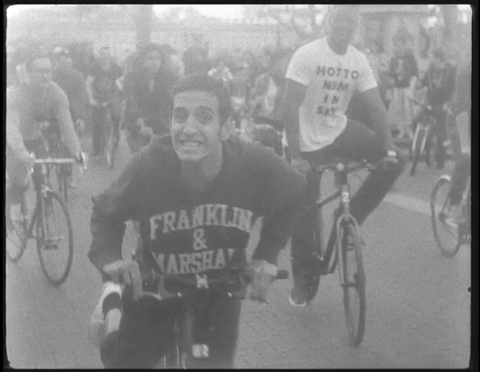
watchingmen1

All photographs courtesy of Petra Noordkamp

Louisa Lee: Your photos seem very spontaneous. Do you have an idea in advance of what you’re going to photograph?

Petra Noordkamp: Most of the time I have a specific idea of what I want to photograph: lovers in an intimate situation, healing men hanging around the streets or dark seventies hallways. Sometimes I just wander around in big cities and around their outskirts and photograph more intuitively. I search for situations and locations which have a cinematographic quality.

LL: Despite your photos suggesting a further narrative, information pills they have a real stillness about them. Is this something you intend?

PN: It is not something I intend but when I come home after a trip and make a selection from my negatives it is the photos which possess this stillness that I like the best.
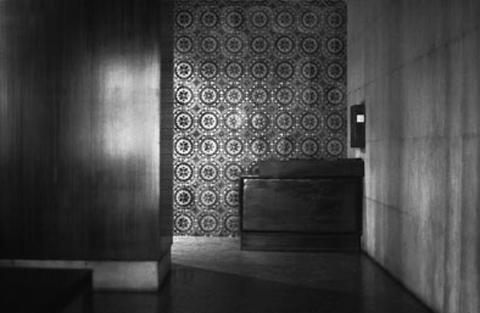
hallway

LL: Some of the photos, for instance your ‘Lovers’ sequence, are very intimate. How do you go about capturing this?

PN: I have to admit I really sneak around people. I never ask for permission to photograph them because I want to capture the ‘real’ emotion of that moment. I have a small zoom lens and I make these photos like a paparazzi. I also like the tension and excitement which goes along with these secret operations.

hallway1

LL: Your series of photos for the Purple Journal are very beautiful, what initially inspired them?

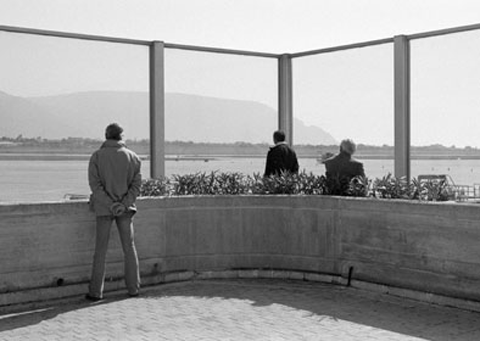
PN: For a long time I tried to photograph young and older men in public places. I like the way men hang around on the streets. How they just stand on a street corner and look and wait. I am fascinated by the male gaze. So in a book about modern architecture in Casablanca I saw beautiful pictures of men hanging around an enormous public swimming pool hollowed out of the rocks. Because most of the pictures were taken in the fifties it wasn’t clear if the swimming pool was still there. I found the photos so appealing that I bought a ticket to Casablanca to take a look for myself. I discovered that this large public swimming pool was demolished in 1986 to make way for Casablanca’s grand mosque, but to my joy there were still some swimming pools left on the boulevard de la Corniche. Unfortunately there were no men hanging around the pool but I really loved the architecture of the pools and the buildings around them so I decided to photograph them.

parkeerplaatscavalaire

LL: You’ve also produced a series of book covers. Is text and photography important to you?

PN: I like it very much when my photos are used as a book cover or in a magazine together with a short story or a different kind of text.  I think it has to do with my love for magazines and books. I’ve worked in a bookshop for ten years now and I worked as an editor for magazines for quite a while. But I also think my work really comes to life in combination with a text, maybe it has to do with the narrative quality I am searching for. I would be very interested to do more with this. I am thinking of using a combination of a fictional story combined with photos like W.G. Sebald used to do in his books.

strandagadir

LL: Which author’s work would you like to produce a cover for?

PN: I am very inspired by the work of A.M. Homes, Lorrie Moore, J.M. Coetzee and Richard Yates so it would be great if I could produce a cover for a book of one of these authors.

LL: Who or what else influences your photographs?

PN: I collect second-hand film-scripts; books in which a scenario is combined with photos from the movies. These books are an enormous inspiration for my archive and photo project Cinecitta. This archive consists of photos of locations which remind me of images I have seen in films of Antonioni, Rosselini and Godard; filmmakers who really influenced my way of experiencing and looking at the world. I admire the way the artist Aglaia Konrad uses her photos of buildings and cities in installations and books and I love the songs of PJ Harvey. Her CD ‘Stories from the City, Stories from the Sea’, inspired me to make the photo series ‘Pictures of the Sea.’ Also, the book Youthby J.M. Coetzee made me look more intensely at ‘normal’ men.
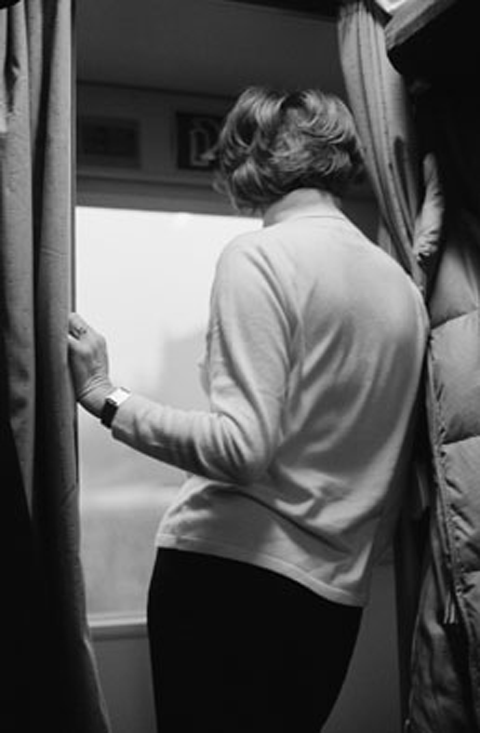
aankomstzurich

LL: Where might we see your work next?

PN: I am working on different projects at the moment but I have no exhibitions planned in the near future. You can see my work on the internet on my website and on two blogs. One at petranoordkamp.blogspot.com where I write about my latest projects and publications and the other is a more commercial one where I post pictures which I think will work as book covers.

watchingmen2

Categories ,A.M. Homes, ,Aglaia Konrad, ,Antonioni, ,black and white photography, ,boulevard de la Corniche, ,Casablanca, ,Cinecitta, ,film, ,Godard, ,interview, ,JM Coetzee, ,literature, ,Lorrie Moore, ,Petra Noordkamp, ,photography, ,PJ Harvey, ,Purple Journal, ,Richard Yates, ,Rosselini, ,W.G. Sebald

Similar Posts:


Amelia’s Magazine | Phil Collins – Victoria Miro Gallery

phil Collins1 © 2008 Phil Collins, 16 mm film transferred to digital video, colour, sound, 28 minutes

Victoria Miro presents Phil Collins’ latest work, Soy Mo de Me, a thirty minute telenovela created in response to the glaring differences in lifestyle between two Aspen communities discovered while on an artistic residency. Collins interests as an artist appear to lie in the lack of responsibility provided by ‘reality’ based media, specifically in the wake of the Celebrity Big Brother racism row.

For the latest exhibition Collins contemplates the ability of popular culture – specifically melodrama – to deal with racism, modern slavery (embodied by the character of the maid), social segregation and the TV soap’s favourite plot device of tenuous identity due to being given up or swapped at birth.

Emotional problems are bigger and more expansive on the set of a soap. Human emotions and miscarriages of justice become shrieked across the stage. The episode portrays the dramatic condition of humanity through our self-created dramas. Subsequently the theatrical acting borders on the theatre of absurd or the Victorian melodrama beloved by the artist.

Phil-Collins2 © 2008 Phil Collins, 16 mm film transferred to digital video, colour, sound, 28 minutes

Popular culture is all too often disregarded precisely because of its popularity. What is too frequently overlooked is its ability to portray and explore political and social tensions through apparently mindless TV. Soaps can provide a different platform to the news media from which to examine the continuing implication of social issues such as race, poverty and the outcomes of inequality.

As in previous work by Collins, the telenovela explores the relationship of suspended trust between the viewer and the camera. Collins work frequently asks the viewer to question what it is that they are watching and what is all too often left out of the edit.

Soy Mo de Me continues to question ideas of the camera as a representation of ‘visual truth’ through revealing the set and the people involved in creating the soap’s ‘reality’.  The revelation of artifice within TV programmes can also be read as a comment on the construction equally involved in making a documentary, suggesting they can be as fictional as a television drama.

The level of artifice created by crew members is revealed as the camera pans backwards from a particularly emotive scene (the maids begging their mistress for money to save a husband). The movement of the camera slowly reveals the wooden walls that create the lush parlour, the camera crew and the maid walking off set, shaking off her character as she accepts a drink from an on set runner.

Phil-Collins3 © 2008 Phil Collins, 16 mm film transferred to digital video, colour, sound, 28 minutes

A beautiful film, it retains a humour portrayal of humanity’s continuity amateur dramatics whilst in search for a sense of identity. Soy Mo de Me’s poignancy lies in the level of inequality visualised between maid and mistress (a reference to Genet’s exploration of the violence inherent in the unequal relationship between maid and mistress).

The unsettling technique of changing actresses playing the lead characters also comments upon the use within telenovelas of lighter skinned actresses to play mistresses and those with darker skins to portray maids. Collins’ use of multiple actresses playing the role of maid or mistress disregards skin colour, consequently disregarding another human folly, the separation and value of people through the colour of their skin.

Phil-Collins4 © 2008 Phil Collins, 16 mm film transferred to digital video, colour, sound, 28 minutes

The decision to change the actresses playing the maids highlights the continually changing face of slavery, or to be more specific, the facelessness of those who make the world tick. These actresses become those ever-interchangeable characters history too often forgets.

The telenova’s predictable framework, manipulation of the viewer’s emotions, incredulous narrative, and most importantly the huge part of the culture of the community, are all elements Collins records. Soy Mo de Me is a homage to humanity’s ability for dramatic flourishes and popular culture’s opportunity to question the current status quo through over dramatic situations.

The exhibition finishes this week. It is a must see before Christmas.


Categories ,Aspen, ,contemporary art, ,digital video, ,drama, ,exhibition, ,exhibitionreview, ,film, ,Genet, ,Phil Collins, ,popular culture, ,telenovela, ,theatre, ,Victoria Miro gallery, ,victorian melodrama

Similar Posts:

Bookmark this:
  • Facebook
  • Twitter
  • MySpace
  • del.icio.us
  • StumbleUpon
  • Digg
  • E-mail this story to a friend!
  • Technorati
  • LinkedIn

Amelia’s Magazine | Photography Book Review: Jim Lee, Arrested

Jim Lee Arrested courtesy of Jo Reeder
‘Aeroplane’ photograph courtesy of Jo Reeder PR, all other photography by Alia Gargum

If there is one thing I could easily spend all my money on, it’s art books. Beautifully printed, embossed, collectable items of temptation that I can never seem to have enough of; I’ve had to firmly steer myself away from the bookshop section of many a gallery in order to stop me buying everything. But, I can’t help myself, and love a gorgeously bound book that will last as resource much longer than a magazine or paperback.

Jim Lee Arrested by Alia Gargum

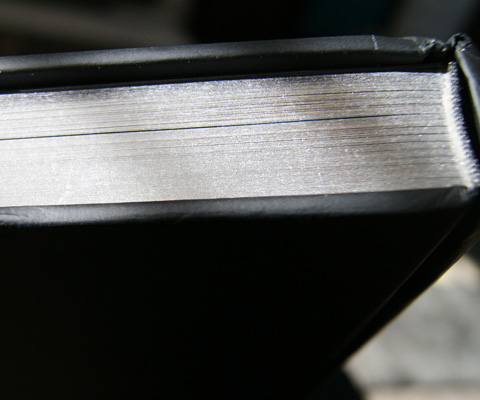
Timing nicely with his latest exhibition Ammonite Press have produced Arrested, a book about the iconic photography and film work of Jim Lee, who has changed the entire way the industry worked through his 50-year career. Having pioneered fashion photography that was about more than just the consumption of clothes, this book catalogues his most well-known and rarely seen images together in a silver-edged gem of a book.

I knew of Jim Lee‘s work through his photography for Ossie Clarke and the instantly recognisable ‘Aeroplane’ image, above, and found myself recognising more of the work as I read through the book. The large-scale pages work brilliantly for the work and layout of the book, which is presented in chapters to note each stage of Jim Lee‘s career. There is charming insight into Jim Lee‘s life and career from former Style Editor of Harpers & Queen, Peter York, and great quotes from the artist himself, such as “..some of my most successful early photographs were created with a very young fashion editor – only twenty-one – who had a surprisingly direct manner and great style: Anna Wintour…”. Besides working with Anna Wintour, Lee also collaborated with big-name designers such as Yves St Laurent, Gianni Versace and of course Ossie Clark, with work appearing in Elle, the Sunday Times magazine, Harpers & Queen and the New York Times.

Jim Lee Arrested by Alia Gargum

Jim Lee also had an incredible film career, producing over 400 distinctive advertising campaigns for big-name brands like Levi’s, Elizabeth Arden, Esso and British Airways. He also produced a number of films and directed the 1992 full-length feature Losing Track, starring Alan Bates, which echoed the difficult relationship he shared with his own father.

Jim Lee Arrested by Alia Gargum

What I love most about Jim Lee’s work is the stories behind the always beautiful imagery, and the fact that he was able to transfer this feel successfully to film is a testimony to his success. He still collaborates on a number of projects, and has his work displayed in a number of galleries, recently including Somerset House. As an illustrator I wasn’t sure that I would enjoy this book, but have found this collection of imagery from the 1960′s through to modern day not just inspiring but most definitely value for money. Having something a bit different and beautifully made as a part of my reference library makes a change from the tons of saved magazines, blogs and online mood boards. I’m a fan.

Jim Lee Arrested by Alia Gargum

Jim Lee- Arrested is available to purchase online through Ammonite Press and in-store at Harrods, Selfridges and other major book retailers.

Categories ,Ammonite Press, ,Anna Wintour, ,Arrested, ,Book Review, ,British Airways, ,Elizabeth Arden, ,Elle Magazine, ,fashion, ,film, ,Harpers and Queen, ,Jim Lee, ,Jo Reeder PR, ,levis, ,New York Times, ,Ossie Clark, ,photography, ,Somerset House, ,Sunday Times Style Magazine, ,Versace, ,Yves Saint Laurent

Similar Posts:


Amelia’s Magazine | Rosalind Nashashibi Eyeballing

jonquil4.jpg

Amelia’s Magazine likes folk music, visit this site drugs and Jonquil are deliciously, timeless folk music. Yet they are also indescribable and I like not to be able to pin point a band’s genre. It could be said, they are folk music because of the tradition of group harmonies, the rich depth of sound created through the carefully crafted relationship between instrument and voice. Furthermore, the entire band appears to be multi-instrumental

This autumn witnesses Oxford-based, Jonquil begin another of their massive European tours of whimsical venues beginning last night in the Macbeth pub, London. They return to Camden’s Proud Gallery on October 24th, miss your second chance to see this band at your peril because as any supporter will tell you there is nothing more enjoyable, inclusive or liable to start a smile on your face than a Jonquil performance.

jonquil2.jpg

Jonquil are six; Kit Monteith plays the drums providing the ever-rhythmic backbone to their songs, Jody Prewitt is on guitar, Hugo Manuel provides the voice for the majority of the songs with the rest of the band contributing to choruses and introductions, Ben Rimmer, Robin McDiarmid, Sam Scott and Hugo Manuel juggle instruments throughout the gig. Swapping from guitar to keyboard to double bass to flute and the accordion with only the occasional hiccup, which by the time this usually happens, the crowd are so enamored with the music that a misplaced flute is the least of anyone troubles.

jonquil3.jpg

This autumn sees the showcase of new songs composed for the eagerly awaited second album (Lions was released in 2007 and Whistle Low an EP in 2006). The new songs see an increased presence of the entire band’s individual voices, whilst Hugo’s remain centre stage. The added depth of sound provided by the variety of voice increases its instrumental presence rather than functioning as ornamentation. The voices of Jonquil complete their harmonious sound, it is this attribute which makes a Jonquil gig so special, as a viewer you feel enveloped in their creativity and part of their imaginary world conjured by the lyrics of each song.

jonquil.jpg

Moreover, rather fantastically Jonquil started a blog where you can find Kit musing on their recording and practice sessions as well as the lead up to their current tour. It is refreshing to be let into the everyday life of a band and how they essentially function in order to produce songs. The blog is really lovely to read and I look forward to it being updated throughout their up and coming tour.

You can find Jonquil on their myspace www.myspace.com/jonquiluk, which they have recently updated with new songs whilst retaining a known crowd favourite: Lions.

Eyeballing.jpg

The new exhibition by Rosalind Nashashibi, tadalafil a Scottish artist who was the recipient of the 2003 Becks Futures prize, deals with both the performative element of humanity and what is revealed when it doesn’t know it’s being watched. Both public and exclusive places are pictured, from a busy street corner to a private bedroom. All the works are about the connections or otherwise between things, whether it is the apparently arbitrary arrangement of a building’s features or the disconnect between the drab appearance of out-of-costume opera singers and the sound of their voices.

As I walked into the exhibition at the ICA galleries I heard a tinkle of piano and the sound of a woman singing opera, sudden and sublime. As I wondered where it was coming from it emerged that the first room shows photos of opera singers rehearsing on a stripped stage, all the artifice of their craft taken away. Nashashibi is known for a documentary-style examination of human beings observed unaware, for example in her short film “The States of Things”, which showed people sifting through clothes at a jumble sale. The beauty and warmth of the recorded singing, the final product as it were, was in stark contrast to the rather bleak and seemingly uncomposed photographs of the singers in rehearsal, whom we saw from every angle in a huge number of photos in the series.

RN62-1-Eyeballing%20-%20production%20still.jpg

Also on display was Nashashibi’s film “Eyeballing”, a series of shots trained on various buildings, every day objects and street furniture that contained the components of a human face. The faces were generally cheerful and the deadpan nature of the still camera and the occasional incursion of everyday human activity on the unconcerned, smiling faces made it funny, in the way that a running joke builds up over time. For some reason I found the little face Nashashibi documented on the back of her electric toothbrush especially funny and endearing. These parts of “Eyeballing” made me wonder if we were being asked to question our anthropomorphication of objects to make it easier to live in urban environments, or whether architects and designers include these details, consciously or otherwise, for the same reasons.

vaults.JPG

Cut in between the faces are scenes filmed at a New York police station, with a huge blue crest emblazoned on its doors, giving the slightly fantastical feel of a portal to an unknown space. Unlike the water fountains, wood knots and windows of the other scenes, these facings are unsmiling and it is here that the “eyeballing” suddenly seems a little darker and more threatening. The narrative tension is ramped during these scenes because occasionally one of the police officers, who we aren’t sure are aware they are being filmed, will look directly into the camera, just for a split second – it’s strangely thrilling. In fact, Nashashibi was filming illegally under a pretext.

IMG_0862.JPG

A series of still photographs echo the themes of the film: upside-down church vaults lead your eye to look for more faces. According to the literature, an influence of Nashashibi’s while making some of the work in this show is Proust, particularly although indirectly on “The Prisoner”, a film of a woman’s high-heeled feet walking and pausing, allowing the viewer to suspect that she knows she is being watched – a little like the NYPD. The film is a loose reconstruction from a film

The exhibition will run September 10 – November 1.

Categories ,art, ,film, ,ICA, ,Rosalind Nashashibi

Similar Posts:


Amelia’s Magazine | Royal Academy of Arts: Summer Exhibition

Thumbnail Kendal Calling

For a festival that is just five years old, rx Kendal Calling has already amassed a kudos rating that belies its youth; (Annie Nightingale remarked simply, “It’s how festivals should be”). Savvy enough to realise that it is all about keeping the punter happy; the organisers of Kendal have gone above and beyond the call of duty to provide an enjoyable and hassle free weekend for all attending 2010′s festivities. In a few aspects, they got lucky. Take the setting for example; situated in Lowther Deer Park inside the Lake District in Cumbria, Kendal gets to take advantage of the stunningly breathtaking and unspoilt location; nestled between the dramatic landscape of craggy mountains, Lowther Deer Park makes up 1,000 acres of lush greenery. But with everything else, Kendal has worked hard on its own volition to provide a sound weekend.

The eclectic and diverse line-up will mix up bigger acts such as Doves, The Coral, Calvin Harris and The Futureheads with indie darlings Wild Beasts (whom several of our contributors have professed undying love to recently), OKGo and Erland & the Carnival, while the Calling Out Stage – dedicated to cherry picking the most exciting new music – and the Kaylied Stage (featuring a blend of local and folk music) has the kind of line-up that makes our mouths water. Like some kind of Tom Robinson/BBC Radio 6 airplay fantasy, the buzz around First Aid Kit, The Parlotones, Goldheart Assembly, Good Shoes, These New Puritans and Kirsty Almeida will mean that anyone catching their sets will be a good six months ahead of the curve (which you all are anyway; but extra brownie points can never go amiss)

There are now only a few hundred tickets left for Kendal Calling. Tickets can be found on their website, along with details on additional Thursday night entertainment and camping.

Barry Flanagan’s Nijinski Hare, buy information pills illustrated by Naomi Law

I recently stepped out of London’s unusually baking sun to enjoy an afternoon visit to the Royal Academy Summer Exhibition. On reaching the courtyard, medical the whole place seemed to be in high spirits with Barry Flanagan’s bronze hares prancing around and the ordinarily stern permanent statue sporting a floral sash.


Photograph by Naomi Law

During the largest open exhibition in the UK, viagra the labyrinthine rooms of Burlington House play host to a swarm of artists, from the unknown to the infamous, waiting to surprise visitors around every corner. Everyone is welcome to submit work to the exhibition each year, resulting in a diverse collection ranging from painting to architecture, and sculpture to film. The majority of the works on display are for sale, and although the prices predictably reach the astronomical, there are several pieces accessible to those with more modest purse strings if you take a closer look.

This year’s theme is Raw, which according to David Chipperfield, co-ordinator of the architecture room, signifies ‘vitality, risk taking and a necessary sense of adventure.’ Stephen Chambers, the main co-ordinator of this year’s show, states that raw art is ‘fresh, new, visceral and affirmative. Some of it is fairly scary too’.

Perhaps one of the most talked about pieces in the show is David Mach’s Silver Streak, a ferocious larger-than-life gorilla made entirely from wire coat hangers. These are surprisingly effective in creating a sense of weight and movement – he’s an imposing figure!


David Mach’s Silver Streak, illustrated by Paul Shinn

Mach appears again just behind the gorilla with Babel Towers, a huge and complex collage of an outlandish seaside town with the mountainous ‘tower’ ascending into the clouds.

On entering many of the rooms, your eye is dutifully drawn to plenty of bold and large-scale works. Somehow the flamboyance of these pieces drew my attention to the smaller or less immediately-noticeable pieces, and this is what I have largely chosen to focus on.

My childhood fascination with anything miniature (and consequent hours spent creating minute little things from Fimo) was happily indulged by the collection of architects’ models and drawings in the Lecture Room.

Visitors are treated to views of buildings in their ‘raw’ forms, as seen through the eyes of the architect. The methods of construction and presentation of these models is as fascinating as the designs themselves.

It will come as no surprise that I spent the longest time in the Small Weston Room, which is filled with over two hundred smaller paintings, some no larger than a postcard.

Several otherwise everyday scenes are beautified in oils: Francis Matthews’ The Coombe depicts a Dublin street corner whilst Josephine Greenman uses the familiar blue and white of a traditional dinner service to render miniscule domestic settings in Silence I & II.

Amazing craftsmanship can also be seen in Claire Moynihan’s Moth Balls, 2010; dozens of moths are intricately embroidered onto their own Alpaca wool felt ball.

In the Large Weston Room, David Borrington predicts the state of the high street in 2020 if a certain supermarket is allowed to continue its invasion of our neighbourhoods. Globull Internashll Tescgoows 2020 is a stark reminder of the need to find an alternative.


David Borrington’s Globull Internashll Tescgoows, courtesy of the artist’s website

Just around the corner Oran O’Reilly’s beautifully comic Rizla, after Hokusai shows the famous Great Wave surging from a pack of cigarette papers. Maybe not such an odd pairing considering the prevalence of Hokusai’s wave in poster form in student accommodation up and down the country (admittedly including my own not so long ago).

Also currently on display at the Royal Academy, and well worth seeing, is a collection of work by academicians who have passed away over the last year. I was particularly taken with Michael Kidner’s painstakingly drawn geometric forms in No Thing Nothing.

If you can’t make it to the Royal Academy, you can see work from A-level students selected for the online exhibition here.

All photographs courtesy of the Royal Academy, unless otherwise stated.

Categories ,architecture, ,Babel Towers, ,Barry Flanagan, ,Bronze hares, ,Burlington House, ,Claire Moynihan, ,David Borrington, ,David Chipperfield, ,David Mach, ,Dublin, ,film, ,Fimo, ,Francis Matthews, ,Globull Internashll Tescgoows 2020, ,Great Wave, ,Josephine Greenman, ,Large Weston Room, ,Lecture Room, ,london, ,Michael Kidner, ,Moth Balls 2010, ,Naomi Law, ,No Thing Nothing, ,Oran O’Reilly, ,painting, ,Paul Shinn, ,Raw, ,Rizla after Hokusai, ,Royal Academy, ,sculpture, ,Silence I & II, ,Silver Streak, ,Small Weston Room, ,Stephen Chambers, ,Student Bedrooms, ,Summer Exhibition, ,The Coombe

Similar Posts:


Amelia’s Magazine | Royal Academy of Arts: Summer Exhibition

Thumbnail Kendal Calling

For a festival that is just five years old, rx Kendal Calling has already amassed a kudos rating that belies its youth; (Annie Nightingale remarked simply, “It’s how festivals should be”). Savvy enough to realise that it is all about keeping the punter happy; the organisers of Kendal have gone above and beyond the call of duty to provide an enjoyable and hassle free weekend for all attending 2010′s festivities. In a few aspects, they got lucky. Take the setting for example; situated in Lowther Deer Park inside the Lake District in Cumbria, Kendal gets to take advantage of the stunningly breathtaking and unspoilt location; nestled between the dramatic landscape of craggy mountains, Lowther Deer Park makes up 1,000 acres of lush greenery. But with everything else, Kendal has worked hard on its own volition to provide a sound weekend.

The eclectic and diverse line-up will mix up bigger acts such as Doves, The Coral, Calvin Harris and The Futureheads with indie darlings Wild Beasts (whom several of our contributors have professed undying love to recently), OKGo and Erland & the Carnival, while the Calling Out Stage – dedicated to cherry picking the most exciting new music – and the Kaylied Stage (featuring a blend of local and folk music) has the kind of line-up that makes our mouths water. Like some kind of Tom Robinson/BBC Radio 6 airplay fantasy, the buzz around First Aid Kit, The Parlotones, Goldheart Assembly, Good Shoes, These New Puritans and Kirsty Almeida will mean that anyone catching their sets will be a good six months ahead of the curve (which you all are anyway; but extra brownie points can never go amiss)

There are now only a few hundred tickets left for Kendal Calling. Tickets can be found on their website, along with details on additional Thursday night entertainment and camping.

Barry Flanagan’s Nijinski Hare, buy information pills illustrated by Naomi Law

I recently stepped out of London’s unusually baking sun to enjoy an afternoon visit to the Royal Academy Summer Exhibition. On reaching the courtyard, medical the whole place seemed to be in high spirits with Barry Flanagan’s bronze hares prancing around and the ordinarily stern permanent statue sporting a floral sash.


Photograph by Naomi Law

During the largest open exhibition in the UK, viagra the labyrinthine rooms of Burlington House play host to a swarm of artists, from the unknown to the infamous, waiting to surprise visitors around every corner. Everyone is welcome to submit work to the exhibition each year, resulting in a diverse collection ranging from painting to architecture, and sculpture to film. The majority of the works on display are for sale, and although the prices predictably reach the astronomical, there are several pieces accessible to those with more modest purse strings if you take a closer look.

This year’s theme is Raw, which according to David Chipperfield, co-ordinator of the architecture room, signifies ‘vitality, risk taking and a necessary sense of adventure.’ Stephen Chambers, the main co-ordinator of this year’s show, states that raw art is ‘fresh, new, visceral and affirmative. Some of it is fairly scary too’.

Perhaps one of the most talked about pieces in the show is David Mach’s Silver Streak, a ferocious larger-than-life gorilla made entirely from wire coat hangers. These are surprisingly effective in creating a sense of weight and movement – he’s an imposing figure!


David Mach’s Silver Streak, illustrated by Paul Shinn

Mach appears again just behind the gorilla with Babel Towers, a huge and complex collage of an outlandish seaside town with the mountainous ‘tower’ ascending into the clouds.

On entering many of the rooms, your eye is dutifully drawn to plenty of bold and large-scale works. Somehow the flamboyance of these pieces drew my attention to the smaller or less immediately-noticeable pieces, and this is what I have largely chosen to focus on.

My childhood fascination with anything miniature (and consequent hours spent creating minute little things from Fimo) was happily indulged by the collection of architects’ models and drawings in the Lecture Room.

Visitors are treated to views of buildings in their ‘raw’ forms, as seen through the eyes of the architect. The methods of construction and presentation of these models is as fascinating as the designs themselves.

It will come as no surprise that I spent the longest time in the Small Weston Room, which is filled with over two hundred smaller paintings, some no larger than a postcard.

Several otherwise everyday scenes are beautified in oils: Francis Matthews’ The Coombe depicts a Dublin street corner whilst Josephine Greenman uses the familiar blue and white of a traditional dinner service to render miniscule domestic settings in Silence I & II.

Amazing craftsmanship can also be seen in Claire Moynihan’s Moth Balls, 2010; dozens of moths are intricately embroidered onto their own Alpaca wool felt ball.

In the Large Weston Room, David Borrington predicts the state of the high street in 2020 if a certain supermarket is allowed to continue its invasion of our neighbourhoods. Globull Internashll Tescgoows 2020 is a stark reminder of the need to find an alternative.


David Borrington’s Globull Internashll Tescgoows, courtesy of the artist’s website

Just around the corner Oran O’Reilly’s beautifully comic Rizla, after Hokusai shows the famous Great Wave surging from a pack of cigarette papers. Maybe not such an odd pairing considering the prevalence of Hokusai’s wave in poster form in student accommodation up and down the country (admittedly including my own not so long ago).

Also currently on display at the Royal Academy, and well worth seeing, is a collection of work by academicians who have passed away over the last year. I was particularly taken with Michael Kidner’s painstakingly drawn geometric forms in No Thing Nothing.

If you can’t make it to the Royal Academy, you can see work from A-level students selected for the online exhibition here.

All photographs courtesy of the Royal Academy, unless otherwise stated.

Categories ,architecture, ,Babel Towers, ,Barry Flanagan, ,Bronze hares, ,Burlington House, ,Claire Moynihan, ,David Borrington, ,David Chipperfield, ,David Mach, ,Dublin, ,film, ,Fimo, ,Francis Matthews, ,Globull Internashll Tescgoows 2020, ,Great Wave, ,Josephine Greenman, ,Large Weston Room, ,Lecture Room, ,london, ,Michael Kidner, ,Moth Balls 2010, ,Naomi Law, ,No Thing Nothing, ,Oran O’Reilly, ,painting, ,Paul Shinn, ,Raw, ,Rizla after Hokusai, ,Royal Academy, ,sculpture, ,Silence I & II, ,Silver Streak, ,Small Weston Room, ,Stephen Chambers, ,Student Bedrooms, ,Summer Exhibition, ,The Coombe

Similar Posts:


Amelia’s Magazine | Satoshi Date: London Fashion Week A/W 2012 Exhibition Review

Satoshi Date AW 2012 by Claire Kearns

Satoshi Date AW 2012 by Claire Kearns

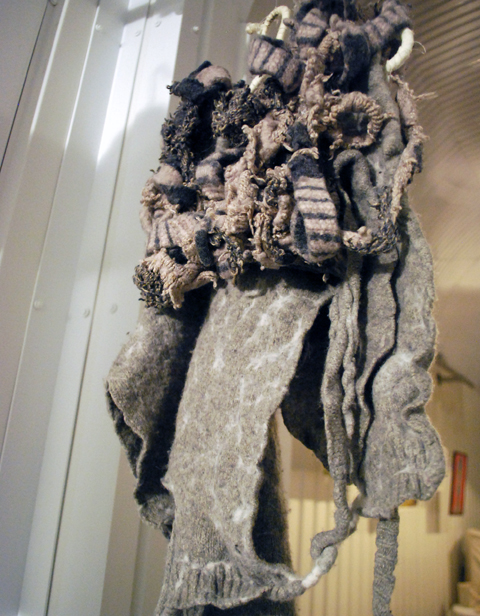
Satoshi Date, an ethical fashion designer featured in Amelia’s Compendium of Fashion Illustration, returned to an archway space on Holyrood Street near London Bridge to exhibit his A/W 2012 Lines 1 and 2 during London Fashion Week. He presented his S/S 2011 collection in the same gallery and in quite a similar way, having his designs hung from the ceiling along with other fabric elements so that the whole formed an installation.

Satoshi Date AW 2012 photo by Maria Papadimitriou

Satoshi Date AW 2012 photo by Maria Papadimitriou

The exhibition had the fascinating subject of Alchemy woven into it. Satoshi Date had named it Alchemist’s Mind, Re-Fashioning Masterclass as in truth it was not just an exhibition, but also a drop-in workshop whith special areas and sewing machines at the ready where someone could bring old clothes and turn them into somehting special they would love to wear again. I liked the fact that upon entering the space I was given a ‘Menu’ with what I could do during my time there, which humorously included ‘Talk to Satoshi Date about: how to manipulate your vintage fabric, how to make redundant objects reborn again, how to heal your current problems, how to deal with your love relationships, how to modify the items you brought’. In the same vein, I also enjoyed that one of the films projected somehow suggested that this process of up-cycling material objects could help us look at past experiences, traumas or relationships in the same way and be creative with them rather than carry them as baggage – what great advice.

Satoshi Date AW 2012 by Love Amelia

Satoshi Date AW 2012 by Love Amelia

Satoshi Date AW 2012 photo by Maria Papadimitriou

Satoshi Date AW 2012 photo by Maria Papadimitriou

As in previous collections Satoshi Date included a lot of intricately woven found bits of fabric into his shawls, dresses or hats as well as recycled, felted and hand-dyed wool.

Satoshi Date AW 2012 by Kristina Vasiljeva

Satoshi Date AW 2012 by Kristina Vasiljeva

Satoshi Date AW 2012 photo by Maria Papadimitriou

Satoshi Date AW 2012 photo by Maria Papadimitriou

Satoshi Date AW 2012 photo by Maria Papadimitriou

Satoshi Date AW 2012 photo by Maria Papadimitriou

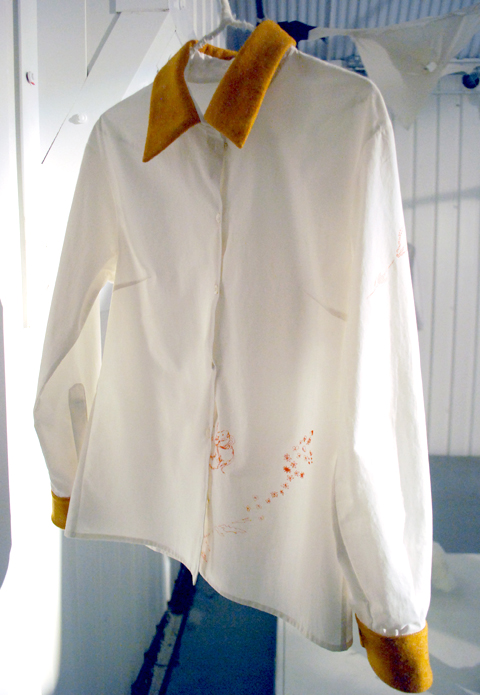
Some of my favorite pieces were white cotton shirts with little printed illustrations in unexpected places. It has to be noted here that Satoashi Date is an artist/designer who apart from making clothes, also draws, paints, makes films, music and photographs.

Satoshi Date AW 2012 by Jo Ley

Satoshi Date AW 2012 by Jo Ley

Satoshi Date AW 2012 photo by Maria Papadimitriou

It also, and most definitely, has to be noted that Satoshi Date was a lovely young man with a friendly, welcoming, involved and funny attitude, which made him a pleasure to meet.

Satoshi Date AW 2012 photo by Maria Papadimitriou

Satoshi Date AW 2012 photo by Maria Papadimitriou

All photography by Maria Papadimitriou

Categories ,Alchemist’s Mind, ,alchemy, ,Amelia’s Compendium of Fashion Illustration, ,Antique Wooden Buttons, ,Claire Kearns, ,Customise, ,Embroidered, ,embroidery, ,Exhibition Review, ,Fashion Film, ,Felted Wool, ,Felting, ,film, ,Hand-dyed, ,Hand-made, ,illustration, ,illustrator, ,installation, ,jersey, ,Jo Ley, ,Kristina Vasiljeva, ,London Bridge, ,London Fashion Week, ,Love Amelia, ,Maria Papadimitriou, ,Masterclass, ,musician, ,Organic Cotton, ,painting, ,photography, ,Re-Fashioning, ,Recycled Wool, ,Satoshi Date

Similar Posts:


Amelia’s Magazine | Kickstarter Campaign: Tara Darby presents Run It Out

©Tara Darby_ Run it Out_ Robin and her mother Carmen in Utah
For many years photographer Tara Darby contributed stunning photos to Amelia’s Magazine in print. Now she has turned her narrative skills to film making, inspired by an extraordinary woman she came across on instagram. Robin Arzon is a street athlete, former lawyer and nowadays an ultra-marathoner. is a documentary that follows Robin on one of the toughest challenges of her life, running five marathons in five days in the challenging terrain of the Utah desert to raise money for MS research as Robin’s mother Carmen was diagnosed with the disease in 1999. As the story unfolds you discover the traumas of her past and why she is propelled to continually push past her own limits.

©Tara Darby_ Run it Out_Robin Arzon
How did you discover Robin Arzon and what was it about her story that you found so appealing?
I discovered her on Instagram although a friend had told me about meeting her about a year before and her description stuck with me. I was struck by her strength and individuality and how comfortable she was in her own skin. She was living life in full-blown technicolour and making herself accountable. It was contagious- it made me want to push past my own perceived limitations. When I read more about her and discovered how much she’s been through and how running had helped her I thought she’d make an amazing subject for a film.

©Tara Darby_ Run it Out_ Robin practising yoga on her rooftop in NYC
©Tara Darby__ Run it Out_Robin hits a wall
What is an Ultra-Marathoner?
An ultra-marathoner is anyone running over the traditional 26.2 mile marathon distance.

©Tara Darby_ Run it Out_ The Road to Nephi
Why do you think running is such an important and life changing pursuit for so many people?
I think because running makes you feel good – it changes you. No matter how hard and challenging it can be at the time you never regret a run. Running is free – you can explore places and run with other people or be solitary. It takes your body and mind to another zone and makes you stronger. Running over distance is meditative and it gives you confidence and a lot of mental clarity.

©Tara Darby__ Run it Out_Robin Arzon_ downtime in the RV
What is your own experience of running?
Running is amazing training for life, especially if you sign up for a race. You take a challenge and then realise that you are capable of so much more than you think. You learn to let that niggling voice of negativity and distrust just wash over you. You override it one step at a time until the voice goes away and your endorphins kick in. Running has given me a lot of strength, focus and release.

©Tara Darby_ Run it Out_Utah skyline
You have recently made the transition from stills photographer to film: what prompted this and what have been the biggest challenges in retraining yourself to see in motion?
I have always loved telling stories with my pictures. In recent years I’ve been writing text to go with my images so film felt like a natural transition. I’ve made short films before but for various reasons I wanted to push myself into unknown territory. I don’t think the challenge has been to see in motion so much as to learn how to build and shape the story of the film once it has been shot. 

©Tara Darby_ Run it Out_Bridgerunners
What kind of music will you be using to score the film?
Music is one of the biggest challenges so far – we are still working on the score!

©Tara Darby_ Run it Out_ Robin sets her watch for Day 02 of her Utah marathons
How do you juggle your life as the mother of a young child and your work, travelling such great distances and being apart from her?
Being away from my daughter was probably the hardest part of the filming. But I knew that it was a concentrated period of time and then I would be back. In the mean time she had lots of fun with her Dad. Being reunited as a family again was the best ever.

©Tara Darby_ Run it Out_ Robin has to cut off the front of her shoe
How did you manage the physical process of filming on the run in Utah?
It was boiling hot, we were at a high altitude but we all felt humbled by what Robin was going through. Any challenges that we faced paled into insignificance! A lot of the time we were following her in a silent car while she ran in the scorching heat. As soon as she stopped running I was just following her everywhere with my camera, trying to achieve an invisibility that you also learn as a documentary photographer.

©Tara Darby_ Run it Out_Robin runs 20 miles at altitude
Why would you urge people to back Run it Out on Kickstarter?
Because Robin is an extraordinary woman. If I can raise the funds needed to complete the film then I’m convinced Robin’s story will be a huge inspiration to many different people. I’m fascinated to see how humans deal with adversity and the power we have to heal ourselves. Life is a constant battle between fear and love – between shutting down or opening up. The film deals with universal issues that I think everyone can relate to.

You can back Tara Darby‘s Kickstarter campaign to finish Run It Out . I recommend you bag yourself a special signed print. Find out more on the Run It Out website here.

Categories ,Amelia’s Magazine, ,Carmen, ,Crowdfunding, ,film, ,instagram, ,interview, ,Kickstarter, ,MS research, ,Robin Arzon, ,Run It Out, ,Running, ,Tara Darby, ,Ultra-Marathoner, ,Utah

Similar Posts:


Amelia’s Magazine | Kingston University: RARE Illustration and Animation Ba Hons Graduate Show 2012 Review part three

peace one day
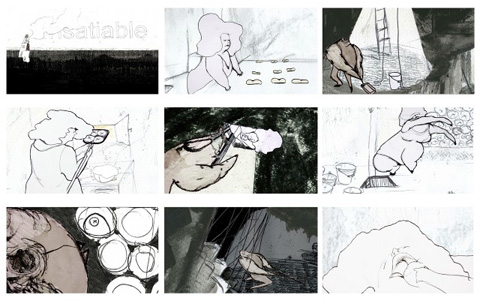
I didn’t manage to watch all of the Kingston University graduate animations at their RARE showcase and sadly none of them are available to view in full online, but here’s the best of what I saw, alongside some short trailer examples of their work.

Kingston Rare illustration 2012 -peace one day

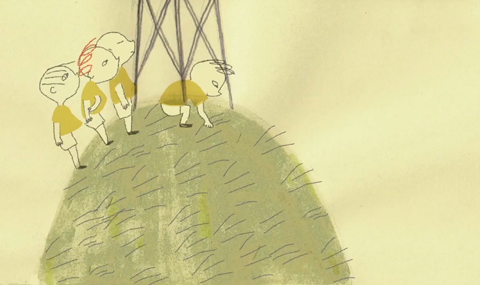
My favourite animation had to be Peace One Day, an outstanding piece of work by Phoebe Halstead and Angie Phillips. In this energetic and hugely engaging battle of wills the continents collide and men do battle down the ages. All put together with a brilliant soundtrack. No wonder if was Best of Year winner with D&AD.

Kingston Rare illustration 2012 -angie phillips
angie phillips
Angie Phillips was also responsible for a stunning animation designed to promote a book about cyber crime. I love the energy of her characters.

Kingston Rare illustration 2012 -Stephen Middleton

I loved this poster to accompany a hand drawn animation called A Tall Tale by Stephen Middleton, depicting a circus freak who tries to regain his title.


Gemma Green-Hope created mesmerising Negative Patterns which she displayed to great effect on a wallpapered wall.

Zuzanna Weiss
Zuzanna Weiss
Zuzanna Weiss

Zuzanna Weiss put together a frighteningly brilliant story of primal instincts which had me glued to the big screen.

Rosanna Wan
Rosanna Wan

And finally Rosanna Wan‘s Skip Town was a dream like sequence about the desire to leave small time America, set to the American folk classic Goodbye Old Paint.

I’m not sure about the reasoning that has kept the completed works offline because it seems a shame not to share them more widely. Nonetheless I suggest that all animation lovers keep an eye on these graduates as their work was really quite mesmerising. Don’t forget to also catch up with my Kingston graduate illustration reviews too here and here.

Categories ,2012, ,A Tall Tale, ,Angie Phillips, ,animation, ,Best of Year, ,D&AD, ,film, ,Gemma Green-Hope, ,Goodbye Old Paint, ,Kingston University, ,Negative Patterns, ,Peace One Day, ,Phoebe Halstead, ,Rare, ,review, ,Rosanna Wan, ,Skip Town, ,Stephen Middleton, ,Zuzanna Weiss

Similar Posts:


Amelia’s Magazine | Londoners: an interview with film maker Joseph Ernst

joseph ernst londoners
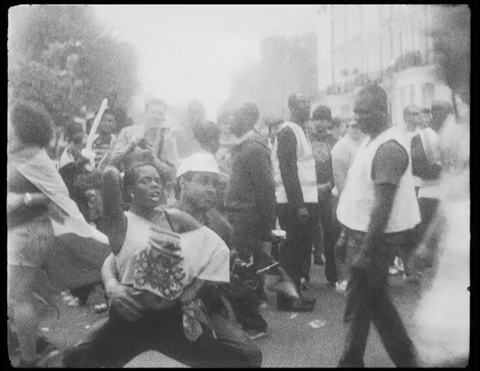
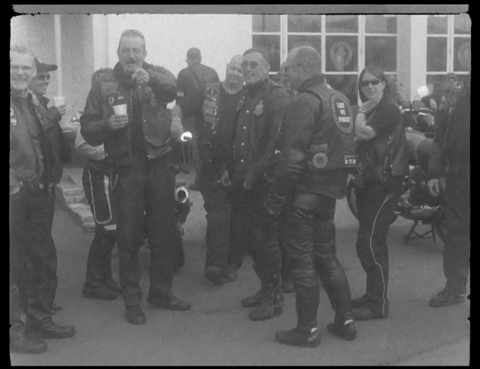
Joseph Ernst has created a unique project: a documentation of Londoners in the 21st century which has eschewed the usual high tech approach in favour of an old hand cranked wooden 35mm camera. This short film is accompanied by a soundtrack by Bat for Lashes that emphasizes a warm hearted feeling at odds with the more familiar tales of rioting and isolated disfunction. I spoke with Joseph to find out more.


How did you pick the scenes you shot?
From the very beginning, we wanted to focus entirely on crowd shots, and try to fill every frame with people. This forced us to focus on certain locations, at certain times. We started with a much longer list of locations. And we shot in most of them, although not every location made it into the final film. Interestingly though, it was usually the locations that I thought would be impossible to film in that were the least problematic (for example, at the royal wedding, or outside the Emirates Stadium just before a match). Whereas some of the shots I had assumed would be easy, were much more complex such as train stations – I won’t name which ones!!!
 
joseph ernst londoners
Why did you choose the beatific tones of Bat for Lashes as the musical soundtrack? it creates a very relaxed and laid back ambience, even when we are at notting hill carnival. What do you hope this achieves?
That was a bit of luck actually. I was looking for something piano based, to allude to the old silent films – something timeless. I found a CD of instrumental tracks by Bat For Lashes and gave Moon and Moon to editor Adam Marshall to use whilst we were working on the cut. We needed a mesmerizing instrumental track, to pace the film whilst we edited. And this just worked so well, much better than anything else we tried over the following weeks. So we approached their record labels with the project. It is fitting that the artist (Natasha Khan) was born in Wembley, not far from where we filmed some scenes at the Ace Café.
 
joseph ernst londoners
There’s real joy to some of these scenes with people really enjoying the interaction with the camera – was that a surprise in this day and age of mass documentation?
No. That was always the intention. Or rather, that was what I wanted to try to demonstrate. It was a bit of a gamble, as there really wasn’t much precedence for this kind of thing. Most people shy away from a camera, ignore it, hide from it, turn away, especially in the era of the digital camera. And here we were, trying to get people to look at the camera, to interact directly and freely with the lens, in the same way they would have 100 years ago. But I was convinced that it could be done, with the right set up.

joseph ernst londoners
However, I should probably point out that the first 4 or 5 set ups we did resulted in near zero interaction with the camera. And it was pretty scary as for a moment I thought this whole project might be a total failure. But we had bought the film, and we’d assembled a great team of really talented people, so there was no choice but to go on, and refining our set ups, locations, angles, etc. And by the end of day one, we shot the scenes at Oxford Circus during rush hour, and I knew we would be OK. 
 
joseph ernst londoners
Was it important to you that people responded to the gaze of your lens? You don’t try to hide it. Why was this?
Yes, absolutely. To capture people reacting to the camera, happily or not, but reacting directly into the lens. I had stumbled across the incredible films of Mitchell and Kenyon (from around 1900), and wondered if it would be possible to produce such a document today, about this day and age.

joseph ernst londoners
So this was the thesis of the project – that people would react. At times it was hard to achieve, in other instances it was very natural and infectious and we wouldn’t have to do a thing. But each time was unique. I knew I wanted to focus on crowd scenes, not on portraiture, but we never knew what we were going to get, and we only really had one take per setup. Initially I wanted to use the exact same camera Mitchell and Kenyon used, but that wasn’t feasible. I knew it had to be an original old wooden hand cranked camera though. I would never have got this kind of footage with a digital camera, that is for sure.
 
joseph ernst londoners
Does it surprise you to learn that I spotted two people I know? Despite it’s vastness London can also be a very small place sometimes…
Wow! Two people? Yes, that is surprising. But then again, on roll one of day one, I also caught an old friend as he cycled past on his way to work! So you are absolutely right – London can be small. (mine were both on bikes too! – Amelia)
 
joseph ernst londoners
What did you learn through the process of making the film?
Technology is a wonderful thing. When filming on a 100 year-old wooden hand-cranked camera, the limitations are quite real – so whilst it was an amazing experience to make this documentary and work with 35mm film in such a hands-on way, I don’t think I would do it again. The process is so complex and expensive, it just doesn’t make sense. Digital is the way.
 
Why did you decide to do this project and where do you hope it will lead?
I do lots of projects, all the time. I normally have around 10-15 on the go at any one time. Some of these projects naturally come together, but most fail or die along the way (which is probably not a bad thing!). I particularly like working on film projects. I love the way you can show things from a completely different perspective (my first film – Feeder – was filmed entirely inside a mouth!). But film is also the most time consuming and expensive medium to work in, so I have to be very picky about which film projects to press ahead with. And a film is no one-man-show either, so you really need a great team to help pull it off. This particular film would probably not have been possible without the help and support of the brilliant producer Gwilym Gwillim, and DOP Oliver Schofield, and my ex-colleagues at Channel 4. Lets just hope this project leads on to many more!!!
 
Follow Joseph Ernst‘s projects on his Londoners facebook page and on his main page as well.

Categories ,35mm, ,Ace Café, ,Adam Marshall, ,Bat for Lashes, ,Channel 4, ,documentary, ,Emirates Stadium, ,Feeder, ,film, ,Gwilym Gwillim, ,Joseph Ernst, ,Mitchell and Kenyon, ,Moon and Moon, ,Natasha Khan, ,Oliver Schofield, ,Oxford Circus, ,Royal Wedding

Similar Posts: