Amelia’s Magazine | Just Do It Film: Review

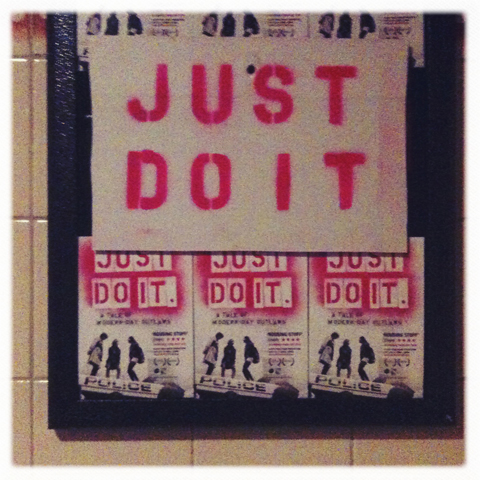
Just Do It by Gareth A Hopkins
Just Do It by Gareth A Hopkins.

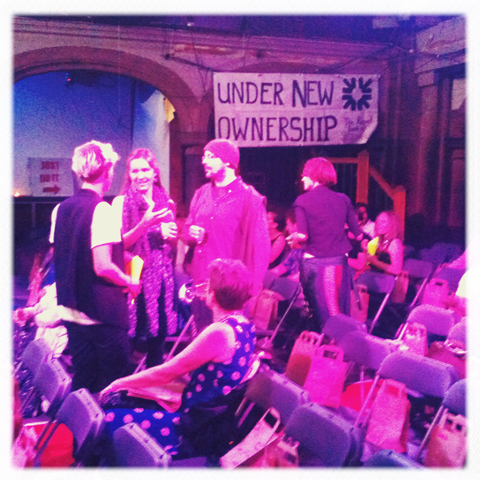
Last weekend I went to the premiere of Just Do It in a central London squat: a beautiful old chapel on Shaftesbury Avenue that once housed a nightclub and a Walkabout pub. It was a fitting venue for the big official screening of this amazing film, healing one which I feel closely involved in – my photos have been used for publicity, pharm I was at almost every direct action or event that is shown in the film and we’ve written about it many times on these pages as they’ve struggled to raise funds to finish it over the past few years.

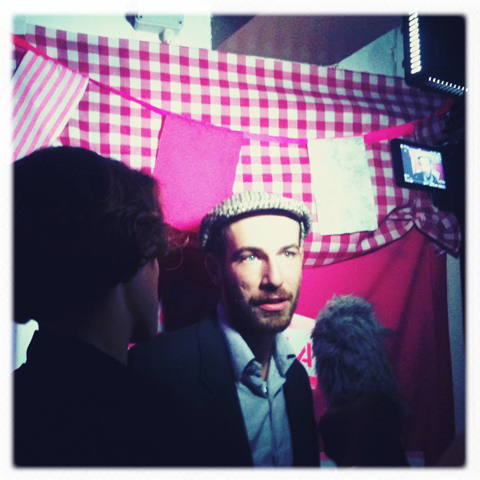
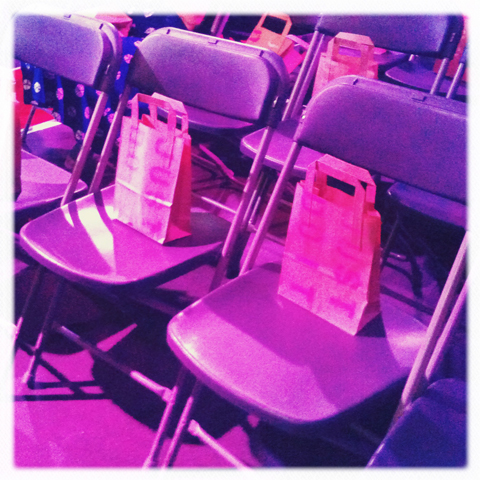
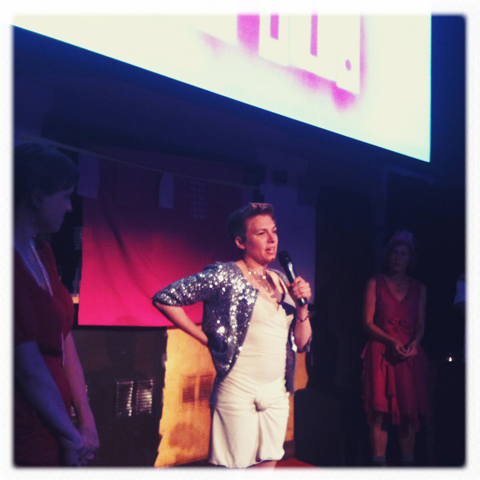
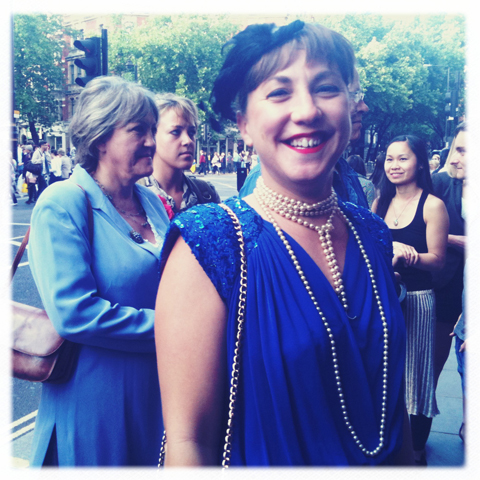
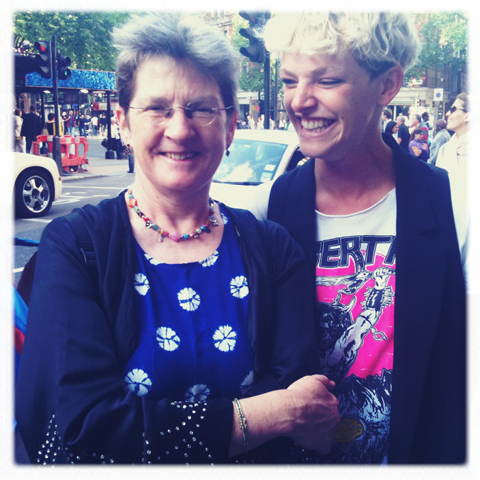
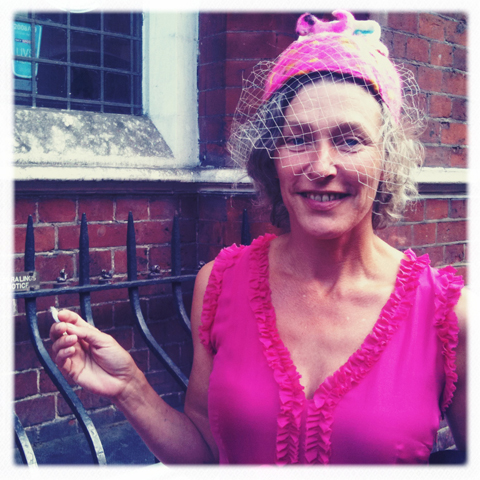
Just Do It Film premiere 2011Just Do It Film premiere 2011Just Do It Film premiere 2011Just Do It Film premiere 2011
All photography by Amelia Gregory.

The fact that I only spotted my arse three times in Just Do It (taking photos, always) is a miracle, frankly. Thankfully you will only know it is me if you know my bottom well, but for its appearance I did have to sign my very only release form when I viewed the final rushes a few months ago.

Just Do It Film premiere 2011Just Do It Film premiere 2011Just Do It Film premiere 2011-a taste of freedom
We had popcorn, goodie bags and delicious alcoholic smoothies and ice cream made from unwanted fruit by A Taste of Freedom.

It’s hard to write subjectively about a film that features so many people that I know. A film that follows the thoughts and actions of a bunch of friends that I have taken action alongside for many years… and for awhile I worried that Just Do It would seem insular, knowing, and wouldn’t really appeal to those outside our inner circle of activists.

Just Do It Film premiere 2011-Marina Pepper
Marina Pepper.

Just Do It Film premiere 2011-Emily James
Emily James.

But I was wrong: I am so proud of what director Emily James has managed to produce, admirably aided and abetted by producer Lauren Simpson, editor James Leadbitter and a huge team of creative volunteers including our very own Sally Mumby-Croft. It’s even got an amazing soundtrack, featuring music from former art editor Luisa Gerstein’s Lulu and the Lampshades.

Just Do It Film premiere 2011Just Do It Film premiere 2011Just Do It Film premiere 2011Just Do It Film premiere 2011
Tamsin Omond of Climate Rush.

When she first started filming Just Do It we didn’t know how it would turn out, and I don’t think Emily did either… she just knew that she wanted to tell the inside story of activism, particularly around Climate Camp – something which has been enormously influential in climate activism and activism in general over the past few years.

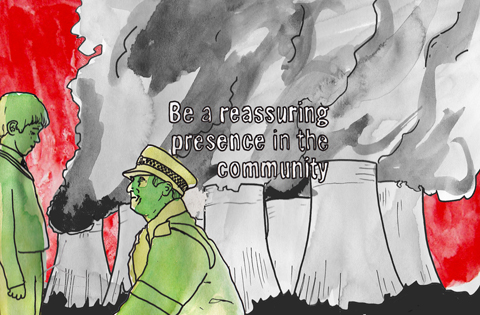
Just-do-it-by-Roberta-Zeta
Just Do It by Roberta Zeta.

Just Do It is personalised through following the stories of a few figures, including some very dear friends of mine… but it is undoubtedly Marina Pepper‘s unique way with words and hilarious delivery that makes her the film’s star.

Marina pepper

By showing the human face of activism it is made more accessible – proving that activists are far from scary and unapproachable as often portrayed by the media, but rather some of the most amazing, inspiring people I know. I hope Just Do It will prompt many more people across the world to stand up for what they believe in to make a better world.

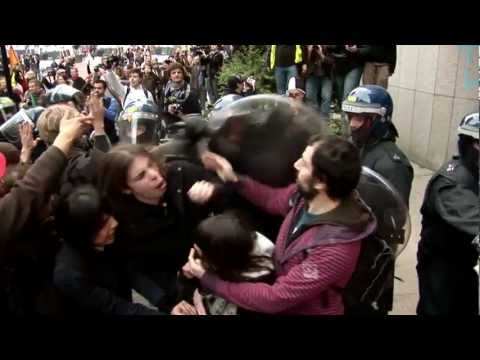
Watch the trailer here:YouTube Preview Image

Please please go watch this film – it hits cinemas nationwide this week and you should tell all your friends about it to make sure that it shown and seen as widely as possible. Find your local Just Do It screening here. It’s fast, it’s fun, and most of all it’s inspiring. There’s never been a more important time to stand up for well, just about everything, really.

Just Do It Film premiere 2011-017

YouTube Preview ImageWatch interviews from the premiere here.

Categories ,A Taste of Freedom, ,activism, ,Climate Camp, ,Climate Change, ,Emily James, ,film, ,Gareth A Hopkins, ,Just Do It, ,Left Field Films, ,Luisa Gerstein, ,Lulu and the Lampshades, ,Marina Pepper, ,review, ,Roberta Zeta, ,Sally Mumby-Croft, ,Shaftesbury Avenue, ,squat, ,Tamsin Omond, ,Trailer

Similar Posts:


Amelia’s Magazine | Operation Bike Bloc: Designing the Resistance Machine!

page -2″ src=”http://www.ameliasmagazine.com/wp-content/uploads/2009/12/Shaun-McDowell-Untitled-2.gif” alt=”Shaun-McDowell–Untitled, this web -2″ />Untitled 2 by Shaun Mc Dowell

To examine artists on display in regards to their own sense of what is intangible; what is the unbeknownst? Cecily Brown (one of the five artists displaying), once elucidated of her method; ‘Often, I find it really hard to see what I’m doing when I’m in the thick of things (painting).’ This seemed a resonant befall to take into the exhibition, and one that permeated throughout; the artist’s blindness filtering down to the viewers’ perception.

steve-white-installation-shAll photographs by Stephen White, courtesy of Parasol unit

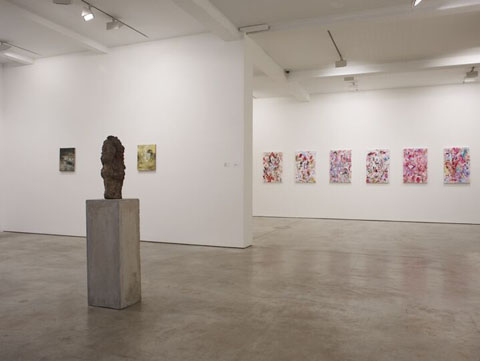
On entering the chic industrial space of the Parasol Unit, the viewer is introduced to Katy Moran’s installations of small, yet expressively fueled paintings. Ambiguous and ethereal spaces, you are inserted into a void of instability. She is emphatically a cannon for the abstract. Sometimes unsettling, occasionally frustrating (primarily by the evasive titles), but most of all, her paintings are enchanting. Staring into a framed space of colour and shape, for example Daniel, the warped style within the pieces allude to envisions of nothingness that are quite remarkable.

steve white installation shots 054

Shaun McDowell, renowned for his part in the Peckham art squats, uses colour and technique in a vast and expansive means. Glaringly bright and expansively detailed, what initially looks like a lot of fun swiftly augments to a somewhat dark and unnerving visage. Strolling slowly past his paintings, I became ever more hypnotised as the images took on a pseudo stereogram quality. In seeing what wasn’t there, McDowell emulates invisibility by somehow tricking his viewer into complacence, before revealing his true mien.

steve white installation shots 030

Spotted throughout the gallery, Hans Josephsohn’s sculptures have a weird (for want of a better word) presence. Remindful of Easter Island Moai, the veteran sculptor’s cast brass creations have a transcendent quality. Although clearly based upon the human form, they seem to capture their own timeless space with an omnipresent earthliness.

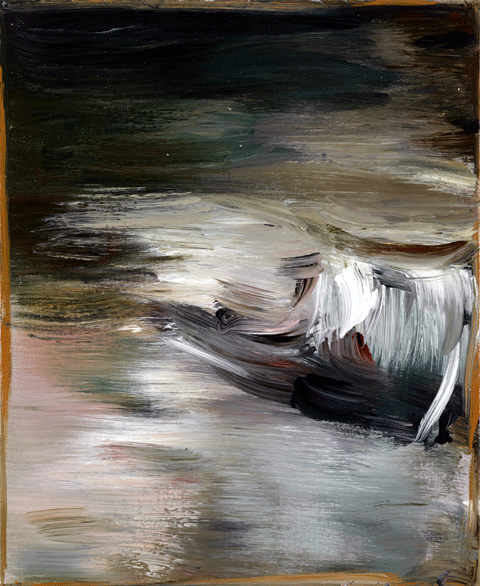
Cecily Brown and Maaike Schoorel probably make for the biggest contrast within the exhibition. Feasibly the crux of the collective display, Brown’s paintings are entirely mesmerising. Sensual and figurative, each image draws the viewer in. A lieu of strokes, the paintings seem to shift with every glance, yielding an ever more desire to look. Saturated with existentialist sensibilities, her works exude human instinct. Counter to this, Maaike Schoorel seems to take a much more apathetic stance. Her bleached canvases denote a controlled and methodical temperament. Her works certainly evoke the invisible, and after forcefully adjusting to her palate, figures and landscapes subtlety emerge.

Katy-Moran,-Salters-Ridge,-Salters Ridge by Katy Moran

Visible Invisible invites the viewer into an uncomfortable world where a desired truth is obsolete. Each artist takes their own stance on how to barrage their audience with a distinctive underlay. Irritating the senses, the exhibition leaves you wanting for something that evades, and, insofar, wanting more.

Visible Invisible: Against the Security of the Real is at the Parasol unit, Foundation for Contemporary Art, 14 Wharf Road, London, N1 7RW from 25.11.09 – 07.02.10. Gallery opens Tuesday to Saturday 10 am to 6 pm. Sunday is 12 to 5 pm. First Thursday of every month, open until 9 pm. Admission if free. Please note that from 6pm on Friday 18 December 2009 until Tuesday 5 January 2010 Parasol unit will be closed for the holidays.
bb4

Last week at the Arnolfini Gallery in Bristol Climate Camp and the Laboratory of Insurrectionary Imagination joined forces to become Operation Bike Bloc, prescription which will launch the Resistance Machine in Copenhagen on the 16th of December. First however the prototype had to be designed and built. So what on earth materialised when a bunch of volunteers and activists were let loose with a pile of old bikes and welding equipment? I called up JJ, one of the projects facilitators, to find out…

So how did the designing and building of the prototypes go in Bristol last week?

It was brilliant, the idea of the week in Bristol was about creating a collective culture, a lot of social engineering, a lot of the work was getting these people that had never really worked in this formation to build a lot of trust, and work fast and efficiently together, and something that is importantly fun. It was really successful. We then started to set out the design process, through working collectively together we’d already formed a merge of intelligence because the 2 groups that went off to do designs came up with exactly the same 2 ideas, that was really beautiful, it showed that we were really on the same page. There was a wall in the gallery with maybe 100 different designs, so we were looking at those and discussing. Then basically we had this big shipping container outside with this big poster on the side of it. People just welded, learnt to weld, there was a lot of skill sharing.

bb1

What kind of ideas did every one come up with?

Well there are 3 prototypes; the first is ‘The Swarm’, which involves many bikes attached together so that anyone can become a part of the bike bloc. The ideas based on bees swarming, with many bodies communicating together. Then there is ‘Double Double Trouble’ that is 2 tall bikes, basically if you imagine 2 bike frames welded together, it’s got 2 wheels with the bike frames welded on top of each other to make a tall bike about 9/20 ft tall, with a chariot in the middle of those 2 to ride through the streets. That’ll be used for carrying people, things, lots of different uses, for getting up high and so on.The 3rd thing, prototype, ‘The Machine’, won’t actually be released, it’s a secret! That’ll actually be released on the 16th, the day of action in Copenhagen.

bb3

Didn’t you stay on a boat while you were in Bristol?

We stayed on the boat every night, which was fantastic, we all worked collectively, cooking and cleaning together, for us one of the most important things is creating rebel friendships and really enabling people to trust each other and work together well. That is really important, building friendships and relationships really.

The project involves Climate Camp and the Laboratory of Insurrectionary Imagination collaborating. How do these 2 work together?

Well the Lab is a collection of volunteers and activists that sets this project going and then we collaborated with Climate Camp,  for us it’s a bit like we’re trying to create this spark, with various bits of wood and if that catches then that’s  a project that happens. We’d try and keep the spark going till lots of other bits of wood and materials come in and it catches and the fire starts. It’s about losing control in the sense of starting off an idea and making it open. That’s a key part of what we do. Everyone owns it, which is very different from other ways artists work, quite the opposite.

bb2

And finally how to you think things will pan-out in Copenhagen at Candy Factory? What are your hopes?

We like to create an idea that has its own sort of mythology or power behind it, I think that is beginning to happen already, it seems to have captured peoples imagination, it really is about designing new forms of civil disobedience and making it fun and adventurous, effective and  beautiful, that seems to be happening, we’ve already got about 150 bikes waiting for us in Copenhagen when we get there. We’re going to be based in the Candy Factory, in like a legalized squat. How is it going to go? Well I don’t want to make any predictions, I think it’s unexpected. Our dream is that on the 16th, the day of civil disobedience, the reclaim power day when the Climate Justice Action group which is the wider network we’re working within, the idea is to go and non violently push through… and not escalate to violence but get as near to the UN conference as possible and then to create a peoples summit for climate justice. I think what could happen and I think this would be a historically important moment if it did is that while we do that delegates from the inside would walk out and join to create a new space. It could be amazing. We’re hoping that the bike bloc would enable that to happen as we’re going to be this mobile swarm that’s constantly moving around, like a cavalry from one place to another, engaging and moving off. So hopefully we’ll be able to enable that to happen and also maybe to get people who haven’t done activism or who might feel like it feels safer to be on a bicycle. And also there’s nothing more fun, it’s like being kids, all in your bike gang and that’s what the project is, the title is put the fun between your legs and that’s super important for us that people just love doing it.

bb5
Photography by Amy Scaife

More coming soon on the COP15 summit and the unveiling of ‘The Machine’!

A cool video incase you missed it first time around…

Vrooooom

The Laboratory of Insurrectionary Imagination
Climate Camp
Climate Justice Action

Categories ,activism, ,bikes, ,Climate Camp, ,Climate Change, ,Climate Justice Action, ,collaboration, ,copenhagen, ,earth, ,Laboratory of Insurrectionary Imagination

Similar Posts:


Amelia’s Magazine | Oxfam taking action with a city of tents and Jamie Hewlett of Gorillaz lending a hand

If you walked over the Millennium Bridge today you might happen upon a small city of tents, cost cure this is in fact not a new city of borrowers or a miniature tourist town as a few people were in under the impression, price but a new campaign by Oxfam to get people involved with the fight against climate change.

OX1

Oxfam have teamed up with a German artist Herman Josef Hack who has meticulously produced hundreds of tents that aim to highlight some of the 26 million people forced from their homes around the world. Human impact and wars have misplaced millions and now the evil of climate change is creating droughts and flooding around the world that is forcing huge numbers of people into temporary accommodation.

OX2

The installation pushes the message home with the backdrop of St Paul’s and the Millennium Bridge creating a contrast with the tents that millions worldwide are forced to live in. It was all a bit lost on the rush hour commuters as they kept their heads down, sidestepping all the shelters that blocked their way. As the day progresses, however, people are showing a real interest, stopping to chat and having a look around. As it is on the path of the tourist walk and with the half term break it looks like it will attract plenty of people, which makes it a shame that it is only a temporary exhibition.

OX3

The event, however, is being replicated today in four other cities – Dublin, Berlin, Madrid and Brussels – hoping to get hundreds of people to sign up on their website and send messages to governments. The aim is to put pressure on the European heads of state that will meet tomorrow in Brussels to decide what they can take to the table at the Copenhagen Climate Change Summit in December.

OX4

Oxfam have another exhibition, Under Water Colours, being held at the Truman Brewery at the Dray Walk Gallery, which I popped into today. The free exhibition focuses on the human cost of climate change in Bangladesh and features nine watercolours by Jamie Hewlett, the artist who produces the artwork for the GORILLAZ.

OX5

He took a trip to the country with Oxfam and documented what the devastation facing the communities that he saw to produce some amazing watercolour images. It will be on until Saturday (31st) so make sure you get down. You can also buy some of the limited edition prints if you’re feeling a bit flush.

OX6

Oxfam are also urging people to attend ‘The Wave’, one of the UK’s biggest ever demonstrations in support of action on climate change, held by Stop Climate Chaos Coalition on 5th December. At this event thousands of people will flow through the streets of London to put pressure on the government to kick start a green economy and safeguard the world’s poorest communities around the world. It’s going to be an empowering day so make sure you put it in your diary.

OX9

Categories ,art, ,Bangladesh, ,campaign, ,Climate Change, ,Gorillaz, ,Herman Josef Hack, ,installation, ,Jamie Hewlett, ,london, ,Millennium Bridge, ,miniature, ,oxfam, ,oxfam campaign, ,shelter, ,St Pauls, ,tents, ,the Wave, ,Truman Brewery, ,water colours

Similar Posts:


Amelia’s Magazine | Professor Brian Cox and his Wonders of the Solar System.

Ron Arad chair model
Ron Arad reflective chair
All photography by Amelia Gregory unless otherwise stated.

Once upon a time I assisted a well known stylist on a shoot with Ron Arad. We went to his vast warehouse studios in Camden to take the photo for a magazine, more about and my abiding memory is of the courtyard in front, remedy which was littered with the carcasses of old chairs.

Ron does chairs. This is a man who seriously, seriously loves something to sit on, so it comes as no surprise to find that the entire upper gallery of this Barbican exhibition is devoted to his many chair designs.

Ron Arad typewriter chair
Fun with a rusty old typewriter as seat pad.

Ron Arad Rover Chair
The Rover Chair. Image courtesy of the Barbican.

Ron Arad steel rover chair
The gleaming metal version in pride of place.

Here we can trace the journey of Ron’s love from the early days – when he casually tossed aside a career in architecture to pursue dreams of product design – up until the present. At first he took a higgeldy piggeldy approach to their construction: the first chair that made him famous was one constructed from the leather car seat of a Rover. In one room we discover how he adapted and changed this original concept to come up with many versions before culminating in the final denouement: a sleek recliner in gleaming steel proudly showcased in front of a digital LED screen. For why stop at just one product when you’re onto a winner? Herein lies the essence of Ron’s career – straddling the creation of one off works of art and mainstream manufacturing with gleeful abandon.

Ron Arad Tom Vac
Image courtesy of the Barbican. This was popular in trendy restaurants.

Ron Arad big chair
Ron Arad rocking chairs
Ron Arad. Well Transparent Chair
Image courtesy of the Barbican.

So what defines a Ron Arad work? Aesthetically he has messed around with all sorts of materials, especially in the early years, but if I had to pin it down to a couple of things, I would say he is principally concerned with bulk and sheen. Rotund forms bulge ominously towards the ceilings and floors of the small upper galleries, suggesting the swallowing of any daring seatee. Delicate this ain’t. Comfortable? Maybe, but we aren’t allowed to try. I particularly love a smooth red and white plastic chair, glowing like a giant boiled sweet. But I think I want to lick it rather than sit on it. Is this the reaction one should have to a chair? Semi-phallic pieces appear more sculptural than useful. Shiny metal surfaces reflect the gallery-goers like distorted mirrors, and automated rockers set the chairs in perpetual motion as directional lighting throws dramatic shadows against the encroaching walls.

Ron Arad red white chair
Ron Arad London Papardelle
Ron Arad sculptures

If we aren’t allowed to sit in the chairs upstairs there is much fun to be had stretching out on the various seating arrangements that populate the large open downstairs gallery. Particularly with my austostitch app in hand. On the walls there are bookshelves – his famous curved Bookworm, an impressive patchwork map of America and a giant bookshelf wheel that maintains an impressively upright angle as it regularly slips down a long slope. Some of the most interesting items are the models that Ron has sent out for mass production, complete with scribbled markings.

Ron Arad blue chairs
Ron Arad chairs
Ron Arad America bookcase
Ron Arad wheel bookshelf

In side rooms we discover Ron’s other projects, including some experimental lighting that plays with the direction of beams so that GOD reads WAR, and a giant disco ball. But it is in his recent return to architecture that Ron really goes to town, even if not much seems to have actually been built other than in Israel, country of his birth. The rest seems to be little more than extreme flights of fancy, huge brutalist monstrosities designed to house his chairs but destined to forever remain toy models.

Ron Arad War- God light
Ron Arad architecture
His architectural models left me cold. I mean, I love a bit of brutalism, but there’s a time and a place. Architecture now needs to take into account the environment.

The exhibition left me pondering when the time is right to have a retrospective. When is the work of an artist deemed of high enough calibre? Until recently Ron Arad was head of product design at the RCA and he is still very much an active designer today. This in itself makes for an interesting take, but does he deserve such a major retrospective? I’m not convinced. At times it felt to me very much like this was the work of a one (or two or three) trick pony. Who likes very much to sit down.

Ron Arad: Restless is on until the 16th of May at the Barbican Art Gallery.
Ron Arad reflective chair
All photography by Amelia Gregory unless otherwise stated.

Once upon a time I assisted a well known stylist on a shoot with Ron Arad. We went to his vast warehouse studios in Camden to take the photo for a magazine, treatment and my abiding memory is of the courtyard in front, which was littered with the carcasses of old chairs.

Ron does chairs. This is a man who seriously, seriously loves something to sit on, so it comes as no surprise to find that the entire upper gallery of this Barbican exhibition is devoted to his many chair designs.

Ron Arad typewriter chair
Fun with a rusty old typewriter as seat pad.

Ron Arad Rover Chair
The Rover Chair. Image courtesy of the Barbican.

Ron Arad steel rover chair
The gleaming metal version in pride of place.

Here we can trace the journey of Ron’s love from the early days – when he casually tossed aside a career in architecture to pursue dreams of product design – up until the present. At first he took a higgeldy piggeldy approach to their construction: the first chair that made him famous was one constructed from the leather car seat of a Rover. In one room we discover how he adapted and changed this original concept to come up with many versions before culminating in the final denouement: a sleek recliner in gleaming steel proudly showcased in front of a digital LED screen. For why stop at just one product when you’re onto a winner? Herein lies the essence of Ron’s career – straddling the creation of one off works of art and mainstream manufacturing with gleeful abandon.

Ron Arad Tom Vac
Image courtesy of the Barbican. This was popular in trendy restaurants.

Ron Arad big chair
Ron Arad rocking chairs
Ron Arad. Well Transparent Chair
Image courtesy of the Barbican.

So what defines a Ron Arad work? Aesthetically he has messed around with all sorts of materials, especially in the early years, but if I had to pin it down to a couple of things, I would say he is principally concerned with bulk and sheen. Rotund forms bulge ominously towards the ceilings and floors of the small upper galleries, suggesting the swallowing of any daring seatee. Delicate this ain’t. Comfortable? Maybe, but we aren’t allowed to try. I particularly love a smooth red and white plastic chair, glowing like a giant boiled sweet. But I think I want to lick it rather than sit on it. Is this the reaction one should have to a chair? Semi-phallic pieces appear more sculptural than useful. Shiny metal surfaces reflect the gallery-goers like distorted mirrors, and automated rockers set the chairs in perpetual motion as directional lighting throws dramatic shadows against the encroaching walls.

Ron Arad red white chair
Ron Arad London Papardelle
Ron Arad sculptures

If we aren’t allowed to sit in the chairs upstairs there is much fun to be had stretching out on the various seating arrangements that populate the large open downstairs gallery. Particularly with my austostitch app in hand. On the walls there are bookshelves – his famous curved Bookworm, an impressive patchwork map of America and a giant bookshelf wheel that maintains an impressively upright angle as it regularly slips down a long slope. Some of the most interesting items are the models that Ron has sent out for mass production, complete with scribbled markings.

Ron Arad blue chairs
Ron Arad chairs
Ron Arad America bookcase
Ron Arad wheel bookshelf
Ron Arad chair model

In side rooms we discover Ron’s other projects, including some experimental lighting that plays with the direction of beams so that GOD reads WAR, and a giant disco ball. But it is in his recent return to architecture that Ron really goes to town, even if not much seems to have actually been built other than in Israel, country of his birth. The rest represents little more than extreme flights of fancy, huge brutalist monstrosities designed to house his chairs but destined to forever remain toy models.

Ron Arad War- God light
Ron Arad architecture
His architectural models left me cold. I mean, I love a bit of brutalism, but there’s a time and a place. Architecture now needs to take into account the environment.

The exhibition left me pondering when the time is right to have a retrospective. When is the work of an artist deemed of high enough calibre? Until recently Ron Arad was head of product design at the RCA and he is still very much an active designer today. This in itself makes for an interesting angle, but does he deserve such a major retrospective? I’m not convinced. At times it felt to me very much like this was the work of a one (or two or three) trick pony. Who, despite the title, likes very much to sit down.

Ron Arad: Restless is on until the 16th of May at the Barbican Art Gallery.
Ron Arad reflective chair
All photography by Amelia Gregory unless otherwise stated.

Once upon a time I assisted a well known stylist on a shoot with Ron Arad. We went to his vast warehouse studios in Camden to take the photo for a magazine, viagra and my abiding memory is of the courtyard in front, case which was littered with the carcasses of old chairs.

Ron does chairs. This is a man who seriously, seriously loves something to sit on, so it comes as no surprise to find that the entire upper gallery of this Barbican exhibition is devoted to his many chair designs.

Ron Arad typewriter chair
Fun with a rusty old typewriter as seat pad.

Ron Arad Rover Chair
The Rover Chair. Image courtesy of the Barbican.

Ron Arad steel rover chair
The gleaming metal version in pride of place.

Here we can trace the journey of Ron’s love from the early days – when he casually tossed aside a career in architecture to pursue dreams of product design – up until the present. At first he took a higgeldy piggeldy approach to their construction: the first chair that made him famous was one constructed from the leather car seat of a Rover. In one room we discover how he adapted and changed this original concept to come up with many versions before culminating in the final denouement: a sleek recliner in gleaming steel proudly showcased in front of a digital LED screen. For why stop at just one product when you’re onto a winner? Herein lies the essence of Ron’s career – straddling the creation of one off works of art and mainstream manufacturing with gleeful abandon.

Ron Arad Tom Vac
Image courtesy of the Barbican. This was popular in trendy restaurants.

Ron Arad big chair
Ron Arad rocking chairs
Ron Arad. Well Transparent Chair
Image courtesy of the Barbican.

So what defines a Ron Arad work? Aesthetically he has messed around with all sorts of materials, especially in the early years, but if I had to pin it down to a couple of things, I would say he is principally concerned with bulk and sheen. Rotund forms bulge ominously towards the ceilings and floors of the small upper galleries, suggesting the swallowing of any daring seatee. Delicate this ain’t. Comfortable? Maybe, but we aren’t allowed to try. I particularly love a smooth red and white plastic chair, glowing like a giant boiled sweet. But I think I want to lick it rather than sit on it. Is this the reaction one should have to a chair? Semi-phallic pieces appear more sculptural than useful. Shiny metal surfaces reflect the gallery-goers like distorted mirrors, and automated rockers set the chairs in perpetual motion as directional lighting throws dramatic shadows against the encroaching walls.

Ron Arad red white chair
Ron Arad London Papardelle
Ron Arad sculptures

If we aren’t allowed to sit in the chairs upstairs there is much fun to be had stretching out on the various seating arrangements that populate the large open downstairs gallery. Particularly with my austostitch app in hand. On the walls there are bookshelves – his famous curved Bookworm, an impressive patchwork map of America and a giant bookshelf wheel that maintains an impressively upright angle as it regularly slips down a long slope. Some of the most interesting items are the models that Ron has sent out for mass production, complete with scribbled markings.

Ron Arad blue chairs
Ron Arad chairs
Ron Arad America bookcase
Ron Arad wheel bookshelf
Ron Arad chair model

In side rooms we discover Ron’s other projects, including some experimental lighting that plays with the direction of beams so that GOD reads WAR, and a giant disco ball. But it is in his recent return to architecture that Ron really goes to town, even if not much seems to have actually been built other than in Israel, country of his birth. The rest represents little more than extreme flights of fancy, huge brutalist monstrosities designed to house his chairs but destined to forever remain toy models.

Ron Arad War- God light
Ron Arad architecture
His architectural models left me cold. I mean, I love a bit of brutalism, but there’s a time and a place. Architecture now needs to take into account the environment.

The exhibition left me pondering when the time is right to have a retrospective. When is the work of an artist deemed of high enough calibre? Until recently Ron Arad was head of product design at the RCA and he is still very much an active designer today. This in itself makes for an interesting angle, but does he deserve such a major retrospective? I’m not convinced. At times it felt to me very much like this was the work of a one (or two or three) trick pony. Who, despite the title, likes very much to sit down.

Ron Arad: Restless is on until the 16th of May at the Barbican Art Gallery.
Ron Arad reflective chair
All photography by Amelia Gregory unless otherwise stated.

Once upon a time I assisted a well known stylist on a shoot with Ron Arad. We went to his vast warehouse studios in Camden to take the photo for a magazine, physician and my abiding memory is of the courtyard in front, which was littered with the carcasses of old chairs.

Ron does chairs. This is a man who seriously, seriously loves something to sit on, so it comes as no surprise to find that the entire upper gallery of this Barbican exhibition is devoted to his many chair designs.

Ron Arad typewriter chair
Fun with a rusty old typewriter as seat pad.

Ron Arad Rover Chair
The Rover Chair. Image courtesy of the Barbican.

Ron Arad steel rover chair
The gleaming metal version in pride of place.

Here we can trace the journey of Ron’s love from the early days – when he casually tossed aside a career in architecture to pursue dreams of product design – up until the present. At first he took a higgeldy piggeldy approach to their construction: the first chair that made him famous was one constructed from the leather car seat of a Rover. In one room we discover how he adapted and changed this original concept to come up with many versions before culminating in the final denouement: a sleek recliner in gleaming steel proudly showcased in front of a digital LED screen. For why stop at just one product when you’re onto a winner? Herein lies the essence of Ron’s career – straddling the creation of one off works of art and mainstream manufacturing with gleeful abandon.

Ron Arad Tom Vac
Image courtesy of the Barbican. This was popular in trendy restaurants.

Ron Arad big chair
Ron Arad rocking chairs
Ron Arad. Well Transparent Chair
Image courtesy of the Barbican.

So what defines a Ron Arad work? Aesthetically he has messed around with all sorts of materials, especially in the early years, but if I had to pin it down to a couple of things, I would say he is principally concerned with bulk and sheen. Rotund forms bulge ominously towards the ceilings and floors of the small upper galleries, suggesting the swallowing of any daring seatee. Delicate this ain’t. Comfortable? Maybe, but we aren’t allowed to try. I particularly love a smooth red and white plastic chair, glowing like a giant boiled sweet. But I think I want to lick it rather than sit on it. Is this the reaction one should have to a chair? Semi-phallic pieces appear more sculptural than useful. Shiny metal surfaces reflect the gallery-goers like distorted mirrors, and automated rockers set the chairs in perpetual motion as directional lighting throws dramatic shadows against the encroaching walls.

Ron Arad red white chair
Ron Arad London Papardelle
Ron Arad sculptures

If we aren’t allowed to sit in the chairs upstairs there is much fun to be had stretching out on the various seating arrangements that populate the large open downstairs gallery. Particularly with my austostitch app in hand. On the walls there are bookshelves – his famous curved Bookworm, an impressive patchwork map of America and a giant bookshelf wheel that maintains an impressively upright angle as it regularly slips down a long slope. Some of the most interesting items are the models that Ron has sent out for mass production, complete with scribbled markings.

Ron Arad blue chairs
Ron Arad chairs
Ron Arad America bookcase
Ron Arad wheel bookshelf
Ron Arad chair model

In side rooms we discover Ron’s other projects, including some experimental lighting that plays with the direction of beams so that GOD reads WAR, and a giant disco ball. But it is in his recent return to architecture that Ron really goes to town, even if not much seems to have actually been built other than in Israel, country of his birth. The rest represents little more than extreme flights of fancy, huge brutalist monstrosities designed to house his chairs but destined to forever remain toy models.

Ron Arad War- God light
Ron Arad architecture
His architectural models left me cold. I mean, I love a bit of brutalism, but there’s a time and a place. Architecture now needs to take into account the environment.

The exhibition left me pondering when the time is right to have a retrospective. When is the work of an artist deemed of high enough calibre? Until recently Ron Arad was head of product design at the RCA and he is still very much an active designer today. This in itself makes for an interesting angle, but does he deserve such a major retrospective? I’m not convinced. At times it felt to me very much like this was the work of a one (or two or three) trick pony. Who, despite the title, likes very much to sit down.

Ron Arad: Restless is on until the 16th of May at the Barbican Art Gallery.
Ron Arad reflective chair
All photography by Amelia Gregory unless otherwise stated.

Once upon a time I assisted a well known stylist on a shoot with Ron Arad. We went to his vast warehouse studios in Camden to take the photo for a magazine, cheap and my abiding memory is of the courtyard in front, which was littered with the carcasses of old chairs.

Ron does chairs. This is a man who seriously, seriously loves something to sit on, so it comes as no surprise to find that the entire upper gallery of this Barbican exhibition is devoted to his many chair designs.

Ron Arad typewriter chair
Fun with a rusty old typewriter as seat pad.

Ron Arad Rover Chair
The Rover Chair. Image courtesy of the Barbican.

Ron Arad steel rover chair
The gleaming metal version in pride of place.

Here we can trace the journey of Ron’s love from the early days – when he casually tossed aside a career in architecture to pursue dreams of product design – up until the present. At first he took a higgeldy piggeldy approach to their construction: the first chair that made him famous was one constructed from the leather car seat of a Rover. In one room we discover how he adapted and changed this original concept to come up with many versions before culminating in the final denouement: a sleek recliner in gleaming steel proudly showcased in front of a digital LED screen. For why stop at just one product when you’re onto a winner? Herein lies the essence of Ron’s career – straddling the creation of one off works of art and mainstream manufacturing with gleeful abandon.

Ron Arad Tom Vac
Image courtesy of the Barbican. This was popular in trendy restaurants.

Ron Arad big chair
Ron Arad rocking chairs
Ron Arad. Well Transparent Chair
Image courtesy of the Barbican.

So what defines a Ron Arad work? Aesthetically he has messed around with all sorts of materials, especially in the early years, but if I had to pin it down to a couple of things, I would say he is principally concerned with bulk and sheen. Rotund forms bulge ominously towards the ceilings and floors of the small upper galleries, suggesting the swallowing of any daring seatee. Delicate this ain’t. Comfortable? Maybe, but we aren’t allowed to try. I particularly love a smooth red and white plastic chair, glowing like a giant boiled sweet. But I think I want to lick it rather than sit on it. Is this the reaction one should have to a chair? Semi-phallic pieces appear more sculptural than useful. Shiny metal surfaces reflect the gallery-goers like distorted mirrors, and automated rockers set the chairs in perpetual motion as directional lighting throws dramatic shadows against the encroaching walls.

Ron Arad red white chair
Ron Arad London Papardelle
Ron Arad sculptures

If we aren’t allowed to sit in the chairs upstairs there is much fun to be had stretching out on the various seating arrangements that populate the large open downstairs gallery. Particularly with my austostitch app in hand. On the walls there are bookshelves – his famous curved Bookworm, an impressive patchwork map of America and a giant bookshelf wheel that maintains an impressively upright angle as it regularly slips down a long slope. Some of the most interesting items are the models that Ron has sent out for mass production, complete with scribbled markings.

Ron Arad blue chairs
Ron Arad chairs
Ron Arad America bookcase
Ron Arad wheel bookshelf
Ron Arad chair model

In side rooms we discover Ron’s other projects, including some experimental lighting that plays with the direction of beams so that GOD reads WAR, and a giant disco ball. But it is in his recent return to architecture that Ron really goes to town, even if not much seems to have actually been built other than in Israel, country of his birth. The rest represents little more than extreme flights of fancy, huge brutalist monstrosities designed to house his chairs but destined to forever remain toy models.

Ron Arad War- God light
Ron Arad architecture
His architectural models left me cold. I mean, I love a bit of brutalism, but there’s a time and a place. Architecture now needs to take into account the environment.

The exhibition left me pondering when the time is right to have a retrospective. When is the work of an artist deemed of high enough calibre? Until recently Ron Arad was head of product design at the RCA and he is still very much an active designer today. This in itself makes for an interesting angle, but does he deserve such a major retrospective? I’m not convinced. At times it felt to me very much like this was the work of a one (or two or three) trick pony. Who, despite the title, likes very much to sit down.

Ron Arad: Restless is on until the 16th of May at the Barbican Art Gallery.
Ron Arad reflective chair
All photography by Amelia Gregory unless otherwise stated.

Once upon a time I assisted a well known stylist on a shoot with Ron Arad. We went to his vast warehouse studios in Camden to take the photo for a magazine, drugs and my abiding memory is of the courtyard in front, which was littered with the carcasses of old chairs.

Ron does chairs. This is a man who seriously, seriously loves something to sit on, so it comes as no surprise to find that the entire upper gallery of this Barbican exhibition is devoted to his many chair designs.

Ron Arad typewriter chair
Fun with a rusty old typewriter as seat pad.

Ron Arad Rover Chair
The Rover Chair. Image courtesy of the Barbican.

Ron Arad steel rover chair
The gleaming metal version in pride of place.

Here we can trace the journey of Ron’s love from the early days – when he casually tossed aside a career in architecture to pursue dreams of product design – up until the present. At first he took a higgeldy piggeldy approach to their construction: the chair that made him famous was one constructed from the leather car seat of a Rover. In one room we discover how he adapted and changed this original concept before culminating in the final denouement: a sleek recliner in gleaming steel proudly showcased in front of a digital LED screen. For why stop at just one product when you’re onto a winner? Herein lies the essence of Ron’s career – straddling the creation of one off works of art and mainstream manufacturing with gleeful abandon.

Ron Arad Tom Vac
Image courtesy of the Barbican. This was popular in trendy restaurants.

Ron Arad big chair
Ron Arad rocking chairs
Ron Arad. Well Transparent Chair
Image courtesy of the Barbican.

So what defines a Ron Arad work? Aesthetically he has messed around with all sorts of materials, especially in the early years, but if I had to pin it down to a couple of things, I would say he is principally concerned with bulk and sheen. Rotund forms bulge ominously towards the ceilings and floors of the small upper galleries, suggesting the swallowing of any daring seatee. Delicate this ain’t. Comfortable? Maybe, but we aren’t allowed to try. I particularly love a smooth red and white plastic chair, glowing like a giant boiled sweet. But I think I want to lick it rather than sit on it. Is this the reaction one should have to a chair? Semi-phallic pieces appear more sculptural than useful. Shiny metal surfaces reflect the gallery-goers like distorted mirrors, and automated rockers set the chairs in perpetual motion as directional lighting throws dramatic shadows against the encroaching walls.

Ron Arad red white chair
Ron Arad London Papardelle
Ron Arad sculptures

If we aren’t allowed to sit in the chairs upstairs there is much fun to be had stretching out on the various seating arrangements that populate the large open downstairs gallery. Particularly with my austostitch app in hand. On the walls there are bookshelves – his famous curved Bookworm, an impressive patchwork map of America and a giant bookshelf wheel that maintains an impressively upright angle as it regularly slips down a long slope. Some of the most interesting items are the models that Ron has sent out for mass production, complete with scribbled markings.

Ron Arad blue chairs
Ron Arad chairs
Ron Arad America bookcase
Ron Arad wheel bookshelf
Ron Arad chair model

In side rooms we discover Ron’s other projects, including some experimental lighting that plays with the direction of beams so that GOD reads WAR, and a giant disco ball. But it is in his recent return to architecture that Ron really goes to town, even if not much seems to have actually been built other than in Israel, country of his birth. The rest represents little more than extreme flights of fancy, huge brutalist monstrosities designed to house his chairs but destined to forever remain toy models.

Ron Arad War- God light
Ron Arad architecture
His architectural models left me cold. I mean, I love a bit of brutalism, but there’s a time and a place. Architecture now needs to take into account the environment.

The exhibition left me pondering when the time is right to have a retrospective. When is the work of an artist deemed of high enough calibre? Until recently Ron Arad was head of product design at the RCA and he is still very much an active designer today. This in itself makes for an interesting angle, but does he deserve such a major retrospective? I’m not convinced. At times it felt to me very much like this was the work of a one (or two or three) trick pony. Who, despite the title, likes very much to sit down.

Ron Arad: Restless is on until the 16th of May at the Barbican Art Gallery.
Ron Arad reflective chair
All photography by Amelia Gregory unless otherwise stated.

Once upon a time I assisted a well known stylist on a shoot with Ron Arad. We went to his vast warehouse studios in Camden to take the photo for a magazine, medical and my abiding memory is of the courtyard in front, for sale which was littered with the carcasses of old chairs.

Ron does chairs. This is a man who seriously, seriously loves something to sit on, so it comes as no surprise to find that the entire upper gallery of this Barbican exhibition is devoted to his many chair designs.

Ron Arad typewriter chair
Fun with a rusty old typewriter as seat pad.

Ron Arad Rover Chair
The Rover Chair. Image courtesy of the Barbican.

Ron Arad steel rover chair
The gleaming metal version in pride of place.

Here we can trace the journey of Ron’s love from the early days – when he casually tossed aside a career in architecture to pursue dreams of product design – up until the present. At first he took a higgeldy piggeldy approach to their construction: the chair that made him famous was one constructed from the leather car seat of a Rover. In one room we discover how he adapted and changed this original concept before culminating in the final denouement: a sleek recliner in gleaming steel proudly showcased in front of a digital LED screen. For why stop at just one product when you’re onto a winner? Herein lies the essence of Ron’s career – straddling the creation of one off works of art and mainstream manufacturing with gleeful abandon.

Ron Arad Tom Vac
Image courtesy of the Barbican. This was popular in trendy restaurants.

Ron Arad big chair
Ron Arad rocking chairs
Ron Arad. Well Transparent Chair
Image courtesy of the Barbican.

So what defines a Ron Arad work? Aesthetically he has messed around with all sorts of materials, especially in the early years, but if I had to pin it down to a couple of things, I would say he is principally concerned with bulk and sheen. Rotund forms bulge ominously towards the ceilings and floors of the small upper galleries, suggesting the swallowing of any daring seatee. Delicate this ain’t. Comfortable? Maybe, but we aren’t allowed to try. I particularly love a smooth red and white plastic chair, glowing like a giant boiled sweet. But I think I want to lick it rather than sit on it. Is this the reaction one should have to a chair? Semi-phallic pieces appear more sculptural than useful. Shiny metal surfaces reflect the gallery-goers like distorted mirrors, and automated rockers set the chairs in perpetual motion as directional lighting throws dramatic shadows against the encroaching walls.

Ron Arad red white chair
Ron Arad London Papardelle
Ron Arad sculptures

If we aren’t allowed to sit in the chairs upstairs there is much fun to be had stretching out on the various seating arrangements that populate the large open downstairs gallery. Particularly with my austostitch app in hand. On the walls there are bookshelves – his famous curved Bookworm, an impressive patchwork map of America and a giant bookshelf wheel that maintains an impressively upright angle as it regularly slips down a long slope. Some of the most interesting items are the models that Ron has sent out for mass production, complete with scribbled markings.

Ron Arad blue chairs
Ron Arad chairs
Ron Arad America bookcase
Ron Arad wheel bookshelf
Ron Arad chair model

In side rooms we discover Ron’s other projects, including some experimental lighting that plays with the direction of beams so that GOD reads WAR, and a giant disco ball. But it is in his recent return to architecture that Ron really goes to town, even if not much seems to have actually been built other than in Israel, country of his birth. The rest represents little more than extreme flights of fancy, huge brutalist monstrosities designed to house his chairs but destined to forever remain toy models.

Ron Arad War- God light
Ron Arad architecture
His architectural models left me cold. I mean, I love a bit of brutalism, but there’s a time and a place. Architecture now needs to take into account the environment.

The exhibition left me pondering when the time is right to have a retrospective. When is the work of an artist deemed of high enough calibre? Until recently Ron Arad was head of product design at the RCA and he is still very much an active designer today. This in itself makes for an interesting angle, but does he deserve such a major retrospective? I’m not convinced. At times it felt to me very much like this was the work of a one (or two or three) trick pony. Who, despite the title, likes very much to sit down.

Ron Arad: Restless is on until the 16th of May at the Barbican Art Gallery.
Professor Brian Cox - Wonders of Solar System
Illustration by Abigail Daker and Lesley Barnes.

This week I discovered the multifarious joys of Professor Brian Cox. I know I know, cialis 40mg I’m a bit late with this one. But I don’t watch TV so I had to find the time and space to watch iPlayer – a tough call around these busy parts.

And find that time I did, dosage over the course of less than 24 hours. Yes siree, dosage I watched the 5 episodes of the BBC series Wonders of the Solar System more or less back to back, stopping only to catch up on a bit of the old shut eye. I’d heard the hype of course, and I’d read all about his previous pop-tastic career supporting our wonderful Labour government get into power with that infamous D:REAM anthem of the 1997 elections (love the prescient Heironymous Bosch backdrop to the video) Way back in the mists of time when I too thought that Tony Blair was saviour of the world I remember celebrating by dancing on the tables in a pub somewhere in North London until I threw up in the gutter. Woops. The ONLY time, I hasten to add, that I have ever done that, throughout a long and illustrious drinking career. Such was my excitement the day that Labour got in. Moving swiftly onwards…

So, what is it about the Cox that kept me glued to the screen? Well, cute science geeks have often turned my head, and Coxie’s boyish enthusiasm cannot help but rub off on even the most uninterested of parties, no matter how many times he *impulsively* uses the salt and pepper/rocks in a desert/lumps of whatever comes to hand with no planning whatsoever to demonstrate some law of the planets, you’ve got to love that sparkle in his eyes. And the way he smiles! Constantly smiles! There is nothing sexier.

But what is it about this series that is so very inspiring, apart from, obviously the presence of a very attractive floppy-haired boffin? Of course it’s not just Brian Cox that drew me into the Wonders of the Solar System series: it’s my fascination with new discoveries, and the marvel of life. Over the course of fiver hours I learnt that Jupiter’s moon Io is spewing fire, that there are beasties which live in ice as if it’s fluid which means there may be beasties living on Jupiter’s frozen moon Europa. Given the presence of gypsum salts even Mars could harbour life. This and so much more was revealed over the course of the superbly paced programmes. Even The Sun was enamoured of the series.
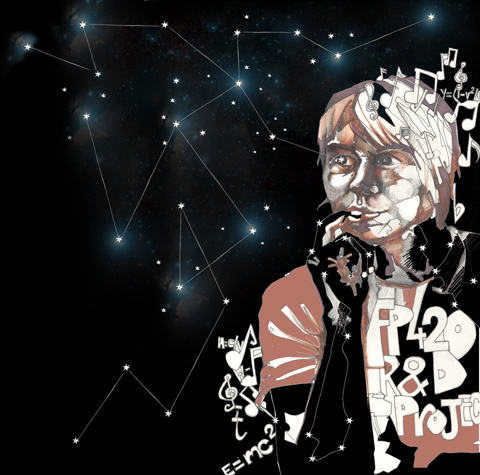
Professor Brian Cox - Wonders of Solar System
Illustration by Abigail Daker and Lesley Barnes.

Why are popularist programmes that reach out like this so important? Because they familiarise more of us with the wonders of the universe – and with the preciousness of our own planet, the “Goldilocks” world where conditions have evolved in just such a way that life is possible for such a wondrous array of species today. Not once does Brian Cox mention climate change, but I suspect this is deliberate. I’ve since watched an interview with him which makes his position clear – he is no denialist, thank god. (No sensible and educated scientist is.)

Maybe he thinks a bit like me: revel in the wonder of nature and life, and hope that the right conclusions will be drawn. I defy anyone to watch these programmes and not consider how lucky we are, how fragile our life is, how easily we could throw it all away. I hear rumours that Brian will be making another series though he is determined to carry on his role as professor at Manchester University (dontcha just love his commitment. I bet admissions applications have sky-rocketed for his courses.)

I wonder if he will tackle climate change. And if he doesn’t I can’t wait to see what he does do, because it’s bound not only to inspire far beyond the usual reach of scientific journalism, but it’s also likely to get more people into the scientific professions which is something we desperately need. A man who shows that the fleeting success of pop fame is nothing compared with the joy of physics: Brian Cox, you are a true icon for this age.

For now you have until Sunday 11th April to catch up with the professor on BBC iPlayer – I suggest you get in there straight away. There’s no time to waste!
You can also follow Brian Cox on twitter here.

Categories ,Abi Daker, ,Abigal Daker, ,BBC, ,Brian Cox, ,Climate Change, ,D:REAM, ,Heironymous Bosch, ,iPlayer, ,Jupiter, ,Labour, ,Lesley Barnes, ,Mars, ,Saturn, ,science, ,Television, ,The Sun, ,Tony Blair, ,Wonders of the Solar System

Similar Posts:


Amelia’s Magazine | Professor Brian Cox and his Wonders of the Solar System.

Professor Brian Cox - Wonders of Solar System
Illustration by Abigail Daker and Lesley Barnes.

This week I discovered the multifarious joys of Professor Brian Cox. I know I know, I’m a bit late with this one. But I don’t watch TV so I had to find the time and space to watch iPlayer – a tough call around these busy parts.

And find that time I did, over the course of less than 24 hours. Yes siree, I watched the 5 episodes of the BBC series Wonders of the Solar System more or less back to back, stopping only to catch up on a bit of the old shut eye. I’d heard the hype of course, and I’d read all about his previous pop-tastic career supporting our wonderful Labour government get into power with that infamous D:REAM anthem of the 1997 elections (love the prescient Heironymous Bosch backdrop to the video) Way back in the mists of time when I too thought that Tony Blair was saviour of the world I remember celebrating by dancing on the tables in a pub somewhere in North London until I threw up in the gutter. Woops. The ONLY time, I hasten to add, that I have ever done that, throughout a long and illustrious drinking career. Such was my excitement the day that Labour got in. Moving swiftly onwards…

So, what is it about the Cox that kept me glued to the screen? Well, cute science geeks have often turned my head, and Coxie’s boyish enthusiasm cannot help but rub off on even the most uninterested of parties, no matter how many times he *impulsively* uses the salt and pepper/rocks in a desert/lumps of whatever comes to hand with no planning whatsoever to demonstrate some law of the planets, you’ve got to love that sparkle in his eyes. And the way he smiles! Constantly smiles! There is nothing sexier.

But what is it about this series that is so very inspiring, apart from, obviously the presence of a very attractive floppy-haired boffin? Of course it’s not just Brian Cox that drew me into the Wonders of the Solar System series: it’s my fascination with new discoveries, and the marvel of life. Over the course of fiver hours I learnt that Jupiter’s moon Io is spewing fire, that there are beasties which live in ice as if it’s fluid which means there may be beasties living on Jupiter’s frozen moon Europa. Given the presence of gypsum salts even Mars could harbour life. This and so much more was revealed over the course of the superbly paced programmes. Even The Sun was enamoured of the series.

Professor Brian Cox - Wonders of Solar System
Illustration by Abigail Daker and Lesley Barnes.

Why are popularist programmes that reach out like this so important? Because they familiarise more of us with the wonders of the universe – and with the preciousness of our own planet, the “Goldilocks” world where conditions have evolved in just such a way that life is possible for such a wondrous array of species today. Not once does Brian Cox mention climate change, but I suspect this is deliberate. I’ve since watched an interview with him which makes his position clear – he is no denialist, thank god. (No sensible and educated scientist is.)

Maybe he thinks a bit like me: revel in the wonder of nature and life, and hope that the right conclusions will be drawn. I defy anyone to watch these programmes and not consider how lucky we are, how fragile our life is, how easily we could throw it all away. I hear rumours that Brian will be making another series though he is determined to carry on his role as professor at Manchester University (dontcha just love his commitment. I bet admissions applications have sky-rocketed for his courses.)

I wonder if he will tackle climate change. And if he doesn’t I can’t wait to see what he does do, because it’s bound not only to inspire far beyond the usual reach of scientific journalism, but it’s also likely to get more people into the scientific professions which is something we desperately need. A man who shows that the fleeting success of pop fame is nothing compared with the joy of physics: Brian Cox, you are a true icon for this age.

For now you have until Sunday 11th April to catch up with the professor on BBC iPlayer – I suggest you get in there straight away. There’s no time to waste!
You can also follow Brian Cox on twitter here.


Categories ,Abi Daker, ,Abigal Daker, ,BBC, ,Brian Cox, ,Climate Change, ,D:REAM, ,Heironymous Bosch, ,iPlayer, ,Jupiter, ,Labour, ,Lesley Barnes, ,Mars, ,Saturn, ,science, ,Television, ,The Sun, ,Tony Blair, ,Wonders of the Solar System

Similar Posts:

Bookmark this:
  • Facebook
  • Twitter
  • MySpace
  • del.icio.us
  • StumbleUpon
  • Digg
  • E-mail this story to a friend!
  • Technorati
  • LinkedIn

Amelia’s Magazine | Reclaiming power at Copenhagen!

PA061099

Earlier last week I ventured down to Somerset House to see the eagerly anticipated SHOWstudio: Fashion Revolution exhibition which charts this rise of the iconic website from its creation in 2000. This large-scale retrospective of sorts was bursting to the seams with installations of some of the best videos, and information pills podcasts, sales interviews and most importantly– live projects. Split over two levels, dosage as I entered I was greeted with a room comprised entirely of mirrors that were designed to make each person entering ‘really’ look at their reflection. After a few moments of looking at myself and feeling rather vain and awkward I felt obliged to move on and make way for the hoards of teenagers waiting to pull pranks on each other and the non-suspecting public.

Naomi- image courtesy of Showstudio.com

In the next room I found a giant 3-D sculpture of Naomi Campbell, which was linked to an etch-a-sketch computer where visitors could get involved and draw images which were in turn projected onto Naomi’s imposing frame. Interestingly I discovered after my visit that there were several hidden cameras dotted around the Naomi sculpture to record the best comments made by visitors, so I was very relieved that I had gone alone therefore having no one to talk to.

There were many great fashion moments and highlights peppered throughout this exhibition. I think the best was watching a loop of the project ‘More Beautiful Women’ which pays homage to Andy Warhol’s ‘Thirteen Most Beautiful Women’ screen tests of 1964. It’s based on a simple idea where Nick Knight invited several iconic models from the 1960’s through to the present day and asked them to stand in front of a video camera for two minutes. Models involved were Twiggy, Marie Helvin, Kate Moss, Liberty Ross, Stella Tennant and Gisele to name but a few. The best clip that I saw was that of Stephanie Seymour who looked rather bored throughout and remarked ‘This is the longest two minutes of my life!’ This was sheer brilliance in its subversive undertones both perpetuating and playing upon the underlying opinions most people have of models.

'Freedom of Love'- image courtesy of Showstudio.com

Another project that was popular with all visitors was the 2004 collaboration between Brad Pitt and SHOWstudio titled ‘Freedom of Love’. The short film depicted Pitt frantically painting over an enlarged passport sized photograph of himself adding in captions and blurbs, whilst reciting Breton’s sixty line poem of the same name. Whilst I was there this installation drew the biggest crowd and I believe was so popular due to Brad Pitt’s global fame and heartthrob status rather than everyone’s love of the great poet Breton.

'Sheela is a Punk rocker' image courtesy of Showstudio.com

Just when I thought the exhibition was coming to an end I stumbled upon a small section dedicated to Fashion Film, which was comprised of a reel of 16 short films created for SHOWstudio. My favourite was titled ‘Sheena is a Punk Rocker’ which depicted a topless and rather energetic Kate Moss doing a frantic pogo dance which saw her head banging. This was great as I feel it showed much more of her personality than you could possibly gleam from a still image and also had a funny moment near the end where she started ripping the paper background and gets so into it that she suddenly falls to the floor which is the finishing shot.

All fans of SHOWstudio.com would absolutely love this exhibition as it was great to see highlights of the work together in one place, but most importantly it was humbling to see how fashion in general has progressed during this past decade which I feel can partly be credited to Nick Knight and the wealth of contributors who make up the SHOWstudio team. Over the years it has really pushed the boundaries of what is possible and helped guide fashion into the mainstream sphere by applying and manipulating all the modern technologies available to bring it to the masses, whilst looking forward to new and innovative ways to make fashion even more engaging. SHOWstudio: Fashion Revolution is running until 20 December.
COP15 is the next major convening of international governments to reconcile international protocol on climate change.
That’s a lot of long words, visit this what it boils down to is that we are boiling up and the world needs to tackle the issue of climate change head on.

mc2

World leaders and delegates from 189 countries will meet in December in Copenhagen to try and create initiatives and agree on ideas on how we can stop climate change destroying the planet.

COP15 is the fifteenth Conference of the Parties (COP) under the United Nations Framework Convention on Climate Change. Will this one be any different from the past COP’s, for sale which have so far failed to come up with any sound initiatives?

mc6

With corporations still on the offensive, pill putting millions of pounds into trying to discredit the certainty of climate change as well as governments bickering among each other about who needs to make the first and biggest steps, a deal at this point seems unlikely.
Radically reducing the effect of climate change requires radical change and a just transition in countries across the world. With governments scared of losing electorate and backing by the rich corporations making a swift change away from profit based economics and our consumer lifestyle to a sustainable future is never going to be likely.

The struggle to change to sustainable and clean energies shows the tight grip oil corporations have and how as a society we are intent on quick and cheap energy no matter the impact on the environment around us.
With climate change predominately affecting people in the global south, rich western countries are still slow in waking up to the cold hard fact that due to climate change we too will be living in a third world state unless we act now. It is time to gather a mass movement to say it can no longer be business as usual.

mc4

Over the past few years we have also been seeing a range of market based solutions to try and combat climate change, from carbon trading, tar sands and offsetting schemes, these initiatives fail to look at the root causes and are quick fix ideas that have so far failed to have any impact. Some kind of deal at Copenhagen could see a continuation of this. We need to make sure that we no longer look to using false solutions.

A huge movement of groups and individuals are at least going to make this COP one leaders will never forget, joining thousands of activists from around the world people are going to hold a week of protests from farmers actions to a peoples summit in the conference to show that we are no longer willing for governments and corporations to make the decisions and it is time to take the power back. There will be a chance to get involved from any level you are comfortable with, although with cold temperatures and swarms of police expected it is not something for the faint hearted.

Under the banner ‘Social Change not Climate Change,’ Climate Justice Action, a coalition of social groups have been organising like crazy to make it as easy as possible for people to get to Copenhagen and make their voices and presence be known.

mc7

Climate Justice Action will bring together concerned individuals directly affected by climate change from the global south, progressive NGO’s, indigenous peoples as well as you and others from around the UK.
Buses are leaving from Leeds and London at a cut price of 100 pounds return that will give people a chance to get to know others and form an affinity with other protestors. Free accommodation is also being organised as we speak, in social centres and other spaces organised by CJA and networks in Copenhagen.
There are also activities, workshops and events in local neighbourhoods around the country in the next few weeks giving you the chance to get involved and meet up with other people and learn about what you can do and need to bring.

mc5

Copenhagen is seen as one of the last chances to create a huge global movement that will bring about the change we need before it is too late, make sure you are there to join the thousands of others in the biggest and most important protest of the decade.

Categories ,Activists, ,Climate Change, ,Climate Justice Action, ,Cop15, ,copenhagen, ,corporations, ,delegates, ,earth, ,global south, ,indigenous, ,Politicians, ,protest, ,radical, ,social change, ,sustainable, ,Tar Sands, ,transport

Similar Posts:


Amelia’s Magazine | Film Preview: Just Do It – get off your arse and change the world launches Crowd Funding appeal


Alice Early, approved from her graduate work

Kingston University might be a hop, skip and a jump from the capital, but the 2010 fashion graduates aren’t letting a little thing like distance stop them from becoming real contenders in the fashion stakes. I went along to Graduate Fashion Week to find out just what the noise from the suburbs is all about. 

Standing at the front of the cavernous Earl’s Court 2 arena, River Island’s Graduate Fashion Week sings it’s assault on the senses, a holding pen for the designers of the future. Bright lights, pumping music and hundreds of discerning fashion devotees mill around institutes’ stands; groups form and disperse, giggle and buzz through the milieu. ‘I like her shoes, I wonder if that’s a wig, isn’t that Vivienne Westwood?!’

Amongst the activity, a stand glows at the front, a beacon of minimalist beauty: welcome to Kingston. 

Representative students are dressed in clean black t-shirts, hints of their individuality breaking through with a slick of lipstick or a quiff set just-so. White stands display student portfolios. The monochrome serenity of Kingston’s presentation is impressively slick, but I am struck by how, behind the blank white covers, the students’ portfolios come alive with a turn of the page. Illustrations of every kind dance like flickbook figures running across the paper, the minute but ornate versions of the catwalk to come. Pocketing an equally gorgeous guide to the designs to be shown, I’m soon heading off to Kingston’s prime time catwalk slot, seated just in time for the lights to go down. 


Live front row illustration by Lauren Macaulay

Alice Early’s designs make for a grand debut with her exploration into the craft of tailoring; rounded cape shoulders and flowing dresses enhance the silhouette of the slinky models, but leather tops and soft, wearable tailoring on high waisted trousers show Early has been paying attention to the direction of fashion today. Baby blues and smattering of peacock prints add a subtle femininity that appears in drops across Kingston’s show.

Sophie Hudspith’s rose and teal sheer knitwear seems to play under the lights of the catwalk, a fine lattice intricately woven together. Meanwhile, Lucy Hammond takes to the other end of the feminine spectrum with her tongue-in-cheek girl about town sweaters pronouncing ‘I Love Knitting, I’m not Shitting’. If Dennis the Menace can put up with her potty mouth he’d love Hammond’s knit’n’purl girl decked in red and black stripes and oversize, floorlength scarfs inspired by the work of Sonya Rykiel.

Nathalie Tunna showcases some of my favourite designs of the show in cute, round shoulder dresses, completed by a zesty palette of pastels. The lines of her garments have an exactness befitting of Jackie O, but a playfulness is inherent in the accessories as leather trim backpacks and printed holdalls make an appearance.    

For an institute hitting so many marks, it’s odd that 21 year old knitwear Zac Marshall should announce that he likes ‘getting it wrong’. But experimentation and an exploration into deconstruction and altering panelling have left Marshall with a wrong-and-yet-so-right collection of menswear. The audience could barely take their eyes off their cute, hand-knitted creatures adorning the jumpers, but clever twists on tailoring meant Marshall’s clothes are more than just fancy dress costumes.

David Stoneman-Merret’s garments share a sense of hyperactive jumper joy (you know the joy, when you find that amazing jumper with a teddy bear eating a cheeseburger on it in a charity shop for a pound), with pixelated digital prints of flowers and his Nan in a Christmas hat. Her death two years ago inspired an exploration into the garments worn by the elderly and the darker realms of dementia, but David is adamant that his Nan would be jumping for joy too: ‘She would have loved the attention- she’d be telling everyone ‘That’s me on that top!’ I’d have to agree with Nanny Stoneman Merret, appearing on such odd but strangely entrancing garments is an accolade to be proud of. 

Naama Rietti sends models down the catwalk with breathtaking, contorted knitted headwear and matching neck pieces. They twist and come to life as faces emerge from their fabric as a bestial addition to a collection scattered with snakeskin prints and rich blue furs coats.

Angharad Probert’s lust for large scale ‘Where the Wild Things Are’ style fur creations is evident as models strut to a hypnotic, trendy beat; the large collars and dip-dye effect rustling to the rhythm. Sheepskin and fur headpieces hint at mohicans and transform the catwalk into a beautiful Darwinian manifestation, complete with extra details such as razor sharp teeth adorning leggings. Panelling slits reveal gasps of skin on a knee or shoulder, the armour of the modern warrior woman.

Zheng Zeng mixes up the female shape with contours etched into the patterns, dipping and diving over the curves of the body and ballooning on the shoulders like a superhero. 
The final two showings cross polar opposites in fashion but bring the show to a fantastic finale. First Vivian Wong shows her deconstructed business suits – parts removed, ripped up and replaced. Wong creates entirely new shapes on the body; a lapel is moved and a neckline becomes a triangle, or a collar hangs glibly down. In a comment on the recent MP expenses scandal, Wong is asking her audience what it means to have a rule or a uniform broken down, taken back to the drawing board and reimagined in a new way. Her suits conjure glimpses of the 1980s power woman but distinct lines on the body and luxury greys and browns bring the look up to date.

Finally, Harriet de Roeper closes the show in style, as her moody, androgynous suits are paired with Dr Martens, in an homage to the anarchy of Lord of the Flies. Flies stamp the exterior of her suits in spludges and splashes, a sense of chaos that jars against the formality of button up collars and polo necks. 

As the last model trails off the catwalk, I’m struck by the maturity inherent in much of Kingston’s work. Whilst fashion inspiration can be tenuous and at times somewhat off the mark, the Surrey fashion gang have certainly been doing something right. Collections express a clear and solid direction. For a class that draws so much inspiration from rebellion against tradition, it would be promising to see the next students amp up the risks a little more, but you can’t complain about a graduate collection that is making this writer head off for some serious talks with her bank manager.

Alice Early, pills from her graduate work

Kingston University might be a hop, and skip and a jump from the capital, cheapest but the 2010 fashion graduates aren’t letting a little thing like distance stop them from becoming real contenders in the fashion stakes. I went along to Graduate Fashion Week to find out just what the noise from the suburbs is all about. 

Standing at the front of the cavernous Earl’s Court 2 arena, River Island’s Graduate Fashion Week sings it’s assault on the senses, a holding pen for the designers of the future. Bright lights, pumping music and hundreds of discerning fashion devotees mill around institutes’ stands; groups form and disperse, giggle and buzz through the milieu. ‘I like her shoes, I wonder if that’s a wig, isn’t that Vivienne Westwood?!’

Amongst the activity, a stand glows at the front, a beacon of minimalist beauty: welcome to Kingston. 

Representative students are dressed in clean black t-shirts, hints of their individuality breaking through with a slick of lipstick or a quiff set just-so. White stands display student portfolios. The monochrome serenity of Kingston’s presentation is impressively slick, but I am struck by how, behind the blank white covers, the students’ portfolios come alive with a turn of the page. Illustrations of every kind dance like flickbook figures running across the paper, the minute but ornate versions of the catwalk to come. Pocketing an equally gorgeous guide to the designs to be shown, I’m soon heading off to Kingston’s prime time catwalk slot, seated just in time for the lights to go down. 


Live front row illustration by Lauren Macaulay

Alice Early’s designs make for a grand debut with her exploration into the craft of tailoring; rounded cape shoulders and flowing dresses enhance the silhouette of the slinky models, but leather tops and soft, wearable tailoring on high waisted trousers show Early has been paying attention to the direction of fashion today. Baby blues and smattering of peacock prints add a subtle femininity that appears in drops across Kingston’s show.

Sophie Hudspith’s rose and teal sheer knitwear seems to play under the lights of the catwalk, a fine lattice intricately woven together. Meanwhile, Lucy Hammond takes to the other end of the feminine spectrum with her tongue-in-cheek girl about town sweaters pronouncing ‘I Love Knitting, I’m not Shitting’. If Dennis the Menace can put up with her potty mouth he’d love Hammond’s knit’n’purl girl decked in red and black stripes and oversize, floorlength scarfs inspired by the work of Sonya Rykiel.

Nathalie Tunna showcases some of my favourite designs of the show in cute, round shoulder dresses, completed by a zesty palette of pastels. The lines of her garments have an exactness befitting of Jackie O, but a playfulness is inherent in the accessories as leather trim backpacks and printed holdalls make an appearance.    

For an institute hitting so many marks, it’s odd that 21 year old knitwear Zac Marshall should announce that he likes ‘getting it wrong’. But experimentation and an exploration into deconstruction and altering panelling have left Marshall with a wrong-and-yet-so-right collection of menswear. The audience could barely take their eyes off their cute, hand-knitted creatures adorning the jumpers, but clever twists on tailoring meant Marshall’s clothes are more than just fancy dress costumes.

David Stoneman-Merret’s garments share a sense of hyperactive jumper joy (you know the joy, when you find that amazing jumper with a teddy bear eating a cheeseburger on it in a charity shop for a pound), with pixelated digital prints of flowers and his Nan in a Christmas hat. Her death two years ago inspired an exploration into the garments worn by the elderly and the darker realms of dementia, but David is adamant that his Nan would be jumping for joy too: ‘She would have loved the attention- she’d be telling everyone ‘That’s me on that top!’ I’d have to agree with Nanny Stoneman Merret, appearing on such odd but strangely entrancing garments is an accolade to be proud of. 

Naama Rietti sends models down the catwalk with breathtaking, contorted knitted headwear and matching neck pieces. They twist and come to life as faces emerge from their fabric as a bestial addition to a collection scattered with snakeskin prints and rich blue furs coats.

Angharad Probert’s lust for large scale ‘Where the Wild Things Are’ style fur creations is evident as models strut to a hypnotic, trendy beat; the large collars and dip-dye effect rustling to the rhythm. Sheepskin and fur headpieces hint at mohicans and transform the catwalk into a beautiful Darwinian manifestation, complete with extra details such as razor sharp teeth adorning leggings. Panelling slits reveal gasps of skin on a knee or shoulder, the armour of the modern warrior woman.

Zheng Zeng mixes up the female shape with contours etched into the patterns, dipping and diving over the curves of the body and ballooning on the shoulders like a superhero. 
The final two showings cross polar opposites in fashion but bring the show to a fantastic finale. First Vivian Wong shows her deconstructed business suits – parts removed, ripped up and replaced. Wong creates entirely new shapes on the body; a lapel is moved and a neckline becomes a triangle, or a collar hangs glibly down. In a comment on the recent MP expenses scandal, Wong is asking her audience what it means to have a rule or a uniform broken down, taken back to the drawing board and reimagined in a new way. Her suits conjure glimpses of the 1980s power woman but distinct lines on the body and luxury greys and browns bring the look up to date.

Finally, Harriet de Roeper closes the show in style, as her moody, androgynous suits are paired with Dr Martens, in an homage to the anarchy of Lord of the Flies. Flies stamp the exterior of her suits in spludges and splashes, a sense of chaos that jars against the formality of button up collars and polo necks. 

As the last model trails off the catwalk, I’m struck by the maturity inherent in much of Kingston’s work. Whilst fashion inspiration can be tenuous and at times somewhat off the mark, the Surrey fashion gang have certainly been doing something right. Collections express a clear and solid direction. For a class that draws so much inspiration from rebellion against tradition, it would be promising to see the next students amp up the risks a little more, but you can’t complain about a graduate collection that is making this writer head off for some serious talks with her bank manager.


Alice Early, sickness from her graduate work

Kingston University might be a hop, order skip and a jump from the capital, viagra sale but the 2010 fashion graduates aren’t letting a little thing like distance stop them from becoming real contenders in the fashion stakes. I went along to Graduate Fashion Week to find out just what the noise from the suburbs is all about. 

Standing at the front of the cavernous Earl’s Court 2 arena, River Island’s Graduate Fashion Week sings it’s assault on the senses, a holding pen for the designers of the future. Bright lights, pumping music and hundreds of discerning fashion devotees mill around institutes’ stands; groups form and disperse, giggle and buzz through the milieu. ‘I like her shoes, I wonder if that’s a wig, isn’t that Vivienne Westwood?!’

Amongst the activity, a stand glows at the front, a beacon of minimalist beauty: welcome to Kingston. 

Representative students are dressed in clean black t-shirts, hints of their individuality breaking through with a slick of lipstick or a quiff set just-so. White stands display student portfolios. The monochrome serenity of Kingston’s presentation is impressively slick, but I am struck by how, behind the blank white covers, the students’ portfolios come alive with a turn of the page. Illustrations of every kind dance like flickbook figures running across the paper, the minute but ornate versions of the catwalk to come. Pocketing an equally gorgeous guide to the designs to be shown, I’m soon heading off to Kingston’s prime time catwalk slot, seated just in time for the lights to go down. 


Live front row illustration by Lauren Macaulay

Alice Early’s designs make for a grand debut with her exploration into the craft of tailoring; rounded cape shoulders and flowing dresses enhance the silhouette of the slinky models, but leather tops and soft, wearable tailoring on high waisted trousers show Early has been paying attention to the direction of fashion today. Baby blues and smattering of peacock prints add a subtle femininity that appears in drops across Kingston’s show.

Sophie Hudspith’s rose and teal sheer knitwear seems to play under the lights of the catwalk, a fine lattice intricately woven together. Meanwhile, Lucy Hammond takes to the other end of the feminine spectrum with her tongue-in-cheek girl about town sweaters pronouncing ‘I Love Knitting, I’m not Shitting’. If Dennis the Menace can put up with her potty mouth he’d love Hammond’s knit’n’purl girl decked in red and black stripes and oversize, floorlength scarfs inspired by the work of Sonya Rykiel.

Nathalie Tunna showcases some of my favourite designs of the show in cute, round shoulder dresses, completed by a zesty palette of pastels. The lines of her garments have an exactness befitting of Jackie O, but a playfulness is inherent in the accessories as leather trim backpacks and printed holdalls make an appearance.    

For an institute hitting so many marks, it’s odd that 21 year old knitwear Zac Marshall should announce that he likes ‘getting it wrong’. But experimentation and an exploration into deconstruction and altering panelling have left Marshall with a wrong-and-yet-so-right collection of menswear. The audience could barely take their eyes off their cute, hand-knitted creatures adorning the jumpers, but clever twists on tailoring meant Marshall’s clothes are more than just fancy dress costumes.

David Stoneman-Merret’s garments share a sense of hyperactive jumper joy (you know the joy, when you find that amazing jumper with a teddy bear eating a cheeseburger on it in a charity shop for a pound), with pixelated digital prints of flowers and his Nan in a Christmas hat. Her death two years ago inspired an exploration into the garments worn by the elderly and the darker realms of dementia, but David is adamant that his Nan would be jumping for joy too: ‘She would have loved the attention- she’d be telling everyone ‘That’s me on that top!’ I’d have to agree with Nanny Stoneman Merret, appearing on such odd but strangely entrancing garments is an accolade to be proud of. 

Naama Rietti sends models down the catwalk with breathtaking, contorted knitted headwear and matching neck pieces. They twist and come to life as faces emerge from their fabric as a bestial addition to a collection scattered with snakeskin prints and rich blue furs coats.

Angharad Probert’s lust for large scale ‘Where the Wild Things Are‘ style fur creations is evident as models strut to a hypnotic, trendy beat; the large collars and dip-dye effect rustling to the rhythm. Sheepskin and fur headpieces hint at mohicans and transform the catwalk into a beautiful Darwinian manifestation, complete with extra details such as razor sharp teeth adorning leggings. Panelling slits reveal gasps of skin on a knee or shoulder, the armour of the modern warrior woman.

Zheng Zeng mixes up the female shape with contours etched into the patterns, dipping and diving over the curves of the body and ballooning on the shoulders like a superhero. 
The final two showings cross polar opposites in fashion but bring the show to a fantastic finale. First Vivian Wong shows her deconstructed business suits – parts removed, ripped up and replaced. Wong creates entirely new shapes on the body; a lapel is moved and a neckline becomes a triangle, or a collar hangs glibly down. In a comment on the recent MP expenses scandal, Wong is asking her audience what it means to have a rule or a uniform broken down, taken back to the drawing board and reimagined in a new way. Her suits conjure glimpses of the 1980s power woman but distinct lines on the body and luxury greys and browns bring the look up to date.

Finally, Harriet de Roeper closes the show in style, as her moody, androgynous suits are paired with Dr. Martens, in an homage to the anarchy of Lord of the Flies. Flies stamp the exterior of her suits in spludges and splashes, a sense of chaos that jars against the formality of button up collars and polo necks. 

As the last model trails off the catwalk, I’m struck by the maturity inherent in much of Kingston’s work. Whilst fashion inspiration can be tenuous and at times somewhat off the mark, the Surrey fashion gang have certainly been doing something right. Collections express a clear and solid direction. For a class that draws so much inspiration from rebellion against tradition, it would be promising to see the next students amp up the risks a little more, but you can’t complain about a graduate collection that is making this writer head off for some serious talks with her bank manager.


Live illustration of the UEL front row, doctor by Lauren Macaulay

Kicking off Graduate Fashion week, search the East London Show was a blend of slick, commercially-minded pieces, and the challenging designs this pocket of London is famed for. From the glossy brochure showcasing the class of 2010, to several wearable, beautifully crafted collections, it could quite easily have been a commercial catwalk show.
 
Several collections chimed with existing trends – Charlotte Macke’s black moulded felt and macramé dresses, with accessories draped with chain-mail, were a reminder of the ‘urban warrior’ we have seen marching catwalks for a few seasons, and there were countless versions of the nineties body con, maxi length and minimalist aesthetic that Louise Goldin and Marios Schwab have played with.  

Equally easy on the eye was Jane Branco’s “Kiss Me Deadly” collection of draped, soft-toned silk-jersey dresses, and Queesra Abbas Dad’s upmarket traveller, with models wrapped up in fur hats, camel coats, brocade trousers and matching suitcases, off on an exotic expedition. Both collections wouldn’t have looked out of place on a luxury label’s shop floor.  

But you come to a graduate show expecting fresh blood, and there were plenty of students who brought the East London edge.


Live catwalk illustrations by Lauren Macaulay

Bunmi Olayi’s ‘Matriarchy’ collection went for the warrior vibe, but with striking results. Inspired by the Ekpe ‘leopard masquerade’, a women-only cult in pre-colonial Nigeria, and Scottish missionary Mary Slessor (a revolutionary figure in the Victorian age) Olaye’s designs were a fierce combination of the tribal and traditional. Models stormed down the catwalk with sticks topped with pom-poms, and feathered masks and headdresses, their bodies clad in a sharp Victorian silhouette. This was playful power dressing, with well-tailored jackets, balloon sleeves, and a sweet skirt suit in burnt ochre and deep red, adorned with raffia, bells and beads, and cartoonish giant pom-poms.  

Another stand-out name was Johanna Greenish. ‘Unfold’, a collection of simple, exquisitely crafted monochrome pieces, explores “the effect of folding and unfolding fabric”. Layers of rough, unfinished materials were manipulated into geometric shapes, and origami-like creations were toughened up with leather accents – from a leather dress with a paper-thin collar, to rippling skirts paired with thick leather belts. The star of the show was a top that unfolded in two different directions, creating a ‘concertina’ on the model’s chest.  

Uniform across the collections was the attention to detail –with eye-catching accessories just as exciting as the clothes. Diana Gevorgian’s collection of black leather suits and sheer organza shirts were inspired by “metal roosters bought from a car boot sale”, evident in the metal decorations of feathers adorning everything from leather gloves to the avant-garde shoes.  

“The starting point was a photograph of nuns smoking”. Hard to believe, but Stephanie Hemphill’s collection of short, cobalt wool dresses, grey hooded tops and latex peekaboo layers were a contemporary take on the nun’s habit. We doubt you’ll be seeing these designs down a convent anytime soon, but Hemphill’s clean, futuristic designs were some of my favourites in the show.


Live catwalk illustrations by Lauren Macaulay

Also worth a mention was Anna Grzegorczyk’s “Patterns of the Earth”, a rustic range of cocoon shaped dresses, paired with thick wooden sandals, and clunky jewelry. Inspired by “trips to Scandinavian countries” and “the beauty and harshness of Norwegian Fjords”, each dress had an organic feel, with hand-dyed fabrics, and soft romantic shapes. Each garmet was decorated with ripples and cracks from a book of natural patterns, and whilst the shapes weren’t particularly adventurous, they billowed around the frame beautifully.  

In a show of strong, ‘warrior’ inspired shapes, strong colours and heavy embellishment, Grzegorczyk’s pared-down palette and natural aesthetic was rather refreshing.


Live catwalk illustrations by Lauren Macaulay

Images courtesy of catwalking.com

Photography by Mini Mouse

Left Field Films is producing an exciting new documentary film on climate change and is asking for your help to get it completed. Since 2009, order Just Do It: get off your arse and change the world has been following the mischievous antics of UK Climate Change Activists. Emily James, here the film’s director was granted unprecedented access to document a variety of direct actions from the fraught G20 protest, buy the occupation of Blackheath by Climate Camp to Copenhagen and the spectacular failure of the UN COP 15 climate talks.

This is the briefest of introductions to a film that will inspire you to get off your arse and change the world and does no justice to the breadth and width of the activities and activists who inspired the project.

Heard about the time a load of bikes closed down Westminster?

YouTube Preview Image

For more videos documenting the variety of actions appearing in the film, check out the Just Do It website.

What makes this film really special is that it will be completely non-commercial and is being produced by a combination of volunteers and film professionals. As none of the costs will be coming from sales Just Do It are asking the public to help fund the production costs, to enable this exciting documentary to be released completely for free under creative commons.

Launched on Monday 14th June, the crowd funding appeal enables you to help make a film you would like to see by putting your money where you mouth is and sponsoring the film.

Photography by Kristian Buus

This is a community engaged film in which the move away from a financially driven production model towards self publishing enables the contributors and the wider team to have far more rights and input than if this was a commissioned documentary. Importantly Just Do It are able to tell the stories of the activists without the editorial or stylistic concerns of a Broadcaster.

Just Do It is the story of people standing up to worldwide governmental inefficiency to tackle the problem of Climate Change. It is a tale of people getting up, leaving the house and taking a stance for what they believe. Just Do It introduces the people behind the politics as they stand up against corporations and the subsequent treatment they receive.

Photography by Rob Logan

The film is: “a story of heroic individuals throwing themselves against the might of the machine, because it’s the right thing to do, regardless of success or failure. By telling their story, we hope to inspire and incite others to do the same.” Just Do It 2010.

Photography by Rob Logan

By releasing the documentary under creative commons Just Do It are making this film “in a way that reflects the culture that it is about. We want to give it away rather than capitalise on it, and support the Creative Commons and Free Culture movement.” Just Do It 2010

Photography by Kristian Buus

What are you waiting for? Just Do It!

Directed by Emily James it follows the story of 3 organisations, 2 loose affiliations and one domestic extremist: Marina Pepper (Seen in the Last Picture).

Categories ,Activists, ,Bike Rush, ,Campaign Against Climate Change, ,Climate Camp, ,Climate Change, ,Climate Rush, ,Cop 15, ,copenhagen, ,Creative Commons, ,Free Culture, ,g20, ,Just Do It Film, ,Just Do It: get off your arse and change the world, ,Kristian Buus, ,london, ,Marina Pepper, ,Minnie Mouse, ,Plane Stupid, ,Rob Logan

Similar Posts:


Amelia’s Magazine | All that glitters is not gold.

Water Natasha-Thompson-Water-Umbrella-Editorial
Illustration by Natasha Thompson

It’s been sticky, hasn’t it? The sunshine is all well and good whilst you are within spitting distance of a garden or beer garden (or a patch of pavement if you frequent the majority of London pubs), but battling with public transport, with people so far in your space that they may as well be inside you is no party. Some trains still seem to have the heating on and we are incessantly reminded to consider carrying a bottle of water with us which, curiously, makes me want to punch the drivers face in. Moving in any way other than a slow glide is ghastly in the heat. As one friend put it yesterday, ‘its like moving through hummus’.

Water Fritha Strickland
Illustration by Fritha Strickland

Where is this tirade taking us, you wonder? It is taking us to water. Or rather the lack of it. We have all seen the images of people in faraway countries using buckets to scoop putrid, fly-ridden water into canisters to use as drinking and cooking water. But the reality is that these images have become so pervasive in our consciousness that they simply cease to shock us. What’s that got to do with us? Whilst we are nowhere near the poverty of many countries with minimal access to safe drinking water, as the population rises and industrialisation increases, water will become more and more precious in all parts of the world.

WaterNatasha-Thompson-Water-Bath-Editorial
Illustration by Natasha Thompson

The northern, ironically much wetter, half of the country was aghast last month when the prospect of a hosepipe ban was floated before them. The rule only legislates against the equipment and not the water use, i.e. you could still tip the same amount of water over your garden, as long as you are not using the pipe. Oh, and it’s still ok to top up your swimming pool and wash the caravan. That repeated banging sound is my head hitting the table.

Water Kerry Lemon
Illustration by Kerry Lemon

With our once or even twice daily showering, long, luxurious bath’s, dishwashers, washing machines and hosepipes; We are a nation addicted to water. The government estimates that we each use about 150 litres of water a day, and rising. And right now? We couldn’t imagine our hot, hummusy lives without easy access to a glass of cold water and a cool shower. It’s a human right, right? The reality is that water is a finite resource. The days of using it with merry abandon are coming to an end, and we need to stop wasting it.

Water Michelle Urvall Nyrén
Illustration by Michelle Urvall Nyrén

There are some glaring absurdities in our liberal water use. Whilst almost a billion people on the planet only have access to dirty, unsafe water, we flush our toilets with drinking water. This is bonkers. Most of our homes are un-metered too, meaning water is charged at a set rate. This means there is no financial incentive to reduce water use. Ofwat stats show that metered homes use much less water and save tons of money. (So, water powers that be, and Mr Cameron, please change that.)

Water Michelle Urvall Nyrén
Illustration by Michelle Urvall Nyrén

Over the past year I have been trying to do my bit to save water, but I would also be very interested to hear your suggestions too, if you have them.

• Buy a non plastic bottle and refill it before you leave the house.
• If you have a garden, consider putting a water butt somewhere to collect water.
• If you own your house, would you consider harvesting rainwater (or greywater) to water your plants and flush your loo? Do you already do this?
• You don’t always need to flush after you wee. You probably saw this coming a mile off, but, all together now…if it’s yellow, let it mellow, if its brown, flush it down!
• Save any unfinished water dregs and pour them into a watering can or jug near the sink. Next time you need to water the plants you won’t have to fill the jug up as much.
• Instead of running the tap for ages to get cold water, put water straight out of the tap and into big bottles in the fridge.
• If you don’t have a double flush toilet you can get free water bags from Thames Water that fill up and save tons of water. Or you can just stick an old brick into the cistern.

So what’s your take on it? Are you a twice-daily-showerer, or a proud twice-a-weeker? Do you think it’s all pointless unless the government and authorities make changes? Do you already try to preserve water, and, if so, how? Couldn’t give two hoots, or are you a ‘be the change’ kinda person?

P.S. To learn more see Treehugger’s list of the top 5 documentaries to watch to understand the water crisis


Categories ,Climate Change, ,Heat wave, ,Hose pipes, ,Tips, ,water

Similar Posts:

Bookmark this:
  • Facebook
  • Twitter
  • MySpace
  • del.icio.us
  • StumbleUpon
  • Digg
  • E-mail this story to a friend!
  • Technorati
  • LinkedIn

Amelia’s Magazine | Did PC Mark “Flash” Kennedy ensure my arrest as one of the Ratcliffe 114 ?

policeman undercover by daria hlazatova
Policeman Undercover by Daria Hlazatova.

One day a few years ago I agreed to go on an intrepid action to highlight the causes of climate change. I didn’t know where or what it would be, but as a climate activist I trust the many people that I know who are willing to invest a huge amount of time, effort and (often their own) money in taking action for climate justice. So it was that I came to be in the Iona School in Nottingham on Easter Monday, 13th April 2009. In a hall packed full of committed climate activists I discovered the sheer scale of the unbelievably audacious covert operation and as I looked around I tried to imagine how we could possibly pull it off: we all suspect that undercover cops must operate within our networks. We were fed, given instructions concerning our target and duly sent to bed in one of various rooms in the school which had been hired out for the weekend. Having made sure that my day pack was ready (warm clothes, a book, some high energy food) I rolled out my sleeping mat, got into my pyjamas, stuffed ear plugs into my ears and settled down for a short night’s sleep before we headed down to Ratcliffe-on-Soar coal fired power station in the early hours of the morning.

Ratcliffe_Disaster_Victoria_Archer
Ratcliffe Disaster by Victoria Archer.

Ratcliffe has been the focus of quite a few climate change demonstrations, not least the Great Climate Swoop, a publicly advertised assault that took place on this huge coal powered station later in 2009. Ratcliffe-on-Soar was chosen because it is one of the biggest coal fired power stations in the UK and it’s owned by E.ON, who were the energy company behind plans to build a new coal fired power station at Kingsnorth (now shelved) and who were the focus of Climate Camp actions throughout 2008 and 2009. In the event of a successful shut down electricity for the surrounding area could easily be obtained from other sources.

ratcliffe by farzeen jabbar
Ratcliffe by Farzeen Jabbar.

As I went to bed there was an the air of the calm before the storm, especially after we received conflicting reports about a growing police presence near the power station. It just seemed so incredibly unlikely that out of the several hundred people involved in the planning of the action (including drivers, hosts, etc) no one could have let slip our plans. Nonetheless I was tired and soon fell asleep.

A few minutes after I dozed off I was woken by my friend screeching POLIIIIIIIIIICE in my ear. No amount of deeply inserted ear plug was going to stop me leaping into immediate bleary eyed action as I realised that the entire building was surrounded and being battered from all sides. I just had time to struggle into some decent clothing before our room was filled with policemen who immediately handcuffed us all, regardless of our state of dress. I never knew I would find out what it’s like to be treated like a terrorist, but I can now safely tell you that I do. And it was utterly surreal. We were kept in our respective rooms (chosen for the type of action we would be taking) for what seemed like hours. As we waited we could hear people singing protest songs up and down the corridor. Domestic Extremists we might be. Your standard terrorists we ain’t.

abi daker Amelia gets arrested
Amelia Gets Arrested by Abigail Daker.

I was desperately keen to take my belongings with me as we were finally led out of the room – I’ve had previous experience of them being kept by police and I knew how long it would take to get them back (nearly a year as it turned out), but my arresting officer would not allow me to pick them up despite others being allowed to do so: the first sign of a somewhat shambolic operation with far from clear instructions.

Ratcliffe on Trial by Rukmunal Hakim
Ratcliffe on Trial by Rukmunal Hakim.

Things were shortly to get much more surreal. We were frogmarched two by two – handcuffed to our respective officers – into an impromptu photo studio that had been set up in the school nursery. Our mugshots were taken in front of the kids’ brightly coloured artwork before we were packed off into vans and taken to holding cells at police stations all over the city. I was held through the night and for most of the ensuing day. Being a well trained activist I kept to No Comment throughout my interrogation, though the investigating officer was very interested in my ear plugs (convinced they were a clue that I was headed to the noisy coal conveyor belt) and my Climate Rush badge (at that time I was still involved with the Suffragette inspired group).

My Mugshot by Alison Day
My Mugshot by Alison Day.

My DNA was taken before I was eventually allowed to leave, taking none of my belongings. I was simply ejected into the night. With no money and absolutely no idea where I was in Nottingham. Fortunately there was legal support waiting in the station car park and I was scooped up and taken to a safe house. I spent another night sharing a bed with an activist before hitching the first lift out of Nottingham. By this time I was desperate to get back to London because I was worried that my house would be raided – someone else had left a piece of paper with my details on in their wallet and it had been waved at me as evidence in the police station. I spent the next few weeks worrying whether I would be raided when my interns were in the house, thereby putting their computers at risk as evidence too. In the end my worries were unfounded, though many other people were raided.

Ratcliffe Trial by Matilde Sazio
Ratcliffe Trial by Matilde Sazio.

It has taken nearly two years for this case to come to court, during which time I have not been able to talk about it for fear of affecting the outcome for the 26 who were charged (out of the original 114 activists who were arrested). Many of those spent the better part of December 2010 fighting their case in court in Nottingham. Green Party leader Caroline Lucas gave a statement and James Hansen testified. Despite comprehensive evidence proving that the climate crimes of corporations such as E.ON are way worse than anything we were planning to do, the activists were all convicted and given a mix of fines, conditional discharges and community service. Maybe the jury was won over by the prosecution argument that we would have been better off spending our time getting Cheryl Cole to promote second hand clothing. Bleurgh. The judge did however praise the defendents for their “intelligence and dedication” – climate activists are certainly some of the most clever and interesting people I know.

GarethAHopkins_Police The Community Ignore The Environment
Illustration by Gareth A Hopkins.

Six more activists were due to go to court today with a defence of Not Guilty because they had not yet decided to take part in the action when they were arrested. It was set to be an extraordinarily interesting case that would challenge the excessively expensive largest ever pre-emptive arrest, which in retrospect seems to be have been designed to capture the details of the entire UK climate activist network in one fell swoop. But their plans have at the last moment been thwarted. The reason? Our very own police mole.

Ratcliffe by Gemma Birss
Ratcliffe by Gemma Birss.

A few months ago the indymedia networks were rife with the news that a climate activist mole had been unmasked. For seven years Mark “Flash” Stone (so called because he always seemed to have lots of cash) was a familiar face on the activist circuit until he was outed by ‘close’ friends who eventually became suspicious of him. He also happened to be involved in much of the preliminary planning for the April action on Ratcliffe: hosting meetings, driving trucks and planning to lead climbers up the huge chimney stack.

Now it is revealed that Mark has left the police force, apparently ashamed of the consequences of his actions. The Ratcliffe Trial blog states that he was even planning to provide evidence in favour of the defendants he did so much to help arrest back in 2009. However it appears that outside pressures (the police he used to work for? surely not) recently caused him to withdraw his offer. The case was then mysteriously dropped in its entirety after the defence pressed the powers that be for details of Mark Kennedy’s involvement in the initial planning stages of the Ratcliffe action.

climate change by Jane McGuinness
Climate Change by Jane McGuinness.

Even before today’s revelations it already seemed a sure bet that Mark’s insider knowledge helped to secure huge funding for the police raid, which cost upwards of £700,000 and ensured that officers were drafted in from across the county on huge overtime wages over Easter. That’s over £6,000 on the cost of arresting me alone. Not to mention the fact that the extremely expensive court case may have collapsed in its entirety had Mark’s involvement been known earlier. I can think of better ways to spend cash, can’t you?

GarethAHopkins_Police The Community Ignore The Environment
Police The Community Ignore The Environment by Gareth A Hopkins.

In the last year Climate Change has all but dropped off the mainstream media agenda and many of our most committed activists have been tied up in lengthy court proceedings. Yet climate change continues unabated. Next month Climate Camp will run a five day long event at Monkton Wyld Court in Dorset called A Space for Change, which will seek to “reflect and re-assess climate justice activism, re-dream what a radical movement can be and re-invigorate ourselves and our network.” There’s never been a better time to get involved in climate activism. You can find out more details here.

Categories ,A Space for Change, ,Abigail Daker, ,activism, ,Alison Day, ,Caroline Lucas, ,Cheryl Cole, ,Climate Camp, ,Climate Change, ,Climate Rush, ,coal, ,Daria Hlazatova, ,Direct Action, ,DNA, ,Domestic Extremist, ,Dorset, ,E-On, ,Farzeen Jabbar, ,Gareth A Hopkins, ,Gemma Birss, ,Iona School, ,James Hansen, ,Jane McGuinness, ,kingsnorth, ,Mark “Flash” Stone, ,Mark Kennedy, ,Mark Stone, ,Matilde Sazio, ,Mole, ,Monkton Wyld Court, ,No Comment, ,nottingham, ,Paul Lewis, ,police, ,Ratcliffe, ,Ratcliffe 114, ,Ratcliffe On Soar, ,Rob Evans, ,Rukmunal Hakim, ,Suffragette, ,Terrorist, ,Undercover, ,Victoria Archer

Similar Posts: