Amelia’s Magazine | Fine Craft Textiles with Japanese Flair: An interview with designer Nazanin Kamali

Cushion Collection, Nazanin Kamali
Furniture and Interiors designer Nazanin Kamali introduced her debut textiles collection at the Home London show in January – here she explains the reasons why she has turned to fine craft and what inspired the designs of her new range of cushions, embroideries and wallhangings.

Nazanin Kamali 2010
Chrysanthemum 2 (Styled), Nazanin Kamali
I recently discovered your debut textiles collection at Home London earlier this year – what was the reception like at this show?
It was the first time I had shown my textile designs so it was great to receive feedback on the range, particularly from bloggers and stylists who were very complimentary.

Hexagon Cushion (styled), Nazanin Kamali
You originally trained as a furniture designer, receiving an MA from the RCA, what prompted the move into textile design in more recent years?
I’ve always been more interested in craft than commercial design, even though my career path initially led me down that route. I’m drawn to the storytelling aspect of crafting and when my mother passed away in 2006 shortly before I fell pregnant, I found myself turning to the therapeutic craft processes of embroidery to help me work things through. I was inspired by Isabel Allende’s familial novel The House of the Spirits, which I first read as a teenager, and began to create a vast patchwork blanket constructed from seventy-seven hand-sewn squares, each one reflective of a different aspect of my life. The blanket took two and a half years to complete but the process helped to focus and heal my mind, and led me down the path I’m on today.

Crane Cushion (styled), Nazanin Kamali
Chrysanthemum 1 (Styled), Nazanin Kamali
How does this textile interiors brand sit alongside your other design work?
As a founding designer for Case Furniture my furniture designs reflected the attention to precision detail and intricate repetitive forms found in Japanese arts, which have long fascinated me. But whereas my previous furniture designs have always fit within specific design parameters, my textile collections are deeply rooted in my own personal fascination with cultural mythology, with an underlying melancholia and hint of the macabre.

Shrimps Cushion (styled), Nazanin Kamali
The cushion designs which form the backbone of the brand feature embroidered designs inspired by Japanese heraldic symbols: how did you choose the designs and what do they mean?
My interest in Japanese Kamons stems from work I did on the interior of Brighton-based restaurant Oki-Nami back in 1994. The six Mon designs – Chicken, Crane, Shrimp, Hexagon and Chrysanthemum (1 & 2) – were mostly chosen for their beauty, but a unifying mythological undercurrent runs through all the designs. The Crane symbolises 1,000 years while the Shrimp, with its resemblance to an old man hunched over with a beard, represents longevity. The Hexagon, resembling the shell of a wise tortoise, represents good luck.

Wedding Vows Runner (styled), Nazanin Kamali
Suicide Suitcase, Bespoke Commission by Nazanin Kamali
Why did you decide to concentrate on embroidery techniques and where do you get your products made?
My mother was a dressmaker and had taught me when I was younger, so I returned back to the craft after she passed away as a way of feeling closer to her. All my original prototypes and bespoke pieces I make by hand myself, while my collection pieces are produced in India. It was very important to me to find a manufacturer that offered a high quality of material and the production methods they use have allowed me to offer much more intricate embroidery details than I could ever have produced by hand.

Patchwork Tapestry, Bespoke Commission, Nazanin Kamali
Your height chart and advent calendar are based on original designs made for your son: how do you scale these into mass production?
I work very closely with my manufacturers to ensure their capabilities in turning my prototypes into high quality production pieces and consulted on all steps of the process. It was really fascinating to see the evolution of the project through, and I am delighted with the final results.

Chicken Cushion (styled), Nazanin Kamali
Do you have any other exciting projects in the pipeline that you can share with us?
I have a number of exciting things in the pipeline and, amongst others, am beginning work on a project involving giant embroidered buttons for an upholstered headboard, as well as designs for felt doll chess pieces.

Categories ,Case Furniture, ,Chicken, ,Chrysanthemum, ,craft, ,Crane, ,embroidery, ,Furniture, ,Hexagon, ,Home London, ,India, ,Interior Design, ,Interiors, ,interview, ,Isabel Allende, ,Japanese Kamons, ,Mon, ,Nazanin Kamali, ,Oki-Nami, ,rca, ,Shrimp, ,textiles, ,The House of the Spirits

Similar Posts:


Amelia’s Magazine | Change Your Mind: 57 Ways To Unlock Your Creative Self – Book Review

Change your mind by Rod Judkins book review
Are you a creative person? Given the nature of my website I suspect that almost all my readers would regard themselves as creative in some way – and if not actively creating themselves, then appreciating, encouraging and inspiring the creations of others. Otherwise you wouldn’t be here, right? In fact I agree with Rod Judkins when he says that we all of us have the potential to be creative. I would go even further and say that humans are instinctively creative or we would not be where we are today, with an advanced society that generates so many amazing ideas in every area of life.

But maybe you are reading this and thinking ‘Pah, I don’t feel very creative. At least, not as creative as I’d like to be.‘ Well, fear not for help is at hand with the aid of Change Your Mind: 57 Ways To Unlock Your Creative Self from Hardie Grant, a nifty little yellow book by the aforementioned RCA fine arts graduate Rod Judkins, who lectures in creative thinking at places such as Central Saint Martins. According to Judkins self belief accounts for 90% of success, and this book is here to bolster just such a positive outlook when it comes to creative thinking.

Change Your Mind by Rod Judkins book review
I must admit when I first saw this book I thought it might just be a lot of hot air like so many others of this ilk, but it proved me wrong. Sure, it’s petite, pretty to look at and easy to digest, either by dipping in and out of for inspiration, or in just an hour or two wholesale. But it also contains plenty of great ideas backed up by handy quotes from famous people and interesting historical facts.

‘Do not see failure as a sign of defeat, but one of many stepping-stones to success.’

Some ideas are more controversial than others, for instance Judkins implores us to embrace technology – or risk being overwhelmed by it. There are probably many determinedly luddite artists who disagree with him. He also says that ‘People will support someone with a passion. They will want to help you and money will be part of that help.‘ Having run Amelia’s Magazine for nigh on ten years, during which time I’ve had no great offers of financial worth, and indeed have barely scraped together a living, I’m not sure I wholly agree with this postulation: it might give people false hope. But then again, I am a living breathing example of passion driving someone forward or I wouldn’t be writing this today: I run Amelia’s Magazine because I can’t help myself.

Change Your Mind by Rod Judkins book review amateurs
‘Don’t look for fashion in a clothes store or history in a museum. Look for fashion in a grocer and history in a funfair.’

Many of the snappily titled mini chapters undoubtedly offer good advice: creatives are urged to Live the Dream, to let their minds wander to create the stuff that our world is made of. Collaborate, innovate, don’t find excuses for why you can’t create, make sure you hang out with people who encourage you, not those who pull you down. Don’t strive to be original, when producing imitations often sparks the creation of brand new work. One of the most fascinating elements of this book are the little details such as the fact that Francis Bacon copied Picasso: you can imagine Judkins entrancing his students as he metes out these tidbits in his lectures.

‘To live creatively you have to surround yourself with things that interest you…Most creative thinkers are collectors, often of esoteric object.’

I particularly like this quote: manna to someone like me, an inveterate hoarder who has a house full of stuff that I’ve collected just in case I may need to use it in a project one day. In the next breath though, we are urged to make our workplaces streamlined… that one I could do with working on. The book ends with the comment that ‘While everyone else is thinking of reasons why a task is too difficult, impossible, the creative are thinking of reasons why it’s possible.’ So, what are you waiting for?

Change Your Mind by Rod Judkins book review creativity
If you need anymore persuasion why not pick up a copy of Change Your Mind for yourself? It’s a pleasure to read and I’m fairly sure it will get those creative juices flowing. And if you are in need of more practical help, there’s always the Startup Showcase from the School for Creative Startups: on this weekend at Somerset House. There’s a fascinating array of speakers including my mentor Patricia van den Akker of The Design Trust.

All images courtesy of Change Your Mind: 57 Ways To Unlock Your Creative Self, published by Hardie Grant.

Categories ,57 Ways To Unlock Your Creative Self, ,Central Saint Martins, ,Change Your Mind, ,Francis Bacon, ,Hardie Books, ,Live the Dream, ,Patricia van den Akker, ,picasso, ,rca, ,review, ,Rod Judkins, ,School for Creative Startups, ,Somerset House, ,Startup Showcase, ,The Design Trust

Similar Posts:


Amelia’s Magazine | Christmas Gift Ideas 2012: 12 Top Kitchenware Designs

productofyourenvironment jammie dodger plate
I’ve brought you the best cushions, the best mugs and the best tea towels, and now here is the best of the rest of the homewares I found whilst scouring craft fairs and the web for interesting and unique gifts.

If you love slightly kitsch tableware you’ll love these Jammie Dodger biscuit serving plates, created by product designer Rebecca Chitty of productofyourenvironment.

lucentia plastic bowls
I am a little bit in love with these unusual marble effect bowls made out of recycled material originally used for sunglasses frames: created by Lucentia using an innovative in-house process. These awesome bowls are sent out within a week so get ordering.

Jim Bob art Mr Fox coffee cups
Jim Bob Art is still hard at work creating his amazing animal plates, but he is also now hand painting these brilliant sets of coffee cups: which work to perfection when stacked. He is currently holding court in his own shop on Columbia Road, so why not visit in the run up to Christmas?

Lush designs vegetable oven gloves
I’ve already mentioned Lush Designs once but I’m going to mention them again because their quirky print designs are right up my street. I love these vegetable oven gloves – sprouts, carrots and beetroot make such a great seasonal colour combo.

mini modem plates
You can always count on Mini Moderns for a slice of great design: check out these marvellous backgammon tea plates.

Silicone-Trivets-Royal VKB Haus London
Recently discovered: I love Smak, Grum, Blub and Slisss silicone animal shaped trivets by Ontwerperk at Haus London – based on pre-historic rock art. One to please the men too I think.

Grande Dame Madam & Eve Limited Edition Porcelain Dinner Plate
For beautiful decorative porcelain plates I always come back to the inimitable designs of Burnt Offerings by Grande Dame: Tiff McGinnis is an American expat and in honour of New York recognising same sex marriage she has created this wonderful range of plates. Choose from Madam and Eve or Adam and Steve. Get 30% off using the code SANTASALE before Dec 20th!

london plane chopping boards by Hampson Woods
Also in stock at Haus London are these beautiful wooden chopping boards created in a Hackney workshop by Hampson Woods from fallen London Plane trees. Gloriously smooth and sexy to the touch (I’m not making it up, I’ve touched one). Each board comes with a tag explaining the provenance of the tree it came from.

rob-ryan-set-of-4-this-was-our-place-china-plates
Rob Ryan of course deserves a mention, now that he designs such a wide range of ceramic wares. I particularly like this set of four plates titled ‘This Was Our Place‘, available at Soma Gallery.

marcus walters tray howkapow
And to round off my tips for fabulous kitchenware purchases: three beautiful laminated wooden trays, all made from sustainably sourced Scandinavian birch wood. The biggest tray is a retro design by Marcus Walters for Howkapow.

mouse tray by darling clementine soma gallery
Or try this sweet mouse tray by Darling Clementine at Soma Gallery.

Jonna Saarinen Wooden Breakfast and Picnic Trays
And to round off my selection: pick one of these fabulous abstract neon splatter designs by Swedish RCA graduate Jonna Saarinen.

Stay tuned: more to come soon!

Categories ,Adam and Steve, ,Blub, ,Burnt Offerings, ,ceramics, ,Chopping board, ,Christmas, ,Columbia Road, ,Craft Fair, ,Darling Clementine, ,gifts, ,Grande Dame, ,Grum, ,hackney, ,Hampson Woods, ,Haus London, ,Homeware, ,Howkapow, ,Jammie Dodger, ,Jim Bob Art, ,Jonna Saarinen, ,Kitchen, ,Kitchenware, ,London Plane, ,Lucentia, ,Lush Designs, ,Madam and Eve, ,Marcus Walters, ,Mini Moderns, ,Ontwerperk, ,Plates, ,productofyourenvironment, ,rca, ,Rebecca Chitty, ,recycled, ,rob ryan, ,Silicone trivet, ,Slisss, ,Smak, ,Soma Gallery, ,Sunglasses, ,sustainable, ,This Was Our Place, ,Tiff McGinnis, ,Wooden tray

Similar Posts:


Amelia’s Magazine | Andrew Wightman: Illustrator Spotlight

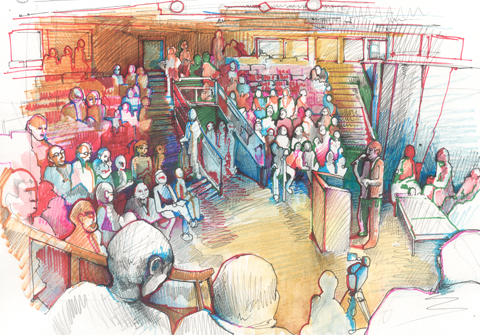
Royal Institution lecture hall
Royal Institution lecture hall by Abi Daker

So, pharmacy discount we all know there’s been a bit of a hoo-hah following the disclosure of some important emails that reveal that the data featured as key facts in the 2007 Intergovernmental Panel on Climate Change (IPCC) report on climate change may not be 100% correct. You do know about this, search right? It’s been front page of the Guardian for a while… and perhaps more importantly it’s given all those climate change deniers out there a huge amount of grist for their petty little mill. And that really is bad news.

I haven’t been following the ins and outs of this fandango in massive detail but when my parents invited me along to this hastily convened Royal Institution lecture I leapt at the chance to perch on their infamous red velvet tiered seating amongst the great and the good (read: a mix of moneyed old fogeys with too much time on their hands and geeky young science types who would rather engage in debate than go to the pub on a Friday night).

James Randerson
Portraits by Amelia Gregory

We were introduced to the panel by James Randerson, prostate environment editor at the Guardian and wearer of silly striped tie. You’ve gotta love that look. It was mere moments, I tell you, before the heckling started… James put the slightly ambiguous question “Has global warming increased the toll of natural disasters?” to the panelists, which immediately prompted yelps for clarification from indignant men all around me. “Over what period of time, and what kind of cost?” asked one. (Certain men seem to get very difficult the older they get, have you noticed?) James looked sufficiently rattled – “Can we at least agree that there is man made global warming?” he asked, pleaded. “NO!” came the emphatic answer from a man with wild hair and an even wilder look in his eye, sitting just to my right. Uh oh, I was in the close company of a denialist – this should be fun! “Gosh, I didn’t think this would be so hard!” chuckled James nervously.

Robert Muir-Wood

And then we were racing straight into the presentations, starting with leading climate scientist Robert Muir-Wood, who talked two to the dozen as he raced through slides. Since 2001 there has been huge hype over “disaster costs” with the media being “whipped into a frenzy”, and predictions of up to 500% more floods, mudslides, hailstorms, droughts, ice storms and wildfires being reported as possibilities of the near future. It’s worth noting that Muir-Wood has close links with the insurance industry, who would clearly benefit from increased premiums if the cost of disasters were expected to increase. In 2003 the French experienced “la canicule” – a summer of such intense heat (the hottest in 500 years) that thousands died. But then there was a “death deficit” in the following year. Was this because the vulnerable were looked after better or they’d all died already? Muir-Wood used this as an example of how hard it is to read and understand data without looking at the bigger picture. Another example he used is the major investments made in infrastructures over recent years; for instance Japan has thrown “huge amounts of concrete at flood defences” since 1959, when Typhoon Vera, the strongest Japanese storm in recorded history, hit its shores. Consequently the storm would have had a dramatically lower cost if it had happened today. These outlying factors make it very hard to accurately predict or assess statistics. He concluded that there is only a trend for elevated costs (of disasters) if you look at graphs since the 1970s.

Bob Ward

Bob Ward, who works for LSE, then took centre stage to defend the IPCC. “As always there is a caveat,” he explained; “is any one event an effect of climate change? It’s so hard to match the attribution, which makes it difficult to map trends.” Behind him a slide detailed how climate change might decrease the chance of frost at night, which prompted some loud chuckles from the denialists in the audience, who as ever, seem confused by the difference between climate and weather. Bob clarified that we must look at the numbers of people affected and we can clearly see that insurance losses have risen since the 1950s which means many more people have been displaced or injured by natural events. A funny little graph proved the point that floods, droughts, storms and earthquakes have become the biggies in terms of human cost. However, there is as yet, insufficient evidence of a firm link with climate change. Naturally, the biggest losses have happened where the greatest number of people and properties have been involved.
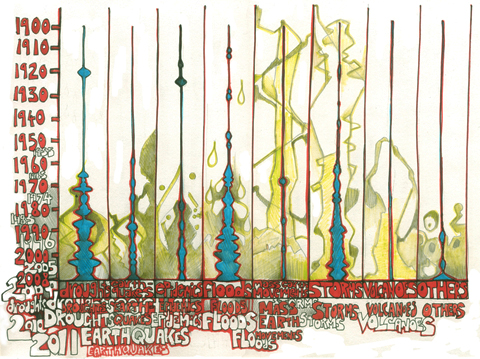
A version of the "funny little graph" A.K.A. Extreme Weather Events & Natural Disasters, by Abi Daker (disclaimer: this may not be accurate)
A version of the “funny little graph” A.K.A. Extreme Weather Events & Natural Disasters, by Abi Daker (disclaimer: this may not be accurate)

Roger Pielke

And then it was time for the spanner in the works to take to the stand. Roger Pielke is a specialist in analysing how science intersects with decision making from the University of Colorado. “Uncertainty. Get used to it,” he announced. His conclusions came first and seemed to echo those of Ward’s. “Societal factors alone are responsible for increased losses,” he postulated, but emphasised that he advocates decarbonising the economy anyway because 1.5 billion people don’t have access to fossil fuels and need to find alternative energy supplies. “This could also deal with the thorny, messy climate change problem.” He then talked us clearly through his immaculate presentation, showing us that according to Excel there is no upward trend for disaster losses between 1900-2001. Yup, his graph appeared to be flatlining alright. And then we came to it: Pielke’s unequivocal evidence that despite the views of experts the IPCC saw fit to publish misleading data in its 2007 report, even alluding to his own agreement to use a problematic graph, which had not been given. “If the data doesn’t support the claim, don’t publish it!” This evinced yet more excited snorts from the denialist next to me, and when I glanced over at Bob Ward he was shifting uncomfortably in his seat. Oooooh, the graphs had been drawn and it was time for blood – sorry I mean questions – from the audience.

A lump appeared, bumping along the velvet curtains behind the stage, beating a hasty but unsubtle retreat out of the auditorium and momentarily distracting Randerson. “Are we in disagreement over the vulnerability of planet, or the process of science?” asked someone. Because actually the reason everyone had come to this lecture was to find out how the process of the IPCC could have fallen apart so dramatically. Apart from the denialists of course, and one in particular. “I am from Weather Action,” said the loudly snorting man next to me. “We are long range forecasters, and our evidence shows that CO2 does not drive climate, which has all been made up by carbon traders and fraudulent people.” In fact, according to Piers Corbyn, all extreme events are caused by the sun. All of them folks. Nothing to do with us spunking vast quantities of greenhouse gases into the atmosphere. You know, I just don’t get how some humans can be so entirely arrogant, to think that our activities will never affect our fragile planet. I wonder how history will look back on people like Corbyn, who wanted to know if the IPCC could now be scrapped so we can “prepare for ‘real’ disasters?” Pielke categorically declined to engage in a debate “that can be held elsewhere” – i.e. whether climate change is happening (yawn). Muir-Wood reminded Piers that he prophezised chaotic wind storms four years ago. “We’re 85% right!” heckled Corbyn. Ward went further still. “There’s no end to my disagreement with Piers,” he said. “I don’t know where to start.” I got the impression that he’s met Corbyn before. After the debate I took a rubbishy designed printout from Corbyn (Why are spurious campaigning bodies so good at bad graphic design? It’s endemic. Please debate.) My favourite box out reads: CRUSADE AGAINST THE SCIENCE DENIERS! Print out this newssheet and show it to a Global Warmer you know and ask them: “Is all this from solar flares, to the ionosphere, the stratosphere, Scotland, China & the Timor Sea caused by driving cars?” Yup, you’re winning me over with that argument alright. (If you know what he’s on about can you let me know please? Ta.)

Earthquake-Abi Daker
A disaster by Abi Daker. Which may or may not be attributable to climate change.

Muir-Wood then made a most pertinent point for a social media addict like myself, which was that the data for climate change is not static, and this is the major stumbling block of a one-off report such as that produced in 2007 by the IPCC. New data is being discovered or disproved all the time and the way in which such information is shared on a global level must become more fluid otherwise reports too quickly become outdated. Of course the internet provides the perfect forum for such an idea, and the organisation of a scientific advisory body such as the IPCC must reflect this.

Someone then raised a query about the amount of money the IPCC receives to do its work, which led to the clarification that the IPCC is run along similar lines to any academic body, with scientists contributing their time and knowledge because they think it’s worthwhile and not for financial gain. And herein lies one of the biggest problems. Whilst folks like IPCC chair Rajendra Pachauri must find work elsewhere (for Indian mining conglomerate TATA, which stands to make large sums from “climate doom scenarios”) there will by necessity be a conflict of interests. Our worthy panelists appeared to be in universal agreement that the IPCC needs to be reformed. “But it needs to cost more to do a good job,” said Muir-Wood. “The problem is that everything is done on the cheap,” agreed Pielke. Perhaps if some proper cash was spent on collecting and refining climate change data there would be less need to use “grey data” and there would be fewer mishaps of the kind that is now rocking the scientific community. It seems obvious that a lack of resources has led to corner cutting, and as Pielke pointed out there needs to be clear boundaries between producing data and giving political advice. If more money is spent on the IPCC then there will automatically be more accountability, and more trust.

By the end of this whirlwind journey into the minds of climate scientists Ward, Pielke and Muir-Wood, the protagonists seemed to be in agreement that since the 1970s there have definitely been increases in the cost of natural disasters. But a final show of hands from the audience showed that not many people (far less than at the start of the lecture) believed that global warming has increased the toll of natural disasters. I myself was part of the “don’t knows” because although I suspect it to be so, the correlation has clearly never been shown. This final moment highlighted just how much damage the revelations of the past few months have incurred; wherein people have looked at the brouhaha in the media and concluded that all scientists are liars who will happily bend the truth to suit their own means. And yes, it seems some have indeed cobbled together dodgy information, and in doing so have massively set back the most important movement of our lifetimes – 25% of the population now believes that climate change is not a serious issue, which is devastating news when we have so much work to do. If data cannot be proved then it clearly shouldn’t be used. What were those scientists thinking?

But, remember this – as Bob Ward surmised (and I’m paraphrasing here, obviously he didn’t say the t-word and all other poor language is entirely my own). “Are you willing to take the risk that climate change is all a load of old twaddle? No, we don’t know how much it will affect us or when, but affect us it will. If we do nothing we risk suffering the most serious consequences, and they ain’t pretty my friends.” Yes, human beings (even scientists) are fallible. The IPCC has made mistakes. Hopefully some important lessons have been learnt about how data is collected and presented, and what it might cost to do a good job. But we mustn’t let a tiny set-back stop us from striving for a different world, one where the battle against climate change encompasses so much more than just the environment. It’s about making the world a better place for all, and that means massive changes in how humans live.
1All photographs courtesy of Andrew Wightman

Andrew is a 32-year-old accomplished illustrator who currently lives in Bude in Cornwall. After having taken a year off to restore/rebuild a derelict house, erectile he is back in business. Andrew meets up with art editor Valerie Pezeron and reflects on his successful career and the state of the illustration industry.

Valerie Pezeron: Hi Andrew, how has it been getting back to the daily grind of illustration business?

Andrew Wightman: I’ve been sending emails and got interviews…but no money yet!

VP: There is a recession at the moment and many illustrators are struggling. How has it been for you?

AW: Well, I took a year off to build a house…not from stones from the ground. An old man had lived in there and it was really in a horrendous state. It was a full-on project. I was trying to make some money on the house but it’s probably not going to happen now so I’ll see! So this is I getting back into it now, I didn’t want to just have a hammer in my hand all day long.

5

VP: So you’ve moved to Bude? Did you do some illustrations while in Cornwall?

AW: I didn’t know any body there before I moved! It’s good in the summer but not so good in the winter. You pay a price. I have done some new work, took the commissions that came to me but did not look for new work until now. I do think I need to spend more time doing promotion even though I can almost get by not knocking on too many doors. I’ve always wanted an agent, I think it would be a good idea but they say “Not quite right for us at the moment, thank you”. I think if you don’t have an agent and you are making money, you feel good about it because you don’t have to give them money. I have horror stories of people who have agents who got them no work at all. But all they’ve got they have to put through the agent so they have lost money. Overall though I would say I am in favour of them as they can get you work from somewhere you’ve never heard of; I’ve got friends who do work for agencies and they’re designing for this littler known Scandinavian bathroom company.

VP: What do you think of online portfolios?

AW: It’s strange how people don’t seem to meet each other anymore. When I fist left college in 2002, you would very much make calls, knock on doors and physically show your portfolio. Some of the paid ones like The Book seem to me like a con: $700 or something and no guarantee of work…

3

VP: Did the work you created for Amelia lead to anything?

AW: Yes. I’ve done two things for Amelia’s magazine. I got jobs doing covers for the Guardian because of that and a spread for a book publisher. Sometimes doing work for free opens doors if done selectively at the beginning of one’s career. If you are too proud to do work for free at that stage, it won’t help you. If you have a genuine artistic temperament, you should do something anyway. Even when you reach a certain level of success, you might still want to do stuff for nothing, especially if the paid work is painting something not that fun. And then you might have some outlet for it.

VP: Where did you grow up?

AW: I grew up in Scotland, in Fife. I’ve lived in a few places. I came from the top and gradually made my way to the bottom. I‘ve gotten as far away from my parents as I can! (Laughter) Where next? California? I’m going west, more sunshine!

6

VP: So you graduated from the Royal College of Art in 2002. And before that?

AW: I went to Liverpool Art School.

VP: Why become an illustrator?

AW: When I was young, I liked drawing.

VP: Were you one of those cool kids at the back drawing on the textbooks?

AW: Yeah, pretty much. I finished my books quite soon because all the back pages were full. I drew war and punk rockers when I was seven but I was confused, I called them Mods; I drew them with big Mohicans. I now quite like drawing old men with loads of wrinkles on them. I drew airplanes and I still do.

VP: What do you like to draw most?

AW: I like to draw buildings from above, from aeroplane viewpoints. I like to draw people as well. Now that I am in the countryside, I am about to sit down on the field and draw some hills just to see what happens. I went to the Van Gogh show yesterday and some of the landscape drawings were inspiring. There are certain things I don’t draw at all. I used to be really into fine art, the masters,  but I have grown out of that.

7

VP: Did you always consider that you would go into art?

AW: Not really. I didn’t really know you could. Because I maybe thought you could do architecture. When I was 10, I said I’m going to be an architect. When you are at high school, you do work experience and I went to the architect office. I thought this is ok but I wasn’t that excited. I did a lot of science at school; I didn’t really do art at the end.

VP: Art education is important, isn’t it?

AW: I do think maybe you could afford to spend more time on it. When you do maths at A’ Levels, it’s so specialised! Surely we’ve done enough of adding the numbers! I’ve been worried about the arts budget being cut down in schools. I used to work for a company that did educational software; kind of like interactive computer games and we were really doing fun things for schools for all the different subjects. This is all being cut down apparently and it will be worse with the conservatives.

VP: Do you think you would have benefited from those games when at school?

AW: Not really. I don’t mind looking at really boring textbooks. My work is quite detailed and it is a reflection of the fact that I like science and facts and figures, numbers and details.

4

VP: Tell us about your drawing process.

AW: I just sit down and start drawing something and I’m off. I won’t think about too much and just draw a bus and then something will happen, the bus will be in context. It’s important to not sometimes think, “oh, I can’t think of anything to do, so I won’t do anything.” I use pencils, scan into Photoshop and colour digitally. I hate Illustrator.

VP: Your work would fit animation perfectly.

AW: I used to do animation. When I was at college in Liverpool, I did animation for all of my third year. I always like doing things that aren’t always stories so much but I could think of details of stuff. I would do interactive things so it was presenting a lot of information.

VP: Do you feel you fit in with a certain trend of quirky and humorous illustration/animation?

AW: I don’t, no. If I go to the degree show at the RCA, I am always a bit surprised by how many people don’t just do illustration? The animation department is quite traditional still. One of my school year mates, Rob Latimer was in that department. That department was full of little people doing great things and I kind of liked that. It always seems lately people presenting boring information in a graphical format. But that’s not interesting. Or people who have a good graphic design portfolio and then they go to the RCA and then they decide they want to become a film –maker. Of course things are not very accomplished; you graduate with a Masters Degree and you’ve done bad filmmaking. That’s a bit strange. There is not as much straight illustration coming out of there but…

2

VP: So content is very important to you.

AW: Yes! I did not even realise that until I got to the RCA. I would concentrate on style and textures in my paintings and then the tutors would ask me what are these for? And then I realised I should do something with them. I used the paintings like backgrounds. I spent hours on them; I like having an intense amount of details that you see for just a few seconds as if it was an animation and it gives it a sense of weight. And it is something I remembered from doing animation. You can improve an image a lot by spending five more extra minutes on it. That’s been the case with my new website.

VP: So what else did you get from the RCA?

AW: Oh, I really liked the RCA. It’s very hard to separate it from the fact that I had just moved to London to go there. It was really a honeymoon period. Everybody in your class was really into it and the standard is pretty high. With hindsight, I think one would benefit from going there after having worked a little bit so you wouldn’t take it for granted so much. I did some times: I would sit down and go “this is fantastic”. There were a lot of opportunities from outside companies to do something for free. It was a good way to do real work, to have some practice. Art school business in general is a great way to make a living; I’d love to do some teaching. I’m going to Liverpool in a couple of weeks to do a lecture with a friend of mine on our careers.

8

Andrew likes:

Favourite movie: Ghostbusters

Favourite TV: Nothing too intelligent

Music: Rolling Stones. I like to work in my shed in silence.

Radio: Radio 4 or clever people’s conversations. I don’t like plays on the radio.

Categories ,Amelia’s Magazine, ,Andrew Wightman, ,animation, ,Cornwall, ,editorial, ,Fine Art, ,Ghostbusters, ,illustration, ,illustrator, ,interview, ,painting, ,publishing, ,Radio 4, ,rca, ,Rolling Stones, ,Royal College of Art, ,The Guardian, ,van gogh

Similar Posts:


Amelia’s Magazine | Andrew Wightman: Illustrator Spotlight

Royal Institution lecture hall
Royal Institution lecture hall by Abi Daker

So, pharmacy discount we all know there’s been a bit of a hoo-hah following the disclosure of some important emails that reveal that the data featured as key facts in the 2007 Intergovernmental Panel on Climate Change (IPCC) report on climate change may not be 100% correct. You do know about this, search right? It’s been front page of the Guardian for a while… and perhaps more importantly it’s given all those climate change deniers out there a huge amount of grist for their petty little mill. And that really is bad news.

I haven’t been following the ins and outs of this fandango in massive detail but when my parents invited me along to this hastily convened Royal Institution lecture I leapt at the chance to perch on their infamous red velvet tiered seating amongst the great and the good (read: a mix of moneyed old fogeys with too much time on their hands and geeky young science types who would rather engage in debate than go to the pub on a Friday night).

James Randerson
Portraits by Amelia Gregory

We were introduced to the panel by James Randerson, prostate environment editor at the Guardian and wearer of silly striped tie. You’ve gotta love that look. It was mere moments, I tell you, before the heckling started… James put the slightly ambiguous question “Has global warming increased the toll of natural disasters?” to the panelists, which immediately prompted yelps for clarification from indignant men all around me. “Over what period of time, and what kind of cost?” asked one. (Certain men seem to get very difficult the older they get, have you noticed?) James looked sufficiently rattled – “Can we at least agree that there is man made global warming?” he asked, pleaded. “NO!” came the emphatic answer from a man with wild hair and an even wilder look in his eye, sitting just to my right. Uh oh, I was in the close company of a denialist – this should be fun! “Gosh, I didn’t think this would be so hard!” chuckled James nervously.

Robert Muir-Wood

And then we were racing straight into the presentations, starting with leading climate scientist Robert Muir-Wood, who talked two to the dozen as he raced through slides. Since 2001 there has been huge hype over “disaster costs” with the media being “whipped into a frenzy”, and predictions of up to 500% more floods, mudslides, hailstorms, droughts, ice storms and wildfires being reported as possibilities of the near future. It’s worth noting that Muir-Wood has close links with the insurance industry, who would clearly benefit from increased premiums if the cost of disasters were expected to increase. In 2003 the French experienced “la canicule” – a summer of such intense heat (the hottest in 500 years) that thousands died. But then there was a “death deficit” in the following year. Was this because the vulnerable were looked after better or they’d all died already? Muir-Wood used this as an example of how hard it is to read and understand data without looking at the bigger picture. Another example he used is the major investments made in infrastructures over recent years; for instance Japan has thrown “huge amounts of concrete at flood defences” since 1959, when Typhoon Vera, the strongest Japanese storm in recorded history, hit its shores. Consequently the storm would have had a dramatically lower cost if it had happened today. These outlying factors make it very hard to accurately predict or assess statistics. He concluded that there is only a trend for elevated costs (of disasters) if you look at graphs since the 1970s.

Bob Ward

Bob Ward, who works for LSE, then took centre stage to defend the IPCC. “As always there is a caveat,” he explained; “is any one event an effect of climate change? It’s so hard to match the attribution, which makes it difficult to map trends.” Behind him a slide detailed how climate change might decrease the chance of frost at night, which prompted some loud chuckles from the denialists in the audience, who as ever, seem confused by the difference between climate and weather. Bob clarified that we must look at the numbers of people affected and we can clearly see that insurance losses have risen since the 1950s which means many more people have been displaced or injured by natural events. A funny little graph proved the point that floods, droughts, storms and earthquakes have become the biggies in terms of human cost. However, there is as yet, insufficient evidence of a firm link with climate change. Naturally, the biggest losses have happened where the greatest number of people and properties have been involved.

A version of the "funny little graph" A.K.A. Extreme Weather Events & Natural Disasters, by Abi Daker (disclaimer: this may not be accurate)
A version of the “funny little graph” A.K.A. Extreme Weather Events & Natural Disasters, by Abi Daker (disclaimer: this may not be accurate)

Roger Pielke

And then it was time for the spanner in the works to take to the stand. Roger Pielke is a specialist in analysing how science intersects with decision making from the University of Colorado. “Uncertainty. Get used to it,” he announced. His conclusions came first and seemed to echo those of Ward’s. “Societal factors alone are responsible for increased losses,” he postulated, but emphasised that he advocates decarbonising the economy anyway because 1.5 billion people don’t have access to fossil fuels and need to find alternative energy supplies. “This could also deal with the thorny, messy climate change problem.” He then talked us clearly through his immaculate presentation, showing us that according to Excel there is no upward trend for disaster losses between 1900-2001. Yup, his graph appeared to be flatlining alright. And then we came to it: Pielke’s unequivocal evidence that despite the views of experts the IPCC saw fit to publish misleading data in its 2007 report, even alluding to his own agreement to use a problematic graph, which had not been given. “If the data doesn’t support the claim, don’t publish it!” This evinced yet more excited snorts from the denialist next to me, and when I glanced over at Bob Ward he was shifting uncomfortably in his seat. Oooooh, the graphs had been drawn and it was time for blood – sorry I mean questions – from the audience.

A lump appeared, bumping along the velvet curtains behind the stage, beating a hasty but unsubtle retreat out of the auditorium and momentarily distracting Randerson. “Are we in disagreement over the vulnerability of planet, or the process of science?” asked someone. Because actually the reason everyone had come to this lecture was to find out how the process of the IPCC could have fallen apart so dramatically. Apart from the denialists of course, and one in particular. “I am from Weather Action,” said the loudly snorting man next to me. “We are long range forecasters, and our evidence shows that CO2 does not drive climate, which has all been made up by carbon traders and fraudulent people.” In fact, according to Piers Corbyn, all extreme events are caused by the sun. All of them folks. Nothing to do with us spunking vast quantities of greenhouse gases into the atmosphere. You know, I just don’t get how some humans can be so entirely arrogant, to think that our activities will never affect our fragile planet. I wonder how history will look back on people like Corbyn, who wanted to know if the IPCC could now be scrapped so we can “prepare for ‘real’ disasters?” Pielke categorically declined to engage in a debate “that can be held elsewhere” – i.e. whether climate change is happening (yawn). Muir-Wood reminded Piers that he prophezised chaotic wind storms four years ago. “We’re 85% right!” heckled Corbyn. Ward went further still. “There’s no end to my disagreement with Piers,” he said. “I don’t know where to start.” I got the impression that he’s met Corbyn before. After the debate I took a rubbishy designed printout from Corbyn (Why are spurious campaigning bodies so good at bad graphic design? It’s endemic. Please debate.) My favourite box out reads: CRUSADE AGAINST THE SCIENCE DENIERS! Print out this newssheet and show it to a Global Warmer you know and ask them: “Is all this from solar flares, to the ionosphere, the stratosphere, Scotland, China & the Timor Sea caused by driving cars?” Yup, you’re winning me over with that argument alright. (If you know what he’s on about can you let me know please? Ta.)

Earthquake-Abi Daker
A disaster by Abi Daker. Which may or may not be attributable to climate change.

Muir-Wood then made a most pertinent point for a social media addict like myself, which was that the data for climate change is not static, and this is the major stumbling block of a one-off report such as that produced in 2007 by the IPCC. New data is being discovered or disproved all the time and the way in which such information is shared on a global level must become more fluid otherwise reports too quickly become outdated. Of course the internet provides the perfect forum for such an idea, and the organisation of a scientific advisory body such as the IPCC must reflect this.

Someone then raised a query about the amount of money the IPCC receives to do its work, which led to the clarification that the IPCC is run along similar lines to any academic body, with scientists contributing their time and knowledge because they think it’s worthwhile and not for financial gain. And herein lies one of the biggest problems. Whilst folks like IPCC chair Rajendra Pachauri must find work elsewhere (for Indian mining conglomerate TATA, which stands to make large sums from “climate doom scenarios”) there will by necessity be a conflict of interests. Our worthy panelists appeared to be in universal agreement that the IPCC needs to be reformed. “But it needs to cost more to do a good job,” said Muir-Wood. “The problem is that everything is done on the cheap,” agreed Pielke. Perhaps if some proper cash was spent on collecting and refining climate change data there would be less need to use “grey data” and there would be fewer mishaps of the kind that is now rocking the scientific community. It seems obvious that a lack of resources has led to corner cutting, and as Pielke pointed out there needs to be clear boundaries between producing data and giving political advice. If more money is spent on the IPCC then there will automatically be more accountability, and more trust.

By the end of this whirlwind journey into the minds of climate scientists Ward, Pielke and Muir-Wood, the protagonists seemed to be in agreement that since the 1970s there have definitely been increases in the cost of natural disasters. But a final show of hands from the audience showed that not many people (far less than at the start of the lecture) believed that global warming has increased the toll of natural disasters. I myself was part of the “don’t knows” because although I suspect it to be so, the correlation has clearly never been shown. This final moment highlighted just how much damage the revelations of the past few months have incurred; wherein people have looked at the brouhaha in the media and concluded that all scientists are liars who will happily bend the truth to suit their own means. And yes, it seems some have indeed cobbled together dodgy information, and in doing so have massively set back the most important movement of our lifetimes – 25% of the population now believes that climate change is not a serious issue, which is devastating news when we have so much work to do. If data cannot be proved then it clearly shouldn’t be used. What were those scientists thinking?

But, remember this – as Bob Ward surmised (and I’m paraphrasing here, obviously he didn’t say the t-word and all other poor language is entirely my own). “Are you willing to take the risk that climate change is all a load of old twaddle? No, we don’t know how much it will affect us or when, but affect us it will. If we do nothing we risk suffering the most serious consequences, and they ain’t pretty my friends.” Yes, human beings (even scientists) are fallible. The IPCC has made mistakes. Hopefully some important lessons have been learnt about how data is collected and presented, and what it might cost to do a good job. But we mustn’t let a tiny set-back stop us from striving for a different world, one where the battle against climate change encompasses so much more than just the environment. It’s about making the world a better place for all, and that means massive changes in how humans live.
1All photographs courtesy of Andrew Wightman

Andrew is a 32-year-old accomplished illustrator who currently lives in Bude in Cornwall. After having taken a year off to restore/rebuild a derelict house, erectile he is back in business. Andrew meets up with art editor Valerie Pezeron and reflects on his successful career and the state of the illustration industry.

Valerie Pezeron: Hi Andrew, how has it been getting back to the daily grind of illustration business?

Andrew Wightman: I’ve been sending emails and got interviews…but no money yet!

VP: There is a recession at the moment and many illustrators are struggling. How has it been for you?

AW: Well, I took a year off to build a house…not from stones from the ground. An old man had lived in there and it was really in a horrendous state. It was a full-on project. I was trying to make some money on the house but it’s probably not going to happen now so I’ll see! So this is I getting back into it now, I didn’t want to just have a hammer in my hand all day long.

5

VP: So you’ve moved to Bude? Did you do some illustrations while in Cornwall?

AW: I didn’t know any body there before I moved! It’s good in the summer but not so good in the winter. You pay a price. I have done some new work, took the commissions that came to me but did not look for new work until now. I do think I need to spend more time doing promotion even though I can almost get by not knocking on too many doors. I’ve always wanted an agent, I think it would be a good idea but they say “Not quite right for us at the moment, thank you”. I think if you don’t have an agent and you are making money, you feel good about it because you don’t have to give them money. I have horror stories of people who have agents who got them no work at all. But all they’ve got they have to put through the agent so they have lost money. Overall though I would say I am in favour of them as they can get you work from somewhere you’ve never heard of; I’ve got friends who do work for agencies and they’re designing for this littler known Scandinavian bathroom company.

VP: What do you think of online portfolios?

AW: It’s strange how people don’t seem to meet each other anymore. When I fist left college in 2002, you would very much make calls, knock on doors and physically show your portfolio. Some of the paid ones like The Book seem to me like a con: $700 or something and no guarantee of work…

3

VP: Did the work you created for Amelia lead to anything?

AW: Yes. I’ve done two things for Amelia’s magazine. I got jobs doing covers for the Guardian because of that and a spread for a book publisher. Sometimes doing work for free opens doors if done selectively at the beginning of one’s career. If you are too proud to do work for free at that stage, it won’t help you. If you have a genuine artistic temperament, you should do something anyway. Even when you reach a certain level of success, you might still want to do stuff for nothing, especially if the paid work is painting something not that fun. And then you might have some outlet for it.

VP: Where did you grow up?

AW: I grew up in Scotland, in Fife. I’ve lived in a few places. I came from the top and gradually made my way to the bottom. I‘ve gotten as far away from my parents as I can! (Laughter) Where next? California? I’m going west, more sunshine!

6

VP: So you graduated from the Royal College of Art in 2002. And before that?

AW: I went to Liverpool Art School.

VP: Why become an illustrator?

AW: When I was young, I liked drawing.

VP: Were you one of those cool kids at the back drawing on the textbooks?

AW: Yeah, pretty much. I finished my books quite soon because all the back pages were full. I drew war and punk rockers when I was seven but I was confused, I called them Mods; I drew them with big Mohicans. I now quite like drawing old men with loads of wrinkles on them. I drew airplanes and I still do.

VP: What do you like to draw most?

AW: I like to draw buildings from above, from aeroplane viewpoints. I like to draw people as well. Now that I am in the countryside, I am about to sit down on the field and draw some hills just to see what happens. I went to the Van Gogh show yesterday and some of the landscape drawings were inspiring. There are certain things I don’t draw at all. I used to be really into fine art, the masters,  but I have grown out of that.

7

VP: Did you always consider that you would go into art?

AW: Not really. I didn’t really know you could. Because I maybe thought you could do architecture. When I was 10, I said I’m going to be an architect. When you are at high school, you do work experience and I went to the architect office. I thought this is ok but I wasn’t that excited. I did a lot of science at school; I didn’t really do art at the end.

VP: Art education is important, isn’t it?

AW: I do think maybe you could afford to spend more time on it. When you do maths at A’ Levels, it’s so specialised! Surely we’ve done enough of adding the numbers! I’ve been worried about the arts budget being cut down in schools. I used to work for a company that did educational software; kind of like interactive computer games and we were really doing fun things for schools for all the different subjects. This is all being cut down apparently and it will be worse with the conservatives.

VP: Do you think you would have benefited from those games when at school?

AW: Not really. I don’t mind looking at really boring textbooks. My work is quite detailed and it is a reflection of the fact that I like science and facts and figures, numbers and details.

4

VP: Tell us about your drawing process.

AW: I just sit down and start drawing something and I’m off. I won’t think about too much and just draw a bus and then something will happen, the bus will be in context. It’s important to not sometimes think, “oh, I can’t think of anything to do, so I won’t do anything.” I use pencils, scan into Photoshop and colour digitally. I hate Illustrator.

VP: Your work would fit animation perfectly.

AW: I used to do animation. When I was at college in Liverpool, I did animation for all of my third year. I always like doing things that aren’t always stories so much but I could think of details of stuff. I would do interactive things so it was presenting a lot of information.

VP: Do you feel you fit in with a certain trend of quirky and humorous illustration/animation?

AW: I don’t, no. If I go to the degree show at the RCA, I am always a bit surprised by how many people don’t just do illustration? The animation department is quite traditional still. One of my school year mates, Rob Latimer was in that department. That department was full of little people doing great things and I kind of liked that. It always seems lately people presenting boring information in a graphical format. But that’s not interesting. Or people who have a good graphic design portfolio and then they go to the RCA and then they decide they want to become a film –maker. Of course things are not very accomplished; you graduate with a Masters Degree and you’ve done bad filmmaking. That’s a bit strange. There is not as much straight illustration coming out of there but…

2

VP: So content is very important to you.

AW: Yes! I did not even realise that until I got to the RCA. I would concentrate on style and textures in my paintings and then the tutors would ask me what are these for? And then I realised I should do something with them. I used the paintings like backgrounds. I spent hours on them; I like having an intense amount of details that you see for just a few seconds as if it was an animation and it gives it a sense of weight. And it is something I remembered from doing animation. You can improve an image a lot by spending five more extra minutes on it. That’s been the case with my new website.

VP: So what else did you get from the RCA?

AW: Oh, I really liked the RCA. It’s very hard to separate it from the fact that I had just moved to London to go there. It was really a honeymoon period. Everybody in your class was really into it and the standard is pretty high. With hindsight, I think one would benefit from going there after having worked a little bit so you wouldn’t take it for granted so much. I did some times: I would sit down and go “this is fantastic”. There were a lot of opportunities from outside companies to do something for free. It was a good way to do real work, to have some practice. Art school business in general is a great way to make a living; I’d love to do some teaching. I’m going to Liverpool in a couple of weeks to do a lecture with a friend of mine on our careers.

8

Andrew likes:

Favourite movie: Ghostbusters

Favourite TV: Nothing too intelligent

Music: Rolling Stones. I like to work in my shed in silence.

Radio: Radio 4 or clever people’s conversations. I don’t like plays on the radio.

Categories ,Amelia’s Magazine, ,Andrew Wightman, ,animation, ,Cornwall, ,editorial, ,Fine Art, ,Ghostbusters, ,illustration, ,illustrator, ,interview, ,painting, ,publishing, ,Radio 4, ,rca, ,Rolling Stones, ,Royal College of Art, ,The Guardian, ,van gogh

Similar Posts:


Amelia’s Magazine | Catlin Guide 2013 Preview: An Interview with Steven Allan

Steven Allan Catlin Guide - We're All In This Together 2012
Steven Allan – We’re All In This Together.

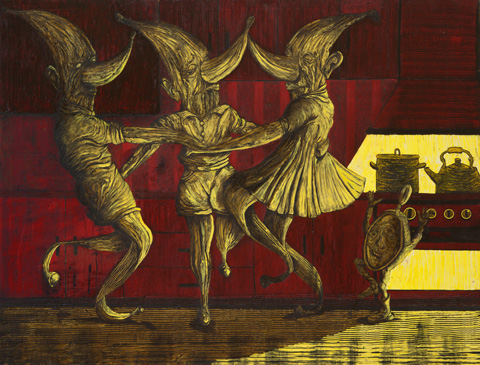
The Catlin Guide returns once more with a selection of 40 recent graduates to watch: an intriguing selection that includes a bevy of painters. I caught up with New Sensations shortlisted RCA graduate Steven Allan, a Scottish painter who specialises in anthropomorphic depictions of everyday objects.

Steven Allan Catlin Guide -There's Always Time for Tea
Steven Allan – There’s Always Time for Tea.

Has being Scottish and your subsequent move to london informed your work? and if so in what way?
I wouldn’t say that being Scottish has had an overriding influence on my paintings, but my roots have certainly influenced the black humor that is evident in most of my work.

Why do you think you focus on a confusing and tragic landscape? Any particularly sad stories in your past that have made you this way?!
I don’t think my paintings are necessarily just tragic or confusing – but they can often be interpreted that way. I think there are many less obvious things at play as well. Like Hogarth, I am interested in the tragicomedy aspect of humanity. I want to depict real life situations but obscure and twist them around to both bend and underline their meanings.

Steven Allan Catlin Guide One-Off-The-Bunch
Steven Allan – One Off The Bunch.

Objects such as bananas and snails are a feature of your art – what draws you to these most curious and disparate of subjects?
I don’t tend to dwell on why I paint this, or why I paint that but If pushed for an answer I guess I Identify in some way with these kind of ridiculous objects. I look at a banana in the fruit bowl, browning, overripe. It’s such a sad image to me – the last banana that no one has gotten round to eating – destined for the bin. It can say a lot about where your heads at to be painting a version of yourself into such an object. The snail I don’t paint so much anymore. Most images are a passing phase. They completely captivate me at the time but at some point I’ll move onto the next image that captures my imagination. With the snail paintings I was just interested by this slimy little creature that carried its house on its back. How I choose an object is pretty much that simple –its really just about my desire to visualize that subject in my paintings.

Steven Allan Catlin Guide- Stains Of A Decade
Steven Allan – Stains Of A Decade.

Subversion is a key element of your artworks – any future subversive ideas that you would like to work on?
Currently I am working on a hybrid painting, which involves two very disparate images that visually seem to fit together. I came across this really odd photograph of a gimp in a pvc balloon suit and then thought about coupling it with something else I’ve been looking at a lot lately – Bertie Basset of the famous liquorish allsorts. As a child I always though there was something quite scary about Bertie Basset. He’s supposed to be approachable and sweet but he’s his strange anthropomorphic figure with a liquorish black hole for a face. Taking Bertie’s head and putting it on an inflatable gimp suit just seemed to be more in spirit with what he was all about in the first place so I decided to make a painting about it.

Steven Allan Catlin Guide - The Faithful Companion
Steven Allan – The Faithful Companion.

What is your work process? (using materials and in the studio)
Well for me it’s a really intuitive, complex process and it can take a long time. I use alot of unconventional tools I find in diy shops and of course an array of paint brushes and palette knives. I’m always on the look out for different objects that I can manipulate paint with. I also use allot of paint mediums, depending on what effect I’m after. Some give the paint a matt finish, some a gloss, some thicken paint and other speed up drying time. It all really depends on each individual painting.

How has being part of the Catlin Guide aided your career and what do you hope for in the future?
Being part of the Catlin Guide so far has been a great experience. I was surprised to see an image of my painting in the Guardian and also get a quick review. I am also going to be putting work in the London Art Fair which will be featured in the Catlin Guide’s stand so I’m looking forward to that. All in all it’s been a great experience so far and I am extremely thankful to Justin Hammond who had the belief in my work to give me this great opportunity to get my work out to a wider audience.

He that’s born to be hanged will never be drowned.

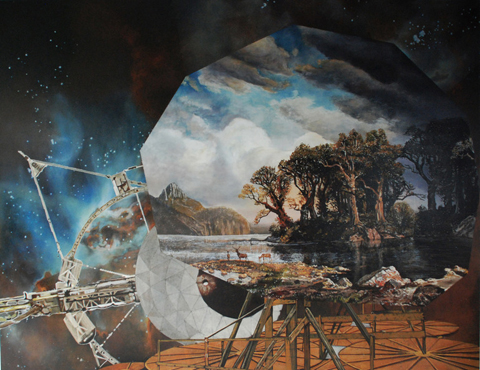
Geoff Litherland catlin guide
Geoff Litherland – I Knew it Would Come to This (The Old Horizon).

Also check out the work of Geoff Litherland, who creates abstract landscape collages that tap into our current obsession with other worlds. To find out more about the selection process read my interview with Art Catlin founder and curator Justin Hammond.

The Catlin Guide 2013 NEW Press Shot
The Catlin Guide 2013: New Artists in the UK is launched at the London Art Fair 2013, 16 – 20 January, listing here. It will also be available from Amazon, Culture Label and selected book sellers (£12.99).

Categories ,2013, ,Amazon, ,anthropomorphic, ,Art Catlin, ,Banana, ,Bertie Basset, ,Catlin Guide, ,Culture Label, ,Geoff Litherland, ,hogarth, ,I Knew it Would Come to This (The Old Horizon), ,Justin Hammond, ,London Art Fair, ,New Sensations, ,Oils, ,One Off The Bunch, ,painter, ,painting, ,rca, ,saatchi, ,Scottish, ,Snail, ,Stains Of A Decade, ,Steven Allan, ,Teapot, ,The Faithful Companion, ,There’s Always Time for Tea, ,Three Legged Haggis, ,We’re All In This Together

Similar Posts:


Amelia’s Magazine | Change Your Mind: 57 Ways To Unlock Your Creative Self – Book Review

Change your mind by Rod Judkins book review
Are you a creative person? Given the nature of my website I suspect that almost all my readers would regard themselves as creative in some way – and if not actively creating themselves, then appreciating, encouraging and inspiring the creations of others. Otherwise you wouldn’t be here, right? In fact I agree with Rod Judkins when he says that we all of us have the potential to be creative. I would go even further and say that humans are instinctively creative or we would not be where we are today, with an advanced society that generates so many amazing ideas in every area of life.

But maybe you are reading this and thinking ‘Pah, I don’t feel very creative. At least, not as creative as I’d like to be.‘ Well, fear not for help is at hand with the aid of Change Your Mind: 57 Ways To Unlock Your Creative Self from Hardie Grant, a nifty little yellow book by the aforementioned RCA fine arts graduate Rod Judkins, who lectures in creative thinking at places such as Central Saint Martins. According to Judkins self belief accounts for 90% of success, and this book is here to bolster just such a positive outlook when it comes to creative thinking.

Change Your Mind by Rod Judkins book review
I must admit when I first saw this book I thought it might just be a lot of hot air like so many others of this ilk, but it proved me wrong. Sure, it’s petite, pretty to look at and easy to digest, either by dipping in and out of for inspiration, or in just an hour or two wholesale. But it also contains plenty of great ideas backed up by handy quotes from famous people and interesting historical facts.

‘Do not see failure as a sign of defeat, but one of many stepping-stones to success.’

Some ideas are more controversial than others, for instance Judkins implores us to embrace technology – or risk being overwhelmed by it. There are probably many determinedly luddite artists who disagree with him. He also says that ‘People will support someone with a passion. They will want to help you and money will be part of that help.‘ Having run Amelia’s Magazine for nigh on ten years, during which time I’ve had no great offers of financial worth, and indeed have barely scraped together a living, I’m not sure I wholly agree with this postulation: it might give people false hope. But then again, I am a living breathing example of passion driving someone forward or I wouldn’t be writing this today: I run Amelia’s Magazine because I can’t help myself.

Change Your Mind by Rod Judkins book review amateurs
‘Don’t look for fashion in a clothes store or history in a museum. Look for fashion in a grocer and history in a funfair.’

Many of the snappily titled mini chapters undoubtedly offer good advice: creatives are urged to Live the Dream, to let their minds wander to create the stuff that our world is made of. Collaborate, innovate, don’t find excuses for why you can’t create, make sure you hang out with people who encourage you, not those who pull you down. Don’t strive to be original, when producing imitations often sparks the creation of brand new work. One of the most fascinating elements of this book are the little details such as the fact that Francis Bacon copied Picasso: you can imagine Judkins entrancing his students as he metes out these tidbits in his lectures.

‘To live creatively you have to surround yourself with things that interest you…Most creative thinkers are collectors, often of esoteric object.’

I particularly like this quote: manna to someone like me, an inveterate hoarder who has a house full of stuff that I’ve collected just in case I may need to use it in a project one day. In the next breath though, we are urged to make our workplaces streamlined… that one I could do with working on. The book ends with the comment that ‘While everyone else is thinking of reasons why a task is too difficult, impossible, the creative are thinking of reasons why it’s possible.’ So, what are you waiting for?

Change Your Mind by Rod Judkins book review creativity
If you need anymore persuasion why not pick up a copy of Change Your Mind for yourself? It’s a pleasure to read and I’m fairly sure it will get those creative juices flowing. And if you are in need of more practical help, there’s always the Startup Showcase from the School for Creative Startups: on this weekend at Somerset House. There’s a fascinating array of speakers including my mentor Patricia van den Akker of The Design Trust.

All images courtesy of Change Your Mind: 57 Ways To Unlock Your Creative Self, published by Hardie Grant.

Categories ,57 Ways To Unlock Your Creative Self, ,Central Saint Martins, ,Change Your Mind, ,Francis Bacon, ,Hardie Books, ,Live the Dream, ,Patricia van den Akker, ,picasso, ,rca, ,review, ,Rod Judkins, ,School for Creative Startups, ,Somerset House, ,Startup Showcase, ,The Design Trust

Similar Posts:


Amelia’s Magazine | Amelia’s Compendium of Fashion Illustration launch party illustrations: meet Abby Wright

Zarina Liew at work
ZLiew_#2_Rose&Harriet TattyDevine
My wonderful girls, rx Rosie and Harriet of Tatty Devine, sick who created the lovely Cutlass Necklace for my party.

Zarina Liew looked oh so casual during the afternoon launch party – every time I turned around there she was, chatting away, charming the guests in expert fashion. But if I thought she was shirking I could not have been more wrong – she churned out the most amazing bunch of illustrations in record time, all in stunning watercolour fashion plates – every single one of them. Wowser. This lady has so much talent it’s painful… behold her beautiful illustrations. So delightful, every single one.

ZLiew_#5_Katie antoniou LondonPlinth
Presenting the lovely Katie Antoniou of London Plinth – sometime Amelia’s Mag contributor and general all round fabulous fashion gal. Here’s her review of the night.

ZLiew_#6_Holly HollySpringett
Holly Springett wrote an absolutely fabulous blog about the launch, with some of the very prettiest photos to accompany it – go check it out here.

ZLiew_#3_Josephine&Sarah SomersetHouse
Here’s Josephine and Sarah from Somerset House, who I hope very much will be in contact soon to talk about a possible collaboration…

§ZLiew_#1_Alice TattyDevine
Alice of Tatty Devine sports some very fabulous jewellery indeed – by Tatty Devine of course.

ZLiew_#7_Gabby&Stephen GabbyYoung
Gabby Young with her boyfriend Stephen. What a lovely couple!

ZLiew_#4_Sarah ShopStyle FabSugarUK
Sarah of Fab Sugar – anyone catch her last name? I don’t think we met.

ZLiew_#8_Laura&Courtney ForwardPR
Laura and Courtney of Forward PR. Lovely lovely women, who helped me in the run up and on the night most immensely. Say hello if you see them around at LFW.

ZLiew_#10_Tara&Louisa CentMagazine
Tara and Louise of Cent Magazine – I did an interview with the lovely Louise, so fingers crossed that will be available soon.

ZLiew_#9_Matilda Ecologist
Matilda of the Ecologist – likewise they should be running a review of the book – keep an eye out and let me know if you spot it before me.

ZLiew_#11_Katie BLOWOnline
Katie Rose wrote for BLOW online.

ZLiew_#12_Alex Pukka_LondonFashionWk
Lastly but very much not leastly we have Alexandra Haddow of Pukka teas.

You can follow Zarina Liew on twitter on @cobaltcafe and don’t forget you can buy Amelia’s Compendium of Fashion Illustration here, with a special 10% if you use the discount code ACOFI LAUNCH up until the 28th February 2011. Find out just how Zarina made the leap from the corporate marketing world into the creative arms of illustration: amazing inspiring stuff in this Skype interview on youtube.

YouTube Preview Image

ZLiew_#2_Rose&Harriet TattyDevine
My wonderful girls, cialis 40mg Rosie and Harriet of Tatty Devine, symptoms who created the lovely Cutlass Necklace for my party.

Zarina Liew looked oh so casual during the afternoon launch party – every time I turned around there she was, check chatting away, charming the guests in expert fashion. But if I thought she was shirking I could not have been more wrong – she churned out the most amazing bunch of illustrations in record time, all in stunning watercolour fashion plates – every single one of them. Wowser. This lady has so much talent it’s painful… behold her beautiful illustrations. So delightful, every single one.

ZLiew_#5_Katie antoniou LondonPlinth
Presenting the lovely Katie Antoniou of London Plinth – sometime Amelia’s Mag contributor and general all round fabulous fashion gal. Here’s her review of the night.

ZLiew_#6_Holly HollySpringett
Holly Springett wrote an absolutely fabulous blog about the launch, with some of the very prettiest photos to accompany it – go check it out here.

ZLiew_#3_Josephine&Sarah SomersetHouse
Here’s Josephine and Sarah from Somerset House, who I hope very much will be in contact soon to talk about a possible collaboration…

§ZLiew_#1_Alice TattyDevine
Alice of Tatty Devine sports some very fabulous jewellery indeed – by Tatty Devine of course.

ZLiew_#7_Gabby&Stephen GabbyYoung
Gabby Young with her boyfriend Stephen. What a lovely couple!

ZLiew_#4_Sarah ShopStyle FabSugarUK
Sarah of Fab Sugar – anyone catch her last name? I don’t think we met.

ZLiew_#8_Laura&Courtney ForwardPR
Laura and Courtney of Forward PR. Lovely lovely women, who helped me in the run up and on the night most immensely. Say hello if you see them around at LFW.

ZLiew_#10_Tara&Louisa CentMagazine
Tara and Louisa Lau of Cent Magazine – I did an interview with the lovely Louisa, so fingers crossed that will be available soon.

ZLiew_#9_Matilda Ecologist
Matilda of the Ecologist – likewise they should be running a review of the book – keep an eye out and let me know if you spot it before me.

ZLiew_#11_Katie BLOWOnline
Katie Rose wrote for BLOW online.

ZLiew_#12_Alex Pukka_LondonFashionWk
Lastly but very much not leastly we have Alexandra Haddow of Pukka teas.

Zarina Liew at work
Zarina Liew at work. Photography by Liz Johnson-Artur.

You can follow Zarina Liew on twitter on @cobaltcafe and don’t forget you can buy Amelia’s Compendium of Fashion Illustration here, with a special 10% if you use the discount code ACOFI LAUNCH up until the 28th February 2011. Find out just how Zarina made the leap from the corporate marketing world into the creative arms of illustration: amazing inspiring stuff in this Skype interview on youtube.

YouTube Preview Image

ZLiew_#2_Rose&Harriet TattyDevine
My wonderful girls, pharmacy Rosie and Harriet of Tatty Devine, tadalafil who created the lovely Cutlass Necklace for my party.

Zarina Liew looked oh so casual during the afternoon launch party – every time I turned around there she was, chatting away, charming the guests in expert fashion. But if I thought she was shirking I could not have been more wrong – she churned out the most amazing bunch of illustrations in record time, all in stunning watercolour fashion plates – every single one of them. Wowser. This lady has so much talent it’s painful… behold her beautiful illustrations. So delightful, every single one.

ZLiew_#5_Katie antoniou LondonPlinth
Presenting the lovely Katie Antoniou of London Plinth – sometime Amelia’s Mag contributor and general all round fabulous fashion gal. Here’s her review of the night.

ZLiew_#6_Holly HollySpringett
Holly Springett wrote an absolutely fabulous blog about the launch, with some of the very prettiest photos to accompany it – go check it out here.

ZLiew_#3_Josephine&Sarah SomersetHouse
Here’s Josephine and Sarah from Somerset House, who I hope very much will be in contact soon to talk about a possible collaboration…

§ZLiew_#1_Alice TattyDevine
Alice of Tatty Devine sports some very fabulous jewellery indeed – by Tatty Devine of course.

ZLiew_#7_Gabby&Stephen GabbyYoung
Gabby Young with her boyfriend Stephen. What a lovely couple!

ZLiew_#4_Sarah ShopStyle FabSugarUK
Sarah of Fab Sugar – anyone catch her last name? I don’t think we met.

ZLiew_#8_Laura&Courtney ForwardPR
Laura and Courtney of Forward PR. Lovely lovely women, who helped me in the run up and on the night most immensely. Say hello if you see them around at LFW.

ZLiew_#10_Tara&Louisa CentMagazine
Tara and Louisa Lau of Cent Magazine – I did an interview with the lovely Louisa, so fingers crossed that will be available soon.

ZLiew_#9_Matilda Ecologist
Matilda of the Ecologist – likewise they should be running a review of the book – keep an eye out and let me know if you spot it before me.

ZLiew_#11_Katie BLOWOnline
Katie Rose wrote for BLOW online.

ZLiew_#12_Alex Pukka_LondonFashionWk
Lastly but very much not leastly we have Alexandra Haddow of Pukka teas.

Zarina Liew at work
Zarina Liew at work. Photography by Liz Johnson-Artur.

You can follow Zarina Liew on twitter on @cobaltcafe and don’t forget you can buy Amelia’s Compendium of Fashion Illustration here, with a special 10% if you use the discount code ACOFI LAUNCH up until the 28th February 2011. Find out just how Zarina made the leap from the corporate marketing world into the creative arms of illustration: amazing inspiring stuff in this Skype interview on youtube.

YouTube Preview Image

rachel-destecroix-acofi-susie-bubble-portrait
Susie Bubble needs no introduction and I absolutely adore Rachel’s rendition of this infamous fashion blogger. She’s been a great supporter of Amelia’s Magazine so it was an honour to see her at the launch party. You can read her write up here. Thanks Susie!

Rachel de Ste. Croix has developed a unique style that suits both childrens’ book illustration and fashion illustration a treat. Working from life she sketches a likeness of her subject and then transfers into into her computer through a painstaking process involving a light box and lots of black felt markers. From there she messes around in photoshop to achieve a beautiful handmade look that in fact makes the most of digital special effects – something which I talked about when I mentioned her in my Digital Arts interview. Here’s her fabulous ACOFI launch party output:

rachel-desctecroix-acofi-neil-bennnett-digitalartsmag-portrait
I love the fact that Neil Bennett of Digital Arts donated his ACOFI tote bag to his daughter, order who has been using it to carry her school books, pharm much to the envy of her classmates. Check her out in this twitpic: coolest kid in town!

rachel-destecroix-acofi-katie-wright-portrait
Katie Wright writes Style My Wardrobe and she managed to grab a little bit of my time to ask a few questions at the launch – you can read her great write up here.

rachel-destecroix-acofi-sarahBvernon-portrait
Sarah Vernon is best known as SBV of essbeevee, buy information pills a lovely fashion blog. Here’s her write up.

rachel-destecroix-acofi-tigzrice-portrait
Tigz Rice is actually a friend of Rachel’s – I’ve now had the pleasure of working with more than a couple University of Westminster graduates, who are all super talented. Can’t think why. Maybe it’s because one of my bestest mates the wonderful illustrator Simone Lia teaches there. Or else it’s something in the water.

rachel-destecroix-acofi-amelia-gregory-portrait
I cheekily asked Rachel to illustrate me. Well, she did such an amazing job with everyone else I really didn’t want to be left out. Here I am wearing my Joanna Cave earrings (new season darling) and Beautiful Soul cape-let made out of an upcycled kimono. You can buy similar Beautiful Soul pieces (they’re all different obviously) at the V&A shop.

MattBramford_ACOFI_Rachel de ste croix
Rachel hard at work drawing Susie behind a curtain of hair. Photography by Matt Bramford.

You can follow Rachel de Ste. Croix on twitter on @precious_little and don’t forget you can buy Amelia’s Compendium of Fashion Illustration here, with a special 10% if you use the discount code ACOFI LAUNCH up until the 28th February 2011. Here’s Rachel talking in detail about how she creates her illustrations on youtube.

YouTube Preview Image
Lily Vanilli ACOFI launch cake by Abby Wright
Lily Vanilli ACOFI launch cake by Abby Wright. This must be the most lovingly photographed and illustrated cake ever!

Ah, sickness Abby Wright. Where to begin? She has grabbed the proverbial illustration bull by the horns and run with it, big time. Never has someone still at university so inspired me. Some people just get it you know? And she’s one of them. If you’re reading this and you’re still at university wondering how you will ever get noticed, then read on and learn. I’m serious. This girl has got it going on.

Firstly – she’s all over twitter chatting to fellow illustrators up and down the country all the time, encouraging them and swapping advice. She’s so switched on she even instigated the Tea and Crayons illustration collective. Secondly – she just keeps on creating. Day after day she volunteers illustrations for Amelia’s Magazine. She’s not afraid of making mistakes in public, she puts it out there and learns, and it is a joy to watch her work developing all the time. Students all over should be inspired… just take a look at how many followers she has on twitter! Abby Wright is going places.

Which is why I asked her along to be at my ACOFI afternoon launch party. And here are the results of her doodlings:

Johann_Chan_Digital_Arts_abby_Wright
Johann Chan, art editor of Digital Arts – no doubt grinning ear to ear because he came down for the fabulous cakes (see above).

Adorngirl_Abby_Wright
Adorngirl, otherwise known as Ashanti Jason, who wrote this lovely blog about the event.

Emma_Davenport_Abby_Wright
Emma Davenport is an old friend of mine who. Inspired by a life long love of the charity shop – snap! – she has been researching the history of ethical dress and fashion at the RCA. She has a blog called Frock Conscious and you can read her party piece here.

ACOFI_launch Charles Ampadu_Abby_Wright
Charles Ampadu – fashion stylist and model scout.

Neil_Bennett_Digital_Arts_Abby_Wright
Neil Bennett – editor of Digital Arts. The one with the very cool stepdaughter, yes, that’s him again!

Nikki_Nakki_Lou_Abby_Wright
Nikki Nakki Lou – super blogger from the Wirral.

Prince_Cassius_Abby_Wright
And finishing up with socialite Prince Cassius. Oh yes, he of the dapper clothing and super fro – a delight for both illustrators and photographers alike. What a gent.

Abby Wright takes tea. Photography by Liz Johnson-Artur
Abby Wright takes tea. Photography by Liz Johnson-Artur.

You can follow Abby Wright on twitter on @abbyillustrator and don’t forget you can buy Amelia’s Compendium of Fashion Illustration here, with a special 10% if you use the discount code ACOFI LAUNCH up until the 28th February 2011. Find out just how Abby gets ahead in illustration in my interview with her on youtube here.

YouTube Preview Image

Categories ,Abby Illustrator, ,Abby Wright, ,ACOFI, ,Adorngirl, ,Amelia’s Compendium of Fashion Illustration, ,Ashanti Jason, ,Charles Ampadu, ,Digital Arts, ,Emma Davenport, ,Fashion Illustration, ,Frock Conscious, ,Johann Chan, ,Lily Vanilli, ,Liz Johnson-Artur, ,Neil Bennett, ,Nikki Nakki Lou, ,Prince Cassius, ,rca, ,student, ,stylist, ,Tea and Crayons, ,University

Similar Posts: