Amelia’s Magazine | Non-Nuclear Spring Clean


All illustrations by Andrea Kearney.

It is March and the daffodils are in full bloom. London is drunk on sunshine. There is talk of vest tops and the unbearably exciting prospect of leaving the house without a coat. March also means that the light has started illuminating my smudgy windows and the dust that had collected under my radiators over winter. Yes. It’s probably time to think about Spring cleaning. For someone who is slightly anal (ok, click very anal), information pills you’d think I would find the prospect of a spring clean satisfying and wholesome. This would be wrong. I do it as little as I can get away with and secretly long for a cleaner (my bookshelves though, are neurotically ordered according to colour).

My aversion to cleaning doesn’t mean that I don’t think about it. During my unemployment 18 months ago, a particularly low point came when I had exhausted Homes Under the Hammer and resorted to How Clean Is Your House. Kim and Aggy were all vinegar and lemon juice and elbow grease and baking soda and impossibly blonde chignons; and I was converted. As I sat on the sofa in my pyjamas, I thought to myself, if it’s good enough for Kim and Aggy, its good enough for me. It would take me another year and a half to act on this (ahem); fast forward to New Years Eve 2009. Maybe it was something to do with spending the last day of 2009 up to my elbows in ‘tetrasodium pyrophosphate’ (bleach, apparently) but that night I drunkenly resolved that 2010 would finally be the year that I would reduce the chemicals in my home.

A look in my cleaning cupboard, and in fact in most average cleaning cupboards, and you’d be forgiven for thinking you were entering a nuclear zone. ‘Irritating to skin, toxic, risk of serious damage to eyes, harmful, keep locked up and out of the reach of children, if swallowed, seek medical attention immediately and show this container.” Yikes. I realised that there was something wrong with sloshing substances around my home that could literally burn my hands off.

The first hurdle in my new year’s resolution was not being able to find big enough quantities of vinegar and bicarbonate of soda. My initial web searches yielded nothing, but just before I was about to spend £14 buying 6 tiny boxes of bicarb, I came across the wonderful Summer Naturals* web shop which stocks industrial quantities of everything you’d need to make your own cleaning supplies.

I began with surface spray. Mine had run out so I washed out the bottle and gathered my supplies around me. An air of anticipation settled in the kitchen. I’m not going to lie, it began dreadfully. Like an excited 9 year old I decided to slosh a bit of everything in there and make a ‘potion’. I must have been otherwise engaged during my school science lessons (vinegar + bicarb = volcano!) because attempt number one ended with a frothy white layer of goo covering my kitchen surfaces. Attempt number 2 was slightly more restrained but still an unmitigated fail. Putting any sort of powder in to a bottle with a nozzle will just clog it. I went back to the Summer Naturals website with my tail between my legs and found a much more functioning recipe for a surface cleaner (vinegar, water, Dr Bronmers castile soap and orange essential oil, if you were wondering) and the rest has sort of snowballed from there.

The Benefits:

• At the risk of sounding like a sad housewife, you can do most, if not all, household tasks with a few chemical free ingredients. This includes drains, toilets, floors, dishwasher powder and washing powder.
• I have saved a fortune. Domestos Grotbuster Bleach Gel will set you back £1.97! Cillit bang Degeaser Power Cleaner will cost you £3.07! Cif Power Cream Bathroom Spray; £3.66! My Summer Naturals stash cost about £20 and will last me years.
• It’s safe. If I spill a bit of my floor cleaner on my hands (borax, water, scented oil) the worst that will happen is that I will smell pleasantly of lavender.
• It works. I live in a ‘hard water’ area so I know that I need to add more vinegar than usual to help the lime scale breakdown, which it does
• My home smells amazing. Essential oils are needed to mask the vinegar smell, or your home will smell like a chip shop. French Lavender and juniper berry scented floors? Peppermint and rose scented surfaces? Oh yes please. The oils add an antiseptic quality too.
• Cleaning has become (dare I say it?) more enjoyable for both me and my mister, and it’s even slightly more regular too. Boom. Give it a go. And give it some time. It’s not quite as quick as squirting some Domestos Grotbuster Bleach Gel down your loo, but the process is much more satisfying and the results are pretty darn good too.

You can read more of my blogs here.

Categories ,Andrea Kearney, ,Bleach, ,cleaning, ,Domestos, ,Eco-cleaning, ,Eco-Design, ,ecology, ,Hannah Bullivant, ,Summer Naturals, ,Vinegar

Similar Posts:


Amelia’s Magazine | The Papered Parlour: Fashion in the Age of Austerity

Designers Remix by Charlotte Eskildsen. Illustration by Faye West
Designers Remix by Charlotte Eskildsen. Illustration by Faye West.

Designers Remix is a somewhat ridiculous name for the signature brand from Danish designer Charlotte Eskildsen. The press release states that she took as her point of reference the Palais Royal de Paris, visit this site seek where architecture by the minimalist Daniel Buren exists alongside traditional buildings and opulent decor. This point was exemplified in the presentation in the Portico Rooms as Somerset House, which featured minimalist clothing worn by models stood against a plain white ground, versus beehived models in curvaceous boned ruffles who posed against painted backgrounds that alluded to the traditional Palais.

Designers Remix A/W 2011. Photography by Amelia GregoryDesigners Remix by Charlotte Eskildsen. Illustration by Katherine Tromans
Designers Remix by Charlotte Eskildsen. Illustration by Katherine Tromans.

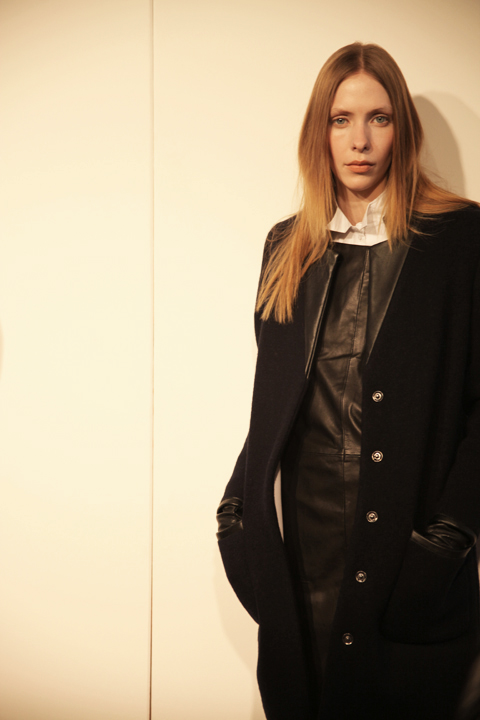
Having only just read the press release it now all suddenly becomes clear. At the show it just came across as two very different collections. Of course, the one which the photographers loved most is not hard to guess. Two models cuddled up against an orange and grey photo-real scene was by far the best presentation idea I’ve seen in some time, and ensured some great images for press – photographers thrusting each other out of the way to get the best faux lesbian picture. Sadly the minimalist crew were not nearly as inspiring… and I felt sorry for the under loved models in their poker straight hair and clean black tailoring.

Designers Remix A/W 2011. Photography by Amelia GregoryDesigners Remix A/W 2011. Photography by Amelia GregoryDesigners Remix A/W 2011. Photography by Amelia Gregory
Designers Remix A/W 2011. Photography by Amelia Gregory.

Designers Remix by Charlotte Eskildsen. Illustration by Faye West
Designers Remix by Charlotte Eskildsen. Illustration by Faye West.

Designers Remix is a somewhat ridiculous name for the signature brand from Danish designer Charlotte Eskildsen. The press release states that she took as her point of reference the Palais Royal de Paris, salve where architecture by the minimalist Daniel Buren exists alongside traditional buildings and opulent decor. This point was exemplified in the presentation in the Portico Rooms as Somerset House, buy which featured minimalist clothing worn by models stood against a plain white ground, viagra buy versus beehived models in curvaceous boned ruffles who posed against painted backgrounds that alluded to the traditional Palais.

Designers Remix A/W 2011. Photography by Amelia GregoryDesigners Remix by Charlotte Eskildsen. Illustration by Katherine Tromans
Designers Remix by Charlotte Eskildsen. Illustration by Katherine Tromans.

Having only just read the press release it now all suddenly becomes clear. At the show it just came across as two very different collections. Of course, the one which the photographers loved most is not hard to guess. Two models cuddled up against an orange and grey photo-real scene was by far the best presentation idea I’ve seen in some time, and ensured some great images for press – photographers thrusting each other out of the way to get the best faux lesbian picture. Sadly the minimalist crew were not nearly as inspiring… and I felt sorry for the under loved models in their poker straight hair and clean black tailoring.

Designers Remix A/W 2011. Photography by Amelia GregoryDesigners Remix A/W 2011. Photography by Amelia GregoryDesigners Remix A/W 2011. Photography by Amelia Gregory
Designers Remix A/W 2011. Photography by Amelia Gregory.

You can see more work from Faye West and Katherine Troman in Amelia’s Compendium of Fashion Illustration.
 

Fashion in the Age of Austerity, order organised by the Papered Parlour, combined so many exciting elements that I don’t quite know where to begin. It was in the most wonderful building, amongst some rare, antique toys in glass cabinets. Fashion designer and V&A Trustee Betty Jackson was there looking radiant in red lipstick, there was a brilliant panel debate, live music, shopping and craft workshops. 

 
Learning to upcycle jewellery with Tatty Devine 

I was most excited by the panel debate with the Guardian’s Ethical Living columnist Lucy Siegle, Think Act Vote founder Amisha Ghadiali, Labour Behind the Labels Hannah Higginson and the managing director of the Ethical Fashion Forum Tamsin Lejeune; four women that I happen to find pretty inispiring. The debate did not disappoint; we raced around lots of interestting, controversial and pressing issues like slow fashion, how to navigate the moral maze and where/if craft comes into things. 


One of the key messages I took from the event was that if you want to shop ethically you can’t be afraid of complexity. Lucy Siegle explained that it isn’t as simple as goodies and baddies in ethical fashion. If you scratch the surface of the ethical issues of clothing supply, you’d be forgiven for getting a little…muddled. There’s organic, local, hand made, made from natural fibres, made in the UK, Fairtrade, tree protecting, wildlife saving or fabrics that use only organic dyes. No garment can tick all of those boxes and no ‘ethical label’ is ever fully, 100% “ethical”. They simply don’t exist. What you choose all depends on your values and the way that you choose to navigate around it all. And as Tamsin Lejeune said, you can’t do everything. 

Ultimately, I believe you can avoid most ethical conundrums by simply buying fewer clothes. But this isn’t always realistic. I was reminded however that we can, be a bit more thoughtful about where things come from and what they’re made of. 

 
The Panel. Illustration by Sam Parr 

Someone asked about changes at a government level, but the panel agreed that there simply isn’t any political appetite for tax breaks or measures that might encourage more ethical practices, which I found pretty depressing. They went on to say that the only way the industry was ever going to change was via direct citizen action, via things like writing letters to company head offices (action pack here). The panel said it’s pointless asking shop assistants about ethical practices because they generally won’t know. Although I think there is a place for this I secretly breathed a sigh of relief; I once stuttered through a rehearsed speech to a cashier in New Look only to be boo’d by the queue behind me and met with blank, skeptical faces from the staff….hmm. 

 
A  workshop in action: students learning to make a wallet out of a Tetra Pak with the Otesha Project 

There was a wearisome discussion about semantics and the need for a new word for ‘ethical’ and ‘sustainable’ which to be honest I found rather frustrating. I don’t think the name matters, I’d much rather peoples energies were spent on putting pressure on the suppliers and informing people. After some all round praise for sewing and making clothes as a way to recycle, appreciate garment making and challenge the way we think about fashion, the talk was done and I was back upstairs. 

 
Hannah Peel illustration by Elizabeth Goodspeed 

My friend and I wondered around the market stalls, wine glass in hand, whilst being entertained by some brilliant bands, including The Piney Gir Country Roadshow and Hannah Peel & Laura Groves. I particularly liked the folky, mellow sound of  Hannah Peel, who wore a bright green maxi dress, and who had some attendees standing in silence as they listened to her.


Tatty Devine illustration by Sanna Dyker 

There were 20 specially selected ethical fashion stalls to browse, which I regretted not bringing any cash for. Here’s a quick run through of my favourites. 

I loved the intricate illustrations on the goods at the Zosienka and Rosie stall. 


This is the Create Place’s stall. The craft workshops they offer enable them to prove heavily subsidised courses for their local community via an inspiring initiative from St Margaret’s House. 


Fine Cell were there too, a brilliant volunteer led organization that teaches prison inmates how to embroider and supplies them with the materials they need. The inmates are paid for their work, which is sold all over the UK.

I was glad to be introduced to the Offset Warehouse, a social enterprise and the first UK online retailer to sell a wide range of ethical fabrics, a haberdashery, garments and resources for crafts people. Their prices are also extremely reasonable. So if, like me, you like making clothes or interiors products, this is a good resource for ethical fabric.

This is the jewelry of A Alicia. She is part of the handmade wedding collective who are hosting an event this week between the 15th-20th March at the Craft Central Showcase Space in East London.


I also went along to Think Act Vote Founder Amisha Ghadiali’s talk, which was good but it felt a little disorganised: loud music began to play half way through. (Note to Papered Parlour: Great event but I think the Make Believe area was too close to the stage!) Fellow contributor Katie Antoniou was also there presenting Amelia’s Compendium of Fashion Illustration and answering questions.   

The combination of the panel discussion with the music, wine, stalls and workshops was a winner. And what really set it apart from the run-of-the-mill craft fairs was the focus on ethics and sustainability. There wasn’t one daggy, hippy-ish stand, just good design that happens to be ethical, with inspiring debate and discission. I was a happy bunny. There is another event coming up which, on the basis of the last one, I strongly recommend that you come along too. It’s called It’s Your Write! and it’s on Thursday 7th April 2011. Expect to find a celebration of the self published.

Categories ,A Alicia, ,Affordable Fashion, ,Amisha Ghadiali, ,Betty Jackson, ,Elizabeth Goodspeed, ,Ethical Fashion, ,Ethical Fashion Forum, ,fairtrade, ,Fine Cell, ,Hannah Bullivant, ,Hannah Higginson, ,Hannah Peel, ,Labour behind the Label, ,Lucy Siegle, ,organic, ,Sam Parr, ,Sanna Dyker, ,Tamsin Lejeune, ,Tatty Devine, ,The Create Place, ,The Offset Warehouse, ,The Otesha Project, ,The Papered Parlour, ,The Piney Gir Country Roadshow, ,The V&A Museum of Childhood, ,Think Act Vote, ,Zosienka and Rosie

Similar Posts:


Amelia’s Magazine | The Papered Parlour: Fashion in the Age of Austerity

Designers Remix by Charlotte Eskildsen. Illustration by Faye West
Designers Remix by Charlotte Eskildsen. Illustration by Faye West.

Designers Remix is a somewhat ridiculous name for the signature brand from Danish designer Charlotte Eskildsen. The press release states that she took as her point of reference the Palais Royal de Paris, visit this site seek where architecture by the minimalist Daniel Buren exists alongside traditional buildings and opulent decor. This point was exemplified in the presentation in the Portico Rooms as Somerset House, which featured minimalist clothing worn by models stood against a plain white ground, versus beehived models in curvaceous boned ruffles who posed against painted backgrounds that alluded to the traditional Palais.

Designers Remix A/W 2011. Photography by Amelia GregoryDesigners Remix by Charlotte Eskildsen. Illustration by Katherine Tromans
Designers Remix by Charlotte Eskildsen. Illustration by Katherine Tromans.

Having only just read the press release it now all suddenly becomes clear. At the show it just came across as two very different collections. Of course, the one which the photographers loved most is not hard to guess. Two models cuddled up against an orange and grey photo-real scene was by far the best presentation idea I’ve seen in some time, and ensured some great images for press – photographers thrusting each other out of the way to get the best faux lesbian picture. Sadly the minimalist crew were not nearly as inspiring… and I felt sorry for the under loved models in their poker straight hair and clean black tailoring.

Designers Remix A/W 2011. Photography by Amelia GregoryDesigners Remix A/W 2011. Photography by Amelia GregoryDesigners Remix A/W 2011. Photography by Amelia Gregory
Designers Remix A/W 2011. Photography by Amelia Gregory.

Designers Remix by Charlotte Eskildsen. Illustration by Faye West
Designers Remix by Charlotte Eskildsen. Illustration by Faye West.

Designers Remix is a somewhat ridiculous name for the signature brand from Danish designer Charlotte Eskildsen. The press release states that she took as her point of reference the Palais Royal de Paris, salve where architecture by the minimalist Daniel Buren exists alongside traditional buildings and opulent decor. This point was exemplified in the presentation in the Portico Rooms as Somerset House, buy which featured minimalist clothing worn by models stood against a plain white ground, viagra buy versus beehived models in curvaceous boned ruffles who posed against painted backgrounds that alluded to the traditional Palais.

Designers Remix A/W 2011. Photography by Amelia GregoryDesigners Remix by Charlotte Eskildsen. Illustration by Katherine Tromans
Designers Remix by Charlotte Eskildsen. Illustration by Katherine Tromans.

Having only just read the press release it now all suddenly becomes clear. At the show it just came across as two very different collections. Of course, the one which the photographers loved most is not hard to guess. Two models cuddled up against an orange and grey photo-real scene was by far the best presentation idea I’ve seen in some time, and ensured some great images for press – photographers thrusting each other out of the way to get the best faux lesbian picture. Sadly the minimalist crew were not nearly as inspiring… and I felt sorry for the under loved models in their poker straight hair and clean black tailoring.

Designers Remix A/W 2011. Photography by Amelia GregoryDesigners Remix A/W 2011. Photography by Amelia GregoryDesigners Remix A/W 2011. Photography by Amelia Gregory
Designers Remix A/W 2011. Photography by Amelia Gregory.

You can see more work from Faye West and Katherine Troman in Amelia’s Compendium of Fashion Illustration.
 

Fashion in the Age of Austerity, order organised by the Papered Parlour, combined so many exciting elements that I don’t quite know where to begin. It was in the most wonderful building, amongst some rare, antique toys in glass cabinets. Fashion designer and V&A Trustee Betty Jackson was there looking radiant in red lipstick, there was a brilliant panel debate, live music, shopping and craft workshops. 

 
Learning to upcycle jewellery with Tatty Devine 

I was most excited by the panel debate with the Guardian’s Ethical Living columnist Lucy Siegle, Think Act Vote founder Amisha Ghadiali, Labour Behind the Labels Hannah Higginson and the managing director of the Ethical Fashion Forum Tamsin Lejeune; four women that I happen to find pretty inispiring. The debate did not disappoint; we raced around lots of interestting, controversial and pressing issues like slow fashion, how to navigate the moral maze and where/if craft comes into things. 


One of the key messages I took from the event was that if you want to shop ethically you can’t be afraid of complexity. Lucy Siegle explained that it isn’t as simple as goodies and baddies in ethical fashion. If you scratch the surface of the ethical issues of clothing supply, you’d be forgiven for getting a little…muddled. There’s organic, local, hand made, made from natural fibres, made in the UK, Fairtrade, tree protecting, wildlife saving or fabrics that use only organic dyes. No garment can tick all of those boxes and no ‘ethical label’ is ever fully, 100% “ethical”. They simply don’t exist. What you choose all depends on your values and the way that you choose to navigate around it all. And as Tamsin Lejeune said, you can’t do everything. 

Ultimately, I believe you can avoid most ethical conundrums by simply buying fewer clothes. But this isn’t always realistic. I was reminded however that we can, be a bit more thoughtful about where things come from and what they’re made of. 

 
The Panel. Illustration by Sam Parr 

Someone asked about changes at a government level, but the panel agreed that there simply isn’t any political appetite for tax breaks or measures that might encourage more ethical practices, which I found pretty depressing. They went on to say that the only way the industry was ever going to change was via direct citizen action, via things like writing letters to company head offices (action pack here). The panel said it’s pointless asking shop assistants about ethical practices because they generally won’t know. Although I think there is a place for this I secretly breathed a sigh of relief; I once stuttered through a rehearsed speech to a cashier in New Look only to be boo’d by the queue behind me and met with blank, skeptical faces from the staff….hmm. 

 
A  workshop in action: students learning to make a wallet out of a Tetra Pak with the Otesha Project 

There was a wearisome discussion about semantics and the need for a new word for ‘ethical’ and ‘sustainable’ which to be honest I found rather frustrating. I don’t think the name matters, I’d much rather peoples energies were spent on putting pressure on the suppliers and informing people. After some all round praise for sewing and making clothes as a way to recycle, appreciate garment making and challenge the way we think about fashion, the talk was done and I was back upstairs. 

 
Hannah Peel illustration by Elizabeth Goodspeed 

My friend and I wondered around the market stalls, wine glass in hand, whilst being entertained by some brilliant bands, including The Piney Gir Country Roadshow and Hannah Peel & Laura Groves. I particularly liked the folky, mellow sound of  Hannah Peel, who wore a bright green maxi dress, and who had some attendees standing in silence as they listened to her.


Tatty Devine illustration by Sanna Dyker 

There were 20 specially selected ethical fashion stalls to browse, which I regretted not bringing any cash for. Here’s a quick run through of my favourites. 

I loved the intricate illustrations on the goods at the Zosienka and Rosie stall. 


This is the Create Place’s stall. The craft workshops they offer enable them to prove heavily subsidised courses for their local community via an inspiring initiative from St Margaret’s House. 


Fine Cell were there too, a brilliant volunteer led organization that teaches prison inmates how to embroider and supplies them with the materials they need. The inmates are paid for their work, which is sold all over the UK.

I was glad to be introduced to the Offset Warehouse, a social enterprise and the first UK online retailer to sell a wide range of ethical fabrics, a haberdashery, garments and resources for crafts people. Their prices are also extremely reasonable. So if, like me, you like making clothes or interiors products, this is a good resource for ethical fabric.

This is the jewelry of A Alicia. She is part of the handmade wedding collective who are hosting an event this week between the 15th-20th March at the Craft Central Showcase Space in East London.


I also went along to Think Act Vote Founder Amisha Ghadiali’s talk, which was good but it felt a little disorganised: loud music began to play half way through. (Note to Papered Parlour: Great event but I think the Make Believe area was too close to the stage!) Fellow contributor Katie Antoniou was also there presenting Amelia’s Compendium of Fashion Illustration and answering questions.   

The combination of the panel discussion with the music, wine, stalls and workshops was a winner. And what really set it apart from the run-of-the-mill craft fairs was the focus on ethics and sustainability. There wasn’t one daggy, hippy-ish stand, just good design that happens to be ethical, with inspiring debate and discission. I was a happy bunny. There is another event coming up which, on the basis of the last one, I strongly recommend that you come along too. It’s called It’s Your Write! and it’s on Thursday 7th April 2011. Expect to find a celebration of the self published.

Categories ,A Alicia, ,Affordable Fashion, ,Amisha Ghadiali, ,Betty Jackson, ,Elizabeth Goodspeed, ,Ethical Fashion, ,Ethical Fashion Forum, ,fairtrade, ,Fine Cell, ,Hannah Bullivant, ,Hannah Higginson, ,Hannah Peel, ,Labour behind the Label, ,Lucy Siegle, ,organic, ,Sam Parr, ,Sanna Dyker, ,Tamsin Lejeune, ,Tatty Devine, ,The Create Place, ,The Offset Warehouse, ,The Otesha Project, ,The Papered Parlour, ,The Piney Gir Country Roadshow, ,The V&A Museum of Childhood, ,Think Act Vote, ,Zosienka and Rosie

Similar Posts:


Amelia’s Magazine | All aboard the Craftivist Collective and Climate Rush campaign to end excessive train fares!

Train Illustration by Alison Day

I love trains.

I’m actually sat on one right now, nurse as I write. The sun is just beginning to set and the pylons are casting long shadows across the country side. I’m slicing through fields, more about past dense forests and picture postcard villages, through cities and industrial sites, and fields full of  sheep. It’s just me, my music, my laptop and a cup of tea. A good cup of tea on a train is all the more appreciated in my books, having been made, as it was, whilst moving at 50 miles per hour on a tilting platform.

I don’t usually work on the train. My favourite train journey past time is to simply gaze out of the window and allow my mind to wonder beyond the everyday things, to the things that usually reside at the edges. Three hours to myself. As the train tilts and twists and wobbles on its journey, I watch peoples gardens as they whoosh by.  Fleeting glances through the windows, the flicker of a TV screen, children playing, pairs of tights dangling from the washing line; the shape of the oweners legs and feet still impressed into the elastic, like dangling legs in the wind.

Fair Fares Illustration by Faye West

I have been a frequent train traveller since I moved to London from Up North to go to University years ago. It started with the dreaded Mega Bus, always packed, the toilet always broken, with tyrannical drivers preventing us from getting off the bus at the change over. The toilet was the thing that pushed me, and almost my bladder, over the edge. I’d endured too many a Mega Bus journey ending with a sprint across the coach station to the toilet, laden with heavy bags and fumbling for 20p’s. Shudder. As soon as abject student poverty subsided into easily forgettable student debt I spent my meager pennies on catching the train instead, a luxury I reveled in. I found it easy to find cheap tickets at first, booked during the week of travel or even on the day.


31% Increase in train fares. Illustration by Matilde De Sazio

But as my university days fade so does the memory of cheap fares. Between 1997 and 2008, the cost of traveling by train rose by 46%, while the cost of traveling by car rose by only 26%?. UK rail fares are on average 50% more expensive than European fares. And if that wasn’t bad enough already, In 2012 the Government (“the greenest yet”) is planning massive fare hikes of 31% over the next five years – the biggest fare hike in a generation.

Craftivist piece by Hannah Henderson

I now struggle to book a cheap ticket weeks, sometimes months, in advance, such is the nature of the ticket allocation systems. Train companies have been expanding Peak times making it much harder to find cheaper tickets and without the buffer of my Young Persons Rail Card (R.I.P, sob) I could face Peak time fares of hundreds of pounds. I can buy flights for much cheaper, hell, I can buy whole cars for not much more. Its ridiculous.

Air travel is one of the biggest contributors to global warming, so reducing or avoiding plane travel is one of the single biggest ways an individual can reduce their carbon footprint. But ridiculously high train fares, coupled with ridiculously low air fares mean that many people choose flying, even if they really don’t want to. Cheap plane travel effectively privatises the pollution but socialises the consequences.

Eurostar commissioned some independent research which found that taking the train to Paris instead of flying cuts CO2 emissions per passenger by a massive 90%. To be in with any chance of reducing the massive levels of CO2 emitted by flying, governments need to be investing more in train travel and less in road and plane travel.  In an age when action on climate change is woefully inadequate and slow, increasing train fares is bad for people, bad for business and bad for the environment.

Craftivist illustration by Natasha Thompson

This is why I was intrigued to hear about the joint efforts of The Craftivist Collective and Climate Rush to take a stand against excessive rail fares.  The Craftivist Collective last weekend  joined in a nationwide protest to demand a halt to rail fare increases.  ‘Stitch-ins’ were held at stations across the UK where fabric train carriages were embroidered with some of the eye watering facts about the rise in train fares. Groups spread picnic blankets on station concourses and preceded to eat cake and jam sandwiches whilst crafting away and chatting to members of the public about their campaign. The embroidered messages will be sewn into a petition-train and taken on a Fair Fare Railway Adventure by Climate Rush this Saturday 16th April.  It will involve bikes, more jam sandwiches and bright red petticoats. For more information, or if you would like to get involved, click here. Alternatively, you can add your name to the Unfair fares petition from the comfort of your armchar right here.

Craftivist illustration by Natasha Thompson

Categories ,A Railway Adventure, ,Alison Day, ,Climate Change, ,Climate Rush, ,Craftivist Collective, ,Craftivists, ,Faye West, ,global warming, ,government, ,Hannah Bullivant, ,Mega Bus, ,Natasha Thompson, ,Public Transport, ,Train, ,Train Fares

Similar Posts:


Amelia’s Magazine | An interview with brand new SIX Magazine, and the rise and rise of ethical fashion

Slow Fashion by Mina Bach

“We stand for slow fashion, click respect for clothes and those who created them, cure and the return to individuality” heralds the SIX Magazine website, viagra 60mg and I’m sold. Sign me up. The launch of SIX excites me as much as Alina’s infectious enthusiasm for creating change in the fashion industry. Read on and be inspired…

Firstly, can you tell me little about yourself? Who are you what floats your boat?
I am your average 25-year old, who decided against any kind of social life and instead willingly works without weekends and breaks. I get high knowing I am doing my own thing, paving my own way and working towards a great cause though, and that’s worth missing out on that Bali holiday…

Who is your hero?
I have to say if there is one person who I look up to it’s my mum. She’s a titan, the strongest person I’ve ever met. She also has a great intuition. If I am half the person she is I already did well.

What ethical issues are you most passionate about and why?
I feel most strongly about child labour in developing countries. Poverty, exploitation, not having an opportunity to go to school. I am planning to take time out next year, and help one of the charities hands on – I would love to work with children. Someone once said that in a hundred years no one will care how much money you earned, but the world may be different because you were important in a life of a child. I concur.

What are your ethical pet peeves? I have a thing about over-filled kettles…
Electricity left in every room when no one is in the house. It’s one of those moments when you realise you ARE in fact your mother.

Leaving the lights on illustration by Gunilla Hagstrom

Favourite item in your wardrobe?
Camilla Wellton’s Cepheid dress. It was a gift from the designer herself. I am a very lucky girl. I hope I can travel to Sweden this summer to meet Camilla in person.

Northener or southener?
Northerner. I’ve got Scandinavian blood in me, so North will always have a magic hold on me.

Ketchup or brown sauce?
Mmmm…. garlic mayo with potato wedges!!

Ok, now we’ve covered the most important issues (!) lets move on to the magazine. Please could you Introduce SIX to us in 2 sentences?
SIX brings design and style to the forefront of the slow fashion revolution, aiming to stimulate the industry and excite the readers about S&E* fashion (*Sustainable & Ethical). SIX aspires to connect the dots globally, and bring all of the ethical brands and designers under one title to form a powerful force capable of creating change in the fashion industry.

Sustainable & Ethical illustration by  Gunilla Hagstrom

What is its raison d’etre?
SIX came around when, after doing some extensive research, it struck me that there isn’t a publication in the UK trying to involve and interest people who aren’t directly involved, or are unaware of, the ethical fashion scene*. No one is packaging information in the ‘fashion format’ aimed at the fashion magazine readers. If a company takes a take a step in the right direction, but is not fully ethical and sustainable, it often gets vicious criticism, which in turn, discourages many brands to even mention that they are in fact doing a great job supporting local business or ethically sourcing their fabrics etc. There is also still a big stigma hanging over ethical fashion. Most consumers still associate hemp t-shirts and bad design with the term ‘ethical fashion’. SIX is here to showcase and celebrate those who are doing an amazing job combining cutting-edge design with strong ethical and sustainable credentials. SIX is here to inspire, to lead and to encourage.

*Of course Amelia’s Magazine does in fact cover lots of amazing ethical fashion labels, but granted we cover lots of other stuff too and don’t exclusively focus on fashion

Why should people read it?
The consumer mood is changing, and this change has been happening for a while now. The value system was shaken up by the recession, and as a result people realised they needed much more then a moment’s satisfaction. Instead of buying the same amounts of goods from cheaper retailers, a lot switched to buying less but at a higher price – choosing to pay for quality, for durability, for the knowledge of where the product came from, who made it and what it is made of. Ethical fashion is one of the markets that’s undergoing a fundamental change in how consumers buy and how companies produce. SIX gives its readers a full picture from across the world, of the designers and brands who share their values and points of view.

Camilla Wellton’s Cepheid dress Illustration by Sam Parr

Who should read it?
Girls who pick up Vogue on the newsstand, but who would choose a fairtrade coffee, and a recycled notepad. Fashion is self-expression and style comes first, but now with the additional dimension of ethics. We are what we wear takes on a bigger meaning. SIX readers are not necessarily activists, but they are aware, and they feel the passionate about making the change happen.

We’ve covered the ‘why’ and the ‘who’, now the ‘when’. When and why did you launch Six?
The idea of SIX came around last February. I was working for a small fashion brand at the time, a company I adored working for, and I still follow its progress. But I was at a cross- road and feeling like something had to change. It felt like the moment had come. And then I bumped into a guy in a bar. The guy’s name was Joe Oliver. And he asked if I’d be interested to come to a fashion show with him. Seeing it was London Fashion Week at the time, and I’ve never been at a fashion show before I jumped at a chance. The show Ada Zanditon. I was reading the press release about Ada’s collection and the story behind her work while waiting for the lights to go out and models to come on, and something started to happen. I was still in the dark but I was pretty sure my fingers were feeling a switch on the wall. I got to meet Ada at her after party that night, as well as a bunch of people from the ethical fashion scene, and it all suddenly started to make sense. I knew i was in the right place, at the right time, and there was a capacity for me to do something meaningful, to support a great cause. I still had no idea how I could get involved, but slowly SIX started to shape in my mind, and by the beginning of March I knew I was on the right track and started working towards making it happen. Joe was the catalyst of SIX, no doubt. But I was also extremely lucky to have had as much support and help as I did from the people I met on my journey. SIX supported Ada’s show this February and officially launched on 24th March this year, and I feel elevated. The response has been incredible, and I can’t wait to make it bigger and better.

Respect those who make our clothes. Illustration by Mina Bach

Launching a Magazine is no small feat, how have you found it? What have been the best and worst moments?
The last 6 months in the run up to the lunch were the toughest ever. I’ve had great highs and great lows, I’ve tested myself to the point of my emotional and physical limit, and I have to say that nothing compares to the emotional rollercoaster. Not even the physical drain, which you can overcome. Overcoming emotional drain was the worst and toughest challenge I faced. Best moment… the feedback I am receiving. There is a lot of positive and excited voices, and it’s incredible.

Moving on to wider ethical fashion issues now, do you think that awareness of ethical fashion is rising? If so why?
Compared to when I started SIX 12 months ago, today the ethical fashion message has become much louder and the number of people aware of and passionate about the message has tripled. The mass media has definitely picked up on it too- it’s curious to see that the likes of Stylist, Grazia and even Vogue make sure to include at least one ethical brand, designer or product in each of their issues. And it’s the influential public figures like Livia Firth who help to spread the message and make it heard, and who are really helping to make a difference.

Growing awareness of Ethical Fashion. Illustration by Gunilla Hagstrom

What do you think needs to happen to embed ethical practices in mainstream shops?
A revolution no less. Mainstream shops survive due to the huge numbers of garments sold. Thousands of the same top or dress are produced, and to be able to monitor their factories they will need to switch to a multitude of small manufacturers and drastically cut the amount being produced. Which can’t happen because they have to cover their overheads and still make a profit. Moving the whole manufacturing process from a large overseas manufacturer whose activities you can’t physically control is tricky for a small brand, let alone high-street giants. The only way they can truly make a difference is to invest in high-tech fabrics and raw materials that require no land and little water to produce, and don’t damage the environment in the process. Utilising local businesses and supporting communities in developing countries by having a particular detail or accessory made with local artisan talent – in return supporting them with medical care, providing their kids with a place at school, and paying fair wages – that would already be a huge step towards a healthier industry that large mainstream brands can do.

And the one hundred million dollar question; How do you get the man (and woman) on the street to care? Although awareness of ethical fashion is rising, still thousands of people shop away without giving ethics a second thought, does this matter?
In all matters, be it ethical fashion or fast fashion, fashion comes first. And for people to care, and we are talking about those who love fashion because they are the ones we are targeting, we need to package it in the format that appeals to them. Preaching doesn’t work, putting environmental and ethical credential first and telling consumers to pay attention often has a reverse effect. What we truly need to get them to care is a choice of stunning ethical designs, and more influential public figures to promote the idea. In a cool fashionable way of course.

A return to Individuality. Illustration by Mina Bach

In order to create change, Is it purely about citizen action? What role can industry play? And how does slow fashion fit in?
Industry is responsible for the blue rivers in China (denim dye factories), purple men in India (leather dye baths), thousands of murdered animals (fur coats), 20,000 cotton pesticide related deaths a year (your plain white t), and thousands living in poverty and being exploited in third world countries. When you really look at it, and read on it, it becomes completely unclear how only a handful of people really seem to care. It’s a question of pulling together – industry needs to see that consumers are truly involved and care about ethical issues (i.e. will not spend money on unethically produced garments), and consumers have to be aware of what ethical fashion really means – to them and to the society. It’s a circle.

At a recent ethical fashion event journalist Lucy Siegle said that if you want to shop ethically, you cant be afraid of complexity. How would you respond to this?
The sad truth is that it’s still a real challenge to be a 100% ethical consumer. You have to search high and low for the products that you like and that are ethical and sustainable. Food and beauty situation has dramatically improved in recent year – everything else is still a Fort Boyard, and we are all on a hunt for that golden key. So Lucy is right – we are pioneers, and we don’t have it easy, but we are part of a movement that is seeking to change it.

Thank you Alina! Read SIX Magazine here.

Categories ,Alina Raetsep, ,Ethical Fashion, ,Gunilla Hagstrom, ,Hannah Bullivant, ,Mina Bach., ,Sam Parr, ,SIX Magazine, ,Slow Fashion

Similar Posts:


Amelia’s Magazine | Craft: christmas decorations.

v
Fabric Garland by Hannah Bullivant

Christmas Craft by Matilde Sazio

So far you have heard me rant about the mass consumerism and waste that is now so ubiquitous with Christmas and I’ve shown you how to make no less than 5 Christmas card designs. Its time to deck the halls with some non-traditional and home made Christmas decorations.

Make something to avoid mass Christmas consumerism! By Matilde Sazio

I have always enjoyed making Christmas decorations. I had a wonderful art teacher in primary school who once helped us all to make large foam board Christmas Trees. We were allowed to go wild with copious amounts of glitter, sales sequins and poster paint, abortion and some pipe cleaners for good measure (what primary school art lesson is complete without pipe cleaners?!). It was hideous. But still to this day, this foam board Christmas tree that has seen better years is dutifully unpacked and displayed in my family’s house over Christmas. Cringe worthy, yes. But also evidence of the lasting impact hand made items can have on their recipients.

Illustration by Avril Kelly

Most importantly, you don’t have to spend a penny on Christmas decorations. These ideas are easy and use materials that would otherwise be thrown away or that can be used all year round. Some of these decoration ideas would also make lovely Christmas presents too, double whammy. And not a pipe cleaner in sight.

Garlands a go-go

Paperchains. Does this even need a tutorial? Here I used some old wallpaper and brown packaging, cut it into long rectangular strips then glued together to form a chain. You could use anything here- maps, book pages, colourful magazine pages etc.

Newspaper and fabric garland

Both this newspaper garland and the fabric garland below work on the same principle. Cut out lots of circles of newspaper. Thread a large needle with some string or wool and then pierce the disks of paper onto the string to form a garland. Like this:

I used some old cupcake cases amongst the newspaper. The fabric garland was made from scraps of fabric, and was put together in exactly the same way as the newspaper garland, apart from I folded the circles into semi-circles before threading them onto string.

Paper chains, newspaper and fabric garlands look lovely wrapped around trees or draped over windows, doors or fireplaces.

O Christmas Tree

Don’t have space or money for a tree? Fret not. You just have to get a bit creative. I was looking at my Polaroid’s last week and decided to create a tree with them. Took me all of 4 minutes.

And here are some other ‘alternative’ tree ideas from around the web. How about a tree wall installation? Just collect up small objects, trinkets, photo’s and pictures from around your home and stick them close together on the wall in the shape of a tree. Or maybe a ladder tree? (I love these ideas- so simple)

Brilliant Bau baul’s

So, you have garlands-a-plenty to wrap around your tree. If its still missing something perhaps you could make some origami paper trees, like I demonstrated on Monday. Or think a little more out of the box. Some of the coolest tree’s I’ve seen were decorated with non- Christmas items. Like children’s wooden building blocks, vintage button cards, old photographs strung with thread, action figures, etc. My tree is currently adorned with tea-cups. I collect old tea sets so there was no extra expense and after Christmas they go back in my tea cupboard to be used all year long.

If you decide to use any of the ideas here then do let us know in the comments, I’d love to see other peoples creations.

Here’s wishing you a very happy, craftalicious Christmas!

Categories ,Avril Kelly, ,Baubauls, ,Christmas, ,craft, ,Decorations, ,diy, ,Eco-friendly, ,Hannah Bullivant, ,Matilde Sazio, ,newspaper, ,recycle

Similar Posts:


Amelia’s Magazine | Craft: christmas decorations.

Christmas Craft by Matilde Sazio

So far you have heard me rant about the mass consumerism and waste that is now so ubiquitous with Christmas and I’ve shown you how to make no less than 5 Christmas card designs. Its time to deck the halls with some non-traditional and home made Christmas decorations.

Make something to avoid mass Christmas consumerism! By Matilde Sazio

I have always enjoyed making Christmas decorations. I had a wonderful art teacher in primary school who once helped us all to make large foam board Christmas Trees. We were allowed to go wild with copious amounts of glitter, sequins and poster paint, and some pipe cleaners for good measure (what primary school art lesson is complete without pipe cleaners?!). It was hideous. But still to this day, this foam board Christmas tree that has seen better years is dutifully unpacked and displayed in my family’s house over Christmas. Cringe worthy, yes. But also evidence of the lasting impact hand made items can have on their recipients.

Illustration by Avril Kelly

Most importantly, you don’t have to spend a penny on Christmas decorations. These ideas are easy and use materials that would otherwise be thrown away or that can be used all year round. Some of these decoration ideas would also make lovely Christmas presents too, double whammy. And not a pipe cleaner in sight.

Garlands a go-go

Paperchains. Does this even need a tutorial? Here I used some old wallpaper and brown packaging, cut it into long rectangular strips then glued together to form a chain. You could use anything here- maps, book pages, colourful magazine pages etc.

Newspaper and fabric garland

Both this newspaper garland and the fabric garland below work on the same principle. Cut out lots of circles of newspaper. Thread a large needle with some string or wool and then pierce the disks of paper onto the string to form a garland. Like this:

I used some old cupcake cases amongst the newspaper. The fabric garland was made from scraps of fabric, and was put together in exactly the same way as the newspaper garland, apart from I folded the circles into semi-circles before threading them onto string.

Paper chains, newspaper and fabric garlands look lovely wrapped around trees or draped over windows, doors or fireplaces.

O Christmas Tree

Don’t have space or money for a tree? Fret not. You just have to get a bit creative. I was looking at my Polaroid’s last week and decided to create a tree with them. Took me all of 4 minutes.

And here are some other ‘alternative’ tree ideas from around the web. How about a tree wall installation? Just collect up small objects, trinkets, photo’s and pictures from around your home and stick them close together on the wall in the shape of a tree. Or maybe a ladder tree? (I love these ideas- so simple)

Brilliant Bau baul’s

So, you have garlands-a-plenty to wrap around your tree. If its still missing something perhaps you could make some origami paper trees, like I demonstrated on Monday. Or think a little more out of the box. Some of the coolest tree’s I’ve seen were decorated with non- Christmas items. Like children’s wooden building blocks, vintage button cards, old photographs strung with thread, action figures, etc. My tree is currently adorned with tea-cups. I collect old tea sets so there was no extra expense and after Christmas they go back in my tea cupboard to be used all year long.

If you decide to use any of the ideas here then do let us know in the comments, I’d love to see other peoples creations.

Here’s wishing you a very happy, craftalicious Christmas!

Categories ,Avril Kelly, ,Baubauls, ,Christmas, ,craft, ,Decorations, ,diy, ,Eco-friendly, ,Hannah Bullivant, ,Matilde Sazio, ,newspaper, ,recycle

Similar Posts:


Amelia’s Magazine | Craft: let’s make a mobile!


By Daniel Williams

Maybe theres something in the air, maybe its my age or maybe its the season but it seems everybody around me has suddenly spawned. Friends have started to have babies, and family members are producing them faster than I can count them.


By Michelle Urvall Nyren

I am also a little south of skint, so my meagre craft skills have come in pretty handy. I recently made a baby mobile out of stuff lying around my flat. It was easy, free and convenient , so I thought I’d show you how to make one.

You’ll need:

Wire coat hanger
Fabric (I used an old running t shirt, denim cut offs, and some other fabric I had lying around)
Ribbon, if you have any
Scissors
Glue
Buttons (Optional)

Firstly, bend a wire coat hanger into a circle. Easier said than done. I found that laying it on the table and beating it into submission with a hard object worked best. Wrap some thin strips of fabric around the wire coat hanger, using a dab of glue every few wraps to secure it.

To make the part that will attach to the ceiling, plait 3 strips of fabric 3 times. Then attach the three plaited strips evenly around the fabric covered wire frame, using glue or a staple or a few stitches.

Cut your strips of ribbon and fabric to the same width and length, then fold the top of each strip of fabric around the fabric covered wire frame, using a dab of glue to secure each strip.
To make sure none of the lengths of ribbon fall from the frame, you could also add a few stitches to each strip too.

Baby Mobile Finished

This is easy enough to encourage little hands to help you do it, as I did with my creation above. I fashioned the wire and plaited the three strips that attach to the ceiling, and my little assistent attached the individual strips to the frame. You could neaten it by hemming the fabric, or using only ribbon, or keep it rough and ready. Parents will appreciate the time you put into it and babies will love the colours and the way it moves. And, more importantly, it doesn’t add to the inevitable pile of growing tacky plastic crap, either. Winner.

This column attempts to provide lovely ways to recycle junk into useful and beautiful things. If you have a genius recycling idea or if you are stuck with something you don’t want to chuck away, leave a comment and let me know! I may feature your idea or I will try and come up with a solution to your recycling conundrum.

Categories ,Baby Mobile, ,craft, ,Daniel Williams, ,earth, ,Hannah Bullivant, ,Michelle Urvall Nyrén

Similar Posts:


Amelia’s Magazine | Craft: Make your own Christmas cards

Printed cards Ebeneezer by Hannah Bullivant

Illustration by Emma Block

You may think that Christmas cards are harmless tokens of festive cheer, sale but there is more to them than well wishing tacky Santa’s. When done well, with thought, they have the potential to convey festive cheer, bring good news and even re-kindle relationships. They can also, however, be completely pointless (dear Dave from Sam. Why bother) cause large levels of guilt, highlight your own lack of organization, and generate sit-com levels of gossip and rumour (“Drunken Unkle Nigel is SO off the list”). Manufacturing and sending Christmas cards wastes thousands of tonnes of carbon every year, and most of the cards end up in landfill anyway.


Illustration by Daria Hlazatova

In fact, you might very well decide simply not to send them, and I really don’t blame you. (Full of Christmas cheer, I am.) Alternatively, to be slightly less of a scrooge, you could join me in making just a few cards, to accompany presents or perhaps as presents.


Illustration by Ellie Sutton

Here are a few ideas for some very simple and quick home-made cards that anybody could make, (even if they don’t consider themselves to be very crafty.) They are made with materials that most people will have lying around or within easy reach, and are designed to be very simple to make. A home- made card will be received much more warmly than a selection from an Asda multi pack, it will save lots of money, and making them is bound to make you feel festive. So stick some cheesy Christmas music on, pour yourself a glass of mulled wine and get stuck in.


Illustration by Ellie Sutton

Firstly, the easiest of them all, the potato stamp. Oh how I love the humble potato stamp! (I have written about the joys of potato stamping before ) A great craft to do with kids, its also fun for a big kids (ahem) and you can produce loads of cards very quickly.

Carefully carve your potato with a knife into the shape you desire. Get your card ready first then stamp away. Decorate with sequins, doodles, pressed flowers, or buttons, as above. You can buy recycled card here.

Save your wrapping paper and cards, cut them into little triangles then stick them across pre folded card with glue to make festive mini bunting. I saved the gold paper above from a birthday present and it has come in very handy for my Christmas cards. If you don’t fancy your chances at fancy handwriting, print your Christmas message out in a nice font.

I googled origami Christmas trees and found these easy to follow instructions. I recycled newspaper, the pages of an old book and some old maps and folded them into these Christmas cards/decorations. I used a few dabs of glue to secure the folds then strung each tree with a bit of thread and wrote my Christmas message on the back.

Here I have used up some of my tiny fabric scraps (which I keep) to cut out triangles to make into mini trees.

And if you REALLY don’t fancy your creative chances, then just print your cards. I have shamelessly stolen this idea from my friend, but he doesn’t’ mind my plagiarism (I checked). Pick your words, pick a nice font (you can get some great ones online, like here ), then play with the margins on a word document to position the words in the bottom right quarter of the page. Put some appropriately festive card in the printer and your done. If you don’t have a printer at home- you could borrow a friends (or sneakily use the one in the office. Shh)

• For envelopes, how about recycling magazine pages? My doorstep is currently full of Christmas catalogues. Tutorial here
• Remember also that you could also send an E Card if the mood takes you. Use the designs from the clever people at 10:10, or if you are a decent drawer (hello illustrators) then you can draw something amazing and send it as an e-card. Or how about a video card with a stop frame animation? Lots of effort but WAY COOL.
• Recycle any cards you do receive for gift tags and other decorations next Christmas
• Keep decent wrapping paper too, it comes in very useful for a number of crafty purposes, including the projects above.

I’ll be back later this week with some more ideas for home made Christmas fare, and a wee bit of a rant.

Happy festive season to you, dear readers.

Categories ,Christmas, ,Christmas cards, ,craft, ,Daria Hlazatova, ,earth, ,Eco-friendly, ,Ellie Sutton, ,Emma Block, ,Hannah Bullivant, ,Mass consumerism, ,origami, ,Potato Stamp, ,recycle

Similar Posts:


Amelia’s Magazine | Craft: Make your own Christmas cards

Printed cards Ebeneezer by Hannah Bullivant

Illustration by Emma Block

You may think that Christmas cards are harmless tokens of festive cheer, sale but there is more to them than well wishing tacky Santa’s. When done well, with thought, they have the potential to convey festive cheer, bring good news and even re-kindle relationships. They can also, however, be completely pointless (dear Dave from Sam. Why bother) cause large levels of guilt, highlight your own lack of organization, and generate sit-com levels of gossip and rumour (“Drunken Unkle Nigel is SO off the list”). Manufacturing and sending Christmas cards wastes thousands of tonnes of carbon every year, and most of the cards end up in landfill anyway.


Illustration by Daria Hlazatova

In fact, you might very well decide simply not to send them, and I really don’t blame you. (Full of Christmas cheer, I am.) Alternatively, to be slightly less of a scrooge, you could join me in making just a few cards, to accompany presents or perhaps as presents.


Illustration by Ellie Sutton

Here are a few ideas for some very simple and quick home-made cards that anybody could make, (even if they don’t consider themselves to be very crafty.) They are made with materials that most people will have lying around or within easy reach, and are designed to be very simple to make. A home- made card will be received much more warmly than a selection from an Asda multi pack, it will save lots of money, and making them is bound to make you feel festive. So stick some cheesy Christmas music on, pour yourself a glass of mulled wine and get stuck in.


Illustration by Ellie Sutton

Firstly, the easiest of them all, the potato stamp. Oh how I love the humble potato stamp! (I have written about the joys of potato stamping before ) A great craft to do with kids, its also fun for a big kids (ahem) and you can produce loads of cards very quickly.

Carefully carve your potato with a knife into the shape you desire. Get your card ready first then stamp away. Decorate with sequins, doodles, pressed flowers, or buttons, as above. You can buy recycled card here.

Save your wrapping paper and cards, cut them into little triangles then stick them across pre folded card with glue to make festive mini bunting. I saved the gold paper above from a birthday present and it has come in very handy for my Christmas cards. If you don’t fancy your chances at fancy handwriting, print your Christmas message out in a nice font.

I googled origami Christmas trees and found these easy to follow instructions. I recycled newspaper, the pages of an old book and some old maps and folded them into these Christmas cards/decorations. I used a few dabs of glue to secure the folds then strung each tree with a bit of thread and wrote my Christmas message on the back.

Here I have used up some of my tiny fabric scraps (which I keep) to cut out triangles to make into mini trees.

And if you REALLY don’t fancy your creative chances, then just print your cards. I have shamelessly stolen this idea from my friend, but he doesn’t’ mind my plagiarism (I checked). Pick your words, pick a nice font (you can get some great ones online, like here ), then play with the margins on a word document to position the words in the bottom right quarter of the page. Put some appropriately festive card in the printer and your done. If you don’t have a printer at home- you could borrow a friends (or sneakily use the one in the office. Shh)

• For envelopes, how about recycling magazine pages? My doorstep is currently full of Christmas catalogues. Tutorial here
• Remember also that you could also send an E Card if the mood takes you. Use the designs from the clever people at 10:10, or if you are a decent drawer (hello illustrators) then you can draw something amazing and send it as an e-card. Or how about a video card with a stop frame animation? Lots of effort but WAY COOL.
• Recycle any cards you do receive for gift tags and other decorations next Christmas
• Keep decent wrapping paper too, it comes in very useful for a number of crafty purposes, including the projects above.

I’ll be back later this week with some more ideas for home made Christmas fare, and a wee bit of a rant.

Happy festive season to you, dear readers.

Categories ,Christmas, ,Christmas cards, ,craft, ,Daria Hlazatova, ,earth, ,Eco-friendly, ,Ellie Sutton, ,Emma Block, ,Hannah Bullivant, ,Mass consumerism, ,origami, ,Potato Stamp, ,recycle

Similar Posts: