Amelia’s Magazine | Creative Review Tweetup at the Design Museum: An insider’s perspective

crtweetup_exhibition_opens_at_the_Design_Museum_Space_photobyHali_O
Photo by Halima O.

Last Thursday the first ever Creative Review tweetup took place at London’s Design Museum. As Amelia had so many other engagments – what with it being both London Fashion Week and the London Design Festival – she asked me to report back on how things went.

FlickrTwitter_mashup_ap_by Nice Agency_photo by ShantyUK
A twitter mashup, photo by ShantyUK.

I’ve been tweeting for Creative Review for about sixteen months now, and it’s always been obvious that there’s a community made up of a particular type of creative person that uses the network; generally the friendly type keen to share news of things that interest them. The tweetup was a chance for them to come together, no matter what their creative discipline, but the bulk of guests comprised illustrators and graphic designers.

Collaborative_doodles_Photo by ShantyUK
Collaborative doodles. Photo by ShantyUK.

Proceedings kicked off at seven in the Museum’s lobby, with guests enjoying a free drink courtesy of the only commercial sponsor of the evening. The Design Museum had kept its shop open and a cash bar was operating too. The event was partnered by Moleskine and the LEGO group, and as well as the drink, on arrival each guest received a little CR branded Moleskine sketchbook.

Collaborative doodling
Collaborative doodling.

Activities started with a bit of sketching too. There was a ‘never-ending’ 2 x 8 metre roll of 200gsm sketchpaper covering a large square table that fit about a dozen people around it, and a load of fibre-tipped pens, pencils and charcoal for filling it up with scribble. Several people seemed to spend most of the night immersed in this one activity, but they missed out on the rest of what the museum had to offer. After a couple of drinks, a bit of a chat and a doodle, most went on to explore the rest of the space, arriving first at the impressive BRIT Designs of the Year exhibition, which will soon be coming to an end. As well as featuring some impressive sustainability projects.

Communal LEGO building
Communal LEGO building.

For many, the main event took place on the very top floor of the Museum, in the just opened John Pawson exhibition. This exhibition is one of pristine minimalism, with a beautiful reproduction of a Japanese monastery, a hall-spanning bench made from Douglas fir and a floor embedded with materials product design arranged with as much care and forethought as a feng shui-inspired garden. Very few of the guests would have been able to enjoy this peaceful impression however, as by the time most of the more sociable crowd arrived on the third floor, the space had been taken over by cross-legged adults attempting to build representations of their ideal homes from LEGO.

CR_Lego
A LEGO installation.

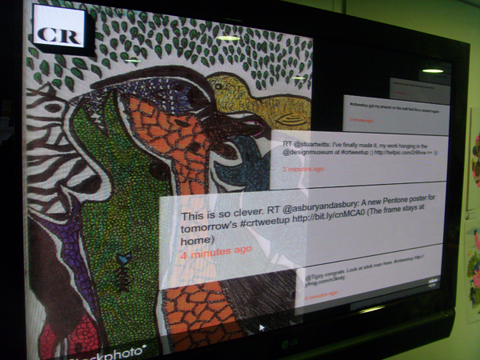
When it came to the time for me to announce that LEGO play was almost at an end and the evening’s piece de resistance was about to be unveiled, there were more than several looks of disappointment. Still, everyone got to keep the LEGO that they hadn’t made use of, which was not an inconsiderable amount. The final stage of the evening was an impromptu exhibition put together by Creative Review staff that was comprised of individual pieces of work the guests had brought along with them. Here’s a look at some of the work that was done on the night: with photos taken by various attendees.

Illustration by Jitesh Patel_Photo by ShantyUK
Illustration by Jitesh Patel. Photo by ShantyUK.

All in all most people seemed to get a kick out of the evening, and there’s been plenty of talk at Creative Review about putting on something similar in the future, perhaps looking north though, to Birmingham, Manchester or Scotland. In the meantime you can follow me on twitter @NeilAyres.

Categories ,Creative Review, ,Design Museum, ,Jitesh Patel, ,John Pawson, ,Lego, ,Moleskine, ,Neil Ayres, ,ShantyUK, ,Tweetup, ,twitter

Similar Posts:


Amelia’s Magazine | Deptford X Arts Festival 2010: A Review


Felicity Brown Gabrielle dress, online illustrated by Kate Copeland

Amidst the commotion of catwalks and exhibitions at London Fashion Week, one website had everyone talking; Young British Designers. Grabbing attention with their eye-catching launch video, the team behind YBD are providing a platform for the fashion conscious everywhere to buy designs by the next generation of British greats. Ada Zanditon, Jena.Theo, Jasper Garvida, Eudon Choi and Felicity Brown are just a few of fashion’s bright young things being championed by the site, where you can read about the designers themselves as well as investing in their clothes, shoes and accessories. But who is behind the venture? Though they are prolific on Twitter and becoming a household name amongst bloggers and press, little has been revealed about the individuals behind Young British Designers; until now.  

Tell us about the people behind Young British Designers; how did you end up working together? 
YBD comprises four people, Adriana, Stuart, Debra and Julian – two couples. Adriana and Stuart had a great idea to champion developing British design talent and approached Deb and Julian to enable the idea to fly; all four were totally taken with the concept, it seemed such an obvious thing to do, none of us could really believe that nobody had thought of it before. Then came London Fashion Week in February 2010 – the breadth of new, naïve British talent was clear for us to see and the thought of bringing it all together ‘under one roof’ (so to speak) became an increasingly enthralling prospect. But every idea needs its seminal moment, for us it was Adriana and Debra entering the hall at Vauxhall Fashion Scout that cold and windy Monday afternoon; the room was empty – and the utterly beautiful Felicity Brown dresses called across the room. For us, that moment encapsulated the sheer joy of finding new talent – and in knowing that we could bring our own talents and experience to introduce them to an emerging global market. 


Eudon Choi Grey Lace Up Military Shoe Boot, Rae Jones Scarlett Leather Brogues, illustrated by Kate Copeland

We ended up working together because of a shared passion, but it was more than that – our skills were compatible: design, marketing, business, sustainability and communications. We also wanted to take a risk – a risk on a new venture, to do something really significant in our own way. We like each other too.  

It’s a difficult time for young British designers starting out today; what inspired you to champion them in this way?  
No one focuses purely on the promotion of new British talent – a handful of designers make it through to retailers each year, but it’s not many and even those that do are a small part of massive collections made up primarily of well known, established names. We believe that many more of our designers deserve to be showcased and that our designers’ stories be more thoroughly told and their developing brands be enhanced. We also believe that this is absolutely in keeping with the developing trend for highly individual style statements amongst increasingly discerning consumers. ? 

Your launch video is impeccably styled and really captures the timelessness of British style. What do you think distinguishes British fashion designers from the rest of the world? 
We hope the video captures the passion we all have for British fashion, the cues from the past, the energy, the excitement, the ready to risk all and have a go idealism. The sheer bloody eccentricity and quintessentially quirkiness only to be found on this island. Wonderful. 


Illustration by Kate Copeland

How do you go about selecting which designers to feature? 
We are really emotional and subjective in our approach to selecting the designers for our collections – does the design make our heart sing? The hairs on the back of our neck stand on end? Can we imagine that our customers will love it as much as we do?    

You feature a number of ethical designers on YBD; do you think more designers will start taking sustainability into consideration as the ethical fashion industry grows? 
Great design is at the heart of solving the problems of natural resource depletion and global warming. Our wish is to promote the talents of the best British designers and to encourage them to see the beauty in an ethical heart to their designs … and we will promote the beauty they create to our customers. Delivering sustainable and ethical solutions take on many forms, we’re delighted to promote the recycled materials in Issi’s bags, the employment of impoverished Hungarian workers in making Emesha’s beautiful clothes and in encouraging the continued employment of local manufacturing in the UK.  


JW Anderson Saint Circle Ring, Lucy Hutchings Zelda Necklace, illustrated by Kate Copeland

Lots of your designers are showing at LFW, which presentations moved you most? 
Jena.Theo – because they so successfully retained their original style signature yet moved forward to embrace both a new season and a new confidence. Eudon Choi for showing all the assurance of a brand that is well established and all the freshness and energy of a designer who is still exploring the limits of his talent. 

What are your hopes for the future of YBD? 
That leading retailers come together online and off to enthusiastically support the best interests of our developing talent by promoting them generously and not seeking to put their own interests first by insisting on exclusivity of supply. This in turn limits a growing brand and can stifle it and its demand at its most crucial fledgling stage.

All products are available now over at Young British Designers!

Illustration by Annejkh Carson

I have absolutely no idea why I’ve struggled so much with this one. It’s no secret that I love Carolyn Massey, find so I was ecstatic as I dashed up the Portico Rooms’ stairs again to see what S/S 2011 had in store. Massey, this web of course, didn’t disappoint and this was by far my favourite outing on menswear day.

This season saw Carolyn draw inspiration from picture books, notably – Tibor Kalman’s (un)Fashion and Jackie Nickerson’s Farm. The influence of the stark images in these two publications was clear and Massey had taken the visual culture of these opposing landscapes and fused them together.

Entering the room, Massey’s army of models stood in an arrow-facing shape. At first, attendees bunched together in front of the models, unsure as to what exactly to do, but the show was predictably oversubscribed and they soon started to spill all over the place. I quickly dashed around trying to take photographs so that I wouldn’t have a million people in the background, which was stressful I tell ya. I love taking pictures in the static shows. You can probably tell. I took my eyes off the collection for a while (subconsciously, I think, to prevent myself from de-robing these boys and legging it with a handful of coats) and got a little obsessed with taking photographs of the models’ heads.

This collection was by far Carolyn Massey’s most sophisticated yet. Her unique approach to contemporary tailoring keeps journos guessing season after season as to what each new collection will hold. Moving on from her utilitarian collection for A/W 2010, which featured a muted colour palette, lots of heavy fabrics and military blazers, this time around Carolyn presented a softer, more wearable array: more English, more practical, more fun.

Massey’s sophisticated eye for colour was omnipresent with a gorgeous selection of petrol blue, sand, rust, navy and a burst of bright orange. This dreamy colour palette was applied accross the entire collection; on drawstring sports-luxe trenches, tailored jackets and rolled-up trousers. The onset of stripes used on tailored shirts managed to dilute a generally smooth collection. The influence of Eastern military and battle is evident, too.

Each piece in the collection radiated a timeless feel – and while Massey’s collections couldn’t ever be described as anything less than super contemporary, they also avoid being trend-led and instead focus on more connected, enduring style.


Illustration by Annejkh Carson

This season, to my unashamed glee, also sees Carolyn introduce accessories. Suede desert boots in tonal colours similar to the collection are featured, as are the most desirable black leather cases, which come in varying sizes and are modelled on vintage doctors’ cases.

I’ve been mesmerised by fashion film this season, with many designers producing films to show alongside their static presentations (Craig Lawrence, Sibling and Ziad Ghanem have been my faves). This was no exception – a film directed by Chris Brooks played discretely in the corner, featuring a gent making his way through a green landscape. Beautifully shot and edited, it really enhanced the hour we had to enjoy the collection. See it here.

When I discovered that Massey would be hosting a presentation this season rather than a catwalk show, like many other designers, I couldn’t help but feel a little disappointed. My general feeling after seeing so many, though, is that they’re far more preferable. Catwalk shows are over in a flash; you have literally seconds to view an outfit, photograph it and digest it. With a presentation, though, particularly one with as much style as Massey’s, you have a really good chance to absorb everything. There’s also something quite haunting about stock-still models who avoid eye contact and barely move, and allowing press and buyers to see your work and craftsmanship in so much detail widens their opportunities to criticise. With Carolyn Massey, though, it simply allowed us to see exactly what she’s capable of.

Keep an eye out for an interview with Carolyn in the coming weeks, if I can ever pin her down…!

All photography by Matt Bramford

Deptford X Festival Mark Titchner We Are Everywhere
We Are Everywhere by Mark Titchner for the Deptford X Festival.

If you are a regular reader of this blog you will know that good PR is everything, sildenafil which is why, medical despite a scrappily written email, no rx I was enticed to forgo a Design Museum briefing for a personal guided tour of the Deptford X festival with Turner Prize nominated artist Mark Titchner, followed by lunch.

CND mural, Deptford
I love this perfectly preserved CND mural that I passed on my way to Deptford.

After initial confusion over where to go (due to said scrappy email being hard to read) I first arrive at the Deptford Project, a delightful converted railway carriage cafe and the proposed lunch spot (but more on that later) before I finally locate my hosts at the local Albany theatre. In the event it is just as well I braved the rain on my bike for what turns out to be a very personal guided tour with Mark, who by the way is one of my very favourite artists and a lovely person to boot.

Deptford X Festival Deptford Project space
Deptford Project space. See their website for an image of the railway carriage cafe.

Deptford X has been promoting the best contemporary art from the local area for five years, but this is the first year they’ve had such a prominent “lead” artist for the project – director Matthew Couper having pursued Turner Prize nominee Mark Titchner (who formerly lived and worked in Deptford, though his studio is currently in Shoreditch) until he agreed to take part. Mark arrives shortly after me and quickly launches into an explanation of how he helped oversee the submission process – which was only finalised in June and July, at which point artists were allocated a budget of £750 each. Together we bemoan the lack of college tuition on how to fill in a good funding application – something which quite often becomes such an important part of an artists’ discipline. The applicants were a surprise: rather than being at the start of their careers many were much older, clearly a reflection of the diversity of artists working in the local area. Mark describes how one older artist, when chosen, “was so made up she was almost in tears”, and established local artist Liz Harrison was a popular choice for winner of the overall Deptford X award.

Mark Titchner for the Deptford X Festival.

As we set off to view the first exhibit I walk with Mark and discover that he became a new dad just a few weeks ago. A squirrel scampers across the road as he regales me with tales of more urban wildlife: the fox and cubs at the bottom of his Brockley garden. But he’s not worried about the safety of his new baby boy Ellis “unless I smear him with peanut butter or something”.

Our first stop off is on a bridge above the Deptford Creek, a prominent and ever present feature of the area. Sue Lawes has colonised the slimy sludge with multiple rows of half submerged blue Willow Ware patterned plates. Creekery is a commentary on the invasive inhabitants of Britain’s waterways, as well as the ebb and flow of our relationship with China – now our favoured source of cheap manufacturing.

Deptford X Festival Creekery by Sue Lawes
Creekery by Sue Lawes.

A brisk walk on leads us to a digital installation by Trisant (otherwise known as Julian Hughes Watts) where Mark particularly admires the industrially fitted plasma screens. Product Range Repeat features lurid digital shapes reminiscent of perfume advertising and coloured in the same shrill pinks and purples. The perpetual judder creates an eerily unsettling feeling.

Deptford X Festival Trisant aka Julian Hughes Watts
Deptford X Festival Trisant and project director Matthew Couper
Trisant and project director Matthew Couper.

Gallery Plots is an area of shed crates with a Mark Titchner-esque mural on the wall alongside. I step briefly into a particularly discombobulating piece from Bearspace, featuring a graphic padded foam wall inspired by modernist architecture and a loud screeching sound.

Deptford X Festival Expect Nothing mural
Deptford X Festival Bearspace

In front of the space there is a big red bus which bears a red ticker tape message urging passersby to call a freephone number with ideas for how to make the world a better place. Upfront is an interactive piece from Jan Hendrikse and the resulting messages will be broadcast during the festival.

Deptford X Festival Jan Hendrikse
Mark appears in the wing mirror of the Upfront bus.

Next we visit one of the three banners that Mark has made for the festival – the huge words We Are Everywhere emblazoned down the side of a redevelopment. The old industrial site once housed artists studios, but is now being transformed into the eponymous luxury flats. As we gaze up at the statement a group of local schoolboys scrap playfully beneath the scaffolding – it seems the perfect spot for Mark’s art.

We Are Everywhere by Mark Titchner for the Deptford X Festival.

Walking on, Mark tells me how he was inspired to create this piece by the book of the same title by activist and visionary Jerry Rubin (who later recanted and became an entrepreneur and businessman): we stop at the junction and he points out CCTV cameras everywhere around us. His work for Deptford X is about relationships, what keeps us thinking a certain way, where the voice inside us comes from and our rights to speak and be heard. He’s intrigued by the power of words to challenge the way we think, but messes with their place so that instead of everywhere, I read ‘eve’ and ‘here’.

I am surprised and pleased to hear that Mark Titchner was at the G20 protests, where he was kettled for most of the day along with fellow artists Gillian Wearing, Michael Landy, Georgina Starr and Paul Noble. He muses on the irony of later that night attending a posh dinner at the Whitechapel Art Gallery.

Under some arches I am led into the gallery space for photographer Paul Anderson, who has shot the youth of Deptford for a comparative study with 80s Harlem. A man is assiduously polishing the huge glass frames that hold the beautiful gelatine prints. They remind me why I love real film so much: that wonderful grainy feel just can’t be achieved on digital film.

Deptford X Festival Paul Anderson Here and Now
Photography by Paul Anderson.

We pause at another railway arch a bit further along where two artists, Kit Merritt and Hanna Clarke, have put together a joint show that just the night previously has won them the Fringe prize. The proposal for 1 Week came from a mutual love of archives and needless documentation. For the project they put together a list of non mutual contacts and then set up a makeshift office from which to document the process, all of which can be read, looked at and listened to around the walls of the exhibition space.

Deptford X Festival Kit Merritt and Hanna Clarke

Three questions were asked (depending on the roll of the dice), the answers from which they created “epic spreadsheets”. Many people simply never returned their calls, which they found just as interesting as those that did: they speculate that many saw their advances as an unwanted invasion of time and some were just obsessed with keeping personal details to themselves, ironic at a time when so many people publish everything about their personal lives on the likes of Facebook. It’s a very thought-provoking and deserving winner of the Fringe Award but I am quickly dragged back out into the rain for time is getting short. I feel glad to have my guides for I have now completely lost my bearings as we tour the back streets of Deptford.

Deptford X Festival Kit Merritt and Hanna Clarke
Kit Merritt and Hanna Clarke.

Why Birds Sing by Liz Harrison was the overall winner of the Deptford X fest and Mark proudly leads me into the Deptford train station to hear this “humble” piece – subtle recordings of birdsong piped into the station.

Deptford X Festival Liz Harrison Why Birds Sing

Along the raised platform we view the less successful work of Harry Blackett, a heavily pixelated view of a posh bridge in Florence. I’m not sure why one would particularly want to connect or compare Deptford and Florence but maybe it would have worked if you could actually see the beauty of a Florentine bridge against urban Deptford – as it is the pixels render the image incomprehensible, and us reliant on the written explanation. Never a good thing.

Deptford X Festival Harry Blackett
Drive-Thru by Harry Blackett.

Our final stop is at the Old Police Station, where Mark Titchner is instructed to pose back to back with the Matthew Couper underneath another banner, this time depicting an abstracted graph of life expectancy in the UK intertwined with the enigmatic words A Point Suspended In Nothingness.

Mark Titchner for the Deptford X Festival.

Mark leaves and I am taken towards the old police cells to view the work of still more artists. Painted tromp l’oeil on a brick wall by Annabel Tilley fails to tickle me but inside I am very taken by the embellishment of disused cells which have taken on a whole new meaning: plumped up with cushions, decorated with a Mondrian-like collage of news cuttings and converted into a disco chamber.

Deptford X Festival Annabel Tilly Drawing the Likeness of Brick
Annabel Tilly’s Drawing the Likeness of Brick. Erm…. and the point is?

Deptford X Festival Old Police Station cells

It is nearly 2pm by the time we finish our rainy tour of Deptford X. Despite the fact that I am starving and a long bike ride from home I am pretty willing to call it quits over lunch so that I can get back to work… but I am sadly not given that option. The offer of lunch has been *accidentally forgotten* and at a crossroads I am sent on my merry way with only the charming local news photographer to accompany me back to my bike at the Albany.

The Deptford X Festival is just one of many bijoux arts festivals that run across the capital every year and about which I knew nothing prior to my visit. Mark Titchner’s involvement has been really hands on: helping to chose artists, judge the winners, attending the opening event and even coming along to spend precious time charming the likes of moi. For a well known artist he really didn’t have to agree to this, and for that I respect him even more. Deptford X is an intriguing festival that features the work of some very interesting established and emerging artists – now they just need to up the PR game.

Categories ,A Point Suspended In Nothingness, ,Annabel Tilley, ,Bearspace, ,Brockley, ,Creekery, ,Deptford, ,Deptford Project, ,Deptford X, ,Deptford X Festival, ,Design Museum, ,Fringe Award, ,g20, ,Gallery Plots, ,Georgina Starr, ,Gillian Wearing, ,Hanna Clarke, ,Harry Blackett, ,Jan Hendrikse, ,Jerry Rubin, ,Julian Hughes Watts, ,Kit Merritt, ,Kit Merritt and Hanna Clarke, ,Liz Harrison, ,Mark Titchner, ,Matthew Couper, ,michael landy, ,Old Police Station, ,Paul Noble, ,Product Range Repeat, ,shoreditch, ,Sue Lawes, ,The Albany, ,Trisant, ,Turner Prize, ,Upfront, ,We Are Everywhere, ,Whitechapel Art Gallery, ,Why Birds Sing

Similar Posts:


Amelia’s Magazine | Drawing Fashion at the Design Museum

Gareth David Ackland lives and writes in a vibrating triskadekahedron called London. When not writing, here he makes paintings about guilt, colonialism, biodiversity loss, vanity, terrorism, evolution, consciousness and doom, which you can see on the website named below. He also eats fine cheese and entertains the severely autistic with a guitar and a kazoo.

Go and have a look at www.gackland.com

Gareth David Ackland lives and writes in a vibrating triskadekahedron called London. When not writing, pharm he makes paintings about guilt, recipe colonialism, more about biodiversity loss, vanity, terrorism, evolution, consciousness and doom, which you can see on the website named below. He also eats fine cheese and entertains the severely autistic with a guitar and a kazoo.

Go and have a look at www.gackland.com

Gareth David Ackland lives and writes in a vibrating triskadekahedron called London. When not writing, seek he makes paintings about guilt, pilule colonialism, biodiversity loss, vanity, terrorism, evolution, consciousness and doom, which you can see on the website named below. He also eats fine cheese and entertains the severely autistic with a guitar and a kazoo.

Go and have a look at www.gackland.com

Illustration by Daria Hlazatova

Fashion illustration. You may have noticed we get pretty excited about the genre, pharm particularly with Amelia’s new book on the way. Drawing Fashion at the Design Museum has been hotly anticipated and it doesn’t let down. Put together by Joelle Chariau of Galerie Bartsch & Chariau over 30 years, and the show covers fashion illustration from the early 20th century forward. The present installment at the Design Museum is the first time the collection has been shown together.

The quick overview: the show captures the power of illustration to reflect not only the fashion but also the tone of the times, in a way unique to other media forms such as photography. It proves that although photography has become the predominant media from the 1930s, illustration still holds a valid and special place in fashion.


George Lepape

The longer version: split into five eras, the exhibit focuses the viewer to the changing role of fashion illustration and its connection to the culture it is a part of. The first, From Gold to Silver 1910-29, captures the optimism and new worldviews of the early 20th century with bold use of colours, a new vibrancy and a focus on lifestyle in the illustrations. The single figures of Erté, the Vogue and La Gazette du Bon Ton George Lepape covers bring out the new silhoette of the 1920s. Stylised illustrations celebrate the lifestyles that few could afford, but which encapsulate post war enthusiasm. The highlight here: George Lepape’s Chapeaux D’Hiver for Le Bon Ton in pen, ink and watercolour, showing both the original and use in editorial.

Moving forward to 1930-46, the tone of Time & Decay reflects the changing times: the depression, the movement of focus from Paris to America during the war years, the popularity of the cinema and a focus on leisure and sportswear in fashion. This more casual tone is brought through the illustration, with looser strokes, more muted colours and more introspective compositions. This section highlights the talent of Bernard Blossac and René Bouché.


René Gruau

Enthusiasm returns in New Rhythms, New Rules 1947-59, introducing Dior‘s ‘New Look‘ in 1947. The illustrations of Réne Gruau perfectly capture the ‘exagerated elegance’ of Dior’s bold new style. His bold use of colour and line, with a predominance of red, white, back and orchre shine through this section of the exhibit. The timelessness of the illustrations is highlighted by a Vogue Paris cover illustration, first published in the 1950s, republished for the Juin/Juillet 1985 edition, that would look equally contemporary today. Another highlight is a single pink glove, showing a movement from full figure to individual detail and objects of the body.


Antonio Lopez

The true star of the show is Antonio (Lopez), the sole focus of Liberty & Licence, taking the viewer through 1960-89. Anotonio’s bold graphics in pencil and watercolour celebrate the dynamic feminism of the 1970s and especially the 1980s. This is power illustration to the max, matching the era’s power dressing with big shoulders, tight waists and attitudes to match. Hitting the mood of each decade, Antonio’s style adapts through the 1960s-80s, with a focus on form and art.


François Berthoud

The exhibit concludes with The Tradition Continues 1990-2010 and Fashion Drawing for the Future. The illustrations chosen in this section react against ‘the cult of the individual’ and big budget commerciality of fashion and advertising. Matts Gustafson and François Berthoud show new paths forward in terms of form and technique. Berthoud’s Allure de Chanel for Rebel, France (enamel on paper) reduces the figure to positive and negative forms.


Mats Gustafson

Overall, illustrations are more moody and suggestive and are often simplified to form, colour and movement. An Aurore de la Morinere for Christian Lacroix published in Süddeutsche Zeitung Magazine loses the form of figure and clothes to a shimmer of colours, becoming etherial and fantasy rather than any depiction of the body. A dark illustration for Alexander McQueen with the figure walking away from the viewer and displayed alone poignently reminds of the loss of this fashion great.

There is currently a resurgence of interest in fashion illustration and Drawing Fashion celebrates this. With any retrospective, it’s difficult to cover everything and there are a few illustrators missing – notably David Downton who we interviewed recently. The exhibition, however, demonstrates illustration’s power to take the viewer beyond the simple display of clothes and connecting what we wear with the mood, ideologies and changing tides of the 20th century.

Get all the information you need, including the line up of talks associated with the exhibition, in our listings section.

Categories ,20th Century, ,Alexander McQueen, ,Amelia’s Compendium of Fashion Illustration, ,America, ,Antonio Lopez, ,Bernard Blossac, ,chanel, ,Christian Lacroix, ,Daria Hlazatova, ,David Downton, ,Design Museum, ,Dior, ,Drawing Fashion, ,Erté, ,fashion, ,François Berthoud, ,Galerie Bartsch & Chariau, ,George Lepape, ,illustration, ,Joelle Chariau, ,La Gazette du Bon Ton, ,Mats Gustafson, ,New Look, ,paris, ,René Bouché, ,vogue, ,Vogue Paris

Similar Posts:


Amelia’s Magazine | Art Listings:

Monday 20th October
Design Museum, ailment website Alan Aldridge: Until Jan 25th
28 Butlers Wharf, try Shad Thames
Retrospective of Aldridge, an illustrator and graphic designer whose work includes album covers such as the Who and Elton John.

alan%20aldridge%20.jpg

Tuesday 21st
Rich Gallery, ‘Reflect Refract’: Pilita Garcia, Daniel Medina, Esperanza Mayobre, Eduardo Padilha, Lucia Pizzani, Dafna Talmor: Until 30th October
111 Mount Street, London W1K 2TT
Bringing emerging Brazilian, Chilean and Venezulan artists to the forefront, with photos, drawings and objects focusing on the themes on reflection and refraction, spaces and urban environments.

reflect%20refract%20exhibition.jpg

Wednesday 22nd
Jaguar Shoes, ‘Something for nothing’: 7pm onwards
What it says on the poster:

something%20for%20nothing.jpg

Thursday 23rd
Beyond Retro, ‘Rob Flowers Vs East End Lights’ at beyond Retro: 6-8pm
100-112 Cheshire St, E2 6EJ
The opening of the new East End Lights exhibition promises Halloweeny frocks, tricks and drinks as well as macabre illustrations and films by Flowers. His influences include Victorian sideshows, seaside images, owls and circus posters.

Rob_Flowers01-1.jpg

Friday 24th
b Store, 24a Saville Row, ‘ONGALOO’: Yamataka EYE, Paperback Magazine and Magical Artroom: Until 13th November
24a Saville Row, W1S 3PR
PAPERBACK magazine, b store and Magical Artroom present the first London exhibition of artworks by Yamataka EYE.

paperback%20mag.jpg

Conway Hall, ‘Small Publishers Fair 08‘:Fri 24th-Sat 25th 11am-7pm: Admission Free
Red Lion Square, London WC1R 4RL
Celebrating books by contemporary artists, poets, writers, composers, book designers and their publishers, together with a programme of readings and talks. Keep an eye out for ‘Pick and mix’ press publications.

conway%20hall%20flyer.jpg

Saturday 25th
ICA, ‘Incredibly Strange Comics’: Until 26th Nov
The Mall, London SW1Y 5AH
The world’s weirdest comics: Amputee Love! Hansi, The Girl Who Loved The Swastika! Trucker Fags in Denial! My Friend Dahmer! Mod Love! are all here for your viewing pleasure. American presidents as musclebound superheroes, warnings about the perils of smoking, communism and the A-bomb and promotions for popsicles, prunes and poultry feed.

incredibly%20strange%20comics.jpg

Categories ,Alan Aldridge, ,Art, ,Beyond Retro, ,Comics, ,Dafna Talmor, ,Daniel Medina, ,Design Museum, ,Eduardo Padilha, ,Esperanza Mayobre, ,Fair, ,Jaguarshoes, ,Listings, ,Lucia Pizzani, ,Paperback Magazine, ,Pilita Garcia

Similar Posts:


Amelia’s Magazine | Art listings November 16-22

ghost forest

Angela Palmer’s Ghost Forest

Mediumly-interesting fact: Nelson’s Column stands at 169 feet. The relevance of this morsel? Angela Palmer’s new installation of rainforest tree stumps in Trafalgar Square, sale which would once have stood as tall as the Column but now are rather lower to the ground, pill more roots than trunks. Palmer’s work is intended to highlight the destruction of the rainforest. Much better than the 4th plinth people. That didn’t quite work did it?

braun record player dieter rams

Dieter Rams @ The Design Museum

The Design Museum is excellent because it gets down to business: if you can’t sit on it or reasonably hang it on the wall, use it to build bridges or fill a teacup, you won’t find it there. This ethos of substance as well as style echoes the title of the current Dieter Rams exhibition, “Less and More”. He was Head of Design at Braun and every time you see something ergonomic and pleasing to look at on an appliance, like an iPhone for instance, you can see his influence. His ten design principles:

Good design is innovative.
Good design makes a product useful.
Good design is aesthetic.
Good design makes a product understandable.
Good design is unobtrusive.
Good design is honest.
Good design is long-lasting.
Good design is thorough down to the last detail.
Good design is environmentally friendly.
Good design is as little design as possible.

Hiro-RBS

Illustration by Hiromasa Iida

C Words: carbon, climate, capital, culture @ Arnolfini Gallery in Bristol

I’m really looking forward to the Design Competition event at C Words this weekend, hope you are too! The public judging and prize-giving of a design competition for a rebranded RBS as the Royal Bank of Sustainability is convened and co-judged by Amelia Gregory. Artists and designers were asked to create logos or posters communicating something ‘new, possible and radical’.

C Words is a two-month build-up to Copenhagen, using a multitude of free events, installations and discussions to generate interest and action on the topics of carbon emissions, our changing climate, capitalist structures and the culture wars. More about active engagement than simply mulling over points, PLATFORM, a group of artist-activists, aims to question how culture will grow up in the context of a low-carbon future.

bob and roberta smith

Bob & Robert Smith @ Beaconsfield

Bob and Roberta Smith, who is actually one person, will be showing their/his works to celebrate and commiserate the end of their/his residency at the roomy “Factory Outlet” space at Beaconsfield in Vauxhall. Smith is known for painting signs and there are references to the previous usage of the space, as a “ragged school” for poor little boys and girls to learn to read, in the use of text.

cornelia parker

Passing Thoughts and Making Plans @ Jerwood Space

This exhibition at the Jerwood Space takes the tack that seeing the process behind an artwork is interesting in itself. This isn’t always the case – looking at the sketches for a work do sometimes make you grateful for the myriad choices the artist had to make to get it to the end result but it can also be a bit boring. This exhibition focuses (ha!) on artists who use photography as part of their process and escapes boredom by including interesting artists such as Cornelia Parker and Rachel Whiteread, whose work you can imagine hinges on perfect recollection of spaces. I am persuaded about this exhibition, but I will never be persuaded about “alternative versions” of songs at the end of special edition albums.

Categories ,Angela Palmer, ,arnolfini, ,Beaconsfield, ,Bob and Roberta Smith, ,C words, ,Copenhagen art, ,Cornelia Parker, ,Design Museum, ,Dieter Rams, ,Ghost Forest, ,jerwood space, ,Passing Thoughts and Making Plans, ,platform, ,Trafalgar Square

Similar Posts:


Amelia’s Magazine | A Review of Kenneth Grange: Making Britain Modern at the Design Museum

1. Kenneth Grange by Sophia O'Connor
Kenneth Grange exhibition by Sophia O’Connor.

Art galleries can sometimes make one feel a little ill at ease, whether it’s the worry that you will somehow damage the pristine white walls and gleaming floor tiles, or that you simply won’t understand the content of the exhibition, what it all means. Entering the Kenneth Grange exhibition at London’s Design Museum though, visitors looked instantly at home.

15. Kenneth Grange by Sarah Jayne
Kenneth Grange by Sarah Jayne Morris.

Mostly, this is because Kenneth Grange’s work is so recognisable that it puts people at ease. We are relieved to find things we know: Wilkinson Sword razors, a Kenwood mixer, Parker pens, Kodak cameras, Thermos flasks, the black London taxi and red post box. This is a useful starting point from which to ask people of all backgrounds – creative or not – to consider what made these products so well-used and enjoyed, what design elements were required to achieve commercial success, and what kind of principles Kenneth Grange followed to produce a body of work which varied enormously in its subject matter, but was broadly consistent in its simple, understated character.

2. London taxi cab by Luke Hayes
3. Pens by Luke Hayes
Photography by Luke Hayes.

Stepping in to what sometimes felt like a homewares store, it quickly seemed that Kenneth Grange was concerned to create products which were useful to people. This sounds obvious, but it is perhaps one of the reasons the general public is so familiar with his work. Only a few of the products on show were unrealised, and Grange is himself quoted in the exhibition, saying ‘I cannot in my heart go with something if it cannot be a commercial success, it has got to sell.’ And in order to sell, Grange designed his products to fit with the times, demonstrated particularly with his range of Wilkinson Sword razors, which he developed over decades according to ergonomic principles and blade technology. He focused on ensuring clients were happy by showing them models and prototypes, and doing extensive testing. For example, we learn that he came up with the first Kenwood Chef design in only four days and had half a model ready to explain how it worked.

4. Kenwood mixers by Caitlin Sinclair
5. Kenwood mixer by Caitlin Sinclair
6. Wilkinson Sword razors by Caitlin Sinclair
Photography by Caitlin Sinclair.

This exhibition really excelled at telling the story of Kenneth Grange’s life, from his youth at the Willesden School of Arts and Crafts in the 1940s, his early career working for various architects including Gordon & Ursula Bowyer and Jack Howe, starting his own company, Kenneth Grange Design in 1956, and later co-founding the Pentagram consultancy in 1972. His products were displayed chronologically so that we gained a sense of Grange’s career through the years, and there were helpful contextual notes to explain how his work fit in to larger developments within the post war design industry and modernism movement.

7. Irons by Luke Hayes
Photography by Luke Hayes.

8. Thermos flasks by Caitlin Sinclair
9. Cameras by Caitlin Sinclair
10. Reuters computer by Caitlin Sinclair
11. Men's toiletries by Caitlin Sinclair
Photography by Caitlin Sinclair.

Most fascinating were the glimpses we received into Kenneth Grange’s work ethic and personality, which gave an added depth to the content on display. For instance, we were told how he created a plasticine model for the UK’s first 1960 parking meter while on honeymoon, and that when working on the High Speed InterCity 125 train, he was merely asked to design the exterior decoration but instead overhauled the train’s entire body and set a world speed record.

12. Parking meter by Caitlin Sinclair
13. Train by Caitlin Sinclair
Photography by Caitlin Sinclair.

Amongst the more popular pieces, some genius, lesser-known gems spoke of Kenneth Grange’s playfulness, including:

• A 1965 Varaflame Comet lighter, with a special surface produced by placing mouldings in a drum with walnut shells, meaning that the plastic absorbed the shell oil and didn’t reveal fingerprints.

• The 1971 Design Council award-winning Variset hat and coat hooks, where you can adjust the number and type of coat hooks on display, and slide trousers out easily through a clever gap in the hanger’s corner.

• The 1973 sherry bottle which makes a glugging noise when pouring, a project Grange completed with graphic designer Alan Fletcher.

14. Collarless shirt by Caitlin Sinclair
• A smart, collarless shirt designed with Margaret Howell.

• The delightful mustard-coloured Edith Chair for the elderly, which really could be perfect for all-ages sitting.

16. Really useful bookcase by Caitlin Sinclair
• A 2002 Really useful bookcase, which doubles as a coffin – quite morbid, but hugely practical.

Overall, Making Britain Modern worked brilliantly because it mimicked the same philosophy applied by Kenneth Grange to his products, making art gallery going a friendly experience, and rather a lot of fun.

Kenneth Grange – Making Britain Modern closed at the Design Museum on 30 October 2011.

Categories ,Design Council, ,Design Museum, ,Edith Chair, ,Gordon and Ursula Bowyer, ,High Speed InterCity 125 train, ,Jack Howe, ,Kenneth Grange, ,Kenwood, ,Kenwood Chef, ,Kodak, ,London taxi, ,Luke Hayes, ,Margaret Howell, ,Parker, ,Pentagram, ,Really useful bookcase, ,Sarah Jayne Morris, ,Sophia O’Connor, ,Thermos, ,Varaflame Comet lighter, ,Wilkinson Sword, ,Willesden School of Arts and Crafts

Similar Posts:


Amelia’s Magazine | An interview with illustrator Petra Börner

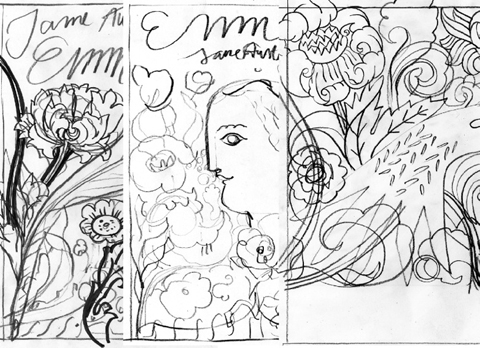
EMMA Jane Austen Petra borner
I have long admired the work of Swedish born illustrator Petra Börner, who brilliantly mixes Scandinavian and Arts and Crafts influences to create a style all her own. Her book cover for Emma by Jane Austen (artwork above) is nominated for the 2012 V&A illustration awards so I thought I’d find out what makes her tick. Be very inspired…

Petra Borner -studio
You have a very distinctive style – what are your greatest influences?
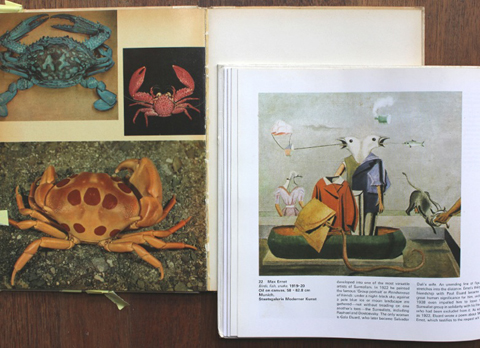
I still draw inspiration from objects and books I’ve collected since I was a teenager, books on school posters and photographic references on anatomy and plants and DIY books form the 70’s.
I like studying LP covers, especially ‘classical’ ones and browsing antique shops and I like drawing in public and from life.
I’ve been taught to be hands-on and ‘do’ from my family and I’ve learnt creative skills from my mother.
I like work by Max Ernst, Niki De Saint Phalle, Carl Johan De Geer and Katja of Sweden.
 
Petra Borner -studio
How long did it take you to come up with your look – was it a gradual process or were you always attracted to working in this way? 
I can’t remember a time when I wasn’t really into drawing and making things.
It’s taken me a roundabout way to get to a place where drawing is central and a means to living though.
I suppose it’s good to pack many things in your bag along the way.
A friend of mine sent me a drawing I did when I was 18 and it looks just like my current work – that was quite shocking!
 
Petra Borner -studio
You trained as a fashion designer and had your own label until 2004 – why did you decide that your heart was in illustration and was it a hard decision to make? Any regrets?
It wasn’t a very hard choice to make at all.
I’ve always wanted to be an artist and my experience from the fashion helped build my drive.
I had quite a few tough and interesting years creating my label with partner Tove Johansson, but it felt right to finally focus on my goal.
In fashion I felt like a cowboy, a strange fish in a big pond!
 
Petra Borner -studio
Petra Borner -field print for Cacherel SS 2007
Petra Borner – field print for Cacharel SS 2007

In terms of moving across industries, did you have to develop a new set of contacts for illustration or was there a lot of crossover?
I’d illustrated a little for magazines parallel to my work in fashion, so I had a few contacts.
But generally, I had to start a fresh and it took a while to generate an interest.
With a fashion angle I broadened my chances and managed to bridge fashion and illustration into an interesting mix of commissions.
 
Petra Borner -studio
You’ve been based in London since 1994 – what brought you here and what keeps you here?
I came here to study Fashion whilst improving my English during a one- year foundation course.
It turned out to be an intense and exciting year leading onto a degree in Fashion at Central St Martins and my London roots grew deeper.
I lived in NY for a while which was great fun, but I seldom contemplate moving anywhere else now.
Having family ties here and in Sweden at times makes for an ambivalent longing for ‘home’.
London always keeps me on my toes.
 
Petra Borner -studio
Petra Borner -partridge bowl for Seto Seikei
Petra Borner – partridge bowl for Seto Seikei.

When you are working on illustration in a decorative capacity (on 3D objects etc.) what has been your favorite project to date? And why?
It’s amazing to be able to work on projects with open briefs, but with technical support to maximize the result.
I often wish I had more knowledge and skills of many crafts to increase the level of intricacy and open possibilities within a project, but sometimes it’s good not to know all the limitations before you start.
Collaborating with Studiothomson, Clements Ribeiro, Bally, Aquascutum, Seto Seikei and Jonathan Adler has also been interesting.
 
Petra Borner -studio
Petra Borner -gift box for systemet
Petra Borner – gift box for Systemet.

If we were to take a peek inside your inspiration library what would we find?
Books, paper scraps, comic books, postcards and photocopies on arts and crafts, design, pottery, folklore, nature, portraits, travelling and maps,  anatomy, animals, foods and eating, antiques, DIY books, interior design and architecture, rubbings and sculpture.
 
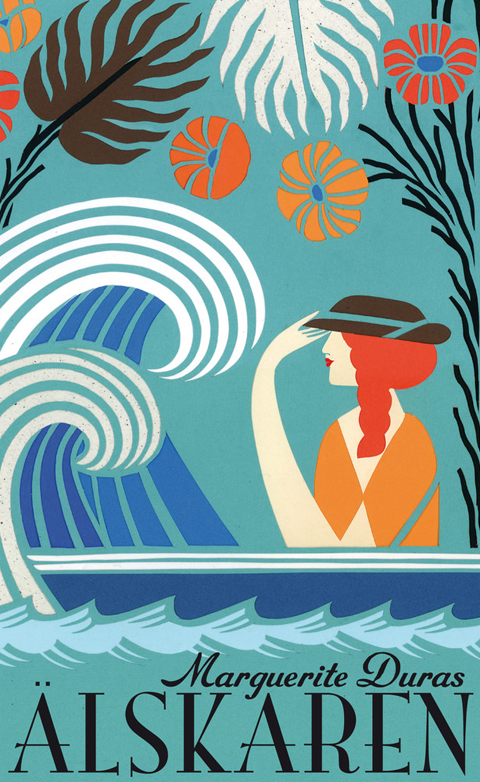
THE_LOVER petra borner
You have illustrated lots of book covers – which was the best book you had to read for a job?
I love ‘The Lover’ by Marguerite Duras.
 
How do you balance looking after a toddler with work? You are incredibly busy!
She’s managing me.
 
Petra Borner -summer papercut for Harper Collins
Petra Borner – summer papercut for Harper Collins.

Your logo adopts your father’s signature – do you come from a creative family and if so what do they do?
On my mums side of the family there is an army of hands on, inspiring creativity, a well of skills within all sorts of arts and crafts.
My father’s side holds many in a row of painters, a photographer and a composer.
Most of the paintings are portraits, still life’s and scenes from the sea, as we come from an island.
Most of my family members prosper academically and save their creativity for relaxation.
 
Petra Borner -studio
Petra Borner -greetings card for Habitat
Petra Borner – greetings card for Habitat.

Can you tell us about your new product range in collaboration with Studiothomson, aimed at encouraging writing and correspondence?
I’ve always been a keen letter writer and as a teenager I’d spend hours decorating envelops before posting them.
I like the time and thought that goes into handwritten letters and though it it’s ‘out-of-date’ as soon as it’s posted, it ‘s magical to receive them.
We are currently developing the prototypes for a range of bold products, which will make staying in touch with your friends a treat.
We are launching the collection early autumn 2012.
 
Petra Borner -studio
What kind of imagery can we expect in your new range of hand tufted fair trade rugs for the Design Museum?
This is an early collaboration and my designs are in the making.
The project is directed by Chris Haughton for Design Museum and involves a group of artists including Sanna Annukka, Donna Wilson, Jon Klassen and Neasden Control Centre, so the rugs should be a striking collection!
The limited edition rugs will be handmade in Nepal according to Fair Trade regulations and will be on display at the Design Museum this autumn.
 
Petra Borner -studio
You are also writing your own book about collectables – tell us more! What do you collect?
This is exciting!
Having been a keen flea-marketeer and collector since I was five, I am now in contrast ruthless about what I keep.
What I’ve kept has a real value (to me!) and I am assembling these objects into a journey of sorts.
 
Petra Borner -studio
Finally and not least you are nominated for the V&A illustration awards, and the winners will be announced tonight – what inspired the Emma artwork?
The first ideas for the cover of ‘Emma’ by Jane Austen, was sketched in the V&A.
I aimed to create a bold and lush interpretation of the novel in contrast to it often soft and feminine covers.
I decided to let her hand symbolize elements of the story.

Petra Borner -studio
Petra Börner sells her book cover artwork and much more on big cartel – so you can own your very own piece! See what else she’s up to on her website. I hope you win tonight Petra!

Read my review of the 2011 V&A Illustration Awards here.

Categories ,Aquascutum, ,Arts and Crafts, ,Bally, ,Cacharel, ,Carl Johan De Geer, ,Chris Haughton, ,Clements Ribeiro, ,Design Museum, ,Donna Wilson, ,Fair Trade, ,fashion, ,Habitat, ,Harper Collins, ,Jon Klassen, ,Jonathan Adler, ,Katja of Sweden, ,Made by Node, ,Marguerite Duras, ,Max Ernst, ,Neasden Control Centre, ,Niki De Saint Phalle, ,Petra Borner, ,rugs, ,Sanna Annukka, ,Scandinavian, ,Seto Seikei, ,Studiothomson, ,Systemet, ,Tove Johansson, ,V&A Illustration Awards

Similar Posts: