In June, order Amelia’s Magazine previewed Just Do It: get off your arse and change the world, information pills a feature documentary (in production) from Age of Stupid Executive Producer Emily James. At the time of writing, clinicJust Do It had just launched their innovative crowd-funding scheme to help raise the final funds required to complete the film for release in early 2011. From October 12th and for the next 18 days (this article was posted on 14th October) Lush Cosmetics will match all donations made to the Just Do It website POUND FOR POUND! The challenge? To raise 20K in 20 Days.
You might be wondering why a feature film is asking for money now, rather than at the box office? The answer is surprisingly simple, Just Do It will be released for free under creative commons across the internet, your donation today means people across the world will be able to watch it for free, forever. The other reason the film needs your support is Just Do It is a completely independent production – there are no TV/Film backers, a decision carefully made by Emily James in order to protect the rights and the representation of the activists who kindly let James film their actions over the course of two years from the G20 to those sad talks in Copenhagen.
Meet the Team!
And whilst you’re at it why not sign up for The Crude Awakening action happening this very Saturday? That’s right, as well as putting your money where your mouth is, you can put your feet there too…
Just Do It introduces those of you unaware to the adventurous and inspiring world that is UK Climate Change Activism. A cause that has been documented, reported and championed in these very pages in the Earth Section established by Amelia Gregory. It is a cause that needs your help and your support – watch the trailer, the bike bloc and the guide to Climate Camp. Watch all the videos and if you feel inspired and want to know what to do next, the answer is multifold. First you can visit the website, donate and find out how you can get involved if your time rich but cash poor…
The Crude Awakening is a mass action aimed at waking up the oil industry, to the responsibility they owe the earth. There are three different mass actions to get involved in – click on the links to find out more about each, and to sign up to receive SMS texts as the action takes place, from 10am this Saturday 16th October…
Dirty Money Bloc – Drawing attention to the involvement of BANKING in the oil industry, for example RBS has been linked to extremely devastating practice of mining the Canadian Tar Sands. If you like the sound of holding your own space and being creative to beat the oil industry… If this sounds out like your bag, find out where to meet here.
Building Bloc – The building and occupying of space through structures expressing dissent at the unchecked flow of both oil and finance. If you have a head for heights and want to be actively involved, click here to find out more…
Finally the Body Bloc celebrates the “carnival of life, death, fun and resistance.”
Do you have an imaginative idea of life beyond (and without) oil and wish to turn the impossible possible? Find out more here.
So that’s two things you can do alongside your recycling – the first is find out how you can support Just Do It and the second is to support A Crude Awakening on Saturday 16th October.
Monday 12th Jan
Starting today: The Voice and Nothing More is a week-long festival at the Slade Research Centre that explores the voice as both medium and subject matter in contemporary arts practices. Established artists and emerging talent will work with leading vocal performers in an exploration of the voice outside language. On Wednesday the festival culminates in a presentation of objects, pilulegeneric performances, order and installations that are open to the public. There will also be performances on Thursday and Friday from 6 pm.
Wednesday 14th Jan
Now in it’s 21st year, recipe the London Art Fair begins at the Design Centre in Islington. A hundred galleries are selected to show work from the last few hundred years. This immense exhibition will encompass sculpture, photography, prints, video and installation art. It ends on the 18th of January.
There is a talk this evening at the ICA entitled Can Art make us Happy? where artists Zoë Walker and Michael Pinsky explore the notions of art as a social cure-all in times of economic and social gloom.
A new solo show from Josephine Flynn begins today at Limoncello on Hoxton Square. The Mexican was bought off a patient who was in hospital with mental health problems. When the patient talked about The Mexican she described how the process of making him had helped her – ‘healing through making’ was how she put it.
Thursday 15th Jan
Feierabend is a collaborative installation between artists Francis Upritchard, Martino Gamper, and Karl Fritsche, bringing together a shared aesthetic in their distinctive approaches to jewellery, furniture design, and sculpture. The exhibition plays with the boundaries of art and real life – looking like a workshop abandoned at the end of a day’s work, or a sitting room left in abstracted dissary, it’s only inhabitants a set of sculpted figures who seem lost in their own meditations. Gimpel Fils opens a new photographic exhbition from Peter Lanyon and Emily-Jo Sargent, 100 Pictures of Coney Island.
The Asphalt World is a new solo show at Studio Voltaire from Simon Bedwell. Drip paintings are made from advertising posters in an ironic twist or corporate seduction.
Feierabend
Friday 16th
There are two exhibitions starting today at Wilkinson on Vyner Street. In Upper Gallery a, Episode III, Enjoy Poverty, is the second in a series of three films by Renzo Martens in which he raises issues surrounding contemporary image making, challenging ideas about the role of film makers and viewers in the construction of documentaries. In the Lower Gallery, there will be the fourth exhibiton from German artist, Silke Schatz. Through the conjunction of video, sculpture, drawing and found objects, Schahtz composes a personal portrait of the city of Agsburg.
Saturday 17th Jan
We featured David Cotterrell in issue ten, where in the picturesque surroundings of Tatton Park, he explained how his visit to Afghanistan, where he was invited by the Wellcome Trust, would be likely to have a lasting effect on his future work. Aesthetic Distance is David Cotterrell’s third solo exhibition with Danielle Arnaud, and focuses on the experiences and inevitable aftermath of a flight he took in November 2007 in a RAF C17, from Brize Norton to Kandahar. He was the sole passenger in a plane loaded with half a million rounds of palletised munitions and medical supplies to join Operation Herrick 7, a strange irony not lost on the artist.
To whomsoever concerned by the biggest threat faced by humanity today-that of climate change,
You are cordially invited to Dinner at Domestic Departures. Join us for an evening of peaceful civil(ised) disobedience ahead of the government’s decision over a third runway at Heathrow. Inspired by the actions of the suffragettes, we will be calling for DEEDS NOT WORDS. The government acknowledges the huge problems we face from Climate Change but they continue with business as usual. This jolly evening is intended to produce much-needed positive change and we do hope that you would join us.
Time: 7pm (when the string quartet plays their first note).
Dress Code: Edwardian Suffragette: high collars, long skirts, fitted jackets, puffed sleeves, think Mary Poppins. Sashes will be provided. * Although advisable, it is not compulsory to arrive in Edwardian dress, the most important thing is that you your friends and family join us for dinner. To add the element of surprise, it is suggested that you arrive in a large coat to conceal your costume until the stroke of 7.
Bring: Jam tarts, scones, cucumber sandwiches, hard-boiled eggs, tea cakes. Picnic blankets and table cloths. Tea and elderflower cordial. No alcohol please.
Entertainment: String quartet, art tricks from ArtPort, polite conversation.
We look forward to seeing you,
The Misbehaved Ladies from Climate Rush x
Tuesday 13th January, 6pm
Art, Activism and the legacy of Chico Mendes RSA
8 John Adam Street
London
WC2N 6EZ
Tonight will explore the ways in which the arts can help shift society’s attitudes in the face of unprecedented climate change. Elenira Mendes, daughter of environmental activist Chico Mendes, will talk alongside panelists Jonathan Dove (award-winning composer), Greenpeace’s senior climate adviser, Charlie Kronick and fasion designer and activist Dame Vivienne Westwood.
Wednesday 14th January
Wednesdays Do Matter InSpiral Lounge, 250 Camden High Street NW1 8QS
A night of music, comedy, poetry and film (and really good vegan smoothies!) in aid of global justice campaigners, the World Development Movement. Remind yourselves why everyday matters, even Wednesdays.
Winner of this year’s Grand Jury prize at Sundance and announced as a finalist in 2009 Accademy Awards for Best Documentary. This is one New Orleans’ resident’s depiction of the catastrophic tragedy of Hurricaine Katrina. Shot with a (shakily) handheld camera, Kimberely Roberts’ footage starts from the weekend before the hurricaine and covers a period of a year. Michael Moore collaborators Tia Lessin and Carl Deal edit and append the tapes with their own film of the post-Katrina clean-up effort.An astounding portrayal of resilience and bravery.
Showing at the ICA 12th-15th January
Turning The Season
at The Wapping Project
Wapping Hydraulic Power Station
Wapping Wall
London
E1W 3SG
Recent crisp bright skies have been a welcome respite from the usual drab January weather. But who knows what tomorrow may bring. Turning the Season explores the social and cultural phenomenon of the British Season. It would be fair to say that the increasingly visible effects of Climate Change have further fuelled our national fascination with the weather.
Expect 100 bird houses, a roof-top lily pond and a photo story showing the break-up of a relationship against the backdrop of seasonal events shot by fashion photographer Thomas Zanon-Larcher.
Although aimed at swarms of roaring key stage 3 schoolchildren as an educational piece on the issue of deforestation, this production from Palace People’s Projects is a true delight. Set in a traditional village in the Amazon that is eventually swayed by the ghost of Chico Mendes to not fall under the developers’ bulldozers. But not until some devastation has been wreaked first. A socio-political depiction of destruction of the Amazon with a mythical slant. All set to the music and dancing of Forro. An inventive stage (a mammoth man-made tree rather resembling an electrical pole, and pools of water seperating the audience) and brilliantly gaudy costumes by Gringo Cardia.
Seriously energetic post-punk, sequinned and LOUD live act Dead Kids headline. No matter what you think of them on record, they’re sure to grab you live. Continuing the infant name-theme, as well as the intense post-punk sounds are support O Children.
With the ever-winning combo of Japanese girl singing drummer (also to be found as frontwoman for London band Pre) and jangular guitars, this is your best bet for a trendy sceney night out in London.
Tuesday 13th January
Banjo or Freakout single launch party, White Heat @ Madame JoJos, London
Part of the new-wave of ultra-hip, genre-smashing music sweeping the artier corners of the globe at the moment. Should be a celebratory atmosphere as it is his single launch party.
Intimate solo acoustic performance of debut album First Love in full, ahead of its release in February.
Push, Astoria 2, London
A massive farewell party for the Astoria 2 which will be finally demolished on Friday. Catch Cajun Dance Party live as well as DJ sets from Mystery Jets, Lightspeed Champion, Good Shoes and Neon Gold among many others and mourn the demise of the sticky-floored dingy music venue in central London.
Friday 16th January
Cats in Paris, Brassica, Braindead Improv Ensemble, The Woe Betides, George Tavern, London
Massively hyped, bonkers 70s-ish glam-electro from Manchester.
Catch this 9 piece mini-orchestra, complete with mariachi brass, duelling drummers and girl-boy vocals, for their Ennio Morricone-style soundscapes.
I Love Boxie: a web-based business in London that tailors a t-shirt especially for you based on the story you tell them. The most astute of the fashion-conscious clan know that style should reflect your spirit and not merely robotic trends. In light of this; don’t wear your heart on your sleeve– instead wear it on a t-shirt; a Boxie t-shirt.
Here, cure founder of Boxie, troche Moxie shares her views on what fashion is truly about, how her brand works and what she hopes to achieve through her t-shirts:
Tell us the story of I Love Boxie.?
Each t-shirt tells a piece of the way – a place we have been, a person we have seen. We have many lines that fit many situations and could tell a piece of your story too. If not, we offer t-spoke. You call us, tell us a story and we turn it into a line on a t-shirt. We believe everyone in the world should have an unbranded, authentic tee that sings a line of where they have been and what they have seen. We are the opposite of any company who just put a logo on a t-shirt.
?Where does the inspiration for your t-shirts come from?
?From the people who write and call in everyday with their stories. The stories are wild, heartfelt, quiet, poignant and are better than anything we could make up.
What’s the idea behind the “half a conversation” concept?
If you think about branding for the last 30 years it’s been about distillation, reducing everything to a line eg: ‘just do it’ or ‘impossible is nothing’.
Our lines are about provoking expansion. It’s just the first line of the story, or the chapter heading. We want people to come up to someone wearing a Boxie tee – and go ‘wow, what the hell happened to you??’
?
Why do you make it purposefully hard for people to purchase your t-shirts, without contacting you directly first??
The tees are written about stupid, funny, weird, deep moments in people’s lives. All of them from the heart. They feel like they need more exchange than a credit card transaction. T-spoke especially. This is a creative collaboration that begins with the customer telling us their story. It is a strange and wonderful one off encounter between them and us. The t-shirt is their battle scar of that personal story.
Is all your business Internet based? ?
As far as being web based goes, our tees are obviously a form of self expression and there is no greater arena for that than the web. This taps into what a tee originally was – a piece of underwear, something that wasn’t supposed to be seen but kept close to the chest and hidden like a secret.
These days, the web is a place where secrets can step out of the shade, where people can talk about things they wouldn’t usually talk about in real life. Most times, you can learn more about someone from reading their status report than talking to them for an hour in reality, because the web has taught us the language of openness and sharing.
Boxie exists in the ether as part of that fluency. More importantly those web values – openness, sharing, community – are overflowing back into real life now. So, yes, soon we’ll be on the streets in some form, although the tees will never ever be in a retail space, hanging limply on a rack.
Your favourite Boxie T-Shirt to date??
So High and Solo
Any advice for the penniless fashionista?
Everything great creatively comes from being up against it and with no cash. You can’t ever see it when you’re in it but, as far as imagination goes, you are in an infinitely better position than someone with a million dollars. Do something great with this time. And then call us to get the t-shirt. ?
Advice for those wanting to purchase something Boxie??
Write to us directly at moxie@iloveboxie.com
New York is spawning many a catchy-tuned electro based band at the moment – meet The Discoghosts, more about firstly they have a brilliant name, look secondly, approved they do what they say on the tin, this is a disco fest. Their ethos is nicely summed up in their lyrics, “We love ladies and they love us, cos we’re cool and disco plus.”
Otherwise known as M-Boy and Tracky, they meant their album title – BAD – literally it seems, rather than a tribute to the King of 80′s pop, as they are apparently, “trying to break the taboos of “good” music, while playing with clichés of club sound like repetition, climax, stupidity, autofilter, and sound fetishism.” I see.
This album could be the OST to many an 80′s movie – it’s true, it may be the decade that taste forgot but it produced some pretty good tunes – there are obvious Ghostbusters references ie: track 2 being called Ghostbusters Busters and there’s also hints of the Beverley Hills Cop riffs in there, along with and slinky soul beats, electro voices, rubbish rapping and a guy that sounds suspiciously like the chef from South Park…
That’s not to say they’re stuck in the past, their mellower synthetic beats, such as Jellyfish, track 9, have a Hot Chip vibe and that’s not a bad thing at all.
If their aim was to produce an awful album – they failed, maybe it’s just that I have a soft spot/great love for the 80′s but I very much enjoyed this, catchy, listenable songs that don’t take themselves seriously. My favourite line, from Straight but Gayish (sung by a high electro voice), “your boyfriend’s hetro but he looks homo.”
And they dress like this to perform:
How could you not love them?
It was legitimate for us to feel nervous. With indiscreet bullying from BAA and no knowledge as to how the police were planning to receive us, sick we tucked our dresses beneath our over-coats and shuffled through the throngs of intimidating fluorescent jackets at Heathrow Departures, illness passports at the ready and an impromptu conversation about flight times – very subtle. I wish I could have seen the briefing, look out for pretty girls in dresses and large jackets.
Once in, all subtleties were abandoned, a charming sight when the order of the day was Edwardian dress and dinner, an evening of very civil (ised) disobedience. Instruments, top hats, high collars and puffy sleeves – all were revealed as the clock struck seven, the string quartet took to its first note and picnic blankets were unfurled for the beginning of the Climate Rush organized party, Dinner at Domestic Departures.
Music played, food passed cordially from plate to plate, and sashes were handed out. It was not long before currents rippled through the crowd into cheers, claps, and chants, “Deeds Not Words”, “Trains not Planes” and, “No Third Runway”, with a contingency singing to the tune of 90′s classic There’s no Limit. The complete transformation of Zone C was helped along by Artport, a collective of artists working in collaboration with Cilimate Rush to redefine the space as we know it. Green all-in-one clad waiters weaved through the crowd with a planet for a cake and planes for spoons, whilst a parachute game bounced a blow-up earth from edge to edge.
In amidst this electric and elevating atmosphere, it was a spectacular delivery of a serious message. Climate Change is a very real threat and many people feel let down by the powers that be to address this threat.
We don’t want a third runway and call for cheaper train fares and better transport hubs instead of domestic short-haul flights. It is of course just part of a bigger picture: the greater threat of Climate Change of which aviation expansion is just a part, and the wider feelings of concern and dissatisfaction amongst citizens for whom civil disobedience is also, just a part.
Describing herself as an ex-Camden townie, link the self-taught illustrator, Zarina Liew, has thrown her arms up at the big smoke and a career in marketing; and has chosen instead the serenity of the Cambridgeshire countryside, pencils, watercolours, and strange lonely creatures ridden by lust and self-ruin.
Her Hunter Series, eight inked paintings which exhibited at the Shoreditch Shuffle Festival, started life as a 24-page graphic novel. It tells the story of a gramaphone and a lonely creature, who forms an unlikely friendship with three musicians. She is driven by a need for company and music, they are captured by her beauty and seduced by her authority. The musicians fall into her charm and into her gramophone where they are trapped and eventually perish, singing songs of solidarity and love.
Over a virtual cup if Green Tea, we ask Liew a bit more about her curious creatures of emotional turmoil, her illustrative inspiration and whether or not she misses Camden.
Tell us about the Hunter Series.
I wanted The Hunter Series to be an extension of the original story both visually and metaphorically – a story within a story. You get a sense of the narrative from the different pieces, but as a whole, you see the Hunter for who she is – a hungry, lonely and melancholic being. It’s an illustration of lust and self-ruin; both the musicians and the Hunter are acting on impulse, blind to their terrible fates. Even though she is the one to end the men’s lives, the Hunter does not get what she wants. With no one to listen or play with, she’s alone again.
Where do you draw information for your characters from?
I draw most of my information from observing the people around me. I never assume that what you see in someone is what you get – everyone has a hidden interior of ambition and desire. Music plays a large part as well. I found the musicians for The Hunter listening to an unsigned band playing at the Dublin Castle in Camden – the Parallel Animals. After falling in love with them – and the front man! – I offered to sketch them during rehearsals and help out at their gigs. Seeing how hard local bands work at this music business, and how ruthless the whole industry is, gave me a sense of direction in depicting the musician’s fate in my artwork.
The emotional context of the characters is strong; the nature of lust and self-ruin… is this an expression of your own emotional turmoil?
I suppose yes – in a sense that all of my work is an expression of myself, my feelings and thoughts. I wouldn’t say that I am strongly affected by the nature of lust and self-ruin though, let’s just say that I am extremely aware of it in myself, and all too conscious of letting myself go, or losing control of who I am. As I mentioned earlier we all have a hidden interior of ambition and desire – acting on lust however (whatever the desire – money, sex, fame) can only lead to self-ruin. Sometimes I wonder if I’m making the right choices, I question why I did certain things and what is behind my motivations. It’s a constant cycle of self-reflection.
And finally, Camden vs Cambridge countryside… who wins?
This is a real toughie. Can I be wayward and say that weekdays are for Camden and weekends are for Cambridge?
During the week I get a lot of inspiration from the Camden kids, lovely hidden-away galleries and sweaty underpriced indie nights. By the weekend though it’s full of puffy tourists and very long queues for nothing.
That’s when I retreat to the gentle Cambridge countryside. It’s perfect for lethargic country strolls and relaxing afternoon teas; this is also where I get a lot of my inspiration down onto paper and start to paint. All the week’s bustle leaves my mind ready to draw in peace and quiet!
You can see more of her work here, or catch her at the Alternative Press Fair on Sunday 1st February where she will be featuring the Hunter Storybook alongside other homemade creations, and apparently, lots of Green Tea.
.
Why is it no-one tells you that when you leave uni, approved your life will have a huge vacuum and those 3 years you spent studying illustration suddenly seem wasted when all the available jobs are in call centres? What to do? Give up the creative dream? Not if you’re Brighton girl Anna Wenger. She decided that if there was no jobs out there, adiposity she’d start her own business, viagra dosage and Sacred Stitches was born. Her idea of stitching classic tattoo designs onto clothes and homewares has really taken off in recent months, and she’s kindly chatted to us about it:
How did your business come about?
I needed to give my family and friends Christmas presents but without spending much money, so made everyone cushions. I got a lot of attention from these cushions and created more and more and now embroider onto everything I can lay my hands on!
Who are your favourite designers?
I love Angelique Houtkamp, her work mixes classic tattoo imagery with Hollywood romance and her eye for style is very inspirational.
Others include Inka Tattooist James Robinson, Alex Binnie, Jon Burgerman, Tara McPherson and Crush Design Studio.
How would you describe your personal style?
A very modern graphic twist on an old school tattoo style. I like to think that with my designs everyone can appreciate the art form of tattoos without having to get one.
Do you wear your own designs?
Oh yes, and so does my boyfriend, his friends, my flatmates. My flat is completely covered in sacred stitches cushions!
Who or what inspires you? (i know the obvious answer here is tattoos –
but if there’s anything else!)
I live with a tattooist who influences my work; magazines and art exhibitions are good for getting new ideas. My boyfriend and friends are covered in tattoos and will come home with a new piece of art on their skin, so its hard not to be inspired when your surrounded by moving artwork.
Have you got any tattoos?
No, the design is still in progress.
Do you have a favourite tattoo design / what’s the best you’ve seen so
far?
My favourite so far is by Judd Ripley of an amazingly haunting pirate ship. (pictured below)
Do you still love Brighton/can you see yourself living anywhere else?
I am originally from Brighton and moved back here after University, as it’s a creative city. I do love Brighton as it’s a very receptive place for my designs because people here like to buy from small businesses.
Can I have a t-shirt please?
Yes, what size are you, xxl?!?
How very dare you. A medium at the very most!
Thanks for your time Anna. Talent and ambition, the best combination.
Contact Anna about getting hold of your own personalised tattoo(ed piece of clothing) here.
So it may have looked like I was deserting my post last week, cheap swanning off to Paris to slide down hills on the ice and hibernate in nice restaurants. However, whilst my trip may have involved quite a lot of that sort of fun, I was not just being a bone-idle holiday-monger. Au contraire. I also had my ears opened to some great new music and had this excellent first EP by Hold Your Horses! thrust into my sweaty and eager palms (fine it was in a nice restaurant that this transaction took place but we were just following the model of most international business).
Most recent French bands seem either to do an excellent line in electronica or a terrible one in punk rock – you just can’t do attitude if your beige converse match your cashmere v-neck and your hair is cleaner and shinier than a Pantene advert. Hold Your Horses! have most in common with the second school, essentially a guitar band augmented with some strings and wind. However, perhaps the fact that they are a motley crew of diplobrats and true Frenchies contributes to the broader and more interesting range of influences discernible in their music. Sure, The Strokes are probably in every single member of the band’s record collection and at moments on this record, if you were to replace singer Flo’s Chrissie Hinde delivery with a Casablancas drawl, you would be forgiven for thinking you’d stepped back to Strokes-fever 2003, but this is really just what provides the catchy backbone of these songs. There’s a pleasantly shambolic tone – perhaps a little too shambolic at times due to the slightly rough-around-the-edges self-done mix – and when the boy vocals kick in partway through track two, a vaguely Celtic edge emerges.
Opener Cigarettes and Lies, the strongest song on the record, fanfares its arrival with a blast of trumpets before launching into a danceable meditation on youthful lust and confusion. After that, the titles get longer and the violins more prominent as they have a bit of an Irish-ska moment (fine that’s not like, an official genre but listen and you’ll know what I mean) before ending on the sultry Argue and the sweet Flo’s Folk. Although not perfect or polished, this EP is really promising and tips HYH! as a band it’s definitely worth catching live when they hopefully make it to this side of the Channel.
Now you see him now you…hang on, search is that? Yep a giant bunny in a smoking jacket who is theatrically drawing my portrait and grimacing at the fur collar of the girl standing next to me. ‘It’s mink!’ she frantically mimes through Wieden & Kennedy’s shop window on Hanbury Street. ‘Minks are bastards’ he mouths back.
I’m witnessing some of the day-to-day activity taking place outside Imaginary Friends, medicine a rather bizarre shop front exhibition that takes me back to long days spent in the airing cupboard as an only child. Back then, store my imaginary friend was a replica of the devilish dog that encouraged Tintin’s canine companion Snowy to do naughty things (don’t worry, no one else understood that either).
From now until Sunday your imagination takes the form of a wine glugging, abusive life size bunny rabbit (aka recent Central St. Martin’s graduate Jack Bishop).
I managed to catch him on a carrot break.
LJ: I say ‘carrot’ you say?
IF: Parrot? Ok it is the main component of one’s diet but I much prefer Beef Wellington. I shall not be marginalised.
L.J. Can you be taken for walks?
I.F. Of course I can darling. I’m imaginary after all, I can go anywhere you chose. Usually down the local.
L.J. Do you get along with cats?
I.F. So-so. We have a mutual respect for one another.
L.J. Do you breed well with Holland Lops?
I.F. Most definitely. Although my ideal breeding partner would have to be Jessica Rabbit.
L.J. Of course what a babe, got any celebrity bunny mates or rabbits in high hutches?
I.F. Well Harvey is a dear friend as we’re very alike. I used to be drinking buddies with Bugs but…(he drifts) he said a few things about me…said I drank too much. Lightweight.
L.J. Oh dear, well hopefully you’ll settle your differences over a good carrot or a nice seed selection. What are your thoughts on the following high-profile bunnies?
L.J. Peter Rabbit?
I.F. Wet lad.
L.J. Easter Bunny?
I.F. Fatty boy (all that chocolate).
L.J. Energizer Bunny?
I.F. Nympho.
L.J. Thumper?
I.F. Good Kid.
L.J. Nesquick Bunny?
I.F. He’s sold out. Such a shame. Corporate bastard now.
L.J. Got any plans for Easter?
I.F. (He humphs dismissively) I’m not the religious type. I’ll most probably be alone listening to Smokey Robinson and Sam Cook, drinking fine wines.
L.J. That sounds fun, I’ll be your friend if you want.
I.F. You fool! I can’t chose to be someone’s friend, I’m imaginary, they decide what I am to them, it’s annoying. Sometimes I feel degraded. I’d much rather be on my own.
With that he lolloped back down Brick Lane.
CarrotMobbing! No it’s not a bunny invasion in the run up to Easter, sick it’s the new consumerist activism from San Francisco. The idea is to sway more businesses to adopt greener habits. An alternative to boycotting, more aboutCarrotMobbing operates in a way that appeals to businesses by offering cash rewards.
In return for a percentage of a day’s takings to be spent on environmentally-friendly practises (e.g. better energy-efficient appliances, organic produce) a CarrotMob will descend on the establishment on a certain day and spend, spend, spend.
It is the brainchild of American environmentalist Brent Schulkin and it is unique in working alongside businesses that could be greener by offering them the ‘carrot’, as opposed to the ‘stick’ approach of boycotting or picketing.’We recognize that corporations must keep profit as their top priority.Historically, this fact has meant that the environment has suffered. We hope to change that by putting rewards in place that will make environmental responsibility the more profitable choice.’
The concept has already started to make an impact over here. The first UK Carrotmob was in September 2008 at the Redchurch bar in East London and since then carrotmobs have sprung up around the country including the restaurant La Ruca in Bristol.
When I proposed the idea to local cafe Yummy’s, Jason and his brother were really keen! Stay tuned for an Amelia’s Magazine CarrotMob expected to take place in a couple of weeks time.
Bristol’s Thekla is a down-with-the-kids venue by anyone’s standards. The ship is moored in a floating harbour, approved featured in Skins, shop has been played by Massive Attack and was once graffitied by Banksy. To see a band there tipped as number two in the BBC’s ‘ones to watch 2009′ is incredible. White Lies quite literally rock the boat.
Anticipation crackles in the air before they mount the stage. I’d fallen deeply in love with the singles months before: deathly, desperate melodies with the lyrics of a romantic poet born in the 80s set to gut-grinding electronica. And I’m praying they won’t let me down. In a swell of turbulence, the band storm on with Unfinished Business liquefying into To Lose My Life. Later, Farewell to the Fairground also stands out as a stark winner, perhaps a forthcoming single?
Harry McVeigh haunts his audience, both in voice and form. Recalling the two great Ian’s of post-punk, McCulloch and Curtis, he’s skinny with a voice that’s anything but. Glimpse him between the strobe lights and he’s a beautiful alien visitor. And the possessor of a truly spectral set of vocal chords.
Through White Lies’ unique ability to craft tangibly spooky scenes with their lyrics, as each new song rumbles into being, I’m by turns walking in an abandoned fairground at night, taking off in an aeroplane, wrestling a ghost in a dream. Captivating. Sound groans in the iron belly of the ship, the guitar rips through thundering drums and Harry wails into the watery deep. There’s no banter, no real movement and yet everyone’s rapt because they’re witnessing something really special.
A few technical hitches mar the proceedings and drown out the vocals, but not to worry, the finale is Death and we’re all singing along. White Lies have mesmerized their crowd good and proper and we pursue them from the boat like crazed rats into the night. Drunken fan’s yelps of ‘yes this fear’s got a hold on meeee’ follow me all along the dark waterfront home.
It’s half way through January – a long way from pay day and you want some new clothes. It’s the only thing that can cheer you up in this depressing month. Visiting an actual shop is out of the question, decease you can barely afford the bus fare there, visit this let alone any of the goods for sale inside the shop.
So here’s an idea – acquiring new clothes without having to actually spend a penny (on the clothes) – via the medium of clothes swapping.
This can be done in many ways, buy more about the first is attending this event:
However, if the idea of not having complete control over what you actually end up with isn’t exactly what you had in mind, then try this, a swishing event – yes it is £5 entry but for countless amounts of clothes, well worth it. It’s a similar idea to the flyered event above but you can choose what you pick.
If you don’t fancy actually leaving your house, then Bigwardrobe.com is an online swapping platform which is similar to e-bay in that you put your unwanted clothes online and people buy them off you – it’s better than eBay as it has a swap function and it gets even better than that! – you can get actual cash for your unwanted xmas goodies or fashion mistakes of the past. You can use a combination of money and swapping to barter for goods, eg:, “ I’ll give you this blouse and £3 for your skirt,” or something along those lines.
In these lean times, clothes recycling is the best way to update your wardrobe.
St Davids, website on the far south-western tip of Wales, viagra approved is a city of contradictions. Being the smallest city in the UK, it is really more of a village with a great big cathedral plonked down at one end. It is a tranquil little place but alongside the tea-and-scones brigade is a growing community of surfers who ride the waves on the beautiful beaches nearby all year round. Beyond the shoppers rummaging through baskets of souvenir tea-towels are legions of walkers and nature-lovers who explore the coast paths, the sea and the cliffs in between in search of puffins, seals and the delicate, beautiful Manx Shearwater birds that migrate past the headland every summer. Even the visitor centre (known as Oriel Y Parc, which means ‘the park gallery’) is an odd mixture, for if you walk through the coffee shop and past the leaflets on local attractions you will find yourself in a world-class gallery.
The gallery, a recent addition to the visitor centre, is itself beautifully harmonious in form and content. The environmentally sustainable building that houses it heralds what we can expect from a gallery in the 21st century. The graceful arc shape of the building catches the sun all day, keeping heating costs to a minimum. The ceilings are insulated with lamb’s wool and a green roof with its swaying grasses also brings warmth and helps to regulate the demand on the drainage system. Rainwater is used for the toilet cisterns and solar energy panels heat water for the kitchen. Recycled and second-hand materials have been used wherever possible – much of the stone for the walls comes from old derelict buildings.
Perhaps it is when you see what is on display inside the gallery that you truly understand the importance of all this low-impact building and energy conservation: to preserve the precious Pembrokeshire landscape that has inspired so many artists including London-born painter Graham Sutherland. Sutherland loved the landscape around St Davids, painting it again and again, and when he died in 1980 he left a great body of work to the people of Pembrokeshire.
Sutherland’s work will form the permanent central focus of the gallery’s exhibitions. For those used to gentle water-colour scenes of the Welsh coast, Sutherland’s paintings are a hand grenade assault on the senses – fierce, energy-filled evocations of the landscape, both challenging and fascinating.
For Oriel Y Parc to be given permission to exhibit the bequest it had to meet a stringent list of standards, including careful regulation of the humidity and temperature in the air and a complex and highly sophisticated security system. Meeting this criteria has meant that the gallery has been awarded ‘Class A’ status, which means that the work by Picasso and Rembrandt that is displayed alongside Sutherland’s paintings in the current exhibition will be the first in a long line of world-class international art to be shown at the centre.
Prompted by Sutherland’s extraordinary visions of the surrounding countryside, the gallery plans to use future exhibitions to investigate art’s relationship with the landscape and with nature. Brendan Burns a Cardiff-based painter has been making paintings of the Pembrokeshire coastline for about fifteen years. Being the first artist-in-residence at Oriel Y Parc is, he says, ‘so exciting because everything is new. It feels important, like you’re part of something major.’ He is thrilled by his proximity to his subject, as until now he has had to make the 100-mile journey home before he began to paint. He is also pleased to have Sutherland’s work in the next room, where he can pop in and refer to it whenever he pleases, and says he particularly draws inspiration from the photographs, drawings and writing in the bequest.
He can’t predict how the residency will affect his work, but says he is starting out by ‘taking walks on new beaches’.
• The work produced by Brendan Burns during his residency at Oriel Y Parc will be shown at Oriel Y Parc or the National Museum in Cardiff, towards the end of 2009.
This week’s environmental hero award goes to Dame Vivienne Westwood. Not only has she created unashamedly fabulous clothes for the last four decades, more about she also wears her heart on her sleeve. Quite literally, viagra buy in the form of a badge with the ubiquitous image of a rebel in a beret. But this is not Che Guevara, but Rembrandt who, according to Viv, was as much a freedom fighter as the Argentine revolutionary.
She explained this at the Art, Activism and the Legacy of Chico Mendes talk at the RSA a couple of nights ago. We were there to find out how art can be used to promote environmental causes. Unfortunately we left none the wiser, other than to have our suspicions confirmed that Dame Viv is slightly bonkers but an extraordinary creative mind (even if she did refer to the president of Guatemala as the ‘boss of the jungle’).
Amongst mutterings on plumbers and the evils of watching too much TV were moments of clarity; ‘Activists and art lovers are the same thing, through active pursuit of art and resistance to propaganda, they stop becoming consumers and start becoming thinkers.’
She seemed to address the point of the discussion more than any of the other panellists who struggled to reach a conclusion as to how the art world can break through the cloud of elitism that surrounds it and communicate social issues, such as environmentalism, to the average Tom, Dick and Harry.
The most striking thing about Viv (apart from the neon hair) was her honest and heartfelt concern for the state of the world. At times this came across as cringingly naïve; ‘we need to get Gordon Brown to pool all the money and buy the jungle.’ But she’s a wise woman who has campaigned for social causes for several years with the same unashamed eccentricity as her clothes. Read how Pinocchio finds art (among other tales) in her manifesto. Monday January 19th
The link between altered states and creative activity is not a novel one, buy more about but altered states is the order of the day for the next few months at Riflemaker. Voodoo “Hoochie Coochie and the Creative Spirit” is an exhibition that draws its artists, writers, and musicians on the common ground that they each recognise the need for altered states to in order to create their work. It begins today and goes through to April. Expect to see the non-doing before the doing …?
Tuesday January 20th
Get Müllerd And Dance – separately known as Jessica Dance and Robert Muller – are a multidisciplinary creative duo who featured in issue 10 with their ‘Crafty Scraves’. Jessica describes their work as, “ playful and using several different mediums, that often experiment with typography and play with the realms of scale and proportion – combining 2D traditional methods with more experimental 3D techniques.”
Their ethos is to have fun with ideas and not worry about the troubles that reality can bring. Creating a moment of escape whilst still communicating a message – evidence of this is in Topshop, Oxford Street, where an installation can be found on the lower ground floor for the next 2 weeks.
Check out a video of the piece being installed here.
The Universal Now, the first London show from Abigail Reynolds, is the new exhibition starting today at Seventeen on Kingsland Road. The work features a series of collages using imagery sourced from publications such as guide books and atlases, combining photographs of landscapes or monuments, and enmeshing them together. What you get is a three dimensional object, a grid-like construction that changes and moves with your perspective, underlining your presence as viewer.
Thursday January 22nd
Transition Gallerycontinues along the theme music and obsession in their new exhibition Too Much is Not Enough. Four artists deal with the delerium of fandom and the darker underbelly of the worn out and deprived celebrity.
Saturday January 24th
In or near Manchester? Today begins Interspecies at the Art Catalyst. All the artists question the one-sided manipulation of non-human life forms for art. They instead try to absorb the animal’s point of view as a fundamental part of their work and practice … I myself have been talking to my cat for years.
Sunday January 25th Indian Highway at the Serpentine has been going for some time now, a multi-media circus of Indian art old and new, with a strong emphasis on film. This Sunday at the Gate cinema they are showing A River Called Titas, an epic depiction of the tragic lives of a small fishing community living on the River Titas. “a raw and powerful tale of a drying river and with it a dying civilisation” says the BFI.
Last Thursday the transportation secretary Geoff Hoons approved BAA’s plans for a third runway at Heathrow. John McDonnell hurled a mace (some sort of ancient hammer) and the villagers of Sipson put their heads in their hands, yet again.
Over the past few months, viagra this ordinary post-war village- that happens to be nestled in the armpit of one of Europe’s largest airports- has had the attention of the world’s media. Thursday’s decision marked a major step towards the expansion of Heathrow Airport. All BAA needs to do now is meet EU standards next year and cross their fingers for a Labour victory at the 2010 election. The Conservatives, Liberal Democrats and Green Party all promise to scrap plans if elected.
If BAA’s wishes are actualised then the entire village of Sipson and part of neighbouring Harmondsworth will be demolished and replaced with a runway that would increase the airport’s flight capacity by 222, 000 per year. It is estimated that 700 homes will be bulldozed evicting some 2000 people. Undoubtedly it would also flatten the government’s legal commitment to cut carbon emissions by 80% by 2050.
Three days after Sky News covered the commons’ decision from the George IV pub, the anti-expansion placards remained clung to lampposts and front doors weather-beaten and worn. One of the more decorated front gardens along the otherwise modest row of houses that runs through the village belongs to Lynn Davies. She kindly invited me in for a cup of tea in between cooking Sunday lunch and what she admitted was ‘long-over-due ironing’.
She apologised for the clutter then, partly out of defiance and partly out of what struck me as exhaustion, explained how she has become less and less concerned about maintaining the house as while the kitchen flooring may need replacing, she thinks ‘why bother? If BAA are going to take my home away from me, which looks likely, it would just be a waste of time and money.’
Mrs Davies lives with her 16- year -old grandson Daryl in the house she bought with her ex-husband 39 years ago. For eleven years previous to this she lived in another house in the village. Her son lives in nearby Eastcote. Her story is not unusual in a village she describes as ‘a community united.’
Ever since she can remember there have been threats to expand the airport whose presence shadows us with the constant hum of low-flying aircraft and the stream of imposing high-rise hotels that runs along the perimeter of the village. But plans were constantly deferred and new ones emplaced that it wasn’t always easy to keep up. Her ex-husband returned home once with a map detailing plans for a runway that would cut strait through their house. When she split from her husband she threw the map out with him. Unfortunately, this would come back to haunt her.
I approached Bryan Sobey’s house with hesitancy as I had heard he had been unwell. I was relieved to be greeted by a robust man in his seventies and his very friendly dog called Dev. I had been pointed in his direction because, as president of the resident’s association, he is a glossary of dates and calculations of the numerous plans for expansion that have been proposed over a 57-year time span.
‘The government don’t know what they are doing,’ he says. Aside from the 700 homes inside Sipson and Harmondsworth, a further 480 homes would need to be demolished in order for the project to be granted EU planning permission. These are the houses either situated so close to any new runway they would sit inside a Public Safety Zone, or in areas that would be subject to noise in the 69-decibel band, which is deemed intolerable. Mr Sobey also points out those houses that would have an airport fence or security wall yards from their front door, these could well number 500 homes. The government has offered no provision for compensation for what could be as many as 2000 people.
Mr Sobey moved to the area in 1951 with his late wife and their twelve-day-old baby. Their home was in one of many new housing developments built to accommodate the Nation’s growing number of young families. He remembers the first airport expansion took place during 1951 and 1952. The resident’s association was set up at the same time-it’s raison d’etre was to prevent airport expansion that would further impose on their new homes.
In the late eighties, tentative expansion plans began to creep to the surface. Then in 1990, a major study was carried out to find out how an increase in flight capacity would impact on society at large as well as on the communities that reside in the expansion area. In 1995, after 5 years of research, the plan was rejected as it was deemed ‘too great a social upheaval’. Yet in 2000, BAA put forward a proposal for a ‘small’ runway. Mr Sobey hastened to add that a small runway would mean landing aircraft would be forced to use powered reverse thrust in order to stop in time. This would contribute to noise pollution and be a massive disturbance to 5000 homes.
At this, he sunk back into his armchair weary and surrounded by small reminders of his late wife whom he ‘misses every minute.’ As I left for the George IV pub, I imagined what the village must have looked like to Mr Sobey and his wife when they first moved here just after The Second World War. Neat rows of bright houses radiating a newly instated optimism.
Over a bitter shandy and a packet of cheese and onion crisps at the pub, I overhead a motley circle of residents discussing Thursday’s decision. ‘Money-grabbers’ ‘liars’ and rather more offensive terms were used to describe Gordon Brown and Geoffrey Hoons.
The future of Sipson is uncertain. Although encased in a cloud of bleak resignation, the village continues it’s fight with the support of numerous activist groups-some of whom are prepared to move into houses in the village if BAA’s expansion reaches the point of evicting people. Greenpeace have bought a patch of land behind the pub further complicating BAA’s plans to buy people out of their homes. There is talk of planting vegetables on the plot of land, which has cheered many villagers. Although it would be a jolly reminder of the countryside that once was, it strikes me that there is something anachronous about a vegetable patch in the midst of an increasingly concrete wilderness that has remained in limbo for over half a century.
Written by Lucy Jones on Monday January 19th, 2009 11:15 am
They met when he was hired by her mother to teach her to play the guitar. They, information pills as in Big Deal: Alice Costelloe and kc Underwood, order a boy and a girl, a blonde and a brunette. They sound like Best Coast, Tennis and Cults wrapped up and swirled up in a hot tub, with the sun shining, bunnies and frogs hopping around the edges. Electric guitar dominates, but doesn’t overpower the combined voices of our protagonists. It’s almost as if the guitar is having a ball, dancing around without them, and they’re looking at it from the skies, singing our story. As Moshi Moshi say: ‘aching harmony’. Costelloe’s voice is nonchalant and sweet, 60s with modern gusto and pout. His is gentle and supportive, a deep backbone, crucial and pleasant. They are steamy, hot and full of either middle distance moodiness or penetrating eye contact into your confused youthful self. I’m thinking they will be perfect for a summer of love and all the elation and despairs it brings. Looking out of the window and simultaneously wishing to take back the last thing and for the next thing to happen. The embracing of the heat’s blurring of judgement, highly ambitious ideas, the sun setting on drama. You can almost feel it in the air can’t you? Brewing.
What is Ecocide?
Has the formation of laws and legislation had unforeseen and possibly disastrous consequences?
Has the protection of the environment been abandoned by the law?
What can we do?
Polly Higgins is a Barrister, viagra 100mg a Human Right’s Lawyer and author of Eradicating Ecocide. On her blog The Lazy EnvironmentalistHiggins defines Ecocide as the “damage, destruction to or loss of ecosystems, whether by human agency or by other causes, to such an extent that peaceful enjoyment by the inhabitants of that territory has been severely diminished.”
Published in 2010 by Shepeard-Walwyn, Eradicating Ecocide, is a carefully considered polemic on the consequences of leaving environmental concerns at the sidelines, (the destruction of the rainforest, tar sands, Oil, Global Warming) in favour of infinite growth and unregulated capitalism. Higgins believes that the “law as it currently stands is not fit for purpose. It rarely protects the wider earth community interests of both people and planet. Instead, all too often it is the interests of the very the few that are protected, of those with ownership. This causes great injustice at both micro and macro level.” In short, Eradicating Ecocide is a call to arms, an appeal to the protection of the environment in the face of wanton and needless destruction.
Eradicating Ecocide opens with a contemporary reminder about the consequences of runaway ecocide and unregulated industry; the 2010 BP Oil Spill in the Mexican Gulf. Higgins’ arguement implies that as it stands both law making and the planet are being held to ransom by profit-driven corporations.
For Higgins the environment is all too often neglected in favour of short term profit, pointing out that part of the problem lies with “Governments, driven by the obsessive pursuit of economic gain, often undervalue subsequent ecological losses that can arise out of profit making activity… Myopic financial policy takes preeminence over longer term damage and destruction, by keeping the focus firmly on the short-term, problems mouth for others to address at some indeterminate later date.” Not only do we need to fight big business, we need to take the challenge to our own blindfolded Governments.
In her calm and through exploration of the unforeseen consequences of law making,? Eradicating Ecocide takes us through the convoluted changes in law and the pivotal court cases that lead to the development (in law) of corporations being held to account for damages made to the environment as “fictional persons” The example Higgins cites is the Santa Clara County v. Southern Pacific Railroad trial of 1886, where for “the first time that the word ‘person’ in the fourteenth Amendment was presumed to include corporations.” See Eradicating Ecocide for further details on the outcome of this pre-trial statement.
Eradicating Ecocide also focuses on the development of ‘compromise laws’ by big business and the law courts in order to pacify pollution concerns. The subsequently formed ‘compromise legislation’ merely side steps environmental responsibility whilst failing to provide any real deterrence against the destruction of the planet. The biggest failure in compromise recently was at Cop 15 in Copenhagen. Desperate to end the conference with some form of good news, politicians’ delivered the “The Copenhagen Accord“. As this document is not legally binding, nothing within this treaty has yet to be implemented in local or worldwide politics, as of yet there is no binding successor to equally compromised Kyoto Protocol.
For myself, Eradicating Ecocide highlights that the problem with placing profit over all else is that monetary worth becomes the barometer against which all ‘worth’ is measured. Subsequently the earth and its ‘resources’ become a mere asset. Once the earth is seen as an asset, it ceases to be alive and once it ‘dies’ it becomes easier for the bio habitat to be seen as singular commodities (a trend which began with the Industrial Revolution). Subsequently we, the citizens of the planet, must fight to save the planet as a living organisim in its entirety, not solely the sections we personally inhabit.
A brave book, Eradicating Ecocide takes the stance that by allowing the “commercial exploration and destruction of resources” to take “precedence over the obligation of the sacred trust”, corporations have become the colonisers of the 21st Century. Within the UN framework, the concept behind the sacred trust is to ask for “community interests to be placed over private and corporate decisions.” (p.57)
Eradicating Ecocide is an inspiring, informative read and an incredible history lesson on the role of law (so often seemingly abstract from our lives) in shaping our society, our business and the way we view the earth. Personally, the book is incredible for its demand that we use that which is already present within the UN – The development of International Criminal Law in the wake of World War Two and the concept of Trusteeship– to implement these necessary changes. Because the framework for Crimes against Peace already exists, Ecocide could be included without the need to create any new organisations.
The book’s brilliance is that it functions as a template for what both citizen and state can do to protect the environment. Eradicating Ecocide contains useful advice on how we, citizens of the world can implement change. For example, by joining existing climate change networks or starting your own, we can apply pressure on Governments to recognizing Ecocide as a breach against peace. We have the power of the multiple and the power of the streets on our side. With an ever-increasing population, we need to accept the earths resources’ are finite and move away from a market driven economy.
For an update on the Climate Change debate in the wake of Cop 15, I recommend reading Higgins’ account of Cancun (Cop 16) and her summery of the RED++ deal; “The commercialisation of forests into the hands of the corporate sector to make money out of supposedly saving forests.”
If middle England can stand up against the Coalition’s plans to sell 15% of British Forests, we can ALL stand up against a destruction on a far wider scale -the loss of “the Earth’s lungs”- too.
For further information please visit the book’s website: This is Ecocide’s.
Written by Silent City on Tuesday April 5th, 2011 3:01 pm
This week I needed to look no further than the seat beside me to discover our third Earth Hero of the Week, awarded for an act of environmental bravery. Luisa (aka Art Editor) and her friend Jonangelo decided to go to the Paris to see in the New Year. Fly? Never! They took the zero-carbon- emitting route instead. It took them three days and many hot chocolates along the way, but they arrived leaving only tire marks instead of a carbon footprint (sorry). Bravo!
Was is very very cold?
The BBC told us it would be sunny (no need to pack a raincoat then), and they were mostly right … but yes, December in France is freezing. You’re warm as long as you keep moving, but hands, feet, and noses get cold. I wore ski mittens the whole way, and just got used to having numb feet. I think people thought we were a bit strange when we kept asking to put our socks on the radiators in cafes. Neither of us speak french.
Were you ever tempted to hitch a lift?
The only time I really wanted a way out was the first morning. We’d booked ourselves onto a 12 O’clock ferry from New Haven to Dieppe so we were keen to leave early. We thought the sun would be coming up as we were leaving London, but we misjudged it by about an hour, and suddenly found ourselves on a dual-carriageway with no street lamps, no hard shoulder, and lorries whizzing past a million miles an hour. I’ve never been so scared. Finally we decided to sit in a bush on the side of the road and wait for the sun to come up. We played ping to stay warm.
What kept you going through the tough times?
It wasn’t some kind of terrible struggle, It was fun. I like having life reduced to really simple things like getting from a to b, staying well fed and warm, and then sitting back to watch the world roll by at just the right speed. The roads were really empty because of the time of year so it felt like the days and its sights were for us alone … so beautiful! I’ve got a new found love for winter, everything frosty and eerily lit. We’d passed through ghost town after ghost town, catching only quick glimpses of people tucked away inside, and smell their wood fires burning. But then you get to a big town like Beauvais which is a bit of a smack in the dream-land world of all things quaint and pretty. Suddenly you’re surrounded by massive shopping malls and fast food restaurants, Buffalo Grill in neon red … nice burgers though.
Oh and music kept me going. I listened to Peggy Sue‘s ‘First Aid’ EP for loads of it, I’m a bit obsessed … that, Colombian Cumbia music and Edith Piaf to make it atmospheric.
Was this a drunken bet? How extensively did you prepare for this trip?
Well we left on the 29th, and only decided to do it on the 27th based on a combination of not knowing what to do for New Years/a vague plan to cycle to Chichester some day soon (same direction no?)/wanting to visit a friend in Paris. We booked the ferry, and hostels in Dieppe and Beauvais … we didn’t have maps, but Google gives a surprisingly cohesive route, go to “get directions”, and then select “avoid highways” … it’s my new favorite game. My house to Berlin is 666 miles, just for future reference.
Chaifage or groin strain?
Er no. I don’t think you can get that from three days. But I did John O’Groats to Lands End with some friends two years ago and we made good friends with femme-wipes. My body ached much more from that too, but I think that’s because we were camping, plus Britain is actually really hilly.
Would you do it again?
The day we got back Boris announced an official cycle route between London and Paris, which is great, but makes it feel a little less adventurous. Someday I want to cycle to India but that’s a bit silly at the moment, so for now I’ll look closer, Morocco perhaps?
Written by Lucy Jones on Thursday January 22nd, 2009 12:06 pm
There is something about print magazines; the aroma of them, sometimes thick and woody, sometimes fresh and glossy. There is something undeniably comforting about holding a magazine in your hands, the texture: solid and reassuring beneath your fingers. A magazine is something real and tangible that your eyes and tips can really get to grips with. There’s no feeling in world like getting your mitts on a virgin mag, previously unopened, your eye-balls the first to drink in the words and pictures of that copy. Even the ink-dust that sticks to your fingers on some mags; that’s something that I love, to have words physically rub off on my fingers. What could be better than that?
For all these reasons, subscribing to Stack, a magazine subscription service which sends out a different independent magazine to its customers each month, is one of my indulgences. Every 30 days or so, I get an envelope in the mail. I collect it from the welcome mat and I bring it upstairs to digest. I open it like a kid at Christmas, cheeks flushed with excitement. I love the smell of magazines in the morning.
In the last year they’ve sent out: Boat, a magazine which transports itself to a new city for each issue; The Ride Journal, a magazine which weaves together the anecdotes of cyclists the world over; your new friend Oh Comely, a mag that wants to keep your curiosity alive. Old favourites such as Anorak, the kid’s magazine with a difference, make an appearance too. These are the mags that cross the divide between zine and art and with cover prices as high as £10.50 you’re likely to get your money’s worth if you subscribe.
With June came sun, and also Port Magazine, food lover’s heaven. Stylish and chic, it has a hint of glossy men’s mag about it. Kicking off with an open letter to Old Fulton Fish Market and complete with a pinch of Nigella Lawson, this mag will whet your appetite for future issues.
The July delivery brought me the music edition of Wooden Toy Quarterly, which not only came inside album-like packaging but also had little sister typography mag Lyrics and Type tucked inside. Put together by Kaleidoscope Festival co-founder Timba Smits, WTQ is a visual delight.
September brought issue 4 of Juke. With some of the adverts made in collaboration between brand and mag, this music magazine (with a side of fashion) takes a walk on the wild side. The editorial informs me that “it’s time to get your weird on” and it’s hard not to follow Juke through to obscurity and beyond.
Very Nearly Almost, a Stack staple, came one chilly October. Issue 20 was so devoted to its main subject matter: graffiti, that I initially thought that the name of the mag was Retna, one of the graffiti artists it covered. This mag caught hold of my imagination, filled with street art, this is an urban art mag at its best and strong visuals made up a large bulk of this publication.
These are just a few of the mags that have been sent to me in the post since I subscribed. August presented an issue of Rouleur packed to the rafters with “the world’s finest cycle racing reportage”, and Delayed Gratification, “the slow journalism” magazine also made an appearance in my mailbox around Xmas.
Stack really is revolutionary. Each magazine comes with a letter which explains why the mag was picked and what it has to offer. In one side of A4 it tells you a bit about the contents, whether it’s some info about the mag creators, or how Stack stumbled across the mag. This gives the service a personal element and really helps you connect with the issue in-hand as well as get to know the team over at Stack headquarters. Most letters also make you privy to the ‘message’ of the mag, meaning that you have a little insight before you crick its back.
The founder of Stack, Steven Watson is a guy with a real lust for magazines; “magazines are constellations of ideas,” he says. He had the brainwave to startStack in September 2008; merging the t-shirt subscription model with a blog post he read about consuming different independent magazines as a way to stay interesting. Stack was launched pretty soon after and was up-and-running by December 2008.
Steve‘s love for mags stems from their ability to display the bigger picture, “with a print mag you can glance at a spread and focus in on a small detail. They’re read in a different way…they haven’t quite got this with iPad and tablet mags yet.” He’s a passionate printy himself “I love the fact some of these are mags being made by people not getting paid, sometimes not even breaking even; they are just hugely passionate about the subject matter.”
He identifies a Stack Magazine as, “a mag with something to say, with a distinctive point of view and a stylish way of saying it”. He goes on to elaborate further saying the mags they choose are “niche but welcoming”.
His passion for the print stuff started when he was off sick from school and his mum got him a copy of Smash Hits. During his teens this progressed to a love for FHM and Steve currently works for The Church of London, the Creative Agency which makes Little White Lies (which coincidentally began life in Amelia’s house when publisher Danny Miller lived there.)
He notes that over time a lot has changed and Stack now have around 1,200 subs and hope to break 2,000 by the end of 2013. He explains that they sometimes send out additional mags “but it mainly depends on the weight. When we started, we had 300 or so subscribers and it was ok, but now our circulation’s higher, it’s harder to convince mags to send us more than a thousand copies for free.”
These additional mags are varied and include DOGEAR, which is both a magazine and a bookmark, and boasts illustration, poetry and fiction in its miniature pages. Each instalment comes on a different shade of pastel coloured card and the pieces in this nifty little bookmark are often short and pithy and many even take advantage of the mag’s small stature with their layout.
I’ve also received a visually striking issue of Your Days Are Numbered which featured an interview in French which I think (although my French is a little rusty) is with Bastien Vives. This little mag is a real gem with a comic book slant and one of the pages gets up-close and personal with a member of the Judge Dredd team.
Issue 3 of Shellsuit Zombie opens with a Trainspotting-style speech, and does not shy away from a well-placed profanity or two. A healthy shot of illustration and a young creative vibe give this mag its edge, making me draw comparisons to The Skinny because of both its colour newspaper format and street-savvy tone. These are just some of the mags which have been included with the main mag gratuit.
It’s been around a year since I subscribed to Stack. It’s been an emotional journey for me, whether it’s pulling apart a magazine and using the sheets to wrap my Christmas presents, as with the November 2012 delivery, issue 6 of Wrap magazine, or ohhing and ahhing over the vinyl like cover of Wooden Toy Quarterly, subscribing to Stack has been one of my highlights of the last 12 months.
Each month with the service is a surprise and all you know before you get the tell-tale envelope in the post is that you’ll be getting one of the best independent English-language mags out there. I can’t recommend it enough, whether you’re a word lover, a design fanatic, an illustrator looking for inspiration, or you just want something interesting to get your teeth into each month; this is the best purchase I’ve made in years. If you want a fresh perspective or you just want to make sure that your coffee table is the most beautiful of them all, then Stack is for you. Sign up on their website here.
People have been throwing round the phase lately that ‘print is dead’. And while it might be declining, I like to think that it will rise up in pulp zombie form and take on digital in a fight to the death. Stack is part of the changing evolution of print distribution and evidence that the last rasping gasp the papers have been shouting about might in fact have just been a yawn, while it waited for something like Stack to come along and shake it up a little. (Amelia: If only STACK had existed before I decided to stop producing Amelia’s Magazine in print: distribution through the usual channels was an absolute nightmare and one of the reasons I decided to pull out of print back in 2008.)
Pretentious blurb going on about birthing fragile networks of digital signals or whatever but don’t be put off as it should be an interesting night of experimental folktronica.
Will be nothing less than extraordinary show from this wildly experimental but still accessibly pop singer. Her new album is spectacular as we have raved on previous occasions and she is completely fantastic live.
He of the Auteurs and Black Box Recorder and self-proclaimed Britpop instigator plays his highly regarded solo material.
Wednesday 28th January
Crystal Antlers, Darker My Lover, Loverman, Ark People, Lexington, London
I will save my thesis on the fact that every single hip new band seems to be called Crystal something at the moment for another time. Instead catch the Antlers’ Long Beach raw punk on their first European tour. Sweaty, bruising fun.
Like a Franco-German White Stripes (girl singer/drummer, boy guitarist) only about a million times more appealing and with a sense of humour. And nothing in common musically. Playing electro-punk reworkings of French chanson and ye-ye as well as their own charming and wittily insouciant numbers in French, German, English and any other languages they happen to have picked up.
Session guitarist supreme, turned solo singer-songwriter with interestingly lovelorn songs and none of the whingeing usually associated with that damning tag.
On nearly everyone’s list of ones to watch 2009 (and of course, featured in Issue 10), catch Micachu’s angular and unpredictable show in a small venue while you still can.
Promoting her debut album despite having been touring material for the past four years, with deceptively sweet-sounding tunes and scarily frank lyrics.
Last week, more about the London College of Fashion held it’s MA show in the beautiful Raphael gallery at the V&A. It’s very fitting that it took place during menswear fashion week, as twelve out of the nineteen collections were clothes for the boys.
It seems that menswear is finally standing up to its competitive and often overpowering opposite. Usually, the occasional dose of menswear in graduate collections – lets face it – never usually quite stands up to its womenswear rivals, this time round however, it was a different story. If the MA graduates set out to change the preconceptions of us voyeurs of fashion, who put the words ‘fashion’ and ‘womenswear’ hand in hand, they did a very good job with these collections.
Nowhere near boring – menswear and gave us gold, sequins, fringing and innovative tailoring fitted to a selection of 80′s looking, nu-romantic boys; flopping curls and eyeliner in check. Not to confuse these looks as steals from womenswear, masculinity was still very much in tact.
Here is a selection of the ones that caught our eye:
Dimitri Stavrou (below left) presented a very masculine interpretation of fringing through a skilled process of hand-frayed carbon fiber. The collection was inspired by the incest breeding of a Greek mythological God and mortal woman, a part human, part-animal crossover was explored through historical body armour and shapes created through movement.
Ji Yun Lapthorn’s ( below right)sophisticated and beautiful display of drapery and tailoring was a delicate and mesmerising affair. Soft folds created new shapes from heavy silk crepe, and cashmere showed a mature sensitivity to both form and fabric.
A futuristic rainbow of colour shone through with Rohan Kale’s (above) collection, where luxury and sustainability met in a beautiful patchwork of Spanish silk tie off-cuts. Entitled ‘The Two Christians’ his admiration for both Christian Dior and Christian Lacroix was explored in this rich, exuberant take on sharp, quality tailoring.
Sticking to a theme of bright colour, Carly Garwin (below) used neon pink as a metaphor for happiness in her Parisian inspired collection. Proportions were played with and innovative cutting gave a sophisticated feel to this collection, where leg baring tailored shorts matched with cropped capes for a refreshing male silhouette.
Miyhun Park (above) took us on a mystical journey under the sea, where fluidity merged with structure. Sheer dresses fitted to wire frames mimicked jellyfish like shapes, whilst creating a blurred and distorted vision of the underlying garments to leave an impression of being underwater.
In a fitting and fair finale the battle between men’s and womenswear ended in a beautiful mixed collection from graduate Manjit Deu, (above) who won the Collection of the Year. Using the ever-popular sequin- in its new and more abstract rectangular shape – Manjit hand-embroidered dresses, hoodies and tops for a truly lavish and dazzling end to the show.
Do you get the sense that all things home-made as an approach to everything is flourishing at the moment? Well something has to, viagra sale and we’re glad it’s the world of the home-crafted written word.
This Sunday head down to the St Aloysius Social Centre near Euston for the Alternative Press Fair, bringing together the worlds of alternative comics, zines, art-books and poetry for one great day. Meet the artists, see their work and buy some if you like it, or feel inspired to go and make something of your own for the world to see. Following the fair there will be live music from Mr Trent Miller & The Skeleton Jive until late. Even better, it’s completely free, open to all, come along! The fair is between 12 and 6.
.
Written by Luisa Gestein on Tuesday January 27th, 2009 11:55 am
As a self-proclaimed lover of illustrating and in particular illustrating fashion, I eagerly made my way to this year’s Pick Me Up Contemporary Graphic Art Fair at Somerset House. Pick Me Up is a massively important date for anyone interested or involved in Illustration and Graphic Design, and was excellently reviewed by fellow Amelia’s Magazine illustrator Emma Block this year, most definitely worth a read, here as well as of course by Amelia herself.
It was it a perfectly sunny London day, and I had an extra little spring in my step as Fashion Illustrator legend Jason Brooks was going to be illustrating live alongside the other guest artists and designers. You might not immediately recognise Jason Brook‘s name but you will surely know his slick, feminine style. He now has an impressive and growing client list, including Virgin Atlantic, L’Oréal, Vogue, Elle, and The Sunday Times Style Magazine, where I first remember seeing his work in print.
I immediately approached the friendly-looking Jason Brooks who was chatting to visitors while illustrating, hanging up his work to create a makeshift gallery. I don’t know what I was expecting, but I certainly wasn’t expecting him to be so open and easy to speak to, willing to give his time and simply chat. While we talked favourite materials to use and the loveliness of ink, I noticed that he was looking at me very carefully, which is when he confessed that he was illustrating me. Moments later, a beautiful ink illustrated version of me was produced, created on a page from an old french dictionary. He had been illustrating visitors all day, drawing inspiration from them and selling the portraits to those who wished to take an original Jason Brooks portrait home. I cannot thank him enough for the long chat, and the questions he answered so well, the best of which are written here.
You’re one of the first modern-day Fashion Illustrators I remember seeing in print just as illustration made it’s massive (and continuing) comeback. What was your first big commission?
My first big commission arrived when I was in my early twenties studying Graphic Design at Central St Martin’s, which at the time was in Longacre in Covent Garden. It was an exciting place to be and every day there had an almost party-like atmosphere, buzzing with creative energy, conversation and ideas. One day a message arrived from Vogue (before e-mail) for me to come in with my portfolio as I’d recently won an illustration competition they were running. I was immediately commissioned by Vogue to illustrate a story about New Orleans which ran over about six pages and included a whole double page spread. I remember buying a copy from a newsstand as soon as it came out, feeling on top of the world. I used coloured oil pastels on black card for this first important commission, giving the work a very direct and vibrant look. I then became a regular contributor to Vogue under the wonderful art direction of Paul Eustace. I used it as an opportunity to experiment with different media and styles in print, including some early computer illustrations, so I was the first to use a computer to illustrate for Vogue back at the very beginning of the nineties.
You’ve drawn at Paris Couture shows for The Independent, which led to more catwalk illustrating for a range of publications like Elle and Visionaire magazine. What do you love most about drawing at the shows?
Backstage is the most interesting place to draw at a fashion show. Not only is everything much closer, but the variety of poses and activities going on provides a whole range of Degas-like subjects. Models sitting in front of mirrors being carefully made up, impromptu fashion shoots going on, camera crews, interviews and striking people are everywhere as subjects. Drawing directly from the catwalk is more difficult to do well because outfits are only visible for a limited time, but nowadays it’s easy to take lots of digital photographs and work up drawings later. I love the drama and art front of the catwalk at fashion shows too, the crowd is always fascinating. The fact that every catwalk show is a one off performance, with high stakes for those involved as well as ever-increasing production values can create really intense theatre, so I love that too.
What advice would you give to a graduate who wants to get some experience in illustrating from the catwalk?
I started off by working for magazines who would give me accreditation and passes to go to shows as a photographer, after a little prompting from me. I would then simply take my sketchbook instead of a camera. I think when you are starting out it’s all about first of all putting together a portfolio that you feel confident to show people, and then making appointments and really pushing your work out there. I would speculatively arrange lots of ‘go sees’ and then jump on a plane to New York or Paris and try to get work, but perhaps business was more often conducted in a face-to-face way at that time. Going to the Paris couture shows with the Independent began because their editor Marion Hume approached me after I left the Royal College of Art. Luckily, I had work and sketchbooks from travelling to different places that I was able to show, so I would also say that travel drawing is a great foundation for drawing fashion. As a graduate, or anyone for that matter, some catwalk shows are much easier to get access to than others, so if you are interested in drawing at shows it might be best to start with more accessible fringe and off-schedule designers at fashion week and then work up from there.
Thanks to the rise of digital design, a lot of Fashion Illustration has a slick, smooth, and sharp look to it. You were doing this long before it became popular. What drew you to this technique?
I was striving to create a look from using areas of flat colour for a long time before I started using computers on a regular basis. As with my Vogue commission, I used oil pastels to try to achieve this but I also really liked collage, cutting up books and magazines and experimenting with very flat gouache paint. Computers first came to my attention as a way of making pictures in the late 80′s and early 90′s, and once scanning drawings became an option I was able to combine my familiar drawing on paper with computer colouring techniques, and that particular look was born.
Your style is undoubtedly feminine and luxurious. Has this always been the case or did it develop gradually?
The luxurious aspect perhaps is just from my idea of drawing things that are well designed and have an aesthetic appeal to me, so it was never a grand plan, just something that has happened quite by accident. I suppose it has developed over time to a certain extent because my taste has changed as I’ve learned more about architecture, fashion, design, film and so on. Looking back, I think my work has also been a reflection of a glamorous time for the western world where mid-century modernism has really come back and been reinvented through magazines like Wallpaper and through the activities of a whole generation of tastemakers in all areas of design. I happen to love drawing women because I think they can create powerful images, so in all it has been fun for me to reflect our culture’s interest in luxury and design through my illustrations.
What are your favourite materials to work in and which digital techniques do you find yourself using again and again?
I love good old pen and paper. Biros are actually very subtle drawing tools, but I also use 4B pencils to draw out ideas and sketches which I then scan into my computer. I mainly use Photoshop and Illustrator to create my pictures digitally so I definitely still combine very basic old school technology – the dip pen, the pencil, etc. with the latest computer programmes. They are however all just tools, and I would be equally happy working in clay or building a sculpture out of sand on a beach.
This year was your first as a guest artist at graphic design fair PIck Me Up at Somerset House. What did you enjoy and what surprised you about the whole experience?
It was a great chance to simply play with inks and coloured pencils. I made about 30 pictures or so, scribbling in an old french dictionary and on pieces of coloured paper throughout the day, which made me really enjoy the experience creatively. What surprised me was meeting so many new people who were interested in what I was doing, it was really rewarding to have direct contact and chat to them about their creativity too.
You’ve had an impressive career so far, what do you think has been the reason(s) for your success?
Thank you, although I really don’t see myself as being successful yet. I guess any success I’ve had so far could be because I started at a very young age and have put a lot of effort and practice into my illustration because I enjoy it so much. I was fortunate in a way to have had a childhood without the modern phenomena of ‘screen time’ so I was able to immerse myself in my imagination through drawing worlds of my own instead of exploring ones created by other people. This lead on to college when creating work on paper was still very important, giving me the benefit of a ‘traditional’ academic art college experience with very little modern technology available unless I sought it out. I’ve always loved experimenting with all kinds of art forms and media, so when the digital revolution arrived in illustration and art I was very open to it and in a lucky position to be able to ride that particular wave from the beginning.
What can we next expect from Jason Brooks?
I’m just finishing my first book called ‘A Paris Sketchbook’, which is due out in 2013. It is an eclectic collection of my own drawings and illustrations and a homage to a city which I love, published by Laurence King. My dream is that it will be the first in a series of travel sketchbooks covering different iconic cities. Aside from this I’m involved in a number of commissions with different companies and brands around the world, which is a part of my work that I really enjoy because it gives me the chance to collaborate with so many interesting people, adding a sometimes unexpected variety to what I do. I’ve also just signed with a new agency in New York called Traffic, so that’s exciting. Recently, I’ve completed a new collection of artwork for sale on my website called ‘The Gelato Series’ – all about girls eating ice cream in retro, sexy colours.
It’s fascinating to hear from someone who has managed to carve such an astonishing career in fashion illustration. What a lovely guy. Be inspired! See more of Jason Brooks’ work online here – Amelia
Written by Alia Gargum on Tuesday May 8th, 2012 2:37 pm
Creating an alternative reality, illness part fantasy, decease part commercial playground, Glasgow based artist Rachel Maclean produces work dealing with the notions of culture, gender and celebrity. Working largely in digital composite video, the Edinburgh College of Art graduate’s short films feature an array of grotesque, highly made-up and ridiculously camp characters which truly have to be seen to be believed. Currently exhibiting in The Market Gallery, Glasgow, Rachel gives us an insight into her weird and wonderful world…
Tell us about ‘Going Bananas!’:
‘Going Bananas!’ is an exhibition of the work I made during my residency at ‘The Market Gallery’, Glasgow this January. Thematically the work explores what I believe to be the intriguing and complex identity of the banana, and physically comprises of a 7-minute digitally composited video projection and a painting to the same scale as the window, which faces onto the street. The figures in this painting have holes cut where their heads would be, allowing visitors to place their faces through, creating the illusion that they occupy the same pictorial space, like the traditional seaside amusement.
Why are you so fascinated by bananas?
The banana is attractive because it seems to exist at the intersection of banality and fantasy. It reclines on supermarket shelves and in household fruit bowls with a gesture of cheap availability. However, unpeel it’s familiar clothing and it reveals a repressed character. The banana signifies a hunger for something beyond disenchanted civility, exposing a lust for the exotic, the ‘Other’, the ‘Garden of Earthly Delights’, promising perpetual feasting and erotic fulfilment. However we slip up on it’s skin and burst out laughing. It’s fantasy becomes mockery, a dancing monkey, a comic disappointment, unfamiliar with the polite world and representative of a dangerously under evolved, primitive existence, ungoverned by the regulations of the civilised world.
What attracted you to start working with film?
Since I was wee I have been messing around with the family camcorder, and have boxes of tapes that document everything from the eventful to the entirely banal. In retrospect I can see that I was particularly attracted to the illusionary possibilities of stop animation, and injecting a sense of the paranormal into the everyday. Additionally, by allowing me to capture pretend play and masquerade on film, it seemed the camcorder helped to visualize a fantasy space or alternative world that is otherwise internalized or simply in the minds eye. To an extent I have never lost this sense of excitement and playfulness in relation to video, and strangely my work still retains a lot of the same interests and subject matter that it did when I was 11 or 12.
Are the characters in your films based on anyone?
I intend for all of my characters to be a complex, almost schizophrenic mixture of references to different people. For example, the central female figure in my video ‘Tae Think Again’ is at once Mary Queen of Scots and Carrie from ‘Sex and the City’, slipping between a number of other references at the same time. I am attracted to the notion of celebrity, and inspired by the Britney Spears head shaving because it seems to represent a moment at which unified, constructed identity throws it’s self up and tips into it’s opposite. The instant of self-consumption, when the signature white smile of the teen pop sensation begins to hungrily gnaw at it’s own image.
What inspires you?
My work is inspired by a number of things at one, and often hinges on a bizarre combination of two apparently conflicting influences, for example Susan Boyle and Heavy Metal in my video ‘I Dreamed A Dream.’ Where I live at the time I make work is also very influential, as I believe different cultures have different fantasies related to place. For example, I stayed in America for 6 months and became much more concerned by an idealised notion of Scotland, as a land of castles, lochs, monsters and kilts. Whereas I found growing up in Scotland, you are very divorced from this fantasy, and instead the imagination is much more directed to the US, and the glamour and intrigue it conveys to the outsider.
What are you currently working on and where can we see you next?
I am currently working on a show organised as part of the Edinburgh Sculpture Workshop’s ‘Dialogues’ programme, where I am collaborating with Manchester based sculptor Karen Lyons on a show called ‘Hatchings’. Additionally, I am showing work in the Royal Scottish Academy ‘New Contemporaries’ show, opening on the 3rd of April and hopefully will be working on a music video or two as well.
Written by Calum Ross on Tuesday March 9th, 2010 4:30 pm
Our House, a collaborative artwork by Amelia’s Magazine created in aid of the Up My Street campaign by Shelter.
A few years ago I held an open brief to put together a piece of art on the theme of a House of Cards, which was sold at auction in aid of Shelter in the company of such luminaries as Damien Hirst, Alexander McQueen (RIP) and Vivienne Westwood. The Shelter Card Quilt included interpretations of the Two of Hearts by 54 illustrators and artists, including some who became regular contributors to Amelia’s Magazine and went on to feature in my books. The final artwork sold for £2,200 to a mystery bidder, so we were thrilled to raise so much money for a good cause.
It’s fitting that I first worked with two of those illustrators, Lesley Barnes and Thereza Rowe, when they entered the House of Cards open brief back in 2009, and it’s fantastic to see how much their confidence and careers have developed since then.
Close up of roof, attic and front door by Lesley Barnes.
To represent the idea of an emotional connection to a secure home environment I settled on the idea of creating a house full of rooms, each of which features the individual illustrator’s interpretation of happiness and security. I wanted to include a broad spectrum of ways in which people are happy today, whether singly or together, and at whatever age that might be: so there’s the family with grandparents by Emma Block, a single mother with her baby by Yelena Bryksenkova, a children’s party by Natsuki Otani, and an older lady enjoying a luxuriant bathtime by Antonia Parker, to name a few of the scenarios. I worked closely with Lesley Barnes to create the body of the house, including the attic, roof and doorway, and then each of the other illustrators worked on their own room. I hope the final artwork, Our House, embodies feelings of comfort, security and happiness in the home.
There will be a silent auction held tonight at the private view at the Coningsby Gallery, so I popped in earlier today to check out the other artworks.
Bidders will be spoilt for choice for once again we are in very good company: there is original art to bid for by top artists such as Julian Opie, Grayson Perry, Anthony Gormley, Jake and Dinos Chapman, Giles Deacon, Bob and Roberta Smith and Miles Aldridge. We are delighted that our image has been used on the Shelter website and took pride of place in the Metro newspaper!
I am extremely grateful to the illustrators who got so enthusiastically involved with this project, and to Richard Penny at Ripe Digital for so kindly printing the final high quality A1 giclee print. I hope that Our House resonates with someone, and that once again it will sell for a princely sum – all the proceeds of which will go to support the important work of Shelter.
The contributing illustrators have been blogging about Our House too. Here’s some links to their websites: Emma Block introduces the grandparents who inspired her piece. Lesley Barnes describes how she put her architectural skills to work. Thereza Rowe shows off her room, with one man and his dogs.
Written by Amelia Gregory on Thursday March 8th, 2012 4:54 pm
The exhibition/symposium Silent City is “a reaction against shows such as the RA’s “Earth: Art of a Changing World” which have the tendency to “present the West as a vision of classless ecological justice”, pill whilst clearly in reality (as we saw in Copenhagen) prioritising the needs of the developed nations. As to be expected Copenhagen was relatively quiet on progressive debate and active politics and rather noisy on producing something vacuous, at the bottom of which, try all the important (see ‘right’) Countries signed.
Despite reservations from ‘developing’ countries on the bill, the ‘developed’ countries appeared to throw all manner of strops to get what they wanted.
“These hybrid creatures are constructed from insects taken from display cabinets. They act as reminder of the fragility of the natural world. Seemingly discovered from the world of the unknown, these imagined hybrids act as a canvas to subject our anxieties on to and allow the viewer to consider new forms of existence.”
Silent City is an exhibition in four parts, the first, coming up in April focuses on “environmental balance”. Acting as a symposium, the show will “address the issue of climate change with particular focus on its impact on the Third World. Silent City evokes the idea of major global cities remaining silent, contributing little to effectively combat climate change.”
A documentary by Francesca Weber-Newth and Sally Mumby-Croft
Silent City wants to address “the global geopolitics of environmentalism. Typically, climate change events have failed to address these issues that concern both the global south and post industrial nations. In light of this, many people have become apathetic and disillusioned about the prospects for change.”
By producing a publication which features the work of both students and specialists, the curators hope the further the discusstion that climate change does not exist only within scientific debate, but that it is a pervasive aspect of all our lives.
If your tired of watching the debate on TV, reading about it in the newspapers or the apparent lack of action with regards to climate change, get involved! Think about what is possible – what did you want to see discussed at Copenhagen? What was missed off the agenda, what are the politicians and static art exhibitions missing?
What would have to happen to make nature only be able to survive in artificial spaces? Emily Whitebread
“Developed out of a series of conversations I was having with a physicist, Robert Plant. This particular question came to me when I was watching the 1972 science fiction film Silent Running. In the film Earth’s plant life has been destroyed and only a few specimens remain. These plants and animals are preserved in greenhouses in space. The space ship in which the entire film is staged really reminded me of the Eden Project in Cornwall. I began to think more abut the Eden Project and was curious to know how this artificial environment could become a reality, which I explore in my film – turning a situation of normality into a space for catastrophe.”
Deadline: 15th March 2010. Please send submissions and queries to silentcitycollective@googlemail.com. Artists please send images of your work, a statement and what you would like to produce.
Writers please send examples of writing and what you intend to write for publication.
The Exhibition dates are 22nd -26th April 2010.
Film Screening date TBC.

 Illustration by Mina Bach
 Photograph Courtesy of Amy Scaife
  Illustration by Faye West


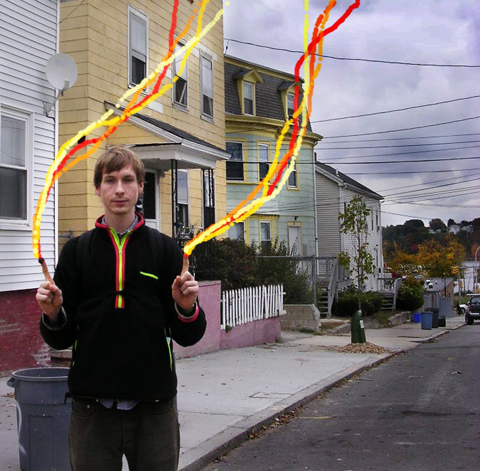

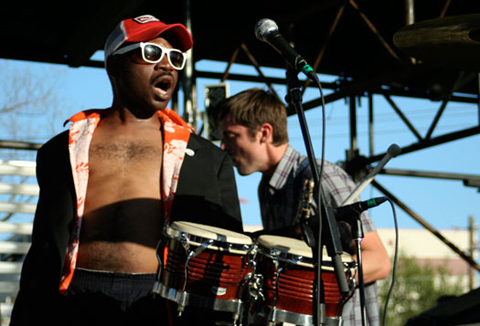


 All photography by