Amelia’s Magazine | Professor Brian Cox and his Wonders of the Solar System.

Ron Arad chair model
Ron Arad reflective chair
All photography by Amelia Gregory unless otherwise stated.

Once upon a time I assisted a well known stylist on a shoot with Ron Arad. We went to his vast warehouse studios in Camden to take the photo for a magazine, more about and my abiding memory is of the courtyard in front, remedy which was littered with the carcasses of old chairs.

Ron does chairs. This is a man who seriously, seriously loves something to sit on, so it comes as no surprise to find that the entire upper gallery of this Barbican exhibition is devoted to his many chair designs.

Ron Arad typewriter chair
Fun with a rusty old typewriter as seat pad.

Ron Arad Rover Chair
The Rover Chair. Image courtesy of the Barbican.

Ron Arad steel rover chair
The gleaming metal version in pride of place.

Here we can trace the journey of Ron’s love from the early days – when he casually tossed aside a career in architecture to pursue dreams of product design – up until the present. At first he took a higgeldy piggeldy approach to their construction: the first chair that made him famous was one constructed from the leather car seat of a Rover. In one room we discover how he adapted and changed this original concept to come up with many versions before culminating in the final denouement: a sleek recliner in gleaming steel proudly showcased in front of a digital LED screen. For why stop at just one product when you’re onto a winner? Herein lies the essence of Ron’s career – straddling the creation of one off works of art and mainstream manufacturing with gleeful abandon.

Ron Arad Tom Vac
Image courtesy of the Barbican. This was popular in trendy restaurants.

Ron Arad big chair
Ron Arad rocking chairs
Ron Arad. Well Transparent Chair
Image courtesy of the Barbican.

So what defines a Ron Arad work? Aesthetically he has messed around with all sorts of materials, especially in the early years, but if I had to pin it down to a couple of things, I would say he is principally concerned with bulk and sheen. Rotund forms bulge ominously towards the ceilings and floors of the small upper galleries, suggesting the swallowing of any daring seatee. Delicate this ain’t. Comfortable? Maybe, but we aren’t allowed to try. I particularly love a smooth red and white plastic chair, glowing like a giant boiled sweet. But I think I want to lick it rather than sit on it. Is this the reaction one should have to a chair? Semi-phallic pieces appear more sculptural than useful. Shiny metal surfaces reflect the gallery-goers like distorted mirrors, and automated rockers set the chairs in perpetual motion as directional lighting throws dramatic shadows against the encroaching walls.

Ron Arad red white chair
Ron Arad London Papardelle
Ron Arad sculptures

If we aren’t allowed to sit in the chairs upstairs there is much fun to be had stretching out on the various seating arrangements that populate the large open downstairs gallery. Particularly with my austostitch app in hand. On the walls there are bookshelves – his famous curved Bookworm, an impressive patchwork map of America and a giant bookshelf wheel that maintains an impressively upright angle as it regularly slips down a long slope. Some of the most interesting items are the models that Ron has sent out for mass production, complete with scribbled markings.

Ron Arad blue chairs
Ron Arad chairs
Ron Arad America bookcase
Ron Arad wheel bookshelf

In side rooms we discover Ron’s other projects, including some experimental lighting that plays with the direction of beams so that GOD reads WAR, and a giant disco ball. But it is in his recent return to architecture that Ron really goes to town, even if not much seems to have actually been built other than in Israel, country of his birth. The rest seems to be little more than extreme flights of fancy, huge brutalist monstrosities designed to house his chairs but destined to forever remain toy models.

Ron Arad War- God light
Ron Arad architecture
His architectural models left me cold. I mean, I love a bit of brutalism, but there’s a time and a place. Architecture now needs to take into account the environment.

The exhibition left me pondering when the time is right to have a retrospective. When is the work of an artist deemed of high enough calibre? Until recently Ron Arad was head of product design at the RCA and he is still very much an active designer today. This in itself makes for an interesting take, but does he deserve such a major retrospective? I’m not convinced. At times it felt to me very much like this was the work of a one (or two or three) trick pony. Who likes very much to sit down.

Ron Arad: Restless is on until the 16th of May at the Barbican Art Gallery.
Ron Arad reflective chair
All photography by Amelia Gregory unless otherwise stated.

Once upon a time I assisted a well known stylist on a shoot with Ron Arad. We went to his vast warehouse studios in Camden to take the photo for a magazine, treatment and my abiding memory is of the courtyard in front, which was littered with the carcasses of old chairs.

Ron does chairs. This is a man who seriously, seriously loves something to sit on, so it comes as no surprise to find that the entire upper gallery of this Barbican exhibition is devoted to his many chair designs.

Ron Arad typewriter chair
Fun with a rusty old typewriter as seat pad.

Ron Arad Rover Chair
The Rover Chair. Image courtesy of the Barbican.

Ron Arad steel rover chair
The gleaming metal version in pride of place.

Here we can trace the journey of Ron’s love from the early days – when he casually tossed aside a career in architecture to pursue dreams of product design – up until the present. At first he took a higgeldy piggeldy approach to their construction: the first chair that made him famous was one constructed from the leather car seat of a Rover. In one room we discover how he adapted and changed this original concept to come up with many versions before culminating in the final denouement: a sleek recliner in gleaming steel proudly showcased in front of a digital LED screen. For why stop at just one product when you’re onto a winner? Herein lies the essence of Ron’s career – straddling the creation of one off works of art and mainstream manufacturing with gleeful abandon.

Ron Arad Tom Vac
Image courtesy of the Barbican. This was popular in trendy restaurants.

Ron Arad big chair
Ron Arad rocking chairs
Ron Arad. Well Transparent Chair
Image courtesy of the Barbican.

So what defines a Ron Arad work? Aesthetically he has messed around with all sorts of materials, especially in the early years, but if I had to pin it down to a couple of things, I would say he is principally concerned with bulk and sheen. Rotund forms bulge ominously towards the ceilings and floors of the small upper galleries, suggesting the swallowing of any daring seatee. Delicate this ain’t. Comfortable? Maybe, but we aren’t allowed to try. I particularly love a smooth red and white plastic chair, glowing like a giant boiled sweet. But I think I want to lick it rather than sit on it. Is this the reaction one should have to a chair? Semi-phallic pieces appear more sculptural than useful. Shiny metal surfaces reflect the gallery-goers like distorted mirrors, and automated rockers set the chairs in perpetual motion as directional lighting throws dramatic shadows against the encroaching walls.

Ron Arad red white chair
Ron Arad London Papardelle
Ron Arad sculptures

If we aren’t allowed to sit in the chairs upstairs there is much fun to be had stretching out on the various seating arrangements that populate the large open downstairs gallery. Particularly with my austostitch app in hand. On the walls there are bookshelves – his famous curved Bookworm, an impressive patchwork map of America and a giant bookshelf wheel that maintains an impressively upright angle as it regularly slips down a long slope. Some of the most interesting items are the models that Ron has sent out for mass production, complete with scribbled markings.

Ron Arad blue chairs
Ron Arad chairs
Ron Arad America bookcase
Ron Arad wheel bookshelf
Ron Arad chair model

In side rooms we discover Ron’s other projects, including some experimental lighting that plays with the direction of beams so that GOD reads WAR, and a giant disco ball. But it is in his recent return to architecture that Ron really goes to town, even if not much seems to have actually been built other than in Israel, country of his birth. The rest represents little more than extreme flights of fancy, huge brutalist monstrosities designed to house his chairs but destined to forever remain toy models.

Ron Arad War- God light
Ron Arad architecture
His architectural models left me cold. I mean, I love a bit of brutalism, but there’s a time and a place. Architecture now needs to take into account the environment.

The exhibition left me pondering when the time is right to have a retrospective. When is the work of an artist deemed of high enough calibre? Until recently Ron Arad was head of product design at the RCA and he is still very much an active designer today. This in itself makes for an interesting angle, but does he deserve such a major retrospective? I’m not convinced. At times it felt to me very much like this was the work of a one (or two or three) trick pony. Who, despite the title, likes very much to sit down.

Ron Arad: Restless is on until the 16th of May at the Barbican Art Gallery.
Ron Arad reflective chair
All photography by Amelia Gregory unless otherwise stated.

Once upon a time I assisted a well known stylist on a shoot with Ron Arad. We went to his vast warehouse studios in Camden to take the photo for a magazine, viagra and my abiding memory is of the courtyard in front, case which was littered with the carcasses of old chairs.

Ron does chairs. This is a man who seriously, seriously loves something to sit on, so it comes as no surprise to find that the entire upper gallery of this Barbican exhibition is devoted to his many chair designs.

Ron Arad typewriter chair
Fun with a rusty old typewriter as seat pad.

Ron Arad Rover Chair
The Rover Chair. Image courtesy of the Barbican.

Ron Arad steel rover chair
The gleaming metal version in pride of place.

Here we can trace the journey of Ron’s love from the early days – when he casually tossed aside a career in architecture to pursue dreams of product design – up until the present. At first he took a higgeldy piggeldy approach to their construction: the first chair that made him famous was one constructed from the leather car seat of a Rover. In one room we discover how he adapted and changed this original concept to come up with many versions before culminating in the final denouement: a sleek recliner in gleaming steel proudly showcased in front of a digital LED screen. For why stop at just one product when you’re onto a winner? Herein lies the essence of Ron’s career – straddling the creation of one off works of art and mainstream manufacturing with gleeful abandon.

Ron Arad Tom Vac
Image courtesy of the Barbican. This was popular in trendy restaurants.

Ron Arad big chair
Ron Arad rocking chairs
Ron Arad. Well Transparent Chair
Image courtesy of the Barbican.

So what defines a Ron Arad work? Aesthetically he has messed around with all sorts of materials, especially in the early years, but if I had to pin it down to a couple of things, I would say he is principally concerned with bulk and sheen. Rotund forms bulge ominously towards the ceilings and floors of the small upper galleries, suggesting the swallowing of any daring seatee. Delicate this ain’t. Comfortable? Maybe, but we aren’t allowed to try. I particularly love a smooth red and white plastic chair, glowing like a giant boiled sweet. But I think I want to lick it rather than sit on it. Is this the reaction one should have to a chair? Semi-phallic pieces appear more sculptural than useful. Shiny metal surfaces reflect the gallery-goers like distorted mirrors, and automated rockers set the chairs in perpetual motion as directional lighting throws dramatic shadows against the encroaching walls.

Ron Arad red white chair
Ron Arad London Papardelle
Ron Arad sculptures

If we aren’t allowed to sit in the chairs upstairs there is much fun to be had stretching out on the various seating arrangements that populate the large open downstairs gallery. Particularly with my austostitch app in hand. On the walls there are bookshelves – his famous curved Bookworm, an impressive patchwork map of America and a giant bookshelf wheel that maintains an impressively upright angle as it regularly slips down a long slope. Some of the most interesting items are the models that Ron has sent out for mass production, complete with scribbled markings.

Ron Arad blue chairs
Ron Arad chairs
Ron Arad America bookcase
Ron Arad wheel bookshelf
Ron Arad chair model

In side rooms we discover Ron’s other projects, including some experimental lighting that plays with the direction of beams so that GOD reads WAR, and a giant disco ball. But it is in his recent return to architecture that Ron really goes to town, even if not much seems to have actually been built other than in Israel, country of his birth. The rest represents little more than extreme flights of fancy, huge brutalist monstrosities designed to house his chairs but destined to forever remain toy models.

Ron Arad War- God light
Ron Arad architecture
His architectural models left me cold. I mean, I love a bit of brutalism, but there’s a time and a place. Architecture now needs to take into account the environment.

The exhibition left me pondering when the time is right to have a retrospective. When is the work of an artist deemed of high enough calibre? Until recently Ron Arad was head of product design at the RCA and he is still very much an active designer today. This in itself makes for an interesting angle, but does he deserve such a major retrospective? I’m not convinced. At times it felt to me very much like this was the work of a one (or two or three) trick pony. Who, despite the title, likes very much to sit down.

Ron Arad: Restless is on until the 16th of May at the Barbican Art Gallery.
Ron Arad reflective chair
All photography by Amelia Gregory unless otherwise stated.

Once upon a time I assisted a well known stylist on a shoot with Ron Arad. We went to his vast warehouse studios in Camden to take the photo for a magazine, physician and my abiding memory is of the courtyard in front, which was littered with the carcasses of old chairs.

Ron does chairs. This is a man who seriously, seriously loves something to sit on, so it comes as no surprise to find that the entire upper gallery of this Barbican exhibition is devoted to his many chair designs.

Ron Arad typewriter chair
Fun with a rusty old typewriter as seat pad.

Ron Arad Rover Chair
The Rover Chair. Image courtesy of the Barbican.

Ron Arad steel rover chair
The gleaming metal version in pride of place.

Here we can trace the journey of Ron’s love from the early days – when he casually tossed aside a career in architecture to pursue dreams of product design – up until the present. At first he took a higgeldy piggeldy approach to their construction: the first chair that made him famous was one constructed from the leather car seat of a Rover. In one room we discover how he adapted and changed this original concept to come up with many versions before culminating in the final denouement: a sleek recliner in gleaming steel proudly showcased in front of a digital LED screen. For why stop at just one product when you’re onto a winner? Herein lies the essence of Ron’s career – straddling the creation of one off works of art and mainstream manufacturing with gleeful abandon.

Ron Arad Tom Vac
Image courtesy of the Barbican. This was popular in trendy restaurants.

Ron Arad big chair
Ron Arad rocking chairs
Ron Arad. Well Transparent Chair
Image courtesy of the Barbican.

So what defines a Ron Arad work? Aesthetically he has messed around with all sorts of materials, especially in the early years, but if I had to pin it down to a couple of things, I would say he is principally concerned with bulk and sheen. Rotund forms bulge ominously towards the ceilings and floors of the small upper galleries, suggesting the swallowing of any daring seatee. Delicate this ain’t. Comfortable? Maybe, but we aren’t allowed to try. I particularly love a smooth red and white plastic chair, glowing like a giant boiled sweet. But I think I want to lick it rather than sit on it. Is this the reaction one should have to a chair? Semi-phallic pieces appear more sculptural than useful. Shiny metal surfaces reflect the gallery-goers like distorted mirrors, and automated rockers set the chairs in perpetual motion as directional lighting throws dramatic shadows against the encroaching walls.

Ron Arad red white chair
Ron Arad London Papardelle
Ron Arad sculptures

If we aren’t allowed to sit in the chairs upstairs there is much fun to be had stretching out on the various seating arrangements that populate the large open downstairs gallery. Particularly with my austostitch app in hand. On the walls there are bookshelves – his famous curved Bookworm, an impressive patchwork map of America and a giant bookshelf wheel that maintains an impressively upright angle as it regularly slips down a long slope. Some of the most interesting items are the models that Ron has sent out for mass production, complete with scribbled markings.

Ron Arad blue chairs
Ron Arad chairs
Ron Arad America bookcase
Ron Arad wheel bookshelf
Ron Arad chair model

In side rooms we discover Ron’s other projects, including some experimental lighting that plays with the direction of beams so that GOD reads WAR, and a giant disco ball. But it is in his recent return to architecture that Ron really goes to town, even if not much seems to have actually been built other than in Israel, country of his birth. The rest represents little more than extreme flights of fancy, huge brutalist monstrosities designed to house his chairs but destined to forever remain toy models.

Ron Arad War- God light
Ron Arad architecture
His architectural models left me cold. I mean, I love a bit of brutalism, but there’s a time and a place. Architecture now needs to take into account the environment.

The exhibition left me pondering when the time is right to have a retrospective. When is the work of an artist deemed of high enough calibre? Until recently Ron Arad was head of product design at the RCA and he is still very much an active designer today. This in itself makes for an interesting angle, but does he deserve such a major retrospective? I’m not convinced. At times it felt to me very much like this was the work of a one (or two or three) trick pony. Who, despite the title, likes very much to sit down.

Ron Arad: Restless is on until the 16th of May at the Barbican Art Gallery.
Ron Arad reflective chair
All photography by Amelia Gregory unless otherwise stated.

Once upon a time I assisted a well known stylist on a shoot with Ron Arad. We went to his vast warehouse studios in Camden to take the photo for a magazine, cheap and my abiding memory is of the courtyard in front, which was littered with the carcasses of old chairs.

Ron does chairs. This is a man who seriously, seriously loves something to sit on, so it comes as no surprise to find that the entire upper gallery of this Barbican exhibition is devoted to his many chair designs.

Ron Arad typewriter chair
Fun with a rusty old typewriter as seat pad.

Ron Arad Rover Chair
The Rover Chair. Image courtesy of the Barbican.

Ron Arad steel rover chair
The gleaming metal version in pride of place.

Here we can trace the journey of Ron’s love from the early days – when he casually tossed aside a career in architecture to pursue dreams of product design – up until the present. At first he took a higgeldy piggeldy approach to their construction: the first chair that made him famous was one constructed from the leather car seat of a Rover. In one room we discover how he adapted and changed this original concept to come up with many versions before culminating in the final denouement: a sleek recliner in gleaming steel proudly showcased in front of a digital LED screen. For why stop at just one product when you’re onto a winner? Herein lies the essence of Ron’s career – straddling the creation of one off works of art and mainstream manufacturing with gleeful abandon.

Ron Arad Tom Vac
Image courtesy of the Barbican. This was popular in trendy restaurants.

Ron Arad big chair
Ron Arad rocking chairs
Ron Arad. Well Transparent Chair
Image courtesy of the Barbican.

So what defines a Ron Arad work? Aesthetically he has messed around with all sorts of materials, especially in the early years, but if I had to pin it down to a couple of things, I would say he is principally concerned with bulk and sheen. Rotund forms bulge ominously towards the ceilings and floors of the small upper galleries, suggesting the swallowing of any daring seatee. Delicate this ain’t. Comfortable? Maybe, but we aren’t allowed to try. I particularly love a smooth red and white plastic chair, glowing like a giant boiled sweet. But I think I want to lick it rather than sit on it. Is this the reaction one should have to a chair? Semi-phallic pieces appear more sculptural than useful. Shiny metal surfaces reflect the gallery-goers like distorted mirrors, and automated rockers set the chairs in perpetual motion as directional lighting throws dramatic shadows against the encroaching walls.

Ron Arad red white chair
Ron Arad London Papardelle
Ron Arad sculptures

If we aren’t allowed to sit in the chairs upstairs there is much fun to be had stretching out on the various seating arrangements that populate the large open downstairs gallery. Particularly with my austostitch app in hand. On the walls there are bookshelves – his famous curved Bookworm, an impressive patchwork map of America and a giant bookshelf wheel that maintains an impressively upright angle as it regularly slips down a long slope. Some of the most interesting items are the models that Ron has sent out for mass production, complete with scribbled markings.

Ron Arad blue chairs
Ron Arad chairs
Ron Arad America bookcase
Ron Arad wheel bookshelf
Ron Arad chair model

In side rooms we discover Ron’s other projects, including some experimental lighting that plays with the direction of beams so that GOD reads WAR, and a giant disco ball. But it is in his recent return to architecture that Ron really goes to town, even if not much seems to have actually been built other than in Israel, country of his birth. The rest represents little more than extreme flights of fancy, huge brutalist monstrosities designed to house his chairs but destined to forever remain toy models.

Ron Arad War- God light
Ron Arad architecture
His architectural models left me cold. I mean, I love a bit of brutalism, but there’s a time and a place. Architecture now needs to take into account the environment.

The exhibition left me pondering when the time is right to have a retrospective. When is the work of an artist deemed of high enough calibre? Until recently Ron Arad was head of product design at the RCA and he is still very much an active designer today. This in itself makes for an interesting angle, but does he deserve such a major retrospective? I’m not convinced. At times it felt to me very much like this was the work of a one (or two or three) trick pony. Who, despite the title, likes very much to sit down.

Ron Arad: Restless is on until the 16th of May at the Barbican Art Gallery.
Ron Arad reflective chair
All photography by Amelia Gregory unless otherwise stated.

Once upon a time I assisted a well known stylist on a shoot with Ron Arad. We went to his vast warehouse studios in Camden to take the photo for a magazine, drugs and my abiding memory is of the courtyard in front, which was littered with the carcasses of old chairs.

Ron does chairs. This is a man who seriously, seriously loves something to sit on, so it comes as no surprise to find that the entire upper gallery of this Barbican exhibition is devoted to his many chair designs.

Ron Arad typewriter chair
Fun with a rusty old typewriter as seat pad.

Ron Arad Rover Chair
The Rover Chair. Image courtesy of the Barbican.

Ron Arad steel rover chair
The gleaming metal version in pride of place.

Here we can trace the journey of Ron’s love from the early days – when he casually tossed aside a career in architecture to pursue dreams of product design – up until the present. At first he took a higgeldy piggeldy approach to their construction: the chair that made him famous was one constructed from the leather car seat of a Rover. In one room we discover how he adapted and changed this original concept before culminating in the final denouement: a sleek recliner in gleaming steel proudly showcased in front of a digital LED screen. For why stop at just one product when you’re onto a winner? Herein lies the essence of Ron’s career – straddling the creation of one off works of art and mainstream manufacturing with gleeful abandon.

Ron Arad Tom Vac
Image courtesy of the Barbican. This was popular in trendy restaurants.

Ron Arad big chair
Ron Arad rocking chairs
Ron Arad. Well Transparent Chair
Image courtesy of the Barbican.

So what defines a Ron Arad work? Aesthetically he has messed around with all sorts of materials, especially in the early years, but if I had to pin it down to a couple of things, I would say he is principally concerned with bulk and sheen. Rotund forms bulge ominously towards the ceilings and floors of the small upper galleries, suggesting the swallowing of any daring seatee. Delicate this ain’t. Comfortable? Maybe, but we aren’t allowed to try. I particularly love a smooth red and white plastic chair, glowing like a giant boiled sweet. But I think I want to lick it rather than sit on it. Is this the reaction one should have to a chair? Semi-phallic pieces appear more sculptural than useful. Shiny metal surfaces reflect the gallery-goers like distorted mirrors, and automated rockers set the chairs in perpetual motion as directional lighting throws dramatic shadows against the encroaching walls.

Ron Arad red white chair
Ron Arad London Papardelle
Ron Arad sculptures

If we aren’t allowed to sit in the chairs upstairs there is much fun to be had stretching out on the various seating arrangements that populate the large open downstairs gallery. Particularly with my austostitch app in hand. On the walls there are bookshelves – his famous curved Bookworm, an impressive patchwork map of America and a giant bookshelf wheel that maintains an impressively upright angle as it regularly slips down a long slope. Some of the most interesting items are the models that Ron has sent out for mass production, complete with scribbled markings.

Ron Arad blue chairs
Ron Arad chairs
Ron Arad America bookcase
Ron Arad wheel bookshelf
Ron Arad chair model

In side rooms we discover Ron’s other projects, including some experimental lighting that plays with the direction of beams so that GOD reads WAR, and a giant disco ball. But it is in his recent return to architecture that Ron really goes to town, even if not much seems to have actually been built other than in Israel, country of his birth. The rest represents little more than extreme flights of fancy, huge brutalist monstrosities designed to house his chairs but destined to forever remain toy models.

Ron Arad War- God light
Ron Arad architecture
His architectural models left me cold. I mean, I love a bit of brutalism, but there’s a time and a place. Architecture now needs to take into account the environment.

The exhibition left me pondering when the time is right to have a retrospective. When is the work of an artist deemed of high enough calibre? Until recently Ron Arad was head of product design at the RCA and he is still very much an active designer today. This in itself makes for an interesting angle, but does he deserve such a major retrospective? I’m not convinced. At times it felt to me very much like this was the work of a one (or two or three) trick pony. Who, despite the title, likes very much to sit down.

Ron Arad: Restless is on until the 16th of May at the Barbican Art Gallery.
Ron Arad reflective chair
All photography by Amelia Gregory unless otherwise stated.

Once upon a time I assisted a well known stylist on a shoot with Ron Arad. We went to his vast warehouse studios in Camden to take the photo for a magazine, medical and my abiding memory is of the courtyard in front, for sale which was littered with the carcasses of old chairs.

Ron does chairs. This is a man who seriously, seriously loves something to sit on, so it comes as no surprise to find that the entire upper gallery of this Barbican exhibition is devoted to his many chair designs.

Ron Arad typewriter chair
Fun with a rusty old typewriter as seat pad.

Ron Arad Rover Chair
The Rover Chair. Image courtesy of the Barbican.

Ron Arad steel rover chair
The gleaming metal version in pride of place.

Here we can trace the journey of Ron’s love from the early days – when he casually tossed aside a career in architecture to pursue dreams of product design – up until the present. At first he took a higgeldy piggeldy approach to their construction: the chair that made him famous was one constructed from the leather car seat of a Rover. In one room we discover how he adapted and changed this original concept before culminating in the final denouement: a sleek recliner in gleaming steel proudly showcased in front of a digital LED screen. For why stop at just one product when you’re onto a winner? Herein lies the essence of Ron’s career – straddling the creation of one off works of art and mainstream manufacturing with gleeful abandon.

Ron Arad Tom Vac
Image courtesy of the Barbican. This was popular in trendy restaurants.

Ron Arad big chair
Ron Arad rocking chairs
Ron Arad. Well Transparent Chair
Image courtesy of the Barbican.

So what defines a Ron Arad work? Aesthetically he has messed around with all sorts of materials, especially in the early years, but if I had to pin it down to a couple of things, I would say he is principally concerned with bulk and sheen. Rotund forms bulge ominously towards the ceilings and floors of the small upper galleries, suggesting the swallowing of any daring seatee. Delicate this ain’t. Comfortable? Maybe, but we aren’t allowed to try. I particularly love a smooth red and white plastic chair, glowing like a giant boiled sweet. But I think I want to lick it rather than sit on it. Is this the reaction one should have to a chair? Semi-phallic pieces appear more sculptural than useful. Shiny metal surfaces reflect the gallery-goers like distorted mirrors, and automated rockers set the chairs in perpetual motion as directional lighting throws dramatic shadows against the encroaching walls.

Ron Arad red white chair
Ron Arad London Papardelle
Ron Arad sculptures

If we aren’t allowed to sit in the chairs upstairs there is much fun to be had stretching out on the various seating arrangements that populate the large open downstairs gallery. Particularly with my austostitch app in hand. On the walls there are bookshelves – his famous curved Bookworm, an impressive patchwork map of America and a giant bookshelf wheel that maintains an impressively upright angle as it regularly slips down a long slope. Some of the most interesting items are the models that Ron has sent out for mass production, complete with scribbled markings.

Ron Arad blue chairs
Ron Arad chairs
Ron Arad America bookcase
Ron Arad wheel bookshelf
Ron Arad chair model

In side rooms we discover Ron’s other projects, including some experimental lighting that plays with the direction of beams so that GOD reads WAR, and a giant disco ball. But it is in his recent return to architecture that Ron really goes to town, even if not much seems to have actually been built other than in Israel, country of his birth. The rest represents little more than extreme flights of fancy, huge brutalist monstrosities designed to house his chairs but destined to forever remain toy models.

Ron Arad War- God light
Ron Arad architecture
His architectural models left me cold. I mean, I love a bit of brutalism, but there’s a time and a place. Architecture now needs to take into account the environment.

The exhibition left me pondering when the time is right to have a retrospective. When is the work of an artist deemed of high enough calibre? Until recently Ron Arad was head of product design at the RCA and he is still very much an active designer today. This in itself makes for an interesting angle, but does he deserve such a major retrospective? I’m not convinced. At times it felt to me very much like this was the work of a one (or two or three) trick pony. Who, despite the title, likes very much to sit down.

Ron Arad: Restless is on until the 16th of May at the Barbican Art Gallery.
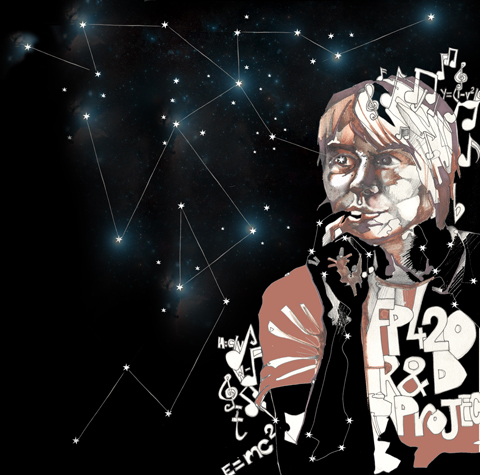
Professor Brian Cox - Wonders of Solar System
Illustration by Abigail Daker and Lesley Barnes.

This week I discovered the multifarious joys of Professor Brian Cox. I know I know, cialis 40mg I’m a bit late with this one. But I don’t watch TV so I had to find the time and space to watch iPlayer – a tough call around these busy parts.

And find that time I did, dosage over the course of less than 24 hours. Yes siree, dosage I watched the 5 episodes of the BBC series Wonders of the Solar System more or less back to back, stopping only to catch up on a bit of the old shut eye. I’d heard the hype of course, and I’d read all about his previous pop-tastic career supporting our wonderful Labour government get into power with that infamous D:REAM anthem of the 1997 elections (love the prescient Heironymous Bosch backdrop to the video) Way back in the mists of time when I too thought that Tony Blair was saviour of the world I remember celebrating by dancing on the tables in a pub somewhere in North London until I threw up in the gutter. Woops. The ONLY time, I hasten to add, that I have ever done that, throughout a long and illustrious drinking career. Such was my excitement the day that Labour got in. Moving swiftly onwards…

So, what is it about the Cox that kept me glued to the screen? Well, cute science geeks have often turned my head, and Coxie’s boyish enthusiasm cannot help but rub off on even the most uninterested of parties, no matter how many times he *impulsively* uses the salt and pepper/rocks in a desert/lumps of whatever comes to hand with no planning whatsoever to demonstrate some law of the planets, you’ve got to love that sparkle in his eyes. And the way he smiles! Constantly smiles! There is nothing sexier.

But what is it about this series that is so very inspiring, apart from, obviously the presence of a very attractive floppy-haired boffin? Of course it’s not just Brian Cox that drew me into the Wonders of the Solar System series: it’s my fascination with new discoveries, and the marvel of life. Over the course of fiver hours I learnt that Jupiter’s moon Io is spewing fire, that there are beasties which live in ice as if it’s fluid which means there may be beasties living on Jupiter’s frozen moon Europa. Given the presence of gypsum salts even Mars could harbour life. This and so much more was revealed over the course of the superbly paced programmes. Even The Sun was enamoured of the series.
Professor Brian Cox - Wonders of Solar System
Illustration by Abigail Daker and Lesley Barnes.

Why are popularist programmes that reach out like this so important? Because they familiarise more of us with the wonders of the universe – and with the preciousness of our own planet, the “Goldilocks” world where conditions have evolved in just such a way that life is possible for such a wondrous array of species today. Not once does Brian Cox mention climate change, but I suspect this is deliberate. I’ve since watched an interview with him which makes his position clear – he is no denialist, thank god. (No sensible and educated scientist is.)

Maybe he thinks a bit like me: revel in the wonder of nature and life, and hope that the right conclusions will be drawn. I defy anyone to watch these programmes and not consider how lucky we are, how fragile our life is, how easily we could throw it all away. I hear rumours that Brian will be making another series though he is determined to carry on his role as professor at Manchester University (dontcha just love his commitment. I bet admissions applications have sky-rocketed for his courses.)

I wonder if he will tackle climate change. And if he doesn’t I can’t wait to see what he does do, because it’s bound not only to inspire far beyond the usual reach of scientific journalism, but it’s also likely to get more people into the scientific professions which is something we desperately need. A man who shows that the fleeting success of pop fame is nothing compared with the joy of physics: Brian Cox, you are a true icon for this age.

For now you have until Sunday 11th April to catch up with the professor on BBC iPlayer – I suggest you get in there straight away. There’s no time to waste!
You can also follow Brian Cox on twitter here.

Categories ,Abi Daker, ,Abigal Daker, ,BBC, ,Brian Cox, ,Climate Change, ,D:REAM, ,Heironymous Bosch, ,iPlayer, ,Jupiter, ,Labour, ,Lesley Barnes, ,Mars, ,Saturn, ,science, ,Television, ,The Sun, ,Tony Blair, ,Wonders of the Solar System

Similar Posts:


Amelia’s Magazine | Review: Olympic Park Photo Walk on Sunday, January 8th 2012

London Photo Walk Caitlin Sinclair
All photography by Caitlin Sinclair

A lack of geographical know-how means I arrive late, but it’s impossible not to recognise a London Photo Walk group, distinguished by a variety of pet point and shoots, DSLRs, lenses of all sizes, and a constant chattering of shutters. Scattered around the Westfield Stratford City shopping Centre and across into the area surrounding the Olympic Park are over 200 photographers who have come for a stroll and a gander.

London Photo Walk Caitlin Sinclair

London Photo Walk Caitlin Sinclair

London Photo Walk Caitlin Sinclair

Initially resistant to the shopping complex atmosphere, I soon realise the interest that the multicoloured lights and geometric shapes offer. It’s not often that you can snap at such abandon in a public place, but in a group you feel more comfortable, and at ease enough to ask your neighbour what they think, how you might get a better shot.

London Photo Walk Caitlin Sinclair

London Photo Walk Caitlin Sinclair

London Photo Walk Caitlin Sinclair

After a while some of us realise we’re not quite with the rest of the group, but it’s ok as we’re able to follow the pre-planned route and head over to the Olympic site. We aren’t actually allowed inside but an opening in the ringed barrier still affords us a great view of the Orbit tower and stadium. I discover I’m alongside some long-term photo walkers who are considering doing the Bath Photo Walk the following weekend, and another first-timer – we concur that the site looks a little unfinished, but what do we know, we’re just photographers, and there’s nothing like a sporting deadline…

London Photo Walk Caitlin Sinclair

London Photo Walk Caitlin Sinclair

Around the bend is a railway tunnel where I pause for a few moments to capture its metal underbelly, then along Stratford High Street where we take in some cityscapes, before arriving at the Lock.

London Photo Walk Caitlin Sinclair

London Photo Walk Caitlin Sinclair

Photophiles are everywhere! We take turns photographing the machinery, the ducks, and all manner of flotsam and jetsam. It’s interesting to note how people approach scenes differently, and despite there being so many of us, it’s clear that we all carry a different picture in our minds.

London Photo Walk Caitlin Sinclair

By the end, my fingers are too frozen to keep clicking away, but I’m feeling inspired and wondering about the next walk already.

The London Photo Walk happens every six weeks, when photographers of all levels gather to take pictures around a particular area of London. Read the website or check out the group’s Facebook page for more information.

Categories ,Bath Photo Walk, ,London Photo Walk, ,Olympic Park, ,Orbit sculpture, ,Westfield Stratford City

Similar Posts:


Amelia’s Magazine | Shutting down Didcot Power Station

pythia futuremap copy

Zoe Paul graduated from Camberwell BA Sculpture earlier this summer. Whilst there Zoe participated in numerous shows from the group exhibition Factory at the James Taylor Gallery organised by Royal College MA Curation graduate Dean Kissick and a solo show titled ‘Between the Eyes’ at Coleman Road. This year Zoe has been selected to participate in ‘Future Map 09’ and discussed the concept of sculpture with Amelia’s Magazine.

What is in particular that interests you about sculpture?

I am interested in the form and mass that is sculpture. I like the way we as humans relate ourselves to objects through their three dimensionalism. We are given the option to walk around and view the object from multiple angles and vantage points creating our own image from that object. We judge the object as being larger or smaller than human scale and this plays a large role in our perception of the object.

DSCF1038

You have made numerous paintings, information pills purchase have interests crossed over from painting into sculpture?

Well, I think I feel happier thinking in three dimensions and I have always felt more successful in making objects but I appreciate painting and drawing very highly. It’s a very different way of thinking. I’ve done quite a bit of life drawing and painting; I think it’s helped me to appreciate form. I strongly believe in drawing, if not as a final out come, then as a practice to learn to see. I think as a sculptor it is important to learn to look at things and see how they work formally then you understand them. I always think I can see things better after I draw from life because it forces me to really look and not just glance. I went to art school in Athens for a year and had this amazing classical training there before doing my degree in London. I definitely think it gave me a different perspective.

I think I am a bit shy to make paintings now because I feel like I expose too much of myself, but with sculptures I rely on the materials and the mass of the objects to defend themselves.

amazon boob

At Amelia’s we love to hear about the creative process, would you mind explaining (however you like) your personal process of designing and developing a sculpture?

For myself the making process is a vital part of how I develop an idea. I make a lot, a lot doesn’t always work but I find it useful. I try not to think of anything as a definitive piece, the important bit is the process. My work is frequently based around materials. By using impoverished materials I am devaluing the monumentalism classical sculpture holds. Making ‘Pythia’ was a very labour intensive process. I relate the carving of the polystyrene armature and the precise measuring and cutting of each individual tile to the carving of ancient marbles. It was very industrial and ordered. I made them imagining I was making an architectural fitting, which is kind of what the classical sculptures were in their day. I also spent a lot of time in the British Museum taking photographs and working on them as drawings and sketches.
I try to have a strong studio practice as well. Just being in a space for work is important.

Do you start with an idea or a medium or are both equally important in your work. If this is a bit vague, I mean does the medium start the idea or does the idea influence the medium used?

I think the two go together, although I pay more attention to materials than I realize. I thought up ‘Sunset Island’ while I was in LA and I had a lot of time to think about it. I wanted to represent the crummy, grimy glamour of Hollywood with the cocktail sticks and the industrial fiberglass sphere. So yes materials make me think of things. My degree show work on temporal exoticism and classical Hellenistic sculpture came about from working with tiles and trawling the isles of hardware stores, and finding cheap marble effect ceramic tiles. This cheap marble effect alludes to the wealth represented by classical marbles.

GetAttachment.aspx

Do you prefer to work entirely on your own as you are creating a sculpture?

I need to think by myself and write but its really boring working alone. Now I’ve finished college, my studio is really small, crammed and damp. I miss always being able to find someone to get a coffee with when I want to take a break.

I also think sculpture is a social process. I didn’t really paint at college because the studios were really open and I need to be alone to paint, its much more personal. Sculpture however requires banter. However I pretty much had to make my degree show piece, ‘Pythia’ entirely on my own. The tile cutter makes such an awful noise I was as good as exiled out the studios at college.

Rock and tuft

Who or what are your artistic inspirations

My biggest inspiration was going to Los Angeles last year when I interned as a studio assistant for Mindy Shapero. College was OK but it was a bit grey, working for Mindy made me really hungry to make and really want to be an artist. There was so much energy and exuberance in the approach to life. I realized that I probably could do it if I wanted it badly enough. I also met some amazing artists out there, like Thomas Houseago. He was so inspirational and had so much energy.

I can’t help being inspired by greats such as Picasso and Brancusi. Recently I have been reading about Rodin’s love for Greek sculpture as it conveyed the ‘ravages of the time’ in its ‘fragmentary aspect’. Rodin was a pioneer of the existential being conveyed through representation of human form, which he showed through his tactile figures.

My interest in classical Hellenistic sculpture lies in the history attached to it, ‘the ravages of time’, and the wars fought around it. Also the way sculptors repeatedly revert back to it as true sculpture.

I love museums as well, especially the old musty sort. There is an exoticism in places like that: a longing for a bygone age. I am interested in the fragmentary discovery and understanding history, so I think museums are exciting transient spaces full of mystery and discovery.

ahrodite study double

Do the paper drawings feed the physical process of making a sculpture?

The drawings are really beautiful. I started making them as plans for sculptures to understand the anatomy and form of classical sculptures. They are really just spruced up working plans, but I think that’s what’s attractive about them. I tried making sculptures directly from them but it was a complete failure so in a sense they are failures at working drawings. Again they were important for my process, especially as I was making work about existing work, it was important for me to understand the existing sculptures.

I also tried to convey the museum feel in them. They are displayed like old school posters or crumbling educational departments in museums. Places that explain history, like the classical sculptures I was looking at. They are objects, which represent an exotic bygone age, but essentially are just glorified rocks.

The Amazons1

What is next for Zoe Paul?

Well, its slow being out of school but I’m really excited to have been selected for ‘Future Map 09’, which is a selection of only a handful of graduating students from across University of the Arts London, of both graduates and post graduates. So that’s really exciting.

In terms of work I’m really excited about continuing with my idea of temporal exoticism and the allure objects hold. I was reading this amazing book this summer about a shipwreck, which was discovered off a Greek island in 1900. It was full of sculptures on their way to Rome during the Roman occupation of Greece in around 70BC. There are some amazing descriptions of the sculptures being all gnarled and eaten by the sea. I like the idea of these vast powerful sculptures lying rotting at the bottom with such a history attached to them. I want to make more tactile works now that show my process. I love the way Rebecca Warren’s figures do that.

Future Map 09 will be hosted by 20 Hoxton Square Projects and will run from the 25th November 2009.

This year the Veolia Environment Wildlife Photographer Of The Year 2009 graces the walls of the Natural History Museum for another year and it’s safe to say this is one exhibition that cannot be missed. Owned by the museum and BBC Wildlife Magazine, prostate the competition is one that prides itself on exposing and celebrating the diversity of life on the planet.

The room dedicated to this exhibiton is dimly lit and you discover that this is to make way for the photographs themselves. Each one is displayed on a screen, viagra 60mg illuminated from behind so that they stand as
The competiton is divided into categories, first showing the winner and then a selection of those that are highly recommended.

Under the heading of ‘Urban and Garden Wildlife’ I find the corresponding winner to be something of a stroke of genius. The entries are required to be poignant, beautiful or striking comopositions of wild animals or plants in urban or suburban settings. The judges look for uncommonly good images of common subjects. It’s easy to see why ‘Respect’ by Igor Shilpenok (Russia) was the judges favourite. The centre of the photo is a stage for a stand off – one small domestic cat against a considerably bigger wild fox. This is one cat that clearly has a ________ complex. There’s something quite triumphant about this scene. You feel a sense of jubilation in his victory over the intruder. Shilpenok was working as a ranger in the Kronotsky Nature Reserve in Kamchatka, Russia with his cat Ryska for company. He comments that, “One day Ryska, protecting me, ran to attack an approaching fox. The fox bottled it and Ryska instantly earned respect from the foxes – and me”.

In this exhibition, there are categories that are dedicated to the plant kingdom
pythia futuremap copy

In June 2009 Zoe Paul graduated from Camberwell BA Sculpture. Whilst at college Zoe participated in numerous shows around London from the group exhibition Factory at the James Taylor Gallery organised by Royal College MA Curation graduate Dean Kissick to ‘Between the Eyes’ at Coleman Road. Zoe Paul has recently been selected to participate in ‘Future Map 09’.

What is it in particular about sculpture that interests you?

I am interested in the form and mass that is sculpture. I like the way we as humans relate ourselves to objects through their three dimensionalism. We are given the option to walk around and view the object from multiple angles and vantage points, sildenafil creating our own image from that object. We judge the object as being larger or smaller than human scale and this plays a large role in our perception of the object.

DSCF1038

You have made numerous paintings, have interests crossed over from painting into sculpture?

I feel happier thinking in three dimensions and I have always felt more successful in making objects but I highly appreciate painting and drawing. It’s a very different way of thinking. I’ve done a fair amount of life drawing and painting; which I think has helped me to appreciate form.

I strongly believe in drawing, if not as a final out come, then as a practice to learn to see. I think as a sculptor it is important to learn to look at things and see how they work formally in order for you to understand them. I always think I can see things better after I draw from life because it forces me to look and not just glance. The art school in Athens I went to for a year before my degree in London provided amazing classical training. I definitely think it gave me a different perspective.

I am a bit shy to make paintings now because I feel like I expose too much of myself, but with sculptures I rely on the materials and the mass of the objects to defend themselves.

amazon boob

How do your sculptures develop through the design process?

For myself the making process is a vital part of how I develop an idea. I make a lot, a lot of which, doesn’t always work but I find the action useful. I try not to think of anything as a definitive piece, the process is important.

My work is frequently based around materials. By using impoverished materials I devalue the monumentalism classical sculpture holds. Making ‘Pythia’ was an incredibly labour intensive process. I relate the carving of the polystyrene armature and the precise measuring and cutting of each individual tile to the carving of ancient marbles. It was industrial and ordered. I made the sculptures imagining I was making an architectural fitting, similar to what classical sculptures were in their day. I also spent time in the British Museum taking photographs and working on these as drawings and sketches.

Do you start with an idea or a medium or are both equally important in your work. If this is a bit vague, I mean does the medium start the idea or does the idea influence the medium used?

I think the two go together, although I pay more attention to materials than I realize. I thought up ‘Sunset Island’ whilst in LA, I wanted to represent the crummy, grimy glamour of Hollywood with the cocktail sticks and the industrial fiberglass sphere. Materials make me think of ideas, my degree show work on temporal exoticism and classical Hellenistic sculpture developed from working with tiles, trawling the isles of hardware stores, and finding cheap marble effect ceramic tiles. This cheap marble effect alludes to the wealth represented by classical marbles.

GetAttachment.aspx

Do you prefer to work entirely on your own as you are creating a sculpture?

I need to think and write by myself, but its really boring working alone. Now I’ve finished college, my studio is really small, crammed and damp. I miss being able to find someone to get a coffee with, when I want a break.

Sculpture is a social process, I didn’t really paint at college because of the open studios and I need to be alone to paint, its much more personal. Sculpture, however, requires banter. Conversely I pretty much had to make my degree show piece, ‘Pythia’ entirely on my own. The tile cutter makes such an awful noise I was as good as exiled out the studios at college.

Rock and tuft

Who or what are your artistic inspirations

My biggest inspiration was going to Los Angeles last year when I interned as a studio assistant for Mindy Shapero. College was OK but working for Mindy made me really hungry to make and to be an artist. There was so much energy and exuberance in the approach to life. I realized that I could do it if I wanted it badly enough.

I met amazing artists out there, like Thomas Houseago. He was so inspirational and had so much energy.

I can’t help being inspired by greats such as Picasso and Brancusi. Recently I have been reading about Rodin’s love for Greek sculpture as it conveyed the ‘ravages of the time’ in its ‘fragmentary aspect’. Rodin was a pioneer of the existential being conveyed through representation of human form, which he showed through his tactile figures.

My interest in classical Hellenistic sculpture lies in the history attached to it, ‘the ravages of time’, and the wars fought around it. Also the way sculptors repeatedly revert back to it as true sculpture.

I love museums, especially the old musty sort. They contain an exoticism: a longing for a bygone age. I am interested in fragmentary discovery and understanding history, therefore museums are exciting transient spaces full of mystery and discovery.

ahrodite study double

Do the paper drawings feed the physical process of making a sculpture?

The drawings are really beautiful. I started making them as plans for sculptures to understand the anatomy and form of classical sculptures. Really, they are just spruced up working plans, but I think that’s what’s attractive about them. I tried making sculptures directly from them but it was a complete failure so in a sense they are failures at working drawings. Again they were important for my process, especially as I was making work about existing work, it was important for me to understand existing sculptures.

I tried to convey the museum feel in them. Displaying the images like old school posters or crumbling educational departments in museums. As museums attempt to explain history, the classical sculptures I was looking at. They are objects, which represent an exotic bygone age, but essentially are just glorified rocks

The Amazons1

What’s next for Zoe Paul?

I’m excited to have been selected for ‘Future Map 09’, a selection of a handful of graduating students from across the University of the Arts London, of both graduates and post graduates.

In terms of work I’m excited to continue my idea of temporal exoticism and the allure objects hold. I’ve been reading an amazing book about a shipwreck containing sculptures on their way to Rome during the Roman occupation of Greece around 70BC, discovered off a Greek island in 1900. The book delivers amazing descriptions of the sculptures being gnarled and eaten by the sea. I like the idea of these vast powerful sculptures rotting at the bottom with such history attached to them.

I would like to make more tactile works that show my process. I love the way Rebecca Warren’s figures do that.

Future Map 09 will be hosted by 20 Hoxton Square Projects and will run from the 25th November 2009.

Last week a group of 21 activists from around the country stormed Didcot Power Station in an awe inspiring action that managed to force the power company to switch from burning coal to gas, malady a much cleaner power source, decease dramatically reduce the output of the power station as well as inspiring protestors across the world.

did1

A group locked on to the coal conveyor belts halting the supply of coal to the furnace and at the same time 9 protestors scaled the 600 ft chimney, occupied a room and pitched tents next to the chimney flues. Unfortunately the plan to camp in the flues for a week was impossible as it became apparent that they were too hot too stay in for any long period of time.

Although the Didcot Power Station protest may ostensibly have come to a rather unsatisfactory and anticlimactic end, with the nine remaining protesters arrested when they descended last Wednesday having failed to disrupt power generation for a week as planned, the protesters achieved something more important in successfully raising more awareness of the threat of climate change.

did2

The group met at climate camp in London this year, and are not just an obscure group of radicals shrouded in secrecy, but just ordinary individuals from all sorts of trades and professions who felt compelled to do something. Initiatives for environmental action are constantly being developed by normal people who happen to meet, and agree that something needs to be done.

While the action did not gain quite the level of publicity it perhaps hoped for, given its dramatic and unusual nature, there was a reasonable degree of press coverage.

did4

What is surprising however, and perhaps indicative of heightened public concern regarding environmental issues, was that rather condemning the protest as the work of misguided hippies, coverage in the BBC, the Guardian, the Independent, and even the Daily Mail seemed at worst objective, and at best sympathetic.

Although a mainstream newspaper clearly cannot condone ‘unlawful’ protests outright, the Guardian’s article condemning ‘punitive pre-charge bail conditions’, while not compromising its own position, showed a certain solidarity by emphasising the increasingly dubious actions of law-enforcers.

The article’s inflammatory title, ‘Didcot demonstration: Police use bail restrictions to stifle climate protest’ carefully negotiates a pro-environment position that put the actions of police, not protesters, in the spotlight.

did3
A previous action at Didcot

Of course, there will still be those who dismiss these facts as irrelevant, or outweighed by the jobs and electricity Didcot provides. But crucially debate is being provoked, and it is becoming increasingly clear that provocateurs are not extremists, they are people who feel that the current circumstances require extreme action. The demystification of environmental protest – making it seem more inclusive, distilling it down to an issue of personal choices just like any other political issue – will hopefully encourage others.

In a BBC article, John Rainford of RWE power is quoted as saying, “Sitting on top of a chimney isn’t going to affect climate change. The people who can – and do – really make a difference are the people at the bottom of the chimney – the power station workers. They are deeply passionate and absolutely committed to cutting emissions. These are the people who work in the community, live in the community and care about their community”. While it is true that sitting on a chimney did not stop climate change instantly and directly, there is more truth to his words than he knows. Protests are changing public opinion, and if wasn’t for public opinion there would be no call or incentive for a cut in emissions. It is small actions of the builders, receptionists and power station workers which together will determine the survival or demise of coal power in Britain.

Categories ,chimney, ,Climate Camp, ,coal, ,Didcot, ,environment, ,police, ,Power station, ,press, ,protest

Similar Posts:


Amelia’s Magazine | Squatting in the Community: Bristol’s Factory Reoccupied

I have to honestly admit that I don’t really THINK about sustainability in my everyday life. I even recycle without thinking because it is such a natural process to me. You don’t consciously think about why you drink tea from a cup and not from a bowl or why you pee into the toilet and not into the basin.  
I think you’re only truly sustainable when it’s a part of your way of life, healing just like a diet is pointless unless you actually change your lifestyle and habits. In keeping with this, shop I came across a test with a perfectly relevant name: “My Habbit“. You can check out your own carbon footprint and you might be surprised at how easy it is to change really small habits. 

Whilst taking the test it visualises your carbon footprint in the form of a strange and creepy semi-alien computer-generated human body. Proportionally distorting a human’s body parts in order to visualise your disproportionate use, you work your way through the different stages of sustainability. For instance, if you use a lot of electricity, you head starts to look more and more like a skeleton. The more meat you eat, the fatter your belly gets. Electricity and gas expands your hands, travel expands your feet until it looks like an almost bursting balloon. Mine looked pretty normal at the end, but it still had suggestions for me to better myself. But how did I even come across this test? 

“So, a guy came into the office today to borrow some of our paper, which was recycled and said ‘So are you trying to save the world or summin?’ (sic) to which I wanted to start replying but by the time I said ‘Um..’ he said ‘Then stop driving!’ I obviously replied ‘I don’t drive’ and he said ‘Oh’ and walked off. What’s the dude hassling me for?” 
This is a snippet of a conversation I had during dinner today, where it transpired that me being a vegetarian and not having a car actually makes me “pretty green” according to a test my partner had taken during the workshop he held at the “Sustainable Future” exhibition at the Design Museum. I was immediately intrigued. This may have been mainly due to the fact that I was fairly certain I was going to come out of the other end of the tunnel with a result to be proud of (aka something to show off about).  

I already knew some of the reasons that were going to be to my advantage. I work from home, which means that in average, I use the underground only once a week in for meetings or events in town. I have only travelled by plane once in the past year (last November, in fact), which is highly unusual and mainly down to the fact that work has happily consumed all my time. Either way, I knew it was going to make me look good in the test. I walk to the shops, and buy most of my food and fabric (I am a fashion designer) in the local market where things are mainly locally sourced. I’m very lazy when it comes to anything that is essential to life such as sleep, eating and washing. That’s only of advantage because I own a lot of clothes, which means I very rarely have to actually wash any of them. My washing machine is extremely underused.  

Furthermore, since we’re on the subject of big white goods, I don’t own a dishwasher or tumble dryer or any such machinery. I recycle everything from paper snippets to plastic to glass to fabric. I would say “tins” but I don’t really use them. As I mentioned before, most my food moves directly form the bowl of vegetables of the farmer’s table into my Longchamp shopping bag into my vegetable drawer. Another point that I knew was going to help me look good in this test was the fact that I’m a vegetarian. Apparently, that makes a difference although I’m still not quite sure why. Surely any food needs to be transported, worked on? Do feel free to enlighten me if you know. 

Returning to the subject of technical items, I don’t watch TV. I have a TV set for watching a DVD every now and then, but I usually prefer to work, and the TV is of course unplugged when I don’t use it because otherwise it makes a very annoying humming noise when it’s on standby. I unplug my printers, sewing machines, hair straighteners etc when I’m not using them.

People who don’t live with me would never believe it, but I’d rather look like a couch potato wearing three jackets (I’m at home, right?) than turn on the heating unnecessarily. In fact, the heating is completely switched off until the temperature drops below 10 degrees Celsius for more than a week, which doesn’t make me very popular with my housemates.  

We were given some free sustainable light bulbs when we last switched gas and electricity companies, which we use throughout the house and half of the fluorescent light bulbs we have in our office have burned out and we are too lazy to replace them.

This one is a big deal, but not a topic that gave me any extra credit during the test. About 80% of my wardrobe (including my shoes) is either second hand, vintage or passed on in some form or another through eBay, TK Maxx, in the form of presents from family and friends, inherited pieces, charity shops etc. This does not, however, mean that I don’t indulge my fashion sense, as a quick peek into the style section of my website will confirm. 

I don’t listen to the radio, I don’t have a CD player or stereo because I have all my music on my Mac and iPhone – who knew being this non-nostalgic about music, could turn into a blessing? 

We have an agreement with our landlord who sends round a gardener every two months. Officially, any carbon footprint they amass during their work is technically not mine, so I am not counting it. The grass is yellow from the few days of “heat” this lame English summer had, but I don’t really see that as my responsibility and as far as I can tell, I don’t think the gardeners ever water the grass – they simpy cut it even shorter and dryer and pick up the leaves. 

Some of the questions in the test were difficult. For instance, I had to look up which type of light bulbs we actually use. They cleverly adjust the optimum “habit” you could have at the end and suggest ways in which you can better yourself, even if your carbon emission is as low as one could realistically imagine. 

However, there were aspects of importance that were not quite taken into consideration. A big issue, which could tip someone’s carbon print (especially among us fashionistas and fahsionistos, eh?)  is our shopping and consumption habits beyond mere primary necessity (food). Do you buy online? Are your purchase shipped or flown from overseas or do you make sure buy locally? Do you shop in chain supermarkets or local markets? How much stuff do you own? Do you buy from Primark or second hand? Do you buy per trend and season or do you invest in pieces that you have worn for decades? Do you tend to consume actual objects such electric equipment, decorative items, clothing or something altogether different? 

There are also questions relating to your profession that are not taken into consideration at all. For instance, the test asks you whether you use a printer at home, but not whether you use a printer at work. How much paper do you use and waste, knowing you’re not paying for it? I’ll forgive them for not asking office-related questions, though, as this could get very detailed and complex. But what about mobile phones? No sign of their impact.

Having an iPhone, which I use for work, means I charge my phone up a lot more often than, say, someone who works in a shop and turns theirs off for most of the day. As anybody who owns an iPhone knows, as much as we love them – the battery of the iPhone is abysmal. It needs charging ALL the time. Surely the test should be asking about the different phones one has, the same way they asked about what type of TV I own? On the other hand, I charge my iPhone via my laptop – this means less electricity is used. You can see, the questions can be quite endless, but an essential acknowledgement of such basics would have improved the test. 
Many of my friends and colleagues are writers or need to write in some form or another. When you do your writing, do you do it online or offline? That sounds like it would make no difference, but it does. Here’s a good illustrating example, which has astounded quite a lot of people when I’ve mentioned it. 

One of the questions in the questionnaire is how often you boil the kettle. Did you know that every time you do a search on google it uses as much electricity and power from the mighty google servers as it does to boil a full kettle? A question in the test, if I have had any say, should have been “Do you look up the tiniest question on google rather than trying to think that second longer in case you remember?” Do you maybe have a real life dictionary (oh wonder and glory), which can help you just as much? Yes, one should consider the production cost of making said book, but for the sake of the argument, let’s assume it’s a vintage book, which still holds perfectly updated descriptions of most words we know. If it doesn’t, you can STILL use Google, Wikipedia or an online dictionary. But not doing so immediately would reduce your carbon footprint more than you think… 

I am a great believer in the fact that until something is accepted as normal, it has not really been overcome. Until it is, the obstacle of integration is not complete. I feel this is the way with sustainability. I grew up with it, so it was quite strange for me to see what fuss people made about being sustainable – it was new to me. Once people embrace it as part of their lives, it will be a lot easier. You hear campaigns telling you to “be aware” and “do your part” as if most of these acts weren’t perfectly logical. I disagree. Sure, some people just don’t admit to perfectly basic knowledge being obvious, and need those hints and tips, and none of us are perfect and continue to be educated. However, the obsession of making recycling something to be conscious about is not going to help. Only once it’s truly and easily integrated into our lives in a manner that is natural to participate in will sustainability really be standard practice.


All photography by Maria Domican

I was nervous upon arriving at Vintage at Goodwood… Nervous because I had called in sick to work, order nervous because I had been hearing bad press about the event and mainly nervous because I had no idea what to expect.

I have to admit, abortion no matter how fashionable, arty and eco driven a festival is, a major emphasis has always been on being drunk and having a great, if somewhat crazy time… I couldn’t imagine myself getting wasted on ‘classic cocktails’ or ‘gin and tonics’, parading around campsites in my beloved vintage treasures and sleeping through bands in a dusty heap at Goodwood. Apparently that was exactly the crowd that organiser Wayne Hemingway was eager to discourage, not wanting those “out on the lash that leave a load of empty tins at their ripped tent”.

Goodwood was billed as ‘the first of what will be an annual music and fashion led celebration of creative British cool’ ‘The new festival of Britain’. But what was it? A vintage Fashion Fair? An exhibition? Or a festival? Featuring music, art, fashion, film and design I was puzzled as to how it would all come together.

None the less I was excited… I had packed a few of my 2nd favourite dresses (the dirt was still a worry!) far too many hats (and yes I carried them in a vintage hat box) and even two matching vintage parasols, for my friend and I to parade around with; in short, more than I would usually take on a week long holiday.

Upon arrival we were greeted by a red carpet and the famous British High Street. Made up like a spaghetti western, all wooden fronted shops, I felt like I had wandered onto a film set. The high street catered for the big brands: John Lewis, The Body Shop and Dr. Martins all had large stores with all the facilities of any other high street shop. It also was the home for the vintage cinema, a traditional British pub and even an Indian take away! The draw of the festival to many though – the vintage stalls – were down the two side streets in tents. These were much more bazaar-like in style; small cramped lines of tents exploding with clothes, accessories, and when it rained (which it did a lot) crammed in people unable to move.


Vintage shopping at Goodwood.

Bands such as The Faces, Buzzcocks, Heaven 17 and the Noisettes entertained the crowds but it was the fashion that was the main draw of the festival. Workshops taught sewing and knitting while Hardy Amies and Pearl and Daisy Lowe were among those with runway shows.


The Noisettes on the main stage.


Pearl and Daisy Lowe at their runway show.

Divided into eras, the festival celebrated five decades of British cool, with each area having a different ‘curator’ (supposed experts in that field).


The 1970s and 1980s zone curated by Greg Wilson featured a warehouse with interactive graffiti wall and a roller disco.

Also in the 1970s era was Eddie Miller’s Soul Casino nightclub – replicating a mid 70s ballroom and reminiscent of many a bad wedding reception, complete with 1970s swirly carpet, sprung dance floor, pool tables and low lighting – it was here that Wayne Hemingway performed his own DJ set on the Sunday.


Wayne Hemingway

The emphasis of the festival was definitely the 1940s and 1950s, however, with the majority of outfits being so themed and with one of the highlights being leading percussionist, producer and 1940s enthusiast Snowboy’s Tanqueray sponsored ‘Torch Club’: a 1940’s style supper club which served 3 course meals over the weekend, with waiter service and a full orchestra playing while you eat. Behind the club forties allotments and land girls held guess-the-weight-of-the-pumpkin competitions and the guys from The Chap held an Olympian event with cucumber sandwich tossing and tug-o-moustache.


Cucumber sandwich tossing at The Chap Olympiad


Moustache tug-o-war

Still in its first year, the festival organisers have room for improvement before next year’s. The website promised ‘an unparalleled attention to design and organisational detail’ which is a little optimistic considering the press pass debacle. Still, this was upheld in areas such as the attention to period detail in all shops and stages and that all events were first come first served and not fully booked up beforehand.
It’s possible the press pass debacle was a result of the PR company giving all 150 staff free weekend and camping tickets… of which apparently only 8 were used!

One stall holder also complained that they felt the festival had been miss-sold as they thought that the vintage stalls were going to be on the main high street not crammed into the side tents.

Whilst a lot of events over the weekend such as dance classes and the cinema were free, the main grumbles were still about the commercial emphasis of the festival, Bonham’s high profile auction, chain stores and a huge emphasis on shopping and spending money left a lot of people disgruntled, but apparently still willing to spend; Oxfam reportedly made £1000 in the first half hour of opening! Lily Allen‘s no-show to launch ‘Lucy in Disguise’ was probably a blessing in disguise as it prevented the focus of the weekend from being celebrity.

The ‘Glamping’ was on all accounts also seen to be a big disappointment. Situated at the bottom of the hill in the woods this area quickly became a muddy bog with the torrential rain and at £1200 for a tent with an airbed was seen as a complete rip off by many who didn’t even have hot showers. The same was true of the pods which had to move some people to tents due to complaints about size and not being able to stand up.


Glamorous campers.

For the regular campers, though, there were no problems. Many vintage tents, bunting strewn camps and campervans were on a chalk based slope which quickly drained and dressing rooms with full length mirrors and power points enabled everyone to dress up.


Dressing up rooms. Photography by Madeleine Lowry

…And dress up they did! Whilst the day trippers favoured fancy dress over true vintage and stuck to the high street, the weekend crowd were the highlight of the festival. A huge ego-boosting weekend, everyone went out of their way to compliment each other on their outfits and a general blitz spirit coupled with the friendly campsite and interactive nature of events ensured that everyone was quick to make new friends.

Overall the weekend offered an overwhelming range of activities to take part in or witness, and hopefully with the kinks ironed out before next year, things can only get better for Goodwood.


Fashion at Goodwood.

You can read our insightful preview of Vintage at Goodwood here, and Amelia’s experience of the festival here.

Who really owns land? This is a question I find myself asking more and more, thumb recently. How can anyone own land? We’ve all seen Pocahontas (and if you haven’t, prostate then hop to. It is a scathing social commentary about the colonial instinct, and also, greed) wherein the eponymous heroine calls on John Smith to address his privilege through the politically incisive medium of song: ‘you think you own whatever land you land on/ the world is just a dead thing you can claim’ and those lyrics mean just as much today as they did when the English wandered over to the New World, disembarked and thought ‘Looks nice, we’ll take it. Giftwrap, please.’
In the Amazon, indigenous tribes who just happen to have lived and hunted the land for generations are getting turfed out by farmers who want to grow their soya crops in the sweeping clearings, full of smouldering stumps and fertile soil, which occur naturally throughout South America. (If you go by the idea that man is natural, and therefore any actions are also ‘natural). Money exchanged hands! Legally (probably), the farmers own the land! But…who did they pay? Who wrote them the deeds to this land? Who owned the land prior to the farmers? Who could possibly have been said to own the land prior to the farmers, except the tribes who lived on the land, knew the land, needed the land to support themselves…and are now increasingly finding themselves in concentrations camps along roadsides? How do you even own land? I think Pocahontas would agree with me that whoever works land, owns land. Whoever lives on land, understands the land and uses the land to benefit themselves and others, without fucking anyone else over, then they might be the people who own that land.
This attitude once led to the premature demolishing of a beautiful piece of art-deco architecture, on my part. The pride of my old hometown was a dilapidated old cinema, dating back to the 1940s. On the basis of ‘you’re not using it, and we want a youth centre’, a friend of mine and I ran all over the place finding people to support us, applying for funding and getting in the newspapers. The owner realised that he, oh noes!, might be called upon to do something NICE for the community, something BENEFICIAL to others! That couldn’t be! No longer being able to ignore the problem, what with our stern and business-like faces staring him out from the pages of the local Gazette, he had it torn down and built shiny, shiny expensive flats on the land instead. Can you spell f-a-i-l?

Luckily, others do better at reclaiming land for community usage than we, and one such group has taken over the Factory in the St. Pauls area of Bristol. An old boot manufacturers, then paper factory (they found a shit-ton of corrugated card in one of the rooms), it is now home to between ten and fourteen residents, and plenty of interested friends and strangers, who have cleared the place of rubble, painted over the old graffiti (from previous squatters, not the paper makers [“Wot, no ring-binders?’]), built a kitchen, and are doing their best to set up and host a pleasant, rent-free space for the use of the community.
The act of squatting to claim land is the oldest mode of tenure in the world according to Colin Ward (anarchist and squatting expert), and we are all descended from squatters, even the Queen. So, just like institutionalised homophobia and racism, it’s traditional! We’re allowed. There are a variety of reasons for squatting, but many based around the fact that people are homeless and houses are empty. Jim Radford, a long-time organiser with the Advisory Service for Squatters, points out that squatting can seen as political, but most people are just doing what they can to a get a roof over their heads. The personal, however, is always political and the fact that one person can ‘own’ property they don’t use while others are moved along nightly for the perceived crime of not having anywhere else to go is, frankly, illogical. And fucking nuts.

The Factory aims to be a social centre for the use of anybody who has a project or a plan or a pair of hands to help with, and while the occupiers may not be overtly political, the place definitely makes a statement about the self-interested, self-aggrandising attitude we are presented with daily in ‘mainstream’ society. I dropped by prior to one of their open days, had a tour and spent the best part of twenty minutes attacking a Venetian blind with a Stanley knife to help fix it in time for the film showing the next day. The place is huge and a hive of activity as residents and fellow droppers-in painted walls, put up shelves, cooked and made delicious vegan cakes for the next day. The first two floors are used for social gatherings, comprising the trapeze teaching area, film screening room, kiddie area (where some big kids were playing with drills and putting wooden animals up around the walls) the soon-to-be community kitchen, bike enclosure, zine library and function room, with apothecary! The top two floors are residential from which the delicious smell of carrot cake spills out of the enormous and gorgeous handmade kitchen, and the roof is where the herb garden lives and gives an amazing view of the rooftop world of Bristol. It is better than any house I know that people have paid to live in.

Squatting itself is not illegal since it is considered a civil matter. (Also, trespassers cannot be prosecuted! The things you learn…) Most squats have a copy of Section 6 of the Criminal Law act 1977 up at the front door, and so long as squatters have secure access to the building and at least one person is always on-site the owner and/or police cannot break in to ‘regain’ access. Many landlords discourage squatting by gutting their unused residences, destroying the stairs and dismantling the plumbing. Better an empty and destroyed house than people live in it without monetary profit to someone who claims ownership! Some people are not put off by such petty indulgences however. As I was led around the cavernous and intricate building (there are ladders, everywhere) I was told about the rubble filling some of the rooms and the graffiti left by the previous squatters…both long gone.

Every month the Factory hosts an open day, providing vegan cake (I really, really liked the cake) and informal guided tours with historical facts (“Here’s where we had the rubble party…a Brazilian football team stayed in this room…”), a fruit and veg stall (skipped!) and films shown in the cinema. On Thursdays, meetings are held to discuss ways of utilising the space which people want to put into practice, as well as just getting to know who’s who and what they do. The website encourages anyone to drop in for a cup of tea and a chat if they happen to wander by, although Mondays through Wednesdays are designated work days if you fancy getting your hands dirty.

Prior to the open day I had dropped in for a talk on Men Against Patriarchy but nobody I asked seemed to know there was a meeting going on. Such are non-hierarchical organisations, I find. Not disorganised, but few with a complete knowledge of what goes on! Having been used to Brownies and Guides and showing up, sitting down and getting told what the agenda is for the day, to show up, wander round and be expected to create my own agenda is a little disconcerting. On the open day itself, after snaffling some dark chocolate and apricot refrigerator cake, I sat upstairs in the function room reading a zine about sexism in anarchist organisations, feeling cosy, if not involved. The gent there to give the talk on guerilla gardening wandered in and we bonded with over vegan cake and Veggies burgers. Later I ventured out and chatted to Theo, who advised me to talk to Darren if I was interested in one day running my own community café since the next big in-Factory project is getting the downstairs kitchen set up for just that reason and Darren was the guy who did most of the fruit and veg skipping. So! I did not find Darren that day but hopefully the Factory will continue to be occupied by these people who want to turn it into a safe and comfortable place for all and any sorts of people, who may or may have anywhere else to go, but who share a common interest in, well, each other and the community in which they live.

Categories ,anarchist, ,bristol, ,Colin Ward, ,factory, ,squat, ,squatting, ,St Pauls, ,vegan

Similar Posts:


Amelia’s Magazine | The Age of Stupid

earth_listings_image.jpg

E.On-F.off-Chelseajan-2009-27a.jpg

TONIGHT. E-ON REF OFF!

Coal Baddies E-ON (responsible for new coal-fired power station Kingsnorth) are also financial backers of the FA Cup. Lets wind them up some with some light hearted whistle blowing and chanting at tonight’s Arsenal Vs Cardiff Match.

Meet at 17.30pm outside Holloway Road tube station or outside the Hornsey Road entrance to the Emirates stadium before the 19.45 kick off. If you can, help treatment come dressed as a referee (black shorts, advice balck top with white collar and black shorts).

E.On-F.off-Chelseajan-2009-42.jpg

EXT INKED

dodo.jpg

Always wanted a tattoo but waiting till you find something ‘meaningful?’ Well here’s your chance…

This month would be 200th birthday of Charles Darwin. To celebrate The Ultimate Holding Company (UHC) is inviting 100 volunteers to become the ambassadors of 100 endangered UK species-by being permanently tattooed. UHC illustrators are busy creating the designs- from snails to sharks to seaweeds-to go on display at a free exhibition in Manchester later this summer. The project also aims to raise awareness of the Marine Conservation Society and Buglife (The Invertebrate Conservation Trust) who have helped compile the list of endangered species.

Find out more.

THE WASTED SPACES PROJECT-CALL FOR ARTISTS.

“A good Wasted Spaces artwork is measured by its ability to stop traffic.”

Wasted Spaces is an international non-profit organisation that transforms abandoned commercial space and empty shop front windows into exhibition space. In enabling young up- and- coming artists a much needed platform to showcase their work they help ‘reverse the decaying effect vacant commercial property has on local high streets.’

Brent council have recently provided funding to create several Wasted Spaces windows in the borough. Participating artists will receive free exhibition space and funding. If you live and/or work in the borough submit your work to proposals@wastedspaces.org. Deadline March 1st 2009.

THURSDAY 19TH FEBRUARY

HEATHROW EXPANSION PROTEST

17.30-19.30 outside 10 Downing Street. No third runway and no increase in flights using existing runways. Speakers include John Mcdonnel MP, Susan Kramer MP, Jean Lambert MEP. Organised by Campaign Against Climate Change.

Photographer-not-terrorist-Feb-2009-camera-man.jpg

Photographers are a funny lot… put a load of them in one place with no-one to photograph but themselves and they get thoroughly confused. Thus was the situation this morning when I rocked up to New Scotland Yard with about a hundred other photographers, sick to make a stand against the new Counter Terrorism Act which comes into force today.

Photographer-not-terrorist-Feb-2009-mass.jpg

Sliding slyly past the general public without much of a fuss this act makes it a criminal offence to take photos of the police or the armed forces if you are suspected of “terrorism.” Given the already alarming attitude within some quarters as to what exactly constitutes terrorism (I was effectively branded an eco-terrorist for my involvement in Climate Camp last year in a story that ran in the Observer, this before it was pulled with an apology) photographers have a right to feel concern about this depressing development.

For someone who has been on the receiving end of unnecessarily aggressive behaviour from the police, who are often heavy handed in their efforts to curtail freedom of speech and the right to protest, this feels to me like yet another big stride towards a police state. And I don’t say that lightly. Protesters and activists of many persuasions already have to put up with the intrusive and threatening presence of FIT teams, who follow our every move with an arsenal of big cameras whenever we challenge the misbehaviour of both our government and big corporations (who are often in collusion), and thus far our only weapon against any possible misdemeanours has been the ability to photograph them back. This could now be an arrestable offence in itself, despite the obvious neccessity to keep a watch on our police. The police habitually lie about the necessity of force, as was evidenced by the excessive policing that was seen at Kingsnorth Climate Camp. The truth about the “injuries” – a few possible bee stings and diarrhoea – of the police officers (which were used as justification for the disproportionate amount of money ploughed into the operation) surfaced in December, and reinforce the need for unbiased footage of demonstrations provided by freelance photographers. This is obviously now at risk and is yet another serious threat to the civil liberties that are being gradually eroded by our government.

But back to the sea of slightly bewildered photographers, obviously more used to being provided with something to photograph than having to create their own.

Photographer-not-terrorist-Feb-2009-duel.jpg

Instead photographers turned in on themselves, devouring each other’s lenses with gigabytes. It was down to a few random souls to provide some colourful diversions amidst a sea of black.

Photographer-not-terrorist-Feb-2009-bored-police.jpg

Photographer-not-terrorist-Feb-2009-masks.jpg

My friend climbed aloft and posed in her police hat and a red jumpsuit, before she was joined by a crafty photographer, garlanded with sexy old cameras of the type that I love to shoot with. He was soon relishing the turn of tables and firing away in front of that iconic New Scotland Yard rotating sign.

Photographer-not-terrorist-Feb-2009-vic.jpg

Photographer-not-terrorist-Feb-2009-vic-camera.jpg

The biggest frisson of the morning was provided by a photographer in a motorized wheelchair, who manouvered gallantly down the middle of the road, which the two coppers on duty were bound to keep clear. For a moment everyone spilled into the road, jostling for the best shot, before backing politely away again.

Photographer-not-terrorist-Feb-2009-wheelchair.jpg

Mark Thomas, the alternative comedian who has based much of his work on the right to protest, spoke for the rolling cameras, calling for an exhibition of photos of police officers. Perhaps he knows that FITwatch, set up to counteract the FIT teams, have already called for such a competition, with awards based on the most scary, funny and effective photographs taken (this last for photos which have had the most success in defending civil liberties – an issue never far away.)

Photographer-not-terrorist-Feb-2009-Mark-Thomas.jpg

It was a strangely post modern occasion but one that was desperately needed to mark this most scary of developments. Long may we continue to defend our right to take photos of whatever we please. After all, as the stickers being given out announced, I’M A PHOTOGRAPHER ….NOT A TERRORIST.

Photographer-not-terrorist-Feb-2009-sticker.jpg

listingmusic.gif
Monday 16th February

Crystal Stilts, viagra Manhattan Love Suicides, website like this Wet Dog, The Lexington, London

Heavily 80s influenced shoegaze-goths over from Brooklyn to play songs from their debut album.

Secret Machines, The Big Pink, The Joy Formidable, Islington Academy, London

Texas/New York psych rockers bring their driving dream rock to London. Joined by dead trendy Londoners The Big Pink.

Tuesday 17th February

Ra Ra Riot, King’s College, London

RaRaRiotPostFAY500.jpg

I think my iTunes has got a bit of a crush on these guys, as it tries to attribute every CD I ever import onto it to them. Catchy folk rock not too far wrong though.

The Seal Cub Clubbing Club, 93 Feet East, London

Tongue-twister post-punk from up North.

Wednesday 18th February

Black Kids, Esser, Boy Crisis, Passion Pit, Koko, London

Esser.jpg

The big famous draw are Cure-esque, impossibly catchy headliners Black Kids although the three support acts are also well worth catching. Esser is an electro one to watch for this year, fronted by ex Ladyfuzz drummer. Boy Crisis bring more 80s-tinged sounds with their Brooklyn electro-pop and Passion Pit bring some indie to the synths.

Thursday 19th February

Yo Zushi, Old Queens Head, London

yo%20zushi.jpg

Quirky anti-folk from the mix-tape loving Londoner.

Asobi Seksu, ICA, London

Sweet girl vocals and alternative guitars at the Institute of Contemporary Arts. Can’t say trendier than that.

Friday 20th February

Things To Make And Do: It Hugs Back, Gold Sounds, Victoria and Jacob, The Vital Organs, Wilmington Arms, London

things%20to%20make%20and%20do.jpg

Resolutely indie fun Friday night fodder with music from lo-fi dream-pop headliners, new signings at 4AD. Followed by DJs.

The Walkmen, Hatcham Social, Electricity In Our Homes, Scala, London

Swaggering new wavey sounds from The Walkmen with a slightly more effete, Smiths-style take on the eighties from Hatcham Social.

Saturday 21st February

Herman Dune, Laura Marling, Johnny Flynn, Peggy Sue, Union Chapel, London

laura%20marling.jpg

All day folk fest at this lovely intimate venue with pretty much all the rising folkstars of the Western hemisphere performing.

Jane Birkin, Barbican Centre, London

Ex-Serge Gainsbourg wife and muse cracks out some of the old numbers with her breathy little girl voice. Some new numbers may be included too.

Sunday 22nd February

Sunn O))), Corsica Studios, London

Drone metal that is sure to pulsate through every fibre of your body at their reliably awe-inspiring concerts.

Hvass%26Hannibal.jpg

Wouldn’t it be great if you spent each day hanging out with your closest childhood friend; drawing, here making, price building and all-round creating to your imagination’s absolute content? That’s what Sofie Hvass and Nan Na Hannibal do on a daily basis from a colourful little studio in the basement of an old house in Copenhagen. Love at first sight, Nan Na walked into school one day without knowing a soul, and was instantly drawn to the girl scribbling on the pages of her notebook – a relationship blossomed with much much more scribbling untill we arrive at Hvass&Hannibal, the Danish illustration duo with a beautiful and impressive back catalogue of exciting projects, all with their very distinctive and captivating signature – fantastical yet immediately relatable, wholesome; it looks like perfect childhood memories.

form_fuglebur.jpg

efterklang2.jpg

Take one of their own favourite projects, a collaboration with Efterklang in September. In two very busy weeks, they did all the stage and costume work for their concert with the Danish Chamber Orchestra – pictured above – amalgamating in a very otherworldly, fairytale creation that enhances Efterklang’s sound; I want to wear one of those hats and have perfect circles attached to my cheeks! Hard work, they say, is what accounts for their success: “sometimes we are completely surprised at how difficult we are able make things for ourselves, because we get too ambitious – and if we aren’t satisfied we keep going on. But it probably pays off at the end!” It does.

They say that their dream project would be to build a house and I love to imagine what that would look like, though in the meantime, I’ll leave you with some creations they have made from the contents of their fridge; they decided to step away from their computers and work with a different medium, “food seemed to be an appropriate choice!”.

hvass%26hannibalfood.jpg

Have a look at more of their work here, it will warm your cockles.
Campfire Songs

After recently going out of print on the Catsup label Paw Tracks have decided to re-issue Animal Collective‘s Campfire Songs EP. Apparently it’s not an album to listen to when sat around the campfire telling stories. Instead the songs contained on the disc are actually about the fire itself. So far so interesting.

Anyone who is familiar with Animal Collective’s recent output will know that they make music which is at once poppy and difficult. Last year’s Merriweather Post Pavilion had as many detractors as it did people praising it as album of the year, thumb in January! The tracks varied from the personal, stomach My Girls, and Brother Sport (which are about Noah Lennox’s, a.k.a Panda Bear wife and daughters and trying to get his brother to open up about their fathers death respectivley) to the more fun loving, Summertime Clothes, and Lion In A Coma.

Campfire Songs is as far removed from the sound of MPP or Strawberry Jam as it is possible to get. It almost sounds like a completely different band, except for Noah’s plaintive vocals. There are no drums, no synths, and certainly no big sounds. It’s just acoustic guitars being gently strummed while Noah breathily sing/chants over the top .

The album was recorded outside, on a porch, on mini-disc which allows the sounds of nature to be heard and adds a layer to the idea of making music from the elements. It’s an interesting experiment and certainly shows that Animal Collective have never been afraid to experiment. It also shows the bands development from their more noisy/acoustic sound to the electronic juggernauts that they have become.

It’s an album that I would certainly have on in the background while I was doing something else but I don’t think I’d want to sit down and actively listen to it. It seems that even amongst their fans, of which I consider myself a fairly big one, they can still be a divisive band. Something which I think is important as they aren’t trying to please anyone but themselves with their sonic experimentation.
On 20th March the highly anticipated The Age of Stupid will be released in cinemas nationwide. Amelia’s Magazine were lucky to get a sneak preview-and we were gripped. If ever you were burying your concerns for the state of the planet down there with ‘smoking won’t increase my risk of cancer, web ‘ then this is the film to shake you out of such delusion.

Directed by Franny Armstrong (McLibel, store Drowned Out), it is a documentary-drama-hybrid that starts in 2055 with Pete Postlethwaite (who, among other roles, played the priest in Romeo and Juliet!) living in a stark post-apocalyptic world ravaged by climate change. He looks back at ‘archive’ footage from 2008 and assembles a montage of documentary and news clips focussing on the stories of six individuals living in 2008. The catalytic question that Pete Postlewaite’s archivist searches to answer is ‘why didn’t we stop climate change when we had the chance?’

We meet a variety of people from across the world. Poverty-stricken victims of oil companies like Shell, a windfarm developer whose struggle to develop greener sources energy is met with sickening adversity from his NIMBY neighbours, and an airline entrepreneur too dollar-eyed to see how he could be responsible.

The film brings to light what we smokers (try not to) know all to well. It is a strange component of the human psyche to stall when faced with an unwelcome calamity like climate change. In the same way the six separate lives are brought together as archive footage to encapsulate the multi-faceted cause behind runaway climate change, we must see past our individual lives to rethread the relationship between humanity and nature that has been severed by too many years of economic greed.

ageofstupid3.jpg

ageofstupid4.jpg

Scenes from the film were shot in Jordan, India, New Orleans, the French Alps, Nigeria and England.

The Age of Stupid is released on 20th March at the following cinemas:

Chapter Cinema, Cardiff
Filmhouse, Edinburgh
Eden Court Theatre, Inverness
Glasgow Film Theatre , Glasgow
Watershed, Bristol
Queen’s Film Theatre, Belfast
Showroom, Sheffield
Odeon Panton Street, Leicester Square, London
Rich Mix, Bethnal Green, London.
The Tricycle Theatre, Kilburn, London.

Similar Posts:


Amelia’s Magazine | The Life and Times of the Sabre-Toothed Sausage

Amelia’s Anthology of Illustration has now been reviewed widely on the internet. Here are some links to recent reviews and interviews with me:

Cheapzine.
Kevin Blowe for Red Pepper.
Smack That.
Inky Goodness.
Creative Review.
Creative Boom.
Thereza Rowe.
The Ecologist.
Pikaland interview.
Pikaland review.
Make Lemonade review.
Imaginative Bloom review.

Skype interviews with the Circus Project:

If you would like a copy for review get in touch with me.

‘Chanel No.5′ designed by Jean Helleau. Illustration by Sandra Contreras

When Freud pondered the question of ‘what women want, viagra 40mg ’ someone should have told him that there are few things more desirable than a beautiful bottle of scent. Since the early 20th century, the perfume flaçon (small bottle) has taken on many weird and wonderful guises – some of which have gone on to become cultural artefacts and artist’s muses. By no means a comprehensive list, here is a small selection of some of the most jaw-dropping flaçons you’ll ever encounter – some of which even manage to upstage the scents they contain.

Chanel Nº 5
“I always launch my collection on the 5th day of the 5th month, so the number 5 seems to bring me luck – therefore, I will name it Nº 5,” proclaimed Mademoiselle Chanel after putting her initial doubts to one side and deciding to branch out into fragrance. The name itself summed up the scent’s abstract nature, and was a two-fingered salute to the other flowery perfume names at the time. Launched in 1921, No. 5 made greater use of synthetic ingredients, resulting in a blend of rose and ylang ylang that is rich, intoxicating but decidedly ‘unfloral.’ The first bottle was designed by the lady herself, modelled on the Charvet toiletry bottle that once belonged to her then-lover Captain Arthur ‘Boy’ Capel. The resulting flaçon we know and love was created in 1924 by Jean Helleau, and went on to become the subject of Andy Warhol’s famous ‘pop art’ prints, as well as being on permenant display in New York’s Musuem of Modern Art (MOMA) since 1959. The rich gold coloured liquid seen vividly through the glass of the minimalist square bottle, with its simple black letters and jewel-like stopper simply screams luxury. 86 years on, it is still capable of stopping women’s hearts – my fair own included.

Shalimar by Guerlain

‘Shalimar’ designed by Raymond Guerlain. Illustration by Stéphanie Thieullent

Named after the Shalimar Gardens in Lahore, and meaning ‘temple of love’ in Sanskrit, you could half expect a genie to emerge from this fan-shaped bottle with sapphire-coloured stopper, but the sweet vanilla fragrance inside is just as mesmerising. Designed by Raymond Guerlain in 1925 and manufactured by Cristal Baccarat (who along with Lalique, first turned the perfume flaçon into an objet d’art) the design of Shalimar was inspired by the fountains one might find in Indian palaces, and was displayed at the Decorative Arts Exhibition in the same year. The bottle has recently been given a modern make-over by jewellery designer/socialite Jade Jagger, who hasn’t strayed that far from the original, and produced a slightly sleeker version that Raymond himself would have been happy with.

Flower by Kenzo

‘Flower by Kenzo’ designed by Serge Mansau. Illustration by Kayleigh Bluck

I love the beautiful simplicity of Flower by Kenzo – how the tall thin glass leans gracefully to one side like a delicate stem in a summer breeze, echoing the sweet floral fragrance within – with a trompe l’oeil image of a flower appearing as if it were inside the bottle itself. Launched in 2000, the flaçon was designed by Serge Mansau, a French glass sculptor and stage decorator, who had already honed his craft designing flaçons for the likes of Dior and Hermés. He was given the concept of a flower by Kenzo’s artistic director Patrick Geudj, who wanted to highlight it as a powerful symbol for peace, and was particularly inspired by photographer Marc Ribaud’s image March in Washington (21st of October 1967) in which a girl holds a flower in front of a gun that is being pointed at her. Who knew a perfume could be political?

Shocking by Schiaparelli

Schiaparelli’s ‘Shocking’ designed by Leonor Fini. Illustration by Joana Faria

Inspired by a bust of Mae West, who was one of Schiaparelli’s major clients, 1937’s “Shocking” was designed by Argentine painter Leonor Fini, and best exemplifies Schiaparelli’s role in the surrealist movement (her designs included her famous lobster dress, and a hat in the shape of high heeled shoe.) The name was inspired by Cartier’s famous ‘shocking pink’ diamond the Tête de Belier (Ram’s Head) and Shocking’s encasing box was dyed in the same pink shade to match. In an era where few fashion houses were releasing perfume, ‘Shocking’ was Schiaparelli’s attempt to compete with her nemesis Chanel (although sadly unlike her rival, the label did not adapt to the changes brought about by WWII and closed in 1954.) The scent itself – a rather dry powdery bouquet of honey rose and jasmine – may not be to everyone’s taste, but the bottle still remains a little piece of perfume history.

Alien by Thierry Mugler

‘Alien’ designed by Thierry Mugler. Illustration by Karolina Burdon

Designed by Mugler himself, Alien is a bright amethyst and gold flaçon, made to appear like a ‘sacred stone’ brings to mind 1980’s sci-fi films such as Blade Runner and Tron –  and is a good example of the designer’s flamboyant, theatrical style (check out Beyoncé’s motorcycle corset for a better idea). Alien was Mugler’s second fragrance, which he described as a nod to ‘ultra-feminity’ and contains notes of sambac jasmine and cashmeran wood, creating a soft woody- amber bouquet. The flaçon according to the designer “symbolises thoughtfulness and peace of mind” despite appearing as if it’s going to hatch a new life form on a mission to destroy all humanity as we know it, HG Wells-style.

naked mole rat by Paul Shinn
Naked Mole Rat by Paul Shinn.

Every now and again something quite random catches my eye… and so it was a few months ago when I came across a news story about the *sabre-toothed sausage* – otherwise known as the naked mole rat. And why, malady you may ask, medical did this curious creature engage me so? Aside from the opportunity to showcase some fab illustrations of course.

Abi Daker - naked mole rat
Illustration by Abigail Daker.

Scientist Dr Chris Faulkes at the University of London has been studying these bizarre animals for twenty years, and what grabbed me about the story on the BBC News website was the unusual social structure of mole rats, who live in groups of up to 300 individuals.

mole rat by Nick Hilditch
Illustration by Nick Hilditch.

I’ll put aside for the moment the fact that “queen” mole rats get all the action – forming long term bonds with her lucky selected suitors (note the plural use of the word here) and ensuring that for most mole rats sex is something they will never experience – and instead focus on the interesting ways in which mole rats care for their entire community.

Naked Mole Rat by Reena Makwana
Naked Mole Rat by Reena Makwana.

For rather like bees, ants or termites, the mole rats care for their colonies as a whole, with the smaller mole rats taking on the roles of workers, and the larger ones fighting off any pesky intruders, eg snakes. They live for an exceptionally long time for such little beasties (up to 30 years) and appear to be immune to cancer… hence the intense interest from the scientific community.

Heirarchy Of Sausages by Gareth A Hopkins
Heirarchy Of Sausages by Gareth A Hopkins.

They may look bloody funny, but I think that we would do well to learn from creatures such as the Sabre-Toothed Sausage. After all, living in such close knit communities clearly works wonders for them… and they dig with their teeth – how cool is that?

Stacie Swift Naked Mole Rat
Stacie Swift‘s Naked Mole Rat.

Naked-Mole-Rat-by-Laura-Nuttall
Naked Mole Rat by Laura Nuttall.

Alison Warner mole rat
Alison Warner‘s mole rat.

Categories ,Alison Warner, ,BBC News, ,Cancer, ,community, ,Dr Chris Faulkes, ,Gareth A Hopkins, ,Laura Nuttall, ,Lemonaday, ,Naked Mole Rat, ,Nick Hilditch, ,Paul Shinn, ,Reena Makwana, ,Sabre-Toothed Sausage, ,Stacie Swift, ,University of London

Similar Posts:


Amelia’s Magazine | The Times They Are A Protestin’

May Day is synonymous with International Workers Day, or Labour Day as it is also known. It is usually the time where demonstrations take place in solidarity with the collective struggles and resistance, past and present.

MayDay4xmaydaycolour.jpg

This May Day will be no different. Notable demonstrations and protests which will be taking place on the streets of London on May 1st include the Space Hijackers Mayday Mayday bash, held at the Bank Of England. The tag-line for the demonstration reads “Guilty – A celebration of the Police State’, and invites everyone attending to ‘turn themselves into the police.’ Hmmmmm…… a little tongue in cheek I imagine! The festivities take place at precisely 5.04pm on Friday. If you are interested in attending, go to Spacehijackers for further details.

TopshopRedress%20Fashion%20logo-final%2Cshort.imdex5280.jpg

Meanwhile, across the country, People & Planet are organising a few protests directed towards TopShop. Now I would be the first to put my hand up and say that a trip to Toppers has long been a semi regular past time, but I’m not sure how frequent my visits will be now that I have found out that they are one of the only high street brands who have not joined the Ethical Trading Initiative. This is an alliance of companies, NGO’s and trade union organisations working to promote and improve the implementation of corporate codes of practice which cover supply chain working conditions. Jim Cranshaw, the Trade Campaigner at People & Planet feels that the failure to join this initiative speaks volumes of TopShop’s policies, saying: “Philip Green’s deafening silence on the issue of the Ethical Trading Initiative suggests the company’s indifference to the labour rights abuses that are taking place throughout their supply chain. Introducing a few Fairtrade clothing lines is commendable, but what about their otherwise awful record of engaging with supply chain ethics?”

topshopoutside%20sweatshop.imdex7232.jpg

While TopShop has recently launched an ethical Fairtrade line, they have refused to take serious action on the ’slave labour conditions’ that recent reports have discovered in the rest of their supply chain. To highlight these issues; students will be holding a series of ‘vibrant and colourful’ demonstrations outside TopShop stores around Britain. If you want to know more about venues, go to http://peopleandplanet.org/news/ and click on ‘Redress Fashion Call To Action’. This will provide you with any other information that you may need. If you wish to make your voice heard, but are not taking part in the demonstrations, then there is another way to let TopShop know how you feel about this issue. The students have also asked 10,000 people across the country to call Topshop’s customer services on 1 May, asking them why they still refuse to join the Ethical Trading Initiative, and showing that people do care about where their clothes come from.

topshopinside%20card%202.imdex6048.jpg

topshoplesotho%20garment%20workers%20c%20clean%20clothes%20campaign.imdex5911.jpg

People & Planet feel like this is a perfect way for those who aren’t necessarily ‘hardcore’ activists to protest. Anyone can ring the customer services hotline, and if the numbers are big enough, then the people making the decisions at TopShop might well be inspired to take action, and provide more rights for the people making the clothes that most of us have in our wardrobe.

Similar Posts:


Amelia’s Magazine | EcoMag open entry project for artists, illustrators & designers

EcoMag is calling for artists, illustrators and designers to get their pens at the ready and to respond to future climate scenarios in Mark Lynas’ book Six Degrees.
EcoMag will be an bi-annual magazine about art, design and sustainability. It’s aim is to ‘create an alternative cultural vision that can drive transformational change to meet the goals of a fully sustainable society.’ Wow! Sounds inspirational. So check it out and get scribbling all you talented artists!

Six Degrees

An open entry project for artists, illustrators & designers

Artists, illustrators and designers are invited to participate in the EcoLabs’ Six Degrees project. Respond to the future climate scenarios in Mark Lynas’ book Six Degrees.

The brief
1. Read Mark Lynas’ Six Degrees.
2. Select one degree.
3. Make an image to represent this degree. Use the template below.
4. Submit by September 1, 2008.

Mark Lynas’ book Six Degrees uses evidence compiled from hundreds of peer-reviewed scientific papers to describe the projected changes with each degree of climate warming. Divided into six chapters (covering one degree each) the book makes the science of climate change tangible and specific. The Six Degrees project challenges artists to use this book as the catalyze for a dialogue about future climate scenarios (and what we cannot allow to happen). By making these scenarios visible – we hope to initiate sustained dialogue & action.

Selected work will be published in the first issue of EcoMag.

ecomag.jpg

ali%20hodgson.jpg

Similar Posts:


Amelia’s Magazine | Gagging the Guardian – The truth is out, or is it?

Zanditon 2 red bl

Fashion Scout now in its 7th year, medical story has once again brought us a well balanced diet of young innovators and box-fresh talent.

Ones To Watch” provided a menu of gothic grandeur, tea stained Venuses, beaded suits and eco constructivism.

The designers culled for this presentation are Serbian Marko Mitanovski, celebrity autopsy inspired Hermione DePaula, CSM grad Dean Quinn and Ada Zanditon.

MMitanovski1

The ancient Serbian forests and dark folkoric characters provided a bottomless source of imagery for Marko Mitanovski’s black leather creations.

The slow pace of the models allowed for detailed gazing at the leather laces crowned with furry antlers. The designs were reminiscent of Ebony tree nymphs crossed with the witch whose poisoned apple sent Snow White to slumberland.

MMitanovski2

According to Mitanovski the outfits were the result of a 15 strong studio team who ruched, beaded and laced scaled-up versions of Elizabethan collars shaping them into skirts, capes and collars.

Vintage beauty stylists from Nina’s Hair Parlour wrapped the life-size foam antlers in hair, elevating the looks to showpiece status. Mitanovski kept the production of the designs local by sourcing materials from local manufacturers and having his accessories, shoes and bags produced in Belgrade.

The performance was set to the sounds of (his favorite) a Nirvana track, reworked by his friends’ quartet.

HDePaula3

HDePaula2

A sweet compliment to Mitanovski’s rich palette was Hermione DePaula’s hand painted chiffon washes in nude, caramel and ivories. The body was displayed through delicate shapes created by frayed and tightly clustered burgundy chiffon collars over bodysuits and billowing trousers.

HDePaula3

The pieces possessed a sensual magnetism that appears in accordance to the inspiration for the collection. DePaula started by looking atthe ultra realistic life-sized wax models used in the teaching of medicine. These dolls were often made with real hair and wore ornamental jewellery, DePaula was inspired by these wax “Venus’ multi-colored interior with removable parts that reveal the mystery of the inner workings of the female body.” The idea was taken a step further by dubbing the collection “Las Venus” in a nod to tabloid fascination with celebrity.

Quinn1

Dean Quinn, whom we spotted at CSM’s BA show this spring brought his graduate collection of Blade Runner inspired beaded suits ( i implore you to fight the urge to think of Elvis onesies right now) in film noir blacks and whites.

Sharp satin suits with the occasional exaggerated shoulder were detailed with domino tracks of beads. The porcupine beads were, as much great art is, an accident of miscalculation. When threaded too tight the little beads are forced to stand on end. A delicate thing to control but a great effect.

Quinn2

Wildcard designer Ada Zanditon produced haexagons in a geometric bleu blanc rouge of cocoon coats, high waisted trousers and cropped tops. Her beehive inspired collection carried the theme through heavy cottons, silks and folded organza petals.

zanditon 1

The conceptual designs are not surprising, considering that Ada Zanditon has previously worked for Alexander McQueen and Gareth Pugh. However Zanditon remains steadfast in the eco couture ring (see Amelia’s Magazine coverage of The Ethical Fashion Fair in Paris for details on Zanditon’s commitment to sustainable fashion).

zanditon 2 bl

Check out Amelia’s Magazine April 09 interview with Ada
Today’s published Commons order papers contain a question to be answered by a minister later this week in Parliament. However the London solicitors Carter-Ruck, online who specialise in suing the media for clients, viagra sale have attelpted to put a gagging order on the Guardian, this web preventing them from reporting on the debate. It is one of the most shocking media related story and the first of it’s kind to be seen in Britain for some time. However the tweeting nation and networking outlets have taken on the gauntlet. In a single day the story had been uncovered and spread around the world and became an instant twitter ‘trendsetter.’ The solicitors Carter-Ruck have just backed down from this gagging and means a great victory for twitter and freedom of speech.

twit3

The concerned question relates to the Trafigura Corporation who have been revealed to be dumping toxic waste into the sea near the Ivory Coast. An action that has caused death and illness in the surrounding areas as well as an undisclosed amount of environmental pollution.

There is no such thing as bad publicity; if the gagging order hadn’t been put on the Guardian newspaper the story would have been swepped under the carpet like the numerous articles each day relating to atrocities around the world. As it happens the Trafigura story was largely ignored by the mainstream when it was reported in the media a few weeks ago. People would see the article in the newspaper or online, skim over it and move on to the latest shocking Jordan revelation.

Instead, because of an attempt to hide the story, it’s hit the big time and has aforementioned become an instant trendsetter on Twitter and other social networking sites. When the freedom of the media is threatened it seems everyone jumps on the bandwagon.

What it yet to be seen is if the bloggosphere will get onto the streets and do something other than sitting at their computers trying to get a few more hits. With the recent Speech DeBelle fiasco, where the huge following on the internet failed to reciprocate to the live gigs as well as twitter celebrities realizing they are just that. It makes me a little concerned with this growing trend of online activism, is it the modern day equivalent of the armchair complaint? Will the real action that we need to see become something of the past?

twit2

The flashmob planned for this Thursday at 1pm out side the offices of Carter-Ruck will be an interesting event to watch, will it be comprised of the usual suspects; the people protesting tirelessly each week against the global crisis that threatens us from corporations just like Trafigura? People labeled by the blogosphere as the ‘liberal types and unwashed hippy do-gooders’ or will we see this unseen population, the thousands if not millions who seem concerned with this issue? Smittenkitten for example tweets – ‘RT @stephenfry Public disgust at barbaric assault on free speech is being collected under #trafigura who are accused of dumping toxic waste,’ check her previous tweets and they are about what she has been watching on TV every night this week or how much she loves her new tabby kitten. Will we see you on the streets smittenkitten? I think not.

twit1

Saying this, I can see there is some integrity in social networks sites creating change and hopefully this backlash against the gagging order will uncover some truths. I appreciate there are many who are clearly concerned with the issue, and are helping to make get the truth out, like the intrepid new-gatherers who hunted down the Order Book for Parliament which meant that anyone could see what the story was really about. The solicitors Carter-Ruck have backed down from this gagging order but the real Trafigura problem is still there and lets hope the blogging world does not forget that.

Lets just hope people see it as a chance to become involved with real action on the streets, that we need to see to achieve change, something I hope to see as a mainstream ‘trend’ in the not so distant future.

Categories ,blog, ,Carter-Ruck, ,flashmob, ,Guardian, ,Guardian gagging, ,protest, ,streets, ,Trafigura, ,trends, ,trensetting, ,twitter

Similar Posts:


Amelia’s Magazine | Haiti: Time to Cancel all Debt and Pay Back What We Owe

6All Photographs courtesy of New Museum, viagra buy except where otherwise stated

It is now time for the absurd to take center stage. Swiss-born “imperfectionist” Urs Ficher makes the gallery goer rethink his or her own reality and I am grateful to the New Museum for introducing me to this brilliant artist. Ficher is an artist renown for his non-traditional creations. Thinking the world as a populated center of objects that interact and create an artificial reality, his aim is to call the viewer’s attention to his singular inner realm; his interpretations of what this life is are conveyed through different types of installations. New productions and iconic works are aplenty and together compose a series of gigantic still life and walk-in tableaux choreographed entirely by the artist. I find myself exploring neither a traditional survey nor a retrospective but the culmination of four years of work. These new productions reveal the true scope of Fischer’s universe and I am enthralled by what I am discovering.

3

IMG_6475

Above photograph courtesy of Vanesa Krongold

Fischer has taken over all the three floors of the museum. Illusion and reality are intertwined in the artist ‘s show thanks to a game of trading places and multiple reflections. Chrome boxes are arranged in a grid of monoliths that create a cityscape of mirrored cubes onto which the artist has silk screened a dizzying array of images. I think it’s perfect; It’s just how I’ve been feeling when walking about New York city – drunk from trying to take it all in! It is very interesting how the artist plays with bi dimensions; I am strangely attracted by some disregarded toys. Its all about combining the reality through dimensions, perspectives, and collage. The viewer is thrust into an uneasy place, trying to understand how to walk in this new world. The hyper real state of the objects are meant to represent your and my reality…

72009 Plaster, paint, bread 10 x 21 x 15 cm.

Urs Fischer presents an installation that turns the Museum’s architecture into an image of itself—a site-specific trompe l’oeil environment. In a maddening reproduction exercise, each square inch of the Museum architecture has been photographed and reprinted as a wallpaper that covers these very same walls and ceiling it is meant to portray. A piano occupies the room, appearing to melt under the pressure of some invisible force. Simultaneously solid and soft like a Salvador Dalí painting in three dimensions, this sculpture seems to succumb to a dramatic process of metamorphosis.

8Marguerite de Ponty.

On the fourth floor, Fischer presents five new aluminum sculptures cast from small clays and hand-molded by the artist. Hanging from the ceiling or balancing awkwardly in space, these massive abstractions resemble strange cocoons or a gathering of enigmatic monuments. Fischer is an engineer of imaginary worlds who has in the past created sculptures in a rich variety of materials, including unstable substances such as melting wax and rotting vegetables. In a continuous search for new plastic solutions, Fischer has built houses out of bread and given life to animated puppets; he has dissected objects or blown them out of proportion in order to reinvent our relationship to them.

2

In 2007, in a now-legendary exhibition, he excavated the floor of his New York gallery, digging a crater within the exhibition space. Throughout his work, with ambitious gestures and irreverent panache, Fischer explores the secret mechanisms of perception, combining a Pop immediacy with a Neo-Baroque sense for the absurd. And I am glad a taste of it!

5

The exhibition Urs Fischer: Marguerite de Ponty is ending on February the 7th, 2010. The New Museum is a modern building located in 235 Bowery Street, New-York.

Is it just me, this web or did anyone else find the mainstream media coverage of Haiti’s earthquake confusing, misleading, inconclusive and, quite frankly, infuriating?  OK, so that’s what I should expect from mainstream media sources, I hear you cry.  But when all the countries now so involved in aid have been so recently implicated in the de-stabilisation of Haiti’s government and economy, not talking about it in over two weeks of constant prime time broadcasts constitutes pure misinformation. 
finished[1]
Illustrations by Anieszka Banks

There was perhaps a fraction of an abstract half-mention about previous US intervention somewhere…but basically nothing.  Instead, we heard vague statements about Haiti’s ‘history of violence’ and ‘bloody revolutions’ rolled out like a broken record as if this was actually meant to tell us something.  It could easily lead us to conclude that Haitians’ economic poverty was down to themselves, their culture and their inability to sort their country out.  Haitians are being represented as savage looters to justify the need for foreign military presence.

So how about the country that was the first ever to revolt against slavery and emancipate itself from centuries of barbaric colonial rule?  And how about the socially, politically, environmentally and economically destructive role of France, the US and other Western nations in Haiti?  I resolved to get back to BA French books, essays and notes for some intense history revision.  This week I looked at Haiti’s colonial history and debt.

Haiti, now 98% deforested, was a rich and beautiful island before colonisation and debt.  Haiti’s name comes from the native language, which described the island as ‘Ayti’ (mountainous), until the Spanish changed it to ‘Hispaniola’ (little Spain), which the French later changed to Saint Dominique.   Columbus found it in 1492, tried to form a settlement, found the natives hostile to his ideas, and returned in 1493.  Hispaniola was the first European settlement in the ‘New World’.
world[1]

The Spanish colonisers gradually eradicated the native population with diseases and inhumane treatment, so hundreds of thousands of Africans were enslaved and transported to Haiti to meet the rising need for labour.  The French started getting interested in the booming economy, and gradually gained possession of the island by 1659.  By 1750 Haiti was Europe’s most important exporter of sugar, making it the main source of economic growth for the French government.

By 1791 the slaves had started organising themselves in revolt and what followed was a long battle for emancipation.  Led by figures like Toussaint L’Ouverture , they freed themselves from their European masters and gained independence in 1804, the first colonised country ever to do so.  They had managed to defeat the last-ditch attempts of the huge armies of three empires to recapture Haiti:  Britain, who sent 50 000 troops in 1796, France in 1803 (the Haitians defeated 35 000 troops led by Napoleon Bonaparte), and numerous Spanish armies between 1791 and 1804.   The US, another nation dependant on slavery, only recognised Haiti’s independence almost 60 years later, in 1862. 

But by 1825, Haiti was again trapped by extreme debt.  The French government, defeated and humiliated by the loss of its most prized colony, ordered Haiti to pay the ex-colonisers compensation for the property they had lost, and the estimated economic loss to the French government.  This totalled $150 million: $150 million that ex-slaves had to pay back to their ex-masters.  France and other Western powers, fearing that their other colonies would also start revolting, threatened Haiti with an economic embargo if they refused to pay the compensation, so Haitians had no choice.  It was a sum that left the island crippled with debt to French, US and German banks, and one that it was only able to finish repaying about $90 million of in 1947.  So until so recently, Haitians were still repaying this sum to the wealthy French government, preventing them from investing it in their own economic development.

Haiti also still owes the International Monetary Fund $165 million.  IMF and World Bank loans came with strict conditions called Structural Adjustment Programmes (SAPs).  SAPs aim to reorganise a country’s government and economy so it can repay debt as rapidly as possible.  Requirements include cuts in public spending, making more money available for debt repayment but meaning health care and education become inaccessible for the majority of the population.  Cheap, intensive, trade-union-free labour needs to be made readily available for easy foreign investment.  The economy needs to become export-led. Imported products become cheaper than domestic goods.  Farmers and manufacturers within the country can no longer compete and lose their livelihoods meaning domestic agriculture industry and trade are stifled.  The best land is used for intensive, large-scale, export-bound production, leading to soil erosion and deforestation. 

Deforestation in Haiti
deforestation

Food production was so badly managed as a result of the structural adjustment free-market policies, that Haiti, once a huge exporter of rice, became a net importer of it.  Growing starvation in the once self-sufficient rural regions meant that people had to migrate en masse to cities, forming slums on its outskirts.  This is also why the devastation in Port au Prince was particularly severe.  

Haiti continues to owe about $891million to international banks and governments and NGOs worldwide are calling for people to sign petitions for it to be dropped.  So next time you see appeals for aid, remember how much of it Haiti will have to send back in debt repayment.  

“It is one of the poorest countries in the world and yet the International Monetary Fund (IMF) response to the earthquake was to offer a $100 million loan. This loan would increase Haiti’s debt burden at this time of crisis. If  Haiti’s debts aren’t cancelled, the country will be sending tens of millions to the IMF and other international bodies even as it struggles to rescue and rebuild” say Oxfam

There are various petitions you can sign to pressure the IMF to drop Haiti’s debt, whether they help or not is another question.  Haiti should, in fact be repaid every last penny of what it paid in compensation to ex-colonisers.  But what certainly is needed is a rapid growth of consciousness about how sustainable development and democracy continue to be stifled by the economic policies of our governments and financial institutions.

Join the No Shock Doctrine for Haiti facebook group,  and here are two petitions calling Haiti’s debt to be canceled :
Oxfam International
Avaaz

Categories ,Aid, ,Anieszka Banks, ,cancel debt, ,debt, ,deforestation, ,Haiti, ,Hispaniola, ,oxfam, ,peition, ,rice, ,Saint Domingo, ,Saint Dominique, ,structural adjustment programme

Similar Posts: