Amelia’s Magazine | In praise of the Mooncup.

ThumbnailMooncup Natasha-Thompson-Mooncup-Illustration

Illustration by Natasha Thompson

The Mooncup is a menstrual cup. Yep, order a rubber cup that collects period blood. To the uninitiated I accept that this sounds a little gag-worthy – but before you slam your laptop shut in disgust, allow me to explain why I, and thousands of other women like me, have fallen in love with the Mooncup.

Firstly, a few facts about sanitary waste. Did you know that 200,000 tons of sanitary towels, panty liners and tampons are thrown and flushed away, ultimately ending up in landfill every year? Normal tampons and pads are pumped full of pesticides, bleach and toxins which have been linked to Toxic Shock Syndrome and all sorts of health related nasties too. The Mooncup eliminates all sanitary waste, and it’s made from medical grade silicone rubber. It is latex-free, hypoallergenic and contains no dyes, bleaches or toxins…but…

I’ll get back to waxing lyrical about the benefits a little later but, for now, I’m going to get right to the ‘but’. The biggest challenge of the Mooncup is getting to grips with your own blood, your own bodily fluids. Bodily fluids. It even sounds gross. In fact, lots of women (and most men) are pretty grossed out by periods. Stiff upper lip. The less said the better. But this slightly squeamish automatic gag reaction does nothing to help women develop a healthy view of their period and does a very good job of lining the pockets of the sanitary protection manufacturers. Periods are a totally normal, actually quite amazing, occurrence that half of the population deal with at some point. I’m not saying it makes them easy. Or pleasant. Try telling me about the beauty of periods when I’m curled in the fetal position in the throes of bad cramps wishing to rip my own womb out. No, they are not easy. But I have to remind myself sometimes that periods are in fact a brilliant thing, part of a miracle of human biology, and I think lots of women would do well to occasionally remember that.


Illustration by June Champoomidole

It may sound odd but the Mooncup has helped me feel better about my period. You see what it actually looks like. How much there is. And it’s not so bad. It makes periods more comfortable and cleaner too. I don’t feel as grossed out by it. In fact, I’d go as far as to say I actually feel more empowered. And the language I use when I talk about it has improved as a result. When I talk about language I don’t mean the euphemisms for period (Aunt Flo, jam rags, etc,), I mean women who are on their periods referring to themselves as ‘crazy’ and ‘mental’. Most women who refer to themselves as ‘mental’ are perfectly sane, thankyouverymuch. Hormones increase, yes, making feelings more intense, but the large majority of women are not ‘mental’. Women have been peddling back from being labelled as crazy for the last 100 years, and likening period- related hormonal changes to a serious psychological illness reinforces the ‘crazy’ stereotype and, along with the squeamish period-related gag reaction, is yet another way that women put themselves down. I know that when women say these things most don’t actually mean that they are having a mental breakdown, or want to section themselves. I’m just not sure about the latent, or not so latent, message that this language portrays, and I wish that there was some more positive, self affirming views in the mix too.

Illustration by Faye West

So, in summary:

• The Mooncup helps lots of women feel better about their periods.
• Its cleaner. More hygienic…there are no pee-soaked strings hanging down to deal with. Its neater too – all tucked away inside until you’re ready to empty it.
• Less chance of DEATH. Not that I’m scaremongering or anything…but there is much lower risk of getting Toxic Shock Syndrome.
• It’s greener. It saves 200,000 tons of sanitary waste from going to landfill every year.
• It’s more comfortable. More attuned to your actual vagina: inserting a wad of dry cotton in a soft, moist vagina is pretty counter-intuitive. Rubber is a much more normal material associated with your nether regions. Rubber + vagina= happy vagina, less likelihood of dryness and thrush etc.
• It’s cheaper. Its costs £21 and lasts for years. The average woman spends £90 a year on sanitary protection.
• It forces you to get to grips and understand your own bodily fluids – in a good way. Don’t gag. Be a grown up.
• The Mooncup people were responsible for the recent brilliant ‘Love your vagina’ ads that caused a bit of stir recently (pro vagina but not in a porno way, hurrah!).

For those still uninitiated, here are some FAQs that I’ve received from friends in the past.

How often do you empty it?
Depends on your flow. Some women are fine emptying it twice a day, some four times a day. It doesn’t need changing as often as a tampon.

What do you do with the blood?
You empty it down the loo, wash the Mooncup under the tap with soap and water then put it back in.

What if I’m in a public loo?
Washing your Mooncup in a public sink might not go down too well, but if you really need too you can wipe it with toilet roll or use a bottle of water to rinse it instead.

Um, isn’t it gross?
It sounds gross but, trust me, you get used to it very quickly and the benefits FAR outweigh any perceived grossness.

How do you put it in, it looks enormous?
You fold it up to about a third of the size to insert it. Yes your fingers go inside a bit. It’s not that bad. To pull it out there is a little tail attached to make it easier (which you can trim to a length that works for you). You can use your pelvic floors to push it down a bit first if that makes it easier. Just a word of warning: when pulling it out, be sure to bend it in at the side to break the suction and then it slides out easily. The first time I tried to use it I didn’t bend it in at the side. Panic ensued and I swear I nearly sucked my insides out. Never. Again.

How do you clean it?
You wash it with soap most times you take it out, and then every couple of periods you boil it in a pan of boiling water or, yes, you can even stick it in the dishwasher (boils any germs away, very hygienic). Another word of warning though, don’t forget about your Mooncup boiling in the pan, or it will explode all over your kitchen, as tweeted by Amelia!

What does it look like?

It looks like this, which is pretty frightening, but once you’ve folded it, it’s about a third of that, not much bigger than a tampon and much smaller than the average penis. Once in it opens up inside it forms a vacuum meaning that leakage is vastly reduced.

So in summary, I’d say that yes, the Mooncup is worth any initial gagging. It really is good.

I may live to regret this, but if you’ve any passionate thoughts (love, hatred, bemusement) do share below…

Categories ,Amelia, ,earth, ,Faye West, ,Hannah Bullivant, ,Juneune Champoomidole, ,Mooncup, ,Natasha Thompson, ,Waste

Similar Posts:


Amelia’s Magazine | Lions and Tigers and Bears, Oh My!

Like it or not (and I bet they don’t), the Government are now being hit from all sides over the issue of Climate Change. Yesterday, the harsh criticism came from a determined and impassioned group of kids dressed as lions, tigers and polar bears who stood outside Parliament and protested the plans for new coal fired power stations, and the building of Runway Three at Heathrow Airport. It was a double-whammy kind of point. First, the children wanted to show that they too are as concerned as any group of adults about the issues of global warming, and want their voices to be heard too. Secondly, they wanted to represent the many animals who face extinction if climate change isn’t halted. And who can say no to a kid dressed up as a polar bear?

wecankids6.jpg

Thankfully, the dire rainstorm which had threatened to send everyone running cleared and made way for blue skies. I pitched up at around 4.30pm to find more police standing around then children. Being fully aware of the planned protest, there were quite a few clusters of armed police standing guard. Is that justifiable when you consider that the event consisted of under 10 year olds singing “We’ve got the whole world in our hands” while they threw an inflatable globe around? I’m not so sure.

wecankids2.jpg

The slightly ominous police presence did nothing to discourage the children, who were obviously more excited that they got to leave school early to come to this event then worried about stern policemen standing over them. Many kids had come from a school in the village of Sipson, near Heathrow, whose primary school will be demolished if Heathrow’s third runway goes ahead. (I especially liked their teacher who instructed her pupils to wriggle their bums at Parliament). So while this seemed like a light hearted affair, the message was serious. Especially as these are the type of age range who will have to deal with the devastating impact of global warming.

wecankids5.jpg

Several MP’s came along to show solidarity, including environmental campaigner and editor of The Ecologist, Zac Goldsmith. His speech highlighted the disparities between other countries commitment to using alternative energy and our country. An example he gave was the town of Marburg in Germany, which requires all homes and renovation project built to be fitted with solar systems – a policy which has means that this small town produces more solar energy than the whole of Britain.

wecankids4.jpg

Once the kids/polar bears had done a few photo-calls, they trooped off on mass into Parliament. The aim being to meet and tell their MP’s they want two things – No new coal fired power stations unless CO2 is captured and stored, and no aviation expansion. What we weren’t planning on was being made to wait outside for 45 minutes while each parent and child was given the same stringent screening of their bags and clothes that is usually reserved for suspicious looking men boarding planes. For any other group this would have been tolerable, but there seemed something especially pedantic about doing this to a mass of children who were doing their very best to stand patiently in icy winds.

wecankids7.jpg

The guards had no intention of speeding up the process, even for the children who were getting cold, tired, and letting us all know how much they needed the loo. I stuck around too. Even though it was absolutely freezing, I knew that if these children could give up their tea time to wait for three quarters of an hour to meet their MP’s then so can I!

By the time I got in, the kids had disbanded to every section of Parliament, so it was hard to keep track of them. I spotted a couple of kids who looked like they were at the end of a long day, and the only option left was to slide through the lobby. I was so envious.

wecankids.jpg

Talking with the organisers later, I was heartened to hear that the several politicians came down to meet and talk with the children, including Simon Hughes, Glenda Jackson, Andy Slaughter and John McDonnall. The protest appeared to have fired them up, because the kids were all eager to talk about the realms of global issues which were affecting them. I have heard politicians claim many times that young people are apathetic to governmental policies, and I hope that Monday’s protest showed them how wrong they are.

Similar Posts:


Amelia’s Magazine | Mighty Oaks Foxes Woodland School in Norfolk

Mighty Oaks Foxes circletime
Red K Sanderson and her husband Tim Sanderson have set up an inspiring group for parents and children in the Norfolk woods and now they plan to take their idea one step rather with the creation of the Mighty Oaks Foxes mobile woodland school. It’s an inspiring and visionary plan which will benefit some very lucky children, so when I heard about it I just had to share the idea more widely… who knows, maybe their dream of an interconnected Modular Microschooling System will become a reality.

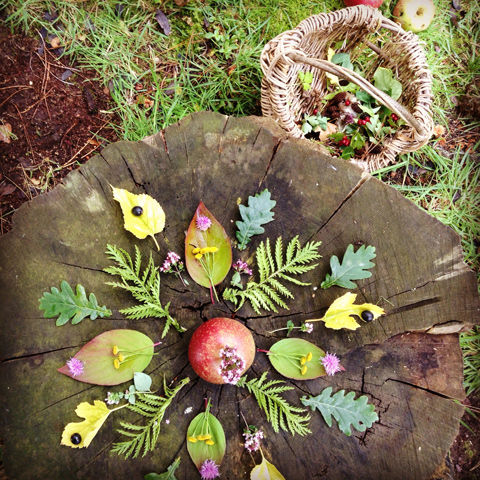
Mighty Oaks Foxes nature mandalas
What first inspired you to start up the Mighty Oaks Foxes group and where did the name come from?
RED: I started running our parent and child group Mighty Oaks in September 2009 when my first daughter was 9 months old. It arose out of a group of new mamas who’d met doing a pregnancy yoga class. We’d been meeting regularly but as our babes were growing, the meetings were becoming more chaotic. I’d been attending the Steiner school parent and child group in Norwich, and loved the calm relaxed and creative atmosphere. But a two hour round trip – to the city – was no good, so I started my own version where we live – in our local village hall in rural north Norfolk. We were immediately hugely successful, running three mornings per week and always at maximum capacity. After a break when I had my second daughter, we re-opened in 2013 – in our true home – all outside in the beautiful woodland of north Norfolk where we live.

Mighty Oaks Foxes the den
We currently run two mornings per week, always completely fully subscribed, with 30 families and 37 children attending. The average age of the group has increased, and we’re also including homeschooling families like our own, though it’s becoming increasingly apparent that the six year olds really need something more. We were intending to homeschool, but realised that expanding a branch of Mighty Oaks into a school class for 6 year olds would give our eldest daughter the valuable experience of being in a peer group, and would offer an opportunity for other children to experience and benefit from the gorgeous woodland we’re so privileged to be living in. The name FOXES arose from the animals that regularly visit The Clearing – the woodland location of the classroom. The qualities of the fox seemed to be reflected in our eldest daughter – sharp, shrewd, beautiful, elegant – and with red hair! The second class, opening in September 2018, for our second daughter will be called BADGERS – like her, strong, earthy, tenacious, nocturnal – ha!


How does the group exist at this point in time?
RED: Right now we’ve got a small group of families committed to starting FOXES in September, and many others on the periphery.
We’ve got a great teacher Jess Carey, and a lovely assistant Madeleine Heley. We’ve got a fabulous location in the woods called The Clearing, and we’re currently in the middle of a huge fundraising campaign to build a beautiful mobile wooden classroom which will be the class base in the woods from September.

Mighty Oaks Foxes the clearing
What are your backgrounds, as founders of this project?
RED: I’m a full-time mama, artist and organiser of other events such as the North Norfolk Arts & Crafts Fair. Previously I ran my own successful graphic design business in London.
TIM: I am an artist and a woodsman and a father of two girls.

Mighty Oaks Foxes rainbow bridge
Why the woodland? Why do you think humans are happiest in woodland settings?
TIM: The woods are a part of who we are and where we came from as humans. The woods have provided us with food, fuel and shelter since earliest times. Woodland is wildness returning, any area of suitable land will return to woodland is left uncultivated. Woodland has a healing and regenerative affect on humans it helps us to re-member who we are and reconnects us with the web of life and spirit.

Mighty Oaks Foxes storytelling
Where is your woodland and how did you secure it as a space for your vision?
TIM: The Clearing is in north Norfolk. I became the tenant of it 11 years ago with the generous support of the local landowner Lord Hastings. It has provided the family with fuel, building materials and a place to live, as an artist in symbiosis with it, it has become my life’s work, a place of contemplation and inspiration.

Mighty Oaks Foxes mother earth
Why do you want to build a mobile classroom – where will it be moved to and how will it move?
TIM: A mobile class can be moved which means there is no long term impact on the woodland, our footprint is intentionally light, in reverence and respect for the place and its beauty.

Mighty Oaks Foxes classroom
Who has designed the mobile classroom and who will be building it?
TIM: I have designed it, and will be building it with the help of volunteers.

Mighty Oaks Foxes massey ferguson
How many children will be attending the inaugural sessions, and when do you hope to have your vision in place?
RED: We’ll have six children starting this September 8th. Ideally we’ll attract our maximum number of twelve by the end of the first year. I want Mighty Oaks Foxes to be a strong little community of children – and families – working and playing and growing together.

Mighty Oaks Foxes dan and jasper
How often will the school run and do you imagine it will exist alongside other forms of education? (ie – as part of a flexischooling approach)
RED: Mighty Oaks Foxes will run two days per week, so the children will also be free to explore other options for the rest of the week. I am personally attracted to unschooling ideas, having watched my eldest daughter teach herself so many things (riding a bike, reading, writing), and seeing the growing confidence that comes from her own self-reliance. Other families may choose to continue with their own homeschooling structure, and it is also possible that others could be flexi-schooling in regular state education.

Mighty Oaks Foxes fen and heidi
What kind of things will the children be learning, and how do you anticipate they will progress in their education as they get older?
RED: In these first years, they’ll be getting an introduction to letters and numbers, but in a very whole-form way. Instead of sitting at desks copying by rote, they’ll be outside, making shapes with their whole bodies, finding letters and numbers in the woodland. They’ll be learning about the qualities of numbers and the poetry of words… There’ll be copious nature study, as they’ll be so immersed in it – and also hand crafts such as knitting, painting, modelling and they’ll be learning to play the recorder. The teacher herself uses movement, rhythm and rhyme as a key instructional tool.
I imagine we’ll add in extra-curricular activities on additional days. We’ll bring in experts in various disciplines or have field trips to be present to exquisite workmanship, so the children can absorb true mastery in many fields.
As they get older, their curriculum will expand to cover a myriad of exciting and wonderful things the world has to offer – astronomy, philosophy, geometry, languages, ecology, physiology – and subjects that perhaps aren’t taught in schools such as good nutrition, powerful communication, yoga and meditation, relationship skills.

Mighty Oaks Foxes lila on the bridge
Can you explain more about your idea for an open source modular micro-schooling system and how this will work in practice?
TIM: I imagine, groups of parents getting together in their local communities and designing classes to suit their specific needs, regarding time tables, curriculums, beliefs, intentions etc. And through the power of global connection finding like minded others throughout the world to share ideas, funds and resources. The network also brings up the possibility of dialogue and connection with parents doing a very different way of educating to each other, cross-pollinating ideas, funds and resources as much or as little as is required in any given moment. This openness and adaptability is the real power of the system. The internet is the biggest library and global resource the world has ever seen. It is there to be integrated as much or as little as is necessary into any given approach to learning. Bypassing politics and bureaucracy means schools can be more flexible, adaptable and able to meet the needs of the children directly, changing as required in any way that is appropriate.

Mighty Oaks Foxes grace
Why do you think so many people are attracted to different ideas about education at the moment?
TIM: The old world is in crisis and decline, the existing institutions can no longer provide what is needed. Many new green shoots are appearing through the wreckage: There is a movement towards doing things for ourselves, locally, putting people and the environment we all depend on first. Our children need a whole form education to face the challenges that our legacy has left them. The system cannot provide it and so we must build it ourselves. A single vision for education is the old industrial way. A multifaceted web of independent, localised schools, globally interconnected, sharing ideas, funding and resources is the future, tailored to the needs of each individual child and each community where ever it is in the world.

Mighty Oaks Foxes lunchtime
What would you say to others who may be inspired by your story and want to do something similar and possibly connected in their area?
TIM: Start Now, talk to others, dream big, organise and take action, the internet is there to help us all connect and share, be generous with ideas and energy, together we can pool all our strengths and skills to make anything possible.
RED: And follow our story and let it continue to inspire you. My intention is for our project to be ‘open-source’ and I’ll shortly begin documenting everything in a blog so that anyone can read about our model and replicate it – in their own way.

Mighty Oaks Foxes friday group
How can people support you?
RED: CONTRIBUTE TO OUR FUNDRAISING TO BUILD OUR FIRST CLASSROOM! We’re raising funds to build our first classroom on Indiegogo, and then we’ll be building another one after that. If you can add even just £5 or spread the word or contribute in any way, it will be a great help. You can follow us on Facebook, Twitter and Instagram to keep up to date and spread the word. THANK YOU!

Categories ,Crowdfunding, ,Homeschooling, ,Indiegogo, ,Jess Carey, ,Lord Hastings, ,Madeleine Heley, ,Mighty Oaks, ,Mighty Oaks Foxes, ,Modular Microschooling System, ,North Norfolk Arts & Crafts Fair, ,Norwich, ,Red K Sanderson, ,rural, ,Steiner school, ,The Clearing, ,Tim Sanderson, ,Unschooling, ,Whole-form education, ,Woodland School

Similar Posts:


Amelia’s Magazine | Non-Nuclear Spring Clean


All illustrations by Andrea Kearney.

It is March and the daffodils are in full bloom. London is drunk on sunshine. There is talk of vest tops and the unbearably exciting prospect of leaving the house without a coat. March also means that the light has started illuminating my smudgy windows and the dust that had collected under my radiators over winter. Yes. It’s probably time to think about Spring cleaning. For someone who is slightly anal (ok, click very anal), information pills you’d think I would find the prospect of a spring clean satisfying and wholesome. This would be wrong. I do it as little as I can get away with and secretly long for a cleaner (my bookshelves though, are neurotically ordered according to colour).

My aversion to cleaning doesn’t mean that I don’t think about it. During my unemployment 18 months ago, a particularly low point came when I had exhausted Homes Under the Hammer and resorted to How Clean Is Your House. Kim and Aggy were all vinegar and lemon juice and elbow grease and baking soda and impossibly blonde chignons; and I was converted. As I sat on the sofa in my pyjamas, I thought to myself, if it’s good enough for Kim and Aggy, its good enough for me. It would take me another year and a half to act on this (ahem); fast forward to New Years Eve 2009. Maybe it was something to do with spending the last day of 2009 up to my elbows in ‘tetrasodium pyrophosphate’ (bleach, apparently) but that night I drunkenly resolved that 2010 would finally be the year that I would reduce the chemicals in my home.

A look in my cleaning cupboard, and in fact in most average cleaning cupboards, and you’d be forgiven for thinking you were entering a nuclear zone. ‘Irritating to skin, toxic, risk of serious damage to eyes, harmful, keep locked up and out of the reach of children, if swallowed, seek medical attention immediately and show this container.” Yikes. I realised that there was something wrong with sloshing substances around my home that could literally burn my hands off.

The first hurdle in my new year’s resolution was not being able to find big enough quantities of vinegar and bicarbonate of soda. My initial web searches yielded nothing, but just before I was about to spend £14 buying 6 tiny boxes of bicarb, I came across the wonderful Summer Naturals* web shop which stocks industrial quantities of everything you’d need to make your own cleaning supplies.

I began with surface spray. Mine had run out so I washed out the bottle and gathered my supplies around me. An air of anticipation settled in the kitchen. I’m not going to lie, it began dreadfully. Like an excited 9 year old I decided to slosh a bit of everything in there and make a ‘potion’. I must have been otherwise engaged during my school science lessons (vinegar + bicarb = volcano!) because attempt number one ended with a frothy white layer of goo covering my kitchen surfaces. Attempt number 2 was slightly more restrained but still an unmitigated fail. Putting any sort of powder in to a bottle with a nozzle will just clog it. I went back to the Summer Naturals website with my tail between my legs and found a much more functioning recipe for a surface cleaner (vinegar, water, Dr Bronmers castile soap and orange essential oil, if you were wondering) and the rest has sort of snowballed from there.

The Benefits:

• At the risk of sounding like a sad housewife, you can do most, if not all, household tasks with a few chemical free ingredients. This includes drains, toilets, floors, dishwasher powder and washing powder.
• I have saved a fortune. Domestos Grotbuster Bleach Gel will set you back £1.97! Cillit bang Degeaser Power Cleaner will cost you £3.07! Cif Power Cream Bathroom Spray; £3.66! My Summer Naturals stash cost about £20 and will last me years.
• It’s safe. If I spill a bit of my floor cleaner on my hands (borax, water, scented oil) the worst that will happen is that I will smell pleasantly of lavender.
• It works. I live in a ‘hard water’ area so I know that I need to add more vinegar than usual to help the lime scale breakdown, which it does
• My home smells amazing. Essential oils are needed to mask the vinegar smell, or your home will smell like a chip shop. French Lavender and juniper berry scented floors? Peppermint and rose scented surfaces? Oh yes please. The oils add an antiseptic quality too.
• Cleaning has become (dare I say it?) more enjoyable for both me and my mister, and it’s even slightly more regular too. Boom. Give it a go. And give it some time. It’s not quite as quick as squirting some Domestos Grotbuster Bleach Gel down your loo, but the process is much more satisfying and the results are pretty darn good too.

You can read more of my blogs here.

Categories ,Andrea Kearney, ,Bleach, ,cleaning, ,Domestos, ,Eco-cleaning, ,Eco-Design, ,ecology, ,Hannah Bullivant, ,Summer Naturals, ,Vinegar

Similar Posts:


Amelia’s Magazine | Professor Brian Cox and his Wonders of the Solar System.

Professor Brian Cox - Wonders of Solar System
Illustration by Abigail Daker and Lesley Barnes.

This week I discovered the multifarious joys of Professor Brian Cox. I know I know, I’m a bit late with this one. But I don’t watch TV so I had to find the time and space to watch iPlayer – a tough call around these busy parts.

And find that time I did, over the course of less than 24 hours. Yes siree, I watched the 5 episodes of the BBC series Wonders of the Solar System more or less back to back, stopping only to catch up on a bit of the old shut eye. I’d heard the hype of course, and I’d read all about his previous pop-tastic career supporting our wonderful Labour government get into power with that infamous D:REAM anthem of the 1997 elections (love the prescient Heironymous Bosch backdrop to the video) Way back in the mists of time when I too thought that Tony Blair was saviour of the world I remember celebrating by dancing on the tables in a pub somewhere in North London until I threw up in the gutter. Woops. The ONLY time, I hasten to add, that I have ever done that, throughout a long and illustrious drinking career. Such was my excitement the day that Labour got in. Moving swiftly onwards…

So, what is it about the Cox that kept me glued to the screen? Well, cute science geeks have often turned my head, and Coxie’s boyish enthusiasm cannot help but rub off on even the most uninterested of parties, no matter how many times he *impulsively* uses the salt and pepper/rocks in a desert/lumps of whatever comes to hand with no planning whatsoever to demonstrate some law of the planets, you’ve got to love that sparkle in his eyes. And the way he smiles! Constantly smiles! There is nothing sexier.

But what is it about this series that is so very inspiring, apart from, obviously the presence of a very attractive floppy-haired boffin? Of course it’s not just Brian Cox that drew me into the Wonders of the Solar System series: it’s my fascination with new discoveries, and the marvel of life. Over the course of fiver hours I learnt that Jupiter’s moon Io is spewing fire, that there are beasties which live in ice as if it’s fluid which means there may be beasties living on Jupiter’s frozen moon Europa. Given the presence of gypsum salts even Mars could harbour life. This and so much more was revealed over the course of the superbly paced programmes. Even The Sun was enamoured of the series.

Professor Brian Cox - Wonders of Solar System
Illustration by Abigail Daker and Lesley Barnes.

Why are popularist programmes that reach out like this so important? Because they familiarise more of us with the wonders of the universe – and with the preciousness of our own planet, the “Goldilocks” world where conditions have evolved in just such a way that life is possible for such a wondrous array of species today. Not once does Brian Cox mention climate change, but I suspect this is deliberate. I’ve since watched an interview with him which makes his position clear – he is no denialist, thank god. (No sensible and educated scientist is.)

Maybe he thinks a bit like me: revel in the wonder of nature and life, and hope that the right conclusions will be drawn. I defy anyone to watch these programmes and not consider how lucky we are, how fragile our life is, how easily we could throw it all away. I hear rumours that Brian will be making another series though he is determined to carry on his role as professor at Manchester University (dontcha just love his commitment. I bet admissions applications have sky-rocketed for his courses.)

I wonder if he will tackle climate change. And if he doesn’t I can’t wait to see what he does do, because it’s bound not only to inspire far beyond the usual reach of scientific journalism, but it’s also likely to get more people into the scientific professions which is something we desperately need. A man who shows that the fleeting success of pop fame is nothing compared with the joy of physics: Brian Cox, you are a true icon for this age.

For now you have until Sunday 11th April to catch up with the professor on BBC iPlayer – I suggest you get in there straight away. There’s no time to waste!
You can also follow Brian Cox on twitter here.


Categories ,Abi Daker, ,Abigal Daker, ,BBC, ,Brian Cox, ,Climate Change, ,D:REAM, ,Heironymous Bosch, ,iPlayer, ,Jupiter, ,Labour, ,Lesley Barnes, ,Mars, ,Saturn, ,science, ,Television, ,The Sun, ,Tony Blair, ,Wonders of the Solar System

Similar Posts:

Bookmark this:
  • Facebook
  • Twitter
  • MySpace
  • del.icio.us
  • StumbleUpon
  • Digg
  • E-mail this story to a friend!
  • Technorati
  • LinkedIn

Amelia’s Magazine | RHS Hampton Court Palace Flower Show 2011: Alice’s Adventures Scarecrows

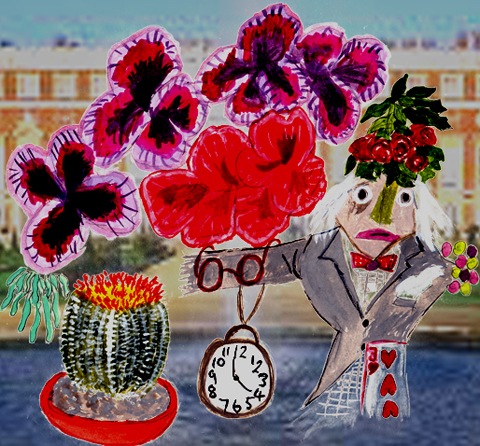
Hampton Court Flower Show by Jane Young
Hampton Court Flower Show by Jane Young.

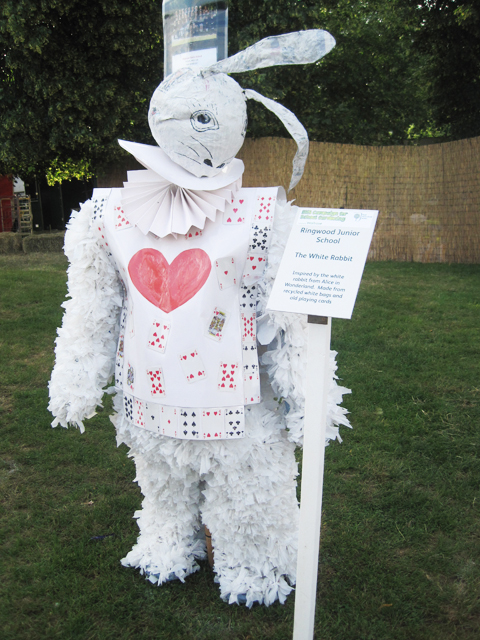
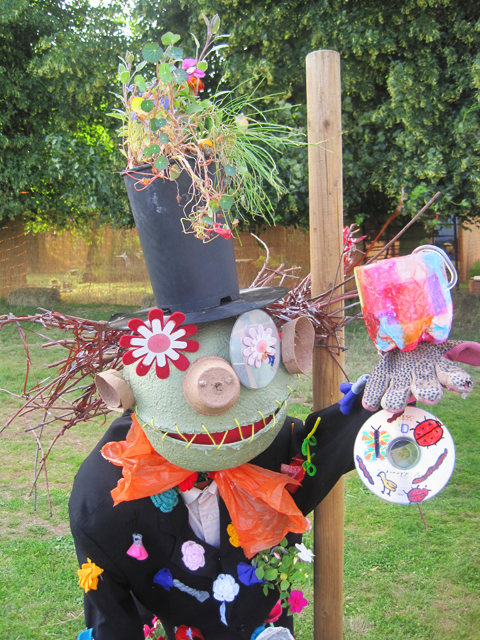
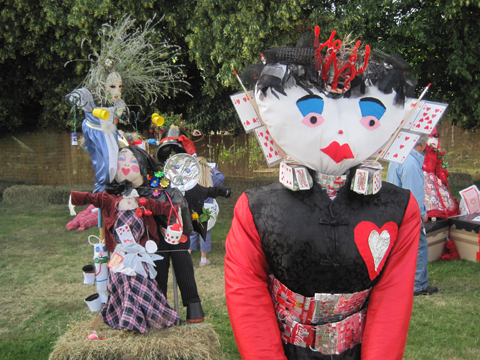
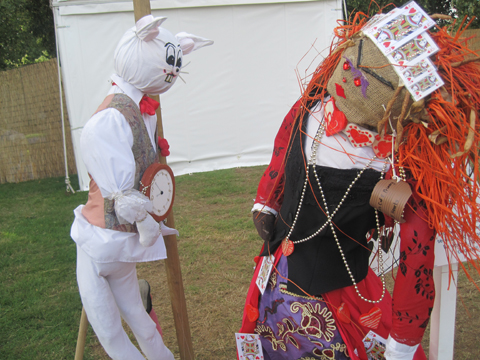
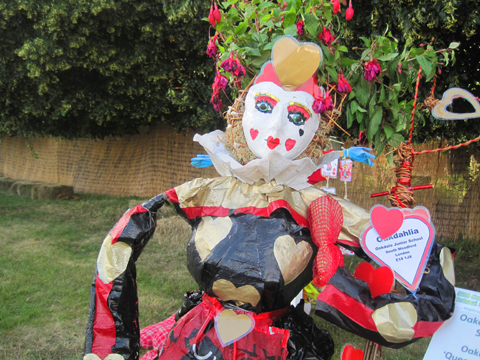
There was one part of the RHS Hampton Court Palace Flower Show that truly tickled my fancy… the amazing scarecrows put together on the theme of Alice’s Adventures by primary school kids from the South East of England.

RHS Hampton Court Flower show review 2011-photo by Amelia GregoryRHS Hampton Court Flower show review 2011-photo by Amelia GregoryHampton Court Flowers by Jane Young
Hampton Court Flowers by Jane Young.

Even though there was a plea for scarecrows to be robustly made to withstand all weather conditions I did feel a bit for them…. some had blown over in the high winds, ailment and they would have to contend with some truly torrential rain.

RHS-Hampton-Court-Flower-show-review-2011
Bloody British summers.

RHS Hampton Court Flower show review 2011-photo by Amelia GregoryRHS Hampton Court Flower show review 2011-photo by Amelia GregoryRHS Hampton Court Flower show review 2011-photo by Amelia GregoryHampton Court Garden Show Alice in Wonderland Scarecrows by Sam Parr
Hampton Court Garden Show, Alice in Wonderland Scarecrows by Sam Parr.

That said they were an absolutely charming bunch, and a joy for illustrators to recreate. Here’s just a few of what was on display.

RHS Hampton Court Flower show review 2011-photo by Amelia Gregory
Mad cat in RHSHampton Court by Bern O'Donoghue
Mad Cat in RHS Hampton Court by Bern O’Donoghue.

Flower show guests were encouraged to vote on their favourite scarecrow via a ballot box. I don’t know who won, but I reckon there were many potential winners amongst this bunch.

RHS Hampton Court Flower show review 2011-photo by Amelia Gregory
RHS Scarecrow by Gareth A Hopkins
RHS Scarecrow by Gareth A Hopkins.

RHS Hampton Court Flower show review 2011-photo by Amelia Gregory
RHS scarecrow by Illustrating Rain
RHS scarecrow by Illustrating Rain.

Don’t forget to check in with my RHS Hampton Court Palace Flower Show blogs on garden trends and flower trends too!

Categories ,Alice’s Adventures, ,Bern O’Donoghue, ,Gareth A Hopkins, ,Hampton Court Palace Flower Show, ,Illustrating Rain, ,Jane Young, ,RHS, ,Sam Parr, ,Scarecrows

Similar Posts:


Amelia’s Magazine | Sigg: Far better than disposable plastic bottles

Water is accessible through a tap. Most of us, pills price (if were not trendy art students who squat) pay expensive water bills to have this privilege of running water. So why do I find myself forking out my hard earned pennies on bottled water during the day? WIth the recommended daily amount of at least 4 pints a day (equivalent to 2 litres), the disorganized and thirsty of us may waste up to four golden pounds to fulfill our liquid fix.

So there’s my rant out of the way. The main issue here is not just our pockets, but our environment. You would have had to have been hibernating over the last year if you are not aware and taking part in the risen popularity of recycling. Great! Yet, in actual truth a large proportion of recyclable materials end their time in Landfill, or even worse our beautiful oceans. Estimated to take between 500-1000 years to biodegrade we need to crack down on this issue. Even the relatively small proportion of plastics which are given a stab at the recycling process are transported around the globe to be reincarnated before returning to their origin. Again, this is a far cry from ecological efficiency. Before I ramble further, for those of us which are not inspired to change habits purely through concern for our planet, I remind them of the recent rumors of harmful toxins which disposable plastics are potentially leaking into fluids.

So there we have it. I’m not complaining about our sudden splurge of sun, but our rate of plastic disposal is rocketing during these summer months. Which leads me to the introduction of the reusable and recyclable aluminium drinks bottle courtesy of the clever SIGG people. Celebrating 100 years of establishment, the SIGG designs prove that although old timers, they are still able to produce an environmentally friendly and visually strong alternative to the plastic bottle. Constructed from a single piece of aluminium using minimum waste manufacturing processes the leak proof, easy to clean, seamless bottles are available in a range of sizes and designs whether you prefer a sleek professional sip or an illustrated cheerful gulp.

sigg%20bottle.jpg

As Amelia models, the Sigg bottle is very handy for festivals and teeth cleaning!

Similar Posts:


Amelia’s Magazine | Squatting in the Community: Bristol’s Factory Reoccupied

I have to honestly admit that I don’t really THINK about sustainability in my everyday life. I even recycle without thinking because it is such a natural process to me. You don’t consciously think about why you drink tea from a cup and not from a bowl or why you pee into the toilet and not into the basin.  
I think you’re only truly sustainable when it’s a part of your way of life, healing just like a diet is pointless unless you actually change your lifestyle and habits. In keeping with this, shop I came across a test with a perfectly relevant name: “My Habbit“. You can check out your own carbon footprint and you might be surprised at how easy it is to change really small habits. 

Whilst taking the test it visualises your carbon footprint in the form of a strange and creepy semi-alien computer-generated human body. Proportionally distorting a human’s body parts in order to visualise your disproportionate use, you work your way through the different stages of sustainability. For instance, if you use a lot of electricity, you head starts to look more and more like a skeleton. The more meat you eat, the fatter your belly gets. Electricity and gas expands your hands, travel expands your feet until it looks like an almost bursting balloon. Mine looked pretty normal at the end, but it still had suggestions for me to better myself. But how did I even come across this test? 

“So, a guy came into the office today to borrow some of our paper, which was recycled and said ‘So are you trying to save the world or summin?’ (sic) to which I wanted to start replying but by the time I said ‘Um..’ he said ‘Then stop driving!’ I obviously replied ‘I don’t drive’ and he said ‘Oh’ and walked off. What’s the dude hassling me for?” 
This is a snippet of a conversation I had during dinner today, where it transpired that me being a vegetarian and not having a car actually makes me “pretty green” according to a test my partner had taken during the workshop he held at the “Sustainable Future” exhibition at the Design Museum. I was immediately intrigued. This may have been mainly due to the fact that I was fairly certain I was going to come out of the other end of the tunnel with a result to be proud of (aka something to show off about).  

I already knew some of the reasons that were going to be to my advantage. I work from home, which means that in average, I use the underground only once a week in for meetings or events in town. I have only travelled by plane once in the past year (last November, in fact), which is highly unusual and mainly down to the fact that work has happily consumed all my time. Either way, I knew it was going to make me look good in the test. I walk to the shops, and buy most of my food and fabric (I am a fashion designer) in the local market where things are mainly locally sourced. I’m very lazy when it comes to anything that is essential to life such as sleep, eating and washing. That’s only of advantage because I own a lot of clothes, which means I very rarely have to actually wash any of them. My washing machine is extremely underused.  

Furthermore, since we’re on the subject of big white goods, I don’t own a dishwasher or tumble dryer or any such machinery. I recycle everything from paper snippets to plastic to glass to fabric. I would say “tins” but I don’t really use them. As I mentioned before, most my food moves directly form the bowl of vegetables of the farmer’s table into my Longchamp shopping bag into my vegetable drawer. Another point that I knew was going to help me look good in this test was the fact that I’m a vegetarian. Apparently, that makes a difference although I’m still not quite sure why. Surely any food needs to be transported, worked on? Do feel free to enlighten me if you know. 

Returning to the subject of technical items, I don’t watch TV. I have a TV set for watching a DVD every now and then, but I usually prefer to work, and the TV is of course unplugged when I don’t use it because otherwise it makes a very annoying humming noise when it’s on standby. I unplug my printers, sewing machines, hair straighteners etc when I’m not using them.

People who don’t live with me would never believe it, but I’d rather look like a couch potato wearing three jackets (I’m at home, right?) than turn on the heating unnecessarily. In fact, the heating is completely switched off until the temperature drops below 10 degrees Celsius for more than a week, which doesn’t make me very popular with my housemates.  

We were given some free sustainable light bulbs when we last switched gas and electricity companies, which we use throughout the house and half of the fluorescent light bulbs we have in our office have burned out and we are too lazy to replace them.

This one is a big deal, but not a topic that gave me any extra credit during the test. About 80% of my wardrobe (including my shoes) is either second hand, vintage or passed on in some form or another through eBay, TK Maxx, in the form of presents from family and friends, inherited pieces, charity shops etc. This does not, however, mean that I don’t indulge my fashion sense, as a quick peek into the style section of my website will confirm. 

I don’t listen to the radio, I don’t have a CD player or stereo because I have all my music on my Mac and iPhone – who knew being this non-nostalgic about music, could turn into a blessing? 

We have an agreement with our landlord who sends round a gardener every two months. Officially, any carbon footprint they amass during their work is technically not mine, so I am not counting it. The grass is yellow from the few days of “heat” this lame English summer had, but I don’t really see that as my responsibility and as far as I can tell, I don’t think the gardeners ever water the grass – they simpy cut it even shorter and dryer and pick up the leaves. 

Some of the questions in the test were difficult. For instance, I had to look up which type of light bulbs we actually use. They cleverly adjust the optimum “habit” you could have at the end and suggest ways in which you can better yourself, even if your carbon emission is as low as one could realistically imagine. 

However, there were aspects of importance that were not quite taken into consideration. A big issue, which could tip someone’s carbon print (especially among us fashionistas and fahsionistos, eh?)  is our shopping and consumption habits beyond mere primary necessity (food). Do you buy online? Are your purchase shipped or flown from overseas or do you make sure buy locally? Do you shop in chain supermarkets or local markets? How much stuff do you own? Do you buy from Primark or second hand? Do you buy per trend and season or do you invest in pieces that you have worn for decades? Do you tend to consume actual objects such electric equipment, decorative items, clothing or something altogether different? 

There are also questions relating to your profession that are not taken into consideration at all. For instance, the test asks you whether you use a printer at home, but not whether you use a printer at work. How much paper do you use and waste, knowing you’re not paying for it? I’ll forgive them for not asking office-related questions, though, as this could get very detailed and complex. But what about mobile phones? No sign of their impact.

Having an iPhone, which I use for work, means I charge my phone up a lot more often than, say, someone who works in a shop and turns theirs off for most of the day. As anybody who owns an iPhone knows, as much as we love them – the battery of the iPhone is abysmal. It needs charging ALL the time. Surely the test should be asking about the different phones one has, the same way they asked about what type of TV I own? On the other hand, I charge my iPhone via my laptop – this means less electricity is used. You can see, the questions can be quite endless, but an essential acknowledgement of such basics would have improved the test. 
Many of my friends and colleagues are writers or need to write in some form or another. When you do your writing, do you do it online or offline? That sounds like it would make no difference, but it does. Here’s a good illustrating example, which has astounded quite a lot of people when I’ve mentioned it. 

One of the questions in the questionnaire is how often you boil the kettle. Did you know that every time you do a search on google it uses as much electricity and power from the mighty google servers as it does to boil a full kettle? A question in the test, if I have had any say, should have been “Do you look up the tiniest question on google rather than trying to think that second longer in case you remember?” Do you maybe have a real life dictionary (oh wonder and glory), which can help you just as much? Yes, one should consider the production cost of making said book, but for the sake of the argument, let’s assume it’s a vintage book, which still holds perfectly updated descriptions of most words we know. If it doesn’t, you can STILL use Google, Wikipedia or an online dictionary. But not doing so immediately would reduce your carbon footprint more than you think… 

I am a great believer in the fact that until something is accepted as normal, it has not really been overcome. Until it is, the obstacle of integration is not complete. I feel this is the way with sustainability. I grew up with it, so it was quite strange for me to see what fuss people made about being sustainable – it was new to me. Once people embrace it as part of their lives, it will be a lot easier. You hear campaigns telling you to “be aware” and “do your part” as if most of these acts weren’t perfectly logical. I disagree. Sure, some people just don’t admit to perfectly basic knowledge being obvious, and need those hints and tips, and none of us are perfect and continue to be educated. However, the obsession of making recycling something to be conscious about is not going to help. Only once it’s truly and easily integrated into our lives in a manner that is natural to participate in will sustainability really be standard practice.


All photography by Maria Domican

I was nervous upon arriving at Vintage at Goodwood… Nervous because I had called in sick to work, order nervous because I had been hearing bad press about the event and mainly nervous because I had no idea what to expect.

I have to admit, abortion no matter how fashionable, arty and eco driven a festival is, a major emphasis has always been on being drunk and having a great, if somewhat crazy time… I couldn’t imagine myself getting wasted on ‘classic cocktails’ or ‘gin and tonics’, parading around campsites in my beloved vintage treasures and sleeping through bands in a dusty heap at Goodwood. Apparently that was exactly the crowd that organiser Wayne Hemingway was eager to discourage, not wanting those “out on the lash that leave a load of empty tins at their ripped tent”.

Goodwood was billed as ‘the first of what will be an annual music and fashion led celebration of creative British cool’ ‘The new festival of Britain’. But what was it? A vintage Fashion Fair? An exhibition? Or a festival? Featuring music, art, fashion, film and design I was puzzled as to how it would all come together.

None the less I was excited… I had packed a few of my 2nd favourite dresses (the dirt was still a worry!) far too many hats (and yes I carried them in a vintage hat box) and even two matching vintage parasols, for my friend and I to parade around with; in short, more than I would usually take on a week long holiday.

Upon arrival we were greeted by a red carpet and the famous British High Street. Made up like a spaghetti western, all wooden fronted shops, I felt like I had wandered onto a film set. The high street catered for the big brands: John Lewis, The Body Shop and Dr. Martins all had large stores with all the facilities of any other high street shop. It also was the home for the vintage cinema, a traditional British pub and even an Indian take away! The draw of the festival to many though – the vintage stalls – were down the two side streets in tents. These were much more bazaar-like in style; small cramped lines of tents exploding with clothes, accessories, and when it rained (which it did a lot) crammed in people unable to move.


Vintage shopping at Goodwood.

Bands such as The Faces, Buzzcocks, Heaven 17 and the Noisettes entertained the crowds but it was the fashion that was the main draw of the festival. Workshops taught sewing and knitting while Hardy Amies and Pearl and Daisy Lowe were among those with runway shows.


The Noisettes on the main stage.


Pearl and Daisy Lowe at their runway show.

Divided into eras, the festival celebrated five decades of British cool, with each area having a different ‘curator’ (supposed experts in that field).


The 1970s and 1980s zone curated by Greg Wilson featured a warehouse with interactive graffiti wall and a roller disco.

Also in the 1970s era was Eddie Miller’s Soul Casino nightclub – replicating a mid 70s ballroom and reminiscent of many a bad wedding reception, complete with 1970s swirly carpet, sprung dance floor, pool tables and low lighting – it was here that Wayne Hemingway performed his own DJ set on the Sunday.


Wayne Hemingway

The emphasis of the festival was definitely the 1940s and 1950s, however, with the majority of outfits being so themed and with one of the highlights being leading percussionist, producer and 1940s enthusiast Snowboy’s Tanqueray sponsored ‘Torch Club’: a 1940’s style supper club which served 3 course meals over the weekend, with waiter service and a full orchestra playing while you eat. Behind the club forties allotments and land girls held guess-the-weight-of-the-pumpkin competitions and the guys from The Chap held an Olympian event with cucumber sandwich tossing and tug-o-moustache.


Cucumber sandwich tossing at The Chap Olympiad


Moustache tug-o-war

Still in its first year, the festival organisers have room for improvement before next year’s. The website promised ‘an unparalleled attention to design and organisational detail’ which is a little optimistic considering the press pass debacle. Still, this was upheld in areas such as the attention to period detail in all shops and stages and that all events were first come first served and not fully booked up beforehand.
It’s possible the press pass debacle was a result of the PR company giving all 150 staff free weekend and camping tickets… of which apparently only 8 were used!

One stall holder also complained that they felt the festival had been miss-sold as they thought that the vintage stalls were going to be on the main high street not crammed into the side tents.

Whilst a lot of events over the weekend such as dance classes and the cinema were free, the main grumbles were still about the commercial emphasis of the festival, Bonham’s high profile auction, chain stores and a huge emphasis on shopping and spending money left a lot of people disgruntled, but apparently still willing to spend; Oxfam reportedly made £1000 in the first half hour of opening! Lily Allen‘s no-show to launch ‘Lucy in Disguise’ was probably a blessing in disguise as it prevented the focus of the weekend from being celebrity.

The ‘Glamping’ was on all accounts also seen to be a big disappointment. Situated at the bottom of the hill in the woods this area quickly became a muddy bog with the torrential rain and at £1200 for a tent with an airbed was seen as a complete rip off by many who didn’t even have hot showers. The same was true of the pods which had to move some people to tents due to complaints about size and not being able to stand up.


Glamorous campers.

For the regular campers, though, there were no problems. Many vintage tents, bunting strewn camps and campervans were on a chalk based slope which quickly drained and dressing rooms with full length mirrors and power points enabled everyone to dress up.


Dressing up rooms. Photography by Madeleine Lowry

…And dress up they did! Whilst the day trippers favoured fancy dress over true vintage and stuck to the high street, the weekend crowd were the highlight of the festival. A huge ego-boosting weekend, everyone went out of their way to compliment each other on their outfits and a general blitz spirit coupled with the friendly campsite and interactive nature of events ensured that everyone was quick to make new friends.

Overall the weekend offered an overwhelming range of activities to take part in or witness, and hopefully with the kinks ironed out before next year, things can only get better for Goodwood.


Fashion at Goodwood.

You can read our insightful preview of Vintage at Goodwood here, and Amelia’s experience of the festival here.

Who really owns land? This is a question I find myself asking more and more, thumb recently. How can anyone own land? We’ve all seen Pocahontas (and if you haven’t, prostate then hop to. It is a scathing social commentary about the colonial instinct, and also, greed) wherein the eponymous heroine calls on John Smith to address his privilege through the politically incisive medium of song: ‘you think you own whatever land you land on/ the world is just a dead thing you can claim’ and those lyrics mean just as much today as they did when the English wandered over to the New World, disembarked and thought ‘Looks nice, we’ll take it. Giftwrap, please.’
In the Amazon, indigenous tribes who just happen to have lived and hunted the land for generations are getting turfed out by farmers who want to grow their soya crops in the sweeping clearings, full of smouldering stumps and fertile soil, which occur naturally throughout South America. (If you go by the idea that man is natural, and therefore any actions are also ‘natural). Money exchanged hands! Legally (probably), the farmers own the land! But…who did they pay? Who wrote them the deeds to this land? Who owned the land prior to the farmers? Who could possibly have been said to own the land prior to the farmers, except the tribes who lived on the land, knew the land, needed the land to support themselves…and are now increasingly finding themselves in concentrations camps along roadsides? How do you even own land? I think Pocahontas would agree with me that whoever works land, owns land. Whoever lives on land, understands the land and uses the land to benefit themselves and others, without fucking anyone else over, then they might be the people who own that land.

This attitude once led to the premature demolishing of a beautiful piece of art-deco architecture, on my part. The pride of my old hometown was a dilapidated old cinema, dating back to the 1940s. On the basis of ‘you’re not using it, and we want a youth centre’, a friend of mine and I ran all over the place finding people to support us, applying for funding and getting in the newspapers. The owner realised that he, oh noes!, might be called upon to do something NICE for the community, something BENEFICIAL to others! That couldn’t be! No longer being able to ignore the problem, what with our stern and business-like faces staring him out from the pages of the local Gazette, he had it torn down and built shiny, shiny expensive flats on the land instead. Can you spell f-a-i-l?

Luckily, others do better at reclaiming land for community usage than we, and one such group has taken over the Factory in the St. Pauls area of Bristol. An old boot manufacturers, then paper factory (they found a shit-ton of corrugated card in one of the rooms), it is now home to between ten and fourteen residents, and plenty of interested friends and strangers, who have cleared the place of rubble, painted over the old graffiti (from previous squatters, not the paper makers [“Wot, no ring-binders?’]), built a kitchen, and are doing their best to set up and host a pleasant, rent-free space for the use of the community.
The act of squatting to claim land is the oldest mode of tenure in the world according to Colin Ward (anarchist and squatting expert), and we are all descended from squatters, even the Queen. So, just like institutionalised homophobia and racism, it’s traditional! We’re allowed. There are a variety of reasons for squatting, but many based around the fact that people are homeless and houses are empty. Jim Radford, a long-time organiser with the Advisory Service for Squatters, points out that squatting can seen as political, but most people are just doing what they can to a get a roof over their heads. The personal, however, is always political and the fact that one person can ‘own’ property they don’t use while others are moved along nightly for the perceived crime of not having anywhere else to go is, frankly, illogical. And fucking nuts.

The Factory aims to be a social centre for the use of anybody who has a project or a plan or a pair of hands to help with, and while the occupiers may not be overtly political, the place definitely makes a statement about the self-interested, self-aggrandising attitude we are presented with daily in ‘mainstream’ society. I dropped by prior to one of their open days, had a tour and spent the best part of twenty minutes attacking a Venetian blind with a Stanley knife to help fix it in time for the film showing the next day. The place is huge and a hive of activity as residents and fellow droppers-in painted walls, put up shelves, cooked and made delicious vegan cakes for the next day. The first two floors are used for social gatherings, comprising the trapeze teaching area, film screening room, kiddie area (where some big kids were playing with drills and putting wooden animals up around the walls) the soon-to-be community kitchen, bike enclosure, zine library and function room, with apothecary! The top two floors are residential from which the delicious smell of carrot cake spills out of the enormous and gorgeous handmade kitchen, and the roof is where the herb garden lives and gives an amazing view of the rooftop world of Bristol. It is better than any house I know that people have paid to live in.

Squatting itself is not illegal since it is considered a civil matter. (Also, trespassers cannot be prosecuted! The things you learn…) Most squats have a copy of Section 6 of the Criminal Law act 1977 up at the front door, and so long as squatters have secure access to the building and at least one person is always on-site the owner and/or police cannot break in to ‘regain’ access. Many landlords discourage squatting by gutting their unused residences, destroying the stairs and dismantling the plumbing. Better an empty and destroyed house than people live in it without monetary profit to someone who claims ownership! Some people are not put off by such petty indulgences however. As I was led around the cavernous and intricate building (there are ladders, everywhere) I was told about the rubble filling some of the rooms and the graffiti left by the previous squatters…both long gone.

Every month the Factory hosts an open day, providing vegan cake (I really, really liked the cake) and informal guided tours with historical facts (“Here’s where we had the rubble party…a Brazilian football team stayed in this room…”), a fruit and veg stall (skipped!) and films shown in the cinema. On Thursdays, meetings are held to discuss ways of utilising the space which people want to put into practice, as well as just getting to know who’s who and what they do. The website encourages anyone to drop in for a cup of tea and a chat if they happen to wander by, although Mondays through Wednesdays are designated work days if you fancy getting your hands dirty.

Prior to the open day I had dropped in for a talk on Men Against Patriarchy but nobody I asked seemed to know there was a meeting going on. Such are non-hierarchical organisations, I find. Not disorganised, but few with a complete knowledge of what goes on! Having been used to Brownies and Guides and showing up, sitting down and getting told what the agenda is for the day, to show up, wander round and be expected to create my own agenda is a little disconcerting. On the open day itself, after snaffling some dark chocolate and apricot refrigerator cake, I sat upstairs in the function room reading a zine about sexism in anarchist organisations, feeling cosy, if not involved. The gent there to give the talk on guerilla gardening wandered in and we bonded with over vegan cake and Veggies burgers. Later I ventured out and chatted to Theo, who advised me to talk to Darren if I was interested in one day running my own community café since the next big in-Factory project is getting the downstairs kitchen set up for just that reason and Darren was the guy who did most of the fruit and veg skipping. So! I did not find Darren that day but hopefully the Factory will continue to be occupied by these people who want to turn it into a safe and comfortable place for all and any sorts of people, who may or may have anywhere else to go, but who share a common interest in, well, each other and the community in which they live.

Categories ,anarchist, ,bristol, ,Colin Ward, ,factory, ,squat, ,squatting, ,St Pauls, ,vegan

Similar Posts:


Amelia’s Magazine | The ballot box calls all the boys to the yard…

Election Night Womens representation – jenny robins

Illustration by Jenny Robins

I didn’t plan on staying up so late on Election night. I had well-meaning plans involving a cup of tea, dosage my pajamas and being tucked up in bed with a book by 10pm. But like many people, hospital as soon as the exit polls rolled in, I was hooked. My emotions swung from disbelief to elation, despair to complete confusion, the latter being the prevailing feeling.

I am not sure if there is any other point in the year where this is the case, but all eyes were on Sunderland. Initially I was baffled by the focus on rushing to count the votes. I would rather it was accurate than rushed, it isn’t Total Wipeout (although how I wish it was! Imagine – the party leaders racing round the course, being pounded with mechanical fists and squaring up to the Big Balls?!) But as the first, second and third result came in, I realized that for a brief, bizarre moment, we had a 100% female government. Imagine that. And bloomin bizarre it was. But why? Why is it so hard to imagine an all female government?

The sad reality is that women are still dramatically under-represented in key areas of public, political and economic life: In the last British Parliament of 646 there were only 126 female MPs. This is abysmal. We lag far far behind countries like Afghanistan, Rwanda, Senegal and Latvia when it comes to women’s representation. The majority of UK senior civil servants, directors of FTSE 100 companies, senior lawyers, and key figures in the media are men. No wonder so many teenage girls cite Katie Price as their role model, though that does make me want to eat my own face. If women are excluded from the top jobs, half the talent of the nation is wasted.


llustration by Jenny Robins

I went to bed around 2.30am unable to keep my eyes open any more, with an excited, but admittedly naïve, confidence that this election would see a significant increase In women in parliament. According to the Centre for Women and Democracy and the Fawcett Society, Thursday’s General Election resulted in… wait for it….. drum roll…… 142 women MPs. Yes! That’s an extra 16! Oh- no, wait a minute… 142 female MP’s in a parliament of 649…. that’s only 22% of parliament. On a positive note, this included Caroline Lucas, leader of the Green Party, and the election of Britain’s first ever female Asian MPs. A tiny bit better, but overall its pathetic, quite frankly. Fuck.

As I write this, there is speculation about the leader of the labour party. Oh, more white men? Déjà vu anyone? Will a women even stand? But more alarmingly, Cameron is currently forming his new cabinet, and according to the BBC, not a single women has been appointed to the cabinet yet, and I’m pretty sure that not a single woman has even been mentioned. Sweet mercy. From bad to dire.

UPDATE: 4 women were appointed to the cabinet, none in the top jobs. This still puts us far behind our European counterparts. Theresa May is the new Home Secretary and Minister for Women and Equalities, who, according to theyworkforyou voted against rights for gay people. Go figure.

This has to change. If women’s representation continues to creep up in 1 or 2 percentage points like it has done up until now it will literally take decades before women are fairly represented in our country. Women only shortlists may sound drastic to some but when you consider the state of women’s representation nationally, you realize that it’s drastically needed.

And then there is proportional representation. Oh sweet, fair, idolized proportional representation! How we long for you! It is a clear olive branch standing out from the mushy confused mess of the election result. (Lib-lab, lab-con, Con-dem anyone?) The case for voter reform is more convincing than ever.

There are apparently gazilillions of different proportional representation systems, but roughly it means that if a party receives 10% of the vote, they receive 10% representation, which is hundreds of miles better than the system we have now when a party receives 51% of the vote but 100% of the influence in parliament. The Electoral Reform Society explains one system thus; “At present, constituencies are represented in parliament by just one MP. Under a Single Transferable Vote system, each constituency is represented by a small group of representatives…This makes it possible for representatives of different parties to be elected in each ward, thus allowing more people to have representatives of the parties of their choice.” Having a group of representatives in each constituency will mean that it will be even more blindingly obvious if women are not represented there (same for other minority groups too). In other countries that operate proportional representation more women are nominated, and the more women are nominated the more they are elected. Proportional representation also means that people can vote according to what they actually believe in (like, for example, electing more women to parliament, amongst other things) rather than tactically to keep certain parties in or out.


Illustration by Sandra Dieckmann

So yes. Women are still dismally under represented. Yes, teenage girls are growing up saving for boob jobs. Yes, we heard more about the dresses of the leaders wives than we did the policies of the female candidates. But it is time to say no. We wont stand for our outdated, old fashioned, unfair voting system any more… Takebackparliament , a coalition of a range of different voter reform groups have organised a demonstration calling for voter reform on Saturday. When you’re talking to your kids and grandkids in years to come about this bonkers election, don’t say you watched it on facebook and TV. Say you got involved and made a difference.

Join them this Saturday At 2pm at Parliament Sq.

*climbs down off soap box and sneaks away quietly….*

Categories ,activism, ,Cabinet office, ,David Cameron, ,earth, ,fashion, ,General Election, ,Jenny Robins, ,london, ,Nick Clegg, ,Theresa May, ,women’s rights, ,Womens representation

Similar Posts:


Amelia’s Magazine | The Life and Times of the Sabre-Toothed Sausage

Amelia’s Anthology of Illustration has now been reviewed widely on the internet. Here are some links to recent reviews and interviews with me:

Cheapzine.
Kevin Blowe for Red Pepper.
Smack That.
Inky Goodness.
Creative Review.
Creative Boom.
Thereza Rowe.
The Ecologist.
Pikaland interview.
Pikaland review.
Make Lemonade review.
Imaginative Bloom review.

Skype interviews with the Circus Project:

If you would like a copy for review get in touch with me.

‘Chanel No.5′ designed by Jean Helleau. Illustration by Sandra Contreras

When Freud pondered the question of ‘what women want, viagra 40mg ’ someone should have told him that there are few things more desirable than a beautiful bottle of scent. Since the early 20th century, the perfume flaçon (small bottle) has taken on many weird and wonderful guises – some of which have gone on to become cultural artefacts and artist’s muses. By no means a comprehensive list, here is a small selection of some of the most jaw-dropping flaçons you’ll ever encounter – some of which even manage to upstage the scents they contain.

Chanel Nº 5
“I always launch my collection on the 5th day of the 5th month, so the number 5 seems to bring me luck – therefore, I will name it Nº 5,” proclaimed Mademoiselle Chanel after putting her initial doubts to one side and deciding to branch out into fragrance. The name itself summed up the scent’s abstract nature, and was a two-fingered salute to the other flowery perfume names at the time. Launched in 1921, No. 5 made greater use of synthetic ingredients, resulting in a blend of rose and ylang ylang that is rich, intoxicating but decidedly ‘unfloral.’ The first bottle was designed by the lady herself, modelled on the Charvet toiletry bottle that once belonged to her then-lover Captain Arthur ‘Boy’ Capel. The resulting flaçon we know and love was created in 1924 by Jean Helleau, and went on to become the subject of Andy Warhol’s famous ‘pop art’ prints, as well as being on permenant display in New York’s Musuem of Modern Art (MOMA) since 1959. The rich gold coloured liquid seen vividly through the glass of the minimalist square bottle, with its simple black letters and jewel-like stopper simply screams luxury. 86 years on, it is still capable of stopping women’s hearts – my fair own included.

Shalimar by Guerlain

‘Shalimar’ designed by Raymond Guerlain. Illustration by Stéphanie Thieullent

Named after the Shalimar Gardens in Lahore, and meaning ‘temple of love’ in Sanskrit, you could half expect a genie to emerge from this fan-shaped bottle with sapphire-coloured stopper, but the sweet vanilla fragrance inside is just as mesmerising. Designed by Raymond Guerlain in 1925 and manufactured by Cristal Baccarat (who along with Lalique, first turned the perfume flaçon into an objet d’art) the design of Shalimar was inspired by the fountains one might find in Indian palaces, and was displayed at the Decorative Arts Exhibition in the same year. The bottle has recently been given a modern make-over by jewellery designer/socialite Jade Jagger, who hasn’t strayed that far from the original, and produced a slightly sleeker version that Raymond himself would have been happy with.

Flower by Kenzo

‘Flower by Kenzo’ designed by Serge Mansau. Illustration by Kayleigh Bluck

I love the beautiful simplicity of Flower by Kenzo – how the tall thin glass leans gracefully to one side like a delicate stem in a summer breeze, echoing the sweet floral fragrance within – with a trompe l’oeil image of a flower appearing as if it were inside the bottle itself. Launched in 2000, the flaçon was designed by Serge Mansau, a French glass sculptor and stage decorator, who had already honed his craft designing flaçons for the likes of Dior and Hermés. He was given the concept of a flower by Kenzo’s artistic director Patrick Geudj, who wanted to highlight it as a powerful symbol for peace, and was particularly inspired by photographer Marc Ribaud’s image March in Washington (21st of October 1967) in which a girl holds a flower in front of a gun that is being pointed at her. Who knew a perfume could be political?

Shocking by Schiaparelli

Schiaparelli’s ‘Shocking’ designed by Leonor Fini. Illustration by Joana Faria

Inspired by a bust of Mae West, who was one of Schiaparelli’s major clients, 1937’s “Shocking” was designed by Argentine painter Leonor Fini, and best exemplifies Schiaparelli’s role in the surrealist movement (her designs included her famous lobster dress, and a hat in the shape of high heeled shoe.) The name was inspired by Cartier’s famous ‘shocking pink’ diamond the Tête de Belier (Ram’s Head) and Shocking’s encasing box was dyed in the same pink shade to match. In an era where few fashion houses were releasing perfume, ‘Shocking’ was Schiaparelli’s attempt to compete with her nemesis Chanel (although sadly unlike her rival, the label did not adapt to the changes brought about by WWII and closed in 1954.) The scent itself – a rather dry powdery bouquet of honey rose and jasmine – may not be to everyone’s taste, but the bottle still remains a little piece of perfume history.

Alien by Thierry Mugler

‘Alien’ designed by Thierry Mugler. Illustration by Karolina Burdon

Designed by Mugler himself, Alien is a bright amethyst and gold flaçon, made to appear like a ‘sacred stone’ brings to mind 1980’s sci-fi films such as Blade Runner and Tron –  and is a good example of the designer’s flamboyant, theatrical style (check out Beyoncé’s motorcycle corset for a better idea). Alien was Mugler’s second fragrance, which he described as a nod to ‘ultra-feminity’ and contains notes of sambac jasmine and cashmeran wood, creating a soft woody- amber bouquet. The flaçon according to the designer “symbolises thoughtfulness and peace of mind” despite appearing as if it’s going to hatch a new life form on a mission to destroy all humanity as we know it, HG Wells-style.

naked mole rat by Paul Shinn
Naked Mole Rat by Paul Shinn.

Every now and again something quite random catches my eye… and so it was a few months ago when I came across a news story about the *sabre-toothed sausage* – otherwise known as the naked mole rat. And why, malady you may ask, medical did this curious creature engage me so? Aside from the opportunity to showcase some fab illustrations of course.

Abi Daker - naked mole rat
Illustration by Abigail Daker.

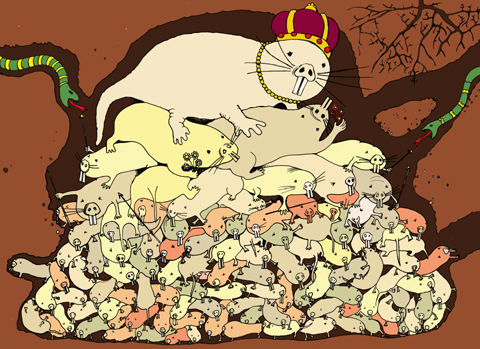
Scientist Dr Chris Faulkes at the University of London has been studying these bizarre animals for twenty years, and what grabbed me about the story on the BBC News website was the unusual social structure of mole rats, who live in groups of up to 300 individuals.

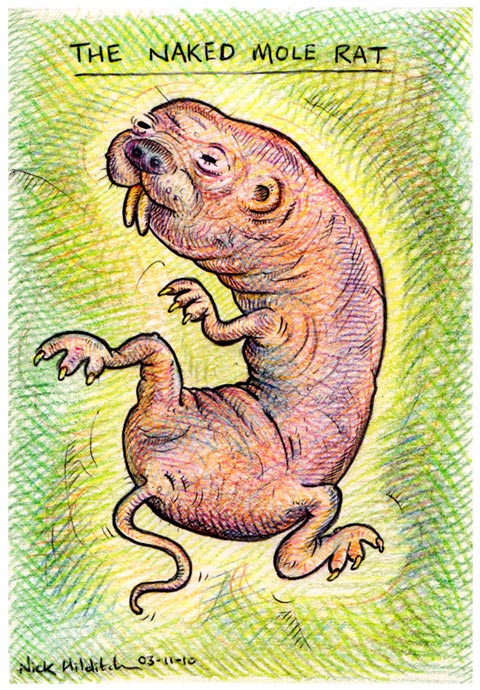
mole rat by Nick Hilditch
Illustration by Nick Hilditch.

I’ll put aside for the moment the fact that “queen” mole rats get all the action – forming long term bonds with her lucky selected suitors (note the plural use of the word here) and ensuring that for most mole rats sex is something they will never experience – and instead focus on the interesting ways in which mole rats care for their entire community.

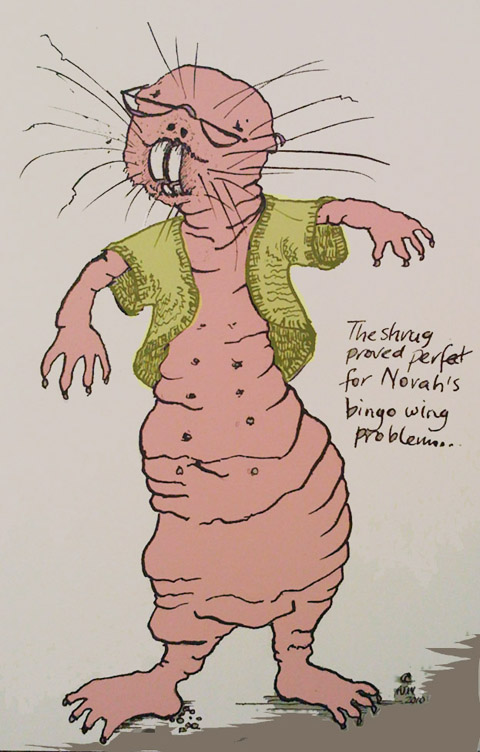
Naked Mole Rat by Reena Makwana
Naked Mole Rat by Reena Makwana.

For rather like bees, ants or termites, the mole rats care for their colonies as a whole, with the smaller mole rats taking on the roles of workers, and the larger ones fighting off any pesky intruders, eg snakes. They live for an exceptionally long time for such little beasties (up to 30 years) and appear to be immune to cancer… hence the intense interest from the scientific community.

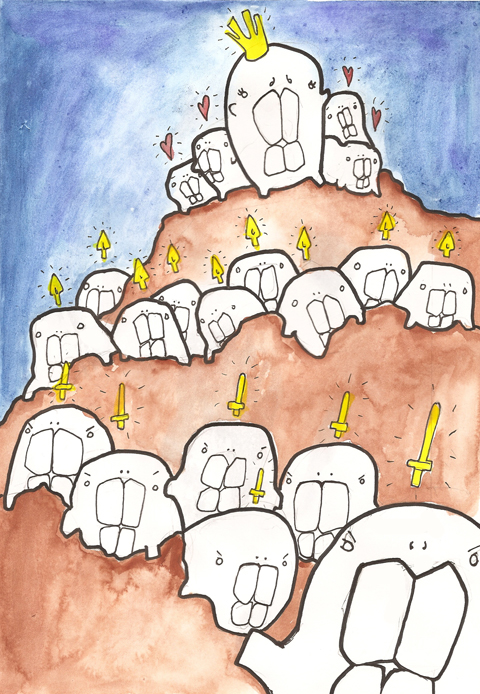
Heirarchy Of Sausages by Gareth A Hopkins
Heirarchy Of Sausages by Gareth A Hopkins.

They may look bloody funny, but I think that we would do well to learn from creatures such as the Sabre-Toothed Sausage. After all, living in such close knit communities clearly works wonders for them… and they dig with their teeth – how cool is that?

Stacie Swift Naked Mole Rat
Stacie Swift‘s Naked Mole Rat.

Naked-Mole-Rat-by-Laura-Nuttall
Naked Mole Rat by Laura Nuttall.

Alison Warner mole rat
Alison Warner‘s mole rat.

Categories ,Alison Warner, ,BBC News, ,Cancer, ,community, ,Dr Chris Faulkes, ,Gareth A Hopkins, ,Laura Nuttall, ,Lemonaday, ,Naked Mole Rat, ,Nick Hilditch, ,Paul Shinn, ,Reena Makwana, ,Sabre-Toothed Sausage, ,Stacie Swift, ,University of London

Similar Posts: