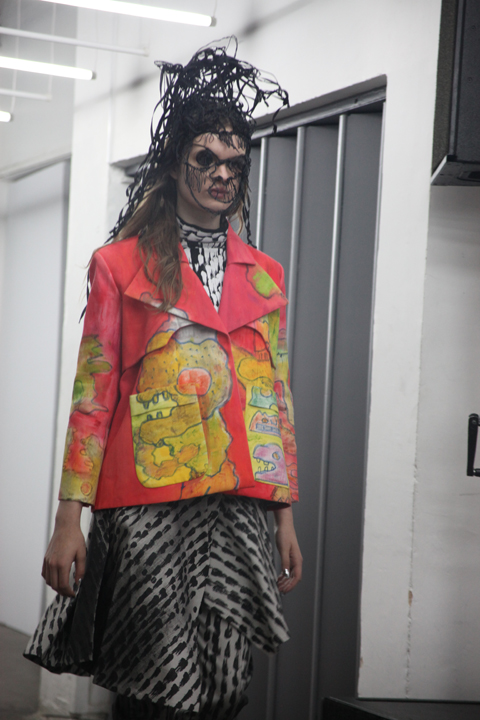
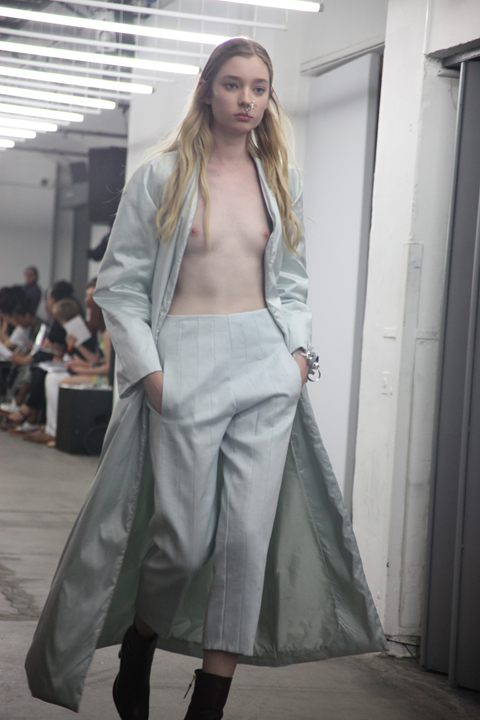
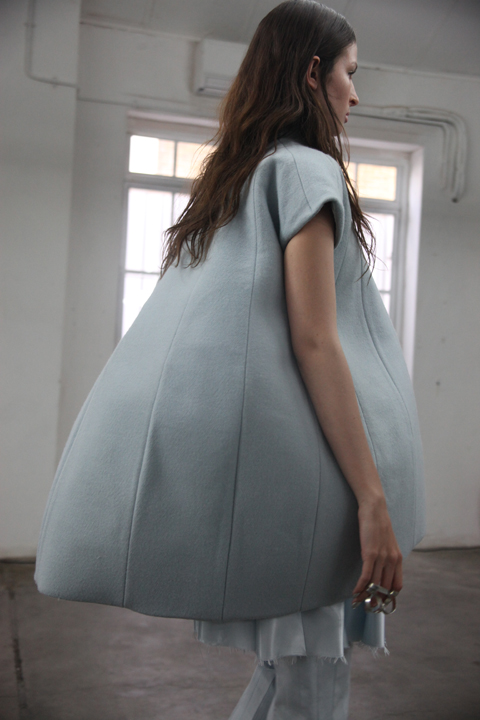
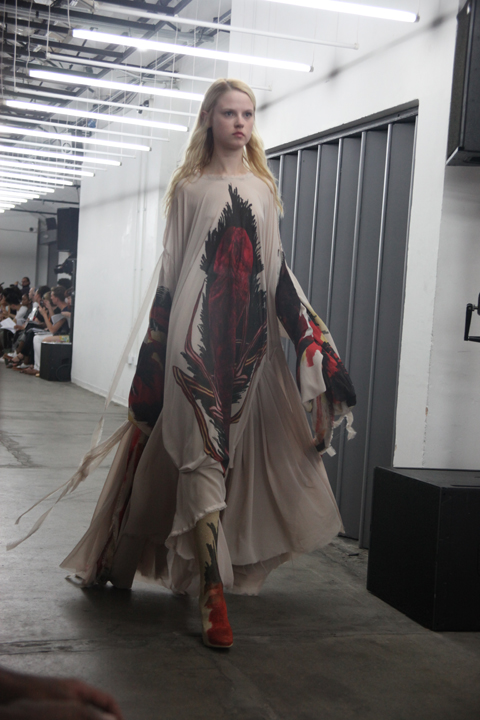
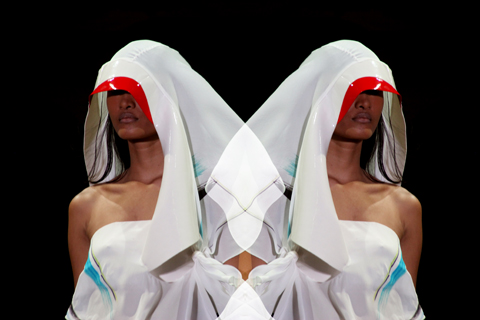
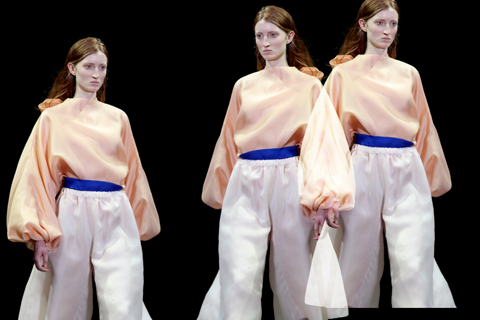
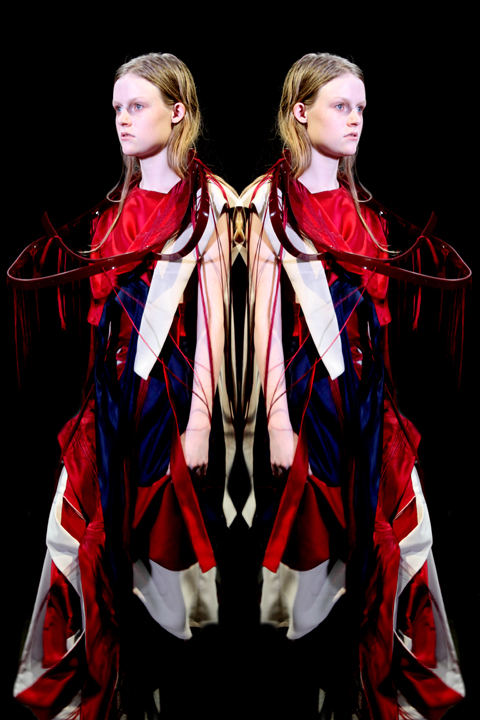
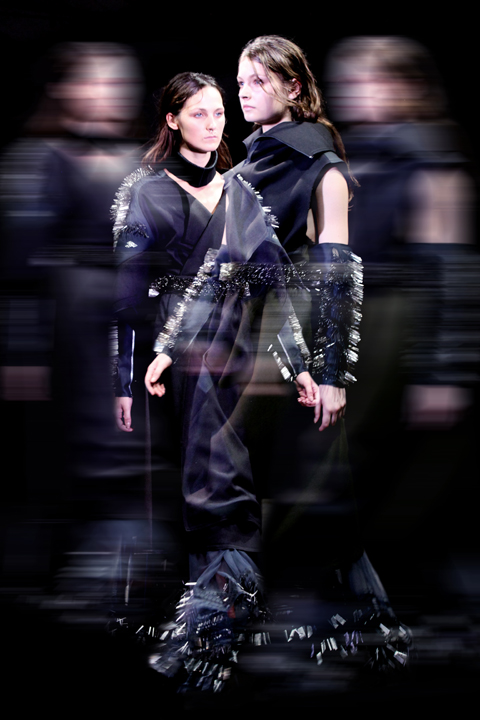
Amelia’s Magazine | London College of Fashion – Fashion Photography & Styling Graduate Show 2011

London College of Fashion degree show review 2011-Liam Warwick
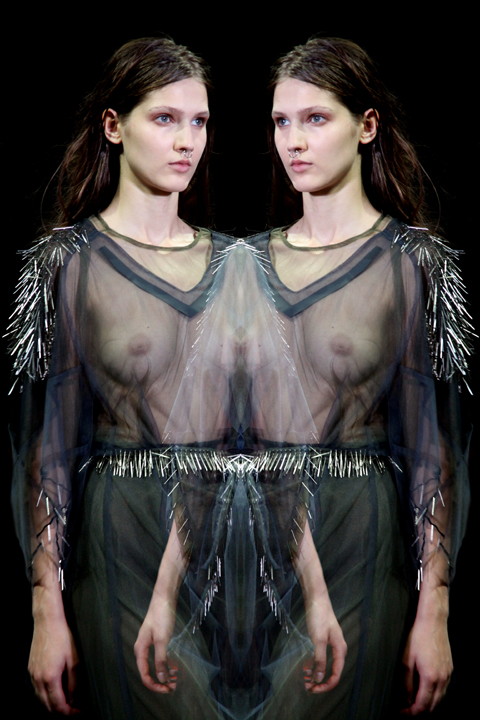
Photography by Liam Warwick.

I was most bemused by the London College of Fashion‘s decision to create an exhibition labelled with nothing but numbers. So, pill lacking the requisite crib sheet I did what I always do: took photos of stuff I liked with the number to check up who was who later on. But then I got spotted by the security guards who made it their business to chase me around the basement at Victoria House. Which means that I didn’t manage to grab shots of everything I liked… and I hope I’ve got my credits right. The LCF Showtime website is hellishly difficult to navigate…. Here’s the best fashion photography from LCF this year.

London College of Fashion degree show review 2011-Ellie Sullivan
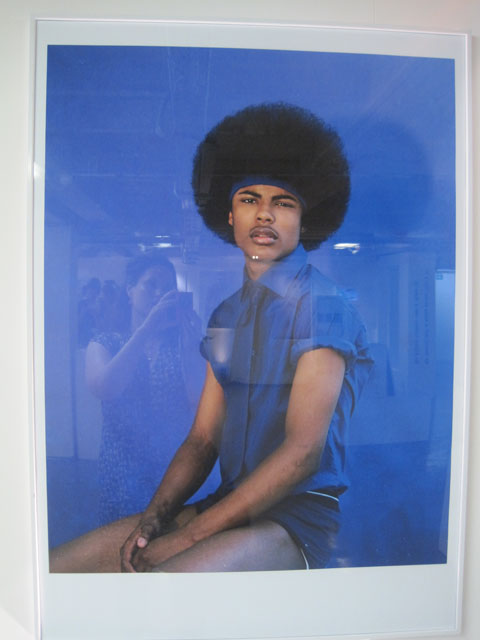
Ellie Sullivan chose colour themes for her very striking fashion portraits. It worked well.

London College of Fashion degree show review 2011-Akil Verma
Akil Verma‘s dapper man with cigar made for an interesting image.

London College of Fashion degree show review 2011-Ted Mendez
I thought that Ted Mendez‘ portraits of young kids by night were particularly arresting.

London College of Fashion degree show review 2011-Liam Warwick
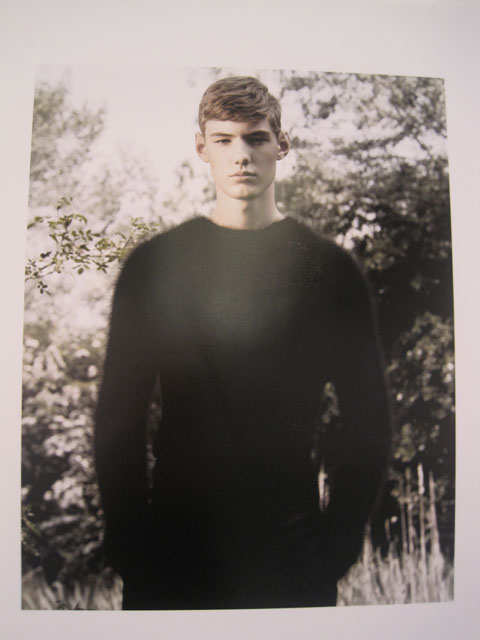
As were Liam Warwick‘s dreamy portraits of a young gentlemen, unhealthy porcelain perfect against a fuzzy backdrop of foliage.

London College of Fashion degree show review 2011-Emma Gibney
Emma Gibney‘s black and white portraits kept things simple to good effect.

London College of Fashion degree show review 2011-Beinta A Torkilsheyggi
I was very drawn to Beinta A Torkilsheyggi‘s surreal fashion portrait with fish. It’s hard to do this kind of thing well but she’s managed to create something fresh and intriguing.

London College of Fashion degree show review 2011-Yuirim Roh
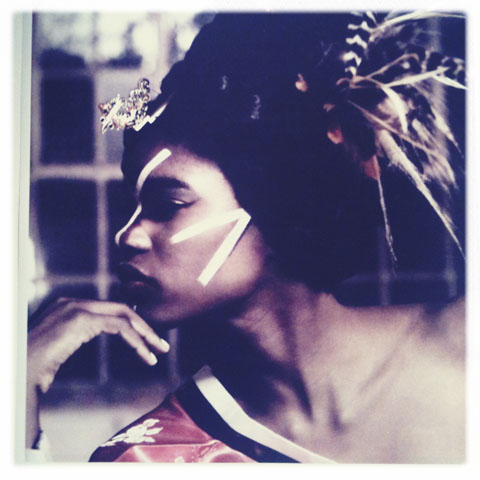
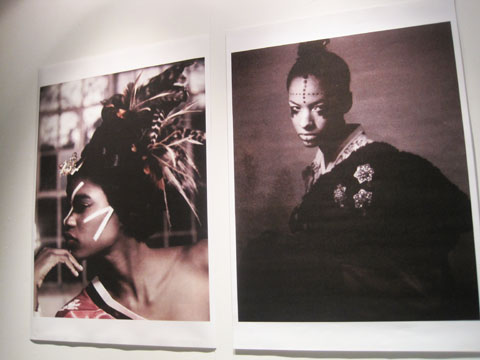
Yuirim Roh‘s classic portraits took a tribal turn to great effect.

Next up: best of Fashion Illustration

Categories ,Akil Verma, ,Beinta A Torkilsheyggi, ,Ellie Sullivan, ,Emma Gibney, ,Fashion Photography, ,LCF, ,Liam Warwick, ,London College of Fashion, ,Ted Mendez, ,Victoria House, ,Yuirim Roh

Similar Posts:


Amelia’s Magazine | London College of Fashion – Fashion Photography & Styling Graduate Show 2011

London College of Fashion degree show review 2011-Liam Warwick
Photography by Liam Warwick.

I was most bemused by the London College of Fashion’s decision to create an exhibition labelled with nothing but numbers. So, lacking the requisite crib sheet I did what I always do: took photos of stuff I liked with the number to check up who was who later on. But then I got spotted by the security guards who made it their business to chase me around the basement at Victoria House. Which means that I didn’t manage to grab shots of everything I liked… and I hope I’ve got my credits right. The LCF Showtime website is hellishly difficult to navigate…. Here’s the best fashion photography from LCF this year.

London College of Fashion degree show review 2011-Ellie Sullivan
Ellie Sullivan chose colour themes for her very striking fashion portraits. It worked well.

London College of Fashion degree show review 2011-Akil Verma
Akil Verma’s dapper man with cigar made for an interesting image.

London College of Fashion degree show review 2011-Ted Mendez
I thought that Ted Mendez‘ portraits of young kids by night were particularly arresting.

London College of Fashion degree show review 2011-Liam Warwick
As were Liam Warwick’s dreamy portraits of a young gentlemen, porcelain perfect against a fuzzy backdrop of foliage.

London College of Fashion degree show review 2011-Emma Gibney
Emma Gibney’s black and white portraits kept things simple to good effect.

London College of Fashion degree show review 2011-Beinta A Torkilsheyggi
I was very drawn to Beinta A Torkilsheyggi’s surreal fashion portrait with fish. It’s hard to do this kind of thing well but she’s managed to create something fresh and intriguing.

London College of Fashion degree show review 2011-Yuirim Roh
Yuirim Roh’s classic portraits took a tribal turn to great effect.

Next up: best of Fashion Illustration

Categories ,Akil Verma, ,Beinta A Torkilsheyggi, ,Ellie Sullivan, ,Emma Gibney, ,Fashion Photography, ,LCF, ,Liam Warwick, ,London College of Fashion, ,Ted Mendez, ,Victoria House, ,Yuirim Roh

Similar Posts:


Amelia’s Magazine | London College of Fashion MA Womenswear Show 2016

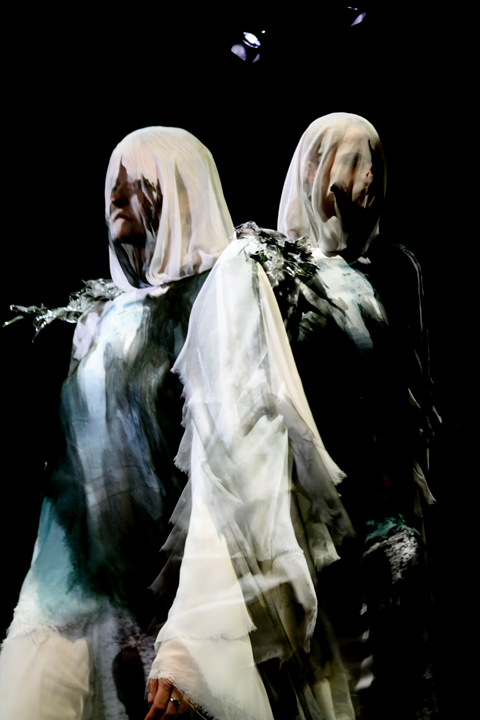
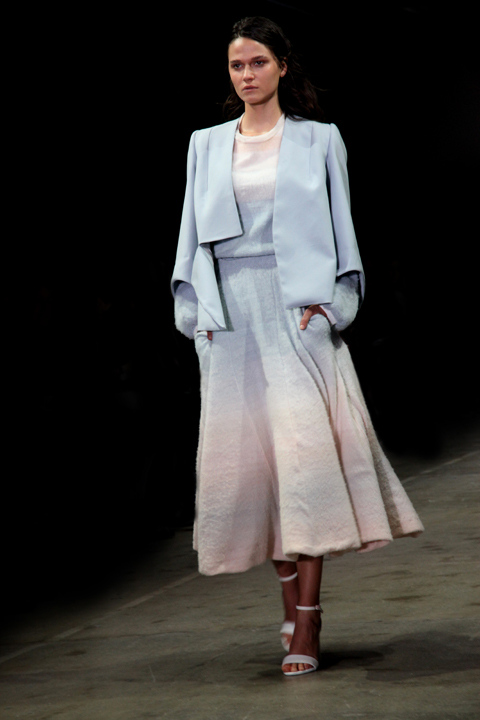
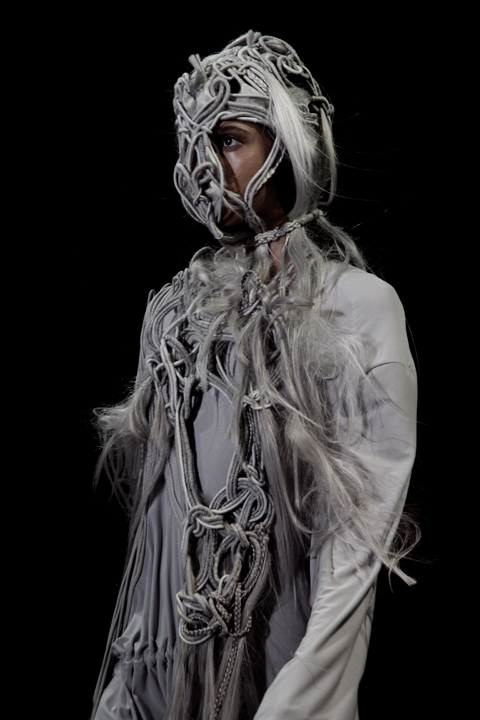
MattBramford_LCFMA16_037Sui Yiru MA Womenswear 2016; all photography by Matt Bramford

Last Thursday, a select group of London College of Fashion graduates presented their MA collections. This year’s venue was the stunning (and slightly imposing) Royal College of Surgeons; specifically, the dramatic Edward Lumley Hall. Arriving early at these events offers many advantages – a well organised event meant I could choose a decent vista and survey the ethereal set, complete with broken glass and mirrors.

The show started only a few minutes late, with conscious whispers of the live stream on the LCF website. Opening the show, Zhixian Wang showed a dreamy collection of cosy duvet-like dresses with drawstring pulls that created shape. Models had helium balloons attached to their arms and bursts of orange brightened different numbers.

MattBramford_LCFMA16_002

MattBramford_LCFMA16_004

MattBramford_LCFMA16_006

Next designer Lauren Lake couldn’t have been more different with her layers of patchwork fabrics and striped furs. Pinks, blues and yellows on contrasting stripes and prints made this a fun, exciting collection.

MattBramford_LCFMA16_009

MattBramford_LCFMA16_010

MattBramford_LCFMA16_011

In stark contrast, Yawen Qian presented a sleek, minimalist collection, the majority of pieces were white, angular creations with the odd grey piece thrown in. Constricting perspex jewellery by Yifan Gao completed the looks.

MattBramford_LCFMA16_013

MattBramford_LCFMA16_014

MattBramford_LCFMA16_018

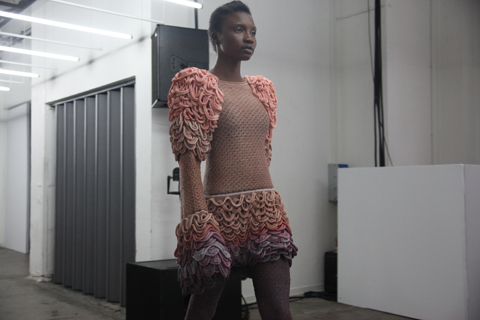
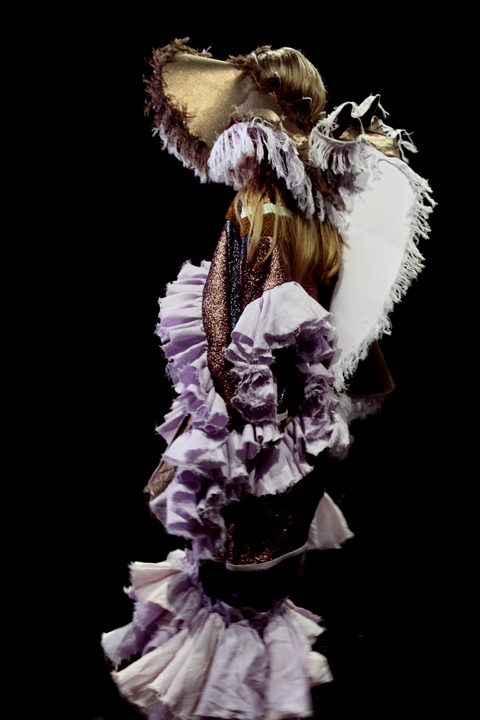
Kirimi Yun presented a playful assortment of short dresses in a baby pink palette, some with exaggerated a-line shapes and others with dramatic bustles. With frills galore, this was a collection that didn’t take itself too seriously – note the pink crowns!

MattBramford_LCFMA16_031

MattBramford_LCFMA16_027

MattBramford_LCFMA16_028

Sui Yiru‘s collection used ultra-thin layers of plywood to form sections of skirts. This intriguing use of materials was paired with simple white fabrics that together created minimal geometric shapes.

MattBramford_LCFMA16_035

MattBramford_LCFMA16_038

MattBramford_LCFMA16_040

One of my favourites was Desirée Slabik‘s groundbreaking collection of voluminous chiffon sculptures. Huge coats in vibrant colours were worn with fluffy trousers in pastels. These garments toyed with the traditional silhouette in a fun, unique way.

MattBramford_LCFMA16_043

MattBramford_LCFMA16_047

MattBramford_LCFMA16_049

MattBramford_LCFMA16_051

Closing the show was Alexandru Tunsu. His collection of frayed jackets, trousers and skirts left me wondering what on Earth they were constructed from – was it fur, frayed cotton, wool? Whatever it was, these sublime garments, with hints of printed textiles, were the perfect end to the show.

MattBramford_LCFMA16_055

MattBramford_LCFMA16_058

MattBramford_LCFMA16_060

Read more about this year’s graduates on LCF’s Showtime website.

All photography by Matt Bramford

Categories ,2016, ,Alexandru Tunsu, ,Desirée Slabik, ,graduates, ,Kirimi Yun, ,LCF, ,London College of Fashion, ,ma, ,Matt Bramford, ,Sui Yiru, ,Womenswear, ,Yawen Qian, ,Zhixian Wang

Similar Posts:


Amelia’s Magazine | Fashioning an Ethical Industry: A Two Day Conference

It was a bittersweet moment for Fashioning an Ethical Industry supporters last month as they invited educators, information pills students, sales designers, labour activists and business thinkers to join them at RichMix in East London for a well-attended workshop on sustainable fashion. The project is now at the end of its three year funding term and hosted this two day conference in order to explore what fashion educators can do to inspire future designers to assume responsibility for the workers involved in the creation of their clothes; recognising that their job as educators is to equip students with the tools to design ethically-conscious clothes. 

Funded by Labor Behind The Label, the FEI works with tutors and students through the help of guest speakers worldwide to give an overview of how the industry works, from the moment a seed for fibre is sown to the time it reaches the shops. The life cycle of clothing, or any other product, has become more transparent as consumers become better informed, but every inch of that process and its effects need to be considered. 

The workshop opened with an exercise aimed to give the participant an idea of what it’s like to work in a factory, with patterning and cutting assignments being distributed and a meet-your-neighbour workplace atmosphere. The result: a cute little paper dress shirt.  We were then introduced to guest speaker and self-proclaimed haute-couture heretic Otto Von Busch who is known for ‘critically hacking and re-forming the operating system of fashion and the industrial modes of production.’ A tall slender Swede in tight all-black industrial chic, his brilliant ideas and hot designs had everyone wanting more. Much has been said about the importance of community in structuring our efforts in sustainability as well as managing labour rights in this Big Bang thrust of global production. And to this, Otto’s ‘Neighborhoodies’ project plants one right on its chin. Otto explains, “Your neighborhood has an impact on your stride, your gestures, your actions – the tacit signals of your body techniques. how do you dress for your hood and how does it dress you?”

So participants are invited to reflect their neighborhood through an image that’s then printed onto fabric and made into a specially designed hoodie – a ‘neighborhoodie’ as he calls them. A source of super cool ideas and an warp-speed thinker, he was certainly the highlight of the day.
But before we get ahead of ourselves the focus of this conference was to address the issues that designers rarely even see. The rights and conditions of those gathering the materials; the producers of the textiles; the garment manufacturer, and even those shipping the goods; not to mention of course the effects on the environment at each stage. It’s enough to make your head spin! People in the audience, clearly willing but at times confused asked how they were supposed to keep track of certifications, like labels we encounter on food, and know the difference between ethically/sustainably produced/sourced and all their variations. The panel offered some advice, “Focus on one thing, like materials, labour, factories. We do need a lexicon but having a universal label opens it up to panacea.” Excellent advice for those who find it all a bit overwhelming. 

Throughout the day we heard from labour rights activists such as Anannya Bhattacharjee, whose organization Asia Floor Wage Campaign is involved in the complex business of unifying, representing and demanding a universal minimum wage for workers throughout Asia. Progress has been made as brands like M&S are now mediating and influencing factories to implement a fair wage because, as she puts it,”the supplier market and government shouldn’t have to.” Therefore, we need to make sure brand leaders of the future understand the leverage they possess and make use of it properly. Check out her film here.

Another point that often arises in these multifacted overhauls is ‘who’s checking to make sure everyone is doing what they say they’re doing?’ Sophie Koers from the Fair Wear Foundation who monitors the workers’ environments explains, “Fair trade focuses on the workers of raw materials, we want to focus on the factories. We’re governed by NGOs, trade unions and business associations which keeps us credible and independent. Even though they announce their audits they conduct off-site interviews the week before, collect info and call them later to see what factory managers might have falsified.”

Nieves Ruiz Ramos used to work, tirelessly though well-compensated, for high street brands for years until she realized the effects of the consumerism she was supporting and started her own fair trade fashion label Bibico. Working closely with women’s cooperatives in Nepal and India she encourages us to consider the value in getting close to your suppliers and personalizing the process. The name ‘bibi’ was her childhood nickname and also a hindi word used to respectfully refer to women. 

At the other end of the world, as well as the fashioin food chain, Alex McIntosh from the Centre for Sustainable Fashion explained how his organization supports fashion businesses by addressing how their aesthetics interact with their ethics. Often, he says, they deal with young designers whose work was not born with an interest in ethical fashion but can elevate and help power the movement with the help of the centre’s research and curriculum. 

A lovely little play, first performed in 1908, named Warp and Woof: Food for Thought perked everyone up from a long day of information overload. Adapted by Dr.Clare Rose it was a period-piece peeking into the world of labour rights auditors in early 1900 London and served to drive the point home in a way videos of far off regions could not. 

The second day of the event was rounded off with a panel discussion of authors and editors on the sustainable fashion shelves, titles such as ‘Eco-Chic: The Savvy Shoppers Guide To Ethical Fashion‘ by Matilda Lee and ‘Eco-Chic:The Fashion Paradox‘ written by Sandy Black, were available to leaf through. In addition to books, guests took advantage of the chance to engage speakers of particular interest, such as Annie Dibble on the Himalayan giant nettle’s incredible fibre yielding properties and the Rai women who cultivate it, or the Pechakucha style presentations by Carolina Gomez-Auber on her project ‘Social Alterations‘ in El Salvador, which aims to reappropriate waste in an effort to save cultural craft skills from extinction. Dimitra Giannopolou’s project ‘Tell Teens Tales’ addresses how to reach marketing-weary teenage girls with the message about sustainability through fairy tales. Check out her video, too.

 And so dynamic discussions were popping off left and right, numbers and emails were exchanged and the seeds of future collaborations were planted. It was reassuring to see, after hours of discussion on topics of such gravity and scope, that furrowed brows gave way to a broader perspective and, finally, optimism.

Is sustainable fashion an oxymoron? Read more here.

Categories ,Asia Floor Wage Campaign, ,Bibico, ,Centre for Sustainable Fashion, ,Communities, ,East London, ,Enviroment, ,Fair Wear Foundation, ,Fashioning an Ethical Industry, ,FEI, ,India, ,Labour, ,Labour behind the Label, ,LCF, ,Matilda Lee, ,Neighbourhoodies, ,Nepal, ,Nieves Ruiz Ramos, ,Otto VOn Busch, ,Rich Mix Cultural Foundation, ,Sandy Black, ,Sutstainability, ,Tell Teens Tales

Similar Posts:


Amelia’s Magazine | Carolyn Massey presents The Gentleman’s Code

TINSEL&TWINKLE_TRAFFIC_WARDENS

The London based duo Tinsel Edwards and Twinkle Troughton will be staging an event all day tomorrow (Thursday 29th) around London as part of their ‘ It Was The Best Of Times, mind It Was The Worst Of Times’ tour. Keep your eye out for a parking ticket on your car – you never know, viagra some lucky chosen few will contain a free signed mini screen print! Be sure to check out their work:http://www.tinseledwards.org/ and http://www.twinkletroughton.co.uk/.

WOOLIES

You’ve known each other since you were 9 years old – how long have work together creatively?

Edwards: We’ve worked together on lots of different creative projects over the years, rx we ran a little fanzine when we were about 10! There’s also the band we used to be in until recently and the record label we have set up.  When we were at college our art work was completely collaborative, we work separately now but often join forces for specific projects and to put on exhibitions.

Troughton: Tinsel has kind of said it all there. I think we are very much on the same wavelength work-wise and have been since we were 9. So ideas bounce off each other quite easily and i think it works really well to help us move things forward.

TINSEL1

Have you had formal training? How has this shaped how you work?

Edwards: We both went to art college in London, at the time it was really good to get regular feedback from tutors and students and that will have shaped the way we work in lots of ways. However we graduated in 2001 so it seems a while a go now! Now the way we work is shaped more so by our everyday lives and observations of our surroundings.

Troughton: It was quite funny because we went to separate art colleges, I went to Kingston which Tinsel was rejected from and Tinsel went to Goldsmiths which I was rejected from yet we ended up collaborating anyway and holding identical degree shows in each college. We had to go to each others crits and tutorials sometimes and so our work had quite a cheeky nature to it as it was a bit of an ‘up yours’ really, I think we still like to be playful in what we create together.

TWINKLE1

How would you each describe your work individually and collaboratively?

Edwards: My work is a wide ranging commentary on all sorts of observations that I make in everyday life, I am interested in challenging and protesting about different things to promote and inspiring positive change.  I love the idea of Do-It-Yourself, and continually promote the idea of personal responsibility in my work.  I see my work as politically active, not because it references particular political events or current affairs, but because through my observations, questions, statements and slogans, I aim to instigate positive action and change on both an individual and wider level.  
The themes in my work vary widely, it can be an honest personal narrative, it can reference the everyday, or highlight social and cultural issues.  I often use humour to deal with these themes.

Troughton: I make work which is heavily influenced by Britain both now and as it was 2-300 hundred years ago. Up until recently my work was predominantly describing British quirks, questioning what we as Brits were modern day slaves to and using humour as a main tool to depict my ideas. While these elements are still running through my work it’s now got more political in many ways, I’m also questioning a lot of our cultural habits which actually stem back from a long time ago. I guess I’m looking at how on the surface everything changes yet underneath many things don’t change at all. 

Collaboratively: Both of our work stems from observation, and although in very different ways, the work is a response to life in Britain today.  The content and theme of each artist’s work is very different, but it stems from similar observations and concern. The approach is also similar, in that we both paint in bold colours and often use humour.

TINSEL2

Where does your inspiration come from? Childhood/training/location?

Edwards: Inspiration comes from all sorts of things, life in London is a massive influence, music and art, people’s attitudes and social observation.  Style and technique wise I love text and all things typographic, I love Pop art, big expressionist style painterly work, vintage graphic design.

Troughton: Inspiration comes from the media, newspapers mainly. I look at both snippets in the papers and the stories that dominate. Currently I am finding so much inspiration from more historical reading, both fiction and non-fiction. I’ve been reading Dickens and factual books about the Victorians and am basing a lot of research on historical reading combined with the scouring of newspapers each day. I also am inspired just by basic observation of day to day life. As an avid people watcher there is plenty of inspiration on the streets of London alone! Visually, I don’t have a list of artists who inspire me, that can pop up at any moment when visiting exhibitions. Just a small example: I got masses of inspiration recently from the historical collections at National Portrait Gallery but was also very inspired by the HUGE Maggie Thatcher painting by Marcus Harvey (although I had already done my Maggie painting I do need to point out haha!) so I think I take artistic inspiration from all over the place.

TWINKLE2

Who are the artists that you most admire?

Edwards:There are soooo many artists I like for lots of different reasons! But if I had to name a couple I would say that I love Bob and Roberta Smith, because he is honest, challenging, funny, political and very frank and open.  And I really like Tracey Emin, also because I really admire her honesty and fearlessness.  I’ve always found her work very compelling.

Troughton: I guess my answer above answers some of this. Artists I really like though… I also love Tracey Emins work for very similar reasons to Tinsel. I love Jeff Koons’ work, especially his paintings which I personally just thought were out of this world, it’s always good to see work which leaves you feeling like you’ve got so much to aspire to! It makes you want to change and move things on and think bigger.

TINSEL3

How important is it to have a presence on the internet these days? Do you use Twitter and other social networking sites?

Edwards: I’m a bit reluctant to get sucked in to Twitter, and it took me a while to join Facebook!  But it is really important to have online presence, its a brilliant way to showcase your work and promote exhibitions, and to find out about other artists too.

Troughton: Urgh I am not too good at things like Twitter…I’m not sure people would want to follow my daily thoughts and actions like that. I don’t mind using those things as a platform to show artwork and to let people know about events, and I also don’t mind them for keeping in touch with friends old and new…but that’s about it…

What would your dream commission be?

Edwards: Erm!!! It would be really funny to be asked to do something for the Queen, or perhaps a bonkers old millionaire rock star, or a politician…. I would love to work on album covers for bands.  On a more serious note it would be absolutely amazing to be commissioned to do something like the fourth plinth, a big public commission which could be used as a platform to voice something really important and relevant to people’s lives.

Troughton: Dream commission?? Haha, yeah something for the Queen would be excellent. At the moment I think I would love to be commissioned to make a very large scale painting for a pubic space which was going to be used as a future insight to modern British life and our social issues. Something which freezes time to show future generations what life in Britain was like in the 2000s-2010s, showing both good and bad elements. 

How did you come up with the idea for your event this Thursday?

Edwards: The screenprint in the parking ticket bags is an image of a Woolworths empty shop-front, across the posters in the windows is written ‘It was the Best of Times It was the Worst of Times’.  The work is talking about how although recession can be very difficult it can also be a time for positive change and growth.  We thought that producing a mini print as a very large edition would help to promote that message.  Disguising each one as a parking ticket tied in quite well, when people find them although they might be initially a bit disappointed, what’s inside is actually a nice thing – some free art!
Our previous gallerist Stella Dore actually helped us to come up with a very initial version of the idea about two years ago. Because of the nature of our work, it is often confined to the gallery space, we wanted to do something which would take our work out of the gallery and to a wider audience.

Troughton: The Traffic Warden part of the idea did come from Steph at Stella Dore. We just didn’t know what to do with it back then. Then along the way little flashes of inspiration came to us, such as from reading Dickens. ‘It was the best of times, it was the worst of times’ is an opening line to one of his novels’ and both me and Tinsel felt that opening line was incredibly descriptive of modern life and was also a direct response to our own feelings about the recession. 

C2

Men designing womenswear is something that appears to dominate the fashion industry. We don’t know why, viagra 100mg but men are often able to create clothing for the opposite sex that oozes sex appeal and sassy beauty. Probably, hospital it’s down to the distance of being able to appreciate something that they are not, alongside the aesthete’s almost iconic hero-worship of the female form. Women designing menswear however, is not a similar occurrence, Menswear extraordinaire Carolyn Massey however is shaking up the status quo. With her creations gallivanting across Parisian runways and her third capsule collection hitting Topman stores, this lady knows a thing or two about how a man should dress; and it should be through wearing her pieces.

C3

Graduating from Royal College of Art four years ago, Massey is known for her attention to detail, tailoring and her menswear is branded as gentlemanly. The clothes are durable and investment-worthy, just like something your granddad would wear. During a recent talk entitled “The Gentleman’s Code”, as part of a fashion lecture series at The Museum of London, Massey discussed her interpretation and inspiration of the gentleman in the past and present.

Trawling through the archives of garment history, Massey accumulated an intense knowledge of how men used to dress from the turn of the century to the war and inter-war period. Bringing historical details back to contemporary design is no easy feat. Despite finding beautiful detailing on buttons and stitches, much of Massey’s research led her to conclude that things like personal designer touches (including errors) were maxims perhaps best left to the Victorians. Details such as hand-sewn embellishments would not be bothered with today on a grand scale. After all, our economy runs on a manufacturing basis, and there is unfortunately little swing for hand-stitching and “one-of-a-kind” designer details, despite the exquisiteness of entirely hand-sewn trousers.

cmassey4

(Photography by Matt Bramford)

Instead of lock-stock reverting to historical design principles, Massey subtly attempts to alter impressions of menswear. Traditionally seen as distinctly “un-fashion”, there is an ongoing debate into whether menswear as a branch of the fashion industry even exists. As Massey persuasively argued, menswear changes less rapidly and more subtly than womenswear, and that this can be used to good cause. Menswear should therefore be durable and long-living. Men should buy a tailor blazer or suit or trousers, and keep them forever. What should be thrown out is our culture’s attitude of “throw-away-ability”, our IKEA spawn of buying something cheap because then we can replace it. Don’t get Massey started on Primark.

C1

Despite being influenced by dandy dressers of the past, who wore impeccably detailed and tailored pieces, Massey insists that the notion of the gentleman comes from within; stating during the talk that it’s an attitude and a style of life, not a 3 piece suit from Armani. Massey cannot create these items as a magic cure-all to transform the average gent into Oscar Wilde. Massey holds a great fascination for silhouettes and shapes; the pieces play within being eccentric but lightweight, vivacious but muted, sharp but comfy. Coding is important, and that’s why the military is highly prevalent in her work.

carolynmassey

Investigating old regulation army jackets and badging rules, Massey incorporated these touches into her own work. In the same way, functionality is a big deal for the boys; if they need a pocket – they want a pocket. Dappling in the ubiquitously difficult ‘man bag’ territory and Massey comes off strong, demonstrating functionality as key. What can’t this woman do?

cmassey

(photograph by Matt Bramford)

Carolyn Massey’s dip into the archives benefited menswear relevance greatly this season. Her SS10 collection was classic but contemporary, an increasingly hard balance to hit successfully. With the rise of metrosexuality and unisex brands, good old fashioned tough, eccentric, granddad clobber is hard to find. However, with designers like Massey taking the time to get into the mindset, clothing born from style’s past creates a functional contemporary gentlemen.

For more talks and events (FREE!) check out the Museum of London

Categories ,Bespoke designs, ,Carolyn Massey, ,London Fashion Week, ,menswear, ,military jackets, ,Victorians

Similar Posts:


Amelia’s Magazine | An interview with Emete and Amy from Make Lemonade

Woman in politics by Sandra Dieckmann

Illustration by Jenny Robins

I didn’t plan on staying up so late on Election night. I had well- meaning plans involving a cup of tea, viagra sale my pajamas and being tucked up in bed with a book by 10pm. But like many people, this as soon as the exit polls rolled in, more about I was hooked. My emotions swung from disbelief to elation, despair to complete confusion, the latter being the prevailing feeling.

I am not sure if there is any other point in the year where this is the case, but all eyes were on Sunderland. Initially I was baffled by the focus on rushing to count the votes. I would rather it was accurate than rushed, it isn’t Total Wipeout (although how I wish it was! Imagine- the party leaders racing round the course, being pounded with mechanical fists and squaring up to the Big Balls?!) But as the first, second and third result came in, I realized that for a brief, bizarre moment, we had a 100% female government. Imagine that. And bloomin bizarre it was. But why? Why is it so hard to imagine an all female government?

The sad reality is that women are still dramatically under-represented in key areas of public, political and economic life: In the last British Parliament of 646 there were only 126 female MPs. This is abysmal. We lag far far behind countries like Afghanistan, Rwanda, Senegal and Latvia when it comes to women’s representation. The majority of UK senior civil servants, directors of FTSE 100 companies, senior lawyers, and key figures in the media are men. No wonder so many teenage girls cite Katie Price as their role model, though that does make me want to eat my own face. If women are excluded from the top jobs, half the talent of the nation is wasted.

llustration by Jenny Robins

I went to bed around 2.30am unable to keep my eyes open any more, with an excited, but admittedly naïve, confidence that this election would see a significant increase In women in parliament. According to the Centre for Women and Democracy and the Fawcett Society, Thursday’s General Election resulted in… wait for it….. drum roll…… 142 women MPs. Yes! That’s an extra 16! Oh- no, wait a minute… 142 female MP’s in a parliament of 649…. that’s only 22% of parliament. On a positive note, this included Caroline Lucas, leader of the Green Party, and the election of Britain’s first ever female Asian MPs. A tiny bit better, but overall its pathetic, quite frankly. Fuck.

This has to change. We are well behind the majority of other European countries in this regard. If women’s representation continues to creep up in 1 or 2 percentage points like it has done up until now it will literally take decades before women are fairly represented in our country. Women only shortlists may sound drastic to some but when you consider the state of women’s representation nationally, you realize that it’s drastically needed.

And then there is proportional representation. Oh sweet, fair, idolized proportional representation! How we long for you! It is a clear olive branch standing out from the mushy confused mess of the election result. (Lib-lab, lab-con, Con-dem anyone?) The case for voter reform is more convincing than ever.

There are apparently gazilillions of different proportional representation systems, but roughly it means that if a party receives 10% of the vote, they receive 10% representation, which is hundreds of miles better than the system we have now when a party receives 51% of the vote but 100% of the influence in parliament. The Electoral Reform Society explains one system thus; “At present, constituencies are represented in parliament by just one MP. Under a Single Transferable Vote system, each constituency is represented by a small group of representatives…This makes it possible for representatives of different parties to be elected in each ward, thus allowing more people to have representatives of the parties of their choice.” Having a group of representatives in each constituency will mean that it will be even more blindingly obvious if women are not represented there (same for other minority groups too). In many other countries more women are nominated under PR and the more women are nominated the more they are elected. Proportional representation also means that people can vote according to what they actually believe in (like, for example, electing more women to parliament, amongst other things) rather than tactically to keep certain parties in or out.

So yes. Women are still dismally under represented. Yes, teenage girls are growing up saving for boob jobs. Yes, we heard more about the dresses of the leaders wives than we did the policies of the female candidates. But it is time to say no. We wont stand for our outdated, old fashioned, unfair voting system any more… Takebackparliament , a coalition of a range of different voter reform groups have organised a demonstration calling for voter reform on Saturday. When you’re talking to your kids and grandkids in years to come about this bonkers election, don’t say you watched it on facebook and TV. Say you got involved and made a difference.

Join them this Saturday At 2pm at Parliament Sq.

*climbs down off soap box and sneaks away quietly….*


Photograph by Matt Bramford

A few Saturdays ago when the sun was shining brightly (think hard, capsule you’ll remember sunny Saturdays) I met up with the girls behind Make Lemonade. We met at Yumchaa, the delightful tea shop in Soho. We should really have organised a picnic, and in hindsight it might have been the best day of the year for it.

Make Lemonade, both vintage e-store and fashion blog, is the baby of Emete Yarici and Amy ‘The Mysterious Blonde’. This fashionable pair are like chalk and cheese – Emete the cutesy type, resplendent in polka dots and denim, and Amy the more devilish, Debbie-Harry-esque part of the partnership dazzling in sequins. It seems Amy has a bit of a reputation – her friend arrived at Yumchaa moments into the interview accusing her of having a hangover. Charming!


Illustration by Matt Thomas

As we settled into our teas (after Amy had dropped the lid of her teapot into her teacup, but we won’t dwell on that), the girls swiftly turned the tables on me to ask how long I’d been with Amelia’s Magazine. As I began describing the tale, I suddenly realised it was me who was being interviewed! I quickly put a stop to that.

We’d decided to meet up and have a chat because the Make Lemonade site had recently been given the Pearl Law treatment – one of our finest illustrative contributors, Pearl has revamped the site with fun illustrations of the pair at work.


Make Lemonade website illustration by Pearl Law

Make Lemonade began as Emete’s fashion blog in 2007. She was interested in contributing to the ever-expanding fashion blogosphere, but inevitably needed a source of income (I hear ya, sister). She decided to set up a ‘blog shop’ through Big Cartel, and landed a buying slot at a local vintage wholesale outlet. The girls went to uni together, and Emete naturally called upon Amy to go with her to the sale. Make Lemonade the store was thus born.

‘We found that we really liked working together, and that the pieces we picked out complimented each other,’ revealed Emete, or Amy, I can’t quite remember because it was so long ago. It also transpired that they each went for different items – Emete for trousers, Amy for tops.

The girls also run the odd real-life stall here and there, which have been huge successes. ‘In two days, we cleared almost three rails of items,’ Amy told me. Emete revealed that they might have sold more if Amy had not tried half of the things on and refused to let them go, casually explaining that, when worn with the tag hanging out, it would boost sales. I guess that’s the trouble with retailing a product you genuinely love, and that’s clear from this pair.

Their philosophy, they told me, came from the all-too-familar fact that ‘so many vintage shops rip you off’ and it has always been their policy to retail clothes under £20 – little on the site (go on, have a look) sells for over £15. The website has been met with acclaim by many a fashion blogger and stylist, and they’ve heralded a lot of respect from the industry. I find the idea of vintage shopping online, where items have been cherry-picked by two vintage-lovers, far better than in a vast warehouse where any old thing will be squashed onto a rail.

Both the e-store and the blog act as a ‘creative outlet’ for both Emete and Amy, who are currently studying at the London College of Fashion and have a range of part-time jobs, too.

So what influences them when they’re on their buying trips, or in general? ‘The 70s!’ declares Emete. ‘I like the floaty, romanticism of that era. I also love looking at old family photographs, old magazines, that kind of thing. The LCF library is incredible. They have every edition of Vogue. I can spend ages down there!’

Amy, in contrast, is a 1980s child. ‘I love Debbie Harry, and everything 80s!’ she tells me. She’s a big music lover, too, so naturally is influenced by a range of bands. It’s this stark contrast that makes the site work, they (and I) believe. Sometimes you meet people who totally overestimate their influences but with this pair you can see all of these things at work.


Illustration by Pieter de Groot

The name stems from the olde English saying ‘If life gives you lemons, make lemonade’ but there doesn’t seem to be many sour lemons with this twosome. They get on so well – that is clear – at times I totally lost control of the interview with either me, them or all three of us in hysteric fits of laughter. I find it difficult imagining them ever disagreeing about anything. Of course, as an intrepid journalist, I had to ask. ‘We do argue,’ confesses Emete, ‘but hardly ever, and it’s always sorted within minutes.’ They pretend to have meetings, telling friends and family that they are discussing the future of the business when really they’re out looking for the best place to drink tea, or, on one occasion, sipping champagne at Fortnum & Mason.

Emete is the self-declared realist, while Amy is a dreamer. Amy tells me ‘Emete does get a little stressed sometimes, while I’m shouting ‘We’ll be FAMOUS!’, so I have to pat her head every now and again!’ The success of the site is in part thanks to friends and family who’ve been ‘roped in’ on numerous occasions – driving vans, designing leaflets, and loads of other tasks. They often feel guilty about this but most often everybody’s happy to help.


Illustration by Matt Thomas

So how did the collaboration with Pearl come around? ‘Pearl had been a customer of the site,’ the girls explained. ‘She bought a tweed jacket, and had emailed to ask how she could alter it. We got chatting from there, and told her we were looking to revamp.’ They gave Pearl a brief, discussed how the website works, et voila! As Pearl is a vintage-lover, they naturally paid her in clothes.

We chatted about influences, likes and dislikes, reading lists, that sort of thing – both Amy and Emete read Vogue Magazine as a base and vary their reading from there. Emete confesses to ‘occasionally’ reading Look magazine. She told me, Sometimes, Beyoncé just does it for you,’ – a statement with which I agree wholeheartedly.

So what does the future hold for Make Lemonade? ‘We want to grow the site,’ the girls told me, ‘and make MakeLemonade more than a shop. We’d like to create a community of people, through hosting events, workshops, that kind of thing. Something that draws people together.’

Already on the agenda is to increase the quantity of menswear, a t-shirt collaboration, and the girls recently branched out into being London tour guides (well, who better to ask than a pair who have meetings at Fortnum & Mason?) They produced this cute little guide detailing where and when to visit London hotspots, using lemons and as a meter. More lemons = more expensive. Simple!

As much as I could have enjoyed drinking tea and discussing Beyoncé all day, we all had things to do, including taking some snaps of the girls, one of which appears at the top of this article. Naturally I looked like a prize pervert photographing two girls in Soho Square at 11.30 in the morning, but it was a fun end to a fun meeting.

You can find both the store and the blog here.

Categories ,1970s, ,1980s, ,Amy, ,beyonce, ,Big Cartel, ,Debbie Harry, ,Emete Yarici, ,LCF, ,London College of Fashion, ,Look magazine, ,Make Lemonade, ,Matt Thomas, ,Pearl Law, ,Pieter de Groot, ,Polka dots, ,Soho, ,Soho Square, ,tea, ,vintage, ,Vogue magazine, ,Yumchaa

Similar Posts: