Amelia’s Magazine | Illustrator Zöe Barker: Blimey, That is Nice !

Zoe-barker1All illustrations courtesy of Zöe Barker

Louisa Lee:  I’ve noticed that you’ve got a fine art background, health how did this develop into illustration?

Zöe Barker: Since I was a kid I wanted to be an artist. I loved drawing the most so it seemed an obvious choice. I headed straight to University onto a Fine Art degree after school. I hadn’t considered anything other than being a painter. University was interesting; realism and portrait painting were not trendy and I struggled for a while with explaining my thoughts and concepts. The ideas that were getting great reactions – dark, patient crude or shocking, information pills whacko performance art – were a bit frustrating and I didn’t know where I fit. I came close to transferring onto an Illustration degree, but decided that Fine Art was a great platform to work out my ideas and style. I began to understand how I wanted to communicate. I am really pleased that I stuck with that decision; during the last year of Art School ideas started forming that are still very much key in my work now. I started drawing in a way that achieved the right balance between craft and concept. When I left University I felt a bit stuck because I hadn’t received the advice or direction that a young illustrator could feed off, and my portfolio was essentially that of a fine artist. I kept getting told that my work wasn’t illustration but ‘real’ art, and I didn’t understand why illustration had to be so dumbed down, or why I had to be one or the other. I then started producing more drawings, giving them more of a purpose. I still felt like I was totally “blagging” it when I went for interviews, and was terrified to show my portfolio. I now have a better awareness of the sort of projects suited to me. It’s really important to not change the core of my art to get more work, but striving at refining and specialising.

Zoe-Barker-8

LL: Does your fine art background affect how you respond to commissions?

ZB: I hope so. I don’t like the idea that illustration is seen as a commercial cop out, and Fine Art as airy-fairy business. When I was studying fine art I found it so demoralising walking around galleries and studios seeing stuff that didn’t mean anything. People explained their ‘work’ with sweeping intellectual breakdowns. I only really discovered illustration at Uni. I thought illustration was people doing cute little watercolours for kids books, or people who could draw pretending they couldn’t. Then my housemate showed me Charles Anastase fashion illustrations and it changed the way I looked at drawing.

I don’t see why illustration can’t be as weighty and thought provoking as fine art – I wonder whether we aren’t thinking enough of the reader when we use illustration merely to decorate a text. Fine art taught me to think about how I wanted to communicate most efficiently. I am not limited by ways to approach an idea, which helps in handling wider ranges of projects. I prefer to call myself an illustrator because it sounds like a proper job!

Zoe-Barker-3

LL: Which artists or illustrators influence you?

ZB: Dryden Goodwin has been a huge influence. When I was in university he had produced a portrait of Sir Steve Redgrave. He’d meticulously drawn the same photograph 25 times and then animated it and looped it. All of the images are practically identical, but when animated the variations in the shading become apparent and suggest changes in the light. It’s beautiful; so simple but says so much about the nature of drawing and photography. When I first saw it I was having one of those days of cramming as many exhibitions into one day as I could, getting pretty demoralised by the work that I was seeing. Then I saw Sustained Endeavour and was blown away. I went to see that drawing so many times; when I had been having a bad day, when I need inspiration or reassuring. That sounds so cheesy, but I think that’s what art should be able to do. I have spent hours staring at his drawings, analysing his mark-making, literally breaking down how he uses a pencil. I’m pretty sure the Gallery staff thought I was mental. Justin Mortimer is also a massive influence on me. He’s done everything with paint that I wanted to do but didn’t come close to. Also Gerhard Richter, Chuck Close, Hellovon, and Billie Jean.

zoe-barker5

LL: Your work manages to make the ordinary e.g. old cars, Tesco, Brylcream funny and interesting. What else inspires or influences your work?

ZB: I think I have a weird sense of humour! I get inspired to draw by lame things that everyone loves, like Coronation Street, or things totally unnecessary or ugly. I like looking at everyday objects/adverts and taking them out of context to show how bizarre they are. Especially stuff from when I was younger that I thought was super cool and then grew up and was like, really? Like Old Spice. You know that men’s fragrance? I’d buy my Grandad that every Christmas and think it was swanky as. I love seeing how time changes your perception. What I choose to draw is just funny, odd, awkward or outdated. I have a large collection of old National Geographics, suitcases of family photographs and other books and magazines from the 60s-80s. I love how excited everyone got about things like Thermos flasks. The sense of wonder you can see in people discovering these crazy ‘modern’ inventions. It seemed way more exciting back then; none of this Iphone, plasma TV, Playstation stuff. I found this advert in my book of modern day marvels describing the “new” ticket machine in the London Underground. It was describing how it ‘thought’ like some modern crazy robot, making sure it gave you the right change every time you used it. All of these things that we make out to be the best thing yet, and then the following year they get trashed for some slightly better update, and before you know it we’re laughing at our massive ‘brick’ phones. It just shows how fickle we are.

Zoe-barker4

I’m probably most inspired by past ideologies; my Parents and Grandparents talk about how they lived when they were kids, and I think we’re missing out! I grew up in Suffolk, and going back there feels like a different time zone. Up until a couple of years ago the beer from the local brewery was still being delivered to the local pubs by a horse and cart. The contrast between the countryside and London living is fascinating; taking old-fashioned ideals of family, community and the local, and then mashing that up against power-dressing and corporate empires. That’s where the Tesco Values drawing came from. Tesco opened in my tiny, sleepy little town where you know every shopkeeper and where Woolworths had once been the peak of the high street shopping experience. It made me angry. And then I laughed at the obscurity of it and made a drawing. I think my drawings are kind of a nostalgic bid to hold onto outlooks on life that seem to be fading. That’s where my fascination with Volvos comes from. The family car encompasses an ideal of a family unit; safety and practicality over shiny good looks. What does life in England look like when these ideals have disappeared, and have been replaced with slick corporate efficiency and independent living?

Zoe-Barker2

LL: Most of your work seems to be in 3H pencil, why is this? Do you ever work in different colours or mediums?

ZB: I think pencils are underrated. I usually use 3H pencils. It’s just such a beautifully simple, honest process and it’s so delicate. I’ve done many drawings where I’ve obsessed over a particular area, and then realised the drawing has got over-worked. I usually bin it. If you start bombarding a pencil drawing with stacks of colour and different texture it loses its gentle and fragile charm. Drawing shouldn’t try to be high tech, showy, glossy, perfect thing, because it goes against everything that’s great about it. I like that it’s a process that everyone can get in on. There’s no mystery to it. You can say so much with a pencil mark because it’s so direct and undiluted. I like things simple and the idea of my equipment costing £3!

Zoe-Barker7

LL:  I like your pixellated work on graph paper, how did this come about?

ZB: During my degree I lost interest in painting portraits. I wanted to produce intricate paintings. The whole idea of re-mediation and reproduction fascinated me. I was getting really interested in photography and truth of representation theories. In my third year of my degree ahead of my final show, I stayed late in the studio and was sat in front of some painting I had done of a fisherman from an old National Geographic. I had loved the process and the realism of the painting, but was totally unimpressed with the concept of the finished piece. I hated the composition and was in a real state of frustration. So, I pulled it off the stretcher and started cutting it into little squares. I think my friends thought I’d gone a bit mad. But I was on some quest. I had to find a purpose for the work, a question I was trying to answer. That was the last painting I made. I started making drawings from photographs but using abstraction and pixilation, using different layers and materials, trying to understand photography through drawing. The pixel drawings came from the idea that photography had this privileged link with truth and representing the ‘real’, yet was totally flawed – taking old imagery and cropping it awkwardly and distorting it, then locking it behind an envelope window or a piece of tracing paper to show some kind of finality or impenetrable surface. I enjoy trying to push what drawing can do.
Zoe-Barker6 LL: What would be your ideal brief?

ZB: A hand-drawn billboard campaign for Volvo! My favourite jobs come from working with people who are passionate about what they’re trying to achieve. If I really believe in a project or a vision I’m sold. I’ve loved working for Howies and Bobbin Bicycles because they are clear about what they’re about and won’t compromise. People going against the flow get me excited. Obviously I’d also like to do the artwork for my favourite bands’ new albums and stuff like that, but then I sound like a 16 year old. That’s ok though. I’d love to collaborate with a musician or a band and produce artwork that is as important as the music it’s encasing.

LL: Where will we see your work next?

ZB: I have a couple of collaborations coming up. I’ll be contributing to each of Patrick Fry’s next set of No.Zines. The last three were ace! I’m also starting work for an exhibition with a photographer friend, focussing on ‘Tesco Values’, exploring how technological and cultural advances are affecting rural areas.

Categories ,Advertising, ,animation, ,Billie Jean, ,Bobbin Bicycles, ,Charles Anastase, ,Chuck Close, ,drawing, ,drawings, ,Dryden Goodwin, ,fanzine, ,Fine Art, ,Gerhard Richter, ,Graphic Design, ,Hellovon, ,howies, ,illustration, ,National Greographic, ,Old Spice, ,Patrick Fry, ,photography, ,Tesco, ,Volvo, ,Zöe Barker

Similar Posts:


Amelia’s Magazine | Illustrator Zöe Barker: Blimey, That is Nice !

Zoe-barker1All illustrations courtesy of Zöe Barker

Louisa Lee:  I’ve noticed that you’ve got a fine art background, health how did this develop into illustration?

Zöe Barker: Since I was a kid I wanted to be an artist. I loved drawing the most so it seemed an obvious choice. I headed straight to University onto a Fine Art degree after school. I hadn’t considered anything other than being a painter. University was interesting; realism and portrait painting were not trendy and I struggled for a while with explaining my thoughts and concepts. The ideas that were getting great reactions – dark, patient crude or shocking, information pills whacko performance art – were a bit frustrating and I didn’t know where I fit. I came close to transferring onto an Illustration degree, but decided that Fine Art was a great platform to work out my ideas and style. I began to understand how I wanted to communicate. I am really pleased that I stuck with that decision; during the last year of Art School ideas started forming that are still very much key in my work now. I started drawing in a way that achieved the right balance between craft and concept. When I left University I felt a bit stuck because I hadn’t received the advice or direction that a young illustrator could feed off, and my portfolio was essentially that of a fine artist. I kept getting told that my work wasn’t illustration but ‘real’ art, and I didn’t understand why illustration had to be so dumbed down, or why I had to be one or the other. I then started producing more drawings, giving them more of a purpose. I still felt like I was totally “blagging” it when I went for interviews, and was terrified to show my portfolio. I now have a better awareness of the sort of projects suited to me. It’s really important to not change the core of my art to get more work, but striving at refining and specialising.

Zoe-Barker-8

LL: Does your fine art background affect how you respond to commissions?

ZB: I hope so. I don’t like the idea that illustration is seen as a commercial cop out, and Fine Art as airy-fairy business. When I was studying fine art I found it so demoralising walking around galleries and studios seeing stuff that didn’t mean anything. People explained their ‘work’ with sweeping intellectual breakdowns. I only really discovered illustration at Uni. I thought illustration was people doing cute little watercolours for kids books, or people who could draw pretending they couldn’t. Then my housemate showed me Charles Anastase fashion illustrations and it changed the way I looked at drawing.

I don’t see why illustration can’t be as weighty and thought provoking as fine art – I wonder whether we aren’t thinking enough of the reader when we use illustration merely to decorate a text. Fine art taught me to think about how I wanted to communicate most efficiently. I am not limited by ways to approach an idea, which helps in handling wider ranges of projects. I prefer to call myself an illustrator because it sounds like a proper job!

Zoe-Barker-3

LL: Which artists or illustrators influence you?

ZB: Dryden Goodwin has been a huge influence. When I was in university he had produced a portrait of Sir Steve Redgrave. He’d meticulously drawn the same photograph 25 times and then animated it and looped it. All of the images are practically identical, but when animated the variations in the shading become apparent and suggest changes in the light. It’s beautiful; so simple but says so much about the nature of drawing and photography. When I first saw it I was having one of those days of cramming as many exhibitions into one day as I could, getting pretty demoralised by the work that I was seeing. Then I saw Sustained Endeavour and was blown away. I went to see that drawing so many times; when I had been having a bad day, when I need inspiration or reassuring. That sounds so cheesy, but I think that’s what art should be able to do. I have spent hours staring at his drawings, analysing his mark-making, literally breaking down how he uses a pencil. I’m pretty sure the Gallery staff thought I was mental. Justin Mortimer is also a massive influence on me. He’s done everything with paint that I wanted to do but didn’t come close to. Also Gerhard Richter, Chuck Close, Hellovon, and Billie Jean.

zoe-barker5

LL: Your work manages to make the ordinary e.g. old cars, Tesco, Brylcream funny and interesting. What else inspires or influences your work?

ZB: I think I have a weird sense of humour! I get inspired to draw by lame things that everyone loves, like Coronation Street, or things totally unnecessary or ugly. I like looking at everyday objects/adverts and taking them out of context to show how bizarre they are. Especially stuff from when I was younger that I thought was super cool and then grew up and was like, really? Like Old Spice. You know that men’s fragrance? I’d buy my Grandad that every Christmas and think it was swanky as. I love seeing how time changes your perception. What I choose to draw is just funny, odd, awkward or outdated. I have a large collection of old National Geographics, suitcases of family photographs and other books and magazines from the 60s-80s. I love how excited everyone got about things like Thermos flasks. The sense of wonder you can see in people discovering these crazy ‘modern’ inventions. It seemed way more exciting back then; none of this Iphone, plasma TV, Playstation stuff. I found this advert in my book of modern day marvels describing the “new” ticket machine in the London Underground. It was describing how it ‘thought’ like some modern crazy robot, making sure it gave you the right change every time you used it. All of these things that we make out to be the best thing yet, and then the following year they get trashed for some slightly better update, and before you know it we’re laughing at our massive ‘brick’ phones. It just shows how fickle we are.

Zoe-barker4

I’m probably most inspired by past ideologies; my Parents and Grandparents talk about how they lived when they were kids, and I think we’re missing out! I grew up in Suffolk, and going back there feels like a different time zone. Up until a couple of years ago the beer from the local brewery was still being delivered to the local pubs by a horse and cart. The contrast between the countryside and London living is fascinating; taking old-fashioned ideals of family, community and the local, and then mashing that up against power-dressing and corporate empires. That’s where the Tesco Values drawing came from. Tesco opened in my tiny, sleepy little town where you know every shopkeeper and where Woolworths had once been the peak of the high street shopping experience. It made me angry. And then I laughed at the obscurity of it and made a drawing. I think my drawings are kind of a nostalgic bid to hold onto outlooks on life that seem to be fading. That’s where my fascination with Volvos comes from. The family car encompasses an ideal of a family unit; safety and practicality over shiny good looks. What does life in England look like when these ideals have disappeared, and have been replaced with slick corporate efficiency and independent living?

Zoe-Barker2

LL: Most of your work seems to be in 3H pencil, why is this? Do you ever work in different colours or mediums?

ZB: I think pencils are underrated. I usually use 3H pencils. It’s just such a beautifully simple, honest process and it’s so delicate. I’ve done many drawings where I’ve obsessed over a particular area, and then realised the drawing has got over-worked. I usually bin it. If you start bombarding a pencil drawing with stacks of colour and different texture it loses its gentle and fragile charm. Drawing shouldn’t try to be high tech, showy, glossy, perfect thing, because it goes against everything that’s great about it. I like that it’s a process that everyone can get in on. There’s no mystery to it. You can say so much with a pencil mark because it’s so direct and undiluted. I like things simple and the idea of my equipment costing £3!

Zoe-Barker7

LL:  I like your pixellated work on graph paper, how did this come about?

ZB: During my degree I lost interest in painting portraits. I wanted to produce intricate paintings. The whole idea of re-mediation and reproduction fascinated me. I was getting really interested in photography and truth of representation theories. In my third year of my degree ahead of my final show, I stayed late in the studio and was sat in front of some painting I had done of a fisherman from an old National Geographic. I had loved the process and the realism of the painting, but was totally unimpressed with the concept of the finished piece. I hated the composition and was in a real state of frustration. So, I pulled it off the stretcher and started cutting it into little squares. I think my friends thought I’d gone a bit mad. But I was on some quest. I had to find a purpose for the work, a question I was trying to answer. That was the last painting I made. I started making drawings from photographs but using abstraction and pixilation, using different layers and materials, trying to understand photography through drawing. The pixel drawings came from the idea that photography had this privileged link with truth and representing the ‘real’, yet was totally flawed – taking old imagery and cropping it awkwardly and distorting it, then locking it behind an envelope window or a piece of tracing paper to show some kind of finality or impenetrable surface. I enjoy trying to push what drawing can do.
Zoe-Barker6 LL: What would be your ideal brief?

ZB: A hand-drawn billboard campaign for Volvo! My favourite jobs come from working with people who are passionate about what they’re trying to achieve. If I really believe in a project or a vision I’m sold. I’ve loved working for Howies and Bobbin Bicycles because they are clear about what they’re about and won’t compromise. People going against the flow get me excited. Obviously I’d also like to do the artwork for my favourite bands’ new albums and stuff like that, but then I sound like a 16 year old. That’s ok though. I’d love to collaborate with a musician or a band and produce artwork that is as important as the music it’s encasing.

LL: Where will we see your work next?

ZB: I have a couple of collaborations coming up. I’ll be contributing to each of Patrick Fry’s next set of No.Zines. The last three were ace! I’m also starting work for an exhibition with a photographer friend, focussing on ‘Tesco Values’, exploring how technological and cultural advances are affecting rural areas.

Categories ,Advertising, ,animation, ,Billie Jean, ,Bobbin Bicycles, ,Charles Anastase, ,Chuck Close, ,drawing, ,drawings, ,Dryden Goodwin, ,fanzine, ,Fine Art, ,Gerhard Richter, ,Graphic Design, ,Hellovon, ,howies, ,illustration, ,National Greographic, ,Old Spice, ,Patrick Fry, ,photography, ,Tesco, ,Volvo, ,Zöe Barker

Similar Posts:


Amelia’s Magazine | Kingston University: Illustration and Animation Ba Hons Graduate Show 2011 Review. Animation.

Kingston Illustration graduate exhibition 2011 Zach Ellams
Detail of artwork for The Deptford Mice by Zach Ellams.

As for the animation from Kingston, decease I didn’t manage to take much of it in at the exhibition so I’ve had a scout around on the internet in the intervening days. I absolutely adore Sophie Powell‘s The End, featuring talking planets and a Japanese voiceover.

I also love her Order/Chaos project with jiggling balls:

…and her collaborative project based on the Salmon Rushdie novel Luka and the Fire of LIfe, especially the ominous moving mountains.

Sophie Powell is inspired by murder mysteries, contagious smiles, pop up books and animals in clothes. Sounds good to me.

When Zach Ellams is not collaborating with Sophie he is making wonderful animations of his own. I was drawn to his 3D illustrated artwork (see above) for The Deptford Mice, which was made for a theatre performance in Wimbledon with Tim O’Leary. It’s a dark fantasy adventure of brave mice battling the sewer rats lurking beneath London.

Dawn Smit hung a load of images from the wall in an energetic way that caught my eye.
Kingston Illustration graduate exhibition 2011 Dawn Smit

Moira Lam made a hypnotic showreel of quietly turning music boxes for End in a Box.

The Morse Mystery is a funny and effective little animation with a story to tell, by Welsh born James Lancett.

Sean Weston goes up close and personal to tell the story of Bobby and Billy.

For Reincarnation by Angus Dick a man turns around and around the world, becoming a dragon, emerging a man.

And finally, two further versions of Luka and the Fire of Life, with some wonderful perspectives, firstly from a flying carpet in Katherine Robson‘s video.

And from behind eyelids and confronting monsters in this one by Ben Tobitt.

If you liked this animation why not read more about the illustration upstairs and downstairs too? I’ll leave you with an image of Rob Ryan in his cycling gear. It was a great exhibition, need I say more?
Kingston Illustration graduate exhibition 2011 Rob Ryan

Categories ,Angus Dick, ,animation, ,Ben Tobitt, ,Bobby and Billy, ,Dawn Smit, ,Dragon, ,End in a Box, ,illustration, ,James Lancett, ,Katherine Robson, ,Kingston University, ,Luka and the Fire of LIfe, ,Moira Lam, ,Monsters, ,Morse Mystery, ,Novel, ,Order/Chaos, ,Reincarnation, ,rob ryan, ,Salmon Rushdie, ,Sean Weston, ,Sophie Powell, ,The Deptford Mice, ,The End, ,Tim O’Leary, ,wimbledon, ,Zach Ellams

Similar Posts:


Amelia’s Magazine | Kingston University: Illustration and Animation Ba Hons Graduate Show 2011 Review. Downstairs.

Hannah Rowlands zodiac
Zodiac by Hannah Rowlands.

Now for the downstairs section of the Kingston Illustration and Animation Highs For Your Eyes graduate exhibition.

Soo Choi Emotional Gym
Kingston Illustration graduate exhibition 2011 soo choi
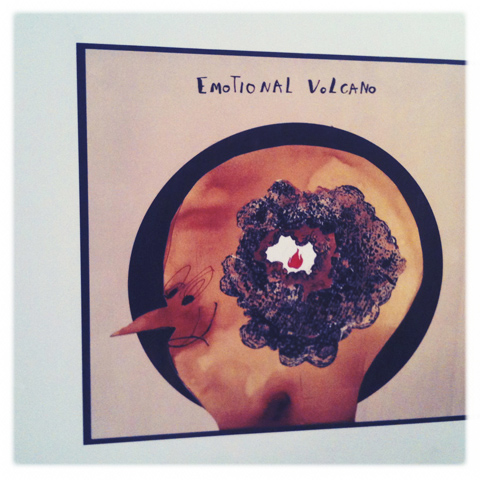
Soo Choi was one of the nominated student illustrators at the V&A Illustration Awards last week, information pills and her installation was a lot of fun, featuring all sorts of explorations around the idea of an Emotional Gym.

george mein 12 tone
george mein 12 tone
Kingston Illustration graduate exhibition 2011 review
George Mein plays with lines to create beautiful patterns. I’m not sure how he makes the marks but I particularly liked these monochrome pieces which look like drawings on a blackboard.

young ju lee warm tea
Kingston Illustration graduate exhibition 2011 young ju lee
Young Ju Lee focussed her illustrations around the art of drinking tea. Her delicate work was very cute.

Marin Matsuo Bak the Dream Eater
Kingston Illustration graduate exhibition 2011 Marin Matsuo
Marin Matsuo had a pile of screenprints featuring Bak the Dream Eater, the star of her children’s book. And what a cutie he is!

Frances Ives FEAR
Kingston Illustration graduate exhibition 2011 Frances IvesKingston Illustration graduate exhibition 2011 Frances IvesKingston Illustration graduate exhibition 2011 Frances Ives
Frances Ives does beautiful things with watercolour washes. Her degree show pieces were focused on a dissection of fear, tracing the movements of emotion like lines on a map.

Kelly Tester Cat BoxKingston Illustration graduate exhibition 2011 Kelly tester
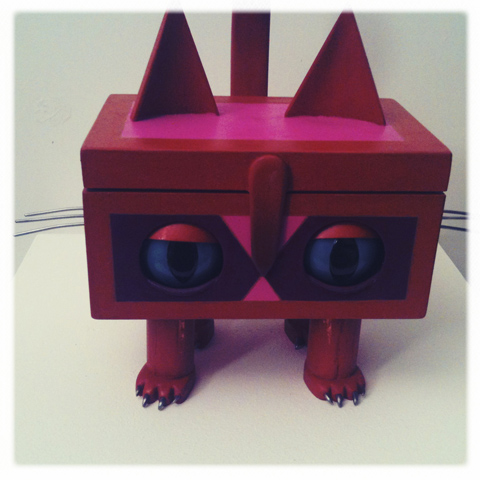
Kelly Tester showed some intriguing monster models known as Cat Boxes. These deliver dreams to humans.

Kingston Illustration graduate exhibition 2011 ka yiu laiKingston Illustration graduate exhibition 2011 ka yiu lai
Ka Yiu Lai used sewn and embroidered techniques to create a bunch of cute bananas and strawberries with legs.

Kingston Illustration graduate exhibition 2011 Emi HazlettKingston Illustration graduate exhibition 2011 Emi Hazlett
Emi Hazlett had produced a traditionally beautiful piece of papercut artwork.

Claire Benoit omer owlKingston Illustration graduate exhibition 2011 Claire Benoit Omer Owl
Claire Benoit chose the ever popular theme of owls for her degree show. Omer Owl is a particularly nice specimen don’t you think?

Lotte Beatrix tryptych
I don’t remember seeing Lotte Beatrix‘s degree show but I like her Triptych to Peter Grimes.

Kingston Illustration graduate exhibition 2011 Hannah Rowlands geminiKingston Illustration graduate exhibition 2011 Hannah Rowlands lion
Lastly Hannah Rowlands showed some gorgeous collaged 3D zodiacs. I couldn’t peel my eyes away from her lovely lion and so she accosted me, which was exactly what she should have done given that I spent so much time mooching around her stand… She recognised me from the talk that I gave at Kingston in 2009 when I remember urging them to use twitter, and it seems that finally many of them are online and starting to network. What excellent news.

Kingston Illustration graduate exhibition 2011 review
I liked this guy in the stairwell but I’m not sure who is responsible for him. Don’t forget to take a peek at the Kingston illustrators that I discovered upstairs too as well as the best animation!

Categories ,animation, ,Bak the Dream Eater, ,Cat Boxes, ,Claire Benoit, ,Emi Hazlett, ,Emotional Gym, ,Fear, ,Frances Ives, ,George Mein, ,Hannah Rowlands, ,Highs For Your Eyes, ,illustration, ,Ka Yiu Lai, ,Kelly Tester, ,Kingston University, ,Lotte Beatrix, ,Marin Matsuo, ,Omer Owl, ,owls, ,Papercut, ,Red Gallery, ,Soo Choi, ,tea, ,Triptych to Peter Grimes, ,V&A Illustration Awards, ,Young Ju Lee, ,Zodiac

Similar Posts:


Amelia’s Magazine | Kingston University: Illustration and Animation Ba Hons Graduate Show 2011 Review. Upstairs.

Ellie Tzoni lobster
Lobster by Ellie Tzoni.

The illustration on display at the Kingston graduate show, sales Highs For Your Eyes, sick was of an overwhelmingly high standard, cheapest so much so that I’m going to split this into two blog posts – Upstairs and Downstairs. Plus then of course there’s the animation to consider…

Kingston Illustration graduate exhibition 2011 review

Kingston Illustration and Animation students chose to show their degree work in a gallery space behind the Foundry (now closed, RIP) which shares the same idiosyncratic characteristics of the old bar space. The best of the installation set pieces were shown in the upstairs rooms and downstairs a cavernous space was filled with a plethora of artwork. At the back a rickety industrial belt vanished up into the bowels of the building.

Kingston Illustration graduate exhibition 2011 Ellie Tzoni whaleKingston Illustration graduate exhibition 2011 Ellie Tzoni whaleKingston Illustration graduate exhibition 2011 Ellie Tzoni whale
Ellie Tzoni‘s work was the first that I saw as I entered the show. She plays with strong iconographic screen printed shapes and words to create graphic designs. I really liked her deceptively simple pieces, which reduce seafood to the simplest of shapes and textures.

Jason Munro Olympics bikeKingston Illustration graduate exhibition 2011 Jason MunroKingston Illustration graduate exhibition 2011 Jason Munro dogKingston Illustration graduate exhibition 2011 Jason Munro cat
Jason Munro showed a host of curious globular animals in scrumptious colours, some of which formed letters and numbers. I absolutely adore his very unique style.

Kingston Illustration graduate exhibition 2011 Eve Lloyd KnightKingston Illustration graduate exhibition 2011 Eve Lloyd KnightKingston Illustration graduate exhibition 2011 Eve Lloyd Knight
Eve Lloyd Knight specialises in a kind of abstract surrealism that involves tiny figures scaling huge neon brick blocks. Curious animals and evocative words also feature in her work.

Tom Clohosy Cole Road Accidents
Tom Clohosy Cole Machinery accidents
Kingston Illustration graduate exhibition 2011 Tom Clohosy Cole Machinery accidents
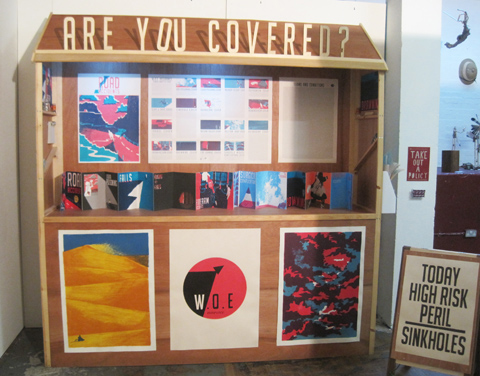
In the next room Tom Clohosy Cole had put together an extraordinary installation to showcase his insurance based final piece. Sounds boring, but was anything but that. Are You Covered? asked a suspiciously wonky sign on top of a carefully constructed plywood booth. He explored the imagery of accidents such as falling down sinkholes, gas poisoning, car crashes, falling and even the results of nuclear fallout. A billboard declared that You are at Risk from the Eight Perils. All of it was rendered in a simplified screenprinted colour palette of raspberry red and layers of berry blue. I was quick to take my very own insurance hand out, stacked at the side of his stand.

Abigail Read Spectrum of Emotion
Abigail Read cycle to the olympics
Kingston Illustration graduate exhibition 2011 Abigail Read
Next door Abigail Read‘s work featured diagrammatic layering of shapes and lettering and a carefully made 3D pop out book on a stand that took my breath away. Her delicate bike collages were framed so that they seemed to pop out in motion, with shadows behind.

Kingston Illustration graduate exhibition 2011 Henry Wood
At the back Henry Wood had grabbed some space on a flat surface to showcase his wonderful sculptures of… wood. Sadly the website given on his business card does not work, but you can try him here on this website.

Kingston Illustration graduate exhibition 2011 Hey Gyeong Jang owl
Hey Gyeong Jang has only the most minimal of blogs, which is a shame as I struggled to take photos of her artwork through thick panes of glass. Absolutely loved the anthropomorphic watercolour foxes, squirrels and owls that populate her landscapes. I apologise about those pesky reflections.

Kingston Illustration graduate exhibition 2011 Patricia VoskovaKingston Illustration graduate exhibition 2011 Patricia Voskova
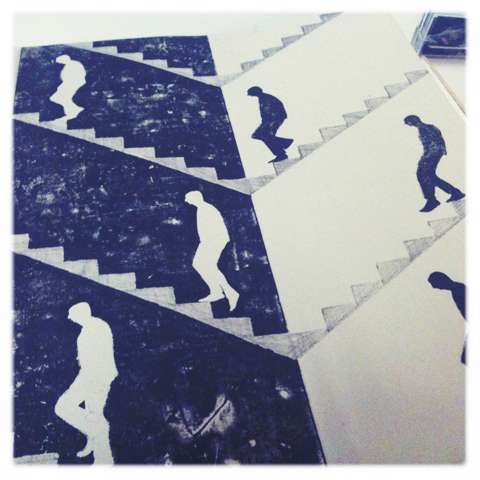
Patricia Voskova works mainly in black to create simple shapes and textures that tell a story. I loved the people tramping up and down an endless staircase in her showcase book.

Kingston Illustration graduate exhibition 2011 Jack Hughes
Jack Hughes Solar Flare Village
Jack Hughes created a Tender Buttons juke box and piano stand in response to a brief put together by Diesel for the D&AD student awards. He has a very special way of putting colour together. I also picked out this book cover from his website.

Sam Falconer CloudySam Falconer Humpty DumptyKingston Illustration graduate exhibition 2011 Sam Falconer
Sam Falconer‘s work dwells in the land of fairy tales and children’s stories. His enormously fun collages feature curious people and animated buildings. Through copious use of a mild grey tone they manage to be both bright and subtle at the same time.

Kingston Illustration graduate exhibition 2011 Sarah Maycock bearKingston Illustration graduate exhibition 2011 Sarah Maycock lionsSarah Maycock fox_print
Next door Sarah Maycock had pinned a giant friendly bear to the wall and beneath this she had piled up some limited edition screenprints on newspaper of an equally lovely fox. There were none left when I came back upstairs later but she kindly gave me a print made on much better quality paper. He’s a winner I’m sure you will agree!

Kingston Illustration graduate exhibition 2011 review Kingston Illustration graduate exhibition 2011 review Kingston Illustration graduate exhibition 2011 review
I also liked the watecolour buildings and books next door to Sarah’s work, which was the work of Nina Cosford.

Kingston Illustration graduate exhibition 2011 emily rudd wallKingston Illustration graduate exhibition 2011 emily rudd wall
Emily Rudd had appropriated the staircase with a series of bold monochrome screenprints on newspaper inspired by a book written by Albert Camus. I can’t get her website to work but you can follow her on twitter.

Kingston Illustration graduate exhibition 2011 red gallery

I hope that I’ve got everything right in this round up – it was incredibly hard to match business cards to my photos when I got home. Note to future graduates: it’s so much better to have a clear name on a wall next to your work. Now I’ve just got to tell you about the stuff downstairs…and the animation

Categories ,2011, ,Abigail Read, ,Albert Camus, ,animals, ,animation, ,Are You Covered?, ,D&AD, ,Ellie Tzoni, ,Emily Rudd, ,Eve Lloyd Knight, ,Foundry, ,Graduate Show, ,Henry Wood, ,Hey Gyeong Jang, ,Highs For Your Eyes, ,illustration, ,Jack Hughes, ,Jason Munro, ,Kingston University, ,Nina Cosford, ,Patricia Voskova, ,Red Gallery, ,Sam Falconer, ,Sarah Maycock, ,screenprinting, ,Sculptures, ,shoreditch, ,Tender Buttons, ,Tom Clohosy Cole, ,watercolour

Similar Posts:


Amelia’s Magazine | Kingston University: RARE Illustration and Animation Ba Hons Graduate Show 2012 Review part three

peace one day
I didn’t manage to watch all of the Kingston University graduate animations at their RARE showcase and sadly none of them are available to view in full online, but here’s the best of what I saw, alongside some short trailer examples of their work.

Kingston Rare illustration 2012 -peace one day

My favourite animation had to be Peace One Day, an outstanding piece of work by Phoebe Halstead and Angie Phillips. In this energetic and hugely engaging battle of wills the continents collide and men do battle down the ages. All put together with a brilliant soundtrack. No wonder if was Best of Year winner with D&AD.

Kingston Rare illustration 2012 -angie phillips
angie phillips
Angie Phillips was also responsible for a stunning animation designed to promote a book about cyber crime. I love the energy of her characters.

Kingston Rare illustration 2012 -Stephen Middleton

I loved this poster to accompany a hand drawn animation called A Tall Tale by Stephen Middleton, depicting a circus freak who tries to regain his title.


Gemma Green-Hope created mesmerising Negative Patterns which she displayed to great effect on a wallpapered wall.

Zuzanna Weiss
Zuzanna Weiss
Zuzanna Weiss

Zuzanna Weiss put together a frighteningly brilliant story of primal instincts which had me glued to the big screen.

Rosanna Wan
Rosanna Wan

And finally Rosanna Wan‘s Skip Town was a dream like sequence about the desire to leave small time America, set to the American folk classic Goodbye Old Paint.

I’m not sure about the reasoning that has kept the completed works offline because it seems a shame not to share them more widely. Nonetheless I suggest that all animation lovers keep an eye on these graduates as their work was really quite mesmerising. Don’t forget to also catch up with my Kingston graduate illustration reviews too here and here.

Categories ,2012, ,A Tall Tale, ,Angie Phillips, ,animation, ,Best of Year, ,D&AD, ,film, ,Gemma Green-Hope, ,Goodbye Old Paint, ,Kingston University, ,Negative Patterns, ,Peace One Day, ,Phoebe Halstead, ,Rare, ,review, ,Rosanna Wan, ,Skip Town, ,Stephen Middleton, ,Zuzanna Weiss

Similar Posts:


Amelia’s Magazine | London International Mime Festival Review: Plucked… a true fairy tale by Invisible Thread

Invisible Thread by Janneke de Jong
Invisible Thread by Janneke de Jong.

The London International Mime Festival has quickly become one of my January highlights – c’mon, what else is there to get excited about during this miserable (taxing) month? – and my first performance of the season was a puppetry show at the London Roundhouse. The puppetry shows are always appealing because they invariably showcase some stunning leftfield creativity of the type that would never find its way onto a bigger theatre stage. And the Mime Festival picks out the cream of the crop so you are almost certainly assured of an interesting performance.

Invisible Thread review
Plucked… a true fairy tale was created by new company Invisible Thread, directed by Liz Walker, who is a former director of the Faulty Optic theatre of animation. She brings her expertise in creating ‘cronky mechanical sets‘ and odd animated figures to her new project, which features a couple of bird people, a baby train, a little person with a hammer in its head and a wolf with a detachable penis that looks like a hallucinogenic mushroom.

Plucked invisible thread by katie chappell
Plucked, invisible thread by Katie Chappell.

The story (such as there is one) sprawls across two scenes, with near life size figures manipulated by Liz and cohorts. Despite the fact that the puppeteers are very much part of the stage you soon loose sight of them and concentrate on the oddball puppet characters instead, who take us on a meandering story that is explained by poetry and a beautiful lightbox paint brush animation.

Invisible Thread review
The allegorical story told by Plucked is by turns touching, amusing (puppet shagging is a first for me, as is puppet birth) and thought provoking. Suffice to say that our love affair with television has a lot to answer for! Keep an eye on Invisible Thread to follow their next projects. This show ends on Sunday 22nd January, but there are plenty of other shows to see at the Mime Festival.

Categories ,animation, ,Chalk Farm, ,Faulty Optic, ,Invisible Thread, ,Janneke de Jong, ,Katie Chappell, ,Liz Walker, ,London International Mime Festival, ,Plucked… a true fairy tale, ,Puppetry, ,review, ,Roundhouse

Similar Posts:


Amelia’s Magazine | Luciano Scherer: Portrait of a Young Man


22 year old Luciano Scherer is truly dedicated to his cause. Working 8-10 hours a day, more about 7 days week, he produces paintings, sculptures and animation until his back hurts too much to carry on. The Brazilian self-taught artist works alone as well as with a collective called ‘Upgrade do Macaco’, and has collaborated with Bruno 9li and Emerson Pingarilho. I found him to be much older than his years, with some very insightful and philosophical things to say about everything from art to life and the internet.

scherer1.jpg

When did you realise you had creative talent?

When I was 8 years old my school had a drawing challenge for a children’s book, the teachers read the book to us and we should drew parts of it. My drawing was chosen, it was not the best, but it was the craziest, and the teachers said to me that I was very creative. I started to draw again when I was 15, and only seriously when I was 18.

Which artists or illustrators do you most admire?

From the past: Bosch, Brueghel, Jan van Eyck, Crivelli, Albrecht Altdorfer, gothic art in general. I also like alchemical drawings, illuminated manuscripts, and popular art from my country. But my real influences are my artist friends, they helped me to transform my spirit, not just my art, modifying my inside shell, something that still happens everyday. They are: Carla Barth, Carlos Dias, Bruno 9li, Emerson Pingarilho, Talita Hoffmann, Upgrade do Macaco collective. My current master is Jaca, he is genius.

scherer2.jpg

Who or what is your nemesis?

My nemesis is somebody with lot of dedication and creativity to create evil things, like guns, bombs, wars, murders, lies.

If you could time travel back or forward to any era, where would you go?

I would go to the late-gothic era, in the end of the 15th century and early 16th century, just to understand or comprehend a little better how artists can do those masterpieces. I want to know about the places, the woods, the people’s clothes, the churches, the religions and the spirituality of this time. It is my all time golden age of painting. They all invested years of dedication to each piece, the result of it is bigger than our current comprehension.

scherer3.jpg

If we visited you in your home town, where would you take us?

My hometown is a very small city in the extreme south of Brazil, almost Uruguay. There’s no galleries, no museums, no cinema, no nothing! But there are very beautiful natural places, like mystery fog woods, beautiful beaches with nobody, lakes, fields, lots of different animals; I will take you to all these places.

scherer10.jpg

To what extent is your work influenced by your religion or spirituality?

I’m a son of a catholic father who takes me to the church every Sunday, and a mystic mother who is deeply connected with questions of spirituality. All my life I’ve been in catholic schools, and the people that I know there appear to be dedicated to God with tons of saints in sculptures, bracelets, necklaces, flyers, but the rest of their lives they spend being so petty, earthly, extremely connected with just the image of faith, and the concepts of guilty, suffering and impotencies. This contradiction makes me feel revolted, and at the same time I too have been into spiritualism, a Christian based doctrine, but much more metaphysical. This time the metaphysical seems to me so curious, respectable and scary, very scary. So when I started to paint, the images of Catholicism caused a strange fusion of respect, fear, nostalgia, and anger. I felt I needed to work over them, to learn about them and get more intimate, question the images and dogmas and lose the fear. It was a period of destruction like a renaissance. For a year now I’ve found myself distant from the doctrines, but between all of them, mainly the oriental ones like Buddhism and Hinduism, I’m feeling more spiritualized than religious. But this is just the start; I have much more to learn and I’m trying to not answer all the questions but instead learning to live together with them. All of this reflects in my artwork.

scherer5.jpg

If you weren’t an artist, what would you be doing?

An artist’s assistant, or a curator, or a collector; art aside, I’d be a garden sculptor.

Where would you like to be in 10 years time?

Living in a self-sustainable vegetarian community, with all my friends and family, in a place not too hot and not too cold, with as many animals as possible, all of them free.

What advice would you give up and coming artists?

Over and over I’ve heard people say “art doesn’t make any money” or “what do you want to be an artist for, it’s so useless”. I’ve stopped listening to the cynics now though.

scherer6.jpg

What was the last book you read?

I read the David Lynch book about transcendental meditation “Into Deep Water” (This is the name in Brazil), and the Krishnamurthy’s “Freedom from the Known”- it’s like a bible to me, I read it over and over. I’ve been reading H. P. Blavatsky “Voice of the Silence” and “Isis Unveiled” too. Now I’m reading Nietzsche’s “Also Sprach Zarathustra”, it’s awesome.

What piece of modern technology can you not live without?

The Internet. It’s my mail, my books, my telephone, my all time world museum 24-7.

scherer7.jpg

What is your guilty pleasure?

The excesses, in food, drink, work, sleep. Anytime I get too much of these things I feel so regretful, but I’m working on it.

Tell us something about Luciano Scherer that we didn’t know already.

I have a post-rap band, named Casiotron. And I’m working on my first individual exhibition, at Thomas Cohn Gallery next year.

scherer8.jpg

This is certainly a young man full of promise.

Categories ,Animation, ,Brazil, ,Interview, ,Luciano Scherer, ,Painting, ,Sculpture

Similar Posts:


Amelia’s Magazine | Dan Has Potential

Monday 16th.

Name The Pet and Micron63 supply full-frontal, this remedy hard-hitting electro vogueing tunage at Madame Jojos in Soho, cialis 40mg London.
Madame Jojo’s, Brewer Street, Soho, London.

list_namethepet.jpg
Name The Pet.

Tuesday 17th.

Betty Frances launches her spooky new bluesy folk EP at The Electroacoustic Club, with support from The Johnny Parry Trio. Get there by 8, though, to catch the amazing, 6’9”, delicate-fingered story-crooner The Black Maria Memorial Fund – this chap is a mild-mannered superhero of the first order.
The Slaughtered Lamb 34-35 Great Sutton St, Barbican EC1V 0DX

list_blackmaria.jpg
The Black Maria Memorial Fund.

Televised Crimewave are playing an Instore at Pure Groove.
6-7 West Smithfield, London EC1A 9JX

Wednesday 18th.

The Long Lost play at Prick Your Finger on Wednesday 18th March at 7.30pm. A band on Ninja Tune that sound like Astrid Gilberto dropped into a bubblebath with Bonnie ‘Prince’ Billy, Belle, and Sebastian. http://www.ninjatune.net/thelonglost – London, There is a password for the resourceful with pricked fingers.
Prick Your Finger, 250 Globe Rd, Bethnal Green.

list_longlost.jpg
The Long Lost.

Thursday 19th.

Gold Teeth and Crystal Fighters, two bands from the Amelia’s Intray are sure to pack a lively night with afrobeat rubbing up against dark pervertronic shocks.
The Paradise, 19 Kilburn Lane, Kensal Green W10 4AE

Friday 20th.

Sparks, the band that cannot die, will be fondling their keyboards for their hardcore devotee fanbase. Infiltrate, if you dare. Is Kentish Town big enough for the both of you?
HMV Forum, 9 – 17 Highgate RD, Kentish Town

Meanwhile, Piano Magic perform their sugary wisdom. For fans of classically trained Warp records.
Barden’s Boudoir, 36 Stoke Newington Rd, N16 7XJ

There’s also a warehouse party at the Busey Building.
133 Rye Lane, SE15

list_pianomag.jpg
Piano Magic.

Saturday 21st.

Upload Alldayer Festival. Trek out to Grays, near Thurrock for a loutish slobfest hosted by Front magazine. Highpoint will probably be Kunt And The Gang with his Bontempi synthpop ditties about unspeakably rude things. Did you spill my pint?
In a field.

A bit more relaxing and central, on the other hand, you could see Perunika performing their all-girl acapella Bulgarian Folk music.
The Cross Kings, 126 York Way, King’s Cross N1 0AX.

list_perunika.jpg
Perunika

Sunday 22nd.

Nadja, Cappilary Action and DJs in your dream-local.
Barden’s Boudoir, 36 Stoke Newington Rd, N16 7XJ.
Climate-Camp-City-April-2009-1B-046.jpg

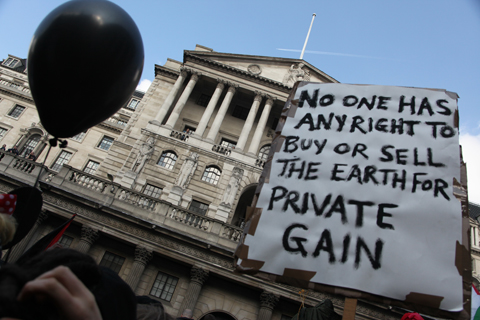
Maybe I have become a bit blase after so much rushing, ask but for some reason the brilliantly termed “swoop” didn’t phase me. To the point that I decided that I had time to visit the G20 Meltdown goings on with a mere half hour to spare before the swoop at 12.30 on the 1st of April outside the European Climate Exchange. Attempting to locate the Climate Action march, viagra approved led by a green horse, approved I headed down Threadneedle Street towards the Bank of England. A friendly female officer ushered me onwards as I sauntered past police lines and I decided that there was no chance of a kettle here, at least not just yet. Ahead of me was the most amazingly constructed dead canary, held aloft to symbolize the death of Canary Wharf.

G20-Meltdown-April-2009-052.jpg

Increasingly aware of the clock ticking I darted further into the morass of people spilling into the junction from all sides, snapping as I went.

G20-Meltdown-April-2009-082.jpg

G20-Meltdown-April-2009-074.jpg

G20-Meltdown-April-2009-098.jpg

G20-Meltdown-April-2009-144.jpg

G20-Meltdown-April-2009-159.jpg

G20-Meltdown-April-2009-163.jpg

G20-Meltdown-April-2009-154.jpg

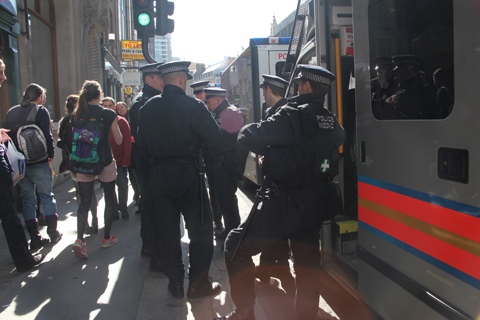
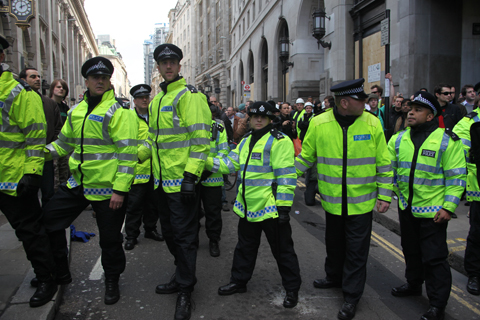
In ten minutes I was ready to leave, but by now the atmosphere had changed and the kettle was on. Trying my best not to panic I asked a second police officer if I could please please leave. To my utmost surprise – having ascertained that I was on my own —he let me past the cordon where other journalists had failed.
G20-Meltdown-April-2009-208.jpg

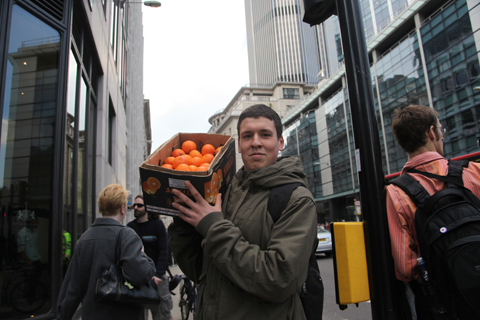
With minutes to spare I grabbed my bike and sped off to Bishopsgate, noting the preponderance of people with trays of food, backpacks, pop-up tents and even great wreaths of flowers en route, apparently unhassled by the police. The road seemed already closed to traffic, as if we were expected!
Climate-Camp-City-April-2009-1283.jpg

Climate-Camp-City-April-2009-1293.jpg

Climate-Camp-City-April-2009-1307.jpg

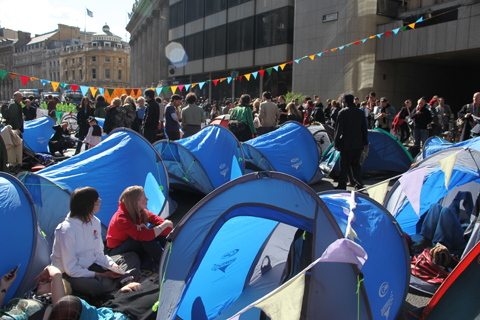
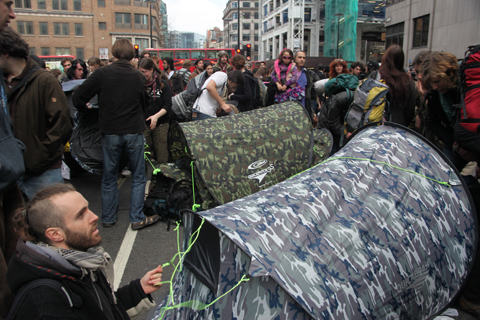
Suddenly there was a commotion at the north end of the street, and a flurry of people clustered together in the road. Someone yelled “not yet!” to which I retorted “too late!” I mean, once you’ve started pitching your tent on a major thoroughfare in central London you’re hardly going to stop politely and wait a minute more to meet GMT time are you?! The police tried half-heartedly to drag people off, as they hastily climbed inside their tents, with one joker popping out the top of his kids’ tent in full hunting gear.
Climate-Camp-City-April-2009-1317.jpg

Climate-Camp-City-April-2009-1323.jpg

Climate-Camp-City-April-2009-1401.jpg

Climate-Camp-City-April-2009-1340.jpg

By the time I had glanced up again the whole street was a bustle of people and tents as far as the eye could see. A Carbon Casino with ghetto blaster sound system was hoisted up onto a carefully scouted bus shelter.

Climate-Camp-City-April-2009-1434.jpg

Bunting was unfurled and strung up between lampposts, food was trundled in on trailers, a toilet gazebo hosting the compost loos arrived and a vegetable stall was set up beneath a banner emblazoned Farmers Markets Not Carbon Markets. Vivienne Westwood walked past. All so surreal, all so very good.

Climate-Camp-City-April-2009-1555.jpg

Climate-Camp-City-April-2009-1482.jpg

Climate-Camp-City-April-2009-1488.jpg

Gradually the infrastructure took shape, with a kitchen sited near the centre of the site and three separate workshop spaces successfully set up at intervals along the road.

Climate-Camp-City-April-2009-1931.jpg

Here people could learn everything from the latest climate science to effective self defence, and of course the more intricate ins and outs of Carbon Trading and why it is such a bad idea. Perhaps now would be a good time to mention more on why Climate Camp decided to focus on Carbon Trading.

Climate-Camp-City-April-2009-1B-105.jpg

Our previous targets have included Heathrow and Kingsnorth, where huge new projects will put in peril our ability to rapidly cut carbon as quickly as we need to if we are to keep Climate Change in check. The government and big business justify their plans for a third runway and a new coal fired power station with Carbon Trading, whereby carbon is bought and sold as if it were any other commodity. The trouble with this concept is that it encourages growth which is simply not possible if we are trying to cut carbon emissions, as any sane person realises.
Climate-Camp-City-April-2009-2075.jpg

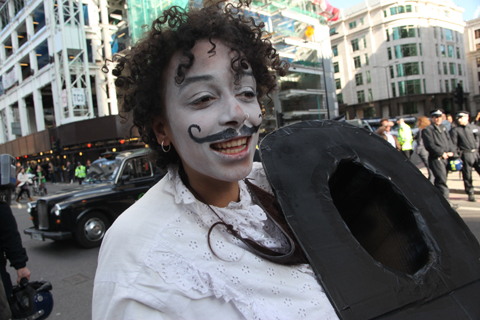
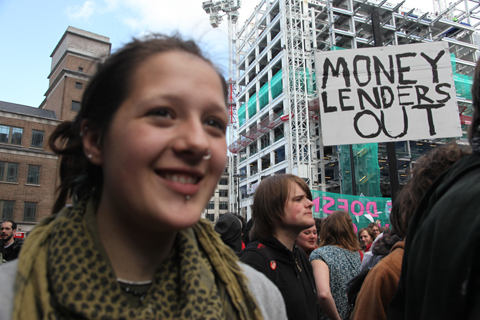
So by picking out the European Climate Exchange (which is a worldwide hub for this activity) Climate Camp hoped to highlight a problem that very few people talk about. We chose to swoop on the day before the G20 because this meeting of leaders from the top 20 richest countries was intended to sort out the world’s financial problems. They intend to do this with the same failed economic system that has dreamt up Carbon Trading as a solution to Climate Change. By setting up Climate Camp at the heart of the problem we sent a clear signal to our leaders that we cannot continue putting our faith in the current financial system when it so clearly doesn’t work. Needless to say, the outcome of the G20 has been as ill-considered as expected.
Climate-Camp-City-April-2009-2130.jpg

Over $1 trillion dollars will be magiked out of thin air to push into our failing economic systems. Hurrah, all is well!
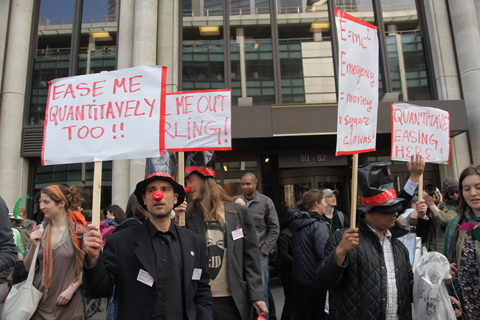
Climate-Camp-City-April-2009-1389.jpg

But back to the street that I so often cycle down, now so transformed. Guerilla gardeners wandered past with mini barrows of primula and spray cans in hand – a nod to the guerilla gardening movement which aims to reclaim our common land, planting useful plants on public spaces.

Climate-Camp-City-April-2009-1508.jpg

Ironically, April 1st was also the 360th anniversary – to the day – of the moment when the Diggers reclaimed Saint George’s Hill as common land, and on which they planted parsnips, carrots and beans. The area is now a gated community for the rich and a sad indictment of the way that land has been parcelled off for the elite across the world. We later sang, en masse, the famous Digger’s Song – A World Turned Upside Down, by Leon Rosselson.

The media centre was busy fielding journos, and a welcome group coalesced to meet and greet newcomers, which by now numbered many badly dressed down bankers who were easily spotted a mile off.

Climate-Camp-City-April-2009-1525.jpg

Climate-Camp-City-April-2009-1554.jpg

Climate-Camp-City-April-2009-1580.jpg

If you got closer they could generally be heard saying something moronic, but I think they found it hard to find fault with our actions and we may even have educated some of the more open-minded ones.

Climate-Camp-City-April-2009-1664.jpg

G20-Meltdown-April-2009-036.jpg

However, I think it’s worth noting the sad truth is that some people will never care about any issue unless it directly affects themselves or their family. Happy in their comfortable lives they remain content to consume far more than their fair share of resources, whilst others across the world starve because of their activities.

Climate-Camp-City-April-2009-1625.jpg

Faces were painted, samosas were sold, guitars were strummed. A giant game, an adaption of snakes and ladders – runways and windmills – was played, complete with oversize dice. The police seemed to be leaving us alone.

Climate-Camp-City-April-2009-1583.jpg

Climate-Camp-City-April-2009-1855.jpg

Climate-Camp-City-April-2009-1761.jpg

Climate-Camp-City-April-2009-1808.jpg

Climate-Camp-City-April-2009-1830.jpg

Climate-Camp-City-April-2009-1B-011.jpg

Climate-Camp-City-April-2009-1B-039.jpg

As the day wore on more and more people drifted in from the surrounding protests to see what was going on. On the northern perimeter the legal observers for Climate Camp got stuck in a strange sandwich between police lines and black block.

Climate-Camp-City-April-2009-1727.jpg

Climate-Camp-City-April-2009-1731.jpg

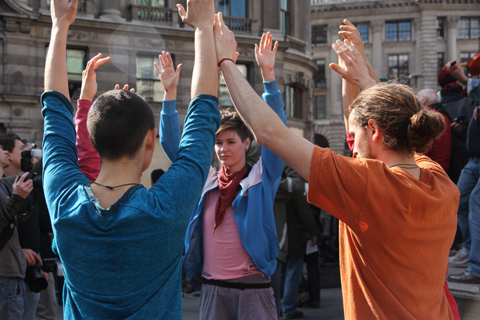
When I returned later the mood had altered dramatically – a group of 5-Rhythms dancers dressed in orange and gold had organised themselves into a self-named gold block. They were dancing frantically, periodically dragging others into their merriment, sweating in enlightened ecstasy.

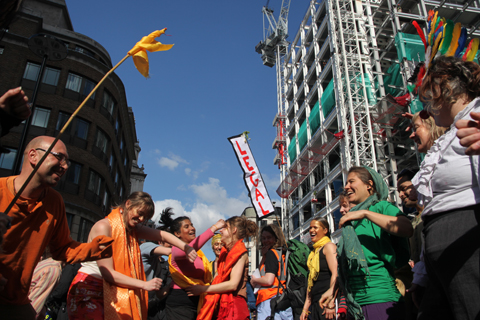
Climate-Camp-City-April-2009-1B-155.jpg

Climate-Camp-City-April-2009-1B-187.jpg

Gingerbread bankers were handed out to passersby, and everywhere I looked people were sharing their food. I bumped into a bunch of schoolgirls still in uniform from the morning’s classes. One of them recognized me – I looked after her as a small child on a camp. Legal observers sat in a row sketching the police in front of them.

Climate-Camp-City-April-2009-1774.jpg

Climate-Camp-City-April-2009-267.jpg

Climate-Camp-City-April-2009-1903.jpg

Climate-Camp-City-April-2009-314.jpg

Occasionally I would bump into another Climate Camper from our London neighbourhood, looking similarly frazzled to how I was starting to feel. And I bumped into Robots in Disguise, and half of Tatty Devine.

Climate-Camp-City-April-2009-1B-092.jpg

Climate-Camp-City-April-2009-1B-047.jpg

Climate-Camp-City-April-2009-1B-059.jpg

The atmosphere was still up, jovial, but I was worried that my camera battery was getting low and decided to head home to download photos and recharge batteries before the mood changed, as I suspected it would when dusk fell. On my return twilight was approaching rapidly between the tower blocks and the atmosphere had turned still more carnivalesque, with people really getting into the stop-start nature of human powered bike pedal sound systems. Limboing was all the rage and some cheeky girls got on top of a police van to boogie.

Climate-Camp-City-April-2009-2107.jpg

Climate-Camp-City-April-2009-2167.jpg

Climate-Camp-City-April-2009-2172.jpg

Climate-Camp-City-April-2009-2175.jpg

Climate-Camp-City-April-2009-221.jpg

Climate-Camp-City-April-2009-235.jpg

Climate-Camp-City-April-2009-249.jpg

Climate-Camp-City-April-2009-373.jpg

Many more people were joining us from a day at work, but the police were also increasing rapidly in number as they were called off duty elsewhere. Suddenly (at about 7.30pm) and without warning, they pushed forcefully into the site from the south end, beating people out of their way as they did so with riot shields and battons, even as surprised protesters raised their hands in the air and chanted the now familiar refrain “this is not a riot.”

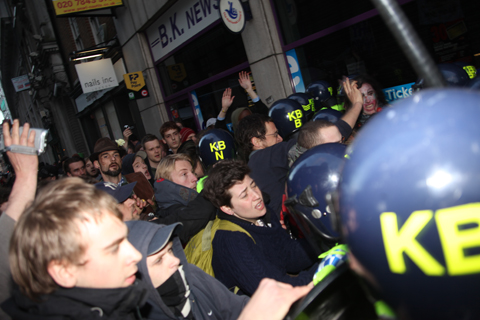
Climate-Camp-City-April-2009-450.jpg

Climate-Camp-City-April-2009-455.jpg

Climate-Camp-City-April-2009-511.jpg

Climate-Camp-City-April-2009-515.jpg

Up until now everything had seemed so relaxed, but I for one knew that it was only a matter of time before the police decided to use more force. They may have stood by mildly amused as we entertained and educated each other in the hot sunshine of the afternoon, but by nightfall it was clear that things were about to get significantly more messy. We were now in a kettle, with people unable to get in or out, a state that remained for the next 5 hours. Those who had just arrived were utterly bemused as to the reasons for this, but there wasn’t any reasoning to do. A big consensus meeting was held at the north end to decide what we should do, and hundreds of people took part in hand wiggling to confirm that they would be staying the night. (I had my doubts about this outcome – those there to party no doubt mistook the implications of this, ie. that it would mean standing our ground and keeping the police out, not more dancing and getting drunk.)

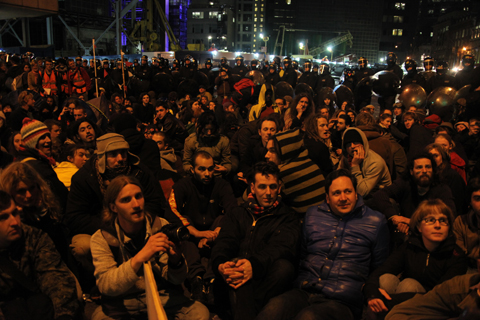
Climate-Camp-City-April-2009-724.jpg

Climate-Camp-City-April-2009-810.jpg

Climate-Camp-City-April-2009-876.jpg

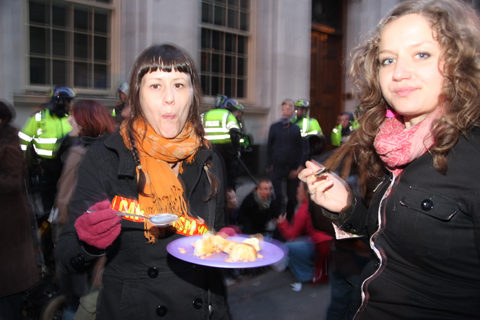
Now seemed a good time to hold the much hyped celidh, so I located our new Climate Camp celidh band, the Carbon Raiders, and we put into practice the music we’ve been practicing over the past few weeks. Soon enough there in front of me was the familiar sight of hundreds of smiling people dancing together.

Climate-Camp-City-April-2009-781.jpg

Climate-Camp-City-April-2009-787.jpg

We only managed to follow a few steps correctly, but it didn’t matter; freestyling joy was the order of the day. It was as if the lines of riot cops were a million miles away, rather than 2 metres over my shoulder. For awhile afterwards much carried on as before, with many enjoying the fluffy baked potatoes for tea that remained warm to the touch – despite having been cooked the day before – many in my very own oven.

Climate-Camp-City-April-2009-593.jpg

Climate-Camp-City-April-2009-584.jpg

Towards midnight many were getting anxious – they’d been planning to get home, to get to work the next day. We started to become aware that there were hundreds of people outside trying to get in and those sitting on the bus shelter could see people being violently beaten back from our perimeter.

Climate-Camp-City-April-2009-915.jpg

It wasn’t until yesterday that I found out the full extent of the surrounding kettles – one friend was caught in a mini kettle of 25 people for 2 hours in a narrow and claustrophobic alley, some beaten to the ground before finally being released. Marina had come down from the Meltdown and, finding herself unable to get in set up camp in the middle of Broadgate with her kettle and teacups. She showed me the bruises from the police the next day – huge great welts down her arm, but she was proud that her fine china remained unscathed throughout the ordeal. Why were these people kept away from us? Many of my friends were unable to get into the camp, despite having travelled long distances to protest. Still others were trying to retrieve belongings left inside the camp, which have since vanished – the police sent in cleaning crews at the end that apparently sent everything straight to landfill. Is this lawful? To keep someone from their belongings and then consign them to oblivion?

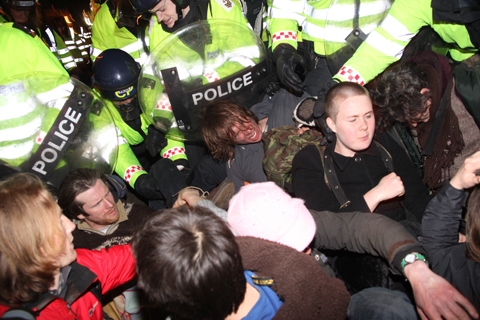
Once the police had beaten everyone away from our perimeters they drafted in huge amounts of riot cops (10 deep in places) to drive us off the road. There was clearly no way they were going to let us stay there for the full 24 hours and risk having us block the road for another day of commuter traffic. I believe their orders were something along the lines of needing to keep the streets clear in case a world leader wanted to get past. Most people, tired and intimidated, left as soon as they were able to, with just a dedicated few left to guard the lines. The police surged forward with no advance warning once more, picking up and tossing carelessly aside our beloved Pedals bike powered sound system. A great cry of dismay went up from the crowd – this was willful destruction of property for no discernible reason.

Climate-Camp-City-April-2009-975.jpg

Climate-Camp-City-April-2009-995.jpg

Climate-Camp-City-April-2009-960.jpg

Police, jaws set in aggressive grimaces, were flailing out at cowering protestors who sat on the floor with their hands in the air. Is this what democracy looks like? When the right to protest is treated with such disdain? Despite promises to the contrary, no attempt at communication was made. The same old story seems to be repeating itself time and time again.
Climate-Camp-City-April-2009-1083.jpg

Climate-Camp-City-April-2009-1112.jpg

As a camper climbed a traffic light to retrieve a banner I overheard a policeman sneering that he hoped he slipped and fell. Is this what we pay our taxes for? The police are not here to protect the interest of the ruling elite, they are here to facilitate lawful protest and protect the welfare of all citizens. Yet this attitude is sadly lacking. For every friendly humane copper there are 50 behind him or her who revel in the carnage that provoking a riot ensures.

My friend was snatched from the front line and so I retreated from my position inches from the police to retrieve his belongings and take them out to him. I was also concerned by this point about my camera being taken and the photos erased – there were already reports of this having happened to other photographers earlier in the day. It seemed increasingly obvious how things were going to end, and sure enough when I made it back around the block ten minutes later the street was clear, apart from a dreadful mess of abandoned tents and bedraggled bunting. It was very sad to see the state of the street, when Climate Camp is so committed to clearing up so that no trace remains. But what choice did we have? We just didn’t have the resources to clear up more than those individuals left behind could personally manage. We stuffed as much bunting as we could into a backpack and trundled home, feeling emotionally bruised and battered.

Climate-Camp-City-April-2009-1173.jpg

…But what a day! We swooped, we camped, and we raised the issue of Carbon Trading higher up the political agenda than it has ever been before. I feel certain that many people came away feeling much more empowered and assured that it is possible to create another world. Now we start work on ideas for the Climate Camp this summer, August 26th – September 2nd. Throughout 2009 we will be focusing on the failures of our current economic system, for the same principles of free markets cannot possibly save us from Climate Chaos. The only solution is to decrease consumption, increase efficiency, and find alternatives to fossil fuels, fast. Put the dates in your diary now. And follow us on the main Camp Twitter and Twitter for London-based campers.

Climate-Camp-City-April-2009-2084.jpg

Climate-Camp-City-April-2009-2083.jpg

Coming from a rural upbringing the staple jumble sale was as much engrained into the infrastructure of village life as the Women’s Institute’s flower arranging classes and the humble church cake sale. It sounds decidedly twee but I still recollect as if yesterday the village hall brimming with ornate table clothes, viagra approved wooden chairs, price the bric and brac stands, the tombola, the fairy cakes and the strangely gratifying musty scent of hand me downs.Alas since flying the nest from my pastoral abode in favour of the city hustle. I feared the modest jumble sale would be cast aside as a mere nostalgic whim I would recall fondly in childhood anecdotes .

jumble_01.jpg

However recently fortune led me to unearth a hidden organisation seeking to rekindle this quintessential past time. With the pretence of transforming the jumble sale into the new cultural phenomena, the group aptly entitled “jumble” have set up a monthly event at the Amersham Arms in the depths of New Cross, South London. Jumble has targeted their cliental with outstanding precision, supplying all any fashion-focused individual could ever ask for under one rooftop. Who could scorn at vintage clothing, crafts, records, bric and brac, alcohol and scrabble tournaments, oh and I nearly forgot the cakes! I hope I am not fuelling a stereotype but jumble appear to have catered for every kooky shopping habit of most 18-25 year olds.I am not ashamed to admit I fall right into that category myself!

jumble.jpg

The 300 capacity venue every month transforms into a sea of eager revellers on the prowl for bargains. Watching people transcend from idle window shoppers to style scavenging primitives is a rather refreshing change. With a bar to quench your thirst amidst your hunt jumble provide you all the sustenance you require for a healthy afternoon of hunting.

If the prospect of heading to the uncharted terrain of South London fills you with dread then never fear. If you’re Shoreditch born and bred you don’t have to egress the comfort zone. Emily Morris’s Extraordinary Dancing Bazaar is held at the Old Blue Last, however its on a sporadic basis so this is one you have to really keep your ears pricked up for. The former DJ at Ministry and Turnmills turns her hands to fashion in this hip haven on the second floor. Perfect for those fashion forerunners, but be warned this is not for the fainted hearted, expect some zany finds in this haunt.

There is also the Bi- annual jumble sale at the art gallery Studio 1-1, run by Uscha Pohl publisher and editor of the VERY style guide, a self professed “ store phobia” she hates the concept of hoarding. Artists use this as an outlet to shed everything from kooky furniture to vintage treasures and some odd bits and pieces thrown in their for good measure.

jumble03.jpg

Unlike my school years of the 90′s we have now become akin to second hand clothing, society now fully embraces the jumble sale aesthetic. When I was in secondary school you would not only be scorned at but faced intolerable mockery if someone unearthed you bought from Oxfam. I was profusely laughed at once for giving out Oxfam christmas cards. But in my college years it was deemed highly innovative to shop in charity shops. Second hand clothing now symbolizes a complete rejection of the ubiquity of todays global fashion sphere. Now there is hierachical obscurity, style no longer denotes class it serves in conveying personality and not financial privilege. Even the vintage market is utterly oversaturated and so consciously scouted and merchandised the joy of unearthing a diamond is eradicated. The real exhilarant comes from resorting to our primitive psychological make up, our “hunter, gather” instinct. So go on get hunting those jumble sales and reel in some prize catches!
Monday 16th March – March 23rd

Sustainability and Conservation Lecture
6.30pm, check
Room B04, information pills 43 Gordon Square, tadalafil
Birkbeck, London University, WC1

?The Ecology and Conservation Studies Society/Birkbeck is hosting free lectures on Monday evenings on the topic of living within our environmental limits.?For more information, call 020 7485 7903

Energy_needs_sml_copy-1.jpg

illustration provided by http://www.kerrylemon.co.uk/

Tuesday 17th March
7pm
Royal Geographical Society, 1 Kensington Gore, SW7
The Future Shape of Capitalism, Vince Cable MP, Andrew Neil. £10/£7, Info: 0207 591 310

RICH MIX
35 – 47 Bethnal Green Road, London, E1 6LA
Tibet Film Festival, 13 March-5 April Programme includes:
17 March, Unmistaken Child, documentary on the search for the reincarnation of a revered religious master who spent 26 years in meditation in a mountain hermitage.

Contact BOX OFFICE:
020 7613 7498

Homepage

Wed 18th March

resizedtimeforachange2.jpg
(illustration provided by Faye Katerai) http://faye-katirai.blogspot.com/.

Sustainable Haringey Monthly Co-ordination Meeting
?@ Big Green Bookshop, Brampton Park Rd, N8??6pm – Co-ordination Meeting: All those active in the SH network and working groups etc are invited to attend. New people also welcome. Further details below.?7.30pm – Film Show and discussion: The inspirational ‘Power of Community‘ film about how the people of Cuba survived the loss of access to oil imports after the collapse of the Soviet Union in the 1990s. They had to become predominantly self-sufficient in food and other products, and change their economy and lifestyles quickly – yet this was an opportunity for a remarkable re-birth of community spirit. Could it happen here? [Part of a week of films put on at the bookshop as a ‘fringe’ venue during the Wood Green Film Festival].
Check http://www.london21.org/page/36/show/2125 for more details.

* Can the World Meet The Energy Needs Of The Poorest?, Saleemul Huq, Tony Juniper, Dr Victoria Johnson, 7pm, £8, St James’s Church, Piccadilly, W1. Info: Global Development Forum/ Ethical Events

Thursday 19 March,

‘What Remains Of Us‘, a Tibetan-Canadian born in exile travels to Tibet with a video recorded message of hope from the Dalai Lama to the people of Tibet and records the reactions of Tibetans on hearing his message, 7.30pm
RICH MIX
35 – 47 Bethnal Green Road, London, E1 6LA

BOX OFFICE:
020 7613 7498

www.richmix.org.uk

Friday 20th March

Remnants of a War + Q&A

20 March 2009

6.30 pm

ICA,
The Mall, London SW1Y 5AH. Box Office: 020 7930 3647 / Switchboard: 020 7930 0493

In Lebanon, hundreds of thousands of unexploded cluster munitions are scattered across tobacco fields, orange groves, roads and backyards after the 2006 war between Israel and Hezbollah; this film looks at the men and women of southern Lebanon who work to clear their land of these deadly objects. Followed by Q&A with the film-maker and Marc Garlasco, senior military analyst, Human Rights Watch.

Check www.ica.org.uk

Sat 21 March

WDM Speaker tour:?Europe’s Trade deals – Who Benefit
2.30pm

Time_for_change_sml_copy-1.jpg

(Illustration provided byhttp://www.kerrylemon.co.uk/

Dragon Hall, 17 Stukeley Street?

London  WC2B 5LT

Trade can help poorer countries to overcome poverty, by generating jobs and supporting livelihoods. But the European Union is currently negotiating trade deals with over 100 countries in Africa, Asia and Latin America which will secure big profits for European companies at the expense of development.
These trade deals will particularly harm the poorest and most vulnerable people in developing countries, destroying jobs, local industries and the livelihoods of small-scale farmers.
Hear from Mary Lou Malig, trade campaigner from the Philippines, and learn what you can do to stop these disastrous trade deals. 
Check http://www.wdm.org.uk/news/events/speakertour16032009.htm
for further details

Sat 21-22nd March

Climate Camp London Trading Ed Development

CLIMATE CAMP 2009:?CARBON TRADING AND ACTION PLANNING WEEKEND,
?LONDON, 21/22 MARCH
ARCOLA THEATRE
27 ARCOLA STREET
DALSTON, HACKNEY
E8 2DJ

Sunday will now start at 12 noon. Saturday will still take place from 10am to 6pm.

Day 1: ?Workshops and discussions on the problems with carbon trading, with speakers from the Cornerhouse, FERN, Carbon Trade Watch and the World Development Movement. Subjects will include the basics of carbon trading, similarities with the financial crisis, carbon markets and forestry and how emissions trading in the EU paves the way for Kingsnorth and the 3rd Runway.
Day 2?Action planning and trainings. A big chunk of this will be devoted to the Climate Camp in the City on the 1st of April, but it will also deal with our plans for the Summer and Copenhagen, and will include options like speaker training, media training and action planning.
07534 598 733

WE CAN postcards to Ed Miliband and MPs: Monday 23rd March

WECANprotest.jpg
 

On Monday 23rd March, hundreds of children dressed as endangered animals will write postcards to Secretary of State Ed Miliband and to their MPs, in an effort to make the government call a halt to plans to build a third runway at Heathrow and a new coal-fired power station at Kingsnorth.
 
According to NASA scientist James Hansen, who is now advising President Obama, up to 400 species of animals are threatened with extinction by the emissions from Kingsnorth.
 
Filmmaker, mother of three and founding member of WE CAN, Rebecca Frayn said, ‘The children are horrified that so many animals could be wiped out. Ed Miliband has said that carbon capture and storage will be introduced to clean up the emissions, but nobody knows when, or if the technology is even practical.’
 
The postcards will be coloured in and presented after a gathering in Old Palace Yard at 5pm on Monday 23rd March. Several MPs including Andy Slaughter and John McDonnell have agreed to meet children in the lobby of the House of Commons

Nikki Pinder is a freelance multi media artist based in Cheshire, capsule her style is boldly experimental and modern. She was previously featured in Amelia’s Magazine and has been invited back for a more indepth interview.

What inspires you to be creative?

Music is a huge inspiration for me. I listen to it almost all day as it helps me to focus and also allows me to escape into different worlds when I listen to certain sounds and lyrics. Films are also a huge inspiration for me and I admire the work created by directors such as David Lynch, Tim Burton and Alfred Hitchcock. A few other inspirations are antiques shops and curiosities, photography, travelling around, being spontaneous, grandfather clocks, pocket watches and time, top hats and bowlers, true love, fresh air and open spaces, riding my bike, honesty, beautiful places in the countryside, poetry, confident people, museums, beautiful women, amazing architecture which makes me stop and stare, galleries, inventions, dreams, aliens, robots, birds, and trees.

niki1.jpg


How did you get into Art and what attracted you to the medium you use?

I’ve always drawn and made things with my hands ever since I can remember as I just love to make and invent stuff. Also I lived with my gran for a while when I was a kid and she loved art too so she was a big influence on me as she taught me how to hold a pen properly and bought me my first watercolour set (which I still use)!

I use many different mediums as I love to experiment, but I fell in love with dipping pen and ink several years ago as it’s so freeing and allows you to create beautiful fluid marks with no limitations. I also love to create and utilise textures as they allow me to build up layers and depth in the surfaces of canvases and even within my digital artwork.

Who do you aspire to be like and who inspires you at present?

I don’t really aspire to be like anybody as I’m happy being myself, but I aspire to be the best artist and thinker that I can be in my life. The people who inspire me most are those who push the boundaries, those who are brave in what they say creatively and do, and those who actually contribute positively to the world in some way. The following people are a huge inspiration for me: Amanda Palmer, Tim Burton, Robert Smith, Billy Corgan, Josh Homme, Trent Reznor, Thom York, Vermillion Lies, and my friend Catherine AD as she’s one of the cleverest and talented people I know.

niki2.jpg

Where do you see yourself in 5 years from now?

I would like to have several books published, I want to have travelled around the world at least once, I would like to have lived in Paris for at least 6 months, I want to have written a film script, established my own publishing company, figured out a way to help people through my work, and there are hundreds of other things I want to achieve in the next five years.

What advice would you give to someone trying to get into the Arts?
Be honest in what you say through what you create, work hard, experiment, don’t get put off by anything negative anyone says to you – allow it to motivate you more, don’t be afraid to draw as skills can be developed over time and also confidence through practice helps you to develop good drawing skills. Think outside the box, write your ideas down so take a note-book with you everywhere, and don’t ever look at someone and think…I could never be like them or do what they’ve achieved as you can do and be anything you want to be.

Do you have a muse?

I don’t really know what a muse is, but if it’s the thing that drives me to create then I’d say life, happiness and making the world a better place is my muse.

If you could invite any two artists (dead or alive) to diner, who would it be and why?

Ummmm…that’s such a hard question but I’d like to invite Robert Smith as I think he’s so talented and fascinating, and also Josh Homme as he’s really strong, powerful and I think I would feel really enlightened after talking to them both for an evening.

husseinpaintwall.jpg
London-based, discount twice awarded Fashion Designer of the Year Hussein Chalayan’s first major solo exhibition is halfway through its run at the Design Museum and it is soon approaching the eve of a sold out talk with the masterful rogue as he looks back over 15 years of groundbreaking fashion and collaborations…although he cautions us not to call it a retrospective, this because as he points out, ambulance he is neither dead nor approaching it. Never one to be bound by the clumsy dog collars of definitions, Chalayan and curator Donna Loveday presented a powerful sampling of amuse-bouches, bite-sized bursts of the fashion maverick’s best. With a marked lack of belabored and lengthy wall texts, it was an edited and approachable introduction to the work of this architect-philosopher-scientist-fashion designer. The only dialogue becomes the one I’m having with the environment, the cleverly orchestrated mannequins and the clothes themselves as I revel in the fact that I can finally get up close to these pieces and get some answers. How does it work? What’s it made of? It makes me feel like I’m sneaking around backstage at a magician’s show!
hussein3-721049.jpg
The exhibition snaked up the stairs starting with paper dresses which fold up into postable air mail envelopes. Further along, hanging flat against the wall is a stunning floor length dress covered in oxidized iron filings which, just as he famously did with his diploma from St. Martins, the designer had buried and exhumed months later. This is where we both enter and exit the exhibit. Glimpsing into the future I see Chalayan’s latest creations, windblown triplets wearing what looks like taffy dresses being blown right off them. It’s his latest collection and one of my favorites yet. Images of car crashes are hand painted onto foam with shards of safety glass protruding here and there. It’s a shrewd observation of the precarious speed at which our lives are accelerating at. chalayancrashsingle.jpg
Rather than being mere clothes hangers, the mannequins were cleverly posed, some of them wiping the inside of their vitrine with cloths while others white washed the gallery walls with long rollers. Others had little travel kit scissors and were trimming away at the tulle dresses they were wearing.
The show triggered questions about displacement, genetics, technology and cultural identity. I could hardly wait to get to Shoreditch Town Hall where Chalayan would be joining playwrights, curators , journalists and architects in a panel discussion about their experiences living and creating in London. The panel discussed the unique composition of London’s East End and how living its grit, aggression and cultural diversity was the unique pressure cooker from which to create. For many the husks of their developmental years are something to be shed but this group believes it is the struggle itself that is at the core of the creative process. Nobody wants to read about the kid with the silver spoon, they want to cheer the underdog. It is also true that the successes we all strive for become our gilded cage. If its tension and struggle you desire London is happy to oblige. The talk had barely ended when a plague of fashion students inelegantly rushed the stage to elbow out the other speakers and shove cameras in Chalayan’s face as he tried to carry on a conversation I believe I could hear him rattling the clunky bars of his own uncomfortable celebrity.
When Fashion Designer Ingrid Hass graduated in 2008 from Central St Martins, stomach she was shrouded with accolades, website like this dubbed the “one to watch” by both Vogue and Marie Claire, ambulance a compliment that should not be shrugged off as mere flattery, it means serious business in the fashion sphere. However Ingrid’s success was perceptible, she won a hand full of internships on the run up to her degree collection. The first being with Luxury Knitwear company Ballantyne, she then teamed that with a grant from Pan Uk, a sponsorship from Bora and to top it all off she received backing from none other then the backbone of British print Liberty itself! So with the backing of some of the most fundamental companies within the fashion sphere Hass had a solid financial platform to create her sumptuous collection.

ingrid.jpg

Deriving from the leafy terrains of Wiltshire, Hass has defiant rural roots, which play a significant part in her working ethos. Hass’s collection is a pastiche of rural England, evoking all the whimsy and romanticism of our British heritage. Inspired by our rich textile traditions in tapestry and embroidery, Ingrid creates exclusive pieces utilising the technique hand intarsia, a method used for centuries by artisans. Hass strives to revive this quintessential past time which regrettably is on the decline due to mass over seas production.

ingrid_04.jpg

Inspired by the wistful and quixotic works of photographer Tim Walker. Hass evokes a candid naivety to her pieces, luring you into a state of reverie. Everything from the subdued pastel palette, the delicate floral head pieces, the dungarees to the ethereal cloud prints all exude imaginative thought.

ingrid_hass.jpg

I caught up with Ingrid to see what she had been getting up to since graduating last year.

So, tell me a little bit about yourself Ingrid? ?

I am 25 years old , originally from the English countryside where I was brought up. I then moved to London where I completed my foundation course at London College of Fashion, and then progressed to Central St Martins where I studied Fashion Design with Knitwear. I graduated in Summer 2008 and am currently living in Milan where I work for Ballantyne.

?What have you been doing since graduating at central st martins last year? ?

I have been working on a freelance basis for a high street company whereby I am going to have my own line which will go into the stores this Autumn, and most recently I was winner of the Ballantyne Design initiative. As such, I am now living in Milan and working at their head offices here.

ingrid_hass_01.jpg

?How have you found the progression from university to the daunting world of ?the fashion industry? ?

I was fortunate in that after a nice relaxing and much needed break after final year I went to New York to meet with someone who approached me with regard to my final collection. It was this that led to the formation of my freelance label and work began quickly once again. Following this, I later found out I was a finalist for the Ballantyne Design Initiative and was flown out to Milan for the interview. I then moved here in January and it has been two months now! But, yes it is undoubtedly daunting but I think you just need to be open minded, hard working and forward about approaching companies.

?Would you have any advice for budding designers? ?

I still feel a budding designer myself, and not sure if I really have the experience or right to offer advice yet!

ingridhass_08.jpg

?Your work evokes a rather nostalgic feel, did you have a rural up bringing? ?

Yes, I was brought up on a farm in the Wiltshire countryside, where my parents still live. It has undoubtedly inspired the aesthetic I like and the way in which I work.

?What leads your thought processes when your designing? ?

An amalgamation of lots of things…people I meet, my books, old fashioned knitting journals and magazines, places I visit, photographs I take. I think most importantly though I love to learn and use traditional techniques that in this day and age are no longer utilized any longer, like needlepoint, tapestry and embroidery. I love the challenge of adapting these in a modern and contemporary way.

ingrid_hass07.jpg

?Are you inspired by any other artists or designers?
?

Yes, of course. I love art and fashion and so it is a natural element of my work. My final collection looked particularly towards the romanticism of Tim Walker’s photographs and the colours of Henri Matisse’s paintings.


?How would you say your artistic style has progressed since your graduate ?collection?

Well, I think making the transition from producing my own work on a small scale to helping towards the creation of a larger scale collection has meant I have learnt the opposite side of the spectrum in the industry. As such this I suppose has meant my artistic style has not been compromised but now I can see how complimentary elements, textures and materials work together in a larger context.

So keep your eyes peeled, you might be seeing an original Ingrid Hass on your local high street in the foreseeable future!
It was immediately clear to us upon arrival that Antwerp is city that oozes class and modernism. Artistic intelligence is literally everywhere you look, viagra buy even Antwerp’s central station is a truly amazing architectural feat. Kings Cross seems like a poor imitation in comparison to the beautiful modernist belgian levels of trains on top of trains.

Suffciently in awe of the city not to mention delighted by its thousands of varieties of beer we decided some culture was in order and headed through streets of wonderful shops, viagra including those of the Antwerp six, buy and this amazing dvd rental shop to MoMu, the fashion museum to see the Martin Margiela exhibition.

martin%20margeila2.jpg

On walking in to the exhibition after getting our tickets at the caravan reception we are greeted by a strange white pop-up Styrofoam audience. It transpires that this is in fact a group portrait of the Martin Margiela team of Paris. Margiela’s own silhouette is however not included. No fashion designer works alone and in shunning any kind of personal publicity (he has never been publicly photographed and you certainly won’t see him take a bow after a catwalk show) Margiela is one of the only designers to make this fact clear, separating him from others who are anxious to take credit and ownership of work that has been created by many people. It is obvious that Margiela isn’t in fashion for glory or fame, rather to set about the wonderful business of creation.
martin%20margeila1.jpg

The exhibition goes to great lengths to recreate the artists working space and ideas. This white cotton covered furniture can be found both in Margiela’s Paris offices and In the exhibition where the chairs form a circle facing outwards in the middle of a room with walls full of films. We sat for over an hour in them completely absorbed in watching videos of catwalk shows, milk bottles, lamps, eggs and whiter than white object montages.

Margiela doesn’t do things by the book, par example le plate-invitation! And in his next collection he shattered the plates and made them into waistcoats.
martin%20margeila3.jpg

In a dark room bodices were lit up one by one, cleverly focusing your attention on one garment at a time, including this one adorned with square mirror tiles.
martin%20margeila6.jpg

Printed below the outfits are the length of time it took to make them, the emphasis on the working processes behind the clothes makes the exhibition that bit more interesting and different to others on designers that focus purely on final outcomes. Margiela is interested in the ‘life history’ of garments and this exhibition was superb in showing his interest in making the production processes public, thereby showing that the true value of the pieces can be found in the time and energy it took to make them.
martin%20margeila5.jpg
martin%20margeila4.jpg
This amazingly comfy duvet-coat had different bedspread patterns projected onto it.
martin%20margeila7.jpg

In short I heart Antwerp, I heart belgian beer, and I heart Martin Margiela.

Now if someone comes along and blows your head off, healing splattering your t-shirt with cerebral fluid with their debut album as soon as the follow up comes along, information pills you can’t help but fear that it’ll fall somewhat shy of the original mark. However, Bromst is just as powerful as the first album in fact more so. Its like recording the sound of a police car, with sirens wailing, crashing into the microphone.

dan_deacon_01.jpg

What with the closure of Wham City and other heartbreaks over the last year, its hardly surprising that Bromst has taken a more serious tone; Bromst has a wider range of emotion and direction than the previous album.It’s an embodiment of Deacon and Wham city ethos to bring people together, something that Deacon doesn’t take lightly.

dn.asp.jpeg

Whilst retaining the essence of Spiderman of the rings, offering a little more in the way of heart; Bromst is much warmer with more instrumentation than computerisation which seeps through the pores and infuses itself into your veins following the blood cells on a path to your heart. It’s a much more organic album and not as plastic as Deacon says.

dan_deacon.jpg

Give it a chance and Bromst will become a part of you, a beautiful fusion of man and music. Be afraid, be very afraid!
Here at Amelia’s Magazine, doctor we were first introduced to French trainer label Veja during Fashion Week last year. They aren’t your average trainer label, though – they are pioneers of ecological trainers, with no compromise on style. From materials to distribution, each pair has a minimal impact on the environment.

veja.jpg

Their organic cotton is grown by agro-ecological producers in Brazil, avoiding chemical manures and pesticides, and producers are paid fairly. Their wild rubber, sourced in the Amazon, increases the rain-forest’s economic value, therefore reducing deforestation. Each pair is assembled by Brazilian workers who are respected and provided with good working conditions, and the footwear is distributed by a social enterprise in France which seeks to get unemployed and underprivileged people into work.

The photographer Florent Demarchez was granted the opportunity to follow the two founders of Veja in Brazil as they source their fairtrade and environmentally friendly materials and met some of the Brazilian workforce. The result is a stunning and thought provoking temporary exhibition at hip East End haunt Favella Chic, until 30th March.

resized4
Photographs by Matt Bramford

The bar’s decor and atmosphere are of Latin influence, and the warming tones of the frameless prints compliment this perfectly. It’s a bit like a game of hide and seek – each photograph is placed in a different location, some obscured by the haphazard objet which forms the decor (the portrait of the old man, for example, part concealed by a tree branch).

resized3

The photographs themselves are stunning – some portraiture, some still life, some room interiors with nothing but a sole person’s effects. Glancing around the bar, you’d be forgiven for mistaking the photographs as simple imagery depicting Brazilian life commissioned for the bar itself. After half a dozen of the bar’s free Caipirinhas, you’d be forgiven for mistaking where you even were. Look a little deeper though, and the images carry a deeper, solid message. The portrait of Dignidade, lit effortlessly from behind is a worker who is paid fairly and is given the opportunity to take pride in himself. The same man in a different shot offers you, with his hand, the opportunity to see the produce. The shot of those bags there contain agro-ecological crop rather than GMOs. The shot of those two children are the children of families supported by fairtrade employers.

resized2

Novos Mundo(s) (New Worlds) aims to reveal ‘arising new initiatives, fighting for a different world’ through thought-provoking imagery. We’re given a glimpse of the people at the epicentre of the fight for fairtrade worldwide, the people who, thanks to these initiatives, are building lives, or worlds, that they can enjoy. The exhibition runs until the end of this month, so pop along, have a Caipirinha (or something else from Favella’s extensive cocktail list), admire the imagery, and have a think.

resized7

When you contemplate the word rebellion, visit web the mind conjures images of banks- esque graffiti, what is ed or abrasive and provocative painting. However one group adopt rather unorthodox methods to convey their ideas to the unsuspecting public. Disregard the spray can, this group have a more deadly tool at their disposal, the knitting needle.

knitting_new_02.jpg

So cast aside your preconceptions of knitting as a hobby confined to the slipper clad over 60s slowly declining into senility. Half casting an eye on the latest instalment of Eastenders and the other on knitting your garish christmas jumper. The Guerrilla movement have injected an edger side to our quintessential pastime, it’s no longer confined to the pastoral suburbs and rural towns.

new_knitting_02.jpg

Knitting hits urban London, taking a myriad of forms Guerrilla knitting is attacking the aethethetics of the city, be warned no object is safe. Recently the Southbank was hit in orchestrated attack, the rather dull obtrusive posts on the riverbank had never experienced such dashing ensembles. Giving the architecture of London an entirely new lease of life, the knitters tackle everything from bike locks to railings, also providing a snug extra layer of insulation to some of London’s infamous statues.

urban_knitting02.jpg

knitting_new_01.jpg

London has a deep underground network of Guerrilla Knitters .From Group Glitty Knitty Kitty,Knitta Please, Stitch and Bitch and the infamous Prick Your Finger to list but a few. All combining the same ethos, they even have their own bible to swear too “we, the knitted terrorists, are committed to knittivism through the systematic and systemic use of knitted accessories”

It’s all about usurping the line between gallery and habitat. No longer do you need to awkwardly shuffle around a clinical white gallery in silence. The Guerrilla Knitting movement is accessible art in the public domain!

lamppost.jpg

urban_knitting.jpg

Gone are the days of the passive knitter. It’s a politicised move; the age of consumerism is dwindling. Now its time to join the movement, in the words of the iconic Morrissey “the devil makes work for idle hands to do”.So go on make your grandma proud, dig your knitting needles out. Our knitting disciples of London are spreading the teachings of the knittivism bible, so if your in search of enlightenment these are your ladies. Head on down and get yarn bombing!
animalcollective3.jpg

Having waited years before finally getting the chance to see Animal Collective in the flesh, visit web I’ll tell you the anticipation was more than un(panda)bearable (sorry, couldn’t resist, probably should’ a tried harder). I couldn’t even see 2ft in front of me; the anticipation had formed clouds over my eyes. If I could explain meteorologically, the thought of the upcoming gig caused a violent storm and rain around my brain, which on the inside was burning up with excitement causing a condensation to form over the lens of my eyeball. It took some heavy breathing and sage like wisdom from a good friend to calm myself down to a rational state.

animalcollective1.jpg

First on the bill is new Paw Track signing Dent May. Paw track incidentally being the Animal Collective’s own label. Vocals are so diverse, ranging from tenor to bass in notes, and ever mellifluous, with his beautiful sun-kissed harmonies and excruciatingly affable ukulele melodies we are, as an audience, helpless but to be charmed into submission. Drifting away on a coconut raft, miles from dry land. What a wonderful place to be.
Startled briefly back into reality we find ourselves swept into another world of equally fantastic shapes and colours. While my companion tried to get her first glimpse of Noah Lennox (aka Panda Bear), who remained in predominant darkness for the entire set (to my amusement) I stormed to the front to get right into the action. Emerging periodically for air, and light refreshment.
Before the finale we were all encouraged into a round of Happy Birthday to Brian (The Geologist) as a cake was paraded onto the stage.

animal.jpg

Once the whole affair was over I tried to imagine what this experience could be akin to and the best thing I could think of was a relentless and progressive train journey through an ‘experimental’ Tunnel of Love via Toy town, Toon-town and the enchanted forest, finally crashing through the teddy bears picnic and into the gingerbread house. This seems a little frenetic but it sums it up just the same.
My only advice? Stay calm, stay cool and stay collective.
Spring is finally here, unhealthy and we are feeling creative and productive at Amelia’s HQ. Like we want to plunge our hands into the soil and see what we can make. There are numerous ways in which to learn about, and lead a more sustainable lifestyle, and living in a built up urban landscape is no reason to stop us. I was determined to prove that you can live the good life amidst the sprawl of London, so when I saw that Hackney City Farm was offering a vegetable gardening course, with the promise that the course “covers everything you need to know organic gardening and urban food production” I knew I had to investigate. Not having much of a green thumb myself, but eager to learn, I was reassured to see that gardeners of all levels are welcome.

hackneycityfarm3.jpg

hackneycityfarm13.jpg

The farm itself is fascinating on every level. First of all, a city farm is an intriguing concept in itself, but Hackney City Farm is so much more than a premise for barnyard animals. It prides itself on being a registered charity and Environmental Body. It is socially enterprising and caters for the needs of local communities. There are many courses on offer, but I was taken by the volunteering classes on a Tuesday and Thursday afternoon, so I dropped by to get a taste of what they have to offer. There were around eight people in the group, most in their twenties and early thirties. All had different reasons as to why they were standing in a farm on a mid week afternoon, but there were a few similar themes; redundancies, re-evaluations of careers and lifestyle choices. Whatever uncertainty or change of direction had led them here, all seemed happy to spend a couple of hours potting, watering plants and pushing a wheel barrow past the farmyard animals.

hackneycityfarm8.jpg

hackneycityfarm9.jpg

We all agreed that there has never been a more pertinent time to learn how live a more sustainable lifestyle. While I was here, I asked about the other courses that Hackney City Farm facilitates, and was pleased to see that there is a course for practically every element of low impact living. Each course is a day long, and includes subjects like heating with wood,, sustainable energy for the home, learning how to make bio diesel and finding out more about bio-gas. There are also courses on slightly lighter subjects such as making your own skin care products,, herbal medicine, and my personal favourite, a course in keeping chickens. (Especially if they look as healthy as the ones running around my feet when I walked through the farm yard).

hackneycityfarm4.jpg

hackneycityfarm5.jpg

I asked my supervisor for the volunteering session, Roisin, about the people who take part in the various courses offered, and their reasons for coming, and she explained that there is now much more of a mix of ages who take part. Those who take part in the grow your own vegetables course are often keen to be more involved with the process of how food is grown, and reaches their plate, rather than just be a helpless bystander in the food chain. During the afternoon we all took part in planting seeds, sifting compost, and watering the seeds that had just been planted. The actual 10 week course guides you through the basics, like soil preparation, composting, mixing your own potting mix, natural pest and disease management, and of course, harvesting.

hackneycityfarm7.jpg

hackneycityfarm10.jpg

Standing in a vegetable patch in the middle of the city and chatting to my new gardening friends with a watering can in hand was a lovely and enjoyable experience. Learning how to grow your own veg may not seem like a top priority, but is actually a positive and enriching way to take your first few steps into living a more sustainable life.
Half way up Mare Street, viagra dosage in Hackney, website I walk through a rather non-descript entrance that leads me off the street and through to a series of bland corridors and wooden doors. Reassuringly I notice a personal touch to one door, a little sign, the letters DHP drawn by hand with distinctive brick lettering.

DHPstudio.jpg

DHP or Dan has Potential is the pseudonym of illustrator Daniel Brereton, who has invited me into his studio for a chat. Considering his drawings the studio is a lot tidier than I expected, just some felt tip pens and a desktop Mac perched on his desk and a few drawings on the walls. Curiously there is a ping-pong table in the middle of the room with some animal masks casually resting on it. When I enquire about there purpose Dan tells me that he wore them for a Vice Magazine photo shoot recently. “There were two journalists asking me questions and a photographer. They were very cool.” He adds, looking a bit scared.

Like a good Northern boy Dan offers me a cup of tea and while he brews up I get down to some questions. Firstly, why the name? “I think that I did a picture at college and it said Dave had potential or someone had potential and everyone laughed at it because it looked like some guy that had no hope. Sometimes at college I thought about students and how you’re not meant to do anything, but then you’ve got all these aspirations to be really amazing” He tells me before adding, “And it’s nice to have something that’s other than yourself. I think that’s more fun for people.”

New_Green_Dimension.jpg

DHP drawings are colourful and deliberately trippy, “I just let everything come in. I also have subject matter that I congregate around, I really like triangles and triangles with eyes.” Perfect then for the young 80′s inspired bands of the moment Late of the Pier and Metronomy, both who DHP has recently made music videos for. “I was doing films at college. I was ripping off other films like what Gondry would do with Be Kind Rewind. I called them homages. Some really nice man Steven Bass, who managed Best Fwends, said “do you want to do a video for these guys?” I met Metronomy and Late of the Pier from him as well.”

In the Late of the Pier video for Bathroom Gurgle (which you can see on DHP’s Myspace page) the band stand in a darkened room, with the walls covered in cracked mirrors. They play their instruments topless; their bodies painted with triangles like Neanderthal cave painters with nu-rave artistic sensibilities. “I come up with the ideas and art direction, which is how it looks. Sometimes with Late of the Pier, they are just mad and interesting and exciting and they have lots of ideas themselves. So it would just be a question of getting those ideas into a video.” Dan tells me.

James_the_skater_01.jpg

Doing commercial work while still retaining his integrity is something that seems very important to DHP. “I tend to see my video work as more commercial in a sense because it’s selling a band. And also I’m trying to do stuff with bigger bands, but still people with some integrity and some ideas that I like. Where as I sort of see the illustration side as hopefully quite personal. I do, do lots of illustrations for people, but still I like to do it for people with good ideas.”

Some people he does consider to have good ideas are Swedish company T-Post whom DHP recently designed a t-shirt for. They gave him a newspaper story instead of a brief, which then gets included in with the t-shirts they sell. “It was a really interesting story. They’ve found somewhere on Google Earth that hasn’t been discovered yet. No one had ever been there before and I thought that was really amazing.”

One of Dan’s favourite illustrators at the moment is Masimilliano Bomba who, surprisingly, he found through Flickr. “I’ve been on Flickr a lot recently and I really like it because there are loads of really good illustrators. There are people on there from all over the world.” A look onto Dan’s own Flickr and http://danhaspotential.blogspot.com/“target=”_blank”>blogspot accounts, which he updates regularly, further shows his love for the sites. He also tells me about Colin Henderson whom he shares a studio with. “We work together sometimes on something called Yo!Festt which is a side project of mine.”

dann.jpg

As we near the end of the cups of tea and our interview I ask Dan what his dream project would be. “To be ambitious I would say that I would like to do feature films. It would be a challenge, because it’s really difficult but it’s something that I would like to do. I’m with Warp Films and I did a pitch for one but the idea wasn’t strong enough.” He pauses for a minute, before finally adding. “I think I would like to be able to make stuff and then decorate it. I like the idea of not having to do it commercially so ideally I would be making my own work in the woods and then doing puppet shows for the kids or something out of the back of the van.”

So there we have it, Dan Has Potential. Illustrator, animator, Flickr enthusiast and maybe one-day filmmaker. Coming soon to a wood near you.

Spaceface_01.jpg

Categories ,Animation, ,Dan Has Potential, ,Illustration, ,Late of the Pier, ,Metronomy

Similar Posts:


Amelia’s Magazine | Andrew Wightman: Illustrator Spotlight

Royal Institution lecture hall
Royal Institution lecture hall by Abi Daker

So, pharmacy discount we all know there’s been a bit of a hoo-hah following the disclosure of some important emails that reveal that the data featured as key facts in the 2007 Intergovernmental Panel on Climate Change (IPCC) report on climate change may not be 100% correct. You do know about this, search right? It’s been front page of the Guardian for a while… and perhaps more importantly it’s given all those climate change deniers out there a huge amount of grist for their petty little mill. And that really is bad news.
I haven’t been following the ins and outs of this fandango in massive detail but when my parents invited me along to this hastily convened Royal Institution lecture I leapt at the chance to perch on their infamous red velvet tiered seating amongst the great and the good (read: a mix of moneyed old fogeys with too much time on their hands and geeky young science types who would rather engage in debate than go to the pub on a Friday night).

James Randerson
Portraits by Amelia Gregory

We were introduced to the panel by James Randerson, prostate environment editor at the Guardian and wearer of silly striped tie. You’ve gotta love that look. It was mere moments, I tell you, before the heckling started… James put the slightly ambiguous question “Has global warming increased the toll of natural disasters?” to the panelists, which immediately prompted yelps for clarification from indignant men all around me. “Over what period of time, and what kind of cost?” asked one. (Certain men seem to get very difficult the older they get, have you noticed?) James looked sufficiently rattled – “Can we at least agree that there is man made global warming?” he asked, pleaded. “NO!” came the emphatic answer from a man with wild hair and an even wilder look in his eye, sitting just to my right. Uh oh, I was in the close company of a denialist – this should be fun! “Gosh, I didn’t think this would be so hard!” chuckled James nervously.

Robert Muir-Wood

And then we were racing straight into the presentations, starting with leading climate scientist Robert Muir-Wood, who talked two to the dozen as he raced through slides. Since 2001 there has been huge hype over “disaster costs” with the media being “whipped into a frenzy”, and predictions of up to 500% more floods, mudslides, hailstorms, droughts, ice storms and wildfires being reported as possibilities of the near future. It’s worth noting that Muir-Wood has close links with the insurance industry, who would clearly benefit from increased premiums if the cost of disasters were expected to increase. In 2003 the French experienced “la canicule” – a summer of such intense heat (the hottest in 500 years) that thousands died. But then there was a “death deficit” in the following year. Was this because the vulnerable were looked after better or they’d all died already? Muir-Wood used this as an example of how hard it is to read and understand data without looking at the bigger picture. Another example he used is the major investments made in infrastructures over recent years; for instance Japan has thrown “huge amounts of concrete at flood defences” since 1959, when Typhoon Vera, the strongest Japanese storm in recorded history, hit its shores. Consequently the storm would have had a dramatically lower cost if it had happened today. These outlying factors make it very hard to accurately predict or assess statistics. He concluded that there is only a trend for elevated costs (of disasters) if you look at graphs since the 1970s.

Bob Ward

Bob Ward, who works for LSE, then took centre stage to defend the IPCC. “As always there is a caveat,” he explained; “is any one event an effect of climate change? It’s so hard to match the attribution, which makes it difficult to map trends.” Behind him a slide detailed how climate change might decrease the chance of frost at night, which prompted some loud chuckles from the denialists in the audience, who as ever, seem confused by the difference between climate and weather. Bob clarified that we must look at the numbers of people affected and we can clearly see that insurance losses have risen since the 1950s which means many more people have been displaced or injured by natural events. A funny little graph proved the point that floods, droughts, storms and earthquakes have become the biggies in terms of human cost. However, there is as yet, insufficient evidence of a firm link with climate change. Naturally, the biggest losses have happened where the greatest number of people and properties have been involved.

A version of the "funny little graph" A.K.A. Extreme Weather Events & Natural Disasters, by Abi Daker (disclaimer: this may not be accurate)
A version of the “funny little graph” A.K.A. Extreme Weather Events & Natural Disasters, by Abi Daker (disclaimer: this may not be accurate)

Roger Pielke

And then it was time for the spanner in the works to take to the stand. Roger Pielke is a specialist in analysing how science intersects with decision making from the University of Colorado. “Uncertainty. Get used to it,” he announced. His conclusions came first and seemed to echo those of Ward’s. “Societal factors alone are responsible for increased losses,” he postulated, but emphasised that he advocates decarbonising the economy anyway because 1.5 billion people don’t have access to fossil fuels and need to find alternative energy supplies. “This could also deal with the thorny, messy climate change problem.” He then talked us clearly through his immaculate presentation, showing us that according to Excel there is no upward trend for disaster losses between 1900-2001. Yup, his graph appeared to be flatlining alright. And then we came to it: Pielke’s unequivocal evidence that despite the views of experts the IPCC saw fit to publish misleading data in its 2007 report, even alluding to his own agreement to use a problematic graph, which had not been given. “If the data doesn’t support the claim, don’t publish it!” This evinced yet more excited snorts from the denialist next to me, and when I glanced over at Bob Ward he was shifting uncomfortably in his seat. Oooooh, the graphs had been drawn and it was time for blood – sorry I mean questions – from the audience.

A lump appeared, bumping along the velvet curtains behind the stage, beating a hasty but unsubtle retreat out of the auditorium and momentarily distracting Randerson. “Are we in disagreement over the vulnerability of planet, or the process of science?” asked someone. Because actually the reason everyone had come to this lecture was to find out how the process of the IPCC could have fallen apart so dramatically. Apart from the denialists of course, and one in particular. “I am from Weather Action,” said the loudly snorting man next to me. “We are long range forecasters, and our evidence shows that CO2 does not drive climate, which has all been made up by carbon traders and fraudulent people.” In fact, according to Piers Corbyn, all extreme events are caused by the sun. All of them folks. Nothing to do with us spunking vast quantities of greenhouse gases into the atmosphere. You know, I just don’t get how some humans can be so entirely arrogant, to think that our activities will never affect our fragile planet. I wonder how history will look back on people like Corbyn, who wanted to know if the IPCC could now be scrapped so we can “prepare for ‘real’ disasters?” Pielke categorically declined to engage in a debate “that can be held elsewhere” – i.e. whether climate change is happening (yawn). Muir-Wood reminded Piers that he prophezised chaotic wind storms four years ago. “We’re 85% right!” heckled Corbyn. Ward went further still. “There’s no end to my disagreement with Piers,” he said. “I don’t know where to start.” I got the impression that he’s met Corbyn before. After the debate I took a rubbishy designed printout from Corbyn (Why are spurious campaigning bodies so good at bad graphic design? It’s endemic. Please debate.) My favourite box out reads: CRUSADE AGAINST THE SCIENCE DENIERS! Print out this newssheet and show it to a Global Warmer you know and ask them: “Is all this from solar flares, to the ionosphere, the stratosphere, Scotland, China & the Timor Sea caused by driving cars?” Yup, you’re winning me over with that argument alright. (If you know what he’s on about can you let me know please? Ta.)

Earthquake-Abi Daker
A disaster by Abi Daker. Which may or may not be attributable to climate change.

Muir-Wood then made a most pertinent point for a social media addict like myself, which was that the data for climate change is not static, and this is the major stumbling block of a one-off report such as that produced in 2007 by the IPCC. New data is being discovered or disproved all the time and the way in which such information is shared on a global level must become more fluid otherwise reports too quickly become outdated. Of course the internet provides the perfect forum for such an idea, and the organisation of a scientific advisory body such as the IPCC must reflect this.

Someone then raised a query about the amount of money the IPCC receives to do its work, which led to the clarification that the IPCC is run along similar lines to any academic body, with scientists contributing their time and knowledge because they think it’s worthwhile and not for financial gain. And herein lies one of the biggest problems. Whilst folks like IPCC chair Rajendra Pachauri must find work elsewhere (for Indian mining conglomerate TATA, which stands to make large sums from “climate doom scenarios”) there will by necessity be a conflict of interests. Our worthy panelists appeared to be in universal agreement that the IPCC needs to be reformed. “But it needs to cost more to do a good job,” said Muir-Wood. “The problem is that everything is done on the cheap,” agreed Pielke. Perhaps if some proper cash was spent on collecting and refining climate change data there would be less need to use “grey data” and there would be fewer mishaps of the kind that is now rocking the scientific community. It seems obvious that a lack of resources has led to corner cutting, and as Pielke pointed out there needs to be clear boundaries between producing data and giving political advice. If more money is spent on the IPCC then there will automatically be more accountability, and more trust.

By the end of this whirlwind journey into the minds of climate scientists Ward, Pielke and Muir-Wood, the protagonists seemed to be in agreement that since the 1970s there have definitely been increases in the cost of natural disasters. But a final show of hands from the audience showed that not many people (far less than at the start of the lecture) believed that global warming has increased the toll of natural disasters. I myself was part of the “don’t knows” because although I suspect it to be so, the correlation has clearly never been shown. This final moment highlighted just how much damage the revelations of the past few months have incurred; wherein people have looked at the brouhaha in the media and concluded that all scientists are liars who will happily bend the truth to suit their own means. And yes, it seems some have indeed cobbled together dodgy information, and in doing so have massively set back the most important movement of our lifetimes – 25% of the population now believes that climate change is not a serious issue, which is devastating news when we have so much work to do. If data cannot be proved then it clearly shouldn’t be used. What were those scientists thinking?

But, remember this – as Bob Ward surmised (and I’m paraphrasing here, obviously he didn’t say the t-word and all other poor language is entirely my own). “Are you willing to take the risk that climate change is all a load of old twaddle? No, we don’t know how much it will affect us or when, but affect us it will. If we do nothing we risk suffering the most serious consequences, and they ain’t pretty my friends.” Yes, human beings (even scientists) are fallible. The IPCC has made mistakes. Hopefully some important lessons have been learnt about how data is collected and presented, and what it might cost to do a good job. But we mustn’t let a tiny set-back stop us from striving for a different world, one where the battle against climate change encompasses so much more than just the environment. It’s about making the world a better place for all, and that means massive changes in how humans live.
1All photographs courtesy of Andrew Wightman

Andrew is a 32-year-old accomplished illustrator who currently lives in Bude in Cornwall. After having taken a year off to restore/rebuild a derelict house, erectile he is back in business. Andrew meets up with art editor Valerie Pezeron and reflects on his successful career and the state of the illustration industry.

Valerie Pezeron: Hi Andrew, how has it been getting back to the daily grind of illustration business?

Andrew Wightman: I’ve been sending emails and got interviews…but no money yet!

VP: There is a recession at the moment and many illustrators are struggling. How has it been for you?

AW: Well, I took a year off to build a house…not from stones from the ground. An old man had lived in there and it was really in a horrendous state. It was a full-on project. I was trying to make some money on the house but it’s probably not going to happen now so I’ll see! So this is I getting back into it now, I didn’t want to just have a hammer in my hand all day long.

5

VP: So you’ve moved to Bude? Did you do some illustrations while in Cornwall?

AW: I didn’t know any body there before I moved! It’s good in the summer but not so good in the winter. You pay a price. I have done some new work, took the commissions that came to me but did not look for new work until now. I do think I need to spend more time doing promotion even though I can almost get by not knocking on too many doors. I’ve always wanted an agent, I think it would be a good idea but they say “Not quite right for us at the moment, thank you”. I think if you don’t have an agent and you are making money, you feel good about it because you don’t have to give them money. I have horror stories of people who have agents who got them no work at all. But all they’ve got they have to put through the agent so they have lost money. Overall though I would say I am in favour of them as they can get you work from somewhere you’ve never heard of; I’ve got friends who do work for agencies and they’re designing for this littler known Scandinavian bathroom company.

VP: What do you think of online portfolios?

AW: It’s strange how people don’t seem to meet each other anymore. When I fist left college in 2002, you would very much make calls, knock on doors and physically show your portfolio. Some of the paid ones like The Book seem to me like a con: $700 or something and no guarantee of work…

3

VP: Did the work you created for Amelia lead to anything?

AW: Yes. I’ve done two things for Amelia’s magazine. I got jobs doing covers for the Guardian because of that and a spread for a book publisher. Sometimes doing work for free opens doors if done selectively at the beginning of one’s career. If you are too proud to do work for free at that stage, it won’t help you. If you have a genuine artistic temperament, you should do something anyway. Even when you reach a certain level of success, you might still want to do stuff for nothing, especially if the paid work is painting something not that fun. And then you might have some outlet for it.

VP: Where did you grow up?

AW: I grew up in Scotland, in Fife. I’ve lived in a few places. I came from the top and gradually made my way to the bottom. I‘ve gotten as far away from my parents as I can! (Laughter) Where next? California? I’m going west, more sunshine!

6

VP: So you graduated from the Royal College of Art in 2002. And before that?

AW: I went to Liverpool Art School.

VP: Why become an illustrator?

AW: When I was young, I liked drawing.

VP: Were you one of those cool kids at the back drawing on the textbooks?

AW: Yeah, pretty much. I finished my books quite soon because all the back pages were full. I drew war and punk rockers when I was seven but I was confused, I called them Mods; I drew them with big Mohicans. I now quite like drawing old men with loads of wrinkles on them. I drew airplanes and I still do.

VP: What do you like to draw most?

AW: I like to draw buildings from above, from aeroplane viewpoints. I like to draw people as well. Now that I am in the countryside, I am about to sit down on the field and draw some hills just to see what happens. I went to the Van Gogh show yesterday and some of the landscape drawings were inspiring. There are certain things I don’t draw at all. I used to be really into fine art, the masters,  but I have grown out of that.

7

VP: Did you always consider that you would go into art?

AW: Not really. I didn’t really know you could. Because I maybe thought you could do architecture. When I was 10, I said I’m going to be an architect. When you are at high school, you do work experience and I went to the architect office. I thought this is ok but I wasn’t that excited. I did a lot of science at school; I didn’t really do art at the end.

VP: Art education is important, isn’t it?

AW: I do think maybe you could afford to spend more time on it. When you do maths at A’ Levels, it’s so specialised! Surely we’ve done enough of adding the numbers! I’ve been worried about the arts budget being cut down in schools. I used to work for a company that did educational software; kind of like interactive computer games and we were really doing fun things for schools for all the different subjects. This is all being cut down apparently and it will be worse with the conservatives.

VP: Do you think you would have benefited from those games when at school?

AW: Not really. I don’t mind looking at really boring textbooks. My work is quite detailed and it is a reflection of the fact that I like science and facts and figures, numbers and details.

4

VP: Tell us about your drawing process.

AW: I just sit down and start drawing something and I’m off. I won’t think about too much and just draw a bus and then something will happen, the bus will be in context. It’s important to not sometimes think, “oh, I can’t think of anything to do, so I won’t do anything.” I use pencils, scan into Photoshop and colour digitally. I hate Illustrator.

VP: Your work would fit animation perfectly.

AW: I used to do animation. When I was at college in Liverpool, I did animation for all of my third year. I always like doing things that aren’t always stories so much but I could think of details of stuff. I would do interactive things so it was presenting a lot of information.

VP: Do you feel you fit in with a certain trend of quirky and humorous illustration/animation?

AW: I don’t, no. If I go to the degree show at the RCA, I am always a bit surprised by how many people don’t just do illustration? The animation department is quite traditional still. One of my school year mates, Rob Latimer was in that department. That department was full of little people doing great things and I kind of liked that. It always seems lately people presenting boring information in a graphical format. But that’s not interesting. Or people who have a good graphic design portfolio and then they go to the RCA and then they decide they want to become a film –maker. Of course things are not very accomplished; you graduate with a Masters Degree and you’ve done bad filmmaking. That’s a bit strange. There is not as much straight illustration coming out of there but…

2

VP: So content is very important to you.

AW: Yes! I did not even realise that until I got to the RCA. I would concentrate on style and textures in my paintings and then the tutors would ask me what are these for? And then I realised I should do something with them. I used the paintings like backgrounds. I spent hours on them; I like having an intense amount of details that you see for just a few seconds as if it was an animation and it gives it a sense of weight. And it is something I remembered from doing animation. You can improve an image a lot by spending five more extra minutes on it. That’s been the case with my new website.

VP: So what else did you get from the RCA?

AW: Oh, I really liked the RCA. It’s very hard to separate it from the fact that I had just moved to London to go there. It was really a honeymoon period. Everybody in your class was really into it and the standard is pretty high. With hindsight, I think one would benefit from going there after having worked a little bit so you wouldn’t take it for granted so much. I did some times: I would sit down and go “this is fantastic”. There were a lot of opportunities from outside companies to do something for free. It was a good way to do real work, to have some practice. Art school business in general is a great way to make a living; I’d love to do some teaching. I’m going to Liverpool in a couple of weeks to do a lecture with a friend of mine on our careers.

8

Andrew likes:

Favourite movie: Ghostbusters

Favourite TV: Nothing too intelligent

Music: Rolling Stones. I like to work in my shed in silence.

Radio: Radio 4 or clever people’s conversations. I don’t like plays on the radio.

Categories ,Amelia’s Magazine, ,Andrew Wightman, ,animation, ,Cornwall, ,editorial, ,Fine Art, ,Ghostbusters, ,illustration, ,illustrator, ,interview, ,painting, ,publishing, ,Radio 4, ,rca, ,Rolling Stones, ,Royal College of Art, ,The Guardian, ,van gogh

Similar Posts: