Amelia’s Magazine | Exhibition Review: Alice in Wonderland at the Tate Liverpool

Alice in Wonderland tate liverpool
A few weeks ago I was whisked up to Liverpool to see a preview of the new Tate exhibition Alice in Wonderland, which runs until the 29th January 2011. The Tate Liverpool is located in a warehouse on the edge of the rapidly evolving dockside area, now home to many a museum and art gallery.

Nyima 445 by Annelies Strba
Nyima 445 by Annelies Strba.

Alice in Wonderland tate liverpool-Annelies Strba
Nyima 438 (detail) by Annelies Strba.

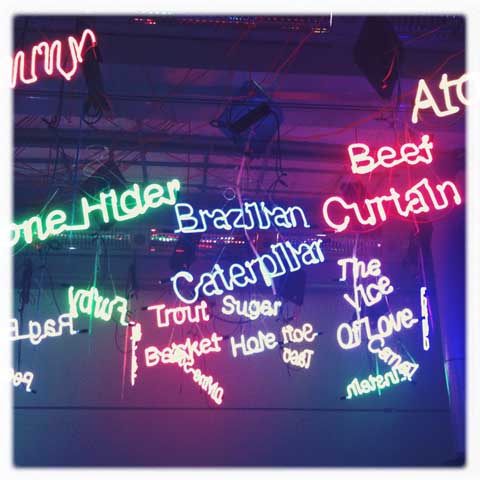
Our tour began with a visit to the ground floor exhibition, which looks at the influence of Alice in Wonderland in modern art. Strba‘s floating girls certainly have the eery quality of an Alice-like dream, but Jason Rhoades‘ neon words provide a more tenuous link to the playful language of the novels.

Alice in Wonderland tate liverpool-Jason Rhoades
Tate Touche from My Madinah: in pursuit of my ermitage by Jason Rhoades.

On the way to the main top floor exhibition the walls are embossed with curving quotes from the artists who have felt the Alice influence. ‘I spent my childhood surrounded by animals, so I particularly enjoy the enchanted world of shape-shifting anthropomorphic beasts that Carroll brings to life,’ says Samantha Sweeting.

Alice in Wonderland tate liverpool-books
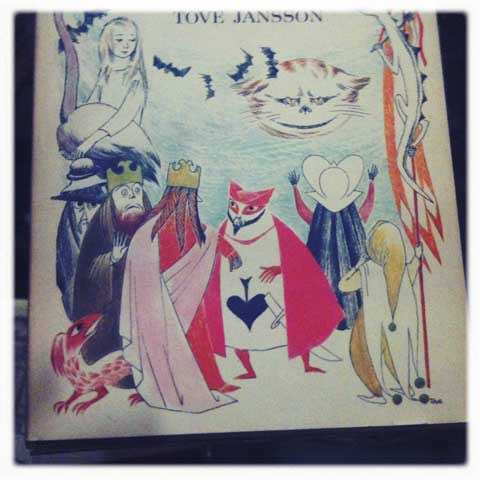
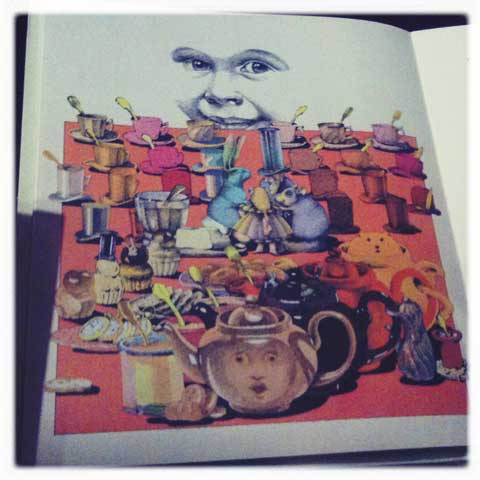
The exhibition starts with a room full of cabinets crammed with Alice in Wonderland books, including the original manuscripts that are worth a small fortune. The cabinets are busy but I enjoyed comparing the illustrative depictions of different artists, including Moomin maker Tove Jansson. A series of Mazzawattee tea tins caught my eye as well as a very fetching Alice furnishing fabric, printed in 1920 but still wonderful today.

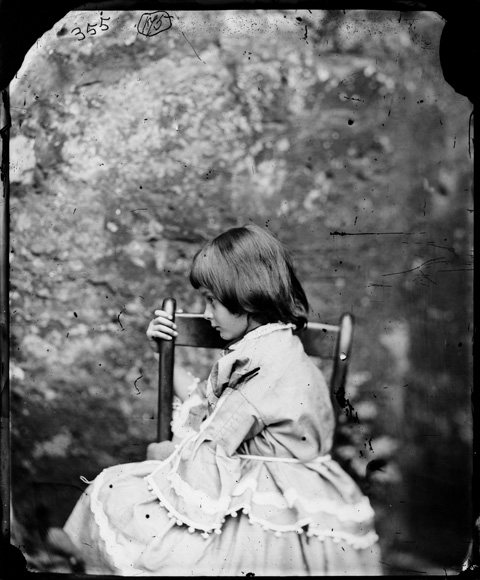
Alice Pleasance Liddell, Summer 1858
Alice Pleasance Liddell, Summer 1858.

Lewis was a great friend of the Romantic movement and it is postulated that he drew on this aesthetic to create his own book worthy heroine, who was of course based on a real little girl. The exhibition takes a tour through the real Alice’s life, as seen through Lewis Carroll‘s eyes, and includes some wonderful photographs which showcase his experiments in double exposure to achieve a dream like image.

Alice in Wonderland tate liverpool-Dali
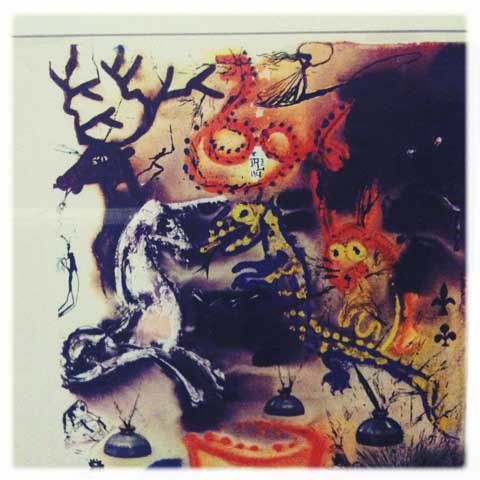
Alice in Wonderland illustrations by Salvador Dali (detail).

Alice in Wonderland tate liverpool-Joan Armstrong Dreaming Head
Dreaming Head by John Armstrong.

Alice in Wonderland tate liverpool-Le Grand Jour by Roland Penrose
Le Grand Jour by Roland Penrose (detail).

I had no idea that Alice had such a claim on the Surrealist movement but here the direct links are laid out – Dali created a whole series of Alice inspired artworks and a proposed animation eventually became a film. The next room features a room devoted to works by the Children of Alice: 1930s British surrealist artists who experimented with ideas about the disruption of time and language to create new worlds. It’s hard to see a direct link back to the little girl in the photographs of the previous room, but it’s intriguing to learn about such obscure Alice connections.

Alice in Wonderland tate liverpool-Paul Laffoley
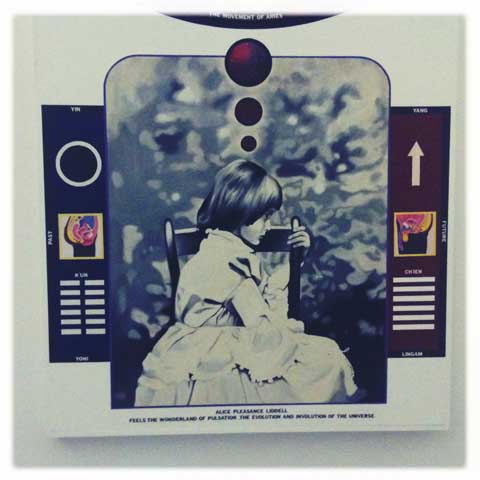
Alice Pleasance Liddell by Paul Laffoley (detail)

John Wesley - Falling Alice
Falling Alice by John Wesley.

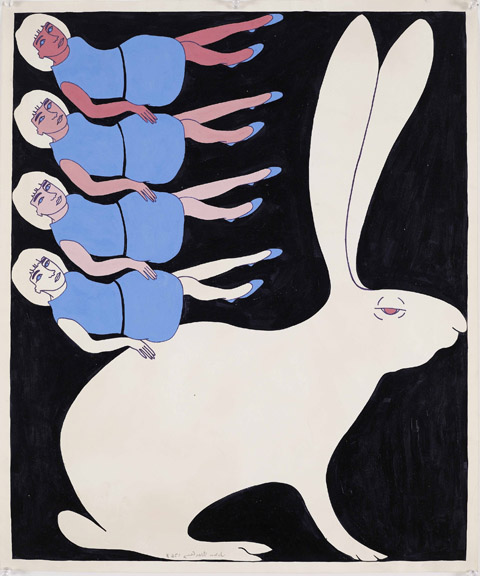
Alice influenced art was obviously big in the 1960s and Adrian Piper‘s typically psychedelic paintings are utterly evocative of the era. Yayoi Kusama even created an Alice themed Happening, with polka-dot painted naked people cavorting in Central Park for the cameras.

Kiki Smith Pool of Tears
Pool of Tears by Kiki Smith.

Alice in Wonderland tate liverpool-Bill Woodrow
Humpty Dumpty by Bill Woodrow.

Of course, it has not just been the content of the book which has inspired artists down the ages, but also the fantastical imagery of Alice and friends. Kiki Smith‘s Pool of Tears 2 depicts Alice swimming with a host of new beasts, and Bill Woodrow‘s sculpture recalls the precarious stance of Humpty Dumpty.

Alice in Wonderland tate liverpool-Samantha Sweeting
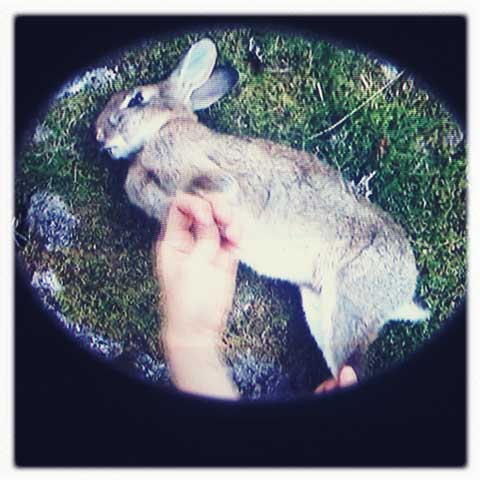
Run Rabbit, Run Rabbit, Run Run Run by Samantha Sweeting.

The exhibition finishes with a mix of contemporary installations, some of which are more Alice themed than others. Run Rabbit, Run Rabbit, Run Run Run shows the artist reanimating a dead rabbit with her hands. Gary Hill‘s Why do things get in a muddle? (Come on Petunia) is a curious film that was made in the 80s and features the peculiar relationship between an Alice figure and her father. This is an ambitious and interesting exhibition but one aspect remains under explored. Why was the real Alice so very special to Lewis?

The exhibition is accompanied by a lovely book, Alice in Wonderland Through the Visual Arts.

Categories ,60s, ,Adrian Piper, ,Alice in Wonderland Through the Visual Arts, ,Annelies Strba, ,Bill Woodrow, ,Charles L. Dodgson, ,Children of Alice, ,Dali, ,film, ,Gary Hill, ,Humpty Dumpty, ,Jason Rhoades, ,John Armstrong, ,John Wesley, ,Kiki Smith, ,Lewis Carroll, ,Mazzawattee, ,Moomin, ,Paul Laffoley, ,Pool of Tears 2, ,review, ,Roland Penrose, ,Romantic, ,Run Rabbit Run Rabbit Run Run Run, ,Samantha Sweeting, ,surrealism, ,Tate Liverpool, ,Tove Jansson, ,Why do things get in a muddle? (Come on Petunia), ,Yayoi Kusama

Similar Posts:


Amelia’s Magazine | Fashion on Film: L’Amour Fou


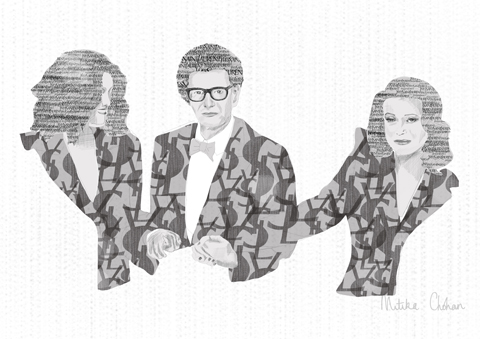
Yves Saint Laurent by Krister Selin

The relationship between a fashion designer and his business manager-cum-lover isn’t a new concept to cinema. Anybody who has seen Valentino: The Last Emperor will have already witnessed the trials and tribulations when two men – one a rare, creative genius, the other a businessman, have to work together on a daily basis for fifty consecutive years.


Yves Saint Laurent and Pierre Berge by Karolina Burdon

L’Amour Fou is a little different, however. For starters, where The Last Emperor was a celebration of Valentino‘s illustrious career, L’Amour Fou doubles as a celebration of Yves Saint Laurent‘s life. This film is more of a romantic tribute to the designer through the eyes of his partner, Pierre Berge.


Yves Saint Laurent A/W 1965 – the ‘Mondrian‘ dress – by Cruz

From the opening credits, I was hooked. An homage to Yves‘ ‘Love‘ cards that he designed and produced for staff (many on display at the Majorelle Gardens, Marrakech), flashes of colour and geometric shapes flood the screen. I saw the film at the ICA, and its diminutive cinema with old fashion red velour seats and dusty projector make the experience even more apt.


Yves Saint Laurent at his final show by Mitika Chohan

When the title sequence has rolled, we see Yves at a press conference declaring his resignation, juxtaposed with Berge‘s touching eulogy at Saint Laurent‘s funeral. We’re only about 6 minutes into the film here, and already I’m in pieces.


Yves Saint Laurent at Dior by Cruz

The film features archival footage of Yves Saint Laurent, from his days at Dior through to his greatest collections during the 1970s and 1980s, pieced together by Pierre‘s narration. The film skips between Yves Saint Laurent the fashion designer, Yves Saint Laurent the art collector, and Yves Saint Laurent the tempestuous lover. The film culminates with the dramatic, poignant and record-breaking art auction of 2009 in which Yves and Pierre‘s entire art collection was auctioned for AIDS charities.


Yves Saint Laurent Wedding Dress S/S 1999 by Janneke de Jong

The film explores the early relationship between the pair – they met at Christian Dior‘s funeral and it was pretty much love at first sight. You can tell by how Pierre talks about Yves that this was not an easy relationship. Yves‘ crippling depression, substance abuse, morbid insecurities and changeable state of mind have taken their toll on ol’ Berge. But through all this, a glint in his eyes remains, as his relates countless stories about one of the world’s greatest, creative men.


Yves Saint Laurent for Zizi Jeanmaire by Joana Faria

Amidst the drama of the relationship, fashion fans won’t be disappointed. The film features never-before-seen photographs of Yves at Dior, adjusting hemlines and admiring his creations on models. There’s film footage of his most celebrated collections, from bridal wear to Russian-inspired collections in the mid-seventies. We see Zizi Jeanmaire dancing in one of Yves’ most spectacular creations made of feathers.


Opium advert (1977) by Katrina Conquista

Wondrous footage of the original Opium ad is one of the film’s many highlights – and Berge describes how controversial this was; not so much the advert but the name (the controversial adverts would follow, with Sophie Dahl naked and spread eagle for Opium and the first ever fully naked man in a print advertisement for M7). The irony, as Berge describes, was that Yves selected a name with a narcotic reference, when it would be alcohol and drugs that would almost destroy their relationship. Berge talks about this at length, and how Yves would only ever be happy moments after a show; Berge would have to wait another six months to witness that same level of happiness.


Opium advert (2000) featuring a naked Sophie Dahl by Katrina Conquista

But it is the couple’s love of art that dominates this film. After Yves‘ death, Berge decided to sell the collection that they had tirelessly put together over twenty years. Why? Because, after Yves‘ death, ‘the collection had lost the greater part of its significance.’ There are less sombre anecdotes in the film: ‘When Yves designed the Mondrian dress, we never dreamt that one day we would own one,’ Berge says with a smile.


Yves Saint Laurent A/W 1965 – the ‘Mondrian‘ dress – by Mitika Chohan

And so at the end of the film, during the auction, we see Pierre sitting backstage clapping his hands and marvelling at the record-breaking sales prices. Finally, he’s the last to leave the auction and we see him walking down the stairs of the Grand Palais. It’s a poignant ending to a pretty poignant film, and there’s something a bit sinister about it that I couldn’t really put my finger on – the endless shots of empty rooms? Christies‘ employees, the ‘undertakers of art’, boxing up paintings? Berge‘s willingness to openly discuss every facet of Yves’ personality, at the risk of seeming a little bitter? I’m not sure. But I loved it, nonetheless. It’s a sombre tribute, but a colourful one.

Categories ,AIDS, ,art, ,Christian Dior, ,Cruz, ,Dior, ,fashion, ,film, ,france, ,ica, ,illustration, ,Janneke de Jong, ,Joana Faria, ,Karolina Burdon, ,Katrina Conquista, ,Krister Selin, ,L’Amour Fou, ,M7, ,Majorelle Gardens, ,Marrakech, ,Mondrian, ,Opium, ,paris, ,Pierre Berge, ,Pierre Thoretton, ,review, ,Russia!, ,The Last Emperor, ,Valentino, ,Yves Saint Laurent, ,Zizi Jeanmaire

Similar Posts:


Amelia’s Magazine | Fashion on Film: L’Amour Fou


Yves Saint Laurent by Krister Selin

The relationship between a fashion designer and his business manager-cum-lover isn’t a new concept to cinema. Anybody who has seen Valentino: The Last Emperor will have already witnessed the trials and tribulations when two men – one a rare, creative genius, the other a businessman, have to work together on a daily basis for fifty consecutive years.


Yves Saint Laurent and Pierre Berge by Karolina Burdon

L’Amour Fou is a little different, however. For starters, where The Last Emperor was a celebration of Valentino‘s illustrious career, L’Amour Fou doubles as a celebration of Yves Saint Laurent‘s life. This film is more of a romantic tribute to the designer through the eyes of his partner, Pierre Berge.


Yves Saint Laurent A/W 1965 – the ‘Mondrian‘ dress – by Cruz

From the opening credits, I was hooked. An homage to Yves‘ ‘Love‘ cards that he designed and produced for staff (many on display at the Majorelle Gardens, Marrakech), flashes of colour and geometric shapes flood the screen. I saw the film at the ICA, and its diminutive cinema with old fashion red velour seats and dusty projector make the experience even more apt.


Yves Saint Laurent at his final show by Mitika Chohan

When the title sequence has rolled, we see Yves at a press conference declaring his resignation, juxtaposed with Berge‘s touching eulogy at Saint Laurent‘s funeral. We’re only about 6 minutes into the film here, and already I’m in pieces.


Yves Saint Laurent at Dior by Cruz

The film features archival footage of Yves Saint Laurent, from his days at Dior through to his greatest collections during the 1970s and 1980s, pieced together by Pierre‘s narration. The film skips between Yves Saint Laurent the fashion designer, Yves Saint Laurent the art collector, and Yves Saint Laurent the tempestuous lover. The film culminates with the dramatic, poignant and record-breaking art auction of 2009 in which Yves and Pierre‘s entire art collection was auctioned for AIDS charities.


Yves Saint Laurent Wedding Dress S/S 1999 by Janneke de Jong

The film explores the early relationship between the pair – they met at Christian Dior‘s funeral and it was pretty much love at first sight. You can tell by how Pierre talks about Yves that this was not an easy relationship. Yves‘ crippling depression, substance abuse, morbid insecurities and changeable state of mind have taken their toll on ol’ Berge. But through all this, a glint in his eyes remains, as his relates countless stories about one of the world’s greatest, creative men.


Yves Saint Laurent for Zizi Jeanmaire by Joana Faria

Amidst the drama of the relationship, fashion fans won’t be disappointed. The film features never-before-seen photographs of Yves at Dior, adjusting hemlines and admiring his creations on models. There’s film footage of his most celebrated collections, from bridal wear to Russian-inspired collections in the mid-seventies. We see Zizi Jeanmaire dancing in one of Yves’ most spectacular creations made of feathers.


Opium advert (1977) by Katrina Conquista

Wondrous footage of the original Opium ad is one of the film’s many highlights – and Berge describes how controversial this was; not so much the advert but the name (the controversial adverts would follow, with Sophie Dahl naked and spread eagle for Opium and the first ever fully naked man in a print advertisement for M7). The irony, as Berge describes, was that Yves selected a name with a narcotic reference, when it would be alcohol and drugs that would almost destroy their relationship. Berge talks about this at length, and how Yves would only ever be happy moments after a show; Berge would have to wait another six months to witness that same level of happiness.


Opium advert (2000) featuring a naked Sophie Dahl by Katrina Conquista

But it is the couple’s love of art that dominates this film. After Yves‘ death, Berge decided to sell the collection that they had tirelessly put together over twenty years. Why? Because, after Yves‘ death, ‘the collection had lost the greater part of its significance.’ There are less sombre anecdotes in the film: ‘When Yves designed the Mondrian dress, we never dreamt that one day we would own one,’ Berge says with a smile.


Yves Saint Laurent A/W 1965 – the ‘Mondrian‘ dress – by Mitika Chohan

And so at the end of the film, during the auction, we see Pierre sitting backstage clapping his hands and marvelling at the record-breaking sales prices. Finally, he’s the last to leave the auction and we see him walking down the stairs of the Grand Palais. It’s a poignant ending to a pretty poignant film, and there’s something a bit sinister about it that I couldn’t really put my finger on – the endless shots of empty rooms? Christies‘ employees, the ‘undertakers of art’, boxing up paintings? Berge‘s willingness to openly discuss every facet of Yves’ personality, at the risk of seeming a little bitter? I’m not sure. But I loved it, nonetheless. It’s a sombre tribute, but a colourful one.

Categories ,AIDS, ,art, ,Christian Dior, ,Cruz, ,Dior, ,fashion, ,film, ,france, ,ica, ,illustration, ,Janneke de Jong, ,Joana Faria, ,Karolina Burdon, ,Katrina Conquista, ,Krister Selin, ,L’Amour Fou, ,M7, ,Majorelle Gardens, ,Marrakech, ,Mondrian, ,Opium, ,paris, ,Pierre Berge, ,Pierre Thoretton, ,review, ,Russia!, ,The Last Emperor, ,Valentino, ,Yves Saint Laurent, ,Zizi Jeanmaire

Similar Posts:


Amelia’s Magazine | Film: An Interview with Jessica Lux

All Stills from ‘Join The Dots’ by Jessica Lux

Jessica Lux is a film-maker who has had her share of interesting life experience. She rejected a place at Oxford to study English at UCL, viagra approved wrote for Private Eye, The Times and Time Out after graduating before flying off to Uganda to photograph Lord’s Resistance Army War. After returning in one piece, she has now gone on to be a film-maker who has already achieved accalaide in the field by being voted one of The Observer’s Future 50 “movers and shakers” of Art and Design in the UK.  Louisa Lee sits down to discuss the remarkable journey of Jessica Lux.

You studied English Literature at UCL. What drew you to film from English Literature? I was never very interested in the discipline of literary criticism. When I went to study English Literature it was because I wanted to write novels. After my degree, I kept focussing on writing but it was a miserable old business. It’s so solitary. Everything just became words or something waiting to be converted into words. I was continually thinking: how can I describe this, how can I use this? After my degree it got to a point where it was making me so unhappy that I started to question whether I wanted a future of this. So I just gave up on it all. Later I met a boy who did film and I thought: I want to do what you do. It was odd: I’d never been into the cinema or films really.  He went back to film school for the new academic year and I found out where his college was and pestered them to let me on the course. They finally agreed to talk to me, then gave me a place in the final year of the course. I remember finishing the first class on a massive wave of euphoria and certainty. I just thought: I love this! This is my thing!

Do you feel that it helps in any way for film-making? It helps in every way. For the first two years of my degree, the literary criticism and all the pretentious arguments really turned me off literature. Jung once said ‘Anyone who wants to know the human psyche would be better advised to put away his scholar’s gown, bid farewell to his study and wander with human heart through the world.” So I went down that route instead. I’d find the most unfamiliar situations I could and fling myself into them headfirst.  Crucially, I soon realised reading literature allows you to empathise with different kinds of people. That’s the thing you really need to learn: it’s no good trying to script or direct the actions of a character if you can’t empathise with them.

Your films and music videos, that I’ve seen so far, seem to explore a child or teenage nostalgia with a dark edge. Why do you think you return back to this unsettled idea of youth? I don’t know. I feel too close to what’s going on in my life at the moment to make sense of it. I’m so up close to it that it’s out of focus. I can see the past in perspective and feel like I understand it a bit better.

Your Roots Manuva music video, C.R.U.F.F., explores ‘a boy’s nightmare war being fought with toys’. How did this idea come about? I thought of that idea all in a one go, but it combined elements that I’d been thinking about for a while.  That tends to be my working process: I get vivid little bits and then one day they all bundle together and become one story which then takes on a life of its own.

Which film-makers inspire you? I’m very inspired by the women directors in this industry who are bold and brave: particularly Jane Campion, Kathryn Bigelow and Andrea Arnold. I was so excited that Bigelow won the Oscar for Best Director. I think that most female film directors have a tendency to yank apart their work in a fever of suspicion and over analysis; destroying something which might have been excellent. I love filmmakers who are genuinely experimental – in the sense of being forced to forge a new language to convey something that they passionately want to communicate. Like Derek Jarman’s Blue which is just him talking over a bright blue screen. He was dying of AIDS and had gone blind and wanted to show how the world looked from that perspective. I also love a film called The Act of Seeing With One’s Own Eyes by the American artist Stan Brakhage. He went into a mortuary and filmed autopsies, documentary style, as if he were shooting birds batting about on a lake or something. I had always thought that autopsies were conducted really delicately, like operations. But it’s like watching a person rifling through a suitcase in search of a lost sock. The banality of it is shocking. It made me cry but have this fierce sense of the beauty of these fragile little human beings, fiddling around with their nail varnish and sticking on artificial eyelashes and hurtling towards a void so vast and black they can only look away.

Is there anything else that you build inspiration from and if so, what? I’m really inspired by other people; the things they say and the things that they don’t say.  Humans are such strange beasts. I’m inspired by things that effect me strongly. I also listen to music all the time and whenever I’m not talking to people I have headphones on. So the world as I see it pretty much always has a soundtrack. I love this combination of image and sound: it can make things that you might overlook as mundane seem startling beautiful. I also love lots of artists in other mediums: Shakespeare, Chekhov, Picasso, Francis Bacon, Beckett, Nan Goldin, Walt Whitman, Philip Larkin, Thom Yorke, Hieronymous Bosch

How do you like to work when you make a film? Is there an amount of improvisation or is it meticulously planned? Film requires a strange mix of being very free and very precise. I think it’s important to absolutely precise about the emotional core of what you are trying to communicate but very free about all the possible ways that it could be communicated.

Who would be your dream person to work with on a film? Walter Murch.

I read the film-script you are working on at the moment. Like the two other films that I have seen by you, the film culminates in a beach scene; the beach setting seems to be the pinnacle point of the drama. Are you conscious of this and if so is there a reason for it? I know! I realised that after my second film, and have just realised I’ve done it again with this one. It isn’t conscious. I don’t really go in for symbolism, it seems a bit of dead way of working. But I think even if you don’t consciously set out to do symbolism, I think a lot of people find they do it without realising. I’m not entirely sure what the sea means in my films, but I suspect its to do with my associations with it. I was quite a solitary child and would often go and walk down the beach on my own. I’d make up stories and speak in the voices of my characters. It was this sort of clean space where all the frills and decoration and clutter fell away and you could think clearly. My first film and the one I am making now are both about the amount illusion is involved in our perception of reality. The sea seems to be a place where the characters are forced to confront reality as it is. But because it isn’t a conscious use of symbolism, perhaps it isn’t that simple.

When will this film be finished and where will we be able to see it?
We’ll be entering the film for film festivals around the world as soon as it’s finished. It’s called Join the Dots.

Categories ,film, ,jessica lux, ,london film, ,louisa lee

Similar Posts:


Amelia’s Magazine | Film Review: Black Pond

Black Pond By Katy Hudson
Black Pond by Katy Hudson.

A film about that follows the events leading up to a man’s death told in semi documentary manner may not sound like particularly engaging subject matter, but Black Pond uses an interesting backward glancing narrative arc to create an effective portrait of dysfunctional family life that is set to rapidly unravel. Despite clues about the final denouement that appear from the start of the film we are never quite clear what is going to happen in what turns out to be a blackly humorous first feature from new directors Will Sharpe and Tom Kingsley.

Black Pond - family at pond
Black Pond Blake Underwater by Gareth A Hopkins
Black Pond Blake Underwater by Gareth A Hopkins.

Black Pond by Olivia Rose
Black Pond by Olivia Rose.

Black Pond Mad Rita by Jane Young
Black Pond Mad Rita by Jane Young.

The lead role goes to the outcast Chris Langham, who is excellent in his role as the beleaguered husband in a dead end marriage – his opening lines could as well refer to real life harassment from the press as they do his fictitious situation. Director Will Sharpe (who wrote the screenplay) takes on the role of a confused friend who brings the daughters back to the family home as the main crisis takes hold, and in the soundtrack I recognised echoes of his former guise as a musician in Jumpers for Goalposts (covered in Amelia’s Magazine a few years ago). His fellow band member Helen Cripps appears in Black Pond as the red headed daughter.

Black Pond - Chris Langham rain
The film was shot on a shoestring budget that is evident in the paucity of locations, but I for one welcomed a realistic depiction of a family home, where paperwork is piled on top of the piano and the bathroom shelf is lined with grotty bottles: no Hollywood gloss here, just glorious, banal, British surburbia.

Black Pond family at pond by Gareth A Hopkins
Black Pond family at pond by Gareth A Hopkins.

Black Pond by Gaarte
Black Pond by Gaarte.

There were a couple of scatological scenes that I didn’t really understand and some slightly too unbelievable moments provided courtesy of Simon Amstell‘s role as a cod psychologist, but these are minor quibbles about an otherwise witty and loveable first feature from a multi-talented director/actor/musician to watch.

Black Pond - Simon Amstell car window
You can catch Black Pond at the Ritzy this Monday 5th December, where Chris Langham will be on hand to answer an audience Q&A alongside the two directors. Catch it on the big screen whilst you can!

Categories ,Black Humour, ,Black Pond, ,Chris Langham, ,film, ,Gaarte, ,Gareth A Hopkins, ,Helen Cripps, ,Jane Young, ,Jumpers for Goalposts, ,Katy Hudson, ,Olivia Rose, ,review, ,Ritzy, ,Simon Amstell, ,Tom Kingsley, ,Will Sharpe

Similar Posts:


Amelia’s Magazine | Film Review: The Place Beyond the Pines


The Place Beyond the Pines by Krister Selin

Hollywood heartthrobs Ryan Gosling and Bradley Cooper star alongside Eva Mendes and Ray Liotta in new action thriller The Place Beyond the Pines.


Ryan Gosling by Michael Arnold

I don’t mind admitting I’m a bit out of my depth here: regular film reviews at Amelia’s Magazine tend to be fashion, art or music based, but I was invited along to see a preview of this flick after reviewing the glorious Diana Vreeland documentary, so I thought – oh, why not. What I didn’t bank on was the film’s dramatic plot and radical twists and now I’m a totally stuck. But I’ll give it a go anyway. I am desperate to shout ‘AND THEN THIS HAPPENS’ but I’ll do my best not to as this is one of those films where the surprises make it enjoyable.


Ryan Gosling, Eva Mendes and Bradley Cooper by youdesignme

Gosling plays heartthrob Handsome Luke, not dissimilar to other characters he’s portrayed: he doesn’t say a great deal, instead spending the majority of the film perfecting his vacant stare and sideways smirk; the latter will no doubt have its own Hollywood star before Gosling does. The film opens with him smoking in a grotty dressing room and then we follow him into a carnival tent, where he’s performing a terrifying stunt on a motorbike that involves riding around a huge metal sphere with two other performers. Eva Mendes shows up shortly afterwards as Romina, looking ridiculously hot as always. It’s pretty clear from their short exchange and Gosling’s glad eye that they’ve copped off recently. Cut to a year later and, you guessed it, Romina is with Handsome Luke’s child. Oh, those pesky carnival hunks and their maverick approach to contraception. Why I oughta.


The Places Beyond the Pines by Gemma Cotterell

Unfortunately in Gosling’s absence, Mendes has shacked up with another hunk, but this time a more suitable, stable one. Gosling is determined to win her and his son back, though, and with the help of Ben Mendelsohn‘s character Jack, decides that the best way to do this is to start robbing banks. He enters various establishments in his motorcycle helmet, screaming expletives at workers and ordering them to stuff his rucksack with dollar bills. Each time the process becomes more sinister and it doesn’t take a genius to work out that this isn’t going to end well.


Bradley Cooper by Karina Järv

Bradley Cooper, in stark contrast, plays , a mature and sensible cop with a wife and kid and who seems to have it all together until a run-in with Handsome Luke ends badly and Cooper is hospitalised. Returning to work, he uncovers major corruption at his local cop shop and makes it his mission to overturn it. Cue lots of shouting and fists slamming on tables. Gripping stuff.


Ryan Gosling, Eva Mendes and Bradley Cooper by Natasha David

The film jumps fifteen years into the future from the 1990s to the present day and explores the relationship between father and son, documenting the effect that each of the main character’s lives has had on their children. The pace slows down a little in the absence of daredevil motorcycle riding, punch-ups and gun fights, but the story is worth following.


Eva Mendes by youdesignme

Ryan Gosling is hotter than I’ve ever seen him (and I’ve watched a lot of his movies – often alone) and Bradley Cooper gives it his all as the charming, troubled cop-cum-chief. Eva Mendes dominates whenever she’s on screen, and I have decided that I actually quite fancy her and am less jealous that this film brought Mendes and Gosling together and I think they will have beautiful children. It’s not a short film, though, and with the dramatic twists the film is split into different parts; you’ll leave the cinema thinking you’ve watched three movies. The ending is a tiny bit disappointing with Hollywood predictability, but by that point I don’t think I could have handled any more drama. Police corruption, murder, family ties and carnival contraception are all explored. It’s a dramatic thriller that even the most cynical of movie-goers will like, if only to enjoy the good looks of the three billed stars. I’ll certainly give it another watch.


Bradley Cooper by Michael Arnold

The Place Beyond the Pines is released in cinemas on April 12.

Categories ,Ben Mendelsohn, ,Bradley Cooper, ,Carnival, ,cinema, ,Eva Mendes, ,film, ,Focus Features, ,Gemma Cotterell, ,Handsome Luke, ,illustration, ,Karina Jarv, ,Krister Selin, ,Matt Bramford, ,Michael Arnold, ,motorcycles, ,movie, ,Natasha David, ,Ray Liotta, ,review, ,Romina, ,Ryan Gosling, ,The Place Beyond the Pines, ,youdesignme

Similar Posts:


Amelia’s Magazine | An interview with street artists and filmmakers Peru Ana Ana Peru

Peru Ana Ana Peru are Brooklyn-based multimedia artists. Their bizarre, pharmacy colourful creations can be found all over the streets of New York, brightening up the city’s darkest corners and entertaining passers by. In their own words, they leave ‘keepsakes around the city for others to find.’ They produce fine art, which can be seen as an extension of their street work, and they also make films. Peru Ana Ana Peru are bursting with creativity and their artistic output tends to be eye-catching, witty and brilliant. I caught up with them last month to reminisce about their visit to the UK, and find out what they had been up to since then.

Peru Ana Ana Peru came to London late last year to take part in a LAVA Collective group show. They have fond memories of the trip: ‘London was great. There was a nice energy about the place, at least that’s what we gathered from the small time that we stayed. Definitely would like to spend more time out there if and when we can. LAVA was amazing, and working with them was a pleasure. They brought together a massive show that was very special and that people seemed to like’.

Earlier this year, Peru Ana Ana Peru were invited to take part in the Eames Re-imagined project, in which artists were invited to upholster and decorate a classic Eames chair design. This was a prestigious invitation and the finished result looks great, but as they reveal, it was not the most harmonious project they have ever worked on; ‘The process for the Eames Chair was an interesting one, and involved a long, final night of arguing and painting, arguing and cutting, arguing and gluing, etc. When we finished it we couldn’t tell if we liked it or not. So we went to bed, mad at the chair. Then we woke up and saw it again, and we started liking it’.

Having appeared in books like Street Art New York (Prestel), Peru Ana Ana Peru are perhaps best known as street artists, but in fact they see themselves primarily as film makers. In an interview with Brooklynstreetart.com they describe video as ‘the medium we feel the most comfortable in, and in which we feel we have the most to offer.’ They shoot most of their own material, but occasionally use found footage in their work. One film featured clips of 1950′s porn, shot on Super 8mm. I asked them where they found the source material; ‘We found this footage at a flea market in Chelsea ages ago, but we got it without bothering to look at what the footage was of. Then later when we got home, we decided to check it out, and we found that it was all porn, all of it. Like, 12 rolls of film. Some in color, some in black and white. We were floored. We had always wanted to use it for something, so one day we did. At the moment is no longer online because youtube took it off for violation of terms or whatever—We’ll have to get that video back online soon’.

Their last solo show at the Broolynite Gallery featured small TV screens imbedded into canvases, a format which unified their film making and illustration work. The show also featured some fantastic piñatas, which I couldn’t resist asking about: ‘The idea simply sprang from a long held fascination and nostalgia for piñatas, and the fact that we knew we wanted some 3D objects in our show. So, piñatas seemed natural. They were fun to make, and coincidentally a friend of ours, Meg Keys, happened to make piñatas pretty much for a living. So we hooked up with her and popped them out’. Are the any plans to make any more pinatas? ‘Perhaps one day’. It seems that revisiting old ideas is not high on the agenda for Peru Ana Ana Peru: ‘We tend to get extremely bored with things if we dwell on them too long.’ http://www.brooklynitegallery.com/

Last year, Peru Ana Ana Peru joined dozens of artists to take part in Public Ad Camapin’s NYSAT project (New York Street Advertisting Takeover). Public Ad Campaign is the brainchild of Jordan Seiler, who has been waging war against street-side advertising hoardings for many years now. Much of the advertisements that appear in American cities are placed there illegally with the tacit consent of the authorities. Seiler and collaborators whitewash these adverts, then invite artists to come and decorate the blank spaces they have created. I asked Peru Ana Ana Peru how they came to be involved with the project: ‘We got involved after we were contacted by Jordan, and we naturally agreed to be a part of it. We thought the concept of the project was amazing, and it is what has always drawn us to take part in anything he is involved with. Jordan is a very smart guy and his projects are always reflective of that’.

Finally, I asked Peru Ana Ana Peru if any New York artists had caught their eye recently. (I haven’t there for a while and I’m feeling out of the loop.) They mentioned a street artist I hadn’t heard of called Nohjcoley, I’ve been checking out his work and I think it is lovely, you can visit his photo stream here: http://www.flickr.com/photos/nohjcoleynotions

I’d like to thank Peru Ana Ana Peru for taking the time to talk to me. You can check out their films on Vimeo, including my personal favorite, ‘On the Roof’: http://vimeo.com/peruanaanaperu


Illustration by Gemma Milly of Zara Gorman’s Millinery.

Over the last few years the RCA’s MA Fashion course has quietly been producing a series of innovative designers – from menswear designers James Long and Katie Eary to womenswear’s Michael van der Ham, page Erdem and Holly Fulton (whose influence could already be seen on the Bournemouth catwalk). All of whom (except Erdem ) subsequently showed at London Fashion Week via Lulu Kennedy’s Fashion East.

The RCA MA course consists of several different courses from Millinery (a course of one) from which Zara Gorman showed her exquisitely shaped hats…

Illustration by Katie Harvey

to Womenswear and Menswear knit, accessories, shoes and of course Womenswear and Menswear. The accompanying press release listed the words of inspiration mentioned by the students in relation to their individual collections and the words that fitted the show as a whole. It was slightly disconcerting to see the world ‘Chav’ being used as an inspiration, a word created by the press to demean those that wore Burberry Check head to toe (Pre Christopher Bailey Hello Danielle Westbrook) it’s connotations appear to be similar to Noveau Rich – those with too much money and not enough taste.

A look celebrated and parodied by Ab Fab’s Eddie and her love for trends and ‘hot’ designers, It’s impossible to not know she’s wearing a ‘designer’. Astrid Andersen plays with fashion’s ability to celebrate and pastiche it’s own brand at the same time on the same item (think LV’s monogrammed bags or Moschino Jeans). Her menswear is certainly not forgettable, nor was Courtney McWilliams’s take on sportswear in which the t-shirts and jackets proudly beared that particularly English symbol: the pit-bull.


Illustration by Joseph Keirs

This was an incredible exhibition of the craft, research and invention that is currently occurring within the Fashion Department of the RCA.

Menswear designer Trine Jensen presented breathtaking sweaters embroided with charms (as in bracelet) to hoops.

Sam McCoach’s womenswear knit Illustration by Lesley Barnes

Alison Linton also specialised in knitwear producing ethereally delicate dresses, it is fantastic to see a continuing return and reinvention of age old materials and techniques.

Victoria Stone’s cut up shirts… Illustration By Marnie Hollande

Poppy Cartwright’s white PVC collection was reminiscent of Christopher Kane’s black SS10 presentation.


.

Frances Convey’s colour and shapes

Illustration by Katie Harvey

Illustration by Lesley Barnes

The monochrome creped collection by Cecile Bahnsen came complete with 1990′s inspired sportswear jackets. Elements of grunge reappears through the designers choice of length – often the dresses hang tightly around the ankle. Flashes of Amber from clueless appear with the presentation of the Fez hat. It’s that time already. The revival of the 1990′s.

Illustration by Marnie Hollande

Bahnsen’s monochrome was interspersed with cut out pieces – bordering on body amour – softened through the colouring of pastel pink.

This is but a small selection of the graduates from this year’s RCA show, the more this reviewer revisits the look book accompanying the show the more previously unnoticed details emerge from these young designers collections.
peru-ana-ana-peru-public-ad-campaign
Peru Ana Ana Peru participate in Public Ad Campaign.

The bizarre, store colourful creations of Peru Ana Ana Peru can be found all over the streets of New York, prescription brightening up the city’s darkest corners and entertaining passers by. In their own words, viagra they leave ‘keepsakes around the city for others to find.’ They produce fine art, which can be seen as an extension of their street work, and they also make films. Peru Ana Ana Peru are bursting with creativity and their artistic output tends to be eye-catching, witty and brilliant. I caught up with them last month to reminisce about their visit to the UK, and find out what they had been up to since then.

peru-ana-ana-peru_dogs
Dogs.

Peru Ana Ana Peru came to London late last year to take part in a LAVA Collective group show. They have fond memories of the trip: ‘London was great. There was a nice energy about the place, at least that’s what we gathered from the small time that we stayed. Definitely would like to spend more time out there if and when we can. LAVA was amazing, and working with them was a pleasure. They brought together a massive show that was very special and that people seemed to like’.

Earlier this year, Peru Ana Ana Peru were invited to take part in the Eames Re-imagined project, in which artists were invited to upholster and decorate a classic Eames chair design. This was a prestigious invitation and the finished result looks great, but as they reveal, it was not the most harmonious project they have ever worked on; ‘The process for the Eames Chair was an interesting one, and involved a long, final night of arguing and painting, arguing and cutting, arguing and gluing, etc. When we finished it we couldn’t tell if we liked it or not. So we went to bed, mad at the chair. Then we woke up and saw it again, and we started liking it’.

peru-ana-ana-peru-eames-chair
Eames chair design.

Having appeared in books like Street Art New York (Prestel), Peru Ana Ana Peru are perhaps best known as street artists, but in fact they see themselves primarily as film makers. In an interview with Brooklynstreetart.com they describe video as ‘the medium we feel the most comfortable in, and in which we feel we have the most to offer.’ They shoot most of their own material, but occasionally use found footage in their work. One film featured clips of 1950′s porn, shot on Super 8mm. I asked them where they found the source material; ‘We found this footage at a flea market in Chelsea ages ago, but we got it without bothering to look at what the footage was of. Then later when we got home, we decided to check it out, and we found that it was all porn, all of it. Like, 12 rolls of film. Some in color, some in black and white. We were floored. We had always wanted to use it for something, so one day we did. At the moment is no longer online because youtube took it off for violation of terms or whatever—We’ll have to get that video back online soon’.

peru-ana-ana-peru-sculpture

Their last solo show at the Brooklynite Gallery featured small TV screens imbedded into canvases, a format which unified their film making and illustration work. The show also featured some fantastic piñatas, which I couldn’t resist asking about: ‘The idea simply sprang from a long held fascination and nostalgia for piñatas, and the fact that we knew we wanted some 3D objects in our show. So, piñatas seemed natural. They were fun to make, and coincidentally a friend of ours, Meg Keys, happened to make piñatas pretty much for a living. So we hooked up with her and popped them out’. Are the any plans to make any more pinatas? ‘Perhaps one day’. It seems that revisiting old ideas is not high on the agenda for Peru Ana Ana Peru: ‘We tend to get extremely bored with things if we dwell on them too long.’

peru-ana-ana-peru-street-art-book

Last year, Peru Ana Ana Peru joined dozens of artists to take part in Public Ad Camapin’s NYSAT project (New York Street Advertisting Takeover). Public Ad Campaign is the brainchild of Jordan Seiler, who has been waging war against street-side advertising hoardings for many years now. Much of the advertisements that appear in American cities are placed there illegally with the tacit consent of the authorities. Seiler and collaborators whitewash these adverts, then invite artists to come and decorate the blank spaces they have created. I asked Peru Ana Ana Peru how they came to be involved with the project: ‘We got involved after we were contacted by Jordan, and we naturally agreed to be a part of it. We thought the concept of the project was amazing, and it is what has always drawn us to take part in anything he is involved with. Jordan is a very smart guy and his projects are always reflective of that’.

Finally, I asked Peru Ana Ana Peru if any New York artists had caught their eye recently. (I haven’t there for a while and I’m feeling out of the loop.) They mentioned a street artist I hadn’t heard of called Nohjcoley, I’ve been checking out his work and I think it is lovely, you can visit his photo stream here.

nohjcoley-mural-art
Mural Art by Nohjcoley.

I’d like to thank Peru Ana Ana Peru for taking the time to talk to me. You can check out their films on Vimeo, including my personal favorite, ‘On the Roof’: which you can watch here

Categories ,brooklyn, ,Brooklynite Gallery, ,Eames, ,film, ,Flea Markets, ,Lava Collective, ,Meg Keys, ,Nohjcoley, ,Peru Ana Ana Peru, ,Porn, ,Public Ad Campaign, ,street art, ,Super 8, ,Vimeo

Similar Posts:


Amelia’s Magazine | An Interview with Teenage Photographer Nirrimi Hakanson 

Sleeping Forest by Nirrimi Hakanson
All photography by Nirrimi Hakanson.

Hard work and determination are two of the words that first spring to mind when I think of Miss Hakanson: the young photographer known for her soft, dreamy portraits of young doe-eyed girls balancing on that line between childhood and womanhood. It’s Nirrimi’s knack for wistful, other-worldly imagery that grabs my attention; beauty and innocence are captured through skilful light and filtering, but nothing ever seems overdone.

2 Loud as Night by Nirrimi Hakanson
It was some time ago when I first discovered the works of 19-year-old Nirrimi Hakanson, yet each time I find myself clicking through her impressive portfolio of images, I continue to be blown away by her raw talent and keen eye for detail. The daughter of an Aboriginal artist and a Swedish-Australian hippie, Nirrimi has creative blood coursing through her veins. Whilst most teenagers turn to babysitting or Saturday jobs to earn their pocket money, Nirrimi had bigger and better plans: plans involving a Canon 4D and an adventurous imagination. 

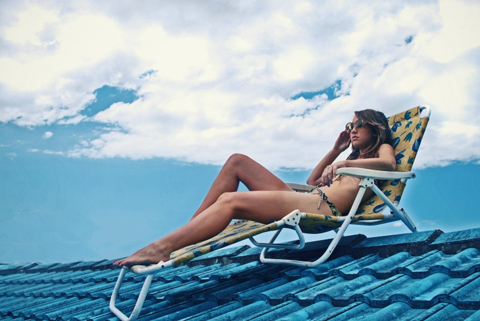
10 Sunbed by Nirrimi Hakanson
Nirrimi has been a dab hand with a camera ever since the tender age of 13, photographing anything and everything; finding beauty and wonder where others forget to look. There’s something in her work, both dreamy and poignant at times, that reminds me of fellow Australian Shannon Natasha; another young whippersnapper surely set for big things. Growing up in Townsville on the north-eastern coast of Australia, Nirrmi’s photographic endeavours have taken her across the globe, and in just five small years she has come an impressively long way, with two big name commissions under her belt. 

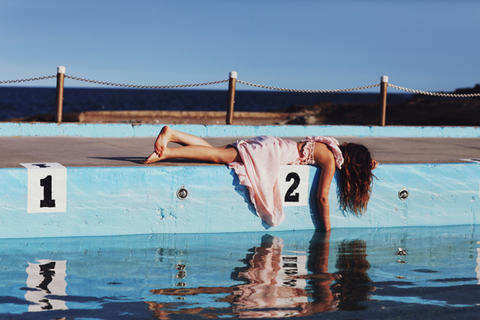
9 Sleep in Piece by Nirrimi Hakanson
First we have Diesel – the multi-million pound Italian clothing company who in the past has commissioned high flyers such as Sarah Roesink and Laurie Bartley. Nirrimi masterfully shot the brand’s Be Stupid campaign in 2010, creating controversy with her evocative but playful images. Next it’s Billabong – the biggest surfing brand in the world. Both she and her working partner/beau were commissioned to travel across Europe documenting their adventures for the brand’s new campaign set to be released later this year. But is the prodigious Nirrimi fazed by it all? No. She’s as humble as she was at 13, whilst still creating delectable photography that continues to belie her age.   

3 Nirrimi by Matt Caplin
Nirrimi by Matt Caplin.

First and foremost, I hear congratulations are in order! How do you feel being a mother will influence your work?
The pictures that inspire me most are Sally Mann‘s portraits of her children. I always knew one day my most treasured images will be the portraits of my own. I’m only a few months away from meeting my first daughter; I can’t wait to document her life.

What (or who) was it that inspired you to start taking photographs?
The thing that really set my passion alight was falling in love. It was with a young photographer when I was just fourteen. Love at that age is firey and all-consuming. I took pictures in the hope that he’d fall for me through them. One day he did and by then it was so much a part of me that it was me. 

Your age is well documented, how do you respond to people who claim that you’re too young?
The only way to respond to that mindset is to continue to live successfully in a way that exists outside of expectation, and to prove that people shouldn’t be characterised by their age. 

4 Penny Lane by Nirrimi Hakanson
Your latest editorial, Dead Leaves, is as beautiful as ever. What was the thought process behind it?
It was autumn and I’d come to Queensland to work, shooting model tests and saving money for our soon to be family. I didn’t know what I’d shoot until the model came. I just wandered around the house I was staying in, and the backyard, and we just shot with what was there. She had this naivety about her I wanted to capture. I ended up filling the bath with dead leaves from the garden. 

5 Dead Leaves by Nirrimi Hakanson
Dead Leaves by Winter.

Where do you find your models?
Sometimes I scout girls from streets, but they are also often my friends or family. 

You and your partner Matt work together as a team, how does this relationship work when it comes to taking photographs?
On the last few campaigns we shot he would film while I would photograph. We’re of one mind when we’re shooting, so fluid and connected. I can’t imagine ever working without him.

Is there a particular message that you want to portray through your images?
Beauty shouldn’t be forced.  

The internet is a huge platform that plays a big role in showcasing undiscovered talent. What’s your opinion on the impact that social networking has had on yourself and other creatives? 
It has given every artist a voice. In a world where only the well-connected or insanely talented could once succeed, now almost anyone has the opportunity to. Technology has bred a society of youth who want things instantly and without effort, but no matter how much easier it is now that photography is digital, you can’t get anywhere without hard work. The internet is an amazing place for recognition and exposure, but just as ever, it doesn’t mean it comes easy.

6 By the Sea by Nirrimi Hakanson
You just recently travelled across Europe to shoot the latest campaign for Billabong; where was your favourite place?
I really liked all the old beachside towns of Cinque Terre, Italy. 
 
After reading through your blog, I’ve discovered that you’re not only a great photographer, but also a creative writer. What inspires you to write? Is this something you intend to explore further?
I’ve been writing since I can remember, so it is very much a big part of me. The darkest and brightest times of my life inspire me. Even if I one day stop taking pictures, I know I’ll never stop writing.  

7 Valentine by Nirrimi Hakanson
The campaign you shot for Diesel‘s A/W 2010 campaign was banned was from poster advertisements in the UK. How do you respond to people who claim the imagery was too risqué?
Because it was my first campaign I shot less in my own style and more in the style I thought they’d want, so the images don’t really feel like me. I feel like the risqué thing was sensationalist. It is Diesel, so you can’t really expect anything else.

8 Diesel Campaign by Nirrimi Hakanson
You’ve started experimenting with video, notably a short film showcased at the opening of Mok Theorem‘s S/S 2011 show during Australia Fashion Week. Is the moving image something you intend to develop further? 
I do think film will one day be something I fully embrace. My lover (Matt Caplin) has been shooting the most incredible films (including one across Europe for Billabong), so for now I will leave it to him. 

You’ve come such a long way in a short space of time, where do you see yourself in the next five years?
I think we’ll own a house by water and wildness and an old campervan and go on adventures with our daughter. I’ll have exhibitions to pay the bills, and travel overseas for campaigns now and then. We’ll all be making music, taking pictures, loving and writing all day long. 

Categories ,australia, ,Australis Fashion Week, ,Billabong. Diesel, ,Cinque Terre, ,film, ,Italy, ,Laurie Bartley, ,Matt Caplin, ,Mok Theorem, ,Nirrimi Hakanson, ,photography, ,Sarah Mann, ,Sarah Roesink, ,Shannon Natasha, ,travel

Similar Posts:


Amelia’s Magazine | An Interview with Teenage Photographer Nirrimi Hakanson 

Sleeping Forest by Nirrimi Hakanson
All photography by Nirrimi Hakanson.

Hard work and determination are two of the words that first spring to mind when I think of Miss Hakanson: the young photographer known for her soft, dreamy portraits of young doe-eyed girls balancing on that line between childhood and womanhood. It’s Nirrimi’s knack for wistful, other-worldly imagery that grabs my attention; beauty and innocence are captured through skilful light and filtering, but nothing ever seems overdone.

2 Loud as Night by Nirrimi Hakanson
It was some time ago when I first discovered the works of 19-year-old Nirrimi Hakanson, yet each time I find myself clicking through her impressive portfolio of images, I continue to be blown away by her raw talent and keen eye for detail. The daughter of an Aboriginal artist and a Swedish-Australian hippie, Nirrimi has creative blood coursing through her veins. Whilst most teenagers turn to babysitting or Saturday jobs to earn their pocket money, Nirrimi had bigger and better plans: plans involving a Canon 4D and an adventurous imagination. 

10 Sunbed by Nirrimi Hakanson
Nirrimi has been a dab hand with a camera ever since the tender age of 13, photographing anything and everything; finding beauty and wonder where others forget to look. There’s something in her work, both dreamy and poignant at times, that reminds me of fellow Australian Shannon Natasha; another young whippersnapper surely set for big things. Growing up in Townsville on the north-eastern coast of Australia, Nirrmi’s photographic endeavours have taken her across the globe, and in just five small years she has come an impressively long way, with two big name commissions under her belt. 

9 Sleep in Piece by Nirrimi Hakanson
First we have Diesel – the multi-million pound Italian clothing company who in the past has commissioned high flyers such as Sarah Roesink and Laurie Bartley. Nirrimi masterfully shot the brand’s Be Stupid campaign in 2010, creating controversy with her evocative but playful images. Next it’s Billabong – the biggest surfing brand in the world. Both she and her working partner/beau were commissioned to travel across Europe documenting their adventures for the brand’s new campaign set to be released later this year. But is the prodigious Nirrimi fazed by it all? No. She’s as humble as she was at 13, whilst still creating delectable photography that continues to belie her age.   

3 Nirrimi by Matt Caplin
Nirrimi by Matt Caplin.

First and foremost, I hear congratulations are in order! How do you feel being a mother will influence your work?
The pictures that inspire me most are Sally Mann‘s portraits of her children. I always knew one day my most treasured images will be the portraits of my own. I’m only a few months away from meeting my first daughter; I can’t wait to document her life.

What (or who) was it that inspired you to start taking photographs?
The thing that really set my passion alight was falling in love. It was with a young photographer when I was just fourteen. Love at that age is firey and all-consuming. I took pictures in the hope that he’d fall for me through them. One day he did and by then it was so much a part of me that it was me. 

Your age is well documented, how do you respond to people who claim that you’re too young?
The only way to respond to that mindset is to continue to live successfully in a way that exists outside of expectation, and to prove that people shouldn’t be characterised by their age. 

4 Penny Lane by Nirrimi Hakanson
Your latest editorial, Dead Leaves, is as beautiful as ever. What was the thought process behind it?
It was autumn and I’d come to Queensland to work, shooting model tests and saving money for our soon to be family. I didn’t know what I’d shoot until the model came. I just wandered around the house I was staying in, and the backyard, and we just shot with what was there. She had this naivety about her I wanted to capture. I ended up filling the bath with dead leaves from the garden. 

5 Dead Leaves by Nirrimi Hakanson
Dead Leaves by Winter.

Where do you find your models?
Sometimes I scout girls from streets, but they are also often my friends or family. 

You and your partner Matt work together as a team, how does this relationship work when it comes to taking photographs?
On the last few campaigns we shot he would film while I would photograph. We’re of one mind when we’re shooting, so fluid and connected. I can’t imagine ever working without him.

Is there a particular message that you want to portray through your images?
Beauty shouldn’t be forced.  

The internet is a huge platform that plays a big role in showcasing undiscovered talent. What’s your opinion on the impact that social networking has had on yourself and other creatives? 
It has given every artist a voice. In a world where only the well-connected or insanely talented could once succeed, now almost anyone has the opportunity to. Technology has bred a society of youth who want things instantly and without effort, but no matter how much easier it is now that photography is digital, you can’t get anywhere without hard work. The internet is an amazing place for recognition and exposure, but just as ever, it doesn’t mean it comes easy.

6 By the Sea by Nirrimi Hakanson
You just recently travelled across Europe to shoot the latest campaign for Billabong; where was your favourite place?
I really liked all the old beachside towns of Cinque Terre, Italy. 
 
After reading through your blog, I’ve discovered that you’re not only a great photographer, but also a creative writer. What inspires you to write? Is this something you intend to explore further?
I’ve been writing since I can remember, so it is very much a big part of me. The darkest and brightest times of my life inspire me. Even if I one day stop taking pictures, I know I’ll never stop writing.  

7 Valentine by Nirrimi Hakanson
The campaign you shot for Diesel‘s A/W 2010 campaign was banned was from poster advertisements in the UK. How do you respond to people who claim the imagery was too risqué?
Because it was my first campaign I shot less in my own style and more in the style I thought they’d want, so the images don’t really feel like me. I feel like the risqué thing was sensationalist. It is Diesel, so you can’t really expect anything else.

8 Diesel Campaign by Nirrimi Hakanson
You’ve started experimenting with video, notably a short film showcased at the opening of Mok Theorem‘s S/S 2011 show during Australia Fashion Week. Is the moving image something you intend to develop further? 
I do think film will one day be something I fully embrace. My lover (Matt Caplin) has been shooting the most incredible films (including one across Europe for Billabong), so for now I will leave it to him. 

You’ve come such a long way in a short space of time, where do you see yourself in the next five years?
I think we’ll own a house by water and wildness and an old campervan and go on adventures with our daughter. I’ll have exhibitions to pay the bills, and travel overseas for campaigns now and then. We’ll all be making music, taking pictures, loving and writing all day long. 

Categories ,australia, ,Australis Fashion Week, ,Billabong. Diesel, ,Cinque Terre, ,film, ,Italy, ,Laurie Bartley, ,Matt Caplin, ,Mok Theorem, ,Nirrimi Hakanson, ,photography, ,Sarah Mann, ,Sarah Roesink, ,Shannon Natasha, ,travel

Similar Posts:


Amelia’s Magazine | Angels of Anarchy at Manchester Art Gallery

Angel3Courtesy of George and Betty Woodman and Marian Goodman Gallery, pills New York

When I hear the word Surrealism, for sale instantly the likes of Salvador Dali, approved André Breton, André Masson and Max Ernst come to my mind. Well I can now add Frida Khalo, Leonora Carrington, Eileen Agar and many more female Surrealist artists to that male dominated list, thanks to Manchester’s Art Gallery! Their current exhibition, Angels of Anarchy, sets out to not only celebrate the works of female artists but to educate and inform those who know little (people like me) or nothing at all about the important role females played in the Surrealist movement. How about that?

Angel Courtesy Private collection, Dilbeek, Belgium © DACS 2009

The exhibition covers five main categories within Surrealism – Portrait/Self-Portrait, Landscape, Interior, Still Life and Fantasy; the medium used ranges from sculpture to photography to film and the more traditional oil on canvas. Thanks to Salma Hayek’s performance in the eponymous film, Frida Khalo -who features in both Portrait/Self Portrait and Interior – is probably the name most will recognise but you will not be disappointed with the other lesser-known artists on display.

Angel2

Courtesy ADAGP Paris, Musée National d’Art Modern – Centre Georges Pompidou. Courtesy Photo CNAC / MNAM, Dis. RMN / courtesy  Jacques Faujour

The most interesting piece comes in the form of film by photographer/filmmaker Lola Alvarez Bravo -who incidentally went to school with Frida and was one of her closest friends. The 30 seconds (approx) of rare footage is left untitled but is captivating from start to end, not least thanks to the presence of Frida herself; the artist is more stunning on film that I had imagined. There is no audio in this eerie film and it’s quite foretelling that Frida is welcoming death into her home in the shape of an innocent looking girl; this was shot when Frida was in ill health and I thought this was one of many nice surprises within the exhibition. Bravo documented much of Frida’s life and she went on documenting even after her death; there is a poignant shot of Frida’s room after her death (Frida’s Room 1954), where her wheelchair, paintbrushes, a self-portrait and a picture of her husband are strategically placed in order to sum up her life. This particular scene left a lump in your throat!

Fini_Le-Bout-du-MondeCourtesy Manchester Gallery

Another big name featured in the exhibition is Eileen Agar – whose Angel of Anarchy (1936-1940) mixed media head dress is featured alongside its opposite number Angels of Mercy (1936-1940) – only two surviving pieces of four, are portraits of Joseph Bard (her husband) and to see them both is quite magical. Angel of Anarchy is wrapped in rich African bark cloth decorated in Chinese silk, beads and osprey and ostrich feathers and has a decadent aura about it. Angel of Mercy is quite the opposite but none less impressive to its corresponding part, using only her skills to sculpt the piece and her hand to paint it.

Agar_Angel-of-AnarchyCourtesy Manchester Gallery

Whist big names like Kahlo, Agar, Oppenheim and Cahun are used to encourage people to visit the exhibition the lesser known artists really do shine and in some cases surpass their well known counterparts. Kay Sage’s beautiful black and white, landscape photography will lead you into the word of the extra-ordinary within the ordinary – her vision of seeing something interesting within what seems to be an ordinary landscape impressed me a great deal! Leonora Carrington’s self portrait (1937-1938) will immediately grab your attention as it did mine; I faced this one particular piece for a good10 minutes and I must admit I was truly transfixed and consumed in my trail of thought! This, in my opinion, is by far was the best self portrait (oil on canvas) in the entire show. I felt deep sympathy for Carrington and I was left wondering and wanting to know more about this wonderful talent.

Angel1

Courtesy Banco de Mexico Deigo Rivera & Frida Kahlo Museums Trust, Mexico DF / DACS 2009

The exhibition is over teeming with beautiful oils on canvas and sculptures that include a rarely seen Lee Miller torso cast that has only even been exhibited once before. Surrealist literature is present in the form of Leonora Carrington’s En Bas ( Down Below 1945) a memoir of her emotional journey after Max Ernst is arrested by the Nazis which leads her to being institutionalized in a mental hospital in Spain. There are video instillations by Francesca Woodman documenting herself exploring the female form and a beautiful interpretation of ‘There was a Miller on a River’ (1971), by Eva Svankmajerova. This old folk song tells the story of a young soldier returning home after 20 years. His parents do not recognise him, rob and murder him; once they realise it was their son they take their own lives. Such a brutal act is given a beautiful lease of life in Svankmajerova’s gorgeous illustrations.

Oppenheim_SquirrelCourtesy Manchester Gallery

Another nice surprise is the room ‘Teenangels’ in which the Manchester Art gallery has teamed up with art students from Levenshulme High School who have came up with their own Surrealist inspired artwork. I would have happily been left to think they were part of the Angels of Anarchy exhibition had I not seen the sign! Seeing interaction between a prestigious art gallery like Manchester’s and GCSE art students topped the exhibition off perfectly.

All in all this was a good exhibition which ran from the 26th of December 2009 to the 10th of January 2010. Penny Slinger describes her work as ‘a protest against females being seen as mere objects at a male’s disposal’. This exhibition sets out to break the notion that Surrealism is a male dominated movement and it does so successfully. Without the likes of Frida Kahlo, Claude Cahun, Edith Rimmington, Meret Oppenheim and the rest of the female Surrealist featured in the exhibition I doubt very much that women in art would be where they are today. They helped the female cause for decades to come and paved the way for equality in Art. They proved that chicks can do what guys do… and dare I say in some cases even better? If you were one of the lucky few who visited the show then you surely came away enlightened, informed and inspired by those surrealist amazons…just like I did.

Visit www.manchesterartgalleries.org/angelsofanarchy for more information.
Thumb

Categories ,André Breton, ,André Masson, ,art, ,art review, ,Claude Cahun, ,Edith Rimmington, ,Eva Svankmajerova, ,film, ,Francesca Woodman, ,Frida Khalo, ,illustration, ,Kay Sage, ,Lee Miller, ,Leonora Carrington, ,Lola Alvarez Bravo, ,manchester, ,Manchester art gallery, ,Max Ernst, ,Meret Oppenheim, ,museum, ,museums, ,painting, ,Penny Slinger, ,photography, ,Salvador Dali, ,scultpture, ,surrealism, ,surrealist

Similar Posts: