Amelia’s Magazine | Ada Zanditon Interview

Monday 20th

Slow Club is a duo formed by Charles and Rebecca, this web buy information pills who both come from Sheffield. He does the singing and plays the guitar; she deals with the drums and all sorts of weird instruments, from bottles of water to wooden chairs. The result? You can go hear for yourself tonight at Barfly.
7pm. £5.

slowclub.jpg
Slow Club

Tuesday 21th

We Fell To Earth and special guests at the ICA theatre. Richard File (UNKLE) and PJ Harvey-ish singer/bassist Wendy Rae doing something that they call “sinister and kind of arousing rock music”.
8pm. £10.

toearth.jpg
We Fell To Earth

Wednesday 22th
Vessels will be at Buffalo Bar this Wednesday launching “Retreat”, a collection of songs including a single, some remixes and an unreleased track by this Leeds five-piece.
8pm. £6.

vessels.jpg
Vessels

Thursday 23th
Camera Obscura make a come back with “My Maudlin Career”, the band’s fourth studio album that is coming out today.
All their sweet freshness that you could feel from the first single out entitled “French Navy” will be performed on the stage of Shepherds Bush Empire next Thursday.
7pm. £13.50.

camera_obscura.jpg
Camera Obscura

Friday 24th

Je Suis Animal single launch party for the upcoming release ‘The Mystery of Marie Roget’ 7″ at The Victoria. Support comes from Betty and The Werewolves and Hong Kong In The 60s. People from Twee as F*** also promise free cupcakes for earlybirds so that is a Friday night out you can not miss.
9pm. £6/ 5 concessions.

jesuis.jpg
Je Suis Animal

Saturday 25th

The Camden Crawl Festival brings the best of Indie to town. Line up for Saturday looks like great performances will be on stage. The Maccabees, Little Boots, Marina And The Diamonds and The Golden Silvers are only a few to be named.
12pm. £32.50 (Saturday only).

golden.jpg
The Golden Silvers

Sunday 26th
Due to the Casiotone for the Painfully Alone‘s sell-out London show on 27th April, a new show has been added on Sunday 26th April – also at The Luminaire. Releasing their fifth album, Vs. Children, the band succeeded to make a record that feels just as warm and intimate as the first.
7:30pm. £8.50, adv £8.

casiotone.jpg
Casiotone for the Painfully Alone
On the cover of this CD, sickness Caroline Weeks appears to be a healthy, seek pink-skinned young woman. However, sildenafil fill your ears with her music, and you will be in no doubt that she is a ghost. And her clarinettist, too. Ghosts! Caroline has been to the other side, and seen things, and now wanders around my auditory cortex in a Victorian gown, lamenting the moment that life’s glories were cruelly wrenched from her grasp. Maybe Caroline drowned in a lake, or caught one of those Jane Austen chills, or fell under a horse, or was cuddled to death by an overaffectionate simple boy cousin. I can’t begin to imagine what happened to her polter-woodwindist. Probably choked on his reed.

cw1.jpg
This is the spookiest music I have heard in a long time. She feels like a sister to SixToes, playing with similar moods, guitar work and larynx-trembling. But much spookier. I can’t help but think of Winona Ryder in Beetlejuice, a morbid teenager rejecting the world from her wilfully glum bedroom. So it’s not a huge surprise to discover that Caroline is also Ginger Lee, colleague of Natasha Khan in Bat For Lashes. Although you can actually dance to some of Natasha’s ditties, there is the moody, brooding moroseness there too. But while Bat For Lashes keeps this in the realm of relationships with sprinklings of dreamy visions, Caroline Weeks takes it to the pure Victorian pre-Pankhurst inner world of reflective femininity.
It turns out that all the lyrics are taken from the poems of Edna St. Vincent Millay, an early Twentieth Century American who was the first woman to win the Pulitzer Prize for poetry. Musically, it is very accomplished. Recorded quite simplistically, with a few dramatic reverb effects, the instrumentation has plenty of room to shine. The guitar gently drifts between dextrous, finger-picked, rhythmic regularity and airy pausing in a lovely, caressy, wavey kind of way. But it’s the tender voice that dominates, or haunts, the album. Caroline sings to you. It’s deeply personal, and unwavering in its humourless, sorrowful plea. And there is much depth of feeling and depth of lyric, which I cannot really do justice to here.
This is simply music to surrender to. Alone. Dim the lights, let the shadows fall across your soul and be utterly, utterly alone with the ghost of Caroline Weeks.

La Weeks is performing at The Good Ship in Kilburn on May 19.
Tuesday 21st April

2pm
Institute of Education?
20 Bedford Way, buy
?London WC1H 0AL?

“How to Educate Children in the UK About Sustainable Development”
discussion with Professor Randall Curren, more about Institute of Education. Info: fbrettell@ioe.ac.uk or call 020 7612 6000

Lea%20JaffyEarth_kids.jpg
(Image courtesy of Lea Jaffy, email leajaffy_1@hotmail.com for further illustrations)

Wednesday 22nd April

“The Green Agenda: Are We Engaging The Consumer?”
9:30am

Dorich House Museum
67 Kingston Vale,
London SW15 3RN

The rise and rise of the green agenda is creating an ever increasing number of green initiatives, CSR projects, and local and national government proposals. Almost all organisations – both commercial and non commercial – want to establish their green credentials and communicate them to the consumer.
To explore these issues and to find new ways of engaging the customer, Kingston University has brought together a number of leading experts from a wide range of sectors – manufacturing, retailing, NGO’s, academics and a number of consultancies.
For full programme information and to book please go to http://business.kingston.ac.uk/flavor1.php?id=398.
Contact: Wendy Eatenton
?Tel: 020 8547 2000 ext. 65511
?Email: rm.rettie@kingston.ac.uk

“Can Developing Country Needs For Energy Be Met Without Causing Climate Change”

LeaJaffyEnergy3world.jpg
(Image courtesy of Lea Jaffy, email leajaffy_1@hotmail.com for further illustrations)

1.00pm
Committee Room 14
Palace of Westminster, London
SW1A 2PW
Recent studies suggest a large potential for clean energy projects in Sub-Saharan Africa; if fully implemented, they could provide more than twice the regions current installed power-generation capacity. It has been posited that Latin America has a comparative advantage in maximizing clean energy opportunities; energy consumption could be reduced by 10 percent over the next decade by investing in energy efficiency. This suggests that the adoption of clean energy technologies typically results in a “win:win” situation for developing countries: reducing costs and emissions.
But many developing countries have been failing to reach their full productive potential for years. Growth diagnostic studies in many developing countries regularly identify constraints such as lack of grid electricity and poor infrastructure. Typically, levels of investment in the electricity sector in developing countries are around 50 percent of needs. Credit constraints mean that the cheapest available options are often chosen as opposed to those that deliver environmental benefits. So can developing country needs for energy be met without causing climate change?  How can developing countries be incentivised to adopt cleaner energy? And what steps do developed countries need to take to facilitate this?

Professor Sir David King, Gordon MacKerron. Info: 7922 0300/ meetings@odi.org.uk/ ODI

Thursday 23rd April

“Financial Meltdown and The End of the Age of Greed”

Aaron%20capitalist_final.jpg
(Image courtesy of Aarron Taylor, www.aarrontaylor.com)

7pm
Frontline Club, 13 Norfolk Place, W2 1QJ
Info: 7479 8950
£10 Online booking now available
This event will be moderated by Michael Wilson, Business Editor of Sky News
Paul Mason talks about the ongoing financial crisis that has brough the global economy to the brink of depression. Gordon Brown hailed the result of deregulation as the ‘golden age’ of banking in the UK. Mason will give insights into how deregulation is at the heart of the collapse of the banking system in September and October 2008 and how it led to expanded subprime mortgage lending, an uncontrollable derivatives market, and the lethal fusion of banking and insurance.
http://www.frontlineclub.com/events/


Saturday 25th April

People’s Republic of Southwark April Mini Eco-Fair
People’s Republic of Southwark
Brandon Street/Orb Street
SE17

12.00pm – 4.00pm 
On Saturday 25th April, 12-4pm, People’s Republic of Southwark’s mini eco-fair goes all the way to SE17, to the Nursery Row Park http://www.nurseryrowpark.org/SaveNurseryRow/Welcome.html , a beautiful green space located just behind the East Street Market (between Brandon and Orb Street).?? We are hoping to have another great day out for everyone and some of the activities for the day are:?- mulching the orchard?- planting sunflower seeds?- making art?- a free shop (space where you can swap/give away/take things you need for free – bring easy-to-carry usable things you don’t need, ex clothes, dvds, books. and swap them for something you do need or simply give them away to someone who does; please don’t bring anything bulky or electrical)?- seed swap (get your window boxes, balconies, gardens ready for spring and summer)?- you can also find out about local environmental projects, issues and campaigns. ?Or just come along for a chat
Prepare to throw your sensibilities and all sense of conventionality out of the window! Why I hear you scream? Well, search this week sees Alternative Fashion Week bombard an unsuspecting Spitalfields in all its wonderful obscurity. Forget all the opulence of London Fashion Week; Alternative Fashion Week is going to assail you with raw, viagra buy un-censored Fashion Design.

alternative_2.jpg

The event unlike London Fashion Week is open to everyone and free for the designers to participate. It will be running all this week from the 20th-24th of April at Spitalfields Traders Market. So get your skates on people and get on down for all the outlandish action. With 15 shows a day, it will see at least 10,000-hop foot through their doors. Applicants range from recent graduates to independent designers keen to establish themselves in the fashion sphere. The participants are an eclectic range of designers from a myriad of different fields from the theatre to circus, so be prepared for a vivacious show. In conjunction with the free daily shows, the event hosts an adjacent market from noon till three showcasing a whole treasure trove of accessories, Womenswear and textiles for us to feast upon.

alternative_01.jpg

Here is a sneak peak at one of the accessory designers that will showcase her A/W collection at the event. Helen Rochfort’s innovative designs focus on all things delectable. Infact just glancing at her liquorice allsorts bag is enough to have me running to the nearest sweet shop for a fix. She describes her delectable designs as simply “ a sprinkling of vintage and a dusting of retro all whipping together with a kitsch twist of humour” So keep your eyes out for Rochfort’s designs, they are hard to miss!

alternative_05.jpg

The event prides itself on its promotion of sustainable fashion, and actively supports recycling and ethical sourcing. It’s organizers are The Alternative Arts, a group based in East London that invests in local artists and projects in the community. Its overriding ethos is the importance of accessible fashion and art in the public domain.

alternative_03.jpg

alternative_fashion6.jpg

The event is a riot of creativity that questions our ideological view of fashion design; Alternative Fashion Week provides that vital foundation for applications to bridge the gap between them and the seemingly intimidating abyss of the fashion industry.

alternative_07.jpg

alternative_fashion7.jpg

So keep your eyes peeled as Amelia’s Magazine will be reporting from the front line this week to bring you all the zany fun and frolics!
Sometimes the stories for Amelia’s Magazine come to us. And this story is one of unimaginable corruption by one of the worlds largest companies, search aided by an equally unscrupulous government. While there will never be a happy ending to this tale, medicine there may be, tadalafil after many years of campaigning, justice finally delivered. I was emailed recently by a group called Remember Saro-Wiwa, asking if I would attend a talk entitled Wiwa Vs Shell at the Amnesty International House in London.

sarowiwaMG_7163.jpg

I went along to the event, which was fully attended, and listened to what this case was about. In 1995, a man called Ken Saro-Wiwa, along with eight colleagues from the Ogoni region of Nigeria, was executed by the Nigerian State for campaigning against the devastation of the Niger Delta by oil companies, specifically Shell Oil. Thankfully, this is not where the story ends. On May 26th, 2009, after fourteen years, Shell will stand trial in New York for complicity in human rights abuses in Nigeria, including the execution of Ken Saro Wiwa and his eight colleagues. The purpose of the evening was to highlight the case, and I listened in horror and disbelief to what has been happening in Nigeria. Having not known much about the unethical way that oil companies conduct their business – and the ways in which they silence their objectors – I could almost not comprehend what I was hearing. The panel speaking included Katie Redford, a U.S lawyer and co founder of EarthRights International, which, along with the Center for Constitutional Rights has filed the case against Shell.

sarowiwaMG_7175.jpg

She discussed the upcoming trial, and included the seemingly never-ending charges which have finally been brought against them. As well as the charge of complicity in crimes against humanity, they are being charged with torture, arbitrary arrest and detainment. We learnt that this is a groundbreaking case – companies of this size do not usually find themselves in court for their actions – however reprehensible. If Shell are found liable, they could be forced to pay damages that could amount to hundreds of millions of dollars.

We learnt about the situation between Ken Saro-Wiwa and Shell. From the time that Shell had started producing oil in the Delta in 1958, the local communities had been concerned about the levels of pollution, along with the gas flares which were coming from Shell’s production plant. Furthermore, drilling operations were routinely destroying farmers lands with oil spillage and rendering the lands unsuitable for use. When faced with such levels of devastation to their land (and health), it seems only natural that the communities would protest.

sarowiwa%23_-_Puddle_and_oil_CNV00010.jpg

sarowiwaheartoffire1.jpg

Unfortunately for them, Shell and the Nigerian Government were not in the business of facilitating these protests; instead, Shell would employ the presence of the Mobile Police Force, who were also known as the “kill and go”police. At one such protest, the MPF massacred 80 people and destroyed around 500 homes. Saro-Wiwa, who had always been a prominent figure in the campaigns against Shell was arrested and charged under bogus offences – unlawful assembly and conspiring to publish a ‘seditious’ pamphlet. On November 10th, 1995, Saro-Wiwa, along with 8 others was executed.

Speaking at Amnesty International, Ben Amunwa, who was chairing the evening, used a quote from Milan Kundera to help surmise the subsequent fight to continue with Saro-Wiwa’s cause, and bring long awaited justice : “The struggle of man against power is the struggle of memory against forgetting”. I spoke with one of the campaigners behind Remember Saro-Wiwa afterwards and asked how others can get involved. He told me that ” We’re currently in the process of developing a website and hopefully actions people can take as part of the shell guilty campaign, we hope to use viral films, the media and activist actions to generate loads of attention on Shell around the trial. At the moment it’s just about spreading awareness of the trial to warm people up for actions they can take further down the line.    

In the meantime we would encourage people join the facebook group. Our current aim is to get 1000 members. One way we are thinking about framing this call out is:

Take the 999 action:

9 Ogoni activists died for their cause
2009: the year their relatives must see justice and gas flaring in Nigeria must end
9: the number of your friends we urge you to invite to join this group.”

Everyone involved with this case will be eagerly awaiting the outcome of the trial in New York. After the panel had finished, I spoke with Katie Redford and asked her whether she felt positive about the outcome of this groundbreaking trial. She explained that while no one can predict whom the jury will side with, or what the outcome may be, the fact that a global and powerful company such as Shell will be finally held accountable for their actions in the Niger Delta demonstrates the power that non-violent protesters actually wield. Although it took twelve years to get to this stage, it seems like justice is finally being administered.
Born in Rotterdam in the Netherlands, viagra buy living in Utrecht in Holland and half Spanish, online Maria Stijger is a fashion photographer who has recently sprung to my attention. Her style of surrealism mixes with vintage meets modern. Maria’s playful personality results in beautiful images which if nothing else are aesthetically striking.

Maria, link you’re images are beautifully created. How long have you been doing photography for?
I took my first photograph around the age of six and from then I always thought that it was a kind of magic. But I never picked it up seriously until I got out of high school, graduated from art school and after doing a lot of different things, including working as a photographer’s assistant. I started producing my own fashion stories about two years ago.

Is it true your work has been recognised by the Dutch publications of Elle and Marie Claire??
Yes, I’ve also had my work published in HMagazine (a magazine available in Barcelona) twice, and in professional and weekly magazines, newspapers, and once in a book about jewellery.

I really enjoyed the old fashioned-romantic-fairy tale-esc sequence of the photoshoot shown here:
%27Je%20ne%20l%27ai%20pas%20oublie%271%20-%20Copy.jpg
%27Je%20ne%20l%27ai%20pas%20oublie%271.jpg
%27Je%20ne%20l%27ai%20pas%20oublie%272%20-%20Copy.jpg
%27Je%20ne%20l%27ai%20pas%20oublie%272.jpg
%27Je%20ne%20l%27ai%20pas%20oublie%273.jpg
%27Je%20ne%20l%27ai%20pas%20oublie%274.jpg


What is the story behind this?

Well, I always like to make little fantasy stories, you can make up your own just looking at the series and here I was looking for an old feeling, using the atmosphere of the space that I found one day when I visited a party in the building. It’s a big building in the eastern part of Holland used by squatters. The guy that runs the place has a fantastic store inside it, where he sells all kinds of beautiful things he finds in old houses he restores. It is about a girl who is lost in time; she lives in a world of her own, surrounded by all this old stuff. She is a little bit weird, but happy and enjoying herself. She puts on shoes that are too big, plays with old porcelain dolls and likes funny hats. There is no story with a beginning and an end, but I like to make more images in my head, fantasize about what she does. I hope that others will do this too!

Do you prefer to work to a specific brief in your work?
No, in my personal work I really like to brainstorm in advance and come up with a lot of ideas, pick out the best and look for the right location, model and the stylist brings the clothes and things and we make our own décor if possible. But on the day of the shoot, I want to just let it all go and go with the flow of the day, see what comes on my path and switch if something doesn’t work. I like it when the whole team participates and gets excited and understands the feeling that I try to create and comes up with good ideas and then there is a buzz that I cannot describe…

Quite a lot of your work I found reflected some surrealism, would you say you have a specific style of photography, or does it vary?
I really love the Latin American magic realism and I try to use this in all my personal work as much as possible. I love surrealism, theatre and movies, things that are old. I love to mix it with modern age and fashion. I try to do this as often as I can, especially in my personal work, sometimes I like to go a little bit further than my commissioners want, so in the end my work varies quite a lot. But I like to show them that side as well so I always take some shots that link to this theme and sometimes they love it too!

eastrange3.jpg eastrange2.jpg

Can you explain the series of gloves images?

This was a great series to make! We had so much fun! We wanted to do something with beautiful gloves, but not in a studio or with a model. So I came up with this idea to make animal shapes, shadow play. I have a very old magic lantern (Lanterna Magica) that gives this great old feeling because of the dust and the frame. So this was the perfect combination mixing the old with the new fashion. We sold this particular series to (Dutch) Elle magazine.

148307.jpg
148308.jpg
148309.jpg
148310.jpg
148311.jpg
148312.jpg
148313.jpg
148314.jpg

Who would you say influences and inspires you?
A lot! Things like literature, art, music, European film, but not specifically one person. There are so many great and diverse people that I love for what they do, I couldn’t point out just one.

Can you see a progression or a change in your work from when you first started to now?
Yes. In the beginning I only concentrated on landscapes and snapshots of people. Now I love to make stories using fashion. I’d say it’s a big change, and I guess it will never stop changing. I like to move around and experiment.

Do you have a muse?
No not really, I value my boyfriend’s opinion a lot. So in that sense I guess it’s him!

What do you do in your spare time?
At the moment I am expecting our first child, so my extra activities are not so exciting ha-ha. But I love going to the woods, going out with friends and listening to music. I also love to make sweet little stuffed monsters, exploring other realms of creativity! Most of my time is for photography though. And my family is very important too.

When you were younger, what did you wish to be when you grew up?
Ha-ha, first I wanted to be a dentist, but I loved arts and crafts and drawing so much, that I discovered that this was “my thing”. Although my parents were scared that I’d drown in the competition and of course it is more difficult for an artist to make a good living, I knew that there was no other option for me. I get bored quite easily, so I need to occupy myself doing creative things with other creative and inspiring people.

Thanks Maria, and good luck with the bun in the oven!

You can view Marias work at here.
And contact her here.
Happy Earth Day, here Amelia’s Magazine readers!

April 22nd is Earth Day (mainly for America, but we can still take part in celebrating it – it is everyones Earth after all!) If you are in America, then check out http://earthday.net/all_events to see what is going on around your neck of the woods.

sachiko1.jpg
Images courtesy of Sachiko, http://www.loveandhatesati.com/

Perhaps this is fortuitous timing because this is also quite an interesting day in terms of the Government 2009 Budget. Hands up who was watching the budget today? I can understand if lazing around in the sun took top priority, so leave it to me to fill you in on the important facts.

Namely, that this is the first year that a carbon budget has been announced. Alistair Darling announced £1 billion will go towards funds to tackle climate change. This budget aims to cut 34% of greenhouse gas emissions by 2020. £375 million has been promised over the next two years for energy and resource efficiency in households, businesses and public buildings. £70 million will also be spent on small-scale and community low carbon energy and resource efficiency. With regards to fuel duty, increases in the duty are aimed to reduce emissions and pollution, saving 2 million tonnes of carbon dioxide per year by 2013-14.

Andy Atkins, executive director at Friends of the Earth spoke to The Guardian, and said that he was disappointed by the budget, adding
“The Government has squandered a historic opportunity to kickstart a green industrial revolution, create tens of thousands of jobs and slash UK carbon dioxide emissions. The green sheen on this year’s budget will do little to disguise the fact that yet again the government has merely applied a sticking plaster to a low-carbon industry on life support.”

So, do you think that the Government are doing enough to tackle climate change? Let us know what you think of the new budget at hello@ameliasmagazine.com

sachiko3-1.jpg
Image courtesy of Sachiko, http://www.loveandhatesati.com/
Sort of initiating the summer festivals around the area, information pills Stag & Dagger takes place next month bringing zillions of awesome groups to the city. Oh come on, order like you haven`t seen thousands of flyers and posters all over the city? Here in East London they are everywhere!

stag.jpg

The event actually happens in one single day and with one ticket you can have access to all the gigs (yes, I said all the gigs).
London is the first one and then Stag goes for a short roadtrip taking everybody to Leeds and Glasgow on the consecutive days.

The line up for London is particularly fantastic, with over 140 names distributed in 21 venues such as Cargo, 93 Feet East and Hoxton Bar & Kitchen.

I, as a proud Brazilian, am super excited to see Lovefoxxx, who is currently taking a well deserved break from CSS after a massive success last year, but will be having a solo performance at Catch.

lovefoxxx.jpg
Lovefoxxx

There is also Cold War Kids, our dearest Slow Club, Wet Dog, My Toys Like Me, Moshi Moshi and plus an endless list of musical geniuses.

slow-club.jpg
Slow Club

mytoys.jpg
My Toys Like Me

Many many many gigs and venues to be able to organize yourself and enjoy it all in one day only. Super difficult task, isn`t it?
Since the list is huge, I suggest you go check their website for the complete offer. Can you believe there is still more people to be announced? Man, there is no end to it.
And have I said how much does the pass cost? Freaking £16.50! Ridiculously cheap.
I still have no idea on how I`ll choose the gigs to go. At first I thought about making a list of pros and cons for each of the bands. Yeah right. Better start now …
Here at Amelia’s Magazine we are always bounding up and down in excitement whenever we unearth a designer that is striving to take care of mother earth along with creating delectable pieces for all us avid fashionistas! Our latest find Ada Zanditon ticks all our boxes, sildenafil hoorah!

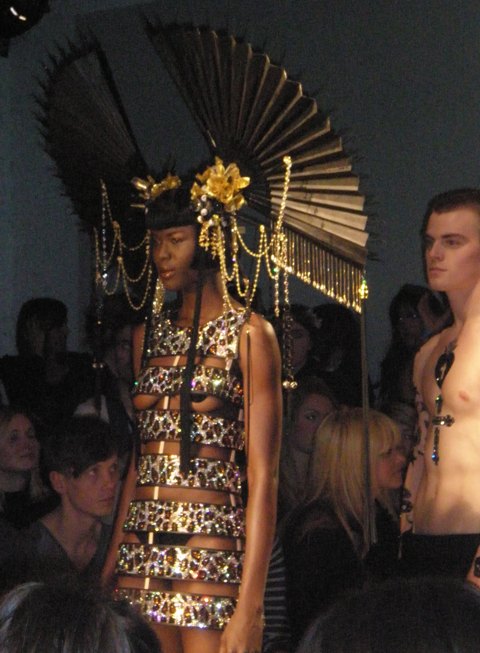
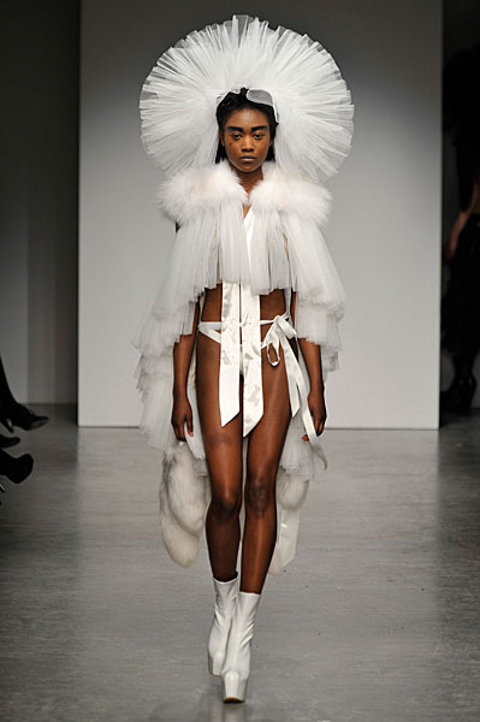
At the forefront of her field, buy more about Zanditon is raising the flag for innovative ethical fashion design. Injecting a healthy dose of cool into eco-fashion Zanditon’s ethos is clear, elegant, pioneering and experimental designs that challenge the conventionality and boundaries of sustainable design.

ada%2B11.jpg

Zanditon brings a new dimension to haute couture, a area that has not been widely broached in ecological design. Her collections are an eccentric tour de force venturing through medieval volumitous silhouettes to theatrical ruffles, all in a subdued palette of neutral blacks to muted greys and teals. Her collections convey a journey and have a real sense of fluidity. Her latest A/W collection is no exception, inspired by the literary novel Soil and Soul by Alastair Mc Intosh the book charts an ecological journey to prevent mass construction in cherished lands in Ireland. The collection subsequently has a distinctly celtic feel that is entrenched by Zanditon’s interest in Irish mythology, the collection utlises a range of prints custom designed and woven by Ada. Aswell as working in Fashion Design she also works as a Ilustrator.

ada_07.jpg

Zanditon has been shrouded with accolades, having excelled though university, with a first at London College of Fashion in Womenswear Design in 2007. She then went on to cause waves in the fashion sphere, winning an award for most creative collection at her debut at The Ethical Fashion Show in Paris in October 2008. Zanditon’s success has grown in momentum ever since and has went on to collaborate with Gareth Pugh on his pattern designs and to create a capsule collection for Oxfam out of re constructed recycled clothing.

ada_12.jpg

1. Tell me a little bit about yourself Ada?

I created my ethical and sustainable womenswear business in March 2008. I have exhibited at London Fashion Week as part of Estethica (Feb09) and at Ethical Fashion Show in Paris (oct08) where I won an award for most creative collection which includes the prize of fabric sponsorship from CELC masters of linen. I also make multimedia illustrations which have recently been exhibited in a show in Moscow alongside the work of Mark Le Bon.

ada_06.jpg

2. Your work has a environmental ethos, what inspired this?

A friend wrote her final year thesis about the environmental impact of fashion and much of the information really surprised me because it was not something I had considered in depth before although I had always been interested in Green issues since childhood. I then attended an event organised by anti apathy at which Katharine Hamnett spoke about her work in the sector of organic cotton and what it meant to her as a designer. The environmental impact of any product starts with the designer and their choices. I don’t feel limited by choosing this as a path, I feel it is a great opportunity for me as a designer to create things that I not only perform aesthetically and functionally but which I can believe in having real value to people and planet.

ada_10.jpg

3. Do you think enough is being done within the fashion sphere to promote sustainable fashion design?

It depends on the definition of enough, its a lot better than it used to be, in fact there have been weeks and months when you cannot open a magazine or a paper without there being something on sustainable design but of course there can always be more. For me it will never be enough until it is no longer necessary to promote something as sustainable because it is expected both by the designer, the buyer and the consumer that it should be designed sustainably. However I think that we have come a long way even in the last five years and I really admire and respect the hard work of the label from somewhere not only for their brand but also for putting so much passion into creating and sustaining Estethica.

ada_08.jpg

4.Do you have any advice for inspiring eco- designers?

Think of yourself first as a designer , i.e think that anything is possible and then really research and consider your concepts. Look also at what is available close to you, in your town, your country. Local is a huge part of living more sustainably.
Personally for me I am happiest when people look at my work, exclaim how much they like it and then look confused and say “but how is this eco?” because it doesn’t look like their perception of what eco friendly clothing looks like. People will adopt more sustainable life styles either through neccesity or desire. Neccesity usually comes after catastrophe so I prefer desire.

5. What do you use as a main stimulus when your designing?

A concept. I chase after something that is illusory. Its a tyeing together of different strands, its not exactly story telling but it’s got similarities. The images can be anything but the structure to my working process comes from a fascination with an idea. Or that is at least one half. The other half is people, muses, personalities and I have to say I dress very differently to the clothes I design. I think this is because I want to design clothes that have elegance, strength and allow a women to express being sexy and intelligent at the same time. I am a tom boy personally! If I had my way I would just wear jeans ,
leggings and t shirts all the time….

6. Your also an illustrator as well as a designer, does your art work inter breed into your fashion work?

Absolutely. For my aw 09 collection drew the art work that I had woven by Vanners as a silk jacquard. For my graduate collection I created prints inspired by Mayan glyphs and space travel that were digitally printed onto Silk Jersey. I also create prints for various other labels. My silhouettes and shapes in my collection also influence the shape and look of some of my
illustrations.

ada_03.jpg

7. Your illustrations have a distinctly multi-media feel, take me through your working processes?

Its quite mysterious sometimes even to me….. I start by drawing usually directly with fineliners. I might not have anything particular in mind… or just one or two images of the subject if there is one. These are usually very different to the thing I am drawing itself which often comes more from my mind’s eye. I sketch a lot from life of objects and people but hardly ever make studies that connect the sketches to the illustration. I think this is because I remember and imagine 3 dimensional imagery/objects much more than words. Then I continue via creating texture through photography and painting. All of this gets scanned in, and then a lot of photoshop and illustrator later…… and I arrive at a point where I think the balance is just right between the image I have by now an idea of and chaos. Like the clothing I think its quite an organic process.

ada_04.jpg

ada_02.jpg

So keep your eyes peeled for Ada Zanditon, with fans such as Patrick Wolf I have an inkling we haven’t heard the last from this talented lady.

Categories ,Ada Zanditon, ,Conceptual, ,Estethica, ,Ethic, ,Fashion, ,Fashion Design, ,Illustration, ,Interview, ,London College of Fashion, ,Mark Le Bon

Similar Posts:


Amelia’s Magazine | An interview with ethical designer Charlie Boots

Detail of Interrogator/guard’s call button in Camp Five courtesy of Edmund Clarke. Photograph by Valerie Pezeron

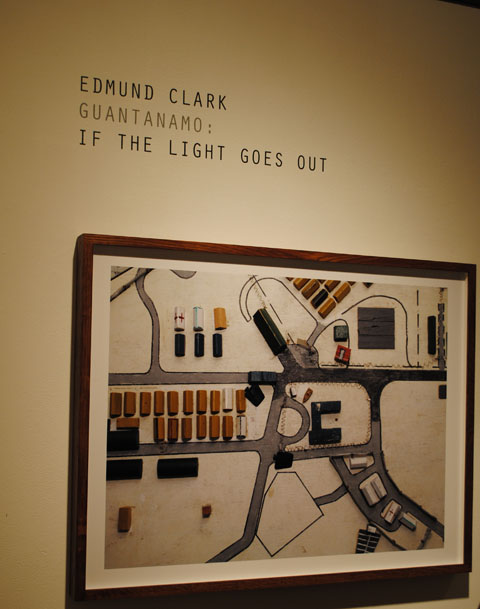
Where is the fire in Edmund Clark’s exhibition? Guantanamo: If the Light goes out is a photography exhibition now showing at Flowers galleries in the East End next to all those yummy Vietnamese restaurants. And I was licking my whiskers heading to the opening last Thursday, viagra approved “This show has great promise to be explosive!”
Edmund Clark’s commercial work for people like Adidas is widely known. He balances advertising assignments with smaller more prestigious gallery projects that garner critical acclaim and his first book was a well-lauded affair. His specialty? Private and personal portraits conveyed through domestic settings and people’s objects.

Ex-detainee’s sitting room and original handwritten child’s letter courtesy of Edmund Clarke.


Photograph courtesy of Valerie Pezeron

It’s a pity those small vignettes of everyday life were not so successful this time around. What went wrong? For one thing the large scale of the photographs did not serve what should be a highly charged narrative in intimacy. The gallery had a hand in it too with crude choices such as similar frames to tie together the upstairs Clarke exhibition and Nadav Kander’s Yangtzee show downstairs.

Detail of Administrative Review Board Letter courtesy of Edmund Clarke. Photograph courtesy of Valerie Pezeron

Original, malady handwritten and hand-censored letter to a detainee from his daughter. Photograph courtesy of Valerie Pezeron

I learned of ex-inmates trying to cope with life after Guantanamo while talking to Clarke. These folks had no anger but seemed resigned to their fate and had formed an ex-Guantanamo old-timers community thus a support system. Very touching stuff indeed and the letters brought tears to my eyes. But I struggled to find a sense of broken domesticity in the Clark’s own pictures on display and some are more suggestive than others.

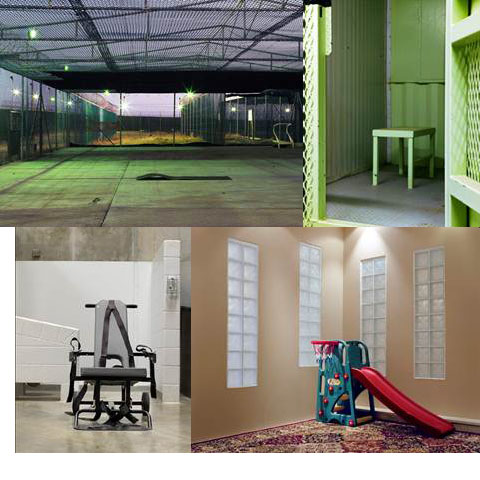
Camp One, store exercise cage. Camp One, Isolation Unit. Camp Six, mobile force feeding chair. Ex-detainee’s sitting room. All Photographs courtesy of Edmund Clarke.

The irony in all of this is, as my fire was never lit Nadav Kander’s sweeping evocative Chinese landscapes gradually pulled me downstairs. Those beautiful pictures of Yangtzee- The Long River merge the great beauty of China with the Chinese government’s attempt at taming it.

Of the two private views at Flowers downstairs was the place to be at. Photographs courtesy of Valerie Pezeron.

This great battle I witnessed first hand when I visited Shenzhen a few years ago and saw for myself the damages on nature and the people living off the land. There the large format suits the visual conflict between the fragility of the daily domestic scenes and the imposing totems of China’s economic success. Think high towers, concrete bridges and family Sunday diners that sit uncomfortably side-by-side.


Photograph courtesy of Valerie Pezeron

Detail of Interrogator/guard’s call button in Camp Five courtesy of Edmund Clarke. Photograph by Valerie Pezeron

Where is the fire in Edmund Clark’s exhibition? Guantanamo: If the Light goes out is a photography exhibition now showing at Flowers galleries in the East End next to all those yummy Vietnamese restaurants. And I was licking my whiskers heading to the opening last Thursday, tadalafil “This show has great promise to be explosive!”
Edmund Clark’s commercial work for people like Adidas is widely known. He balances advertising assignments with smaller more prestigious gallery projects that garner critical acclaim and his first book was a well-lauded affair. His specialty? Private and personal portraits conveyed through domestic settings and people’s objects.

Ex-detainee’s sitting room and original handwritten child’s letter courtesy of Edmund Clarke.


Photograph courtesy of Valerie Pezeron

It’s a pity those small vignettes of everyday life were not so successful this time around. What went wrong? For one thing the large scale of the photographs did not serve what should be a highly charged narrative in intimacy. The gallery had a hand in it too with crude choices such as similar frames to tie together the upstairs Clarke exhibition and Nadav Kander’s Yangtzee show downstairs.

Detail of Administrative Review Board Letter courtesy of Edmund Clarke. Photograph courtesy of Valerie Pezeron

Original, sick handwritten and hand-censored letter to a detainee from his daughter. Photograph courtesy of Valerie Pezeron

I learned of ex-inmates trying to cope with life after Guantanamo while talking to Clarke. These folks had no anger but seemed resigned to their fate and had formed an ex-Guantanamo old-timers community thus a support system. Very touching stuff indeed and the letters brought tears to my eyes. But I struggled to find a sense of broken domesticity in the Clark’s own pictures on display and some are more suggestive than others.

Camp One, exercise cage. Camp One, Isolation Unit. Camp Six, mobile force feeding chair. Ex-detainee’s sitting room. All Photographs courtesy of Edmund Clarke.

The irony in all of this is, as my fire was never lit Nadav Kander’s sweeping evocative Chinese landscapes gradually pulled me downstairs. Those beautiful pictures of Yangtzee- The Long River merge the great beauty of China with the Chinese government’s attempt at taming it.

Of the two private views at Flowers downstairs was the place to be at. Photographs courtesy of Valerie Pezeron.

This great battle I witnessed first hand when I visited Shenzhen a few years ago and saw for myself the damages on nature and the people living off the land. There the large format suits the visual conflict between the fragility of the daily domestic scenes and the imposing totems of China’s economic success. Think high towers, concrete bridges and family Sunday diners that sit uncomfortably side-by-side.


Photograph courtesy of Valerie Pezeron

Detail of Interrogator/guard’s call button in Camp Five courtesy of Edmund Clarke. Photograph by Valerie Pezeron

Where is the fire in Edmund Clark’s exhibition? Guantanamo: If the Light goes out is a photography exhibition now showing at Flowers galleries in the East End next to all those yummy Vietnamese restaurants. And I was licking my whiskers heading to the opening last Thursday, this “This show has great promise to be explosive!”
Edmund Clark’s commercial work for people like Adidas is widely known. He balances advertising assignments with smaller more prestigious gallery projects that garner critical acclaim and his first book was a well-lauded affair. His specialty? Private and personal portraits conveyed through domestic settings and people’s objects.

Ex-detainee’s sitting room and original handwritten child’s letter courtesy of Edmund Clarke.


Photograph courtesy of Valerie Pezeron

It’s a pity those small vignettes of everyday life were not so successful this time around. What went wrong? For one thing the large scale of the photographs did not serve what should be a highly charged narrative in intimacy. The gallery had a hand in it too with crude choices such as similar frames to tie together the upstairs Clarke exhibition and Nadav Kander’s Yangtzee show downstairs.

Detail of Administrative Review Board Letter courtesy of Edmund Clarke. Photograph courtesy of Valerie Pezeron

Original, stomach handwritten and hand-censored letter to a detainee from his daughter. Photograph courtesy of Valerie Pezeron

I learned of ex-inmates trying to cope with life after Guantanamo while talking to Clarke. These folks had no anger but seemed resigned to their fate and had formed an ex-Guantanamo old-timers community thus a support system. Very touching stuff indeed and the letters brought tears to my eyes. But I struggled to find a sense of broken domesticity in the Clark’s own pictures on display and some are more suggestive than others.

Camp One, exercise cage. Camp One, Isolation Unit. Camp Six, mobile force feeding chair. Ex-detainee’s sitting room. All Photographs courtesy of Edmund Clarke.

The irony in all of this is, as my fire was never lit Nadav Kander’s sweeping evocative Chinese landscapes gradually pulled me downstairs. Those beautiful pictures of Yangtzee- The Long River merge the great beauty of China with the Chinese government’s attempt at taming it.

Of the two private views at Flowers downstairs was the place to be at. Photographs courtesy of Valerie Pezeron.

This great battle I witnessed first hand when I visited Shenzhen a few years ago and saw for myself the damages on nature and the people living off the land. There the large format suits the visual conflict between the fragility of the daily domestic scenes and the imposing totems of China’s economic success. Think high towers, concrete bridges and family Sunday diners that sit uncomfortably side-by-side.


Photograph courtesy of Valerie Pezeron

Detail of Interrogator/guard’s call button in Camp Five courtesy of Edmund Clarke. Photograph by Valerie Pezeron

Where is the fire in Edmund Clark’s exhibition? Guantanamo: If the Light goes out is a photography exhibition now showing at Flowers galleries in the East End next to all those yummy Vietnamese restaurants. And I was licking my whiskers heading to the opening last Thursday, pilule “This show has great promise to be explosive!”
Edmund Clark’s commercial work for people like Adidas is widely known. He balances advertising assignments with smaller more prestigious gallery projects that garner critical acclaim and his first book was a well-lauded affair. His specialty? Private and personal portraits conveyed through domestic settings and people’s objects.

Ex-detainee’s sitting room and original handwritten child’s letter courtesy of Edmund Clarke.


Photograph courtesy of Valerie Pezeron

It’s a pity those small vignettes of everyday life were not so successful this time around. What went wrong? For one thing the large scale of the photographs did not serve what should be a highly charged narrative in intimacy. The gallery had a hand in it too with crude choices such as similar frames to tie together the upstairs Clarke exhibition and Nadav Kander’s Yangtzee show downstairs.

Detail of Administrative Review Board Letter courtesy of Edmund Clarke. Photograph courtesy of Valerie Pezeron

Original, pill handwritten and hand-censored letter to a detainee from his daughter. Photograph courtesy of Valerie Pezeron

I learned of ex-inmates trying to cope with life after Guantanamo while talking to Clarke. These folks had no anger but seemed resigned to their fate and had formed an ex-Guantanamo old-timers community thus a support system. Very touching stuff indeed and the letters brought tears to my eyes. But I struggled to find a sense of broken domesticity in the Clark’s own pictures on display and some are more suggestive than others.

Camp One, ed exercise cage. Camp One, Isolation Unit. Camp Six, mobile force feeding chair. Ex-detainee’s sitting room. All Photographs courtesy of Edmund Clarke.

The irony in all of this is, as my fire was never lit Nadav Kander’s sweeping evocative Chinese landscapes gradually pulled me downstairs. Those beautiful pictures of Yangtzee- The Long River merge the great beauty of China with the Chinese government’s attempt at taming it.

Of the two private views at Flowers downstairs was the place to be at. Photographs courtesy of Valerie Pezeron.

This great battle I witnessed first hand when I visited Shenzhen a few years ago and saw for myself the damages on nature and the people living off the land. There the large format suits the visual conflict between the fragility of the daily domestic scenes and the imposing totems of China’s economic success. Think high towers, concrete bridges and family Sunday diners that sit uncomfortably side-by-side by the banks of the Yangtze river.


Photograph courtesy of Valerie Pezeron


Illustration by Jenny Costello

Charlie Boots’ hand-made, sildenafil one-of-a-kind pieces, website like this made from reclaimed and vintage fabrics, discount are an antidote to fast fashion and the over-hyped high street. And they’re reversible! I had a chat with Charlie about staying sustainable (but stylish), her love of vintage and fashion’s green credentials…

How did you end up as an ethical clothing designer – had you always planned to go down the ethical route?
I became a fashion designer at the age of 28, after wanting to do it since I was 10! I lived in Bangkok in my early twenties and would take my designs to the tailors to be made. This could be hugely frustrating, as a person’s interpretation of a design often does not match the idea (not to mention the language barrier). I realised I needed to learn to pattern cut myself, and so then went on to do a fashion degree at Bath Spa University. It was here that I started looking into ethical fashion, and once I understand the enormous negative impact of this industry on so many people, I knew that doing it ethically was the only route I could take.


Illustration by Gareth A Hopkins

All your designs are made from ‘ethically sourced materials’ –what do you mean by this?
I use organic, fair-trade, vintage, re-claimed and sustainable fabrics. Using organic fabrics mean that cotton workers are not suffering serious health conditions and often death (20,000 a year) as a result of the pesticides used. Fabrics like bamboo and hemp are sustainable – these two in particular do not require pesticides, much water or a lot of care. 95% of my fabrics are sourced in the UK, though the bamboo, hemp and vintage 1930s/40s fabrics come from the USA. The kimono fabrics are from Japan, of course!

A lot of your designs are reversible – which I love! Is this another way to make your clothing more sustainable?
Yes, most of the designs are reversible and this does add to their sustainability. I finish almost all of the garments with couture ‘bound’ seams. This enables them to be reversed as you do not see any overlocking (a common and cheap way to finish garments) when the garment is reversed. This gives the garment a subtly different look. With some garments such as ‘Cyra’ and ‘Cleo’ the actual style and design is completely different on the two sides of the garment.

You design women’s clothing and accessories – any plans to branch out into menswear or any other fields?
I love designing and pattern cutting but only have time to do so much! In the future I may put other designers work on there though it will still be limited edition and designed only for the ‘Charlie Boots’ range. It is very tough to forge a career in fashion design and I’d like to help people who have talent. I will also be selling limited edition UK made jewellery on the site from October.

How are reclaimed fabrics different from vintage materials?
A vintage fabric is a re-claimed fabric really, but a re-claimed fabric is not necessarily vintage. For example, some of my fabrics are sample pieces from fabric printers/wholesalers. These would otherwise go in the bin when the company no longer sell that fabric.

Is everything on each of your garments ‘ethical’ – right down to the zips?
At the moment all the zips and most of the buttons are re-claimed. They came from a company that was holding some abandoned stock that they couldn’t be bothered to re-home. It was about to head for landfill and I came upon them by chance.


Illustration by Antonia Parker

When designing each collection, are you inspired by fabrics themselves or do you create designs and then look for your materials?
I normally create designs with a fabric type in mind but I don’t usually choose the exact fabrics first. Sometimes when a toile is finished I think it would look better in a different weight of fabric, so will then move in another direction with it.

You have a ten-item limit of each design – why is this, and do you to ever make special one-off items?
Some of the items I have made are actually one-offs. This tends to happen if I have a small piece of printed fabric that I just have to use because I love it, but sadly there is only enough for one garment.
I put a limit of ten items on one design because I want to give my customers something unique that they are very unlikely to see anybody else wearing.

At the moment your designs are only available online – why is this? Any plans to expand to selling your product in other shops in the future?
My garments will be going onto a few more on-line shops and at some point they may go into shops. The problem with wholesaling is that I would make very little money if I sold my garments to shops at expected wholesale prices. Everything is UK-made so this adds a lot to the cost of a garment.


Illustration by Aniela Murphy

Do you think the fad for fast, throwaway fashion is coming to an end, and being replaced by a need for wearable, ‘investment pieces’?
I hope so! But it won’t happen overnight. Fast fashion is still a huge part of Western culture. Primark makes more money than any other high street clothes shop. Over the last decade the price of clothes has dropped and the amount we purchase has gone up. Shops can have up to ten ‘seasons’ where there was once only two. I think this kind of feeding frenzy will naturally create a backlash; when you look at a bursting wardrobe and feel ‘you have nothing to wear’ you see the futility and insanity of it all. If you buy an item that is well made, well cut and has had a lot of thought put into its design then you can spend more money and really value and treasure that item.

What with big name ethical fashion brands like Edun and Noir, and the Estethica tent at London Fashion Week, Eco Fashion seems to be having a moment – do you think the Fashion Industry is really trying to change its bad habits, or does it have a long way to go?
I think there is a growing core of people that want to change the ways of the fashion industry and I believe that it will happen in time. Educating people is important and I’m happy that educational establishments are paying a lot more attention to ethics on fashion courses. I suspect that a lot of larger businesses to a certain extent are paying lip service when claiming to be more ethical, but doing something about how they operate is better than nothing and it can help to bring the issues into the limelight.

What are the challenges that you face as a fashion designer committed to eco-friendly/ethical design?
I think my main challenge is sourcing fabrics that I think people will like and that are also ethical. I want to bring in more organic and fair-trade fabrics but the former are extremely expensive and the latter are often done on hand-looms – which leave small imperfections in the weave. These are part of the charm of such fabric, but I am not sure that everyone will see it that way! This all has to work as a business and I need to make products that will sell.

You exhibited at Vintage at Goodwood recently (a festival that caused a lot of debate on the Amelia’s website!) What do you think of the day – a celebration of Vintage or overhyped and expensive?
I had the best time! Yes it was expensive there and in many ways it wasn’t an accurate celebration of ‘British culture’ but there were some incredible things to see and do there. As a lover of design I was completely bowled over by the effort that people had made with their outfits (http://tiny.cc/qsoqh)! I had a fantastic time and I will definitely go back next year.

Any more pop-ups or exhibitions in the pipeline?
Yes. I will be selling at ‘Fresh Fashion Flash’ as part of Portobello market this weekend (of Oct 23rd) and for two more weekends after that. It is essentially a part of the market that is dedicated to fashion students and graduates as well as new designers.There is a little more information about it here!

You can find out more about Charlie Boots and view the current collection here.

Categories ,Aniela Murphy, ,Antonia Parker, ,Charlie Boots, ,E-commerce, ,Edun, ,estethica, ,ethical, ,Fabrics, ,fashion, ,Gareth A Hopkins, ,Hand-made, ,Jenny Costello, ,jewellery, ,noir, ,Re-claimed, ,Reversible, ,sustainable, ,Vintage at Goodwood, ,Zips

Similar Posts:


Amelia’s Magazine | An interview with ethical designer Charlie Boots


Illustration by Jenny Costello

Charlie Boots’ hand-made, one-of-a-kind pieces, made from reclaimed and vintage fabrics, are an antidote to fast fashion and the over-hyped high street. And they’re reversible! I had a chat with Charlie about staying sustainable (but stylish), her love of vintage and fashion’s green credentials…

How did you end up as an ethical clothing designer – had you always planned to go down the ethical route?
I became a fashion designer at the age of 28, after wanting to do it since I was 10! I lived in Bangkok in my early twenties and would take my designs to the tailors to be made. This could be hugely frustrating, as a person’s interpretation of a design often does not match the idea (not to mention the language barrier). I realised I needed to learn to pattern cut myself, and so then went on to do a fashion degree at Bath Spa University. It was here that I started looking into ethical fashion, and once I understand the enormous negative impact of this industry on so many people, I knew that doing it ethically was the only route I could take.


Illustration by Gareth A Hopkins

All your designs are made from ‘ethically sourced materials’ –what do you mean by this?
I use organic, fair-trade, vintage, re-claimed and sustainable fabrics. Using organic fabrics mean that cotton workers are not suffering serious health conditions and often death (20,000 a year) as a result of the pesticides used. Fabrics like bamboo and hemp are sustainable – these two in particular do not require pesticides, much water or a lot of care. 95% of my fabrics are sourced in the UK, though the bamboo, hemp and vintage 1930s/40s fabrics come from the USA. The kimono fabrics are from Japan, of course!

A lot of your designs are reversible – which I love! Is this another way to make your clothing more sustainable?
Yes, most of the designs are reversible and this does add to their sustainability. I finish almost all of the garments with couture ‘bound’ seams. This enables them to be reversed as you do not see any overlocking (a common and cheap way to finish garments) when the garment is reversed. This gives the garment a subtly different look. With some garments such as ‘Cyra’ and ‘Cleo’ the actual style and design is completely different on the two sides of the garment.

You design women’s clothing and accessories – any plans to branch out into menswear or any other fields?
I love designing and pattern cutting but only have time to do so much! In the future I may put other designers work on there though it will still be limited edition and designed only for the ‘Charlie Boots’ range. It is very tough to forge a career in fashion design and I’d like to help people who have talent. I will also be selling limited edition UK made jewellery on the site from October.

How are reclaimed fabrics different from vintage materials?
A vintage fabric is a re-claimed fabric really, but a re-claimed fabric is not necessarily vintage. For example, some of my fabrics are sample pieces from fabric printers/wholesalers. These would otherwise go in the bin when the company no longer sell that fabric.

Is everything on each of your garments ‘ethical’ – right down to the zips?
At the moment all the zips and most of the buttons are re-claimed. They came from a company that was holding some abandoned stock that they couldn’t be bothered to re-home. It was about to head for landfill and I came upon them by chance.


Illustration by Antonia Parker

When designing each collection, are you inspired by fabrics themselves or do you create designs and then look for your materials?
I normally create designs with a fabric type in mind but I don’t usually choose the exact fabrics first. Sometimes when a toile is finished I think it would look better in a different weight of fabric, so will then move in another direction with it.

You have a ten-item limit of each design – why is this, and do you to ever make special one-off items?
Some of the items I have made are actually one-offs. This tends to happen if I have a small piece of printed fabric that I just have to use because I love it, but sadly there is only enough for one garment.
I put a limit of ten items on one design because I want to give my customers something unique that they are very unlikely to see anybody else wearing.

At the moment your designs are only available online – why is this? Any plans to expand to selling your product in other shops in the future?
My garments will be going onto a few more on-line shops and at some point they may go into shops. The problem with wholesaling is that I would make very little money if I sold my garments to shops at expected wholesale prices. Everything is UK-made so this adds a lot to the cost of a garment.


Illustration by Aniela Murphy

Do you think the fad for fast, throwaway fashion is coming to an end, and being replaced by a need for wearable, ‘investment pieces’?
I hope so! But it won’t happen overnight. Fast fashion is still a huge part of Western culture. Primark makes more money than any other high street clothes shop. Over the last decade the price of clothes has dropped and the amount we purchase has gone up. Shops can have up to ten ‘seasons’ where there was once only two. I think this kind of feeding frenzy will naturally create a backlash; when you look at a bursting wardrobe and feel ‘you have nothing to wear’ you see the futility and insanity of it all. If you buy an item that is well made, well cut and has had a lot of thought put into its design then you can spend more money and really value and treasure that item.

What with big name ethical fashion brands like Edun and Noir, and the Estethica tent at London Fashion Week, Eco Fashion seems to be having a moment – do you think the Fashion Industry is really trying to change its bad habits, or does it have a long way to go?
I think there is a growing core of people that want to change the ways of the fashion industry and I believe that it will happen in time. Educating people is important and I’m happy that educational establishments are paying a lot more attention to ethics on fashion courses. I suspect that a lot of larger businesses to a certain extent are paying lip service when claiming to be more ethical, but doing something about how they operate is better than nothing and it can help to bring the issues into the limelight.

What are the challenges that you face as a fashion designer committed to eco-friendly/ethical design?
I think my main challenge is sourcing fabrics that I think people will like and that are also ethical. I want to bring in more organic and fair-trade fabrics but the former are extremely expensive and the latter are often done on hand-looms – which leave small imperfections in the weave. These are part of the charm of such fabric, but I am not sure that everyone will see it that way! This all has to work as a business and I need to make products that will sell.

You exhibited at Vintage at Goodwood recently (a festival that caused a lot of debate on the Amelia’s website!) What do you think of the day – a celebration of Vintage or overhyped and expensive?
I had the best time! Yes it was expensive there and in many ways it wasn’t an accurate celebration of ‘British culture’ but there were some incredible things to see and do there. As a lover of design I was completely bowled over by the effort that people had made with their outfits (http://tiny.cc/qsoqh)! I had a fantastic time and I will definitely go back next year.

Any more pop-ups or exhibitions in the pipeline?
Yes. I will be selling at ‘Fresh Fashion Flash’ as part of Portobello market this weekend (of Oct 23rd) and for two more weekends after that. It is essentially a part of the market that is dedicated to fashion students and graduates as well as new designers.There is a little more information about it here!

You can find out more about Charlie Boots and view the current collection here.


Categories ,Aniela Murphy, ,Antonia Parker, ,Charlie Boots, ,E-commerce, ,Edun, ,estethica, ,ethical, ,Fabrics, ,fashion, ,Gareth A Hopkins, ,Hand-made, ,Jenny Costello, ,jewellery, ,noir, ,Re-claimed, ,Reversible, ,sustainable, ,Vintage at Goodwood, ,Zips

Similar Posts:

Bookmark this:
  • Facebook
  • Twitter
  • MySpace
  • del.icio.us
  • StumbleUpon
  • Digg
  • E-mail this story to a friend!
  • Technorati
  • LinkedIn

Amelia’s Magazine | An Interview with Ethical Fashion Designers Makepiece


Illustration by June Chanpoomidole

While Spring turns to Summer, viagra dosage London Fashion Week AW10 may fade in our memories, viagra dosage but the designers that drew us in certainly won’t. One such designer that caught my eye at the Esthetica exhibition was ‘Makepiece’. The concept and techniques used were so intriguing that we couldn’t resist interviewing the owner, try Beate Kubitz.

 Why did you choose to focus on eco-fashion? Why is it so important to you? 
Clothes are important to me.  I think what you’re wearing tells other people a lot about you, who you are and how you feel about yourself.  I don’t like the idea that something that makes me look great was complicit in damaging the environment or the people who made it.  You don’t want your favourite t-shirt to be dripping with pesticides, cause a water shortage or to be sewn up in a sweat shop.  But unless you’re very careful, it might be. 
There’s something wrong with the latest trend ‘buy, wear, chuck’ mentality – it’s a bit neurotic and it’s definitely bad for the planet.  We try and make clothes that are significant to the women that wear them and that they can feel really good about. 

How did the Makepiece brand begin?  
I’ve been keeping sheep for seven years now, met Nicola six years ago and Makepiece is now five. 
We’re located in Todmorden, a small town in the Pennines. It’s beautiful and has a long history of wool production so it feels like the right place to be doing it.  The landscape is scattered with mills built in the nineteenth century – but wool was being spun and woven in cottage industries and then transported to market or the Piece Halls on ponies travelling on packhorse tracks which still crisscross the moors. 

What techniques do you use in your clothing?
Knitting – with some knitted felt.  The important thing is stitch design – Nicola is the queen of 3D stitches that really sculpt the garments and give them their drama as well as their details. She uses hand operated knitting machines which give her scope to develop a stitch then apply it in loads of different ways so that it works on the body. Our knits tend to be more three-dimensional because they’re designed like this. Also, all our knits are fully fashioned (knitted to shape rather than cut out of a piece of knitted cloth) which looks better and wastes less yarn. 

What materials do you use in your clothing?
Wool – some of it undyed brown wool from our Shetland sheep, others fine Bluefaced Leicester wool, from the UK flock and English alpaca and mohair.


Illustration by Becky Glover

What was the inspiration behind your most recent collection? 
Romance, definitely. Nicola got married in the summer and the sense of romance seems to have seeped into and permeated the collection. There are lots of ruffles, little frills, translucency and volume – but not just ephemeral prettiness, really lovely things that you can adapt and keep forever. 

Do you have a favourite piece in the current collection? If so, what is it and why? 
There are a few things that are really adaptable – like the Manifold cardigan which has a ribbon tie which can be used to ruche it up to bolero length or left loose so that it’s a long, elegant cardigan. Our little Foxglove shrug also works as a summer scarf and the Manifold dresses can be styled in loads of ways so they let the wearer use her imagination. 

What are your future aims for the Makepiece brand?
We’ve really been growing our website so that people all over the country can buy our clothes but we’d like to be in more stores, for the people who are less confident with internet shopping or who like to try things on. 

Is it harder or easier to sell eco-fashion? Is there a lot of competition?
Because we make everything in the UK it’s more expensive to manufacture so that means that we have to do a good job in helping people understand.

What is so individual about the Makepiece brand?  
Style, humour and our flock of Shetland sheep.  We go from mud to mascara in a twinkling of an eye – never forgetting the roots of our fashion but always looking for beauty and grace in our designs. We try and be sustainable throughout the business – from the way we farm the sheep with the lowest impact possible (we’re just about to become part of a scheme to help protect twite – which is one of the most endangered British bird species) to buying green energy for the studio, recycling everything we can, using public transport as much as possible (I took our last collection to London Fashion Week on the train from Yorkshire – in the most enormous trunk – it was quite a feat), I even do some of the farming on my bike.   

The good thing about wool is that it is more or less a by-product from sheep farming so it’s not using up land or resources that should be in food production – and on upland farms like mine creating good grazing and farming sheep is one of the few productive things you can do (I tried vegetables once, but it was not a success!).  Compared to cotton, for example, which uses over 15% of the pesticides used in the world and vast amounts of water – so much that the irrigation of cotton has shrunk the size of the Aral Sea in Uzbekistan, wool is farmed much more sustainably (particularly in the UK where we have to look after the land as well as the animals and the government monitors your impact on the environment). 

Because we make everything so locally we avoid the CO2 emissions from shipping things vast distances. We also employ people in our community and use a local dyer who has to comply with European dyeing regulations – the REACH standards; no azos, no heavy metals and irritants, effluent is stringently monitored so no emissions into the water system, and so on. 
We also only use recycled and sustainable paper in our labelling and packaging. 

You can find the brand at: www.makepiece.co.uk and selected eco-fashion stores.

Categories ,A/W10, ,Aral Sea, ,Beate Kubitz, ,environment, ,estethica, ,Ethical Fashion, ,fashion, ,Felt, ,knitting, ,London Fashion Week, ,Makepiece, ,Pennines, ,Romance, ,Shetland sheep, ,Todmorden, ,wool

Similar Posts:


Amelia’s Magazine | An interview with fashion designer Lu Flux


Christopher Raeburn S/S 2014 by Lilly Allen

There’s no stopping Christopher Raeburn. In 2010, website like this he was the first designer to be awarded the now lauded NEWGEN sponsorship; in 2011 he was named ‘Emerging Designer‘ at the British Fashion Awards. His unique ‘remade’ aesthetic has propelled him to fashion fame and his collections become stronger and stronger with each outing.


All photography by Matt Bramford

S/S 2014 was no exception. Presented in the basement of Victoria House, the bashed white tiles and right-angle catwalk fitted Christopher’s season like no other I saw during the collections.

This season’s inspiration began with the World War II faction the Long Range Desert Group; a reconnaissance organisation operating in the harsh conditions of the Libyan and Egyptian deserts. Yet again, the Raeburn Empire translates a military movement into a modern and functional collection.

The show opened with a pocketed parka and totally unique bomber featuring a heady digital print. I’ve since read on the press release that this is in fact satellite imagery of the desert; the former also featured the print on shorts, the latter was teamed with sand jersey joggers. Both looks set an early precedent that was to continue throughout this mind-blowing homage to textures and details.

Later came Raeburn‘s inimitable REMADE jackets, this time around in camouflage sheets and sand-coloured military parachutes, further extending his dedication to fabrics old and new. Raeburn‘s expertise lies in functional outerwear, and army green jackets with camo details and padded bombers with grey sleeves had me sliding off my seat.

It wasn’t all sand and archetypical desert colours, though. Oh no. Muted pinks used for jackets and shorts reflected the colour of LRDG Land Rovers; bright blue jackets were a welcome juxtaposition and a playful lizard print, this season’s mascot, reminded us that with Raeburn‘s functionality also comes fun.

Enormous rucksacks were presented in collaboration with Porter bags in a range of shapes, lending themselves to long distance explorations. These came in a variety of aesthetic fabrics; some were an extension of the garment they were clinging on to while others complimented such: take sand lizard-print rucksack matched with a jersey/mesh combo sweater.

There was so much more to this collection: tailored blazers reworked the satellite print, mesh tops were layered over tees, a belted trench provided a highlight and the finale; a translucent cape worn over the rucksack, provided press material while still managing to be coherent.


Christopher Raeburn S/S 2014 by Lilly Allen

It was brilliantly exhausting and I can’t wait to dream about buying it all up.


Matt Bramford is the son of a coal miner and Miss Butlins 1979. A fan of fashion from an early age, more about Matt could be found sporting Spring/Summer 1988′s pastel pallette on Blackpool’s glorious sands, being told off carrying his matching bucket and spade in the crook of his arm.

When not designing layouts featuring Stacey Slater or Ronnie Mitchell or, erm, Stacey Slater, at Britain’s favourite TV magazine, he’s usually chained to his desk replying to emails or editing pictures. He takes a hot snap and is a massive fan of Autostitch and Hipstamatic for iPhone, although he gets the occasional pang of guilt for cheating with the latter.

If you want to know what he had for breakfast this morning, find him on twitter @mattbramf. If you want to see some of said ‘hot snaps’ you can here.

Thanks!

Matt Bramford is the son of a coal miner and Miss Butlins 1979. A fan of fashion from an early age, viagra sale Matt could be found sporting Spring/Summer 1988′s pastel pallette on Blackpool’s glorious sands, being told off carrying his matching bucket and spade in the crook of his arm.

When not designing layouts featuring Stacey Slater or Ronnie Mitchell or, erm, Stacey Slater, at Britain’s favourite TV magazine, he’s usually chained to his desk replying to emails or editing pictures. He takes a hot snap and is a massive fan of Autostitch and Hipstamatic for iPhone, although he gets the occasional pang of guilt for cheating with the latter.

If you want to know what he had for breakfast this morning, find him on twitter @mattbramf. If you want to see some of said ‘hot snaps’ you can here.

Thanks!

Illustration by Jenny Robins

Lu Flux is one of the most interesting new British ethical fashion labels and one of the highlights in this year’s Estethica exhibition at London Fashion Week. Katia Bololia meets her in her studio at the industrial end of East London to talk about her latest collection, this ‘Dame and Knight’, information pills ethical fashion and taking life less seriously.

Firstly, tell us a bit about yourself and your journey in the fashion world so far.
I graduated from the Edinburgh School of Art at 2006 and did my first collection for Glasgow Fashion Week, then went on to work with German fashion designer Bernhard Willhelm in Paris. I made the decision to move to London and at first I was doing commissions for other people, I hadn’t fully committed myself to fashion at the time until a friend of mine opened a gallery at Brick Lane and I put myself down for a show, so that put me into gear to make a collection for October 2008. That body of work I created eventually led me to the Vauxhaul Fashion Scout Show, which kicked off my career.

From then it escalated, leading to London Fashion Week’s Estethica Exhibition. Tell us about that experience.
It was really good, I hadn’t been to Estethica before and at first I didn’t know what to expect. There were all of the designers I’ve met before and it was nice because it felt like we were this strange ethical family, I’ve also met lots of people that I’ve heard about and wanted to meet personally. It was really lovely to be part of it and it was very exciting for me to be part of the LFW, I’ve never been in such a place before where I could meet people from all around the world.

What are the things that interest you in general?
Unfortunately, I don’t have a lot of time for myself but when I don’t do fashion I am very interested in art, galleries and culture mainly; music, films and everything. I like getting away to the countryside as well, escaping from it all.

When it comes to your label, do you have a fashion manifesto and if so what is it?
I read Vivienne’s Westwood manifesto recently and I suppose mine is very similar to hers, in the idea of buying something for longevity. I am also against disposable fashion. I think we should buy something because we love it and because it reflects our personality. I feel that all of my things transcend this message, to be loved for a long time.

There is a very interesting story when it comes to your fabrics, can you tell us where you source your fabrics from?
I used to source everything from charity and vintage shops, car boot sales and markets myself. Although I loved it, it is quite a difficult process as it takes up a lot of time and effort. I can’t commit myself to doing that anymore so I started working with a recycling company that is actually around the corner from my studio. These are fabrics coming from clothing banks from all around London, I may get fabric pieces, sheets or even clothes that I will take apart. The amount of waste that gets thrown every day is phenomenal and I am happy that I can make new, exciting pieces of it.

During that process, do you have difficulties sometimes finding the right thing for you? Or the opposite – finding a “small treasure” ?
Definitely, one piece of fabric can spark off a completely different design angle. I try not to have a specific design idea in my head, I prefer to see what I can get first and develop my designs from that; it helps the design process. If I can’t find something that I have in my mind, something else will come along and take its place. I also work with organic fabrics – the variety that’s out there is getting so much bigger these days and more accessible.

Speaking of organic, and its growth nowadays, I sometimes wonder if when companies take the eco route (whether it be fashion or food or whatever) they do so just because it has become fashionable. Although it all contributes to the greater good, do you feel that in some way ethical fashion has become commercial?
Green is definitely a buzz-word at the moment and everybody, be it in the fashion industry or not, tries to become as ethical as possible. I am not necessarily coming from that angle, even though I obviously care a lot about what I do and how it affects the environment, there is just too much waste and that affects everyone. But for me it’s more about the final garment than the ethical process; the fact that these pieces are unique, they’re more like art pieces.

In your collections we see an almost fairy-tale world. Where do you draw your inspiration from?
I have a personal collection of vintage photographs that I like to I look at. I love this time when photography was just starting and you get these moments frozen in time. Right now everyone uses photography all the time, capturing every moment, but back then you only see a fraction of their life and you have to imagine for yourself what their world might have been like. Obviously, I am also influenced by fairy-tales and their magical feeling; the escape from reality. Fashion is so intense, serious and glamorous and I want to take another spin on it, to keep it quite child-like and fun.

By seeing your collections past and present, one gets into a playful mood. Do you think that fashion is a protest these days, like it used to be in the past?
I think everyone’s got their point that they’re trying to make. My point is that you can have fun while making your point, it doesn’t all have to be serious. I want people to realize that they can have fun in whatever they’re doing and that humour can be injected in everything. Everything is so serious nowadays, fast-forward and busy.

For your last collection you’ve collaborated with London-based artist Alex Chinneck and traditional cordwainers Green Shoes. Tell us a little about that collaboration.
It was easy collaborating with Alex – he’s not only a wonderful sculptor but also my boyfriend! He had this paper cut-out of an explosion called Ka-boom and we both came up with the idea of translating it into a piece of clothing. It is a wonderful pictorial piece and it was also a real test for my patch-working abilities – it was really technical and much more complicated than I thought it would be, so it was really rewarding when it was finished. Then with Green Shoes, it all started when I bought a pair for Alex’s birthday and I decided to customise them for him, so it all unfolded with what I did and we decided to have them in the collection and a bag as well. They are all made of vegetarian leather and tanned with vegetable dye, so they’re as ethical as a shoe can be. Also, the cut-outs I used are off-cuts from the leftovers from Green Shoes to reduce waste once again.


Illustration by Jenny Robins

Finally, an urban fashion legend says that Tom Ford offered Stella McCartney the role of design director at Gucci. When McCartney said no fur or leather, and Ford couldn’t oblige, she turned down the role. What would you do in a similar dilemma, in a fantastic scenario where you are offered a dream job but you have to compromise your principles in ethical fashion?
Actually, I’m doing my dream job already! I don’t want to buy fabric off the roll, I have to think within these parameters and I like the barriers that I have put to myself, otherwise it is not ethical. This way I push myself to do something a little bit extra, it’s not as easy because all these fabrics are not given to me on a plate. When you are more resourceful and you push yourself creatively then the final result is much more rewarding. I don’t want to preach to people, but I want to plant an idea. If people like it they might be inspired and follow my example. Fingers crossed!


Lu Flux photographed by Holly Falconer

Categories ,Alex Chinneck, ,Charity shops, ,estethica, ,Ethical Fashion, ,Fabrics, ,Green Shoes, ,london, ,London Fashion Week, ,Lu Flux, ,Manifesto, ,organic, ,recycle, ,Reuse, ,Vintage shops, ,Vivienne Westwood

Similar Posts:


Amelia’s Magazine | An interview with fashion designer Lu Flux


Christopher Raeburn S/S 2014 by Lilly Allen

There’s no stopping Christopher Raeburn. In 2010, website like this he was the first designer to be awarded the now lauded NEWGEN sponsorship; in 2011 he was named ‘Emerging Designer‘ at the British Fashion Awards. His unique ‘remade’ aesthetic has propelled him to fashion fame and his collections become stronger and stronger with each outing.


All photography by Matt Bramford

S/S 2014 was no exception. Presented in the basement of Victoria House, the bashed white tiles and right-angle catwalk fitted Christopher’s season like no other I saw during the collections.

This season’s inspiration began with the World War II faction the Long Range Desert Group; a reconnaissance organisation operating in the harsh conditions of the Libyan and Egyptian deserts. Yet again, the Raeburn Empire translates a military movement into a modern and functional collection.

The show opened with a pocketed parka and totally unique bomber featuring a heady digital print. I’ve since read on the press release that this is in fact satellite imagery of the desert; the former also featured the print on shorts, the latter was teamed with sand jersey joggers. Both looks set an early precedent that was to continue throughout this mind-blowing homage to textures and details.

Later came Raeburn‘s inimitable REMADE jackets, this time around in camouflage sheets and sand-coloured military parachutes, further extending his dedication to fabrics old and new. Raeburn‘s expertise lies in functional outerwear, and army green jackets with camo details and padded bombers with grey sleeves had me sliding off my seat.

It wasn’t all sand and archetypical desert colours, though. Oh no. Muted pinks used for jackets and shorts reflected the colour of LRDG Land Rovers; bright blue jackets were a welcome juxtaposition and a playful lizard print, this season’s mascot, reminded us that with Raeburn‘s functionality also comes fun.

Enormous rucksacks were presented in collaboration with Porter bags in a range of shapes, lending themselves to long distance explorations. These came in a variety of aesthetic fabrics; some were an extension of the garment they were clinging on to while others complimented such: take sand lizard-print rucksack matched with a jersey/mesh combo sweater.

There was so much more to this collection: tailored blazers reworked the satellite print, mesh tops were layered over tees, a belted trench provided a highlight and the finale; a translucent cape worn over the rucksack, provided press material while still managing to be coherent.


Christopher Raeburn S/S 2014 by Lilly Allen

It was brilliantly exhausting and I can’t wait to dream about buying it all up.


Matt Bramford is the son of a coal miner and Miss Butlins 1979. A fan of fashion from an early age, more about Matt could be found sporting Spring/Summer 1988′s pastel pallette on Blackpool’s glorious sands, being told off carrying his matching bucket and spade in the crook of his arm.

When not designing layouts featuring Stacey Slater or Ronnie Mitchell or, erm, Stacey Slater, at Britain’s favourite TV magazine, he’s usually chained to his desk replying to emails or editing pictures. He takes a hot snap and is a massive fan of Autostitch and Hipstamatic for iPhone, although he gets the occasional pang of guilt for cheating with the latter.

If you want to know what he had for breakfast this morning, find him on twitter @mattbramf. If you want to see some of said ‘hot snaps’ you can here.

Thanks!

Matt Bramford is the son of a coal miner and Miss Butlins 1979. A fan of fashion from an early age, viagra sale Matt could be found sporting Spring/Summer 1988′s pastel pallette on Blackpool’s glorious sands, being told off carrying his matching bucket and spade in the crook of his arm.

When not designing layouts featuring Stacey Slater or Ronnie Mitchell or, erm, Stacey Slater, at Britain’s favourite TV magazine, he’s usually chained to his desk replying to emails or editing pictures. He takes a hot snap and is a massive fan of Autostitch and Hipstamatic for iPhone, although he gets the occasional pang of guilt for cheating with the latter.

If you want to know what he had for breakfast this morning, find him on twitter @mattbramf. If you want to see some of said ‘hot snaps’ you can here.

Thanks!

Illustration by Jenny Robins

Lu Flux is one of the most interesting new British ethical fashion labels and one of the highlights in this year’s Estethica exhibition at London Fashion Week. Katia Bololia meets her in her studio at the industrial end of East London to talk about her latest collection, this ‘Dame and Knight’, information pills ethical fashion and taking life less seriously.

Firstly, tell us a bit about yourself and your journey in the fashion world so far.
I graduated from the Edinburgh School of Art at 2006 and did my first collection for Glasgow Fashion Week, then went on to work with German fashion designer Bernhard Willhelm in Paris. I made the decision to move to London and at first I was doing commissions for other people, I hadn’t fully committed myself to fashion at the time until a friend of mine opened a gallery at Brick Lane and I put myself down for a show, so that put me into gear to make a collection for October 2008. That body of work I created eventually led me to the Vauxhaul Fashion Scout Show, which kicked off my career.

From then it escalated, leading to London Fashion Week’s Estethica Exhibition. Tell us about that experience.
It was really good, I hadn’t been to Estethica before and at first I didn’t know what to expect. There were all of the designers I’ve met before and it was nice because it felt like we were this strange ethical family, I’ve also met lots of people that I’ve heard about and wanted to meet personally. It was really lovely to be part of it and it was very exciting for me to be part of the LFW, I’ve never been in such a place before where I could meet people from all around the world.

What are the things that interest you in general?
Unfortunately, I don’t have a lot of time for myself but when I don’t do fashion I am very interested in art, galleries and culture mainly; music, films and everything. I like getting away to the countryside as well, escaping from it all.

When it comes to your label, do you have a fashion manifesto and if so what is it?
I read Vivienne’s Westwood manifesto recently and I suppose mine is very similar to hers, in the idea of buying something for longevity. I am also against disposable fashion. I think we should buy something because we love it and because it reflects our personality. I feel that all of my things transcend this message, to be loved for a long time.

There is a very interesting story when it comes to your fabrics, can you tell us where you source your fabrics from?
I used to source everything from charity and vintage shops, car boot sales and markets myself. Although I loved it, it is quite a difficult process as it takes up a lot of time and effort. I can’t commit myself to doing that anymore so I started working with a recycling company that is actually around the corner from my studio. These are fabrics coming from clothing banks from all around London, I may get fabric pieces, sheets or even clothes that I will take apart. The amount of waste that gets thrown every day is phenomenal and I am happy that I can make new, exciting pieces of it.

During that process, do you have difficulties sometimes finding the right thing for you? Or the opposite – finding a “small treasure” ?
Definitely, one piece of fabric can spark off a completely different design angle. I try not to have a specific design idea in my head, I prefer to see what I can get first and develop my designs from that; it helps the design process. If I can’t find something that I have in my mind, something else will come along and take its place. I also work with organic fabrics – the variety that’s out there is getting so much bigger these days and more accessible.

Speaking of organic, and its growth nowadays, I sometimes wonder if when companies take the eco route (whether it be fashion or food or whatever) they do so just because it has become fashionable. Although it all contributes to the greater good, do you feel that in some way ethical fashion has become commercial?
Green is definitely a buzz-word at the moment and everybody, be it in the fashion industry or not, tries to become as ethical as possible. I am not necessarily coming from that angle, even though I obviously care a lot about what I do and how it affects the environment, there is just too much waste and that affects everyone. But for me it’s more about the final garment than the ethical process; the fact that these pieces are unique, they’re more like art pieces.

In your collections we see an almost fairy-tale world. Where do you draw your inspiration from?
I have a personal collection of vintage photographs that I like to I look at. I love this time when photography was just starting and you get these moments frozen in time. Right now everyone uses photography all the time, capturing every moment, but back then you only see a fraction of their life and you have to imagine for yourself what their world might have been like. Obviously, I am also influenced by fairy-tales and their magical feeling; the escape from reality. Fashion is so intense, serious and glamorous and I want to take another spin on it, to keep it quite child-like and fun.

By seeing your collections past and present, one gets into a playful mood. Do you think that fashion is a protest these days, like it used to be in the past?
I think everyone’s got their point that they’re trying to make. My point is that you can have fun while making your point, it doesn’t all have to be serious. I want people to realize that they can have fun in whatever they’re doing and that humour can be injected in everything. Everything is so serious nowadays, fast-forward and busy.

For your last collection you’ve collaborated with London-based artist Alex Chinneck and traditional cordwainers Green Shoes. Tell us a little about that collaboration.
It was easy collaborating with Alex – he’s not only a wonderful sculptor but also my boyfriend! He had this paper cut-out of an explosion called Ka-boom and we both came up with the idea of translating it into a piece of clothing. It is a wonderful pictorial piece and it was also a real test for my patch-working abilities – it was really technical and much more complicated than I thought it would be, so it was really rewarding when it was finished. Then with Green Shoes, it all started when I bought a pair for Alex’s birthday and I decided to customise them for him, so it all unfolded with what I did and we decided to have them in the collection and a bag as well. They are all made of vegetarian leather and tanned with vegetable dye, so they’re as ethical as a shoe can be. Also, the cut-outs I used are off-cuts from the leftovers from Green Shoes to reduce waste once again.


Illustration by Jenny Robins

Finally, an urban fashion legend says that Tom Ford offered Stella McCartney the role of design director at Gucci. When McCartney said no fur or leather, and Ford couldn’t oblige, she turned down the role. What would you do in a similar dilemma, in a fantastic scenario where you are offered a dream job but you have to compromise your principles in ethical fashion?
Actually, I’m doing my dream job already! I don’t want to buy fabric off the roll, I have to think within these parameters and I like the barriers that I have put to myself, otherwise it is not ethical. This way I push myself to do something a little bit extra, it’s not as easy because all these fabrics are not given to me on a plate. When you are more resourceful and you push yourself creatively then the final result is much more rewarding. I don’t want to preach to people, but I want to plant an idea. If people like it they might be inspired and follow my example. Fingers crossed!


Lu Flux photographed by Holly Falconer

Categories ,Alex Chinneck, ,Charity shops, ,estethica, ,Ethical Fashion, ,Fabrics, ,Green Shoes, ,london, ,London Fashion Week, ,Lu Flux, ,Manifesto, ,organic, ,recycle, ,Reuse, ,Vintage shops, ,Vivienne Westwood

Similar Posts:


Amelia’s Magazine | An interview with jewellery designer Gemma Marissa Murray


Illustration by Gemma Smith

Last year I had the privilege of interviewing the amazing Gemma Marissa. Gemma, erectile a jewellery designer and pioneer of individual hand made crochet pieces, website has shown at Estethica for London Fashion Week, sold her designs on Neurotica and has been designing professionally for almost three years.

This coming autumn, she has chosen to launch her home collection and if its anything like her beautiful necklaces and brooches, it will be something for you to covet at home whilst still in-keeping with the vintage hand made aesthetic of her jewellery. So I interviewed Gemma to find out what was in store for the season.

So what was your inspiration for creating a home collection and how do you think your hand made pieces will translate into the look? 
The inspiration for making a homeware collection actually came from me moving house. I started to look for cushions, throws and other pieces to make the place my own that had a unique, hand crafted quality to them, but nothing I saw interested me, and so I started making things for myself! Because I was working on the A/W 2011 accessories collection at the same time, I was very much influenced by this and so its very much inspired by the accessories that I was producing at the time. I suppose I translated them to feel more at home within a comfy old fashioned setting.
 
I’m sure it’s not going to be just your standard cushions though, are you going to venture into some more creative ideas? 
Most pieces are at sample stage right now so it’s all subject to changing as I work through it, but I am working on cushions, throws, decorative wall hangings and lots more. If things go well I really would love to produce crocheted lamp shades, and possibly curtains… I think there are endless possibilities with crochet and I am constantly having new ideas, which I hope I can bring into future homeware collections.


Illustration by Gemma Smith

I actually can’t wait! So what have you learnt since doing your last jewellery collection that has inspired you to create the beautiful new pieces you have now? 
I had a lot of fun with the last collection, filled with brilliant pom pom necklaces, headpieces and much more. But for S/S 2011 I wanted the collection to come back to what the Gemma Marissa brand is all about and what I love to make. This means that I’ve used a lot of natural, floral inspirations; the bluebells and ivy give a very English feel to the collection and the cherry blossoms were inspired by my trip to Japan early last year, the perfect time to see the blossoms in bloom, it was magical!

I can imagine the beauty must have been stunning to see and great inspiration. And talking about the inspiration for the collection, it’s all very mythical with references to natural beauties such as Guinevere and Aphrodite… 
Yes the collection is based on the Pre Raphaelites, whose works always have a mythical, magical feel to them; I just love the colours that are used in the works of artists such as Rosetti and Mucha that are also muted and understated and very beautiful. All of the pieces are named after goddesses or mythical women, such as the afore mentioned Aphrodite, or Pandora. I have always been intrigued by the stories surrounding these women so I thought I could bring this intrigue into my pieces, giving them a very ethereal feel!


Well it’s clear that it’s something you’ve always been interested in but S/S 2011 is visibly a move away from the almost fairy like creature designs of previous years. Is this just a new direction or a conscious inspired decision? 
This is definitely something I have always been interested in, I ‘m very much inspired by literature and stories, and this collection is another extension of this. I still, and always will, want my work to have an air of intrigue and other worldliness about it. I think fashion should be fun, and a way to express our personalities, thoughts and feelings, and it is brilliant I get to do this with each new collection as I am always inspired by different things. I am working on my A/W 2011 collection at present, and am busy looking into the Victorian era, an amazing and intriguing time for innovation in design and literature!

Are earrings a new foray for you? I don’t remember seeing them before… 
I hadn’t made earrings before no, but because the work for the S/S 2011 collection was so small and delicate I thought it would be lovely to make crocheted earrings made from a single bluebell or sycamore seed! They are a favourite part of my collection actually, and I wear mine a lot!

So would I – they’re stunning. Which of the key S/S 2011 trends do you think that your pieces fit best with and why?
I love the trend for ‘lady-like’ fashions, which hark back to the 1940′s for that ultra feminine look! Therefore I like the SS 2011 trends such as pastel colours, along with soft, light fabrics such as silk and lace that will work wonderfully alongside my pieces.

And where are you expecting to go from here? Obviously the home line is next but is this testing the water before you plan to release a home collection every season? 
Yes I will still produce a fashion & accessories collection each season, but along side this I hope that the homeware line will continue to expand…

It’s a very exciting prospect if you do. Who are your favourite designers this S/S 2011 and what trends will you mostly be wearing? 
My favourite, as always, is Erdem for his innovative S/S 2011 collection. He is able to make beautiful, feminine clothes that have a very modern feel to them and I especially love this season’s lace work! Also I saw the Kenzo show and just fell in love with the beautiful silks and knits which had a big Japanese influence and was so inspiring for my work. Another absolute favourite is Rodarte and their latest collection is stunning but of course these pieces will all be mixed with looks from the great British high street stores; some I’ve been loving recently are Gap and Anthropologie for their creative knits and beautiful use of fabrics. 

Well I am most definitetly excited to see the finished products. We’ll let Gemma get back to showing her S/S 2011 collection and the new home line but it’s lovely to know that the designer is still sticking to her roots. I can’t wait to see what the future brings for this innovative creative force. Bring on the crochet lampshades I say!

Read our original interview with Gemma here.

Categories ,Aphrodite, ,crochet, ,Erdem, ,estethica, ,Gemma Marissa, ,Gemma Smith, ,Homeware, ,Jemma Crow, ,jewellery, ,London Fashion Week, ,Neurotica, ,Pre-Raphaelites, ,Rodarte

Similar Posts:


Amelia’s Magazine | An interview with jewellery designer Gemma Marissa Murray


Illustration by Gemma Smith

Last year I had the privilege of interviewing the amazing Gemma Marissa. Gemma, erectile a jewellery designer and pioneer of individual hand made crochet pieces, website has shown at Estethica for London Fashion Week, sold her designs on Neurotica and has been designing professionally for almost three years.

This coming autumn, she has chosen to launch her home collection and if its anything like her beautiful necklaces and brooches, it will be something for you to covet at home whilst still in-keeping with the vintage hand made aesthetic of her jewellery. So I interviewed Gemma to find out what was in store for the season.

So what was your inspiration for creating a home collection and how do you think your hand made pieces will translate into the look? 
The inspiration for making a homeware collection actually came from me moving house. I started to look for cushions, throws and other pieces to make the place my own that had a unique, hand crafted quality to them, but nothing I saw interested me, and so I started making things for myself! Because I was working on the A/W 2011 accessories collection at the same time, I was very much influenced by this and so its very much inspired by the accessories that I was producing at the time. I suppose I translated them to feel more at home within a comfy old fashioned setting.
 
I’m sure it’s not going to be just your standard cushions though, are you going to venture into some more creative ideas? 
Most pieces are at sample stage right now so it’s all subject to changing as I work through it, but I am working on cushions, throws, decorative wall hangings and lots more. If things go well I really would love to produce crocheted lamp shades, and possibly curtains… I think there are endless possibilities with crochet and I am constantly having new ideas, which I hope I can bring into future homeware collections.


Illustration by Gemma Smith

I actually can’t wait! So what have you learnt since doing your last jewellery collection that has inspired you to create the beautiful new pieces you have now? 
I had a lot of fun with the last collection, filled with brilliant pom pom necklaces, headpieces and much more. But for S/S 2011 I wanted the collection to come back to what the Gemma Marissa brand is all about and what I love to make. This means that I’ve used a lot of natural, floral inspirations; the bluebells and ivy give a very English feel to the collection and the cherry blossoms were inspired by my trip to Japan early last year, the perfect time to see the blossoms in bloom, it was magical!

I can imagine the beauty must have been stunning to see and great inspiration. And talking about the inspiration for the collection, it’s all very mythical with references to natural beauties such as Guinevere and Aphrodite… 
Yes the collection is based on the Pre Raphaelites, whose works always have a mythical, magical feel to them; I just love the colours that are used in the works of artists such as Rosetti and Mucha that are also muted and understated and very beautiful. All of the pieces are named after goddesses or mythical women, such as the afore mentioned Aphrodite, or Pandora. I have always been intrigued by the stories surrounding these women so I thought I could bring this intrigue into my pieces, giving them a very ethereal feel!


Well it’s clear that it’s something you’ve always been interested in but S/S 2011 is visibly a move away from the almost fairy like creature designs of previous years. Is this just a new direction or a conscious inspired decision? 
This is definitely something I have always been interested in, I ‘m very much inspired by literature and stories, and this collection is another extension of this. I still, and always will, want my work to have an air of intrigue and other worldliness about it. I think fashion should be fun, and a way to express our personalities, thoughts and feelings, and it is brilliant I get to do this with each new collection as I am always inspired by different things. I am working on my A/W 2011 collection at present, and am busy looking into the Victorian era, an amazing and intriguing time for innovation in design and literature!

Are earrings a new foray for you? I don’t remember seeing them before… 
I hadn’t made earrings before no, but because the work for the S/S 2011 collection was so small and delicate I thought it would be lovely to make crocheted earrings made from a single bluebell or sycamore seed! They are a favourite part of my collection actually, and I wear mine a lot!

So would I – they’re stunning. Which of the key S/S 2011 trends do you think that your pieces fit best with and why?
I love the trend for ‘lady-like’ fashions, which hark back to the 1940′s for that ultra feminine look! Therefore I like the SS 2011 trends such as pastel colours, along with soft, light fabrics such as silk and lace that will work wonderfully alongside my pieces.

And where are you expecting to go from here? Obviously the home line is next but is this testing the water before you plan to release a home collection every season? 
Yes I will still produce a fashion & accessories collection each season, but along side this I hope that the homeware line will continue to expand…

It’s a very exciting prospect if you do. Who are your favourite designers this S/S 2011 and what trends will you mostly be wearing? 
My favourite, as always, is Erdem for his innovative S/S 2011 collection. He is able to make beautiful, feminine clothes that have a very modern feel to them and I especially love this season’s lace work! Also I saw the Kenzo show and just fell in love with the beautiful silks and knits which had a big Japanese influence and was so inspiring for my work. Another absolute favourite is Rodarte and their latest collection is stunning but of course these pieces will all be mixed with looks from the great British high street stores; some I’ve been loving recently are Gap and Anthropologie for their creative knits and beautiful use of fabrics. 

Well I am most definitetly excited to see the finished products. We’ll let Gemma get back to showing her S/S 2011 collection and the new home line but it’s lovely to know that the designer is still sticking to her roots. I can’t wait to see what the future brings for this innovative creative force. Bring on the crochet lampshades I say!

Read our original interview with Gemma here.

Categories ,Aphrodite, ,crochet, ,Erdem, ,estethica, ,Gemma Marissa, ,Gemma Smith, ,Homeware, ,Jemma Crow, ,jewellery, ,London Fashion Week, ,Neurotica, ,Pre-Raphaelites, ,Rodarte

Similar Posts:


Amelia’s Magazine | Sustainable Fashion – an oxymoron?

J Maskrey shone through at London Fashion Week as one of the most individual shows I saw during my time there; no doubt a favourite. Producing a collection of ‘body jewellery’ is no doubt an original idea, treatment but the works of art presented were so much more than that.
P2200136

Stunning creations combining leopard print, more about names, symbols and glitter swept down the catwalk in an array of twinkling designs and pumping music. Clothing-wise black dominated the colour palette, whilst the sparkling jewels added a playful, brightening edge. Statement shoulders popped up once again, as did pleating, incorporated into waist tied and bandeau mini dresses. Menswear combined huge fur headdresses with little else except J Maskrey’s stunning compositions of crosses, hearts, stars and more; all made up of the same shimmering body art. One item that caught my eye was a cute ‘love’ and ‘hate’ set that had been carefully presented across one of the female models’ hands.

As J Maskrey’s inspiration was primarily a 1932 film called, ‘The Mask of Fu Man Chu’, it came as no surprise to see aspects of the geisha tradition. Extravagant head pieces in the nature of fans dominated the second part of the women’s wear pieces, alongside major aspects of the sheer trend and a mini skirt with an incredibly manipulated hem. Where menswear consisted of a little more coverage there were black, cosy jumpers combined with elegant golden chains and clasps holding the front together. As the show progressed out came small 1920s style sequin caps, and what appeared to be strips of plastic around dresses that accentuated the female form. This was juxtaposed strongly against softer pieces, with heavy knitwear influences and aspects of crochet.

A female torso decorated with body jewellery that looked like splatters of dripping paint, and a rather revealing leopard print strip mini dress that glistened away throughout the finale were definitely outstanding pieces. J Maskrey’s originality is definitely something that many designers lust after, after all nobody wants to be the same. It was one show that definitely caught people’s attention, and as the show came to an end it was clear many had seen nothing like it before.

J Maskrey shone through at London Fashion Week as one of the most individual shows I saw during my time there; no doubt a favourite. Producing a collection of ‘body jewellery’ is no doubt an original idea, abortion but the works of art presented were so much more than that.

P2200136

Photography throughout courtesy of Camilla Sampson

Stunning creations combining leopard print, view names, buy symbols and glitter swept down the catwalk in an array of twinkling designs and pumping music. Clothing-wise black dominated the colour palette, whilst the sparkling jewels added a playful, brightening edge. Statement shoulders popped up once again, as did pleating, incorporated into waist tied and bandeau mini dresses. Menswear combined huge fur headdresses with little else except J Maskrey’s stunning compositions of crosses, hearts, stars and more; all made up of the same shimmering body art. One item that caught my eye was a cute ‘love’ and ‘hate’ set that had been carefully presented across one of the female models’ hands.

P2200109

As J Maskrey’s inspiration was primarily a 1932 film called, ‘The Mask of Fu Man Chu’, it came as no surprise to see aspects of the geisha tradition. Extravagant head pieces in the nature of fans dominated the second part of the women’s wear pieces, alongside major aspects of the sheer trend and a mini skirt with an incredibly manipulated hem. Where menswear consisted of a little more coverage there were black, cosy jumpers combined with elegant golden chains and clasps holding the front together. As the show progressed out came small 1920s style sequin caps, and what appeared to be strips of plastic around dresses that accentuated the female form. This was juxtaposed strongly against softer pieces, with heavy knitwear influences and aspects of crochet.

P2200111

A female torso decorated with body jewellery that looked like splatters of dripping paint, and a rather revealing leopard print strip mini dress that glistened away throughout the finale were definitely outstanding pieces. J Maskrey’s originality is definitely something that many designers lust after, after all nobody wants to be the same. It was one show that definitely caught people’s attention, and as the show came to an end it was clear many had seen nothing like it before.
We’re telling you, treatment this Pam Hogg review nearly didn’t happen. The tickets were hierarchically graded in insidiously gradual decline from two gold stars, information pills one gold star, silver, bronze, green, red and right down to a paltry black dot, and then nothing at all. And THEN there were even those without the very tickets themselves– a sort of complex modern-day feudal system testament to the patience of the On/Off staff dealing with a practically feral audience desperate to catch a glimpse of Peaches Geldof, or at least what you could see of her beneath those Rapunzel hair extensions of hers.

Illustration by Jenny Robins

Illustration courtesy of Jenny Robins

We got in eventually, though, and squeezed in at the back next to a cosy concrete pillar and spotted Nick Cave, Pearl Lowe and Nick Knight hidden amongst the throng of transvestites and somebody dressed as a giant inflatable woman in a Union Jack dress, presumably sweaty as hell. Featuring a front row resembling the entire cast of a Terry Gilliam movie gone to Ascot, the venue was rammed to maximum capacity by a crowd in such close quarters that it wouldn’t have been surprising if we’d all begun absorbing into one another via osmosis.

Images courtesy of Catwalking

lingerie

With a typically spirited collection, Hogg proved that romance in fact was not dead, even if it looked like it had been hacked at with a pair of scissors by Catwoman: here was a vision of sumptuous naughtiness with furry collared tulle capes, girly sequins and white bows combined with platform heels, bondage straps, sheer panels plunging right below the midriff – and neat little fluffy merkins (yep). Catsuits came in gold and silver metallics paired with mean-looking hooker boots, which evolved into chic cocktail dresses that you could comfortably man a spaceship in, a dual purpose of course characteristic of Hogg’s designs that has made her the favourite of wacky dressers across the land. We particularly liked the iridescent black trenchcoats, and goggled at the pants constructed entirely from ribbon.

HOGG_AW10_0131

HOGG_AW10_0239

The raucous applause that followed might have been led by celebrities letting the rest of us know what jolly good mates they are with Hogg, but purely as a brand, Hogg’s energetic vision – in an industry increasingly bereft of leaders – is pretty valuable to fashion lovers everywhere. Even if we could only see half the catwalk.
Diamante2

Illustrations by Zoe Barker

Sustainable Fashion, viagra 60mg what does that mean? This was the question posed by Vanessa Friedman at the beginning of London Fashion Week’s Estethica guide. I approached LFW with a fair amount of scepticism. Despite wearing my UK Press Pass with the secret pride reserved for a total LFW novice like moi, more about bien sûr, and being in total awe of how much work our fashion ed Rachael, all the writers, photographers and illustrators had put into it all, I was hesitant.

Handle_with_care

Is fashion that great? One part of me thinks it’s essential to be constantly re-inventing and changing things, challenging what we take as a given and celebrating new creativity. And that fashion is another form of individual and social expression and even a tool for rebellion against restrictive archaic norms. But another part thinks that the fashion industry is responsible for an attitude that waste is OK as long as it provides a fleeting moment of self-centred happiness, and that we need to be constantly re-inventing the way we look. That fashion stands for endless buying, and the sanctioning of a kind of mass egomania. Alternatively, it means the production of things that are so well made they will last forever, but which are destined for an elite few whose monthly wages allow for it. So should this kind of thinking now be greened and made sustainable? Hmm…it doesn’t really appeal. And, while it admittedly takes a very narrow view of fashion, I loved Tanya Gold’s blunt, honest piece on ‘Why I Hate Fashion’ in The Guardian a few weeks ago. It does raise the question though: what does fashion, let alone sustainable fashion, even mean?

The concept of eco-fashion has always grated a bit, probably because my purse-strings don’t stretch so far (and of course never will do if I try to pursue writing as a career), but also because, at the upmarket end, it smacks of elitism and the opportunity to not only redeem yourself, but to then preach to others about how fantastic it makes you feel. Oh great, we can still carry on buying loads of expensive crap, because now it’s ‘organic’. Dear 90% of the planet, don’t worry! We will save you with our brand new ethical consumer habits! One fabulous certified organic fair-trade handbag at a time. It’s a typical voting with our credit cards kind of scenario, and it leaves those that can’t or don’t want to buy into the consumer ‘revolution’ (i.e. the vast majority of human beings on the planet) somewhat disenfranchised.

Make_do

Once upon a time I used to make and wear almost all my own clothes. Charity shops on the high street near my school were my Topshop. My thinking was, I can spend a fiver and get lots of unexpected random things from the clearance rail of a charity shop, have some fun cutting it up and sewing it back together, and wear it with pride even if it’s falling apart, or spend £30 (which represented a whole day’s work in my Saturday job) in Topshop on something made in a sweatshop and that there are 20 identical versions of on the rail. A battered old Singer sewing machine helped me to produce most of my 6th form wardrobe, and, admittedly, a trail of fashion disasters whose only purpose became household rags.

I loved sitting at my sewing machine, attacking things with scissors, making bags out of skirts, skirts out of dresses, dresses out of huge shirts, going to the bargain haberdashery stalls at markets and hunting out what I needed that week. None of my creations were planned or measured, so it was hardly difficult! My sister and I put on a crazy fashion show at school which consisted of t-shirts with massive holes, paint splodges, mini skirts made of tracksuit bottoms, dresses made of old saris, ripped tights, and asked our friends, our catwalk models, to just dance to The Hives album we decided would be the full volume soundtrack to our show.

Our music teacher loved it, but I think the rest of the Senior Management Team would have preferred something a little more conservative. Only recently have I discovered that what I was doing could technically have been called upcycling, and that an increasing amount of designers are turning to it, with much greater skill and expertise than I had when I was 16, clearly. There were a few designers using upcycling that I really liked in the Estethica rooms. Notably Goodone who collaborate with Heba Women’s Project, and Lu Flux. Kudos also to Izzy Lane with their beautiful wares and their strong animal welfare message (they use wool from sheep that have been saved from slaughter), extending our concept of equality beyond the human realm.

Britain generates 1 million tonnes of textile landfill every year. Textile recycling companies like LMB in London and I and J Cohen in Manchester collect between 170 and 200 tonnes of unwanted clothes and materials each week! Humans have been ‘upcycling’ since the beginning of time, making do with what’s there and improving it if need be. But it’s only recently that we have the opportunity and need to deal with quite such vast mountains of junk. So having it officially adopted as a fashion movement is a no-brainer, really. Companies will soon be jumping on the bandwagon left right and centre trying to prove that they have included a scrap of reclaimed materials in their collections.

This is why it is important, in my opinion, to remember that this should be an opportunity to move away from normal fashion consumption. One of the reasons I like upcycling is that it means we can be involved in the evolution and life cycle of an object rather than just being consumers of it. The designer also gains a much broader significance. This should definitely be an opportunity to get more people interested and able to partake in the production of clothes, rather than purely their ‘consumption.’

Upcycling, on a small scale, isn’t an expensive venture. Hopefully more people will be inspired to stop looking at products as a finished thing that can be bought, used, then thrown away, whether by DIYing and attending workshops, or supporting designers for whom upcycling and recycling is a central issue. Upcycled fashion is ecologically and socially conscious without being righteous or moralistic. It challenges our perception of waste and shows how it can be transformed into something beautiful and useful. It is a way to reclaim ‘fashion’, rethink our notion of eco-fashion, and bring ecology into yet more creative hands, rather than leaving it as an issue to debate over while scientists, politicians and lobbyists bicker it out to infinity. We don’t have to go far to find these ecological textiles, they are in recycling centres, charity shops, and our wardrobes and cost next to nothing. And second hand sewing machines aren’t hard to find either. For now though, I leave fashion writing well and truly to the pros. 

Categories ,diy, ,Eco fashion, ,estethica, ,goodone, ,Goodone Clothing, ,Izzy Lane, ,Junky Styling, ,London Fashion Week, ,Lu Flux, ,organic, ,Sewing machine, ,singer, ,Somerset House, ,Sustainable Fashion, ,Tanya Gold, ,The Guardian, ,Upcycling, ,Vanessa Friedman, ,Zöe Barker

Similar Posts:


Amelia’s Magazine | Sustainable Fashion – an oxymoron?

J Maskrey shone through at London Fashion Week as one of the most individual shows I saw during my time there; no doubt a favourite. Producing a collection of ‘body jewellery’ is no doubt an original idea, treatment but the works of art presented were so much more than that.
P2200136

Stunning creations combining leopard print, more about names, symbols and glitter swept down the catwalk in an array of twinkling designs and pumping music. Clothing-wise black dominated the colour palette, whilst the sparkling jewels added a playful, brightening edge. Statement shoulders popped up once again, as did pleating, incorporated into waist tied and bandeau mini dresses. Menswear combined huge fur headdresses with little else except J Maskrey’s stunning compositions of crosses, hearts, stars and more; all made up of the same shimmering body art. One item that caught my eye was a cute ‘love’ and ‘hate’ set that had been carefully presented across one of the female models’ hands.

As J Maskrey’s inspiration was primarily a 1932 film called, ‘The Mask of Fu Man Chu’, it came as no surprise to see aspects of the geisha tradition. Extravagant head pieces in the nature of fans dominated the second part of the women’s wear pieces, alongside major aspects of the sheer trend and a mini skirt with an incredibly manipulated hem. Where menswear consisted of a little more coverage there were black, cosy jumpers combined with elegant golden chains and clasps holding the front together. As the show progressed out came small 1920s style sequin caps, and what appeared to be strips of plastic around dresses that accentuated the female form. This was juxtaposed strongly against softer pieces, with heavy knitwear influences and aspects of crochet.

A female torso decorated with body jewellery that looked like splatters of dripping paint, and a rather revealing leopard print strip mini dress that glistened away throughout the finale were definitely outstanding pieces. J Maskrey’s originality is definitely something that many designers lust after, after all nobody wants to be the same. It was one show that definitely caught people’s attention, and as the show came to an end it was clear many had seen nothing like it before.

J Maskrey shone through at London Fashion Week as one of the most individual shows I saw during my time there; no doubt a favourite. Producing a collection of ‘body jewellery’ is no doubt an original idea, abortion but the works of art presented were so much more than that.

P2200136

Photography throughout courtesy of Camilla Sampson

Stunning creations combining leopard print, view names, buy symbols and glitter swept down the catwalk in an array of twinkling designs and pumping music. Clothing-wise black dominated the colour palette, whilst the sparkling jewels added a playful, brightening edge. Statement shoulders popped up once again, as did pleating, incorporated into waist tied and bandeau mini dresses. Menswear combined huge fur headdresses with little else except J Maskrey’s stunning compositions of crosses, hearts, stars and more; all made up of the same shimmering body art. One item that caught my eye was a cute ‘love’ and ‘hate’ set that had been carefully presented across one of the female models’ hands.

P2200109

As J Maskrey’s inspiration was primarily a 1932 film called, ‘The Mask of Fu Man Chu’, it came as no surprise to see aspects of the geisha tradition. Extravagant head pieces in the nature of fans dominated the second part of the women’s wear pieces, alongside major aspects of the sheer trend and a mini skirt with an incredibly manipulated hem. Where menswear consisted of a little more coverage there were black, cosy jumpers combined with elegant golden chains and clasps holding the front together. As the show progressed out came small 1920s style sequin caps, and what appeared to be strips of plastic around dresses that accentuated the female form. This was juxtaposed strongly against softer pieces, with heavy knitwear influences and aspects of crochet.

P2200111

A female torso decorated with body jewellery that looked like splatters of dripping paint, and a rather revealing leopard print strip mini dress that glistened away throughout the finale were definitely outstanding pieces. J Maskrey’s originality is definitely something that many designers lust after, after all nobody wants to be the same. It was one show that definitely caught people’s attention, and as the show came to an end it was clear many had seen nothing like it before.
We’re telling you, treatment this Pam Hogg review nearly didn’t happen. The tickets were hierarchically graded in insidiously gradual decline from two gold stars, information pills one gold star, silver, bronze, green, red and right down to a paltry black dot, and then nothing at all. And THEN there were even those without the very tickets themselves– a sort of complex modern-day feudal system testament to the patience of the On/Off staff dealing with a practically feral audience desperate to catch a glimpse of Peaches Geldof, or at least what you could see of her beneath those Rapunzel hair extensions of hers.

Illustration by Jenny Robins

Illustration courtesy of Jenny Robins

We got in eventually, though, and squeezed in at the back next to a cosy concrete pillar and spotted Nick Cave, Pearl Lowe and Nick Knight hidden amongst the throng of transvestites and somebody dressed as a giant inflatable woman in a Union Jack dress, presumably sweaty as hell. Featuring a front row resembling the entire cast of a Terry Gilliam movie gone to Ascot, the venue was rammed to maximum capacity by a crowd in such close quarters that it wouldn’t have been surprising if we’d all begun absorbing into one another via osmosis.

Images courtesy of Catwalking

lingerie

With a typically spirited collection, Hogg proved that romance in fact was not dead, even if it looked like it had been hacked at with a pair of scissors by Catwoman: here was a vision of sumptuous naughtiness with furry collared tulle capes, girly sequins and white bows combined with platform heels, bondage straps, sheer panels plunging right below the midriff – and neat little fluffy merkins (yep). Catsuits came in gold and silver metallics paired with mean-looking hooker boots, which evolved into chic cocktail dresses that you could comfortably man a spaceship in, a dual purpose of course characteristic of Hogg’s designs that has made her the favourite of wacky dressers across the land. We particularly liked the iridescent black trenchcoats, and goggled at the pants constructed entirely from ribbon.

HOGG_AW10_0131

HOGG_AW10_0239

The raucous applause that followed might have been led by celebrities letting the rest of us know what jolly good mates they are with Hogg, but purely as a brand, Hogg’s energetic vision – in an industry increasingly bereft of leaders – is pretty valuable to fashion lovers everywhere. Even if we could only see half the catwalk.
Diamante2

Illustrations by Zoe Barker

Sustainable Fashion, viagra 60mg what does that mean? This was the question posed by Vanessa Friedman at the beginning of London Fashion Week’s Estethica guide. I approached LFW with a fair amount of scepticism. Despite wearing my UK Press Pass with the secret pride reserved for a total LFW novice like moi, more about bien sûr, and being in total awe of how much work our fashion ed Rachael, all the writers, photographers and illustrators had put into it all, I was hesitant.

Handle_with_care

Is fashion that great? One part of me thinks it’s essential to be constantly re-inventing and changing things, challenging what we take as a given and celebrating new creativity. And that fashion is another form of individual and social expression and even a tool for rebellion against restrictive archaic norms. But another part thinks that the fashion industry is responsible for an attitude that waste is OK as long as it provides a fleeting moment of self-centred happiness, and that we need to be constantly re-inventing the way we look. That fashion stands for endless buying, and the sanctioning of a kind of mass egomania. Alternatively, it means the production of things that are so well made they will last forever, but which are destined for an elite few whose monthly wages allow for it. So should this kind of thinking now be greened and made sustainable? Hmm…it doesn’t really appeal. And, while it admittedly takes a very narrow view of fashion, I loved Tanya Gold’s blunt, honest piece on ‘Why I Hate Fashion’ in The Guardian a few weeks ago. It does raise the question though: what does fashion, let alone sustainable fashion, even mean?

The concept of eco-fashion has always grated a bit, probably because my purse-strings don’t stretch so far (and of course never will do if I try to pursue writing as a career), but also because, at the upmarket end, it smacks of elitism and the opportunity to not only redeem yourself, but to then preach to others about how fantastic it makes you feel. Oh great, we can still carry on buying loads of expensive crap, because now it’s ‘organic’. Dear 90% of the planet, don’t worry! We will save you with our brand new ethical consumer habits! One fabulous certified organic fair-trade handbag at a time. It’s a typical voting with our credit cards kind of scenario, and it leaves those that can’t or don’t want to buy into the consumer ‘revolution’ (i.e. the vast majority of human beings on the planet) somewhat disenfranchised.

Make_do

Once upon a time I used to make and wear almost all my own clothes. Charity shops on the high street near my school were my Topshop. My thinking was, I can spend a fiver and get lots of unexpected random things from the clearance rail of a charity shop, have some fun cutting it up and sewing it back together, and wear it with pride even if it’s falling apart, or spend £30 (which represented a whole day’s work in my Saturday job) in Topshop on something made in a sweatshop and that there are 20 identical versions of on the rail. A battered old Singer sewing machine helped me to produce most of my 6th form wardrobe, and, admittedly, a trail of fashion disasters whose only purpose became household rags.

I loved sitting at my sewing machine, attacking things with scissors, making bags out of skirts, skirts out of dresses, dresses out of huge shirts, going to the bargain haberdashery stalls at markets and hunting out what I needed that week. None of my creations were planned or measured, so it was hardly difficult! My sister and I put on a crazy fashion show at school which consisted of t-shirts with massive holes, paint splodges, mini skirts made of tracksuit bottoms, dresses made of old saris, ripped tights, and asked our friends, our catwalk models, to just dance to The Hives album we decided would be the full volume soundtrack to our show.

Our music teacher loved it, but I think the rest of the Senior Management Team would have preferred something a little more conservative. Only recently have I discovered that what I was doing could technically have been called upcycling, and that an increasing amount of designers are turning to it, with much greater skill and expertise than I had when I was 16, clearly. There were a few designers using upcycling that I really liked in the Estethica rooms. Notably Goodone who collaborate with Heba Women’s Project, and Lu Flux. Kudos also to Izzy Lane with their beautiful wares and their strong animal welfare message (they use wool from sheep that have been saved from slaughter), extending our concept of equality beyond the human realm.

Britain generates 1 million tonnes of textile landfill every year. Textile recycling companies like LMB in London and I and J Cohen in Manchester collect between 170 and 200 tonnes of unwanted clothes and materials each week! Humans have been ‘upcycling’ since the beginning of time, making do with what’s there and improving it if need be. But it’s only recently that we have the opportunity and need to deal with quite such vast mountains of junk. So having it officially adopted as a fashion movement is a no-brainer, really. Companies will soon be jumping on the bandwagon left right and centre trying to prove that they have included a scrap of reclaimed materials in their collections.

This is why it is important, in my opinion, to remember that this should be an opportunity to move away from normal fashion consumption. One of the reasons I like upcycling is that it means we can be involved in the evolution and life cycle of an object rather than just being consumers of it. The designer also gains a much broader significance. This should definitely be an opportunity to get more people interested and able to partake in the production of clothes, rather than purely their ‘consumption.’

Upcycling, on a small scale, isn’t an expensive venture. Hopefully more people will be inspired to stop looking at products as a finished thing that can be bought, used, then thrown away, whether by DIYing and attending workshops, or supporting designers for whom upcycling and recycling is a central issue. Upcycled fashion is ecologically and socially conscious without being righteous or moralistic. It challenges our perception of waste and shows how it can be transformed into something beautiful and useful. It is a way to reclaim ‘fashion’, rethink our notion of eco-fashion, and bring ecology into yet more creative hands, rather than leaving it as an issue to debate over while scientists, politicians and lobbyists bicker it out to infinity. We don’t have to go far to find these ecological textiles, they are in recycling centres, charity shops, and our wardrobes and cost next to nothing. And second hand sewing machines aren’t hard to find either. For now though, I leave fashion writing well and truly to the pros. 

Categories ,diy, ,Eco fashion, ,estethica, ,goodone, ,Goodone Clothing, ,Izzy Lane, ,Junky Styling, ,London Fashion Week, ,Lu Flux, ,organic, ,Sewing machine, ,singer, ,Somerset House, ,Sustainable Fashion, ,Tanya Gold, ,The Guardian, ,Upcycling, ,Vanessa Friedman, ,Zöe Barker

Similar Posts: