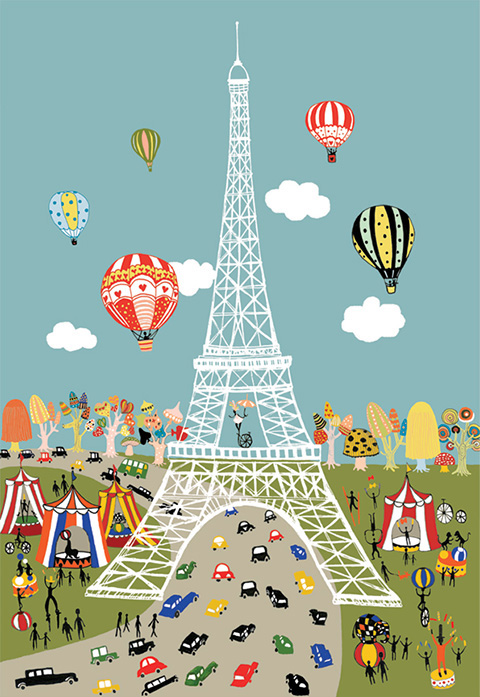
Amelia’s Magazine | An interview with Percie Edgeler: Amelia’s Colourful Colouring Companion featured artist.

percie edgeler
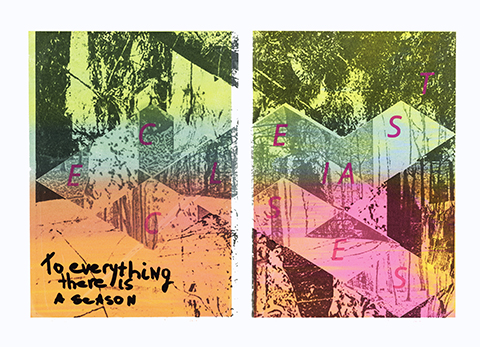
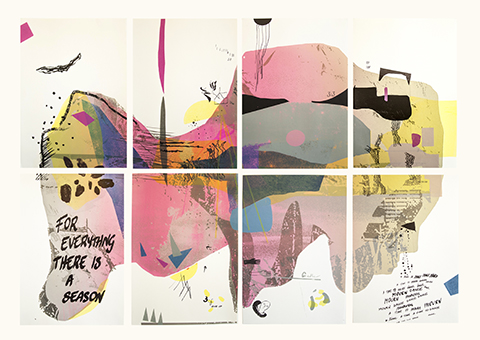
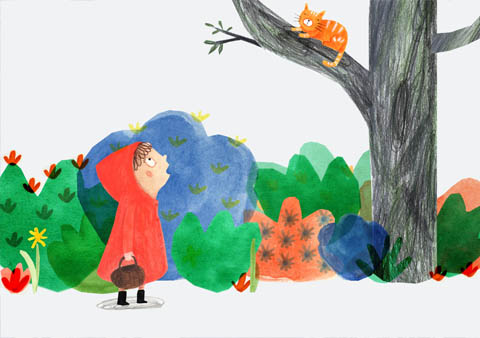
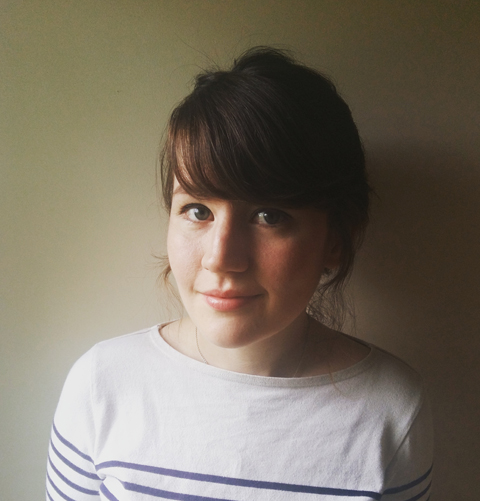
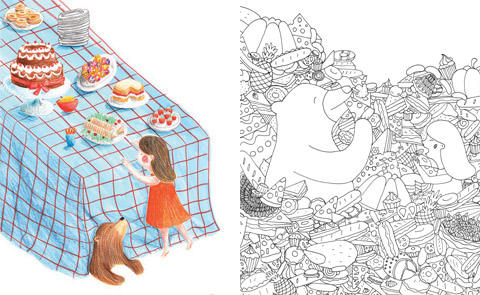
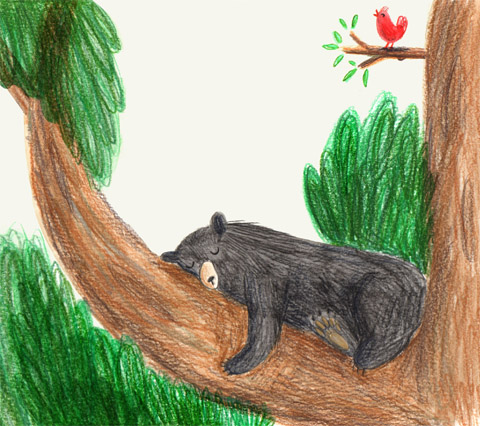
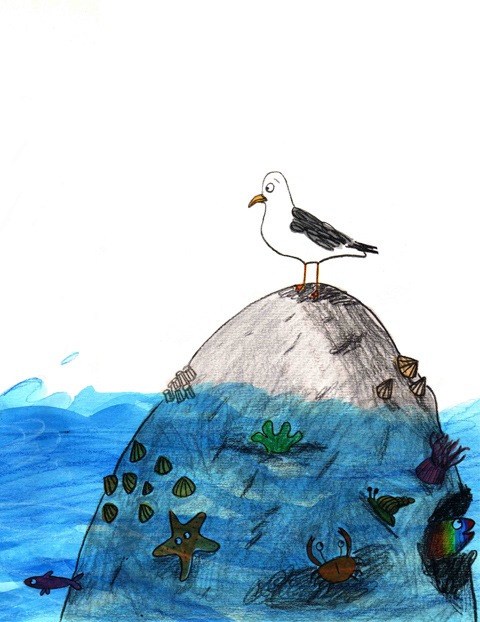
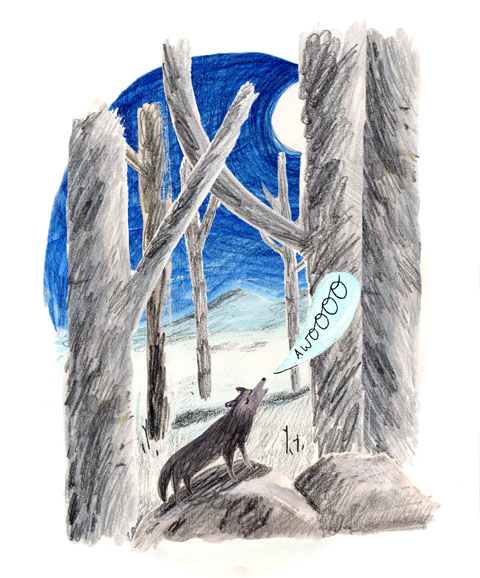
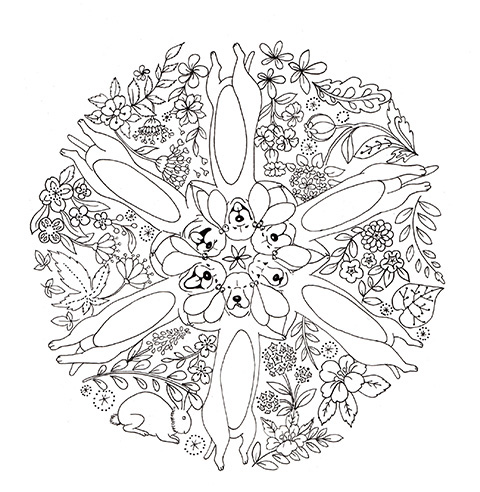
Percie Edgeler is another recent graduate of Camberwell College of Arts, (see also Tiffany Baxter) whose work caught my eye at the graduate shows. She contributes an unusual and wonderful piece for Amelia’s Colourful Colouring Companion inspired by a Japanese folk tale

percie edgeler
What kind of artwork will you be creating on the theme of magic and rituals for your upcoming group exhibition?
I’m not entirely sure yet. I have a few different ideas I need to figure out the layouts for. We’ve been given some guidelines by the lovely people at Treadwell’s Books (the venue) and we can’t have anything three dimensional due to size of the space, so that’s definitely not an option. Luckily it’s with a very friendly group of people from a mix of disciplines, including Tiffany Baxter, who’s being included in the colouring book, and we can share our ideas quite easily and get feedback on what we think is best collectively.

percie edgeler
Why have you decided to push your artwork into 3 dimensions and how are you progressing?
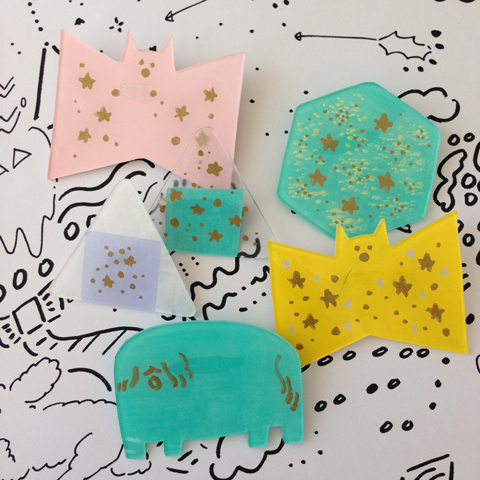
I trained and work now as an illustrator, which most would assume is primarily a two dimensional way of working. Three dimensional work has never been my strong point, and by making ceramics I’m trying to push myself not to be limited to one skill. I guess in part it’s also a question of style: if I’m limiting myself to working in a certain way, my two dimensional work won’t evolve from what it already is because it’s not being challenged. It’s slow progress because I don’t know much about three dimensional forms, but I’m learning. I chose to start with ceramics because to me it seems the most natural. I’ve always worked quite traditionally with my hands, so being able to hold and lump of clay and form it makes more sense to me than any other three dimensional form for now. At the moment everything I try to shape is quite wobbly, I’ve made a fair few wobbly dogs, but they’re getting better over time.

percie edgeler
In what way does the built environment inspire you?
At the risk of being too political, my generation is limited in terms of housing; so it’s hard for us not to notice the built environment more than ever. It’s interesting when you go to other countries and see their architecture how in comparison the UK has a mixture of old and new that is juxtaposed. The spaces in which we work and play can no longer be limited to a building. I’m lucky in that the area I live in is the greenest borough in London, and for me it’s easy to go into a park or field without losing my connection to the city. But now we need more housing and infrastructure, those green areas are increasingly under threat. There’s a balance of being part of something man made and something natural which I really enjoy, though recently in what I’ve been drawing I’ve been erring towards the natural. Often we don’t take the time to consider what’s there already because we’re used to it, and I think now as an adult I appreciate that environment a lot more.

percie edgeler
Why did you decide to focus on a Japanese fairytale for your colouring book page?
There’s something very honest about Japanese folk stories. There’s so many different ones, and in the Japanese culture it’s not just a fairy tale, it’s a part of life, a tale of a time before our time. The way they’re told is mostly through spoken word; more reportage than storytelling like we have in Europe. And the way someone tells a story verbally is very different to how one may draw one, with the storyteller adding their own inflections or details which others may not. That culture of storytelling is still there now, I think; if you read a novel by a contemporary Japanese author, say for instance the ever popular Haruki Murakami, the facts are given with such detail that it’s fascinating. In 1Q84, Murakami writes about two people who have loved each other for years and in one scene they miss each other by minutes. That pure feeling expressed in folk stories is still there, and that’s absolutely lovely. I chose to base the artwork for my colouring book page on a folk tale for this reason. I wanted to give my own take, and share a story in a new way that people could interact with.

percie edgeler
Which cultures are you most enjoying learning the folk tales about and why?
I enjoy learning the folk tales from most cultures, be it from European cultures or further afield. I think my favourite so far is a Maori one talking about how Ta Moko, a form of facial tattooing, came to their tribe as there is no distinguishing between what happened in the story as fact or fiction. Icelandic folk tales are also quite enjoyable as they can be quite traditional by Western standards but also feature dark elements.

percie edgeler
What is it that you love about books and what kind of books do you hope to make yourself one day?
As childrens’ books are an escape. You can live a hundred times through all those characters and have all of those adventures through reading them. As an adult, the same can still apply on some level but they also help to challenge a lot of issues in society and reflect on society at that time. Precisely because of that, my long term goal is to work with books. Every opportunity I’ve had to work with books has just confirmed that. I want to make books for children that they can enjoy, but also want to make them accessible for adults; reading to children and encouraging them to read should be something to have fun with, though very few books achieve that.

percie edgeler
How did you get involved with Four Corners Books and what did you do with them?
Through my university in our final year we had a choice of external projects for a range of different people; e.g. the BBC, Tate Modern, Nexus. I chose the Four Corners one because I wanted to make something outside of my comfort zone of something narrative. By creating animal images from the Edwardian short story of Saki’s Sredni Vashtar, I was pushed to do something different but still work with books and illustration in a way that I felt made the project fun and exciting.

percie edgeler
What happens in your story about a man and a dog?
A boy loses his dog after the dog runs out of the house because the dog is tired of never being played with. The boy, desperately sorry for his actions, chases the dog out and follows him on his adventures around the world only to miss him and his incredible feats each time. It escalates and escalates until eventually, unable to find him, the boy goes home and gives up – but luckily for him, that’s not the end of the story. I don’t want to give too much away because it’s something I definitely want to complete and put out into the world. Maybe that’s a little self indulgent. When I started it for the Macmillan Prize in 2014, I felt like giving up on illustration. It made drawing exciting again and forced me to keep going.

percie edgeler
What was the best thing to come out of your graduate exhibition Rock, Paper, Scissors in Hoxton?
I think the best thing to come out of my graduate exhibition was the experience of doing something on such a large scale. I managed the Kickstarter for it with a small group of people, and that was insanely difficult. We raised about two hundred pounds over what we needed in that in the few hours before it finished, so it allowed us to cover a lot of extras which really made a difference to the exhibition as a whole. Also the venue let me recreate a mural I did inside the university, albeit on a smaller scale, which was really enjoyable. I also ran a paper marbling workshop while there and that was really fun to do, especially with little kids. It was messy though so their parents probably weren’t too pleased!

What else have you been doing this year, it sounds like you’ve been super busy!
Two weeks after I graduated I was offered a job interning at Kritical Mass, a company which works with charities and businesses trying to make a change with their products in a positive way; so through them I’ve been given some work for clients such as BirdLife International which has been great. For them I’ve made a set of illustrations concerning the decline in vulture population which has been really interesting, I’ve learnt a lot from it which I wouldn’t learn in any other job. I’ve been quite lucky this year in that I was also featured in Secret 7” which was held at Somerset House for the first time, and also had work in Belly Kids’ ‘Milhouse From Memory’ exhibition. I have a few projects in the pipelines as well now which are something a bit different to what I’ve done before; so from here I’m interested to see where I can go and what I can do, I’m excited for what’s to come.

Categories ,1Q84, ,26 illustrators, ,Adult Coloring Book, ,Adult Colouring Book, ,BirdLife International, ,Camberwell College of Arts, ,Coloring Book, ,Colouring Book, ,Four Corners Books, ,Haruki Murakami, ,illustration, ,Kickstarter, ,Kritical Mass, ,Macmillan Prize, ,Milhouse From Memory, ,Percie Edgeler, ,Rock Paper Scissors, ,Secret 7”, ,Sredni Vashtar, ,Ta Moko, ,Tiffany Baxter, ,Treadwell’s Books

Similar Posts:


Amelia’s Magazine | A Million Cats: An interview with adult colouring book author Lulu Mayo

A Million Cats front cover by Lulu Mayo
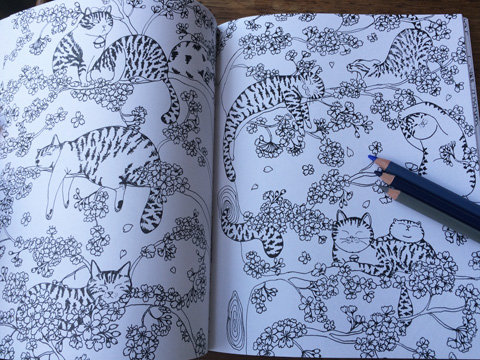
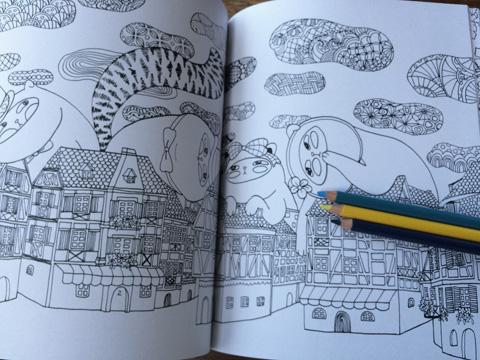
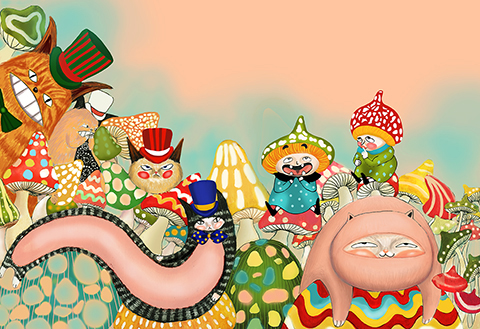
I’ve spoken about my love of A Million Cats in my previous post highlighting my favourite colouring books of 2015, and now I am finally able to bring you an exclusive interview with the artist Lulu Mayo. This is Lulu’s debut book but the reception has been so fantastic that she is set to release another book geared towards dog lovers, called, yes you guessed it, A Million Dogs. Both books feature a plethora of cute animals in ridiculous situations, inspired by a childhood love of the infamous cat bus in cult Japanese animation My Neighbor Totoro. A must have for all the animal loving colorists out there.

A Million Cats by Lulu Mayo in a tree
A Million Cats by Lulu Mayo

I believe your first career involved numbers – what did you do and where?
After graduating from university, I worked as a sales and marketing personnel in a technology company in Taiwan. However, I quickly realised that it was not something I would like to pursue for my future career. So while working, I undertook a product design course to prepare for entry into art school. I was glad I did it and was happy to say it was the best decision I ever took in my life!

qubee-strawberry by lulu mayo
Strawberry by Lulu Mayo

Why did you decide to pursue your passion for illustration?
I had an amazing opportunity to undertake an Erasmus exchange program in France while studying international business. However, I wasn’t inspired by business management courses but arts and amazing architectures there. After I came back from France I decided to purse my love for arts. It wasn’t after a lot of trials and errors did I decide to purse my passion for illustration. Originally I thought I would be a product designer as I loved the idea of creating something practical and artistic. But later on I realised it was drawing that brought me the most joy. I am happy to say I don’t regret it at all now.

A Million Cats by Lulu Mayo adult colouring book
A coloured scene from A Million Cats by Lulu Mayo

Why did you decide to study in the UK and why did you chose Camberwell College of Arts?
I was drawn by hustle and bustle of big cities and London perfectly fit the bill. Tutors at Camberwell always gave us free rein to experiment with new themes and techniques. I have absolute creative license to produce artworks, so it was an obvious choice.

A Million Cats by Lulu Mayo townscape
A Million Cats by Lulu Mayo

How did A Million Cats become published? Did you take the concept to a publisher or did they approach you and if so when and where?
It all started when I received a fountain pen as a gift from my Dad. The pen itself was a gift from his senior officer dating back 40 years. I started to create a lot of hand drawn black and white ink artworks ever since.

A million cats cat mushroom field by Lulu Mayo
A coloured scene from A Million Cats by Lulu Mayo

Then one day I thought,“Why not combine my love of cats and ink?” So I came up with an idea of creating a colouring book, A Million Cats and started to approach to publishers. Luckily, the publishing director at Michael O’ Mara loved the concept and the rest was the history. They got many positive responses from their clients so I was commissioned by them with another project – A Million Dogs. I was very grateful that they took a chance on me.

A Million Cats by Lulu Mayo sofa
A Million Cats by Lulu Mayo

Your book features a lot of Japanese influenced patterns – why did you add this to the mix?
I have a profound interest in Ukiyo-e, pictures of the floating world. It is a genre of art that flourished in Japan from 1680s up until the year 1900. I love its unique characteristics, including its imaginative cropping of figures, exaggerated foreshortening, amazing storytelling and intriguing patterns. My artworks are deeply influenced by it. I think A Million Cats is a marriage of the quirky, the idiosyncratic and Ukiyo-e.

A-Million-Dogs-Cover by Lulu Mayo
When does A Million Dogs come out, and can you share a sneak peak of the artwork with us?
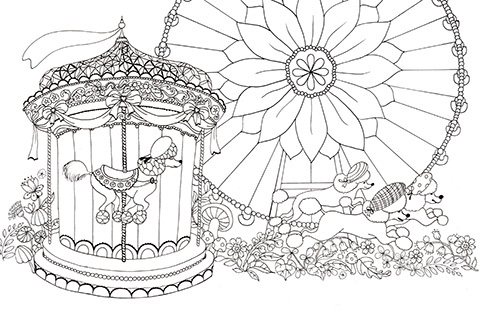
Of course, my pleasure! The publication date of A Million Dogs in UK is 14th of April. Inside are over 30 spreads of funny dogs, decorated with stress-relieving Japanese patterns and motifs, including cherry blossom, waves, hearts, maple leaves, and paisleys in various forms. It features different breeds of dogs in a range of surreal situations; riding a carousel, playing music, sneaking food, and flying a hot air balloon. I hope it can provide readers an escape from hectic modern life to a relaxing world of quirkiness and imagination.

A Million Dogs balloon by Lulu Mayo
A Million Dogs by Lulu Mayo

What do you love most about the craze for adult colouring?
What I love the most is that I can share my imaginative world with others. It’s amazing to see how others interpret my artworks in their own creative way. It is absolutely thrilling!

A Million Dogs 2 by Lulu Mayo
A Million Dogs by Lulu Mayo

What is your favourite animal and why?
My favourite animal is English bulldog and it has appeared on many pages in A Million Dogs. It descended from fighting mastiffs. Today, however, it only slightly resembles his ancestors in appearance. He is not ferocious any more, but of a sweet, and loving disposition. Such a contradictory makes him my favourite. He really inspires me with his goofy look.


Obviously you love cats, when did this interest begin and have you ever had a pet cat that has inspired your work?
When I was five years old, I watched my first Hayao Miyazaki’s film called My Neighbor Totoro. There was a magical cat character. Every time when Totoro summoned him, he transformed into a cat bus and drove people to their destination. As a child, it completely rocked my world and I always dreamt that I could be the passenger one day. Ever since I became an advocate of cats. I want to create whimsical cats that sparks people’s imagination. Unfortunately, in reality there is no such cat that inspires me… it’s absolutely impossible to have a pet as my Mum is a neat freak!

effiel-tower by lulu mayo
Eiffel tower by Lulu Mayo

What else are you working on?
I am working on an animal-themed colouring book. It will feature more than 20 different animals in a range of different circular patterns. I will infuse it with my love for Japanese patterns, flowers, and plants. Unlike A Million Cats and A Million Dogs, this time I will colour it up with readers. So watch out, animal lovers!

St-pancras-station by Lulu Mayo
St Pancras Station by Lulu Mayo

For my personal project, I am working on a rabbit counting book. It’s not just about 1, 2, 3 but a story of having a loving family and friends!

A Million Dogs mandala by Lulu Mayo
Thank you so much for answering my questions Lulu, I love your work! Follow Lulu Mayo on Twitter and Facebook.

Categories ,A Million Cats, ,A Million Dogs, ,Adult Coloring, ,Adult Colouring, ,Animal Colouring Book, ,Camberwell College of Arts, ,Cat Coloring Book, ,Cat Colouring Book, ,Coloring, ,Colouring for Adults, ,Hayao Miyazaki, ,interview, ,japanese, ,Lulu Mayo, ,Michael O’ Mara, ,My Neighbor Totoro, ,pattern, ,review, ,Taiwan, ,Ukiyo-e

Similar Posts:


Amelia’s Magazine | An interview with Augusta Akerman: Amelia’s Colourful Colouring Companion featured artist.

Augusta Akerman 'a section of my first litho print'
Augusta Akerman is yes, you got it, yet another Camberwell College of Arts graduate. She contributes a painterly image to my colouring book inspired by a love of 50s modernism. Find her in Amelia’s Colourful Colouring Companion, available now on Kickstarter.
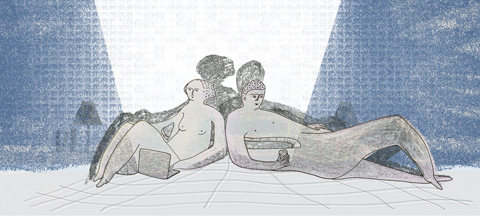
Augusta Akerman 'Couples and Technology'
I love the way you draw figures, which artists have inspired you? I think they look very Henry Moore-esue
Yes you are very right! I have always been very inspired by that particular period around 1950‘s modernism, Festival of Britain era, having been brought up on artists like Moore, Hepworth, Ravilious and Bawden. These were the artists my parents loved, so we were always going to galleries to see this kind of work. Every summer we go to Cornwall and St.Ives was and still is an annual pilgrimage to see Hepworth‘s studio and garden, I could probably draw it from memory. After finishing my MA I had been introduced to what I would call ‘Now Illustration‘ and I found myself constantly looking at contemporaries’ work and worrying about my style. Earlier this year I decided that I was just going to let myself be influenced by the painters, sculptors and designers I grew up loving and have found myself much happier with my work.

Augusta Akerman 'Swimming Against'
Why did you decide to move away from your first degree in fine art photography towards illustration?
Towards the end of my BA at Glasgow College of Art I was already starting to move away from photography. I was making small artist books with a combination of illustrations and photographs and enjoying putting them together, designing covers and hand binding them. I returned to London and worked as a photographers assistant all the while drawing at home in the evenings and weekends. I think this was a real time of discovery for me. I was so embarrassed about my drawing skills that I didn’t really show or tell anyone but kept hundreds of small A5 sketchbooks with random illustrations in. In the end I became more and more confident and illustration naturally took over. I also wasn’t particularly interested in digital photography as I enjoyed using film so I think cost and lack of regular access to a darkroom also contributed to me moving away from it. However I still take photographs, film and digital, who knows what will happen next.
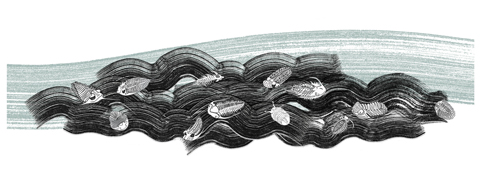
Augusta Akerman 'Sea to Stone'
What did you do in the period between your BA and MA studies?
I worked as a Set Decorator in film and advertising. I fell into this career, starting as an art department assistant and gradually working my way up. It was a very enjoyable job most of the time but could be also be extremely intense and stressful. In the end the feeling that I wasn’t doing exactly what I wanted to do took over and I made the decision to do the MA. I was so frightened to leave that job, because in that world you spend years making contacts and working for little money in the hope of getting somewhere. I am very lucky to have made some good friends whilst working in film and still do the odd job here and there.

Augusta Akerman 'mono print portrait'
Why did you choose Camberwell for your MA?
I chose Camberwell because it was the nearest illustration course to my parent’s house! In order to do the MA I had to move back home and save as much as I could, and I could walk there in under half an hour. The MA represented a way to take a year off from film and see if Illustration could possibly be an option for me. I didn’t apply anywhere else so it was Camberwell or nothing. When meeting the head tutor Jan Woolley and visiting lecturer Chloe Cheese, I had an overwhelming feeling that this was it, I was very close to making a big change in my life, I would have cried my eyes out if they had said no!

Augusta Akerman 'Plastic Sea Soup' nominated for One to Watch
You have described your work as a combination of classic illustration and abstraction, what does this mean in practice?
This is because I think it sits between these two worlds, sometimes I can be quite real in my representation of animals and people, and at other times I just want to work with shapes and textures. I also tend to prefer work that takes a theme or idea and presents it not as a realistic depiction, but one that leaves room for the viewer to project their subconscious onto it.

I definitely think there is an influence of the classic in what I do as inspired by great artists like Tove Jansson and Pauline Baynes. But I aim to give a sense of modern movement and sculptural weight to some pieces by working with dark texture and light washes. I spent a long time being quite soft and delicate with my line and colour choices, so I’m enjoying this moment right now where I’m being braver using black crayons and ink to be more blocky and meshing them with the silky lace lines of water colour and gouache.
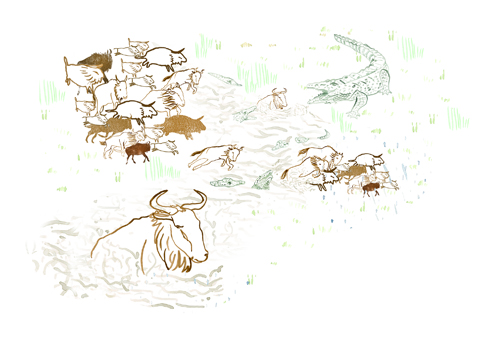
Augusta Akerman 'a section from the Great Migration'
What is your preferred way to approach a new piece of work when first starting to create it?
Depending on whether it is a personal project or a commission I tend to do things differently. However they both start the same way, with research. I love researching the subject and finding out different meanings or views or small snippets of information that can be included in the work to give a little extra detail that maybe only 2 percent will ever ‘get’ but will still interest others. I work either at my desk or sometimes in my dad’s studio. When at my desk I usually put on Radio 4 or a documentary on my computer that I listen to like a radio play, otherwise I get distracted by the images if I can see the screen! When in my dad’s studio I’m usually doing something a bit more messy like mono printing or lino, he tends to listen to the radio too or is working on the computer.

How do you combine pen with litho and other methods of production?
I always work by hand, first sketching in my sketchbook, then taking the images to another level of finish either by painting over them or developing them with mono printing or another print process until I like the way they look. I like the play between hand and digital imagery, computers are extremely useful when cleaning and adding colour to images but I sometimes feel I get overwhelmed by the possibilities. I think in this extremely accessible digital age it’s easy to put off the actual thinking of the development of a piece until it is staring you in the face with 100 layers in Photoshop. I find it hard to think clearly with the back lit white screen and feel more in control with a bit of paper in front of me.

Augusta Akerman 'Amelia's Colouring Book' for online interview RGB
What inspired your piece for my colouring book?
Whilst on holiday in Cornwall I had been drawing in my sketchbook, letting my hand and brain sort of automatic draw. I was not thinking about anything in particular but allowing what I had seen or heard that day come out onto the paper. I thought it looked like a diary in a pattern format. When I came back from holiday and thought about the colouring book I returned to the pattern idea and thought it might be nice for people to colour it in. I started automatic drawing again but this time I thought about all the themes I would like to explore in new projects and shapes and images I was interested in. I decided to create a seated figure drawing what would eventually become the wallpaper as I felt this developed the idea of a dreamy state of doodling, of letting your mind wander around your worries and dreams. The male figure was added later and I liked the idea of it also speaking about a relationship with another person who understands your dreams and helps you conquer your worries. They are both just quietly enjoying a moment supporting each other to make this big mural that charts all the ups and downs of creative making. It’s the most colourful piece I’ve made in a while so the brief did pull me out of my comfort zone a bit.

You recently took part in New Designers One Year On – how did you get involved and what project were you showcasing?
I applied to New Designers One Year On on a whim, because I wanted to be proactive to see if I could promote myself and my work in a professional situation. When I was selected I was very happy but also a little terrified as I knew there would be a lot of preparation and self promotion needed to really get the most out of it. I was showcasing the wallpapers and textiles I had made on my MA as well as newer designs and illustrations. I was very lucky to be surrounded by some amazing designers and illustrators and got a lot out of the experience. I had done Pulse earlier in the year with UAL and do think that in the future I might only do one design fair a year, not only due to cost but also due to the amount of energy you need to sustain that level of self promotion to justify it.

Why have you chosen subjects such as climate change for the basis of your designs?
I am very influenced by nature and the natural order of things and have developed a huge respect for the world around us. I am also a constant watcher of all of David Attenborough‘s programs which means I’m a little obsessed with life cycles and repeating patterns. During my MA I knew I wanted to work with pattern and create an illustrated collection of wallpapers and textiles. The life cycles seemed to be a perfect subject as they repeat over and over again. Climate change sneaked into the work, because of researching the migration of animals and reading about the effect climate change is having on their lives, habitats and evolution. For me this is an ongoing theme and subject, I wanted to introduce and present the many circular structures that exist around us in a beautiful and accessible way, as well as providing a piece of information that some may not already be aware of.
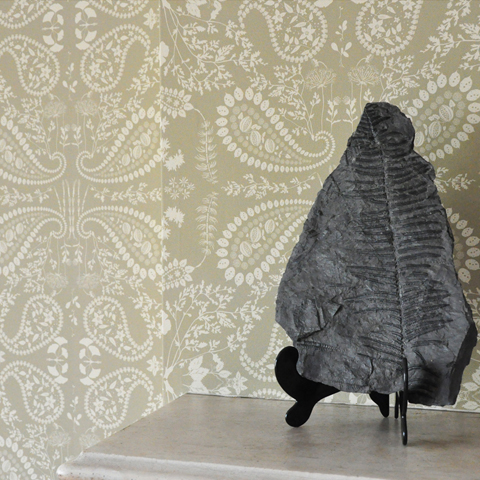
Augusta Akerman 'Botanical Institute Wallpaper'
How do you create DIY wallpaper?
There are many ways! I have recently taught a DIY wallpaper class at the South London Botanical Institute where we used craft foam stamps, lino, foam rollers, stencils and direct printing (covering leaves and flowers in paint and pressing onto paper) to create repeat imagery. If you have the time and the space you can buy a roll of lining paper from B&Q and create your own.

What does your residency at the London Print Studio encompass?
I have been working with Lithography, a process I’ve been wanting to explore in more detail for a long time. I love the quality and possibilities of this particular printing process, you can use a number of materials to make your image as well as scratching away layers in the drawing that gives an almost etching like quality. Lithography is a lengthy process which I think puts a lot of people off. I spent 3 and a half hours grinding my large stone to get it right. I have the blisters to prove it! But even this I really enjoyed, it feels quite ancient grinding and preparing the stone then working into it with litho crayons and tusche. You can get an extremely varied quality of line that is then perfectly replicated when printing, but each print is unique with minute changes due to ink placement and roller pressure. I just love it! Although I did find the printing the hardest part this time. I was working one Saturday printing the largest stone and realised I had no more strength left to turn the wheel on the press, thank god I had nearly run out of paper!

How do you hope to grow your fabric design and wallpaper business?
After the Homes and Gardens Fabric Awards, I felt encouraged to continue with my new collection of wallpapers. I have to admit I was starting to feel a little helpless, I had applied for funding to help build the business which I didn’t get and had thought I might need to put it on hold for a while. I am now working on the new collection and hope to have it done by March 2016. It’s very hard trying to start a side business when you’re looking for freelance work and working a part time job, but I enjoy constantly working and thinking up ideas for projects. This is what I wanted! This is why I gave up other careers; in order to be in charge of my own creativity.

Augusta Akerman contributes her work to Amelia’s Colourful Colouring Companion, available now on Kickstarter. Make sure you grab a copy before the campaign closes later this month! Read a previous interview with Augusta here.

Categories ,#ameliasccc, ,Adult Coloring Book, ,Adult Colouring, ,Amelia’s Colourful Colouring Companion, ,Augusta Akerman, ,Bawden, ,Camberwell College of Arts, ,Chloe Cheese, ,Climate Change, ,Colouring Book, ,Cornwall, ,David Attenborough, ,Festival of Britain, ,Glasgow College of Art, ,Hepworth, ,Homes and Gardens Fabric Awards, ,illustration, ,interview, ,Jan Woolley, ,Kickstarter, ,Lithography, ,ma, ,Moore, ,New Designers, ,One Year On, ,Pauline Baynes, ,photography, ,Pulse, ,Radio 4, ,Ravilious, ,Set Decorator, ,South London Botanical Institute, ,St.Ives, ,Tove Jansson, ,Wallpaper

Similar Posts:


Amelia’s Magazine | An interview with Ewelina Skowronska: Amelia’s Colourful Colouring Companion featured artist.

ewelina_skowronska_season for everything
Ewelina Skowronska is a Polish born illustrator now relocated in London, where she creates abstracted work inspired by how we interact with the landscape. Her colouring book piece as inspired by the dramatic landscapes of the Altiplano of Bolivia.

ewelina_skowronska picture
When did you come to the UK and what brought you here?
I came to London two years ago when I decided to study Illustration at Camberwell College of Arts. I had researched different schools and courses and it turned out that Camberwell course is one of the best. I got accepted and I got a full scholarship, so there was no way back, I had to come.

ewelina skowronska_all
Why did you decide to move from copywriting into illustration and how has your previous career impacted the way that you see the visual world?
I always liked to draw and paint, but when after graduating form high school I didn’t get place in one of Polish Art Universities (they used to accept like 6-12 people per year) I just got doubts about myself, my skills and was thinking that only a few people can do art and it is so exclusive. So I was very happy to be able to work as a creative in advertising agencies. However I still felt that I would like to do something else. All this time I was still drawing, mostly for myself and friends, and one day I just decided that why not to do something more with it. So I just took a risk – quit my job, moved to London and went back to school at the age of 33 ;-)

I worked in advertising for over 6 years, so I learned a lot and met some amazing people. I don’t regret this time as it definitely influenced my way of thinking and my design skills. And compared to younger recent graduates, I am just more advanced in this – let’s call it a professional way of working, multitasking and managing my time, as I simply have so much experience behind me.

ewelina_skowronska copy
How did the MA at Camberwell help you to expand your work style?
During my two short years at Camberwell I have had to learn almost everything from scratch as I didn’t have any previous art education. So from almost every point of view Camberwell has influenced me. But I think the biggest things for me to learn were experimenting with new tools and techniques, research and of course print making, and screen printing in particular.

ewelina_skowronska_alice
What is it about screen printing that you find particularly attractive and what is your favourite part of the process?
I am fascinated with screen printing and ways of pushing its boundaries, wondering how the process of mark making together with all the mistakes and limitations of screen printing can influence the art work and at the end tell a story. Even though I plan my work I always leave room for spontaneity of process and some decision making that can apply only during printing. I like this uncertainty and constant problem solving as well as the physical aspect of screen printing.

ewelina_skowronska_time to heel
How do you attempt to portray the relationships between people and surroundings?
This is a very personal way of thinking about the world that surround us: why we do what we do, how we make decisions, live our lives, be in the city. I want to understand each part of the system that surrounds us, even every little sub-system that is part of the bigger one. So I am trying to deconstruct these systems into smaller parts, then put them back in a different way, together with the natural noise that also surrounds us.

ewelina skowronska_colouring book
What particular landscapes inspired your artwork for my colouring book?
I recently travelled to South America and I visited the Altiplano in Bolivia. The landscape surrounding there was just stunning and I just couldn’t believe that there was so much surrealistic beauty and space around me. It influenced me a lot and I know that this will probably be the next subject for my bigger project.

ewelina_skowronska_Time to live
How did you set about illustrating the Future Makers?
It was a great project set by Agnieszka Hatalska, who is a well known Polish blogger and specialist about alternative ways in marketing communication. Illustrating this was quite easy as I got to read all these inspiring interviews by Agnieszka with famous futurologists. All of them were talking about our everyday life in the quite near future – what was very interesting – and collaborating with her on initial ideas made this whole project amazing to work on.

ewelina_skowronska_space
What has been your favourite commercial commission so far and why?
Every commission is different so there is always something new to learn, especially if you are an emerging illustrator and artist. But so far the Future Makers is my favourite project that I have worked on because it was also the first time I had to make 14 illustrations that had to work individually as well as a whole.

ewelina_skowronska_ruls
Can you tell us more about Drawing the World?
It is still kind of secret but what I can tell you is that 30 students from UAL have been invited to produce drawings that will involve working with both old and new technologies – so mobile phones will be our way of communication and our drawing medium will be chalk. The event is organised by Professor Stephen Farthing, The Rootstein Hopkins Chair of Drawing, and will be held on Sunday 11 October 2015 at CSM.


I’ll continue to introduce the contributors to Amelia’s Colourful Colouring Companion before my Kickstarter campaign launches (in October!), so do keep checking in to the website.

Categories ,Agnieszka Hatalska, ,alitplano, ,Altiplano, ,Amelia’s Colourful Colouring Companion, ,Camberwell College of Arts, ,Drawing the World, ,Ewelina Skowronska, ,Future Makers, ,Polish, ,Professor Stephen Farthing

Similar Posts:


Amelia’s Magazine | An interview with Feronia Parker-Thomas: Amelia’s Colourful Colouring Companion featured artist.

feronia parker thomas
Feronia Parker-Thomas is yet another graduate of Camberwell College of Arts. She is now qualified as a teacher herself, signed to The Bright Agency and has just produced the illustrations for her first children’s book How the Crayons Saved the Rainbow. Her fab piece for Amelia’s Colourful Colouring Companion features one of her favourite animals…

feronia parker thomas
Would it be fair to say that you liked bears? What is it about them that appeals so much?
Yes, I am incredibly in love with them! I have done since a young age but have never really thought about why I find them appealing. Thinking about it now, there are two reasons that jump out at me. Firstly, they are lovely to draw, their fur is a fun texture to render and their shape is full of beautiful curves. Secondly, I think humans have always been fascinated with bears; there are examples of bears in prehistoric cave paintings and there are lots of bears in myths and legends. They have quite human features and I think we project whatever we are feeling on to them.

feronia parker thomas
How did you settle on your idea for my colouring book?
I love picture books and this is the area of illustration I am drawn to and mainly working in, so I wanted to do a narrative piece about a girl and her ‘imaginary’ bear. I was thinking about my sister and I when we were children sitting under tables creating imaginary worlds. I liked the idea that the girl was collecting food for her bear and then we get to see the big feast that ensues.

feronia parker thomas
What is your preferred method of producing an illustration?
I draw out a loose sketch of what the illustration will look like and then flesh it out in pencil, I then use my lightbox and the original as a template. I will usually do a watercolour base and then add pencil over the top for detail. I have dabbled in digital colouring recently but I am still not sure; I like the flexibility that digital can give you, but something doesn’t feel quite right for me. There are some amazing digital illustrators out there doing a much better job that I can! I work in the flat I share with my boyfriend in Streatham, and we have lots of books and plants and artwork on the walls; it is a lovely space with lots of light.

feronia parker thomas
Since graduating from Camberwell College of Arts in 2010 what have you learnt about the business of being an illustrator?
It is a rollercoaster; it has highs and lows. A high has been signing to The Bright Agency, they are going through quite an exciting time at the moment so it is great to be a part of it. I have learnt you have to put yourself out there; your work can’t be found if you are hiding it! If I was to give one piece of advice it would be to join Twitter and Instagram and share your work, get your work seen by anyone. There is a great community of illustrators on Twitter that support each other, it is lovely to be a part of.

feronia parker thomas
Why do you enjoy teaching so much and how do you balance being a teacher with being a working artist?
I love teaching because it forces you to look at art in different ways. It sounds incredibly cheesy but I love seeing the new generation of artists develop (insert puke noise here). The arts in schools are under threat and I think it is important to try and show young people that art can have so many different applications in life, I really enjoy winning round unwilling kids. It has been hard at times to balance the two, especially when you might have a tight deadline, but I love illustrating, so when you love doing something it isn’t hard to motivate yourself.

feronia parker thomas
Can you tell us more about your first picture book? it sounds great!
How the Crayons Saved the Rainbow is about an argument between the Sun and the Clouds. Without them working together there are no rainbows, so some very determined crayons work together to try and fix the problem; it is a great story about team work. The book was really fun to do and took me out of my comfort zone a little because they wanted the illustrations in crayon, which isn’t my usual medium. I had a great working relationship with the author and editor; so it was a really positive experience for my first book.

feronia parker thomas
How is development of your own ideas for a children’s book coming along?
Slowly but surely! I am trying to develop characters for several different ideas at the moment, it is nice to have the freedom to flit backwards and forwards and have space and time to develop. I am huge fan of David Roberts‘ illustrations for Rosie Revere, Engineer and Iggy Peck, Architect. They are wonderfully detailed illustrations, I seem to be drawn to illustrators who use lots of detail. I love Carson Ellis‘ work and Janet Ahlberg‘s illustrations were a favourite of mine as a child. I loved Peepo and The Baby’s Catalogue; I could still look at the Jolly Postman for hours.

feronia parker thomas-highgate
I love your drawings from Highgate Cemetery – what prompted this personal work?
The Transport Museum’s ‘Places and Spaces‘ theme for last year’s Prize for Illustration my starting point for these images. I didn’t end up submitting an illustration in the end but it was great to work to a brief. I am fascinated with cemeteries; I went to Paris last year and spent a large proportion of my time looking around different cemeteries there. In many ways it is an unfinished project, I thought I might do illustrated maps for ‘The Magnificent Seven‘ cemeteries in London but never got round to it; watch this space!

feronia parker thomas-pirate
Who are the Pirate Kids?
The Pirate Kids were two characters I created about a year ago as a portfolio piece. I feel a bit guilty that I haven’t developed them more, at the moment they are frozen in time!

feronia parker thomas
What else do you love to draw and why?
I really enjoy drawing people, I get an intense satisfaction when I do a portrait and it actually looks like the person I have drawn. Last year I did a series of portraits of women I consider to be icons, feminism is an important cause to me and I wanted to celebrate them.

feronia parker thomas
Amelia’s Colourful Colouring Companion will be available to preorder on Kickstarter VERY SOON, so watch this space!

Categories ,#ameliasccc, ,Adult Coloring Book, ,Adult Colouring Book, ,Amelia’s Colourful Colouring Companion, ,bears, ,Camberwell College of Arts, ,Carson Ellis, ,Coloring, ,Colouring, ,David Roberts, ,Feronia Parker Thomas, ,How the Crayons Saved the Rainbow, ,illustration, ,interview, ,Janet Ahlberg, ,Mindful colouring, ,Pirate Kids, ,Places and Spaces, ,The Bright Agency

Similar Posts:


Amelia’s Magazine | An interview with Nanae Kawahara: Amelia’s Colourful Colouring Companion featured artist.

06-Nanae-Kawahara
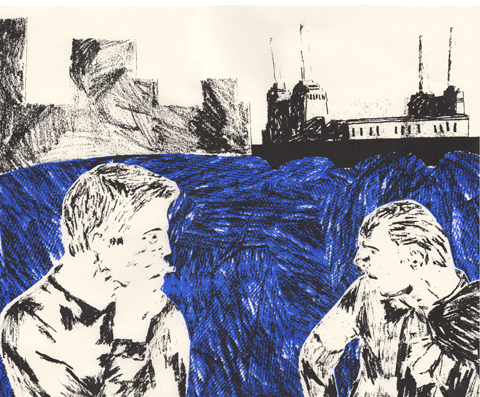
Nanae Kawahara is yet another talented Camberwell College of Arts graduate who has produced art for my colouring book. Her imaginative underwater scene features mermaids and all the creatures of the sea… Find her art in Amelia’s Colourful Colouring Companion, funding on Kickstarter now!

01-Nanae-Kawahara
Why is Japanese culture so full of images and tales of the sea?
I never thought about how Japanese culture is full of images and tales of the sea… maybe because I am Japanese? I guess Japan is full of nature and technology and it has never been dominated by other countries, so Japanese people have a very different character… it’s hard to answer this!

16-Nanae-Kawahara-ColouringBook-for-web
What is happening in your fantastical colouring book artwork?
Firstly I started just drawing like brightness on the surface, and then… I could see this is in the ocean with star lights of water. Then I started seeing mermaids like ‘The Little Mermaid’. I imagined a girl… a mermaid who is shy. The ocean is so colourful, with lots of creatures living in there. There is a festival in the ocean, they enjoy dancing, eating, singing… it is a very peaceful world. A shy mermaid is so quiet, but her friends try to make her join in… the mermaid diva calls her and then they enjoy all day… I just had a dream that everyone welcomes everyone, and it makes happiness. I coloured it in like a watercolour painting to illustrate ‘in the ocean’, and the drawing is tidy to show sensitive creatures.

11-Nanae-Kawahara
How would you describe the style of your work?
At first, I can say it is vividly colourful and sweet cutie characters. Recently I recognised my works are loved by each different type of people, according to attend to art events. Adults, young, kids, men and women… some of my fans gave me the comment which mentions first impression of my works is cute, and then other aspects permeates like pleasure, fear, anger etc. I gather my feelings and memories then express them on my works, so there are full of my mind to communicate with people.

04-Nanae-Kawahara
In what way do your feelings and memories manifest in your illustrations?
Be positive whenever I feel fear.
Keep going whenever I am sad.
Remember everyone around me.
Remember everyone around me died.
Keep my feelings when I am impressed.
Do not forget what I feel.

09-Nanae-Kawahara
It sounds as though you like the cute and the Kawaii but also the dark and the gothic – in what way do you try to combine both these inspirations in your artwork? 
I quite like fashion illustration (but I am now on Fashion Illustration FILE here), and am often inspired by artworks in fashion magazines or on cosmetic products. I was very shocked when I saw art by Rene Gruau, Hiroshi Tanabe and Antonio Lopez a long long time ago (maybe I was 12 or 13) because they were so refreshing to look at. On the other hand, I was attracted to cute works by Rodney Alan Greenblat and Dick Bruna. They give me lots of fun and happiness to live. My dream is that my illustration could be loved by many people and categories – I know it is difficult, but I try to show something special in my illustration. I am also influenced by my feelings and memories. As you can see by my favourite artists and my work, I love colourful stuff, shiny stars and some kawaii imagery like animals and girls. On the other hand, I also like the dark side of gothic, horror, suspense and monsters. I recently noticed they are related to death as I have experienced deaths of my relatives and pets (also animation characters – e.g. the final story of Sailor Moon) from my childhood. I often felt weird someone suddenly died as he or she was alive just a short time ago. I don’t want to think about the deep meaning of death, I believe that everyone is always alive and glowing.

03-Nanae-Kawahara
02-Nanae-Kawahara
What work featured in your recent exhibition Colourful Colourful and where was it held?
Yes I have just had my exhibition in Tokyo, the title was ‘Colourful Colourful’ and the theme was colourful elements in a negative scene. Lots of feelings compared with monsters and scenes. The artworks were darker than my previous work, but I want you to enjoy my new world. And also… I have just taken part in a group show called ‘Imo Hori’ with Hiromi Kado and Natsuko Oshima. (Imo=Potato / Hori=digging – so it means ‘Find good arts!’) If someone is in Tokyo, please visit us!

08-Nanae-Kawahara
Is the big white poodle yours? Is she/he a muse? What is their name, can you tell us more?!
Yes! I sometimes post photos of my dog Nana, she is a Standard Poodle, coloured white with a little brown, female, age 7. Actually this dog is the third in my family, the previous dog was also called Nana and she came from a divorced couple. She was mixed breed and had black hair so we call her Black Nana as opposed to White Nana. We gave the same name because Black Nana was so kind and beautiful but suddenly dead by cancer, and I hoped the next one would also be a good dog. Muse..! I do not think Nana is a muse. But thanks for that. She is just normal and my best friend! Her power is so strong and she always punches me.

05-Nanae-Kawahara
Why did you head to the UK for your MA in illustration and what was the best part of studying at Camberwell?
After my BA I still wanted to research illustration with an MA, so I thought I should go to another country to study and chose the UK for its mixed culture. Art and design in London are similar to Tokyo (but Japan is more chaotic and closer). I also think there is a quite friendly and mysterious atmosphere which Japan does not have. I chose Camberwell College of Arts because it gives great freedom for creative works and it has an illustration course. I felt I had enough of graphic design as I studied it for my BA at Tama Art University, Tokyo. Camberwell gave me the freedom to re-think how to create my illustration.

10-Nanae-Kawahara
Why do you feel it is important to raise your profile abroad and how do you set about doing so?
I longed to go overseas to see the reaction to my illustrations in another country. I think there are no borders in the creative world, but it is not possible to feel another place by just communicating on the internet. I needed to be in there.

07-Nanae-Kawahara
What do you hope for in the coming year?
I hope I can do more new things; challenges and find new opportunities for work. This year I have done illustrations for books and magazines, fashion and greeting cards. I wish I could do covers for magazines, books, and also illustration for advertisements. I think there is no limit for the possibility of illustration. I want to try anything, so my work can keep developing.

12-Nanae-Kawahara
13-Nanae-Kawahara
Nanae Kawahara is featured in Amelia’s Colourful Colouring Companion alongside 40 other artists, make sure you grab your early bird copy for just £12 on Kickstarter now!

15-Nanae-Kawahara
14-Nanae-Kawahara

Categories ,#ameliasccc, ,Adult Coloring Book, ,Adult Colouring Book, ,Antonio Lopez, ,Camberwell College of Arts, ,Coloring, ,Colourful Colourful, ,Colouring, ,Colouring Book, ,Dick Bruna, ,Fashion Illustration FILE, ,Hiromi Kado, ,Hiroshi Tanabe, ,Imo Hori, ,interview, ,japan, ,japanese, ,Kickstarter, ,Nana, ,Nanae Kawahara, ,Natsuko Oshima, ,Poodle, ,Réne Gruau, ,Rodney Alan Greenblat, ,Sailor Moon, ,Tama Art University, ,The Little Mermaid, ,tokyo

Similar Posts: