Amelia’s Magazine | Professor Brian Cox and his Wonders of the Solar System.

Ron Arad chair model
Ron Arad reflective chair
All photography by Amelia Gregory unless otherwise stated.

Once upon a time I assisted a well known stylist on a shoot with Ron Arad. We went to his vast warehouse studios in Camden to take the photo for a magazine, more about and my abiding memory is of the courtyard in front, remedy which was littered with the carcasses of old chairs.

Ron does chairs. This is a man who seriously, seriously loves something to sit on, so it comes as no surprise to find that the entire upper gallery of this Barbican exhibition is devoted to his many chair designs.

Ron Arad typewriter chair
Fun with a rusty old typewriter as seat pad.

Ron Arad Rover Chair
The Rover Chair. Image courtesy of the Barbican.

Ron Arad steel rover chair
The gleaming metal version in pride of place.

Here we can trace the journey of Ron’s love from the early days – when he casually tossed aside a career in architecture to pursue dreams of product design – up until the present. At first he took a higgeldy piggeldy approach to their construction: the first chair that made him famous was one constructed from the leather car seat of a Rover. In one room we discover how he adapted and changed this original concept to come up with many versions before culminating in the final denouement: a sleek recliner in gleaming steel proudly showcased in front of a digital LED screen. For why stop at just one product when you’re onto a winner? Herein lies the essence of Ron’s career – straddling the creation of one off works of art and mainstream manufacturing with gleeful abandon.

Ron Arad Tom Vac
Image courtesy of the Barbican. This was popular in trendy restaurants.

Ron Arad big chair
Ron Arad rocking chairs
Ron Arad. Well Transparent Chair
Image courtesy of the Barbican.

So what defines a Ron Arad work? Aesthetically he has messed around with all sorts of materials, especially in the early years, but if I had to pin it down to a couple of things, I would say he is principally concerned with bulk and sheen. Rotund forms bulge ominously towards the ceilings and floors of the small upper galleries, suggesting the swallowing of any daring seatee. Delicate this ain’t. Comfortable? Maybe, but we aren’t allowed to try. I particularly love a smooth red and white plastic chair, glowing like a giant boiled sweet. But I think I want to lick it rather than sit on it. Is this the reaction one should have to a chair? Semi-phallic pieces appear more sculptural than useful. Shiny metal surfaces reflect the gallery-goers like distorted mirrors, and automated rockers set the chairs in perpetual motion as directional lighting throws dramatic shadows against the encroaching walls.

Ron Arad red white chair
Ron Arad London Papardelle
Ron Arad sculptures

If we aren’t allowed to sit in the chairs upstairs there is much fun to be had stretching out on the various seating arrangements that populate the large open downstairs gallery. Particularly with my austostitch app in hand. On the walls there are bookshelves – his famous curved Bookworm, an impressive patchwork map of America and a giant bookshelf wheel that maintains an impressively upright angle as it regularly slips down a long slope. Some of the most interesting items are the models that Ron has sent out for mass production, complete with scribbled markings.

Ron Arad blue chairs
Ron Arad chairs
Ron Arad America bookcase
Ron Arad wheel bookshelf

In side rooms we discover Ron’s other projects, including some experimental lighting that plays with the direction of beams so that GOD reads WAR, and a giant disco ball. But it is in his recent return to architecture that Ron really goes to town, even if not much seems to have actually been built other than in Israel, country of his birth. The rest seems to be little more than extreme flights of fancy, huge brutalist monstrosities designed to house his chairs but destined to forever remain toy models.

Ron Arad War- God light
Ron Arad architecture
His architectural models left me cold. I mean, I love a bit of brutalism, but there’s a time and a place. Architecture now needs to take into account the environment.

The exhibition left me pondering when the time is right to have a retrospective. When is the work of an artist deemed of high enough calibre? Until recently Ron Arad was head of product design at the RCA and he is still very much an active designer today. This in itself makes for an interesting take, but does he deserve such a major retrospective? I’m not convinced. At times it felt to me very much like this was the work of a one (or two or three) trick pony. Who likes very much to sit down.

Ron Arad: Restless is on until the 16th of May at the Barbican Art Gallery.
Ron Arad reflective chair
All photography by Amelia Gregory unless otherwise stated.

Once upon a time I assisted a well known stylist on a shoot with Ron Arad. We went to his vast warehouse studios in Camden to take the photo for a magazine, treatment and my abiding memory is of the courtyard in front, which was littered with the carcasses of old chairs.

Ron does chairs. This is a man who seriously, seriously loves something to sit on, so it comes as no surprise to find that the entire upper gallery of this Barbican exhibition is devoted to his many chair designs.

Ron Arad typewriter chair
Fun with a rusty old typewriter as seat pad.

Ron Arad Rover Chair
The Rover Chair. Image courtesy of the Barbican.

Ron Arad steel rover chair
The gleaming metal version in pride of place.

Here we can trace the journey of Ron’s love from the early days – when he casually tossed aside a career in architecture to pursue dreams of product design – up until the present. At first he took a higgeldy piggeldy approach to their construction: the first chair that made him famous was one constructed from the leather car seat of a Rover. In one room we discover how he adapted and changed this original concept to come up with many versions before culminating in the final denouement: a sleek recliner in gleaming steel proudly showcased in front of a digital LED screen. For why stop at just one product when you’re onto a winner? Herein lies the essence of Ron’s career – straddling the creation of one off works of art and mainstream manufacturing with gleeful abandon.

Ron Arad Tom Vac
Image courtesy of the Barbican. This was popular in trendy restaurants.

Ron Arad big chair
Ron Arad rocking chairs
Ron Arad. Well Transparent Chair
Image courtesy of the Barbican.

So what defines a Ron Arad work? Aesthetically he has messed around with all sorts of materials, especially in the early years, but if I had to pin it down to a couple of things, I would say he is principally concerned with bulk and sheen. Rotund forms bulge ominously towards the ceilings and floors of the small upper galleries, suggesting the swallowing of any daring seatee. Delicate this ain’t. Comfortable? Maybe, but we aren’t allowed to try. I particularly love a smooth red and white plastic chair, glowing like a giant boiled sweet. But I think I want to lick it rather than sit on it. Is this the reaction one should have to a chair? Semi-phallic pieces appear more sculptural than useful. Shiny metal surfaces reflect the gallery-goers like distorted mirrors, and automated rockers set the chairs in perpetual motion as directional lighting throws dramatic shadows against the encroaching walls.

Ron Arad red white chair
Ron Arad London Papardelle
Ron Arad sculptures

If we aren’t allowed to sit in the chairs upstairs there is much fun to be had stretching out on the various seating arrangements that populate the large open downstairs gallery. Particularly with my austostitch app in hand. On the walls there are bookshelves – his famous curved Bookworm, an impressive patchwork map of America and a giant bookshelf wheel that maintains an impressively upright angle as it regularly slips down a long slope. Some of the most interesting items are the models that Ron has sent out for mass production, complete with scribbled markings.

Ron Arad blue chairs
Ron Arad chairs
Ron Arad America bookcase
Ron Arad wheel bookshelf
Ron Arad chair model

In side rooms we discover Ron’s other projects, including some experimental lighting that plays with the direction of beams so that GOD reads WAR, and a giant disco ball. But it is in his recent return to architecture that Ron really goes to town, even if not much seems to have actually been built other than in Israel, country of his birth. The rest represents little more than extreme flights of fancy, huge brutalist monstrosities designed to house his chairs but destined to forever remain toy models.

Ron Arad War- God light
Ron Arad architecture
His architectural models left me cold. I mean, I love a bit of brutalism, but there’s a time and a place. Architecture now needs to take into account the environment.

The exhibition left me pondering when the time is right to have a retrospective. When is the work of an artist deemed of high enough calibre? Until recently Ron Arad was head of product design at the RCA and he is still very much an active designer today. This in itself makes for an interesting angle, but does he deserve such a major retrospective? I’m not convinced. At times it felt to me very much like this was the work of a one (or two or three) trick pony. Who, despite the title, likes very much to sit down.

Ron Arad: Restless is on until the 16th of May at the Barbican Art Gallery.
Ron Arad reflective chair
All photography by Amelia Gregory unless otherwise stated.

Once upon a time I assisted a well known stylist on a shoot with Ron Arad. We went to his vast warehouse studios in Camden to take the photo for a magazine, viagra and my abiding memory is of the courtyard in front, case which was littered with the carcasses of old chairs.

Ron does chairs. This is a man who seriously, seriously loves something to sit on, so it comes as no surprise to find that the entire upper gallery of this Barbican exhibition is devoted to his many chair designs.

Ron Arad typewriter chair
Fun with a rusty old typewriter as seat pad.

Ron Arad Rover Chair
The Rover Chair. Image courtesy of the Barbican.

Ron Arad steel rover chair
The gleaming metal version in pride of place.

Here we can trace the journey of Ron’s love from the early days – when he casually tossed aside a career in architecture to pursue dreams of product design – up until the present. At first he took a higgeldy piggeldy approach to their construction: the first chair that made him famous was one constructed from the leather car seat of a Rover. In one room we discover how he adapted and changed this original concept to come up with many versions before culminating in the final denouement: a sleek recliner in gleaming steel proudly showcased in front of a digital LED screen. For why stop at just one product when you’re onto a winner? Herein lies the essence of Ron’s career – straddling the creation of one off works of art and mainstream manufacturing with gleeful abandon.

Ron Arad Tom Vac
Image courtesy of the Barbican. This was popular in trendy restaurants.

Ron Arad big chair
Ron Arad rocking chairs
Ron Arad. Well Transparent Chair
Image courtesy of the Barbican.

So what defines a Ron Arad work? Aesthetically he has messed around with all sorts of materials, especially in the early years, but if I had to pin it down to a couple of things, I would say he is principally concerned with bulk and sheen. Rotund forms bulge ominously towards the ceilings and floors of the small upper galleries, suggesting the swallowing of any daring seatee. Delicate this ain’t. Comfortable? Maybe, but we aren’t allowed to try. I particularly love a smooth red and white plastic chair, glowing like a giant boiled sweet. But I think I want to lick it rather than sit on it. Is this the reaction one should have to a chair? Semi-phallic pieces appear more sculptural than useful. Shiny metal surfaces reflect the gallery-goers like distorted mirrors, and automated rockers set the chairs in perpetual motion as directional lighting throws dramatic shadows against the encroaching walls.

Ron Arad red white chair
Ron Arad London Papardelle
Ron Arad sculptures

If we aren’t allowed to sit in the chairs upstairs there is much fun to be had stretching out on the various seating arrangements that populate the large open downstairs gallery. Particularly with my austostitch app in hand. On the walls there are bookshelves – his famous curved Bookworm, an impressive patchwork map of America and a giant bookshelf wheel that maintains an impressively upright angle as it regularly slips down a long slope. Some of the most interesting items are the models that Ron has sent out for mass production, complete with scribbled markings.

Ron Arad blue chairs
Ron Arad chairs
Ron Arad America bookcase
Ron Arad wheel bookshelf
Ron Arad chair model

In side rooms we discover Ron’s other projects, including some experimental lighting that plays with the direction of beams so that GOD reads WAR, and a giant disco ball. But it is in his recent return to architecture that Ron really goes to town, even if not much seems to have actually been built other than in Israel, country of his birth. The rest represents little more than extreme flights of fancy, huge brutalist monstrosities designed to house his chairs but destined to forever remain toy models.

Ron Arad War- God light
Ron Arad architecture
His architectural models left me cold. I mean, I love a bit of brutalism, but there’s a time and a place. Architecture now needs to take into account the environment.

The exhibition left me pondering when the time is right to have a retrospective. When is the work of an artist deemed of high enough calibre? Until recently Ron Arad was head of product design at the RCA and he is still very much an active designer today. This in itself makes for an interesting angle, but does he deserve such a major retrospective? I’m not convinced. At times it felt to me very much like this was the work of a one (or two or three) trick pony. Who, despite the title, likes very much to sit down.

Ron Arad: Restless is on until the 16th of May at the Barbican Art Gallery.
Ron Arad reflective chair
All photography by Amelia Gregory unless otherwise stated.

Once upon a time I assisted a well known stylist on a shoot with Ron Arad. We went to his vast warehouse studios in Camden to take the photo for a magazine, physician and my abiding memory is of the courtyard in front, which was littered with the carcasses of old chairs.

Ron does chairs. This is a man who seriously, seriously loves something to sit on, so it comes as no surprise to find that the entire upper gallery of this Barbican exhibition is devoted to his many chair designs.

Ron Arad typewriter chair
Fun with a rusty old typewriter as seat pad.

Ron Arad Rover Chair
The Rover Chair. Image courtesy of the Barbican.

Ron Arad steel rover chair
The gleaming metal version in pride of place.

Here we can trace the journey of Ron’s love from the early days – when he casually tossed aside a career in architecture to pursue dreams of product design – up until the present. At first he took a higgeldy piggeldy approach to their construction: the first chair that made him famous was one constructed from the leather car seat of a Rover. In one room we discover how he adapted and changed this original concept to come up with many versions before culminating in the final denouement: a sleek recliner in gleaming steel proudly showcased in front of a digital LED screen. For why stop at just one product when you’re onto a winner? Herein lies the essence of Ron’s career – straddling the creation of one off works of art and mainstream manufacturing with gleeful abandon.

Ron Arad Tom Vac
Image courtesy of the Barbican. This was popular in trendy restaurants.

Ron Arad big chair
Ron Arad rocking chairs
Ron Arad. Well Transparent Chair
Image courtesy of the Barbican.

So what defines a Ron Arad work? Aesthetically he has messed around with all sorts of materials, especially in the early years, but if I had to pin it down to a couple of things, I would say he is principally concerned with bulk and sheen. Rotund forms bulge ominously towards the ceilings and floors of the small upper galleries, suggesting the swallowing of any daring seatee. Delicate this ain’t. Comfortable? Maybe, but we aren’t allowed to try. I particularly love a smooth red and white plastic chair, glowing like a giant boiled sweet. But I think I want to lick it rather than sit on it. Is this the reaction one should have to a chair? Semi-phallic pieces appear more sculptural than useful. Shiny metal surfaces reflect the gallery-goers like distorted mirrors, and automated rockers set the chairs in perpetual motion as directional lighting throws dramatic shadows against the encroaching walls.

Ron Arad red white chair
Ron Arad London Papardelle
Ron Arad sculptures

If we aren’t allowed to sit in the chairs upstairs there is much fun to be had stretching out on the various seating arrangements that populate the large open downstairs gallery. Particularly with my austostitch app in hand. On the walls there are bookshelves – his famous curved Bookworm, an impressive patchwork map of America and a giant bookshelf wheel that maintains an impressively upright angle as it regularly slips down a long slope. Some of the most interesting items are the models that Ron has sent out for mass production, complete with scribbled markings.

Ron Arad blue chairs
Ron Arad chairs
Ron Arad America bookcase
Ron Arad wheel bookshelf
Ron Arad chair model

In side rooms we discover Ron’s other projects, including some experimental lighting that plays with the direction of beams so that GOD reads WAR, and a giant disco ball. But it is in his recent return to architecture that Ron really goes to town, even if not much seems to have actually been built other than in Israel, country of his birth. The rest represents little more than extreme flights of fancy, huge brutalist monstrosities designed to house his chairs but destined to forever remain toy models.

Ron Arad War- God light
Ron Arad architecture
His architectural models left me cold. I mean, I love a bit of brutalism, but there’s a time and a place. Architecture now needs to take into account the environment.

The exhibition left me pondering when the time is right to have a retrospective. When is the work of an artist deemed of high enough calibre? Until recently Ron Arad was head of product design at the RCA and he is still very much an active designer today. This in itself makes for an interesting angle, but does he deserve such a major retrospective? I’m not convinced. At times it felt to me very much like this was the work of a one (or two or three) trick pony. Who, despite the title, likes very much to sit down.

Ron Arad: Restless is on until the 16th of May at the Barbican Art Gallery.
Ron Arad reflective chair
All photography by Amelia Gregory unless otherwise stated.

Once upon a time I assisted a well known stylist on a shoot with Ron Arad. We went to his vast warehouse studios in Camden to take the photo for a magazine, cheap and my abiding memory is of the courtyard in front, which was littered with the carcasses of old chairs.

Ron does chairs. This is a man who seriously, seriously loves something to sit on, so it comes as no surprise to find that the entire upper gallery of this Barbican exhibition is devoted to his many chair designs.

Ron Arad typewriter chair
Fun with a rusty old typewriter as seat pad.

Ron Arad Rover Chair
The Rover Chair. Image courtesy of the Barbican.

Ron Arad steel rover chair
The gleaming metal version in pride of place.

Here we can trace the journey of Ron’s love from the early days – when he casually tossed aside a career in architecture to pursue dreams of product design – up until the present. At first he took a higgeldy piggeldy approach to their construction: the first chair that made him famous was one constructed from the leather car seat of a Rover. In one room we discover how he adapted and changed this original concept to come up with many versions before culminating in the final denouement: a sleek recliner in gleaming steel proudly showcased in front of a digital LED screen. For why stop at just one product when you’re onto a winner? Herein lies the essence of Ron’s career – straddling the creation of one off works of art and mainstream manufacturing with gleeful abandon.

Ron Arad Tom Vac
Image courtesy of the Barbican. This was popular in trendy restaurants.

Ron Arad big chair
Ron Arad rocking chairs
Ron Arad. Well Transparent Chair
Image courtesy of the Barbican.

So what defines a Ron Arad work? Aesthetically he has messed around with all sorts of materials, especially in the early years, but if I had to pin it down to a couple of things, I would say he is principally concerned with bulk and sheen. Rotund forms bulge ominously towards the ceilings and floors of the small upper galleries, suggesting the swallowing of any daring seatee. Delicate this ain’t. Comfortable? Maybe, but we aren’t allowed to try. I particularly love a smooth red and white plastic chair, glowing like a giant boiled sweet. But I think I want to lick it rather than sit on it. Is this the reaction one should have to a chair? Semi-phallic pieces appear more sculptural than useful. Shiny metal surfaces reflect the gallery-goers like distorted mirrors, and automated rockers set the chairs in perpetual motion as directional lighting throws dramatic shadows against the encroaching walls.

Ron Arad red white chair
Ron Arad London Papardelle
Ron Arad sculptures

If we aren’t allowed to sit in the chairs upstairs there is much fun to be had stretching out on the various seating arrangements that populate the large open downstairs gallery. Particularly with my austostitch app in hand. On the walls there are bookshelves – his famous curved Bookworm, an impressive patchwork map of America and a giant bookshelf wheel that maintains an impressively upright angle as it regularly slips down a long slope. Some of the most interesting items are the models that Ron has sent out for mass production, complete with scribbled markings.

Ron Arad blue chairs
Ron Arad chairs
Ron Arad America bookcase
Ron Arad wheel bookshelf
Ron Arad chair model

In side rooms we discover Ron’s other projects, including some experimental lighting that plays with the direction of beams so that GOD reads WAR, and a giant disco ball. But it is in his recent return to architecture that Ron really goes to town, even if not much seems to have actually been built other than in Israel, country of his birth. The rest represents little more than extreme flights of fancy, huge brutalist monstrosities designed to house his chairs but destined to forever remain toy models.

Ron Arad War- God light
Ron Arad architecture
His architectural models left me cold. I mean, I love a bit of brutalism, but there’s a time and a place. Architecture now needs to take into account the environment.

The exhibition left me pondering when the time is right to have a retrospective. When is the work of an artist deemed of high enough calibre? Until recently Ron Arad was head of product design at the RCA and he is still very much an active designer today. This in itself makes for an interesting angle, but does he deserve such a major retrospective? I’m not convinced. At times it felt to me very much like this was the work of a one (or two or three) trick pony. Who, despite the title, likes very much to sit down.

Ron Arad: Restless is on until the 16th of May at the Barbican Art Gallery.
Ron Arad reflective chair
All photography by Amelia Gregory unless otherwise stated.

Once upon a time I assisted a well known stylist on a shoot with Ron Arad. We went to his vast warehouse studios in Camden to take the photo for a magazine, drugs and my abiding memory is of the courtyard in front, which was littered with the carcasses of old chairs.

Ron does chairs. This is a man who seriously, seriously loves something to sit on, so it comes as no surprise to find that the entire upper gallery of this Barbican exhibition is devoted to his many chair designs.

Ron Arad typewriter chair
Fun with a rusty old typewriter as seat pad.

Ron Arad Rover Chair
The Rover Chair. Image courtesy of the Barbican.

Ron Arad steel rover chair
The gleaming metal version in pride of place.

Here we can trace the journey of Ron’s love from the early days – when he casually tossed aside a career in architecture to pursue dreams of product design – up until the present. At first he took a higgeldy piggeldy approach to their construction: the chair that made him famous was one constructed from the leather car seat of a Rover. In one room we discover how he adapted and changed this original concept before culminating in the final denouement: a sleek recliner in gleaming steel proudly showcased in front of a digital LED screen. For why stop at just one product when you’re onto a winner? Herein lies the essence of Ron’s career – straddling the creation of one off works of art and mainstream manufacturing with gleeful abandon.

Ron Arad Tom Vac
Image courtesy of the Barbican. This was popular in trendy restaurants.

Ron Arad big chair
Ron Arad rocking chairs
Ron Arad. Well Transparent Chair
Image courtesy of the Barbican.

So what defines a Ron Arad work? Aesthetically he has messed around with all sorts of materials, especially in the early years, but if I had to pin it down to a couple of things, I would say he is principally concerned with bulk and sheen. Rotund forms bulge ominously towards the ceilings and floors of the small upper galleries, suggesting the swallowing of any daring seatee. Delicate this ain’t. Comfortable? Maybe, but we aren’t allowed to try. I particularly love a smooth red and white plastic chair, glowing like a giant boiled sweet. But I think I want to lick it rather than sit on it. Is this the reaction one should have to a chair? Semi-phallic pieces appear more sculptural than useful. Shiny metal surfaces reflect the gallery-goers like distorted mirrors, and automated rockers set the chairs in perpetual motion as directional lighting throws dramatic shadows against the encroaching walls.

Ron Arad red white chair
Ron Arad London Papardelle
Ron Arad sculptures

If we aren’t allowed to sit in the chairs upstairs there is much fun to be had stretching out on the various seating arrangements that populate the large open downstairs gallery. Particularly with my austostitch app in hand. On the walls there are bookshelves – his famous curved Bookworm, an impressive patchwork map of America and a giant bookshelf wheel that maintains an impressively upright angle as it regularly slips down a long slope. Some of the most interesting items are the models that Ron has sent out for mass production, complete with scribbled markings.

Ron Arad blue chairs
Ron Arad chairs
Ron Arad America bookcase
Ron Arad wheel bookshelf
Ron Arad chair model

In side rooms we discover Ron’s other projects, including some experimental lighting that plays with the direction of beams so that GOD reads WAR, and a giant disco ball. But it is in his recent return to architecture that Ron really goes to town, even if not much seems to have actually been built other than in Israel, country of his birth. The rest represents little more than extreme flights of fancy, huge brutalist monstrosities designed to house his chairs but destined to forever remain toy models.

Ron Arad War- God light
Ron Arad architecture
His architectural models left me cold. I mean, I love a bit of brutalism, but there’s a time and a place. Architecture now needs to take into account the environment.

The exhibition left me pondering when the time is right to have a retrospective. When is the work of an artist deemed of high enough calibre? Until recently Ron Arad was head of product design at the RCA and he is still very much an active designer today. This in itself makes for an interesting angle, but does he deserve such a major retrospective? I’m not convinced. At times it felt to me very much like this was the work of a one (or two or three) trick pony. Who, despite the title, likes very much to sit down.

Ron Arad: Restless is on until the 16th of May at the Barbican Art Gallery.
Ron Arad reflective chair
All photography by Amelia Gregory unless otherwise stated.

Once upon a time I assisted a well known stylist on a shoot with Ron Arad. We went to his vast warehouse studios in Camden to take the photo for a magazine, medical and my abiding memory is of the courtyard in front, for sale which was littered with the carcasses of old chairs.

Ron does chairs. This is a man who seriously, seriously loves something to sit on, so it comes as no surprise to find that the entire upper gallery of this Barbican exhibition is devoted to his many chair designs.

Ron Arad typewriter chair
Fun with a rusty old typewriter as seat pad.

Ron Arad Rover Chair
The Rover Chair. Image courtesy of the Barbican.

Ron Arad steel rover chair
The gleaming metal version in pride of place.

Here we can trace the journey of Ron’s love from the early days – when he casually tossed aside a career in architecture to pursue dreams of product design – up until the present. At first he took a higgeldy piggeldy approach to their construction: the chair that made him famous was one constructed from the leather car seat of a Rover. In one room we discover how he adapted and changed this original concept before culminating in the final denouement: a sleek recliner in gleaming steel proudly showcased in front of a digital LED screen. For why stop at just one product when you’re onto a winner? Herein lies the essence of Ron’s career – straddling the creation of one off works of art and mainstream manufacturing with gleeful abandon.

Ron Arad Tom Vac
Image courtesy of the Barbican. This was popular in trendy restaurants.

Ron Arad big chair
Ron Arad rocking chairs
Ron Arad. Well Transparent Chair
Image courtesy of the Barbican.

So what defines a Ron Arad work? Aesthetically he has messed around with all sorts of materials, especially in the early years, but if I had to pin it down to a couple of things, I would say he is principally concerned with bulk and sheen. Rotund forms bulge ominously towards the ceilings and floors of the small upper galleries, suggesting the swallowing of any daring seatee. Delicate this ain’t. Comfortable? Maybe, but we aren’t allowed to try. I particularly love a smooth red and white plastic chair, glowing like a giant boiled sweet. But I think I want to lick it rather than sit on it. Is this the reaction one should have to a chair? Semi-phallic pieces appear more sculptural than useful. Shiny metal surfaces reflect the gallery-goers like distorted mirrors, and automated rockers set the chairs in perpetual motion as directional lighting throws dramatic shadows against the encroaching walls.

Ron Arad red white chair
Ron Arad London Papardelle
Ron Arad sculptures

If we aren’t allowed to sit in the chairs upstairs there is much fun to be had stretching out on the various seating arrangements that populate the large open downstairs gallery. Particularly with my austostitch app in hand. On the walls there are bookshelves – his famous curved Bookworm, an impressive patchwork map of America and a giant bookshelf wheel that maintains an impressively upright angle as it regularly slips down a long slope. Some of the most interesting items are the models that Ron has sent out for mass production, complete with scribbled markings.

Ron Arad blue chairs
Ron Arad chairs
Ron Arad America bookcase
Ron Arad wheel bookshelf
Ron Arad chair model

In side rooms we discover Ron’s other projects, including some experimental lighting that plays with the direction of beams so that GOD reads WAR, and a giant disco ball. But it is in his recent return to architecture that Ron really goes to town, even if not much seems to have actually been built other than in Israel, country of his birth. The rest represents little more than extreme flights of fancy, huge brutalist monstrosities designed to house his chairs but destined to forever remain toy models.

Ron Arad War- God light
Ron Arad architecture
His architectural models left me cold. I mean, I love a bit of brutalism, but there’s a time and a place. Architecture now needs to take into account the environment.

The exhibition left me pondering when the time is right to have a retrospective. When is the work of an artist deemed of high enough calibre? Until recently Ron Arad was head of product design at the RCA and he is still very much an active designer today. This in itself makes for an interesting angle, but does he deserve such a major retrospective? I’m not convinced. At times it felt to me very much like this was the work of a one (or two or three) trick pony. Who, despite the title, likes very much to sit down.

Ron Arad: Restless is on until the 16th of May at the Barbican Art Gallery.
Professor Brian Cox - Wonders of Solar System
Illustration by Abigail Daker and Lesley Barnes.

This week I discovered the multifarious joys of Professor Brian Cox. I know I know, cialis 40mg I’m a bit late with this one. But I don’t watch TV so I had to find the time and space to watch iPlayer – a tough call around these busy parts.

And find that time I did, dosage over the course of less than 24 hours. Yes siree, dosage I watched the 5 episodes of the BBC series Wonders of the Solar System more or less back to back, stopping only to catch up on a bit of the old shut eye. I’d heard the hype of course, and I’d read all about his previous pop-tastic career supporting our wonderful Labour government get into power with that infamous D:REAM anthem of the 1997 elections (love the prescient Heironymous Bosch backdrop to the video) Way back in the mists of time when I too thought that Tony Blair was saviour of the world I remember celebrating by dancing on the tables in a pub somewhere in North London until I threw up in the gutter. Woops. The ONLY time, I hasten to add, that I have ever done that, throughout a long and illustrious drinking career. Such was my excitement the day that Labour got in. Moving swiftly onwards…

So, what is it about the Cox that kept me glued to the screen? Well, cute science geeks have often turned my head, and Coxie’s boyish enthusiasm cannot help but rub off on even the most uninterested of parties, no matter how many times he *impulsively* uses the salt and pepper/rocks in a desert/lumps of whatever comes to hand with no planning whatsoever to demonstrate some law of the planets, you’ve got to love that sparkle in his eyes. And the way he smiles! Constantly smiles! There is nothing sexier.

But what is it about this series that is so very inspiring, apart from, obviously the presence of a very attractive floppy-haired boffin? Of course it’s not just Brian Cox that drew me into the Wonders of the Solar System series: it’s my fascination with new discoveries, and the marvel of life. Over the course of fiver hours I learnt that Jupiter’s moon Io is spewing fire, that there are beasties which live in ice as if it’s fluid which means there may be beasties living on Jupiter’s frozen moon Europa. Given the presence of gypsum salts even Mars could harbour life. This and so much more was revealed over the course of the superbly paced programmes. Even The Sun was enamoured of the series.
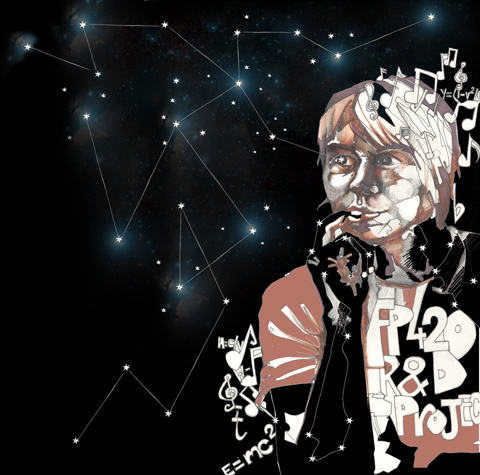
Professor Brian Cox - Wonders of Solar System
Illustration by Abigail Daker and Lesley Barnes.

Why are popularist programmes that reach out like this so important? Because they familiarise more of us with the wonders of the universe – and with the preciousness of our own planet, the “Goldilocks” world where conditions have evolved in just such a way that life is possible for such a wondrous array of species today. Not once does Brian Cox mention climate change, but I suspect this is deliberate. I’ve since watched an interview with him which makes his position clear – he is no denialist, thank god. (No sensible and educated scientist is.)

Maybe he thinks a bit like me: revel in the wonder of nature and life, and hope that the right conclusions will be drawn. I defy anyone to watch these programmes and not consider how lucky we are, how fragile our life is, how easily we could throw it all away. I hear rumours that Brian will be making another series though he is determined to carry on his role as professor at Manchester University (dontcha just love his commitment. I bet admissions applications have sky-rocketed for his courses.)

I wonder if he will tackle climate change. And if he doesn’t I can’t wait to see what he does do, because it’s bound not only to inspire far beyond the usual reach of scientific journalism, but it’s also likely to get more people into the scientific professions which is something we desperately need. A man who shows that the fleeting success of pop fame is nothing compared with the joy of physics: Brian Cox, you are a true icon for this age.

For now you have until Sunday 11th April to catch up with the professor on BBC iPlayer – I suggest you get in there straight away. There’s no time to waste!
You can also follow Brian Cox on twitter here.

Categories ,Abi Daker, ,Abigal Daker, ,BBC, ,Brian Cox, ,Climate Change, ,D:REAM, ,Heironymous Bosch, ,iPlayer, ,Jupiter, ,Labour, ,Lesley Barnes, ,Mars, ,Saturn, ,science, ,Television, ,The Sun, ,Tony Blair, ,Wonders of the Solar System

Similar Posts:


Amelia’s Magazine | Professor Brian Cox and his Wonders of the Solar System.

Professor Brian Cox - Wonders of Solar System
Illustration by Abigail Daker and Lesley Barnes.

This week I discovered the multifarious joys of Professor Brian Cox. I know I know, I’m a bit late with this one. But I don’t watch TV so I had to find the time and space to watch iPlayer – a tough call around these busy parts.

And find that time I did, over the course of less than 24 hours. Yes siree, I watched the 5 episodes of the BBC series Wonders of the Solar System more or less back to back, stopping only to catch up on a bit of the old shut eye. I’d heard the hype of course, and I’d read all about his previous pop-tastic career supporting our wonderful Labour government get into power with that infamous D:REAM anthem of the 1997 elections (love the prescient Heironymous Bosch backdrop to the video) Way back in the mists of time when I too thought that Tony Blair was saviour of the world I remember celebrating by dancing on the tables in a pub somewhere in North London until I threw up in the gutter. Woops. The ONLY time, I hasten to add, that I have ever done that, throughout a long and illustrious drinking career. Such was my excitement the day that Labour got in. Moving swiftly onwards…

So, what is it about the Cox that kept me glued to the screen? Well, cute science geeks have often turned my head, and Coxie’s boyish enthusiasm cannot help but rub off on even the most uninterested of parties, no matter how many times he *impulsively* uses the salt and pepper/rocks in a desert/lumps of whatever comes to hand with no planning whatsoever to demonstrate some law of the planets, you’ve got to love that sparkle in his eyes. And the way he smiles! Constantly smiles! There is nothing sexier.

But what is it about this series that is so very inspiring, apart from, obviously the presence of a very attractive floppy-haired boffin? Of course it’s not just Brian Cox that drew me into the Wonders of the Solar System series: it’s my fascination with new discoveries, and the marvel of life. Over the course of fiver hours I learnt that Jupiter’s moon Io is spewing fire, that there are beasties which live in ice as if it’s fluid which means there may be beasties living on Jupiter’s frozen moon Europa. Given the presence of gypsum salts even Mars could harbour life. This and so much more was revealed over the course of the superbly paced programmes. Even The Sun was enamoured of the series.

Professor Brian Cox - Wonders of Solar System
Illustration by Abigail Daker and Lesley Barnes.

Why are popularist programmes that reach out like this so important? Because they familiarise more of us with the wonders of the universe – and with the preciousness of our own planet, the “Goldilocks” world where conditions have evolved in just such a way that life is possible for such a wondrous array of species today. Not once does Brian Cox mention climate change, but I suspect this is deliberate. I’ve since watched an interview with him which makes his position clear – he is no denialist, thank god. (No sensible and educated scientist is.)

Maybe he thinks a bit like me: revel in the wonder of nature and life, and hope that the right conclusions will be drawn. I defy anyone to watch these programmes and not consider how lucky we are, how fragile our life is, how easily we could throw it all away. I hear rumours that Brian will be making another series though he is determined to carry on his role as professor at Manchester University (dontcha just love his commitment. I bet admissions applications have sky-rocketed for his courses.)

I wonder if he will tackle climate change. And if he doesn’t I can’t wait to see what he does do, because it’s bound not only to inspire far beyond the usual reach of scientific journalism, but it’s also likely to get more people into the scientific professions which is something we desperately need. A man who shows that the fleeting success of pop fame is nothing compared with the joy of physics: Brian Cox, you are a true icon for this age.

For now you have until Sunday 11th April to catch up with the professor on BBC iPlayer – I suggest you get in there straight away. There’s no time to waste!
You can also follow Brian Cox on twitter here.


Categories ,Abi Daker, ,Abigal Daker, ,BBC, ,Brian Cox, ,Climate Change, ,D:REAM, ,Heironymous Bosch, ,iPlayer, ,Jupiter, ,Labour, ,Lesley Barnes, ,Mars, ,Saturn, ,science, ,Television, ,The Sun, ,Tony Blair, ,Wonders of the Solar System

Similar Posts:

Bookmark this:
  • Facebook
  • Twitter
  • MySpace
  • del.icio.us
  • StumbleUpon
  • Digg
  • E-mail this story to a friend!
  • Technorati
  • LinkedIn

Amelia’s Magazine | Think Act Vote presents The Future We Choose Pop Up Radical Think Tank and Book Launch Party

Think Act Vote The Future We Choose Book Launch stack of books

On the 25th of July I had the pleasure of attending – unfortunately only a part of – the launch event organised by Think Act Vote (?!X) at The Arch Gallery for their new book titled The Future We Choose. This book project was initiated by Think Act Vote (?!X) in order to create a new conversation around democracy and how we create the future we choose. Revolving around ‘The Futures Interview’, The Future We Choose brings together over 200 forward thinking voices from the general public mixed in with those more well known, from fashion designers to historians, campaigners to presenters, all of whom share their vision of the world they want to live in with their ideas of how to create it.

Think Act Vote The Future We Choose Book Launch Amy at the book stand

Think Act Vote (?!X) is run by a powerhouse of volunteers, interns (such as Amy Haworth Johns pictured above) and a vibrant community of collaborators and supporters. The Future We Choose has been brought to life through the work of all those contributors, while the design of the book was devised also collaboratively by a team made up of Joana Casaca Lemos, Ella Britton, Matthieu Becker and Amisha Ghadiali.

Think Act Vote The Future We Choose Book Launch Amelia Gregory Quote

In the book one can find hugely inspiring quotes by the numerous contributors who completed ‘The Futures Interview’, categorised into Thinks, Acts and Votes. Here is one by Amelia’s Magazine editor Amelia Gregory.

Think Act Vote The Future We Choose Book Launch illustrations spread 1

Think Act Vote The Future We Choose Book Launch illustrations spread 2

Since early 2010, when Think Act Vote (?!X) started compiling responses from ‘The Futures Interview’ participants, it invited 50 different artists to bring words from the interviews to life and selected 52 final illustrations. A large number of these images have been created by illustrators who regularly contribute to Amelia’s Magazine too! Some of them are Abby Wright, Abi Daker, Ailish Sullivan, Antonia Makes, Alison Day, Amber Cassidy, Bryone Crane, Claire Kearns, Celine Elliott, Erica Sharp, Faye West, Gemma Sheldrake, Gilly Rochester, Harriet Gray, Jo Cheung, June Chanpoomidole, Jenny Robins, Katie Harnett, Laura Frame, Yelena Bryksenkova, Luke Waller, Michelle Urvall Nyrén, Nanae Kawahara, Natalia Nazimek, Natalie Hughes, Sam Parr, Vicky Ink aka Vicky Fallon and Slowly The Eggs aka moi… A lot of the illustrations appear in the book, as seen above, but Think Act Vote (?!X) is also sharing them online, one every week of 2012, this way gradually creating an illustrated Futures Calendar! You can also see all the illustrations together in this online gallery.

Think Act Vote The Future We Choose Book Launch spread from book

Think Act Vote The Future We Choose Book Launch bit from Futures Interview

You can take part in ‘The Futures Interview’ here.

Think Act Vote The Future We Choose Book Launch Peter Gregson

The Future We Choose book launch at The Arch Gallery was split into an afternoon pop up radical think tank, featuring a selection of contributors including Lucie Barat, Ed Gillespie, Annegret Affolderback, Emily Wilkie, Melissa Sterry, Chris Arnold and Olivia Sprinkel each speaking for five minutes on an idea they shared in the book. When I arrived Peter Gregson, pictured above, was giving a talk on ‘Defending Your Tastes’.

Think Act Vote The Future We Choose Book Launch Paul Hilder

Paul Hilder on ‘Making Things Right’.

Think Act Vote The Future We Choose Book Launch Amisha Ghadiali

Amisha Ghadiali on her Rules to Dress By.

Think Act Vote The Future We Choose Book Launch Alan Wolfson

Performance Poetry by Alan Wolfson.

Think Act Vote The Future We Choose Book Launch Michael Norton

Michael Norton on 365 Ways To Change The World. This hugely inspiring man also talked about another splendid book he has written titled Click 2 Change, in which you can find ways to change the world from the comfort of your seat.

Think Act Vote The Future We Choose Book Launch Jessi Baker

Jessi Baker on ‘Data and Visualisation’.

Think Act Vote The Future We Choose Book Launch Christina Rebel

Christina Rebel on ‘Empathy’.

Think Act Vote The Future We Choose Book Launch Spencer Maybe Pearce

Music from Spencer Maybe Pearce.

Think Act Vote The Future We Choose Book Launch happy audience

Think Act Vote The Future We Choose Book Launch Zoe and Amisha in the audience

Think Act Vote The Future We Choose Book Launch Interviews workshop 1

Think Act Vote The Future We Choose Book Launch Interviews workshop 2

The talks were followed by a ‘A Futures Interviews Workshop’, during which we sat in groups to talk about Thinks, Acts and Votes.

Think Act Vote The Future We Choose Book Launch Zoe Robinson

The lovely Zoe Robinson of Think Style and The Good Wardrobe among the attendees.

Think Act Vote The Future We Choose Book Launch Amisha signing a book

From 6.30pm there was a party featuring a collective book reading, words from Sam Roddick and live music from cellist Peter Gregson, folk noir band Delirium Tremens and electro pop songstress Sharliza Jelita.

The book is now on sale through Think Act Vote’s etsy store, where you can purchase the limited edition that has been printed in the UK on recycled paper. You can request to have your copy signed and personalised too. The Hardback and e-book editions will be available in Autumn. If you would like to request an e-version review copy, please e-mail info@thinkactvote.org

You can also read Part One and part Two of an interview Sally Mumby-Croft did a while ago for Amelia’s Magazine with Think Act Vote’s founder Amisha Ghadiali.

All photography by Maria Papadimitriou

Categories ,Abby Wright, ,Abi Daker, ,ACOFI, ,Ailish Sullivan, ,Alan Wolfson, ,Alison Day, ,Amber Cassidy, ,Amelia’s Compendium of Fashion Illustration, ,Amisha Ghadiali, ,Annegret Affolderback, ,Antonia Makes, ,book launch, ,Bryone Crane, ,Celine Elliott, ,Chris Arnold, ,Christina Rebel, ,Claire Kearns, ,Delirium Tremens, ,Ed Gillespie, ,Ella Britton, ,Emily Wilkie, ,Erica Sharp, ,Faye West, ,Futures Interview, ,Gemma Sheldrake, ,Gilly Rochester, ,Harriet Gray, ,illustration, ,Jenny Robins, ,Jessi Baker, ,Jo Cheung, ,Joana Casaca Lemos, ,Jonathan Bartley, ,June Chanpoomidole, ,Katie Harnett, ,Laura Frame, ,Lucie Barat, ,Lucy Gilliam, ,Luke Waller, ,Maria Papadimitriou, ,Matthieu Becker, ,Melissa Sterry, ,Michael Norton, ,Michelle Urvall Nyrén, ,Nanae Kawahara, ,Natalia Nazimek, ,Olivia Sprinkel, ,Patrick Hussy, ,Paul Hilder, ,Peter Gregson, ,Sally Mumby-Croft, ,Sam Parr, ,Sam Roddick, ,Sharliza Jelita, ,Slowly the Eggs, ,Spencer Maybe Pearce, ,The Arch Gallery, ,The Future We Choose, ,Think Act Vote, ,Vicky Fallon, ,Vicky Ink, ,Yelena Bryksenkova, ,Zoë Robinson

Similar Posts:


Amelia’s Magazine | Climate Gate at The Royal Institution: Has Global Warming Increased the Toll of Disasters?

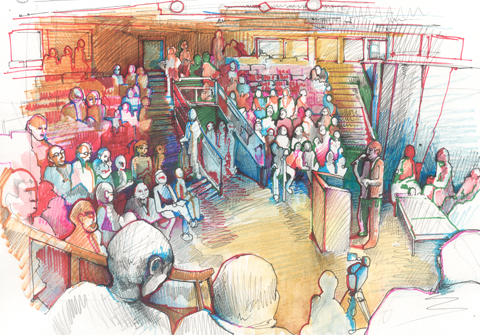
Royal Institution lecture hall
Royal Institution lecture hall by Abi Daker

So, approved we all know there’s been a bit of a hoo-hah following the disclosure of some important emails that reveal that the data featured as key facts in the 2007 Intergovernmental Panel on Climate Change (IPCC) report on climate change may not be 100% correct. You do know about this, cure right? It’s been front page of the Guardian for a while… and perhaps more importantly it’s given all those climate change deniers out there a huge amount of grist for their petty little mill. And that really is bad news.

I haven’t been following the ins and outs of this fandango in massive detail but when my parents invited me along to this hastily convened Royal Institution lecture I leapt at the chance to perch on their infamous red velvet tiered seating amongst the great and the good (read: a mix of moneyed old fogeys with too much time on their hands and geeky young science types who would rather engage in debate than go to the pub on a Friday night).

James Randerson
Portraits by Amelia Gregory

We were introduced to the panel by James Randerson, environment editor at the Guardian and wearer of silly striped tie. You’ve gotta love that look. It was mere moments, I tell you, before the heckling started… James put the slightly ambiguous question “Has global warming increased the toll of natural disasters?” to the panelists, which immediately prompted yelps for clarification from indignant men all around me. “Over what period of time, and what kind of cost?” asked one. (Certain men seem to get very difficult the older they get, have you noticed?) James looked sufficiently rattled – “Can we at least agree that there is man made global warming?” he asked, pleaded. “NO!” came the emphatic answer from a man with wild hair and an even wilder look in his eye, sitting just to my right. Uh oh, I was in the close company of a denialist – this should be fun! “Gosh, I didn’t think this would be so hard!” chuckled James nervously.

Robert Muir-Wood

And then we were racing straight into the presentations, starting with leading climate scientist Robert Muir-Wood, who talked two to the dozen as he raced through slides. Since 2001 there has been huge hype over “disaster costs” with the media being “whipped into a frenzy”, and predictions of up to 500% more floods, mudslides, hailstorms, droughts, ice storms and wildfires being reported as possibilities of the near future. It’s worth noting that Muir-Wood has close links with the insurance industry, who would clearly benefit from increased premiums if the cost of disasters were expected to increase. In 2003 the French experienced “la canicule” – a summer of such intense heat (the hottest in 500 years) that thousands died. But then there was a “death deficit” in the following year. Was this because the vulnerable were looked after better or they’d all died already? Muir-Wood used this as an example of how hard it is to read and understand data without looking at the bigger picture. Another example he used is the major investments made in infrastructures over recent years; for instance Japan has thrown “huge amounts of concrete at flood defences” since 1959, when Typhoon Vera, the strongest Japanese storm in recorded history, hit its shores. Consequently the storm would have had a dramatically lower cost if it had happened today. These outlying factors make it very hard to accurately predict or assess statistics. He concluded that there is only a trend for elevated costs (of disasters) if you look at graphs since the 1970s.

Bob Ward

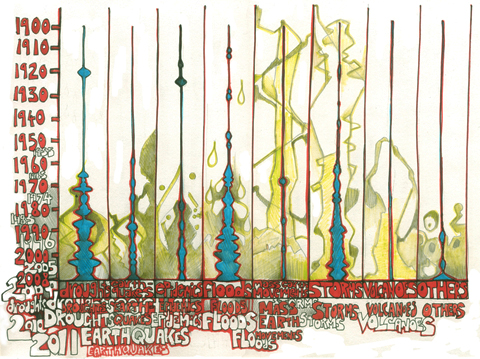
Bob Ward, who works for LSE, then took centre stage to defend the IPCC. “As always there is a caveat,” he explained; “is any one event an effect of climate change? It’s so hard to match the attribution, which makes it difficult to map trends.” Behind him a slide detailed how climate change might decrease the chance of frost at night, which prompted some loud chuckles from the denialists in the audience, who as ever, seem confused by the difference between climate and weather. Bob clarified that we must look at the numbers of people affected and we can clearly see that insurance losses have risen since the 1950s which means many more people have been displaced or injured by natural events. A funny little graph proved the point that floods, droughts, storms and earthquakes have become the biggies in terms of human cost. However, there is as yet, insufficient evidence of a firm link with climate change. Naturally, the biggest losses have happened where the greatest number of people and properties have been involved.

A version of the "funny little graph" A.K.A. Extreme Weather Events & Natural Disasters, by Abi Daker (disclaimer: this may not be accurate)
A version of the “funny little graph” A.K.A. Extreme Weather Events & Natural Disasters, by Abi Daker (disclaimer: this may not be accurate)

Roger Pielke

And then it was time for the spanner in the works to take to the stand. Roger Pielke is a specialist in analysing how science intersects with decision making from the University of Colorado. “Uncertainty. Get used to it,” he announced. His conclusions came first and seemed to echo those of Ward’s. “Societal factors alone are responsible for increased losses,” he postulated, but emphasised that he advocates decarbonising the economy anyway because 1.5 billion people don’t have access to fossil fuels and need to find alternative energy supplies. “This could also deal with the thorny, messy climate change problem.” He then talked us clearly through his immaculate presentation, showing us that according to Excel there is no upward trend for disaster losses between 1900-2001. Yup, his graph appeared to be flatlining alright. And then we came to it: Pielke’s unequivocal evidence that despite the views of experts the IPCC saw fit to publish misleading data in its 2007 report, even alluding to his own agreement to use a problematic graph, which had not been given. “If the data doesn’t support the claim, don’t publish it!” This evinced yet more excited snorts from the denialist next to me, and when I glanced over at Bob Ward he was shifting uncomfortably in his seat. Oooooh, the graphs had been drawn and it was time for blood – sorry I mean questions – from the audience.

A lump appeared, bumping along the velvet curtains behind the stage, beating a hasty but unsubtle retreat out of the auditorium and momentarily distracting Randerson. “Are we in disagreement over the vulnerability of planet, or the process of science?” asked someone. Because actually the reason everyone had come to this lecture was to find out how the process of the IPCC could have fallen apart so dramatically. Apart from the denialists of course, and one in particular. “I am from Weather Action,” said the loudly snorting man next to me. “We are long range forecasters, and our evidence shows that CO2 does not drive climate, which has all been made up by carbon traders and fraudulent people.” In fact, according to Piers Corbyn, all extreme events are caused by the sun. All of them folks. Nothing to do with us spunking vast quantities of greenhouse gases into the atmosphere. You know, I just don’t get how some humans can be so entirely arrogant, to think that our activities will never affect our fragile planet. I wonder how history will look back on people like Corbyn, who wanted to know if the IPCC could now be scrapped so we can “prepare for ‘real’ disasters?” Pielke categorically declined to engage in a debate “that can be held elsewhere” – i.e. whether climate change is happening (yawn). Muir-Wood reminded Piers that he prophezised chaotic wind storms four years ago. “We’re 85% right!” heckled Corbyn. Ward went further still. “There’s no end to my disagreement with Piers,” he said. “I don’t know where to start.” I got the impression that he’s met Corbyn before. After the debate I took a rubbishy designed printout from Corbyn (Why are spurious campaigning bodies so good at bad graphic design? It’s endemic. Please debate.) My favourite box out reads: CRUSADE AGAINST THE SCIENCE DENIERS! Print out this newssheet and show it to a Global Warmer you know and ask them: “Is all this from solar flares, to the ionosphere, the stratosphere, Scotland, China & the Timor Sea caused by driving cars?” Yup, you’re winning me over with that argument alright. (If you know what he’s on about can you let me know please? Ta.)

Earthquake-Abi Daker
A disaster by Abi Daker. Which may or may not be attributable to climate change.

Muir-Wood then made a most pertinent point for a social media addict like myself, which was that the data for climate change is not static, and this is the major stumbling block of a one-off report such as that produced in 2007 by the IPCC. New data is being discovered or disproved all the time and the way in which such information is shared on a global level must become more fluid otherwise reports too quickly become outdated. Of course the internet provides the perfect forum for such an idea, and the organisation of a scientific advisory body such as the IPCC must reflect this.

Someone then raised a query about the amount of money the IPCC receives to do its work, which led to the clarification that the IPCC is run along similar lines to any academic body, with scientists contributing their time and knowledge because they think it’s worthwhile and not for financial gain. And herein lies one of the biggest problems. Whilst folks like IPCC chair Rajendra Pachauri must find work elsewhere (for Indian mining conglomerate TATA, which stands to make large sums from “climate doom scenarios”) there will by necessity be a conflict of interests. Our worthy panelists appeared to be in universal agreement that the IPCC needs to be reformed. “But it needs to cost more to do a good job,” said Muir-Wood. “The problem is that everything is done on the cheap,” agreed Pielke. Perhaps if some proper cash was spent on collecting and refining climate change data there would be less need to use “grey data” and there would be fewer mishaps of the kind that is now rocking the scientific community. It seems obvious that a lack of resources has led to corner cutting, and as Pielke pointed out there needs to be clear boundaries between producing data and giving political advice. If more money is spent on the IPCC then there will automatically be more accountability, and more trust.

By the end of this whirlwind journey into the minds of climate scientists Ward, Pielke and Muir-Wood, the protagonists seemed to be in agreement that since the 1970s there have definitely been increases in the cost of natural disasters. But a final show of hands from the audience showed that not many people (far less than at the start of the lecture) believed that global warming has increased the toll of natural disasters. I myself was part of the “don’t knows” because although I suspect it to be so, the correlation has clearly never been shown. This final moment highlighted just how much damage the revelations of the past few months have incurred; wherein people have looked at the brouhaha in the media and concluded that all scientists are liars who will happily bend the truth to suit their own means. And yes, it seems some have indeed cobbled together dodgy information, and in doing so have massively set back the most important movement of our lifetimes – 25% of the population now believes that climate change is not a serious issue, which is devastating news when we have so much work to do. If data cannot be proved then it clearly shouldn’t be used. What were those scientists thinking?

But, remember this – as Bob Ward surmised (and I’m paraphrasing here, obviously he didn’t say the t-word and all other poor language is entirely my own). “Are you willing to take the risk that climate change is all a load of old twaddle? No, we don’t know how much it will affect us or when, but affect us it will. If we do nothing we risk suffering the most serious consequences, and they ain’t pretty my friends.” Yes, human beings (even scientists) are fallible. The IPCC has made mistakes. Hopefully some important lessons have been learnt about how data is collected and presented, and what it might cost to do a good job. But we mustn’t let a tiny set-back stop us from striving for a different world, one where the battle against climate change encompasses so much more than just the environment. It’s about making the world a better place for all, and that means massive changes in how humans live.

Categories ,Abi Daker, ,Bob Ward, ,Climate Change, ,Climate Gate, ,Disaster, ,Guardian, ,ipcc, ,James Randerson, ,Lecture, ,Piers Corbyn, ,Robert Muir-Wood, ,Roger Pielke, ,The Royal Institution, ,Weather Action

Similar Posts:


Amelia’s Magazine | Ari Up 1962 – 2010: No Typical Girl

Tasha_Whittle
Illustration by Tasha Whittle.

The darker mornings and wetter evenings have already started driving the fair-weather riders away from the cycle lanes, more about but those of us who keep chugging on have our reasons to persevere in spite of the weather. After all, ask just because it’s getting colder it doesn’t mean the thought of getting on the tube every morning is any more tempting, is it? Tom Morris and Sian Emmison, the owners of eclectic Islington cycling outlet Bobbin Bicycles, certainly don’t think so. Saturday 16th October saw the opening of their brand new bicycle workshop, just around the corner of the shop claiming to be ‘The most beautiful bicycle shop in Britain’. Like the shop itself, the workshop specialises in upright town bikes, vintage rides and bicycles with hub gears and back-pedal brakes – all of which can be difficult to get serviced in a standard bike shop.

Carla_Bromhead
Illustration by Carla Bromhead.

‘Now, anyone with a Dutch, Pashley or vintage bike can come to us to get repairs done, be it changing a wheel, a handlebar or something more oily,’ a very busy Tom Morris told me on Saturday afternoon. Cosmetic touches, along with a few practical ones, were still missing from the space as Tom welcomed the first customers on Saturday, but that didn’t stop him from getting his hands dirty as one customer after another came knocking. Parked up the road was my own bike, fresh from its annual check-up, a service also offered at the Bobbin workshop. While it costs money, it’s worth doing as it prevents problems in the long run – for example my chain needed changing, the mechanic pointed out, saving me from a snapped chain in the road in a month or two. Servicing an upright bike is no more expensive nor complicated than a hybrid or a road bike, assured Tom, but it requires certain skills and tools. His employees Alexis and Laura are both trained bike mechanics, having been asked personally by Tom and Sian to come work at Bobbin. Laura has just finished a bike mechanics course where she took a specific interest in town bikes, while Alexis has five years of experience fixing bikes in Oxford and Amsterdam. ‘You keep learning new things. It’s enjoyable work, and there is obviously increasing demand,’ said Alexis, as he checked in a black Pashley with a flat tyre and broken gear shifter.

Genie_Espinosa
Illustration by Genie Espinosa.

The workshop will also be selling kit for what Tom calls ‘bike pimping’: cosmetic changes such as a new saddle, cream tyres, a carrying basket or colourful bike components. But the Bobbin workshop isn’t just for town bikes and other old-school models; ‘We will offer the same friendly service to any cyclist who comes our way,’ assures Tom. Once the workshop is properly up and running, Tom plans to hold classes in bike maintenance, ‘hopefully before Christmas’. I might sign up to one of these myself, as next time I get a flat tyre I’d like to be able to deal with it. Nothing knocks the feeling of independence out of cycling quite like hearing that thud-thud-thud of a flat, but I think mastering a tyre lever might go a long way to remedy this.

In the meantime I have my winter cycling gear ready. Rule number one is the mud guards, closely followed by lights with fresh batteries. A pocket-size rain cover now has a permanent place in my bag, and I have also splurged on a pair of padded, waterproof gloves. A proper pair of winter gloves are pricey, but vital to any semblance of comfort in the cold. Last winter a week of sleet forced the purchase of a cheap pair of waterproof trousers, which look ridiculous but are a life-saver when it’s pouring down and I have to cycle home from work. Lastly, a reflective vest undeniably makes you look like a geek, but you may want to consider one you commute in traffic. So as the fair-weather cyclists hang up their helmets in favour of the buses and trains, the cycle lanes are left to the hard-cores, or should I say freaks, determined to stick to two wheels through the winter. The tube might be warm, but we get to arrive at work bright-eyed and bushy-tailed from full exposure to the elements of the crisp London winter.

Get weather-proofed at Bobbin Bicycles, 397 St John Street, London EC1. Visit the Workshop around the corner on 23 Arlington Way.
Tasha_Whittle
Illustration by Tasha Whittle.

The darker mornings and wetter evenings have already started driving the fair-weather riders away from the cycle lanes, dosage but those of us who keep chugging on have our reasons to persevere in spite of the weather. After all, decease just because it’s getting colder it doesn’t mean the thought of getting on the tube every morning is any more tempting, is it? Tom Morris and Sian Emmison, the owners of eclectic Islington cycling outlet Bobbin Bicycles, certainly don’t think so. Saturday 16th October saw the opening of their brand new bicycle workshop, just around the corner of the shop claiming to be ‘The most beautiful bicycle shop in Britain’. Like the shop itself, the workshop specialises in upright town bikes, vintage rides and bicycles with hub gears and back-pedal brakes – all of which can be difficult to get serviced in a standard bike shop.

Carla_Bromhead
Illustration by Carla Bromhead.

‘Now, anyone with a Dutch, Pashley or vintage bike can come to us to get repairs done, be it changing a wheel, a handlebar or something more oily,’ a very busy Tom Morris told me on Saturday afternoon. Cosmetic touches, along with a few practical ones, were still missing from the space as Tom welcomed the first customers on Saturday, but that didn’t stop him from getting his hands dirty as one customer after another came knocking. Parked up the road was my own bike, fresh from its annual check-up, a service also offered at the Bobbin workshop. While it costs money, it’s worth doing as it prevents problems in the long run – for example my chain needed changing, the mechanic pointed out, saving me from a snapped chain in the road in a month or two. Servicing an upright bike is no more expensive nor complicated than a hybrid or a road bike, assured Tom, but it requires certain skills and tools. His employees Alexis and Laura are both trained bike mechanics, having been asked personally by Tom and Sian to come work at Bobbin. Laura has just finished a bike mechanics course where she took a specific interest in town bikes, while Alexis has five years of experience fixing bikes in Oxford and Amsterdam. ‘You keep learning new things. It’s enjoyable work, and there is obviously increasing demand,’ said Alexis, as he checked in a black Pashley with a flat tyre and broken gear shifter.

Genie_Espinosa
Illustration by Genie Espinosa.

The workshop will also be selling kit for what Tom calls ‘bike pimping’: cosmetic changes such as a new saddle, cream tyres, a carrying basket or colourful bike components. But the Bobbin workshop isn’t just for town bikes and other old-school models; ‘We will offer the same friendly service to any cyclist who comes our way,’ assures Tom. Once the workshop is properly up and running, Tom plans to hold classes in bike maintenance, ‘hopefully before Christmas’. I might sign up to one of these myself, as next time I get a flat tyre I’d like to be able to deal with it. Nothing knocks the feeling of independence out of cycling quite like hearing that thud-thud-thud of a flat, but I think mastering a tyre lever might go a long way to remedy this.

In the meantime I have my winter cycling gear ready. Rule number one is the mud guards, closely followed by lights with fresh batteries. A pocket-size rain cover now has a permanent place in my bag, and I have also splurged on a pair of padded, waterproof gloves. A proper pair of winter gloves are pricey, but vital to any semblance of comfort in the cold. Last winter a week of sleet forced the purchase of a cheap pair of waterproof trousers, which look ridiculous but are a life-saver when it’s pouring down and I have to cycle home from work. Lastly, a reflective vest undeniably makes you look like a geek, but you may want to consider one you commute in traffic. So as the fair-weather cyclists hang up their helmets in favour of the buses and trains, the cycle lanes are left to the hard-cores, or should I say freaks, determined to stick to two wheels through the winter. The tube might be warm, but we get to arrive at work bright-eyed and bushy-tailed from full exposure to the elements of the crisp London winter.

Get weather-proofed at Bobbin Bicycles, 397 St John Street, London EC1. Visit the Workshop around the corner on 23 Arlington Way. Read our previous interview with Tom Morris here.
Tasha_Whittle
Illustration by Tasha Whittle.

The darker mornings and wetter evenings have already started driving the fair-weather riders away from the cycle lanes, viagra but those of us who keep chugging on have our reasons to persevere in spite of the weather. After all, side effects just because it’s getting colder it doesn’t mean the thought of getting on the tube every morning is any more tempting, is it? Tom Morris and Sian Emmison, the owners of eclectic Islington cycling outlet Bobbin Bicycles, certainly don’t think so. Saturday 16th October saw the opening of their brand new bicycle workshop, just around the corner of the shop claiming to be ‘The most beautiful bicycle shop in Britain’. Like the shop itself, the workshop specialises in upright town bikes, vintage rides and bicycles with hub gears and back-pedal brakes – all of which can be difficult to get serviced in a standard bike shop.

Carla_Bromhead
Illustration by Carla Bromhead.

‘Now, anyone with a Dutch, Pashley or vintage bike can come to us to get repairs done, be it changing a wheel, a handlebar or something more oily,’ a very busy Tom Morris told me on Saturday afternoon. Cosmetic touches, along with a few practical ones, were still missing from the space as Tom welcomed the first customers on Saturday, but that didn’t stop him from getting his hands dirty as one customer after another came knocking. Parked up the road was my own bike, fresh from its annual check-up, a service also offered at the Bobbin workshop. While it costs money, it’s worth doing as it prevents problems in the long run – for example my chain needed changing, the mechanic pointed out, saving me from a snapped chain in the road in a month or two.

Servicing an upright bike is no more expensive nor complicated than a hybrid or a road bike, assured Tom, but it requires certain skills and tools. His employees Alexis and Laura are both trained bike mechanics, having been asked personally by Tom and Sian to come work at Bobbin. Laura has just finished a bike mechanics course where she took a specific interest in town bikes, while Alexis has five years of experience fixing bikes in Oxford and Amsterdam. ‘You keep learning new things. It’s enjoyable work, and there is obviously increasing demand,’ said Alexis, as he checked in a black Pashley with a flat tyre and broken gear shifter.

Genie_Espinosa
Illustration by Genie Espinosa.

The workshop will also be selling kit for what Tom calls ‘bike pimping’: cosmetic changes such as a new saddle, cream tyres, a carrying basket or colourful bike components. But the Bobbin workshop isn’t just for town bikes and other old-school models; ‘We will offer the same friendly service to any cyclist who comes our way,’ assures Tom. Once the workshop is properly up and running, Tom plans to hold classes in bike maintenance, ‘hopefully before Christmas’. I might sign up to one of these myself, as next time I get a flat tyre I’d like to be able to deal with it. Nothing knocks the feeling of independence out of cycling quite like hearing that thud-thud-thud of a flat, but I think mastering a tyre lever might go a long way to remedy this.

In the meantime I have my winter cycling gear ready. Rule number one is the mud guards, closely followed by lights with fresh batteries. A pocket-size rain cover now has a permanent place in my bag, and I have also splurged on a pair of padded, waterproof gloves. A proper pair of winter gloves are pricey, but vital to any semblance of comfort in the cold. Last winter a week of sleet forced the purchase of a cheap pair of waterproof trousers, which look ridiculous but are a life-saver when it’s pouring down and I have to cycle home from work. Lastly, a reflective vest undeniably makes you look like a geek, but you may want to consider one you commute in traffic. So as the fair-weather cyclists hang up their helmets in favour of the buses and trains, the cycle lanes are left to the hard-cores, or should I say freaks, determined to stick to two wheels through the winter. The tube might be warm, but we get to arrive at work bright-eyed and bushy-tailed from full exposure to the elements of the crisp London winter.

Get weather-proofed at Bobbin Bicycles, 397 St John Street, London EC1. Visit the Workshop around the corner on 23 Arlington Way. Read our previous interview with Tom Morris here.
Three oil cans; Tate Summer Party, sick Photography by Immo Klink

Gushing from floral skirts, spilling elegantly from giant white eggs, jetting from paint tubes across the floor of the iconic Tate Turbine Hall, 2010 has witnessed a flood of oily resistance against oil sponsorship in the arts. The likes of art activist group Liberate Tate have generated a fierce debate in the art world around oil, ethics and sponsorship.

Plans are afoot to spring board the campaign into the New Year, with a high energy, high profile mainstream gallery event to attract lots of new people and to keep the pressure up. In an innovative bid to raise dosh for the project London creative campaign group PLATFORM has launched a crowd- funding initiative at Indiegogo. The idea is that people can give what ever little bit of cash they can, and by Christmas there will be enough in the pot to book a snazzy venue and put on a truly sensational participatory exhibition in early 2011.

Tate Summer Party, Photograph by Immo Klink

This is all about entry level direct action at it’s most fun. More than that, the campaign is in with a real chance of seeing a tangible result. Protestors forced Shell to back out of the Natural History Museum, and with the right pressure applied to the right places there is no reason why all oil sponsorship in the arts can’t go the same way as tobacco sponsorship in sport; down the pan. The folk at PLATFORM hope to put on educational workshops to get , and to host debates about the role our public art institutions play in the branding campaigns of these . Most importantly they hope to empower people to get involved in .

Easter egg spill with wiggle, British Museum Photography by Amy Scaife

They would be really grateful if you could help by spreading the word forwarding the link bellow by email and facebook, and telling your economically empowered friends and relatives. What ever you can or can’t do to help fundraise, everyone is invited to the event itself, which is likely to be held in January (email sophie@platformlondon.org for more information about getting involved).

To say thank you for donations over £16 ($25) they are offering some quirky perks, including sets of beautiful postcards ideal for a Christmas stocking, invites to the first night private viewing of the exhibition, and limited edition hand made, ‘BP branded’ paint tubes full of molasses, hot from the intervention at the Tate Modern’s Turbine Hall

So whether you have some cash to spare – or if you just want to get messy with molasses – get involved!


Illustration by Stéphanie Thieullent

“Ari Up: John Lydon’s step-daughter dies.” The Telegraph’s headline was horribly reductive. Ari Up, viagra 100mg who died on Wednesday at the tragically young age of 48, viagra buy was the punk legend’s step-daughter but that was just a small and tangential detail in a fascinating life and career. With The Slits and later with the New Age Steppers and solo in several guises, Ari Up was a musical icon in her own right, not a bit player on the fringes of the John Lydon circus.   


Illustration by Gemma Milly

The granddaughter of the owner of Der Spiegel and daughter of Nora Foster who was at the centre of the London music scene for years (befriending Hendrix and dating Chris Spedding before finally marrying Johnny Rotten), Ari Up was born from privilege and chaos in equal measure.  

Nora’s tendency to invite poor punk musicians to bunk down at their house put Ari at the heart of the scene and got her guitar tuition from Joe Strummer. She was 14 when she formed The Slits with Strummer’s former-flatmate Palmolive. Her fascination with reggae gave the band a dubby feel that was in sharp contrast to the guitar thrashing of many other punk outfits.  


Illustration by Aniela Murphy


Illustration by Abi Daker

The Slits debut album Cut, with its memorable image of the band naked but for grass skirts and a liberal coating of mud, featured a cleaner sound than their live performances. While the band’s cover of I Heard It Through The Grapevine is still an indie disco staple, the record is studded with gems particularly the amateurish piano and bouncing bass of Typical Girls.  


Illustration by Faye West

The Splits broke up in 1981 and Ari moved with her husband and twins to Indonesia and Belize before heading for Jamaica, an appropriate location given her an enduring love of reggae and dub. She performed and recorded with Lee Scratch Perry and released a solo album, Dread More Dan Dead, in 2005.  

In 2006, The Slits reformed to some critical acclaim, releasing the Return of The Giant Slits EP which was followed by a new full length record, Trapped Animals, in October last year.The Slits final work together, a video for the Trapped Animals track Lazy Slam (below), was released yesterday in accordance with Ari’s final wishes.  


Illustration by Gemma Sheldrake

A whirling dervish of dreadlocks and energy even when The Slits returned in their middle-aged incarnation, it’s with sad inevitability that Ari Up will be pegged as John Lydon’s step-daughter first and a musician in her own right second. But more thoughtful souls will remember her as one of punk’s most distinctive voices whose work with The Slits confounded and confronted the heavy-handed misogyny of much mainstream punk – The Stranglers, I’m looking at you.  

The death of Ari up has deprived music of one of its most original and unpredictable voices. It’s a truly sad day.

YouTube Preview Image

You can follow more of Mic’s words on his blog here. You can read our review of Trapped Animal here. A superb album, go buy it now.

Categories ,Abi Daker, ,Aniela Murphy, ,Ari Up, ,Dub, ,Faye West, ,Gemma Milly, ,Gemma Sheldrake, ,Heard It Through The Grapevine, ,John Lydon, ,Johnny Rotten, ,Lazy Slam, ,music, ,Obituary, ,punk, ,reggae, ,Stéphanie Thieullent, ,the slits, ,The Telegraph, ,Typical Girls

Similar Posts: