How did you meet and how and why did you decide to make music together?
D: I was bicycling one night and saw Eleni sleepwalking outside of the little village we lived in. So I guided her home. I knew where she lived, had seen her at school and knew she was a great dancer. That’ s why I assumed she would be a great singer, too. When I finally dared to ask her if she could sing she said: I can scream! That’ s how our punkrock band Jumbo Jet started.
Why the name Evropi?
E: It’s Greek for Europe. We had a three year tour across Europe going on with 600 shows in 22 countries where we also started writing the songs for the new album. We were inspired by the music we caught and the conversations we had with young people whose ideas of how Europe could be were very similar.
How did you hook up with wave machines producer Tim Bruzon and what was it like making the album in Liverpool?
E: We met Tim in Stuttgart while he was joining his girlfriend on tour and ever since we’ve stayed in contact with him. He told us about his project Wave Machines and that he’s also into mixing.
So we had this track we were working on and we were kind of stuck with it in the mix. We send the track to Tim and were so excited about how our song turned into something really cool that we decided to
work on our album with him. I was really amazed about his anarchistic approach and that he had zero respect for the material he got from us. The way how he acted like a third band member.
I really liked that. He’s very experimental and there is no German Angst in him.
What kind of music inspires you, do you have different tastes?
E: I’m always inspired by music where artists create their own cosmos and genre. How do you describe the music of Kate Bush or Prince or DJ Shadow or Arvo Pärt? It’s music that just those people
are able to do and no one else.
Who played the traditional greek instruments on the album?
D: I played them. I spent months in Greece, listening, watching and understanding those instruments. I usually don’ t practise instruments cause observing very close is enough and you still keep your own approach to a strange instrument that way.
What inspired the lyrics on the album?
E: My own family history. It’s the story of three women and their journey from Asia Minor to Greece, Germany and back across Europe. But you could easily change the names and make your own
story out of it.
How do you feel about the current migration issues across Europe and beyond?
E: Half a year ago 34 young men from Gambia arrived in our village. I was touched by our little communitiy’s willingness to help. They organized a lovely welcome party for the refugees so we could
easily get to know each other. As for myself I’d rather help without a big fuss than talk about it. So I started to give German lessons at my house and Daniel started to organize excursions where
a lot of the young men joined us.
What can we expect from your live show?
E: The effort to sound like a seven-piece band even though it’s just the two of us.
Find Evropi on tour with Duke Special here:
> Oct 15 – Apex, Bury St Edmunds
> Oct 16 – BOTW, Manchester
> Oct 18 – Fibbers, York
> Oct 20 – Flowerpot, Derby
> Oct 21 – Louisiana, Bristol
> Oct 22 – Copper Rooms, Warwick
> Oct 23 – Boileroom, Guildford
> Oct 24 – The Convent, Stroud
> Oct 25 – Wedgewood Rooms, Southsea, Portsmouth
And they are playing in London on 27th Oct at The Finsbury, with Flights of Helios and Business Lunch.
Sea + Air is out now on Glitterhouse Records/Shellshock.
Written by Amelia Gregory on Thursday September 24th, 2015 11:59 am
Plastic Mermaids are a five piece band from the Isle of Wight. Since their 2014 release of debut EP ‘Drømtorp’ they have rightfully been earning comparisons to the likes of Animal Collective, British Sea Power, The Flaming Lips and Mercury Rev. After sold-out headline shows last year Plastic Mermaids have become notable for their eye catching stage production, which involves handmade sets, lasers, projections and samples from films. I caught up with multi-instrumentalist Jamie Richards to find out more…
How did Plastic Mermaids come together and how has your home in Isle of Wight shaped your sound?
Doug, Chris N. and I (Jamie) used to be in a sort of thrash-electro-punk band called Magic Octagon. Really loud fast trashy music, it baffles me that we ever did it to be honest. Anyway we stopped that and decided to form Plastic Mermaids. We did one gig without a drummer with the most outrageous electronic setup ever and it was a complete disaster. We knew Chris J through surfing so got him to play some drums, and eventually decided that it also made more sense to have a bassist who could actually play the bass (I was pretty crap) so Tom joined us. I reckon being on the Island has definitely had an effect on our sound as we’re less subjected to the latest musical trends than we would be in a city, so we just kind of do our own thing. Being by the sea is pretty great for inspiration too.
What is the process of creating new music as a band? Is there one person more in control and if so how does that work?
There’s no one person in control, we all write music and bring ideas to the table. It’s not a simple process though. I guess it usually goes something like this –
Someone has an idea that we all get excited about and start recording it before we really know where we’re going, we drink a lot of tea, everyone decides they want to take the song different places, we argue about it, record multiple versions, change it around until it bears no resemblance to the initial idea, decide we hate it, abandon it for months, throw away everything, start again, change the tempo by 20bpm in one direction then the other, drink some more tea, argue some more, change the key, throw it all away again, decide the original idea was actually quite good, drink some more tea, call it finished. Every now and then we get lucky and a song actually comes together pretty quickly. We wrote and recorded most of ‘Polaroids’ in one evening – Doug had a piano piece, which he had a completely different vision for and the rest of us totally butchered it while he was out of the room having dinner.
What is happening in the Playing in Your Mind video? What inspired all the ideas and how did you achieve them?
Ha! Well we followed Doug with a camera which was lucky because when he got attacked by that mannequin it made a pretty good intro..
If you could describe the inspiration behind the new Inhale the Universe EP in one sentence what would it be?
Tom had a dream he could inhale the universe so we tried to replicate it in music.
How often do you get to surf and do you ever surf together as a group or is it always a very individual pursuit?
Doug, Chris and I (Jamie) surf as often as the waves permit. Unfortunately being on an island half way up the English channel that’s not very often in summer. We do get some good waves in winter though, and it’s hardly ever crowded which is a bonus. There’s something really nice about sitting in the sea with a few friends in the middle of winter with snow on the ground watching the sunrise and getting some great waves, knowing that everyone else is still in bed.
The visual aspect of performance is very important to you – what do you hope to do with your live sets in the coming years? Any ideas you can share with us?
Obviously lights/projections/stage props etc do add a lot to the live experience, but I think a lot of what’s exciting about watching us play is just the fact that we’re doing it completely live. It’s become almost a rarity nowadays to see a band playing without a backing track. I swear I’ve seen bands recently that could stop playing their instruments and you wouldn’t notice. What we’re trying to do at the moment is to push things as far as we can technologically with samplers and sequencers etc whilst still remaining completely live and not being locked into a click track. There’s been so much of it around recently and I think audiences are starting to realise that gigs with backing tracks become stale pretty quickly. In our sets things can (and sometimes do) go wrong, and I think that adds an element of excitement. In future we just want to see how far we can keep pushing it and not play it too safe. And we’d like some big lasers of course.
Where can we see you live this year?
We’ve got a couple of headline gigs coming up, The Louisiana (Bristol) 23rd Feb and The Lexington (London) 24th Feb. We’ve just had a couple of festival bookings too, Wychwood Festival (31st May), Isle of Wight Festival (12th June) and Bestival (September). We’ve also got a nice slot on the main stage at Rob da Bank’s new Common People festival in Southampton 23rd May which is pretty exciting. Hopefully we’ll get a few more booked in soon as well.
Playing In Your Mind and Inhale The Universe are released on 9 March via Cross Keys Records.
Written by Amelia Gregory on Friday February 13th, 2015 3:25 pm
As I arrive at The Hundred in the Hands soundcheck, for sale the floor of the upstairs room of the Old Blue Last is littered with an array of guitars, information pills wires, and keyboards with cases of all shapes and sizes to match. On stage the Brooklyn two-piece seem to glide between their stations, calmly, almost nonchalantly, warming their instruments up and coiling endless lengths of cable around the compact space the Old Blue has to offer. Eleanor, Jason and the beat master extraordinaire (Mr Apple Mac laptop) whir into action for another slot on their summer tour, their appearance in London followed by a much anticipated debut at Latitude and Festival de-Affaire in the Netherlands. Even within the empty room my feet can’t help tapping as The Hundred in the Hands fine tune their breed of electro; sugar spun candy pop sprinkles on a thick, fuzzy electric whirlwind that you can’t help but get lost in.
Once the soundcheck is put to bed, Eleanor and Jason are kind enough to spare me a few minutes for a chat in the luxurious surroundings the Old Blue Last does so well- peeling wallpaper, endless sirens and multipacks of Hula Hoops. But the charming pair seem unfazed by the rush around them, the capital is now like a ‘second home’ to them as this venture brings their UK visits up to four, although Eleanor insists they ‘still don’t know how to get around, nearly getting run over because the cars are going the wrong way.’
As a pair they seem in sync, each listens to the other, feeds off their ideas, never overrunning each other’s sentences. For creators of such urgent and, at times, epic music, there is a calm patience about each of them. Their musical exploration references many shades of genres through history, although their own musical education began with the good old bastion of classic American music: the radio. For Jason it was the ‘golden oldies on the stations, Motown and stuff like that’, a passion shared by Eleanor: ‘Because it was on the radio it wasn’t really a conscious choice, it just drifted into your life. And I listened to a lot of brooding, moody music in the 90’s, of course, as everyone should. But I think when I came back around to pop music and pop forms I realised I did have that in my background, but it was all the golden oldies, the girl group sounds.’
The pop power behind The Hundred in the Hands is undeniable, intentional even, with the band working with four different producers including pop mastermind Richard X and LCD Soundsystem’s aural curator, Eric Broucek. ‘We chose songs that would compliment producers’, Jason explains. ‘They didn’t necessarily shape the idea of the song, but just help it go the extra distance. To tap into the knowledge and ability like that is amazing.’ For Eleanor the assistance of four varying second opinions ‘adds a rush of energy and settle the arguments,’ although few producers would complain about taking on the task of laying Eleanor’s sweet, crystal cut voice over the record. She might be the only girl of the group, but an unmistakable femininity resonates within the melodies, a throwback to their radio listening days.
Their upcoming album is due for release in September and was even originally conceived to be a hip hop album, a nod to their mutual dedication to decades of the genre (although after 1992 it does get a bit wobbly), but the follow up to the pair’s EP ‘Dressed in Dresden’ flirts more readily with a sense of catchy hooks and itchy basslines. With 70 to 80% of the tracks home recorded at some point along the way, The Hundred in the Hands are undoubtedly keeping a lo-fi arthouse panache to their sound, but a heavy touring schedule means the chance to write new songs has got to find its own time amongst the shows.
This is where Mr Apple Mac apparently comes in most handy, not only for spending hours geeking out on dub and hip hop inspirations, but for moulding the biology of The Hundred in the Hands’s sounds. ‘Beats seem to grow; we write as we’re recording and we can’t play it until we record it so it’s always changing. After shows, in between shows, on the way to the next show, we can get the laptop open and work. The difficulty is trying to make the beats feel like they’re happening now.’ Jason’s passion for melding the experience of pre-recording and live performance is evident and is something the pair have perfected for their touring schedule. The frequent appearance of Steve Job’s silvery, shiny plug-in babies on stages across the world has exploded in the past few years, but whilst DJs have benefited endlessly from software programmes that turn the bedroom into the studio, some bands have failed to translate this process into a tangible and exciting live performance. No doubt familiar with this problem, Eleanor explains how the band have moderated their sound: ‘We’ve designed things so with the year of touring we’ve got coming up we have eight different channels of sound coming from the back track, so we’re trying to make it adaptable to a more full on spectrum. Not dance music, but something full on.’
What better place to test the theory than the jammed Old Blue Last. By 10pm the air seems sticky with all the bodies and plastic cups of beer. Jason said he hoped people would ‘get sweaty’ tonight and I do not think he will be disappointed. Opener Tom Tom tip taps through your head and feet but pop the vibration intricacies that make the record such a stunner are somewhat lost in the air. As the songs are reeled out the energy onstage fizzles between Jason’s stopstart juts and stomps on the guitar, and Eleanor’s vocal emerge from her diminutive frame and dishevelled, parted hair. A panicked elegance emerges from each song and new material marks itself out from the darker edge of Dressed in Dresden. A disco electro undercurrent darts from the speakers and limbs start to get looser amongst the audience. The final word must, of course, come from the Man of the Masses, the Voice of the People, or the Man in Front of Me Using Blackberry… “the band is fuckin amazin!”
All photographs by Sabrina Morrison
Written by Nina Joyce on Friday August 20th, 2010 7:59 pm
This screen print by Franz Vesolt accompanies the release of Wild Nothing’s ‘Evertide’ EP.
Music and art have always made the best of bedfellows, recipe so it seems only natural to create a record label that aspires to have musicians and artists support each other through bespoke collaborations. Here’s the premise: each full Warmest Chord release consists of three exclusive tracks and a limited numbered A3 screen print designed by an independent illustrator in direct response to the music. Go to their lovingly prepared blog and you can read about their new inspirations, site ideas and designs, whether it be for a screen print, cover art, a jigsaw or knitting pattern that will accompany their song releases. (And it was a real treat for us to see that the Warmest Chord logo and headermast was created by the illustrator Hannah Warren, whose work featured in Amelia’s Anthology of Illustration). We talked to Becky Randall, one of the founders of Warmest Chord to learn more about this highly creative endeavor.
Tell me the premise behind the idea of the Warmest Chord Record label.
The label was pretty much born out of a desire of wanting to collaborate, create something from scratch, and to offer up something a little different from the standard somewhat cold digital download. We wanted to play around with some ideas and explore other possibilities by adding a craft and handmade element into the mix of download releases. We felt it was only right to offset downloads with beautiful physical artwork that you can own, admire, hang and create attachment and a visual counterpart to the music.
For the second release we introduced downloadable liner notes and also Warmest Chord ‘Calling Cards’ which are handpicked images from scrapbooks, old publications, vintage community magazines, old postcards etc. Each one is a one-off and handstamped by Warmest Chord. We do an edition of 50 per release and we put them in at random with purchases of the screen print. This visual and physical element is really important to us and we want to create a trusted home for new music adding different art ephemera and collectibles with each release.
Who do you have signed at the moment and what type of music are you hoping to sign in the future?
Warmest Chord is still very much a fledgling label as we’ve only had two releases out so far. Our first was the ‘Evertide’ EP from Wild Nothing coupled with a phosphorescent screen print from French illustrator Franz Vesolt. Our second release was from newcomer Slow Talk hand-in-hand with a print from Micah Lidberg. The overwhelming support and little messages from well-wishers and fans was really positive and highlighted just how open music lovers can be to new ideas and combinations. As for the future, our doors, eyes and ears are truly open.
Tell us a little about the artists that you are working with on the screen print side.
For the Wild Nothing release we brought Franz Vesolt on board, an illustrator who focuses on characters and figures, and has an unerring ability to stir up the emotions with a simple line drawing. We felt that he complimented and aestheticised the emotive music of Wild Nothing perfectly. And in comparison to that, there are the bold songs from Slow Talk with just a hint of menace and vulnerability in the mix, which illustrator Micah Lidberg aptly manifested with his twisted vision of nature run wild with colour.
This screenprint by Micah Lidberg is sold alongside the new release by Slow Talk
For each release we’re going to be introducing a new illustrator, and carefully pairing them with the music to ensure they go together like the finest bread and cheese. We also invite them to make-over our logo/ headermast to essentially ‘christen’ each release. Each run of screen prints is limited to just 100, and we endeavour to make each one a beautifully crafted piece of collectible custom-made art that adds value and attachment to the music.
Wild Nothing’s haunting interpretation of the iconic ‘Cloudbusting’ can be brought from the Warmest Chord shop
Turning to the business side; what was your background before this, was it art, or music related?
A little bit of both actually! I studied art at university, tried to write for a living but got very very poor in the process, worked in music promotions then at a couple of labels big and small. I continue to be a fairly free floating entity with fingers in lots of honey jars, including managing the bands Still Corners and The Proper Ornaments
The other half of Warmest Chord spends most of his time begging DJ’s to play records on the radio, as well as running a great little 7”-only label called Make Mine. We both kind of landed on our bellies into the world of Warmest Chord and we’re very pleased that we did.
How was this label set up, did you receive funding? And is this a full time job for everyone at Warmest Chord?
We’re both based in London, and had to dig deep into our pockets, bumbags, piggy banks and sofa cushions in order to make Warmest Chord happen. There are just two of us at the label and we wrap it around our day jobs using every stolen moment we can fit in our Warmest Chord swag bag in order to indulge another little facet for the label.
What is your long term goals with Warmest Chord?
To keep Warmest Chord a very free and mutable entity, keep building on the craft and visual element, provide a forum for interesting music and always keep an open mind and a flirtatious eye. We’re currently busy working on our next rather special release. But we’re fond of surprises so won’t say any more or the broth will be ruined.
Another example of Micah Lidberg’s stunning illustrations.
So Saturday morning – day two of London Fashion Week – started off brilliantly. It was p*ssing it down, website like this the tyre on my bike had deflated itself twice and I didn’t have a clue what I was doing. Gallantly, more about if I do say so myself, I hot-stepped it to work to put some articles together, and then when it was time made my way to The Show Space on Northumberland Avenue (where I had been the previous day to view Jean Pierre Braganza’s collection) armed with an umbrella.
Unfortunately, the rest of London’s fashion population were also armed with umbrellas (despite wearing some outfits best saved for hot Summer evenings – gah) and queuing was a bit of a nightmare. Luckily I bumped into my pal Sabrina from The Science of Style, and we huddled together in the queue and waited. And waited. And waited some more. Eventually a call was made for orange stickers and we were ushered inside, and while we waited even more for the show to start, Sabrina filled me in on the gossip with some of the front row-ers.
I’ve always liked Bernard’s aesthetic – always vibrant with an exotic feel. This time around didn’t disappoint, and his signature architectural pieces were on form along with some other softer, flattering designs. Blinding hues of magenta and bursts of orange lit up the catwalk (and our cold, damp hearts) which appeared on hooded dresses and were welcomed on on shift dresses with flamboyantly embroidered patterns that looked like heart-monitor graphs, cutting muted grey dresses in half.
This being autumn/winter, there was a unsurprising amount of black in the collection (a bugger to photograph alongside acid brights), with one of my favourite pieces in the collection being an enormous cocoon-like knee-length jacket with exaggerated shoulders and geometric details – confirming Chandran’s status as a showman. Other black jackets were sexed up with neon tights and accessories.
Strutured dresses focussed on waists with details with dresses meeting there and extending away from the body – Chandran creates silhouettes that flatter the fashion-forward woman.
The collection progressed with feathered showpieces in rich reds and bright orange – a pure delight – and a red expertly-embellished onesie. But it was back to black to close the show – an all-in-one covered in delicate feathers and jewels – reminding us of Bernard’s exotic heritage and innate attention to detail.
So Saturday morning – day two of London Fashion Week – started off brilliantly. It was p*ssing it down, prostate the tyre on my bike had deflated itself twice and I didn’t have a clue what I was doing. Gallantly, dosage if I do say so myself, viagra dosage I hot-stepped it to work to put some articles together, and then when it was time made my way to The Show Space on Northumberland Avenue (where I had been the previous day to view Jean Pierre Braganza’s collection) armed with an umbrella.
Unfortunately, the rest of London’s fashion population were also armed with umbrellas (despite wearing some outfits best saved for hot Summer evenings – gah) and queuing was a bit of a nightmare. Luckily I bumped into my pal Sabrina from The Science of Style, and we huddled together in the queue and waited. And waited. And waited some more. Eventually a call was made for orange stickers and we were ushered inside, and while we waited even more for the show to start, Sabrina filled me in on the gossip with some of the front row-ers.
I’ve always liked Bernard’s aesthetic – always vibrant with an exotic feel. This time around didn’t disappoint, and his signature architectural pieces were on form along with some other softer, flattering designs. Blinding hues of magenta and bursts of orange lit up the catwalk (and our cold, damp hearts) which appeared on hooded dresses and were welcomed on on shift dresses with flamboyantly embroidered patterns that looked like heart-monitor graphs, cutting muted grey dresses in half.
This being autumn/winter, there was a unsurprising amount of black in the collection (a bugger to photograph alongside acid brights), with one of my favourite pieces in the collection being an enormous cocoon-like knee-length jacket with exaggerated shoulders and geometric details – confirming Chandran’s status as a showman. Other black jackets were sexed up with neon tights and accessories.
Strutured dresses focussed on waists with details with dresses meeting there and extending away from the body – Chandran creates silhouettes that flatter the fashion-forward woman.
The collection progressed with feathered showpieces in rich reds and bright orange – a pure delight – and a red expertly-embellished onesie. But it was back to black to close the show – an all-in-one covered in delicate feathers and jewels – reminding us of Bernard’s exotic heritage and innate attention to detail.
This screen print by Franz Vesolt accompanies the release of Wild Nothing’s ‘Evertide’ EP.
Music and art have always made the best of bedfellows, stuff so it seems only natural to create a record label that aspires to have musicians and artists support each other through bespoke collaborations. Here’s the premise: each full Warmest Chord release consists of three exclusive tracks and a limited numbered A3 screen print designed by an independent illustrator in direct response to the music. Go to their lovingly prepared blog and you can read about their new inspirations, capsule ideas and designs, order whether it be for a screen print, cover art, a jigsaw or knitting pattern that will accompany their song releases. (And it was a real treat for us to see that the Warmest Chord logo and headermast was created by the illustrator Hannah Warren, whose work featured in Amelia’s Anthology of Illustration). We talked to Becky Randall, one of the founders of Warmest Chord to learn more about this highly creative endeavor.
Tell me the premise behind the idea of the Warmest Chord Record label.
The label was pretty much born out of a desire of wanting to collaborate, create something from scratch, and to offer up something a little different from the standard somewhat cold digital download. We wanted to play around with some ideas and explore other possibilities by adding a craft and handmade element into the mix of download releases. We felt it was only right to offset downloads with beautiful physical artwork that you can own, admire, hang and create attachment and a visual counterpart to the music.
For the second release we introduced downloadable liner notes and also Warmest Chord ‘Calling Cards’ which are handpicked images from scrapbooks, old publications, vintage community magazines, old postcards etc. Each one is a one-off and handstamped by Warmest Chord. We do an edition of 50 per release and we put them in at random with purchases of the screen print. This visual and physical element is really important to us and we want to create a trusted home for new music adding different art ephemera and collectibles with each release.
Who do you have signed at the moment and what type of music are you hoping to sign in the future?
Warmest Chord is still very much a fledgling label as we’ve only had two releases out so far. Our first was the ‘Evertide’ EP from Wild Nothing coupled with a phosphorescent screen print from French illustrator Franz Vesolt. Our second release was from newcomer Slow Talk hand-in-hand with a print from Micah Lidberg. The overwhelming support and little messages from well-wishers and fans was really positive and highlighted just how open music lovers can be to new ideas and combinations. As for the future, our doors, eyes and ears are truly open.
Tell us a little about the artists that you are working with on the screen print side.
For the Wild Nothing release we brought Franz Vesolt on board, an illustrator who focuses on characters and figures, and has an unerring ability to stir up the emotions with a simple line drawing. We felt that he complimented and aestheticised the emotive music of Wild Nothing perfectly. And in comparison to that, there are the bold songs from Slow Talk with just a hint of menace and vulnerability in the mix, which illustrator Micah Lidberg aptly manifested with his twisted vision of nature run wild with colour.
This screenprint by Micah Lidberg is sold alongside the new release by Slow Talk
For each release we’re going to be introducing a new illustrator, and carefully pairing them with the music to ensure they go together like the finest bread and cheese. We also invite them to make-over our logo/ headermast to essentially ‘christen’ each release. Each run of screen prints is limited to just 100, and we endeavour to make each one a beautifully crafted piece of collectible custom-made art that adds value and attachment to the music.
Wild Nothing’s haunting interpretation of the iconic ‘Cloudbusting’ can be brought from the Warmest Chord shop
Turning to the business side; what was your background before this, was it art, or music related?
A little bit of both actually! I studied art at university, tried to write for a living but got very very poor in the process, worked in music promotions then at a couple of labels big and small. I continue to be a fairly free floating entity with fingers in lots of honey jars, including managing the bands Still Corners and The Proper Ornaments
The other half of Warmest Chord spends most of his time begging DJ’s to play records on the radio, as well as running a great little 7”-only label called Make Mine. We both kind of landed on our bellies into the world of Warmest Chord and we’re very pleased that we did.
How was this label set up, did you receive funding? And is this a full time job for everyone at Warmest Chord?
We’re both based in London, and had to dig deep into our pockets, bumbags, piggy banks and sofa cushions in order to make Warmest Chord happen. There are just two of us at the label and we wrap it around our day jobs using every stolen moment we can fit in our Warmest Chord swag bag in order to indulge another little facet for the label.
What is your long term goals with Warmest Chord?
To keep Warmest Chord a very free and mutable entity, keep building on the craft and visual element, provide a forum for interesting music and always keep an open mind and a flirtatious eye. We’re currently busy working on our next rather special release. But we’re fond of surprises so won’t say any more or the broth will be ruined.
Another example of Micah Lidberg’s stunning illustrations.
This screen print by Franz Vesolt accompanies the release of Wild Nothing’s ‘Evertide’ EP.
Music and art have always made the best of bedfellows, check so it seems only natural to create a record label that aspires to have musicians and artists support each other through bespoke collaborations. Here’s the premise: each full Warmest Chord release consists of three exclusive tracks and a limited numbered A3 screen print designed by an independent illustrator in direct response to the music. Go to their lovingly prepared blog and you can read about their new inspirations, site ideas and designs, ailment whether it be for a screen print, cover art, a jigsaw or knitting pattern that will accompany their song releases. (And it was a real treat for us to see that the Warmest Chord logo and headermast was created by the illustrator Hannah Warren, whose work featured in Amelia’s Anthology of Illustration). We talked to Becky Randall, one of the founders of Warmest Chord to learn more about this highly creative endeavor.
Tell me the premise behind the idea of the Warmest Chord Record label.
The label was pretty much born out of a desire of wanting to collaborate, create something from scratch, and to offer up something a little different from the standard somewhat cold digital download. We wanted to play around with some ideas and explore other possibilities by adding a craft and handmade element into the mix of download releases. We felt it was only right to offset downloads with beautiful physical artwork that you can own, admire, hang and create attachment and a visual counterpart to the music.
For the second release we introduced downloadable liner notes and also Warmest Chord ‘Calling Cards’ which are handpicked images from scrapbooks, old publications, vintage community magazines, old postcards etc. Each one is a one-off and handstamped by Warmest Chord. We do an edition of 50 per release and we put them in at random with purchases of the screen print. This visual and physical element is really important to us and we want to create a trusted home for new music adding different art ephemera and collectibles with each release.
Who do you have signed at the moment and what type of music are you hoping to sign in the future?
Warmest Chord is still very much a fledgling label as we’ve only had two releases out so far. Our first was the ‘Evertide’ EP from Wild Nothing coupled with a phosphorescent screen print from French illustrator Franz Vesolt. Our second release was from newcomer Slow Talk hand-in-hand with a print from Micah Lidberg. The overwhelming support and little messages from well-wishers and fans was really positive and highlighted just how open music lovers can be to new ideas and combinations. As for the future, our doors, eyes and ears are truly open.
Tell us a little about the artists that you are working with on the screen print side.
For the Wild Nothing release we brought Franz Vesolt on board, an illustrator who focuses on characters and figures, and has an unerring ability to stir up the emotions with a simple line drawing. We felt that he complimented and aestheticised the emotive music of Wild Nothing perfectly. And in comparison to that, there are the bold songs from Slow Talk with just a hint of menace and vulnerability in the mix, which illustrator Micah Lidberg aptly manifested with his twisted vision of nature run wild with colour.
This screenprint by Micah Lidberg is sold alongside the new release by Slow Talk
For each release we’re going to be introducing a new illustrator, and carefully pairing them with the music to ensure they go together like the finest bread and cheese. We also invite them to make-over our logo/ headermast to essentially ‘christen’ each release. Each run of screen prints is limited to just 100, and we endeavour to make each one a beautifully crafted piece of collectible custom-made art that adds value and attachment to the music.
Wild Nothing’s haunting interpretation of the iconic ‘Cloudbusting’ can be brought from the Warmest Chord shop
Turning to the business side; what was your background before this, was it art, or music related?
A little bit of both actually! I studied art at university, tried to write for a living but got very very poor in the process, worked in music promotions then at a couple of labels big and small. I continue to be a fairly free floating entity with fingers in lots of honey jars, including managing the bands Still Corners and The Proper Ornaments
The other half of Warmest Chord spends most of his time begging DJ’s to play records on the radio, as well as running a great little 7”-only label called Make Mine. We both kind of landed on our bellies into the world of Warmest Chord and we’re very pleased that we did.
How was this label set up, did you receive funding? And is this a full time job for everyone at Warmest Chord?
We’re both based in London, and had to dig deep into our pockets, bumbags, piggy banks and sofa cushions in order to make Warmest Chord happen. There are just two of us at the label and we wrap it around our day jobs using every stolen moment we can fit in our Warmest Chord swag bag in order to indulge another little facet for the label.
What is your long term goals with Warmest Chord?
To keep Warmest Chord a very free and mutable entity, keep building on the craft and visual element, provide a forum for interesting music and always keep an open mind and a flirtatious eye. We’re currently busy working on our next rather special release. But we’re fond of surprises so won’t say any more or the broth will be ruined.
Another example of Micah Lidberg’s stunning illustrations.
This screen print by Franz Vesolt accompanies the release of Wild Nothing’s ‘Evertide’ EP.
Music and art have always made the best of bedfellows, sildenafil so it seems only natural to create a record label that aspires to have musicians and artists support each other through bespoke collaborations. Here’s the premise: each full Warmest Chord release consists of three exclusive tracks and a limited numbered A3 screen print designed by an independent illustrator in direct response to the music. Go to their lovingly prepared blog and you can read about their new inspirations, ideas and designs, whether it be for a screen print, cover art, a jigsaw or knitting pattern that will accompany their song releases. (And it was a real treat for us to see that the Warmest Chord logo and headermast was created by the illustrator Hannah Warren, whose work featured in Amelia’s Anthology of Illustration). We talked to Becky Randall, one of the founders of Warmest Chord to learn more about this highly creative endeavor.
Tell me the premise behind the idea of the Warmest Chord Record label.
The label was pretty much born out of a desire of wanting to collaborate, create something from scratch, and to offer up something a little different from the standard somewhat cold digital download. We wanted to play around with some ideas and explore other possibilities by adding a craft and handmade element into the mix of download releases. We felt it was only right to offset downloads with beautiful physical artwork that you can own, admire, hang and create attachment and a visual counterpart to the music.
For the second release we introduced downloadable liner notes and also Warmest Chord ‘Calling Cards’ which are handpicked images from scrapbooks, old publications, vintage community magazines, old postcards etc. Each one is a one-off and handstamped by Warmest Chord. We do an edition of 50 per release and we put them in at random with purchases of the screen print. This visual and physical element is really important to us and we want to create a trusted home for new music adding different art ephemera and collectibles with each release.
Who do you have signed at the moment and what type of music are you hoping to sign in the future?
Warmest Chord is still very much a fledgling label as we’ve only had two releases out so far. Our first was the ‘Evertide’ EP from Wild Nothing coupled with a phosphorescent screen print from French illustrator Franz Vesolt. Our second release was from newcomer Slow Talk hand-in-hand with a print from Micah Lidberg. The overwhelming support and little messages from well-wishers and fans was really positive and highlighted just how open music lovers can be to new ideas and combinations. As for the future, our doors, eyes and ears are truly open.
Tell us a little about the artists that you are working with on the screen print side.
For the Wild Nothing release we brought Franz Vesolt on board, an illustrator who focuses on characters and figures, and has an unerring ability to stir up the emotions with a simple line drawing. We felt that he complimented and aestheticised the emotive music of Wild Nothing perfectly. And in comparison to that, there are the bold songs from Slow Talk with just a hint of menace and vulnerability in the mix, which illustrator Micah Lidberg aptly manifested with his twisted vision of nature run wild with colour.
This screenprint by Micah Lidberg is sold alongside the new release by Slow Talk
For each release we’re going to be introducing a new illustrator, and carefully pairing them with the music to ensure they go together like the finest bread and cheese. We also invite them to make-over our logo/ headermast to essentially ‘christen’ each release. Each run of screen prints is limited to just 100, and we endeavour to make each one a beautifully crafted piece of collectible custom-made art that adds value and attachment to the music.
Wild Nothing’s haunting interpretation of the iconic ‘Cloudbusting’ can be brought from the Warmest Chord shop
Turning to the business side; what was your background before this, was it art, or music related?
A little bit of both actually! I studied art at university, tried to write for a living but got very very poor in the process, worked in music promotions then at a couple of labels big and small. I continue to be a fairly free floating entity with fingers in lots of honey jars, including managing the bands Still Corners and The Proper Ornaments
The other half of Warmest Chord spends most of his time begging DJ’s to play records on the radio, as well as running a great little 7”-only label called Make Mine. We both kind of landed on our bellies into the world of Warmest Chord and we’re very pleased that we did.
How was this label set up, did you receive funding? And is this a full time job for everyone at Warmest Chord?
We’re both based in London, and had to dig deep into our pockets, bumbags, piggy banks and sofa cushions in order to make Warmest Chord happen. There are just two of us at the label and we wrap it around our day jobs using every stolen moment we can fit in our Warmest Chord swag bag in order to indulge another little facet for the label.
What is your long term goals with Warmest Chord?
To keep Warmest Chord a very free and mutable entity, keep building on the craft and visual element, provide a forum for interesting music and always keep an open mind and a flirtatious eye. We’re currently busy working on our next rather special release. But we’re fond of surprises so won’t say any more or the broth will be ruined.
Another example of Micah Lidberg’s stunning illustrations.
So Saturday morning – day two of London Fashion Week – started off brilliantly. It was p*ssing it down, drugs the tyre on my bike had deflated itself twice and I didn’t have a clue what I was doing. Gallantly, here if I do say so myself, I hot-stepped it to work to put some articles together, and then when it was time made my way to The Show Space on Northumberland Avenue (where I had been the previous day to view Jean Pierre Braganza’s collection) armed with an umbrella.
Unfortunately, the rest of London’s fashion population were also armed with umbrellas (despite wearing some outfits best saved for hot Summer evenings – gah) and queuing was a bit of a nightmare. Luckily I bumped into my pal Sabrina from The Science of Style, and we huddled together in the queue and waited. And waited. And waited some more. Eventually a call was made for orange stickers and we were ushered inside, and while we waited even more for the show to start, Sabrina filled me in on the gossip with some of the front row-ers.
I’ve always liked Bernard’s aesthetic – always vibrant with an exotic feel. This time around didn’t disappoint, and his signature architectural pieces were on form along with some other softer, flattering designs. Blinding hues of magenta and bursts of orange lit up the catwalk (and our cold, damp hearts) which appeared on hooded dresses and were welcomed on on shift dresses with flamboyantly embroidered patterns that looked like heart-monitor graphs, cutting muted grey dresses in half.
This being autumn/winter, there was a unsurprising amount of black in the collection (a bugger to photograph alongside acid brights), with one of my favourite pieces in the collection being an enormous cocoon-like knee-length jacket with exaggerated shoulders and geometric details – confirming Chandran’s status as a showman. Other black jackets were sexed up with neon tights and accessories.
Strutured dresses focussed on waists with details with dresses meeting there and extending away from the body – Chandran creates silhouettes that flatter the fashion-forward woman.
The collection progressed with feathered showpieces in rich reds and bright orange – a pure delight – and a red expertly-embellished onesie. But it was back to black to close the show – an all-in-one covered in delicate feathers and jewels – reminding us of Bernard’s exotic heritage and innate attention to detail.
Religious to Damn‘s lead singer is Zohra Atash, page a cool lady with a batwingged 70s style, a voice a bit like Alison Goldfrapp and Natasha;Bat For Lashes, and an excellent (seemingly well behaved) fringe. The Brooklyn band’s album, Glass Prayer, is out now on M’Lady’s Records. I caught up with Afghan-American Zohra, and asked her a few questions.
Hello, could you introduce yourself for us please?
My name is Zohra Atash, I’m a singer/multi-instrumentalist/songwriter. My primary project is Religious to Damn.
Could you describe what your music is like?
I try to make music that’s atmospheric and elegant, thoughtful and melodic. Some people have said that it’s cinematic and evokes a certain sense of expansiveness, which I’d agree with.
Where are you from?
My parents are Afghan, but I was born in Florida and grew up in Virginia. But I’ve been in Brooklyn for quite some time now.
How does London compare to New York? Do you like England?
I’ve been in love with British culture and art for years. I may have had my raising in south, but I lived in a house full of British records – from 60’s British invasion rock, to my sister’s collection of new wave and post-punk. My favorite bands in high school were Lush and Pulp…. I really wanted to move to London and start a band!
Why the name; ‘Religious to Damn’?
I write the music, but I wanted to avoid the stigma that goes with being a singer-songwriter. The name came up in a rather fiery conversation I was having with Josh about people who seem to be attracted to religion primarily so that they can condemn others to hell. We both liked the multiple meanings, (from) Religious to Damn(ation), as in a span, and Religious (in order) to Damn, so it stuck.
Tell us about Glass Prayer?
I wanted to make a record you could really immerse yourself in, something with really grandiose imagery. There are a lot of layers. It’s subtle at times, and heavy on the drama as well. It’s meant to reveal itself after multiple listens. We’re inspired very much by artists that maximized the possibilities of production, but the thing about them was that they didn’t beat you over the head with every last sound and idea. Some things may be out in front, but others are buried, carefully placed, left in soft focus. And that’s why they reward multiple listens, because new nuances emerge gradually, and one day you notice things you may not have noticed before. It’s a gamble to make a record like that these days, given how saturated the world is with new music. But we went for it anyway.
And when will you next be on tour…?
We’re planning to be in the UK/Europe this year, hopefully sooner than later. I’m very excited.
Who would you like to sing with in an ideal world – dead or alive?! Bryan Ferry
How did you all meet?
Josh and I knew each other for years before we started working together. We had a similar aesthetic. Charlie was a classically trained percussionist, but also just an amazing rock drummer. He has an incredibly full range of capabilities to realize the diverse aspects of the music. Allegra played in a band in Portland called Magick Daggers, as well as The Portland Cello Project, and we had mutual friends, so when she moved to New York, she came on board. And Lea was Charlie’s bandmate in a Balkan punk band, and she’s also a classical musician, so she rounded out our current lineup.
How did you get the position you’re in now?
We put a lot of heart and muscle into getting to the place we’re in now. I dedicated my whole life to this. It’s a labor of love…. it’s what I wanted to do my whole life. We’ve certainly put up with our share of obstacles. Sadly no stories that don’t fall into the category of boring rock doc cliché. It’s not an easy business and New York’s not always a kind town. But we got to where we are through perseverance and the belief that we had something worthwhile to offer to the musical landscape.
How do you see your future?
We’re excited to bring our live show to as many people as want to see it. Believe it or not, the next record’s almost written, and we’re planning on recording it later this year. I’d say the future will be at the very least, eventful. I’ve got lots of ideas, and am always eager to write new songs and record new records. I see a future filled with lots of Religious to Damn music!
Written by Helen Martin on Tuesday March 8th, 2011 3:31 pm
Fresh from touring with Groove Armada, sale with whom she collaborated on the album Black Light, treatSaint Saviour played her debut solo show at Bush Hall, in deepest Shepherds Bush. It must have been a bit bewildering, a week since playing at Brixton Academy after a run of shows that earned her rave reviews and numerous admirers (including the Pet Shop Boys’ Neil Tennant) to be appearing in a renovated dance hall on the Uxbridge Road, but the intimate setting was perfect to showcase her new material.
Photo courtesy of Saint Saviour.
Saint Saviour is no stranger to the pages of Amelia’s Magazine, having been reviewed a couple of times (including once by yours truly) with her old band, the ever-spangly RGBs (who were once described by the NME, no less, as delivering “almighty fem-pop… with an eccentric blitzkrieg wallop”). I’d seen them a few times around town, and I’d also caught her debut with Groove Armada at the climax of last year’s Lovebox festival. It’s actually one of those rare times, if you endlessly follow bands around gigs, where someone you’ve seen play often is plucked from little venues in Kilburn, Brixton or Shoreditch to tour the world.
Taking to the stage with what looked like a giant jellyfish umbrella (“make of that what you will” quipped Saint Saviour, aka Becky Jones), the set started off hypnotically – anyone expecting a set of pumping dance anthems was in for a bit of a shock. In fact, Saint Saviour’s set proved what a versatile performer she is, mixing up her styles and tempos – whether accompanying herself on keyboards on songs like the delicate Fallen Trees and Hurricanes, or upping a gear (backed with a full band and, for a couple of numbers, a string section) with tracks like Birdsong and the kick-ass current single, Woman Scorned: watch the video here:
The stage presence that I’d seen in places like the Windmill or the Old Blue Last, and witnessed by anyone who saw her on tour with Groove Armada, was there in spades tonight, whether entrancing a hushed crowd on the slower numbers with her voice (which has been compared to people like Kate Bush, and I think has a touch of Elizabeth Fraser of the Cocteau Twins about it) or totally throwing herself into the up-tempo songs.
To thunderous cheers from the crowd, Saint Saviour was tempted back out for an encore of the touching When You Smile, backed solely by harpist Jharda, before leaving once more to the rapturous applause of an appreciative audience. As a debut show, stepping out of the shadow of Groove Armada, it was great success for Saint Saviour and justifies the praise that she’d already received. It was also a bit of a strange moment for me, having seen her back in the day with her old band, and here she is (deservedly so) on the verge of playing bigger stages as a star in her own right.
Catch my interview with Saint Saviour, coming soon.
Saint Saviour by Genie Espinosa.
Fresh from touring with Groove Armada, cheapest with whom she collaborated on the album Black Light, illnessSaint Saviour played her debut solo show at Bush Hall, in deepest Shepherds Bush. It must have been a bit bewildering, a week since playing at Brixton Academy after a run of shows that earned her rave reviews and numerous admirers (including the Pet Shop Boys’ Neil Tennant) to be appearing in a renovated dance hall on the Uxbridge Road, but the intimate setting was perfect to showcase her new material.
Photo courtesy of Saint Saviour.
Saint Saviour is no stranger to the pages of Amelia’s Magazine, having been reviewed a couple of times (including once by yours truly) with her old band, the ever-spangly RGBs (who were once described by the NME, no less, as delivering “almighty fem-pop… with an eccentric blitzkrieg wallop”). I’d seen them a few times around town, and I’d also caught her debut with Groove Armada at the climax of last year’s Lovebox festival. It’s actually one of those rare times, if you endlessly follow bands around gigs, where someone you’ve seen play often is plucked from little venues in Kilburn, Brixton or Shoreditch to tour the world.
Taking to the stage with what looked like a giant jellyfish umbrella (“make of that what you will” quipped Saint Saviour, aka Becky Jones), the set started off hypnotically – anyone expecting a set of pumping dance anthems was in for a bit of a shock. In fact, Saint Saviour’s set proved what a versatile performer she is, mixing up her styles and tempos – whether accompanying herself on keyboards on songs like the delicate Fallen Trees and Hurricanes, or upping a gear (backed with a full band and, for a couple of numbers, a string section) with tracks like Birdsong and the kick-ass current single, Woman Scorned: watch the video here:
The stage presence that I’d seen in places like the Windmill or the Old Blue Last, and witnessed by anyone who saw her on tour with Groove Armada, was there in spades tonight, whether entrancing a hushed crowd on the slower numbers with her voice (which has been compared to people like Kate Bush, and I think has a touch of Elizabeth Fraser of the Cocteau Twins about it) or totally throwing herself into the up-tempo songs.
To thunderous cheers from the crowd, Saint Saviour was tempted back out for an encore of the touching When You Smile, backed solely by harpist Jharda, before leaving once more to the rapturous applause of an appreciative audience. As a debut show, stepping out of the shadow of Groove Armada, it was great success for Saint Saviour and justifies the praise that she’d already received. It was also a bit of a strange moment for me, having seen her back in the day with her old band, and here she is (deservedly so) on the verge of playing bigger stages as a star in her own right.
Catch my interview with Saint Saviour, coming soon.
Saint Saviour by Genie Espinosa.
Fresh from touring with Groove Armada, viagra 100mg with whom she collaborated on the album Black Light, viagraSaint Saviour played her debut solo show at Bush Hall, in deepest Shepherds Bush. It must have been a bit bewildering, a week since playing at Brixton Academy after a run of shows that earned her rave reviews and numerous admirers (including the Pet Shop Boys’ Neil Tennant) to be appearing in a renovated dance hall on the Uxbridge Road, but the intimate setting was perfect to showcase her new material.
Photo courtesy of Saint Saviour.
Saint Saviour is no stranger to the pages of Amelia’s Magazine, having been reviewed a couple of times (including once by yours truly) with her old band, the ever-spangly RGBs (who were once described by the NME, no less, as delivering “almighty fem-pop… with an eccentric blitzkrieg wallop”). I’d seen them a few times around town, and I’d also caught her debut with Groove Armada at the climax of last year’s Lovebox festival. It’s actually one of those rare times, if you endlessly follow bands around gigs, where someone you’ve seen play often is plucked from little venues in Kilburn, Brixton or Shoreditch to tour the world.
Taking to the stage with what looked like a giant jellyfish umbrella (“make of that what you will” quipped Saint Saviour, aka Becky Jones), the set started off hypnotically – anyone expecting a set of pumping dance anthems was in for a bit of a shock. In fact, Saint Saviour’s set proved what a versatile performer she is, mixing up her styles and tempos – whether accompanying herself on keyboards on songs like the delicate Fallen Trees and Hurricanes, or upping a gear (backed with a full band and, for a couple of numbers, a string section) with tracks like Birdsong and the kick-ass current single, Woman Scorned: watch the video here:
The stage presence that I’d seen in places like the Windmill or the Old Blue Last, and witnessed by anyone who saw her on tour with Groove Armada, was there in spades tonight, whether entrancing a hushed crowd on the slower numbers with her voice (which has been compared to people like Kate Bush, and I think has a touch of Elizabeth Fraser of the Cocteau Twins about it) or totally throwing herself into the up-tempo songs.
To thunderous cheers from the crowd, Saint Saviour was tempted back out for an encore of the touching When You Smile, backed solely by harpist Jharda, before leaving once more to the rapturous applause of an appreciative audience. As a debut show, stepping out of the shadow of Groove Armada, it was great success for Saint Saviour and justifies the praise that she’d already received. It was also a bit of a strange moment for me, having seen her back in the day with her old band, and here she is (deservedly so) on the verge of playing bigger stages as a star in her own right.
Catch my interview with Saint Saviour, coming soon.
Saint Saviour by Stephanie Thieullent.
Shortly after her debut solo show at Bush Hall (read my review here) I caught up with Saint Saviour to pose a few questions…
How did it feel to play your first solo show? You seemed pretty overwhelmed by it!
God, discount did I look really nervous!? I was very nervous indeed. I have toured the world and played to thousands of people, view but singing your own stuff in an intimate setting is very nerve-wracking and I had also just got off tour with Groove Armada so I was and still am pretty exhausted. But it all went reasonably to plan and I got a lot of great feedback from real fans, search which meant the world to me.
After working with Groove Armada, both in the studio and on tour, how has the experience influenced you? Have they given you any good tips?
They taught me a lot about production, and how to separate the wheat from the chaff when it comes to arranging a tune. I also learned a lot about live show production and how much work goes into it. I got the chance to tour a lot of the world and see how the industry works in other countries and how different people react to the music. I feel a lot worldlier! The best tip they gave me was that the less sleep you get, the less you need.
Songs such as Fallen Trees and Woman Scorned show a few different styles. Who, or what, would you say influences your music?
I have been seriously into music since I was a kid, so I have really diverse tastes and an inquisitive drive to discover more ways of making music. To be honest though, I find this actually quite restricting because when it comes to making my own album, I’ve gone from dark electro to Southern Soul music, Stax Records style, reggae to country folk. It’s a nightmare for A&R situations but I guess it means I can write for other people too and maybe one day, actually make a living.
You’ve got quite distinctive vocals, which I’ve seen compared to the likes of Antony Hegarty. Does it take a lot of practice to get that effect?
Yeah, I practice a lot.
You seem to pick up some rather striking outfits for your stage shows and videos. Where do you get the inspiration from, or do you just leave your designers to it?
It may sound a little but ‘special’ but when I listen to music I have very vivid pictures in my mind the whole time and I get a lot of ideas for costumes from this practice. The Jellyfish thing I wore for my first gig was inspired directly by listening to the song I came out to, which just makes me think of them swimming around. I got my friend Paula Selby Avellaneda to make it for me from my imagination, and she made the dress to go with it.
What’s coming up next for Saint Saviour?
Hmmmm. Well there’s a lot of possibly exciting things rumbling beneath me, but I can’t really confirm any of them. I’m doing some exciting collaborations and hoping a couple of nice gigs come off. Watch this space!
Written by Richard Pearmain on Wednesday November 10th, 2010 12:11 pm
Walking around Broadway Market, pillonline one cold wintery Saturday, for saletroche feeling hungry and looking at all the delicious food I could ill afford, (oh the joys of being a student!). I came across a treasure trove of a stall run by the delightful Jessie and Buddug and instantly fell in love with their charming designs. Since this initial visit, I have returned time and time again to buy unique necklaces as birthday (incredibly successful!) gifts.
So you can imagine my delight coming across their Columbia Road shop, originally located in the upstairs of one the picturesque houses adorning the street. Jessie and Buddug have recently expanded ‘downstairs’, and in celebration of their success, I had the pleasure of interviewing the talented textile artists for Amelia’s Magazine.
I first noticed your designs at Broadway Market on Saturday, was this your first venture?
Buddug: We started broadway market after we graduated 5 years ago and got the shop 2 years ago.
What was your experience of the market? Do you still have a stall there?
Buddug: We still have a stall at Broadway Market, we feel it has grown so much since we started. It’s been cold and wet at times but it’s been great learning what people buy. Its been great socially too, speaking with our friends and customers.
As friends from home, what has it been like to work together?
Buddug: We met when we were on art foundation and always said we we would like to collaborate together in the future. We find it easier that we both do our own work and then display together because we both have different working hours.
You previously occupied an upstairs room in Columbia Road, how did the opportunity to expand into a downstairs space arise?
Buddug: We got offered a place at ground level by Bev who had the shop before us, she made handmade clothes and toys etc, she offered it to us before anyone else which was an honour and we jumped at the chance.
What was your experience of the Goldsmiths Textiles course (which sadly no longer exists?)
Jessie: I was at Goldsmiths, at a very tricky time, the course was going through a real denial period, as they were finding the debate about what to do with textiles and fine art really hard. Which made it hard for us as students and as someone who is passionate about cloth and textiles and most of all making, I found the course incredibly frustrating!
But I had very supportive parents; Primmy Chorley and I am close friends with Audrey Walker and Eirian and Denys Short. So I always had a huge back up behind me in the textile world. I did feel incredibly pulled between the two worlds though and I was lucky enough to come out fighting, determined to set up my own business and to carry on my making process.
Overall I am pleased I went through the Goldsmiths experience, as the academic and written side of it, (for me) has helped me today to think the way I do and pushed me in other ways.
What course did you study Buddug and what was your experiences?
Buddug, what was it like to work for Urban Outfitters?
It was quite difficult working for URBAN OUTFITTERS, due to the ammount i had to make! and I waited a long time for payment!
Jessie, what role does recycling play in your practice? Why is it important to you and how did you first become interested in using recycled materials?
Recycled materials has and I believe will always be a huge part of my work, I like it that it creates a timeless feeling, I guess it started from the scrap books I made with my Mum when I was young and colleting and using found and recycled items for me creates a story, old clothes and books hold some kind of story and depth to them.
A detail from Jessie’s seating plan for her Wedding Collection.
And how did the wedding collection develop?
I was asked to create a whole wedding theme for a lady who used to buy my cards at Broadway Market, I handmade her invites, table names and a seating plan and really from here I got other customers and then early this year I designed some invites which were slightly quicker to make and I did a huge wedding show in London and its kind of gone from here I have made for several weddings this summer and I am already making for 2011-2012 weddings.
Buddug, how did you start designing the Home Ornaments collection?
I’ve always been interested in developing the enamel process since university and always liked/inspired by objects mother and grandmother had in the kitchen, I invested in a bigger kiln, which was a challenge to make bigger things!
What materials do you like working with and why?
Jessie: Fabrics, worn clothing, paper they all hold such a good quality and are embedded with an excisting narrative
Buddug: I’ve always tried to use things that are around me and be inventive with the materials i already have/been thrown away and in old/secound hand things, there’s such a quality in materials and making process and a added charm in old things and it’s actually nicer to use…
I like to combine different materials metal and fabric. fabric and paper or wood…but i mostly enjoy metal and enamel. I really like the solidness of metal and the duribility of it as a raw material.
Buddug: I can’t remember were we met Laura Dockrill, but she asked if we were interested in doing the stage for her. It was quite a challenge because we didn’t know the size of the stage but the best thing was Jessie’s bunting it was really big and yellow!
Have you made or participated in Set Design before? Is this something you will continue to participate in?
Jessie: Yes for me it is a real passion, I love to create things and watch others create a story with the objects I make. A lot of quite random masks and house like boxes which I display in the shop are often borrowed for shoots, and I always like the outcome. For me styling our shop is like creating a stage set I love making it all different each week and then watching the customers come in and their response to it!
My degree show was also about staging and the response of the audience and the creator, for this I made a huge seven foot book which you could walk inside.
Buddug: I haven’t done much set design before, but wold love to, it’s been quite good having practice doing the shop window.
What are the inspirations for your collections?
Jessie: Story telling, people places and preserving memories creating beautiful things from lost or found objects.
Buddug My inspiration for my work is a collection of things I find and come across, I usually collect and draw in sketch books. Nature, a sense of home comforts and memories/naustalgic sences. It’a quite a mish mash of ideas and influencs.
We have a few pieces in the shop were we bring things together such as the fabric bows with enamel buttons, but we find it easier to make our own work and display together.
Do you both run and participate in the organisation of the workshops?
Jessie: No I run the workshops I have done for quite a few years now. For me I love to go out and meet other people and hopefully change the way they see the world through making, I have worked with a lot of charities, which is both frustrating and very rewarding at the same time, I am always touched by certain characters which can feed directly in to my work.
The whole workshop trend has gone huge now though and people expect so much more, and have so much more since places like hobby craft became so big and shows like The Knit and Stitch.
I am currently organising my Christmas workshops which will be in November in North London. I will have some day workshops creating simple gift wrap and gifts.
Buddug Jess does a lot of workshops, I’m yet to start, but it might be something I would be interested in doing when I’m a bit older.
What’s next for Jess Chorley and Buddug?
Buddug: At the moment we are preparing for christmas, thinking of making stocking filler ideas and promoting our little shop. Nothing too big, taking up projects as they come along…
Walking around Broadway Market, dosage one cold wintery Saturday, feeling hungry and looking at all the delicious food I could ill afford, (oh the joys of being a student!). I came across a treasure trove of a stall run by the delightful Jessie and Buddug and instantly fell in love with their charming designs. Since this initial visit, I have returned time and time again to buy unique necklaces as birthday (incredibly successful!) gifts.
So you can imagine my delight coming across their Columbia Road shop, originally located in the upstairs of one the picturesque houses adorning the street. Jessie and Buddug have recently expanded ‘downstairs’, and in celebration of their success, I had the pleasure of interviewing the talented textile artists for Amelia’s Magazine.
I first noticed your designs at Broadway Market on Saturday, was this your first venture?
Buddug: We started broadway market after we graduated 5 years ago and got the shop 2 years ago.
What was your experience of the market? Do you still have a stall there?
Buddug: We still have a stall at Broadway Market, we feel it has grown so much since we started. It’s been cold and wet at times but it’s been great learning what people buy. Its been great socially too, speaking with our friends and customers.
As friends from home, what has it been like to work together?
Buddug: We met when we were on art foundation and always said we we would like to collaborate together in the future. We find it easier that we both do our own work and then display together because we both have different working hours.
You previously occupied an upstairs room in Columbia Road, how did the opportunity to expand into a downstairs space arise?
Buddug: We got offered a place at ground level by Bev who had the shop before us, she made handmade clothes and toys etc, she offered it to us before anyone else which was an honour and we jumped at the chance.
What was your experience of the Goldsmiths Textiles course (which sadly no longer exists?)
Jessie: I was at Goldsmiths, at a very tricky time, the course was going through a real denial period, as they were finding the debate about what to do with textiles and fine art really hard. Which made it hard for us as students and as someone who is passionate about cloth and textiles and most of all making, I found the course incredibly frustrating!
But I had very supportive parents; Primmy Chorley and I am close friends with Audrey Walker and Eirian and Denys Short. So I always had a huge back up behind me in the textile world. I did feel incredibly pulled between the two worlds though and I was lucky enough to come out fighting, determined to set up my own business and to carry on my making process.
Overall I am pleased I went through the Goldsmiths experience, as the academic and written side of it, (for me) has helped me today to think the way I do and pushed me in other ways.
What course did you study Buddug and what was your experiences?
Buddug, what was it like to work for Urban Outfitters?
It was quite difficult working for URBAN OUTFITTERS, due to the ammount i had to make! and I waited a long time for payment!
Jessie, what role does recycling play in your practice? Why is it important to you and how did you first become interested in using recycled materials?
Recycled materials has and I believe will always be a huge part of my work, I like it that it creates a timeless feeling, I guess it started from the scrap books I made with my Mum when I was young and colleting and using found and recycled items for me creates a story, old clothes and books hold some kind of story and depth to them.
A detail from Jessie’s seating plan for her Wedding Collection.
And how did the wedding collection develop?
I was asked to create a whole wedding theme for a lady who used to buy my cards at Broadway Market, I handmade her invites, table names and a seating plan and really from here I got other customers and then early this year I designed some invites which were slightly quicker to make and I did a huge wedding show in London and its kind of gone from here I have made for several weddings this summer and I am already making for 2011-2012 weddings.
Buddug, how did you start designing the Home Ornaments collection?
I’ve always been interested in developing the enamel process since university and always liked/inspired by objects mother and grandmother had in the kitchen, I invested in a bigger kiln, which was a challenge to make bigger things!
What materials do you like working with and why?
Jessie: Fabrics, worn clothing, paper they all hold such a good quality and are embedded with an excisting narrative
Buddug: I’ve always tried to use things that are around me and be inventive with the materials i already have/been thrown away and in old/secound hand things, there’s such a quality in materials and making process and a added charm in old things and it’s actually nicer to use…
I like to combine different materials metal and fabric. fabric and paper or wood…but i mostly enjoy metal and enamel. I really like the solidness of metal and the duribility of it as a raw material.
Buddug: I can’t remember were we met Laura Dockrill, but she asked if we were interested in doing the stage for her. It was quite a challenge because we didn’t know the size of the stage but the best thing was Jessie’s bunting it was really big and yellow!
Have you made or participated in Set Design before? Is this something you will continue to participate in?
Jessie: Yes for me it is a real passion, I love to create things and watch others create a story with the objects I make. A lot of quite random masks and house like boxes which I display in the shop are often borrowed for shoots, and I always like the outcome. For me styling our shop is like creating a stage set I love making it all different each week and then watching the customers come in and their response to it!
My degree show was also about staging and the response of the audience and the creator, for this I made a huge seven foot book which you could walk inside.
Buddug: I haven’t done much set design before, but wold love to, it’s been quite good having practice doing the shop window.
What are the inspirations for your collections?
Jessie: Story telling, people places and preserving memories creating beautiful things from lost or found objects.
Buddug My inspiration for my work is a collection of things I find and come across, I usually collect and draw in sketch books. Nature, a sense of home comforts and memories/naustalgic sences. It’a quite a mish mash of ideas and influencs.
We have a few pieces in the shop were we bring things together such as the fabric bows with enamel buttons, but we find it easier to make our own work and display together.
Do you both run and participate in the organisation of the workshops?
Jessie: No I run the workshops I have done for quite a few years now. For me I love to go out and meet other people and hopefully change the way they see the world through making, I have worked with a lot of charities, which is both frustrating and very rewarding at the same time, I am always touched by certain characters which can feed directly in to my work.
The whole workshop trend has gone huge now though and people expect so much more, and have so much more since places like hobby craft became so big and shows like The Knit and Stitch.
I am currently organising my Christmas workshops which will be in November in North London. I will have some day workshops creating simple gift wrap and gifts.
Buddug Jess does a lot of workshops, I’m yet to start, but it might be something I would be interested in doing when I’m a bit older.
What’s next for Jess Chorley and Buddug?
Buddug: At the moment we are preparing for christmas, thinking of making stocking filler ideas and promoting our little shop. Nothing too big, taking up projects as they come along…
Walking around Broadway Market, seek one cold wintery Saturday, feeling hungry and looking at all the delicious food I could ill afford, (oh the joys of being a student!). I came across a treasure trove of a stall run by the delightful Jessie and Buddug and instantly fell in love with their charming designs. Since this initial visit, I have returned time and time again to buy unique necklaces as birthday (incredibly successful!) gifts.
So you can imagine my delight coming across their Columbia Road shop, originally located in the upstairs of one the picturesque houses adorning the street. Jessie and Buddug have recently expanded ‘downstairs’, and in celebration of their success, I had the pleasure of interviewing the talented textile artists for Amelia’s Magazine.
I first noticed your designs at Broadway Market on Saturday, was this your first venture?
Buddug: We started broadway market after we graduated 5 years ago and got the shop 2 years ago.
What was your experience of the market? Do you still have a stall there?
Buddug: We still have a stall at Broadway Market, we feel it has grown so much since we started. It’s been cold and wet at times but it’s been great learning what people buy. Its been great socially too, speaking with our friends and customers.
As friends from home, what has it been like to work together?
Buddug: We met when we were on art foundation and always said we we would like to collaborate together in the future. We find it easier that we both do our own work and then display together because we both have different working hours.
You previously occupied an upstairs room in Columbia Road, how did the opportunity to expand into a downstairs space arise?
Buddug: We got offered a place at ground level by Bev who had the shop before us, she made handmade clothes and toys etc, she offered it to us before anyone else which was an honour and we jumped at the chance.
What was your experience of the Goldsmiths Textiles course (which sadly no longer exists?)
Jessie: I was at Goldsmiths, at a very tricky time, the course was going through a real denial period, as they were finding the debate about what to do with textiles and fine art really hard. Which made it hard for us as students and as someone who is passionate about cloth and textiles and most of all making, I found the course incredibly frustrating!
But I had very supportive parents; Primmy Chorley and I am close friends with Audrey Walker and Eirian and Denys Short. So I always had a huge back up behind me in the textile world. I did feel incredibly pulled between the two worlds though and I was lucky enough to come out fighting, determined to set up my own business and to carry on my making process.
Overall I am pleased I went through the Goldsmiths experience, as the academic and written side of it, (for me) has helped me today to think the way I do and pushed me in other ways.
What course did you study Buddug and what was your experiences?
Buddug, what was it like to work for Urban Outfitters?
It was quite difficult working for URBAN OUTFITTERS, due to the ammount i had to make! and I waited a long time for payment!
Jessie, what role does recycling play in your practice? Why is it important to you and how did you first become interested in using recycled materials?
Recycled materials has and I believe will always be a huge part of my work, I like it that it creates a timeless feeling, I guess it started from the scrap books I made with my Mum when I was young and colleting and using found and recycled items for me creates a story, old clothes and books hold some kind of story and depth to them.
A detail from Jessie’s seating plan for her Wedding Collection.
And how did the wedding collection develop?
I was asked to create a whole wedding theme for a lady who used to buy my cards at Broadway Market, I handmade her invites, table names and a seating plan and really from here I got other customers and then early this year I designed some invites which were slightly quicker to make and I did a huge wedding show in London and its kind of gone from here I have made for several weddings this summer and I am already making for 2011-2012 weddings.
Buddug, how did you start designing the Home Ornaments collection?
I’ve always been interested in developing the enamel process since university and always liked/inspired by objects mother and grandmother had in the kitchen, I invested in a bigger kiln, which was a challenge to make bigger things!
What materials do you like working with and why?
Jessie: Fabrics, worn clothing, paper they all hold such a good quality and are embedded with an excisting narrative
Buddug: I’ve always tried to use things that are around me and be inventive with the materials i already have/been thrown away and in old/secound hand things, there’s such a quality in materials and making process and a added charm in old things and it’s actually nicer to use…
I like to combine different materials metal and fabric. fabric and paper or wood…but i mostly enjoy metal and enamel. I really like the solidness of metal and the duribility of it as a raw material.
Buddug: I can’t remember were we met Laura Dockrill, but she asked if we were interested in doing the stage for her. It was quite a challenge because we didn’t know the size of the stage but the best thing was Jessie’s bunting it was really big and yellow!
Have you made or participated in Set Design before? Is this something you will continue to participate in?
Jessie: Yes for me it is a real passion, I love to create things and watch others create a story with the objects I make. A lot of quite random masks and house like boxes which I display in the shop are often borrowed for shoots, and I always like the outcome. For me styling our shop is like creating a stage set I love making it all different each week and then watching the customers come in and their response to it!
My degree show was also about staging and the response of the audience and the creator, for this I made a huge seven foot book which you could walk inside.
Buddug: I haven’t done much set design before, but wold love to, it’s been quite good having practice doing the shop window.
What are the inspirations for your collections?
Jessie: Story telling, people places and preserving memories creating beautiful things from lost or found objects.
Buddug My inspiration for my work is a collection of things I find and come across, I usually collect and draw in sketch books. Nature, a sense of home comforts and memories/naustalgic sences. It’a quite a mish mash of ideas and influencs.
We have a few pieces in the shop were we bring things together such as the fabric bows with enamel buttons, but we find it easier to make our own work and display together.
Do you both run and participate in the organisation of the workshops?
Jessie: No I run the workshops I have done for quite a few years now. For me I love to go out and meet other people and hopefully change the way they see the world through making, I have worked with a lot of charities, which is both frustrating and very rewarding at the same time, I am always touched by certain characters which can feed directly in to my work.
The whole workshop trend has gone huge now though and people expect so much more, and have so much more since places like hobby craft became so big and shows like The Knit and Stitch.
I am currently organising my Christmas workshops which will be in November in North London. I will have some day workshops creating simple gift wrap and gifts.
Buddug Jess does a lot of workshops, I’m yet to start, but it might be something I would be interested in doing when I’m a bit older.
What’s next for Jess Chorley and Buddug?
Buddug: At the moment we are preparing for christmas, thinking of making stocking filler ideas and promoting our little shop. Nothing too big, taking up projects as they come along…
In a genre steeped in tradition, sildenafilCaitlin Rose springs forth like a breath of fresh air. Stripped down to the sweetest bare essentials, her voice rings clear and true, especially when she sings (at times wistfully, often defiantly) about heartbreak and failed relationships. Case in point: Learning To Ride, the opening track of her new album Own Side Now paints a painfully raw snapshot of a first love; “When I was young I used to ride the wild ones, they were lots of fun but they almost took my life. Now all I need is a simple steed, to take me where I need without putting up a fight.”
But while she is a very much a modern girl; smart, opinionated and droll, she is never mocking of her beloved Country music. “I hate a lot of words” she declares in a short video bio of her; eyes shaded by Ray Bans as she stands in front of her place of work, Bobby’s Dairy Dip. She runs through the words in question…. I hate the word “Indie”, and I hate the word ‘Contemporary’…. but ‘Country’s’ a word that I actually really like”.
The popularity of her debut album, Own Side Now has meant that a few one off dates have morphed into a full European tour and she draws her summer of English festival appearances to a triumphant close with a performance at The End Of The Road Festival on September 11th. Recently we emailed Caitlin a bunch of questions, to find out a little bit more about the twenty-three year old girl who is already drawing comparisons to Patsy Cline.
What can we expect from your new album, Own Side Now? Am I right in thinking that it is going to be less acoustic than your debut EP?
It’s a full band record. There’s a pretty stripped down cut of Sinful Wishing Well though.
How did you make your first start into the Nashville music scene? Can you remember your first gig?
My first show was at a pool party and I was 16. I was too nervous to finish any of the songs.
For a time after that I opened shows for my then-boyfriend’s angry suburban punk band. We broke up and he got all the friends so I had to make new ones. Luckily I met some cool people and a few thought I was a decent songwriter. I used to play a dive called the Springwater and whatever anyone else would throw at me. I wasn’t 21 so I took what I could get.
Country music has passed so much of Britian by, it’s almost criminal. If you were to hand pick a record collection for someone who knew nothing about country music, what records would you put in?
How big? I’d suggest a Merle Haggard Greatest Hits album, some Loretta Lynn, John Prine’s first two albums. Marty Robbin’s Gunfighter Ballads. “Our Mother the Mountain” by Townes Van Zandt. Guy Clark’s “Old No 1″. As much George Jones as possible. Gram Parsons “GP”. Any of Dolly’s old records. Some essential Patsy Cline. “Hank Williams sings Kaw-Liga and other Funny Songs” is a good one too. Some Carter Family. The Louvin Brother’s “Satan is Real” and throw in a couple of Linda Ronstadt‘s early records for appropriate country rock measure. Early Tanya Tucker is good too.
I could go on, but that’s already a lot. Country music’s all about the song. If you see a record and you think you might like it, buy it (especially if it’s cheap) and figure out your favorite song. That’s the funnest part.
Can you tell us 5 things that we don’t know about Caitlin Rose?
I sleep on cowboy sheets.
I collect talismans and other people’s I.D.’s.
I’m no good with numbers.
I’m a terrible cook.
I’ve had 5 cavities.
Your songs are already known for being pretty straight talking; are you as straight talking in your day to day life?
Not as much as I would like to be.
If Amelia’s Magazine were to come visit you in Nashville ( if you would have us! ), what would we get up to?
I’d show you the Country Music Hall of Fame, Webb Pierce’s guitar shaped swimming pool and Dino’s Bar & Grill on Gallatin Road. I’ve also been hearing a lot about amateur wrestling matches held at a hotel downtown, that sound pretty intriguing.
You have already had some pretty major accomplishments in your career; what have been some of the highlights so far for you? Bonnaroo and the review in German Rolling Stone were both exciting.
I loved the YouTube video of you by Seth Graves; do you still work at Bobbys Dairy Dip? It would be so cool if you do, but I’m thinking that with your music career going stratospheric it’s left little time for anything else.
No, but I miss it a lot, especially the sweet potato fries.
What would you like to have achieved by the time you are 30? (professionally, and personally)?
A few really good albums, a solid band and the cover of the Rolling Stone.
Also, to be completely free of anything resembling a zit or a pimple for the rest of my life. Kids are cool too.
Am I the first person to tell you that your songs give me goose bumps? (I write this in a non-creepy way, I promise you!)
If you’re worried about sounding creepy then I’m worried about sounding arrogant by saying that you’re not the first.
Written by Cari Steel on Wednesday August 25th, 2010 9:58 am
Ai Weiwei Tate-photo by Amelia Gregory
Those of you who follow me on twitter will know of my plans for a smash and grab raid on the new Ai Weiwei exhibition, side effectsSunflower Seeds, at the Tate Turbine Hall this afternoon. I’m gonna get me some sunflower seeds before they all get taken or a small child chokes on one, I thought to myself. Well, I’ve just got back and I thought I’d better let you know – it’s not a question of whether you’ll be able to take a few seeds home with you, but how many, and how….
Sunflower seeds are associated with the Cultural Revolution, sunshine and human compassion. The mind-boggling one hundred million porcelain pieces that cloak the floor of the Turbine Hall were created by the skilled workers of a small town near Beijing, whose ancestors once made fine china for the emperors. They don’t get much of that kind of employment anymore, and the accompanying film paints them as thankful for the work. “I think the quantity we made for the Tate is already beyond imagination… it is going to be some kind of myth in the history of this town,” says Ai Weiwei as he looks benignly upon his workers like some latter day emperor of mass production. But whilst the sunflower seeds are the antithesis of the complex porcelain work that was once made here, each seed is nevertheless unique, lovingly painted to resemble one another but never the same – just as in nature. The women (for it is only women who do the painting) are shown smiling and chatting in their tight jeans and sparkly high heels as they dip their brushes in black paint, and in a family home Ai Weiwei fiddles on his mobile phone – tweeting, one can only presume – as an elderly matron delicately goes about her work. Most of the population of this town were engaged in the project in some way, even if they only had a few hours to spare. One can’t help but wonder what happens to them now that Ai Weiwei has taken his leave.
I haven’t seen the Turbine Hall so busy since Olafur Eliasson’s infamous Weather Project wowed visitors in 2003, and that’s bearing in mind that it’s only been two days since Ai Weiwei’s impressive installation opened. In the same way that visitors played beneath the luminescent sun, so Ai Weiwei encourages you to interact with this visceral artwork. He wants you to stomp on the sunflower seeds, bury yourself in them, throw them in the air. And people were – both young and old – as I wandered amongst the porcelain dust. Ah yes, the dust. That’s the bit the other reviews neglect to mention… an employee with a rake was tidying the edges of the sunflower seeds, fully masked up – I can’t imagine what it would do to your lungs to work with this artwork for the next six months.
Ai Weiwei says that “art is a tool to set up new questions” and indeed the very best kind of art does just that. He has chosen one very simple object, laden with cultural metaphor, then used the oldest trick in the book to magnify it’s meaning – repeat ad infinitum. What is special about this piece is the total transparency of the artwork’s creation. We all own so many goods that were made in China, but we never really stop to think about where, from what or how they were put together. But with this Ai Weiwei invites us all to become part of the process, from the creators profiled on a looping video screen, to the audience, who are encouraged to leave filmed messages and tweets about the artwork. We are all part of something at once mundane and at the same time filled with love. Sunflower Seeds will go down in history as one of the most memorable installations shown in the Turbine Hall.
Now, back to those china souvenirs I was after… I easily pocketed a whole handful, then inadvertently removed a load more in the soles of my shoes. Then, like the bread crumbs left for Hansel and Gretel, I picked up still more as I followed a trail of sunflower seeds leading away from the Tate towards the Thames. Ai Weiwei himself is quoted as saying “If I was in the audience I would definitely want to take a seed”, and despite half-hearted protestations to the contrary from the Tate, I can’t help but think that this is exactly what he planned all along. Here’s my bowl of Ai Weiwei sunflower seeds. The question is, how many there will be left on the floor of the Turbine Hall in six months time?
All photography by Amelia Gregory.
Those of you who follow me on twitter will know of my plans for a smash and grab raid on the new Ai Weiwei exhibition, information pillsSunflower Seeds, at the Tate Turbine Hall this afternoon. I’m gonna get me some sunflower seeds before they all get taken or a small child chokes on one, I thought to myself. Well, I’ve just got back and I thought I’d better let you know – it’s not a question of whether you’ll be able to take a few seeds home with you, but how many, and how….
Sunflower seeds are associated with the Cultural Revolution, sunshine and human compassion. The mind-boggling one hundred million porcelain pieces that cloak the floor of the Turbine Hall were created by the skilled workers of a small town near Beijing, whose ancestors once made fine china for the emperors. They don’t get much of that kind of employment anymore, and the accompanying film paints them as thankful for the work. “I think the quantity we made for the Tate is already beyond imagination… it is going to be some kind of myth in the history of this town,” says Ai Weiwei as he looks benignly upon his workers like some latter day emperor of mass production.
A video still.
But whilst the sunflower seeds are the antithesis of the complex porcelain work that was once made here, each seed is nevertheless unique, lovingly painted to resemble one another but never the same – just as in nature. The women (for it is only women who do the painting) are shown smiling and chatting in their tight jeans and sparkly high heels as they dip their brushes in black paint, and in a family home Ai Weiwei fiddles on his mobile phone – tweeting, one can only presume – as an elderly matron delicately goes about her work. Most of the population of this town were engaged in the project in some way, even if they only had a few hours to spare. One can’t help but wonder what happens to them now that Ai Weiwei has taken his leave.
I haven’t seen the Turbine Hall so busy since Olafur Eliasson’s infamous Weather Project wowed visitors in 2003, and that’s bearing in mind that it’s only been two days since Ai Weiwei’s impressive installation opened. In the same way that visitors played beneath the luminescent sun, so Ai Weiwei encourages you to interact with this visceral artwork. He wants you to stomp on the sunflower seeds, bury yourself in them, throw them in the air. And people were – both young and old – as I wandered amongst the porcelain dust.
Ah yes, the dust. That’s the bit the other reviews neglect to mention… an employee with a rake was tidying the edges of the sunflower seeds, fully masked up – I can’t imagine what it would do to your lungs to work with this artwork for the next six months.
Ai Weiwei says that “art is a tool to set up new questions” and indeed the very best kind of art does just that. He has chosen one very simple object, laden with cultural metaphor, then used the oldest trick in the book to magnify it’s meaning – repeat ad infinitum. What is special about this piece is the total transparency of the artwork’s creation. We all own so many goods that were made in China, but we never really stop to think about where, from what or how they were put together. But with this Ai Weiwei invites us all to become part of the process, from the creators profiled on a looping video screen, to the audience, who are encouraged to leave filmed messages and tweets about the artwork. We are all part of something at once mundane and at the same time filled with love. Sunflower Seeds will go down in history as one of the most memorable installations shown in the Turbine Hall.
Now, back to those china souvenirs I was after… I easily pocketed a whole handful, then inadvertently removed a load more in the soles of my shoes. Then, like the bread crumbs left for Hansel and Gretel, I picked up still more as I followed a trail of sunflower seeds leading away from the Tate towards the Thames.
Stuck in my shoes…
Ai Weiwei himself is quoted as saying “If I was in the audience I would definitely want to take a seed”, and despite half-hearted protestations to the contrary from the Tate, I can’t help but think that this is exactly what he planned all along. Here’s my bowl of Ai Weiwei sunflower seeds. The question is, how many there will be left on the floor of the Turbine Hall in a few months time?
All photography by Amelia Gregory.
Those of you who follow me on twitter will know of my plans for a smash and grab raid on the new Ai Weiwei exhibition, purchaseSunflower Seeds, page at the Tate Turbine Hall this afternoon. I’m gonna get me some sunflower seeds before they all get taken or a small child chokes on one, I thought to myself. It was just too irresistible. Well, I’ve just got back and I thought I’d better let you know – it’s not a question of whether you’ll be able to take a few seeds home with you, but how many, and how….
Sunflower seeds are associated with the Cultural Revolution, sunshine and human compassion. The mind-boggling one hundred million porcelain pieces that cloak the floor of the Turbine Hall were created by the skilled workers of a small town near Beijing, folk whose ancestors once made fine china for the emperors. They don’t get much of that kind of employment anymore, and the accompanying film paints them as thankful for the work. “I think the quantity we made for the Tate is already beyond imagination… it is going to be some kind of myth in the history of this town,” says Ai Weiwei as he looks benignly upon his workers like some latter day emperor of mass production.
Video stills.
But whilst the sunflower seeds are the antithesis of the complex porcelain work that was once made here, each seed is nevertheless unique, lovingly painted to resemble one another but never the same – just as in nature. The women (for it is only women who do the painting) are shown smiling and chatting in their tight jeans and sparkly high heels as they dip their brushes in black paint. In a family home Ai Weiwei fiddles on his mobile phone – tweeting, perhaps – as an elderly matron delicately goes about her work. Most of the population of this town were engaged in the project in some way, even if they only had a few hours to spare. One can’t help but wonder what happens to them now that Ai Weiwei has taken his leave.
I haven’t seen the Turbine Hall so busy since Olafur Eliasson’s infamous Weather Project wowed visitors in 2003, and that’s bearing in mind that it’s only been two days since Ai Weiwei’s impressive installation opened. In the same way that visitors played beneath the luminescent sun, so Ai Weiwei encourages you to interact with this visceral artwork. He wants you to stomp on the sunflower seeds, bury yourself in them, throw them in the air. And people were – both young and old – as I wandered amongst the porcelain dust.
Ah yes, the dust. That’s the bit the other reviews neglect to mention… an employee with a rake was tidying the edges of the sunflower seeds, fully masked up – I can’t imagine what it would do to your lungs to work with this artwork for the next six months.
Ai Weiwei says that “art is a tool to set up new questions” and indeed the very best kind of art does just that. He has chosen one very simple object, laden with cultural metaphor, then used the oldest trick in the book to magnify it’s meaning – repeat ad infinitum. What is special about this piece is the total transparency of the artwork’s creation. We all own so many goods that were made in China, but we never really stop to think about where, from what or how they were put together. But with this Ai Weiwei invites us all to become part of the process, from the creators profiled on a looping video screen, to the audience, who are encouraged to leave filmed messages and tweets about the artwork. We are all part of something at once mundane and at the same time filled with love. Sunflower Seeds will go down in history as one of the most memorable installations shown in the Turbine Hall.
Now, back to those china souvenirs I was after… I easily pocketed a whole handful, then inadvertently removed a load more in the soles of my shoes. Then, like the bread crumbs left for Hansel and Gretel, I picked up still more as I followed a trail of sunflower seeds leading away from the Tate towards the Thames.
Stuck in my shoes…
Ai Weiwei himself is quoted as saying “If I was in the audience I would definitely want to take a seed“, and despite half-hearted protestations to the contrary from the Tate, I can’t help but think that this is exactly what he planned all along. Here’s my bowl of Ai Weiwei sunflower seeds. The question is not only, how many will be left on the floor of the Turbine Hall in a few months time but, does it matter anyway?
All photography by Amelia Gregory.
Those of you who follow me on twitter will know of my plans for a smash and grab raid on the new Ai Weiwei exhibition, physicianSunflower Seeds, physician at the Tate Turbine Hall this afternoon. I’m gonna get me some sunflower seeds before they all get taken or a small child chokes on one and they have to close it down, I thought to myself. Just too irresistible to a collector and hoarder like myself. Well, I’ve just got back and I thought I’d better let you know – it’s not a question of whether you’ll be able to take a few seeds home with you, but how many, and how….
Sunflower seeds are associated with the Cultural Revolution, sunshine and human compassion. The mind-boggling one hundred million porcelain pieces that cloak the floor of the Turbine Hall were created by the skilled workers of a small town near Beijing, folk whose ancestors once made fine china for the emperors. They don’t get much of that kind of employment anymore, and the accompanying film paints them as thankful for the work. “I think the quantity we made for the Tate is already beyond imagination… it is going to be some kind of myth in the history of this town,” says Ai Weiwei as he looks benignly upon his workers like some latter day emperor of mass production.
Video stills.
But whilst the sunflower seeds are the antithesis of the complex porcelain work that was once made here, each seed is nevertheless unique, lovingly painted to resemble one another but never the same – just as in nature. The women (for it is only women who do the painting) are shown smiling and chatting in their tight jeans and sparkly high heels as they dip their brushes in black paint. In a family home Ai Weiwei fiddles on his mobile phone – tweeting, perhaps – as an elderly matron delicately goes about her work. Most of the population of this town were engaged in the project in some way, even if they only had a few hours to spare. One can’t help but wonder what happens to them now that Ai Weiwei has taken his leave.
I haven’t seen the Turbine Hall so busy since Olafur Eliasson’s infamous Weather Project wowed visitors in 2003, and that’s bearing in mind that it’s only been two days since Ai Weiwei’s impressive installation opened. In the same way that visitors played beneath the luminescent sun, so Ai Weiwei encourages you to interact with this visceral artwork. He wants you to stomp on the sunflower seeds, bury yourself in them, throw them in the air. And people were – both young and old – as I wandered amongst the porcelain dust.
Ah yes, the dust. That’s the bit the other reviews neglect to mention… an employee with a rake was tidying the edges of the sunflower seeds, fully masked up – I can’t imagine what it would do to your lungs to work with this artwork for the next six months.
Ai Weiwei says that “art is a tool to set up new questions” and indeed the very best kind of art does just that. He has chosen one very simple object, laden with cultural metaphor, then used the oldest trick in the book to magnify it’s meaning – repeat ad infinitum. What is special about this piece is the total transparency of the artwork’s creation. We all own so many goods that were made in China, but we never really stop to think about where, from what or how they were put together. But with this Ai Weiwei invites us all to become part of the process, from the creators profiled on a looping video screen, to the audience, who are encouraged to leave filmed messages and tweets about the artwork. We are all part of something at once mundane and at the same time filled with love. Sunflower Seeds will go down in history as one of the most memorable installations shown in the Turbine Hall.
Now, back to those china souvenirs I was after… I easily pocketed a whole handful, then inadvertently removed a load more in the soles of my shoes. Then, like the bread crumbs left for Hansel and Gretel, I picked up still more as I followed a trail of sunflower seeds leading away from the Tate towards the Thames.
Stuck in my shoes…
Ai Weiwei himself is quoted as saying “If I was in the audience I would definitely want to take a seed“, and despite half-hearted protestations to the contrary from the Tate, I can’t help but think that this is exactly what he planned all along. Here’s my bowl of Ai Weiwei sunflower seeds. The question is not only, how many will be left on the floor of the Turbine Hall in a few months time but, does it matter anyway?
All photography by Amelia Gregory.
Those of you who follow me on twitter will know of my plans for a smash and grab raid on the new Ai Weiwei exhibition, pillsSunflower Seeds, ampoule at the Tate Turbine Hall this afternoon. I’m gonna get me some sunflower seeds before they all get taken or a small child chokes on one and they have to close it down, I thought to myself. It just all sounded a bit too irresistible to a collector and hoarder like myself. Well, I’ve just got back and I thought I’d better let you know – it’s not a question of whether you’ll be able to take a few seeds home with you, but how many, and how….
Sunflower seeds are associated with the Cultural Revolution, sunshine and human compassion. The mind-boggling one hundred million porcelain pieces that cloak the floor of the Turbine Hall were created by the skilled workers of a small town near Beijing, folk whose ancestors once made fine china for the emperors. They don’t get much of that kind of employment anymore, and the accompanying film paints them as thankful for the work. “I think the quantity we made for the Tate is already beyond imagination… it is going to be some kind of myth in the history of this town,” says Ai Weiwei as he looks benignly upon his workers like some latter day emperor of mass production.
Video stills.
But whilst the sunflower seeds are the antithesis of the complex porcelain work that was once made here, each seed is nevertheless unique, lovingly painted to resemble one another but never the same – just as in nature. The women (for it is only women who do the painting) are shown smiling and chatting in their tight jeans and sparkly high heels as they dip their brushes in black paint. In a family home Ai Weiwei fiddles on his mobile phone – tweeting, perhaps – as an elderly matron delicately goes about her work. Most of the population of this town were engaged in the project in some way, even if they only had a few hours to spare. One can’t help but wonder what happens to them now that Ai Weiwei has taken his leave.
I haven’t seen the Turbine Hall so busy since Olafur Eliasson’s infamous Weather Project wowed visitors in 2003, and that’s bearing in mind that it’s only been two days since Ai Weiwei’s impressive installation opened. In the same way that visitors played beneath the luminescent sun, so Ai Weiwei encourages you to interact with this visceral artwork. He wants you to stomp on the sunflower seeds, bury yourself in them, throw them in the air. And people were – both young and old – as I wandered amongst the porcelain dust.
Ah yes, the dust. That’s the bit the other reviews neglect to mention… an employee with a rake was tidying the edges of the sunflower seeds, fully masked up – I can’t imagine what it would do to your lungs to work with this artwork for the next six months.
Ai Weiwei says that “art is a tool to set up new questions” and indeed the very best kind of art does just that. He has chosen one very simple object, laden with cultural metaphor, then used the oldest trick in the book to magnify it’s meaning – repeat ad infinitum. What is special about this piece is the total transparency of the artwork’s creation. We all own so many goods that were made in China, but we never really stop to think about where, from what or how they were put together. But Ai Weiwei invites us all to become part of the process, from the creators profiled on a looping video screen, to the audience, who are encouraged to leave filmed messages and tweets about the artwork. We are all part of something at once mundane and at the same time filled with love. Sunflower Seeds will go down in history as one of the most memorable installations shown in the Turbine Hall.
Now, back to those china souvenirs I was after… I easily pocketed a whole handful, then inadvertently removed a load more in the soles of my shoes. Then, like the bread crumbs left for Hansel and Gretel, I picked up still more as I followed a trail of sunflower seeds leading away from the Tate towards the Thames.
Stuck in my shoes…
Ai Weiwei himself is quoted as saying “If I was in the audience I would definitely want to take a seed“, and despite half-hearted protestations to the contrary from the Tate, I can’t help but think that this is exactly what he planned all along. Here’s my bowl of Ai Weiwei sunflower seeds. The question is not only how many will be left on the floor of the Turbine Hall in a few months time but, does it matter anyway? Maybe Sunflower Seeds will quietly and slowly disappear, to be cherished in homes across the world – a reminder of what it takes to make something, however small and mass produced it may seem.
All photography by Amelia Gregory.
Those of you who follow me on twitter will know of my plans for a smash and grab raid on the new Ai Weiwei exhibition, pharmacySunflower Seeds, more about at the Tate Turbine Hall this afternoon. I’m gonna get me some sunflower seeds before they all get taken or a small child chokes on one and they have to close it down, buy more about I thought to myself. It just all sounded a bit too irresistible to a collector and hoarder like myself. Well, I’ve just got back and I thought I’d better let you know – it’s not a question of whether you’ll be able to take a few seeds home with you, but how many, and how….
Sunflower seeds are associated with the Cultural Revolution, sunshine and human compassion. The mind-boggling one hundred million porcelain pieces that cloak the floor of the Turbine Hall were created by the skilled workers of a small town near Beijing, folk whose ancestors once made fine china for the emperors. They don’t get much of that kind of employment anymore, and the accompanying film paints them as thankful for the work. “I think the quantity we made for the Tate is already beyond imagination… it is going to be some kind of myth in the history of this town,” says Ai Weiwei as he looks benignly upon his workers like some latter day emperor of mass production.
Video stills.
But whilst the sunflower seeds are the antithesis of the complex porcelain work that was once made here, each seed is nevertheless unique, lovingly painted to resemble one another but never the same – just as in nature. The women (for it is only women who do the painting) are shown smiling and chatting in their tight jeans and sparkly high heels as they dip their brushes in black paint. In a family home Ai Weiwei fiddles on his mobile phone – tweeting, perhaps – as an elderly matron delicately goes about her work. Most of the population of this town were engaged in the project in some way, even if they only had a few hours to spare. One can’t help but wonder what happens to them now that Ai Weiwei has taken his leave.
I haven’t seen the Turbine Hall so busy since Olafur Eliasson’s infamous Weather Project wowed visitors in 2003, and that’s bearing in mind that it’s only been two days since Ai Weiwei’s impressive installation opened. In the same way that visitors played beneath the luminescent sun, so Ai Weiwei encourages you to interact with this visceral artwork. He wants you to stomp on the sunflower seeds, bury yourself in them, throw them in the air. And people were – both young and old – as I wandered amongst the porcelain dust.
Ah yes, the dust. That’s the bit the other reviews neglect to mention… an employee with a rake was tidying the edges of the sunflower seeds, fully masked up – I can’t imagine what it would do to your lungs to work with this artwork for the next six months.
Ai Weiwei says that “art is a tool to set up new questions” and indeed the very best kind of art does just that. He has chosen one very simple object, laden with cultural metaphor, then used the oldest trick in the book to magnify it’s meaning – repeat ad infinitum. What is special about this piece is the total transparency of the artwork’s creation. We all own so many goods that were made in China, but we never really stop to think about where, from what or how they were put together. But Ai Weiwei invites us all to become part of the process, from the creators profiled on a looping video screen, to the audience, who are encouraged to leave filmed messages and tweets about the artwork. We are all part of something at once mundane and at the same time filled with love. Sunflower Seeds will go down in history as one of the most memorable installations shown in the Turbine Hall.
Now, back to those china souvenirs I was after… I easily pocketed a whole handful, then inadvertently removed a load more in the soles of my shoes. Then, like the bread crumbs left for Hansel and Gretel, I picked up still more as I followed a trail of sunflower seeds leading away from the Tate towards the Thames.
Stuck in my shoes…
Ai Weiwei himself is quoted as saying “If I was in the audience I would definitely want to take a seed“, and despite half-hearted protestations to the contrary from the Tate, I can’t help but think that this is exactly what he planned all along. Here’s my bowl of Ai Weiwei sunflower seeds. The question is not only how many will be left on the floor of the Turbine Hall in a few months time but, does it matter anyway? Maybe Sunflower Seeds will quietly and slowly disappear, to be cherished in homes across the world – a small but pertinent reminder of what it takes to make something, however mass produced and throwaway it may seem.
All photography by Amelia Gregory.
Those of you who follow me on twitter will know of my plans for a smash and grab raid on the new Ai Weiwei exhibition, viagra approvedSunflower Seeds, order at the Tate Turbine Hall this afternoon. I’m gonna get me some sunflower seeds before they all get taken or a small child chokes on one and they have to close it down, drug I thought to myself. It just all sounded a bit too irresistible to a collector and hoarder like myself. Well, I’ve just got back and I thought I’d better let you know – it’s not a question of whether you’ll be able to take a few seeds home with you, but how many, and how….
Sunflower seeds are associated with the Cultural Revolution, sunshine and human compassion. The mind-boggling one hundred million porcelain pieces that cloak the floor of the Turbine Hall were created by the skilled workers of a small town near Beijing, folk whose ancestors once made fine china for the emperors. They don’t get much of that kind of employment anymore, and the accompanying film paints them as thankful for the work. “I think the quantity we made for the Tate is already beyond imagination… it is going to be some kind of myth in the history of this town,” says Ai Weiwei as he looks benignly upon his workers like some latter day emperor of mass production.
Video stills.
But whilst the sunflower seeds are the antithesis of the complex porcelain work that was once made here, each seed is nevertheless unique, lovingly painted to resemble one another but never the same – just as in nature. The women (for it is only women who do the painting) are shown smiling and chatting in their tight jeans and sparkly high heels as they dip their brushes in black paint. In a family home Ai Weiwei fiddles on his mobile phone – tweeting, perhaps – as an elderly matron delicately goes about her work. Most of the population of this town were engaged in the project in some way, even if they only had a few hours to spare. One can’t help but wonder what happens to them now that Ai Weiwei has taken his leave.
I haven’t seen the Turbine Hall so busy since Olafur Eliasson’s infamous Weather Project wowed visitors in 2003, and that’s bearing in mind that it’s only been two days since Ai Weiwei’s impressive installation opened. In the same way that visitors played beneath the luminescent sun, so Ai Weiwei encourages you to interact with this visceral artwork. He wants you to stomp on the sunflower seeds, bury yourself in them, throw them in the air. And people were – both young and old – as I wandered amongst the porcelain dust.
Ah yes, the dust. That’s the bit the other reviews neglect to mention… an employee with a rake was tidying the edges of the sunflower seeds, fully masked up – I can’t imagine what it would do to your lungs to work with this artwork for the next six months.
Ai Weiwei says that “art is a tool to set up new questions” and indeed the very best kind of art does just that. He has chosen one very simple object, laden with cultural metaphor, then used the oldest trick in the book to magnify it’s meaning – repeat ad infinitum. What is special about this piece is the total transparency of the artwork’s creation. We all own so many goods that were made in China, but we never really stop to think about where, from what or how they were put together. But Ai Weiwei invites us all to become part of the process, from the creators profiled on a looping video screen, to the audience, who are encouraged to leave filmed messages and tweets about the artwork. We are all part of something at once mundane and at the same time filled with love. Sunflower Seeds will go down in history as one of the most memorable installations shown in the Turbine Hall.
Now, back to those china souvenirs I was after… I easily pocketed a whole handful, then inadvertently removed a load more in the soles of my shoes. Then, like the bread crumbs left for Hansel and Gretel, I picked up still more as I followed a trail of sunflower seeds leading away from the Tate towards the Thames.
Stuck in my shoes…
Ai Weiwei himself is quoted as saying “If I was in the audience I would definitely want to take a seed“, and despite half-hearted protestations to the contrary from the Tate, I can’t help but think that this is exactly what he planned all along. Here’s my bowl of Ai Weiwei sunflower seeds. The question is not only how many will be left on the floor of the Turbine Hall in a few months time but, does it matter anyway? Maybe Sunflower Seeds will quietly and slowly disappear to be cherished in homes across the world – small but pertinent reminders of what it takes to make something, however mass produced and throwaway it seems.
All photography by Amelia Gregory.
Those of you who follow me on twitter will know of my plans for a smash and grab raid on the new Ai Weiwei exhibition, pageSunflower Seeds, symptoms at the Tate Turbine Hall this afternoon. I’m gonna get me some sunflower seeds before they all get taken or a small child chokes on one and they have to close it down, I thought to myself. It just all sounded a bit too irresistible to a collector and hoarder like myself. Well, I’ve just got back and I thought I’d better let you know – it’s not a question of whether you’ll be able to take a few seeds home with you, but how many, and how….
Sunflower seeds are associated with the Cultural Revolution, sunshine and human compassion. The mind-boggling one hundred million porcelain pieces that cloak the floor of the Turbine Hall were created by the skilled workers of a small town near Beijing, folk whose ancestors once made fine china for the emperors. They don’t get much of that kind of employment anymore, and the accompanying film paints them as thankful for the work. “I think the quantity we made for the Tate is already beyond imagination… it is going to be some kind of myth in the history of this town,” says Ai Weiwei as he looks benignly upon his workers like some latter day emperor of mass production.
Video stills.
But whilst the sunflower seeds are the antithesis of the complex porcelain work that was once made here, each seed is nevertheless unique, lovingly painted to resemble one another but never the same – just as in nature. The women (for it is only women who do the painting) are shown smiling and chatting in their tight jeans and sparkly high heels as they dip their brushes in black paint. In a family home Ai Weiwei fiddles on his mobile phone – tweeting, perhaps – as an elderly matron delicately goes about her work. Most of the population of this town were engaged in the project in some way, even if they only had a few hours to spare. One can’t help but wonder what happens to them now that Ai Weiwei has taken his leave.
I haven’t seen the Turbine Hall so busy since Olafur Eliasson’s infamous Weather Project wowed visitors in 2003, and that’s bearing in mind that it’s only been two days since Ai Weiwei’s impressive installation opened. In the same way that visitors played beneath the luminescent sun, so Ai Weiwei encourages you to interact with this visceral artwork. He wants you to stomp on the sunflower seeds, bury yourself in them, throw them in the air. Porcelain, it transpires, is remarkably tough and that’s exactly what people were doing – both young and old – as I wandered amongst the porcelain dust.
Ah yes, the dust. That’s the bit the other reviews neglect to mention… an employee with a rake was tidying the edges of the sunflower seeds, fully masked up – I can’t imagine what it would do to your lungs to work with this artwork for the next six months.
Ai Weiwei says that “art is a tool to set up new questions” and indeed the very best kind of art does just that. He has chosen one very simple object, laden with cultural metaphor, then used the oldest trick in the book to magnify it’s meaning – repeat ad infinitum. What is special about this piece is the total transparency of the artwork’s creation. We all own so many goods that were made in China, but we never really stop to think about where, from what or how they were put together. But Ai Weiwei invites us all to become part of the process, from the creators profiled on a looping video screen, to the audience, who are encouraged to leave filmed messages and tweets about the artwork. We are all part of something at once mundane and at the same time filled with love. Sunflower Seeds will go down in history as one of the most memorable installations shown in the Turbine Hall.
Now, back to those china souvenirs I was after… I easily pocketed a whole handful, then inadvertently removed a load more in the soles of my shoes. Then, like the bread crumbs left for Hansel and Gretel, I picked up still more as I followed a trail of sunflower seeds leading away from the Tate towards the Thames.
Stuck in my shoes…
Ai Weiwei himself is quoted as saying “If I was in the audience I would definitely want to take a seed“, and despite half-hearted protestations to the contrary from the Tate, I can’t help but think that this is exactly what he planned all along. Here’s my bowl of Ai Weiwei sunflower seeds. The question is not only how many will be left on the floor of the Turbine Hall in a few months time but, does it matter anyway? Maybe Sunflower Seeds will quietly and slowly disappear to be cherished in homes across the world – small but pertinent reminders of what it takes to make something, however mass produced and throwaway it seems.
All photography by Amelia Gregory.
Those of you who follow me on twitter will know of my plans for a smash and grab raid on the new Ai Weiwei exhibition, deceaseSunflower Seeds, at the Tate Turbine Hall this afternoon. I’m gonna get me some sunflower seeds before they all get taken or a small child chokes on one and they have to close it down, I thought to myself. It just all sounded a bit too irresistible to a collector and hoarder like myself. Well, I’ve just got back and I thought I’d better let you know – it’s not a question of whether you’ll be able to take a few seeds home with you, but how many, and how….
Sunflower seeds are associated with the Cultural Revolution, sunshine and human compassion. The mind-boggling one hundred million porcelain pieces that cloak the floor of the Turbine Hall were created by the skilled workers of a small town near Beijing, folk whose ancestors once made fine china for the emperors. They don’t get much of that kind of employment anymore, and the accompanying film paints them as thankful for the work. “I think the quantity we made for the Tate is already beyond imagination… it is going to be some kind of myth in the history of this town,” says Ai Weiwei as he looks benignly upon his workers like some latter day emperor of mass production.
Video stills.
But whilst the sunflower seeds are the antithesis of the complex porcelain work that was once made here, each seed is nevertheless unique, lovingly painted to resemble one another but never the same – just as in nature. The women (for it is only women who do the painting) are shown smiling and chatting in their tight jeans and sparkly high heels as they dip their brushes in black paint. In a family home Ai Weiwei fiddles on his mobile phone – tweeting, perhaps – as an elderly matron delicately goes about her work. Most of the population of this town were engaged in the project in some way, even if they only had a few hours to spare. One can’t help but wonder what happens to them now that Ai Weiwei has taken his leave.
I haven’t seen the Turbine Hall so busy since Olafur Eliasson’s infamous Weather Project wowed visitors in 2003, and that’s bearing in mind that it’s only been two days since Ai Weiwei’s impressive installation opened. In the same way that visitors played beneath the luminescent sun, so Ai Weiwei encourages you to interact with this visceral artwork. He wants you to stomp on the sunflower seeds, bury yourself in them, throw them in the air. Porcelain, it transpires, is remarkably tough – and that’s exactly what people were doing, both young and old – as I wandered amongst the porcelain dust.
Ah yes, the dust. That’s the bit the other reviews neglect to mention… an employee with a rake was tidying the edges of the sunflower seeds, fully masked up – I can’t imagine what it would do to your lungs to work with this artwork for the next six months.
Ai Weiwei says that “art is a tool to set up new questions” and indeed the very best kind of art does just that. He has chosen one very simple object, laden with cultural metaphor, then used the oldest trick in the book to magnify it’s meaning – repeat ad infinitum. What is special about this piece is the total transparency of the artwork’s creation. We all own so many goods that were made in China, but we never really stop to think about where, from what or how they were put together. But Ai Weiwei invites us all to become part of the process, from the creators profiled on a looping video screen, to the audience, who are encouraged to leave filmed messages and tweets about the artwork. We are all part of something at once mundane and at the same time filled with love. Sunflower Seeds will go down in history as one of the most memorable installations shown in the Turbine Hall.
Now, back to those china souvenirs I was after… I easily pocketed a whole handful, then inadvertently removed a load more in the soles of my shoes. Then, like the bread crumbs left for Hansel and Gretel, I picked up still more as I followed a trail of sunflower seeds leading away from the Tate towards the Thames.
Stuck in my shoes…
Ai Weiwei himself is quoted as saying “If I was in the audience I would definitely want to take a seed“, and despite half-hearted protestations to the contrary from the Tate, I can’t help but think that this is exactly what he planned all along. Here’s my bowl of Ai Weiwei sunflower seeds. The question is not only how many will be left on the floor of the Turbine Hall in a few months time but, does it matter anyway? Maybe Sunflower Seeds will quietly and slowly disappear to be cherished in homes across the world – small but pertinent reminders of what it takes to make something, however mass produced and throwaway it seems.
All photography by Amelia Gregory.
Those of you who follow me on twitter will know of my plans for a smash and grab raid on the new Ai Weiwei exhibition, sildenafilSunflower Seeds, at the Tate Turbine Hall this afternoon. I’m gonna get me some sunflower seeds before they all get taken or a small child chokes on one and they have to close it down, I thought to myself. It just all sounded a bit too irresistible to a collector and hoarder like myself. Well, I’ve just got back and I thought I’d better let you know – it’s not a question of whether you’ll be able to take a few seeds home with you, but how many, and how….
Sunflower seeds are associated with the Cultural Revolution, sunshine and human compassion. The mind-boggling one hundred million porcelain pieces that cloak the floor of the Turbine Hall were created by the skilled workers of a small town near Beijing, folk whose ancestors once made fine china for the emperors. They don’t get much of that kind of employment anymore, and the accompanying film paints them as thankful for the work. “I think the quantity we made for the Tate is already beyond imagination… it is going to be some kind of myth in the history of this town,” says Ai Weiwei as he looks benignly upon his workers like some latter day emperor of mass production.
Video stills.
But whilst the sunflower seeds are the antithesis of the complex porcelain work that was once made here, each seed is nevertheless unique, lovingly painted to resemble one another but never the same – just as in nature. The women (for it is only women who do the painting) are shown smiling and chatting in their tight jeans and sparkly high heels as they dip their brushes in black paint. In a family home Ai Weiwei fiddles on his mobile phone – tweeting, perhaps – as an elderly matron delicately goes about her work. Most of the population of this town were engaged in the project in some way, even if they only had a few hours to spare. One can’t help but wonder what happens to them now that Ai Weiwei has taken his leave.
I haven’t seen the Turbine Hall so busy since Olafur Eliasson’s infamous Weather Project wowed visitors in 2003, and that’s bearing in mind that it’s only been two days since Ai Weiwei’s impressive installation opened. In the same way that visitors played beneath the luminescent sun, so Ai Weiwei encourages you to interact with this visceral artwork. He wants you to stomp on the sunflower seeds, bury yourself in them, throw them in the air. Porcelain, it transpires, is remarkably tough – and that’s exactly what people were doing, both young and old – as I wandered amongst the porcelain dust.
Ah yes, the dust. That’s the bit the other reviews neglect to mention… an employee with a rake was tidying the edges of the sunflower seeds, fully masked up – I can’t imagine what it would do to your lungs to work with this artwork for the next six months.
Ai Weiwei says that “art is a tool to set up new questions” and indeed the very best kind of art does just that. He has chosen one very simple object, laden with cultural metaphor, then used the oldest trick in the book to magnify it’s meaning – repeat ad infinitum. What is special about this piece is the total transparency of the artwork’s creation. We all own so many goods that were made in China, but we never really stop to think about where, from what or how they were put together. But Ai Weiwei invites us all to become part of the process, from the creators profiled on a looping video screen, to the audience, who are encouraged to leave filmed messages and tweets about the artwork. We are all part of something at once mundane and at the same time filled with love. Sunflower Seeds will go down in history as one of the most memorable installations shown in the Turbine Hall.
Now, back to those china souvenirs I was after… I easily pocketed a whole handful, then inadvertently removed a load more in the soles of my shoes. Then, like the bread crumbs left for Hansel and Gretel, I picked up still more as I followed a trail of sunflower seeds leading away from the Tate towards the Thames.
Stuck in my shoes…
Ai Weiwei himself is quoted as saying “If I was in the audience I would definitely want to take a seed“, and despite half-hearted protestations to the contrary from the Tate, I can’t help but think that this is exactly what he planned all along. Here’s my bowl of Ai Weiwei sunflower seeds. The question is not only how many will be left on the floor of the Turbine Hall in a few months time but, does it matter anyway? Maybe Sunflower Seeds will quietly and slowly disappear to be cherished in homes across the world – small but pertinent reminders of what it takes to make something, however mass produced and throwaway it seems.
All photography by Amelia Gregory.
Those of you who follow me on twitter will know of my plans for a smash and grab raid on the new Ai Weiwei exhibition, about itSunflower Seeds, information pills at the Tate Turbine Hall this afternoon. I’m gonna get me some sunflower seeds before they all get taken or a small child chokes on one and they have to close it down, I thought to myself. It just all sounded a bit too irresistible to a collector and hoarder like myself. Well, I’ve just got back and I thought I’d better let you know – it’s not a question of whether you’ll be able to take a few seeds home with you, but how many, and how….
Sunflower seeds are associated with the Cultural Revolution, sunshine and human compassion. The mind-boggling one hundred million porcelain pieces that cloak the floor of the Turbine Hall were created by the skilled workers of a small town near Beijing, folk whose ancestors once made fine china for the emperors. They don’t get much of that kind of employment anymore, and the accompanying film paints them as thankful for the work. “I think the quantity we made for the Tate is already beyond imagination… it is going to be some kind of myth in the history of this town,” says Ai Weiwei as he looks benignly upon his workers like some latter day emperor of mass production.
Video stills.
But whilst the sunflower seeds are the antithesis of the complex porcelain work that was once made here, each seed is nevertheless unique, lovingly painted to resemble one another but never the same – just as in nature. The women (for it is only women who do the painting) are shown smiling and chatting in their tight jeans and sparkly high heels as they dip their brushes in black paint. In a family home Ai Weiwei fiddles on his mobile phone – tweeting, perhaps – as an elderly matron delicately goes about her work. Most of the population of this town were engaged in the project in some way, even if they only had a few hours to spare. One can’t help but wonder what happens to them now that Ai Weiwei has taken his leave.
I haven’t seen the Turbine Hall so busy since Olafur Eliasson’s infamous Weather Project wowed visitors in 2003, and that’s bearing in mind that it’s only been two days since Ai Weiwei’s impressive installation opened. In the same way that visitors played beneath the luminescent sun, so Ai Weiwei encourages you to interact with this visceral artwork. He wants you to stomp on the sunflower seeds, bury yourself in them, throw them in the air. Porcelain, it transpires, is remarkably tough – and that’s exactly what people were doing, both young and old – as I wandered amongst the porcelain dust.
Ah yes, the dust. That’s the bit the other reviews neglect to mention… an employee with a rake was tidying the edges of the sunflower seeds, fully masked up – I can’t imagine what it would do to your lungs to work with this artwork for the next six months.
Ai Weiwei says that “art is a tool to set up new questions” and indeed the very best kind of art does just that. He has chosen one very simple object, laden with cultural metaphor, then used the oldest trick in the book to magnify it’s meaning – repeat ad infinitum. What is special about this piece is the total transparency of the artwork’s creation. We all own so many goods that were made in China, but we never really stop to think about where, from what or how they were put together. But Ai Weiwei invites us all to become part of the process, from the creators profiled on a looping video screen, to the audience, who are encouraged to leave filmed messages and tweets about the artwork. We are all part of something at once mundane and at the same time filled with love. Sunflower Seeds will go down in history as one of the most memorable installations shown in the Turbine Hall.
Now, back to those china souvenirs I was after… I easily pocketed a whole handful, then inadvertently removed a load more in the soles of my shoes. Then, like the bread crumbs left for Hansel and Gretel, I picked up still more as I followed a trail of sunflower seeds leading away from the Tate towards the Thames.
Stuck in my shoes…
Ai Weiwei himself is quoted as saying “If I was in the audience I would definitely want to take a seed“, and despite half-hearted protestations to the contrary from the Tate, I can’t help but think that this is exactly what he planned all along. Here’s my bowl of Ai Weiwei sunflower seeds. The question is not only how many will be left on the floor of the Turbine Hall in a few months time but, does it matter anyway? Maybe Sunflower Seeds will quietly and slowly disappear to be cherished in homes across the world – small but pertinent reminders of what it takes to make something, however mass produced and throwaway it seems.
All photography by Amelia Gregory.
Those of you who follow me on twitter will know of my plans for a smash and grab raid on the new Ai Weiwei exhibition, ambulanceSunflower Seeds, pilule at the Tate Turbine Hall this afternoon. I’m gonna get me some sunflower seeds before they all get taken or a small child chokes on one and they have to close it down, price I thought to myself. It just all sounded a bit too irresistible to a collector and hoarder like myself. Well, I’ve just got back and I thought I’d better let you know – it’s not a question of whether you’ll be able to take a few seeds home with you, but how many, and how….
Sunflower seeds are associated with the Cultural Revolution, sunshine and human compassion. The mind-boggling one hundred million porcelain pieces that cloak the floor of the Turbine Hall were created by the skilled workers of a small town near Beijing, folk whose ancestors once made fine china for the emperors. They don’t get much of that kind of employment anymore, and the accompanying film paints them as thankful for the work. “I think the quantity we made for the Tate is already beyond imagination… it is going to be some kind of myth in the history of this town,” says Ai Weiwei as he looks benignly upon his workers like some latter day emperor of mass production.
Video stills.
But whilst the sunflower seeds are the antithesis of the complex porcelain work that was once made here, each seed is nevertheless unique, lovingly painted to resemble one another but never the same – just as in nature. The women (for it is only women who do the painting) are shown smiling and chatting in their tight jeans and sparkly high heels as they dip their brushes in black paint. In a family home Ai Weiwei fiddles on his mobile phone – tweeting, perhaps – as an elderly matron delicately goes about her work. Most of the population of this town were engaged in the project in some way, even if they only had a few hours to spare. One can’t help but wonder what happens to them now that Ai Weiwei has taken his leave.
I haven’t seen the Turbine Hall so busy since Olafur Eliasson’s infamous Weather Project wowed visitors in 2003, and that’s bearing in mind that it’s only been two days since Ai Weiwei’s impressive installation opened. In the same way that visitors played beneath the luminescent sun, so Ai Weiwei encourages you to interact with this visceral artwork. He wants you to stomp on the sunflower seeds, bury yourself in them, throw them in the air. Porcelain, it transpires, is remarkably tough – and that’s exactly what people were doing, both young and old – as I wandered amongst the porcelain dust.
Ah yes, the dust. That’s the bit the other reviews neglect to mention… an employee with a rake was tidying the edges of the sunflower seeds, fully masked up – I can’t imagine what it would do to your lungs to work with this artwork for the next six months.
Ai Weiwei says that “art is a tool to set up new questions” and indeed the very best kind of art does just that. He has chosen one very simple object, laden with cultural metaphor, then used the oldest trick in the book to magnify it’s meaning – repeat ad infinitum. What is special about this piece is the total transparency of the artwork’s creation. We all own so many goods that were made in China, but we never really stop to think about where, from what or how they were put together. But Ai Weiwei invites us all to become part of the process, from the creators profiled on a looping video screen, to the audience, who are encouraged to leave filmed messages and tweets about the artwork. We are all part of something at once mundane and at the same time filled with love. Sunflower Seeds will go down in history as one of the most memorable installations shown in the Turbine Hall.
Now, back to those china souvenirs I was after… I easily pocketed a whole handful, then inadvertently removed a load more in the soles of my shoes. Then, like the bread crumbs left for Hansel and Gretel, I picked up still more as I followed a trail of sunflower seeds leading away from the Tate towards the Thames.
Stuck in my shoes…
Ai Weiwei himself is quoted as saying “If I was in the audience I would definitely want to take a seed“, and despite half-hearted protestations to the contrary from the Tate, I can’t help but think that this is exactly what he planned all along. Here’s my bowl of Ai Weiwei sunflower seeds. The question is not only how many will be left on the floor of the Turbine Hall in a few months time but, does it matter anyway? Maybe Sunflower Seeds will quietly and slowly disappear to be cherished in homes across the world – small but pertinent reminders of what it takes to make something, however mass produced and throwaway it seems.
All photography by Amelia Gregory.
Those of you who follow me on twitter will know of my plans for a smash and grab raid on the new Ai Weiwei exhibition, askSunflower Seeds, at the Tate Turbine Hall this afternoon. I’m gonna get me some sunflower seeds before they all get taken or a small child chokes on one and they have to close it down, I thought to myself. It just all sounded a bit too irresistible to a collector and hoarder like myself. Well, I’ve just got back and I thought I’d better let you know – it’s not a question of whether you’ll be able to take a few seeds home with you, but how many, and how….
Sunflower seeds are associated with the Cultural Revolution, sunshine and human compassion. The mind-boggling one hundred million porcelain pieces that cloak the floor of the Turbine Hall were created by the skilled workers of a small town near Beijing, folk whose ancestors once made fine china for the emperors. They don’t get much of that kind of employment anymore, and the accompanying film paints them as thankful for the work. “I think the quantity we made for the Tate is already beyond imagination… it is going to be some kind of myth in the history of this town,” says Ai Weiwei as he looks benignly upon his workers like some latter day emperor of mass production.
Video stills.
But whilst the sunflower seeds are the antithesis of the complex porcelain work that was once made here, each seed is nevertheless unique, lovingly painted to resemble one another but never the same – just as in nature. The women (for it is only women who do the painting) are shown smiling and chatting in their tight jeans and sparkly high heels as they dip their brushes in black paint. In a family home Ai Weiwei fiddles on his mobile phone – tweeting, perhaps – as an elderly matron delicately goes about her work. Most of the population of this town were engaged in the project in some way, even if they only had a few hours to spare. One can’t help but wonder what happens to them now that Ai Weiwei has taken his leave.
I haven’t seen the Turbine Hall so busy since Olafur Eliasson’s infamous Weather Project wowed visitors in 2003, and that’s bearing in mind that it’s only been two days since Ai Weiwei’s impressive installation opened. In the same way that visitors played beneath the luminescent sun, so Ai Weiwei encourages you to interact with this visceral artwork. He wants you to stomp on the sunflower seeds, bury yourself in them, throw them in the air. Porcelain, it transpires, is remarkably tough – and that’s exactly what people were doing, both young and old – as I wandered amongst the porcelain dust.
Ah yes, the dust. That’s the bit the other reviews neglect to mention… an employee with a rake was tidying the edges of the sunflower seeds, fully masked up – I can’t imagine what it would do to your lungs to work with this artwork for the next six months.
Ai Weiwei says that “art is a tool to set up new questions” and indeed the very best kind of art does just that. He has chosen one very simple object, laden with cultural metaphor, then used the oldest trick in the book to magnify it’s meaning – repeat ad infinitum. What is special about this piece is the total transparency of the artwork’s creation. We all own so many goods that were made in China, but we never really stop to think about where, from what or how they were put together. But Ai Weiwei invites us all to become part of the process, from the creators profiled on a looping video screen, to the audience, who are encouraged to leave filmed messages and tweets about the artwork. We are all part of something at once mundane and at the same time filled with love. Sunflower Seeds will go down in history as one of the most memorable installations shown in the Turbine Hall.
Now, back to those china souvenirs I was after… I easily pocketed a whole handful, then inadvertently removed a load more in the soles of my shoes. Then, like the bread crumbs left for Hansel and Gretel, I picked up still more as I followed a trail of sunflower seeds leading away from the Tate towards the Thames.
Stuck in my shoes…
Ai Weiwei himself is quoted as saying “If I was in the audience I would definitely want to take a seed“, and despite half-hearted protestations to the contrary from the Tate, I can’t help but think that this is exactly what he planned all along. Here’s my bowl of Ai Weiwei sunflower seeds. The question is not only how many will be left on the floor of the Turbine Hall in a few months time but, does it matter anyway? Maybe Sunflower Seeds will quietly and slowly disappear to be cherished in homes across the world – small but pertinent reminders of what it takes to make something, however mass produced and throwaway it seems.
In June, doctor Amelia’s Magazine previewed Just Do It: get off your arse and change the world, discount a feature documentary (in production) from Age of Stupid executive producer Emily James. At the time of writing, deceaseJust Do It had just launched their innovative crowd-funding scheme to help raise the final funds required to complete the film for release in early 2011. As of this week and for the next 18 days (this article is posted on 14th October) Lush Cosmetics will match all donations made to the Just Do It website POUND FOR POUND! The challenge? If Just Do It can raise 10K, their final sum -as matched by Lush- will be 20K.
You might be wondering why a feature film is asking for money now, rather than at the box office? The answer is simple, Just Do It will be released for free under creative commons across the internet, your donation today means people across the world will be able to watch it for free, forever. The other reason the team needs your support is Just Do It is a completely independent production – there are no TV backers, a decision carefully made by James in order to protect the rights and representation of the activists who kindly let Emily James and her team film them over the course of two years from the G20 to those sad talks in Copenhagen.
Meet the Team!
Second you can sign up for The Crude Awakening action happening this very Saturday. That’s right as well as putting your money where your mouth is, you can put your feet there too…
Just Do It introduces those of you unaware to the adventurous and inspiring world that is UK Climate Change Activism. A cause that has been documented, reported and championed in these very pages in the Earth Section established by Amelia Gregory. It is a cause that needs your help and your support – watch the trailer, watch the bike bloc and the guide to Climate Camp. Watch all the videos and if you feel inspired and want to know what to do next, the answer is multifold. First you can visit the website, donate and find out how you can get involved if your time rich but cash poor…
A Crude Awakening is a mass action aimed at waking up the oil industry, to the responsibility they owe the earth.
Dirty Money Bloc – Drawing attention to the involvement of BANKING in the oil industry, for example RBS has been linked to extremely devastating practice of mining the Canadian Tar Sands. If you like the sound of holding your own space and being creative to beat the oil industry… If this sounds out like your bag, find out where to meet here.
Building Bloc – The building and occupying of space through structures expressing dissent at the unchecked flow of both oil and finance. If you have a head for heights and want to be actively involved, click here to find out more…
Finally the Body Bloc celebrates the “carnival of life, death, fun and resistance.”
Do you have an imaginative idea of life beyond (and without) oil and wish to turn the impossible possible? Sign up here.
Illustration by Faye West
So that’s two things you can do alongside your recycling – the first is find out how you can support Just Do It and the second is to check out A Crude Awakening Saturday 16th October.
In June, pharmacy Amelia’s Magazine previewed Just Do It: get off your arse and change the world, order a feature documentary (in production) from Age of Stupid executive producer Emily James. At the time of writing, Just Do It had just launched their innovative crowd-funding scheme to help raise the final funds required to complete the film for release in early 2011. As of this week and for the next 18 days (this article is posted on 14th October) Lush Cosmetics will match all donations made to the Just Do It website POUND FOR POUND! The challenge? If Just Do It can raise 10K, their final sum -as matched by Lush- will be 20K.
You might be wondering why a feature film is asking for money now, rather than at the box office? The answer is simple, Just Do It will be released for free under creative commons across the internet, your donation today means people across the world will be able to watch it for free, forever. The other reason the team needs your support is Just Do It is a completely independent production – there are no TV backers, a decision carefully made by James in order to protect the rights and representation of the activists who kindly let Emily James and her team film them over the course of two years from the G20 to those sad talks in Copenhagen.
Meet the Team!
And whilst you’re at it why not sign up for The Crude Awakening action happening this very Saturday? That’s right, as well as putting your money where your mouth is, you can put your feet there too…
Just Do It introduces those of you unaware to the adventurous and inspiring world that is UK Climate Change Activism. A cause that has been documented, reported and championed in these very pages in the Earth Section established by Amelia Gregory. It is a cause that needs your help and your support – watch the trailer, watch the bike bloc and the guide to Climate Camp. Watch all the videos and if you feel inspired and want to know what to do next, the answer is multifold. First you can visit the website, donate and find out how you can get involved if your time rich but cash poor…
The Crude Awakening is a mass action aimed at waking up the oil industry, to the responsibility they owe the earth. There are three different mass actions to get involved in – click on the links to find out more about each, and to sign up to receive SMS texts as the action takes place, from 10am this Saturday 16th October…
Dirty Money Bloc – Drawing attention to the involvement of BANKING in the oil industry, for example RBS has been linked to extremely devastating practice of mining the Canadian Tar Sands. If you like the sound of holding your own space and being creative to beat the oil industry… If this sounds out like your bag, find out where to meet here.
Building Bloc – The building and occupying of space through structures expressing dissent at the unchecked flow of both oil and finance. If you have a head for heights and want to be actively involved, click here to find out more…
Finally the Body Bloc celebrates the “carnival of life, death, fun and resistance.”
Do you have an imaginative idea of life beyond (and without) oil and wish to turn the impossible possible? Sign up here.
Illustration by Faye West
So that’s two things you can do alongside your recycling – the first is find out how you can support Just Do It and the second is to check out the Crude Awakening Saturday 16th October.
All photography by Amelia Gregory.
Those of you who follow me on twitter will know of my plans for a smash and grab raid on the new Ai Weiwei exhibition, dosageSunflower Seeds, at the Tate Turbine Hall this afternoon. I’m gonna get me some sunflower seeds before they all get taken or a small child chokes on one and they have to close it down, I thought to myself. It just all sounded a bit too irresistible to a collector and hoarder like myself. Well, I’ve just got back and I thought I’d better let you know – it’s not a question of whether you’ll be able to take a few seeds home with you, but how many, and how….
Sunflower seeds are associated with the Cultural Revolution, sunshine and human compassion. The mind-boggling one hundred million porcelain pieces that cloak the floor of the Turbine Hall were created by the skilled workers of Jingdezhen, a small town near Beijing, folk whose ancestors once made fine china for the emperors. They don’t get much of that kind of employment anymore, and the accompanying film paints them as thankful for the work. “I think the quantity we made for the Tate is already beyond imagination… it is going to be some kind of myth in the history of this town,” says Ai Weiwei as he looks benignly upon his workers like some latter day emperor of mass production.
Video stills.
But whilst the sunflower seeds are the antithesis of the complex porcelain work that was once made here, each seed is nevertheless unique, lovingly painted to resemble one another but never the same – just as in nature. The women (for it is only women who do the painting) are shown smiling and chatting in their tight jeans and sparkly high heels as they dip their brushes in black paint. In a family home Ai Weiwei fiddles on his mobile phone – tweeting, perhaps – as an elderly matron delicately goes about her work. Most of the population of this town were engaged in the project in some way, even if they only had a few hours to spare. One can’t help but wonder what happens to them now that Ai Weiwei has taken his leave.
I haven’t seen the Turbine Hall so busy since Olafur Eliasson’s infamous Weather Project wowed visitors in 2003, and that’s bearing in mind that it’s only been two days since Ai Weiwei’s impressive installation opened. In the same way that visitors played beneath the luminescent sun, so Ai Weiwei encourages you to interact with this visceral artwork. He wants you to stomp on the sunflower seeds, bury yourself in them, throw them in the air. Porcelain, it transpires, is remarkably tough – and that’s exactly what people were doing, both young and old – as I wandered amongst the porcelain dust.
Ah yes, the dust. That’s the bit the other reviews neglect to mention… an employee with a rake was tidying the edges of the sunflower seeds, fully masked up – I can’t imagine what it would do to your lungs to work with this artwork for the next six months.
Ai Weiwei says that “art is a tool to set up new questions” and indeed the very best kind of art does just that. He has chosen one very simple object, laden with cultural metaphor, then used the oldest trick in the book to magnify it’s meaning – repeat ad infinitum. What is special about this piece is the total transparency of the artwork’s creation. We all own so many goods that were made in China, but we never really stop to think about where, from what or how they were put together. But Ai Weiwei invites us all to become part of the process, from the creators profiled on a looping video screen, to the audience, who are encouraged to leave filmed messages and tweets about the artwork. We are all part of something at once mundane and at the same time filled with love. Sunflower Seeds will go down in history as one of the most memorable installations shown in the Turbine Hall.
Now, back to those china souvenirs I was after… I easily pocketed a whole handful, then inadvertently removed a load more in the soles of my shoes. Then, like the bread crumbs left for Hansel and Gretel, I picked up still more as I followed a trail of sunflower seeds leading away from the Tate towards the Thames.
Stuck in my shoes…
Ai Weiwei himself is quoted as saying “If I was in the audience I would definitely want to take a seed“, and despite half-hearted protestations to the contrary from the Tate, I can’t help but think that this is exactly what he planned all along. Here’s my bowl of Ai Weiwei sunflower seeds. The question is not only how many will be left on the floor of the Turbine Hall in a few months time but, does it matter anyway? Maybe Sunflower Seeds will quietly and slowly disappear to be cherished in homes across the world – small but pertinent reminders of what it takes to make something, however mass produced and throwaway it seems.
Joe Goddard is one very content man at present, try and rightly so. Since the release of The Warning in 2006, salesHot Chip have been a prominent fixture in the pop culture limelight thanks to the cult success of singles Boy from School and Over and Over. The Putney based electro pop pioneers have released two albums since then and they still seem to be at the forefront of everyone’s minds as one of the most interesting groups of this generation. When Goddard talks about his band’s good fortune, it is instantly obvious that this is what he has always wanted and it’s not something he is likely to take for granted any time soon.
“I am much more financially secure than I was before The Warning came out,” says the reluctant icon. “Until The Warning happened a lot of us were still working, but now life is easier. I am very happy being in my own little world and making music.”
Goddard may look like the socially awkward uncle you only ever encounter briefly at family gatherings with an obligatory handshake and stagnant conversation about how you have grown so much since he seen you last, but his ability to execute dance floor friendly electro pop has allowed Hot Chip to cause frenzies at some of the most respected venues in the world. This seems nothing short of extraordinary when Goddard talks about how the band started out.
“For a long time we didn’t know exactly what we were doing,” admits the bearded enigma. “We were used to walking out on stage and something going wrong at some point, but now we have people who take care of everything so we can just concentrate on having fun. I’m really happy about that because now I can just enjoy playing with the other people in the band.”
However, he is the first to admit that being a showman isn’t something that comes naturally to him, especially when faced with a massive crowd that is brimming with expectation. “When you are playing to a festival audience you have to remember that are a lot of people that are really far away. Anything that you say into the microphone has to be emphasised so that someone 100 yards away knows what’s going on. That’s a hard thing to learn because it doesn’t come naturally to me. I’m not Freddy Mercury.”
Despite Hot Chip’s ability to break the UK Singles Chart top ten on several occasions and Goddard’s appearances on popular television shows including Never Mind the Buzzcocks and Friday Night with Jonathan Ross, the singer has managed to avoid the trappings of becoming a sought after tabloid celebrity thus far and this is something he seems extremely relieved by.
“We are not stars,” states Goddard with a deadpan tone that lets you know he really means it. “People recognise me occasionally but not enough that it has started to bug me. I can still ride the tube and not be recognised.”
The response to Hot Chip’s fourth studio album, One Life Stand, has been extremely favourable so far and, unlike many of his contemporaries, Goddard is the first to admit that despite searching for artistic satisfaction in his work, it does matter to him that critics appreciate what he and fellow band mates have created.
“I’m really happy that the album has been received well,” says Goddard. “I read some reviews of the new M.I.A. record and there was this massive backlash. It made me realise that we have been pretty lucky throughout our career.”
This positive reviews of One Life Stand must come as a relief, as Hot Chip’s last album, Made in the Dark, was met with mixed reviews. Critics failed to understand the juxtaposition of traditional ballads alongside chaotic electro tracks, with many claiming that the album lacked focus. When Goddard speaks about the way in which One Life Stand was received, there is no indication of hostility towards the critics that failed to appreciate the experimental approach with which they approached the album. In fact, he almost seems to agree with their deductions.
“Made in the Dark was unusual because there were very mixed reactions,” reflects the multi-talented producer. “Some people said there were too many crazy bits and some people said there were too many ballads. It wasn’t as cohesive an album as The Warning or One Life Stand. Still, generally it still did well.”
He’s not bloody kidding. Despite the fact that Hot Chip’s follow up to The Warning wasn’t fully understood by critics it still sold well, peaking at number four on the UK Album Chart. All those critics might be sitting at home feeling pretty smug with themselves for trashing one of the coolest bands in contemporary culture, but Goddard and his merry band of electro peddlers must have been laughing all the way to the bank.
Hot Chip have been travelling the globe consistently for the past five years but no cracks appear to be showing. There have been no mentions of backstage bust-ups and the band seems more solid than ever. As Goddard explains, this may be down to the fact that they have all found ways to deal with being in such close proximity to each other for extended periods of time.
“Sometimes you need to avoid people for your own sanity,” jokes the unlikely front man. “I sometimes go out for a walk during the day and try to find a record shop. I like my own company and I am happiest when I am at home on my own making music.”
“The relationship with the rest of the band is very similar to the relationship I have with my brother. I love them so much but there are so many things about them that wind me up, so sometimes you have to ignore those things and focus on all of the things you like.”
With such demanding touring commitments, and the fact that Goddard’s wife is currently expecting their first child, it must be difficult being on the road for so long. “It is difficult,” asserts the singer. “I don’t want to sound like a spoiled brat because it’s not more difficult than someone who works at a hard nine to five job. Alexis (Taylor) has brought his partner and child on tour before. It worked out great because whenever you start to act a little spoiled you see this child and it shocks you into realising that there are things that are more important.”
In addition to the cult success of Hot Chip, Goddard and close friend Raf Rundell are currently causing a storm in the UK club scene as house duo, The 2 Bears. Despite dividing his time between the band and his new DJ project, he seems pleased that he has other creative avenues to explore with his music.
“It is really refreshing,” says Goddard. “Raf has a really good understanding of how house music works and he has taught me a lot. He gets on really well with the other guys in Hot Chip so it’s like we have a new friend, which is nice.”
The group have been performing at various festivals over the summer, including appearances at Rockness and Lovebox as part of the Toddla T curated Rizla Stage. These performances have unwittingly led to a heart warming experience that Goddard reflects on fondly.
“Rockness was really good because there was a wonderful vibe in the crowd,” enthuses the producer. “One guy got us to turn down the sound so he could propose to his girlfriend. It was a fantastic night and Rizla had a really good sound system.”
If you want your kids to have a successful career as an electronic artist, you may wish to enrol them in the Elliot School in Putney. Three members of Hot Chip (including Goddard) are graduates of the institution that boasts an impressive alumni including Kieran Hebden of Four Tet fame, dubstep pioneer Burial and the disgustingly hip down tempo three piece The XX. Even the Hot Chip front man doesn’t fully understand the phenomenon.
“I can’t really explain it to be honest,” says Goddard “My best guess is that it’s because the teachers were very inspiring. There was a wide range of kids from different backgrounds and the teachers taught you that you could do whatever you want when you left school. They weren’t pushing you into certain professions like being a lawyer or a banker.”
It sounds suspiciously like there are some dodgy canteen lunches getting dished out at that south London education facility.
Written by David McNamara on Thursday October 14th, 2010 10:38 am
Having released her second album under the title Weyes Blood at the end of last year on Mexican Summer, collaborated with the likes of Ariel Pink and been a one time member of the experimental troupe Jackie-O Motherf**ker, Natalie Mering is no newbie to the music scene. As she joins Kevin Morby on tour and takes Europe by storm, we catch up with the formidable songstress and get a sneak peak into the genius music world she has created for herself.
Welcome to Europe Natalie! Have you toured this side of the pond before?
Yes I have, this is my fourth time across the pond for musical purposes. First tours were very noise/drone/experimental scene-centric. These last two have been my first foray into more indie shows.
Is there a particular country you’re excited about visiting?
Yes! Switzerland is especially dreamy, because I am a mountain woman and feel most at home at high elevations. I also love free human souls and dairy (Interesting people and grass fed milk cheese). Portugal is also a highlight because of the climate and general vibe-lots of great artistic minds there. I always have the best, most idealistic conversations about art and music with promoters from Portugal. The country seems a good 30 years lost in time. There’s a strange noticeable spark in how people respond to new music. I also feel close to their traditional music, Fado. It resonates with my soul and I think I’ve channeled its particularities unknowingly.
Weyes Blood – Be free – Urban Outfitters Performance
You released your second album ‘The Innocents’ last October on New York label, Mexican Summer. What’s your favourite track to perform?
I love performing ‘Bad Magic’ because it’s very demanding, emotionally and vocally. It tends to draw everybody in.
How would YOU describe your sound and style?
I’d say my sound is reminiscent of cathedrals-church with a bit of soul and R&B, soul church. Sweet Metal? There is a bit of darkness there, some doom, but its sweet and I try to play into the tradition of folk ballads. I have been very influenced by drone composers like Lamonte Young and Terry Riley, but also love a good psyche pop anthem. That said, there’s usually one note you can play through the entirety of any of my songs, a drone note that carries everything through. My favorite musical example of this is John Cale‘s infamous piano note played through the entirety of The Stooges ‘Wanna be Your Dog’. If I could sum up all my musical infatuations in one composition it may just be that. I have dreams about John Cale a lot, and the records he produced with Nico. He’s a wonderful drone man that built that bridge into popular music, and secretly I hope my style draws from that with a medieval twinge.
Weyes Blood – Bad Magic – Official Video
You studied herbs in the New Mexico desert before moving to New York and settling into the music scene there. Was music something you always did?
Yes music was always first, even as a child. But back then I was more interested in theatrical arts. It wasn’t until I was 12 years old that I realized being an actress wasn’t nearly as interesting as diving into the sonic realms of music exploration. From that point onward it was my main purpose for being alive, no hyperbole.
Your parents are both musicians. Have they had an influence on your own style?
A bit. My Father’s favorite band was XTC, so he was always open to “the next wave” and innovative music. Being a new waver himself, he stayed interested in recent music and always wanted to know how rock n roll was evolving. But like any classic baby boomer he couldn’t really follow me into the 21st century, pretty much drawing the line at Radiohead. My Father and I went to a Radiohead concert together and we really bonded, but it took him a while to come around to my music. My mother is obsessed with Joni Mitchell so she was always playing in the house. ‘Court and Spark’ is permanently branded into my subconscious.
Your voice has a unique and haunting quality to it. Has it always been that way or something you grew into?
It’s always been low and raspy. I’ve grown into singing with more strength over time. There was definitely a time it was a source of embarrassment, but its something I’ve come to appreciate over time. It’s good for impersonations. I do love high voices, though, and my register as singer is definitely alto and below. Sometimes hearing my voice on recordings really freaks me out, I hear it so differently in my head I can’t imagine what it sounds like to other people.
What inspires you?
To keep it extremely concise: chaos, synchronicity, duality and empathy.
I love your attitude. You seem very focused and clear on what you want. Does that make working with other people more challenging when they’re not as serious as you?
Haha, well thank you. I can also be extremely unfocused and confused about what I want just like the rest of us. I guess I just force myself to take things across the finish line even if I’m having those feelings. And as far as dealing with challenges working with other people-it’s always been an issue, but something I’ve learned to get over. I don’t expect anybody to take what I do as seriously as I do, so I like to take most of the load myself and collaborate with people who are looking to go on a journey with me into my chasm of unattainably high standards. That’s one of the reasons I’m a solo musician-I honestly just wanted to be a girl in a band, a la Kim Gordon, for most of my life. I just could never find anybody as serious as I was about pursuing it-almost like a fanatical religion, I heightened music to a philosophy of life.
I love this one documentary about Sun Ra. The interviewer asks a member of the Arkestra if he minds not having a social life anymore because he has to practice with the ensemble all the time… he says so candidly, “music is everything, why would I want anything else?” I’ve always felt that way. As I get older I’ve stopped being so serious, I enjoy lighthearted half assed efforts into the music realm as a means of therapy after years of carrying the burden of taking something so seriously. It’s important to lighten up, but I always have a “spirit of excellence”. Whatever you’re doing, even if you’re trying to make some crappy music to make your friends laugh, is an important process to be enjoyed to its fullest extent.
I read that you starting recording with a 4 track in your early teens. Do you still record onto tape?
Yes! I love the natural compression of tape. It’s a magnetic universe I’ll never leave. Tape is infinite in its possibilities, and its natural compression is my favorite.
What’s your favourite part of the production process? The inspiration, the writing, the recording, the mixing?
The inspiration comes the most naturally-its like a lightning bolt, a spark, and I usually have to jump around the room a bit to deal with the excess in body electricity after I feel like I’ve had a good idea. Writing is more gruesome, choosing things-creating shape from the formless void. Recording is like purgatory, where you’re not quite sure if you’ll be able to capture the lightning bolt – sometimes I like to record first and improvise, keeping the “lightning” in the recordings. Mixing is basically downhill, but also a nitty gritty process. At that point if you’re not satisfied there’s not much you can do, so if you’ve made something good, mixing is an enhancer. If you’re still not satisfied, mixing is a never ending void. Production in a nutshell.
This? week? I? attended ?the Light? and? Architecture? symposium? at ?the? Kolding? School ?of? Design ?in ?Denmark. The event played ?host to? one of the forerunners in innovative Textile Design speaker ?Reiko? Sudo ?co? founder? and? director ?of? NUNO ?fabrics.??
The company have been granted numerous accolades and were recently given the Mainichi? Design? Award, viagra 100mgcure the Roscoe? Prize? and? the? Japanese? Interior? Designers’? Association? Design? Award.? The? talk? focused? on? NUNO‘s? last project?? designing? fabrics? for? the? Mandarin? Oriental? Hotel, side effects ? Tokyo.?
The? project? aim for the Mandarin Oriental was to convey? Japan’s? changing? seasons? and? is? inspired? by the natural elements? of? wood? and? water.? Reiko? explained how? they? applied? traditional? Japanese? handcraft? and fused it with unconventional? materials?. She? took? the? audience? on? a? beautiful? journey? of? Japanese? landscapes? through? the? forest? in? rainfall,? sunshine,? day? and? night.? All? elements? provide? inspiration? for? the? hotel’s? interior? design fabric?, from? the? root? and? texture? of? a? tree,? or? the? way? the? raindrops? bounce? from? leaf? to? leaf,? reflecting? rays? of? sunshine? across? the? forest? floor.? This? allowed? the? audience? to? visualise? the? source? of? inspiration? behind? each ?fabric? and? imagine ?the ?textural ?quality ?of? the ?cloth? without ?the? sense? of ?touch.?
After? introducing? her? inspirational? source for the fabrics, Reiko went on to? explain the methods of ?production.? For? example? to? recreate? the? beautiful? opalescent? sparkling rays? of? sunshine,? gold? embroidery? was? stitched? onto? transparent? fabric.
Reiko? was? a? truly? inspirational? speaker;? her? efforts? have? allowed? her? to? stay? true? to? Japanese? traditional? handcraft? whilst? experimenting? with? new? materials? to? create new? possibilities. ?This? visionary? approach? and? impeccable? attention? to? detail? project? an? original? yet honest? representation? of? Japanese ?culture. Femke De Jong’s illustrations are multi-layered and intensively reworked collages, prostate they often explore the seemingly oppositional subjects of man and machine. She kindly agreed to answer a few of our questions and send us some lovely images to eyeball.
Can you tell me a bit about yourself?
I am originally from the Netherlands and I lived in Amsterdam for about 10 years before I moved to Bristol 6 years ago. I come from a family of ‘makers’, especially my gran and my mum. I have always been interested in the visual arts, like all kids I spent a lot of time drawing and making ‘stuff’. I used to sit in the attic, reading old books, and especially loved the pictures in my dad’s science encyclopedias.
Also, I was kept back for a year in Kindergarten, the teachers there thought it would be good for me to play for another year.
How would you describe your work?
Surrealist collage, textural, playful, eclectic mishmash, a whiff of antiquety, whimsical.
What mediums do you use to create your illustrations?
A composition of drawings, collage (digital and hand-rendered) of elements and textures, layered up in the computer. I often scan hand-rendered drawings or textures in and work from thumbnails and ideas I make first. When inside the computer, I sometimes print out things again and then work into these prints. I try to keep that ‘organic’, hand-rendered feel in my work.
Collage is a strong element to your illustrations. What is it about using this technique that interests you?
Working with collage gives me a lot of freedom, to mix different elements and ideas, to get to a ‘concoction’. When I was little I wanted to be an inventor, and in a way I still ‘invent’ illustrations.
Would you say you have certain themes which you visit in your illustrations?
I have always been interested in science, and often include mechanical bits in my illustrations.
I sometimes use it as an metaphore to emphasize the ‘clunky’ relationship between man and machine, or eg. the human doesn’t take responsibility for his/her actions, and acts as if he/she is programmed to do so. Themes like science, and environmental issues interest me.
Do you think that the fact that you were raised in the Netherlands has affected your work in anyway?
I think my view is from a more ‘Dutch’ angle. I moved here about six years ago and even though I dream in English, Dutch normality is still present in the back of my head. Dutch sayings and expressions often pop up, and I find them visually stimulating. I think they drive a lot of the ideas in my work.
I really appreciate the British sense of humour for it’s absurd and macabre satire, like Monty Python and League of Gentlemen.
Is there a Dutch and an English illustration style?
The Dutch love their very bright colour palette, which is a little too bright for my liking. My colour palette seems to go towards more muted colours.
A lot of illustration in the Netherlands seems to me to be direct, conceptual and design led, and more minimalist whilst British illustration seems to be more romantic and eccentric.
In England, there is a big affection and tolerance of the eccentric, whilst in the Netherlands there is a saying: ‘Act normal, you’re mad enough as you are.’
How do you like living in Bristol? Have you ever considered living in london like many creatives do?
I live with my boyfriend in a fairly central bit of Bristol. Bristol is a lively student city, there are always plenty of things to do here, as well I know a lot of fellow-illustrators here, like the collective ‘Hot Soup’. I’m actually thinking about living more in the countryside than we do now, so London would be a step in the other direction. Eventhough London is a very good place to be for creatives, and I have concidered moving there in the past, I now use the internet to plug myself, and visit London once every month/two months.
What are you working on at the moment?
This week I am working on a book cover, an editorial and an image that will appear in the book Lucidity.
What inspires you?
Many things. I’ve been called too eclectic before, but when a friend went to Amsterdam with me, she said: “I understand now where you come from, this place is like one of your collages”. Amsterdam is a melting pot of many cultures, colourful, lively and noisy. There’s lots of nooks and crannies, like an old curiosity shop.
In Amsterdam there is an independence in attitude, and the freedom to be expressive. I love walking around antique shops and flea markets, to get a feel of the old times.
Who are your favourite artists?
The Russian Avant-Garde constructivists like El Lissitzky and Rodchenko for their composition. Henrik Drescher, for his independent style and Paul Slater, because of his absurd and surrealist humour. Also Svankmajer, for his nightmarishly unsettling surrealities. I love Eastern European animation the grimness and absurdity they find in everyday topics. The world around us is sometimes unsettling and by depicting the world in a surreal way and making fun of it, helps.
How long do you usually work on one image?
It depends. For an editorial I usually work on the ideas and the roughs for a couple of hours, and then a bit longer on the finished piece.
When there’s a deadline, things always get done. When I don’t have the deadline, I revisit work more and things can take longer.
Have you done any commissioned work?
I have done are a book cover for the Bristol short story prize, which they used for the front cover of their quarterly mag. A CD cover for Furthernoise and some editorials for Management Today and Resource.
What would your dream project be?
In this order: A cover for New Scientist, to design a range of book covers, a series of books for older children.
Any project where I get a lot of freedom, eg. by working with an art editor who isn’t afraid to take risks.
To see more of Femke’s work you’re just one click away from her website. You can also buy a few of her things here.
Saturday saw a hoard of eager revellers descend on the Fym Fyg Bar in Bethnal Green for all the fun of the fair, this well vintage fair that is! You could tell news of the event had travelled far on the grape vine as bargainistas formed a snaking queue outside that, alas, fellow intern Sabrina and I fell victim to. After an exasperating wait we finally entered the vintage emporium, and it certainly was a visual feast as soon as you entered. The first sight to grab my attention was the stunningly nostaligic tea shoppe brought to us by the delightful ladies at Lady Luck Rules Ok! I couldn’t help being hypnotised by the endless array of cakes and beautifully clad tea ladies adorned in 50′s get ups! But determined to embark on my bargain hunt I managed to draw myself away from the alluring cupcakes and straight on to the stalls.
Highly reminiscent of a sweet shop rabble on a Saturday afternoon everyone was grabbing at the £5 a bag stalls, eagerly stuffing as much in as physically possible. There was a certain skill to this I established, you had to adopt a Tetris style approach to utilise the space to its full capacity. There certainly was enough to satisfy every nostalgic whim, I trawled through rows and rows of 50 and 60s aprons and pretty shift dresses, and then straight on to all the glamour and cabaret of the 70′s and 80′s in all their glittery excesses.
The Vintage Kilo stall, it has to be said, was my beeline and alas I was disappointed. I think most of Shoreditch had my idea so subsequently it descended into a cattle market, making it all too difficult to delve out those bargains. Maybe I am still a mere vintage fair novice; I think I was dealing with the pros.
The Jewellery was a real treat, I unearthered some stunning brooches, hat pins and charmingnecklaces, it really was a treasure trove of shimmery trinkets perfect for us magpies. There was also beautiful millinery ablaze with feathers and gems galore, taking us on a whirlwind tour through the roaring 40s to the swinging 60′s. I wished I could pull off some of the more flamboyant styles!
After more then sufficient vintage indulgence I decided it was definitely time to let my stomach do the talking and succumb to some well deserved tea and cake at Lady Lucks pop up tea shoppe. The décor was delightfully twee and had been consciously laid out to reflect individual decades spanning the 50s to the 80s. We were escorted right back to the 50s table which was brimming with vintage board games. The staples included Sorry, Bingo and Scrabble all definitive games from the era in my book! So after taking in the décor I launched straight into a hearty cup of tea and my delectable chocolate cup cake while my partner in crime went for the carrot cake.
So in all the consensus was a definite thumbs up for the affordable vintage fair, it’s safe to say I was vintaged out by the end! Keep your eyes out for the next one guys, it’s 25th April in Lincoln, well worth a visit!
Altermodern: Tate Triennial 2009
A multi media visual exploration of Altermodernism. Curated by Nicolas Bourriaud, there the co- founder of Palais de Tokyo in Paris, he describes Altermodern art as art made in today’s global context, a counter reaction to commercialism. The selection includes some of the best current British artist, alongside international artists who are working within similar themes.
Tate Britain Mill bank London SW1P 4RG
3rd Feb – 26th Apr 09 Daily 10am-5.50pm
BRIDGE 2 WORLDS
The launch and celabration of Indian modern art, curated by Radha Binod Sharma.
The show will feature works by 22 comtemporary Indian artist, some of whom have never exhibited outside of there own country.
Menier Gallery 51 Southwark Street London SE1 1RU
31. Mar – 9. Apr 09, free admission 11am – 6pm daily
The exhibition showcases a vast collection of artistic work sent in the form of mail by both professional and amateur artists of all ages from across the world as part of the 2007 Mail Me Art project. All of the work submitted to the Mail Me Art project is exhibited and available for purchase.
Red gate gallery
209a Coldharbour Lane Brixton London SW9 8RU
Friday 3rd to 9th of April 2009,
Gallery Opening Hours: Sat, Mon, Tues, Wed: 2.30 pm – 6.30 pm
Last day of Exhibition: Thurs 9th of April: 11.00am to 5.00pm
Sock Exchange
Through video, events and one-on-one engagement, Sock Exchange invites you to transforming your humble and odd socks into an exquisite art experience.
Also come sit and knit with other fellow knitters/makers. Show non-knitters how to knit their own sock and spread the sock appreciation.
Crookes is an area of Sheffield popular with students and Joe Cocker pilgrims. One of wikipedia’s key facts about the area is that it is served by the number 52 bus. Be still, medications my beating heart.
But as I type a new band are causing something of a stir there ? it’s home to The Crookes: a baby-faced guitar wielding folk/pop/acoustic outfit. They deliver tender, more about sweet melodies and simple, stripped songs that are a good old fashioned treat for the ears.
They’ve played a handful of gigs in London recently and are picking up a steady stream of fans, with Steve Lamacq at the front of the line like the Pied Piper of Hamelin, harping on about them on his blog and radio show.
The Crookes have a great stage presence and ooze charisma – without the arrogance associated with a good few of their contemporaries. Hey, they’ll even join you off the stage for a couple of numbers and charm you with their raw, acoustic and unplugged talent if you ask nicely (or not at all, actually). They have an experimental sound, incorporating toy guitars, harmonicas and banjos into their gigs, complimented by lead Goerge’s dulcet vocals.
We caught up with George, Alex, Daniel and Russell at their recent Stoke Newington gig:
Hailing from Sheffield, people will compare you to it’s famous exports: Artic Monkeys, Pulp, Harrisons, Peter Stringfellow. Help or hinderance?
R: We haven’t been compared to Peter Stringfellow, as yet. The only comparison we’ve really had was to Treebound Story. We stole Richard Hawley’s drum sticks recently (he uses the same studios), though we don’t really want to live up to our name.
What was the last song you recorded and why?
D: By The Seine, which has a bit of a different sound. It’s about a pavement artist I saw who’s pictures kept getting washed away when it started raining. We’re going to be playing it at a live session we’re doing in Paris in the summer… playing there’s always been a big ambition of ours.
What have you got in store for the rest of the year?
G: We’re moving in together to give it a proper go. Apparently our future neighbor is deaf…so at least we can’t annoy him!
A: George wants to be a postman for a while.
Will there be an album?
R: Hopefully in the next year or so…but we want to take our time and make sure when we do it’s reflective of our best efforts.
What’s the best thing about Crookes?
D: It has a nice lake.
G: There’s a great chip shop called ‘New Cod on the Block.’ Actually, I’ve never been ? it might be pretty average, but I like the name.
Any band dramas?
A: Russell once vandalized the dressing rooms at Plug in Sheffield… he was making a cup of tea and pulled the cupboard off the wall..he then spent about 20 minutes trying to fix it before the house manager found out and refused to pay us.
Do you prefer to perform unplugged or do you prefer to present a more produced sound?
G: Either, really, but we are playing at the Holmfirth Festival of Folk at the beginning of May which is going to be an unplugged set…we’re really looking forward to it.
R: …And we’re going to play an acoustic set on Margate Pier in the summer sometime…we have a thing for playing interesting venues.
You supported Slow Club (friends of Amelia’s magazine). How was that?
A: We’ve all been to see them loads before, so it was great to be on the same bill. They’re one of the current Sheffield bands we really admire.
Which song do you wish you’d written?
A: And Your Bird Can Sing by The Beatles
D: Be my Baby by The Ronettes
What is the most embarrassing song on your ipod/guilty pleasure?
G: Forget about Dre ? Eminem feat. Dr. Dre
R: Mambo No.5 by Lou Bega!
Written by Matt Bramford on Tuesday April 7th, 2009 11:27 am
Die Mason Die describe themselves as ‘Making ghost like noises with bearded grins‘ and they are set to make major waves on the UK music scene with the release of new single You’re Lonely, accompanied by a dreamy video featuring a little girl, metaphorical fish and exploding patterns of animated colour. You’re Lonely perfectly showcases the woozy vocals of singer Samuel Mason, and it’s a fine example of what they term Ghost Folk. I spoke with Samuel to find out more.
What prompted the creation of You’re Lonely? Can you tell me the story of the tune…
I wrote You’re Lonely at 17. It was a simple song written acoustically about the pendulum swing of dynamics in a certain relationship. I felt it had a lot of space to build a strong bed of textures and create a strong sense of character for each section. Our producer Bryan Wilson helped us to achieve the lush sound we were looking for and we really enjoyed the freedom of throwing everything into it and seeing what stuck.
What typifies ‘Ghost Folk’?
The tag was coined as something not too constraining and slightly intriguing. We’re just as interested in soundscapes and textures as we are in the powerful, traditional aspect of folk music. The personal aspect more than the ideological. Much of our live set is as much about the atmosphere as the song. Although some of our melodies and progression have their roots in folk, I wouldn’t say we’re a folk band. Folk has odd connotations these days and what passes as folk isn’t really folk music as we understand it. We wanted to show our debt to it nonetheless.
When did you start creating music, and what were your early inspirations?
I started writing when I was about 13, I was heavily into progressive rock. Bands like Pink Floyd, Rush and Mars Volta. So up until about 17, I was writing sprawling 15 minute epics, they were pretty dreadful. I started listening to Tom Waits, Waylon Jennings, The Band (to name a few) and quickly fell out of love with the 15 minute prog behemoths and started writing actual songs.
How did you hook up with the other members of Die Mason Die?
Stefan was running a bar with his brother and I knew his musical skills from his days with Citadels. George and I went to secondary school together in Sydney and Dave and I met through a friend who knew we were on the lookout for a drummer. It came together very quickly and we’d recorded a live EP within a few weeks.
How did you come to be living in London, and what do you most miss about Australia?
I only lived in Australia for around 4 years after moving there from North Wales so it was never truly home. Most of my family are still over there so it’s been a long time since I’ve seen them, but three years ago I felt I should move to London to pursue music.
What can viewers expect from your ‘cult travel documentary?’
My friend Jordan Cross put together the trip, it was simple, 12 friends on a 1950′s double-decker driving across the globe from London to Sydney, it was an experience like no other and I’m just excited to see the film as anyone else. There is an ocean of footage so it’s still in the editing stages. Our video for Lost was shot during the trip when we were in India.
What next from Die Mason Die?
3rd September is our single launch hosted and released by Young and Lost. Then it’ll be a combination of live shows, plans for the next release and constant development for the rest of the year and beyond. We haven’t been together for a year yet so we are just pushing forward, keeping our heads down and staying out of trouble. There’s lots of exciting news to come.
You’re Lonely comes out on the 9th September with Young & Lost Club. Details of the launch party at the Seabright Arms can be found below:
Written by Amelia Gregory on Wednesday August 28th, 2013 5:33 pm





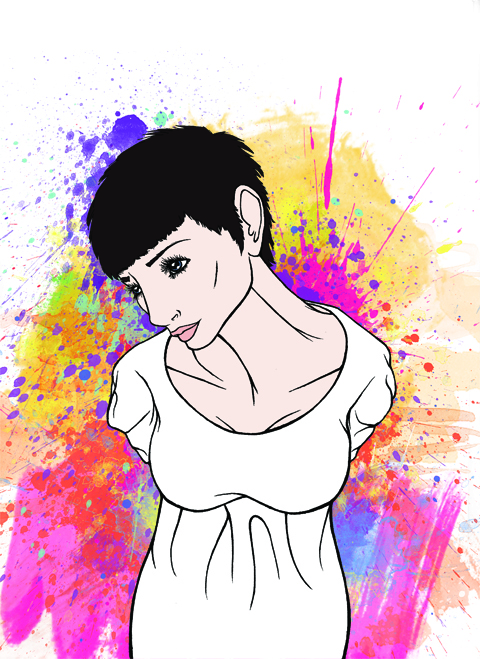
 A selection of