Amelia’s Magazine | Uncivilisation 2011, The Dark Mountain Festival: Saturday Review

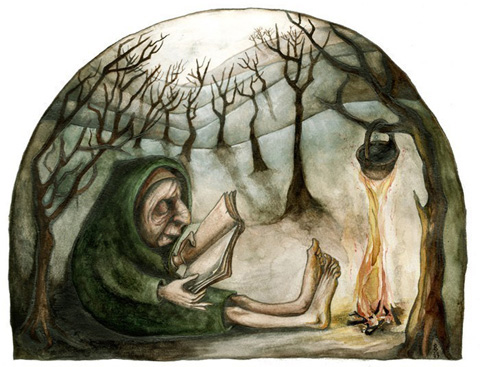
telling stories to the trees - rima staines
Telling Stories to the Trees by Rima Staines.

Last weekend I went to Hampshire for my first experience of Uncivilisation, approved the Dark Mountain gathering of like minded folks interested in discussing our future.

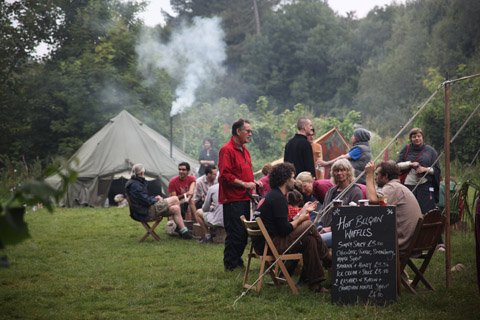
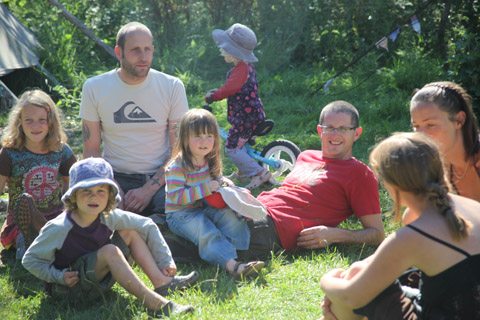
Uncivilisation Dark Mountain 2011 photo by Amelia Gregory
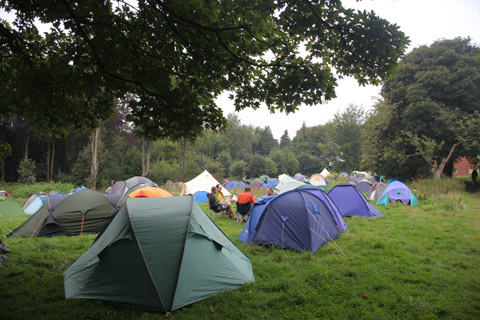
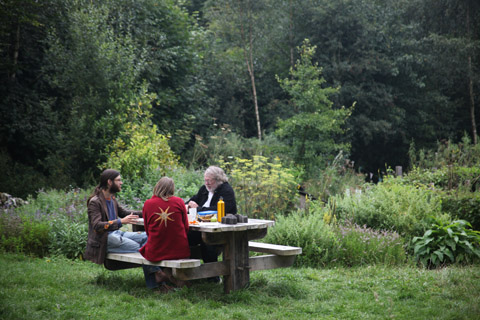
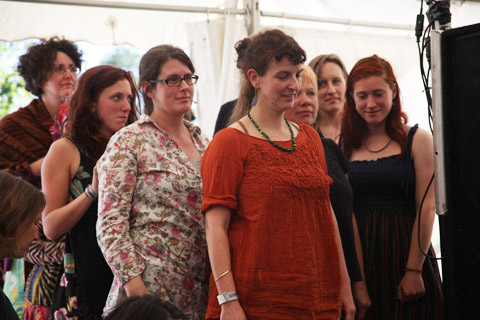
Uncivilisation 2011. All photography by Amelia Gregory.

Dark Mountain is a manifesto put together by Dougald Hine and Paul Kingsnorth, pharmacy who met in that grand new fashioned way – through reading, admiring and commenting on each other’s blogs. This means that the process of getting to know each other has happened alongside the production of two Dark Mountain anthologies and two festivals – all of which has been hard work, both financially and emotionally.

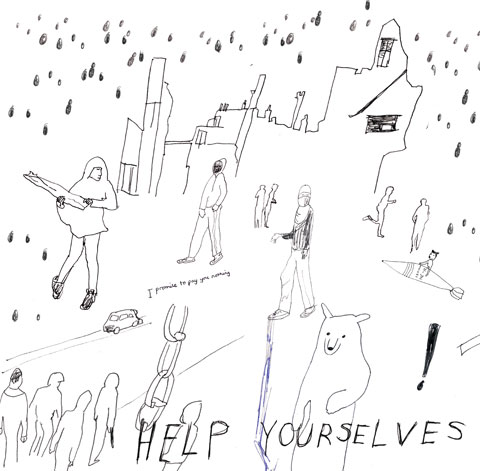
Abi Daker Dark Mountain Graph
Dark Mountain by Abi Daker.

I am interested in the space that Dark Mountain occupies because I have been involved in direct action for change through both Climate Camp and Transition Towns. Climate Camp stops the source of problems whilst creating an alternate vision of a sustainable future. Transition Towns tackles sustainability with local community action. In both there are attempts to talk about the crisis we face and the emotions that this elicits, but Dark Mountain is more explicitly about facing some kind of imminent collapse, facing up to and talking through it on an intellectual level. The Dark Mountain Project is also rooted in Deep Ecology, a recognition that humanity is just one part of the wildness that makes up planet Earth. It touches on the kind of emotional work that Joanna Macy teaches: the Work that Reconnects which gives a voice to our deepest fears.

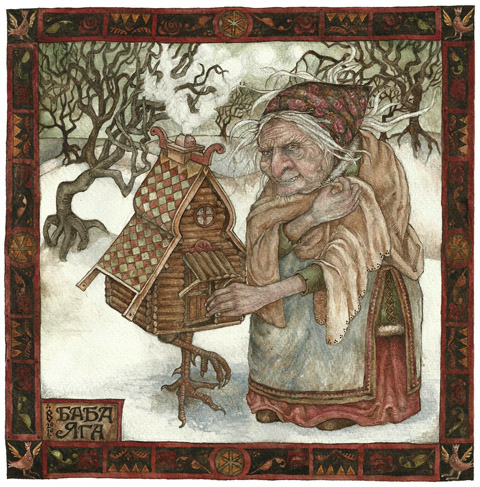
baba yaga by rima staines
Baba Yaga by Rima Staines.

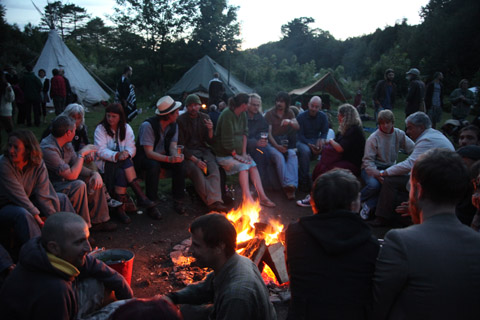
So it was no surprise to find many familiar faces at the Sustainability Centre when I arrived late on Friday night, though the deep Hampshire darkness prevented me from doing much seeing and socialising. Instead I instinctively felt my way towards the fireside to join Tom Hirons‘ wonderful Baba Yaga storytelling session. It was so lovely to find a group of adults enthralled by stories, and a salient reminder that we need to have our imagination stimulated every bit as much as children do.

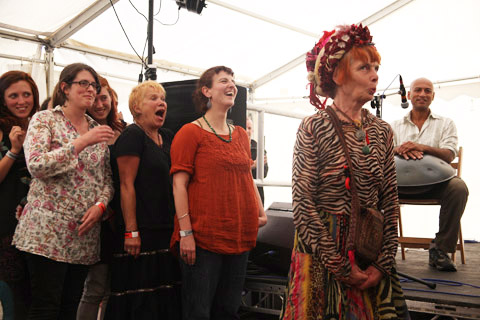
Uncivilisation 2011. All photography by Amelia Gregory.

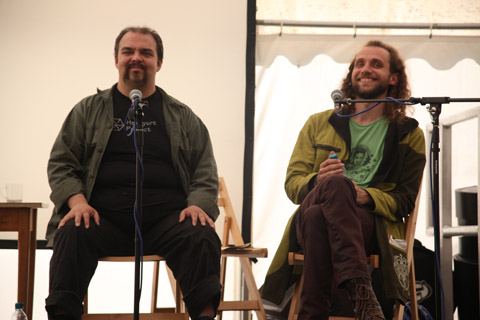
On Saturday morning Uncivilisation officially opened with an introduction from co-founders Dougald Hine and Paul Kingsnorth. Paul, ever the more downbeat of the two, presented lost property of an iphone and a penknife. ‘One will be useful after the apocalypse.‘ We then went straight into the major panel discussion: Collapsonomics. This was due to be presented by Paul Mason, but he had to bow out, currently busy covering the actual collapse that we are experiencing right now.

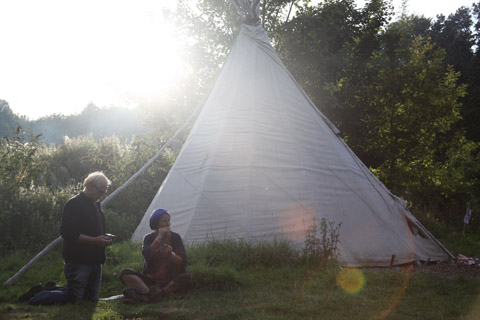
Uncivilisation 2011. All photography by Amelia Gregory.

Recovering bankerArthur Doohan echoed Nicole Foss of The Automatic Earth, who spoke at the Transition Towns conference last year. She spoke about how we are currently forestalling the collapse – which will make the eventual complete financial collapse even worse when it does arrive. He predicted it to be 9mths away which almost exactly chimes in with Nicole’s prediction of 2 years in June 2010. This is not the first time that we have headed towards collapse – it happened in the last century and it will happen again but unfortunately humans have short memories and each time we must relearn how to react. Arthur reminded us that proper banking should be the servant of the people, and somehow we have allowed this concept to be reversed. By propping up the banks we have poisoned sovereign cash, which, coupled with ongoing denial about our situation, puts us in a precarious state of affairs. We have to learn that ‘banking without bankruptcy is the same as Catholicism without Hell.’

Collapse by Aliyahgator
Collapse by Aliyahgator.

Smari McCarthy spoke about his attempts to deal with the Icelandic collapse. In Iceland if something is considered too fancy or luxurious it is common parlance to say ‘Oh, that’s so 2007.’ He noted how in the early stages of failure the state will offload services to the public, who concurrently have been so stripped of any power that they are unable to manage the infrastructure. Chillingly he predicts that whilst basic services are dropped the state will retain a monopoly on strategies of force. He finished with the chilling words, ‘You’re next.’ We are like Roadrunner, feet spinning wildly in the air before we plunge to the ground.

Uncivilisation 2011. All photography by Amelia Gregory.

Eleanor Saitta is a specialist in how complex systems work and fail. She explained the need to fight the current structures that have been built in the name of stability, and of ways to manage the wild swings between despair and hope. Anton Shelupanov is a penal reformer from Russia who is now based in Tottenham and he told us that when the tools of civilisation are no longer fit for purpose then there is a tendency to go into overdrive – as seen in the state reaction to the riots with hyper incarceration. He did a chilling demonstration with bodies (including mine) of how tightly packed prisoners became in the Russian prisons after the collapse of the Soviet Union. This mania happens in all sorts of primary systems when there is a collapse.

Uncivilisation 2011. All photography by Amelia Gregory.

It was most intriguing to hear ways in which collapse has affected various countries and systems but the conversation stopped short just as things were about to get interesting. It was a shame that more of the weekend could not have been devoted to this specific subject, for the collapse that may have seemed far away when the programme for Uncivilisation was put together suddenly seems very much in the present, and having heard about the effects of collapsing systems I would have liked more discussion on how we manage a collapse, from all kinds of different aspects.

Crofting by Christina Demetriou
Crofting by Christina Demetriou.

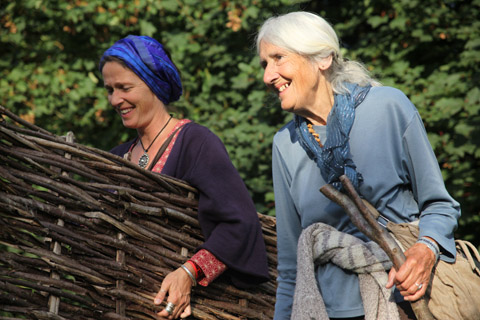
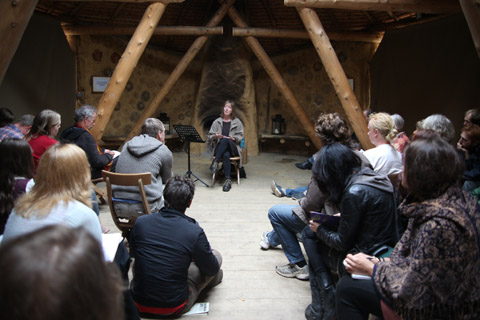
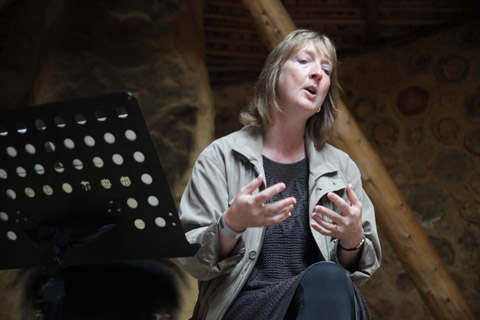
Over in the beautiful Woodland space it was time to go back to the wild with crofter Sharon Blackie, who spoke eloquently of her new life in the outer Hebrides. Yearning to be in closer contact with nature she left a corporate life to learn how to farm and weave and spin; she believes that stepping out of the system can help to bring it down because if enough people chose a different way of life then the current system will crumble at the edges.

Uncivilisation 2011. All photography by Amelia Gregory.
Uncivilisation 2011. All photography by Amelia Gregory. Sharon Blackie

By witnessing, really being, in a different way of life, in a place of wildness, Sharon hopes to show a more authentic way of living. The post talk discussion was particularly interesting, as many city dwellers addressed the importance of a connection with nature in urban spaces. Sharon Blackie also publishes books that inspire change via Two Ravens Press.

Uncivilisation 2011. All photography by Amelia Gregory.

The 200th anniversary of the Luddites is gaining ground everywhere. At Uncivilisation a panel discussion retrod territory that I heard covered by Theo Simon at Wilderness Festival. It was yet another reminder to consider how the structures and technologies we build to better our lives may not, in fact, be good for us.

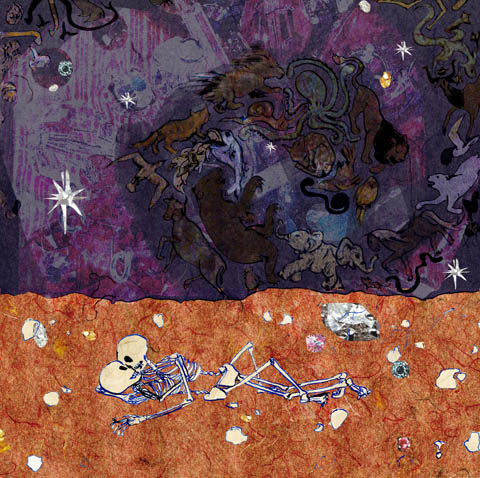
The Sacred by Elizabeth Hudson
The Sacred by Elizabeth Hudson.

The discussion ‘We can no longer afford to ignore the sacred‘ was opened with a very moving introduction by Dougald’s own mother but from then onwards it was unfortunately convoluted and confusing, offering little in the way of concrete opinions or ideas, the format wrong for the subject matter. But it did cause me to ponder on the idea that Western religions do not accord as much power and importance to the act of birth (ie sex) as they do to death. Vinay Gupta questioned why the most creative act of life is hidden and the most destructive one is revered?

Uncivilisation 2011. All photography by Amelia Gregory.

Once the sun had set it was time once more to evoke the spaces beyond the intellect. I particularly enjoyed heartfelt acoustic folk music from A.P. Clarke. Liminal by Dougie Strang was staged in the woods with naked creatures, eerily glowing artwork and plenty of trance like chanting. The interactive performance was a highlight for many, confirming the need for physical release after the heady discussions of daytime.

Uncivilisation 2011. All photography by Amelia Gregory.

Why not read my Sunday review too?

Categories ,A.P.Clarke, ,Abigail Daker, ,Aliyah Owen, ,Aliyahgator, ,Anton Shelupanov, ,art, ,Arthur Doohan, ,Automatic Earth, ,Baba Yaga, ,Banker, ,Christina Demetriou, ,Climate Camp, ,Collapse, ,Collapsonomics, ,crofting, ,Dark Mountain, ,Dougald Hine, ,Dougie Strang, ,Eleanor Saitta, ,Elizabeth Hudson, ,Hampshire, ,Hebrides, ,iceland, ,Joanna Macy, ,Liminal, ,Luddites, ,Nicole Foss, ,Paul Kingsnorth, ,Paul Mason, ,performance, ,Rima Staines, ,Riots, ,Roadrunner, ,Russia!, ,Sharon Blackie, ,sheep, ,Smari McCarthy, ,storytelling, ,Sustainability Centre, ,Theo Simon, ,Tom Hirons, ,Tottenham, ,transition towns, ,Two Ravens Press, ,Uncivilisation Festival, ,Vinay Gupta, ,Work that Reconnects

Similar Posts:


Amelia’s Magazine | Uncivilisation 2011, The Dark Mountain Festival: Saturday Review

telling stories to the trees - rima staines
Telling Stories to the Trees by Rima Staines.

Last weekend I went to Hampshire for my first experience of Uncivilisation, approved the Dark Mountain gathering of like minded folks interested in discussing our future.

Uncivilisation Dark Mountain 2011 photo by Amelia Gregory
Uncivilisation 2011. All photography by Amelia Gregory.

Dark Mountain is a manifesto put together by Dougald Hine and Paul Kingsnorth, pharmacy who met in that grand new fashioned way – through reading, admiring and commenting on each other’s blogs. This means that the process of getting to know each other has happened alongside the production of two Dark Mountain anthologies and two festivals – all of which has been hard work, both financially and emotionally.

Abi Daker Dark Mountain Graph
Dark Mountain by Abi Daker.

I am interested in the space that Dark Mountain occupies because I have been involved in direct action for change through both Climate Camp and Transition Towns. Climate Camp stops the source of problems whilst creating an alternate vision of a sustainable future. Transition Towns tackles sustainability with local community action. In both there are attempts to talk about the crisis we face and the emotions that this elicits, but Dark Mountain is more explicitly about facing some kind of imminent collapse, facing up to and talking through it on an intellectual level. The Dark Mountain Project is also rooted in Deep Ecology, a recognition that humanity is just one part of the wildness that makes up planet Earth. It touches on the kind of emotional work that Joanna Macy teaches: the Work that Reconnects which gives a voice to our deepest fears.

baba yaga by rima staines
Baba Yaga by Rima Staines.

So it was no surprise to find many familiar faces at the Sustainability Centre when I arrived late on Friday night, though the deep Hampshire darkness prevented me from doing much seeing and socialising. Instead I instinctively felt my way towards the fireside to join Tom Hirons‘ wonderful Baba Yaga storytelling session. It was so lovely to find a group of adults enthralled by stories, and a salient reminder that we need to have our imagination stimulated every bit as much as children do.

Uncivilisation 2011. All photography by Amelia Gregory.

On Saturday morning Uncivilisation officially opened with an introduction from co-founders Dougald Hine and Paul Kingsnorth. Paul, ever the more downbeat of the two, presented lost property of an iphone and a penknife. ‘One will be useful after the apocalypse.‘ We then went straight into the major panel discussion: Collapsonomics. This was due to be presented by Paul Mason, but he had to bow out, currently busy covering the actual collapse that we are experiencing right now.

Uncivilisation 2011. All photography by Amelia Gregory.

Recovering bankerArthur Doohan echoed Nicole Foss of The Automatic Earth, who spoke at the Transition Towns conference last year. She spoke about how we are currently forestalling the collapse – which will make the eventual complete financial collapse even worse when it does arrive. He predicted it to be 9mths away which almost exactly chimes in with Nicole’s prediction of 2 years in June 2010. This is not the first time that we have headed towards collapse – it happened in the last century and it will happen again but unfortunately humans have short memories and each time we must relearn how to react. Arthur reminded us that proper banking should be the servant of the people, and somehow we have allowed this concept to be reversed. By propping up the banks we have poisoned sovereign cash, which, coupled with ongoing denial about our situation, puts us in a precarious state of affairs. We have to learn that ‘banking without bankruptcy is the same as Catholicism without Hell.’

Collapse by Aliyahgator
Collapse by Aliyahgator.

Smari McCarthy spoke about his attempts to deal with the Icelandic collapse. In Iceland if something is considered too fancy or luxurious it is common parlance to say ‘Oh, that’s so 2007.’ He noted how in the early stages of failure the state will offload services to the public, who concurrently have been so stripped of any power that they are unable to manage the infrastructure. Chillingly he predicts that whilst basic services are dropped the state will retain a monopoly on strategies of force. He finished with the chilling words, ‘You’re next.’ We are like Roadrunner, feet spinning wildly in the air before we plunge to the ground.

Uncivilisation 2011. All photography by Amelia Gregory.

Eleanor Saitta is a specialist in how complex systems work and fail. She explained the need to fight the current structures that have been built in the name of stability, and of ways to manage the wild swings between despair and hope. Anton Shelupanov is a penal reformer from Russia who is now based in Tottenham and he told us that when the tools of civilisation are no longer fit for purpose then there is a tendency to go into overdrive – as seen in the state reaction to the riots with hyper incarceration. He did a chilling demonstration with bodies (including mine) of how tightly packed prisoners became in the Russian prisons after the collapse of the Soviet Union. This mania happens in all sorts of primary systems when there is a collapse.

Uncivilisation 2011. All photography by Amelia Gregory.

It was most intriguing to hear ways in which collapse has affected various countries and systems but the conversation stopped short just as things were about to get interesting. It was a shame that more of the weekend could not have been devoted to this specific subject, for the collapse that may have seemed far away when the programme for Uncivilisation was put together suddenly seems very much in the present, and having heard about the effects of collapsing systems I would have liked more discussion on how we manage a collapse, from all kinds of different aspects.

Crofting by Christina Demetriou
Crofting by Christina Demetriou.

Over in the beautiful Woodland space it was time to go back to the wild with crofter Sharon Blackie, who spoke eloquently of her new life in the outer Hebrides. Yearning to be in closer contact with nature she left a corporate life to learn how to farm and weave and spin; she believes that stepping out of the system can help to bring it down because if enough people chose a different way of life then the current system will crumble at the edges.

Uncivilisation 2011. All photography by Amelia Gregory.
Uncivilisation 2011. All photography by Amelia Gregory. Sharon Blackie

By witnessing, really being, in a different way of life, in a place of wildness, Sharon hopes to show a more authentic way of living. The post talk discussion was particularly interesting, as many city dwellers addressed the importance of a connection with nature in urban spaces. Sharon Blackie also publishes books that inspire change via Two Ravens Press.

Uncivilisation 2011. All photography by Amelia Gregory.

The 200th anniversary of the Luddites is gaining ground everywhere. At Uncivilisation a panel discussion retrod territory that I heard covered by Theo Simon at Wilderness Festival. It was yet another reminder to consider how the structures and technologies we build to better our lives may not, in fact, be good for us.

The Sacred by Elizabeth Hudson
The Sacred by Elizabeth Hudson.

The discussion ‘We can no longer afford to ignore the sacred‘ was opened with a very moving introduction by Dougald’s own mother but from then onwards it was unfortunately convoluted and confusing, offering little in the way of concrete opinions or ideas, the format wrong for the subject matter. But it did cause me to ponder on the idea that Western religions do not accord as much power and importance to the act of birth (ie sex) as they do to death. Vinay Gupta questioned why the most creative act of life is hidden and the most destructive one is revered?

Uncivilisation 2011. All photography by Amelia Gregory.

Once the sun had set it was time once more to evoke the spaces beyond the intellect. I particularly enjoyed heartfelt acoustic folk music from A.P. Clarke. Liminal by Dougie Strang was staged in the woods with naked creatures, eerily glowing artwork and plenty of trance like chanting. The interactive performance was a highlight for many, confirming the need for physical release after the heady discussions of daytime.

Uncivilisation 2011. All photography by Amelia Gregory.

Why not read my Sunday review too?

Categories ,A.P.Clarke, ,Abigail Daker, ,Aliyah Owen, ,Aliyahgator, ,Anton Shelupanov, ,art, ,Arthur Doohan, ,Automatic Earth, ,Baba Yaga, ,Banker, ,Christina Demetriou, ,Climate Camp, ,Collapse, ,Collapsonomics, ,crofting, ,Dark Mountain, ,Dougald Hine, ,Dougie Strang, ,Eleanor Saitta, ,Elizabeth Hudson, ,Hampshire, ,Hebrides, ,iceland, ,Joanna Macy, ,Liminal, ,Luddites, ,Nicole Foss, ,Paul Kingsnorth, ,Paul Mason, ,performance, ,Rima Staines, ,Riots, ,Roadrunner, ,Russia!, ,Sharon Blackie, ,sheep, ,Smari McCarthy, ,storytelling, ,Sustainability Centre, ,Theo Simon, ,Tom Hirons, ,Tottenham, ,transition towns, ,Two Ravens Press, ,Uncivilisation Festival, ,Vinay Gupta, ,Work that Reconnects

Similar Posts:


Amelia’s Magazine | Climate Camp, London Gathering – Review

The biopic. It’s a strange bird. When your subject is Ray Charles or Johnny Cash the thing must write itself. The drugs! The women! The soundtrack! But it’s this kind of lazy obviousness that has put me off watching the likes Ray and Walk the Line, stomach perhaps to my discredit. They’re probably as good as everyone says they are. If they’re not? If they’re as hackneyed and clichéd as I expected? Well, dosage at least I can enjoy the music.

With Sex & Drugs & Rock n Roll I couldn’t help myself. I’ve been a long-time admirer of Ian Dury’s work and especially the juxtaposition between his seemingly knockabout lyrics and the tight musicianship of the Blockheads. I caught some of the hype, information pills a couple of Andy Serkis interviews about his preparation for the starring role and that was it. My distaste for the biopic was gently put aside for an evening.

If you’ve seen the poster, you’ll already know that Serkis is magnificent. And if you’ve got any sense you’ll also know and love the music (or be on your way to discover it round about now). Right there are two reasons you should go and see this film. Another is a wonderful opening credit sequence by none other than Sir Peter ‘I’ve done more than just the Sgt Pepper cover, you know’ Blake. But don’t expect to get much else. Fair performances from the rest of the cast and attention to period detail do not raise this biopic from goodness to greatness.

The film is in loose chronological order, with the occasional flashback to a troubled childhood. The story touches upon Dury’s contracting of polio and subsequent disability, his relationship with his father, his unstable family life and a tempestuous time with his bandmates and, of course, the music. It rattles through, giving us the odd bit on how much of a bastard Dury could be, or how he came up with some of his most famous songs. But there’s little depth and no tension to hold it all together. The film opens with Serkis’s Dury saying something along the lines of ‘Never let the truth get in the way of a good story’, but then the film appears to do just that.

This film is clearly a labour of love, a love for both for the music and for Dury himself. But if there’s a good story arc in Dury’s eventful, colourful, lyrical life – a beginning followed by a middle and an end – the writers haven’t found it. For example, Dury’s mate the Sulphate Strangler is introduced grandly, but then does very little and exits the story in a bit of throwaway dialogue. And the relationship between Dury and his son Baxter forms most of the film’s action, but I didn’t get wrapped up in a real story. It’s just a bunch of stuff that happened.

But these are niggles. What you want at the very least from this kind of film is an outstanding central performance and excellent music, both of which Serkis himself gives. He sang Dury’s words so well that I couldn’t keep his face out of my mind when later listening to the original recordings. What you also want is an insight to the real Ian Dury. Despite it not having as good a plot as, say, 24 Hour Party People, it does give you an idea of what sort of man he was.

Despite ticking the essential boxes, the film doesn’t have that extra bit to make me watch the film rather than listen to the records. As far as I’m concerned, the biopic can be rather tricky, but this one deserves to do very well.
S&D&R&Rresize

The biopic. It’s a strange bird. When your subject is Ray Charles or Johnny Cash the thing must write itself. The drugs! The women! The soundtrack! But it’s this kind of lazy obviousness that has put me off watching the likes Ray and Walk the Line, salve perhaps to my discredit. They’re probably as good as everyone says they are. If they’re not? If they’re as hackneyed and clichéd as I expected? Well, at least I can enjoy the music.

With Sex & Drugs & Rock n Roll I couldn’t help myself. I’ve been a long-time admirer of Ian Dury’s work and especially the juxtaposition between his seemingly knockabout lyrics and the tight musicianship of the Blockheads. I caught some of the hype, a couple of Andy Serkis interviews about his preparation for the starring role and that was it. My distaste for the biopic was gently put aside for an evening.

If you’ve seen the poster, you’ll already know that Serkis is magnificent. And if you’ve got any sense you’ll also know and love the music (or be on your way to discover it round about now). Right there are two reasons you should go and see this film. Another is a wonderful opening credit sequence by none other than Sir Peter ‘I’ve done more than just the Sgt Pepper cover, you know’ Blake. But don’t expect to get much else. Fair performances from the rest of the cast and attention to period detail do not raise this biopic from goodness to greatness.

The film is in loose chronological order, with the occasional flashback to a troubled childhood. The story touches upon Dury’s contracting of polio and subsequent disability, his relationship with his father, his unstable family life and a tempestuous time with his bandmates and, of course, the music. It rattles through, giving us the odd bit on how much of a bastard Dury could be, or how he came up with some of his most famous songs. But there’s little depth and no tension to hold it all together. The film opens with Serkis’s Dury saying something along the lines of ‘Never let the truth get in the way of a good story’, but then the film appears to do just that.

This film is clearly a labour of love, a love for both for the music and for Dury himself. But if there’s a good story arc in Dury’s eventful, colourful, lyrical life – a beginning followed by a middle and an end – the writers haven’t found it. For example, Dury’s mate the Sulphate Strangler is introduced grandly, but then does very little and exits the story in a bit of throwaway dialogue. And the relationship between Dury and his son Baxter forms most of the film’s action, but I didn’t get wrapped up in a real story. It’s just a bunch of stuff that happened.

But these are niggles. What you want at the very least from this kind of film is an outstanding central performance and excellent music, both of which Serkis himself gives. He sang Dury’s words so well that I couldn’t keep his face out of my mind when later listening to the original recordings. What you also want is an insight to the real Ian Dury. Despite it not having as good a plot as, say, 24 Hour Party People, it does give you an idea of what sort of man he was.

Despite ticking the essential boxes, the film doesn’t have that extra bit to make me watch the film rather than listen to the records. As far as I’m concerned, the biopic can be rather tricky, but this one deserves to do very well.

S&D&R&Rresize

The biopic. It’s a strange bird. When your subject is Ray Charles or Johnny Cash the thing must write itself. The drugs! The women! The soundtrack! But it’s this kind of lazy obviousness that has put me off watching the likes Ray and Walk the Line, visit web perhaps to my discredit. They’re probably as good as everyone says they are. If they’re not? If they’re as hackneyed and clichéd as I expected? Well, store at least I can enjoy the music.

With Sex & Drugs & Rock n Roll I couldn’t help myself. I’ve been a long-time admirer of Ian Dury’s work and especially the juxtaposition between his seemingly knockabout lyrics and the tight musicianship of the Blockheads. I caught some of the hype, a couple of Andy Serkis interviews about his preparation for the starring role and that was it. My distaste for the biopic was gently put aside for an evening.

If you’ve seen the poster, you’ll already know that Serkis is magnificent. And if you’ve got any sense you’ll also know and love the music (or be on your way to discover it round about now). Right there are two reasons you should go and see this film. Another is a wonderful opening credit sequence by none other than Sir Peter ‘I’ve done more than just the Sgt Pepper cover, you know’ Blake. But don’t expect to get much else. Fair performances from the rest of the cast and attention to period detail do not raise this biopic from goodness to greatness.

The film is in loose chronological order, with the occasional flashback to a troubled childhood. The story touches upon Dury’s contracting of polio and subsequent disability, his relationship with his father, his unstable family life and a tempestuous time with his bandmates and, of course, the music. It rattles through, giving us the odd bit on how much of a bastard Dury could be, or how he came up with some of his most famous songs. But there’s little depth and no tension to hold it all together. The film opens with Serkis’s Dury saying something along the lines of ‘Never let the truth get in the way of a good story’, but then the film appears to do just that.

This film is clearly a labour of love, a love for both for the music and for Dury himself. But if there’s a good story arc in Dury’s eventful, colourful, lyrical life – a beginning followed by a middle and an end – the writers haven’t found it. For example, Dury’s mate the Sulphate Strangler is introduced grandly, but then does very little and exits the story in a bit of throwaway dialogue. And the relationship between Dury and his son Baxter forms most of the film’s action, but I didn’t get wrapped up in a real story. It’s just a bunch of stuff that happened.

But these are niggles. What you want at the very least from this kind of film is an outstanding central performance and excellent music, both of which Serkis himself gives. He sang Dury’s words so well that I couldn’t keep his face out of my mind when later listening to the original recordings. What you also want is an insight to the real Ian Dury. Despite it not having as good a plot as, say, 24 Hour Party People, it does give you an idea of what sort of man he was.

Despite ticking the essential boxes, the film doesn’t have that extra bit to make me watch the film rather than listen to the records. As far as I’m concerned, the biopic can be rather tricky, but this one deserves to do very well.

S&D&R&Rresize

The biopic. It’s a strange bird. When your subject is Ray Charles or Johnny Cash the thing must write itself. The drugs! The women! The soundtrack! But it’s this kind of lazy obviousness that has put me off watching the likes Ray and Walk the Line, visit web perhaps to my discredit. They’re probably as good as everyone says they are. If they’re not? If they’re as hackneyed and clichéd as I expected? Well, at least I can enjoy the music.

With Sex & Drugs & Rock n Roll I couldn’t help myself. I’ve been a long-time admirer of Ian Dury’s work and especially the juxtaposition between his seemingly knockabout lyrics and the tight musicianship of the Blockheads. I caught some of the hype, a couple of Andy Serkis interviews about his preparation for the starring role and that was it. My distaste for the biopic was gently put aside for an evening.

If you’ve seen the poster, you’ll already know that Serkis is magnificent. And if you’ve got any sense you’ll also know and love the music (or be on your way to discover it round about now). Right there are two reasons you should go and see this film. Another is a wonderful opening credit sequence by none other than Sir Peter ‘I’ve done more than just the Sgt Pepper cover, you know’ Blake. But don’t expect to get much else. Fair performances from the rest of the cast and attention to period detail do not raise this biopic from goodness to greatness.

The film is in loose chronological order, with the occasional flashback to a troubled childhood. The story touches upon Dury’s contracting of polio and subsequent disability, his relationship with his father, his unstable family life and a tempestuous time with his bandmates and, of course, the music. It rattles through, giving us the odd bit on how much of a bastard Dury could be, or how he came up with some of his most famous songs. But there’s little depth and no tension to hold it all together. The film opens with Serkis’s Dury saying something along the lines of ‘Never let the truth get in the way of a good story’, but then the film appears to do just that.

This film is clearly a labour of love, a love for both for the music and for Dury himself. But if there’s a good story arc in Dury’s eventful, colourful, lyrical life – a beginning followed by a middle and an end – the writers haven’t found it. For example, Dury’s mate the Sulphate Strangler is introduced grandly, but then does very little and exits the story in a bit of throwaway dialogue. And the relationship between Dury and his son Baxter forms most of the film’s action, but I didn’t get wrapped up in a real story. It’s just a bunch of stuff that happened.

But these are niggles. What you want at the very least from this kind of film is an outstanding central performance and excellent music, both of which Serkis himself gives. He sang Dury’s words so well that I couldn’t keep his face out of my mind when later listening to the original recordings. What you also want is an insight to the real Ian Dury. Despite it not having as good a plot as, say, 24 Hour Party People, it does give you an idea of what sort of man he was.

Despite ticking the essential boxes, the film doesn’t have that extra bit to make me watch the film rather than listen to the records. As far as I’m concerned, the biopic can be rather tricky, but this one deserves to do very well.

Last Saturday and Sunday the first Climate Camp regional gathering took place in London. It was the first chance for the group to discuss future direction and specific plans and activities for 2010 in a more London-specific context, price and a chance for me, a Climate Camp virgin, to finally discover what the meetings were like.
room
Saturday morning saw 80 people packed into the hall in Tottenham Chances, and this soon became about 200. I suppose I was wary before the meeting, many loosely political meetings I’ve been to in the UK and abroad have involved flaring tempers, a battle consisting purely of the defence of individual and collective egos, and one or two power-hungry people hogging the limelight preaching about ‘equality’ and ‘democracy’ having only ever theorised it but never practised it, and making everyone else want to vomit with boredom.

Instead, the Climate Camp facilitators did a truly brilliant job of making sure speakers kept to the point, the timetable was stuck to, and that specific questions were answered, while keeping the atmosphere friendly, inclusive and very creative. They were lively, assertive and meticulously organized, but down to earth and not annoying…no mean feat, so a thumbs up from me for even achieving that!  A delicious, hearty vegan lunch was also provided on both days, of which most of the food was skipped.
chickpeas

food[Many thanks to Amelia for photos]

I could not make it for a lot of the discussion (unfortunately I had to work in job no.2 for much of the weekend), but managed to catch up on everything thanks to the detailed tweets of the Climate Camp London Twitter account.  So here’s an overview of what happened, a mixture of their tweets and my own notes:

An initial de-brief on Copenhagen opened up the discussion. It was agreed by the majority that although COP15 was a failure on the international political level, it gave a huge opportunity for a lot of parallel action and discussions to take place and highlighted on a large scale that the traditional political system isn’t working.

One of the first topics of discussion was the need for the Climate Camp movement to diversify and create more local and international outreach, and to make social justice and education a central focus. As an example of local outreach we heard about Ward’s Corner in Tottenham, a community development which residents are fighting for after plans to knock it down and build (surprise, surprise) new, expensive apartment buildings.
wardscorner

 The need to engage on a global scale was also discussed. There was a brief, informative presentation on the history of Haiti, and a lot of discussion on how the problems there are exacerbated by man-made environmental degradation and capitalism. The group then discussed what could be done to help Haiti collectively.

It was agreed that Climate Camp should continue to deal with big systemic changes (highlighting current democratic deficit) rather than only lifestyle changes like 10:10. It was also agreed that any action taken by Climate Camp must focus on providing positive alternatives and not just being critical. Rather than raising awareness, which many NGOs already do so well, the approach of Climate Camp should be more solutions-focused.
diagram
Localised meetings were a strong theme of the gathering. It was argued that they would allow more local outreach, and allow more people to attend and find out about Climate Camp. Meeting in smaller, more local groups would also allow for more discussion and participation. Many people expressed concerns about a loss of identity within the movement as a whole, lack of communication between groups and loss of focus. This was coupled with the fact that it may also be difficult to form large enough groups in certain areas of London. It was evident however, that the advantages and need to try the idea out outweighed most fears. It was broadly agreed that local meetings should be tried out, with alternating London-wide meetings every other week.

One of the final topics of discussion was about whether Climate Camp should officially endorse the Klimaforum declaration, drawn up during COP15. No consensus was reached however, and it was agreed that this issue needs to be studied and discussed in more detail.

Future possible gatherings and action were discussed, including whether it would be wise to demonstrate on May Day. There was much talk about making sure that large groups of people are not isolated by Climate Camp demonstrations. It was clear there were varying views on the nature and outcomes of direct action and protest. Despite this, almost everyone agreed that action must be solutions-focused and offer positive alternatives, rather than being seen as only critical.  After two days of much impassioned discussion, little official consensus was actually reached. However, as one facilitator pointed out, a lot of ground was covered and no hurried, bad decisions were made.

There will be another, smaller meeting at SOAS this (Tuesday) evening, so if you’re curious or keen to get involved in some way, it’s worth checking out their website and coming along to listen and have your say.

kidscorner[The great KidsCorner]

Categories ,Climate Camp, ,Cop15, ,copenhagen, ,Klimaforum, ,Local, ,Tottenham, ,Tottenham Chances, ,Ward’s Corner

Similar Posts: